The Subic–Clark–Tarlac Expressway (SCTEX) undergoing improvements by means of maintenance works and asset enhancements by the NLEX Corporation, according to a Malaya Business Insight news report. This means better travel and improved safety for the many motorists who use the SCTEX.
To put things in perspective, posted below is an excerpt from the news report of Malaya Business Insight. Some parts in boldface…
NLEX Corp., the concessionaire of the 94-kilometer Subic–Clark–Tarlac Expressway (SCTEX), recently rolled out a series of asset enhancement and preventive maintenance works to reinforce road safety, and help in providing an improved driving experience for motorists.
“We’re focused on delivering improvements that our motorists can truly feel on the road,” NLEX president and general manager Luis Reñon declared in a statement on November 20.
Approximately 3,700 square meters were reportedly completed from Dinalupihan to Tarlac, focusing on uneven surfaces and minimizing potential driving hazards.
The company also installed 22 additional sets of rumble strips at key locations along SCTEX. These strips produce mild vibrations and audible cuesfor drivers, promoting more attentive and safer driving behavior. A total of 26 rumble strips are now laid out across the expressway.
Median, or center guardrails, from Dolores to Luisita have been being raised by 30cm for the asphalt overlay. This adjustment maintains safety standards, and helps preserve roadway integrity.
Let me end this post by asking you readers: What is your reaction to this recent development? When was the last time you drove along the SCTEX?
The future of a nuclear-powered Philippines remains achievable as the Department of Energy (DOE) confirmed that investors are strongly interested in nuclear energy in the country, according to a BusinessWorld news report.
To put things in perspective, posted below is an excerpt from the news report of BusinessWorld. Some parts in boldface…
INVESTORS are still keen on developing nuclear energy projects in the Philippines, the Department of Energy (DoE) said, as the government prepares to start accepting applications next year.
Energy Secretary Sharon S. Garin said there is significant investor interest in nuclear energy projects in the Philippines, as some companies have already presented their ideas.
Speaking to reporters on Friday, Ms. Garin said companies want to go into nuclear energy as they see it as a possible solution to serve baseload capacity and to cater to the increasing demand from data centers.
“They’re very interested and are waiting for us to finalize the site selection and site evaluation,” she said in mixed Filipino and English.
The DoE plans to begin accepting applications for nuclear energy projects by 2026 as part of efforts to integrate nuclear power into the country’s energy mix by 2032.
Under the Philippine Energy Plan, the country aims to integrate nuclear energy into the power mix with at least 1,200 megawatts (MW) of capacity by 2032, increasing it to 2,400 MW by 2045 and to 4,800 MW by 2050.
“I understand, the companies are waiting for us to guide them on which are the areas that are more feasible. But some companies have already approached DoE to enter into a memorandum of agreement, non-exclusive, to explore the possible nuclear power plant development,” Ms. Garin said.
She said some energy firms have expressed interest in nuclear energy development such as power distributor Manila Electric Co. (Meralco) and power generation firm Aboitiz Power Corp.
In a separate interview, Meralco Executive Vice-President Chief Operating Officer Ronnie L. Aperocho said that the company waiting to see the ongoing development of Romania’s first small modular reactor before proceeding on its own.
“There is a requirement from PhilATOM (Philippine Atomic Energy Regulatory Authority) that the first-of-its-kind technology must run of at least about two years without any incidents before we can adopt it here in the Philippines. So, we have to go through that two-year requirement,” he said in mixed Filipino and English.
In September, President Ferdinand R. Marcos, Jr. signed Republic Act No. 12305, the Philippine National Nuclear Energy Safety Act, which created PhilATOM.
PhilATOM is an independent quasi-judicial body tasked with overseeing all nuclear and radiation activities in the country. Under the law, PhilATOM will hold sole and exclusive jurisdiction over the regulation of nuclear energy and radiation sources in the Philippines, ensuring their peaceful, safe and secure use.
Let me end this post by asking you readers: What is your reaction to this recent development? Do you think nuclear power in the Philippines will become a reality over the next several years?
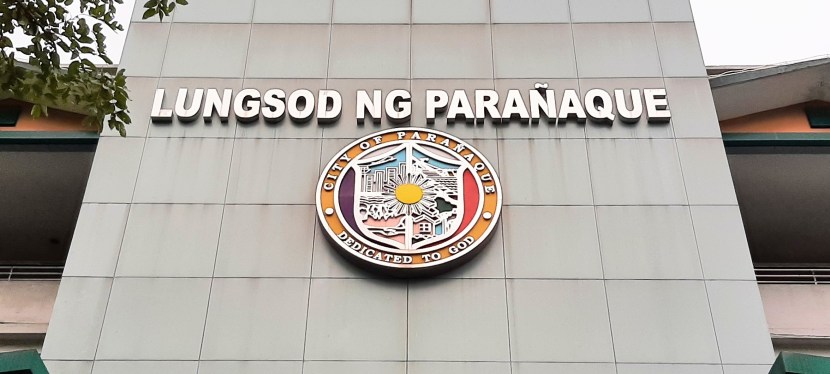
Recently in the city of Parañaque, elements of the Bureau of Immigration (BI) apprehended eight Vietnamese nationals in a hotel for allegedly overstaying, illegal employment and suspected involvement in online scam operations, according to a news report by DZRH.
To put things in perspective, posted below is an excerpt from the DZRH news report. Some parts in boldface…
Eight Vietnamese nationals in Parañaque City were arrested by the Bureau of Immigration (BI) for allegedly overstaying, unauthorized employment, and suspected involvement in online scam operations.
The BI operatives conducted an enforcement operation on November 11 at a hotel unit along Roxas Boulevard, where they apprehended 29-year-old Nguyen Phan Gia Khuong, along with seven other Vietnamese nationals, which 6 more men and one woman.
Initial reports indicate that Khuong reportedly overstayed in the country and allegedly engaged in work and activities not authorized under his immigration status. Authorities further said he is connected to suspected online scams targeting foreign victims.
While conducting the inspection, officers found drug-related items and several bullets in a separate room within the same building. The evidence was promptly recorded and handed over to the proper law enforcement authorities for further investigation.
BI Commissioner Joel Anthony Viado stressed that the agency is resolute in its crackdown on foreign nationals who exploit the country’s hospitality.
Viado also stated that the Philippines will not tolerate individuals who violate its laws or engage in illegal activities. He added that their agency is intensifying operations to ensure that those who pose a threat to public safety are apprehended and deported.
Let me end this post by asking you readers: What do you think about this recent development? If you are a resident of Parañaque, are you concerned that there could be more illegal aliens secretly living and doing online scam operations in the city?
For more South Metro Manila community news and developments, come back here soon. Also say NO to fake news, NO to irresponsible journalism, NO to misinformation, NO to plagiarists, NO to reckless publishers and NO to sinister propaganda when it comes to news and developments. For South Metro Manila community developments, member engagement, commerce and other relevant updates, join the growing South Metro Manila Facebook group at https://www.facebook.com/groups/342183059992673
Disclaimer: This is my original work with details sourced from reading the comic book and doing personal research. Anyone who wants to use this article, in part or in whole, needs to secure first my permission and agree to cite me as the source and author. Let it be known that any unauthorized use of this article will constrain the author to pursue the remedies under R.A. No. 8293, the Revised Penal Code, and/or all applicable legal actions under the laws of the Philippines.
Welcome back movie enthusiasts, 1990s arts and culture enthusiasts, and comic book collectors! Today we go back to the year 1994 to examine the first issue of a comic book mini-series that served as the official adaptation of the movie Mary Shelley’s Frankenstein.
The 1994 film – starring and directed by Kenneth Branagh and produced by Francis Ford Coppola – had a huge marketing push through the local media and in the cinemas here in the Philippines. Robert De Niro’s name alone attracted a lot of moviegoers’ attention and there were some literature enthusiasts who had the impression (or were hopeful) that the film would be faithful to the 1818 Gothic novel by Mary Shelley.
Like many others here in the Philippines, I went to the local cinema (which was half-full) to watch Mary Shelley’s Frankenstein and ended up having a mixed opinion. The production values looked grand and the cinematography (specifically the location shots and vistas) was very impressive but I felt something was off with regards to the direction which brought the storytelling down.
As with some other Hollywood movies of the time, there was a comic book adaptation of Mary Shelley’s Frankenstein in the form of a mini-series from Topps Comics. I remember seeing issue #1 displayed at the local comic book specialty store shortly after seeing the movie but I was not interested on buying it. Recently, I finally secured a copy of the comic book and read it for the first time ever.
With those details laid down, here is a look back at Mary Shelley’s Frankenstein #1, published in 1994 by Topps Comics with a story written by Roy Thomas (based on the screenplay by Steph Lady and Frank Darabont) and drawn by Rafael Kayanan. This is the first of a 4-issue mini-series.
The cover.
Early story
The story begins at sea in 1794 in the middle of very cold weather. The ship carrying Captain Walton and his crew crashed on to pack ice and became trapped. The captain refuses to give up on his quest to reach the north pole and he has the crew chopping the ice. Suddenly they hear a frightening noise as something approaches.
A cloaked man emerges from the mist and it turns out he was not the source of the frightening noise. Without hesitation and right in front of the captain, the cloaked man tells the crew to bring their weapons and follow him. The captain tells the newcomer that only he gives the orders. The crew’s dogs ran away moving towards the source of the noise in the mist.
The dogs reached the source of the noise and attack it. The dogs were no match for it as they each got hit and eliminated. As the crew heard the dogs die, the captain tells everyone to move back to the ship.
Moments later, the captain and the cloaked man are inside the ship. A tall human figure slowly approaches the ship. After an exchange of words about what has been going on, the captain asked the cloaked man who he is. The man reveals he is Victor Frankenstein…
Quality
This particular scene looked great in the movie itself. There was nothing the comic book creators could do to translate it into illustrated literature.
To make things clear, this comic book covers the film’s beginning until the scene in which Frankenstein attempts to give his creature life. As there were no printed advertisements, the comic book creators tried hard to cram several scenes into it complete with lots of details regarding the setting, the scientific thoughts of Frankenstein, experiment details and more. Indeed, a lot of the exposition in the film made it here and there were also cinematic sequences that simply could not be replicated in print format.
The illustrated opening scene replicated enough of the essence of the cinematic opening. Like the movie, the narrative moves back in time to explore Victor Frankenstein’s youth, his family, how Elizabeth became his adopted sister and how family tragedy started his path to becoming obsessed with overcoming death through science, medicine, chemistry and biology.
As it is clear that this illustrated version could never replicate the grand visuals of the film, such scenes were trimmed a lot with the readers in mind. The narrative moved between slow and medium pace similar to the film but for readers, it is a must to pay close attention to the details to truly understand the story and how Frankenstein develops.
Frankenstein here is portrayed not only as an obsessed scientist (who wants to conquer death by creating life with his own efforts) but also as a hurting man whose destiny has been altered with pain, struggle and darkness ahead. No matter what the odds were, Frankenstein believes he can achieve what is impossible while also believing he is not a mad man. Of course, Frankenstein’s own obsession blinded him so much, he fails to realize the truth that he has turned into a truly mad scientist who does not care at all about ethics, nature and morality. As such, Frankenstein is truly unlikable as the protagonist.
While a lot of effort was done to translate the film’s plot into comic book storytelling, Rafael Kayanan did a decent job with the visuals showing ranging quality throughout. Given the historical setting and European locations of the movie reflecting the novel, it is indeed difficult for any artist to replicate the looks, the environments and the many material objects of the period. Some illustrated scenes looked detailed while others showed some signs of rush. If you are hoping to see the characters looking like the actors in the movie, you won’t find much of that here. Ironically, there were a few shots that reflected that gore and violent movements of the film.
Apart from the story, there are two pages in this comic book that provided details about the history of Mary Shelley’s novel and how her creation impacted entertainment and pop culture in America (including the famous 1931 movie). Selected images were also included.
Conclusion
The dogs are powerless towards the unseen creature of Frankenstein.
The way I look at Mary Shelley’s Frankenstein #1 (1994), it clearly follows the movie’s scenes visually rather than following closely the screenplay and that means translating Kenneth Branagh’s vision into comic book form here. As such, there definitely is something off with regards to pacing and storytelling. There really is not much enjoyment in this 1st issue of the comic book adaptation mini-series. In fact, this is more of a humanized portrayal of unethical science driven by one character’s obsession with conquering death.
Overall, Mary Shelley’s Frankenstein #1 (1994) should be avoided.
As the signs are clear that economic growth of the Philippines has weakened, President Marcos called on financial giant HSBC to help foreign investors realize the economic opportunities in the country, according to a Philippine News Agency (PNA) news article.
To put things in perspective, posted below is an excerpt from the news article of the PNA. Some parts in boldface…
President Ferdinand R. Marcos Jr. has called on international bank HSBC to help more foreign investors see the huge economic opportunities the Philippines has to offer.
“Together let’s build a more progressive Philippine economy, where people can access reliable financial services, obtain meaningful opportunities, and live more dignified, comfortable lives,” he said in a speech at HSBC’s 150th year anniversary gala in Taguig City on Tuesday night.
“Let us continue creating an environment where investors, stakeholders, and most importantly, our citizens see the Philippines as a nation of promise,” he added.
He acknowledged the foreign bank’s support for government initiatives, including its participation in recent bond issuances such as the SEC-registered USD3.3 billion-equivalent dual currency global bond that aims to ensure the continuation of vital government programs.
“These programs, whether on infrastructure, education, or social protection, directly benefit our people, especially those who rely on stable public services,” he said.
He also cited HSBC’s strong collaboration with relevant economic agencies and its contribution to increasing the country’s exposure to foreign investors.
From its first branch in Binondo in 1875, Marcos said HSBC’s growing presence in the Philippines serves as a vote of confidence in the future of the Philippines.
On the part of the government, he said the administration continues to strengthen its financial systems to protect depositors.
The Bangko Sentral ng Pilipinas, he added, is refining capital, liquidity, and governance standards to ensure that banks are resilient.
The country, he said, also adopts reforms such as the Basel III New Standardized Approach, the National Risk Assessment, and clearer guidelines for the disqualification of erring officers.
“Today, as HSBC adapts to a rapidly changing economy, we are confident that the bank will remain true to its commitment to making its services more inclusive, more secure, and accessible to Filipinos,” the chief executive said.
HSBC, the leading international bank in the country, serves 41 million clients across 57 markets, with over USD3 trillion in assets.
In his remarks, HSBC Interim Group Chairman Brendan Nelson said the firm has “strong” confidence in the Philippines and is ready to work with the country to sustain its growth momentum.
He said HSBC is “determined to continue growing” in the Philippines as he noted its strategic position in Southeast Asia, one of the regions, he noted, is set to benefit most from the “configured globalized world.”
Let me end this post by asking you readers: What is your reaction to this recent development? Do you think economic growth of the Philippines will get stronger in 2026? Do you think foreign investors will take a new look at the Philippines for economic opportunities soon?
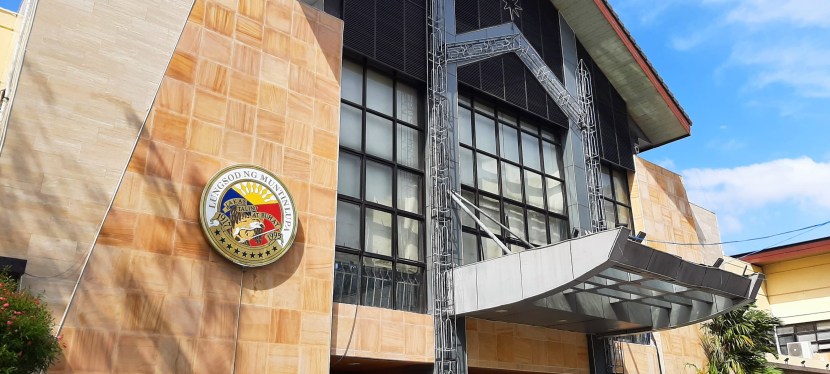
Recently in the City of Muntinlupa, the City Government added a new honor to its 2025 list of achievements with the certification as a drug-free work place, according to a news report by the Daily Tribune.
To put things in perspective, posted below is an excerpt from the news report of the Daily Tribune. Some parts in boldface…
The Muntinlupa City Hall has again been declared as a drug-free workplace, making it the first local government unit (LGU) in Metro Manila to secure this status for 2025, Mayor Ruffy Biazon said.
The LGU earned the drug-free certification for the first time in the year 2023.
Biazon noted that the reaffirmed recognition is a reflection of the city’s strengthened efforts and policies under ordinance No. 2024-030, along with cooperation with authorities including the Philippine National Police, the Department of Interior and Local Government, the City Health Office, and the Drug-Free Institution Oversight Committee.
The nine other barangay halls in Muntinlupa have also been declared to be a drug-free workplace.
Let me end this post by asking you readers: What is your reaction to this recent development? If you are a resident of Muntinlupa City, are you delighted with the newest certification for the city?
For more South Metro Manila community news and developments, come back here soon. Also say NO to fake news, NO to irresponsible journalism, NO to misinformation, NO to plagiarists, NO to reckless publishers and NO to sinister propaganda when it comes to news and developments. For South Metro Manila community developments, member engagement, commerce and other relevant updates, join the growing South Metro Manila Facebook group at https://www.facebook.com/groups/342183059992673
Welcome back my readers, YouTube viewers and all others who followed this series of articles focused on YouTube videos worth watching. Have you been searching for something fun or interesting to watch on YouTube? Do you feel bored right now and you crave for something to see on the world’s most popular online video destination?
I recommend you check out the following videos I found.
#1 Ashleigh Burton Reacts To Full Metal Jacket – A few months ago, my YouTube series post included several reaction videos of Stanley Kubrick’s Full Metal Jacket. Recently Ashleigh Burton posted her own Full Metal Jacket reaction video and I can say that it is very enjoyable to watch as the YouTuber (who is a jolly person) had her own bouts of laugh-out-loud moments reacting to it. Watch Ashleigh Burton’s video below.
#2 Ghost in the Shell’s Relevance Analyzed – I was still in college the first time I saw the 1995 anime feature film Ghost in the Shell on home video. While I enjoyed the action and the high-quality visuals (2D animation mixed with computer-generated graphics), I was unable to grasp the story and its many philosophical messages within. To really enjoy it and understand Masamune Shirow’s concepts, watching Ghost in the Shell should be done with patience and the right mindset. Fortunately, a YouTuber took the time to replay the anime feature film and paid close attention to the many details within. Indeed, Ghost in the Shell is more relevant than ever today as it tackled hacking, cybersecurity, identity and artificial intelligence early on. To find out more, watch the video below.
#3 Yakisoba In Japan – You like Yakisoba? Yakisoba is a Japanese noodle stir-fried dish and it first appeared in food stalls in Japan about a century ago. There are lots of places in Japan that offer yakisoba to customers and there are also variants of it depending on where you find it. In the city of Kobe (the same city that got ravaged by a massive earthquake in the mid-1990s) is a Yakisoba shop that serves a lot of customers each day. That means something must be really good with the yakisoba. Watch and learn from the video below.
#4 Do You Trust James Gunn? – I never bothered to watch James Gunn’s Superman movie this year. In fact, when it was announced that Gunn and his partner would start a whole new line of DC Comics superhero movie projects under the Warner Bros. banner a few years ago, I was never excited nor interested. I saw Gunn’s work in Guardians of the Galaxy (he wrote and directed it) and the 2004 Dawn of the Dead remake (he wrote it) and neither film was worth replaying. I’m not saying Gunn is a bad filmmaker, I just don’t find his work compelling enough and box office numbers don’t change a thing. He also directed The Suicide Squad which ended up as a commercial disappointment. When it comes to cinematic superhero works, there are reasons why long-time superhero fans and comic book readers don’t trust Gunn which you can learn from the videos below.
#5 Austria Pushes Back Against Mass Migration – Right from the top, Austria made decisive moves to push back against the flow of mass migration and made it clear they want to preserve their culture and prioritize their citizens. It has been over ten years since Germany – under Angela Merkel – committed a huge blunder by opening its borders to so many people from the Middle East and Africa which affected other European nations negatively. It is obvious that the high amount of so-called refugees already in Europe collectively have no desire to assimilate with the culture and norms of the nations they entered, and they want more social benefits and more money at the expense of the citizens. Austria itself had enough and you can find out how they pushed back against mass migration by watching the video below.
The 3rd quarter growth of only 4% the Philippines achieved has been on people’s minds a lot lately. As such, the country is at risk of falling behind its neighbors in Southeast Asia in terms of economic growth and gross domestic product (GDP) per capita, according to a BusinessWorld news report.
To put things in perspective, posted below is an excerpt from the news report of BusinessWorld. Some parts in boldface…
The Philippine economy is at risk of further falling behind its Southeast Asian neighbors, an economist said, noting it may take two years to catch up with Vietnam and up to 70 years to catch up with Singapore.
“(T)he Philippines could find itself lagging behind if alleged public spending issues continue to divert attention and resources away from the structural reforms needed to accelerate economic development,” Bank of the Philippine Islands (BPI) Lead Economist Emilio S. Neri, Jr. said in a commentary on Wednesday.
In the third quarter, Philippine gross domestic product (GDP) grew by 4%, its slowest pace in over four years amid slower household and public infrastructure spending as the flood control scandal dampened investor and con-sumer sentiment.
In the nine months to September, GDP growth averaged 5%, putting the government’s 5.5%-6.5% full-year growth target further out of reach.
“The Philippine economy is growing, but not enough to close the economic gap with other countries,” Mr. Neri said.
He noted the Philippine GDP per capita is lower compared with other economies in the region. Citing International Monetary Fund (IMF) data, he said the Philippines’ GDP per capita stood at $4,078 in 2024.
“At the current growth rate, it would take the Philippines two years to catch up with the GDP per capita of Vietnam, 4 years with Indonesia, 14 years with Thailand, 26 years with Malaysia, and 70 years with Singapore, assuming their incomes remain stagnant. In reality, their GDP per capita continues to grow, which means the gap could persist or even widen,” Mr. Neri said.
The Philippines lagged behind Singapore which had a GDP per capita of $90,674 in 2024, followed by South Korea ($36,128), Japan ($32,498), China ($13,312), Malaysia ($12,540), Thailand ($7,491), Indonesia ($4,958) and Vietnam ($4,535).
“Before the pandemic, the Philippines had a higher GDP per capita than Vietnam, but has since been overtaken. At current trends, it would take the Philippines two years to catch up with Vietnam, but that gap could increase to 13 years by 2044,” Mr. Neri said.
The BPI economist said the Philippines needs structural reforms to accelerate growth in order to close the widening gap with its neighbors.
“The current economic model of the country is not enough, as shown by the country’s inability to grow faster than 6% in recent years,” he said.
Mr. Neri said the economy has been “too reliant” on consumer spending, driven by overseas Filipino worker (OFW) remittances and the business process outsourcing industry.
“There is a need to diversify its sources of growth. The economy must improve in terms of production, especially in agriculture and manufacturing, as they will allow the economy to be more self-sufficient and to reach foreign markets. These industries have been critical to Vietnam’s success and could play a similar role for the Philippines,” he said.
However, Mr. Neri said implementing these reforms will be hard if the government lacks focus.
“Public spending issues divert fiscal resources and policymaking focus away from long-term development priorities. Efforts to strengthen safeguards against potential issues in government spending are essential, enabling the country to work on structural reforms that could improve the economy,” he said.
Let me end this post by asking you readers: What is your reaction to this recent development? What do you think should the government do to accelerate economic growth?
With the weakening economic growth and growing socio-economic uncertainty affecting the entire Philippines, prominent business groups reaffirmed their commitment to invest and create jobs in the country, according to a Manila Bulletin news report.
To put things in perspective, posted below is an excerpt from the news report of the Manila Bulletin. Some parts in boldface…
Six prominent groups representing the business sector reaffirmed their commitment to invest and create jobs in the Philippines amid weakening sentiment in the economy, which is fueled by what they described as a “political turmoil” stemming from the ongoing corruption scandal.
In a rare joint statement sent to the media moments after a pivotal reshuffle in the administration’s economic team, the business groups emphasized that they remain committed to supporting the Philippine economy.
“While the current political turmoil raises understandable concerns, we stress that the country’s long-term fundamentals remain strong; anchored by a well-regulated financial system, a stable banking sector, and companies that continue to invest in and believe in the Philippines,” the groups said on Monday, Nov. 17.
The statement was signed by Makati Business Club (MBC), Management Association of the Philippines (MAP), Philippine Chamber of Commerce and Industry (PCCI), Financial Executives Institute of the Philippines (FINEX), Philippine Finance Association, and Institute of Corporate Directors (ICD).
In a statement that essentially serves as a pitch to potential investors, the six business groups said that the institutions safeguarding local markets “continue to operate independently and rigorously.”
The groups cited the Bangko Sentral ng Pilipinas (BSP) and the Securities and Exchange Commission (SEC) as among the most reliable government partners when it comes to businesses.
Both the BSP and the SEC uphold regulatory frameworks aligned with global standards, ultimately ensuring market integrity, prudent risk management, and strong investor protection, they said.
“The Philippines continues to meet international benchmarks on capital adequacy, disclosure requirements, and corporate governance,” the groups said.
The business groups also took note of the corporate earnings of publicly listed companies, which reflect the economy’s underlying strength.
They noted that even during periods of global instability, such as the Covid-19 pandemic, companies continued to demonstrate resilience with growing revenues and stable margins.
Further, the groups said that investment sentiment in the country remains robust, with gross fixed capital formation ranging between 22 percent and 27 percent of gross domestic product (GDP) over the last 10 years.
“This ongoing level of capital spending, mainly driven by business growth, clearly indicates that Philippine companies continue to build capacity, expand operations, and invest in the country’s long-term prospects,” the statement read.
While upholding optimism, the six business groups stressed that investor confidence is influenced not only by economic fundamentals but also by governance.
Let me end this post by asking you readers: What is your reaction to this recent development? Does the joint statement of the prominent business group boost your confidence about the future of the country? Do you think the Philippine economy will be able to bounce back strongly next year? Does the continuing media coverage of the flood control corruption scandals and investigations continue to bother you?
In a new move against worldly evil and Islamic terrorism, United States President Donald Trump revealed his intention to officially declare the Muslim Brotherhood a terrorist organization and already the final documents are being prepared behind the scenes, according to a news report by Newsmax.
For starters, watch below the related news video from Sky News Australia.
To put things in perspective, posted below is an excerpt from the report Newsmax. Some parts in boldface…
President Donald Trump told Just The News on Sunday that he will designate the Muslim Brotherhood as a foreign terrorist organization.
Trump said “final documents are being drawn” and that “it will be done in the strongest and most powerful terms.“
Trump has weighed such a move since his first administration. The Muslim Brotherhood — an Islamist movement founded in Egypt almost a century ago with chapters, political parties, and affiliated groups around the world — has long been accused by critics of fueling extremism and destabilizing the Middle East.
Israeli Prime Minister Benjamin Netanyahu thanked Trump for his plans to designate the Muslim Brotherhood as a terror group, The Jerusalem Post reported.
“I commend President Trump for outlawing the Muslim Brotherhood,” he said. “This is an organization that endangers stability in the Middle East and beyond. That is why the State of Israel has outlawed parts of the organization and will continue to do so.“
Last week, Texas Gov. Greg Abbott designated both the Muslim Brotherhood and the Council on American-Islamic Relations (CAIR) as “foreign terrorist organizations and transnational criminal organizations,” according to Just The News.
Republicans in the House and the Senate, as well as some Democrats, have urged the State Department to designate the Muslim Brotherhood as a foreign terrorist organization.
Let me end this piece by asking you readers: What is your reaction to this development? Do you support Trump’s move to officially declare the Muslim Brotherhood a terrorist organization? Are you aware of the Muslim-majority nations that officially opposed the Muslim Brotherhood? Were there Islamists who intimidated you or invaded your local community over the past six months?