Retro Gaming Ads Blast – Part 2

Welcome back readers, fellow geeks and electronic gaming fans!

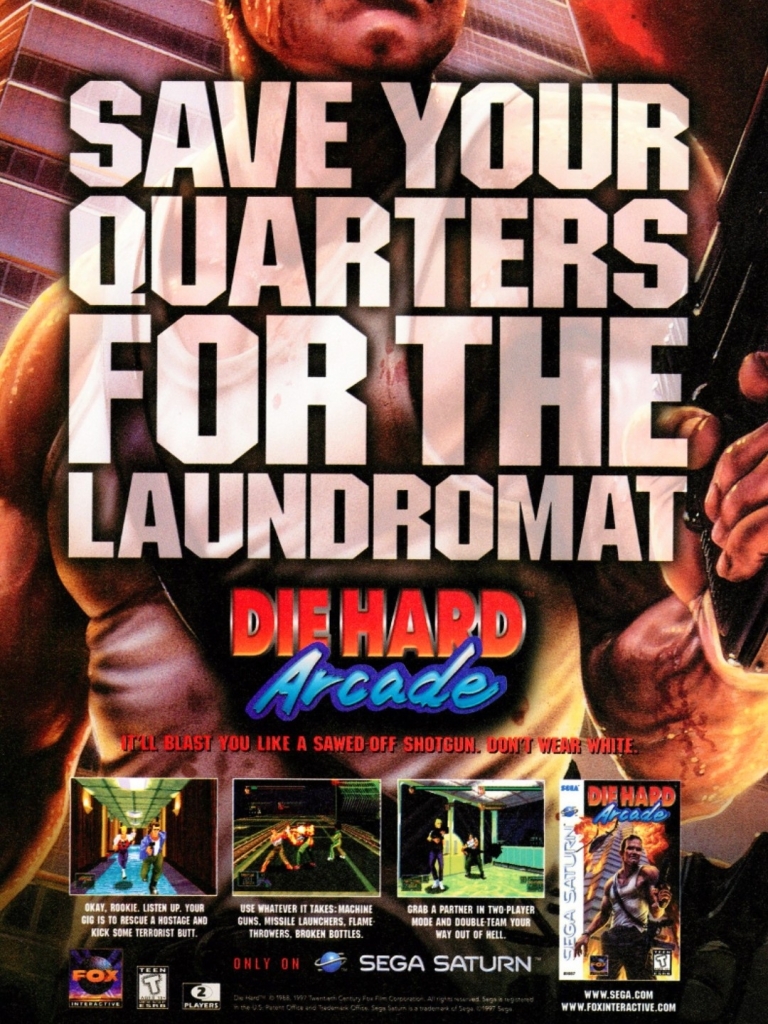
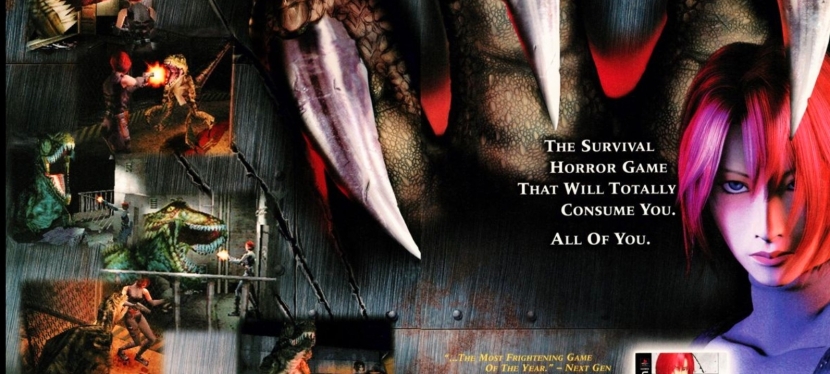
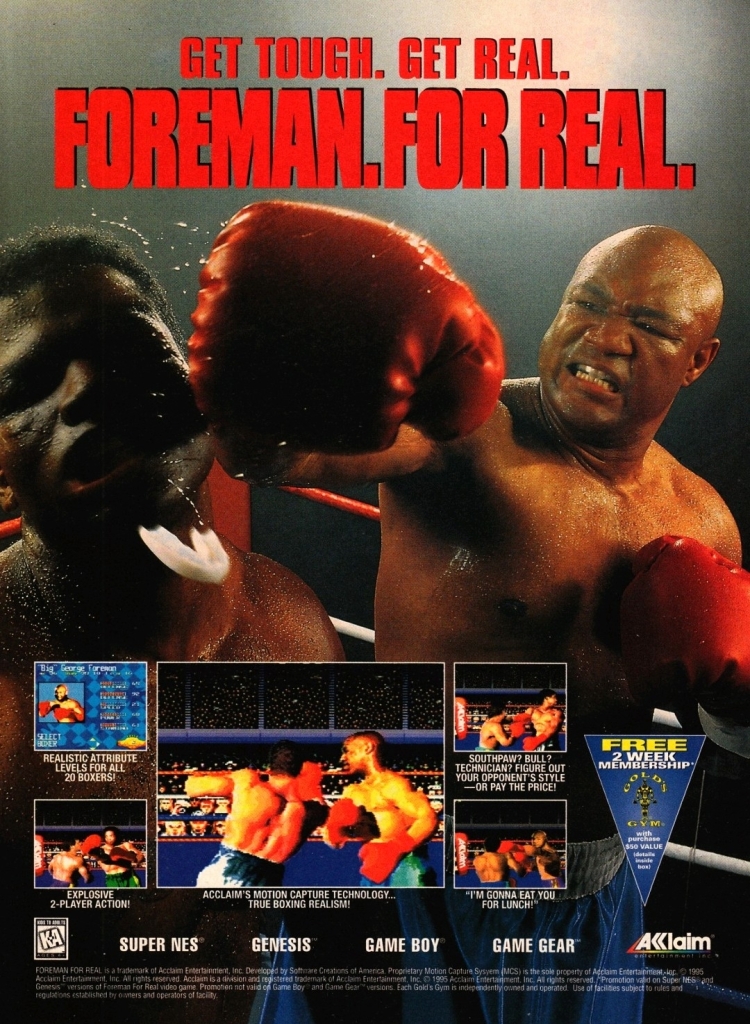
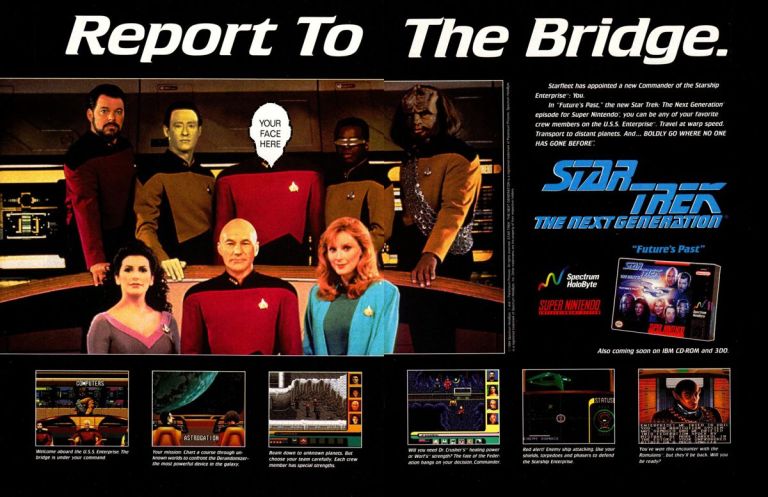
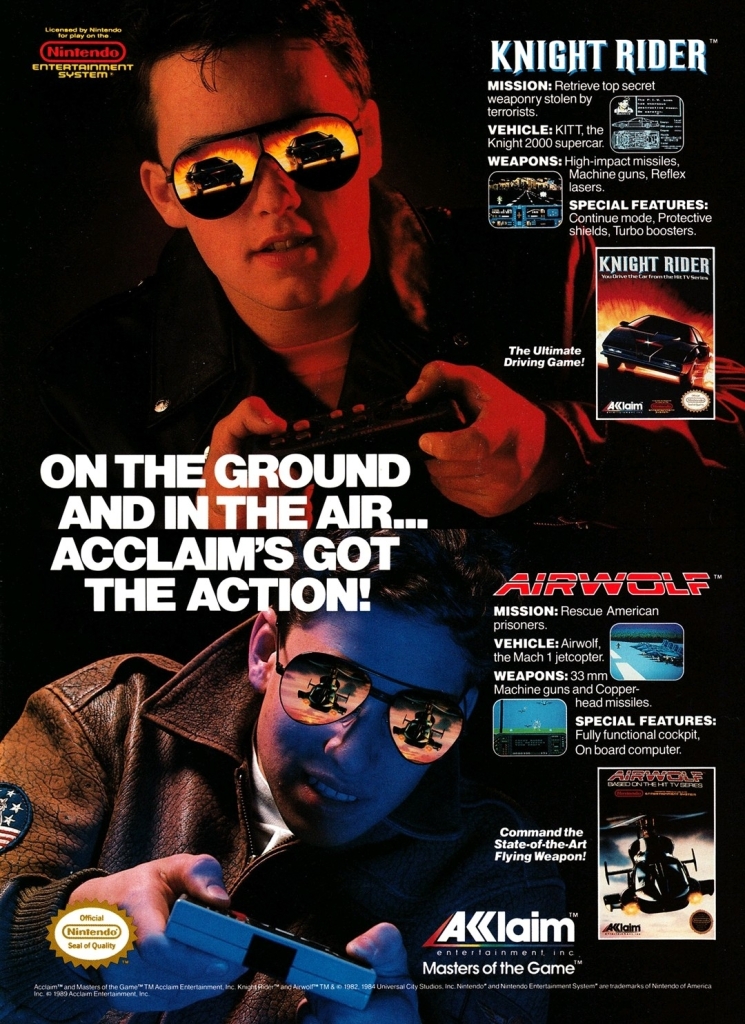
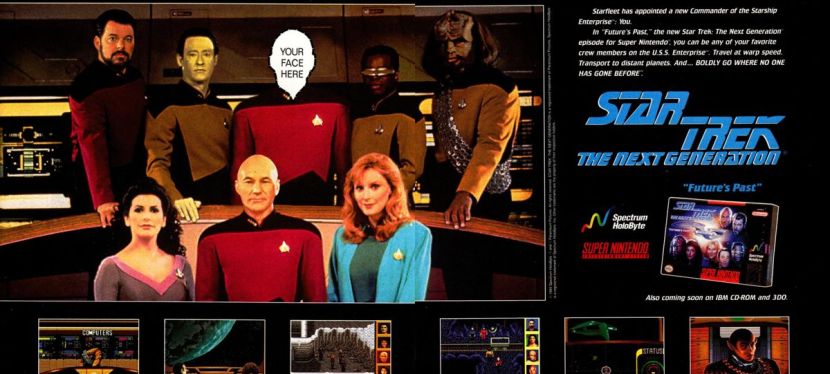
In this edition of the Retro Gaming Ads Blast (RGAB) series, we will examine print ads from the 1980s and 1990s that caught my attention and I will explain why these are worth look back at.

For the newcomers reading this, Retro Gaming Ads Blast (RGAB) looks back at the many print ads of games (console, arcade, computer and handheld) that were published in comic books, magazines, flyers and newspapers long before smartphones, social media, the worldwide web and streaming became popular. Back in the old days, many gamers trusted the print media a lot for information and images about games.

With those details laid down, here is the latest batch of retro gaming print ads for you to see and enjoy…

1. Popeye multiplatform print ad

A fine example of promoting the Popeye video game on multiple platforms visually.

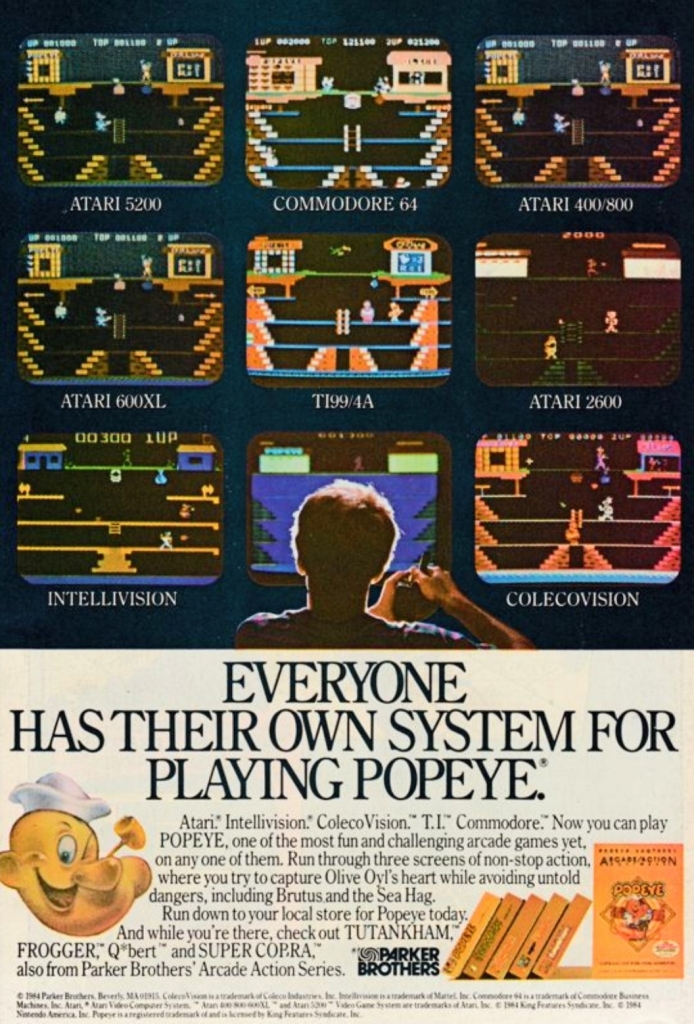
During the early 1980s, an arcade game based on Popeye was released and it became a hit with gamers who lined up and inserted coins to play. That game, which had three stages, was eventually ported by Parker Brothers to multiple platforms of Atari, ColecoVision, Intellivision, T.I. and Commodore.

The print ad you see above is a classic display of how one particular game appeared as a multiplatform release. The screenshots showed different versions of the Popeye game on multiple Atari platforms plus the others. See how different the game looks on each platform? The level of visual details and elements varied from one another as each machine had different specs that Parker Brothers had to adjust to. This is a fine example of promoting one game for different machines for those who love video games.  

2.  Kool-Aid Man Video Game print ad

I never got to play this Kool-Aid Man video game.

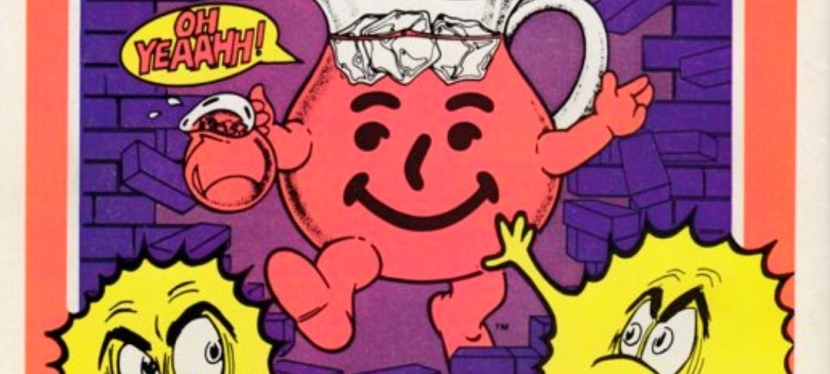
Remember Kool-Aid? For the newcomers reading this, Kool-Aid was a very popular product line of flavored juice drinks sold in powdered form. I myself used to mix Kool-Aid with ice-cold water and enjoyed drinking it. In 1954, a promotion of Kool-Aid with a touch of entertainment happened by highlighting the character Kool-Aid Man (famously known as the walking and talking pitcher filled with Kool-Aid juice). In later years, the Kool-Aid Man was often shown breaking through walls saying the line “Oh yeah!”.

The Kool-Aid Man gained tremendous attention as a pop culture figure in the 1980s when a new series of advertisements and promotions happened branching into video games and even comic books. The above print ad was a clever move to promote Kool-Aid as a drink as well as a video game for the Intellivision and the Atari 2600 consoles. Even if you were not too fond of video games in the 1980s, the Kool-Aid game ad would still make you think about the drink. Clever and entertaining!  

3. Zombies Ate My Neighbors game print ad

I saw the 2-page ad many times in comic books and video game magazines.

Going into the 1990s, Konami’s print ad of the video game Zombies Ate My Neighbors (for Super Nintendo Entertainment System and Sega Genesis) appeared a lot in the comic books I read when I was much younger. Having seen lots of horror movies – including zombie flicks – the ad easily caught my attention not because of the screenshots but because of the visual style used. For one thing, there was this 1950s America-inspired imagery on the photo of the scared woman with three zombies slowly approaching her. As for the game itself, there were plenty of small-sized screenshots that had lots of interesting details and pixel art (note: 3D polygons in video games were not yet common back then) which gave me a clear idea that it was a humor and horror-laced 2D adventure. Not only that, the text descriptions combined with the fake quotes added zest into the presentation. After having examined all the details carefully, I really felt like Zombies Ate My Neighbors would be a fun-filled game to play on the SNES.

4. Lunar: The Silver Star print ad

With anime artwork used, it was easy to have the impression that the original Lunar game was based on an existing anime series or movie.

In the early 1990s, Game Arts developed and released the Japanese role-playing game (JRPG) Lunar: The Silver Star on the Mega CD platform in Japan which in some ways was also a technological breakthrough – the game came with full motion video (for short videos), animated images, and CD-quality sound (that really made the soundtrack lively to listen to). After achieving critical and commercial success in Japan, the game was picked-up by Working Designs to be localized and released in the North American market for the Sega CD (the American counterpart of the Mega CD) platform. In promoting the game for American Sega CD owners as well as American gamers in general, a print ad highlighting anime images with five screenshots and only a few words was published on both comic books and magazines.

Even though Lunar: The Silver Star’s core concept was never described in the ad, the anime imagery was still eye-catching and the chosen screenshots gave viewers a preview of the gameplay and the animated images. That being said, it was no surprise that gamers who happened to be a bit interested in anime noticed the print ad. At the same time, the ad gave some gamers the impression that Lunar was a game based on an existing anime franchise. This approach on game advertising was daring and it happened at a time when Japanese RPGs had a limited audience among gamers in North America.

5. Lunar: Silver Star Story Complete print ad

In the 2nd half of the 1990s, a remake of Lunar: The Silver Star was released in Japan titled Lunar: Silver Star Story for Sega Saturn (1996), Sony PlayStation (1998) and Windows PC (1998). While it still maintained the 2D visuals for presentation, gameplay and exploration, the remake had smooth anime sequences, new artworks, better sound effects and music. Working Designs pounced on the opportunity to localize the game in America for PlayStation and released it in 1999 with the title Lunar: Silver Star Story Complete. Not only did Working Designs work hard on localizing the game (the English dubbing and singing of the game’s songs were meticulously done), they released it with a very lavish packaging with the dedicated fans and collectors in mind.

By looking at the above print ad that magazines published, Working Designs highlighted the positive feedback quotes from EGM, Gamers’ Republic, PSM and Official U.S. PlayStation Magazine to convince gamers Lunar: Silver Star Story Complete is a great game. While the screenshots showed what kind of eye candy gamers could expect, Working Designs made sure that they would know that the lavish package includes 4 discs (2 game discs, 1 music CD and 1 CD that had video documentary of the making of Lunar), a full-color map in the form of a cloth, and a hardbound art book and instruction manual.

Considering the dynamism of the Lunar: Silver Star Story Complete print ad and the game’s packaging, I can only speculate that Working Designs had to do it aggressively because the gaming landscape changed dramatically as 3D polygonal graphics became the standard while lots of other Japanese RPGs from different publishers were released in 1999 (including the sequels Suikoden II and Final Fantasy VIII) and many of them had more elaborate game designs and visual presentations. Eventually market forces and unfortunate business events led Working Designs to closing down permanently in 2005.

6. Star Wars: Jedi Arena print ad

Remember when Luke Skywalker tested his lightsaber skills with the floating Seeker in the 1977 movie?

Back in the early 1980s, Parker Brothers was very active releasing games on the Atari 2600 console which my family had. At that same time, Star Wars was very popular (and without the wokeness and identity politics garbage of Kathleen Kennedy and woke Disney) and any new game based on the sci-fi franchise was something to be excited for. In the above print ad of Star Wars: Jedi Arena, an artwork showing the iconic her Luke Skywalker testing his lightsaber skills with the floating Seeker ball was displayed and located between Luke’s legs is a monitor showing the screenshot of the game. Looking at the text description, Parker Brothers creatively focused on the aspect of the Jedi way of using the lightsaber interacting with the Seeker ball. Having played the game myself, I can say the ad was creative and pretty much captured the core concept of the game.  

+++++

Thank you for reading. If you find this article engaging, please click the like button below, share this article to others and also please consider making a donation to support my publishing. If you are looking for a copywriter to create content for your special project or business, check out my services and my portfolio. Feel free to contact me with a private message. Also please feel free to visit my Facebook page Author Carlo Carrasco and follow me on Twitter at  @HavenorFantasy as well as on Tumblr at https://carlocarrasco.tumblr.com/ and on Instagram at https://www.instagram.com/authorcarlocarrasco

Play over 1,000 retro games on Xbox with Antstream Arcade!

If you are long-time gamer who misses the many fun games from them past, then you will delighted to know that you can play over one thousand retro games on Xbox Series X, Xbox Series S and Xbox One with the Antstream Arcade service which is now available for $29.99 annual subscription and $79.99 lifetime pass.

For the newcomers reading this, Antstream Arcade is the grand gaming arcade with over 1,300 classic games from the 1980s to the 2000s that were released across varied platforms such as the video arcade, Super Nintendo Entertainment System (SNES) and the PlayStation One to name a few. Antstream Arcade on Xbox platforms just made the global Xbox ecosystem even more exciting to those who love playing multiple types of games. Posted below is the official Xbox launch trailer of Antstream Arcade!

To gain a deeper understanding of Antstream Arcade on Xbox, posted below is an excerpt from the Xbox.com article. Some parts in boldface…

We’re excited to share that Antstream Arcade, a cross-platform streaming platform focusing on retro games, is now available on Xbox Series X|S and Xbox One, bringing its current library of over 1,300 retro games to Xbox consoles. Jump in today and play classics like Mortal Kombat, Pac-Man, Asteroids, and Earthworm Jim from your couch. Experience classic PS1 and Nintendo games such as Loaded, Indiana Jones Greatest Adventures, and Super Star Wars with your Xbox controller in hand. With Antstream Arcade you can experience these games today, fully optimized, and ready to go at the push of a button. Simply create an account, sign in, and start playing!

The Importance of Game Curation to Antstream – When the company was formed in 2013, one of the key motivations behind the product was preservation. There are decades of incredible games which are no longer available legally. Sure, many of these titles can be downloaded and played with emulators and ROMs but that experience is uncomfortable. The configuration of Emulators and ROMs is a technological barrier for many gamers.

Antstream’s easy ‘pick up and play’ mechanic makes these games accessible to everyone. In my position as Customer Support manager, I’ve had emails from six-year-old kids telling me that they’ve had a blast playing Double Dragon. Another recent email was from a 72-year-old who needed help completing Dizzy. Antstream is incredibly easy to use.

“Many of us grew up playing these games, so the ability to stream them on Xbox consoles and share these experiences with our friends and family is incredible,” said Sarah Bond, CVP of game creator experience and ecosystem at Microsoft. “We’re pleased that with Microsoft for Startups Founders Hub’s technology benefits and Azure cloud services we can help enable Antstream to reach more players.

Coming back to the preservation aspect. It’s painful to see games lost to time. Antstream is a fantastic platform for people to experience games that they have never played before. Also, to find and discover games that were cancelled or not released. We are crafting a catalogue of titles which raise awareness of gaming history and keep the spirit of their creators alive.

This has been recognized by TIGA, Antstream has won an award for games curation.

New’ Retro Games on the Platform –  A unique aspect to Antstream’s approach to game curation is how we support independent developers who are continuing to release games on retro platforms. For example, Turbo Tomato is an Amiga game released last year. It has become hugely popular thanks to Antstream. We also include these in our challenges and tournaments.

Challenges and Tournaments – Antstream is also creating longer lasting appeal with classic games with our unique challenge system. These titles are back-engineered to create a competitive system which allows you to experience these well-loved titles in new ways. These are ‘game modes’ such as ‘one-life challenges’ that extend the life of these titles and create new interest in the community.

In the past 12 months, we have introduced a new mode called Giant Slayer. This is centered around our growing community. One person sets up a challenge and then is presented to the community. They must try and beat the challenger for kudos and precious gems. Giant Slayer challenges are created by the players for other players. This keeps our community constantly engaged and involved in the product in a greater way than other streaming services.

We also feature tournaments. Here you can pit your high scores and feats against others in games like Dig Dug, Marble Madness, Double Dragon and Mortal Kombat. Scoring highly in these contests payout gems that you can spend on other games or for entering future tournaments.

The ‘power’ of AntstreamSpeaking to Microsoft Game Dev Blog about how Azure powered Antstream, Founder and Chief Executive Officer at Antstream Arcade Steve Cottam shared, “Microsoft was the right technical ally for us because it has a high density of servers globally, which was how we knew we could scale our service. By connecting gameplay to a nearby Azure virtual machine, we make sure that the time between a player pressing a controller button and something appearing on their screen is less than 50 milliseconds.

In addition, there is this very in-depth video that answers a lot of questions about Antstream Arcade posted below for you all…

Having Antstream Arcade on Xbox is very appealing to me personally. I still have some fondness of games I played long ago on the arcades such as Elevator Action Returns, Star Wars, Defender, Robotron: 2084, BurgerTime, Cloak & Dagger, Fighter’s History, Double Dragon, Space Invaders and Asteroids plus so many others I cannot just write down here. Not only that, Antstream Arcade is also an opportunity for me to play many, many other games I never got to play such as Indiana Jones’ Greatest Adventures (SNES), Metal Dragon (MSX), and more.

As mentioned in the Xbox.com article, it was indeed a great move for Microsoft to be the definitive technical ally for the Antstream Arcade developers not only because of the established global servers available but also because the retro gaming service fits right in with the Xbox ecosystem of games and the global userbase of millions.

The Cloak & Dagger arcade game that had a severely limited release decades ago has gotten more available for millions of users via Antstream Arcade on Xbox.
The arcade hit Elevator Action Returns.
The Super NES version of Zombies Ate My Neighbors.
Star Wars arcade game.
Indiana Jones’ Greatest Adventures on SNES.

One of these days, I will avail of Antstream Arcade to make the gaming experience on my Xbox Series X even more in-depth. It will be a matter of timing, cost, the number of games updated and how the Antstream Arcade developers will be able to fix whatever bugs they will encounter as the service has just launched. If you are already availing of the retro games service and you encountered technical glitches, you better report to the developers online.

To see what games to expect to Antstream Arcade, check out Pure Xbox’s very long list by clicking here.

In concluding this post, posted below are Xbox-related videos for your enjoyment.

+++++

Thank you for reading. If you find this article engaging, please click the like button below and also please consider sharing this article to others. If you are looking for a copywriter to create content for your special project or business, check out my services and my portfolio. If you want to support my website, please consider making a donation. Feel free to contact me with a private message. Also please feel free to visit my Facebook page Author Carlo Carrasco and follow me on Twitter at  @HavenorFantasy as well as on Tumblr at https://carlocarrasco.tumblr.com/ and on Instagram at https://www.instagram.com/authorcarlocarrasco/.

What to watch on YouTube right now – Part 7

Have you been searching for something fun or interesting to watch on YouTube? Do you feel bored right now and you crave for something to see on the world’s most popular online video destination?

I recommend you check out the following topics and the related videos I found.

Raiders of the Lost Ark videos

If you are feeling nostalgic about the Indiana Jones franchise and want to revisit the very first movie Raiders of the Lost Ark, then you are not alone. The new movie Indiana Jones and the Dial of Destiny (made by the woke Disney company and handled by the unpopular Kathleen Kennedy with James Mangold as director) turned off a lot of long-time fans and this incidentally created renewed interest about the very first movie from 1981. For the newcomers reading this, Indiana Jones is the joint creation of Steven Spielberg and George Lucas and they eventually collaborated together in making four Indy movies from 1981 to 2008. To learn more about Raiders of the Lost Ark and how the movie came to be, watch the videos below…

Starfield is approaching and you can prepare yourselves for it

Starfield, the epic sci-fi role-playing game (RPG) from Bethesda (Skyrim, Fallout 4), is coming out on Xbox Series X, Xbox Series S, Windows PC plus Xbox Game Pass and PC Game Pass with an official release date of September 6, 2023. For those of you who missed out on the recent Xbox Games Showcase, you can still catch up and learn more about the Xbox-exclusive Starfield by watching the videos below…

Planetshakers’ Worthy is the Lamb music video

Recently, Planetshakers released online the music video of their worship song Worthy is the Lamb (note: Words by Noah Walker and Andy Harrison, Music by Joth Hunt). The said song is indeed holy, beautiful and will help you move closer to the Lord. Just take note that this Planetshakers worship song is not to be confused with Hillsong Worship’s song with the same title. Watch the official Planetshakers music video of Worthy is the Lamb and the story video below…

Get ready for Forza Motorsport (2023) this October

It took Team Xbox and Turn 10 a long time but they finally revealed that their much-anticipated Forza Motorsport (2023) will be released on October 10, 2023 only on Xbox Series X, Xbox Series S, Windows PC plus Xbox Game Pass and PC Game Pass. In relation to the announced release date, Turn 10 released a new trailer as well as an in-depth examination of the game. Watch the following videos of Forza Motorsport (2023) below…

A look back at Indiana Jones’ Greatest Adventures

For those of you who are still feeling nostalgic or still craving for more Indiana Jones-related content, be aware that way back in the mid-1990s, there was an official video game of the cinematic icon – Indiana Jones’ Greatest Adventures. While I myself played the Super Star Wars games on the Super NES back in those days, I never got to play Indiana Jones’ Greatest Adventures which itself was an official adaptation of Raiders of the Lost Ark, Indiana Jones and the Temple of Doom and Indiana Jones and the Last Crusade and made with side-scrolling adventuring in mind with a few Mode 7 sections set up to prevent the game from being too repetitive. Check out the following videos below…

+++++

Thank you for reading. If you find this article engaging, please click the like button below, share this article to others and also please consider making a donation to support my publishing. If you are looking for a copywriter to create content for your special project or business, check out my services and my portfolio. Feel free to contact me with a private message. Also please feel free to visit my Facebook page Author Carlo Carrasco and follow me on Twitter at  @HavenorFantasy as well as on Tumblr at https://carlocarrasco.tumblr.com/ and on Instagram athttps://www.instagram.com/authorcarlocarrasco

A Look Back at Flashback (Super NES)

Disclaimer: This is my original work with details sourced from playing Flashback: The Quest for Identity and doing personal research. Anyone who wants to use this article, in part or in whole, needs to secure first my permission and agree to cite me as the source and author. Let it be known that any unauthorized use of this article will constrain the author to pursue the remedies under R.A. No. 8293, the Revised Penal Code, and/or all applicable legal actions under the laws of the Philippines.

We live in an age in which software exclusivity defines not only the relevance of game consoles but also nature of the entire video game industry right down to the many varied communities of very avid fans (and fanboys).

While the Super Nintendo Entertainment System (SNES or Super NES) and Sega Genesis each had their own exclusive games back in the 1990s, there was one particular game that was made for and released on not just one, not two but rather on more than fifteen different platforms – both consoles and computers – starting with Amiga way back in 1992. That game is none other than Flashback: The Quest for Identity which I first played on our Super NES back in 1994.

The cover of the game box.

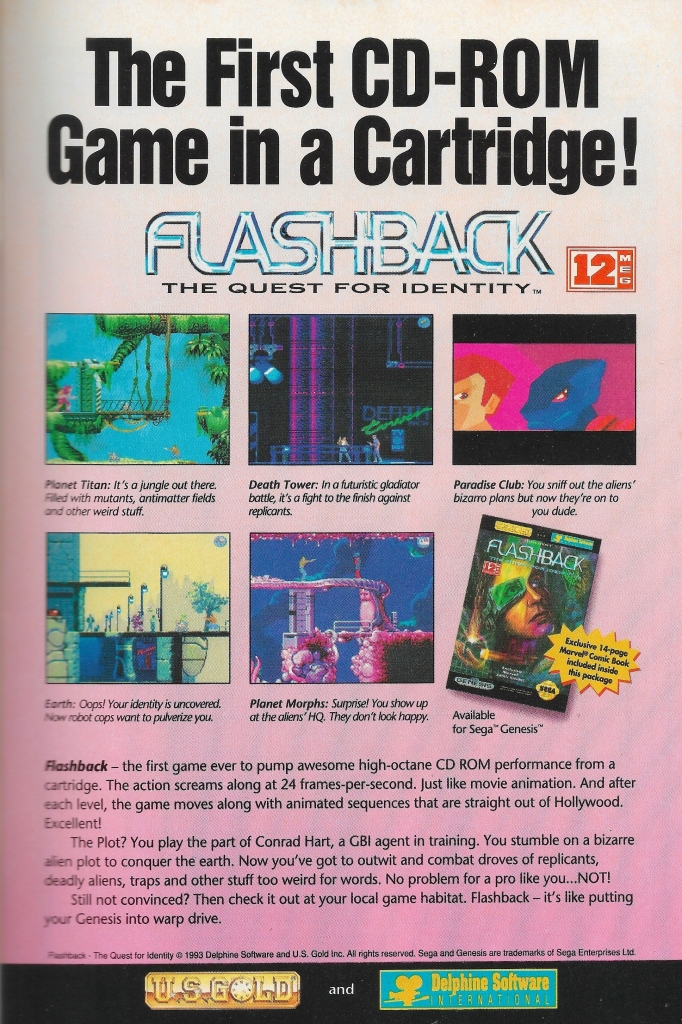
For the newcomers reading this, Flashback was a 2D side-scrolling adventure game in the form of a cinematic platformer (note: similar to Prince of Persia and Out of This World) with a strong flavor of science fiction. It was cinematic in the sense that all the in-game animation were rotoscoped resulting unique smoothness combined with hand-drawn backgrounds and the computer-generated cutscenes were used in key parts of the game as the story progressed. Flashback on SNES in America even came with a Marvel Comics-published Flashback comic book and on the rear of the SNES game box were the words “The first CD-ROM game in a cartridge!”

A Flashback remake was released in 2013, followed by a port of the original game released on Sega Dreamcast in 2017, and a remastered version got released for varied platforms in 2018.

I got to play that game at a time when I have not even started playing Final Fantasy II (AKA Final Fantasy IV), Final Fantasy III (AKA Final Fantasy VI) and other great role-playing games (RPGs) of the Super NES. I also remember that Flashback was a nice change of pace for me after playing Super Star Wars: The Empire Strikes Back.

With those details laid down, here is a look back at Flashback: The Quest for Identity, released on Super NES in 1993 by U.S. Gold and developed by Delphine Software International.

The start and options screen.

Early story

The story begins with Conrad running away from two armed persons chasing him. He flies away riding a solo vehicle but those chasing him (riding a huge vehicle) managed to get close and blast his vehicle causing to crash into the forest.

Sometime later, he wakes up and accidentally pushes a mechanical cube to fall down. He climbs down to reach it and activates it. The cube displays a holographic video of himself telling him that he recorded it without remembering it. As Conrad watches, he learns that he must contact a friend named Ian who can explain important things to him.

After viewing the message, Conrad sets off to find his way out of the jungle and somehow get to Ian in New Washington…

Game design and quality

You have to pay close attention to what’s going on, what items do you have and what the in-game prompts tell you.

This game is not your typical fast-paced, action-oriented 2D side-scrolling adventure in which you move from left to right to progress. As it is a cinematic platform game by design complete with very specific controls, players will have to be patient, adaptive and strategic in order to learn how exactly you can control your character, what moves will be executed (and when to execute). For one thing, the very fluid 24 frames-per-second animation on your character limits you in terms of control as timing is required.

To do things properly, you have to execute specific controls. To ascend on a lift, you press Up and the Y button. To do a small jump, have your character stand still and then press Up and Y button. To go down on level (on foot, no lift), stand by the edge of a level then press Down and Y button. To run and hang on to a higher floor automatically, have your character stand still, press Right and Y button, press Y button (once your character moves) and watch him pull it off. With controls like these, the usual 2D platforming approach is out of the question. In my experience, these controls are indeed challenging but never impossible to learn and eventually I got proficient with the controls as I played more.

The in-game animation for the characters are very good and there is also a sensation of weight with your character. Falling straight down from a very high place is a big no-no.

Apart from character controls, you don’t just move Conrad from one screen to the next…you also should do key objectives along the way apart from engaging in action scenes (read: shooting). That being said, you must watch out for icons that appear on screen when your character steps on a particular spot that requires interaction. For example, if you stop by a terminal, an icon will appear serving as a prompt to start the interaction. Another example is when your character steps on the same spot as an item located at which you can pick up once prompted.

More on the action on the screen, you will encounter armed enemies as well as high-tech machines (including floating drones). To overcome them, doing straightforward shooting is not recommended as you have to be strategic before firing a shot. You have to learn how each enemy or machine moves, how much physical space is available right there and how you can maximize your limited time and space to overcome them. In fact, you will also be compelled to take advantage of whatever seconds you have while the enemies’ animation (between moves) take place. There will also be times when you need to have your character armed with the gun before jumping to a lower level where an armed enemy is located and on the lookout. Coming down armed gives you an advantage to shoot first at the enemy who

Considering the 24 frames-per-second animation, you will have to time your moves carefully, especially during moments when you face an armed enemy.

Apart from shooting, you can also use grenades which requires opening your inventory to select a grenade and then do your timing and calculation of the distance in order to pull of a successful throw and explosion. You can also throw stones to distract enemies or to apply weight on key platforms in order to open mechanical doors.

With regards to the quality of gameplay, Flashback is enjoyable but only if you get over its rather high learning curve with regards to the controls which themselves serve as the game’s advantage and even as a disadvantage. In addition to being patient and strategic, you will really have to pace yourself, think more and get used to the rather slow pace of the game in relation to its cinematic platformer design. I should state that as you keep progressing, there will be places, or new obstacles or new enemies that will compel you to change your tactics in order to overcome them. Anyone who is used to playing 2D side-scrolling games the fast and easy way might find the high learning curve and pacing of Flashback a turnoff but if they are willing to learn, adjust and pace themselves, only then can this game’s gameplay be really enjoyed.

Cut scenes like this move at a sluggish pace which shows the limitations of the SNES and cartridge technology.

As for the visuals, the obvious highlight here is the 24 FPS animation which is the result of rotoscoping and careful visualizing (note: observe those alien humanoids who morph into moving blobs). The rotoscoped animation, however, would not have been that effective had the quality of the art used for the backgrounds been made of lower quality. I can say that the background artworks here look pretty good even by today’s standards. The standout among them were the background artworks of Morph’s home planet which really looked very alien and creepy at the same time. What hurts this particular version of Flashback is the lackluster (read: choppy) frame rate whenever the computer-generated cinematic cutscenes (obviously they were meant for more powerful PCs) play which, in my experience, took me out of the story. There were also bouts of slowdown during the gameplay, especially when you encounter enough enemies that were animated sophistically.

With regards to narrative, Conrad is literally your avatar to learn, discover and interact with the many elements of the universe he is part of. There is obvious influence that the game makers took from the movie Total Recall as they crafted Conrad to be someone who lost his memory, moves on to regain it and do a lot of things as he realizes his true purpose and what is really at stake. Unlike Total Recall’s protagonist, Conrad himself is not too interesting mainly due to the way the in-game story was structured. Just play as Conrad and do what needs to be done to complete the game.

When it comes to understanding the narrative, you will have to do lots of reading. You will spot and read the short description of the prompts that appear. You’ll also have to read the on-screen text whenever your character talks with someone during the levels of the game. And there are the captions shown during the slow animated cutscenes.

Conclusion

The background artworks during the late stage of the game are great and truly creative with science fiction in mind.

I can clearly say that Flashback: The Quest for Identity on Super NESis fun and engaging mainly to those who are willing to adjust themselves to it. If you don’t have patience, if you are not willing to think while playing, if you cannot pace yourself and if you are not willing to learn all the specific controls of the game, then you should not be playing Flashback. It is a cinematic platformer and that should tell you that you will need to adjust to enjoy it.

Overall, Flashback: The Quest for Identity on SNES is recommended.

+++++

Thank you for reading. If you find this article engaging, please click the like button below and also please consider sharing this article to others. If you are looking for a copywriter to create content for your special project or business, check out my services and my portfolio. Feel free to contact me as well. Also please feel free to visit my Facebook page Author Carlo Carrasco and follow me at HavenorFantasy@twitter.com

A Look Back at Top Gear (SNES)

Disclaimer: This is my original work with details sourced from playing Top Gear and doing personal research. Anyone who wants to use this article, in part or in whole, needs to secure first my permission and agree to cite me as the source and author. Let it be known that any unauthorized use of this article will constrain the author to pursue the remedies under R.A. No. 8293, the Revised Penal Code, and/or all applicable legal actions under the laws of the Philippines.

Remember back in the early 1990s how impressive the Super Nintendo Entertainment System (SNES or Super NES) was when it comes to fulfilling your early expectations of the enhanced gaming experience aided by new technology?

Super Mario World was astounding the first time I got to play it on our Super NES. The same experience too I had with The Legend of Zelda: A Link to the Past.

And then there was our first Super NES racing game titled Top Gear (not to be confused with the popular motoring media franchise) developed by Gremlin Graphics and published by Kemco.

The game cover.

Concept and Game Design

Top Gear is a car-focused racing game that had over thirty tracks and creatively emphasized the global locations in it. The very meat of the game is its global tournament in which you need to finish at least in 5th place in order to qualify to join the next race.

Creatively, each race has courses that vary in distance, the sharpness of turns (as far as 2D graphics allowed), number of laps and, strangely enough, have certain obstacles that can distract or even surprise such as stones, iron plates and even trees.

Before choosing a car, you must pay attention to the maximum speed, acceleration, tire grip and fuel consumption.

On the player’s side, there are cars offered and they vary in terms of maximum speed, acceleration, tire grip and fuel consumption. Cars also have nitro which come in limited amounts and can be used to give you a boost

For its visual presentation, Top Gear is strictly a split-screen game even during times you play only single-player. In my experience, split-screen is more lively to watch when playing against a fellow human player.

Quality

I can say clearly that Top Gear was highly enjoyable to play, and it was more fun 2-player sessions. On the very gameplay itself, I enjoyed the high-speed challenges that include overtaking other cars on the road while trying to climb up the rankings enroute to the finish line. Speaking of challenges, the aspect of managing your fuel supply while dealing with speeding and overtaking others is memorable and there were times when my car ran out of gas and stopped because I was not able to make a pit stop during the race.

The pit stop itself can be an advantage or disadvantage depending on situations. If you are low on fuel and you still have a long way to go, you need to refuel at the pit stop. However, the more time you spend on the pit stop, the more your opponents traveled catching up with you or increasing their lead over you. There were also memorable times when I had sufficient fuel and my opponent had to refuel at the pit stop. While opponent was refueling, I just kept driving and used the nitro to increase my speed and keep on moving forward.

Split-screen all the time, even when you play single.

Going back to the fuel management aspect, there were times when my car ran out of gas and stopped. Suddenly, an AI-controlled car from behind hit my car and gave me some forward movement. There were a few, unexpected times that my gas-empty car got pushed enough to cross the finish line.

Visually, race courses are limited in the sense that the game only shows split-screen views. You always have a road to travel on which can suddenly turn left or right depending on the race course. What adds visual variety are the surroundings specifically the elements on the sides of the road (examples: the desert environment Las Vegas, the snow of Sweden, the rain forest trees of Brazil) and background art (example: the metropolitan view of Tokyo). Sprite scaling is limited but that is understandable given the limits of the Super NES. Even so, the feeling and look of 3D is sufficient.

Night driving in 2D.

While the sound effects of cars bumping, tires screeching and engines are satisfying, what really stood out is the soundtrack which, for the most part, is energetic and even encouraging enough to keep me and my friends playing. Barry Leitch produced the music and due to the lack of time provided to him, he had to literally recycle and arrange his other musical works from Lotus games.

Conclusion

One car still racing on the road with low fuel, the other car is in the pit stop refueling.

Top Gear was truly a well-made game and it succeeded not only in delivering a true console generation upgrade over our NES for console racing but also created lots of bouts of fun for me and my friends. In my experience, this Kemco-published game was the first true gem of multiplayer on the Super NES. Even by today’s standards, Top Gear remains unique and still is very enjoyable for anyone who loves 16-bit, 2-dimensional console racing.

Overall, Top Gear is highly recommended!

+++++

Thank you for reading. If you find this article engaging, please click the like button below and also please consider sharing this article to others. If you are looking for a copywriter to create content for your special project or business, check out my services and my portfolio. Feel free to contact me as well. Also please feel free to visit my Facebook page Author Carlo Carrasco and follow me at HavenorFantasy@twitter.com

A Look Back at Secret of the Stars (SNES)

Disclaimer: This is my original work with details sourced from playing Secret of the Stars and doing personal research. Anyone who wants to use this article, in part or in whole, needs to secure first my permission and agree to cite me as the source and author. Let it be known that any unauthorized use of this article will constrain the author to pursue the remedies under R.A. No. 8293, the Revised Penal Code, and/or all applicable legal actions under the laws of the Philippines.

Welcome back, video game enthusiasts, fans of Japanese role-playing games (RPGs), 1990s arts and culture enthusiasts, fellow geeks and video game collectors!

If you were already a gamer who enjoyed playing games at home with the Super Nintendo Entertainment System (SNES or Super NES) back in 1995, chances are you heard about the buzz about the hot RPGs that were released for the console at the time. Square released Chrono Trigger (which is now a classic) and Secret of Evermore while Capcom released Breath of Fire II.

That same year, Tecmo (the company best known for Dead or Alive video games) tried to score well with RPG enthusiasts and other SNES-owning gamers of North America by releasing Secret of the Stars which itself turned out to be the English-language version of the Japanese role-playing game (JRPG) Aqutallion.

This RPG caught my attention when I read about it in gaming magazines. After completing Final Fantasy II (actual title Final Fantasy IV) and Final Fantasy III (AKA Final Fantasy VI) on the SNES in 1994, there was a period several months when I was not able to play another RPG and had to settle with other types of games (note: I had a lot of fun with Super Star Wars: The Empire Strikes Back and Super Star Wars: Return of the Jedi). In the 4th quarter of 1995, I finally obtained a copy of the Tecmo-published RPG.

With those details laid down, here is a look back at Secret of the Stars (or Tecmo Secret of the Stars as presented on the game cover).

The cover of the game.

Early story

The story begins with a young lad named Ray who gets oriented with some people at the house of Mrs. Sonya. By merely asking a question, she reminds him about his personal search for a crest which once belonged to his father. Sonya also revealed that their island has been hit by several earthquakes which caused many wild animals to arrive.

Ray travels to the nearby town talking with the locals who gradually update him about what has been happening. Someone reveals to him that a journeyman arrived and talks about something called Kustera and Aquatallion.

Ray meets with the journeyman named David who is a native of Kustera. After reminding Ray that his father was the great Aqutallion, he emphasized that an evil being called Homncruse is a major threat to everyone and must be stopped. He tells Ray that he must seek out the crest of the stars to become an Aqutallion warrior and be able to defeat Homncruse.

Ray gets urged to go to the mountain to find the crest…

Quality

Imagine yourself arriving in this town for the first time. Which place should you visit?

To put things straight, Secret of the Stars has the basic elements of turn-based role-playing that involves the heavy use of menus for item management, fighting, defense, item use and others. The most unique game design feature here is the ability to switch between parties as the game goes on but what is clear is that the party involving Ray is the default party.

On the creative side of things, the concept about Ray being the chosen one to protect his people, lead a group composed of individuals to not only fight evil beings or monsters and achieve goals on quests (read: this includes going through personal trials at different sites in order to receive additional powers) and take on Homncruse and his evil agents has always been generic and the overall game design reflects that as well. Being the protagonist, Ray is clearly the most developed character but the same cannot be said about Tina, Cody, Leona and Dan who are all uninteresting.

Red slime? More like purple!

The production values of this game are clearly sub-par and the weak Japanese-to-English translation is only the tip of the iceberg. With the exception of the monster and enemy designs, Secret of the Stars looks like an 8-bit game and really stood out among 16-bit RPGs of its time when it comes to field of inferiority and primitiveness. The level designs lack creativity and the location background art lacked variety. When it comes to the story, its concept was interesting at first but there really is not much depth to it nor are the characters worth caring about.

What really defined this game is its slow-pacing in terms of interactivity. Adding even more to the sluggishness of the game are the slow movements of your character (representing your party) on-screen and the rather high rate of random battles. There is also a lot of grinding (defeat enemies in lots of repetitive battles to gain experience points to level up) required and the sad thing is the level-up is not very rewarding especially when you take into consideration the many enemies or monsters who are often strong with high hit points each.

The sluggishness and tedium are so bad, Secret of the Stars really turned out to be more of a chore than an actual fun game to play. It is so bad, the game’s unique feature of allowing players to control the 2nd party (Kusterans) became even more tedious and pointless to do. It is so bad, you will care less about the story of Ray, and you will prefer to ignore the other characters even more. It’s so bad, you won’t care anymore about Ray’s quest and the danger Homncruse has on the people.

Conclusion

Do you know someone named or codenamed Badbad?

Secret of the Stars was a bad RPG for its time and clearly it was a waste of money. On my experience, I ended up being very disappointed not only because of the game’s quality but also because of an absence of fun and the fact that my time playing it became a big waste. For me personally, this JRPG was definitely the worse SNES experience of 1995. It seems like the game developers made this game to literally torture gamers.

Overall, Tecmo’s Secret of the Stars should be avoided!

+++++

Thank you for reading. If you find this article engaging, please click the like button below and also please consider sharing this article to others. If you are looking for a copywriter to create content for your special project or business, check out my services and my portfolio. Feel free to contact me as well. Also please feel free to visit my Facebook page Author Carlo Carrasco and follow me at HavenorFantasy@twitter.com

Classic game Zombies Ate My Neighbors plus sequel coming to Xbox on June 29, 2021!

Yesterday, I learned about the most surprising news related to my personal interest of Xbox gaming. It’s not about the reported new game of Bethesda (which has been fully acquired by Microsoft) and not about The Coalition’s latest developments.

Rather it’s about a pretty notable game (plus its sequel) from the 1990s that I completely missed out on. The big surprise to me was that it will be released soon for Xbox One and Xbox Series S and X owners to enjoy.

That game is none other than Zombies Ate My Neighbors and its sequel Ghoul Patrol. Both games from the 1990s will be released for Xbox on June 29, 2021 for $14.99!

For those who are not familiar with either game, here is an excerpt from the Xbox.com article written by Ken Humphries (Senior Producer on the two games)…

Zombies Ate My Neighbors

The 2-player function is a popular feature of the game.

Hey, where’s that scary music coming from? Yikes! It’s Zombies Ate My Neighbors, where you appear in every demented horror flick ever to make you hurl ju-jubes.

What are Zeke and Julie, our two wholesome teenage stars doing in a 16-bit game like this?! Trying to save the nice neighbors, cheerleaders, and babies from a fate worse than polyester!

Who could put this slice of suburbia in such goose-pimply hysteria? Zombies, relentless chainsaw maniacs, mummies, evil dolls that just won’t die, lizard men, blobs, vampires, giant ants, martians, and more.

One of many levels in this game.

Will these crazy kids survive the night? Find your way through 55 horror-filled levels like a grocery store gone bad, a shopping mall awry, a mysterious island and your own back yard. Don’t miss “Weird Kids on the Block,” “Mars Needs Cheerleaders,” and “Dances w ith Werewolves.”

You can fend off the freaks with a virtual candy counter of weapons like uzi squirt guns, exploding soda pop, bazookas, weed wackers and ancient artifacts. Also grab power ups-o-rama like secret potions and bobo clown decoys. Does this game ever end?!

Ghoul Patrol

Nothing like facing an over-sized enemy in Ghoul Patrol.

Zeke and Julie, our intrepid teenagers, visit the Ghosts and Ghouls exhibit at the city library, where they find an old treasure chest containing an ancient spirit book. Naturally, they cannot resist reading it. Suddenly, a horrific snaggle-toothed spirit emerges.

Now, this snarling phantom and his dastardly minions are infesting Metropolis and slithering their way into the history books, where they plan to rewrite history with their spooky ways. Only you have the power to go back in time to de-spook an encyclopedia of zombified historic dudes.

Were you able to play this game back in the 1990s?

Terminate, with prejudice, using crossbows, ping-pong ball machine guns, Martian “Heatseeker” guns, and more.

Vaporize garbage can ghosts and ninja spirits, rescue bug-eyed librarians and wigged-out pirates, dodge flying books and adolescent-eating plants!

The features for Zombies Ate My Neighbors and Ghoul Patrol are as follows…

NEW FEATURES

Save Feature: Quickly save your progress in either game and continue your adventure wherever and whenever you want

Museum Features: Watch a video interview with one of the original Zombies’ developers or explore numerous galleries containing game art, previously unreleased concept images and marketing assets

Soundtrack: Listen to the entire soundtracks for both games in the included music players

2 Player Mode: Play the game with two player local co-op

• Achievements: Track your game progress with a set of achievements covering both games

To put things in perspective, Zombies Ate My Neighbors was released in 1993 published by Konami (game developed by LucasArts) for the Super NES (SNES) and the Sega Genesis. It was not a big commercial success but it proved to be a hit with the critics of the time (plus the writers who published their reviews of it years later). Zombies Ate My Neighbors gained a cult following as it not only had enjoyable gameplay, its visual style was appealing, it had lots of visual elements related to pop culture (notably horror genre elements), a memorable soundtrack and more.

In a 2006 article published by IGN, Zombies Ate My Neighbors was described by Lucas M. Thomas as “a comical 16-bit template for the new Xbox 360 release, Dead Rising. And like that game, this one arms you with a pretty bizarre arsenal. Weed whackers, exploding soda cans and flying silverware all make an appearance to help you, or you and a friend, put a hurt on these living dead.”

Ghoul Patrol was released in 1994 for SNES, published back then by JVC (Japan Victor Company) with the development done by LucasArts. Like its predecessor, I never got to play it back decades ago. In addition, I never even saw a copy of the sequel at retail during those days.

As I never got to play Zombies Ate My Neighbors back decades ago, its upcoming release for Xbox is a very delightful surprise for me personally. I will order this (along with Ghoul Patrol) very soon.

If you are interested to order in advance Zombies Ate My Neighbors and Ghoul Patrol for your Xbox One or Xbox Series console, click here.

In ending this piece, posted below is a video retrospective on Zombies Ate My Neighbors published by GamerThumbTV plus a retro review by Cinemassacre. Be mindful of potential spoilers.

+++++

Thank you for reading. If you find this article engaging, please click the like button below and also please consider sharing this article to others. If you are looking for a copywriter to create content for your special project or business, check out my services and my portfolio. Feel free to contact me as well. Also please feel free to visit my Facebook page Author Carlo Carrasco and follow me at HavenorFantasy@twitter.com
A Look Back at SOS (SNES)

Disclaimer: This is my original work with details sourced from playing the video game and doing personal research. Anyone who wants to use this article, in part or in whole, needs to secure first my permission and agree to cite me as the source and author. Let it be known that any unauthorized use of this article will constrain the author to pursue the remedies under R.A. No. 8293, the Revised Penal Code, and/or all applicable legal actions under the laws of the Philippines.

Back in the 1990s when cable TV was not yet popular in the local community I lived in here in the Philippines, I got to watch on free TV a late night showing of the old movie The Poseidon Adventure. That movie, which included Gene Hackman and other stars, was about a huge passenger ship that got capsized as a result of a huge wave that hit it so hard. The survivors in that film had no choice but to band together and find their way out through countless obstacles.

That creative concept was reused by game developer Human Entertainment for a video game I played on the Super NES (SNES) a few years later…SOS (titled in Japan as Septentrion).

Released for the SNES in 1994 by Vic Tokai, SOS was an adventure game that had players take on the role of one of four characters (each with a different story plus different endings) who must escape the ship within sixty minutes in real-time. Along the way, the player must avoid obstacles, get to the hard-to-reach places and escape the ship before time runs out.

How good or bad the game is, you can find out in this look back at SOS.

The misadventure begins on the Lady Crithania with the disaster.

Early story

The story begins in the luxury passenger ship called Lady Crithania. Depending on which character you choose, Capris is an architect who has a sick sister; Luke is a crew member of the ship whose superiors don’t take his warnings about harsh sea conditions seriously; Jeffrey is a doctor who is traveling with his wife and Redwin is a counselor who is traveling with a family.

A cut scene emphasizing the story of one of the characters.
This is what the ship looks like after the disaster. At this point, the struggle for survival truly begins.

Regardless of which character was selected, a massive wave hits the Lady Crithania so hard it got capsized. The interiors suddenly turned upside down causing lots of damage and deaths. The protagonist is challenged with the chaotic interiors, obstacles, interacting with some survivors and reach the boiler room to survive.

Gameplay and Quality

As it is a 2-dimensional (2D) game, SOS is a side-scrolling adventure with some platform gaming elements mixed in. You can have your character move and jump most of the time with the occasional action of helping passengers (by means of reaching) travel with you (with some commands to communicate with them). While the design made sense, playing SOS always turned out to be a tiring chore and a test of patience due to the lack of precision when it comes to control response.

Adding further to challenge is the occasional shift of the capsized shift which changes the angles of the interiors which instantly alters the difficulty on moving around and jumping to the essential platforms (to progress to the next place). The shifting was visually done using the SNES’ Mode 7 feature. For the newcomers reading this, Mode 7 is the graphics mode unique to the SNES which enables scaling and rotating of the background image. While the sprites and 2D art in this game lacked punch, it is the Mode 7 feature that really added some quality to SOS’ visuals temporarily.

The more survivors you help and take with you to the very end, the better the ending will be.
You can also swim through flood sections.

More on the difficulty, the artificial intelligence (AI) programmed for the survivors that you can choose to rescue is pretty low which leads to a lack of response whenever your character calls them to follow you to get to the next level and survive. Not only were there times the other characters did not respond, some got even stuck in tight places.

As this game has 1-hour countdown in real time, making a mistake is costly. For example, you jump but fail to reach a crucial platform and fall down into the abyss and die will lead to your character respawning but with a noticeable amount of time reduced. Considering the lack of precision on controls and other factors, this made SOS challenging and frustrating to play.

If only the other survivors were more responsive to your calls…

And then there is the challenge to get the best possible ending you could by means of rescuing as many other survivors as you could and reach the very end with them. To put it this way, if you decide to be completely self-centered, disregard all the other survivors and make your way to the end without them, will result a really bad ending. You rescue more and make it alive with them, then the ending will get better.

Conclusion

If you fall and die, your character will respawn but with an amount of time reduced.

SOS has a very nice concept of adventuring that focuses mainly on survival and involves no combat and certainly no clear enemies to encounter. It is just too bad that the flaws of this game made it more frustrating to play and very few people will actually get to enjoy it.

If you own a working SNES and you are thinking about buying an existing copy of SOS, I do not recommend buying it with your precious money. Better rent it instead.

+++++

Thank you for reading. If you find this article engaging, please click the like button below and also please consider sharing this article to others. If you are looking for a copywriter to create content for your special project or business, check out my services and my portfolio. Feel free to contact me as well. Also please feel free to visit my Facebook page Author Carlo Carrasco and follow me at HavenorFantasy@twitter.com
A Look Back at Aerobiz Supersonic

When it comes to playing economic simulation games, I enjoy playing them on the personal computer (PC) using the keyboard and mouse. Back in the mid-1990s, there was one particular economic simulation that I played on the Super Nintendo Entertainment System (Super NES or SNES) and found it to be very enjoyable and easily to play with using the console’s control pad.

That game was Aerobiz Supersonic, a simulation about the airline industry developed and published by Koei for both the Super NES and the Sega Genesis. Here is my look back at this old video game from the 1990s.

Screenshot_20200222-133557_Photos.jpg
The cover of the Super NES version of the game. Its art and style is really nice to look at.

Concept and Game Design

In the game, you get to play the Chief Executive Officer (CEO) of an airline and your goal is to beat your rivals in the global air travel industry. How to achieve the goal and succeed? There are tasks that need to be accomplished such as buying commercial airplanes (that include such real-life companies like Boeing and Airbus) for use, establishing flight routes, securing slots in airports worldwide, selling tickets and filling up each flight with as many passengers as possible, achieve profitability and finish the game’s imposed time period ranking . Adding zest to the game’s challenge is the selection of a certain era of world history that include 1955-1970 (the dawn of jets), 1970-1990 (the Cold War era), 1985-2005 (the present era) and 2000-2020 (the age of continued flight advancement).

Within the game, time passes by means of clicking a certain on-screen button that ends the player’s current turn. Of course, before pressing that, the player has to set things in motion like sending a representative to a certain overseas airport to negotiate and secure slots (which takes months to complete), set the ticket prices, buy a new airplane or two, etc. The game even allows players to micro-manage their airline like adjusting internal spending (salaries) or adjusting the quality of their airplane and services. Also nice is the option offered for players to buy a hotel or resort, a theme park or a travel agency that can bring in additional revenue.

Screenshot_20200222-132447_YouTube.jpg
The airport slots, local businesses, economic and tourism details per city displayed.

Screenshot_20200222-132508_YouTube.jpg
Visit an airline and choose from one of many models of airplanes to buy.

There are other small details that need paying attention to such as the economy and tourism meters of each city displayed (note: a higher tourism score means the city is more attractive to travelers), the population, etc. Also noteworthy is the current state of relations between your home nation with the nation of the city airport you are trying to establish routes with which can affect your business.

When the turn ends, a series of events will happen showing what happened around the world, how your company fared in the competition during the lapsed time period, and, occasionally, a random event will occur that most likely will affect your business (examples: the Olympics hosted by a city helps draw in additional passengers or the 1970s oil crisis raises the cost of your operation).

Regarding the game’s imposed time period for competing with the artificial intelligence (AI) opponents, the period is twenty in-game years.

Screenshot_20200214-195600_YouTube.jpg
This is part of micro-managing your business in the game.

Screenshot_20200214-195720_YouTube.jpg
After the end of each turn, news and updates not only about your company but also your competitors are flashed.

Quality

Being used to playing simulation games on PC, I found Aerobiz Supersonic to be very enjoyable, addicting and easy and efficient to play (in terms of controls). Considering the above-mentioned gameplay options (buying an airline, sending a representative, etc.), they are pretty easy to adjust using the Super NES controller although there were a few moments when I accidentally pressed the button putting into motion a different option.

Gameplay aside, this game has a whole lot of charm with its visual presentation. You launch a brand new flight route, the game shows a short animation sequence of the jet taking off. You buy an airplane, you will see a short animation of it entering your facility once it arrives (complete with a visual design reflecting the model). You conduct a board meeting, your company’s officials are present making reports to you and you get a series of choices to make on what to do next. A historical event or a global development occurs, you get to see original art reflecting them (example: a nation joins the EU with people wearing suits and neckties together in a formal ceremony). You make a move to buy slots at an airport overseas, a company official will have his or her face shown talking to you. When looking at the regional map, you see lines connected between cities (highlighting the establish flight route you made) and there are icons of airplanes flying between them.

Screenshot_20200214-195732_YouTube.jpg
Random tourist hot spots get highlighted as you keep playing.

More on the aspect of starting the game, I like the options offered for me to select which city shall serve as my airline headquarters. Among the many cities included, there are cities of my native Philippines namely Manila (the international destination) and the nearby city of Cebu. I still remember how delighted I was to see my native Philippines included in the game, complete with Asian character designs to reflect the company and its region.

Conclusion

Ultimately Aerobiz Supersonic (which was actually a sequel to Aerobiz) is a gem of a console economic simulation released at a time when 2D sprite gaming was still the standard and 3D polygonal gaming was just about to make an impact on the global video game console market. Back then, 2D side-scrolling action/adventure games, sports games and role-playing games (RPGs) were so common on the Super NES and Genesis combined and the idea of enjoying economic simulations on consoles was highly unusual. Aerobiz Supersonic is proof that economic simulations can come with a lot of depth, deliver a good amount of strategy and can be highly playable and enjoyable on consoles.

If you want to enjoy this game, it can be quite difficult to do because you need to acquire an existing copy of the game as well as a fully functioning Super NES or Sega Genesis. As of this writing, there has never been a re-release of Aerobiz Supersonic (note: in line with legitimacy, I will not consider those browser versions or file sharing of ROMs) and it is not even included on Nintendo’s Virtual Console. There’s not even a version made for smartphones.

Now if only the executives at Koei Tecmo Games would consider revisiting Aerobiz Supersonic with today’s consumers in mind.

Screenshot_20200222-132429_YouTube.jpg
You can choose what kind of plane, how many planes, how many flights and how much you set the ticket prices whenever you start a new flight route.


Thank you for reading. If you find this article engaging, please click the like button below and also please consider sharing this article to others. Also my fantasy book The World of Havenor is still available in paperback and e-book format. If you are looking for a copywriter to create content for your special project or business, check out my services and my portfolio. Feel free to contact me as well. Also please feel free to visit my Facebook page Author Carlo Carrasco and follow me at HavenorFantasy@twitter.com
 

A Look Back at Super Star Wars: Return of the Jedi

Screenshot_20200202-123104_YouTube.jpg
Luke Skywalker going up against the game’s final boss – Emperor Palpatine. 

By the middle of 1994, gamers and Star Wars fans who owned a Super Nintendo Entertainment System (SNES or Super NES) were treated with more 2D side-scrolling fun with Super Star Wars: Return of the Jedi. Developed by Sculptured Software and LucasArts and published by JVC, the game was the conclusion of the so-called Super Star Wars trilogy of the 16-bit era of console gaming.

Like its predecessor Super Star Wars: The Empire Strikes Back, this game is a 2-dimensional side-scrolling adventure game released just months before Sega and Sony respectively released the Saturn and PlayStation consoles (which eventually made 3D polygonal gaming popular). The game itself is based on the 1983 movie Return of the Jedi: Luke and his friends go out to save Han Solo from Jabba the Hutt and the Rebels prepare its strategy to defeat the Imperial Forces now armed with a new Death Star with the personal presence of Emperor Palpatine.

Here’s my review of Super Star Wars: Return of the Jedi.

Early story (and some notable differences from the movie)

The game begins with a quick look at Darth Vader’s arrival at the new Death Star setting up the stage for the Emperor’s arrival. On Tattooine, Luke and his companions travel to the temple of Jabba the Hutt to somehow save their friend Han Solo (who got frozen in carbonite at Cloud City in The Empire Strikes Back).

Screenshot_20200202-120316_YouTube.jpg
A still cut-scene at the beginning of the game.

In order to get to the palace, Luke/Leia/Chewbacca (you get to pick which character to use) have to travel through a lengthy stretch of land filled with several forms of wild life, monsters and even Jawas blocking their way. Once inside, your character has to fight until the end of the next few levels (note: there was a boss or powerful enemy to beat) to make the story progress.

Once you have defeated Jabba and rescued Han Solo, your team regroups with the Rebels in space to start your next series of missions with the moon of Endor (with the 2nd Death Star in orbit).

Notable differences from the movie include fighting a large monster (which used a large ball as a weapon) did not appear in the film. Also notable was Leia (in her sexy slave outfit) having to move from the end of the stage to reach Jabba the Hutt who serves as the level’s boss. Jabba’s sail barge in the game looks and feels longer than in the movie.

Screenshot_20200202-121353_YouTube.jpg
Leia, Jabba is right behind you!

Gameplay

Super Star Wars: Return of the Jedi plays a lot like its predecessor. As typical with most games of the era that used 2D sprites for visuals, the game is an action-packed side-scroller wherein you have to control your character from left to right, go up and down and complete the level by either defeating the end-level boss or by simply reaching the end (some levels have no boss). As you move on, you also get to collect power-ups and icons which are really helpful in completing the levels.

Along the way, you get to fight a whole bunch of enemies that appear to fight and stop you.  This includes not only the Imperial forces that appeared in the movie but also new additions like machines and even flying robots. You never saw Luke fight any flying robot in the movie? In this game, he gets to fight them at the Imperial facility on the moon of Endor.

Screenshot_20200202-122315_YouTube.jpg
Han Solo blasts the Stormtroopers!

Given the story structure of the movie, the game developers were able to let players pick a Star Wars character to play as before starting a level. This particular feature was prominent in 1992’s Super Star Wars but was heavily toned down (due to story structure) in Super Star Wars: Empire Strikes Back. Back to the selectable characters, there are key differences between them such as Luke using his lightsaber and Force powers, Han Solo with his blaster and grenades, Chewbacca with his crossbow and his spin attack (he does NOT do this in the movies so it’s funny), and Leia who uses different weapons as she appears (based on the story structure) as a disguised bounty hunter and as a sexy slave to Jabba. Quite odd here is the addition of Wicket the Ewok as a playable character whom you must guide fighting the bad guys in two levels that are set in the village of the Ewoks up those tall trees. The Wicket levels are easily the least interesting to play in.

Like the previous two games, the game designers implemented levels that play differently from the standard side-scrolling adventuring. I’m referring to the Mode 7 level in which you fly the Millennium Falcon on a makeshift 3D environment on the surface of the 2nd Death Star needing to destroy a number of TIE Fighters in order to progress. I should say that this particular level lacked depth although it was cool to use the Falcon and just imagine Lando and his team inside operating it.

Screenshot_20200202-122611_YouTube.jpg
The Millenium Falcon in the Mode 7 3D environment set on the surface of the Death Star.

In what is a clear attempt by the game makers to push the hardware of the Super NES, they created a standalone level in which you use the top turret of the Millenium Falcon to shoot a required number of TIE Fighters while flying in space heading towards the 2nd Death Star (complete with a 3D background showing the Imperial Star Destroyers in the distance on one side). This was a very short yet cool sequence to play even though the darkness of space makes spotting the TIE Fighters a bit challenging. I liked the fact that the console’s processor was pushed hard to allow the TIE Fighters look 3D and detailed using several frames of animation as they fly around and right close to the Falcon (which itself looked detailed).

Screenshot_20200202-122004_YouTube.jpg
This 3D shooting segment in the game was fun and too short.

And then there is the speeder bike chase sequence that took place through the forest of Endor. This one is pretty shallow and has not aged well.

Screenshot_20200202-121543_YouTube.jpg
Nice visual detail on the speeder bikes but everything else felt shallow.

Finally, the game’s last stage is another hardware-intensive level that offers gamers the opportunity to experience the challenge and speed (as far as the hardware could push) of piloting the Millennium Falcon into the tunnels of the 2nd Death Star to reach the core, blast it and then escape on the way out (being chased by intense flame caused by the explosion). This level shows lots of repeating visual elements that are supposed to be the mechanical interiors of the tunnels and you can movie the Falcon in 1st-person view, speed up or down, rotate the view and tilt the direction as you move forward. Along the way, there are TIE Fighters who appear in front of you for you to shoot at. While the intention of the developers to replicate the memorable sequence of the movie is clear, the hardware limitations (and design limitations) could only go so far to make the gameplay experience solid. What bogged this particular sequence down are the bouts of slowdown (lowered frame rates) when things get hectic.

Screenshot_20200202-123735_YouTube.jpg
This sequence must be seen in motion.

Conclusion

While it is indeed a more polished game than the memorable Super Star Wars: The Empire Strikes Back, Super Star Wars: Return of the Jedi was indeed a fun and engaging game but still falls short of its immediate predecessor in terms of enjoyment and engagement. For one thing, this game noticeably was less challenging and the return of the password system makes it even easier to finish. The boss battle with Darth Vader showed the iconic villain being much easier to beat with even on the standard difficulty level. I still remember how surprising it was to beat Vader during my first time playing the game.

The non-side-scrolling levels of the game created good variety for playing. I just wished that the 3D space shooting sequence of the Falcon (with its top turret) lasted longer and the visuals of the final level looked more detailed and had less lag. As for the Mode 7 level with the Falcon on the surface of the Death Star, that one pales in comparison with the lengthy and memorable Battle of Hoth (which has the grand experience of taking down the AT-AT walkers with the tow cable).

Overall, Super Star Wars: Return of the Jedi is recommended.  By today’s standards, this game is a classic and was one of the best ever Star Wars video games of not only of its console generation but among all Star Wars games that were made with 2D sprites and pixel art. If you have a Super NES console or Nintendo’s Virtual Console, play the game once you have it.


Thank you for reading. If you find this article engaging, please click the like button below and also please consider sharing this article to others. Also my fantasy book The World of Havenor is still available in paperback and e-book format. If you are looking for a copywriter to create content for your special project or business, check out my services and my portfolio. Feel free to contact me as well. Also please feel free to visit my Facebook page Author Carlo Carrasco and follow me at HavenorFantasy@twitter.com