Retro Gaming Ads Blast – Part 36

Welcome back readers, fellow geeks and electronic gaming fans!

In this edition of the Retro Gaming Ads Blast (RGAB) series, we will take a look at another batch of retro gaming print ads – including arcade flyers – from the 1970s to the 1990s.

For the newcomers reading this, Retro Gaming Ads Blast (RGAB) looks back at the many print ads of games (console, arcade, computer and handheld) that were published in comic books, magazines, flyers, posters and newspapers long before smartphones, social media, the worldwide web and streaming became popular. To put things in perspective, people back in the 1980s and 1990s were more trusting of print media for information and images about electronic games and related products.

With those details laid down, here is the newest batch of retro gaming print ads for you to see and enjoy…

1. Super Contra North American arcade flyer
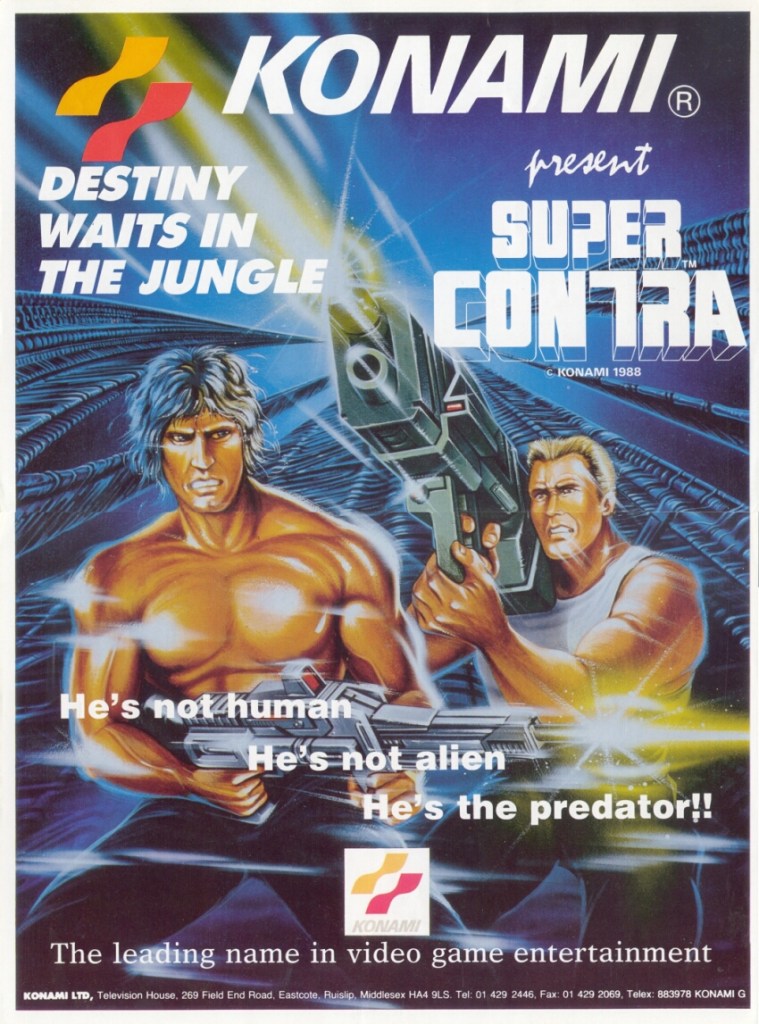
Have you seen many Hollywood action movies of the 1980s? Does this arcade flyer remind you of something?

After Konami struck gold with Contra in 1987, it was inevitable that sequels and spin-offs will be made. In 1988, they released the follow-up Super Contra in the arcades and to promote it in America, the company came up with artwork that easily gave gamers the impression they are seeing Sylvester Stallone as a fantasized Rambo and another armed guy who might remind them of Arnold Schwarzenegger’s character in Commando or Dutch in Predator. To capitalize on the movie references even more, the American arcade flyer had the line “He’s not human. He’s not alien. He’s the predator!!” As it was the 1980s, this creative approach to promotion was not surprising as Konami and its game makers were influenced by Hollywood movies.

2. Double Dragon II: The Revenge North American arcade flyer
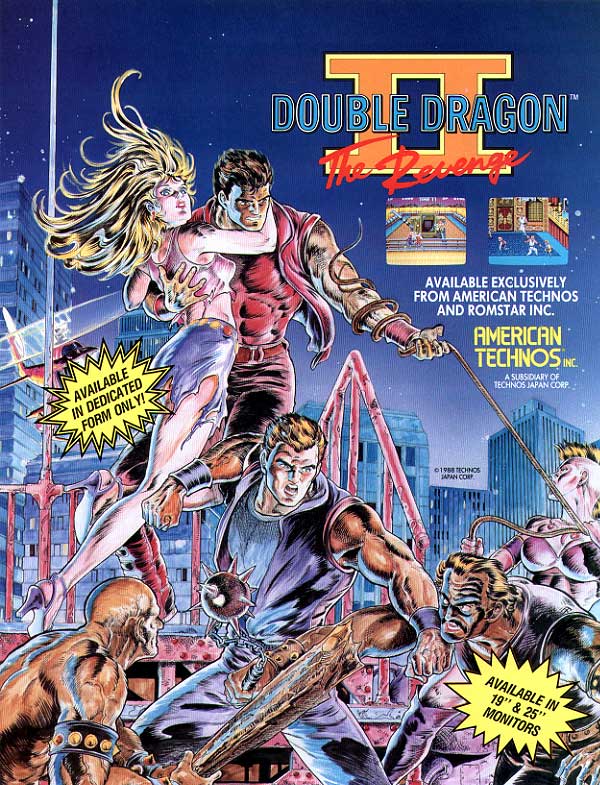
The artwork used in this arcade flyer remains intriguing to look at.

I never played Double Dragon II: The Revenge in the arcade, but I played it on the Nintendo Entertainment System (NES). That being said, I was surprised to see how this old North American arcade flyer has the same hand-drawn artwork used on the cover of the NES version. Take note that the arcade game was released in 1988 while the NES port was released in early 1990. I can only guess that Technos decided to use the same artwork not only for convenience but to have a definitive image emphasizing Double Dragon II to gamers wherever they are.

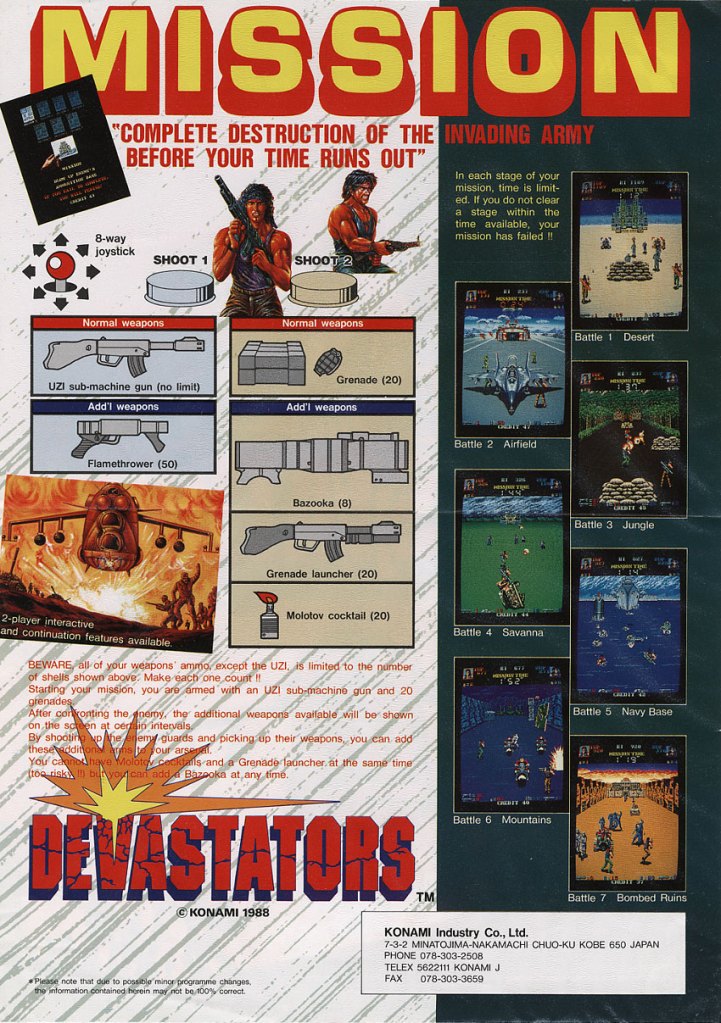
3. Devastators North American arcade flyer
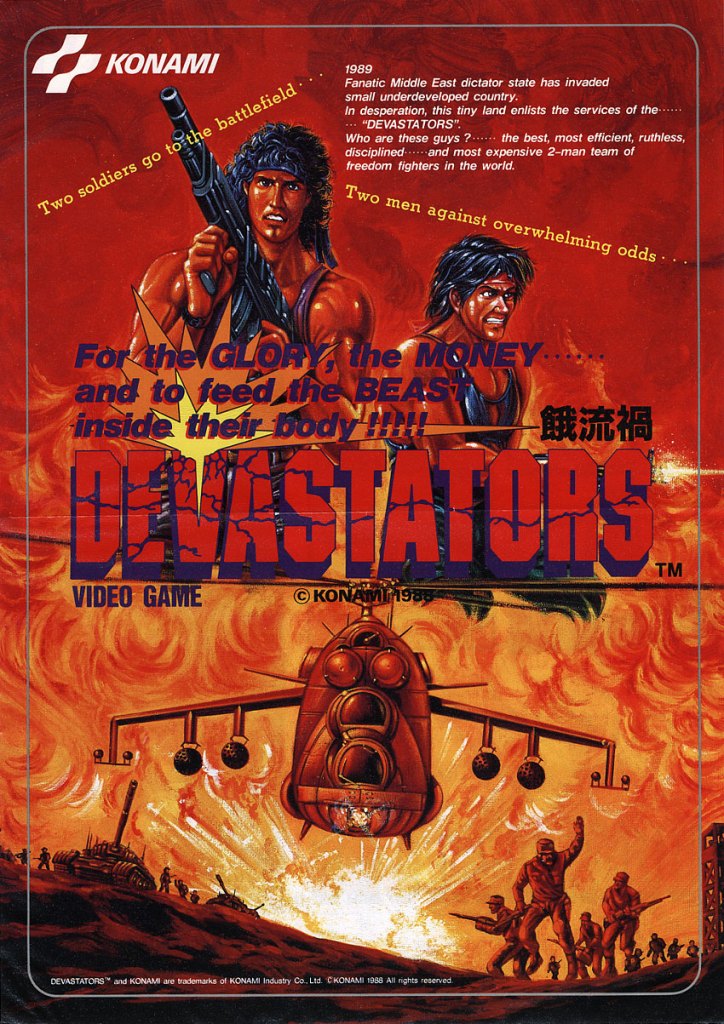
The front.
The rear.

Devastators is another Konami arcade game that had a strong war theme and it was influenced by Hollywood action films of the 1980s. This particular arcade flyer for the North American market is almost identical with the Japanese arcade flyer as both have the same artwork on the front and almost the same visual layout on the rear. The most obvious difference is the use of English text for the North American flyer.

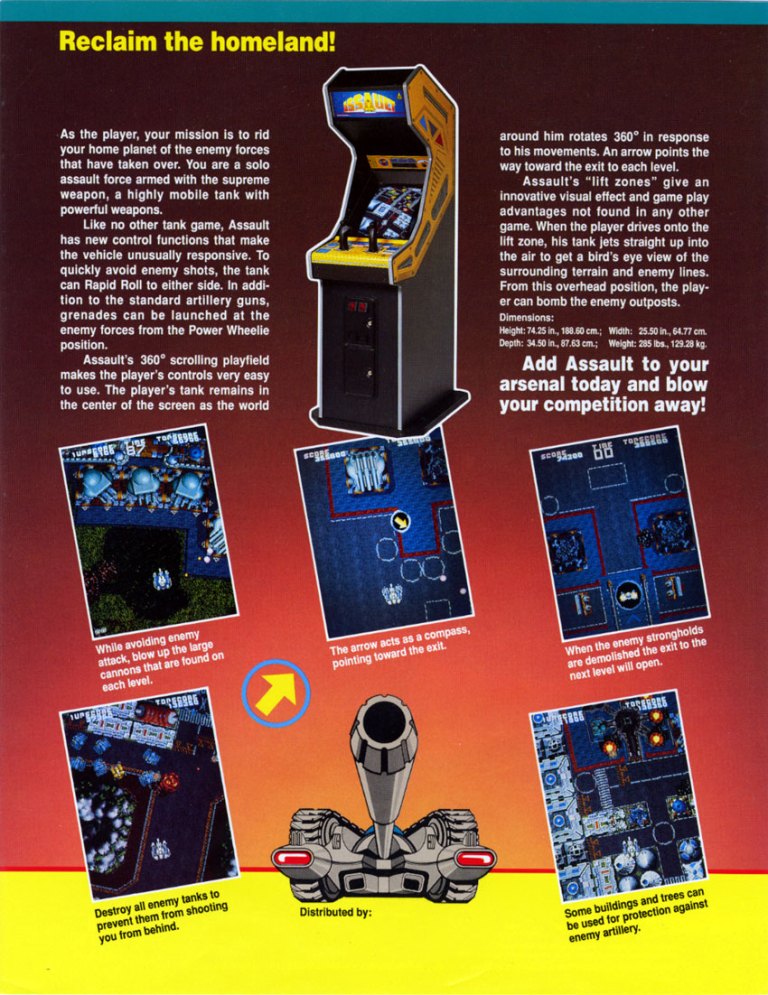
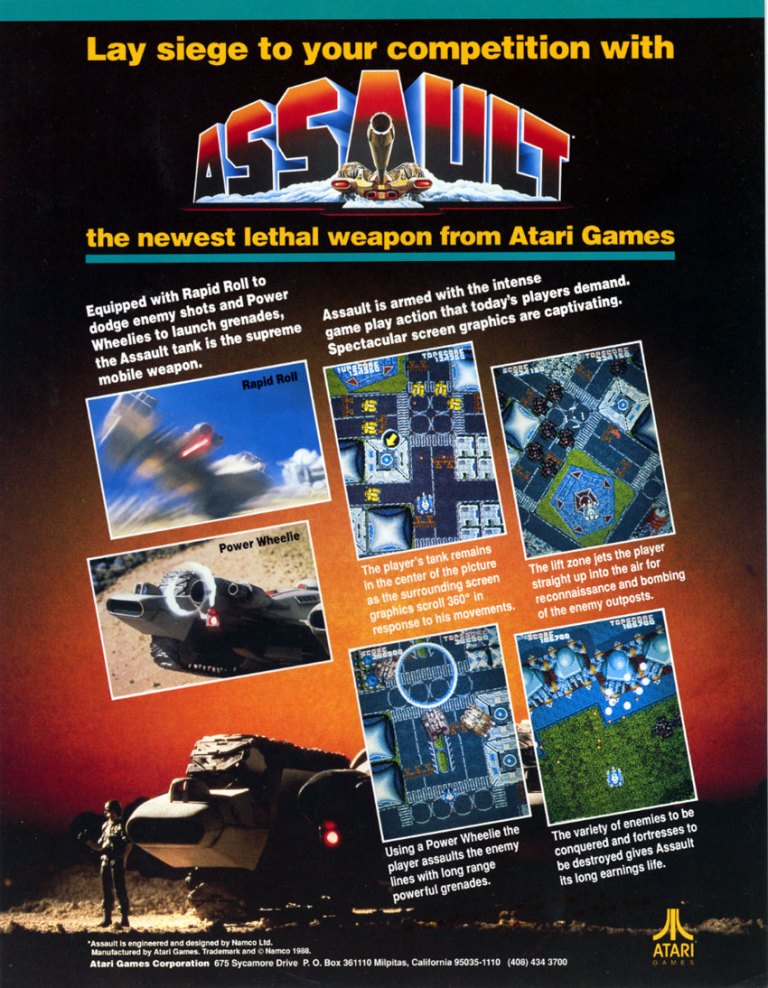
4. Assault North American arcade flyer
The front.
The rear.

Released in American arcades by Atari, Assault is a multi-directional shooter that had a twin-stick control layout (similar with the classic Battlezone) and players experienced intense battles as well as immersive visual effects such as sprite scaling and environment rotation of up to 360 degrees. To promote the game (this originated in Japan by Namco), Atari came up with this arcade flyer that had selected screenshots and descriptive text on both the front and the rear (which showed the arcade cabinet). Assault was a hit with gamers at the arcades and it was not released on consoles until 2009.

5. Sega CD print ad
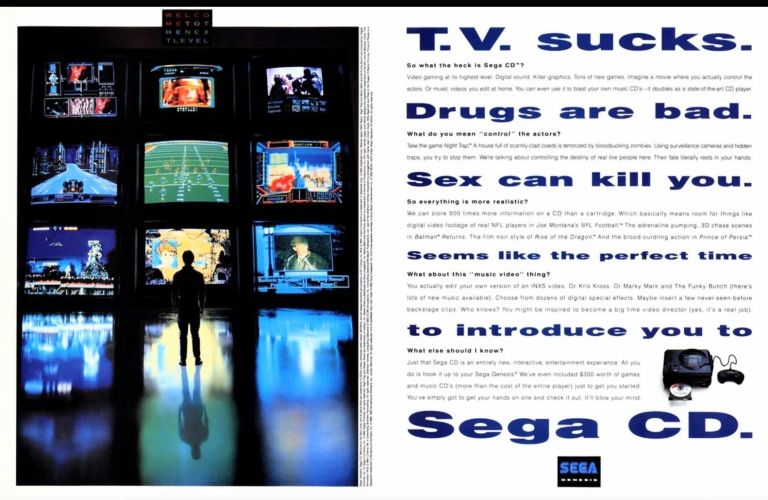
Having a socially relevant message can be catchy but it leaves little room for excitement.

As the Sega Genesis console became a huge commercial success in North America, Sega itself became ambitious about what CD-ROM technology would do for video games. Sega in Japan tasked its Consumer Products Research and Development Labs to create a CD-ROM add-on which resulted in the Sega CD (Mega-CD in other parts of the world) which launched in America in 1992. To promote the add-on towards existing Genesis console owners as well as potential new customers, Sega of America came up with the above 2-page print ad that had a social message on the right and an image of a man standing in front of large monitors (showing Sega CD game footage) on the left. While it looked like an odd way of promoting video game hardware, it still remains catchy to see.

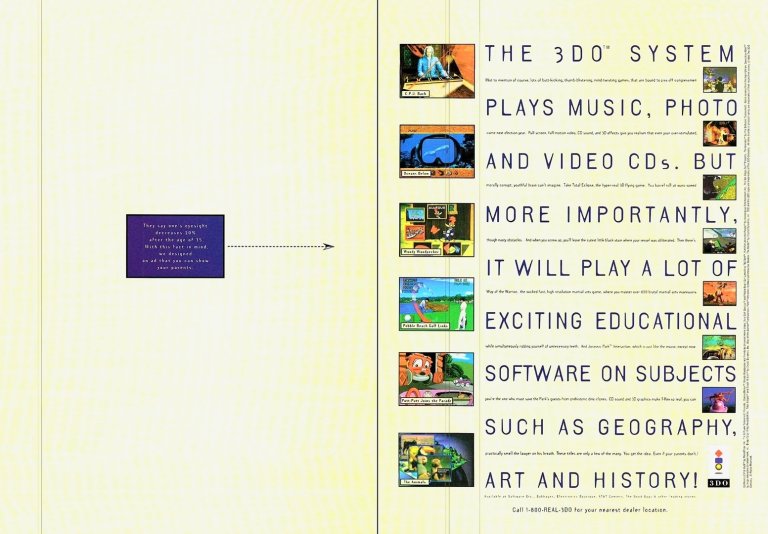
6. Panasonic 3DO print ad
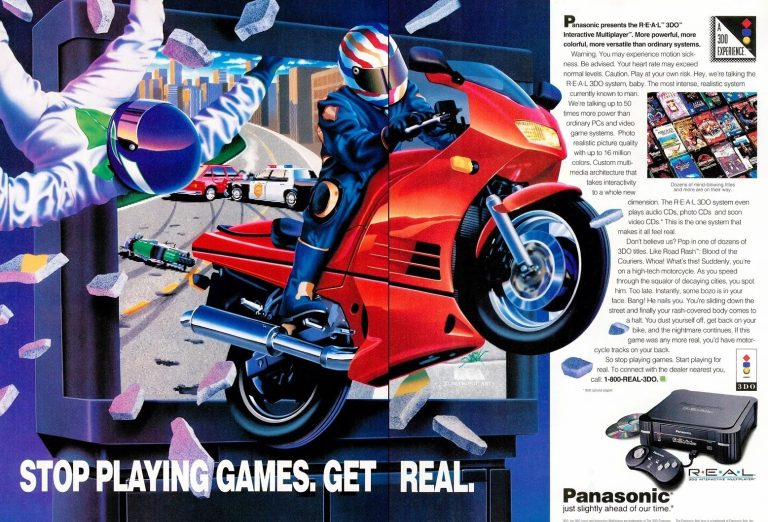
Panasonic knows how to promote entertainment hardware for people’s homes.

Still in the field of CD-ROM gaming, Panasonic had competitive presence in video gaming when its Panasonic FZ-1 R.E.A.L. 3DO Interactive Multiplayer (with technology licensed by The 3DO Company) was launched in America in 1993. If you look at the print ad closely, you will notice that the descriptive text emphasized the multimedia entertainment aspect more than video gaming. The dominating artwork used does not come from a particular video game as it was made to emphasize home entertainment in general. It’s not surprising that the Panasonic 3DO and other 3DO machines from other manufacturers failed commercially.

7. Shaq Fu print ad
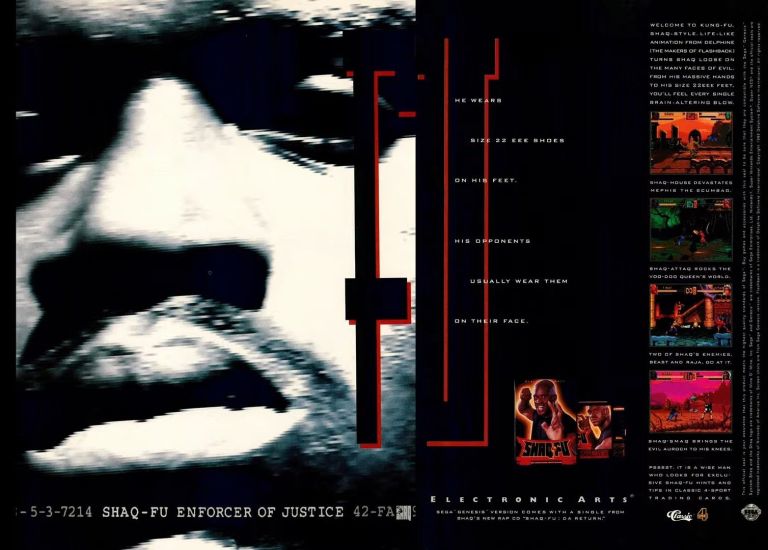
The close-up of Shaquille O’Neal’s face on the left made him looked less recognizable.

Yes, it is true! There was indeed a video game endorsed by Shaquille O’Neal and it was not a basketball game. Shaq Fu is a 1994 2D fighting game with adventure elements and a story in which gamers play O’Neal as martial artist (note: O’Neal himself participated in the game’s production). To promote the game, Electronic Arts came up with a 2-page print ad that had a very odd black-and-white close-up image of O’Neal’s face on the left leaving small screenshots and hard-to-read text on the right (even though there was some vacant space remaining. I remember seeing this ad while reading a video game magazine and the ad ended up looking more like a promotion of O’Neal (already an NBA superstar) than the game itself. By today’s standards, this print ad is an example of a marketing misfire.

8. Kasumi Ninja print ad
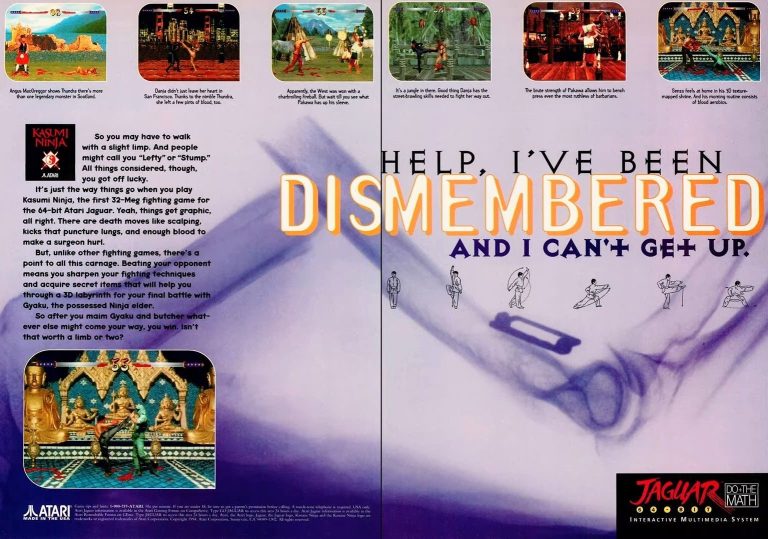
Do you even remember seeing this print ad in magazines?

Remember the 1990s video game trends of digitized human images and disturbingly violent 2D fighting games sparked by Mortal Kombat? The Atari Jaguar-exclusive game Kasumi Ninja was made to capitalize on those trends and it failed badly. Apart from the low sales of the Jaguar console, Atari as publisher came up with the above 2-page print ad that was not appealing to gamers’ eyes and it had almost no excitement overall. This is another marketing misfire.

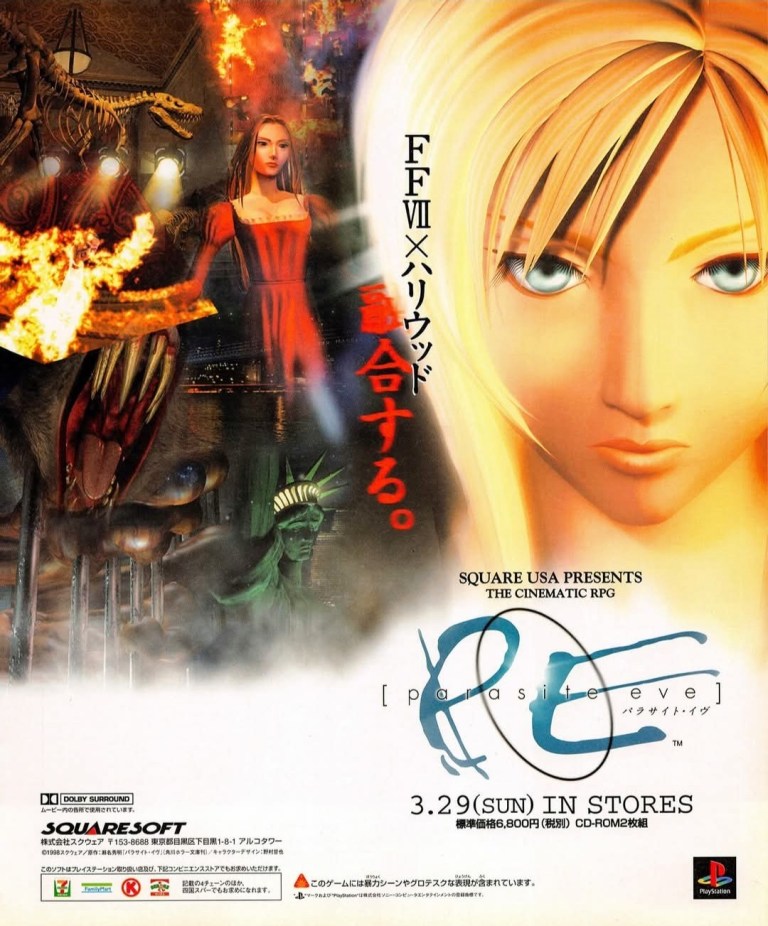
9. Parasite Eve North American and Japanese print ads
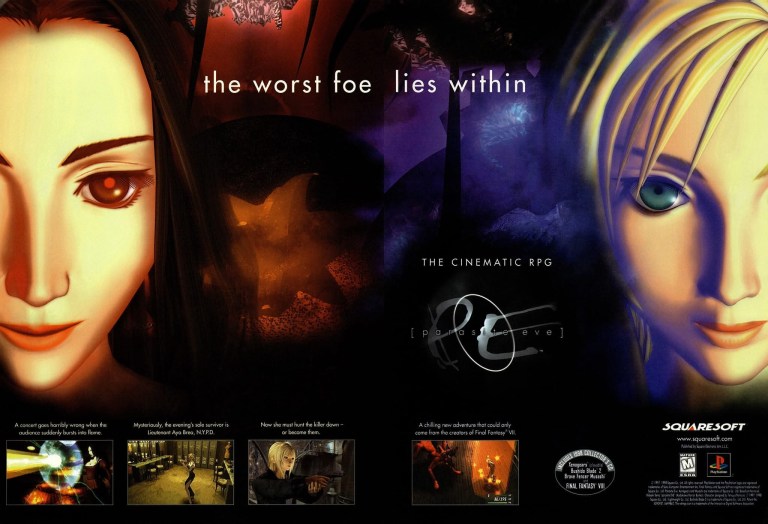
Following the successful release of Final Fantasy VII, this ad excited PlayStation gamers and JRPG enthusiasts for Parasite Eve’s 1998 release in America.
A stronger horror presentation in this print ad for the Japanese market. There were already a lot of people in Japan who enjoyed horror.

Starting in the mid-1990s, Squaresoft (now Square Enix) really became aggressive with video game creativity and experimentation as they launched several new projects that eventually got released on PlayStation in the late 1990s until 2000. One of those daring new projects was Parasite Eve which was a role-playing game (RPG) that had visual elements – particularly pre-rendered backgrounds – and a style of exploration that reminded gamers of Resident Evil. The game was a sequel to the Japanese science fiction horror novel of the same name and it involved the creativity of Final Fantasy creator Hironobu Sakaguchi (credited as producer). To promote the game, the 2-page North American print ad had protagonist Aya Brea on the right and the enemy on the left with a cryptic line placed strategically between them. The North American ad clearly stated that the game is a cinematic RPG. By comparison, the Japanese print ad of Parasite Eve has a strong horror vibe which is not surprising because of the novel’s horror elements and the fact that Squaresoft was capitalizing on the popularity of horror-related entertainment in Japan. By today’s standards, Parasite Eve is truly a product of the late-1990s and it has a dedicated fanbase.

+++++

Thank you for reading. If you find this article engaging, please click the like button below, share this article to others and also please consider making a donation to support my publishing. If you are looking for a copywriter to create content for your special project or business, check out my services and my portfolio. Feel free to contact me with a private message. Also please feel free to visit my Facebook page Author Carlo Carrasco and follow me on Twitter at  @HavenorFantasy as well as on Tumblr at https://carlocarrasco.tumblr.com/ and on Instagram at https://www.instagram.com/authorcarlocarrasco
Retro Gaming Ads Blast – Part 35

Welcome back readers, fellow geeks and electronic gaming fans!

In this edition of the Retro Gaming Ads Blast (RGAB) series, we will take a look at another batch of retro gaming print ads – including arcade flyers – from the 1970s to the 1990s.

For the newcomers reading this, Retro Gaming Ads Blast (RGAB) looks back at the many print ads of games (console, arcade, computer and handheld) that were published in comic books, magazines, flyers, posters and newspapers long before smartphones, social media, the worldwide web and streaming became popular. To put things in perspective, people back in the 1980s and 1990s were more trusting of print media for information and images about electronic games and related products.

With those details laid down, here is the newest batch of retro gaming print ads for you to see and enjoy…

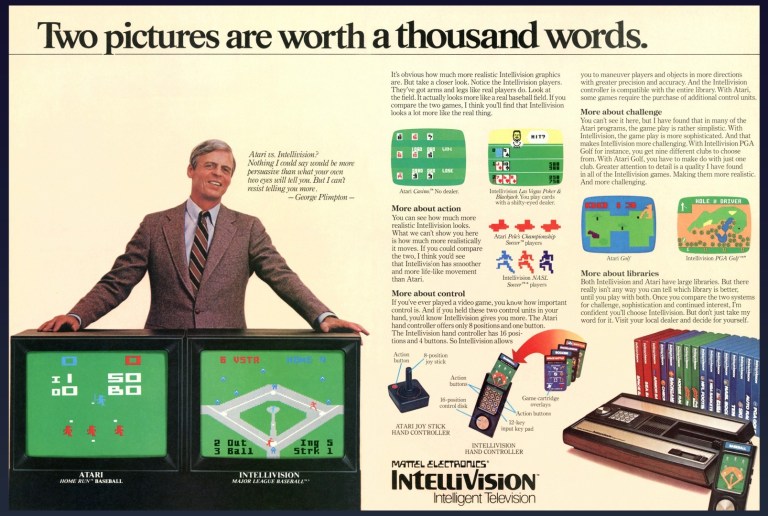
1. Intellivision print ad

Were you able to play a game on the Intellivision long ago?

In 1979, Mattel launched their Intellivision game console in America which instantly placed them in competition with Atari’s 2600 console. In a bid to convince gain market share, Mattel daringly came up with a competitive print ad like the one above showing two TV sets (with an Atari 2600 baseball game and a similar game on Intellivision), descriptive text that explained why the intellivision and its games are better, and even mentioned Atari by name several times. Obviously the tactic did not lead Mattel to ultimate market victory but the above print ad showed it was okay for a newcomer to mention their competitor and aggressively attack it to gain customers (both newcomers and active gamers).

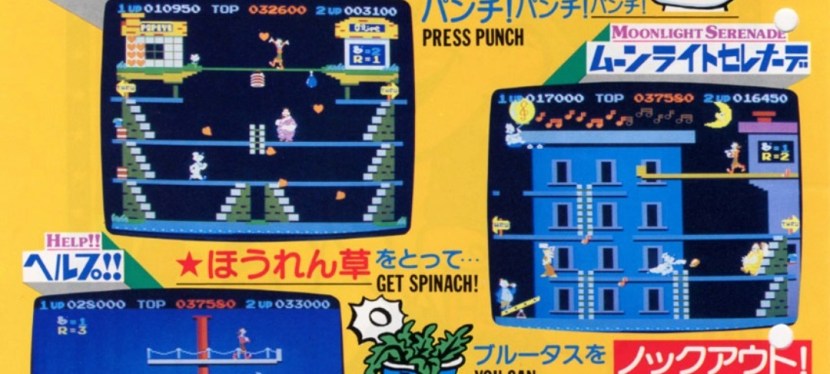
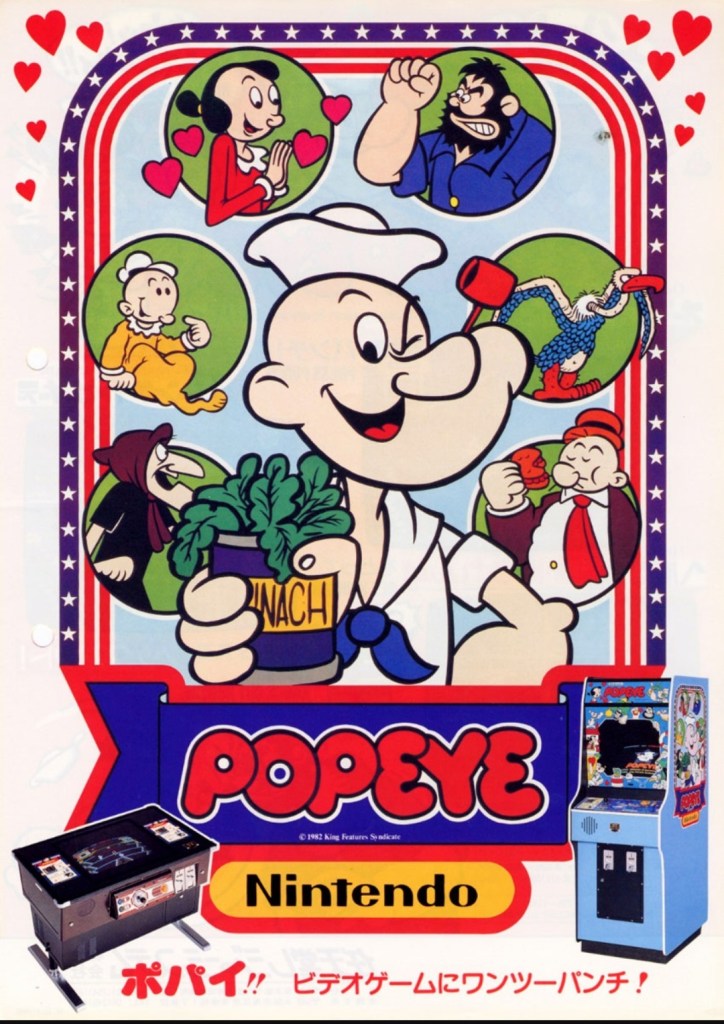
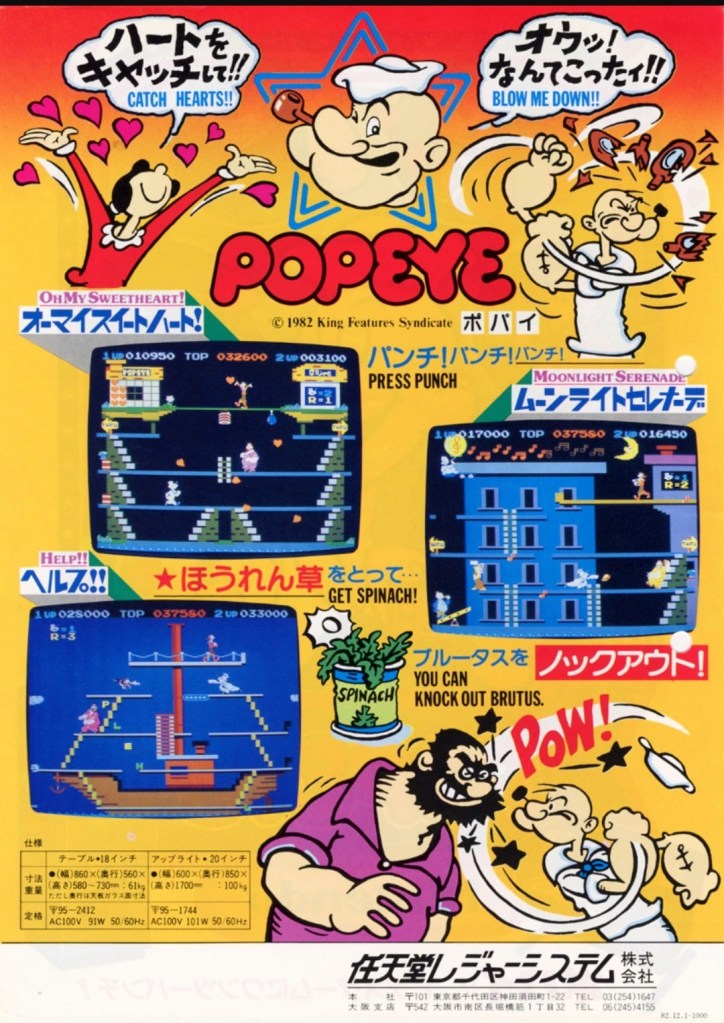
2. Popeye Japanese arcade flyer

The front of the flyer.
The rear.

In 1982, Nintendo released the Popeye arcade game which was incidentally the result of the success of their original Donkey Kong arcade game. To promote the game, Nintendo came up with an arcade flyer that had a very lively front (note: the characters were instantly recognizable thanks to the great art used) and the rear having easy-to-read instructions on how to play the game, what levels to expect and what must be done when playing. Popeye was an arcade hit in Japan, but an even bigger hit in America. This old arcade flyer still looks nice.

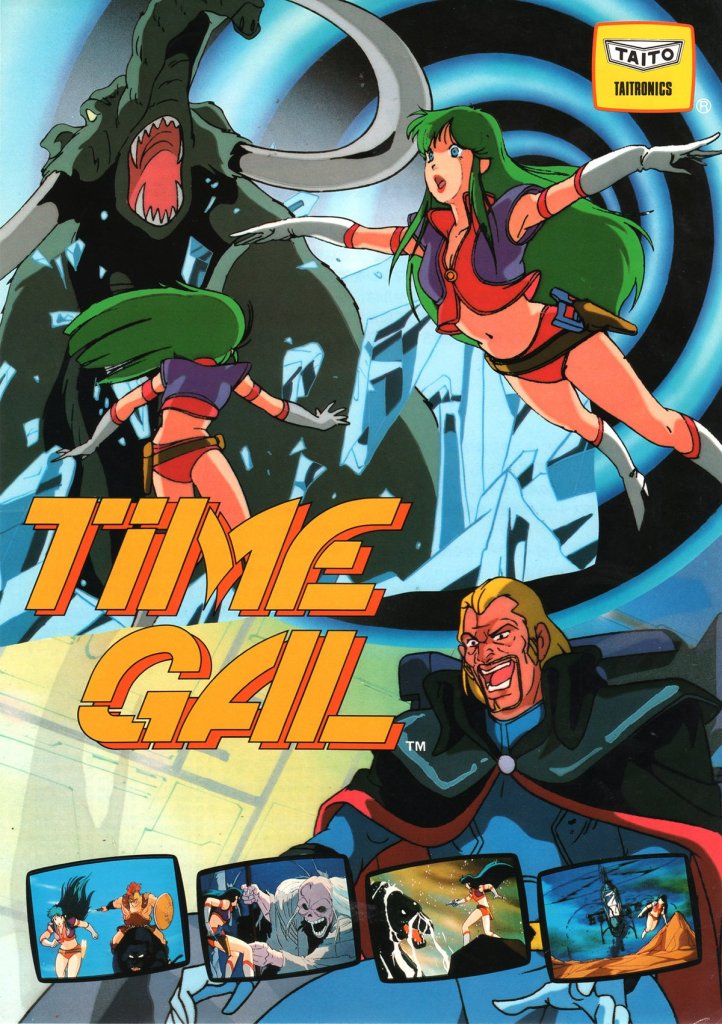
3. Time Gal arcade flyer

On face value, this one looks more like an anime promo since gameplay elements were missing.

Released in Japanese arcades in 1985, Time Gal is one of those games that used the expensive LaserDisc technology to stream pre-recorded animation (made by Toei) and challenged gamers to react quickly (using the joystick and button for commands) in order to progress in real-time. The arcade flyer has a very lively visual design making it clear to players and arcade operators that a lot of anime awaits those who play Time Gal. Technically, players watch anime cutscenes happen and react using the controls. Time Gal was an arcade hit and it made its way outside of Japan by getting ported for the Sega CD.

4. 3DO print ad

If you bought a 3DO long ago, was it for gaming or for home entertainment purposes?

Remember the 3DO? Developed by the 3DO Company and launched in 1993, the 3DO was designed to not only play video games but also function with multimedia features. In fact, the 3DO was initially marketed as a machine that allows users to watch videos, play music, browse digital photographs, and even immerse themselves with software focused on different topics. This is exactly what the above 3DO print ad emphasized. In retrospect, it was so odd for me to see the print ad inside video gaming magazines I read.

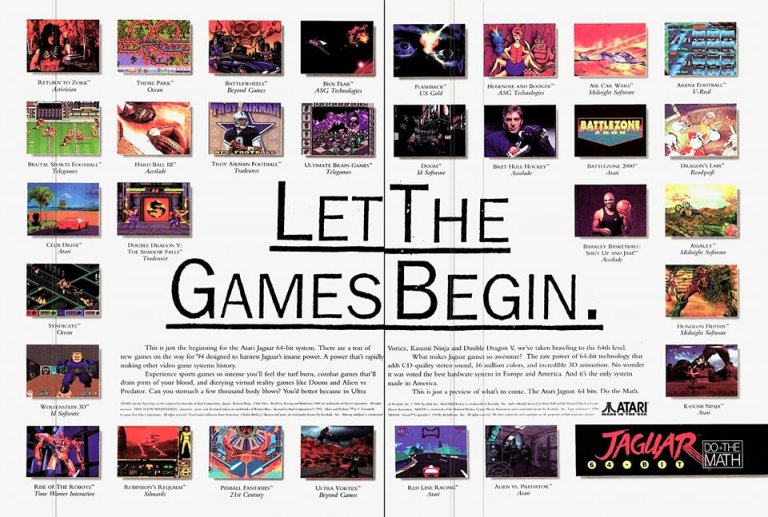
5. Atari Jaguar print ad

The strong focus on gaming was clear with Atari for the Jaguar.

Over a month after the launch of the 3DO, Atari launched its Jaguar console with a strong focus on video gaming. As console sales slowly grew in 1994, Atari came up with the above print ad – showing lots of games for the Jaguar – to lure in customers aggressively. If you look closely at the descriptive text of the ad, it mentions the Atari Jaguar as 64-bit system emphasizing that it is more powerful than other video game machines of the time. The bit count controversy harmed Atari and eventually the Jaguar failed.

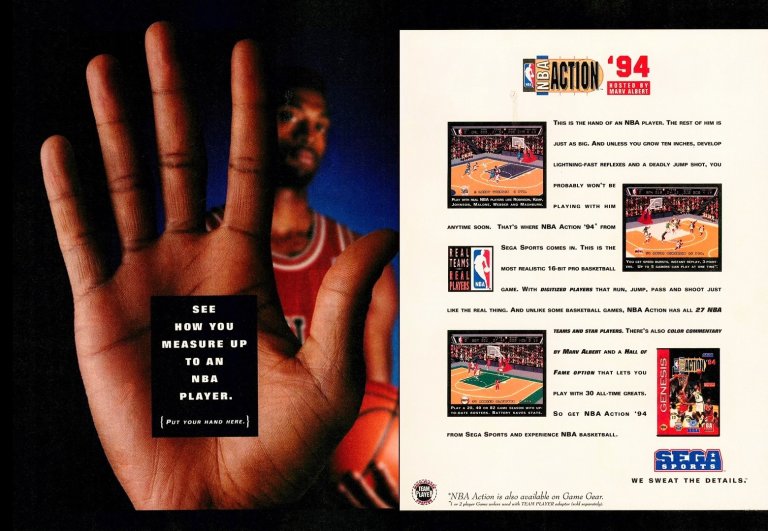
6. NBA Action ’94 print ad

Remember when Sega made NBA basketball video games that were exclusive to the Genesis console?

Remember when there were a lot of basketball video games licensed by the NBA in the 1990s? Through its own sports games brand – Sega Sports – Sega was dedicated to making exclusive sports video games for its customers and their NBA games were under the NBA Action brand. In 1994, they released NBA Action ’94 for the Genesis console and this two-page print ad they came up with had a catchy visual design (a supposed basketball player showing his palm and message to the camera on one side of the ad). Looking closely at the descriptive text, the ad mentions “most realistic 16-bit pro basketball”, “digitized players” and having all 27 NBA teams and star players. Sega Sports is no more but it’s legacy still lives on among Sega fans.

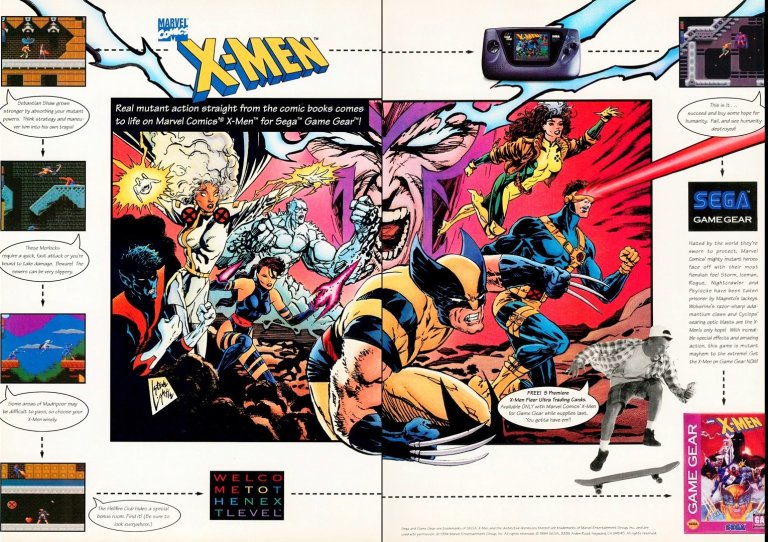
7. X-Men Sega Game Gear print ad

For X-Men fans!

Similar to its approach with the Sega Sports brand, Sega developed exclusive games for the Game Gear. The company secured from Marvel the license to make an original X-Men game and to promote it, this 2-page print ad showcased original art of the established X-Men characters of the time while using the remaining spaces for the screenshots and descriptive text. This old print ad still looks attractive and will easily resonate with X-Men fans as well as 1990s superhero comics enthusiasts.

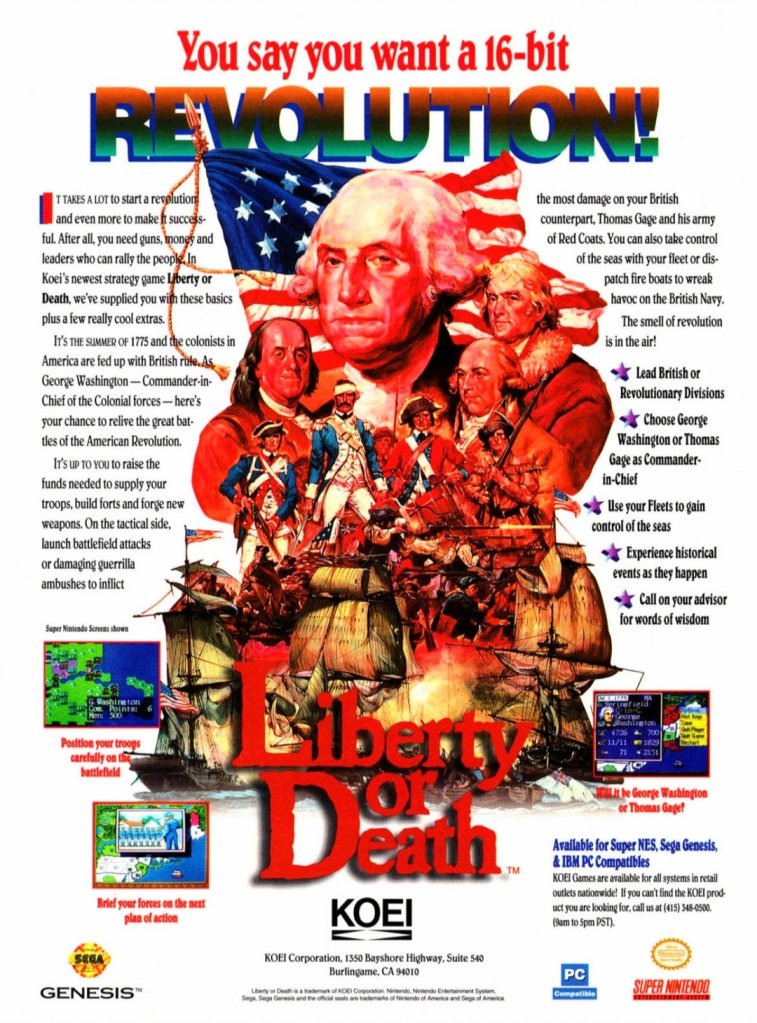
8. Liberty or Death print ad

American history is the core concept of this strategy game by Koei.

If there is anything notable about the Japanese company Koei, it is the fact that it released strategy and simulation games that tackled varied topics while making each game distinct and playable regardless of platform. In my experience, I had a lot of fun playing their business simulation Aerobiz Supersonic on the Super Nintendo Entertainment System (SNES). In 1993, Koei released their turn-based strategy game Liberty or Death which tackled American history for its setting (note: Koei already established itself with historical simulations). To sell the game, Koei came up with a print ad that had a very eye-catching historical art (George Washington, Thomas Jefferson, and Benjamin Franklin among the figures), a few selected screenshots and descriptive text that emphasized the essence of the game. This print ad is a reminder that no video game company today would make a historical simulation due to geopolitics (note: there are a lot of woke activists among video game employees today) and for business reasons.

+++++

Thank you for reading. If you find this article engaging, please click the like button below, share this article to others and also please consider making a donation to support my publishing. If you are looking for a copywriter to create content for your special project or business, check out my services and my portfolio. Feel free to contact me with a private message. Also please feel free to visit my Facebook page Author Carlo Carrasco and follow me on Twitter at  @HavenorFantasy as well as on Tumblr at https://carlocarrasco.tumblr.com/ and on Instagram at https://www.instagram.com/authorcarlocarrasco
What to watch on YouTube right now – Part 95

Welcome back my readers, YouTube viewers and all others who followed this series of articles focused on YouTube videos worth watching. Have you been searching for something fun or interesting to watch on YouTube? Do you feel bored right now and you crave for something to see on the world’s most popular online video destination?

I recommend you check out the following videos I found.

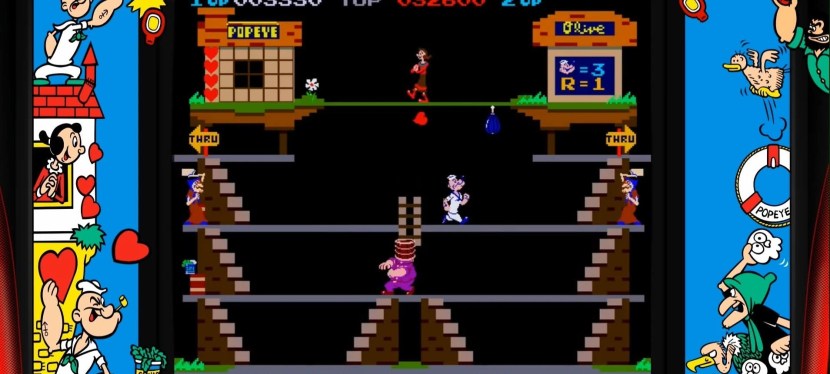
PatmanQC examines Popeye video games – Were you able to play the classic Popeye arcade game from Nintendo in the early 1980s? How about the other video games that featured Popeye the Sailor Man? Indeed, the American icon Elzie Crisler Segar had a presence in video games and I was fortunate enough to play a Popeye game on Nintendo Entertainment System (NES) a long time ago. To find out more about how Popeye went from cartoons and literature to video games, and what led to the production of the arcade game by Nintendo, watch the in-depth retrospective video below by the late PatmanQC.

You, Me and the Movies react to Suburban Commando – In recent times, the famous Hulk Hogan passed away at age 71. Apart from being very famous as a wrestler, he also made his presence felt in movies with such films like Rocky III, No Holds Barred, Suburban Commando and more. Recently, You, Me and the Movies posted its reaction video about Suburban Commando and it is entertaining to watch.  

#3 Foreigners love all-you-can-eat in Japan – If you will visit Japan as a tourist, how much food do you plan to eat? Recently there is a trend in which foreigners, specifically tourists from different countries, visiting the all-you-can-eat restaurants in Japan and it is not surprising that such images or details are spreading over social media. If you are interested in food and where to eat in Japan, watch the video below.

Superman Dean Cain joins ICE – Immigration matters, particularly the presence of illegal immigrants, are still hot topics in American society. In recent times, the famous television Superman Dean Cain made the crucial to join the United States Immigration and Customs Enforcement (ICE) and help in the effort to apprehend illegal immigrants (who are always supported by Democrats, the terrorists, the criminals, the woke and Satanic Leftists) and deport them. To learn the details about the latest move of the star of Lois & Clark: The New Adventures of Superman, watch the Sky News Australia video below. I also added Minty Comedic Arts trivia video of Lois & Clark for those who want to learn more about the series and Dean Cain’s work.

Twilight Zone: The Movie revisited – When I was a young boy, I saw a preview of Twilight Zone: The Movie on TV before it opened in local cinemas. I only got to watch it on cable TV in the 1990s and replayed it on DVD some years later. The 1983 movie, which had short stories crafted by different directors (including Steven Spielberg and George Miller), is indeed flawed yet a focused attempt by the filmmakers to get people involved with the decades-old Twilight Zone franchise as a whole. That being said, I encourage you to watch the selected Twilight Zone: The Movie videos below.

+++++

Thank you for reading. If you find this article engaging, please click the like button below, share this article to others and also please consider making a donation to support my publishing. If you are looking for a copywriter to create content for your special project or business, check out my services and my portfolio. Feel free to contact me with a private message. Also please feel free to visit my Facebook page Author Carlo Carrasco and follow me on Twitter at  @HavenorFantasy as well as on Tumblr at https://carlocarrasco.tumblr.com/ and on Instagram athttps://www.instagram.com/authorcarlocarrasco
What to watch on YouTube right now – Part 89

Welcome back my readers, YouTube viewers and all others who followed this series of articles focused on YouTube videos worth watching. Have you been searching for something fun or interesting to watch on YouTube? Do you feel bored right now and you crave for something to see on the world’s most popular online video destination?

I recommend you check out the following videos I found.

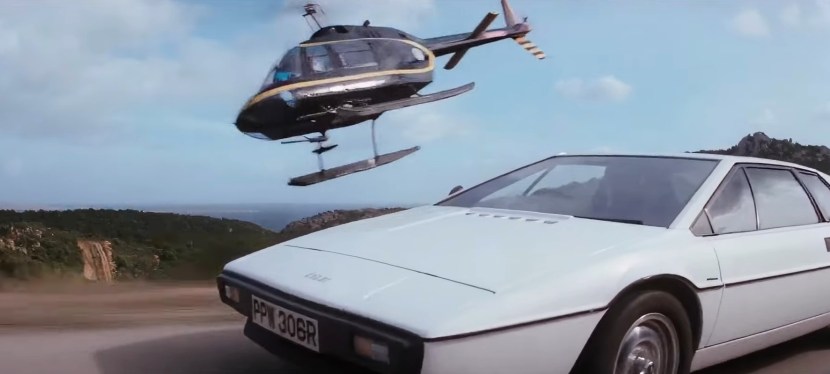
Calvin Dyson’s The Spy Who Love Me in-depth review – One of the best James Bond-focused YouTubers is Calvin Dyson. Years ago, he posted his in-depth retro review of The Spy Who Loved Me – starring the late Roger Moore – which is pretty entertaining to watch. I saw the 1977 James Bond film a number of times in my life and I can say that Dyson not only made an engaging retro review, he also provided crucial insight about the movie. For those who have not seen The Spy Who Loved Me, watch it first entirely before watching Dyson’s spoileriffic review. Otherwise, enjoy his video belo.

Slope’s Game Room examines Popeye video games – Growing up, I saw cartoon episodes about Popeye. I also read a few comic books about the character and even saw the live-action movie of 1980. When it comes to retro gaming, I played the Popeye Game & Watch game and then the Family Computer (Famicom) port of the Popeye arcade game. I recently found Slope’s Game Room’s retrospective video about Popeye games and to my surprise, there were more video games about the character which I never played. To discover the Popeye games and their collective history, watch the video below.

#3 The decades-old conflict between Donald Trump and Rosie O’Donnell  – In case you somehow missed the buzz all the time, the conflict between Donald Trump and Rosie O’Donnell has lasted for decades. As far as the modern age is concerned, Trump successfully returned as President of the United States and O’Donnell left America for another country. The truth about Rosie O’Donnell is that you cannot trust her and you should never let her manipulate. Behind all the Hollywood glamor and entertainment glitter, Rosie O’Donnell is problematic and unstable. Her conflict with Trump goes a very long way back and I urge you to watch the video below. It is both entertaining and compelling to watch.

Friday The 13th (1980) reaction videos – Do you find the 1980 horror movie Friday The 13th notable if not special at all? For me, there is absolutely nothing special about the slasher horror film directed by Sean Cunningham (read my retro movie review by clicking here). If there is anything notable about it, it would be its economic achievement of grossing almost $60 million worldwide on a negative cost of less than $3 million (including marketing and distribution costs). When it comes to story, cinematic concepts and performances, it is still pretty weak. Still the flaws of Friday The 13th (1980) did not stop it from becoming a popular film of choice for reaction videos by YouTubers. For your interest, posted below are assorted reaction videos of the movie.

Reviews of James Gunn’s Superman – Now playing in theaters worldwide, James Gunn’s Superman is bringing in a lot of money. Of course, commercial success does not clearly reflect the film’s overall quality nor the reviews it gathered from the corrupted mainstream media and from independent bloggers and content creators. It also sucks that there are some movie-focused websites that signed marketing deals with contractors of movie studios that guaranteed not only constant film promotion but also the publishing of overall positive reviews. That being said, I encourage you to take time out to watch the selected video reviews of James Gunn’s Superman below sourced from four YouTubers. If you have not seen the new movie in the cinema and you are leaning towards watching it soon, then the videos below are a must-see.

+++++

Thank you for reading. If you find this article engaging, please click the like button below, share this article to others and also please consider making a donation to support my publishing. If you are looking for a copywriter to create content for your special project or business, check out my services and my portfolio. Feel free to contact me with a private message. Also please feel free to visit my Facebook page Author Carlo Carrasco and follow me on Twitter at  @HavenorFantasy as well as on Tumblr at https://carlocarrasco.tumblr.com/ and on Instagram athttps://www.instagram.com/authorcarlocarrasco
Retro Gaming Ads Blast – Part 2

Welcome back readers, fellow geeks and electronic gaming fans!

In this edition of the Retro Gaming Ads Blast (RGAB) series, we will examine print ads from the 1980s and 1990s that caught my attention and I will explain why these are worth look back at.

For the newcomers reading this, Retro Gaming Ads Blast (RGAB) looks back at the many print ads of games (console, arcade, computer and handheld) that were published in comic books, magazines, flyers and newspapers long before smartphones, social media, the worldwide web and streaming became popular. Back in the old days, many gamers trusted the print media a lot for information and images about games.

With those details laid down, here is the latest batch of retro gaming print ads for you to see and enjoy…

1. Popeye multiplatform print ad

A fine example of promoting the Popeye video game on multiple platforms visually.

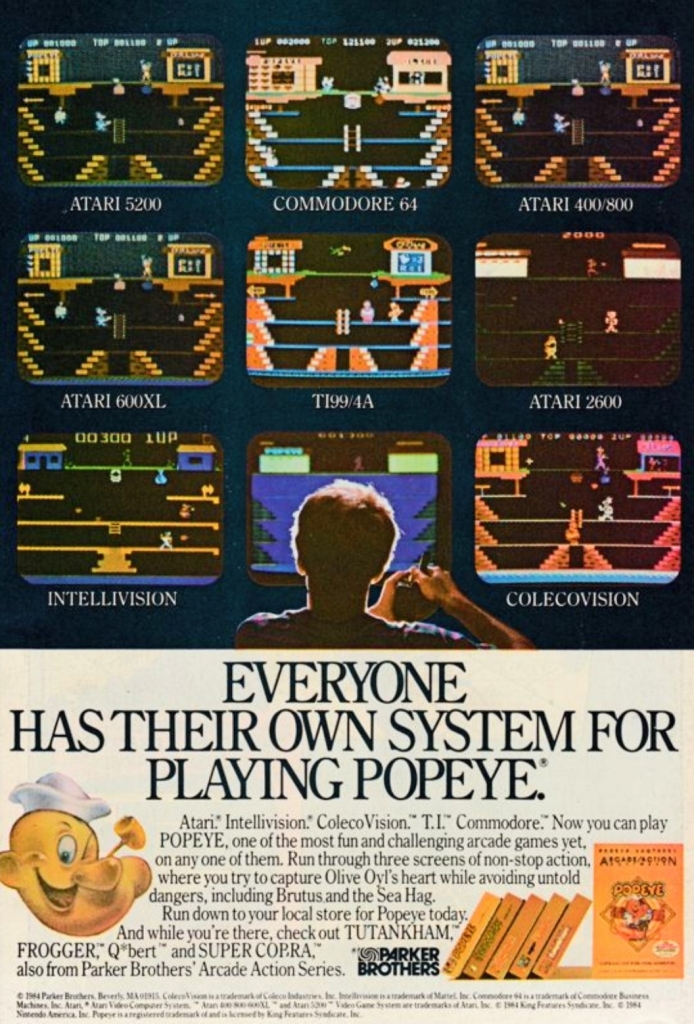
During the early 1980s, an arcade game based on Popeye was released and it became a hit with gamers who lined up and inserted coins to play. That game, which had three stages, was eventually ported by Parker Brothers to multiple platforms of Atari, ColecoVision, Intellivision, T.I. and Commodore.

The print ad you see above is a classic display of how one particular game appeared as a multiplatform release. The screenshots showed different versions of the Popeye game on multiple Atari platforms plus the others. See how different the game looks on each platform? The level of visual details and elements varied from one another as each machine had different specs that Parker Brothers had to adjust to. This is a fine example of promoting one game for different machines for those who love video games.  

2.  Kool-Aid Man Video Game print ad

I never got to play this Kool-Aid Man video game.

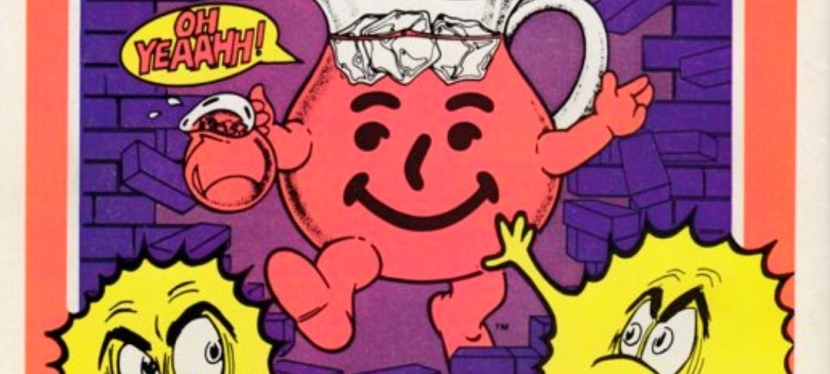
Remember Kool-Aid? For the newcomers reading this, Kool-Aid was a very popular product line of flavored juice drinks sold in powdered form. I myself used to mix Kool-Aid with ice-cold water and enjoyed drinking it. In 1954, a promotion of Kool-Aid with a touch of entertainment happened by highlighting the character Kool-Aid Man (famously known as the walking and talking pitcher filled with Kool-Aid juice). In later years, the Kool-Aid Man was often shown breaking through walls saying the line “Oh yeah!”.

The Kool-Aid Man gained tremendous attention as a pop culture figure in the 1980s when a new series of advertisements and promotions happened branching into video games and even comic books. The above print ad was a clever move to promote Kool-Aid as a drink as well as a video game for the Intellivision and the Atari 2600 consoles. Even if you were not too fond of video games in the 1980s, the Kool-Aid game ad would still make you think about the drink. Clever and entertaining!  

3. Zombies Ate My Neighbors game print ad

I saw the 2-page ad many times in comic books and video game magazines.

Going into the 1990s, Konami’s print ad of the video game Zombies Ate My Neighbors (for Super Nintendo Entertainment System and Sega Genesis) appeared a lot in the comic books I read when I was much younger. Having seen lots of horror movies – including zombie flicks – the ad easily caught my attention not because of the screenshots but because of the visual style used. For one thing, there was this 1950s America-inspired imagery on the photo of the scared woman with three zombies slowly approaching her. As for the game itself, there were plenty of small-sized screenshots that had lots of interesting details and pixel art (note: 3D polygons in video games were not yet common back then) which gave me a clear idea that it was a humor and horror-laced 2D adventure. Not only that, the text descriptions combined with the fake quotes added zest into the presentation. After having examined all the details carefully, I really felt like Zombies Ate My Neighbors would be a fun-filled game to play on the SNES.

4. Lunar: The Silver Star print ad

With anime artwork used, it was easy to have the impression that the original Lunar game was based on an existing anime series or movie.

In the early 1990s, Game Arts developed and released the Japanese role-playing game (JRPG) Lunar: The Silver Star on the Mega CD platform in Japan which in some ways was also a technological breakthrough – the game came with full motion video (for short videos), animated images, and CD-quality sound (that really made the soundtrack lively to listen to). After achieving critical and commercial success in Japan, the game was picked-up by Working Designs to be localized and released in the North American market for the Sega CD (the American counterpart of the Mega CD) platform. In promoting the game for American Sega CD owners as well as American gamers in general, a print ad highlighting anime images with five screenshots and only a few words was published on both comic books and magazines.

Even though Lunar: The Silver Star’s core concept was never described in the ad, the anime imagery was still eye-catching and the chosen screenshots gave viewers a preview of the gameplay and the animated images. That being said, it was no surprise that gamers who happened to be a bit interested in anime noticed the print ad. At the same time, the ad gave some gamers the impression that Lunar was a game based on an existing anime franchise. This approach on game advertising was daring and it happened at a time when Japanese RPGs had a limited audience among gamers in North America.

5. Lunar: Silver Star Story Complete print ad

In the 2nd half of the 1990s, a remake of Lunar: The Silver Star was released in Japan titled Lunar: Silver Star Story for Sega Saturn (1996), Sony PlayStation (1998) and Windows PC (1998). While it still maintained the 2D visuals for presentation, gameplay and exploration, the remake had smooth anime sequences, new artworks, better sound effects and music. Working Designs pounced on the opportunity to localize the game in America for PlayStation and released it in 1999 with the title Lunar: Silver Star Story Complete. Not only did Working Designs work hard on localizing the game (the English dubbing and singing of the game’s songs were meticulously done), they released it with a very lavish packaging with the dedicated fans and collectors in mind.

By looking at the above print ad that magazines published, Working Designs highlighted the positive feedback quotes from EGM, Gamers’ Republic, PSM and Official U.S. PlayStation Magazine to convince gamers Lunar: Silver Star Story Complete is a great game. While the screenshots showed what kind of eye candy gamers could expect, Working Designs made sure that they would know that the lavish package includes 4 discs (2 game discs, 1 music CD and 1 CD that had video documentary of the making of Lunar), a full-color map in the form of a cloth, and a hardbound art book and instruction manual.

Considering the dynamism of the Lunar: Silver Star Story Complete print ad and the game’s packaging, I can only speculate that Working Designs had to do it aggressively because the gaming landscape changed dramatically as 3D polygonal graphics became the standard while lots of other Japanese RPGs from different publishers were released in 1999 (including the sequels Suikoden II and Final Fantasy VIII) and many of them had more elaborate game designs and visual presentations. Eventually market forces and unfortunate business events led Working Designs to closing down permanently in 2005.

6. Star Wars: Jedi Arena print ad

Remember when Luke Skywalker tested his lightsaber skills with the floating Seeker in the 1977 movie?

Back in the early 1980s, Parker Brothers was very active releasing games on the Atari 2600 console which my family had. At that same time, Star Wars was very popular (and without the wokeness and identity politics garbage of Kathleen Kennedy and woke Disney) and any new game based on the sci-fi franchise was something to be excited for. In the above print ad of Star Wars: Jedi Arena, an artwork showing the iconic her Luke Skywalker testing his lightsaber skills with the floating Seeker ball was displayed and located between Luke’s legs is a monitor showing the screenshot of the game. Looking at the text description, Parker Brothers creatively focused on the aspect of the Jedi way of using the lightsaber interacting with the Seeker ball. Having played the game myself, I can say the ad was creative and pretty much captured the core concept of the game.  

+++++

Thank you for reading. If you find this article engaging, please click the like button below, share this article to others and also please consider making a donation to support my publishing. If you are looking for a copywriter to create content for your special project or business, check out my services and my portfolio. Feel free to contact me with a private message. Also please feel free to visit my Facebook page Author Carlo Carrasco and follow me on Twitter at  @HavenorFantasy as well as on Tumblr at https://carlocarrasco.tumblr.com/ and on Instagram at https://www.instagram.com/authorcarlocarrasco