A Look Back at Superman #412 (1985)

Welcome back superhero enthusiasts, 20th century pop culture enthusiasts and comic book collectors! Today we go back to the mid-1980s to take a close look at one of the many tales published through the original Superman monthly series (first launched in 1939).

For the newcomers reading this, the original multiverse of DC Comics formally ended with Crisis on Infinite Earths (1985-1986). That being said, a lot of DC’s monthly comic book series had respective tales the reflect the closing period of the old multiverse (which lasted for decades) and the Superman monthly series of the era was part of the trend.

With those details laid down, here is a look back at Superman #412, published in 1985 by DC Comics with a story written by Cary Bates and drawn by Curt Swan.  

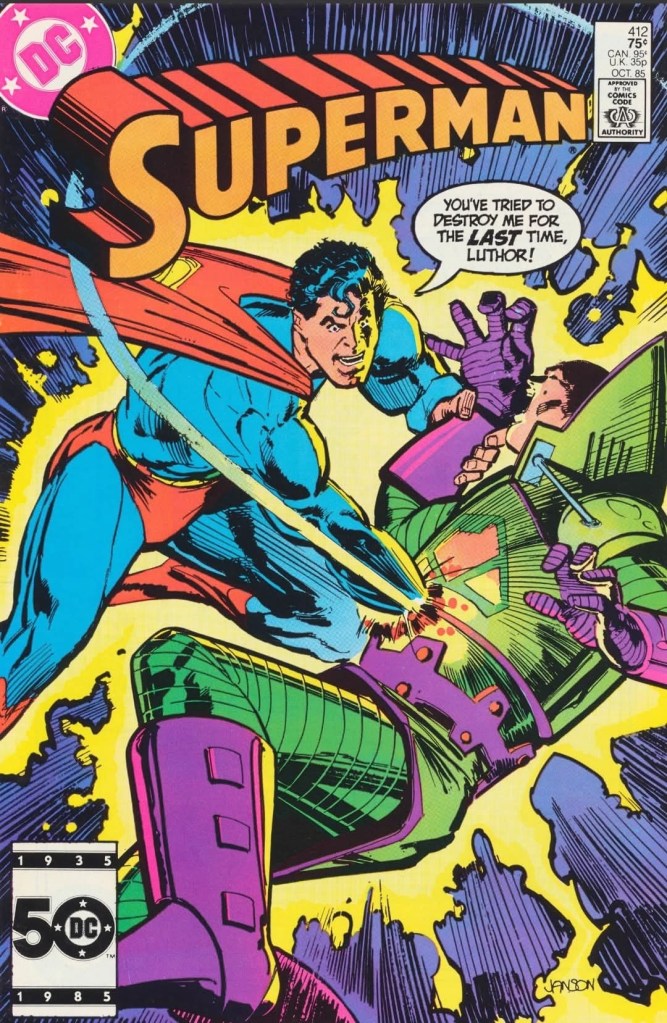
The cover.

Early story

The story begins at the unemployment bureau in Metropolis. Clark Kent, who recently lost his jobs with WGBS and the Daily Planet, stands in line and waits for his turn. Being unemployed, Clark feels troubled and other people nearby recognize him.

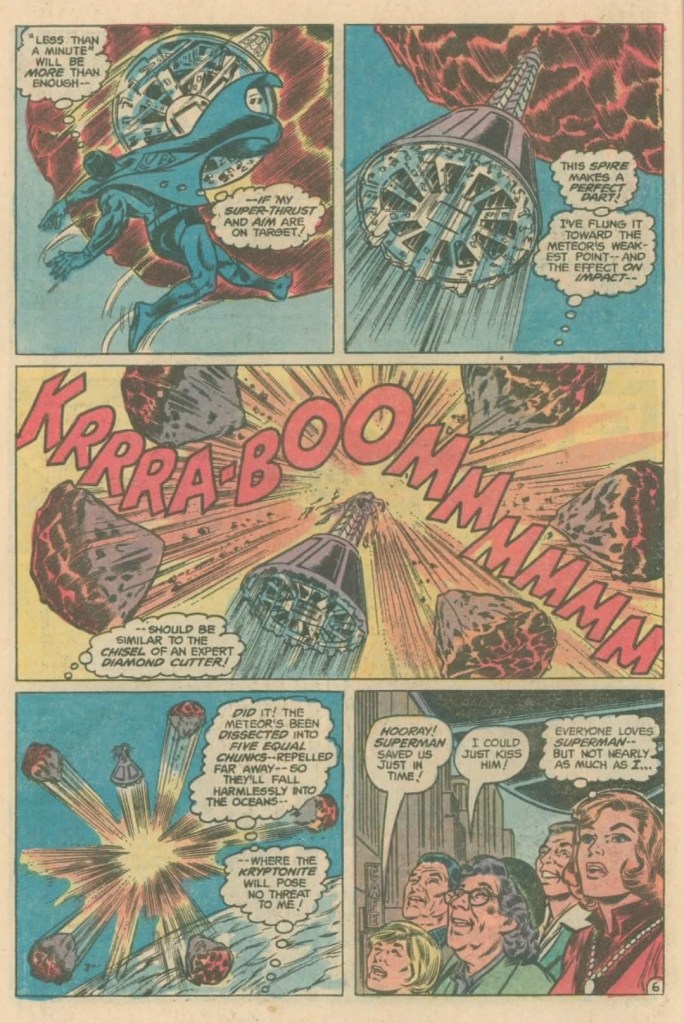
As his turn at the counter starts, Clark senses something and decides to get out quickly. He enters the emergency exit, changes into Superman and flies out of the building. It turns out a high-rise building accident has occurred and already several pieces of sharp glass have been falling down. To prevent further harm, Superman uses his heat vision to convert the falling glass and collectively turn them into a growing molten ball. He brings the giant molten ball to the top of the building (still in construction/expansion) and meets the hard-hat workers before flying away.

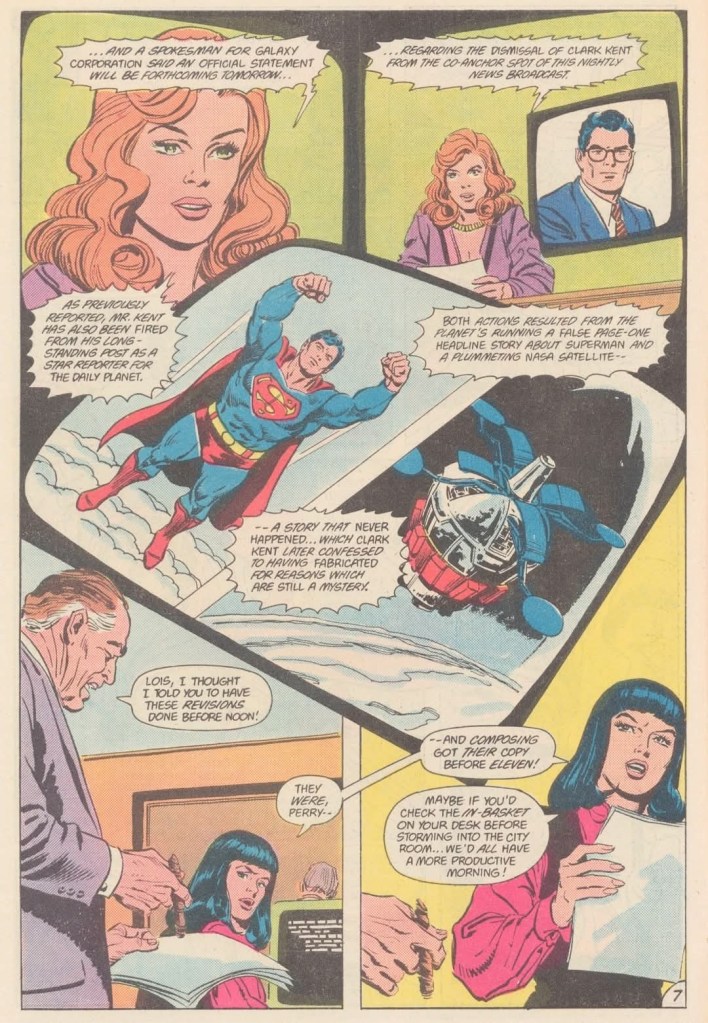
Elsewhere, Lana Lang announces news to TV viewers regarding the dismissal her of close friend Clark Kent which was the result of the fake headline news story about Superman and the NASA satellite. In another location, Lex Luthor is very pleased watching the same broadcast knowing his plan of ruining Superman succeeded and got Clark Kent as a fake news casualty. Luthor is not done with Superman yet…

Quality

Lex Luthor here is ruthless, strategic and obsessed with defeating Superman.

I really like this Superman tale. This is a story about Superman who is still dedicated to doing acts of good by helping people with problems even though he is socially in deep trouble being unemployed as Clark Kent. Not only is the unemployment aspect relevant, the consequences of fake news and their negative effect on people made this tale more socially relevant with today’s world of fake news and unethical journalism.

Going back to Superman, it is clear that the embarrassment and unemployment of his civilian identity impacted him as a superhero. This is evident when Lana Lang accused him of betraying Clark Kent resulting in a fake news story that led to the firing by WGBS and the Daily Planet. Lana, who does not realize Superman and Clark are the same person, blamed the Man of Steel that the firing of Clark is so devastating to her as she cares for him so much (note: Clark and Lana were romantically involved during their teenage years at Smallville).  

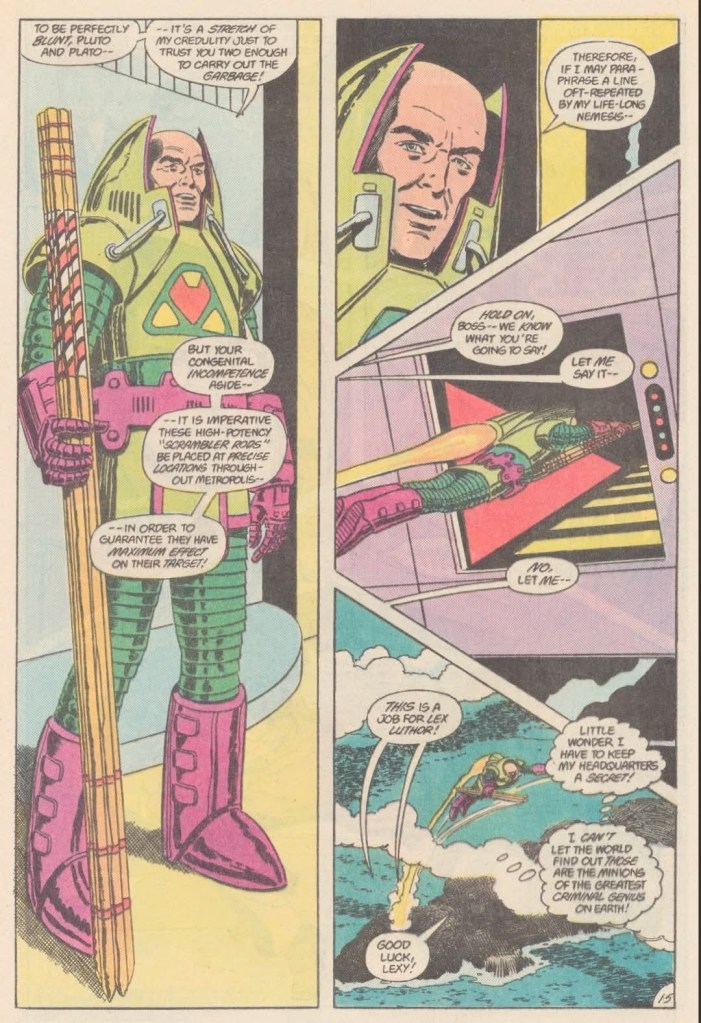
The powerful writing by Cary Bates does not end there. In this comic book, you will see Lex Luthor execute his other plans to ruin Superman whom he personally accused over the loss of his family and his own world Lexor (click here and here for references). This is a Luthor who is not simply being evil but also someone who is well organized, strategic and even fearless. By this stage, the criminal mad scientist Luthor has accumulated a lot of resources to have his own headquarters, technologies and a dedicated staff. In some ways, Luthor in this comic book eerily resembled his financial tycoon version in the post-Crisis era (click here and here for relevance).

I should also state that the personal encounter between Superman and Luthor here is a great pay-off to the build-up that preceded it. You readers should see it for yourselves because to reveal more in this review will ruin it.

Conclusion

As Lana Lang delivers the news to TV viewers regarding Clark Kent and Superman, tension is brewing over at the Daily Planet.

Superman #412 (1985) is undeniably a great Superman story published during the very late stage of the original multiverse (note: Superman #423 was one of the final tales of Superman of this particular era. Superman #424 was part of the post-Crisis era). The portrayal of Superman being disturbed by the huge setback he suffered as a civilian is really compelling to see and his encounter with Lex Luthor really brought the tension and suspense to high levels. At the same time, the consequences of Superman’s actions (including those of his civilian form as Clark Kent) are very evident and nicely dramatized by the Bates-Swan team. You really feel that the creators were wrapping up their Superman stories and decided to move this series to a new direction knowing that the original multiverse will end. This is a must-read tale!

Overall, Superman #412 (1985) is highly recommended.

+++++

Thank you for reading. If you find this article engaging, please click the like button below, share this article to others and also please consider making a donation to support my publishing. If you are looking for a copywriter to create content for your special project or business, check out my services and my portfolio. Feel free to contact me with a private message. Also please feel free to visit my Facebook page Author Carlo Carrasco and follow me on Twitter at  @HavenorFantasy as well as on Tumblr at https://carlocarrasco.tumblr.com/ and on Instagram at https://www.instagram.com/authorcarlocarrasco
Retro Gaming Ads Blast – Part 32

Welcome back readers, fellow geeks, nostalgia buffs and electronic gaming fans!

In this edition of the Retro Gaming Ads Blast (RGAB) series, we will take a look at another batch of retro gaming print ads – including arcade flyers – from the 1980s and 1990s.

For the newcomers reading this, Retro Gaming Ads Blast (RGAB) looks back at the many print ads of games (console, arcade, computer and handheld) that were published in comic books, magazines, flyers, posters and newspapers long before smartphones, social media, the worldwide web and streaming became popular. To put things in perspective, people back in the 1980s and 1990s were more trusting of print media for information and images about electronic games and related products.

With those details laid down, here is the newest batch of retro gaming print ads for you to see and enjoy…

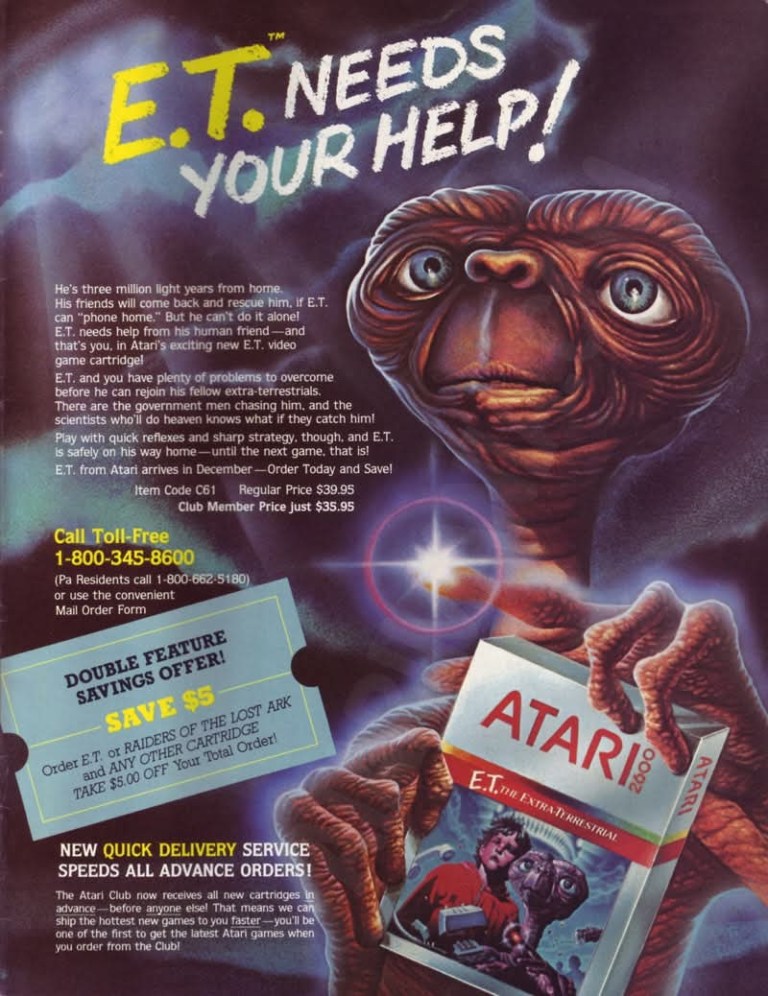
1. E.T. the Extra-Terrestrial Atari 2600 print ad

I saw the movie and played the Atari 2600 game.

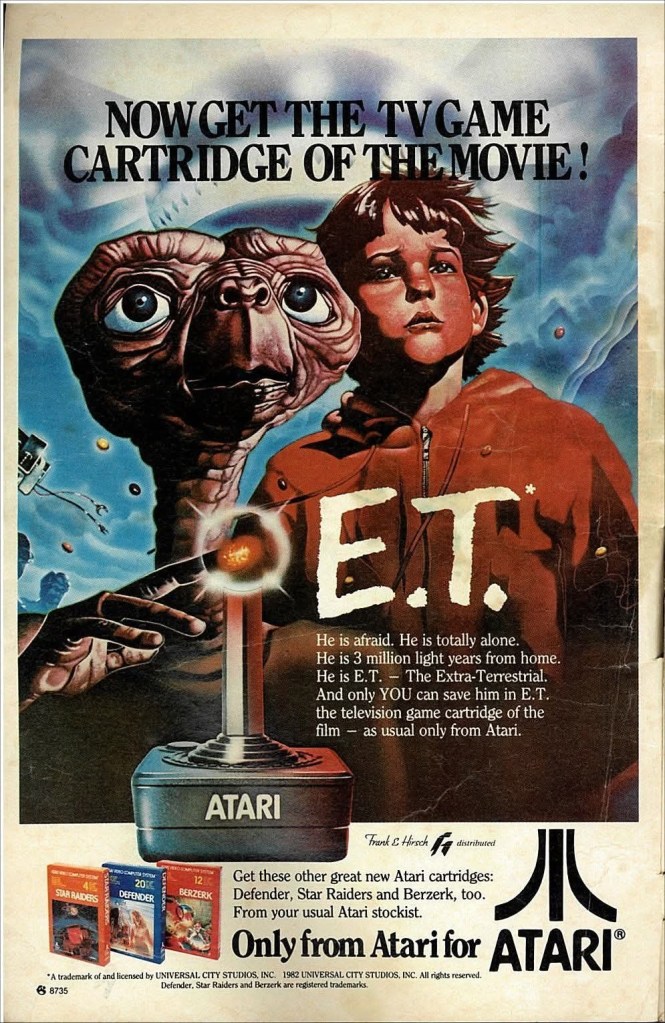
Way back in 1982, Steven Spielberg’s small production E.T. the Extra-Terrestrial touched countless moviegoers and became a massive hit around the world. Along the way, an official video game adaptation for the Atari 2600 console was made by Atari anticipating big success coming. The above print ad appeared in many comic books I read and the artwork easily caught my attention since I saw the movie. Apart from the fact that the artist’s take on the boy Elliot did not resemble actor Henry Thomas, no screenshot of the game was shown which is very odd because Atari made the adaptation their biggest offering to consumers. As typical of the times, Atari inserted a few other games below for conveniently promoting them along with E.T. and the Atari 2600. Given the massive failure of the game, this print ad is a sad reminder from gaming’s past.

2. Pro Tennis arcade flyer

The artwork has a comic book look.

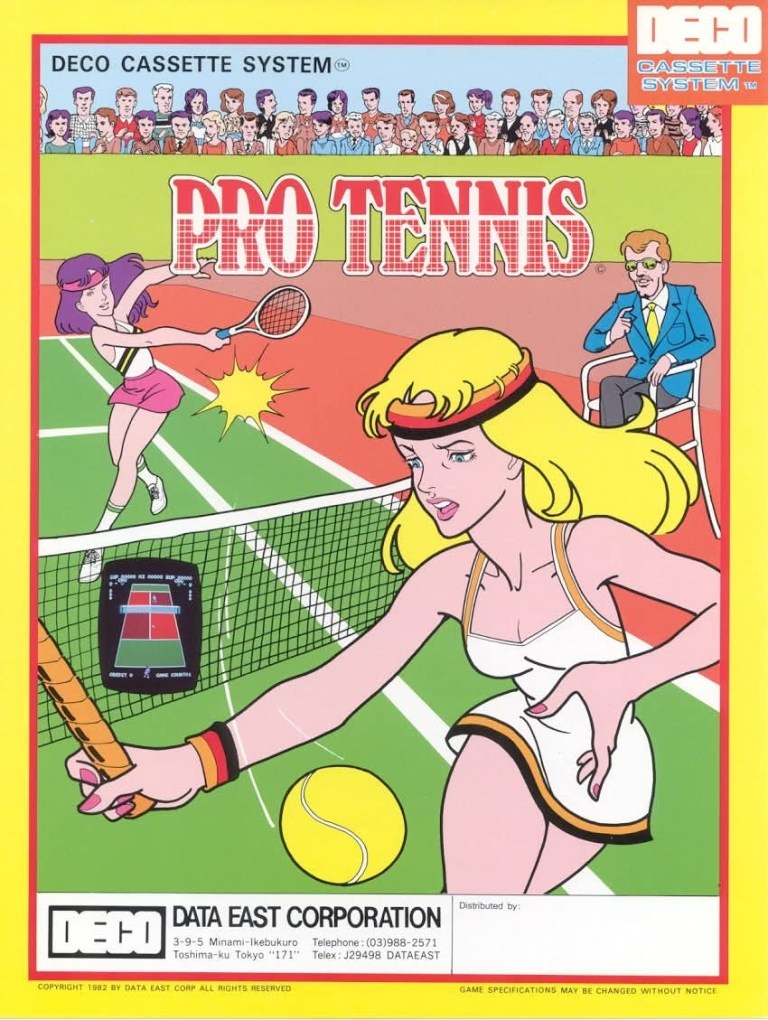
Still in 1982, Data East released Pro Tennis in the arcades. This arcade flyer has a pretty neat hand-drawn artwork that looked like it came from a comic book, and the ad makers managed to insert one screenshot to make it clear to both players and arcade operators what to expect. This is still a nice flyer to look at.

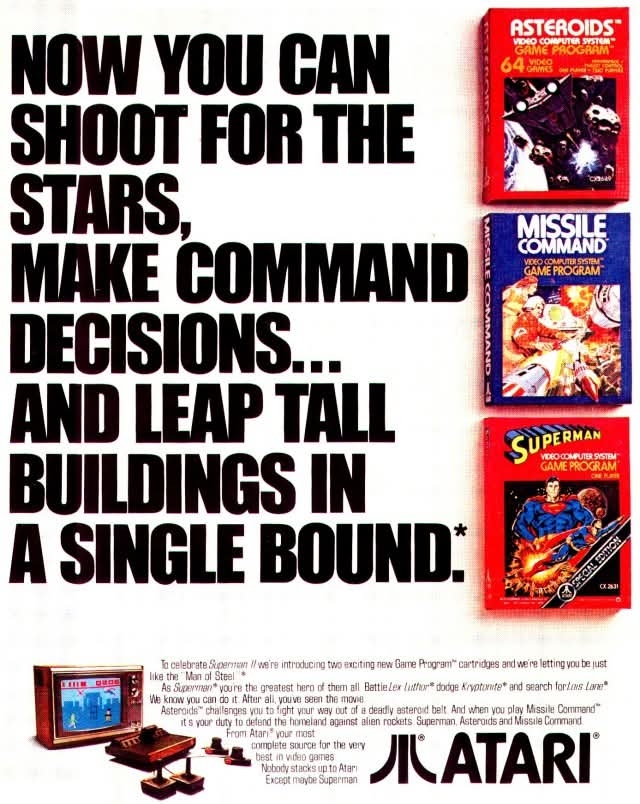
3. 3-in-1 Atari 2600 print ad

I was able to play Missile Command, Asteroids and Superman on Atari 2600 a long time ago.

In the old days, we had an Atari 2600 console in our household and it lasted around 5 years for electronic entertainment. Atari was known for aggressively marketing its consoles and video games, and the above print ad was their creative way of promoting 3 games – Superman and the classics Missile Command and Asteroids – together. The biggest feature of the print ad was the large-sized text description that strongly reflected what each game was about. This is a memorable ad!

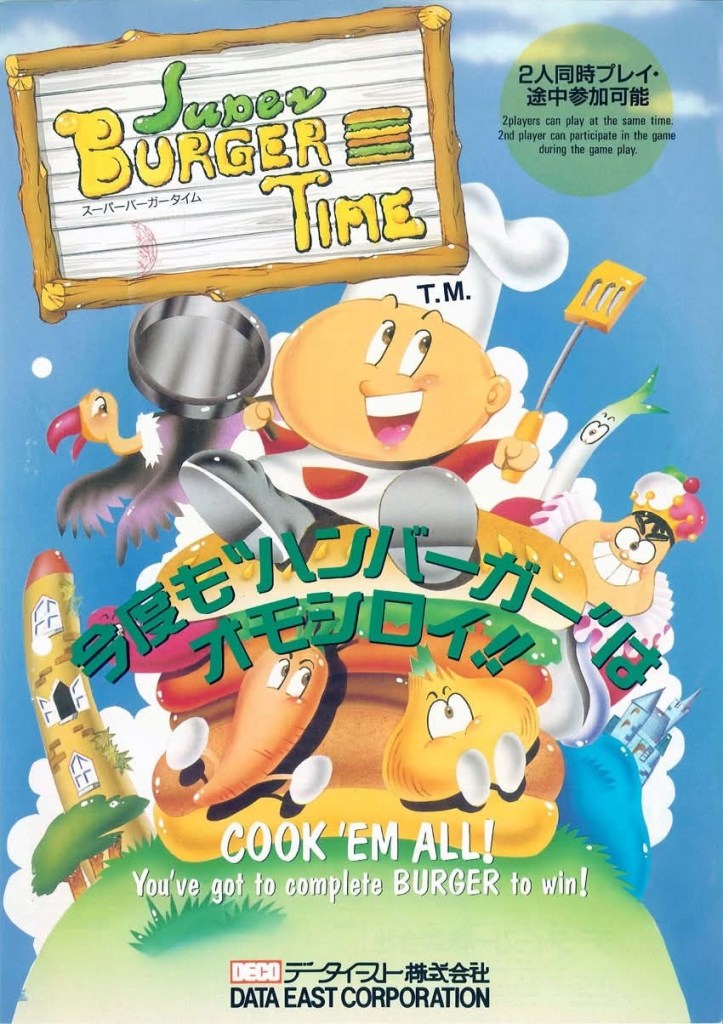
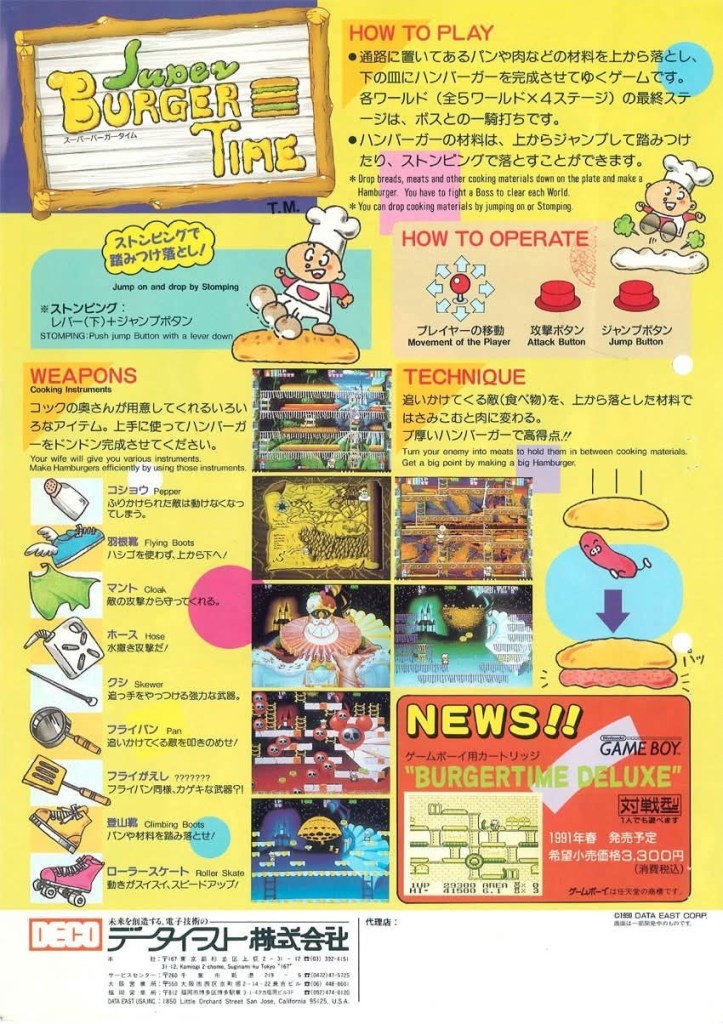
4. Super BurgerTime Japanese arcade flyer

The front.
The rear.

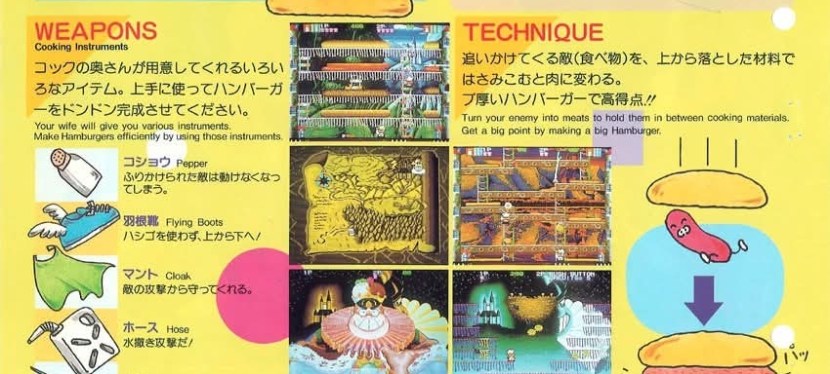
Remember the arcade classic BurgerTime? The sequel Super BurgerTime was released in Japanese arcades in late-1990 and the arcade flyer the producers came up with had a very cartoony art style. The rear of the flyer was filled with lots of details, instructions and screenshots to really have arcade operators and players informed. The producer even inserted a new portion promoting BurgerTime Deluxe on Nintendo Game Boy.  

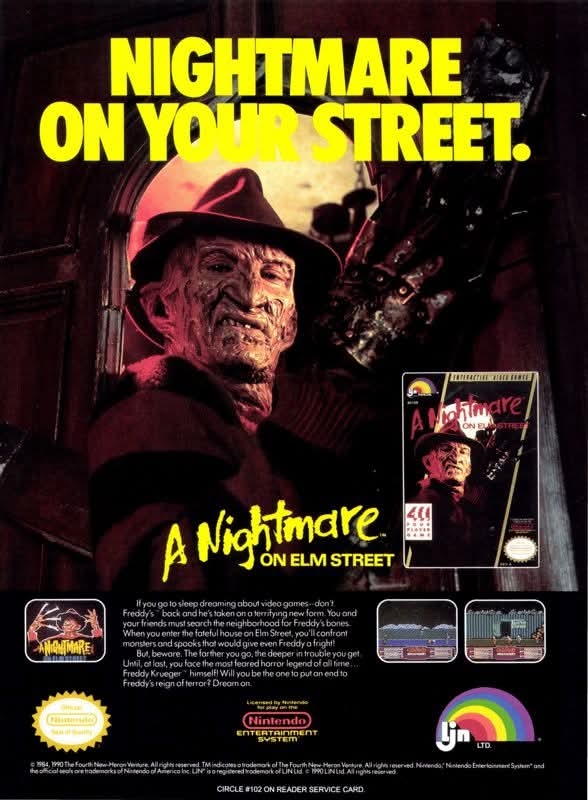
5. A Nightmare on Elm Street NES print ad

If you were able to play this game on the NES, did you have nightmares?

By the end of the 1980s, there were already five movies of the A Nightmare on Elm Street franchise that got released in cinemas and a dedicated following of fans was present. Eventually, an official video game adaptation was released on Nintendo Entertainment System (NES) in 1990 which was surprising since the movies were all rated R and the console itself was popular with young gamers (kids to teenagers). To promote the game, the notorious publisher LJN came up with a print ad that prominently showed series antagonist Freddy Krueger (played by Robert Englund), a few screenshots, the text description and the game box cover. Look back at this old print ad is strange because it shows Freddy Krueger TWICE which means the ad makers could not come up with any original artworks nor a different background for the antagonist.  

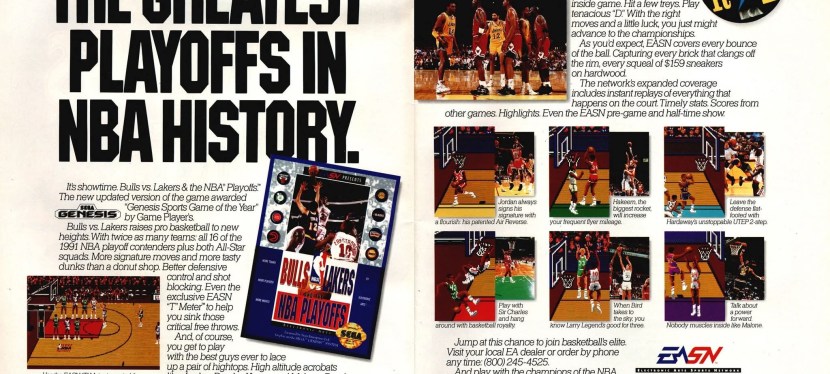
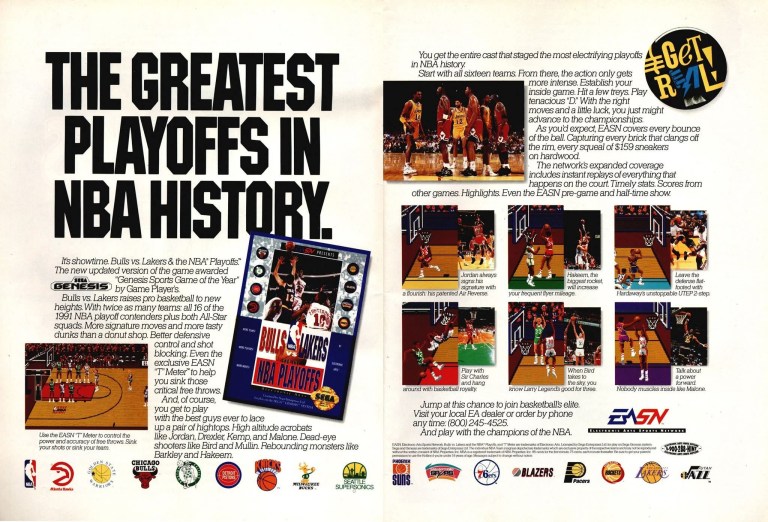
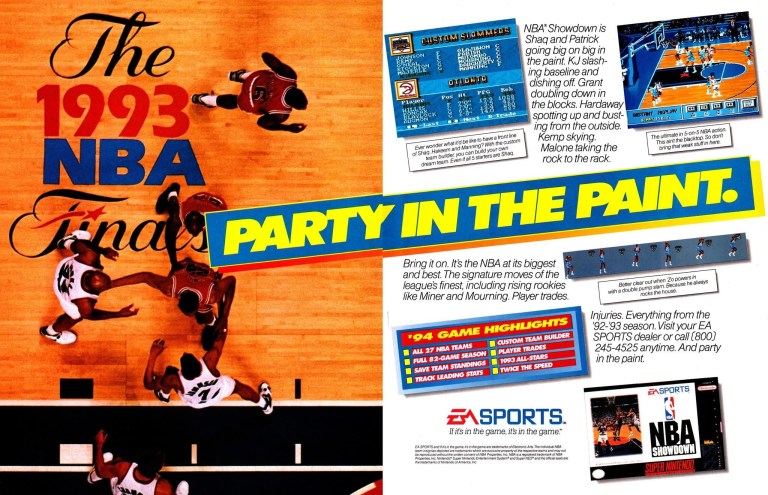
6. NBA Showdown print ad

While this ad did not mention Michael Jordan, he was still included in the video game.

By 1993, EA Sports (Electronic Arts’ sports brand) arguably established itself as the leader of NBA-licensed video games. At the time, console gamers can expect each new NBA game from the publisher to have full rosters and statistics of players based on the season and playoffs that passed. NBA Showdown, which reflected the 1992-93 season, was promoted with this 2-page print ad that had a rectangular image taken during the 1993 NBA Finals (Chicago Bulls and Phoenix Suns) placed on the left, screenshots and text description on the right. The ad made references to Shaquille O’Neal, Patrick Ewing, Tim Hardaway and other NBA players to excite gamers. This ad is still good to look at.

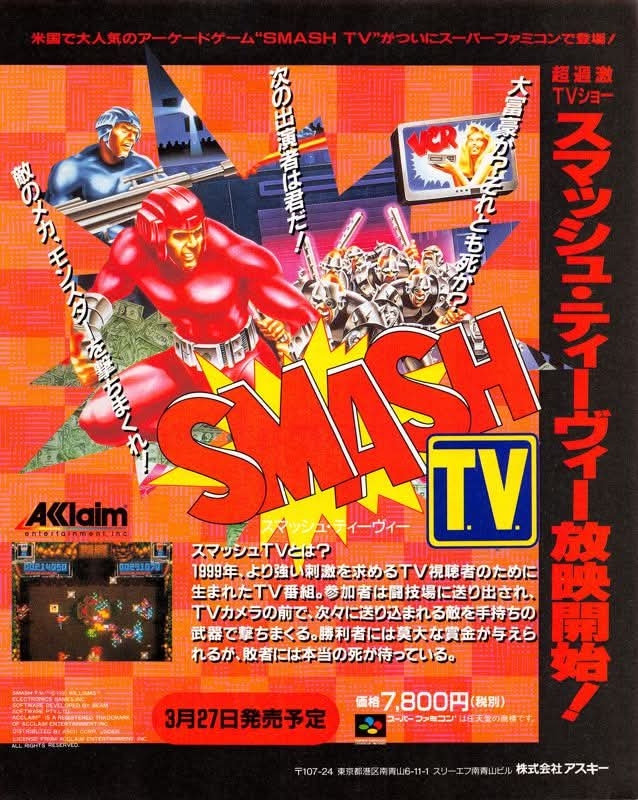
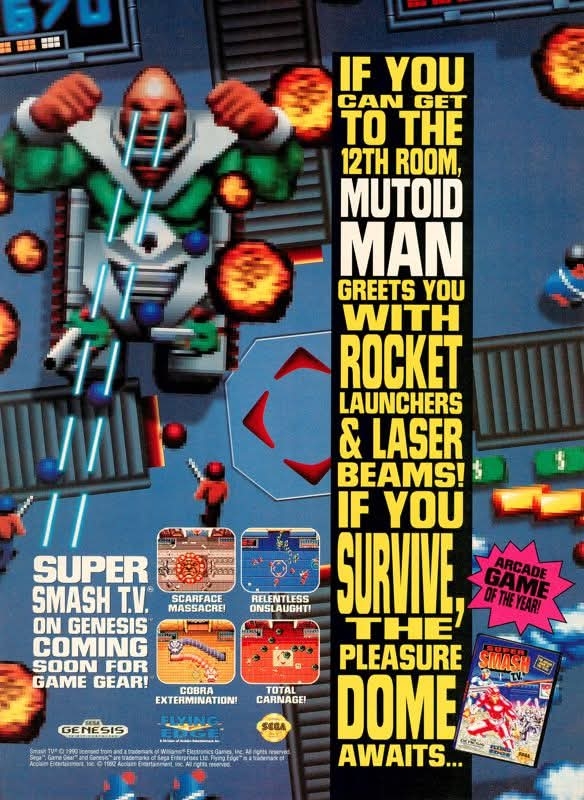
7. Super Smash T.V. Sega Genesis print ad

Were you able to play the Sega Genesis version?

In 1991, the arcade classic Smash T.V. was ported to the Sega Genesis console under the title Super Smash T.V. and this print ad had a rectangular layout showing a zoomed-in capture of game footage with the huge enemy Mutoid Man. The stylized line (in rectangular layout) strongly reflected what gamers could expect in the game. The ad maker also inserted the confirmation that a Game Gear version was coming. This ad is a unique way of promoting both the Genesis and Game Gear versions of Smash T.V.  

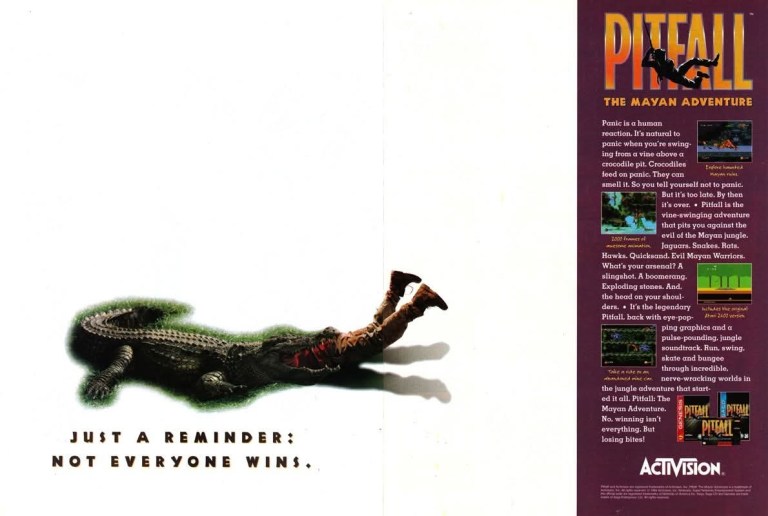
8. Pitfall: The Mayan Adventure print ad

This print ad is still eye-catching and entertaining to look at.

In the mid-1990s, Activision went big with the comeback of the Pitfall! game series by releasing Pitfall: The Mayan Adventure on multiple consoles. This two-page print ad had a touch of dark comedy by using a prominent image of a crocodile swallowing a person while avoiding blood and gore. With the little space remaining, the ad makers crammed in the text description and screenshots plus the game’s package covers. Notably, the text description maintained its tone and focused on describing the game properly. The marketing campaigns of Activision was effective as Pitfall: The Mayan Adventure went on to sell in the millions.

+++++

Thank you for reading. If you find this article engaging, please click the like button below, share this article to others and also please consider making a donation to support my publishing. If you are looking for a copywriter to create content for your special project or business, check out my services and my portfolio. Feel free to contact me with a private message. Also please feel free to visit my Facebook page Author Carlo Carrasco and follow me on Twitter at  @HavenorFantasy as well as on Tumblr at https://carlocarrasco.tumblr.com/ and on Instagram at https://www.instagram.com/authorcarlocarrasco
What to watch on YouTube right now – Part 86

Welcome back my readers, YouTube viewers and all others who followed this series of articles focused on YouTube videos worth watching. Have you been searching for something fun or interesting to watch on YouTube? Do you feel bored right now and you crave for something to see on the world’s most popular online video destination?

I recommend you check out the following videos I found.

#1 Retrospective look back at Superman (1978) – I don’t know with you readers but I am not excited about the new Superman movie directed by James Gunn. Nowadays I am more nostalgic about DC Comics’ most famous superhero and I have been reading decades-old Superman comic books. As for movies about Superman, the 1978 movie that starred Christopher Reeve remains a classic for long-time fans of the Man of Steel. If you are wondering how much impact does Superman of 1978 have on YouTubers, watch the videos posted below. If you have not seen Superman of 1978 yet, watch it first. Otherwise, enjoy the assorted videos below.

#2 Trump-led America obliterates nuclear sites in Iran – As Israel and terrorist state Iran continued their war, the United States led by President Donald Trump pulled off a significant move by heavily bombing the enemy’s nuclear sites. With the wicked regime of Iran (in power since 1979) substantially weakened, the bombings were very helpful not only to Israel but also to the Iranian people (who did not join their evil government’s terrorism) who had been wanting freedom for a long time. Watch and learn from the related videos below.

#3 PatmanQC examines Tapper  – With my digital Xbox copy of Midway Arcade Origins, I was able to play the classic arcade game Root Beer Tapper (AKA Tapper) on my Xbox Series X. I’ve been having a lot of fun playing it and I admire the game’s design and responsive controls. For the newcomers reading this, Tapper was first released in arcades by Midway in the 1980s and made it to many computers and consoles. Not only that, the game has intriguing details behinds its history and there was more than one version of Tapper released. To learn more about the history of Tapper, watch the in-depth video of PatmanQC below.

#4 Unsolved Mysteries Season 5 Episode 8 – As I was doing a round of replaying past episodes of Unsolved Mysteries (hosted by the late Robert Stack), I replayed the 8th episode of the show’s 5th season. The said episode has an intriguing story about a man’s close encounter with a UFO in North America, a scandal within Frontera prison, a shocking crime story and updates to previous stories shown. Take time out to watch the entire episode below.

#5 Defiant Comics revisited – If you are into comic books, have you ever heard of Defiant Comics? I would not be surprised if you have not heard of the publisher or if never ready any of its comic books. Founded in 1993 by former Marvel Comics editor-in-chief Jim Shooter, Defiant Comics published some comic books that had new and unique concepts (read my reviews of Warriors of Plasm #1 and Charlemagne #1) that went against type. Unfortunately the company went out of business in 1995 as a result of having to spend a lot of money on a legal battle with Marvel Comics. On YouTube, there are not too many retrospective videos about Defiant Comics and I posted below a video that can help you discover comics, cards and details about the said publisher.

+++++

Thank you for reading. If you find this article engaging, please click the like button below, share this article to others and also please consider making a donation to support my publishing. If you are looking for a copywriter to create content for your special project or business, check out my services and my portfolio. Feel free to contact me with a private message. Also please feel free to visit my Facebook page Author Carlo Carrasco and follow me on Twitter at  @HavenorFantasy as well as on Tumblr at https://carlocarrasco.tumblr.com/ and on Instagram athttps://www.instagram.com/authorcarlocarrasco

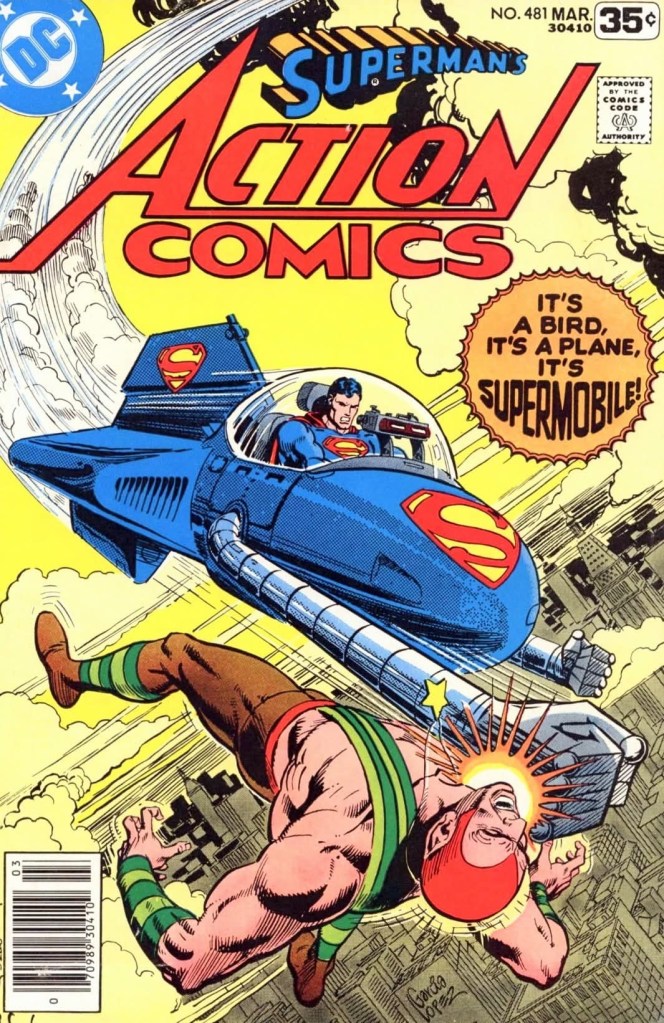
A Look Back at Action Comics #481 (1978)

Welcome back superhero enthusiasts, 1970s arts and culture enthusiasts, DC Comics fans and comic book collectors! Today we go back to the year 1978 to take a close look at a part of the DC Comics universe through a tale of the Action Comics monthly series.

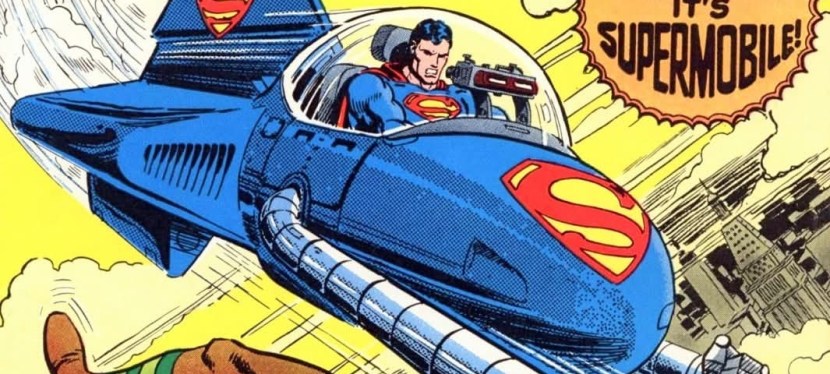
Believe it or not, there were times when Superman used advanced technology and machinery to achieve his goals, to win a battle or at least survive. This is something we people today can relate with since a lot us have smartphones and computers being used daily. As for the Man of Steel, there was a time when I saw an episode of Super Friends on TV in which a very vulnerable Superman had no choice but to use his personal flying vehicle called the Supermobile to travel and do something. It turns out, the Supermobile itself started in comic books.

With those details laid down, here is a look back at Action Comics #481, published in 1978 by DC Comics with a story written by Cary Bates and drawn by Curt Swan.

The cover.

Early story

The story begins on a city street as Amazo (who recently gained the powers of Justice League members in a previous encounter) is about to strike a weakened Superman and Professor Ivo (who is responsible for Amazo) in front of many people. Amazo strikes but ends up smashing the part of the road as his targets vanished.

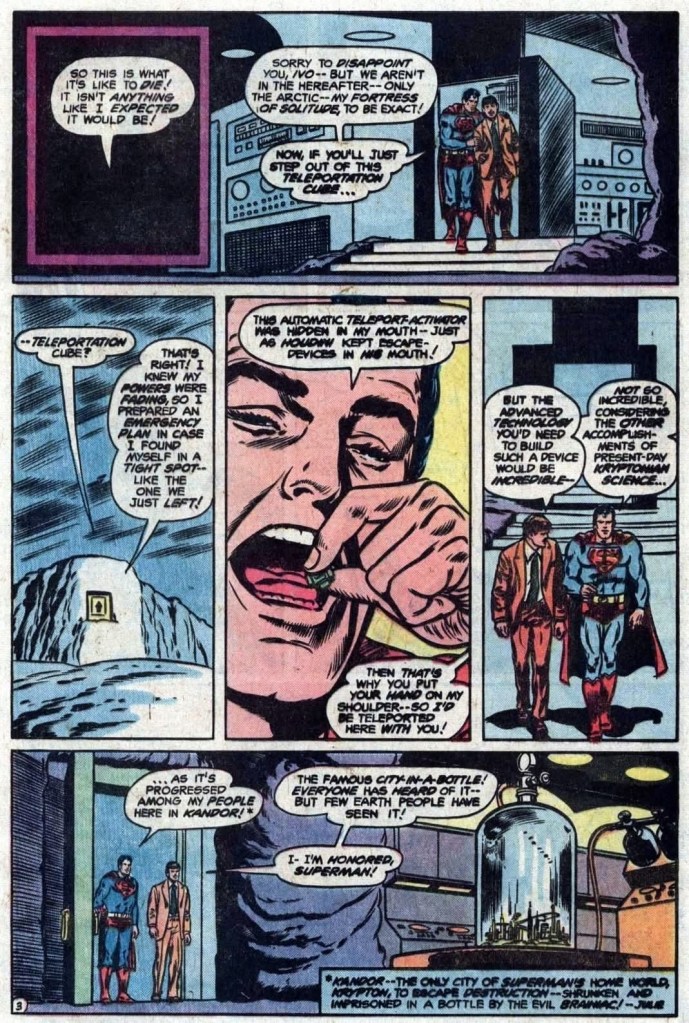
It turns out Superman and the professor were teleported safely all the way into the Fortress of Solitude. With his powers gone due to red radiation, Superman revealed that he made some preparations in relation to Amazo’s eventual rampage….

Quality

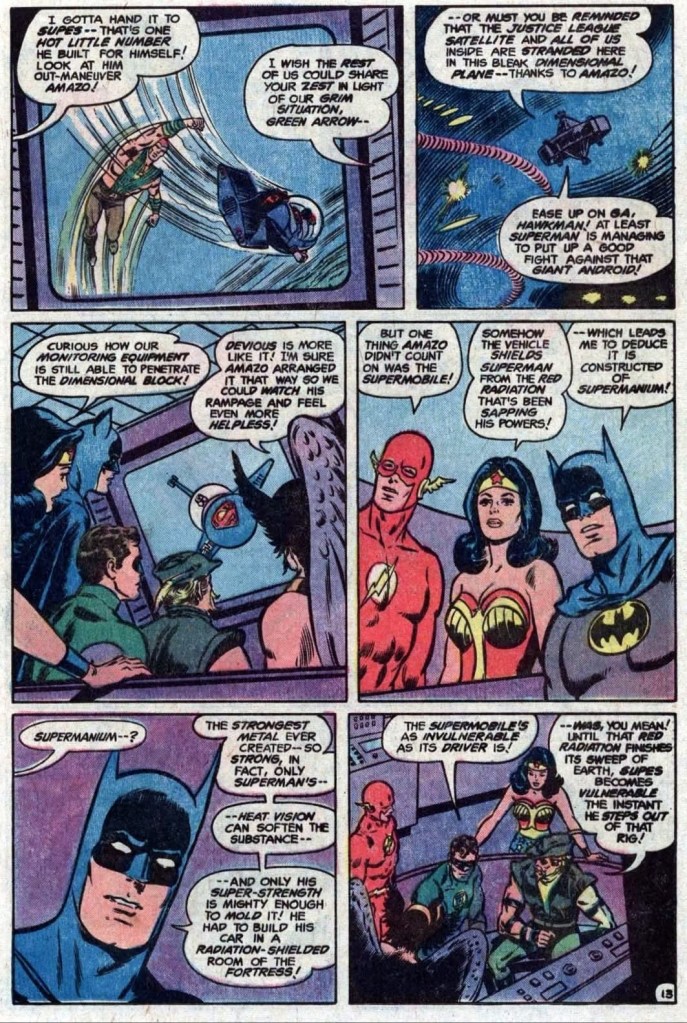
Exposition about the Supermobile in this page showing the trapped Justice League members.

This early, I want to point out that this comic book is not merely a shallow tale designed to introduce the Supermobile in lazy fashion. In fact, there is a lot of work done by the Bates-Swan duo here and this includes plot build-up backed with payoffs, lots of details that were revealed and, most notably, the story has a solid structure complete with smooth execution.

This story was preceded by an unfortunate series of events in which Amazo gained the powers of the Justice League members and had them trapped in space, while Superman got hit by red radiation and managed to get out for a new fighting chance. Here, Superman is powerless and vulnerable, and the fact that Amazo is so powerful, the unveiling and use of the Supermobile is clearly justified. Amazo himself is a fine example of a scientific creation gone wrong and seem inspired by the monster of Frankenstein in literature.

By looking close at the details, the dialogue and the execution of event, this is clearly not a rushed job to introduce the Supermobile. It is a sufficient story on its own and it even delivers a good amount of superhero spectacle to satisfy readers.

Conclusion

Superman and the professor inside the Fortress of Solitude.

Action Comics #481 (1978) is indeed a satisfying and fun read. The build-up leading to the Supermobile’s debut is sufficient and the creators went on to keep building up the plot with Amazo getting bigger as a threat to not only against Superman but also against the Justice League. The Supermobile’s debut is justified and definitely it is not a cheap addition to the plot. The idea of Superman using a personal transport looked silly on face value but this comic book proved it is believable and sensible.

Overall, Action Comics #481 (1978) is recommended.

+++++

Thank you for reading. If you find this article engaging, please click the like button below, share this article to others and also please consider making a donation to support my publishing. If you are looking for a copywriter to create content for your special project or business, check out my services and my portfolio. Feel free to contact me with a private message. Also please feel free to visit my Facebook page Author Carlo Carrasco and follow me on Twitter at  @HavenorFantasy as well as on Tumblr at https://carlocarrasco.tumblr.com/ and on Instagram at https://www.instagram.com/authorcarlocarrasco
A Look Back at Action Comics #438 (1974)

Welcome back superhero enthusiasts, 1970s arts and culture enthusiasts, DC Comics fans and comic book collectors! Today we go back to the year 1974 to take a close look at a part of the DC Comics universe through a tale of the Action Comics monthly series.

Throughout the superhero comics publishing history of DC Comics, Lois Lane is the definitive leading lady of Superman. Traits of her personality and journalistic work ethic got emphasized through her interactions with fellow reporter Clark Kent (Superman). At times, Lois Lane becomes a rival of Kent’s when it comes to getting the hottest scoop and getting the approval of their boss Perry White for publishing it on the next issue of the Daily Planet. But have ever seen Lane become a monster strong enough to take on Superman?

With those details laid down, here is a look back at Action Comics #438, published in 1974 by DC Comics with a story written by Cary Bates and drawn by Curt Swan.

The cover.

Early story

The story begins on the busy streets of Metropolis with Clark Kent and Lois Lane riding in a taxi. He gives her a very unique looking necklace as an advanced birthday gift which she gladly wears. Lois then kisses Clark on the lips which surprises him. Moments later, the taxi stops on a sidewalk as something inside happened. Seconds later, a monstrous woman emerges from the taxi which turned out to be none other than Lois Lane in a transformed state. The monster Lois gets out of the taxi, throws the necklace away and leaves Clark behind. The incident causes a commotion in the city.

Still inside the taxi, Clark discreetly changes into Superman and flies away to search for Lois Lane…

Quality

As Superman works to find monster Lois Lane, the media buzz about her begins on television. This was the time when social media was decades away from realization.

To begin with, the concept of this comic book is clearly outlandish and the creators decided to make a monster out of Lois Lane and explore what would happen to both the city and Superman. The good news here is that the storytelling has a firm structure and the dialogue – most notably that of Superman – still made sense and was believable to follow. Without spoiling the plot, I can say that Superman is still the main focus of the story and how he made moves to solve problems while still caring for Lois Lane is engaging to read.

In this comic book, you will see some interesting developments that emphasize how Clark Kent works within the limitations of his journalistic career and connections, how Superman takes responsibility things he did before, and how he works to protect his secret identity. The Bates-Swan duo really delivered the goods here.  

Conclusion

Superman has two problems to deal with – finding monster Lois Lane and preventing a train disaster from happening.

Action Comics #438 (1974) is a fun read but it is not a brainless nor a low-intelligence tale. This is a tale about Superman relying less on his powers and using more of skills as civilian Clark Kent to handle the problem of monster Lois Lane. The story lacked the superhero spectacle of action but it still is entertaining to read, and the emphasis on Superman and Lois alone is worth reading. As for The Atom short story included, it is essentially a somewhat fun additive.

Overall, Action Comics #438 (1974) is recommended.

+++++

Thank you for reading. If you find this article engaging, please click the like button below, share this article to others and also please consider making a donation to support my publishing. If you are looking for a copywriter to create content for your special project or business, check out my services and my portfolio. Feel free to contact me with a private message. Also please feel free to visit my Facebook page Author Carlo Carrasco and follow me on Twitter at  @HavenorFantasy as well as on Tumblr at https://carlocarrasco.tumblr.com/ and on Instagram at https://www.instagram.com/authorcarlocarrasco
A Look Back at Action Comics #436 (1974)

Welcome back superhero enthusiasts, 1970s arts and culture enthusiasts, DC Comics fans and comic book collectors! Today we go back to the year 1974 to take a close look at a part of the DC Comics universe through a tale of the Action Comics monthly series.

If you know the Superman lore in comics, you should be aware that Perry White (first appeared in 1940) is the editor-in-chief of the Daily Planet and is the superior of Clark Kent (Superman), Lois Lane and Jimmy Olsen. As Perry White got race-swapped (a woke move that’s also idiotic) and presented as a black man in Zack Snyder’s Man of Steel and James Gunn’s Superman (2025), be aware that the long-lasting character originated in the comics as a white man who symbolized dedication and management consistently. I still remember the live-action versions of Perry White played by Jackie Cooper in the 1978 movie and by Lane Smith in the TV series Lois & Clark: The New Adventures of Superman.

I read a lot of Superman comic books and many times Perry White appeared as a supporting character. He also appeared in the memorable crossover comic book Superman and Spider-Man, interacting with Peter Parker (Spider-Man). As a supporting character in Superman tales, Perry White occasionally provides journalistic direction or a challenge to Clark Kent who in turn tackles problems in his civilian identity or as Superman.

But what if Perry White overshadows Superman himself?

With those details laid down, here is a look back at Action Comics #436, published in 1974 by DC Comics with a story written by Elliot S. Maggin and drawn by Curt Swan.

The cover.

Early story

The story begins deep within Metropolis when the Daily Planet’s editor Perry White enters the Galaxy Building. White does not realize that he is being watched by two adults who turned out to have special abilities and together they levitated a gift for him before he reaches his office. The gift for Perry White was their response to the help he provided to them – the mutants – to escape the influence of Calixto sometime before. The two adults then vanished.

As White arrives in his office, Superman discreetly flies into the Galaxy Building and changed into his civilian form as Clark Kent. With his enhanced hearing, Kent heard the phone in his office ringing and quickly rushes to it. Through the phone, White (who was notified he won the Pulitzer Prize again) tells him that Edge Morgan has something big happening on both TV and on paper, and they should fly out to New York to work together…

Quality

Superman and Perry White fly towards an enemy.

To get straight to the point, this Superman tale shows the wild concept of Perry White overshadowing the Man of Steel in terms of capabilities instead of journalistic power. On paper it sounds crazy but the good news is that the wild concept was told nicely and it is actually fun to follow without ever going over the top.

With witnesses around, Perry White uses his super powers.

Apart from the story’s outlandish idea, the plot shows a new dimension of Perry White transforming from a supporting player (in the form of a newspaper editor) into a more heroic figure. Instead of being a helpless witness of events happening, White becomes more involved and contributes something to the prevention of disaster and even tackling evil head on. That being said, this situation allowed the creative duo to show a new side of White’s personality as he himself realizes the sudden weight and pressure that comes with having super powers, and he still has journalistic standards to live up to.

Conclusion

Superman is surprised to witness Perry White fly and prevent a small plane from crashing.

A product of its time, Action Comics #436 (1974) has a short story that had a zany concept which turned out to be an entertaining read. It is nice to see Perry White actually becoming super while the storytelling done by the Maggin-Swan team never became too outlandish. Think of this comic book – which also has a short story of Green Arrow – as a bout of fun focused on Superman and Perry White. I first read this comic book as a young boy and now as an adult, it is still enjoyable to read again. No woke garbage and no Zack Snyder-style darkness here. This is classic Superman.

Overall, Action Comics #436 (1974) is recommended.

+++++

Thank you for reading. If you find this article engaging, please click the like button below, share this article to others and also please consider making a donation to support my publishing. If you are looking for a copywriter to create content for your special project or business, check out my services and my portfolio. Feel free to contact me with a private message. Also please feel free to visit my Facebook page Author Carlo Carrasco and follow me on Twitter at  @HavenorFantasy as well as on Tumblr at https://carlocarrasco.tumblr.com/ and on Instagram at https://www.instagram.com/authorcarlocarrasco
Retro Gaming Ads Blast – Part 31

Welcome back readers, fellow geeks and electronic gaming fans!

In this edition of the Retro Gaming Ads Blast (RGAB) series, we will take a look at another batch of retro gaming print ads – including arcade flyers – from the 1980s and 1990s.

For the newcomers reading this, Retro Gaming Ads Blast (RGAB) looks back at the many print ads of games (console, arcade, computer and handheld) that were published in comic books, magazines, flyers, posters and newspapers long before smartphones, social media, the worldwide web and streaming became popular. To put things in perspective, people back in the 1980s and 1990s were more trusting of print media for information and images about electronic games and related products.

With those details laid down, here is the newest batch of retro gaming print ads for you to see and enjoy…

1. Operation Wolf American and Japanese arcade flyers

Operation Wolf for American arcades.
Operation Wolf for Japan.

In the late 1980s, Taito achieved massive success in arcades around the world with Operation Wolf. Released during the late stage of the Cold War and with many militaristic action movies already released by Hollywood, Operation Wolf attracted a lot of money from countless players as well as praise from game critics. For the American market, Taito came up with a colorful yet gritty looking arcade flyer that had nice hand-drawn artwork and enough details and screenshots to give readers a useful look at what to expect. The Japanese arcade flyer meanwhile has an even grittier looking original artwork that strongly emphasized war, guns and action. In retrospect, I look both arcade flyers a lot.  

2. Centipede Atari 2600 and Atari 5200 print ad

I played Centipede a lot on Atari 2600.

While I completely missed out on the arcade version of Centipede, I managed to play its Atari 2600 version a lot. Ultimately, the simple game design and unique challenges resulted in lots of fun-filled bouts in my experience. To promote the game’s versions on Atari 2600 and Atari 5200, the game giant came up with this particular print ad that had two near-identical artworks that reflect the concept of Centipede. The ad also has some catchy expressions in the text description. This old ad is still fun to look at.

3. Atari RealSports print ad

Long before EA sports video games, there was this.

Way back in 1982, Atari launched its RealSports line of sports video games mainly to revitalize sports gaming for their consoles. In fact, RealSports was the result of a critical and aggressive ad campaign by competitor Intellivision which had its Sports Network series of games. In this RealSports print ad, a large image of Atari’s baseball game was used probably to emphasize the scope of the field. The ad had screenshots of the volleyball and football games, while the text description reflected Atari’s aggressive response to Intellivision. This ad is an early example of competition between rival game console makers focused on sports gaming.

4. Lethal Enforcers Sega CD print ad

When was the last time you bought a video game with a hard copy and a peripheral bundled together?

Porting light gun games from the arcade to the console is very difficult and tricky to do. This is what Konami did in the early 1990s when they released a version of the arcade hit Lethal Enforcers on the Sega CD console and the package had a light gun with the game on disc. To promote the Sega CD version, Konami came up with a 2-page print ad with the catchy line “You won’t find a toy like this in any Cracker Jack box.” In addition, their ad had a few paragraphs of descriptive text to not only excite gamers but also gently inform them that Lethal Enforcers was also available on the Sega Genesis (note: this console is required for the Sega CD add-on to work) and the Super Nintendo Entertainment System (SNES). Overall, this old ad has a strong visual approach and a clever marketing strategy.

5. Pitfall II: Lost Caverns Atari 2600 print ad

A very stylish layout to promote the game.

In 1982, Activision struck gold with the huge success of Pitfall! which became an influential model of designing platform games. Of course, the publisher (now owned by Microsoft) did not stop there as they went on to make the sequel Pitfall II: Lost Caverns to not only keep the success going but also to exceed the standard they set with the first game. Activision came up with a print ad that not only told gamers of Pitfall Harry’s next adventure but also express humor visually. In line with Activision’s policy of crediting its creators (note: Atari was notorious for refusing to credit its game makers during this era), game designer David Crane was acknowledged in the ad.

6. Team USA Basketball print ad

See your favorite NBA player from the 1990s?

In 1992, a lot of people were obsessed with the Dream Team Olympic basketball squad of the United States as its roster had NBA legends like Larry Bird, Magic Johnson, Michael Jordan, Karl Malone, Charles Barkley and David Robinson to name a few. In fact, the Dream Team became the most popular attraction among all teams in any sport of any country that participated in the summer Olympics in Barcelona. Knowing how popular the squad really was, Electronic Arts (EA) made the video game Team USA Basketball and released it on the Sega Genesis which was already a popular console for sports video games. EA came up with this eye-catching 2-page print ad that strongly emphasized the Dream Team, international basketball gaming, and the company’s tested design on 2D basketball video games. In retrospect, this print ad is still amusing and exciting to look at.

7. Jungle Hunt Atari 2600 and Atari 5200 print ad

Do you fine the parallel artworks amusing or disturbing?

Following the huge success of Jungle Hunt (previously titled as Jungle King), Atari saw potential Dollar signs and made a deal with Taito to publish ports under their own brand for the Atari 2600, Atari 5200 and 8-bit computers. As with the Atari console ads of Pitfall II: Lost Caverns and Phoenix, Atari came up with a print ad that featured two parallel artworks that look similar with each other as they promoted Jungle Hunt for Atari 2600 and Atari 5200. To their credit, the artworks used were detailed and eye-catching, and the descriptive line of words displayed carried a possible reference to 1975’s Jaws.

8. GameShark print ad

A James Bond-inspired way of promoting GameShark.

Remember GameShark? For the newcomers reading this, GameShark is the brand of a line of products released on different video game consoles and personal computers (Windows specifically) that gamers use to cheat in video games.  GameShark was popular at a time when not too many people had access to the Internet nor did gamers had the means to search for cheats online, and codes were needed to enable cheating. GameShark became so popular, more ambitious and stylish print ads were realized such as this James Bond-inspired 2-page ad. On face value, this ad looked like it was a promoting a particular game but ultimately it was about promoting GameShark with style, cool and some sexiness.

+++++

Thank you for reading. If you find this article engaging, please click the like button below, share this article to others and also please consider making a donation to support my publishing. If you are looking for a copywriter to create content for your special project or business, check out my services and my portfolio. Feel free to contact me with a private message. Also please feel free to visit my Facebook page Author Carlo Carrasco and follow me on Twitter at  @HavenorFantasy as well as on Tumblr at https://carlocarrasco.tumblr.com/ and on Instagram at https://www.instagram.com/authorcarlocarrasco
What to watch on YouTube right now – Part 79

Welcome back my readers, YouTube viewers and all others who followed this series of articles focused on YouTube videos worth watching. Have you been searching for something fun or interesting to watch on YouTube? Do you feel bored right now and you crave for something to see on the world’s most popular online video destination?

I recommend you check out the following videos I found.

#1 You, Me and the Movies react to Night of the Living Dead (1990) – While there are a lot of YouTube videos about the Night of the Living Dead from 1968, there are simply much lesser videos to the 1990 remake by comparison. For the newcomers reading this, the 1990 version of Night of the Living Dead was directed by Tom Savini, presented in color and had its own ways of modernizing the zombie apocalypse genre of film. In my experience, I saw the 1990 remake long before I accidentally discovered on cable TV the 1968 original. If you want to discover the movie and don’t mind spoilers, check out You, Me and the Movies’ entertaining reaction video below.

#2 Unsolved Mysteries Season 3 episodes (hosted by Robert Stack) – If there is any American TV show that made weekday nights entertaining or engaging, it’s none other than Unsolved Mysteries hosted by the late Robert Stack. It’s a good thing for Unsolved Mysteries fans worldwide that episodes hosted by Stack are available for free viewing at YouTube via the FilmRise channel. That being said, posted below are assorted episodes from season 3 of the show for you to discover.

#3 PatmanQC examines the RoboCop arcade game  – In 1988, Data East released their adaptation of RoboCop in the arcades achieving tremendous success around the world. RoboCop is considered by some as an arcade classic and is arguably the best RoboCop game ever made. To find out who were responsible for the arcade game and what made it so enjoyable, watch the in-depth video by PatmanQC below.

#4 Healthy breakfast recipes by Shannon Barker – Shannon Barker is a pretty model who appeared in lots of fashion shows. In my retro comic book review of The Solution #17, I expressed my opinion that Barker would make a very good cosplay photograph model as Shadowmage. Apart from fashion, Barker is also a lifestyle vlogger and if you are interested in health breakfast recipes, watch her video below.

#5 Space Quest revisited – Decades ago, me and my friends were able to play on PC (DOS era) the graphic adventure game Space Quest (full title: Space Quest: Chapter I – The Sarien Encounter). Space Quest was one of my computer games released by Sierra On-Line and it involved being observant, being able to pay attention to the descriptions, and typing the right commands in order to progress. Recently, I saw a retrospective video of Space Quest done by YouTuber Power Pak, and it definitely is both nostalgic and fun to watch.

#6 Ashleigh Burton reacts to Howard the Duck – In 1986, the comedy Howard the Duck was released in cinemas and ended up failing both critically and commercially. While it is considered as one of the worst films ever released, it still has a dedicated following. Believe it or not, the movie was produced by George Lucas and his company Lucasfilm made it. To say that Howard the Duck is cinematic trash is extreme and if you want to see how it impacts Ashleigh Burton, watch her reaction video below.

+++++

Thank you for reading. If you find this article engaging, please click the like button below, share this article to others and also please consider making a donation to support my publishing. If you are looking for a copywriter to create content for your special project or business, check out my services and my portfolio. Feel free to contact me with a private message. Also please feel free to visit my Facebook page Author Carlo Carrasco and follow me on Twitter at  @HavenorFantasy as well as on Tumblr at https://carlocarrasco.tumblr.com/ and on Instagram athttps://www.instagram.com/authorcarlocarrasco

Retro Gaming Ads Blast – Part 30 (Star Wars Special)

Welcome back readers, fellow geeks and electronic gaming fans!

In this edition of the Retro Gaming Ads Blast (RGAB) series, we will take a look at another batch of retro gaming print ads – including arcade flyers – from the 1980s and 1990s but with focus on Star Wars games that were released during the era of George Lucas. This is the Star Wars Special of RGAB.

For the newcomers reading this, Retro Gaming Ads Blast (RGAB) looks back at the many print ads of games (console, arcade, computer and handheld) that were published in comic books, magazines, flyers, posters and newspapers long before smartphones, social media, the worldwide web and streaming became popular. To put things in perspective, people back in the 1980s and 1990s were more trusting of print media for information and images about electronic games and related products.

With those details laid down, here is the newest batch of retro gaming print ads for you to see and enjoy…

1. 1983 Star Wars arcade game flyer

The front of the flyer.
The rear of the flyer.

Just weeks before the Star Wars movie Return of the Jedi was released in cinemas in 1983, Atari released the Star Wars arcade game which became a tremendous hit around the world. Both Star Wars fans and gamers of the time loved the game as it provided a very immersive and fun-filled arcade experience. The print ad Atari released has a nice artwork on the front (showing a portion of the Death Star, two TIE Fighters, a Rebel X-Wing Fighter and Darth Vader’s image) and the text description plus the pictures of two arcade machines on the back. While no screenshots were shown, the print ad still had strong visual impact to catch the attention of players and arcade operators. This arcade flyer still looks great!

2. Star Wars: Return of the Jedi – Death Star Battle Atari 2600 print ad

Parker Brothers really stood out among publishers of games on the Atari 2600 and they even had the Star Wars license.

Considering the massive success that Star Wars and The Empire Strikes Back had in cinemas, merchandising and other entertainment media, it was not surprising that games based on Return of the Jedi were produced. For the Atari 2600, Parker Brothers produced Star Wars: Return of the Jedi – Death Star Battle which my friends and I played a lot in 1983. The print ad Parker Brothers came up with has a very eye-catching design showing a Rebel pilot flying a space ship (supposedly the Millennium Falcon which is the only playable ship in the game) towards the Death Star. The visual design is a stroke of genius because it appeals strongly to Star Wars fans while highlighting a major battle in the film which influenced the core concept of the game. This is a classic Star Wars game ad.

3. Star Wars Arcade Japanese market flyer

This arcade game was one of the first fully polygonal Star Wars games released.

In the 1990s, Sega acquired the license to produce Star Wars games for the arcades and they had the hardware for polygonal graphics. In 1993, the released Star Wars Arcade which is a space shooter that offered gamers the freedom to fly their Rebel space ship in 3D space with environments and huge space ships rendered in polygons. As you can see in the arcade flyer for the Japanese market, Sega went hard with their presentation showing 3 carefully selected screenshots (amazing for the time) and a picture of the arcade machine which had an elaborate control set-up, seats and decorations. As Star Wars Arcade was released more than a year before the polygonal game consoles Sega Saturn and Sony PlayStation hit the market, this arcade flyer was mind-blowing to gamers who were on the verge of playing video games with polygonal visuals.

4. Super Star Wars print ad

Yes, JVC was involved with the Super Star Wars trilogy starting with this one.

In 1992, Star Wars fans who enjoyed playing 2D side-scrolling games saw their dream of the next great Star Wars console experience come true when Super Star Wars was released on the Super Nintendo Entertainment System (SNES). With the SNES technology, more detailed visuals and improved audio brought the Star Wars universe to life and the addition of 3D-like playable sequences (made possible by Mode 7 effects) made Super Star Wars a very unique console experience. The print ad only showed three screenshots and three paragraphs of descriptive text but the use of images from the 1977 movie poster added a lot of punch to the visual presentation. This ad is both eye-catching to gamers and long-time Star Wars fans.

5. Star Wars: TIE Fighter print ad

This game offered gamers the opportunities to be with the dark side.

In 1994, LucasArts released Star Wars: TIE Fighter which offered gamers the opportunity to play an Imperial pilot serving Darth Vader on missions set between The Empire Strikes Back and Return of the Jedi. This print ad has a sharp visual design enhanced by Darth Vader’s iconic look in the background. The selected screenshots shown were good to look at but the artwork used to present the TIE Fighters really stood out. This solid looking print ad does come with a bit of disturbance as the Galactic Empire in Star Wars lore are evil.

6. Super Star Wars: Return of the Jedi print ads

Nothing like seeing Harrison Ford, Carrie Fisher and Mark Hamill as the Star Wars icons on a video game ad.
I never played the portable editions of Super Star Wars: Return of the Jedi. Have you?

As far as gaming on the SNES was concerned, the Super Star Wars trilogy of games really kept fans and casual gamers busy. By the time Super Star Wars: Return of the Jedi was released in 1994 on the SNES, there was already immense speculation about the Star Wars prequel trilogy and George Lucas himself started writing them that same year. The 2-page print ad of the game on SNES had a creepy photo of Emperor Palpatine on one side, the other characters on the other side, and six selected screenshots displayed on the lower part. The way the print ad was design reflects that the game is the end of the trilogy like the 1983 film itself. Super Star Wars: Return of the Jedi was also released on Game Gear and Game Boy and the ad makers made the right decision to use the Death Star and space battle image as the background so that the portable games would stand out.

7. Star Wars: Masters of Teräs Käsi print ad

I wonder if George Lucas ever regretted approving this Star Wars fighting game. It was so rough and unpolished with its quality.

If there is any sub-par Star Wars game released in the 1990s, it is none other than Star Wars: Masters of Teräs Käsi on the PlayStation. The 1997 game was LucasArts’ attempt to cash in on the booming fighting games genre and they took a huge risk of making it entirely polygonal. Instead of using photographs or hand-drawn art, the ad makers used a fully rendered 3D polygonal models of Luke Skywalker and Boba Fett which was alienating to look at. In fact, those polygonal models looked very different from the in-game polygonal models of Skywalker and Boba Fett presented during gameplay. This print ad is a sad reminder about an ill-conceived concept for Star Wars that materialized into an actual product.

8. Star Wars: Shadows of the Empire print ad

If you have read the novel, were you able to play this video game?

LucasArts and Nintendo teamed up with something ambitious – a video game adaptation of Star Wars: Shadows of the Empire that was released exclusively to the Nintendo 64 (N64). Released in late 1996, Star Wars: Shadows of the Empire was part of the multimedia entertainment project of the same name and it is the result of LucasArts’ decision to be an early adopter of the N64 for business-related reasons. The 2-page print ad shown here has a dark, star-filled background which captivating screenshots on the left and the N64 controller standing out. This print ad strongly expresses that gamers would need the N64 in order to play Star Wars: Shadows of the Empire in the comfort of home.

9. Star Wars Trilogy arcade flyer

The front.
The other side.

Before the Star Wars Prequel trilogy started with The Phantom Menace, Sega came out strongly by releasing Star Wars Trilogy Arcade in arcades around the world. Released in 1998, the game was arguably Sega’s most ambitious Star Wars-licensed game ever as it was made with the powerful Model 3 hardware, it came with unique controls and the game was designed as a polygonal rail shooter focused on key segments from the original trilogy of films. Sega wisely used dynamic artwork for the front of the flyer giving viewers the impression that the X-Wing fighter was approaching them closely. At the rear, three screenshots only showed space battles which was a wise decision by Sega to keep the surprise intact for gamers until they play the game. Having played this in the arcade myself, I can assure you that Star Wars Trilogy Arcade has more varied types of gameplay and challenges. It’s a lot more than flying and shooting in space, and it has a lot of stuff that Star Wars fans will love.

+++++

Thank you for reading. If you find this article engaging, please click the like button below, share this article to others and also please consider making a donation to support my publishing. If you are looking for a copywriter to create content for your special project or business, check out my services and my portfolio. Feel free to contact me with a private message. Also please feel free to visit my Facebook page Author Carlo Carrasco and follow me on Twitter at  @HavenorFantasy as well as on Tumblr at https://carlocarrasco.tumblr.com/ and on Instagram at https://www.instagram.com/authorcarlocarrasco
A Look Back at Star Wars: Shadows of the Empire #2 (1996)

Welcome back science fiction enthusiasts, 20th century pop culture enthusiasts, Star Wars fans and comic book collectors! Today we go back to the year 1996 to examine the 2nd tale of a notable Star Wars storyline that took place between the films The Empire Strikes Back and Return of the JediShadows of the Empire!  

For the newcomers reading this, Star Wars: Shadows of the Empire was a huge multimedia Star Wars event launched in the mid-1990s without a movie. Apart from exploring what happened in between the 1980 and 1983 classic Star Wars movies, Shadows of the Empire expands the lore by introducing new characters, Luke Skywalker’s gradual recovery from what he suffered from in The Empire Strikes Back, and the Galactic Empire’s ties with criminals who turned out to be resourceful. Back then, Star Wars was still fully under the control of George Lucas and his businesses. I already reviewed the first issue and enjoyed it.

With those details laid down, here is a look back at Star Wars: Shadows of the Empire #2, published in 1996 by Dark Horse Comics with a story written by John Wagner and drawn by Kilian Plunkett. This is the 2nd chapter of a 6-issue mini-series.  

The cover.

Early story

The story begins with Darth Vader in the middle of a lightsaber sparring session with a droid. As he makes his fighting moves, he issues instructions to a thug named Jix who was standing and watching. Vader tells him that the bounty hunter Boba Fett still has not yet delivered the captured Han Solo (in carbonite) to Jabba the Hutt in Tatooine, and he anticipates that Luke Skywalker will make an attempt to rescue him. Vader wants Jix to insinuate himself into Jabba’s swoop gang.

On another part of the galaxy, several Rebel X-Wing fighters (led by Luke Skywalker), the Millennium Falcon (with Princess Leia, Chewbacca, C3PO and Lando Calrissian) and the Outrider (Dash Rendar) travel together approaching the planet Gall with different objectives: the Rogue Squadrom will go draw out the imperial fighters while both the Falcon and the Outrider will sneak in to find the damaged Slave-1 (Boba Fett) and rescue Han Solo…

Quality

The Millennium Falcon and Slave-1 in the same encounter.

When compared to its predecessor, this comic book has a lot of plot developments moving forward. It is in this story where you will see Leia, Lando and Chewbacca really pull off their first-ever attempt to rescue Han Solo and the way it was presented by the creative duo Wagner-Plunkett was worth the anticipation. Even though the odds are against them, Prince Leia is clearly determined to get Han back not for her love for him but for the Rebel Alliance’s need.

With Darth Vader having lesser spotlight and none of Emperor Palpatine, the creative team was able to shift more of the spotlight on the galactic criminals. The introduction of Jabba’s Swoop Gang was nicely done and the portrayal of them as a rowdy and very sinister bunch is very notable.

Anyone who enjoyed playing the Shadows of the Empire video game on Nintendo 64 (N64) will be pleased to see Dash Rendar and his Outrider space ship here even though the spotlight lasted only briefly. As expected, Dash is creatively a smuggler-type substitute for Han Solo and I have the feeling that he will re-appear in the remaining issues of this mini-series.

As for the famous hero Luke Skywalker, you won’t see him wielding his lightsaber nor see him using his Jedi powers. Instead, you will see him taking action as an X-Wing Fighter pilot and you will see even more of his ability to lead his Rogue Squadron teammates. The way Luke was portrayed here was pretty accurate compared to his cinematic portrayal which proves the writing done was really solid.

In fact, the writing by Wagner remained consistently high in quality particularly with dramatizing Princess Leia, Lando, C3PO, R2D2 and Darth Vader. It is through Dash Rendar, Jix and the Swoop Gang where you will see Wagner push his creativity as he expands the lore of Star Wars to emphasize the galactic crime world and smugglers.

Lastly, Wagner really went all-in in developing the iconic bad guy Boba Fett in this comic book. You will really see how Boba Fett uses violence not just to overwhelm any opposition but also to protect the high bounty with the frozen Han Solo who is easily wanted by other bounty hunters and scum. When it comes to the visuals, expect to see similar quality Plunkett delivered in the first issue right here. Plunkett is very good with visualizing space ship battles, space travel, machines and locations, but showed weakness on drawing the humans. In fairness, Plunkett came up with very original styles and designs for the Swoop Gang and Jix, making them look really distinct.

Conclusion

Darth Vader and the thug named Jix.

Star Wars: Shadows of the Empire #2 (1996) is a solid follow-up to issue #1 and it managed to have the main plot and sub-plots move forward significantly. The storytelling is consistently good and the engagement was pretty strong. I can say I am convinced to look forward to finding out more in the next issue.

Overall, Star Wars: Shadows of the Empire #2 (1996) is recommended.

+++++

Thank you for reading. If you find this article engaging, please click the like button below, share this article to others and also please consider making a donation to support my publishing. If you are looking for a copywriter to create content for your special project or business, check out my services and my portfolio. Feel free to contact me with a private message. Also please feel free to visit my Facebook page Author Carlo Carrasco and follow me on Twitter at  @HavenorFantasy as well as on Tumblr at https://carlocarrasco.tumblr.com/ and on Instagram at https://www.instagram.com/authorcarlocarrasco