A Look Back at Peter Parker, The Spectacular Spider-Man #131 (1987)

Welcome back superhero enthusiasts, 1980s arts and culture enthusiasts, Marvel Comics fans and comic book collectors! Today we go back to the year 1987 to examine a small part of the Marvel Comics shared universe through a tale of the Peter Parker, The Spectacular Spider-Man monthly series.

For this particular review, we will explore the 3nd chapter of classic storyline Kraven’s Last Hunt. The storyline started in Web of Spider-Man (read my retro review by clicking here) and progressed further in Amazing Spider-Man (read my retro review by clicking here) and creators J. M. DeMatteis and Mike Zeck crafted it to last six chapters.

With those details laid down, here is a look back at Peter Parker, The Spectacular Spider-Man , published in 1987 by Marvel Comics with a story written by J. M. DeMatteis and drawn by Mike Zeck.

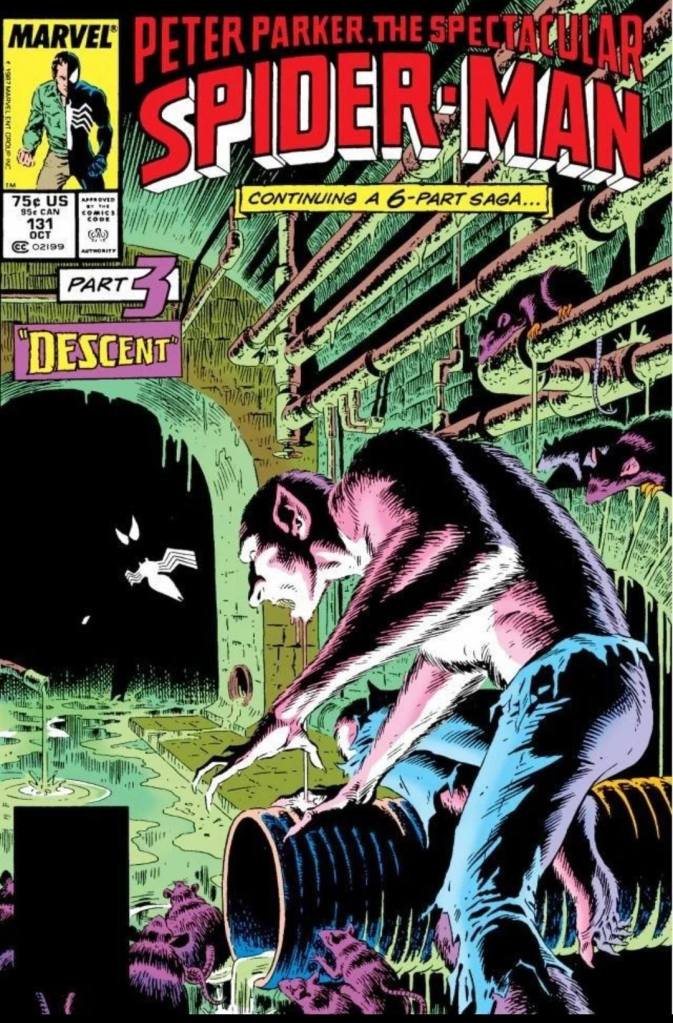
The cover.

Early story

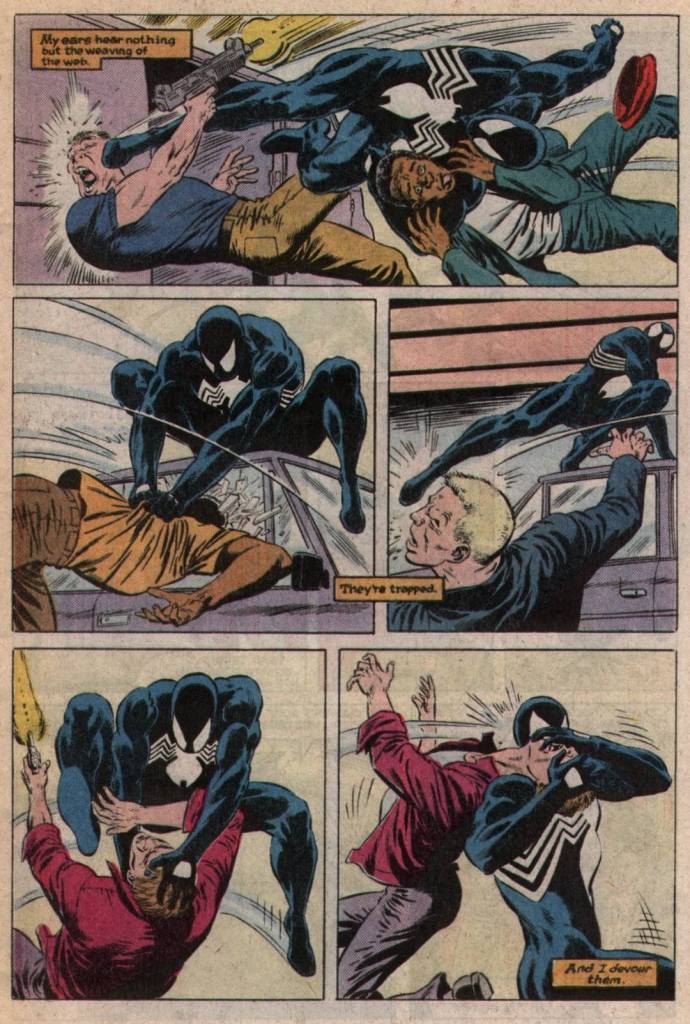
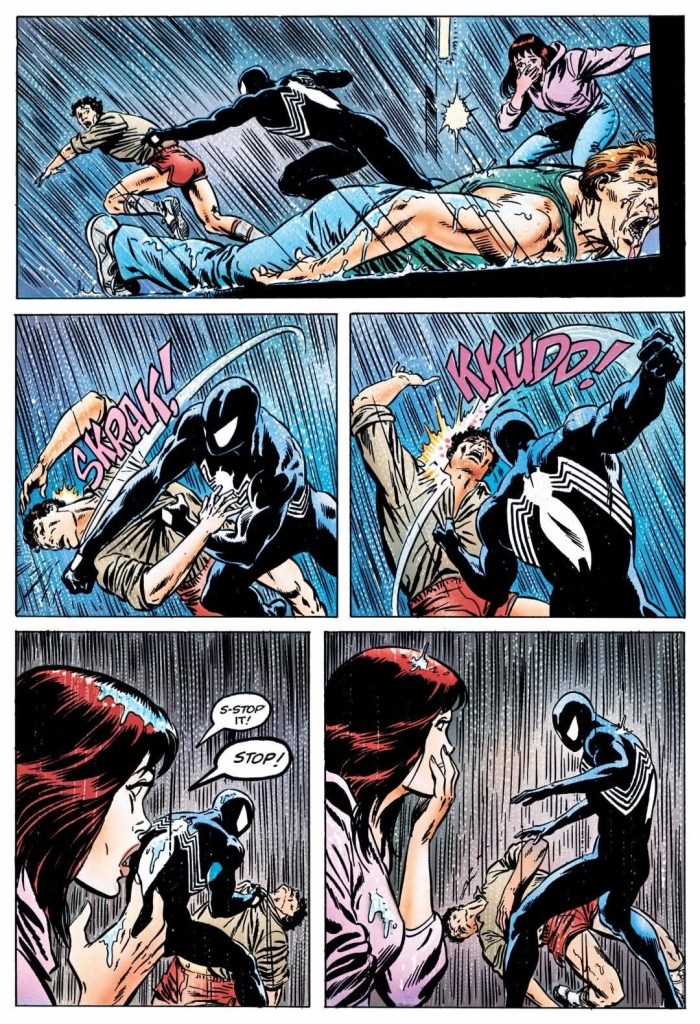
The story begins inside a facility in New York City on a rainy night. Men inside work quietly moving heroin from one vehicle to another. Suddenly Kraven – wearing a black costume believing he is Spider-Man – breaks in and fearlessly attack the men who are already armed. Using very violent force, Kraven beats the men and killed the last one. Eventually, police officers and detectives broke into the facility which compels Kraven to get away fast and leaves them no opportunities to catch up. One of the detectives mentions that fifteen suspects have been hospitalized because of the individual they perceive as Spider-Man.

After climbing to the top of a building, Kraven takes his mask off. He thinks deeply about his victory over Spider-Man and becoming him. He believes he has consumed the spider’s prey and proved himself to be superior in every way. Regardless, Kraven’s obsession continues as he seeks the final proof.

Elsewhere in the city, Vermin pulls a woman into an alley and then comes out on the street as a police car approaches him…

Quality

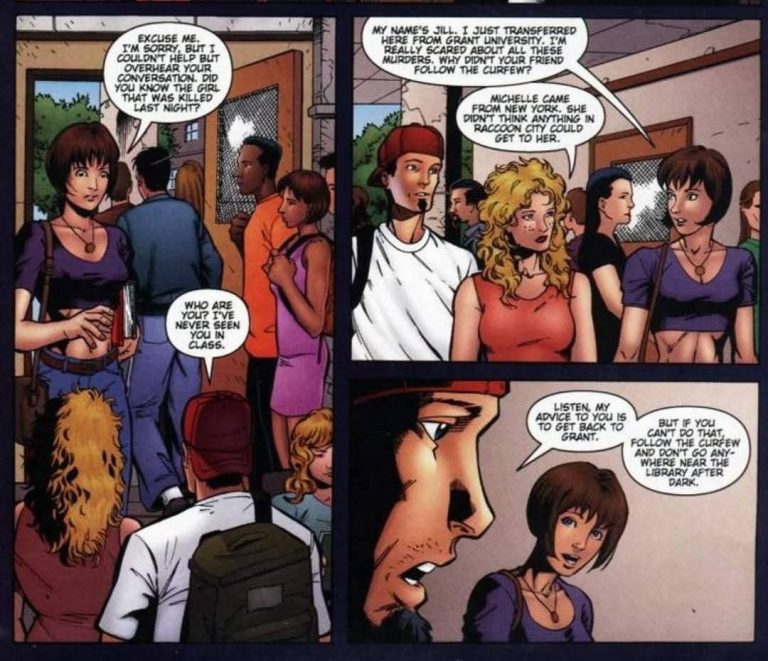
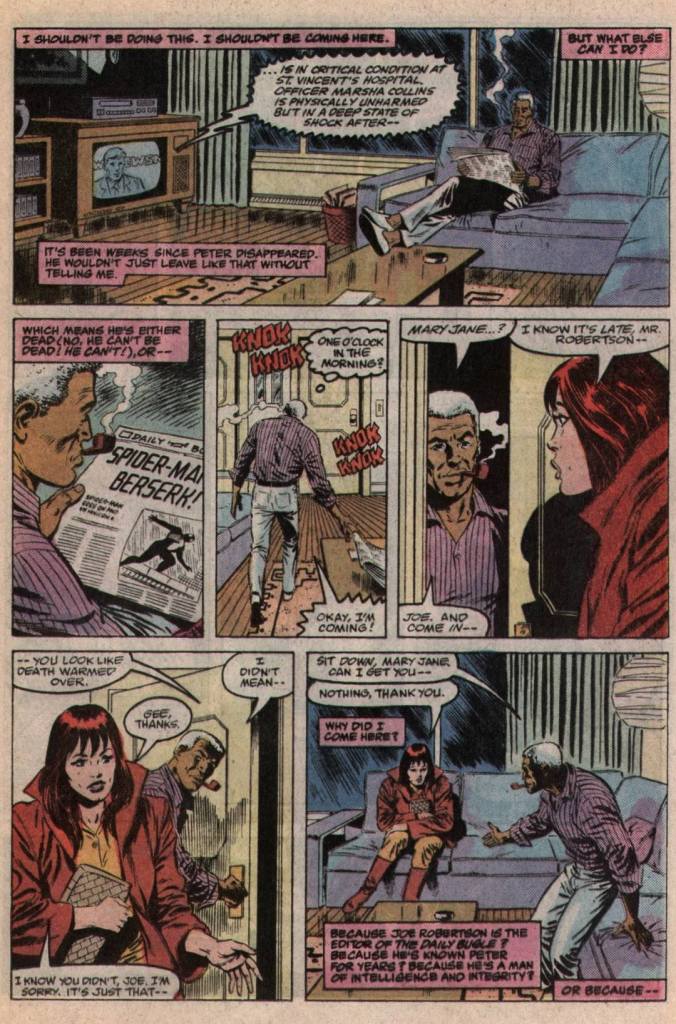
A key scene showing how Mary Jane and Joe Robertson react to the absence of Peter Parker who was buried alive by Kraven.

In this 3rd chapter of the Kraven’s Last Hunt storyline, the iconic Spider-Man is absent again but his presence is still felt through the way people perceive him and through two notable characters who personally knew Peter Parker. At this point in the storyline, Kraven truly believes he has not only replaced Spider-Man but became even more significant than him. Kraven’s obsession with achieving both greatness and significant placed him on a collision course with Vermin, and I can say that the conflict between the them is a powerful feature of the story. Once again, DeMatteis proved how compelling his script really is and Mike Zeck easily brought the said script to life with strong imagery.

As with the previous two chapters, the darkness and grittiness of the storyline are lively which resulted in a very atmospheric reading experience. The DeMatteis-Zeck duo knew exactly how to engage readers using a powerful script and images that range from being action-packed to looking very disturbing.

Speaking of character development, Mary Jane here shows how the continued absence of her husband is wearing herself down and making her even more worried. Mary Jane is a lively symbol about how we readers miss Spider-Man and how uncertain we feel about the future of comic book storytelling without the iconic superhero.

Conclusion

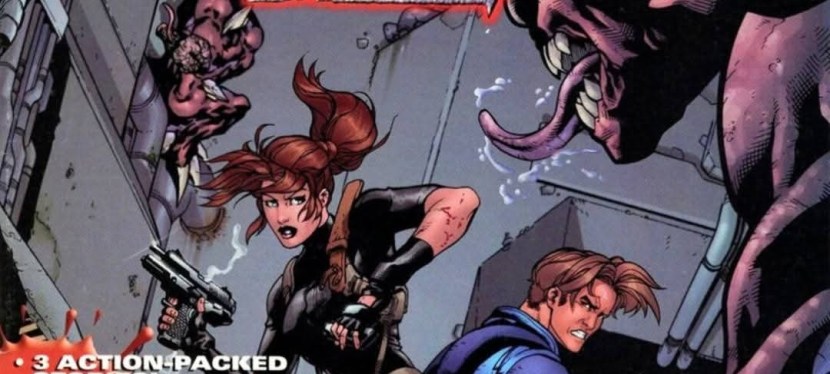
Without any concern whatsoever, Kraven’s Spider-Man brutally hits the criminals with powerful strikes.

Peter Parker, The Spectacular Spider-Man (1987) is a powerful 3rd chapter of the Kraven’s Last Hunt storyline. At this point, Kraven continues to not only be Spider-Man but make others feel his impact as he strives to be greater than the genuine Spider-Man. Vermin has turned more prominent in this comic book and the big conflict between him and Kraven is a huge pay-off to what was built-up since Amazing Spider-Man . Right now, I am looking forward to the next chapter of Kraven’s Last Hunt.

Overall, Peter Parker, The Spectacular Spider-Man (1987) is highly recommended.

+++++

Thank you for reading. If you find this article engaging, please click the like button below, share this article to others and also please consider making a donation to support my publishing. If you are looking for a copywriter to create content for your special project or business, check out my services and my portfolio. Feel free to contact me with a private message. Also please feel free to visit my Facebook page Author Carlo Carrasco and follow me on Twitter at  @HavenorFantasy as well as on Tumblr at https://carlocarrasco.tumblr.com/ and on Instagram at https://www.instagram.com/authorcarlocarrasco

A Look Back at Uncanny X-Men #283 (1991)

Welcome back superhero enthusiasts, 1990s arts and culture enthusiasts, Marvel Comics fans and comic book collectors! Today we go back to the year 1991 to explore one of the many tales of the Marvel shared universe through the Uncanny X-Men series.

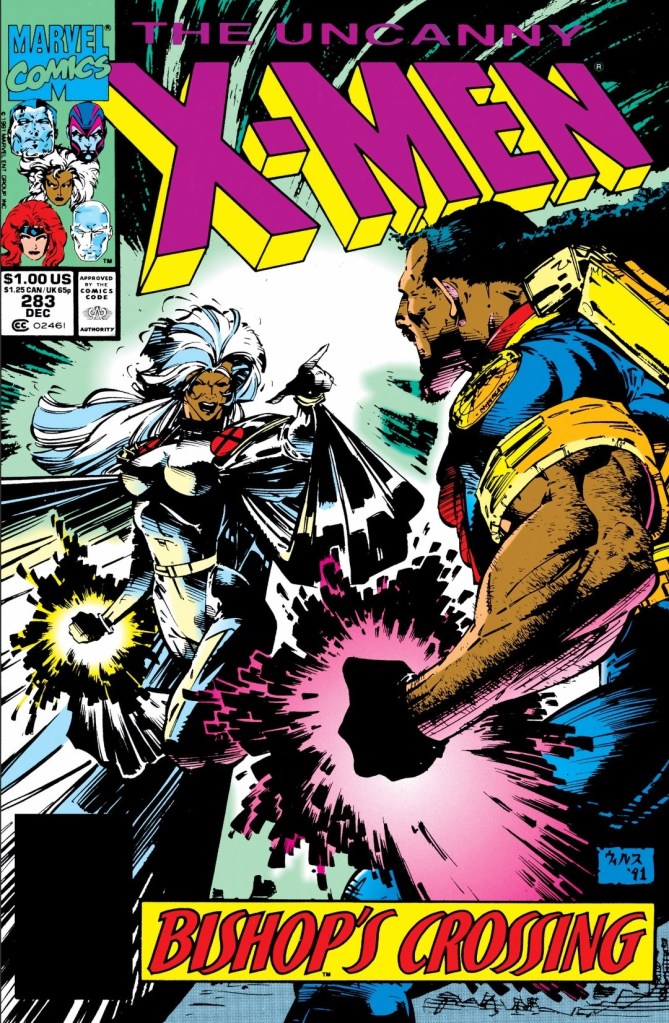
Uncanny X-Men #282 marked the continuing conflict between the X-Men and Trevor Fitzroy’s group, and the arrival of one of the most notable additions to Marvel’s Mutants…Bishop. To be clear, Bishop was not alone when arrived from the future through one of Fitzroy’s portals. In relation to everything that happened in the comic book, the arrival was a very powerful conclusion to read.

With those details laid down, here is a look back at Uncanny X-Men , published in 1991 by Marvel Comics with a story co-written by Whilce Portacio and by John Byrne (script). The art was done by Portacio with ink work by Art Thibert.

The cover.

Early story

The story begins in the arctic lair of Trevor Fitzroy. The arrival of Bishop and his two mutant companions – Malcolm and Randall – from the future caught everyone by surprise (including the X-Men). Bishop, who has Trevor Fitzroy subdued, tells his companions to throw their takes (members of Fitzroy’s force) into the portal.

Bishop intends to have Fitzroy go first which draws a loud reaction from the mutant madman. Fitzroy, who had been using the life force of captive mutants to open portals, knows exactly what would happen if he goes first. His exchange of words with Bishop shows they have a history together.

When Bishop’s companion moved a subdued person into the portal, it tore him apart. Fitzroy reveals to Bishop that the portals he created only function one-way and he tells him that he and his companions are stuck in the 20th century.

In response, Bishop assumes complete judicial authority and tells Malcolm and Randall to standby for termination sweep. The X-Men begin to react…

Quality

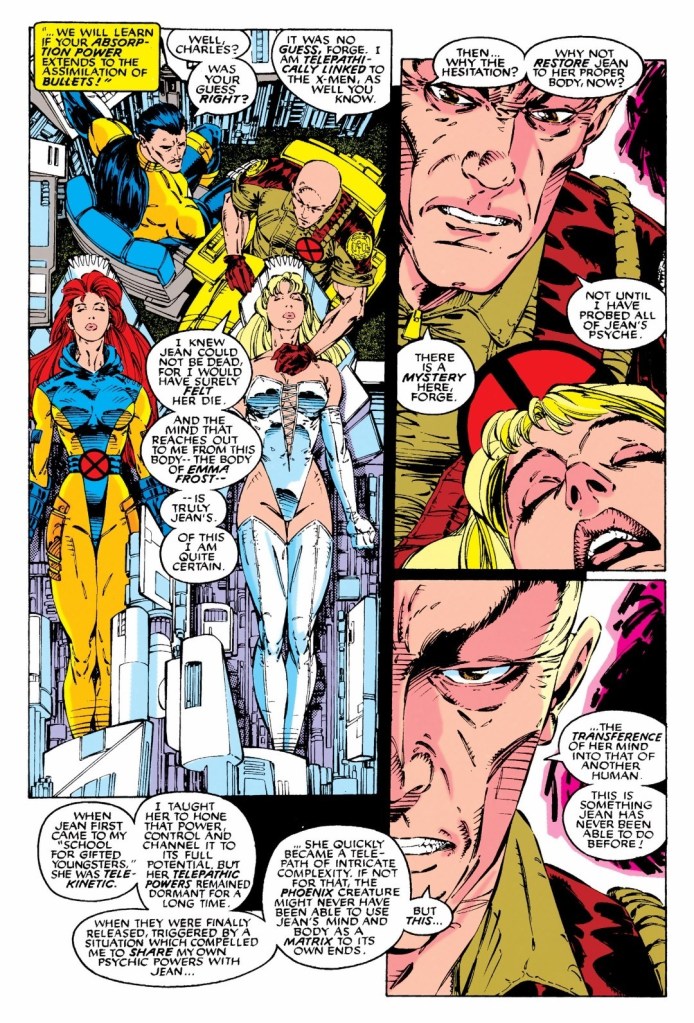
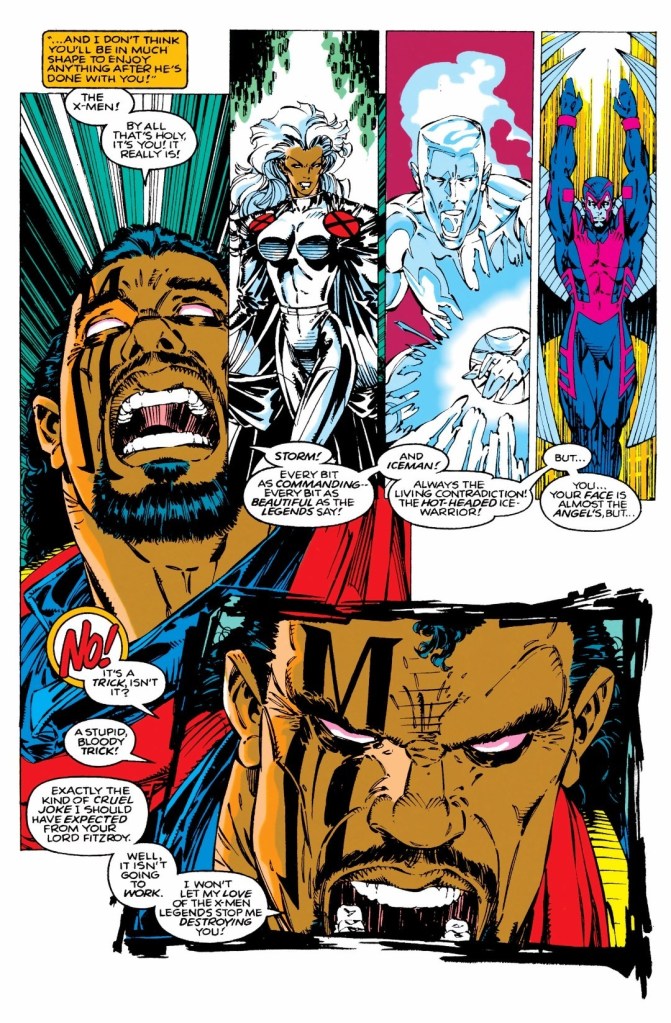
Professors takes a huge risk to help Jean Grey who recently occupied the body of Emma Frost.

When it comes to the creativity, this comic book is both a strong pay-off to the build-up of issues and while also serving as a new build-up focusing on Bishop’s arrival. At the heart of this tale is Bishop’s first-ever personal encounter with the X-Men which instantly expanded the lore of Marvel’s mutants a lot.

Bishop is a mutant from one possible future (of the Marvel Comics shared universe) in which Storm, Iceman, Archangel, Charles Xavier and others are remembered as legacy figures of the X-Men. In this comic book, you will see there is a good amount of depth with the way Bishop is dramatized and with many notable details on the dialogue prepared for him. Co-created by Whilce Portacio and John Byrne, Bishop is really an inspired work and clearly is not a mere addition. There is Filipino inspiration behind the creation of Bishop (click here and here) with some elements of John Ford and Prince mixed in (click here).

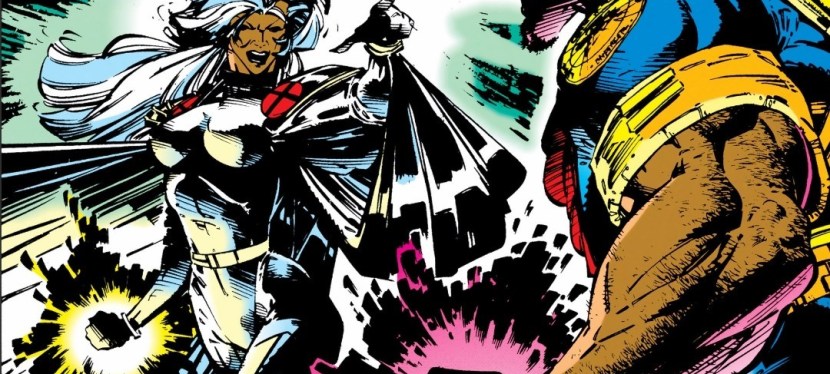
As far as the storytelling is concerned, there is notable shift of tone here as Bishop, Malcolm and Randall received much of the spotlight and yet there was still some room left for focus on the X-Men and Fitzroy’s group respectively. What makes this comic book an intriguing read is the first-ever personal encounters between Bishop and the X-Men which involved the temporary blurring of the boundary between good and evil. The interactions between Storm and Bishop are easily the most dramatic to see, and you will witness how their respective toughness (plus leadership) collide intensively.

Along the way, there is a lot superhero action to enjoy here. In fact, there are many forms action that served as extensions or pay-offs to the exchange of words between Bishop and a few specific X-Men members. Even a non-action scene like Professor X helping Jean Grey (who was in Emma Frost’s body temporarily) resulted in some visual spectacle.

Conclusion

Bishop’s first-ever encounter with the X-Men not only challenged his perception but also brought out traits of his attitude.

Uncanny X-Men (1991) is another very compelling, intriguing and entertaining read from the Portacio-Byrne duo. The X-Men lore has been expanded more and Bishop’s first encounter with the X-Men is easily the most engaging aspect of the story. At the same time, the conflict between the X-Men’s Gold Team and Trevor Fitzroy took a twist that really turned the plot to an unexpected new direction which is not surprising as Bishop’s presence made a huge impact (even on Storm herself). This is one of the best superhero stories of 1991 I have read so far.

Overall, Uncanny X-Men (1991) is highly recommended!

+++++

Thank you for reading. If you find this article engaging, please click the like button below, share this article to others and also please consider making a donation to support my publishing. If you are looking for a copywriter to create content for your special project or business, check out my services and my portfolio. Feel free to contact me with a private message. Also please feel free to visit my Facebook page Author Carlo Carrasco and follow me on Twitter at  @HavenorFantasy as well as on Tumblr at https://carlocarrasco.tumblr.com/ and on Instagram at https://www.instagram.com/authorcarlocarrasco

A Look Back at Amazing Spider-Man #293 (1987)

Welcome back superhero enthusiasts, 1980s arts and culture enthusiasts, Marvel Comics fans and comic book collectors! Today we go back to the year 1987 to examine a small part of the Marvel Comics shared universe through a tale of the Amazing Spider-Man monthly series.

For this particular review, we will explore the 2nd chapter of classic storyline Kraven’s Last Hunt. The storyline started in Web of Spider-Man (read my retro review by clicking here) and creators J. M. DeMatteis and Mike Zeck crafted it to last six chapters.

With those details laid down, here is a look back at Amazing Spider-Man , published in 1987 by Marvel Comics with a story written by J. M. DeMatteis and drawn by Mike Zeck.

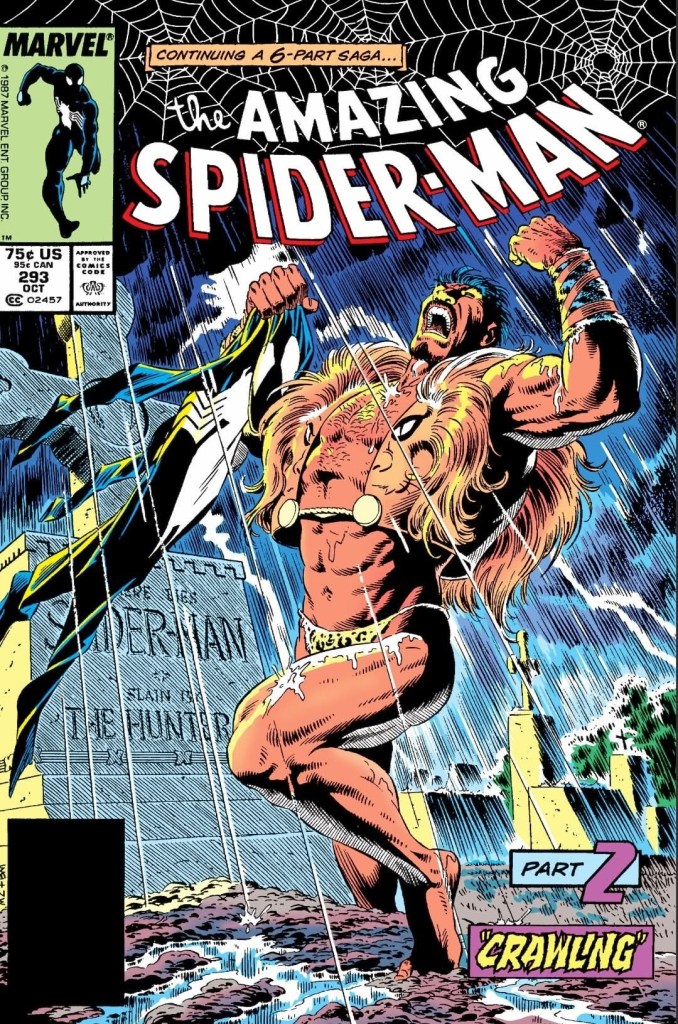
The cover.

Early story

The story begins on a rainy night as a tall figure wearing a black costume and mask stands over the grave stone that read “Here lies Spider-Man slain by the Hunter.” The figure takes off his mask revealing Kraven who delightfully laughs believing he has achieved greatness by defeating Spider-Man, burying him and taken his identity.

Elsewhere in New York City, a woman struggles with walking down the sidewalk during the rain. As a rat runs near her, she loses her balance and falls on the road. Suddenly, a manhole near her opens revealing the hand of an unseen creature which pulls the lady down to the sewer. Moments later, she finds herself surrounded with rats and toxic materials. Slowly, the Vermin approaches her…

Quality

This is Kraven’s Spider-Man in action! How people perceive Spider-Man is an emerging theme in this storyline.

Considering what happened in Web of Spider-Man , it is not a spoiler to point out that the iconic Spider-Man is not really present in this very comic book. That being said, writer J. M. DeMatteis shifted the spotlight on Kraven – now in a Spider-Man costume and being the webslinger we know – while leaving some of it for Mary Jane Parker and Vermin.

Following what was established in the first chapter of Kraven’s Last Hunt, Kraven here continues with his obsession over his destiny while remembering lessons he learned not only from his personal past but also the legacy he inherited from his family. In his other obsession of becoming Spider-Man, Kraven went to the extreme being with countless spiders, consuming green liquid believing that spiderness will come into him, and more. Some may perceive him as a mad man while others might see him being mystical somewhat.

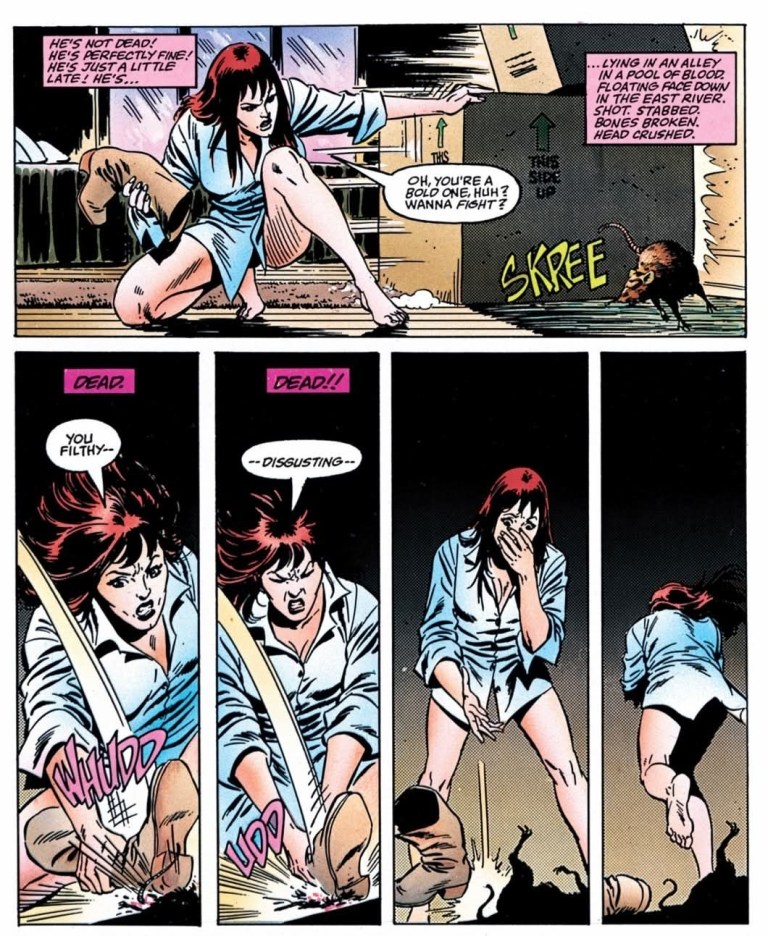
The DeMatteis-Zeck duo excelled in developing Mary Jane in this story as she feels uneasy over her husband’s absence. She really feels the weight of inconveniences and loneliness that come being married to a superhero who is far away doing something or being captured by a capable enemy. Mary Jane’s personality here shows signs of fragility too.

Vermin – the rat-like monster – is portrayed as an eater of human beings who turns out to be afraid of Spider-Man and he still remembers his past conflict not only with him ut also with Captain America. Vermin is a tragic character and the presence of rats in different parts of the story suggest that his presence in the storyline will only grow stronger. Some readers might find Vermin an abomination while there might be others who could get sympathetic towards him.

The plot itself has a strong structure and builds up nicely on what was established in the first chapter of this storyline. This time around, Kraven becomes Spider-Man and how he is perceived by others – who do not know the truth that Peter Parker is temporarily gone – is an emerging theme of the storyline.

Conclusion

Alone in the apartment, Mary Jane took action against the rat.

Filled with gritty darkness, drama and suspense, Amazing Spider-Man (1987) is an engaging 2nd chapter of the Kraven’s Last Hunt storyline. Even though Spider-Man is not present here, the DeMatteis-Zeck duo succeeded in making the tale compelling to read from start to finish. What they did to develop Mary Jane and Vermin added depth not only to this comic book but to the storyline as well. Right now, I am convinced to read the next chapter of this storyline.

Overall, Amazing Spider-Man (1987) is highly recommended.

+++++

Thank you for reading. If you find this article engaging, please click the like button below, share this article to others and also please consider making a donation to support my publishing. If you are looking for a copywriter to create content for your special project or business, check out my services and my portfolio. Feel free to contact me with a private message. Also please feel free to visit my Facebook page Author Carlo Carrasco and follow me on Twitter at  @HavenorFantasy as well as on Tumblr at https://carlocarrasco.tumblr.com/ and on Instagram at https://www.instagram.com/authorcarlocarrasco

A Look Back at Spider-Man 2099 #44 (1996)

Welcome back superhero enthusiasts, 1990s culture enthusiasts and comic book collectors! Today we go back to the year 1996 and explore a part of the Marvel Comic shared universe through a tale of the Spider-Man 2099 monthly series.

To put things in perspective, the original Spider-Man 2099 monthly series that launched in 1992 lasted a total of 46 issues. The prolific author Peter David wrote the first 44 issues as he resigned from his duty in relation to the sudden firing of Marvel 2099 editor Joey Cavalieri in 1996. The previous issue was a great read.

With those details laid down, here is a look back at Spider-Man 2099 , published in 1996 by Marvel Comics with a story written by Peter David and drawn by Ron Lim.

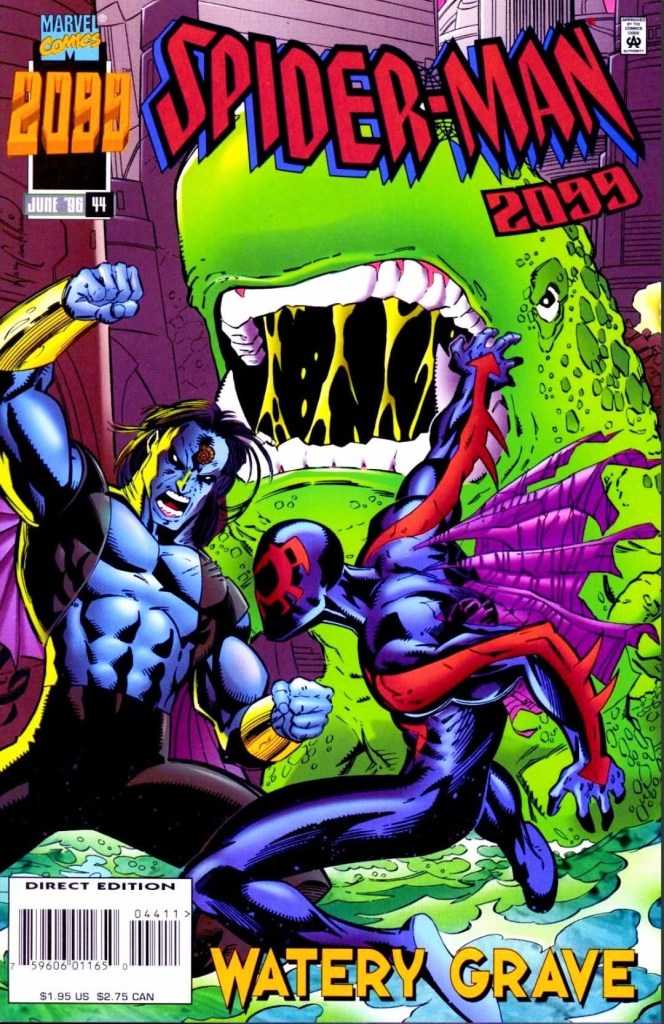
The cover.

Early story

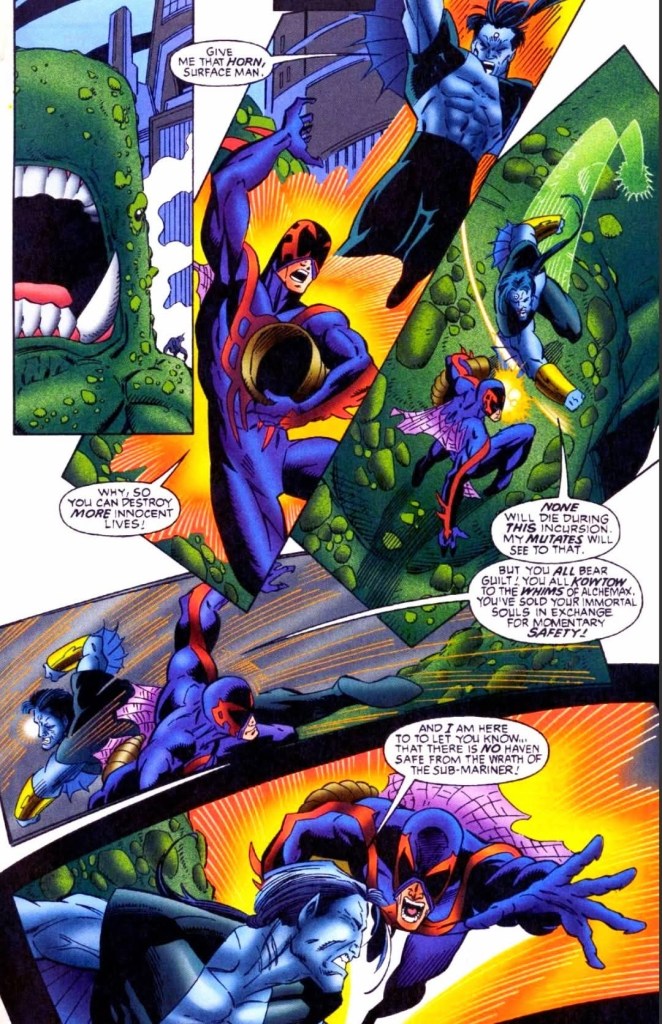
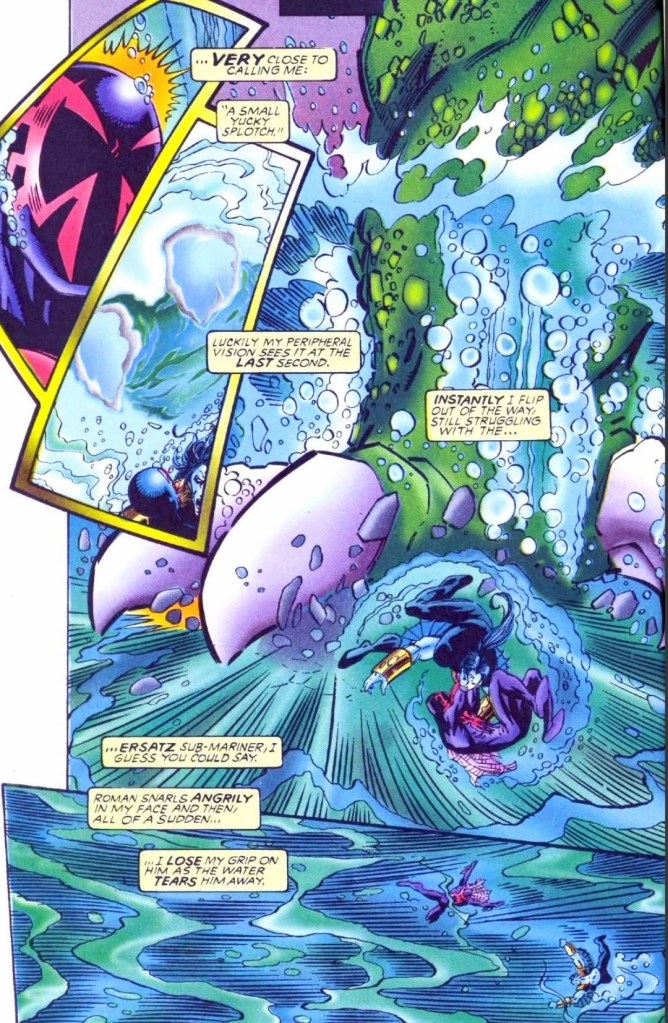
The story begins in the City of New York already flooded and infiltrated by lots of marine life. Under the water, Spider-Man and Roman the Sub-Mariner fight each other intensely as the foot of a gigantic sea monster is about to step in. At the last moment, Spider-Man saw the huge foot and instantly flipped away to survive with the Sub-Mariner.

After getting separated, Spider-Man gets out of the water to breath and immediately spots an organic-looking horn that the Sub-Mariner used to control the huge monster. Suddenly, on the aquatic humanoids appears to get the horn. Spider-Man then used his web to get the horn first which triggered the aquatic humanoid to move fast towards him.

Quality

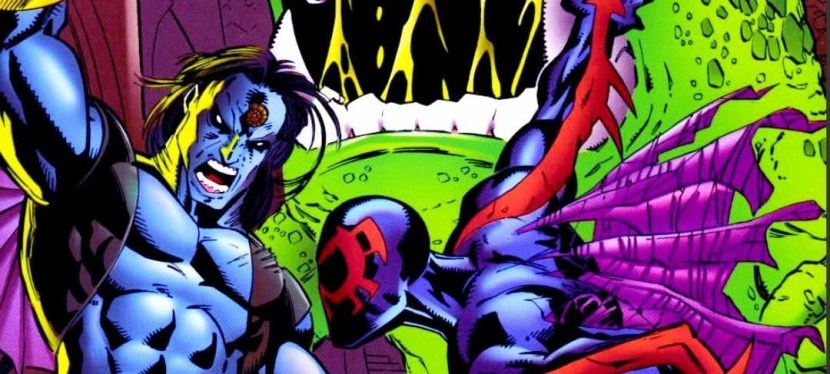
The intense battle between Sub-Mariner and Spider-Man went on even as the huge sea monster is very near them in the city.

Without spoiling the plot, this comic book is a tale about a massive disaster and also a tale about the complicated legacy of Miguel O’Hara whose personal life is even more connected with the corporation he works for.

The huge disaster of New York getting flooded (which started in the previous issue) and Spider-Man fighting the leader of the mutates (genetically designed sentient beings) concluded in a really satisfying way. The futuristic webslinger really found himself struggling with the determined Sub-Mariner (motivated by what Alchemax did to the aquatic world) while dealing with the fact that so many citizens got displaced or even got killed by not only the huge flood but also by the presence of the gigantic sea monster. The stakes were really raised high for Spider-Man and the pay-off was really good.

The rest of the comic book deals with the intense meeting between Conchata O’Hara and Tyler Stone, Xina’s time with the Net Prophet, Gabriel O’Hara’s time with “father” Jennifer. Among the three sub-plots, the conflict between Conchata and Tyler is very intense and dramatic to read. More importantly, it was crafted by Peter David to be really believable and it ultimately added tension to the background and even the future of Miguel O’Hara (now a powerful Alchemax executive). This particular sub-plot is easily the most important one this comic book has and it will compel fans to revisit the 25th issue of this monthly series as well as issue #10.

While the sub-plot of Xina and the Net Prophet does not generate enough depth for this comic book, there is a big revelation made in the sub-plot of Gabriel and “father” Jennifer which will compel fans to revisit issues #40 and #41. In fact, nothing is ever simple regarding the origin of a specific villain of the 2099 universe.

When it comes to the artwork, this comic book is a downgrade compared to what was presented in issue (drawn by Andrew Wildman). I’m not saying that Ron Lim’s art is bad, it’s just nowhere as good as that of Wildman’s art. In fairness, Ron Lim managed to make the city disaster look intense and he managed to make the characters look recognizable. In fact, Lim successfully made the Conchata-Tyler scenes look intense and dramatic.

Conclusion

The giant monster aspect of this comic book added intensity to the battle and the disaster. There were a few Godzilla vibes here and there.

As the final Peter David-written issue of this monthly series, Spider-Man 2099 (1996) is undeniably a very solid reading experience. There were strong pay-offs executed here to what was built-up in the previous issues, and in typical fashion, David kept building up the other sub-plots. The conclusion to the Conchata-Tyler sub-plot is actually more powerful than that of the city disaster. Clearly, Peter David kept track of the character developments and events that previously happened and dramatized them nicely here. In fact, you will feel some sympathy towards Miguel O’Hara knowing how unfortunately complicated his family legacy really is.  

Overall, Spider-Man 2099 (1996) is highly recommended!

+++++

Thank you for reading. If you find this article engaging, please click the like button below, share this article to others and also please consider making a donation to support my publishing. If you are looking for a copywriter to create content for your special project or business, check out my services and my portfolio. Feel free to contact me with a private message. Also please feel free to visit my Facebook page Author Carlo Carrasco and follow me on Twitter at  @HavenorFantasy as well as on Tumblr at https://carlocarrasco.tumblr.com/ and on Instagram at https://www.instagram.com/authorcarlocarrasco

A Look Back at X-Men Adventures Season II #2 (1994)

Welcome back superhero enthusiasts, 1990s arts and culture enthusiasts, Marvel Comics fans and comic book collectors! Today we go back to the mid-1990s to explore the adaptation of the second season of the X-Men animated series in the form of the X-Men Adventures comic book series.

Before getting to the retro comic book review, I want to ask you all: have you heard about the recent controversy about the firing of the showrunner of X-Men ’97? You can learn about it by clicking here and here. In case you are wondering, I have no intention to watch X-Men ’97 knowing that Marvel under woke Disney are only using established entertainment properties to spread their sinister propaganda. Hollywood has so many Commies, it should really be called Commiewood.

With those details laid down, here is a look back at X-Men Adventures Season II , published in 1994 by Marvel Comics with a story written by Ralph Macchio and drawn by Andrew Wildman.

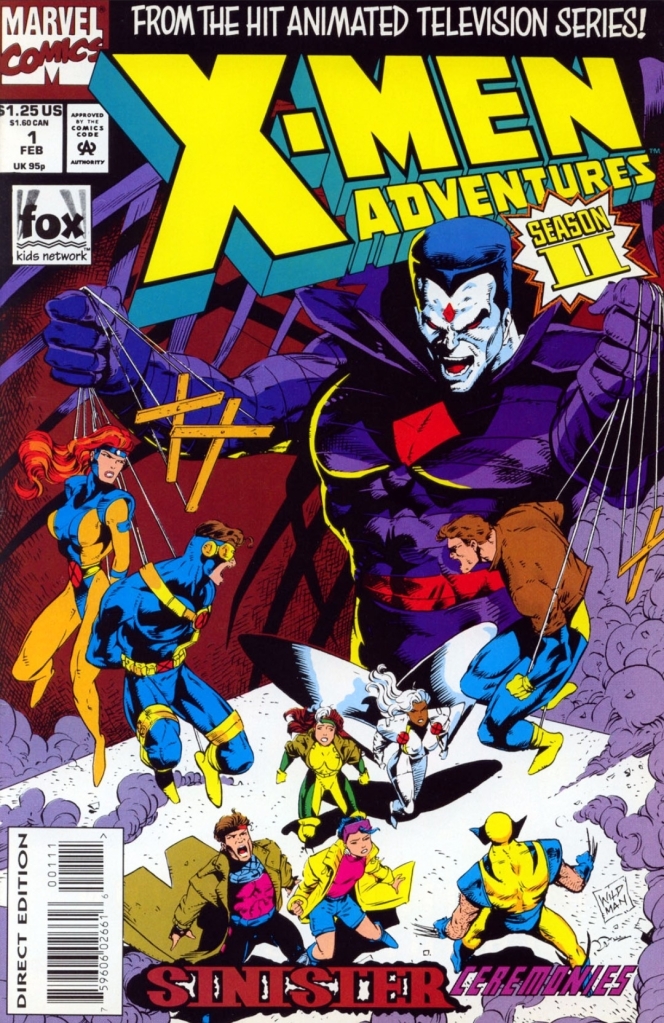
The cover.

Early story

The story begins with the newly married couple Scott Summers (Cyclops) and Jean Grey enjoying their honeymoon on a boat somewhere in the South Pacific. Jean is enjoying their privacy together free from all the pressure they experienced as X-Men members. For her, the world feels really different.

Suddenly, Jean senses something as their boat approaches an island that was supposed to be uninhabited. A man with long pink hair has been anticipating their arrival and surprises them. He uses his power to manipulate the sea water to form waves to capsize their boat and push them further to the beach.

Soon enough, Cyclops and Jean find themselves facing Mister Sinister and his henchmen…

Quality

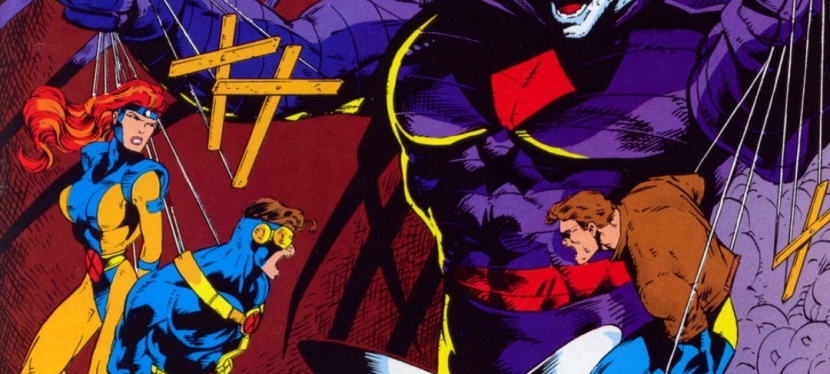
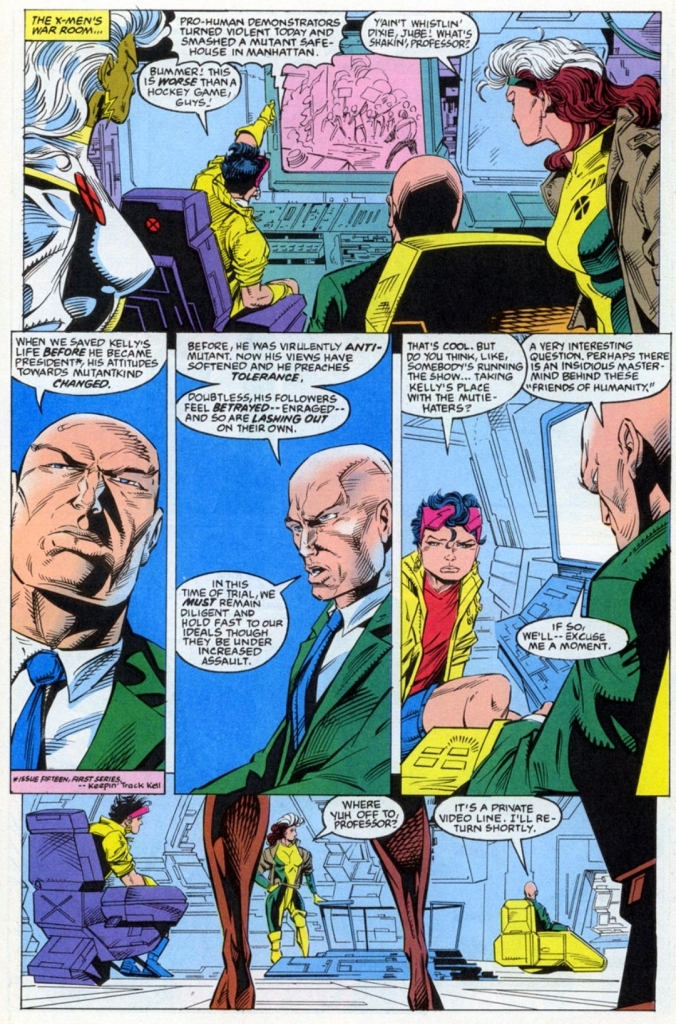
The Summers couple helpless in the presence of Mister Sinister who has an ambitious plan for all mutants.

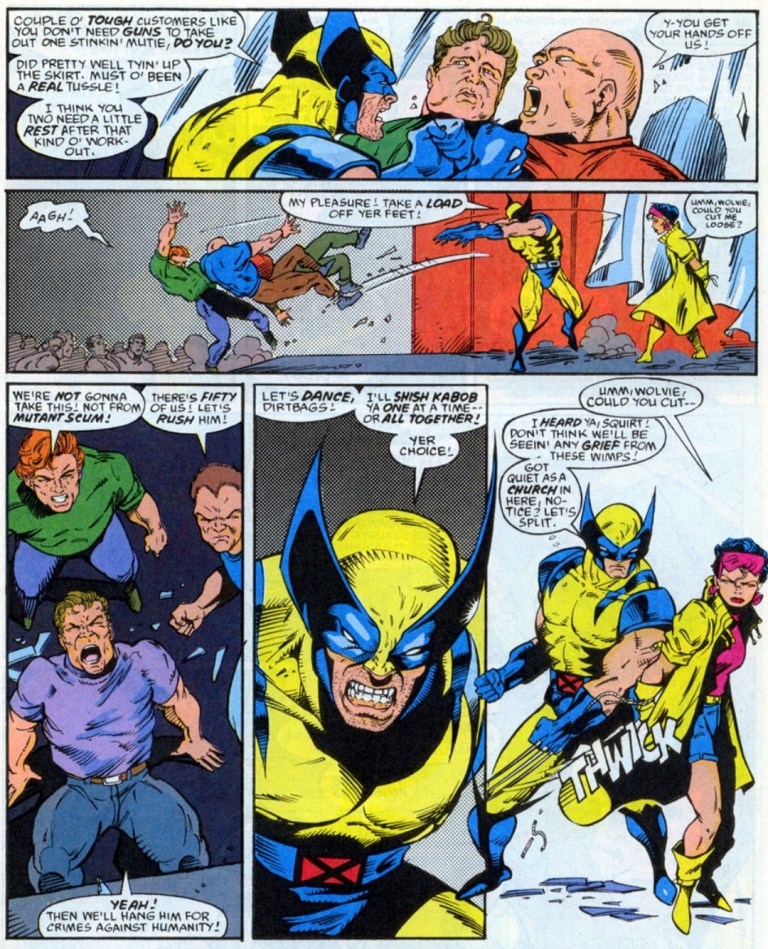
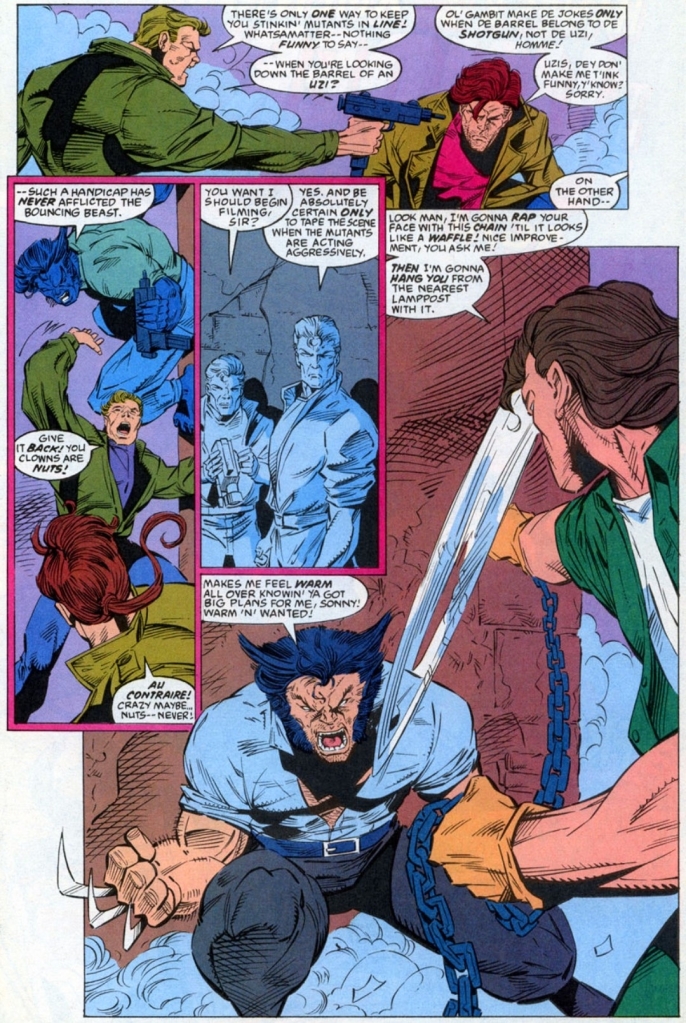
To put things clearly, this comic book is a nice pay-off to what was built up in the previous issue. Without spoiling the plot, I like the way the struggles of the X-Men were dramatized, specifically with regards to Wolverine (who was portrayed as an aggressor by the anti-mutant activists through the media) encountering the anti-mutant mob plus his interaction with Morph who got a lot more of the spotlight this time around. Morph’s return here has a bigger impact and the way things were told here will compel you to revisit the early issues of the first volume of X-Men Adventures and re-examine how he interacted with his teammates when he was still an X-Men member.

And then there is the sub-plot in which Cyclops and his wife Jean are captured by Mister Sinister and his henchmen. What I enjoyed the most in this part of the story was the efficient exposition done by the creative team to emphasize Sinister’s knowledge of Cyclops’ past and the X-Men which is connected with his master plan for the future that involves the genetic material of both Scott Summers and his wife. Sinister’s master plan for mutants is radically different from Magneto’s vision but remains essentially wicked as it involves overwhelming non-mutant people.  

Conclusion

Wolverine faces the anti-mutant activists again not for revenge but to help his teammate.

X-Men Adventures Season II (1994) is an action-packed read that is also intriguing and has few plot twists that added to the engagement. It is a better read than the previous issue and any X-Men fan who enjoys Mister Sinister antagonizing Marvel’s mutants will have stuff to enjoy and that includes the promise of future conflicts. If there’s anything that bogged down this comic book’s quality, it’s the somewhat rushed look of Andrew Wildman’s art.

Overall, X-Men Adventures Season II (1994) is recommended.

+++++

Thank you for reading. If you find this article engaging, please click the like button below, share this article to others and also please consider making a donation to support my publishing. If you are looking for a copywriter to create content for your special project or business, check out my services and my portfolio. Feel free to contact me with a private message. Also please feel free to visit my Facebook page Author Carlo Carrasco and follow me on Twitter at  @HavenorFantasy as well as on Tumblr at https://carlocarrasco.tumblr.com/ and on Instagram at https://www.instagram.com/authorcarlocarrasco

A Look Back at X-Men Adventures Season II #1 (1994)

Welcome back superhero enthusiasts, 1990s arts and culture enthusiasts, Marvel Comics fans and comic book collectors! Today we go back to the mid-1990s to explore the adaptation of the start of the second season of the X-Men animated series in the form of the X-Men Adventures comic book series.

Before getting to the retro comic book review, I want to address the recent controversy and criticism of the new animated series X-Men ’97, a continuation of the popular 1990s series that turned out to be woke by featuring the so-called non-binary presentation of people. In my view, this is not surprising given the fact that the very woke Disney company has owned Marvel Entertainment for many years now and its wokeness has infected the animated X-Men franchise along with the most recent movies and shows of the Marvel Cinematic Universe (MCU). Wokeness and Leftist beliefs continue to ruin entertainment and established properties as we know it. It’s the culture of Communist-filled Hollywood (Commiewood).

So how do you reject X-Men wokeness apart from avoiding X-Men ’97? You simply go back to the X-Men animated series of the 1990s as well as the comic books that adapted the stories.

With those details laid down, here is a look back at X-Men Adventures Season II , published in 1994 by Marvel Comics with a story written by Ralph Macchio and drawn by Andrew Wildman.

The cover.

Early story

The story begins with the cosmic being the Watcher carefully examining the flow of events on Earth and what has changed for the X-Men since then. Robert Kelly, who previously had an anti-mutant agenda when he was a U.S. Senator, has since been elected as the President of the United States and openly pushes for a policy of conciliation with mutants. His action sparks social unrest.

Meanwhile inside a small church far away from the nation’s capital, the wedding of Jean Grey and Scott Summers pushes through with several members of the X-Men in attendance. Very notable was the absence of Wolverine who turned out to be inside the Danger Room (deep within Charles Xavier’s estate) fighting a giant-sized version of Cyclops…

Quality

The X-Men are troubled by the anti-mutant wave happening in public.

As the opening issue of the second volume of the X-Men Adventures comic book series, this comic book carefully sets up the tone and the plot of a series of future challenges for the X-Men which is clearly reflected on the front cover with Mister Sinister displayed prominently. The story mainly highlights X-Men’s new struggle with the wave of anti-mutant rage in the public while dealing with the absence of their leader Cyclops (on honeymoon with his new wife Jean) while leaving space for potential sub-plots such as the attraction between Jean and Wolverine, the moves of the anti-mutant radicals and, most notable of all, the secretive return of Morph (thought to have died in issue #2 of the first season).

As expected, build-up is the main approach taken by the creators on telling the story and there were some bouts of superhero spectacle (action) that spiced up the reading experience for me. Considering what has been happening in different parts of the world in recent years, the sub-plot of the rabid anti-mutant activists using tactics to destroy the X-Men’s credibility with violence and misinformation magnified through the news networks is very socially relevant.

What the rabid anti-mutant people committed in this comic book reminds me of the October 7, 2023 attacks on Israel organized by the Palestinian terrorist group Hamas in which violence, destruction and selective images of terror spread through news networks and social media were done. Similarities aside, the wave of evil is clear here and the intent of the anti-mutant believers and Palestinian terrorists obviously expresses intentions of genocide against another particular group of people.

When it comes to weaknesses of this comic book, I cannot help but find Andrew Wildman’s art looking very rushed. There is a lack of precision and detail of his art here when compared directly to his works in the first volume of X-Men Adventures.

Conclusion

The anti-mutant radicals in this comic book have a lot in common with Palestinian terrorists, the pro-Palestine activists, the Black Lives Matter activists and other members of woke mobs. Violence, arrogance, rage and misinformation are their values.

X-Men Adventures Season II (1994) incidentally works well as an adaptation of the animated series, as a standalone comic book as well as being a socially relevant tale in today’s age of social media. While the concept of evil remains in X-Men lore, what was told here shows different layers of it. The X-Men themselves also looked fragile and the return of Morph is a key part of the story clearly designed with future events in mind. Finally, this comic book is a lively reminder of the era when X-Men stories were made for the fans, not the woke mob.

Overall, X-Men Adventures Season II (1994) is recommended.

+++++

Thank you for reading. If you find this article engaging, please click the like button below, share this article to others and also please consider making a donation to support my publishing. If you are looking for a copywriter to create content for your special project or business, check out my services and my portfolio. Feel free to contact me with a private message. Also please feel free to visit my Facebook page Author Carlo Carrasco and follow me on Twitter at  @HavenorFantasy as well as on Tumblr at https://carlocarrasco.tumblr.com/ and on Instagram at https://www.instagram.com/authorcarlocarrasco

A Look Back at Batman Returns: The Official Comic Adaptation of the Warner Bros. Motion Picture (1992)

Welcome back superhero enthusiasts, 1990s culture enthusiasts and comic book collectors! Today we go back to the early 1990s and look at the official comic book adaptation of the 1992 superhero movie Batman Returns.  

Way back in 1992, I managed to watch Batman Returns in a movie theater here in the Philippines. It was entertaining but I noticed it had an even darker tone, more violence (although the quality of physical action went down) and was more adulterated compared, at least, with its 1989 predecessor. What really stood out for me in the Tim Burton-directed movie were the great performances of Danny DeVito as the Penguin and Michelle Pfeiffer as Catwoman.

Even though I was already visiting comic book stores back then, I was not even aware that an official comic book adaptation of the movie was released by DC Comics. It was only recently I finally got to read a copy.

With those details laid down, here is a look back at Batman Returns: The Official Comic Book Adaptation of the Warner Bros. Motion Pictured published in 1992 by DC Comics with the adapted story written by Dennis O’Neil and drawn by Steve Erwin.

The cover.

Early story

The story begins decades into the past in Gotham City. A wealthy couple (Cobblepot family) decide to reject and abandon their infant son (Oswald/Penguin) as he was born with freakish features. They placed their son into a metal container (which itself is contained in a large makeshift basket) and dropped it on a local waterway that leads deep into the city’s sewers. At the end of the journey, large penguins find the container.

Decades later in Gotham City, tycoon Max Schreck talks to the mayor about his planned power plant project that needs permits and tax incentives from the local government to be realized. The mayor is doubtful about the project as he believes that the city has more than enough energy sources to sustain growth into the next century. Schreck insists that the local government’s analysts don’t realize the big picture about energy and economic growth. Then Chip Schreck (Max’s only heir) arrives with Selina Kyle (Catwoman) carrying coffee near him.

Minutes later, Max, Chip and the mayor arrive at Gotham Plaza for the local Christmas tree lighting. Even though he forgot to bring his speech, Max Schreck delivers remarks pretending to be caring and charitable to others. As his speech ends, two over-sized objects looking like giant gift boxes arrived nearby giving the mayor the false impression that those are clever gimmicks by Schreck.

As soon as Schreck says that those objects were not his, the oversized gift box opens violently as thugs wearing circus costumes and masks suddenly come out causing violence and hysteria to the unprepared people.

The local police activate the Bat Signal to call Batman for his assistance. Nearby, the Penguin sees it and says, “Ooh, Batman. I’m trembling…”

Quality

Moments from Batman’s first fight with Catwoman.

To get straight to the point regarding the narrative, this comic book adaptation does have the same basic plot and concept of the movie but with noticeable differences (whether technical or creative) that happened here and there. For the most part, Dennis O’Neil captured the concept of the movie but with less of the flavor of Tim Burton’s creative touches (which should not be surprising).

Having seen the movie, it is clear that the comic book creators reduced the dialogue and took shortcuts on adapting scenes from the film not just for the sake of brevity but to ensure they could fill the limited amount of pages to work with. That being said, I can say that the reduced dialogue from the first conversation between Penguin and Max Schreck severely weakened the impact when compared to what was executed in the film. Speaking of dialogue, the comic creators had to down key words (think of it as creative censorship) to avoid offending readers.

This is a unique, alternate portrayal at the aftermath of Selina Kyle’s fall from the high window. When compared to the movie itself, this adaptation emphasizes how far the Schrecks would go to avoid being held accountable for crimes committed.
This particular scene did not appear in the movie at all. Perhaps it was based on an older version of the film script.

When it comes to scenes between the film and this comic book adaptation, I can say that the date between Bruce Wayne and Selina Kyle inside Wayne Manor does not appear in literary form at all. Ironically, there is one scene that appeared in this adaptation (the Penguin plotting chaos in Gotham while Catwoman mentions “An orgy of sex and violence,”) that never made the final cut in the movie itself. With regards to the aftermath of Max Schreck’s violent push of Selina Kyle through the high window, this adaptation showed Max’s son Chip present (implying he witnessed his father’s act just steps away) and he goes along with his father to ensure that none of them would be held accountable for Kyle’s fall (caused by “stress” and being “depressed”).  

With the way the narrative was completed, this adaptation works well but much less of the theatrical touches of Tim Burton and without the power of the respective performances of Danny DeVito, Michelle Pfeiffer and Christopher Walken (Max Schreck). Ironically, I can easily imagine Bruce Wayne/Batman sounding like Michael Keaton through dialogue.

While artist Steve Erwin did not come close to capturing the likenesses of Christopher Walken as Max Schreck, and Michael Keaton as Bruce Wayne, his take on Selina Kyle is better as she somewhat resembles Michelle Pfeiffer.

With regards to the visuals by Steve Erwin, he does a good job drawing the locations and help establish geography (albeit in limited scopes) for readers to grasp. In fact, there were drawings in which Erwin literally copied location spots, objects and even camera angles from the film which suggests he had confidential access to the footage. When it comes to visualizing action, Erwin’s approach is pretty simplistic and limited. There simply was no dynamism with the action which theoretically means he had no artistic freedom (sticking closely to script while working within the limits of images per page) or he simply had no intention to make the action look spectacular.

With regards to violence connected with the action, the comic creators had to resort to creative censorship apparently to make this adaptation more acceptable with younger readers. The fall of Selina Kyle from the high window had severely reduced intensity in comic form and the horrific moments of her being surrounded by cats in the film were completely gone. Oh yes, Batman’s use of the Batarang against multiple thugs on the street was executed with a simplistic and not-so-violent (read: little impact) manner by Erwin.

Consider this as a late-20th century portrayal of diversity and inclusion in America. By today’s standards, there are hordes of SJWs (social justice warriors), woke nuts, socialists, Communists, Marxists, and liberals who believe in diversity (racism in reverse) and inclusion (exclusion actually) so much, they intend to destroy families starting with the children.

When it comes to drawing the major characters, Erwin really falls short here. His Bruce Wayne never came close to resembling Michael Keaton and the same can be said about Max Schreck (does not look much like Walken) and the Penguin (does not resemble Danny DeVito at all and with reduced facial details, he looks nowhere as scary as the cinematic villain). Ironically, Erwin’s take on Selina Kyle comes a bit close to looking like Michelle Pfeiffer. Erwin does, however, did a good job drawing Batman and Catwoman in their fully costumed, masked appearances.

Conclusion

Very clearly, Steve Erwin had access to footage of the movie when making this adaptation.

Considering its flaws and compromises, Batman Returns: The Official Comic Adaptation of the Warner Bros. Motion Picture (1992) still works as an entertaining read and I myself have seen the movie many times. It captures the plot and several shots of the 1992 movie, but it certainly lacks Burton’s theatrical flavor and the powerful performances of DeVito and Pfeiffer. To its credit, this adaptation has several visual and literary differences compared with the movie which adds to its entertainment value. If you really want the full impact, full fun factor and artistry of Batman Returns at all, watching the movie itself is the best way. That being said, consider this adaptation as a cheaper accessible counterpart.

Overall, Batman Returns: The Official Comic Adaptation of the Warner Bros. Motion Picture (1992) is satisfactory.

+++++

Thank you for reading. If you find this article engaging, please click the like button below, share this article to others and also please consider making a donation to support my publishing. If you are looking for a copywriter to create content for your special project or business, check out my services and my portfolio. Feel free to contact me with a private message. Also please feel free to visit my Facebook page Author Carlo Carrasco and follow me on Twitter at  @HavenorFantasy as well as on Tumblr at https://carlocarrasco.tumblr.com/ and on Instagram at https://www.instagram.com/authorcarlocarrasco

A Look Back at Uncanny X-Men #157 (1982)

Welcome back superhero enthusiasts, 1980s culture enthusiasts and comic book collectors! Today we go back to the year 1982 to take a close look at one of the many tales of the Marvel Comics shared universe told through the monthly series of Uncanny X-Men.

In my previous retro review, Charles Xavier got reunited with his beloved Lilandra, the empress of the Shi’ar Empire, as they were trapped temporarily by the Brood. Elsewhere, Corsair reveals to his son Cyclops what happened before they got separated on Earth twenty years prior. The X-Men and the Starjammers got captured by the Brood’s massive transport which turned out to be a massive organic creature. The conflict that followed saw another battle between the X-Men and the Brood but with the stakes raised higher.

With those details laid down, here is a look back at Uncanny X-Men published in 1982 by Marvel Comics with a story written by Chris Claremont and drawn by Dave Cockrum.  

The cover.

Early story

The story begins in space where the X-Men and the Starjammers worked together to repair the external parts of the Starjammer ship. An incident happens in which Wolverine starts to float away from the ship while Colossus loses consciousness. One of the Starjammers saved Wolverine.

Just as the Starjammers used their advanced technology to help the unconscious Colossus, Empress Lilandra tells Professor X and a few others that she used her imperial commlink and private code to each Chanellor Araki to confirm to him that she is free and unharmed. Supposedly, Lilandra’s move should compel Araki to call off the punitive strike against Earth.

As Lilandra starts communicating with the flagship that carries Araki, Admiral Lord Samedar takes control of the ship and declares that they will execute Araki’s orders to obliterate Earth…

Quality

Kitty Pryde on the move against all odds.

Following the events of the two previous issues, this story is another engaging pay-off to the established build-up but with the stakes raised higher as Earth becomes a target of the defiant Shi’ar officials who themselves turned out to be defiant towards their empress Lilandra all along. Not only that, there is a good amount of intrigue with the way the Shi’ar people are portrayed here.

The X-Men here continue to struggle not only because of Colossus’ weakness but also because something bad happened to their leader Professor X (a must-read scene). Far away from the rest of their teammates, Nightcrawler and Kitty Pryde became major players in this particular story and what happened with them was nicely structured by Chris Claremont. This is clearly a big pay-off to what was staged in issue #155 and it sure is worth anticipating!

If you have great interest with the Brood, you will be delighted to see more of the way they communicate and how they treat foreigners like Deathbird as they live on with their uncompromising belief that their race backs winners only.

Conclusion

How the Brood treats Deathbird.

Uncanny X-Men (1982) is an action-packed sci-fi tale that continued Claremont’s direction of the X-Men while also emphasizing the Brood as well as the Starjammers and the Shi’ar as crucial players in this particular storyline. There is plenty of superhero spectacle to enjoy here, a few memorable character moments and if you are fond of Chris Claremont’s works, you will enjoy the twists and surprises he pulled off here.

Overall, Uncanny X-Men (1982) is recommended!

+++++

Thank you for reading. If you find this article engaging, please click the like button below, share this article to others and also please consider making a donation to support my publishing. If you are looking for a copywriter to create content for your special project or business, check out my services and my portfolio. Feel free to contact me with a private message. Also please feel free to visit my Facebook page Author Carlo Carrasco and follow me on Twitter at  @HavenorFantasy as well as on Tumblr at https://carlocarrasco.tumblr.com/ and on Instagram at https://www.instagram.com/authorcarlocarrasco

A Look Back at Uncanny X-Men #156 (1982)

Welcome back superhero enthusiasts, 1980s culture enthusiasts and comic book collectors! Today we go back to the year 1982 to take a close look at one of the many tales of the Marvel Comics shared universe told through the monthly series of Uncanny X-Men.

In my previous retro review, the X-Men got involved in a high-stakes mission to find and rescue the kidnapped Shi’ar empress Lilandra. Things are not easy on the X-Men’s side as Cyclops is still uneasy over the truth he learned about his father Corsair while the leader Charles Xavier had to deal with the Shi’ar officials who have their agenda that could cause trouble on Earth. What the X-Men faced was a few of the Brood and Deathbird.

With those details laid down, here is a look back at Uncanny X-Men published in 1982 by Marvel Comics with a story written by Chris Claremont and drawn by Dave Cockrum.  

The cover.

Early story

The story begins in New York City. The X-Men just fought with the Brood and Deathbird, and Charles Xavier has gone missing. Wolverine, Storm, Corsair, Cyclops and the Avengers member Tigra attend to a mortally wounded Colossus who was hit with acid.

Just as the local police arrived, Tigra tries her best to talk with them. Suddenly a gigantic space ship arrived floating above New York shocking everyone. The ship unleashes a beam of light down to pick up Wolverine, Cyclops, Storm, Corsair and the ailing Colossus. The giant ship then flies away leaving a lot of people stunned.

It turns out the ship belongs to the Starjammers, a group of space pirates that Corsair leads. Colossus then gets treated with alien technology…

Quality

The spectacle and the new encounter with the Brood were nicely done.

Similar to issue , the story here is very in-depth and has so much details and plot-related connections, it will require a great amount of attention from you in order to understand what is going and what is happening within. In this issue, you will get to see the Starjammers gang that Corsair spent a long time with, further development between Corsair and son Cyclops, the reunion between Charles Xavier and Empress Lilandra, and more of the Brood.

To put things clearly, Chris Claremont invested a lot of details when it comes to dramatizing the characters, insert revelations from the past, emphasized the many reactions of the X-Men members and carefully implemented stronger science fiction elements that really added depth to the plot. In many ways, this story is a huge pay-off to the build-up of the previous comic book and there is a lot more to the connection between Deathbird (a very capable villainess) and the Brood.

Having read lots of Claremont-authored X-Men stories, I found this 1982 story enjoyable and compelling to read. The big difference is that there is a stronger element of spectacle in this story which is related to the stronger sci-fi elements as well as Claremont’s strategic handling of the X-Men. At this point, it is clear that something new was being built up with the Brood, space travel and new frontiers. This is a strong sci-fi X-Men tale.

Conclusion

Professor X with his beloved Lilandra.

Uncanny X-Men (1982) is indeed an enjoyable read provided that you pay close attention to the details, the characters and you have read the previous issue. This is the X-Men literally going deeper with science fiction and the Brood here was just about to rise further as a major force of opposition that would impact Marvel’s mutants. I should also state that Professor X and Empress Lilandra being together is a pretty compelling scene to read. As of this writing, I am convinced to keep on exploring further tales from this era of the X-Men.  

Overall, Uncanny X-Men (1982) is highly recommended!

+++++

Thank you for reading. If you find this article engaging, please click the like button below, share this article to others and also please consider making a donation to support my publishing. If you are looking for a copywriter to create content for your special project or business, check out my services and my portfolio. Feel free to contact me with a private message. Also please feel free to visit my Facebook page Author Carlo Carrasco and follow me on Twitter at  @HavenorFantasy as well as on Tumblr at https://carlocarrasco.tumblr.com/ and on Instagram at https://www.instagram.com/authorcarlocarrasco

A Look Back at Uncanny X-Men #155 (1982)

Welcome back superhero enthusiasts, 1980s culture enthusiasts and comic book collectors! Today we go back to the year 1982 to take a close look at one of the many tales of the Marvel Comics shared universe told through the monthly series of Uncanny X-Men.

This review will examine not only the first-ever appearance of the X-Men foes the Brood but also the effects of other developments that made their impact on key members of Marvel’s team of mutants.

With those details laid down, here is a look back at Uncanny X-Men published in 1982 by Marvel Comics with a story written by Chris Claremont and drawn by Dave Cockrum.  

The cover.

Early story

The story begins as a jet carrying Cyclops, Storm and Corsair flies. Tensions are already intense as Cyclops is struggling with the shocking truth that his father – Corsair the leader of the Starjammers – is still living and recently returned to Earth seeking help.

Storm tries to emotionally reconnect with her teammate but Cyclops pushes back as he just found out that she knew Corsair was his father for several months already and never bothered to tell him. Tension grew worse as Corsair tried explaining himself to his son only to get a harsh response in return. Cyclops questioned his father if he even tried to learn what happened to him and his brother Alex (Havok) over the previous twenty years.

Suddenly the jet begins to glow. It turns out that a transporter beam hit them. In an instant, jet got transported forty thousand kilometers above the Earth and into the deck of the Shi’ar Dreadnought. Cyclops, Storm and Corsair find themselves surrounded by armed personnel and an audience of several alien beings.

Suddenly, Colossus, Nightcrawler, Kitty Pryde, Wolverine and Professor X appeared out of nowhere and right next to the jet…

Quality

Wolverine takes on one of the Brood. As this marked the Brood’s first appearance in comics, Wolverine’s encounter with one of them here is a prelude of more intense things to come.

Upon close inspection of the storytelling, this comic book is pretty loaded with details related to developments that took place in previous issues. Apart from Cyclops’ personal struggle on accepting the truth about his father’s existence, there are references to what happened recently on the parts of Xavier, Colossus, Nightcrawler, Wolverine and Kitty Pryde. Not only that, this story also reveals details about Professor X’s past interaction with Empress Lilandra and the Shi’ar race.

As it turns out, the Empress was abducted by terrorists and many of her ministers got killed. This previous event incidentally sets the stage for the new tasks for the X-Men to handle in this particular story which also comes with strong science fiction elements.

Adding further to the X-Men’s new mission to follow the trail to Earth and liberate Empress Lilandra if she is still living, Cyclops’ father Corsair was found to be a conspirator (to be punished) and the Shi’ar’s high officials will only follow Xavier’s lawful command (as the imperial consort) to a certain limit. This new conflict is literally loaded with lots of details that became part of the build-up, and to really grasp it all, you should pay close attention to the details here and in the previous comic books. In other words, this is not an easy read.

Apart from the general concept and plot structuring, Chris Claremont pulled off some clever moves with the way he portrayed Charles Xavier’s leadership and cunning. The X-Men leader knows that a lot is at stake in the new mission and he is certain that further Shi’ar presence on Earth would result in catastrophe.

As for the mission itself, the X-Men got someone from the Avengers to aid them. With Storm and Corsair moving and operating apart from the rest of the team. This leads to another series of developments plus twists that you should read for yourselves.

Conclusion

An intense scene that really puts the X-Men into a predicament and a potential conflict between worlds.

Uncanny X-Men (1982) is not an easy read but if you have a strong understanding of the many plot details and related character developments, then you will eventually enjoy this story. The literary debut of the Brood here is not too significant as it preceded the further emphasis of the alien monster race in the succeeding issues. A highlight here is the intriguing portrayal of Professor X as X-Men leader, as Lilandra’s lover and as the bridge between humanity, mutants and the aliens of the Shi’ar empire. There is also a good amount of spectacle to keep you entertained, particularly during the 2nd half of the story. Considering all the build-up and exposition that took place in this comic book, don’t expect the mission to be concluded within.

Overall, Uncanny X-Men (1982) is highly recommended!

+++++

Thank you for reading. If you find this article engaging, please click the like button below, share this article to others and also please consider making a donation to support my publishing. If you are looking for a copywriter to create content for your special project or business, check out my services and my portfolio. Feel free to contact me with a private message. Also please feel free to visit my Facebook page Author Carlo Carrasco and follow me on Twitter at  @HavenorFantasy as well as on Tumblr at https://carlocarrasco.tumblr.com/ and on Instagram at https://www.instagram.com/authorcarlocarrasco