Welcome back Xbox fans, retro gaming enthusiasts and fellow geeks!
I’ve been playing Atari 50 on my Xbox Series X for more than a year now and I can say it is a blast of retro gaming fun. In addition, the DLCs added even more fun, more variety and gave me insight about the production history of the games.
In recent times, I purchased the Namco Legendary Pack for Atari 50 and it came with 3 Atari Pac-Man games (for Atari 2600, Atari 5200 and Atari 8-bit), the American arcade versions of Dig Dug and Xevious, and the home console versions of Galaga, Xevious, Galaxian and Dig Dug.
Among those games, I chose to play the arcade version of Dig Dug which I never previously played. Indeed, I visited the video arcades a lot when I was younger and I do remember passing by a few machines of Dig Dug. I simply never took the opportunity to play Namco’s arcade classic back then. By the late 1990s, Dig Dug was simply no longer offered by local arcade operators.
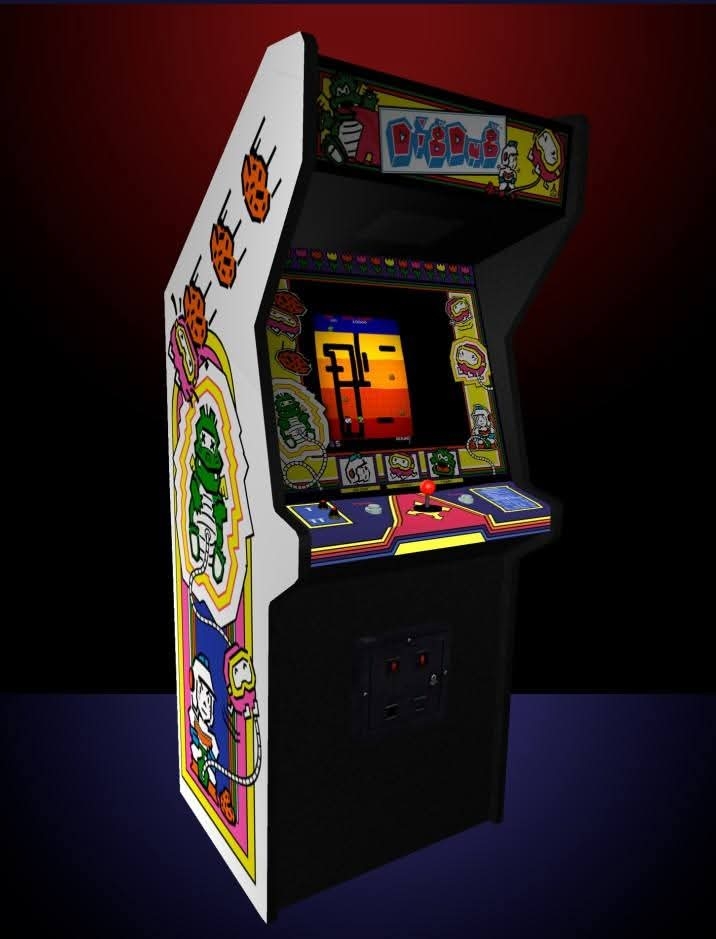
The Dig Dug arcade cabinet.
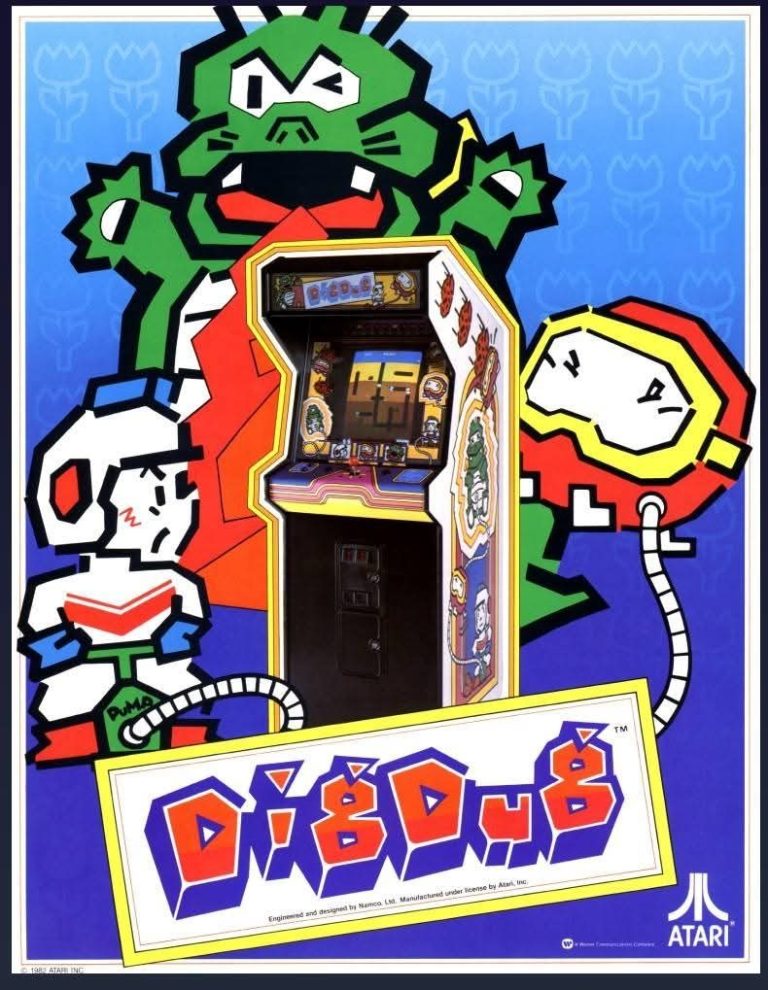
The North American arcade flyer of Dig Dug by Atari.
After installing the Namco Legendary Pack, I started playing the arcade version of Dig Dug on my Xbox Series X using the Xbox controller. Even though I rushed in viewing the Xbox control scheme, Dig Dug still turned out to be simple and very playable at the same time.
In the game, you play the character Dig Dug (Taizo Hori) who has to dig tunnels in an underground maze. You have to eliminate the enemies/monsters deep within which are the Pookas (red and spherical beings that wear large goggles) and the Fygars (fire-breathing dragons). To eliminate an enemy, you have to use an air pump to physically connect with it and then inflate it until it explodes. Another way of eliminating an enemy is by crushing them with falling rocks which requires a bit of strategy as you are always chased.
Even without new tunnels made, there are times when enemies are able to penetrate through the soil to emerge near you. If you are in a tunnel with an enemy present, you will often get chased. Be mindful that for every level you progress into, enemies move faster and their numbers gradually increase.
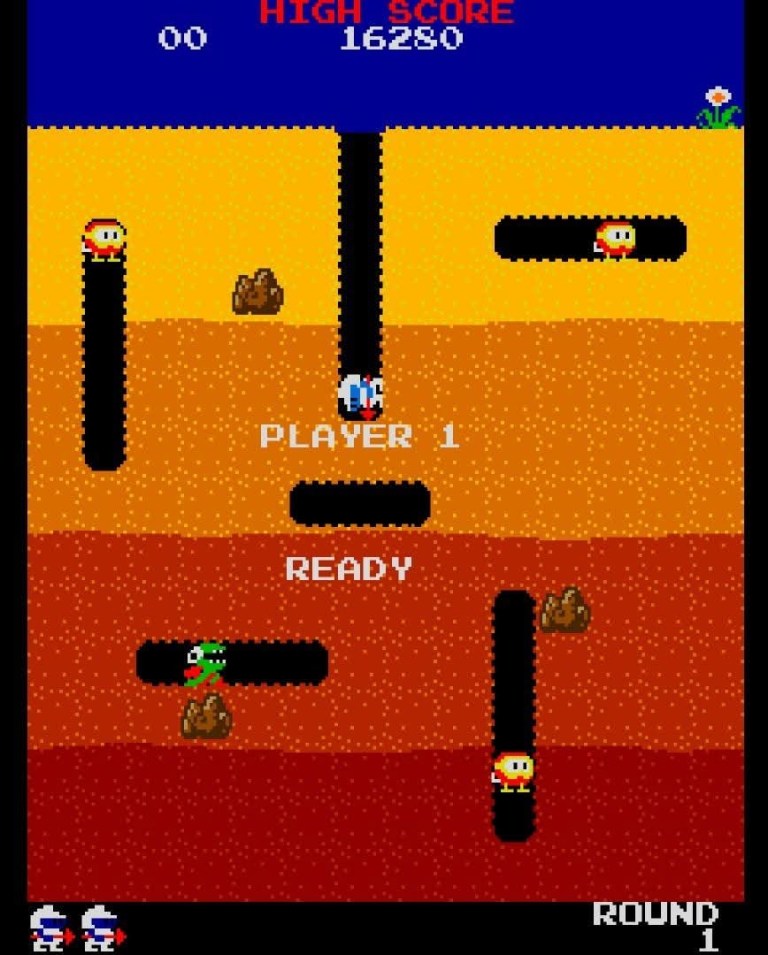
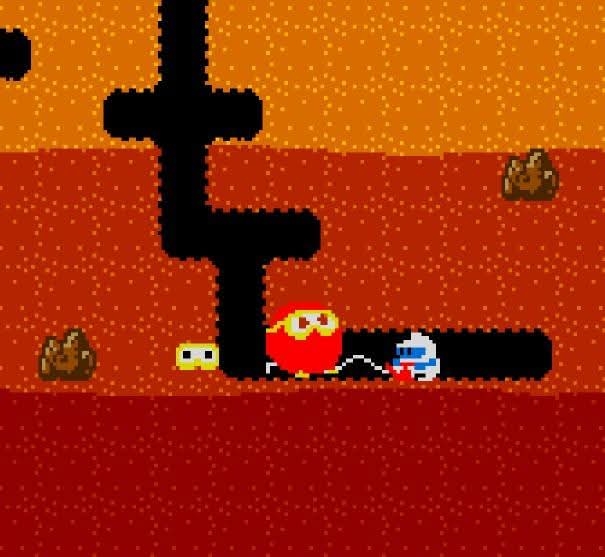
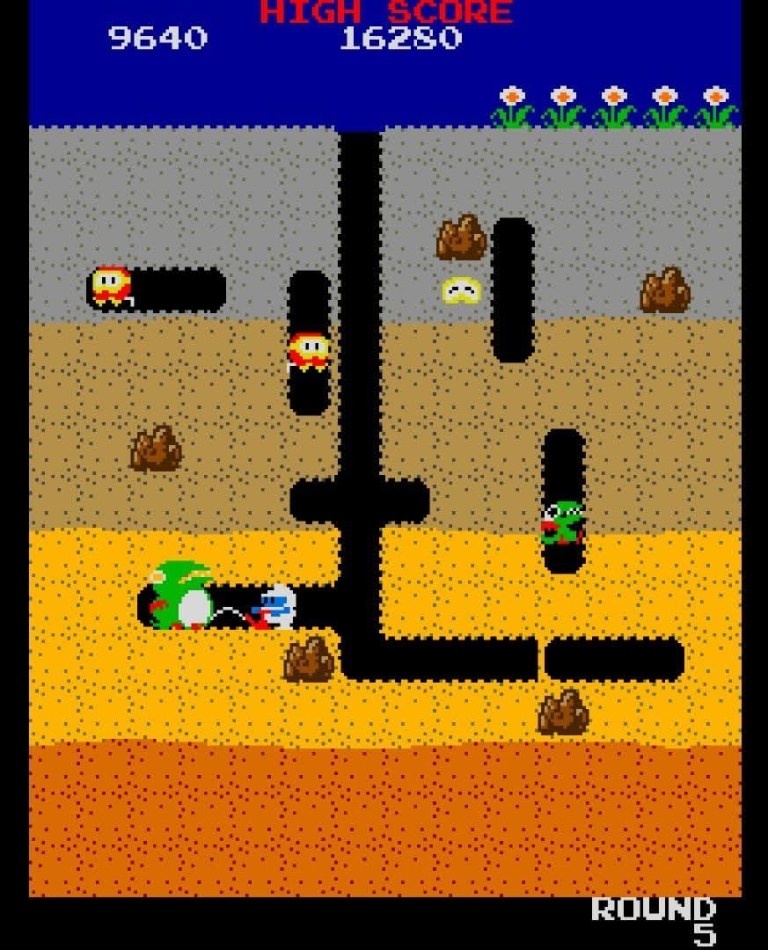
The first level of Dig Dug.
Inflating a Pooka.
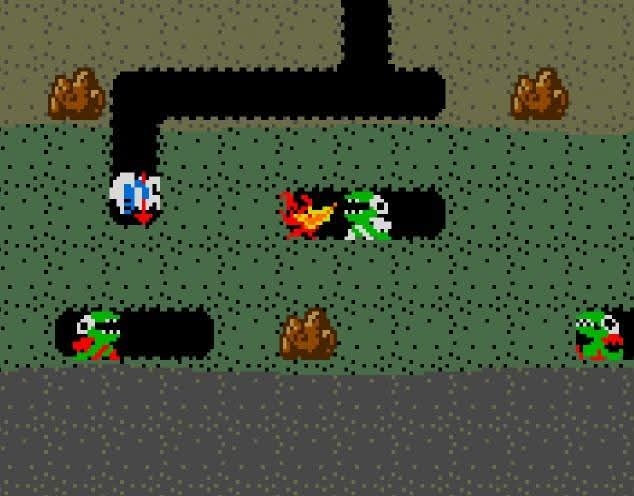
The Fygars are dragons and they are dangerous as they have fire as breath weapons.
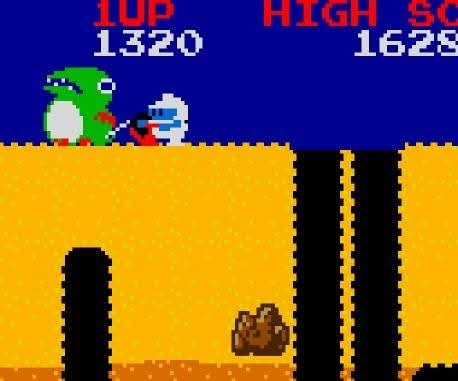
Inflating a Fygar above ground.
Here, I managed to have a huge rock fall down and hit the Fyger and Pooka that chased me earlier. Pulling off this move requires strategy.
As you inflate an enemy and there are still more enemies near you, you have to be mindful that a Pooka can penetrate through the soil and emerge in a tunnel near you.
Having played Dig Dug a number of times already with my Xbox copy of Atari 50, I can say that I am really enjoying the classic arcade game from Namco. Historically, Dig Dug as planned and designed by Masahisa Ikegami who was assisted by Shigeru Yokoyama (Galaga). The game’s programmers were Shouichi Fukatani and Toshio Sakai, while the art was done by Hiroshi Ono, and the music was composed by Yuriko Keino.
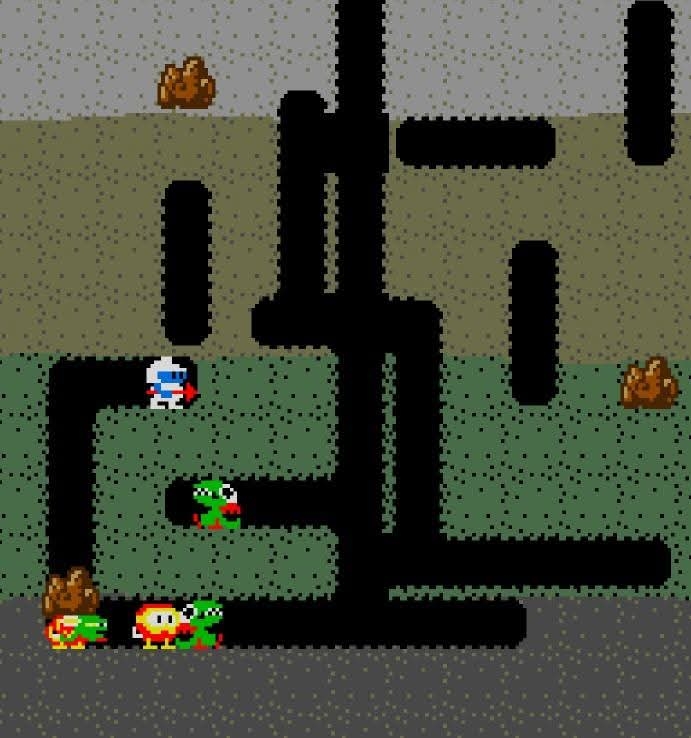
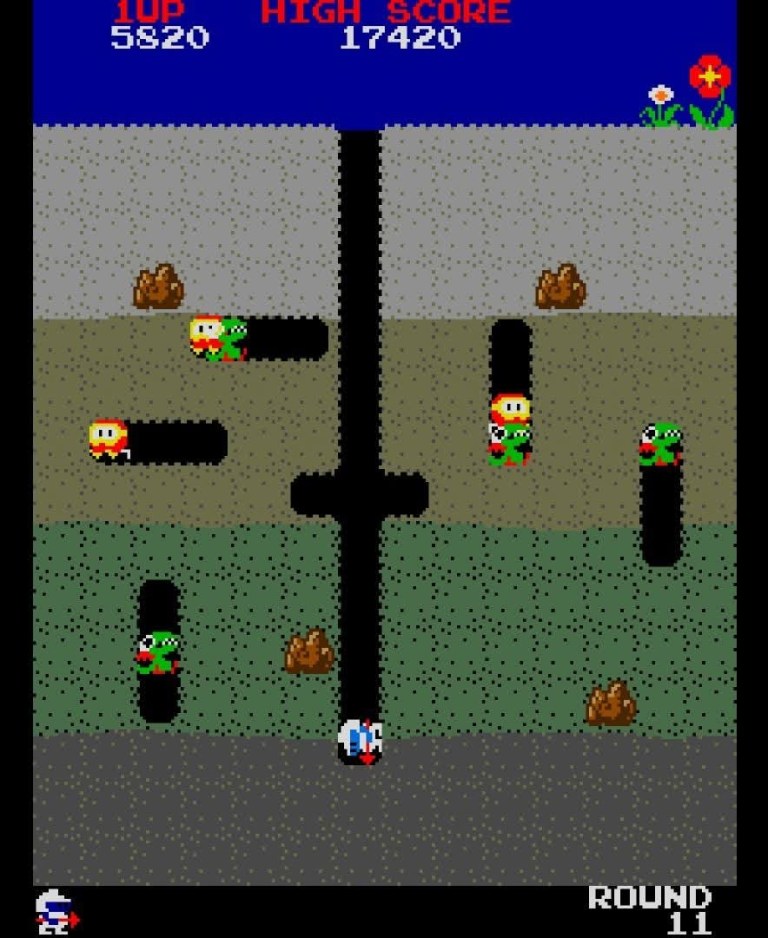
At the 11th round, the game has turned much more challenging as the monsters moved faster and they can be overwhelming.
You might be wondering why was Dig Dug (in arcade and console ports) and those other Namco classic games released in a DLC package for the Atari 50 collection recently? This is because Atari and Namco formed a business partnership in Japan when the American company established its presence there with Atari Japan. In fact, Namco started shifting into video gaming because of Atari. As for Dig Dug, it debuted in Japanese arcades in March 1982 and was brought to American arcades with Atari as the distributor (note: a licensing deal with Namco was signed).
As already recorded in history, Dig Dug became a huge critical and commercial success in both Japan and the United States. While the game emerged as the 2nd highest grossing arcade game in Japan for 1982, Atari sold more than 22,000 Dig Dug arcade cabinets and generated over $46 million in sales that same year. With big success achieved, it was not surprising to see Atari release ports of Dig Dug on the Atari 2600, Atari 5200 and Atari 8-bit computers.
Welcome back Xbox fans, geeks, retro gaming fans and other gamers!
As a long-time Xbox fan, I am disappointed with the way this current console generation turned out. Xbox gaming as a whole has changed for the worse this year and millions of Xbox fans got angered over the cancellation of Xbox projects (including Perfect Dark and Contraband), Xbox console price hikes and most recently the declared drastic changes on Xbox Game Pass – including the 50% price hike on Xbox Game Pass Ultimate service (watch Team Xbox’s pathetic and tone deaf announcement by clicking here).
But the Xbox Game Pass Ultimate price hike of 50% ruined my plan to play The Outer Worlds 2 at launch entirely! I also noticed that none of the Team Xbox executives appeared in the pathetic October 1, 2025, video announcement of the drastic XGP changes.
Imagine the crashing ship as Team Xbox falling down hard because Microsoft forced them to make decisions and implement changes that made lots of Xbox fans and other gamers frustrated this year.
By looking at the collective feedback – both critics and gamers – about the newest sci-fi role-playing game from Obsidian, the bugs reported and the current prices, I have decided to pursue The Outer Worlds 2 later. It should be noted that the new game has two upcoming DLC episodes (story expansions) and there is no certainty as to when those will be released. As such, pursuing The Outer Worlds 2 later is the right thing for me to do because rushing for it now does not make sense at all.
What I did recently was I downloaded again my purchased digital copy of The Outer Worlds as well as the two DLC episodes on my Xbox Series X. Previously I played The Outer Worlds and the story expansions on my Xbox One, and replayed them on my Xbox Series X (enjoying the faster load times and improved frame rates) a few years ago.
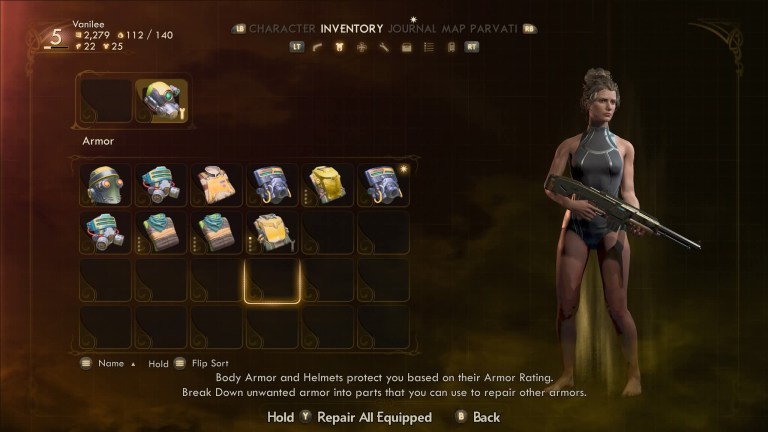
So this year, I started from scratch again on a new single player campaign. I created a new character – her name is Vanilee – and customized the abilities with intelligence, science, engineering, lockpicking, persuasion, hacking and medicine in mind.
Meet my new character Vanilee.
Having played The Outer Worlds a few times already since late 2019, I decided to try other scenarios, find new dialog options (in relation to how I customized my character) and explored the maps in and out again. I had no trouble adjusting myself into the controls and overall feel of the game when it comes to response and precision. Take note that The Outer Worlds was developed by Obsidian at a time when it was not yet acquired by Microsoft/Xbox and Private Division was their publisher.
After going through the quests and side-quests in Edgewater – I diverted power to Edgewater helping Reed Tobson, the locals and convincing the deserters to return home – I entered the Unreliable with Parvati and Vicar Max as my teammates and proceeded to the Groundbreaker in space for further quests, scenarios and more options to build up my team.
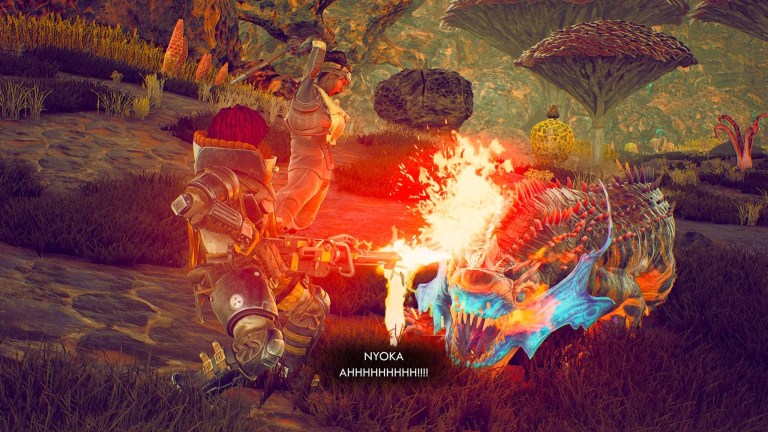
Teammates Parvati and Nyoka in action against a monster in Monarch.
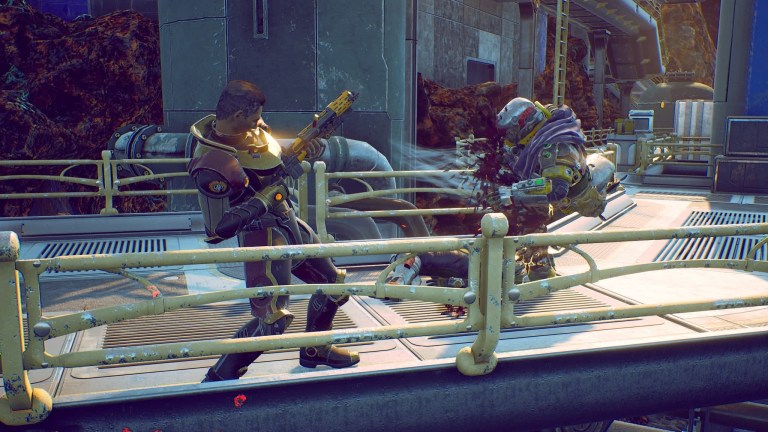
Vicar Max attacks an enemy with his shotgun.
So I kept on replaying the game rediscovering places, interacting with more characters and making decisions. Along the way, I spotted new dialog options emerging in connection with how I customized Vanilee from the start and built up with additional points accumulated for each level achieved. I ultimately reached the maximum of level 36.
Since I first played The Outer Worlds, it was clear to me that Obsidian did not have a massive budget as the creative and technical limitations were visible (examples: some repetitive interior designs, structures that cannot be accessed at all, lack of polish on stealth gameplay, my teammates getting in my line of fire, sluggish reloading, etc.). Instead of massive open-world environments, Obsidian came up with large maps but they ensured that each new location had something new for players to discover. I also admired the effort the developers invested on the art direction as well as making each map look distinct from each other while maintaining an artistic connection with the planet.
This is from the Murder on Eridanos DLC episode.
While the gameplay remains good for an RPG and first-person shooter enthusiast like me, what I admired best about The Outer Worlds was how Obsidian came up with connections between scenarios, the characters, the dialog options, and the consequences caused by decisions I made. That being said, I enjoyed watching the visual presentation and narration executed right after concluding the game. The presentation shows the endings of not just the main game but also those of the side quests completed and even the main quests of the two DLC episodes. How my decisions impacted the different factions and scenarios were clearly emphasized. In fact, the endings of the side quests and the two DLC episodes are seamlessly connected with the main game’s conclusion. As such, Obsidian succeeded in making The Outer Worlds worth replaying again.
Having played Starfield already, I realized that replaying The Outer Worlds was somehow a more satisfying experience. In my view, Bethesda tried too hard to make Starfield grand with a more galactic scope only to fail when it comes to exploration and long-term engagement. The Outer Worlds had a much smaller scope but it delivered the depth of fun, exploration, interaction and decision-making that strongly impacted the game’s conclusion.
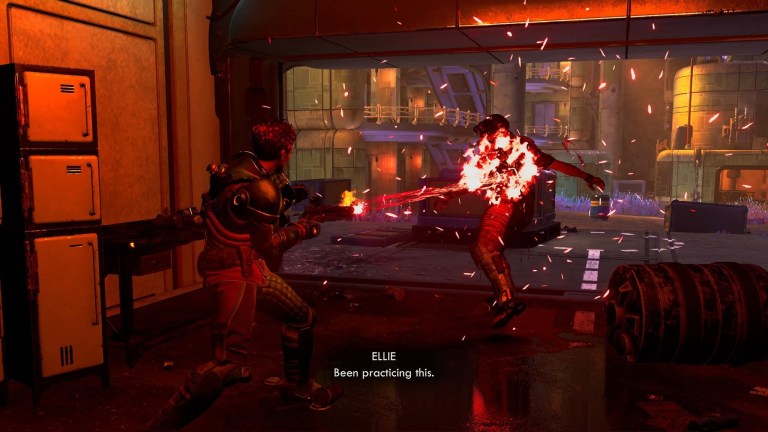
Ellie in action in Gorgon!
At the same time, I find my character’s companions in Obsidian’s 2019 RPG more interesting and more engaging than those in Bethesda’s 2023 sci-fi juggernaut because of the following factors – better personalities, more clever writing and better voice acting. I believe it is time for Bethesda to start learning from Obsidian on how to make engaging dialogue and characters.
Right now, I am having a lot satisfaction replaying The Outer Worlds even though it has some flaws as well as creative and technical limitations as Obsidian did not have a very big budget. I wish the game had space battles as well as opportunities for the Unreliable to chase and dock enemy space ships which will allow me and my team to infiltrate. The game lacked mini-games which could have added more variety and fun when exploring the different locations on-foot (examples: the tossball facility in Monarch could have used a sports betting mini-game while the bars could have used card-based mini-games).
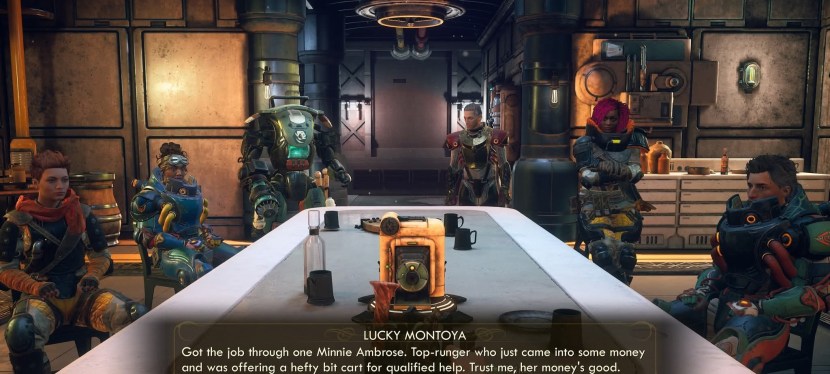
My crew inside the Unreliable.
On its own, the 2019 game is still a lot of fun to play and the role-playing element remains strong. The Outer World characters are memorable and the developers’ writers added humor to the dialog which prevented the game from becoming too dramatic or depressing. Indeed, The Outer Worlds is worth replayingand those who never played it should go for it!
Welcome back Xbox fans, geeks, retro gaming fans and other gamers!
If you are disappointed with modern console gaming and if you don’t like what the game makers are doing, retro gaming will restore the fun and help you forget about the disappointment.
When I was a very young boy, I saw Cloak & Dagger on home video. The movie – starring Henry Thomas and Dabney Coleman – was a thriller laced with Cold War elements, espionage and video gaming. In fact, the video game giant of the time – Atari – was involved in the movie production and their arcade game Cloak & Dagger appeared in the form of a fictional Atari 5200 game. Each time I saw the gameplay footage while watching the movie (read my retro review by clicking here), I was thrilled and always wanted to play it.
Finally, in 2024, I was able to play Cloak & Dagger on my Xbox Series X after purchasing the physical copy of Atari 50: The Anniversary Celebration. Since then, I’ve been replaying Cloak & Dagger a lot in the comfort home and it sure is challenging and fun.
To be clear, this is not a retro game review of Cloak & Dagger. Rather, it is a nostalgic close look at the Atari video game that happened to be featured in the 1984 movie which in turn was released on 4K Blu-ray in 2022. Combine that with the Atari 50 release also in 2022, the Cloak & Dagger game made a comeback in the retro gaming radars of many while also becoming available to play with on modern consoles and Windows PC.
Game design and gameplay
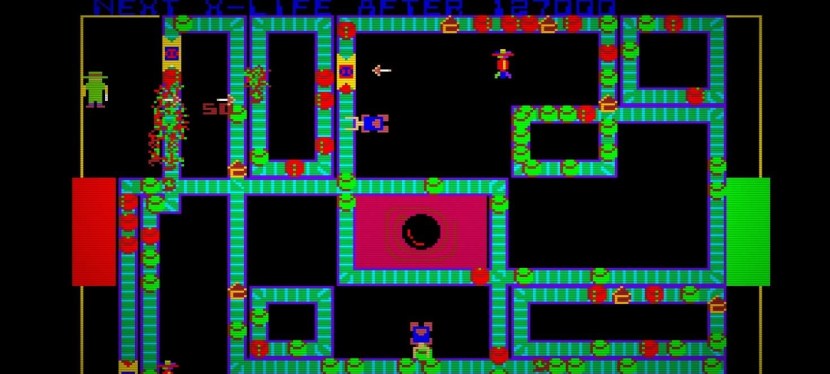
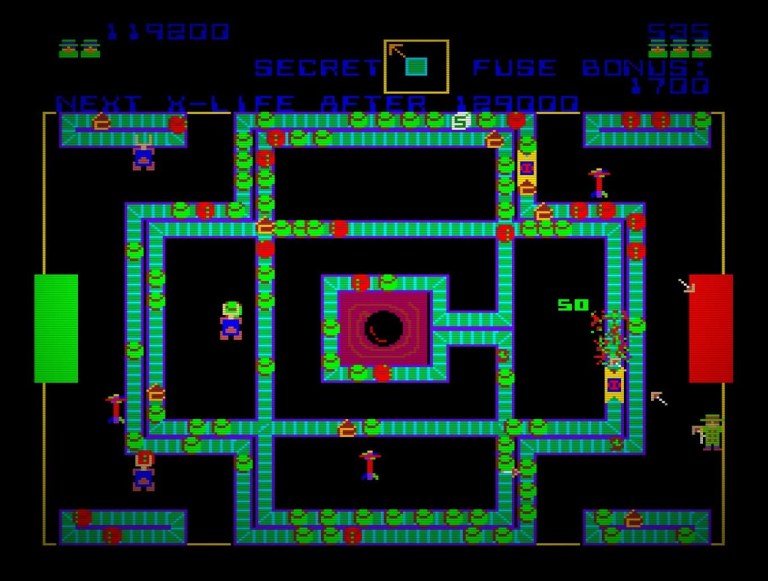
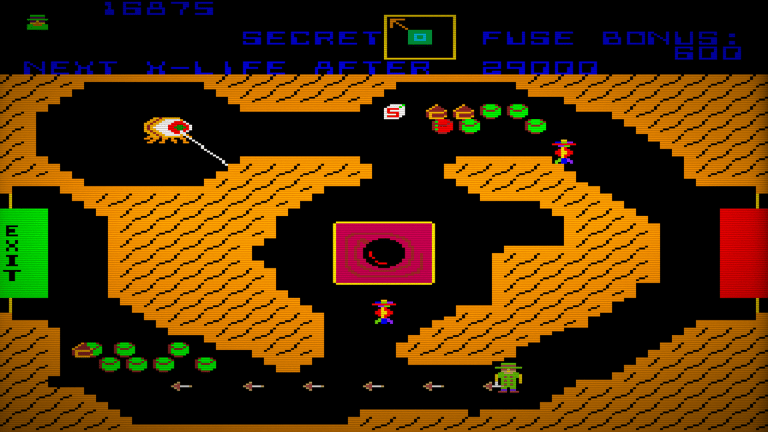
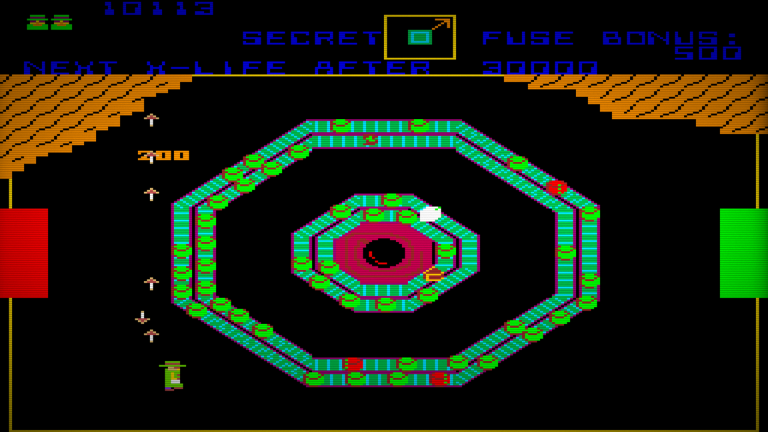
In the arcade game, you play Agent X (the 2D sprite colored green and wearing the hat) and you will encounter challenges from enemies (often robot guards which can fire shots at you), conveyor belts that can impact your movement and the possibility of the giant bomb exploding.
Developed by Atari for the arcade, Cloak & Dagger is a 2D multi-directional shooter in which you play Agent X (who appears wearing a hat, a mask and a coat) whose mission is to infiltrate the massive base of an enemy that goes very deep underground (33 levels/floors).
Each level the player enters require surviving obstacles and defeating (or avoiding) the enemies (robot guards are the most common opposition while the crawling eye occasionally appears) and then move to the other side of the level in order to get into another elevator to keep on descending. The ultimate goal is to reach the final level below to recover top secret plans from Dr. Boom (the main villain and the one responsible for stealing the said plans), destroy his underground bomb factory (which explains the existence of oversized bombs and many explosives on conveyor belts) and get out.
As registering high scores was the trend of video gaming back then, players will be rewarded with shooting at the enemies (example: robot guards are worth 50 points each when asleep or 200 points when awake, while the main villain Dr. Boom is worth 50,000 points) as well as interacting with in-game items such as the unarmed explosives (10 points when shot but worth 100 when collected), armed explosives (50 points each when destroyed) and mystery boxes (worth 200 to 1,800 points plus random effects on the player such as extra life, improved speed and even extra life). For every 30,000 points scored, the player will be granted an extra life. In many levels are gigantic bombs that players can ignite using the Fuse button for extra points.
Between levels, you will see an animated Agent X during the short rides in the elevator.
The game is very challenging because so much is going on around you. The robot guards will always fire shots at you while the conveyor belts often move items and explosives (both the armed and unarmed). You can ride a converyor belt to move around but make sure you do not touch the armed explosives (red containers) as they will kill you upon contact.
Other items players can collect are the extra boxes (resulting in extra life) and the secret maps (which partially reveal safe paths through each fourth level).
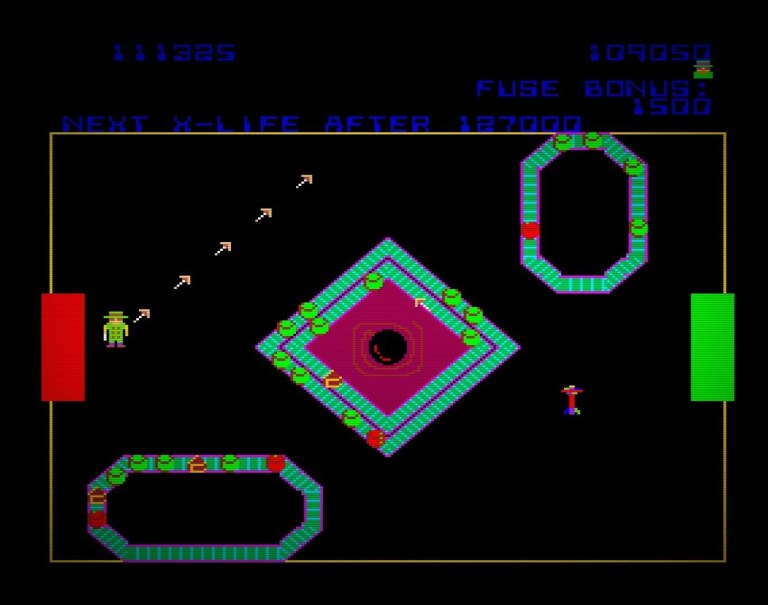
When it comes to the controls, Cloak & Dagger has a dual joystick (twin sticks) setup similar to Robotron 2084 and Smash T.V. (read my retrospective look at it by clicking here). One joystick allows players to move Agent X around while the other allows shooting projectiles (using Agent X’s weapon) at any direction. The fuse action (for igniting the oversized bombs in the enemy lair) is done by simply pressing a button. As I am playing this game on Xbox Series X, the game’s controls functioned well on the Xbox controller. Both precision and response of the game are sharp with the Xbox controller.
When it comes to the enjoyment and overall value of Cloak & Dagger, I can say that it is indeed more challenging and more chaotic when compared to the more notable twin stick games Robotron 2084 and Smash T.V. For one thing, each level has different layouts complete with obstacles or hazards plus enemies that will certainly challenge players. Many levels have conveyor belts moving unarmed explosives, armed explosives (which you must avoid touching because you will die upon direct contact) and items around which form obstacles when it comes to shooting robot guards on the other side (note: you can use the obstacles defensively when the robot guards fire at you).
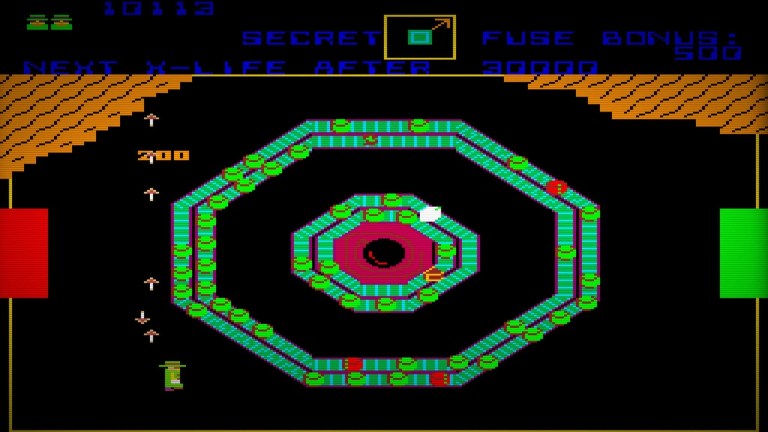
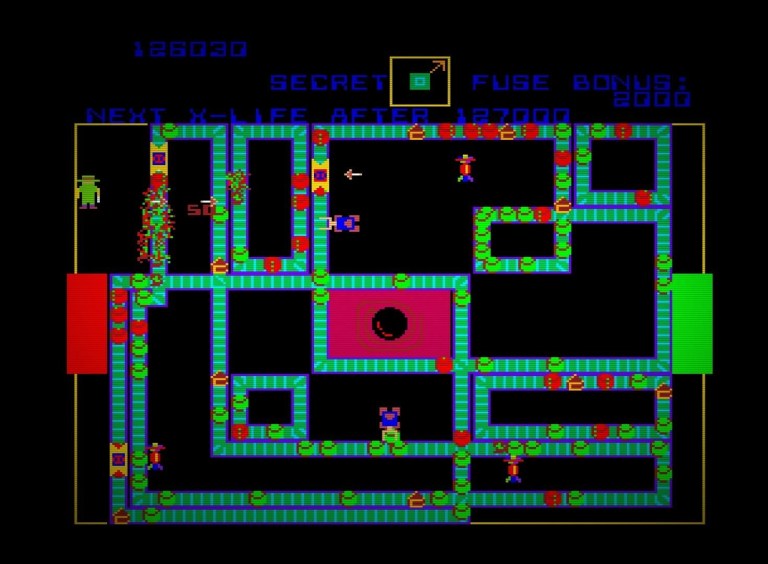
From time to time, you will enter a somewhat sparse looking level like this which actually has mines hidden. The locations of the mines do get revealed in specific moments but only for a few seconds. That being said, it is always best to be able to collect maps that appear on conveyor belts.
Apart from the robot guards and the crawling eye, there are also forklifts which don’t attack you but their solid exterior will deflect any projectile you fire at them and send them back to your direction.
To be clear, you are not required to destroy all the robot guards (or the huge crawling eye enemies) in each level. You can simply try to avoid obstacles and enemies to make it to the next elevator to keep on descending although doing so means scoring much lesser points. Picking up items will add points and randomly alter your character’s capabilities (by picking up mystery boxes).
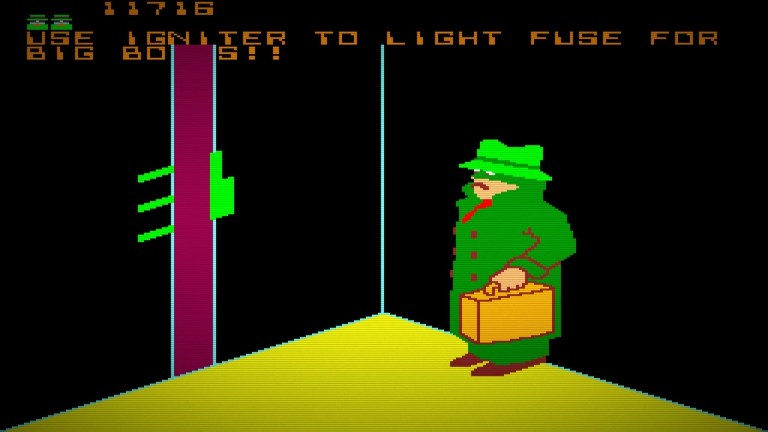
Adding pressure to you on each level is the giant bomb located in the middle which you can ignite using the fuse action. Once ignited, you only have a few seconds left to make it to the next elevator as the giant bomb will explode and spread fire throughout the whole level. Igniting the said thing will grant you a lot of points provided you survive and made it to the elevator going down.
To be able to play the Cloak & Dagger arcade game on your console or on PC, purchase a copy of the Atari 50 collection.
Cloak & Dagger is indeed a fun game but the opposition, the obstacles, time limit (indicated by the giant bomb) and chaotic turn of events make it more challenging than Midway’s two notable twin stick shooters. The game would have been more forgiving and more playable if only it did not have the one-hit-death embedded on it. Considering the challenges each level has and the many levels players have to go through, it would have made more sense to have Agent X have a life bar/health meter/shield and be able to absorb some enemy projectiles (before dying).
Of course, the game was never designed to be like that and the one-hit-death is also found in Robotron 2084 and Smash T.V. That being said, if you played Cloak & Dagger with a high level of success and completed everything without losing all your lives, then you would be a great achiever.
Pop culture significance
It has been reported that Cloak & Dagger – which was released as an arcade kit for machines that ran Robotron 2084, Joust, Defender and Stargate – did not have a big presence in the arcades in America. The 1984 movie dramatically increased public awareness of it.
Print ad of the arcade game.
When Cloak & Dagger was still in game development (created and led by Russell Dawe) under the title “Agent X”, Atari and certain movie producers became aware of each other’s projects and decided to work together. The deal made business sense as Atari could benefit from reaching a mainstream audience through the cinemas while the movie producers joined in the 1980s Hollywood trend of movies that featured powerful computers, software and artificial intelligence as seen in WarGames (1983), Superman III (1983), and The Terminator (1984).
Much to the credit of the filmmakers, the presence of the game actually added good value to the plot. The film’s concept of the Cloak & Dagger game becoming a very wanted object (plot device actually) resulting in chases, intense action scenes and suspense turned out to be very believable as well. It should be noted that director Richard Franklin took inspiration from Alfred Hitchcock which gave the film a unique touch on the suspense and shock scenes. Check out the movie clip below…
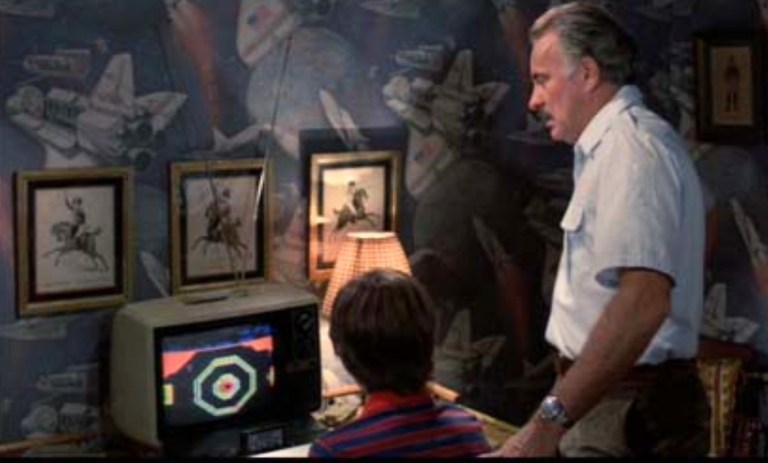
When it comes to the Cloak & Dagger game appearing within the movie of 1984, you will see how the filmmakers and Atari cleverly created the illusion of the game operating on the Atari 5200 console by showing not only video game footage, but also having Henry Thomas acting like he’s playing it using the Atari 5200 controller (which has an analog joystick and buttons on one side). When I was a young boy watching the movie, I found the game footage very entertaining and wanted to play it.
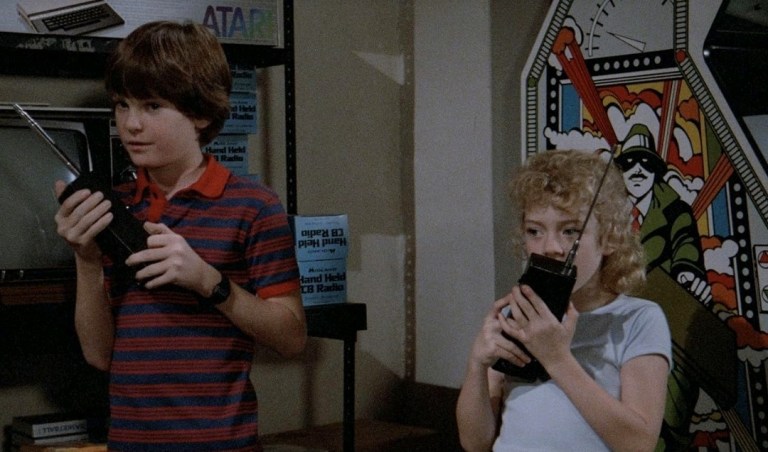
Cloak & Dagger portrayed as running on Atari 5200 in this scene with Henry Thomas and Dabney Coleman. (photo source – AtariProtos.com)
A Cloak & Dagger arcade cabinet seen in the background (right side). (photo source – IMDB.com)
Welcome back readers, fellow geeks and electronic gaming fans!
In this edition of the Retro Gaming Ads Blast (RGAB) series, we will take a look at another batch of retro gaming print ads – including arcade flyers – from the 1980s and 1990s.
For the newcomers reading this, Retro Gaming Ads Blast (RGAB) looks back at the many print ads of games (console, arcade, computer and handheld) that were published in comic books, magazines, flyers, posters and newspapers long before smartphones, social media, the worldwide web and streaming became popular. To put things in perspective, people back in the 1980s and 1990s were more trusting of print media for information and images about electronic games and related products.
With those details laid down, here is the newest batch of retro gaming print ads for you to see and enjoy…
1. E.T. the Extra-Terrestrial Atari 2600 print ad
If you have seen Steven Spielberg’s 1982 movie, were you able to play the Atari 2600 video game? I did!
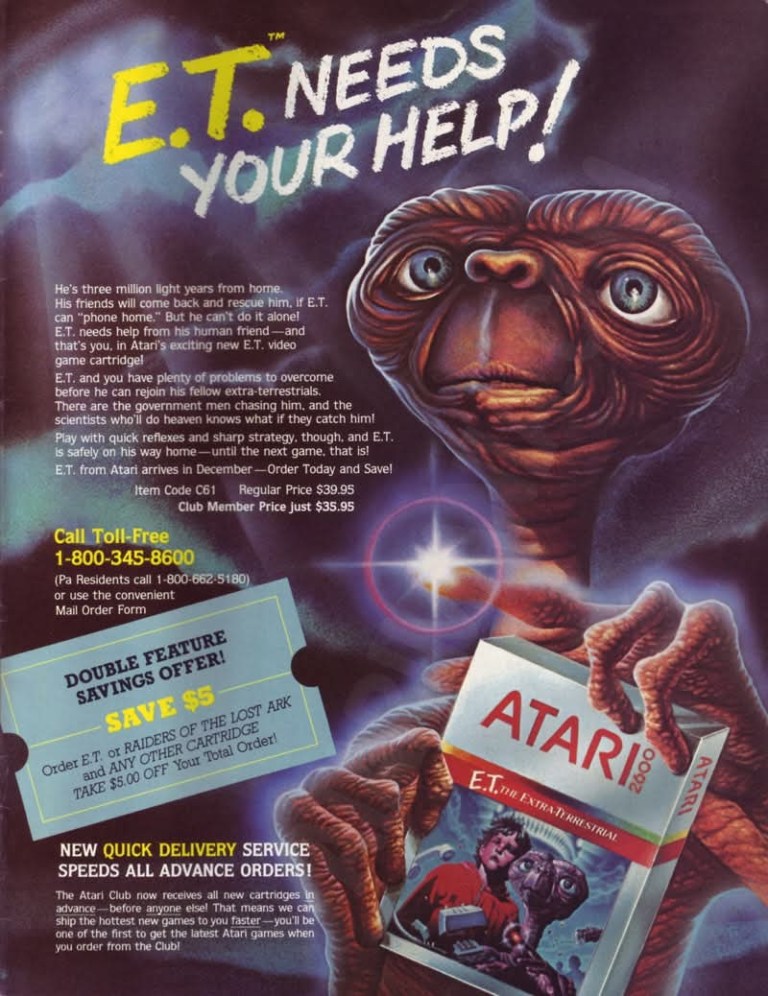
Atari invested a lot on its video game based on Steven Spielberg’s E.T. the Extra-Terrestrial as the film was a massive box office success. In addition to their Atari 2600 video game print ad showing E.T. with Elliot, they ran another print ad with a concept of the sci-fi character needing people’s help. They came up with original artwork showing E.T. holding a box of the Atari 2600 E.T. video game, then posted details about how to acquire a copy of the game (with prices for regular customers and club members) and posted a toll-free 1-800 phone number. They also offered a $5 discount for those who order the E.T. or Raider of the Lost Ark video game and another cartridge. This old ad had commerce written all over it.
2. Bulls vs. Lakers and the NBA Playoffs Sega Genesis print ad
Before NBA Live, there was this old NBA video games series by Electronic Arts.
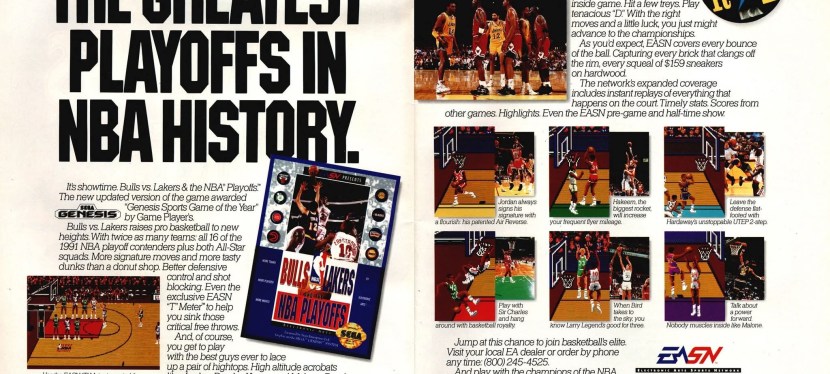
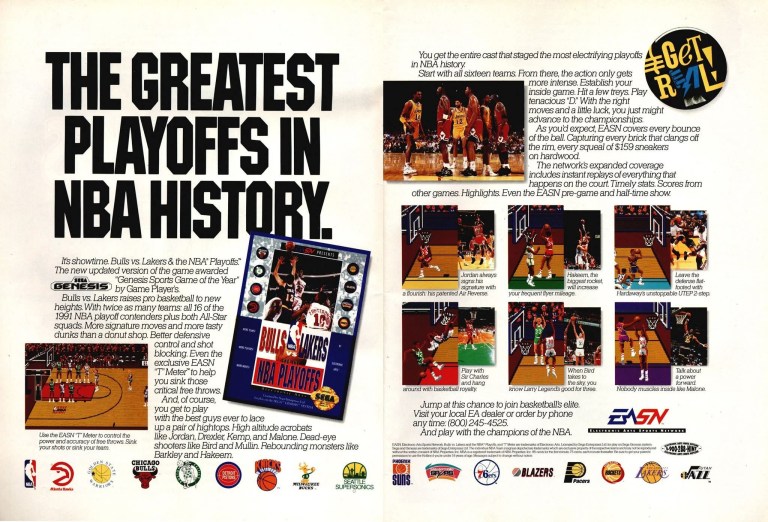
Based on the 1990-91 NBA season and the NBA finals match-up between the Chicago Bulls and the Los Angeles Lakers, Bulls vs. Lakers and the NBA Playoffs was Electronic Arts’ exciting game for the Sega Genesis which already had lots of sports-loving gamers. They made a 2-page print ad that was cleverly designed to make both gamers and NBA fans excited. It is not an accident that the ad showed comparative images (in-game footage and real-life basketball photos) of NBA superstars like Larry Bird, Michael Jordan, Karl Malone and Charles Barkley on the right. With the strong visual presentation, emphasis on popular NBA players and other details posted, this old ad is still fun and exciting to look at.
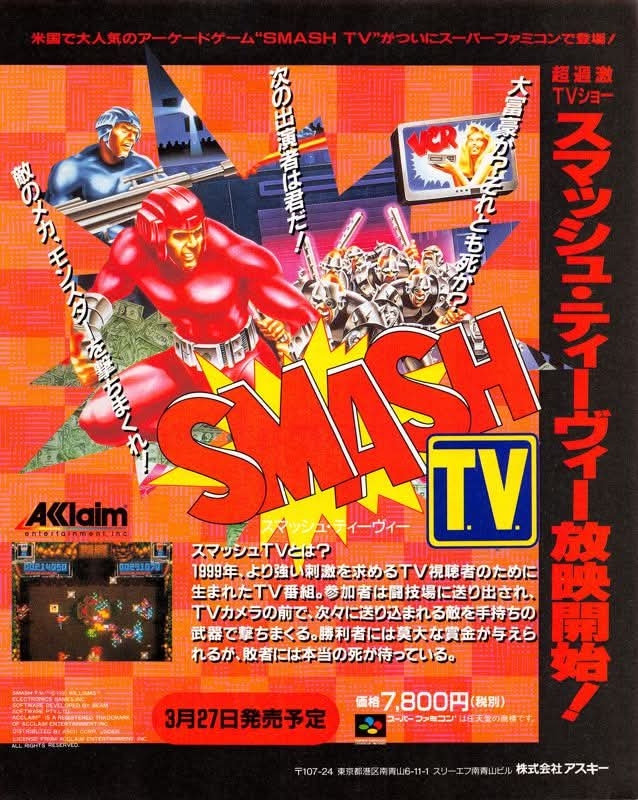
3. Japanese Smash T.V. print ad
The Japanese print ad of Smash T.V.
Yes, it is true! The console port of the arcade classic Smash T.V. was released on the Super Family Computer (Super Famicom) in Japan back in the 1990s. While I cannot understand the Japanese text shown on the ad above, it still looks exciting as the official artwork plus a screenshot of the game were displayed. The revealed retail price of 7,800 Yen is alone eye-catching as there were many games in Japan launched below that price in the next console generation. I can only wonder how many gamers in Japan bought and enjoyed Smash T.V.
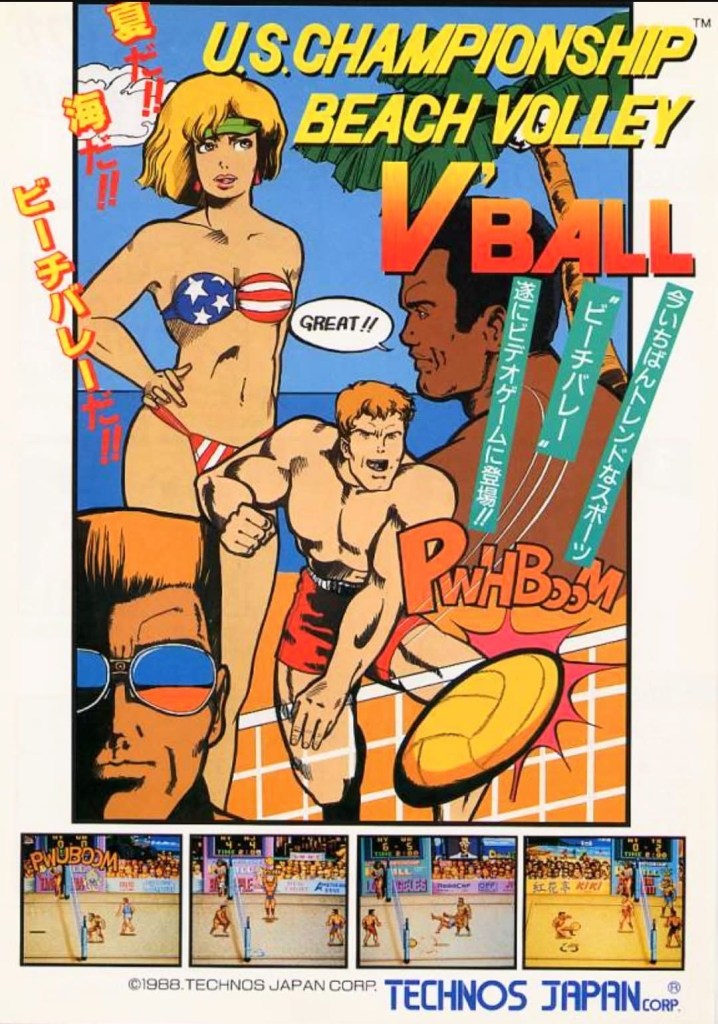
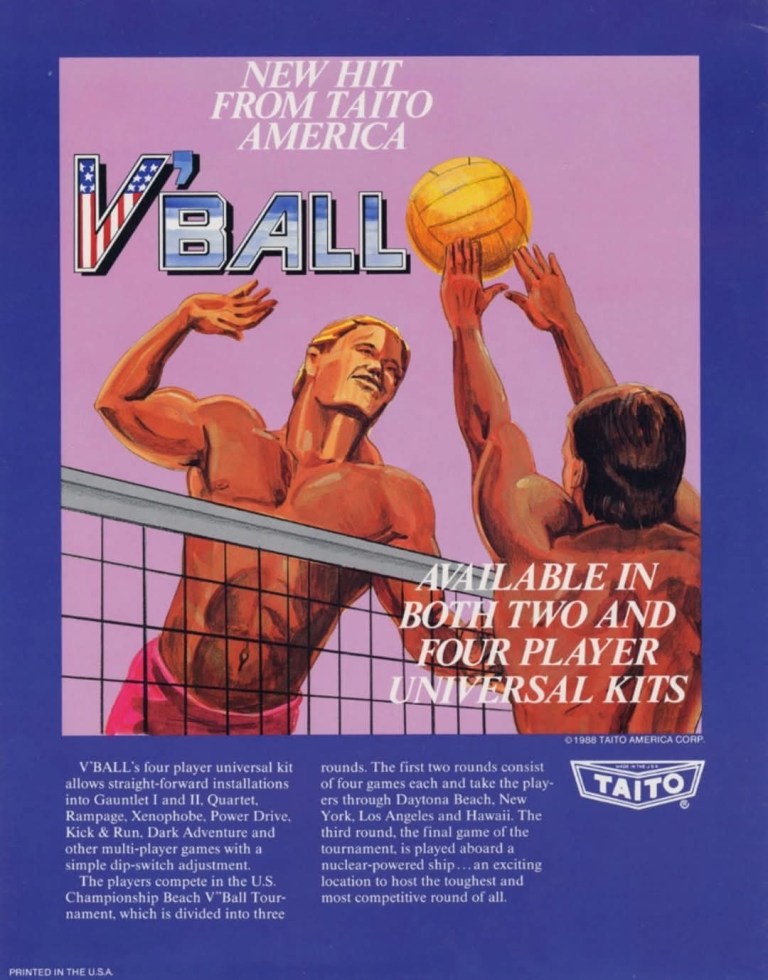
4. U.S. Championship V’Ball arcade flyers
The very colorful and striking arcade flyer for the Japanese market.
The American arcade flyer.
In 1988, Technos – the company behind the Double Dragon video games – released U.S. Championship V’Ball in video arcades in Japan and in America. The way it was promoted in Japan, Technos came up with an arcade flyer that had a comic-inspired hand-drawn artwork that easily gave viewers a strong American beach volleyball vibe. For the American arcade market, Taito (licensed by Technos) used different artwork showing two men in action. If you ask me, the Japanese arcade flyer is more dynamic to look at. Regardless of art style and presentation, both arcade flyers emphasized beach volleyball to gamers clearly.
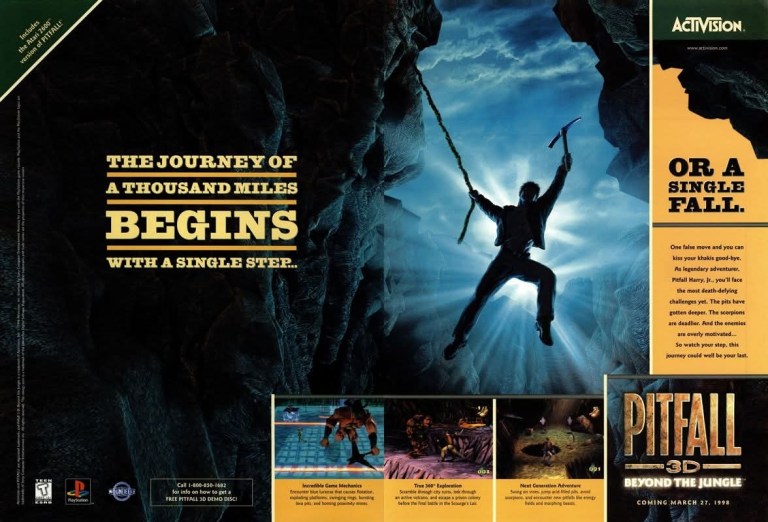
5. Pitfall 3D: Beyond the Jungle print ad
The 2-page print ad of Pitfall 3D: Beyond the Jungle.
When Activision decide to make a new Pitfall video game with polygonal graphics and with 3D platform gameplay, it was not surprising at all as this was the trend that defined 1990s gaming. In 1998, Pitfall 3D: Beyond the Jungle was released for the PlayStation and it received a divisive reception from the critics. If you look closely at the print ad, the words “Next Generation Adventure” was written in the lower-right part and it was clear the game’s quality did not justify them.
6. Atari 2600 and games print ads
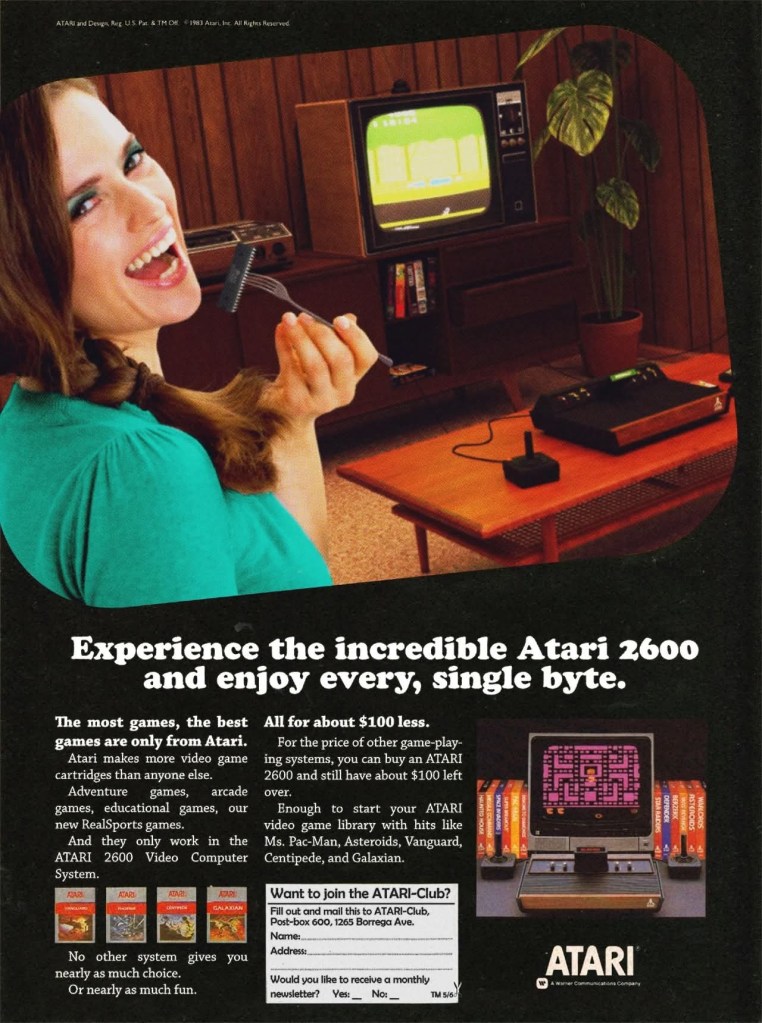
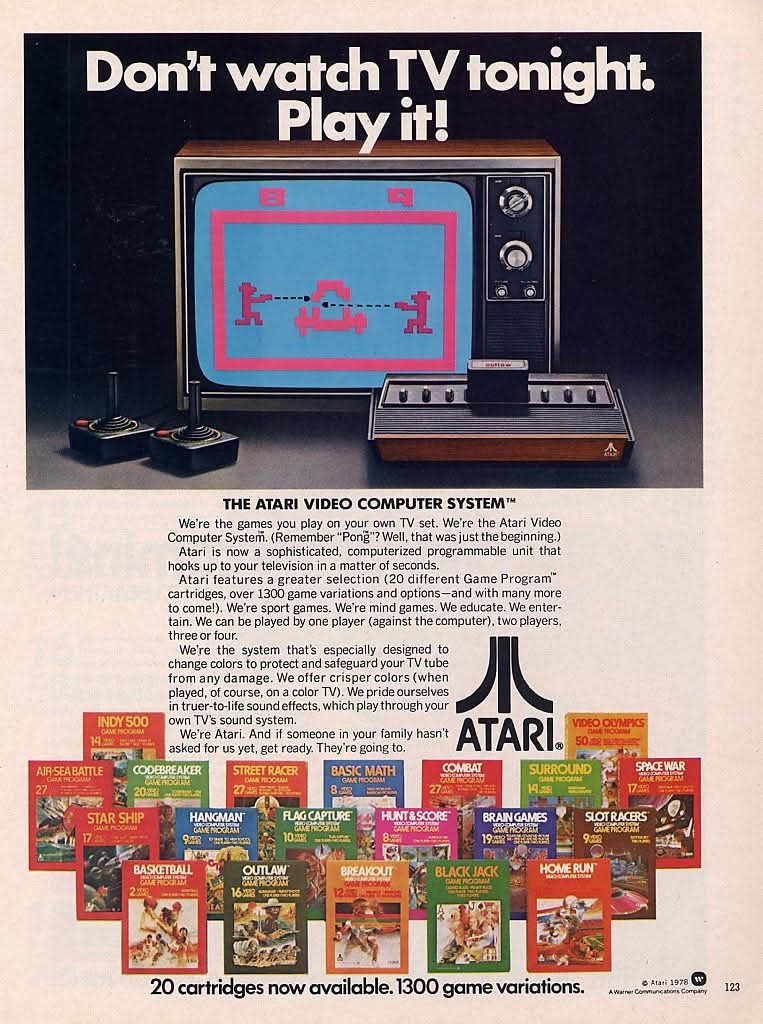
Our household had an Atari 2600 console and many games.
Atari’s promotion of its console, the games and interactive entertainment with the TV.
For a number of years decades ago, Atari dominated the video game console market in America with the Atari 2600 sold in the millions. While Atari today is no longer the video game giant it used to be, there is no denying the fact that they really changed the way people enjoyed the use of their television sets in American homes by offering them lots of video games for the Atari 2600 console. By looking at the above print ads, you can see that the company was not only aggressive with their marketing but also made interactive electronic entertainment more acceptable to countless families.
7. Burning Rangers North American print ad
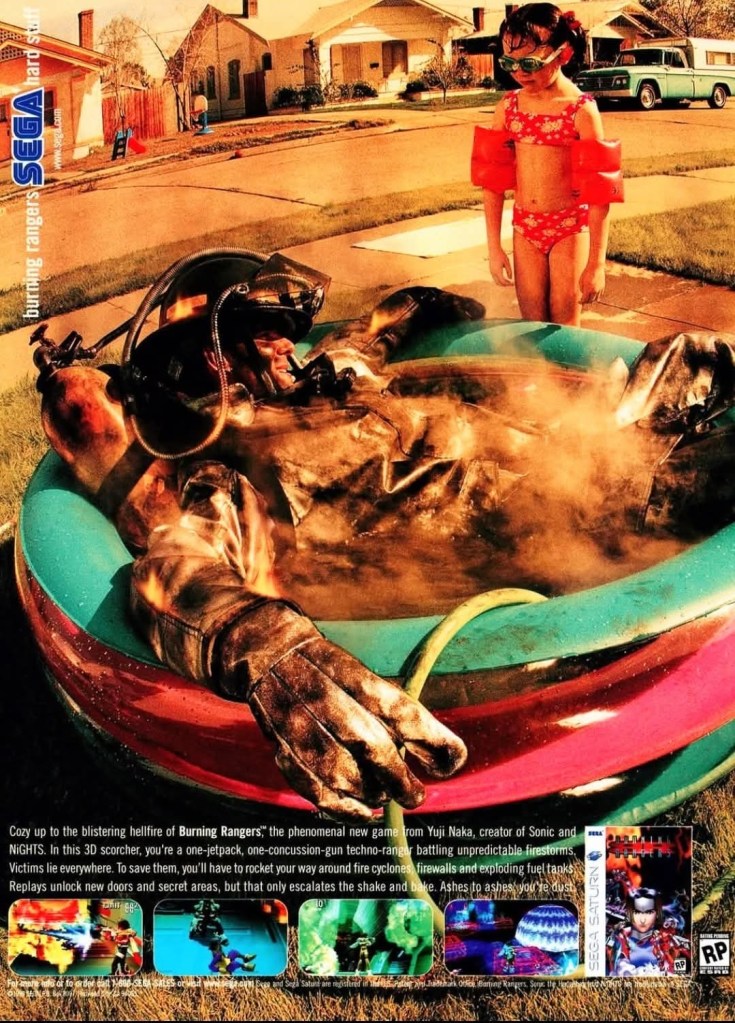
I remember this ad from video game magazines I read in 1998.
Released in 1998 for the Sega Saturn, Burning Rangers was a high-quality exclusive game. To promote it in America, Sega came up with the print ad showing a few screenshots and a dominating image of a fire fighter cooling down on a kid’s personal pool. The image emphasized the element of fire in the game even though it lacked the more sci-fi elements used on the characters and setting. It should be noted that by 1998, the Sega Saturn was no longer in high demand in America as gamers overwhelmingly chose PlayStation and Nintendo 64 (N64) consoles and games. In retrospect, this was one of Sega’s final hard marketing moves done with a Saturn game.
Disclaimer: This is my original work with details sourced from reading the video game and doing personal research. Anyone who wants to use this article, in part or in whole, needs to secure first my permission and agree to cite me as the source and author. Let it be known that any unauthorized use of this article will constrain the author to pursue the remedies under R.A. No. 8293, the Revised Penal Code, and/or all applicable legal actions under the laws of the Philippines.
Welcome back retro gaming enthusiasts, Atari fans, geeks and others who are passionate about video games!
Today we go all the way back to the year 1980 when Atari released in arcades a game that strongly resonated with people who were concerned about a potential nuclear conflict between the United States and Russia during the Cold War…Missile Command.
Designed by Dave Theurer and programmed by Rich Adam with Theurer, Missile Command is a 2-dimension shoot ‘em up arcade game that had a trackball to allow players to control a crosshair to defend six existing cities. The arcade also had three buttons players could use to launch surface-to-air missiles from the three missile bases to protect the cities from incoming ballistic missiles that came from an unseen enemy.
With those details laid down, here is a look back at the Missile Command arcade game of 1980 developed and published by Atari.
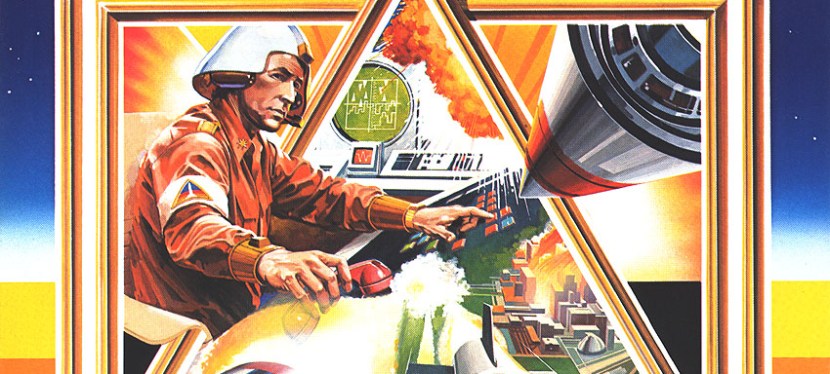
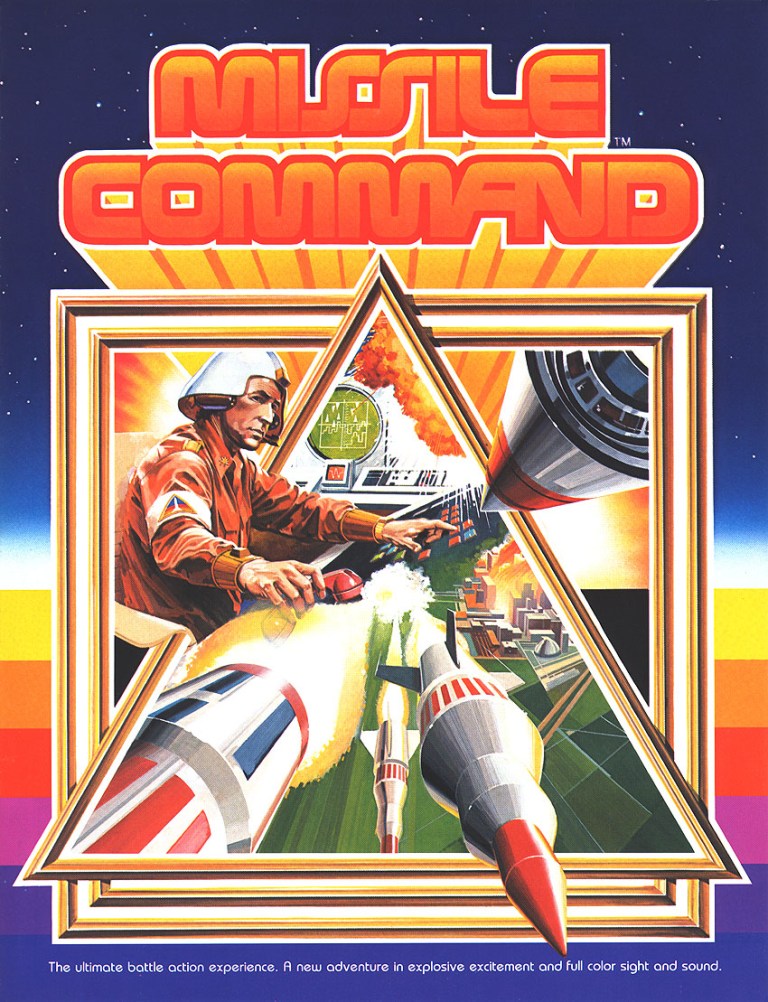
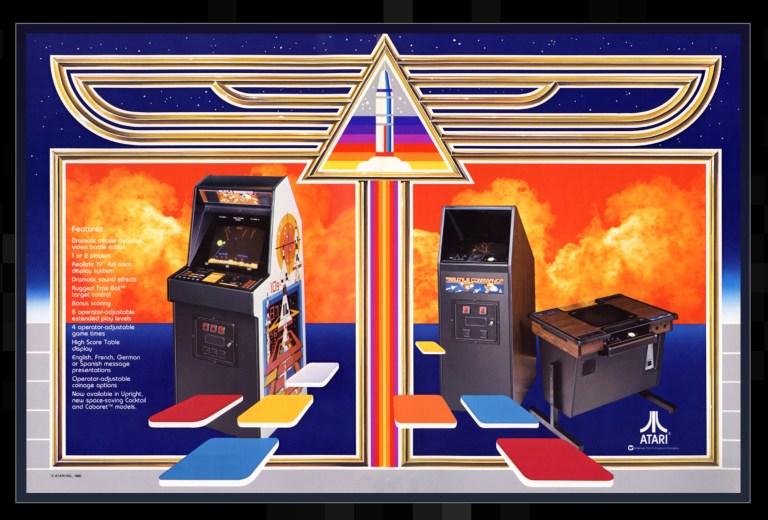
The arcade flyer with a great looking painted artwork. This one really resonated with gamers who lived during the Cold War.
Game design
As the commander of three missile bases (each armed with 10 defense missiles), the player is tasked to protect six existing cities from waves of ballistic missiles (launched by an unnamed enemy) coming down. From time to time, the enemy deploys bombers, satellites/drones and smart bombs to overwhelm your defense and test your precision and decision making.
You have three missile bases that each has its own supply of defense missiles. There are cities between each base which you have to defend from the endless assault of enemy missiles, smart bombs, war planes and satellites/drones.
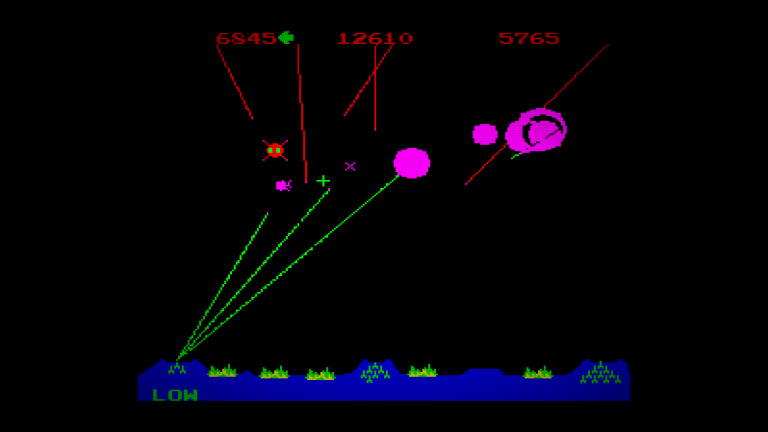
When your defense missile detonates in the air, it creates an explosion which serve as a shield to destroy enemy missiles, war planes and satellite/drones when contact is made. If any projectiles from the enemy manages to get through the aerial explosion, you will have to quickly launch more defense missiles from the near base you have.
Players use a single crosshair which designates which part of the sky a defense missile can be fired at. Once the defense missile reaches its destination (placed by the crosshair) in the sky, it will explode and cause a growing flame lasting seconds. The said flame serves as a shield that can destroy the enemy’s ballistic missiles, smart bombs, war planes and satellites/drones upon contact. Defense missiles can be launched consecutively into selected spots in the sky in anticipation of the incoming weapons of the enemy.
To proceed from one level to another, the player must have at least one city remaining intact. Once all the six cities have been destroyed and the player no longer has any unused missiles (and no new cities earned by reaching certain high scores that justify rewards), the game will end with a “Game Over” screen with an explosion in the background.
Quality
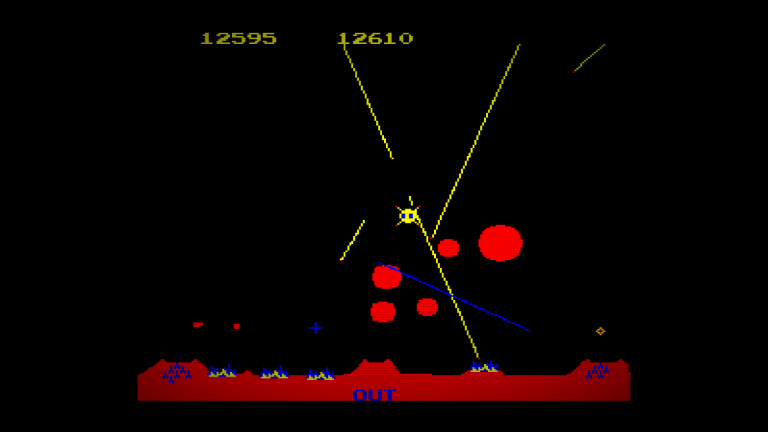
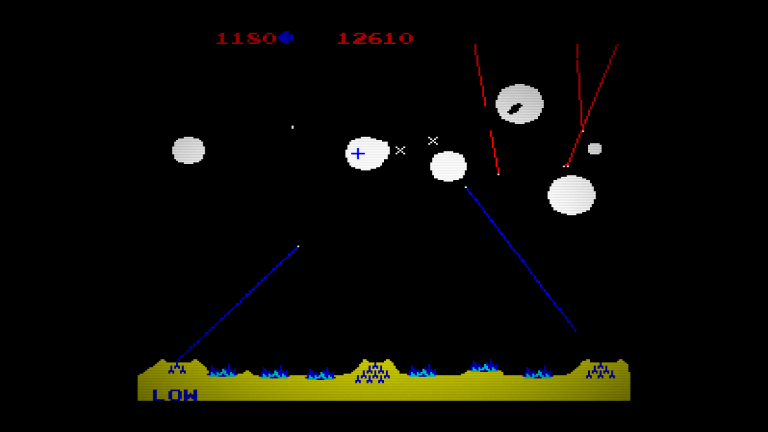
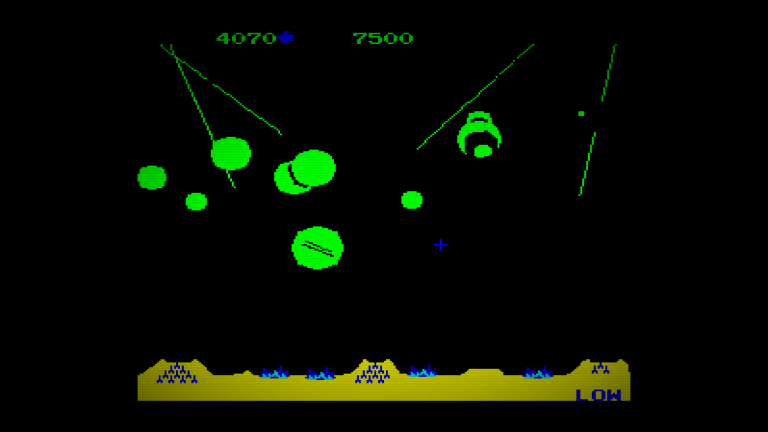
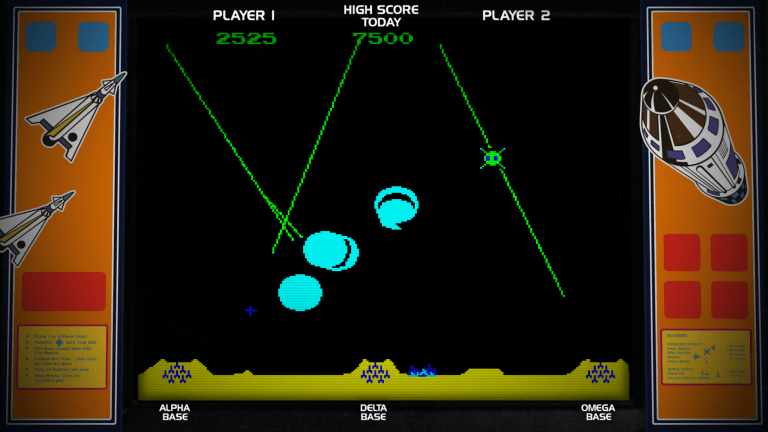
In this screenshot, the enemy’s satellite/drone is floating while a smart bomb is about to hit the missile base at the lower-right. Smart bombs can be challenging to intercept because it reacts by avoiding the aerial explosion of defense missiles.
This arcade game – which is currently available for modern console owners to play via the Atari 50: The Anniversary Collection – remains very engaging and a lot of fun to play with after all these decades. As a player, my only objective was to defend the six existing cities and three missile bases from the waves of enemy ballistic missiles (and smart bombs in later levels) coming from the sky. Given the way the game was designed, this is strongly emphasized and the only times I could attack the enemy is by launching my own missiles towards the enemy’s bombers and satellites/drones (note: both of these are capable of launching more missiles at you).
If any of the enemy’s weapons hits one of your missile bases, it and the remaining supply of defensive missiles will be wiped out. Enemy missiles that hit a city will result in total destruction. Considering the intentional increase in challenge with each new level of play started, the enemy’s ballistic missiles move faster, the warplanes and/or satellite/drones appear more and the smart bomb – which is the most difficult to intercept as it deliberately avoids the aerial flames caused by your defense missiles – get launched against you.
When intercepting enemy missiles, you have to think quick where to aim (ahead of incoming missiles), which missile base to use to launch defense missiles and remember how much missiles do you have left per base.
That being said, the game deliberately becomes harder which compelled me to be more watchful of enemy weapon movements, and to be more strategic using my defense missiles while keeping a quick eye on the remaining supply of missiles per base. While the in-game difficulty intensifies per level, the game never became frustrating to play nor did it ever turn into a chore on my part. I just keep playing because I found the increasing challenges actually fun to take on.
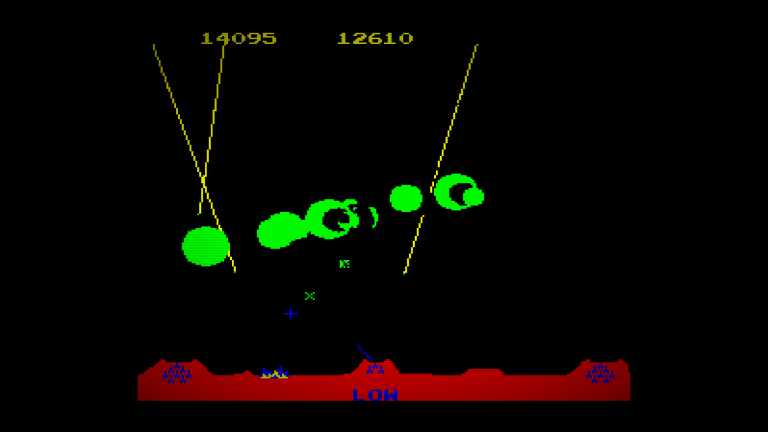
The game’s visuals are still good to look at. It’s still engaging to see streaks of missile trails (both your defense missiles and the enemy’s ballistic missiles) fill the air above the cities and the flashing light effects that simulate explosions are still effective as eye candy. Along the way, the game’s sound effects worked perfectly with the visuals and they added a lot to the immersion.
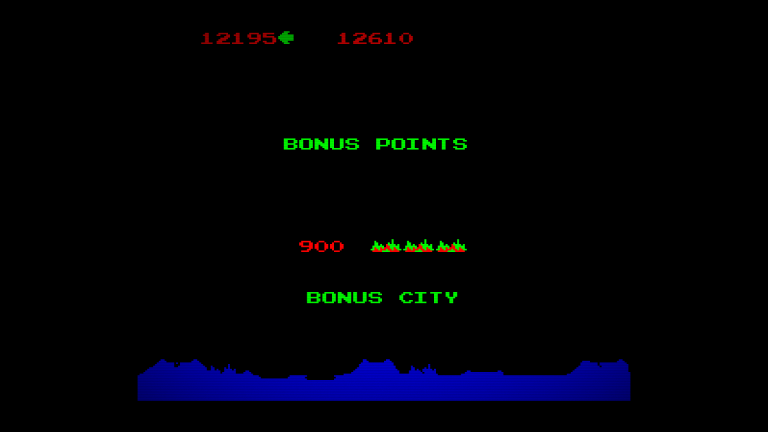
When you score enough points, the game will reward you with a bonus city.
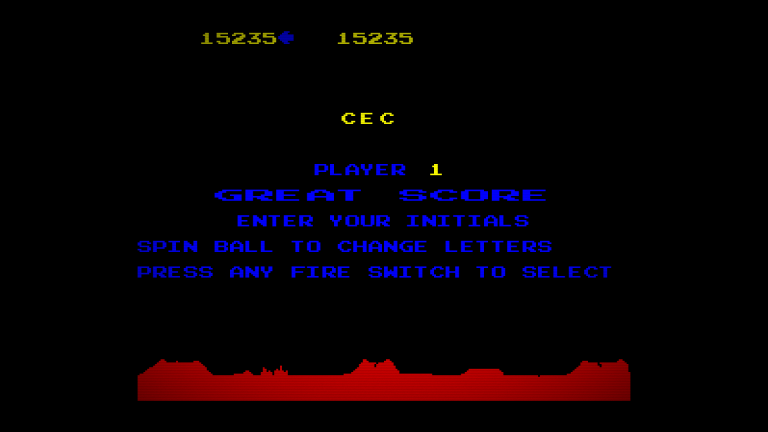
Me putting my initials after achieving a great score in Missile Command.
Considering its simplicity and the way it was designed, there clearly is no way for players to win at all. Rather, the game will challenge your precision, decision-making and ability to defend your cities and bases. That being said, the greater challenge is to survive and be able to move on to the next level with missile bases and whatever cities remaining you still have to defend. As with other games of the past, achieving the high possible score – which reflects your endurance, skill and progress – is a goal here. Achieving certain high scores also result in an extra city for you.
Cultural relevance
Missile Command’s legacy as one of the greatest arcade games ever released is undeniably real. Not only that, this game resulted in a lot of ports for consoles, portable gaming devices and home computers through the decades. This classic was re-released in several compilations from Atari and the Xbox-listed Missile Command contains the arcade version. In 2020, a remake called Missile Command: Recharged was released as part of the Atari Recharged series of games.
The different Missile Command arcade machines.
Missile Command even appeared for a few seconds in Terminator 2: Judgment Day which added more to the film’s concept of nuclear war.
With regards to arcade gaming, Missile Command is notable for having a trackball on its machine as a way for arcade players to control the crosshair during game sessions.
Conclusion
Apart from being the commander of missile defense, try imagining yourself being on of the citizens living in one of those cities. Can you imagine watching real-life missiles get intercepted in sky above you?
The Missile Command (1980) arcade game is a true video game classic and it remains compelling and enjoyable at the same time. It can also be an intriguing game experience since it does not let players complete the game by winning. All players can do is perform the best defense they could, survive to the next round and keep playing until their defense gets overwhelmed by the enemy and the rising in-game difficulty.
As a result of the game design, playing Missile Command is actually moral because the concept of defending your people using powerful yet limited resources is very strong all the time. Even with progressive difficulty, the game never became frustrating to play and I actually enjoyed the challenges knowing that defense and survival are main goals. Achieving the highest possible score is the other goal as reflected by video gaming of the era. Missile Command simply delivers bouts of fun and you cannot go wrong with playing it. It is not surprising that this game became a massive hit and established itself as a true classic among video games.
Overall, Missile Command (1980) highly recommended and the best way to play it on console today is to avail of Atari 50: The Anniversary Celebration compilation.
Welcome back readers, fellow geeks, nostalgia buffs and electronic gaming fans!
In this edition of the Retro Gaming Ads Blast (RGAB) series, we will take a look at another batch of retro gaming print ads – including arcade flyers – from the 1980s and 1990s.
For the newcomers reading this, Retro Gaming Ads Blast (RGAB) looks back at the many print ads of games (console, arcade, computer and handheld) that were published in comic books, magazines, flyers, posters and newspapers long before smartphones, social media, the worldwide web and streaming became popular. To put things in perspective, people back in the 1980s and 1990s were more trusting of print media for information and images about electronic games and related products.
With those details laid down, here is the newest batch of retro gaming print ads for you to see and enjoy…
1. E.T. the Extra-Terrestrial Atari 2600 print ad
I saw the movie and played the Atari 2600 game.
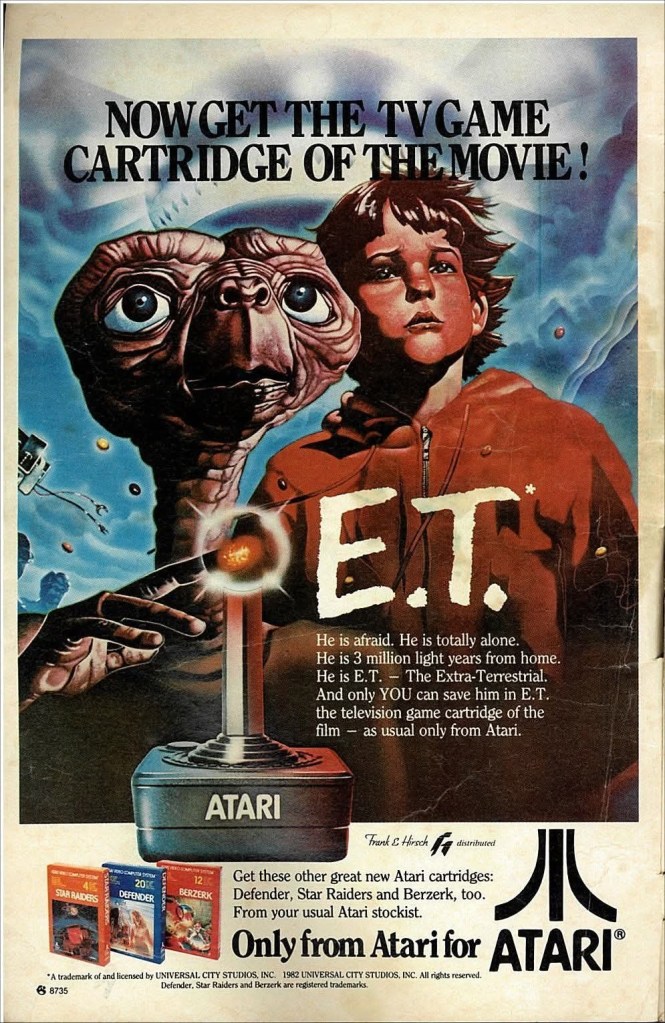
Way back in 1982, Steven Spielberg’s small production E.T. the Extra-Terrestrial touched countless moviegoers and became a massive hit around the world. Along the way, an official video game adaptation for the Atari 2600 console was made by Atari anticipating big success coming. The above print ad appeared in many comic books I read and the artwork easily caught my attention since I saw the movie. Apart from the fact that the artist’s take on the boy Elliot did not resemble actor Henry Thomas, no screenshot of the game was shown which is very odd because Atari made the adaptation their biggest offering to consumers. As typical of the times, Atari inserted a few other games below for conveniently promoting them along with E.T. and the Atari 2600. Given the massive failure of the game, this print ad is a sad reminder from gaming’s past.
2. Pro Tennis arcade flyer
The artwork has a comic book look.
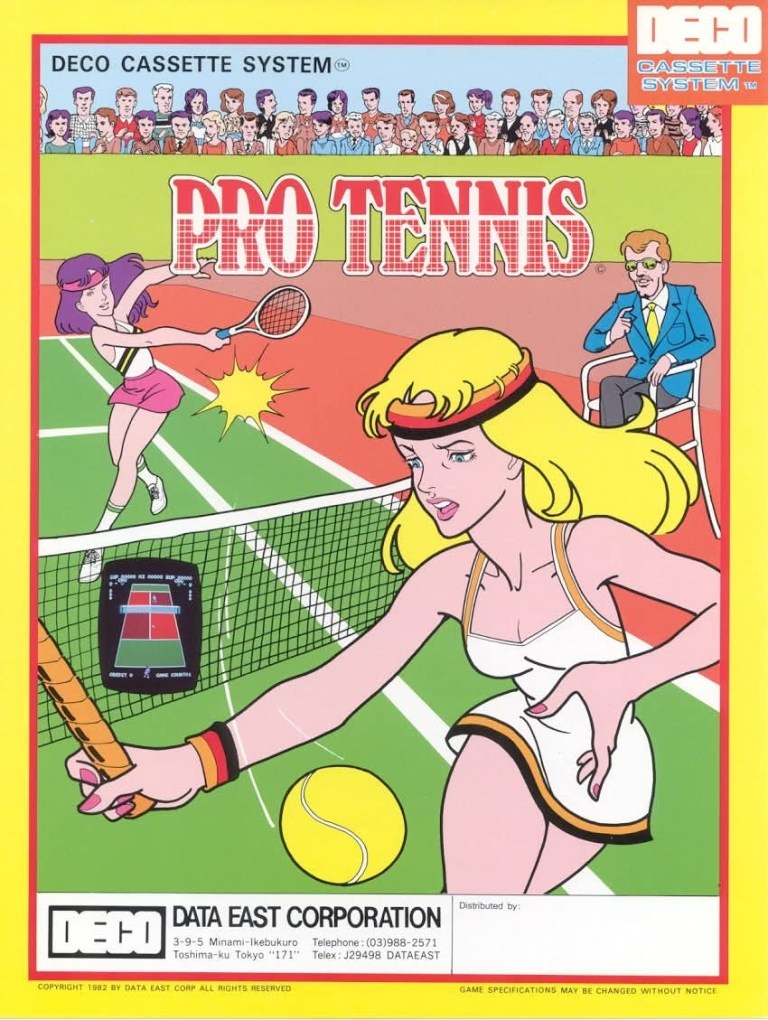
Still in 1982, Data East released Pro Tennis in the arcades. This arcade flyer has a pretty neat hand-drawn artwork that looked like it came from a comic book, and the ad makers managed to insert one screenshot to make it clear to both players and arcade operators what to expect. This is still a nice flyer to look at.
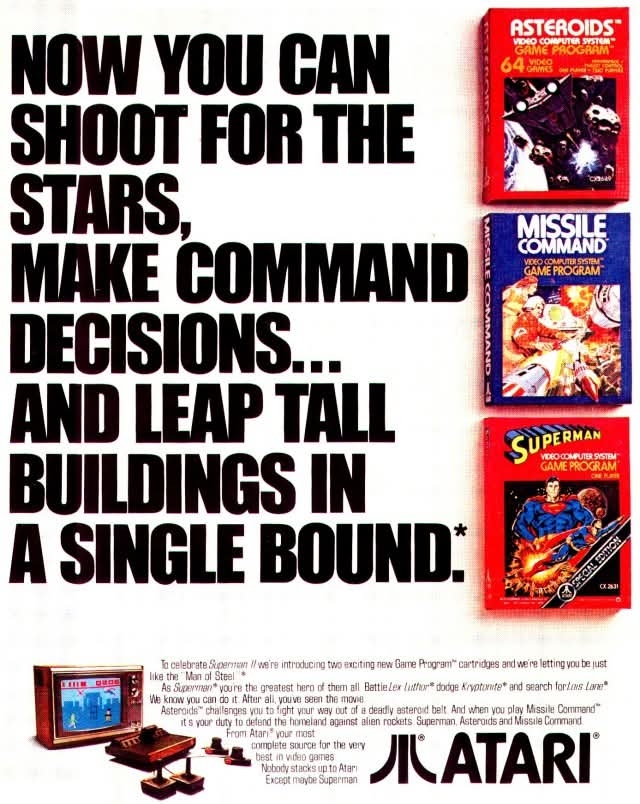
3. 3-in-1 Atari 2600 print ad
I was able to play Missile Command, Asteroids and Superman on Atari 2600 a long time ago.
In the old days, we had an Atari 2600 console in our household and it lasted around 5 years for electronic entertainment. Atari was known for aggressively marketing its consoles and video games, and the above print ad was their creative way of promoting 3 games – Superman and the classics Missile Command and Asteroids – together. The biggest feature of the print ad was the large-sized text description that strongly reflected what each game was about. This is a memorable ad!
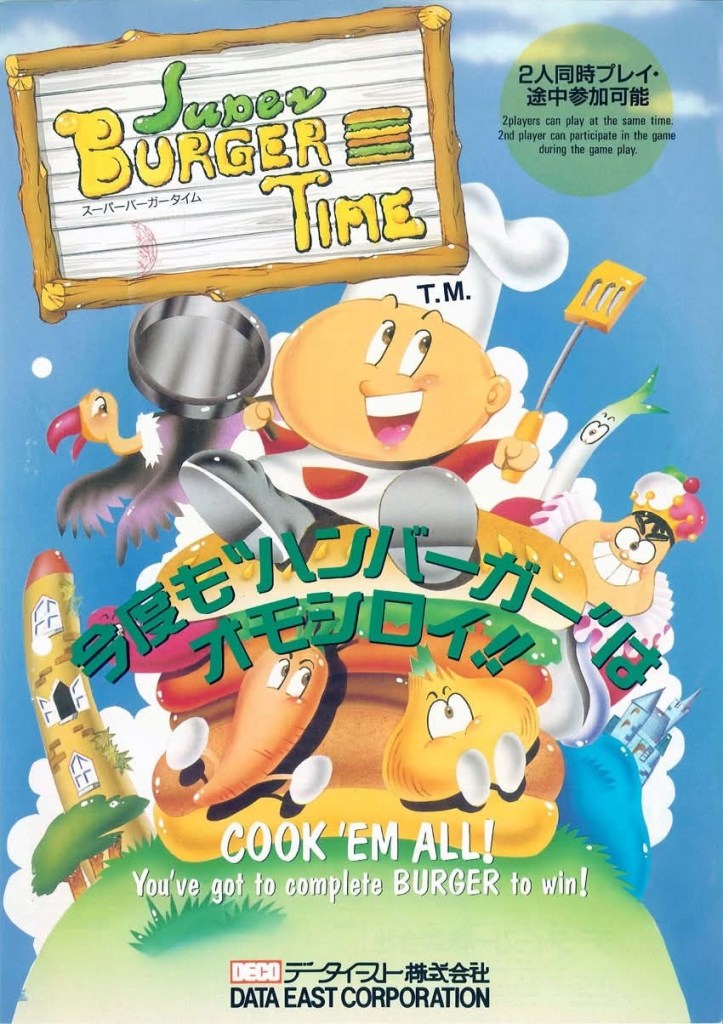
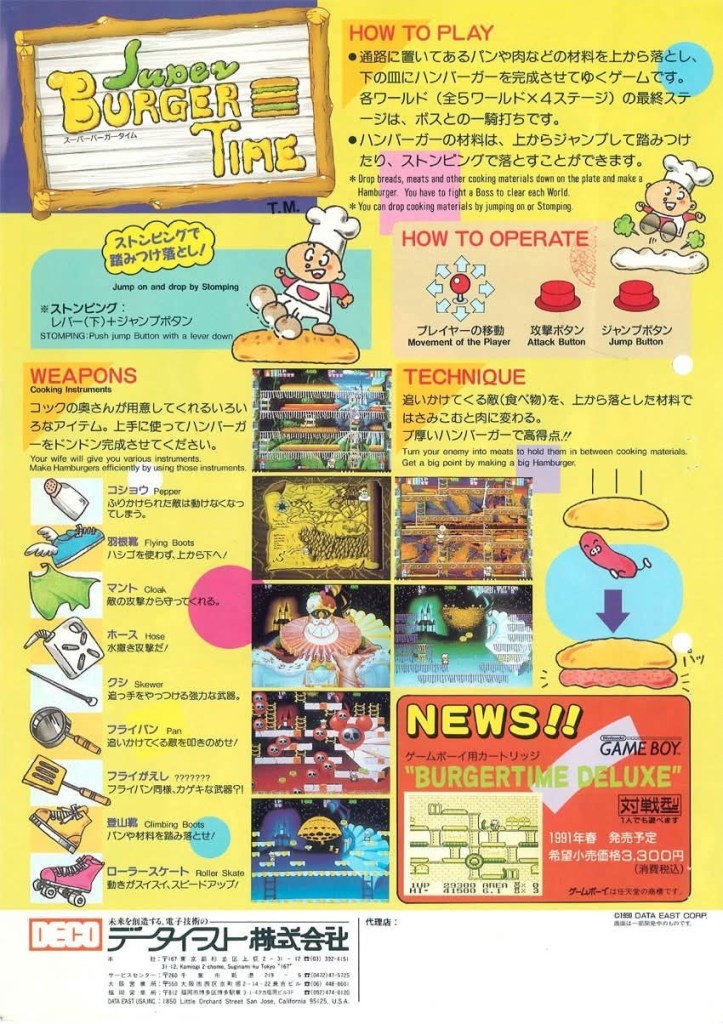
4. Super BurgerTime Japanese arcade flyer
The front.
The rear.
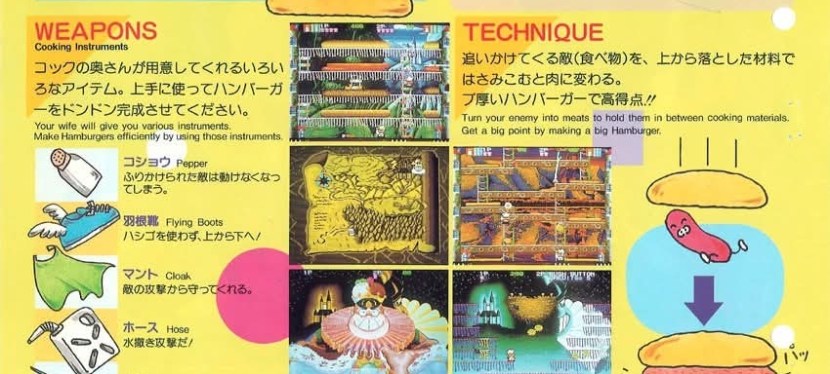
Remember the arcade classic BurgerTime? The sequel Super BurgerTime was released in Japanese arcades in late-1990 and the arcade flyer the producers came up with had a very cartoony art style. The rear of the flyer was filled with lots of details, instructions and screenshots to really have arcade operators and players informed. The producer even inserted a new portion promoting BurgerTime Deluxe on Nintendo Game Boy.
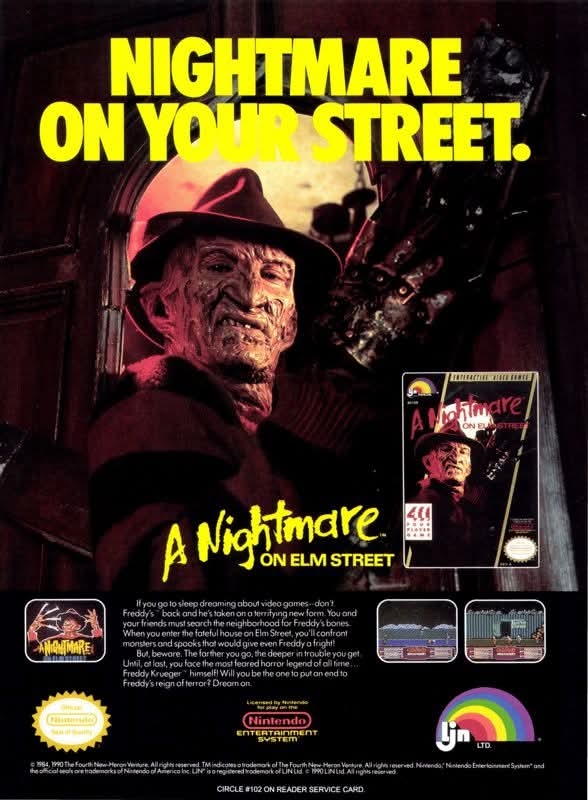
5. A Nightmare on Elm Street NES print ad
If you were able to play this game on the NES, did you have nightmares?
By the end of the 1980s, there were already five movies of the A Nightmare on Elm Street franchise that got released in cinemas and a dedicated following of fans was present. Eventually, an official video game adaptation was released on Nintendo Entertainment System (NES) in 1990 which was surprising since the movies were all rated R and the console itself was popular with young gamers (kids to teenagers). To promote the game, the notorious publisher LJN came up with a print ad that prominently showed series antagonist Freddy Krueger (played by Robert Englund), a few screenshots, the text description and the game box cover. Look back at this old print ad is strange because it shows Freddy Krueger TWICE which means the ad makers could not come up with any original artworks nor a different background for the antagonist.
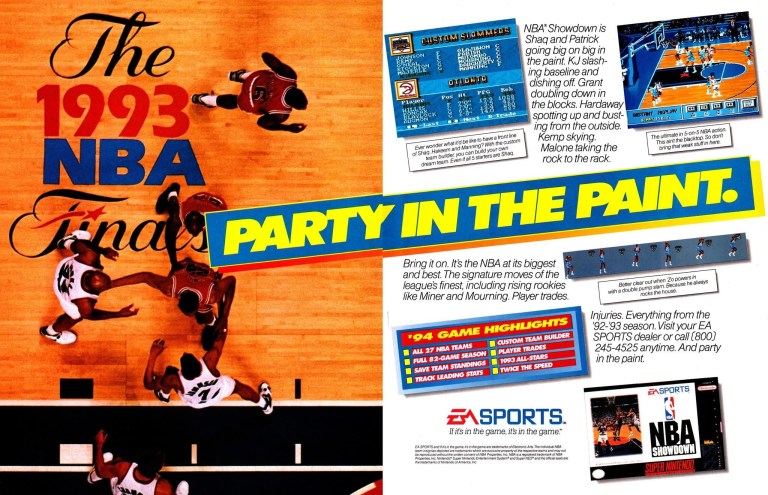
6. NBA Showdown print ad
While this ad did not mention Michael Jordan, he was still included in the video game.
By 1993, EA Sports (Electronic Arts’ sports brand) arguably established itself as the leader of NBA-licensed video games. At the time, console gamers can expect each new NBA game from the publisher to have full rosters and statistics of players based on the season and playoffs that passed. NBA Showdown, which reflected the 1992-93 season, was promoted with this 2-page print ad that had a rectangular image taken during the 1993 NBA Finals (Chicago Bulls and Phoenix Suns) placed on the left, screenshots and text description on the right. The ad made references to Shaquille O’Neal, Patrick Ewing, Tim Hardaway and other NBA players to excite gamers. This ad is still good to look at.
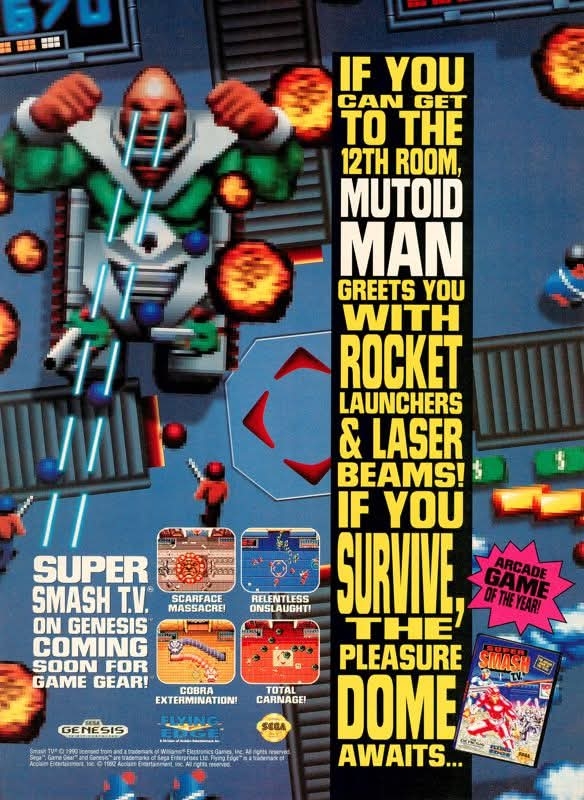
7. Super Smash T.V. Sega Genesis print ad
Were you able to play the Sega Genesis version?
In 1991, the arcade classic Smash T.V. was ported to the Sega Genesis console under the title Super Smash T.V. and this print ad had a rectangular layout showing a zoomed-in capture of game footage with the huge enemy Mutoid Man. The stylized line (in rectangular layout) strongly reflected what gamers could expect in the game. The ad maker also inserted the confirmation that a Game Gear version was coming. This ad is a unique way of promoting both the Genesis and Game Gear versions of Smash T.V.
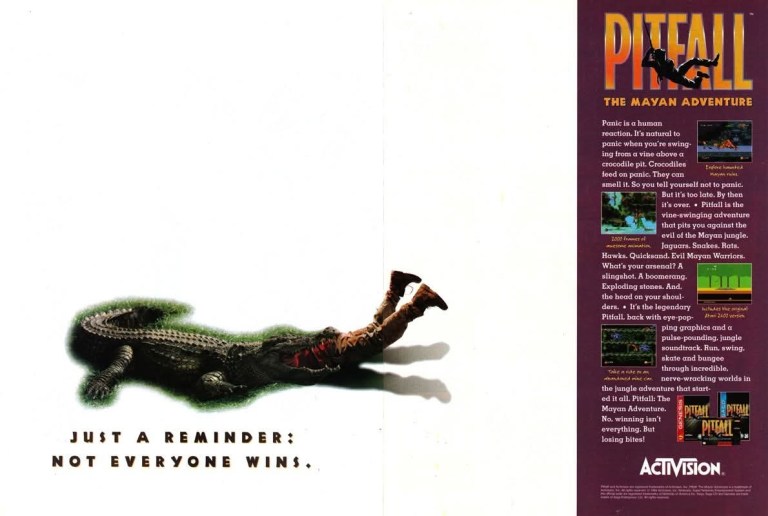
8. Pitfall: The Mayan Adventure print ad
This print ad is still eye-catching and entertaining to look at.
In the mid-1990s, Activision went big with the comeback of the Pitfall! game series by releasing Pitfall: The Mayan Adventure on multiple consoles. This two-page print ad had a touch of dark comedy by using a prominent image of a crocodile swallowing a person while avoiding blood and gore. With the little space remaining, the ad makers crammed in the text description and screenshots plus the game’s package covers. Notably, the text description maintained its tone and focused on describing the game properly. The marketing campaigns of Activision was effective as Pitfall: The Mayan Adventure went on to sell in the millions.
Welcome back readers, fellow geeks and electronic gaming fans!
In this edition of the Retro Gaming Ads Blast (RGAB) series, we will take a look at another batch of retro gaming print ads – including arcade flyers – from the 1980s and 1990s.
For the newcomers reading this, Retro Gaming Ads Blast (RGAB) looks back at the many print ads of games (console, arcade, computer and handheld) that were published in comic books, magazines, flyers, posters and newspapers long before smartphones, social media, the worldwide web and streaming became popular. To put things in perspective, people back in the 1980s and 1990s were more trusting of print media for information and images about electronic games and related products.
With those details laid down, here is the newest batch of retro gaming print ads for you to see and enjoy…
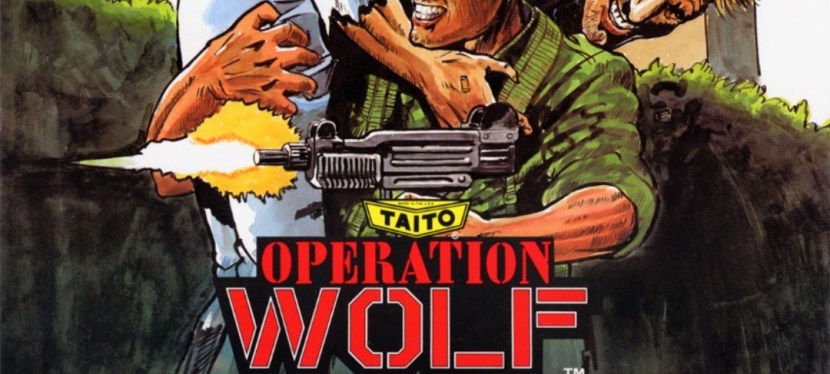
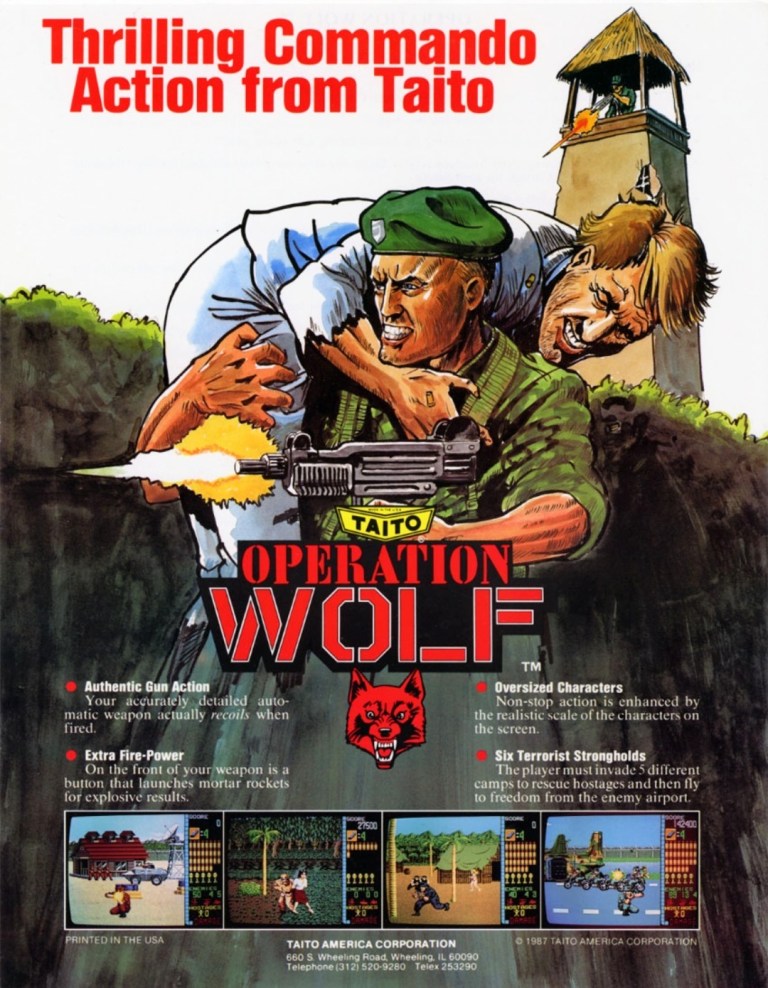
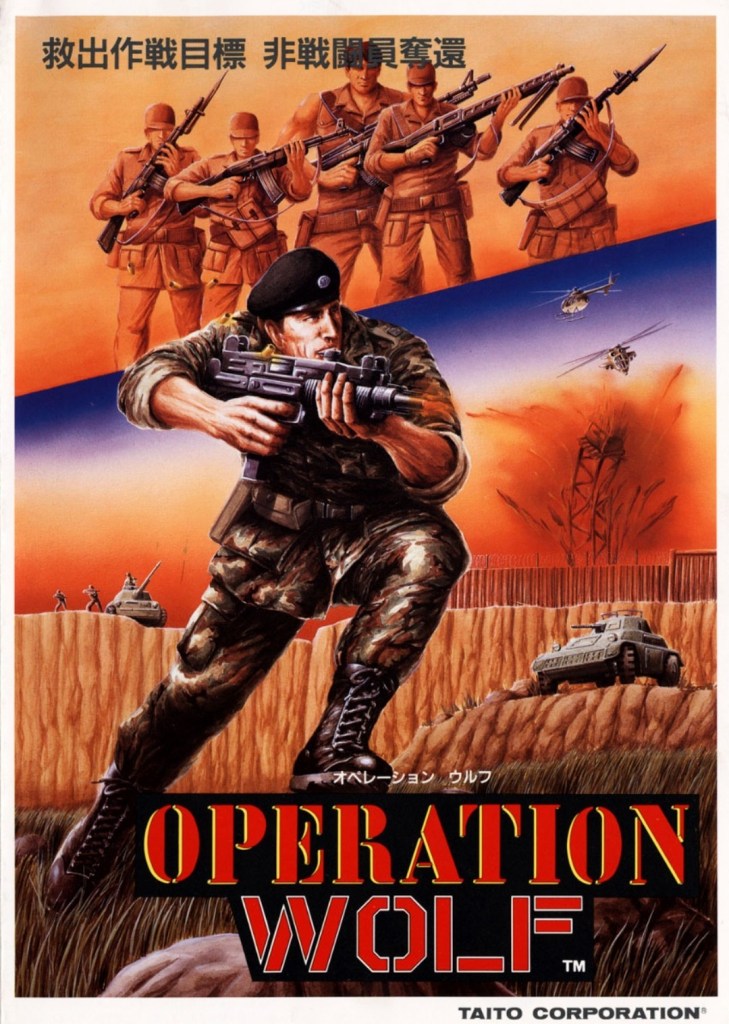
1. Operation Wolf American and Japanese arcade flyers
Operation Wolf for American arcades.
Operation Wolf for Japan.
In the late 1980s, Taito achieved massive success in arcades around the world with Operation Wolf. Released during the late stage of the Cold War and with many militaristic action movies already released by Hollywood, Operation Wolf attracted a lot of money from countless players as well as praise from game critics. For the American market, Taito came up with a colorful yet gritty looking arcade flyer that had nice hand-drawn artwork and enough details and screenshots to give readers a useful look at what to expect. The Japanese arcade flyer meanwhile has an even grittier looking original artwork that strongly emphasized war, guns and action. In retrospect, I look both arcade flyers a lot.
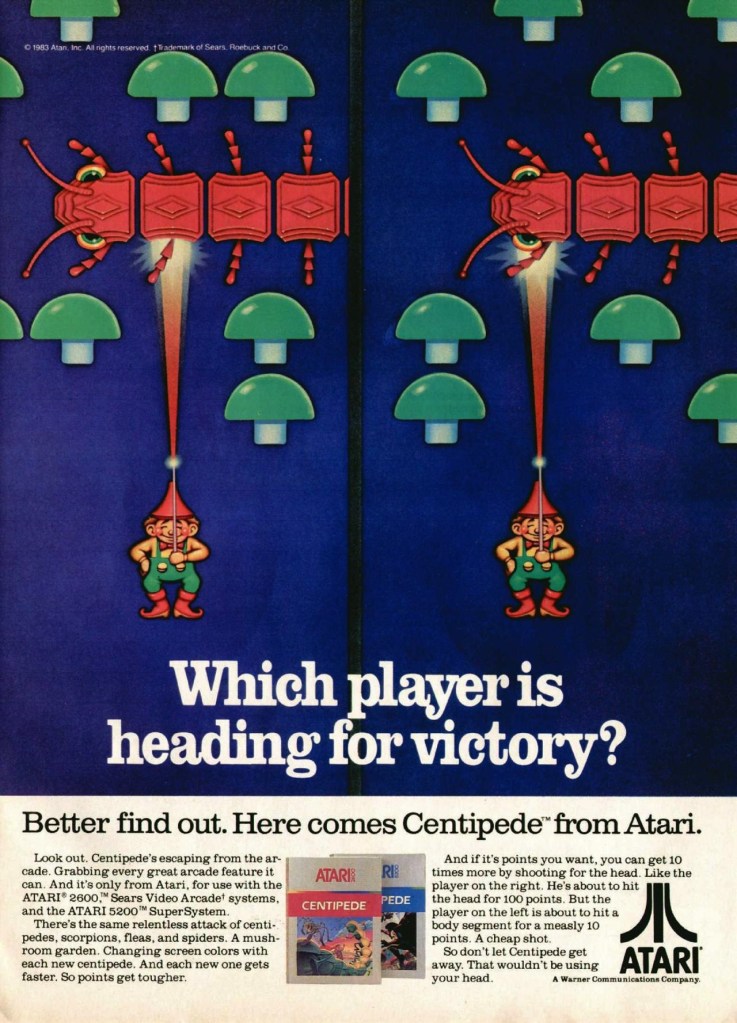
2. Centipede Atari 2600 and Atari 5200 print ad
I played Centipede a lot on Atari 2600.
While I completely missed out on the arcade version of Centipede, I managed to play its Atari 2600 version a lot. Ultimately, the simple game design and unique challenges resulted in lots of fun-filled bouts in my experience. To promote the game’s versions on Atari 2600 and Atari 5200, the game giant came up with this particular print ad that had two near-identical artworks that reflect the concept of Centipede. The ad also has some catchy expressions in the text description. This old ad is still fun to look at.
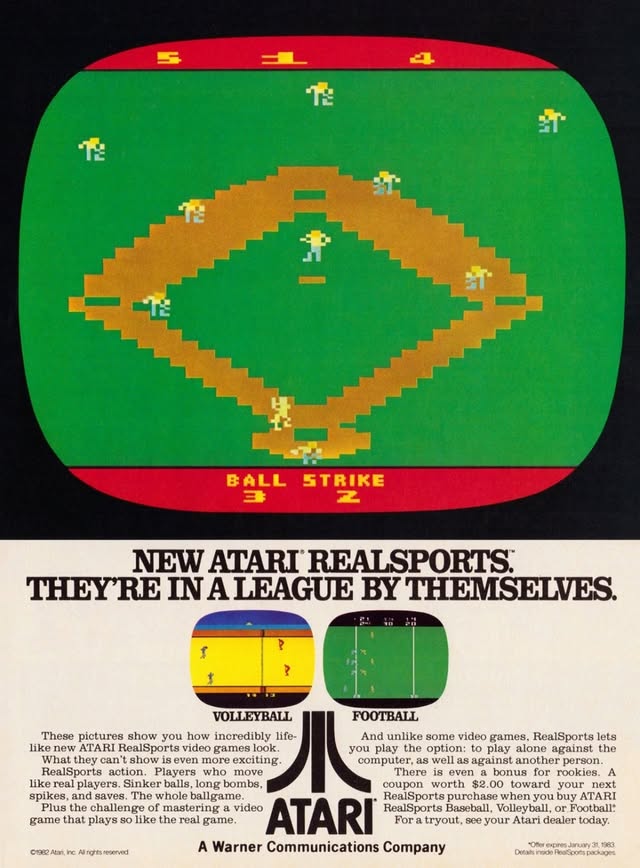
3. Atari RealSports print ad
Long before EA sports video games, there was this.
Way back in 1982, Atari launched its RealSports line of sports video games mainly to revitalize sports gaming for their consoles. In fact, RealSports was the result of a critical and aggressive ad campaign by competitor Intellivision which had its Sports Network series of games. In this RealSports print ad, a large image of Atari’s baseball game was used probably to emphasize the scope of the field. The ad had screenshots of the volleyball and football games, while the text description reflected Atari’s aggressive response to Intellivision. This ad is an early example of competition between rival game console makers focused on sports gaming.
4. Lethal Enforcers Sega CD print ad
When was the last time you bought a video game with a hard copy and a peripheral bundled together?
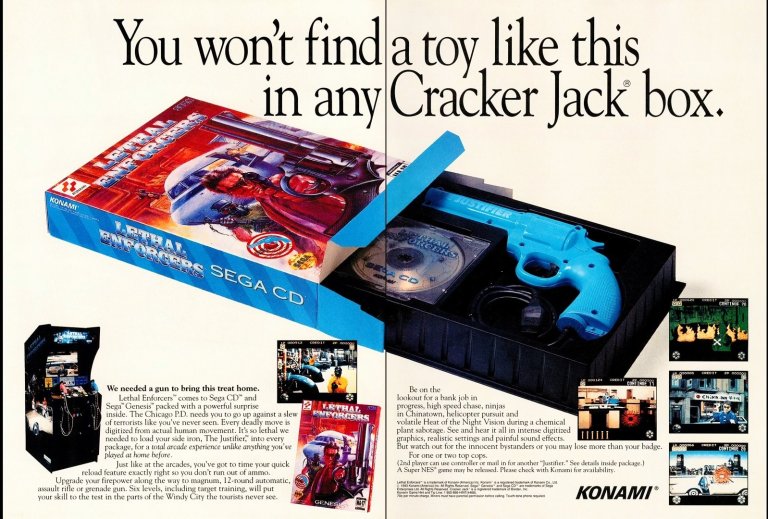
Porting light gun games from the arcade to the console is very difficult and tricky to do. This is what Konami did in the early 1990s when they released a version of the arcade hit Lethal Enforcers on the Sega CD console and the package had a light gun with the game on disc. To promote the Sega CD version, Konami came up with a 2-page print ad with the catchy line “You won’t find a toy like this in any Cracker Jack box.” In addition, their ad had a few paragraphs of descriptive text to not only excite gamers but also gently inform them that Lethal Enforcers was also available on the Sega Genesis (note: this console is required for the Sega CD add-on to work) and the Super Nintendo Entertainment System (SNES). Overall, this old ad has a strong visual approach and a clever marketing strategy.
5. Pitfall II: Lost Caverns Atari 2600 print ad
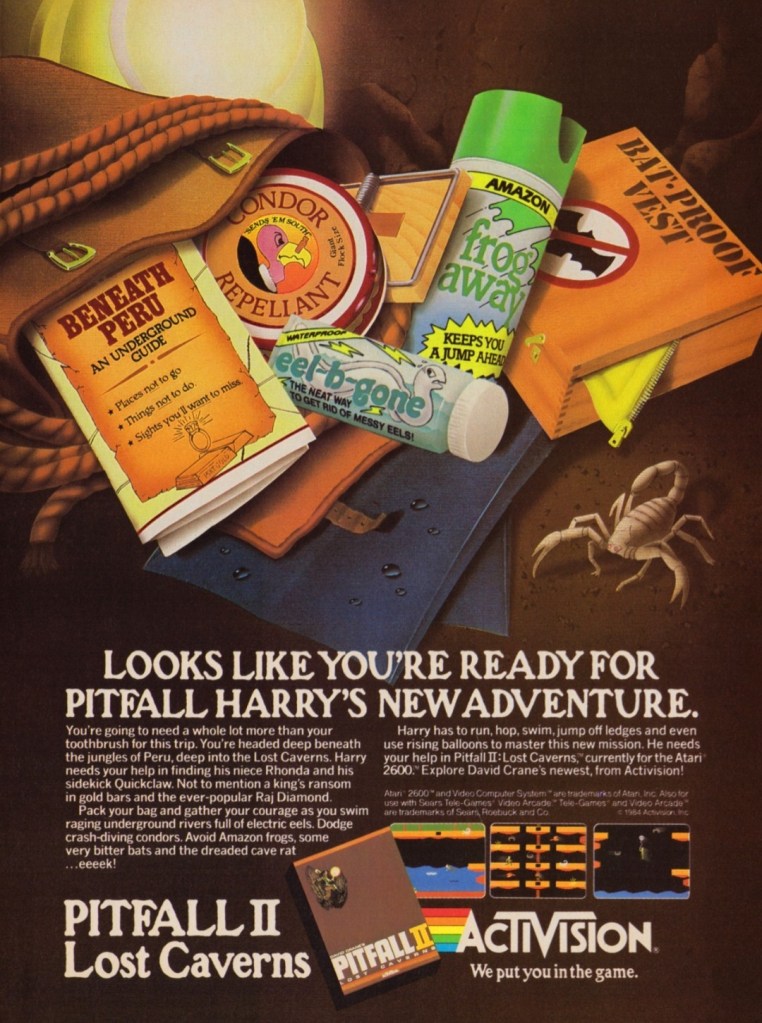
A very stylish layout to promote the game.
In 1982, Activision struck gold with the huge success of Pitfall! which became an influential model of designing platform games. Of course, the publisher (now owned by Microsoft) did not stop there as they went on to make the sequel Pitfall II: Lost Caverns to not only keep the success going but also to exceed the standard they set with the first game. Activision came up with a print ad that not only told gamers of Pitfall Harry’s next adventure but also express humor visually. In line with Activision’s policy of crediting its creators (note: Atari was notorious for refusing to credit its game makers during this era), game designer David Crane was acknowledged in the ad.
6. Team USA Basketball print ad
See your favorite NBA player from the 1990s?
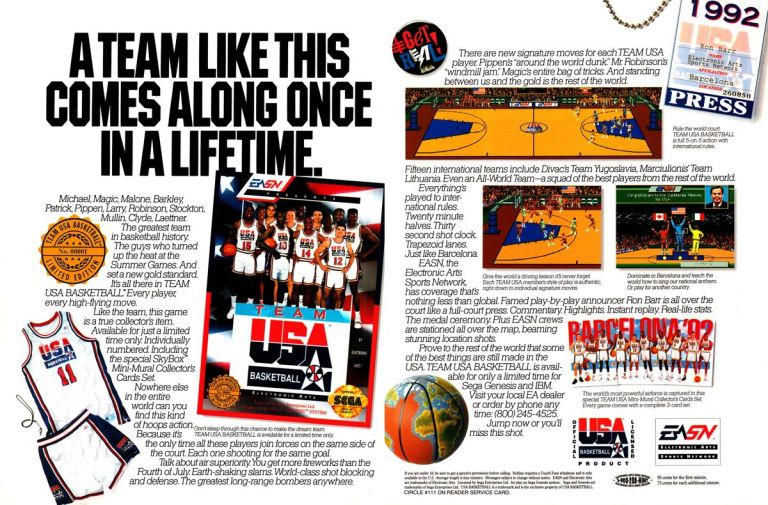
In 1992, a lot of people were obsessed with the Dream Team Olympic basketball squad of the United States as its roster had NBA legends like Larry Bird, Magic Johnson, Michael Jordan, Karl Malone, Charles Barkley and David Robinson to name a few. In fact, the Dream Team became the most popular attraction among all teams in any sport of any country that participated in the summer Olympics in Barcelona. Knowing how popular the squad really was, Electronic Arts (EA) made the video game Team USA Basketball and released it on the Sega Genesis which was already a popular console for sports video games. EA came up with this eye-catching 2-page print ad that strongly emphasized the Dream Team, international basketball gaming, and the company’s tested design on 2D basketball video games. In retrospect, this print ad is still amusing and exciting to look at.
7. Jungle Hunt Atari 2600 and Atari 5200 print ad
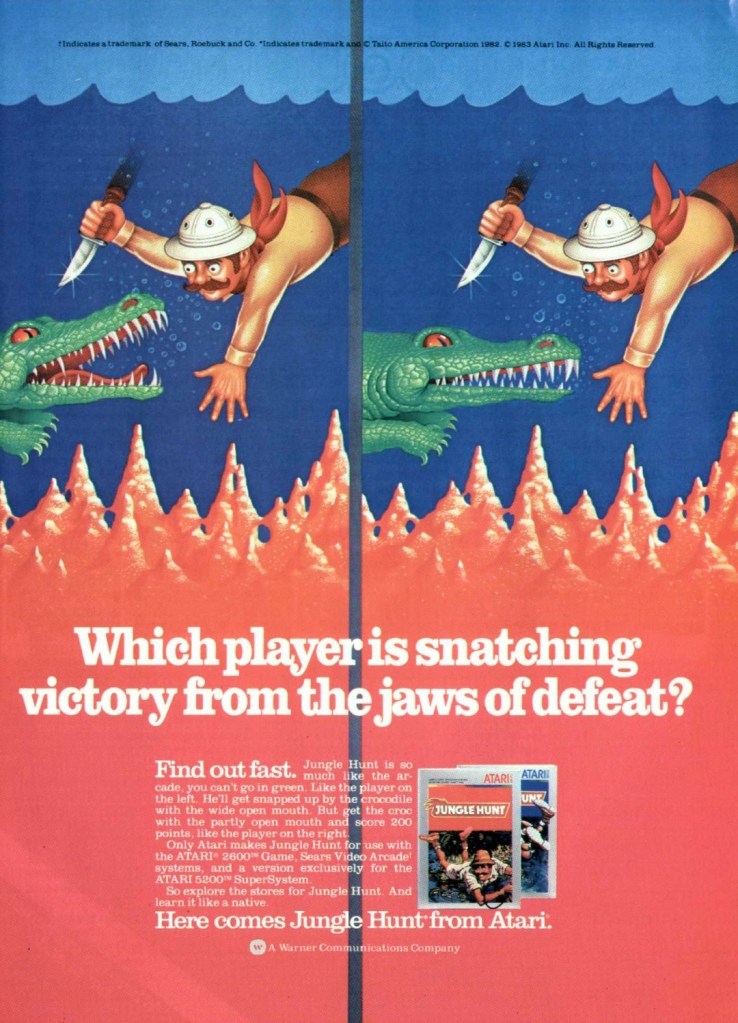
Do you fine the parallel artworks amusing or disturbing?
Following the huge success of Jungle Hunt (previously titled as Jungle King), Atari saw potential Dollar signs and made a deal with Taito to publish ports under their own brand for the Atari 2600, Atari 5200 and 8-bit computers. As with the Atari console ads of Pitfall II: Lost Caverns and Phoenix, Atari came up with a print ad that featured two parallel artworks that look similar with each other as they promoted Jungle Hunt for Atari 2600 and Atari 5200. To their credit, the artworks used were detailed and eye-catching, and the descriptive line of words displayed carried a possible reference to 1975’s Jaws.
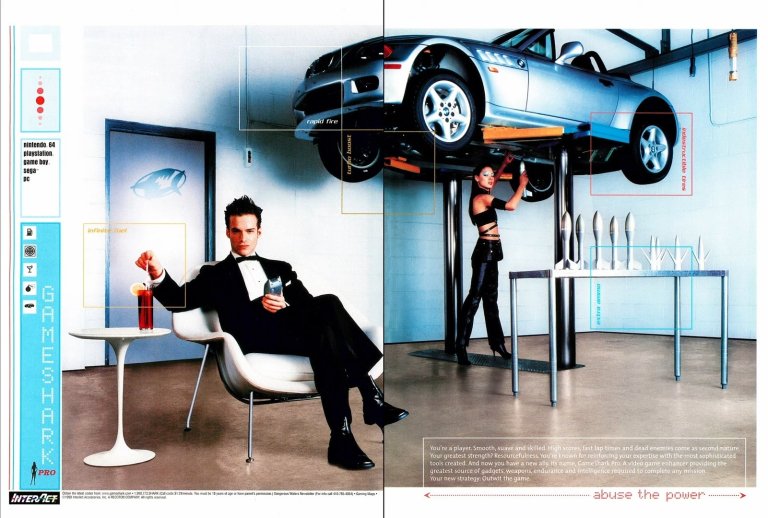
8. GameShark print ad
A James Bond-inspired way of promoting GameShark.
Remember GameShark? For the newcomers reading this, GameShark is the brand of a line of products released on different video game consoles and personal computers (Windows specifically) that gamers use to cheat in video games. GameShark was popular at a time when not too many people had access to the Internet nor did gamers had the means to search for cheats online, and codes were needed to enable cheating. GameShark became so popular, more ambitious and stylish print ads were realized such as this James Bond-inspired 2-page ad. On face value, this ad looked like it was a promoting a particular game but ultimately it was about promoting GameShark with style, cool and some sexiness.
Welcome back readers, fellow geeks and electronic gaming fans!
In this edition of the Retro Gaming Ads Blast (RGAB) series, we will take a look at another batch of retro gaming print ads – including arcade flyers – from the 1980s and 1990s.
For the newcomers reading this, Retro Gaming Ads Blast (RGAB) looks back at the many print ads of games (console, arcade, computer and handheld) that were published in comic books, magazines, flyers, posters and newspapers long before smartphones, social media, the worldwide web and streaming became popular. To put things in perspective, people back in the 1980s and 1990s were more trusting of print media for information and images about electronic games and related products.
With those details laid down, here is the newest batch of retro gaming print ads for you to see and enjoy…
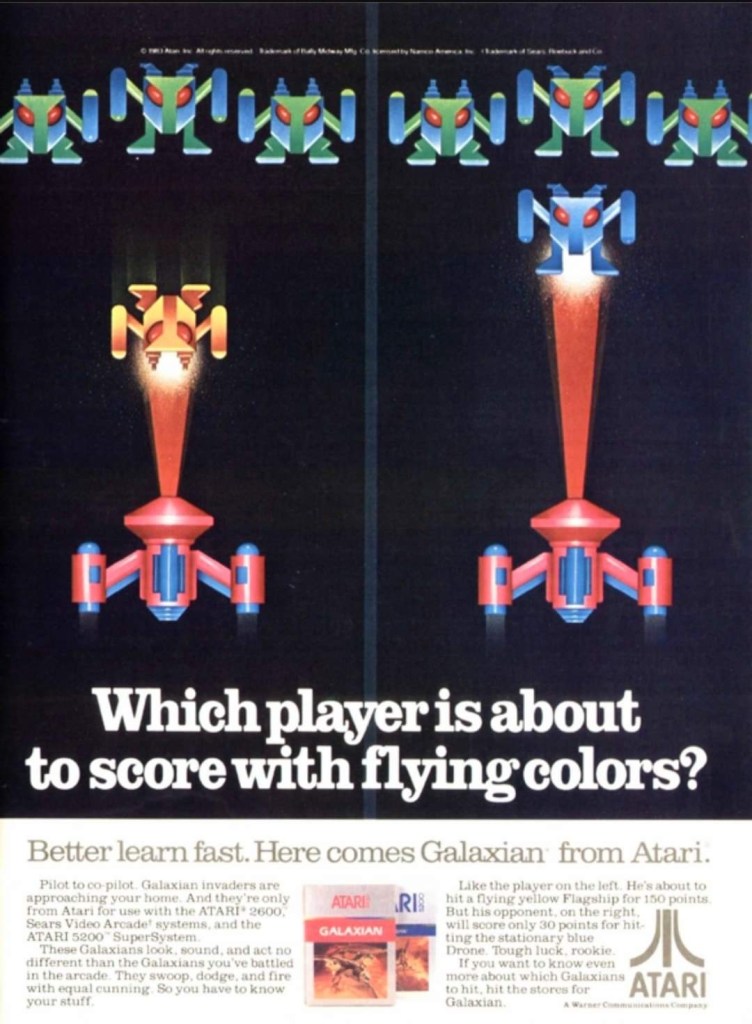
1. Galaxian for Atari print ad
A unique approach to the art done by the advertisers.
Developed by Namco, Galaxian was a 2D sci-fi shooter that debuted in arcades in 1979. It was so successful and widely acclaimed, it got ported to varied game consoles and home computers as the years passed by. For its release on the Atari 2600 and Atari 5200, this print ad was created to catch the attention of fans and gamers by utilizing artwork that resembled the look of 2D sprites from the game. That being said, no screenshots of Galaxian on the Atari consoles were shown because the artwork used looked detailed and were attention-grabbing already.
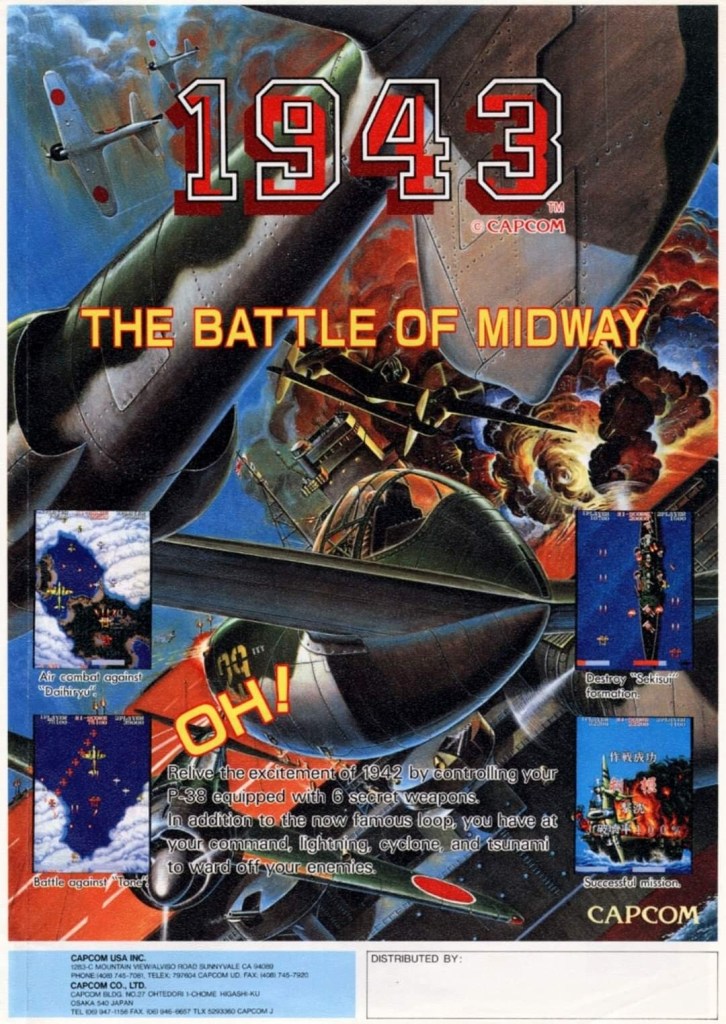
2. 1943: The Battle of Midway arcade flyer
This is a fine looking flyer.
In 1987, Capcom released in the arcades 1943: The Battle of Midway which was their follow-up to 1942. The arcade flyer itself was designed to strongly promote the game using a combination of screenshots, short-but-clear text descriptions and the great looking piece of artwork which really emphasized the World War II concept. Behind it all, this game was made by Japanese developers with the Western markets in mind and the irony is that the game has players control Americans fighting the Japanese fleet.
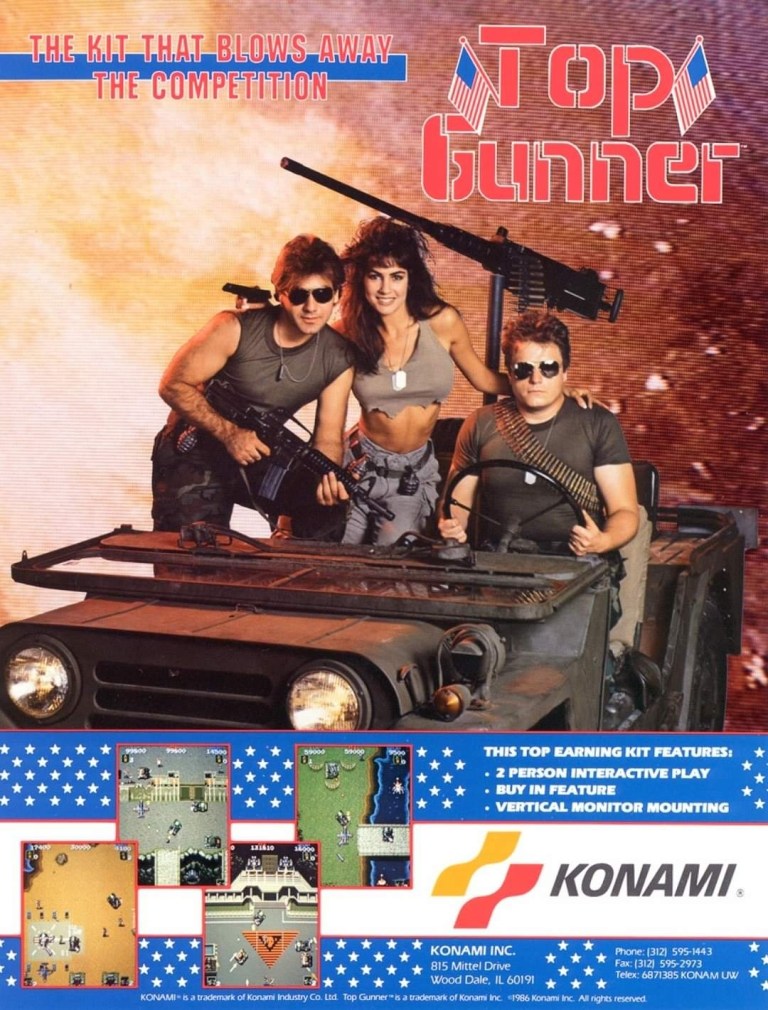
3. Top Gunner arcade conversion kit flyer
Show this nice looking image to the woke nut or modern day Communist near you. Watch and observe his or her reaction.
To make things clear, Top Gunner is actually the run-and-gun game Jackal and the alternative titles was mainly used in North American arcade distribution and also reflected Konami’s move of coming up with titles inspired by blockbuster movies of the time. To promote its 1986 arcade release in America as a conversion kit, the advertisers had three models playing soldiers on a military jeep to immerse gamers into the core concept of the game – moving armed military jeeps from one location to another while fighting bad guys. The approach used for the visual concept is indeed inspiring, especially during the Cold War. Top Gunner/Jackal became a hit in both arcades and consoles.
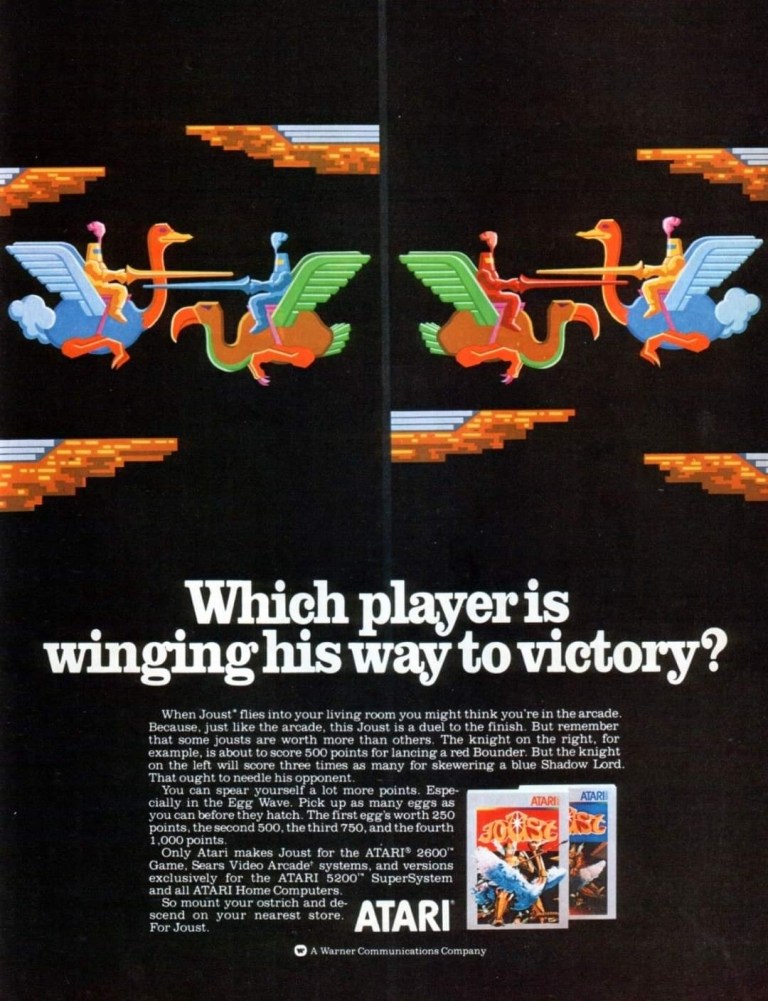
4. Joust for Atari print ad
While I played Joust on console, I don’t remember seeing this print ad before.
Made by Williams Electronics, Joust was one of those early 1980s arcade games that eventually made its way to the Atari 2600 console which was massively popular in North America. Strangely enough, the artistic approach Atari’s advertising came up with for the console version of Joust was similar with that of the ad of the Atari version of Galaxian (see item #1 above) in which artwork was used to resemble the 2D sprites of the game. Regardless, the images of this ad showed what a joust looked like – a martial game between two armed combatants going against each other while riding an animal.
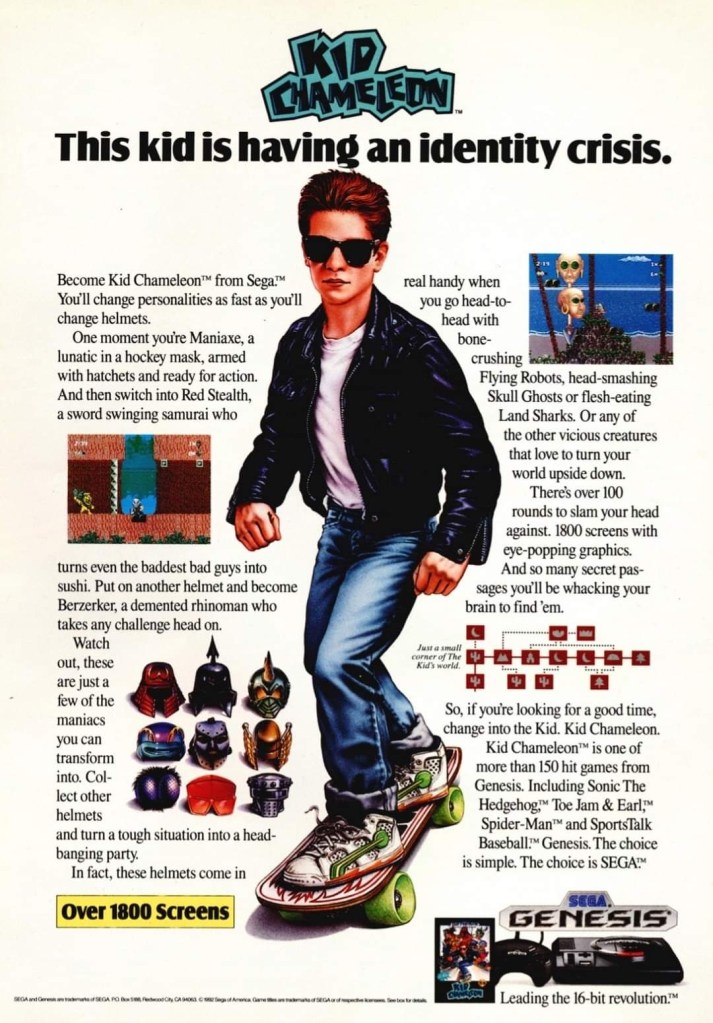
5. Kid Chameleon print ad
Can you relate with Kid Chameleon’s identity crisis?
During the early years of the Sega Genesis, Sega of America exerted efforts to make new games that were not only exclusive to their console but also stand out among the many 2D side-scrolling adventure games by coming up with a protagonist with a unique personality that could somehow resonate with young kids and teenagers.
Developed by their internal experts (Sega Technical Institute), the company released Kid Chameleon in 1992 and they came up with the above print ad that had detailed hand-drawn art of the lead character as well as a wordy text description which was a clear attempt to help young gamers (including teenagers) get connected with both the game and the protagonist. The advertisers even had space to spare to accommodate two screenshots of the game.
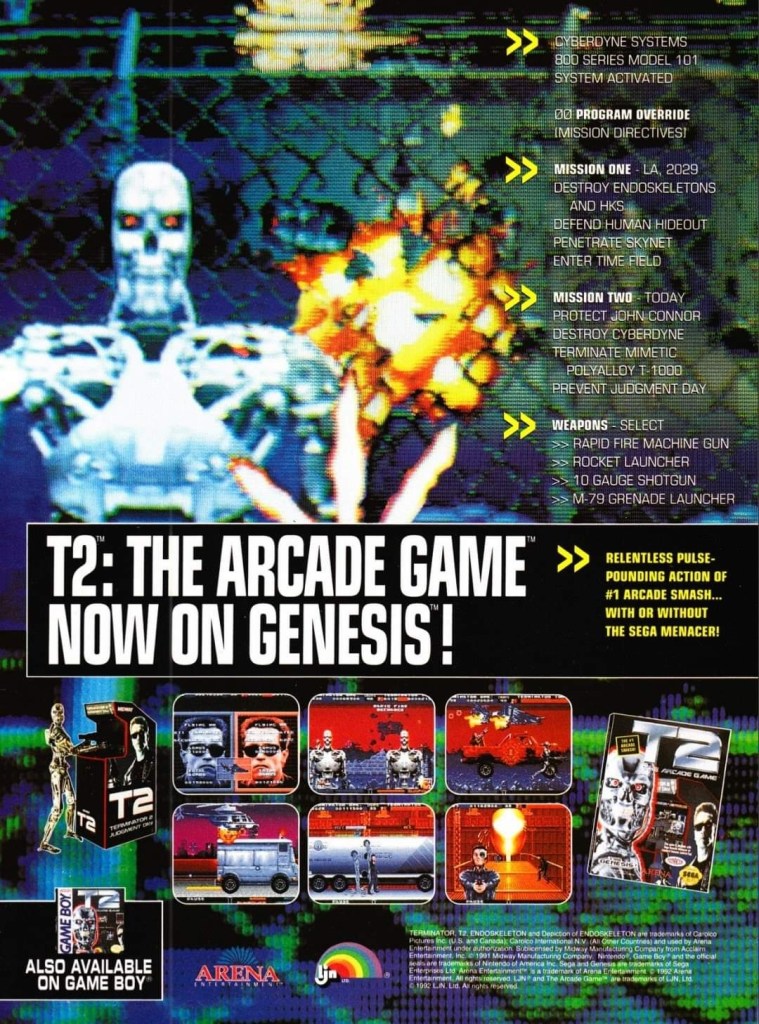
6. Terminator 2: Judgment Day (AKA T2: The Arcade Game) for Sega Genesis print ad
This print ad appeared on the many comic books I read long ago.
Back in the early 1990s, Terminator 2: Judgment Day was a massive success in the global box office and this resulted in Arnold Schwarzenegger’s popularity to soar very high while also establishing the Terminator as an essential pop culture figure. Apart from comic books and merchandise, video games based on the movie were made and the one that stood out the most was the arcade shooter game initially titled Terminator 2: Judgment Day (later retitled as T2: The Arcade Game).
The arcade mega hit eventually got ported to the Sega Genesis and this print ad really looked flashy with its visual presentation showing screenshots and a zoomed-in look at how the Terminator T-800 looked like in the Genesis version complete with a few explosions in the background. It should be noted that this flashy print ad cleverly concealed the visual downgrades and the redrawn images as the Genesis itself could never come close to matching the high quality visuals of the arcade version.
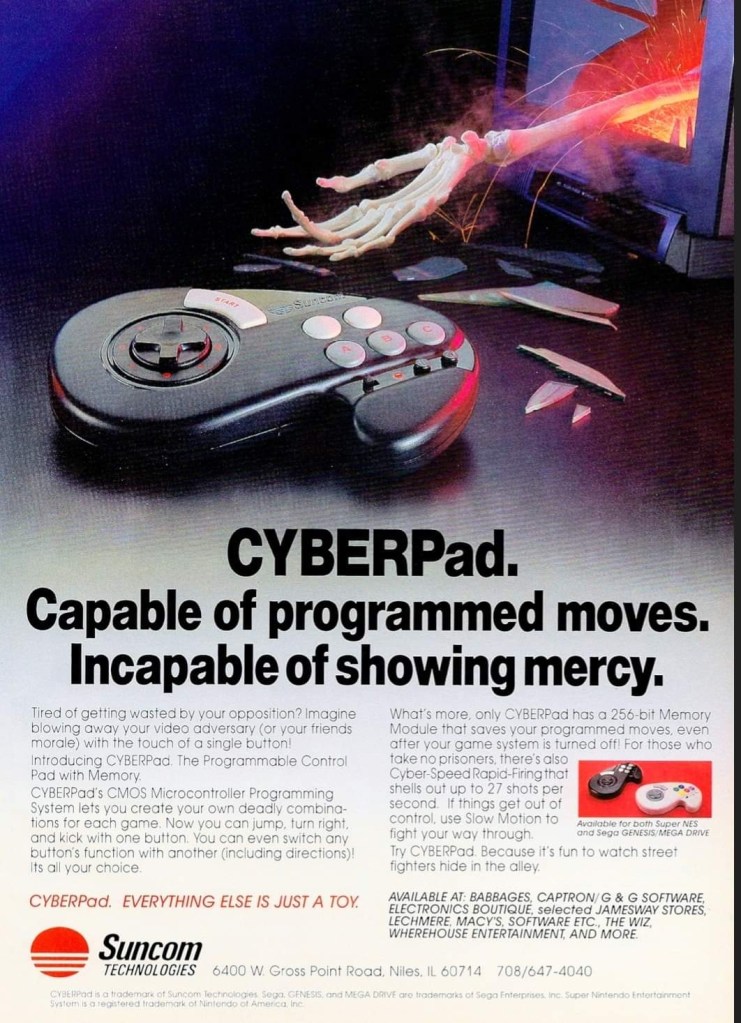
7. CYBERPad print ad
I never owned the CYBERPad, nor have I ever used one.
During the so-called 16-bit console generation (actually the 4th console generation), there were lots of licensed console peripherals made by independent companies in support of the Sega Genesis and Super Nintendo Entertainment System (SNES). The company Suncom Technologies came up with the CYBERPad controller for the two consoles and they boasted in their print ad that the product had a programmable control pad that allowed users to create combinations for each game with convenience in mind. The CYBERPad also allowed the saving of the programmable moves and it had a rapid-fire feature and even a slow-motion function. The CYBERPad was made to make the gameplay experience more user-friendly.
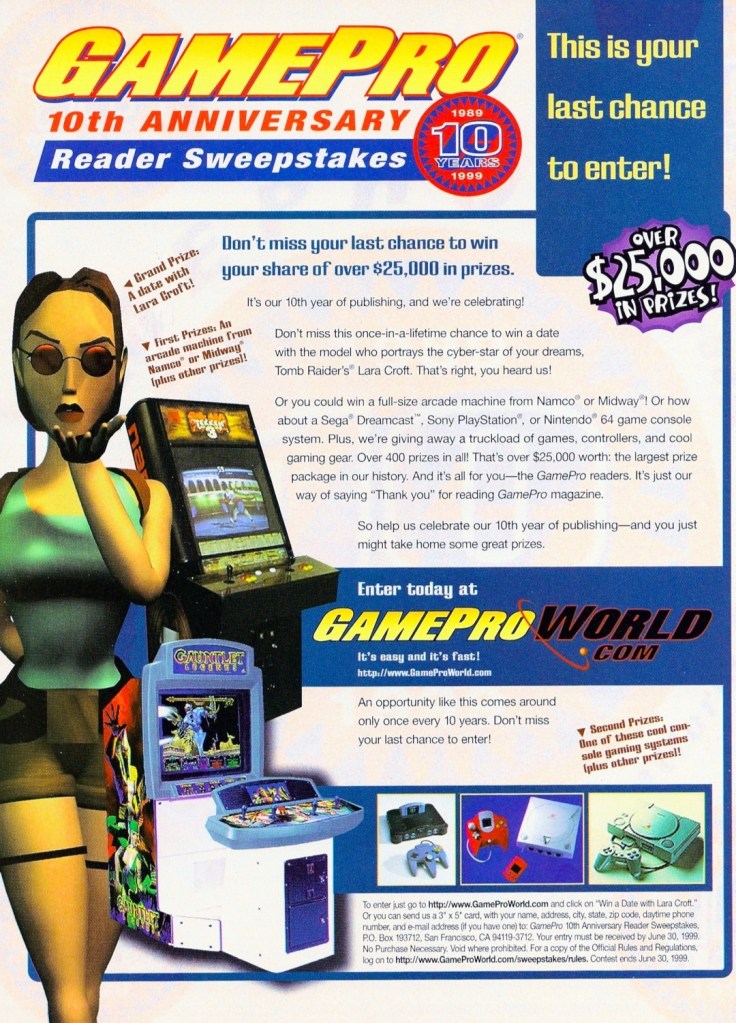
If you look closely, this print announcement by GamePro technically advertised the game consoles, the arcade game and Lara Croft to its readers.
In 1999, GamePro magazine celebrated its 10th anniversary and to keep on resonating with gamers and maintaining the loyalty of their fans, they organized a reader sweepstakes with prizes worth over $25,000 to be won by the few winners. GamePro boasted a date with an unnamed model who played the iconic Lara Croft (Tomb Raider). Certain arcade machines plus the modern consoles of the time – including the brand-new Sega Dreamcast – were also at stake. The way it was presented, this GamePro print announcement was enticing to read.
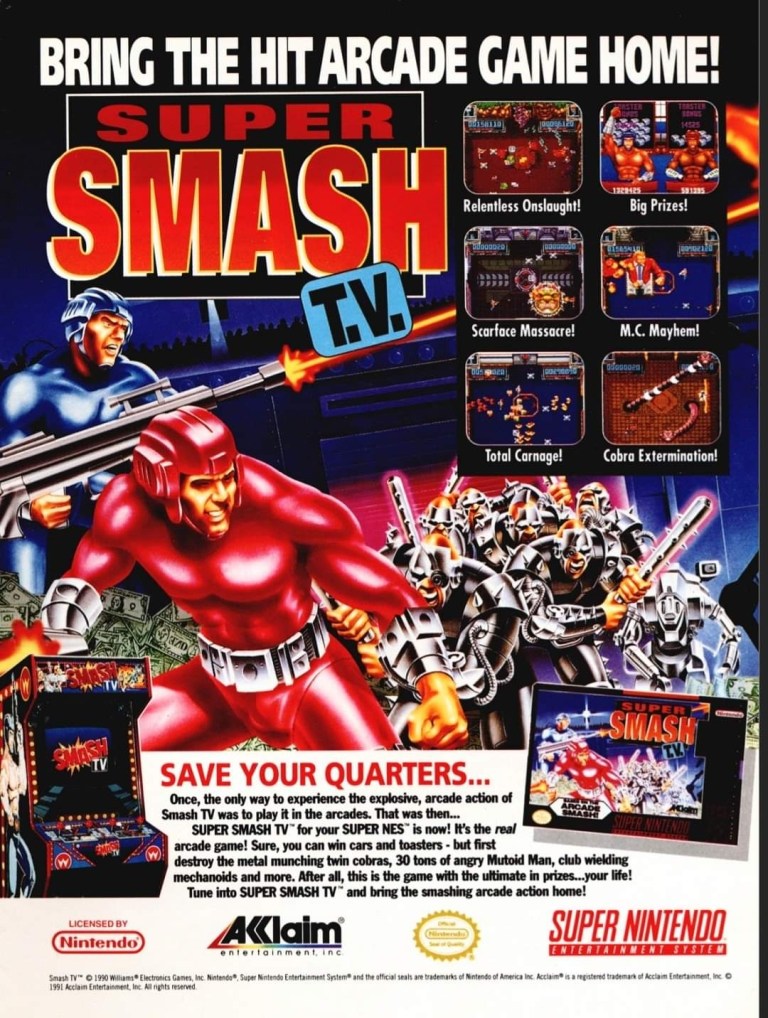
9. Smash T.V. for SNES print ad
Smash T.V. was a lot of fun on both arcade and console.
The arcade hit Smash T.V. made its way to the Super Nintendo Entertainment System (SNES) in 1992 and the publisher came up with a print ad that had captivating artwork, six screenshots and a text description that emphasized that a lot of fun awaits gamers on the console version. In my view, this old ad is still amusing to look at.
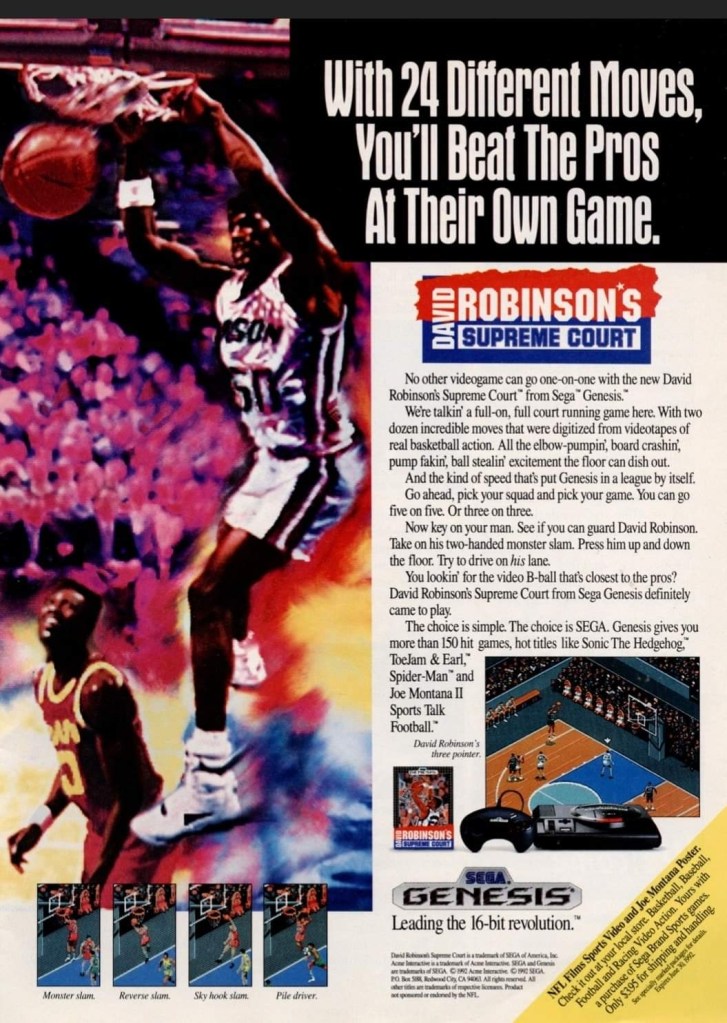
10. David Robinson’s Supreme Court print ad
It was a smart move by Sega to get NBA superstar David Robinson as the endorser of this basketball video game exclusive on the Sega Genesis. This ad was published many years before Robinson finally won an NBA championship.
As part of its strategy in competing with Nintendo during the 4th console generation, Sega of America was focused on producing exclusive sports video games for the Genesis console backed by endorsements of sports professionals. In 1992, they released David Robinson’s Supreme Court on the Genesis and unsurprisingly their print ad used a large, stylized image of the NBA superstar dunking backed with an exciting text description plus screenshots showing the game’s use of the isometric view for gameplay. This is still worth looking at.
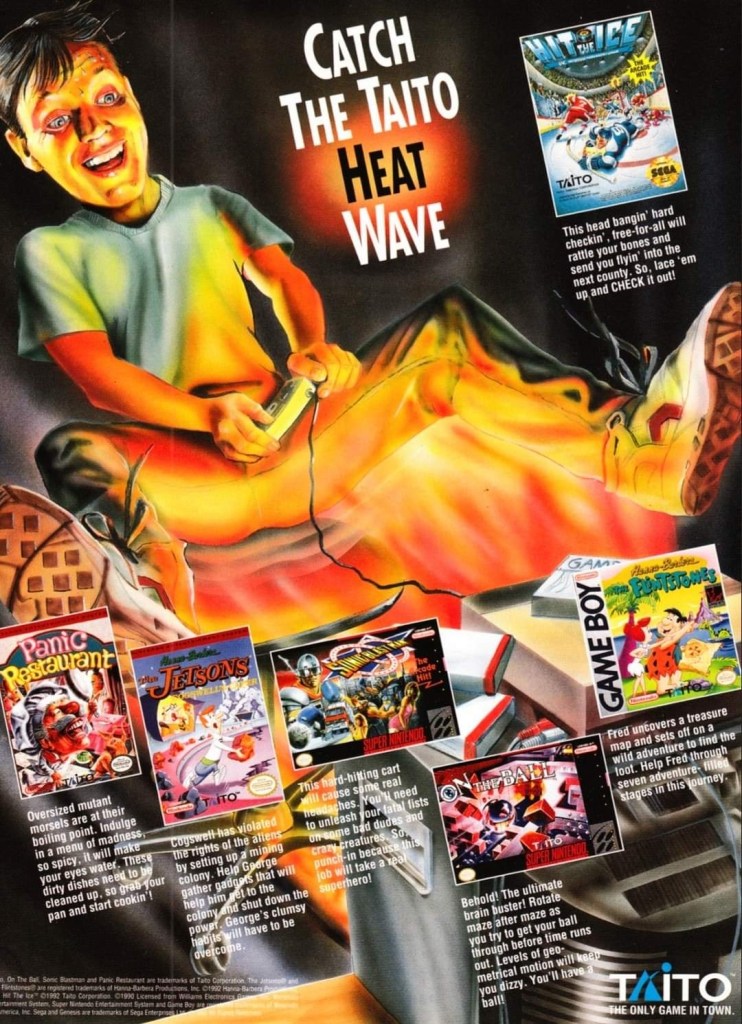
11. Taito’s “heat wave” print ad
An amusing and creative way to sell video games.
If your company lacks money to effectively market your video games individually, you can try making a single ad promoting them together. This is what Taito did in this print ad which showcases multiple games for different platforms and they used artwork of a player experiencing the so-called heat wave. This is a nice stroke of creativity on the part of Taito.
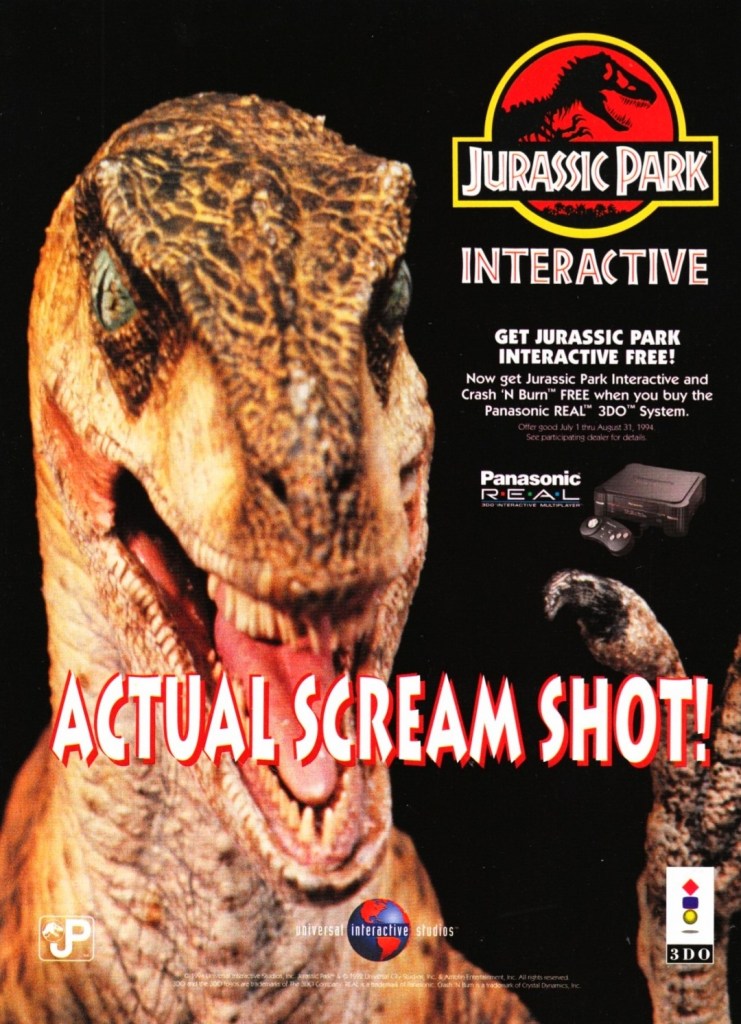
12. Jurassic Park Interactive print ad
This was a creepy print ad promoting the 3DO-exclusive Jurassic Park Interactive.
When it comes to video game consoles, having exclusive games is essential as long as they are of high quality, highly playable and enjoyable. The 3DO company acquired a license of the Jurassic Park movie and made the exclusive game Jurassic Park Interactive hoping it would sell a lot and lift up 3DO hardware sales.
This print ad, which features a zoomed-in image of the Raptor from the game, was more focused on selling the 3DO console than the video game as seen on the descriptive text. 3DO ran a promo selling the console which would entitle the buyer to get Jurassic Park Interactive and another game free. Nothing was done to describe the console’s multimedia capabilities of showing videos, images and graphics of the game (which was essentially a collection of mini-games). This print ad shows ignorance on the part of the 3DO company and the ad maker as it showed desperation happening really early in the console’s life. Notably, Jurassic Park Interactive was the only video game adaptation to use actual footage (note: the faces of the actors were edited out) and music from the film.
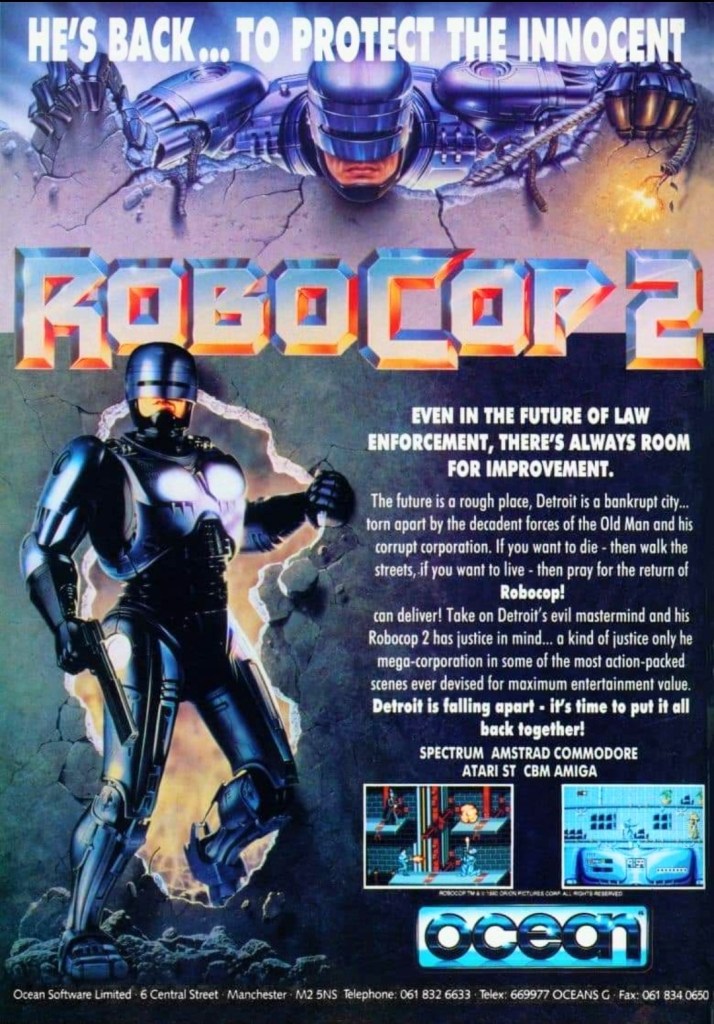
13. RoboCop 2 print ad
You want to become RoboCop to save the city of Detroit from criminals?
Way back in 1990, RoboCop 2 was a big hit in cinemas here in the Philippines and in some places around the world. As typical of the time, licenses to make video games based on the movie were released resulting in RoboCop 2 games for multiple platforms. The print ad featured two different images of RoboCop – one from the movie poster and the other from an official artwork. The descriptive text does a fine job to immerse readers into the story concept of the game but showing only two screenshots was a lackluster effort to sell the game.
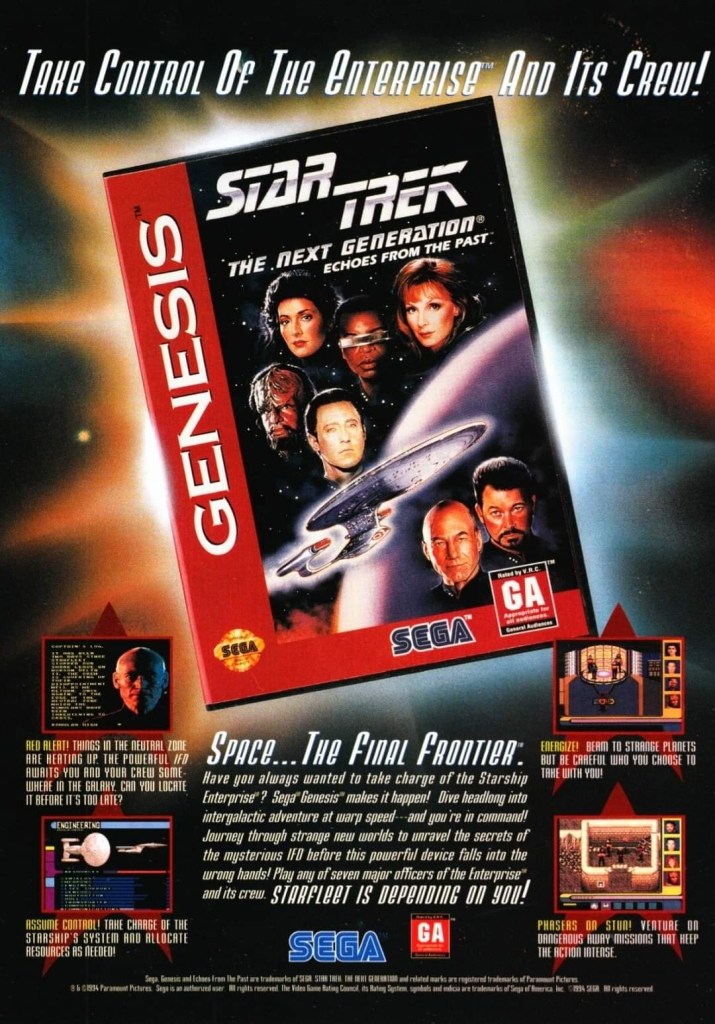
14. Star Trek: The Next Generation – Echoes from the Past print ad
Space…the final frontier waiting for Sega Genesis gamers.
Released in 1994, Star Trek: The Next Generation – Echoes from the Past delivered the Star Trek TNG adventure experience to Sega Genesis gamers. In fact, it is the exact same experience that SNES gamers got the same year. In reality, Star Trek: The Next Generation – Echoes from the Past is actually a port of Star Trek: The Next Generation – Future’s Past on the SNES and the screenshots on the print ad are giveaways about it. In fairness to the ad makers, this print ad never attempted to deceive gamers that it promoted a totally different Star Trek TNG game.
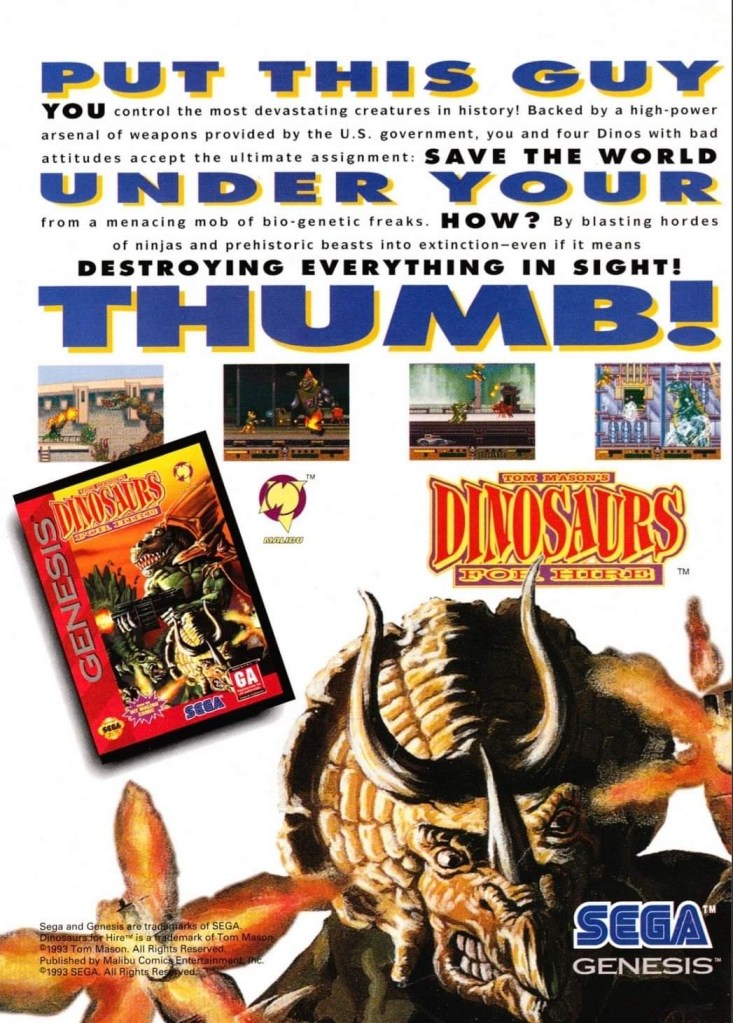
15. Dinosaurs for Hire print ad
This print ad caught my attention and made me interested in the game and the comic book series. Even though it was small, Malibu Comics’ logo was still recognizable.
Dinosaurs for Hire (sometimes referred to as Tom Mason’s Dinosaurs for Hire) was a 2D side-scrolling platform adventure game based on the comic book series of Tom Mason. Published by Sega, it was a Genesis-exclusive game and this print ad had a catchy text description, a few screenshots and the eye-catching artwork of a triceratops facing the viewer. This print ad is still good to look at. If you’re thinking about searching for existing copies of the game, I encourage you to also read some Dinosaurs for Hire comic books before playing. By the way, Tom Mason also wrote several comic books of the Ultraverse.
Welcome back Xbox fans, geeks, retro gaming enthusiasts and all gamers from around the world!
I was born in the mid-1970s. My video gaming experience started with the arcade games. A few years later, my console gaming experience started with the Atari 2600 console (which was our first console at home) and for about five years my friends (who also had the same console in their respective homes) and I enjoyed playing games on it.
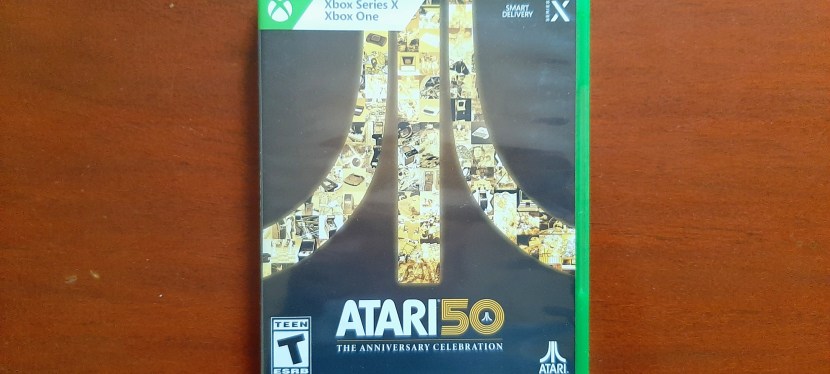
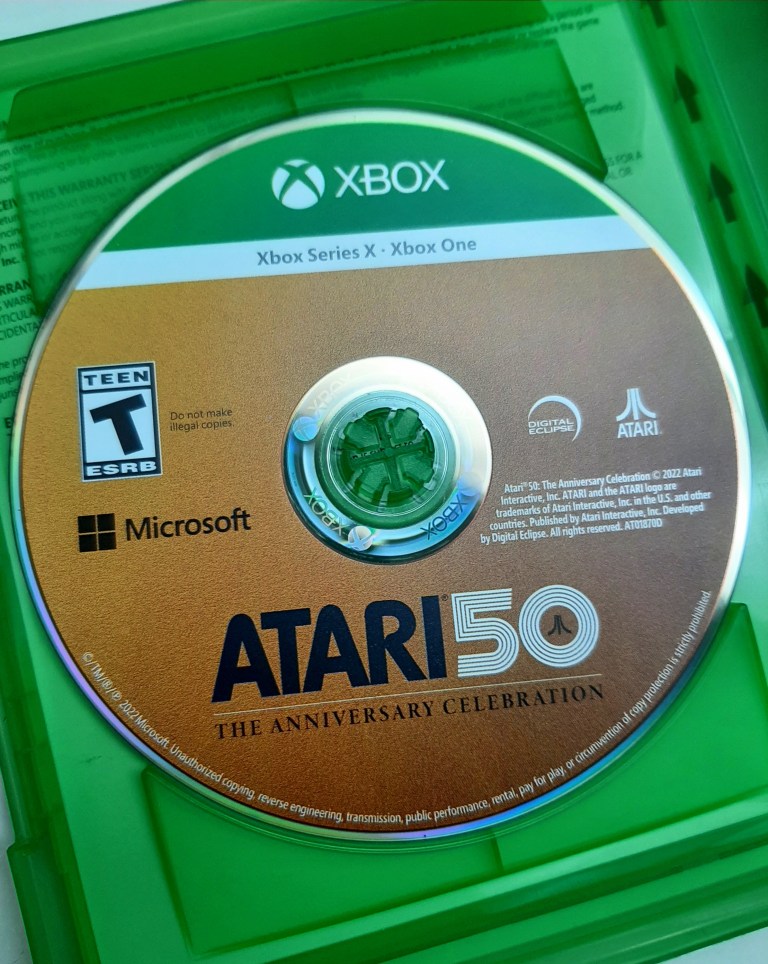
Also this year, I bought myself a physical copy of Atari 50: The Anniversary Celebration to add even more retro gaming fun on my Xbox Series X and it has been an enjoyable experience so far. There is absolutely nothing like replaying the Atari 2600 games I enjoyed plus being able to play other games released on other Atari consoles I never had. I also love the fact that the collection (you can by the physical Xbox copy by clicking here) also has Atari’s own arcade games. This is truly a blast of retro gaming fun!
From my play session of the arcade version of the classic Missile Command.
Thanks to the Atari 50: The Anniversary Celebration, I finally got to play the Cloak & Dagger arcade game that was featured in the 1984 movie.
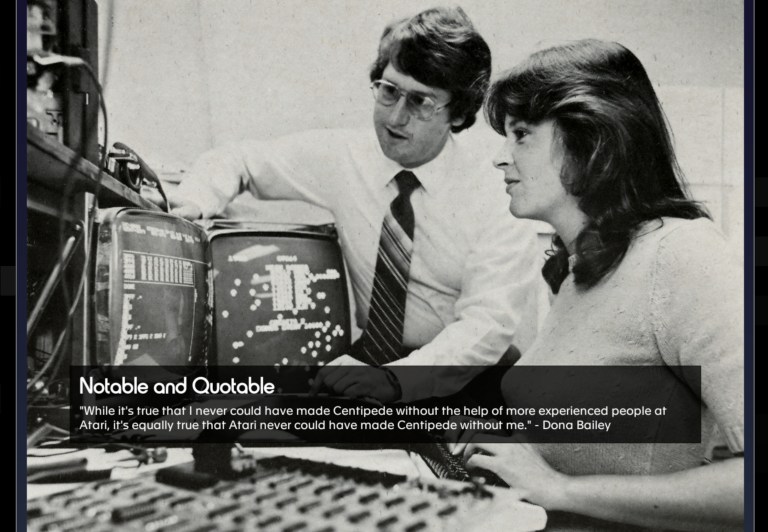
Historical insight about the classic game Centipede.
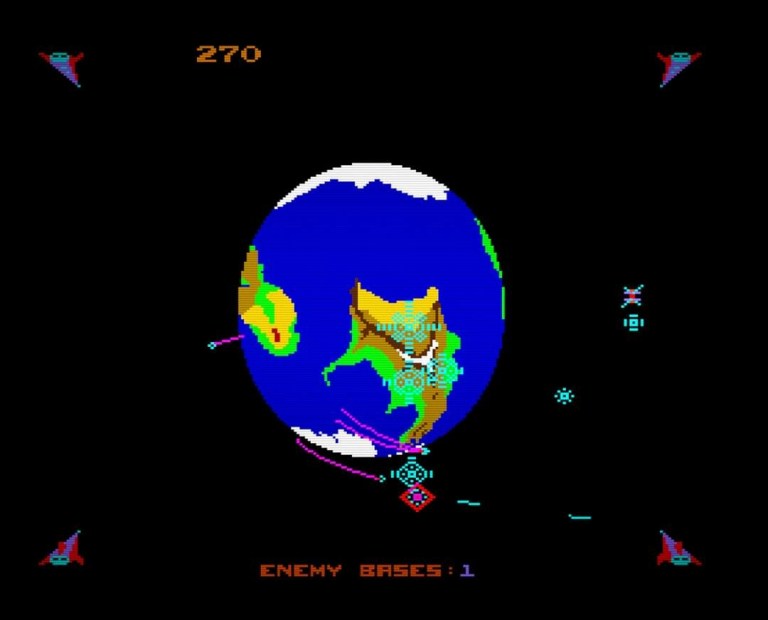
Atari’s arcade game Liberator.
Content from the arcade flyer of Missile Command now viewable in high-definition!
Atari 50: The Anniversary Celebration is not just a collection of video games from the past. It has a stylish presentation that makes it an interactive museum which allows you to look at the arcade flyers, the print ads, the official artworks of games, historical highlights and most notably lots of videos showing interviews of surviving Atari creators/producers who reveal very important details about what they went through, what the company culture was like, and more.
Those who were interviewed include Nolan Bushnell (who established Atari, Inc.), David Crane, Jerry Jessop, Bill Rehbock, Owen Rubin, Allan Alcorn, Tod Frye, Wade Rosen, Eugene Jarvis, and Howard Scott Warshaw. These are the guys who not only established Atari as a major gaming industry leader but also laid the foundations of console gaming as a crucial part of home entertainment in general. Also discussed was Atari’s efforts of bringing their arcade games to the consoles at home.
Adding further insight to Atari’s history were video interviews of Ed Fries (a key figure behind the establishment of Xbox), Cliff Bleszinski (Gears of War trilogy) and Tim Schafer (Psychonauts games).
My physical copy of Atari 50: The Anniversary Celebration which I enjoyed a lot on my Xbox Series X.
Welcome back, fellow geeks, Blu-ray collectors and movie buffs!
Decades ago, I saw on home video Cloak & Dagger (1984) which turned out to be an entertaining film to watch as I was already playing games on Atari 2600 and the arcades. After replaying by chance on cable TV years later, I finally bought myself the 4K Blu-ray and it sure was fun to watch it all over again. Check out my retro movie review of it by clicking here.
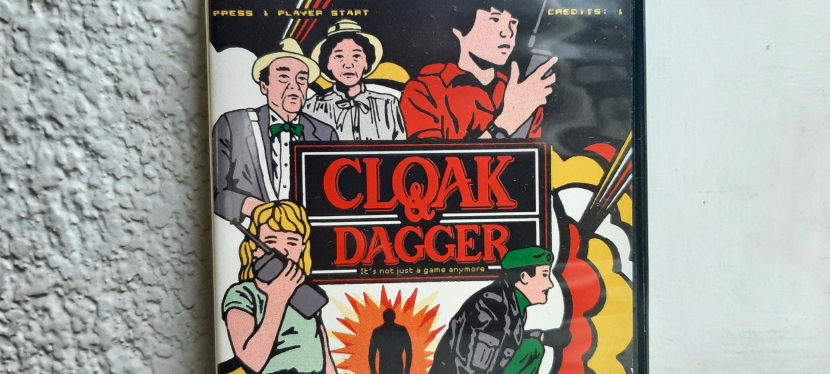
The front of my copy of Cloak & Dagger (1984) 4K Blu-ray.
The rear with the details that can be read.
For the newcomers reading this, Cloak & Dagger (1984) is a movie that involved then video game giant Atari in the creative process. The movie’s plot is not based on Atari’s arcade game of the same name (previously titled as Agent X).
Cloak & Dagger (1984) its own original plot of espionage about a young boy Davey (played by Henry Thomas, the star of Steven Spielberg’s E.T.: The Extra-Terrestrial) who witnesses a murder and receives an Atari 5200 cartridge of the game Cloak & Dagger that contains something very important. This in turn makes him a target of armed henchmen who won’t stop until they get him. Due to his reputation of being too playful and living with his wild imagination as a spy, people don’t believe Davey’s claim of witnessing a murder. This film happens to be inspired by the short story “The Boy Cried Murder” written by Cornell Woolrich.
Cloak & Dagger in arcade form. Atari released it in the form of an arcade conversion kit aimed at arcade machines of certain games of its competitors.
The Cloak & Dagger arcade game can be played on your game console with the Atari 50 collection software (over 100 games). This screenshot I captured while playing it on my Xbox Series X console running Atari 50.
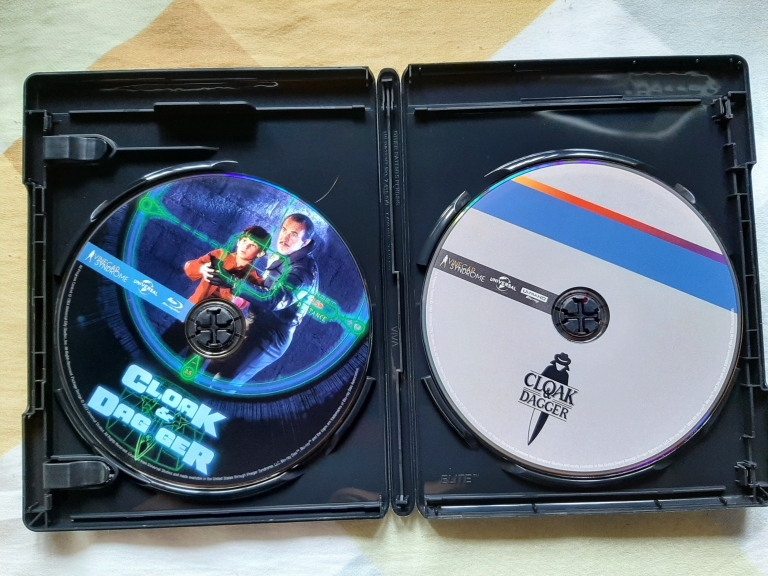
A few weeks ago, my copy of the Cloak & Dagger 4K Blu-ray arrived and it came with two discs: One 4K Blu-ray disc which contained the movie in native 4K (scanned in UHD from the 35mm film) resolution of 3840 x 2160p. The other disc has the same movie in HD (1920 x 1080p) plus the extra stuff which can provide viewers and Cloak & Dagger fans a good amount of important content which will help them learn what the video game elements in the film are, what inspired its creative process and why the film is very unique by today’s standards. There is also an informative new interview with Henry Thomas.
Since then, I saw Cloak & Dagger in 4K twice on my Xbox Series X and its 1080p version on a standalone Blu-ray disc player. Cloak & Dagger in 4K looks better than ever as the picture quality is better, images look sharper and clearer, the colors are vibrant, the small visual details (which were not visible in lower resolution before) are more noticeable now, and film grain structure has been preserved intact!
The two discs. The one on the right is Cloak & Dagger in 4K.
As for the story itself, I still find it engaging and enjoyable to watch from start to finish. Cloak & Dagger is clearly a production of its time as it carries clear Cold War references – the Soviet Union and Iran are the evil forces told in very subtle fashion – as well as video game elements and brands (note: ColecoVision even appeared in this Atari-influenced movie) that dominated America’s console gaming market long before PlayStation, Nintendo and Xbox arrived. For a movie aimed at parents and children, this one has really intense violence as it involves shooting and even some elements of terrorism.
Ultimately, I got a lot of enjoyment from my Cloak & Dagger (1984) 4K Blu-ray and I highly recommend it to Cloak & Dagger fans, gamers, physical media collectors and anyone who loves watching movies in the comfort of home. Cloak & Dagger (1984) is a very unique and fun movie that Hollywood does not make anymore. You really should see it.
In case you are interested or if you have made up your mind, you can order a copy of Cloak & Dagger (1984) 4K Blu-ray by clicking here.







 Author Carlo Carrasco