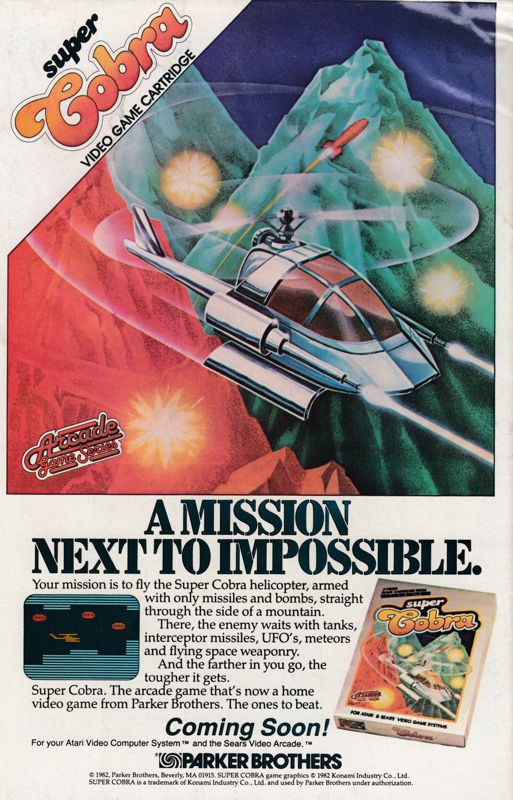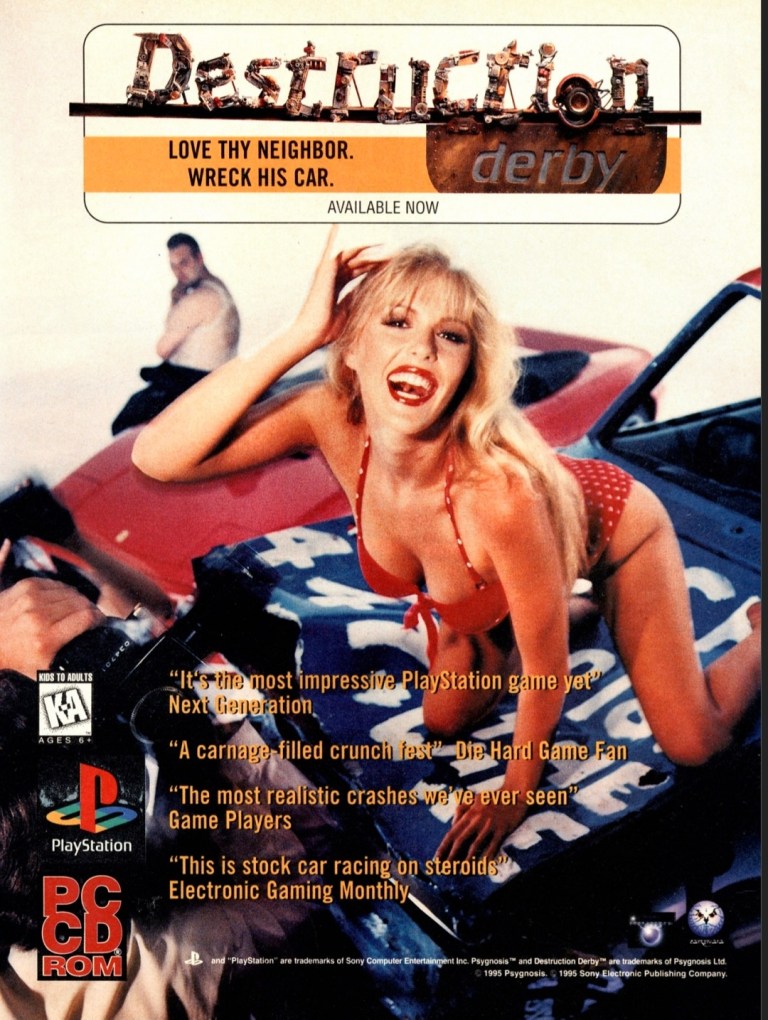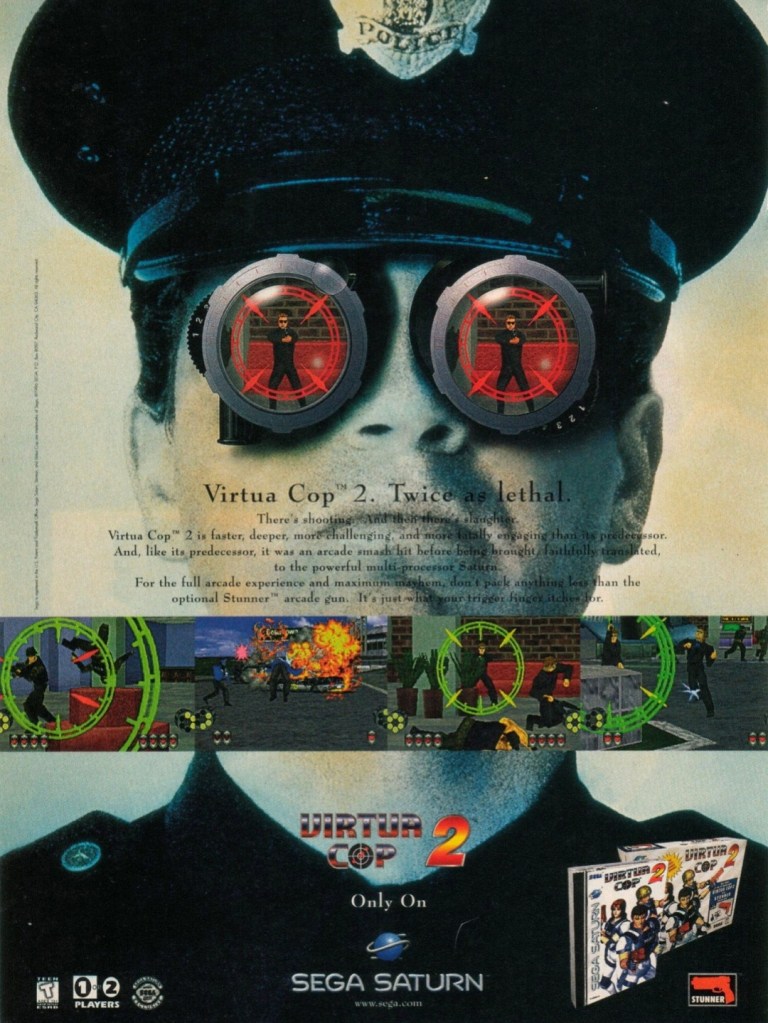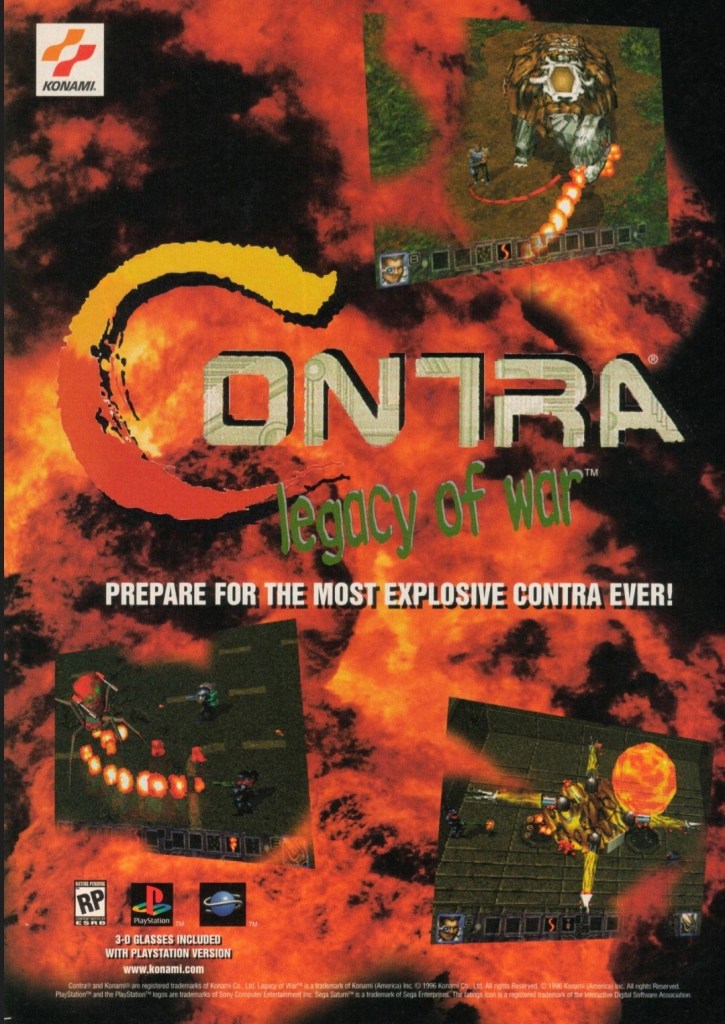
Retro Gaming Ads Blast – Part 6

Welcome back readers, fellow geeks and electronic gaming fans!

In this edition of the Retro Gaming Ads Blast (RGAB) series, we will examine print ads from the 1980s and the 1990s that caught my attention and I will explain why they are worth look back at.

For the newcomers reading this, Retro Gaming Ads Blast (RGAB) looks back at the many print ads of games (console, arcade, computer and handheld) that were published in comic books, magazines, flyers and newspapers long before smartphones, social media, the worldwide web and streaming became popular. To put things in perspective, people back in the 1980s and 1990s were more trusting of print media for information and images about electronic games.

With those details laid down, here is the newest batch of retro gaming print ads for you to see and enjoy…

1. Operation Wolf print ad

Even though there were screenshots from the game, this was still an eye-catching print promoting Operation Wolf for the Nintendo Entertainment System.

Looking back at the history of pop culture, the 1980s saw the surge of Hollywood action movies that emphasized or even glorified militarism. Arnold Schwarzenegger, Sylvester Stallone and Tom Cruise were just a few Hollywood stars who found success playing military figures. It was not surprising that there were game developers in Japan who noticed the Hollywood military trend and were inspired to make games that had similar themes. The Japan-based company Taito developed and released the light gun shooter arcade game Operation Wolf which became a huge commercial success worldwide. Unsurprisingly, versions of Operation Wolf were eventually made for the existing home computers and game consoles of the time.

The above print ad of the Nintendo Entertainment System (NES) version of Operation Wolf only showed the official artwork, descriptive text and noticeably no gameplay screenshots. While the ad made the NES version of the game look exciting to look forward to, the actual game looked and felt nothing like the arcade version as the console’s limitations resulted in really small 2D sprites (which made shooting tough) and the 2D art used were rather ugly to see. I can only speculate that the people at Taito knew their product for the NES had sub-par quality and only hoped for the best trying to fool gamers to buy it.

2.  Foreman For Real print ad

Apart from boxing and endorsing grills, are you aware that George Foreman is also a worship leader and preacher of God’s Word?

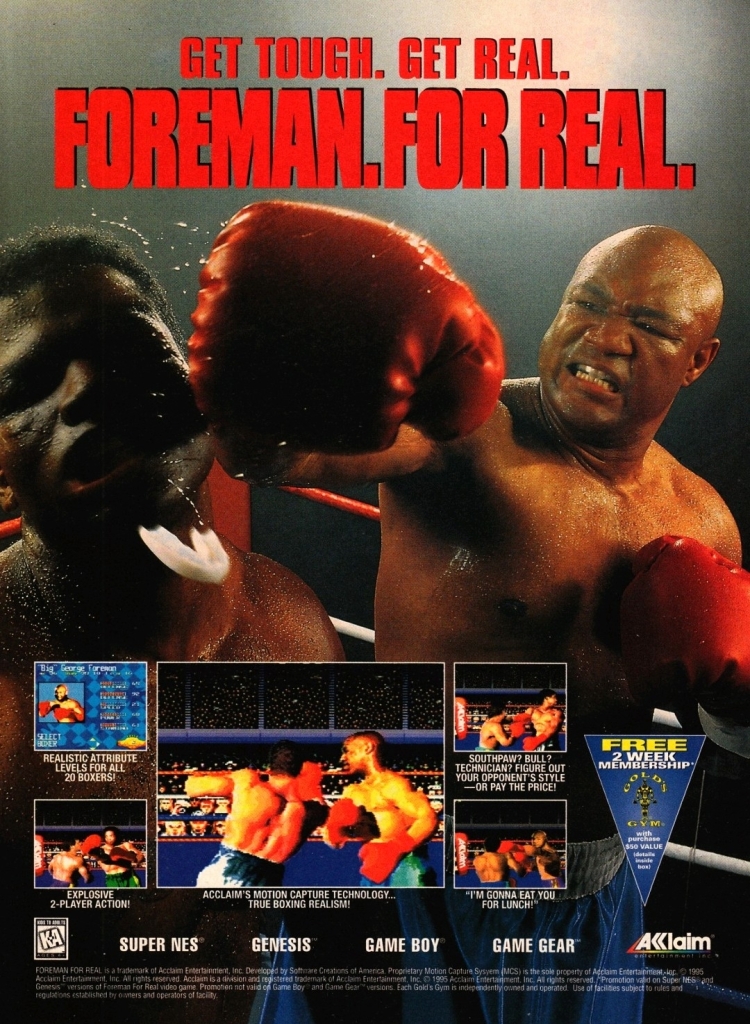
In late-1994, George Foreman knocked out Michael Moorer to reclaim the heavyweight boxing title and the last time he had it was way back in 1974. For the newcomers reading this, Foreman halted his professional boxing in 1977, established his connection with God, preached His Word, opened a youth center and became a major product endorser. Foreman came back into fighting in 1987 and stunned everyone when he became heavyweight champion seven years later.

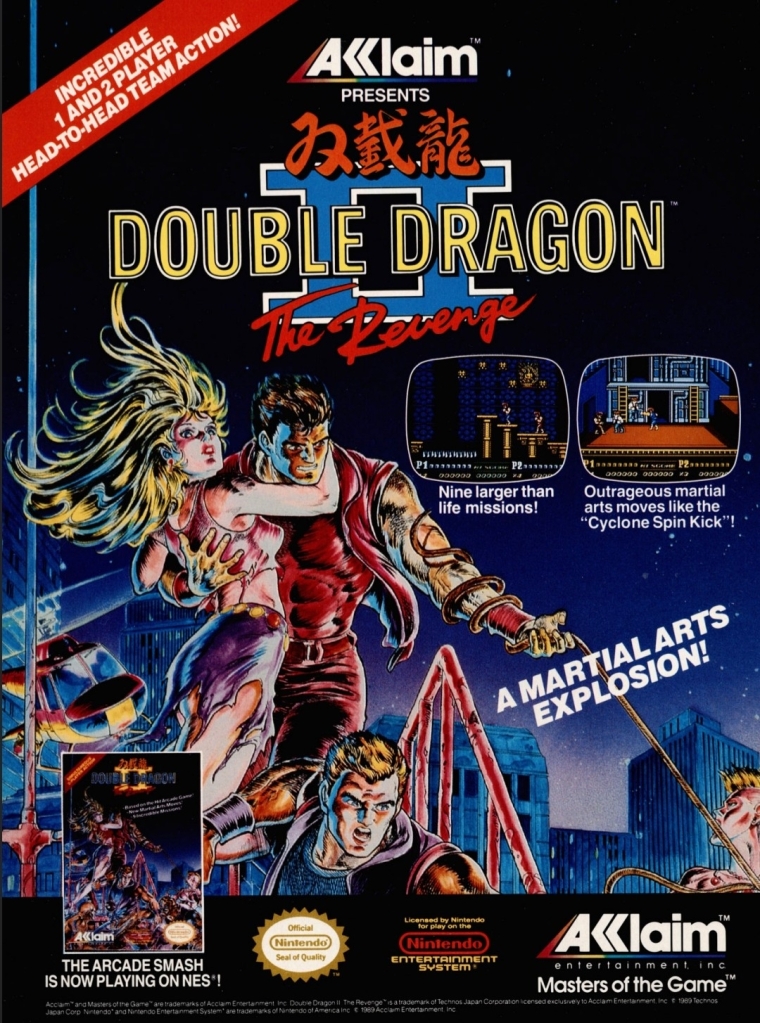
That being said, it was no surprise that game publisher Acclaim (which already released a video game with the boxer in 1992) quickly returned to Foreman to get him as the titular endorser in the 1995 video game Foreman For Real which was released on multiple gaming platforms less than a year after his championship victory. Apart from showing Foreman’s dominating image and screenshots from the game, the ad even had a promo of a free 2-week membership with Gold’s Gym. This ad was a lively reminder of the significance of Foreman’s presence in professional sports and it was instantly eye-catching.

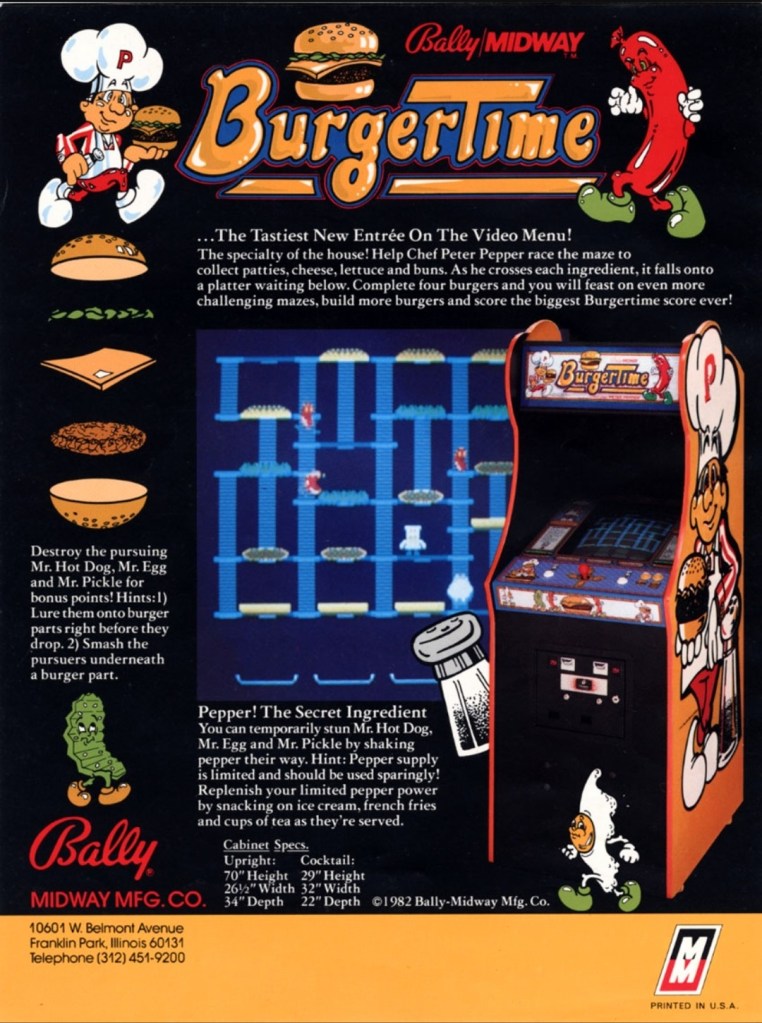
3. BurgerTime print ad

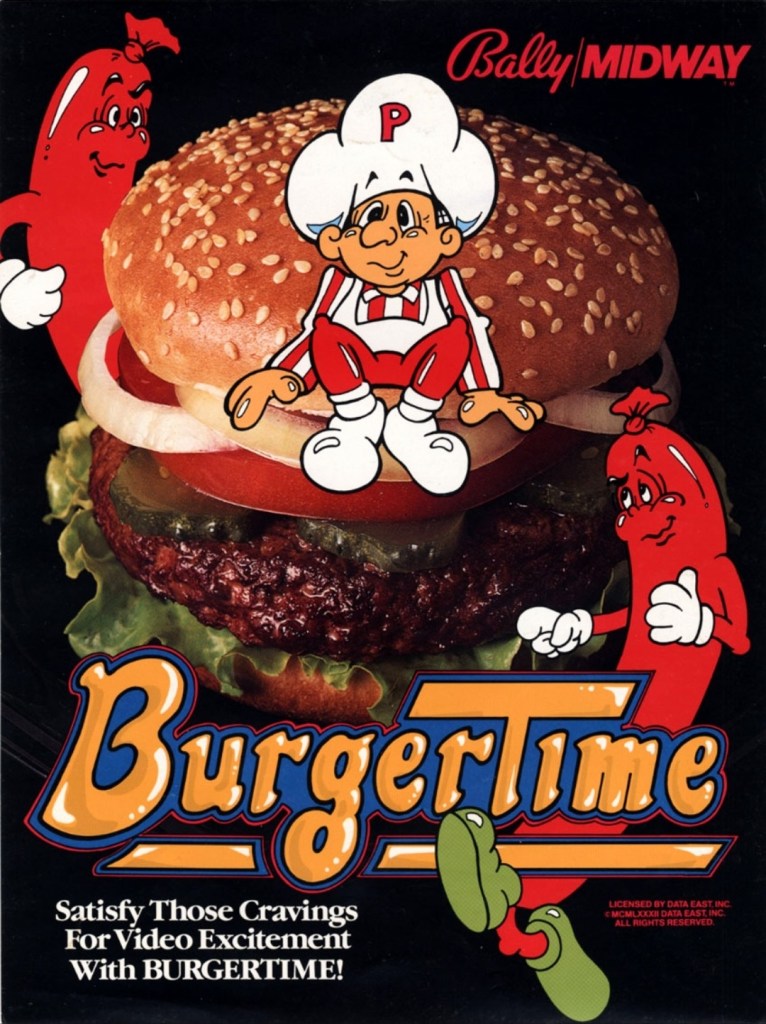
Arcade hits like BurgerTime also made it into personal computers.

Previously, I showed an eye-catching print ad of the arcade classic BurgerTime. This time, the BurgerTime print ad shown here focused more on the IBM and Apple computer versions. This print ad had a photograph of an actor playing chef Peter Pepper carrying a huge burger bun running away two eggs and a hotdog, and near them were the respective boxes of BurgerTime for IBM and Apple. This is a sharp change of visual style away from the comic book-style art used in the other BurgerTime print ad. I can only imagine how excited IBM and Apple computer users became after seeing this ad back in the 1980s.

4. Shining Wisdom print ad

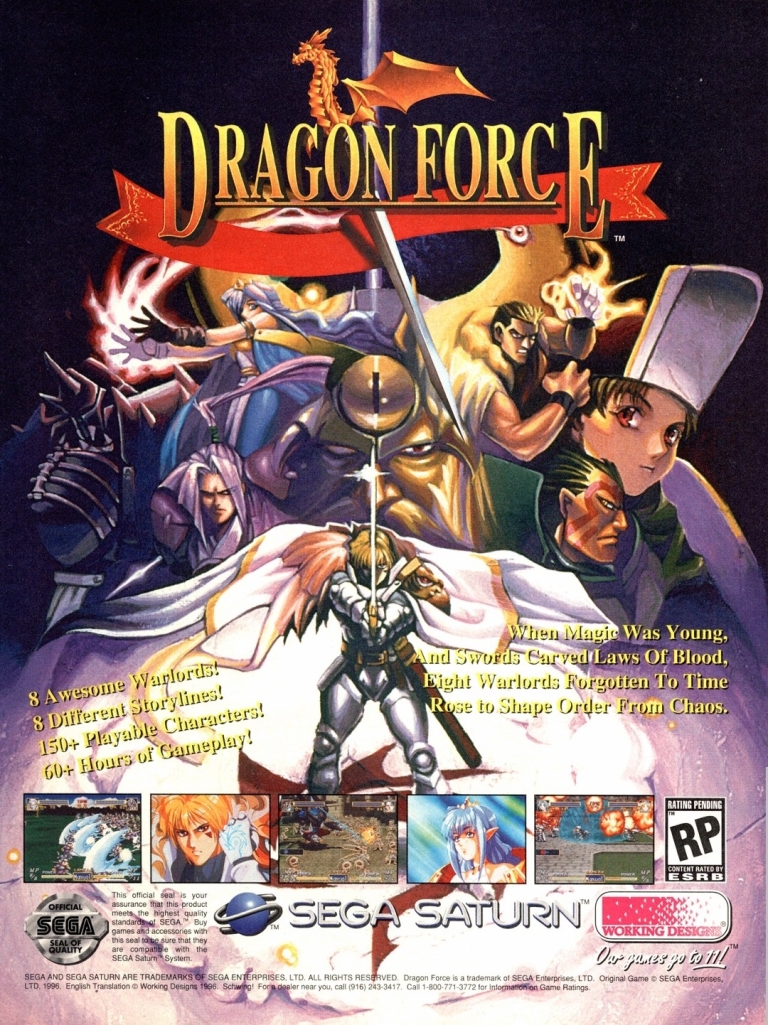
Even though this was a very eye-catching ad that appeared in several publications, Shining Wisdom went on to become a forgotten game after receiving mixed reviews from game review writers.

Here is another print ad of Working Designs from the 1990s. Released only on the Sega Saturn in 1996, Shining Wisdom was a fantasy action-adventure game from Japan that publisher Working Designs localized with North Americans in mind. This meant taking lots of creative liberties with the story, name changes, insertions of pop culture jokes and even altered the personalities of the characters. Developed by Sonic Software Planning and Camelot Software Planning, Shining Wisdom started as a project for the 16-bit console Mega Drive (Sega Genesis in America) that was revised for the more powerful Saturn console. While this print ad caught the attention of gamers and readers, Shining Wisdom received mixed reviews from critics upon release. Sadly, not too many gamers talk about this game anymore.

5. Cabal print ad

Military action and shooting strongly emphasized in this print ad for the Nintendo Entertainment System version of the arcade smash Cabal.

Like many games released in the 1980s, Cabal had a strong military theme and allowed players to engage in bouts of shooting playing soldiers who have to fight entire armies of bad guys. This print ad about the Nintendo Entertainment System (NES) version of the game had really nice art dominating the page, the packaging of the game plus three screenshots showing what gamers could expect. This was a very eye-catching print ad that made Cabal look both exciting and enticing.

6. Metal Gear print ad

Wow! So many weapons and pieces of equipment displayed in this Metal Gear (NES version) ad.

Back in the late 1980s, the NES port of Metal Gear had a notable promotion in America thanks to this cleverly designed print ad. When it comes to emphasizing “gear” from the title, the marketing team emphasized the words “Gear up” and literally filled the ad spaces with lots of pieces of equipment that was not only eye-catching but also gave readers the idea that a huge adventure awaits them in Metal Gear. As for the game box on the lower left corner of the print, the cover art highlighting the character Snake was an artistic copy of a still image of actor Michael Biehn as Kyle Reese in The Terminator (1984). This print ad was both entertaining and intriguing to look at.

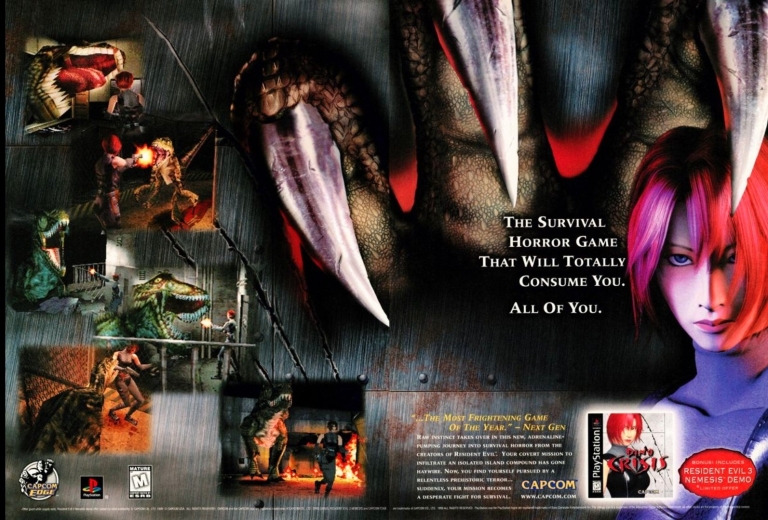
7. Dino Crisis print ad

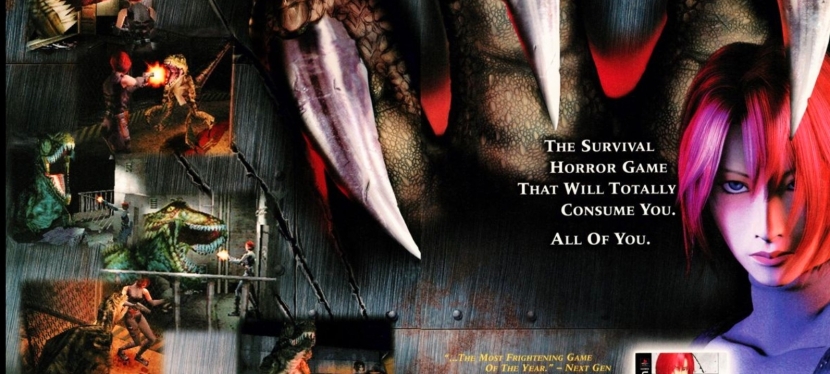
For many gamers, Dino Crisis was like a combination of Resident Evil and Jurassic Park and this visceral looking print ad really got lots of people interested in the game.

In 1999, Capcom released Dino Crisis for PlayStation in America and the timing was almost perfect as millions of gamers who owned the console enjoyed the releases of Resident Evil and Resident Evil 2 (both games from Capcom) firmly establishing the survival horror genre as a popular one. That being said, a lot of RE fans anticipated the release of Dino Crisis due to the fact that the game shared several elements with Resident Evil games in terms of exploration, survival, control and shooting. Not only that, Resident Evil creator and original game director Shinji Mikami was in charge of the making of Dino Crisis. Mikami pointed to the films The Lost World: Jurassic Park (1997) and Aliens (1986) as influences on making the game which for most gamers was perceived as “Resident Evil filled with dinosaurs.”

The print ad above had a very engaging visual design that symbolized action, horror and tension well. Mikami clearly wanted gamers to experience the intense violence of encountering dinosaurs and this ad gave viewers a small sample of that. It’s safe to say that this print ad was effective as Dino Crisis went on to sell millions of copies and established Regina (the red-haired lady in the ad) as another memorable character from Capcom.  

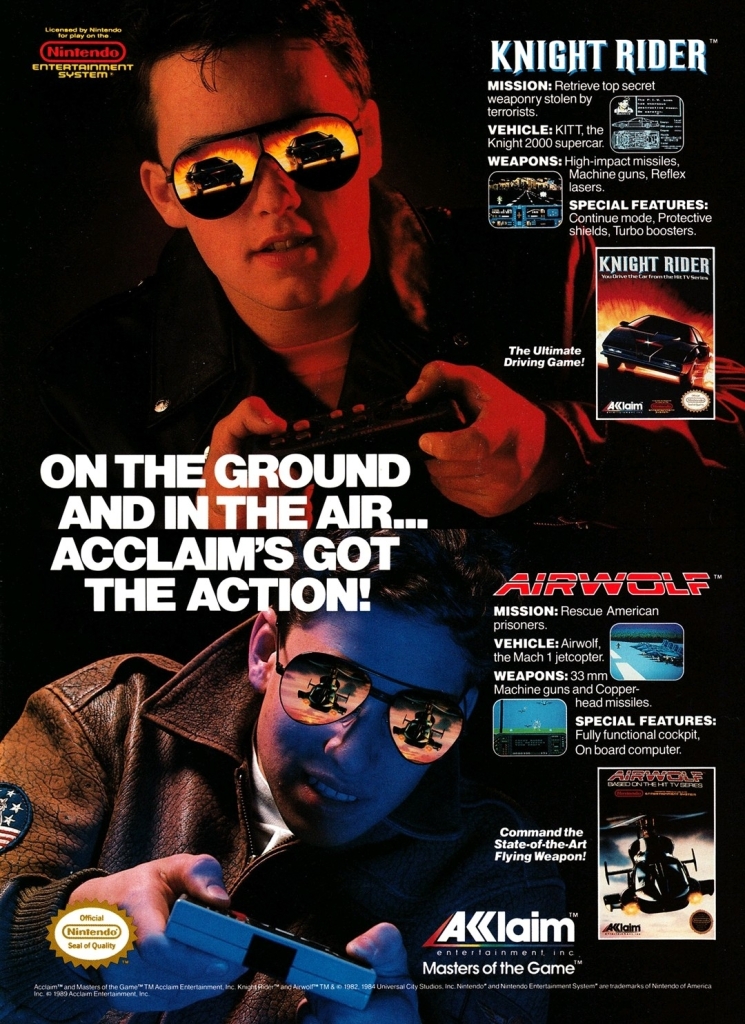
8. Airwolf/Knight Rider games print ad

Very clearly, the advertiser focused on the cool look to sell the games of Airwolf and Knight Rider.

Back in the 1980s, Airwolf and Knight Rider were wildly popular TV series that each had winning formulas to entertain millions of viewers with action, suspense and storytelling. It was not surprising that video game adaptations of them were produced on the Nintendo Entertainment System (NES). This particular print ad was an efficient way of promoting the Airwolf and Knight Rider games which featured two players looking cool with jackets and sunglasses. Acclaim clearly aimed for the TV series’ fans and slightly older players among the NES owners/users.

+++++

Thank you for reading. If you find this article engaging, please click the like button below, share this article to others and also please consider making a donation to support my publishing. If you are looking for a copywriter to create content for your special project or business, check out my services and my portfolio. Feel free to contact me with a private message. Also please feel free to visit my Facebook page Author Carlo Carrasco and follow me on Twitter at  @HavenorFantasy as well as on Tumblr at https://carlocarrasco.tumblr.com/ and on Instagram at https://www.instagram.com/authorcarlocarrasco
Retro Gaming Ads Blast – Part 5

Welcome back readers, fellow geeks and electronic gaming fans!

In this edition of the Retro Gaming Ads Blast (RGAB) series, we will examine print ads from the 1980s and the 1990s that caught my attention and I will explain why they are worth look back at.

For the newcomers reading this, Retro Gaming Ads Blast (RGAB) looks back at the many print ads of games (console, arcade, computer and handheld) that were published in comic books, magazines, flyers and newspapers long before smartphones, social media, the worldwide web and streaming became popular. To put things in perspective, people back in the 1980s and 1990s were more trusting of print media for information and images about electronic games.

With those details laid down, here is the newest batch of retro gaming print ads for you to see and enjoy…

1. Star Wars: Rebel Assault print ad

This print ad was strong enough to capture Star Wars fans’ attention and make them interested with the Sega CD.

If there is anything notable about the Sega CD (Mega CD in other parts of the world) platform, it is the fact that the machine was an add-on to be connected with the Sega Genesis (Sega Mega Drive elsewhere) console. That being said, LucasArts included the Sega CD as one of several platforms for the multiplatform release of their 1993 game Star Wars: Rebel Assault. The above print ad caught my attention with its use of 9 screenshots (emphasizing a wide look at the game’s Star Wars concept) and text description (emphasizing multi-media features connected with gameplay), and for a time it made me interested in the Sega CD. Looking back at the game’s marketing, Star Wars: Rebel Assault was designed to not only give gamers sessions of play to enjoy but also opportunities to immerse themselves deeper into the realm of Star Wars. The game even had selected video clips from the original Star Wars trilogy movies.

2.  Cloak & Dagger print ad

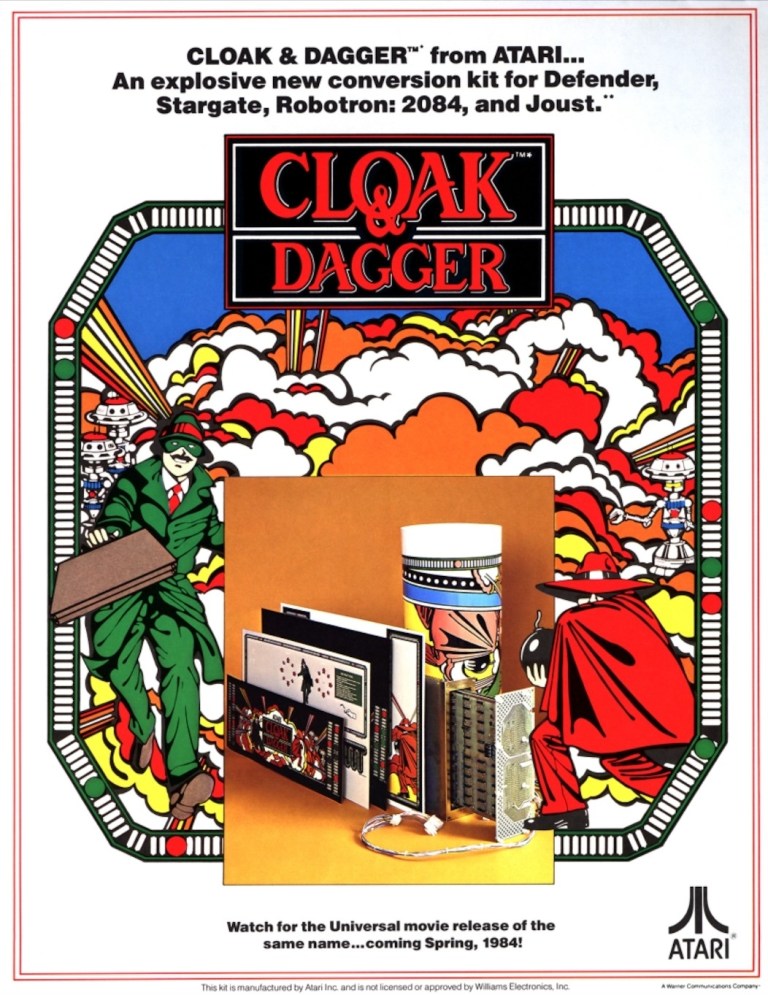
This print ad could have used at least two screenshots from the arcade game…

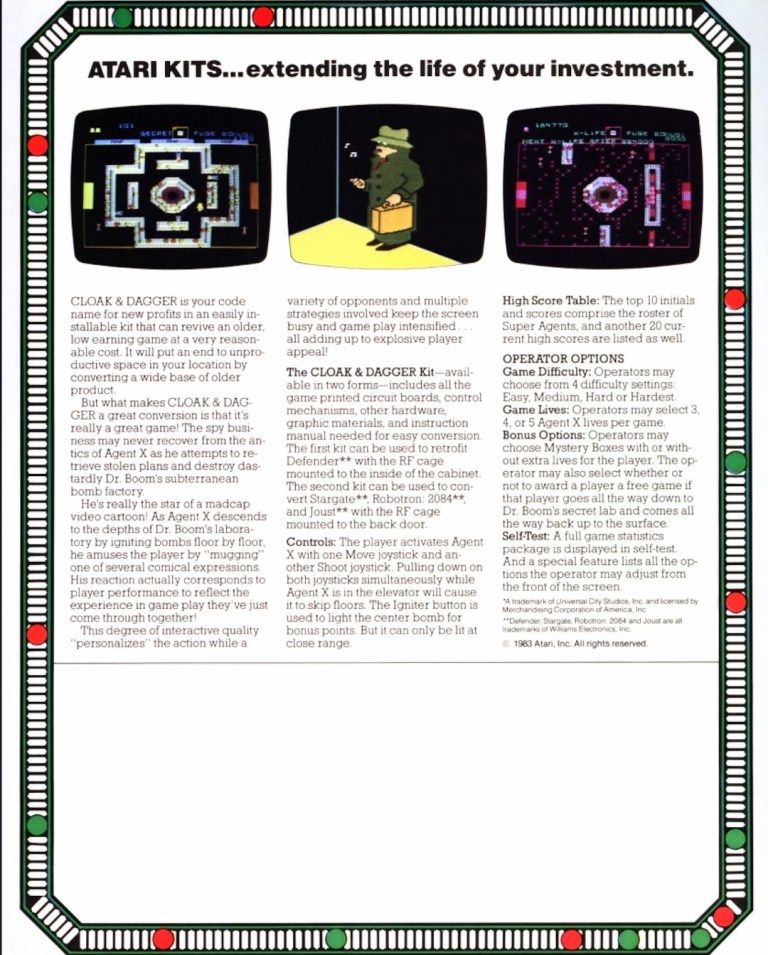
In 1984, there was a movie titled Cloak & Dagger (read my retro movie review by clicking here) which was not only the 4th cinematic adaptation of the short story “The Boy Cried Murder” (written by Cornell Woolrich) but also had the real-life electronic game Cloak & Dagger as a crucial plot element. To make things clear, there was a Cloak & Dagger game released in the arcades (as emphasized in the above print ad) from Atari. Behind the scenes, the filmmakers and Atari worked together which explains the video game tie-in with the movie. While the above arcade conversion kit print ad does not show screenshots of gameplay, the four images of the playable protagonist Agent X shown were from the game’s short transition sequences (moving from one level to another) which were also displayed in the 1984 movie. Those images were enough to remind me about the movie I enjoyed.

More on the Atari connection, the movie had a cleverly presented short scene showing the young protagonist Davey (played by Henry Thomas) playing Cloak & Dagger on his Atari 5200 console with spliced gameplay footage of the arcade version shown within cuts. In real life, however, Atari never released a version of Cloak & Dagger for any console nor computer in the 1980s. Today, you can play the game on the Atari 50 collection on consoles.

3. BurgerTime print ad

This BurgerTime print ad was entertaining to look at and easily reminded viewers about food and the popular game coming home.

Back in 1982, BurgerTime (Japanese title: Hamburger) was released in the video arcades and turned out to be a big hit in both Japan and America. Seeking to capitalize on the game’s success, Mattel Electronics acquired the rights of the game from Data East and went on to release versions of it for the Intellivision, Atari 2600, Apple II and the IBM personal computer. Mattel went on to market the game for consoles and computers by coming up with a print ad (the one above) that had comic book-style hand drawn art of the playable protagonist chef Peter Pepper running away from walking versions (anthropomorphic figures) a hotdog, an egg, and a pickle. The ad showed a single screenshot which was sufficient enough to show readers the concept of the game clearly. In my experience, I never got to play BurgerTime in the arcades but I first learned about its existence thanks to the eye-catching print ad above which appeared in comic books I read. In addition, the print ad also does an effective job to remind readers about food.

4. SOS print ad

This print ad made me interested in the game as I was already aware of the historical sinking of the Titanic, and I already saw the disaster film The Poseidon Adventure.

Moving back to the 1990s, I saw the above print ad of the video game SOS for the Super Nintendo Entertainment System (SNES) while reading a comic book. The nice artwork caught my attention as it easily reminded me of the disaster movie The Poseidon Adventure (1972) as well as the real-life tragedy of the Titanic. Then I saw the screenshots on the print ad and they made me interested on the game which I later played on a rent-by-the-hour game joint. Looking back at the text description of the print ad, it did not describe what the technical and graphical features of SOS were. That being said, I was surprised to experience the game’s use of the SNES Mode 7 effects which enabled the scaling and rotating of the in-game environment which affected gameplay in many ways. Read my retro review of SOS by clicking here.

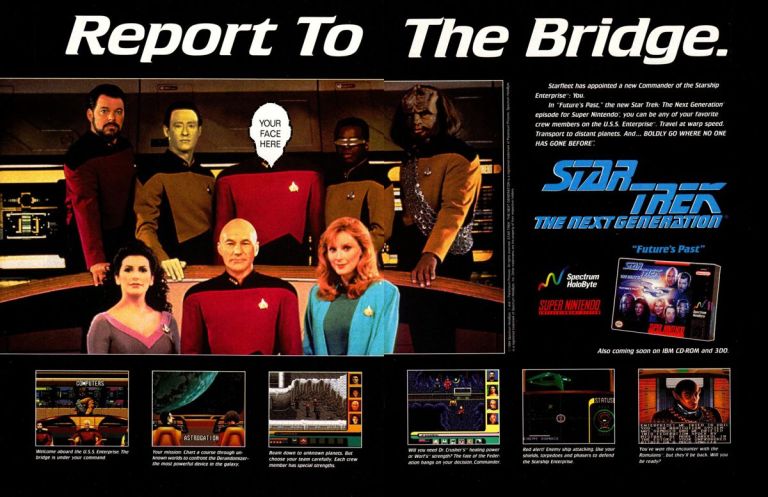
5. Star Trek: The Next Generation – Future’s Past print ad

This 2-page print ad was strong enough to invite readers to literally join the Star Trek: TNG crew and go where no man has gone before. By the way, when was the last time you saw Marina Sirtis or Gates McFadden on a video game ad?

Long before wokeness ruined Star Trek in this modern age, the sci-fi franchise reached a tremendous high in popularity and projects in the 1990s as that decade had Star Trek: The Next Generation (most of its TV seasons and three movies were released within the decade), Star Trek: Deep Space Nine and Star Trek: Voyager that kept fans entertained.

Considering its high popularity, it was not surprising that a video game adaptation of Star Trek: TNG was released in 1994 titled Star Trek: The Next Generation – Future’s Past (the version for Super Nintendo Entertainment System) and I saw the above print ad while reading a gaming magazine. Using a slightly altered version of the TNG group photo, the print ad emphasized its concept that the player will be able to lead the crew of the Starship Enterprise and take part in a series of missions in different parts of space with the likes of Captain Picard, Commander Riker, Data, Worf, Dr. Crusher, Deanna Troi and La Forge. While I was never a Star Trek fan, the above print ad caught my attention with its concept, the group photo and the screenshots gave me an idea of what the game has to offer. It should be noted that Star Trek: The Next Generation – Future’s Past was released between the end of Star Trek: TNG’s final season and the theatrical release of Star Trek: Generations.

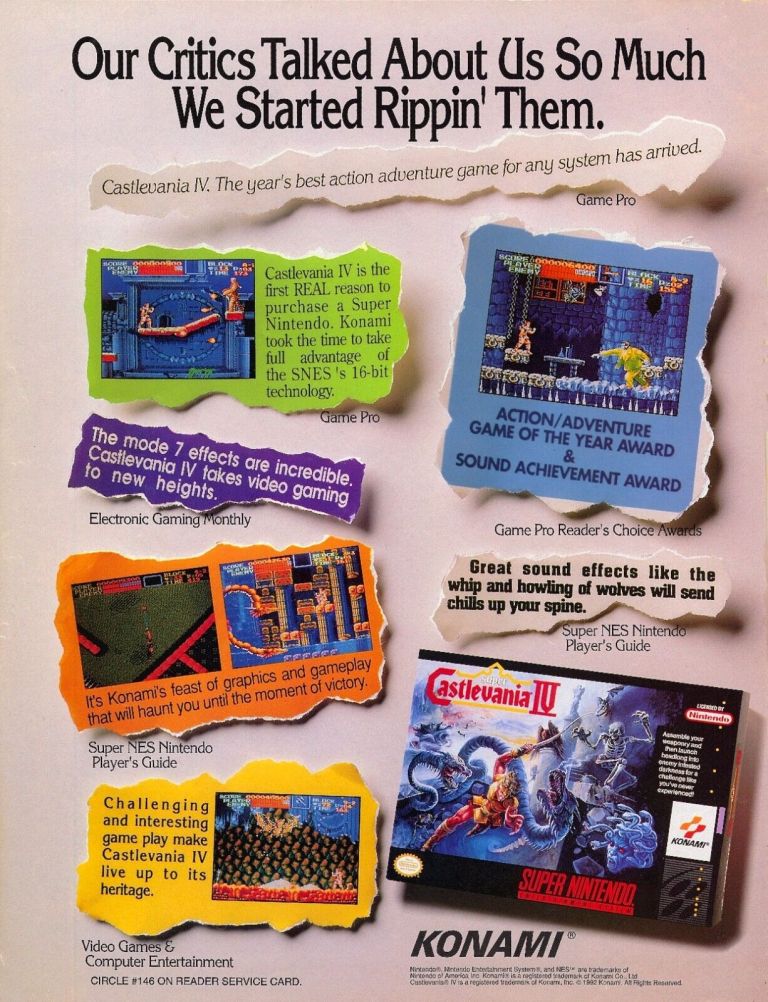
6. Super Castlevania IV print ad

This was one of the most eye-catching print ads I’ve seen about a Konami video game.

The jump in technology from one console generation to the next can be beneficial for gamers if game developers harnessed the advantages of new technologies to make new games that turned out to be more engaging and more enjoyable. Such was the case with Super Castlevania IV for the Super Nintendo Entertainment System (SNES) in 1991. The above print showed Konami highlighting the positive feedback their game received from different gaming media outlets and used screenshots to give gamers and long-time Castlevania fans exciting stuff to see. I got to play the game on the mini SNES console and I can say that in terms of visuals, controls and gameplay, Super Castlevania IV truly lived up to its title and it remains fun to play to this day.

+++++

Thank you for reading. If you find this article engaging, please click the like button below, share this article to others and also please consider making a donation to support my publishing. If you are looking for a copywriter to create content for your special project or business, check out my services and my portfolio. Feel free to contact me with a private message. Also please feel free to visit my Facebook page Author Carlo Carrasco and follow me on Twitter at  @HavenorFantasy as well as on Tumblr at https://carlocarrasco.tumblr.com/ and on Instagram at https://www.instagram.com/authorcarlocarrasco
Retro Gaming Ads Blast – Part 4

Welcome back readers, fellow geeks and retro gaming fans!

In this edition of the Retro Gaming Ads Blast (RGAB) series, we will examine print ads from the 1990s that caught my attention and I will explain why they are worth look back at. In retrospect, the 1990s was a decade of serious changes in the world of electronic gaming as the industry saw the shift of graphics from 2D sprites and flat backgrounds to 3D polygons, the shift from cartridges to CDs for software distribution, and more.

For the newcomers reading this, Retro Gaming Ads Blast (RGAB) looks back at the many print ads of games (console, arcade, computer and handheld) that were published in comic books, magazines, flyers and newspapers long before smartphones, social media, the worldwide web and streaming became popular. To put things in perspective, people back in the 1980s and 1990s were more trusting of print media for game details and images.

With those details laid down, here is the newest batch of retro gaming print ads for you to see and enjoy…

1. Castlevania: Bloodlines print ad

Creepy looking but not horrific. The simplistic approach turned out to be effective on making Sega Genesis gamers excited for this Castlevania release.

During the early stage of the so-called 16-bit console wars, Konami’s Castelvania series made the huge next-generation leap with Super Castlevania IV on the Super Nintendo Entertainment System (SNES) which gave gamers loads of fun challenges along with technological improvements that added to the gameplay. Being a prolific multiplatform game maker, Konami knew it could not abandon its fans who own the 16-bit console of Sega and this led them to making a unique Castlevania experience with the Sega Genesis in mind – Castlevania: Bloodlines.

The above print ad of Castlevania: Bloodlines was very eye-catching as it showed a photographic presentation of the grave of the Belmont family (note: Simon Belmont is arguably the most known hero of the series) backed with a detailed text description as well as screenshots that showed exactly what Castlevania fans expected with gameplay and presentation. While the visual style of the ad had a subtle approach to horror, it succeeded in informing the public that another fun-filled Castlevania experience was coming. The game went on to be a hit among gamers and critics.

2.  The Granstream Saga print ad

THQ really tried hard to sell The Granstream Saga in North America at a time when a lot more Japanese RPGs started coming into the market.

Back in the late 1990s, there was a slew of Japanese role-playing games (JRPGs) that got released on the PlayStation console in North America arguably because of the massive sales success of Final Fantasy VII in 1997. In 1998, THQ (note: then a newcomer in video gaming) made the daring move to release The Granstream Saga in North America and it was part of the company’s plan of releasing more RPGs. With regards to the 1998 print ad, THQ marketing team wisely emphasized the fact that the game launched at #1 in Japan (published by Sony) although, strangely, the rest of the short descriptive text did not emphasize the fact that the game was one of the first fully polygonal RPGs ever released. The ad had one image of an animated cut scene while there were two gameplay images. When I first saw the print ad, I became interested with The Granstream Saga as I was fond of both RPGs and anime. I never got to play it due to a lack of time and money back then.

3. NBA Action 98 print ad

Do you find this print ad funny or disturbing or both?

The first time I saw Sega’s print ad of NBA Action 98 (a polygonal NBA basketball video game for the Sega Saturn), it caught my attention quickly mainly because of the concept of the imagery showing a really tall guy leaving the place after getting stretched to be tall (as emphasized by an adult operating a machine to stretch another kid’s body to get taller) as a kid from outside looks on. While it looked hilarious at first, the photographic imagery also had an unintentional dark tone as the adult operating the machine looked like he was torturing the kid. This print ad was really eye-catching in a rather disturbing fashion to me, so much so I did not have any interest left to check out the advertised game. The small size of the screenshots and the hard-to-read descriptive text did not help at all. In my view, this was a marketing misfire by Sega.

4. Flashback: The Quest for Identity print ad

This was indeed an eye-catching print ad.

Back in the 1990s, the CD-ROM was cutting edge technology in the world of computing and CDs (compact discs) helped game companies have their game content as well as multimedia files (example: full motion videos or animated scenes) released together conveniently. In the middle of the decade, a version of the game Flashback: The Quest for Identity (note: a game with computer-generated animation scenes previously released on PC) was released in cartridge format for the Sega Genesis as well as the Super Nintendo Entertainment System (SNES). This was a big deal back in the days of the so-called 16-bit console war and the above print ad clearly emphasized it with the description “The First CD-ROM Game in a Cartridge!” The advertisers also assured consumers that the in-game 24 frames-per-second frame rate, the Hollywood-inspired high-quality visuals and related gameplay elements were intact for consoles. When I saw this particular ad, I became convinced to buy the game for my SNES (read my retro review by clicking here). To see how Flashback looks like on Sega Genesis, watch this.

5. Albert Odyssey: Legend of Eldean print ad

To make things clear, Albert Odyssey: Legend of Eldean is not based on any anime property. It was the 3rd game of its series and the first and only one to be released in English.

There is no denying the fact that Working Designs (closed since 2005) contributed a lot to console gaming by localizing and releasing several Japanese role-playing games (JRPGs) in America at a time when such games were not yet popular. Apart from the Lunar RPGs and Dragon Force, the company brought Albert Odyssey: Legend of Eldean to the Sega Saturn console in America and they had a very eye-catching print ad promoting it. Like their ads for Lunar RPGs, the Albert Odyssey: Legend of Eldean print ad had a dominating anime-style artwork that highlighted the fantasy concept and characters, plus screenshots and in-game animated (note: not anime but detailed pixel artworks) sequences that were meant to attract RPG enthusiasts and gamers looking for the next-generation console gaming experiences. It should be noted that Albert Odyssey: Legend of Eldean was actually the 3rd game of its franchise that started in Japan, and it was the first and only Albert Odyssey game to ever be released in English. To this day, Albert Odyssey: Legend of Eldean still has not been re-released nor remastered for other consoles and original Sega Saturn copies of the game are very expensive to acquire. That being said, this particular print ad is a lively reminder of Albert Odyssey’s only Western release.

6. Resident Evil 3: Nemesis print ad

Capcom efficiently showed the new monster Nemesis, screenshots of the game and the return of Jill Valentine in this 1999 print ad.

After the release of the best-selling and acclaimed Resident Evil 2, Capcom approved the production of several Resident Evil projects that include sequels and spin-offs. Along the way, Sony announced in 1999 that the PlayStation 2 console will come out in 2000 and this had an impact on Capcom’s RE projects as many of them were being developed for the aging PlayStation (PS1) console. Before the PS2 announcement, Capcom had a PS1 RE game project with its story set on a cruise ship. That project was abandoned following the PS2 announcement and because Capcom did not want to leave its fans to wait too long for another Resident Evil adventure on PS1, they reviewed their list of proposed spin-off games and went ahead making Resident Evil 3: Nemesis (Japanese title: Biohazard 3: Last Escape) for a late 1999 release while the PS1 console was still in good demand.  

In the above 1999 print ad, Resident Evil 3: Nemesis was shown with 3 screenshots assuring RE fans that the game has the tried-and-tested design of polygonal characters/monsters moving within pre-rendered environments, the action, the horror and adventure elements of the previous games. More notably, the new monster Nemesis had the biggest image and he rightfully became the main antagonist until the very end.

Lastly, the RE3 print ad featured the return of Jill Valentine (one of the protagonists of the first Resident Evil) and this time she had a clear sexualized look wearing a tube top and a mini-skirt. As I mentioned in my RE3 retro game review, I believe that the sexualized look of Jill was done by the game developers who were most likely influenced by the sexy appeal and iconography of the character Lara Croft from the Tomb Raider series of games. Like Lara Croft, Jill is sexy and capable of fighting with guns and other weapons. Whatever the intention of Capcom and the development behind the game, the print ad (which even had wrongful details about the timing of the story) clearly worked on getting RE fans and gamers’ attention as Resident Evil 3: Nemesis sold more than 3 million copies on PS1.

+++++

Thank you for reading. If you find this article engaging, please click the like button below, share this article to others and also please consider making a donation to support my publishing. If you are looking for a copywriter to create content for your special project or business, check out my services and my portfolio. Feel free to contact me with a private message. Also please feel free to visit my Facebook page Author Carlo Carrasco and follow me on Twitter at  @HavenorFantasy as well as on Tumblr at https://carlocarrasco.tumblr.com/ and on Instagram at https://www.instagram.com/authorcarlocarrasco
What to watch on YouTube right now – Part 14

Have you been searching for something fun or interesting to watch on YouTube? Do you feel bored right now and you crave for something to see on the world’s most popular online video destination?

I recommend you check out the following topics and the related videos I found.

The truth about the Middle East and why a two-state solution is terrible – YouTube channel travelingisrael.com published two important videos that have to be seen as each comes with in-depth explanations. One video explains why genocide, apartheid and ethnic cleansing hit several groups of people (examples: the Armenians, the Christians, the Jewish plus the dissenting people in Iran to name a few) in the Middle East through the decades. The other video is about the decades-old concept of a two-state solution involving Israel and the Palestinians (displaced people) remains terrible to implement. To this day, the evil legacy of murderer and demon Yasser Arafat remains with leaders of Palestine.

Questions that pro-Palestine believers cannot answer – Still with YouTube channel travelingisrael.com, here is a video about ten questions that the pro-Palestine believers cannot answer. Let me also state that a lot of these pro-terrorist, pro-Palestine believers often rely on violence, mobbing and screaming in public rallies. So many of them have been brainwashed by Islamo-Leftists to do Satan’s work. The video below is a must-watch…

Score PN’s videos about comic book adaptations of Batman movies – When it comes to relevant and fun content related to the Resident Evil entertainment franchise, YouTube channel Score PN is a great source of videos to watch. That’s not to say the channel is limited only to Resident Evil stuff as it also has videos about other entertainment properties covering movies, comic books and video games. Among the many non-Resident Evil videos the channel has, I found its two videos about the comic book adaptations of the movies Batman (1989) and Batman Returns (1992) fun and informative to watch. You can watch the two videos below…

Assorted retro gaming videos – There is no doubt that content about retro gaming is really popular not only with long-time gamers but also with much younger people who became fascinated with the way games from long ago looked and played. In relation to the topic of retro gaming, I published articles focused on the decades-old electronic gaming print ads which you can read by clicking here and here. There will be more retro gaming posts on this website and while waiting for them, I recommend you watch the assorted videos I selected for your enjoyment below…

Entertainment trivia videos by Minty Comedic Arts – If you are fond of trivia about movies or shows, then you can’t go wrong with the many videos published by Minty Comedic Arts. Posted below are videos of his that I selected for your enjoyment. Don’t forget to visit Minty’s channel on YouTube.

Israel war updates – Going back to Israel, I have been following updates about the war against Hamas and Hezbollah not through the distorted mainstream news media but to a carefully selected few sources that are trustworthy. One such source is TBN Israel on YouTube and you can watch their recent videos about the war below. Always remember that Hamas and Hezbollah are pure evil and they are both allied with the evil regime of Iran.

+++++

Thank you for reading. If you find this article engaging, please click the like button below, share this article to others and also please consider making a donation to support my publishing. If you are looking for a copywriter to create content for your special project or business, check out my services and my portfolio. Feel free to contact me with a private message. Also please feel free to visit my Facebook page Author Carlo Carrasco and follow me on Twitter at  @HavenorFantasy as well as on Tumblr at https://carlocarrasco.tumblr.com/and on Instagram athttps://www.instagram.com/authorcarlocarrasco

Retro Gaming Ads Blast – Part 3

Welcome back readers, fellow geeks and electronic gaming fans!

In this edition of the Retro Gaming Ads Blast (RGAB) series, we will examine print ads from the 1980s and 1990s that caught my attention and I will explain why they are worth look back at.

For the newcomers reading this, Retro Gaming Ads Blast (RGAB) looks back at the many print ads of games (console, arcade, computer and handheld) that were published in comic books, magazines, flyers and newspapers long before smartphones, social media, the worldwide web and streaming became popular. To put things in perspective, people back in the 1980s and 1990s were more trusting of print media for game details and images.

With those details laid down, here is the newest batch of retro gaming print ads for you to see and enjoy…

1. Japanese print ad of Super Star Wars: The Empire Strikes Back

Do you know any Star Wars fan who is aware of the error in this Japanese print ad of Super Star Wars: The Empire Strikes Back?

Back in 1993, the sequel Super Star Wars: The Empire Strikes Back was released on the Super Nintendo Entertainment System (SNES) in the West and on the Super Famicom in Japan. Having played all three Super Star Wars game, I can say that this sequel was a huge improvement over its predecessor technically and also with gameplay (read my retro review by clicking here).

Like its predecessor, the game was released in Japan by JVC Musical Industries and in the above Japanese market print ad, the marketing team wisely used the game’s official artwork to give gamers a clear view of the concept derived from the 1980 movie plus a few screenshots showing gameplay. What I find hilarious to read is the line (highlighted in red and all capitalized no less): MAY THE FORCE WITH YOU. Clearly someone from the Japanese marketing team who prepared that line lacked English proficiency or might not have watched the movies dubbed in English. In the 1977 movie, Han Solo said to Luke, “May the Force be with you.”  

2.  Spider-Man (Atari 2600) print ad

This is an entertaining way to promote a video game based on a comic book icon.

We are back again with the Parker Brothers company and their promotion of the Spider-Man video game for the Atari 2600 which I myself played long ago. Unlike before, the print ad this time was mainly about the Spider-Man game and somehow Parker Brothers coordinated with Marvel Comics to make a comic book-inspired ad. In the above print ad, Spider-Man was shown playing the game about him with an Atari 2600 controller and console, and the Green Goblin taunts him as he plays. This type of ad is a stroke of genius because it shows the Marvel Comics’ icon as a player and the gameplay was emphasized accurately. Even if viewers are not too fond of video games, they can still find themselves interested in reading the literary adventures of Spider-Man.

3. Advanced Dungeons & Dragons: Treasure of Tarmin print ad

Apart from emphasizing the fantasy concept of the Dungeons & Dragons franchise, this print ad’s hand-drawn art was strong enough to spark viewers’ curiosity and make them interested in the game or even in the Intellivision console.

Here is a print ad I saw many times while reading comic books in 1983. The game at hand is Advanced Dungeons & Dragons: Treasure of Tarmin released on the Intellivision, and it is the sequel to Cloudy Mountain. Like the ad of its predecessor, the above print ad relied heavily on the spectacle of fantasy (and even a bit of horror) by having hand-drawn art as the eye candy promoting Advanced Dungeons & Dragons: Treasure of Tarmin. If you look closely, only one screenshot from the game was shown and it was enough to tell gamers that the new game has a completely different visual presentation from that of Cloudy Mountain. Considering the primitive nature of computer graphics and game design of the era, having detailed comic book-inspired artwork was effective to grab viewers’ attention with the intention to make them interested in buying the game. In today’s age of computer graphics and social media, this type of ad for video games is rare to see.

4. G.I. Joe: Cobra Strike print ad

The G.I. Joe: A Real American Hero franchise’s early entry into video games.

Going back to Parker Brothers, the company developed and published the first-ever licensed game of the G.I. Joe franchise – G.I. Joe: Cobra Strike for the Atari 2600. In promoting the game, a 2-page ad was released with comic book-style art work (featuring Cobra Commander and Duke representing different sides) dominating the space, with descriptive text and a hand-drawn illustration of the gameplay (read: not a real screenshot) as well as the game box flling the remaining space. In my personal experience, I saw this ad before I even got to watch an episode of the popular G.I. Joe: A Real American Hero animated TV series, and before I got to read an issue the related comic book series (which started before the TV series). Looking back at the above print ad, I can still remember the time when I was puzzled by the two characters simply because I was not yet familiar with them. Take note that the video game and the ad were released at a time when the G.I. Joe: A Real American Hero started rising quickly in popularity on toys, comic books and animation.  

5. Alien 3 (SNES) print ad

This print ad appeared in several comic books I read in 1993.

Way back in 1992, I had one of the most depressing cinema viewing experiences with Alien 3 which had a very troublesome production and lacked a solid foundation behind its creativity. Then in the summer of 1993, print ads of the video game Alien 3 for Super Nintendo Entertainment System (SNES) appeared in several comic books I read at the time. The above print ad was actually entertaining to look at. For one thing, the ad makers used three wide layers of screenshots from the game depicting different areas. Then I noticed the details which showed there were more aliens for gamers to encounter (versus only one in the movie) and the playable lead character Ellen Ripley was armed with guns (versus no guns in the movie) being able to fight the monsters. Not only that, the ad makers knew the specific details from the Alien film franchise which is reflected in the ad referencing the Face-hugger aliens, the acid from the creatures and, of course, the alien eggs. To this day, there are old-time gamers who found the Alien 3 SNES game more entertaining than the movie.

+++++

Thank you for reading. If you find this article engaging, please click the like button below, share this article to others and also please consider making a donation to support my publishing. If you are looking for a copywriter to create content for your special project or business, check out my services and my portfolio. Feel free to contact me with a private message. Also please feel free to visit my Facebook page Author Carlo Carrasco and follow me on Twitter at  @HavenorFantasy as well as on Tumblr at https://carlocarrasco.tumblr.com/ and on Instagram at https://www.instagram.com/authorcarlocarrasco
Retro Gaming Ads Blast – Part 2

Welcome back readers, fellow geeks and electronic gaming fans!

In this edition of the Retro Gaming Ads Blast (RGAB) series, we will examine print ads from the 1980s and 1990s that caught my attention and I will explain why these are worth look back at.

For the newcomers reading this, Retro Gaming Ads Blast (RGAB) looks back at the many print ads of games (console, arcade, computer and handheld) that were published in comic books, magazines, flyers and newspapers long before smartphones, social media, the worldwide web and streaming became popular. Back in the old days, many gamers trusted the print media a lot for information and images about games.

With those details laid down, here is the latest batch of retro gaming print ads for you to see and enjoy…

1. Popeye multiplatform print ad

A fine example of promoting the Popeye video game on multiple platforms visually.

During the early 1980s, an arcade game based on Popeye was released and it became a hit with gamers who lined up and inserted coins to play. That game, which had three stages, was eventually ported by Parker Brothers to multiple platforms of Atari, ColecoVision, Intellivision, T.I. and Commodore.

The print ad you see above is a classic display of how one particular game appeared as a multiplatform release. The screenshots showed different versions of the Popeye game on multiple Atari platforms plus the others. See how different the game looks on each platform? The level of visual details and elements varied from one another as each machine had different specs that Parker Brothers had to adjust to. This is a fine example of promoting one game for different machines for those who love video games.  

2.  Kool-Aid Man Video Game print ad

I never got to play this Kool-Aid Man video game.

Remember Kool-Aid? For the newcomers reading this, Kool-Aid was a very popular product line of flavored juice drinks sold in powdered form. I myself used to mix Kool-Aid with ice-cold water and enjoyed drinking it. In 1954, a promotion of Kool-Aid with a touch of entertainment happened by highlighting the character Kool-Aid Man (famously known as the walking and talking pitcher filled with Kool-Aid juice). In later years, the Kool-Aid Man was often shown breaking through walls saying the line “Oh yeah!”.

The Kool-Aid Man gained tremendous attention as a pop culture figure in the 1980s when a new series of advertisements and promotions happened branching into video games and even comic books. The above print ad was a clever move to promote Kool-Aid as a drink as well as a video game for the Intellivision and the Atari 2600 consoles. Even if you were not too fond of video games in the 1980s, the Kool-Aid game ad would still make you think about the drink. Clever and entertaining!  

3. Zombies Ate My Neighbors game print ad

I saw the 2-page ad many times in comic books and video game magazines.

Going into the 1990s, Konami’s print ad of the video game Zombies Ate My Neighbors (for Super Nintendo Entertainment System and Sega Genesis) appeared a lot in the comic books I read when I was much younger. Having seen lots of horror movies – including zombie flicks – the ad easily caught my attention not because of the screenshots but because of the visual style used. For one thing, there was this 1950s America-inspired imagery on the photo of the scared woman with three zombies slowly approaching her. As for the game itself, there were plenty of small-sized screenshots that had lots of interesting details and pixel art (note: 3D polygons in video games were not yet common back then) which gave me a clear idea that it was a humor and horror-laced 2D adventure. Not only that, the text descriptions combined with the fake quotes added zest into the presentation. After having examined all the details carefully, I really felt like Zombies Ate My Neighbors would be a fun-filled game to play on the SNES.

4. Lunar: The Silver Star print ad

With anime artwork used, it was easy to have the impression that the original Lunar game was based on an existing anime series or movie.

In the early 1990s, Game Arts developed and released the Japanese role-playing game (JRPG) Lunar: The Silver Star on the Mega CD platform in Japan which in some ways was also a technological breakthrough – the game came with full motion video (for short videos), animated images, and CD-quality sound (that really made the soundtrack lively to listen to). After achieving critical and commercial success in Japan, the game was picked-up by Working Designs to be localized and released in the North American market for the Sega CD (the American counterpart of the Mega CD) platform. In promoting the game for American Sega CD owners as well as American gamers in general, a print ad highlighting anime images with five screenshots and only a few words was published on both comic books and magazines.

Even though Lunar: The Silver Star’s core concept was never described in the ad, the anime imagery was still eye-catching and the chosen screenshots gave viewers a preview of the gameplay and the animated images. That being said, it was no surprise that gamers who happened to be a bit interested in anime noticed the print ad. At the same time, the ad gave some gamers the impression that Lunar was a game based on an existing anime franchise. This approach on game advertising was daring and it happened at a time when Japanese RPGs had a limited audience among gamers in North America.

5. Lunar: Silver Star Story Complete print ad

In the 2nd half of the 1990s, a remake of Lunar: The Silver Star was released in Japan titled Lunar: Silver Star Story for Sega Saturn (1996), Sony PlayStation (1998) and Windows PC (1998). While it still maintained the 2D visuals for presentation, gameplay and exploration, the remake had smooth anime sequences, new artworks, better sound effects and music. Working Designs pounced on the opportunity to localize the game in America for PlayStation and released it in 1999 with the title Lunar: Silver Star Story Complete. Not only did Working Designs work hard on localizing the game (the English dubbing and singing of the game’s songs were meticulously done), they released it with a very lavish packaging with the dedicated fans and collectors in mind.

By looking at the above print ad that magazines published, Working Designs highlighted the positive feedback quotes from EGM, Gamers’ Republic, PSM and Official U.S. PlayStation Magazine to convince gamers Lunar: Silver Star Story Complete is a great game. While the screenshots showed what kind of eye candy gamers could expect, Working Designs made sure that they would know that the lavish package includes 4 discs (2 game discs, 1 music CD and 1 CD that had video documentary of the making of Lunar), a full-color map in the form of a cloth, and a hardbound art book and instruction manual.

Considering the dynamism of the Lunar: Silver Star Story Complete print ad and the game’s packaging, I can only speculate that Working Designs had to do it aggressively because the gaming landscape changed dramatically as 3D polygonal graphics became the standard while lots of other Japanese RPGs from different publishers were released in 1999 (including the sequels Suikoden II and Final Fantasy VIII) and many of them had more elaborate game designs and visual presentations. Eventually market forces and unfortunate business events led Working Designs to closing down permanently in 2005.

6. Star Wars: Jedi Arena print ad

Remember when Luke Skywalker tested his lightsaber skills with the floating Seeker in the 1977 movie?

Back in the early 1980s, Parker Brothers was very active releasing games on the Atari 2600 console which my family had. At that same time, Star Wars was very popular (and without the wokeness and identity politics garbage of Kathleen Kennedy and woke Disney) and any new game based on the sci-fi franchise was something to be excited for. In the above print ad of Star Wars: Jedi Arena, an artwork showing the iconic her Luke Skywalker testing his lightsaber skills with the floating Seeker ball was displayed and located between Luke’s legs is a monitor showing the screenshot of the game. Looking at the text description, Parker Brothers creatively focused on the aspect of the Jedi way of using the lightsaber interacting with the Seeker ball. Having played the game myself, I can say the ad was creative and pretty much captured the core concept of the game.  

+++++

Thank you for reading. If you find this article engaging, please click the like button below, share this article to others and also please consider making a donation to support my publishing. If you are looking for a copywriter to create content for your special project or business, check out my services and my portfolio. Feel free to contact me with a private message. Also please feel free to visit my Facebook page Author Carlo Carrasco and follow me on Twitter at  @HavenorFantasy as well as on Tumblr at https://carlocarrasco.tumblr.com/ and on Instagram at https://www.instagram.com/authorcarlocarrasco
Play over 1,000 retro games on Xbox with Antstream Arcade!

If you are long-time gamer who misses the many fun games from them past, then you will delighted to know that you can play over one thousand retro games on Xbox Series X, Xbox Series S and Xbox One with the Antstream Arcade service which is now available for $29.99 annual subscription and $79.99 lifetime pass.

For the newcomers reading this, Antstream Arcade is the grand gaming arcade with over 1,300 classic games from the 1980s to the 2000s that were released across varied platforms such as the video arcade, Super Nintendo Entertainment System (SNES) and the PlayStation One to name a few. Antstream Arcade on Xbox platforms just made the global Xbox ecosystem even more exciting to those who love playing multiple types of games. Posted below is the official Xbox launch trailer of Antstream Arcade!

To gain a deeper understanding of Antstream Arcade on Xbox, posted below is an excerpt from the Xbox.com article. Some parts in boldface…

We’re excited to share that Antstream Arcade, a cross-platform streaming platform focusing on retro games, is now available on Xbox Series X|S and Xbox One, bringing its current library of over 1,300 retro games to Xbox consoles. Jump in today and play classics like Mortal Kombat, Pac-Man, Asteroids, and Earthworm Jim from your couch. Experience classic PS1 and Nintendo games such as Loaded, Indiana Jones Greatest Adventures, and Super Star Wars with your Xbox controller in hand. With Antstream Arcade you can experience these games today, fully optimized, and ready to go at the push of a button. Simply create an account, sign in, and start playing!

The Importance of Game Curation to Antstream – When the company was formed in 2013, one of the key motivations behind the product was preservation. There are decades of incredible games which are no longer available legally. Sure, many of these titles can be downloaded and played with emulators and ROMs but that experience is uncomfortable. The configuration of Emulators and ROMs is a technological barrier for many gamers.

Antstream’s easy ‘pick up and play’ mechanic makes these games accessible to everyone. In my position as Customer Support manager, I’ve had emails from six-year-old kids telling me that they’ve had a blast playing Double Dragon. Another recent email was from a 72-year-old who needed help completing Dizzy. Antstream is incredibly easy to use.

“Many of us grew up playing these games, so the ability to stream them on Xbox consoles and share these experiences with our friends and family is incredible,” said Sarah Bond, CVP of game creator experience and ecosystem at Microsoft. “We’re pleased that with Microsoft for Startups Founders Hub’s technology benefits and Azure cloud services we can help enable Antstream to reach more players.

Coming back to the preservation aspect. It’s painful to see games lost to time. Antstream is a fantastic platform for people to experience games that they have never played before. Also, to find and discover games that were cancelled or not released. We are crafting a catalogue of titles which raise awareness of gaming history and keep the spirit of their creators alive.

This has been recognized by TIGA, Antstream has won an award for games curation.

New’ Retro Games on the Platform –  A unique aspect to Antstream’s approach to game curation is how we support independent developers who are continuing to release games on retro platforms. For example, Turbo Tomato is an Amiga game released last year. It has become hugely popular thanks to Antstream. We also include these in our challenges and tournaments.

Challenges and Tournaments – Antstream is also creating longer lasting appeal with classic games with our unique challenge system. These titles are back-engineered to create a competitive system which allows you to experience these well-loved titles in new ways. These are ‘game modes’ such as ‘one-life challenges’ that extend the life of these titles and create new interest in the community.

In the past 12 months, we have introduced a new mode called Giant Slayer. This is centered around our growing community. One person sets up a challenge and then is presented to the community. They must try and beat the challenger for kudos and precious gems. Giant Slayer challenges are created by the players for other players. This keeps our community constantly engaged and involved in the product in a greater way than other streaming services.

We also feature tournaments. Here you can pit your high scores and feats against others in games like Dig Dug, Marble Madness, Double Dragon and Mortal Kombat. Scoring highly in these contests payout gems that you can spend on other games or for entering future tournaments.

The ‘power’ of AntstreamSpeaking to Microsoft Game Dev Blog about how Azure powered Antstream, Founder and Chief Executive Officer at Antstream Arcade Steve Cottam shared, “Microsoft was the right technical ally for us because it has a high density of servers globally, which was how we knew we could scale our service. By connecting gameplay to a nearby Azure virtual machine, we make sure that the time between a player pressing a controller button and something appearing on their screen is less than 50 milliseconds.

In addition, there is this very in-depth video that answers a lot of questions about Antstream Arcade posted below for you all…

Having Antstream Arcade on Xbox is very appealing to me personally. I still have some fondness of games I played long ago on the arcades such as Elevator Action Returns, Star Wars, Defender, Robotron: 2084, BurgerTime, Cloak & Dagger, Fighter’s History, Double Dragon, Space Invaders and Asteroids plus so many others I cannot just write down here. Not only that, Antstream Arcade is also an opportunity for me to play many, many other games I never got to play such as Indiana Jones’ Greatest Adventures (SNES), Metal Dragon (MSX), and more.

As mentioned in the Xbox.com article, it was indeed a great move for Microsoft to be the definitive technical ally for the Antstream Arcade developers not only because of the established global servers available but also because the retro gaming service fits right in with the Xbox ecosystem of games and the global userbase of millions.

The Cloak & Dagger arcade game that had a severely limited release decades ago has gotten more available for millions of users via Antstream Arcade on Xbox.
The arcade hit Elevator Action Returns.
The Super NES version of Zombies Ate My Neighbors.
Star Wars arcade game.
Indiana Jones’ Greatest Adventures on SNES.

One of these days, I will avail of Antstream Arcade to make the gaming experience on my Xbox Series X even more in-depth. It will be a matter of timing, cost, the number of games updated and how the Antstream Arcade developers will be able to fix whatever bugs they will encounter as the service has just launched. If you are already availing of the retro games service and you encountered technical glitches, you better report to the developers online.

To see what games to expect to Antstream Arcade, check out Pure Xbox’s very long list by clicking here.

In concluding this post, posted below are Xbox-related videos for your enjoyment.

+++++

Thank you for reading. If you find this article engaging, please click the like button below and also please consider sharing this article to others. If you are looking for a copywriter to create content for your special project or business, check out my services and my portfolio. If you want to support my website, please consider making a donation. Feel free to contact me with a private message. Also please feel free to visit my Facebook page Author Carlo Carrasco and follow me on Twitter at  @HavenorFantasy as well as on Tumblr at https://carlocarrasco.tumblr.com/ and on Instagram at https://www.instagram.com/authorcarlocarrasco/.

What to watch on YouTube right now – Part 7

Have you been searching for something fun or interesting to watch on YouTube? Do you feel bored right now and you crave for something to see on the world’s most popular online video destination?

I recommend you check out the following topics and the related videos I found.

Raiders of the Lost Ark videos

If you are feeling nostalgic about the Indiana Jones franchise and want to revisit the very first movie Raiders of the Lost Ark, then you are not alone. The new movie Indiana Jones and the Dial of Destiny (made by the woke Disney company and handled by the unpopular Kathleen Kennedy with James Mangold as director) turned off a lot of long-time fans and this incidentally created renewed interest about the very first movie from 1981. For the newcomers reading this, Indiana Jones is the joint creation of Steven Spielberg and George Lucas and they eventually collaborated together in making four Indy movies from 1981 to 2008. To learn more about Raiders of the Lost Ark and how the movie came to be, watch the videos below…

Starfield is approaching and you can prepare yourselves for it

Starfield, the epic sci-fi role-playing game (RPG) from Bethesda (Skyrim, Fallout 4), is coming out on Xbox Series X, Xbox Series S, Windows PC plus Xbox Game Pass and PC Game Pass with an official release date of September 6, 2023. For those of you who missed out on the recent Xbox Games Showcase, you can still catch up and learn more about the Xbox-exclusive Starfield by watching the videos below…

Planetshakers’ Worthy is the Lamb music video

Recently, Planetshakers released online the music video of their worship song Worthy is the Lamb (note: Words by Noah Walker and Andy Harrison, Music by Joth Hunt). The said song is indeed holy, beautiful and will help you move closer to the Lord. Just take note that this Planetshakers worship song is not to be confused with Hillsong Worship’s song with the same title. Watch the official Planetshakers music video of Worthy is the Lamb and the story video below…

Get ready for Forza Motorsport (2023) this October

It took Team Xbox and Turn 10 a long time but they finally revealed that their much-anticipated Forza Motorsport (2023) will be released on October 10, 2023 only on Xbox Series X, Xbox Series S, Windows PC plus Xbox Game Pass and PC Game Pass. In relation to the announced release date, Turn 10 released a new trailer as well as an in-depth examination of the game. Watch the following videos of Forza Motorsport (2023) below…

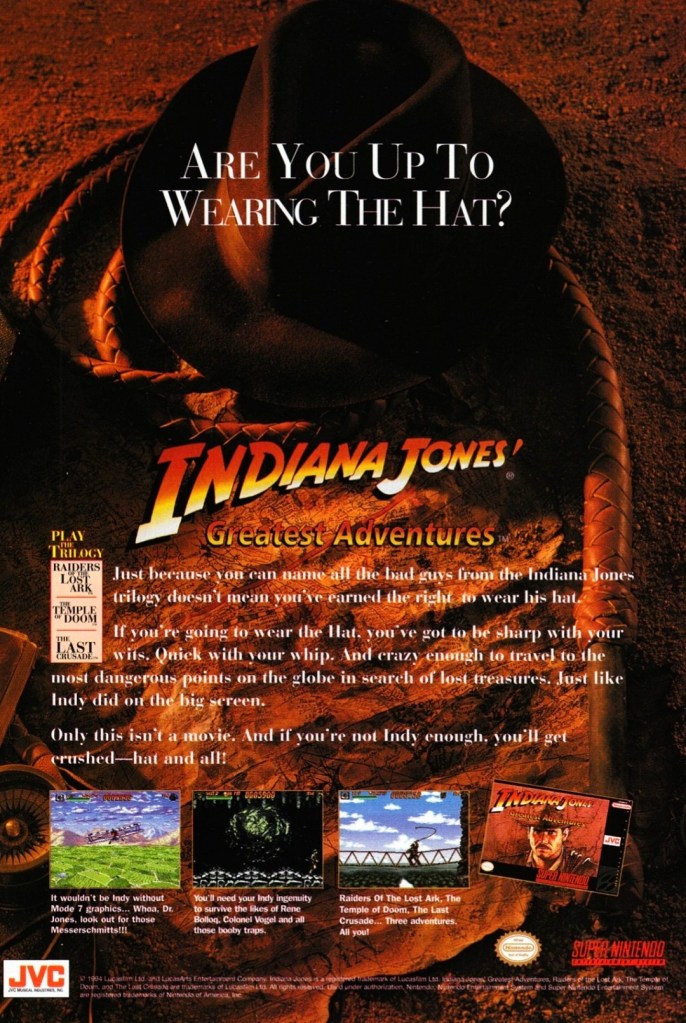
A look back at Indiana Jones’ Greatest Adventures

For those of you who are still feeling nostalgic or still craving for more Indiana Jones-related content, be aware that way back in the mid-1990s, there was an official video game of the cinematic icon – Indiana Jones’ Greatest Adventures. While I myself played the Super Star Wars games on the Super NES back in those days, I never got to play Indiana Jones’ Greatest Adventures which itself was an official adaptation of Raiders of the Lost Ark, Indiana Jones and the Temple of Doom and Indiana Jones and the Last Crusade and made with side-scrolling adventuring in mind with a few Mode 7 sections set up to prevent the game from being too repetitive. Check out the following videos below…

+++++

Thank you for reading. If you find this article engaging, please click the like button below, share this article to others and also please consider making a donation to support my publishing. If you are looking for a copywriter to create content for your special project or business, check out my services and my portfolio. Feel free to contact me with a private message. Also please feel free to visit my Facebook page Author Carlo Carrasco and follow me on Twitter at  @HavenorFantasy as well as on Tumblr at https://carlocarrasco.tumblr.com/ and on Instagram athttps://www.instagram.com/authorcarlocarrasco
A Look Back at Flashback (Super NES)

Disclaimer: This is my original work with details sourced from playing Flashback: The Quest for Identity and doing personal research. Anyone who wants to use this article, in part or in whole, needs to secure first my permission and agree to cite me as the source and author. Let it be known that any unauthorized use of this article will constrain the author to pursue the remedies under R.A. No. 8293, the Revised Penal Code, and/or all applicable legal actions under the laws of the Philippines.

We live in an age in which software exclusivity defines not only the relevance of game consoles but also nature of the entire video game industry right down to the many varied communities of very avid fans (and fanboys).

While the Super Nintendo Entertainment System (SNES or Super NES) and Sega Genesis each had their own exclusive games back in the 1990s, there was one particular game that was made for and released on not just one, not two but rather on more than fifteen different platforms – both consoles and computers – starting with Amiga way back in 1992. That game is none other than Flashback: The Quest for Identity which I first played on our Super NES back in 1994.

The cover of the game box.

For the newcomers reading this, Flashback was a 2D side-scrolling adventure game in the form of a cinematic platformer (note: similar to Prince of Persia and Out of This World) with a strong flavor of science fiction. It was cinematic in the sense that all the in-game animation were rotoscoped resulting unique smoothness combined with hand-drawn backgrounds and the computer-generated cutscenes were used in key parts of the game as the story progressed. Flashback on SNES in America even came with a Marvel Comics-published Flashback comic book and on the rear of the SNES game box were the words “The first CD-ROM game in a cartridge!”

A Flashback remake was released in 2013, followed by a port of the original game released on Sega Dreamcast in 2017, and a remastered version got released for varied platforms in 2018.

I got to play that game at a time when I have not even started playing Final Fantasy II (AKA Final Fantasy IV), Final Fantasy III (AKA Final Fantasy VI) and other great role-playing games (RPGs) of the Super NES. I also remember that Flashback was a nice change of pace for me after playing Super Star Wars: The Empire Strikes Back.

With those details laid down, here is a look back at Flashback: The Quest for Identity, released on Super NES in 1993 by U.S. Gold and developed by Delphine Software International.

The start and options screen.

Early story

The story begins with Conrad running away from two armed persons chasing him. He flies away riding a solo vehicle but those chasing him (riding a huge vehicle) managed to get close and blast his vehicle causing to crash into the forest.

Sometime later, he wakes up and accidentally pushes a mechanical cube to fall down. He climbs down to reach it and activates it. The cube displays a holographic video of himself telling him that he recorded it without remembering it. As Conrad watches, he learns that he must contact a friend named Ian who can explain important things to him.

After viewing the message, Conrad sets off to find his way out of the jungle and somehow get to Ian in New Washington…

Game design and quality

You have to pay close attention to what’s going on, what items do you have and what the in-game prompts tell you.

This game is not your typical fast-paced, action-oriented 2D side-scrolling adventure in which you move from left to right to progress. As it is a cinematic platform game by design complete with very specific controls, players will have to be patient, adaptive and strategic in order to learn how exactly you can control your character, what moves will be executed (and when to execute). For one thing, the very fluid 24 frames-per-second animation on your character limits you in terms of control as timing is required.

To do things properly, you have to execute specific controls. To ascend on a lift, you press Up and the Y button. To do a small jump, have your character stand still and then press Up and Y button. To go down on level (on foot, no lift), stand by the edge of a level then press Down and Y button. To run and hang on to a higher floor automatically, have your character stand still, press Right and Y button, press Y button (once your character moves) and watch him pull it off. With controls like these, the usual 2D platforming approach is out of the question. In my experience, these controls are indeed challenging but never impossible to learn and eventually I got proficient with the controls as I played more.

The in-game animation for the characters are very good and there is also a sensation of weight with your character. Falling straight down from a very high place is a big no-no.

Apart from character controls, you don’t just move Conrad from one screen to the next…you also should do key objectives along the way apart from engaging in action scenes (read: shooting). That being said, you must watch out for icons that appear on screen when your character steps on a particular spot that requires interaction. For example, if you stop by a terminal, an icon will appear serving as a prompt to start the interaction. Another example is when your character steps on the same spot as an item located at which you can pick up once prompted.

More on the action on the screen, you will encounter armed enemies as well as high-tech machines (including floating drones). To overcome them, doing straightforward shooting is not recommended as you have to be strategic before firing a shot. You have to learn how each enemy or machine moves, how much physical space is available right there and how you can maximize your limited time and space to overcome them. In fact, you will also be compelled to take advantage of whatever seconds you have while the enemies’ animation (between moves) take place. There will also be times when you need to have your character armed with the gun before jumping to a lower level where an armed enemy is located and on the lookout. Coming down armed gives you an advantage to shoot first at the enemy who

Considering the 24 frames-per-second animation, you will have to time your moves carefully, especially during moments when you face an armed enemy.

Apart from shooting, you can also use grenades which requires opening your inventory to select a grenade and then do your timing and calculation of the distance in order to pull of a successful throw and explosion. You can also throw stones to distract enemies or to apply weight on key platforms in order to open mechanical doors.

With regards to the quality of gameplay, Flashback is enjoyable but only if you get over its rather high learning curve with regards to the controls which themselves serve as the game’s advantage and even as a disadvantage. In addition to being patient and strategic, you will really have to pace yourself, think more and get used to the rather slow pace of the game in relation to its cinematic platformer design. I should state that as you keep progressing, there will be places, or new obstacles or new enemies that will compel you to change your tactics in order to overcome them. Anyone who is used to playing 2D side-scrolling games the fast and easy way might find the high learning curve and pacing of Flashback a turnoff but if they are willing to learn, adjust and pace themselves, only then can this game’s gameplay be really enjoyed.

Cut scenes like this move at a sluggish pace which shows the limitations of the SNES and cartridge technology.

As for the visuals, the obvious highlight here is the 24 FPS animation which is the result of rotoscoping and careful visualizing (note: observe those alien humanoids who morph into moving blobs). The rotoscoped animation, however, would not have been that effective had the quality of the art used for the backgrounds been made of lower quality. I can say that the background artworks here look pretty good even by today’s standards. The standout among them were the background artworks of Morph’s home planet which really looked very alien and creepy at the same time. What hurts this particular version of Flashback is the lackluster (read: choppy) frame rate whenever the computer-generated cinematic cutscenes (obviously they were meant for more powerful PCs) play which, in my experience, took me out of the story. There were also bouts of slowdown during the gameplay, especially when you encounter enough enemies that were animated sophistically.

With regards to narrative, Conrad is literally your avatar to learn, discover and interact with the many elements of the universe he is part of. There is obvious influence that the game makers took from the movie Total Recall as they crafted Conrad to be someone who lost his memory, moves on to regain it and do a lot of things as he realizes his true purpose and what is really at stake. Unlike Total Recall’s protagonist, Conrad himself is not too interesting mainly due to the way the in-game story was structured. Just play as Conrad and do what needs to be done to complete the game.

When it comes to understanding the narrative, you will have to do lots of reading. You will spot and read the short description of the prompts that appear. You’ll also have to read the on-screen text whenever your character talks with someone during the levels of the game. And there are the captions shown during the slow animated cutscenes.

Conclusion

The background artworks during the late stage of the game are great and truly creative with science fiction in mind.

I can clearly say that Flashback: The Quest for Identity on Super NESis fun and engaging mainly to those who are willing to adjust themselves to it. If you don’t have patience, if you are not willing to think while playing, if you cannot pace yourself and if you are not willing to learn all the specific controls of the game, then you should not be playing Flashback. It is a cinematic platformer and that should tell you that you will need to adjust to enjoy it.

Overall, Flashback: The Quest for Identity on SNES is recommended.

+++++

Thank you for reading. If you find this article engaging, please click the like button below and also please consider sharing this article to others. If you are looking for a copywriter to create content for your special project or business, check out my services and my portfolio. Feel free to contact me as well. Also please feel free to visit my Facebook page Author Carlo Carrasco and follow me at HavenorFantasy@twitter.com
A Look Back at Top Gear (SNES)

Disclaimer: This is my original work with details sourced from playing Top Gear and doing personal research. Anyone who wants to use this article, in part or in whole, needs to secure first my permission and agree to cite me as the source and author. Let it be known that any unauthorized use of this article will constrain the author to pursue the remedies under R.A. No. 8293, the Revised Penal Code, and/or all applicable legal actions under the laws of the Philippines.

Remember back in the early 1990s how impressive the Super Nintendo Entertainment System (SNES or Super NES) was when it comes to fulfilling your early expectations of the enhanced gaming experience aided by new technology?

Super Mario World was astounding the first time I got to play it on our Super NES. The same experience too I had with The Legend of Zelda: A Link to the Past.

And then there was our first Super NES racing game titled Top Gear (not to be confused with the popular motoring media franchise) developed by Gremlin Graphics and published by Kemco.

The game cover.

Concept and Game Design

Top Gear is a car-focused racing game that had over thirty tracks and creatively emphasized the global locations in it. The very meat of the game is its global tournament in which you need to finish at least in 5th place in order to qualify to join the next race.

Creatively, each race has courses that vary in distance, the sharpness of turns (as far as 2D graphics allowed), number of laps and, strangely enough, have certain obstacles that can distract or even surprise such as stones, iron plates and even trees.

Before choosing a car, you must pay attention to the maximum speed, acceleration, tire grip and fuel consumption.

On the player’s side, there are cars offered and they vary in terms of maximum speed, acceleration, tire grip and fuel consumption. Cars also have nitro which come in limited amounts and can be used to give you a boost

For its visual presentation, Top Gear is strictly a split-screen game even during times you play only single-player. In my experience, split-screen is more lively to watch when playing against a fellow human player.

Quality

I can say clearly that Top Gear was highly enjoyable to play, and it was more fun 2-player sessions. On the very gameplay itself, I enjoyed the high-speed challenges that include overtaking other cars on the road while trying to climb up the rankings enroute to the finish line. Speaking of challenges, the aspect of managing your fuel supply while dealing with speeding and overtaking others is memorable and there were times when my car ran out of gas and stopped because I was not able to make a pit stop during the race.

The pit stop itself can be an advantage or disadvantage depending on situations. If you are low on fuel and you still have a long way to go, you need to refuel at the pit stop. However, the more time you spend on the pit stop, the more your opponents traveled catching up with you or increasing their lead over you. There were also memorable times when I had sufficient fuel and my opponent had to refuel at the pit stop. While opponent was refueling, I just kept driving and used the nitro to increase my speed and keep on moving forward.

Split-screen all the time, even when you play single.

Going back to the fuel management aspect, there were times when my car ran out of gas and stopped. Suddenly, an AI-controlled car from behind hit my car and gave me some forward movement. There were a few, unexpected times that my gas-empty car got pushed enough to cross the finish line.

Visually, race courses are limited in the sense that the game only shows split-screen views. You always have a road to travel on which can suddenly turn left or right depending on the race course. What adds visual variety are the surroundings specifically the elements on the sides of the road (examples: the desert environment Las Vegas, the snow of Sweden, the rain forest trees of Brazil) and background art (example: the metropolitan view of Tokyo). Sprite scaling is limited but that is understandable given the limits of the Super NES. Even so, the feeling and look of 3D is sufficient.

Night driving in 2D.

While the sound effects of cars bumping, tires screeching and engines are satisfying, what really stood out is the soundtrack which, for the most part, is energetic and even encouraging enough to keep me and my friends playing. Barry Leitch produced the music and due to the lack of time provided to him, he had to literally recycle and arrange his other musical works from Lotus games.

Conclusion

One car still racing on the road with low fuel, the other car is in the pit stop refueling.

Top Gear was truly a well-made game and it succeeded not only in delivering a true console generation upgrade over our NES for console racing but also created lots of bouts of fun for me and my friends. In my experience, this Kemco-published game was the first true gem of multiplayer on the Super NES. Even by today’s standards, Top Gear remains unique and still is very enjoyable for anyone who loves 16-bit, 2-dimensional console racing.

Overall, Top Gear is highly recommended!

+++++

Thank you for reading. If you find this article engaging, please click the like button below and also please consider sharing this article to others. If you are looking for a copywriter to create content for your special project or business, check out my services and my portfolio. Feel free to contact me as well. Also please feel free to visit my Facebook page Author Carlo Carrasco and follow me at HavenorFantasy@twitter.com