Wow! That was a powerful presentation of 1st party video games at the 2024 Xbox Games Showcase (also referred to as Xbox Showcase) that happened in America very recently. Not only was it better and more exciting than the Xbox showcase of 2023, it made this year’s State of Play and Summer Game Fest look even more lackluster and more unsatisfying. Already there are PlayStation 5 (PS5) fans who begged Sony to do better with their showcase of games because this year’s Xbox showcase – which is also the first of the new age of Microsoft-owned Activision-Blizzard-King – energetic and exciting.
For this post, I will be focusing on one of highlights of the Xbox showcase…the first-ever reveal of gameplay and features of the Perfect Dark reboot (for my previous posts, click here and here). For starters, watch the gameplay showcase video below…
Wow! The Perfect Dark presentation exceeded my expectations on gameplay and it looks like The Initiative (Xbox game studio) and Crystal Dynamics (the studio responsible for many Tomb Raider games over the past several years) really got their creative forces combined to make something unique.
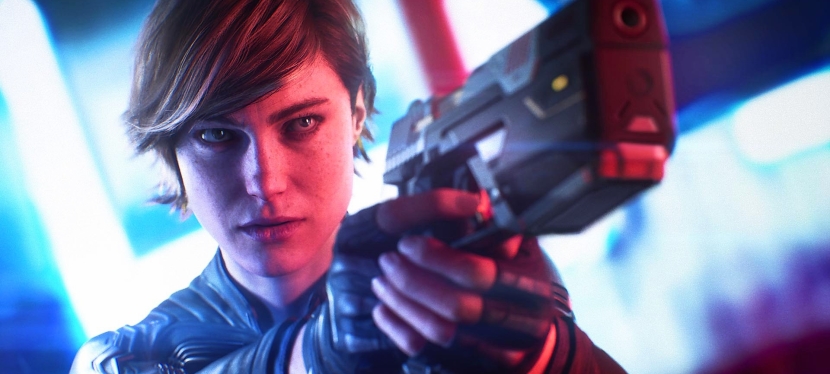
Like the previous games that preceded it, the new Perfect Dark utilizes a first-person viewpoint for immersive gameplay and it has a new version of Joanna Dark introduced featuring the likeness of model Elissa Bibaud. Strangely enough, the new agent Dark does not look too attractive. Perhaps more new images of her will be unveiled someday.
The new Joanna Dark featuring the likeness of model Elissa Bibaud.
Elissa Bibaud’s picture from her Instagram.
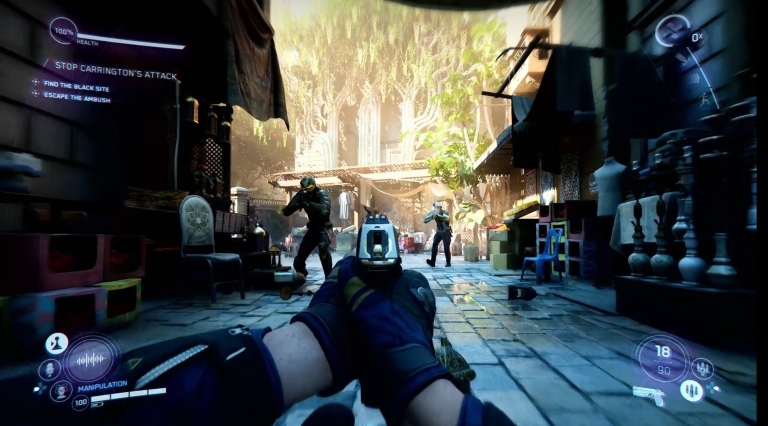
The Initiative and Crystal Dynamics must have brainstormed a lot and worked long to modernize the gameplay for this new game (officially the 4th Perfect Dark game for consoles played at home). What was shown during the video presentation were moments when Joanna Dark used gadgets to do thermal scanning, extract data wirelessly, generate voice-prints and create deepfake audio. Not only that, Joanna is capable of climbing wall pipes, sliding on surfaces and doing wall-running.
Without spoiling the concept of the video too much, I can say that Joanna Dark is already an agent who goes to Garden City in Cairo to find the wanted criminal Daniel Carrington and discover what he has been scheming. With all the details made available by the video and the Xbox Wire piece, Perfect Dark is really a first-person adventure that allows players to figure out what to achieve as they work their way through in missions. This is not just an action-packed first-person shooter.
Perfect Dark is a first-person adventure game laced with sci-fi and espionage elements. Players will be offered opportunities to overcome obstacles in creative ways such as using gadgets to infiltrate places.
Considering what was shown, I can only hope that the game developers will be able to create wide and vertical maps that will allow players to explore a lot more as they take on missions. By today’s standards, linear level designs just won’t cut it anymore. I know for a fact that making an open-world environment will take too much time and effort to complete Perfect Dark, so having wide and vertical maps will be good enough to offer players exploration opportunities.
Strangely enough, the video presentation does not specify which Xbox consoles Perfect Dark will be released for. What was confirmed is that the upcoming game will launch on day one on the Game Pass service which means it will eventually be released on Xbox Series X, Xbox Series S and Windows PC. That being said, Xbox Series X and Xbox Series S owners who are subscribing to Xbox Game Pass (XGP) and Windows PC gamers subscribed already to PC Game Pass will be able to play the new Perfect Dark on launch day someday. I doubt a version of the game will be released for the aging Xbox One consoles.
In this game, you can accomplish your mission objectives by using stealth or by engaging with the enemies directly with guns and other high-tech weapons.
Welcome back Xbox fans, geeks and gamers! As I posted before, I enjoyed playing Senua’s Saga: Hellblade II on my Xbox Series X and eventually I managed finish it. It was indeed a short game (less than ten hours was my play time) and to my surprise, the levels were really linear (which made exploration very limited) and the puzzle-oriented challenges were less challenging compared to Hellblade: Senua’s Sacrifice.
What really impressed the most about Senua’s Saga: Hellblade II were the visuals which had high levels of photo-realism, really detailed facial expressions and astounding cinematic look. Developer Ninja Theory proved itself to be great in using Unreal Engine 5 (UE5) technology and fusing their artistry and all motion-captured performances onto their work.
Apart from solid game designers, Ninja Theory has great digital artists, technicians and very talented performers.
It would be a big shame for Microsoft to close down Ninja Theory. Such a move will destroy the credibility of Xbox.
While I enjoyed Senua’s Saga: Hellblade II and I can say it was worth the long wait, I don’t find the game replay-worthy at all. I don’t feel like wanting to repeat an entire playthrough with it right now. Perhaps in the next six months, I just might consider playing it all over again.
That being said, I really want Ninja Theory to prosper and keep on making more great games that will keep gamers entertained. I think it is also time for the Xbox studio to pause from the Senua franchise of games and start making something new that is also enjoyable to play.
What I’d like to see Ninja Theory make under the Xbox banner is a new action-adventure game that is less cinematic but more focused on large environments, platforming, deep exploration and having a new approach to action.
To understand what I’m saying, check out Ninja Theory’s past works on Heavenly Sword and Enslaved: Odyssey to the West. Watch the videos below…
Of course, there are other genres that Ninja Theory could daringly work on such as role-playing games (RPGs) much in the style of BioWare’s works specifically like Star Wars: Knights of the Old Republic (Star Wars KOTOR) and Jade Empire. They can also add their cinematic approach when making RPGs.
When it comes to zombie-oriented video games, the team behind the Senua games could make a Dead Rising-like game featuring open-world environments, varied missions and objectives, and emphasis on shooting and explosions with regards to action.
Another genre that I think Ninja Theory can challenge themselves with is turn-based tactics gaming. I believe that the Xbox first-party lineup of games is sorely lacking in this type of game. While XCOM already cornered the sci-fi realm of turn-based tactics, perhaps Ninja Theory could do a fantasy oriented game that plays well and carry the team’s cinematic touch.
The way things are right now, it remains to be seen what Ninja Theory could make next under Team Xbox and Microsoft. There is that thing called Project: Mara but there are no details as to what kind of game will turn out from that. I really want Ninja Theory to keep on making more fun-oriented games which would also feature their artistic approach that would really stand out.
Whether you like it or not, the future looks uncertain for Ninja Theory when it comes to what kind of games they will make next, and what creative direction they will take under the banners of Xbox and Microsoft.
Here is hoping Microsoft would not commit the error of closing down the team behind Senua games. I am watching your moves, Team Xbox and Microsoft.
Welcome back, my readers, YouTube viewers and all others who followed this series of articles focused on YouTube videos worth watching. Have you been searching for something fun or interesting to watch on YouTube? Do you feel bored right now and you crave for something to see on the world’s most popular online video destination?
I recommend you check out the following topics and the related videos I found.
#1NHK World’s Game Planet Documentary – If you are very passionate about video games and you want to see gaming through the views of the Japanese and the Chinese, then you should see NHK World’s documentary here. This video documentary is also a must-see for those who love playing the Street Fighter video games. Lots of creative talents from Capcom and Tencent interviewed.
#2 Square Enix decides to drop PlayStation exclusivity and go multiplatform with their business – It was indeed bound to happen and I was not surprised about it. In case you missed the news, Square Enix announced it will drop PlayStation exclusivity in favor of going aggressive with a multiplatform strategy. This is because there was a massive 70% profit drop on the part of Square Enix and sales of the PlayStation 5-exclusive Final Fantasy VII Rebirth were undeniably disappointing. To understand the details better, posted below is one analytical video and one critical video.
#3 Nick Anderson’s notorious 4 missed free throws and disrespect towards Michael Jordan – If you are long-time basketball fan, you would at least be aware of significant events during the NBA Playoffs and the Finals in 1995. I am talking about Nick Anderson who is still remembered as the guy who missed four free throws as his team (Orlando Magic) was already leading by three points ahead of the Houston Rockets (defending champions) during Game 1 of the 1995 NBA Finals. As history recorded, the Houston Rockets swept the Magic 4-0 to win their 2nd straight NBA championship. Going back to Anderson, he is also the same guy who disrespected Michael Jordan during the Eastern Conference semifinals. Posted below are three videos for you to watch.
#4 Reggie Miller’s 8 points in 8.9 seconds – Still with the 1995 NBA Playoffs, here is a look back at the miraculous achievement of Reggie Miller scoring eight points in less than nine seconds during a game against the New York Knicks at the Madison Square Garden. For the newcomers reading this, the playoff rivalry between the Knicks and Indiana Pacers started in 1994 and by the time their rematch in 1995 was realized, collective fan anticipation was already high. There was no better way to raise the stakes in the rematch than Miller’s unexpected 8 points in 8.9 seconds. Watch the video below.
#5 Popcorn in Bed’s reaction video of Deep Impact – In 1998 here in the Philippines, I saw the sci-fi film Deep Impact in a cinema during its first week of release. It was entertaining to watch given the sci-fi spectacle, the concept and, of course, the wide cast of actors that includes the legendary Robert Duvall in a really solid supporting role. What is most notable about Deep Impact is the fact that it was made to spark emotion from viewers and that is most inevitable in the movie reaction video by Popcorn in Bed. With the current number of Deep Impact reaction videos available on YouTube as of this writing, the best one is viewable right below…
#6 HolyLandSite’s video of the tour of the Oaks of Mamre in Israel– Recently HolyLandSite released their newest Holy Land video focused on the Oaks of Mamre in Israel which is the historical and biblical site where the Abrahamic Covenant was given. Oaks of Mamre is filled with evidence that it is indeed the very place where Abraham met God. God’s covenant has always been with the Jewish people (read Genesis 17:15-21 in the Holy Bible). This video also has biblical lessons for those who follow Lord Jesus and the Word of God. May this also remind you that the ties between Jews and Christians are biblical.
#7 Retrospective video about Konami’s X-Men arcade game – Just a few years before Capcom and Marvel Comics teamed up for the production of arcade games featuring superheroes and the publisher’s own characters, Konami literally rocked the arcades with a lot of fun with the X-Men arcade game of 1992. Using the established character designs from the 1989 cartoon X-Men: Pryde of the X-Men, the arcade game allowed players to choose one of six superheroes to play as (listed were Cyclops, Wolverine, Dazzler, Storm, Colossus and Nightcrawler) and engage in side-scrolling beat-them-up action fighting the many minions of Magneto. The X-Men arcade game was undeniably successful and impacted the way people enjoyed multiplayer sessions in the arcades. You can learn more from this in-depth retro gaming video by PatmanQC.
#8 FilmComicsExplained’s Demolition Man video analysis – When I first saw Demolition Man (1993), I perceived it as a Sylvester Stallone action movie laced with futuristic science fiction (sci-fi) concepts. I noticed the film’s portrayal of what future society could become and what futuristic technologies could be used by people. By today’s standards, Demolition Man is perceived to be prophetic with its presentation and the video by FilmComicsExplained takes an in-depth look into it. It is a must-see!
#9 The death of wicked Iran’s president – Since 1979, Iran became wicked and its government has officially been sponsoring terrorists and terrorism activities in the Middle East for far too long. In case you missed the news, the president of Iran died in a helicopter crash recently and there were other fatalities with him. The president of Iran not only publicly called for the destruction of Israel, he is also responsible for harming minorities and political opponents, hurting protesters in Iran and more. There are reasons why the dead president has been called the Butcher of Tehran. For a clear view and analysis over the death of the president of Iran, watch the selected videos below. Do not trust Islamo-Leftist mainstream news media as they support terrorism.
Welcome back, my readers, YouTube viewers and all others who followed this series of articles focused on YouTube videos worth watching. Have you been searching for something fun or interesting to watch on YouTube? Do you feel bored right now and you crave for something to see on the world’s most popular online video destination?
I recommend you check out the following topics and the related videos I found.
#1Larry Bird’s memorable big game of 1992 – If you love American basketball and the modern day NBA does not appeal much to you, then you should go back to the year 1992 when the legendary Larry Bird had his last big game before retiring. During his final years in the NBA, aging and a serious back injury hounded Bird as he kept on leading the Boston Celtics. In March 1992, the Celtics hosted the strong Portland Trailblazers and this was the game when Larry Bird scored 49 points and even registered a triple-double at the age of 35. That being said, watch the highlight video below…
#2 Score PN’s Terminator 3: Before The Rise video – Score PN, a YouTube channel that is best known for its in-depth videos about the Resident Evil entertainment franchise, also produced videos related to The Terminator. Back in 2003, Arnold Schwarzenegger had a big cinematic comeback with Terminator 3: Rise of the Machines which I saw inside the cinema when it opened here in the Philippines. Back then, I was not even aware that a prequel comic book limited series of Terminator 3 was published and Score PN has a video about it which you can watch below. By the way, Score PN also produced videos about comic book adaptations of Batman movies which I highlighted previously.
#3 Vizconde Massacre explanatory videos – Previously, I included Viva’s video showing the entire 1995 movie The Jessica Alfaro Story. For the newcomers reading this, Jessica Alfaro (played in the movie by Alice Dixson) was the star witness of the trial of the shocking Vizconde Massacre and it took her around four years to come out publicly. For legal reasons, The Jessica Alfaro Story film made alterations (creative liberties) to make a reference to the massacre without the Vizconde name. That being said, if you want to know more about the Vizconde Massacre of 1991, the trial that happened and the big decision the Supreme Court made in 2010, then you should watch these two explanatory videos. The third one analyzes the legal aspect of 2010 Supreme Court decision related to the massacre.
#4 RoboCop 2 reaction videos plus arcade/console game documentary – Back in 1990, my friends and I got to watch RoboCop 2 inside the movie theater here in the Philippines and almost all the seats were filled at the time. While the movie was not memorable as it never came close to matching the uniqueness and cultural impact of the 1987 original RoboCop, it still managed to entertain enough people who eventually became fans. Like its predecessor, RoboCop 2 also had game adaptations for the arcade and consoles. Watch the videos below…
#5 A look at the history of Area 51 arcade/console games – Back in the mid-1990s, Area 51 by Atari was a huge hit in the arcades in the West and was perceived as a comeback for the said company. Area 51 was so successful, it prevented Atari from falling into financial disaster and versions of the game were released for Windows PC, PlayStation and Sega Saturn. Not only that, a spiritual sequel to Area 51 was released in 1997 with Maximum Force. To learn more about Area 51’s place in gaming history, watch the video below…
#6 Stand by Me movie reaction videos plus trivia video– If you are fond of movies based on the writings of Stephen King, then Stand by Me (1986) should have been part of your watch list a long time ago. It was an acclaimed coming-of-age film directed by Rob Reiner and has been described by some as one of the most defining movies of the 1980s. It is no surprise that there are retro movie reviews, movie reaction videos and trivia videos about it. You can watch the selected movie reaction videos plus a movie trivia video below…
#7 The liar and manipulator Abby Martin crushed by son of Hamas!– It is very sickening that there are still people here in this world who chose to be evil and do the works of Satan. I am talking about Abby Martin, a self-declared journalist who is actually a liar and manipulator. Do not let her good looks and media style fool you. Abby Martin constantly condemns the nation of Israel as she clearly took sides with the terrorists and supports the Palestinian agenda of wiping out the Jewish state. She might as well be working with wicked leaders of Iran. Watch this video of Abby Martin getting crushed by the son of Hamas. Remember that Abby Martin is clearly working with the terrorists and murderers. Never let Abby Martin poison your minds!
#8 The disappointing interview with the Xbox president– Since early this year, gamers’ trust in Xbox weakened due to unexpected developments such as Microsoft deciding to release four Xbox-exclusive games to other consoles. Since then, a lot of Xbox fans have been speculating that in due time Xbox itself will change for the worse and eventually end to pave the way for Microsoft to become a multi-platform game publisher. That being said, the downward trend of Xbox continued as four of its game studios – Tango Gameworks, Alpha Dog, Roundhouse Studios and Arkane Studios – were suddenly shut down which sent shockwaves throughout the industry and attracted negativity to Xbox. Not only that, there was this very disappointing interview with Xbox president Sarah Bond which made things worse. Posted below is the video of the very interview itself plus one reactionary video from Geeks and Gamers.
Welcome back Xbox fans, geeks and gamers! I want to share with you that in recent times, I played and finished Tomb Raider: Definitive Edition (2014) on my Xbox Series X console.
This is not a retro review of the said game. I want to share with you all that I played Tomb Raider (2013) on my Xbox 360 a long time ago. While the game was indeed fun, I never actually replayed it. That being said, Tomb Raider: Definitive Edition was my way of replaying it except that I have a more modern console to enjoy it with plus more gaming content. I accumulated over 300 Microsoft points (Xbox achievements) along the way.
The very intense action sequence in Tomb Raider: Definitive Edition.
The overall game design by Crystal Dynamics is still fun to interact with and the game’s production values are still of good quality. What I liked most with Crystal Design’s work is the way they designed the tale to immerse players into the action-packed settings while also succeeding in redefining the iconic Lara Croft with both long-time fans and new gamers in mind. Achieving these two goals together is very challenging for most game developers.
For the newcomers reading this, the Tomb Raider reboot of 2013 has a story concept filled with chains of unfortunate events that players will experience as Lara Croft who in turn has to overcome tremendous obstacles to survive and help her companions live on.
The new Lara Croft that Crystal Dynamics came up with is a young British woman (played by Camilla Luddington) who is about to become the Tomb Raider (the brave explorer). Early in the 2013 game, Lara learned a lot about archaeology from her travels with her parents (note: her father is an established explorer) who went on several expeditions. In different times, she eventually lost her parents which led to her inheriting the family fortune while receiving care from Conrad Roth. Lara joins a group in what turned out to be her first-ever expedition with the goal to find the lost kingdom of Yamatai.
Crystal Dynamics’ revision of Lara Croft is radically different from the original version of the early Tomb Raider games that I played on PlayStation in the 1990s. The modern Lara – as defined in the 2013 reboot and the two sequels released in 2015 and 2018 – is a survivor who went through lots of pain and killing as she faced armed opposition (the group Trinity is the antagonistic force in Rise of the Tomb Raider and Shadow of the Tomb Raider) that got in her way. By comparison, the original Lara Croft of the 1990s was a rich and very talented explorer who negotiates with prominent clients to do jobs (adventures around the world) that they can’t do.
Going back to the 2013 game, Lara Croft was portrayed to be vulnerable as the odds are so strong against her. Crystal Dynamics designed the game to make players relate with Lara’s gradual development into a fighter, survivor and hunter. This includes gameplay elements that were introduced from one stage to the next. That being said, by the time I reached the final stages of the game, I became experienced with the new capabilities Lara gained such as climbing, jumping great distances, shooting, firing with arrows, skinning the hunted animals, solving environmental puzzles and finding ancient artifacts.
Whether you play the 2013 game or the Definitive Edition, it is clear that Crystal Dynamics’ work on Tomb Raider is an undeniable success as they strongly redefined Lara Croft while establishing rock-solid gameplay. Crystal Dynamics hit their creative peak in Rise of the Tomb Raider (which I finished on Xbox One) before giving way to Eidos-Montreal (as lead developer) and provided support in Shadow of the Tomb Raider (I also finished this on Xbox One).
Screenshot captured from the very late stage of Tomb Raider: Definitive Edition.
Personally, I like the 2013 modernization of Lara Croft. While she is not the eroticized figure the original Lara of the 1990s was, she still has a strong sex appeal and the way she was portrayed in the three games (2013-2018) made sense as her personally kept developing in a believable fashion with each new game. That being said, I just hope that Crystal Dynamics and its partners will not ruin the gaming icon with wokeness, identity politics and the garbage of the Leftists in future big-budget Tomb Raider games. Lara Croft is well defined with adventuring, exploration, survival and a fighter against evil forces.
Elements of wicked Iran (wicked since 1979) would serve as fitting enemies of Lara Croft in a future big-budget Tomb Raider game. This one is from Tomb Raider #1 (1999). Iran is a terrorist state and the chief sponsor of terrorists.
I am watching your moves, Crystal Dynamics. Don’t forget you have a responsibility to the fans. Please avoid falling into the temptation of turning the Tomb Raider franchise and Lara Croft herself into woke agenda vehicles. Going woke means betrayal towards fans and doing things the very wrong way.
Welcome back readers, fellow geeks and electronic gaming fans!
In this edition of the Retro Gaming Ads Blast (RGAB) series, we will take a look at another batch of retro gaming print ads from the 1980s and 1990s.
For the newcomers reading this, Retro Gaming Ads Blast (RGAB) looks back at the many print ads of games (console, arcade, computer and handheld) that were published in comic books, magazines, flyers and newspapers long before smartphones, social media, the worldwide web and streaming became popular. To put things in perspective, people back in the 1980s and 1990s were more trusting of print media for information and images about electronic games and related hardware.
With those details laid down, here is the newest batch of retro gaming print ads for you to see and enjoy…
1. Enemy Zero print ad
I should say Sega did a solid job by making this intriguing and eye-catching print ad for Enemy Zero.
The first time I saw this print ad of Enemy Zero in the late 1990s, I was intrigued by its visual concept and it got me interested to learning more about the game. Enemy Zero was a sci-fi video game developed by Warp and released as a console-exclusive on the Sega Saturn. Since I never owned a Saturn, I never got to play the game but I was inspired to learn more about Warp (which developed the hit game D). As it turns out, Enemy Zero started as a project for PlayStation but because of Sony’s failure to fulfill the pre-orders of D on PlayStation (100,000 copies ordered but less than 30,000 copies printed by Sony), Warp’s head Kenji Eno decided to make Enemy Zero exclusive to the Sega Saturn. Enemy Zero was published by Sega worldwide while Warp published it in Japan, and the game sold between 500,000 to 700,000 copies (based on Eno’s claim).
2. Bionic Commando print ad
For the American market, Capcom showed what the game box and front cover art would look like, then added the details and two screenshots for readers to examine.
Back in the late 1980s, I played Bionic Commando and managed to finish it after enduring lots of challenges along the way. It was a very unique adventure game as it used a highly unusual method of moving from one platform to the next by means of a futuristic grappling gun. This particular print ad showcased what the game’s actual box looked like (with cover artwork made for North America) and used two screenshots from the game. This ad hardly captures the excitement and intensity that awaited gamers and yet it manages to give people a clear look at the grappling concept. While the North American version of the game has certain content altered, it still had the same gory ending (and Adolf Hitler as the main villain) as the Japanese version.
3. RoboCop print ad
This served as an extension of the impact of the very violent 1987 movie.
RoboCop made huge impact on moviegoers as well as people who love science fiction and the R-rated action films Hollywood studios released in the 1980s. That being said, it was not surprising that a video game of RoboCop was released on the Nintendo Entertainment System (Family Computer in Japan) by Data East and the print ad they came up with cleverly used imagery from the movie poster and the screenshots showed exactly what RoboCop fans expected to see such as the enemy robot ED-209 and thugs. This game strongly reflects the business trend of the 1980s when companies made merchandise and adaptations of R-rated blockbuster films to sell to kids and teenagers.
4. Gex 3: Deep Cover Gecko print ads
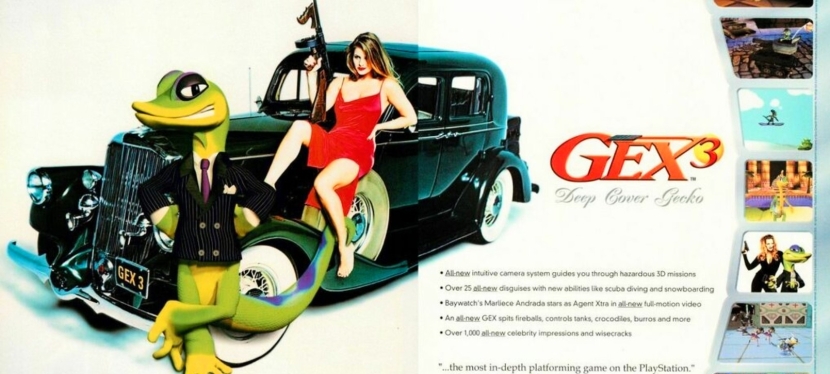
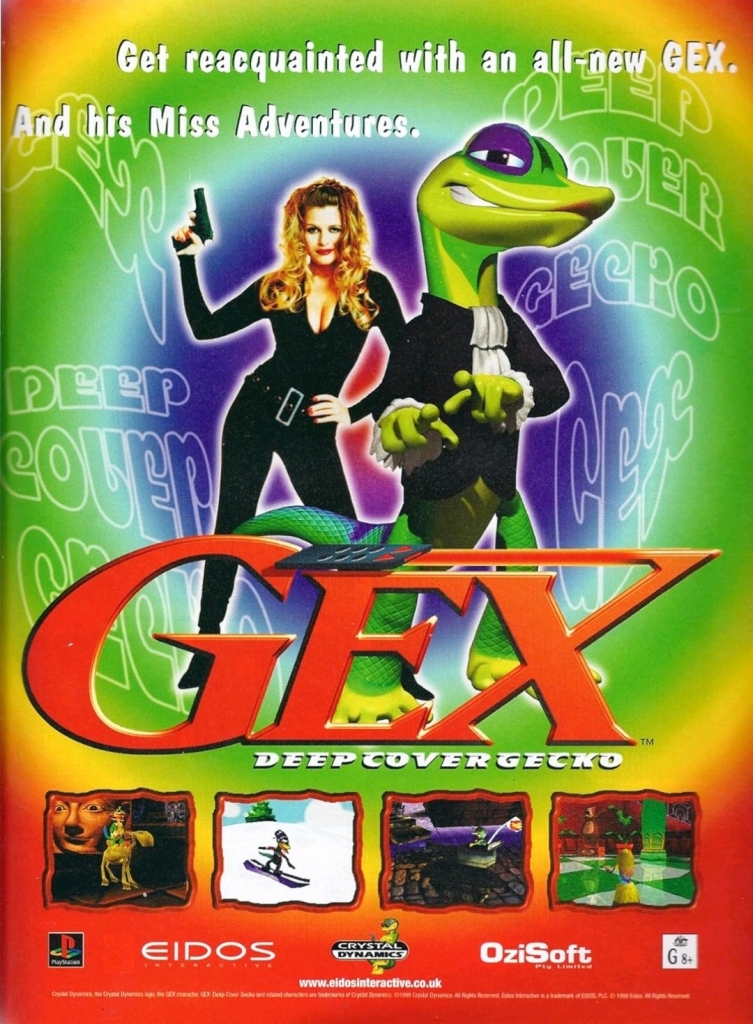
This print ad for Europe had a James Bond vibe.
March 1998 Playmate of the Month on the hood of the car looking at Gex.
The 2-page print ad of Gex 3: Deep Cover Gecko.
In 1999, Eidos Interactive – the company behind the wildly popular Tomb Raider games of the decade – became aggressive marketing Gex 3: Deep Cover Gecko for PlayStation and Nintendo 64. They were so aggressive, they featured actress and Playboy’s Playmate of the Month (March 1998) Marliece Andrada alongside their star character Gex in the marketing which was not limited to America. For the newcomers reading this, a multimedia approach was implemented on the narrative of the game’s PlayStation version which explains why it has full-motion video sequences featuring Andrada as the character Agent Xtra. As seen in these print ads, Eidos Interactive had Andrada looking pretty and sexy to really sell the game.
5. Barkley Shut Up and Jam! print ad
Anyone here a Charles Barkley fan?
I remember the many types of basketball video games that were released on game consoles back in the 1990s. While there were NBA video games that had in-depth rosters of players with seasonal gaming in mind, there were other basketball-related video games that were not about the said league but featured an NBA star. In this print ad, publisher Accolade prominently featured NBA star Charles Barkley to promote the game Barkley Shut Up and Jam!, posted some words emphasizing sports intensity, and showed one screenshot to assure gamers that this is a basketball game. While the critical reception was mixed, the game must have sold enough to convince Accolade to release a sequel two years later with Barkley still the endorser.
6. The Death and Return of Superman print ad
This print ad clearly aimed for the fans of the comic books as well as gamers looking for an action-packed game to play.
Now this is one very eye-catching print ad that appeared in comic books and magazines in the 1990s. Anyone who knows comics would recognize the grey fist (with sharp bones protruding on the knuckles) belonging to Doomsday who killed Superman in Superman #75 (1993), and the bloody presentation on the famous S was very aggressive for its time. The game itself was an adaptation of the two storylines (published in 1992 and 1993 respectively) that saw Superman’s death, his return and the appearances of new Supermen. While sales figures are not available, The Death and Return of Superman eventually attracted mixed reviews from the critics.
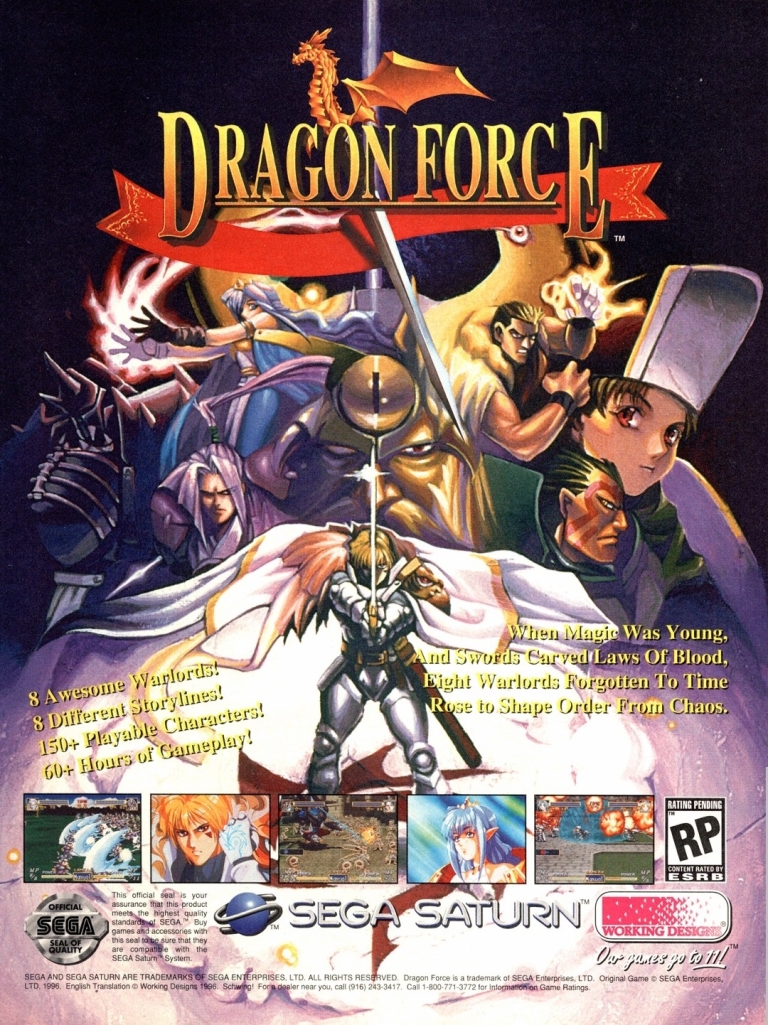
7. Dragon Force print ad
This was printed in magazines at a time when Working Designs had a strong business relationship with Sega.
While the Sega Saturn was undeniably a huge commercial disappointment in North America, the console still had some great games that was widely praised by game critics and heavily bought by gamers. One of those outstanding games on the console was Dragon Force (developed by Sega and J-Force in Japan, localized in America by Working Designs) which received great critical acclaim and achieved commercial success both in Japan and in America. The popular magazine Electronic Gaming Monthly named Dragon Force as the Saturn Game of the Year as well as Strategy Game of the Year in 1996. As a Working Designs release, this print ad has an ambitious fantasy concept visually emphasized, detailed lines of descriptions and screenshots that strongly appealed to the gamers, anime enthusiasts and those who love fantasy. This ad is also a sad reminder that the business relationship between Sega and Working Designs went downhill afterwards (read: Bernie Stolar) and the sequel Dragon Force II was never released outside of Japan.
Welcome back readers, fellow geeks and electronic gaming fans!
In this edition of the Retro Gaming Ads Blast (RGAB) series, we will examine print ads from the 1980s and the 1990s that caught my attention and I will explain why they are worth look back at.
For the newcomers reading this, Retro Gaming Ads Blast (RGAB) looks back at the many print ads of games (console, arcade, computer and handheld) that were published in comic books, magazines, flyers and newspapers long before smartphones, social media, the worldwide web and streaming became popular. To put things in perspective, people back in the 1980s and 1990s were more trusting of print media for information and images about electronic games.
With those details laid down, here is the newest batch of retro gaming print ads for you to see and enjoy…
1. Operation Wolf print ad
Even though there were screenshots from the game, this was still an eye-catching print promoting Operation Wolf for the Nintendo Entertainment System.
Looking back at the history of pop culture, the 1980s saw the surge of Hollywood action movies that emphasized or even glorified militarism. Arnold Schwarzenegger, Sylvester Stallone and Tom Cruise were just a few Hollywood stars who found success playing military figures. It was not surprising that there were game developers in Japan who noticed the Hollywood military trend and were inspired to make games that had similar themes. The Japan-based company Taito developed and released the light gun shooter arcade game Operation Wolf which became a huge commercial success worldwide. Unsurprisingly, versions of Operation Wolf were eventually made for the existing home computers and game consoles of the time.
The above print ad of the Nintendo Entertainment System (NES) version of Operation Wolf only showed the official artwork, descriptive text and noticeably no gameplay screenshots. While the ad made the NES version of the game look exciting to look forward to, the actual game looked and felt nothing like the arcade version as the console’s limitations resulted in really small 2D sprites (which made shooting tough) and the 2D art used were rather ugly to see. I can only speculate that the people at Taito knew their product for the NES had sub-par quality and only hoped for the best trying to fool gamers to buy it.
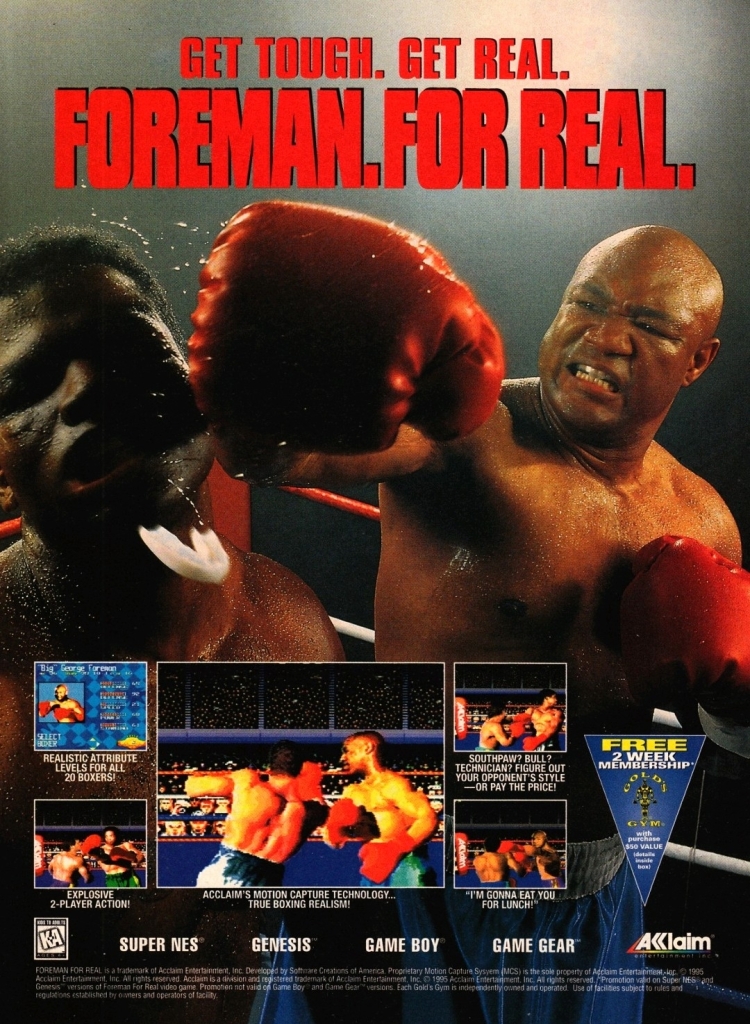
2. Foreman For Real print ad
Apart from boxing and endorsing grills, are you aware that George Foreman is also a worship leader and preacher of God’s Word?
In late-1994, George Foreman knocked out Michael Moorer to reclaim the heavyweight boxing title and the last time he had it was way back in 1974. For the newcomers reading this, Foreman halted his professional boxing in 1977, established his connection with God, preached His Word, opened a youth center and became a major product endorser. Foreman came back into fighting in 1987 and stunned everyone when he became heavyweight champion seven years later.
That being said, it was no surprise that game publisher Acclaim (which already released a video game with the boxer in 1992) quickly returned to Foreman to get him as the titular endorser in the 1995 video game Foreman For Real which was released on multiple gaming platforms less than a year after his championship victory. Apart from showing Foreman’s dominating image and screenshots from the game, the ad even had a promo of a free 2-week membership with Gold’s Gym. This ad was a lively reminder of the significance of Foreman’s presence in professional sports and it was instantly eye-catching.
3. BurgerTime print ad
Arcade hits like BurgerTime also made it into personal computers.
Previously, I showed an eye-catching print ad of the arcade classic BurgerTime. This time, the BurgerTime print ad shown here focused more on the IBM and Apple computer versions. This print ad had a photograph of an actor playing chef Peter Pepper carrying a huge burger bun running away two eggs and a hotdog, and near them were the respective boxes of BurgerTime for IBM and Apple. This is a sharp change of visual style away from the comic book-style art used in the other BurgerTime print ad. I can only imagine how excited IBM and Apple computer users became after seeing this ad back in the 1980s.
4. Shining Wisdom print ad
Even though this was a very eye-catching ad that appeared in several publications, Shining Wisdom went on to become a forgotten game after receiving mixed reviews from game review writers.
Here is another print ad of Working Designs from the 1990s. Released only on the Sega Saturn in 1996, Shining Wisdom was a fantasy action-adventure game from Japan that publisher Working Designs localized with North Americans in mind. This meant taking lots of creative liberties with the story, name changes, insertions of pop culture jokes and even altered the personalities of the characters. Developed by Sonic Software Planning and Camelot Software Planning, Shining Wisdom started as a project for the 16-bit console Mega Drive (Sega Genesis in America) that was revised for the more powerful Saturn console. While this print ad caught the attention of gamers and readers, Shining Wisdom received mixed reviews from critics upon release. Sadly, not too many gamers talk about this game anymore.
5. Cabal print ad
Military action and shooting strongly emphasized in this print ad for the Nintendo Entertainment System version of the arcade smash Cabal.
Like many games released in the 1980s, Cabal had a strong military theme and allowed players to engage in bouts of shooting playing soldiers who have to fight entire armies of bad guys. This print ad about the Nintendo Entertainment System (NES) version of the game had really nice art dominating the page, the packaging of the game plus three screenshots showing what gamers could expect. This was a very eye-catching print ad that made Cabal look both exciting and enticing.
6. Metal Gear print ad
Wow! So many weapons and pieces of equipment displayed in this Metal Gear (NES version) ad.
Back in the late 1980s, the NES port of Metal Gear had a notable promotion in America thanks to this cleverly designed print ad. When it comes to emphasizing “gear” from the title, the marketing team emphasized the words “Gear up” and literally filled the ad spaces with lots of pieces of equipment that was not only eye-catching but also gave readers the idea that a huge adventure awaits them in Metal Gear. As for the game box on the lower left corner of the print, the cover art highlighting the character Snake was an artistic copy of a still image of actor Michael Biehn as Kyle Reese in The Terminator (1984). This print ad was both entertaining and intriguing to look at.
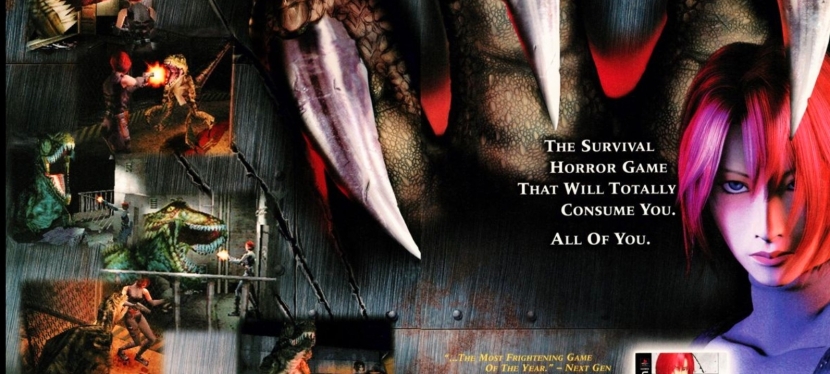
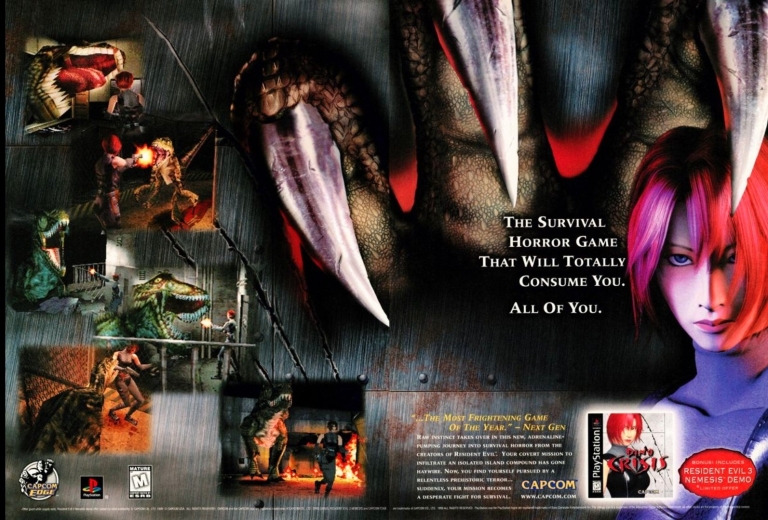
7. Dino Crisis print ad
For many gamers, Dino Crisis was like a combination of Resident Evil and Jurassic Park and this visceral looking print ad really got lots of people interested in the game.
In 1999, Capcom released Dino Crisis for PlayStation in America and the timing was almost perfect as millions of gamers who owned the console enjoyed the releases of Resident Evil and Resident Evil 2 (both games from Capcom) firmly establishing the survival horror genre as a popular one. That being said, a lot of RE fans anticipated the release of Dino Crisis due to the fact that the game shared several elements with Resident Evil games in terms of exploration, survival, control and shooting. Not only that, Resident Evil creator and original game director Shinji Mikami was in charge of the making of Dino Crisis. Mikami pointed to the films The Lost World: Jurassic Park (1997) and Aliens (1986) as influences on making the game which for most gamers was perceived as “Resident Evil filled with dinosaurs.”
The print ad above had a very engaging visual design that symbolized action, horror and tension well. Mikami clearly wanted gamers to experience the intense violence of encountering dinosaurs and this ad gave viewers a small sample of that. It’s safe to say that this print ad was effective as Dino Crisis went on to sell millions of copies and established Regina (the red-haired lady in the ad) as another memorable character from Capcom.
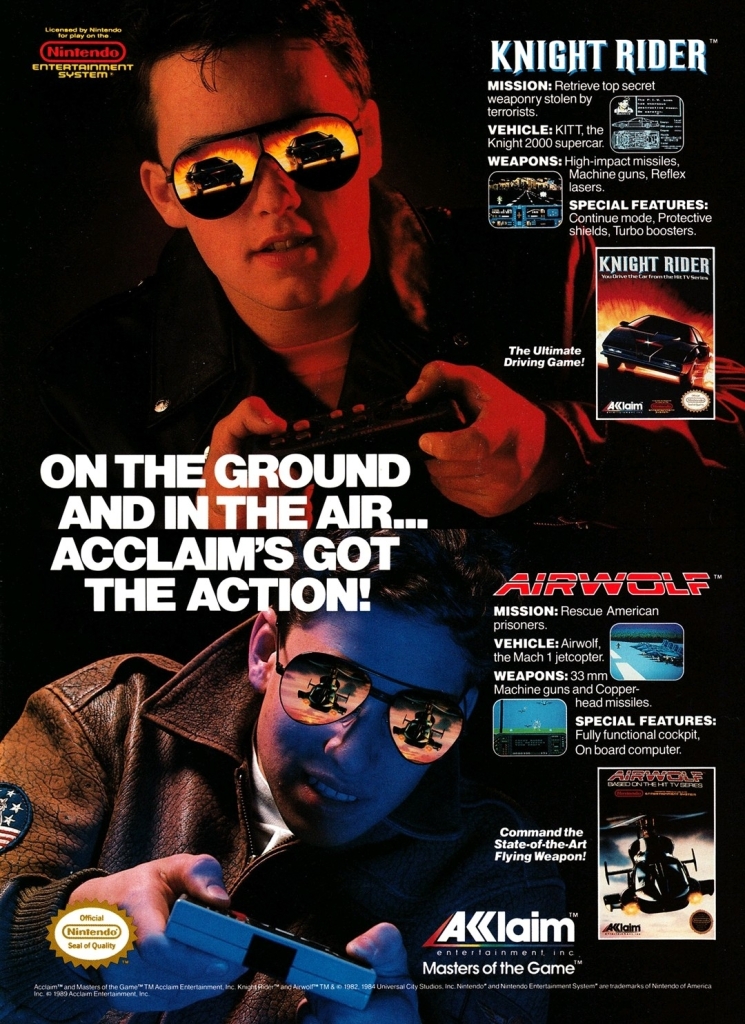
8. Airwolf/Knight Rider games print ad
Very clearly, the advertiser focused on the cool look to sell the games of Airwolf and Knight Rider.
Back in the 1980s, Airwolf and Knight Rider were wildly popular TV series that each had winning formulas to entertain millions of viewers with action, suspense and storytelling. It was not surprising that video game adaptations of them were produced on the Nintendo Entertainment System (NES). This particular print ad was an efficient way of promoting the Airwolf and Knight Rider games which featured two players looking cool with jackets and sunglasses. Acclaim clearly aimed for the TV series’ fans and slightly older players among the NES owners/users.
Finally, an old wish of mine came true as GungHo Online Entertainment America, Inc. (GOEA) officially announced that the Grandia HD Collection – which contains the classic Japanese role-playing game Grandia and its sequel Grandia II – will be released on Xbox consoles on March 26, 2024. For the newcomers reading this, the said collection of the two Grandia RPGs was previously released for the Nintendo Switch and on PC in 2019. Grandia HD Collection has been listed on the Xbox store.
This surprise development is definitely much more exciting and better than Team Xbox’s releasing four Xbox-original games on PlayStation and Nintendo consoles. For your excitement and enlightenment, watch the latest Grandia HD Collection announcement and trailer below…
To understand what the collection contains, posted below is an excerpt from the official announcement by GOEA. Some parts in boldface…
The GRANDIA HD Collection features two genre-defining role-playing games: GRANDIA and GRANDIA II. These games send players on epic adventures with protagonists Justin and Ryudo, respectively, to explore the worlds of GRANDIA and protect them from the forces of evil.
Two Nostalgic Stories: Fans can follow both iconic journeys in the world of GRANDIA with various upgrades once more. Discover what lies beyond the End of the World with the young adventurer Justin in GRANDIA and, eons later, protect the world from eternal darkness with mercenary Ryudo in GRANDIA II.
Modernized Visuals: This version of GRANDIA and GRANDIA II includes enhanced UI, sprites, and texture art that brings the iconic look of the retro classics to contemporary standards, including widescreen support and visually enhanced original cinematics.
A battle from Grandia.
This is what a battle looks like in Grandia II which had fully polygonal graphics.
Classic Old-School Combat: The GRANDIA series features classic RPG combat, with physical attacks and elemental spells in a battle system that combines real-time and turn-based mechanics. The addition of Hard Mode gives players a memorable challenge as they explore the world of GRANDIA II.
Language Support: The GRANDIA HD Collection includes Japanese and English audio options, as well as language support for English, French, German, Japanese, Korean, and Chinese (simplified and traditional).
I am really delighted that Grandia HD Collection is coming to Xbox (note: made for the Xbox One console which is fully compatible with Xbox Series X and Xbox Series S consoles) as I played and enjoyed the original Grandia game on PlayStation way back in 1999.
I do remember Grandia having a very imaginative fantasy world with a story cleverly structured to take players from one location to another to visit new places, meet new characters or tribes of people, and engage in quests. Playing that game was a whole lot of fun because developer Game Arts (the same team behind the Lunar RPGs) crafted a battle system that is highly playable and addicting. As I played Grandia, I saw the playable characters really develop not just with their personalities but also their battle and magic abilities.
Not only that, the music written by Noriyuki Iwadare was great to listen as I played. I also love the artistic approach applied on Grandia which had 2D sprites for the characters and monsters, nicely textured 3D polygonal environments, and very imaginative artworks (including those in animated cutscenes).
Grandia had characters and monsters in 2D sprite forms, as well as detailed textures on the 3D polygonal environment.
Of course, the many quests gradually built-up the tension of the main plot which turned out to be a grand event. Game Arts knew how to execute handsome pay-offs in relation to the build-up that preceded them. That being said, Grandia’s conclusion was really memorable to see.
If there is anything I hope to see within the Grandia HD Collection, it would be improvements on the English translation and the voice acting of the characters because the PlayStation version of Grandia that I played was lackluster with those mentioned elements. Clearly Sony Computer Entertainment (the publisher of Grandia on PlayStation) did not aim high with quality for the game’s American release.
As for Grandia II, I never got to play it as I never had a Sega Dreamcast nor a PlayStation 2 (PS2) console. I do remember some Dreamcast gamers expressing fondness and high enjoyment of the game and there were even a few who enjoyed it more than its predecessor. That being said, Grandia II’s inclusion in the Grandia HD Collection is an added incentive for me to purchase the collection for my Xbox Series X.
A mini-game in Grandia II. The sequel went all-in with 3D polygons which made it a big showcase of art and graphics on the Sega Dreamcast. The PlayStation 2 version of this game reportedly had inferior graphics.
In recent times, Team Xbox and their studios officially confirmed that the Xbox-original (read: previously Xbox-exclusive) games Pentiment, Hi-Fi RUSH, Grounded and Sea of Thieves are heading to consoles of Sony and Nintendo. This is the result of what was discussed during the podcast (note: “the four games”) that had top Xbox officials updating people about their business plan and current direction. In case you missed that, watch the podcast right below…
To make things clear for the newcomers reading this, Team Xbox itself has already been publishing games on non-Xbox platforms for several years now. I’m talking about established titles like Minecraft and, in very recent times, the many games of Bethesda. By adding the newly acquired Activision-Blizzard into the Xbox family of companies, you can see Team Xbox’s publishing side has grown even bigger and the business impact should be felt over the next few years.
That being said, I should state that Phil Spencer and his Xbox team leaders should NOT neglect Xbox fans even as the business is moving towards multi-platform publishing and the “console-less” future in the 2030s.
In relation to what Spencer said during the podcast, the single-player games his team heavily invested in such as Starfield, Forza Motorsport (2023), Forza Horizon 5, Senua’s Saga: Hellblade II, Avowed, Indiana Jones and the Great Circle are still exclusive on Xbox consoles plus Windows PC and Xbox Game Pass (the popular subscription service itself will not be made available on non-Xbox platforms anytime soon).
There are also more Xbox-exclusive titles that have yet to be released such as Towerborne, South of Midnight, Clockwork Revolution, The Outer Worlds 2, the Fable reboot plus the very delayed ones such as Perfect Dark and Everwild.
While it is true that those are a lot of Xbox-exclusive games that fans and other gamers (who are seeking fun and unique games to play that are NOT available on PlayStation and Nintendo consoles) can look forward to over the next few years, I still say that Team Xbox should invest more to make even more exclusive games and become more aggressive.
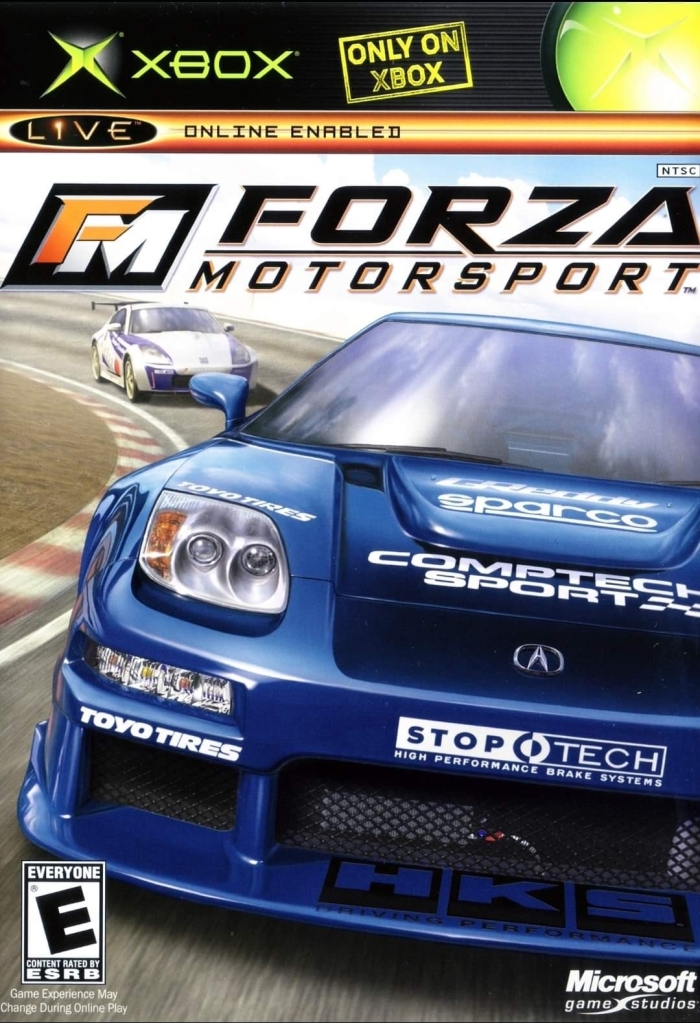
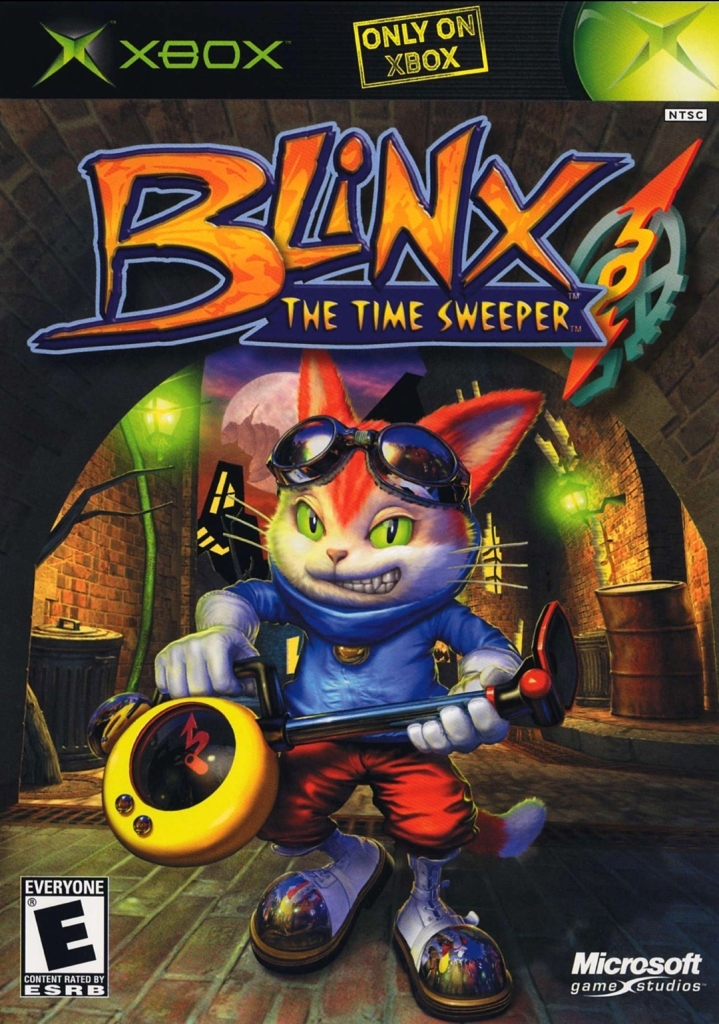
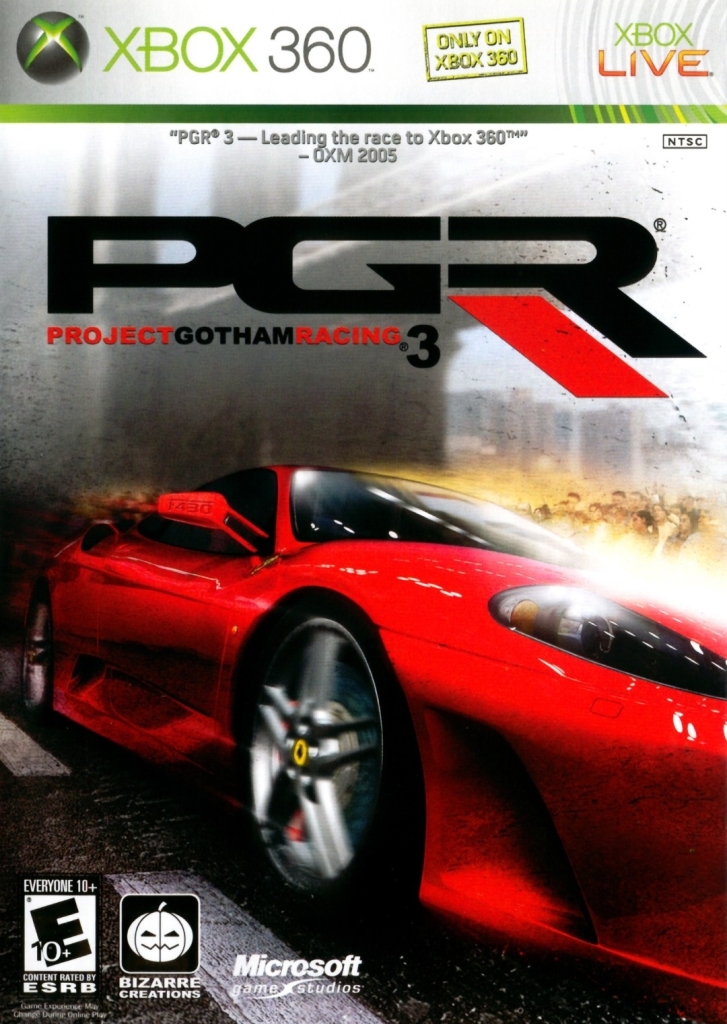
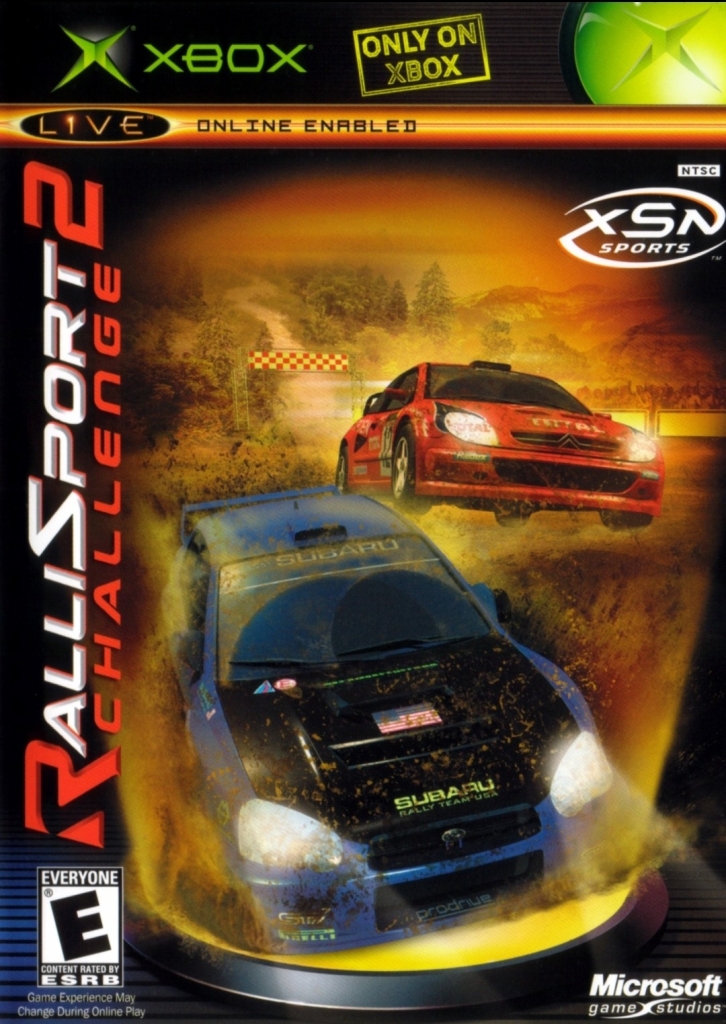
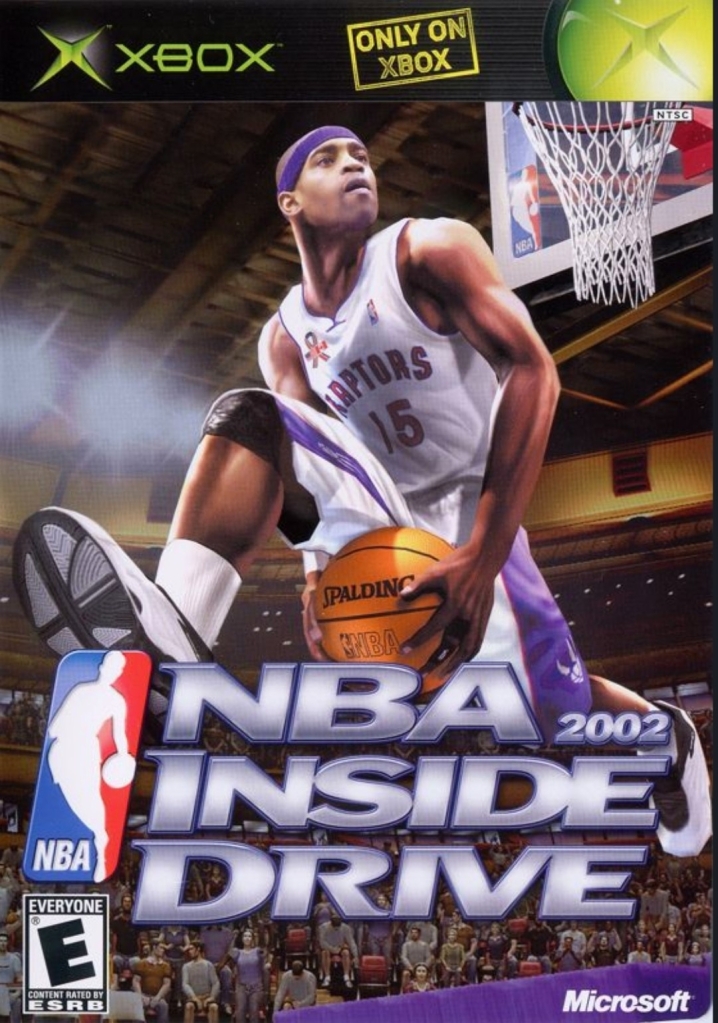
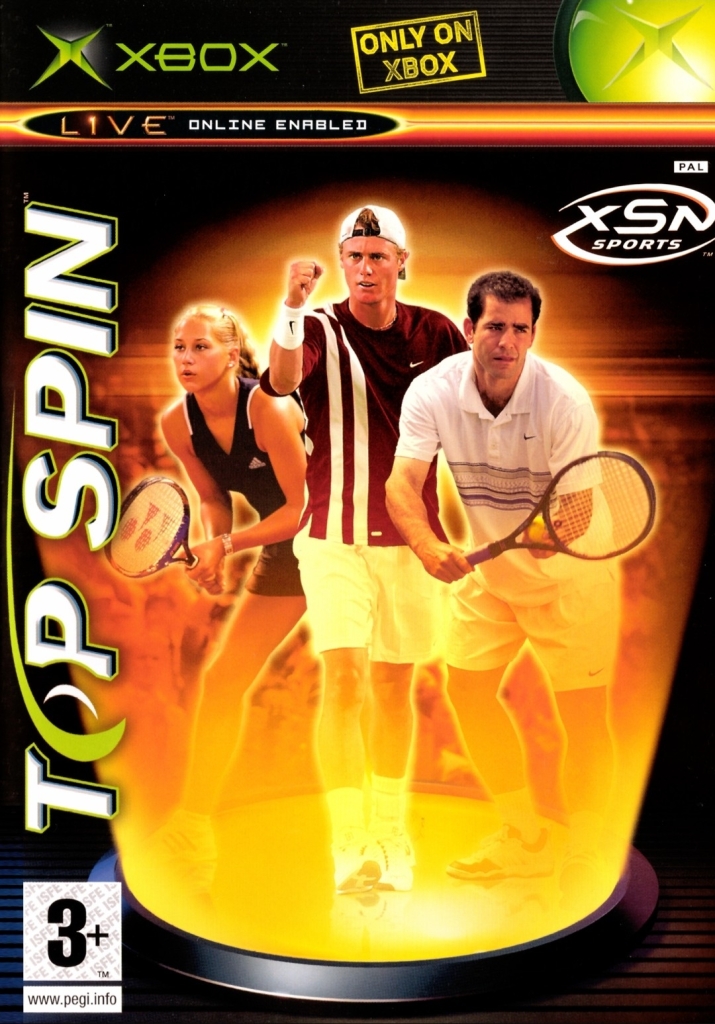
In the previous Xbox console generations, there were these exclusive games that had “Only on Xbox” placed on the front covers of their respective boxes. Check out the games below…
The start of something great!
Way back in 2002, this was the exclusive adventure and platform game to enjoy on the original Xbox console! It was flawed but still had fun.
If you are a long-time Xbox fan, were you able to buy this for your Xbox 360 console?
This exclusive game on Xbox 360 is a classic shooter to enjoy!
And, yes, there was a time when Team Xbox invested a lot to make exclusive sports video games under their Xbox Sports Network (XSN) franchise. Even the Top Spin game series actually started on the original Xbox console under the XSN label.
During the weeks leading to the launch of the original Xbox console in late 2001, I played NFL Fever 2002 on an Xbox kiosk. This was Microsoft’s exclusive NFL video game.
An exclusive racing game on the original Xbox that is rarely talked about. This game received many positive reviews at the time of its release.
The exclusive NBA basketball of Team Xbox from 2002.
It is absolutely true that Top Spin started as an Xbox-exclusive tennis video game made to entertain gamers on the console while also serving as a suitable competitor against Sega’s Virtua Tennis and Nintendo’s Mario Tennis.
Indeed, “Only on Xbox” in the old days had a very strong meaning – something fun and unique (if not special) was prepared for gamers and the only platform to play was on the Xbox console!
Going to the present leadership of Team Xbox, they seriously need to refocus on the exclusive games and confirm their dedication to all Xbox fans as well as the gamers seeking something fun and special to play on Xbox consoles or on Windows PC. A lot of people spent so much money to buy an Xbox Series X, Xbox Series S or a new PC for their entertainment needs and having more exclusive games will add even more value into the ecosystem of Microsoft.
I really wish to see Phil Spencer and his team move aggressively to produce even more Xbox-exclusive games not just for this current console generation but also for the next generation and even further. Perhaps Team Xbox should explore making exclusive sports video games (note: challenging 2K and Visual Concepts’ dominance on NBA video games could do good for the gamers and the industry) or make games on genres they have been ignoring.
Whether Team Xbox utilizes its own game studios or make deals with independent studios through their Xbox Game Studios Publishing, making more exclusive games is crucial and when it is well executed, Xbox fans and other gamers will benefit. Seriously, the shift to releasing Xbox-original games to PlayStation and Nintendo consoles should not be the main goal because it clearly does NOT justify betraying Xbox fans around the world.
Welcome back readers, fellow geeks and retro gaming fans!
In this edition of the Retro Gaming Ads Blast (RGAB) series, we will examine print ads from the 1990s that caught my attention and I will explain why they are worth look back at. In retrospect, the 1990s was a decade of serious changes in the world of electronic gaming as the industry saw the shift of graphics from 2D sprites and flat backgrounds to 3D polygons, the shift from cartridges to CDs for software distribution, and more.
For the newcomers reading this, Retro Gaming Ads Blast (RGAB) looks back at the many print ads of games (console, arcade, computer and handheld) that were published in comic books, magazines, flyers and newspapers long before smartphones, social media, the worldwide web and streaming became popular. To put things in perspective, people back in the 1980s and 1990s were more trusting of print media for game details and images.
With those details laid down, here is the newest batch of retro gaming print ads for you to see and enjoy…
1. Castlevania: Bloodlines print ad
Creepy looking but not horrific. The simplistic approach turned out to be effective on making Sega Genesis gamers excited for this Castlevania release.
During the early stage of the so-called 16-bit console wars, Konami’s Castelvania series made the huge next-generation leap with Super Castlevania IV on the Super Nintendo Entertainment System (SNES) which gave gamers loads of fun challenges along with technological improvements that added to the gameplay. Being a prolific multiplatform game maker, Konami knew it could not abandon its fans who own the 16-bit console of Sega and this led them to making a unique Castlevania experience with the Sega Genesis in mind – Castlevania: Bloodlines.
The above print ad of Castlevania: Bloodlines was very eye-catching as it showed a photographic presentation of the grave of the Belmont family (note: Simon Belmont is arguably the most known hero of the series) backed with a detailed text description as well as screenshots that showed exactly what Castlevania fans expected with gameplay and presentation. While the visual style of the ad had a subtle approach to horror, it succeeded in informing the public that another fun-filled Castlevania experience was coming. The game went on to be a hit among gamers and critics.
2. The Granstream Saga print ad
THQ really tried hard to sell The Granstream Saga in North America at a time when a lot more Japanese RPGs started coming into the market.
Back in the late 1990s, there was a slew of Japanese role-playing games (JRPGs) that got released on the PlayStation console in North America arguably because of the massive sales success of Final Fantasy VII in 1997. In 1998, THQ (note: then a newcomer in video gaming) made the daring move to release The Granstream Saga in North America and it was part of the company’s plan of releasing more RPGs. With regards to the 1998 print ad, THQ marketing team wisely emphasized the fact that the game launched at #1 in Japan (published by Sony) although, strangely, the rest of the short descriptive text did not emphasize the fact that the game was one of the first fully polygonal RPGs ever released. The ad had one image of an animated cut scene while there were two gameplay images. When I first saw the print ad, I became interested with The Granstream Saga as I was fond of both RPGs and anime. I never got to play it due to a lack of time and money back then.
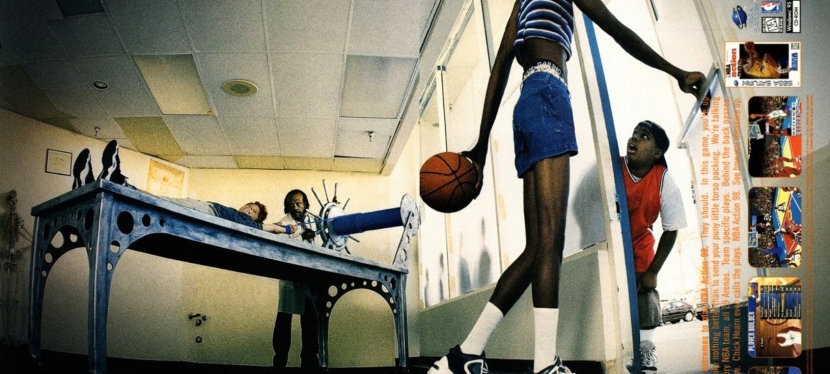
3. NBA Action 98 print ad
Do you find this print ad funny or disturbing or both?
The first time I saw Sega’s print ad of NBA Action 98 (a polygonal NBA basketball video game for the Sega Saturn), it caught my attention quickly mainly because of the concept of the imagery showing a really tall guy leaving the place after getting stretched to be tall (as emphasized by an adult operating a machine to stretch another kid’s body to get taller) as a kid from outside looks on. While it looked hilarious at first, the photographic imagery also had an unintentional dark tone as the adult operating the machine looked like he was torturing the kid. This print ad was really eye-catching in a rather disturbing fashion to me, so much so I did not have any interest left to check out the advertised game. The small size of the screenshots and the hard-to-read descriptive text did not help at all. In my view, this was a marketing misfire by Sega.
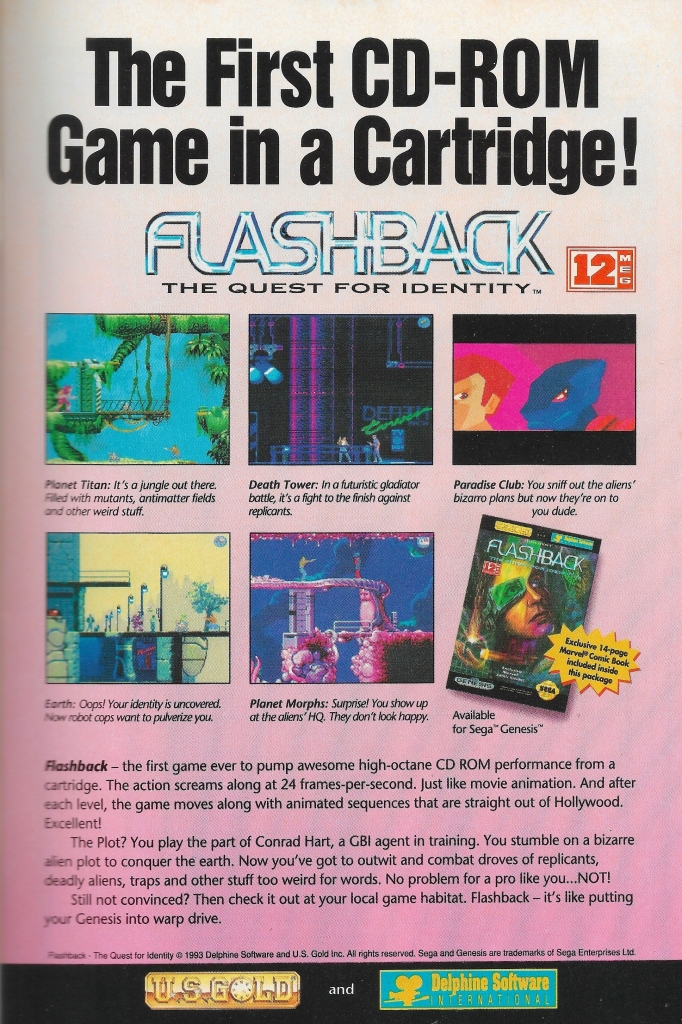
4. Flashback: The Quest for Identity print ad
This was indeed an eye-catching print ad.
Back in the 1990s, the CD-ROM was cutting edge technology in the world of computing and CDs (compact discs) helped game companies have their game content as well as multimedia files (example: full motion videos or animated scenes) released together conveniently. In the middle of the decade, a version of the game Flashback: The Quest for Identity (note: a game with computer-generated animation scenes previously released on PC) was released in cartridge format for the Sega Genesis as well as the Super Nintendo Entertainment System (SNES). This was a big deal back in the days of the so-called 16-bit console war and the above print ad clearly emphasized it with the description “The First CD-ROM Game in a Cartridge!” The advertisers also assured consumers that the in-game 24 frames-per-second frame rate, the Hollywood-inspired high-quality visuals and related gameplay elements were intact for consoles. When I saw this particular ad, I became convinced to buy the game for my SNES (read my retro review by clicking here). To see how Flashback looks like on Sega Genesis, watch this.
5. Albert Odyssey: Legend of Eldean print ad
To make things clear, Albert Odyssey: Legend of Eldean is not based on any anime property. It was the 3rd game of its series and the first and only one to be released in English.
There is no denying the fact that Working Designs (closed since 2005) contributed a lot to console gaming by localizing and releasing several Japanese role-playing games (JRPGs) in America at a time when such games were not yet popular. Apart from the Lunar RPGs and Dragon Force, the company brought Albert Odyssey: Legend of Eldean to the Sega Saturn console in America and they had a very eye-catching print ad promoting it. Like their ads for Lunar RPGs, the Albert Odyssey: Legend of Eldean print ad had a dominating anime-style artwork that highlighted the fantasy concept and characters, plus screenshots and in-game animated (note: not anime but detailed pixel artworks) sequences that were meant to attract RPG enthusiasts and gamers looking for the next-generation console gaming experiences. It should be noted that Albert Odyssey: Legend of Eldean was actually the 3rd game of its franchise that started in Japan, and it was the first and only Albert Odyssey game to ever be released in English. To this day, Albert Odyssey: Legend of Eldean still has not been re-released nor remastered for other consoles and original Sega Saturn copies of the game are very expensive to acquire. That being said, this particular print ad is a lively reminder of Albert Odyssey’s only Western release.
6. Resident Evil 3: Nemesis print ad
Capcom efficiently showed the new monster Nemesis, screenshots of the game and the return of Jill Valentine in this 1999 print ad.
After the release of the best-selling and acclaimed Resident Evil 2, Capcom approved the production of several Resident Evil projects that include sequels and spin-offs. Along the way, Sony announced in 1999 that the PlayStation 2 console will come out in 2000 and this had an impact on Capcom’s RE projects as many of them were being developed for the aging PlayStation (PS1) console. Before the PS2 announcement, Capcom had a PS1 RE game project with its story set on a cruise ship. That project was abandoned following the PS2 announcement and because Capcom did not want to leave its fans to wait too long for another Resident Evil adventure on PS1, they reviewed their list of proposed spin-off games and went ahead making Resident Evil 3: Nemesis (Japanese title: Biohazard 3: Last Escape) for a late 1999 release while the PS1 console was still in good demand.
In the above 1999 print ad, Resident Evil 3: Nemesis was shown with 3 screenshots assuring RE fans that the game has the tried-and-tested design of polygonal characters/monsters moving within pre-rendered environments, the action, the horror and adventure elements of the previous games. More notably, the new monster Nemesis had the biggest image and he rightfully became the main antagonist until the very end.
Lastly, the RE3 print ad featured the return of Jill Valentine (one of the protagonists of the first Resident Evil) and this time she had a clear sexualized look wearing a tube top and a mini-skirt. As I mentioned in my RE3 retro game review, I believe that the sexualized look of Jill was done by the game developers who were most likely influenced by the sexy appeal and iconography of the character Lara Croft from the Tomb Raider series of games. Like Lara Croft, Jill is sexy and capable of fighting with guns and other weapons. Whatever the intention of Capcom and the development behind the game, the print ad (which even had wrongful details about the timing of the story) clearly worked on getting RE fans and gamers’ attention as Resident Evil 3: Nemesis sold more than 3 million copies on PS1.
























 Author Carlo Carrasco