Welcome back my readers, YouTube viewers and all others who followed this series of articles focused on YouTube videos worth watching. Have you been searching for something fun or interesting to watch on YouTube? Do you feel bored right now and you crave for something to see on the world’s most popular online video destination?
I recommend you check out the following videos I found.
#1 VKunia and Popcorn in Bed react to Minority Report – In 2002, I saw Steven Spielberg’s Minority Report inside one of the cinemas of Festival Mall here in the Philippines. The suspenseful science fiction movie was the first-ever creative collaboration between Spielberg and Tom Cruise, and it ultimately entertained and intrigued many local moviegoers. To find out if Minority Report remains an engaging film by today’s standards, watch the reaction videos of VKunia and Popcorn in Bed below.
#2 PatmanQC examines Zaxxon – I never played Zaxxon in the arcade but managed to play a version of it on MS-DOS PC in the 1980s. Back then, I was often intrigued with Zaxxon’s visual design which involved an isometric view and a clever presentation of the 2D sprites. Due to its depth of gameplay related to the overall design, it was indeed challenging to play. To find who were responsible in making the game and what inspired its visual design, watch the in-depth Zaxxon video of PatmanQC below.
#3 You, Me and the Movies react to Creature from the Black Lagoon – Released in 1954, Creature from the Black Lagoon is a black-and-white 3D monster horror movie kept moviegoers on the edge of their seats. The feature film’s creature went on to become a part of Universal Picture’s classic monsters and also left an impact on American pop culture. Several months ago, You, Me and the Movies posted their reaction video and it is entertaining to see.
#4 Teenage Mutant Ninja Turtles: Tournament Fighters retrospective videos – I never got to play Teenage Mutant Ninja Turtles: Tournament Fighters when it was released in 1993. We had a Super Nintendo Entertainment System (SNES) but we never bought the game. I heard from a few of my friends – who were fortunate enough to play it – that the game was indeed a lot of fun to play and was a nice addition to the sudden rise of fighting games at the time. Developed and published by Konami, Teenage Mutant Ninja Turtles: Tournament Fighters was a commercial and critical hit clearly with the SNES version. To find out what made the game competent with other fighting games and why many considered it to be a great licensed video game, watch the selected retrospective videos below.
#5 Ashleigh Burton reacts to Alien vs. Predator – Back in 2004, I saw Alien vs. Predator in the local cinema in Cebu City, and after watching it I went back home feeling numb and disappointed. For one thing, it was directed by Paul W.S. Anderson who really is not a very good director. Next, the script was pretty bad in quality. Ultimately, the filmmakers did not raise serious efforts to delight fans of both Aliens and Predator. For YouTuber Ashleigh Burton, however, the film has a different impact on her and you can watch her reaction video below.
Welcome back my readers, YouTube viewers and all others who followed this series of articles focused on YouTube videos worth watching. Have you been searching for something fun or interesting to watch on YouTube? Do you feel bored right now and you crave for something to see on the world’s most popular online video destination?
I recommend you check out the following topics and the related videos I found.
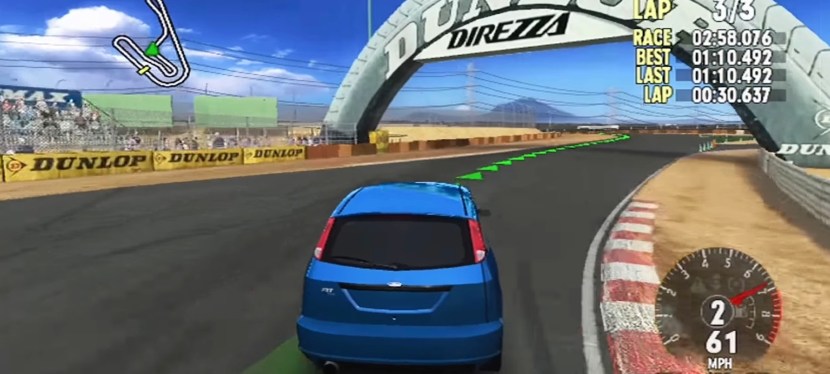
#1 Forza Motorsport (2005) revisited – The first time I ever played first-ever Forza Motorsport video game was on a rented original Xbox console in 2005. Right from the start, I was very impressed with how realistic yet accessible the game played even as it was designed by Turn 10 as a simulation. Years later, I played the succeeding Forza Motorsport games and became a fan of the series on Xbox consoles. It was delightful for me to watch the Forza Motorsport retrospective video by YouTuber Camp Xbox which you can view below.
#2 You, Me and the Movies react to the Teenage Mutant Ninja Turtle movies of 1990 and 1991 – Here in the Philippines, I saw the films Teenage Mutant Ninja Turtles and Teenage Mutant Ninja Turtles II: The Secret of the Ooze in local cinemas in 1990 and 1991 respectively. Each viewing experience was in a fully packed cinema which was not surprising because the TMNT franchise – specifically the animated series on TV – was already very popular among Filipinos and there was excitement to see the live-action versions of the popular turtles, Splinter, Shredder and April O’Neil. That being said, you should see You, Me and the Movies’ reaction videos of the two films.
#3 Israeli Air Force flies over the funeral of Hezbollah’s late leader – Several months after the successful elimination of Hezbollah leader and terrorist Nasrallah, a funeral for him was held in Lebanon and there were officials from terrorist state Iran who attended. And then something happened…fighter jets of the Israeli Air Force flew over the funeral and literally took the thunder away. The terrorist group of Hezbollah got very humiliated. Watch the analytical video of Hananya Naftali below.
#4In-depth look back at the “DCEU” movies – Remember the DC superhero movies of the so-called DCEU (DC Extended Universe)? This year, Warner Bros., DC and director James Gunn will release an all-new Superman movie and now is a good time to look back at the previous franchise of DC superhero movies released from 2013 to 2023, and I found a very comprehensive video from YouTuber FilmyHead for you to watch.
#5 PatmanQC examines Escape from the Planet of the Robot Monsters – I never got to play the late-1980s game Escape from the Planet of the Robot Monsters in the arcade nor any of its ports. Being curious, I took time out to watch PatmanQC’s video about the game. It turns out, the game itself is an inspired piece of work and it was made by Atari. I urge you to watch the video below.
#6 Popcorn in Bed reacts to Starship Troopers – When it was first released in 1997, a lot of movie critics and moviegoers did not fully understand the themes and meaning of Starship Troopers. While many viewed it as a big-budget, loud and action-packed sci-fi flick, there was a minority of people who realized director Paul Verhoeven’s (RoboCop, Total Recall) use of irony within the narrative. Months ago, Popcorn in Bed posted her reaction video and you should see how the film affects her.
#7 Ashleigh Burton reacts to The Thomas Crown Affair – Remember watching The Thomas Crown Affair in 1999? Some people perceived it as a clever remake of the 1968 original while there were others who found it to be Pierce Brosnan’s most notable non-James Bond role of the 1990s. Recently, Ashleigh Burton saw the film and you must watch her reaction video below.
Welcome back my readers, YouTube viewers and all others who followed this series of articles focused on YouTube videos worth watching. Have you been searching for something fun or interesting to watch on YouTube? Do you feel bored right now and you crave for something to see on the world’s most popular online video destination?
I recommend you check out the following topics and the related videos I found.
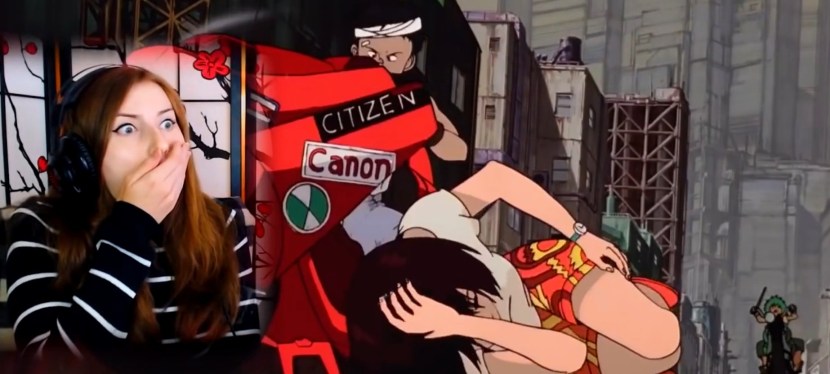
#1 VKunia’s Akira reaction video – In recent times, I published blog post that had several videos of reviews, analysis and exploration of the 1988 anime feature film Akira. This time around, I posted for your viewing pleasure the Akira reaction video of VKunia. What I like about it is that VKunia herself is quite reactive to what was shown. Watch her reaction video below…
#2Royal Space Force: The Wings of Honnêamise reviewed and analyzed by Cinemology 101 – Way back in 1985, the ambitious anime feature film Royal Space Force: The Wings of Honnêamise was released in theaters and eventually made its way into the West with English translation in the cinemas in 1988 and on home video a few years later. While I was not exactly entertained by it on home video, I still was left intrigued by its highly imaginative world, art and animation quality that was comparable in some ways with Akira. YouTuber Cinemology 101 (AKA The Cinemologists) posted its review and explanatory video of the film which is very comprehensive to watch.
#3 Hong Kong Action cinema of the 1980s revisited – If there is anything I miss from the 1980s, it is the dynamic action that came in different styles from the Hong Kong action movies of the time. By comparison, I am disgusted with Hollywood’s so-called modern approach of recording action that involves shaky camera handling and the quick cuts on editing. In Hong Kong action movies, the filmmakers recorded action with stable camera handling and using the right angles to capture the action visibly and clearly. Watch and learn from the video below…
#4 PatmanQC examines Teenage Mutant Ninja Turtles: Turtles in Time arcade – Back in 1991, Teenage Mutant Ninja Turtles: Turtles in Time was released in the arcades and it became a big hit for Konami as it earned the approval of the critics and the coins of many gamers who paid for bouts of fun. The game was designed to be very playful and it also had a lot of stuff that resonated with TMNT fans. To find out who were responsible for the game and what inspired their work, watch the in-depth video by PatmanQC.
#5 Lunar games retrospective by Xygor Gaming – In case you missed the news, the first two Japanese role-playing games (JRPGs) of the Lunar series – Lunar: Silver Star Story Complete and Lunar 2: Eternal Blue – will be released for modern consoles in a package on April 18, 2025 called Lunar Remastered Collection. If you are fond of Japanese RPGs of the 1990s or if you want to discover what the Lunar series is about, watch the in-depth retro gaming retrospective video by Xygor Gaming.
#6 Sorority House Massacre explored by GoodBadFlicks – Recently, it was revealed that the 1986 horror movie Sorority House Massacre will be released on 4K Blu-ray this coming April. I never saw the movie but heard that it was criticized for being too familiar with a certain slasher horror movie from 1978. Regardless, you can learn about it by watching GoodBadFlicks’ explanatory video and perhaps it can provide insight as to why the movie is being released on 4K Blu-ray.
#7 US President Trump’s efforts against illegal immigration make waves overseas – Even though I am not an American citizen, I personally oppose illegal immigration. I simply believe that no government should ever let lots of foreigners to trespass into the country, violate the national sovereignty and consume taxpayer-funded resources. It is a great thing that Donald Trump is officially back as US President and this early, his efforts fighting illegal immigration is making a lot of impact even overseas. The Leftist leader of Colombia gave in to Trump in humiliating fashion, and you can learn all about it in the Sky News Australia video below. Lastly, let me remind you all that illegal aliens are criminals by default, and they certainly are NOT refugees.
#8 Palestinian discredited! – By now, many of you should know that I will always stand with Israel and the Jewish state. Let me tell you the truth that Palestine never started as country, never started as people but rather it started as a name imposed by the evil Roman empire on Israel centuries ago. The Palestinian identity only started in the 1920s, and the Palestinians have a history of chaos, violence and disruption. History and the facts are on the side of Israel, not the Palestinians. Watch and learn from the video below…
#9 Assorted videos of The Matrix – If have seen 1999’s The Matrix, do you personally consider it to be the most revolutionary action movie of all time? Was it the most definitive movie of 1999? Or have you forgotten much about it? If you are feeling nostalgic about the movie, watch the videos below.
Welcome back readers, fellow geeks and electronic gaming fans!
In this edition of the Retro Gaming Ads Blast (RGAB) series, we will take a look at another batch of retro gaming print ads – including arcade flyers – from the 1980s and 1990s.
For the newcomers reading this, Retro Gaming Ads Blast (RGAB) looks back at the many print ads of games (console, arcade, computer and handheld) that were published in comic books, magazines, flyers, posters and newspapers long before smartphones, social media, the worldwide web and streaming became popular. To put things in perspective, people back in the 1980s and 1990s were more trusting of print media for information and images about electronic games and related products.
With those details laid down, here is the newest batch of retro gaming print ads for you to see and enjoy…
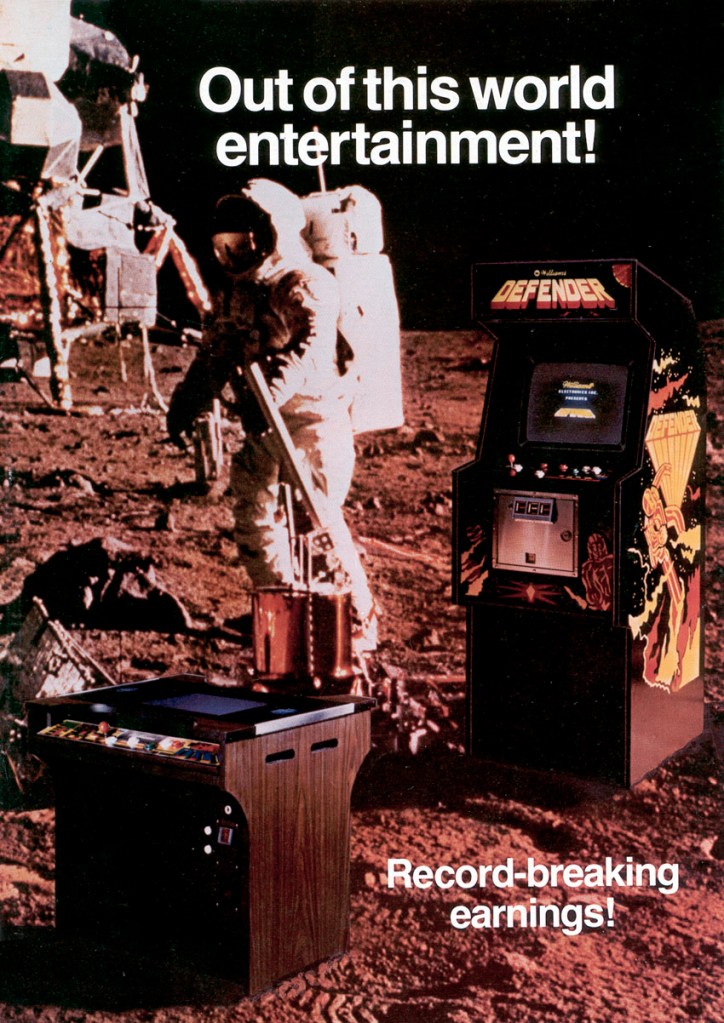
1. Defender arcade flyer
Perhaps Atari did not have enough original artwork of Defender to be used in this arcade flyer. So they ended up using footage of an astronaut on the moon.
Very long ago, I played the classic game Defender a lot on the Atari 2600. Strangely enough, I never played its arcade version as my visits to arcades were quite limited as I was so young back then. When it comes to the arcade flyer of Defender, I find the use of stock footage of an astronaut on the moon as the artistic backdrop baffling because the game’s concept was all about fighting back alien invaders and protecting the citizens. Ironically, the image blended well with the photos of two arcade machines showcased.
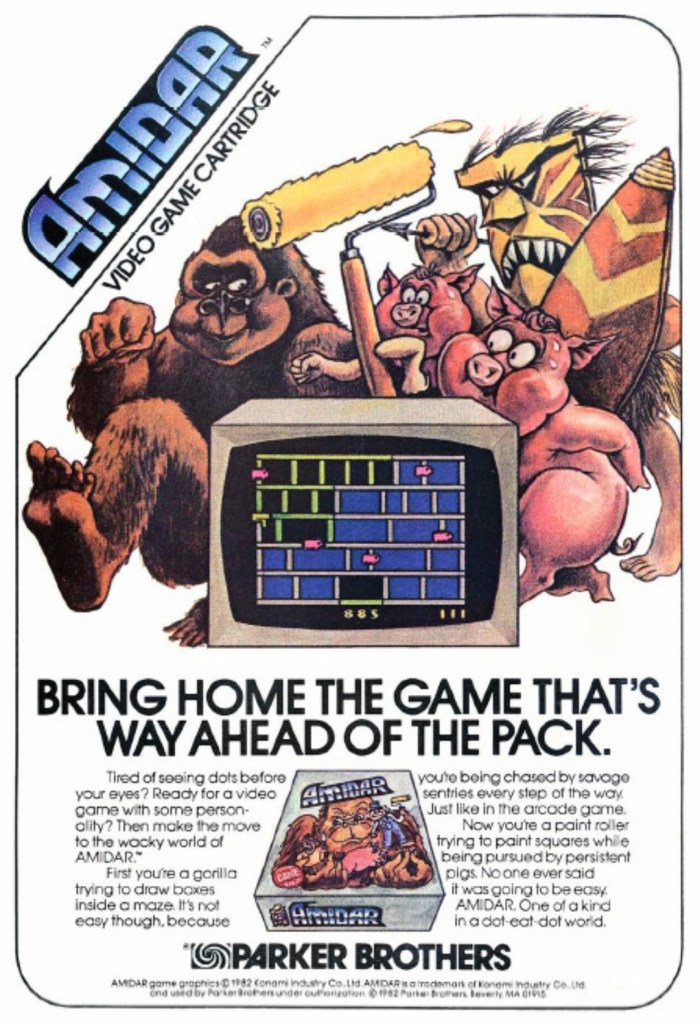
2. Amidar Atari 2600 print ad
Does this ad make you think about King Kong or animals?
When I was a young boy, I saw this Parker Brothers print ad of Amidar appear in many superhero comic books I read. I never played the game on the Atari 2600 nor in the arcades. Each time I saw this ad, I always wondered how the game played and what its creative concept was all about. The constant showing of a giant gorilla on the game box cover reminded me of King Kong.
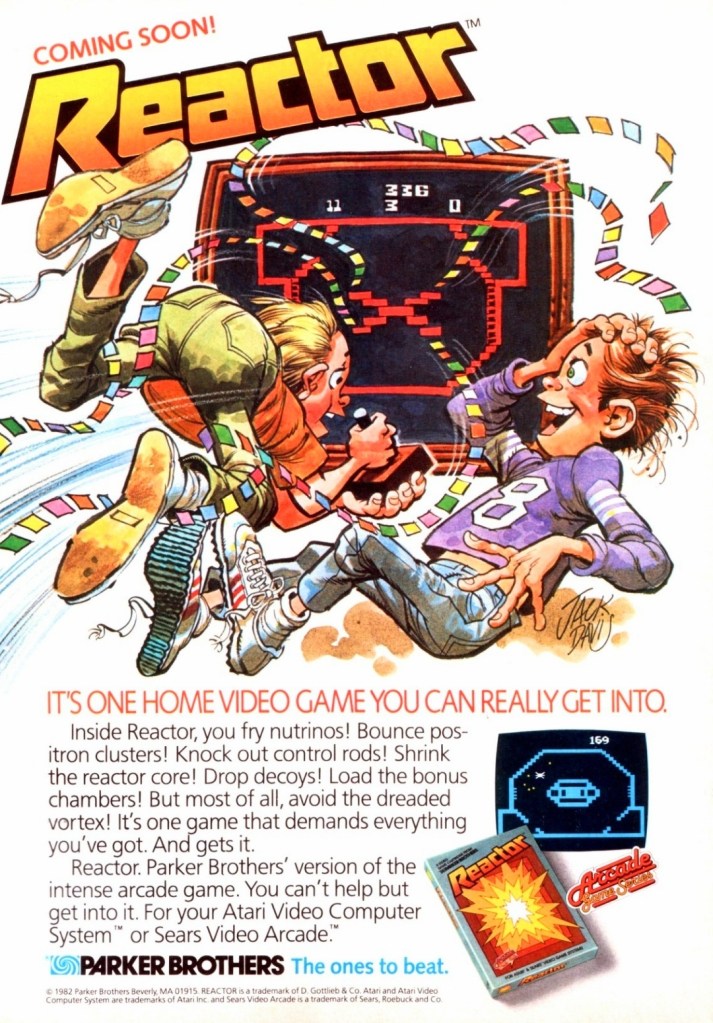
3. Reactor Atari 2600 print ad
Parker Brothers made this ad imagining gamers getting very engaged with reactor once they start playing it.
Reactor was one of those video games that was somewhat influenced by the subject of nuclear technology, particularly about the nuclear reactors. This is another game I never played on console nor in the arcades. This Reactor print ad by Parker Brothers for the Atari 2600 has a visual style and creative concept that I still find fascinating to look at.
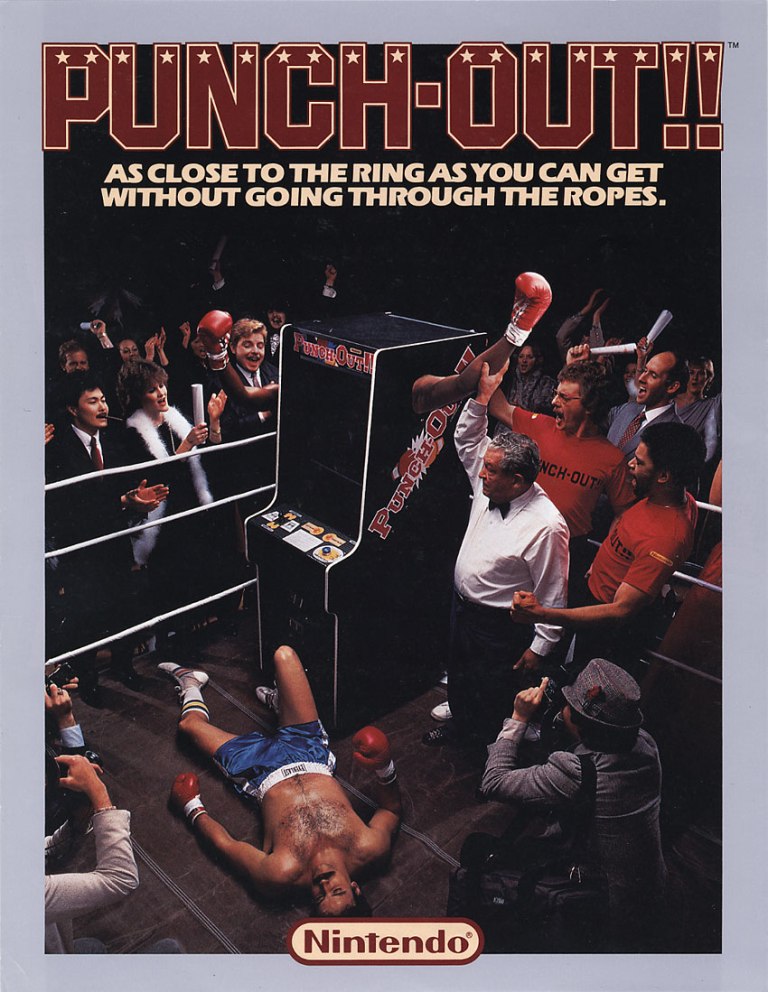
4. Punch-Out!! arcade flyer
This was years before Nintendo hired Mike Tyson to endorse the console version of Punch-Out!!
In 1984, Nintendo released the original Punch-Out!! game in the arcades and literally punched its way through to the top of American arcades that year while also scoring big in other arcades around the world. While the game proved to be very playable and a lot of fun, it could be argued that the intriguing image Nintendo used for the North American arcade flyer – a boxer down after literally getting beaten by the Punch-Out!! machine – made an impact on both gamers and arcade operators.
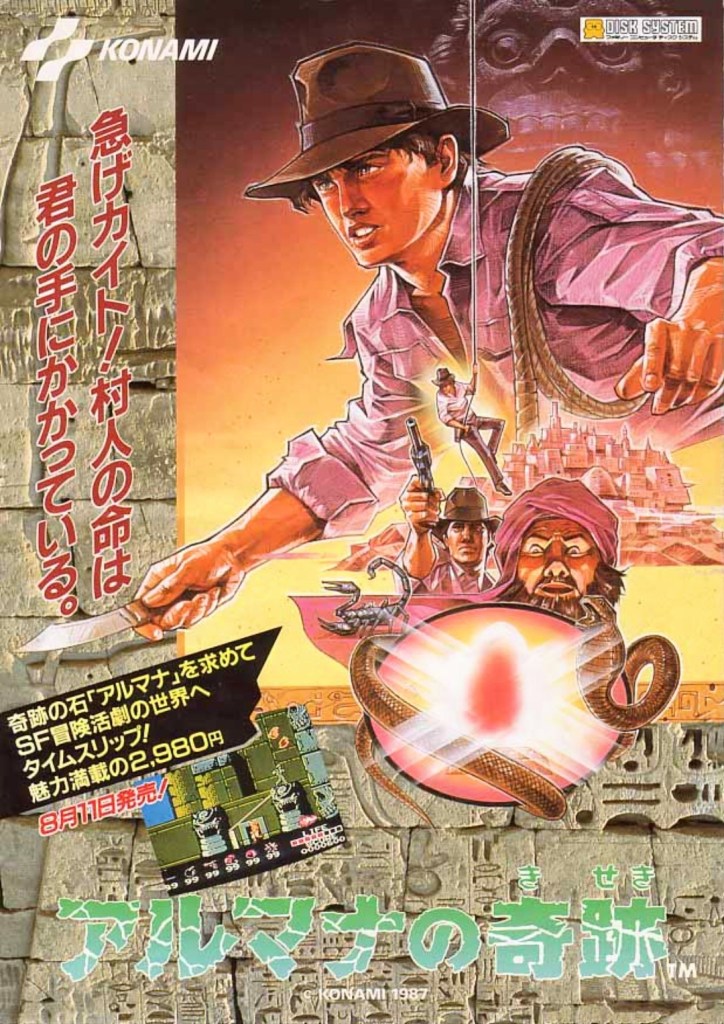
5. Arumana no Kiseki flyer
Is the famous Indiana Jones theme music playing inside your mind right now as you look at this art?
Released in 1987 on the Disk System of the Nintendo Family Computer (Famicom) in Japan, Arumana no Kiseki was one of the many 2D adventure games Konami released that entertained gamers. When compared to Castlevania – strongly influenced by American horror movies – this game was very influenced by the Indiana Jones movies of Steven Spielberg which is very evident in this promotional flyer.
In fact, some gamers who could not read the Japanese title actually thought this was an official Indiana Jones video game because the artwork was so suggestive. Having played and finished the game myself, I can say that Arumana no Kiseki was simply an Indiana Jones-inspired adventure game that had its own creative concept and unique settings and characters.
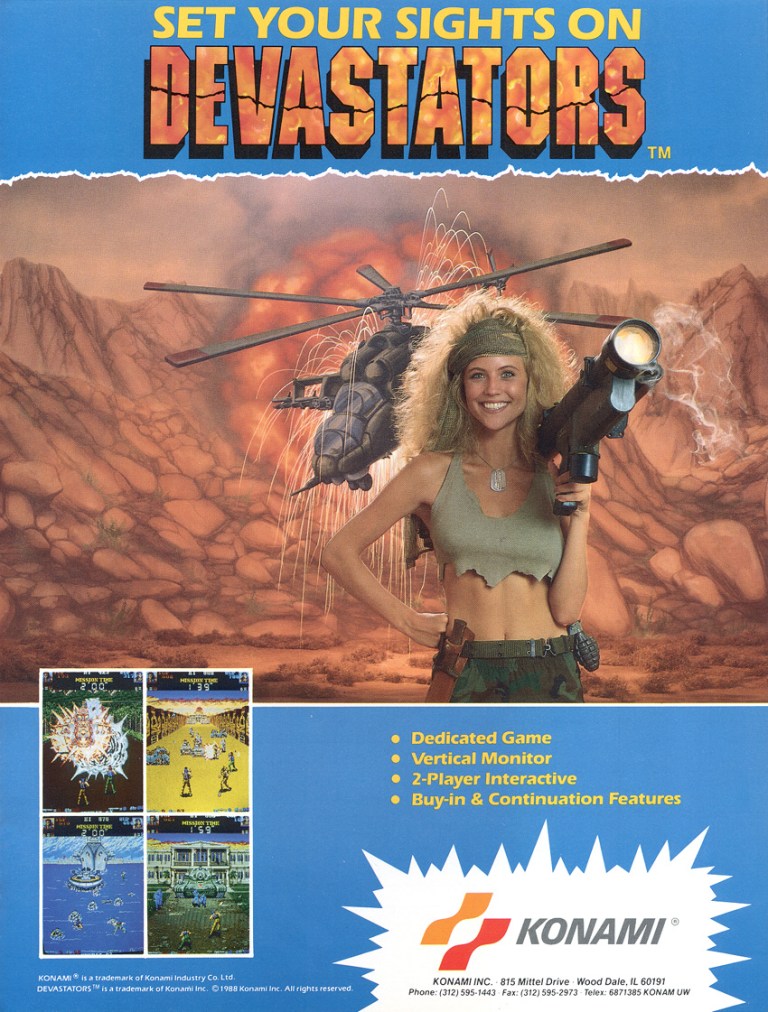
6. Devastators arcade flyer
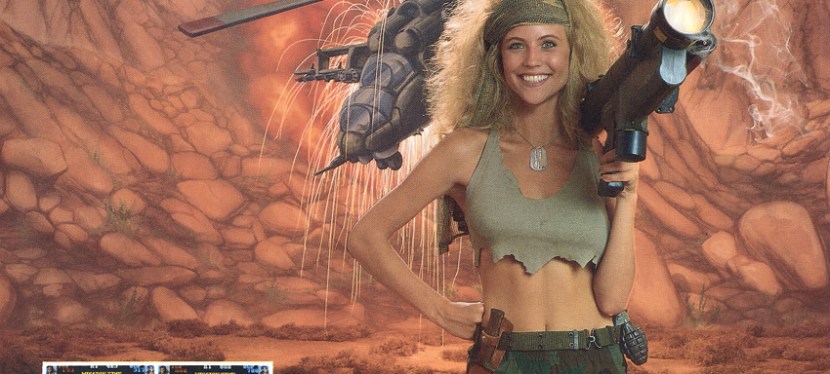
The 1980s female Rambo smiling towards you.
By looking at the track record of Konami closely, you will notice that many of their games in the 1980s were influenced by Hollywood movies and they hired pretty or sexy models for their arcade flyers. This arcade flyer of Devastators is no exception and you can clearly see the Rambo-inspired lady smiling while carrying a weapon. Devastators itself had strong Rambo vibes for its concept.
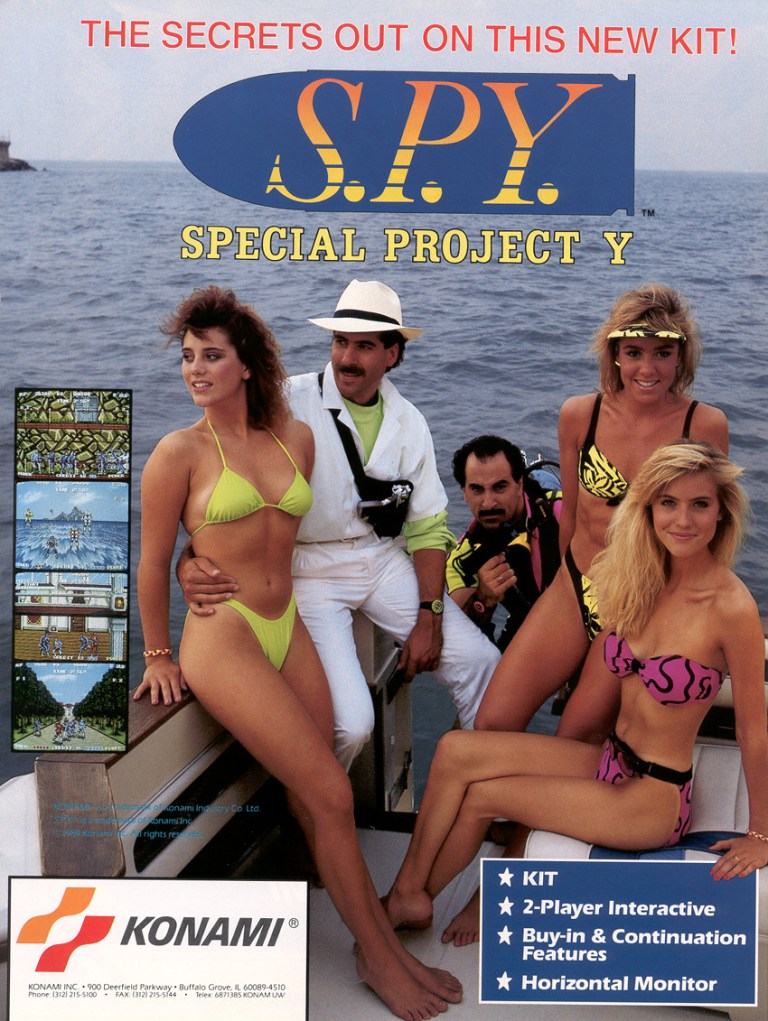
7. S.P.Y. Special Project Y arcade flyer
Somehow the picture of this flyer reminds me of Miami Vice.
Still with Konami, S.P.Y. Special Project Y is 1989 arcade game that featured action sequences in which players fight against countless enemies in order to progress with the minimal story. This game had certain spy movie elements and to promote it, Konami came up with this arcade flyer showcasing three sexy women wearing swimwear accompanied by two men who looked more like operators or schemers. Can you imagine yourself as an arcade operator looking at this flyer trying to decide to buy the game?
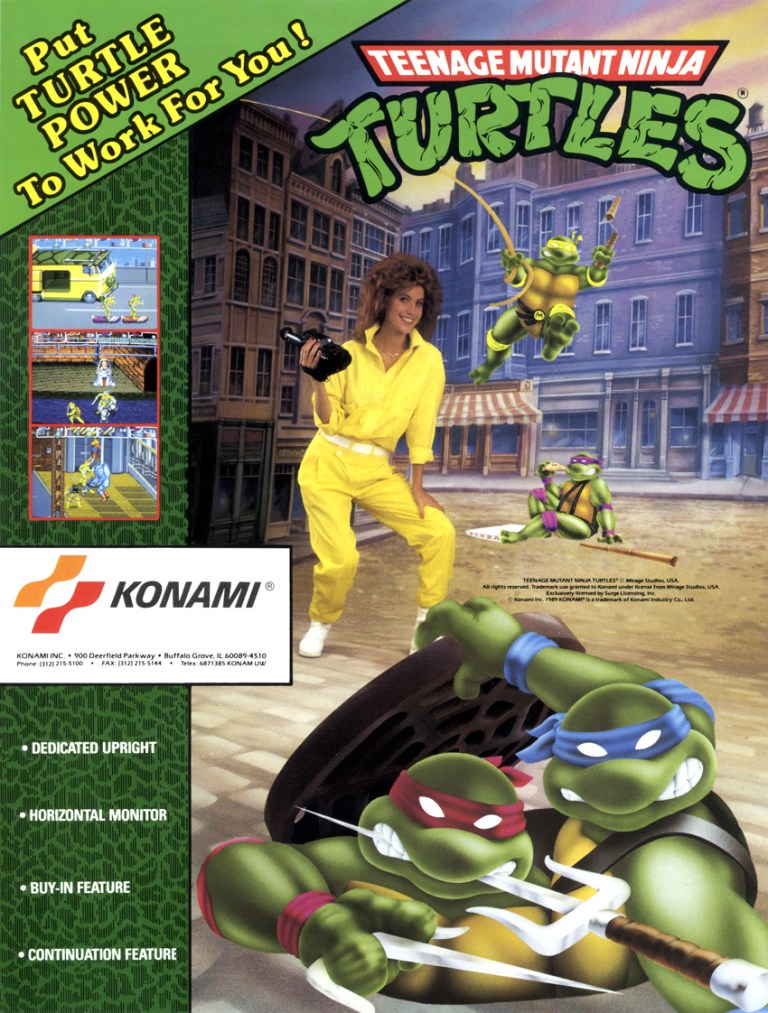
This arcade flyer is still great and exciting to look at, even if your not a TMNT fan.
Now this is one of the most definitive arcade games Konami ever made. Released in late 1989, Teenage Mutant Ninja Turtles became a massive arcade hit in North America constantly attracting lots of fans and casual gamers to play at each machine. The demand was so great, Konami had no choice but to hire a company to manufacture more machines. When it comes to promoting the game, Konami cleverly used a mix of artworks for the TMNT characters and fantasy environment while having a hired model playing April O’Neil blending in smoothly.
Having seen the 1980s animated series myself, I can say that the ad makers struck gold when it came to making a promotional image that Teenage Mutant Ninja Turtle fans can easily recognize and go to the arcade to play the game.
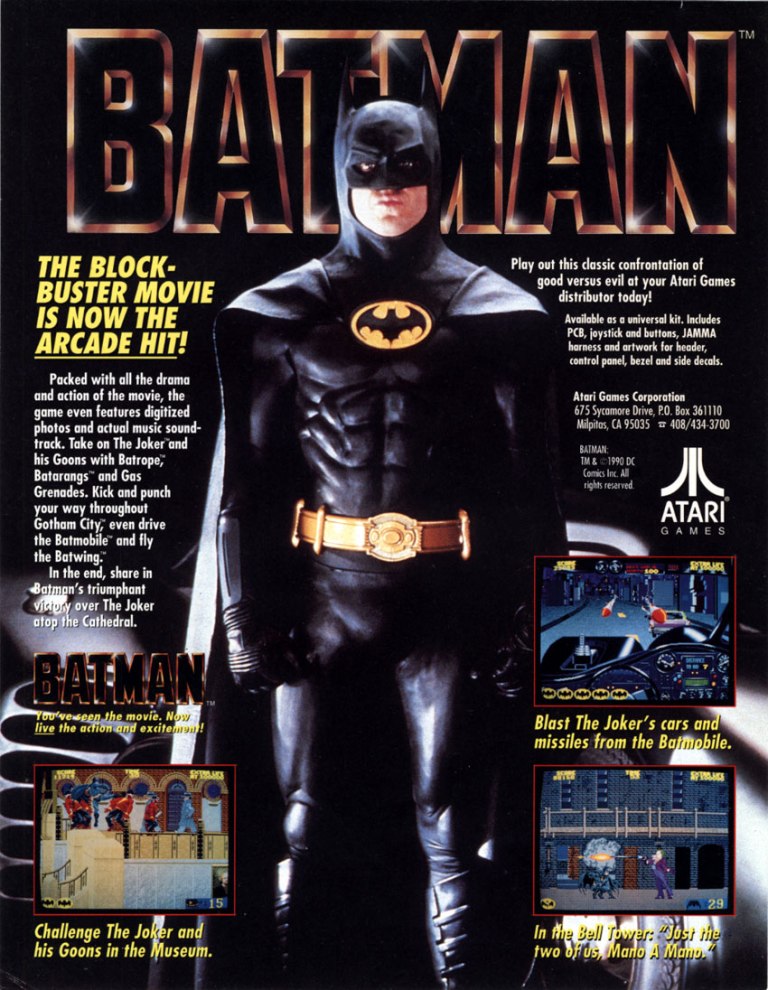
9. Batman arcade flyer
If you saw the 1989 movie, did you play this in the arcade?
The live-action Batman movie of 1989 was simply inescapable as there was so much hype, merchandising and promos connected with it. When it came to video games, it was not surprising that a lot of companies talked with Warner Bros. and eventually Atari made the official arcade game based on the movie (for insight on the production, watch PatmanQC’s video by clicking here). This early-1990s arcade flyer had a simplistic approach showing a few screenshots and descriptive text while having the live-action Batman (note: Michael Keaton in costume) dominating in the middle. Simplistic yet effective in telling gamers and arcade operators what to expect.
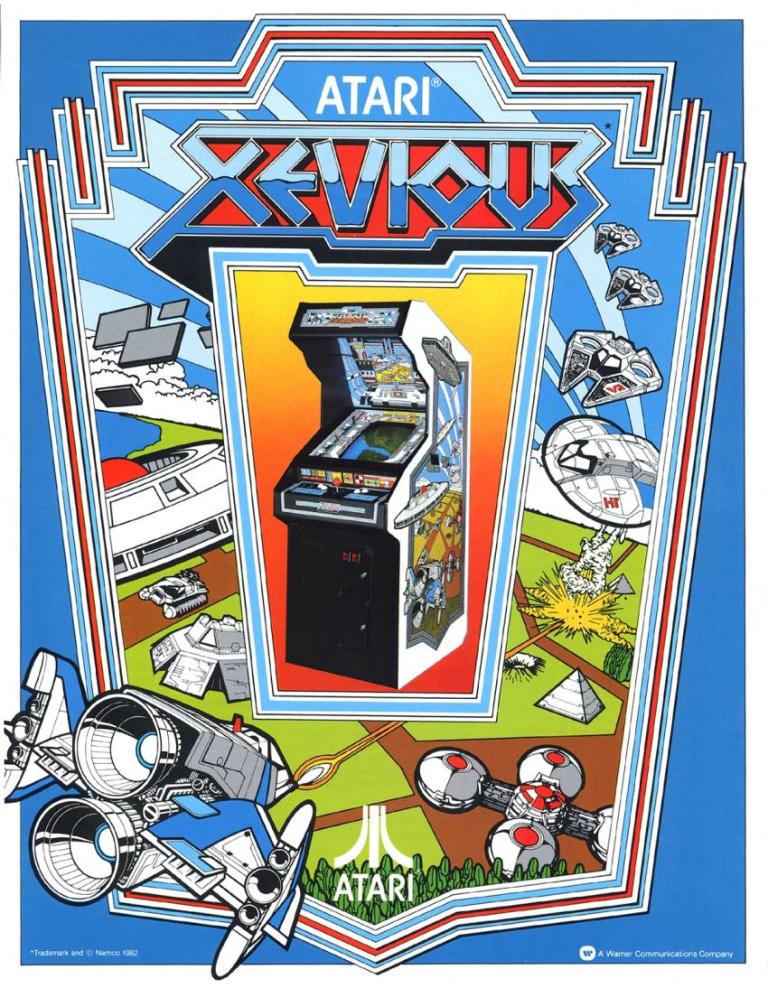
10. Xevious arcade flyer
This arcade flyer is exciting and creative to focus on.
Xevious is a long-running series of video games owned by Namco. Since the early 1980s, several Xevious video games were released on arcades, consoles and mobile devices. Believe it or not, the original Xevious game was published by Atari for North American arcades and the company came up with this dynamic looking flyer to promote it. The arcade flyer really looks dynamic due to the hand-drawn art surrounding the photo of the machine. Even by today standards, this flyer still looks modern and energetic.
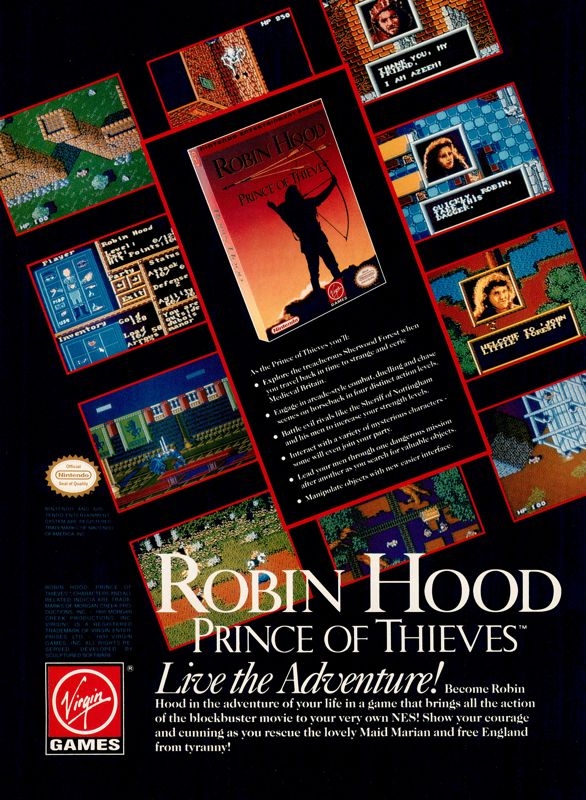
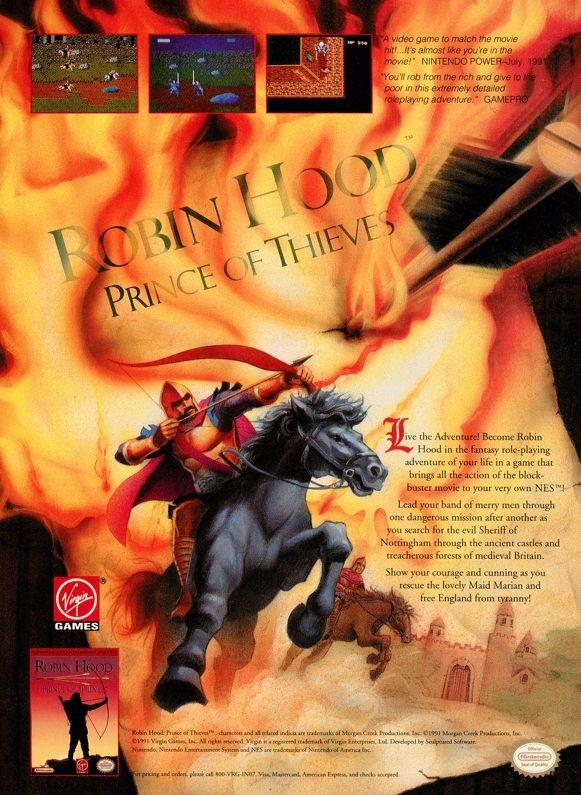
11. Robin Hood: Prince of Thieves print ads
Tell me if this ad makes you want to play the game.
Original artwork here was meant to immerse viewers into the fantasy setting of the game based on the movie.
If you saw the 1991 movie Robin Hood: Prince of Thieves, were you able to play the video game adaptation? Robin Hood: Prince of Thieves on the Nintendo Entertainment System (NES) was notable for being specially featured in the Nintendo Power magazine and its game design was truly ambitious at the time. To promote the game and take advantage of the movie’s popularity, Virgin Games came out with two print ads targeting movie fans and NES gamers.
The first print ad above had lots of selected screenshots surrounding the game’s box and crammed the descriptive text. The 2nd print ad had original artwork to emphasize the fictional setting and used only three screenshots. Looking at both print ads, it was clear that the ad makers had no permission to use the likeness of Kevin Costner as Robin Hood. The same with other actors and their characters. Regardless, the ads still reminded me enough of the movie while keeping me informed about the video game.
Welcome back readers, fellow geeks and electronic gaming fans!
In this edition of the Retro Gaming Ads Blast (RGAB) series, we will take a look at another batch of retro gaming print ads – including arcade flyers – specifically about fighting games that were released in the 1990s. The said decade marked the time when Street Fighter II became a massive hit in the video arcades (and on game consoles) which sparked a wave of new fighting games from business competitors. In that same decade, 3D polygonal fighting games were also released which added greater choices of fighting games at the arcades and on game consoles that players could choose from.
For the newcomers reading this, Retro Gaming Ads Blast (RGAB) looks back at the many print ads of games (console, arcade, computer and handheld) that were published in comic books, magazines, flyers, posters and newspapers long before smartphones, social media, the worldwide web and streaming became popular. To put things in perspective, people back in the 1980s and 1990s were more trusting of print media for information and images about electronic games and related products.
With those details laid down, here is the newest batch of retro gaming print ads for you to see and enjoy…
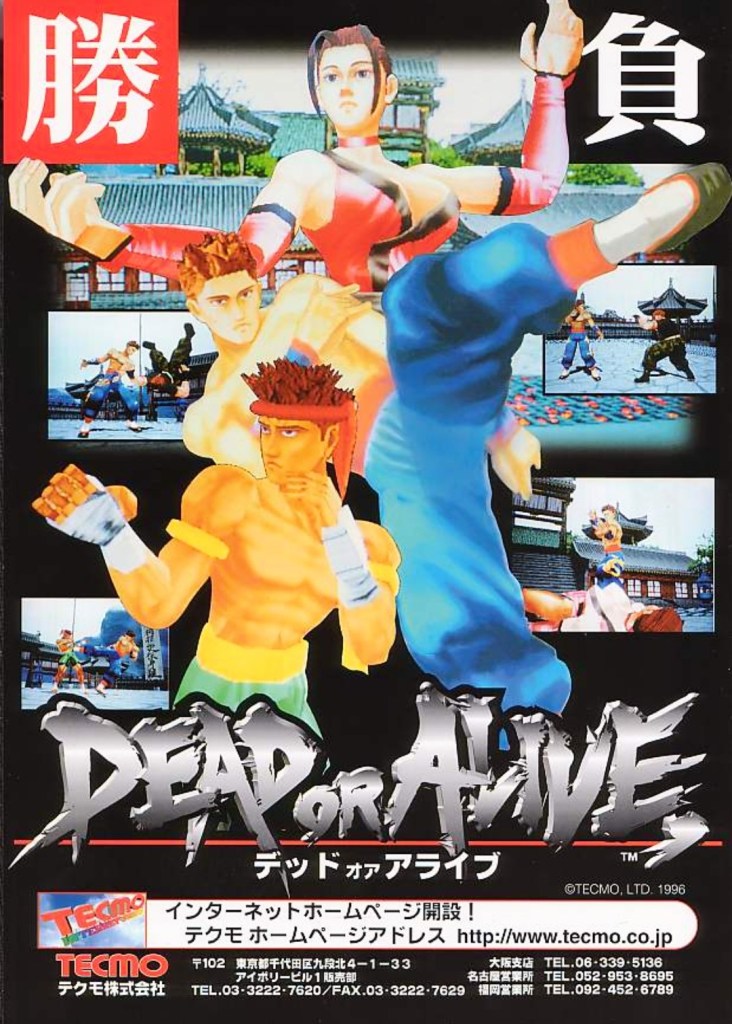
1. Dead or Alive Japanese arcade flyer
Dead or Alive was the start of new success that impacted the direction of Tecmo in the gaming industry.
The above arcade flyer of Dead or Alive gave Japanese arcade operators and gamers a taste of what to expect with the game. While the screenshots showed some resemblance with what gamers saw in Virtua Fighter 2, the character designs Tecmo and its developers came up with were unique.
Before Dead or Alive was released in Japanese arcades in 1996, company Tecmo was in financial trouble and they asked Tomonobu Itagaki to make a fighting game similar to Sega’s polygonal blockbuster Virtua Fighter. A breakthrough for Tecmo happened when Sega announced they were licensing their Model 2 arcade to third-party companies which paved the way for Itagaki’s team to make Dead or Alive with it. The game became a big hit and it paved the way for Tecmo to release it on Sega Saturn and PlayStation, and the sequels that followed years later.
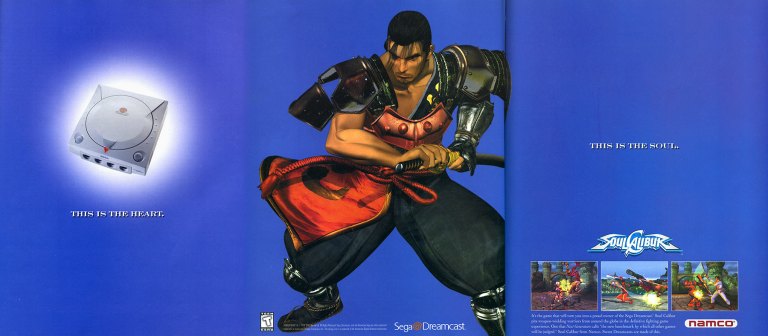
2. North American Soulcalibur Dreamcast version print ad
Namco came up with a creative approach to emphasize heart-and-soul promoting their game and the Dreamcast.
On September 9, 1999, Sega launched their Dreamcast console in America. With a gap of around ten months between the Japanese launch (November 1998) and the American launch, Sega had time to prepare Dreamcast’s release to American gamers with a huge lineup of games (both Sega’s games and from other publishers). Fortunately for Sega, they had Namco (their rival on arcade games) supporting their console.
Behind the scenes, Namco’s developers worked hard to not only port their arcade hit Soulcalibur to the Dreamcast, but to enhance the graphics using the console’s more advanced technology. The visual enhancements include rendering all of the games stages (and backgrounds) into full 3D polygonal environments. Namco also implemented different game modes and added even more content to ensure satisfaction to Dreamcast gamers.
The above 3-page print ad of Soulcalibur on Dreamcast was undeniably strategic and captivating to look at. The ad described the console as the heart, showed Soulcalibur character Mitsurugi (one of the game’s most popular characters) in the middle and then described the game (with 3 screenshots of game rendered with Dreamcast graphics) as the soul. It was a strong way to promote both the game and the console. In the years that followed, Soulcalibur grew into a popular fighting game franchise and the Dreamcast version will always be remembered as the crucial turning point.
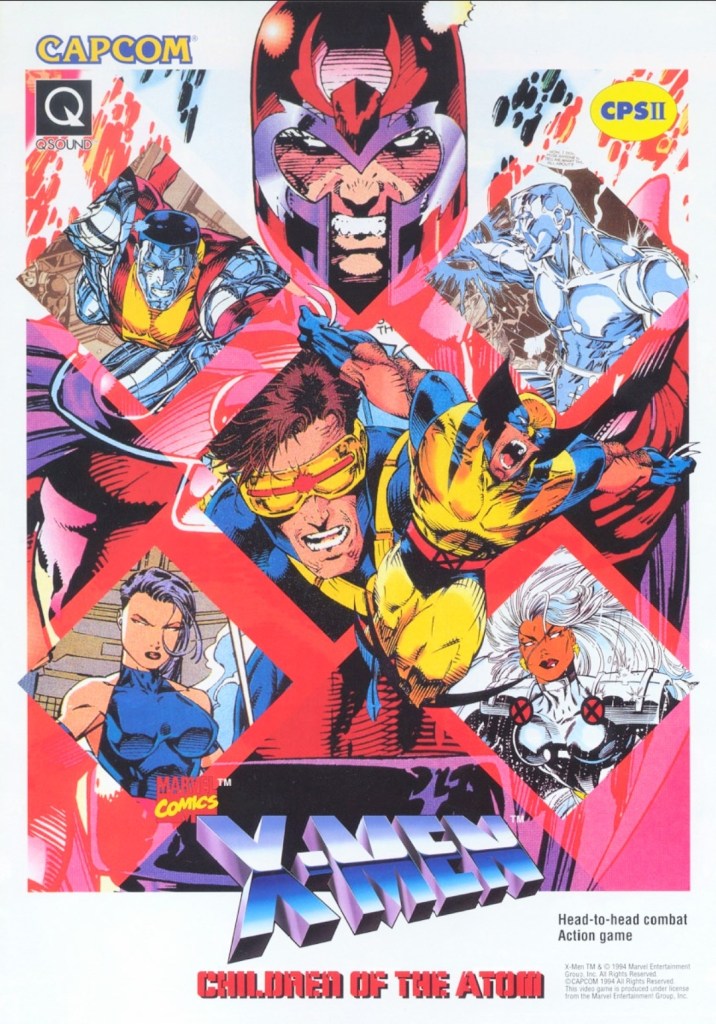
3. X-Men: Children of the Atom arcade flyer
Anyone who read lots of X-Men comic books in the 1990s should be able to tell which character was drawn by which artist.
When Capcom first released X-Men: Children of the Atom in the arcades in the mid-1990s, I was surprised because I did not anticipate the day would come when the company behind Street Fighter II would actually make a 2D fighting game showcasing the Marvel’s mutants. Even more intriguing was the X-Men art Capcom used for the arcade flyer to promote the game. I recognize Jim Lee’s artworks of Magneto, Cyclops and Colossus. The art of Wolverine shown was drawn by Andy Kubert. It was a wise move for Capcom (with Marvel as a business partner) to use established X-Men comic book artworks instead of having their internal illustrator draw the characters. That being said, this arcade flyer still looks great and captivating to look at.
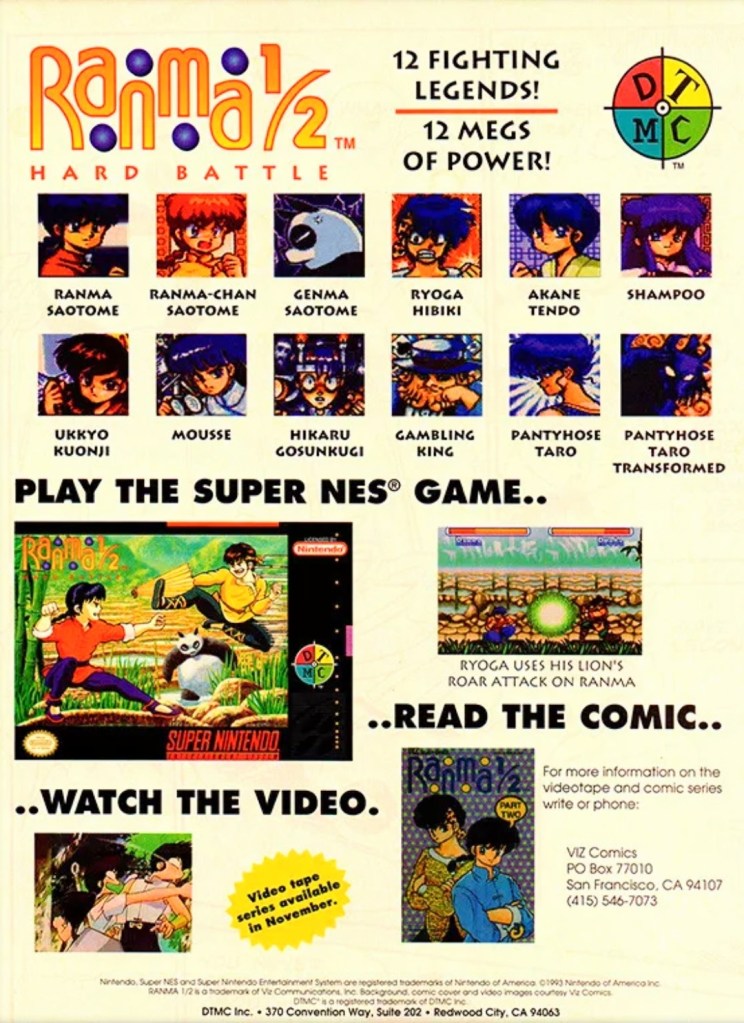
4. North American Ranma ½: Hard Battle print ad
A print ad promoting the game while saving some space to promote the anime and comic books.
By 1993, Street Fighter II and its upgraded follow-ups were wildly popular both in the arcades and on game consoles around the world. At the same time, there were many other 2D fighting games released to compete with and cash-in on Street Fighter II’s success. Believe it or not, the established anime franchise Ranma ½ saw a video game adaptation in the form of a 2D fighting game – Ranma ½: Hard Battle.
The North American print ad above published by DTMC (in cooperation with Viz Communications) promoted the game (one screenshot, the SNES game box and images of the characters as they appeared in the game) as well as Ranma ½ on anime videos and comic books. The way it was presented, the print ad promoted Ranma ½: Hard Battle without much heart nor passion.
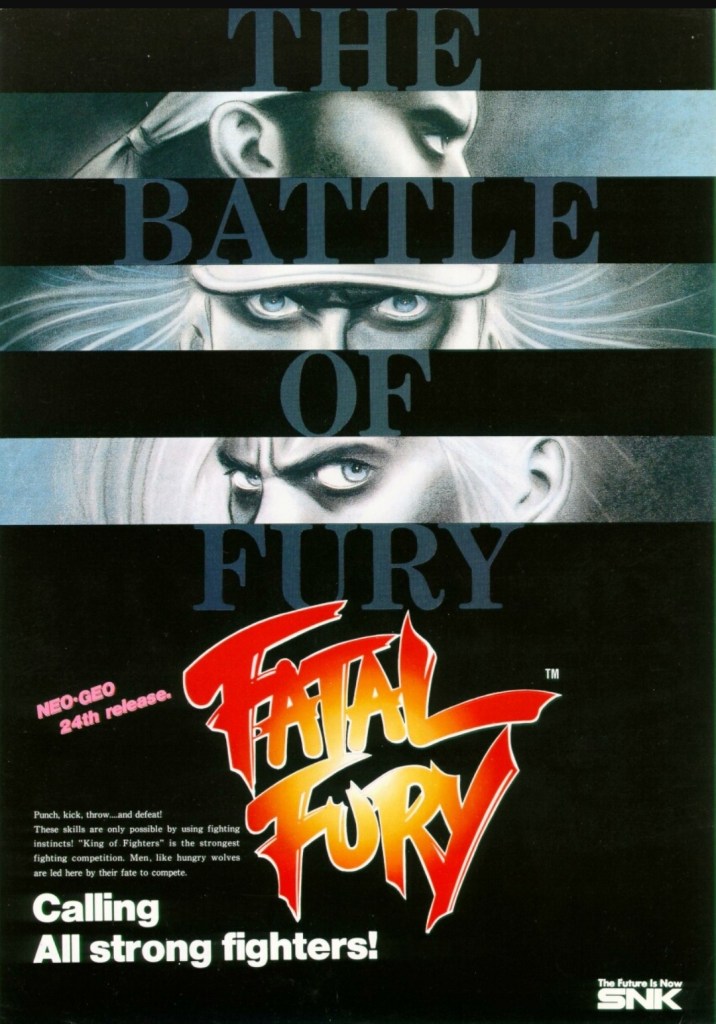
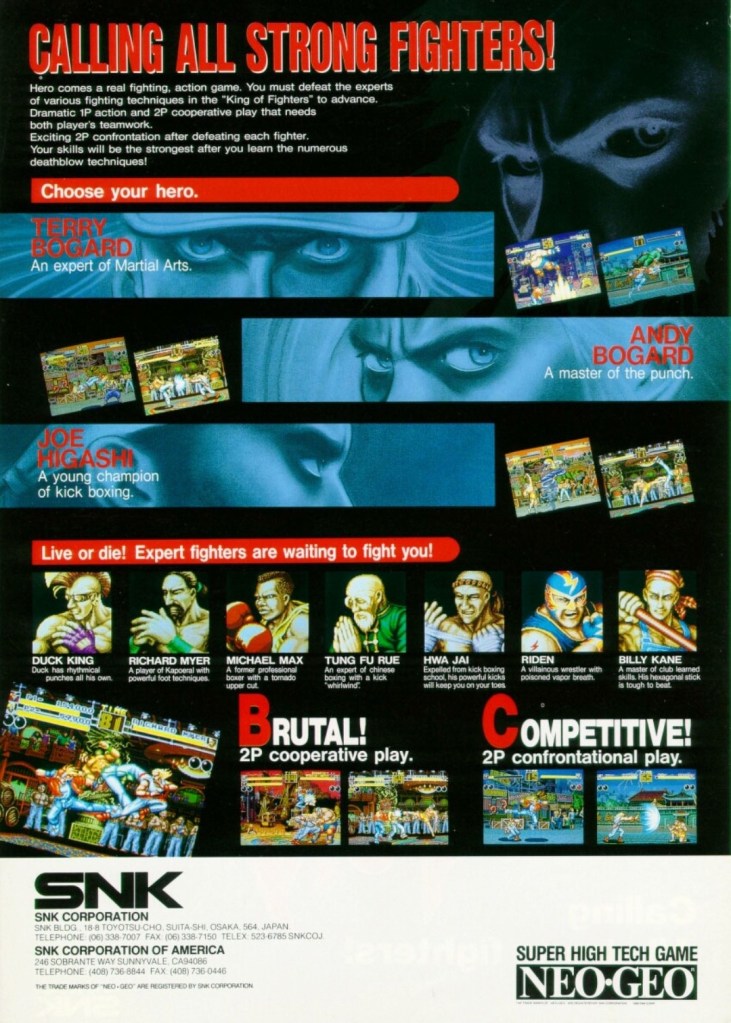
5. Fatal Fury: King of Fighters arcade flyer
An intriguing visual presentation on the front.
You get to know the characters and what the game features are.
There is no doubt that Fatal Fury: King of Fighters is the most significant game that SNK made. Apart from being the company’s first fighting game for the Neo Geo system, it established the fictional “king of fighters” tournament that became the core concept for The King of Fighters series of games in the years that followed. Fatal Fury itself is notable for being designed by Takashi Nishiyama, a former Capcom employee who created the original Street Fighter game. What Nishiyama could not do with Street Fighter, he accomplished while making SNK’s fighting game. Compared with the combo-oriented approach of Street Fighter II, Fatal Fury was designed to emphasize the timing of special moves, confrontational play, cooperative play and the 3D-like spacing between characters (background row and foreground row in each stage) while telling a story in a solid way.
The above arcade flyer of Fatal Fury has this unique looking artwork on the front showing stylized rectangular shots of the major characters Terry Bogard, Andy Bogard and Joe Higashi. On the other side of the flyer are the details that emphasized the creative concept of the game, who the characters are and what they could expect with regards to gameplay features. This flyer is still captivating to look at and it could entice you to try playing the original Fatal Fury game before trying out the sequels and spin-offs.
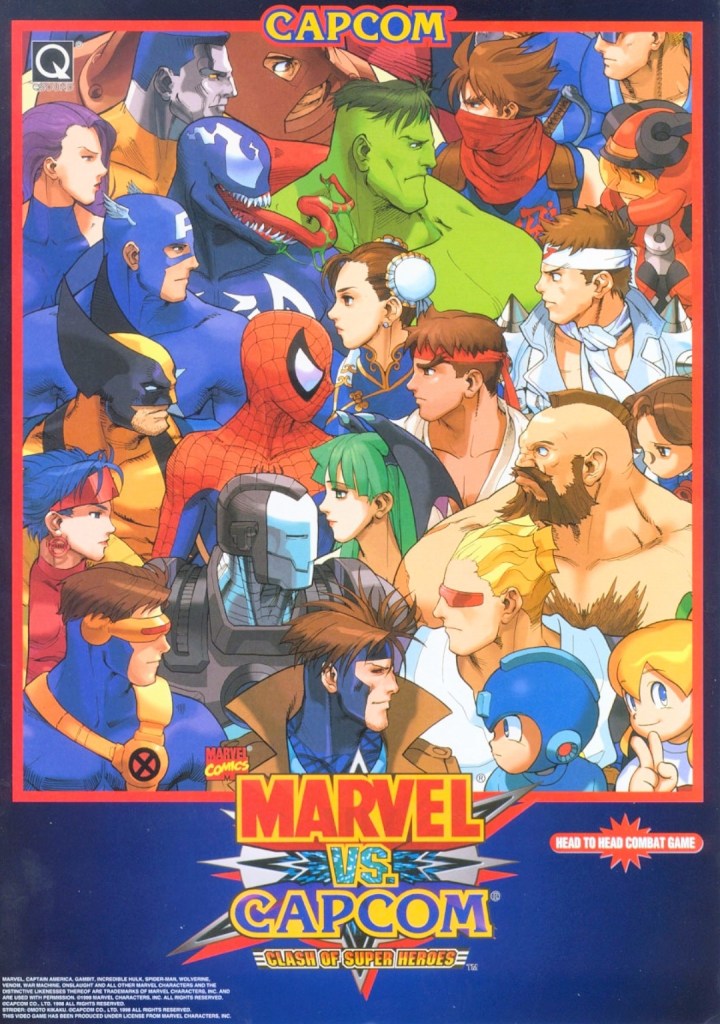
6. Marvel vs. Capcom: Clash of Super Heroes arcade flyer
This is NOT a comic book crossover.
If there is anything that truly emphasizes the essence of a fictional crossover in terms of visuals, it’s the art that Capcom and Marvel agreed to for Marvel vs. Capcom: Clash of Superheroes which is evident on the front of the above arcade flyer. By looking at how the Marvel characters were drawn, it looks like someone at Capcom illustrated the artwork as the Capcom characters still maintained that particular art style seen in the artworks of the Japanese company’s other games like Street Fighter, Darkstalkers, Mega Man and Strider. Regardless, the artwork still is amusing to look at.
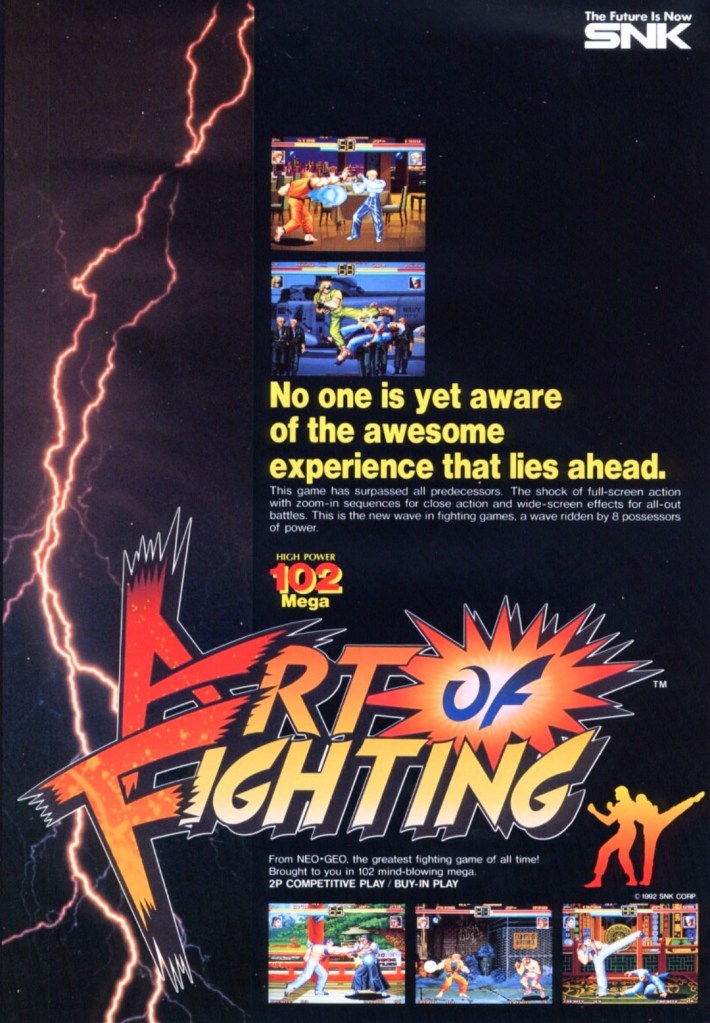
7. Art of Fighting arcade flyer
The front of the flyer.
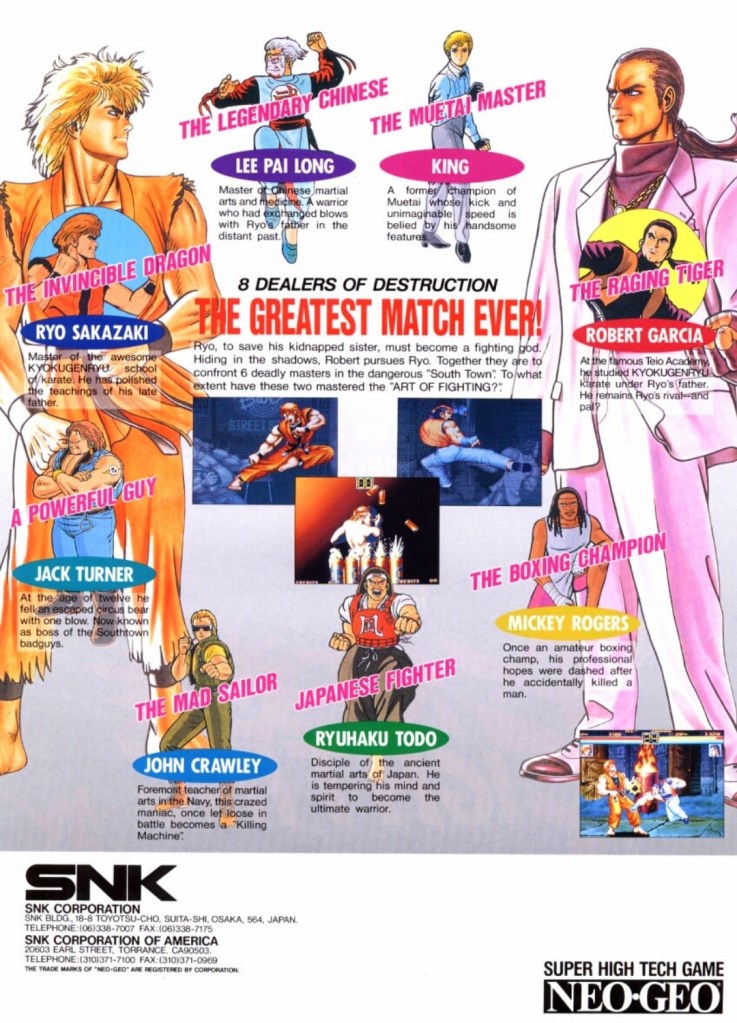
The cast of characters showcased on the other side of the flyer.
Following the success of Fatal Fury, SNK went on to release Art of Fighting in arcades in 1992 and it became successful enough for the company to make sequels. With regards to the realm of fantasy, Art of Fighting was part of the same fictional universe as Fatal Fury and The King of Fighters, and there were times when its own characters appeared in other SNK games.
Art of Fighting’s arcade flyer had an energetic visual concept on the front with a rectangular lightning portion on the left balanced with five screenshots of the game itself. Once you get to the other side of the flyer, you will see really nice art of the characters with Ryo Sakazaki and Robert Garcia as the most dominating figures. Sakazaki and Garcia are the major characters of the Art of Fighting series. This flyer confidently introduced the characters and succeeded in making them look interesting.
8. Fighter’s History arcade flyer and print ad
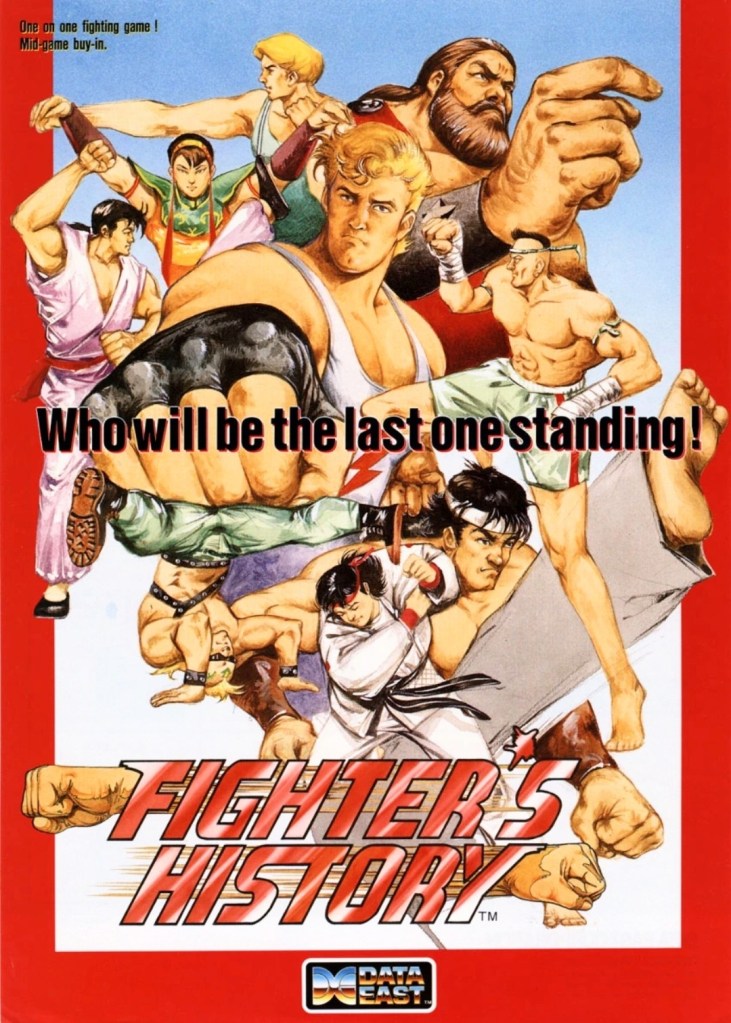
Great looking front artwork showing the game’s characters, posing and some action.
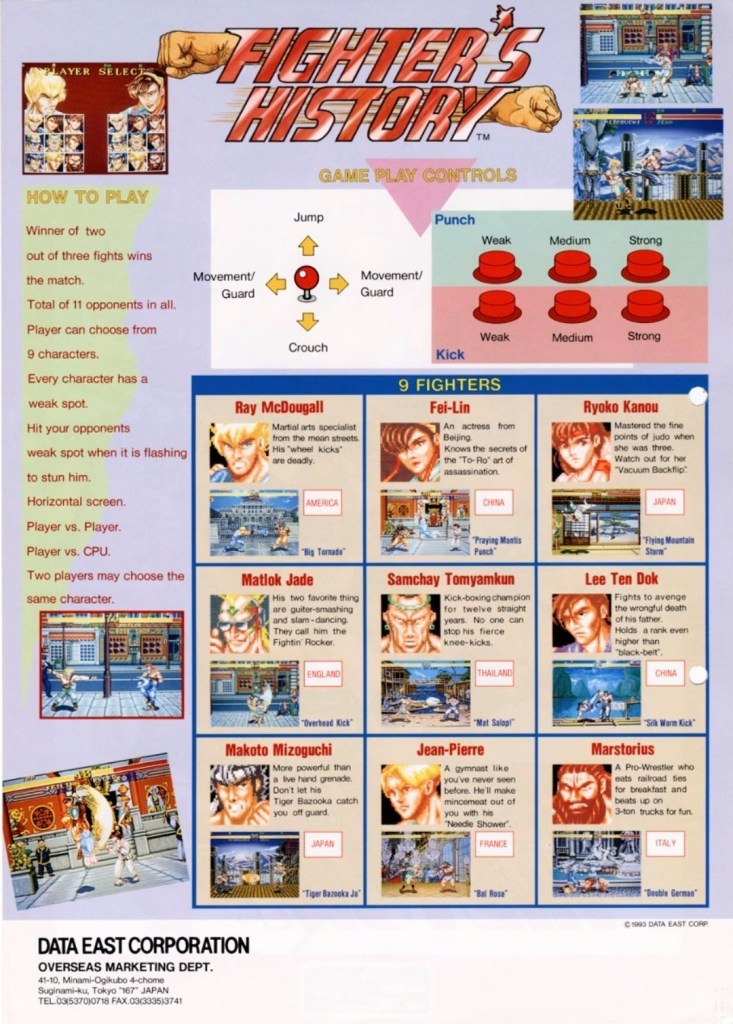
If you look closely at the controls, you will see the six-button layout and functions which are the same with those used in Street Fighter II.
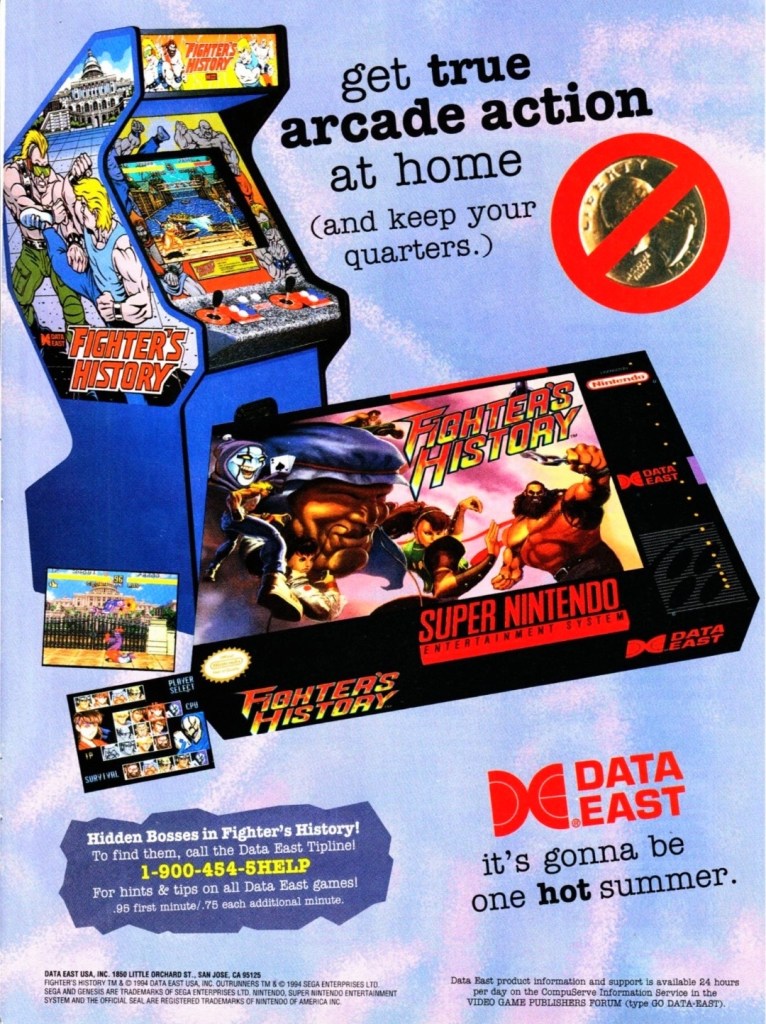
Data East offered two ways for gamers to enjoy Fighter’s History – pay a high price for the SNES version or gamers can go play the game in the arcade by dropping a few coins.
In 1993, Data East released their fighting game Fighter’s History in the arcades around the world. Along the way, the company released their arcade flyer which had a very captivating art work on the front featuring their characters and some action. The other side of the flyer showed the technical details on how to play, how the control works and who the characters are. Fighter’s History was nicely received in the arcades and the success led Data East into porting the game for the Super Nintendo Entertainment System (SNES). If you look at the print ad above, you can see how clever Data East was promoting the SNES version of the game while keeping an image of the arcade machine which serves like a subtle reminder that the same game is still available in video arcades.
Shortly after the release of Fighter’s History in the arcades, there were gamers who noticed that it had certain visual and gameplay elements that made it so familiar with what Street Fighter II had. When Capcom became aware of the similarities, they sued Data East claiming that Fighter’s History was too similar to their game and that copyright infringement was committed. Capcom lost the case ultimately and Data East went on to release two more Fighter’s History games.
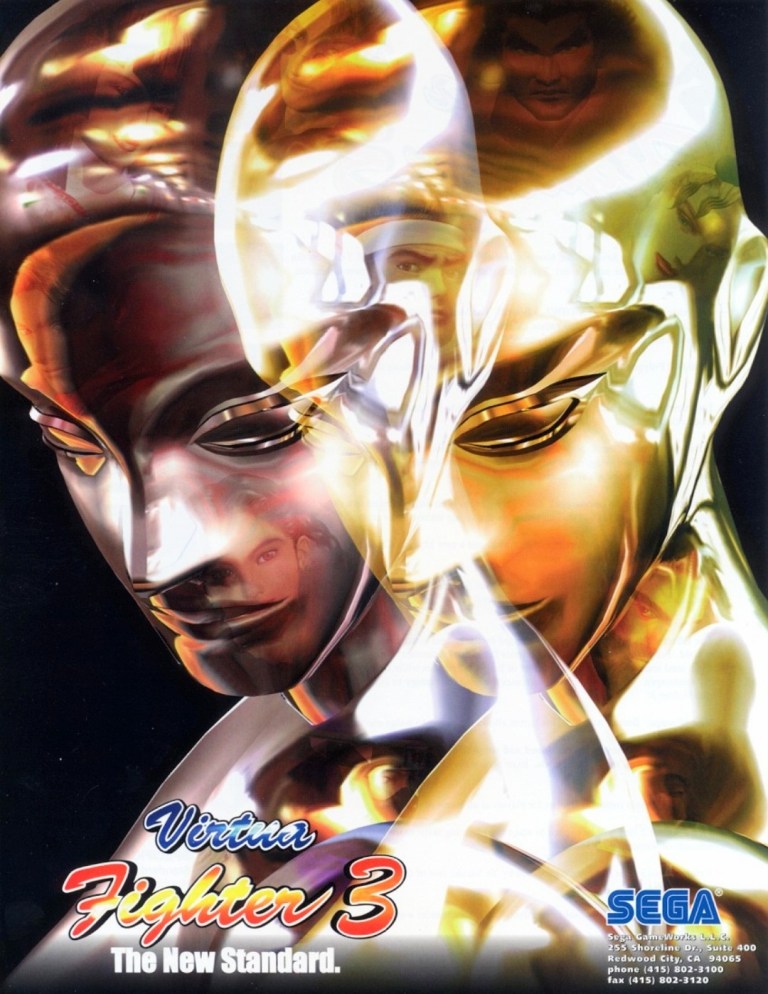
9. Virtua Fighter 3 arcade flyer
Virtua Fighter 3 truly raised the standards for arcade game graphics back in 1996.
When it comes to gaming innovation and standing out among the rest, Sega did exactly those when they released Virtua Fighter 3 in arcades in 1996 and it had the best-looking and really mind-blowing graphics at the time. Developed by AM2 (led by Yu Suzuki) on the very expensive Model 3 arcade hardware, Virtua Fighter 3 broke new ground on graphics as it moved over 1 million polygons per second, had highly detailed visuals on the characters and surroundings, realistic reflection effects, detailed shining, parallel lighting and high-specular Gouraud shading to name some. Even the characters’ eyes followed the opponent’s position.
The Virtua Fighter 3 arcade flyer showcased their reflective, metallic character Dural who in turn was part of the graphical showcase (emphasizing reflections, smooth animation and liquid metal effects) when the game was previewed in the 1996 AOU event in Japan. The words “The New Standard” written on the lower-left corner of the front of the flyer was justified and truthful.
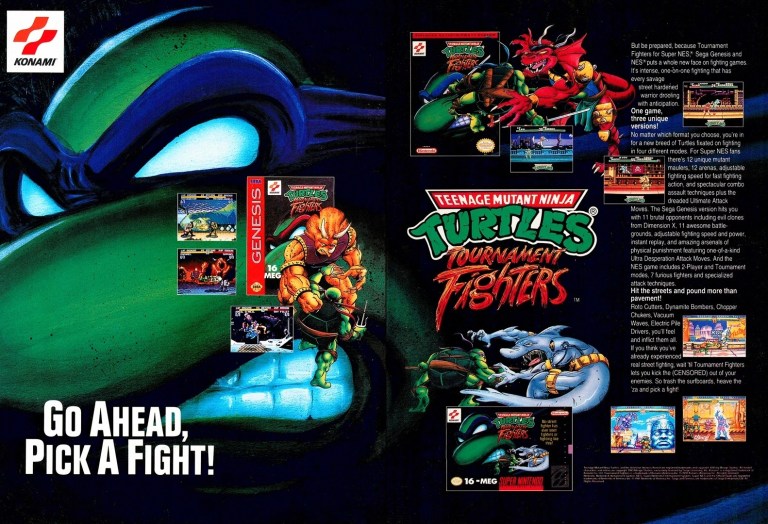
10. Teenage Mutant Ninja Turtles: Tournament Fighters print ad
This print ad had a nice visual presentation and was easily recognizable to the many TMNT fans.
In 1989, the Teenage Mutant Ninja Turtles (TMNT) franchise made quite a splash on video games which is not surprising as the multimedia franchise was already a popular in the West. More video game adaptation of TMNT were released in the early 1990s providing fans and gamers a lot of fun gameplay at the arcades (click here) and on consoles. Konami had the video game rights of TMNT and in a clear response to the sudden popularity of fighting games, they released Teenage Mutant Ninja Turtles: Tournament Fighters on the most popular game consoles of the time achieving varying levels of success critically and commercially (note: the SNES version stood out as the best). This print ad of the fighting game was effective in visually promoting the three console versions and the displayed text contained enough information to lure the attention of both fans and gamers.



 Author Carlo Carrasco