Welcome back my readers, YouTube viewers and all others who followed this series of articles focused on YouTube videos worth watching. Have you been searching for something fun or interesting to watch on YouTube? Do you feel bored right now and you crave for something to see on the world’s most popular online video destination?
I recommend you check out the following videos I found.
#1 Dawn Of The Dead Remake Revisited – Back in 2004, I saw the Dawn of the Dead remake inside a cinema located inside a shopping mall here in the Philippines. The Zack Snyder-directed film only inspired me to look for the 1978 original version of Dawn of the Dead directed by the late George Romero. The only thing the two films have in common is the concept of desperate people taking refuge inside a shopping mall during a zombie apocalypse. Zack Snyder’s film was more about violent action with horror elements blended with it. As Snyder went on to direct high-profile DC Comics superhero movies and produced other such projects of Warner Bros., it was natural for film buffs to gravitate to 2004’s Dawn of Dead which was his directorial debut. To learn more about the said remake and see the cinematic elements that formed the style of Snyder, watch the videos below.
#2 Premium Sushi, Hearty Tempura And Wagyu Beef For Breakfast In Japan –If you were traveling overseas, how hungry do you get when you start the day? Would you go for a simple and affordable breakfast or would you want something special in the morning? In Tokyo, there are these food joints that offer customers a luxurious breakfast with Wagyu beef, special tempura and premium sushi to name some. Already, local and foreign tourists are flocking to such food joints for the premium breakfast experience and you can learn more from the Nippon TV videos below.
#3 The Different Versions Of Final Fantasy VI – Among all the many Final Fantasy games released since 1987, Final Fantasy VI is still my favorite of them all. I first played the classic Japanese role-playing game (JRPG) on Super Nintendo Entertainment System (SNES) in 1994 which was titled “Final Fantasy III”, and it has a great epic story, a huge cast of playable characters, lots of unique gameplay features and great game design. Through the decades, Final Fantasy VI was ported to many consoles, mobile devices and even on personal computer. You might be wondering which version of Final Fantasy VI is the best in terms of visual quality, which one is the most available and which one is the most updated version. That said, you can find out by watching the video below.
#4 Castlevania II: Simon’s Quest Revisited – When Castlevania II: Simon’s Quest was first released on the Nintendo Entertainment System (NES) in 1987, many fans who enjoyed the first game were alienated by how different the sequel felt, looked and played. It still was horror-themed 2D adventure game with Simon Belmont as the playable protagonist again but the creative team of Konami implemented role-playing elements and open-world exploration into the gameplay. Major game design changes aside, Castlevania II still has a lot more than meets the eye and you can find out by watching the video below. Surely it will challenge what you know about Simon Belmont and the Castlevania lore.
#5 Why Feminists Support Islam – Let’s be very clear here. Islam is a truly ugly religion and it is incompatible not only with Western democracy and values, but also with several other cultures around the world. The strange thing is that modern-day feminists actually support Islam even though the ugly religion itself goes against women’s rights, against personal liberty and against freedom as we know it. In the video below, Ayaan Hirsi Ali explains in detail why mainstream feminists today support Islam, why feminism today is very twisted and why feminists even aligned themselves with Islamic terrorists.
Welcome back readers, fellow geeks and electronic gaming fans!
In this edition of the Retro Gaming Ads Blast (RGAB) series, we will take a look at another batch of retro gaming print ads from the 1980s to the 1990s, particularly on role-playing games (RPGs) from the East and the West. This is the RPG Special!
For the newcomers reading this, Retro Gaming Ads Blast (RGAB) looks back at the many print ads of games (console, arcade, computer and handheld) that were published in comic books, magazines, flyers, posters and newspapers long before smartphones, social media, the worldwide web and streaming became popular. To put things in perspective, people back in the 1980s to the 1990s were more trusting of print media for information and images about electronic games and related products.
With those details laid down, here is the newest batch of retro gaming print ads for you to see and enjoy…
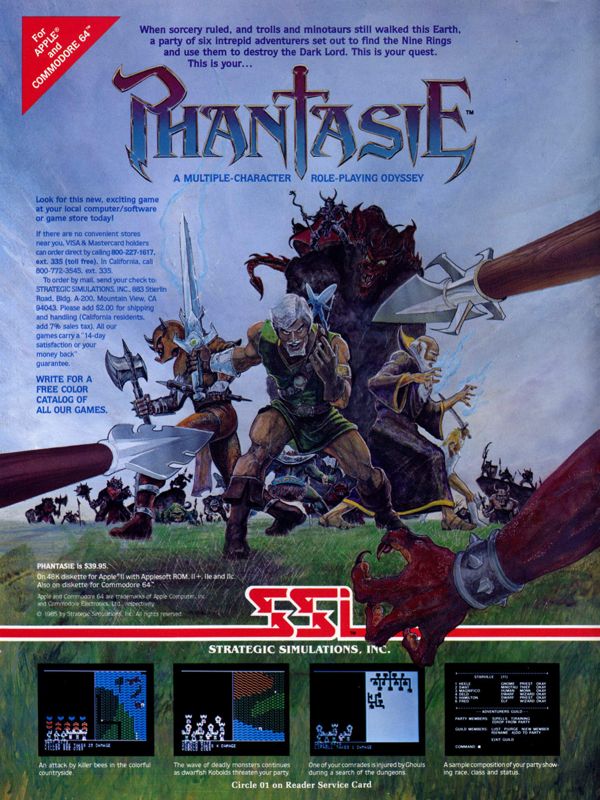
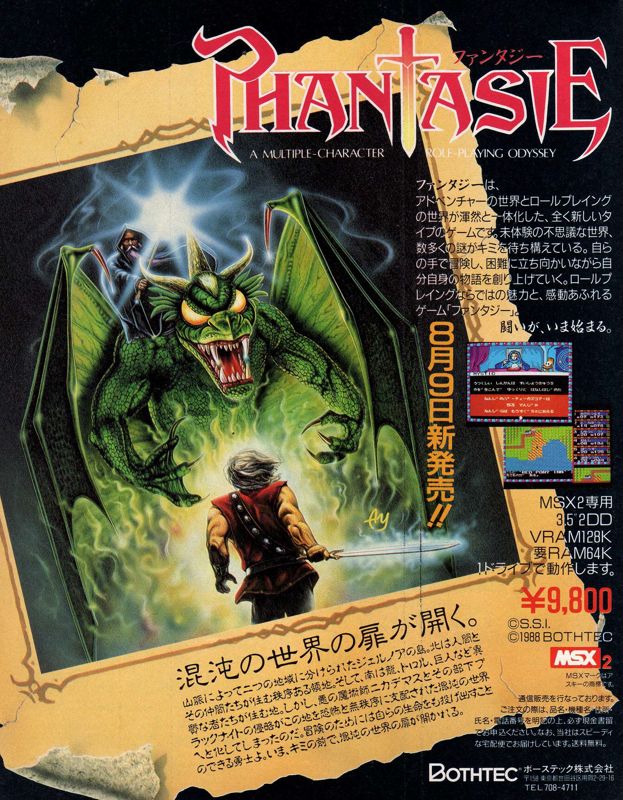
1. Phantasie North American and Japanese Print Ads
The North American print ad.
The Japanese print ad.
Released by Strategic Simulations in the mid-1980s, Phantasie was a fantasy role-playing game that became a huge commercial success paving the way for not only ports on other computer systems of the time but also sequels later. The ad they came up with for the North American market had strong fantasy vibes and the screenshots gave readers the impression that it looked playable or user friendly. For the Japanese market, Phantasie was ported to the MSX system and they came up with an ad using radically different art work that had a horror vibe.
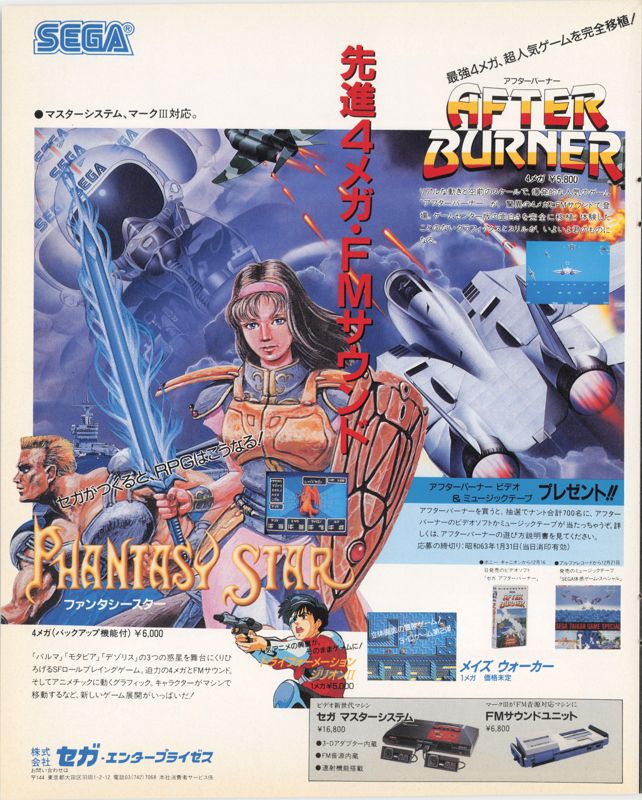
2. Phantasy Star Japanese Print Ad
Phantasy Star in the Japanese print ad sharing the spotlight with After Burner.
In the 1980s, role-playing games started gaining popularity with Japanese console gamers and there were game developers who were inspired by established RPGs from the West. Enix released two Dragon Quest games and each of them sold a lot of copies on Nintendo’s Family Computer (Famicom). At the time, Sega already had the Master System (called the SG-1000 and its variants with revisions) in the console market and they were way behind Nintendo on hardware sales. Knowing there is a market for console RPGs, Sega went on to make their exclusive RPG Phantasy Star. In 1987, a print ad was released showing Phantasy Star sharing the spotlight with Sega’s blockbuster game After Burner in the background. While the ad felt a bit disorienting to see, the game achieved much-needed success for Sega which in turn brought the game to the Master System in America in 1988. The game sold more and eventually led to sequels in the years that followed.
3. Ultima III Japanese Print Ad
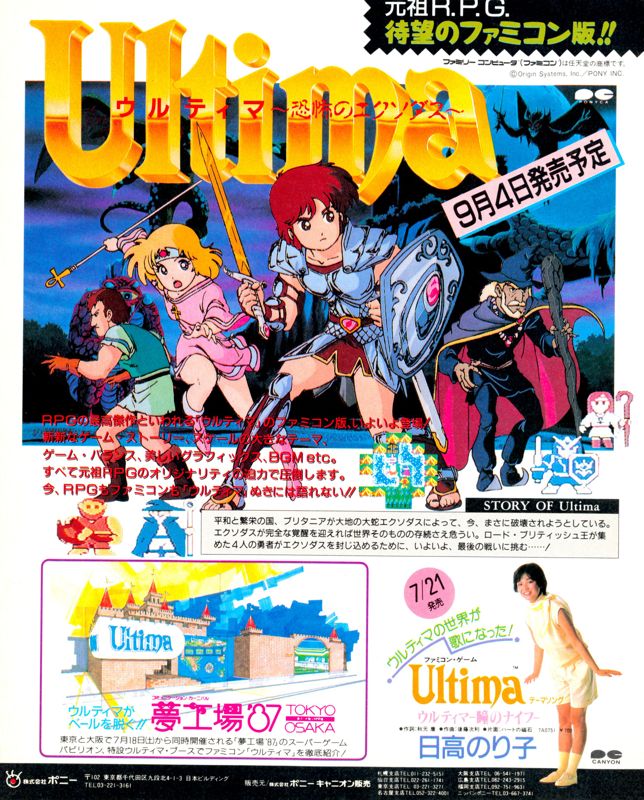
Remember the old days when anime or comic book-style artwork was used to promote games in the Japanese print media?
Released in Japan under the title Ultima: Kyoufu no Exodus, Ultima III: Exodus was a breakthrough for the series as the Famicom version marked the first console release for Japanese gamers (note: the game was also offered for MSX and other computer systems in the country). The anime-style artwork used for the print ad is the same virtually the same with the front cover of Famicom version. Very notably, the art on the covers of the PC-88 and PC-98 versions were different.
4. Lunar: The Silver Star Japanese Print Ad
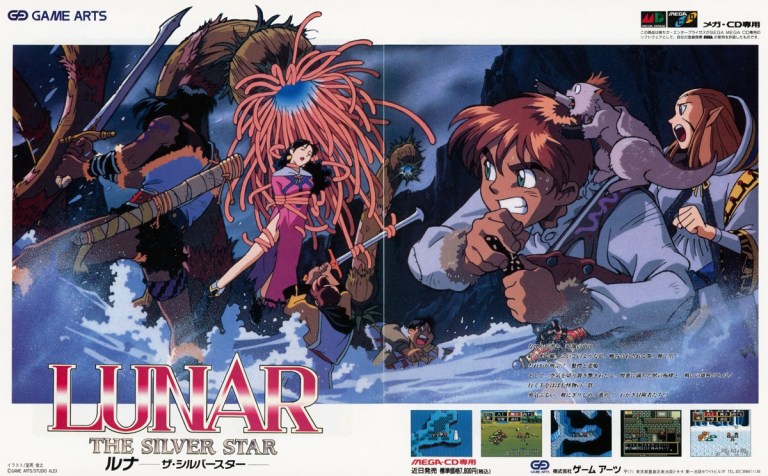
Game Arts’ Lunar: The Silver Star as advertized in Japanese magazines.
By the 1990s, console RPGs were very popular as franchises like Dragon Quest and Final Fantasy each released sequels that sold a lot of copies. The company Game Arts decided to make a role-playing game which can tell stories better using animation with voiceovers and music while being very playable and enjoyable. They came up with Lunar: The Silver Star and released it on the Mega-CD add-on (connected with the Mega Drive console of Sega) in 1992. As such, it was not surprising to see the print ad having anime-style artwork as the game itself had several minutes of anime cutscenes complete with audio. As most Japanese role-playing games (JRPGs) did not have playable anime cutscenes for storytelling, Lunar: The Silver Star really stood out. Sometime later, the small American company Working Designs would handle the game’s English version and start a healthy business relationship with Game Arts.
5. Dungeons & Dragons: Warriors of the Eternal Sun North American Print Ad
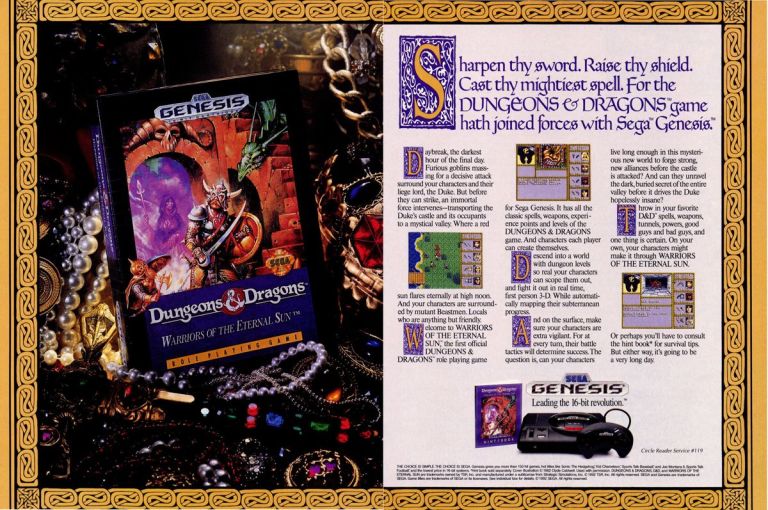
A print ad that strongly appealed to both Sega Genesis gamers as well as fans of Dungeons & Dragons.
By the year 1992, the fantasy games franchise Dungeons & Dragons was wildly popular as players around the world kept enjoying the tabletop RPG modules (using dice, pen paper) as well as many computer and video games already available. Sega acquired a D&D license and eventually released Dungeons & Dragons: Warriors of the Eternal Sun exclusively on their Genesis console in 1992. To promote it, Sega produced a 2-page print ad that had one half showing the game’s box placed with jewelry while using the other half to show the screenshots, descriptive text and other details. The way it was presented, the print ad was cleverly structured to attract the attention of Sega Genesis gamers as well as Dungeons & Dragons fans. The game ended up as the first and only official D&D product for the console.
6. Shadow Sorcerer North American Print Ad
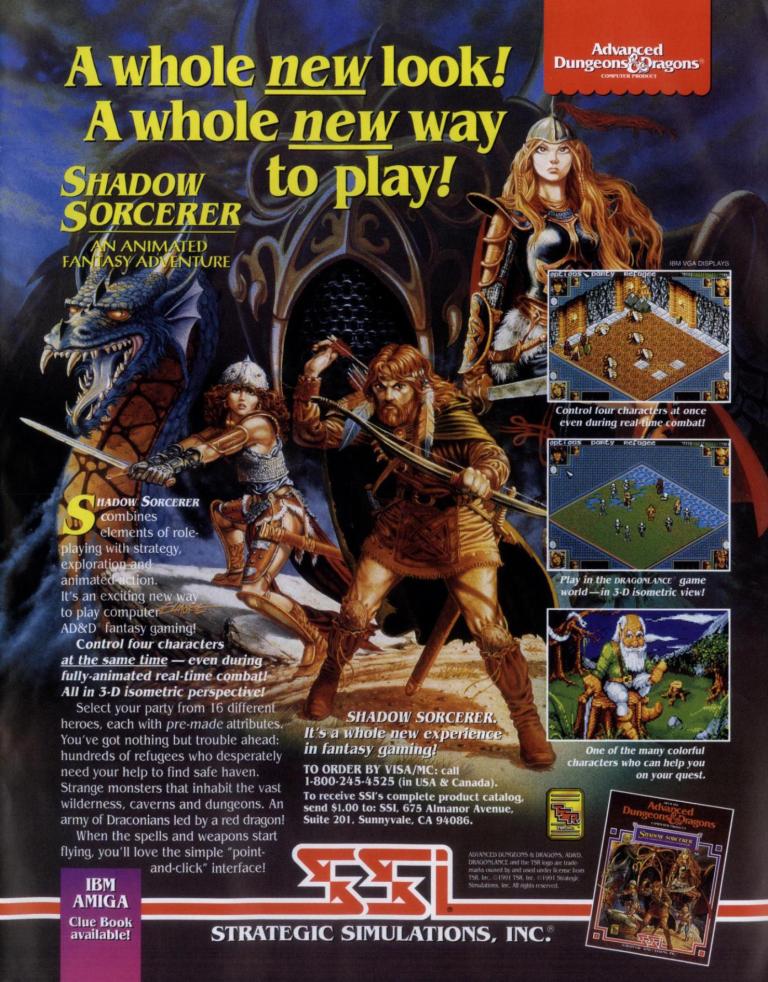
This is one of many Dungeons & Dragons computer games released. The use of painted art for marketing was done many times.
In the history of the Dungeons & Dragons franchise and electronic gaming, it was on computers where the more ambitious and more intricate licensed games were played by many fans. In 1991, the Advanced Dungeons & Dragons (AD&D) electronic game Shadow Sorcerer was released on MS-DOS PC, Amiga and the Atari ST. The painted artwork used on the print ad was virtually the same as that on the box covers of the MS-DOS and Amiga versions. I can only guess that the ad markers must have paid a lot of money on the painted art and decided to use it for both marketing and packaging since it looked so detailed.
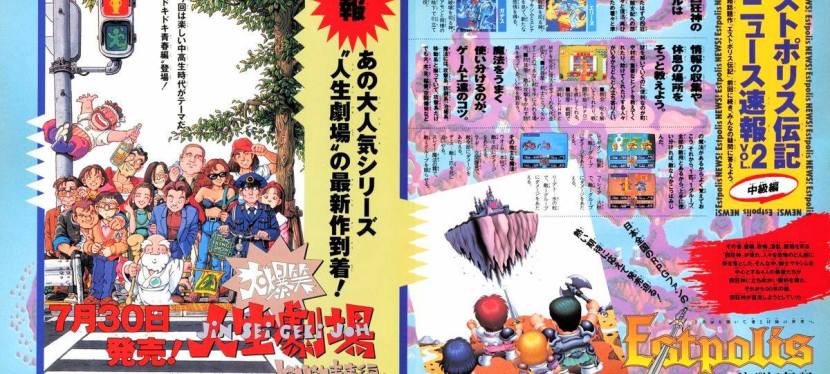
7. Estopolis Denki Japanese Print Ad
The 2-page Japanese print ad of Estopolis Denki.
In 1993, a brand-new Japanese developer called Neverland was established and its first project was the fantasy role-playing game Estopolis Denki for the Super Family Computer (Super Famicom). That same year, publisher Taito released the game and they promoted it with a 2-page print ad that featured a whimsical looking hand-drawn art work on one half and utilized the other half with details, screenshots and part of the art that was used on the game’s Super Famicom box cover. While Japanese game sales are not available, it seems Estopolis Denki sold enough to convince the publisher to release the game in North America as Lufia & The Fortress of Doom.
8. Lufia & The Fortress of Doom North American Print Ad
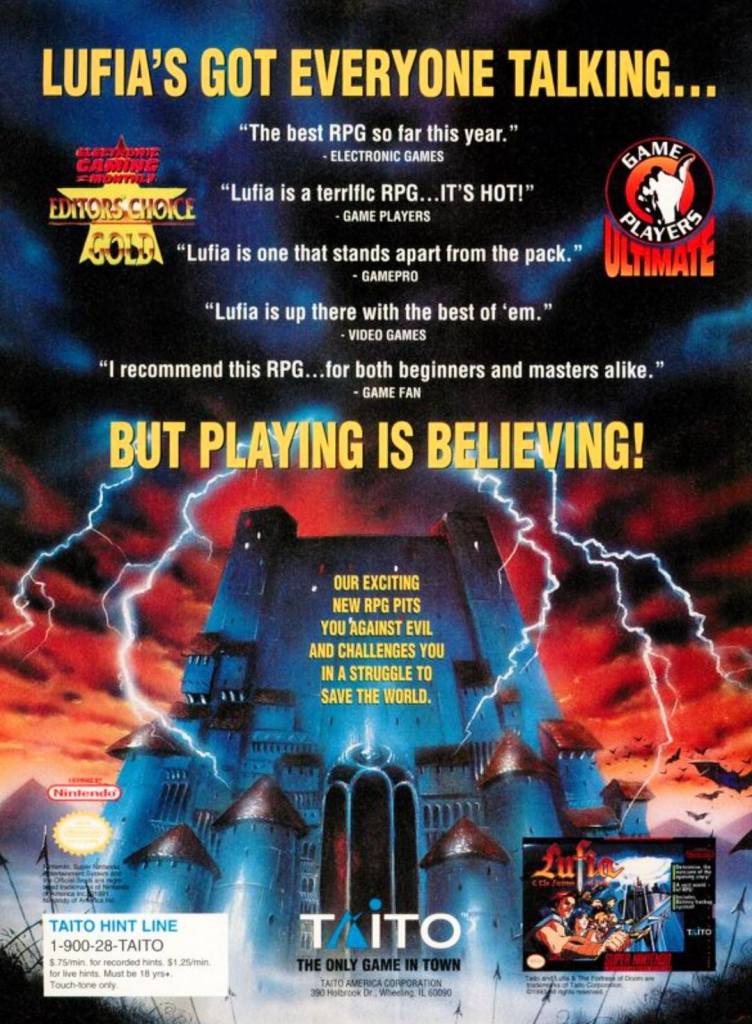
If you were able to play Lufia & The Fortress of Doom on the SNES, were you able to see this ad in a comic book or in a magazine?
Upon release in America in late 1993, Taito scored gold as Lufia & The Fortress of Doom on the Super Nintendo Entertainment System (SNES or Super NES) became a critical and commercial success. In fact, it literally gained steam during the early months of availability and ended up as the top-selling SNES game in America for the month of February of 1994. Take note that at this particular point of time, RPGs on game consoles in America were not yet in high demand as gamers’ tastes were different. When it comes to the marketing, Taito came up with a single-page print ad showing fantasy artwork, the game’s box cover and the published quotes from game critics who gave the game positive reviews. This is smart marketing on the part of Taito.
9. Record of Lodoss War Japanese Print Ad
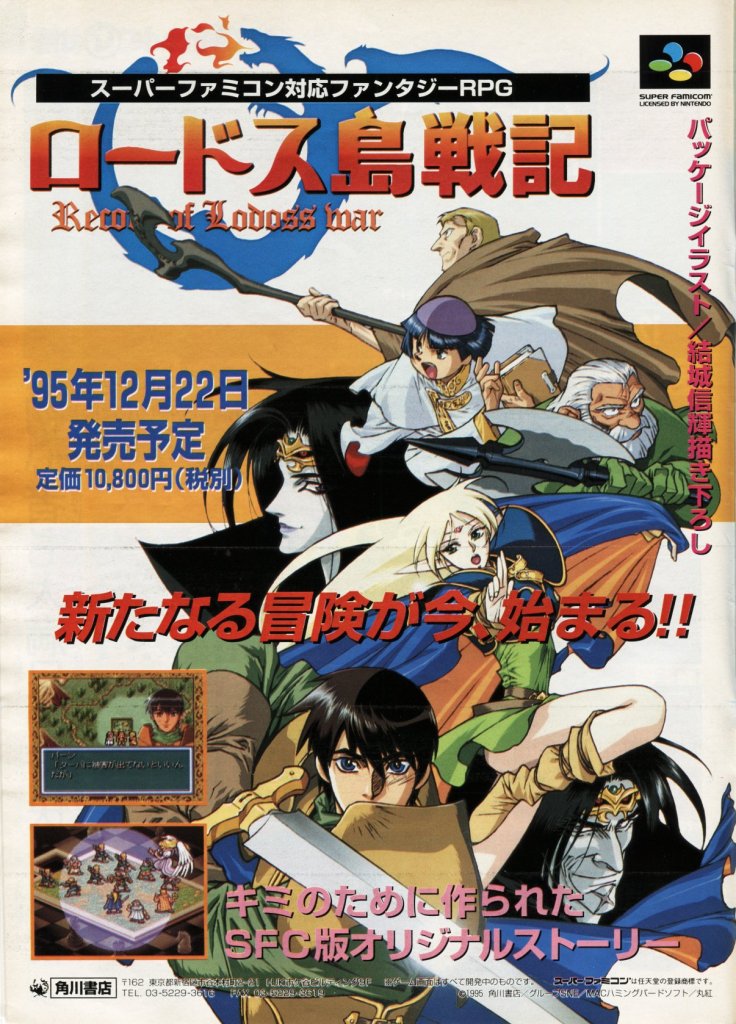
The Japanese print ad of Record of Lodoss War for Super Famicom.
Have you ever heard of the Record of Lodoss War fantasy franchise? That one started as a series of fantasy novels by Ryo Mizuno who previously worked on an RPG project. Record of Lodoss War was eventually adapted into comics, anime and video games. One of those games was released on the Super Famicom in December 1995 published by Kadokawa Shoten which in turn made the one-page print ad for the Japanese market. Using established art from the anime OVA (original video animation) series was a strategic move by the publisher as millions of Japanese people viewed it. Unsurprisingly, the art on the ad is almost the same as the one displayed on the game box cover.
10. Fallout North American Print Ad
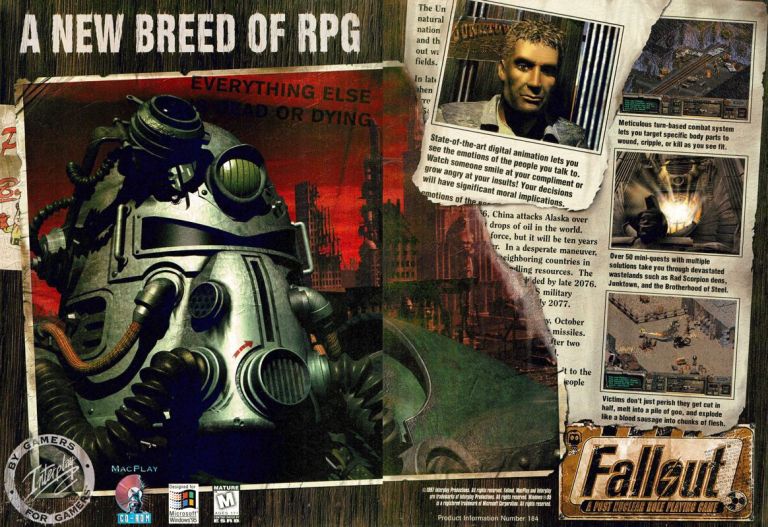
A gritty looking print ad of the original Fallout PC game.
In my gaming life, I played Fallout 3, Fallout 4 and Fallout: New Vegas on Xbox consoles. When the first-ever Fallout game was released in 1997, I did not notice it as I was more into console gaming than PC gaming. The above print ad appeared is several PC gaming magazines and it clearly shows what it offered which gamers eventually ended up enjoying a lot. The mechanical helmet – protection for the user during battles and from radiation in the nuclear wasteland – on the left side of the ad became a key symbol of the Fallout franchise as further games also featured mechanical helmets. Fallout was highly acclaimed for featuring open-ended gameplay and its immersive post-apocalyptic setting. It sold enough copies to convince publisher Interplay to proceed with a sequel and the rest was history.
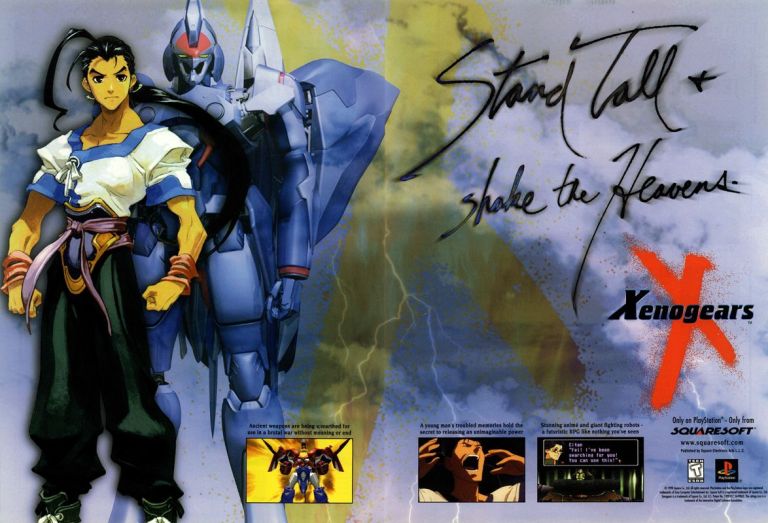
11. Xenogears Japanese and North American Print Ad
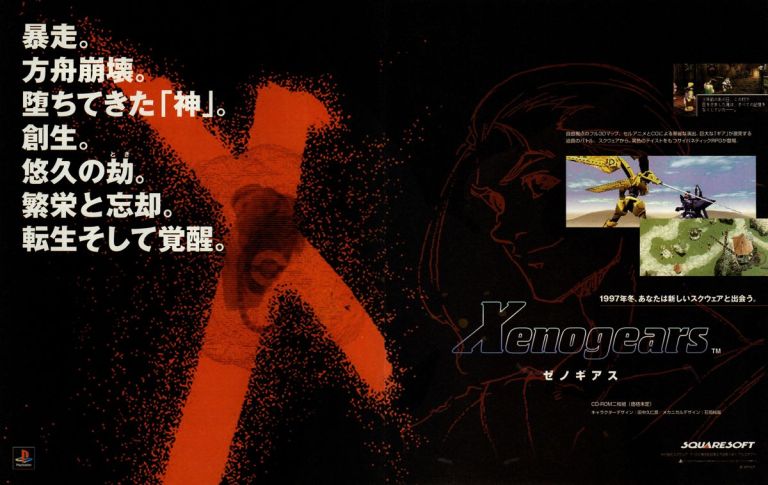
Japanese advertisement of Xenogears.
This North American print ad of Xenogears clearly showed the main character, a robot, the sci-fi setting and the visual style of the game.
Xenogears was a sci-fi JRPG I played on the PlayStation in 1998 but I was unable to finish it. Before it was released in America, there was speculation that Squaresoft would not be able to produce an English version for international release due to its religious content. The game was highly challenging to translate into English due to religious themes and psychological elements. Regardless, the game achieved successes commercially and critically in both Japan and America. Xenogears has since been considered by many as a classic JRPG and to play it today is pretty challenging as an existing PlayStation One, PlayStation 3 or PlayStation Vita is required as well as the physical PlayStation disc itself (note: digital copy of Xenogears for PS Vita). Square Enix – which previously remastered Chrono Cross and several Final Fantasy games for modern gaming platforms – has yet to remaster Xenogears for those with modern game consoles, mobile devices and the PC.
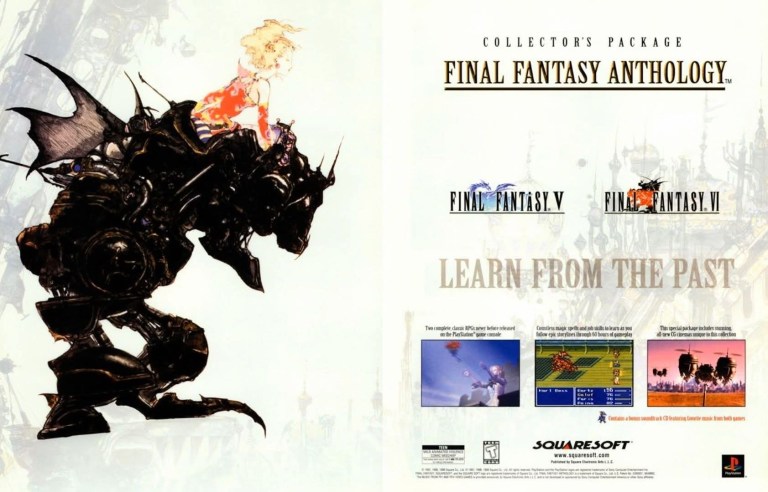
12. Final Fantasy Anthology Print Ad
I remember seeing this 2-page print ad in many gaming magazines I read.
By the year 1999, Squaresoft established itself as the best role-playing game company as they achieved critical and commercial success with Final Fantasy VII in 1997, Brave Fencer Musashi, Parasite Eve and Xenogears in 1998. For 1999, Squaresoft decided to bring ports Final Fantasy V and Final Fantasy VI – both games were released in cartridge format on Super Famicom/Super NES some years prior – to their fans who owned PlayStation consoles by releasing the collection called Final Fantasy Anthology. For the North American market, Squaresoft aggressively promoted the 2-game collection with the above 2-page print ad on several video game publications. One half featured exquisite artwork by Yoshitaka Amano and the other half showed the screenshots, descriptions and details. Clearly the ad was made with Final Fantasy fans in mind and it was also clever with the use of nostalgia.
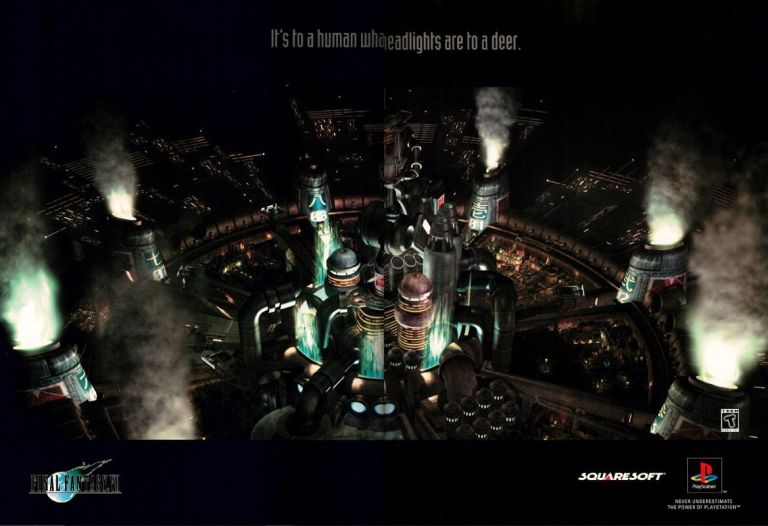
13. Final Fantasy VII North American Print Ad
While it did not show any of the characters, this 2-page print ad of Final Fantasy VII appeared in many gaming magazines and ultimately made the public aware of the game which went on to sell millions.
There is no denying that Final Fantasy VII is the most defining Japanese RPG of the 1990s. Given its huge pre-release promotions, the critical acclaim and the tremendous sales achieved in North America and Europe, the game arguably made the JRPG sub-genre more popular among gamers and game publishers while also making the original PlayStation console the must-have machine for video gaming. The above print ad is one of several released through print media and even though it did not show any characters, the image of a futuristic looking city caught the attention of not just gamers but also others who loved entertainment.
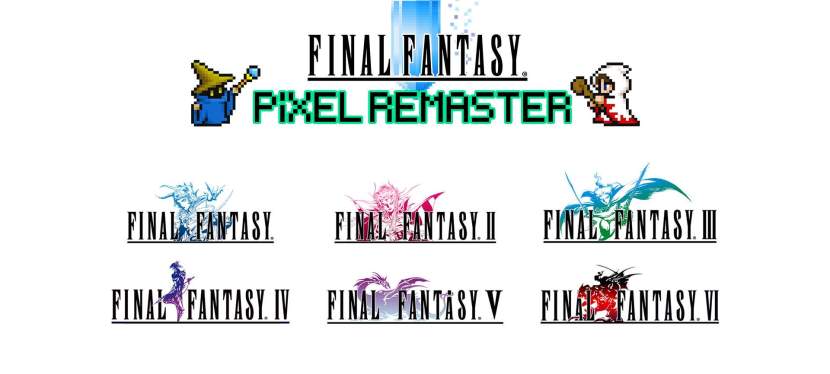
In case you missed the official Xbox presentation of the 2024 Tokyo Game Show (click here to watch), Square Enix formally announced that Final Fantasy Pixel Remaster has officially been released for Xbox Series X and Xbox Series S plus Windows PC. Watch the announcement video below.
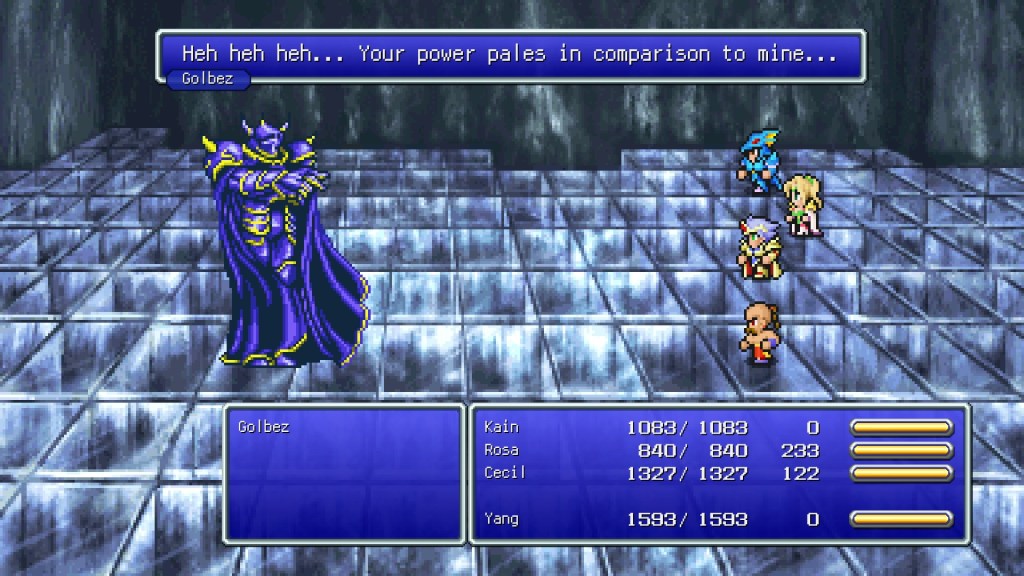
This is what Final Fantasy IV looks like in remastered form.
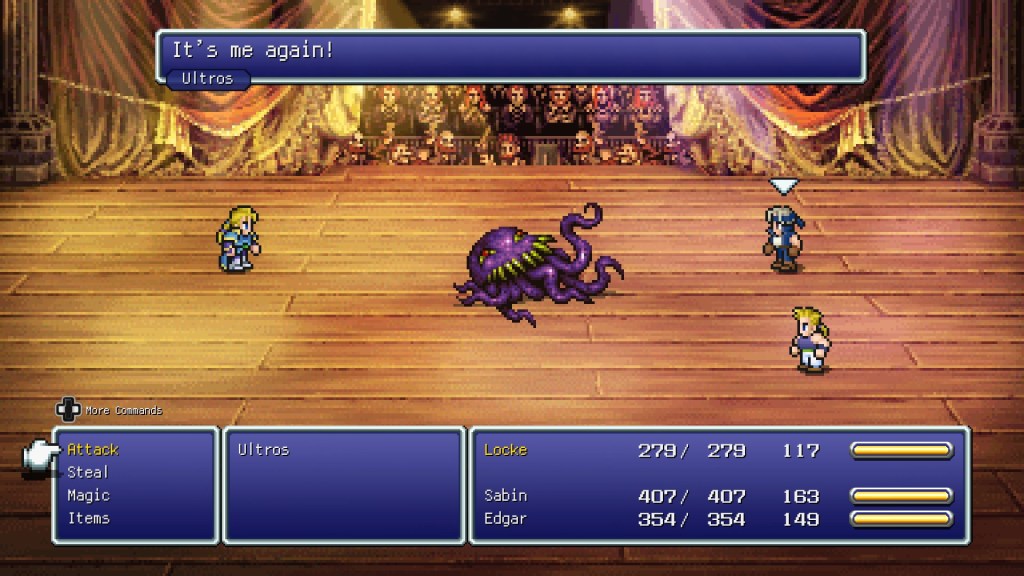
Each classic Final Fantasy game has its 2D pixel graphics and artworks updated with high-definition gaming in mind, and their soundtracks have been re-arranged. In what is a clear attempt by Square Enix to enhance the gameplay experience and user-friendliness, there were tweaks made to the user interface. Also added were extra stuff such as bestiary, illustration gallery and music player.
The Xbox and Windows PC releases of Final Fantasy Pixel Remaster is indeed a move towards the right direction by Square Enix and it is clearly the result of that company’s renewal of ties with Team Xbox. Final Fantasy Pixel Remaster was launched on other platforms previously and the Xbox ecosystem ended up being the last to have it for millions of gamers to enjoy.
For the Xbox gamers who are Final Fantasy fans as well as those who are fond of classic Japanese role-playing games (JRPGs) and those who simply love retro gaming, Final Fantasy Pixel Remaster is a very welcome addition that should not be missed. It is available now for digital purchase as a bundle but gamers are free to choose to buy the games individually based on their current taste or based on how much they could afford right now. It is clear that buying the bundle of six Final Fantasy classic games is still the best value for money.
Welcome back, fellow gamers, geeks, role-playing games (RPGs) enthusiasts and fantasy lovers!
In recent times, I completed my first playthrough of Starfield on my Xbox Series X and it lasted me over 220 hours of fun, discoveries and intriguing moments. Having played it so long, I will replay Starfield with a new playthrough only after Bethesda implements the next series of patches/updates (to refine the game) and release the planned downloadable content (DLC).
That being said, I finally started playing the inspired Japanese-style role-playing game (RPG) Sea of Stars on my Xbox Series X. Having played some hours of it, I can say that I am really enjoying Sea of Stars and I intend to finish it. Oh yes, Sea of Stars is available on Xbox Game Pass (XGP) right now!
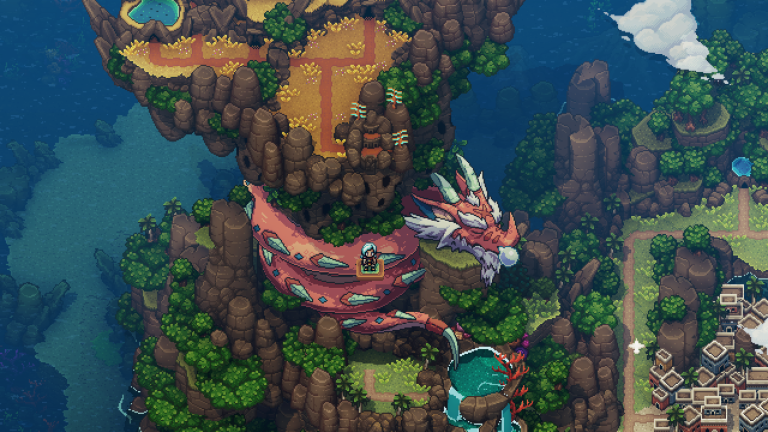
This is one of many great looking scenes composed of really fine 2D art style and pixel artistry in Sea of Stars.
Developed by Sabotage Studio, Sea of Stars is a turn-based RPG with a strong retro feel that will remind you of past Japanese RPGs (JRPGs) like Chrono Trigger and Secret of Mana. The game follows the exploits of two Children of the Solstice who combine the powers of the sun and moon to perform Eclipse Magic, the only force capable of fending off the monstrous creations of the evil alchemist known as The Fleshmancer. Along the way, the two Children of Solstice start a quest joined by their friend and together they travel to different places encountering different inhabitants and engage in situations that only they can solve.
Having played Chrono Trigger, Secret of Mana, Final Fantasy IV, Final Fantasy VI and a lot of JRPGs from the so-called 16-bit era of console gaming, I can say that Sea of Stars is a very inspired game that has lots of elements common with the mentioned games (plus more) with regards to art style, gameplay, quests, music, character development and visual presentation. To put it short, the guys at Sabotage Studio took a lot of inspiration from the classic JRPGs to make something fun for this current console generation. I am having a lot of fun with the game which itself is available for Xbox Game Pass (XGP) subscribers to avail.
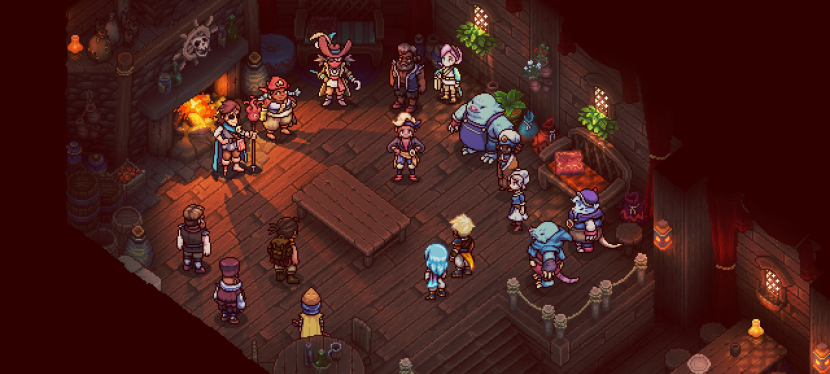
An important meeting about to happen in the game.
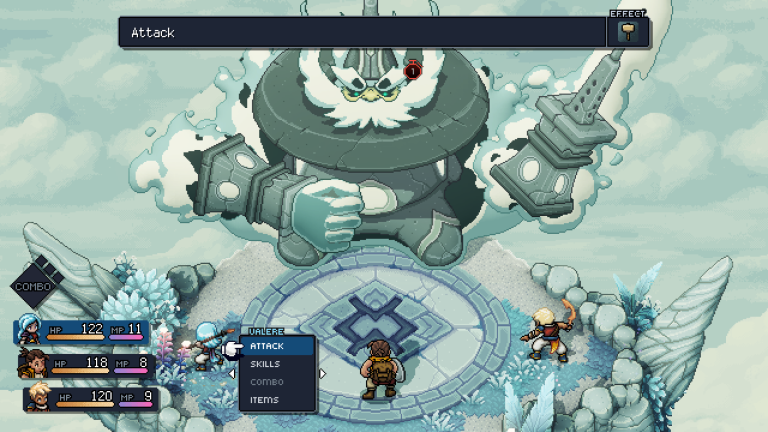
A boss battle early in the game.
This is just a part of the world map of Sea of Stars.
In my experience and recollections from the past, Sea of Stars has visual style that is best compared with Chrono Trigger. Sabotage Studio really created a lot of nice looking 2D artworks and highly detailed sprites that made the new game look lively. With regards to the storytelling , character development and character expressions, the game has a wholesome tone that never felt childish. The tone as well as the humor made Sea of Stars comparable with several Japanese RPGs from the 16-bit age of consoles.
You will encounter really interesting characters who will join your party as the game progresses.
Sea of Stars is really fun to play and it is a great change of pace and style for me as I finished my Starfield playthrough which lasted more than 220 hours. This Sabotage Studio game will help ease my wait for the expected 2024 RPGs such as Eiyuden Chronicle: Hundred Heroes and the Xbox-exclusive Avowed. As much as I hope to see past JRPGs like Xenogears, Breath of Fire and Lunar get remastered and released for Xbox consoles (and XGP), I know such possibilities remain uncertain and Sabotage Studio’s game easily fills the void. If you are looking for a Japanese-style RPG that is fun, nostalgic and visually pleasing, you can’t go wrong with Sea of Stars. Go for the game on Xbox Series X, Xbox Series S, Xbox One, Windows PC and Xbox Game Pass now!
Disclaimer: This is my original work with details sourced from playing Flashback: The Quest for Identity and doing personal research. Anyone who wants to use this article, in part or in whole, needs to secure first my permission and agree to cite me as the source and author. Let it be known that any unauthorized use of this article will constrain the author to pursue the remedies under R.A. No. 8293, the Revised Penal Code, and/or all applicable legal actions under the laws of the Philippines.
We live in an age in which software exclusivity defines not only the relevance of game consoles but also nature of the entire video game industry right down to the many varied communities of very avid fans (and fanboys).
While the Super Nintendo Entertainment System (SNES or Super NES) and Sega Genesis each had their own exclusive games back in the 1990s, there was one particular game that was made for and released on not just one, not two but rather on more than fifteen different platforms – both consoles and computers – starting with Amiga way back in 1992. That game is none other than Flashback: The Quest for Identity which I first played on our Super NES back in 1994.
The cover of the game box.
For the newcomers reading this, Flashback was a 2D side-scrolling adventure game in the form of a cinematic platformer (note: similar to Prince of Persia and Out of This World) with a strong flavor of science fiction. It was cinematic in the sense that all the in-game animation were rotoscoped resulting unique smoothness combined with hand-drawn backgrounds and the computer-generated cutscenes were used in key parts of the game as the story progressed. Flashback on SNES in America even came with a Marvel Comics-published Flashback comic book and on the rear of the SNES game box were the words “The first CD-ROM game in a cartridge!”
A Flashback remake was released in 2013, followed by a port of the original game released on Sega Dreamcast in 2017, and a remastered version got released for varied platforms in 2018.
I got to play that game at a time when I have not even started playing Final Fantasy II (AKA Final Fantasy IV), Final Fantasy III (AKA Final Fantasy VI) and other great role-playing games (RPGs) of the Super NES. I also remember that Flashback was a nice change of pace for me after playing Super Star Wars: The Empire Strikes Back.
With those details laid down, here is a look back at Flashback: The Quest for Identity, released on Super NES in 1993 by U.S. Gold and developed by Delphine Software International.
The start and options screen.
Early story
The story begins with Conrad running away from two armed persons chasing him. He flies away riding a solo vehicle but those chasing him (riding a huge vehicle) managed to get close and blast his vehicle causing to crash into the forest.
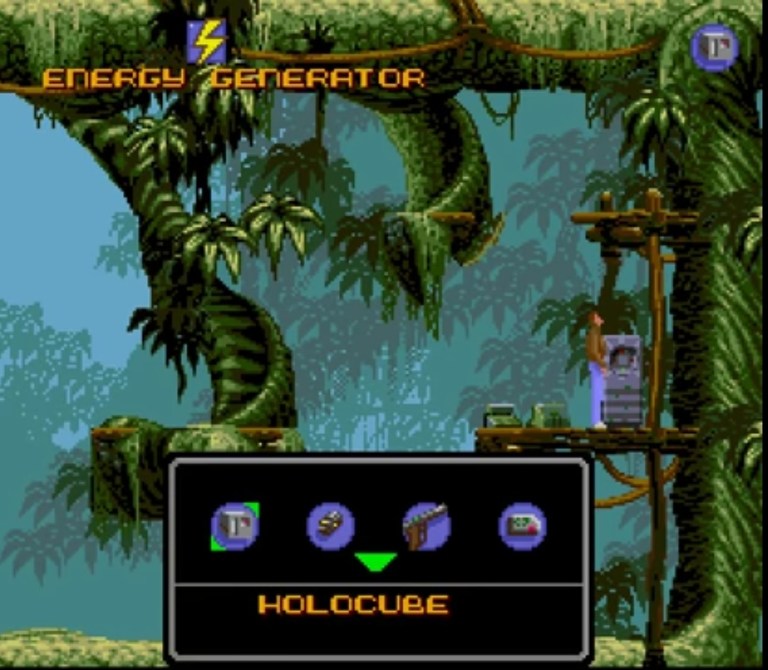
Sometime later, he wakes up and accidentally pushes a mechanical cube to fall down. He climbs down to reach it and activates it. The cube displays a holographic video of himself telling him that he recorded it without remembering it. As Conrad watches, he learns that he must contact a friend named Ian who can explain important things to him.
After viewing the message, Conrad sets off to find his way out of the jungle and somehow get to Ian in New Washington…
Game design and quality
You have to pay close attention to what’s going on, what items do you have and what the in-game prompts tell you.
This game is not your typical fast-paced, action-oriented 2D side-scrolling adventure in which you move from left to right to progress. As it is a cinematic platform game by design complete with very specific controls, players will have to be patient, adaptive and strategic in order to learn how exactly you can control your character, what moves will be executed (and when to execute). For one thing, the very fluid 24 frames-per-second animation on your character limits you in terms of control as timing is required.
To do things properly, you have to execute specific controls. To ascend on a lift, you press Up and the Y button. To do a small jump, have your character stand still and then press Up and Y button. To go down on level (on foot, no lift), stand by the edge of a level then press Down and Y button. To run and hang on to a higher floor automatically, have your character stand still, press Right and Y button, press Y button (once your character moves) and watch him pull it off. With controls like these, the usual 2D platforming approach is out of the question. In my experience, these controls are indeed challenging but never impossible to learn and eventually I got proficient with the controls as I played more.
The in-game animation for the characters are very good and there is also a sensation of weight with your character. Falling straight down from a very high place is a big no-no.
Apart from character controls, you don’t just move Conrad from one screen to the next…you also should do key objectives along the way apart from engaging in action scenes (read: shooting). That being said, you must watch out for icons that appear on screen when your character steps on a particular spot that requires interaction. For example, if you stop by a terminal, an icon will appear serving as a prompt to start the interaction. Another example is when your character steps on the same spot as an item located at which you can pick up once prompted.
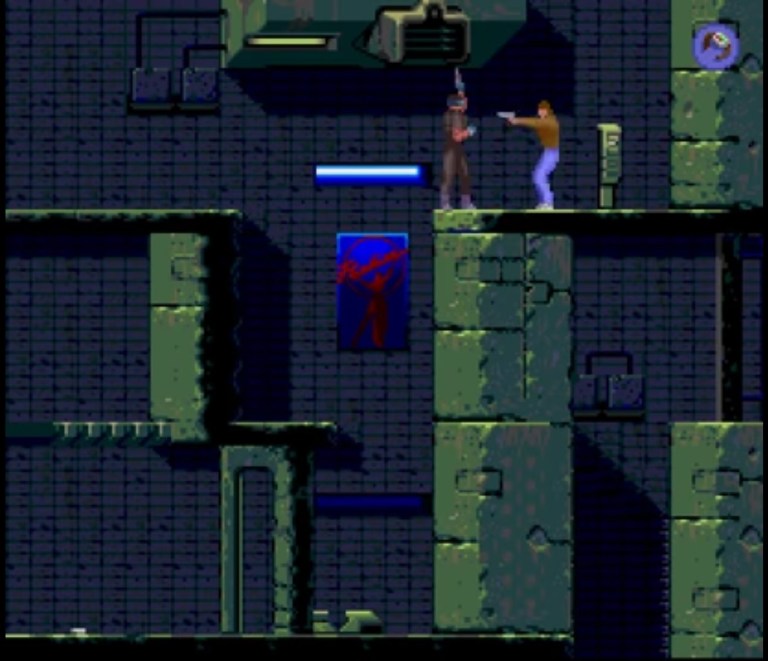
More on the action on the screen, you will encounter armed enemies as well as high-tech machines (including floating drones). To overcome them, doing straightforward shooting is not recommended as you have to be strategic before firing a shot. You have to learn how each enemy or machine moves, how much physical space is available right there and how you can maximize your limited time and space to overcome them. In fact, you will also be compelled to take advantage of whatever seconds you have while the enemies’ animation (between moves) take place. There will also be times when you need to have your character armed with the gun before jumping to a lower level where an armed enemy is located and on the lookout. Coming down armed gives you an advantage to shoot first at the enemy who
Considering the 24 frames-per-second animation, you will have to time your moves carefully, especially during moments when you face an armed enemy.
Apart from shooting, you can also use grenades which requires opening your inventory to select a grenade and then do your timing and calculation of the distance in order to pull of a successful throw and explosion. You can also throw stones to distract enemies or to apply weight on key platforms in order to open mechanical doors.
With regards to the quality of gameplay, Flashback is enjoyable but only if you get over its rather high learning curve with regards to the controls which themselves serve as the game’s advantage and even as a disadvantage. In addition to being patient and strategic, you will really have to pace yourself, think more and get used to the rather slow pace of the game in relation to its cinematic platformer design. I should state that as you keep progressing, there will be places, or new obstacles or new enemies that will compel you to change your tactics in order to overcome them. Anyone who is used to playing 2D side-scrolling games the fast and easy way might find the high learning curve and pacing of Flashback a turnoff but if they are willing to learn, adjust and pace themselves, only then can this game’s gameplay be really enjoyed.
Cut scenes like this move at a sluggish pace which shows the limitations of the SNES and cartridge technology.
As for the visuals, the obvious highlight here is the 24 FPS animation which is the result of rotoscoping and careful visualizing (note: observe those alien humanoids who morph into moving blobs). The rotoscoped animation, however, would not have been that effective had the quality of the art used for the backgrounds been made of lower quality. I can say that the background artworks here look pretty good even by today’s standards. The standout among them were the background artworks of Morph’s home planet which really looked very alien and creepy at the same time. What hurts this particular version of Flashback is the lackluster (read: choppy) frame rate whenever the computer-generated cinematic cutscenes (obviously they were meant for more powerful PCs) play which, in my experience, took me out of the story. There were also bouts of slowdown during the gameplay, especially when you encounter enough enemies that were animated sophistically.
With regards to narrative, Conrad is literally your avatar to learn, discover and interact with the many elements of the universe he is part of. There is obvious influence that the game makers took from the movie Total Recall as they crafted Conrad to be someone who lost his memory, moves on to regain it and do a lot of things as he realizes his true purpose and what is really at stake. Unlike Total Recall’s protagonist, Conrad himself is not too interesting mainly due to the way the in-game story was structured. Just play as Conrad and do what needs to be done to complete the game.
When it comes to understanding the narrative, you will have to do lots of reading. You will spot and read the short description of the prompts that appear. You’ll also have to read the on-screen text whenever your character talks with someone during the levels of the game. And there are the captions shown during the slow animated cutscenes.
Conclusion
The background artworks during the late stage of the game are great and truly creative with science fiction in mind.
I can clearly say that Flashback: The Quest for Identity on Super NESis fun and engaging mainly to those who are willing to adjust themselves to it. If you don’t have patience, if you are not willing to think while playing, if you cannot pace yourself and if you are not willing to learn all the specific controls of the game, then you should not be playing Flashback. It is a cinematic platformer and that should tell you that you will need to adjust to enjoy it.
Overall, Flashback: The Quest for Identity on SNES is recommended.
+++++
Thank you for reading. If you find this article engaging, please click the like button below and also please consider sharing this article to others. If you are looking for a copywriter to create content for your special project or business, check out my services and my portfolio. Feel free to contact me as well. Also please feel free to visit my Facebook page Author Carlo Carrasco and follow me at HavenorFantasy@twitter.com











 Author Carlo Carrasco