Retro Gaming Ads Blast – Part 40 (RPG Special)

Welcome back readers, fellow geeks and electronic gaming fans!

In this edition of the Retro Gaming Ads Blast (RGAB) series, we will take a look at another batch of retro gaming print ads from the 1980s to the 1990s focused mainly on role-playing games (RPGs) from the East and the West. This is the RPG Special!

For the newcomers reading this, Retro Gaming Ads Blast (RGAB) looks back at the many print ads of games (console, arcade, computer and handheld) that were published in comic books, magazines, flyers, posters and newspapers long before smartphones, social media, the worldwide web and streaming became popular. To put things in perspective, people back in the 1980s to the 1990s were more trusting of print media for information and images about electronic games and related products.

With those details laid down, here is the newest batch of retro gaming print ads for you to see and enjoy…

1. Dragon Warrior II Print Ad
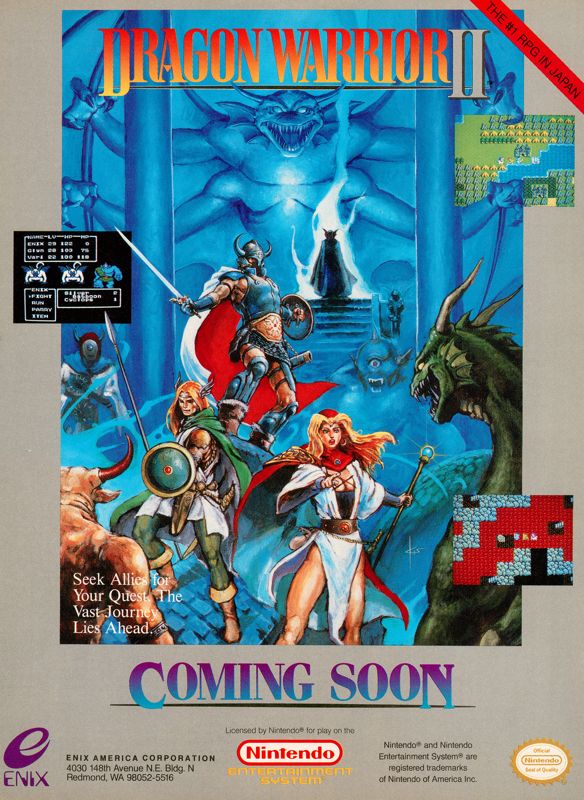
The art style used made this one looked similar with Dungeons & Dragons.

When Dragon Quest was released in America titled as Dragon Warrior, its sales there came nowhere close to what it sold in Japan. The game, however, sold enough copies to convince Enix to bring the sequel Dragon Warrior II (Japanese title: Dragon Quest II) to the Nintendo Entertainment System (NES) in America and they came up with an ad that had obvious Western-style artwork to emphasize the fantasy elements. By comparison, the Japanese version of the game used the distinct art of Akira Toriyama (Dragon Ball Z). Back in those days, there was this belief that Toriyama’s art style would not be effective in promoting the game in America.

2. Breath Of Fire Japanese Print Ad
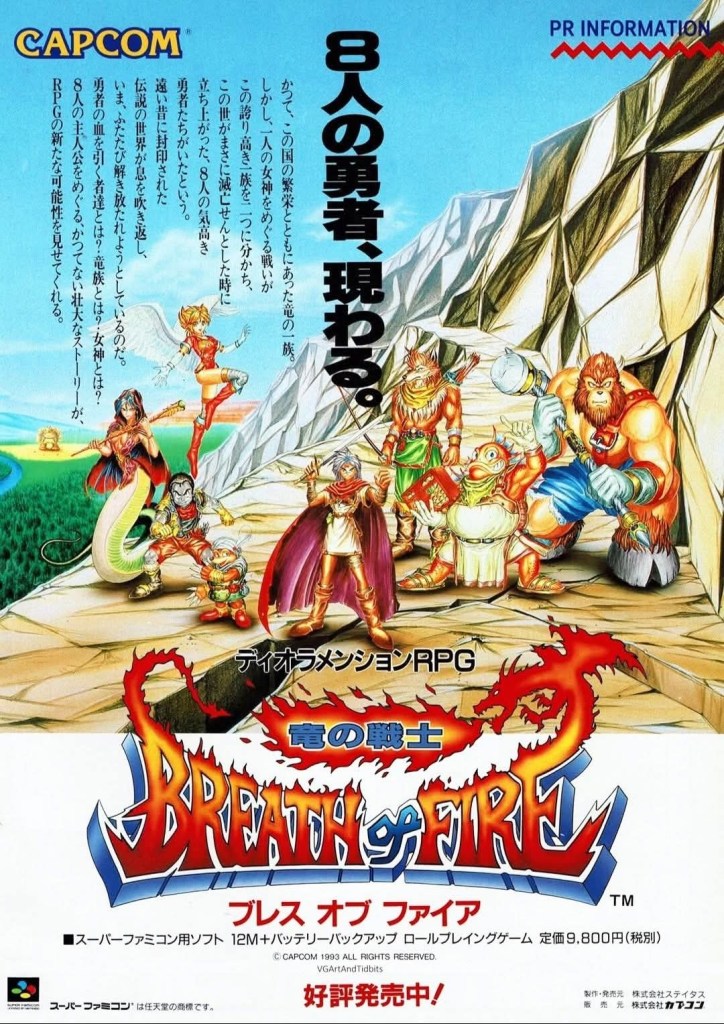
This is how Breath of Fire looked like in Japanese print media.

In 1993, Capcom officially broke into the Japanese role-playing game (JRPG) genre with Breath of Fire on the Super Family Computer (Super Famicom). The print ad they came up with for the Japanese market showed several characters – including Ryu and Nina who would later become recurring characters as sequels were released – with designs that had elements of anime and manga styles blended which contrasted the gritty and realistic approach of Western fantasy art. The ad made it clear to readers that new adventures in a fantastic world await them. The game achieved enough commercial success in Japan which convinced Capcom to make a sequel (plus more in the years that followed).

3. Phantasy Star II North American Print Ad
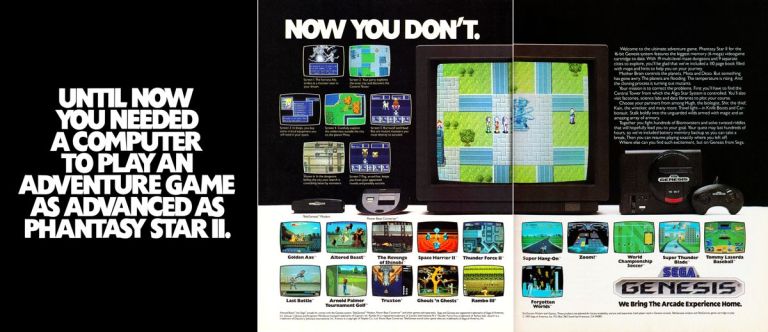
The 3-page ad showcasing Phantasy Star II and many other games.

After selling a good amount of copies of the original Phantasy Star worldwide on the Sega Master System, Sega knew they were on to something. They confidently produced the sequel Phantasy Star II for their brand-new Sega Genesis console in 1989 and aggressively promoted it in America with a daring 3-page print ad. If you look closely, majority of two of the pages were used to promote Phantasy Star II with screenshots (including a big one with a TV), the text description and the console. The spaces below allowed Sega to promote their many other games in convenient fashion. The result is huge success for Sega as more than 1.6 million copies of Phantasy Star II were sold worldwide. Sega would go on to make even more Phantasy Star games.

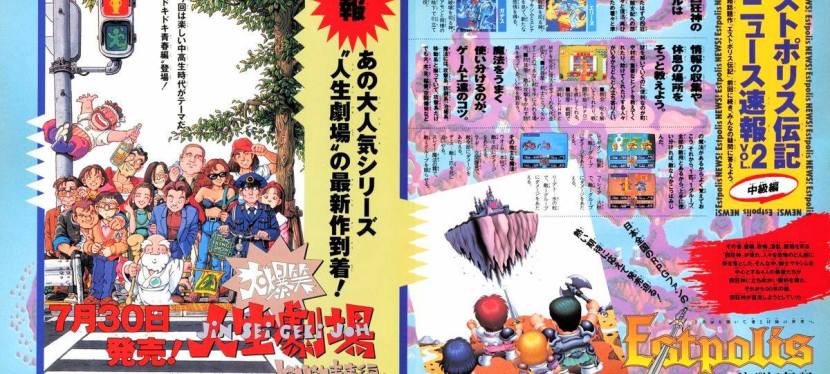
4. Estopolis Denki II Japanese Print Ad
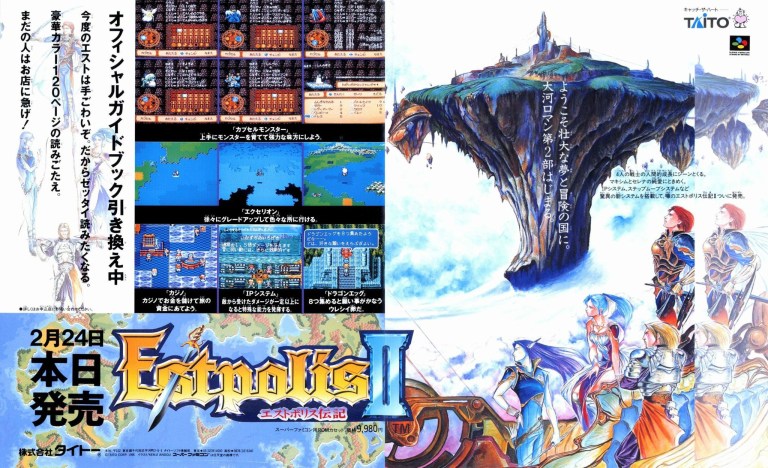
Estopolis Denki II print ad in Japan.

When Estopolis Denki was released on the Super Famicom in Japan, sold enough copies to justify not only bringing the game to Western markets as Lufia & The Fortress of Doom but also the production of a follow-up titled Estopolis Denki II. To promote it, Taito made a Japanese print ad that had a captivating art style (with the characters looking more realistic and a floating land that had a gritty touch), some screenshots and the promise of fantastic adventures. While the game’s title sounded like a sequel, its story was actually set in the past. Estopolis Denki II would be released in the West as Lufia II: Rise of the Sinistrals.

5. Lufia II: Rise of the Sinistrals North American Print Ad
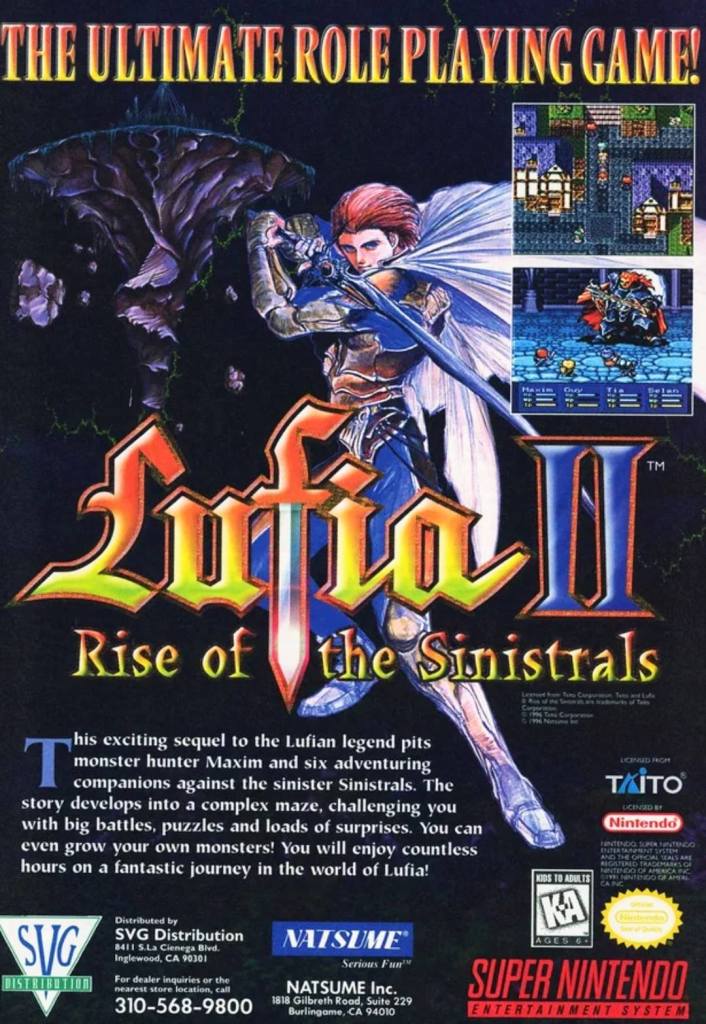
Clearly Natsume did not have any game critics quotes to use to promote Lufia II.

When the first Lufia RPG was released in America on the Super Nintendo Entertainment System (SNES), it became a commercial hit finishing as the top SNES game in the February 1994 sales chart. The sequel Lufia II: Rise of the Sinistrals was published by Natsume in America in 1996 and they daringly called it “The Ultimate Role Playing Game!” in its print ad utilizing the official artwork of a major character, two screenshots and descriptive text giving readers an idea on what to expect. This ad strongly relied on the visual elements while the first game’s American print ad (made by Taito) emphasized the critical acclaim received.

6. Chrono Trigger North American Print Ad
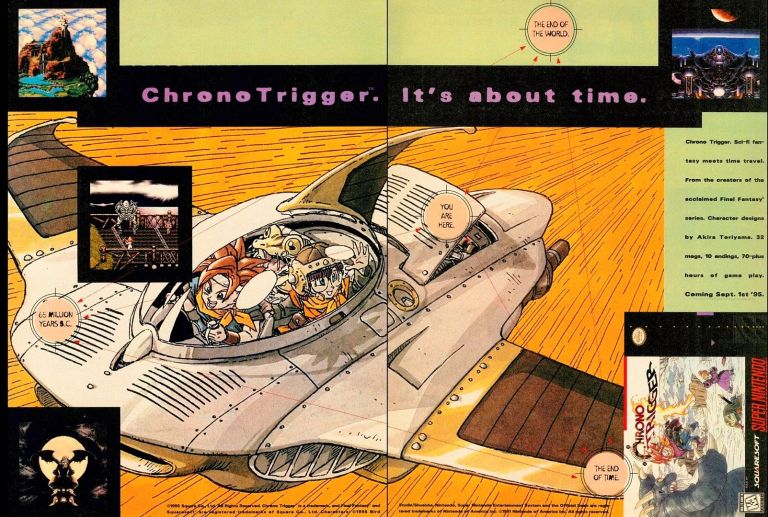
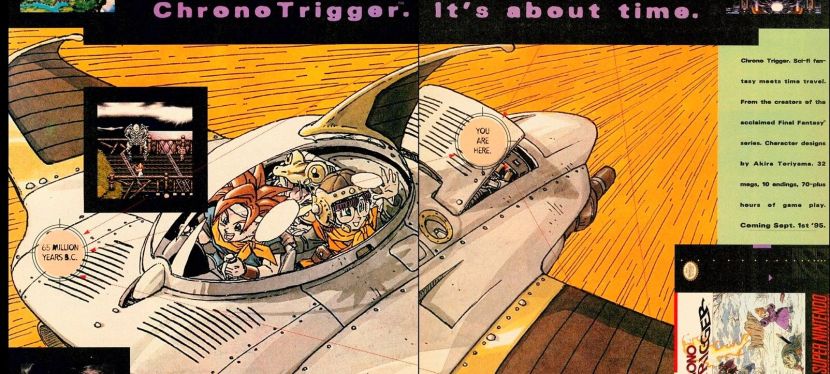
A lot of Dragon Ball Z fans recognized the art style of Akira Toriyama here.

Chrono Trigger, the JRPG that had the dream team creators of Hironobu Sakaguchi (Final Fantasy creator), Yuji Horii (Dragon Quest creator) and Akira Toriyama (Dragon Ball Z creator) behind the production, was easily the most ambitious game SquareSoft released in 1995. As part of the marketing strategy for the North American market, Square came up with a 2-page ad that had Toriyama’s art as the dominant image while using the remaining space for screenshots, the description and the SNES box cover placed strategically. Such a creative visual design was eye-catching and even memorable. Chrono Trigger became a huge commercial and critical hit in the West and it has long been regarded as a classic JRPG.

7. Secret of Evermore North American Print Ad
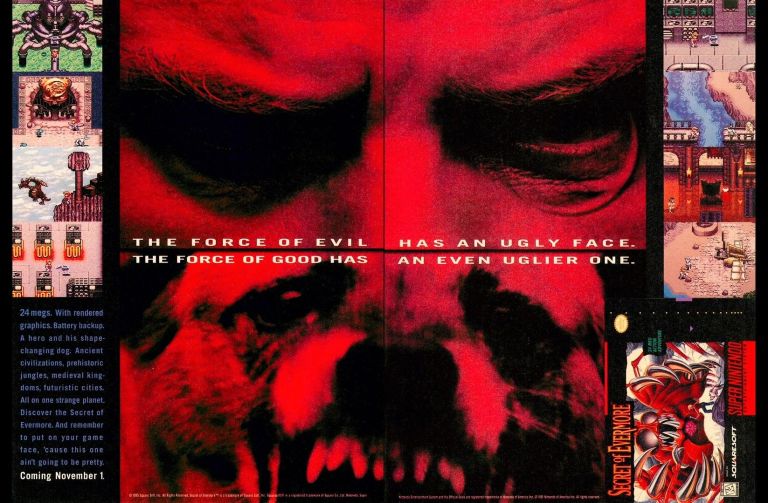
The creepy red images overshadowed the promotion of Secret of Evermore in America. Some readers might have been scared away by this ad.

Still in 1995, Square released Secret of Evermore for the SNES. Unlike most of Square’s RPGs, Secret of Evermore was developed by an American team in Washington state which explains why the game has a very distinct tone and strongly Western art style (note: the gameplay was patterned after that of Secret of Mana). To promote the game, Square came up with a very odd-looking 2-page print ad that had two dominating red images – eyes of a man on top and the front of a dog below) that felt like a forced approach to emphasize the game’s concept of the hero (a teenager boy) and his loyal dog (a very capable fighter). They used the remaining space for screenshots (which made gamers believe it was a sequel to Secret of Mana), the game box cover and a not so helpful text description. In my view, this print ad was a marketing misfire and Square could have produced hand-drawn art of the hero and his dog instead of the creepy red pictures.

8. Star Ocean: The Second Story North American Print Ad
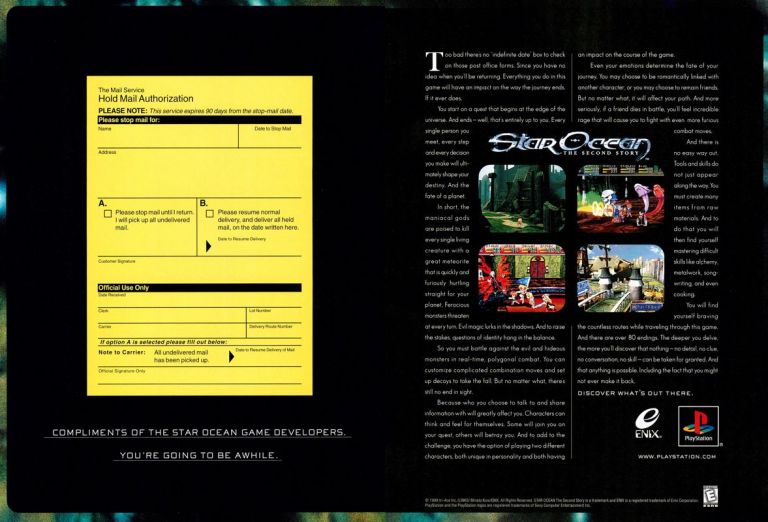
A really odd-looking print ad.

The Star Ocean JRPG franchise of Enix had its first game released in Japan only. That first game on Super Famicom sold a lot of copies which led to the production of the sequel Star Ocean: The Second Story. By the late 1990s, Enix itself had a partnership with developer tri-Ace on the Star Ocean games. Somewhere along the way, Sony Computer Entertainment America (SCEA) secured the publishing rights of Star Ocean: The Second Story for not only America but also in other parts of the world. For the American market, Sony came up with a very odd-looking 2-page print ad that had a mail service form on the left. The form emphasized the concept of being away for a long time (reflecting the science fiction and extensive fantasy adventuring of the game itself) which incidentally was the eye-catcher of the ad. The other half of the page showing the game’s title, screenshots and detailed text description got overshadowed. This is another marketing misfire.

9. The Legend of Dragoon North American Print Ad
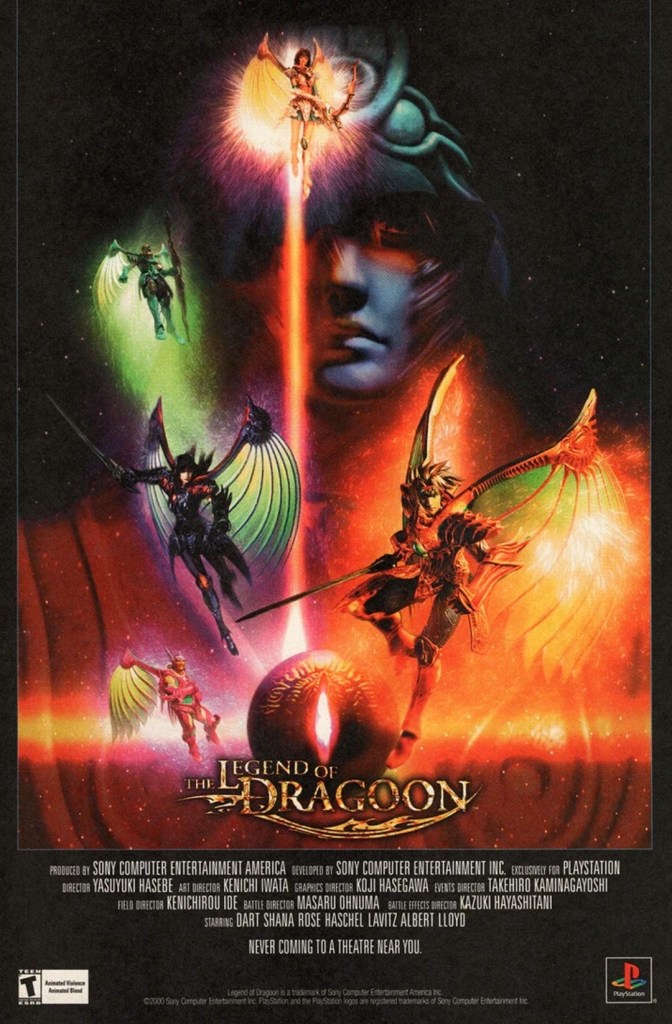
The movie poster-inspired print ad is memorable to look at.

Given how success Sony was with selling PlayStation consoles worldwide and how massively successful the Final Fantasy RPG franchise of SquareSoft was, it was not surprising that they decided to make their very own big-budget and exclusive JRPG with the intention to succeed and possibly establish a franchise. The result was the PlayStation-exclusive game The Legend of Dragoon which was made with a budget of $16 million and lasted three years in development. The game was released in Japan in late-1999 and sold at least 280,000 copies (note: majority of that in its first week of sales). In preparation for the June 2000 launch in America, Sony produced a print ad that had a very strong movie poster vibe showing what looked like painted art of the characters with vivid colors in the background and the title on the lower part. If you look closely, the credits were deliberately stylized over the way movie posters showed credits. While the game was not the massive hit Sony hoped for, it went on to become a million-seller and a great majority of its sales were from America. By today’s standards, the movie poster-like ad used to promote The Legend of Dragoon is memorable and an inspired piece of marketing work.

+++++

Thank you for reading. If you find this article engaging, please click the like button below, share this article to others and also please consider making a donation to support my publishing. If you are looking for a copywriter to create content for your special project or business, check out my services and my portfolio. Feel free to contact me with a private message. Also please feel free to visit my Facebook page Author Carlo Carrasco and follow me on Twitter at  @HavenorFantasy as well as on Tumblr at https://carlocarrasco.tumblr.com/ and on Instagram at https://www.instagram.com/authorcarlocarrasco
What to watch on YouTube right now – Part 122

Welcome back my readers, YouTube viewers and all others who followed this series of articles focused on YouTube videos worth watching. Have you been searching for something fun or interesting to watch on YouTube? Do you feel bored right now and you crave for something to see on the world’s most popular online video destination?

I recommend you check out the following videos I found.

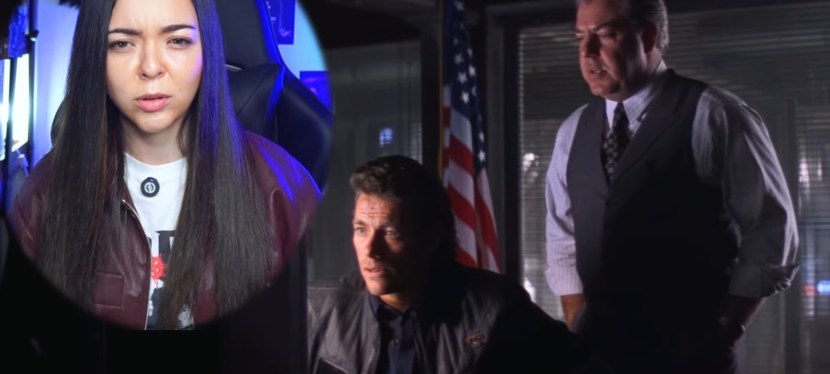
#1 Timecop Revisited – I am not a fan of Jean-Claude Van Damme but his 1994 movie Timecop managed to entertain me when I first saw it on home video. After watching it, I learned that it was based on the Timecop literary property and stories published by Dark Horse Comics. Directed by Peter Hyams, Timecop ended up as one of the better movies of JCVD and it even has its own fanbase. If you want to discover more about the cinematic Timecop, watch the videos posted below.

#2 Inhumanoids Revisited –I remember seeing some episodes of the animated TV series Inhumanoids on local TV and I can say it was easily the most bizarre and even shocking thing to watch. Inhumanoid has a very dark and even cynical tone, and it had gruesome scenes which were really disturbing to see. Behind the scenes, Inhumanoids was animated by Japan-based Toei and involved Hasbro, Sunbro and even Marvel Productions. To find out what made Inhumanoids so disturbing, watch the video below and pay attention to the details.

#3 Luxurious Breakfast Spots In Tokyo – Have you ever thought about having a luxurious breakfast while traveling overseas? In Tokyo, Japan’s most famous city, there are indeed places where visitors can have breakfast with the premium experience. These luxurious places have something unique to offer to customers who have more than enough money to spend for the morning meal. Watch and learn from the Nippon TV video below.

#4 Remember The Rotoscoped Lord Of The Rings – Decades before Peter Jackson and his team rocked the world of moviegoers with memorable Lord of the Rings film trilogy, an animated LOTR was actually made. I am talking about the 1978 rotoscoped animated film The Lord of The Rings directed by Ralph Bakshi which I first saw on home video after seeing Peter Jackson’s LOTR. I found the 1978 LOTR a really unique animated viewing experience and it definitely involved a lot of production work without any use of computers. To find out more about the animated LOTR film, watch the video below.

#5 You, Me and The Movies React To Can’t Hardly Wait – When Can’t Hardly Wait was shown in cinemas in 1998, it faded away as not enough moviegoers were attracted watch it. However, the movie did not fade into obscurity and it actually got new fans as it was discovered on home video, cable TV, pay-per-view and streaming. More importantly, the movie itself was pretty funny the cast led by Jennifer Love Hewitt delivered fine performances as teenagers. Slowly but surely, new retrospective videos about Can’t Hardly Wait are emerging on YouTube and the most entertaining video is the reaction by You, Me and The Movies which I encourage you to watch right now.

#6 Square Enix In The 2000s – Back in the 1990s, Squaresoft and Enix were separate Japanese gaming companies that released a lot of Japanese role-playing games (KRPGs) which entertained many millions of gamers. Square was famous for the best-selling Final Fantasy games while Enix had the wildly popular Dragon Quest franchise. In the 2000s, a series of changes happened in the video game industry and the two companies merged into Square Enix. Since then, a lot of Final Fantasy and Dragon Quest games with evolved designs and styles of presentation were released under a single publisher. There is a lot more to discover what happened behind the scenes as documented in the in-depth video below from Gaming Broductions.

+++++

Thank you for reading. If you find this article engaging, please click the like button below, share this article to others and also please consider making a donation to support my publishing. If you are looking for a copywriter to create content for your special project or business, check out my services and my portfolio. Feel free to contact me with a private message. Also please feel free to visit my Facebook page Author Carlo Carrasco and follow me on Twitter at  @HavenorFantasy as well as on Tumblr at https://carlocarrasco.tumblr.com/ and on Instagram athttps://www.instagram.com/authorcarlocarrasco

Retro Gaming Ads Blast – Part 39 (RPG Special)

Welcome back readers, fellow geeks and electronic gaming fans!

In this edition of the Retro Gaming Ads Blast (RGAB) series, we will take a look at another batch of retro gaming print ads from the 1980s to the 1990s, particularly on role-playing games (RPGs) from the East and the West. This is the RPG Special!

For the newcomers reading this, Retro Gaming Ads Blast (RGAB) looks back at the many print ads of games (console, arcade, computer and handheld) that were published in comic books, magazines, flyers, posters and newspapers long before smartphones, social media, the worldwide web and streaming became popular. To put things in perspective, people back in the 1980s to the 1990s were more trusting of print media for information and images about electronic games and related products.

With those details laid down, here is the newest batch of retro gaming print ads for you to see and enjoy…

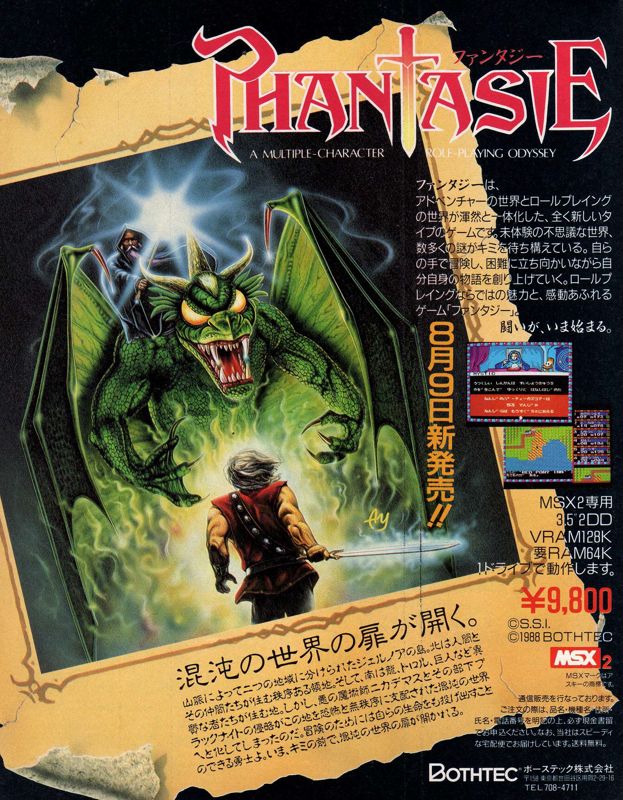
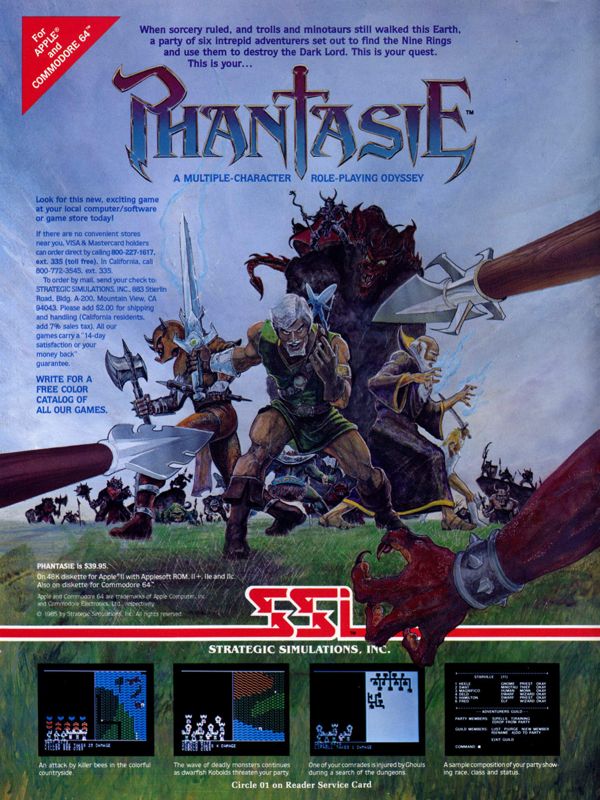
1. Phantasie North American and Japanese Print Ads

The North American print ad.
The Japanese print ad.

Released by Strategic Simulations in the mid-1980s, Phantasie was a fantasy role-playing game that became a huge commercial success paving the way for not only ports on other computer systems of the time but also sequels later. The ad they came up with for the North American market had strong fantasy vibes and the screenshots gave readers the impression that it looked playable or user friendly. For the Japanese market, Phantasie was ported to the MSX system and they came up with an ad using radically different art work that had a horror vibe.

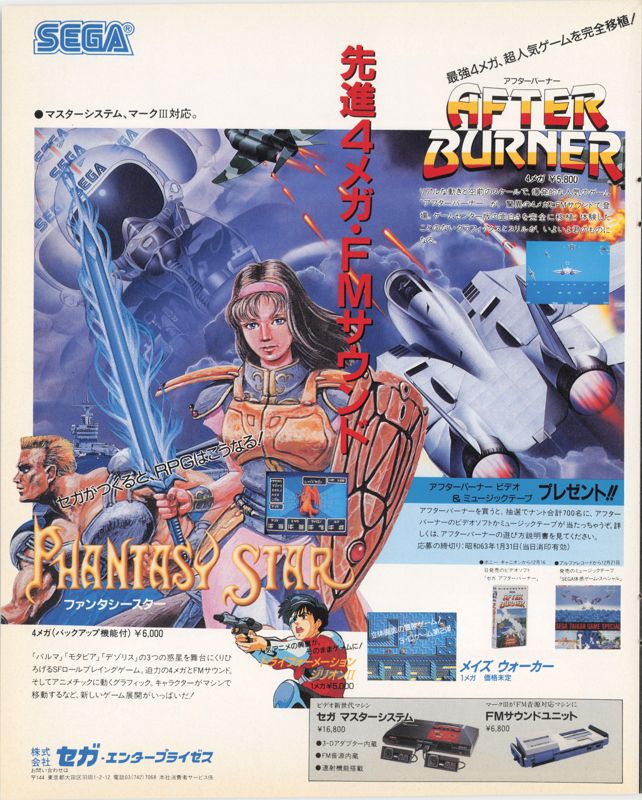
2. Phantasy Star Japanese Print Ad

Phantasy Star in the Japanese print ad sharing the spotlight with After Burner.

In the 1980s, role-playing games started gaining popularity with Japanese console gamers and there were game developers who were inspired by established RPGs from the West. Enix released two Dragon Quest games and each of them sold a lot of copies on Nintendo’s Family Computer (Famicom). At the time, Sega already had the Master System (called the SG-1000 and its variants with revisions) in the console market and they were way behind Nintendo on hardware sales. Knowing there is a market for console RPGs, Sega went on to make their exclusive RPG Phantasy Star. In 1987, a print ad was released showing Phantasy Star sharing the spotlight with Sega’s blockbuster game After Burner in the background. While the ad felt a bit disorienting to see, the game achieved much-needed success for Sega which in turn brought the game to the Master System in America in 1988. The game sold more and eventually led to sequels in the years that followed.

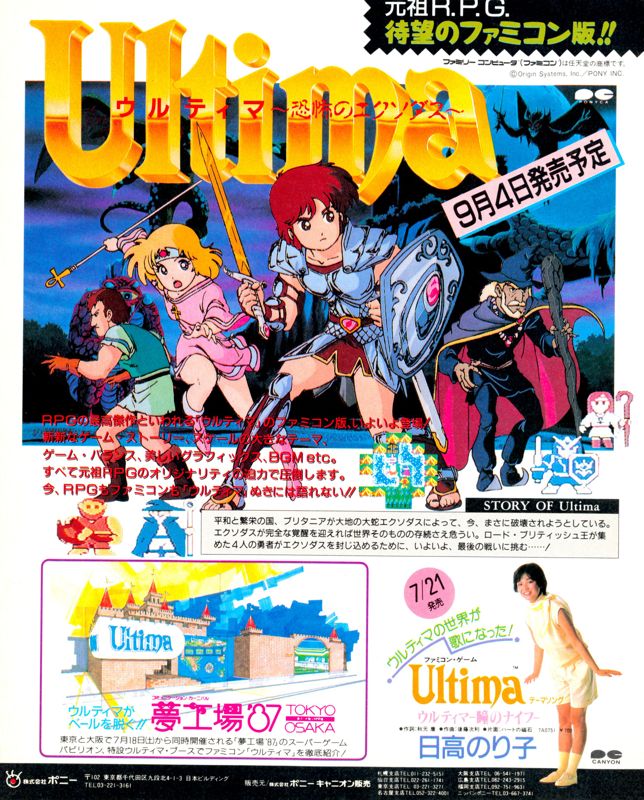
3. Ultima III Japanese Print Ad

Remember the old days when anime or comic book-style artwork was used to promote games in the Japanese print media?

Released in Japan under the title Ultima: Kyoufu no Exodus, Ultima III: Exodus was a breakthrough for the series as the Famicom version marked the first console release for Japanese gamers (note: the game was also offered for MSX and other computer systems in the country). The anime-style artwork used for the print ad is the same virtually the same with the front cover of Famicom version. Very notably, the art on the covers of the PC-88 and PC-98 versions were different. 

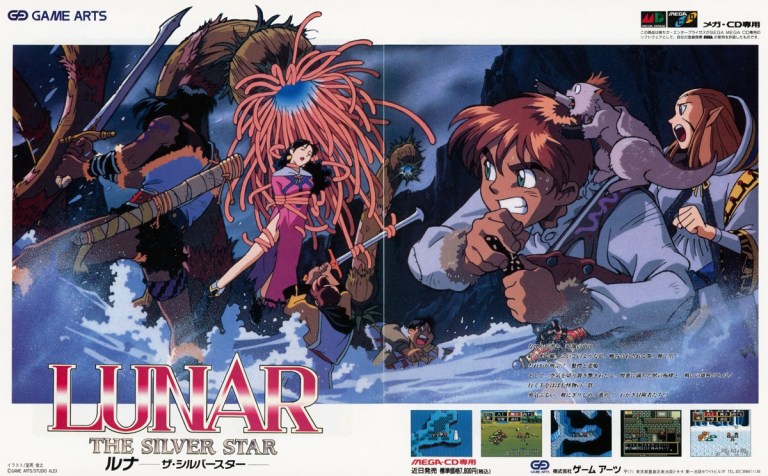
4. Lunar: The Silver Star Japanese Print Ad

Game Arts’ Lunar: The Silver Star as advertized in Japanese magazines.

By the 1990s, console RPGs were very popular as franchises like Dragon Quest and Final Fantasy each released sequels that sold a lot of copies. The company Game Arts decided to make a role-playing game which can tell stories better using animation with voiceovers and music while being very playable and enjoyable. They came up with Lunar: The Silver Star and released it on the Mega-CD add-on (connected with the Mega Drive console of Sega) in 1992. As such, it was not surprising to see the print ad having anime-style artwork as the game itself had several minutes of anime cutscenes complete with audio. As most Japanese role-playing games (JRPGs) did not have playable anime cutscenes for storytelling, Lunar: The Silver Star really stood out. Sometime later, the small American company Working Designs would handle the game’s English version and start a healthy business relationship with Game Arts.

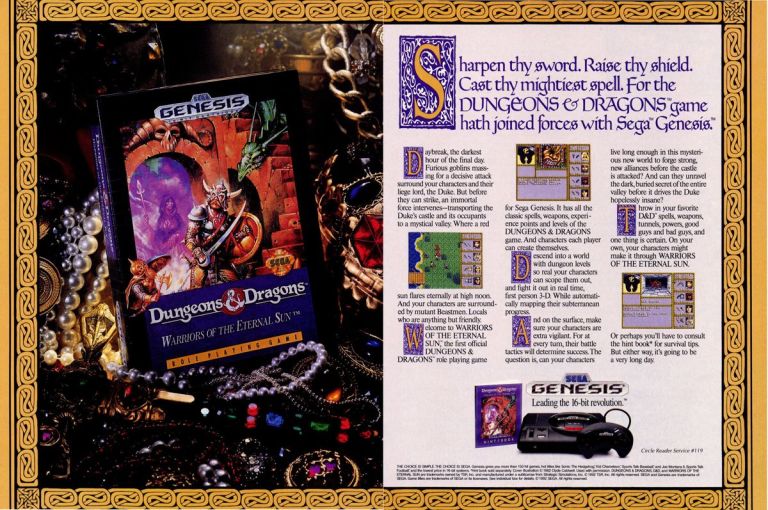
5. Dungeons & Dragons: Warriors of the Eternal Sun North American Print Ad

A print ad that strongly appealed to both Sega Genesis gamers as well as fans of Dungeons & Dragons.

By the year 1992, the fantasy games franchise Dungeons & Dragons was wildly popular as players around the world kept enjoying the tabletop RPG modules (using dice, pen paper) as well as many computer and video games already available. Sega acquired a D&D license and eventually released Dungeons & Dragons: Warriors of the Eternal Sun exclusively on their Genesis console in 1992. To promote it, Sega produced a 2-page print ad that had one half showing the game’s box placed with jewelry while using the other half to show the screenshots, descriptive text and other details. The way it was presented, the print ad was cleverly structured to attract the attention of Sega Genesis gamers as well as Dungeons & Dragons fans. The game ended up as the first and only official D&D product for the console.

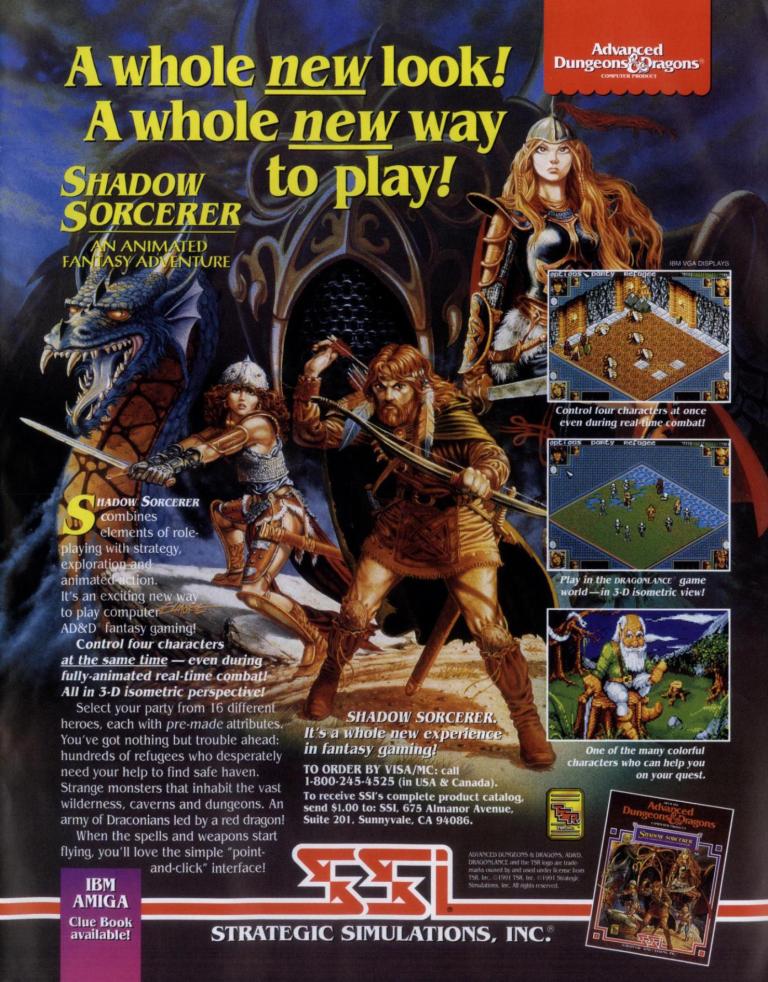
6. Shadow Sorcerer North American Print Ad

This is one of many Dungeons & Dragons computer games released. The use of painted art for marketing was done many times.

In the history of the Dungeons & Dragons franchise and electronic gaming, it was on computers where the more ambitious and more intricate licensed games were played by many fans. In 1991, the Advanced Dungeons & Dragons (AD&D) electronic game Shadow Sorcerer was released on MS-DOS PC, Amiga and the Atari ST. The painted artwork used on the print ad was virtually the same as that on the box covers of the MS-DOS and Amiga versions. I can only guess that the ad markers must have paid a lot of money on the painted art and decided to use it for both marketing and packaging since it looked so detailed.

7. Estopolis Denki Japanese Print Ad

The 2-page Japanese print ad of Estopolis Denki.

In 1993, a brand-new Japanese developer called Neverland was established and its first project was the fantasy role-playing game Estopolis Denki for the Super Family Computer (Super Famicom). That same year, publisher Taito released the game and they promoted it with a 2-page print ad that featured a whimsical looking hand-drawn art work on one half and utilized the other half with details, screenshots and part of the art that was used on the game’s Super Famicom box cover. While Japanese game sales are not available, it seems Estopolis Denki sold enough to convince the publisher to release the game in North America as Lufia & The Fortress of Doom.

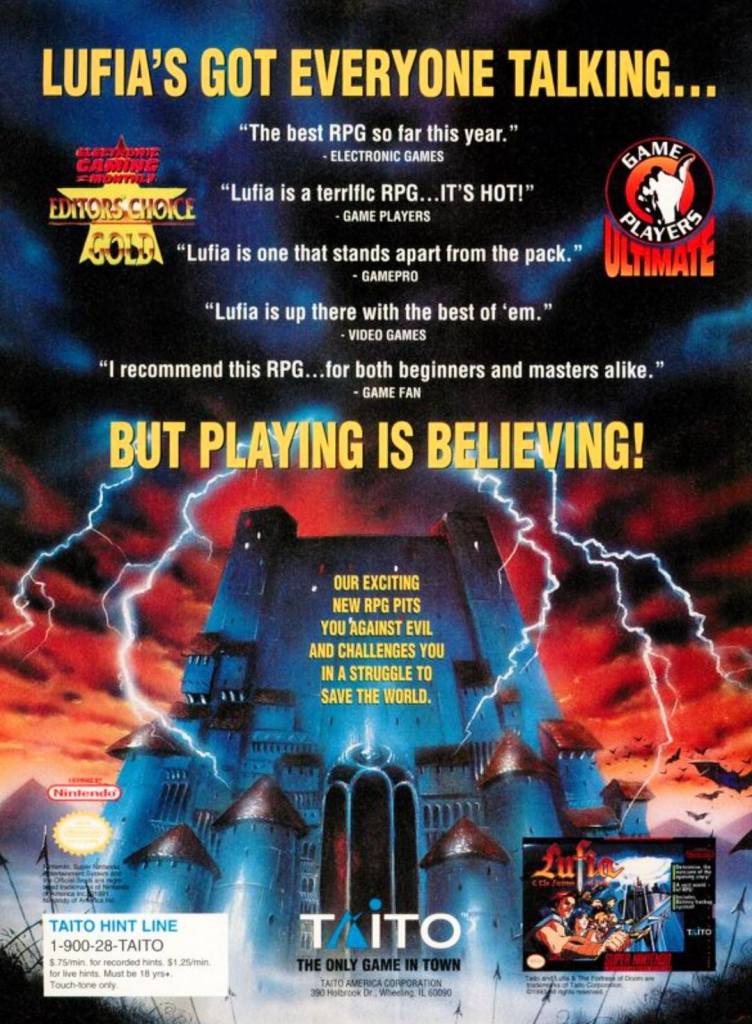
8. Lufia & The Fortress of Doom North American Print Ad

If you were able to play Lufia & The Fortress of Doom on the SNES, were you able to see this ad in a comic book or in a magazine?

Upon release in America in late 1993, Taito scored gold as Lufia & The Fortress of Doom on the Super Nintendo Entertainment System (SNES or Super NES) became a critical and commercial success. In fact, it literally gained steam during the early months of availability and ended up as the top-selling SNES game in America for the month of February of 1994. Take note that at this particular point of time, RPGs on game consoles in America were not yet in high demand as gamers’ tastes were different. When it comes to the marketing, Taito came up with a single-page print ad showing fantasy artwork, the game’s box cover and the published quotes from game critics who gave the game positive reviews. This is smart marketing on the part of Taito.

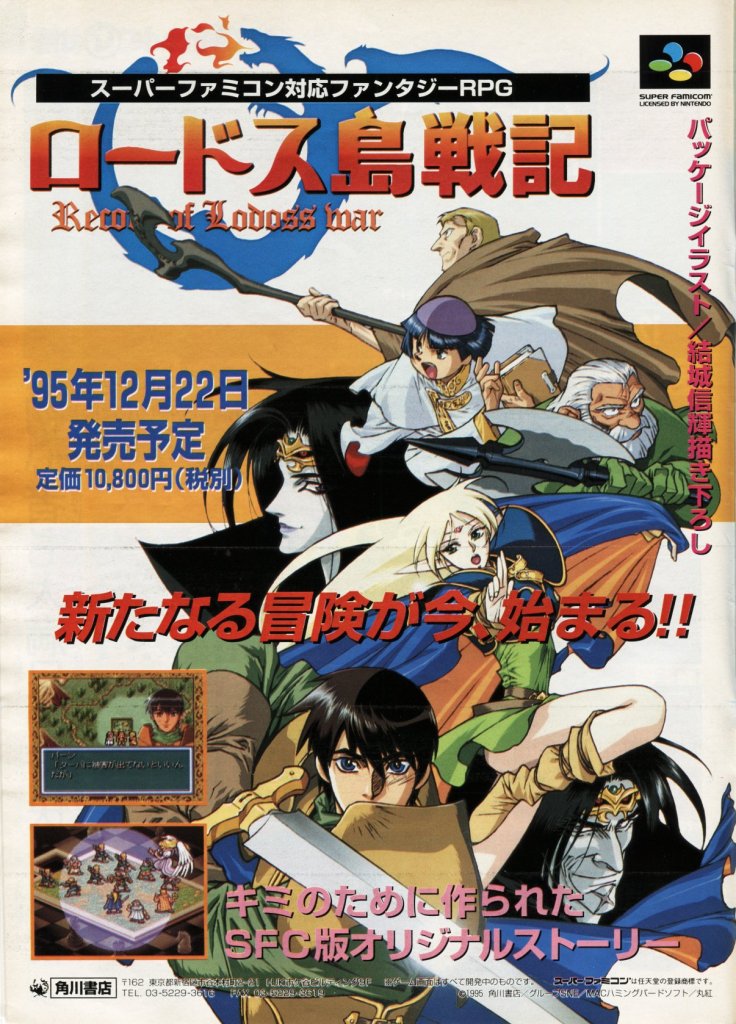
9. Record of Lodoss War Japanese Print Ad

The Japanese print ad of Record of Lodoss War for Super Famicom.

Have you ever heard of the Record of Lodoss War fantasy franchise? That one started as a series of fantasy novels by Ryo Mizuno who previously worked on an RPG project. Record of Lodoss War was eventually adapted into comics, anime and video games. One of those games was released on the Super Famicom in December 1995 published by Kadokawa Shoten which in turn made the one-page print ad for the Japanese market. Using established art from the anime OVA (original video animation) series was a strategic move by the publisher as millions of Japanese people viewed it. Unsurprisingly, the art on the ad is almost the same as the one displayed on the game box cover.

10. Fallout North American Print Ad

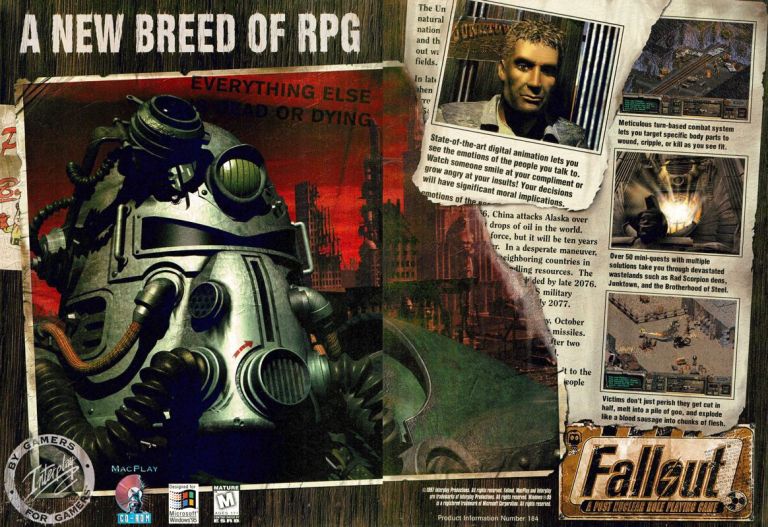
A gritty looking print ad of the original Fallout PC game.

In my gaming life, I played Fallout 3, Fallout 4 and Fallout: New Vegas on Xbox consoles. When the first-ever Fallout game was released in 1997, I did not notice it as I was more into console gaming than PC gaming. The above print ad appeared is several PC gaming magazines and it clearly shows what it offered which gamers eventually ended up enjoying a lot. The mechanical helmet – protection for the user during battles and from radiation in the nuclear wasteland – on the left side of the ad became a key symbol of the Fallout franchise as further games also featured mechanical helmets. Fallout was highly acclaimed for featuring open-ended gameplay and its immersive post-apocalyptic setting. It sold enough copies to convince publisher Interplay to proceed with a sequel and the rest was history.

11. Xenogears Japanese and North American Print Ad

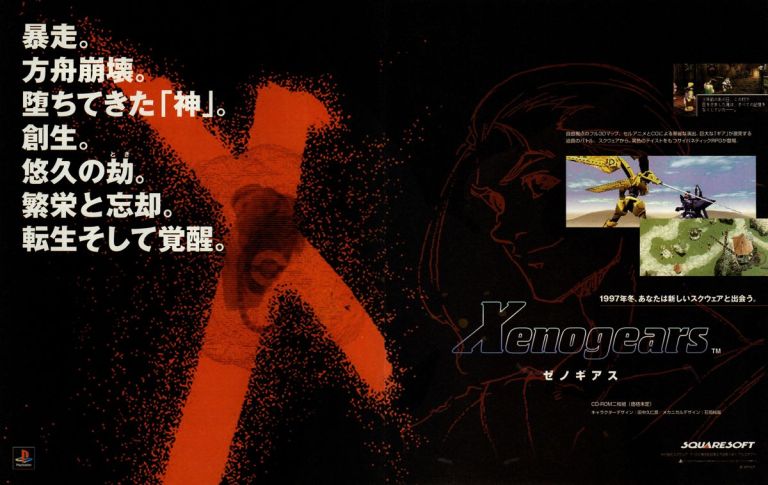
Japanese advertisement of Xenogears.
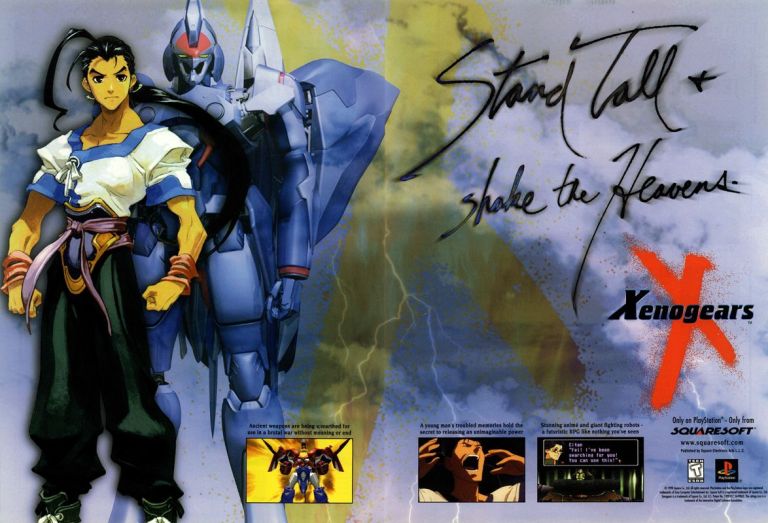
This North American print ad of Xenogears clearly showed the main character, a robot, the sci-fi setting and the visual style of the game.

Xenogears was a sci-fi JRPG I played on the PlayStation in 1998 but I was unable to finish it. Before it was released in America, there was speculation that Squaresoft would not be able to produce an English version for international release due to its religious content. The game was highly challenging to translate into English due to religious themes and psychological elements. Regardless, the game achieved successes commercially and critically in both Japan and America. Xenogears has since been considered by many as a classic JRPG and to play it today is pretty challenging as an existing PlayStation One, PlayStation 3 or PlayStation Vita is required as well as the physical PlayStation disc itself (note: digital copy of Xenogears for PS Vita). Square Enix – which previously remastered Chrono Cross and several Final Fantasy games for modern gaming platforms – has yet to remaster Xenogears for those with modern game consoles, mobile devices and the PC.

12. Final Fantasy Anthology Print Ad

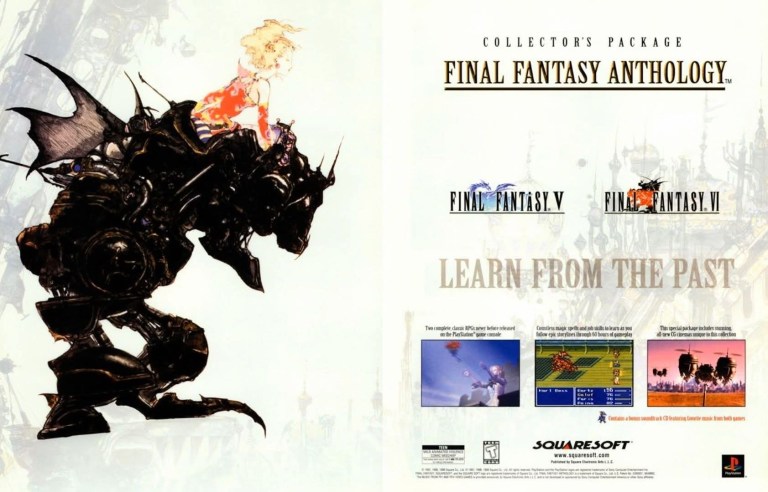
I remember seeing this 2-page print ad in many gaming magazines I read.

By the year 1999, Squaresoft established itself as the best role-playing game company as they achieved critical and commercial success with Final Fantasy VII in 1997, Brave Fencer Musashi, Parasite Eve and Xenogears in 1998. For 1999, Squaresoft decided to bring ports Final Fantasy V and Final Fantasy VI – both games were released in cartridge format on Super Famicom/Super NES some years prior – to their fans who owned PlayStation consoles by releasing the collection called Final Fantasy Anthology. For the North American market, Squaresoft aggressively promoted the 2-game collection with the above 2-page print ad on several video game publications. One half featured exquisite artwork by Yoshitaka Amano and the other half showed the screenshots, descriptions and details. Clearly the ad was made with Final Fantasy fans in mind and it was also clever with the use of nostalgia.

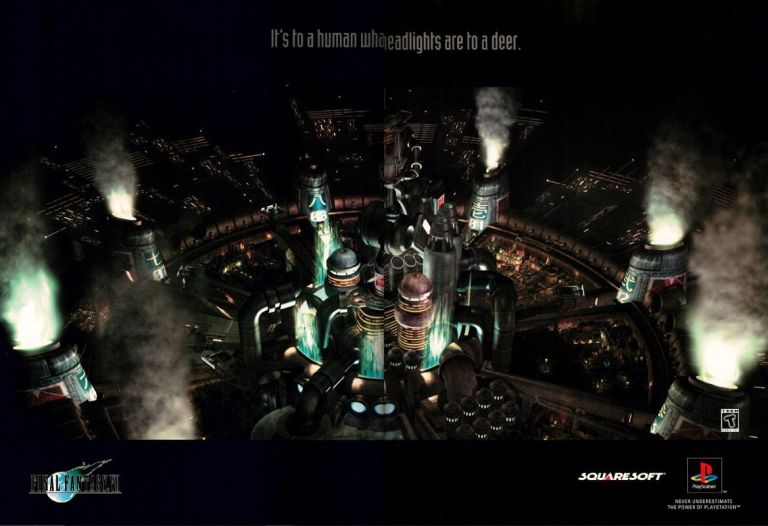
13. Final Fantasy VII North American Print Ad

While it did not show any of the characters, this 2-page print ad of Final Fantasy VII appeared in many gaming magazines and ultimately made the public aware of the game which went on to sell millions.

There is no denying that Final Fantasy VII is the most defining Japanese RPG of the 1990s. Given its huge pre-release promotions, the critical acclaim and the tremendous sales achieved in North America and Europe, the game arguably made the JRPG sub-genre more popular among gamers and game publishers while also making the original PlayStation console the must-have machine for video gaming. The above print ad is one of several released through print media and even though it did not show any characters, the image of a futuristic looking city caught the attention of not just gamers but also others who loved entertainment.

+++++

Thank you for reading. If you find this article engaging, please click the like button below, share this article to others and also please consider making a donation to support my publishing. If you are looking for a copywriter to create content for your special project or business, check out my services and my portfolio. Feel free to contact me with a private message. Also please feel free to visit my Facebook page Author Carlo Carrasco and follow me on Twitter at  @HavenorFantasy as well as on Tumblr at https://carlocarrasco.tumblr.com/ and on Instagram at https://www.instagram.com/authorcarlocarrasco
Team Xbox needs to deliver great stuff and surprises on June 13, 2021

We all know that the Xbox & Bethesda Games Showcase is fast approaching and it certainly is the most anticipated digital event for fans of both Xbox and Bethesda. The June 13, 2021 event will surely have a lot of eager fans waiting not only for exciting new games but also truly great stuff.

Get ready for this, Xbox fans, Bethesda fans and all others who love video games.

Previously, I posted what I hoped to see at the Xbox-Bethesda event. In relation to those, it is clear that while things are looking strongly positive ever since the integration of Bethesda into Xbox, Team Xbox itself and its head Phil Spencer still have a lot to prove on June 13. In fact, the stakes are much higher now and there is simply no room left for any error. They have to deliver great stuff this time around and they really need to exceed last year’s Xbox Games Showcase (which I found to be good but not great) not by just a few feet higher but many miles higher.

Simply put, good enough is simply NOT good enough this time around.

What I meant earlier by great stuff that needs to be delivered by Team Xbox refers to the following: fulfilling the highly anticipated showcases of Halo Infinite and Starfield complete with all the relevant details (including final release dates); showing more of their 1st party games being made by their many Xbox game studios; and confirming what games were finalized between Xbox Publishing and 3rd party game makers. They should also show more gameplay footage by means of demonstrations, make new announcements with regards to improving the already enjoyable Xbox Game Pass (XGP) service, and come up with surprises that will be remembered with excitement!

For Starfield, I believe it is high time for Xbox-Bethesda to showcase the game a lot with gameplay footage and confirm once and for all that it is indeed exclusive to Xbox Series consoles and Windows PC…all of these with Todd Howard as the presenter whenever possible. Such details will strengthen the fans’ trust in Xbox-Bethesda, and at the same time silence the people who hate Xbox.

What Microsoft owns, Sony and Nintendo simply have no rights to.

More on 1st party games and projects, Team Xbox should provide at least updates (if not gameplay demos or trailers that use captured gameplay footage or short video clips about the productions) of games they announced previously such as Fable, Forza Motorsport, Avowed, Perfect Dark and Senua’s Saga: Hellblade II.

When it comes to the unexpected (AKA the surprises), it would be exciting to see the following happen if ever possible:

  1. Xbox Publishing announcing that it has made a deal with Deep Silver and secured the rumored Saints Row 5 as an Xbox-exclusive game.
  2. Team Xbox (through its publishing arm) announcing that it has renewed its ties with Mistwalker to create a sequel to the Xbox favorite JRPG Lost Odyssey…with Hironobu Sakaguchi as presenter.
  3. Konami announcing the release of all Suikoden RPGs on Xbox LIVE and Xbox Game Pass.
  4. Sega announcing a remastered version of Shining Force III (with all 3 chapters translated into English for the first time ever) for release on Xbox LIVE and Xbox Game Pass.
  5. Xbox game studio and RPG specialist Obsidian Entertainment – already very busy making Avowed – announcing a sequel to The Outer Worlds (confirming that Microsoft has rightfully gained control of the franchise) exclusively for Xbox Series consoles and PC.
  6. Capcom announcing a new Dead Rising game – be it a sequel or a series reboot – exclusively for Xbox Series consoles and PC.
  7. EA and BioWare announcing a brand-new Mass Effect game at the Xbox-Bethesda event.
  8. Square Enix announcing it will release Dragon’s Quest XII on Xbox LIVE and Xbox Game Pass with series creator Yuji Horii doing the presentation.
  9. Capcom announcing a remake of Resident Evil: Code Veronica (much in the styles of the remakes of Resident Evil 2 and Resident Evil 3)

To watch the Xbox & Bethesda Games Showcase on June 13, posted below are the links for your reference.

Let me end this piece by asking you readers: When it comes to the unexpected, what kind of announcements would really surprise you at the Xbox-Bethesda event? Do you hope to see Halo Infinite truly have an open-world design? Do you think that Mexico will be the setting for Forza Horizon 5? Is Starfield your most anticipated game from Bethesda right now? Do you think it is possible for a Lost Odyssey sequel to be made? Do you believe that Phil Spencer and the rest of Team Xbox have what it takes to deliver great stuff and surprises in the Xbox-Bethesda special event?

You may answer in the comments below. If you prefer to answer privately, you may do so by sending me a direct message online.

In closing this article, posted below are Xbox-related videos for your viewing pleasure. Enjoy!

+++++

Thank you for reading. If you find this article engaging, please click the like button below and also please consider sharing this article to others. If you are looking for a copywriter to create content for your special project or business, check out my services and my portfolio. Feel free to contact me as well. Also please feel free to visit my Facebook page Author Carlo Carrasco and follow me at HavenorFantasy@twitter.com

My Observations: Bethesda now part of Team Xbox

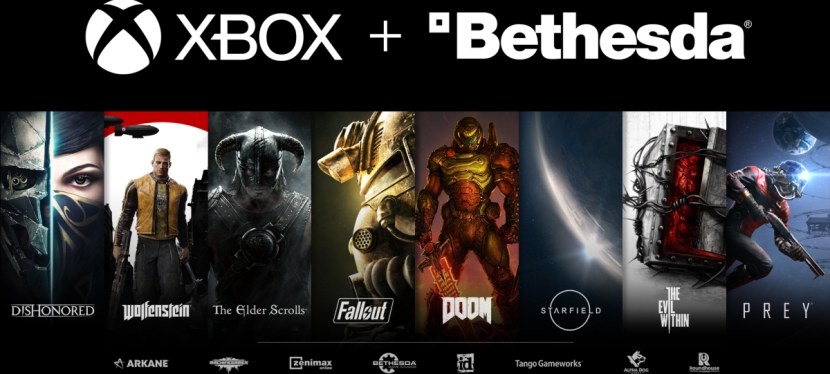
As I start to write this, I still am in a state of shock over the most ambitious video game business announcement that I never anticipated would happen particularly with Xbox. People are already talking about it a lot right now. I’m referring to Microsoft’s megaton acquisition of ZeniMax Media which is the parent company of game publishing giant Bethesda Softworks. The deal is worth $7.5 billion (in cash) and it includes acquiring Bethesda Softworks, Bethesda Game Studios, id Software, ZeniMax Online Studios, Arkane, MachineGames, Tango Gameworks, Alpha Dog, and Roundhouse Studios. The said studios have a combined work force of more than 2,300 employees. This megaton development alone makes me want to acquire an Xbox Series X unit even more!

To put things in perspective, below is an excerpt (with key parts in bold) from the Xbox.com blog post by Xbox head Phil Spencer:

Bethesda’s games have always had a special place on Xbox and in the hearts of millions of gamers around the world. Our teams have a close and storied history working together, from the amazing first DOOM, and its id Tech engine, innovating games on PCs to Bethesda bringing their first console game to the original Xbox, the groundbreaking The Elder Scrolls III: Morrowind. Over the years I’ve had many deep conversations with the creative leaders at Bethesda on the future of gaming and we’ve long shared similar visions for the opportunities for creators and their games to reach more players in more ways.

Just as they took the bold first steps to bring The Elder Scrolls franchise to the original Xbox, Bethesda were early supporters of Xbox Game Pass, bringing their games to new audiences across devices and have been actively investing in new gaming technology like cloud streaming of games. We will be adding Bethesda’s iconic franchises to Xbox Game Pass for console and PC. One of the things that has me most excited is seeing the roadmap with Bethesda’s future games, some announced and many unannounced, to Xbox console and PC including Starfield, the highly anticipated, new space epic currently in development by Bethesda Game Studios.

Like us, Bethesda are passionate believers in building a diverse array of creative experiences, in exploring new game franchises, and in telling stories in bold ways. All of their great work will of course continue and grow and we look forward to empowering them with the resources and support of Microsoft to scale their creative visions to more players in new ways for you.

All of our work, and the foundation of our relationship with you, starts with a commitment to deliver a breadth of amazing games to discover and play on Xbox.  Over the last few weeks, we’ve been excited to share more detail on important elements of a plan we’ve been building towards for years. A plan that is the fulfilment of a promise, to you the Xbox player, to deliver the most performant, immersive and compatible next-generation gaming experiences, and the freedom to play blockbuster games with your friends, anytime, anywhere. Today is a landmark step in our journey together and I’m incredibly energized by what this step means for Xbox.

As confirmed by Spencer, the acquisition of Bethesda is more than just adding to Xbox Games Studios existing lineup of game makers and more than just adding games for Xbox and PC gamers to play. The acquisition also means adding even more games to the fast-growing and successful Xbox Game Pass subscription program which recently saw its subscribers reach 15,000,000+ (a jump of 50% in less than six months’ time!). The addition of Bethesda’s iconic franchises – Elder Scrolls, Fallout, Wolfenstein and Dishonored to name some – will surely add tremendous value to Xbox Game Pass and even more exciting is the confirmation that Bethesda’s upcoming sci-fi Starfield will also be added! These developments are already exciting gamers to order Xbox Series S or Xbox Series X as I write this.

Think about it. If you are already a paying Xbox Game Pass subscriber by the time Starfield gets released, you can simply visit Xbox LIVE and download the said game for free (because you already paid for the subscription). Those who are not XGP subscribers will have to pull out a lot of money to buy Starfield at the retail store or elsewhere online.

Already Team Xbox and its many Xbox Games Studios are already creating new and exclusive games for Xbox Series S and Xbox Series X plus PC. Microsoft no longer has a shortage of console exclusives and all the criticism thrown at them (“Xbox has no exclusives!”, “Xbox has no great games!”) are meaningless now. The addition of Bethesda studios into the many Xbox Game Studios further ensures more exclusive games in the years to come and this alone gives Microsoft a huge advantage over Sony and Nintendo!

This brings me to another sensitive topic: the Bethesda projects that are exclusive to others or are multi-platform in arrangement. Bethesda currently has two games that are exclusive to Sony’s PlayStation 5 (PS5) and Phil Spencer made clear that Microsoft will honor the exclusivity commitments of those games. In short, the Bethesda-Sony deal for those two games won’t be scrapped. Other Bethesda games coming to platforms that are not Xbox-related will happen on a case-by-case basis with Microsoft having the final decision. All of these are part of the complications that come with acquiring a huge game publisher with existing deals made with other platform makers.

But if you look into the far future, the Xbox-Bethesda megaton deal will eventually lead to sequels of Fallout, Elder Scrolls and other franchises that will be released exclusively on Xbox platforms and PC, and the Bethesda brand will remain. Bethesda’s famous role-playing game (RPG) franchises alone makes Xbox an even more attractive ecosystem for gamers who love RPGs. Think about it! Imagine playing Fallout and Elder Scrolls sequels (or remastered versions of Skyrim or Fallout 4) on Xbox Series X years from now enjoying all the massive content presented with 4K resolution, 60 FPS frame rate, great visuals and much shorter load times. With Microsoft having the more technologically superior console (Xbox Series X compared to PS5 with disc drive) and a much bigger and stronger 1st party game lineup, gamers will realize the benefits of the Xbox-Bethesda deal.

If Microsoft wants to make even more money and sell more, they can always decide to make Fallout and Elder Scrolls sequels available on PS5 and other platforms (even on Nintendo’s next-generation console). Microsoft acquired Mojang years ago and kept Minecraft available on multiple platforms (including those of Sony, Nintendo, iOS and more). When it comes to the next console generation with Bethesda’s many games being played, I expect their multi-platform games to look and play better on Xbox Series X than on PS5.

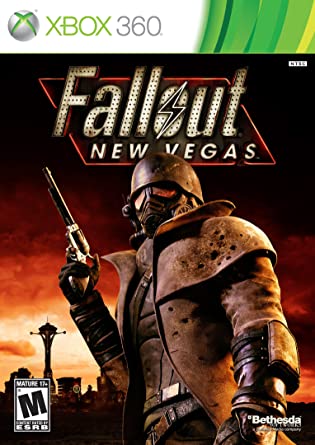
With Bethesda and Obsidian Entertainment together with Team Xbox, producing a sequel to Fallout New Vegas is no longer an impossible dream!

I should also state that Microsoft having Bethesda under its extensive corporate umbrella and ownership of the many intellectual properties (IP) of the company means that the dream of producing sequel to Fallout New Vegas is no longer impossible! Microsoft also owns Obsidian Entertainment, the very same team that worked with Bethesda for Fallout New Vegas, and they can decide to assign them to produce a sequel complete with a lot of human, technological and financial resources to back them! While I love the idea of Obsidian making Fallout New Vegas 2, I personally prefer they keep focusing on making their major fantasy RPG Avowed (ironically an ambitious game described as something to rival Bethesda’s Skyrim) and making a next-generation sequel to The Outer Worlds (which I love playing). A new Fallout New Vegas can be released on Xbox Series S and Xbox Series X AFTER the respective releases of Avowed, Starfield and Elder Scrolls VI many years from now.

Apart from the very promising benefits gamers will soon have from the Xbox-Bethesda deal, Microsoft also deserves praise for their transparency with gamers about their next-generation consoles, their expanding 1st party game studios lineup, Xbox All Access, Xbox Game Pass and the like. Transparency aside, Team Xbox also proved to stay honest and well organized with gamers unlike Sony’s PlayStation division. Watch the videos below regarding Sony…

The Xbox-Bethesda deal alone motivates me even more to acquire an Xbox Series X console and also sign up at last on Xbox Game Pass. I am certain that I am not the only geek experiencing the excitement about the very bright future of fun, engaging and high-value gaming with Xbox. With Bethesda’s RPG franchises alone, Xbox is already the best and definitive ecosystem for people who love playing role-playing games (note: Microsoft has Avowed coming and hopefully a The Outer Worlds sequel from Obsidian, plus established support from Square Enix with a Dragon Quest game coming out this December). This is something that Sony (even with Final Fantasy XVI a timed exclusive on their PS5) and Nintendo cannot match! Going back to Bethesda, they really had gone a long way and their decades-old history of doing business with Microsoft is undeniable. The very first time I played a Bethesda game on Microsoft hardware was none other than Elder Scrolls IV: Oblivion on Xbox 360 and that was way back in 2006. In the past decade, I played Skyrim on Xbox 360 and Fallout 4 on Xbox One. Personally, I am happy that Microsoft acquired Bethesda with not only the Xbox Series S and Xbox Series X in mind but for the long term…the far future!

In ending this, watch these videos from Dealer Gaming, Colteastwood, Rand al Thor 19 and Zalker 87 for additional insight about the Xbox-Bethesda deal!

+++++

Thank you for reading. If you find this article engaging, please click the like button below and also please consider sharing this article to others. If you are looking for a copywriter to create content for your special project or business, check out my services and my portfolio. Feel free to contact me as well. Also please feel free to visit my Facebook page Author Carlo Carrasco and follow me at HavenorFantasy@twitter.com

Looks like Xbox will be the haven for fantasy RPG enthusiasts in the 9th console generation

Looks like Xbox will be the haven for fantasy RPG enthusiasts in the 9th console generation

Screenshot_20200801-074115_YouTube.jpg
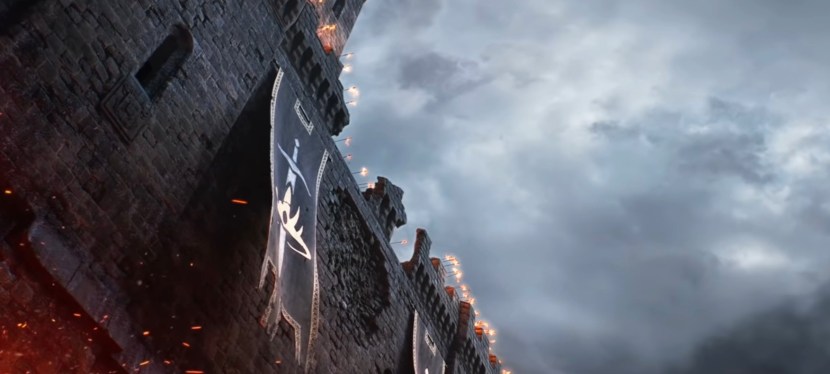
A shot from the trailer of Avowed.

With the Xbox Games Showcase behind us all, it is becoming clear that Xbox as an ecosystem is turning into a haven for gamers who love playing fantasy role-playing games (fantasy RPGs).

Let me emphasize my point starting with a key development from the 3rd party support that I never anticipated, a development announced during the pre-show period prior to the Xbox Games Showcase of July 23.

I’m referring to the announcement of DRAGON QUEST XI S: Echoes of an Elusive Age – Definitive Edition by Square Enix coming this December to Xbox One (note: the Xbox Series X guarantees backward compatibility), Windows 10 PC and the fast-growing Xbox Game Pass subscription service! Watch the video below and check out Dragon Quest creator Yuji Horii make his verbal presentation.

While Dragon Quest XI was previously released on other game consoles since 2017, its announcement for Xbox is still highly significant not simply because the game’s Definitive Edition will come with a lot of extra stuff and fun content but mainly because it marks the first-time ever that the Dragon Quest franchise becomes part of the Xbox ecosystem.

“I’m hugely pleased to finally see DRAGON QUEST make its Xbox debut,” Horii stated.

For the bigger picture, the Dragon Quest RPG franchise is over 30-years-old. While the Final Fantasy RPG franchise is wildly popular in the West in terms of video game sales, the same cannot be said with the Dragon Quest franchise of games.

Square Enix’s decision to release Dragon Quest XI’s Definitive Edition on Xbox One, PC and the XGP service could not only help itself sell more games (both physical and digital copies) to Xbox and Windows users who understand English, but also set the foundation they need to potentially release even more Dragon Quest games in the Xbox ecosystem.

While I can only speculate on what exactly was discussed in the business negotiations between Microsoft’s Xbox team and Square Enix (note: Xbox head Phil Spencer confirmed visiting Japan to meet game creators and publishers there), in my view Microsoft tried hard to earn the trust and support of Japanese game creators/publishers to add variety of games for Xbox/PC users. The debut of the Dragon Quest series on Xbox is most likely the result of that.

When it comes to fantasy RPGs, Dragon Quest itself is highly significant given its commercial history and cultural impact with Japanese gamers. If the Definitive Edition of Dragon Quest XI (which is now up for pre-order) sells enough with Xbox gamers, it may lead to even more DQ games released in the future.

Next reason why Xbox as an ecosystem will be the haven for gamers who love fantasy RPG is because of the confirmed revival of Microsoft’s very own Fable RPG franchise being developed by a team within Playground Games (Forza Horizon series) for Xbox Series X and Windows 10 PC.

To put things in perspective, Fable is composed of three main fantasy RPGs developed by Lionhead Studios for the original Xbox and Xbox 360. While the main games (Fable, Fable II and Fable III) were flawed respectively, they resulted mostly positive reviews from the critics and many millions in game sales. Since after Fable III, however, the series went downhill in terms of quality and reception. Not only was Fable Legends canceled, Lionhead Studios itself closed down.

The trailer that end the Xbox Games Showcase of July 23 confirmed that it was indeed true that Fable as a franchise was being revived with the Forza Horizon studio doing the hard work.

Now there were concerns raised by gamers about Playground Games’ ability to not only make the new Fable game but how it will live up to the legacy and the factors that defined the game franchise.

Pay close attention to what Xbox executive Matt Booty said in an article by The Guardian related to Fable: “I just look at what Playground has done with the Horizon series – that attention to detail, the ability to represent these naturalistic landscapes. They also have a real passion for the IP and a unique point of view on what’s core to Fable. Everything I’ve seen as the game progresses tells me this is going to be a very high-quality release.”

In addition, the upcoming new Fable game will NOT be an MMO (massively multiplayer online) game but an action-oriented RPG with the single-player experience in mind. Having finished Fable and Fable III myself, this is great news and anyone looking for compelling single-player campaigns in the fantasy RPG genre can be confident with the new Fable game.

For those of you who never played any Fable game before, below is a retro review of Fable III for your viewing pleasure.

Of course, how exactly Playground will craft the new game and decide what kind of features it will have, and how it will balance between old features and new features for gameplay remains a mystery. Still there is hope that it will be high quality product since the Forza Horizon developer have people who previously worked on big projects that have nothing to do with racing games. Listen to the excerpt in Dealer Gaming’s video below.

“With any kind of franchise like that, where you’ve had existing versions, there’s always that balance between what you’re going to bring forward, what still stands up, and what you want to add that’s new,” he says. “It’s like the challenge of making a new Star Wars movie – there’s stuff that everyone wants you to bring along, but then you’ve got a responsibility to take that to new places and I trust Playground has a good vision for that,” Booty added in The Guardian.

If the new Fable game turns out great, it should inspire other game developers to make more action-oriented fantasy RPGs for the next-generation Xbox Series X.

Finally, the other factor as to why the future is bright for fantasy RPG enjoyment on the Xbox ecosystem is Avowed, the ambitious new first-person fantasy RPG developed by RPG specialists Obsidian Entertainment for Xbox Series X and Windows 10 PC.

Beyond the trailer, here are some details. The game is set in the world of Eora which itself is part of Obsidian’s established Pillars of Eternity games franchise. In terms of gameplay, not much has been revealed but the trailer suggests first-person movement and action will be the core way of playing which is fine by me since I played Elder Scrolls IV: Oblivion, Elder Scrolls V: Skyrim and Fallout 4. Potentially, Avowed will feature exploration of a large fantasy world laced with mysterious creatures, magic, varied locations and eventually varied quests to take part in. There is no release date yet although it is speculated it will be released in 2022. As it is being made for Xbox Series X, gamers sticking with their aging Xbox One consoles should upgrade if they really want Avowed.

Having enjoyed The Outer Worlds (a sci-fi, first-person shooting RPG) so much on my Xbox One, I really believe Microsoft made the right move on acquiring Obsidian and providing them the resources and time to make something that will be enjoyable and engaging. I also believe that from a business point of view, the Xbox executives know there is a huge group of gamers/consumers who are willing to spend good money on big budget, content-heavy, deep exploration fantasy RPGs like Elder Scrolls V: Skyrim. I am confident Team Xbox knows their history that a great majority of the 3.4 million copies of Skyrim sold within the first two days of release in 2011 were on Xbox 360 (more than double what was on PS3).

As such, by now the Xbox executives should believe that making similar ambitious games like Skyrim makes great business sense and Avowed being made for Xbox Series X alone adds great value to the Xbox brand and ecosystem.

With Microsoft heavily investing in Avowed, this should attract the attention of other game publishers/developers who have vested interests in making fun, lengthy single-player RPGs to make such games on Xbox Series X.

Conclusion

With the new Fable, Avowed and the Definitive Edition of Dragon Quest XI coming in the foreseeable future, the Xbox as an ecosystem will be the hot spot for gamers who love fantasy RPGs. Apart from those future RPGs, there are already several Final Fantasy RPGs already available on Xbox not to mention the past Fable games and past RPGs developed by Obsidian such as Dungeon Siege III, Pillars of Eternity and Pillars of Eternity II.

Be confident, gamers! Xbox’s appeal to gamers will no longer be limited to Halo, Forza and Gears of War. Microsoft’s two fantasy RPG franchises will break the mold and raise the level of enjoyment and engagement for Xbox fans and new gamers. Do not forget that there are other Xbox game studios that have yet to reveal their upcoming exclusive games on Xbox Series X. Who knows? There could be even more fantasy RPGs coming from those studios! What else? If the 3rd party game developers and publishers are watching the rise of prominence of Xbox in the 9th console generation, they may go ahead in bringing even more video games to Xbox Series X!

In ending this, posted below is Colteastwood’s newest video about the next big Xbox digital event…


Thank you for reading. If you find this article engaging, please click the like button below and also please consider sharing this article to others. If you are looking for a copywriter to create content for your special project or business, check out my services and my portfolio. Feel free to contact me as well. Also please feel free to visit my Facebook page Author Carlo Carrasco and follow me at HavenorFantasy@twitter.com