Welcome back my readers, YouTube viewers and all others who followed this series of articles focused on YouTube videos worth watching. Have you been searching for something fun or interesting to watch on YouTube? Do you feel bored right now and you crave for something to see on the world’s most popular online video destination?
I recommend you check out the following videos I found.
#1 Jim Shooter Remembered – I am a long-time comic book reader and I can say out loud that modern day superhero comics are NOT worth pursuing anymore. So many woke activists, LGBTQ activists and rabid feminists have entered the comic book industry and they made superhero comics worse. That being said, what happened in recent years in superhero comics only made me revisit not only the comics of previous decades but also focus on the late Jim Shooter (1951-2025) who has a legacy of great creativity as well as big involvement on the business side of comic book publishing. He was the editor-in-chief of Marvel Comics for almost a decade. I recently saw this particular YouTube video about Shooter’s prediction of the industry collapsing and I can say it is very compelling to watch. Go watch the video below.
#2 The Matrix Resurrections Revisited – When The Matrix Resurrections was released in 2021, I never bothered to watch it at all. To be clear, I saw the first three Matrix movies a long time ago and when it was announced that a sequel would actually be made, I was never interested nor intrigued. As such, I checked the movie through varied videos on YouTube and posted below are references that should interest you even if you are not a Matrix fan. By the way, when was the last time you saw Keanu Reeves and Carrie-Anne Moss together?
#3 Where To Have Burger Steak In Japan – When you think about Japan as your next destination as a traveler, do you think about having very meaty meals there? Recently, Japanese Food Noodles posted a video about five Japanese food joints that serve burger steaks and side dishes to customers. In the video below, you can find out what those food joints are and you can enjoy watching how the food is prepared.
#4 Greta Thunberg Hilariously Mocked – Greta Thunberg, the climate change zealot and active partner-in-crime of Palestinian terrorist group Hamas, was hilariously mocked in an Israeli satire program. As it is a fact that Thunberg and her woke activist pals attempted (for a 2nd time) to reach Gaza WITHOUT ANY HUMANITARIAN AID at all, it is clear that they did it to generate buzz on social media and on the corrupt mainstream news media while serving Hamas. As such, the satire of Thunberg and her woke pals is a smart move and well-timed. Watch the Sky News Australia video below.
#5 Police Academy Revisited – What could be said about the 1984 comedy Police Academy? Apart from being a hilarious film, it was one of those very low-budget movies that struck gold with moviegoers grossing almost $150 million worldwide. To this day, Police Academy continues to entertain YouTubers and film buffs who were born after the movie was released. There are also some notable details about how the film was made, who made it in the cast and why it still is significant. Watch the selected videos below…
During an important discussion with the Manila Bulletin, Israeli Ambassador to the Philippine Dana Kursh stated that the Jewish state and the Philippines are exploring opportunities of cooperation over important topics such as tourism, cybersecurity, trade and direct flights, the newspaper reported.
To put things in perspective, posted below is an excerpt from the news article of the Manila Bulletin. Some parts in boldface…
The Philippines and Israel are exploring “more avenues of cooperation”—including a possible free trade agreement, direct flights between the two countries, and cybersecurity agreements—that will improve the “bond” that has been going strong since World War II, Israel Ambassador to Manila Dana Kursh said on Monday, Oct. 27.
In an exclusive roundtable discussion with The Manila Bulletin, the envoy underscored the importance that Israel puts in the Philippines, citing high-level visits of its ministers for foreign relations, economy, and tourism, as well as its deputy foreign minister.
“That shows that the Israeli government thinks very highly of the Philippines because it is working top down—our Prime Minister said look east and he specifically said also the Philippines and our ministers are coming here to explore more avenues of cooperation,” she said.
“So, this is one time that it relies on the past and it looks at the present and if we are looking at the future there are two things that are important,” she added.
The first, Kursh shared, is the possible free trade agreement (FTA) between the two countries, of which discussions on building the mechanisms have already started in July.
“So, hopefully, there will be a free trade agreement. We are now just finalizing things so, we initially started in July and when it’s done, the potential of bond between the two nations will become even more,” she pointed out.
PH, Israel eye revival of direct flights – Another important component of this relationship is the establishment of direct flights.
Noting the big potential of tourism between the two countries, the ambassador lamented the travel advisory currently raised in Israel by the Philippine government.
“We have to move aside is a travel advisory. I know that tourists are still coming despite the travel advisory, but we need to overcome this challenge and God willing, now with the voices, with the wind of peace from our region, I do hope that the DFA will decide, together with other ministries, will decide to lift this,” she said.
Travel Alert Level 2 is currently raised in Israel, which reminds Filipinos to avoid non-essential travel to the country. This includes, among others, tourism visits, pilgrimages, temporary stays with relatives and friends, volunteer work, sports events, entertainment, and similar activities.
After going past that hurdle, Kursh said the two countries can start discussion two possible options for direct flights, with one options having only direct flights on a certain amount of days a week.
The envoy added they have already met with the country’s flag carrier Philippine Airlines on how the direct flights will benefit the company.
“I do hope that more and more Filipinos will come to Israel and vice versa more and more Israelis will come to more than 7,000 mini paradise that we have in the Philippines.”
“So if I’m trying to answer, I think that God willing, within the next year and a half, we’ll be able to reach some progress, or even, but I cannot commit, we cannot commit to what’s going on in Israel, and at the end of the day, because it’s a decision of the airlines, we need to find ways to create the best formula that will be a win-win,” she added.
According to Kursh, there are some 30,000 or 40,000 tourists on both sides, but the “potential is tremendous.”
Cybersecurity partnership – Pointing out Israel’s expertise in technology, Kursh also said that her country has “added value” when it comes to exchanging best practices on innovation and technology, including cybersecurity.
“So, it’s both business and both tourism, we need to provide in our nations, to other next generation, we need to provide them food security and we need to provide cybersecurity and we need to provide them with health, with mental health and physical health and in all those realms and more Israelis and Filipinos can work together to have a better future for everyone,” she added.
This newest development shows the continuing growth of Israel-Philippines ties and Ambassador Kush pointed out the high-level visits of ministers from the Jewish state. In my view, the Philippines and Israel can become greater partners than they are today. Apart from travel, Israelis and Filipinos can help each other out in business, cybersecurity, and trade. We all have to pray that the Philippines and Israel will work together more closely sooner than later.
To my fellow Filipinos reading this, I encourage you to accept the truth that Israel is the land God designated specifically for the Jewish people (read Genesis 35:10-12) and His command must be followed without hesitation. If you want to be blessed further by the Lord, do so by loving and blessing the Jewish people (Genesis 12:1-3). I did my part when I was in Israel. Also, let me remind you all that the ties between the Jews and Christians are truly biblical!
I encourage you all to pray to the Lord God in support of Israel, to love and bless the Jewish people, and pray for the peace of Jerusalem.
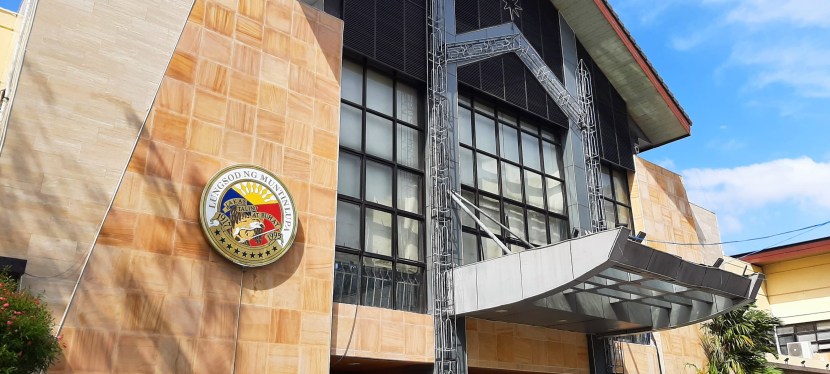
The City Government of Muntinlupa made clear through its executive budget and goals that it is putting the people first, according to a news article by the Manila Standard.
To put things in perspective, posted below is an excerpt from the news report of the Manila Standard. Some parts in boldface…
In an era of cynicism toward government, Muntinlupa City is proving that good governance is still good politics.
Mayor Ruffy Biazon champions social justice through strong health and education spending — proving that clean, compassionate, and competent governance works.
As budget debates heat up nationwide, Muntinlupa City is standing tall for all the right reasons. Under the leadership of Biazon, the city has made human development, not grandstanding or prestige projects, its number one priority.
In the city’s P8.8-billion 2025 executive budget, a remarkable 22 percent is devoted to health and 18 percent to education, directing nearly P4 out of every P10 toward people-centered programs.
These figures far surpass national benchmarks where the 2025 General Appropriations Act (GAA) assigns around 16.7 percent to education and less than 6 percent to health.
Based on comparative data from the Department of Budget and Management and DILG, Muntinlupa consistently ranks among Metro Manila’s highly urbanized cities with the highest proportional investments in health and education, a reflection of the city’s deep commitment to human capital development.
In a time when the public is more watchful than ever about where every peso goes, Muntinlupa is setting the gold standard for purposeful and transparent spending.
“As we close the year, Muntinlupa can say with pride that our budget reflects our conscience,” said Biazon. “We chose people over politics, essentials over excess, and impact over impression.”
Through his 7K Agenda, Biazon has kept his focus sharp: Kalusugan (health) and Karunungan (education) lead the city’s spending priorities, backed by strong fiscal performance.
“A good budget is not about how much we spend, but how many lives we lift,” Biazon said. “That’s what makes governance both moral and meaningful.”
With 22 percent of the city’s budget directed to health, Muntinlupa is upgrading the Ospital ng Muntinlupa (OsMun), acquiring modern medical equipment, and strengthening drug supply systems. Investments are also flowing to barangay health centers and community-based health institutions to ensure access to preventive care and emergency response.
Let me end this post by asking you readers: What is your reaction to this recent development? If you are a resident of Muntinlupa City, do you feel important to the City Government? Are you happy with the way the City Government has prepared its executive budget?
For more South Metro Manila community news and developments, come back here soon. Also say NO to fake news, NO to irresponsible journalism, NO to misinformation, NO to plagiarists, NO to reckless publishers and NO to sinister propaganda when it comes to news and developments. For South Metro Manila community developments, member engagement, commerce and other relevant updates, join the growing South Metro Manila Facebook group at https://www.facebook.com/groups/342183059992673
For the newcomers reading this, I myself had visited Israel on a pilgrimage tour with my local church in 2023. You can read some of my blog posts by clicking here, here, here, here, here and here. My faith in Lord Jesus is uncompromising and I will always stand in support of Israel and its people.
To put things in perspective, posted below is an excerpt from the PNA news article. Some parts in boldface…
Israel sees the Philippines as a “priority” market in its efforts to revitalize its tourism sector, its tourism ministry said.
Intense promotions and trade engagement are underway in Asia following the “renewed travel optimism” seen after the Gaza ceasefire deal was signed this October, according to the Israel Ministry of Tourism (IMOT).
The agency, during its participation at the recent Internationale Tourismus Borse (ITB) Asia 2025 travel event in Singapore, underscored Israel’s intent to deepen ties across Asia’s high-growth travel markets and highlighted the destination’s “evolving identity that unites its heritage and modern leisure offerings.”
“The enthusiasm we’ve seen from Filipino travelers and partners at ITB Asia truly reflects how Israel remains a top bucket-list destination for many Filipinos,” Anna Oraiza Aban, marketing manager at IMOT’s Philippine office, said on Friday.
“With visa-free access for Philippine passport holders, we’re confident that more Filipinos will soon turn their dream trips into reality. The strong interest from the market and travel trade inspires us to continue developing experiences that connect deeply with Filipino travelers, whether through faith, culture, or adventure.“
In a briefer, IMOT said insights from ITB Asia 2025 will guide its regional strategy through 2026, with emphasis on joint marketing campaigns, airline collaborations, and education programs to build awareness and drive sustainable visitor growth in Asia.
Israel received 118,200 tourists in August, a 39 percent increase from July. Between January and August, it recorded 814,000 tourist arrivals, up from 672,400 in the same period last year.
“Asia has been a key market for Israel with India, Indonesia, the Philippines, China, and South Korea leading,” IMOT said.
“This steady rise shows Asia’s growing confidence and curiosity in Israel’s mix of culture, culinary, eco-conscious, wellness, and adventure travel experiences,” it added.
This newest development shows the continuing growth of Israel-Philippines ties and I am confident that new travel breakthroughs between Israel and the Philippines plus other nations in Asia will happen. That means better commercial and investment opportunities, and more people in Asia will be able to visit the Holy Land in Israel and witness the Holy Bible come to life during their visit. This also means more Asian travelers – the faithful and those who are still spiritually lost – will have golden opportunities to realize that Lord Jesus is the hope of all nations!
To my fellow Filipinos reading this, I encourage you to accept the truth that Israel is the land God designated specifically for the Jewish people (read Genesis 35:10-12) and His command must be followed without hesitation. If you want to be blessed further by the Lord, do so by loving and blessing the Jewish people (Genesis 12:1-3). I did my part when I was in Israel. Also, let me remind you all that the ties between the Jews and Christians are truly biblical!
I encourage you all to pray to the Lord God in support of Israel, to love and bless the Jewish people, and pray for the peace of Jerusalem.
BMI, a unit of Fitch Solutions, officially lowered its 2026 gross domestic product (GDP) for the Philippines at 5.2% pointing a series of factors such as remittances slowdown, weaker investor sentiment, US tariffs on Philippine goods and the effects of the flood control corruption scandals, according to a Manila Bulletin news report.
To put things in perspective, posted below is an excerpt from the news report of the Manila Bulletin. Some parts in boldface…
Fitch Solutions’ unit BMI has sharply lowered its 2026 Philippine growth forecast to well below the government’s six- to seven-percent target, citing an expected slowdown in remittances, a weaker trade balance, muted investment sentiment, and downside risks to government spending stemming from the flood control fiasco.
“We expect remittance growth to slow due to tighter US [United States] immigration policy and a one-percent remittance tax on transfers from the US starting in 2026,” BMI said in a commentary published on Thursday, Oct. 23.
“A slowdown in remittances will weigh on domestic consumption, which will have an outsized impact on growth given the domestically driven economy,” BMI explained.
Against this backdrop, BMI has slashed its 2026 gross domestic product (GDP) growth forecast for the Philippines to 5.2 percent, one-percentage-point (ppt) lower than the 6.2 percent it projected previously.
If realized, this would also fall below this year’s growth goal of 5.5 to 6.5 percent, and 2024’s actual pace of 5.7 percent.
Another policy by US President Donald Trump that could drag down the local economy is the 19-percent tariff on Philippine exports, but zero tariffs imposed on select American imports.
This US-Philippines trade setup, according to BMI, “will weigh on the trade balance in 2026.”
Goods exports growth in August was the slowest in 2025 as US tariffs took effect and exporters’ front-loading of outbound shipments ended.
The latest Philippine Statistics Authority (PSA) data showed that goods exports grew by 4.6 percent year-on-year in August, marking the slowest increase since the 1.9-percent decline in December 2024
BMI also believes investor sentiment will “likely” remain muted next year as “erratic US trade policies will weigh on global investor sentiment and limit foreign direct investment inflows [FDIs].”
Domestically, government spending could bear the impact of a scenario where the ongoing flood control probe leads to the unearthing of more corruption cases tied to infrastructure projects beyond flood control.
“It could lead to even tighter scrutiny on government spending and reduce spending substantially below fiscally programmed levels,” BMI said. Capital outlays had dropped by 10 percent to ₱112.9 billion as of August, according to the Department of Budget and Management (DBM).
Infrastructure spending is expected to hit ₱1.51 trillion in 2025, ₱1.56 trillion in 2026, ₱1.69 trillion in 2027, ₱1.9 trillion in 2028, ₱2.03 trillion in 2029, and ₱2.2 trillion in 2030.
Meanwhile, BMI retained its 5.4-percent Philippine growth forecast for this year, still below the lowered full-year target.
Let me end this post by asking you readers: What is your reaction to this development? Are you convinced that due to several internal and external factors, economic growth of the Philippines will be slower this year and next year? Do you agree with BMI’s findings about the Philippine economy?
With the Christmas season approaching, Bank of the Philippine Islands (BPI) warned the public about the rise of smishing as criminals have changed their strategies and used more sophisticated technology to steal people’s money, according to a Manila Bulletin news report.
To put things in perspective, posted below is an excerpt from the news report of Manila Bulletin. Some parts in boldface…
Ayala-led Bank of the Philippine Islands (BPI) is cautioning clients about a sharp, pre-holiday surge in online banking fraud linked to smishing, noting that criminals’ tactics have evolved from simple text scams to using highly sophisticated tools to steal money.
“Consumer complaints are increasing… a lot of it is seasonal. During Christmas, when people receive their bonuses, these cases really go up,” Jon Paz, BPI enterprise information security officer and data protection officer, said during the bank’s cybersecurity roundtable with the media on Wednesday, Oct. 22.
Paz reported that around eight out of 10 online banking fraud cases last year were perpetrated through smishing attacks using International Mobile Subscriber Identity (IMSI) catchers and rogue apps.
He further noted that there were almost zero IMSI-catcher-related fraud cases in 2024, but incidents began appearing around December and skyrocketed by the second quarter of this year.
“Some of the authorities reported that those who were caught were reporting to Chinese nationals,” Paz added.
An IMSI catcher is a fake cell tower device used by scammers to intercept mobile signals and steal users’ personal and banking information.
Meanwhile, a rogue app is a malicious or fake mobile application that tricks users into granting permissions or entering credentials, allowing scammers to harvest personal and banking data.
Despite the increasing number of consumer complaints in the banking industry, Paz noted that BPI’s risk tolerance is “low—one incidence of fraud is one too many for us.”
While the bank cannot disclose its total allotment for app enhancements, BPI Chief Technology Officer Alex Seminiano stated that nearly 60 individuals are working across various functions—business, technology, and operations—to enhance the bank’s mobile app.
BPI said its mobile apps are equipped with an evolving security layer that can detect risky environments and devices, such as those that are jailbroken, use overlays, or allow side-loading, to prevent potential breaches.
Let me end this post by asking you readers: What is your reaction to this development? Are you concerned that smishing will affect members of your family or those in your local community? Were you scammed online during the past six months? How many people in your local community are aware of smishing right now? Did you receive any text messages that tried to convince you to hit the link provided?
If you are in the Philippines, did you receive any suspicious calls on the telephone or on your mobile phone lately? Based on the data of an anti-scam app developer, scam calls in the country surged by more than 78% in the 3rd quarter of this year, according to a Manila Bulletin news report.
To put things in perspective, posted below is an excerpt from the news report of the Manila Bulletin. Some parts in boldface…
A 78.44 percent rise in scam calls was recorded in the Philippines in the third quarter of 2025, data from the latest Whoscall Scam Report of global anti-scam app developer Gogolook showed.
During the period, Whoscall said it logged a total of 62,390 scam calls, a sharp increase from 34,964 in the previous quarter.
Despite the spike, it noted that the figure remains 62.24 percent lower year-on-year than the 165,236 scam calls recorded in the same period in 2024.
Whoscall stated that it recorded 37,609 SMS scams, down by 42.17 percent from 65,035 in the previous quarter and a 97.71 percent year-on-year drop from 1,645,470 in 2024.
Gogolook Philippines Country Head and General Manager Mel Migriño said the trend indicates a behavioral shift among mobile users.
“Since the first quarter Scam Report of 2025, we have seen that Filipinos have become more cautious about clicking links from unknown numbers in SMS swindles. This shows that scammers are now shifting their tactics to calls and social media,” she said.
She explained that the rise in call scams is largely driven by fraudsters exploiting the telemarketing systems of financial institutions.
“They are taking advantage of legitimate promotional calls like credit card limit upgrades, making their scams sound more believable to unsuspecting consumers,” she noted.
Per Migriño, the continued decline in text-based scams can be credited to the “whole-of-society approach” involving law enforcement raids of major scam hubs nationwide and joint awareness campaigns.
Authorities urged the public to remain vigilant and report scam incidents through official channels.
Cybercrime Investigation and Coordinating Center (CICC) acting executive director Usec. Renato “Aboy” Paraiso said public reports are crucial in combating online fraud.
“We continue to urge the public to report scam incidents, as these serve as leads for further investigation and as the foundation for various initiatives that raise public awareness against online scams,” he said.
Let me end this post by asking you readers: What is your reaction to this recent development? What do you think is causing the surge of scam calls over the previous quarter?
In response to the abuse of visa processes and cases of fraud committed by some foreigners, Japan recently tightened the rules for applying for the Business Manager Visa and also raised the capital requirement by six times, according to varied sources. To put things in perspective, the said visa was launched by Japan over a decade ago in order to attract foreign entrepreneurs who can contribute a lot to building up the national economy and create new jobs.
To get yourselves oriented, watch the English-language analytical news video of NHK World by clicking here. To put things in perspective, posted below is an excerpt from NHK’s English news report. Some parts in boldface…
Japan’s business manager residence status, introduced a decade ago to lure entrepreneurs from overseas, has become increasingly popular. More than 41,000 people held it last year.
But concerns have grown that the status was being misused as an easy path to immigration, prompting the government to tighten rules this month – including a steep increase in capital requirements.
Worries about abuse – With the number of business manager visas issued more than doubling in ten years, worries have grown that it was being misused – a view highlighted by then-justice minister Suzuki Keisuke earlier this month.
“It was pointed out that the residential status is abused by some foreigners as a means of moving to Japan, as permit standards are lax compared to the same systems in other countries.” (Suzuki Keisuke)
How have the requirements changed? –Japan introduced this visa 10 years ago to attract foreign entrepreneurs. The goal was to boost investment and create jobs. But new rules for the visa were introduced in October.
The capital requirement was raised six-fold, from 5 million to 30 million yen. That means incoming applicants will need nearly 200,000 dollars in the bank.
The rules also require companies to hire at least one full-time employee, who must be, for example, a Japanese citizen or permanent resident.
It also requires that applicants have at least three years of business management experience or hold at least a master’s degree.
Why tighten the rules? – Authorities said the capital requirement was too low. In addition, they’ve seen a number of fraudulent applications using shell companies that aren’t actually operative in the real world.
“Someone who has no intention of engaging in business activities can obtain business manager residence status as a means of immigrating to Japan. But that is not acceptable from our viewpoint. We made these changes because we believe the previous requirements were too loose.” (Ito Junji)
Over 41,000 people had business manager residence status last year. That number has more than doubled over the last decade.
Social situation in China may be one cause of the increase – More than half of the people holding this residence status are Chinese. Of course, there are legitimate applications. But the visa has also been widely advertised on social media as a means of moving to Japan.
And some Chinese residents are looking for a way to escape their country’s harsh rules. For example, Beijing’s strict lockdown policies during the coronavirus pandemic pushed people away. And China’s high-pressure “entrance exam war” is another reason why people want to leave China. They want to raise their children in Japan to avoid that kind of pressure.
Meanwhile, The Japan News (of The Yomiuri Shimbun) published an editorial about the recent tightening of rules regarding the Business Management Visa. Posted below is an excerpt. Some parts in boldface…
A status of residence originally created to help Japan’s economic growth by accepting entrepreneur-minded foreign nationals is being abused.
The system must be changed in line with its original intent, while authorities must firmly crack down on illegal residency.
The Justice Ministry has tightened the requirements for obtaining the business manager visa, a type of residence status, by revising a ministerial ordinance under the Immigration Control and Refugee Recognition Law.
This type of visa was created in 2015 for foreign nationals who launch businesses in Japan. The number of business manager visa holders has continued to increase, reaching 44,800 in June this year.
In recent years, there have been cases where foreign nationals have reportedly obtained this visa fraudulently by establishing shell companies. The Immigration Services Agency investigated 300 applications suspected of fraud and found that 90% of them had irregularities such as having no actual business operations.
It is believed that the holders of this visa in those cases have come to Japan under the guise of starting businesses with their real purpose being to bring their families for advanced medical treatment or to provide their children with high-quality education. This situation where the system’s original intent is being disregarded cannot be overlooked.
Previously, the government granted this status of residence for up to five years if applicants had an office in Japan and met either of these requirements: having capital of ¥5 million or more or hiring two or more full-time employees.
Under the revised ministerial ordinance, the minimum capital requirement has been raised to ¥30 million and it is now mandatory to hire at least one full-time employee. A certain level of Japanese language ability is another new requirement.
In South Korea, obtaining a similar visa requires about ¥32 million in capital, and in the United States, about ¥15 million to ¥30 million in capital is needed. Compared to other countries, Japan’s lenient visa criteria may have contributed to the rampant abuse.
There are other areas that need to be changed. Currently, screenings for the visa have been conducted primarily through documents alone. If illegal acquisition is suspected, why not conduct interviews with the applicants in addition to on-site inspections?
It is also important to check business operations regularly after the visa is granted. To that end, strengthening the system for immigration checks is indispensable.
Some people say that because screenings of registrations for companies and other entities have been lax in the first place, shell companies have been used as covers for money laundering and other purposes. The loose screening system must be overhauled.
As you can see in the above editorial excerpt, cases of abuse and fraud were spotted by Japan’s government already. In related to the findings, watch the China Observer YouTube video below.
The China Observer video pointed out that a lot of foreigners who applied for Japan’s Business Manager Visa before were Chinese nationals. Some Chinese nationals see the said visa as a shortcut to immigration into Japan and get away from mainland China where their lives allegedly have been hard and restrictive. It is also widely reported that China has been having serious economic problems for years now.
Going back to the Japanese authorities, the changes made on the Business Manager Visa were meant to prevent further fraud from happening, to ensure that companies have substantial operational capability, and prevent the proliferation of shell companies. Along the way, the authorities want to make certain that those who applied for the visa have at least 3 years entrepreneurial experience or have a master’s degree in business management, so that the foreigners (who secretly have no intention to contribute to Japan’s economy) can be prevented from entering.
When it comes to the abuses of the Business Manager Visa, Japanese authorities discovered cases of fraud such as some small buildings in Tokyo and Osaka had as many as fifty different company names registered with the same address, and often with no real staff present. These visa-related fraud cases only add to the endless problems Japan already has. That being said, Japanese authorities did the right thing with tightening the rules and adjusting requirements for the Business Management Visa.
Let me end this piece by asking you readers: What is your reaction to this development? Do you think that too many foreigners abused the Business Management Visa already? Did you notice any foreigners who want to migrate to Japan with a hidden agenda that would only lead to trouble? Do you think other countries should follow Japan’s example?
SONAK Group, the company that manages established brands like ASICS, Onitsuka Tiger, ABC-MART Grand Stage, Molten, Mikasa, and Bullpadel, has secured a lot along Spectrum Midway in Filinvest City for the establishment of their new headquarters in Alabang, according to a news report by the Daily Tribune and details from the company’s social media post.
SONAK Group stated: “As we build our new home in Filinvest City, we look forward to creating spaces that bring people together and reflect SONAK’s continued pursuit of excellence, innovation, and sustainable growth.”
To put things in perspective, posted below is an excerpt from the news report of the Daily Tribune. Some parts in boldface…
Filinvest City continues to cement its position as Metro South’s premier business hub with the opening of SONAK Group’s new headquarters along Spectrum Midway, a move that underscores the township’s growing appeal to both regional and multinational enterprises.
From its humble beginnings as a local merchant to becoming a regional powerhouse in sports and active lifestyle retail, SONAK Group now joins the expanding list of companies driving Filinvest City’s transformation into a center for innovation, growth, and modern living.
Managing globally recognized brands such as ASICS, Onitsuka Tiger, ABC-MART Grand Stage, Molten, Mikasa, and Bullpadel, SONAK’s relocation signals confidence in the district’s long-term vision and robust infrastructure. The company’s newly opened ASICS store at Festival Mall Alabang also strengthens its connection to the community, highlighting Filinvest City’s reputation as both a business and lifestyle destination.
“Securing this new lot in Filinvest City marks a proud milestone for SONAK,” said Anil Buxani, CEO of SONAK Land Corporation.
“It reflects not only our growth as a company but also our commitment to building a future in a community that shares our values of innovation, active lifestyles, and continuous growth.”
SONAK’s expansion is expected to generate more employment opportunities within Filinvest City’s central business district, supporting local talent and contributing to the city’s dynamic workforce.
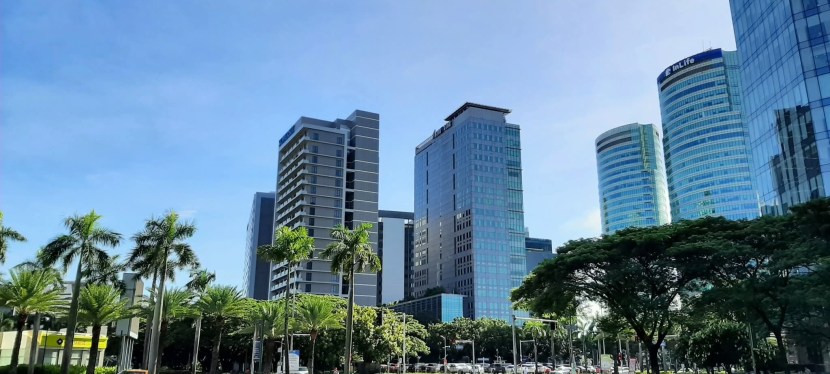
Located across Spectrum Linear Park, Central Park, and the iconic Filinvest City landmark “The Tree,” SONAK’s headquarters situates the company at the heart of the city’s economic core. The location’s pedestrian-friendly walkways, landscaped avenues, and recreational spaces foster an environment that promotes both productivity and well-being — key aspects of Filinvest City’s live-work-play philosophy.
“Welcoming SONAK Group highlights our commitment to creating a central business district where progress and well-being go hand in hand,” said Don Ubaldo, Head of Filinvest Townships.
“Their presence adds vibrancy and innovation to our community, showcasing Filinvest City as a destination where companies grow while embracing a balanced and fulfilled lifestyle.”
Let me end this post by asking you readers: What is your reaction to this recent development? Do you think more corporations could be influenced by SONAK Group’s milestone to expand and establish their presence in Filinvest City in the near future? Do you think the growing number of companies moving into Filinvest City will be beneficial to the nearby apartments and condominiums which have vacant units?
For more South Metro Manila community news and developments, come back here soon. Also say NO to fake news, NO to irresponsible journalism, NO to misinformation, NO to plagiarists, NO to reckless publishers and NO to sinister propaganda when it comes to news and developments. For South Metro Manila community developments, member engagements, commerce and other relevant updates, join the growing South Metro Manila Facebook group at https://www.facebook.com/groups/342183059992673
In its latest economic report, Nomura Global Markets Research sees the economic growth of the Philippines slowing down to 4.7% this and they pointed to an expected decline in government spending, according to a news report by BusinessWorld.
To put things in perspective, posted below is an excerpt from the news report of BusinessWorld. Some parts in boldface…
PHILIPPINE ECONOMIC GROWTH may slow to 4.7% this year, as government spending is expected to further decline amid the corruption investigation in infrastructure projects, Nomura Global Markets Research said.
In a report dated Oct. 27, Nomura Chief ASEAN (Association of Southeast Asian Nations) Economist Euben Paracuelles and Macroeconomic Research Analyst Yiru Chen said the gross domestic product (GDP) forecast was slashed to 4.7% this year from 5.3% previously as downside risks increased due to the corruption scandal involving flood control projects.
“This pencils in GDP growth slowing to just 4% in the second half from 5.4% in the first half and is based on the assumption that the decline in government expenditures in September will worsen in the next 3-4 months,” they said.
Nomura’s latest forecast is below the government’s 5.5-6.5% GDP growth target for the year and is slower than the 5.7% growth in 2024.
“Taking into account the sharp drop in fiscal spending in September, we think the ‘bad scenario’ on the growth impact of the ongoing corruption scandal is materializing,” they said.
Third-quarter GDP data will be released on Nov. 7.
President Ferdinand R. Marcos, Jr. had flagged anomalous flood control projects during his State of the Nation Address in late July. This sparked several investigations into alleged corruption involving lawmakers, government officials, and private contractors.
Latest Treasury data showed government expenditures declined by 7.53% in September, worsening from the 0.7% drop in August, mainly due to lower spending by the Department of Public Works and Highways. Nomura also noted that government spending declined by 2.8% in the third quarter, a reversal of 1.6% growth in the second quarter.
“Excluding interest payments and debt servicing, expenditure growth slumped even more to -10.2% y-o-y (year on year) in September from -3.5% in August, the weakest since 2020. This suggests a relatively rapid deterioration in the pace of budget disbursements after President Marcos brought to light the corruption scandal of flood control projects,” they said.
Nomura also noted that the reallocation of funds to other types of capital expenditures such as school buildings has been “challenging” to implement.
“In addition, we incorporate some spillovers into other components of domestic demand, which were also evident in these previous episodes, including household consumption spending. Our forecast continues to take into account the impact of the US tariffs, which, as we have argued before, pose significant headwinds for goods exports,” they said.
Let me end this post by asking you readers: What is your reaction to this recent development? Do you think the GDP growth of the Philippines will end up below 5% for 2025 as a whole? Are you convinced that investigations and embarrassing details from flood control projects are turning away foreign investors already?







 Author Carlo Carrasco