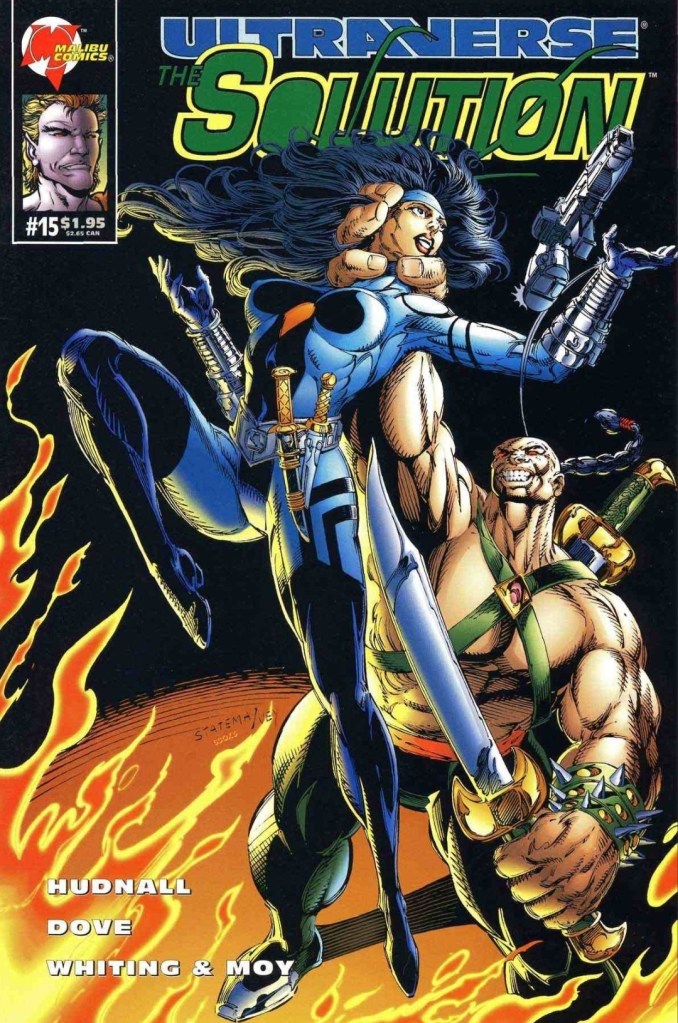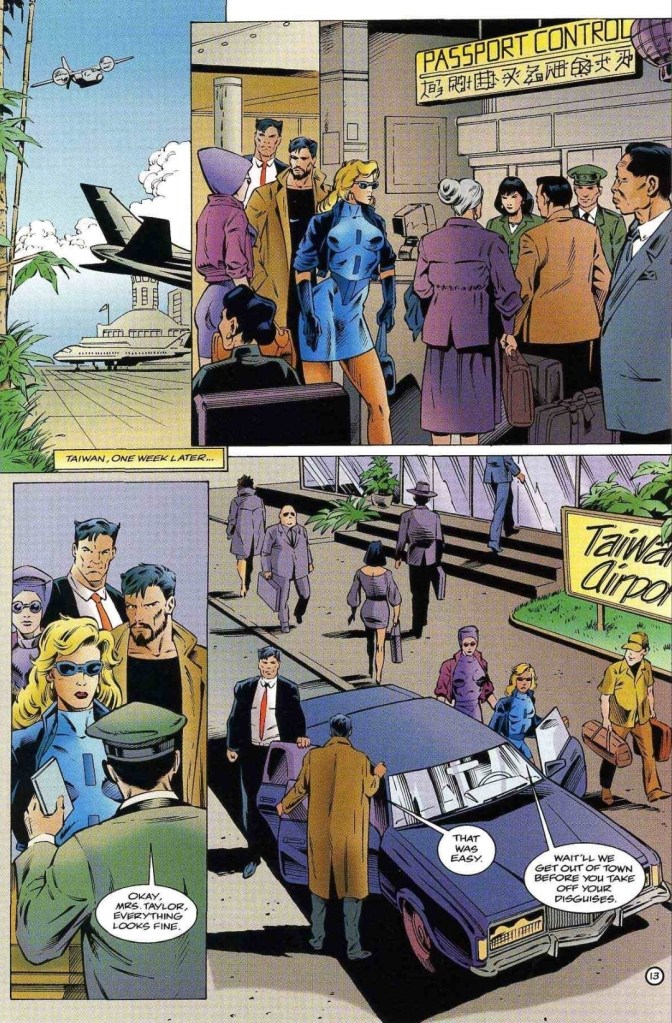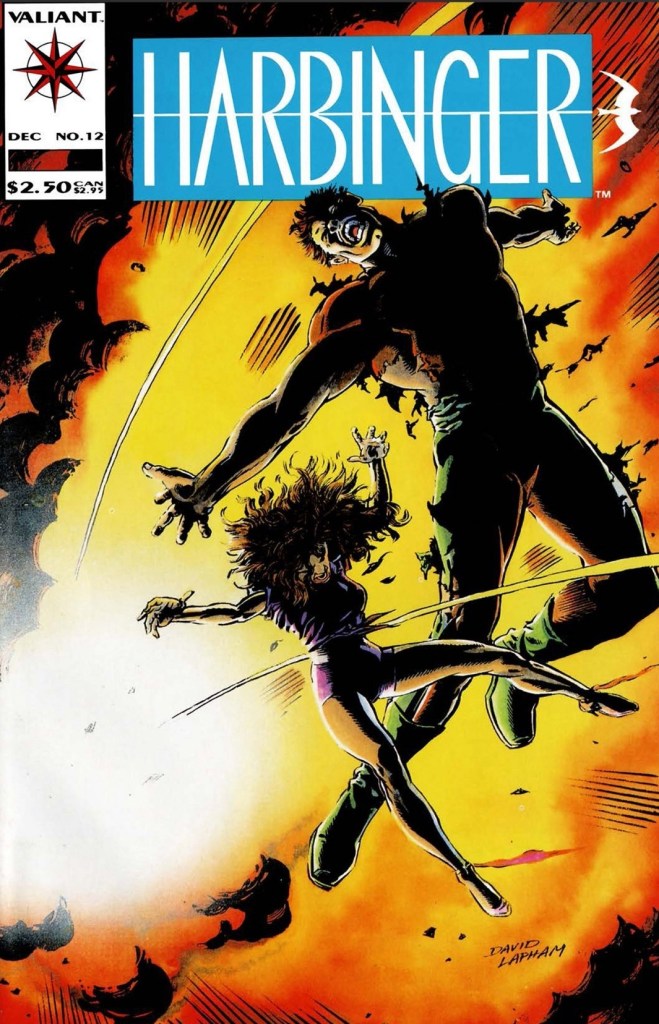
A Look Back at WildC.A.T.S: Covert Action Teams #13 (1994)

Disclaimer: This is my original work with details sourced from reading the comic book and doing personal research. Anyone who wants to use this article, in part or in whole, needs to secure first my permission and agree to cite me as the source and author. Let it be known that any unauthorized use of this article will constrain the author to pursue the remedies under R.A. No. 8293, the Revised Penal Code, and/or all applicable legal actions under the laws of the Philippines.

Welcome back superhero fans, 1990s arts and culture enthusiasts and comic book collectors! Today we continue revisiting Jim Lee’s flagship title under the Image Comics label – WildC.A.T.S: Covert Action Teams!

For the newcomers reading this, I’ve been doing retro reviews of WildC.A.T.S that had Chris Claremont and Jim Lee collaborating together during the early Image Comics years following their previous works together on X-Men comic books while they were at Marvel. Issue #10 of WildC.A.T.S saw the debut of Claremont’s very own Huntsman while Zealot became the major character among her teammates (note: Voodoo had the 2nd most amount of page presence while the rest made very short appearances). In issue #11, the stakes were raised as most of the WildC.A.T.S got captured by the new super villainess Tapestry and Voodoo remained possessed, leaving Zealot as the only free team member who – out of fear – had to reach out for reinforcements (note: brand new characters who happened to have history with Zealot). In issue #12, Zealot and Huntsman really struggled clashing with the Troika while the reinforcements were on their way. What happened saw new revelations about Zealot and the plot expectedly built up the anticipation of the next big conflict.

The issue I am about to review is the conclusion of the current storyline Claremont wrote and  Lee illustrated which, so far, expanded the lore of the WildC.A.T.S within the WildStorm universe of the time. So far, I’ve been enjoying re-reading WildC.A.T.S issues #10 to #12, seeing what kind of creative stuff Claremont and Lee could make while being free from the restrictions and limitations of Marvel Comics.

With those details laid down, here is a look back at WildC.A.T.S: Covert Action Teams #13, published by Image Comics in 1994 with a story written by Chris Claremont and drawn by Jim Lee.

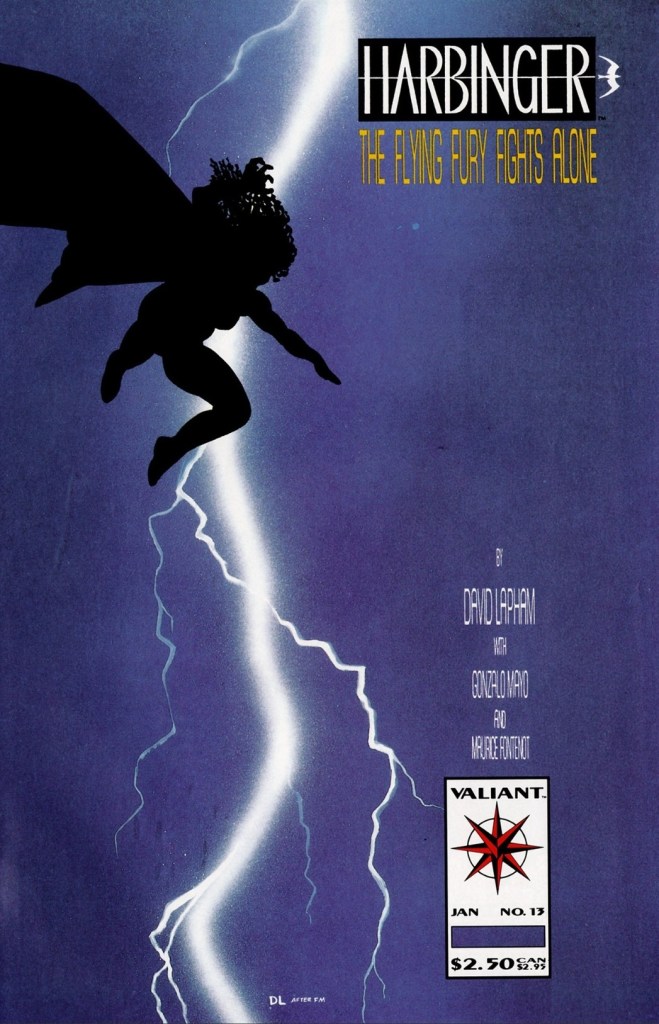
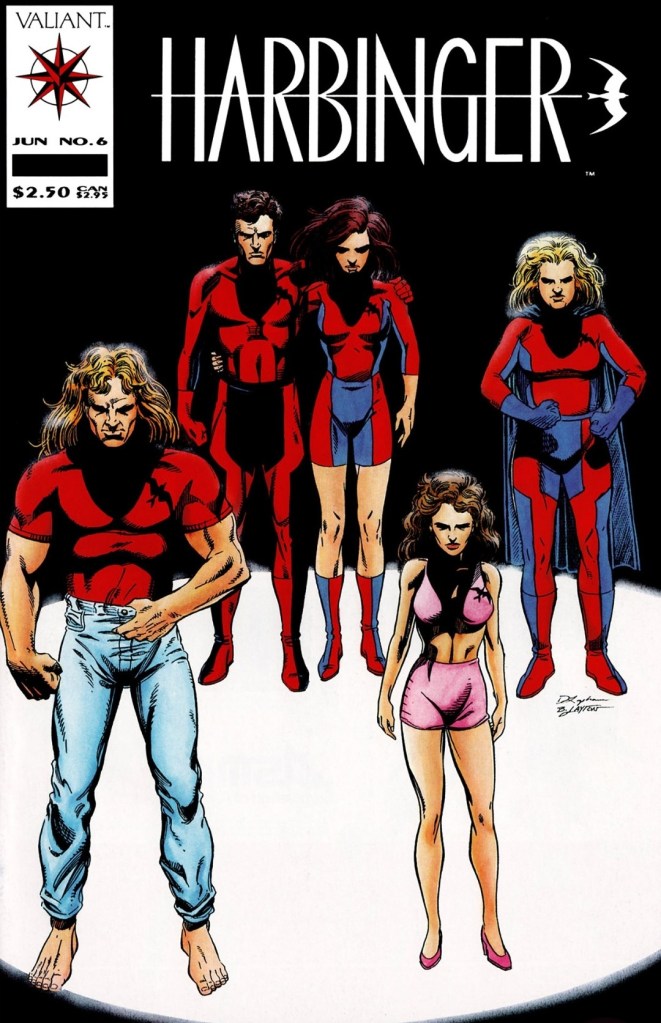
The cover.

Early story

The story begins with the possessed Voodoo – now looking frail and ugly as a result of Raksha’s hunger for flesh – attacking Jacob Marlowe’s two trusted assistants who arrived to help her. Deep inside her body struggling with Raksha’s possession, Pris manages to stop her attack – Voodoo’s face restored to normal – and warns Jules and Stansfield that Jacob and her teammates have been turned into evil by Tapestry and that Zealot may still be free.

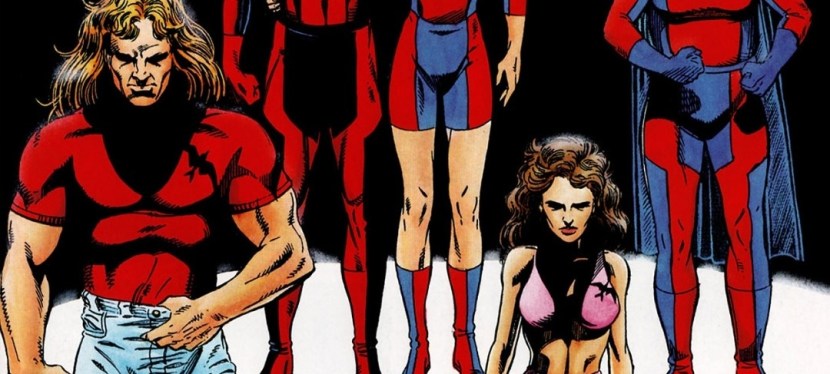
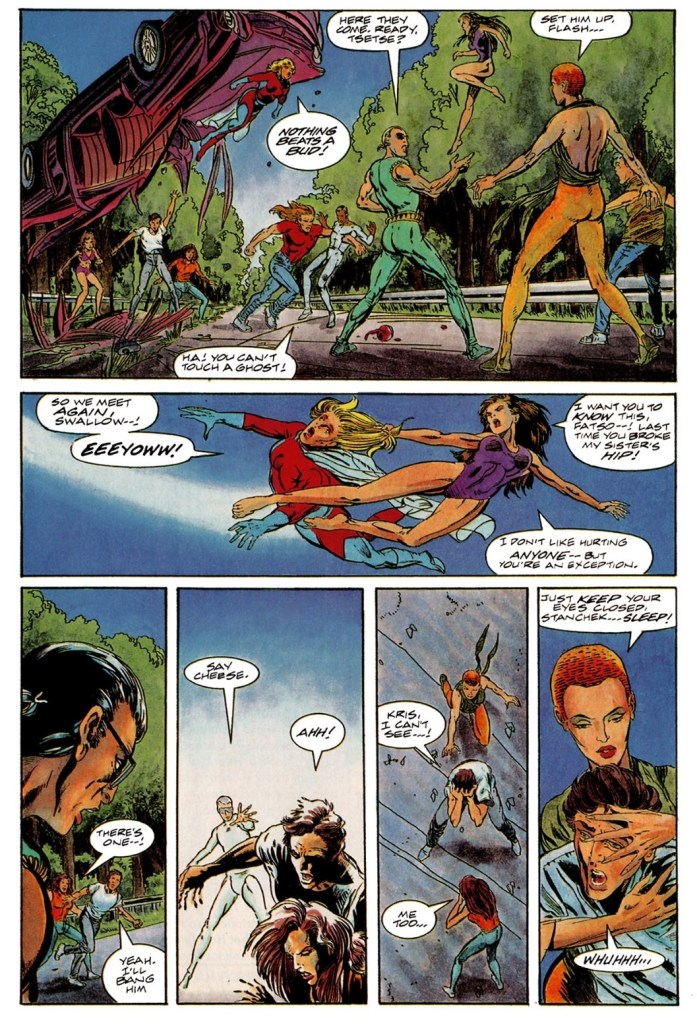
Meanwhile, Grifter, Hunstman, Zealot, Savant, Soldier and Mr. Majestic fight the mind-controlled WildC.A.T.S – Spartan, Maul, Jacob Marlowe and Warblade – and Alabaster Wu who are acting under Tapestry’s evil. As Grifter shoots Maul and kicks Jacob Marlowe’s head, Huntsman reveals to him that Tapestry and Zealot have a history together while Alabaster Wu was trying to save his people…

Quality

Chris Claremont’s Huntsman contributes solidly into the story even though he is not protagonist.

As expected, this storyline-concluding issue delivers the natural progression of what started in issue #10 laced with lots of solidly fun action, key character interactions and more notably the further development of Zealot supported by Huntsman. To put it short, if you enjoyed the previous works of the Claremont-Lee creative team and you enjoy the early, bombastic ways of WildC.A.T.S, then this comic book should delight you.

Without spoiling the entire plot, this comic book concludes the storyline that started in issue #10 and it also marked the end of Claremont-Lee’s collaboration on this particular volume of the WildC.A.T.S comic book series. What is very notable in my view is the way Claremont emphasized the evolution of Zealot not only as a WildC.A.T.S member but also her very own personality as well as her very own spot within the WildStorm universe.

It is in this storyline where you will see Zealot being much more than just a fearless, hard-fighting warrior who lives by the strict standards of the Coda. In this particular comic book, her greater purpose is realized (and you will realize that in a particular scene with Savant late in the story) and the interactions she has with the Huntsman, her sister Savant and others really brought out more of her personality. This is clearly Zealot redefined just as Claremont expanded the lore of the WildC.A.T.S.

Fans of Grifter should be happy to learn that their favorite character (who returned at the end of issue #11) joined the big battle and Claremont’s prepared dialogue of him made him more livelier than his usual portrayal in this comic book series. Huntsman, meanwhile, is his usual honorable self but gets to define his place among the WildC.A.T.S through action. His companion Miranda (now wearing armor thanks to Zealot) plays a short yet notable key role in the story.

The reinforcements composed of Mr. Majestic, Savant and Soldier each have a stronger presence in this story which is expected and they don’t just talk and do some action…they also contributed to the plot and what Savant knew emphasized the essence of the conflict between Zealot and Tapestry.

As for the super villainess herself, Tapestry is very convincingly evil and this comic book shows exactly why the fearless Zealot deeply fears her and why she is a danger to everyone. While she has a very sinister agenda, Tapestry’s confirmation of her origin (in the form of dialogue) and what her place is between the Daemonites and Kherubim will intrigue readers, most especially WildC.A.T.S fans. As for her conflict with Zealot, this comic book will show you how they are connected with each other and what elements connect them together. Their spectacle-filled duel here is a must-see and you will enjoy it a lot when you pay attention to the details (read Savant’s expository dialogue) as the action happens.

When it comes to artwork, fans of Jim Lee should know that this comic book has some of very best pieces of art the famed creator ever made during his time with Image Comics. Very clearly, Lee took his time designing the shots and when to really go out with great visual detail as the story went on.

Conclusion

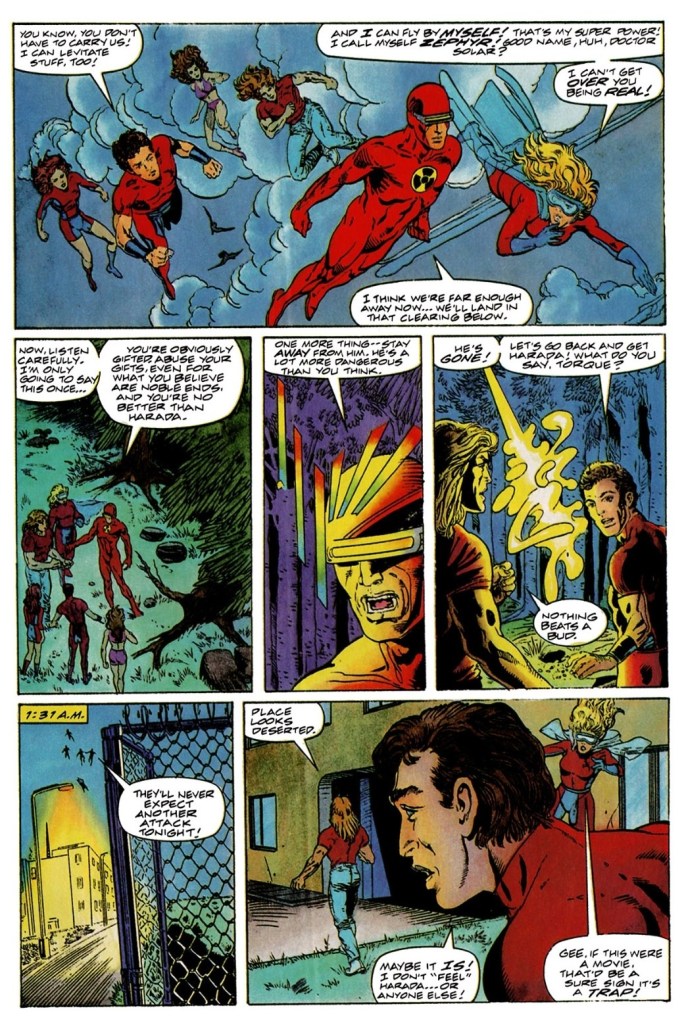
In the heat of a battle against the other WildC.A.T.S, Grifter and Huntsman still managed to talk.

I can say that WildC.A.T.S: Covert Action Teams #13 (1994) is still a great comic book as it solidly and satisfyingly concluded the 4-part storyline that Chris Claremont came up with in this collaboration with Jim Lee. More on the storyline itself, Claremont took a really daring approach on presenting the titular team by having Zealot in the lead (with his creation Huntsman as the 2nd major player) and then putting most of the other team members on the background which effectively emphasizes the presence of the very wicked Tapestry (truly the definitive parallel to Zealot) along with the Troika (note: this is their best and most action-packed portrayal).

While this WildStorm universe-building story concept could put off some Claremont-Lee team fans who expected to see a WildC.A.T.S story fashioned like what was seen in the creators’ past X-Men works, this particular storyline for me is still a great read and its concept is commendable.

I should also state that the themes of omnipotence, legacy and destiny are all well defined in this comic book which made the 4-part storyline make more sense to read and analyze. More on Zealot, the way Claremont developed her will make you think deeply about how you should perceive her, how you think her place within the WildC.A.T.S will affect her teammates, etc. This comic book and its three immediate predecessors all have very solid writing by Claremont!

Overall, WildC.A.T.S: Covert Action Teams #13 (1994) is highly recommended!

+++++

Thank you for reading. If you find this article engaging, please click the like button below and also please consider sharing this article to others. If you are looking for a copywriter to create content for your special project or business, check out my services and my portfolio. Feel free to contact me with a private message. Also please feel free to visit my Facebook page Author Carlo Carrasco and follow me on Twitter at  @HavenorFantasy as well as on Tumblr at https://carlocarrasco.tumblr.com/ and on Instagram athttps://www.instagram.com/authorcarlocarrasco/

A Look Back at Ultraverse Premiere #4 (1994)

Disclaimer: This is my original work with details sourced from reading the comic book and doing personal research. Anyone who wants to use this article, in part or in whole, needs to secure first my permission and agree to cite me as the source and author. Let it be known that any unauthorized use of this article will constrain the author to pursue the remedies under R.A. No. 8293, the Revised Penal Code, and/or all applicable legal actions under the laws of the Philippines.

Welcome back, superhero fans, 1990s arts and culture enthusiasts and comic book collectors! Today we revisit the Ultraverse of Malibu Comics and examine one of its many stories told through an issue of the Ultraverse Premiere series.

For the newcomers reading this, Ultraverse Premiere was a series of comic books published by Malibu Comics that showcased several tales of the Ultraverse and its characters. These stories were made to expand the lore of the UV, emphasize key characters and give fans a lot of content to enjoy. Certain issues of Ultraverse Premiere served as flip comic books which are thick (a lot more than the normal 32 pages) and allow you to read Ultraverse Premiere tales on side and read another UV comic book on the other side. The Ultravere Premiere comic book I am about to review here had The Strangers #13 on its flip side.

With those details laid down, here is a look back at Ultraverse Premiere #4, published by Malibu Comics in 1994 with stories written by Len Strazewski and Kurt Busiek, and drawn by Frank Gomez and Kris Renkewitz.

The cover.

Early stories

Story 1 – the story begins with Prime making several appearances protecting innocent people from gangs, muggers, thieves and natural disasters. Specifically, his presence is making an impact on the lives of many neighborhoods and its people.

Sometime later, inside a private facility, the figure identified as Prime turns out to be fake and was designed as a human-shaped suit that was piloted inside by Sy Bernstein. He is personally determined to make an impact on crime in his local community with the fake Prime as his main tool.

Story 2 – the story begins with Lady Killer privately viewing a cartoon preview based on her team – The Strangers – with an executive of Imagine-Arts. Shortly after, Lady Killer meets with more executives of the said company and she is told that Imagine-Arts and Labrava Company (Lady Killer’s own enterprise) make a business deal match and they offer to buy her out. Lady Killer tells them that her company and herself are not for sale…

Quality

Lady Killer talking hard on business.

As far as storytelling goes, this comic book’s two tales succeeded in expanding the lore of the Ultraverse through Prime (as a figure to certain members of the public) and Lady Killer, the leader of The Strangers. The Prime-related story offers a nice take on one small part of the Ultraverse that deals with a local community tainted with crime and how Prime’s influence on the ordinary people impacts the said community in varied ways. Of course, these are all executed not with Prime/Kevin Green himself but rather with someone who happens to have the means to pose as Prime and pretend to be the ultrahero himself. Having read a lot of the adventures of the real Prime, this Prime tale is a really nice take although I should say that the art by Frank Gomez has that very rough look all throughout.

The second story meanwhile is an interesting side-story of The Strangers specifically limited to Lady Killer. She gets into business talk with one company which only leads to an intriguing turn of events which creatively emphasizes capitalism to be corrupt and twisted. In some ways, the anti-corporate theme of the story overshadows the plot itself and as the story progressed, Lady Killer slightly becomes less relevant. To be fair to the creative team, this side-story happens to be the first portion of a storyline that involves J.D. Hunt. To say the least, this tale is worth reading even though its protagonist lost some relevance due to a plot twist that started before reaching the end.

Conclusion

Something very odd here.

Ultraverse Premiere #4 (1994) indeed carries enough entertainment and literary value on its two UV tales alone. Just consider The Strangers #13 as a notable additive thanks to the flip side feature. Prime fans will most likely be intrigued and even entertained with the first story while The Strangers fans might end up dissatisfied with the story centered on Lady Killer not because it is the first chapter of a multi-part story but more on its storytelling quality. At least the art of the Lady Killer tale done by Kris Renkewitz is good to look at.

Overall, Ultraverse Premiere #4 (1994) is recommended.

+++++

Thank you for reading. If you find this article engaging, please click the like button below and also please consider sharing this article to others. If you are looking for a copywriter to create content for your special project or business, check out my services and my portfolio. Feel free to contact me with a private message. Also please feel free to visit my Facebook page Author Carlo Carrasco and follow me on Twitter at  @HavenorFantasy as well as on Tumblr at https://carlocarrasco.tumblr.com/and on Instagram at https://www.instagram.com/authorcarlocarrasco/
A Look Back at WildC.A.T.S: Covert Action Teams #12 (1994)

Disclaimer: This is my original work with details sourced from reading the comic book and doing personal research. Anyone who wants to use this article, in part or in whole, needs to secure first my permission and agree to cite me as the source and author. Let it be known that any unauthorized use of this article will constrain the author to pursue the remedies under R.A. No. 8293, the Revised Penal Code, and/or all applicable legal actions under the laws of the Philippines.

Welcome back superhero fans, 1990s arts and culture enthusiasts and comic book collectors! Today we continue revisiting Jim Lee’s flagship title under the Image Comics label – WildC.A.T.S: Covert Action Teams!

Previously, I reviewed WildC.A.T.S #11 which served as a build-up issue with the titular team and their place within the WildStorm universe in mind. Considering how much the narrative in issue #10 was driven through Zealot’s struggles and her meeting the Huntsman (his debut), issue #11 was alienating as the two mentioned characters had significantly lesser exposure. Of course, it is noted that issue #11 saw the rather heavy entry of Tapestry, an eroticized and highly manipulative villainess who not only encountered the fearless Zealot ages prior but also scared her deep inside. Out of fear and desperation, Zealot summoned her long-time ally Savant who in turn reached out to Soldier (who also knew Zealot) and Mr. Majestic (only mentioned by name). Issue #11 also saw the rise of the Troika (Attica, Slag and H.A.R.M.) in terms of exposure and even character development.

At this stage, it was clear that franchise creator Jim Lee literally gave author Chris Claremont the driver’s seat to develop the WildC.A.T.S franchise significantly and lead it to a new, bold direction. It was clearly the most unconventional WildC.A.T.S story published at the time!

With those details laid down, here is a look back WildC.A.T.S: Covert Action Teams #12, published by Image Comics in 1994 with a story written by Chris Claremont and drawn by Jim Lee.

The cover.

Early story

The story begins with the Huntsman driving the high-tech motorcycle with Miranda and an ailing Zealot seated in the side-car. They are being chased and attacked by the Troika from above (Attica and Slag riding on H.A.R.M. in its aircraft form) firing several rockets at them. While the rockets caused huge explosions on the city street, Attica states he will consider the attack on their targets successful only he sees their dead bodies.

Meanwhile inside a facility, Tapestry continues to deeply manipulate the mind of Warblade among the captured WildC.A.T.S members. Already Jacob Marlowe and even the cybernetic Spartan have been manipulated to do her bidding. As Tapestry continues working on Warblade in the presence of Soma and the others, the Raksha-possessed Voodoo hungers for new meat.

Moments later, as Voodoo goes out agonizing over the craving, a vehicle – with Jacob Marlowe’s loyal assistants Jules and Stansfield – arrive. Deep inside Voodoo, a conflict between her and the Raksha occupying her body begins… 

Quality

Mr. Majestic is the WildStorm universe’s parallel to DC Comics’ Superman!

Like issue #11, this comic book continues to build-up the WildC.A.T.S lore but with notable differences. For one thing, the story moved forward more while also having the intensity build up constantly leading to the set-up of the upcoming conflict between Tapestry’s troops (along with the manipulated WildC.A.T.S) and Zealot with Hunstman (and the incoming reinforcements). To put it short, the exposition in this story was less and the plot noticeably progressed more.

When it comes to the significance of the characters, this time the narrative’s spotlight shifted back more on Zealot and Huntsman which was the right move pulled off by the creators as Tapestry was already established as the new force of evil for the good guys to deal with. As for the new characters introduced in the previous issue, Tapestry has a smaller share of the spotlight while Savant and Soldier are present again but only after much of the action had passed. It is also in this issue that Mr. Majestic appears at last marking the start of his involvement in the conflict.

As for Zealot and the Huntsman, their alliance in this story has progressed more as well. Under Chris Claremont, the fearless Zealot was portrayed to be struggling very hard as she became more vulnerable than ever! This is Zealot that has to be seen! As for Huntsman, he truly is an effective fighter. So much so, he sure can fit into the WildC.A.T.S and keep up with their action. Still, Huntsman is indeed an honorable man as he still dedicates himself in protecting Miranda (who is a lot more than she appears) while making his moves to help Zealot at her most vulnerable time.

When it comes to the visuals, this is one Jim Lee-drawn comic book that I found unusually alienating to look at. His penciled art are still here but in certain pages, they looked odd as they were inked by other people. The ink work done on page 17 really stood out with a very high contrast look.

Conclusion

By this point of the storyline, Zealot and Huntsman are clearly the major characters.

While it is essentially a build-up issue, the entertainment value in WildC.A.T.S: Covert Action Teams #12 (1994) went up as the story progressed more, the spotlight shifted more on Zealot and Huntsman (clearly the two major characters for this storyline) and the exposition and explanations were lessened. The ironic thing is that readers will see less of the titular team (as most of them were captured and being manipulated by Tapestry) here. The presence of Savant, Soldier and Mr. Majestic here is pretty light which is understandable as the focus on Zealot and Huntsman was deeper this time. Ultimately, this comic book sets the readers up to for the inevitable big battle in the next issue.

If you are seriously planning to buy an existing hard copy of WildC.A.T.S: Covert Action Teams #12 (1994), be aware that as of this writing, MileHighComics.com shows that the near-mint copy of the regular edition costs $20 while the near-mint copy of the newsstand edition costs $60.

Overall, WildC.A.T.S: Covert Action Teams #12 (1994) is highly recommended.

+++++

Thank you for reading. If you find this article engaging, please click the like button below and also please consider sharing this article to others. If you are looking for a copywriter to create content for your special project or business, check out my services and my portfolio. Feel free to contact me with a private message. Also please feel free to visit my Facebook page Author Carlo Carrasco and follow me on Twitter at  @HavenorFantasy as well as on Tumblr at https://carlocarrasco.tumblr.com/and on Instagram at https://www.instagram.com/authorcarlocarrasco/
A Look Back at Sludge #6 (1994)

Disclaimer: This is my original work with details sourced from reading the comic book and doing personal research. Anyone who wants to use this article, in part or in whole, needs to secure first my permission and agree to cite me as the source and author. Let it be known that any unauthorized use of this article will constrain the author to pursue the remedies under R.A. No. 8293, the Revised Penal Code, and/or all applicable legal actions under the laws of the Philippines.

Welcome back, superhero fans, 1990s arts and culture enthusiasts and comic book collectors! Today we revisit the Ultraverse of Malibu Comics and examine one of its many stories told through an issue of the Sludge comic book series.

In my previous retro comic book review, I found Sludge #5 an inspired piece of work that relates to Mary Shelley’s Frankenstein which also carried elements about resurrection, man’s abuse of science, and the consequences of dealing with the unnatural. The comic book was also the 2nd consecutive issue of Sludge written by artist Aaron Lopresti.

With those details laid down, here is a look back at Sludge #6, published by Malibu Comics in 1994 with a story written by Steve Gerber and drawn by Aaron Lopresti.

The cover.

Early story

The story begins on the ocean with Sludge hitching a ride on a garbage barge being towed by a ship. Sludge then starts swimming off to a certain destination.

On the upper east side of Manhattan, a nicely dressed lady arrives with a suitcase and meets with a lawyer named Roger Sutton at his office. Inside, a trade happens with papers of a transfer of deed in exchange for highly unusual looking capsules.

Shortly after, as she drives off to her next destination, a blockade of two cars formed to stop her. A few armed men show up and fired bullets into her car to abduct her and take the suitcase containing the capsules.

Quality

Sludge doing something dangerous after waking up from a nightmare.

As this comic book marks the return of Steve Gerber, the story built up tension signaling that an urban war involving crime lords, mercenaries and the evil Pumpkin is coming. Remember Bloodstorm from issue #2? He’s back with a supporting role that fits in nicely within the brewing conflict. The demonic Pump, his teenage crime captain and gang are back serving as the unseen third force in the same conflict.

The way Steve Gerber constructed the brewing conflict is pretty solid and he managed to even efficiently introduce an Asian gang lord (complete with his family business and members) while emphasizing the presence of John Paul Marcello as the other big-time crime figure of the city. As for the titular protagonist, Sludge is portrayed to be struggling with guilt and hopelessness which push him to approach one of the evil forces. Sludge’s knowledge about Marcello will compel you to revisit issue #2. At this stage in the series, Sludge is becoming more desperate about his existence and purpose while dealing with the stress of being in the middle of a brewing conflict. His personal struggle on dealing with the evil influence of the Pump (clearly the Satan figure of the Ultraverse) is something that people living with weak faith and suffering will find relatable.

Conclusion

The first signs of the brewing crime war in the city.

Sludge #6 (1994) is a strong return by Steve Gerber on the storytelling and it marked the start of a new storyline titled Street Wars which really raised the stakes of the series. The good news is that Gerber’s writing is very good and the characters are all nicely defined. Aaron Lopresti’s visuals maintained that high level of quality and he clearly defined the look of the Sludge series.  

If you are seriously planning to buy an existing hard copy of Sludge #6 (1994) be aware that as of this writing, MileHighComics.com shows that the near-mint copy of the regular edition costs $16 while the near-mint copy of the newsstand edition costs $48.

Overall, Sludge #6 (1994) is recommended.

+++++

Thank you for reading. If you find this article engaging, please click the like button below and also please consider sharing this article to others. If you are looking for a copywriter to create content for your special project or business, check out my services and my portfolio. Feel free to contact me with a private message. Also please feel free to visit my Facebook page Author Carlo Carrasco and follow me on Twitter at  @HavenorFantasy as well as on Tumblr at https://carlocarrasco.tumblr.com/and on Instagram at https://www.instagram.com/authorcarlocarrasco/

A Look Back at WildC.A.T.S: Covert Action Teams #10 (1994)

Disclaimer: This is my original work with details sourced from reading the comic book and doing personal research. Anyone who wants to use this article, in part or in whole, needs to secure first my permission and agree to cite me as the source and author. Let it be known that any unauthorized use of this article will constrain the author to pursue the remedies under R.A. No. 8293, the Revised Penal Code, and/or all applicable legal actions under the laws of the Philippines.

Welcome back superhero fans, 1990s arts and culture enthusiasts and comic book collectors! Today we continue revisiting Jim Lee’s flagship title under the Image Comics label – WildC.A.T.S: Covert Action Teams!

The next WildC.A.T.S comic book up for review here was a collaborative work between Chris Claremont and Jim Lee. For the newcomers reading this, Claremont and Lee worked together for a time at Marvel Comics on the X-Men comic books. The 1991 comic book X-Men #1 was their best-selling work together selling over eight million copies! Behind the scenes Marvel, however, there were conflicts and ultimately Claremont’s very long run with the publisher ended in X-Men #3 which was also drawn by Lee.

It should be noted that back in the early 1990s, Claremont and Lee worked under the watch of then X-Men books editor Bob Harras. Moving forward to the early years of Image Comics, Lee had a lot more freedom of creativity and control plus the power to publish. He not only launched WildC.A.T.S but also had his own line of connected properties (later referred to as WildStorm) like Stormwatch, Gen13, Team 7, Backlash and more.

As WildC.A.T.S started to establish itself among the many, many superhero comic books released, it was only a matter of time before Jim Lee and Chris Claremont started to reunite and create something without the obstacles they faced during their time with Marvel Comics.

With those details laid down, here is a look back WildC.A.T.S: Covert Action Teams #10, published by Image Comics in 1994 with a story written by Chris Claremont and Drawn by Jim Lee. Scott Williams in-charge with the ink work.

The cover.

Early story

The story begins with Zealot teaching Voodoo lessons about combat at a beach outside of New York City during the night. As the lecture goes on, Vodoo asked her warrior teammate if the lessons are really necessary as her beloved Spartan had been teaching her how to fight. Zealot then reminds her that Spartan is a cyborg and is ultimately limited. More notably, she calls Voodoo one of the chosen (note: she is a Daemonite-Kherubim-human hybrid with a power referred to as the Sight) and that she has a heritage and powers that impose an obligation to use them to their fullest potential.

After a slight verbal conflict that resulted in Zealot to strike Voodoo down, corner her and lecture her some more, a huge ship suddenly appears in the air and crashes near them. Even though the crash created a powerful impact, Zealot is able to hear gun fire from aboard the ship and her teammate spots a man on the deck. Suddenly the man got shot from behind and falls down near the two WildC.A.T.S members. The man faintly calls for help…

Quality

The first-ever appearance of Chris Claremont’s Huntsman!

Before focusing on the plot, I want to start first with one of the things Chris Claremont is well known for…characterization. Given the way the story was structured, Zealot and Voodoo had the most amount of spotlight among the WildC.A.T.S members who appeared here. It is through Zealot’s portrayal where you will see Claremont really work on her development as a character. Right here, Zealot remains fearless and deadly as before and at the same time, she is more principled and even a bit more philosophical than ever before. It is also in this comic book where you will really see her speak a lot and express herself a bit more emotionally.

Meanwhile Voodoo, in relation to what happened in the story, is presented radically differently as a result of her getting possessed by one of the Raksha. Before possession, she was portrayed to be the young learner who carries a false sense of maturity deep inside which is natural for many teenagers and young adults.

Next, there is the introduction of Claremont’s very own creation called the Huntsman! To be clear, his debut is action-packed and early on he was shown to be skillful, deadly and even comparable with Zealot in terms of combat and efficiency. He is shown to be honorable and dedicated, especially when it comes to defending a teenage girl in the middle of a dangerous environment that has the Raksha which is a race of very frightening and deadly monsters. Given the way the story was written, only bits of the Huntsman’s personality and background were shown.

On the plot itself, there is this new conflict brewing and instead of showing Helspont or the Daemonites as the antagonists, the Raksha comes in as the new force of evil that the WildC.A.T.S are destined to face. There is also a bit of mystery here, particularly with the arrival of the ruined ship and the desperate attempt of the new character Alabastar Wu to meet with Jacob Marlowe whom he has an established connection with. The said ship is just part of a puzzle about people struggling with the Raksha. As this is clearly the first of a multi-part story Claremont came up with, the answers are meant to be revealed later.

The writing, unsurprisingly, has a good amount of depth and nice details (both literally and visually) scattered throughout this comic book. This makes re-reading a must and I can say that I found it worth doing.  

Conclusion

Zealot lecturing Voodoo reminds me of scenes from old X-Men comics (written by Chris Claremont) that showed Storm guiding Kitty Pryde.

While you will see the titular team only late in the story as the spotlight was focused more on Zealot, Voodoo and the Hunstman which was crucial on building up the new story concept, WildC.A.T.S: Covert Action Teams #10 (1994) is a very unique comic book that features the great stuff you can expect from Chris Claremont and Jim Lee. As expected, the writing by Claremont was consistently solid and when it came to spectacle, Lee successfully delivered the stuff that ensured entertainment. I personally enjoyed re-reading this comic and each time I reached the end, I ended up anticipating the next issue strongly.

If you are seriously planning to buy an existing hard copy of WildC.A.T.S: Covert Action Teams #10 (1994), be aware that as of this writing, MileHighComics.com shows that the near-mint copy of the regular edition costs $20 while the near-mint copies of the twice-signed (two signatures) and newsstand editions cost $60 each.

Overall, WildC.A.T.S: Covert Action Teams #10 (1994) is highly recommended!

+++++

Thank you for reading. If you find this article engaging, please click the like button below and also please consider sharing this article to others. If you are looking for a copywriter to create content for your special project or business, check out my services and my portfolio. Feel free to contact me with a private message. Also please feel free to visit my Facebook page Author Carlo Carrasco and follow me on Twitter at  @HavenorFantasy as well as on Tumblr at https://carlocarrasco.tumblr.com/and on Instagram at https://www.instagram.com/authorcarlocarrasco/

A Look Back at The Night Man #6 (1994)

Disclaimer: This is my original work with details sourced from reading the comic book and doing personal research. Anyone who wants to use this article, in part or in whole, needs to secure first my permission and agree to cite me as the source and author. Let it be known that any unauthorized use of this article will constrain the author to pursue the remedies under R.A. No. 8293, the Revised Penal Code, and/or all applicable legal actions under the laws of the Philippines.

Welcome back, superhero fans, 1990s arts and culture enthusiasts, and comic book collectors! Today we revisit the Ultraverse of Malibu Comics and examine one of its many stories through The Night Man monthly series.

Remember the group TNTNT? That group appeared in The Strangers #3 and proved to be a strong force of opposition against the team of Atom Bob, Lady Killer, Grenade, Zipzap, Electrocute, Spectral and Yrial. As revealed in that comic book, TNTNT – composed of Tyrannosaur, Naiad, Torso, Neu-Ronnie and Tugun – was trained and equipped by the corporation called NuWare under the watch of their powerful executive J.D. Hunt who clearly has something planned.

That being said, can you imagine what would it be like if TNTNT had ganged up on a solo ultra…like the Night Man?

With those details laid down, here is a look back at The Night Man #6, published by Malibu Comics in 1994 with a story written by Steve Englehart and drawn by Kyle Hotz.

The cover.

Early story

The story begins with Johnny/Night Man working out hard in a gym observed closely by two attractive ladies. While thinking about what happened recently, the two ladies tried to interact with him. He rejects them and continues to work out hard.

Meanwhile over at a high-tech facility in Sunnyvale, California, the group called TNTNT begins to act in a private training session surrounded by fierce looking robots. One by one, Tyrannosaur, Naiad, Torso, Neu-Ronnie and Tugun make short work of the training robots. Tyrannosaur even declares that the glory of their team is back.

However, the man operating the session from behind a control booth talks to them, reminds them that they are still employees of J.D. Hunt, and he tells them that they recovery from their loss to the Strangers will be realized only after killing the Night Man…

Quality

The TNTNT members in training.

Wow! This is one well-paced ride with a structured narrative! Without spoiling the plot details, I can confirm that the creators succeeded in delivering the big mismatch of the Night Man facing off with the 5-member TNTNT with a good amount of spectacle balanced with really interesting character moments.

By comparison with their previous appearance in The Strangers #3, the members of the TNTNT each got more defined in terms of personality in this comic book even during their pages-long encounter with the Night Man. Take for example Tugun whose culture really shaped his perception on such things like insults. Tyrannosaur meanwhile is always confident he’ll win for sure as he knows his super strength and very tough skin make him almost invincible. The way Night Man dealt with each TNTNT member was moderately paced, backed with quick details (to explain things) and was executed in rather believable ways.  On characterization, Steve Englehart convincingly portrayed TNTNT like they are real people who happen to be paid and trained by some powerful employer who really wants things done for him.

At the point of this comic book’s publishing, the Night Man established himself as San Francisco’s radio commentator-in-hiding believing he can inspire people to stand up for themselves when encountering evil elements. At the same time, this comic book further emphasized connectivity within the Ultraverse. In addition to Night Man’s crossover with Freex, his encounter with TNTNT technically links him with The Strangers.

More on the writing, there are these subtle yet clear traces of socialism and anti-corporatism particularly with the way Night Man confronted a man who bought a stretch of a beach perceived by the protagonist as public. The portrayal of J.D. Hunt as a power-mad and sinister business executive is not surprising, but the way he was portrayed in dealing with his employees TNTNT symbolizes the capitalist being abusive towards his laborers. Whatever this comic book tried to say, nothing changes the fact that socialism sucks and it is wicked, twisted and corrupting.

Conclusion

Johnny focused on his workout.

The Night Man #6 (1994) is entertaining and compelling to read. Its substance is quite rich and it is surprisingly good that the creators managed to develop the TNTNT members even as they proceeded with their mission to kill the protagonist. As for Night Man, he’s clearly a vigilante with a cause and as a symbolic tool of socialism, he was portrayed to be pro-people and an arrogant opponent of capitalism. This made him look more like a foolish pawn of socialism and less of a hero.

Speaking of San Francisco, could you imagine what would it be like if Night Man was real today and witnesses how the Satanic Left of San Francisco led the city into social deterioration and disorder? Watch the videos below for insight…

If you are seriously planning to buy an existing hard copy of The Night Man #6 (1994) be aware that as of this writing, MileHighComics.com shows that the near-mint copy of the regular edition costs $16.

Overall, The Night Man #6 (1994) is recommended.

+++++

Thank you for reading. If you find this article engaging, please click the like button below and also please consider sharing this article to others. If you are looking for a copywriter to create content for your special project or business, check out my services and my portfolio. Feel free to contact me with a private message. Also please feel free to visit my Facebook page Author Carlo Carrasco and follow me on Twitter at  @HavenorFantasy as well as on Tumblr at https://carlocarrasco.tumblr.com/ and on Instagram at https://www.instagram.com/authorcarlocarrasco/

A Look Back at WildC.A.T.S: Covert Action Teams #9 (1994)

Disclaimer: This is my original work with details sourced from reading the comic book and doing personal research. Anyone who wants to use this article, in part or in whole, needs to secure first my permission and agree to cite me as the source and author. Let it be known that any unauthorized use of this article will constrain the author to pursue the remedies under R.A. No. 8293, the Revised Penal Code, and/or all applicable legal actions under the laws of the Philippines.

Welcome back superhero fans, 1990s arts and culture enthusiasts and comic book collectors! Today we continue revisiting Jim Lee’s flagship title under the Image Comics label – WildC.A.T.S: Covert Action Teams!

Last time around, members of the WildC.A.T.S were split apart in terms of locations as they had their rest-and-relaxation period. While Grifter went away to do something urgent (read: the Kindred comic books), Zealot, Void and Jacob Marlowe’s executive assistant Jules picked up Warblade and Maul using their high-tech aircraft to head on to the Bahamas where an entire cruise ship disappeared with Marlowe, Voodoo and Spartan on it.

Unbeknownst to the WildC.A.T.S flying in their jet, Voodoo, Spartan and Marlowe found themselves as captives of an armored man (wearing a half-helmet) called Entropy inside his domain in an undetermined location. Entropy refers to Marlowe as lord Emp and states that he will suffer from his wrath. Marlowe does not recognize him.

With those details laid down, here is a look back WildC.A.T.S: Covert Action Teams #9, published by Image Comics in 1994 with a story written by Brandon Choi and Jim Lee. Lee did the art with Scott Williams in-charge with the ink work.

The cover.

Early story

The story begins with the partial WildC.A.T.S team arriving in the area of the Bermuda triangle with their aircraft. From their view, there was nothing to spot but Zealot insists that they keep on searching as they must be overlooking something.

Meanwhile, Spartan and Voodoo find themselves in deep trouble as a horde of Daemonites persistently attack them. Already heavily damaged, Spartan keeps on using his energy blasts to hold the monsters off. Voodoo on the other hand is too weak and could not concentrate to help her teammate.

Suddenly one of the Daemonites slashes Spartan’s left arm which neutralizes his energy blast. His body got pierced by one of the monsters which pinned him down, leaving Voodoo completely helpless…

Quality

The WildC.A.T.S on search-and-rescue.

On face value, this comic book looks like another generic or even disposable good-versus-evil story drawn by Jim Lee. In reality, its story has more significance to it and the creators themselves came up with something fresh for WildC.A.T.S fans. Firstly, this is a story about one group of WildC.A.T.S trying to rescue their boss and their two other teammates from Entropy in a location that could not be easily found. Secondly, this comic book puts strong focus back on the Kherubim-Daemonite war which creatively looks back at one of the many events that took place in Jacob Marlowe’s past (which he could not remember at first) complete with implementing a strong fantasy (read: swords and armors) element which gives the story a mixed-genre aesthetic.

The good news here is that the storytelling and visual presentation by the creators are really well done! While the dual approach of storytelling involving both the present and the far past was used in Jim Lee’s past X-Men works with Marvel, the said approach was well executed with WildC.A.T.S which not only expanded its lore further but also developed Jacob Marlowe’s personality even further.

To have Entropy (note: he eerily resembles’ Mantra arch-villain Boneyard in the Ultraverse) as an enraged opposition figure living with a lust for revenge against Marlowe is a smart move and at the same time this adds variety to the kind of opposition WildC.A.T.S have. More on what happened in the past involving both Marlowe and Entropy, the flashback raises new questions about the value and true nature of the WildC.A.T.S’ leader who at this point was a brash manager who wields lots of resources to operate with. The flashback also challenges readers on how to evaluate Jacob Marlowe when it comes to being accountable about his past actions, including the many things he did but could not remember. All of these lead to a really impactful ending that you readers must see.

Conclusion

Meet Entropy, a man with a shared past with Jacob Marlowe.

WildC.A.T.S: Covert Action Teams #9 (1994) is a Jim Lee-drawn tale that has solid depth and a very creative approach to its presentation, specifically its daring and well-executed method of mixing the superhero and fantasy elements. When it comes to the narrative, the creative team succeeded in telling both the present and the past tales followed by connecting them with each other while ultimately telling an overall cohesive tale. This is a Wild.C.A.T.S story that must be read from start to finish, and it is a powerful follow-up to issue #8.

If you are seriously planning to buy an existing hard copy of WildC.A.T.S: Covert Action Teams #9 (1994), be aware that as of this writing, MileHighComics.com shows that the near-mint copy of the regular edition costs $30.

Overall, WildC.A.T.S: Covert Action Teams #9 (1994) is highly recommended.

+++++

Thank you for reading. If you find this article engaging, please click the like button below and also please consider sharing this article to others. If you are looking for a copywriter to create content for your special project or business, check out my services and my portfolio. Feel free to contact me with a private message. Also please feel free to visit my Facebook page Author Carlo Carrasco and follow me on Twitter at  @HavenorFantasy as well as on Tumblr at https://carlocarrasco.tumblr.com/and on Instagram at https://www.instagram.com/authorcarlocarrasco/

A Look Back at The Solution #12 (1994)

Disclaimer: This is my original work with details sourced from reading the comic book and doing personal research. Anyone who wants to use this article, in part or in whole, needs to secure first my permission and agree to cite me as the source and author. Let it be known that any unauthorized use of this article will constrain the author to pursue the remedies under R.A. No. 8293, the Revised Penal Code, and/or all applicable legal actions under the laws of the Philippines.

Welcome back superhero fans, the enthusiasts of 1990s arts and culture, and comic book collectors! There is no doubt in my mind that The Solution #11 (1994) is a great read as the comic book creators really outdid themselves in raising the level of engagement really high just as The Solution continued the desperate search and rescue of their teammate Aera/Shadowmage only to find themselves caught in the middle of a massive battle between the Darkur and Aerwan armies. While that comic book was a wild, fun-filled read, it was not even the conclusion of the storyline about the captured Shadowmage and her teammates’ struggle for her.

Issue #11 ended with The Solution no longer present in the Darkur-Aerwan battle but in a place that they are about to realize is another very dangerous place to be in. They are moving close to Shadowmage as well as the tremendously powerful aliens called the Vyr.

With those details laid down, here is a look back The Solution #12, published by Malibu Comics in 1994 with a story written by the late James Hudnall and drawn by John Statema.

The cover.

Early story

The story begins with Tech, Dropkick, Vurk and Harmonica who find themselves in a totally new place as a result of using the Vorlexx to get quickly move away from the Darkur-Aerwan battle. Just as Harmonica stated that their situation is not good, Vurk recognizes the place, realizes they are all in trouble and blames Tech for being responsible on bring them there.

It turns out, they are inside the lair of the powerful and dangerous Vyr who surround them. Very daringly, Tech tells the Vyr they have come for their friend Aera and expressed that they want her to be released to them….

Quality

Aera/Shadowmage restrained in a torturous manner by the Vyr.

Going straight to the point, the story here is highlighted by tension, suspense, revelations and characterization which makes it a worthy contrast to the spectacle-heavy issue #11. While it is very clear that The Solution and Harmonica are totally in a disadvantage when facing with the Vyr directly, the said aliens are not exactly bloodthirsty beings who could simply kill them all in just a few quick strokes while their teammate remains captive.

In fact, the Vyr are portrayed to be more intelligent than just being totally destructive and Harmonica knows some things about them a lot more than even Vurk (who encountered the Vyr during his youth). This resulted in some key moments of character development for Tech (whose leadership value has been less significant) and Vurk, as well as notable revelations in the dialogue between the three team members and Harmonica.

As the conclusion of the storyline that started in issue #9, I can say that this comic book is surprisingly satisfying which is quite clever on the part of Hudnall as it was emphasized already that the Vyr are not just overly powerful but are also immortals. How this storyline ended, I won’t reveal. It’s best for you readers to find out.   

Conclusion

Lela Cho, Dropkick, Vurk and Harmonica.

While the previous issue was one wild ride that greatly showed the boundaries of the Ultraverse with a touch of science fiction and a lot of action, The Solution #12 (1994) is a worthy conclusion and it successfully paid-off what it quickly built within its pages (note: issue #11 itself was the big pay-off to the two issues that preceded it). Anyone who loves seeing The Solution as a complete team will have something to enjoy here. When it comes to revelations, the character Harmonica really came in handy without ever looking too obvious as an exposition dump-type of character. In many ways, The Solution learned something new and helpful from Harmonica which added a nice layer of depth into their character development. Along the way, the spectacle in this comic book is much less in terms of content and style which is understandable as issue #11 was epic and bombastic.

If you are seriously planning to buy an existing hard copy of The Solution #12 (1994), be aware that as of this writing, MileHighComics.com shows that the near-mint copy of the regular edition costs $16.

Overall, The Solution #12 (1994) is recommended!

+++++

Thank you for reading. If you find this article engaging, please click the like button below and also please consider sharing this article to others. If you are looking for a copywriter to create content for your special project or business, check out my services and my portfolio. Feel free to contact me with a private message. Also please feel free to visit my Facebook page Author Carlo Carrasco and follow me on Twitter at  @HavenorFantasy as well as on Tumblr at https://carlocarrasco.tumblr.com/and on Instagram at https://www.instagram.com/authorcarlocarrasco/

Have you played the acclaimed Tunic on Xbox lately?

For those who missed out on the latest on Xbox gaming, last week saw the surprise launch of the independently made action-adventure game Tunic on Xbox Series X, Xbox Series S, Xbox One, Windows PC and on MacOS. For those who are subscribing on Xbox Game Pass (XGP), Tunic is available for you to simply download and play.

To get yourself oriented with Tunic (developed by Andrew Shouldice and published by Finji), watch this official launch trailer below…

In relation to the surprise launch buzz it generated, Tunic gathered several rave reviews from several gaming media outlets. Below are some of notable quotes from the published reviews.

Game Informer: Tunic is a stunning achievement that manages to embody the best of nostalgia while being completely refreshing. It’s absolutely a must-play gem.

Windows Central: Tunic is an absolutely delightful game to slink away to for a few hours to explore, discover, and conquer. Solving puzzles and uncovering the myriad of hidden secrets can make for a calming adventure, but there’s always the potential for an exhilarating moment of victory after a particularly difficult boss.

Destructoid: What’s amazing about Tunic is that I can’t count any misstep. I fell into the world a few times, big deal. The penalty for death is paltry and they’re bugs that can be squashed. Once, a sound queue got stuck playing continuously, and I found myself pondering its significance in futility. I only noticed it wasn’t supposed to be happening when it continued through to the main menu. Sometimes things get in the way of the camera. There was nothing major enough to drag down the experience.

GameSpot: Most Souls-likes tend to adopt a grimdark fantasy aesthetic, but Tunic harkens back to the 8- and 16-bit eras by presenting a vibrant and colorful world that also offers a fiendishly difficult challenge. It’s not simply evocative of games from the late ’80s and early ’90s because it creates facsimiles of their graphics or gameplay, but because it manages to capture a tangible feeling of exploration and difficulty, where an instruction manual is your tool to deciphering everything. It’s the kind of game you would’ve purchased because the box art looked cool, eagerly flipping through the pages of its manual on the car ride home, not quite understanding it all but getting excited at the possibilities all the same. In Tunic’s case, this grand adventure lives up to the expectations.

For the newcomers reading this who are still trying to figure out what exactly Tunic is and what they need to know before trying the game, posted below is an excerpt from the launch day announcement published on Xbox.com written by Finji Senior Community Manager Harris Foster. Some parts in boldface…

A few years back, Tunic was revealed to the world on stage during the Xbox E3 2018 Briefing. This was a huge moment for both of us as a publishing team and for Andrew Shouldice who at the time was handling the duties of game designer, programmer, level designer, character artist, animator, and tester on Tunic.

In the nearly four years that followed, Tunic grew in an astonishing fashion. The development team and the game itself have multiplied in size and thousands of new fans have shared their excitement with us. Starting today we invite you to discover Tunic and all the secrets it has to offer on Xbox One, Xbox Series X|S, and with Xbox Game Pass.

At first glance, Tunic may seem like a cute action-adventure game. You play as a small fox in a big world, fighting monsters and exploring an ancient land. But don’t let its charming exterior fool you, Tunic’s combat will test your reflexes and its mysteries will challenge your perception.

On your adventure you’ll explore a dense and mysterious overworld, from shadowy forests inhabited by dangerous creatures to intricate temples filled with hostile sorcerers. The sword is your primary weapon, but your greatest tool is knowing the right time to dodge, block, and swing. Your enemies will not hold back, so be sure to search your environment for bombs, stat boosts, and refillable health potions. Make a wrong move and your death will send you back to the last checkpoint without giving back any items you used. Be careful out there!

Tunic’s white-knuckle combat system pulls from modern action RPGs while its setting and tone comes from games of the classic cartridge era. But the challenge and inspiration doesn’t end there. Remember the good ol’ days when every game included a full-color instruction manual? A flimsy booklet packed with helpful combat tips, enemy descriptions, and secret hints? Tunic takes the lost art of the instruction manual and injects it directly into the game.

Scattered throughout the in-game world of Tunic are instruction manual pages for you to collect. Each one you find adds to your booklet, creating a compendium of this foreign realm. Study the pages carefully to get a lay of the land and have the upper hand on your combatants. Filled with gorgeous hand-drawn illustrations, the manual appears to be written in some unknown language. Come to think of it, everything in this world is written in these glyphs. What does it mean? Will we be able to translate it? What else might Tunic be hiding?

Mysteries and secrets sit at the heart of the Tunic experience. Every seasoned gamer knows that when a game has a waterfall, they should check behind it for hidden loot. Tunic presents a world overflowing with opportunities to sniff out secrets. When playing Tunic, we encourage you to collaborate with your friends.

In my own experience, I find Tunic to be highly playable, challenging and pretty enticing to play. It has that wholesome approach to its art style and visuals which resulted a unique fantasy look. The gameplay is where Tunic really stands out. The controls are pretty responsive and unique, and the game itself encourages both exploration and discovery to be done. This game also comes with a unique way on learning the functions on gameplay and controls complete with that nostalgic touch of visualizing instructions very similar to what video game manuals of long ago pulled off.

Combat is done in real-time and the controls are pretty responsive . You can control where to move your character, where to face, how you time your strikes, and more.
Pay close attention to the details of the in-game locations so that you can familiarize yourself on where to go, determining which places are accessible and what kind of opposition awaits you.
Do you remember the times when you used video game manuals for instructions? There is a nostalgic and digital way of learning how to play this game and you only need to press a bumper button on the control pad.
That is very dazzling to look at!

As of now, I’m still making my way through the game. I don’t know yet how long it will take to complete this acclaimed game but I can assure you readers that I am enjoying it a lot. Playing, discovering and learning with Tunic is fun! If you are an Xbox console owner with an active subscription to Xbox Game Pass, I encourage you to download and play Tunic!

In closing this piece, posted below are Xbox-related videos for your viewing pleasure.

+++++

Thank you for reading. If you find this article engaging, please click the like button below and also please consider sharing this article to others. If you are looking for a copywriter to create content for your special project or business, check out my services and my portfolio. Feel free to contact me with a private message. Also please feel free to visit my Facebook page Author Carlo Carrasco and follow me on Twitter at  @HavenorFantasy as well as on Tumblr at https://carlocarrasco.tumblr.com/

A Look Back at The Solution #11 (1994)

Disclaimer: This is my original work with details sourced from reading the comic book and doing personal research. Anyone who wants to use this article, in part or in whole, needs to secure first my permission and agree to cite me as the source and author. Let it be known that any unauthorized use of this article will constrain the author to pursue the remedies under R.A. No. 8293, the Revised Penal Code, and/or all applicable legal actions under the laws of the Philippines.

Welcome back superhero fans, enthusiasts of 1990s arts and culture, and comic book collectors! As the old saying goes…if you’ve got a problem that needs solving, you call The Solution. What if, for example, The Solution is in another world dealing with major problems and are out of reach?

In the previous two issues I reviewed (click here and here), The Solution got themselves in conflict with the powerful alien force called the Vyr as their member Shadowmage (also referred to as Aera) stole the Vorlexx from them many years prior. During the confrontation in France, the Vyr captured Aera who managed to discreetly pass the Vorlexx to Lela Cho (Tech) before their separation. Since after, The Solution traveled to different worlds with the Vorlexx and teamed up with a man called Harmonica who is knowledgeable about the Aerwan and the Darkur. Unbeknowst to them, the Vyr are watching them from a distance.

With those details laid down, here is a look back The Solution #11, published by Malibu Comics in 1994 with a story written by the late James Hudnall and drawn by John Statema with ink work by Barbara Kaalberg.

The cover.

Early story

The story begins with Dropkick, Harmonica, Tech and Vurk in a desperate situation. Just as they need to get away fast, Dropkick notices that the Vorlexx is not working. Harmonica points to the cliffs as the only way out. With his wings, Vurk takes Tech with him to fly up while Harmonica takes Dropkick. As soon as they arrived up the cliff, they find themselves facing the massive Aerwan army whose members are scattered across the ground and the air. An Aerwan military leader tells The Solution to surrender the Vorlexx.

Meanwhile, the Vyr are watching the live video feed of The Solution and the Aerwan army. Shadowmage, who has been restrained in a very painful and humiliating position, has been watching her friends since they exited the cave. While she still remains unharmed by her captors, she knows that her torments are just beginning. The Vyr want her to see what will happen to her friends…

Quality

In the middle of a major battle between two alien armies, The Solution were really pushed to their limits as they pursue their dangerous rescue mission of their captured teammate.

Wow! The storytelling and visual presentation in this comic book got even wilder and the sci-fi element of this particular storyline really went into overdrive! For one thing, much of the tension which started building up in issues #9 and #10 paid off big time in the early part of this comic book as the inevitable battle between the Darkur (Vurk’s people) and the Aerwans (Shadowmage’s people) which easily made The Solution and Harmonica ending up tiny in the middle. Of course, as this is still about the team’s desperate attempt to rescue Aera from the very powerful Vyr, you will really see Lela Cho, Vurk, Dropkick (who carries the Vorlexx) struggle a lot in close encounters with aliens just as they keep on trusting Harmonica (whom they formed an uneasy alliance with) to help them. It is compelling to see how the three mentioned Solution teammates not only struggle to survive but also strive to overcome great odds knowing that if they fail, Aera/Shadowmage will perish. Very clearly, this is a very high-stakes story that James Hudnall prepared and the way I see it, this storyline really added a lot to the development of The Solution.

As for the art, I can say that this, in my opinion, is John Statema at his grandest with the Ultraverse. While being supported by by Barbara Kaalberg’s detailed ink work, Statema really captured the wild sci-fi tale Hudnall prepared and showed The Solution within a very strange environment surrounded by death and uncertainty. A lot of this comic book’s pages are filled with action scenes (note: lots of bloody scenes but without the color red) that are also nicely structured and each member of The Solution had the appropriate dynamic visuals that fitted nicely with their respective big moments. More notably, Statema really worked hard showing the many, many Aerwans and Darkur warriors who filled the pages – especially the two 2-page shots that each showed a wide view of the field – and succeeded in presenting monsters that were scary and very alien in design.

Conclusion

This is one of two epic views in this comic book by illustrator John Statema, inker Barbara Kaalberg and the colorists. Look at all the details!

The Solution #11 (1994) is a wild Ultraverse concept that succeeded in engaging and entertaining me from start to finish. It is a great pay-off to what was built up since The Solution #9 and having the team lost in another world in their pursuit of their captured teammate really moved this series forward. In fact, when it comes to expanding the boundaries of the Ultraverse itself, this comic book really achieved that! This is also the most ambitious sci-fi tale of the UV that I’ve read.  The ironic thing is that this comic book is not even the conclusion to its storyline. There is still more to come and I can say I’m really motivated to read the next issue.

If you are seriously planning to buy an existing hard copy of The Solution #11 (1994), be aware that as of this writing, MileHighComics.com shows that the near-mint copy of the regular edition costs $16 while the near-mint copy of the newsstand edition costs $48.

Overall, The Solution #11 (1994) is highly recommended!

+++++

Thank you for reading. If you find this article engaging, please click the like button below and also please consider sharing this article to others. If you are looking for a copywriter to create content for your special project or business, check out my services and my portfolio. Feel free to contact me with a private message. Also please feel free to visit my Facebook page Author Carlo Carrasco and follow me on Twitter at  @HavenorFantasy as well as on Tumblr at https://carlocarrasco.tumblr.com/