Retro Gaming Ads Blast – Part 21

Welcome back readers, fellow geeks and electronic gaming fans!

In this edition of the Retro Gaming Ads Blast (RGAB) series, we will take a look at another batch of retro gaming print ads – including arcade flyers – from the 1980s and 1990s.

For the newcomers reading this, Retro Gaming Ads Blast (RGAB) looks back at the many print ads of games (console, arcade, computer and handheld) that were published in comic books, magazines, flyers, posters and newspapers long before smartphones, social media, the worldwide web and streaming became popular. To put things in perspective, people back in the 1980s and 1990s were more trusting of print media for information and images about electronic games and related products.

With those details laid down, here is the newest batch of retro gaming print ads for you to see and enjoy…

1. Galaxian for Atari print ad
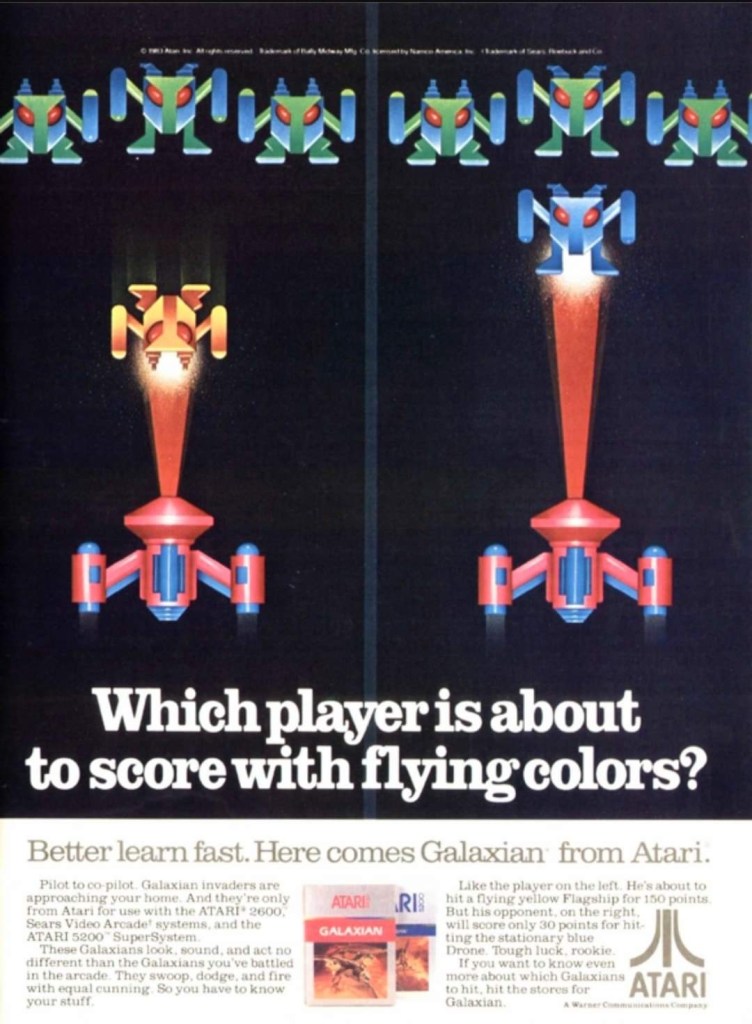
A unique approach to the art done by the advertisers.

Developed by Namco, Galaxian was a 2D sci-fi shooter that debuted in arcades in 1979. It was so successful and widely acclaimed, it got ported to varied game consoles and home computers as the years passed by. For its release on the Atari 2600 and Atari 5200, this print ad was created to catch the attention of fans and gamers by utilizing artwork that resembled the look of 2D sprites from the game. That being said, no screenshots of Galaxian on the Atari consoles were shown because the artwork used looked detailed and were attention-grabbing already.

2. 1943: The Battle of Midway arcade flyer
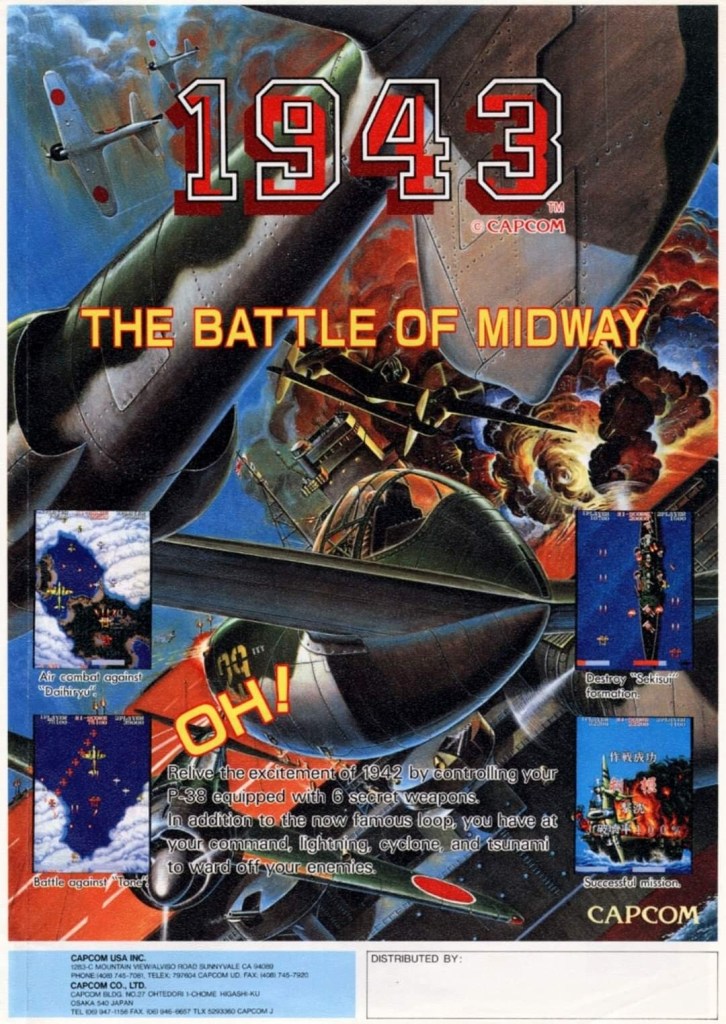
This is a fine looking flyer.

In 1987, Capcom released in the arcades 1943: The Battle of Midway which was their follow-up to 1942. The arcade flyer itself was designed to strongly promote the game using a combination of screenshots, short-but-clear text descriptions and the great looking piece of artwork which really emphasized the World War II concept. Behind it all, this game was made by Japanese developers with the Western markets in mind and the irony is that the game has players control Americans fighting the Japanese fleet.

3. Top Gunner arcade conversion kit flyer
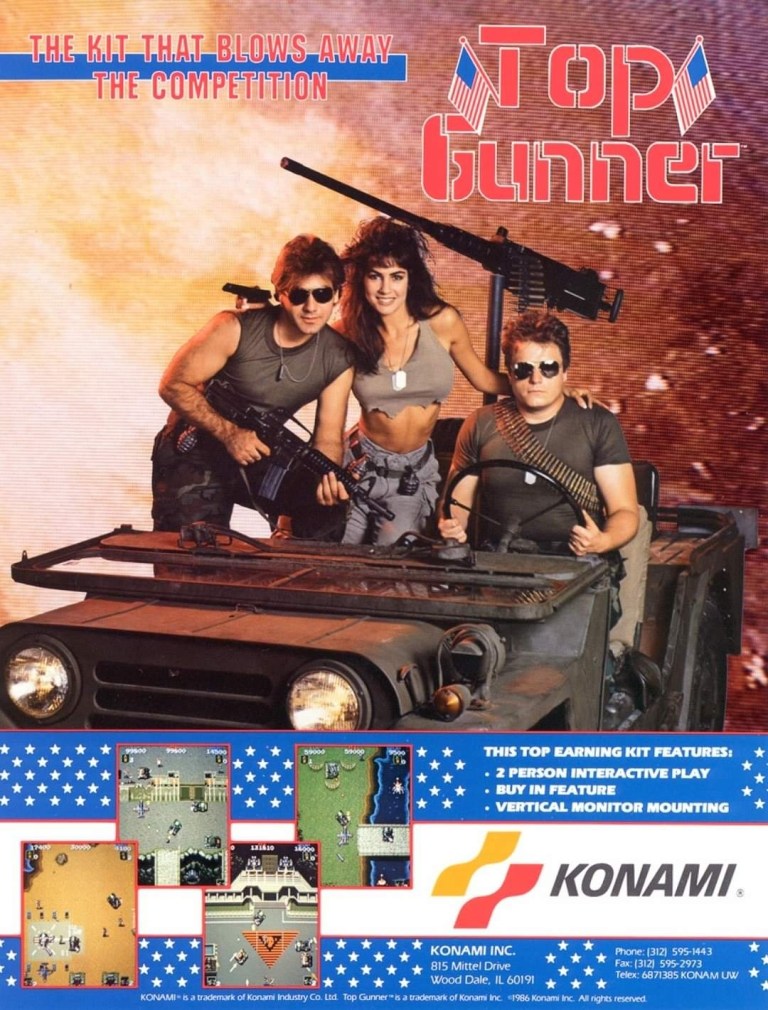
Show this nice looking image to the woke nut or modern day Communist near you. Watch and observe his or her reaction.

To make things clear, Top Gunner is actually the run-and-gun game Jackal and the alternative titles was mainly used in North American arcade distribution and also reflected Konami’s move of coming up with titles inspired by blockbuster movies of the time. To promote its 1986 arcade release in America as a conversion kit, the advertisers had three models playing soldiers on a military jeep to immerse gamers into the core concept of the game – moving armed military jeeps from one location to another while fighting bad guys. The approach used for the visual concept is indeed inspiring, especially during the Cold War. Top Gunner/Jackal became a hit in both arcades and consoles.

4. Joust for Atari print ad
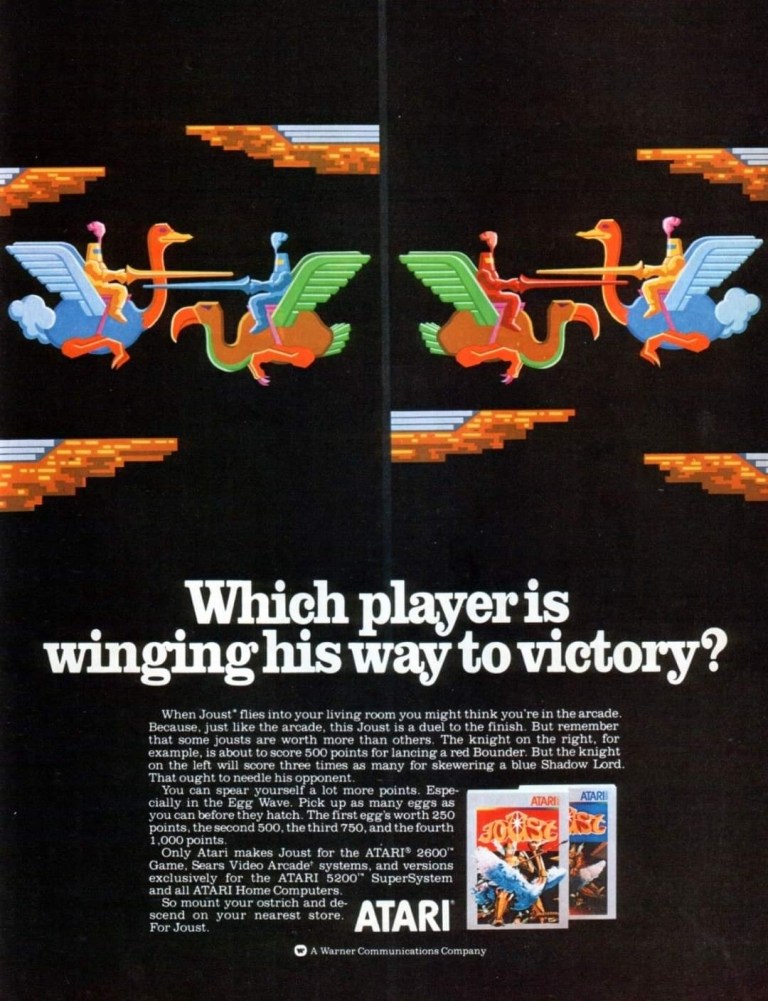
While I played Joust on console, I don’t remember seeing this print ad before.

Made by Williams Electronics, Joust was one of those early 1980s arcade games that eventually made its way to the Atari 2600 console which was massively popular in North America. Strangely enough, the artistic approach Atari’s advertising came up with for the console version of Joust was similar with that of the ad of the Atari version of Galaxian (see item above) in which artwork was used to resemble the 2D sprites of the game. Regardless, the images of this ad showed what a joust looked like – a martial game between two armed combatants going against each other while riding an animal.  

5. Kid Chameleon print ad
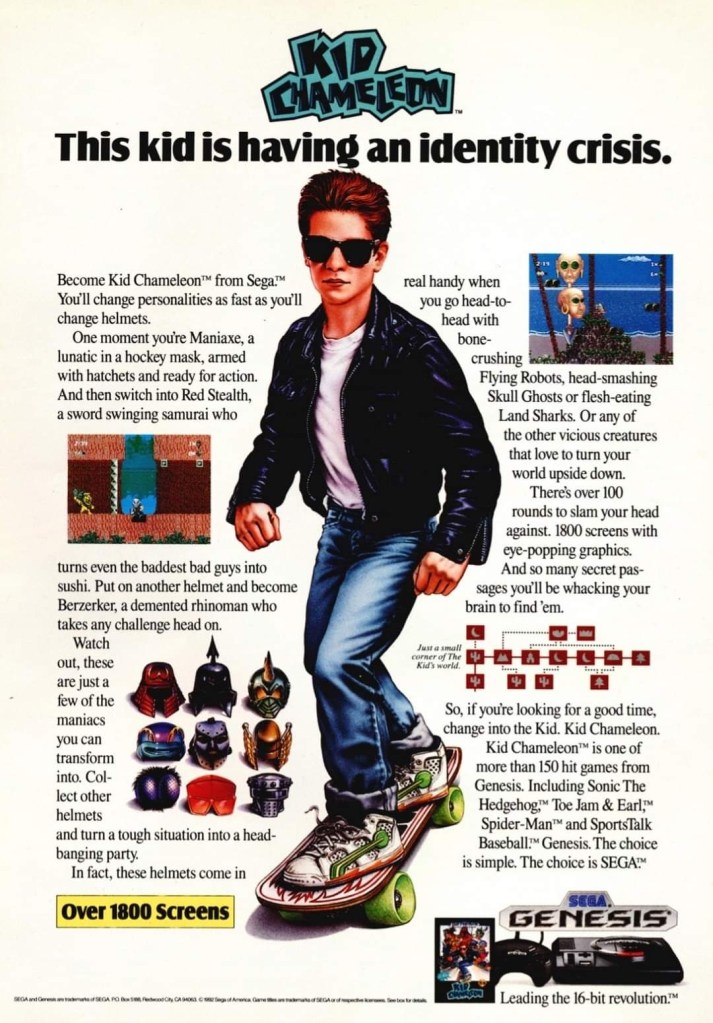
Can you relate with Kid Chameleon’s identity crisis?

During the early years of the Sega Genesis, Sega of America exerted efforts to make new games that were not only exclusive to their console but also stand out among the many 2D side-scrolling adventure games by coming up with a protagonist with a unique personality that could somehow resonate with young kids and teenagers.

Developed by their internal experts (Sega Technical Institute), the company released Kid Chameleon in 1992 and they came up with the above print ad that had detailed hand-drawn art of the lead character as well as a wordy text description which was a clear attempt to help young gamers (including teenagers) get connected with both the game and the protagonist. The advertisers even had space to spare to accommodate two screenshots of the game.

6. Terminator 2: Judgment Day (AKA T2: The Arcade Game) for Sega Genesis print ad
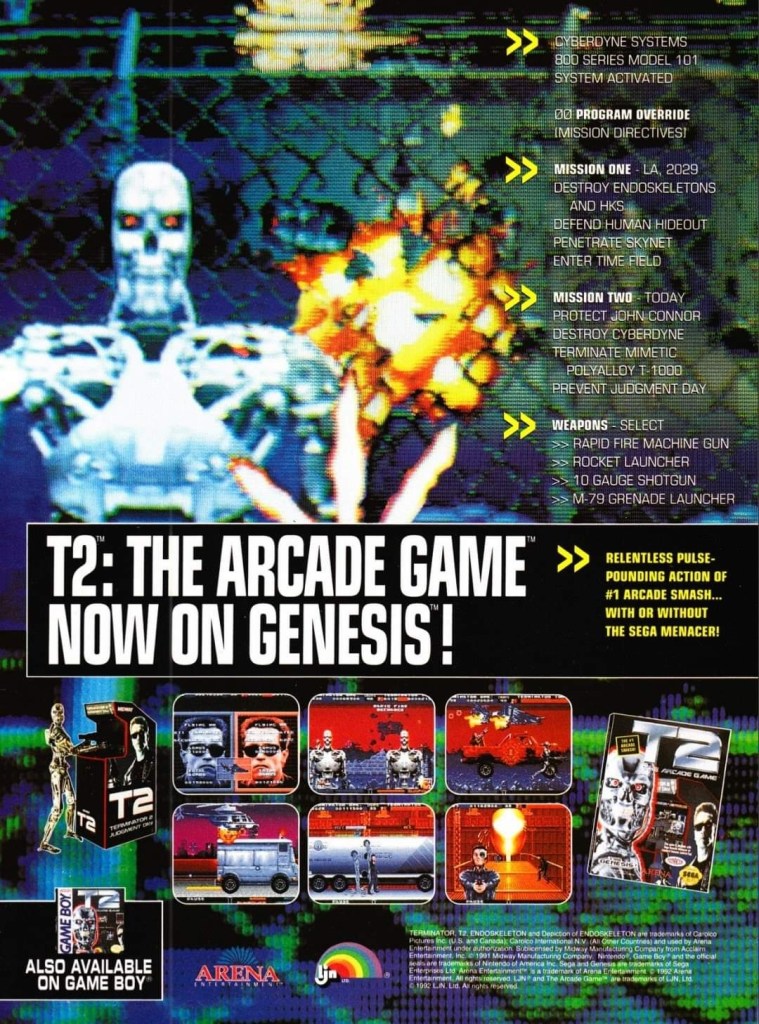
This print ad appeared on the many comic books I read long ago.

Back in the early 1990s, Terminator 2: Judgment Day was a massive success in the global box office and this resulted in Arnold Schwarzenegger’s popularity to soar very high while also establishing the Terminator as an essential pop culture figure. Apart from comic books and merchandise, video games based on the movie were made and the one that stood out the most was the arcade shooter game initially titled Terminator 2: Judgment Day (later retitled as T2: The Arcade Game).

The arcade mega hit eventually got ported to the Sega Genesis and this print ad really looked flashy with its visual presentation showing screenshots and a zoomed-in look at how the Terminator T-800 looked like in the Genesis version complete with a few explosions in the background. It should be noted that this flashy print ad cleverly concealed the visual downgrades and the redrawn images as the Genesis itself could never come close to matching the high quality visuals of the arcade version.

7. CYBERPad print ad
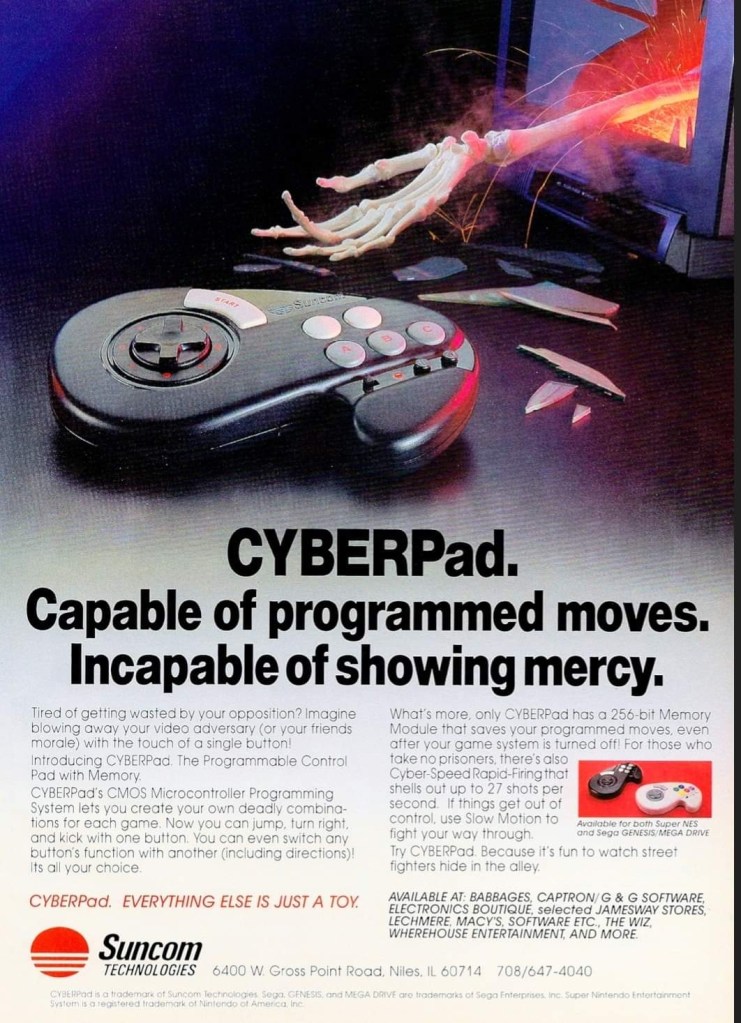
I never owned the CYBERPad, nor have I ever used one.

During the so-called 16-bit console generation (actually the 4th console generation), there were lots of licensed console peripherals made by independent companies in support of the Sega Genesis and Super Nintendo Entertainment System (SNES). The company Suncom Technologies came up with the CYBERPad controller for the two consoles and they boasted in their print ad that the product had a programmable control pad that allowed users to create combinations for each game with convenience in mind. The CYBERPad also allowed the saving of the programmable moves and it had a rapid-fire feature and even a slow-motion function. The CYBERPad was made to make the gameplay experience more user-friendly.

8. GamePro magazine sweepstakes print announcement
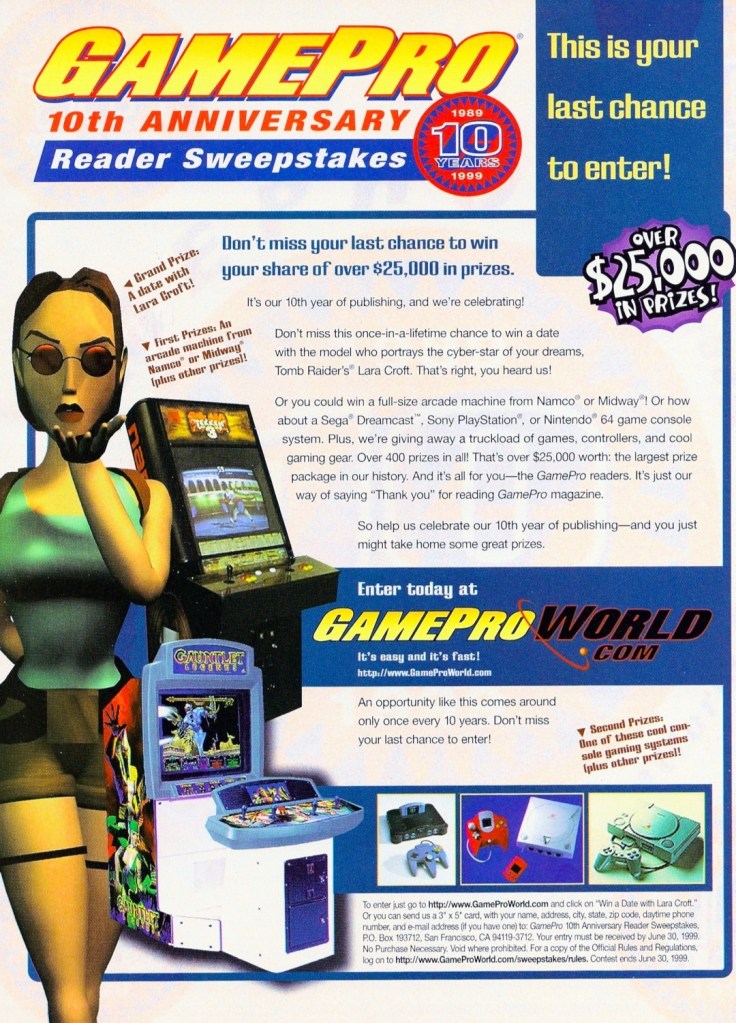
If you look closely, this print announcement by GamePro technically advertised the game consoles, the arcade game and Lara Croft to its readers.

In 1999, GamePro magazine celebrated its 10th anniversary and to keep on resonating with gamers and maintaining the loyalty of their fans, they organized a reader sweepstakes with prizes worth over $25,000 to be won by the few winners. GamePro boasted a date with an unnamed model who played the iconic Lara Croft (Tomb Raider). Certain arcade machines plus the modern consoles of the time – including the brand-new Sega Dreamcast – were also at stake. The way it was presented, this GamePro print announcement was enticing to read.

9. Smash T.V. for SNES print ad
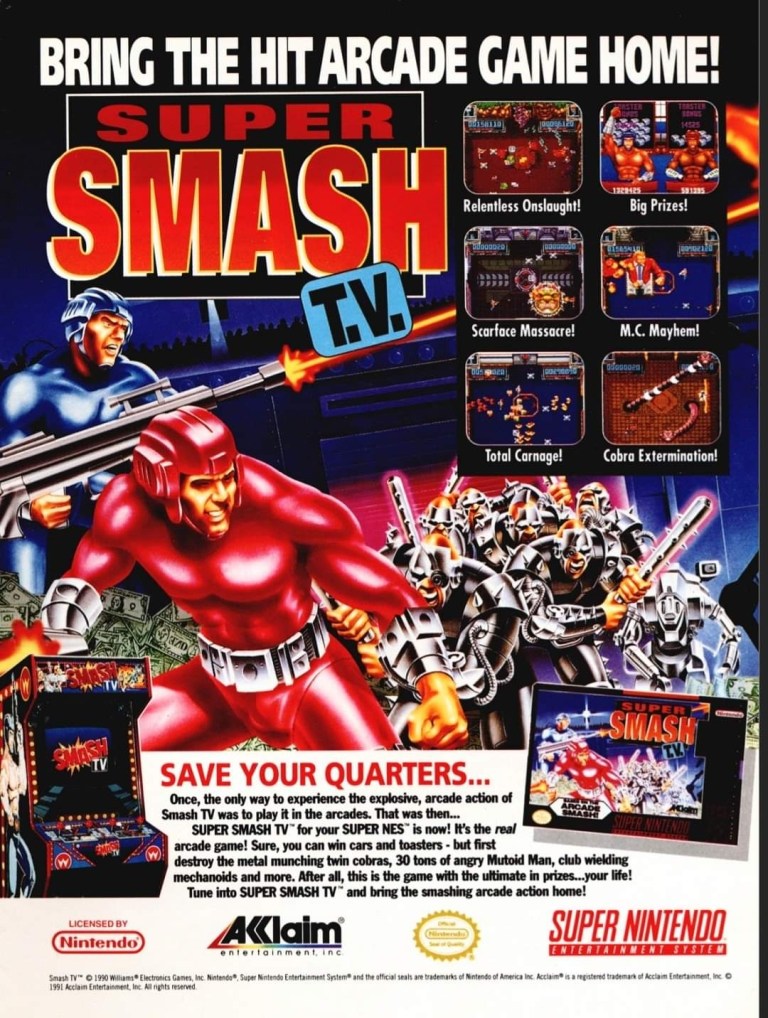
Smash T.V. was a lot of fun on both arcade and console.

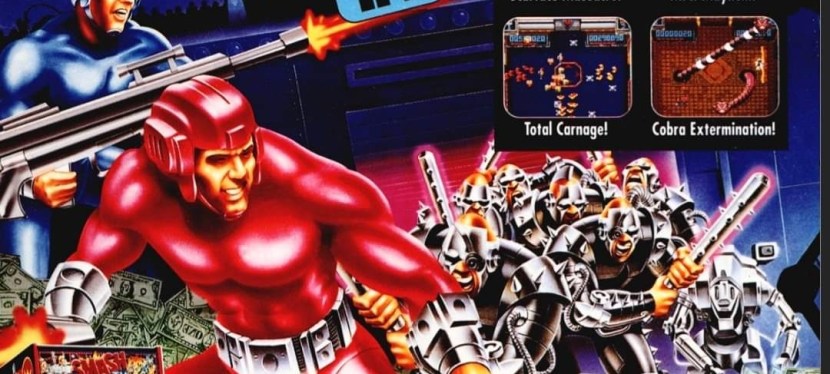
The arcade hit Smash T.V. made its way to the Super Nintendo Entertainment System (SNES) in 1992 and the publisher came up with a print ad that had captivating artwork, six screenshots and a text description that emphasized that a lot of fun awaits gamers on the console version. In my view, this old ad is still amusing to look at.

10. David Robinson’s Supreme Court print ad
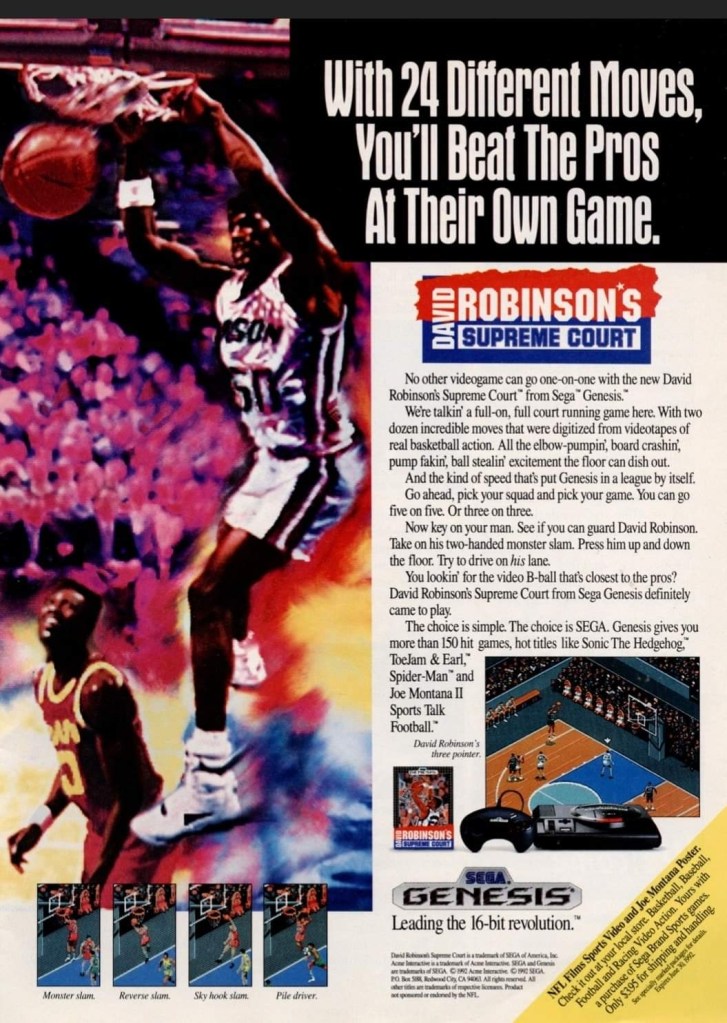
It was a smart move by Sega to get NBA superstar David Robinson as the endorser of this basketball video game exclusive on the Sega Genesis. This ad was published many years before Robinson finally won an NBA championship.

As part of its strategy in competing with Nintendo during the 4th console generation, Sega of America was focused on producing exclusive sports video games for the Genesis console backed by endorsements of sports professionals. In 1992, they released David Robinson’s Supreme Court on the Genesis and unsurprisingly their print ad used a large, stylized image of the NBA superstar dunking backed with an exciting text description plus screenshots showing the game’s use of the isometric view for gameplay. This is still worth looking at.

11. Taito’s “heat wave” print ad
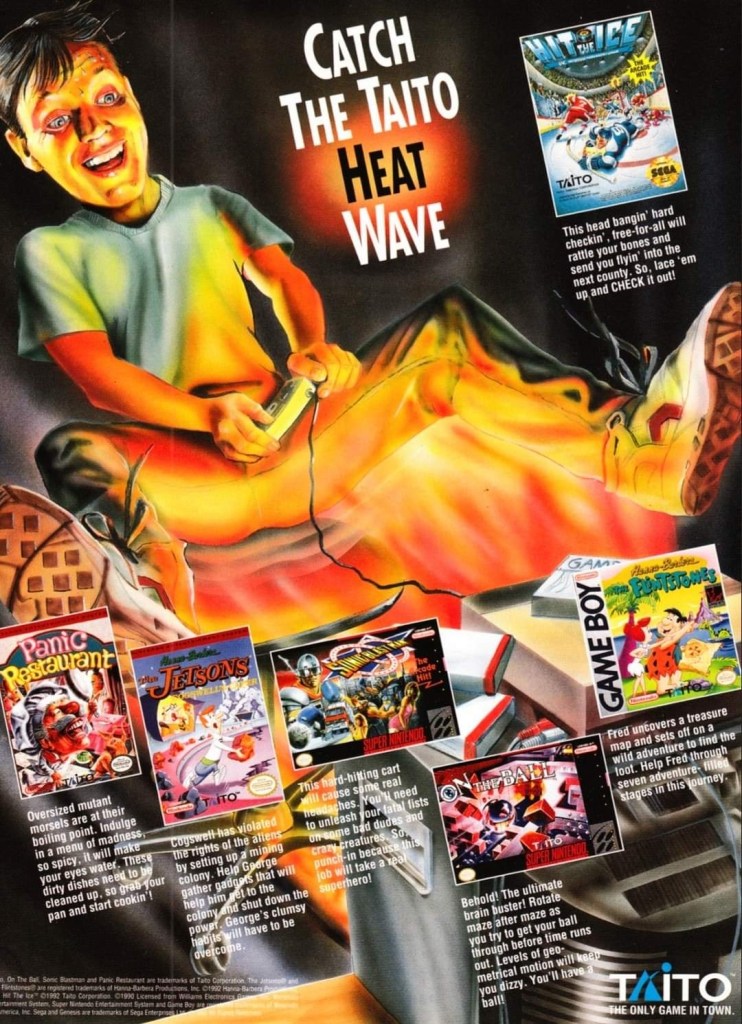
An amusing and creative way to sell video games.

If your company lacks money to effectively market your video games individually, you can try making a single ad promoting them together. This is what Taito did in this print ad which showcases multiple games for different platforms and they used artwork of a player experiencing the so-called heat wave. This is a nice stroke of creativity on the part of Taito.

12. Jurassic Park Interactive print ad
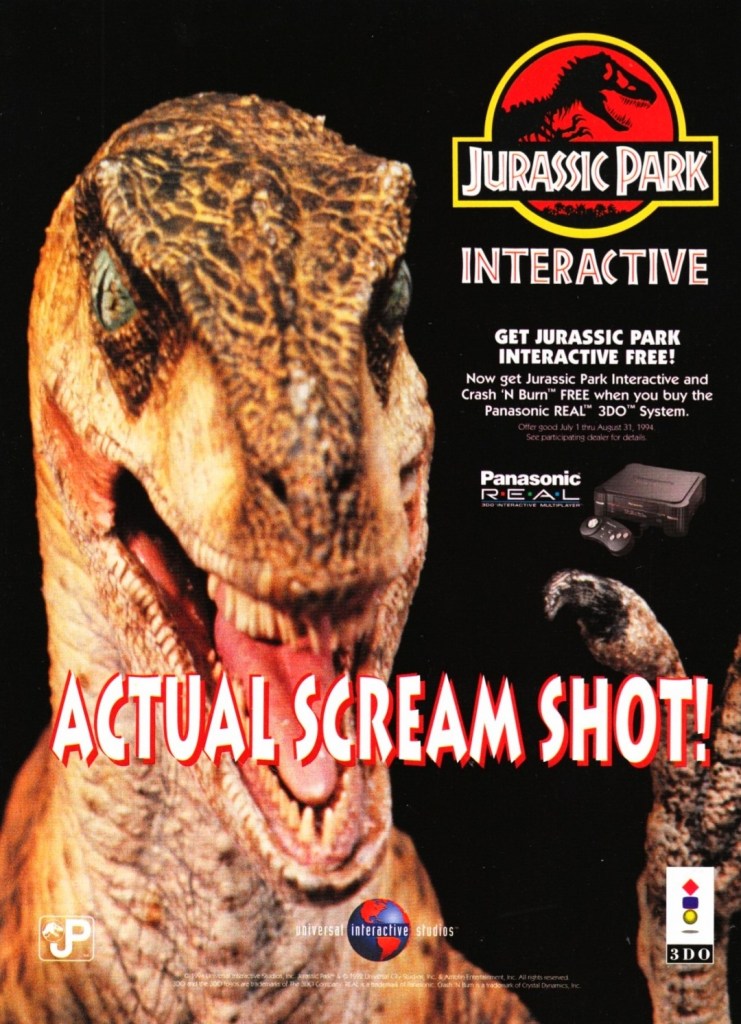
This was a creepy print ad promoting the 3DO-exclusive Jurassic Park Interactive.

When it comes to video game consoles, having exclusive games is essential as long as they are of high quality, highly playable and enjoyable. The 3DO company acquired a license of the Jurassic Park movie and made the exclusive game Jurassic Park Interactive hoping it would sell a lot and lift up 3DO hardware sales.

This print ad, which features a zoomed-in image of the Raptor from the game, was more focused on selling the 3DO console than the video game as seen on the descriptive text. 3DO ran a promo selling the console which would entitle the buyer to get Jurassic Park Interactive and another game free. Nothing was done to describe the console’s multimedia capabilities of showing videos, images and graphics of the game (which was essentially a collection of mini-games). This print ad shows ignorance on the part of the 3DO company and the ad maker as it showed desperation happening really early in the console’s life. Notably, Jurassic Park Interactive was the only video game adaptation to use actual footage (note: the faces of the actors were edited out) and music from the film.

13. RoboCop 2 print ad
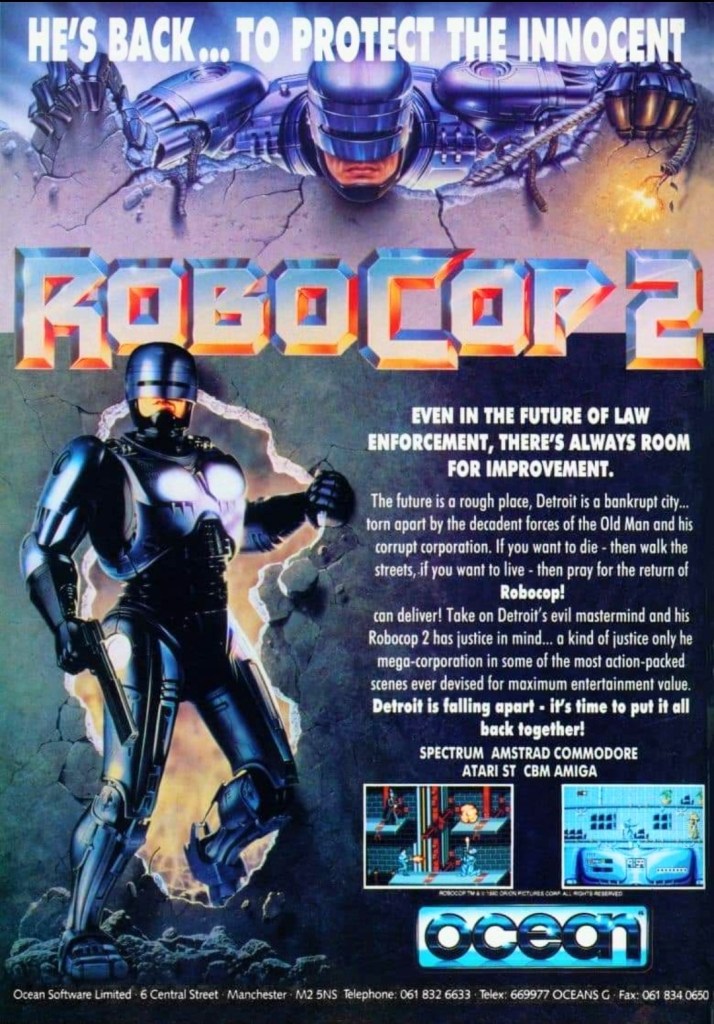
You want to become RoboCop to save the city of Detroit from criminals?

Way back in 1990, RoboCop 2 was a big hit in cinemas here in the Philippines and in some places around the world. As typical of the time, licenses to make video games based on the movie were released resulting in RoboCop 2 games for multiple platforms. The print ad featured two different images of RoboCop – one from the movie poster and the other from an official artwork. The descriptive text does a fine job to immerse readers into the story concept of the game but showing only two screenshots was a lackluster effort to sell the game.  

14. Star Trek: The Next Generation – Echoes from the Past print ad
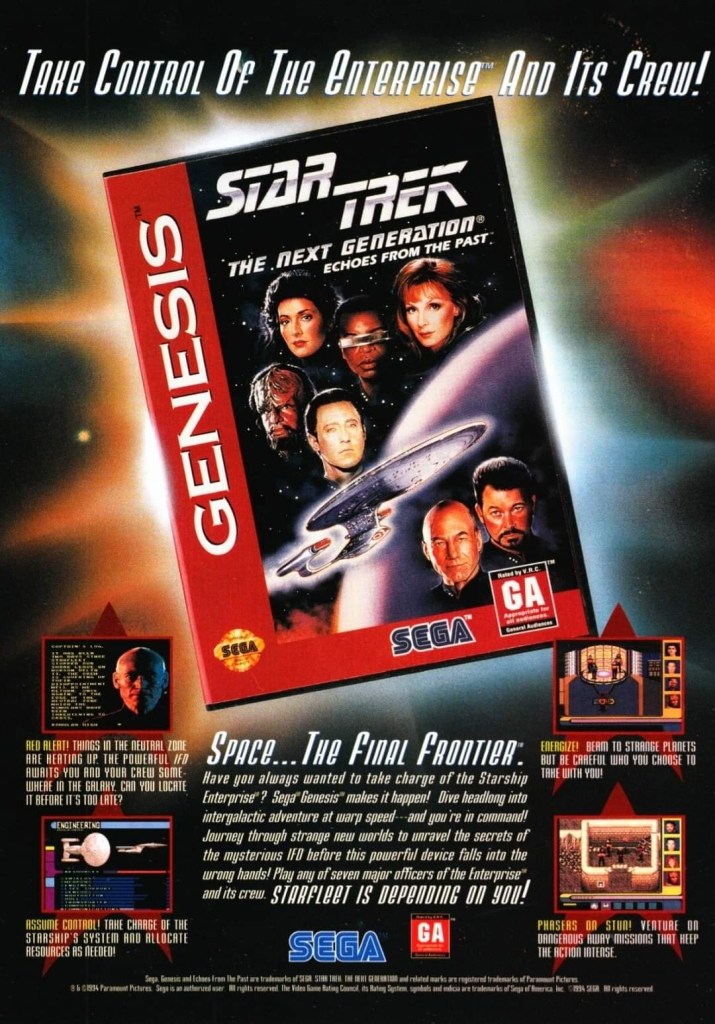
Space…the final frontier waiting for Sega Genesis gamers.

Released in 1994, Star Trek: The Next Generation – Echoes from the Past delivered the Star Trek TNG adventure experience to Sega Genesis gamers. In fact, it is the exact same experience that SNES gamers got the same year. In reality, Star Trek: The Next Generation – Echoes from the Past is actually a port of Star Trek: The Next Generation – Future’s Past on the SNES and the screenshots on the print ad are giveaways about it. In fairness to the ad makers, this print ad never attempted to deceive gamers that it promoted a totally different Star Trek TNG game.

15. Dinosaurs for Hire print ad
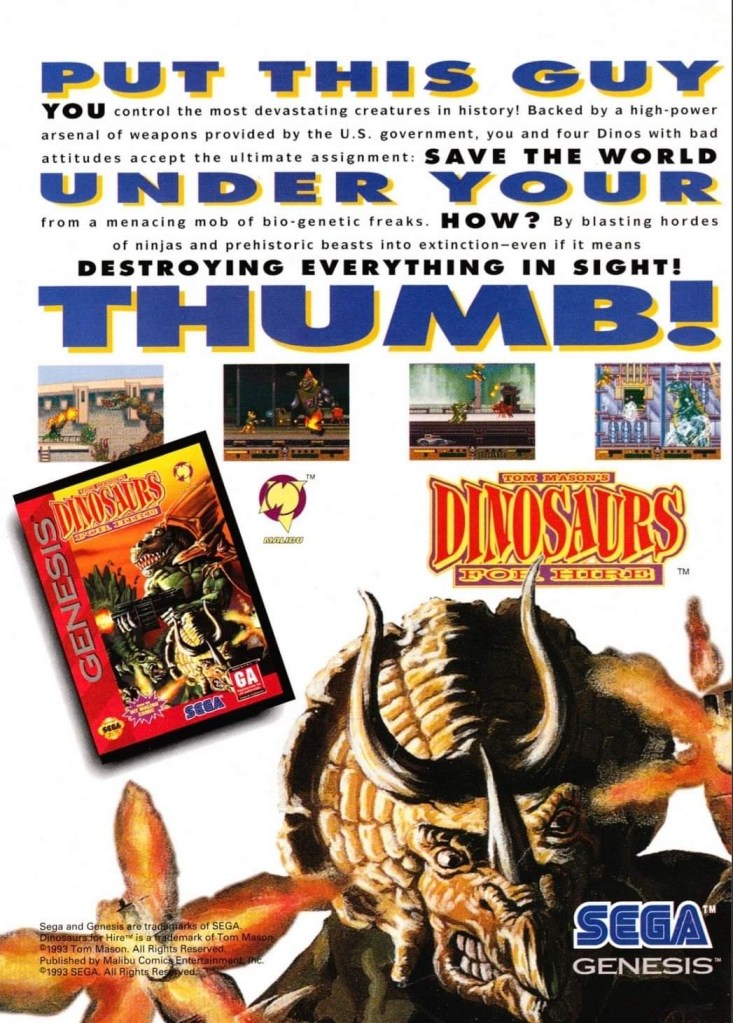
This print ad caught my attention and made me interested in the game and the comic book series. Even though it was small, Malibu Comics’ logo was still recognizable.

Dinosaurs for Hire (sometimes referred to as Tom Mason’s Dinosaurs for Hire) was a 2D side-scrolling platform adventure game based on the comic book series of Tom Mason. Published by Sega, it was a Genesis-exclusive game and this print ad had a catchy text description, a few screenshots and the eye-catching artwork of a triceratops facing the viewer. This print ad is still good to look at. If you’re thinking about searching for existing copies of the game, I encourage you to also read some Dinosaurs for Hire comic books before playing. By the way, Tom Mason also wrote several comic books of the Ultraverse.

+++++

Thank you for reading. If you find this article engaging, please click the like button below, share this article to others and also please consider making a donation to support my publishing. If you are looking for a copywriter to create content for your special project or business, check out my services and my portfolio. Feel free to contact me with a private message. Also please feel free to visit my Facebook page Author Carlo Carrasco and follow me on Twitter at  @HavenorFantasy as well as on Tumblr at https://carlocarrasco.tumblr.com/ and on Instagram at https://www.instagram.com/authorcarlocarrasco

A Look Back at Ultraverse Year One (1994)

Disclaimer: This is my original work with details sourced from reading the comic book and doing personal research. Anyone who wants to use this article, in part or in whole, needs to secure first my permission and agree to cite me as the source and author. Let it be known that any unauthorized use of this article will constrain the author to pursue the remedies under R.A. No. 8293, the Revised Penal Code, and/or all applicable legal actions under the laws of the Philippines.

Welcome back superhero enthusiasts, 1990s culture enthusiasts and comic book collectors! Today we go back to the mid-1990s which was a pretty wild time for comic collectors. To be more specific, this newest retro review revisits the Ultraverse through a comic-like publication in the form of a guide meant for UV fans and comic collectors.

The subject at hand is Ultraverse Year One which, as written on the edge of the front cover, was designed to be the “complete guide to the Ultraverse’s first year.” It is a reference guide for those who seriously want to discover each and every Ultraverse comic book that was published during its first year. In my experience as a comic collector, the Ultraverse launch in 1993 was very memorable even though my financial limitations prevented me from acquiring each and every launch comic book and subsequent releases of the time. How useful is this complete UV guide? We can go on and find out.

With those details laid down, here is a look back at Ultraverse Year One, published in 1994 by Malibu Comics.

The cover.

Quality

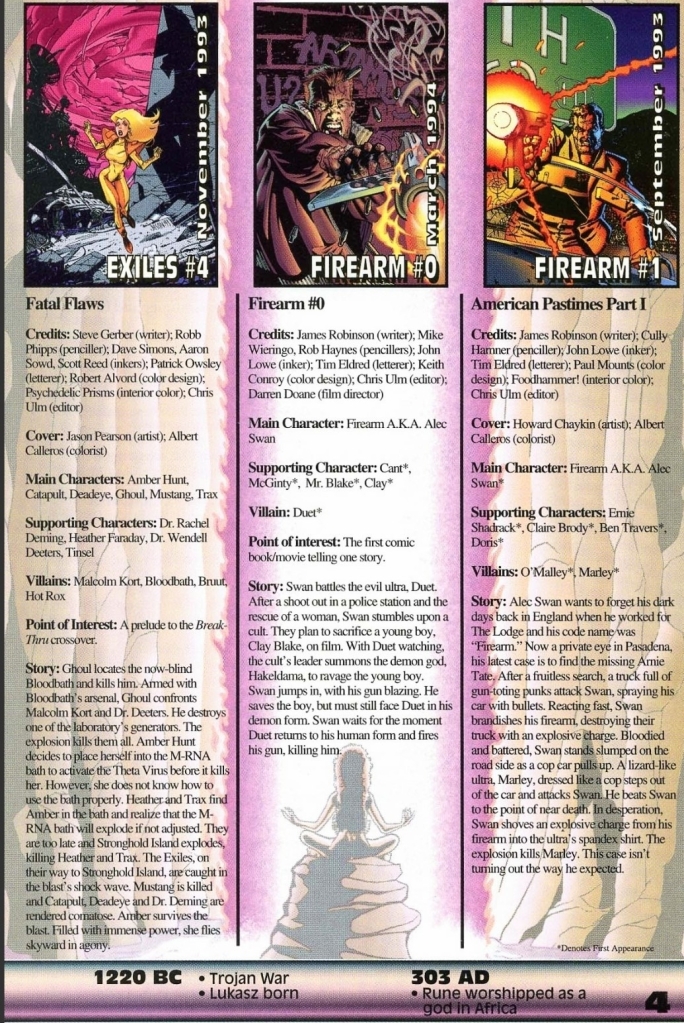
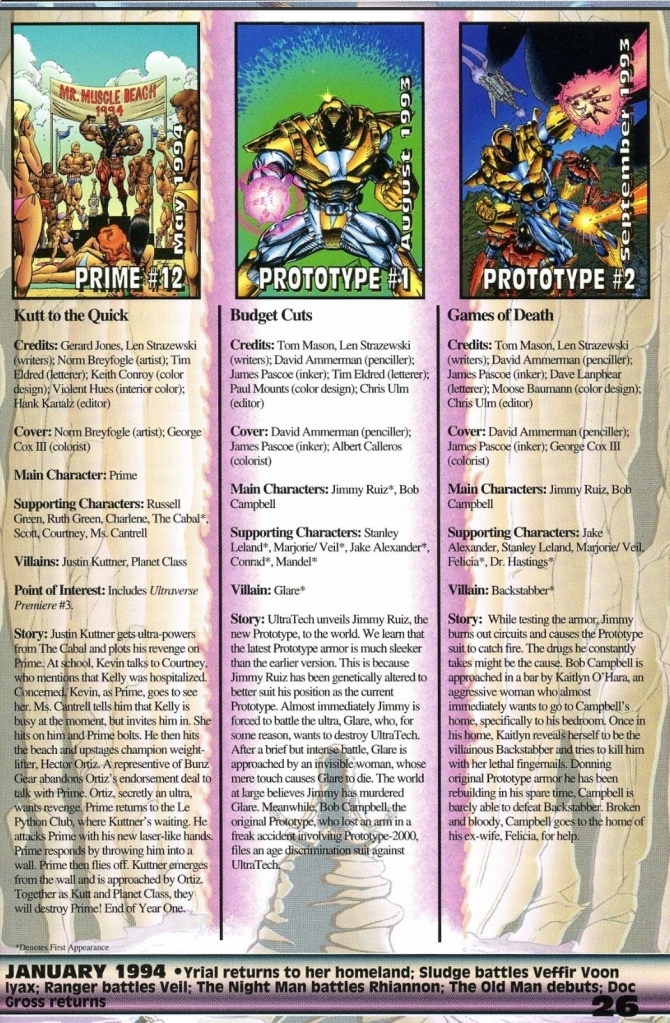
I can say without a doubt that this publication is indeed a complete guide to each and every Ultraverse comic book released during its first year from 1993 to 1994 specifically. You want to know exactly how many issues of Mantra, Prime, Hardcase, The Solution, Prototype, The Strangers and others were published in the first year? This one has it all listed! You want to know which UV comic book involved the talents of Steve Gerber, Norm Breyfogle, Rick Hoberg, Len Strazewski, Aaron Lopresti, George Perez, James Hudnall, Gerard Jones, Steve Englehart, Tom Mason, Terry Dodson, James Robinson, Howard Chaykin, Mike W. Barr and many others under the Malibu Comics banner? This guide has it all listed! What months were Exiles #1, Sludge #1, Firearm #0, Break-Thru #1 and Mantra #1 were published? The answers to each are included. The same can also be said when it comes to which characters appeared in each comic book.

This is what each page typically looks like with details of the Ultraverse timeline on the lower part.
The timeline reveals that the male warrior Lukasz, who would later end up in woman’s body as Mantra/Eden Blake, was born in 1220 BC.

Very clearly, the Malibu Comics people worked hard to collect the essential types of information, organized them and put them all into print media form for readers and collectors to use when it comes to searching just about everything about the Ultraverse’s first year. Things did not just stop there, however.

What I found amusing to look at in each page of this Ultraverse guide are details of the shared universe’s timeline posted on the lowest part. The said timeline – which is limited to text and numbers – reveal interesting details such as what year was Lukasz (AKA Mantra) born, when did Rune begin, when was the Choice corporation established, what year did the island of Yrial’s people move up to the clouds, what years were infants injected by Wetware Mary and more. These details are actually quite encouraging to make readers discover or re-read Ultraverse comic books to see how they are dramatized on paper.

Conclusion

As you can see in the details above, Len Strazewski was involved in both the Prime and Prototype comic book series.

Ultraverse Year One (1994) is a pretty detailed guide that will not only help readers track down each and every UV comic book of the mentioned time period, but also help them spot the precise comic books that has characters included as well as the published works of varied comic book creators. If you are really determined to track down and buy all the Year One UV comic books, this guide is a must-have. If there are any weaknesses to mention, it would be the fact that each comic book’s entire plot got summarized in full which are actually spoilers.

Overall, Ultraverse Year One (1994) is recommended.

+++++

Thank you for reading. If you find this article engaging, please click the like button below and also please consider sharing this article to others. If you are looking for a copywriter to create content for your special project or business, check out my services and my portfolio. Feel free to contact me with a private message. Also please feel free to visit my Facebook page Author Carlo Carrasco and follow me on Twitter at  @HavenorFantasy as well as on Tumblr at https://carlocarrasco.tumblr.com/ and on Instagram at https://www.instagram.com/authorcarlocarrasco/

A Look Back at Break-Thru #2 (1994)

Disclaimer: This is my original work with details sourced from reading the comic book and doing personal research. Anyone who wants to use this article, in part or in whole, needs to secure first my permission and agree to cite me as the source and author. Let it be known that any unauthorized use of this article will constrain the author to pursue the remedies under R.A. No. 8293, the Revised Penal Code, and/or all applicable legal actions under the laws of the Philippines.

Welcome back superhero enthusiasts, 1990s culture enthusiasts and comic book collectors! Today we go back to the mid-1990s which was a really wild time for comic collectors. To be more specific, this newest retro comic book review revisits the conclusion of the epic Ultraverse storyline Break-Thru which was illustrated by the late George Perez (1954-2022). I encourage you readers – especially long-time fans of the iconic illustrator – to check out my commemorative article about George Perez by clicking here.

For the newcomers reading this, Break-Thru was a 2-part storyline that creatively involved almost all the main characters of the Ultraverse (The Strangers, Mantra, Prime, Prototype, Freex, The Solution, Hardcase, Sludge, Solitaire and others) who got impacted in varied ways by Amber (of the Exiles) who floated high in the air causing chaos on societies below. Specifically, that was the concept of Break-Thru (1993) and issue has the story continuing with a setting in outer space with the moon as the key destination.

With those details laid down, here is a look back Break-Thru , published in 1994 by Malibu Comics with a story scripted by Gerard Jones (plotted by Mike W. Barr, Steve Englehart, Steve Gerber, James Hudnall, Tom Mason, George Perez, James Robinson and Len Strazewski) and illustrated by the late George Perez.

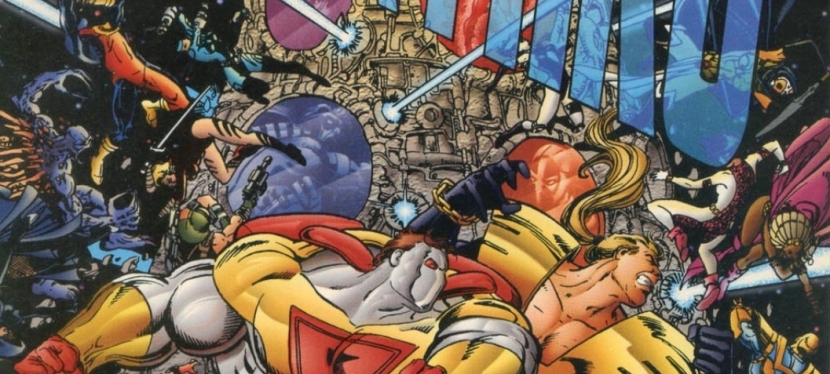
An epic cover by the late George Perez.

Early story

The story begins at the surface of the moon with Hardcase, Choice and the members of The Solution who just survived the explosion (connected with Hardcase #7 and The Solution #4) of the flying saucer they used on their journey. Nearby, the people responsible for the destruction are riding their own flying saucer, scanning the surface of the moon searching for an entity.

Behind the scenes, the very hidden yet powerful Rex Mundi watches and tells Gate that other ultras are seeking the entity. As the saucer floats to a cave detecting the presence of the entity, the occupants get shaken as Prime hits them hard. Prime tells himself that the entity in the cave feels danger from the searchers and he has to protect it as he has been connected with it (refer to Prime #7). After getting blasted in retaliation by the saucer, Prime finds himself hit even more as Rex Mundi’s enforcers suddenly come out of a portal very near him.  

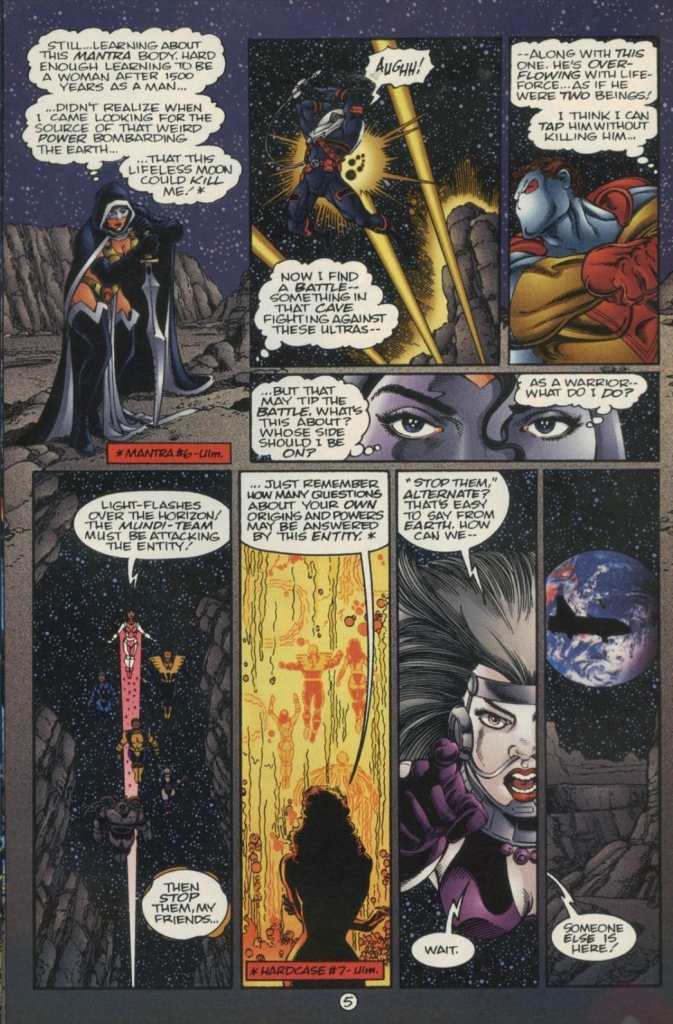
From a distance, Mantra (refer to Mantra #6) sees the fight happening and needs a life force to survive. Elsewhere, Hardcase, Choice and The Solution witness the arrival of a space shuttle. The Strangers and Prototype (refer to The Strangers #7 and Prototype #5) come out together…

Quality

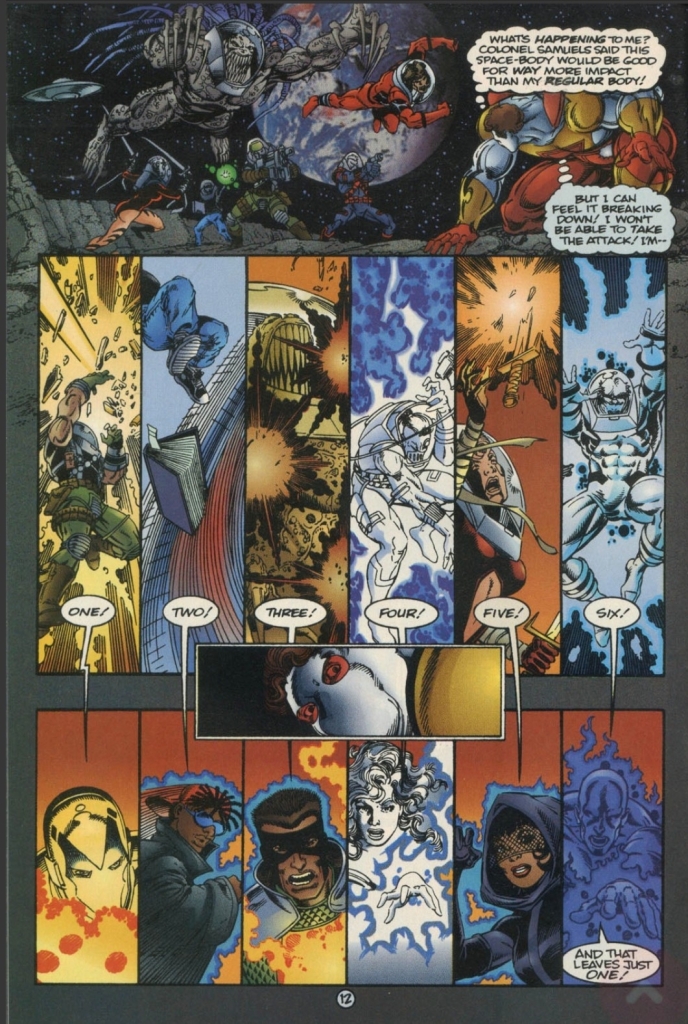
This is classic George Perez presentation of action and characters using multiple panels in a single page.

Starting with the writing, I should mention that all the writers who were involved in plotting this comic book as well as the previous issue should be commended for their combined efforts on making the Break-Thru storyline happen complete with in-universe ramifications, developments and connections to almost all the monthly comic books via the Break-Thru tie-in issue (also check out Sludge #3, Freex #6, Solitaire #2 and Night Man #3). Clearly Break-Thru was planned to be a major turning point of the Ultraverse by involving and mixing most of the major characters together and have them struggle with tremendous obstacles they simply cannot ignore as the stakes were indeed too high.

More on this comic book, the major conflict was set on the moon which proved to be a very unique setting not just for dynamic battles to happen but also to serve as the place where a mysterious and powerful entity is hidden. When it comes to the story, the entity (more science fictional in concept) is mysterious and cleverly not blatantly evil. It is its mysteriousness that makes the entity a worthy force to have the UV’s heroes come after.

The writers added depth to the plot by showing Yrial of The Strangers and Prototype each having their own vested interests to get to the entity and acquire whatever it has that is valuable. At the same time, Mantra and Prime each discovered valuable knowledge about the entity that impacted their perceptions about their purpose as beings with super powers.

Mantra, Prime, The Solution, Hardcase and Choice.

While the story here still has so many characters expressing themselves and releasing expository information, the narrative is a little bit easier to understand and follow compared to issue (which had a lot more information to release via exposition). That being said, the scenes of spectacle became more enjoyable to read and along the way there were some notable character moments to look at.

Visually, this is unsurprisingly a great looking comic book as it was illustrated by the late George Perez. What I love most about Perez’s art style and visual presentation are all here: high details on each character drawn as well as their surroundings, the dynamic approach on setting up the panels on each page, fantastic looking superhero action, and much more! As with Break-Thru and other Ultraverse comic books drawn by Perez, this one is absolutely great to look at and it easily lifts up the visual/artistic quality of the UV and its heroes. As George Perez was involved in the plot of this comic book, the narrative was never overwhelmed by his great art and the artist really exerted a lot of effort on visualizing each and every one of the established UV characters (including the supporting characters).

Speaking of the established characters, I should state that Perez made Mantra’s face (with mask) look a bit more realistic and feminine while Kevin Green has a more convincing teenage boy look, Sludge looks a bit more creepier and Yrial looks visually identical to the way Rick Hoberg draws her. When it comes to the varied physiques of each established UV hero, Perez captured them all perfectly. Clearly the late artist did his research on every character.

Conclusion

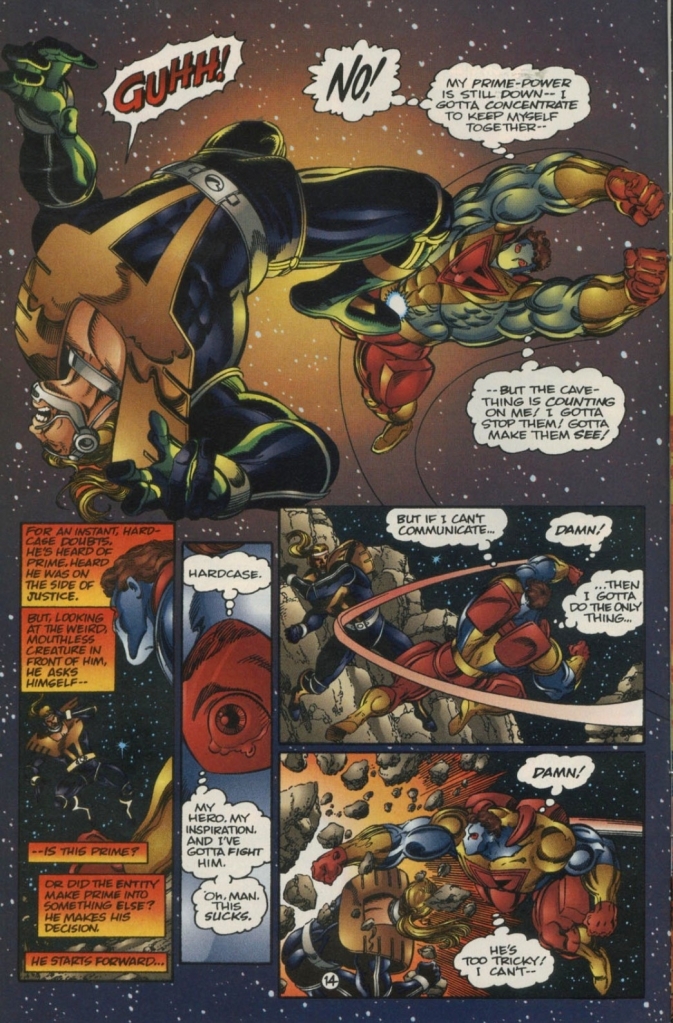
The first physical encounter between Prime and Hardcase. Remember this before reading the UltraForce comics.

Break-Thru (1994) is truly an epic Ultraverse story that also worked as a major turning point of the UV as a whole. Compared to other epic superhero stories that Marvel and DC Comics published, Break-Thru is not the usual large gathering of superheroes who have to work together to defeat an evil force that threatens everyone’s existence. It is more about the UV heroes getting together to solve major obstacles before reaching the main destination. By the time I reached the end of this comic book (and its storyline), I experienced great satisfaction not just from Break-Thru itself but also in relation to how the Ultraverse heroes realized what they are living for and what their respective purposes really are about. What also happened in this comic book explains why jumpstart events happened on Earth. Very clearly, this was an epic story that was planned early and even though this was published just months after the Ultraverse first debuted, the characters were developed enough to make Break-Thru’s concepts sensible and acceptable. There is a lot of fun and engagement in this comic book drawn by the late George Perez (who also worked on DC’s Crisis on Infinite Earths and Marvel’s The Infinity Gauntlet).

Overall, Break-Thru (1994) is highly recommended!

+++++

Thank you for reading. If you find this article engaging, please click the like button below and also please consider sharing this article to others. If you are looking for a copywriter to create content for your special project or business, check out my services and my portfolio. Feel free to contact me with a private message. Also please feel free to visit my Facebook page Author Carlo Carrasco and follow me on Twitter at  @HavenorFantasy as well as on Tumblr at https://carlocarrasco.tumblr.com/ and on Instagram at https://www.instagram.com/authorcarlocarrasco/
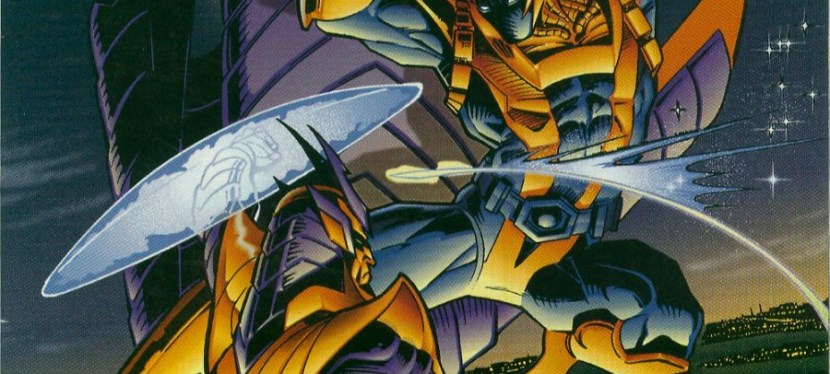
A Look Back at Prototype #12 (1994)

Disclaimer: This is my original work with details sourced from reading the comic book and doing personal research. Anyone who wants to use this article, in part or in whole, needs to secure first my permission and agree to cite me as the source and author. Let it be known that any unauthorized use of this article will constrain the author to pursue the remedies under R.A. No. 8293, the Revised Penal Code, and/or all applicable legal actions under the laws of the Philippines.

Apart from the in-depth storytelling, spectacle and solid characterization consistently delivered by writers Tom Mason and Len Strazewski for the Prototype monthly series of the Ultraverse, I also enjoyed their implementation of corporate intrigue. In fact, the storytelling in issues #7, #8, #9, #10 and #11 also showed corporate intrigue gradually building up leading to something. Without spoiling the story too much, what happened in issue showed a clear change of direction involving Prototype pilots Jimmy Ruiz and Bob Campbell complete with something brewing at Ultratech.

Will the payoff of the corporate intrigue build-up be realized in the next Prototype issue? We can all find out together in this look back at Prototype , published in 1994 by Malibu Comics with a story written by Tom Mason and Len Strazewski, and drawn by Roger Robinson.

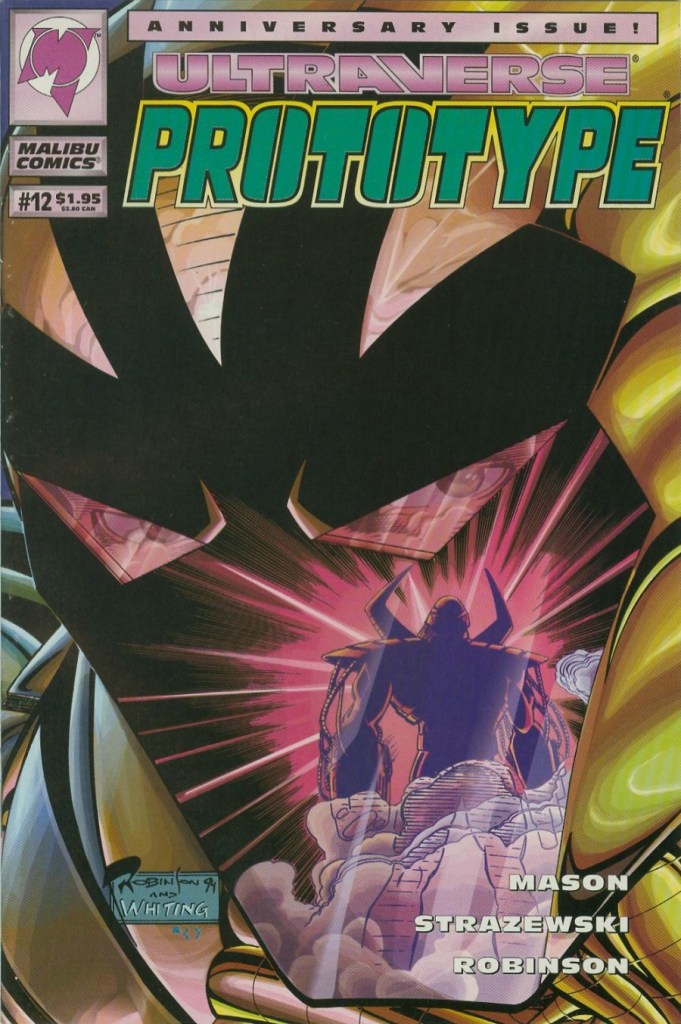
The cover.

Early story

The story begins at the Ultratech tower in New York City. At the lobby, Felicia Campbell gently knocks the guard out with an injection and takes control of the security desk to allow Bob Campbell/Ranger and Jimmy Ruiz/Prototype (wearing a “goofy” outfit) to come in and, together, they move to the basement for a certain need (of Jimmy) – the Prototype armor.

Suddenly Ultratech’s newest hire Prototype Mark III fires a blast at Ranger’s back pushing him down and surprising both Jimmy and Dr. Campbell. The dark-armored Prototype Mark III introduces himself to Jimmy as his replacement and states: Ultratech has somebody man enough to do what it takes!

With Bob Campbell beside him, Jimmy recalls that Prototype Mark III was one of the trainees that his boss Leland often flaunted in front of him. What Jimmy finds hard to believe is that one of the trainees was actually placed into an actual Prototype suit…

Quality

Once again, the creative team delivered the great stuff with storytelling, twists, spectacle and suspense all with a high level of quality. This comic book suggests that careful planning on plotting, characterization and intrigue were done by Tom Mason and Len Strazewski with a good amount of care and timing. As for what I mentioned earlier, I do confirm that the payoff for the corporate intrigue build-up has been realized big time and I should state that this comic book’s ending is very powerful (and also enticing for reading the next issue). This one is a smash hit!

This is only a few of the many action scenes that worked nicely with the in-depth story.

Conclusion

Prototype is indeed great, worthy of serving as the anniversary issue (the two words stated on the cover) and as the climax of the first year of its series. For the most part, the series told events of not one but two Prototype pilots (the current one Jimmy Ruiz and the past one Bob Campbell) who eventually got together just as the series’ direction took a solid turn reflecting the changing interests of Ultratech. This one is definitely one of the best Ultraverse comics published in 1994 and it surely proved that the storytellers were not afraid to take risks or move against conventional storytelling (as far as armored superheroes go). Lastly, this comic book encouraged me to look back at issues #0 and #1.

If you are seriously planning to buy an existing hard copy of Prototype (1994), be aware that as of this writing, MileHighComics.com shows that the near-mint copy of the comic book costs $8.

Overall, Prototype (1994) is highly recommended!

+++++

Thank you for reading. If you find this article engaging, please click the like button below and also please consider sharing this article to others. If you are looking for a copywriter to create content for your special project or business, check out my services and my portfolio. Feel free to contact me as well. Also please feel free to visit my Facebook page Author Carlo Carrasco and follow me at HavenorFantasy@twitter.com

A Look Back at Prototype #11 (1994)

Disclaimer: This is my original work with details sourced from reading the comic book and doing personal research. Anyone who wants to use this article, in part or in whole, needs to secure first my permission and agree to cite me as the source and author. Let it be known that any unauthorized use of this article will constrain the author to pursue the remedies under R.A. No. 8293, the Revised Penal Code, and/or all applicable legal actions under the laws of the Philippines.

Hey fellow superhero comic book geeks and Ultraverse fans! Welcome back to my continuing retrospective of the Ultraverse through the Prototype series of comic books published by Malibu Comics. Last time around, Jimmy Ruiz (Prototype) was not prominent as the comic book focused more on Ranger (the previous Prototype piloy Bob Campbell actually) who took on a group of terrorists with some help.

As such, we can see what happens next with this look back at Prototype , published in 1994 by Malibu Comics with a story by Tom Mason and Len Strazewski and art by Roger Robinson.

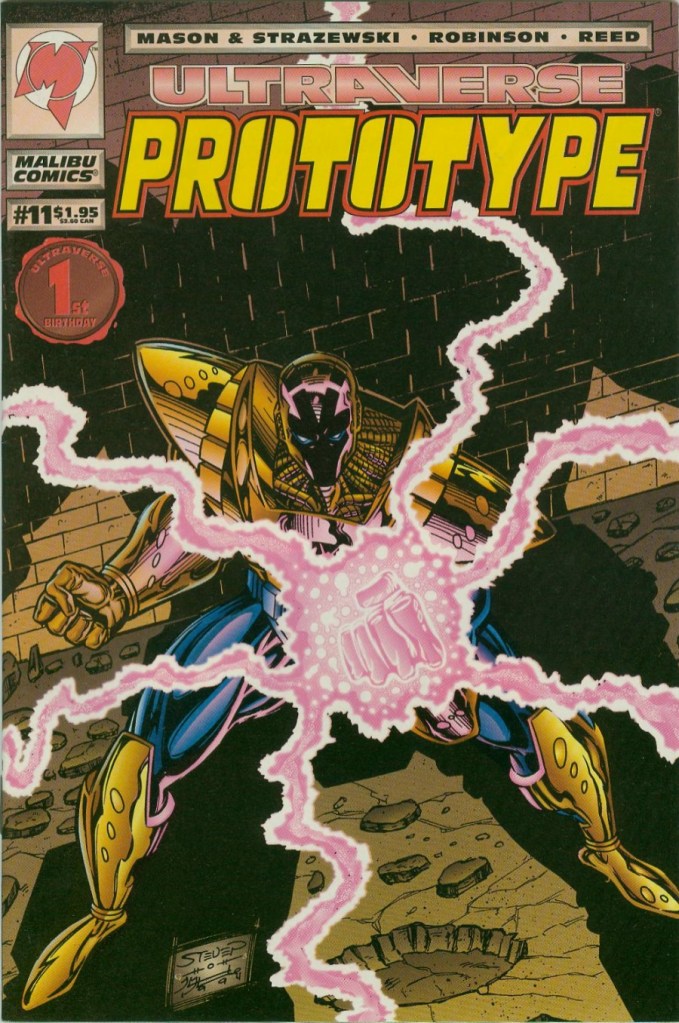
The cover.

Early story

The story begins with Glare, an old nemesis of Prototype. As it turns out, he was revived by some scientists in a high-tech facility of the sinister group Aladdin. The green-skinned Glare breaks free from the restraints and starts causing some damage. He is driven by revenge against Stanley Leland, Ultratech and Ranger (Bob Campbell).

Meanwhile on the street of New York, Jimmy Ruiz (Prototype) and Bob Campbell are together. Jimmy, who is not even using the powered suit of armor, released a lot of energy while floating off the surface causing a major public disturbance. Afterwards, Bob decides to help his Prototype successor…

Quality

Bob Campbel in his Ranger powered suit of armor.

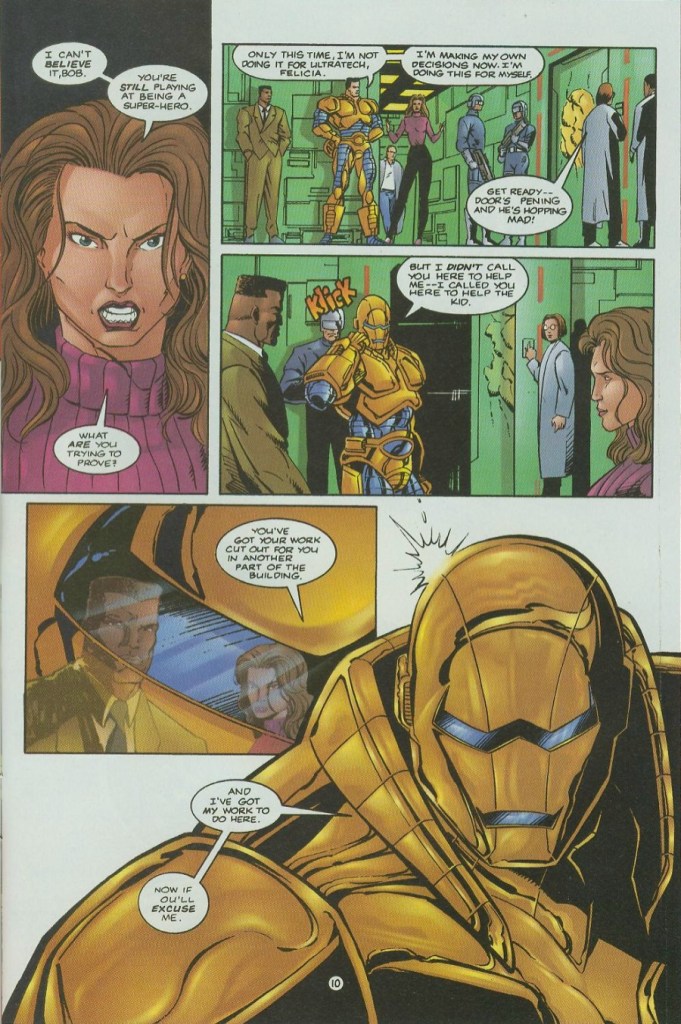
Let me start by confirming that the storytelling is very good. In fact, the high quality of writing was maintained and judging from the presentation of having Jimmy Ruiz and Bob Campbell together in a full issue (note: they got together only in the late stages of issue ), it seems that Tom Mason and Len Strazewski had things planned out in an organized fashion. The result is having the two Prototype pilots not only together but getting involved (in a pretty believable way) in response to a rising danger. To make things clearer, this is NOT the anticipated superheroes-set-aside-their-differences-to-work-together-to-solve-the-problem type of story.

Bob Campbell still got plenty of the spotlight as Ranger and his battle with Glare is a lot of fun to read. Jimmy Ruiz meanwhile is developed even further. I also like the scenes that emphasized the difference between being an ultra and a tool of Ultratech which affects Jimmy.

Conclusion

Jimmy Ruiz and Bob Campbell together.

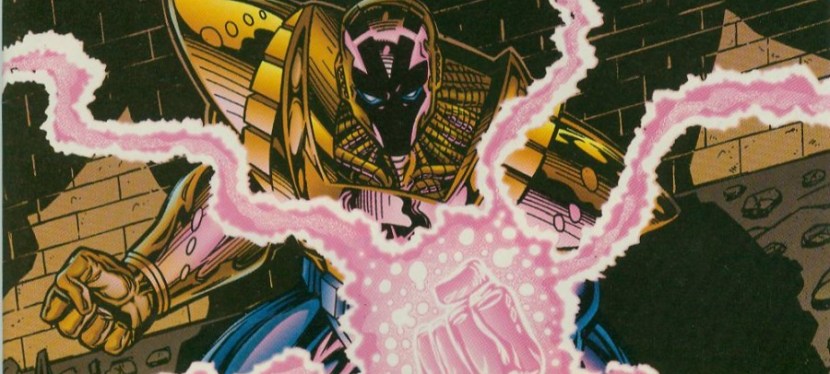
Prototype is another enjoyable and compelling Ultraverse comic book to read. Its own story is indeed special and worthy of being an Ultraverse 1st birthday issue (as marked on the cover). Clearly this comic book marked a bold new direction of storytelling just as the two Prototype pilots are finally together.

If you are seriously planning to buy an existing hard copy of Prototype (1994), be aware that as of this writing, MileHighComics.com shows that the near-mint copy of the comic book costs $8.

Overall, Prototype (1994) is highly recommended!

+++++

Thank you for reading. If you find this article engaging, please click the like button below and also please consider sharing this article to others. If you are looking for a copywriter to create content for your special project or business, check out my services and my portfolio. Feel free to contact me as well. Also please feel free to visit my Facebook page Author Carlo Carrasco and follow me at HavenorFantasy@twitter.com
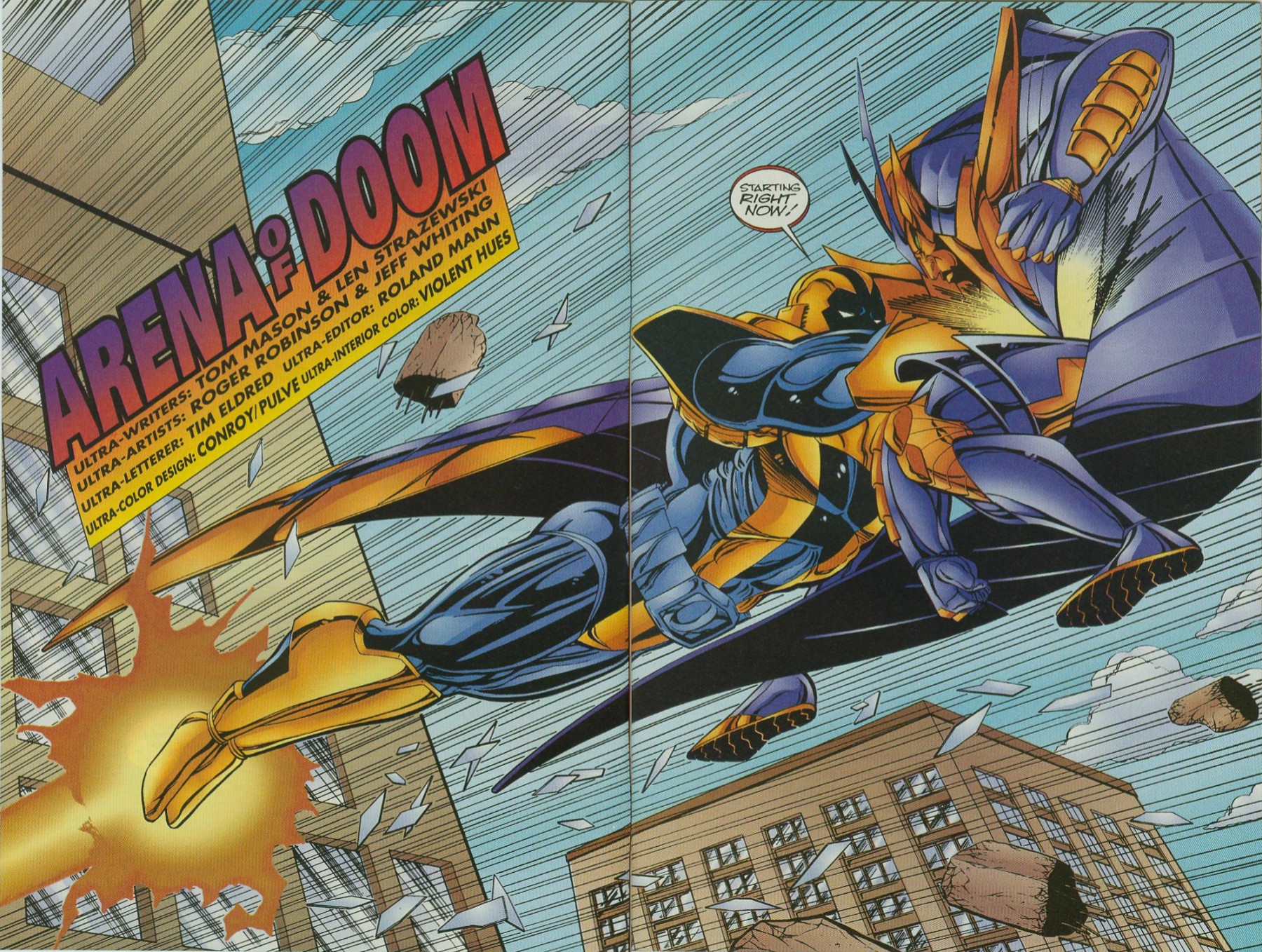
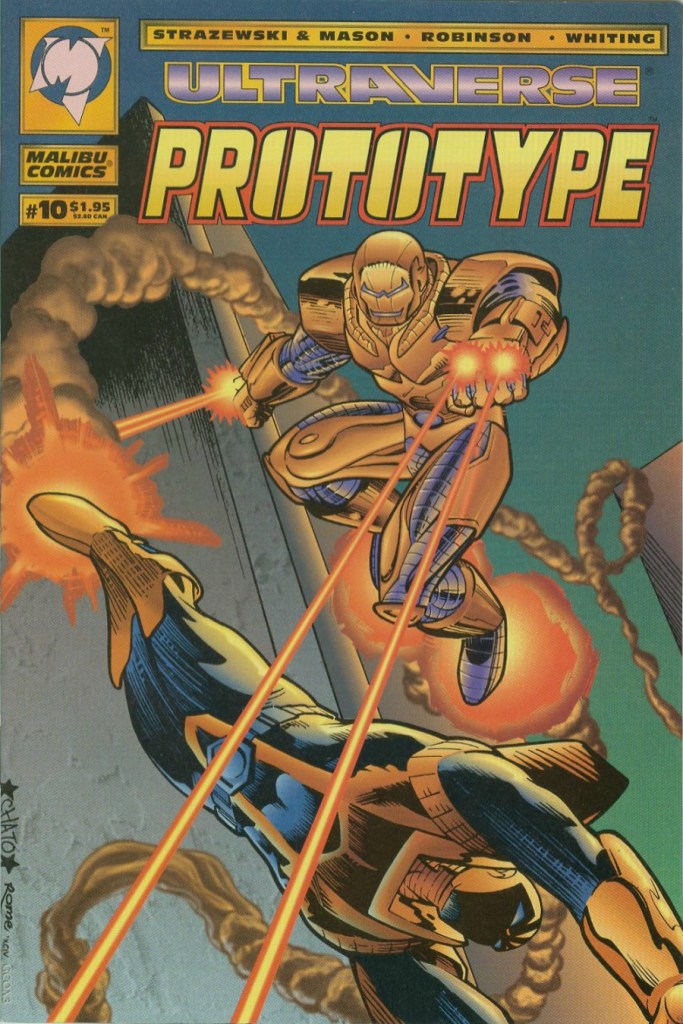
A Look Back at Prototype #10 (1994)

Disclaimer: This is my original work with details sourced from reading the comic book and doing personal research. Anyone who wants to use this article, in part or in whole, needs to secure first my permission and agree to cite me as the source and author. Let it be known that any unauthorized use of this article will constrain the author to pursue the remedies under R.A. No. 8293, the Revised Penal Code, and/or all applicable legal actions under the laws of the Philippines.

Without spoiling the story, the ending of Prototype #9 (1994) proved to be enticing for me to continue reading what happens next. As such, I went on to read the next issue.

Once again, we take another journey back into the Ultraverse in this look back at the comic book Prototype , published in 1994 by Malibu Comics with a story by Tom Mason and Len Strazewski, drawn by Roger Robinson.

The cover.

Early story

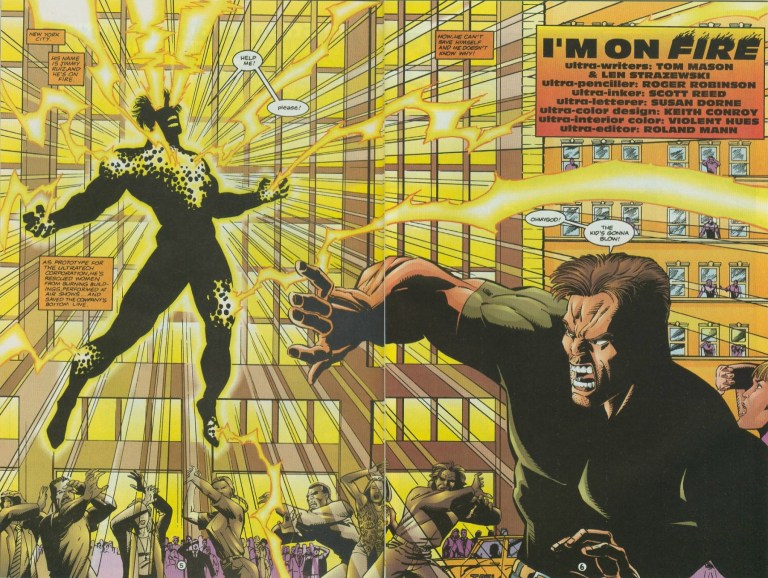
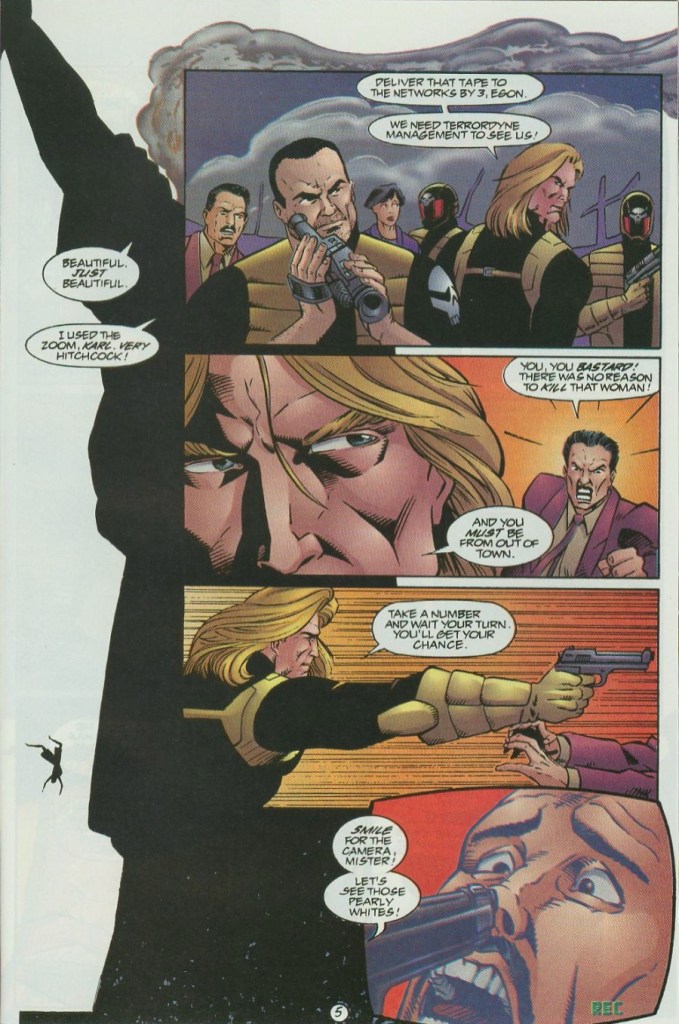
The story begins at the top of the Statue of Liberty in New York where a police helicopter flies and its personnel see a few people hanged. Suddenly the head of the Statue of Liberty blew up which turned out to be the act of a terrorist group called Terrordyne. Terrorydyne’s leader Karl is determined to cause chaos and let the mainstream news media magnify their message of fear. By occupying the Statue of Liberty, the terrorists insists that it will down anything that violates their so-called airpace and territorial waters.

Meanwhile, news about Prototype’s (Jimmy Ruiz specifically) departure from Ultratech reaches previous Prototype pilot Bob Campbell. As a result, the city of New York does not have a full-time ultra of its own. Bob makes a move to take centerstage with his armor (Ranger).

Over at the headquarters of Ultratech, top executive Leland talks with Donovan, the new Prototype…

Quality

No surprise, the quality of the writing done by Len Strazewski and Tom Mason is pretty high but the big difference is that the spotlight was focused more on former Prototype pilot Bob Campbell (who was absent from the last issue) and the corporate sector with the terrorist act compelling them respectively.

While issue was mostly about Jimmy Ruiz and his personal development while returning to his old community, this comic book brings back the spectacle (lots of action-packed scenes here) and the corporate intrigue big time! Bob Campbell is clearly the protagonist in this story and what he does here will make you interested to learn about his history as the previous Prototype pilot when he was still the one valuable employee of Ultratech.

While the story is enjoyable, I should say that terrorist leader Karl is pretty hollow as the villain and there is nothing interesting in him.

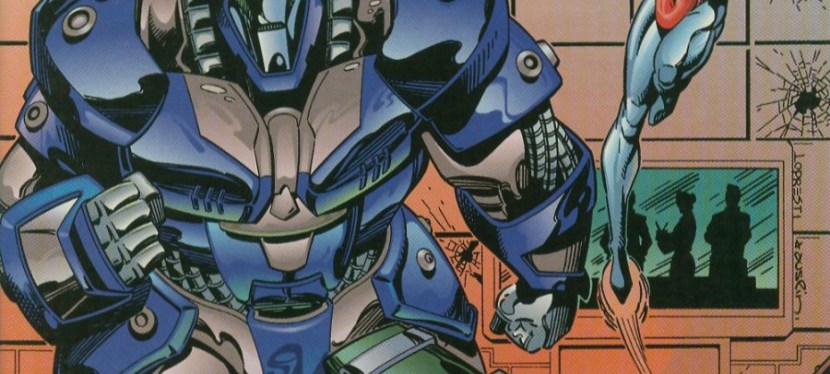
Bob Campbell as Ranger!

Conclusion

Do not let the nice cover fool you. Prototype is an enjoyable read and the way its presentation was handled, it showed signs that careful planning was made by the creative team as the comic book (focused more on Bob Campbell and the corporations) served nicely as a companion piece to issue which was more focused on Jimmy Ruiz.

If you are seriously planning to buy an existing hard copy of Prototype (1994), be aware that as of this writing, MileHighComics.com shows that the near-mint copy of the regular edition costs $8 while the near-mint copy of the newsstand edition costs $26.

Overall, Prototype (1994) is recommended.

The terrorists.

+++++

Thank you for reading. If you find this article engaging, please click the like button below and also please consider sharing this article to others. If you are looking for a copywriter to create content for your special project or business, check out my services and my portfolio. Feel free to contact me as well. Also please feel free to visit my Facebook page Author Carlo Carrasco and follow me at HavenorFantasy@twitter.com

A Look Back at Prototype #9 (1994)

Disclaimer: This is my original work with details sourced from reading the comic book and doing personal research. Anyone who wants to use this article, in part or in whole, needs to secure first my permission and agree to cite me as the source and author. Let it be known that any unauthorized use of this article will constrain the author to pursue the remedies under R.A. No. 8293, the Revised Penal Code, and/or all applicable legal actions under the laws of the Philippines.

Hey comic book fans and geeks! Do you enjoy reading comic books about armored superheroes that are not connected with Marvel’s Iron Man? The Ultraverse has an armored figure in Prototype but the big difference is that the said character is owned by a large corporation called Ultratech which in turns hired a young man named Jimmy Ruiz to pilot it. Oh yes, Jimmy Ruiz is actually the second person hired to pilot Prototype as his predecessor Bob Campbell was let go with one arm less.

Let’s revisit the Ultraverse by taking a look back at Prototype , published in 1994 by Malibu Comics with a story by Len Strazewski and Tom Mason with art done by Roger Robinson and Jeff Whiting.

The cover.

Early story

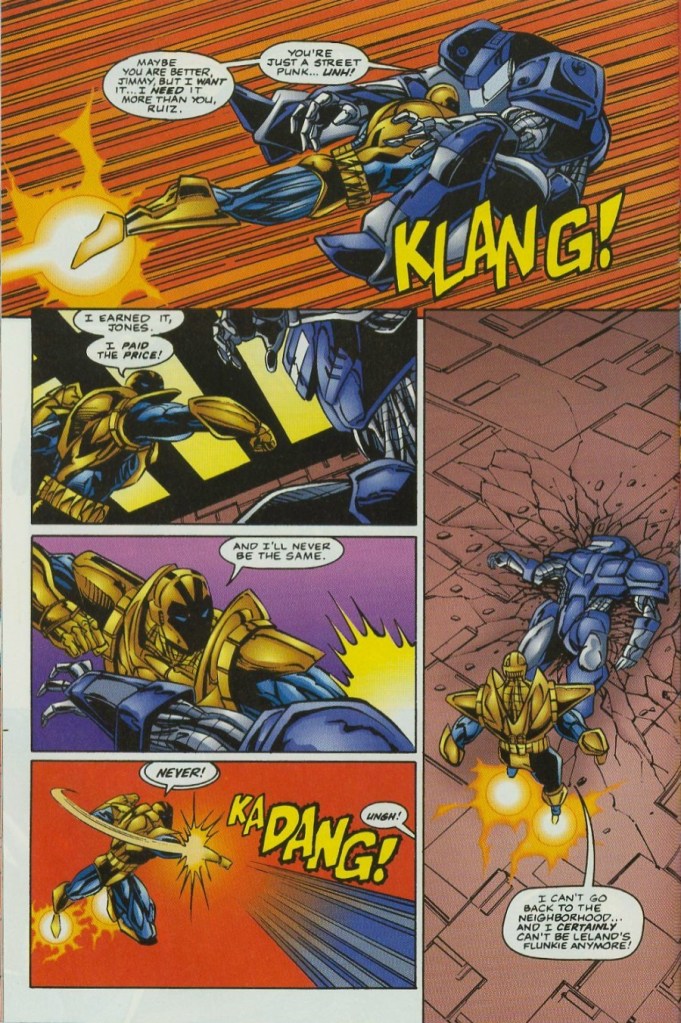
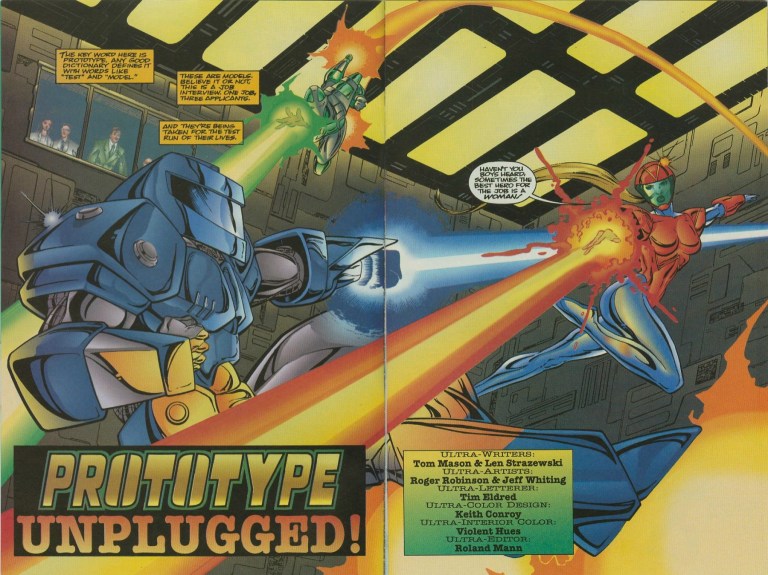
Set a short time after the hard battle between Prototype and Arena, the story begins in a secret facility somewhere in New York City where three armored figures engage in an intense session of flight, attacks and performance. The session is closely monitored by people watching from the observation deck. As it turns out, the session is actually a test for the three persons – two men and one lady – who applied to become the new Prototype which is the result of what happened at the end of issue #8.  Among the three, Donovan Jones was accepted as the new Prototype which Ultratech’s Stanley Leland confirms.

Over at Brooklyn, Jimmy Ruiz (Prototype) meets a lady from his past after paying respect to someone who was about to get buried. She tells him that since he left their old neighborhood, the local gangs have gotten worse. A short time later, the Prototype pilot meets an old gang he personally knows… 

Quality

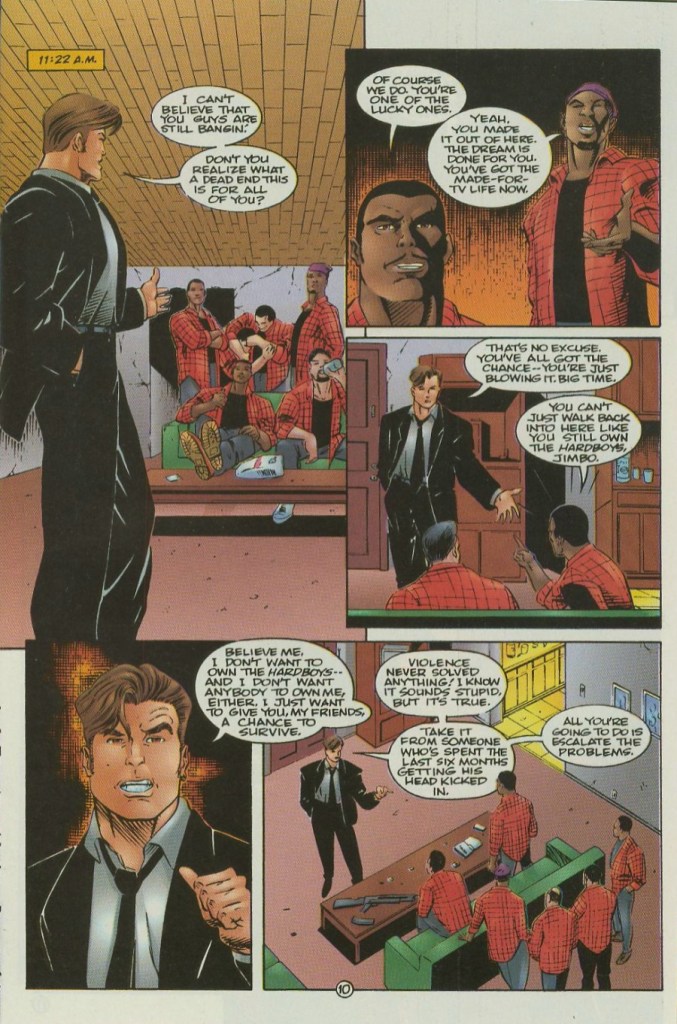
Jimmy Ruiz and the gang from his past.

Let me start with the storytelling. This comic book is more about Jimmy Ruiz out on his own without the armor than it is about Ultratech and its high-tech interests. Bob Campbell’s not even in the story. That being said, this is pretty much a character-driven piece focused on Jimmy Ruiz as a person than as a hero and I should say that Tom Mason and Len Strazewski did a good job developing his character a lot. The writing is pretty lively and the writers pulled the right moves to define Jimmy Ruiz as a believable human being. There was that notable moment when after Jimmy returned to his old community and spends time with the old gang he personally knew, he realizes how much he has and how his perception changed. By the time you reach the end of the story, you’ll get to know Jimmy much better.

Conclusion

The money shot!

Prototype is a character-driven comic book that succeeds in defining the personality and development of Jimmy Ruiz who is just one of two main characters in this series (which emphasized the struggles of two different persons involved with piloting Prototype). It lacks spectacle but that does not make this a boring comic book. Apart from Jimmy Ruiz, the corporate focus on Ultratech is short yet very intriguing.

If you are seriously planning to buy an existing hard copy of Prototype (1994), be aware that as of this writing, MileHighComics.com shows that the near-mint copy of the regular edition costs $8.

Overall, Prototype (1994) is recommended.

+++++

Thank you for reading. If you find this article engaging, please click the like button below and also please consider sharing this article to others. If you are looking for a copywriter to create content for your special project or business, check out my services and my portfolio. Feel free to contact me as well. Also please feel free to visit my Facebook page Author Carlo Carrasco and follow me at HavenorFantasy@twitter.com

A Look Back at Prototype #8 (1994)

Disclaimer: This is my original work with details sourced from reading the comic book and doing personal research. Anyone who wants to use this article, in part or in whole, needs to secure first my permission and agree to cite me as the source and author. Let it be known that any unauthorized use of this article will constrain the author to pursue the remedies under R.A. No. 8293, the Revised Penal Code, and/or all applicable legal actions under the laws of the Philippines.

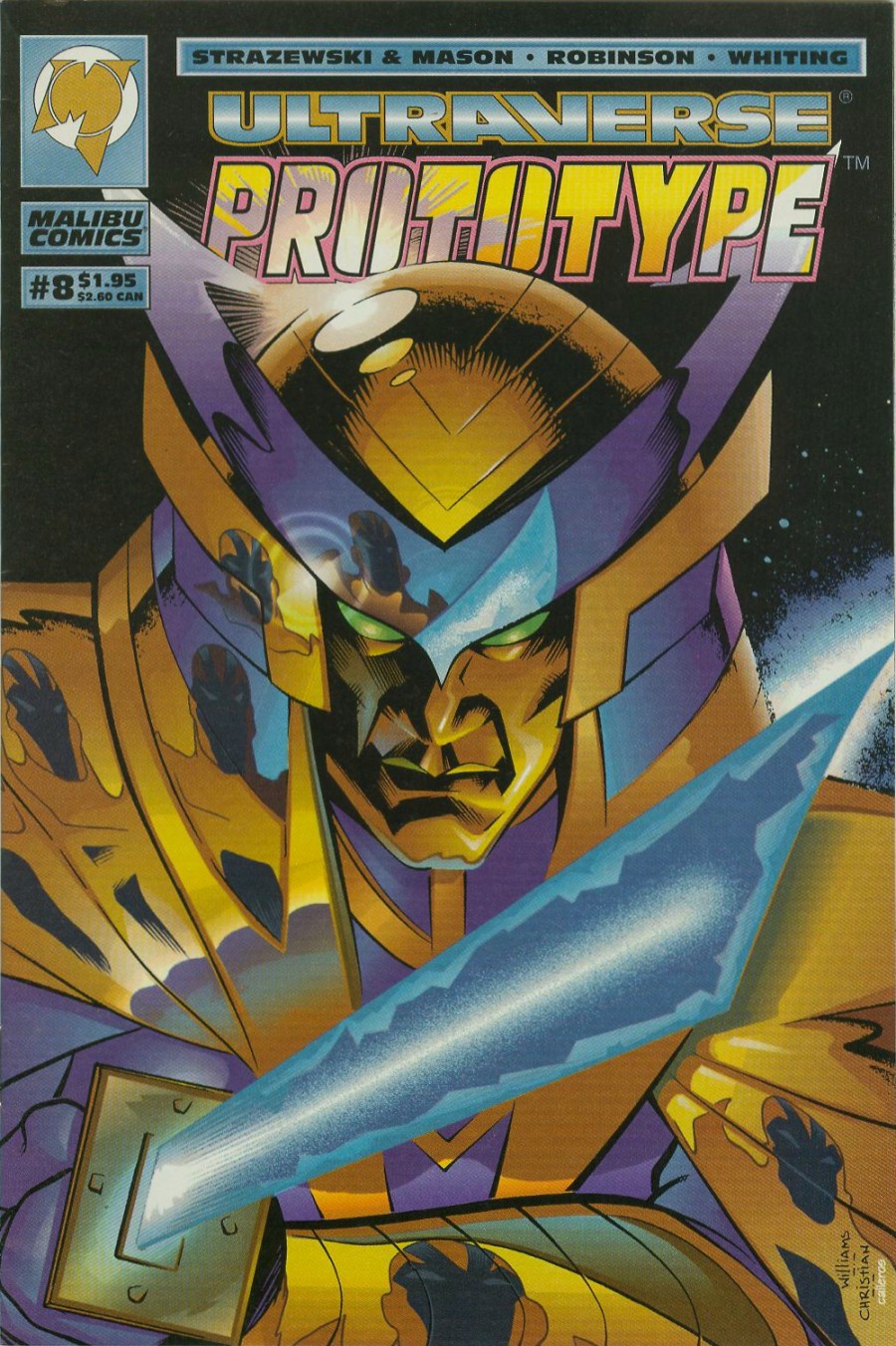
Hey everyone! Are you ready for another return to the Ultraverse? This time, it’s a return to the Prototype monthly series published by Malibu Comics.

That being said, here is a look back at Prototype , published by Malibu Comics in 1994 with a story by Tom Mason and Len Strazewski, and art done by Roger Robinson.

Cover

Early story

The story begins with the continuing destructive battle between Prototype (piloted by Jimmy Ruiz) and Arena (a past foe that Bob Campbell dealt with as Prototype) inside a building in the middle of the city. As the two armored figures fight, an Ultratech executive calls out for Veil. Facing disadvantages against Arena, Prototype decides to fly out of the building to try something more strategic.

Meanwhile, Bomb Campbell learns about the ongoing battle in the news while working on a part of powered suit of armor he has. He notices the return of Arena and analyzes that Jimmy Ruiz will end up losing to the old foe…

Quality

5
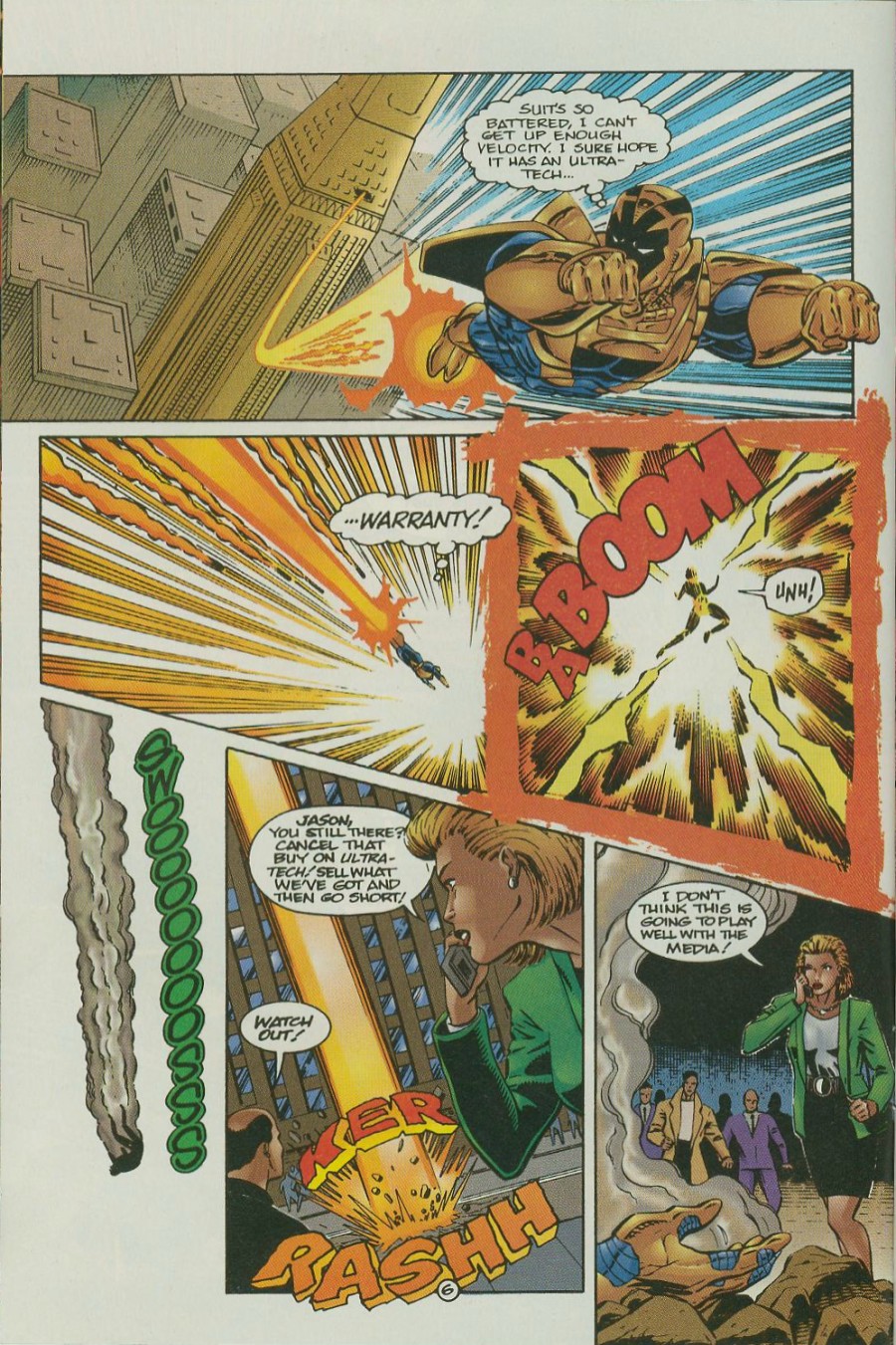
Even flying away did not help Prototype from avoiding Arena’s attacks.

I’m happy to say that this is another well-written story here by Mason and Strazewski. While the battle between Arena and Prototype is the main feature, the script focused nicely on other developments such as Bob Campbell’s recollection of his past encounter with Arena (from his time as Prototype), how the city officials perceive ultras as a threat and danger to the locality, and how the people react to gang violence striking their community.

What is pretty striking with this comic book is the further development of Jimmy Ruiz as a character. Not only will you see him struggle a lot not only with fighting and piloting the powered sit of armor, you’ll also see how the frustration with his high-paying job impacts him deeply. His personality got fleshed out during his battle with Arena who in turn thinks with tradition and philosophies. The way the story ended is a must-see and the good news is that it builds up the suspense for the next issue.

Conclusion

2
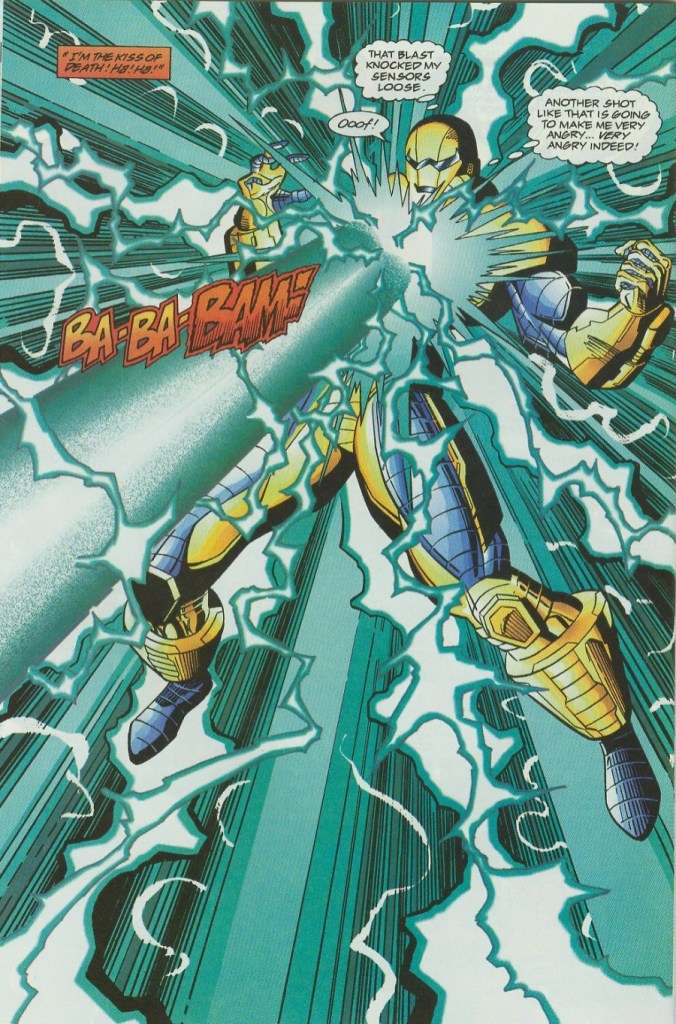
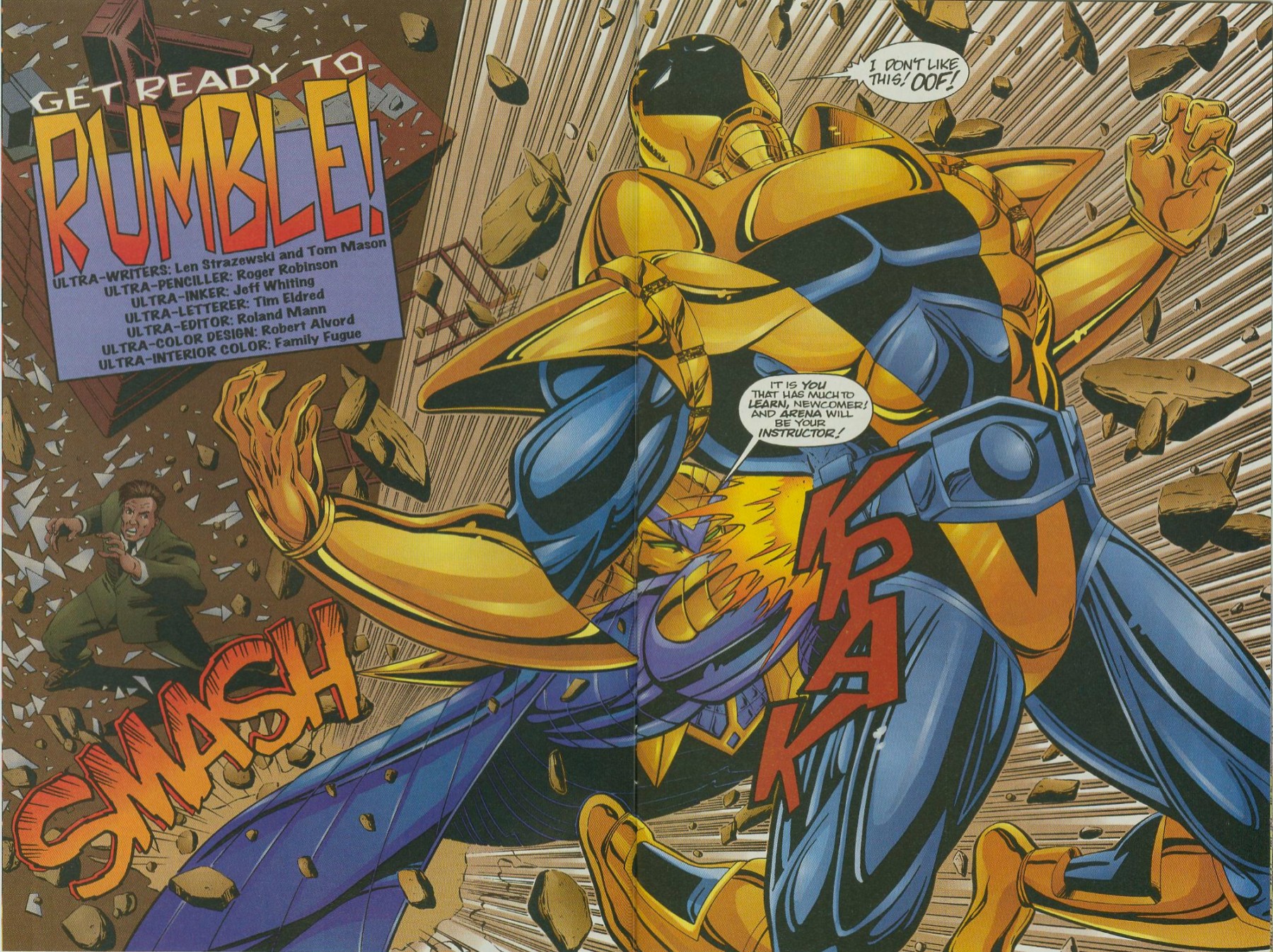
The money shot!

Prototype is fun to read and compelling for anyone who is focused on Jimmy Ruiz. This comic book, which by the way is loaded with lots of action, is not the typical hero-beats-antagonist type of story rather it went the extra mile on developing the present-day Prototype. It is also the most engaging portrayal of Jimmy Ruiz yet!

If you are seriously planning to buy an existing hard copy of Prototype (1994), be aware that as of this writing, MileHighComics.com shows that the near-mint copy of the regular edition costs $4.

Overall, Prototype (1994) is recommended!


Thank you for reading. If you find this article engaging, please click the like button below and also please consider sharing this article to others. If you are looking for a copywriter to create content for your special project or business, check out my services and my portfolio. Feel free to contact me as well. Also please feel free to visit my Facebook page Author Carlo Carrasco and follow me at HavenorFantasy@twitter.com

A Look Back at Prototype #4 (1993)

Disclaimer: This is my original work with details sourced from reading the comic book and doing personal research. Anyone who wants to use this article, in part or in whole, needs to secure first my permission and agree to cite me as the source and author. Let it be known that any unauthorized use of this article will constrain the author to pursue the remedies under R.A. No. 8293, the Revised Penal Code, and/or all applicable legal actions under the laws of the Philippines.

One of the things that I like most about the Prototype monthly series of the Ultraverse is that it follows the respective exploits of not one but two men who got involved as pilots of Ultratech’s powered suits of armors. Bob Campbell is the older Prototype pilot from the past who got succeeded by Jimmy Ruiz, a much younger guy doing the corporation’s wishes.

So far, the dual-narrative approach to storytelling worked well for me and it is one of the more defining elements of the Prototype series. We can find out more with this look back at Prototype , published in 1993 by Malibu Comics with a story written by Tom Mason and Len Strazewski and drawn by David Ammerman.

Cover
The cover.

Early story

The story begins in New York City where Jimmy Ruiz looks down at the streets from the balcony of a tower. He remembered the old days when he used to live down there and spend time with his amigos. A pretty lady is on his bed with the blanket covering her naked body. After some talk, they make love with each other.

Over at the headquarters of Ultratech, a lady searches for Jimmy claiming she knows he’s living right there. The security guard tells her that Jimmy is not listed in the residential directory, and asked her to call the company in the morning. She leaves and passes by a man with a coat.

The coated guy approaches the security guard and asked for the name and contact number of their building manager. He claims to be look to sublet some office space….

Quality

15
Solidly fun action!

This is another well-written story by Tom Mason and Len Strazewski. In here, the new antagonist named Wrath was introduced and he certainly is not another generic bad guy opposite the superhero. During the heat of battle between him and Prototype (Jimmy Ruiz), you will learn nice details about Wrath through the banter. For one thing, Wrath works for a superior (like Prototype) and even though it is normal for him to use violence as a means of survival or winning, he makes it a point not to hurt civilians. The same conflict also paved the way for further development of the personality of Jimmy who is not only struggling with his job as Prototype pilot but also living with things that his employer physically implanted into his body that’s supposed to link him with the armor.

On the other hand, there is a short segment following former Prototype pilot Bob Campbell which served as a strong ending for the comic book. You really have to read it.

Conclusion

11
And the battle begins…

I really like this comic book. It’s got all the fun and compelling stuff any reader can enjoy. The introduction of Wrath alone is worth the cover price.

If you are seriously planning to buy an existing hard copy of Prototype (1993), be aware that as of this writing, MileHighComics.com shows that the near-mint copy of the regular edition costs $4.

Overall, Prototype (1993) is highly recommended!


Thank you for reading. If you find this article engaging, please click the like button below and also please consider sharing this article to others. If you are looking for a copywriter to create content for your special project or business, check out my services and my portfolio. Feel free to contact me as well. Also please feel free to visit my Facebook page Author Carlo Carrasco and follow me at HavenorFantasy@twitter.com

A Look Back at Prototype #7 (1994)

Disclaimer: This is my original work with details sourced from reading the comic book and doing personal research. Anyone who wants to use this article, in part or in whole, needs to secure first my permission and agree to cite me as the source and author. Let it be known that any unauthorized use of this article will constrain the author to pursue the remedies under R.A. No. 8293, the Revised Penal Code, and/or all applicable legal actions under the laws of the Philippines.

Hey everyone! Are you ready for another return to the Ultraverse following the tales of Prototype?

We can start now with this look back at Prototype , published in 1994 by Malibu Comics with a story written by Tom Mason and Len Strazewski, and illustrated by Roger Robinson.

Cover
The cover.

Early story

The story begins high above the city street with a battle between Prototype (piloted by Jimmy Ruiz using a more advanced armor provided by his boss) and Arena. The boss of Jimmy could only express surprise to see Arena return having believed that Bob Campbell finished him off some months back.

As the fight goes on, Arena realizes that it is not his old nemesis Bob Campbell occupying the Prototype armor. For his part, Jimmy struggles with the uncertainty that comes with fighting his predecessor’s nemesis from the past.

Meanwhile at the roof of Ultratech’s headquarters in the city, armed and armored personnel take position following the orders of Leland…

Quality

Once again, Tom Mason and Len Strazewski crafted another strongly engaging story with the established mix of spectacle, corporate intrigue and the continued development of the two pilots of Prototype – Jimmy and Bob.

Speaking of the two, I love the way the story explored the other key elements from the respective personal lives of Jimmy and Bob. While Bob tends to his friend Jake in the hospital, Jimmy’s girl continues to pursue him (Jimmy) even though he is occupied with working as Prototype. This comic book also went the extra mile confirming the shared universe connection with a certain other Ultraverse character (note: he had his own series) making an appearance.

Artist Roger Robinson continued to deliver nice visuals that reflected the script, from the subtle drama scenes to the dynamic action scenes.

Conclusion

2
The money shot!

Prototype is another solidly enjoyable comic book of the Ultraverse, worthy of inclusion in your collection.

If you are seriously planning to buy an existing hard copy of Prototype (1994), be aware that as of this writing, MileHighComics.com shows that the near-mint copy of the regular edition costs $4 while the near-mint copy of the newsstand edition costs $13.

Overall, Prototype is recommended.


Thank you for reading. If you find this article engaging, please click the like button below and also please consider sharing this article to others. If you are looking for a copywriter to create content for your special project or business, check out my services and my portfolio. Feel free to contact me as well. Also please feel free to visit my Facebook page Author Carlo Carrasco and follow me at HavenorFantasy@twitter.com