Retro Gaming Ads Blast – Part 8

Welcome back readers, fellow geeks and electronic gaming fans!

In this edition of the Retro Gaming Ads Blast (RGAB) series, we will take a look at another batch of retro gaming print ads from the 1980s and 1990s.

For the newcomers reading this, Retro Gaming Ads Blast (RGAB) looks back at the many print ads of games (console, arcade, computer and handheld) that were published in comic books, magazines, flyers and newspapers long before smartphones, social media, the worldwide web and streaming became popular. To put things in perspective, people back in the 1980s and 1990s were more trusting of print media for information and images about electronic games and related hardware.

With those details laid down, here is the newest batch of retro gaming print ads for you to see and enjoy…

1. Enemy Zero print ad

I should say Sega did a solid job by making this intriguing and eye-catching print ad for Enemy Zero.

The first time I saw this print ad of Enemy Zero in the late 1990s, I was intrigued by its visual concept and it got me interested to learning more about the game. Enemy Zero was a sci-fi video game developed by Warp and released as a console-exclusive on the Sega Saturn. Since I never owned a Saturn, I never got to play the game but I was inspired to learn more about Warp (which developed the hit game D). As it turns out, Enemy Zero started as a project for PlayStation but because of Sony’s failure to fulfill the pre-orders of D on PlayStation (100,000 copies ordered but less than 30,000 copies printed by Sony), Warp’s head Kenji Eno decided to make Enemy Zero exclusive to the Sega Saturn. Enemy Zero was published by Sega worldwide while Warp published it in Japan, and the game sold between 500,000 to 700,000 copies (based on Eno’s claim).

2. Bionic Commando print ad

For the American market, Capcom showed what the game box and front cover art would look like, then added the details and two screenshots for readers to examine.

Back in the late 1980s, I played Bionic Commando and managed to finish it after enduring lots of challenges along the way. It was a very unique adventure game as it used a highly unusual method of moving from one platform to the next by means of a futuristic grappling gun. This particular print ad showcased what the game’s actual box looked like (with cover artwork made for North America) and used two screenshots from the game. This ad hardly captures the excitement and intensity that awaited gamers and yet it manages to give people a clear look at the grappling concept. While the North American version of the game has certain content altered, it still had the same gory ending (and Adolf Hitler as the main villain) as the Japanese version.

3. RoboCop print ad

This served as an extension of the impact of the very violent 1987 movie.

RoboCop made huge impact on moviegoers as well as people who love science fiction and the R-rated action films Hollywood studios released in the 1980s. That being said, it was not surprising that a video game of RoboCop was released on the Nintendo Entertainment System (Family Computer in Japan) by Data East and the print ad they came up with cleverly used imagery from the movie poster and the screenshots showed exactly what RoboCop fans expected to see such as the enemy robot ED-209 and thugs. This game strongly reflects the business trend of the 1980s when companies made merchandise and adaptations of R-rated blockbuster films to sell to kids and teenagers.

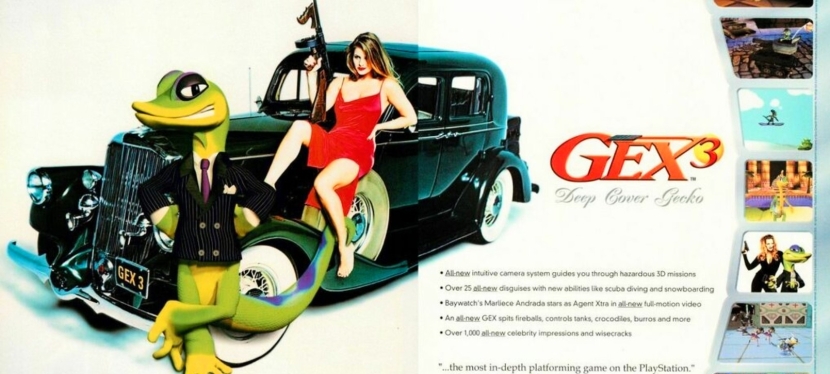
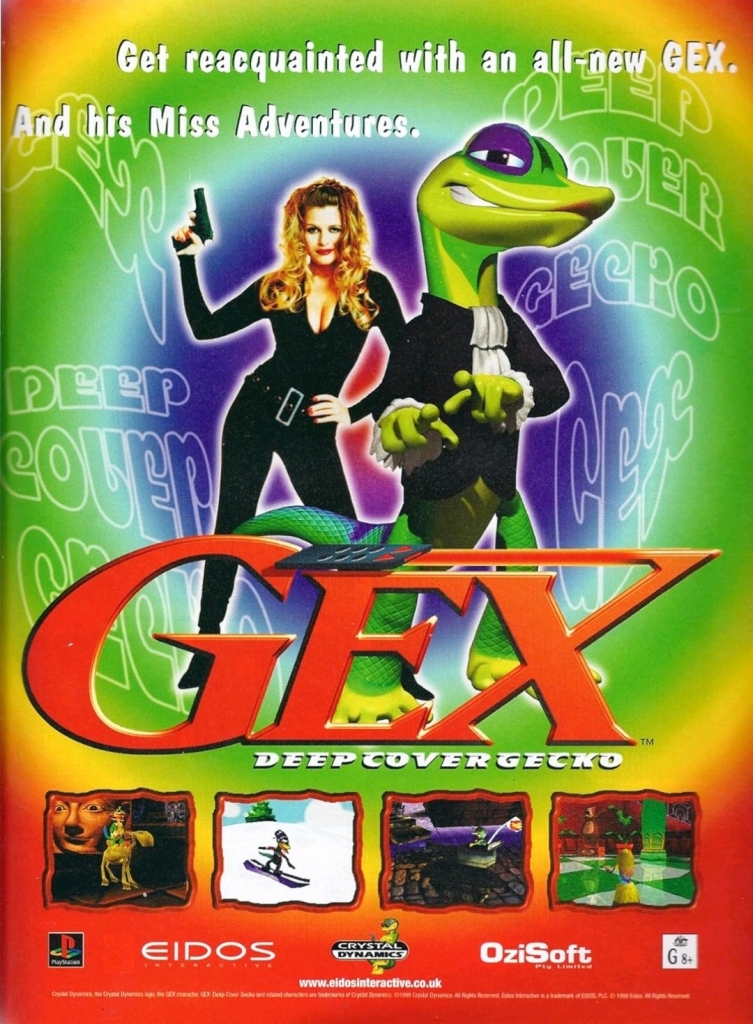
4. Gex 3: Deep Cover Gecko print ads

This print ad for Europe had a James Bond vibe.
March 1998 Playmate of the Month on the hood of the car looking at Gex.
The 2-page print ad of Gex 3: Deep Cover Gecko.

In 1999, Eidos Interactive – the company behind the wildly popular Tomb Raider games of the decade – became aggressive marketing Gex 3: Deep Cover Gecko for PlayStation and Nintendo 64. They were so aggressive, they featured actress and Playboy’s Playmate of the Month (March 1998) Marliece Andrada alongside their star character Gex in the marketing which was not limited to America. For the newcomers reading this, a multimedia approach was implemented on the narrative of the game’s PlayStation version which explains why it has full-motion video sequences featuring Andrada as the character Agent Xtra. As seen in these print ads, Eidos Interactive had Andrada looking pretty and sexy to really sell the game.

5. Barkley Shut Up and Jam! print ad

Anyone here a Charles Barkley fan?

I remember the many types of basketball video games that were released on game consoles back in the 1990s. While there were NBA video games that had in-depth rosters of players with seasonal gaming in mind, there were other basketball-related video games that were not about the said league but featured an NBA star. In this print ad, publisher Accolade prominently featured NBA star Charles Barkley to promote the game Barkley Shut Up and Jam!, posted some words emphasizing sports intensity, and showed one screenshot to assure gamers that this is a basketball game. While the critical reception was mixed, the game must have sold enough to convince Accolade to release a sequel two years later with Barkley still the endorser.

6. The Death and Return of Superman print ad

This print ad clearly aimed for the fans of the comic books as well as gamers looking for an action-packed game to play.

Now this is one very eye-catching print ad that appeared in comic books and magazines in the 1990s. Anyone who knows comics would recognize the grey fist (with sharp bones protruding on the knuckles) belonging to Doomsday who killed Superman in Superman #75 (1993), and the bloody presentation on the famous S was very aggressive for its time. The game itself was an adaptation of the two storylines (published in 1992 and 1993 respectively) that saw Superman’s death, his return and the appearances of new Supermen. While sales figures are not available, The Death and Return of Superman eventually attracted mixed reviews from the critics.

7. Dragon Force print ad

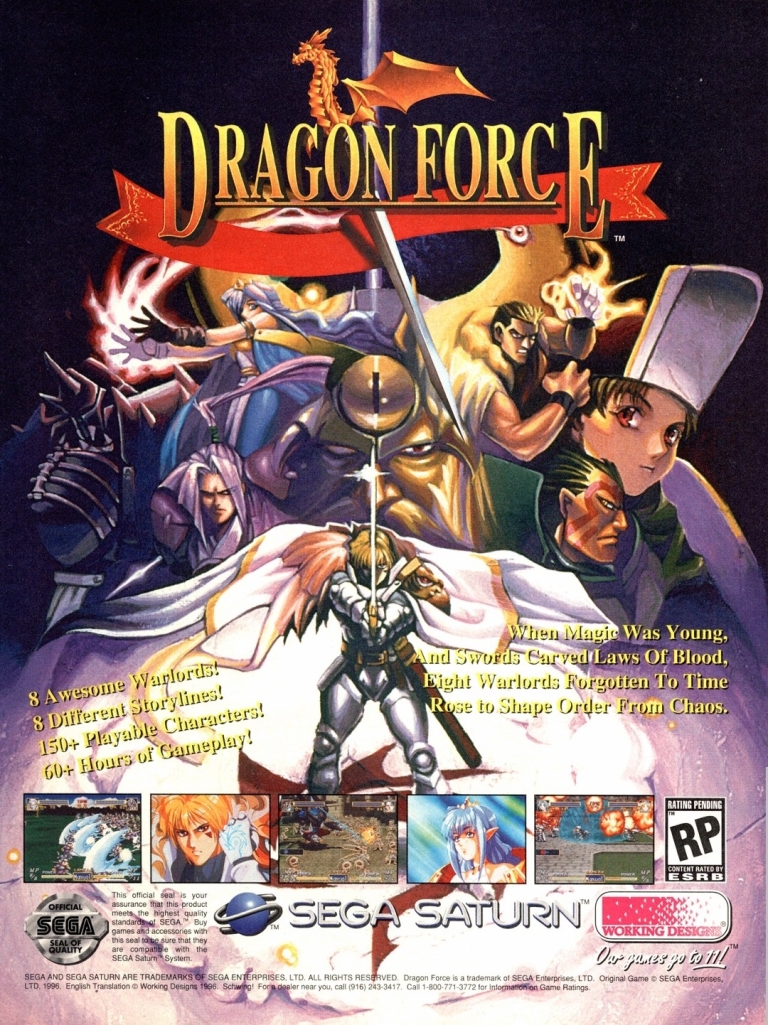
This was printed in magazines at a time when Working Designs had a strong business relationship with Sega.

While the Sega Saturn was undeniably a huge commercial disappointment in North America, the console still had some great games that was widely praised by game critics and heavily bought by gamers. One of those outstanding games on the console was Dragon Force (developed by Sega and J-Force in Japan, localized in America by Working Designs) which received great critical acclaim and achieved commercial success both in Japan and in America. The popular magazine Electronic Gaming Monthly named Dragon Force as the Saturn Game of the Year as well as Strategy Game of the Year in 1996. As a Working Designs release, this print ad has an ambitious fantasy concept visually emphasized, detailed lines of descriptions and screenshots that strongly appealed to the gamers, anime enthusiasts and those who love fantasy. This ad is also a sad reminder that the business relationship between Sega and Working Designs went downhill afterwards (read: Bernie Stolar) and the sequel Dragon Force II was never released outside of Japan.

+++++

Thank you for reading. If you find this article engaging, please click the like button below, share this article to others and also please consider making a donation to support my publishing. If you are looking for a copywriter to create content for your special project or business, check out my services and my portfolio. Feel free to contact me with a private message. Also please feel free to visit my Facebook page Author Carlo Carrasco and follow me on Twitter at  @HavenorFantasy as well as on Tumblr at https://carlocarrasco.tumblr.com/ and on Instagram at https://www.instagram.com/authorcarlocarrasco
Retro Gaming Ads Blast – Part 6

Welcome back readers, fellow geeks and electronic gaming fans!

In this edition of the Retro Gaming Ads Blast (RGAB) series, we will examine print ads from the 1980s and the 1990s that caught my attention and I will explain why they are worth look back at.

For the newcomers reading this, Retro Gaming Ads Blast (RGAB) looks back at the many print ads of games (console, arcade, computer and handheld) that were published in comic books, magazines, flyers and newspapers long before smartphones, social media, the worldwide web and streaming became popular. To put things in perspective, people back in the 1980s and 1990s were more trusting of print media for information and images about electronic games.

With those details laid down, here is the newest batch of retro gaming print ads for you to see and enjoy…

1. Operation Wolf print ad

Even though there were screenshots from the game, this was still an eye-catching print promoting Operation Wolf for the Nintendo Entertainment System.

Looking back at the history of pop culture, the 1980s saw the surge of Hollywood action movies that emphasized or even glorified militarism. Arnold Schwarzenegger, Sylvester Stallone and Tom Cruise were just a few Hollywood stars who found success playing military figures. It was not surprising that there were game developers in Japan who noticed the Hollywood military trend and were inspired to make games that had similar themes. The Japan-based company Taito developed and released the light gun shooter arcade game Operation Wolf which became a huge commercial success worldwide. Unsurprisingly, versions of Operation Wolf were eventually made for the existing home computers and game consoles of the time.

The above print ad of the Nintendo Entertainment System (NES) version of Operation Wolf only showed the official artwork, descriptive text and noticeably no gameplay screenshots. While the ad made the NES version of the game look exciting to look forward to, the actual game looked and felt nothing like the arcade version as the console’s limitations resulted in really small 2D sprites (which made shooting tough) and the 2D art used were rather ugly to see. I can only speculate that the people at Taito knew their product for the NES had sub-par quality and only hoped for the best trying to fool gamers to buy it.

2.  Foreman For Real print ad

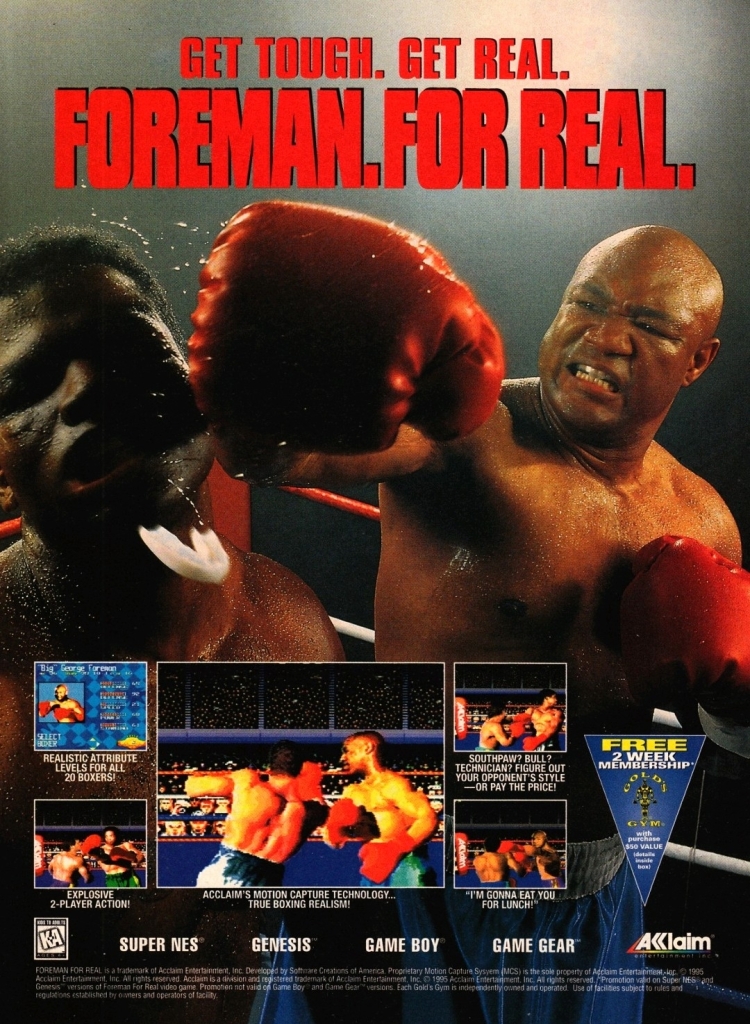
Apart from boxing and endorsing grills, are you aware that George Foreman is also a worship leader and preacher of God’s Word?

In late-1994, George Foreman knocked out Michael Moorer to reclaim the heavyweight boxing title and the last time he had it was way back in 1974. For the newcomers reading this, Foreman halted his professional boxing in 1977, established his connection with God, preached His Word, opened a youth center and became a major product endorser. Foreman came back into fighting in 1987 and stunned everyone when he became heavyweight champion seven years later.

That being said, it was no surprise that game publisher Acclaim (which already released a video game with the boxer in 1992) quickly returned to Foreman to get him as the titular endorser in the 1995 video game Foreman For Real which was released on multiple gaming platforms less than a year after his championship victory. Apart from showing Foreman’s dominating image and screenshots from the game, the ad even had a promo of a free 2-week membership with Gold’s Gym. This ad was a lively reminder of the significance of Foreman’s presence in professional sports and it was instantly eye-catching.

3. BurgerTime print ad

Arcade hits like BurgerTime also made it into personal computers.

Previously, I showed an eye-catching print ad of the arcade classic BurgerTime. This time, the BurgerTime print ad shown here focused more on the IBM and Apple computer versions. This print ad had a photograph of an actor playing chef Peter Pepper carrying a huge burger bun running away two eggs and a hotdog, and near them were the respective boxes of BurgerTime for IBM and Apple. This is a sharp change of visual style away from the comic book-style art used in the other BurgerTime print ad. I can only imagine how excited IBM and Apple computer users became after seeing this ad back in the 1980s.

4. Shining Wisdom print ad

Even though this was a very eye-catching ad that appeared in several publications, Shining Wisdom went on to become a forgotten game after receiving mixed reviews from game review writers.

Here is another print ad of Working Designs from the 1990s. Released only on the Sega Saturn in 1996, Shining Wisdom was a fantasy action-adventure game from Japan that publisher Working Designs localized with North Americans in mind. This meant taking lots of creative liberties with the story, name changes, insertions of pop culture jokes and even altered the personalities of the characters. Developed by Sonic Software Planning and Camelot Software Planning, Shining Wisdom started as a project for the 16-bit console Mega Drive (Sega Genesis in America) that was revised for the more powerful Saturn console. While this print ad caught the attention of gamers and readers, Shining Wisdom received mixed reviews from critics upon release. Sadly, not too many gamers talk about this game anymore.

5. Cabal print ad

Military action and shooting strongly emphasized in this print ad for the Nintendo Entertainment System version of the arcade smash Cabal.

Like many games released in the 1980s, Cabal had a strong military theme and allowed players to engage in bouts of shooting playing soldiers who have to fight entire armies of bad guys. This print ad about the Nintendo Entertainment System (NES) version of the game had really nice art dominating the page, the packaging of the game plus three screenshots showing what gamers could expect. This was a very eye-catching print ad that made Cabal look both exciting and enticing.

6. Metal Gear print ad

Wow! So many weapons and pieces of equipment displayed in this Metal Gear (NES version) ad.

Back in the late 1980s, the NES port of Metal Gear had a notable promotion in America thanks to this cleverly designed print ad. When it comes to emphasizing “gear” from the title, the marketing team emphasized the words “Gear up” and literally filled the ad spaces with lots of pieces of equipment that was not only eye-catching but also gave readers the idea that a huge adventure awaits them in Metal Gear. As for the game box on the lower left corner of the print, the cover art highlighting the character Snake was an artistic copy of a still image of actor Michael Biehn as Kyle Reese in The Terminator (1984). This print ad was both entertaining and intriguing to look at.

7. Dino Crisis print ad

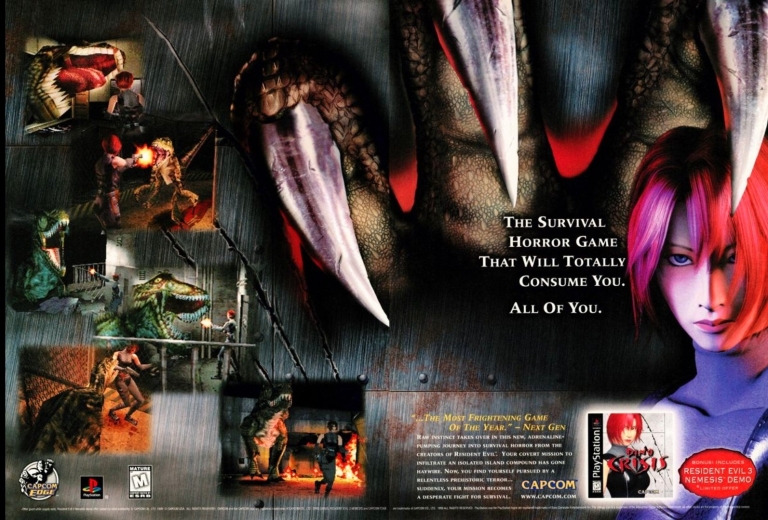
For many gamers, Dino Crisis was like a combination of Resident Evil and Jurassic Park and this visceral looking print ad really got lots of people interested in the game.

In 1999, Capcom released Dino Crisis for PlayStation in America and the timing was almost perfect as millions of gamers who owned the console enjoyed the releases of Resident Evil and Resident Evil 2 (both games from Capcom) firmly establishing the survival horror genre as a popular one. That being said, a lot of RE fans anticipated the release of Dino Crisis due to the fact that the game shared several elements with Resident Evil games in terms of exploration, survival, control and shooting. Not only that, Resident Evil creator and original game director Shinji Mikami was in charge of the making of Dino Crisis. Mikami pointed to the films The Lost World: Jurassic Park (1997) and Aliens (1986) as influences on making the game which for most gamers was perceived as “Resident Evil filled with dinosaurs.”

The print ad above had a very engaging visual design that symbolized action, horror and tension well. Mikami clearly wanted gamers to experience the intense violence of encountering dinosaurs and this ad gave viewers a small sample of that. It’s safe to say that this print ad was effective as Dino Crisis went on to sell millions of copies and established Regina (the red-haired lady in the ad) as another memorable character from Capcom.  

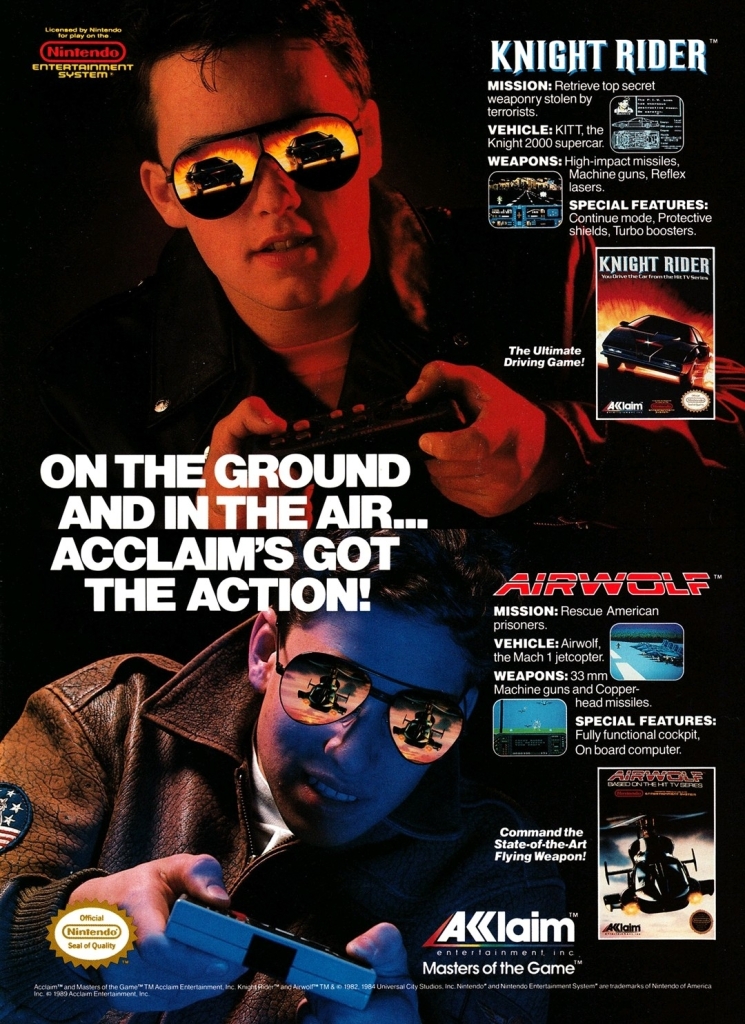
8. Airwolf/Knight Rider games print ad

Very clearly, the advertiser focused on the cool look to sell the games of Airwolf and Knight Rider.

Back in the 1980s, Airwolf and Knight Rider were wildly popular TV series that each had winning formulas to entertain millions of viewers with action, suspense and storytelling. It was not surprising that video game adaptations of them were produced on the Nintendo Entertainment System (NES). This particular print ad was an efficient way of promoting the Airwolf and Knight Rider games which featured two players looking cool with jackets and sunglasses. Acclaim clearly aimed for the TV series’ fans and slightly older players among the NES owners/users.

+++++

Thank you for reading. If you find this article engaging, please click the like button below, share this article to others and also please consider making a donation to support my publishing. If you are looking for a copywriter to create content for your special project or business, check out my services and my portfolio. Feel free to contact me with a private message. Also please feel free to visit my Facebook page Author Carlo Carrasco and follow me on Twitter at  @HavenorFantasy as well as on Tumblr at https://carlocarrasco.tumblr.com/ and on Instagram at https://www.instagram.com/authorcarlocarrasco

Retro Gaming Ads Blast – Part 4

Welcome back readers, fellow geeks and retro gaming fans!

In this edition of the Retro Gaming Ads Blast (RGAB) series, we will examine print ads from the 1990s that caught my attention and I will explain why they are worth look back at. In retrospect, the 1990s was a decade of serious changes in the world of electronic gaming as the industry saw the shift of graphics from 2D sprites and flat backgrounds to 3D polygons, the shift from cartridges to CDs for software distribution, and more.

For the newcomers reading this, Retro Gaming Ads Blast (RGAB) looks back at the many print ads of games (console, arcade, computer and handheld) that were published in comic books, magazines, flyers and newspapers long before smartphones, social media, the worldwide web and streaming became popular. To put things in perspective, people back in the 1980s and 1990s were more trusting of print media for game details and images.

With those details laid down, here is the newest batch of retro gaming print ads for you to see and enjoy…

1. Castlevania: Bloodlines print ad

Creepy looking but not horrific. The simplistic approach turned out to be effective on making Sega Genesis gamers excited for this Castlevania release.

During the early stage of the so-called 16-bit console wars, Konami’s Castelvania series made the huge next-generation leap with Super Castlevania IV on the Super Nintendo Entertainment System (SNES) which gave gamers loads of fun challenges along with technological improvements that added to the gameplay. Being a prolific multiplatform game maker, Konami knew it could not abandon its fans who own the 16-bit console of Sega and this led them to making a unique Castlevania experience with the Sega Genesis in mind – Castlevania: Bloodlines.

The above print ad of Castlevania: Bloodlines was very eye-catching as it showed a photographic presentation of the grave of the Belmont family (note: Simon Belmont is arguably the most known hero of the series) backed with a detailed text description as well as screenshots that showed exactly what Castlevania fans expected with gameplay and presentation. While the visual style of the ad had a subtle approach to horror, it succeeded in informing the public that another fun-filled Castlevania experience was coming. The game went on to be a hit among gamers and critics.

2.  The Granstream Saga print ad

THQ really tried hard to sell The Granstream Saga in North America at a time when a lot more Japanese RPGs started coming into the market.

Back in the late 1990s, there was a slew of Japanese role-playing games (JRPGs) that got released on the PlayStation console in North America arguably because of the massive sales success of Final Fantasy VII in 1997. In 1998, THQ (note: then a newcomer in video gaming) made the daring move to release The Granstream Saga in North America and it was part of the company’s plan of releasing more RPGs. With regards to the 1998 print ad, THQ marketing team wisely emphasized the fact that the game launched at #1 in Japan (published by Sony) although, strangely, the rest of the short descriptive text did not emphasize the fact that the game was one of the first fully polygonal RPGs ever released. The ad had one image of an animated cut scene while there were two gameplay images. When I first saw the print ad, I became interested with The Granstream Saga as I was fond of both RPGs and anime. I never got to play it due to a lack of time and money back then.

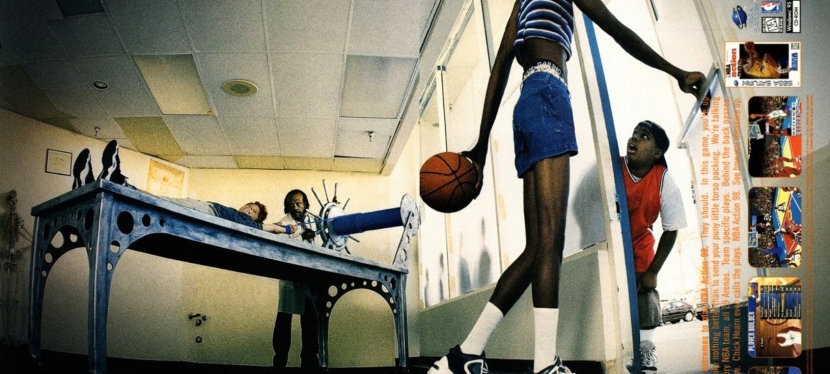
3. NBA Action 98 print ad

Do you find this print ad funny or disturbing or both?

The first time I saw Sega’s print ad of NBA Action 98 (a polygonal NBA basketball video game for the Sega Saturn), it caught my attention quickly mainly because of the concept of the imagery showing a really tall guy leaving the place after getting stretched to be tall (as emphasized by an adult operating a machine to stretch another kid’s body to get taller) as a kid from outside looks on. While it looked hilarious at first, the photographic imagery also had an unintentional dark tone as the adult operating the machine looked like he was torturing the kid. This print ad was really eye-catching in a rather disturbing fashion to me, so much so I did not have any interest left to check out the advertised game. The small size of the screenshots and the hard-to-read descriptive text did not help at all. In my view, this was a marketing misfire by Sega.

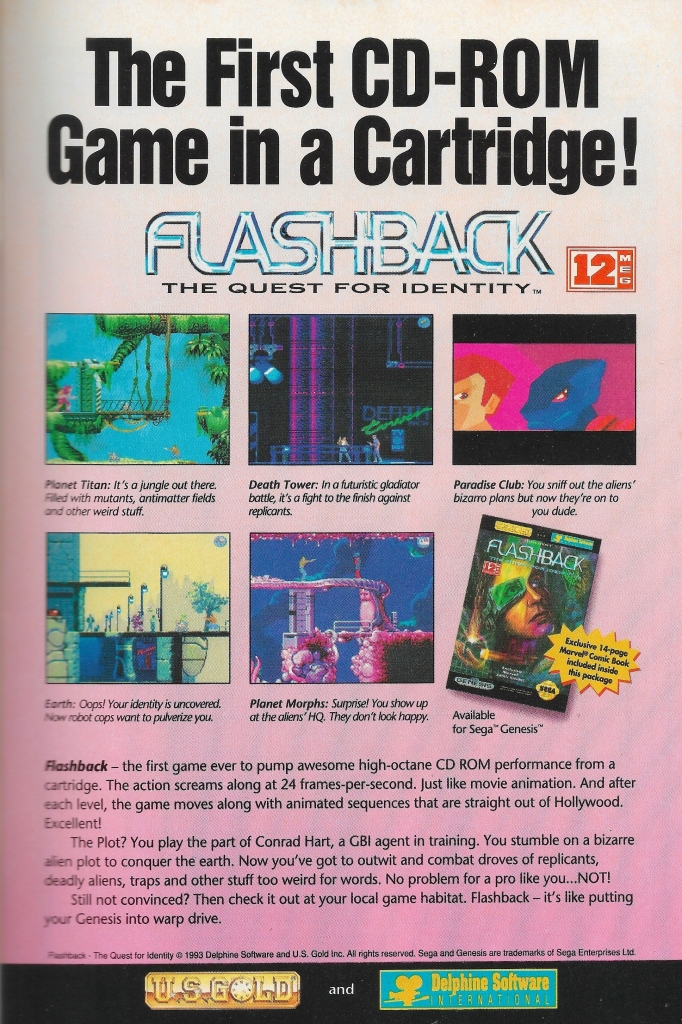
4. Flashback: The Quest for Identity print ad

This was indeed an eye-catching print ad.

Back in the 1990s, the CD-ROM was cutting edge technology in the world of computing and CDs (compact discs) helped game companies have their game content as well as multimedia files (example: full motion videos or animated scenes) released together conveniently. In the middle of the decade, a version of the game Flashback: The Quest for Identity (note: a game with computer-generated animation scenes previously released on PC) was released in cartridge format for the Sega Genesis as well as the Super Nintendo Entertainment System (SNES). This was a big deal back in the days of the so-called 16-bit console war and the above print ad clearly emphasized it with the description “The First CD-ROM Game in a Cartridge!” The advertisers also assured consumers that the in-game 24 frames-per-second frame rate, the Hollywood-inspired high-quality visuals and related gameplay elements were intact for consoles. When I saw this particular ad, I became convinced to buy the game for my SNES (read my retro review by clicking here). To see how Flashback looks like on Sega Genesis, watch this.

5. Albert Odyssey: Legend of Eldean print ad

To make things clear, Albert Odyssey: Legend of Eldean is not based on any anime property. It was the 3rd game of its series and the first and only one to be released in English.

There is no denying the fact that Working Designs (closed since 2005) contributed a lot to console gaming by localizing and releasing several Japanese role-playing games (JRPGs) in America at a time when such games were not yet popular. Apart from the Lunar RPGs and Dragon Force, the company brought Albert Odyssey: Legend of Eldean to the Sega Saturn console in America and they had a very eye-catching print ad promoting it. Like their ads for Lunar RPGs, the Albert Odyssey: Legend of Eldean print ad had a dominating anime-style artwork that highlighted the fantasy concept and characters, plus screenshots and in-game animated (note: not anime but detailed pixel artworks) sequences that were meant to attract RPG enthusiasts and gamers looking for the next-generation console gaming experiences. It should be noted that Albert Odyssey: Legend of Eldean was actually the 3rd game of its franchise that started in Japan, and it was the first and only Albert Odyssey game to ever be released in English. To this day, Albert Odyssey: Legend of Eldean still has not been re-released nor remastered for other consoles and original Sega Saturn copies of the game are very expensive to acquire. That being said, this particular print ad is a lively reminder of Albert Odyssey’s only Western release.

6. Resident Evil 3: Nemesis print ad

Capcom efficiently showed the new monster Nemesis, screenshots of the game and the return of Jill Valentine in this 1999 print ad.

After the release of the best-selling and acclaimed Resident Evil 2, Capcom approved the production of several Resident Evil projects that include sequels and spin-offs. Along the way, Sony announced in 1999 that the PlayStation 2 console will come out in 2000 and this had an impact on Capcom’s RE projects as many of them were being developed for the aging PlayStation (PS1) console. Before the PS2 announcement, Capcom had a PS1 RE game project with its story set on a cruise ship. That project was abandoned following the PS2 announcement and because Capcom did not want to leave its fans to wait too long for another Resident Evil adventure on PS1, they reviewed their list of proposed spin-off games and went ahead making Resident Evil 3: Nemesis (Japanese title: Biohazard 3: Last Escape) for a late 1999 release while the PS1 console was still in good demand.  

In the above 1999 print ad, Resident Evil 3: Nemesis was shown with 3 screenshots assuring RE fans that the game has the tried-and-tested design of polygonal characters/monsters moving within pre-rendered environments, the action, the horror and adventure elements of the previous games. More notably, the new monster Nemesis had the biggest image and he rightfully became the main antagonist until the very end.

Lastly, the RE3 print ad featured the return of Jill Valentine (one of the protagonists of the first Resident Evil) and this time she had a clear sexualized look wearing a tube top and a mini-skirt. As I mentioned in my RE3 retro game review, I believe that the sexualized look of Jill was done by the game developers who were most likely influenced by the sexy appeal and iconography of the character Lara Croft from the Tomb Raider series of games. Like Lara Croft, Jill is sexy and capable of fighting with guns and other weapons. Whatever the intention of Capcom and the development behind the game, the print ad (which even had wrongful details about the timing of the story) clearly worked on getting RE fans and gamers’ attention as Resident Evil 3: Nemesis sold more than 3 million copies on PS1.

+++++

Thank you for reading. If you find this article engaging, please click the like button below, share this article to others and also please consider making a donation to support my publishing. If you are looking for a copywriter to create content for your special project or business, check out my services and my portfolio. Feel free to contact me with a private message. Also please feel free to visit my Facebook page Author Carlo Carrasco and follow me on Twitter at  @HavenorFantasy as well as on Tumblr at https://carlocarrasco.tumblr.com/ and on Instagram at https://www.instagram.com/authorcarlocarrasco

Eiyuden Chronicle and Suikoden creator Yoshitaka Murayama passed away

Once the anticipated Japanese role-playing game (Japanese RPG) Eiyuden Chronicle: Hundred Heroes finally comes out on April 23, 2024, the absence of the main creator will be felt by many players as the Japan-based Rabbit & Bear Studio announced very recently that its head Yoshitaka Murayama passed away on February 6. For the newcomers reading this, Murayama is also the creator of the Suikoden RPG series of Konami where he used to work at. For my previous blog posts of Eiyuden Chronicle: Hundred Heroes, click here, here, here and here).

To put things in perspective, posted below is the excerpt from the official announcement by Rabbit & Bear Studios. Some parts in boldface…

So there you have it. The developer behind Eiyuden Chronicle: Hundred Heroes made it clear that they will not give up with fulfilling the dream of the late Murayama and there is no stopping the launch of the game (which was supposed to have been released in 2023).

More on the previous works of the late Murayama, I played Suikoden and Suikoden II (read my retro review by clicking here) on the PlayStation console in the 1990s and I had enjoyable times with them. For me, Suikoden II was the not only the best Suikoden RPG of the 1990s but also one of the best RPGs on any platform during the decade. It’s just too bad that the 1999 North American launch of Suikoden II was overshadowed by another company’s JRPG on PlayStation that same year. Considering the many Japanese RPGs that were released on PlayStation in 1999, Suikoden II was the most enjoyable one I played.

Even during his days as a young man working for Konami in the 1990s, Murayama had a very unique vision for digital role-playing and adventuring, as well as fantasy storytelling.

“Eiyuden Chronicle is really (an) evolution of my many design experiences. The many games I’ve made have helped create the foundation for this title. Since I draw my experience from previous games I’ve worked on, of course you will see a little bit of those elements in Eiyuden Chronicle,” Murayama said in response to a question that mentioned Eiyuden Chronicle and Suikoden titles.

With Murayama gone, the spotlight on the April 2024 launch of Eiyuden Chronicle: Hundred Heroes will be more crucial than before. I myself will be playing the RPG on my Xbox Series X console as soon as it launches. To get yourselves oriented with the said JRPG, watch the videos below (the last one shows Murayama and his fellow creators as special guests at an event in Taipei)…

Watch out for Eiyuden Chronicle: Hundred Heroes on Xbox Series X, Xbox Series S, Xbox One and Windows PC plus Xbox Game Pass (XGP) on April 23, 2024. For more about the JRPG, visit https://www.xbox.com/en-US/games/eiyuden-chronicle

+++++

Thank you for reading. If you find this article engaging, please click the like button below, share this article to others and also please consider making a donation to support my publishing. If you are looking for a copywriter to create content for your special project or business, check out my services and my portfolio. Feel free to contact me with a private message. Also please feel free to visit my Facebook page Author Carlo Carrasco and follow me on Twitter at  @HavenorFantasy as well as on Tumblr at https://carlocarrasco.tumblr.com/ and on Instagram athttps://www.instagram.com/authorcarlocarrasco
Do you want Capcom to release Breath of Fire RPGs on Xbox?

As an ecosystem, Xbox is becoming the premiere destination for gamers who love role-playing games (RPGs). Recently it was announced that Konami’s Suikoden franchise will debut on Xbox with the first two games in remastered forms in 2023. Next year, we will see the delayed Starfield and Eiyuden Chronicle: Hundred Heroes launch on Xbox Game Pass (XGP).

Given the fact that the Suikoden game franchise has always been very associated with the PlayStation brand and platform, its inevitable arrival on Xbox is indeed remarkable and it could inspire other Japanese game publishers to consider remastering their old Japanese role-playing games (JRPGs) and releasing them on the Xbox ecosystem.

I could only imagine the possibility of Capcom releasing their old Breath of Fire JRPGs on Xbox in remastered forms someday. I am interested to replay Breath of Fire IV as I never got to finish that game on the original PlayStation console (PS1). The most extensive Breath of Fire experience I had was Breath of Fire III which I managed to finish. While I never got to play the original Breath of Fire game, I played Breath of Fire II on a rented Super Nintendo Entertainment System (SNES).

It would be nice to replay Breath of Fire IV in remastered and improved form on my Xbox Series X. It’s up to Capcom to revive the franchise and make some new money with re-releasing old BOF games.

I don’t know what it would take to convince Capcom to remaster their old Breath of Fire games and have them released on Xbox One, Xbox Series S and Xbox Series X, but it would be worth a try for all JRPG-loving Xbox gamers to reach out to the Japanese publisher as well as executives of Team Xbox and express demand for those games.

For the most part, Breath of Fire RPGs have their unique take on fantasy as well as turn-based gameplay. I also noticed online gamers who are nostalgic not only with those games but also with recurring characters Ryu and Nina. Back in 2009, it was confirmed via Capcom’s online message boards that Breath of Fire as an intellectual property was put to rest.

A screenshot of Breath of Fire III.

In my honest opinion, having the old Breath of Fire games released on Xbox Game Pass will surely attract the attention of the subscribers who love JRPGs and potentially revive the franchise. Remastering will also give Capcom opportunities to not only enhance the visuals but also correct whatever errors or technical flaws they find in each game. Xbox Game Pass has a lively subscriber base and already XGP has the remastered Ni no Kuni which subscribers are enjoying. Recently, Persona 5: Royal was released on Xbox. If having Breath of Fire games on Xbox platforms and XGP are enticing to you, then I encourage you to reach out to Capcom, Xbox chief Phil Spencer, Sarah Bond, Aaron Greenberg, Team Xbox and Xbox Game Pass on Twitter now.

In concluding this article, posted below for your enjoyment are Xbox-related videos plus a few Breath of Fire videos.

+++++

Thank you for reading. If you find this article engaging, please click the like button below, share this article to others and also please consider making a donation to support my publishing. If you are looking for a copywriter to create content for your special project or business, check out my services and my portfolio. Feel free to contact me with a private message. Also please feel free to visit my Facebook page Author Carlo Carrasco and follow me on Twitter at  @HavenorFantasy as well as on Tumblr at https://carlocarrasco.tumblr.com/ and on Instagram athttps://www.instagram.com/authorcarlocarrasco

Remastered versions of Suikoden and Suikoden II are coming to Xbox in 2023!

During the recent Tokyo Game Show (TGS), Team Xbox had its livestream event which was a mix of surprises and game reveals. Xbox chief Phil Spencer and Xbox CVP Sarah Bond spent time emphasizing their gaming business as well as their commitment with the game creators and gamers in Japan.

While the sudden release of the remastered version of the hit Japanese role-playing game (JRPG) Ni no Kuni on Xbox platforms and Xbox Game Pass (XGP) was indeed surprising, there was another major surprise pulled off by Konami that includes Xbox for a release some time in 2023 – Suikoden I&II HD Remaster Gate Rune and Dunan Unification Wars. Watch the official English-language trailer below…

To put things in perspective, posted below is an excerpt from the official press release from Konami’s website. Some parts in boldface…

Announced during Tokyo Games Show 2022, KONAMI confirmed several fundamental improvements and quality-of-life features in the upcoming remaster collection:

Graphical Improvements

Pixel sprites and environment art enhanced with new screen effects including lighting, clouds, and shadow animations Flickering flames, smoldering smoke, the movement of leaves and insects, all add up to a lively in-game atmosphere!

The effects and direction have been redesigned, bringing memorable scenes back to life in more beautiful ways!

New Character Drawings

All character portraits have been updated in HD. Junko Kawano, who designed the characters for the original version of Suikoden released in 1995, has newly re-drawn all the character portraits for Suikoden I HD Remaster Gate Rune War.

Sound Improvements

Field Sound – A large number of environmental sounds not found in the original version, such as the sound of running water in the river, wind, insects, and running footsteps, have been added. You can enjoy an immersive experience like never before!

Battle Sound – All sound effects are now in HD. In addition to the impact of the 3D effects, the realistic sound greatly enhances the dynamism of the battles!

Game System Improvements

Many new features have been added, such as dialogue log, auto-battle, double-speed battles, etc.

Footage of the remastered Suikoden JRPG from Konami’s official trailer.
The 2D sprites look the same but they do look sharper in HD. Even the background elements look sharper.
World exploration in Suikoden is no longer the flat 2D map it used to be.

As I have played Suikoden and Suikoden II on the original PlayStation console in the 1990s, the announcement of Suikoden I&II HD Remaster Gate Rune and Dunan Unification Wars is big dream come true for me personally. I always wanted to replay Suikoden and Suikoden II without the hassle of having to spend a lot of money to buy a PlayStation or a Nintendo console. In my experience, Suikoden II is the peak of excellence of its own franchise as the creative team listened to the fans and learned from their shortcomings on making the first game which resulted in very rich gameplay, several fun features and compelling story. Suikoden II also remains a great example of using 2D sprites aided with 3D camera movements and some polygonal effects. Read my retro review of Suikoden II at https://carlocarrasco.com/2021/07/15/a-look-back-at-suikoden-ii-1999/

The lighting in this particular part of Suikoden II was enhanced to be dramatic looking.
Battle sequence from Suikoden II as shown in Konami’s trailer.
This touching scene from Suikoden II looks better than ever.

That being said, Suikoden I&II HD Remaster Gate Rune and Dunan Unification Wars coming to Xbox (note: Xbox One was officially listed as the Xbox console) is a big bonus not just for Xbox gamers who enjoy JRPGs but also for long-time gamers who loved the early Suikoden games who have not been spending much time with console gaming. As seen in the official press release from Konami as well as in the revealed footage in the official announcement trailer, there were several enhancements to make Suikoden and Suikoden II more presentable in today’s age of high-definition gaming. While the 2D sprites and in-game art works of the two classic JRPGs look the same (note: with some minor adjustments), I noticed the improvements on sound effects, the in-game lighting, some adjustments on textures, the higher resolution resulting in sharper images, and the redrawn character portraits (in the first game specifically).

Suikoden I&II HD Remaster Gate Rune and Dunan Unification Wars coming to Xbox is looking like a great addition on the Xbox ecosystem’s growing global appeal as the haven for fantasy RPGs gamers and also for gamers who like other types of role-playing games! For Konami, selling the two classic JRPGs on Xbox could mean bigger sales than what they achieved on PlayStation decades ago. Remember that 2023 will see the eventual release of Eiyuden Chronicle: Hundred Heroes and the Xbox-eclusive Starfield. Right now, Konami is still at work on enhancing the remastered Suikoden and Suikoden II and they will have to decide which date in 2023 should mark the release. Personally, I can hardly wait to play Suikoden I&II HD Remaster Gate Rune and Dunan Unification Wars on my Xbox Series X console. Watch out for Konami’s announcement of the official 2023 release date. Also, here is hoping Konami will do a good job remastering the two classic JRPGs and that the promises they made in their press release will be fulfilled.

For the newcomers reading this, the Suikoden game franchise’s core concept has been based on the motif of the Chinese classic novel Water Margin and the creative team back then (led by a very young Yoshitaka Murayama who is now leading Rabbit & Bear studios making Eiyuden Chronicle: Hundred Heroes) created role-playing games that had engaging fantasy stories, feature-rich gameplay and a wide lineup of characters who collectively contribute to the game endings. The first Suikoden RPG of the mid-1990s follows a protagonist whose father is one of the empire’s five generals, as he gathers his 108 Stars of Destiny and friends to fight against the oppressive rule of the Empire in ruin. Suikoden II happens three years after the first game’s story, further evolving the game systems unique to Suikoden, such as Rune magic, the 108 Stars of Destiny, home base management, and Army Battles, which were well received in the previous game. Three childhood friends, including the protagonist, are tossed about by a great whirlpool of destiny.

Historically speaking, the Suikoden video game franchise has been strongly identified with PlayStation platforms. Suikoden and Suikoden II were released on the first PlayStation console while Suikoden III, Suikoden IV and Suikoden V were released on PlayStation 2. There were also some versions of Suikoden games that got released on Sega Saturn, Windows PC and Nintendo platforms. That being said, the inclusion of Xbox One as a platform for the upcoming Suikoden I&II HD Remaster Gate Rune and Dunan Unification Wars is very notable, even exceptional.

Watch out for Suikoden I&II HD Remaster Gate Rune and Dunan Unification Wars on Xbox in 2023. Also, I encourage you all to follow the official Suikoden Twitter account.

+++++

Thank you for reading. If you find this article engaging, please click the like button below, share this article to others and also please consider making a donation to support my publishing. If you are looking for a copywriter to create content for your special project or business, check out my services and my portfolio. Feel free to contact me with a private message. Also please feel free to visit my Facebook page Author Carlo Carrasco and follow me on Twitter at  @HavenorFantasy as well as on Tumblr at https://carlocarrasco.tumblr.com/ and on Instagram athttps://www.instagram.com/authorcarlocarrasco

Persona games coming to Xbox consoles, Windows PC and Xbox Game Pass (XGP) at last!

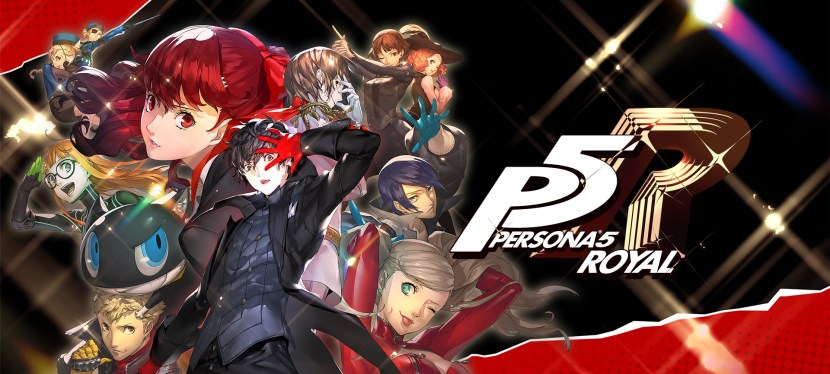
Anyone who owns an Xbox console or a Windows PC who loves Japanese role-playing games (JRPGs) should be delighted to know that the popular Persona game franchise will have three of its established games released for Xbox One, Xbox Series X, Xbox Series S and Windows PC with availability through Xbox Game Pass (XGP) soon as confirmed in the recent Xbox-Bethesda games showcase! For clarity, Persona 5 Royal is slated for an October 21, 2022 release.

For starters, watch the official video below…

To understand the Persona games better, posted below is an excerpt from the official article published at Xbox.com written by SEGA Communications Manager Stacy Lee. Some parts in boldface…

Cheers to 25 years of Persona! In this very special anniversary year, we are bringing the worldwide hits Persona 5 Royal, Persona 4 Golden, and Persona 3 Portable to Xbox One, Xbox Series X|S, Windows PC, and with Xbox Game Pass. Starting this fall, fans will get to experience this beloved RPG series.

To kick things off, on October 21, don the mask of Joker and join the Phantom Thieves of Hearts when Persona 5 Royal arrives with Xbox Game Pass, Xbox Series X|S, Xbox One, and Windows PC. We’ll have more to share on the release of Persona 4 Golden and Persona 3 Portable so be sure to stay tuned here to Xbox Wire.

For those who missed out on these games originally, or are excited to play Persona on Xbox and Windows PC, the 25th Anniversary is a great time to join in the celebration. Here’s a quick refresher on each game:

Persona 3 Portable – If I say there’s an hour “hidden” between one day and the next… would you believe me? This unknown time is the “Dark Hour.” Unfamiliar stillness swallows the city, people turn into eerie coffins, and otherworldly monsters called Shadows swarm. One night, the protagonist is attacked by these Shadows. When all hope seems lost, the power of the heart, their Persona, is awakened.

Persona 4 Golden – They say your soulmate will appear if you stare into a television set on a rainy night… This strange rumor slowly spreads through the rural town of Inaba, the protagonist’s new home, just as a chain of mysterious murders begin. As the protagonist and his teammates chase after the truth, they find themselves opening the door to another world.

Persona 5 Royal – Forced to transfer to a high school in Tokyo, the protagonist has a strange dream. “You truly are a prisoner of fate. In the near future, ruin awaits you.” With the goal of “rehabilitation” looming overhead, he must save others from distorted desires by donning the mask of a Phantom Thief.

In my personal experience, the one and only Persona video game I ever played was Revelations: Persona on the original Sony PlayStation way back in 1996. I never finished that game but I spent many hours playing it and that includes the loading times and the not-so-efficient pacing of the gameplay.

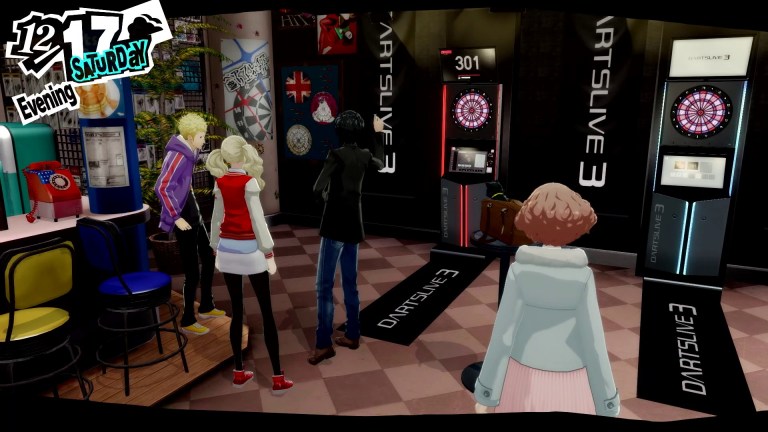
Image from Persona 5 Royal.

The upcoming release of the recent Persona RPGs on Xbox and Windows PC with access through Xbox Game Pass (XGP) should help the franchise reach even more gamers worldwide. As far as Japanese gaming goes on Xbox right now, I enjoyed finishing Eiyuden Chronicle: Rising on my Xbox Series X and I’m looking forward to the Suikoden-inspired Eiyuden Chronicle: Hundred Heroes RPG which will be released sometime next year. Square Enix has Star Ocean: The Divine Force and The Diofeld Chronicle coming to Xbox this year but no release dates have been announced as of this writing. Most recently, Square Enix announced that Crisis Core: Final Fantasy VII Reunion will be released on Xbox consoles although no release date has been announced.

Combined with those mentioned Japanese games or JRPGs to be exact, the addition of Persona games is indeed a welcome addition to the Xbox ecosystem which has lots of gamers craving for such games. It’s nice to see that Team Xbox head Phil Spencer has been working hard negotiating with Japanese game companies and makers to release their games into the Xbox ecosystem. In fact, during the Xbox-Bethesda showcase, a special Xbox project with Hideo Kojima’s company was confirmed to be real and there was also the announcement of an Xbox release of Wo Long: Fallen Dynasty developed by Team Ninja.

Let me end this piece by ask you readers: Are you happy that the Persona game franchise is coming to Xbox with the mentioned three games? Do you think that more Japanese RPGs and other kinds of games made by Japanese game developers will continue to be released on Xbox? What other past JRPGs do you want to see released on Xbox and Xbox Game Pass? Do you think that all the JRPGs already announced coming to Xbox and mix in with Western RPGs (examples: Starfield, Fable reboot, The Outer Worlds 2 and Avowed to name a few) will result a wide variety of games for those who love playing role-playing games? Do you see Xbox as the definitive ecosystem for RPGs right now?

You may answer in the comments below. If you prefer to answer privately, you may do so by sending me a direct message online.

+++++

Thank you for reading. If you find this article engaging, please click the like button below and also please consider sharing this article to others. If you are looking for a copywriter to create content for your special project or business, check out my services and my portfolio. Feel free to contact me with a private message. Also please feel free to visit my Facebook page Author Carlo Carrasco and follow me on Twitter at  @HavenorFantasy as well as on Tumblr at https://carlocarrasco.tumblr.com/ and on Instagram athttps://www.instagram.com/authorcarlocarrasco/
Chrono Cross: The Radical Dreamers Collection all set for release on Xbox and Windows PC on April 7, 2022

Way back in 2000, I got to play Chrono Cross on the PlayStation which was a hot release from Squaresoft. Due to a lack of time as well as the breaking down of the console (bought in late 1996), I never got to finish the Japanese role-playing game (JRPG).

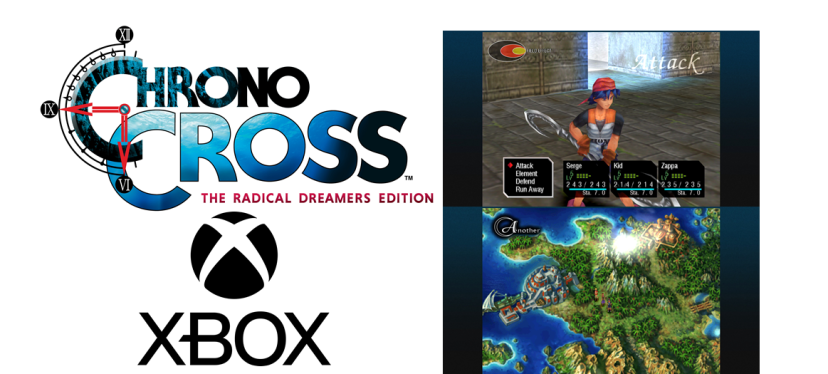
Just days ago, I got very surprised as Square Enix announced that it will be re-releasing Chrono Cross in remastered form in Chrono Cross: The Radical Dreamers Edition which is set for an April 7, 2022 release on Xbox One (compatible with Xbox Series X and Xbox Series S) and Windows PC (via Steam). The good news is that you can order it already online now for only $19.99. Anyway, watch the official video below…

To put things in perspective, posted below are excerpts from the official announcement by Square Enix. Some parts in boldface…

CHRONO CROSS, which was never before released in Europe, returns as a remaster in CHRONO CROSS: THE RADICAL DREAMERS EDITION. Follow the story of Serge, who stumbles into another world and learns of the connection between his existence and the future of his planet. A classic time-bending tale of adventure and friendship, featuring one of the largest and most diverse casts of playable characters of any RPG. With over 40 potential party members, each character brings their own element affinity and unique skills. Additionally, “RADICAL DREAMERS  – Le Trésor Interdit -“, a text-based adventure video game released for Satellaview in 1996, which forms the bedrock of the story, is also included in this edition.

Players can look forward to some exciting new features, such as:

  • 3D models converted to HD*
  • Brand new artwork and character redesign by Nobuteru Yuuki*
  • Refined background music by Yasunori Mitsuda
  • Switch enemy encounters on or off
  • Background filter feature*
  • Battle enhancement features
  • Auto-battle function
  • French, Italian, German and Spanish localization now added
  • Switch between imitation pixel font and HD font*
  • The inclusion of Radical Dreamers, never before released in the West. 
  • Players can choose between playing with original or updated graphics*
Graphics, text and art in the game got cleaned up and look sharper than before.
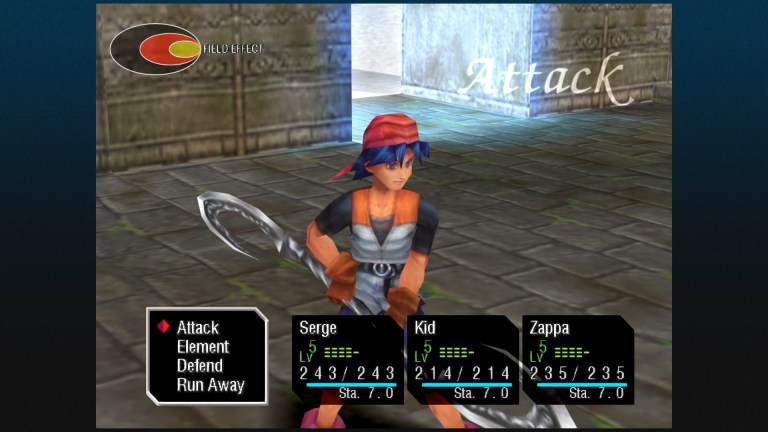
In-game options during battle.
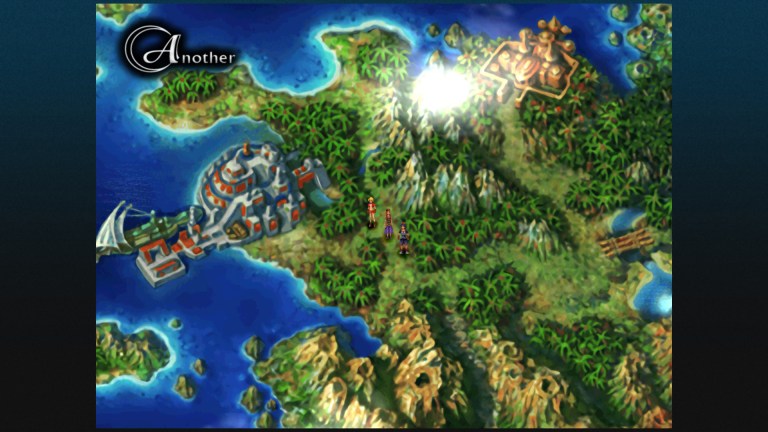
The world map from a distance.

As I am writing this, I still am very surprised by the announcement as I never anticipated Chrono Cross would be made for Xbox, even though I wanted Square Enix to release many of its RPGs – both classic or modern ones – on Xbox. It is, however, nice to see Square Enix including Xbox in the worldwide release of Chrono Cross: The Radical Dreamers Edition which is one of many Japanese RPGs (Japanese role-playing games) that has always been identified with PlayStation. Its strong legacy with PlayStation even made certain gamers – including the people who hate Xbox – believe that it would never ever be released on any Xbox console. Well, Square Enix proved them wrong and it is clear that the company needs to sell to the many gamers who own an Xbox One or Xbox Series X or Xbox Series S console. The Windows PC release through Steam makes business sense.

Be reminded that Square Enix is set to release Star Ocean: The Divine Force on Xbox consoles and Windows PC sometime this year, while Stranger of Paradise: Final Fantasy Origin will be released on the same platforms on March 4, 2022! To all Xbox gamers reading this, we as consumers can convince Square Enix to release even more games to our platforms by buying their games. Chrono Cross: The Radical Dreamers Edition on Xbox is something worth looking forward to.

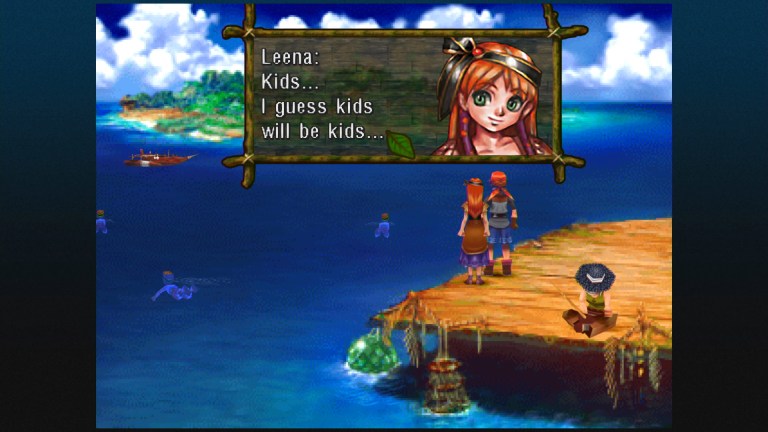
A short scene taking place.

For the newcomers reading this, Chrono Cross is set in the same world as the classic JRPG Chrono Trigger. It should not be perceived as a sequel. On its own, Chrono Cross was very playable and engaging, and it is notable for allowing players to recruit lots of characters and take them on quests as they play along. As for the common elements between Chrono Cross and Chrono Trigger, learn from producer and designer Hiromichi Tanaka’s statement below.

When creating a series, one method is to carry over a basic system, improving upon it as the series progresses, but our stance has been to create a completely new and different world from the ground up, and to restructure the former style. Therefore, Chrono Cross is not a sequel to Chrono Trigger. Had it been, it would have been called Chrono Trigger 2. Our main objective for Chrono Cross was to share a little bit of the Chrono Trigger worldview, while creating a completely different game as a means of providing new entertainment to the player. This is mainly due to the transition in platform generation from the SNES to the PS. The method I mentioned above, about improving upon a basic system, has inefficiencies, in that it’s impossible to maximize the console’s performance as the console continues to make improvements in leaps and bounds. Although essentially an RPG, at its core, it is a computer game, and I believe that games should be expressed with a close connection to the console’s performance. Therefore, in regards to game development, our goal has always been to “express the game utilizing the maximum performance of the console at that time.” I strongly believe that anything created in this way will continue to be innovative.Hiromichi Tanaka (source – GamePro)

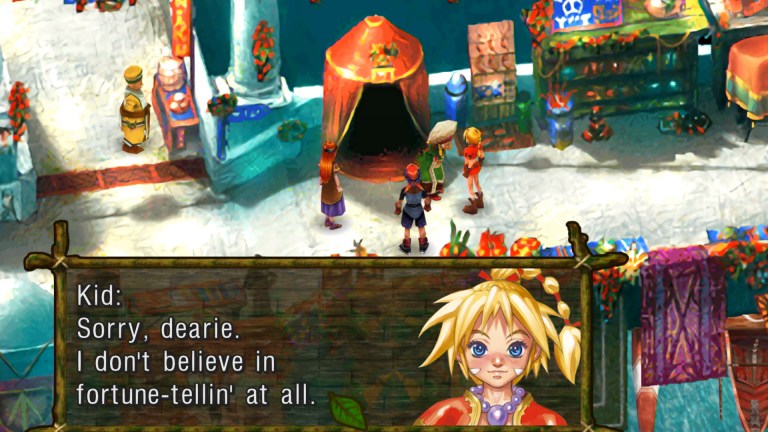
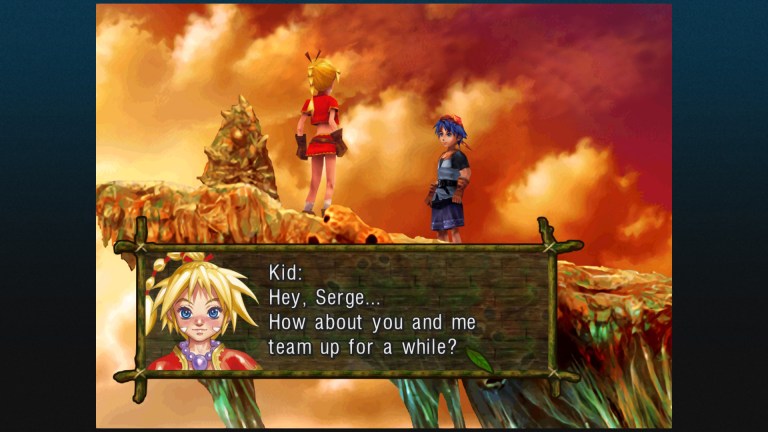
Kid interacting with Serge.

As I mentioned already before, Xbox is becoming the definitive and best place to play RPGs. If it is Japanese RPGs you want on Xbox, Square Enix’s upcoming releases are not just the only ones to look forward to as there are also the Eiyuden Chronicle RPGs coming as well! Already 2022 is looking great for Xbox gaming and there is also the much anticipated Xbox-exclusive RPG juggernaut Starfield from Bethesda coming before the end of this year!

In closing this piece, posted below are Xbox-related videos plus a few Chrono Cross-related videos for your viewing pleasure.

+++++

Thank you for reading. If you find this article engaging, please click the like button below and also please consider sharing this article to others. If you are looking for a copywriter to create content for your special project or business, check out my services and my portfolio. Feel free to contact me with a private message. Also please feel free to visit my Facebook page Author Carlo Carrasco and follow me on Twitter at  @HavenorFantasy as well as on Tumblr at https://carlocarrasco.tumblr.com/

A Look Back at The Super Dimension Fortress Macross: Do You Remember Love? (Sega Saturn, PlayStation)

Disclaimer: This is my original work with details sourced from playing The Super Dimension Fortress Macross: Do You Remember Love? video game and doing personal research. Anyone who wants to use this article, in part or in whole, needs to secure first my permission and agree to cite me as the source and author. Let it be known that any unauthorized use of this article will constrain the author to pursue the remedies under R.A. No. 8293, the Revised Penal Code, and/or all applicable legal actions under the laws of the Philippines.

If you have been reading my Macross-related articles over the past few years, you should know already that I deeply love watching Macross: Do You Remember Love?, the classic anime feature film co-directed by Noboru Ishiguro and the legendary Shoji Kawamori.

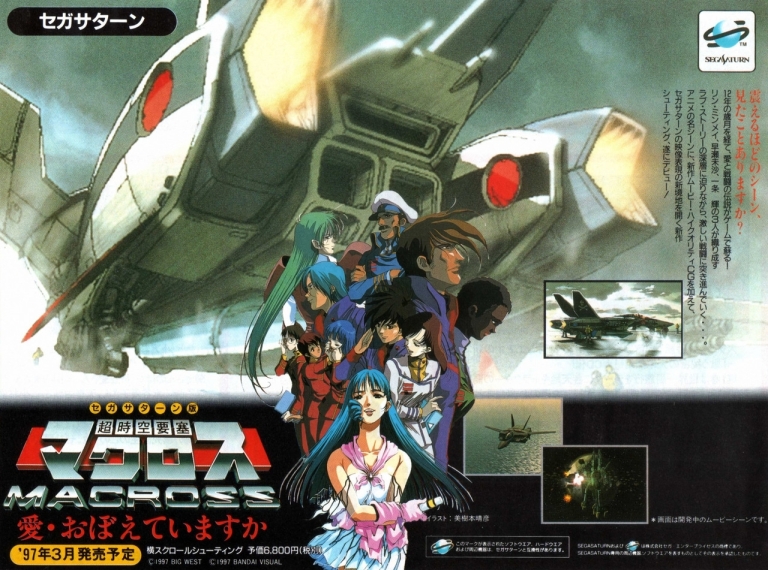
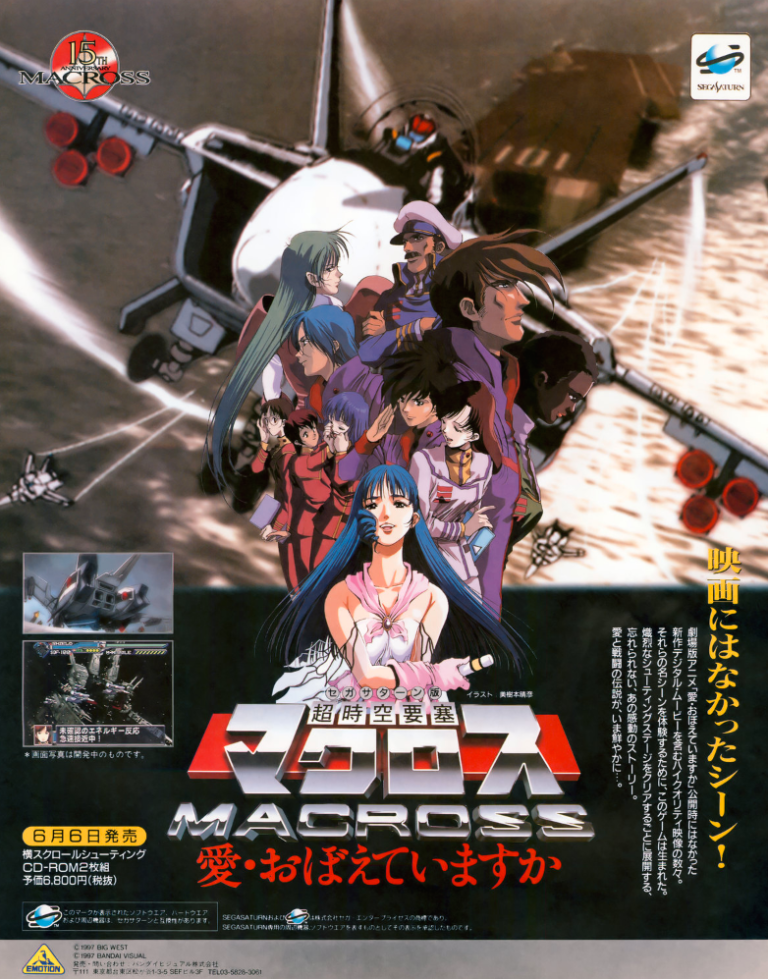
Like many other entertainment franchises in Japan, Macross also has video games based on its stories and concepts. During the fifth generation of video game consoles, Bandai released in Japan the video game adaptation of the 1984 anime movie on the Sega Saturn in 1997 and the Sony PlayStation in 1999. That game was titled The Super Dimension Fortress Macross: Do You Remember Love? and I played that 2D side-scrolling shoot-them-up game a lot during the time when 3D polygons was already the standard.

Considering its age, it is easy to wonder if the game is still fun to play by today’s standards and if the game is something that Macross fans can enjoy a lot. We can all find out in this look back at The Super Dimension Fortress Macross: Do You Remember Love?

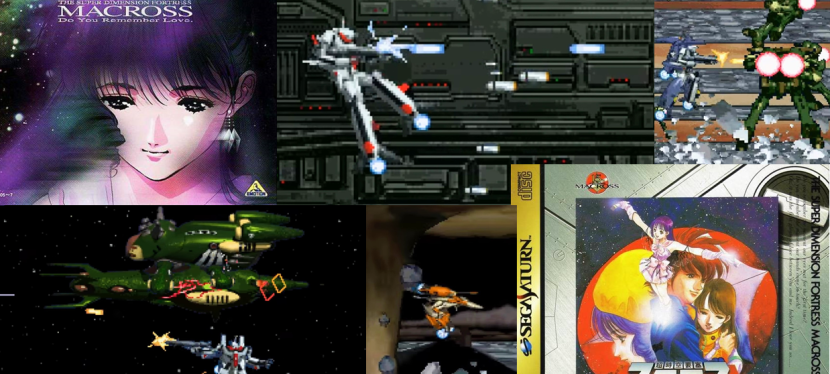
Sega Saturn version in 1997.
Sony PlayStation version in 1999.

Early story

The story begins at sea. A Valkyrie piloted by Hikaru Ichijyo (the late Arihiro Hase) launches from the aircraft carrier Prometheus to join his teammates Max and Kakizaki led by Roy Fokker (Akira Kamiya). Suddenly a powerful beam of energy from above hits the aircraft carrier clearly showing that their world is under attack by the Zentradi.

They proceed to South Attaria Island where they immediately engaged the Zentradi forces that ravaged the city and causing trouble for the SDF-1 (Macross). After defeating several Zentradi elements, the remaining Skull Squadron forces flew to the Macross (which just launched into the air) which executes a space fold just moments before even more laser blasts from the Zentradi destroyed the entire island.

Sometime later deep in space, thousands of civilians managed to adjust to living inside the Macross. As Lynn Minmay’s (Mari Iijima) first concert happens inside the fortress, Hikaru, his teammates and many other fighters engage in a mission against the Zentradi…

Quality

Just like in the movie!

To comment on the quality of this old video game, I’ll focus on gameplay and presentation.

As far as gameplay goes, Macross: DYRL is essentially a 2D side-scrolling shooter literally designed to be grand not only for Macross fans but also for gamers who enjoy its design and its type of gameplay. You play as the hero Hikaru who pilots an advanced fighter plane that can also transform into an armed fighter with legs (GERWALK mode) and also into a full-sized, human-like robot (Battroid). In fighter mode, you move fast and are able to fire rockets or use your default gun. In GERWALK mode, your speed is slower but you have improved mobility that can be crucial for combat. In Battroid mode, your speed is reduced further but you are somewhat stronger and more precise when it comes to shooting enemies.

Still on gameplay, the game developers really pushed the envelope in terms if immersion as there are lots of moments in which the enemies will not only face you on your 2D plane but also move around you from the foreground to the background. Without having to do anything further, your character will be able to auto-aim and shoot at your enemy whether in the background or the foreground. Essentially, this makes the game a 2.5D shooter.

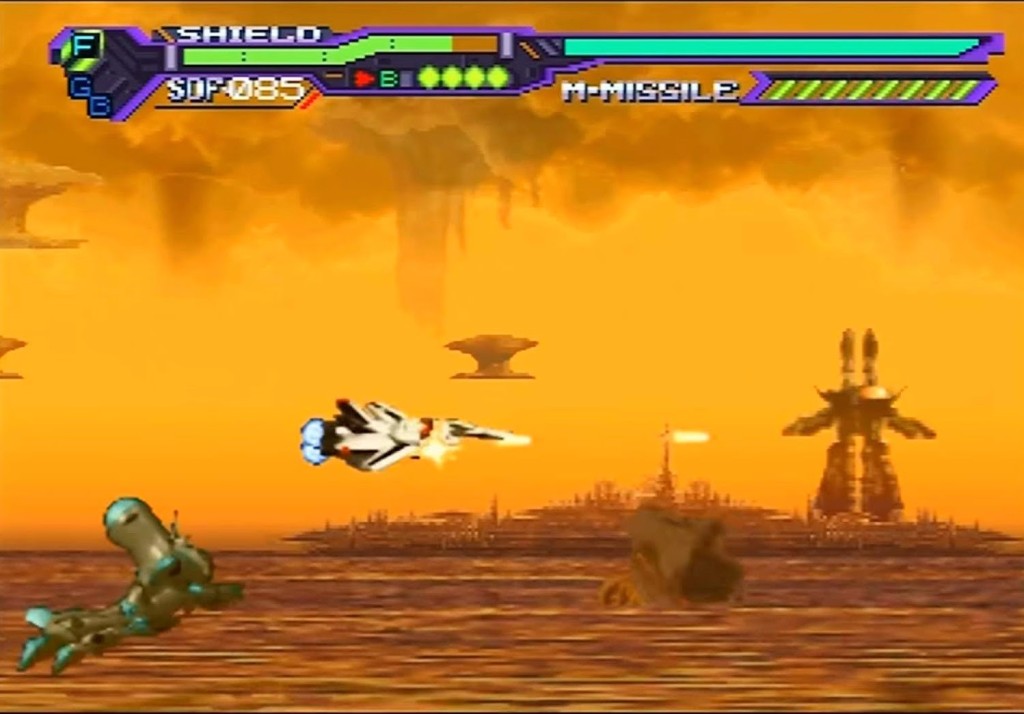
This is a fine example of you (in your 2D plane) firing at your enemy in the background.
In key parts of some levels in the game, the UN Spacy will send a shuttle to release supplies to help you replenish your shield meter.

The controls are relatively easy to learn and get adjusted to. More importantly, the controls are very responsive and they are ideal when it comes to precision on moving your character around as well as trying to shoot at specific targets.

This game was designed with several levels for you to complete essentially moving from left to right. As evidence of the game developers taking liberties during its adaptation of elements from the 1984 animated movie, several levels have boss fights for you to participate in and win in order to progress. These boss-type enemies are noticeably absent from the movie and yet they were designed to integrate into the film’s concept and also expand the concept about how elaborate the Zentradi are when it comes to their war machines against Earth. The boss-type enemies (note: they are clearly polygonal and yet they fit in well with the 2D sprite elements) are huge machines designed for space battles and there were boss fights in which some of them move into the background (which sparks moments for your character to fighter towards the background). When it comes to artificial intelligence (AI), the boss-type enemies are not really that sophisticated with their movements although a few of them have attack patterns that will push you to be more evasive and more strategic.

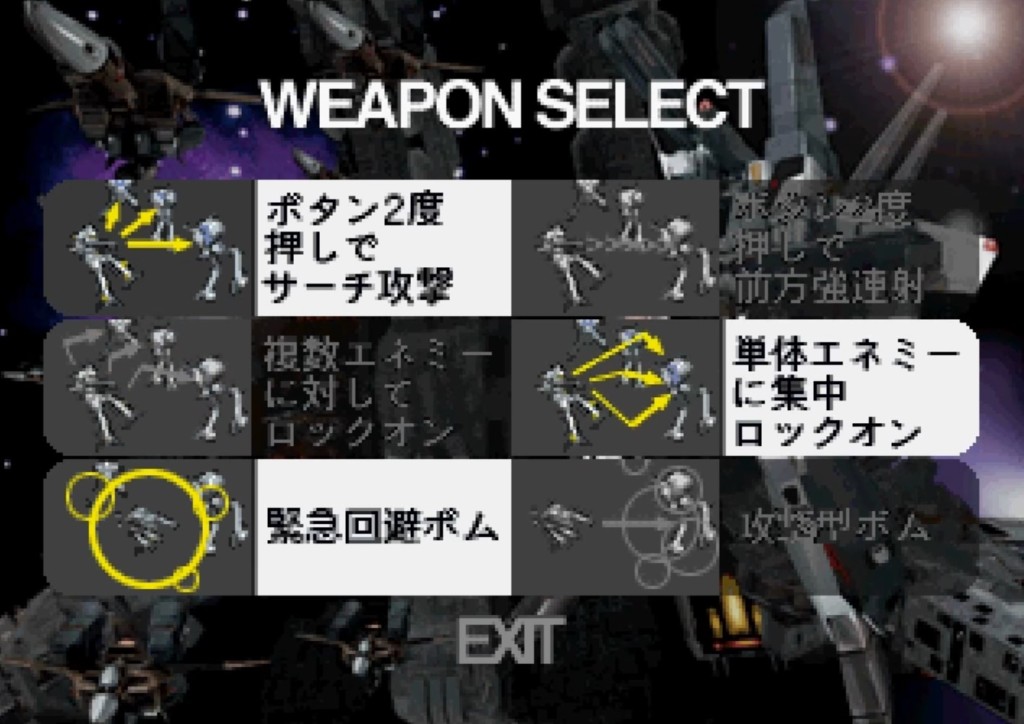
Before starting a level, you can select your weapons that can function depending on your personal preference on taking on the enemies.
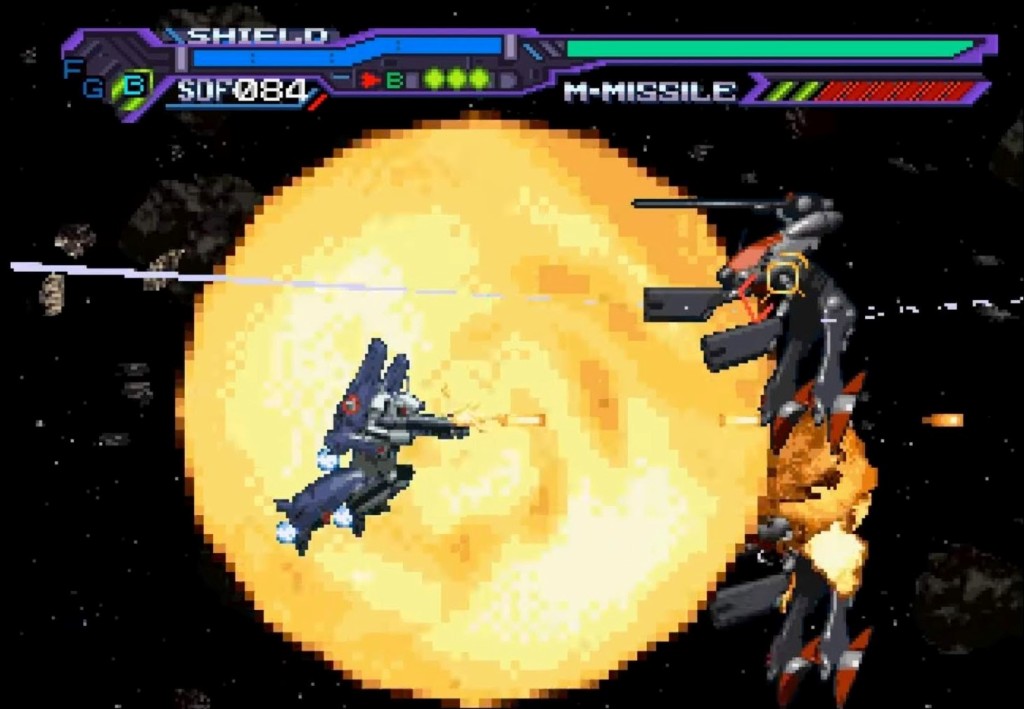
Lots of great visual effects and 3D movement add to the challenge.

With regards to challenge, some parts of this game took me a few repeats before finally improving myself enough to make it to the next levels. The visual elements of the game also added to the overall challenge as seeing 2D sprites move around you 3-dimensionally.

Speaking of 2D sprites, it is clear that this game was designed to be heavy with 2D visual elements while 3D polygons are used sparingly (note: the boss battles mentioned above). As this is a side-scrolling game, the game makers clearly made lots of sprites of machines, space ships, Zentradi battle pods and other figures that Macross fans would easily recognize. The good news is that each 2D sprite was made with multiple frames of animation (complete with frames meant for 3D movement) and were made to really resemble the cinematic artworks which ultimately results making them really look lively to watch on-screen!

As for the presentation, I can see that the game developers Scarab paid great attention to the details of the animated movie to make The Super Dimension Fortress Macross: Do You Remember Love? fun and engaging for gamers in general while also becoming strongly relevant and delightful with the people who love Macross. For example, the game starts with a cinematic prologue composed of brand-new animation cels mixed with elements of 3D polygons and in my view, it fits in nicely leading to the actual cinematic opening of the movie from 1984. The cinematic prologue was meant to expand the film’s overall concept and other story expansions happened in subsequent parts of the game (such as the all-new mission told in two levels).

Observe the Zentradi surrounding Roy Fokker on his 2D plane, the foreground and background. This is a 2D sprite-heavy showcase!
The game developers paid close attention to the details of the movie and presented the visuals using video game graphics, 2D sprites and really nice in-game background artworks!
Surprise! You as Hikaru get to fight Milia temporarily before her memorable fight with Max happens!

The Super Dimension Fortress Macross: Do You Remember Love? came with selected animated sequences and still images from the 1984 movie’s very own footage meant for in-game storytelling (note: you still have to watch the movie for the best immersion). As there were some original scenes made for the game with expanding the film’s concept in mind, there are a few computer-generated animation sequences and even brand-new animated cels (note: very clearly they were drawn by people different from the ones who drew the film’s footage) showing some character moments.

When it comes to the audio, this game is clearly a labor of love with Macross fans in mind. Much of the music, songs and sound effects from the movie (as well as from the 1982-1983 anime TV series) were integrated into the game which made it very immersive for Macross fans. As for the voice actors, fans will hear the voices of their favorite Macross characters performed by the late Hase, Iijima, Kamiya, Mika Doi (Misa Hayase), Michio Hazama (Captain Global) and more. While some of their recorded lines from the movie were reused (especially Hase who died in 1996), others recorded new lines for their respective characters for the new cinematic footage as well as key parts in the game.

The art of Lynn Minmay for the new anime footage was clearly not drawn by the people behind the 1984 anime movie.

What I love best about the presentation is that the game developers replicated selected scenes from the 1984 movie using in-game graphics and art along with music, sound effects and the lines of dialogue! As a Macross fan myself, the immersion was pretty deep as I played the game and witnessed those special moments from the movie played within the in-game presentation.

Conclusion

Enjoy looking at this.

I can declare out loud that The Super Dimension Fortress Macross: Do You Remember Love? is indeed the best Macross video game I have ever played as well as the best adaptation (note: other than film) of the classic movie from 1984. This game, which excellently used 2D sprites and 3D polygons all throughout, was very clearly made to delight Macross fans while giving gamers something very enjoyable and memorable to experience. For the best immersion, it is highly recommended to watch the movie before playing this video game. Truly this video game has aged well!

Overall, The Super Dimension Fortress Macross: Do You Remember Love? (Sega Saturn, PlayStation) is highly recommended!

+++++

Thank you for reading. If you find this article engaging, please click the like button below and also please consider sharing this article to others. If you are looking for a copywriter to create content for your special project or business, check out my services and my portfolio. Feel free to contact me as well. Also please feel free to visit my Facebook page Author Carlo Carrasco and follow me at HavenorFantasy@twitter.com
Looking good on the way to Xbox Series consoles launch, Part 3

I should say it out loud. I am a long-time Xbox gamer (and I was once a PlayStation fanboy until I started playing Halo: Combat Evolved, Star Wars: Knights of the Old Republic and Forza Motorsport on the original Xbox console) and it is great that the next-generation Xbox Series S and Xbox Series X consoles will have backward compatibility right from the start.

Specifically, I started my Xbox journey (with an official Xbox LIVE account) in 2006 with the Xbox 360 console. I played lots of great games on that console such as Elder Scrolls IV: Oblivion, Halo 3, Forza Motorsport 4, Lost Odyssey, Assassin’s Creed III, Grand Theft Auto V, Red Dead Redemption, Elder Scrolls V: Skyrim and the Mass Effect trilogy just to name a few.

Even though the current 8th console generation was not too rosy for Xbox due to the weak 1st party game support on the part of Microsoft, I still enjoyed gaming on my Xbox One. The Outer Worlds was one of the best sci-fi RPGs I have ever played. Fallout 4 was just as engaging and as immersive Skyrim in my experience. Also I had great fun playing Red Dead Redemption 2.

That being said, I certainly do not want my past Xbox generation game collection – both physical media and digital copies – to just go to waste. This is why I really appreciate Team Xbox for implementing backward compatibility on the two Xbox Series consoles which will launch less than a month from now. I myself enjoyed replaying my favorite Xbox 360 games on my Xbox One  (a few among them were Red Dead Redemption, Lost Odyssey and the entire Mass Effect trilogy) and having the same feature for the next-generation is a very good thing!

On Xbox.com, Director of Program Management for Xbox Series X Jason Ronald explained the efforts their team made since the big breakthrough of 2015 plus other details about the tremendous addition of value backward compatibility brings to the Xbox Series S and Xbox Series X. Excerpt below:

Our compatibility journey began with the announcement of Xbox 360 Backwards Compatibility coming to Xbox One at E3 2015. I clearly remember that first magical experience of jumping into one of my favorite Xbox 360 games, Final Fantasy XIII, and instantly resuming where I had left off years before as if no time had passed at all. I was instantly transported back to that special time and all the great memories and personal connections I have made through gaming. The energy and passion from the community continues to motivate us to this day.

Through a tremendous amount of hard work, technical innovation, and partnership with the industry’s leading creators we were not only able to bring more than 500 Xbox 360 games to Xbox One, we were able to go back even further into the archives and resurrect some of your favorite franchises from the original Xbox. The very same team who created new innovative ways to preserve and enhance your existing catalog of games on Xbox One is the same team pushing the envelope again with Xbox Series X.

Maintaining compatibility presents a massive technical challenge as fundamental system and chip architectures advance across generations. Developers highly optimize their games to the unique capabilities and performance of a console to provide the best experience for their players. To make the Xbox Series X our most compatible console ever required both significant innovation in the design of the custom processor as well as the unique design of the Xbox operating system and hypervisor at the heart of our next generation platform.

With more than 100,000 hours of play testing already completed, thousands of games are already playable on Xbox Series X today, from the biggest blockbusters to cult classics and fan favorites. Many of us in Team Xbox play on the Xbox Series X daily as our primary console and switching between generations is seamless. By the time we launch this holiday, the team will have spent well over 200,000 hours ensuring your game library is ready for you to jump in immediately.

As seen in the paragraph right above, the 100,000 hours figure is very significant and it shows that no shortcuts were taken with regards to play testing and quality assurance. That figure is only rising and that is great dedication for not only Xbox fans with huge game collections but also consumers in general.

It should be noted that the more affordable Xbox Series S console will run backward compatibility a bit differently since it cannot render visuals in native 4K (it can however upscale in 4K). A September 14, 2020 update to Ronald’s article states:

the Xbox Series S runs the Xbox One S version of backward compatible games while applying improved texture filtering, higher and more consistent frame rates, faster load times and Auto HDR. As for next generation titles, Xbox Series S was designed to be the most affordable next generation console and play them at 1440P at 60fps.

The premium Xbox Series X console, unsurprisingly, has huge advantages for anyone who loves playing past games via backward compatibility. Enhanced visuals? Check! Improved frame rates? Check! Heavily reduced load times? Check! Much better performance? Check! Check out the excerpt below:

Not only should gamers be able to play all of these games from the past, but they should play better than ever before. Backwards compatible games run natively on the Xbox Series X hardware, running with the full power of the CPU, GPU and the SSD. No boost mode, no downclocking, the full power of the Xbox Series X for each and every backward compatible game. This means that all titles run at the peak performance that they were originally designed for, many times even higher performance than the games saw on their original launch platform, resulting in higher and more steady framerates and rendering at their maximum resolution and visual quality. Backwards compatible titles also see significant reductions in in-game load times from the massive leap in performance from our custom NVME SSD which powers the Xbox Velocity Architecture. As I play through my personal backlog as part of our internal testing, all of the incredible games from Xbox One and earlier play best on Xbox Series X.

The team was not content to just rely on the increased hardware performance to improve your playing experience. The team developed new platform level capabilities to ensure all of your games continue to get even better. In partnership with the Xbox Advanced Technology Group, Xbox Series X delivers a new, innovative HDR reconstruction technique which enables the platform to automatically add HDR support to games. As this technique is handled by the platform itself, it allows us to enable HDR with zero impact to the game’s performance and we can also apply it to Xbox 360 and original Xbox titles developed almost 20 years ago, well before the existence of HDR.

In addition, the new Quick Resume feature was designed to not only work with new games, but it can also be enabled for backward-compatible titles. Quick Resume enables players to resume exactly where they left off, across multiple titles, ensuring gamers can get right back to the fun in an instant.

Website Gaming Bolt recently published their own video explaining the so-called secrets of backward compatibility on Xbox Series X.

Going back to Jason Ronald’s article, it should be noted how dedicated their team is towards fans. The excerpt below:

Beginning with Xbox One X, the compatibility team developed brand new innovations that could be applied to a hand curated list of titles to enhance them even further than what was possible when they were first created. Techniques such as the Heutchy method, which enables titles to render with increased resolutions up to 4K, or applying anisotropic filtering to improve the final image quality bring these classic games up to modern standards, better than ever before.

With all of the additional power and advancements of the Xbox Series X, the compatibility team now has a veritable playground of new capabilities to innovate and push the limits of game preservation and enhancement. The compatibility team has invented brand new techniques that enable even more titles to run at higher resolutions and image quality while still respecting the artistic intent and vision of the original creators. We are also creating whole new classes of innovations including the ability to double the frame rate of a select set of titles from 30 fps to 60 fps or 60 fps to 120 fps.

The team also continues to listen to feedback from the community on additional titles you would like to see added to the compatibility program.

With the enhancements confirmed, check out Window Central Gaming’s comparative YouTube video of Monster Hunter World running on Xbox One X (currently the most powerful gaming console available) and Xbox Series X.

As of this writing, the backward compatibility feature on the Xbox Series consoles covers lots of titles of Xbox One, Xbox 360 and the original Xbox. What is expected not to be included are Kinect motion sensor games released on Xbox 360. On the side of PlayStation, PS5 is backward compatible with PS4 games only. Until now, Jim Ryan and Mark Cerny still have not figured out ways to make PS5 a compatible with the many, many games of PS1-PS2-PS3. Perhaps they never tried to do it at all, letting down their fans and consumers in general. It is weird because Sony used to be the shining example of video game backward compatibility starting with PlayStation 2 (PS2). Backward compatibility continued in the next generation with PS3 but only for the initial units. Subsequent PS3 consoles were made without the compatibility.

In ending this article, here are some more videos about Xbox Series X backward compatibility for your learning and enjoyment.

+++++

Thank you for reading. If you find this article engaging, please click the like button below and also please consider sharing this article to others. If you are looking for a copywriter to create content for your special project or business, check out my services and my portfolio. Feel free to contact me as well. Also please feel free to visit my Facebook page Author Carlo Carrasco and follow me at HavenorFantasy@twitter.com

For more Xbox-related stuff, check out the Xbox Series Philippines Facebook group at https://www.facebook.com/groups/XboxOnePH