A Look Back at Resident Evil: The Official Comic Book Magazine #3 (1998)

Welcome back, 1990s arts and culture enthusiasts, video game enthusiasts and comic book collectors! Today we go back to the late-1990s to examine another issue of the magazine-sized comic book series titled Resident Evil: The Official Comic Book Magazine.

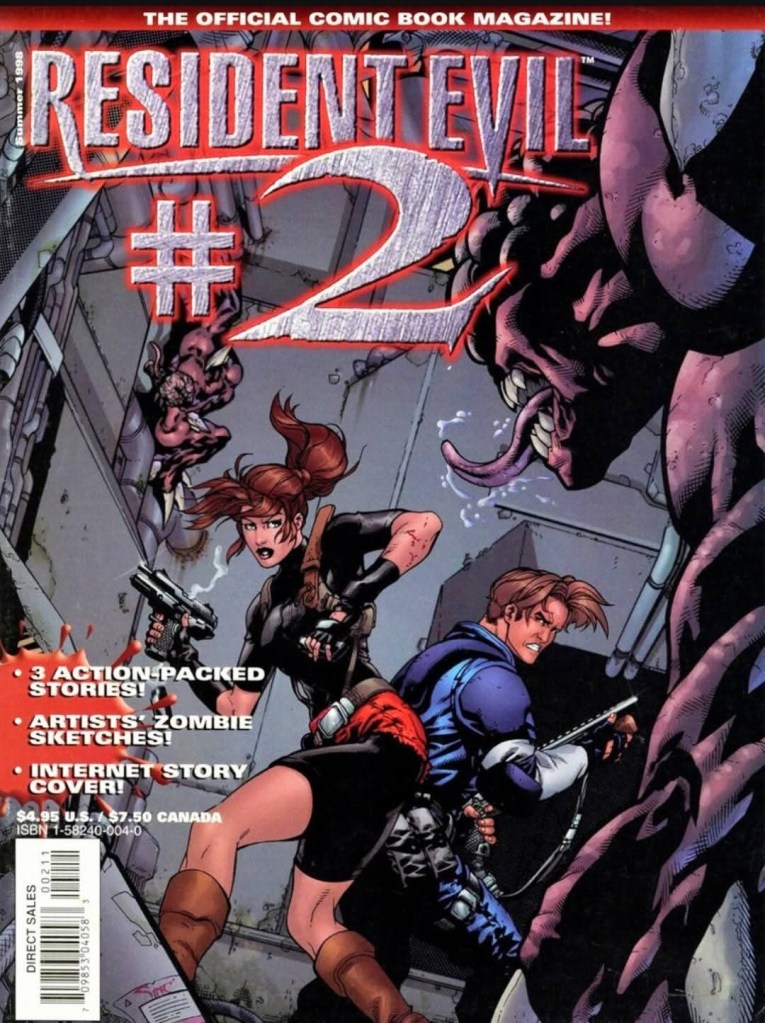
By the time WildStorm Productions released the 3rd issue in 1998, many millions of gamers around the world played Resident Evil 2 on PlayStation. The Resident Evil fanbase expanded dramatically and many of them completed the game’s multiple scenarios. At the same time, Leon Kennedy and Claire Redfield became popular characters in gaming.

The 2nd issue I reviewed had a very bad adaptation of Resident Evil 2’s story. What prevented the comic book from ending up as a complete disaster were the two other short stories which were surprisingly entertaining to read. Still, I wonder if Shinji Mikami and the game developers ever saw the abysmal Resident Evil 2 adaptation in the 2nd issue.

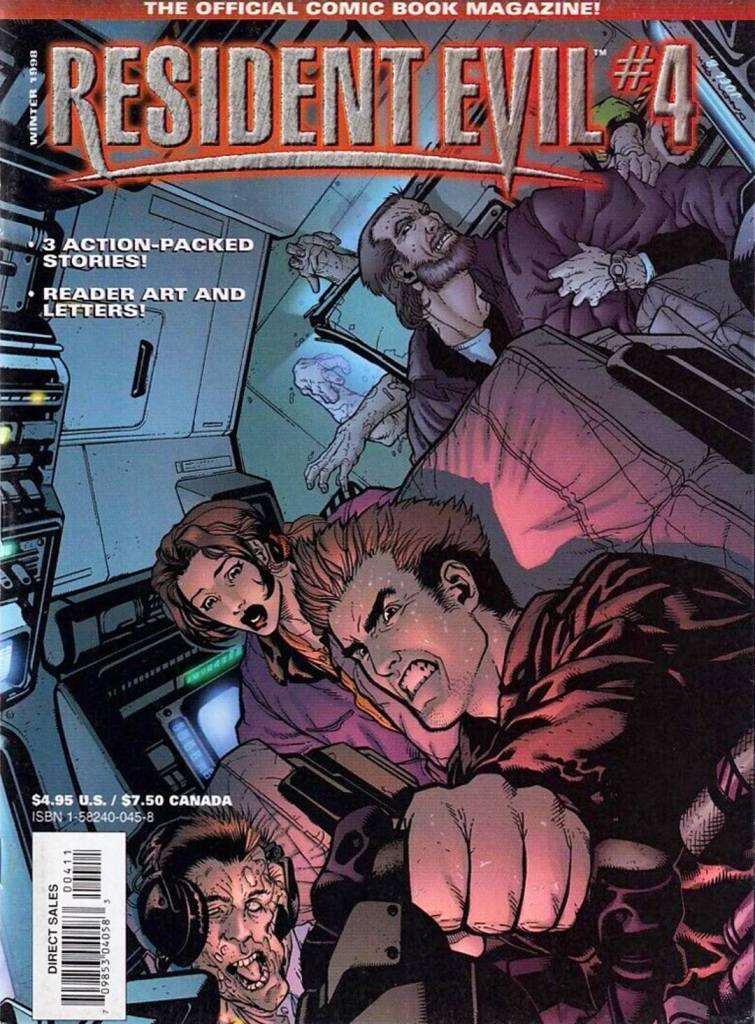
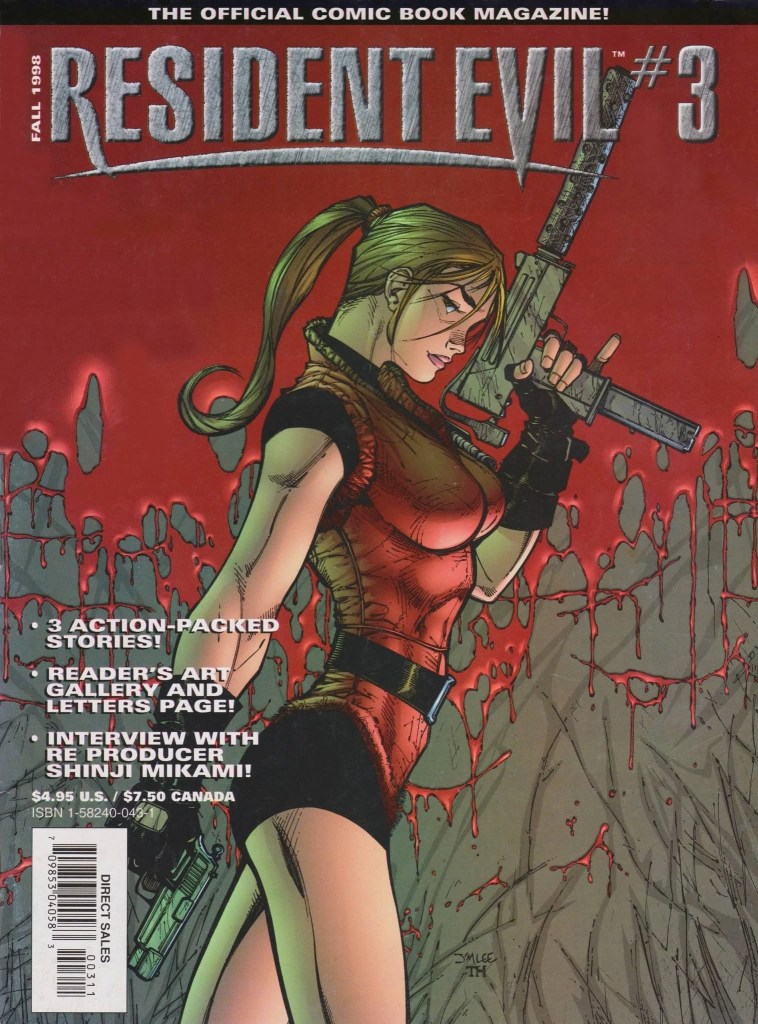
With those details laid down, here is a look back at Resident Evil: The Official Comic Book Magazine #3, published by WildStorm/Image Comics in 1998 with short stories written by Ted Adams and Kris Oprisko, and drawn by Ryan Odagawa, Carlos D’Anda and Lee Bermejo.

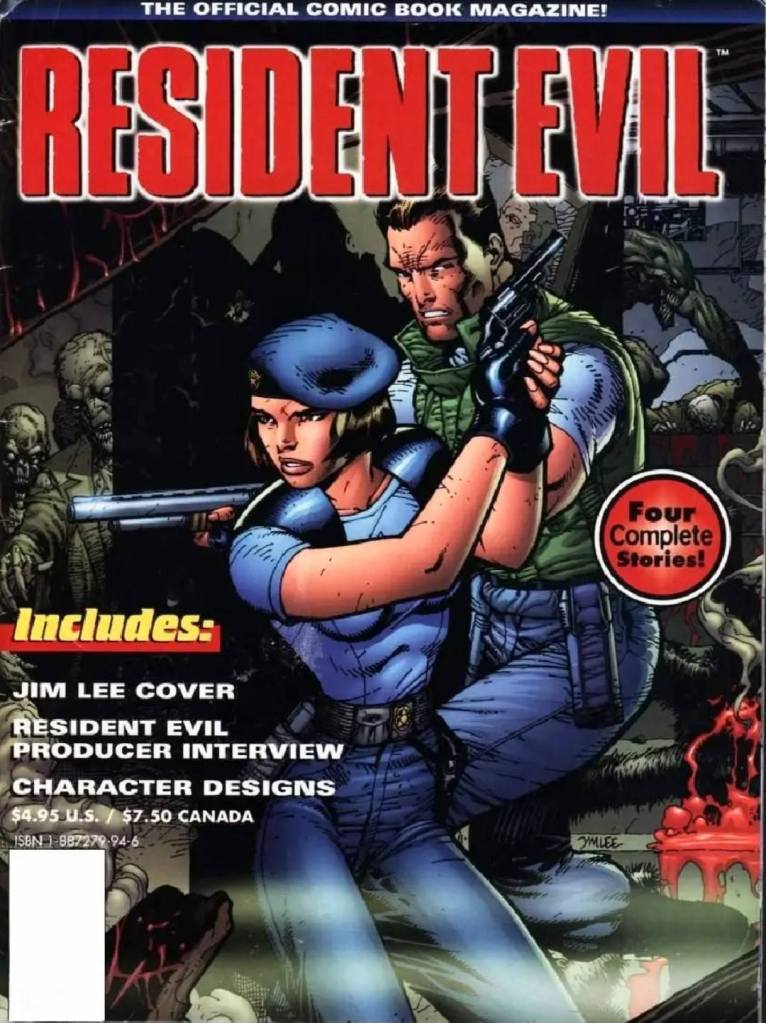
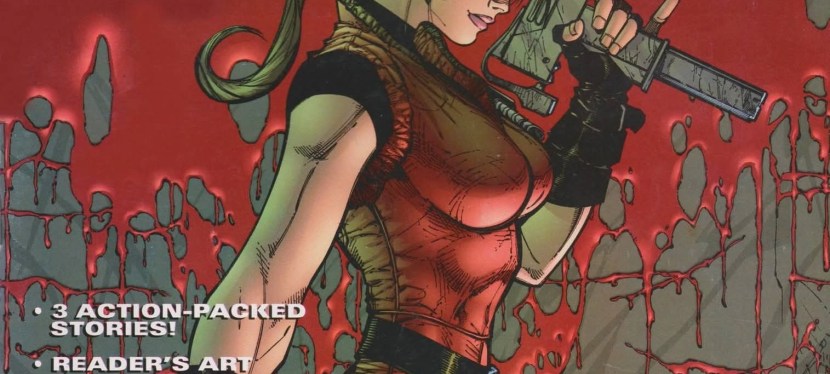
The cover with art by Jim Lee.

Early stories

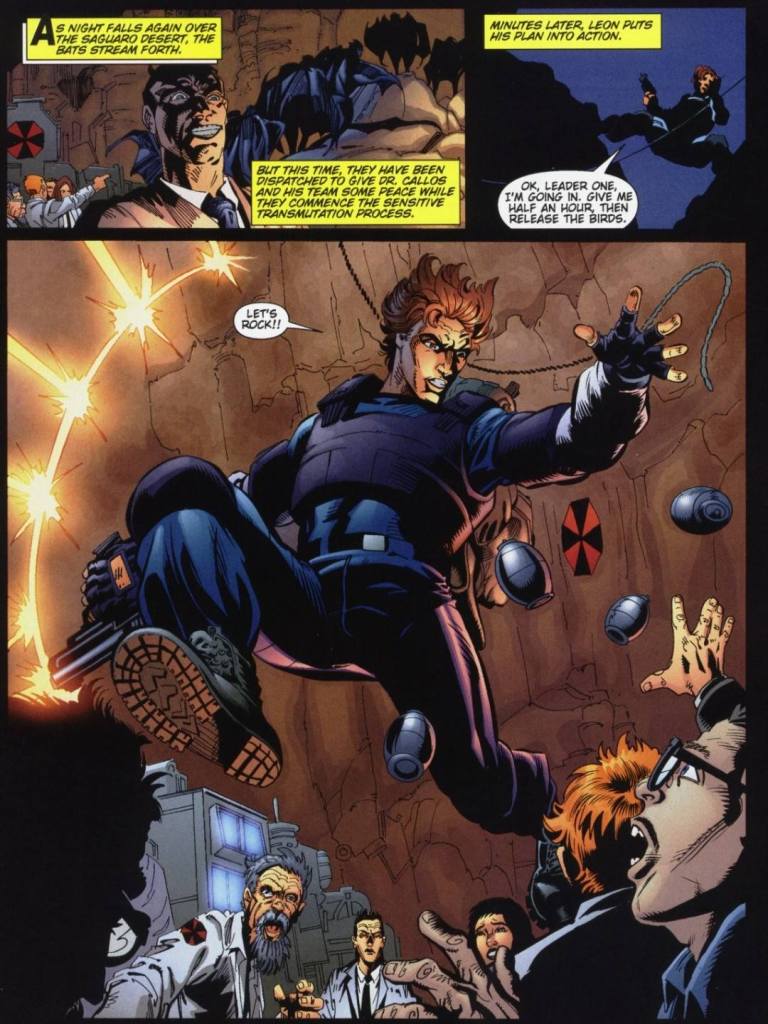
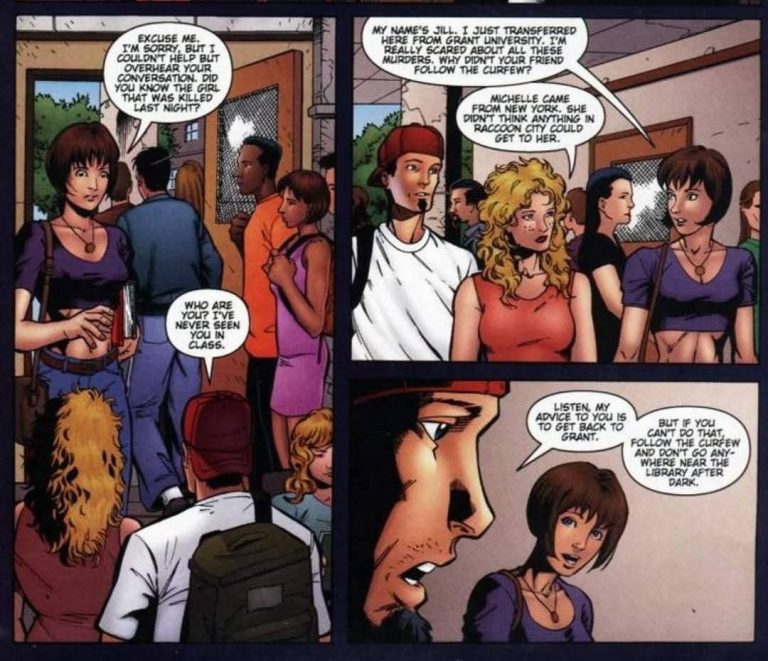
Wolf Hunt – At Raccoon City College, a few students talk about someone who got killed at school and her body was all torn up. They aware that the authorities are keeping the story out of the papers to avoid causing a panic. In the evening, of the students got harmed by a ferocious monster. The next day at S.T.A.R.S. headquarters, Albert Wesker, Jill Valentine and Barry Burton discuss the killings that happened at the city college. They were asked by the local police to investigate what happened. Jill takes the assignment of going undercover as a student.

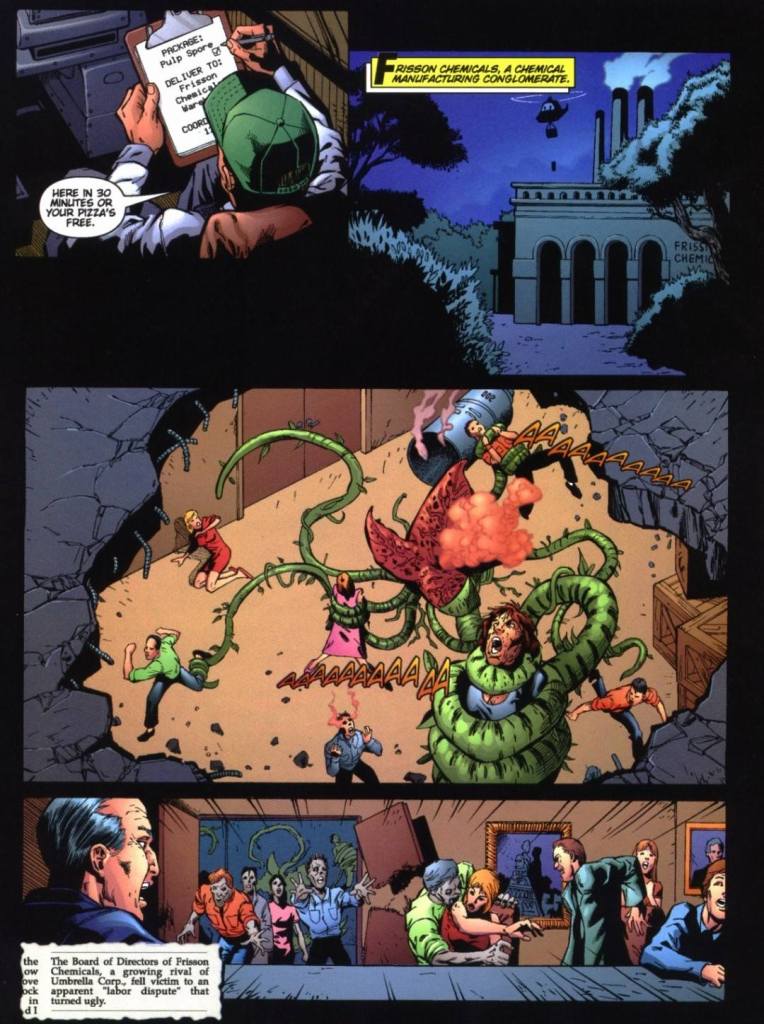
Danger Island – A man and a woman arrive at Isla Bonale in Caribbean for a vacation. The island is so exclusive, they only let ten couples on it at a time. After having a romantic night of dinner and dancing, they decide to go snorkeling and rent a boat. Just as they start snorkeling, a plane crashes on the island.

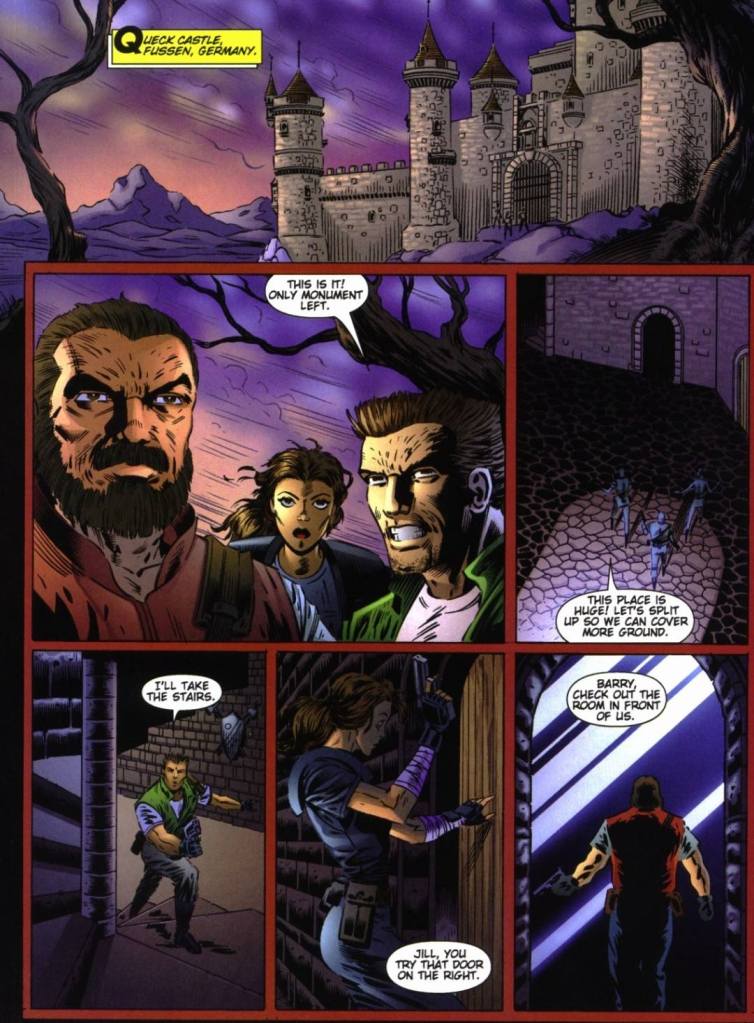
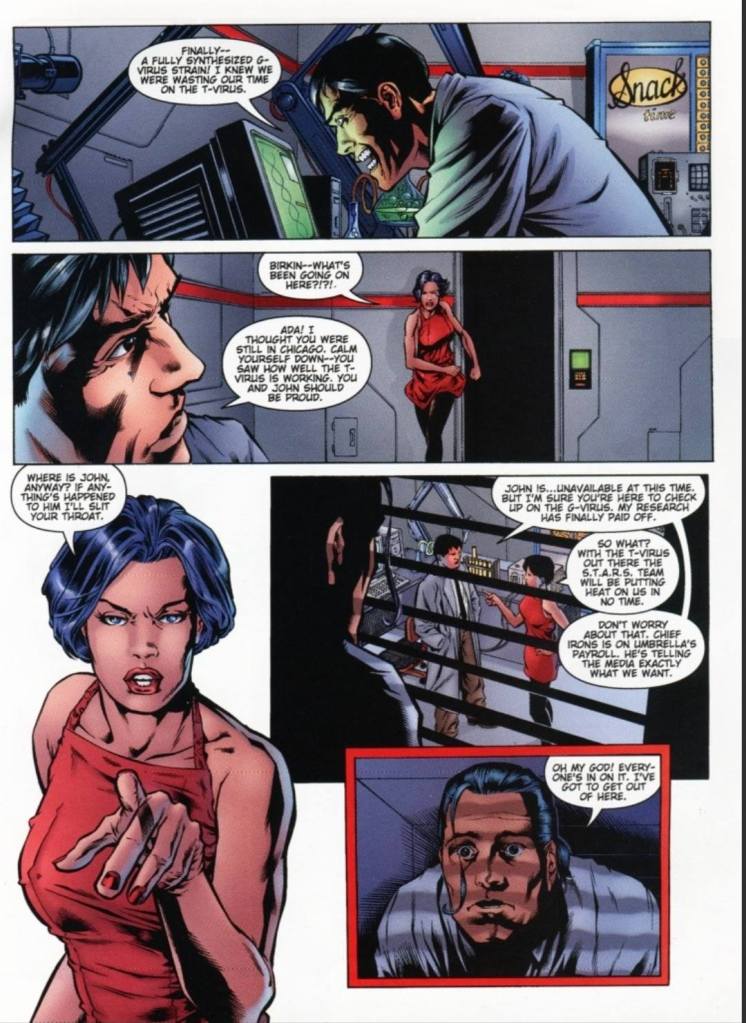
Dead Air – Following the events of Resident Evil (1996) and Resident Evil 2, Chris Redfield, Jill Valentine and Barry Burton start traveling to Europe with the goal of ending Umbrella’s current progress on a new variation of the T-virus even though they have to go undercover. They have the support of a top-secret international agency which already has someone in place to help them. Meanwhile, Umbrella has a spy watching on the three.

Quality

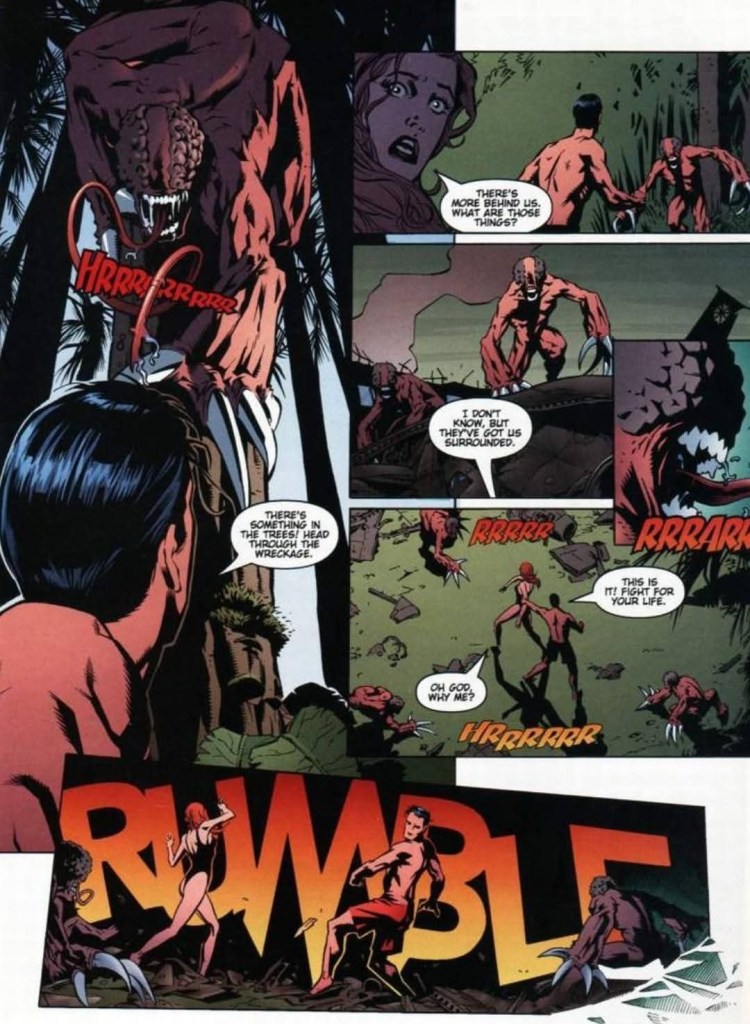
Imagine being surrounded by the deadly Lickers of Umbrella on an island wearing only swimwear and having no useful pieces of equipment to protect yourself with.

Similar to issue #2, this comic book has three short stories and some extras.

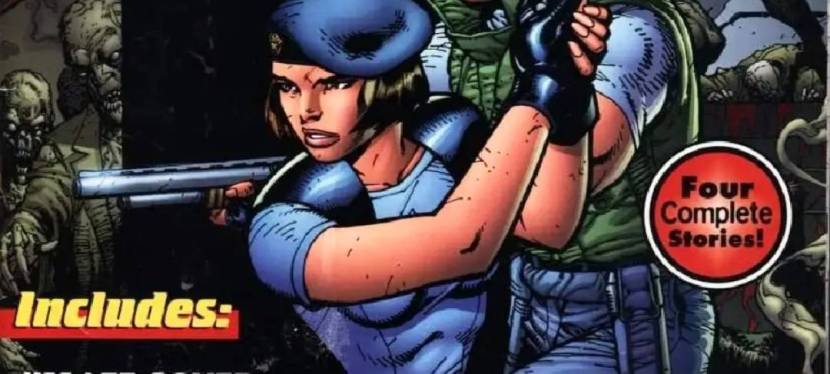
The short story Wolf Hunt, which took place before the events of the original Resident Evil game of 1996, has the odd concept of having werewolves existing within the RE universe. Werewolves are often super natural and such monsters don’t align with the sci-fi and biological aspects of the Resident Evil games. In fairness, the creative team had this interesting concept of having Jill Valentine going undercover as a student in the city college to find answers and solve the problem. I should state that the artwork by Ryan Odagawa is good overall although his take on Jill Valentine is cartoonish. This story is pretty short and lacked a solid conclusion. It’s really a glorified piece of fan fiction that should interest fans of the 1996 game.

Danger Island, the 2nd short story, is easily the gem of this comic book. This is a completely original tale that has brand-new lead characters – the couple Stan and Leslie – and an island as the setting. Without spoiling the plot, this is a suspense story with a moderate pace, some dynamic visuals and a good implementation of elements from the lore of Resident Evil. The creative team behind this tale emphasized that as long as Umbrella and is biological experiments exist, danger and death will creep up on people regardless of location. A notable monster species from Resident Evil 2 is included here and the effects the G-virus has on creatures on the island are cleverly presented complete with nice artwork by Lee Bermejo.

Through the couple, readers will feel the danger, desperation and anxiety as the story went on. How the story ended is a must-see and I am confident it will encourage you to revisit Resident Evil 2.  

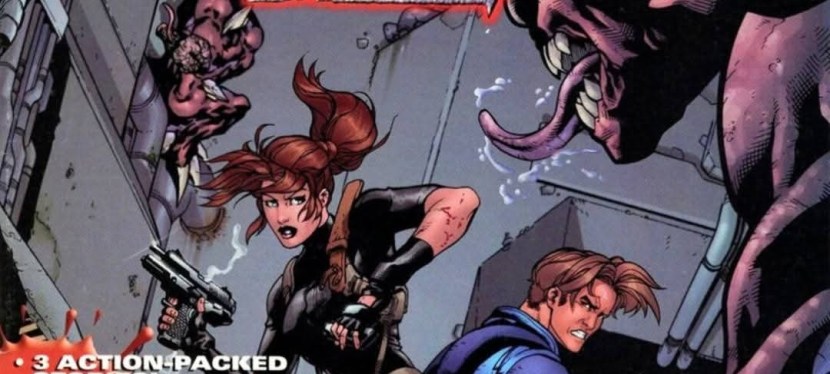
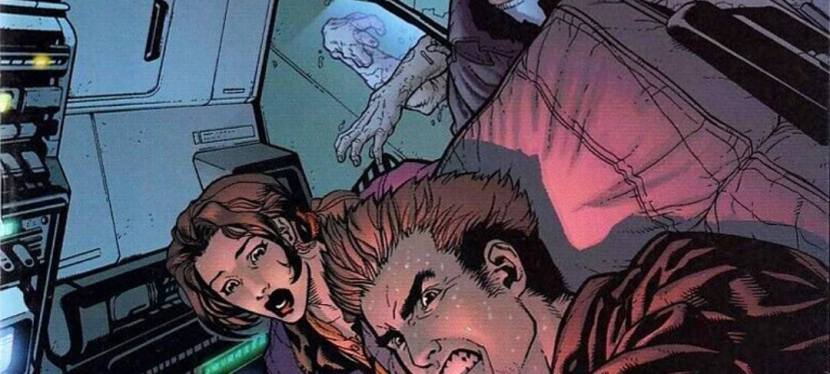
The final tale Dead Air is a daring attempt by WildStorm’s creators to make a sequel to the first two games. As mentioned above, Chris Redfield, Jill Valentine and Barry Burton are together on a high-risk mission to find and stop Umbrella in Europe. The main setting is inside a commercial flight where a zombie outbreak happens. Without their weapons, Chris, Jill and Barry are compelled to use alternative items and ways to overcome the zombies.

While this tale is packed with action and the violence is uncompromised, something is off with the way Jill Valentine is portrayed. She is more violent with action and even expressed sarcasm. This tale is pretty short as the comic book made it clear that the continuation will happen in the next issue. Considering what was told in Resident Evil: Code Veronica (released in 2000 with Chris and Claire Redfield included), Dead Air is clearly a non-canon Resident Evil tale and it is at best a polished piece of fan fiction by WildStorm.  

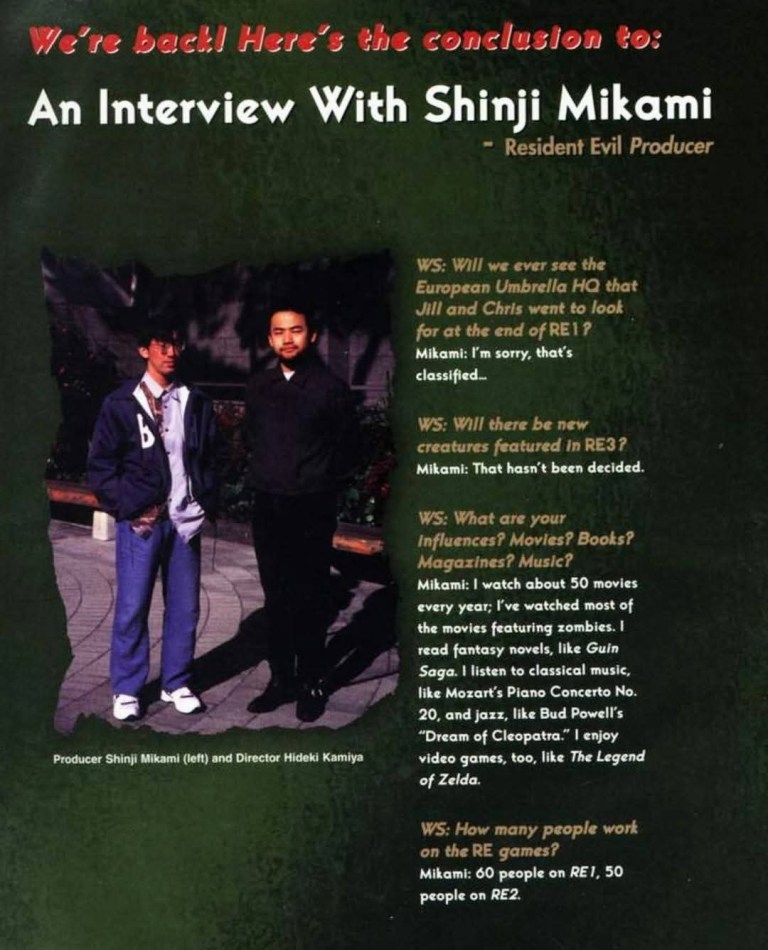
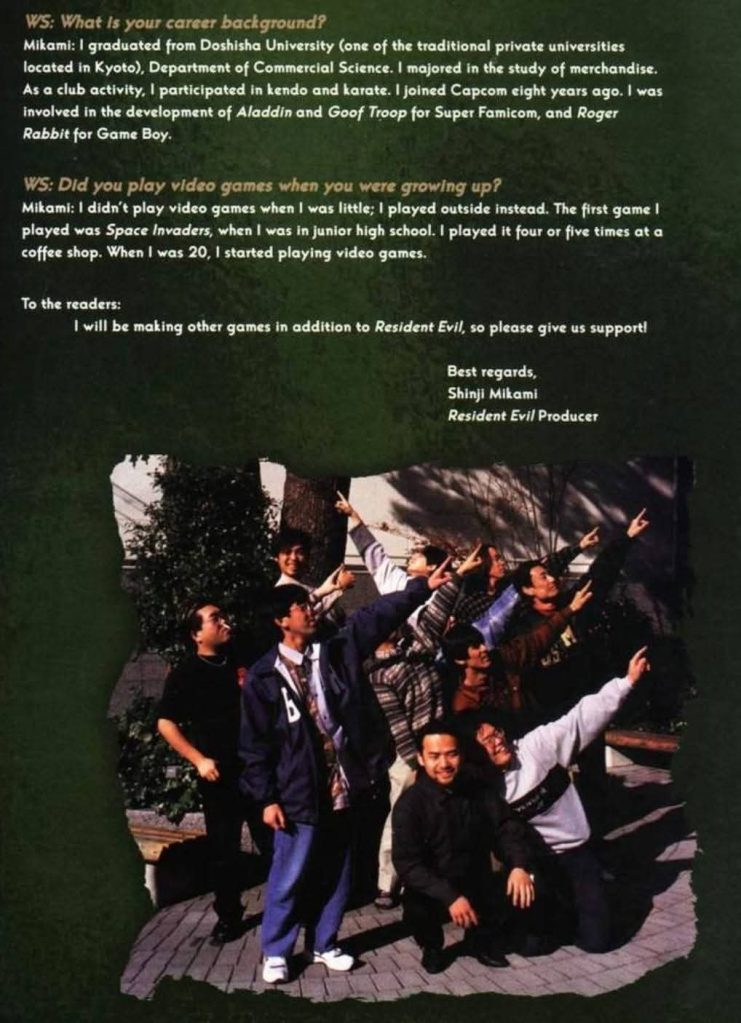
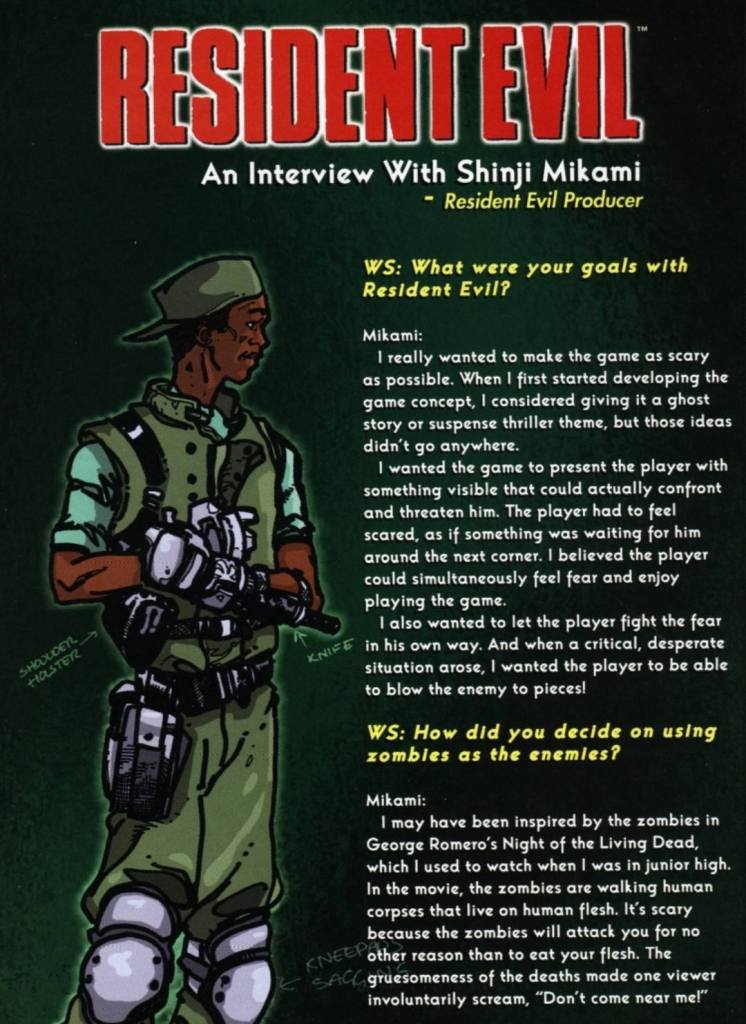
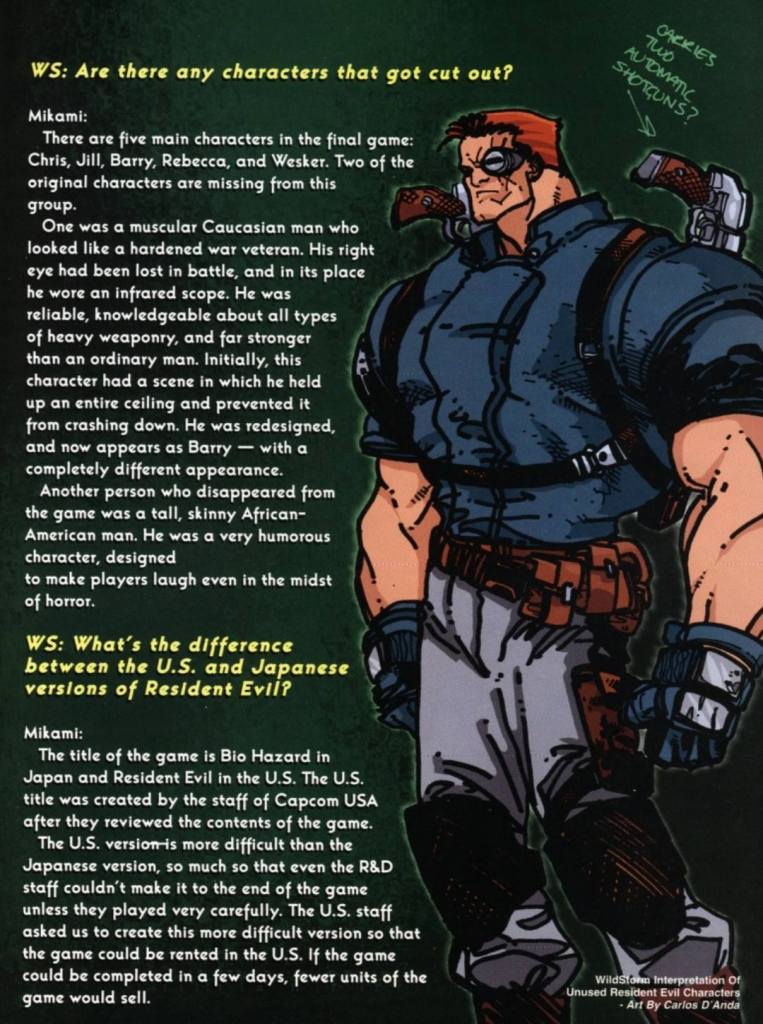
When it comes to the extras, you will find the Readers Art gallery and The Resident Evil Files (featuring Chris Redfield and his sister Claire). The most notable extra stuff here, however, is another interview with Resident Evil creator/producer Shinji Mikami and you will even see a few pictures of not just him but also Hideki Kamiya (the game director of Resident Evil 2 who went on to produce lots of highly entertaining games through the decades) and members of the team behind the RE games of the time. Enjoy the pages of the interview below.

The members of the development team of Resident Evil games of the time.
Very notable details shared by Shinji Mikami.
Shinji Mikami with Hideki Kamiya. Mikami directed the original Resident Evil game of 1996 while Kamiya directed Resident Evil 2. The two are still prolific makers of video games today.
Shinji Mikami played Space Invaders when he was young.

Conclusion

Remember Jill Valentine’s extra costume in the original game of 1996?

Considering the qualities of the three short stories and the extra stuff, Resident Evil: The Official Comic Book Magazine #3 (1998) is easily a huge improvement over issue #2. The quality and creativity of the short stories are better, the interview with Shinji Mikami was worth reading and the comic book itself is more entertaining. That said, I am convinced to move on to the next Resident Evil comic book.

Overall, Resident Evil: The Official Comic Book Magazine #3 (1998) is recommended.

+++++

Thank you for reading. If you find this article engaging, please click the like button below and also please consider sharing this article to others. If you are looking for a copywriter to create content for your special project or business, check out my services and my portfolio. If you want to support my website, please consider making a donation. Feel free to contact me with a private message. Also please feel free to visit my Facebook page Author Carlo Carrasco and follow me on Twitter at  @HavenorFantasy as well as on Tumblr at https://carlocarrasco.tumblr.com/ and on Instagram at https://www.instagram.com/authorcarlocarrasco/.
A Look Back at Resident Evil: The Official Comic Book Magazine #2 (1998)

Welcome back, 1990s arts and culture enthusiasts, video game enthusiasts and comic book collectors! Today we go back to the late-1990s to examine another issue of the magazine-sized comic book series titled Resident Evil: The Official Comic Book Magazine.

The launch issue of Resident Evil: The Official Comic Book Magazine was surprisingly entertaining. That’s not to say it was excellent as it had some flaws here and there. It succeeded with creative stuff by WildStorm to give readers and RE fans a wider lore of Resident Evil by reconnecting them with the first video game and slowly connecting them to Resident Evil 2. The interview with RE creator and producer Shinji Mikami (still a prolific video games industry producer) was indeed a good bonus.

As many of us know, Resident Evil 2 was a huge critical and commercial hit in 1998. By the time WildStorm continued publishing another issue of the official comic book magazine, enthusiasm for Resident Evil was intensified and many new gamers who enjoy RE2 on PlayStation became fans.

With those details laid down, here is a look back at Resident Evil: The Official Comic Book Magazine #2, published by WildStorm/Image Comics in 1998 with short stories written by Ted Adams and Kris Oprisko, and drawn by  Carlos D’Anda and Lee Bermejo.

The cover.

Early stories

A New Chapter of Evil (Resident Evil 2 adaptation) – Inside a police car moving along the street in the middle of a zombie-fested Raccoon City, Leon Kennedy and Claire Redfield tried to figure out what has been happening around them. Leon notices an over-speeding truck is about to hit them from behind. The two managed to get out of the car before it got hit by the truck. From a distance, Leon tells Claire to make her way to the Raccoon City police station where they can meet again.     

Mutant Menagerie – After getting left behind by the armed men who shot him, chief researcher William Birkin clutches an overlooked vial of the G-virus and injects himself with it. He soon mutates into a large, deformed monster capable of killing anyone easily. Propelled by sheer willpower to save his life’s work, Birkin simply thinks about infecting many. The next day at the zoo of Raccoon City, a monstrous roar catches the attention of a security guard who rushes outside only to find his two colleagues dead and their bodies torn apart.

Lock Down – Barry Burton, who has been experiencing recurring nightmares since the disastrous mission at the Spencer mansion, visits a facility to seek the help of a psychiatrist. As he approaches the office of the psychiatrist, he noticed someone looking strange.

Quality

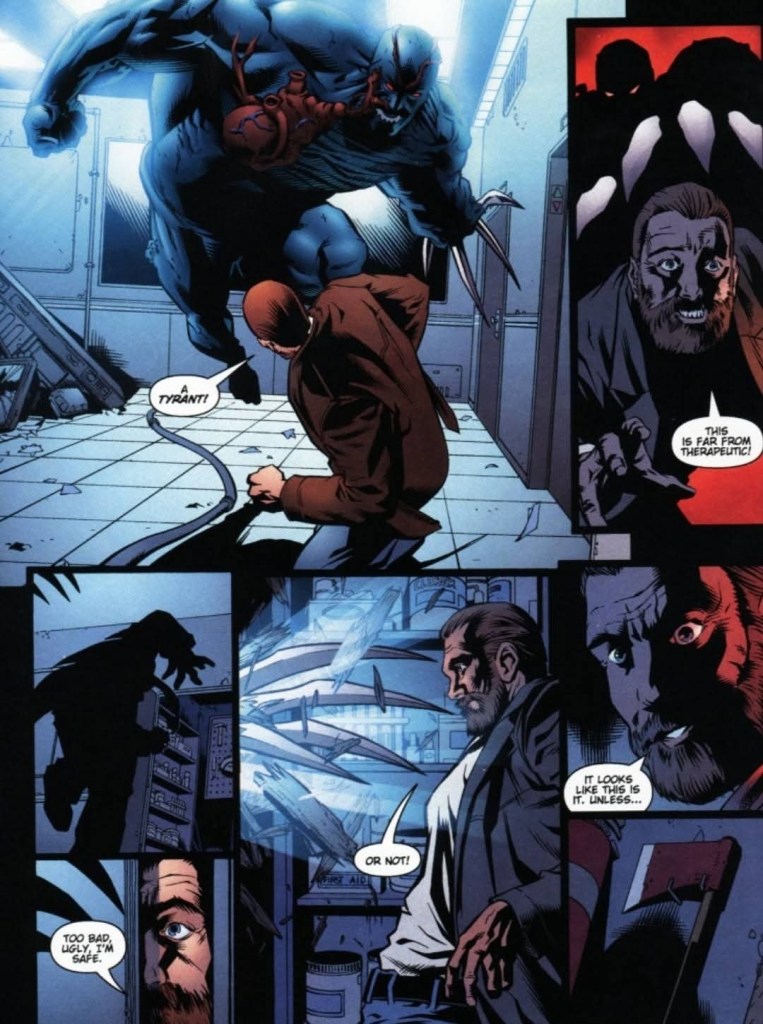
Barry Burton suddenly encounters a Tyrant!

In this 2nd issue, the WildStorm team prepared three short stories with the first one serving as the illustrated adaptation of Resident Evil 2’s story (specifically with Leon on Scenario A and Claire on Scenario B).

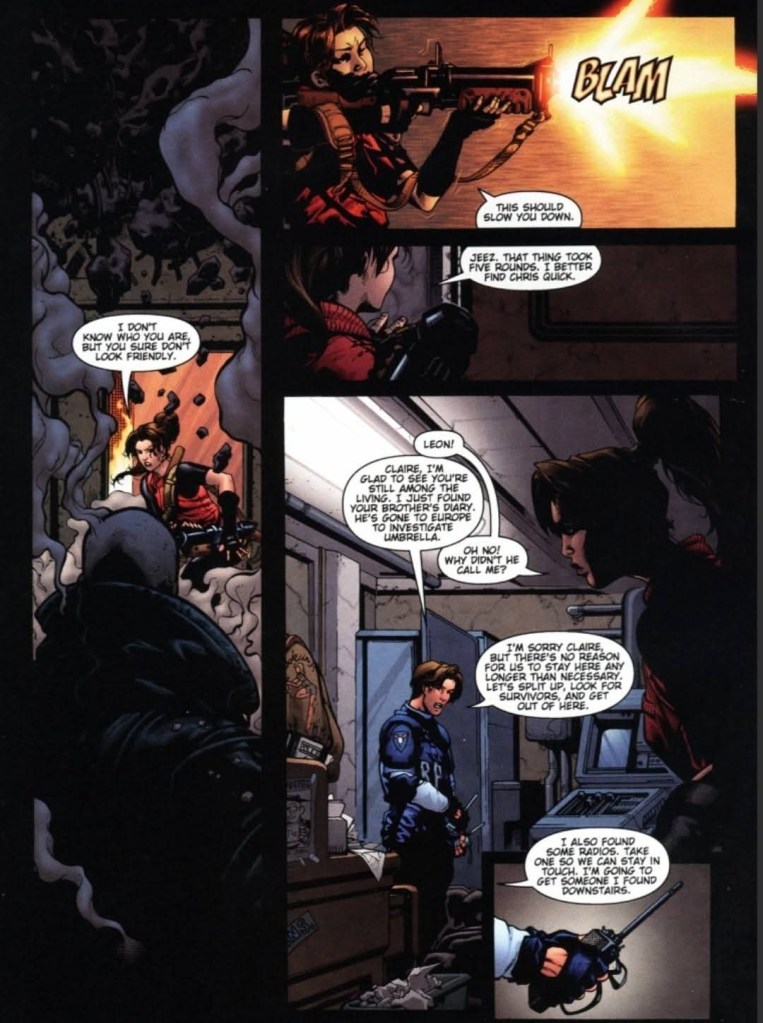
The RE2 adaptation titled A New Chapter of Evil is very sloppy and so poorly done. The assigned writer and artist forcibly crammed the entire Resident Evil 2 story into a limited number of pages. The result is a very rushed approach on storytelling and the noticeable lack of care on the presentation. Having played RE2 a number of times myself, I can easily say that the order of scenes from the game were sloppily chained together in illustrated format to unbelievably occur next to each other without any proper spacing. That also means leaving no space for the reader to slow down to be able to absorb the details and to understand what has been going on.

Since there were not enough pages allocated, the visual presentation also suffered. Each battle with a monster happened too fast and not enough panels could be made to emphasize clearly what happened. The same thing also happened in key scenes of the story.

In the scene in which Claire Redfield encountered the office of the corrupt chief of police (with the dead body of a blonde woman on his desk), the creative team showed the two having a really short talk quickly followed by Claire meeting Sherry for the first time (without even showing Claire moving out of the chief’s office) followed by showing them descending on a motorized lift and quickly encountering the chief (who somehow teleported ahead of them).

The cramming of scenes, dialogue and bad visualization happened all throughout this Resident Evil 2 adaptation. One has to wonder why WildStorm decided not to use the entire 2nd issue for the adaptation. This literary adaptation of RE2 is absolutely bad and it is clearly an embarrassing piece of work of WildStorm’s publishing.

The short story Mutant Menagerie is an attempt to connect to the lord of RE2 by having the mutated William Birkin as the monster with the zoo as the environment. The protagonist is the zoo security guard Patrick Brady who is unsurprisingly in a major disadvantage. Creatively, this tale provides readers an interesting look at what would happen had the G-virus infected the animals in the zoo which added a new element of danger in the zombie crisis within the Resident Evil universe. The story has some Rambo-vibes when it came to the protagonist taking extreme measures to deal with the infected zoo animals.

While Mutant Menagerie is clearly non-canon as the presence of Birkin in the zoo made no sense at all in relation to what was shown in Resident Evil 2 (Birkin’s presence was limited to the NEST facility underneath Raccoon City), this short story became more relevant as the Raccoon City Zoo officially appeared in Resident Evil Outbreak: File #2 (released SIX YEARS after this comic book). This short story is an intriguing and satisfying piece of fan fiction.

The third tale Lock Down is a serious attempt to give RE fans a look at what happened to Barry Burton after the events of the 1996 game. This one has some Die Hard vibes as you will see Burton as a desperate action hero who happens to be present during a very unfortunate series of events. You will also see how he strives hard to solve problems without Jill Valentine, Chris Redfield and Rebecca Chambers to assist him. Artist Lee Bermejo did not compromise with the graphic violence and gore, and his approach on visual dynamism was nicely executed. His visualization of Burton is pretty good too.  

While the series of unfortunate events here makes the tale believable, there is something weird as the narrative went on. The building itself has secrets of its own and scenes such as Barry Burton suddenly encountering a Tyrant felt like a nightmare from nowhere. It is implied that the laboratory, the postal center, the smelly sub-basement and the penthouse could have all been established by Umbrella within the city. This short story is actually entertaining and surprising.

Conclusion

Claire Redfield and Leon Kennedy in the Resident Evil 2 adaptation.

The main feature story of Resident Evil: The Official Comic Book Magazine #2 (1998) – the official adaptation of Resident Evil 2’s story – is clearly the failure and is an obvious waste of time. What prevented this comic book magazine from becoming a total disaster were the short stories Mutant Menagerie and Lock Down which were entertaining and surprising to read. That said, it is mind-boggling that WildStorm did not use this entire issue to properly tell the Resident Evil 2 story and give the creative team enough space to ensure a quality adaptation. I wonder how Capcom and the Resident Evil 2 developers reacted to this issue’s RE2 adaptation.

Overall, Resident Evil: The Official Comic Book Magazine #2 (1998) is serviceable.

+++++

Thank you for reading. If you find this article engaging, please click the like button below and also please consider sharing this article to others. If you are looking for a copywriter to create content for your special project or business, check out my services and my portfolio. If you want to support my website, please consider making a donation. Feel free to contact me with a private message. Also please feel free to visit my Facebook page Author Carlo Carrasco and follow me on Twitter at  @HavenorFantasy as well as on Tumblr at https://carlocarrasco.tumblr.com/ and on Instagram at https://www.instagram.com/authorcarlocarrasco/.
A Look Back at Resident Evil: The Official Comic Book Magazine #1 (1998)

Welcome back, 1990s arts and culture enthusiasts, video game enthusiasts and comic book collectors! Today we go back to the late-1990s to examine the launch issue of the magazine-sized comic book series titled Resident Evil: The Official Comic Book Magazine.

To put things in perspective, this year marks the 30th anniversary of the Resident Evil video games and multimedia entertainment franchise . The original Resident Evil (Japanese title: Biohazard) video game released in 1996 was arguably a major turning point in console gaming as it was an adulterated game that blended horror, action, monsters and the cinematic experience. Initially released on PlayStation, the game got released on Windows PC and the Sega Saturn, and eventually sold millions of copies worldwide while establishing a solid fanbase. Arguably, RE sparked the revival of the zombie genre in pop culture during the 1990s and contributed to new zombie-related multimedia productions in the 2000s.

Even before the release of Resident Evil 2, the number of Resident Evil fans grew and so did demand for more related stuff. Marvel Comics published a free one-shot Resident Evil comic book while Resident Evil: The Book was released in Japan.

When Resident Evil 2 was released in 1998, it became an even bigger blockbuster and resulted in even more new RE fans as gamers enjoyed playing it so much. The massive commercial success of RE2 led Capcom to approving several new Resident Evil game projects for development. Still within 1998, the licensed RE multimedia projects were released in the form of two novels and a new comic book series with a magazine format.

With those details laid down, here is a look back at Resident Evil: The Official Comic Book Magazine #1, published by WildStorm/Image Comics in 1998 with short stories written by Ted Adams and Kris Oprisko, and drawn by  Ryan Odagawa, Carlos D’Anda and Lee Bermejo.

The cover drawn by Jim Lee.

Early stories

S.T.A.R.S. Files – Inside an office, Albert Wesker gets briefed about his next assignment in Raccoon City which has been experiencing a series of mysterious murders. The superior tells Wesker to field a S.T.A.R.S. (Special Tactics and Rescue Service) team to find out what is going on.

Who Are These Guys? – A scientist writes a letter to Ada Wong and reveals key details about the research of the T-Virus, including what his team has been doing and what he observed.

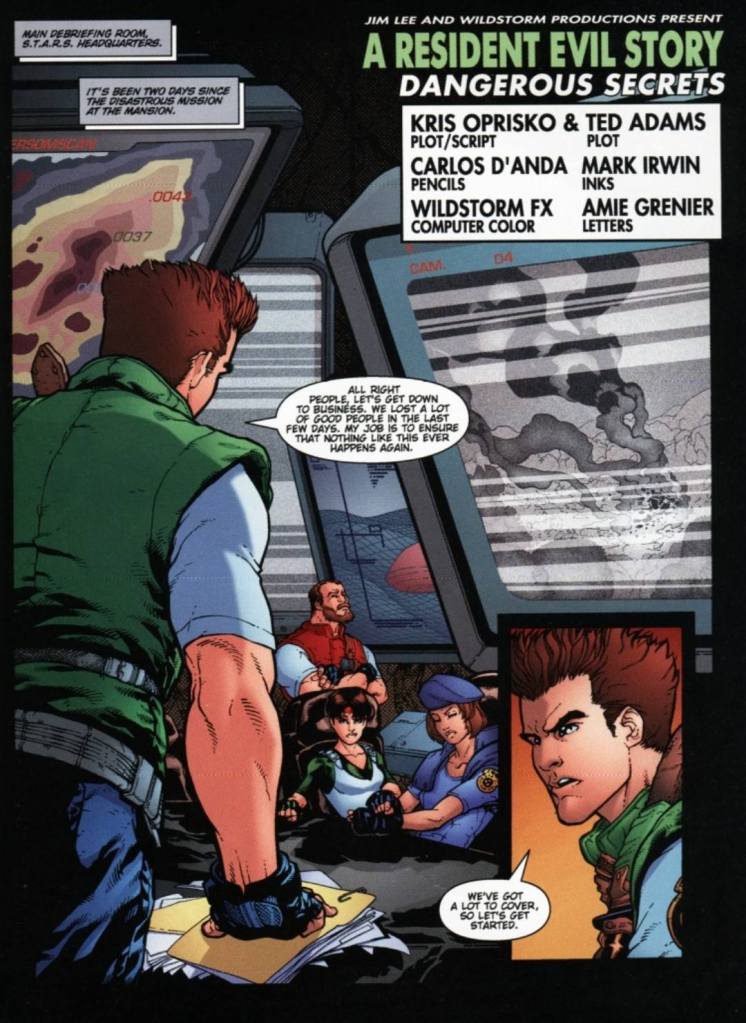
Dangerous Secrets – Inside the high-tech debriefing room of the S.T.A.R.S. headquarters, Chris Redfield begins a review of what happened during their mission at the mansion and what took place before they even got involved. Present are Jill Valentine, Rebecca Chambers and Barry Burton.

Raccoon City – R.I.P. – A very sick and physically deteriorating man watches the news on TV at home. As the moments passed by, he begins to lose control of himself as his deteriorates. He suddenly goes out of his house and walks down the street aimlessly.

Quality

Ada Wong, the scientist and the journalist who secretly spied in a scene that happened before Resident Evil 2 started.

As already revealed on the cover of this magazine-style comic book, this is a collection of four short stories designed to provide readers insight on the lore of Resident Evil, additional portrayals of the established RE characters of the time – Chris Redfield, Barry Burton, Jill Valentine, Rebecca Chambers, Albert Wesker, Leon Kennedy and a few supporting characters seen in the games – and, more notably, illustrated development of events that connect the first two games with each other in ways that the games themselves could not. To be clear, Resident Evil took place in July 1998 while its sequel took place in September 1998.

Without spoiling the stories, I can say that S.T.A.R.S. Files was a warm-up in the form of introducing the characters of the first RE game. Who Are These Guys? was a creepy telling of what happened behind the scenes with regards to the unethical scientific experiments that caused zombies and monsters at the mansion to happen. It has a violent ending which made one of the most popular Resident Evil characters look like a murderer (note: I’m surprised it was not controversial). Dangerous Secrets was a creative recap of what happened at the mansion (which follows the game ending involving the rescue of Jill Valentine) and S.T.A.R.S. had such futuristic office equipment to work with (it has a strong sci-fi flavor). Raccoon City – R.I.P. was the build-up of developments leading to the start of Resident Evil 2.

Clearly, the quality of the writing and artworks varied from one story to another. The writing of Who Are These Guys? really stood out nicely due to its creepy vibe and the fine way of telling the story of the scientist who wrote to Ada Wong. Dangerous Secrets also stood out with its dramatization of Chris Redfield, Jill Valentine, Rebecca Chambers and Barry Burton who have to move on knowing that a lot of lives were lost and lots of dirty secrets were uncovered. When it comes to the art style used on established RE characters, the zombies and monsters, fans looking for a more realistic take will end up disappointed (example: a few shots of Jill Valentine had a cartoony aesthetic). At the same time, Jim Lee’s only art of Resident Evil was the cover.

Readers looking for spectacle and moments of zombie horror will find something to enjoy here. I can confirm that the creative teams did not hold back on the violence and gore.

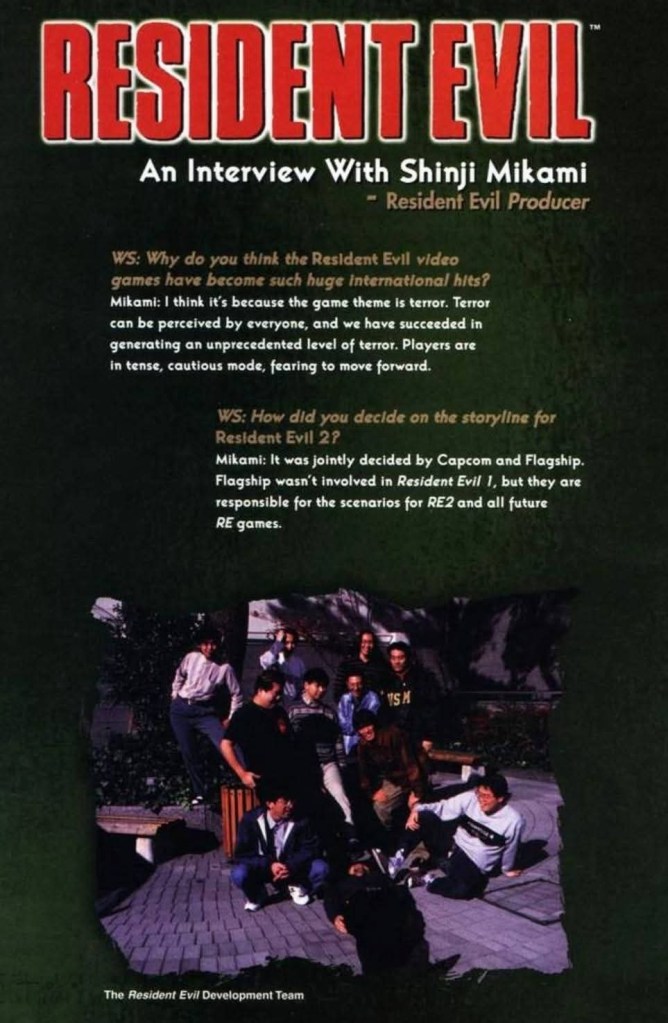
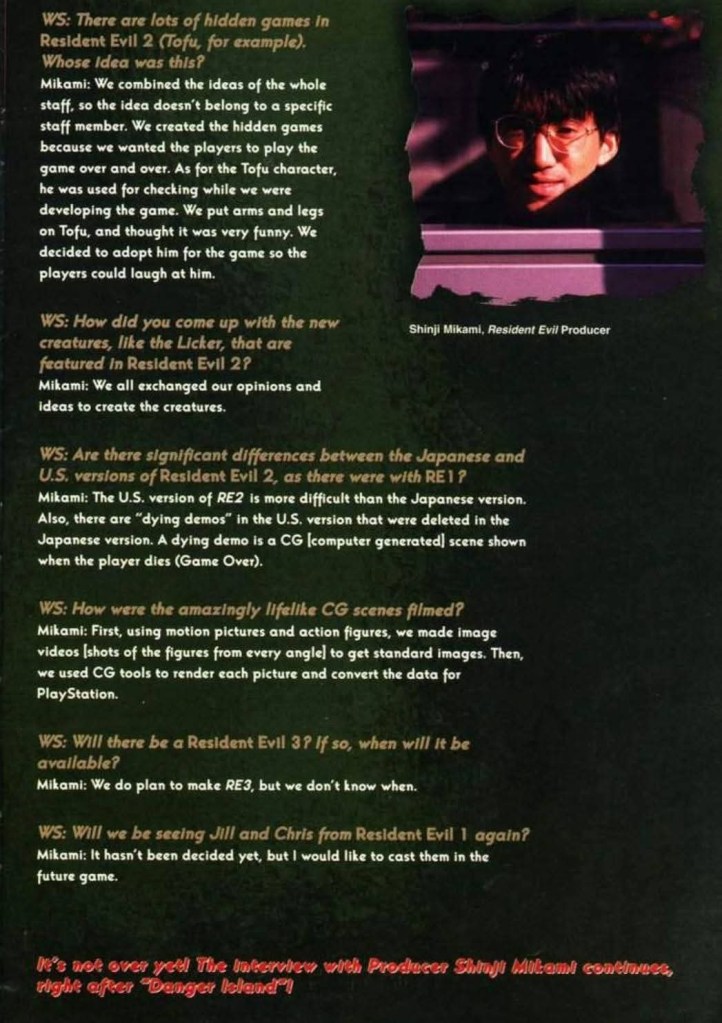
WildStorm did not just settle with doing their own literary take on the Resident Evil lore. They even went further by publishing an interview with Resident Evil creator Shinji Mikami knowing that the fans will enjoy discovering details and revelations through the production side of the video games.

Page 1 of the interview with Mikami.
Page 2.

Going back to the first RE game of 1996, be aware that certain details in this comic book could end up lacking or feel irrelevant given the fact that this was published years before the Resident Evil remake on Nintendo GameCube was released.

Conclusion

Chris Redfield leads the post-mission review.

Resident Evil: The Official Comic Book Magazine #1 (1998) succeeded in what it was meant to do. It gave readers added insight to the characters and the events – including those that happened off-screen – of the 1996 video game while literally warming them up for Resident Evil 2’s illustrated events. To really enjoy this comic book magazine, it is clear that one has to play BOTH video games to gain at least a basic understanding of what happened and who is who. As it was released at a time when Resident Evil 2 was available and selling a lot of copies, this comic book adaptation turned out to be a helpful read that fans and newcomers can enjoy. It is also a reminder that the late 1990s was an exciting time to be a Resident Evil fan.

Overall, Resident Evil: The Official Comic Book Magazine #1 (1998) is recommended.

+++++

Thank you for reading. If you find this article engaging, please click the like button below and also please consider sharing this article to others. If you are looking for a copywriter to create content for your special project or business, check out my services and my portfolio. If you want to support my website, please consider making a donation. Feel free to contact me with a private message. Also please feel free to visit my Facebook page Author Carlo Carrasco and follow me on Twitter at  @HavenorFantasy as well as on Tumblr at https://carlocarrasco.tumblr.com/ and on Instagram at https://www.instagram.com/authorcarlocarrasco/.
A Look Back at X-Men #7 (1992)

Welcome back, superhero enthusiasts, 1990s culture enthusiasts, X-Men fans and comic book collectors! Today we revisit the Marvel Comics universe to examine one of the many tales of the X-Men monthly series.  

Since issue #5, Omega Red was introduced and the creative team of the series inserted flashbacks showing Wolverine, Sabretooth and Maverick as paramilitary teammates from several years prior. It was also revealed that Wolverine and Omega Red encountered each other before, and their present day encounter resulted in the capture of the Canadian mutant. Wolverine managed to escape only to be recaptured by Sabretooth. Logan’s teammates were also captured by the same sinister group that has Omega Red.

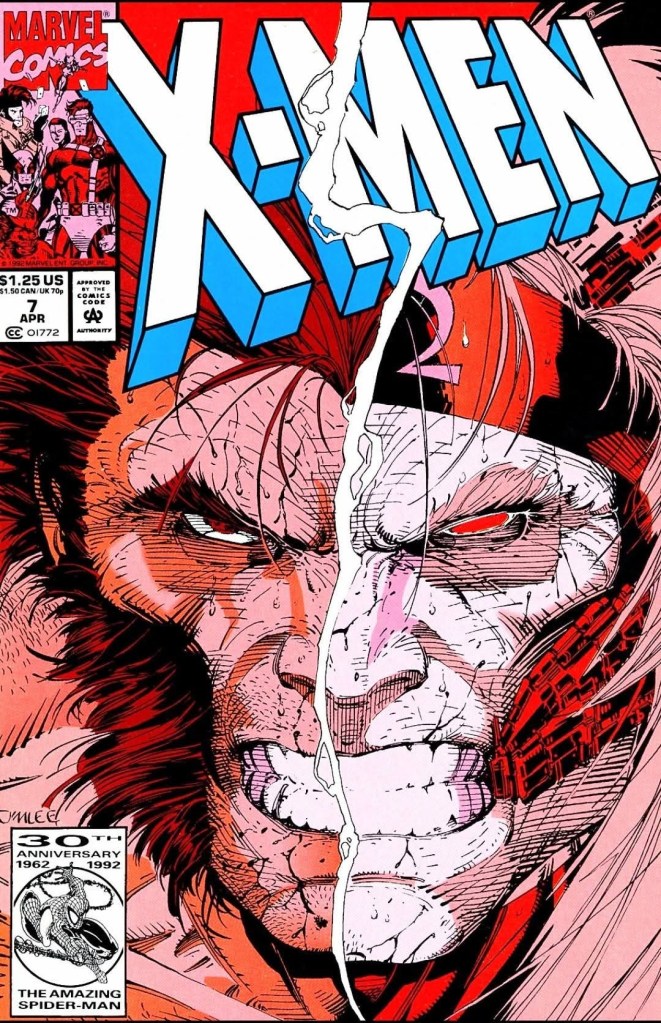
With those details laid down, here is a look back at X-Men #7, published by Marvel Comics in 1992 with a story plotted and drawn by Jim Lee, scripted by Scott Lobdell and inked by Art Thibert.

The cover.

Early story

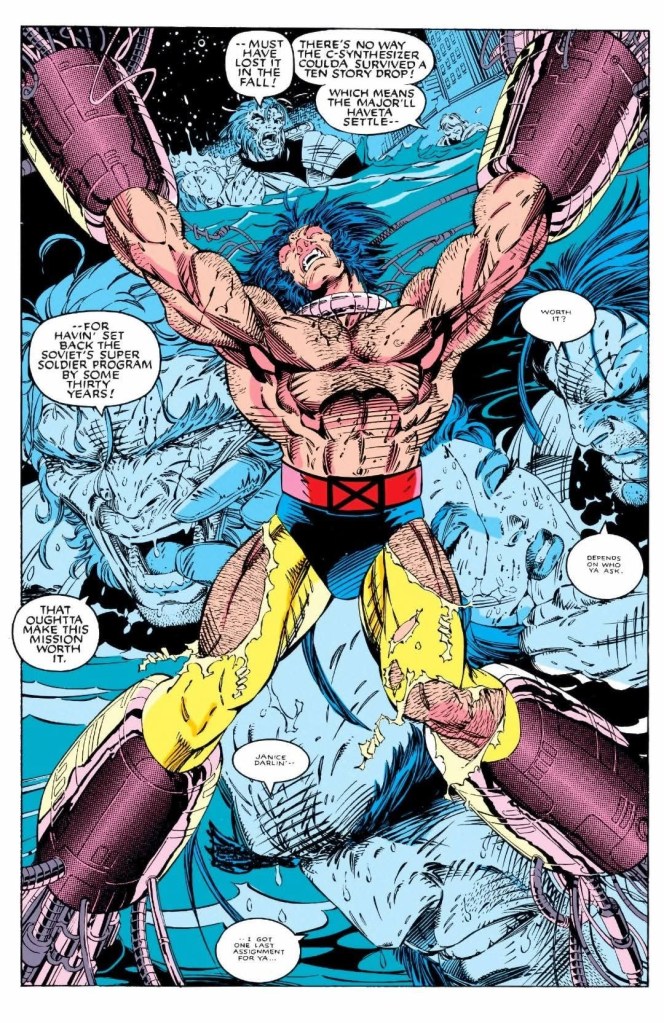
The story begins with Wolverine heavily restrained and his healing factor has been pushed to its limits. In the presence of Matsu’o Tsurayaba, Psylocke and others, Omega Red presses Wolverine for information about the carbonadium synthesizer. Matsu’o advises the Russian to not let the Canadian mutant bait him, and he shares the realization that it is impossible to mass produce his healing factor.

Matsu’o tells Omega Red that his only chance for survival rests in completing the process that was started thirty years prior. The Russian replied saying that he realizes he is dependent upon synthesizing the only metal capable of negating his death factor.

Not wanting to top, Omega Red says that he would rather pry the information from Wolverine’s brain by hand…

Quality

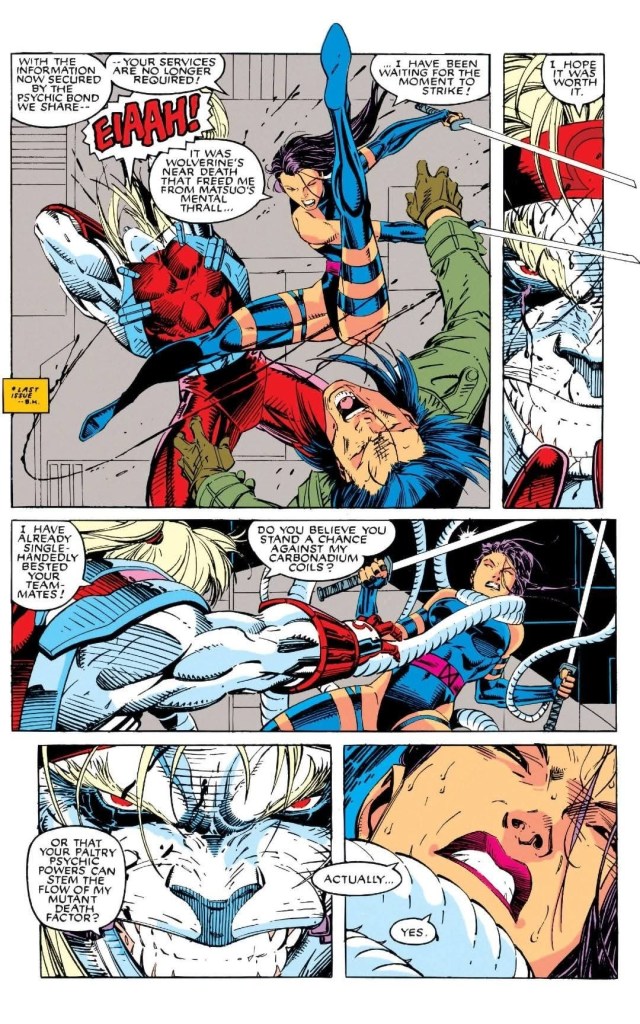
Psylocke in action versus Matsu’o and Omega Red.

To begin with, this is the conclusion to the storyline that started with issue #5. It is a cleverly paced story that had a good amount of build-up followed by big pay-offs with Jim Lee’s dynamic touch with the visuals.

Wolverine is once again vulnerable and Matsu’o’s gang already has the advantage. Matsu’o is determined to discover information about the C-Synthesizer no matter the cost (note: at the expense of Wolverine’s life). Omega Red’s death factor is much more emphasized in this issue and the goals behind the operations of the gang is made clearer here.  As the story moved on, there were these clever twists that were entertaining to see leading to the chain of action-packed sequences. Without spoiling the plot, I can say that the creative team came up with a very solid conclusion in this short storyline and Maverick’s own presence has been justified as well.

As with the previous issue, scenes of Mojoworld were inserted giving readers updates about Dazzler and Longshot. Very clearly, this was the build-up leading into the 10th issue of the comic book series.

For those who enjoy visual spectacle, there is a lot to enjoy from Jim Lee here. As always, Lee draws action dynamically and made sure they are exciting to look at. Particularly, I found Lee’s carefully chosen action moments – particularly Sabretooth’s strike on Maverick and Wolverine’s strike against Omega Red – really impactful to look at.

Conclusion

Wolverine in a very vulnerable and painful state.

X-Men #7 (1992) is a very enjoyable read. It is a great conclusion to its 3-part storyline that started in issue #5 and by the time I read the end, Omega Red was clearly established as a very formidable foe of the X-Men even though he was a new addition to the lore. The writing of this comic book is very solid and the same thing can be said about the structure of the plot. Considering the time of its release, this comic book was clearly part of Jim Lee’s way of modernizing the X-Men.

Overall, X-Men #7 (1992) is highly recommended.

+++++

Thank you for reading. If you find this article engaging, please click the like button below and also please consider sharing this article to others. If you are looking for a copywriter to create content for your special project or business, check out my services and my portfolio. If you want to support my website, please consider making a donation. Feel free to contact me with a private message. Also please feel free to visit my Facebook page Author Carlo Carrasco and follow me on Twitter at  @HavenorFantasy as well as on Tumblr at https://carlocarrasco.tumblr.com/ and on Instagram at https://www.instagram.com/authorcarlocarrasco/

A Look Back at X-Men Adventures Season II #6 (1994)

Welcome back, superhero enthusiasts, 1990s culture enthusiasts, X-Men fans and comic book collectors! Today we revisit the 2nd series of X-Men Adventures which was the literary adaptation of the popular X-Men animated series of the 1990s.  

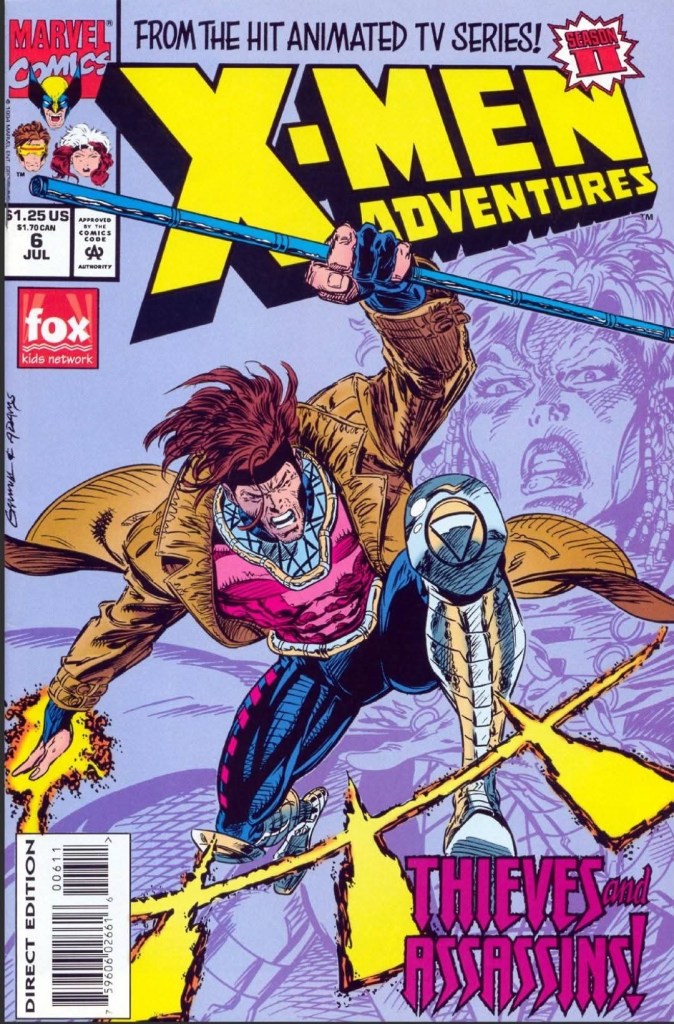
First introduced in 1990s comics published by Marvel, Gambit (Remy LeBeau) quickly emerged as one of the most popular members of the X-Men. He always looked cool, his power to charge cards (and other objects) into dangerous weapons, and his combat styling were really fascinating to see. He also has a personality that is very unique and mysterious at the same time. Eventually Gambit got his own spotlight in one of the episodes of the animated series.

With those details laid down, here is a look back at X-Men Adventures Season II #6, published by Marvel Comics in 1994 with a story written by Ralph Macchio and drawn by John Hebert.

The cover.

Early story

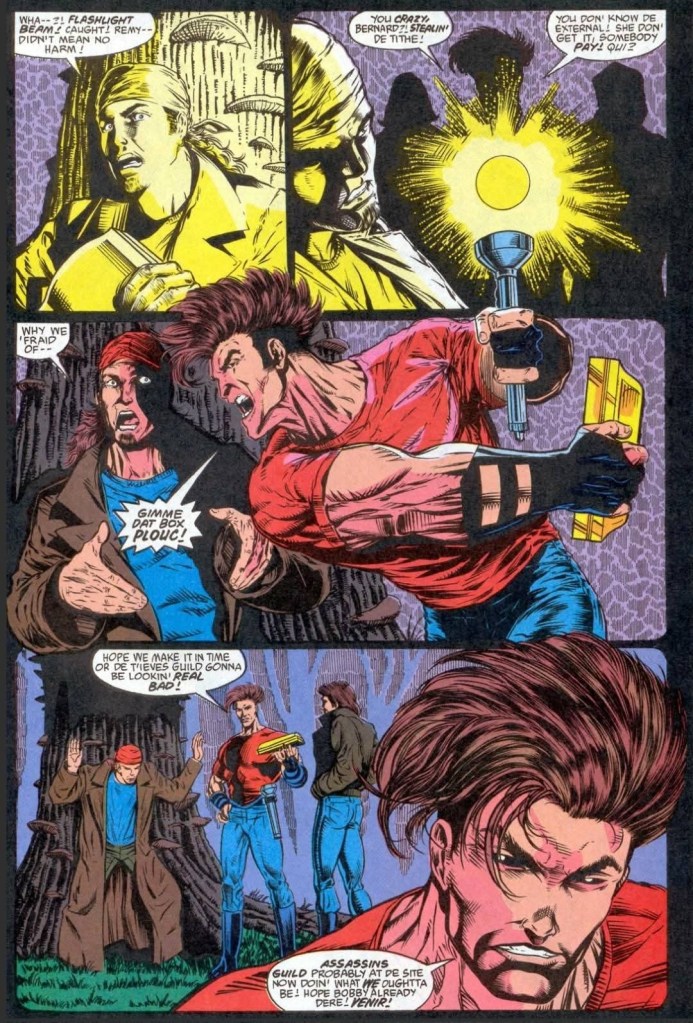
The story begins with Gambit flying away from X-Men headquarters using a mini-aircraft. He is clearly on the pursuit for something. Rogue tells Wolverine and Jean Grey that their teammate received a message from New Orleans and he has to help a certain sibling who is in trouble. While speeding through the air, Gambit remembers what happened several years prior when he was part of the thieves guild. He remembered the moment Bobby became the chosen one among the thieves…

Quality

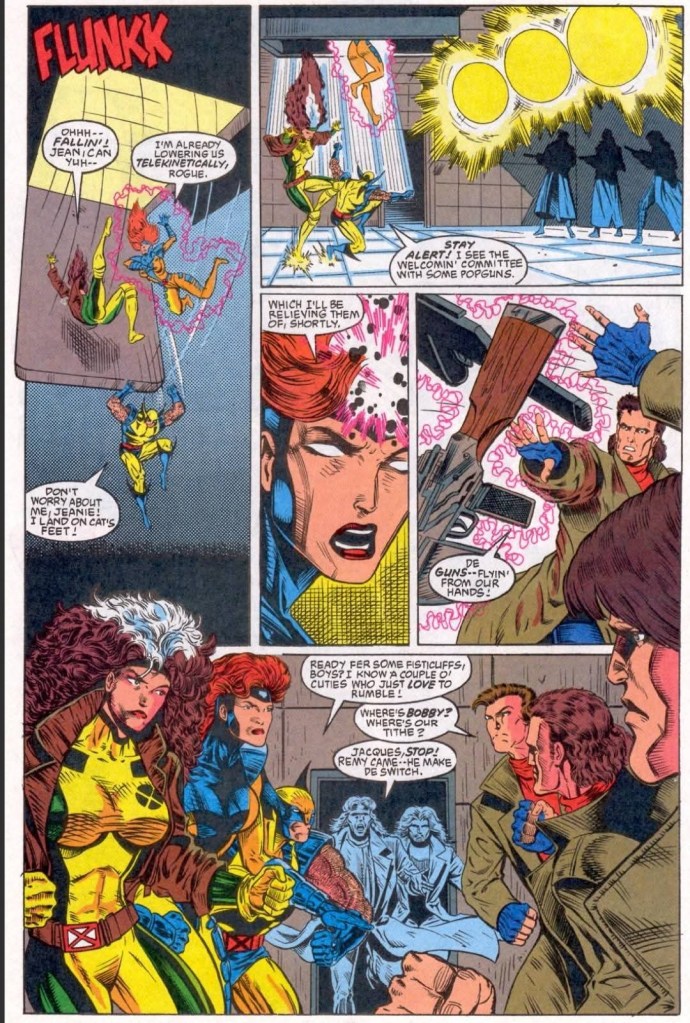
Wolverine, Rogue and Jean Grey fall down and encounter the thieves.

Anyone who followed the stories of Gambit in the X-Men comic books should be aware that there is a lot more to the past of the character than meets the eye. This comic book is a dramatization – which the animated series did – of Gambit’s involvement with a guild of thieves in Louisiana and what happens when the threads and personalities from his past return.

Upon returning to Louisiana, Gambit learns that the feud between the thieves and assassins has turned violent. Complicating matters further is an exchange the assassins want involving Bobby, the sacred tithe the thieves have and Gambit himself.

As expected, Gambit’s personality develops deeply as the story went on. The changes in him manifest when he encounters key characters from his past (example: Bella Donna) and how unfortunate events from the prior years impact him in the present. In short, this is a portrayal of Gambit that is clearly the most intriguing yet in the animated series.

Visually, John Hebert performed a good job visualizing the characters. While the X-Men are recognizable as before, Hebert’s art style gave the other characters a unique look that is gritty and sometimes creepy to see. I should mention that Hebert’s visual interpretation of Rogue reaction’s about Bella Donna described as Gambit’s woman is a great touch.

Conclusion

Young Gambit/Remy as a thief in Louisiana.

X-Men Adventures Season II #6 (1994) is a good read and it will delight X-Men fans who are avid followers of Gambit. This one has a nice mix of twists, action, suspense and the theme about the so-called ghosts from the past coming back to haunt some. To see more of Gambit and his Louisiana legacy, you have to read the official X-Men comic books (example: the X-Men/Ghost Rider crossover tale during the time of Jim Lee) plus the Gambit mini-series of the early 1990s. Consider this X-Men Adventures comic book a creative appetizer that happens to be fun to read.

Overall, X-Men Adventures Season II #6 (1994) is recommended.

+++++

Thank you for reading. If you find this article engaging, please click the like button below and also please consider sharing this article to others. If you are looking for a copywriter to create content for your special project or business, check out my services and my portfolio. If you want to support my website, please consider making a donation. Feel free to contact me with a private message. Also please feel free to visit my Facebook page Author Carlo Carrasco and follow me on Twitter at  @HavenorFantasy as well as on Tumblr at https://carlocarrasco.tumblr.com/ and on Instagram at https://www.instagram.com/authorcarlocarrasco/.
A Look Back at X-Men Adventures #12 (1993)

Welcome back, superhero ans, 1990s arts and culture enthusiasts, X-Men fans and comic book collectors! Today we revisit the X-Men Adventures monthly series – the first series specifically – which was the literary adaptation of the popular X-Men animated series of the 1990s.  

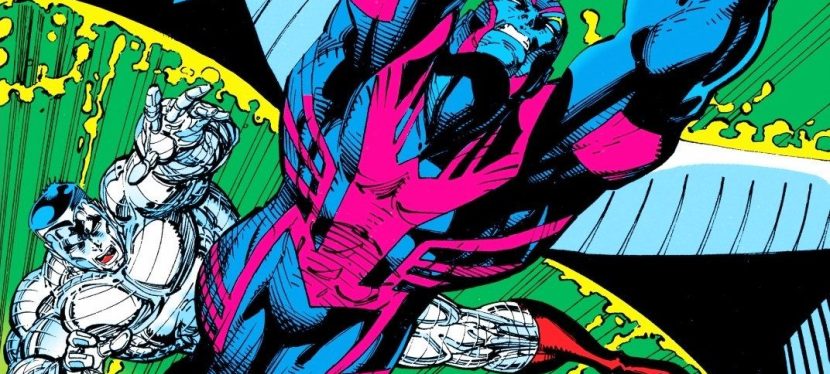
If you are familiar with the classic lore of X-Men literature, you will remember Warren Worthington as Angel who is one of the original members of the X-Men introduced in 1963. That same character would eventually get involved with the super villain Apocalypse and gain a deadlier form as Archangel.

With those details laid down, here is a look back at X-Men Adventures #12, published by Marvel Comics in 1993 with a story written by Ralph Macchio and drawn by Andrew Wildman.

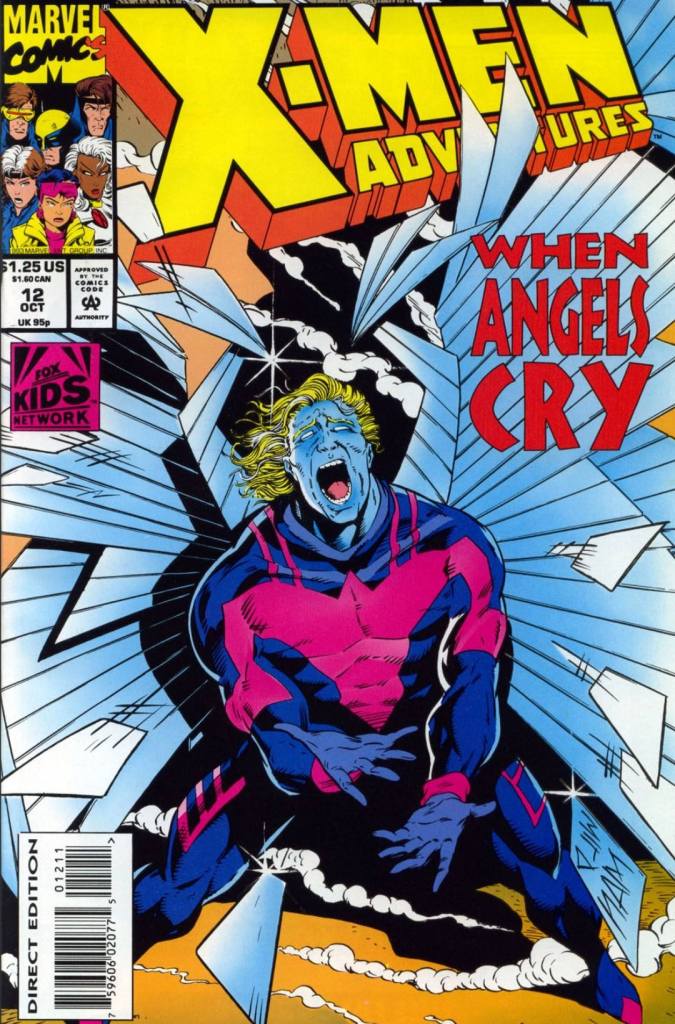
The cover.

Early story

The story begins inside a facility on Muir Island where genetic experimentation happens and draws mutants who seek a cure for the curse that makes them different. Already four mutants have arrived and were ready to undergo a grand experiment. The doctor in charge of the facility – Gottfried Adler – has already disappeared and in his place is the very powerful mutant Apocalypse.

Apocalypse succeeded in turning four mutants into his Four Horsemen composed of Archangel, War, Famine and Pestilence. For Apocalypse, the age of chaos is at hand.

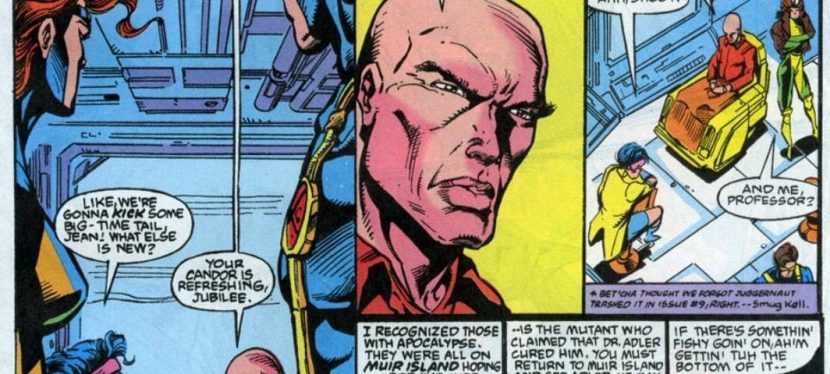
Meanwhile at Charles Xavier’s School For Gifted Youngsters, the leisure session of Jubilee, Gambit, Jean Grey and Rogue suddenly ends when Storm grabs their attention and shows them TV footage that Professor X wants them to see.

TV news footage shows an important meeting happening in France for the conventional weapons disarmament. Moments later, Apocalypse crashes into the meeting with his Four Horsemen causing harm…

Quality

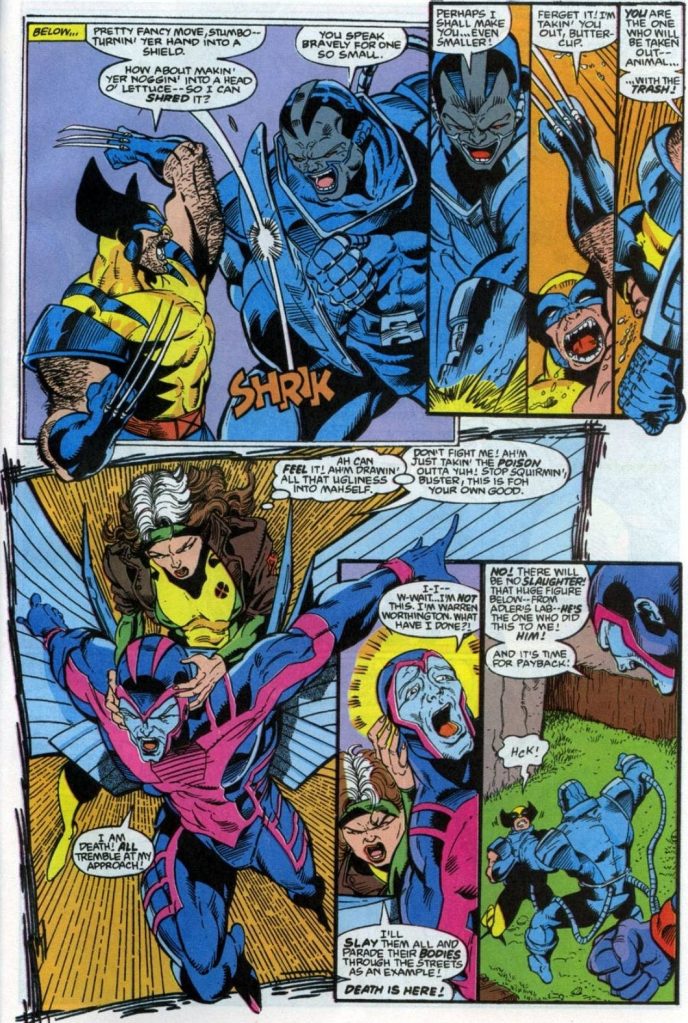
Rogue takes on Archangel while Wolverine is busy dealing with Apocalypse.

This comic book marks the emergence of Apocalypse as a tremendous force of evil following his series debut in issue #10 and short appearance in issue #11. As the main antagonist, Apocalypse – who is obsessed with survival and progress – really comes out in full force against humanity with his Four Horsemen as his deadly enforcers.

The threat of Apocalypse and his Four Horsemen towards humanity is clearly the main feature of this comic book and Macchio’s script has a good structure for the narrative. This makes the story easy to follow while still presenting a lot of details that can be absorbed efficiently. Apocalypse’s presence not only drew the X-Men to spring into action, it also drew Charles Xavier’s own fear that they would face an enemy more dangerous than Magneto.

While the main plot is consistently intense, this comic book also serves as a continuation of Rogue’s personal pursuits since issue #10 which is worth reading. Along the way, Archangel (whose new appearance started at the end of issue #11) notably got enough share of the spotlight and is easily the more captivating member of the Four Horsemen. The way Warren Worthington is portrayed here is clearly different from his literary version and that means you should not expect Professor X to claim him as one of his original X-Men members.

When it comes to the visuals, Andrew Wildman’s artistic style is present but many of the drawings here look rushed. In fairness, Wildman succeeded in making Apocalypse and the Four Horsemen look really threatening to human civilization thanks to his nice execution of visual dynamism in certain pages.

Conclusion

Professor X reveals his fear of Apocalypse to his team during their meeting.

X-Men Adventures #12 (1993) is a pretty good read thanks to the strong script by Macchio based on the teleplay from the animated series. It concluded the Muir Island saga in a very satisfying manner which includes putting Rogue’s subplot with solid closure (complete with a moral lesson about accepting her team as her family). By the time I reached the end of the comic book, it was clear that Apocalypse is a major antagonist with the long-term in mind.

Overall, X-Men Adventures #12 (1993) is recommended.

+++++

Thank you for reading. If you find this article engaging, please click the like button below and also please consider sharing this article to others. If you are looking for a copywriter to create content for your special project or business, check out my services and my portfolio. If you want to support my website, please consider making a donation. Feel free to contact me with a private message. Also please feel free to visit my Facebook page Author Carlo Carrasco and follow me on Twitter at  @HavenorFantasy as well as on Tumblr at https://carlocarrasco.tumblr.com/ and on Instagram at https://www.instagram.com/authorcarlocarrasco/.
A Look Back at Amazing Spider-Man #387 (1994)

Welcome back superhero enthusiasts, 1990s arts and culture enthusiasts, Marvel Comics fans and comic book collectors! Today we go back to the 1990s to examine a small part of the Marvel Comics shared universe through a tale of the Amazing Spider-Man monthly series.
In my previous retro review, Spider-Man had a match-up with his arch-enemy the Vulture who returned with a strong obsession within. The rematch is significant not only because it the two have a rivalry that lasted decades in reality, but also because the story was structured to function as a light reintroduction of Adrian Toomes (Vulture) for new Spider-Man fans of the 1990s.

With those details laid down, here is a look back at Amazing Spider-Man #387, published in 1994 by Marvel Comics with a story written by David Michelinie and drawn by Mark Bagley.

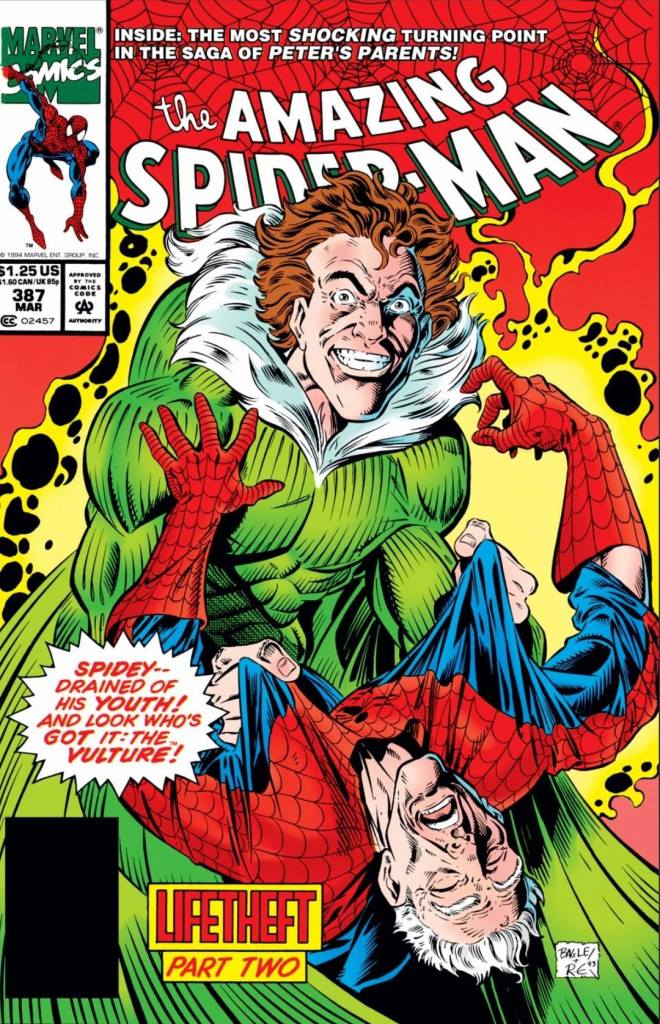
The cover.

Early story

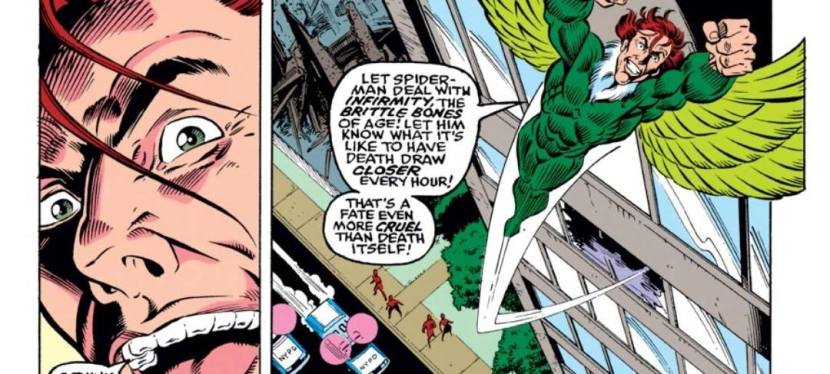
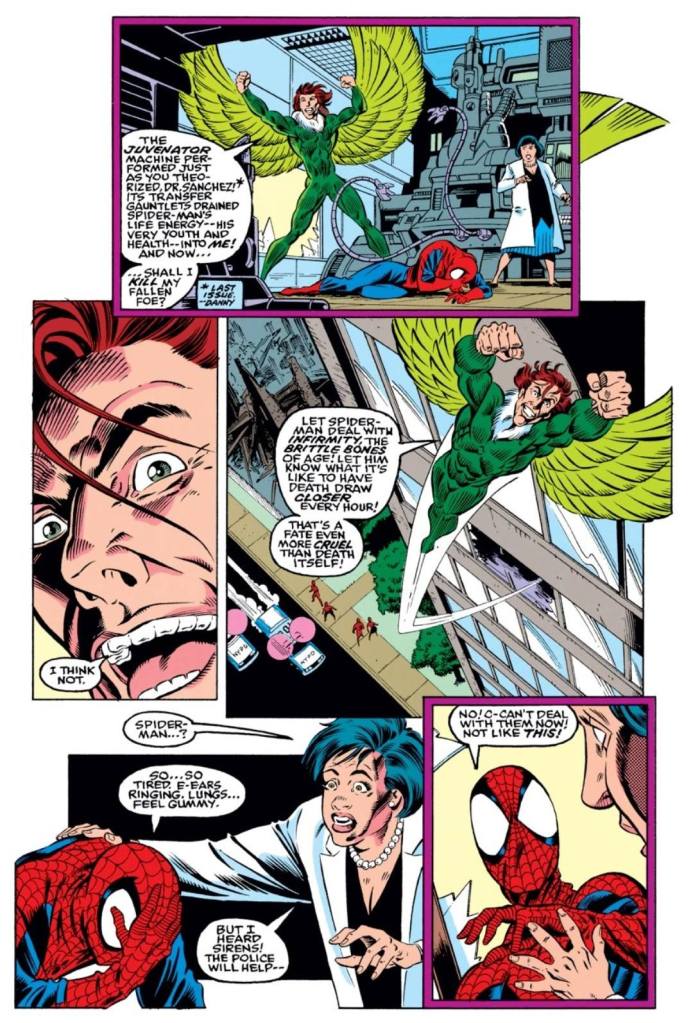
The story begins with the Vulture absorbing energy and the youth of Spider-Man using the Juvenator in front of Dr. Sanchez. As a result, Adrian Toomes/Vulture physically turned much younger with rejuvenated skin, cancer getting health, a stronger body and his hair grown back. He declares himself as the new vital Vulture. Spider-Man is down on the floor clearly weakened and with a change of his body’s shape.

Instead of taking the opportunity to kill Spider-Man, the Vulture decides to fly away knowing that his long-time rival will have to deal with brittle bones of old age. As Dr. Sanchez tries to help him, Spider-Man feels exhausted, his lungs feeling gummy and his ears ringing. Knowing that police officers are coming, the webslinger decides to get away and leave Dr. Sanchez behind.

Moments later at the top of the building, the weakened Spider-Man takes his mask and glove off realizing that he has turned into an elderly man…

Quality

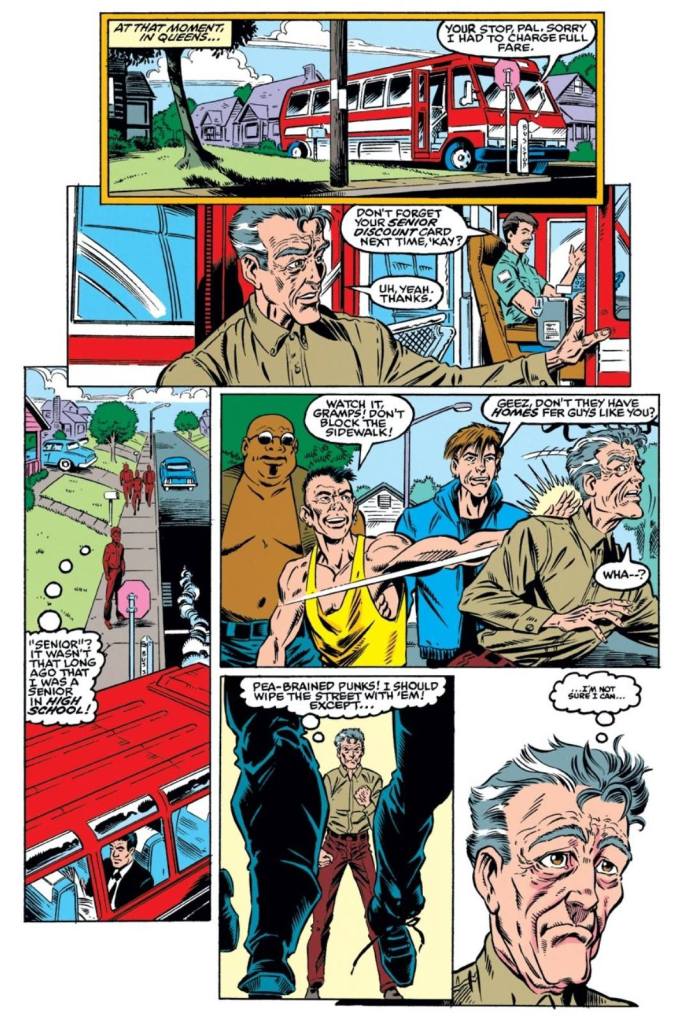
Can you recognize Peter Parker?

To get straight to the point, this continued rematch between Spider-Man and the Vulture is so outlandish (backed with the science fiction approach to life energy and the so-called fountain of youth), it almost felt like it was a story crafted for the What If series of comic books. In fact, the sudden aging of Peter Parker into an actually elderly man getting into close calls with two notable family members made this tale even more suitable for the What If series (note: What If #4 of 1989 had a severely aged Peter Parker in it).

Still on the storytelling aspect of this comic book, the creators used the fountain of youth concept to pull off a significant twist on the enduring Spider-Man/Vulture rivalry. As Spider-Man grew so old, the Vulture became much younger which in turn convinced him he could reinvent himself and put his genius of electro-magnetism to great use.  

To make things clear, this tale is not purely a Spider-Man/Vulture rivalry with sci-fi twists. In fact, there is more to the plot than meets the eye here as the Juvenator machine becomes an important element of the story (leading to something intriguing in the next issue), and a sinister revelation concluded this comic book.

Conclusion

The Vulture rejuvenated into a young man at the expense of Spider-Man.

Amazing Spider-Man #387 (1994) is a solid follow-up to the previous issue and it also was a radical attempt to twist the Spider-Man/Vulture rivalry a lot reaching to the point of making it look and feel like a What If story. There is a good amount of suspense, character development and enough superhero spectacle that paid-off the build-up nicely. Ultimately, this tale is actually a part of a short storyline leading to the intriguing events of issue #388.  

Overall, Amazing Spider-Man #387 (1994) is recommended.

+++++

Thank you for reading. If you find this article engaging, please click the like button below, share this article to others and also please consider making a donation to support my publishing. If you are looking for a copywriter to create content for your special project or business, check out my services and my portfolio. Feel free to contact me with a private message. Also please feel free to visit my Facebook page Author Carlo Carrasco and follow me on Twitter at  @HavenorFantasy as well as on Tumblr at https://carlocarrasco.tumblr.com/ and on Instagram at https://www.instagram.com/authorcarlocarrasco

A Look Back at Spider-Man #4 (1990)

Welcome back superhero enthusiasts, 1990s culture enthusiasts and comic book collectors! Today we go back to the early 1990s and explore a part of the Marvel Comics shared universe through a tale of the Spider-Man monthly series.

Having reviewed the first three issues of the Spider-Man monthly series written and drawn by Todd McFarlane (click here, here and here), I can say that the 5-part Torment storyline has a daring concept, adulterated imagery and clunky storytelling. Issues #2 and #3 saw Spider-Man in violent battles with the Lizard who is clearly not himself but under the control of the Haitian witch Calypso. It is inevitable Spider-Man, who has been in a long-lasting disadvantage so far, will somehow meet Calypso face to face.

With those details laid down, here is a look back at Spider-Man #4, published in 1990 by Marvel Comics with a story written and drawn by Todd McFarlane. This is the 4th chapter of the Torment storyline.

The cover.

Early story

The story begins in a dirty alley deep within New York City. An exhausted and disoriented Spider-Man is shocked to see a grotesque looking Kraven with the vicious Lizard beside him. The moment made him remember what happened as a result of his previous with Kraven (note: refer to the Kraven’s Last Hunt storyline) which includes him getting buried temporarily with a grave designated to him.

Eventually Spider-Man sees through the illusion and realizes that Kraven is not in front of him but Calypso with the Lizard still under her full control. With an unspoken command from Calypso, the Lizard moves towards the weakened Spidey and carries him bodily…

Quality

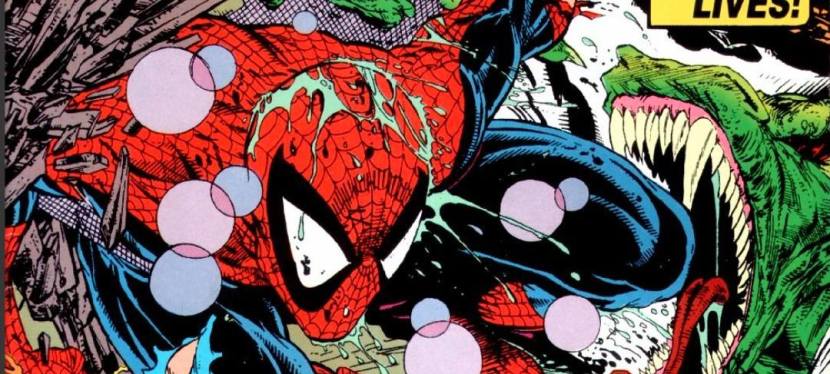
This portrayal of Mary Jane having a good time again in the city without her husband is clearly filler and it did not add anything to the plot.

As anticipated, the webslinger finally met the Haitian witch who had been controlling the Lizard all along. With a mostly slow pace, the story has Spider-Man being helpless in the presence of two powerful enemies and McFarlane stylishly dramatizes moments from Calypso’s past showing her acceptance of evil ways (witchcraft), her personal connection with Kraven and her desire to have a new sacrifice done.

With Spider-Man restrained a lot for most of the story, it was not surprising to see Calypso have a good share of the spotlight to herself and the Lizard is clearly portrayed as her enforcer and assistant contrasting what was presented in the first 3 issues.

Unsurprisingly, the storytelling feels choppy although the slow pace allows readers to grasp Calypso’s intentions and her main purpose in the entire storyline. The lack of spectacle allowed McFarlane to implement long segments of suspense mixed with horror. With Spider-Man doing not so much, he’s technically a supporting character symbolizing the reader’s curiosity.

Conclusion

There is nothing like waking up in the presence of two evil figures while being restrained.

Compared with the previous, Spider-Man #4 (1990) does not have much to show and has even less entertainment value. Unless you are a die-hard fan of Calypso (so twisted and demonic under McFarlane’s handling), this particular story won’t mean much to Spider-Man faithful. The webslinger is still helpless but this is all part of the build-up for the fifth and final chapter.

In fairness, what was shown here might inspire fans to revisit Kraven’s Last Hunt and read past Spider-Man comic books showing Calypso’s connection with Kraven (note: Spider-Man and Calypso were present in Amazing Spider-Man #209). In my view, this comic book is not terrible but it does not have much entertainment value nor does it have anything engaging to show. I don’t feel so motivated to proceed with issue #5.

Overall, Spider-Man #4 (1990) should be avoided.

+++++

Thank you for reading. If you find this article engaging, please click the like button below, share this article to others and also please consider making a donation to support my publishing. If you are looking for a copywriter to create content for your special project or business, check out my services and my portfolio. Feel free to contact me with a private message. Also please feel free to visit my Facebook page Author Carlo Carrasco and follow me on Twitter at  @HavenorFantasy as well as on Tumblr at https://carlocarrasco.tumblr.com/ and on Instagram at https://www.instagram.com/authorcarlocarrasco

A Look Back at Uncanny X-Men #286 (1992)

Welcome back superhero enthusiasts, 1990s arts and culture enthusiasts, Marvel Comics fans and comic book collectors! Today we go back to the early 1990s to explore one of the many tales of the Marvel shared universe through the Uncanny X-Men series.

While issue #284 marked the turning point following the successful return of Jean Grey and the encounter with Bishop, issue #285 generated strong vibes of the sci-fi TV series Otherworld as it revealed most of the X-Men’s Gold Team members in a completely different world filled with unknown inhabitants and culture. Clearly a lot has happened following the Gold Team’s debut in issue #281 which reflects the respective contributions of the creators.

With those details laid down, here is a look back at Uncanny X-Men #286, published in 1992 by Marvel Comics with a story co-written by Jim Lee and Scott Lobdell (who worked on the script). The art was done by Whilce Portacio with ink work by Art Thibert.

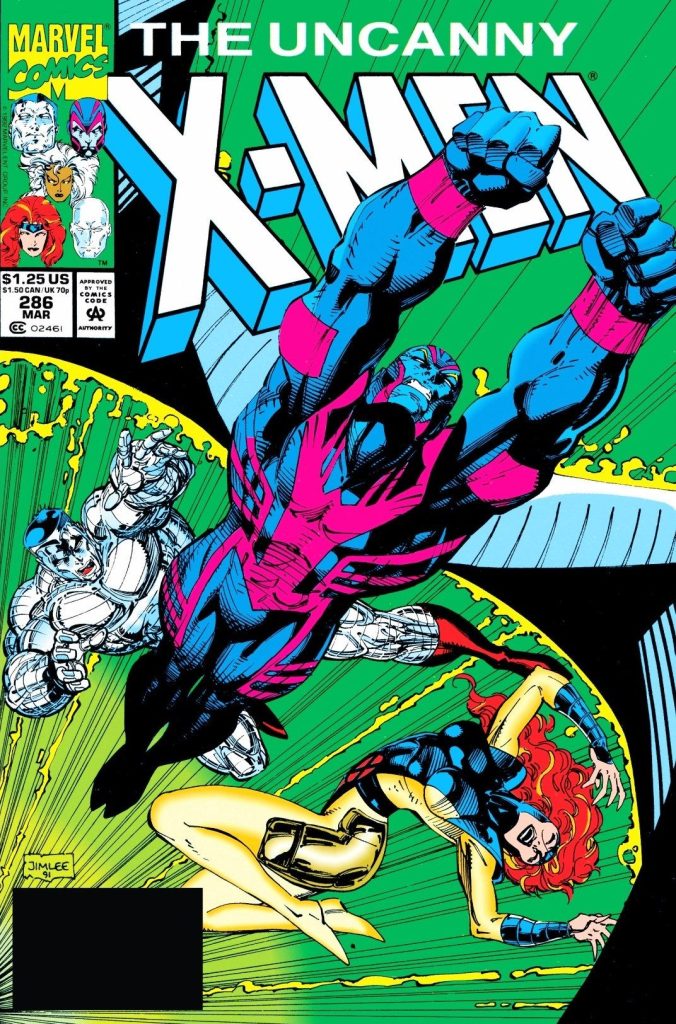
The cover.

Early story

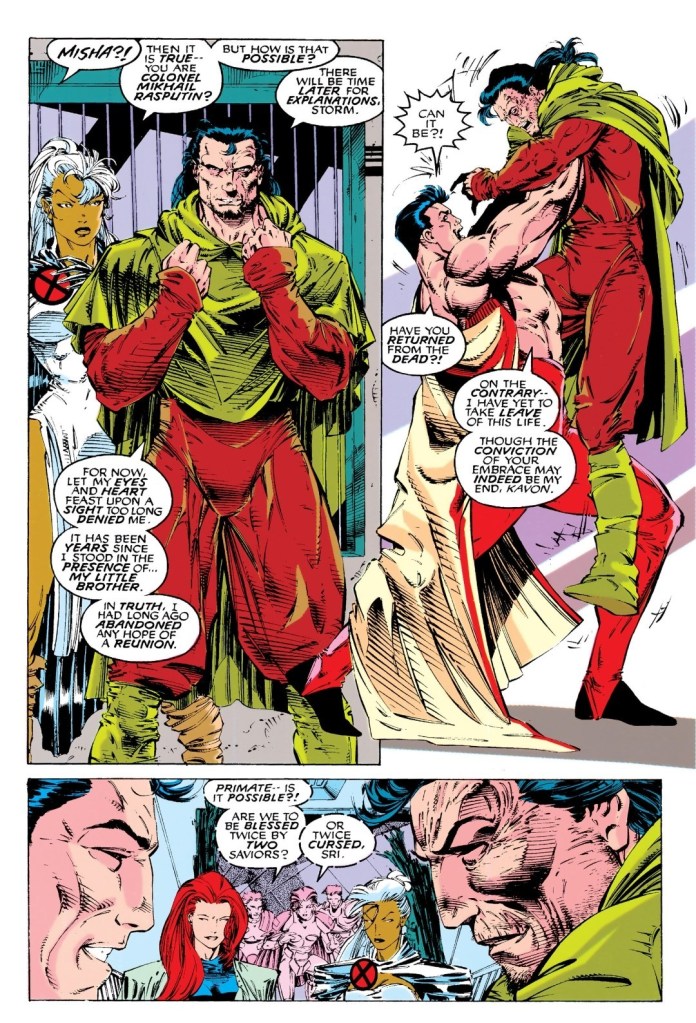
The story begins with Jean Grey, Colossus, Storm and her male companion (Mikhail Rasputin) together. While Jean is surprised and relieved to see Storm again (she was separated from the team temporarily in the last issue), Colossus is shocked to see his long-lost brother Mikhail alive and well. Mikhail reveals that so many years have passed since he last stood with his little brother and had long abandoned any hope of a reunion.

The reunion is interrupted when a portal has grown larger by the moment and it means that it is only a matter time before Earth is pulled into the realm they are in. Both worlds are at risk of getting destroyed…

Quality

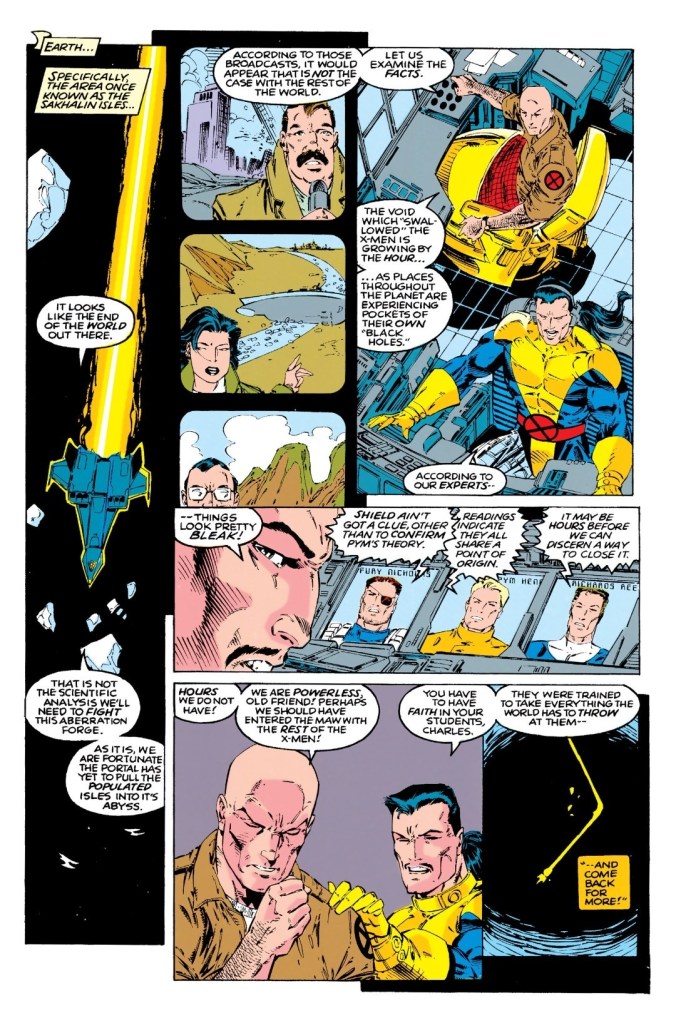
Charles Xavier and Forge are still on Earth separated from the rest of the X-Men’s Gold Team members.

Following the build-up and character developments that happened in the previous issue, this X-Men tale is pretty much a strong pay-off while leaving some space for suspense and surprises. The writers intended to conclude what started in issue #284 and along the way, they had to go through the challenges of introducing a new world, new people and the conflicts within. Mikhail Rasputin – the same guy who helped Storm in issue #284 – is easily the most impactful addition to this tale and because of him and what he revealed, Colossus became emotional and felt like his life was crumbling as he simply could not handle the truth. Colossus’ despair and emotional state here served as the creative seeds that later led to the betrayal he would eventually commit (in Uncanny X-Men #304).

The Mikhail-Colossus interaction was easily this comic book’s source of emotions which added some weight to the plot. By the time I reached the end of this issue, I felt really satisfied and at the same time curious about the state of Colossus (note: there’s a still a long road of X-Men tales before Uncanny X-Men #304).

With regards to the writing, John Byrne’s intricate touch on the dialog was clearly missing but Scott Lobdell did a fine job taking over. While Whilce Portacio was credited as illustrator, there were a few pages that looked like they were drawn by someone else. The same also happened with regards to the inking in different parts of the comic book…Art Thibert’s inking has a fine touch and there were some images that had aggressive and thicker inking (it has to be the work of someone uncredited).

Conclusion

A very significant moment for the Rasputin brothers witnessed by Jean Grey, Storm and a few of the locals.

While there were some inconsistencies on the quality of the artworks, Uncanny X-Men #286 (1992) had a really strong script and the good news here is that the creative team managed to pull off a solid conclusion. This is the kind of tale in which the X-Men utilized their skills and made tough decisions while being far away from Charles Xavier. At this particular stage of the Uncanny X-Men series, the Gold Team’s development really progressed and they became a more appealing team to follow.

Overall, Uncanny X-Men #286 (1992) is highly recommended!

+++++

Thank you for reading. If you find this article engaging, please click the like button below, share this article to others and also please consider making a donation to support my publishing. If you are looking for a copywriter to create content for your special project or business, check out my services and my portfolio. Feel free to contact me with a private message. Also please feel free to visit my Facebook page Author Carlo Carrasco and follow me on Twitter at  @HavenorFantasy as well as on Tumblr at https://carlocarrasco.tumblr.com/ and on Instagram at https://www.instagram.com/authorcarlocarrasco

A Look Back at Amazing Spider-Man #386 (1994)

Welcome back superhero enthusiasts, 1990s arts and culture enthusiasts, Marvel Comics fans and comic book collectors! Today we go back to the 1990s to examine a small part of the Marvel Comics shared universe through a tale of the Amazing Spider-Man monthly series.

Following a serious of unfortunate events that kept Spider-Man away from his wife Mary Jane (read my retro reviews by clicking here, here and here), the Amazing Spider-Man creators decided it was time to have the iconic webslinger in a new rematch with the classic villain The Vulture (specifically Adrian Toomes whose first appearance was in Amazing Spider-Man #2 in 1963). What makes Toomes Vulture notable (note: there were other versions of Vulture in Marvel’s history) is that he is an old man who happens to be a brilliant electrical engineer who proved to be a very capable criminal. He is also a co-founder of the Sinister Six.

With those details laid down, here is a look back at Amazing Spider-Man #386, published in 1994 by Marvel Comics with a story written by David Michelinie and drawn by Mark Bagley.

The cover.

Early story

The story begins in the prison complex at Ryker’s Island. Adrian Toomes (Vulture) is inside his prison cell working on a small device with a guard watching from his back. It turns out the device has a tractor beam and Toomes uses it on the guard to physically slam his body on the sliding door of the prison cell. Toomes then uses the tractor beam to pull the metal bars of the other side of the cell to create an opening. He equips himself with mechanical wings and flew out of his cell and reach the speed boat prepared by two companions.

At the residence of May Parker, Peter and his Aunt May talk with an investigator. It turns out Aunt May hired the investigator to follow and observe Richard and Mary Parker. When asked by Peter, she tells him she does not think Richard and Mary are his parents. As far as the investigator is concerned, there is nothing suspicious with Richard and Mary Parker. He tells peters that his aunt needs professional help (related to Alzheimer’s Disease)…

Quality

The physical conflict between Spidey and the Vulture is intense to see!

Perceived as modern during the time of publication, the conflict between Spider-Man and the Vulture in this comic book utilized the concept of everlasting youth with science fiction (combined with the villain’s own obsession). This in turn resulted in a unique approach executed by the Michelinie-Bagley duo to make something new with the rematch between Spidey and his winged nemesis.

The Vulture here is not only very obsessed with obtaining everlasting life as there is something deep inside him that has been raging. This explains why the winged super villain is more visceral in his battle with Spider-Man which Mark Bagley visualized with dynamism and intensity. For the newcomers reading this, the two have fought each other a lot since the 1960s and this 1994 rematch was very unique. The Vulture here is not unhinged but rather strategic while being obsessed, and this made him even more dangerous for Spider-Man.

Apart from the promised rematch, this comic book continued building up the tension for the eventual tragedy in Peter Parker’s life (which happened in Amazing Spider-Man #388) while also dramatizing the lasting hardships Mary Jane experiences as Peter’s wife. Peter Parker meanwhile is focused on his family and his intention to find professional help for Aunt May smoothly connected with his rematch with the Vulture.  

Conclusion

Mary Jane Parker participates in a promotional event of her TV show in a shopping mall.

There is a lot to enjoy in Amazing Spider-Man #386 (1994). The rematch between the Vulture and Spider-Man is engaging and intriguing to read. There is also a good amount of suspense applied on the main plot as well as on the sub-plot about Aunt May being suspicious about Richard and Mary Parker. The result here is a reading experience that is entertaining and also balanced with regards to tone and storytelling.  

Overall, Amazing Spider-Man #386 (1994) is recommended.

+++++

Thank you for reading. If you find this article engaging, please click the like button below, share this article to others and also please consider making a donation to support my publishing. If you are looking for a copywriter to create content for your special project or business, check out my services and my portfolio. Feel free to contact me with a private message. Also please feel free to visit my Facebook page Author Carlo Carrasco and follow me on Twitter at  @HavenorFantasy as well as on Tumblr at https://carlocarrasco.tumblr.com/ and on Instagram at https://www.instagram.com/authorcarlocarrasco