Better than Streaming: The Blob (1988) Collector’s Edition 4K Blu-ray now available

Welcome back, fellow geeks, Blu-ray collectors and movie buffs! Back in the late 1980s, I saw the 1988 version of The Blob – let’s refer to it as The Blob (1988) – on home video and it turned out to be a fine mix of thrills, scares and science fiction concepts that ultimately became fun to watch. Being young at a time when Internet connection and online research were not yet available, I was not even aware that The Blob (1988) was a remake of the 1958 original Blob movie that starred Steve McQueen.

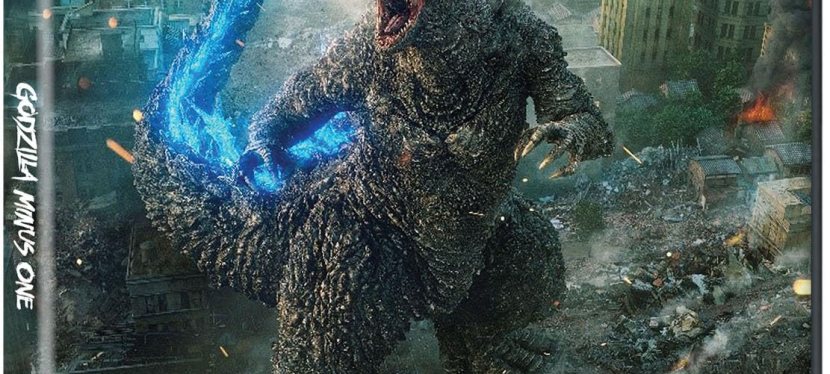
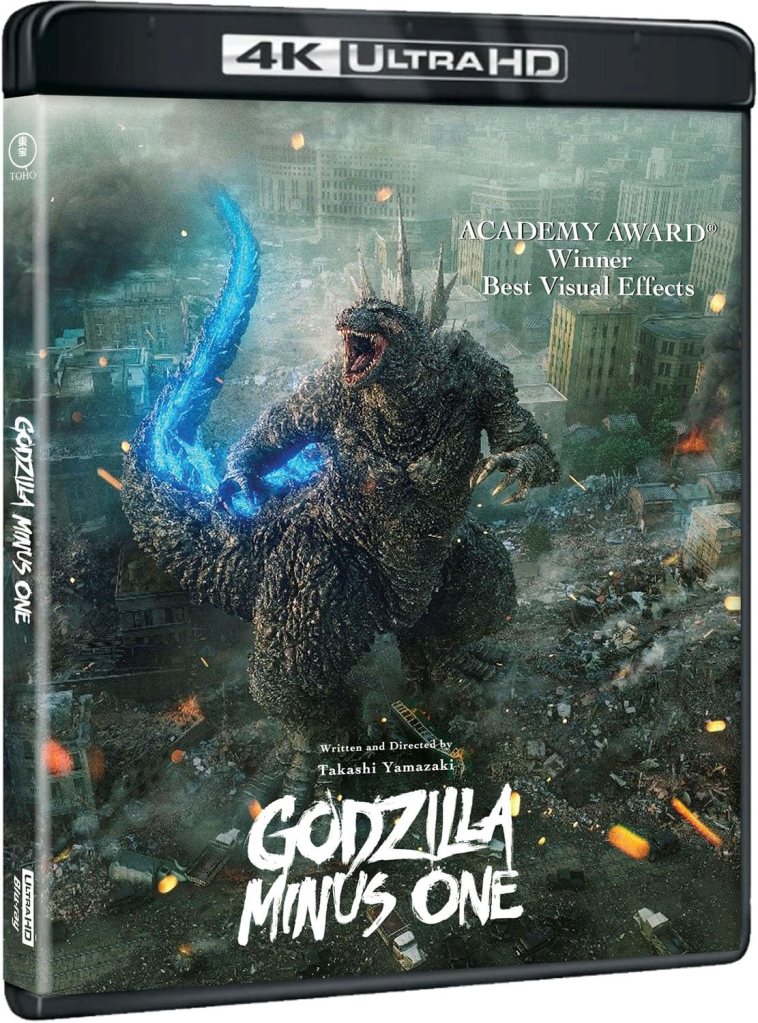
If you who love the late 1980s Blob movie and if you have been looking to add something to your home entertainment collection of Blu-ray and 4K Blu-ray movies, be aware that the Collector’s Edition 4K Blu-ray of The Blob (1988) is now available in the market and you can order it online right now and have it delivered to your home. The new release by Shout Factory! is loaded with features and it has native 4K visuals.

The Blob (1988) 4K Blu-ray cover.

To put things in perspective, posted below are the technical specs from The Blob (1988) 4K Blu-ray page at Blu-ray.com. The said website highly recommended it in its review.


Video

Codec: HEVC / H.265 (84.99 Mbps)
Resolution: Native 4K (2160p)
HDR: HDR10
Aspect ratio: 1.85:1
Original aspect ratio: 1.85:1


Audio
English: DTS-HD Master Audio 5.1 (48kHz, 24-bit)
English: DTS-HD Master Audio 2.0 (48kHz, 24-bit)


SubtitlesEnglish SDH

Discs4K Ultra HD, Blu-ray Disc, Two-disc set (1 BD-100, 1 BD-50)

PackagingSlipcover in original pressing, Reversible cover

Playback4K Blu-ray: Region free, 2K Blu-ray: Region A 

Having seen both the 1958 and 1988 versions of The Blob, I can say to the newcomers and movie buffs reading this that you can’t go wrong with either version. I enjoyed both movies and I can say that each film has distinctive attractions for viewing. The Blob of 1958 is more sci-fi and has very little horror elements.

However, if you want thrills, the 1980s culture, stronger horror elements, stronger sci-fi elements, the creative approach done by director Chuck Russell and Frank Darabont on reimagining The Blob‘s concept, and the great-looking practical effects (note: the blob effects were made with physical stuff and a lot of man-made work without computers), then The Blob (1988) is the definitive choice. Take note I mentioned thrills as the movie has some fast-paced scenes that happen from time to time as you watch it. Considering its use of sci-fi concepts mixed with action, The Blob (1988) really stood out among the many horror movies released by Hollywood throughout the 1980s. I should also state that the remake has Kevin Dillon, Shawnee Smith, Jeffrey DeMunn, Joe Seneca, Candy Clark and Donovan Leitch Jr. in its cast.

As a 4K Blu-ray collector, I plan to acquire a copy of The Blob (1988) 4K Blu-ray in due time. I was already aware of the Blu-ray release from 2019 but I waited for the 4K version to be made.

In case you are interested or if you have made up your mind, you can order a copy of The Blob (1988) Collector’s Edition 4K Blu-ray right now by clicking https://www.amazon.com/Blob-Collectors-4K-UHD/dp/B0CC4N168B/ref=sr_1_2?crid=1IT5E0CSG6JIF&keywords=the+blob+4k&qid=1698124727&sprefix=%2Caps%2C262&sr=8-2 and at https://shoutfactory.com/products/the-blob-collector-s-edition?variant=40206057111686

If you want the best enjoyment possible from watching The Blob (1988) Collector’s Edition 4K Blu-rayI highly recommend you avoid watching movie reaction videos and the spoileriffic retro movie reviews posted by YouTubers.

If you wish to join a group of movie enthusiasts and talk about cinema, visit the Movie Fans Worldwide Facebook group at https://www.facebook.com/groups/322857711779576

+++++

Thank you for reading. If you find this article engaging, please click the like button below, share this article to others and also please consider making a donation to support my publishing. If you are looking for a copywriter to create content for your special project or business, check out my services and my portfolio. Feel free to contact me with a private message. Also please feel free to visit my Facebook page Author Carlo Carrasco and follow me on Twitter at  @HavenorFantasy as well as on Tumblr at https://carlocarrasco.tumblr.com/ and on Instagram at https://www.instagram.com/authorcarlocarrasco

AFP says Communist insurgents have been greatly weakened

Let’s be clear here – the Left is inherently evil. That being said, we should focus on the current state of conflict between the Armed Forces of the Philippines (AFP) and the Left as the military announced recently that the Communists have been greatly weakened during the first eight months of this year, according to a Philippine News Agency (PNA) news article.

To put things in perspective, posted below is an excerpt from the PNA news article. Some parts in boldface…

Let me end this piece by asking you readers: What is your reaction to this recent development? Do you think the Satanic Left here in the Philippines are still a threat to your family and your local community? Are there many Leftists living in your local community right now? Are you aware that mainstream news outlets like CNN, The New York Times and MSNBC all emphasize Leftist concepts in their so-called news reports? Are you aware that Democrats in America are inspiring young Filipinos to become socialists, Marxists, Communists, SJWs, homosexuals and terrorist supporters?

You may answer in the comments below. If you prefer to answer privately, you may do so by sending me a direct message online.

+++++

Thank you for reading. If you find this article engaging, please click the like button below, share this article to others and also please consider making a donation to support my publishing. If you are looking for a copywriter to create content for your special project or business, check out my services and my portfolio. Feel free to contact me with a private message. Also please feel free to visit my Facebook page Author Carlo Carrasco and follow me on Twitter at  @HavenorFantasy as well as on Tumblr at https://carlocarrasco.tumblr.com/ and on Instagram athttps://www.instagram.com/authorcarlocarrasco

A Look Back at Amazing Spider-Man #129 (1974)

Welcome back superhero enthusiasts, 1970s arts and culture enthusiasts, Marvel Comics fans and comic book collectors! Today we go back to the year 1974 to examine a highly significant tale from Marvel Comics’ shared universe – the first appearance of the Punisher and his first-ever encounter with Spider-Man.

To put things in perspective, Punisher’s literary debut was told within the Amazing Spider-Man comic book series and it happened not too long after the legendary tragedy of Gwen Stacey. During the 1970s, Hollywood made and released several action movies and crime thrillers that were violent, gritty and highlighted vigilantes and assassins. Some of that influence somehow made it into Marvel’s shared universe which was symbolized creatively through the Punisher who debuted as an assassin.

With those details laid down, here is a look back at Amazing Spider-Man #129, published in 1974 by Marvel Comics with a story written by Gerry Conway and drawn by Ross Andru (the same creative duo behind Superman vs. The Amazing Spider-Man crossover).

The cover.

Early story

The story begins inside a private facility an assassin wearing black with a huge skull on his upper body heavily damages a solid statue of Spider-Man using a powerful rifle. This impresses the hideous villain called the Jackal who tells him that if he does well with the real Spider-Man, he would have performed a great service for the world. Knowing he impressed the Jackal, the Punisher states that he will only kill those who deserve killing and he expresses his belief that the webslinger deserves to die.

Elsewhere, Spider-Man swings into action and successfully stops an armed robbery from happening. Along the way he managed to capture photographs, changes into his civilian clothes and enters the Daily Bugle’s office ready to submit the roll of film as Peter Parker. Unfortunately, his superior J. Jonah Jameson disregards Parker’s submission and points out that the Punisher made waves with New York’s readers via the Bugle’s competitor The New York Star. For Jameson, the Punisher is only the most newsworthy thing to happen to New York and tells Parker he wants photos of the assassin…

Quality

This is a scene from the first of two encounters between Spider-Man and the Punisher who was introduced as an assassin.

To make things very clear about storytelling without spoiling plot details, this is a tale about intrigue and the darker side of society that involves vigilantes and murdering. The Punisher here did not debut as a crime-busting vigilante but rather an assassin who accepts assignments from clients as long as the jobs fall in line with his personal philosophy that focuses on taking the lives of those who deserved to be killed. That being said, it is clear that Hollywood’s vigilante flicks of the 1970s influenced the presentation and I can say that whenever the story focuses on the Punisher, there definitely is a grim tone which contradicts the tone of Spider-Man’s scenes.

Spider-Man here continues to struggle somewhat with his personal life having recently lost Gwen Stacey while remaining disturbed about the identity of the Green Goblin. The webslinger also has to live with the heavy situation in which a lot of people in New York were convinced that he killed Norman Osborne which was the result of his own boss’ handling of the Daily Bugle. These elements along with his civilian involvement with his newspaper creatively added to the build-up of Spider-Man’s eventual encounters with the Punisher. The build-up was structured nicely and the pay-off was worth it.

There was also the introduction of Jackal. While he has a hideous appearance, his participation was more about scheming than action which contrasted him with the Punisher. For the newcomers reading this, Jackal is actually Miles Warren in a more monstrous form. From this comic book, it was clear that Jackal was created to be a recurring for of Spider-Man and this was strongly executed in the controversial Clone Saga of the 1990s.

Going back to the Punisher, he symbolically uses guns with designs that were more grounded in reality (inspired by real-life guns in looks) instead of taking influence from science fiction. As an assassin living with a strong code, the Punisher is truly determined to eliminate Spider-Man whom he even referred to as a murderer. The perception of Spider-Man as a criminal on the part of the Punisher clearly reflected the defamation caused by the Daily Bugle on the webslinger. Gerry Conway established the assassin to be a strong believer in fighting evil by using violence and killing.

The build-up of the Punisher is very solid and the pay-off in the form of battles with Spider-Man is tremendous and very satisfying to read. There is a lot of action to enjoy here and most notably Gerry Conway maintained a strong narrative throughout.

Conclusion

Have you ever worked in a newspaper before?

I can say out loud that Amazing Spider-Man #129 (1974) is truly a great read and a true illustrated literary classic of Marvel Comics. This tale alone added a touch of darkness and grit (in the form of vigilante and assassins cultures) into the Spider-Man legacy. Apart from its status as a comic book classic, this one paved the way for the rise of the Punisher in terms of more comic book appearances and the publishing of new comic book series featuring him. While the Punisher’s legacy as a killer is obviously not something worth believing in, Marvel Comics took the risk of having him as one of their primary characters in the decades that followed. This particular story is so significant, Marvel Comics revisited it with What If #58 (1994). Check out my other Punisher-related retro reviews by clicking here, here, here, here and here.

Overall, Amazing Spider-Man #129 (1974) is highly recommended!

+++++

Thank you for reading. If you find this article engaging, please click the like button below, share this article to others and also please consider making a donation to support my publishing. If you are looking for a copywriter to create content for your special project or business, check out my services and my portfolio. Feel free to contact me with a private message. Also please feel free to visit my Facebook page Author Carlo Carrasco and follow me on Twitter at  @HavenorFantasy as well as on Tumblr at https://carlocarrasco.tumblr.com/ and on Instagram at https://www.instagram.com/authorcarlocarrasco
A Look Back at Godzilla: King of the Monsters #1 (1977)

Welcome back superhero enthusiasts, 1970s arts and culture enthusiasts, Marvel Comics fans and comic book collectors! Today we go back to the year 1977 when Marvel Comics had the license to publish comic books about Japan’s iconic monster Godzilla (Gojira in Japanese) and even integrated him into their shared comic books universe.

The mid-1970s saw a decline of Godzilla’s popularity in Japan as reflected in the commercial disappointment of the movie Terror of Mechagodzilla (1975). The company Toho decided to put on-hold the production of its monster movies without permanently ending the Godzilla film franchise. The next Godzilla movie released was The Return of Godzilla (1984) which proved to be a solid rebound of the Japanese film franchise.

Sometime between the mentioned movies, there was interaction between Toho officials and Marvel Comics – including the late Stan Lee – when the Japanese company screened the movie Godzilla vs. Gigan (titled in America as Monster Island) to the comic guys in relation to the film’s American theatrical release. It turns out Stan Lee enjoyed the movie a lot and seated next to him was writer Doug Moench (the eventual writer for the Godzilla comic book series).

With those details laid down, here is a look back at Godzilla: King of the Monsters #1, published in 1977 by Marvel Comics with a story written by Doug Moench and drawn by Herb Trimpe.

The cover.

Early story

The story begins in Alaska when a huge iceberg suddenly deteriorates unleashing a gigantic monster with sharp teeth, dorsal fins and immense strength – Godzilla. After instantly crushing a supply ship, the monster moves onto the land destroying structures and disrupting the lives of every person nearby.

In response to Godzilla’s rampage in Alaska, S.H.I.E.L.D. dispatches its agents to the site of destruction to take on the monster. Meanwhile, S.H.I.E.L.D. director Col. Nick Fury is transporting with him three Japanese individuals deemed important (with clearances from the Pentagon and the White House)…

Quality

Dum Dum Dugan, Col. Nick Fury and the Japanese characters.

To get straight to the point, this comic book not only marked the literary debut of Japan’s iconic monster under Marvel Comics’ banner but also his integration into the shared universe of the time. That being said, the story written by Doug Mench was pretty much a functional build-up of Godzilla’s presence within the realm of Marvel which includes a strategic choice of having S.H.I.E.L.D. and its characters encountering the monster. In short, the creative team decided not to literally pull out Marvel’s biggest guns (the more popular superheroes and teams) as such a move would have lessened the impact of Godzilla’s debut.

For the most part, S.H.I.E.L.D.’s Nick Fury and Dum Dum Dugan had lively portrayals and the way they reacted to the rampage of Godzilla was believable. The introductions of the Japanese characters (who could provide breakthroughs on dealing with the giant monster) were clearly inspired by the Japanese scientists who were crucial in the plot of the original 1954 movie Gojira.

Going further, Doug Mench went on to efficiently establish Godzilla’s origin which creatively is a sensible reinterpretation of what was established in the 1954 movie. The giant monster’s rise as a result of humanity’s testing of powerful weapons on Earth is definitely here.

As expected, Godzilla is the unrestrained force of destruction but as this comic book was released in the 1970s, the destruction scenes lacked impact as they were creatively sanitized with deliberate moves of showing no casualties no matter what happened. This limitation on the part of Marvel Comics showed they were not willing to emulate the approach on destruction and death that was clearly emphasized in the first Godzilla movie of 1954.

As for Godzilla himself, Herb Trimpe’s visual approach is not really good. While Trimpe implemented the guy-in-a-suit shape on the giant monster’s form, he made Godzilla his own (took no inspiration from Godzilla’s cinematic designs) which resulted in making the icon look unrecognizable. There were inconsistencies on Godzilla’s head as well. In certain shots, Godzilla looked terrifying but in other shots, he looked weird or cartoony. The use of the color green did not make Godzilla look reptilian but rather comical.    

Conclusion

I can only imagine the SJWs and the climate change extremists enjoying these images of an unrecognizable Godzilla wreaking havoc to the oil supply. Are there lots of people in your local community who were brainwashed to hate oil and gas?

Godzilla: King of the Monsters #1 (1977) is a serviceable approach on debuting the iconic monster within the fantasy realm of Marvel Comics and sparking a new wave of crossovers. There were uneven levels of quality here and there, and Herb Trimpe’s visual approach on Godzilla was alienating to say the least. Honestly, I did not really see Godzilla in this comic book but rather a green-colored dinosaur-like creature that was mislabeled as Godzilla. What works here is the writing by Doug Mench which proved to be entertaining enough.

Overall, Godzilla: King of the Monsters #1 (1977) is satisfactory.

For my other Godzilla-related posts, click here, here, here, here and here.

+++++

Thank you for reading. If you find this article engaging, please click the like button below, share this article to others and also please consider making a donation to support my publishing. If you are looking for a copywriter to create content for your special project or business, check out my services and my portfolio. Feel free to contact me with a private message. Also please feel free to visit my Facebook page Author Carlo Carrasco and follow me on Twitter at  @HavenorFantasy as well as on Tumblr at https://carlocarrasco.tumblr.com/ and on Instagram at https://www.instagram.com/authorcarlocarrasco
Local athletes and art performers met with Las Piñas City Mayor and Vice Mayor

Recently in the City of Las Piñas, local athletes and performers of the arts who made achievements in varied competitions met with Mayor Imelda Aguilar and Vice Mayor April Aguilar at City Hall and had warm talk together, the City Government confirmed via social media (October 6, 2023 update).

To put things in perspective, posted below is an excerpt from the City Government’s social media post. Some parts in boldface…

Photo of the meeting released by the Las Piñas PIO.

Let me end this piece by asking you readers: If you are a resident of Las Piñas City, what is your reaction to this development? Are you delighted to find out that there are local athletes who won medals or honors in competitions?

You may answer in the comments below. If you prefer to answer privately, you may do so by sending me a direct message online.

+++++

Thank you for reading. If you find this article engaging, please click the like button below, share this article to others and also please consider making a donation to support my publishing. If you are looking for a copywriter to create content for your special project or business, check out my services and my portfolio. Feel free to contact me with a private message. Also please feel free to visit my Facebook page Author Carlo Carrasco and follow me on Twitter at  @HavenorFantasy as well as on Tumblr at https://carlocarrasco.tumblr.com/ and on Instagram at https://www.instagram.com/authorcarlocarrasco
For more South Metro Manila community news and developments, come back here soon. Also say NO to fake news, NO to irresponsible journalism, NO to misinformation, NO to plagiarists, NO to reckless publishers and NO to sinister propaganda when it comes to news and developments. For South Metro Manila community developments, member engagements, commerce and other relevant updates, join the growing South Metro Manila Facebook group at https://www.facebook.com/groups/342183059992673

A Look Back at What If #7 (1989)

Welcome back superhero enthusiasts, 1980s arts and culture enthusiasts, Marvel Comics fans and comic book collectors! Today we go back to the late 1980s to examine an alternate universe portrayal of Wolverine and S.H.I.E.L.D. told through an issue of the 2nd What If comic book series.

While Wolverine has always been identified with the X-Men, the famous mutant spent time with the Canadian team Alpha Flight and his early encounter with the Hulk remains a highly significant chapter of Marvel Comics’ superhero universe.

With those details laid down, here is a look back at What If #7 published in 1989 by Marvel Comics with a story written by Joe Valentino and drawn by Rob Liefeld.

The cover.

Early story

The story begins with the Watcher looking back at Wolverine’s encounter with not only the Hulk but also the Wendigo (as recorded in Incredible Hulk #180 and #181). A short time later, Wolverine is alone in the forest and gets visited by Nick Fury (S.H.I.E.L.D.) and Hudson (Alpha Flight) who arrived by helicopter.

Hudson tells Logan that an agreement has been made to loan him to the United States which prompts a response – Wolverine claims he is nobody’s property and tells Fury to reveal the details.

As it turns out, Wolverine joined Fury at the helicarrier of S.H.I.E.L.D. for a briefing. Fury reveals to him that the internal security of S.H.I.E.L.D. has been breached by an advanced model of Hydra LMDs (life model decoys) and their sensors cannot even detect them. An agent with top security clearance was recently caught trying to transmit classified data. The said agent blew up…

Quality

Wolverine, Nick Fury, Black Widow and some S.H.I.E.L.D. personnel take on Hydra!

I can say that I am very impressed and entertained with what Valentino and Liefeld came up with in this comic book. The story has a pretty strong structure designed to engage readers, pull off some surprises here and there, while also emphasizing the legacy of conflict between S.H.I.E.L.D. and Hydra with efficiency.

With regards to this comic book’s subject matter, Valentino succeeded in exploring the concept of Wolverine becoming an agent of S.H.I.E.L.D. complete with great interactions between the characters. While Wolverine has his ideological differences with Nick Fury, the story went on to show great chemistry between them when S.H.I.E.L.D. operates (with the clawed mutant involved). Wolverine and Black Widow make a solid duo in action and the writer managed to dramatize the conflict between Fury and Baron Strucker (Hydra). For the newcomers reading this, Baron Strucker is Marvel’s super villain with a Nazi heritage and he first appeared in the 1964 comic book Sgt. Fury and his Howling Commandos #5. Strucker here is very intimidating and powerful and Hydra’s use of LMDs symbolically reflect his ruthlessness.

When it comes to the visuals, Rob Liefeld’s art here is really great to look at and it truly is one of the best looking Marvel comics I have read with his artwork as well as the most distinctive looking What If story. Great not only because of his stylized take on the established characters (note: the Hulk and Wendigo looked very visceral) but also because Liefeld truly brought Valentino’s solid script into life from start to finish. The action scenes drawn were excellent, the facial expressions were lively and detailed to look at (note: Wolverine’s got some very visceral faces here) and most of all, Liefeld managed to make the established characters look recognizable.

Conclusion

Really nice action of Wolverine and Black Widow against many drawn by Rob Liefeld.

Thanks to Jim Valentino and Rob Liefeld’s combined works, What If #7 (1989) is a great comic book and easily one of the best tales of the 2nd volume of What If that I have ever read. The way it emphasized Wolverine as an agent of S.H.I.E.L.D. was highly imaginative, compelling and fun to read from start to finish. There is so much enjoyable stuff here that should appeal strongly to fans Wolverine, Nick Fury and S.H.I.E.L.D. In retrospect, this comic book was published just a few years before Valentino and Liefeld left Marvel Comics to establish Image Comics and right here you will see the great creativity from their younger days. Lastly, I can say that this What If tale has a strong conclusion which should compel you to read specific Marvel comic books to realize the connections

Overall, What If #7 (1989) is highly recommended!

+++++

Thank you for reading. If you find this article engaging, please click the like button below, share this article to others and also please consider making a donation to support my publishing. If you are looking for a copywriter to create content for your special project or business, check out my services and my portfolio. Feel free to contact me with a private message. Also please feel free to visit my Facebook page Author Carlo Carrasco and follow me on Twitter at  @HavenorFantasy as well as on Tumblr at https://carlocarrasco.tumblr.com/ and on Instagram at https://www.instagram.com/authorcarlocarrasco
Carlo Carrasco’s Movie Review: Sound of Freedom (2023)

Welcome back, readers and movie enthusiasts! Chances are you must have heard about the controversy and debates over Sound of Freedom, a movie about the child trafficking which was made years ago but only got released this year after overcoming many hurdles. The film starring Jim Caviezel as real-life hero Tim Ballard and directed by Alejandro Monteverde, was released at a time when wokeness in Hollywood got so feverish a lot of movies were no longer interesting for me.

In case you missed the news, the low budget Sound of Freedom performed beyond expectations in the American box office and has since been making waves gradually in cinemas around the world. The film opened officially here in the Philippines on September 20 and I finally saw it in the local theater.

With regards to the controversy about Sound of Freedom, I urge you to reject the Leftists’ constant ranting against it and make the effort to see it yourselves. If you take into account the conceptualization of the movie, it is almost a decade old now and efforts to write the script happened years before QAnon even started (for context, watch Midnight’s Edge video by clicking here). Blatant accusations of QAnon conspiracy theory against this film are simply false and officially denied by Tim Ballard. Communist-filled Hollywood (Commiewood) and the woke mob are simply lying to stop people from seeing the movie.

With those details laid down, here is my review of Sound of Freedom.

The official movie poster.

Early story

The story begins in Honduras when a pretty lady visits the home of a father who has one young daughter and one young son, and convinces him to have them audition into modeling. The audition happened in a different location (filled with the man’s two kids and many others) and as the father was not allowed to be present, he was asked to return in the evening. By the time he returned, the place was empty and the children were kidnapped. They secretly shipped to another country.

In America, Tim Ballard and his time successfully apprehended a man for possessing and distributing child pornography. Tim’s teammate points out to him that although they have arrested many child predators, they could not even save a single child from exploitation and abuse…

Quality

I will start first by saying that this movie was not made to entertain viewers but to emphasize the real-life problems of child trafficking, kidnapping, the abuse of minors, sex trafficking and why slavery today still has many millions of victims (including minors).

This movie closely examines the struggles that come with fighting the syndicates (that kidnapped children and sell them) and the customers (who paid to illegally acquire children for their wicked desires) as told through the eyes of Tim Ballard (Jim Caviezel) who is clearly feeling the heavy stress of his US Homeland Security job (which takes a lot of strength, sacrifice and sheer will to do). Ballard himself has many kids with his faithful and supportive wife (Mira Sorvino) and therefore he can easily relate with the parents whose children got kidnapped and sold in other countries.

Caviezel is mostly subtle with expressing Ballard’s emotions as well as his verbal expressions with the other people he interacted with. This is not to say that Caviezel’s act is wooden, rather he is straightforward with portraying a man who feels disturbed by the collective stress of his duty (but still far away from the breaking low-point). Even though he is getting worn down, Ballard’s sheer determination to save a specific kidnapped-and-abused daughter for a Honduras-based father is nicely captured by Caviezel.

The efforts of fighting the criminals who pounced on children involves a lot of hurdles to overcome. I’m not just talking about Homeland Security agents taking down people in America who engaged in child pornography but also going after the very criminals overseas who kidnapped children, shipped them from one nation to another and sell them as “models” to pedophiles. As such, Ballard’s efforts involves spending time overseas (away from his family), making local connections and secretly working his way into different locations where the risks of getting killed are high.

Again, this tale is not about entertaining viewers as it works on emphasizing to them how extremely difficult it is to bring down the criminals in real-life. The good news is that this film is nicely directed by Monteverde whose cinematic style is simplistic and yet engaging to watch. There is a clear subtle approach on showing what little violence the film has. As for scenes of child abuse, there is nothing graphic to see (left ambiguous) nor was there anything intense about them. While I am certain that some parts of the story involved liberties in order to establish a functional cinematic narrative, this movie strives hard with realism while also avoiding becoming preachy with its message (expressed in subtle fashion) about human trafficking, child slavery and the business involving pedophiles and kidnappers.

Conclusion

Sound of Freedom was clearly made to inform the world that children are still being kidnapped, used for illegal transactions, transported around the world and sold to the predators. This real-world problem continues to happen somewhere every single day and there are simply not enough law enforcers who could fight the criminals and rescue the kidnapped minors. Nor do the law enforcers have the resources to stage major rescue operations while facing off with armed criminals and their bodyguards.

While it is told through Tim Ballard, this movie is not about him and his profession. It is about the extreme difficulties that law enforcers – both domestic and overseas – have to go through to save the very young victims. The story was told with consistent realism and subtlety which make it very believable to watch. Jim Caviezel is indeed a solid performer and his portrayal of Tim Ballard will easily remind you that true heroes are the ones who bravely face tremendous odds to achieve their goals (for good) while still maintaining their sanity no matter how hopeless the situations appeared.

Sound of Freedom is a cinematic call to action to make others aware about the ongoing menaces of sex trafficking, kidnapping, abuse of minors and the cartels (demonic people) that profited from their evil trade. Like Steven Spielberg’s Schindler’s List, this film was made for reflective viewing and not for amusement. Indeed, God’s children are not for sale and this is the truth that the bashers of this movie do not want you to realize. There is also the biblical truth to the popular quote from the film. Read the holy scripture below…

To put things politically, you must be wondering why the Satanic Left – Democrats, Communists, socialists, Marxists, liberals, the SJWs and the woke extremists – keep on bashing and hating Sound of Freedom. Here is why…because the Leftists are themselves pro-crime (example: “Defund the police.”) and they have made efforts to weaken law enforcement which emboldened the criminals such as robbers, murderers, kidnappers, smugglers, rapists, terrorists, molesters, illegal immigrants and, of course, the pedophiles. The Leftists are clearly wicked and they are lots of them present not only in government but also in showbiz, the mainstream media and other sectors of societies. The Leftists care less about the children and nuclear family, and this is why they want more drag queens and homosexuals to go after the children without law enforcers blocking them. The Leftists are okay with children getting kidnapped, abused and raped. In short, those in the Left are okay with being evil and doing what Satan wants.

I saw Sound of Freedom at the local cinema.

The Leftists are very afraid of Sound of Freedom and remember that it is the one notable movie that almost never got released. That being said, you must watch the movie whenever you have chance to do so.

Overall, Sound of Freedom (2023) is recommended!

+++++

Thank you for reading. If you find this article engaging, please click the like button below, share this article to others and also please consider making a donation to support my publishing. If you are looking for a copywriter to create content for your special project or business, check out my services and my portfolio. Feel free to contact me with a private message. Also please feel free to visit my Facebook page Author Carlo Carrasco and follow me on Twitter at  @HavenorFantasy as well as on Tumblr at https://carlocarrasco.tumblr.com/ and on Instagram at https://www.instagram.com/authorcarlocarrasco
Foreign tourist arrivals in the Philippines approaching 4 million

Better than Streaming: Watch out for the newest cinematic Godzilla from Japan

Welcome back, fellow geeks, Blu-ray collectors and movie buffs from around the world! If you are an enthusiast of giant monster movies and if you have gotten tired with what Hollywood has been releasing, there is a brand new Godzilla (Gojira in Japanese) movie from Japan’s Toho which will be released in cinemas before the year ends…Godzilla Minus One (Japanese title: Gojira Mainasu Wan).

The official movie poster for the Japanese market.

This newest Toho Godzilla film directed by Takashi Yamazaki (also a special effects expert) will be released in Japan in a gradual manner: as the closing feature film of the 36th Tokyo International Film Festival on November 1, 2023, and then in cinemas around the nation on November 3, 2023. Godzilla Minus One will open in cinemas in the United States and Canada on December 1, 2023.

To get started about this new Japanese Godzilla movie, I encourage you to watch the official trailer (English subtitles included) below…

The way the details and visuals were presented in the movie trailer, the filmmakers showed Godzilla as a terrifying giant whose presence brings certain death and destruction to those near it. The trailer made Godzilla looking like it intends to kill people. What I find interesting about the core concept of this upcoming movie is that the iconic monster wreaks havoc in Japan a short time after the end of World War II. This emphasizes that Japan is economically weak and struggling to recover from the tremendous losses suffered from the said war. Also spotted were efforts by the filmmakers to replicate the look of post-WWII Japan.

If you know your world history, you should be aware of the facts that America dropped atomic bombs in Hiroshima and Nagasaki in August 1945 which compelled Japan (then a major military force with the Axis powers) to surrender unconditionally. Putting that historical context into the realm of fantasy by Toho, Godzilla Minus One shows what would happen had the giant monster invaded Japan while it was still in a very weakened state.

This is a terrifying image of people running away from Godzilla whose steps were causing destruction.

Considering the post-World War II background, it is not yet clear to me if this movie will serve as a prequel to the original Gojira movie of 1954. What is clear is that the filmmakers are daringly making something new with Japan’s icon and their creative approach looks radically different from Toho’s previous Godzilla release in 2016 (note: read my retro review of Shin Godzilla).

Considering the many Godzilla movies released – including those from Hollywood studios – being original with telling a story about the monster is indeed very hard to do. That being said, I am interested to see how the post-World War II setting, the new story and characters, and the giant monster itself will be executed on-screen. If the trailer indicates anything, it looks like Godzilla Minus One could turn out as a dramatic disaster movie (than a monster movie) and could come close to what the 1954 original movie presented.

As of this writing, there are not too many international markets for cinematic releases listed in Godzilla Minus One‘s IMDB page. Being based here in the Philippines, I can only hope that the Japan-made movie will be released in local cinemas which could be a bit tricky given the fact that Shin Godzilla had a limited release here in 2016. I really want to watch this upcoming movie in the local cinema, especially IMAX, but that would depend on how the distribution here in the Philippines will be executed. At the same time, watching a Japanese-made Godzilla movie would be a nice break from the MonsterVerse Godzilla that has been around for years now. Honestly, I’m getting tired of Hollywood’s current version of Japan’s icon.

A very menacing Gojira image from Toho promoting Godzilla Minus One. If you look very closely, you can see some of the giant monster’s teeth red with blood.

If Godzilla Minus One does not get screened locally for some reason, its potential Blu-ray (and possibly 4K Blu-ray) release in the future would be the next option to watch it. Regardless, watch out for this new movie in cinemas in a few months’ time.

If you wish to join a group of movie enthusiasts and talk about cinema, visit the Movie Fans Worldwide Facebook group at https://www.facebook.com/groups/322857711779576

+++++

Thank you for reading. If you find this article engaging, please click the like button below, share this article to others and also please consider making a donation to support my publishing. If you are looking for a copywriter to create content for your special project or business, check out my services and my portfolio. Feel free to contact me with a private message. Also please feel free to visit my Facebook page Author Carlo Carrasco and follow me on Twitter at  @HavenorFantasy as well as on Tumblr at https://carlocarrasco.tumblr.com/ and on Instagram at https://www.instagram.com/authorcarlocarrasco
A Look Back at Punisher 2099 #3 (1993)

Welcome back superhero enthusiasts, 1990s culture enthusiasts and comic book collectors! Today we go back to the year 1996 and explore a part of the Marvel 2099 comics universe through a tale of the Punisher 2099 monthly series.

In my previous retro review, the futuristic Punisher moved on from the deaths of his family members. Influenced strongly by the writings of the late Punisher Frank Castle, Jake Gallows begins operating as a vigilante even though he still has a full-time career as a law enforcer with Private Eye. Not only that, he gets opportunities to face off once again with Kron Stone (Venom 2099 himself) who is responsible for the deaths of Jake’s family.

With those details laid down, here is a look back at Punisher 2099 #3, published in 1993 by Marvel Comics with a story written by Pat Mills and Tony Skinner, and drawn by Tom Morgan.

The cover.

Early story

The story begins on one snowy night within the city. A lady who has grown very addicted with Total Reality makes a deal with a sinister merchant and makes her escape out of reality and into a living digital realm without caring about the consequences she will physically experience.

A black ambulance arrives and out comes the Punisher who hits the merchant hard enough with his weapon for a quick knockout. He then takes off the lady’s optical device (note: this should remind you somewhat of Microsoft’s HoloLens in terms of physical similarities) which brings her back to reality. Gallows knows fully well that Total Reality can actually kill users who do not practice any restraint, and he then crushes the lady’s device. Instead of thanking the Punisher, she expresses her frustration and anger to him before leaving.

Afterwards, Gallows brings the merchant into the black ambulance and puts him on stretcher. There are sharp devices nearby that can kill the merchant if he makes any attempt to escape…

Quality

Among his colleagues at work, Jake Gallows simply acts as he himself is the Punisher captured on video (but his face has been protected digitally).

While the first two issues of this monthly formed the origin and establishment of Punisher 2099, this comic book shows him doing vigilante work and acting as judge, jury and executioner all together. Going back to issue #1, the creative team made it clear that in 2099, justice can be bought and punishment for criminals is much softer compared to how it was in the 20th century. This alone serves as a powerful motivation for Jake Gallows to bring back old-fashioned, harsh punishment for criminals even if it means he has to do it by himself outside of the law. This is the core concept of this comic book and along the way, there is this build-up of the villain Fearmaster and his henchman Multi-Fractor.

More on the story, the creative team took their time to develop Jakes Gallows and emphasize how his mind functions each time he works secretly as a vigilante (who cannot be identified visually) and privately as a Private Eye cop (the organization’s psychologist noticed something about him). More on his secret as the Punisher, it turns out Gallows was able to establish a secret prison complex, equipment for crime-fighting and even a deadly chair underground.

As he continues to be obsessed with fighting criminals with the harsh ways of the past, the futuristic Punisher symbolically becomes a questionable protagonist. On face value, he seems to be good by simply opposing crime and yet he seems to be evil as he commits acts outside of 2099’s laws.

Conclusion

Clearly acting out of the law, the Punisher of the future imprisons criminals and acts as judge, jury and executioner without hesitation. This also shows his dark side.

With its simply concept, Punisher 2099 #3 (1993) succeeds in defining the futuristic Punisher’s motives, intentions and execution. Compared to Frank Castle Punisher, Jake Gallows lives in a society which has laws that are so weak to push back against crime, justice becomes hollow and even laughable. That being said, this comic book is very socially relevant (note: Leftists in America weakened laws which benefited criminals, supported illegal immigrants at the expense of citizens, and have varied movements of arrogant protesters and activists who intimidated people and caused serious damage around the country) and what has been happening in America under the influence of the Democrats makes the dark future of 2099 looking like it could happen. At the same time, the Punisher in this story incidentally became somewhat unlikable as his crime-fighting obsession is gradually turning him into becoming as bad as the bad guys. This is a lively reminder that even in a society that is plagued with crime and weak justice, vigilantism is still a big no-no and it is also very destructive. To be a vigilante means becoming wicked.

Overall, Punisher 2099 #3 (1993) is satisfactory.

+++++

Thank you for reading. If you find this article engaging, please click the like button below, share this article to others and also please consider making a donation to support my publishing. If you are looking for a copywriter to create content for your special project or business, check out my services and my portfolio. Feel free to contact me with a private message. Also please feel free to visit my Facebook page Author Carlo Carrasco and follow me on Twitter at  @HavenorFantasy as well as on Tumblr at https://carlocarrasco.tumblr.com/ and on Instagram at https://www.instagram.com/authorcarlocarrasco