Retro Gaming Ads Blast – Part 28

Welcome back readers, fellow geeks and electronic gaming fans!

In this edition of the Retro Gaming Ads Blast (RGAB) series, we will take a look at another batch of retro gaming print ads – including arcade flyers – from the 1980s and 1990s.

For the newcomers reading this, Retro Gaming Ads Blast (RGAB) looks back at the many print ads of games (console, arcade, computer and handheld) that were published in comic books, magazines, flyers, posters and newspapers long before smartphones, social media, the worldwide web and streaming became popular. To put things in perspective, people back in the 1980s and 1990s were more trusting of print media for information and images about electronic games and related products.

With those details laid down, here is the newest batch of retro gaming print ads for you to see and enjoy…

1. Japanese Macross video games print ads
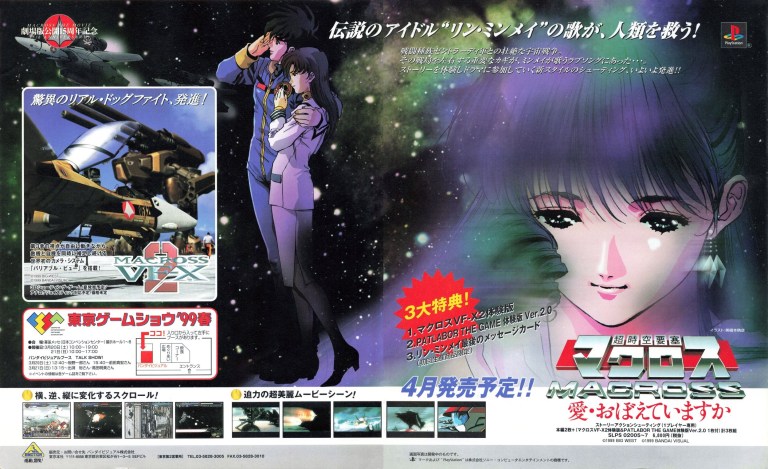
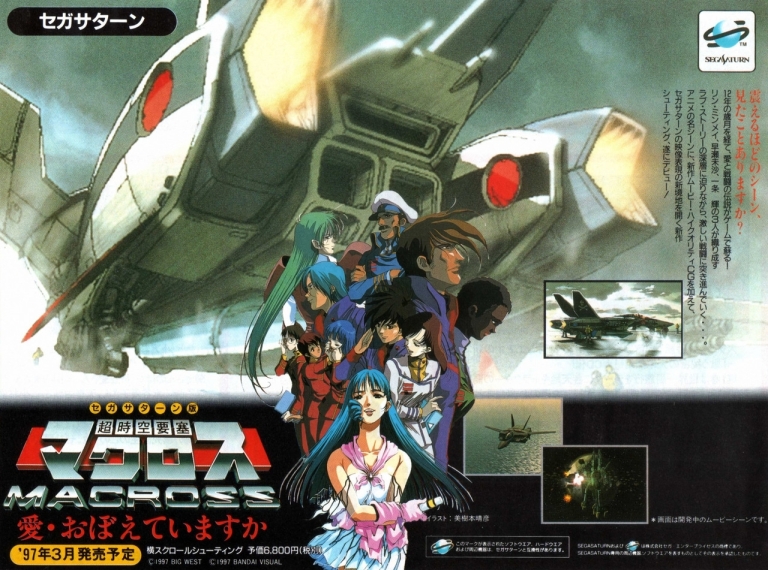
This 2-page ad had Minmay, Misa and Hikaru.
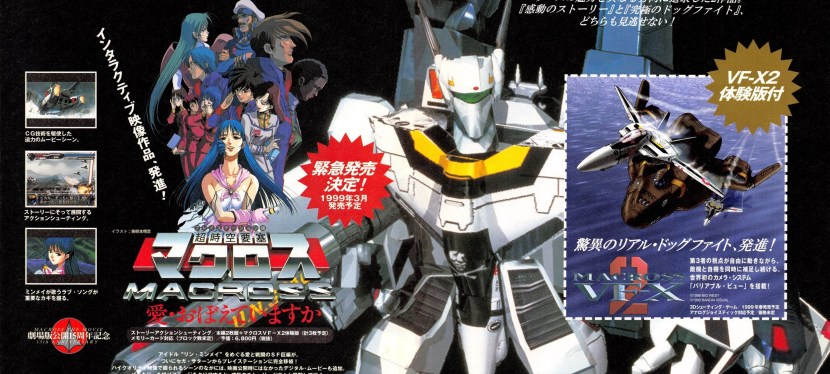
Computer-generated image of the Skull Leader Battroid was used here.

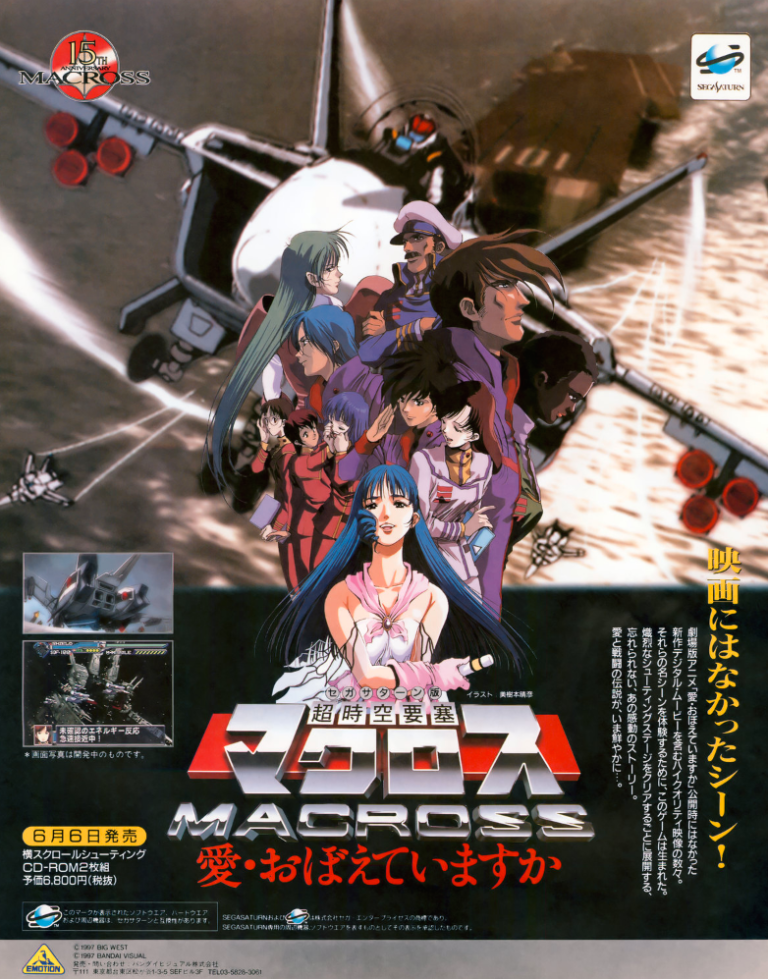
Looking at the history of Macross video games released only in Japan, there were these notable games that catered to the fans with different tastes during the period of 1997 to 1999. The two Japanese print ads here promoted the PlayStation version of The Super Dimension Fortress Macross: Do You Remember Love? (read my retro review by clicking here) and Macross: VF-X2 (only on PlayStation). 1997 marked the 15th anniversary of the entire Macross franchise and game publisher Bandai Visual kept the excitement for fans on high gear by aggressively promoting the two advertised games for their respective releases in 1999. These two print ads still resonate with long-time fans as each were clearly made to emphasize the games (with details, screenshots and original artworks) while using the right images of the Macross franchise for relevance.

2. Star Raiders print ad
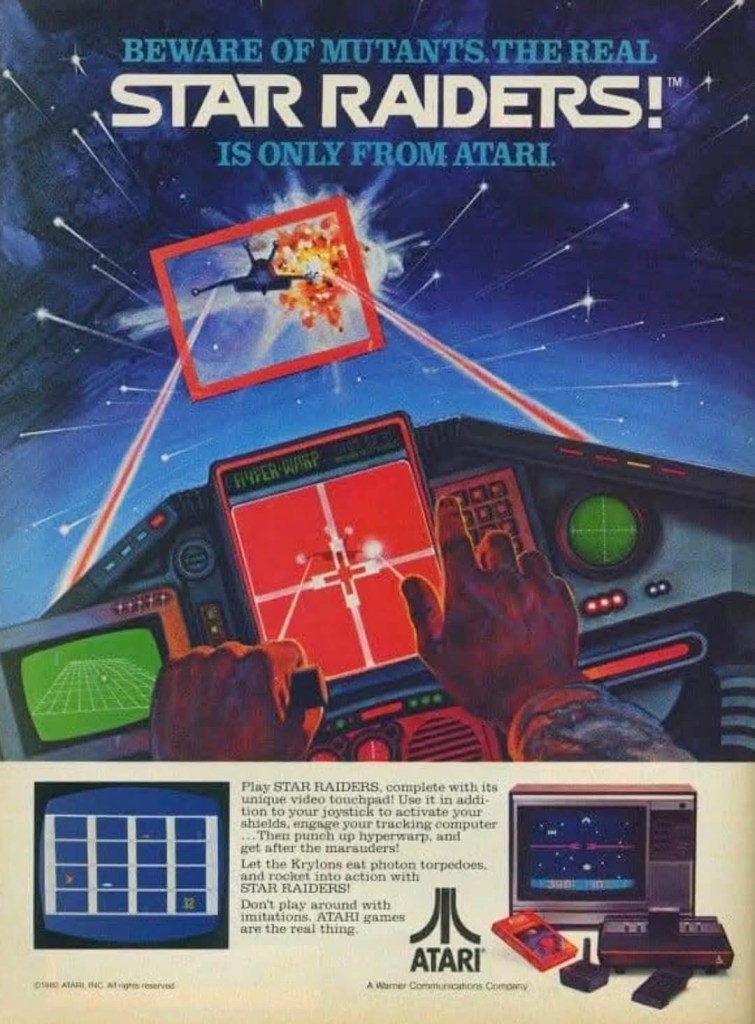
This Star Raiders print ad made me interested enough to play the game on Atari 2600.

I remember the old days of play Star Raiders on the Atari 2600 back in the early 1980s. Strangely enough, I don’t remember seeing this old print ad. Regardless, I really like the way the ad makers used hand-drawn art work to dominate the space while leaving enough space for text description, a screenshot and the picture of the Atari console with the TV set. In my view, this old ad is both amusing and attention-grabbing.

3. The Empire Strikes Back arcade flyer
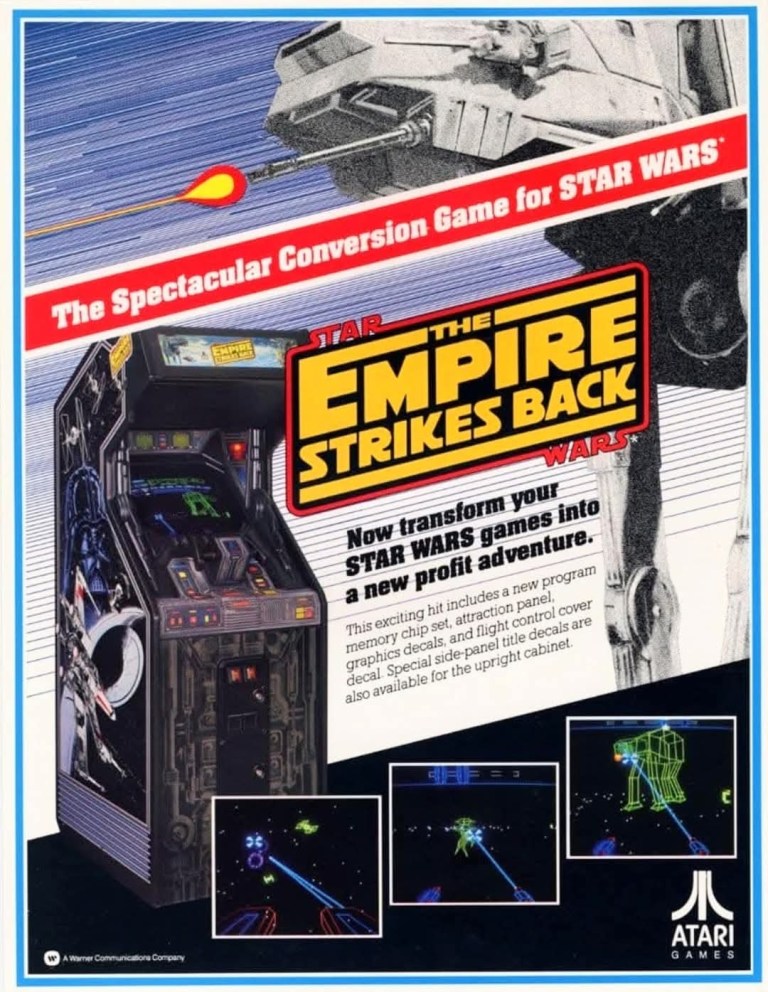
This is still a great looking arcade flyer.

Here is a Star Wars game I never played but managed to play it on a home computer. Released by Atari in 1985, The Empire Strikes Back (full title: Star Wars: The Empire Strikes Back) arcade game was the follow-up to the very popular Star Wars arcade game. Like its predecessor, it used vector graphics and certain sounds from the 1980 film for immersion. This arcade flyer is well designed showing three selected screenshots, a picture of the arcade cabinet and a portion of the AT-AT walker from the movie. The flyer truly showed gamers and arcade operators what they would get by selecting The Empire Strikes Back.  

4. Steve Meretzky’s Spellcasting 301: Spring Break print ad
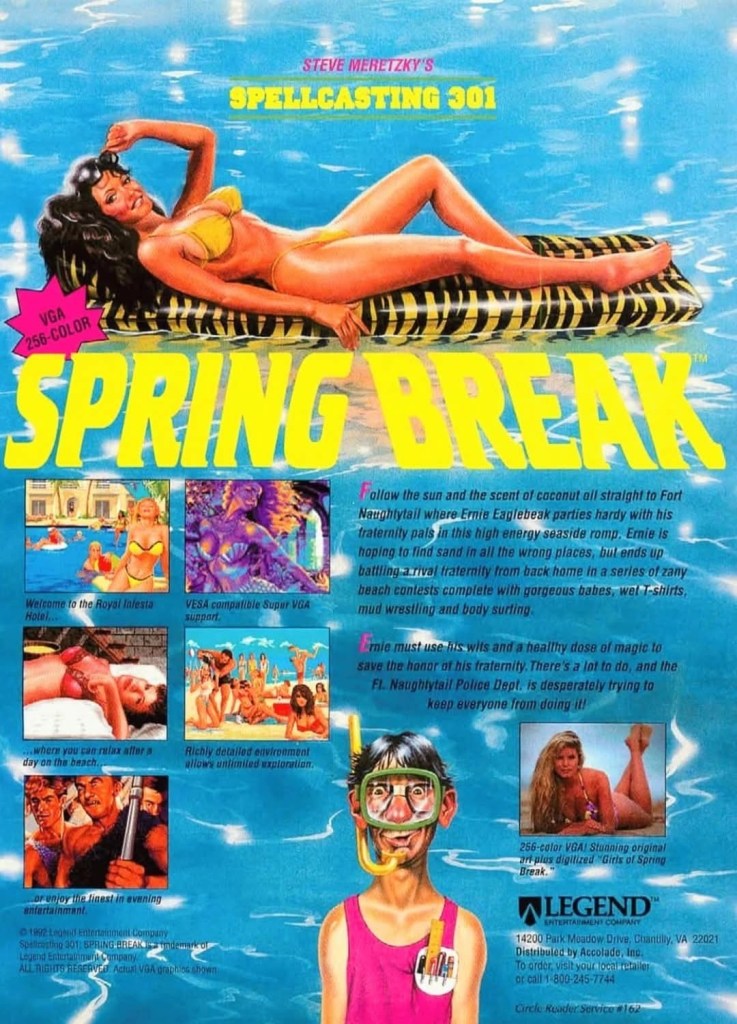
Clearly the promoted game is for adult players only.

In the realm of computer gaming, there were certain games that catered to the more mature players. One example is Steve Meretzky’s Spellcasting 301: Spring Break which was released on for personal computers running on DOS (Disk Operating System) in 1992. This print ad clearly shows the adulterated nature of the game emphasizing sexy women with a paradise setting. This is the kind of print ad that you only in computer gaming magazines which had predominantly adult readers.

5. Pitfall! print ad
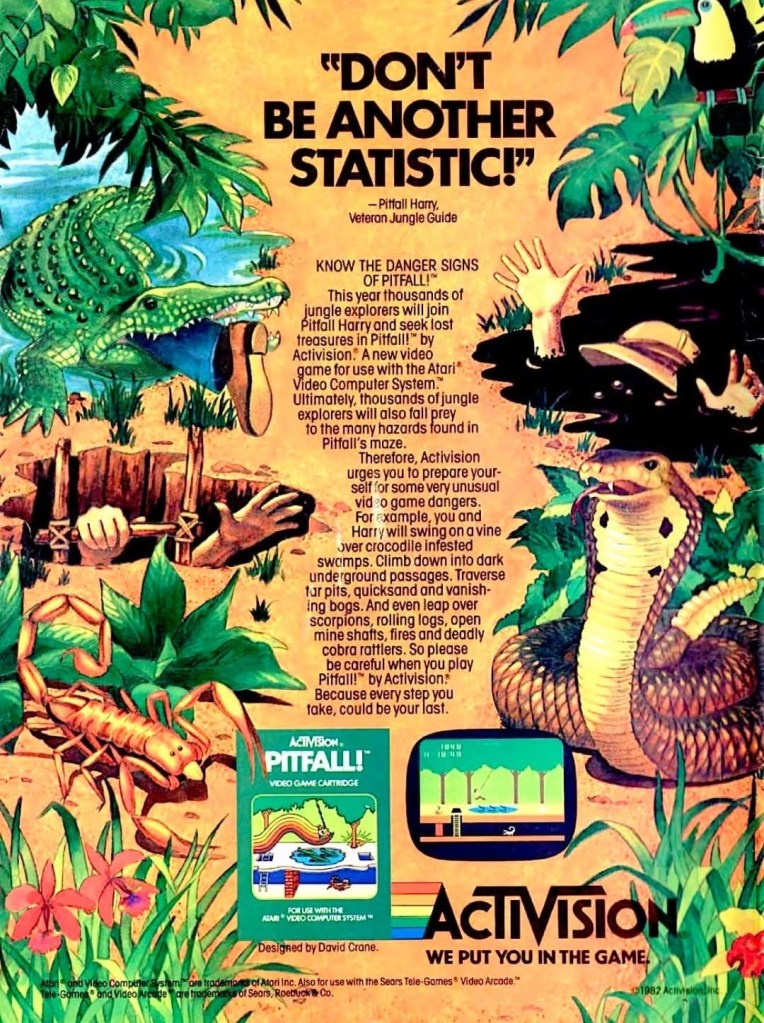
Still a great looking print ad.

Back in 1982, 2D adventuring on the Atari 2600 reached new heights when Pitfall! was released. The game garnered wide praise for its gameplay and graphics, and because it was so enjoyable, it sold millions of copies and its success spread across other platforms. A key factor to its commercial success and strong identity with the Atari 2600 was this colorful print ad. The ad makers daringly used original artwork to emphasize the jungle, wilderness and adventure concept while leaving some space left to show a screenshot and the Atari 2600 game cover. Pitfall! is a video game classic.

6. Mario Bros. print ad
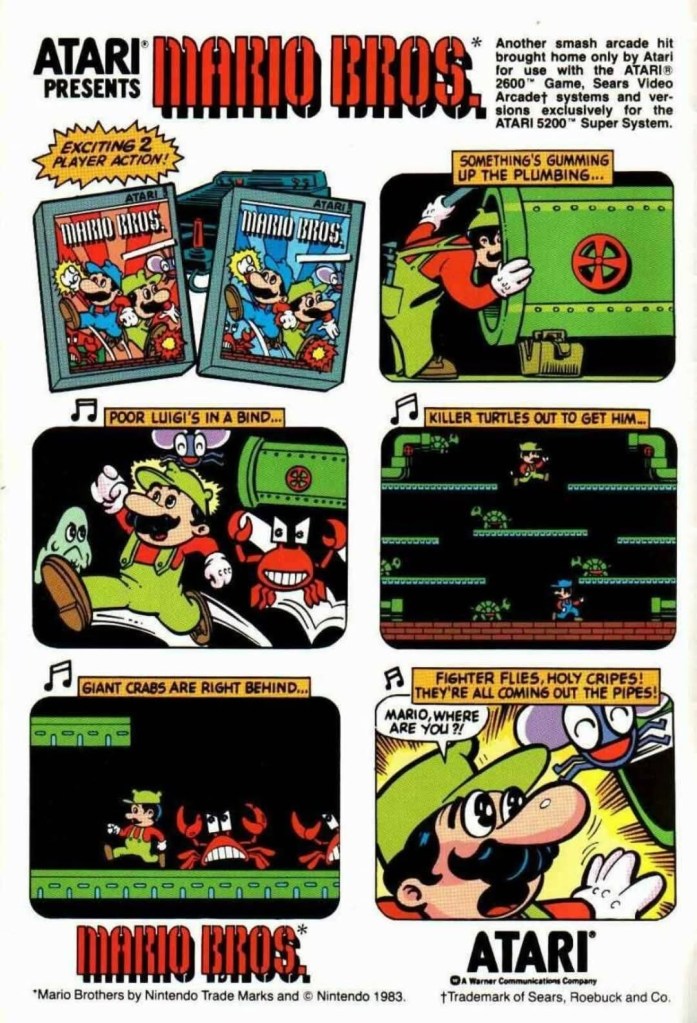
I saw this comic-style print ad while reading a comic book.

A few years before Nintendo skyrocketed with the massive success of Super Mario Bros., there was Mario Bros. on the Atari 2600 and Atari 5200. Published by Atari on their consoles, Mario Bros. was already a hit in the arcades. To capitalize on the popularity of the game, Atari came up with this comic-style print ad to capture people’s attention with the hope that the Atari 2600 and Atari 5200 ports will sell a lot. I first saw this ad while reading a comic book and it remains entertaining to see.

7. Ghoul Patrol print ad
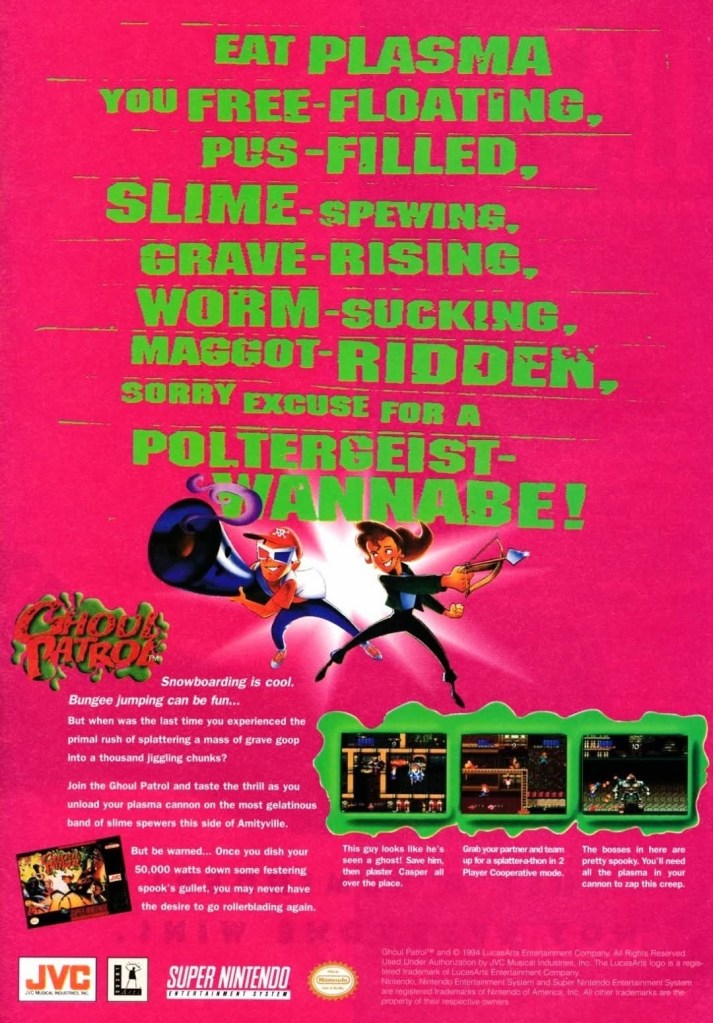
Too bad the screenshots, the game box cover and white descriptive text were too small to look at.

Released in 1994 on the Super Nintendo Entertainment System (SNES), Ghoul Patrol is the accidental sequel to Zombies Ate My Neighbors. This was because the game did not start as a sequel but rather as an unrelated project that used the same gameplay engine of its predecessor. Since Zombies Ate My Neighbors already had a dedicated fanbase, a decision to turn the game into a sequel followed. Ghoul Patrol’s print ad took a different creative approach on its presentation by trying to look cool and catchy with a dominating pink background and slightly adulterated descriptions in green leaving little space left for screenshots and the white descriptive text. The print ad of Zombies Ate My Neighbors remains more engaging and more eye-catching than this one.

8. Silpheed print ad
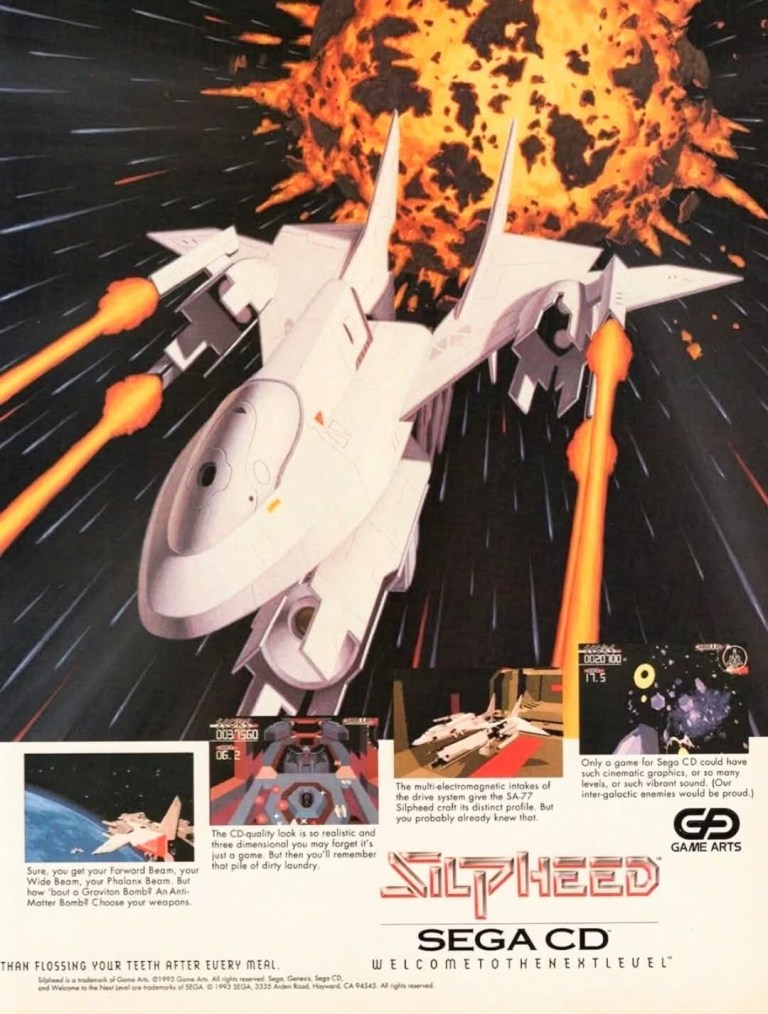
This ad caught my attention and even made me interested on the Sega CD.

Released in 1993, Silpheed on Sega CD was a remake of the original game of 1986. Like its predecessor, the Sega CD had 3D effects but used pre-rendered computer animation for a background that actually was full motion video. The print ad of this game had this fantastic looking computer-generated artwork and displayed four screenshots that looked really exciting back in 1993. If you look closely at the captions, the ad emphasized the CD-quality look and the cinematic graphics the game had. This old ad has aged well.  

+++++

Thank you for reading. If you find this article engaging, please click the like button below, share this article to others and also please consider making a donation to support my publishing. If you are looking for a copywriter to create content for your special project or business, check out my services and my portfolio. Feel free to contact me with a private message. Also please feel free to visit my Facebook page Author Carlo Carrasco and follow me on Twitter at  @HavenorFantasy as well as on Tumblr at https://carlocarrasco.tumblr.com/ and on Instagram at https://www.instagram.com/authorcarlocarrasco
Retro Gaming Ads Blast – Part 12

Welcome back readers, fellow geeks and electronic gaming fans!

In this edition of the Retro Gaming Ads Blast (RGAB) series, we will take a look at another batch of retro gaming print ads from the 1980s and 1990s. In addition, there will be a few flyers of arcade games.

For the newcomers reading this, Retro Gaming Ads Blast (RGAB) looks back at the many print ads of games (console, arcade, computer and handheld) that were published in comic books, magazines, flyers and newspapers long before smartphones, social media, the worldwide web and streaming became popular. To put things in perspective, people back in the 1980s and 1990s were more trusting of print media for information and images about electronic games and related products.

With those details laid down, here is the newest batch of retro gaming print ads for you to see and enjoy…

1. Contra arcade flyer

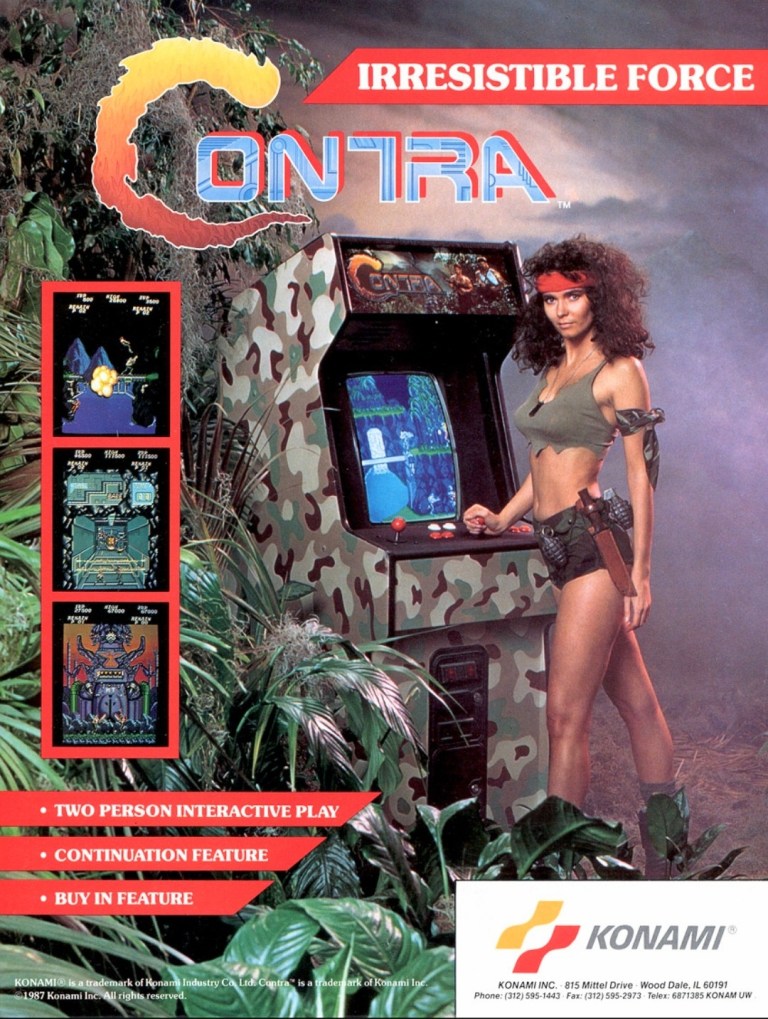
A clever visual concept by Konami towards gamers and arcade operators.
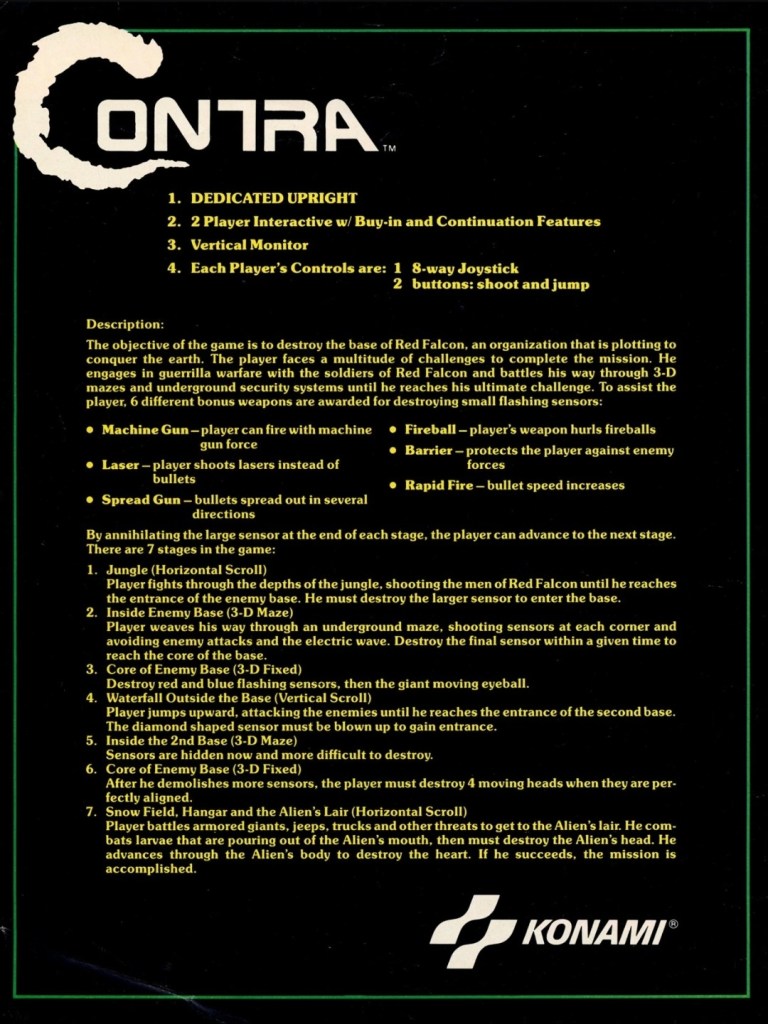
Details on the other side of the flyer.

Before it established itself as a popular gaming franchise with console gamers, Contra truly started in the arcades in 1987. First released in Japan on February 1987, Konami went on to release the game in arcades in the United States a month later and the flyer you see here was the Americanized promotion they came up with. Instead of hiring male actors or models to play soldiers, they hired a slim lady to appear with a female Rambo look standing in front of a Contra arcade machine. On the other side of the flyer are details that players and arcade operators can learn from. By today’s standards, this arcade flyer of Contra is still eye-catching and even amusing to look at.

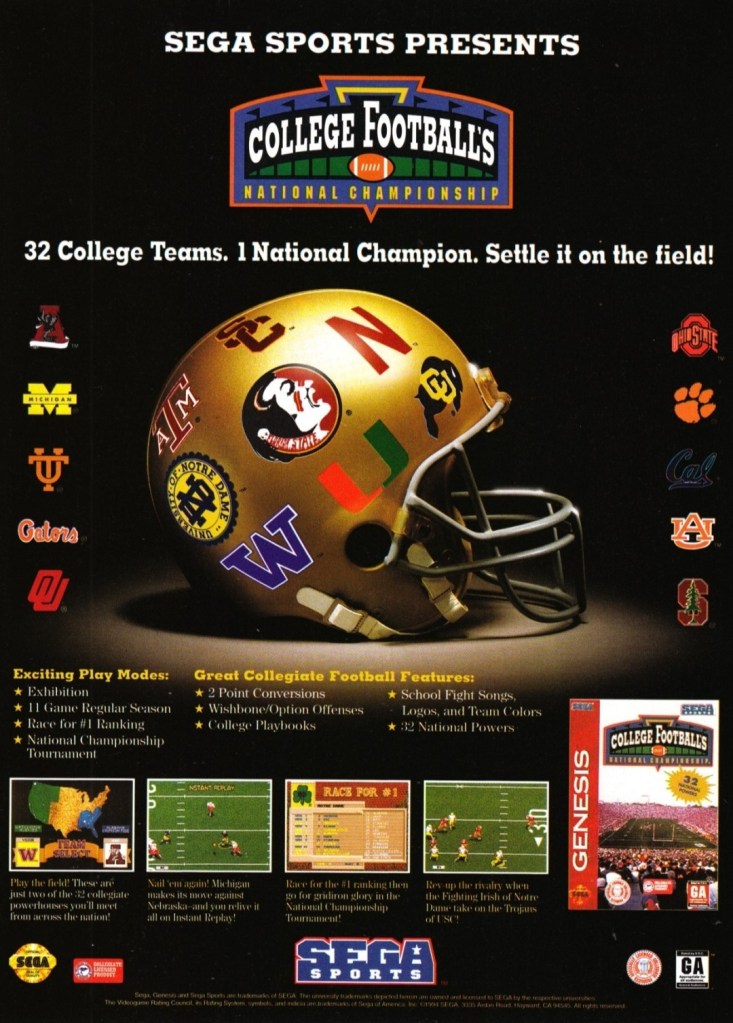
2. College Football’s National Championship print ad

This ad has a strong visual appeal to gamers who like football.

This is another one of those video game ads I saw while reading comic books in the 1990s. College Football’s National Championship was a Sega Genesis-exclusive American football video game published by Sega (with the Sega Sports brand) to capitalize on gamers who want college football to play with at home. This print ad has a nice visual presentation of the college teams’ logos, screenshots and details of what gamers could expect when they buy and play the game. College Football’s National Championship received mostly positive reviews and it must have sold well because Sega went on to release a sequel to this game.

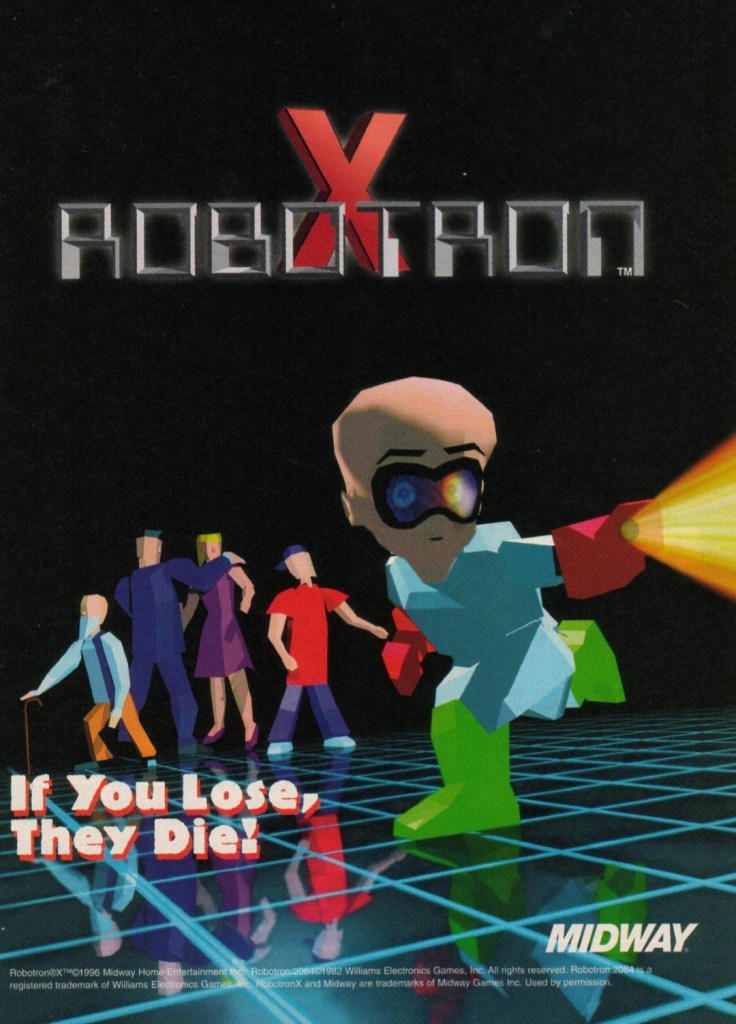
3. Robotron X print ad

This Robotron game was made at a time when 3D polygons became common for making video games.

Having played the classic game Robotron: 2084 on PC back in the 1980s, I was very surprised to see this print ad in 1996 promoting a brand new Robotron game for PlayStation as well as Windows PC. For the newcomers reading this, Robotron: 2084 was a classic which heavily influenced game designers who went on make other fan-favorite games like Smash TV and Llamatron. What makes Robotron X notable apart from being an official follow-up to the classic game was the fact that it was made at a time when game developers did their stuff to modernize gaming with 3D polygons for visuals while trying to come up with gameplay inspired by the classics. While Robotron X did not make a major impact on gaming, the classic Robotron: 2084 went on to be released in several multi-platform compilations such as Williams Arcade’s Greatest Hits, Midway’s Greatest Arcade Hits, and Midway Arcade Treasures.

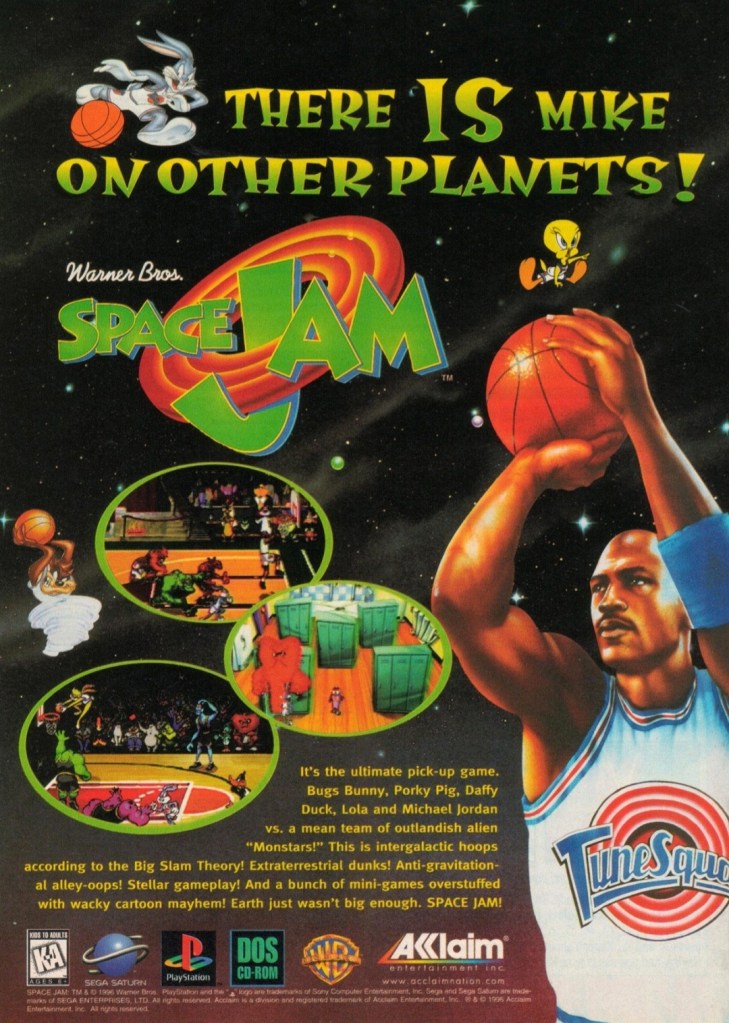
4. Space Jam game print ad

If you saw the movie in 1996, were you able to play this video game adaptation?

What makes 1996 a memorable year for basketball fans was the Michael Jordan’s return to prominence (having previously retired for less than two years before returning to the NBA in 1995) and leading a very powerful Chicago Bulls team to what was their 4th NBA championship title. In that same year, Jordan starred in the live-action/animated movie Space Jam which grossed an impressive $250 million worldwide. On the same month the movie came out, the Space Jam video game adaptation was also released on PlayStation and Sega Saturn. This print ad was part of the multimedia hype of the movie and the game itself had a very similar design and visuals concept with NBA Jam but ultimately it failed to become a hit with critics and gamers. Not even the combined visual might of Jordan and Warner Bros. characters could achieve success.  

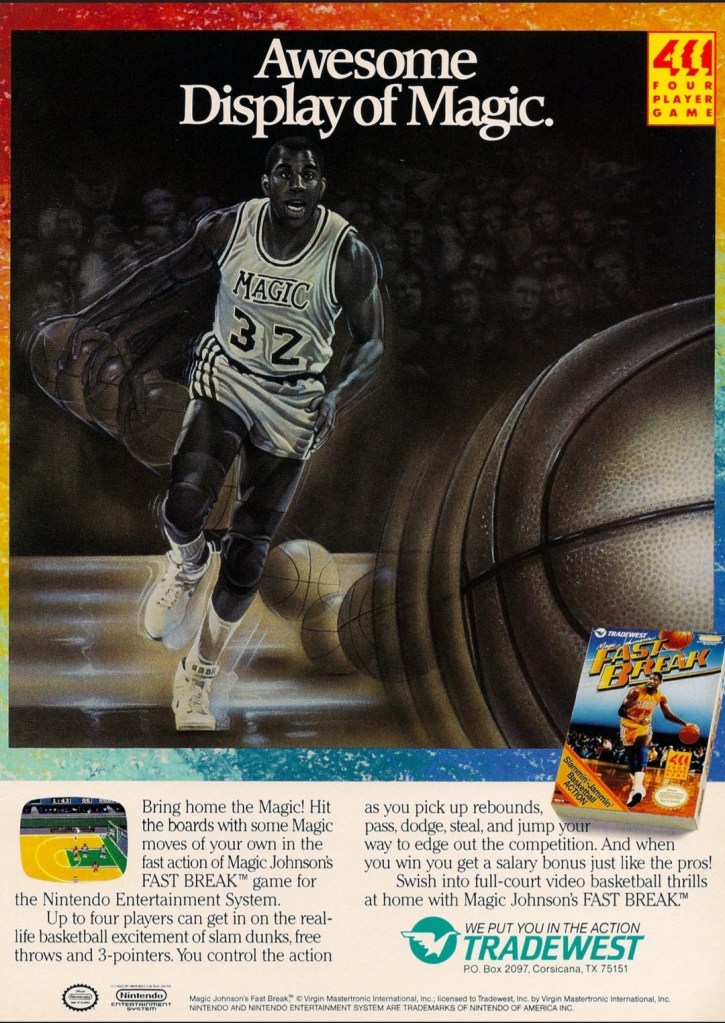
5. Magic Johnson’s Fast Break print ad

Still on basketball video gaming, the side-scrolling Magic Johnson’s Fast Break game was released on the Nintendo Entertainment System (NES) for console gamers to enjoy. Unsurprisingly, this ad had nice black-and-white art work of Magic Johnson as the dominant figure while leaving little space left to show the game box and only one screenshot. The real meat of this print ad are the details laid down in text description.

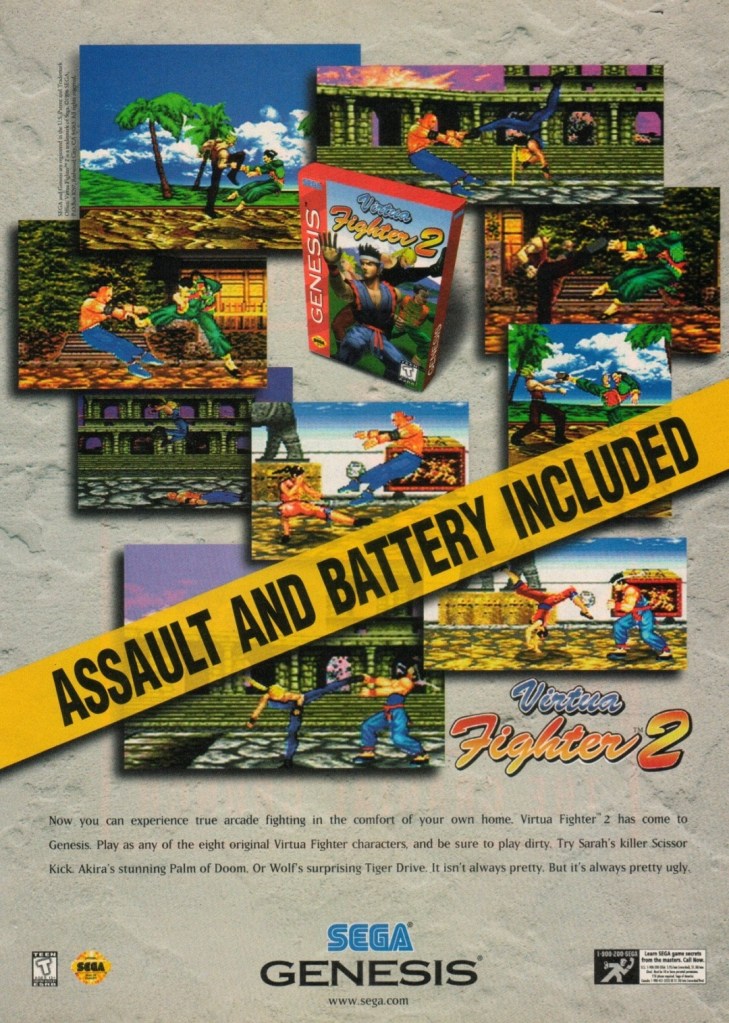
6. Virtua Fighter 2 for Sega Genesis print ad

Clearly a late effort by Sega to sell something to its many Genesis owners/fans in America at a time when PlayStation and Nintendo 64 started dominating 5th console generation sales.

In the history of arcade gaming and fighting games, Virtua Fighter 2 was a worthy follow-up to its groundbreaking predecessor. VF2 also made its way on the Sega Saturn which essentially maintained the great gameplay and 60 frames-per-second animation even though the 3D polygonal graphics were noticeably lower in quality compared to its arcade version. With VF2 in the arcades and on Saturn selling well, I was surprised to see this print ad of Sega releasing a totally different version of the game on the aging Sega Genesis console. Virtua Fighter 2 on Genesis had 2D graphics, sprites for the characters and a side-scrolling visual design. In fairness, the game developers exerted effort to recapture some of the gameplay elements within the Genesis limitations and 2D graphics. This print ad is a reminder of Sega’s American division selling a product to the remaining active Genesis owners.

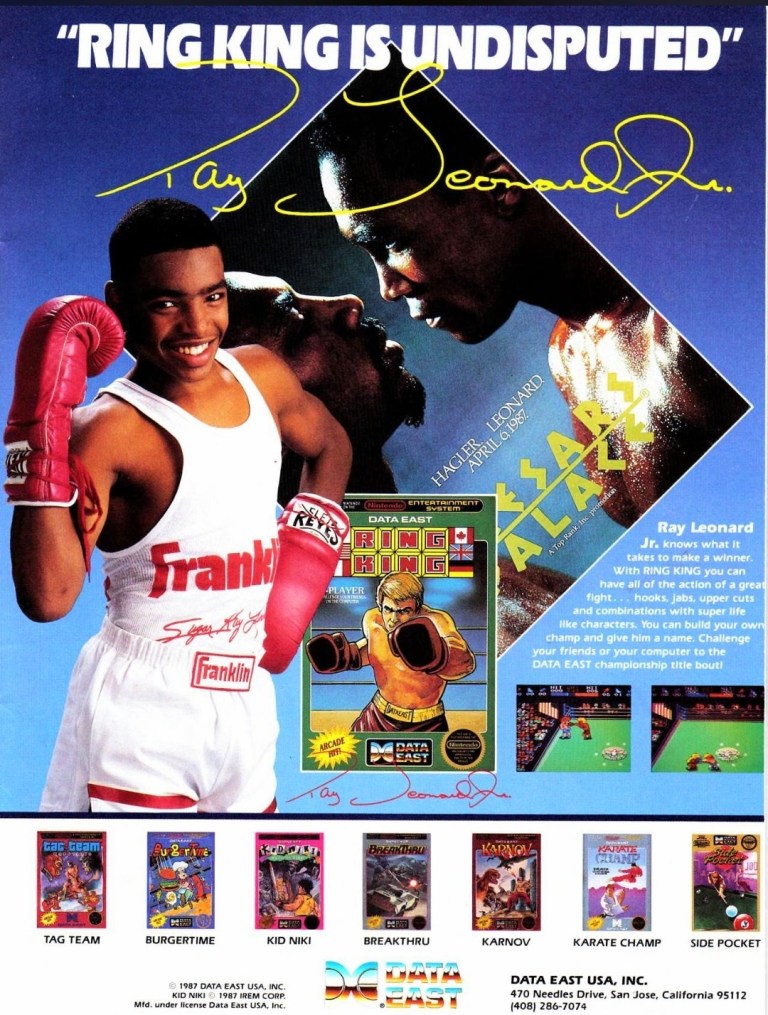
7. Ring King print ad

Ring King itself clearly lacked promotional space in this ad.

In 1987, Data East released their arcade hit game Ring King on the Nintendo Entertainment System (NES) and prepared this print ad involving Ray Leonard, Jr. (on the foreground in boxing gear) and conveniently with the famous Sugar Ray Leonard and Thomas Hearns (with the promo of their first fight together in the background). Also conveniently, the company inserted their other games on the lowest part of the ad. Ultimately, the presence of Ring King itself was minimized only showing the game cover and two screenshots. This is clearly an eye-catching ad but there was not enough emphasis on the game itself.

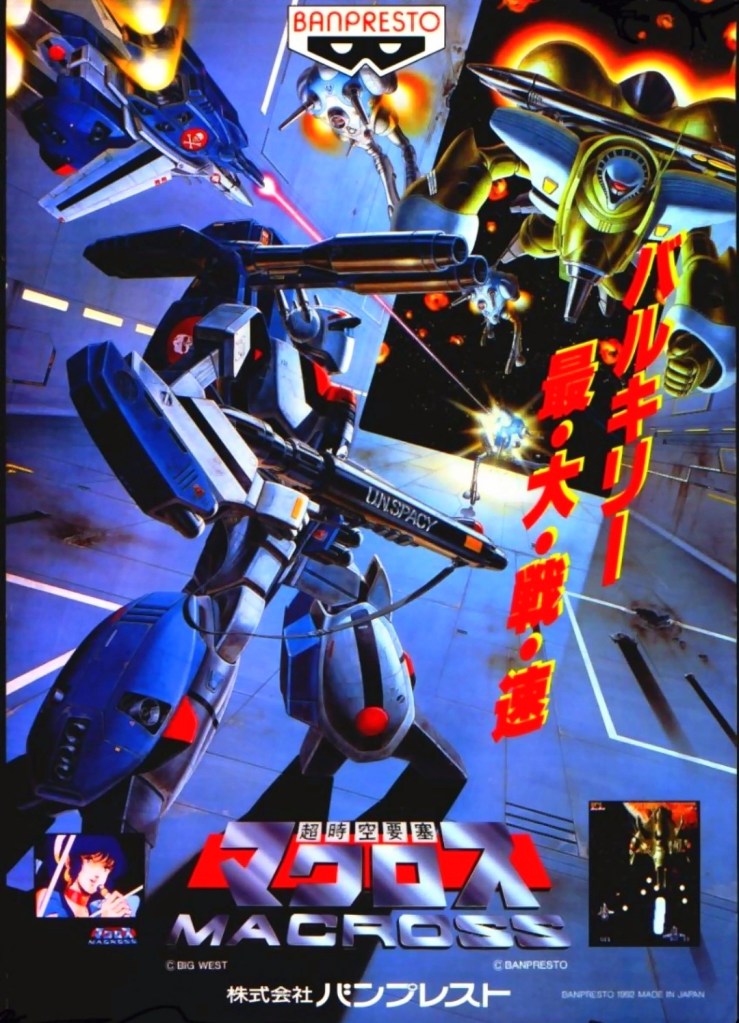
8. Super Spacefortress Macross arcade flyer

The arcade flyer released only in Japan.

Have you ever seen the classic anime movie Macross: Do You Remember Love? I really love watching that movie and I played and finished the video game adaptation on PlayStation in 1999. What I never got to play was the arcade game adaptation of it which was released by Banpresto in Japan in 1992. This flyer promoting the game has a strong visual presentation thanks to the artwork made for it. Only one screenshot was shown as well as a clip from 1984 the animated movie (note: the arcade game itself has some images directly from the film plus some newly created ones added) but this ad still had what it takes to capture the attention of the many Macross fans in Japan. This arcade game was eventually released with an English translation in America and Australia.   

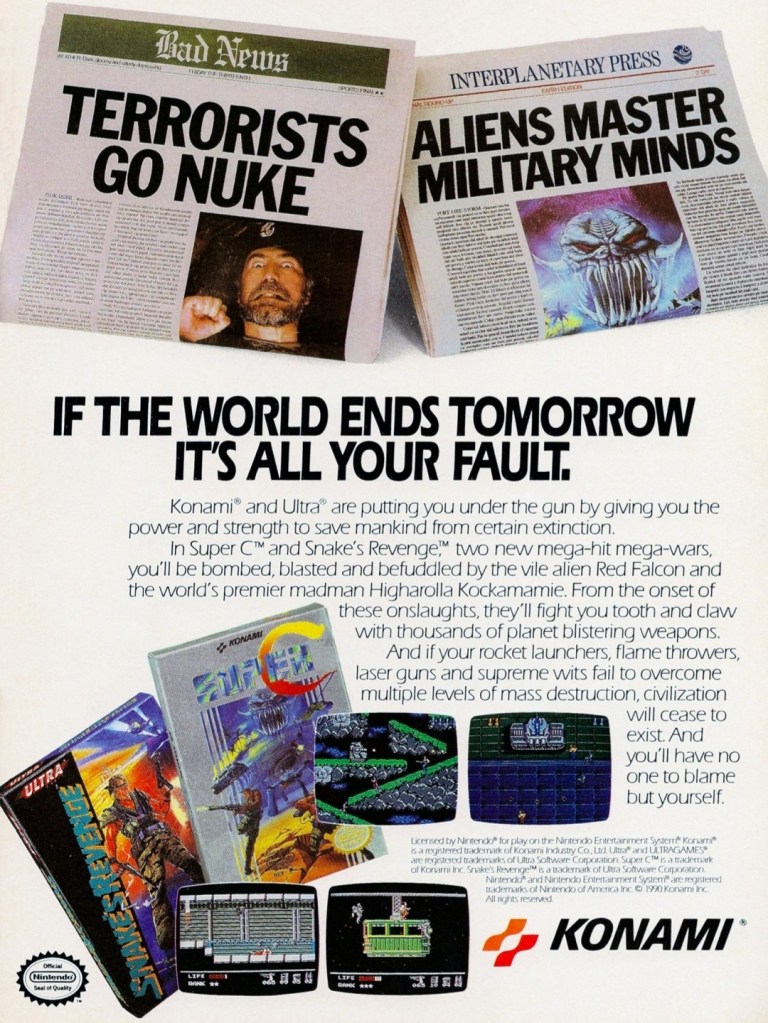
9. 2-in-1 print ad featuring Super C and Snake’s Revenge

A memorable and intriguing print ad from Konami promoting sequels.

This is one of the ads that Konami came up with to promote at least two games using a single-page ad format. I saw this ad in many comic books I read decades ago and its visual concept always caught my attention especially since I played the console game Contra a lot. At the high end of the ad were two fictional newspaper headlines highlighting the respective conflicts of Snake’s Revenge (with a nuclear danger concept) and Super C (with emphasis on alien invaders). These two games were sequels to the classics Metal Gear and Contra, and Konami clearly knew how to take advantage of the older games’ success and do their best to sell the sequels to gamers who love action-packed gaming as well as fantasized armed conflicts. Like the 2-in-1 ad showcasing Contra and Jackal, this was Konami’s aggressive move to sell war-inspired games to the NES userbase which was mostly composed of children and teenagers.

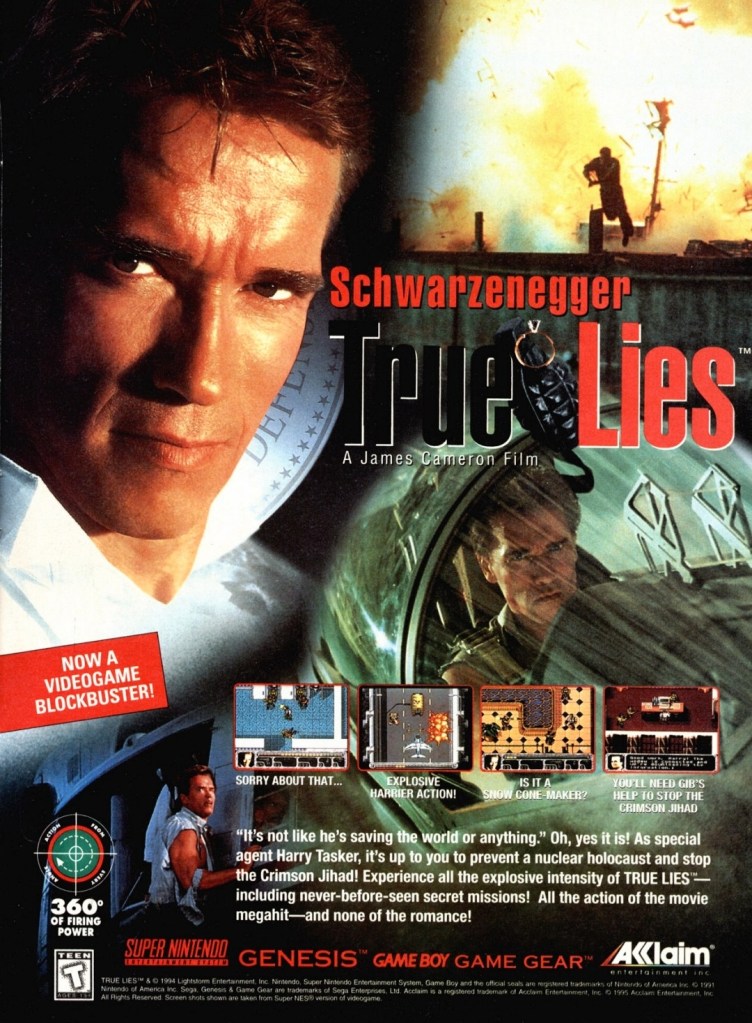
10. True Lies game print ad

There is nothing like taking advantage of the imagery of a Hollywood superstar to promote a video game based on the related movie.

Here is a video game ad I saw in many comic books I read in 1994-1995. True Lies (starring Arnold Schwarzenegger) was one of the big summer season movie hits of 1994 and the video game was part of the business tie-ins with the film. The people who made this print ad made the smart moves of showing not just one but three images of Schwarzenegger to promote the game while leaving some space to show what the game looked like. The True Lies game even had stills from the movie to emphasize the flow of the plot.

+++++

Thank you for reading. If you find this article engaging, please click the like button below, share this article to others and also please consider making a donation to support my publishing. If you are looking for a copywriter to create content for your special project or business, check out my services and my portfolio. Feel free to contact me with a private message. Also please feel free to visit my Facebook page Author Carlo Carrasco and follow me on Twitter at  @HavenorFantasy as well as on Tumblr at https://carlocarrasco.tumblr.com/ and on Instagram at https://www.instagram.com/authorcarlocarrasco
Retro Gaming Ads Blast – Part 11

Welcome back readers, fellow geeks and electronic gaming fans!

In this edition of the Retro Gaming Ads Blast (RGAB) series, we will take a look at another batch of retro gaming print ads from the 1980s and 1990s. In addition, there will be a few flyers of arcade games as well as promotional posters of a notable console game that was released only in Japan.

For the newcomers reading this, Retro Gaming Ads Blast (RGAB) looks back at the many print ads of games (console, arcade, computer and handheld) that were published in comic books, magazines, flyers and newspapers long before smartphones, social media, the worldwide web and streaming became popular. To put things in perspective, people back in the 1980s and 1990s were more trusting of print media for information and images about electronic games and related products.

With those details laid down, here is the newest batch of retro gaming print ads for you to see and enjoy…

1. M.I.A.: Missing in Action arcade flyer

This is an effective way of catching the attention of both players and arcade operators. I can imagine the woke, the SJWs and rabid feminists getting easily offended by this.

Konami was a very prominent producer of games back in the 1980s. Not only did the company produce high-quality and enjoyable military-themed games on consoles and computers, Konami also made its presence felt in the highly competitive sector of arcade games. In 1989, they released the arcade conversion kit of M.I.A.: Missing in Action and this flyer is the best know promotion of it. M.I.A.: Missing in Action is the follow-up to Konami’s hit game Rush’n Attack.

Visually, the flyer’s display of four screenshots combined with a dominating photographic image of prisoners of war (POWs) getting delightfully released by an attractive female Rambo-type rescuer were designed to catch the attention of young adult and adult gamers. The text descriptions (note: there were more details on the back of the flyer), however, were geared towards arcade operators who were looking for new games to acquire without the hassle of having to buy an entire arcade cabinet. That being said, this flyer was a clever way to appeal to arcade operators and the people who love playing arcade games.

2. Fonz arcade flyer

Simplistic yet effective to look at. If you are an arcade operator, this flyer conveniently has key information displayed.

Believe it or not, Sega was already active in arcade games way back in the 1970s. In this particular flyer, Sega’s arcade game Fonz (also called Moto-Cross, Man T.T.) offered players the unique experience of driving a digital vehicle using actual handlebars on the machine that were meant to create an immersive and realistic feel. If you look closely, the flyer has lots of details written with arcade operators and players in mind.

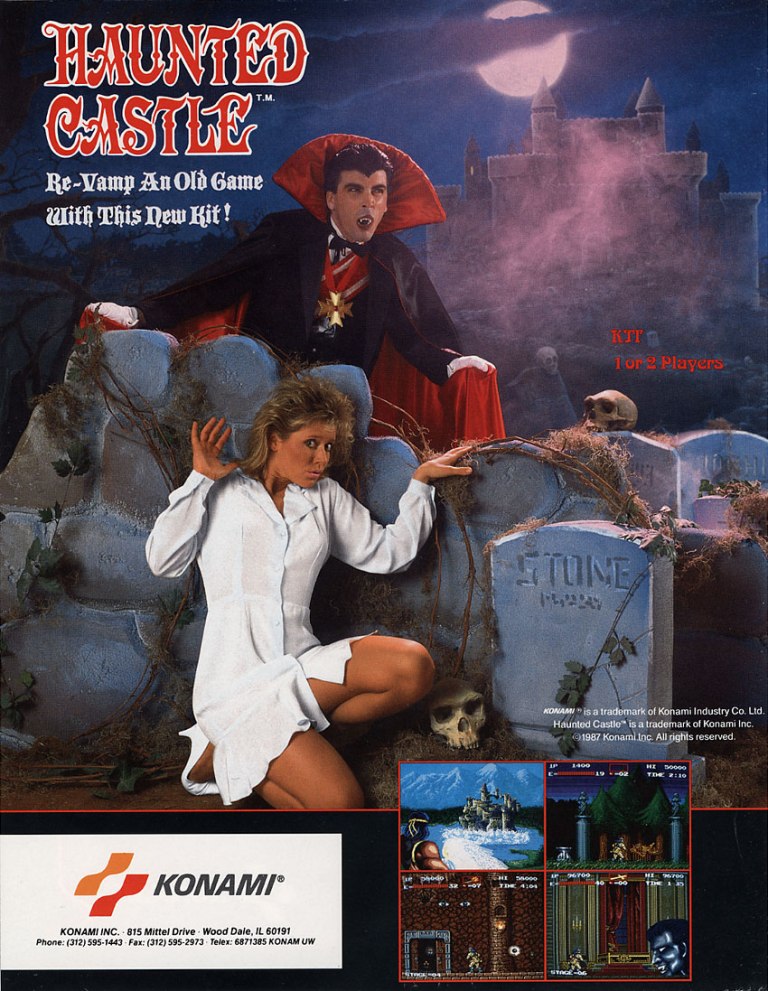
3. Haunted Castle arcade flyer

Indeed, this game is part of the Castlevania game franchise. It was one of the first Castlevania games released for arcades.

Arguably, Konami is best known for the Castlevania game series which covered handheld gaming devices, personal computers, video game consoles and even arcades. Haunted Castle (Japanese title: Akumajō Dracula) is the 2nd arcade game of the Castlevania franchise and it is not a port of any console game. Like the arcade flyer of M.I.A.: Missing in Action, this one was crafted to lure the attention (and money) of arcade operators looking for conversion kits to replace their old games. The visual presentation is eye-catching and even though the Castlevania brand was nowhere to be seen, Castlevania fans could tell this this arcade offering was part of their favorite game franchise.  

4. The Super Dimension Fortress Macross: Do You Remember Love? flyer and poster

The poster promoting the release of the game for Sega Saturn in Japan.
The flyer promoting the Sega Saturn game’s 1997 release as well as the 15th anniversary of Macross.

In 1997, the 15th anniversary of the Macross multimedia franchise was celebrated in Japan and among the highlights was the release of The Super Dimension Fortress Macross: Do You Remember Love? on the Sega Saturn. To promote the game and the franchise itself, lots of flyers and posters were released in Japan. If you look at the illustrated images on the promotional materials closely, you will realize that they are not from the original 1982-83 Macross anime TV series but rather from the The Super Dimension Fortress Macross: Do You Remember Love? animated movie of 1984 (read my retro movie review by clicking here).

While it might be baffling to some as to why the original anime TV series was not used as the source material for the 15th anniversary celebration through gaming, the 1984 anime feature film was actually more adaptable for a video game project (read my retro review by clicking here). It is so obvious, you just have to ask yourselves this question – how can the game developers compress the entire concepts of the 36-episode Macross anime series into one game while ensuring fun gameplay? Regardless, the game was a lot of fun to play and I enjoyed playing the PlayStation version in 1999.

5. Venom/Spider-Man: Separation Anxiety print ad

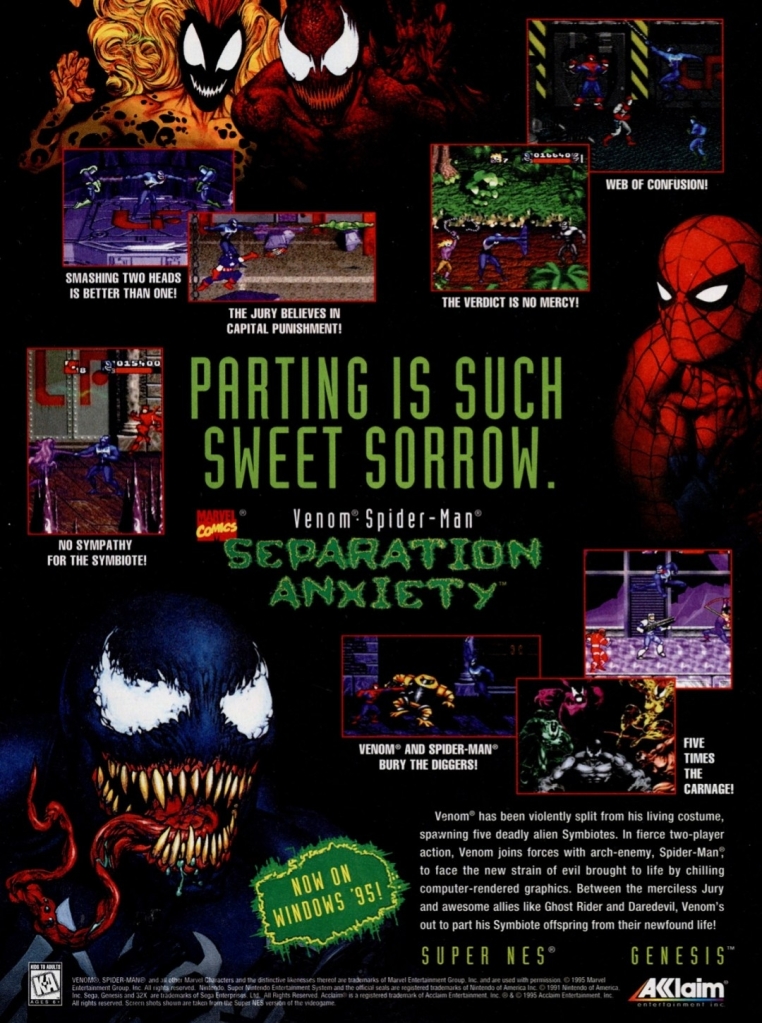
A clear effort to sell the game to gamers as well as fans of Spider-Man and Venom.

In 1994, Acclaim released Spider-Man and Venom: Maximum Carnage (based on the 1993 comic book storyline Maximum Carnage) on Super Nintendo Entertainment System (SNES) and Sega Genesis ultimately becoming popular with comic book fans and gamers who enjoyed sidescrolling beat-them-up games.

Subsequently, Acclaim and develop Software Creations reunited to release the sequel Venom/Spider-Man: Separation Anxiety a year later on the two leading 16-bit consoles as well as on personal computer (PC). If there is anything notable about this eye-catching print ad, it is the fact that its visual presentation (with graphics on-par with the previous year’s game) cleverly hides the fact that it did not have much new to offer gamers with regards to gameplay and story cutscenes (which the previous game prominently had). Eventually, this game attracted weaker reviews from game critics and has since been forgotten.

6. Tecmo Super Bowl SNES print ad

From the time when Tecmo was still a strong producer of sports video games.

In 1991, Tecmo Super Bowl was released on the aging Nintendo Entertainment System (NES) and because its game design greatly entertained gamers, it became a tremendous commercial success. Not even the very high launch price of $54.99 stopped it from selling a lot.

To keep the commercial success and public interest going, Tecmo announced a new version of the game for the more powerful SNES console with the simple title of Tecmo Super Bowl. If you look closely at the print ad, you will notice that gameplay screenshots were not used at all. Instead, they showed images of the nicely illustrated art works they prepared as eye candy for the game with the intention of making it look cinematic. This is very curious because gameplay itself was the main selling factor of the NES version of Tecmo Super Bowl. I can only guess that Tecmo was not ready to show gameplay images by the time this print ad was made.

7. X-Men 2: Clone Wars print ad

The art used is too alienating for promoting this game.

During the age of the 16-bit consoles, there was a variety of X-Men video games released and produced by different companies. In 1993, an X-Men game published by Sega was released exclusively on the Genesis console which turned out to be fun for gamers and received mostly positive reviews from the critics. Sega went on to publish the sequel X-Men 2: Clone Wars and this print ad caught my attention because of how exaggerated the characters looked. It’s so strange, it’s as if the artist took visual reference from a somewhat blocky 3D polygonal portrait then tried to make them look hand-drawn. I wonder if anyone from Sega regretted this.  

+++++

Thank you for reading. If you find this article engaging, please click the like button below, share this article to others and also please consider making a donation to support my publishing. If you are looking for a copywriter to create content for your special project or business, check out my services and my portfolio. Feel free to contact me with a private message. Also please feel free to visit my Facebook page Author Carlo Carrasco and follow me on Twitter at  @HavenorFantasy as well as on Tumblr at https://carlocarrasco.tumblr.com/ and on Instagram at https://www.instagram.com/authorcarlocarrasco
What to watch on YouTube right now – Part 9

Have you been searching for something fun or interesting to watch on YouTube? Do you feel bored right now and you crave for something to see on the world’s most popular online video destination?

I recommend you check out the following topics and the related videos I found.

Debunking the lies of the Palestinians and the Satanic Left – Israel has been all over the news for over a month now as the Palestinian terrorist group Hamas attacked them on October 7, 2023, and committed acts of murder, kidnapping and torture of many innocent people (including foreign nationals). Israel responded by going into war with Hamas and already they have several soldiers operating inside the Gaza strip searching for the terrorists while trying to rescue the hostages.

Around the world, anti-Semitism has intensified as a lot of public rallies or protests events supporting the Palestinians and condemning Israel continues to happen. Unsurprisingly, the Satanic Leftist elements in governments, mainstream news media outlets and social media all organized a major misinformation campaign highlighting the Palestinians as victims while portraying Israel as the antagonists. Collectively these Communists, socialists, Marxists, liberal, diversity advocates and other anti-Semitic elements have been spreading lies repeatedly to attack Israel while lifting up the Palestinians.

Fortunately, YouTuber Oren who handles the channel travelingisrael.com published in-depth videos that debunked the Arab-Palestine-Hamas-Leftist propaganda complete with details and facts that the liars did not even bother to check. I stand with Israel and the Holy Bible confirms that Israel is the land that God designated to the Jewish people (read Genesis 12:1-3 and Genesis 35:10-12), not the Arabs and certainly not the Palestinians. There really never was an ancient Palestine and the Palestinian identity as a people did not even exist before the 20th century (not even during the time when the Ottoman Empire had authority over the land of Israel). That being said, I strongly recommend you watch the videos below and pay close attention to the details…

Trustworthy look at Israel – Still on Israel, I want to tell you all that you cannot trust the mainstream news media outlets as they have an anti-Israel and anti-Semitic agenda in connection with their Leftist worldviews. You cannot trust CNN, MSNBC, The New York Times, BBC, Vox and others as they are laser-focused on smearing Israel and putting the lives of Jewish people in danger. Those abusers of media and information are spreading lies and hate! If you want a clearer and more credible look at Israel and the developments that happened, I recommend you follow CBN News (the news program of the Christian Broadcasting Network) and TBN Israel. Posted below are some of their YouTube videos for you to see…

Macross nostalgia videos – And new we shift into the world of entertainment. When it comes to the world of anime, Macross is my favorite franchise. To be more specific, the Super Dimension Fortress Macross TV series, Macross: Do You Remember Love? (read my retro movie review by clicking here), Macross Plus and Macross Zero are the ones I enjoyed replaying and there were some video game adaptations released along the way (read my retro game review by clicking here). If you share my Macross passion or if you are simply interested with anime and related video games, I recommend you watch the videos below…

Cloak & Dagger (1984) nostalgia – A few months ago, I published my retro review of the 1984 movie Cloak & Dagger which remains a very unique film by today’s standards. For one thing, the film was the 4th cinematic adaptation of the short story “The Boy Cried Murder” written by Cornell Woolrich. It also had Henry Thomas (the same kid in Steven Spielberg’s E.T.: The Extra-Terrestrial) as the protagonist, a plot filled with strong elements of espionage, a video game as a key item in the story, and most notably, a very intense tone complete with shooting and killings. Cloak & Dagger, which is now available on 4K Blu-ray format, is the kind of movie that Hollywood does not make anymore. Of course, I do understand that Hollywood has so many Commies and SJWs (social justice warriors) among its screenwriters, actors and directors who could not understand Cloak & Dagger. To learn about the 1984 movie, watch the videos below…

Friday The 13th Part 3 reaction and retro review videos – Some time ago I declared in my retro review that Friday The 13th Part 3 is the 2nd best film of its franchise (note: Friday The 13th: The Final Chapter is still #1). Sure, it was flawed and the filmmakers struggled to make the movie as they intended to film it with 3D cinema viewing in mind, but the way things turned out it marked a crucial turning point in Friday The 13th’s general formula on storytelling and the presentation with Jason Voorhees as the enduring antagonist. This is the very movie when Jason first got his hockey mask and the actor’s muscular build gave him a more intimidating look than in Part 2. That being said, it is no surprise that the 1982 movie became the subject of multiple movie reaction videos and retro reviews on YouTube and you can watch some of them (plus one trivia video by Minty Comedic Arts) below…

+++++

Thank you for reading. If you find this article engaging, please click the like button below, share this article to others and also please consider making a donation to support my publishing. If you are looking for a copywriter to create content for your special project or business, check out my services and my portfolio. Feel free to contact me with a private message. Also please feel free to visit my Facebook page Author Carlo Carrasco and follow me on Twitter at  @HavenorFantasy as well as on Tumblr at https://carlocarrasco.tumblr.com/and on Instagram athttps://www.instagram.com/authorcarlocarrasco
A Look Back at The Super Dimension Fortress Macross: Do You Remember Love? (Sega Saturn, PlayStation)

Disclaimer: This is my original work with details sourced from playing The Super Dimension Fortress Macross: Do You Remember Love? video game and doing personal research. Anyone who wants to use this article, in part or in whole, needs to secure first my permission and agree to cite me as the source and author. Let it be known that any unauthorized use of this article will constrain the author to pursue the remedies under R.A. No. 8293, the Revised Penal Code, and/or all applicable legal actions under the laws of the Philippines.

If you have been reading my Macross-related articles over the past few years, you should know already that I deeply love watching Macross: Do You Remember Love?, the classic anime feature film co-directed by Noboru Ishiguro and the legendary Shoji Kawamori.

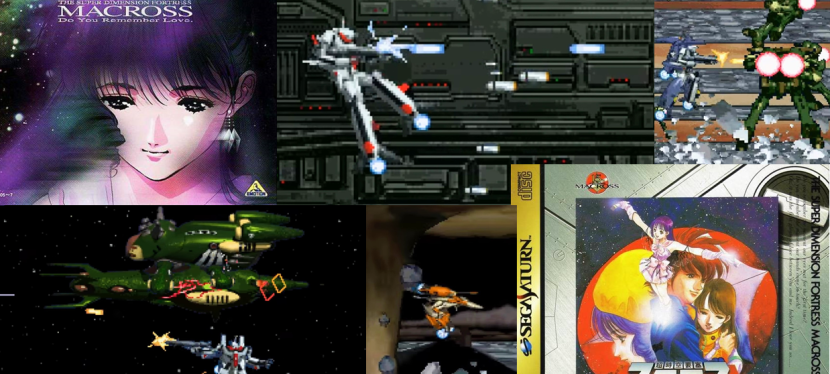
Like many other entertainment franchises in Japan, Macross also has video games based on its stories and concepts. During the fifth generation of video game consoles, Bandai released in Japan the video game adaptation of the 1984 anime movie on the Sega Saturn in 1997 and the Sony PlayStation in 1999. That game was titled The Super Dimension Fortress Macross: Do You Remember Love? and I played that 2D side-scrolling shoot-them-up game a lot during the time when 3D polygons was already the standard.

Considering its age, it is easy to wonder if the game is still fun to play by today’s standards and if the game is something that Macross fans can enjoy a lot. We can all find out in this look back at The Super Dimension Fortress Macross: Do You Remember Love?

Sega Saturn version in 1997.
Sony PlayStation version in 1999.

Early story

The story begins at sea. A Valkyrie piloted by Hikaru Ichijyo (the late Arihiro Hase) launches from the aircraft carrier Prometheus to join his teammates Max and Kakizaki led by Roy Fokker (Akira Kamiya). Suddenly a powerful beam of energy from above hits the aircraft carrier clearly showing that their world is under attack by the Zentradi.

They proceed to South Attaria Island where they immediately engaged the Zentradi forces that ravaged the city and causing trouble for the SDF-1 (Macross). After defeating several Zentradi elements, the remaining Skull Squadron forces flew to the Macross (which just launched into the air) which executes a space fold just moments before even more laser blasts from the Zentradi destroyed the entire island.

Sometime later deep in space, thousands of civilians managed to adjust to living inside the Macross. As Lynn Minmay’s (Mari Iijima) first concert happens inside the fortress, Hikaru, his teammates and many other fighters engage in a mission against the Zentradi…

Quality

Just like in the movie!

To comment on the quality of this old video game, I’ll focus on gameplay and presentation.

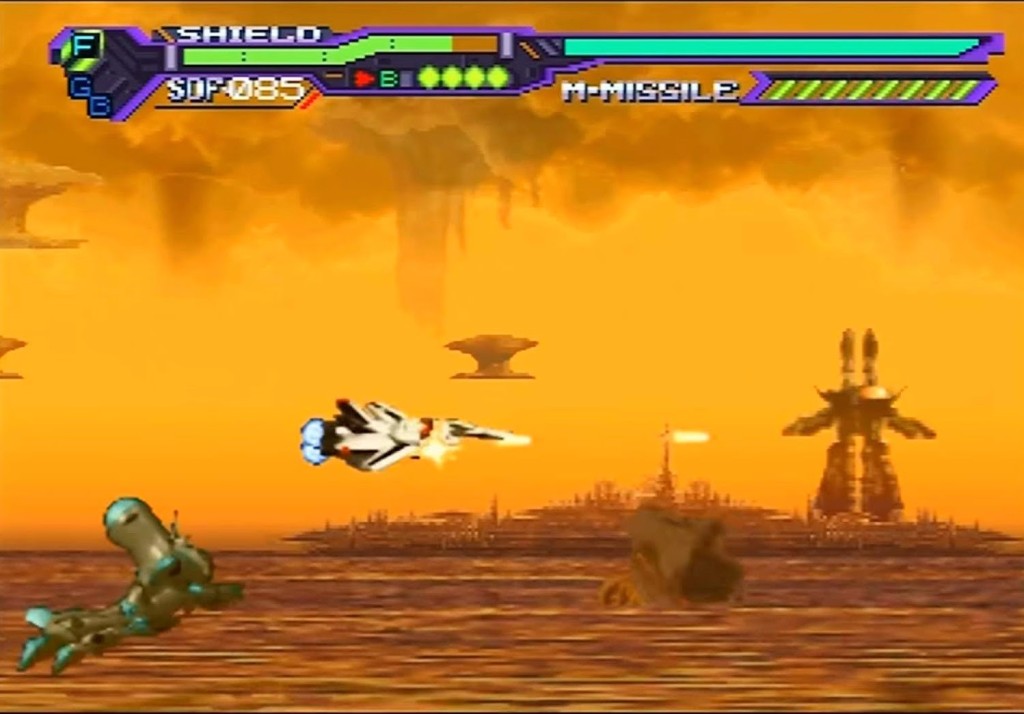
As far as gameplay goes, Macross: DYRL is essentially a 2D side-scrolling shooter literally designed to be grand not only for Macross fans but also for gamers who enjoy its design and its type of gameplay. You play as the hero Hikaru who pilots an advanced fighter plane that can also transform into an armed fighter with legs (GERWALK mode) and also into a full-sized, human-like robot (Battroid). In fighter mode, you move fast and are able to fire rockets or use your default gun. In GERWALK mode, your speed is slower but you have improved mobility that can be crucial for combat. In Battroid mode, your speed is reduced further but you are somewhat stronger and more precise when it comes to shooting enemies.

Still on gameplay, the game developers really pushed the envelope in terms if immersion as there are lots of moments in which the enemies will not only face you on your 2D plane but also move around you from the foreground to the background. Without having to do anything further, your character will be able to auto-aim and shoot at your enemy whether in the background or the foreground. Essentially, this makes the game a 2.5D shooter.

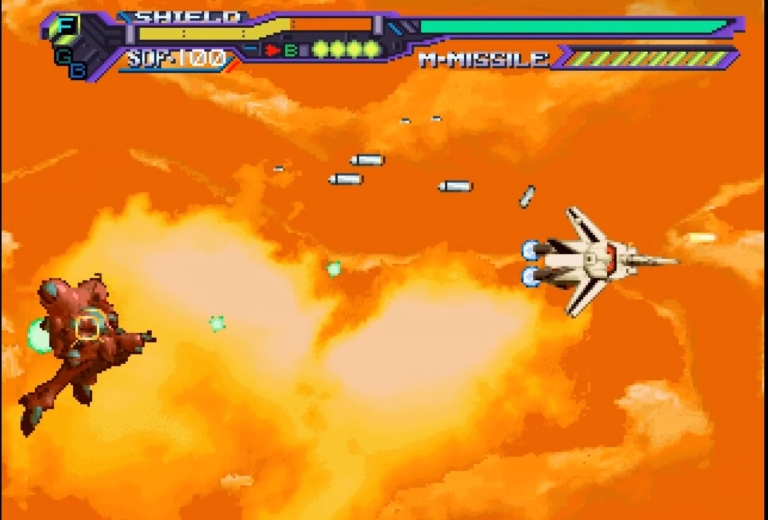
This is a fine example of you (in your 2D plane) firing at your enemy in the background.
In key parts of some levels in the game, the UN Spacy will send a shuttle to release supplies to help you replenish your shield meter.

The controls are relatively easy to learn and get adjusted to. More importantly, the controls are very responsive and they are ideal when it comes to precision on moving your character around as well as trying to shoot at specific targets.

This game was designed with several levels for you to complete essentially moving from left to right. As evidence of the game developers taking liberties during its adaptation of elements from the 1984 animated movie, several levels have boss fights for you to participate in and win in order to progress. These boss-type enemies are noticeably absent from the movie and yet they were designed to integrate into the film’s concept and also expand the concept about how elaborate the Zentradi are when it comes to their war machines against Earth. The boss-type enemies (note: they are clearly polygonal and yet they fit in well with the 2D sprite elements) are huge machines designed for space battles and there were boss fights in which some of them move into the background (which sparks moments for your character to fighter towards the background). When it comes to artificial intelligence (AI), the boss-type enemies are not really that sophisticated with their movements although a few of them have attack patterns that will push you to be more evasive and more strategic.

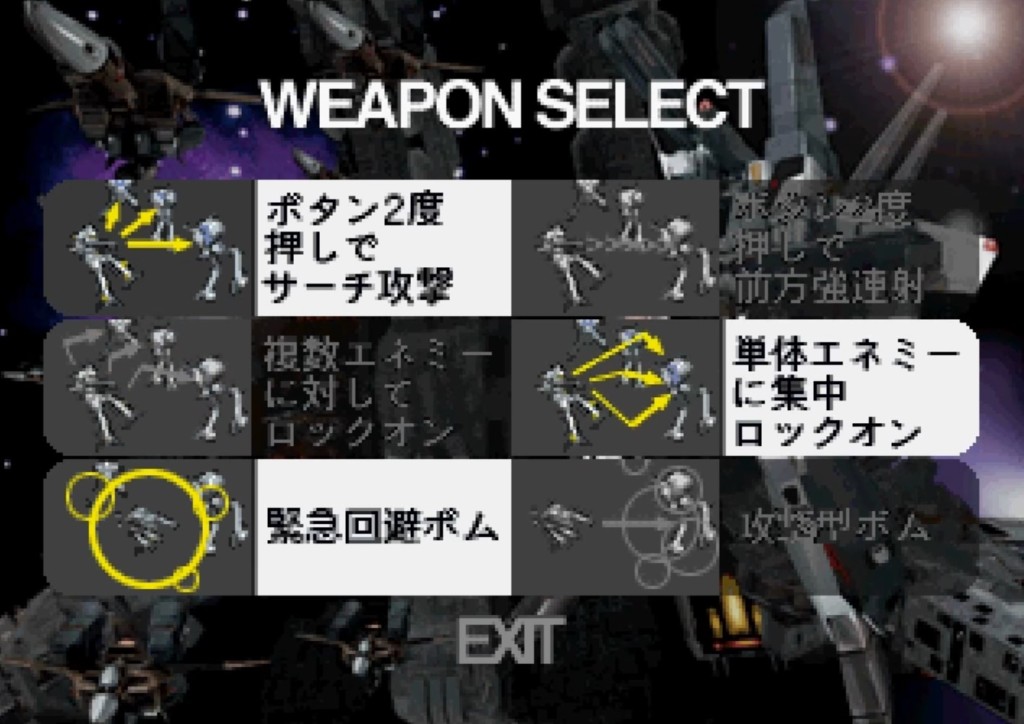
Before starting a level, you can select your weapons that can function depending on your personal preference on taking on the enemies.
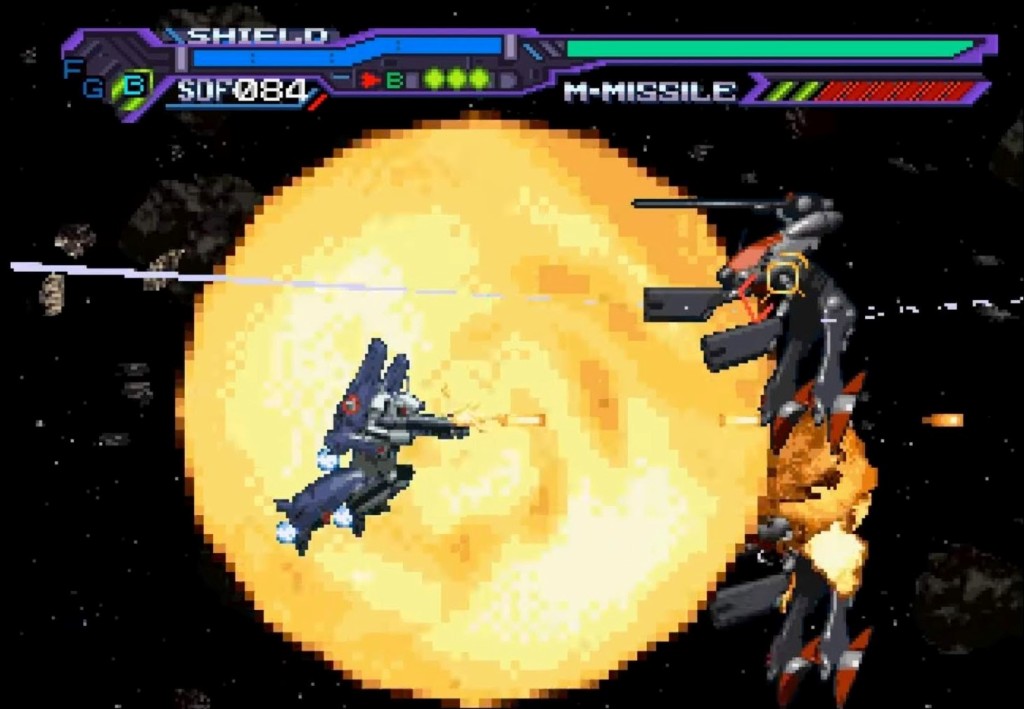
Lots of great visual effects and 3D movement add to the challenge.

With regards to challenge, some parts of this game took me a few repeats before finally improving myself enough to make it to the next levels. The visual elements of the game also added to the overall challenge as seeing 2D sprites move around you 3-dimensionally.

Speaking of 2D sprites, it is clear that this game was designed to be heavy with 2D visual elements while 3D polygons are used sparingly (note: the boss battles mentioned above). As this is a side-scrolling game, the game makers clearly made lots of sprites of machines, space ships, Zentradi battle pods and other figures that Macross fans would easily recognize. The good news is that each 2D sprite was made with multiple frames of animation (complete with frames meant for 3D movement) and were made to really resemble the cinematic artworks which ultimately results making them really look lively to watch on-screen!

As for the presentation, I can see that the game developers Scarab paid great attention to the details of the animated movie to make The Super Dimension Fortress Macross: Do You Remember Love? fun and engaging for gamers in general while also becoming strongly relevant and delightful with the people who love Macross. For example, the game starts with a cinematic prologue composed of brand-new animation cels mixed with elements of 3D polygons and in my view, it fits in nicely leading to the actual cinematic opening of the movie from 1984. The cinematic prologue was meant to expand the film’s overall concept and other story expansions happened in subsequent parts of the game (such as the all-new mission told in two levels).

Observe the Zentradi surrounding Roy Fokker on his 2D plane, the foreground and background. This is a 2D sprite-heavy showcase!
The game developers paid close attention to the details of the movie and presented the visuals using video game graphics, 2D sprites and really nice in-game background artworks!
Surprise! You as Hikaru get to fight Milia temporarily before her memorable fight with Max happens!

The Super Dimension Fortress Macross: Do You Remember Love? came with selected animated sequences and still images from the 1984 movie’s very own footage meant for in-game storytelling (note: you still have to watch the movie for the best immersion). As there were some original scenes made for the game with expanding the film’s concept in mind, there are a few computer-generated animation sequences and even brand-new animated cels (note: very clearly they were drawn by people different from the ones who drew the film’s footage) showing some character moments.

When it comes to the audio, this game is clearly a labor of love with Macross fans in mind. Much of the music, songs and sound effects from the movie (as well as from the 1982-1983 anime TV series) were integrated into the game which made it very immersive for Macross fans. As for the voice actors, fans will hear the voices of their favorite Macross characters performed by the late Hase, Iijima, Kamiya, Mika Doi (Misa Hayase), Michio Hazama (Captain Global) and more. While some of their recorded lines from the movie were reused (especially Hase who died in 1996), others recorded new lines for their respective characters for the new cinematic footage as well as key parts in the game.

The art of Lynn Minmay for the new anime footage was clearly not drawn by the people behind the 1984 anime movie.

What I love best about the presentation is that the game developers replicated selected scenes from the 1984 movie using in-game graphics and art along with music, sound effects and the lines of dialogue! As a Macross fan myself, the immersion was pretty deep as I played the game and witnessed those special moments from the movie played within the in-game presentation.

Conclusion

Enjoy looking at this.

I can declare out loud that The Super Dimension Fortress Macross: Do You Remember Love? is indeed the best Macross video game I have ever played as well as the best adaptation (note: other than film) of the classic movie from 1984. This game, which excellently used 2D sprites and 3D polygons all throughout, was very clearly made to delight Macross fans while giving gamers something very enjoyable and memorable to experience. For the best immersion, it is highly recommended to watch the movie before playing this video game. Truly this video game has aged well!

Overall, The Super Dimension Fortress Macross: Do You Remember Love? (Sega Saturn, PlayStation) is highly recommended!

+++++

Thank you for reading. If you find this article engaging, please click the like button below and also please consider sharing this article to others. If you are looking for a copywriter to create content for your special project or business, check out my services and my portfolio. Feel free to contact me as well. Also please feel free to visit my Facebook page Author Carlo Carrasco and follow me at HavenorFantasy@twitter.com