Disclaimer: This is my original work with details sourced from reading the comic book and doing personal research. Anyone who wants to use this article, in part or in whole, needs to secure first my permission and agree to cite me as the source and author. Let it be known that any unauthorized use of this article will constrain the author to pursue the remedies under R.A. No. 8293, the Revised Penal Code, and/or all applicable legal actions under the laws of the Philippines.
Back in the early 1990s, I was already a fan of the Terminator and RoboCop mainly due to their respective first movies released in the 1980s which became cinematic classics. While RoboCop 2 never came close to the quality of the 1987 original movie, Terminator 2: Judgment Day literally rocked the cinemas and went on to become one of the greatest film sequels ever made. Back then, there was a lot to be excited for over the two entertainment franchises. One day during my high school days (note: there was no social media and Internet access in the Philippines was not yet established), I learned from reading a comic book industry magazine that a crossover comic book mini-series matching the Terminator and RoboCop together. That news excited me a lot and before the end of 1992, I bought myself a copy of the comic book RoboCop versus The Terminator #1(note: this one has gone out of print).
With the history explained, let’s all take a look back at RoboCop versus The Terminator #1, published in 1992 by Dark Horse Comics with a story by Frank Miller (note: the same successful comic book creator who actually worked on RoboCop movies in Hollywood) and art by Walt Simonson.
The cover.
Early story
The story begins in the far future wherein human society has been ruined and the world became a constant battleground of a war between powerful machines and desperate humans. Inside a facility being invaded by the machines, a lady working for the rebels has been using computers (via brainfeed) in the battle with Skynet. As far as she knows, leader John Connor has been right in telling her that it was a human mind that merged with software and got linked with Skynet. She points to the 20th century historical figure Alex Murphy/RoboCop as the one responsible for the war.
Before Skynet’s machines reach her, she strips naked and made a desperate trip back through time. She successfully makes a hard landing into the middle of a city in a time before the war. After struggling with the sudden change, she arms herself and sets off to kill Alex Murphy…
Quality
Something is off with the pacing of the action here.
Let me start that this particular mini-series has a very intriguing concept that made it stand on its own (as opposed to simply referencing core concepts of the movies). This is about RoboCop’s technology being used to establish Skynet and this launch comic book emphasized that nicely.
When it comes to storytelling done with this particular comic book, things felt very uneven. For a comic book that strongly focused on the Terminator and RoboCop, this was mainly the story of the rebel lady from the future whose mission was to eliminate officer Alex Murphy in a bid to change the future. While she is portrayed to be highly determined and works by action, the character is never interesting and not worth investing your attention to.
For his part, RoboCop was literally placed on the backseat in this story and he makes his first appearance in the 2nd half starting with crime-busting. Considering the lack of spotlight, the sci-fi icon himself is not even interesting to follow which is disappointing.
The clear representation of evil here is Skynet and its army of Terminators. To say the least, the machines here make a worthy menace to read and somewhat made up for RoboCop and the lady rebel being uncompelling characters.
When it comes to the art, I should say that Walt Simonson’s visuals are not great to look at. There were crooks that had a cartoony aesthetic on the faces, Terminators that don’t even come close to their cinematic designs and some images looked rushed. At least Simonson’s RoboCop looks recognizable and was satisfactory with the action.
Conclusion
The target: Alex Murphy/RoboCop.
I still remember how underwhelmed I got after completing RoboCop versus The Terminator #1 the first time way back in 1992. It’s even more underwhelming by today’s standards. Of course, the comic book was essentially a build-up issue with the pay-off supposed to happen in the remaining issues. Its best selling point is the fusion of RoboCop and Terminator concepts that helped establish its own universe.
If you are seriously planning to buy an existing hard copy of RoboCop versus The Terminator #1 (1992), be aware that as of this writing, MileHighComics.com shows that the near-mint copy of the regular edition costs $17 while the near-mint copy of the platinum edition costs $170.
Overall, RoboCop versus The Terminator #1 (1992) is satisfactory. That being said, I would not recommend paying a lot of money for this comic book. Find a near-mint copy priced below $10.
Thank you for reading. If you find this article engaging, please click the like button below and also please consider sharing this article to others. If you are looking for a copywriter to create content for your special project or business, check out my services and my portfolio. Feel free to contact me as well. Also please feel free to visit my Facebook page Author Carlo Carrasco and follow me at HavenorFantasy@twitter.com
Disclaimer: This is my original work with details sourced from watching the movie and doing personal research. Anyone who wants to use this article, in part or in whole, needs to secure first my permission and agree to cite me as the source and author. Let it be known that any unauthorized use of this article will constrain the author to pursue the remedies under R.A. No. 8293, the Revised Penal Code, and/or all applicable legal actions under the laws of the Philippines.
When you craft a story meant to entertain people, it is already tough to mix genre elements and make them work together while still telling a cohesive story. Imagine how hard that could be when making a movie with the mentioned creative mix?
After much learning through UCLA, Dekker broke into Hollywood and started a professional career in film and eventually got his dream project in the form of Night of the Creeps.
“Night of the Creeps is very much a first feature with the attitude of many first features. The I-may-not-get-to-do-another-movie-so-I’m-going-to-do-everything-I-want-to-do-in-this-movie attitude. It’s an attitude that often backfires, but in this case, it’s exactly what makes Night of the Creeps so much fun,” Dekker stated.
With the short film history lesson done, it’s now time to take a look back at Night of the Creepswritten and directed by Fred Dekker, and released in 1986 by TriStar Pictures.
If you were the police chief, how many police officers would send to corner one zombie?
Early story
The story begins inside a space ship where one alien creature (carrying a canister) is running away from two armed personnel. With the two chasers delayed, the creature manages to shoot the canister into the realm of space.
On Earth, the year is 1959. In a typical American suburb, a college student visits a sorority house to pick up his date. Together, along with a few other pairs in cars, they spend time at a parking spot with a nice night view. A young police officer, who is aware of the news about a potential killer on the loose, approaches the pair and recognizes the lady from the sorority house. He tells them to go home for their safety, and then leaves them.
Shortly after, the canister from space arrives and crashes nearby causing the college student to drive the car (with his date with him) and find the spot of the crash. He parks the car by the woods and moves into woods leaving the sorority girl alone, sitting and waiting. He finds the canister and decides to look at it closely. Through an opening, an alien slug suddenly jumps from the canister and into his mouth. Meanwhile, the lone lady in the car hears the news about the loose killer and realizes the details about their location (being the destination of the killer). Slowly creeping up on her is a man with an axe.
What teenagers in America used to do in the 1950s.Someone closing in…
In 1986, at the same locality, college students party around and engage in lots of activities in relation to pledge week being organized at a local university. Among the students walking down the sidewalk are Chris Romero and his handicapped friend J.C. Chris spots a pretty girl from a distance and instantly falls for her at first sight. With the help of J.C., he decides to pursue her…
Quality
Even with a low budget, Night of the Creeps is very creatively done and comes with a good amount of fun for viewers who enjoy elements of horror or sci-fi, 1950s romance, 1980s teen comedy and even detective story. What made this movie a cinematic gem is that Fred Dekker and his creative team combined their strengths with the talents of their cast members specifically Jason Lively, James Marshall, Jill Whitlow and Tom Atkins.
At its core, Night of the Creeps is a zombie horror flick that had sci-fi elements of UFOs and the 1950s as a strong foundation (in addition to serving in the background of the plot). Those combined genre elements alone (backed with a plot that is cohesive enough thanks to Dekker) made this movie solid and yet, the implementation of detective/crime storytelling and 1980s teen comedy (specifically college culture) further added more punch and variety in making the film really engaging and fun.
That being said, the actors delivered the goods with their respective performances. Jason Lively and Steve Marshall have excellent chemistry together as the 1980s college boys Chris Romero and J.C. They started their acts as typical college guys trying to achieve something when it comes to campus achievements and winning the girl’s heart. They also delivered strong performances on the comedy and they pushed their dramatic limits further when the film’s tone shifted to horror. Jill Whitlow is interesting as sorority girl Cynthia who has that girl-next-door charm. She proved to be talented with acting as she had convincing romantic chemistry with a certain jerk and Chris.
Steve Marshal, Jason Lively and Jill Whitlow as J.C., Chris Romero and Cynthia.The horror film genre legend himself, Tom Atkins!
The standout performer among them all, unsurprisingly, is Tom Atkins as detective Ray Cameron. Before making this movie, Atkins worked in horror movies and a few cult movies, and got involved with the legendary John Carpenter. As such, playing the veteran detective Cameron here was a natural fit for the actor. As the aging and troubled detective, Atkins portrayed him dramatically and because of his very rugged touch, the actor really looked like he actually lived through decades of police work in the fictional town. Atkins also proved to be very good with quotes, specifically with “Thrill me!” It should be noted that this is Atkins’ personal favorite role in the horror genre.
When it comes to telling a cohesive story to emphasize the mixed genre elements, I should say Fred Dekker and his team succeeded. The pacing ran at a medium pace for the most part and even during the slower scenes, there was never a boring moment. More on storytelling, Night of the Creeps’ concept made sense for the most part (about how a slug from outer space would gradually cause zombification on people and even animals, in the midst of college-related events happening) and still had room for suspense, spectacle (note: Jason Lively and Jill Whitlow themselves used dangerous weapons near the end of the film) and, yes, character development! All of that pulled of nicely in roughly ninety minutes and the viewing experience was ultimately fun and engaging.
I wonder if this image would be considered offensive by the SJWs…Perhaps this will inspire you to research what American life was like back in the 1950s.
It should be noted that, in terms of presentation, key scenes were very well directed and strong performances from the actors were realized. The scene where detective Cameron and Chris had a private talk was intriguing to watch, and that one had the strongest act Tom Atkins made in the film. I should also mention that, apart from the dramatics and performances, I enjoyed the cinematography done by Robert C. New especially with the way the camera moved as the actors delivered their lines in key sequences. There were closeups that perfectly captured the moments when the actors delivered their strongest acts. Last but not least, the music by Barry De Vorzon fit the film’s tone and concept smoothly.
Conclusion
Here they come…
I really love Night of the Creeps and I want you – my readers and fellow film buffs and pop culture geeks – to watch it from start to finish. I never saw this movie in the cinemas in the 1980s but was fortunate enough to watch it on cable TV on a late night in 1998 (twelve years after its cinematic release). That was a night I’ll never forget because Night of the Creeps delivered the fun and exceeded my expectations. Then years ago, I finally acquired the Sony Pictures Blu-ray disc release which I replayed from time to time at the comfort of home with my Xbox One console as the disc player. The film looks even better in high-definition!
The best thing I love about Night of the Creeps is its big mix of genre elements which was supported by solid storytelling and performances. When it comes to spectacle or shock moments, it should be stated that the practical effects used (note: no CGI or computer-generated images here) in the movie still stand up strongly until now although I must say that the aliens creatures in the early part of the story were just not convincing enough.
Even by today’s standards, Night of the Creeps is enjoyable and gripping to watch, and the fact is nobody in Hollywood is making anything like it, nor are there any filmmakers willing to do a big mix of genre elements and tell a cohesive story with good performance from hired talents. This alone makes Fred Dekker’s directorial debut a cinematic gem that has been overlooked by too many people
In light of modern society and its norms, I declare that Night of the Creeps will give you a good dose of escapism not only from real life but also from the corrupted and highly politicized culture of Hollywood which points to the Political Left (whose central figure Barack Obama supports Iran, the terrorists and illegal immigrants) and its trouble makers (examples: social justice warriors or SJWS, the socialists, the radical feminists, the LGBTQ) who managed to infiltrate the American film industry and even the American media (note: you can tell if a movie review was written by an SJW who only writes something to fit his/her social justice agenda). This old movie was made to deliver fun without any political garbage whatsoever. That being said, it will make you wish that Hollywood would just focus on making their movies truly entertaining and be free from political poison at the same time. Movies that carry political overtones or emphasize identity politics are major turn-offs.
Overall, Night of the Creeps is highly recommended! That being said, I urge you to order a Blu-ray copy of Night of the Creeps now at Shout Factory and Amazon. Whichever Blu-ray version you acquire (note: the Shout Factory version has newer and more extra stuff), you can’t go wrong with Night of the Creeps in high-definition.
Thank you for reading. If you find this article engaging, please click the like button below and also please consider sharing this article to others. If you are looking for a copywriter to create content for your special project or business, check out my services and my portfolio. Feel free to contact me as well. Also please feel free to visit my Facebook page Author Carlo Carrasco and follow me at HavenorFantasy@twitter.com
Disclaimer: This is my original work with details sourced from reading the comic book and doing personal research. Anyone who wants to use this article, in part or in whole, needs to secure first my permission and agree to cite me as the source and author. Let it be known that any unauthorized use of this article will constrain the author to pursue the remedies under R.A. No. 8293, the Revised Penal Code, and/or all applicable legal actions under the laws of the Philippines.
According to the online edition of Merriam-Webster Dictionary, an oasis is something that provides refuge, relief, or pleasant contrast. In the case of X-Men 2099, the open areas of the southwestern region of the United States is a dangerous place to be in even though they are free from oppressive systems of control that dominate cities. As such, it is the southwestern region in 2099 can be compared to the Old West in history where there are lots of desolate places as well as lots outcasts and outlaws. Unlike their mainstream counterparts, the X-Men of the far future are nomads and they don’t have a long-term place of residence they could call home. Considering how dangerous the region is for the mutants, a haven of peace, security and prosperity is always ideal to them but only if it is indeed real.
That is what we will explore in the one-shot comic book X-Men 2099: Oasis here.
But before proceeding with the review, it has to be emphasized first that the one-shot comic book which was made special with the painted art of the Hilderbrandt brothers Greg and Tim. For long-time X-Men 2099 scribe John Francis Moore, Oasis was like a big dream come true. When asked during an online interview about his recollections on making X-Men 2099: Oasis and working with the Hildebrandt Brothers, Moore stated:
I was a fan of the Hildebrandt’s fantasy illustration, and I was blown away when Joey told me that they wanted to do an X-men 2099 project. I met with them in Joey’s office and they were both really great guys. I think they said they really liked Bloodhawk, so I knew he’d be a major player in whatever story we developed. They didn’t enter the project with a lot of conditions. They seemed genuinely happy to get to play in this corner of the Marvel universe.
I can’t remember ever writing a full script for any of my Marvel work. I gave them a plot and sometime later received Xeroxes of pencil art (Hildebrant art!) to dialogue. Then it went back for them to paint, and they did a phenomenal job. I only wish that it could’ve been published before the 2099 line was axed. It was a beautiful book that I think was sadly under promoted.
To find out if it is any good, here is a look back at X-Men 2099: Oasis published in 1996 by Marvel Comics with a story written by John Francis Moore and painted art done by Greg and Tim Hildebrandt.
The cover.
Early story
The comic book begins with a flashback set in Hong Kong in the year 2090. A much younger Shakti/Cerebra is on the loose trying to reach a ferry to Kowloon with a plan to hide in the back alleys of Tsimshatsui. Suddenly Lokjaw intercepts her and grabs her. They had a short history together and Lokjaw insists that Shakti should be grateful to her father who raised her to run his bio-shops. After a brief chase, something hits Lokjaw who fell into the water. It turns out Ryu Kobolt helped Shakti, and he has been instructed by his boss to offer her asylum.
Luna and Skullfire explore a place.
In the present day of 2099 in New Mexico, Bloodhawk flies to his desert home not knowing he is being monitored. Two people, an old man with white hair and a lady, work together to stun the X-Men member and take him with them. A short time later, inside a high-tech facility, Bloodhawk wakes up finding himself restrained and being watched over by the lady and the old man. They tell him he is in the Promised Land, a place where the sins of the old world will be washed away. Using her powers, she touches Bloodhawk’s head and slowly turns him into his normal human form.
Meanwhile outside a deserted town near the border between Colorado and Kansas, Shakti, Tim/Skullfire and Luna arrive riding motorcycles. They are checking the potential presence of a mutant nearby…
Quality
Really great visuals by the Hildebrandt brothers!
It is very safe to say that this is one very ambitious X-Men 2099 story ever told by John Francis Moore. It sure has an epic concept showing that Oasis in the open region not only exists, but also serves as the closest thing humanity in America has to imitating Heaven built on top of the land. Oasis is the indoor paradise where mutants and humans gather together, live in peace and work together in tremendous ways that the X-Men could only hope to achieve in Halo City (note: this story is set some time after X-Men 2099 #25).
The titular place is clearly the centerpiece of the story backed with characters and threads from the past that explain how it got established. Part of the creation of Oasis is connected with Ryu Kobolt whom Shakti got close with many years back. Of course, someone else got involved with Ryu which directly connects with the creation of Oasis.
While it is also clear that the story took some inspiration from Christianity, I should say that the approach was done by rehashing old storytelling concepts like emphasizing a charismatic person who looks godly or messianic, people getting converted with ways that are not holy, false prophets misleading those seeking salvation, etc. With the ages-old concept of the mad scientists added, then there is conflict here for the X-Men to engage with. The story touches on themes like destiny, conversion, having the power to judge people and committing genocide.
As for the characters, John Francis Moore made the right move to utilize Shakti, Bloodhawk, Skullfire and Luna of the X-Men, however the other new characters such as Memphis, Pandora and Ryu pale in comparison with regards to importance (even though Memphis and Ryu each had a good amount of the spotlight and even some character development).
When it comes to the artwork, this is one great looking superhero, sci-fi story in painted form thanks to the Hildebrandt brothers! Not only is their painted art beautiful to look at, there are also eye-catching shots of scenery, very detailed facial expressions and a very lively presentation of the action scenes and explosions! Each and every character painted – specifically Shakti, Skullfire, Bloodhawk, Luna, Memphis, Pandora and Ryu – has that touch of visual realism (note: not photo realism) that make them look more human to the eyes (especially the X-Men members when compared to how they were drawn by Ron Lim and Jan Duursema in the monthly series). This is one great looking comic book and easily one of the very best of the X-Men of 2099!
Conclusion
The Oasis!
X-Men 2099: Oasis is a one-shot comic book that did not match its high ambition. While it has some of the best painted superhero art of the 1990s ever, the storytelling just did not engage me that much. For one thing, its approach on taking inspiration from Christianity is very flawed not only due to rehashing storytelling concepts but also due to the fact that everything – including the titular Oasis – had to be concluded already. Even though there was a build-up leading to a final conflict, the payoff was not that great and ultimately there was a sense of rush in the 2nd half of the story.
What is also disappointing is the fact that the events told here did not really impact Shakti, Skullfire, Luna and Bloodhawk at all, nor was there anything added to the narrative of the X-Men 2099 monthly series. This is too bad because the existence of a haven where people can live in and be protected from the prejudice and violence in the region fits nicely with the concept of X-Men 2099 in the first place. Even though there was a reference to issue #25 during the first half, this comic book ended up looking like a dream story or a parallel universe tale with a $5.95 cover price! It seems to me like this was more like a cash-grab attempt to exploit comic collectors and the fans of X-Men 2099.
If you are seriously planning to buy an existing hard copy of X-Men 2099: Oasis, be aware that as of this writing, MileHighComics.com shows that the near-mint copy costs $14.
Overall, X-Men 2099: Oasis is a serviceable one-shot comic book. That being said, if you really intend to buy it, you should not pay more than $5 for it.
Thank you for reading. If you find this article engaging, please click the like button below and also please consider sharing this article to others. If you are looking for a copywriter to create content for your special project or business, check out my services and my portfolio. Feel free to contact me as well. Also please feel free to visit my Facebook page Author Carlo Carrasco and follow me at HavenorFantasy@twitter.com
Disclaimer: This is my original work with details sourced from watching the movie and doing personal research. Anyone who wants to use this article, in part or in whole, needs to secure first my permission and agree to cite me as the source and author. Let it be known that any unauthorized use of this article will constrain the author to pursue the remedies under R.A. No. 8293, the Revised Penal Code, and/or all applicable legal actions under the laws of the Philippines.
I miss the old days when an R-rated action-packed science fiction movie can be passionately made with exceptional directing, clever writing, great camera work that’s consistently steady, solid performances from the actors, action that was not too choreographed, and visuals that heavily utilized practical effects and optical effects.
I’m talking about Total Recall, the 1990 sci-fi action movie that starred a much younger Arnold Schwarzenegger supported by Sharon Stone, Michael Ironside, Rachel Ticotin and Ronny Cox. Directed by Paul Verhoeven (who directed the 1987 classic RoboCop) with a screenplay (based on the Philip K. Dick short story We Can Remember It For You Wholesale) by Ronald Shusett, Dan O’Bannon and Gary Goldman, Total Recall was a tremendous hit in the cinemas grossing more than $261 million worldwide with a production budget of over $60 million. To date, the film remains a favorite not only with fans of Schwarzenegger but also with people who love action movies, sci-fi movies, movies of the 1990s and geeks.
But before looking back at this movie, it is important to take note that Total Recall took several years of development before it finally got produced. The very first screenplay was written by O’Bannon and Shusett in the 1970s (after securing the film rights to Philip K. Dick’s short story when the author was still alive). Eventually prolific movie producer Dino De Laurentiis took the project for development. Years later, De Laurentiis’ company collapsed (due to failed projects) which provided Schwarzenegger the golden opportunity to get Total Recall by persuading Carolco to secure the rights for a few million dollars. After many screenplay drafts written and the hiring of Verhoeven as director (note: Schwarzenegger approached him personally) plus Gary Goldman, the rest became history.
Arnold Schwarzenegger, Rachel Ticotin, Michael Ironside and Ronny Cox in a memorable scene.
Now, here is a look back at Total Recall.
Early Story
The story begins at the surface of planet Mars where a man and a lady (both wearing space suits) travel on foot. Suddenly, the man slips down and breaks the frontal shield of his helmet exposing himself to Mars’ air. It turned out to be an intense nightmare for Douglas Quaid who was in bed with his beautiful wife Lori. Lori asked him about the unidentified woman who appeared in his dreams, but Quaid expresses his love for her. On his way to work, Quaid saw a TV ad inside the train about Rekall, a company that sells holidays and adventures in the form of memories. At work, his fellow construction worker discouraged him from availing of any services from Rekall. After work, Quaid visits Rekall and decides to avail of an ego trip as a secret agent. Just as the memory trip was about to start, Quaid wakes up violently…
Quality
This movie is still great to watch. Let me start first with the creative team of Paul Verhoeven and Arnold Schwarzenegger.
A great action scene about to start…
When it comes to the synergy between the director and the lead player, Verhoeven and Schwarzenegger make a great creative team that made this movie very special! When asked during an interview what it was like for him to work with Schwarzenegger, Verhoeven said: Arnold is great. Switching from Rutger Hauer to Arnold is not that big a step. It’s strange to say that, because he’s this crazy Austrian, with an accent—but, for me, Arnold is the American Rutger. I think if I did a few movies with Arnold, I could do as much with him as I did with Rutger. Now, this movie was the wrong thing . . . But I think you can do much more with Arnold, explore more possibilities, than was necessary for this movie.
Sharon Stone as Lori.
Now, it is a fact that Schwarzenegger lacks versatility when it comes to acting. Even so, Verhoeven succeeded in getting a deeper-than-expected performance from the star in this movie. Sure, we get to see Schwarzenegger fight bad guys with really rough action, fire guns, run and jump around here but what really stood out here was his portrayal of a man who discovers that the life he knew was all a lie and goes on to find the truth about himself. This role remains a standout role of Schwarzenegger’s among all the characters he played in his many other action films. What is also notable with Douglas Quaid is that the protagonist is always in danger and never invincible, very similar to how Bruce Willis played John McClane in Die Hard. If you watch this film after seeing Schwarzenegger play his invincible icon in the Terminator movies, you will feel his pain, tension and curiosity here! As if that was not enough, there is also the other role Schwarzenegger played in this movie that you should see.
Of course, Total Recall also drew greatness and depth from Verhoeven who also got strong performances from Sharon Stone, Michael Ironside, Rachel Ticotin and Ronny Cox. Sharon Stone is the beautiful wife who will shock you. Michael Ironside is the henchman who will make you root for Schwarzenegger even more. Rachel Ticotin is the brave woman who is believable with the cause she is involved with.
Rachel Ticotin as Melina.
More notably, Ronny Cox is the all-powerful and ruthless executive who will get on your nerves and make you root for Schwarzenegger a lot, very similar to how his villainous role in RoboCop made moviegoers root for the cyborg policeman. It should be noted that the evil executive-henchman duo of Cohaagen (Cox) and Richter (Ironside) here is a directorial trademark of Verhoeven’s and it should bring back memories of the other evil duo in RoboCop. More than that, Ronny Cox succeeded in selling the concept that Cohaagen really had been the administrator of the colony in Mars exploiting the resources and the people for a long time.
More on getting the most out of the actors, Verhoeven and his team crafted a memorable hand-to-hand fight scene between Lori (Stone) and Melina (Ticotin) actually taking part in the action and stunts. Sharon Stone clearly got athletic in this movie and her efforts paid-off nicely, complete with another fight scene with Arnold Schwarzenegger (she actually even threw two high kicks at Schwarzenegger’s head) early in the film. Beyond the hard battle with Stone, Ticotin went on to take part in further action scenes in the film and she sure is believable as an action performer. To put things in perspective, Stone and Ticotin are not action stars but they excelled nicely in their work here and this also made Total Recall special.
When it comes to storytelling under the direction of Verhoeven, Total Recall moved at a medium-to-fast pace and there was never a single moment of rushing, nor a single boring moment at all. The film just kept going smoothly complete with true unpredictability which results lots of twists and surprises. I should also state that the dialogue from the finalized screenplay is still excellent, and they were nicely delivered by the actors. Verhoeven also added depth to the film by using mystery while also getting good performance from Schwarzenegger as Doug Quaid finds out that life is not what it seems. I should state that the sci-fi elements of altering (and adding) human memories with the use of computers and the business of selling virtual holidays and ego trips were strongly emphasized. These also add to the film’s mystery which should engage you to wonder and analyze as the story moves on.
The best view from an office on planet Mars.
On the spectacle, Total Recall is heavily loaded! The action is violent, plentiful and carries that particular aesthetic that only director Verhoeven has. It’s hard to explain in words but once you watch the action in this movie (plus comparing it to RoboCop and Starship Troopers), you will realize it. Even so, the action never turned this movie into a brainless affair. The action worked nicely to balance the mystery and suspense.
The visual effects here were mostly done by practical and optical ways. Special effects specialist Rob Bottin, who famously worked in John Carpenter’s The Thing and worked also with Verhoeven in RoboCop, came up with very memorable animatronics to simulate facial and physical changes on characters on key sequences involving sci-fi elements. The team also crafted really freaky looking makeup works on the Mars mutants, which really gave this film a strong sci-fi look. I also like the use of miniatures and physical sets that visualized the colony in Mars. By today’s standards, this movie’s visual effects still look great and I can only wish that filmmakers today would rely less on computers and go back to using practical effects (note: physical stuff) and, on certain occasions, optical effects.
Really great movie makeup work by Rob Bottin.
When it comes to the physical environments, this movie was filmed a lot in Mexico, specifically on key locations and on the sound stages in an established movie production studio there. Years ago, when I first learned for the first time that the trains used in the film were real-life trains that actually operated in one of Mexico’s real-life transportation systems, I was astounded! Paul Verhoeven himself confirmed that the train sequences were not only shot on location with real trains (note: monitors were added by the filmmakers to achieve a futuristic look) but the place’s architectural design were very unique and fitted nicely with the sci-fi concept of the movie.
The Mars colony set does not look fake to me. In fact, it really looks like it has long been lived in by people and the filmmakers nicely designed it. The Venusville set looks very convincing and, within the story, it got decayed due to long-term businesses, constant vehicular traffic and people who always flocked the place. The Mars hotel meanwhile has that cleaner, nicer look with tourists who paid good money for pleasure and discovery.
I should mention that the cinematography here done by Jost Vacano is excellent. The set-ups of the camera to get great angles of the actors is special, and the same can be said about the capturing of the spectacle that happened on-screen. The flashback of Mars inside Quaid’s mind had great, floating views of the location complete with perfectly smooth movement! Vacano also worked with Verhoeven in RoboCop.
Finally, the musical score by the late Jerry Goldsmith is very memorable and this is my favorite among all his works. The music provided gave this movie a strong sci-fi feel and when suspense plays, the tunes added nicely to it. The most memorable music tracks here are the opening credits music (which is immersive) and the foot chase between Quaid and Richter on Earth (the music really keeps the pace high).
Conclusion
Arnold Schwarzenegger as Douglas Quaid in a key scene.
Total Recall is a true, adulterated sci-fi action classic and easily it is still is one of the best ever movies I’ve seen from Schwarzenegger, Verhoeven and Stone. A few visual elements did not age well but its highly engaging story (combined with the strong performances and spectacle) remains its key selling point. There is a lot of ambiguity throughout the film and it will keep you wondering if the story (or at least portions of it) was reality or all a dream in Quaid’s mind. The way the story is structured combined with the excellent spectacle, this is a movie that is worth watching again and again! It remains an effective viewing experience for me until now.
As it contains the directorial trademarks of Verhoeven mixed with Schwarzenegger’s own style of expression and hard action, Total Recall is a very unique move of its own and it’s impossible to replicate nor match. Keep in mind that the 2012 remake of this movie was badly made (even though it had a big budget and highly advanced visual effects involving the use of computers) and ended up being a complete failure.
To put it short, Total Recall is more than just an action-packed thrill ride. It is also a mystery film that will keep viewers on the edge as the search for answers continues. Total Recall also explores the theme of what would you do when you realize that the life you remember turned to be an exceptional lie, and that you are literally caught in the middle of a web surrounded by dangerous, powerful people. I could never forget how my mind got motivated as I focused on the narrative the first time I ever saw this great movie decades ago. Total Recall was a sci-fi viewing experience like no other.
Overall, Total Recall (1990) is highly recommended! I urge you, my readers, to buy the movie on Blu-ray disc or watch it via streaming.
Thank you for reading. If you find this article engaging, please click the like button below and also please consider sharing this article to others. If you are looking for a copywriter to create content for your special project or business, check out my services and my portfolio. Feel free to contact me as well. Also please feel free to visit my Facebook page Author Carlo Carrasco and follow me at HavenorFantasy@twitter.com

Disclaimer: This is my original work with details sourced from reading the comic book and doing personal research. Anyone who wants to use this article, in part or in whole, needs to secure first my permission and agree to cite me as the source and author. Let it be known that any unauthorized use of this article will constrain the author to pursue the remedies under R.A. No. 8293, the Revised Penal Code, and/or all applicable legal actions under the laws of the Philippines.
After going through the first two issues of Warriors of Plasm, I really find the sci-fi concept of Jim Shooter and David Lapham very compelling, intriguing, unique and enjoyable. There’s nothing like witnessing an empire of a race of people living not only within a really organic world but also use living things (even creatures) as a means of technology that does not involve metal, plastic and computers. And then there were people from Earth who survived the trip to the world of Plasm and got enhanced.
Excited? Let’s now take a look a look back at Warriors of Plasm #3 published by Defiant Comics in 1993 with a story written by Jim Shooter and drawn by David Lapham.
The cover.
Early story
The story begins inside Plasm where Lorca, Sueraceen and their troops just arrived from planet Earth. Sueraceen expressed to her lover that she found it doubly infuriating that they were trashed by the five survivors (of Earth) who, ironically, were geneti-morphed (enhanced) by him. Lorca replied that he simply experimented on them and never suspected how dangerous they might be. Sueraceen suspects treason behind Lorca’s motives.
Suddenly the five earthlings – Cookie, Rick, Louise, Martin and Elvis – arrived in Plasm flying in an organic craft, completely surprising everyone. Even though they were outnumbered, the five survivors attacked Lorca’s people with the craft and bravely went down to do battle on foot. The military officer Elvis tries to hit Lorca up-close but failed.
As Lorca’s troops continue to get pummeled by the brave earthlings, hundreds of reinforcements from Thoraxolic’s legion arrive. Instead of being encouraged, Sueraceen only gets disturbed given her grudge against Thoraxolic. The reinforcements then gang up on the five survivors…
Quality
Highly imaginative character designs and environment in the Org of Plasm.
Unsurprisingly, Jim Shooter and David Lapham delivered yet another high-quality comic book and there never was a moment when the storytelling quality went down. Great dialogue, strong plot twists, in-depth characterization, spectacle and a strong sense of discovery…it’s all here!
What I like best in this comic book is the further and deep exploration of the organic world of Plasm which was done through the eyes of the five earthlings who have gotten more daring in taking on Lorca and his troops (who in issue #2 visited the Earth for a while). Let me confirm that the deeper the earthlings get into the Org of Plasm, the weirder and the more imaginative the place gets for us readers to see!
Speaking of characters, Jim Shooter’s approach on developing the five earthlings into braver, more capable people was nicely executed. By this time, Cookie, Rick, Louise, Martin and Elvis now have a more inspired, superhero team-style bond together. They are now worth caring for. Not to be outdone is the continuing intrigue on the side of Lorca.
Conclusion
Look closely.
Warriors of Plasm #3 is, unsurprisingly, another excellent comic book to read and have as part of your personal comic book collection.
If you are seriously planning to buy an existing hard copy of Warriors of Plasm #3, be aware that as of this writing, MileHighComics.com shows that the near-mint copy of the regular edition costs $4. The near-mint copy of the comic book signed by Jim Shooter is worth $7.
Overall, Warriors of Plasm #3 is highly recommended!
Thank you for reading. If you find this article engaging, please click the like button below and also please consider sharing this article to others. If you are looking for a copywriter to create content for your special project or business, check out my services and my portfolio. Feel free to contact me as well. Also please feel free to visit my Facebook page Author Carlo Carrasco and follow me at HavenorFantasy@twitter.com
Disclaimer: This is my original work with details sourced from reading the comic book and doing personal research. Anyone who wants to use this article, in part or in whole, needs to secure first my permission and agree to cite me as the source and author. Let it be known that any unauthorized use of this article will constrain the author to pursue the remedies under R.A. No. 8293, the Revised Penal Code, and/or all applicable legal actions under the laws of the Philippines.
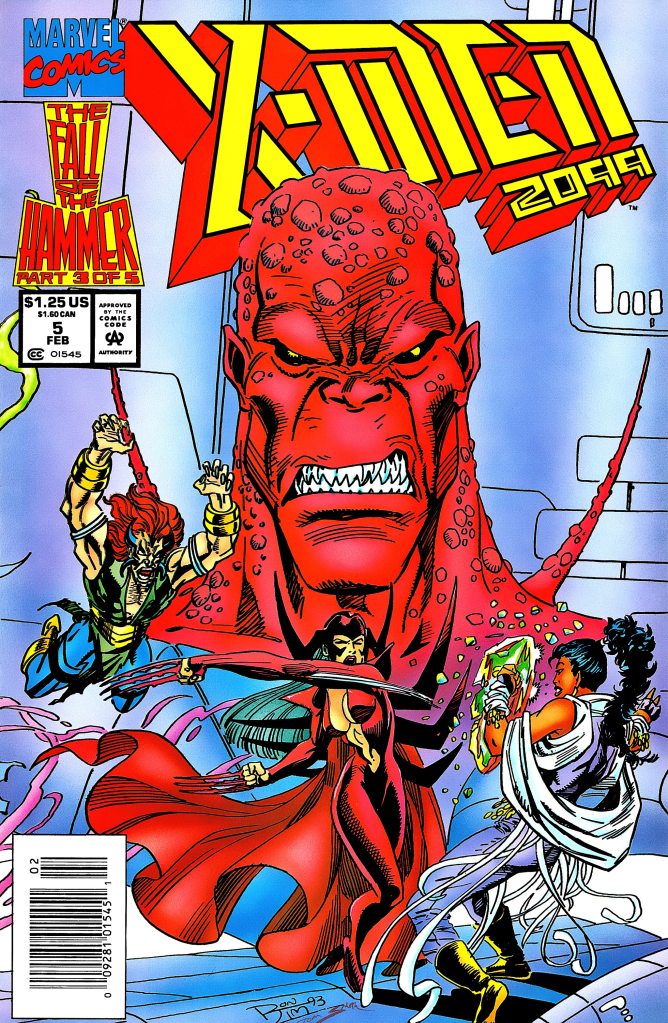
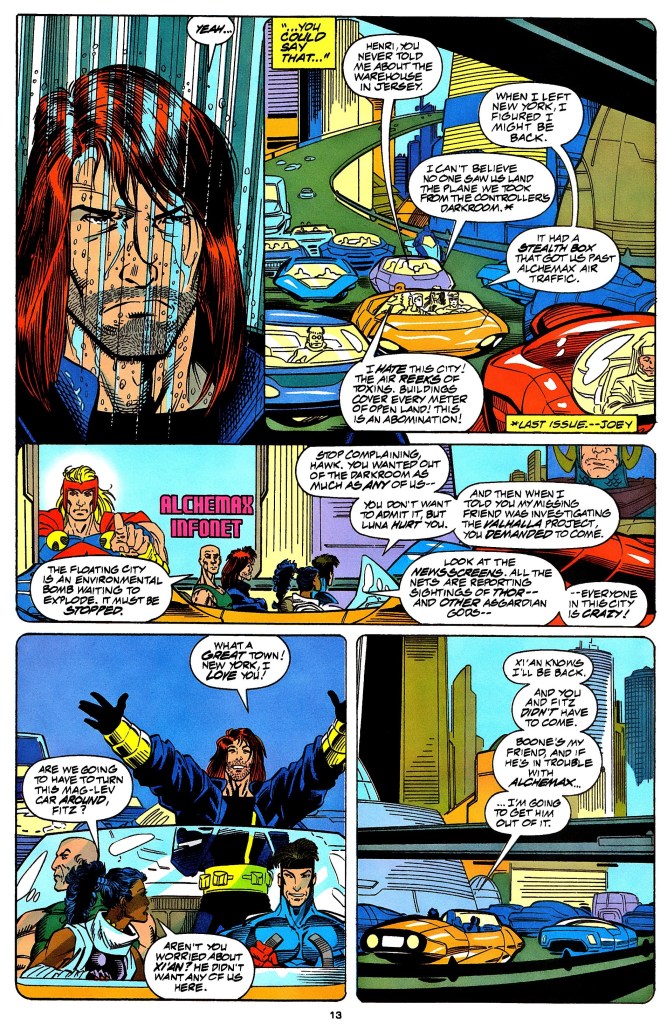
The X-Men of 2099 are struggling with their duty as a security force of Halo City while the Undead causes trouble nearby. Then Shakti’s father is wanted.
Here’s my retro comic book review of X-Men 2099 #29, published by Marvel Comics in 1996 with a story written by John Francis Moore and art by Ron Lim.
The cover.
Early story
The story begins with the resurrected-but-turned-evil Skullfire doing the Graverobber’s bidding by tampering with Halo City’s power supply. The Graverobber is confident he will gain control of the city. Their gang, the Undead, has Luna (a close friend of Skullfire’s with the X-Men) captured.
Suddenly, Meanstreak rescues Luna and brings her back to the X-Men who just arrived to face off with the Undead. Team leader Shakti tells the Graverobber that he has only one chance to relinquish his hold on Skullfire and leave the city. Meanstreak whispers to Krys his observation of Serpentina whom they witnessed died some time ago.
The face-off between the X-Men and the Undead.
The Graverobber answers back to Shakti reminding her she renounced her father’s legacy and she should not protect him out of misguided family loyalty. Suddenly Meanstreak run towards the Graverobber offensively…
Quality
Another fun and engaging X-Men 2099 story made and also a worthy conclusion to the 4-part City of the Dead storyline (started with X-Men 2099 #26). No surprise that John Francis Moore and Ron Lim delivered the goods, complete with worthy payoffs to the build-up made not only with the storyline but also on the characters themselves. This issue connected nicely with what happened in X-Men 2099 #3 relating to Serpentina being with the Undead. Remember Tim/Skullfire’s past with his departed sweetheart Reiko? This comic book also touched into his inner self and it sure made me rethink if Skullfire really loves Luna even though there was no rivalry between her and Reiko.
Shakti in action.
By the end of this comic book, I really felt how much the X-Men of the far future have changed not simply because of their new roles as the security force of Halo City, but also with how their members – Skullfire and Shakti specifically – dealt with their respective connections to the past.
Conclusion
This 29th issue of the X-Men 2099 series of the 1990s is worth reading for as long as you knew the characters well enough, even before the 26th issue. It’s nice that John Francis Moore decided to creatively connect with dots from the past just as he crafted a story showing the X-Men struggling with being authorities themselves. The addition of Morphine as a superior of their added a lot of tension and it sure made up for the absence of Xi’an.
The battle between the mutants and the undead.
If you are seriously planning to buy an existing hard copy of X-Men 2099 #29, be aware that as of this writing, MileHighComics.com shows that the near-mint copy of the regular edition costs $4. The newsstand edition’s near-mint copy costs $8.
Overall, X-Men 2099 #29 is recommended.
Thank you for reading. If you find this article engaging, please click the like button below and also please consider sharing this article to others. If you are looking for a copywriter to create content for your special project or business, check out my services and my portfolio. Feel free to contact me as well. Also please feel free to visit my Facebook page Author Carlo Carrasco and follow me at HavenorFantasy@twitter.com
Disclaimer: This is my original work with details sourced from reading the comic book and doing personal research. Anyone who wants to use this article, in part or in whole, needs to secure first my permission and agree to cite me as the source and author. Let it be known that any unauthorized use of this article will constrain the author to pursue the remedies under R.A. No. 8293, the Revised Penal Code, and/or all applicable legal actions under the laws of the Philippines.
Shortly after the release of Warriors of Plasm #1 way back in 1993, I realized that I was not the only reader who really enjoyed the sci-fi epic opener of Jim Shooter and David Lapham. There were a few fellow comic book collectors I personally knew who bought the said comic book on their own and came back with rave reactions to it.
Back in those days, finding a copy of Warriors of Plasm #1 was a challenge since there were some local comic book specialty stores that did not have copies of it and other Defiant Comics titles for some reason.
Given how the story turned out, Warriors of Plasm #1 left me anticipating for more. As such, we can proceed with a nice look back at Warriors of Plasm #2, published by Defiant Comics in 1993 with a story by Shooter and visuals by Lapham (with ink work by Mike Witherby).
The cover.
Early story
The story begins on planet Earth. The five earthlings (who were abducted by inquisitor Lorca and became the lone survivors among the many other people of Earth who died in Plasm) found themselves back on their world, specifically just outside a factory. The survivors are Cookie, Rick, Louise, Martin and Elvis. By this time, they are getting used with new abilities and skills (apart from the organic suits they are wearing) they gained from Plasm.
Feeling disoriented from the whole experience of Plasm and the unexpected way of traveling back home, the survivors struggle with deciding where to go and what to do next. Elvis, a lieutenant, insisted they should to the nearest fort believing that their situation is a military matter. Louise stated they should fine a police officer as she considered their situation to be a case of kidnapping.
Meanwhile back in the org of Plasm, a lord named Thoraxolic arrives. Lorca and his team are struggling to get rid of the evidence of his failed genetic gamble with the ten thousand Earthlings (and their corpses) that he had transported into Plasm. He tells his lust mate Sueraceen that the people from Earth were rather fragile and that only five survived.
Their private time together gets interrupted when Thoraxolic communicates with them via an organic monitor. Afterwards, Lorca and Sueraceen leave their chamber to meet with Thoraxolic who brought with her an assembled task force. There is tension between Sueraceen and Thoraxolic.
Lorca and Sueraceen talk while their crew cleans up the remains.The meeting with Thoraxolic.
Quality
How is this comic book? I am happy to say that Warriors of Plasm #2 is a very solid follow-up to the previous issue. While issue #1 was all about discovering Plasm, its people and organic technology, this comic book explores more about the Plasm’s hierarchy while fleshing out the five Earth survivors who must deal with the new reality they face while they are back home.
Jim Shooter’s plotting is excellent and I really like the way this comic book followed the parallel events on Earth and Plasm. Shooter even added some realism into the story, especially when the survivors (who are still wearing the organic suits they got in Plasm) explain themselves to the police at the station in Elizabeth, New Jersey.
Unsurprisingly, the dialogue written is deep. Checkout the exchange below between Lorca and Sueraceen.
Lorca: Centurion, our first objective is to find and slaughter the five experimental subjects who escaped from my centrum.
Sueraceen: No. Capture them, centurion. I want them alive.
Lorca: But Sue, they could be dangerous. I’ve learned all I can from them. I’m finished with them!
Sueraceen: I’m not…especially if they’re dangerous. I want to see these “experiments.” Besides, you’re up to something that you’re not telling me about. I intend to learn the nature of your treachery, lust-mate…and against whom it’s truly intended. Intrigue…tweaks me.
More on the writing, Shooter really took his time to develop the characters and found the right situations to unveil the survivor’s respective special abilities. This is really nice because it shows there was careful planning on structuring the plot of this comic book.
Along the way, David Lapham provided really nice artwork that brought Shooter’s vision to life. While this comic book looks less grand because it has scenes set in America and lesser scenes of Plasm, Lapham pounded on the spectacle. The actions scenes are quite striking to look at and at times, I felt like I watching an R-rated sci-fi action film. When it comes to visualizing the organic figures or technologies of Plasm, Lapham continued to excel.
Conclusion
Warriors of Plasm #2 is a great comic book! Jim Shooter and his creative team successfully pulled off an excellent follow-up to the excellent first issue. After reading this comic book, I felt more engaged just as I got to learn more about the characters – especially the five survivors – and at the same time, I enjoyed the narrative’s shift to planet Earth. The spectacle that took place in the late stage of the story was a nice pay-off to the build-up and characterization that preceded it. Even though there are few scenes set in Plasm, this one still has a nice sense of discovery for readers to enjoy.
The five survivors back on Earth.
If you are seriously planning to buy an existing hard copy of Warriors of Plasm #2, be aware that as of this writing, MileHighComics.com shows that the near-mint copy of the regular edition costs $4. The near-mint copy with the five signatures costs $26 while the near-mint copy of the comic book signed by Jim Shooter is priced at $7.
Overall, Warriors of Plasm #2 is highly recommended!
Thank you for reading. If you find this article engaging, please click the like button below and also please consider sharing this article to others. If you are looking for a copywriter to create content for your special project or business, check out my services and my portfolio. Feel free to contact me as well. Also please feel free to visit my Facebook page Author Carlo Carrasco and follow me at HavenorFantasy@twitter.com
Disclaimer: This is my original work with details sourced from reading the comic book and doing personal research. Anyone who wants to use this article, in part or in whole, needs to secure first my permission and agree to cite me as the source and author. Let it be known that any unauthorized use of this article will constrain the author to pursue the remedies under R.A. No. 8293, the Revised Penal Code, and/or all applicable legal actions under the laws of the Philippines.
It’s truly amazing to see how a grand vision imagined by a veteran comic book creator gets realized into published form with the help of a creative team whose members listened very closely to him. Such a thing happened with Warriors of Plasm #1, published in 1993 by Defiant Comics with a story written by former Marvel Comics editor-in-chief Jim Shooter and drawn by David Lapham (with ink work by Michael Witherby).
Before starting this retro comic book review, let’s take a short look back at the history of Jim Shooter whose tenure as Marvel’s editor-in-chief include such epics like Secret Wars and Secret Wars II. After getting fired by Marvel in 1987, Shooter and his team of business associates tried and failed to acquire Marvel. Not settling for failure, they went on to establish Valiant Comics which made its presence felt in the superhero comic book market. After being ousted by Valiant, Shooter and some others established Defiant Comics.
That being said, here is my review of Warriors of Plasm #1.
The cover drawn by Lapham.
Early story
The story begins in the middle of a huge battle. Inside a living, organic ship (a flying creature precisely), acquisitor Lorca leads his force of invaders gradually defeating a resistance force. On the ground, a huge portion of the home city of the resistance has crumbled and Lorca’s fellow soldiers there have gained control of the war zone.
Lorca’s ship moves close to the ground to pick up high gore lord Sueraceen. As it turns out, Lorca and Sueraceen are lovers (the lady referred to him as her lust-mate) and their reunion is nothing less than sensual and expressive. As they talked, the biomass (referring to the inhabitants of the defeated city) will be incorporated genetically and organically into their world, and live again as part of their ecosystem.
After sending Sueraceen back on the ground to resume her duty of leading the troops, Lorca and his crew flew back to space to enter the Org of Plasm, an organic, fleshy space station complete with resources, inhabitants and an actual city inside.
Admirers, followers and idolaters tried so hard to get Lorca’s attention.
Given his prominence, Lorca is highly respected, even idolized, by his fellow people. One particular idolater even genetically reshaped his face to look like Lorca. Alone in a private chamber, Lorca is capable of cloning which is illegal. More intriguing, however, is that he has been developing a top-secret project with an intention to overwhelm the rulers of the org.
He begins his project with the holo-orb which is focused on planet Earth. As it turns out, organic beings from Lorca’s world are already present on Earth, spying on ten thousand people. Suddenly, the ten thousand got touched by the organic beings which instantly sent them back to the Org of Plasm.
Quality
Warriors of Plasm #1 is not just a high-quality comic book. It is also a great showcase of the talents of Jim Shooter, David Lapham and others molded together to form a true, sci-fi epic that remains very unique to read to this day.
Very intriguing art and visual designs by Lapham.
When it comes to storytelling, structuring and character development, the former Marvel Comics editor-in-chief scored great points which is not surprising given his tremendous experience in comic books. With great art by Lapham, this comic book opened with literally strong arms that pulled me into an all-new, sci-fi universe that is like no other. Within the first few pages, I felt deeply immersed into discovering the universe and quickly realized Lorca’s role, what his side was doing and more. The script and arrangement of panels for the art were executed with high efficiency. Really, I never felt lost reading this comic book.
As I kept reading further, I discovered more about the culture of Lorca’s people, how they operate and traveled efficiently with organic materials and living beings that served their needs without the use of technology (no metals, no computers, no fossil fuel and no digital stuff). This comic book shows how deep and engaging Jim Shooter’s imagination really is and illustrator David Lapham lived up to the difficult task of realizing the visual concepts.
And then there is the dialogue which is really deep and engaging to read. Lorca, Sueraceen and the many other supporting characters involving the org and the surviving few from planet Earth each have unique personalities. Clearly Shooter planned each character with a purpose. What is even more intriguing in this comic book is that the line between good and evil was cleverly blurred.
The art by David Lapham, whose past credits include Magnus Robot Fighter, Harbinger and Shadowman for Valiant Comics, really outdid himself. The characters are really well defined visually but what really stood out was his work on the Plasm world and the functioning organic environment. Of the many works of the illustrator, Warriors of Plasm is his most memorable work.
Conclusion
While it is true that Defiant Comics no longer exists and Warriors of Plasm’s full potential as an entertainment franchise was never realized, this particular comic book is, in my honest opinion, still one of the best new comic books ever launched in 1993. Its epic science fiction concept opened very strongly and remained very engaging right until the very last page. I can assure you that by the time you reach the end of Warriors of Plasm #1, you will want to go out and search for the next issue.
On the battle zone is gore lord Sueraceen leading the troops.
If you are thinking about acquiring an existing copy of Warriors of Plasm #1, please take note that as of this writing and based on the latest rates at MileHighComics.com, a near-mint copy of the regular edition costs $4, $26 for the near-mint copy of the edition with five signatures, $7 for the Jim Shooter-signed edition, and $30 for the signed-and-numbered edition.
This comic book is a 1990s classic. As such, Warriors of Plasm #1 is highly recommended!
Thank you for reading. If you find this article engaging, please click the like button below and also please consider sharing this article to others. If you are looking for a copywriter to create content for your special project or business, check out my services and my portfolio. Feel free to contact me as well. Also please feel free to visit my Facebook page Author Carlo Carrasco and follow me at HavenorFantasy@twitter.com
Luke Skywalker going up against the game’s final boss – Emperor Palpatine.
By the middle of 1994, gamers and Star Wars fans who owned a Super Nintendo Entertainment System (SNES or Super NES) were treated with more 2D side-scrolling fun with Super Star Wars: Return of the Jedi. Developed by Sculptured Software and LucasArts and published by JVC, the game was the conclusion of the so-called Super Star Wars trilogy of the 16-bit era of console gaming.
Like its predecessor Super Star Wars: The Empire Strikes Back, this game is a 2-dimensional side-scrolling adventure game released just months before Sega and Sony respectively released the Saturn and PlayStation consoles (which eventually made 3D polygonal gaming popular). The game itself is based on the 1983 movie Return of the Jedi: Luke and his friends go out to save Han Solo from Jabba the Hutt and the Rebels prepare its strategy to defeat the Imperial Forces now armed with a new Death Star with the personal presence of Emperor Palpatine.
Here’s my review of Super Star Wars: Return of the Jedi.
Early story (and some notable differences from the movie)
The game begins with a quick look at Darth Vader’s arrival at the new Death Star setting up the stage for the Emperor’s arrival. On Tattooine, Luke and his companions travel to the temple of Jabba the Hutt to somehow save their friend Han Solo (who got frozen in carbonite at Cloud City in The Empire Strikes Back).
A still cut-scene at the beginning of the game.
In order to get to the palace, Luke/Leia/Chewbacca (you get to pick which character to use) have to travel through a lengthy stretch of land filled with several forms of wild life, monsters and even Jawas blocking their way. Once inside, your character has to fight until the end of the next few levels (note: there was a boss or powerful enemy to beat) to make the story progress.
Once you have defeated Jabba and rescued Han Solo, your team regroups with the Rebels in space to start your next series of missions with the moon of Endor (with the 2nd Death Star in orbit).
Notable differences from the movie include fighting a large monster (which used a large ball as a weapon) did not appear in the film. Also notable was Leia (in her sexy slave outfit) having to move from the end of the stage to reach Jabba the Hutt who serves as the level’s boss. Jabba’s sail barge in the game looks and feels longer than in the movie.
Leia, Jabba is right behind you!
Gameplay
Super Star Wars: Return of the Jedi plays a lot like its predecessor. As typical with most games of the era that used 2D sprites for visuals, the game is an action-packed side-scroller wherein you have to control your character from left to right, go up and down and complete the level by either defeating the end-level boss or by simply reaching the end (some levels have no boss). As you move on, you also get to collect power-ups and icons which are really helpful in completing the levels.
Along the way, you get to fight a whole bunch of enemies that appear to fight and stop you. This includes not only the Imperial forces that appeared in the movie but also new additions like machines and even flying robots. You never saw Luke fight any flying robot in the movie? In this game, he gets to fight them at the Imperial facility on the moon of Endor.
Han Solo blasts the Stormtroopers!
Given the story structure of the movie, the game developers were able to let players pick a Star Wars character to play as before starting a level. This particular feature was prominent in 1992’s Super Star Wars but was heavily toned down (due to story structure) in Super Star Wars: Empire Strikes Back. Back to the selectable characters, there are key differences between them such as Luke using his lightsaber and Force powers, Han Solo with his blaster and grenades, Chewbacca with his crossbow and his spin attack (he does NOT do this in the movies so it’s funny), and Leia who uses different weapons as she appears (based on the story structure) as a disguised bounty hunter and as a sexy slave to Jabba. Quite odd here is the addition of Wicket the Ewok as a playable character whom you must guide fighting the bad guys in two levels that are set in the village of the Ewoks up those tall trees. The Wicket levels are easily the least interesting to play in.
Like the previous two games, the game designers implemented levels that play differently from the standard side-scrolling adventuring. I’m referring to the Mode 7 level in which you fly the Millennium Falcon on a makeshift 3D environment on the surface of the 2nd Death Star needing to destroy a number of TIE Fighters in order to progress. I should say that this particular level lacked depth although it was cool to use the Falcon and just imagine Lando and his team inside operating it.
The Millenium Falcon in the Mode 7 3D environment set on the surface of the Death Star.
In what is a clear attempt by the game makers to push the hardware of the Super NES, they created a standalone level in which you use the top turret of the Millenium Falcon to shoot a required number of TIE Fighters while flying in space heading towards the 2nd Death Star (complete with a 3D background showing the Imperial Star Destroyers in the distance on one side). This was a very short yet cool sequence to play even though the darkness of space makes spotting the TIE Fighters a bit challenging. I liked the fact that the console’s processor was pushed hard to allow the TIE Fighters look 3D and detailed using several frames of animation as they fly around and right close to the Falcon (which itself looked detailed).
This 3D shooting segment in the game was fun and too short.
And then there is the speeder bike chase sequence that took place through the forest of Endor. This one is pretty shallow and has not aged well.
Nice visual detail on the speeder bikes but everything else felt shallow.
Finally, the game’s last stage is another hardware-intensive level that offers gamers the opportunity to experience the challenge and speed (as far as the hardware could push) of piloting the Millennium Falcon into the tunnels of the 2nd Death Star to reach the core, blast it and then escape on the way out (being chased by intense flame caused by the explosion). This level shows lots of repeating visual elements that are supposed to be the mechanical interiors of the tunnels and you can movie the Falcon in 1st-person view, speed up or down, rotate the view and tilt the direction as you move forward. Along the way, there are TIE Fighters who appear in front of you for you to shoot at. While the intention of the developers to replicate the memorable sequence of the movie is clear, the hardware limitations (and design limitations) could only go so far to make the gameplay experience solid. What bogged this particular sequence down are the bouts of slowdown (lowered frame rates) when things get hectic.
This sequence must be seen in motion.
Conclusion
While it is indeed a more polished game than the memorable Super Star Wars: The Empire Strikes Back, Super Star Wars: Return of the Jedi was indeed a fun and engaging game but still falls short of its immediate predecessor in terms of enjoyment and engagement. For one thing, this game noticeably was less challenging and the return of the password system makes it even easier to finish. The boss battle with Darth Vader showed the iconic villain being much easier to beat with even on the standard difficulty level. I still remember how surprising it was to beat Vader during my first time playing the game.
The non-side-scrolling levels of the game created good variety for playing. I just wished that the 3D space shooting sequence of the Falcon (with its top turret) lasted longer and the visuals of the final level looked more detailed and had less lag. As for the Mode 7 level with the Falcon on the surface of the Death Star, that one pales in comparison with the lengthy and memorable Battle of Hoth (which has the grand experience of taking down the AT-AT walkers with the tow cable).
Overall, Super Star Wars: Return of the Jediis recommended. By today’s standards, this game is a classic and was one of the best ever Star Wars video games of not only of its console generation but among all Star Wars games that were made with 2D sprites and pixel art. If you have a Super NES console or Nintendo’s Virtual Console, play the game once you have it.
Thank you for reading. If you find this article engaging, please click the like button below and also please consider sharing this article to others. Also my fantasy book The World of Havenoris still available in paperback and e-book format. If you are looking for a copywriter to create content for your special project or business, check out my services and my portfolio. Feel free to contact me as well. Also please feel free to visit my Facebook page Author Carlo Carrasco and follow me at HavenorFantasy@twitter.com
Disclaimer: This is my original work with details sourced from reading the comic book and doing personal research. Anyone who wants to use this article, in part or in whole, needs to secure first my permission and agree to cite me as the source and author. Let it be known that any unauthorized use of this article will constrain the author to pursue the remedies under R.A. No. 8293, the Revised Penal Code, and/or all applicable legal actions under the laws of the Philippines.
When Marvel Comics first launched the 2099 imprint of comic books showcasing many futuristic versions of their present-day characters – like Spider-Man, Ravage and Dr. Doom – it was inevitable that the same treatment will be applied to their popular supervillains.
In 1993, the 2099 version of Vulture was introduced and he sure proved to be one tough opponent for Spider-Man 2099. Even back then, there already was clamor for a futuristic version of Venom which at the time was riding high with readers being the featured anti-hero in several limited series (starting with Lethal Protector) of comic books.
Then in 1995, after doing a creative teaser in issue #34, Marvel formally introduced Venom 2099 by releasing Spider-Man 2099 #35. This is my review of the comic book written by Peter David and drawn by Andrew Wildman (X-Men Adventures).
The cover drawn by Rick Leonardi.
Early story
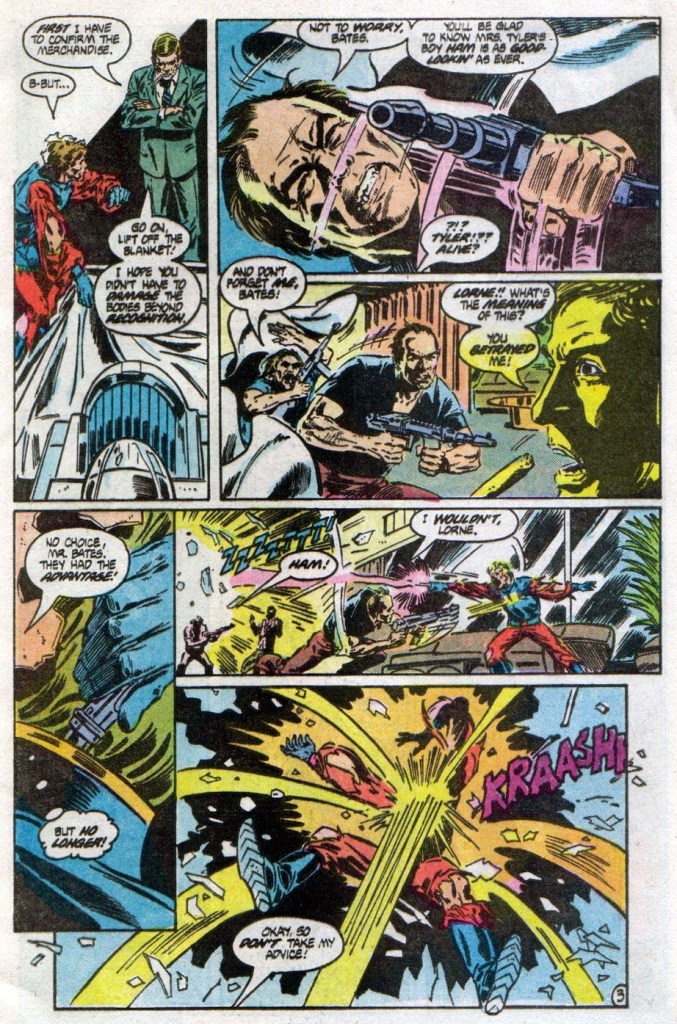
Picking up from the events of issue #34, the story begins in Washington, DC with Dana freeing herself only to find out that Alchemax’s CEO Tyler Stone was down suffering from a gun shot and losing blood. Minutes later, emergency personnel take Stone’s body for immediate treatment.
Meanwhile, Spider-Man 2099 (Miguel O’Hara) encounters the SHIELD flyboys in New York. After almost getting into trouble together, Spidey gets informed that US President Doom 2099 ordered them to leave him alone for a period of seventy-two hours while he considers a cabinet offer. Back in Washington, Dana gets interrogated by one of the authorities. President Doom enters the scene telling Dana that she will join Tyler Stone immediately in the medical center.
Andrew Wildman’s take on Spider-Man 2099 and the future was really nice to look at.
In New York, two guys sitting on the sidewalk witness a moving black liquid coming out of the sewer. The thing turns out to be a living symbiote (or alien costume) forming into a human-like shape – Venom 2099!
Quality
As with other comic books of this particular series, the writing by Peter David is pretty deep and engaging. The usual balance between dramatization, character development, plotting and spectacle is here once again but with a slight touch of horror in relation to the introduction of Venom of 2099. Speaking of dramatization, the portrayal of Venom 2099 as a vicious villain is similar to the 20th century Venom (Eddie Brock) but with a very powerful obsession to kill Miguel O’Hara and Tyler Stone.
Here’s an excerpt from the dialogue of Venom of 2099: Miguel O’Hara…and Tyler Stone…together again. We…I get to kill you…at the same time…how awfully…awfully…considerate. To show my appreciation…I’ll kill you slowly.
What makes this comic book unique is the artwork by Andrew Wildman who temporarily replaced regular illustrator Rick Leonardi. For comparison, I find Wildman’s art style a welcome thing in this comic book mainly because he draws with a lot more detail per panel and per page than Leonardi ever could. Instead of seeing the usual sketch-like art style of Leonardi, Wildman’s style is livelier and more expressive to look at. I also enjoyed Wildman’s visual take on Spider-Man 2099/Miguel O’Hara, Lyla, Tyle Stone, and the other established characters. Their facial expressions are also livelier to see.
Venom 2099 appears! Take note of the “liquid” at the edges of the page.
More on visuals, Wildman’s take on Venom 2099 is unforgettable. Like 20th century Venom, he has a dark suit, elongated jaw with rows of sharp teeth and an elongated tongue but with green acid dripping all the time. There are also those tentacles-like things that stretch from his body until the arms. Also his white-colored mask with large eyes make him look horrific.
Conclusion
Despite being shorter than the usual 22-pages, Spider-Man 2099 #35 is still a very engaging and fun old comic book to read. Its purpose was to build-up anticipation leading to the introduction of Venom 2099 was achieved nicely and the respective qualities of the writing and visuals are very good even by today’s standards. More on the presentation of Venom of 2099, it seems like Peter David took inspiration from movie director James Cameron on building-up tension and suspense before showing the villain. That’s a move I enjoyed in this comic book.
Overall, Spider-Man 2099 #35 is highly recommended. If you plan to acquire an existing and legitimate hard copy, be aware that the near-mint copy of it is over $100 for the newsstand version while the Rich Leonardi-drawn “Venom 2099 AD” cover version is priced at over $80 at MileHighComics.comas of this writing.
Thank you for reading. If you find this article engaging, please click the like button below and also please consider sharing this article to others. Also my fantasy book The World of Havenoris still available in paperback and e-book format. If you are looking for a copywriter to create content for your special project or business, check out my services and my portfolio. Feel free to contact me as well. Also please feel free to visit my Facebook page Author Carlo Carrasco and follow me at HavenorFantasy@twitter.com