Disclaimer: This is my original work with details sourced from reading the comic book and doing personal research. Anyone who wants to use this article, in part or in whole, needs to secure first my permission and agree to cite me as the source and author. Let it be known that any unauthorized use of this article will constrain the author to pursue the remedies under R.A. No. 8293, the Revised Penal Code, and/or all applicable legal actions under the laws of the Philippines.
Welcome back superhero enthusiasts, 1980s culture enthusiasts and comic book collectors! Today we go back to the mid-1980s to explore a part of the DC Comics shared universe through a tale of the iconic Superman.
Shortly after the end of the original multiverse of DC Comics, the publisher organized a massive reboot of its superhero franchises and universe. To reboot and modernize the iconic Superman, DC hired John Byrne and backed him up with a solid creative team. The result was the 6-part comic book mini-series The Man of Steel. Previously, I reviewed The Man of Steel #1 and #2 which collectively established Superman and Lois Lane as the iconic superhero and the definitive supporting character of the post-Crisis age respectively. Of course, the super villain opposite the post-Crisis Superman had to be established.
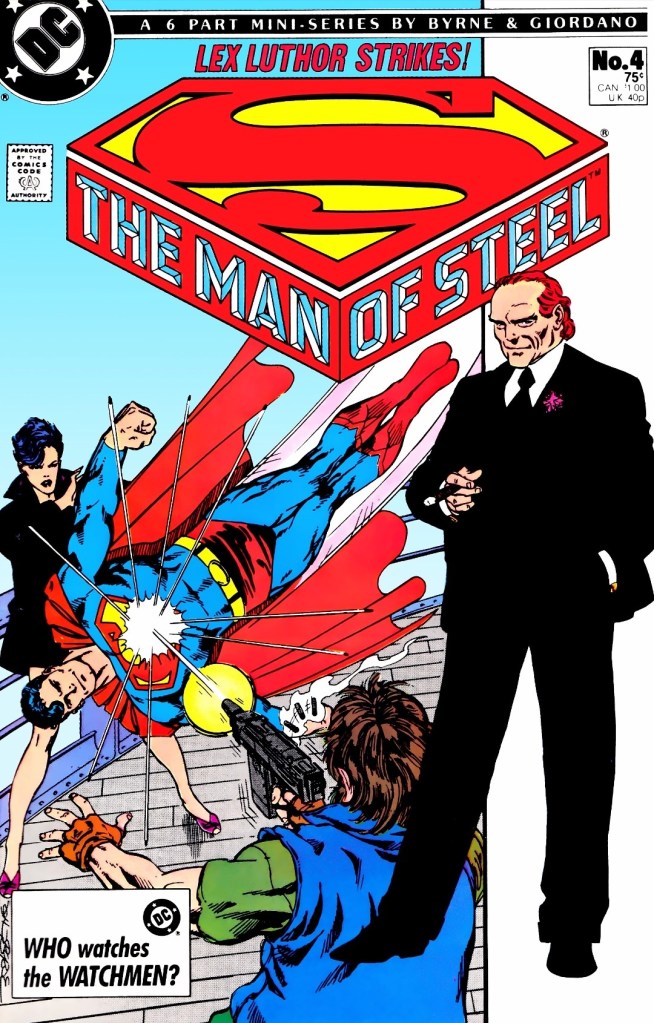
With those details laid down, here is a look back at The Man of Steel #4, published in 1986 by DC Comics with a story written and illustrated by John Byrne.
The cover.
Early story
The story begins when a daringly dressed Lois Lane arrives at the apartment of Clark Kent who has not even fully prepared himself for their trip to an extravagant gathering. It turns out, Lois’ ride picked her up earlier than expected which explains her early arrival.
After entering Clark’s apartment, she slowly begins to discover what he looked like in school and who his parents are. By this time, it has been almost eighteen months since Clark beat her to the first-ever Superman news story at the Daily Planet.
Afterwards, Lois and Clark took a surprising helicopter ride going to the luxurious ship of the powerful tycoon Lex Luthor…
Quality
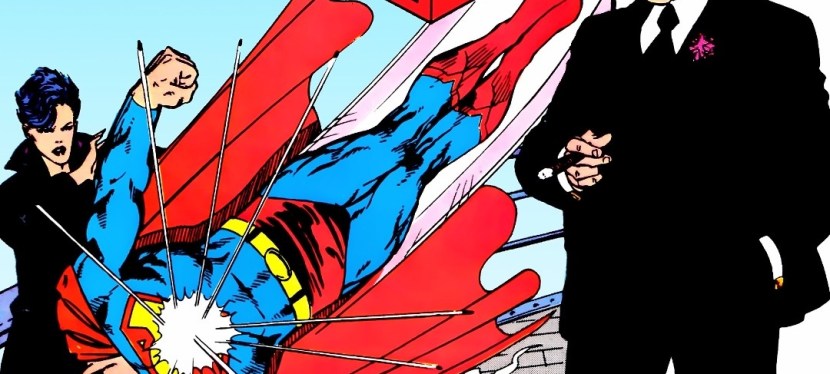
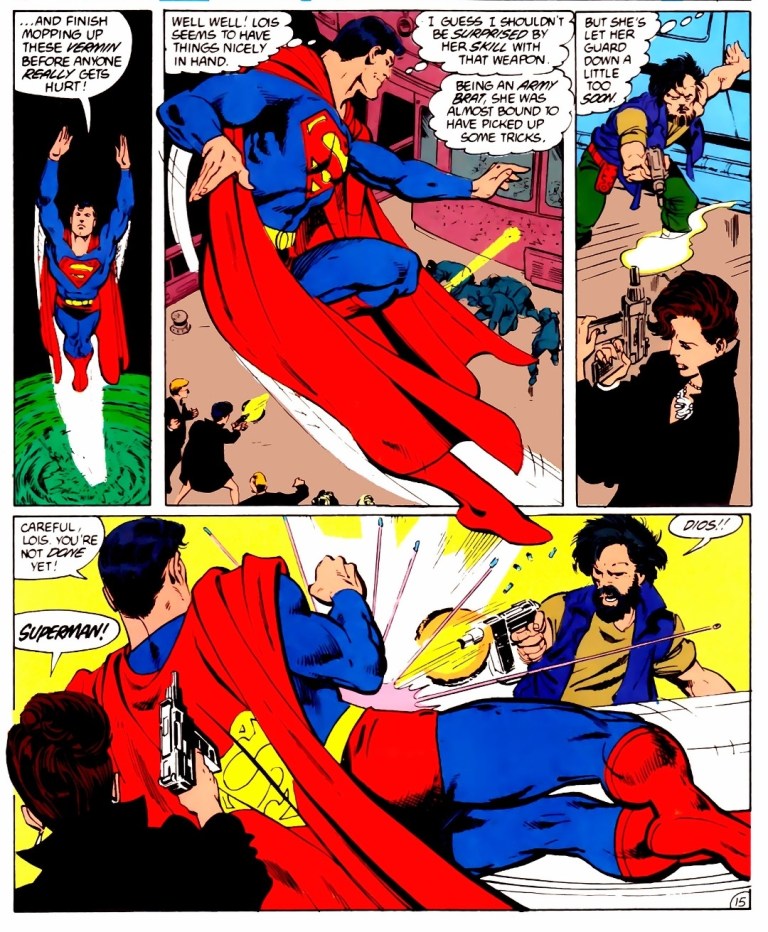
Superman intervenes to protect Lois Lane from one of the terrorists.
To make things clear, this issue is all about John Byrne presenting a new version of Superman’s definitive rival Lex Luthor with the 1980s in mind. Instead of a mad scientist, the post-Crisis Luthor is a billionaire whose corporation (Lexcorp) has an interest in virtually every business in Metropolis and his immense wealth makes him a very powerful figure. This new version of Luthor was clearly done to be more grounded with reality, specifically with regards to the rise of tycoons in America in the 1980s. In short, Luthor was the ruthless and powerful businessman before Michael Douglas even got to play Gordon Gekko in 1987’s Wall Street.
While the effort of making a really new version of Superman’s arch-rival is clear, Luthor here does not appear too menacing at first. The story and impact of Luthor’s evil really started to materialize as soon as the South American terrorists appeared, but not in a way that you might expect. As mentioned above, Luthor here is more grounded with reality and that means you won’t see him oppose Superman with science and technology. Instead, Luthor simply has wealth, the power and resources to go against the Man of Steel. The tycoon also knows that the American-born Kryptonian would not dare attack him as laws already exist.
Having read lots of Superman’s encounters with Luthor in the pre-Crisis era – particularly the 1970s up to the mid-1980s – it is clear to me that their first post-Crisis encounter turned out underwhelming and never dynamic. In fairness, I really enjoyed reading the 2nd encounter between Superman and Luthor as the words of the latter were filled with anger and tension. It should be noted that Byrne’s visual approach on showing the city and the people as Luthor’s dialogue went on was a great touch.
When it comes to the storytelling, it is quite simple which is not surprising because it was crafted to make way for post-Crisis Luthor to be introduced and dramatized. As for the character development, there is indeed progress with regards to the chemistry between Clark Kent and Lois Lane who are portrayed as friends living with a journalistic competition between them. It was also in this comic book where you will see Superman follow the law and the command of Metropolis’ highest official.
Speaking of law, you will notice what kind of impact Luthor has on others when he really does things his own way. This is something you should read in this comic book.
Conclusion
This is John Byrne’s version of Lex Luthor in the form of a powerful tycoon. A complete departure from the mad scientist Luthor of the pre-Crisis era of DC Comics.
While the first-ever conflict between Superman and Luthor in the post-Crisis age was indeed underwhelming, it was John Byrne’s in-depth writing and portrayal of events that made The Man of Steel #4 (1986) a worthy read. Don’t expect to see a lot of action here nor anything spectacular with Superman. Clearly, the tycoon Lex Luthor is the feature character of this tale and the start of his hatred towards Superman is really worth reading. In retrospect, Luthor’s ruthlessness and evil got stronger and clearer after the end of this comic book (for reference, click here).
Overall, The Man of Steel #4 (1986) is recommended.
Disclaimer: This is my original work with details sourced from reading the comic book and doing personal research. Anyone who wants to use this article, in part or in whole, needs to secure first my permission and agree to cite me as the source and author. Let it be known that any unauthorized use of this article will constrain the author to pursue the remedies under R.A. No. 8293, the Revised Penal Code, and/or all applicable legal actions under the laws of the Philippines.
Welcome back superhero enthusiasts, 1980s pop culture enthusiasts and comic book collectors! Today we go back to the year 1987 and explore a notable chapter of the post-Crisis DC Comics universe through the iconic Superman.
To put things in perspective, DC Comics rebooted its entire shared universe in 1986 after the conclusion of Crisis on Infinite Earths. They published the 6-part The Man of Steel mini-series to reboot the iconic Superman and modernize him with the creative leadership of John Byrne. By the time the mini-series ended, the new background stories, the supporting characters and creative foundation of the post-Crisis Superman were established. That being said, a brand new Superman monthly series led by Byrne was inevitable.
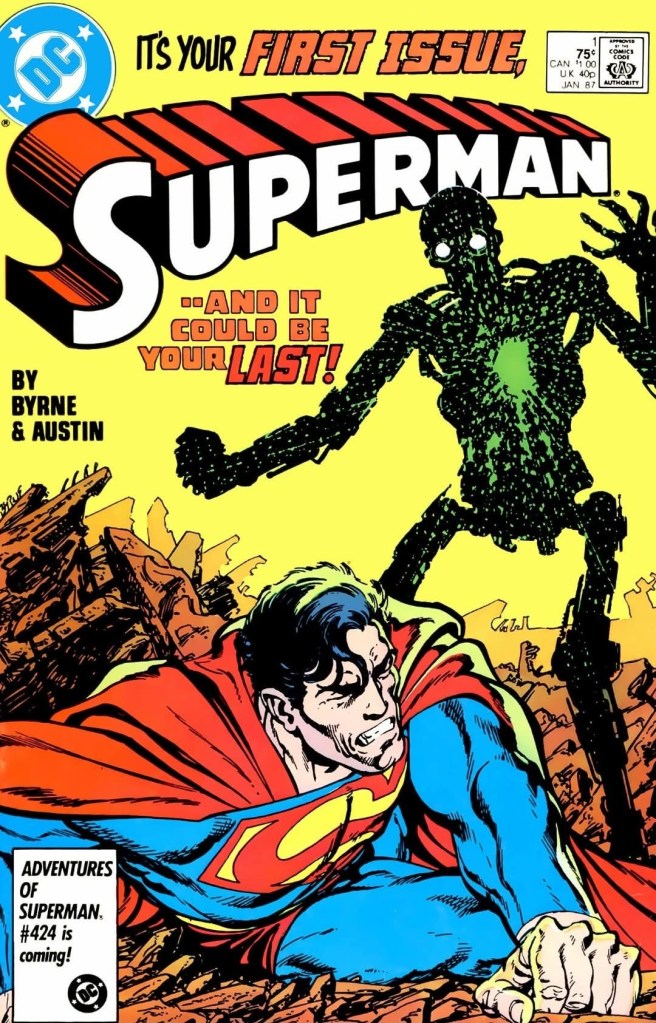
With those details laid down, here is a look back at Superman #1, published in 1987 by DC Comics with a story written and drawn by John Byrne.
The cover.
Early story
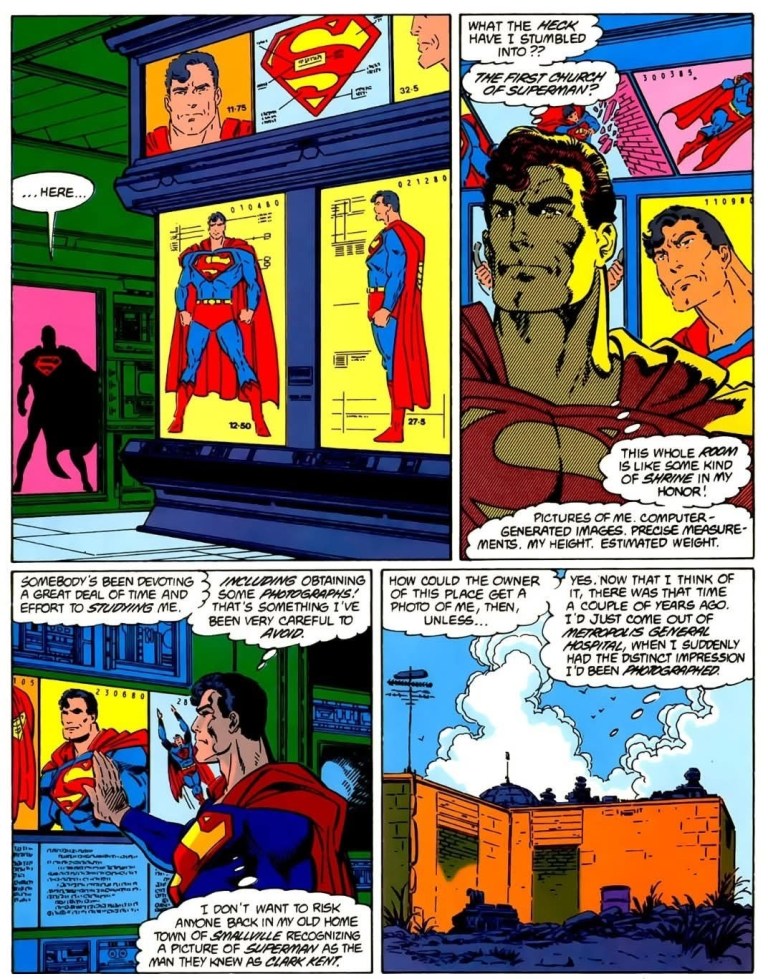
The story begins with Superman smashing his way through into a secretive, high-tech facility. Noticing so much technology, he begins to wonder why would anyone abandon such a facility. As he slowly makes his way inside, he finds several images of him displayed confirming that someone has been devoting a great deal of time and effort to research him. This makes him concerned that someone in his old home town of Smallville could recognize a picture of Superman as their fellow resident Clark Kent.
As he keeps searching, he finds the body of a dead scientist whose neck was broken. He also notices the corpse’s fingerprints are the same as those found on the truck outside of the facility. The truck itself was involved in the theft of his Kryptonian rocket. After finding more nasty evidence, Superman digs deep down underneath the facility then lifts a huge part of the ground with the said structure on top. He lifts up everything and brought them all into space free from the reach of people below.
Superman then flies off to Metropolis to change into Clark Kent to meet with Lois Lane at the city park…
Quality
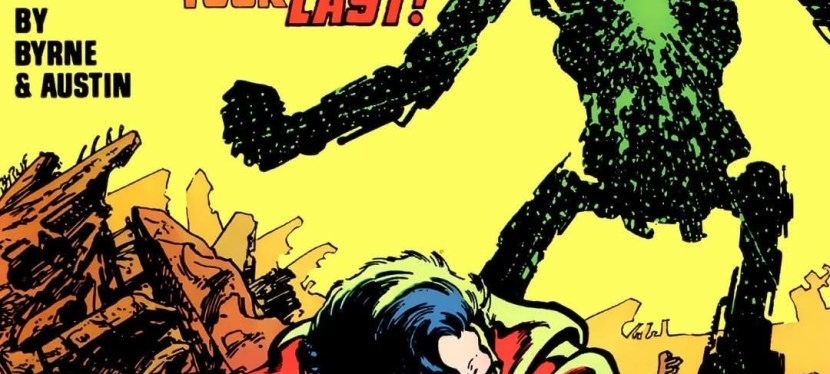
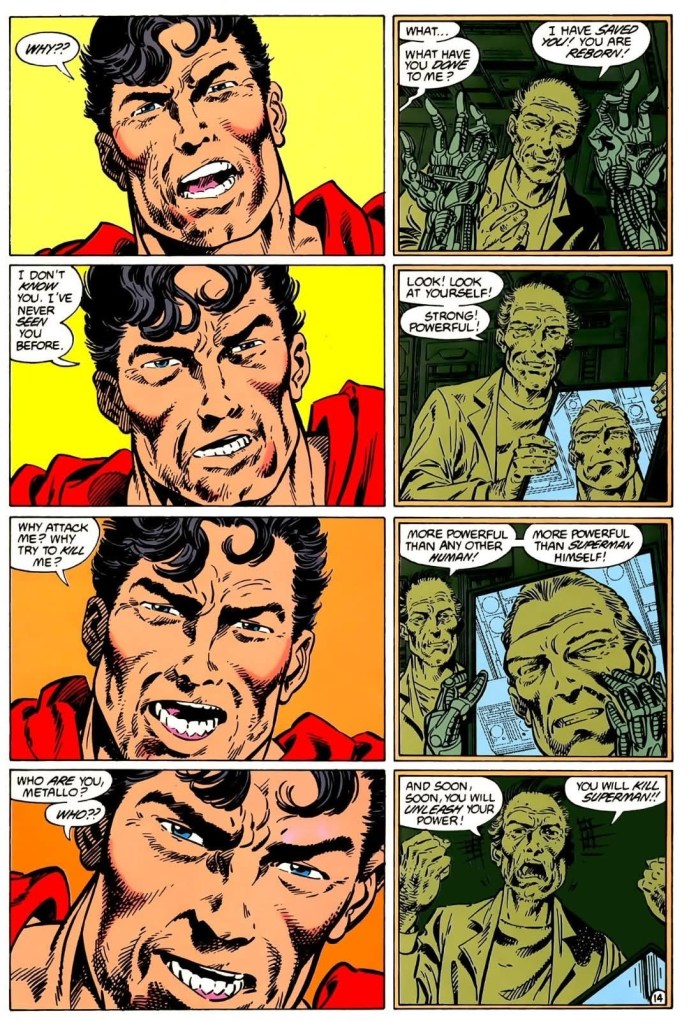
I like the way John Byrne told parallel narratives with Superman in the present on the left, and flashbacks of Metallo on the right.
To begin with, this tale written by John Byrne is another inspire piece of work published at a time when the post-Crisis shared universe of DC Comics was still new and expanding. Byrne really defined Superman’s place in the shared universe by modernizing it with the 1980s in mind and he came up with a story introducing the post-Crisis version of Metallo while coming up with a sub-plot of a mad scientist who was not only obsessed with Superman but also was involved with the said super villain.
The plot is clearly well-structured which starts with Superman doing believable detective work of his own which led to the discovery of the mad scientist whose intense research pose a danger to the Man of Steel. Having dual identities and social responsibilities to live up to, Superman also takes the time to adjust to his normal life as Clark Kent at a time when he has to socialize with his Daily Planet colleague Lois Lane. Without spoiling the plot, I can say that you will see the iconic superhero ranging from being mighty to becoming vulnerable, weakened and suffering tremendous pain. How Byrne handled the transition of Superman is excellent.
The sub-plot of the mad scientist obsessing over discoveries about Superman is short and yet highly significant. For one thing, Superman himself has been very careful on keeping his dual identities secret and yet someone managed to secretly photograph him and come up with a lot of information – including the destroyed world of Krypton and the Kryptonian legacy of the hero – that could expose his deepest secrets and ruin his life entirely. The mad scientist’s obsession has strong sci-fi elements related to UFOs and aliens from deep space.
For the Man of Steel, this is too dangerous and also too personal to be left behind untouched. This aspect of the story makes this old tale more relevant in today’s world of drones with cameras, CCTV systems, hacking and the potential of users (or artificial intelligence) who could collect information on people without their consent.
The post-Crisis Metallo looks inspired by the Terminator and appears in human form. He goes by the name John Corben who previously got fatally injured in a car crash and subsequently was taken by the mad scientist (who transplanted the man’s brain into a robotic body). It should be noted that the said scientist also has an obsession about Kryptonians which led to his plan to send a chosen warrior to go against Superman supposedly to prevent Earth from getting conquered. How Metallo and his physical fight with the Man of Steel is a must-read.
Conclusion
Imagine yourself discovering a secret room filled with information and pieces of evidence and visual references about you. This should resonate with people whose privacy got violated. Also try imagining people inside the offices of tech giants with collected information and images about you.
Superman #1 (1987) is still a great read. It has a complex approach on portraying the battle between good and evil without losing focus on the storytelling and the expansion of Superman’s post-Crisis lore. Its sub-plot of the mad scientist and his obsession on Superman will resonate with people who feel vulnerable over the loss of their private information in today’s world of social media, abusive technology giants and artificial intelligence-driven surveillance systems. There is also a lot of superhero action for readers to enjoy, and the spectacle is never silly nor outlandish to look at. Oh yes, seeing Superman in a vulnerable state and getting actually hurt is believable to see.
Overall, Superman #1 (1987) is highly recommended!
The City Government of Muntinlupa recently won a prestigious award (Gawad Edukampyon) in the field of education among highly urbanized cities (HUC), according to a Manila Bulletin news report. For the newcomers reading this, Gawad Edukampyon is a nationwide program launched by REX Education in collaboration with the Department of Education, Department of the Interior, and Local Government and Early Childhood Care and Development Council.
To put things in perspective, posted below is an excerpt from the Manila Bulletin news report. Some parts in boldface…
The Muntinlupa City government won the Gawad Edukampyon award in the highly urbanized city category for its efforts in Early Childhood Care and Development (ECCD).
Muntinlupa won the award for its Supplementary Programs on Early Stimulation and Promotion of Proper Health and Nutrition. This involved a wide range of initiatives, including feeding program, health services, sports activities, educational support, and social services for families.
The city also caters to the needs of parents through the Family Support Program, Tulong Panghanapbuhay Sa Ating Disadvantaged / Displaced Workers (TUPAD), and Parent Congress.
“Patuloy ang City Government of Muntinlupa sa pagsulong ng mahusay na childhood care services para sa mga kabataang Muntinlupeño. Gusto natin lahat ng mga bata sa Muntinlupa ay malusog, nakakapag-aral at may mabuting asal (The City Government of Muntinlupa continues to advocate great childcare services for our young Muntinlupeño. We want all children in Muntinlupa to be healthy, go to school and have good manners),” said Mayor Ruffy Biazon.
He added, “Maraming salamat sa ECED Muntinlupa, led by Ms. Jenny Mercado, sa pangunguna sa ating mga programa for childhood development (Thank you to ECED Muntinlupa, led by Ms. Jenny Mercado, for leading our programs for childhood development).”
Let me end this post by asking you readers: What is your reaction to this recent development? If you are a resident of Muntinlupa City, are you happy with the Gawad Edukampyon award the city government won?
For more South Metro Manila community news and developments, come back here soon. Also say NO to fake news, NO to irresponsible journalism, NO to misinformation, NO to plagiarists, NO to reckless publishers and NO to sinister propaganda when it comes to news and developments. For South Metro Manila community developments, member engagements, commerce and other relevant updates, join the growing South Metro Manila Facebook group at https://www.facebook.com/groups/342183059992673
In recent times, the Bureau of Immigration (BI) announced that it apprehended a wanted Chinese national at the Ninoy Aquino International Airport (NAIA), according to a Philippine News Agency (PNA) news article. The suspect is wanted for involvement in cyber fraud.
To put things in perspective, posted below is an excerpt from the PNA news article. Some parts in boldface…
A Chinese passenger who is on the wanted list of foreigners for involvement in cyber fraud was recently arrested at the Ninoy Aquino International Airport (NAIA) in Pasay City, the Bureau of Immigration (BI) reported on Wednesday.
Commissioner Norman Tansingco identified the passenger as 28-year-old Qin Xingye, who was intercepted at the NAIA Terminal 3 last April 28 before he could board an Air Asia flight to Hong Kong.
The foreigner was reportedly arrested after his name prompted a hit in the bureau’s derogatory check after presenting himself for clearance at the immigration departure counter.
“He was referred by the immigration officer to his supervisors who verified his identity and later confirmed that the passenger and the person in the bureau’s derogatory list are one and the same,” Tansingco said in a statement.
The derogatory hit showed that he was placed on the immigration blacklist for being an undesirable alien and for overstaying and illegally working in the country.
The BI’s Border Control and Intelligence Unit (BCIU) reported that the passenger was previously charged for engaging in cyber fraud activities and for working without a permit.
Let me end this piece by asking you readers: What is your reaction to this recent development? Do you think the Bureau of Immigration (BI) is doing a good job apprehending wanted foreigners?
Recently in the City of Las Piñas, a major clean-up drive attended by Department of the Interior and Local Government (DILG) Secretary Benhur Abalos took place within Barangay BF International-CAA, the City Government announced through social media.
To put things in perspective, posted below is an excerpt from the City Government’s social media post of April 30, 2024. Some parts in boldface…
Las Piñas City held the KALINISAN sa Bagong Pilipinas Clean-Up Drive at the Arratelis Open Court, Brgy. CAA/BF International on Saturday, April 27th. The event was spearheaded by DILG Secretary Atty. Benhur Abalos Jr. and attended by city officials, including Vice Mayor April Aguilar.
The clean-up drive forms part of the broader KALINISAN or “Kalinga at Inisyatiba Para sa Malinis na Bayan” program, aimed at enhancing environmental health and safety through community efforts.
The initiative focuses on integrating all segments of society to take part in environmental preservation through the traditional Filipino value of ‘bayanihan.’, with the goal of fostering public awareness about environmental care and motivating local government units to invest in solid waste management and sustainable ecological practices.
The day’s activities included a series of community cleaning efforts, such as trash collection and the beautification of public spaces and a planting activity at the urban garden.
By focusing on community engagement and responsibility towards the environment, the KALINISAN program seeks to instill a sense of duty in maintaining cleanliness and ecological balance.
Let me end this piece by asking you readers: If you are a resident of Las Piñas City, what is your reaction to this development? Do you wish to see more major clean-up activities held in other parts of the city? Do you think the presence of the DILG adds credibility to such activities in the city?
For more South Metro Manila community news and developments, come back here soon. Also say NO to fake news, NO to irresponsible journalism, NO to misinformation, NO to plagiarists, NO to reckless publishers and NO to sinister propaganda when it comes to news and developments. For South Metro Manila community developments, member engagements, commerce and other relevant updates, join the growing South Metro Manila Facebook group at https://www.facebook.com/groups/342183059992673
If you are a resident of Muntinlupa City who must have noticed members of your local community being able to find jobs within the city, it is most likely because of the online job portal launched recently by the City Government as reported by the Manila Bulletin. The job portal can be accessed at https://jobportal.muntinlupacitygov.com/
To put things in perspective, posted below is an excerpt from the Manila Bulletin news report. Some parts in boldface…
The Muntinlupa City government launched an online portal to connect employers and job seekers.
Mayor Ruffy Biazon led the launch of the 1Munti Job Portal, a collaboration between the city government and partner private institutions led by the Lingkod Muntinlupa Foundation and 1Munti Party.
“The 1Munti Job Portal is an innovation that helps break down barriers of unemployment. For companies and employers, as part of our City’s mission to be a business-friendly hub, this Portal is free, and you can gain exposure to a diverse range of candidates tailored to your company’s specific needs and requirements,” said Biazon.
For job seekers, they need to visit the website, create an account, and search for employment opportunities, the mayor said.
Biazon also revealed the upcoming Dress for Success Program which aims to equip job seekers through a series of capacity-building training on the basics of job-hunting and employment, writing good resume, and presenting oneself well in an interview.
Once they finish the short modules, they can claim their set of business attires that will hopefully help boost their confidence in their job seeking journey.
Biazon also said the portal is still part of the city government’s effort to attain “Smart City” status, describing 1Munti Job Portal as “created at the nexus of leadership and technological innovation” to solve human issues.
Let me end this post by asking you readers: What is your reaction to this recent development? If you are a resident of Muntinlupa City, do you know anyone who applied for a local job through the 1Munti Job Portal?Have you visited the job portal already?
For more South Metro Manila community news and developments, come back here soon. Also say NO to fake news, NO to irresponsible journalism, NO to misinformation, NO to plagiarists, NO to reckless publishers and NO to sinister propaganda when it comes to news and developments. For South Metro Manila community developments, member engagements, commerce and other relevant updates, join the growing South Metro Manila Facebook group at https://www.facebook.com/groups/342183059992673
To put things in perspective, posted below is the excerpt from the PNA sports news report. Some parts in boldface…
Australian Luke Bate came up with an impressive performance to win the men’s elite title in the 2024 Subic Bay International Triathlon (SuBIT) here on Saturday.
The 25-year-old from Perth submitted the best aggregate timeof 54 minutes and 25 seconds in the race held over 750m swim, 20km bike, and 5km run at the Subic Bay Metropolitan Authority (SBMA) Freeport Boardwalk.
Compatriot Christopher Deegan posted 54:32 for second place while Japan’s Amu Omuro (54:38) was third.
Australians Rory Thornhill (54:48) and Jack Chrome (55:00) came fourth and fifth, respectively, followed by Japanese Satoshi Iwamoto (55:13), Hokuto Obara, (55:28) and Kenshin Mori (55:34); Korean Kim Jusin (55:41); and Australian Samuel Mileham (55:47).
“I’ve been racing for eight years so I really wanted to win,” said the 6-foot-1 Bate, who resides in Wollongong City.
“It’s my first time in the Philippines, I’m glad I won,” said Bate, currently No. 8 in Australia. “I hope I can come back next year. It depends on my schedule.”
Cebuano Andrew Kim Remolino, who won two silvers in triathlon and one silver in duathlon at the South East Asian (SEA) Games, was the best finisher among the locals. He clocked 56:09 for 13th place, while province mate Matthew Justine Hermosa (56:38) was 16th.
Joshua Ramos of Baguio Benguet Triathlon (56:53) was 19th, and Filipino-Spanish Fernando Jose Casares, a two-time SEAG gold winner, was 23rd with a time of 57:44.
Meanwhile, South Korean Jeong Hye Rimregistered 1:01:22 to secure the women’s title in the event presented by NTT and Asian Triathlon and organized by Triathlon Philippines in cooperation with SBMA.
Iceland’s Edda Hannesdottir (1:01:32) took the silver medal while Australia’s Chloe Bateup (1:01:47) settled for the bronze.
Indonesia’s Martina Ayu Pratiwi (1:02:11) was fourth followed by Japan’s Manami Hayashi (1:02:15), Filipino Raven Faith Alcoseba (1:02:20), Guam’s Manami Iijima (1:02:31), Japan’s Himeka Sato (1:02:38), and South Korea’s Kim Gyuri (1:03:19) and Kim Ji Yeon (1:03:50).
“It’s too hot, (but) except for the weather, I’m okay,” the 25-year-old Jeong said through an interpreter.
Jeong, who hails from Daejon City, was only hoping for a podium finish after placing 20th last year. She first joined in 2018.
“I did not expect to win. It’s been six years since I first joined the tournament, so I am very happy that I won the gold medal,” said Jeong, who pocketed the bronze medal in the junior division of the 2016 ITU World Triathlon Grand Final in Cozumel, Mexico.
Jeong debuted at the 2014 Incheon Asian Games where she won the silver medal in the mixed relay. At the 2022 Hangzhou Asiad, she was seventh in the individual event.
In the junior elite category, the top three finishers in the men’s division were Dayshaun Karl Ramos (1:02:05), Juan Miguel Tayag (1:02:40), and Darell Johnson (1:03:22).
The winners in the women’s division were Naomi Felicity Aytin (1:18:42), Edellaine Mae Diggs (1:18:36), and Maria Celinda Raagas (1:19:05).
To see the official results, click here for the Men’s Elite and click here for the Women’s Elite.
Recently the International Monetary Fund (IMF) raised its 2024 growth forecast for the Philippines to 6.2% which is within national government’s growth range for this year, according to a Manila Bulletin news report.
To put things in perspective, posted below is an excerpt from the Manila Bulletin news article. Some parts in boldface…
The International Monetary Fund (IMF) has raised its Philippine growth forecast to 6.2 percent for 2024 from its previous estimate of six percent announced last January, citing carryover strength from the last quarter of 2023.
The IMF also expects the country’s gross domestic product (GDP) to grow by 6.2 percent in 2025, higher than its January forecast of 6.1 percent.
Based on the April IMF World Economic Outlook (WEO) report released Tuesday, April 16 (Washington time), the IMF also projects Philippine inflation will fall to below four percent this year and in 2025. Its projected year-end inflation is 3.6 percent for 2024 and three percent for 2025 which is within the government target of two percent to four percent.
Meanwhile, the 6.2 percent IMF GDP outlook for 2024 is within the Marcos administration’s growth target of six percent to seven percent but the 2025 projection is below the government target of 6.5 percent to 7.5 percent.
IMF’s Resident Representative in the Philippines Ragnar Gudmundsson said in an email that real GDP growth for 2024 was revised slightly to 6.2 percent from six percent in the January WEO because of “carryover from a better-than-expected outturn in the last quarter of 2023.” The local economy grew by 5.6 percent in the fourth quarter 2023, bringing the full-year GDP to 5.6 percent.
As to the 2025 growth outlook, Gudmundsson said the 6.2 percent GDP expansion next year will be “supported by an acceleration in domestic demand and investment.”
“Over the medium term, structural reforms to close infrastructure and education gaps, attract greater FDI (foreign direct investments), and harness benefits from the digital economy should help realize a growth potential of about 6-6.5 percent. These reforms should be complemented by strengthening existing social protection schemes and addressing climate change through a more integrated strategy that includes a carbon pricing scheme,” he said.
Gudmundsson said the 6.2 percent GDP forecast for the Philippines “compares with an average growth rate for ASEAN countries in 2024 of 4.6 percent.”
Based on the latest WEO, the IMF forecast the Asian regional economy will grow by 4.5 percent this year and 4.3 percent in 2025.
Let me end this piece by asking you readers: What is your reaction to this recent development? Do you think the Philippine economy has enough momentum to surpass the 6.2% growth forecast of the IMF for 2024? Do you think inflation in the country will slow down more than what the IMF predicts?
Recently the Philippine Statistics Authority (PSA) confirmed that the unemployment rate of the nation fell down to 3.5% in February 2024, according to a Philippine News Agency (PNA) news article.
To put things in perspective, posted below is an excerpt from the PNA news article. Some parts in boldface…
Unemployment rate fell to 3.5 percent in February this year from 4.5 percent in January, the Philippine Statistics Authority (PSA) reported on Thursday.
In a briefing, National Statistician Dennis Mapa said based on the time series, the unemployment rate during the month was the second lowest on record since the 3.1 percent in December 2023. Unemployment rate in February last year was 4.8 percent.
Mapa said the number of unemployed Filipinos went down to 1.80 million from 2.47 million and 2.15 million unemployed persons in February 2023 and January 2024.
The Labor Force Participation Rate (LFPR), meanwhile, was at 64.8 percent or about 50.75 million Filipinos aged 15 years and above who were either employed or unemployed.
This is lower than the 66.6 percent LFPR seen in February last year with young people (-669,000) and women (-404,000) withdrawing from the labor force.
“The needs of vulnerable groups, including women, youth, older people, and those with disabilities, remain our priority to encourage workforce participation. We will improve access to quality childcare, finance, and entrepreneurship opportunities to support women’s entry and retention in the labor market,” National Economic and Development Authority (NEDA) Secretary Arsenio Balisacan said in a separate statement.
Balisacan said the government will revisit the existing policy governing alternative work modes, such as the Telecommuting Act, and adapt it to the evolving work landscape to address the growing preference for remote work.
“The government will explore enhancing the potential of part-time work to help promote lifelong learning. A framework for part-time work and similar set-ups can allow workers to retool or upskill without leaving the workforce,” Balisacan said.
The country’s employment rate, meanwhile, went up to 96.5 percent in February from 95.5 percent in January and 95.2 percent in February this year.
The number of employed persons was registered at 48.95 million, higher than the recorded number of employed persons in February 2023 at 48.80 million and in January 2024 at 45.94 million.
Major industries with the largest increase in employment include construction (470,000), transportation and storage (444,000), administrative and support service activities (344,000), manufacturing (313,000), and accommodation and food service activities (210,000).
Underemployed persons – or those who expressed the desire to have additional hours of work in their current job or to have an additional job or to have a new job with longer hours of work – reached 6.08 million, down from last year’s 6.29 million.
The NEDA said the Marcos administration will continue to prioritize people-centered policies and attract job-creating investments to support the continued improvement of the Philippine labor market and enable Filipinos to earn higher wages from better jobs.
Let me end this piece by asking you readers: What is your reaction to this recent development? Do you think the nation’s economy and employers still have enough momentum to move forward and create more new jobs over the next twelve months?
Welcome back readers, fellow geeks and electronic gaming fans!
In this edition of the Retro Gaming Ads Blast (RGAB) series, we will examine print ads of Sega from the 1990s which was a notable period of time when they went from being a prominent video game company into a desperate, struggling entity by the end of the decade. All the Sega ads in this edition are promotions of their own video games that were exclusive to their consoles during the 1990s.
For the newcomers reading this, Retro Gaming Ads Blast (RGAB) looks back at the many print ads of games (console, arcade, computer and handheld) that were published in comic books, magazines, flyers and newspapers long before smartphones, social media, the worldwide web and streaming became popular. To put things in perspective, people back in the 1980s and 1990s were more trusting of print media for information and images about electronic games and related hardware.
With those details laid down, here is the newest batch of retro gaming print ads for you to see and enjoy…
1. Phantasy Star IV print ad
This was the last single-player Phantasy Star game released. There is no sign of Sega revisiting the franchise for another single-player experience.
Long before the emergence of online console gaming that involved a high number of players, Sega released Phantasy Star IV for the Genesis console in America in 1994 which was praised by gamers and critics. This one also turned out to be the last single-player role-playing game (RPG) of the Phantasy Star series as Sega eventually turned it into a series of online RPGs since the year 2000.
This print ad is significant because a lot of gamers today are not aware that Phantasy Star started as a series of single-player RPGs the same year Final Fantasy debuted in Japan. Anyone interested to play Phantasy Star IV on a modern console should buy the Sega Genesis Classics collection.
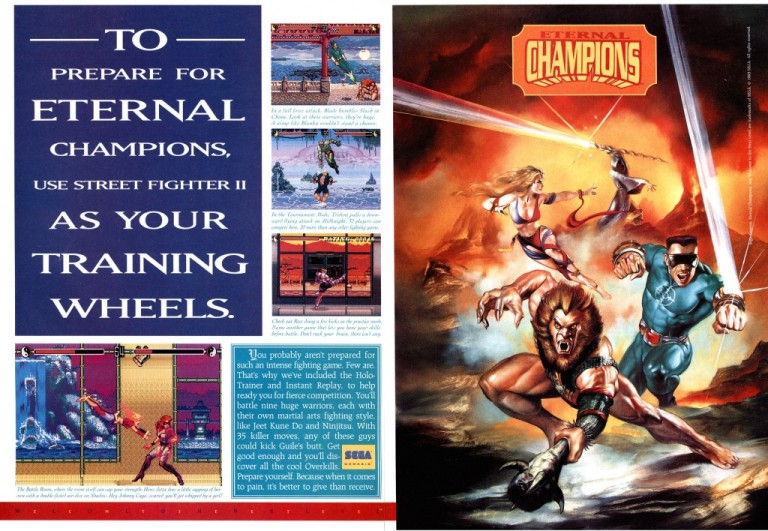
2. Eternal Champions print ad
This 2-page print ad appeared in many comic books and some magazines that I read long ago.
Back in the 1990s, the fighting game genre became wildly popular with gamers at the arcades and on consoles at home. Capcom literally sparked a wild fire with the Street Fighter II game and its upgraded editions, and other companies went on to make their own 2D fighting games to cash in. Sega was one of them and they released their own 2D fighting game Eternal Champions for the Sega Genesis console.
Unsurprisingly, the game was marketed aggressively and this 2-page print ad really stood out as it had the great looking painted art on the right, screenshots and details of the game, and most notably made a sarcastic reference to Street Fighter II. Eternal Champions sold enough copies, it led to the release of the sequel Eternal Champions: Challenge from the Dark Side and two spin-off games. I can only guess that referencing Street Fighter II was helpful in achieving commercial success.
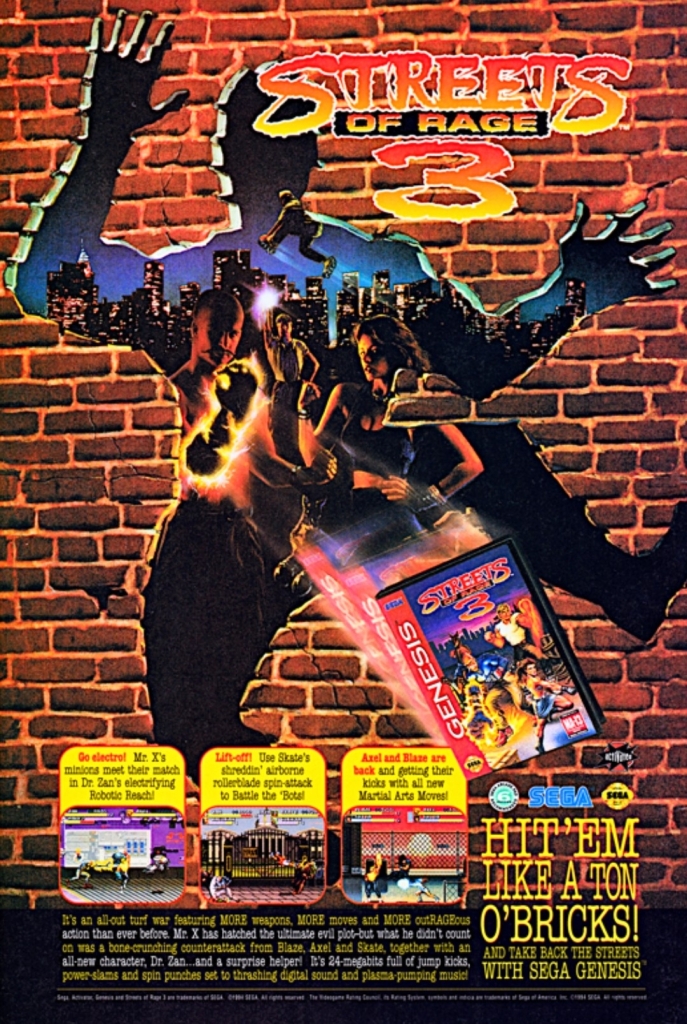
3. Streets of Rage 3 print ad
This ad caught my attention easily when I saw it in comic books I read.
Streets of Rage (Japanese title: Bare Knuckle) was one of the most defining game franchises Sega came up with and it started on the Sega Genesis console. It was a series of side-scrolling, 2D beat-them-up games that ensured action and excitement for gamers. As the first two games were critically and commercially successful, Sega was confident in aggressively marketing Streets of Rage 3 and the print ad seen had a very attention-grabbing artwork.
The artistic style emphasized power and intensity as it shows a damaged wall with the shape of a human body (symbolizing that someone was thrown through it) and then there were images of people on the other side. The game went on to attract mostly positive reviews although it paled in comparison to its predecessors in terms of sales.
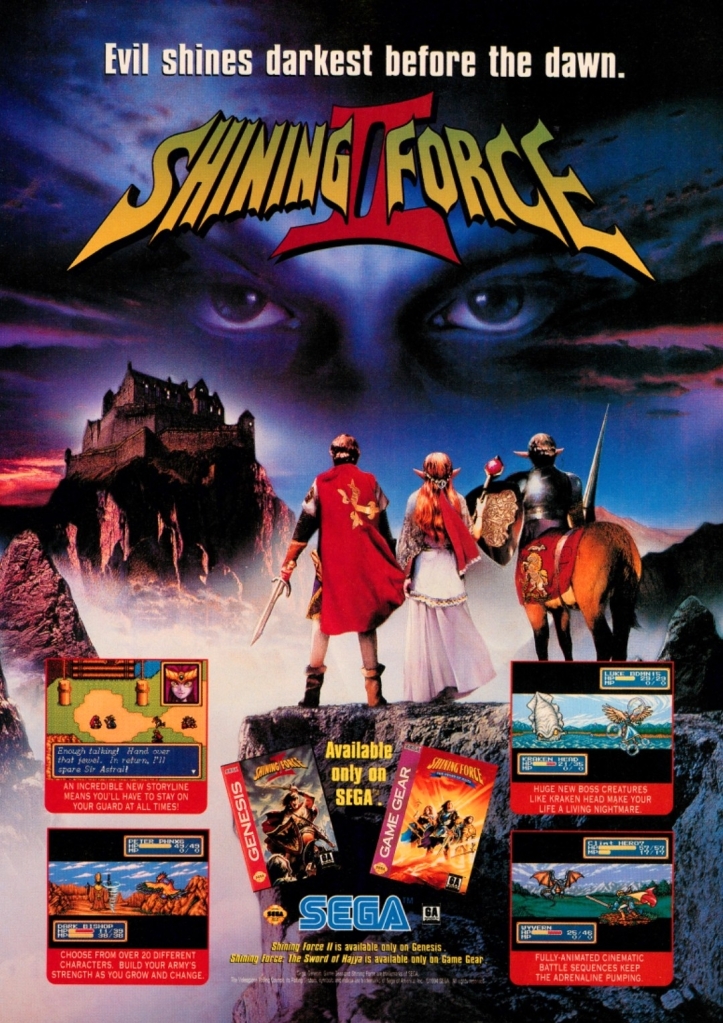
4. Shining Force II print ad
The first time I saw this ad, it made me interested to buy a Sega Genesis console to play it.
As Sega was so prolific with making and releasing games across different genres, they had their own tactical role-playing game series with Shining Force and the first game released on the Sega Genesis was a critical and commercial success. That being said, the company was confident with releasing Shining Force II on the same console more than a year later achieving critical and commercial success.
The North American print ad of the game had a visual presentation that closely captured the foreground-background style (characters facing the distance) used in-game, and the advertising team use photographic imagery to achieve a fantasy look. Very cleverly, Sega inserted the Sega Game Gear title Shining Force Shining Force: The Sword of Hajya into the ad. This print ad made me interested in acquiring a Sega Genesis for Shining Force II.
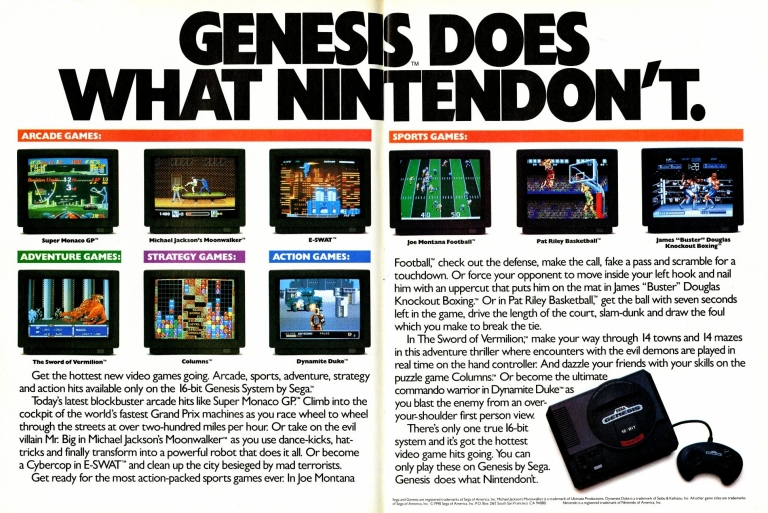
5. Genesis does what Nintendon’t print ad
With the famous line heavily emphasized, this print ad showed how bullish Sega really was in competing with Nintendo.
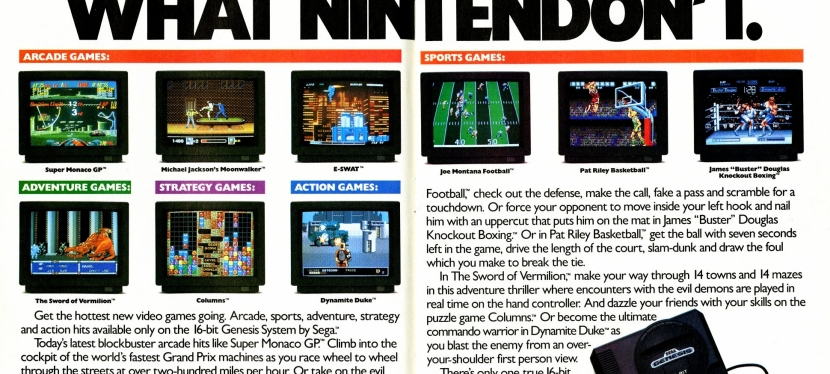
Now this print ad of Sega’s has the most definitive and best-known advertising line in the so-called 16-bit console generation: Genesis does what Nintendon’t. This was Sega’s aggressive marketing push to convince gamers to buy the Genesis console to play games and experience thrills of fun that they would not find on a Nintendo console at the time. Genesis was launched in America in 1989 with “16-bit” emphasized a lot, and the technological rival Super Nintendo Entertainment System (SNES) was released in the same market more than two years later.
The 2-year advantage helped Sega establish the Genesis as the next-gen machine for gaming at home and there were years in the 1990s when Sega’s console outsold Nintendo’s in America during the so-called 16-bit war. The Genesis also had lots of exclusive games plus strong software support from third-parties. While the SNES would eventually outsell the Genesis in other parts of the world, it was in America where Sega proved to be very competitive and successful.
6. Knuckles’ Chaotix print ad
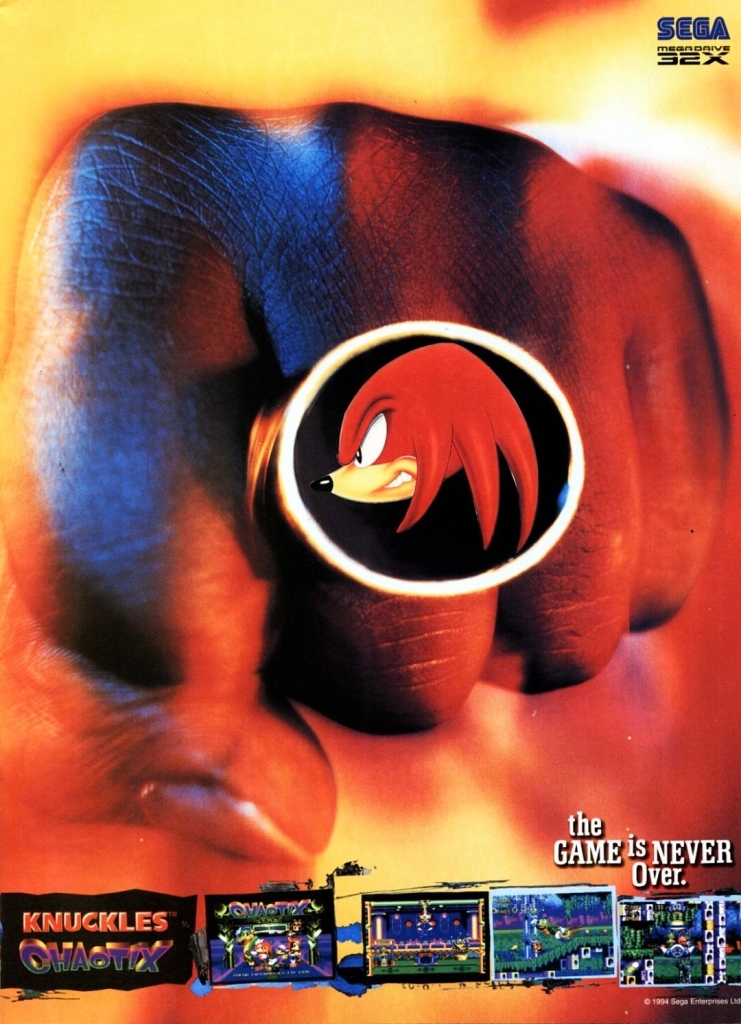
Sega was aggressive with marketing this game for the 32X.
In late 1994, Sega released in America and in Japan the 32X which was an add-on device for the Sega Genesis designed enhance its power while serving as a transition (a warm-up) into the so-called 32-bit era of console gaming. The 32X was the result of corporate decisions involving the American and Japanese executives of the company.
To keep 32X customers happy and boost hardware sales, Sega adjusted the development of Knuckles’ Chaotix (a Sonic spin-off) from being a Sonic project 32-bit console Sega Saturn into a standalone game for the add-on device. Even though Sega knew the game’s development was rushed, they went on to strongly promote the game and the print ad shown here was quite eye-catching.
The image of a fist with a ring showing the character Knuckles (a character from the Sonic games) emphasizes power and the colors used seem to express intensity. Then there were the selected screenshots shown without descriptive text. Although Sega tried hard, Knuckles’ Chaotix (launched in 1995) received mixed-to-positive reviews and sadly sold poorly. Unsurprisingly, the sales of the 32X dropped further and by then a lot of consumers knew that the Sega Saturn (the true successor to the Genesis) was all set to launch in America and Europe within 1995.
7. Sonic 3D Blast for Sega Saturn print ad
Too bad Sega and its teams failed to make the true Saturn Sonic game.
Back in the 1980s and 1990s, having a high-quality, console-exclusive game featuring a company mascot was crucial to sell game consoles while keeping dedicated fans happy. Like what Nintendo did with their icon Mario, Sega achieved great commercial success with the three Sonic the Hedgehog games they released exclusively on the Sega Genesis console and this naturally created expectations they would make new Sonic games on the Saturn console. Unfortunately, Sega and its teams failed to complete development of the Saturn-exclusive game Sonic X-treme and the company cancelled it which sent shockwaves through the games industry news.
With the 1996 holiday shopping season too crucial to ignore, Sega commissioned a Saturn version of the game Sonic 3D Blast which was originally made for the Genesis console. Sonic 3D Blast on the Saturn took seven weeks to make and there were some graphical enhancements implemented. While Sonic 3D Blast’s Genesis version attracted a positive reception from critics (and sold 700,000 copies), the reception for the Saturn version was mixed. This print ad of Sonic 3D Blast on Sega Saturn is a reminder of the company’s failed attempt to take their icon to the next-generation. They never replicated the big success they had with Sonic on the Genesis.
8. Die Hard Arcade print ad
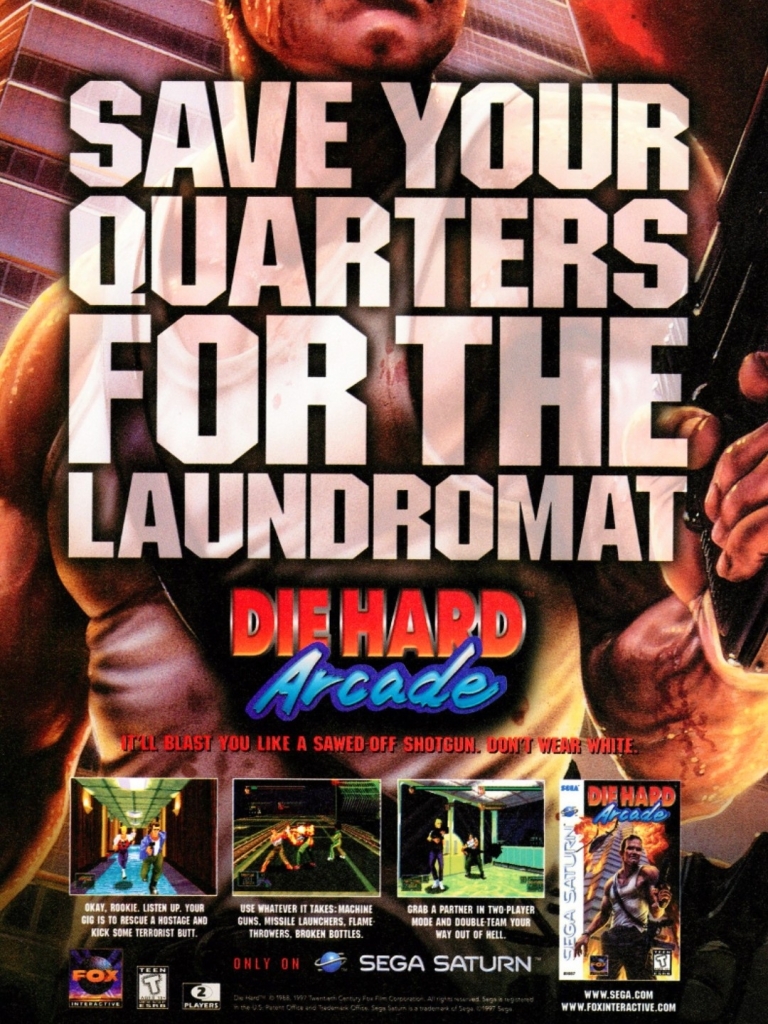
Each time I saw this print ad, it easily reminded me of the classic action film of 1988.
Like many other movie franchises, Die Hard has many video game adaptations released through the decades. In 1997, Sega released Die Hard Arcade (Japanese title: Dynamite Deka) on the Sega Saturn and the game critics praised it for its fun gameplay as well as its flawless conversion of the arcade version (released in 1996). To say the least, the development history of Die Hard Arcade is not as straightforward as many would think. To get the details and explanations of the development of the game, click here.
As for the print ad itself, this one cleverly used official game art as the background with imagery which instantly reminded me of what I saw in the classic 1988 movie that starred Bruce Willis. This ad made me interested to buy a Sega Saturn or find a place to rent it to play the game.
9. Shenmue Japanese print ad
Simplistic with presentation and yet engaging to look at. The Dreamcast-exclusive Shenmue sold over a million copies in Japan alone.
When Shenmue was released exclusively on the Sega Dreamcast in Japan on December 29, 1999, it turned out to be a very mind-blowing experience for many gamers due to its ambitious game design, the intense attention to detail implemented, very high production values, in-depth exploration and very immersive gameplay.
It was the open-world game released at a time when “open-world” was not even a standard gaming term. Often called the masterpiece of the legendary game designer Yu Suzuki, Shenmue sold over 1.2 million copies in Japan and went on to be released worldwide in the months that followed. Sadly, the game failed to make a profit due to its very high budget of $70 million (which Suzuki himself said in English during an interview) and the fact that the number of Dreamcast units already sold to gamers was not massively high.
The Japanese print ad of Shenmue had a simplistic looking visual concept and yet it was engaging to look at because the way the characters appeared was how they appeared in the game during gameplay which was astounding. Take note that back in the 1990s, it was common for video game marketing materials to show human characters in high detail but in reality the polygonal models of those characters appeared looking blocky and much less detailed during gameplay.










 Author Carlo Carrasco