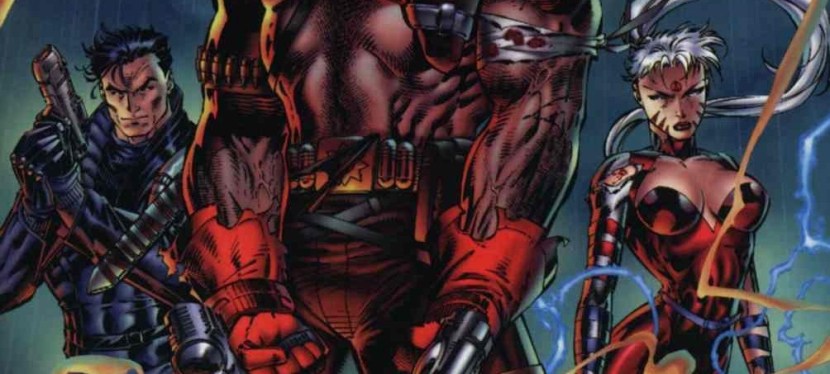
GMA Network’s fake Filipinos (AI sportscasters) should remind you that AI has no soul

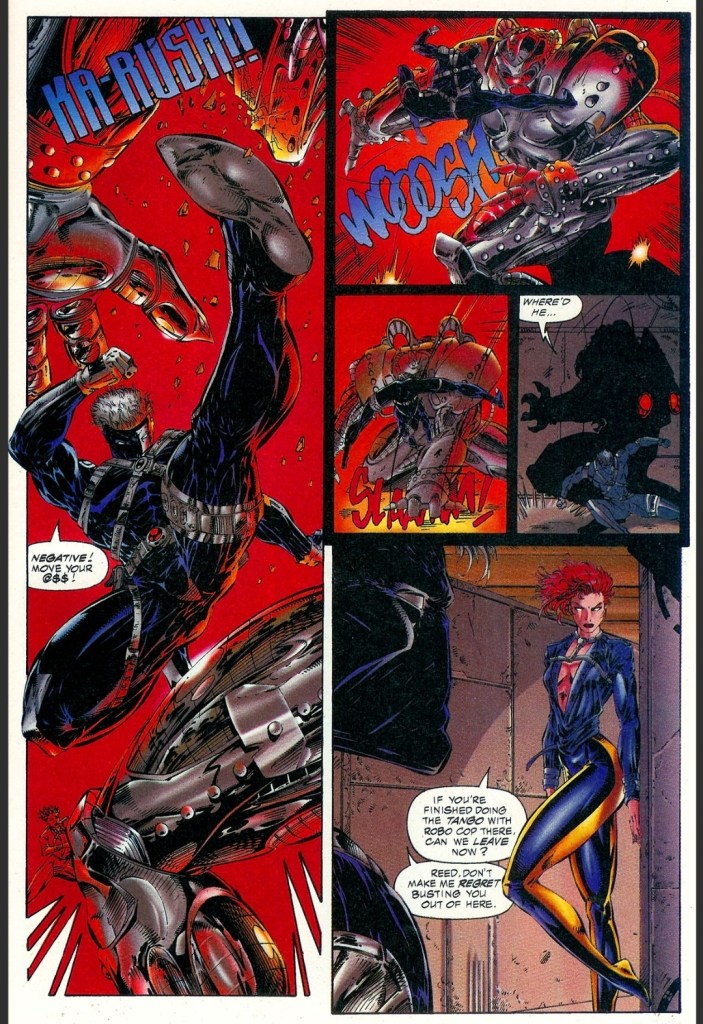
A Look Back at Backlash #4 (1995)

Disclaimer: This is my original work with details sourced from reading the comic book and doing personal research. Anyone who wants to use this article, in part or in whole, needs to secure first my permission and agree to cite me as the source and author. Let it be known that any unauthorized use of this article will constrain the author to pursue the remedies under R.A. No. 8293, the Revised Penal Code, and/or all applicable legal actions under the laws of the Philippines.

Welcome back superhero enthusiasts, 1990s arts and culture enthusiasts, Image Comics fans and comic book collectors! Today we go back to the wild 1990s and explore a part of the WildStorm universe through a tale of Backlash!  

In my previous retro review, as the mission of Backlash and Taboo intensified, Zealot and Void of the WildCATs got involved in the action. Pike, who had been serving S’ryn, proved to be a formidable foe for Zealot and Taboo. The Savage Dragon meanwhile proved to be more than capable of bringing down S’ryn which made Backlash less relevant in his own comic book. Just as things intensified, something big blew up.

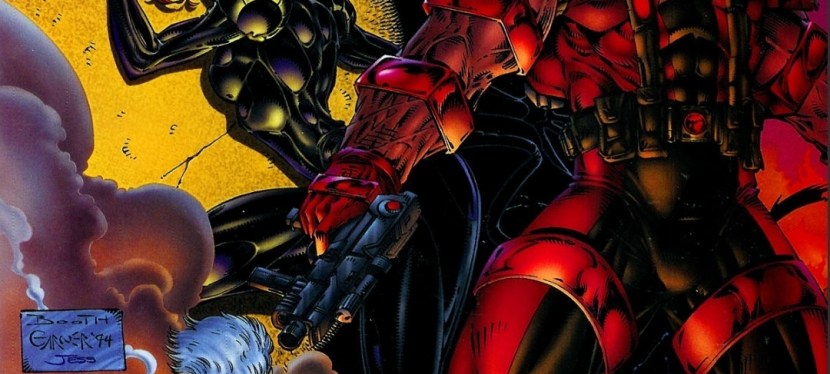
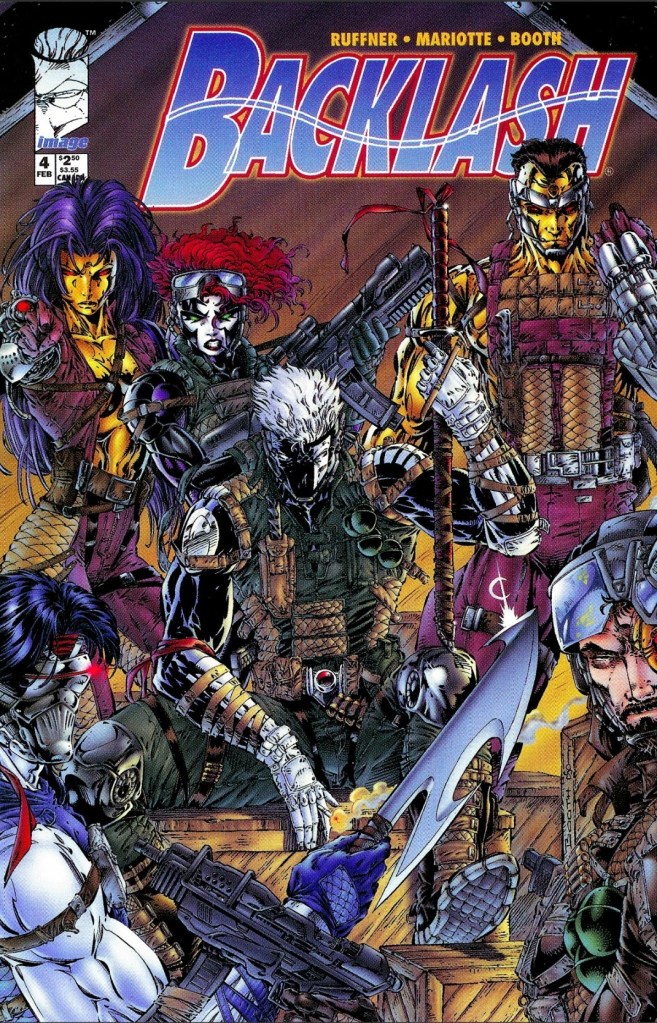
With those details laid down, here is a look back at Backlash #4 published in 1995 by Image Comics with a story written by Sean Ruffner, Jeff Mariotte and Booth. Booth was the artist.

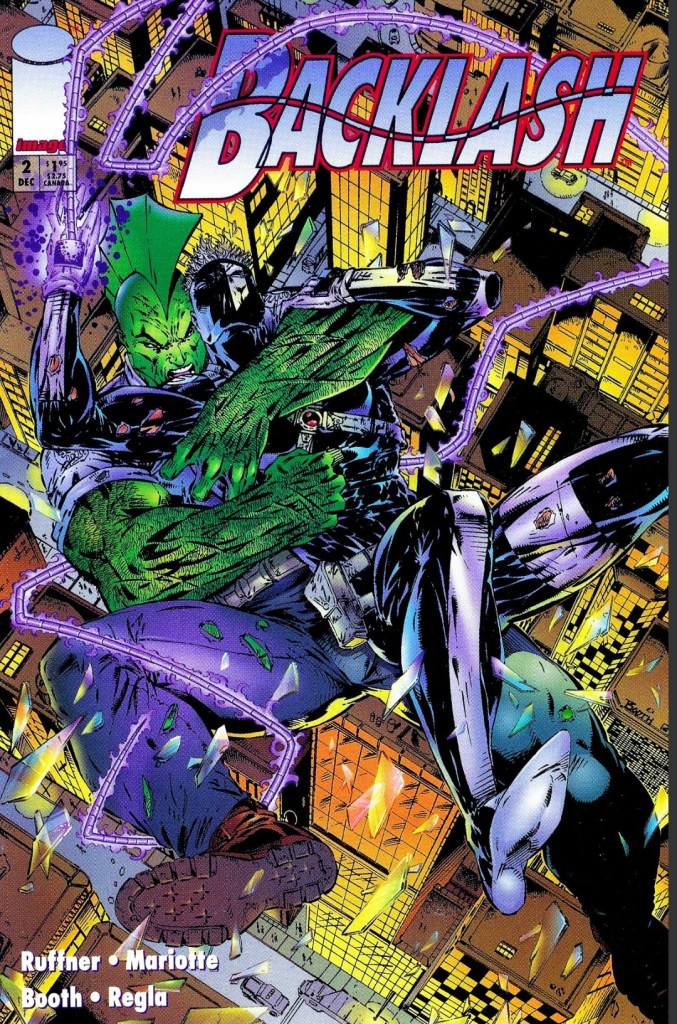
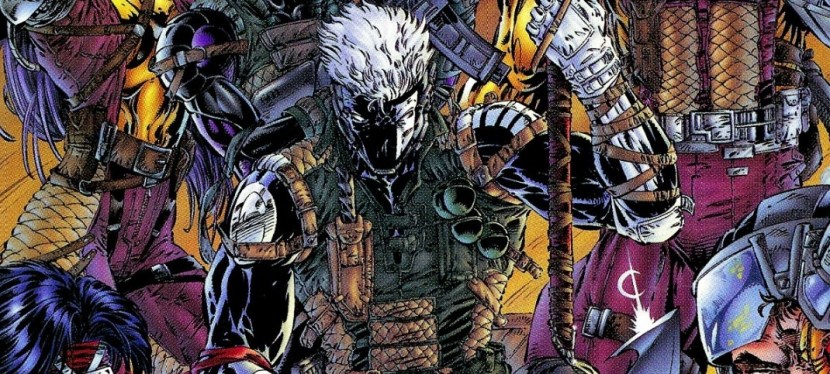
The cover.

Early story

The story begins just moments after the big explosion. Savage Dragon, Backlash, Zealot, Jacob Marlowe, Taboo, Void and Jack managed to survive. In line with his duty as a police officer, Savage Dragon tells Zealot that Backlash and his friends are coming with him as they have been tagged by the government as threats to national security. Zealot then lifts her blade up to Savage Dragon’s throat and states that if Backlash had not been with them, then her lord Emp (Marlowe) may well have been assassinated.

Eventually, Void uses her power to transport Backlash, Taboo, Jack, Zealot and Marlowe away, leaving Savage Dragon behind…

Quality

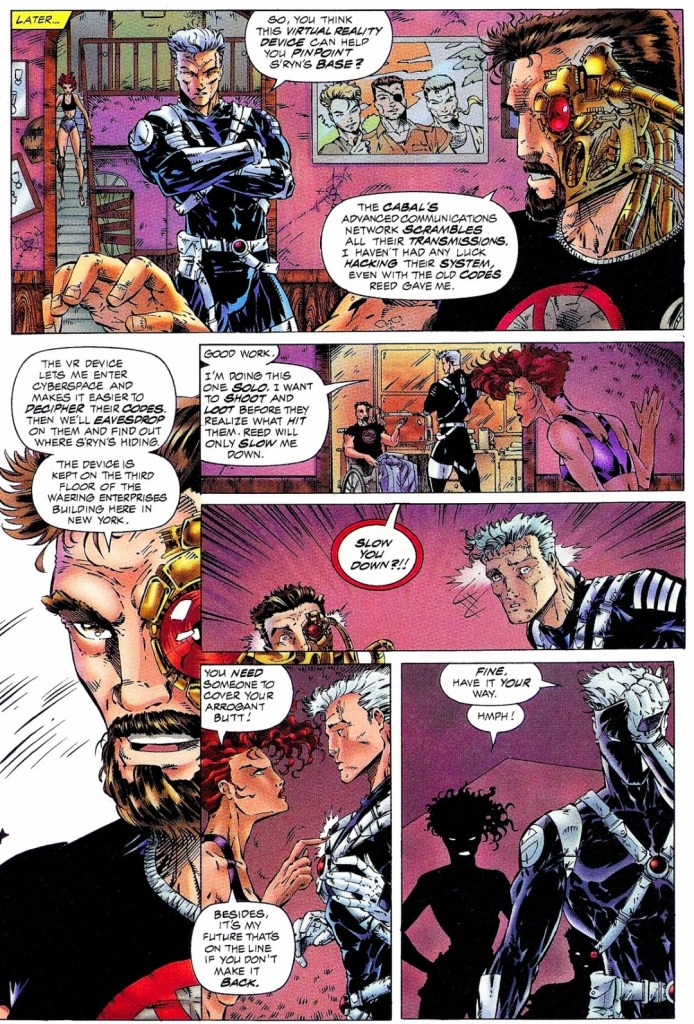
A briefing about the next mission.

To put things straight, this particular comic book serves as the conclusion of the storyline (the mission specifically) that started in issue #2 while also working as a bridge going into the next storyline. The good news here is that the creative team’s work here is good enough in terms of quality.

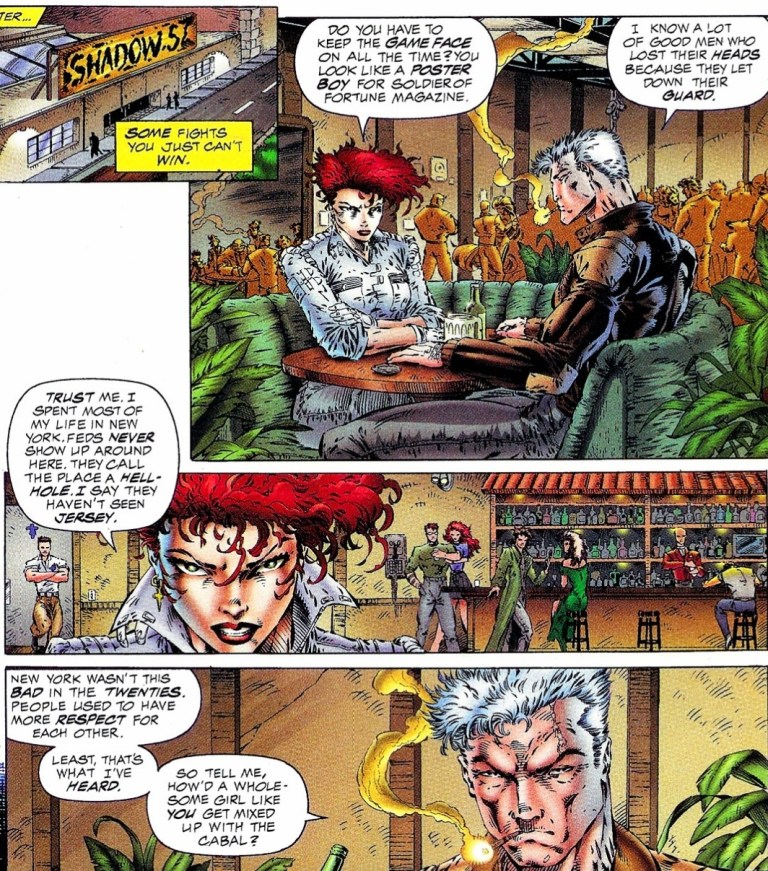
For one thing, the team really took their time to develop Backlash and Taboo some more right after the end of the first mission. Their talk with each other as civilians inside a New York City bar was nicely written and there were a few witty moments that I found enjoyable. Along the way, there was efficient expository dialogue that explains Taboo’s past connection with Pike and the Cabal. Backlash also shared some key details of himself which ultimately made him and Taboo have something in common.

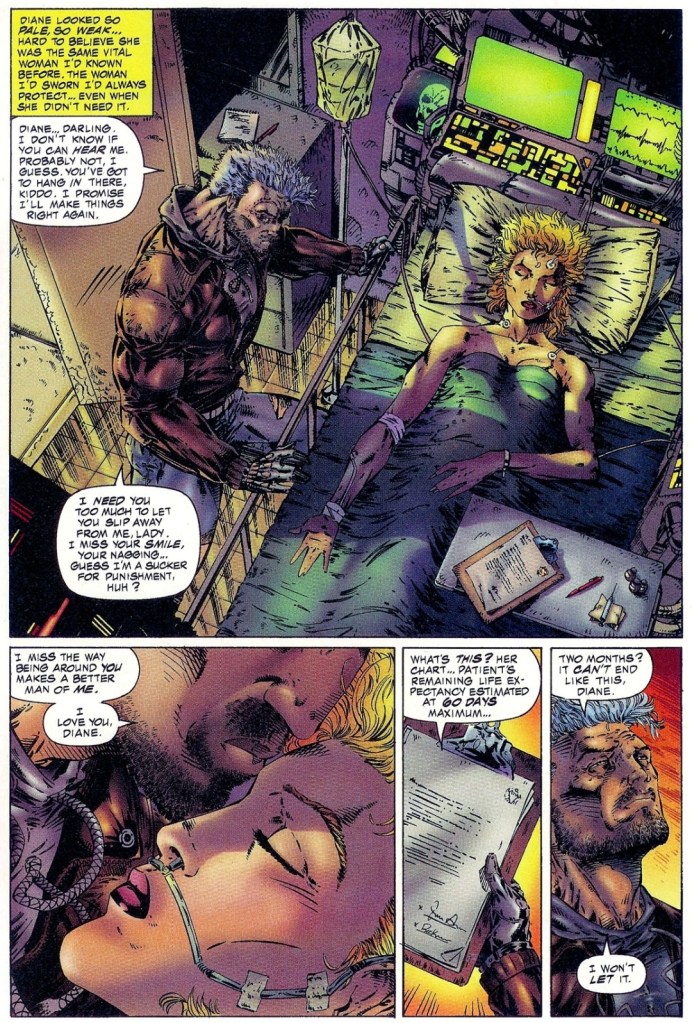
This story also shows a key flaw in Backlash’s personal integrity – his romantic involvement with Taboo made him betray his beloved Diane. For one thing, this potentially opens a series of problems that will eventually haunt him later. On another thing, it seems that the creative team have something intriguing planned for the protagonist who has clearly been sharing this comic book series’ spotlight with Taboo.

As with the previous issues, this comic book continued the build-up and emphasis of the WildStorm universe’s concepts. In terms of crossovers, Wetworks’ leader Jackson Dane makes an appearance here and his unexpected reunion with Backlash is a must-see. For the newcomers reading this, WildStorm’s Grifter (WildCATs), Backlash, Dane (Wetworks) and Deathblow are all members of Team 7 which had its series of wild stories set twenty years prior (note: think of the Vietnam War era). It was also in 1994 when the first Team 7 comic book mini-series was first published. In some ways, Backlash interacting with Grifter in the Kindred mini-series and reuniting with Dane served as creative ways to emphasize the Team 7 concept to readers.

On the visuals, Brett Booth continues to do a fine job presenting the characters (who are clearly recognizable to me) and I noticed he seems to have fun trying to test readers’ visions by carefully inserting selected X-Men characters into the background during the bar scenes as Taboo and Backlash talked. As for Dane, I like Booth’s own take on the character

Conclusion

Look carefully at the background and you will spot X-Men team members Cyclops, Jean Grey Gambit and Rogue in civilian forms.

Backlash #4 (1995) is more of a build-up comic book that so happens to have a decent amount of action for entertainment value. The characterization scenes of Backlash and Taboo is a must-see while the conclusion of the first mission was nicely done complete with a worthy end to the crossover with WildCATs’ Zealot, Void and Jacob Marlowe. The story itself moved at a medium pace which is not surprising as there was something being built-up with the new mission in mind.

Overall, Backlash #4 (1995) is recommended.

+++++

Thank you for reading. If you find this article engaging, please click the like button below, share this article to others and also please consider making a donation to support my publishing. If you are looking for a copywriter to create content for your special project or business, check out my services and my portfolio. Feel free to contact me with a private message. Also please feel free to visit my Facebook page Author Carlo Carrasco and follow me on Twitter at  @HavenorFantasy as well as on Tumblr at https://carlocarrasco.tumblr.com/ and on Instagram at https://www.instagram.com/authorcarlocarrasco
A Look Back at Backlash #3 (1995)

Disclaimer: This is my original work with details sourced from reading the comic book and doing personal research. Anyone who wants to use this article, in part or in whole, needs to secure first my permission and agree to cite me as the source and author. Let it be known that any unauthorized use of this article will constrain the author to pursue the remedies under R.A. No. 8293, the Revised Penal Code, and/or all applicable legal actions under the laws of the Philippines.

Welcome back superhero enthusiasts, 1990s arts and culture enthusiasts, Image Comics fans and comic book collectors! Today we go back to the wild 1990s and explore a part of the WildStorm universe through a tale of Backlash!  

In my previous retro review, Backlash and Taboo went on a mission infiltrating a special social event that attracted the rich and powerful. Jacob Marlowe, the founder and leader of WildCATs, was targeted by S’ryn and Pike who were at the said event disguised. Backlash took action but got wounded while fighting S’ryn. As the chaos continued, the Savage Dragon entered performing police duty.

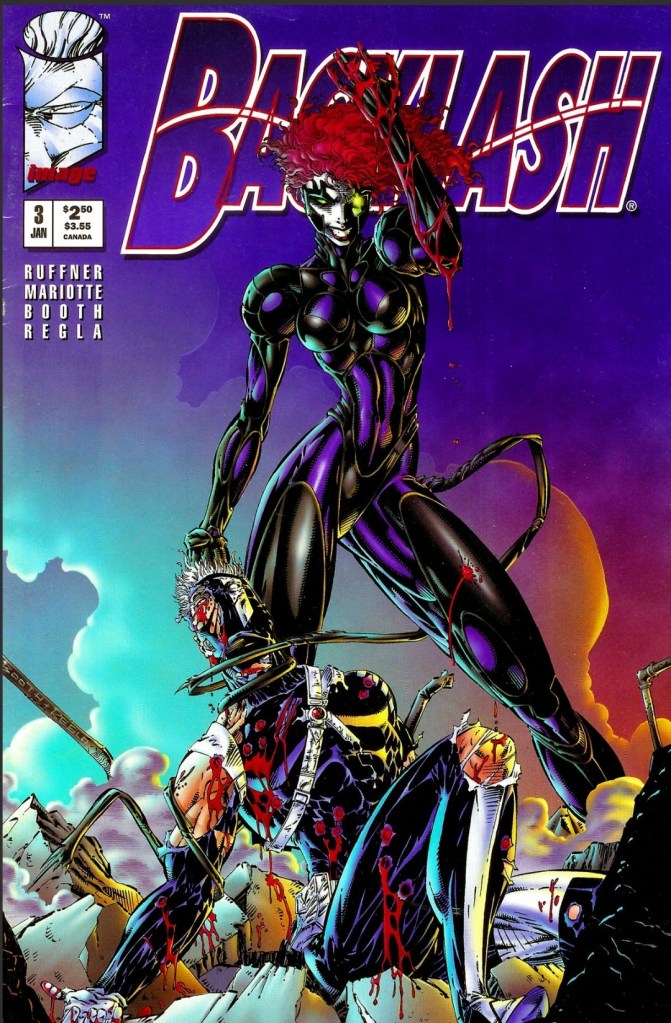
With those details laid down, here is a look back at Backlash #3 published in 1995 by Image Comics with a story written by Sean Ruffner, Jeff Mariotte and Booth. Booth was the artist.

The cover.

Early story

The story begins Jacob Marlowe trying to escape away from the party. While trying to summon his team, he gets cornered by Pike. Pike noticed that Marlowe is not fully aware about the powers he has as a Kherubim. Shortly after Marlowe gets hit, Taboo suddenly jumps in and hits Pike to free the WildCATs leader. Taking advantage of Taboo’s help fighting Pike, Marlowe calls his team by phone.

At the party venue, Savage Dragon tells S’ryn that he is under arrest. Backlash is down on the floor bleeding…

Quality

You will get to see Backlash and Savage Dragon fight each other.

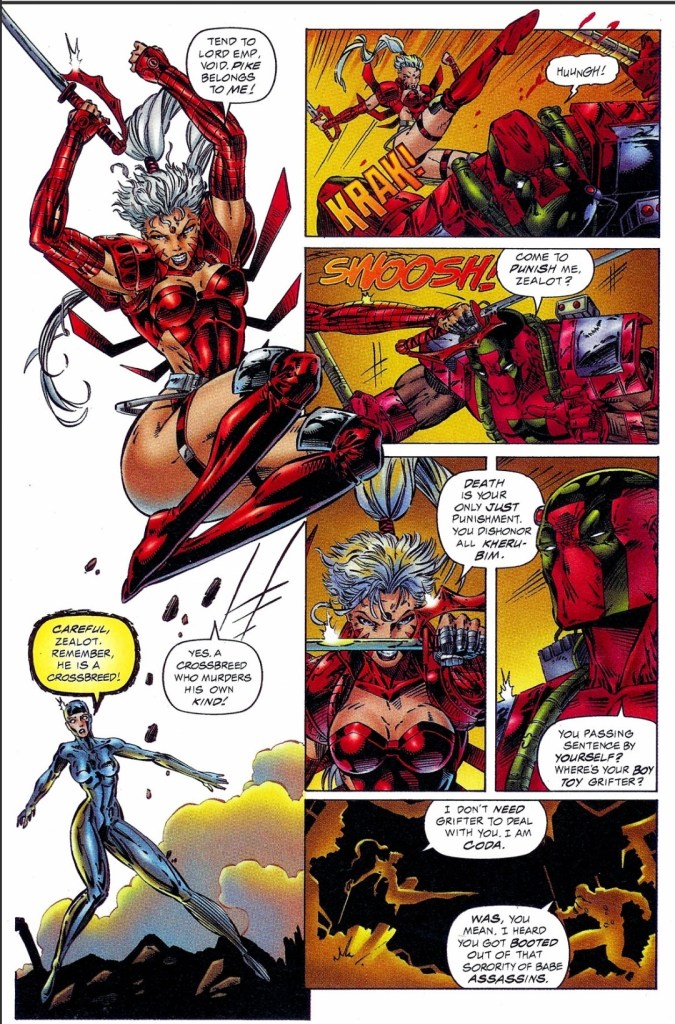
If there is anything very notable here, it is the fact that the creative team not only ramped up the superhero spectacle but also emphasized crossovers by having Zealot and Void of WildCATs involved in the action as well as having Savage Dragon participate heavily during the events. This story continues what started in issue #2 and along the way, you will see Marlowe’s Kherubim heritage emphasized as he is a high-level target of the Daemonites represented by S’ryn here.

While the plot is rather light, the high amount of action turned out to be very entertaining to see while the interactions between the characters were pretty engaging to follow. It is fun to see Backlash and Savage Dragon (Erik Larsen’s creation) conflict with each other over S’ryn. For Backlash, S’ryn is too dangerous to be handled by the local law enforcers while Savage Dragon sees him as a suspect who has to be jailed due to the chaos caused within the local jurisdiction. It should be noted that Savage Dragon was more than capable on bringing down S’ryn which essentially makes Backlash look like a failure.

Pike here noticeably became a more prominent villain. Not only was he dead serious with his mission to kill Jacob Marlowe, he proved to be a formidable foe against Taboo and even the highly proficient Zealot. This is interesting to see since Pike’s participation in the WildCATs mini-series was not too great and the dialogue the creative came up with emphasized his personality a lot.

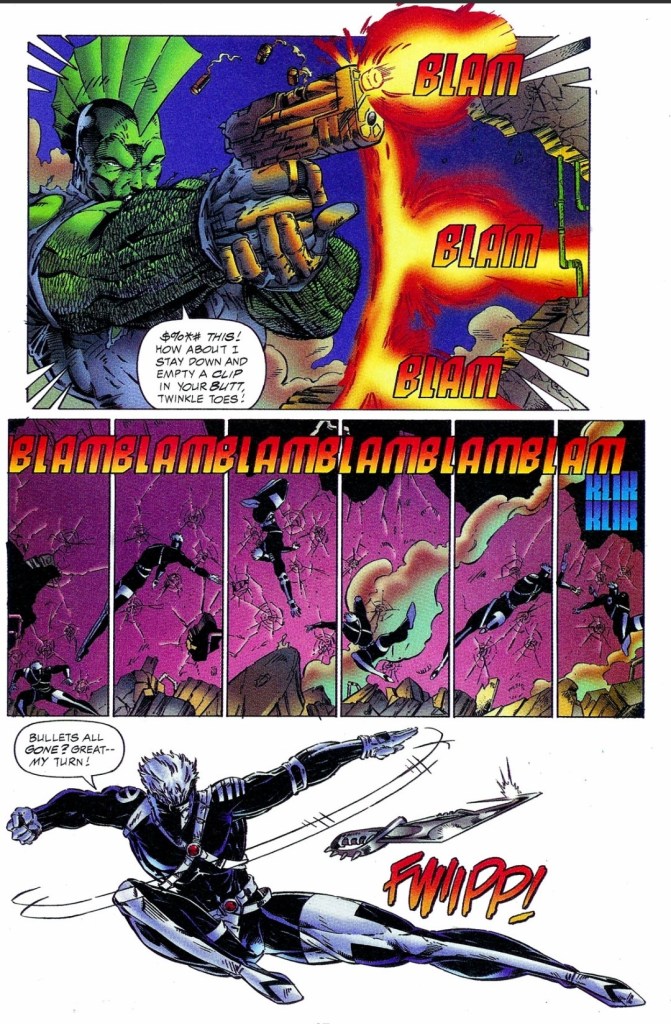
As this is an action-heavy story, I can say that Brett Booth’s visual work here is very good. He knew how to set-up the action sequences as well as how to frame the action in sequence. There were even moments in which some aspects of his art resembled that of Jim Lee. Speaking of crossovers, Booth’s artistic take on Zealot, Void and Savage Dragon was nice to see.

Conclusion

Zealot and Void of WildCATs got involved in this story.

Backlash #3 (1995) is another fun ride but on a higher gear and with stronger emphasis on crossover elements. To really enjoy this, one must be oriented enough with Savage Dragon and WildCATs to grasp this comic book’s concept and how the guest characters fit into the narrative. This is a meaningful crossover within the WildStorm universe. Fans of Backlash will have a lot to be engage with in this comic book.

Overall, Backlash #3 (1995) is recommended.

+++++

Thank you for reading. If you find this article engaging, please click the like button below, share this article to others and also please consider making a donation to support my publishing. If you are looking for a copywriter to create content for your special project or business, check out my services and my portfolio. Feel free to contact me with a private message. Also please feel free to visit my Facebook page Author Carlo Carrasco and follow me on Twitter at  @HavenorFantasy as well as on Tumblr at https://carlocarrasco.tumblr.com/ and on Instagram at https://www.instagram.com/authorcarlocarrasco
A Look Back at Backlash #2 (1994)

Disclaimer: This is my original work with details sourced from reading the comic book and doing personal research. Anyone who wants to use this article, in part or in whole, needs to secure first my permission and agree to cite me as the source and author. Let it be known that any unauthorized use of this article will constrain the author to pursue the remedies under R.A. No. 8293, the Revised Penal Code, and/or all applicable legal actions under the laws of the Philippines.

Welcome back superhero enthusiasts, 1990s arts and culture enthusiasts, Image Comics fans and comic book collectors! Today we go back to the wild 1990s and explore a part of the WildStorm universe through a tale of Backlash!  

Backlash #1 was indeed a fun and engaging read with the creative direction spearheaded by Brett Booth who was a co-writer and the illustrator. It built-up Backlash as a major WildStorm figure while also emphasized the concepts from his previous appearances in the Kindred limited series which paired him with Grifter. As seen in issue #1, he freed Taboo and it was clear that she was designed to be a key part of the Backlash series.

With those details laid down, here is a look back at Backlash #2, published in 1994 by Image Comics with a story written by Sean Ruffner, Jeff Mariotte and Booth. Booth was the artist.

The cover.

Early story

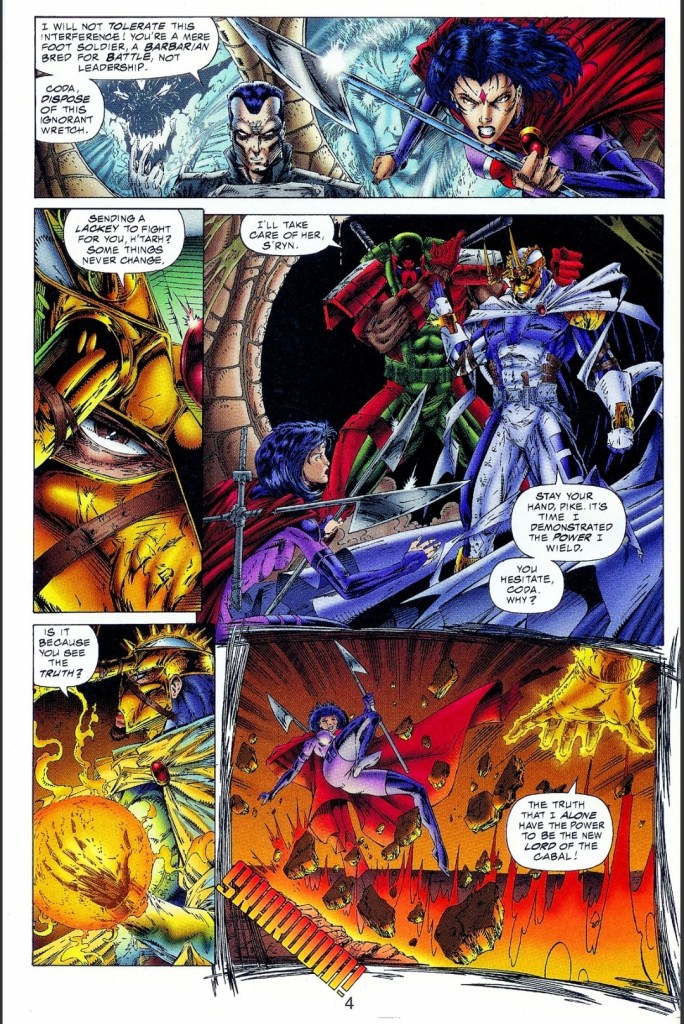
The story begins with a meeting inside the high-tech headquarters of the W.O.R. (Wildlife Organized Research), a front covering the outpost for the criminal organization called the Cabal. During the meeting, the fall of Helspont was discussed and talk about running the Cabal intensified. Just as it was made clear that a new beginning and new leadership were needed to manage the Cabal, a warlord called S’ryn arrives with the deadly Pike behind him. After briefly overwhelming opposition from a Coda warrior and H’tarh, S’ryn performs a ritual and gets the pledge of loyalty from those who recognized him as the new leader of the Cabal. The stage is set for further escalation between the Daemonites and the Kherubim.

In the city of Chicago, Backlash and Taboo spend time together in an apartment that looks worn down and not so clean. It turns out, both of them are fugitives and they are waiting for Cyberjack to complete his surveillance of the security of a hotel where a celebrity ball is set to happen…

Quality

In the middle of a special event, Backlash and Taboo spring into action as WildCATS’ Jacob Marlowe gets into trouble.

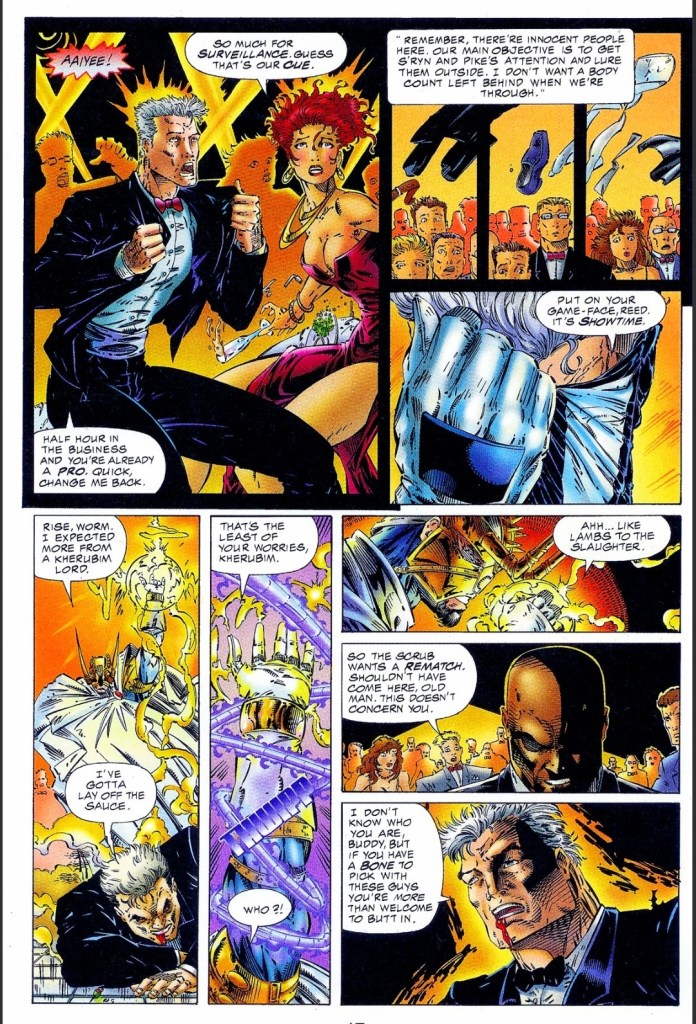
Compared to what happened in issue #1, this story moved at a moderate pace in relation to the new mission which involved espionage and suspense. It’s not the action showcase the previous issue was but rather more moderated as the creators took a new approach to not only tell a new story but also do its own build-up of the Kherubim-Daemonite war and other WildStorm universe concepts. The story is well-written and while there is a lot of expository dialogue and creative explanations implemented, it never felt forced. Along the way, the creative team started implementing crossover elements by having Jacob Marlowe of WildC.A.T.S.: Covert Action Teams as well as established Image Comics figure Savage Dragon (from Erik Larsen) included in the story and even getting involved with the operations that took place.

As for Backlash himself, you will see a little less of him in this tale (compared to issue #1) which is not surprising as the creative team focused more on the plot and had to handle the crossover elements. Backlash did not become a supporting character here and you will see some superhero spectacle from him, particularly in his rematch with a certain villain.

Conclusion

S’ryn gets challenged before he becomes the new leader of the forces of evil.

Backlash #2 (1994) is a fun ride that cleverly combined crossover elements with its own approach on building up the WildStorm concepts, notably the war between the Kherubim and Daemonites. It also shows the consequences of what happened in the 4th issue of the WildC.A.T.S. mini-series particularly within the side of the opposition. As such, this comic book is pretty much a sequel to the said mini-series. At this stage, there was clearly something prepared to entertain readers while maintaining focus on establishing Backlash (note: Marc Slayton was one of the Team 7 members) as a major WildStorm character.

Overall, Backlash #2 (1994) is recommended.

+++++

Thank you for reading. If you find this article engaging, please click the like button below, share this article to others and also please consider making a donation to support my publishing. If you are looking for a copywriter to create content for your special project or business, check out my services and my portfolio. Feel free to contact me with a private message. Also please feel free to visit my Facebook page Author Carlo Carrasco and follow me on Twitter at  @HavenorFantasy as well as on Tumblr at https://carlocarrasco.tumblr.com/ and on Instagram at https://www.instagram.com/authorcarlocarrasco
A Look Back at Tomb Raider #1 (1999)

Disclaimer: This is my original work with details sourced from reading the comic book and doing personal research. Anyone who wants to use this article, in part or in whole, needs to secure first my permission and agree to cite me as the source and author. Let it be known that any unauthorized use of this article will constrain the author to pursue the remedies under R.A. No. 8293, the Revised Penal Code, and/or all applicable legal actions under the laws of the Philippines.

Welcome back superhero enthusiasts, 1990s culture enthusiasts and comic book collectors! Today we go back to 1999 which was the year when the wildly popular Tomb Raider video game franchise made its debut in comic books handled by Top Cow Productions with Image Comics as publisher.

To put things in perspective, Tomb Raider started as a video game in 1996 which astounded millions of gamers worldwide resulting in huge sales for game publisher Eidos Interactive. This, of course, led to sequels which impacted console gaming and established Lara Croft as a video gaming and pop culture icon. From 1996 to 1999, Eidos Interactive released one new Tomb Raider game on consoles selling many millions of copies. Given the tremendous video game success achieved, Tomb Raider’s expansion into the comic book industry was inevitable.

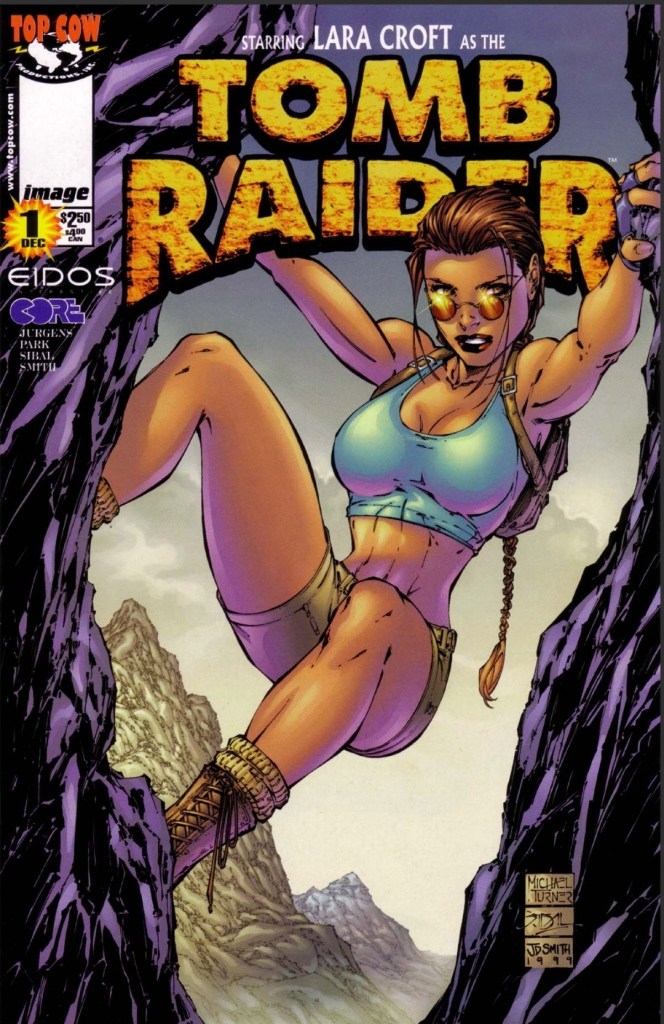
With those details laid down, here is a look back at Tomb Raider #1, published in 1999 by Image Comics with a story written by Dan Jurgens and drawn by Andy Park.

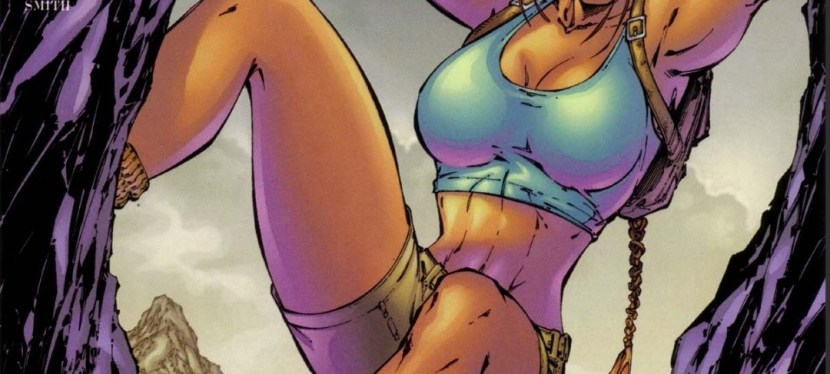
The cover.

Early story

The story begins in Iran, a nation that remains hostile to Westerners due to their government being led by fundamentalists with vested interest in terrorism. Two vehicles arrived at a very laid back town and immediately several armed men forcibly unmask the local women searching for a certain Westerner.

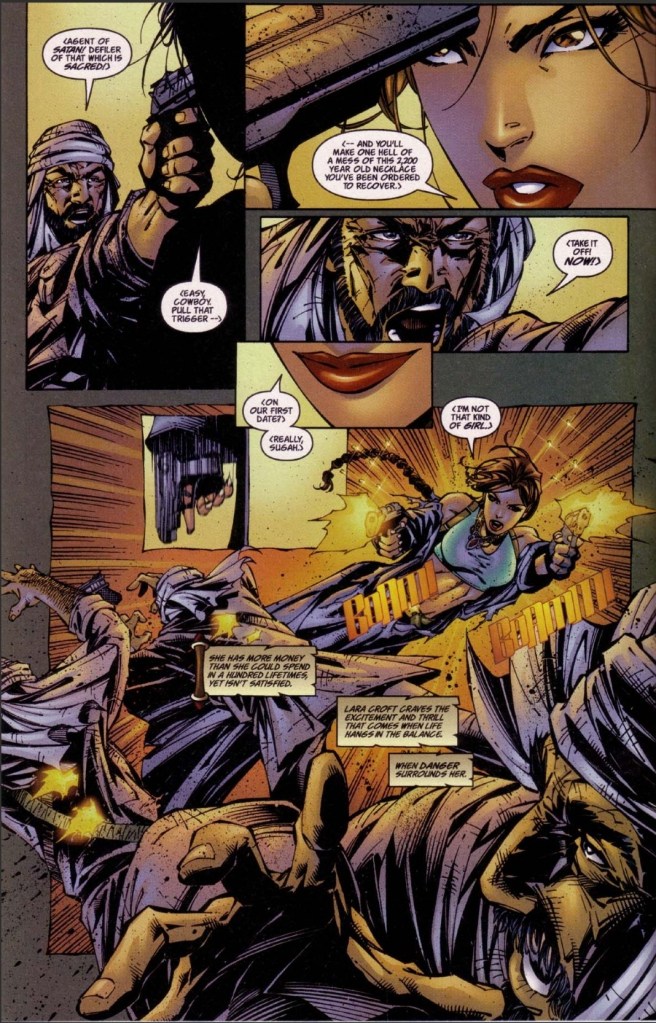
One Iranian soldier approaches a lady clothed and masked in black. Upon unmasking the said lady, the Iranian soldier discovers a lady from the West…the Tomb Raider herself – Lara Croft – wearing an extravagant looking necklace. The Iranian soldier puts his gun on Lara’s face and demands she takes the necklace off.

Lara Croft answers by firing her two guns at the Iranian soldiers hitting some while also forcing other soldiers to run away. Knowing she has to get out of Iran, Lara runs away from the soldiers and gets into a jeep forcing the man to drive the vehicle and move away. As the jeep moves out of the town, a truck full of enemy soldiers chases them…

Quality

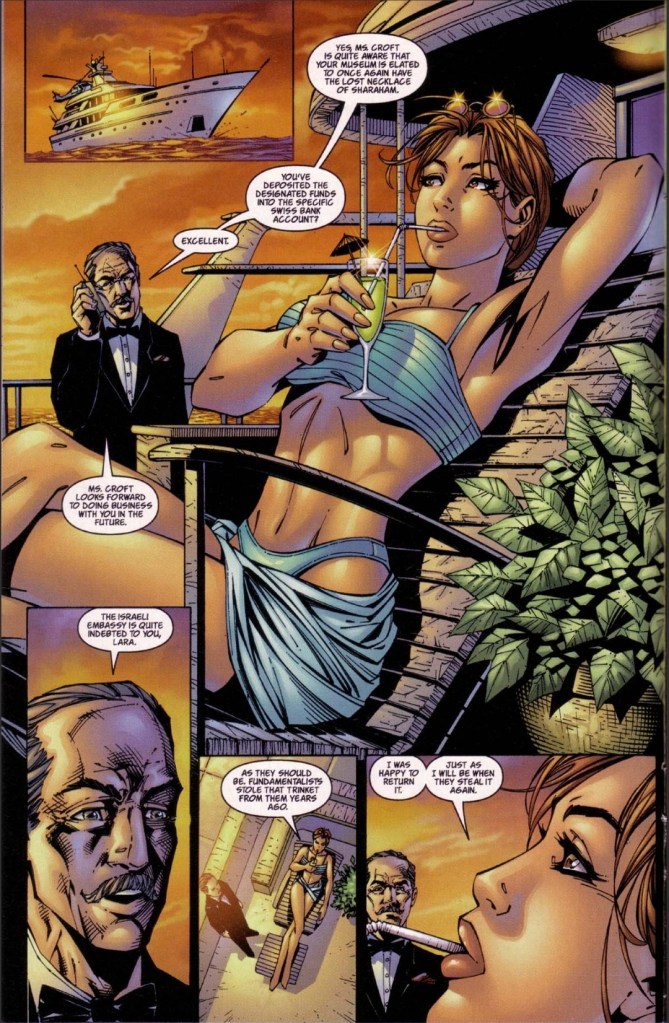
Lara Croft relaxing as her assistant gets updates about the business dealings.

To get straight to the point, this comic book debut of Tomb Raider and its iconic Lara Croft was clearly written to build up the initial concept the creative team came up with for the series. That being said, Dan Jurgens came up with the clever move to make Lara’s literary introduction action-packed and fast-paced, and his portrayal of Iran remains highly relevant to this day. Lara’s debut is a lively portrayal of the icon’s bravery, determination and special talent on acquiring treasure or items of tremendous value.

In relation to what I stated earlier, the rest of the comic book is a detailed build-up for Lara’s next mission which shows how she deals with powerful clients and why she still accepts million-dollar tasks even though she inherited her family’s huge wealth. While there is a lot of build-up and some exposition here and there, the script by Jurgens is not a bore Jurgens captured Lara Croft’s personality well and there is a good amount of spectacle that balanced well with the wordy exposition that came with the story build-up.

On the art, Andy Park’s work here is pretty good to look at. His visual take of Lara Croft does not involve realism at all as he gave her a look that make her look familiar with how women in comic books looked like in the 1990s. Park clearly is aware of Lara’s iconic status which explains his implementation of dynamism on the action scenes and the unexpected turnout of events that involved her. Still related to the protagonist’s iconic status, it is unsurprising to see Park show off Lara as a sexy action hero dedicated on her risky work.

Conclusion

After getting threatened, Lara Croft fights back against the Iranians! This is symbolic as even until now in real life, Iran’s government is still full of fundamentalists who are causing terror in the Middle East.

As it was the debut issue of a monthly series, Tomb Raider #1 (1999) served its purpose to build up the comic book vision the creators came up with while managing to introduce Lara Croft in her illustrated literature form complete with enough pages of action and spectacle. Even though there is no grand event, this is still an entertaining comic book to read and its build-up never created a single boring moment. By the time I reached the end of this comic book, I got to familiarize myself with literary Lara Croft and more importantly, I got interested enough with this small showcase of what Jurgens and Park prepared. I got interested enough to find out what happens next.

Overall, Tomb Raider #1 (1999) is recommended.

+++++

Thank you for reading. If you find this article engaging, please click the like button below, share this article to others and also please consider making a donation to support my publishing. If you are looking for a copywriter to create content for your special project or business, check out my services and my portfolio. Feel free to contact me with a private message. Also please feel free to visit my Facebook page Author Carlo Carrasco and follow me on Twitter at  @HavenorFantasy as well as on Tumblr at https://carlocarrasco.tumblr.com/ and on Instagram at https://www.instagram.com/authorcarlocarrasco
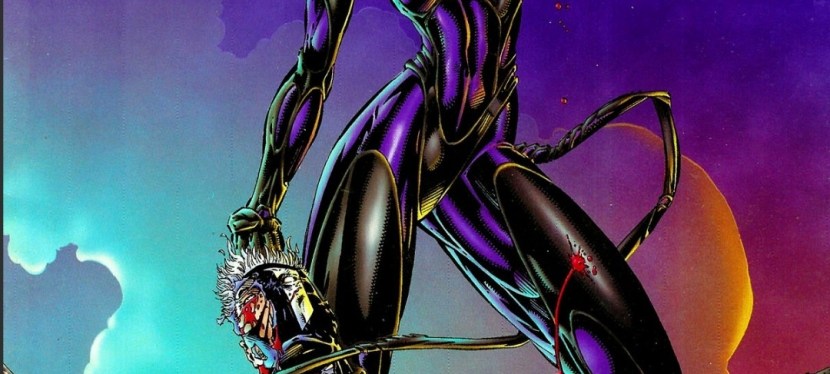
George Perez (1954-2022)

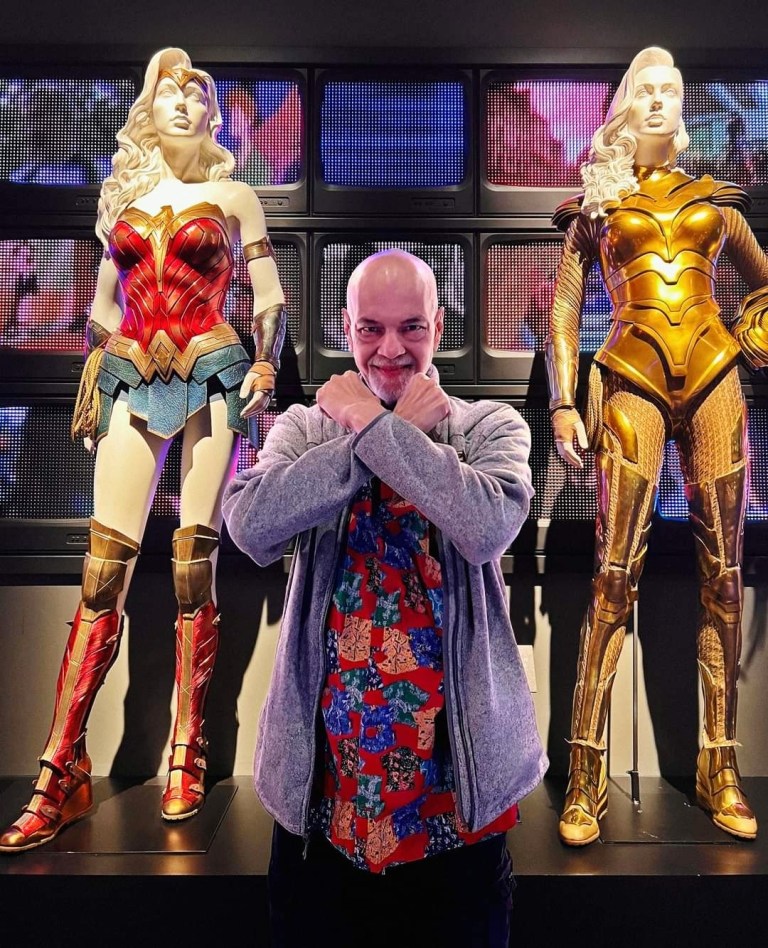
George Perez, the incredible comic book artist who made major contributions to illustrated literature (especially the superhero comic book genre), sadly passed away due to complications related to pancreatic cancer. He was 67-years-old and I can say that superhero comic book art and dynamic expressions will not be the same without him.

George Perez with the two Wonder Woman plastic models. (photo source – DC Comics Facebook page)

Already there were comic book industry figures who reacted to the death of the legendary Perez. DC Comics co-publisher and legendary creator Jim Lee paid tribute stating, “We creators may all have access to the same tools of the trade: pen, paper and imagination, but what George could do with his prodigious talents was off the charts.”

For his part, Rob Liefeld stated, “I’ll remember George for his innovative and prolific storytelling. Thank you for all the great memories. Rest In Peace, George Perez.”

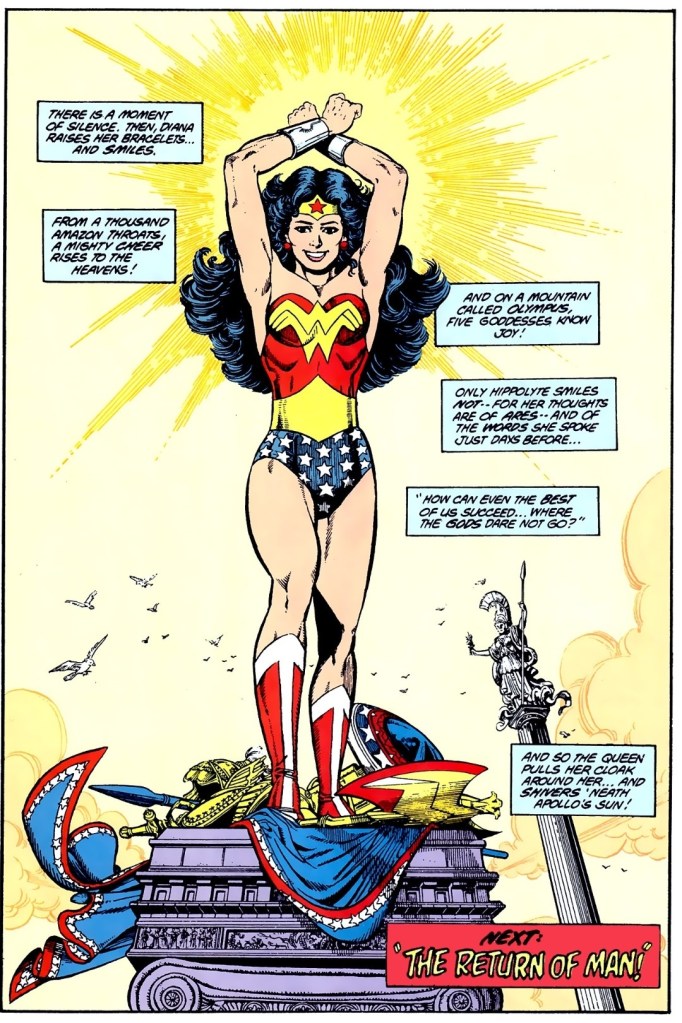
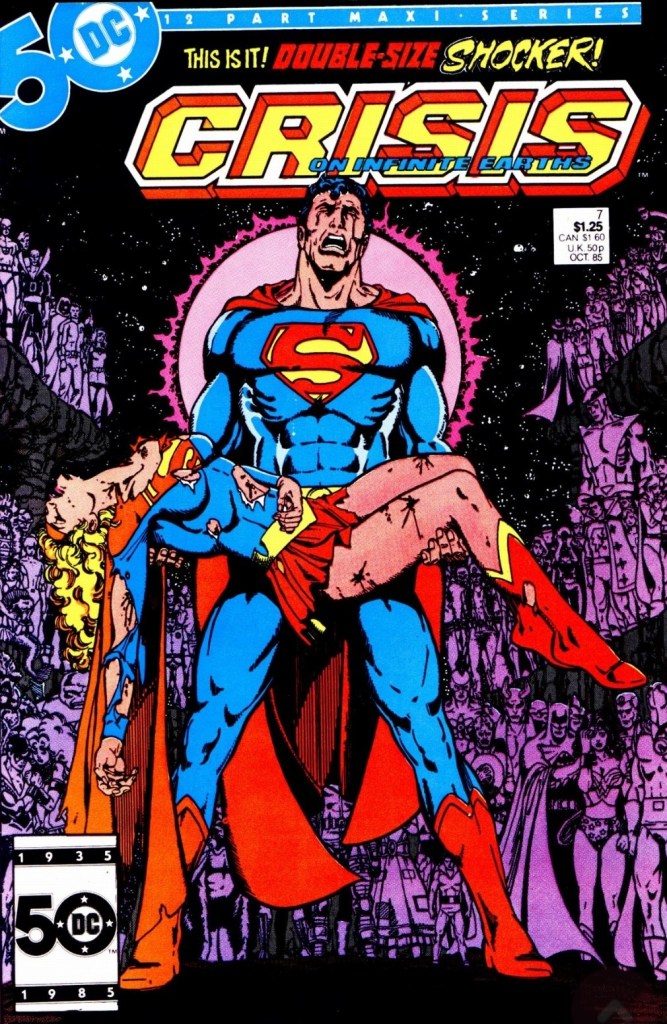
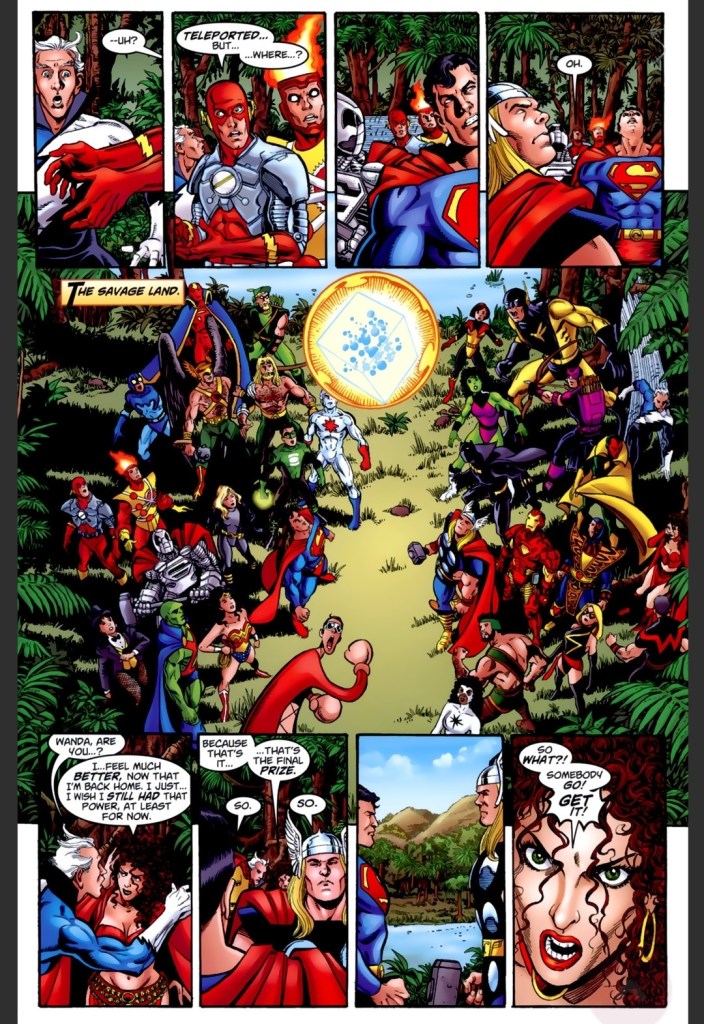
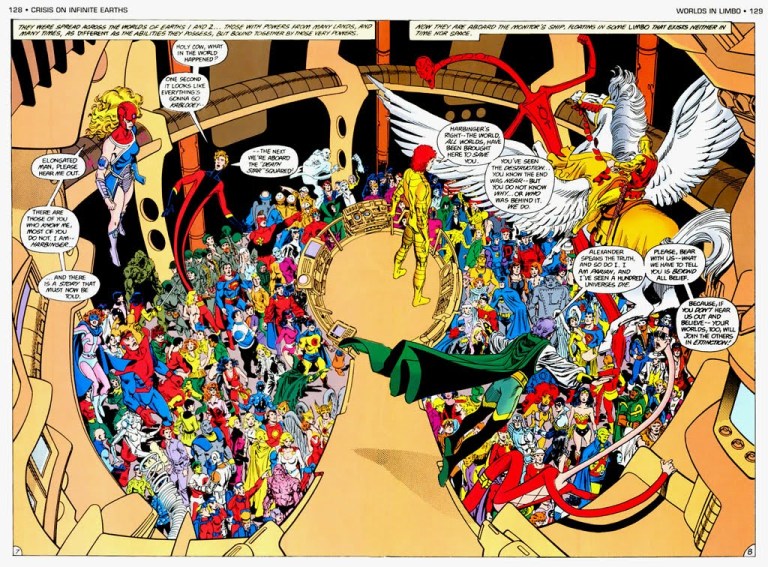
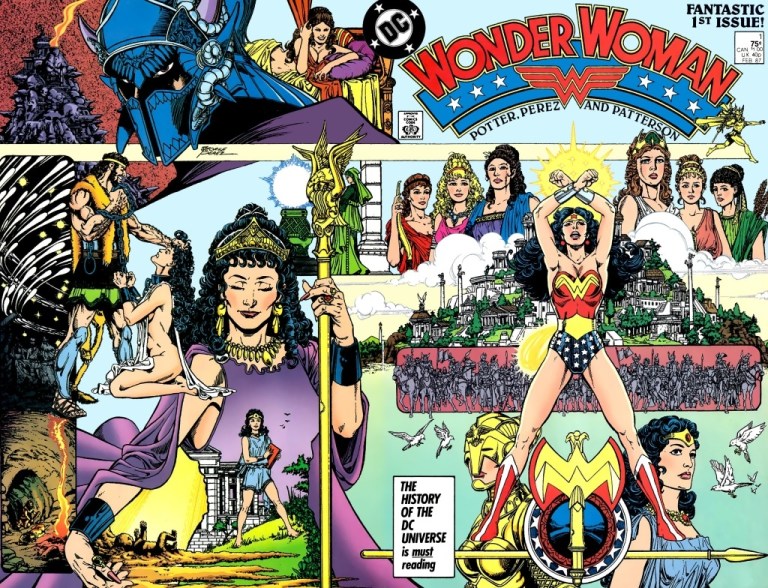
For the newcomers reading this as well as those who are simply unaware of Perez’s legacy, he was responsible for visualizing DC Comics’ 1985 epic maxi-series Crisis on Infinite Earths (note: he drew countless characters complete with varied settings or environments in high detail) and redefining Wonder Woman (note: he also wrote the stories) which made her a more essential pop culture icon. George Perez also worked for Marvel Comics over many projects and was chosen to illustrate the memorable 2003 JLA/Avengers crossover series of Marvel and DC. Perez also worked with other publishers such as Malibu Comics for several Ultraverse comic books and Image Comics for Crimson Plague and Witchblade. In recent years, he was responsible for Sirens published by BOOM! Studios.

For me, Wonder Woman was best defined during the post-Crisis era of DC Comics which involved George Perez and Len Wein who wrote the early issues of the Wonder Woman monthly series in the late 1980s.

In his decades-long career in comics, Perez unsurprisingly earned varied awards and honors (references here, here, here and here to name a few).

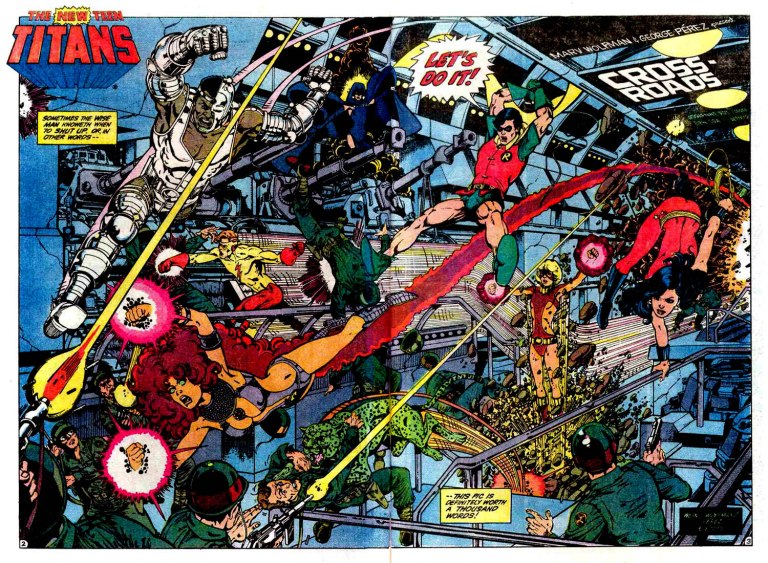
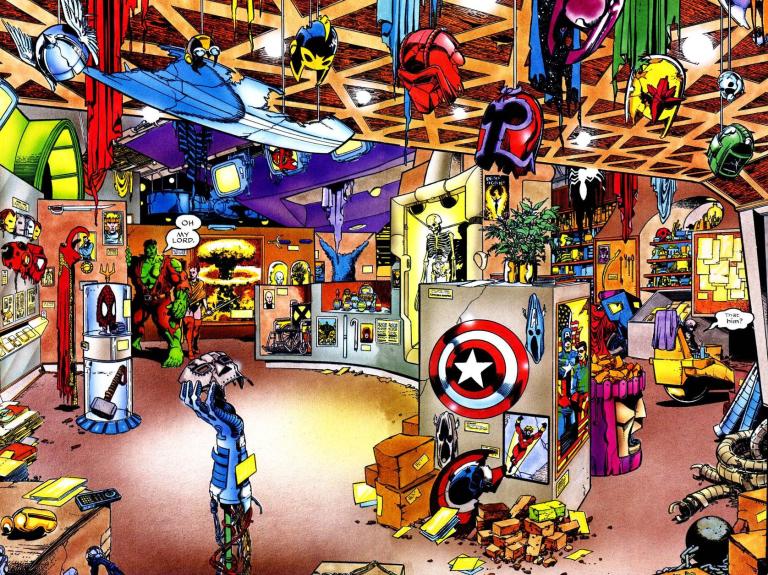
I should say that George Perez is a long-time favorite comic book illustrator of mine. I enjoyed reading the superhero comic books he illustrated and I love his art style on the characters, the environments and crowds. If there is anything I love about Perez’s art, it is his distinct style along with his implementation of high levels of details on the characters, objects, creatures and surroundings. Perez is also known to capture the distinct visual elements of superhero characters such as Spider-Man’s costume and his spaghetti-like web, Superman’s physique and distinct letter S, Prime’s overly muscular body and more. Every time Perez is involved as artist, the result is almost always a visual feast that often adds punch to the script prepared.

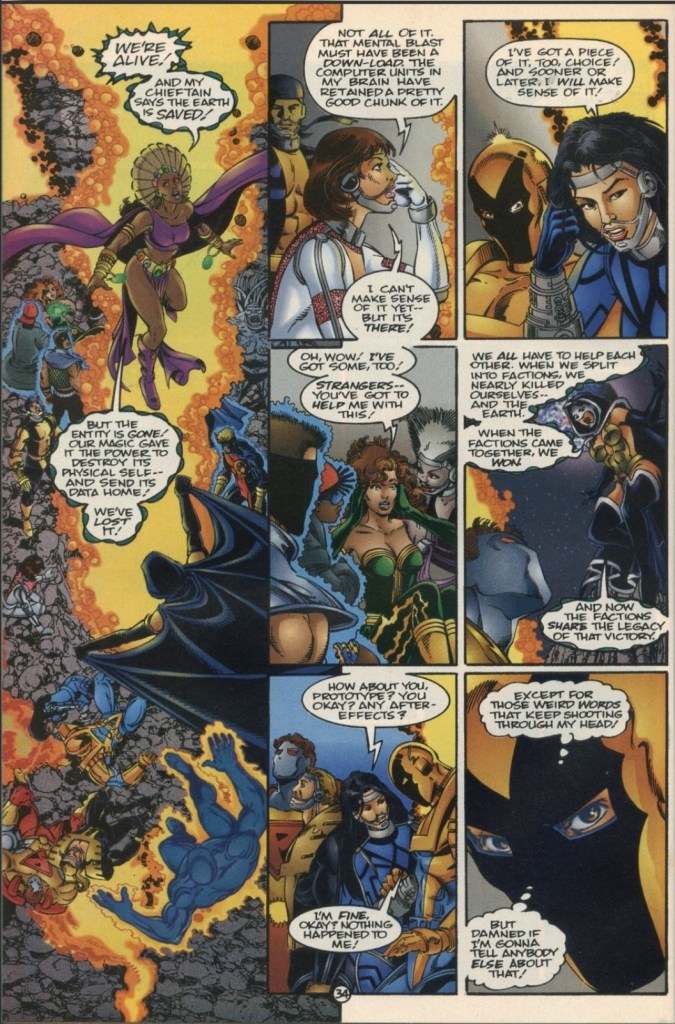
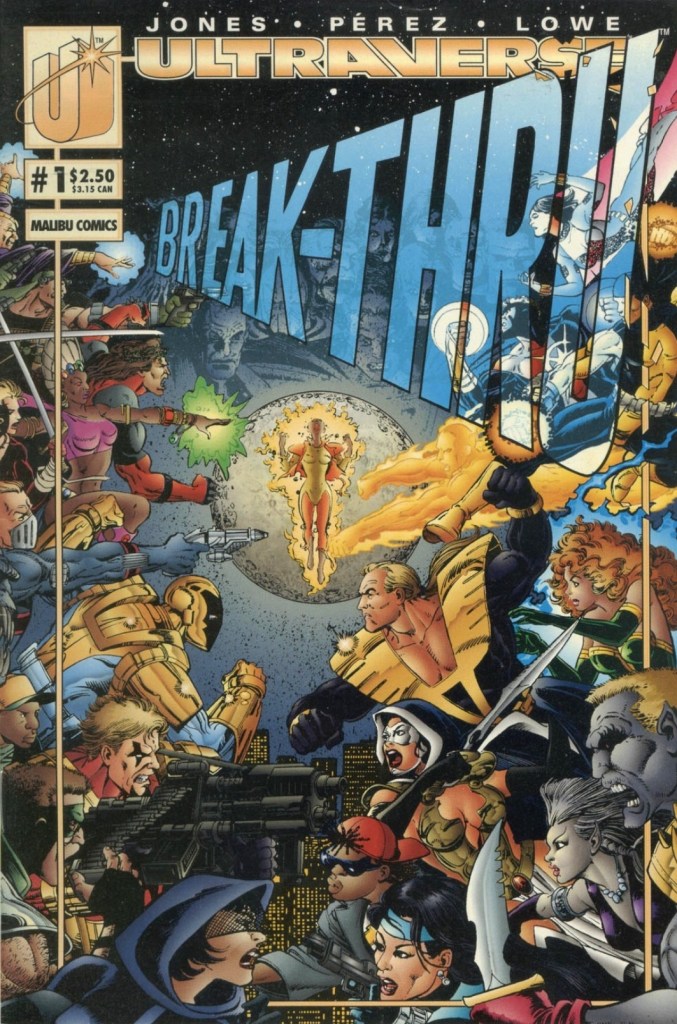
When I was still actively collecting comic books back in the 1990s, I often get excited whenever I learned that George Perez illustrated upcoming comic books. In 1992, he drew Incredible Hulk: Future Imperfect (2 books) which was mind-blowing and intriguing for me! In 1993, I became a fan of the newly launched Ultraverse of Malibu Comics and I got very excited to learn that Perez was hired for their major UV crossover Break-Thru (2 issues). Perez also drew one issue of Prime and most of the early issues of the UV team UltraForce (issues #0, #1, #3, #4, #5 and #6). If you want to see Perez draw ALL the characters of the Ultraverse, you should read the 2-issue Break-Thru storyline.

A page from Break-Thru #2 showing just some of the many Ultraverse characters Perez illustrated. This was published before the release of UltraForce.

Speaking of UltraForce, check out this video by Crypto Comics (with observations on Perez’s art works)…

Going back to George Perez’s amazing run on Wonder Woman, I urge you to watch the video below…

For me, the most defining stories of Wonder Woman ever told in any art form are still the comics that Perez wrote (note: he co-wrote stories with Greg Potter and Len Wein respectively on the early issues) and illustrated during the post-Crisis era of DC Comics. Check out my retro reviews of Wonder Woman 1980s comics on this website.

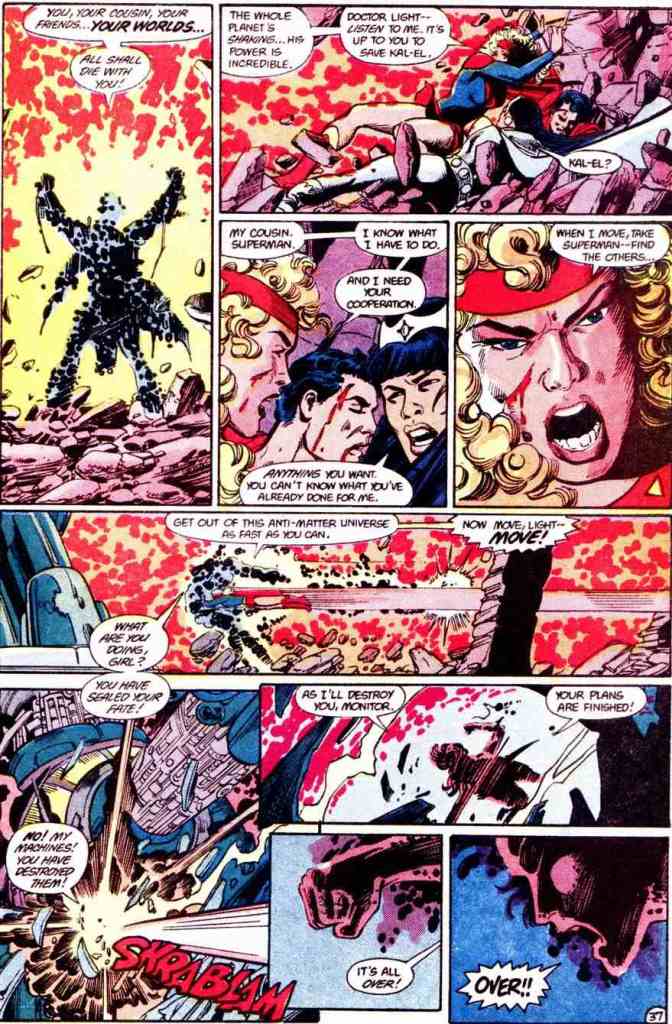
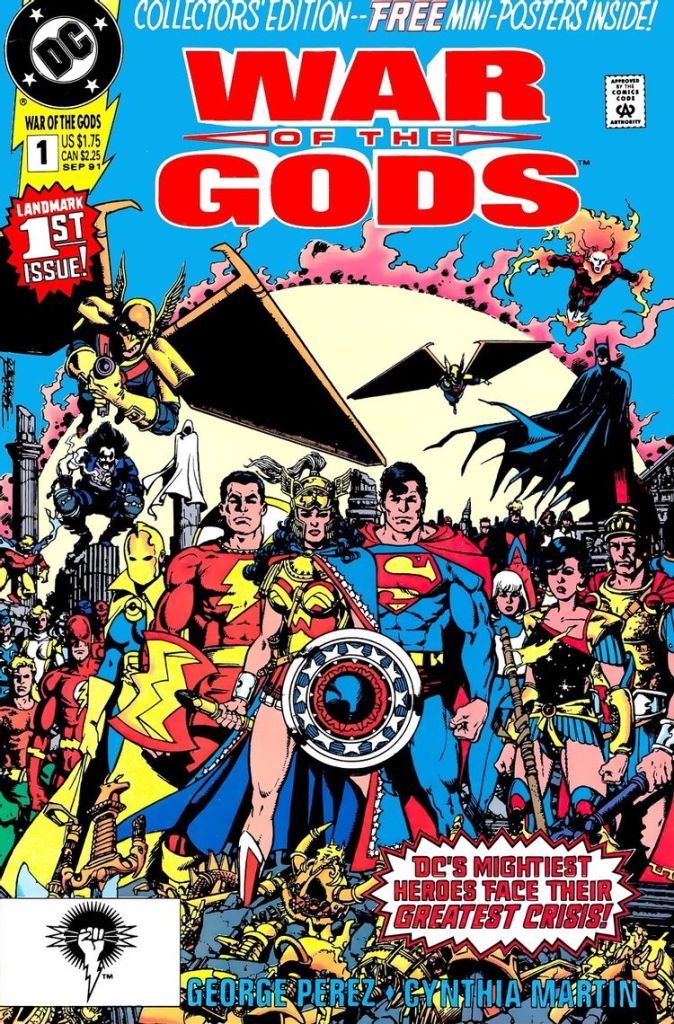
Truly, George Perez will be missed by a lot of people and his countless pieces of works will be revisited in the foreseeable future. In closing this piece, posted below are varied works (comic book covers and interior art) done by the late creator through the decades for your viewing pleasure and learning. This is a tribute to Perez and may he rest in peace!

+++++

Note: All images shown are properties of their respective companies.

Thank you for reading. If you find this article engaging, please click the like button below and also please consider sharing this article to others. If you are looking for a copywriter to create content for your special project or business, check out my services and my portfolio. Feel free to contact me with a private message. Also please feel free to visit my Facebook page Author Carlo Carrasco and follow me on Twitter at  @HavenorFantasy as well as on Tumblr at https://carlocarrasco.tumblr.com/ and on Instagram at https://www.instagram.com/authorcarlocarrasco/
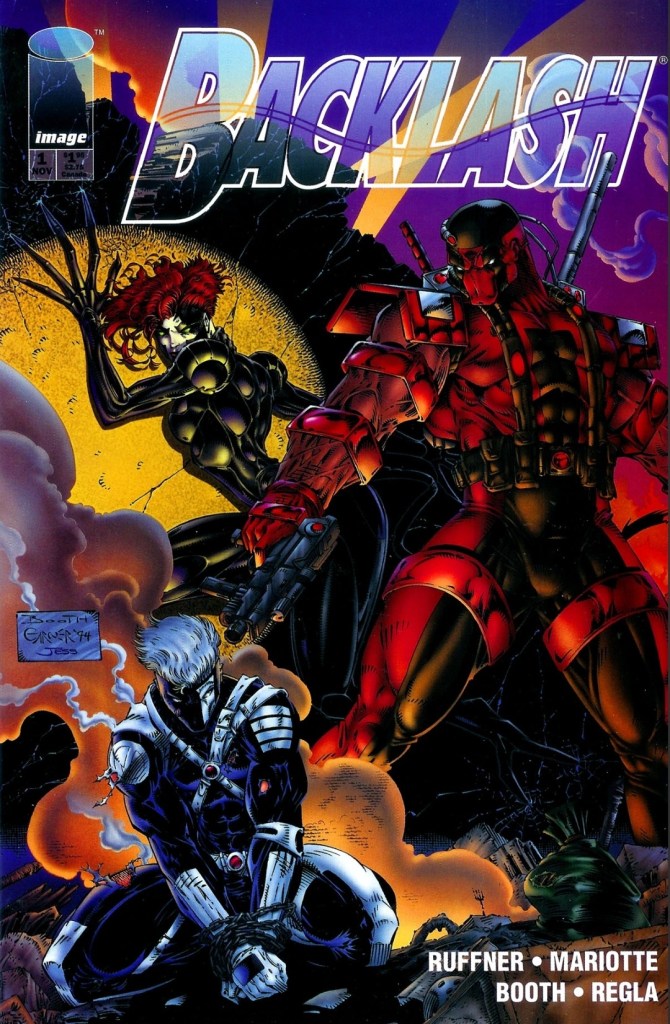
A Look Back at Backlash #1 (1994)

Disclaimer: This is my original work with details sourced from reading the comic book and doing personal research. Anyone who wants to use this article, in part or in whole, needs to secure first my permission and agree to cite me as the source and author. Let it be known that any unauthorized use of this article will constrain the author to pursue the remedies under R.A. No. 8293, the Revised Penal Code, and/or all applicable legal actions under the laws of the Philippines.

Welcome back superhero fans, 1990s arts and culture enthusiasts and comic book collectors! Today we continue revisiting the Wildstorm universe as it was under the Image Comics banner back in the 1990s. Recently, I reviewed back-to-back issues of Jim Lee’s WildC.A.T.S: Covert Action Teams that involved Chris Claremont and his creation Huntsman (click here, here, here and here) which ultimately expanded the lore of the team within the Wildstorm universe of the time while developing Zealot tremendously.

Still within the Wildstorm universe of the 1990s, it’s time to shift to another key figure – Backlash (civilian identity: Marc Slayton) co-created by Jim Lee and Brett Booth (follow him at Twitter and visit his blog). To put things in perspective, Backlash and WildC.A.T.S’ popular Grifter (Cole Cash) have something in common other than being highly capable fighters – they were teammates within Team 7 long before StormWatch (note: Backlash first appeared in StormWatch #3 in 1993) and WildC.A.T.S were formed. In fact, Team 7 also had Michael Cray (Deathblow), Jackson Dane (Wetworks) and John Lynch (who appeared in early WildC.A.T.S issues and went on to be the mentor in Gen13) who went on to become important Wildstorm figures in the present day.

In 1994, a 4-issue mini-series titled The Kindred was published featuring Backlash and Grifter with a story written by Jim Lee, Brandon Choi, Brett Booth (who illustrated) and Sean Ruffner. Months after that mini-series ended, a regular series focused on Backlash was launched.

With those details laid down, here is a look back at Backlash #1, published by Image Comics in 1994 with a story written by Ruffner, Jeff Mariotte and Booth. Booth was the artist.

The cover.

Early story

The story begins with Backlash quietly infiltrating the Edward H. Levi Federal Penitentiary, a facility designed to control the growing population of criminal super-powered beings (SPBs). Eventually two armored guards pass by and as soon as one of them notices signs of the break-in, Backlash takes them down using his psionic whip and hard action.

After subduing two more pairs of guards, Backlash enters a large place that has prisoners contained in what he refers to as “aquariums”. Two of the prisoners recognize him. He finally reaches the cell of a red-headed lady named Amanda Reed – also known as Taboo – who has been imprisoned for murder. Backlash makes an offer – if she helps him, he will get her out of the prison…

Quality

Backlash struggling on the way of getting out with Taboo.

Let me start with the story. This comic book has an unusual approach on its plot in which the flashbacks are more prominent than the present-day tale of Backlash freeing Taboo and getting out of the prison. The good news here is that the flashbacks are pretty engaging to read and they solidly fulfilled the writers’ goals of immersing the readers with useful story details and building up the tension while also emphasizing Backlash’s personality and what motivates him deep from within. To put it short, the flashbacks are the most important features of the storytelling and they also have the most interesting scenes (including an encounter with Pike who previously appeared in the early issues of WildC.A.T.S). The present-day view of the plot lack engagement compared to the flashbacks but the creative team succeeded in emphasizing Taboo, what she is capable off and why she is feared.

The characterization of Marc Slayton is pretty good in my view. By the time I reached the end of this comic book, I found him to be a really intriguing protagonist. Backlash is definitely not inspiring but the irony is that his personality and purpose within the Wildstorm universe of the time were compelling enough to follow.

When it comes to the art, Brett Booth’s work here is still good to look at as I follow the story. Be mindful that this was his work when he was very young and as seen in this comic book, he definitely proved his talent, his art style was clearly distinct and he was capable of coming up with really good action scenes that really made Backlash a notable Wildstorm action hero. It should be noted that Booth illustrated this comic book with dynamism in mind.

Conclusion

A key scene from the past of Marc Slayton/Backlash nicely drawn by Brett Booth.

Backlash #1 (1994) is fun and compelling to read. The flashbacks are strangely the most engaging parts of the plot and they succeeded in getting me oriented with the protagonist, what has been going on and what the stakes are right at the start of this particular series. Combined with the still-good-to-view art by a very young Brett Booth, this comic book has a lot of fun stuff to enjoy especially for those who are obsessed or simply wanting to discover more about the Wildstorm universe of the 1990s.

Backlash #1 (1994) is recommended.

+++++

Thank you for reading. If you find this article engaging, please click the like button below and also please consider sharing this article to others. If you are looking for a copywriter to create content for your special project or business, check out my services and my portfolio. Feel free to contact me with a private message. Also please feel free to visit my Facebook page Author Carlo Carrasco and follow me on Twitter at  @HavenorFantasy as well as on Tumblr at https://carlocarrasco.tumblr.com/ and on Instagram athttps://www.instagram.com/authorcarlocarrasco/

A Look Back at WildC.A.T.S: Covert Action Teams #13 (1994)

Disclaimer: This is my original work with details sourced from reading the comic book and doing personal research. Anyone who wants to use this article, in part or in whole, needs to secure first my permission and agree to cite me as the source and author. Let it be known that any unauthorized use of this article will constrain the author to pursue the remedies under R.A. No. 8293, the Revised Penal Code, and/or all applicable legal actions under the laws of the Philippines.

Welcome back superhero fans, 1990s arts and culture enthusiasts and comic book collectors! Today we continue revisiting Jim Lee’s flagship title under the Image Comics label – WildC.A.T.S: Covert Action Teams!

For the newcomers reading this, I’ve been doing retro reviews of WildC.A.T.S that had Chris Claremont and Jim Lee collaborating together during the early Image Comics years following their previous works together on X-Men comic books while they were at Marvel. Issue #10 of WildC.A.T.S saw the debut of Claremont’s very own Huntsman while Zealot became the major character among her teammates (note: Voodoo had the 2nd most amount of page presence while the rest made very short appearances). In issue #11, the stakes were raised as most of the WildC.A.T.S got captured by the new super villainess Tapestry and Voodoo remained possessed, leaving Zealot as the only free team member who – out of fear – had to reach out for reinforcements (note: brand new characters who happened to have history with Zealot). In issue #12, Zealot and Huntsman really struggled clashing with the Troika while the reinforcements were on their way. What happened saw new revelations about Zealot and the plot expectedly built up the anticipation of the next big conflict.

The issue I am about to review is the conclusion of the current storyline Claremont wrote and  Lee illustrated which, so far, expanded the lore of the WildC.A.T.S within the WildStorm universe of the time. So far, I’ve been enjoying re-reading WildC.A.T.S issues #10 to #12, seeing what kind of creative stuff Claremont and Lee could make while being free from the restrictions and limitations of Marvel Comics.

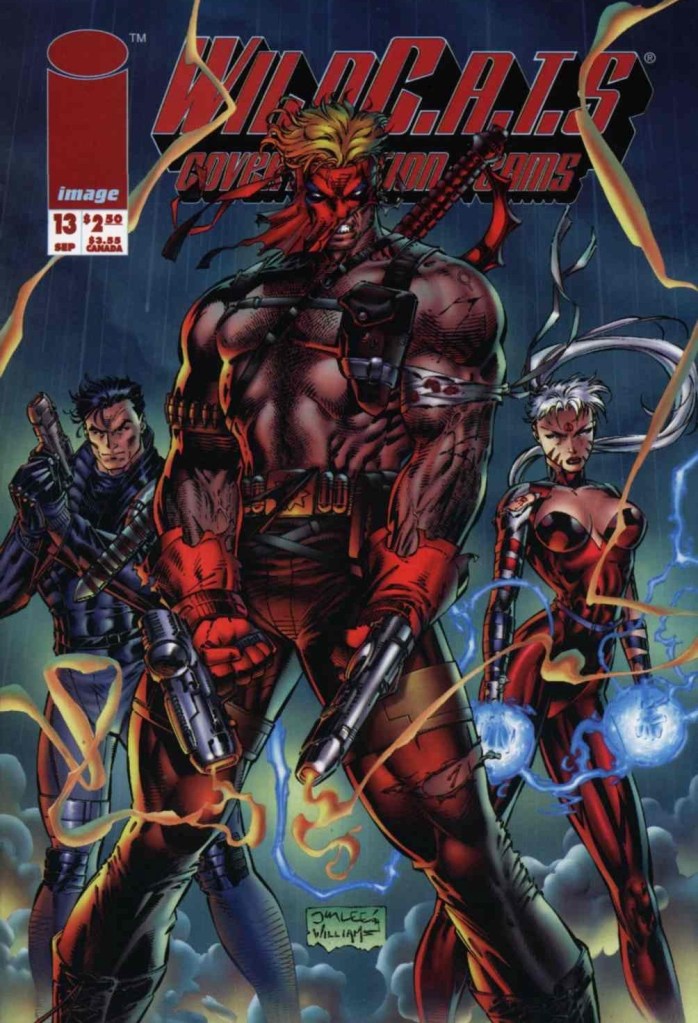
With those details laid down, here is a look back at WildC.A.T.S: Covert Action Teams #13, published by Image Comics in 1994 with a story written by Chris Claremont and drawn by Jim Lee.

The cover.

Early story

The story begins with the possessed Voodoo – now looking frail and ugly as a result of Raksha’s hunger for flesh – attacking Jacob Marlowe’s two trusted assistants who arrived to help her. Deep inside her body struggling with Raksha’s possession, Pris manages to stop her attack – Voodoo’s face restored to normal – and warns Jules and Stansfield that Jacob and her teammates have been turned into evil by Tapestry and that Zealot may still be free.

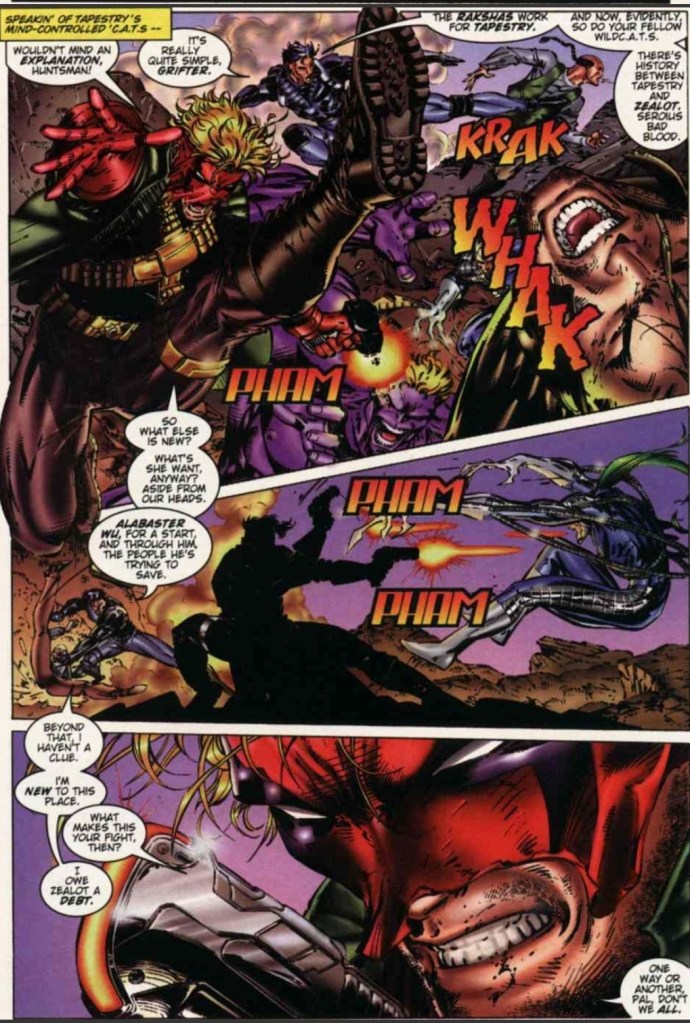
Meanwhile, Grifter, Hunstman, Zealot, Savant, Soldier and Mr. Majestic fight the mind-controlled WildC.A.T.S – Spartan, Maul, Jacob Marlowe and Warblade – and Alabaster Wu who are acting under Tapestry’s evil. As Grifter shoots Maul and kicks Jacob Marlowe’s head, Huntsman reveals to him that Tapestry and Zealot have a history together while Alabaster Wu was trying to save his people…

Quality

Chris Claremont’s Huntsman contributes solidly into the story even though he is not protagonist.

As expected, this storyline-concluding issue delivers the natural progression of what started in issue #10 laced with lots of solidly fun action, key character interactions and more notably the further development of Zealot supported by Huntsman. To put it short, if you enjoyed the previous works of the Claremont-Lee creative team and you enjoy the early, bombastic ways of WildC.A.T.S, then this comic book should delight you.

Without spoiling the entire plot, this comic book concludes the storyline that started in issue #10 and it also marked the end of Claremont-Lee’s collaboration on this particular volume of the WildC.A.T.S comic book series. What is very notable in my view is the way Claremont emphasized the evolution of Zealot not only as a WildC.A.T.S member but also her very own personality as well as her very own spot within the WildStorm universe.

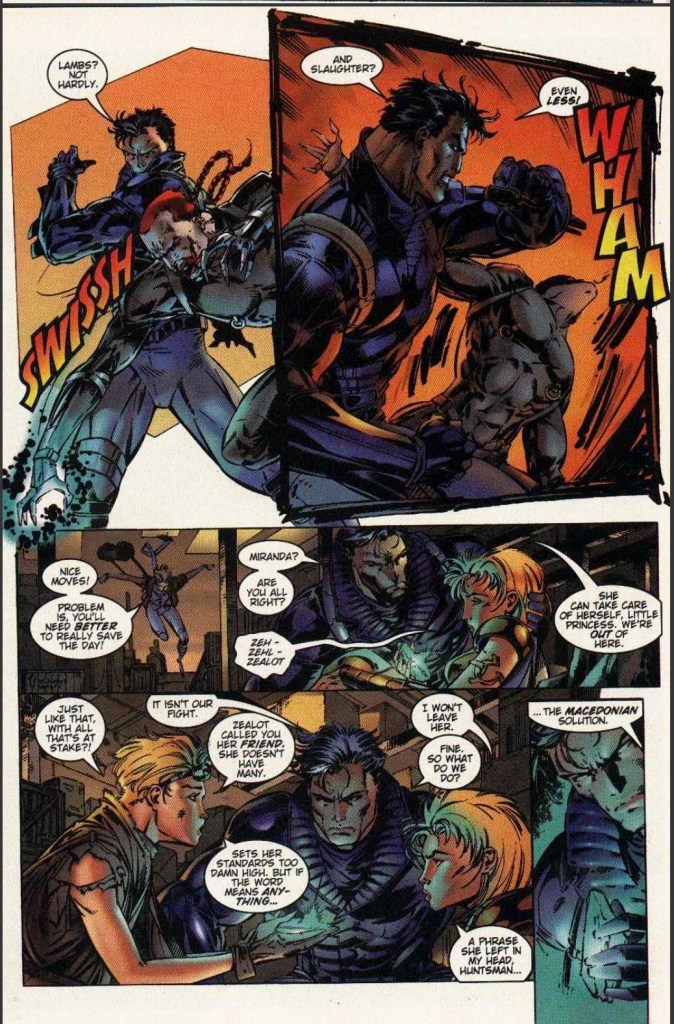
It is in this storyline where you will see Zealot being much more than just a fearless, hard-fighting warrior who lives by the strict standards of the Coda. In this particular comic book, her greater purpose is realized (and you will realize that in a particular scene with Savant late in the story) and the interactions she has with the Huntsman, her sister Savant and others really brought out more of her personality. This is clearly Zealot redefined just as Claremont expanded the lore of the WildC.A.T.S.

Fans of Grifter should be happy to learn that their favorite character (who returned at the end of issue #11) joined the big battle and Claremont’s prepared dialogue of him made him more livelier than his usual portrayal in this comic book series. Huntsman, meanwhile, is his usual honorable self but gets to define his place among the WildC.A.T.S through action. His companion Miranda (now wearing armor thanks to Zealot) plays a short yet notable key role in the story.

The reinforcements composed of Mr. Majestic, Savant and Soldier each have a stronger presence in this story which is expected and they don’t just talk and do some action…they also contributed to the plot and what Savant knew emphasized the essence of the conflict between Zealot and Tapestry.

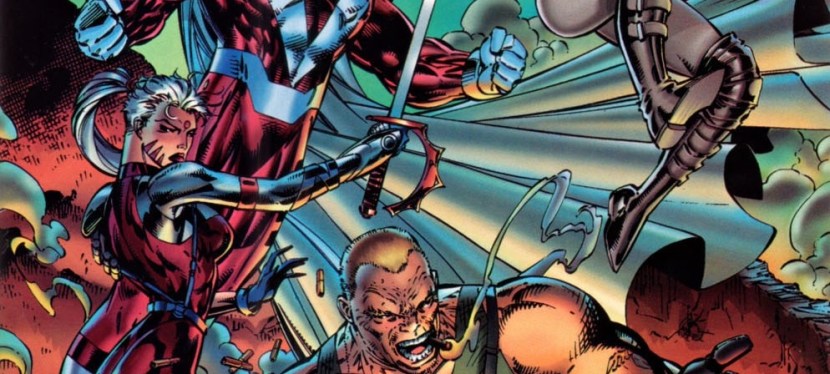
As for the super villainess herself, Tapestry is very convincingly evil and this comic book shows exactly why the fearless Zealot deeply fears her and why she is a danger to everyone. While she has a very sinister agenda, Tapestry’s confirmation of her origin (in the form of dialogue) and what her place is between the Daemonites and Kherubim will intrigue readers, most especially WildC.A.T.S fans. As for her conflict with Zealot, this comic book will show you how they are connected with each other and what elements connect them together. Their spectacle-filled duel here is a must-see and you will enjoy it a lot when you pay attention to the details (read Savant’s expository dialogue) as the action happens.

When it comes to artwork, fans of Jim Lee should know that this comic book has some of very best pieces of art the famed creator ever made during his time with Image Comics. Very clearly, Lee took his time designing the shots and when to really go out with great visual detail as the story went on.

Conclusion

In the heat of a battle against the other WildC.A.T.S, Grifter and Huntsman still managed to talk.

I can say that WildC.A.T.S: Covert Action Teams #13 (1994) is still a great comic book as it solidly and satisfyingly concluded the 4-part storyline that Chris Claremont came up with in this collaboration with Jim Lee. More on the storyline itself, Claremont took a really daring approach on presenting the titular team by having Zealot in the lead (with his creation Huntsman as the 2nd major player) and then putting most of the other team members on the background which effectively emphasizes the presence of the very wicked Tapestry (truly the definitive parallel to Zealot) along with the Troika (note: this is their best and most action-packed portrayal).

While this WildStorm universe-building story concept could put off some Claremont-Lee team fans who expected to see a WildC.A.T.S story fashioned like what was seen in the creators’ past X-Men works, this particular storyline for me is still a great read and its concept is commendable.

I should also state that the themes of omnipotence, legacy and destiny are all well defined in this comic book which made the 4-part storyline make more sense to read and analyze. More on Zealot, the way Claremont developed her will make you think deeply about how you should perceive her, how you think her place within the WildC.A.T.S will affect her teammates, etc. This comic book and its three immediate predecessors all have very solid writing by Claremont!

Overall, WildC.A.T.S: Covert Action Teams #13 (1994) is highly recommended!

+++++

Thank you for reading. If you find this article engaging, please click the like button below and also please consider sharing this article to others. If you are looking for a copywriter to create content for your special project or business, check out my services and my portfolio. Feel free to contact me with a private message. Also please feel free to visit my Facebook page Author Carlo Carrasco and follow me on Twitter at  @HavenorFantasy as well as on Tumblr at https://carlocarrasco.tumblr.com/ and on Instagram athttps://www.instagram.com/authorcarlocarrasco/

A Look Back at WildC.A.T.S: Covert Action Teams #12 (1994)

Disclaimer: This is my original work with details sourced from reading the comic book and doing personal research. Anyone who wants to use this article, in part or in whole, needs to secure first my permission and agree to cite me as the source and author. Let it be known that any unauthorized use of this article will constrain the author to pursue the remedies under R.A. No. 8293, the Revised Penal Code, and/or all applicable legal actions under the laws of the Philippines.

Welcome back superhero fans, 1990s arts and culture enthusiasts and comic book collectors! Today we continue revisiting Jim Lee’s flagship title under the Image Comics label – WildC.A.T.S: Covert Action Teams!

Previously, I reviewed WildC.A.T.S #11 which served as a build-up issue with the titular team and their place within the WildStorm universe in mind. Considering how much the narrative in issue #10 was driven through Zealot’s struggles and her meeting the Huntsman (his debut), issue #11 was alienating as the two mentioned characters had significantly lesser exposure. Of course, it is noted that issue #11 saw the rather heavy entry of Tapestry, an eroticized and highly manipulative villainess who not only encountered the fearless Zealot ages prior but also scared her deep inside. Out of fear and desperation, Zealot summoned her long-time ally Savant who in turn reached out to Soldier (who also knew Zealot) and Mr. Majestic (only mentioned by name). Issue #11 also saw the rise of the Troika (Attica, Slag and H.A.R.M.) in terms of exposure and even character development.

At this stage, it was clear that franchise creator Jim Lee literally gave author Chris Claremont the driver’s seat to develop the WildC.A.T.S franchise significantly and lead it to a new, bold direction. It was clearly the most unconventional WildC.A.T.S story published at the time!

With those details laid down, here is a look back WildC.A.T.S: Covert Action Teams #12, published by Image Comics in 1994 with a story written by Chris Claremont and drawn by Jim Lee.

The cover.

Early story

The story begins with the Huntsman driving the high-tech motorcycle with Miranda and an ailing Zealot seated in the side-car. They are being chased and attacked by the Troika from above (Attica and Slag riding on H.A.R.M. in its aircraft form) firing several rockets at them. While the rockets caused huge explosions on the city street, Attica states he will consider the attack on their targets successful only he sees their dead bodies.

Meanwhile inside a facility, Tapestry continues to deeply manipulate the mind of Warblade among the captured WildC.A.T.S members. Already Jacob Marlowe and even the cybernetic Spartan have been manipulated to do her bidding. As Tapestry continues working on Warblade in the presence of Soma and the others, the Raksha-possessed Voodoo hungers for new meat.

Moments later, as Voodoo goes out agonizing over the craving, a vehicle – with Jacob Marlowe’s loyal assistants Jules and Stansfield – arrive. Deep inside Voodoo, a conflict between her and the Raksha occupying her body begins… 

Quality

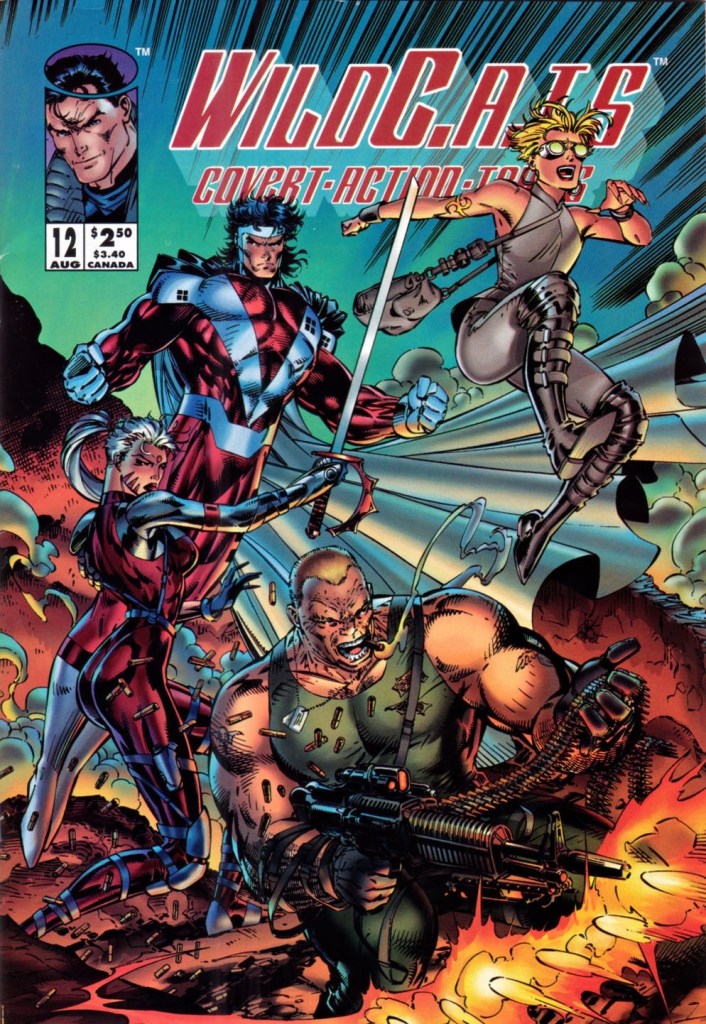
Mr. Majestic is the WildStorm universe’s parallel to DC Comics’ Superman!

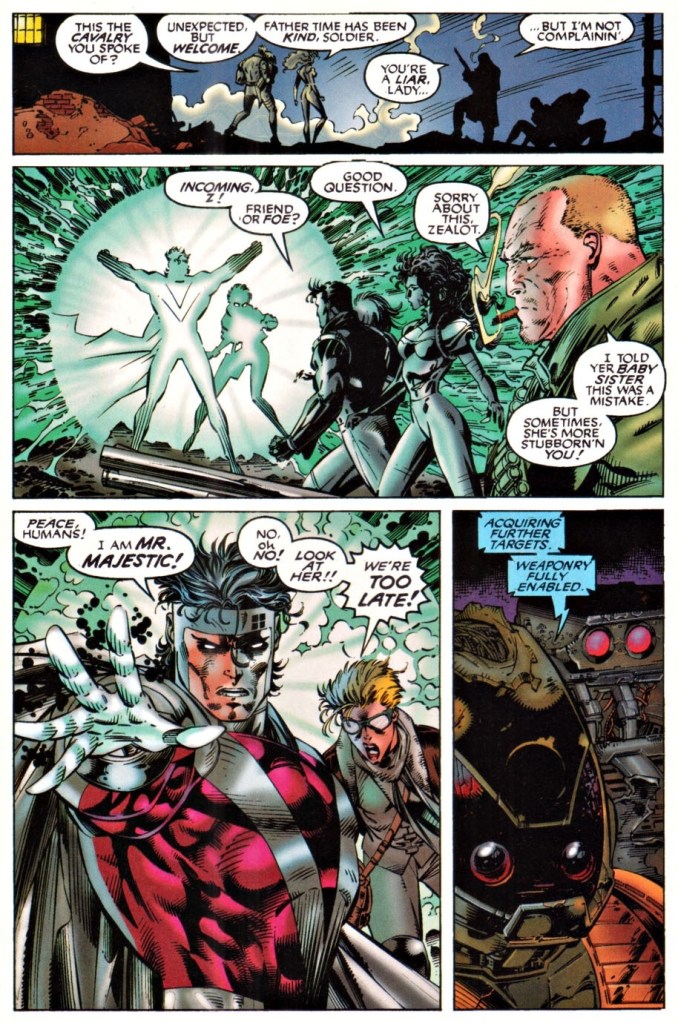
Like issue #11, this comic book continues to build-up the WildC.A.T.S lore but with notable differences. For one thing, the story moved forward more while also having the intensity build up constantly leading to the set-up of the upcoming conflict between Tapestry’s troops (along with the manipulated WildC.A.T.S) and Zealot with Hunstman (and the incoming reinforcements). To put it short, the exposition in this story was less and the plot noticeably progressed more.

When it comes to the significance of the characters, this time the narrative’s spotlight shifted back more on Zealot and Huntsman which was the right move pulled off by the creators as Tapestry was already established as the new force of evil for the good guys to deal with. As for the new characters introduced in the previous issue, Tapestry has a smaller share of the spotlight while Savant and Soldier are present again but only after much of the action had passed. It is also in this issue that Mr. Majestic appears at last marking the start of his involvement in the conflict.

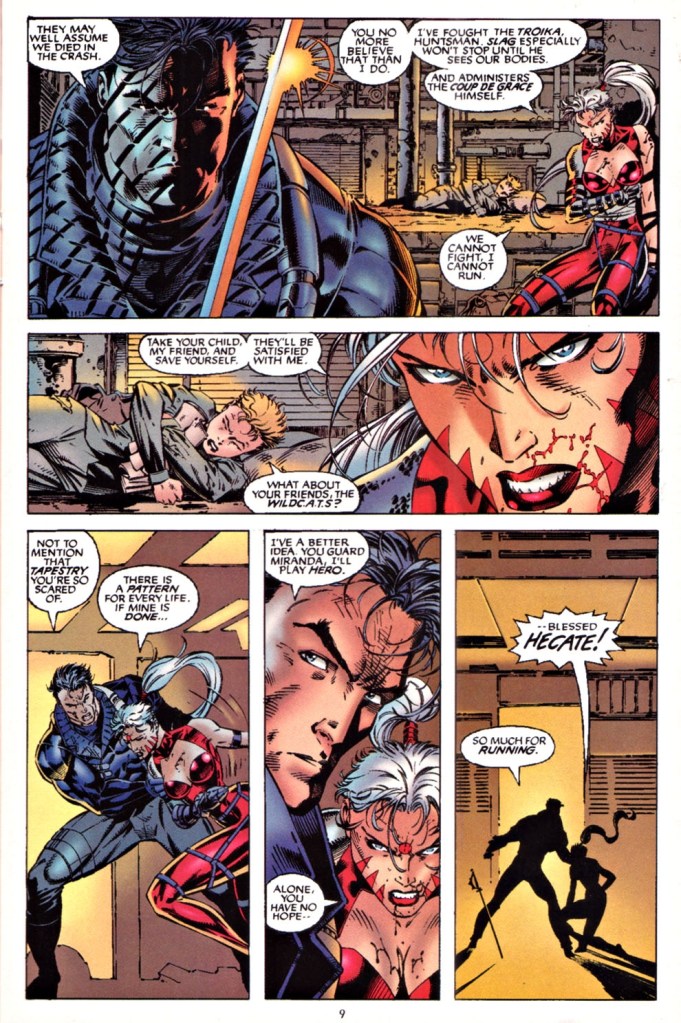
As for Zealot and the Huntsman, their alliance in this story has progressed more as well. Under Chris Claremont, the fearless Zealot was portrayed to be struggling very hard as she became more vulnerable than ever! This is Zealot that has to be seen! As for Huntsman, he truly is an effective fighter. So much so, he sure can fit into the WildC.A.T.S and keep up with their action. Still, Huntsman is indeed an honorable man as he still dedicates himself in protecting Miranda (who is a lot more than she appears) while making his moves to help Zealot at her most vulnerable time.

When it comes to the visuals, this is one Jim Lee-drawn comic book that I found unusually alienating to look at. His penciled art are still here but in certain pages, they looked odd as they were inked by other people. The ink work done on page 17 really stood out with a very high contrast look.

Conclusion

By this point of the storyline, Zealot and Huntsman are clearly the major characters.

While it is essentially a build-up issue, the entertainment value in WildC.A.T.S: Covert Action Teams #12 (1994) went up as the story progressed more, the spotlight shifted more on Zealot and Huntsman (clearly the two major characters for this storyline) and the exposition and explanations were lessened. The ironic thing is that readers will see less of the titular team (as most of them were captured and being manipulated by Tapestry) here. The presence of Savant, Soldier and Mr. Majestic here is pretty light which is understandable as the focus on Zealot and Huntsman was deeper this time. Ultimately, this comic book sets the readers up to for the inevitable big battle in the next issue.

If you are seriously planning to buy an existing hard copy of WildC.A.T.S: Covert Action Teams #12 (1994), be aware that as of this writing, MileHighComics.com shows that the near-mint copy of the regular edition costs $20 while the near-mint copy of the newsstand edition costs $60.

Overall, WildC.A.T.S: Covert Action Teams #12 (1994) is highly recommended.

+++++

Thank you for reading. If you find this article engaging, please click the like button below and also please consider sharing this article to others. If you are looking for a copywriter to create content for your special project or business, check out my services and my portfolio. Feel free to contact me with a private message. Also please feel free to visit my Facebook page Author Carlo Carrasco and follow me on Twitter at  @HavenorFantasy as well as on Tumblr at https://carlocarrasco.tumblr.com/and on Instagram at https://www.instagram.com/authorcarlocarrasco/
A Look Back at WildC.A.T.S: Covert Action Teams #11 (1994)

Disclaimer: This is my original work with details sourced from reading the comic book and doing personal research. Anyone who wants to use this article, in part or in whole, needs to secure first my permission and agree to cite me as the source and author. Let it be known that any unauthorized use of this article will constrain the author to pursue the remedies under R.A. No. 8293, the Revised Penal Code, and/or all applicable legal actions under the laws of the Philippines.

Welcome back superhero fans, 1990s arts and culture enthusiasts and comic book collectors! Today we continue revisiting Jim Lee’s flagship title under the Image Comics label – WildC.A.T.S: Covert Action Teams!

Last time around, I reviewed the 10th issue of the WildC.A.T.S series which saw the reunited work of Chris Claremont and Jim Lee who previously worked together on making many memorable X-Men comic books during their time with Marvel Comics (note: check out three retro reviews of Claremont-Lee X-Men comics by clicking here, here and here).

Being free from the constraints and hurdles of Marvel, WildC.A.T.S #10 showed what Claremont added to Lee’s superhero team while also unveiling the Huntsman (Claremont’s own creation). Even as the story – which had Zealot as the lead character followed by Voodoo and Huntsman – had lots of build-up and the rest of the WildC.A.T.S only had a minor share of the spotlight, Lee still managed to make the story filled with a good amount of spectacle for readers to enjoy. I really liked WildC.A.T.S #10 a lot and in my view, it has aged well.

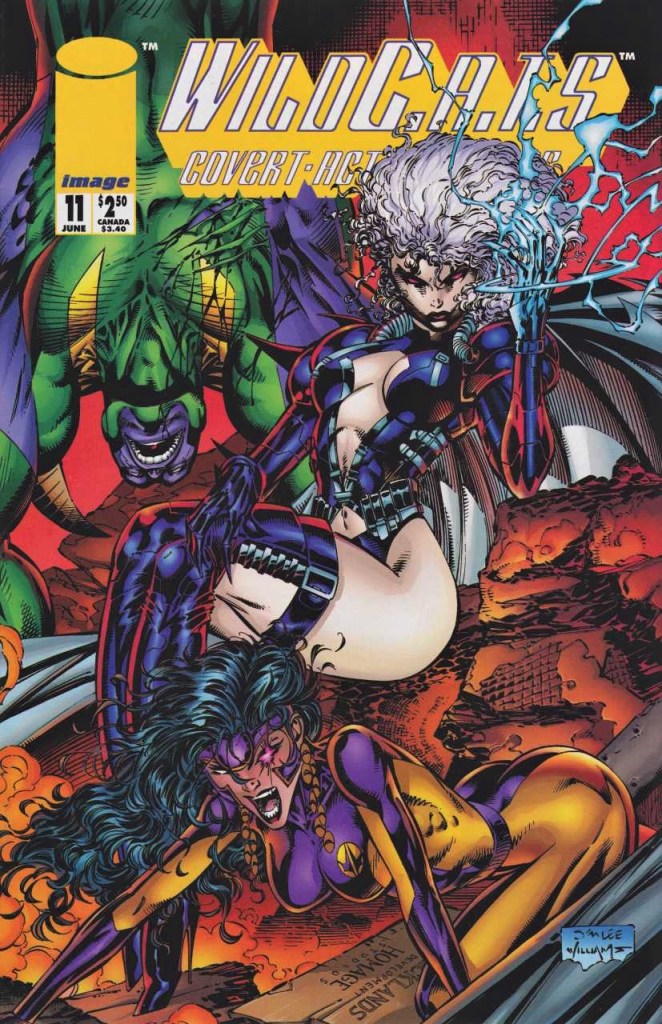
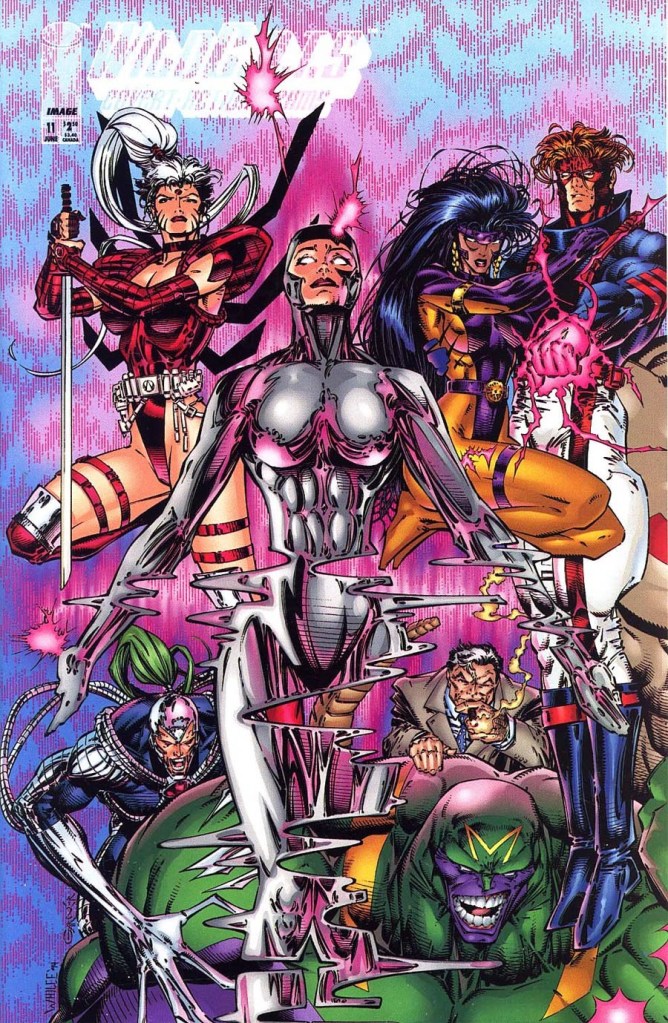
With those details laid down, here is a look back WildC.A.T.S: Covert Action Teams #11, published by Image Comics in 1994 with a story written by Chris Claremont and Drawn by Jim Lee. Scott Williams is in-charge with the ink work. This comic book has a variant cover edition with the cover art done by While Portacio.

The cover.
The variant cover edition with art by While Portacio.

Early story

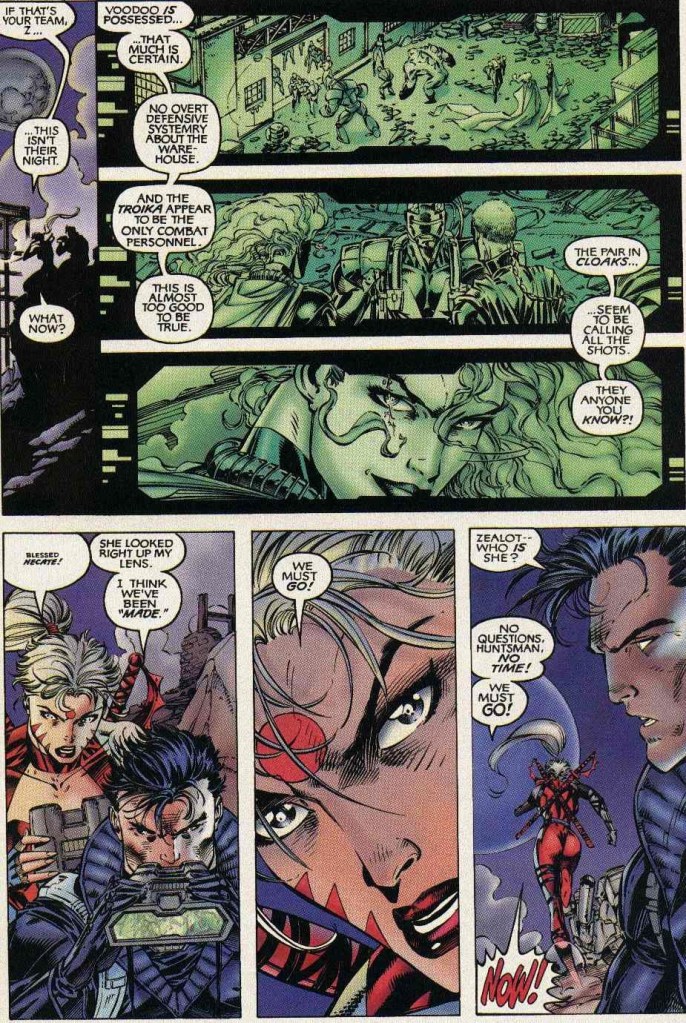
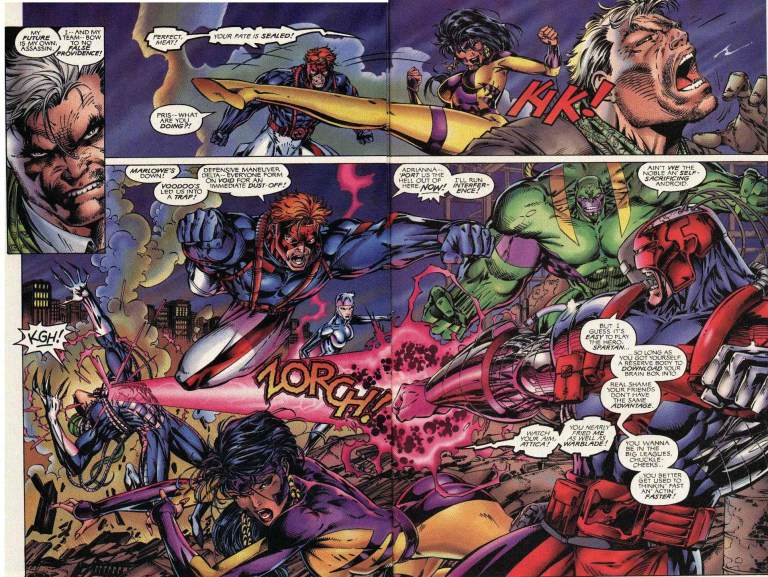
The story begins moments after Jacob Marlowe secretly met with Alabaster Wu. The WildC.A.T.S – composed of Spartan, Warblade, Void, Maul and the possessed Voodoo – find themselves facing with the Troika – composed of Attica, Slag, H.A.R.M. and Providence – who came in by surprise with the intention to overwhelm them. Providence states that Jacob Marlowe’s destiny is sealed with doom.  

Just after Marlowe expressed defiance, the Raksha-controlled Voodoo knocks him out with a hard kick from behind. This surprises Spartan who immediately jumps into action and orders his teammates to form on void for an immediate dust-off. The battle between the Troika and the WildC.A.T.S starts, Attica hits Warblade. Void then discovers that some force is preventing her from teleporting. It turns out, Providence manipulated the quantum field. Using tremendous power, Providence overwhelms Void which puts the WildC.A.T.S into serious trouble.

Meanwhile on the streets of Brooklyn, Zealot, Huntsman and the teenager Miranda are riding fast together. Zealot says that the communication with her team has gone off-line and she only has their current position…

Quality

Even the fearless and disciplined Zealot is scared of the new super villain Tapestry.

I’ll start first with the presentation of characters and related developments. While the WildC.A.T.S themselves appeared a lot more here than in the previous issue, they did not end up as the dominating characters in the narrative. Even Zealot and Huntsman had reduced shares of the spotlight. This is because Claremont’s script introduced a few yet clearly significant characters while remaining focused on building up tension in relation to the growing presence of a new force of evil (note: the ugly and scary looking monsters called Raksha are connected with them) on Earth with two distinct figures as evil leaders – Soma and Tapestry. As the WildC.A.T.S fell short of achieving any heroics, their new statuses as targets and tools of Tapestry ultimately made sense in the plot. This is a rather daring way Claremont used to tell a WildC.A.T.S tale that has the titular team in their most vulnerable state yet.

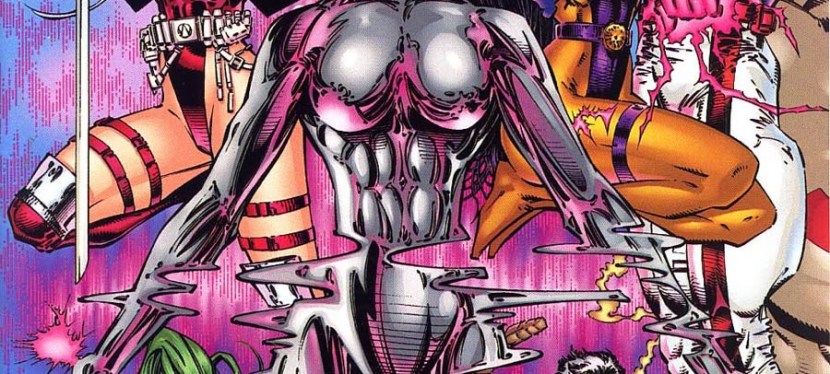
While Soma does have an intimidating presence, it is obvious that Tapestry (who has an eroticized design and is the self-declared weaver of souls and shaper of fate) is the most visceral supervillain here and I had the impression that she was planned to be a major enemy towards the WildC.A.T.S comparable with Helspont. Even the fearless warrior Zealot fears Tapestry.

In a clear move to expand the lore of the WildC.A.T.S series within the WildStorm universe, this comic book saw the entry of Savant (an important associate of Zealot’s) and Soldier (the WildStorm’s own parallel to DC Comics’ Sgt. Rock) plus the mention of Mr. Majestic. Savant and Soldier are not just mere additional characters thrown into the mix but they each have established places within the WildStorm universe that just have not been seen by readers at the time of publishing. Claremont wrote Savant and Soldier as individuals who both knew Zealot from some time before and, more importantly, he made them believable to read even though this comic book only showed little of them.

When it comes to character portrayals, Claremont’s creativity showed Attica clearly having much more personality just as the Troika returned (late in issue #10). The head of the Troika in this comic book was presented as a business-dealing killer who does not hesitate to tell his client to beware of Zealot and Grifter (note: he was last seen in issue #8) as those two are the most dangerous WildC.A.T.S members. Attica’s companion Slag is more expressive here and while H.A.R.M.’s mechanical perspective is emphasized more which reminds me somewhat of the cinematic Terminator reading commands internally. Indeed, there was inspiration behind Claremont’s writing.

With regards to the plot, this comic book has a simple story structure that just so happens to have lots of exposition, explanations and the introduction of new characters destined to become more important later. Combined with the art of Jim Lee, the story still works on engaging and entertaining me. Re-reading this story is still a lot fun after all these decades.

Conclusion

WildC.A.T.S in bombastic action with the Troika.

Given the way it was crafted and structured by Claremont, WildC.A.T.S: Covert Action Teams #11 (1994) is easily the most unconventional tale of the series at the time of its publication. Unsurprisingly, Jim Lee’s art here is of top-notch quality and he continued to excel in providing readers the adulterated superhero spectacle while also making the more character-focused scenes look interesting (note: there are flashbacks to WildC.A.T.S #1 during Tapestry’s examination of Jacob Marlowe’s memories). As the WildC.A.T.S – without Grifter and Zealot specifically – were at their most vulnerable, this could alienate the die-hard fans who are expecting the usual stuff they love (note: bombastic action against bad guys with character moments in between) to pour in. What I want readers and the die-hard fans to understand is that they should pay close attention to the growing force of evil under Tapestry (who even scares the very brave Zealot) and think about it as a suitable addition into the WildC.A.T.S lore within the WildStorm universe of the time. This comic book also shows that there is more to be explored beyond the conflict of the Kherubim and the Daemonites. That being said, Chris Claremont and Jim Lee’s combined works here are still very solid, a lot of fun and even intriguing to read.

If you are seriously planning to buy an existing hard copy of WildC.A.T.S: Covert Action Teams #11 (1994), be aware that as of this writing, MileHighComics.com shows that the near-mint copy of the regular edition costs $30 while the near-mint copies of newsstand edition and the signed edition cost $90 and $60 respectively. The near mint-copies of variant cover edition (Whilce Portacio art) and the signed variant covered edition cost $30 and $90 respectively.

Overall, WildC.A.T.S: Covert Action Teams #11 (1994) is highly recommended!

+++++

Thank you for reading. If you find this article engaging, please click the like button below and also please consider sharing this article to others. If you are looking for a copywriter to create content for your special project or business, check out my services and my portfolio. Feel free to contact me with a private message. Also please feel free to visit my Facebook page Author Carlo Carrasco and follow me on Twitter at  @HavenorFantasy as well as on Tumblr at https://carlocarrasco.tumblr.com/and on Instagram at https://www.instagram.com/authorcarlocarrasco/