A Look Back at Godzilla: King of the Monsters #1 (1977)

Welcome back superhero enthusiasts, 1970s arts and culture enthusiasts, Marvel Comics fans and comic book collectors! Today we go back to the year 1977 when Marvel Comics had the license to publish comic books about Japan’s iconic monster Godzilla (Gojira in Japanese) and even integrated him into their shared comic books universe.

The mid-1970s saw a decline of Godzilla’s popularity in Japan as reflected in the commercial disappointment of the movie Terror of Mechagodzilla (1975). The company Toho decided to put on-hold the production of its monster movies without permanently ending the Godzilla film franchise. The next Godzilla movie released was The Return of Godzilla (1984) which proved to be a solid rebound of the Japanese film franchise.

Sometime between the mentioned movies, there was interaction between Toho officials and Marvel Comics – including the late Stan Lee – when the Japanese company screened the movie Godzilla vs. Gigan (titled in America as Monster Island) to the comic guys in relation to the film’s American theatrical release. It turns out Stan Lee enjoyed the movie a lot and seated next to him was writer Doug Moench (the eventual writer for the Godzilla comic book series).

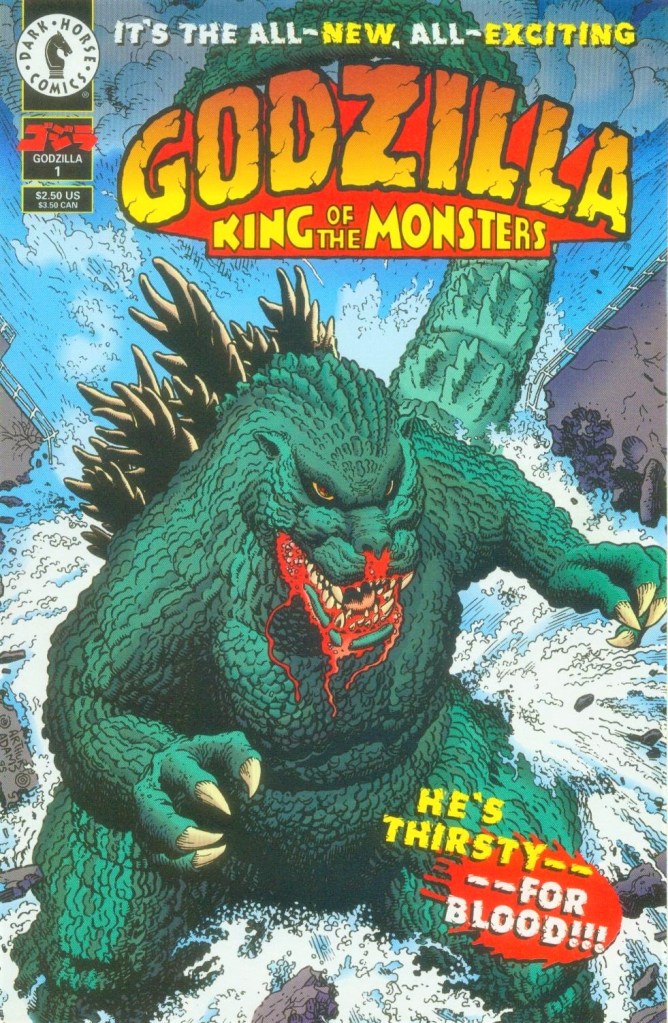
With those details laid down, here is a look back at Godzilla: King of the Monsters #1, published in 1977 by Marvel Comics with a story written by Doug Moench and drawn by Herb Trimpe.
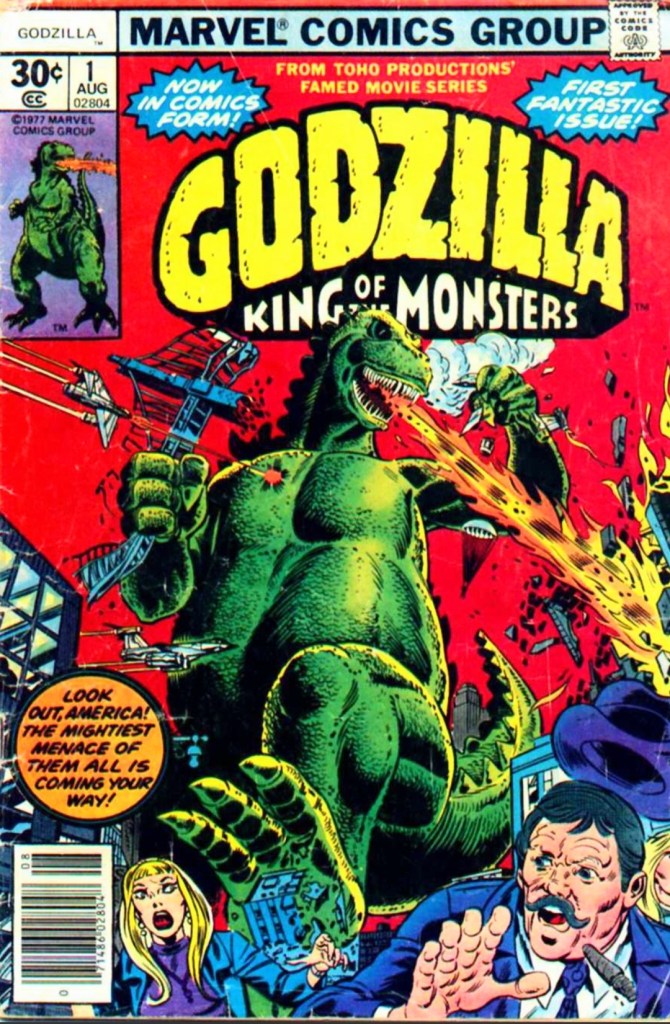
The cover.

Early story

The story begins in Alaska when a huge iceberg suddenly deteriorates unleashing a gigantic monster with sharp teeth, dorsal fins and immense strength – Godzilla. After instantly crushing a supply ship, the monster moves onto the land destroying structures and disrupting the lives of every person nearby.

In response to Godzilla’s rampage in Alaska, S.H.I.E.L.D. dispatches its agents to the site of destruction to take on the monster. Meanwhile, S.H.I.E.L.D. director Col. Nick Fury is transporting with him three Japanese individuals deemed important (with clearances from the Pentagon and the White House)…

Quality
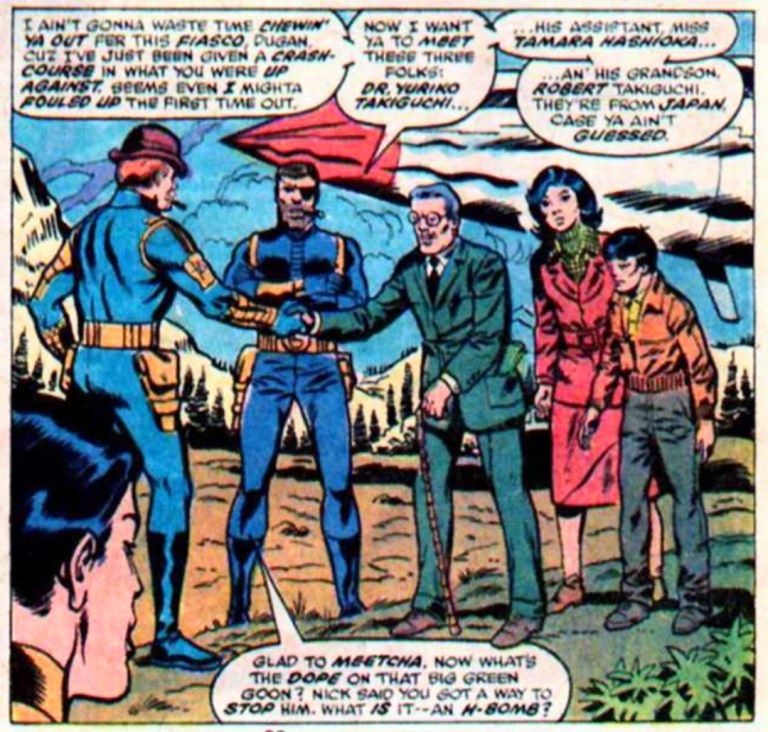
Dum Dum Dugan, Col. Nick Fury and the Japanese characters.

To get straight to the point, this comic book not only marked the literary debut of Japan’s iconic monster under Marvel Comics’ banner but also his integration into the shared universe of the time. That being said, the story written by Doug Mench was pretty much a functional build-up of Godzilla’s presence within the realm of Marvel which includes a strategic choice of having S.H.I.E.L.D. and its characters encountering the monster. In short, the creative team decided not to literally pull out Marvel’s biggest guns (the more popular superheroes and teams) as such a move would have lessened the impact of Godzilla’s debut.

For the most part, S.H.I.E.L.D.’s Nick Fury and Dum Dum Dugan had lively portrayals and the way they reacted to the rampage of Godzilla was believable. The introductions of the Japanese characters (who could provide breakthroughs on dealing with the giant monster) were clearly inspired by the Japanese scientists who were crucial in the plot of the original 1954 movie Gojira.

Going further, Doug Mench went on to efficiently establish Godzilla’s origin which creatively is a sensible reinterpretation of what was established in the 1954 movie. The giant monster’s rise as a result of humanity’s testing of powerful weapons on Earth is definitely here.

As expected, Godzilla is the unrestrained force of destruction but as this comic book was released in the 1970s, the destruction scenes lacked impact as they were creatively sanitized with deliberate moves of showing no casualties no matter what happened. This limitation on the part of Marvel Comics showed they were not willing to emulate the approach on destruction and death that was clearly emphasized in the first Godzilla movie of 1954.

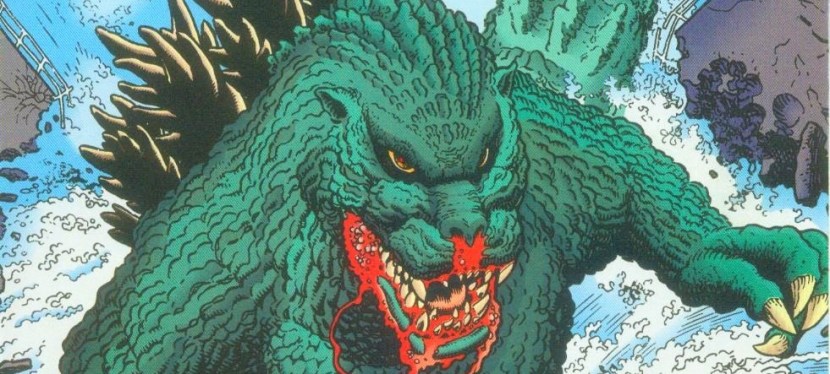
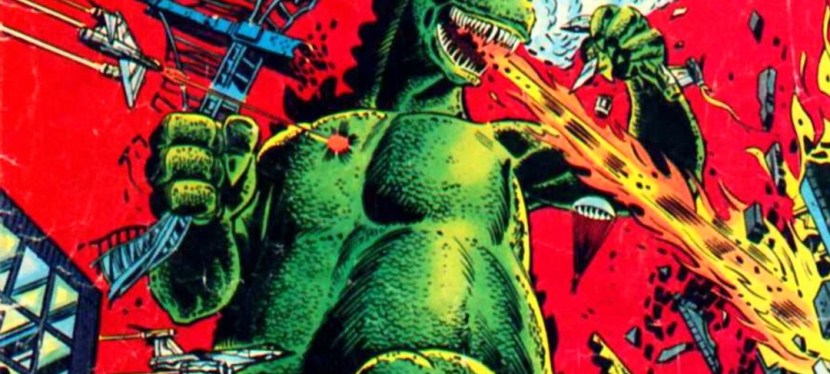
As for Godzilla himself, Herb Trimpe’s visual approach is not really good. While Trimpe implemented the guy-in-a-suit shape on the giant monster’s form, he made Godzilla his own (took no inspiration from Godzilla’s cinematic designs) which resulted in making the icon look unrecognizable. There were inconsistencies on Godzilla’s head as well. In certain shots, Godzilla looked terrifying but in other shots, he looked weird or cartoony. The use of the color green did not make Godzilla look reptilian but rather comical.    

Conclusion
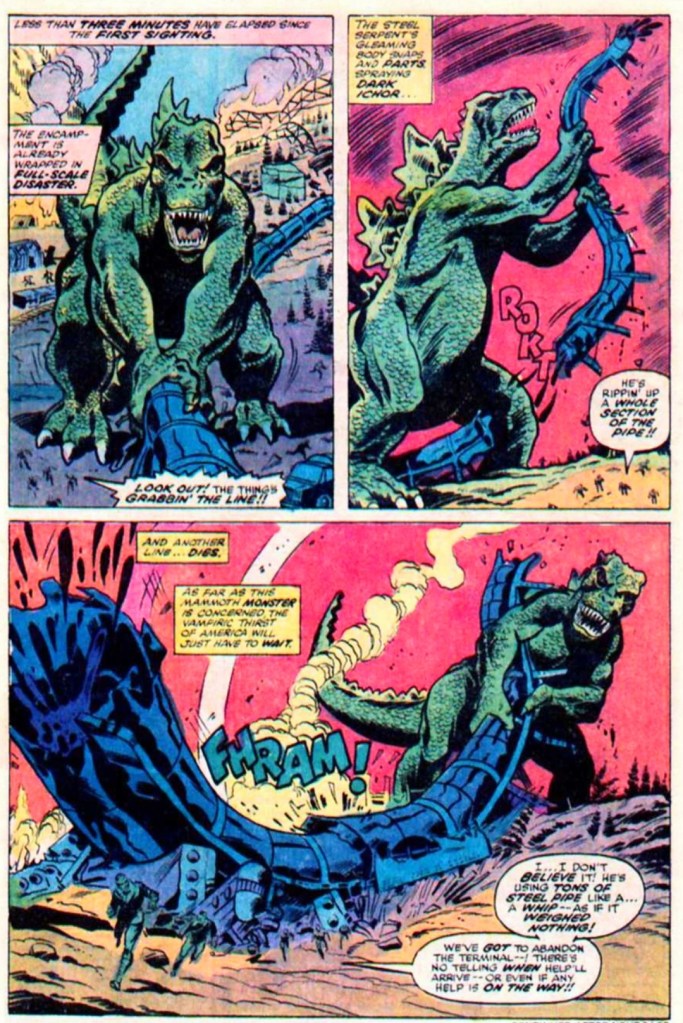
I can only imagine the SJWs and the climate change extremists enjoying these images of an unrecognizable Godzilla wreaking havoc to the oil supply. Are there lots of people in your local community who were brainwashed to hate oil and gas?

Godzilla: King of the Monsters #1 (1977) is a serviceable approach on debuting the iconic monster within the fantasy realm of Marvel Comics and sparking a new wave of crossovers. There were uneven levels of quality here and there, and Herb Trimpe’s visual approach on Godzilla was alienating to say the least. Honestly, I did not really see Godzilla in this comic book but rather a green-colored dinosaur-like creature that was mislabeled as Godzilla. What works here is the writing by Doug Mench which proved to be entertaining enough.

Overall, Godzilla: King of the Monsters #1 (1977) is satisfactory.

For my other Godzilla-related posts, click here, here, here, here and here.

+++++

Thank you for reading. If you find this article engaging, please click the like button below, share this article to others and also please consider making a donation to support my publishing. If you are looking for a copywriter to create content for your special project or business, check out my services and my portfolio. Feel free to contact me with a private message. Also please feel free to visit my Facebook page Author Carlo Carrasco and follow me on Twitter at  @HavenorFantasy as well as on Tumblr at https://carlocarrasco.tumblr.com/ and on Instagram at https://www.instagram.com/authorcarlocarrasco

What to watch on YouTube right now – Part 8

Have you been searching for something fun or interesting to watch on YouTube? Do you feel bored right now and you crave for something to see on the world’s most popular online video destination?

I recommend you check out the following topics and the related videos I found.

#1 Godzilla videos in preparation for the new Japanese Godzilla movie

In case you missed the news due to the excessive amount of entertainment developments, there is indeed a brand new Japanese-produced movie of Godzilla (Gojira in Japan) titled Godzilla Minus One which will open in cinemas in Japan this November and in America this December. You can check out my post about Godzilla Minus One by clicking here.

With renewed interest in Toho’s Godzilla sparked in moviegoers’ minds, here are some videos that can help you get to know Japan’s iconic giant monster better before the new movie comes out.

#2 Forza Motorsport (2023)

The much awaited big-budget simulation racing game Forza Motorsport (2023) is coming out on Xbox Series X, Xbox Series S, Windows PC plus Xbox Game Pass and PC Game Pass within a few days from now for its general release. The big-budget Xbox-exclusive racing game is actually available via early access to those who paid extra for the privilege via the Premium Edition. As with tradition, gaming media outlets produced several video previews and updates of the game recently as the release date came closer and here are the videos you must watch on YouTube. Already Forza Motorsport (2023) received acclaim from critics (click here, here, here and here). Take note that this is the first new Forza Motorsport video game since 2017.

#3 Stay away electric vehicles (EVs) as they could kill you

No matter what the Leftists and climate change extremists do, I personally reject electric vehicles (EVs) and the elimination of fossil fuel and the lessening of energy choices for consumers. No matter what flashy publicity and loud talking points were made, I am not convinced that electric vehicles are safe enough to use for daily travel. In fact, many EV makers don’t want you to know that when their vehicles spark into flames, the fire is much harder to put out and often requires a higher amount of water to do so. Why is that EVs spark and become major fire hazards on the street (and even burn down homes) can be realized in the videos below.

#4 Music video of New Life Music’s worship song Testimony

The music team of New Life Philippines released the official music video (note: backstage sessions specifically) of their newest worship song Testimony. Written by Nash Soliven, Camille Cuna, Erican Reyes, Timothy Mena, Charity Patricio, Josiah Patricio and Sam Mokamad, Testimony reflects the meaning of Revelation 19:10 in the Holy Bible and it was made to strengthen people’s faith in the Lord and believe He is still moving no matter how bad things are around us in this very divided world we live in. The song will remind you about having the testimony of our Lord and Savior Jesus. Watch the official music video by New Life Music below.

#5 Visit the Pool of Siloam in Israel

As some of you may have known by now, I went to Israel on a pilgrimage tour with my local church which was hosted by a very good Israeli strategic partner who ensured everything was in order. Among the many sites we visited in the Holy Land was the Pool of Siloam which was the very place where a blind man (born with blindness) got healed because he followed the instructions of our Lord and Savior Jesus without hesitation. For reference, read John 9:1-11 in the Holy Bible.

You can read my Pool of Siloam feature article by clicking here. I also have several other Israel 2023 articles on this website and I hope they will inspire you to visit the Holy Land in Israel to deepen your faith in the Lord. It is in Israel where the Holy Bible comes to life!

Watch the videos – including my very own video at the place – about the Pool of Siloam below.

+++++

Thank you for reading. If you find this article engaging, please click the like button below, share this article to others and also please consider making a donation to support my publishing. If you are looking for a copywriter to create content for your special project or business, check out my services and my portfolio. Feel free to contact me with a private message. Also please feel free to visit my Facebook page Author Carlo Carrasco and follow me on Twitter at  @HavenorFantasy as well as on Tumblr at https://carlocarrasco.tumblr.com/ and on Instagram athttps://www.instagram.com/authorcarlocarrasco

Better than Streaming: Watch out for the newest cinematic Godzilla from Japan

Welcome back, fellow geeks, Blu-ray collectors and movie buffs from around the world! If you are an enthusiast of giant monster movies and if you have gotten tired with what Hollywood has been releasing, there is a brand new Godzilla (Gojira in Japanese) movie from Japan’s Toho which will be released in cinemas before the year ends…Godzilla Minus One (Japanese title: Gojira Mainasu Wan).

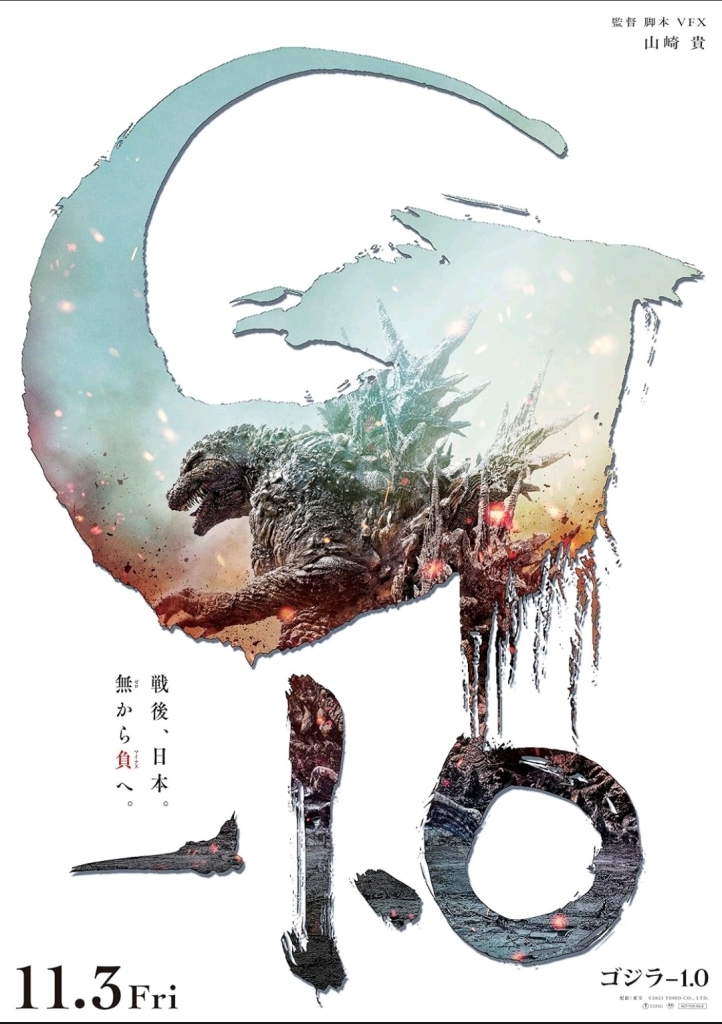
The official movie poster for the Japanese market.

This newest Toho Godzilla film directed by Takashi Yamazaki (also a special effects expert) will be released in Japan in a gradual manner: as the closing feature film of the 36th Tokyo International Film Festival on November 1, 2023, and then in cinemas around the nation on November 3, 2023. Godzilla Minus One will open in cinemas in the United States and Canada on December 1, 2023.

To get started about this new Japanese Godzilla movie, I encourage you to watch the official trailer (English subtitles included) below…

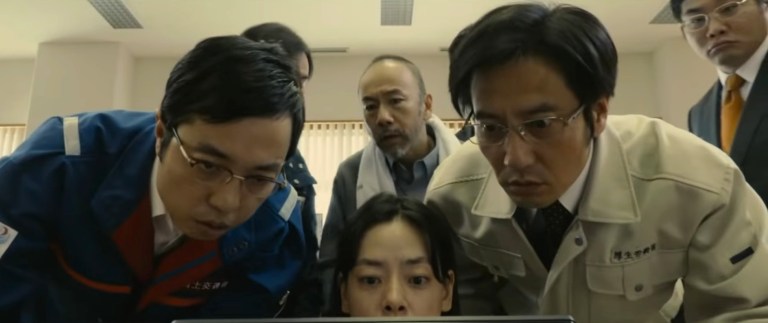
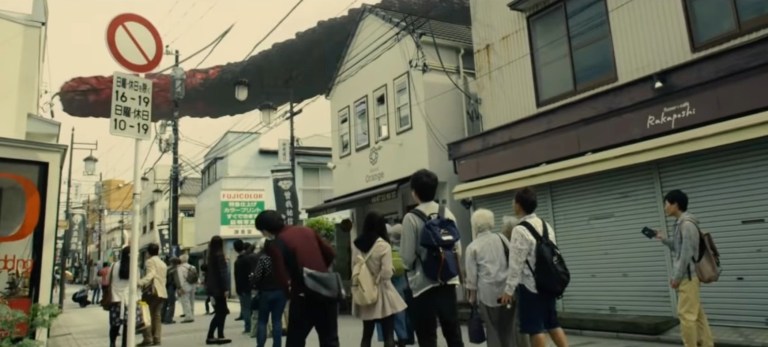
The way the details and visuals were presented in the movie trailer, the filmmakers showed Godzilla as a terrifying giant whose presence brings certain death and destruction to those near it. The trailer made Godzilla looking like it intends to kill people. What I find interesting about the core concept of this upcoming movie is that the iconic monster wreaks havoc in Japan a short time after the end of World War II. This emphasizes that Japan is economically weak and struggling to recover from the tremendous losses suffered from the said war. Also spotted were efforts by the filmmakers to replicate the look of post-WWII Japan.

If you know your world history, you should be aware of the facts that America dropped atomic bombs in Hiroshima and Nagasaki in August 1945 which compelled Japan (then a major military force with the Axis powers) to surrender unconditionally. Putting that historical context into the realm of fantasy by Toho, Godzilla Minus One shows what would happen had the giant monster invaded Japan while it was still in a very weakened state.

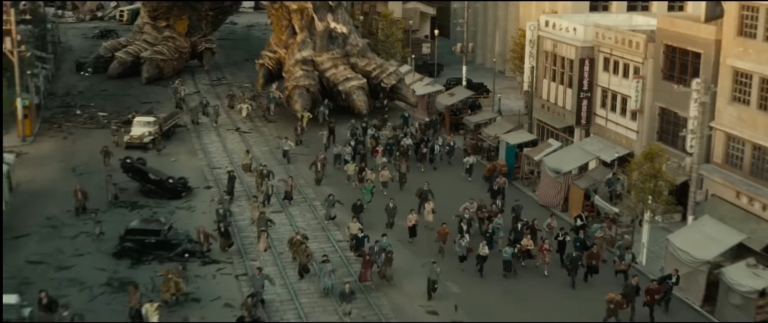
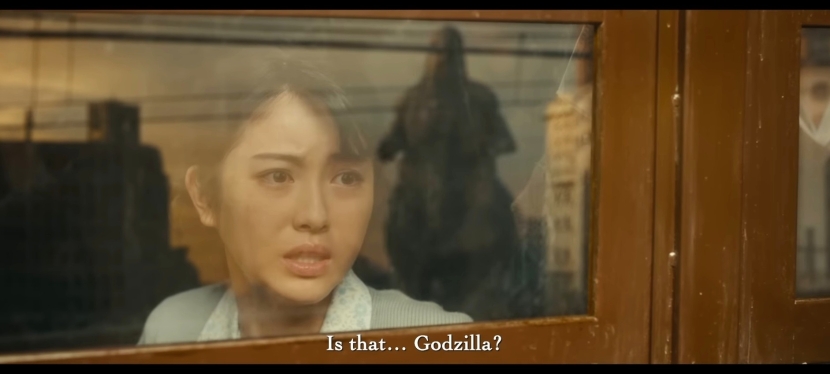
This is a terrifying image of people running away from Godzilla whose steps were causing destruction.

Considering the post-World War II background, it is not yet clear to me if this movie will serve as a prequel to the original Gojira movie of 1954. What is clear is that the filmmakers are daringly making something new with Japan’s icon and their creative approach looks radically different from Toho’s previous Godzilla release in 2016 (note: read my retro review of Shin Godzilla).

Considering the many Godzilla movies released – including those from Hollywood studios – being original with telling a story about the monster is indeed very hard to do. That being said, I am interested to see how the post-World War II setting, the new story and characters, and the giant monster itself will be executed on-screen. If the trailer indicates anything, it looks like Godzilla Minus One could turn out as a dramatic disaster movie (than a monster movie) and could come close to what the 1954 original movie presented.

As of this writing, there are not too many international markets for cinematic releases listed in Godzilla Minus One‘s IMDB page. Being based here in the Philippines, I can only hope that the Japan-made movie will be released in local cinemas which could be a bit tricky given the fact that Shin Godzilla had a limited release here in 2016. I really want to watch this upcoming movie in the local cinema, especially IMAX, but that would depend on how the distribution here in the Philippines will be executed. At the same time, watching a Japanese-made Godzilla movie would be a nice break from the MonsterVerse Godzilla that has been around for years now. Honestly, I’m getting tired of Hollywood’s current version of Japan’s icon.

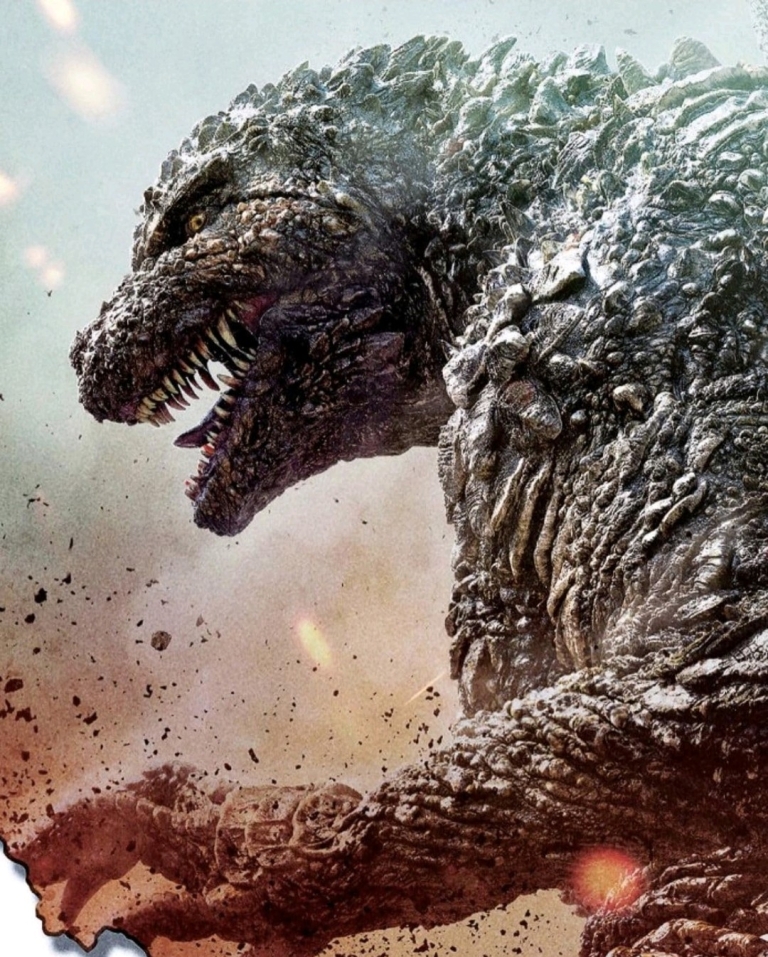
A very menacing Gojira image from Toho promoting Godzilla Minus One. If you look very closely, you can see some of the giant monster’s teeth red with blood.

If Godzilla Minus One does not get screened locally for some reason, its potential Blu-ray (and possibly 4K Blu-ray) release in the future would be the next option to watch it. Regardless, watch out for this new movie in cinemas in a few months’ time.

If you wish to join a group of movie enthusiasts and talk about cinema, visit the Movie Fans Worldwide Facebook group at https://www.facebook.com/groups/322857711779576

+++++

Thank you for reading. If you find this article engaging, please click the like button below, share this article to others and also please consider making a donation to support my publishing. If you are looking for a copywriter to create content for your special project or business, check out my services and my portfolio. Feel free to contact me with a private message. Also please feel free to visit my Facebook page Author Carlo Carrasco and follow me on Twitter at  @HavenorFantasy as well as on Tumblr at https://carlocarrasco.tumblr.com/ and on Instagram at https://www.instagram.com/authorcarlocarrasco
COVID-19 Crisis: Safety and sanitation at local cinemas emphasized

It has been days since Alert Level 3 was officially implemented all over Metro Manila which allowed for the reopening of several businesses and allowing them to accommodate more customers as the limitations on capacity were modified. Among the businesses authorized by the to reopen were the cinemas or movie theaters although the actual reopening has yet to happen. In fact, I passed by the cinemas at a local mall I visited this past Sunday and I saw they were still closed. Take note that there were attempts to push for reopening Metro Manila cinemas (click here, here and here).

As the reopening is still pending, there is this Manila Bulletin article about local cinemas will strictly implement health protocols. To put things in perspective, posted below is an excerpt plus a few relevant videos about safety and reopening. Some parts in boldface…

Cinemas and movie houses in the Philippines will strictly implement health protocols when these establishments reopen soon.

The Inter-Agency Task Force (IATF) put Metro Manila under Alert Level 3 and allowed the reopening of cinemas with restrictions. Only fully vaccinated people will be admitted and seating capacity will be limited to 30 percent.

The actual date of reopening of cinemas is still subject to confirmation and the public is advised to wait for further announcement, according to the Cinema Exhibitors Association of the Philippines (CEAP).

Cinemas in Metro Manila have been closed for 19 months due to the ongoing coronavirus disease (COVID-19) pandemic.

“That is the main goal right now,” said CEAP Charmaine Bauzon. “We have devoted the past 19 months of cinema closure identifying solutions and precautions based on science. We will implement these measures to confidently welcome back movie fans to cinemas and send them home safe.”

Cinemas are safe spaces

Bauzon assured “the public that cinema is a safe place. In fact, LGUs [local government units] have converted some theaters into vaccination centers, and no super-spreading were ever reported, even though people waited inside for hours.”

CEAP cited a recent study in Germany which concluded that cinemas are safer than almost any other indoor environment as long as safety guidelines are followed like wearing face masks, physical distancing and proper air ventilation.

The German study considered the following factors in its conclusion: People spend an average of only two hours at a cinema; people inside the cinema simply sit down and face the same direction which is known to reduce transmission risks; and people are not talking to each other during a movie, which minimizes possibility of infection.

Cinemas to strictly impose all safety protocols

According to CEAP, besides adhering to the IATF-mandated health standards, it also developed the “Sa Sine Safe Ka” protocols patterned after the “CinemaSafe” measures set by America’s National Association of Theatre Owners (NATO) and endorsed by epidemiologists.

I personally support the reopening of cinemas not just because I love watching movies in them but also because cinemas and their employees can contribute a lot to the economic recovery from this COVID-19 crisis we are all living with. When it comes to viewing movies in the comfort of home, I prefer Blu-ray over streaming anytime. Still the very best way to enjoy movies in their full glory is still inside the cinema! I can never forget the day I first saw Wonder Woman (2017) in the IMAX cinema at SM Southmall which was really an immersive experience. I even replayed that same movie in another cinema which had lazy boy seats. I also saw Logan, Godzilla: King of the Monsters, Avengers: Endgame, Aquaman and X-Men: Dark Phoenix on IMAX screens in different cinemas. When it comes to regular cinemas, I viewed Write About Love, Shazam!, and Joker to name some. Eventually I got to watch these movies in the comfort of home mainly on Blu-ray (which is always better than streaming) but I can confirm to you all that in my experience, the best place to view movies is still the cinema!

This iconic scene was at its grandest only in the cinema and I was fortunate to watch it on IMAX format!
The immersion of Aquaman on the big screen inside the IMAX cinema was indeed top-notch.

The good news here, as revealed in the excerpt above, is that local cinemas will exert efforts to make their venues clean and safe as their inevitable customers will be those who have been fully vaccinated. Cinema viewing will be far from normal but the latest developments related to Alert Level 3 are very welcome as it is the first step to returning to normalcy as the nation deals with community management and vaccinations for COVID-19. Above all, I urge all of you fully vaccinated people of Metro Manila and around the nation reading this – support the local cinemas! Put a stop to streaming and take the opportunities to watch movies in the movie theater because that streaming will NEVER match the grandeur and immersion of the cinema! The cinema is always better than streaming!

Let me end this piece by asking you readers: Are you eager to watch a movie inside the cinema here in Metro Manila as soon as it reopens? Have you been fully vaccinated already? What upcoming movies do you hope to watch in the local movie theater? Have you been following the CEAP on social media lately? Do you think that the top officials of the Metro Manila Council (MMC) and the Metropolitan Manila Development Authority (MMDA) really care about the plight of the cinema operators and their employees?

You may answer in the comments below. If you prefer to answer privately, you may do so by sending me a direct message online.

+++++

Thank you for reading. If you find this article engaging, please click the like button below and also please consider sharing this article to others. If you are looking for a copywriter to create content for your special project or business, check out my services and my portfolio. Feel free to contact me as well. Also please feel free to visit my Facebook page Author Carlo Carrasco and follow me at HavenorFantasy@twitter.com

For more South Metro Manila community news and developments, come back here soon. Also say NO to fake news, NO to irresponsible journalism, NO to misinformation, NO to plagiarists, NO to reckless publishers and NO to sinister propaganda when it comes to news and developments. For South Metro Manila community developments, member engagements, commerce and other relevant updates, join the growing South Metro Manila Facebook group at https://www.facebook.com/groups/342183059992673

Better than Streaming: A close look at V: The Original Miniseries Blu-ray (by Warner Archive)

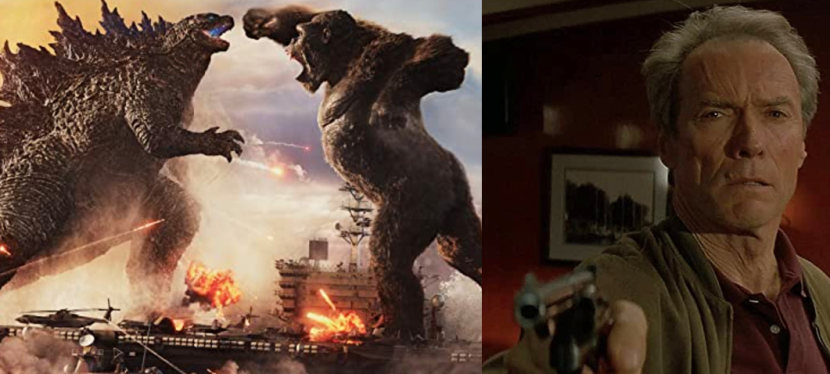
Welcome back, my readers, fellow Blu-ray disc collectors and fellow pop culture enthusiasts! Last time around, I informed you about the approaching June 15, 2021 release of the respective 4K Blu-ray discs of Godzilla vs. Kong (2021) and In the Line of Fire (1993). If you missed that article (which contains lots of details and links), check it out now.

In this latest edition of Better than Streaming, I want you to join me in taking a close look at the Blu-ray disc of V: The Original Miniseries (1983) which was released on August 27, 2019 as part of the Warner Archive Collection. I bought this Blu-ray release only this year and I can confirm to you all that I had a great time replaying it from start to finish and in high-definition! Having seen V: The Original Miniseries on TV and video tapes in the 1980s and to its early digital form on DVD in 2001, the Blu-ray release is the best visual experience yet!

If you have not seen my retro review, head on to https://carlocarrasco.com/2021/05/08/a-look-back-at-v-the-original-miniseries-1983/

Going on with the Blu-ray release of V: The Original Miniseries, posted below is a new picture of my copy that I photographed for this article.

My Blu-ray copy of V: The Original Miniseries.

The cover really gives V: The Original Miniseries its own distinct look. A look that fans of V will instantly recognize and given the fact that it does not feature any pictures of the actors and only had images of the alien motherships (read: very huge saucer-like space ships that can carry thousands of people plus equipment) on the cover, I can imagine this Blu-ray release standing out when placed with many other Blu-ray discs on store shelves. The tag line on the top – Humankind’s Last Stand – adds punch to the cover.

When it comes to the technical specifications, it goes as follows…

1080p High Definition

16×9, 1.78:1

DTS-HD Master Audio 2.0

Subtitles: English

Single disc – Region free

To be clear, the above specs were written on the back of the Blu-ray box and they refer specifically to the main feature…the 2-episodes of the miniseries totaling 197 minutes (3 hours, 17 minutes).

Speaking of the main feature of V: The Original Miniseries contained in the Blu-ray disc, it is entirely presented in one single selection. The two episodes are not presented as separate selections. It means that once you are done with watching the first episode, you only need to wait for the end credits to finish and just let the video play on with the opening credits of the second episode to start and lead further to the story. However, if you saw the first episode and decide to watch the second episode at a later time, only then will you need the remote control of your Blu-ray player to go through chapter selection (skip the chapters of the first episode) to start the second episode.

As mentioned earlier, V: The Original Miniseries was presented in 1080p high-definition and for me it is the best-looking form to date! If you want specifics about the visual quality (as opposed to the high-definition look of the mini-series), I can say that its visual aesthetics from 1983 are still intact but with added benefits due to the higher resolution and digital format. To put things in perspective, the level of visual details, the color-grading, the textures seen on the actors’ faces and the natural look of their skin tone are all improved over the 2001 DVD.

As this is a 1980s production, the film grain also made it and even though it intensifies or weakens as the main feature plays, it never was annoying to watch. If there are any weak spots on the visuals, it’s the fact that the high-definition state made the matte lines in key special effect shots (note: specifically in the scenes of people on the street looking up at a mothership above them) look very obvious and fake. As for other visual effects, the laser blasts look even better and the perfect timing on simulating on-set explosions (specifically the spots that got hit by the laser blasts) add a lot of punch to the spectacle!  

The disc.

As for the extra stuff, I regret to say that V: The Original Miniseries Blu-ray only has the exact same stuff the 2001 DVD had…the feature-length commentary by Kenneth Johnson and a behind-the-scenes documentary. Nothing new at all and this easily reminds me of the words describing this release – Warner Archive Collection.

To be clear about the extra stuff, I really find it very disappointing that the 24-minute behind-the-scenes documentary was presented only in standard definition and had a sub-par quality visually which kinda ruins the fascinating stuff of the production (Johnson and crew filming scenes, Marc Singer and Faye Grant being interviewed, etc.) shown.

The real meat of the extra stuff is the feature-length commentary of Kenneth Johnson. All throughout the two episodes, Johnson provided a lot of insight on the filmmaking, the creative concepts, the symbolism connecting the mini-series with the rise of the 3rd Reich in Europe, etc. I replayed the mini-series entirely with Johnson’s commentary turn on and it was really engaging as a viewing experience!

Conclusion

While the lack of new extra stuff somewhat hampers it, I still had great enjoyment with my Blu-ray copy of V: The Original Miniseries (1983). Its main feature and the Kenneth Johnson commentary are the best things about it and therefore make it worth buying. I can only speculate that if more V fans (plus the many people out there who have yet to discover V of the 1980s for their home entertainment and sci-fi craving) bought a lot of copies of this Warner Archive Collection Blu-ray release, the executives at WB could be convinced to release another Blu-ray of the 1983 mini-series with all new stuff involving the participation of Johnson, the other production team members and the surviving actors (note: it would be great to come up with brand new interviews with Marc Singer, Faye Grant, Jane Badler, David Packer, Blaire Tefkin, Robert Englund and others). It would be great to see pop culture convention footage related to V compiled not to mention an all-new feature commentary with the actors participating.

Overall, the V: The Original Miniseries – Warner Archive Collection Blu-ray is highly recommended! Fans of V of the 1980s will love it and all others who have yet to discover it will find something new and compelling to watch at home with this. Add this to your shopping list and your Blu-ray disc collection!

In closing this Better than Streaming piece, posted below for your enjoyment is the 43-minute YouTube video of the 2019 San Diego Comic-Con panel that had Kenneth Johnson and Marc Singer as guests focused on V.

+++++

Thank you for reading. If you find this article engaging, please click the like button below and also please consider sharing this article to others. If you are looking for a copywriter to create content for your special project or business, check out my services and my portfolio. Feel free to contact me as well. Also please feel free to visit my Facebook page Author Carlo Carrasco and follow me at HavenorFantasy@twitter.com

Better than Streaming: Godzilla vs. Kong and In the Line of Fire 4K Blu-ray releases coming out this June!

Welcome to this new series of articles titled Better than Streaming. As many of you, my readers, already know, I am not fan of streaming when it comes to watching movies and TV shows in the comfort of home. My current preference for such home entertainment is the Blu-ray disc format as well as its high-end format the 4K Blu-ray disc! I simply want the best for my personal viewing of movies and TV shows, and the advantages of disc media (specifically 4K Blu-ray) over streaming are clear and undeniable!

I personally own a lot of movies on Blu-ray and I own one Blu-ray disc of V: The Original Miniseries (which is so enjoyable and this time it was presented in high-definition). I recently started building up my personal collection of 4K Blu-ray releases with Total Recall and Wonder Woman 1984.

For this article, we can focus on two notable movies – one new and one old – that will be released on 4K Blu-ray in the middle of June 2021!

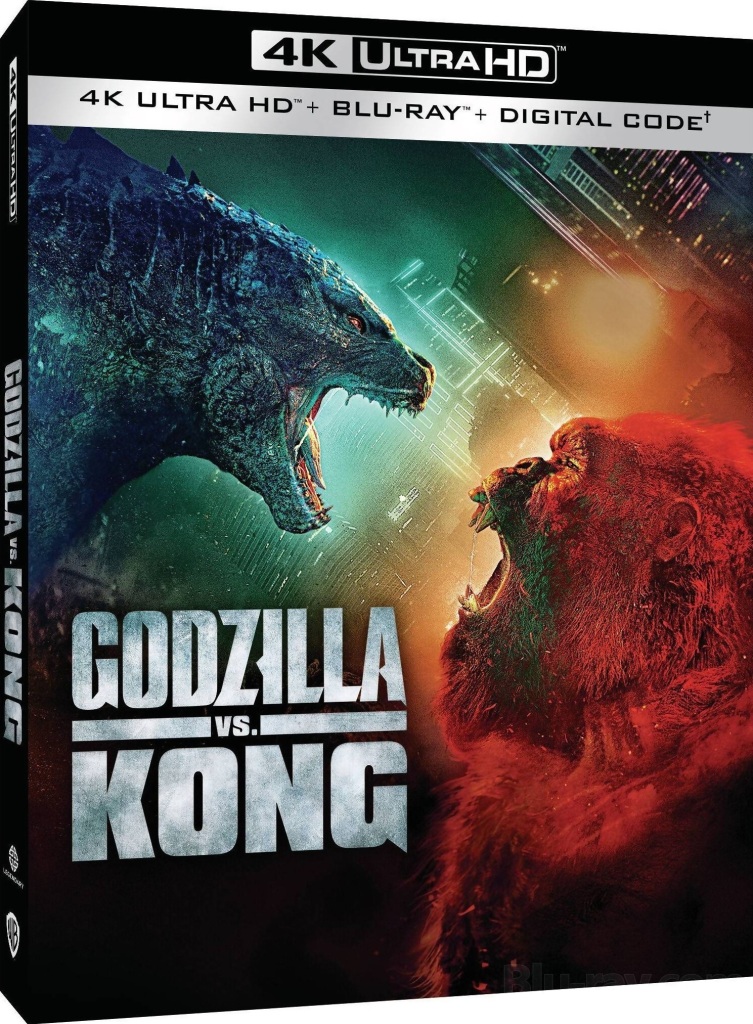
Let’s start with Godzilla vs. Kong, the 2021 pandemic-era blockbuster which will be released on 4K Blu-ray disc (plus Blu-ray for 1080p viewing) on June 15, 2021. Pre-orders for the 4K Blu-ray release can be done right here.

The Godzilla vs. Kong 4K Blu-ray combo preview.

As of this writing, Godzilla vs. Kong in optic media will come with the following technical specs and special features:

  • ENGLISH DOLBY ATMOS AUDIO TRACK
  • Audio Commentary by Director, Adam Wingard
  • Kong Discovers Hollow Earth
  • Kong Leaves Home
  • Behold Kong’s Temple
  • The Evolution of Kong, Eighth Wonder of the World
  • Godzilla Attacks
  • The Phenomenon of GŌJIRA, King of the Monsters
  • Round One: Battle at Sea
  • Round Two: One Will Fall
  • Titan Tag Team: The God and the King
  • The Rise of MechaGodzilla
  • Optional English SDH, Latin Spanish, French, Brazilian Portuguese, Italian-SDH, Cantonese, Complex Chinese, Korean, Danish, Finnish, Norwegian, and Swedish subtitles for the main feature

Video
Codec: HEVC / H.265
Resolution: Native 4K (2160p)
HDR: Dolby Vision, HDR10+
Original aspect ratio: 2.39:1

Because the movie theaters here in my place remain closed due to the COVID-19 (China Virus) pandemic, I was not able to watch Godzilla vs. Kong. Along the way, I stayed away from streaming it via HBO Go because I’d rather pay for the best home viewing option which is the 4K Blu-ray release of the movie that is coming. Oh yes, Godzilla vs. Kong’s visuals have been rendered in native 4K (2160p).

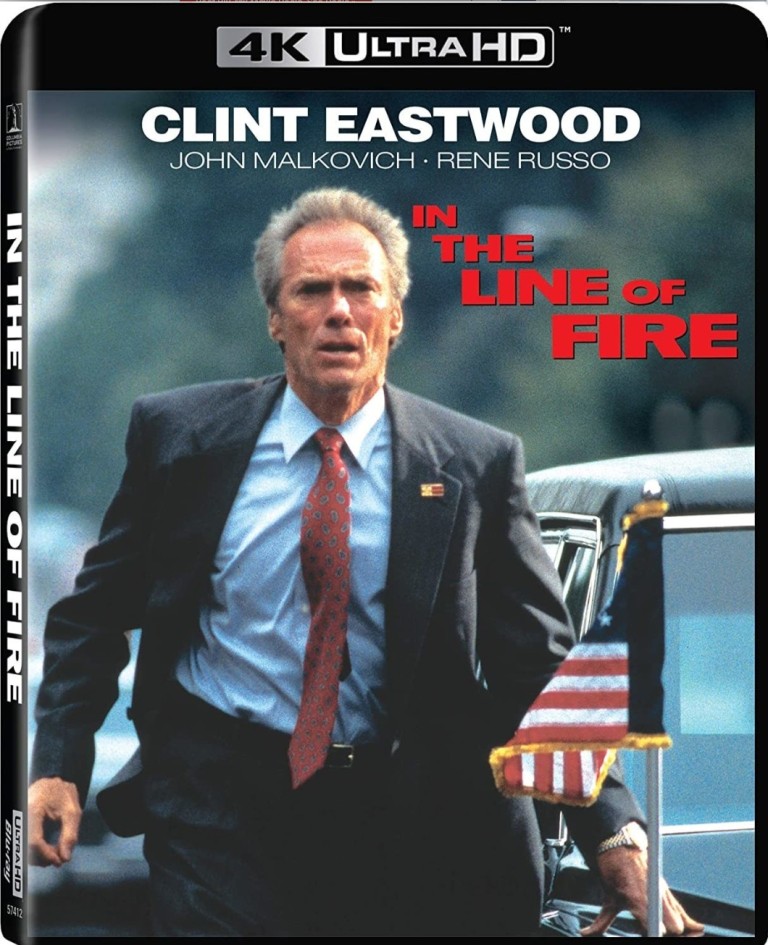
The next upcoming 4K Blu-ray release that is worth looking forward to is none other than In the Line of Fire which starred the legendary Clint Eastwood, John Malkovich (who was nominated for an Oscar for his performance in this very movie) and Rene Russo. It will be released also on June 15, 2021 and you can order it in advance right here.

The cover of the 4K Blu-ray release of In the Line of Fire.

For your reference, here are the available technical specs and features…

  • NEWLY REMASTERED IN 4K FROM THE ORIGINAL CAMERA NEGATIVE WITH HDR10
  • ALL-NEW DOLBY ATMOS TRACK + original theatrical 5.1 + original theatrical stereo
  • Audio Commentary with Wolfgang Petersen
  • 5 Deleted Scenes
  • “The Ultimate Sacrifice” Featurette
  • “Catching the Counterfeiters” Featurette
  • “How’d They Do That” Featurette
  • “Behind the Scenes with the Secret Service” Featurette
  • Theatrical Teaser

Video
Codec: HEVC / H.265
Resolution: Native 4K (2160p)
HDR: HDR10
Aspect ratio: 2.39:1
Original aspect ratio: 2.39:1

I saw In the Line of Fire on video tape in 1993 and on DVD in 2001. I would love to replay the movie with native 4K visuals and see how good the promised new remaster for the 4K Blu-ray will turn out. In pop culture, In the Line of Fire was kind of like a reintroduction of Clint Eastwood to the public and helped younger moviegoers in 1993 (especially those who missed out on his Dirty Harry and cowboy movies) get to know him and his cinematic art better. In the Line of Fire was directed by Wolfgang Petersen and apart from getting solid performances from the cast, he successfully told a compelling story and presented really good hard-action scenes.

So there you have it! June 15, 2021 will be an exciting day for 4K Blu-ray enthusiasts as well as those who love King Kong, Godzilla and Clint Eastwood! While there are indeed a lot of other movies coming out on 4K Blu-ray in the month of June, Kong vs. Godzilla and In the Line of Fire are the standouts for those who love spectacle.

Before I end this article, let me ask you readers – Do you have a large collection of 4K Blu-ray movies right now? What do you enjoy most about watching movies or TV shows in 4K resolution? What is the one movie or TV show you wish will be released soon on 4K Blu-ray format?

You may answer in the comments below. If you prefer to answer privately, you may do so by sending me a direct message online.

+++++

Thank you for reading. If you find this article engaging, please click the like button below and also please consider sharing this article to others. If you are looking for a copywriter to create content for your special project or business, check out my services and my portfolio. Feel free to contact me as well. Also please feel free to visit my Facebook page Author Carlo Carrasco and follow me at HavenorFantasy@twitter.com

A Look Back at Shogun Warriors #1 (1979)

Disclaimer: This is my original work with details sourced from reading the comic book and doing personal research. Anyone who wants to use this article, in part or in whole, needs to secure first my permission and agree to cite me as the source and author. Let it be known that any unauthorized use of this article will constrain the author to pursue the remedies under R.A. No. 8293, the Revised Penal Code, and/or all applicable legal actions under the laws of the Philippines.

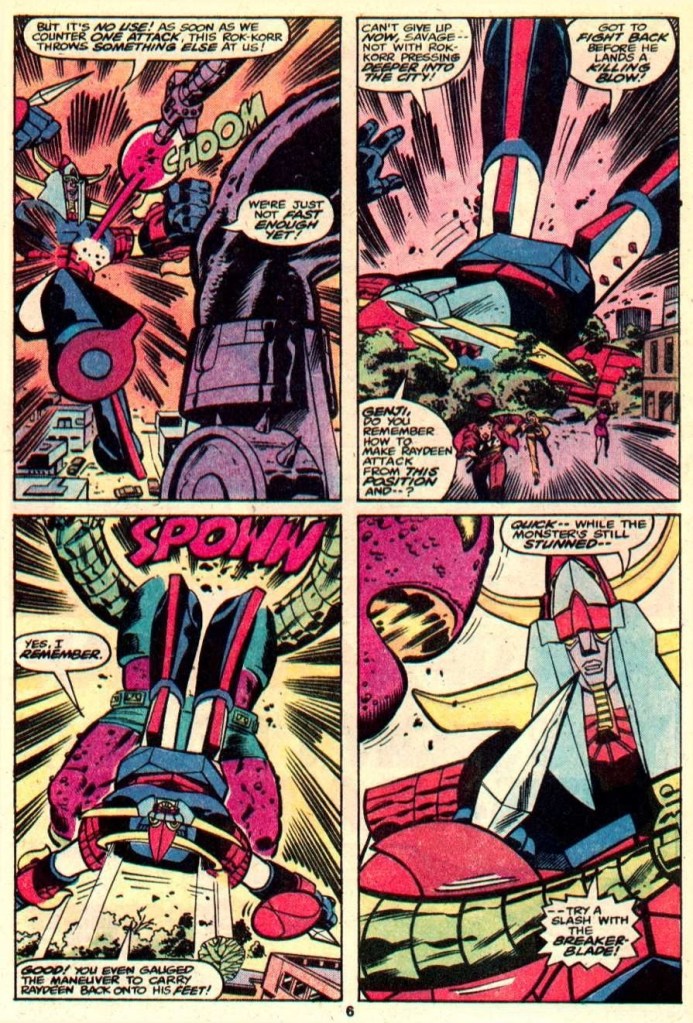
If you are fond of giant robots from Japanese pop culture as well as giant monsters and scenes of city structures getting destroyed, then you might want to take a look at the Shogun Warriors comic book series that was published by Marvel Comics from 1979 to 1980. To put things in perspective, Shogun Warriors was made possible through licensing deals and back in the 1970s, Marvel Comics had the rights to publish comic book about Japan’s famous icon Godzilla.

Specifically, Shogun Warriors involved Marvel Comics and Mattel which in turn organized a line of imported toys from Japan based on varied Japanese shows about giant robots. Among the many giant robots of the toy line, the robots Raideen, Combattler V and Dangard Ace became the featured fighting-for-good robots of the Shogun Warriors comic book series. For the literary works, Raideen was renamed as Raydeen while Combattler V was renamed as Combatra. Dangard Ace’s name was left unchanged.

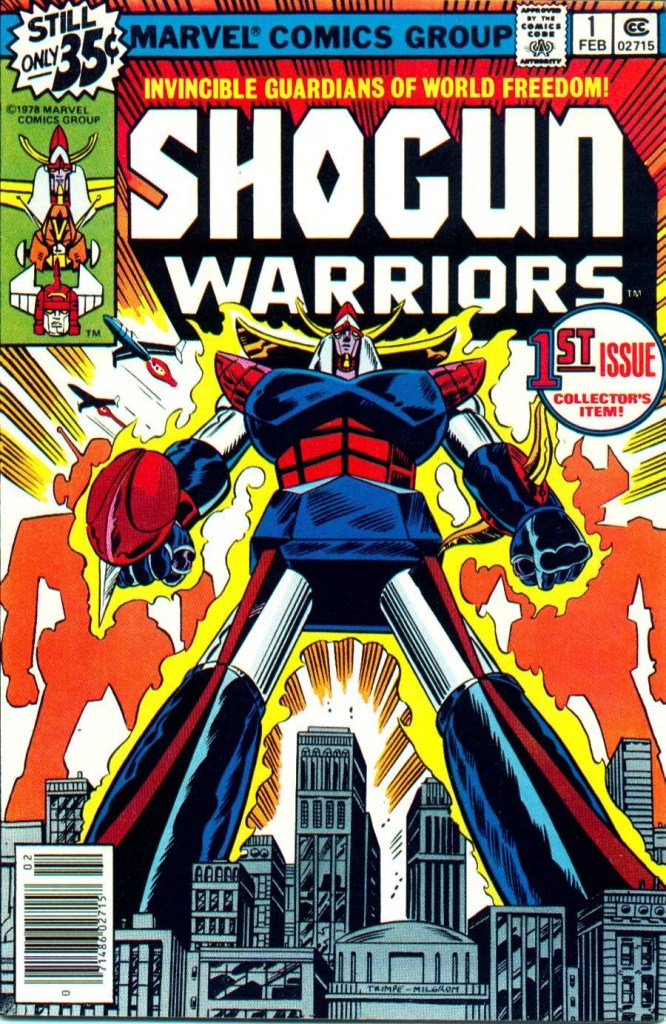
With those details laid down, here is a look back at Shogun Warriors #1, published in 1979 by Marvel Comics with a story written by Doug Moench and drawn by Herb Trimpe.

The cover.

Early story

The story begins in the outskirts of Tokyo in Japan where giant robot Raydeen fights a large, tentacled creature enhanced with cybernetics. As the people on the street below them run away from the ongoing destruction, the monster fires a shot at Raydeen who blocks it but subsequently gets tied with one of the tentacles. The giant robot, which is operated by three pilots inside, breaks free and continues to fight the monster.

As the battle rages on, the city continues to get damaged heavily affecting the people…

Quality

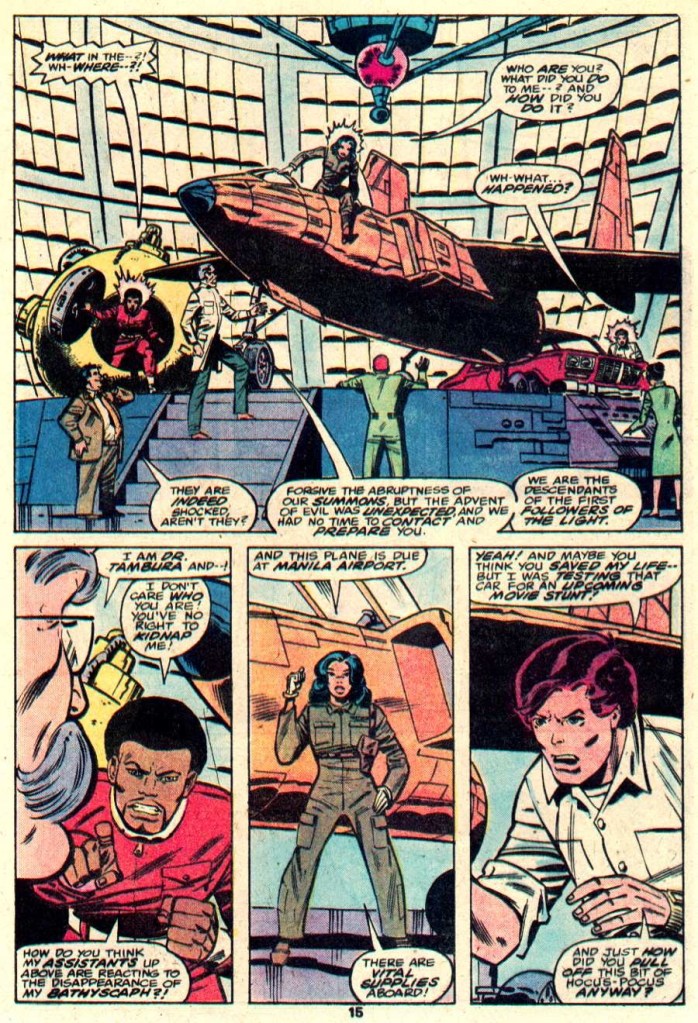
Technically the organization kidnapped three people to be the pilots of their robots for Earth’s defense.

Having seen a lot of anime TV series episodes about giant robots, I’m familiar already with the storytelling formula that often focuses first on the human characters and their struggles before shifting the narrative on the giant robots that often fight large monsters or opposition robots. This particular comic book has some of that but the way the story is structured, it is different and can be a bit jarring.

Doug Moench structured the story to have Raydeen and the monster fighting in the present time followed shortly by a flashback that took place just hours prior. The flashback, which occupies 9 of the comic book’s 18 pages, is heavily filled with exposition meant to introduce readers to the three pilots Genji Odashu/Ilongo Savage/Richard Carson, what Earth defense force The Followers of the Light is, and why there are giant monsters ravaging the world. The exposition’s writing felt crammed and rushed for reading although it still succeeds in establishing the comic book’s grand concept.

When it comes to spectacle, this comic book is loaded with giant robot action and it is quite varied in style and execution. The funny thing is that you will only get to see Raydeen in action as this is an introductory story with only 18 pages of story.

The dialogue is a bit of a mess here, particularly with the early Raydeen scenes. As the battle with the monster goes on, there are these lines of dialogue reflecting the conversations between the pilots inside Raydeen who are not shown talking until late in the comic book.

Conclusion

Raydeen and the giant monster in battle.

Shogun Warriors #1 (1979) has a nice concept and its Westernized take on portraying giant robots and human characters is clearly different from the way things were done in the varied giant robot anime TV series of Japan. There is clearly no Japanese style melodrama as this one has its characters portrayed straight with a touch of American science fiction. That being said, do not expect to see the Japan-made characters of Raideen, Combattler V and Dangard Ace appear here as new characters were made in their place. The comic book’s story structure is a bit jarring to follow and the heavy exposition dump makes reading a bit of a chore. It is fun to read but not great. Those of who are fans of Combatra and Dangard Ace will be disappointed about the near-total absence of those robots.

If you are seriously planning to buy an existing hard copy of Shogun Warriors #1 (1979), be aware that as of this writing, MileHighComics.com shows that the near-mint copy of the regular edition costs $63 while the near-mint copy of the Whitman edition costs $35.

Overall, Shogun Warriors #1 (1979) is satisfactory.

+++++

Thank you for reading. If you find this article engaging, please click the like button below and also please consider sharing this article to others. If you are looking for a copywriter to create content for your special project or business, check out my services and my portfolio. Feel free to contact me as well. Also please feel free to visit my Facebook page Author Carlo Carrasco and follow me at HavenorFantasy@twitter.com

A Look Back at Shin Godzilla (2016)

Disclaimer: This is my original work with details sourced from watching the movie and doing personal research. Anyone who wants to use this article, in part or in whole, needs to secure first my permission and agree to cite me as the source and author. Let it be known that any unauthorized use of this article will constrain the author to pursue the remedies under R.A. No. 8293, the Revised Penal Code, and/or all applicable legal actions under the laws of the Philippines.

There is no doubt that Japan’s fictional monster Godzilla (originally called as Gojira) made tremendous impact not only with the Japanese but also with other entertainment lovers around the world. Way back in 1954, the monster was portrayed as a destructive, walking symbol of nuclear weapons in the movie Gojira directed by the late Ishirô Honda.

As the years passed by, several more Godzilla movies were released by Toho Pictures. In 1998, an American-made movie about Godzilla was finally made in a disappointing form directed by Roland Emmerich. In 2014, Warner Bros. and Legendary Pictures made a more respectful film of the monster under the direction of Gareth Edwards. In 2019, the follow-up Godzilla: King of the Monsters was released and I enjoyed it a lot more than its 2014 predecessor.

Before the 2019 movie was released, Toho in Japan released Shin Godzilla (alternate titles: Shin Gojora and Godzilla: Resurgence) which was the result of the 2014 movie’s success as well as the fact that there were no restrictions in the contract with Legendary Pictures for the Japanese studio to make their own domestic versions.

Due to its lack very limited presence in cinemas here in the Philippines in 2016, I was unable to watch it on the big screen. Fortunately, it was released locally on original DVD some time after and I got to watch it in the comfort of home.

With those details laid down, here is a look back at Shin Godzilla co-directed by Hideaki Anno and Shinji Higuchi (both best known for Neon Genesis Evangelion).

This is classic Godzilla.

Early story

The story begins at Tokyo Bay where the coast guard personnel found an abandoned yacht and searched inside. Suddenly a huge cloud of steam erupted from the ocean followed by blood-like water flooding the Tokyo Bay Aqua-Line. The tragedies compelled local authorities to take action starting with a committee meeting.

As emergency personnel save the victims in the damaged Tokyo Bay Aqua-Line, the tragedies reach the office of the Prime Minister who engages with many other government officials in an official meeting. They try to figure out what caused the incidents and, as such, theories and efforts to explain what happened were spoken until Deputy Chief Cabinet Secretary Rando Yaguchi (Hiroki Hasegawa) theorized that a living creature caused it (because he saw a viral video) which only resulted disbelief and dismissal.

Suddenly a massive tail rises from the ocean which got captured in video and photographs by the news media which confirms Yaguchi’s hunch. As the Prime Minister and the team of officials spend more time discussing and searching for real experts (because the three scientists they just met did not produce any breakthroughs), a huge creature makes its way into one of Tokyo’s districts through a waterway causing massive damage and displacing many people as well as all boats that got in its way.  

In a press conference, the Prime Minister gave his assurance to the public that they need not worry about the creature coming to shore. Just after giving his assurance speech, an assistant approaches the Prime Minister with really bad news that the creature has been crawling inland and causing even more damage…

Quality

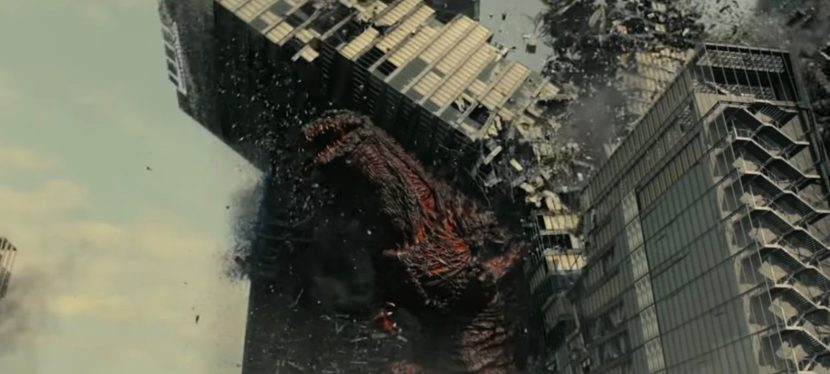
Japan’s iconic monster is not only terrifying here but also very deadly.

When it comes to presentation in comparison to all other Godzilla movies released, Shin Godzilla is very unique as it strongly brings to the viewers a very in-depth examination of the bureaucracy of the Japanese government complete with the many laws, requirements, rules and other elements of governance that made it so hard for the local authorities to respond to Godzilla’s invasion of the metropolis. There are key details that were raised such as the constitutionality of using local military force against the monster (which is not a foreign invader), which department should be in-charge of research about the same monster, etc.

Along the way, there is an overload of information – in terms of text, images and dialogue – that makes viewing quite a challenge. This makes watching Shin Godzilla a learning experience that viewers who are interested in governance and science will likely enjoy although it will alienate other moviegoers, especially those who only want to watch the spectacle of massive on-screen destruction that giant monster movies are known for. Going through all the exposition and explanations, and understanding most of it, however, will make the viewing experience worth it as these countless details do make sense in relation to Godzilla’s destructive impact on the people.

And then there is the huge cast of characters that needs to be followed. This is another big challenge for viewers because if one misses out on the key purpose a character has, then following the government’s efforts on dealing with Godzilla will make less sense. Not only will you have to follow the characters’ names, you will also have to remember their respective work titles. Apart from the government officials, there is also the huge batch of nerds and varied experts gathered by the government to do intense research. Again, those people need to be followed and remembered so you can understand what they do and how they contribute to their government’s efforts. When it comes to performances, they are collectively dramatic and you will be convinced of the pressure, the danger and uncertainty they face with Godzilla threatening Tokyo.

Better get used to seeing so many characters throughout the movie.
Hiroki Hasegawa as Rando Yaguchi.

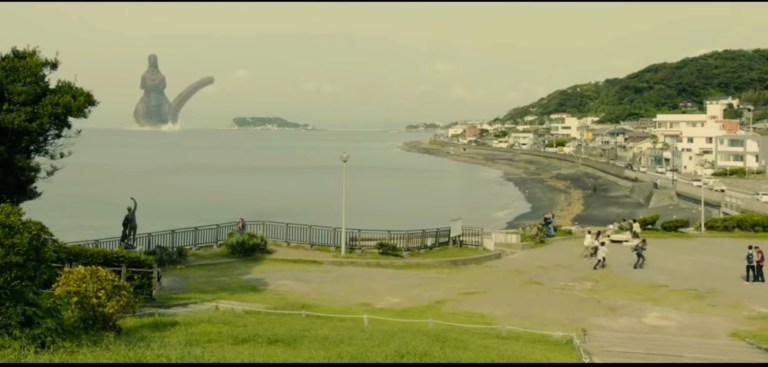
As for the main spectacle of the movie, Godzilla, I can say that the monster here is very terrifying to watch. This is not your typical Godzilla as the Anno-Higuchi directorial duo really went all out with their creativity to remake Japan’s iconic monster into something new and deadly while still linking him creatively to the legacy of the classic Godzilla. There is even an element of evolution in this version of Godzilla and to see the Japanese military fire their expensive weapons at him really made a lot of spectacle to enjoy. I should also state that several scenes of disaster caused by the monster in this film were inspired by the tragedies of the Tōhoku earthquake and tsunami, and the Fukushima Daiichi nuclear disaster of 2011. Lastly, Godzilla here is really a super villain that is not only gigantic but also is made to be highly believable that it can destroy the nation, kill innocent civilians, demoralize the authorities and even bring Japan’s entire economy way down (note: one of the government officials explained the economic consequence of failing to defeat the monster).

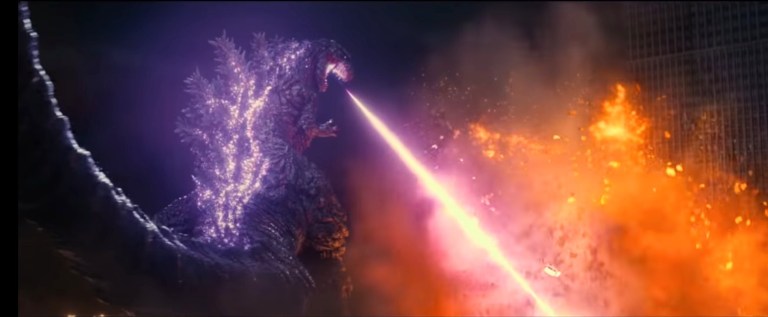
When it comes to visual effects, this one is the best-looking Godzilla made by the Japanese yet! While the traditional approach of having an actor wear a rubber suit has been disregarded in favor of using modern, digital means (with motion capture), what the production team did here is very impressive as they focused strongly on having computer-generated graphics that are photo-realistic. While it is true that there were some moments of fake-looking CGI, the heavy photo-realism on the graphics of Godzilla (combined with strategic camera angles that really captured the scope and size of the monster) easily outweighed the weak spots. The lighting effects used for the laser blasts were very impressive, even competitive with what Hollywood has been doing. As for the scenes of destruction, a mix of CGI and practical effects (specifically miniatures) was used. In fact, certain scenes showing Godzilla interacting with the environment was done with pushing a prop through miniatures which resulted a high level of detail with organic and solid stuff.

The spectacle would not have been that effective, however, without the solid musical work done by Shiro Sagisu. Not only did the music add a lot to the intense sequences of Godzilla, it also brought out the sense of dread and horror out of the monster especially in the night-time scene when he was towering over a large section of Tokyo that lost power. Sagisu was also involved in Neon Genesis Evangelion.

Conclusion

The emphasis on photo-realism on the computer-generated effects is something special.

I can say it out loud that Shin Godzilla (2016) is truly a spectacle to watch complete with tons of heavy drama, tons of information and the widest cast of characters to date. It is a new version of the Japanese icon that really impresses and when it comes to movie intelligence, it easily outshines many other Godzilla flicks. While it has a lot of spectacle to keep moviegoers entertained, its heaviness with the information and large cast of characters could turn off viewers who are not used to thinking and paying attention to lots of details while watching a giant monster movie. Personally, I welcomed the information overload and made efforts on paying close attention to the details and the characters. It really takes patience and focus to truly make the most out of the story and the overall presentation.

Ultimately, I enjoyed this movie for what it is and what its message was about with regards as to how governments should respond to immense disasters, what is Japan’s place in the world of the 21st century and, most notably, what Godzilla means to Japan and the international community. This is a very solid modernization of Godzilla and the Anno-Higuchi deserve admiration.

If you are seriously planning to buy an existing hard copy of Shin Godzilla (2016), visit Amazon for the Blu-ray disc release and see if it has the right price and special features to satisfy you.  

Overall, Shin Godzilla (2016) is recommended!

+++++

Thank you for reading. If you find this article engaging, please click the like button below and also please consider sharing this article to others. If you are looking for a copywriter to create content for your special project or business, check out my services and my portfolio. Feel free to contact me as well. Also please feel free to visit my Facebook page Author Carlo Carrasco and follow me at HavenorFantasy@twitter.com

A Look Back at Godzilla #1 (1995)

Disclaimer: This is my original work with details sourced from reading the comic book and doing personal research. Anyone who wants to use this article, in part or in whole, needs to secure first my permission and agree to cite me as the source and author. Let it be known that any unauthorized use of this article will constrain the author to pursue the remedies under R.A. No. 8293, the Revised Penal Code, and/or all applicable legal actions under the laws of the Philippines.

Welcome back, comic book collectors, sci-fi enthusiasts and fellow geeks! You must have heard by now that pop culture icons Godzilla and King Kong will clash together on the big screen in Godzilla vs. Kong (2021). Check out the official trailer below.

Take note that this is NOT the first time the two giant monsters encountered each other on the big screen. In fact, there was a Japanese-produced movie that featured the two released in 1963 and it involved Ishirô Honda who himself directed the 1954 original Godzilla movie. As the decades passed by, Godzilla movies were viewed by lots of people around the world and by the time efforts were taken to realize a Hollywood-produced film showcasing Japan’s icon, its place in global pop culture was already sealed.

And here is the thing that should interest you all – before the 1998 Hollywood Godzilla film (directed by Roland Emmerich) was even released, Dark Horse Comics published a series of Godzilla comic books. Of course, this was not the first time Godzilla made its presence felt in illustrated literature but the mid-1990s series was an effort to modernize Japan’s icon with readers (and comic collectors) of the time.

With those details laid down, here is a look back at Godzilla #1, published by Dark Horse Comics in 1995 with a story written by Kevin Maguire and drawn by Brandon McKinney.  

The cover.

Early story

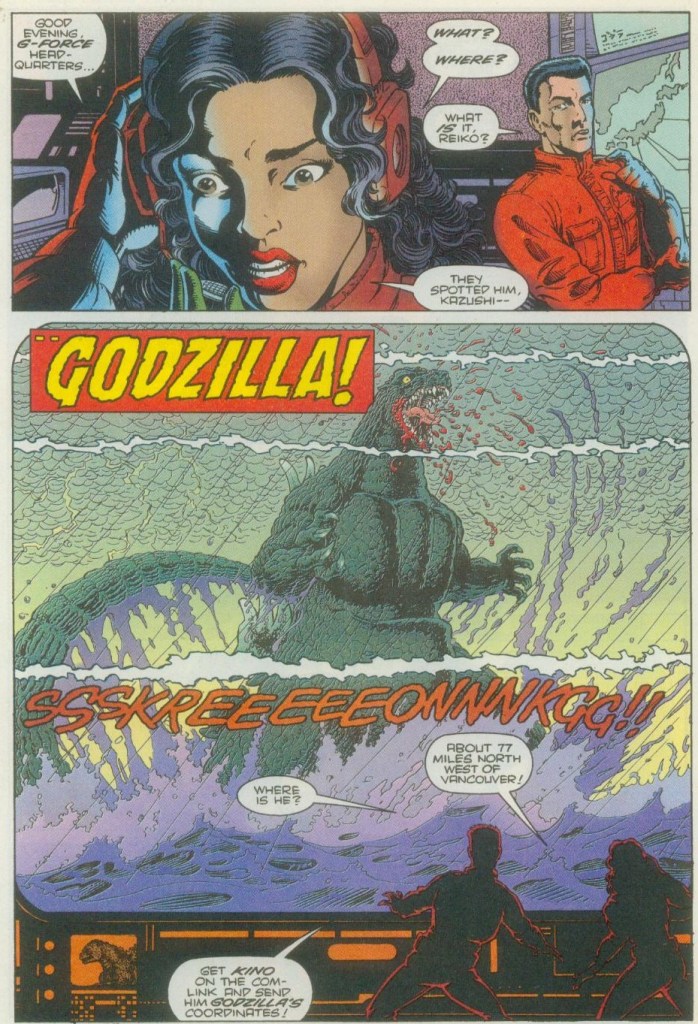
The story begins with a network television talk show focused on Godzilla and the possibility of it attacking North America. On the air, TV show host Kate Koshiro talks with research team G-Force member Take’ who states that Godzilla has been injected with poison and swam to the bottom of the ocean. Even so, they never found a corpse.

As the show goes on, it is revealed by Take’ that his team uses low-frequency signals which they hope will attract Godzilla and even pacify it. Take’ eventually begins to get nervous as Kate Koshiro presses him for details. Behind the scenes, personnel of G-Force watch the show on their giant monitor.

The G-Force personnel turn their attention away from the TV show as they have been alerted to the sudden emergence of Godzilla, 77 miles northwest of Vancouver…

Quality

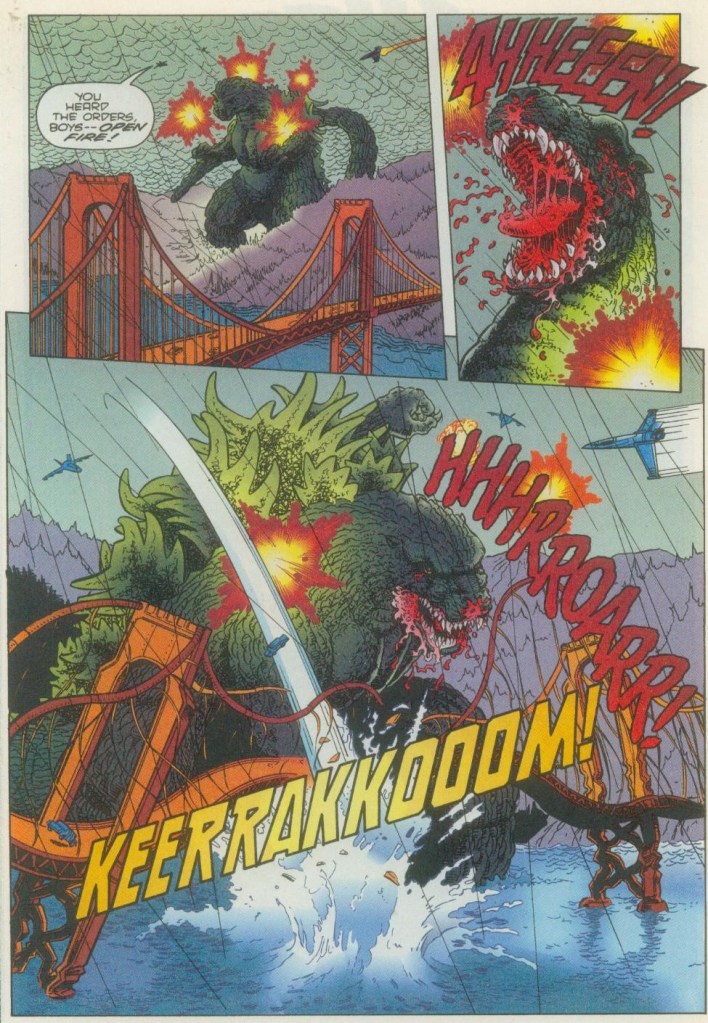
The destructive power of Godzilla!

If you are looking for a good, original story of Godzilla to read, this comic book has it! To start with, it has a nice world concept of its own surrounding the monster. G-Force serves as the primary organization the world goes to not only for protection from Godzilla’s attacks but also extensive research-and-development (R&D) that can make breakthroughs the world can benefit from, and intelligence that the respective defense forces of nations can use.

The characters are an interesting mix with elements from G-Force and the American armed services doing most of the interaction, talking and exposition. The closest thing this comic book has to a human protagonist is Take’ who turned out to be more capable than being a researcher of G-Force.

As for Godzilla, there is nothing new with the monster’s portrayal even though it is confirmed to be sick with poison. Wherever Godzilla goes, a lot of destruction happens making it look like the antagonist to the reader. In other words, a typical Godzilla portrayal. Fortunately, the comic book creators succeeded in maintaining the giant’s presence strongly even though the narrative was primarily focused on the human characters.

Conclusion

Nothing like carrying the tremendous pressure that comes with the unexpected emergence of a gigantic monster.

Godzilla #1 (1995) is surprisingly entertaining to read. When I first read this comic book, I had modest expectations and just let myself discover what it has to offer. The good news here is that the comic creators crafted a story that is interesting and fun enough to read. Apart from focusing on Godzilla, the G-Force organization has an interesting cast of characters.

If you are seriously planning to buy an existing hard copy of Godzilla #1 (1995), be aware that as of this writing, MileHighComics.com shows that the near-mint copy of the comic book costs $70.

Overall, Godzilla #1 (1995) is recommended.

+++++

Thank you for reading. If you find this article engaging, please click the like button below and also please consider sharing this article to others. If you are looking for a copywriter to create content for your special project or business, check out my services and my portfolio. Feel free to contact me as well. Also please feel free to visit my Facebook page Author Carlo Carrasco and follow me at HavenorFantasy@twitter.com

A Look Back at Prime #17 (1994)

Disclaimer: This is my original work with details sourced from reading the comic book and doing personal research. Anyone who wants to use this article, in part or in whole, needs to secure first my permission and agree to cite me as the source and author. Let it be known that any unauthorized use of this article will constrain the author to pursue the remedies under R.A. No. 8293, the Revised Penal Code, and/or all applicable legal actions under the laws of the Philippines.

Welcome back, superhero enthusiasts, comic book collectors and fans of the Ultraverse! By now, many of you should be familiar with Prime who was one of the main heroes of the Ultraverse as published in the 1990s by Malibu Comics. Many times in comics, Prime fought with lots of thugs, some very notable enemies (check out Prime #5), got involved with other notable ultras as part of a team (check out UltraForce #0 and #1), got involved awkwardly with ladies like Mantra and the mother of Kelly, and more.

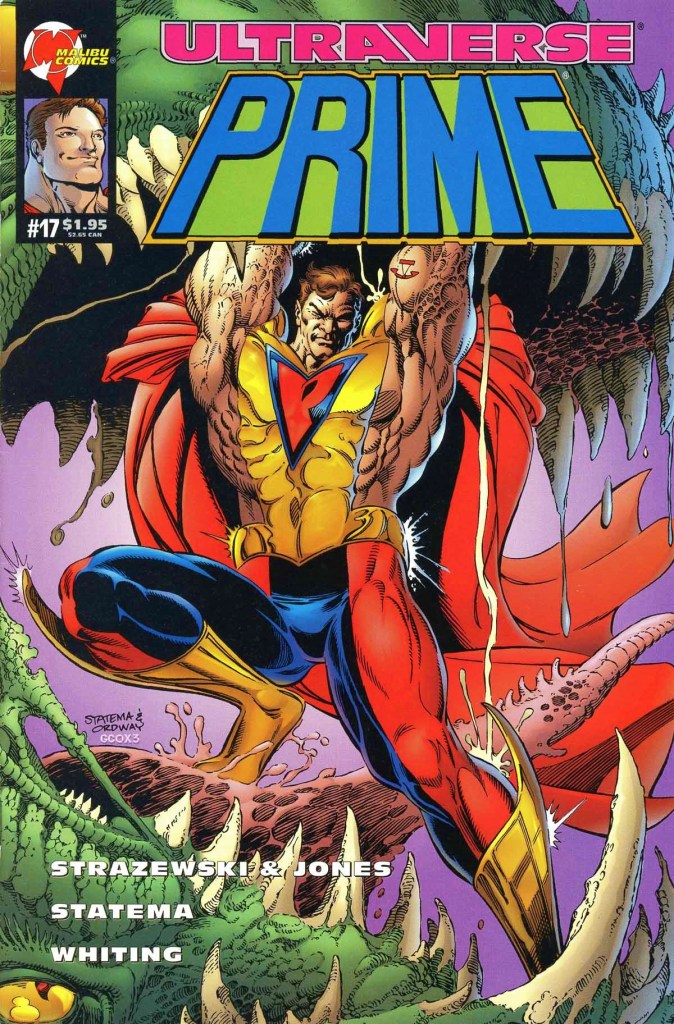
Surely, Prime (who is a teenage boy named Kevin under all the muscle) went through a lot. Now how about seeing the overly muscular ultra hero take on a monster about as large as Godzilla? We can all find out in this look back at Prime #17, published by Malibu Comics in 1994 with a story written by Len Strazewski and Gerard Jones, and drawn by John Statema.

The cover.

Early story

The story begins somewhere on the bottom of the ocean. King Atalon raises an entire island to the surface of the sea claiming it will be new court of his and his people. Doing so, he releases a gigantic monster to the surface and immediately it encounters a ship. The monster grabs two men from the ship and eats them.

In the city of New York, Kevin Green and his mother have a meal together in a first-rate deli. His mother expresses her thoughts about how hard it was for him to move away from California at a short notice, leaving behind his school and his friends. She stressed that something had to be done in response to what happened to their family.

She recalled that Kevin’s father acted so strangely and left them. That being said, she did not want to make the situation worse by smothering him. Kevin thought to himself how could he tell her mother the truth that he and Prime are one and the same, and he went through different versions of his alter-ego each with a different attitude.

As Kevin and his mother traveled via the subway of the city, the giant monster in the Atlantic Ocean continues to create havoc moving towards New York…

Quality

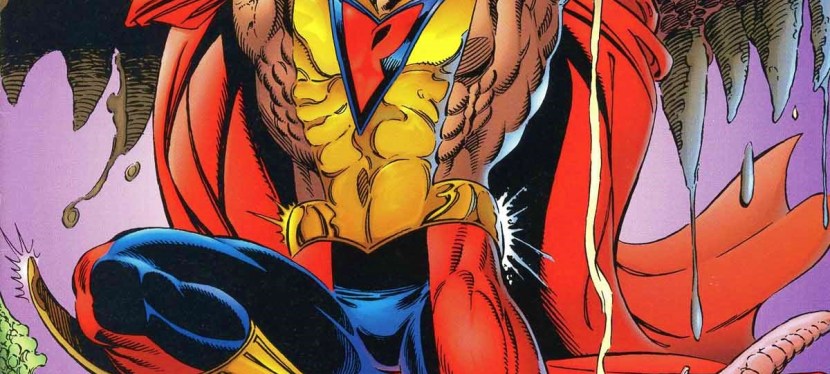
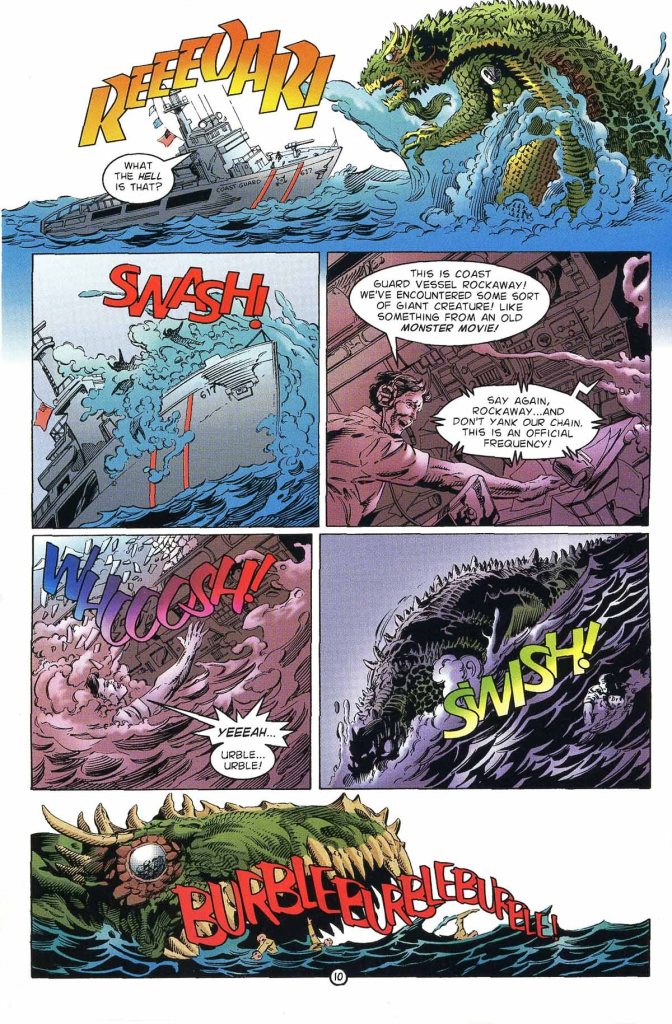
A possible Godzilla reference spotted.

From a storytelling point of view, this comic book felt like the start of a new chapter in the life of Kevin/Prime. The sudden relocation to New York sparked Kevin to look back at the events he went through in the past year which, in my opinion, helped serve as an exposition dump to help readers – especially new ones – catch up with all the details on Prime. It was also interested to learn that Kevin’s mother is from New York and her action on having themselves relocate all the way from the West Coast was convincingly done. I also like the drama that unfolded when the mother brought Kevin to a spot to view the Statue of Liberty from a distance only to be shocked and hurt over the fact that the statue’s head is missing. Through really nice dialogue, you can feel the mother’s pain.

The highlight of this comic book is the uncanny match-up between Prime and the Godzilla-sized monster. While the battle between them was not too long, showing Prime struggle with fighting the monster while thinking a lot about strategizing, searching for weaknesses and even expressing concern for his mother all added a good layer of depth to bother the hero and the encounter.

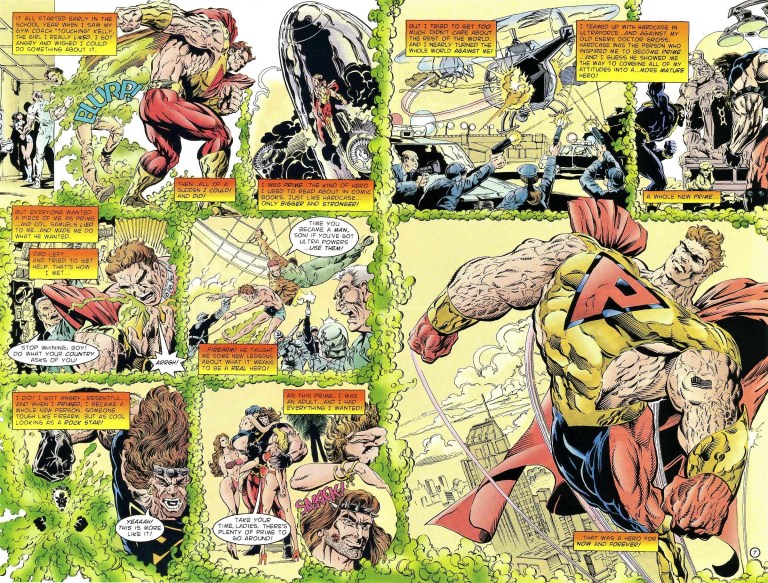
Visually, I like the work done here by John Statema. His art on the monster was clearly Godzilla-inspired but he gave it a unique look of its own, especially with the way he drew its scaled which Prime found to be very tough. I also enjoyed Statema’s take on the events that happened in Prime’s life as seen in the exposition dump early in the comic book.

Conclusion

The big exposition dump.

Prime #17 (1994) is a fun read and definitely has the look and feel of a new turning point in the life of a superhero. It has excellent dialogue, a pretty nice build-up leading to the big battle between Prime and the monster, and most notably there is a good amount of dramatizing through Kevin’s mother.

If you are seriously planning to buy an existing hard copy of Prime #17 (1994), be aware that as of this writing, MileHighComics.com shows that the near-mint copy of the comic book costs $8.

Overall, Prime #17 (1994) is recommended.

+++++

Thank you for reading. If you find this article engaging, please click the like button below and also please consider sharing this article to others. If you are looking for a copywriter to create content for your special project or business, check out my services and my portfolio. Feel free to contact me as well. Also please feel free to visit my Facebook page Author Carlo Carrasco and follow me at HavenorFantasy@twitter.com