Better than Streaming: Deep Impact 25th Anniversary 4K Blu-ray set for May 2, 2023 release!

Welcome back, fellow geeks, Blu-ray collectors and movie buffs! If you enjoy disaster movies mixed with science fiction concepts, or if you enjoy Hollywood flicks of the 1990s, then you might want to consider Deep Impact 25th Annniversary 4 Blu-ray which is scheduled for release on May 2, 2023. For the eager fans of Deep Impact reading this, 4K Blu-ray is now available for pre-ordering online and it will come with native 4K visuals.

To put things in perspective, posted below is the excerpt and key details from the 4K Blu-ray announcement at Blu-ray.com. Some parts in boldface…

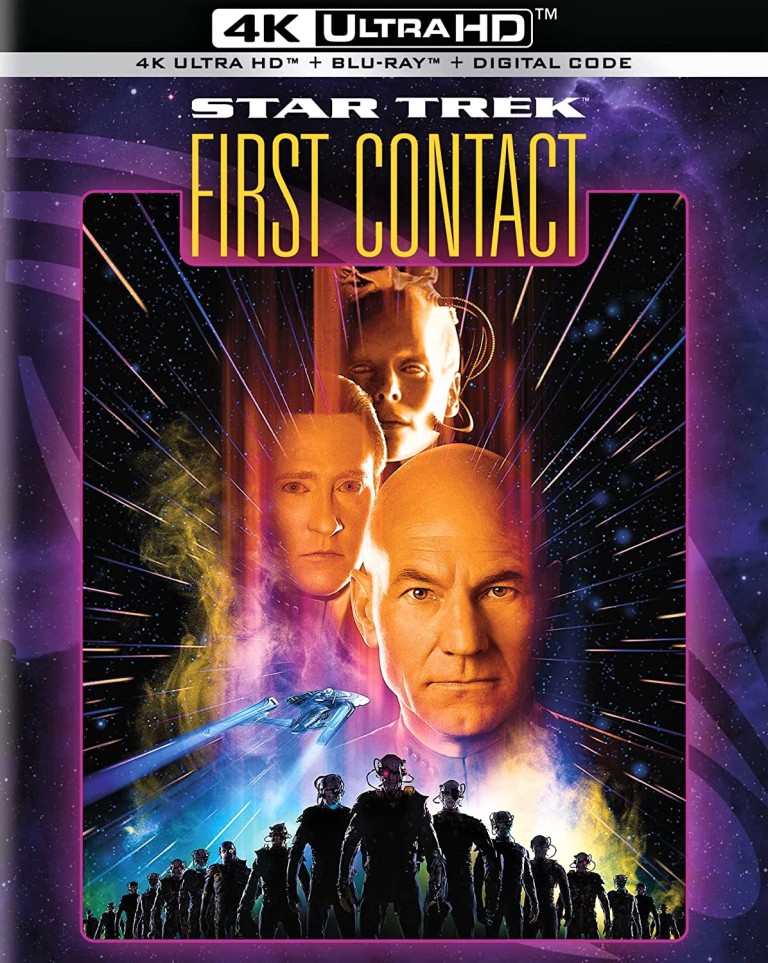
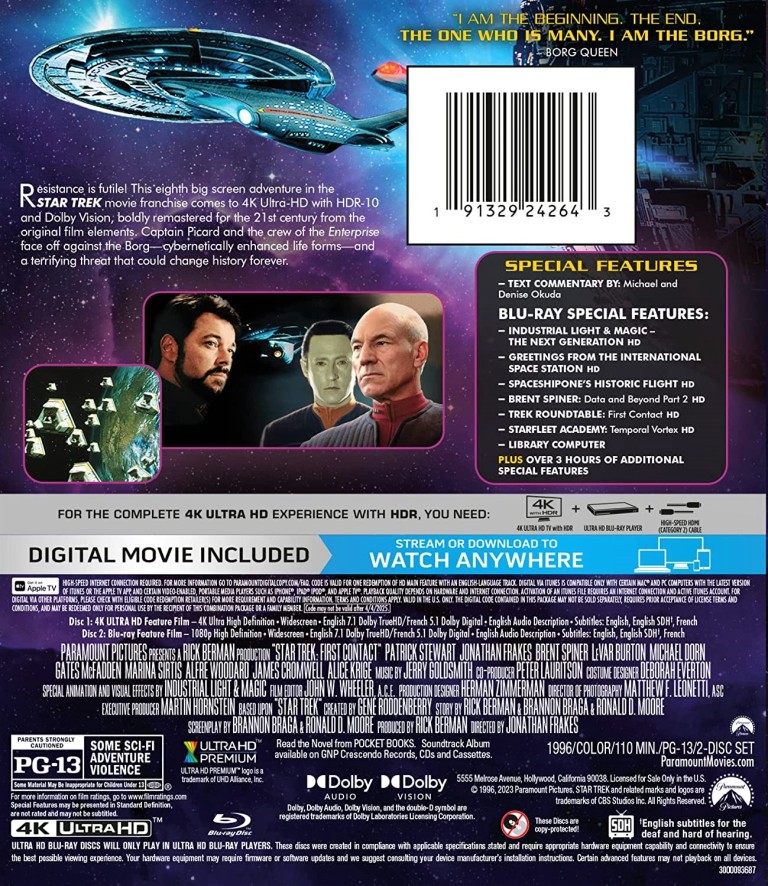
The 4K Blu-ray cover.

Paramount Home Media Distribution will celebrate the 25th anniversary of Mimi Leder’s Deep Impact (1998) with a brand new 4K Blu-ray edition of the film, which will be available for purchase on May 2.

Description: What would you do if you knew that in a handful of days an enormous comet would collide with Earth and all humanity could be annihilated?

The countdown to doomsday is underway in this “gut-wrenching, eye-popping blast of a movie experience” (Jeff Craig, Sixty Second Preview). Mimi Leder (The Peacemaker) directs, guiding an all-star cast featuring Robert Duvall, Tea Leoni, Elijah Wood, Vanessa Redgrave, Maximillian Schell and Morgan Freeman. With the film’s dynamic fusion of large-scale excitement and touching, human-scale storylines, Deep Impact makes its impact felt in a big and unforgettable way.

Originally released on May 8, 1998, Deep Impact grossed nearly $350 million worldwide on an $80 million budget.

Special Features and Technical Specs:

NEW 4K RESTORATION OF THE FILM

DOLBY VISION/HDR PRESENTATION OF THE FILM

Audio Commentary by director Mimi Leder and visual effects supervisor Scott Farrar

Preparing For The End

Making An Impact

Creating The Perfect Traffic Jam

For additional insight, posted below are the details from the Blu-ray.com page of Deep Impact 4K Blu-ray.

Video

Codec: HEVC / H.265

Resolution: Native 4K (2160p)

HDR: Dolby Vision, HDR10

Aspect ratio: 2.35:1

Original aspect ratio: 2.39:1

Audio

English: Dolby TrueHD 5.1 (48kHz, 24-bit)

French: Dolby Digital 5.1 (448 kbps)

Spanish: Dolby Digital 5.1 (448 kbps)

Subtitles – English, English SDH, French, Spanish

Discs – 4K Ultra HD, Blu-ray Disc, Two-disc set (1 BD-100, 1 BD-50)

Digital – Digital copy included

Packaging – Slipcover in original pressing

Playback – 4K Blu-ray: Region free, 2K Blu-ray: Region A

Way back in 1998, I saw Deep Impact in the local cinema. The movie had an ensemble cast showcasing veteran Morgan Freeman as the United States President, Robert Duvall as the veteran astronaut, Téa Leoni as the troubled TV journalist, as well as the very young Elijah Wood and Leelee Sobieski as the teenage love team. With its pending disaster approach to storytelling, the movie had lots of drama occasionally mixed in with sci-fi spectacle and suspense to keep moviegoers entertained. The movie was entertaining enough for me, I got to replay it on cable TV a few times and even bought myself a DVD copy of it.

Deep Impact was released at a time when Hollywood was modernizing disaster movies using the latest in computer-generated imagery (CGI) of the time and along the way, their production team also had some practical effects.

I can only wonder how good and detailed the 4K visuals of Deep Impact 25th Anniversary 4K Blu-ray will turn out. Based on the details of the announcement, there is no indication if director Mimi Leder will be involved in the 4K restoration of the movie. If you look at Leder’s record, you will realize she has been much more involved in TV than in movies.

Watch out for Deep Impact 25th Anniversary 4K Blu-ray on May 2, 2023.

In ending this, posted below are YouTube clips of the movie. If you will be watching Deep Impact for the first time ever, I recommend you avoid watching anymore short clips of the movie online. Also you should avoid watching retro movie video reviews and movie reaction videos of Deep Impact.

If you wish to join a group of movie enthusiasts and talk about cinema, visit the Movie Fans Worldwide Facebook group at https://www.facebook.com/groups/322857711779576

+++++

Thank you for reading. If you find this article engaging, please click the like button below and also please consider sharing this article to others. If you are looking for a copywriter to create content for your special project or business, check out my services and my portfolio. If you want to support my website, please consider making a donation. Feel free to contact me with a private message. Also please feel free to visit my Facebook page Author Carlo Carrasco and follow me on Twitter at  @HavenorFantasy as well as on Tumblr at https://carlocarrasco.tumblr.com/ and on Instagram at https://www.instagram.com/authorcarlocarrasco/.

A Look Back at What If #31 (1982)

Disclaimer: This is my original work with details sourced from reading the comic book and doing personal research. Anyone who wants to use this article, in part or in whole, needs to secure first my permission and agree to cite me as the source and author. Let it be known that any unauthorized use of this article will constrain the author to pursue the remedies under R.A. No. 8293, the Revised Penal Code, and/or all applicable legal actions under the laws of the Philippines.

Welcome back superhero enthusiasts, 1980s arts and culture enthusiasts, Marvel Comics fans and comic book collectors! Today we go back to the early 1980s and examine an alternate universe portrayal of Wolverine and some other characters as told in one of the comic books of the first volume of the series What If.

Wolverine is one of the most iconic characters of Marvel Comics and he has been part of some of my retro reviews (click here, here, here, here, here, here and here). Wolverine made his first appearance in comics in Incredible Hulk #181 which was published way back in 1974 which marked the first conflict of the two Marvel icons. Years later, Marvel decided to revisit that event with a What If story.

With those details laid down, here is a look back at What If published in 1982 by Marvel Comics with a story written by Rick Margopoulos and drawn by Bob Budiansky.

The cover.

Early story

The story begins with Wolverine and the Hulk in combat with each other in a forest within Canada. It turns out, Wolverine was sent by Canadian authorities to capture not just the Hulk but also the Wendigo.

With the Wendigo down on the ground, Wolverine and the Hulk struggle with each other. The Canadian’s speed helped him dodge the green giant’s powerful punches and as the fight goes on, so does the impulse and emotion from within. Suddenly, Wolverine decides to deliberately disobey his orders by deciding to kill the Hulk. In a few but strategic strikes with his Adamantium claws, Wolverine kills the Hulk. The Canadian authorities eventually got rid of the corpses of the Wendigo and the Hulk.

Soon enough, news about the Hulk’s death spread like wildfire all over America catching the attention of Spider-Man, the Avengers, the Fantastic Four and General Ross and his daughter Betty…

Quality

Wolverine gets abducted not by aliens from outer space but by Magneto and his Brotherhood of Evil Mutants.

To start with, I can say that I immensely enjoyed this alternate portrayal of the events that happened in relation to Wolverine’s first-ever appearance in comics. For one thing, the concept of Wolverine actually killing the Hulk is not only shocking on its own, it also set a chain reaction of events that involved or affect a whole lot of other characters within the Marvel Comics shared universe.

Let me start with Wolverine himself. As the story was set before he joined the X-Men, you will see Wolverine as a super-powered agent of Canada whose career really goes down as he failed to restrain his wild self from killing not once but twice. This results in a Wolverine who is deeply troubled with guilt and becomes desperate believing that running away and hiding will somehow solve his dilemma.

Wolverine’s entry into a gang of evil mutants led by Magneto (note: this comic book’s main villain) is itself worth getting this comic book. This shows Magneto – always obsessed with his belief that mutants are superior to humans – putting his diabolical plan into action with Wolverine as the key participant. This itself led to Wolverine’s encounter with the X-Men (the one team he was destined in reality to be with).

The creative team clearly exerted a lot of effort to not only ensure the plot made sense but also have a solid structure that can accommodate twists, intrigue and superhero spectacle altogether complete with enough room for character development. Lastly, I should say that this comic book’s climax is both compelling and shocking to read.

Conclusion

Wolverine’s 2nd kill in this comic book.

What If (1982) is indeed a great Marvel comic book to read. It has a very engaging alternate universe portrayal of Wolverine and this paved the way for a new and fresh approach on showcasing how the X-Men and Magneto’s gang reacted with the clawed Canadian. While the scope of the consequence of Wolverine’s killing of the Hulk ultimately ending up narrowing on Marvel’s mutants could be disappointing for those who seek a bigger impact on other Marvel universe characters, what was shown here in this comic book still made sense and ultimately turned out believable. This comic book also has another tale exploring what if there was no Fantastic Four which ultimately ended up as a decent additive.

Overall, What If (1982) is highly recommended.

+++++

Thank you for reading. If you find this article engaging, please click the like button below, share this article to others and also please consider making a donation to support my publishing. If you are looking for a copywriter to create content for your special project or business, check out my services and my portfolio. Feel free to contact me with a private message. Also please feel free to visit my Facebook page Author Carlo Carrasco and follow me on Twitter at  @HavenorFantasy as well as on Tumblr at https://carlocarrasco.tumblr.com/ and on Instagram at https://www.instagram.com/authorcarlocarrasco

A Look Back at Backlash #4 (1995)

Disclaimer: This is my original work with details sourced from reading the comic book and doing personal research. Anyone who wants to use this article, in part or in whole, needs to secure first my permission and agree to cite me as the source and author. Let it be known that any unauthorized use of this article will constrain the author to pursue the remedies under R.A. No. 8293, the Revised Penal Code, and/or all applicable legal actions under the laws of the Philippines.

Welcome back superhero enthusiasts, 1990s arts and culture enthusiasts, Image Comics fans and comic book collectors! Today we go back to the wild 1990s and explore a part of the WildStorm universe through a tale of Backlash!  

In my previous retro review, as the mission of Backlash and Taboo intensified, Zealot and Void of the WildCATs got involved in the action. Pike, who had been serving S’ryn, proved to be a formidable foe for Zealot and Taboo. The Savage Dragon meanwhile proved to be more than capable of bringing down S’ryn which made Backlash less relevant in his own comic book. Just as things intensified, something big blew up.

With those details laid down, here is a look back at Backlash published in 1995 by Image Comics with a story written by Sean Ruffner, Jeff Mariotte and Booth. Booth was the artist.

The cover.

Early story

The story begins just moments after the big explosion. Savage Dragon, Backlash, Zealot, Jacob Marlowe, Taboo, Void and Jack managed to survive. In line with his duty as a police officer, Savage Dragon tells Zealot that Backlash and his friends are coming with him as they have been tagged by the government as threats to national security. Zealot then lifts her blade up to Savage Dragon’s throat and states that if Backlash had not been with them, then her lord Emp (Marlowe) may well have been assassinated.

Eventually, Void uses her power to transport Backlash, Taboo, Jack, Zealot and Marlowe away, leaving Savage Dragon behind…

Quality

A briefing about the next mission.

To put things straight, this particular comic book serves as the conclusion of the storyline (the mission specifically) that started in issue #2 while also working as a bridge going into the next storyline. The good news here is that the creative team’s work here is good enough in terms of quality.

For one thing, the team really took their time to develop Backlash and Taboo some more right after the end of the first mission. Their talk with each other as civilians inside a New York City bar was nicely written and there were a few witty moments that I found enjoyable. Along the way, there was efficient expository dialogue that explains Taboo’s past connection with Pike and the Cabal. Backlash also shared some key details of himself which ultimately made him and Taboo have something in common.

This story also shows a key flaw in Backlash’s personal integrity – his romantic involvement with Taboo made him betray his beloved Diane. For one thing, this potentially opens a series of problems that will eventually haunt him later. On another thing, it seems that the creative team have something intriguing planned for the protagonist who has clearly been sharing this comic book series’ spotlight with Taboo.

As with the previous issues, this comic book continued the build-up and emphasis of the WildStorm universe’s concepts. In terms of crossovers, Wetworks’ leader Jackson Dane makes an appearance here and his unexpected reunion with Backlash is a must-see. For the newcomers reading this, WildStorm’s Grifter (WildCATs), Backlash, Dane (Wetworks) and Deathblow are all members of Team 7 which had its series of wild stories set twenty years prior (note: think of the Vietnam War era). It was also in 1994 when the first Team 7 comic book mini-series was first published. In some ways, Backlash interacting with Grifter in the Kindred mini-series and reuniting with Dane served as creative ways to emphasize the Team 7 concept to readers.

On the visuals, Brett Booth continues to do a fine job presenting the characters (who are clearly recognizable to me) and I noticed he seems to have fun trying to test readers’ visions by carefully inserting selected X-Men characters into the background during the bar scenes as Taboo and Backlash talked. As for Dane, I like Booth’s own take on the character

Conclusion

Look carefully at the background and you will spot X-Men team members Cyclops, Jean Grey Gambit and Rogue in civilian forms.

Backlash (1995) is more of a build-up comic book that so happens to have a decent amount of action for entertainment value. The characterization scenes of Backlash and Taboo is a must-see while the conclusion of the first mission was nicely done complete with a worthy end to the crossover with WildCATs’ Zealot, Void and Jacob Marlowe. The story itself moved at a medium pace which is not surprising as there was something being built-up with the new mission in mind.

Overall, Backlash (1995) is recommended.

+++++

Thank you for reading. If you find this article engaging, please click the like button below, share this article to others and also please consider making a donation to support my publishing. If you are looking for a copywriter to create content for your special project or business, check out my services and my portfolio. Feel free to contact me with a private message. Also please feel free to visit my Facebook page Author Carlo Carrasco and follow me on Twitter at  @HavenorFantasy as well as on Tumblr at https://carlocarrasco.tumblr.com/ and on Instagram at https://www.instagram.com/authorcarlocarrasco

Tales of Symphonia Remastered now available on Xbox platforms

Anyone who loves Japanese role-playing games (Japanese RPG or JRPGs) will be delighted to now that Bandai Namco fulfilled their promise with Xbox gamers as Tales of Symphonia Remastered has officially been released for Xbox Series X, Xbox Series S and Xbox One consoles this past February 17.

To begin with, watch the official Xbox launch trailer of Tales of Symphonia Remastered below. It’s something to get excited with…

To put things in perspective, posted below is an excerpt from the official announcement by Bandai Namco published through Xbox.com. Some parts in boldface…

Twenty years ago, we experienced the original story of Lloyd Irving and his journey to save the two worlds of Sylvarant and Tethe’alla with his friends. Filled with unforgettable characters and an emotionally charged storyline, it still resonates with longtime fans.

Today, it is our pleasure to bring Tales of Symphonia Remastered to Xbox One and Xbox Series X|S. As part of the excitement, our production team would like to share a few personal tips with newcomers and returning veterans to set you on the right path. We hope you will enjoy your journey in Sylvarant and Tethe’alla!

The adventures of Lloyd and his friends is a tale to remember. Guide the party by honing your swordsmanship and sorcery skills.

Arts and Techniques – Set up each character to use magic or techniques, which can be called a special technique. As character levels increase, each character will learn magic or techniques. When magic or techniques are used, the character will perform powerful attacks or enable recovery by consuming a character’s TP.

On the menu screen, you can set the magic techniques that the operating character activates with the left stick combination and the magic techniques that you want your companions to perform. For techniques, there are “beginner magic,” “intermediate magic,” and “advanced magic,” while for skills, there are “Lv1. Special Attacks,” “Lv2. Special Attacks,” and “Lv3. Special Attacks. However, not all techniques are earned from character levels.  Some techniques can only be learned by using a lower-level technique 50 times.

EX SkillsAdditional abilities can be added to your character. During the game, you may obtain EX Gems, which you can equip on your character to grant them EX Skills.

When certain EX skills are equipped on the same character, a compound EX skill can be learned at the end of a battle. For example, in the case of Colette, if the level 1 skills Defend and Accuracy are equipped, she can learn a compound EX skill called “Search Item”.

Character Types – EX skills have a function, which allows the character type to be changed. Type determines the arts and techniques a character learns, and the current type is indicated by a gauge on the status screen. This gauge changes with each battle, and the number of EX skill types set determines whether the character will grow into a T-Type or S-Type.

T-Type (Technical) – They learn techniques that have a large number of hits and area effect techniques capable of targeting multiple enemies or allies. For those who emphasize continuous techniques or like to specialize in magic, the T-type is recommended.

S-Type (Strike) – This type learns techniques that are focused on powerful single target damage. The S-Type is recommended for those who want to deliver a powerful blow. It is especially effective against single bosses.

Production Team Tip: For characters who use magic, it is recommended they grow into a T-Type and learn magic with a wide range of effects. For example, Indignation is a lightning type of skill with a large area effect and high power, which will give you the upper hand in battle!

For further information about the game, read the entire article by clicking https://news.xbox.com/en-us/2023/02/17/tales-of-symphonia-remastered-one-of-the-most-beloved-installments-of-the-series-is-now-available-on-xbox/

For the newcomers reading this, the original version of Tales of Symphonia was released on the Nintendo Gamecube way back in 2003 followed by the PlayStation 2 in 2004, PlayStation 3 in 2014 and Windows PC in 2016. The Remastered version’s release marked the first time ever the game – which was positively received critically and commercially – got released on Xbox platforms and it further adds to the Xbox ecosystem becoming a significant haven for gamers who love fantasy role-playing games (fantasy RPGs) in the years to come.

Of course, it remains to be seen how Tales of Symphonia Remastered how today’s JRPG enthusiasts and Xbox gamers in general will react to the game’s features and overall fun factor. Regardless, anyone who plays games on Xbox and enjoys RPGs from Japan should seriously consider this game and make the decision.

Watch out for Tales of Symphonia Remastered on Xbox Series X, Xbox Series S and Xbox One right now.

In ending this piece, posted below are Xbox-related videos for your enjoyment.

+++++

Thank you for reading. If you find this article engaging, please click the like button below, share this article to others and also please consider making a donation to support my publishing. If you are looking for a copywriter to create content for your special project or business, check out my services and my portfolio. Feel free to contact me with a private message. Also please feel free to visit my Facebook page Author Carlo Carrasco and follow me on Twitter at  @HavenorFantasy as well as on Tumblr at https://carlocarrasco.tumblr.com/ and on Instagram athttps://www.instagram.com/authorcarlocarrasco
A Look Back at Backlash #3 (1995)

Disclaimer: This is my original work with details sourced from reading the comic book and doing personal research. Anyone who wants to use this article, in part or in whole, needs to secure first my permission and agree to cite me as the source and author. Let it be known that any unauthorized use of this article will constrain the author to pursue the remedies under R.A. No. 8293, the Revised Penal Code, and/or all applicable legal actions under the laws of the Philippines.

Welcome back superhero enthusiasts, 1990s arts and culture enthusiasts, Image Comics fans and comic book collectors! Today we go back to the wild 1990s and explore a part of the WildStorm universe through a tale of Backlash!  

In my previous retro review, Backlash and Taboo went on a mission infiltrating a special social event that attracted the rich and powerful. Jacob Marlowe, the founder and leader of WildCATs, was targeted by S’ryn and Pike who were at the said event disguised. Backlash took action but got wounded while fighting S’ryn. As the chaos continued, the Savage Dragon entered performing police duty.

With those details laid down, here is a look back at Backlash published in 1995 by Image Comics with a story written by Sean Ruffner, Jeff Mariotte and Booth. Booth was the artist.

The cover.

Early story

The story begins Jacob Marlowe trying to escape away from the party. While trying to summon his team, he gets cornered by Pike. Pike noticed that Marlowe is not fully aware about the powers he has as a Kherubim. Shortly after Marlowe gets hit, Taboo suddenly jumps in and hits Pike to free the WildCATs leader. Taking advantage of Taboo’s help fighting Pike, Marlowe calls his team by phone.

At the party venue, Savage Dragon tells S’ryn that he is under arrest. Backlash is down on the floor bleeding…

Quality

You will get to see Backlash and Savage Dragon fight each other.

If there is anything very notable here, it is the fact that the creative team not only ramped up the superhero spectacle but also emphasized crossovers by having Zealot and Void of WildCATs involved in the action as well as having Savage Dragon participate heavily during the events. This story continues what started in issue and along the way, you will see Marlowe’s Kherubim heritage emphasized as he is a high-level target of the Daemonites represented by S’ryn here.

While the plot is rather light, the high amount of action turned out to be very entertaining to see while the interactions between the characters were pretty engaging to follow. It is fun to see Backlash and Savage Dragon (Erik Larsen’s creation) conflict with each other over S’ryn. For Backlash, S’ryn is too dangerous to be handled by the local law enforcers while Savage Dragon sees him as a suspect who has to be jailed due to the chaos caused within the local jurisdiction. It should be noted that Savage Dragon was more than capable on bringing down S’ryn which essentially makes Backlash look like a failure.

Pike here noticeably became a more prominent villain. Not only was he dead serious with his mission to kill Jacob Marlowe, he proved to be a formidable foe against Taboo and even the highly proficient Zealot. This is interesting to see since Pike’s participation in the WildCATs mini-series was not too great and the dialogue the creative came up with emphasized his personality a lot.

As this is an action-heavy story, I can say that Brett Booth’s visual work here is very good. He knew how to set-up the action sequences as well as how to frame the action in sequence. There were even moments in which some aspects of his art resembled that of Jim Lee. Speaking of crossovers, Booth’s artistic take on Zealot, Void and Savage Dragon was nice to see.

Conclusion

Zealot and Void of WildCATs got involved in this story.

Backlash (1995) is another fun ride but on a higher gear and with stronger emphasis on crossover elements. To really enjoy this, one must be oriented enough with Savage Dragon and WildCATs to grasp this comic book’s concept and how the guest characters fit into the narrative. This is a meaningful crossover within the WildStorm universe. Fans of Backlash will have a lot to be engage with in this comic book.

Overall, Backlash (1995) is recommended.

+++++

Thank you for reading. If you find this article engaging, please click the like button below, share this article to others and also please consider making a donation to support my publishing. If you are looking for a copywriter to create content for your special project or business, check out my services and my portfolio. Feel free to contact me with a private message. Also please feel free to visit my Facebook page Author Carlo Carrasco and follow me on Twitter at  @HavenorFantasy as well as on Tumblr at https://carlocarrasco.tumblr.com/ and on Instagram at https://www.instagram.com/authorcarlocarrasco
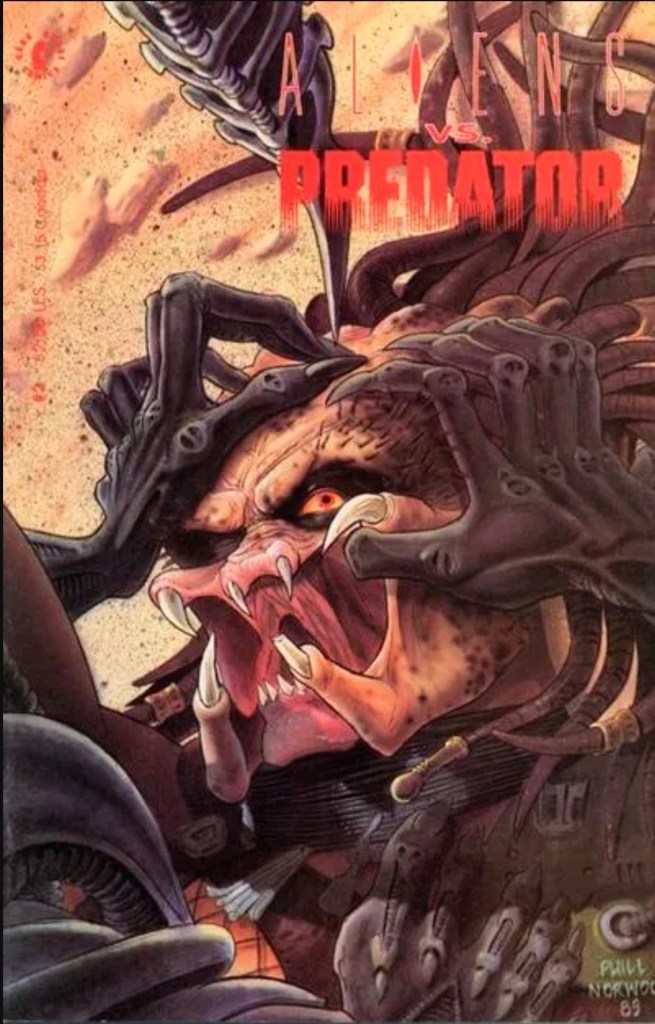
A Look Back at Freex #15 (1994)

Disclaimer: This is my original work with details sourced from reading the comic book and doing personal research. Anyone who wants to use this article, in part or in whole, needs to secure first my permission and agree to cite me as the source and author. Let it be known that any unauthorized use of this article will constrain the author to pursue the remedies under R.A. No. 8293, the Revised Penal Code, and/or all applicable legal actions under the laws of the Philippines.

Welcome back superhero enthusiasts, 1990s arts and culture enthusiasts and comic book collectors! Today we go back to the wild 1990s and explore a part of Malibu Comics’ Ultraverse through a tale of Freex.  

Since after facing off with Contrary (who eventually became part of UltraForce) and her so-called school and students, Freex had been traveling far and long (refer to my previous Freex reviews here, here and here) and gained Old Man as a useful companion. Along the way, they encountered the unknown deep underground and even saw a powerful being. They even got to the city of Denver temporarily. As they went on, they found the path that led them back to civilization.

With those details laid down, here is a look back at Freex , published in 1994 by Malibu Comics with a story written by Gerard Jones and drawn by Scott Kolins. This is a flip-side comic book with Ultraverse Premiere (1994) on the other side.  

The cover.

Early story

The story begins with Freex – composed of Plug, Sweet-Face, Pressure, Anything and new member Cayman – have been traveling for some time deep underground with Old Man. They find themselves back in San Francisco, the one city that brought them together. While still a long distance away from the city proper and there are no locals who could see them, the team cautiously move to a high communications tower. Michael/Plug uses his special ability to transform himself into electronic matter and makes his way through the communications network of the city to do something very important. Cayman meanwhile becomes the object of discussion between Pressure and Sweet-Face as he has yet to share with them details about himself.

As Cayman himself was part of Contrary’s academy and joined Freex recently, he has trouble gaining the trust of the others. After wearing new clothes that Lewis found, a guy suddenly appears to them. He introduces himself to them as Evan…  

Quality

The very evil Rafferty monitoring Freex secretly and enjoying his advantage over them.

Considering what happened in the previous issues, this story feels like a breath of fresh air not only because of the new location the team got into but also because of strong twists that happened. Instead of going through fantastical encounters, Freex found themselves in situations that are more grounded with reality (within Ultraverse standards specifically) and more notably, the story emphasized crossover as Freex and Old Man encountered Firearm. The said crossover, quite cleverly, sets up Freex into a collision course with the serial killer Rafferty (who encountered The Strangers elsewhere within the Ultraverse). For the newcomers reading this, Rafferty is one of the most evil characters of the Ultraverse who has murdered a lot of people – including his own parents – and has developed tremendous hatred of Ultras.

The inclusion of Rafferty here also sheds light on the Freex’s past connection with the Night Man (click here and here). More notably, the said serial killer turned out to be so resourceful and totally obsessed with murdering people with special abilities, he became a formidable force towards Freex. This leads to a pretty powerful and twisting conclusion that must be seen.  

Conclusion

The gang by the tower.

With a good amount of intrigue, characterization spectacle, strong dialogue and the element of crossover, Freex (1994) is a pretty engaging comic book to read. The biggest feature here is having Freex in a conflict with a very obsessed killer who not only hates Ultras but also has an extensive record of murdering many people over a long period of time. In my view, the Freex-Rafferty conflict was nicely structured and it added depth to the plot. What happened in the end of this comic book should resonate with dedicated fans of Freex.

Overall, Freex (1994) is highly recommended.

+++++

Thank you for reading. If you find this article engaging, please click the like button below, share this article to others and also please consider making a donation to support my publishing. If you are looking for a copywriter to create content for your special project or business, check out my services and my portfolio. Feel free to contact me with a private message. Also please feel free to visit my Facebook page Author Carlo Carrasco and follow me on Twitter at  @HavenorFantasy as well as on Tumblr at https://carlocarrasco.tumblr.com/ and on Instagram at https://www.instagram.com/authorcarlocarrasco
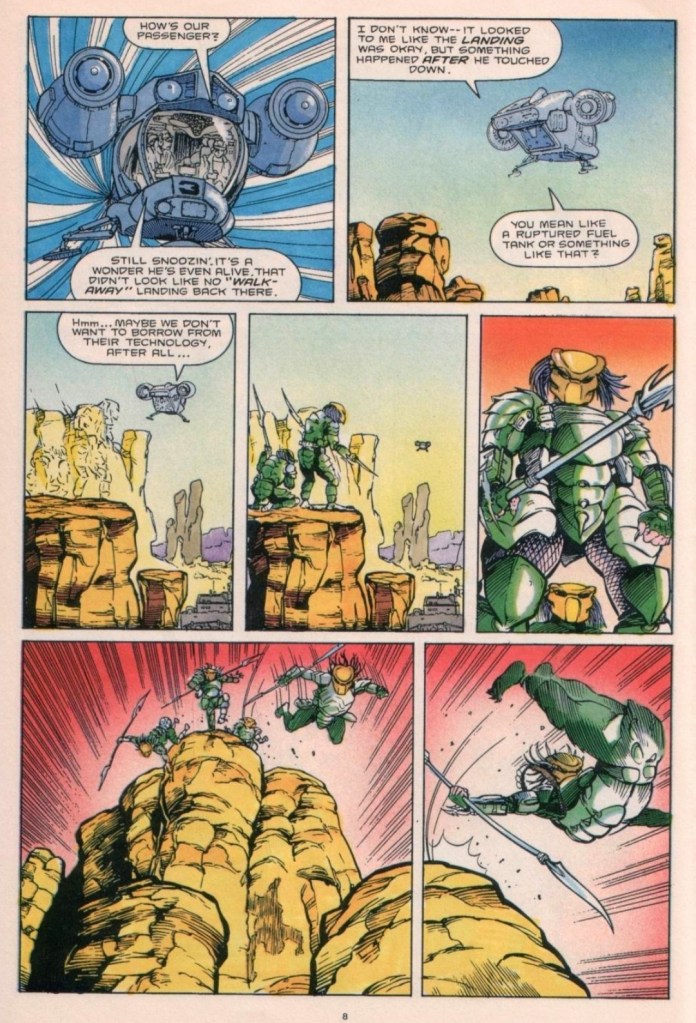
A Look Back at Amazing Spider-Man #268 (1985)

Disclaimer: This is my original work with details sourced from reading the comic book and doing personal research. Anyone who wants to use this article, in part or in whole, needs to secure first my permission and agree to cite me as the source and author. Let it be known that any unauthorized use of this article will constrain the author to pursue the remedies under R.A. No. 8293, the Revised Penal Code, and/or all applicable legal actions under the laws of the Philippines.

Welcome back superhero enthusiasts, 1980s arts and culture enthusiasts, Marvel Comics fans and comic book collectors! Today we go back to the 1980s and examine a small part of the Marvel Comics universe through a tale of the Amazing Spider-Man monthly series.

Back in the year 1985, Marvel Comics published their big-time limited series Secret Wars II, which saw the arrival of the powerful yet ignorant deity Beyonder on Earth. As a major publishing event spearheaded by then editor-in-chief Jim Shooter, Secret Wars II had events that impacted a certain number of regular monthly comic book series whenever an issue was released. In one of the early issues of Secret Wars II, the Beyonder converted an entire tall building within New York City into pure solid gold. As the golden building could not support its own weight, it collapsed and the authorities scrambled to secure the perimeter. Spider-Man himself gets involved by rescuing the victims and he learned something along the way (as seen in Web of Spider-Man ).

With those details laid down, here is a look back at Amazing Spider-Man #268, published in 1985 by Marvel Comics with a story written by Tom DeFalco and drawn by Ron Frenz.

The cover.

Early story

The story begins with Spider-Man swinging high and noticing that the perimeter of the collapsed building of pure gold has been covered (with a large tarpaulin) and secured by armed personnel. People were not allowed to pass which makes them speculate about what happened. Having witnessed government operative Anderson compensating the Kingpin with typewriters made of pure gold secretly, Spider-Man is deeply troubled and decides to go home to take a rest.

At the site of disaster, several personnel equipped with laser weapons worked hard to cut down every part of the collapsed building and transport as much gold as possible onto trucks which are tasked to deliver them to a huge cargo ship at the city’s port. The authorities are concerned that the excessive amount of gold from the collapsed golden building will cause tremendous shockwaves in the world’s markets and they strive hard to keep everything secret…

Quality

Spider-Man sneaking on to the ship as he pursues answers to hot questions about what has been going on.

Being a tie-in story to Secret Wars II, this is indeed a really unique Spider-Man story that does not put the iconic hero in direct conflict with a powered villain at all which can disappoint certain readers and fans who craved for action-packed conflicts. Instead, this story was designed to be a mystery which strongly reflects the consequences of the Beyonder’s action during his presence in New York. You will get to see Spider-Man work on finding out the answers to all the questions in his head and his knowledge about the involvement of the Kingpin and the United States government were more than enough to motivate him to figure things out even though it means putting himself at risk with powerful authorities.

In terms of story structuring and presentation, the tale moved at a moderate pace and the creators took their time with the revelation of key details (clearly designed to cause intrigue with the readers) as the narrative moved forward. This is indeed an engaging read and it has aged well.

Conclusion

Spider-Man returns home tired.

Amazing Spider-Man #268 (1985) is an intriguing and entertaining read even though it does not have Spider-Man in direct physical conflict with a bad guy. The Kingpin, an established supervillain, is present in the story mainly as a background character who still has strong influence with the sinister forces present. The biggest feature of the comic book is the situation itself (local efforts on dealing with the collapsed building of pure gold while preventing the public from knowing all about it) which got triggered by the Beyonder’s reckless act of trying to help humanity by turning a building into pure gold believing that it would help all people financially and socially. As for Spider-Man himself, it is refreshing to see him work his way through in a mystery tale and this comic book has a very solid approach on mystery.

Overall, Amazing Spider-Man #268 (1985) is recommended.

+++++

Thank you for reading. If you find this article engaging, please click the like button below, share this article to others and also please consider making a donation to support my publishing. If you are looking for a copywriter to create content for your special project or business, check out my services and my portfolio. Feel free to contact me with a private message. Also please feel free to visit my Facebook page Author Carlo Carrasco and follow me on Twitter at  @HavenorFantasy as well as on Tumblr at https://carlocarrasco.tumblr.com/ and on Instagram at https://www.instagram.com/authorcarlocarrasco
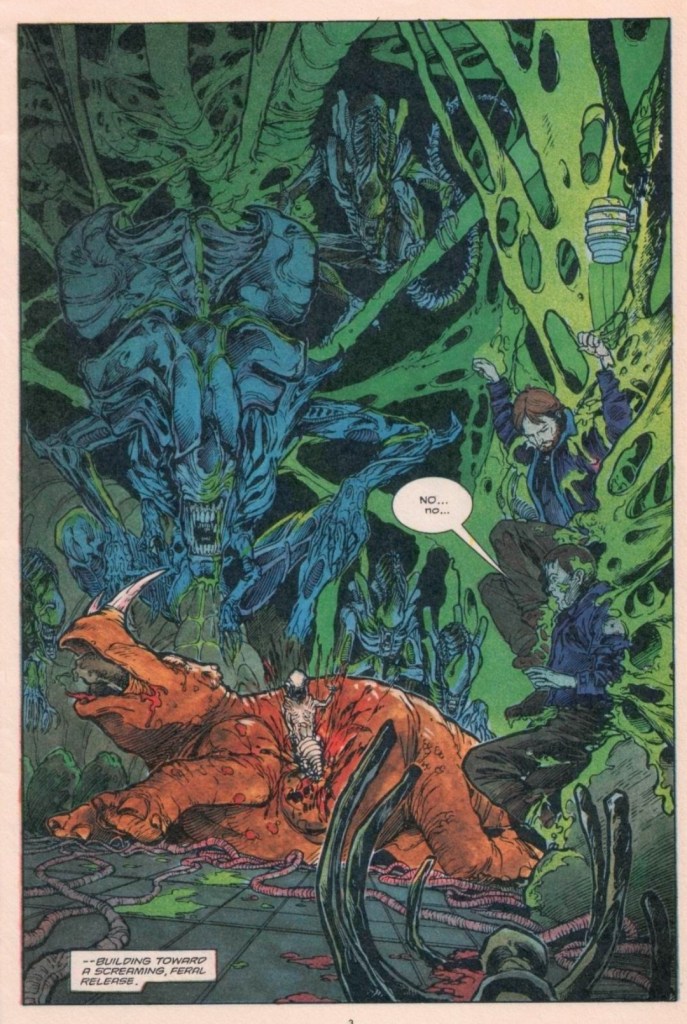
A Look Back at Amazing Spider-Man #301 (1988)

Disclaimer: This is my original work with details sourced from reading the comic book and doing personal research. Anyone who wants to use this article, in part or in whole, needs to secure first my permission and agree to cite me as the source and author. Let it be known that any unauthorized use of this article will constrain the author to pursue the remedies under R.A. No. 8293, the Revised Penal Code, and/or all applicable legal actions under the laws of the Philippines.

Welcome back superhero enthusiasts, 1980s arts and culture enthusiasts, Marvel Comics fans and comic book collectors! Today we go back to the 1980s and examine a small part of the Marvel Comics universe through a tale of the Amazing Spider-Man monthly series.

Back in the year 1988, Spider-Man fans enjoyed and got very intrigued with the first-ever Venom storyline which climaxed in Amazing Spider-Man . Some of you might be wondering what happened after the 300th issue of the series.

With those details laid down, here is a look back at Amazing Spider-Man #301, published in 1988 by Marvel Comics with a story written by David Michelinie and drawn by Todd McFarlane.

The cover.

Early story

The story begins with a group of armed personnel doing a mission inside a building. In the middle of the corridor, several over-head turrets pop out and fire paint balls at the team which used shields for protection. Moments after, they communicate with an executive called Mr. Cruz by means of live video feeds. Cruz tells them they failed the test.

Shortly after, Mr. Cruz and Silver Sable meet with Mr. Pruett and discuss key aspects about the Pruett building’s security. It turns out Pruett himself advertised his building as being the safest locale in New York. Cruz tells him that Silver Sable’s Wild Pack team was fine to a certain extent but he feels much more confident if Sable herself would test building security. After some thinking about her team – international bounty hunters –, their role with the economy of her home country of Symkaria and the less-than-impressive success her team achieved recently, she accepts the contract from Pruett worth $100,000.

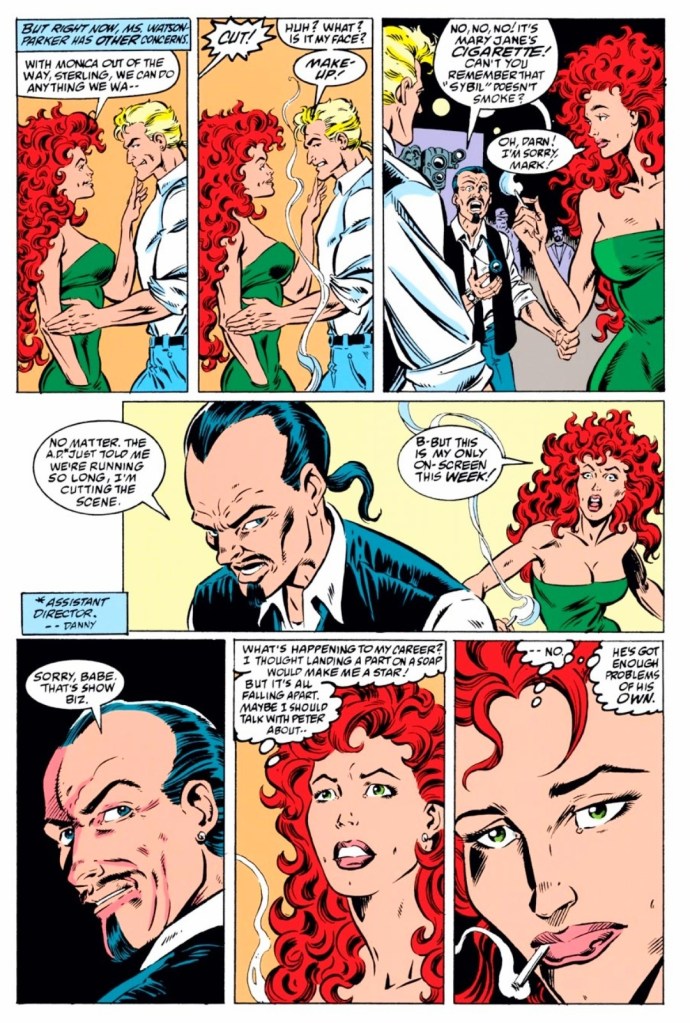
Meanwhile at another location within the city, Mary Jane Parker carefully decides where should her husband Peter (carrying a sofa and a large seat with his own super strength) should put furniture in their home. MJ then has to rush to attend a magazine cover photo session while Peter has to go out and check on an advanced photography course at a university…

Quality

The new couple Peter and Mary Jane Parker together with domestic life.

This is one of the more unique Spider-Man tales of the 1980s I have read. Silver Sable herself is the big feature of this comic book, even overshadowing the famous web-slinger. As this was published years before the Silver Sable and the Wild Pack monthly series launched, David Michelinie portrayed the character as a professional business woman who also happens to be a very capable physical fighter and infiltrator while carrying with her the pride of her homeland Symkaria. Through Silver Sable, you can see the richness of Michelinie’s writing and feel the uniqueness of her personality which makes her stand out among the many other supporting characters or heroes Spider-Man ever interacted with.

As a story set shortly after the climax of the Venom storyline, Peter Parker is portrayed to be in the middle of a transition having gone through college and recently getting married with Mary Jane. Even with the challenges and complications of life, he still finds himself stuck with the perceived obligations of the superhero life. There is also a sub-plot here about a white-haired man searching for him.

Going into the plot itself, Peter Parker could not contain himself from going out again in full costume and web-swinging as Spider-Man as he finds Mr. Cruz a suspicious figure. While it looks like the right thing to do for any superhero, it shows weakness in Peter Parker’s struggle to balance his life. The use of irony is nicely portrayed here.

Conclusion

This is how Silver Sable looked like in the late 1980s.

While the good-versus-evil element of the story is very subtle, Amazing Spider-Man #301 (1988) still succeeded in engaging and entertaining me primarily due to David Michelinie’s very solid storytelling and characterization. Unsurprisingly, Michelinie’s script is brought to life with Todd McFarlane’s fine art from start to finish. Don’t expect Spider-Man nor Silver Sable get to fight some dangerous villain in personal combat as the plot is more about suspense and intrigue laced with some twists. Still, there is plenty of superhero action to enjoy here and McFarlane’s art remains impressive. Silver Sable is very well defined in this comic book and by the end, you will get a solid grasp of herself and her background. This comic book is a must-read before you jump into the Silver Sable and the Wild Pack comic book series.

Overall, Amazing Spider-Man #301 (1988) is highly recommended.

+++++

Thank you for reading. If you find this article engaging, please click the like button below, share this article to others and also please consider making a donation to support my publishing. If you are looking for a copywriter to create content for your special project or business, check out my services and my portfolio. Feel free to contact me with a private message. Also please feel free to visit my Facebook page Author Carlo Carrasco and follow me on Twitter at  @HavenorFantasy as well as on Tumblr at https://carlocarrasco.tumblr.com/ and on Instagram at https://www.instagram.com/authorcarlocarrasco
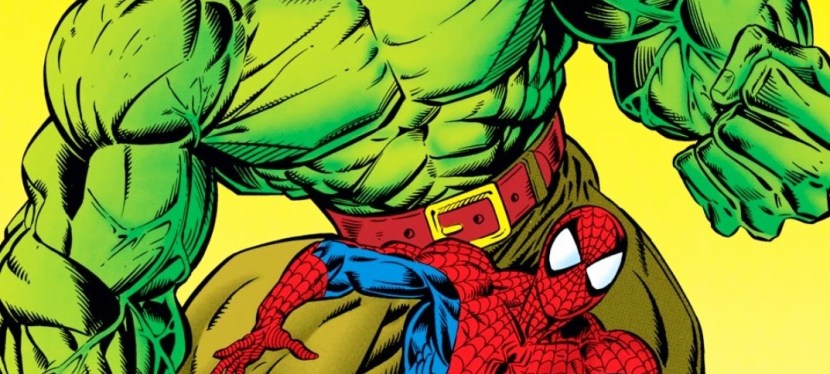
A Look Back at Superman vs. The Amazing Spider-Man (1976)

Disclaimer: This is my original work with details sourced from reading the comic book and doing personal research. Anyone who wants to use this article, in part or in whole, needs to secure first my permission and agree to cite me as the source and author. Let it be known that any unauthorized use of this article will constrain the author to pursue the remedies under R.A. No. 8293, the Revised Penal Code, and/or all applicable legal actions under the laws of the Philippines.

Welcome back superhero enthusiasts, 20th century arts and culture enthusiasts, fans of Marvel and DC Comics, and comic book collectors! Today we go back to the year 1976 to examine what is truly a landmark event in the history of superhero comic book publishing – the first-ever superhero crossover event of Marvel Comics and DC Comics with Superman vs. The Amazing Spider-Man (also referred to as Superman vs. Spider-Man for short).

For the newcomers reading this, I previously reviewed the 2nd Superman-Spider-Man crossover comic book titled Superman and Spider-Man. That was released in 1981 and was handled by a different creative team (led by Jim Shooter as writer) compared to the 1976 crossover of the two icons of Marvel and DC. Going back to the 1970s, a crossover between Marvel and DC looked like an impossible dream as the idea of the two companies coming into agreements over the legal, creative and financial aspects was perceived to be unachievable. Indeed there were headaches and challenges during the negotiations but ultimately Marvel and DC came into an agreement to publish a special comic book featuring Superman, Spider-Man and the related supervillains and supporting characters from both sides. Take note that the two publishing giants worked together previously with publishing an official comic book adaptation of the movie The Wizard of Oz (1939).

With those details laid down, here is a look back at Superman vs. The Amazing Spider-Man, published in 1976 by Marvel Comics and DC Comics with a story written by Gerry Conway and Ross Andru. This crossover event was described as the battle of the century.

The cover.

Early story

The story begins at the World News Conference in New York City. Separated by several feet apart, Clark Kent (Superman) and Peter Parker (Spider-Man) arrive with their respective companions and associates. What the two heroes do not know is that Lex Luthor and Doctor Octopus recently escaped from prison.

Peter Parker gets berated by his boss J. Jonah Jameson for not being good enough as a photographer while Clark Kent learns the bad news from Edge Morgan that he is not wanted for the coverage of a national convention.

Shortly after, Lois Lane climbs up a scaffold to get a good view for some photography. Just as she is about to fall down, Peter Parker suddenly grabs her and pulls her to safety. After an exchange of pleasantries, Peter introduces Lois to Mary Jane Watson. Just as MJ and Lois start conversing, Superman suddenly arrives. The Superman figure then fires beams of light from eyes to Lois and MJ, causing them to vanish into thin air. It turns out, the caped figure is an impostor as Peter Parker and Clark Kent react in shock.

Peter quickly runs to the roof of the building and changes into Spider-Man. As soon as he leaps into action, he comes face to face with Superman himself…

Quality

Superman, Spider-Man, Luthor, Dr. Octopus, Lois Lane and Mary Jane Watson shown in this scene.

I can loudly say that this is one pretty enjoyable crossover tale that not only featured Superman and Spider-Man, but also gave their respective mortal enemies Luthor and Dr. Octopus a good share of the spotlight. To be very clear, the story and set-up of scenes do have a somewhat restrictive structure as the creators clearly did their best to make the spotlight on the characters more or less equal in terms of imagery, dialogue amount and the sharing of dynamic shots. While some may easily complain about the so-called old and tired formula of the major characters getting into fighting each other due to a misunderstanding followed by setting aside their differences to work together, take note that the said formula worked really well in this story written by Gerry Conway.

The story concept Conway came up was clearly made to justify Superman and Spider-Man encountering each other (note: the same goes with the super villains and supporting characters) and the way he wrote the two interacting with each other worked seamlessly and convincingly. There are lots of nice exchanges of dialogue between the Man of Steel and the webslinger.

Even the superiors of Clark Kent and Peter Parker had their own crossover.
Don’t let the woke and socialists fool you. There is nothing racist in this comic book. Wokeness is foolishness. Political correctness distorts perception of reality.

Even though the script has this set of creative restrictions to ensure fairness on both Marvel and DC’s sides, the synergy of friendship and cooperation between Superman and Spider-Man is fantastic to read. Similar qualities are also evident with the scenes of Luthor and Dr. Octopus. Very clearly, the creative team did intense research on the Marvel and DC characters and found ways to create a unique mix that resonates with the fans of Superman and Spider-Man.

As expected, this comic book has lots of superhero spectacle for readers to enjoy. The superhero violence is not intense but the action scenes were entertaining to look at. In my opinion, the highlights of the spectacle here is when Superman and Spider-Man literally exchanged mortal enemies to fight with. As for the fight between the two icons as emphasized in the title, it definitely is a special event that really kicked the story into high gear.

While this is indeed a fun superhero crossover to read, there are some notable weak points here. For one thing, the plot itself lacks a strong concept and Luthor’s evil plan is very flawed and unconvincing. That being said, as I read and re-read this comic book, there never was a sense of danger building up nor was the Luthor-Dr. Octopus team ever a grave threat.

Conclusion

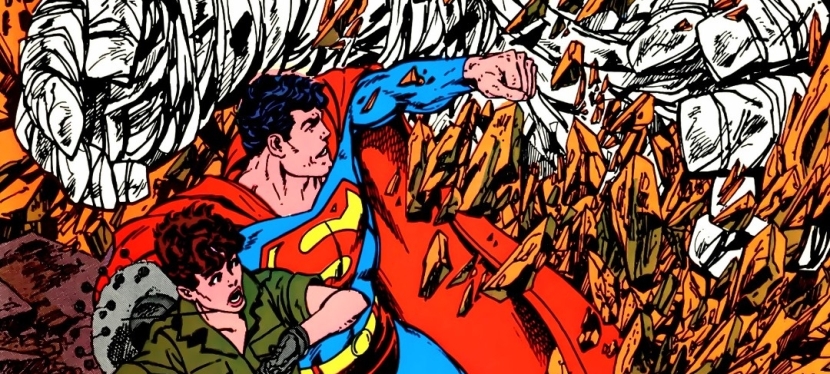
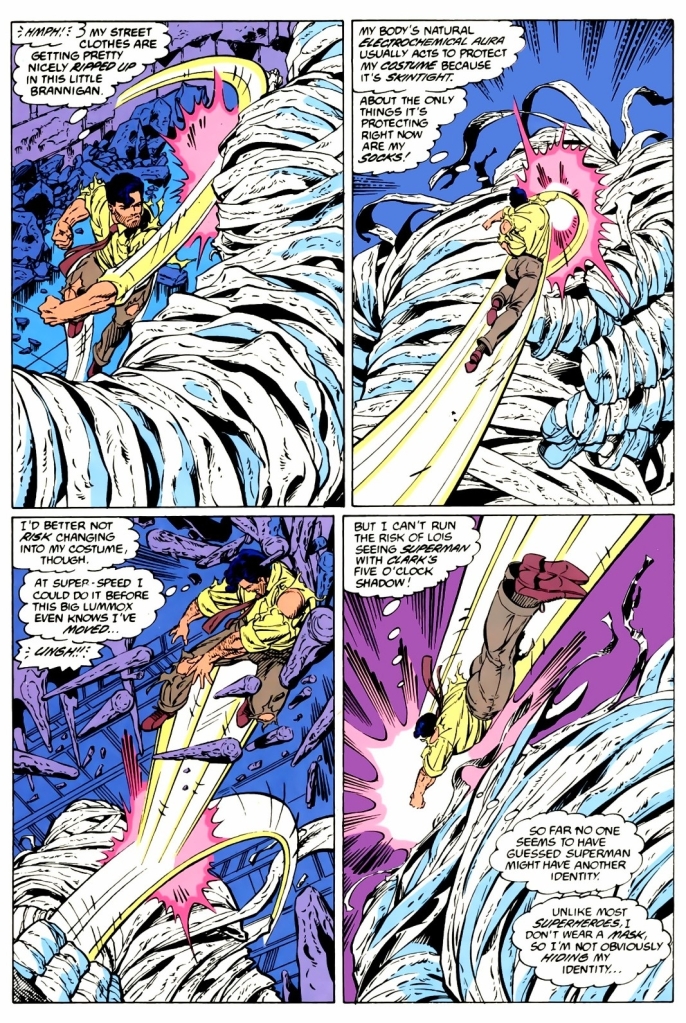
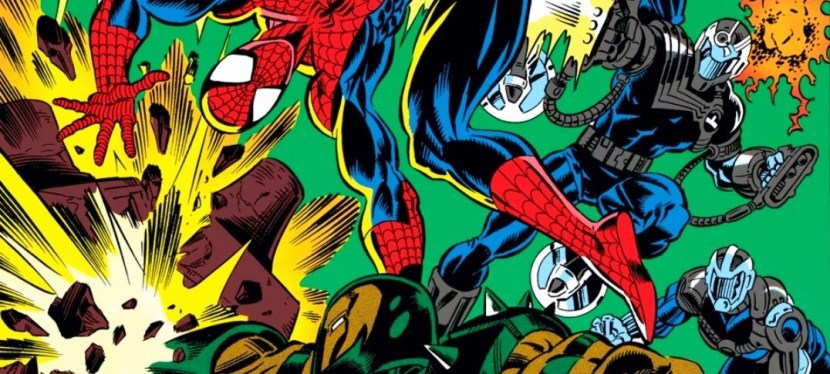
This is only a small sample of the fun in the battle between Superman and Spider-Man.

By today’s standards, Superman vs. The Amazing Spider-Man (1976) is still a fun superhero crossover comic book to read and it remains as a significant part of not just Marvel and DC’s history of collaboration but also that of inter-company superhero crossover comic book publishing in general. While it is better than many other inter-company superhero crossover comic books I have read through the decades, this one is certainly not the best one from Marvel and DC. For me, Superman and Spider-Man (1981) has a more elaborate plot, higher fun factor and deeper impact than this comic book. Meanwhile, Batman vs. The Incredible Hulk (1981) exceeded this comic book in terms of plotting, character interactions, super villain portrayals and establishing a real sense of danger that requires the super heroes to solve. Still, Superman vs. The Amazing Spider-Man (1976) remains an enjoyable read and it definitely is worthy as the strong beginning of Marvel-DC superhero crossover projects of the 1970s and 1980s. It also has more dynamic visuals than its 1981 sequel. This one is also part of the Crossover Classics: The Marvel-DC Collection paperback.

Overall, Superman vs. The Amazing Spider-Man (1976) is recommended!

+++++

Thank you for reading. If you find this article engaging, please click the like button below, share this article to others and also please consider making a donation to support my publishing. If you are looking for a copywriter to create content for your special project or business, check out my services and my portfolio. Feel free to contact me with a private message. Also please feel free to visit my Facebook page Author Carlo Carrasco and follow me on Twitter at  @HavenorFantasy as well as on Tumblr at https://carlocarrasco.tumblr.com/ and on Instagram at https://www.instagram.com/authorcarlocarrasco
A Look Back at Spider-Man 2099 #10 (1993)

Disclaimer: This is my original work with details sourced from reading the comic book and doing personal research. Anyone who wants to use this article, in part or in whole, needs to secure first my permission and agree to cite me as the source and author. Let it be known that any unauthorized use of this article will constrain the author to pursue the remedies under R.A. No. 8293, the Revised Penal Code, and/or all applicable legal actions under the laws of the Philippines.

Welcome back, superhero enthusiasts, 1990s culture enthusiasts, Marvel 2099 fans and comic book collectors! Today we revisit the Marvel 2099 franchise within Marvel Comics’ shared universe during the 1990s. Specifically speaking, we take a look back at one of the early tales of Spider-Man 2099.

In this retro comic book review, Spider-Man made it back to his home after encountering Vulture 2099 and seeing the low life and inhabitants of the people living in the old City of New York far below. His return, however, is not joyful not only because of the growing tension between Miguel O’Hara and the people his connected with but also because his mother suffered a health-related attack.

With those details laid down, here is a look back at Spider-Man 2099 , published by Marvel Comics in 1993 with a story written by Peter David and drawn by Rick Leonardi.

The cover.

Early story

The story begins inside a hospital room. Conchata O’Hara is slowly recovering and near her are her sons Miguel (Spider-Man) and Gabriel as well as Dana. Conchata starts to feel and move restlessly but for Miguel (who heard his mother call his brother Gabriel a good son), she was just acting. Conchata then gets up from her bed and Gabriel encourages his brother to talk to her. Miguel responds saying that their mother hates him because he reminds her of his father – George O’Hara. Dana and Gabriel tell him to talk to her…

Quality

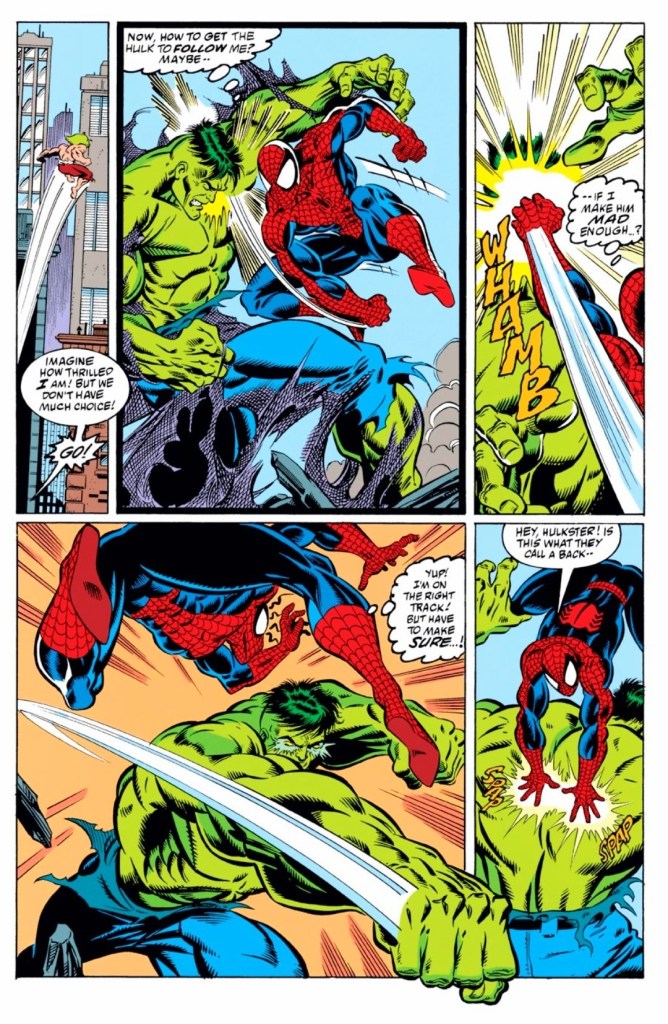
Spider-Man takes on the local authorities. Does this make him a criminal or a social justice symbol? Read the comic book.

To put it straight, this comic book tells the story of the O’Hara family complete with flashbacks from key points of the past. Unsurprisingly, Peter David’s writing is very rich and in-depth with details which made it a compelling read in my experience, and it should be more engaging for readers who passionate follow Spider-Man 2099 and his civilian life as Miguel.

Without going too far with the details, I can say that this comic book explains why Miguel has a very uneasy relationship with his own mother who in turn is close with Gabriel while also resentful of George. As this is a Spider-Man 2099 story, you will see Miguel do his best to make his mother understand his views and himself better no matter the rift between them. There is also a notable superhero-related twist within the Miguel-Conchata interactions that readers who have troubled relationships with their own mothers (especially those who engage in idolatry which is foolish and unholy) will find strongly relevant personally. Miguel’s own personal assessment of his 2nd life as Spider-Man alone deserves your deep attention. Again, Peter David’s writing here is literally solid gold in terms of richness and characterization.

Conclusion

A quick look at the past of the O’Hara family.

While there is no good-versus-evil conflict for superhero enthusiasts to look forward to, Spider-Man 2099 (1993) is a highly engaging, character-driven story that highlights Miguel O’Hara on a very personal level while also having enough space to explain to readers why the O’Hara family relationships are strained. There are even flashbacks that nicely dramatized the past and the one scene in which Miguel goes out in public in full costume as Spider-Man will make you wonder what the protagonist really believes in and where he plans to take his life to. Peter David’s writing here made all the difference.

Overall, Spider-Man 2099 (1993) is recommended!

+++++

Thank you for reading. If you find this article engaging, please click the like button below and also please consider sharing this article to others. If you are looking for a copywriter to create content for your special project or business, check out my services and my portfolio. If you want to support my website, please consider making a donation. Feel free to contact me with a private message. Also please feel free to visit my Facebook page Author Carlo Carrasco and follow me on Twitter at  @HavenorFantasy as well as on Tumblr at https://carlocarrasco.tumblr.com/ and on Instagram at https://www.instagram.com/authorcarlocarrasco/.