Disclaimer: This is my original work with details sourced from playing Secret of the Stars and doing personal research. Anyone who wants to use this article, in part or in whole, needs to secure first my permission and agree to cite me as the source and author. Let it be known that any unauthorized use of this article will constrain the author to pursue the remedies under R.A. No. 8293, the Revised Penal Code, and/or all applicable legal actions under the laws of the Philippines.
Welcome back, video game enthusiasts, fans of Japanese role-playing games (RPGs), 1990s arts and culture enthusiasts, fellow geeks and video game collectors!
If you were already a gamer who enjoyed playing games at home with the Super Nintendo Entertainment System (SNES or Super NES) back in 1995, chances are you heard about the buzz about the hot RPGs that were released for the console at the time. Square released Chrono Trigger (which is now a classic) and Secret of Evermore while Capcom released Breath of Fire II.
That same year, Tecmo (the company best known for Dead or Alive video games) tried to score well with RPG enthusiasts and other SNES-owning gamers of North America by releasing Secret of the Stars which itself turned out to be the English-language version of the Japanese role-playing game (JRPG) Aqutallion.
This RPG caught my attention when I read about it in gaming magazines. After completing Final Fantasy II (actual title Final Fantasy IV) and Final Fantasy III (AKA Final Fantasy VI) on the SNES in 1994, there was a period several months when I was not able to play another RPG and had to settle with other types of games (note: I had a lot of fun with Super Star Wars: The Empire Strikes Back and Super Star Wars: Return of the Jedi). In the 4th quarter of 1995, I finally obtained a copy of the Tecmo-published RPG.
With those details laid down, here is a look back at Secret of the Stars (or Tecmo Secret of the Stars as presented on the game cover).
The cover of the game.
Early story
The story begins with a young lad named Ray who gets oriented with some people at the house of Mrs. Sonya. By merely asking a question, she reminds him about his personal search for a crest which once belonged to his father. Sonya also revealed that their island has been hit by several earthquakes which caused many wild animals to arrive.
Ray travels to the nearby town talking with the locals who gradually update him about what has been happening. Someone reveals to him that a journeyman arrived and talks about something called Kustera and Aquatallion.
Ray meets with the journeyman named David who is a native of Kustera. After reminding Ray that his father was the great Aqutallion, he emphasized that an evil being called Homncruse is a major threat to everyone and must be stopped. He tells Ray that he must seek out the crest of the stars to become an Aqutallion warrior and be able to defeat Homncruse.
Ray gets urged to go to the mountain to find the crest…
Quality
Imagine yourself arriving in this town for the first time. Which place should you visit?
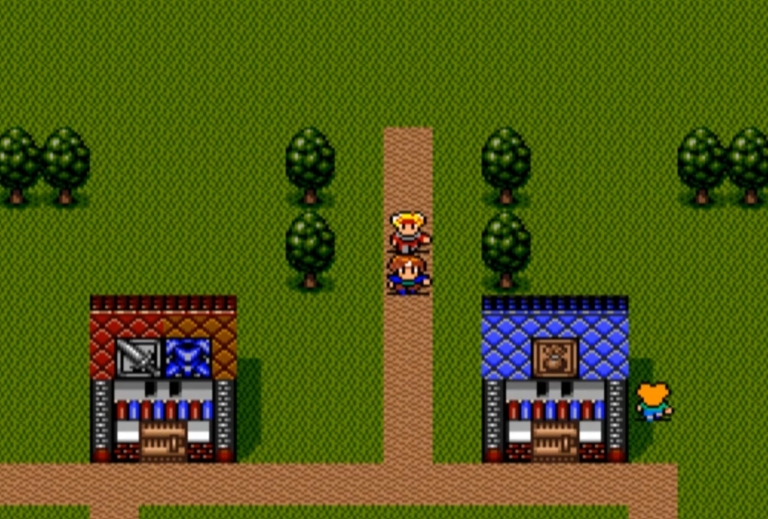
To put things straight, Secret of the Stars has the basic elements of turn-based role-playing that involves the heavy use of menus for item management, fighting, defense, item use and others. The most unique game design feature here is the ability to switch between parties as the game goes on but what is clear is that the party involving Ray is the default party.
On the creative side of things, the concept about Ray being the chosen one to protect his people, lead a group composed of individuals to not only fight evil beings or monsters and achieve goals on quests (read: this includes going through personal trials at different sites in order to receive additional powers) and take on Homncruse and his evil agents has always been generic and the overall game design reflects that as well. Being the protagonist, Ray is clearly the most developed character but the same cannot be said about Tina, Cody, Leona and Dan who are all uninteresting.
Red slime? More like purple!
The production values of this game are clearly sub-par and the weak Japanese-to-English translation is only the tip of the iceberg. With the exception of the monster and enemy designs, Secret of the Stars looks like an 8-bit game and really stood out among 16-bit RPGs of its time when it comes to field of inferiority and primitiveness. The level designs lack creativity and the location background art lacked variety. When it comes to the story, its concept was interesting at first but there really is not much depth to it nor are the characters worth caring about.
What really defined this game is its slow-pacing in terms of interactivity. Adding even more to the sluggishness of the game are the slow movements of your character (representing your party) on-screen and the rather high rate of random battles. There is also a lot of grinding (defeat enemies in lots of repetitive battles to gain experience points to level up) required and the sad thing is the level-up is not very rewarding especially when you take into consideration the many enemies or monsters who are often strong with high hit points each.
The sluggishness and tedium are so bad, Secret of the Stars really turned out to be more of a chore than an actual fun game to play. It is so bad, the game’s unique feature of allowing players to control the 2nd party (Kusterans) became even more tedious and pointless to do. It is so bad, you will care less about the story of Ray, and you will prefer to ignore the other characters even more. It’s so bad, you won’t care anymore about Ray’s quest and the danger Homncruse has on the people.
Conclusion
Do you know someone named or codenamed Badbad?
Secret of the Stars was a bad RPG for its time and clearly it was a waste of money. On my experience, I ended up being very disappointed not only because of the game’s quality but also because of an absence of fun and the fact that my time playing it became a big waste. For me personally, this JRPG was definitely the worse SNES experience of 1995. It seems like the game developers made this game to literally torture gamers.
Overall, Tecmo’s Secret of the Stars should be avoided!
+++++
Thank you for reading. If you find this article engaging, please click the like button below and also please consider sharing this article to others. If you are looking for a copywriter to create content for your special project or business, check out my services and my portfolio. Feel free to contact me as well. Also please feel free to visit my Facebook page Author Carlo Carrasco and follow me at HavenorFantasy@twitter.com
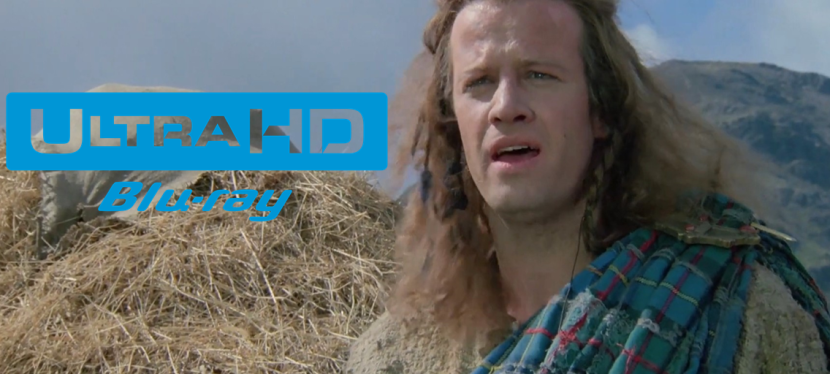
Get ready because Highlander will be released in 4K Blu-ray format on September 14, 2021. It will come with the 4K Blu-ray disc, Blu-ray (for 1080p viewing) and the digital copy. 4K Blu-ray collectors should be aware that as of this writing, there is no confirmation yet if Highlander 4K Blu-ray will come with native 4K visuals or upscaled 4K visuals.
As of now, there is really not that much information about Highlander 4K Blu-ray. It just so happens that this year marks the 35th anniversary of the movie.
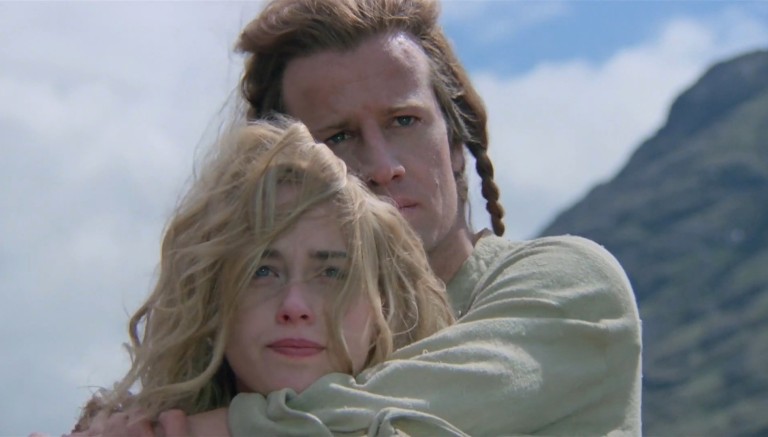
For the newcomers reading this, Highlander is the story of immortality that follows a Scottish man called Connor (played by Lambert) who discovers his legacy with a legion of immortals. After living for centuries and moving to different places around the world, he eventually settles in the city of New York. Things turn intense when other immortals appear around him.
I first saw this movie on home video way back in late 1980s. I even saw its 1991 sequel Highlander II: The Quickening and even a few episodes of its TV series. I was never a fan of the Highlander franchise but I fondly remember the 1986 movie for its very scenic shots, the epic flashback set in historic Scotland, the great sword fighting and the very creepy performance of Clancy Brown as the main antagonist. Sean Connery, who died in October 2020, was also memorable in his supporting role as Ramirez. Christopher Lambert is still best known for his lead role as Connor in this movie.
To get to know more about Highlander, watch the video posted below from Minty Comedic Arts. Be warned of potential spoilers…
Thank you for reading. If you find this article engaging, please click the like button below and also please consider sharing this article to others. If you are looking for a copywriter to create content for your special project or business, check out my services and my portfolio. Feel free to contact me as well. Also please feel free to visit my Facebook page Author Carlo Carrasco and follow me at HavenorFantasy@twitter.com
Disclaimer: This is my original work with details sourced from playing Suikoden II (English version, released in 1999) and doing personal research. Anyone who wants to use this article, in part or in whole, needs to secure first my permission and agree to cite me as the source and author. Let it be known that any unauthorized use of this article will constrain the author to pursue the remedies under R.A. No. 8293, the Revised Penal Code, and/or all applicable legal actions under the laws of the Philippines.
Who is Yoshitaka Murayama? He created the memorable Suikoden (AKA Genso Suikoden) RPG franchise during his time with Konami, specifically the first three games. I myself played and finished Suikoden on the original PlayStation in 1996 and it was a lot of fun thanks to the combined efforts of Murayama (who did the scenarios and game direction) and his teammates such as Junko Kawano (who did the design), Miki Higashino (who did the music along with four other teammates) and some others.
Then in 1999, the sequel to Suikoden was released and I can never forget the day I bought it at a local game store and rushed home with a lot of excitement to start playing it on our then aging PlayStation console.
So you must be wondering…how did I find the sequel? Was it an improvement over its predecessor? Did Murayama and the key creators do better than what they did in the first game? You can all find out in this look back at Suikoden II, published by Konami for the PlayStation (PS1).
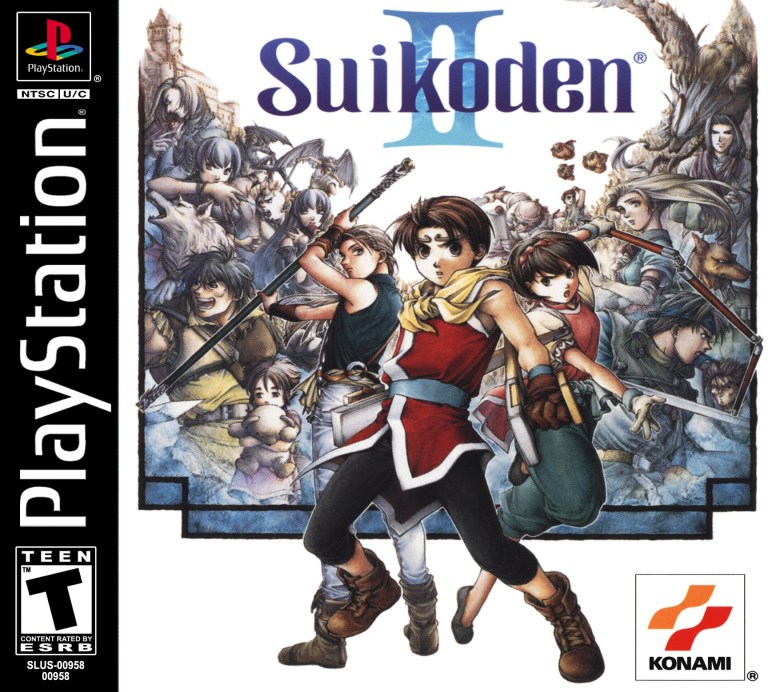
The cover of the North American version of Suikoden II.
Early story
The story begins with two youngsters – Riou (your character whose name can be modified) and Jowy – who are close friends since childhood now serving the Highland Army as members of their youth brigade. They spend time in a military camp in the forest as a peace treaty between two great forces is pending (note: Highland has been in conflict with the City-State of Jowston).
As some soldiers expressed desires to go home once the peace has been finalized, Riou and Jowy are ordered by their commanding officer Rowd to go back to their tent and sleep. However, a surprise attack happened which alerted them. As soon as the two close friends left their tent, they are shocked to see parts of the camp burning. Their officer Rowd informed them that their enemy is responsible for the attack and deliberately broke the peace agreement. Riou and Jowy are told to take the mountain path to the east and save themselves before it is too late.
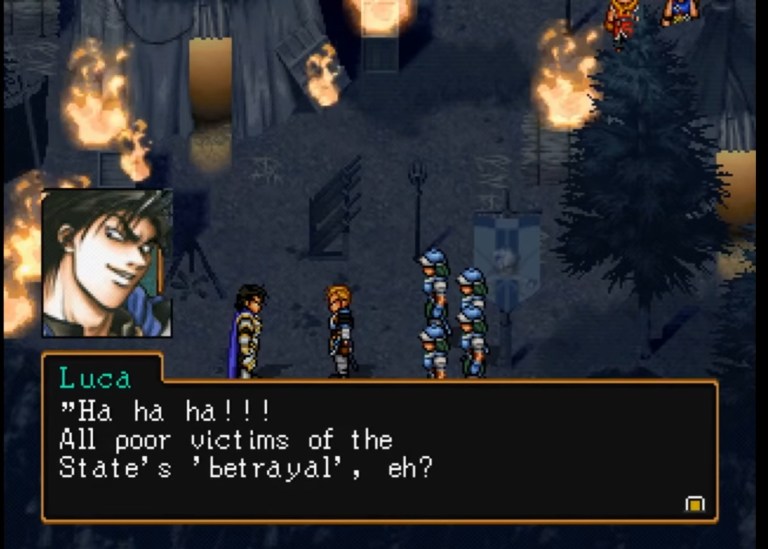
Fearing that they might get ambushed in the woods, Jowy tells Riou that they should return to camp. Upon returning, they quietly witness the unexpected presence of Highland prince Luca Blight who gets briefed by Rowd. As it turns out, the attack on their camp was not committed by the opposing forces but rather it was all a self-inflicted operation by Highland. Rowd’s instruction to some of their selected soldiers to head east was a set-up. What happened was all part of a plan by Highland to escalate the conflict by blaming their losses on Jowston. Luca Blight expressed clearly that a peace treaty with Jowston and its states was not needed, and he strongly believes in the power of Highland to conquer them all.
Jowy and Riou (upper-right corner) quietly witness the conversation between prince Luca Bright and the captain.
After learning the shocking details, Riou and Jowy decide to leave for the cliff to the north as a way of escape. At the cliff, Rowd catches up to the two. Fortunately, Riou and Jowy were successful in defeating Rowd’s soldiers and pave the way for their escape. Before fleeing, they marked a rock and promised to return to that same place if ever they get separated.
Riou and Jowy jumped off the cliff and get separated. Some time later, Riou wakes up and finds himself in the presence of three men. One of them identifies himself as Viktor, the leader of an army of mercenaries and an ally of Jowston. Another member of the mercenary army in blue arrives and he is Flik.
Being powerless, Riou marches with them to the headquarters of the mercenary army…
Quality
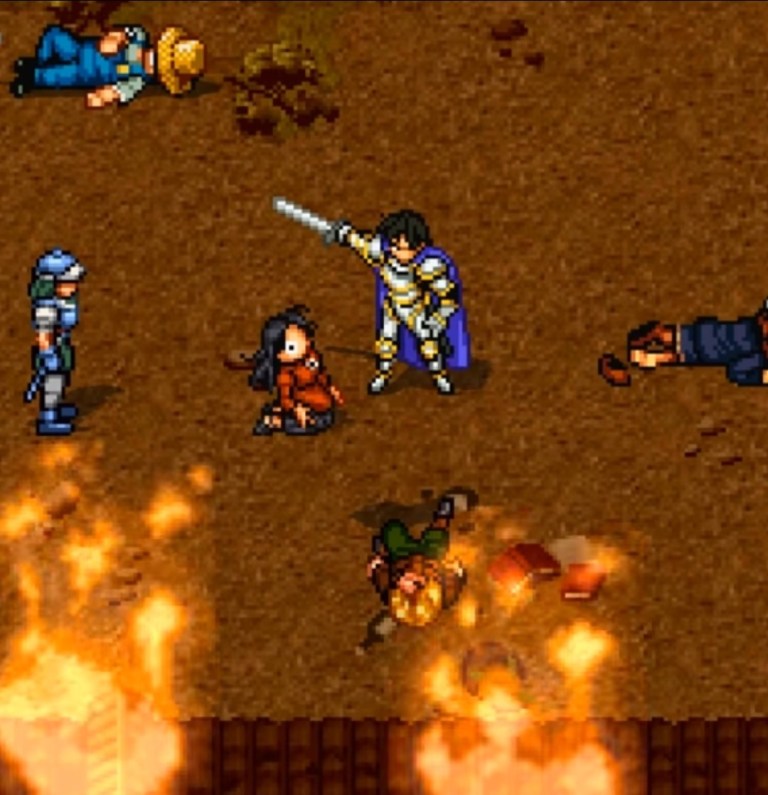
Luca Blight (with sword) is a lot more than just being evil as the game’s main antagonist.
Having played Suikoden a lot in 1996, I got familiar with the game design, the varied battle systems and other features that made it a solid RPG on its own. As for Suikoden II, I can clearly say that Murayama and his creative team built up on their foundation (in the first game), expanded the fantasy concept dramatically and ultimately made an extensive series of improvements and additions over each and every aspect of the sequel!
I’ll start first with the storytelling and writing. Compared to its predecessor, I found Suikoden II to be deeper and it took great advantage of the fact that the plot took place just years after first game and by this time the established world, the cities, tribes and geopolitical concept have been developed so much – backed with solid writing – they all become a lot more believable. In the middle of the great conflict are the three main characters Riou, Jowy and Nanami whose exploits and portrayals are pretty rich and lively to follow. It’s kinda like following the love triangle of Hikaru, Misa and Minmay through the war in the classic Super Dimension Fortress Macross anime TV series, except that you – the player – get heavily involved as Rious by making decisions that affect yourself and others, leading missions, building up a community (and force) of over 100 members, and overcoming challenges related to the conflict between Highland and Jowston.
The great news here is that the Riou-Jowy-Nanami emotional arc was written to be dramatic, engaging, intriguing and sentimental which ultimately will make you feel for them just as you make your way through the many events and twists of the war story. Beyond these three key characters, it should be noted that the scenarios are excellently executed and really showed how lively the fantasy world of Suikoden II really is. I’m talking about the portrayal of the many, many supporting characters and the interactions you have with them as the plot moves forward. Remember how lively your troops were in welcoming you back after winning your first army battle? Such a scenario was well directed and scripted, and the supporting characters you recruited really had their moments of participation which make sense within the narrative. I also should mention that the opposition figure of the game – Luca Blight – is still a powerful and complex villain in JRPGs even by today’s standards. Luca Blight is not evil for the sake of being evil, but if you pay close attention to the details about his background as the game’s story goes on, you will realize he is quite a complex character whose evil made sense within the narrative. Very clearly, the writing and storytelling done by Yoshitaka Muraya is not only greater than in the first game, but also very inspired.
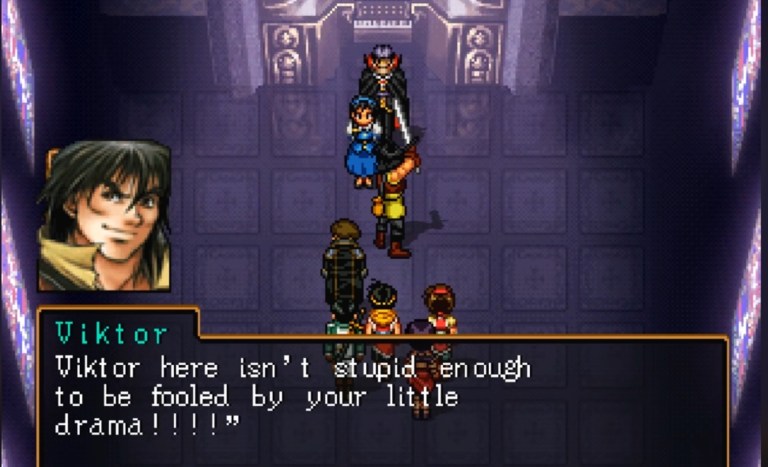
Viktor, who also appeared in the first game, continues to be an important supporting character in this sequel! He is one of several characters from Suikoden who returned.
On the gameplay and design, Suikoden II’s exploration of the world, towns and locations uses good old 2D graphics. The big difference here is that the 2D visual elements are more varied in terms of detailed sprites for non-playable characters (NPCs) and interactive characters, and visually the sprites as well as the art used for the in-game environments looked more polished (clearer, smoother and less pixelated). The controls are responsive enough for my taste, and it is also nice that my character moves faster while exploring. More on exploring, I do confirm that there are indeed more locations to visit (including those that are part of the quests related to finding the 100+ characters) and the art made for the locations are more varied as well.
More on the gameplay, two types of battle systems from the first game are back but with refinements. First to talk about is the party battle system in which players get to control a group of up to six members who face off with enemies by group, or a single powerful boss-type enemy. During the party battle, you get to pick options as to what type of action each member of your party will do – Attack, Magic (note: this involve Runes), Item or Flee (note: if your party is much stronger than the opposition, Bribe or Let Go options will appear).
The party battle system is a lot of fun and not too stressful.
The way the battles are designed, as in the first game, is smooth, very visually appealing (thanks to the dynamic camera and fine level of detail of the sprites and animation) and fun to watch. Adding further depth to the party battles are the combined attacks involving at least two characters. Take for example Flik and Viktor doing the cross-attack, or Riou and Nanami performing a series of combo attack moves in strong coordination with each other. These combined attacks are not only fun to perform and see, but also encourages you to experiment by mixing up characters (specifically combatants) and paying attention as to which characters they can do combined attacks with. This alone will encourage you to complete the 108 characters of your force.
The use of Runes has been improved a lot in this game as the combatants now have three slots to equip Runes (note: these slots gradually open up as characters’ levels go up). Runes are essential to use magic spells in battles and the improvement of the Runes – plus the Run Affinity system – add more variety in the battles.
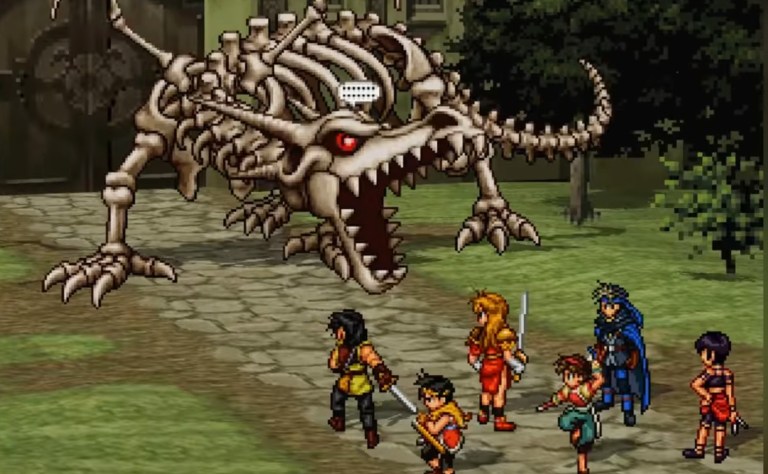
The 2D sprites are very visually appealing, especially when you watch the characters perform varied forms of action during the party battle.
Compared to other Japanese RPGs, the party battles here are much less stressful even though a random encounter system is used. There is also the option for automated attacks, which spares you from having to choose options for each member of your party to perform when fighting the enemies. Granted, I went through lots of random encounter battles and some challenges, but ultimately the stress level and tedium were very low. Doing party battles is fun overall.
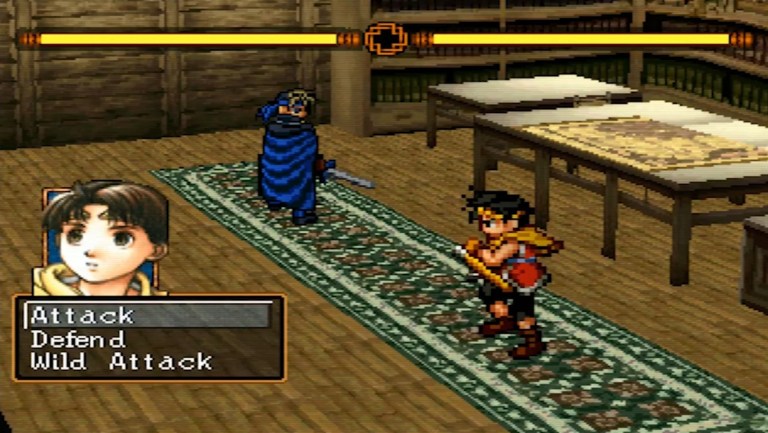
The 2nd battle system inherited from the first game is the duel. Duels happen the least throughout the game but each time they happen, they can be quite engaging to do. As the one-on-one battle between your character and an opponent begins, you will see them in a 3D realm with the dynamic camera capturing the action. Your options are mainly Attack, Wild Attack and Defend, and before you can pick an option, you must pay attention first to the clues (note: taunts) from your opponent which can help you anticipate his/her/its next move. While the visuals are clearly improved, the duel is pretty much the same as in the first game.
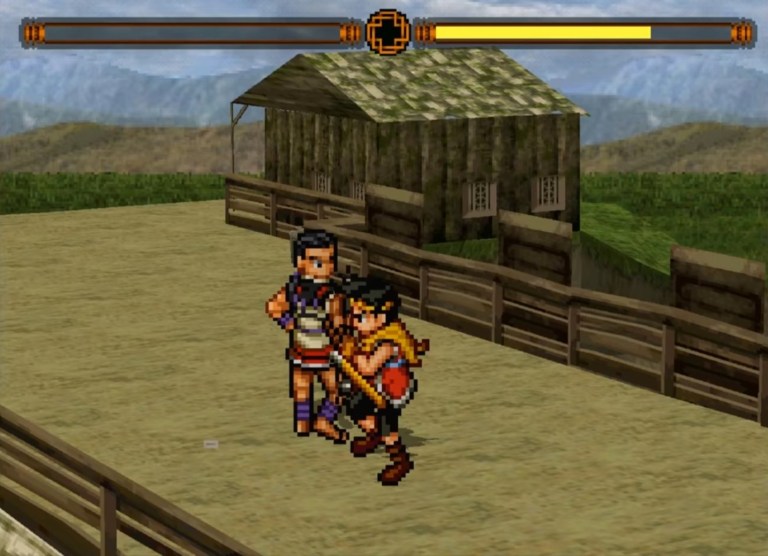
Duels happen in a 3D environment with the characters still presented as 2D sprites that are not only highly detailed but also are smoothly animated.
Like in the party battles, duel sequences also have a dynamic camera system complete with zoom during the action.
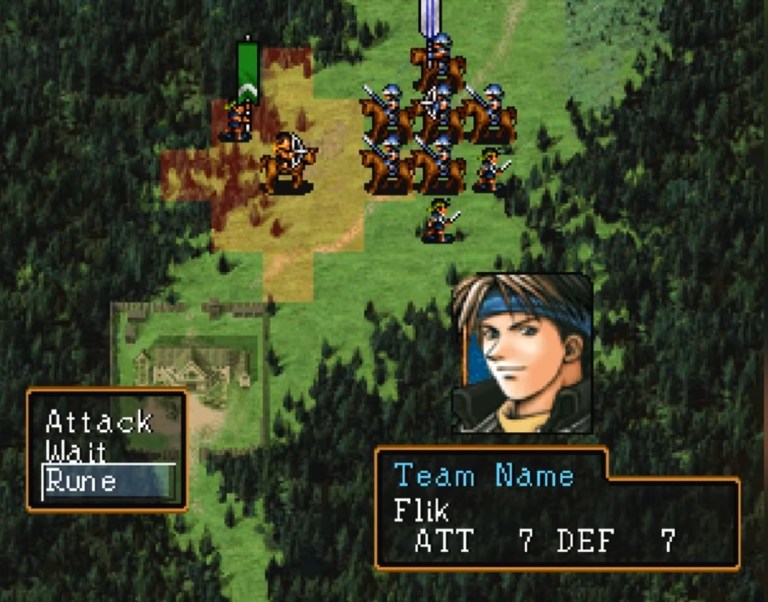
The 3rd battle system – army battles – is clearly the most revised part of the game as it is radically different from the army battles of the previous game. This time the army battles involves the heavy use of a tactical map (where you move units in a grid-like system). Your units – composed of mainly characters you recruited, including the non-combatants – can be moved on the map to counter an enemy unit. Then a short, animated battle sequence will commence and based on the statistics of each unit, the winner and loser of the sequence will be determined. Take note that in events of defeat, recruits can die permanently. As such, it is important to pay attention to not only the statistics but also the types of troops you have such as archers, healers, knights, and foot troops. When controlling units on the map, your options are Attack, Wait and Rune. It is also very entertaining to see how the characters react (with dialogue, no less) to the battles. Overall, the army battle system here is clearly much deeper and more strategic than what was used in the first Suikoden.
The army battles in this game are more tactical than what was presented in the first Suikoden. This is also the main map used for such battles.
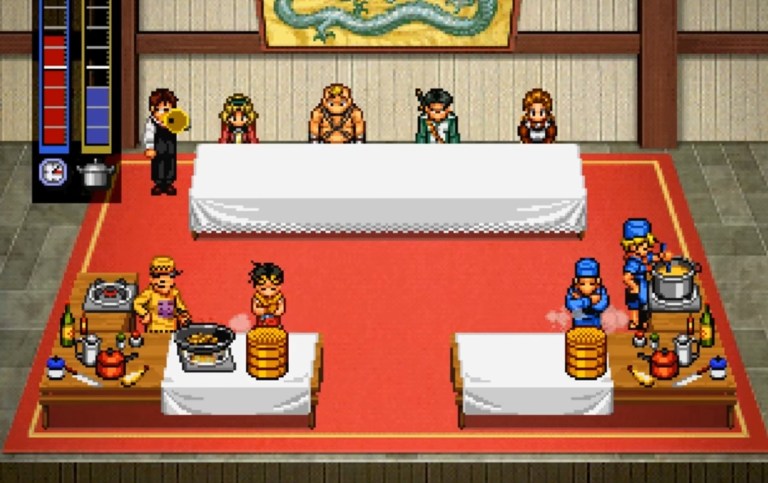
Battles aside, there are also lots of things to do related to exploration. For one thing, there are these fun-filled mini-games the game creators set up such as fishing (note: not as boring as it may sound), the whack-a-mole game, rope climbing, Chinchirorin (dice game in a bowl) and, the most exciting and deepest of them all, the cooking contest game. When you fully invest your time into each of these mini-games, you will not feel relieved from the stress of battles and exploration, but also have a lot of fun free of stress. I enjoyed these a lot myself.
If you enjoyed building up your fortress in the first game, you will experience that here also! Building up your stronghold is related to your recruiting of people and some of them have certain talents that will establish key parts of your place like a store, a Rune shop, aa tavern, a restaurant, an armor shop and even a detective agency to name some! It may take an effort to have all possible establishments get realized in the game but I promise you, they are all worth it and you will feel thankful that you got to recruit lots of people. The other reward of building up your fortress is the establishment of a thriving community of people!
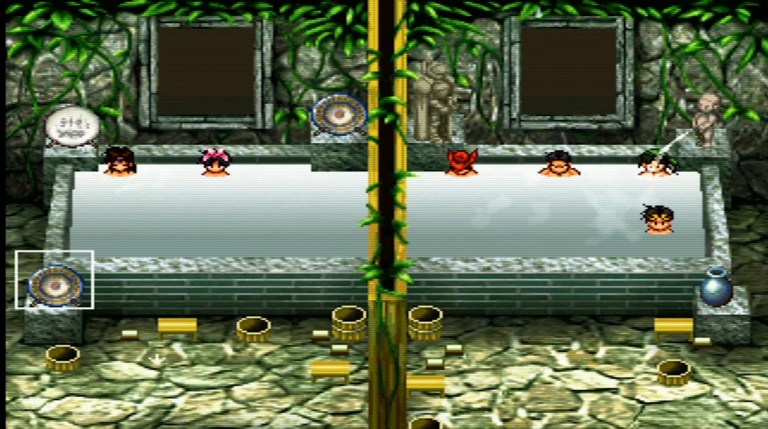
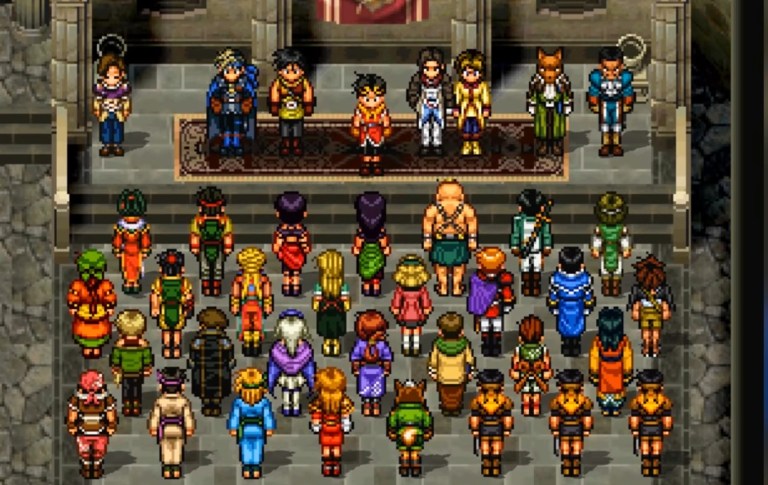
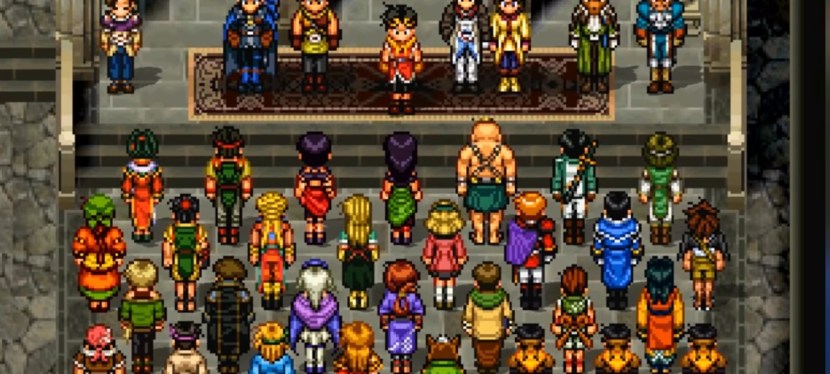
Your party members can take a bath and even use the collected artifacts as decorations. This is one of the many side activities you can do at your stronghold.
The cooking contest mini-game is easily the best in the game!This alone will encourage you to keep searching for recipes during your adventures!
With regards to continuity with the first Suikoden game, the game developers implemented certain content (locations, dialogue, story and characters) that get unlocked by having your preserved Suikoden saved game content successfully loaded with Suikoden II running on PS1. I’m talking about being able to meet and even recruit Suikoden hero Tir McDohl, plus meeting even more characters from the first game. Very clearly, this is a clever presentation of fan service done by Murayama and his creative team who paid attention to the feedback of the first Suikoden.
The music done by Miki Higashino and Keiko Fukami are very varied and many of them reflect the places you get to visit, the emotional scenes you witness and the epic moments that happen. The great news here is that each and every tune in the game was made and performed with special care. This game’s soundtrack really stands out high among Japanese RPGs of the 1990s and even by today’s standards, it still is a great soundtrack to listen to.
If there are any flaws in this great game, it is the English translation itself as there were typographical errors, mistranslations and even NPCs with lines of dialogue that made absolutely no sense. Clearly there was a rushed job with the translation.
Conclusion
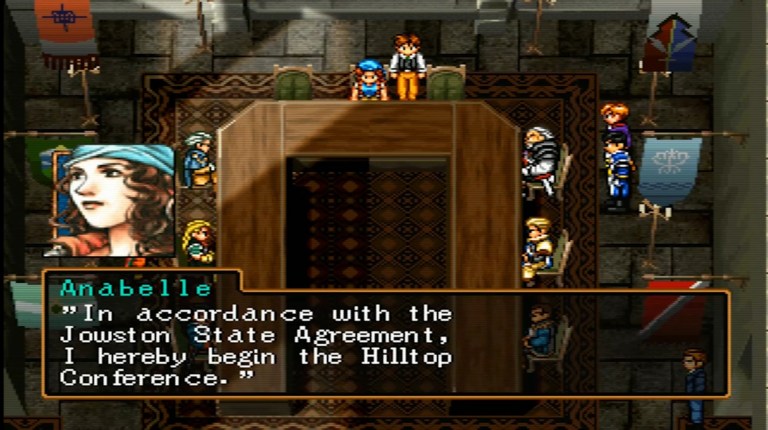
The political aspect of the game’s story is simple and never overwhelming.
I really love Suikoden II and very clearly, it is a major improvement over its predecessor (which itself was a solidly good RPG). Suikoden II is a labor of love done by Murayama and his creative team and the result is a true epic RPG that has so much enjoyable stuff and high replay value for gamers. Its quality is still great and by today’s standards, Suikoden II is indeed a classic RPG that gamers should play even though Konami itself does not care to make it more accessible in this modern age of gaming.
Given the legacy of Suikoden II and the fact that Konami showed no signs of reviving the Suikoden RPG franchise, now is the time to look forward to Eiyuden Chronicle: Hundred Heroes which Murayama and his team are developing for release in 2023 for Xbox consoles, Xbox Game Pass and other platforms. Eiyuden Chronicle: Hundred Heroes clearly has strong Suikoden vibes and the distinct combination of 2D sprites with 3D polygonal environments, plus its party battle system strong resembles that of Suikoden and Suikoden II!
Overall, Suikoden II is highly recommended!
Now if only Konami would change its ways to make Suikoden II more accessible (go way beyond the PlayStation online store and ecosystem) to gamers by releasing it digitally through Xbox LIVE, Steam, Xbox Game Pass and other online stores or ecosystems. Paying hundreds of dollars for a legitimate hard copy of the game is simply too much.
There is nothing like building up your stronghold and seeing your recruits become part of its development as well as your campaigns.
+++++
Thank you for reading. If you find this article engaging, please click the like button below and also please consider sharing this article to others. If you are looking for a copywriter to create content for your special project or business, check out my services and my portfolio. Feel free to contact me as well. Also please feel free to visit my Facebook page Author Carlo Carrasco and follow me at HavenorFantasy@twitter.com
The good news here is that the movie will have another 4K Blu-ray release in a standard edition form and it is set for a July 27, 2021 release! Advanced orders for it are being accepted now at Amazon. The release, along with the previous one, was made possible by Vinegar Syndrome.
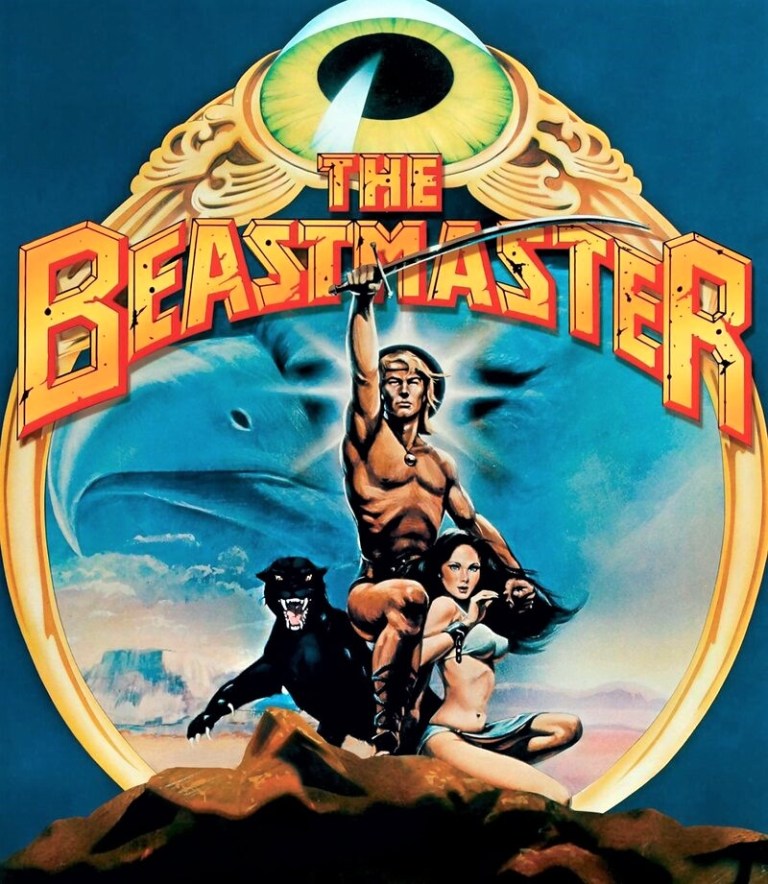
The Beastmaster classic movie art.
So what exactly will you fans get in return for paying for the next 4K Blu-ray release of The Beastmaster? To put things in perspective, posted below is an excerpt from the Blu-ray.com article as well as its page for the movie. Some parts in boldface…
Special Features and Technical Specs:
4K RESTORATION OF THE FILM FROM A 35MM INTERPOSITIVE
HDR PRESENTATION OF THE FILM (Blu-ray copy included)
Alternate updated visual effects version supervised by the director
Brand new commentary track with writer/director Don Coscarelli & writer/producer Paul Pepperman, moderated by filmmaker Joe Lynch
Archival commentary track with Don Coscarelli & Paul Pepperman
“The Beastmaster Chronicles” – a brand new feature length making-of documentary by Elijah Drenner
“The Saga of the Beastmaster” – an archival making-of documentary by Perry Martin
Super 8mm home movies shot by James Dodson with audio commentary by Don Coscarelli & Paul Pepperman
Outtakes
Stills, Promotional, and Archival Material Gallery
Original theatrical trailer
Reversible cover artwork
English SDH subtitle
REGION-FREE
Video
Codec: HEVC / H.265 (93.69 Mbps)
Resolution: Native 4K (2160p)
HDR: HDR10
Aspect ratio: 1.85:1
Original aspect ratio: 1.85:1
Audio
English: DTS-HD Master Audio 5.1 (48kHz, 24-bit)
English: DTS-HD Master Audio 2.0 (48kHz, 24-bit)
Subtitles
English SDH
Discs
4K Ultra HD
Blu-ray Disc
Three-disc set (1 BD-100, 2 BD-50)
Packaging
Reversible cover
Booklet
Playback
4K Blu-ray: Region free
2K Blu-ray: Region A
For those who want to get the most out of their 4K UHDTV sets at home, The Beastmaster 4K Blu-ray has native 4K visuals! In Blu-ray.com’s review of the elaborate edition, positive reaction was given to the visuals and it is more impressive once you learn the harsh truth that the original film negative of the movie got lost! In fact, The Beastmaster director Don Coscarelli launched an effort to recover the film negative. You can help in the effort to recover it by visiting https://www.whereisthebeastmaster.com/
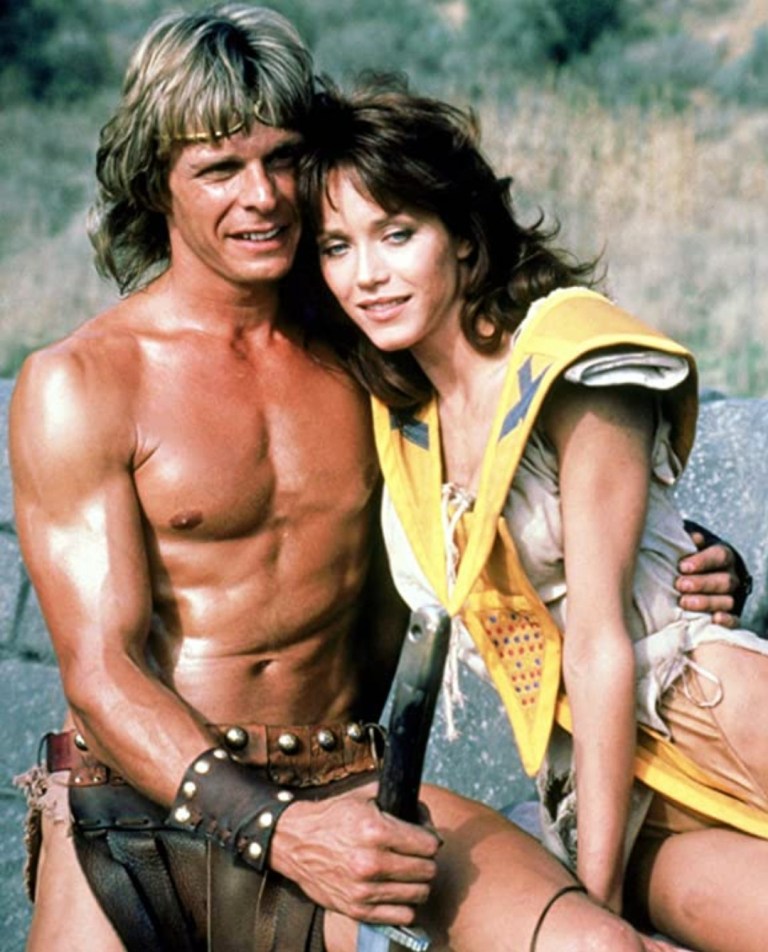
For the newcomers reading this, The Beastmaster is a fantasy movie that was released way back in 1982 and it was actually not faithful adaptation of the 1959 novel The Beast Master authored by Andre Norton. The movie starred Marc Singer (read my review of V: The Original Miniseries), the late Tanya Roberts, the late Rip Torn and John Amos. The film remains very notable for its use of live, trained animals in many scenes. Having seen the movie myself decades ago, there is nothing like watching Marc Singer traveling with the panther (a tiger dyed black in reality) in the middle of nature.
Marc Singer and the late Tanya Roberts. (source – IMDB.com)
If you are a fan of The Beastmaster or if you are a 4K Blu-ray collector looking for unique moves to add to your collection, watch out for The Beastmaster 4K Blu-ray standard edition on July 27, 2021.
Thank you for reading. If you find this article engaging, please click the like button below and also please consider sharing this article to others. If you are looking for a copywriter to create content for your special project or business, check out my services and my portfolio. Feel free to contact me as well. Also please feel free to visit my Facebook page Author Carlo Carrasco and follow me at HavenorFantasy@twitter.com
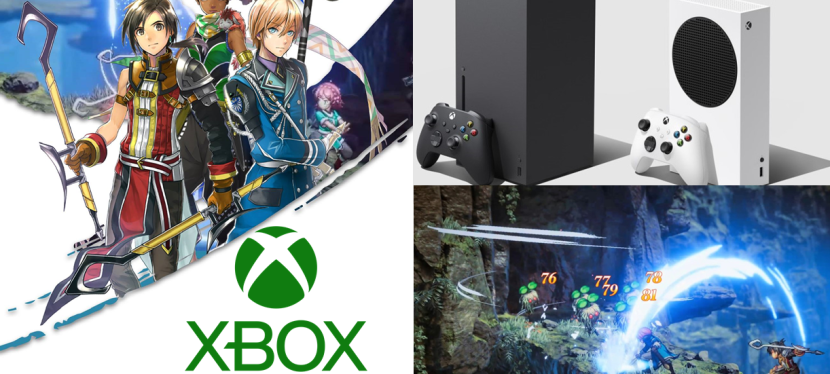
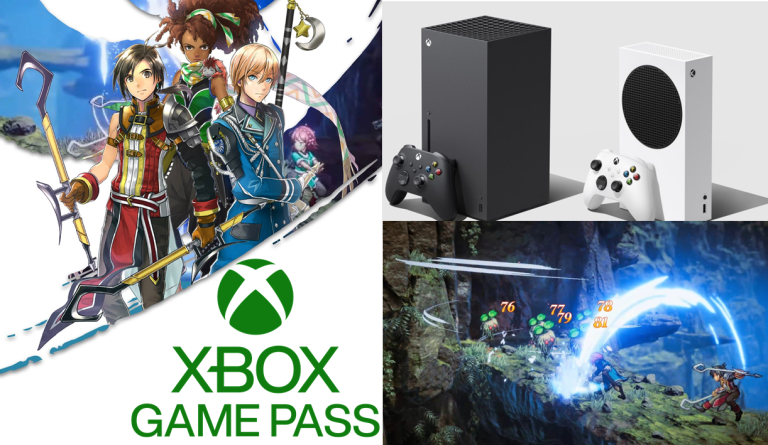
As I viewed the Xbox-Bethesda games showcase live on my PC, I got delightfully surprised when the two Eiyuden Chronicle Japanese role-playing games (JRPGs) – Eiyuden Chronicle: Hundred Heroes and Eiyuden Chronicle: Rising – were revealed and confirmed to be coming to Xbox Game Pass (XGP) separately in the near future. Really, I never anticipated that the Eiyuden Chronicle games developed by Rabbit & Bear (led by Suikoden creator Yoshitaka Murayama) would appear in the showcase nor did I anticipate they would be added to XGP (on Xbox consoles and PC) which has many millions of active subscribers worldwide.
To put things in perspective, posted below is an excerpt from the official press release (titled: Microsoft partnership announcement at E3, franchise trailer, and website launch) from the Eiyuden Chronicle official website. Some parts in boldface…
Revealed today during the Xbox E3 showcase, a new trailer for the Eiyuden Chronicle franchise formally announcing that 505 Games, Rabbit & Bear Studios, and Microsoft are bringing legendary game developer Yoshitaka Murayama’s (Suikoden I & II) latest JRPG adventures, Eiyuden Chronicle: Rising and Hundred Heroes, to Xbox Gamepass. Eiyuden Chronicle: Rising is set to release in 2022, and Eiyuden Chronicle: Hundred Heroes is set to release in 2023.
This is the companion game Eiyuden Chronicle: Rising coming to Xbox Game Pass in 2022.
Eiyuden Chronicle: Rising is the first entry in the franchise and a companion game to Eiyuden Chronicle: Hundred Heroes that is set in the same world and tells the pre-war tales of various characters who will appear in the main game. The action-RPG melds key backstory with fast-paced combat, town-building mechanics and 2.5D platforming, and is set to release in 2022.
This is what Eiyuden Chronicle: Hundred Heroes looks like. Coming to Xbox Game Pass in 2023.
“We’ve been working hard on the Eiyuden Chronicle franchise and love to see the amazing reactions from fans following our trailer at the Microsoft E3 event,” said Studio Lead Yoshitaka Murayama. “We’re telling a rich story with the Eiyuden Chronicle franchise, so much so that we couldn’t possibly tell it all within the confines of a single game. We set out to solve that problem with our companion game Eiyuden Chronicle: Rising which features key backstory to the main game and a completely different gameplay style.”
Studio Lead Yoshitaka Murayama and Director Osamu Komuta are joining forces once again to bring an unforgettable journey into their fully-realized world of Allraan. In Eiyuden Chronicles: Hundred Heroes Rabbit & Bear Studios are taking the turn-based strategy game experience to the next level with a fine crafted six-character battle system. The developers are using meticulously created 2D sprites and 3D backgrounds to deliver a riveting story with over 100 playable characters and engaging gameplay that’s meant to bring players a modern take on classic JRPGs.
And here’s the video…
Since I first heard about its successful Kickstarter campaign, I have been following the news about Eiyuden Chronicle, specifically the Hundred Heroes game which was the precise project of the said campaign. Why? Because that game was clearly designed as an inspired successor (or spiritual successor as others call it) to the early Suikoden RPGs of Konami. When I was still a PlayStation fan, I was fortunate to have played and enjoyed a lot Suikoden and Suikoden II on the original PlayStation. Rabbit & Bear Studios head Yoshitaka Murayama was the producer, writer and game director of Suikoden, Suikoden II and Suikoden III (on PS2) during his time with Konami.
Other than the Eiyuden Chronicle franchise coming to XGP, the announcement of the companion game Eiyuden Chronicle: Rising coming out first (2022) was also very surprising. It was just unexpected but still it made sense as the developers really have a huge concept and a living universe of the Eiyuden Chronicle franchise that just could not fit in one single game. Clearly Murayama and his creative team are up to something that could shake gamers’ love for Japanese RPGs for the better eventually.
Significance to Xbox
A character in Eiyuden Chronicle: Hundred Heroes about to throw a strong punch at the monster during a battle.
Back on August 2020, I expressed confidence that Xbox as an ecosystem (the consoles, PC, cloud and Xbox Game Pass) will become a haven for gamers who love fantasy role-playing games (fantasy RPGs). That article was published before the megaton announcement about Microsoft acquiring ZeniMax Media (to integrate Bethesda with Xbox) and the addition of the Elder Scrolls fantasy RPG franchise further adds credibility to Xbox for fantasy RPG enjoyment (as well as RPGs as a whole).
So where can the Eiyuden Chronicle RPG franchise fit in? For one thing, Xbox fantasy RPG enthusiasts who love Suikoden or those who enjoy turn-based strategy, or those who are looking for nice alternatives to Square Enix’s Final Fantasy and Dragon Quest games on Xbox can experience something new and fun with the Rabbit & Bear Studios-developed JRPGs. It is also clear that the Eiyuden Chronicle RPGs help fill the perceived lack of JRPGs on this current Xbox console generation.
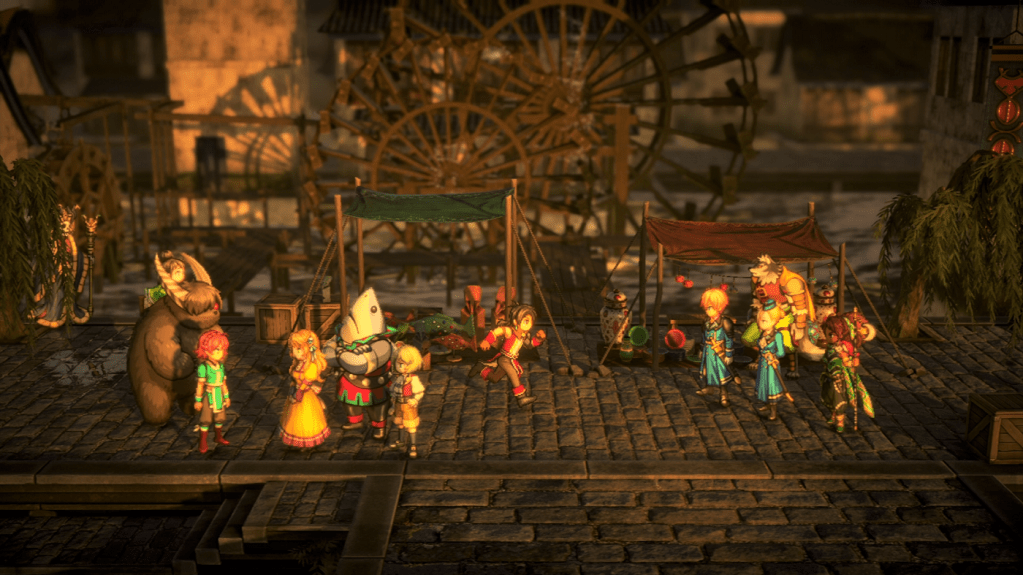
The combination of highly detailed 2D sprites and 3D polygonal environments makes Eiyuden Chronicle: Hundred Heroes look radically different from most JRPGs on Xbox.
Second, gamers will be able to experience role-playing with the game design and storytelling philosophies of Yoshitaka Murayama. In addition, Murayama’s production team created a very unique visual style that combines highly-detailed, well-animated 2D sprites (pixel artworks) with 3D polygonal environments combined with strategic camera angles and movements. The way I see it, it seems to be an inspired take on modern gaming’s visuals while still retaining that artistic link back to the glory days of the Suikoden game franchise.
In this age of high-definition, highly detailed polygonal graphics and 120FPS frame rates, it is refreshing to see Murayama and his team use pixel artworks as a key visual element in their presentation with Eiyuden Chronicle JRPGs.
Third, the battles seen in Eiyuden Chronicle: Hundred Heroes strongly resemble the functions and speed of what I enjoyed in Suikoden and Suikoden II on the original PlayStation console. Unlike other turn-based Japanese RPGs of the 1990s, battles in the early Suikoden games were NEVER stressful and grinding was not too present. Even during times in Suikoden or Suikoden II when I needed to have my characters level up to be stronger, doing so with battles was smooth and painless. The trailer of Eiyuden Chronicle: Hundred Heroes even showed the developers pushing the battle design of their game, going beyond the limits of the early Suikoden games. In one sequence, they showed one of the playable characters in the foreground firing a shot at a monster far into the background. This could suggest strategic placings for battles and we will find out soon how this will turn out.
Fourth, having Eiyuden Chronicle JRPGs in the Xbox ecosystem adds more variety into the current lineup of upcoming fantasy RPGs. Even with the likes of Elder Scrolls VI (which Phil Spencer mentioned during the Xbox-Bethesda games showcase), Fable and Avowed, I believe that Eiyuden Chronicle: Rising and Eiyuden Chronicle: Hundred Heroes will fit in very nicely and even attract a lot gamers who want a lot of fun with role-playing on their Xbox consoles. I also believe that the global Xbox fans community can provide Murayama and his team a suitable audience of not only buyers of their games but also help establish a large base of fans for the Eiyuden Chronicle game franchise.
The addition of the Eiyuden Chronicle JRPG franchise makes fantasy role-playing on Xbox even more exciting! It is also another great reason to sign up for Xbox Game Pass subscription!
That being said, I urge you my readers, fellow Xbox fans, fans of Suikoden and others who love playing fantasy RPGs that we all have the time and opportunities to acquire our own copies of the two Eiyuden Chronicle JRPGs upon release on the Xbox ecosystem and help Murayama and the rest of his team fulfill their goals with their fantasy RPG franchise! We can also convince Team Xbox to get more involved with Rabbit & Bear Studios to ensure that future installments of Eiyudin Chronicle will come to Xbox!
Think about the future of fantasy RPGs on Xbox: Eiyuden Chronicle: Hundred Heroes, Eiyuden Chronicle: Rising, Avowed (Xbox-exclusive), Fable (Xbox-exclusive) and Elder Scrolls VI (Xbox-exclusive)…I want them all on Xbox via Xbox Game Pass!
In ending this piece, here are some Eiyuden Chronicle and Xbox-related videos for your enjoyment!
+++++
Thank you for reading. If you find this article engaging, please click the like button below and also please consider sharing this article to others. If you are looking for a copywriter to create content for your special project or business, check out my services and my portfolio. Feel free to contact me as well. Also please feel free to visit my Facebook page Author Carlo Carrasco and follow me at HavenorFantasy@twitter.com
Disclaimer: This is my original work with details sourced from reading the comic book and doing personal research. Anyone who wants to use this article, in part or in whole, needs to secure first my permission and agree to cite me as the source and author. Let it be known that any unauthorized use of this article will constrain the author to pursue the remedies under R.A. No. 8293, the Revised Penal Code, and/or all applicable legal actions under the laws of the Philippines.
Welcome back, superhero enthusiasts, comic book collectors and fans of superhero universe of DC Comics! I don’t know with you, my readers, but I love the way George Perez and his fellow writers characterized Wonder Woman during the very early stage of the post-Crisis era of DC Comics. The character development was not only a great way to achieve balance with spectacle and plotting for each story of Wonder Woman, but also a solid way to redefine the Queen of Superheroes to new fans as well as other comic book readers of the late 1980s. Such characterization efforts include redefining other key elements of the Wonder Woman concept such as the development of Themyscira and its all-women society, the struggle that the deities of Olympus had while the Amazons struggled, and most notably the way Wonder Woman and the people of man’s world adjusted to each other.
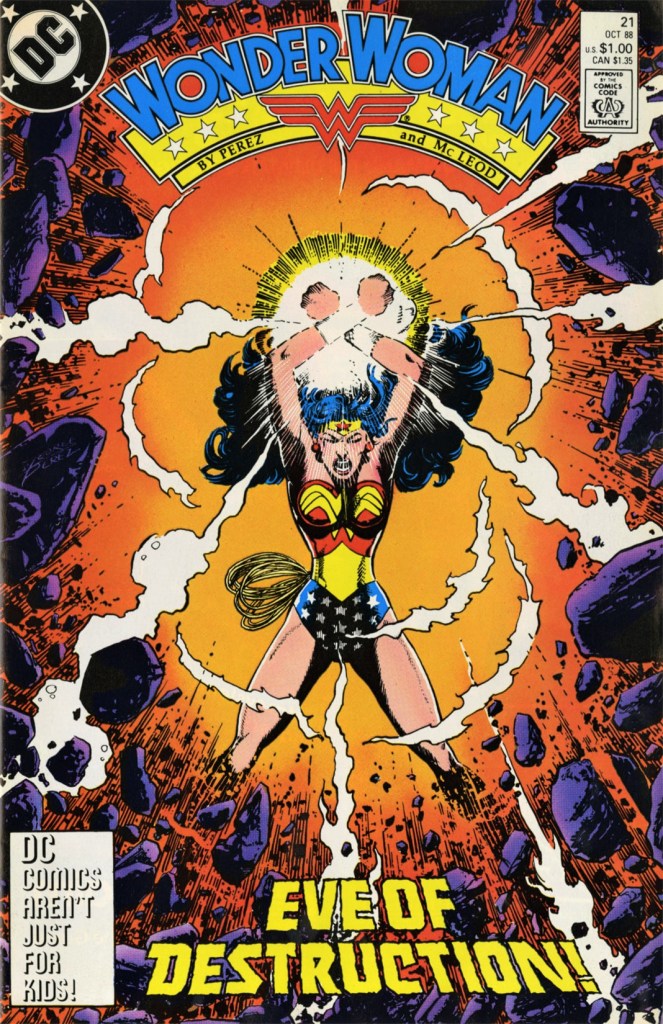
With those details laid down, we can find out more about Wonder Woman’s development in this look back at Wonder Woman #21, published by DC Comics in 1988 with a story written and drawn by George Perez with Bob McLeod credited with the finished art.
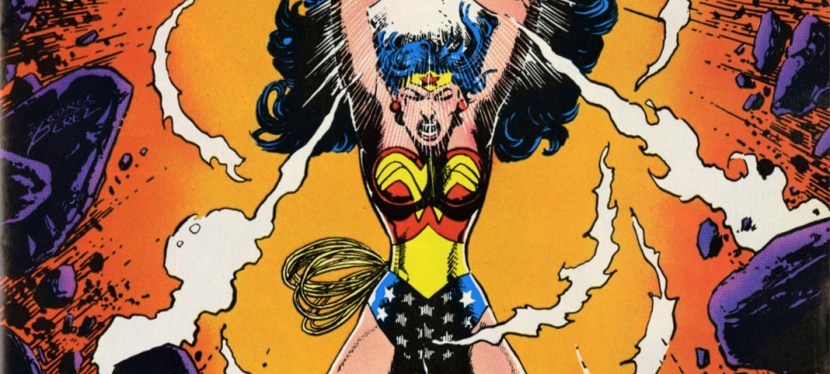
The cover.
Early story
The story begins in Themyscira. In the middle of the night, Menalippe, the oracle of the Amzons wakes up looking terrified. She makes a reference to the deities of Olympus. In Wakefield, Massachusetts, Diana/Wonder Woman, Julia Kapatelis and teenager Vanessa arrive home from the memorial service of the late Myndi Mayer. As Vanessa goes to her bedroom feeling depressed, Diana admits to Julia that she is deeply troubled over what happened in recent times. She also expressed that she can’t help feeling partially responsible for Mayer’s death.
As Julia tries to comfort Diana, several knocks were made at the house door. Upon opening it, a bird carrying a note suddenly flies into the house and heads straight to Diana who recognizes it and reads a new message written by her mother, the queen Hippolyte.
After reading it, Diana leaves for Themyscira with a promise to Julia and her daughter that she will return. Shortly after arriving in her nation, she, her mother and all their Amazon sisters assembled at the altar of Apollo and performed a ritual led by Menalippe. Menalippe claims to have made contact with the deities and states that she, Diana and Queen Hippolyte have been called to appear at the court in Mount Olympus…
Quality
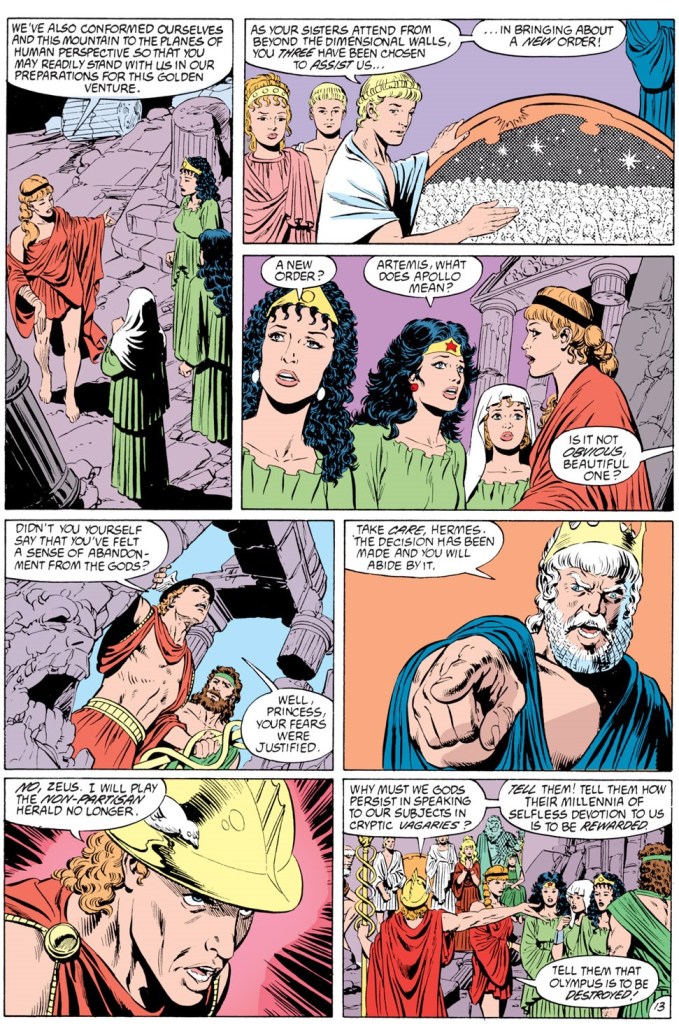
The deities of Olympus were never holy and were in fact very flawed beings who happen to hold tremendous power over Wonder Woman and the Amazons.
I can say that this is a story about the foundation of Wonder Woman’s place in the DC Comic universe as it involves the link between Olympus and Themyscira. The good news here is that this story is very well written and the plot structure was nicely organized by George Perez.
In many ways, this story is a continuation to Wonder Woman’s personal interaction with the deities of Olympus. The difference here is that her mother Queen Hippolyte and their oracle are much more involved and the deities – which include Zeus, Hera, Heracles and the rest – themselves have gotten into tremendous trouble as a result of what Darkseid did to them. This leads to the call of a new order which got the three Amazons chosen. This alone marks the new chapter in the lives of Amazons and Wonder Woman, who proved her worth in the Challenge of the Gods storyline, is unsurprisingly part of it.
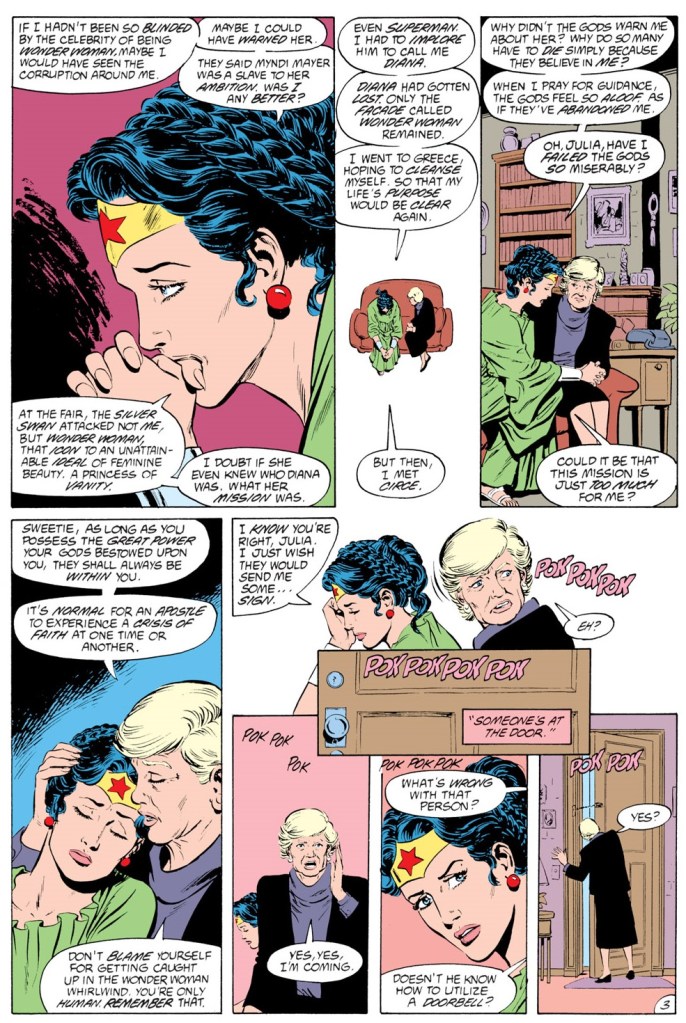
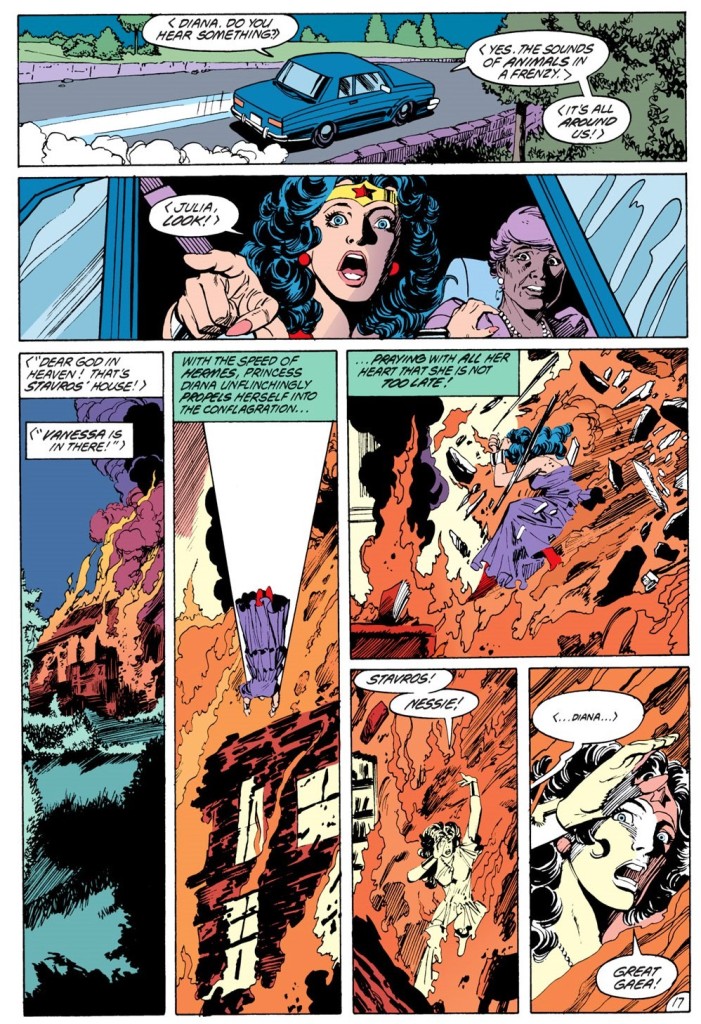
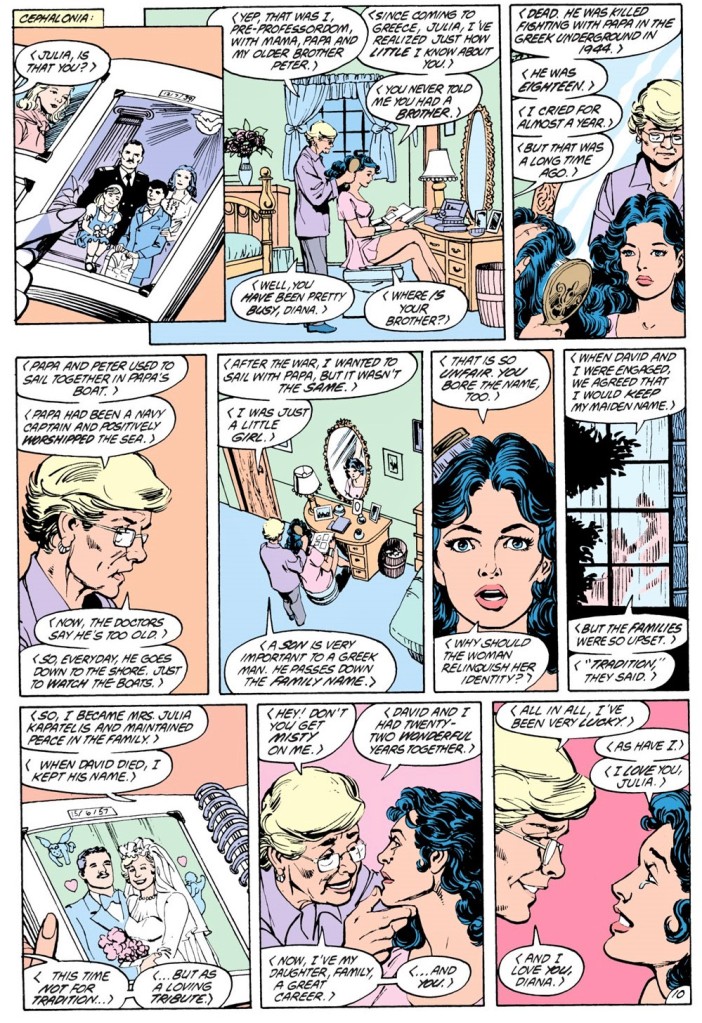
When it comes to the character development of Wonder Woman, the golden part happened early in this comic book. I love the way that George Perez portrayed Diana to be fragile as a person who realizes that her being a very powerful icon in man’s world causes both blessings and problems around her. Diana admits getting blinded by the celebrity of being Wonder Woman to the many people around her. The dialogue Perez wrote for Diana in the early scene (in the presence of Julia) is very rich and so touching, you will feel sympathy for the Queen of all Superheroes.
Conclusion
A very touching scene about Diana/Wonder Woman dealing with the responsibility of what went wrong recently.
Apart from being a new chapter for Wonder Woman and her Amazons, Wonder Woman #21 (1988) is a richly layered story to read. It does not have the usual good-versus-evil spectacle common with most superhero comic books, but the story succeeds in moving the narrative of the Amazons and Olympus deities forward while developing Diana as an even more human character (as opposed to being a superhero). This is another great work spearheaded by George Perez.
If you are seriously planning to buy an existing hard copy of Wonder Woman #21 (1988), be aware that as of this writing, MileHighComics.com shows that the near-mint copy of the regular edition costs $33 while the near-mint copy of the newsstand edition and the 2nd print edition cost $70 each.
Overall, Wonder Woman #21 (1988) is highly recommended!
+++++
Thank you for reading. If you find this article engaging, please click the like button below and also please consider sharing this article to others. If you are looking for a copywriter to create content for your special project or business, check out my services and my portfolio. Feel free to contact me as well. Also please feel free to visit my Facebook page Author Carlo Carrasco and follow me at HavenorFantasy@twitter.com
Yesterday, the fusion between Bethesda and Team Xbox was emphasized even further as top executives from both sides took part in a roundtable meeting titled Bethesda joins Xbox which was shown worldwide online. The YouTube video has been posted below for your convenience and viewing pleasure.
Here are a few notable parts of the roundtable event. Firstly, and most notably, Xbox chief Phil Spencer cautiously spoke about the plans regarding exclusive games that Xbox fans have been eagerly wanting to find out (note: key portions in bold).
“We have games that exist on other platforms, and we’re going to support those games on the platforms they’re on. There are communities of players. We love those communities and will continue to invest in them. And even in the future, there might be things that have either contractual things, or legacy on different platforms, that we’ll go do. But if you’re an Xbox customer, the thing I want you to know is this is about delivering great exclusive games for you that ship on platforms where Game Pass exists, and that’s our goal, that’s why we are doing this,” Spencer said.
Even as Microsoft-controlled Bethesda has games and fan communities on other platforms that will be supported, Xbox customers are still priorities for them and Xbox Game Pass is a key factor as it has many millions of subscribers around the world who use Xbox One consoles, Xbox Series S, Xbox Series X and Windows 10 PC.
While no titles were mentioned by Spencer, I am confident that Bethesda’s upcoming games like Starfield and Elder Scrolls VI will be released for Xbox Series consoles and Windows 10 PCs and be made available via Xbox Game Pass in the near future.
In my view, and in response to the whining of the PlayStation fanboys (who are agonizing over the Xbox-Bethesda deal) and of the people who hate Xbox spotted on social media, it does not make business sense for new Bethesda games (especially those made with big budgets for at least 3 years) to be released on PlayStation and Nintendo platforms since they are not connected with Xbox Game Pass. If you look at Team Xbox closely, they are working hard to sell not only gaming hardware, software and DLCs, but also subscription services. In this case, Xbox Game Pass is essential and with 18 million subscribers already counted, the said subscription service is generating billions of Dollars of revenue for Team Xbox per year. Will Sony and Nintendo be willing to have Xbox Game Pass offered to their respective customers for the sake of availing new Bethesda hot new games? Unless something drastic happens, such a scenario won’t happen.
Going back to Spencer’s confirmation of exclusive games for Xbox customers, the integration of Bethesda into Team Xbox easily ensures that Xbox fans will not only have a lot of exclusive titles coming from the well-established publisher (and its many studios), they will also have a wide variety of the types of games from ALL the 23 Xbox Game Studios. The first-person shooter (FPS) genre exclusives to look forward to are Halo Infinite, the next Doom, the next Wolfenstein, the next Rage, the next Prey and so on. RPGs? Try Starfield, Elder Scrolls VI, Avowed, Fable, the next Fallout and the next The Outer Worlds.
Rest assured, Xbox fans have a whole lot of exclusive games to look forward to from Bethesda’s studios and the other Xbox Game Studios in the near future. These assured exclusive games should convince gamers to buy Xbox Series S or Xbox Series X, and then sign up immediately for Xbox Game Pass.
Going back to the media event, Todd Howard took note of the marvel of backward compatibility (itself a great, pro-gamer feature on Xbox) and described how awesome it is that old creations such as the RPG Elder Scrolls IV: Oblivion is not only playable (on current Xbox technology) but also nicely presented in 4K resolution showing how much life it still has all these years. In relation to that, Aaron Greenberg announced that Team Xbox is already working on providing FPS Boost (enhanced frame rates) on backward compatible games of Bethesda.
Specifically the games added into the said subscription service are: Dishonored Definitive Edition, Dishonored 2, Doom (1993), Doom II, Doom 3, Doom 64, Doom Eternal, Elder Scrolls III: Morrowind, Elder Scrolls IV: Oblivion, Elder Scrolls V: Skyrim, Elder Scrolls Online, The Evil Within, Fallout 4, Fallout 76, Fallout: New Vegas, Prey, Rage 2, Wolfenstein: The New Order, Wolfenstein: The Old Blood, and Wolfenstein: Youngblood.
Those mentioned games are available on Xbox Game Pass now.
In ending this, posted below for your viewing pleasure are varied gaming-related videos…including one video about the March 17, 2021 release of the next DLC expansion for The Outer Worlds (developed by Obsidian Entertainment which itself worked on Fallout: New Vegas for Bethesda long ago).
+++++
Thank you for reading. If you find this article engaging, please click the like button below and also please consider sharing this article to others. If you are looking for a copywriter to create content for your special project or business, check out my services and my portfolio. Feel free to contact me as well. Also please feel free to visit my Facebook page Author Carlo Carrasco and follow me at HavenorFantasy@twitter.com
Disclaimer: This is my original work with details sourced from reading the comic book and doing personal research. Anyone who wants to use this article, in part or in whole, needs to secure first my permission and agree to cite me as the source and author. Let it be known that any unauthorized use of this article will constrain the author to pursue the remedies under R.A. No. 8293, the Revised Penal Code, and/or all applicable legal actions under the laws of the Philippines.
It’s the second week of March already. That means we are slowly but surely inching closer to the March 30, 2021 scheduled releases of Wonder Woman 1984 on 4K Blu-ray, Blu-ray and DVD! If you have not yet ordered a copy of the sequel starring Gal Gadot as the Queen of Superheroes, you can do so now if you want to. I already ordered my copy. You can also read my retro review of the 2017 Wonder Woman movie.
On to literature! Last time, the George Perez-led story not only saw the end of Diana’s visit of Greece, it also fully presented to readers what was back then the modern portrayal of Circe (DC Comics’ own take on the false Greek goddess) who proved to be at the time the most sinister and most powerful supervillain Wonder Woman faced. Wonder Woman #19 also showed the Queen of Superheroes in her most vulnerable state.
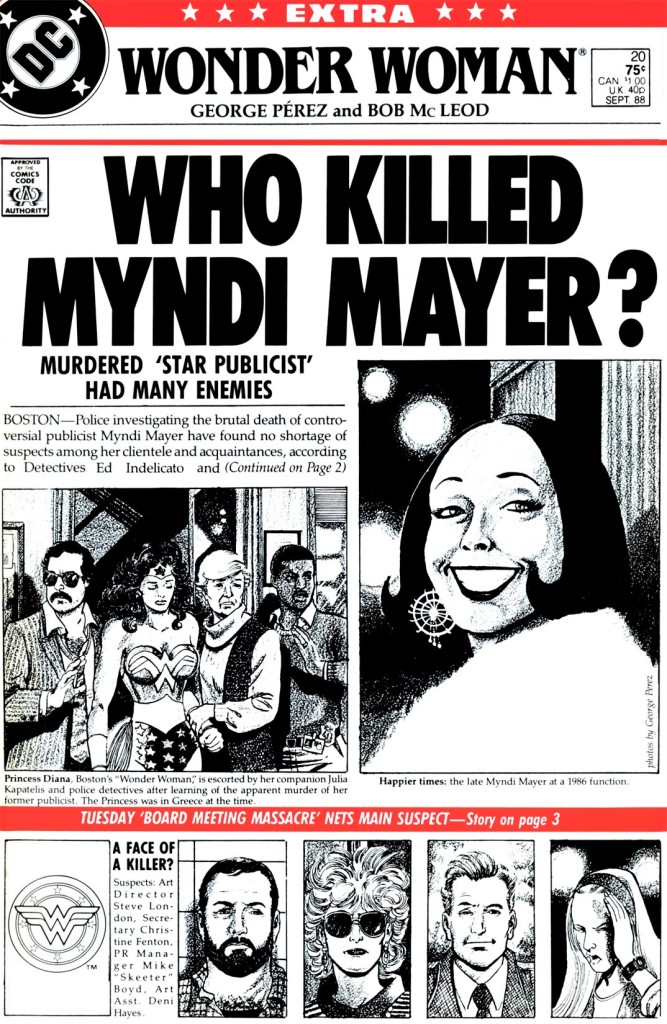
Now that Diana and her friends have returned to America, we can find out what happens next in this look back at Wonder Woman #20, published by DC Comics in 1988 with a story written and illustrated by George Perez based on an idea by Carol Flynn. Bob McLeod was in charge of the finishes.
The cover.
Early story
The story begins in the City of Boston at night. Three Chinese men are running away from something until Wonder Woman confronts them. One of the men fires several bullets at her but each bullet got blocked by her using her tremendous reflexes and braces. After Wonder Woman disarms the gunman, another Chinese man tries attacking her with sharp weapons only to be defeated easily. The other Chinese man tries to run away but gets caught by Wonder Woman who uses her lasso. In reaction to his question, Wonder Woman demands answers.
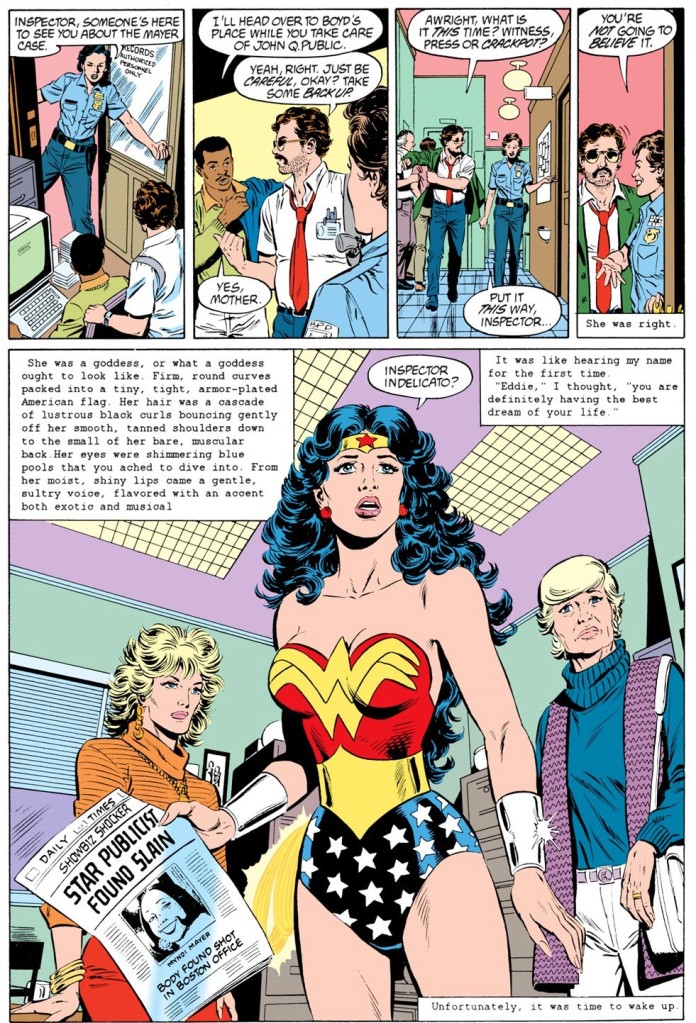
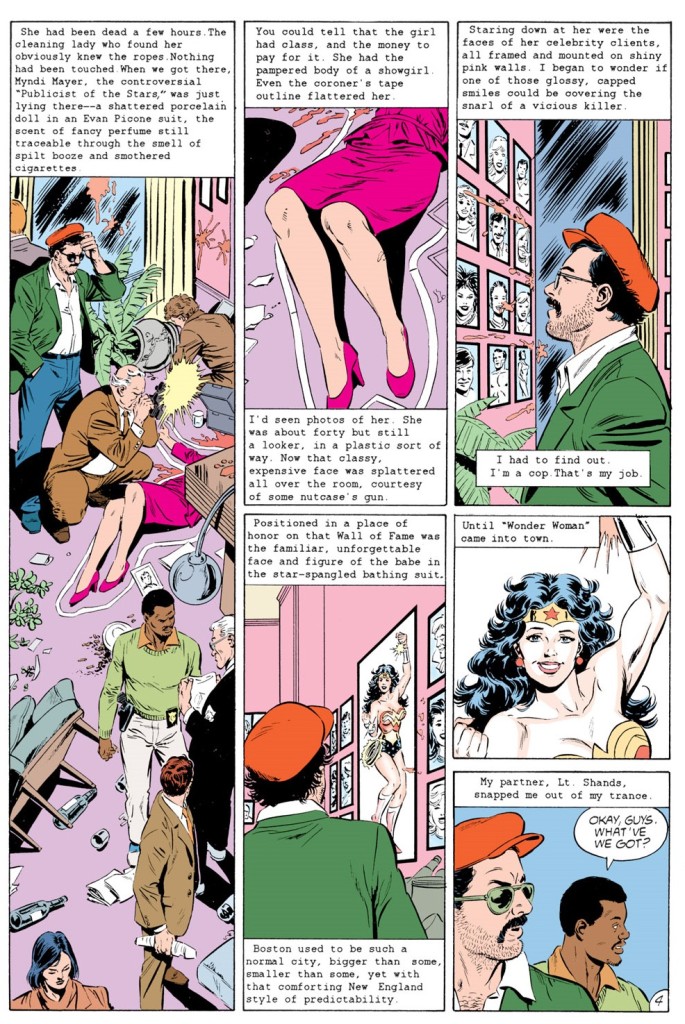
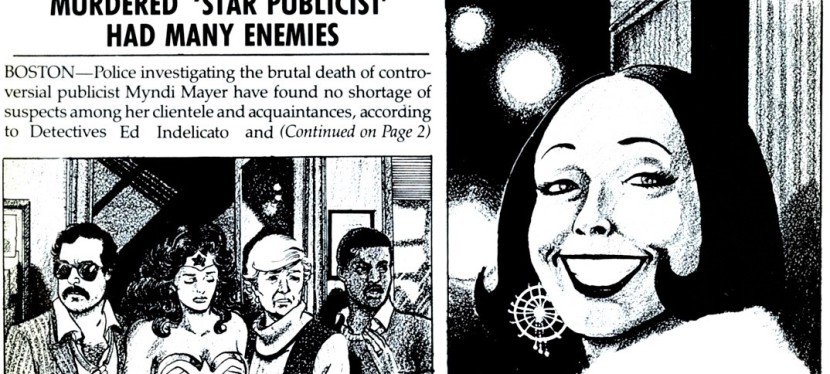
Elsewhere, investigators are searching for clues and details inside a lady’s modern looking office. Lying on the floor is the dead body of a victim and according to the investigator’s report, she had been dead for a few hours. The victim is none other than Myndi Mayer, a highly successful publicist who made a career out of the media and celebrities. Wonder Woman happened to be her most recent, high-profile client. Mayer was involved in the Wonder Woman fair.
Based on their findings, Myndi Mayer looked like she didn’t go without a fight. A bloody letter opener was found in her hand and her purse was found next to her body emptied. Traces of white powder were found on her desk. Mayer’s secretary Christine Fenton was visited by the investigators who told her about the death of her boss. She did not express any surprise and told them that it was only a matter of time before Mayer’s end came. Christine added that she warned Mayer about a certain man.
The investigators then show Christine the sketch of man based on the description of an eyewitness. She expressed surprise as she recognizes him…
Quality
Wonder Woman takes part in the search for truth.
Wow! This is one dark Wonder Woman story to read and I can say that it is a very inspired work written by George Perez based on an idea by Carol Flynn. This is not your typical story of showing the Queen of Superheroes fighting someone evil or saving people from disaster. This is a murder mystery that is laced with corporate intrigue, crime, legal wrangling and the everlasting struggle to determine the truth.
Myndi Mayer’s death really set of a series of events and revelations that are no less striking. Considering the many details about law, crime, investigations and corporate intrigue, the in-depth writing here indicates that George Perez did a lot of researching and found ways to tell a very cohesive story with Wonder Woman playing a role. I should state that as of this writing, this particular story comes close to becoming realistic and reflective of 1980s life. This is top-notch writing by Perez!
When it comes to characterization, Myndi Mayer was deeply portrayed to be in deep trouble both personally and professionally. Of all the Wonder Woman comics of the post-Crisis era of DC Comics I’ve read so far, this one clearly defines Mayer and goes beyond her usual appearance as a prolific publicist.
On Wonder Woman, as mentioned earlier, she does not get to fight a super villain. Rather she takes part in the search for truth and tries her best to solve the mystery even though she is not even fully familiar with the way law and order works in the world of man. In some ways, her approach to literally putting pieces of the puzzle into place and approaching people in different places reminds me somewhat of Batman’s detective work but without the vigilante approach.
Conclusion
This page about the murder investigation at the scene of the crime has some Watchmen vibes to it.
I can say that Wonder Woman #20 (1988) is not only a great comic book to read but also one of the most unique stories about the Queen of Superheroes ever published. By this time, George Perez has proven himself to be very prolific in storytelling on top of his great ability to draw art. I should state I love the way the story was structured and the way it ended delivered both impact and intrigue.
If you are seriously planning to buy an existing hard copy of Wonder Woman #20 (1988), be aware that as of this writing, MileHighComics.com shows that the near-mint copy of the comic book costs $41.
Overall, Wonder Woman #20 (1988) is highly recommended!
+++++
Thank you for reading. If you find this article engaging, please click the like button below and also please consider sharing this article to others. If you are looking for a copywriter to create content for your special project or business, check out my services and my portfolio. Feel free to contact me as well. Also please feel free to visit my Facebook page Author Carlo Carrasco and follow me at HavenorFantasy@twitter.com
Disclaimer: This is my original work with details sourced from reading the comic book and doing personal research. Anyone who wants to use this article, in part or in whole, needs to secure first my permission and agree to cite me as the source and author. Let it be known that any unauthorized use of this article will constrain the author to pursue the remedies under R.A. No. 8293, the Revised Penal Code, and/or all applicable legal actions under the laws of the Philippines.
Welcome back, superhero enthusiasts, comic book collectors, fellow geeks and fans of Wonder Woman! Last time, I found George Perez’s standalone writing of the story about Wonder Woman discovering Greece and its connections to her people’s heritage a really good story. For much of the post-crisis Wonder Woman monthly series’ early stage, the stories were done by Perez and the late Len Wein. In issue #17, Perez not only succeeded in developing Diana/Wonder Woman further, he also captured nicely the wonder of discovery of new places and astonishing aspects of life while traveling overseas.
Of course, issue #17 was not purely a tourism story through the eyes of the Queen of Superheroes. There was an obvious build-up of a new villain who is aware of Wonder Woman’s presence in Greece.
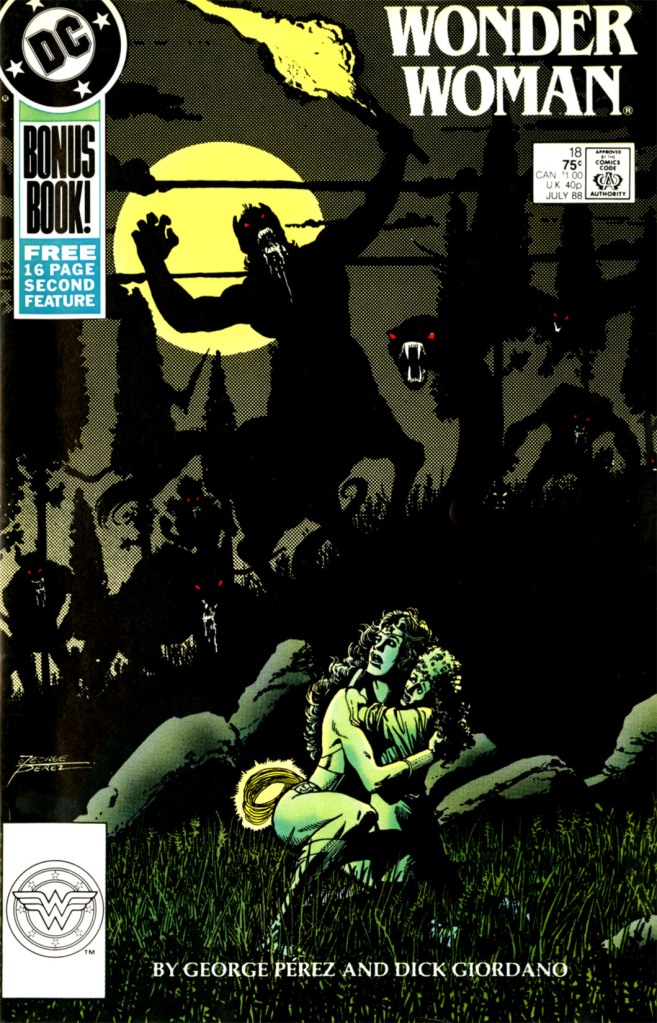
What will happen next? Who could the new force of evil be? We can find out in this look back at Wonder Woman #18, published by DC Comics in 1988 with a story written and drawn by George Perez with ink work done by Dick Giordano.
The cover.
Early story
The story begins deep in the darkness of limbo. Light sparks suddenly as Zeus, Hades and Poseidon arrive in the search of their father called Cronus. Zeus retrieves the Olympian pact. After further talking, they join forces in lighting a flame to burn the pact to make way for something new.
Meanwhile in a hospital in the Greek isle of Cephalonia, Diana wakes up surrounded by Julia Kapatelis, Vanessa, a doctor and other Greeks. Diana states that some kind of aura seemed to clutch her in a chilling grip which Julia dismisses and believes that her Amazon friend was simply tired from all the months-long pushing herself since returning from Themyscira.
Julia introduces Diana to Theophilus Ventouras and his nephew Demetrios. The older Ventouras is the owner of the wealthiest estate on the islands. He tells Diana that the governor asked him to meet her at the dock and reveals to her that a local boy was killed by a wolf which some car calling it as a “magia”.
As they continue talking, a nurse listens to them carefully just outside the door of the room they are in. She learns about Ventouras’ offer of assistance to Diana and quietly leaves. Some time later just outside the hospital, the nurse (named Angela) reveals to a man named Mikos that Diana and her group will be going to Ventourata the next day…
Quality
Without hesitation, Wonder Woman moves to save lives.
I can start by saying that this is another well-written tale by George Perez. Apart from the continuing focus on Wonder Woman’s discovery of Greece, the elements of fantasy, intrigue, suspense and even horror have been used more in this comic book compared to the previous issue.
When it comes to characterization, Diana’s close relationship with the Kapatelises is deepened further as the story explored the already established Greek background of Julia. I also found engaging Wonder Woman’s unflinching moves to search for Vanessa and get her out of trouble any way she could.
For those of you who are aware about the lack of superhero spectacle in issue #17, I can share to you that there definitely is more action in this comic book and it is all nicely presented by George Perez.
Continuing what began in the previous issue, Perez ramped up further the build-up of the new force evil awaiting Wonder Woman. I won’t reveal who it is but rest assured, this comic book’s ending is pretty strong and easily justifies the build-up.
Conclusion
Diana and Julia treat each other like family.
Wonder Woman #18 (1988) successfully continued the redefining of the Queen of Superheroes in the post-Crisis era and George Perez really delivered great stuff as well as a very solid story here. From start to finish, there is a lot to enjoy and examine in the story.
If you are seriously planning to buy an existing hard copy of Wonder Woman #18 (1988), be aware that as of this writing, MileHighComics.com shows that the near-mint copy of the regular edition costs $41 while the near-mint copy of the newsstand edition costs $84.
Overall, Wonder Woman #18 (1988) is highly recommended!
+++++
Thank you for reading. If you find this article engaging, please click the like button below and also please consider sharing this article to others. If you are looking for a copywriter to create content for your special project or business, check out my services and my portfolio. Feel free to contact me as well. Also please feel free to visit my Facebook page Author Carlo Carrasco and follow me at HavenorFantasy@twitter.com
Disclaimer: This is my original work with details sourced from reading the comic book and doing personal research. Anyone who wants to use this article, in part or in whole, needs to secure first my permission and agree to cite me as the source and author. Let it be known that any unauthorized use of this article will constrain the author to pursue the remedies under R.A. No. 8293, the Revised Penal Code, and/or all applicable legal actions under the laws of the Philippines.
Before DC Comics ended their original superhero multiverse with Crisis on Infinite Earths (1985-1986) to restart all over again, there were a whole lot of stories about Superman ranging from the dramatic stuff, the epic tales and right down to the most outlandish tales.
As a kid, I was fortunate enough to buy myself a copy of a 1984 Superman comic book, the cover of which really intrigued and caught my interest. It was a Superman annual comic book with a $1.25 cover price which was somewhat high at the time. Its cover showed the Man of Steel himself carrying a sword pointed up.
That image made me wonder: Why would Superman have to use a sword when he is so powerful and capable without weapons? Where did that sword come from? Who made it in the first place? Is the sword so special to Superman?
With those details laid down, here is a look back at Superman Annual #10, published by DC Comics in 1984 with a story written by Elliot Maggin and drawn by classic Superman artist Curt Swan.
The cover.
Early story
The story begins in a space where a group of diverse people composed of aliens and humans are gathered together watching a live video feed Superman on a large monitor above their heads. As it turns out, the Man of Steel is in space working to prevent meteoroids from entering the planet below him. He then speeds off into space heading back to Earth.
Along time ago deep in the galaxy, a big bang effect took place creating several new fragments in the vacuum of space and among them is a long, rough object that resembles a sword. As an unknown amount of time passed, the long object gradually turns into a smooth looking sword complete with a sharp blade and a letter “S” on one end that is the same as the one Superman carries. It is referred to as the sword of Superman!
In Metropolis, Clark Kent is passed by his officemate Jimmy Olsen who mentioned that he is rushing to interview the billionaire industrialist Oswald Mandias. Two days have passed and Jimmy Olsen remained missing. As his boss Perry White heads on to the office, Clark remains and changes into Superman when the coast got clear.
As the Man of Steel flies off into the city, a Galaxy Broadcasting live report on TV shows Lana Lang reporting from the Kennedy Space Center where the new space shuttle Magellan is about to make its first-ever commercial flight to launch a mysterious new communications satellite owned by Mandias Industries…
Quality
Clark Kent/Superman being a complete stranger to others added a lot to the story.
The sword led Superman to a book about the legend of King Arthur inside the city library.
Being an annual, I can say that the Sword of Superman story was well-written and nicely visualized by the creators which made it fun and engaging to read. It is a Superman story that further adds to his being an essential hero of the original DC Comics multiverse and a key factor here is the somewhat outlandish concept that the sword that he gained was an original material of the universe from the big bang and even had connections to the unseen omnipotent force.
This story is not a simple, straightforward tale about Superman gaining a weapon required to defeat the supervillain King Kosmos. In fact, the sword opens up events that made the Man of Steel reevaluate himself, his situation and the people around him. King Kosmos, who is a time-travelling villain from the future (first appearance in DC Comics Presents Annual #2), served not just merely as the opposition but also adds a good amount of complexity within the reality of the story. For one thing, it is very intriguing and also refreshing to see people of Metropolis (even Clark’s friend Jimmy Olsen) failing to recognize Superman and perceive him with fear. This is a one-of-a-kind story of Superman that must be read, even though it is not really an epic tale.
All throughout, there is a fine balance between spectacle and intrigue. If you pay close attention to the dialogue and details, you will understand the story better and enjoy the comic book more eventually.
Conclusion
The return of King Kosmos!
I personally enjoyed reading Superman Annual #10 (1984) the first time back in 1984. The fact here is that after re-reading it recently, I do confirm that it is still an enjoyable comic book to read, and I am not even a Superman fan anymore. That is quite something! This is indeed a really good piece of Superman history from the pre-Crisis era. It also touches on themes about omnipotence, how ordinary people react to people who wield great power, and being whole with the entire universe.
If you are seriously planning to buy an existing hard copy of Superman Annual #10 (1984), be aware that as of this writing, MileHighComics.com shows that the near-mint copy of the regular edition costs $35 while the near-mint copy of the newsstand edition costs $70.
Overall, Superman Annual #10 (1984) is recommended.
+++++
Thank you for reading. If you find this article engaging, please click the like button below and also please consider sharing this article to others. If you are looking for a copywriter to create content for your special project or business, check out my services and my portfolio. Feel free to contact me as well. Also please feel free to visit my Facebook page Author Carlo Carrasco and follow me at HavenorFantasy@twitter.com