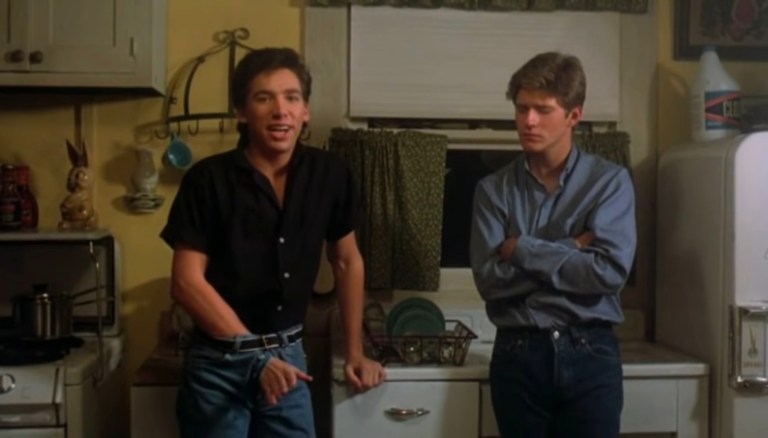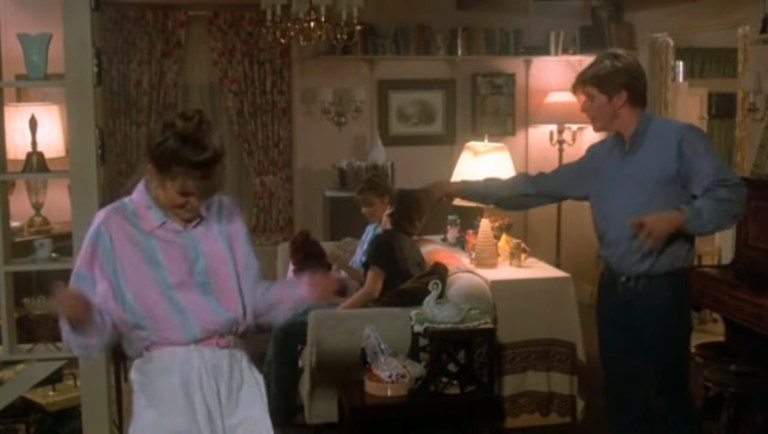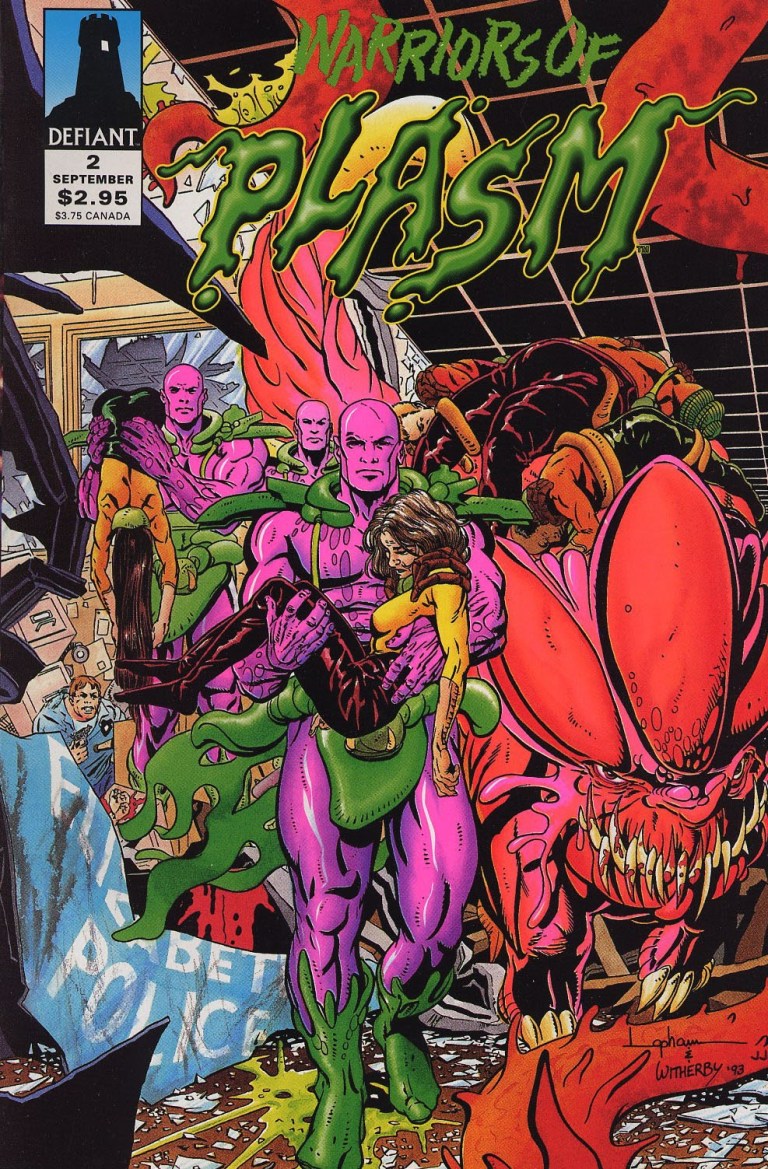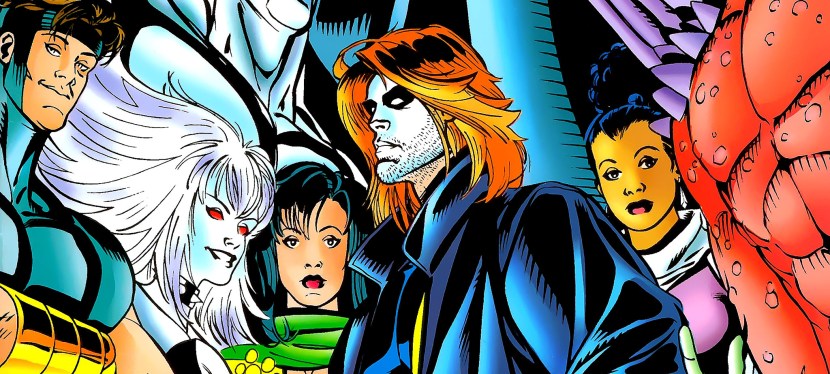
A Look Back At Friday The 13th Part 3

Disclaimer: This is my original work with details sourced by means of watching the movie and doing research. Anyone who wants to use this article, in part or in whole, needs to secure first my permission and agree to cite me as the source and author. Let it be known that any unauthorized use of this article will constrain the author to pursue the remedies under R.A. No. 8293, the Revised Penal Code, and/or all applicable legal actions under the laws of the Philippines.

Long before movie franchising and shared cinematic universes became normal in modern day Hollywood, the very low-budget Friday The 13th movie of 1980 became a very profitable success and paved the way for sequels throughout the decade. Really, the first movie was just a standalone, self-contained story of horror set in the American summer camp. There really was no plan back then to turn that particular film into a series of movies that showcased people getting killed in slasher horror style.

Because Friday The 13th grossed almost $60 million worldwide, its first sequel Friday The 13th Part 2 was rushed into production (with more than double its predecessor’s budget) and eventually got released less than a year later. Part 2 made $21.7 million in America (note: overseas ticket sales remain unavailable) which was barely half that of its predecessor ($39.7 million) in the same market.

Creatively, Part 2 was made with Jason Voorhees as the antagonist because (SPOILER) his mother was the killer in the first movie. While Jason was indeed a victim in the 1980 movie, the Part 2 filmmakers had to make hard changes to establish him as the new killer and expand on the previous film’s concept. The result was that, within Friday The 13th’s version of history, Jason somehow witnessed his mother’s death from a distance and motivated him to become a territorial killer at Crystal Lake (note: the first movie established him as having drowned to death because the summer camp counselors did not watch him). This paved the way into introducing a grown-up Jason (wearing a potato sack as mask) as the new killer in the sequel.

Even though the box office reception for Part 2 was weaker, this did not stop the filmmakers and Paramount Pictures from pushing through with a sequel: Friday The 13th Part 3. To say the least, the business model on making Friday The 13th movies with very low budgets and raking big profits was too good for the filmmakers to stop doing. At the same time, the 1980s saw a huge demand for slasher horror. As if that was not enough, there was a short-lived revival of 3D cinematic viewing (moviegoers wore the old-style red-and-blue 3D visors to see the 3D effects on the screen) which the Part 3 filmmakers (led by director Steve Miner and producer Frank Mancuso, Jr.) decided to capitalize on. As such, they used special cameras and lenses to make Part 3.

Screenshot_20200313-225025_YouTube.jpg
This is what the film looked like in 3D and this is the 3D yoyo scene.

Enough with the history of the Friday The 13th film franchise for now. This is my retro movie review of 1982’s Friday The 13th Part 3.

Early Story

The movie opens (SPOILER for Part 2) with a recap of the final conflict in Part 2 showing Ginny (Amy Steel) in Jason’s shack in the forest. After some struggle near the makeshift shrine which had the decapitated head of Jason’s dead mother, Ginny’s boyfriend Paul arrived to save her from Jason. As Jason focused on fighting Paul, Ginny struck the killer with a blade on his left shoulder putting him down. After Ginny and Paul left the shack, it turns out that Jason (in brand new footage for the movie, a creative attempt to revise key story elements) was still alive and slowly moved.

The next day – Saturday the 14th – at a small town store (with a private residence), Jason (still wearing his clothes from Part 2) arrives and kills the couple (the owners) in the evening. Before getting killed, the wife saw TV news footage of Ginny being moved into an ambulance (using daytime footage from the ending of Part 2) establishing the current day as Saturday.

Screenshot_20200312-230358_YouTube.jpg
The bodies of the husband and wife being moved into the ambulance. Jason killed them on the evening of Saturday.

And yet the next day – Sunday the 15th – a group of teenagers travel together in a van heading towards the private property of Higgins Haven which is located by Crystal Lake. Due to the lack of security, Jason moved there in secret becoming a danger to them…

Quality

With a budget that was much bigger than that of Part 2, Friday The 13th Part 3 has better production values. Higgins Haven in the film was a nice physical set that was actually constructed from scratch in California. The vacation house, the barn and even Crystal Lake (which looked radically different from the first two films) were all made on location. Of course, money had to be spent on making tracks and setting up the cameras which had special lenses for filming in 3D. I also noticed that Part 3’s visuals are a lot more colorful to look at than in Part 2 which is the result of using the cameras with special lenses. The downside of this is the constant lack of sharpness on the visuals when compared to Part 1 and 2.

Screenshot_20200312-230434_YouTube.jpg
Larry Zerner’s Shelly (middle) is one of the most memorable characters of the entire Friday The 13th film franchise.

In terms of storytelling, this movie looked generic on face value when compared to not only the other Friday The 13th films but also with the many other slasher horror movies that were released. There is a group of people who don’t realize they were being stalked by a killer. The killings are done in secret. Some people either have sex or use illegal drugs. The film’s protagonist encounters the killer and somehow survives. The storytelling is shallow and the characters were designed to be mostly killed off by the antagonist. Of course, there was no real room for any character development.

The good news about this particular movie is that it was nicely paced, there were no boring moments, the on-screen kills were visceral enough, there was an amount of humor to balance the tone enough, and most of all, Part 3 is a lot more fun to watch than any of its predecessors.

Screenshot_20200312-231454_YouTube.jpg
Nothing like being stalked by Jason.

Adding more to the fun factor was that the cast of characters was pretty good. Dana Kimmell as Chris Higgins is charming, romantic, physically capable and also sympathetic. Larry Zerner meanwhile is funny to watch as Shelly who is an overweight guy trying hard to gain attention and friendship. Zerner has a certain appeal of being funny without ever becoming an on-screen annoyance. Like Chris, Shelly is also sympathetic.

Similar character traits are also found in Debbie played by Tracie Savage, and Vera played by Catherine Parks. Vera is the lady on a blind date willing to have fun as she goes on a journey of discovery with her friend. Debbie is pretty, sweet and loves to have fun with her boyfriend even though she is already pregnant. By the way, Tracie Savage acted early as a little girl and her performance her shows it. In real life, Savage went on to become a credible journalist and she was involved in covering the O.J. Simpson murder story of the mid-1990s. Check out Tracie Savage in these embedded videos below.

Screenshot_20200313-224951_YouTube.jpg
Tracie Savage in 3D as Debbie!

And then there are the arrogant, leather-wearing bikers who were written only to cause trouble. Kevin O’Brien as Loco is tough, Gloria Charles as Fox is rude and yet has a weakness for doing something fun, while Nick Savage as Ali is both savage and even funny.

As for Rick played by Paul Kratka is the least interesting character as the good-intentioned boyfriend of Chris. Rick is bland not because of Kratka’s performance but rather the way he was written for the film.

Richard Brooker, a circus performer, excelled in his portrayal as Jason Voorhees and he provided the template on how the icon should act on screen. Not only was he physically imposing, he had to endure the tough procedure of going through several hours of movie makeup (for Jason’s distorted face) before even wearing the hockey mask. Brooker’s Jason is a major improvement over than of Part 2 and it’s too bad we never got to see him reprise the villain.

Screenshot_20200312-231540_YouTube.jpg
Richard Brooker as Jason Voorhees. Believe it or not, the use of a hockey mask in the film was unplanned and it so happened than one of the film crew members was an ice hockey fan and he had a mask with him.

When it comes to on-screen spectacle, the killings by Jason were creative and visceral at the same time. Apart from a few on-screen kills that paid homage to key kills in the 1980 movie, Brooker and the filmmakers delivered a good job on showing how deadly Jason is as the killer. We also get to see that Jason is not only unstoppable but also is very strong (look at what happened to Rick) and even agile (look at his first encounter with Ali). It was also in this film where moviegoers got to see for the first time how visceral a hockey mask-wearing killer could be on the big screen.

Dana Kimmell proved to be capable with the stunts she was given and the action during the encounters between Chris and Jason. Her attempts to fight back at Jason with the knife was believable in terms of character desperation. She is comparable with Amy Steel (Part 2’s Ginny) but is ahead in terms of doing the stunts. Kimmell even had an accident during a chase in which she tripped and fell down face-first.

On storytelling, Part 3’s fimmakers made the right gamble by having the film set immediately after the events of Part 2. Originally there was a plan to make Part 3 feature Ginny in a new story setting her up with another encounter with Jason. Because Amy Steel turned the role down, this particular movie became the result. Part 3’s filmmakers scored a right move having the story set at a private vacation property by Crystal Lake which is a nice change from the summer camp settings of its predecessors.

When it comes to cinematic style, I just love the way director Steve Miner had Jason appear discreetly on screen long before he gets the hockey mask. To see Jason standing on the foreground (no head shown) looking at the characters in the background remains creepy and stylish, slowly adding to the build-up of suspense. To see Jason slowly creeping in the background was also creepy. These are cinematic moves that were not used that much anymore in the sequels that followed.

If there is anything lack here, it definitely is the 3D cinematography which involved a process that is crude and ineffective by today’s standards. The old-style 3D (with 3d visors of red and blue) visuals can be viewed on an HDTV when selected but such visuals have not aged well. I personally prefer to watch it in old-fashioned 2D even though the sharpness of the pictures is lacking and even though the key on-screen moments originally filmed for 3D (with objects captured close to the camera) look out of place. Back to storytelling, I felt that Chris Higgin’s recall of a past incident in the woods felt like an afterthought on the part of the screenwriters.

Conclusion

Overall, Friday The 13th Part 3 is a fun horror movie to watch again. It is not only one of the best ever Friday The 13th films released, but also one of the strongest among all slasher horror movies released in the 1980s. That being said, it made the original Friday The 13th look more of a bore and it made Friday The 13th Part 2 look half-baked. Truly, Part 3 was the film that had the standards of fun and engagement of its film franchise raised higher. Of all the Friday The 13th movies I saw in my life, I declare that Part 3 is the 2nd best film of the franchise.

In terms of cinematic artistry, Part 3 serves as the template on storytelling and structuring for the franchise similar to how Goldfinger became a standard for the James Bond film franchise. To make things clear, this film not only showed Jason wearing for the first time an ice hockey mask (now iconic in American pop culture) but also showed why he is so dangerous whether he stalks people or strikes them down. This film marked the true beginning of the now iconic Jason Voorhees and the filmmakers did a nice job in showcasing him as a horrifying antagonist, easily blowing away the Part 2 potato sack hermit Jason.

Screenshot_20200312-231703_YouTube.jpg
Dana Kimmell as Chris (right) in a scene that copied a similar scene in the first movie.

The film has, in my view, the most appealing cast of characters. There are key characters worth caring for and when you see the most likable characters killed off, you will feel very sorry for them.

What struck me most was what happened to Chris at the very, very end of the film. Granted, she is the final girl of this movie but what I saw when this film ended will always stick me. Without spoiling anything, I should say that Dana Kimmell’s Chris is creatively a standout among all the many slasher horror movie final girls that were presented. I really felt sorry for Chris and Dana Kimmell was very convincing with her performance.

Back to Friday The 13th Part 3’s quality and overall fun factor, I can boldly declare that without this film, the filmmakers of the sequel Friday The 13th: The Final Chapter (Part 4) would not even have the foundation and concepts to make their own film great. Really, Part 3 is really good and it’s even intriguing to learn that it was originally made to mark the end of its franchise.

Overall, Friday The 13th Part 3 is highly recommended. To those who are about to watch it for the first time, remember that this movie is a part of 1980s Hollywood history.


Thank you for reading. If you find this article engaging, please click the like button below and also please consider sharing this article to others. If you are looking for a copywriter to create content for your special project or business, check out my services and my portfolio. Feel free to contact me as well. Also please feel free to visit my Facebook page Author Carlo Carrasco and follow me at HavenorFantasy@twitter.com
A Look Back at X-Men Adventures #13 (1993)

Disclaimer: This is my original work with details sourced from reading the comic book and doing personal research. Anyone who wants to use this article, in part or in whole, needs to secure first my permission and agree to cite me as the source and author. Let it be known that any unauthorized use of this article will constrain the author to pursue the remedies under R.A. No. 8293, the Revised Penal Code, and/or all applicable legal actions under the laws of the Philippines.

It’s funny how adaptations of adaptations turn out in real life. Long before the first live-action X-Men movie was released, an animated TV series (popularly referred to as X-Men: The Animated Series or X-Men TAS) was produced and arguably brought together the fans of both the X-Men comic books along with the animated X-Men followers.

Along the way, Marvel Comics went on to publish a monthly comic book series called X-Men Adventures which themselves were adaptations of the animated series (which itself adapted stories and concepts from the comic books).

The adaptation-of-an-adaptation approach went deep further when the animated series adapted loosely the story of the classic X-Men comic book storyline Days of Future Past (by legends Chris Claremont and John Byrne) which resulted a story told in two episodes on TV. And then there was also a comic book adaptation that followed starting with X-Men Adventures #13 which is the subject of this retro comic book review.

1
The cover.

Early story

Written by Ralph Macchio and drawn by Andrew Wildman, the comic book begins in the dark future of 2055 in New York. The city is in ruins and mutants on the loose are being hunted by Sentinels. A very old Wolverine appears to help two loose mutants but ends up getting stunned with them by Bishop who turns out to be helping the automated authority of the Sentinels.

As he turns over the captured mutants, the Sentinels betray Bishop telling him that they no longer required him. Afterwards, Bishop and Wolverine (who woke up) each carry a person under the watch of a Sentinel. Suddenly, the two other mutants use their powers to attack the Sentinel and Wolverine followed to back up their efforts. The Sentinel however grabbed Wolverine.

Quality

3
A very old Wolverine in the dark future of 2055.

With the exception of some liberties, this comic book closely followed what was told in the first of the 2-episode Days of Future Past animated adaptation. As a comic book story, the story was heavily loaded with details and exposition designed to orient readers about the setting and why the future became a time of darkness in relation to the rise of machines having ultimate power over people.

While the time travel concept of the literary classic involved the mind of Kitty Pryde going into the past, this comic book used the more common concept of having Bishop travel back through time physically which easily reminds me of Kyle Reese arriving from the future in 1984’s The Terminator.

The build-up leading to Bishop’s move to travel back through time was nicely done by the creative team. There was a lot of exposition followed by an incoming attack complete with explosions happening just as Bishop is about to leave. In short, the pay-off was worth it.

The engagement did not end there. In fact, it continued nicely as Bishop meets the X-Men in 1993 with the details of his mission carefully unveiled. Professor Charles Xavier’s reaction to future history (Sentinels taking control of the world) was dramatic and worth re-reading.

As with his other works in the X-Men Adventures comic book series, Andrew Wildman’s art is very good to look at and he knows how to make each scene look engaging whether it’s just an exchange of dialogue between characters or an action scene loaded with a lot of impact.

Conclusion

While it is only half of a 2-issue adaptation of a 2-episode animated adaptation of the Days of Future Past literary classic, X-Men Adventures #13 is still a fun-filled reading experience complete with a lot of engaging moments.

19
The money shot by Andrew Wildman!

If you are a serious collector of comic books, be aware that, as of this writing, a near-mint copy of X-Men Adventures #13 costs $6 while its newsstand edition copy is worth $21 in near-mint condition according to Mile High Comics.

Overall, X-Men Adventures #13 is highly recommended. Both dedicated X-Men fans as well as newcomers will have something a lot to enjoy with it.


Thank you for reading. If you find this article engaging, please click the like button below and also please consider sharing this article to others. If you are looking for a copywriter to create content for your special project or business, check out my services and my portfolio. Feel free to contact me as well. Also please feel free to visit my Facebook page Author Carlo Carrasco and follow me at HavenorFantasy@twitter.com

A Look Back at Wonder Woman (2017)

Disclaimer: This is my original work with details sourced by means of watching the movie and doing research. Anyone who wants to use this article, in part or in whole, needs to secure first my permission and agree to cite me as the source and author. Let it be known that any unauthorized use of this article will constrain the author to pursue the remedies under R.A. No. 8293, the Revised Penal Code, and/or all applicable legal actions under the laws of the Philippines.

I just love watching superhero movies, especially the ones that were well crafted by the filmmakers complete with solid storytelling, sufficient spectacle as well as memorable performances by the hired talents (both behind and in front of the camera).

Of all the superhero movies made by the forces of Hollywood starting with 1978’s Superman, I can clearly say that 2017’s Wonder Woman is my favorite. Don’t get me wrong. I did not limit myself to just DC Comics superhero movies. I saw all the X-Men movies and their spinoffs, almost all the Spider-Man flicks, almost all of the Marvel Cinematic Universe movies and even the obscure ones. Along the way, there were some great superhero flicks that became modern-day classics like Logan and Avengers: Infinity War.

Still it is the Gal Gadot-led, Patty Jenkins-directed Wonder Woman that I loved watching the most.

Let’s start with my retro review of Wonder Woman, the one film that arguably saved the DC Comics Cinematic Universe for Warner Bros.

WWposter1
The Wonder Woman movie poster from 2017.

Early Story

The story begins sometime after the end of Batman v. Superman: Dawn of Justice during which Diana finds a long lost photograph recovered by Bruce Wayne. Then she remembers her past in Themyscira where she grew up as the only little girl among the women called the Amazons and her mother is none other than Queen Hippolyta. Concerned that the wicked Aries is still alive, Hippolyta’s sister Antiope trains Diana (initially in secret until they were discovered) to be strong, brave and more capable than their fellow Amazon warriors.

One day, Steve Trevor arrives in Themyscira becoming the first-ever man Diana ever met. Tension rises when the Germans (from World War I Earth) arrive on their island causing the Amazons to fight in defense. A lot of people lost their lives, including someone very close to Diana.

While interrogated with the Lasso of Truth, Steve reveals who he is and what he has been doing. He states that back in his world, World War I is ravaging the world costing many people their lives. This causes Diana to stand up and stop the war somehow (she believes Aries is responsible). Queen Hippolyta disapproves of Diana’s analysis. After privately meeting with Steve, Diana then starts her move for a mission to stop the war in Man’s World.

Quality

Screenshot_20200228-213823_YouTube.jpg
Gal Gadot as Wonder Woman in the middle of German soldiers.

Let me start with the performances. Gal Gadot definitely IS Wonder Woman in this movie. Regardless of how many versions of Wonder Woman there are in comics, the Israeli actress truly captured the essence of Diana’s early development which includes her special place among the Amazons (note: she is the only Amazon who was born in Themyscira and grew up from infant into a mature woman), her fateful meeting with Steve Trevor, her entry into Man’s World and how she adapts with the events and people outside of Themyscira. Wonder Woman’s purity on saving the world, doing what is right and emphasizing love and compassion were all nicely translated into cinematic art by Gal Gadot. From doing the action scenes to saving people, speaking her mind among her fellow Amazons and interacting with others as she adapts with Man’s World, I really love Gadot’s work on bringing Wonder Woman to life. As her cinematic work is great, there is no doubt that Gadot will always be iconic to fans of the Queen of Superheroes and superhero enthusiasts in general in the decades to come right beside Lynda Carter (who played the icon on TV), Christopher Reeve (Superman), Robert Downey, Jr. (Iron Man) and Chris Evans (Captain America). Meanwhile, the portrayals of Diana as an 8-year-old girl as well as a 12-year-old were perfectly done by Lilly Aspell (who is truly skilled with horse riding) and Emily Carey.

QueenDaughter
Lilly Aspell as young Diana with Connie Nielsen as Queen Hippolyta.

Chris Pine is excellent as Steve Trevor who is portrayed to be very dedicated to his work, brave in what he does and still shows compassion instead of arrogance towards others. He also has great chemistry with Gal Gadot and, like in the comic books, their relationship is nicely translated on the big screen. Pine’s performance here is, in my view, the best superhero movie supporting role to date.

Screenshot_20200228-213746_YouTube.jpg
Chris Pine as Steve Trevor with Gal Gadot as Diana in disguise.

Connie Nielsen meanwhile is great in playing Queen Hippolyta and all throughout, there is always a sense of leadership complete with a touch of motherly love just like in the comic books. Her sister Antiope was nicely portrayed by Robin Wright as the one Amazon who taught Diana to be brave, strong and highly capable as an Amazon warrior.

Danny Huston, who played the lead villain in the 2009 movie X-Men Origins: Wolverine, played yet another military bad guy here but this time he’s a World War I German officer. He’s a villain with a purpose who not only fights for the glory of Germany but also strongly believes that war is natural and inevitable for humanity. In some ways, Huston’s Ludendorff reminds me Michael Shannon’s General Zod in Man of Steel.

Antiope
Robin Wright is excellent as Antiope.

When it comes to presentation, this film is Patty Jenkins’ 2nd movie as director (her debut was way back in 2003) and the great turnout of Wonder Woman as a high quality movie (as opposed to being a critical and commercial success) only proved yet again that the old saying in Hollywood – The director’s second movie is his/her best movie – is true. Jenkins, who also worked on television, not only prepared a lot to make this movie but also researched Wonder Woman, developed ways to get the most out of the cast members, tweak the written story of the film (by Allan Heinberg, Zach Snyder and Jason Fuchs) and, most notably, she led the production with a lot of passion. To put it short, Wonder Woman is a labor of love (and the No Man’s Land scene is iconic) that not only resonated with fans of the Queen of Superheroes but also with the film critics and moviegoers.

Regarding storytelling, I noticed that a key story from Wonder Woman’s origin in the comics (the contest of the Amazons) did not happen at all in the film. While there were die-hard fans of the icon who complained about it, I felt that the contest of the Amazons would have made this movie more complicated and surely would have lessened the impact of World War I as a key story element. Since the purpose of this movie was to emphasize Diana’s origin and her entry into Man’s World with a major mission, I believe that the contest of the Amazons can be made cinematically later in a future movie.

The way the story was told cinematically, it also captured Diana’s reactions to the events that happened around her. The scene in which she saw the village destroyed showed how death and destruction compelled Wonder Woman to accomplish her mission even though others find ending the war impossible. Along the way, the actors – specifically Gal Gadot – really added life into the narrative with their strong performances.

When it comes to on-screen humor, which is popular among moviegoers and is almost a requirement for most new superhero movies that come out, having it done by supporting players Lucy Davis and Saïd Taghmaoui was a clever move since it allows Gal Gadot to portray Wonder Woman without any performance disruption. Considering her short screen time, Davis as Etta Candy is really funny. The amount of humor in this film, in my view, was just right and never annoying.

Spectacle? Wonder Woman is loaded with action, stunts and exciting stuff! The action involving Wonder Woman was brutal and satisfying to watch, and Patty Jenkins’ use of slow motion on key moments was great (even comparable to John Woo’s past work) and at the same time not too excessive. The Themyscira battle between the Germans and the Amazons at the beach was engaging and strategically filmed. Also, it was fitting that the action ramped up nicely starting with the iconic No Man’s Land sequence. The final battle in the film, unsurprisingly, had lots of computer-generated images (CGI) which is understandable considering the fantasy element of Wonder Woman.

More on the action, I love the way Patty Jenkins had Gal Gadot, Robin Wright, Connie Nielsen and Chris Pine perform the action themselves which all made their characters even more believable. Of course, there were certain moments in which stunt doubles were used to do the more dangerous moments on behalf of the actors.

Screenshot_20200228-213315_YouTube.jpg
This happened just before the iconic No Man’s Land scene.

Apart from the core cast, a lot of the actresses playing the Amazons trained for several months not just to look the part but also to perform action sequences using weapons with actual skill. The stunt coordinators and specialists hired by the filmmakers deserve praise for contributing nicely on making the cinematic Amazons highly believable. This alone not only makes Wonder Woman stand out nicely among all Hollywood superhero movies but also reflects nicely what was portrayed in the comic books.

The production design is also top-notch. I love the scenic locations of Italy used for scenes set in Themyscira. The filmmakers also did a great job recapturing the look of World War I Europe from the historical pictures to the big screen. The costume designs were fantastic, and the standout designs were, unsurprisingly, the costumes of the Amazons which really made their fantasy culture look believable. The filmmakers decided to have much more colorful visuals instead of following the look of Man of Steel, Batman v. Superman: Dawn of Justice and Suicide Squad.

On the music, the work by Rupert Gregson-Williams was great. His rendition of the Wonder Woman theme was very lively to listen to. The same can be said about the music he provided in the memorable No Man’s Land scene which had a nice build-up as Wonder Woman made her first full appearance in costume on the field. Other tunes played in the film suited the scenes well.

If there were any weak spots in this movie, it would be certain shots of action that were not filmed with precision. I’m talking about filming action scenes way too close to the camera combined with music video-style editing that’s supposed to make film look flashy. It’s not only disorienting, it also took me out of the movie.

Conclusion

Overall, Wonder Woman is one of the best-ever superhero movies ever made and easily my favorite of them all. It has an excellent balance between storytelling, character development and spectacle, and Gal Gadot gave the performance of a lifetime not only by bringing Wonder Woman into life in cinematic form but also emphasizing what the Queen of Superheroes stood for. As part of the current DC Comics Cinematic Universe, this movie stood out by having optimism and heroism as core themes (as opposed to the dark, gritty and even cynical approach of Man of Steel, Batman v. Superman: Dawn of Justice and Suicide Squad) and, more importantly, by focusing strongly on Wonder Woman instead of building up for the Justice League movie (which was released months after this one).

Apart from high-quality production values and a strong creative approach, the cast and cinematic performances are easily among the best in the superhero movie genre. Chris Pine’s Steve Trevor is an excellent example of a supporting role that is engaging without ever overshadowing the lead role. By the end of the film, you will realize the impact that Queen Hippolyta and Antiope had on Diana’s personal development.

QH
Connie Nielsen made a great queen and mother in this movie.

Being strongly focused on heroism with optimism, director Patty Jenkins and her crew succeeded in making this film without ever succumbing to the extreme views of the Political Left in Hollywood and the loudmouth social feminists. When I see the battle between the Amazons and the German soldiers on the beach of Themyscira happen, I simply saw armed women defending their homeland not from men who intend to rape them but rather men who had no right to intrude in the first place. Even as there were scenes showing men in power in World War I Europe (putting Diana in a powerless position), there still was no feminist-inspired hatred towards men. Also the bond between Steve and Diana developing from friendship into a romantic relationship literally shut the door on extreme feminism.

As a Wonder Woman-focused story, this film succeeded on emphasizing the Queen of Superheroes to both long-time fans and mainstream moviegoers. This movie also had a nice mix of having a fantasy setting with Themyscira moving on to a historic setting with World War I Europe. On the origins of Wonder Woman herself, I don’t mind at all that the contest of Amazons was not told because this movie’s concept is already great to begin with and its running time of 141 minutes was just right.

Wondyclimb
Gal Gadot will be remembered for a very long time for her excellent portray of Wonder Woman in cinema.

With all the greatness it was made with, I kept coming back to Wonder Woman when replaying superhero movies here at the comfort of home. In the cinemas back in 2017, I saw the film three times. Ultimately, I can say out loud that Wonder Woman is highly recommended and it is truly essential!


Thank you for reading. If you find this article engaging, please click the like button below and also please consider sharing this article to others. Also my fantasy book The World of Havenor is still available in paperback and e-book format. If you are looking for a copywriter to create content for your special project or business, check out my services and my portfolio. Feel free to contact me as well. Also please feel free to visit my Facebook page Author Carlo Carrasco and follow me at HavenorFantasy@twitter.com
If you are looking forward to Wonder Woman 1984, check out my preview and opinion about the first movie trailer.

A Look Back At Freex #7

If there is any particular superhero comic book title I could compare Freex of the Ultraverse with, it’s Marvel’s famous X-Men. Similar to the mutants of the big M, Freex is a team of teenagers who each have different super powers or special abilities while struggling with being social outcasts. What makes them different is that the Ultraverse teenagers have no mature adult to look forward to for guidance. They don’t have a mansion to live in, and they have no choice but to move around constantly and survive the best way they could.

I took a look at the other existing back issues of Freex in my collection and what caught my attention was Freex #7.

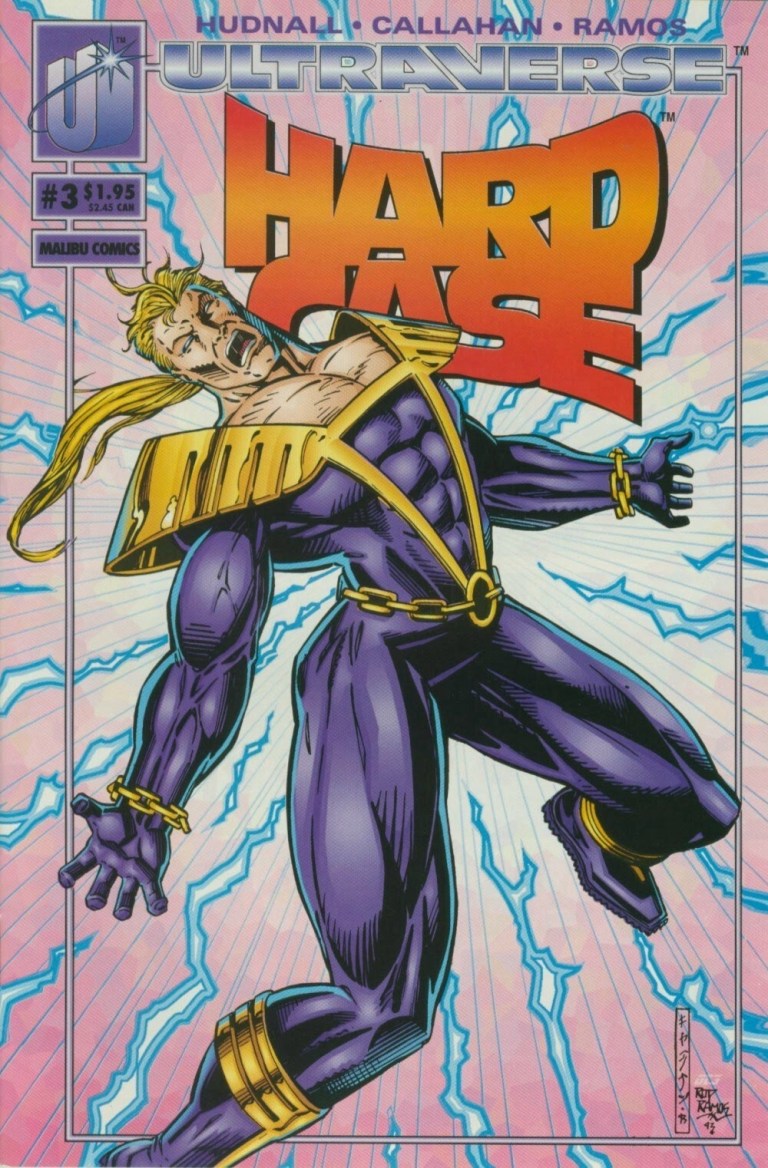
CoverFreex7
The cover.

Let’s now take a look back at Freex #7 and see what makes it unique (if not special).

Early story

The story begins with the Freex hastily stealing clothes from a store in city. While the others are desperately grabbing what they could (note: the store’s glass window was shown smashed already), Angela/Sweetface looks scared. One of her male companions tell her to be tough like Valerie/Pressure.

Just as they start leaving the store behind, the alarm system goes off. The sudden rush only adds pressure to them, causing Lewis/Anything to confront Michael/Plug only because the latter said something about team leadership. As Angela separates Michael and Lewis using her fleshy tentacles, Valerie loses her cool when Ray/Boomboy calls her by her codename. Valerie hits Boomboy with a blast of plasma. With their momentum disrupted by division and tension, Lewis tries to calm his teammates down but Plug won’t have any of it as he desires to find out about the source of all of their powers referred to as Wetware Mary. Plug finds a telephone booth and instantly transfers himself into it in the form of energy.

Freex7a
Division between members of Freex is common.

As the Freex remain divided, a local resident living nearby watches them from a distance.

Quality

The story written by Gerard Jones is pretty engaging mainly due to characterization (as opposed to storytelling and structuring). Through the dialogue, you can really sense the thoughts and emotions of each member of Freex, especially Valerie since this particular comic book focused on her origin. Without spoiling Valerie’s background, her origin was efficiently emphasized and never, ever felt dragging. By the time her origin story concluded, I got to understand Valerie better and why is she so mean. After the conclusion of the Freex’ story, there is also an Aladdin Datafile on Valerie who turned out to be 16-years-old, 5 feet and 9 inches tall, and even has a low threat assessment by Aladdin.

Adding further value to this comic book is a 2-page quick feature of Hardcase which shows a nice look back at his past before the establishment of The Squad.

Conclusion

Freex7b

From the past of Pressure.

Freex #7 is a good read. The story about the teenage social outcasts of the Ultraverse is well balanced in terms of characterization and action. Anyone who is a fan of Valerie/Pressure or female superheroes who are mean, angry and rebellious will find a lot to enjoy in this comic book. A near-mint copy of Freex #7 is worth $4 at MileHighComics.com as of this writing.

Overall, Freex is recommended.

Meanwhile, check out my retro review of Freex #1 right here.


Thank you for reading. If you find this article engaging, please click the like button below and also please consider sharing this article to others. Also my fantasy book The World of Havenor is still available in paperback and e-book format. If you are looking for a copywriter to create content for your special project or business, check out my services and my portfolio. Feel free to contact me as well. Also please feel free to visit my Facebook page Author Carlo Carrasco and follow me at HavenorFantasy@twitter.com

A Look Back at Action Comics #454

Disclaimer: This is my original work with details sourced from reading the comic book and doing personal research. Anyone who wants to use this article, in part or in whole, needs to secure first my permission and agree to cite me as the source and author. Let it be known that any unauthorized use of this article will constrain the author to pursue the remedies under R.A. No. 8293, the Revised Penal Code, and/or all applicable legal actions under the laws of the Philippines.

Long ago in the history of American comic book publishing, there was a time when superhero comic book storytelling were not told as dramatic serials but rather as standalone stories laced with outlandish ideas.

For this retro comic book review, we go back to the year 1977 as we focus on a Superman story that would not be told again in this day and age. To say the least, its cover art is, by today’s standard, over-the-top in terms of presentation. kapiHere is my look back at Action Comics #454 published by DC Comics with a story by Cary Bates and visuals by Curt Swan and Tex Blaisdell.

A454cover
The cover.

Early Story

The comic book opens with a preview of things to come showing a weak Superman urged by a few people to fly and chase the Toyman.

And then there was the question: What good are super-powers without the stamina and endurance it takes to use them?

The story begins with the Toyman escaping after pulling off a bank robbery. As he flies higher, he sees Superman coming towards him. After using a trick to delay Superman, Toyman uses a special trick to twirl Superman at high speed and literally throws him away to an unknown destination. The villain escaped and, some time later, Clark Kent/Superman finds himself too tired and drained. Because of this, he becomes desperate to consume food and beverages just to keep going. This problem affects both his career and social life.

A454p1
When was the last time you saw Clark Kent so exhausted?

Quality

Action Comics #454 explores what would happen if Superman lacks energy and requires a lot of rest and many meals to stay active. To see him eat as many as sixty hamburgers per minute is quite funny to see.

Being weak puts Superman at a disadvantage when it comes to stopping the criminal Toyman. As the Man of Steel flies at high speed to chase the bad guy flying in a personal aircraft, the chase drains him a lot.

When it comes to storytelling, this one is pretty short lasting only thirteen pages. What I find impressive is that the creators managed to tell a standalone story of good-versus-evil as well as answering the question as to what caused Superman to be so weak in the first place.

A454P2

Superman flying tired.

Conclusion

To put it clearly, Action Comics #454 is definitely a very short literary escapade that still manages to be fun to read. It sure is outlandish and I strongly doubt DC Comics will want to put Superman through heavy eating in today’s age of comics. Is this comic book a classic? Not exactly but it sure is a satisfying, fun read from an era when outlandish superhero storytelling in comic books was the norm. If you are seeking this as a collector’s item, be aware that a near-mint copy of Action Comics #454 is worth $23 at MileHighComics.com as of this writing.

Overall, Action Comics #454 is recommended.


Thank you for reading. If you find this article engaging, please click the like button below and also please consider sharing this article to others. Also my fantasy book The World of Havenor is still available in paperback and e-book format. If you are looking for a copywriter to create content for your special project or business, check out my services and my portfolio. Feel free to contact me as well. Also please feel free to visit my Facebook page Author Carlo Carrasco and follow me at HavenorFantasy@twitter.com


A Look Back at Aerobiz Supersonic

When it comes to playing economic simulation games, I enjoy playing them on the personal computer (PC) using the keyboard and mouse. Back in the mid-1990s, there was one particular economic simulation that I played on the Super Nintendo Entertainment System (Super NES or SNES) and found it to be very enjoyable and easily to play with using the console’s control pad.

That game was Aerobiz Supersonic, a simulation about the airline industry developed and published by Koei for both the Super NES and the Sega Genesis. Here is my look back at this old video game from the 1990s.

Screenshot_20200222-133557_Photos.jpg
The cover of the Super NES version of the game. Its art and style is really nice to look at.

Concept and Game Design

In the game, you get to play the Chief Executive Officer (CEO) of an airline and your goal is to beat your rivals in the global air travel industry. How to achieve the goal and succeed? There are tasks that need to be accomplished such as buying commercial airplanes (that include such real-life companies like Boeing and Airbus) for use, establishing flight routes, securing slots in airports worldwide, selling tickets and filling up each flight with as many passengers as possible, achieve profitability and finish the game’s imposed time period ranking #1. Adding zest to the game’s challenge is the selection of a certain era of world history that include 1955-1970 (the dawn of jets), 1970-1990 (the Cold War era), 1985-2005 (the present era) and 2000-2020 (the age of continued flight advancement).

Within the game, time passes by means of clicking a certain on-screen button that ends the player’s current turn. Of course, before pressing that, the player has to set things in motion like sending a representative to a certain overseas airport to negotiate and secure slots (which takes months to complete), set the ticket prices, buy a new airplane or two, etc. The game even allows players to micro-manage their airline like adjusting internal spending (salaries) or adjusting the quality of their airplane and services. Also nice is the option offered for players to buy a hotel or resort, a theme park or a travel agency that can bring in additional revenue.

Screenshot_20200222-132447_YouTube.jpg
The airport slots, local businesses, economic and tourism details per city displayed.
Screenshot_20200222-132508_YouTube.jpg
Visit an airline and choose from one of many models of airplanes to buy.

There are other small details that need paying attention to such as the economy and tourism meters of each city displayed (note: a higher tourism score means the city is more attractive to travelers), the population, etc. Also noteworthy is the current state of relations between your home nation with the nation of the city airport you are trying to establish routes with which can affect your business.

When the turn ends, a series of events will happen showing what happened around the world, how your company fared in the competition during the lapsed time period, and, occasionally, a random event will occur that most likely will affect your business (examples: the Olympics hosted by a city helps draw in additional passengers or the 1970s oil crisis raises the cost of your operation).

Regarding the game’s imposed time period for competing with the artificial intelligence (AI) opponents, the period is twenty in-game years.

Screenshot_20200214-195600_YouTube.jpg
This is part of micro-managing your business in the game.
Screenshot_20200214-195720_YouTube.jpg
After the end of each turn, news and updates not only about your company but also your competitors are flashed.

Quality

Being used to playing simulation games on PC, I found Aerobiz Supersonic to be very enjoyable, addicting and easy and efficient to play (in terms of controls). Considering the above-mentioned gameplay options (buying an airline, sending a representative, etc.), they are pretty easy to adjust using the Super NES controller although there were a few moments when I accidentally pressed the button putting into motion a different option.

Gameplay aside, this game has a whole lot of charm with its visual presentation. You launch a brand new flight route, the game shows a short animation sequence of the jet taking off. You buy an airplane, you will see a short animation of it entering your facility once it arrives (complete with a visual design reflecting the model). You conduct a board meeting, your company’s officials are present making reports to you and you get a series of choices to make on what to do next. A historical event or a global development occurs, you get to see original art reflecting them (example: a nation joins the EU with people wearing suits and neckties together in a formal ceremony). You make a move to buy slots at an airport overseas, a company official will have his or her face shown talking to you. When looking at the regional map, you see lines connected between cities (highlighting the establish flight route you made) and there are icons of airplanes flying between them.

Screenshot_20200214-195732_YouTube.jpg
Random tourist hot spots get highlighted as you keep playing.

More on the aspect of starting the game, I like the options offered for me to select which city shall serve as my airline headquarters. Among the many cities included, there are cities of my native Philippines namely Manila (the international destination) and the nearby city of Cebu. I still remember how delighted I was to see my native Philippines included in the game, complete with Asian character designs to reflect the company and its region.

Conclusion

Ultimately Aerobiz Supersonic (which was actually a sequel to Aerobiz) is a gem of a console economic simulation released at a time when 2D sprite gaming was still the standard and 3D polygonal gaming was just about to make an impact on the global video game console market. Back then, 2D side-scrolling action/adventure games, sports games and role-playing games (RPGs) were so common on the Super NES and Genesis combined and the idea of enjoying economic simulations on consoles was highly unusual. Aerobiz Supersonic is proof that economic simulations can come with a lot of depth, deliver a good amount of strategy and can be highly playable and enjoyable on consoles.

If you want to enjoy this game, it can be quite difficult to do because you need to acquire an existing copy of the game as well as a fully functioning Super NES or Sega Genesis. As of this writing, there has never been a re-release of Aerobiz Supersonic (note: in line with legitimacy, I will not consider those browser versions or file sharing of ROMs) and it is not even included on Nintendo’s Virtual Console. There’s not even a version made for smartphones.

Now if only the executives at Koei Tecmo Games would consider revisiting Aerobiz Supersonic with today’s consumers in mind.

Screenshot_20200222-132429_YouTube.jpg
You can choose what kind of plane, how many planes, how many flights and how much you set the ticket prices whenever you start a new flight route.

Thank you for reading. If you find this article engaging, please click the like button below and also please consider sharing this article to others. Also my fantasy book The World of Havenor is still available in paperback and e-book format. If you are looking for a copywriter to create content for your special project or business, check out my services and my portfolio. Feel free to contact me as well. Also please feel free to visit my Facebook page Author Carlo Carrasco and follow me at HavenorFantasy@twitter.com
 

Carlo Carrasco’s Movie Review: Birds of Prey

As I mentioned before, I never read a single comic book about Birds of Prey. Apart from previously knowing Harley Quinn, Black Canary (from the 1980s specifically) and Huntress (from the 1990s), I had minimal knowledge of the DC Comics’ title as well as modest expectations entering the cinema yesterday to watch Birds of Prey: and the Fantabulous Emancipation of One Harley Quinn which is the latest superhero production from Warner Bros.

Right now, I’m happy to share to you that the R-rated movie proved to be a fun-filled watch and is proof that the DC Comics Cinematic Universe is still moving forward (in terms of engagement, enjoyment and creativity) towards greatness.

Here is my movie review of Birds of Prey.

FB_IMG_1579954917133-1.jpg

Early Story

The story begins with a look into the past of Harley Quinn (Margot Robbie) moving forward until her breakup with the supervillain Joker (don’t expect to see Jared Leto’s image). Through narration and clever visuals, Harley is now living a new life. Along the way, there is a club within Gotham City bustling with life which Harley haves fun at and eventually she encounters the club owner Roman/Black Mask (Ewan McGregor) who is not what he seems. After getting drunk and becoming vulnerable to men with sinister intentions, Dinah/Black Canary (Jurnee Smollett-Bell), who sings at the club, comes to her rescue. After recovering, Harley moves on to destroy a huge facility of Ace Chemicals which further sets events off…

Quality

While the screenplay by Christina Hodson (Bumblebee) lacked storytelling depth and character development, director Cathy Yan and her team still managed to craft a superhero film that was fun, action-packed and, surprisingly, not too reliant on computer-generated visual effects.

To make up for the lack of story depth, the movie relied mainly on the performances of the actors to bring their characters to life. Margot Robbie really excelled in playing Harley Quinn inside and out. While this latest cinematic portrayal does not have Harley insane, she’s still crazier than in Suicide Squad. Robbie’s act this time is more creative, more adulterated (which is the way the go), more daring with action and also more comedic. From this point on, I should say that Warner Bros. should rehire Robbie to play Harley Quinn in even more DC Comics movies.

FB_IMG_1579954826376.jpg
Here come the ladies: Renee Montoya, Huntress, Harley Quinn, Cassandra Cain and Black Canary.

Rosie Perez as Gotham City police officer Renee Montoya delivered a strong presence as the law enforcement element in the film and through her, we get to see the culture of the local police. Don’t expect her to have any links with police commissioner Gordon or Batman, though. Jurnee Smollet-Bell as the cinematic Black Canary is one of the stronger performers even though her version of the character is radically different from the one I read in the comic books long ago. Ella Jay Basco, an actress of Filipino and Korean heritage, as the orphan Cassandra Cain is clearly the movie’s representative (and attraction to) of the youth. Performance-wise, Basco delivered a nice performance even though her character (who in the comics is one of many who became Batgirl) lacks depth. Fortunately for us moviegoers, she is not the whiny teenager who annoy viewers and, more importantly, she delivered nicely in her part of the film’s plot. Mary Elizabeth Winstead is good as the cinematic Huntress. It’s too bad her on-screen presence is not long enough to be enjoyed, nor were moviegoers given better opportunities to know the Huntress better.

The most outstanding performance in the movie was delivered by Ewan McGregor as Black Mask. McGregor, who is a naturally artistic actor, is very colorful with his portrayal of a supervillain who, unlike many other such antagonists in other superhero movies, is charismatic, suave and yet cruel to the core. This cinematic Black Mask is not your generic action movie villain and, as such, hiring McGregor was one of the best moves made by Warner Bros. I honestly find McGregor a worthy adversary versus Margot Robbie when it comes to cinematic artistry.

When it comes to spectacle, Birds of Prey is heavily loaded with hard-hitting action plus some bloody shots that make it standout among the many superhero movies released in this current century. For one thing, the actresses themselves took an active part in doing action and the stunts they could pull of on their own (the harder stuff were understandably done by stunt doubles). Watching Harley Quinn beat up the bad guys with that large hammer, the baseball bat and other stuff were not only hard-hitting but also creative without ever looking choreographed. Black Canary’s high kicks were notable. Renee Montoya’s reliance on guns and hard action were symbolic throwbacks to the police movies of the past. Huntress meanwhile showed how deadly her small but powerful crossbow can be on-screen.

Late in the film is a certain long-take action sequence filled with the characters struggling with the bad guys simultaneously (without using computer-generated imagery) which was cleverly filmed with nice timing as the camera moved on very steadily. That sequence, even though short, is worth watching again and again. Oh yes, there are no shaky camera sequences shot!

The action scenes, in my opinion, came into play at the right time whenever I felt enough dialogue and exposition were made. This shows that the filmmakers pulled off the right moves with the pacing to ensure that people are kept entertained while still maintaining some storytelling sense which is quite an achievement since the film’s plot lacked depth. The stunts, meanwhile, are really nice to watch.

As for the brewing arguments and anticipation that Birds of Prey is a leftist and feminist piece of propaganda, I should say that such influences are more on the visual side than on the dialogue. Even though Ewan McGregor publicly said the movie is feminist, it’s not too strong. The feminism is more visible in images of the ladies fighting the bad guys who are varied with their looks – muscular, tall, big, beards, etc. The feminism is obvious with the ladies teaming up together and that is not surprising at all. Even though it has feminism elements, Birds of Prey is still pretty much a superhero movie on its own. You want a movie with stronger and more blatant feminism? Watch Star Wars: The Last Jedi instead. Maybe you want to try Elizabeth Banks’ failure Charlie’s Angels.

Conclusion

FB_IMG_1579954888780.jpg

With strong and creative performances plus loads of fun stuff that more than made up for the lack of story depth and character development, Birds of Prey is an enjoyable superhero movie that is worthy of being part of the current DC Comics Cinematic Universe. Without relying on fan service, this movie expands the current cinematic universe’ presentation of Gotham City and shows the other parts of it away from Batman.

Even if you have not read any Birds of Prey comics, this movie will still prove to be entertaining. Just don’t expect to see the more iconic DC Comics characters and don’t expect to see heavy amounts of computer-generated images on-screen. Birds of Prey is more grounded and for a production of roughly $100 million, the production values still look high.

Overall, Birds of Prey is highly recommended and I encourage you to watch it in the cinemas as soon as possible. And if you have the extra money, watch it on an IMAX screen as the film was optimized for the format.


Thank you for reading. If you find this article engaging, please click the like button below and also please consider sharing this article to others. Also my fantasy book The World of Havenor is still available in paperback and e-book format. If you are looking for a copywriter to create content for your special project or business, check out my services and my portfolio. Feel free to contact me as well. Also please feel free to visit my Facebook page Author Carlo Carrasco and follow me at HavenorFantasy@twitter.com


A Look Back at Super Star Wars: Return of the Jedi

Screenshot_20200202-123104_YouTube.jpg
Luke Skywalker going up against the game’s final boss – Emperor Palpatine. 

By the middle of 1994, gamers and Star Wars fans who owned a Super Nintendo Entertainment System (SNES or Super NES) were treated with more 2D side-scrolling fun with Super Star Wars: Return of the Jedi. Developed by Sculptured Software and LucasArts and published by JVC, the game was the conclusion of the so-called Super Star Wars trilogy of the 16-bit era of console gaming.

Like its predecessor Super Star Wars: The Empire Strikes Back, this game is a 2-dimensional side-scrolling adventure game released just months before Sega and Sony respectively released the Saturn and PlayStation consoles (which eventually made 3D polygonal gaming popular). The game itself is based on the 1983 movie Return of the Jedi: Luke and his friends go out to save Han Solo from Jabba the Hutt and the Rebels prepare its strategy to defeat the Imperial Forces now armed with a new Death Star with the personal presence of Emperor Palpatine.

Here’s my review of Super Star Wars: Return of the Jedi.

Early story (and some notable differences from the movie)

The game begins with a quick look at Darth Vader’s arrival at the new Death Star setting up the stage for the Emperor’s arrival. On Tattooine, Luke and his companions travel to the temple of Jabba the Hutt to somehow save their friend Han Solo (who got frozen in carbonite at Cloud City in The Empire Strikes Back).

Screenshot_20200202-120316_YouTube.jpg
A still cut-scene at the beginning of the game.

In order to get to the palace, Luke/Leia/Chewbacca (you get to pick which character to use) have to travel through a lengthy stretch of land filled with several forms of wild life, monsters and even Jawas blocking their way. Once inside, your character has to fight until the end of the next few levels (note: there was a boss or powerful enemy to beat) to make the story progress.

Once you have defeated Jabba and rescued Han Solo, your team regroups with the Rebels in space to start your next series of missions with the moon of Endor (with the 2nd Death Star in orbit).

Notable differences from the movie include fighting a large monster (which used a large ball as a weapon) did not appear in the film. Also notable was Leia (in her sexy slave outfit) having to move from the end of the stage to reach Jabba the Hutt who serves as the level’s boss. Jabba’s sail barge in the game looks and feels longer than in the movie.

Screenshot_20200202-121353_YouTube.jpg
Leia, Jabba is right behind you!

Gameplay

Super Star Wars: Return of the Jedi plays a lot like its predecessor. As typical with most games of the era that used 2D sprites for visuals, the game is an action-packed side-scroller wherein you have to control your character from left to right, go up and down and complete the level by either defeating the end-level boss or by simply reaching the end (some levels have no boss). As you move on, you also get to collect power-ups and icons which are really helpful in completing the levels.

Along the way, you get to fight a whole bunch of enemies that appear to fight and stop you.  This includes not only the Imperial forces that appeared in the movie but also new additions like machines and even flying robots. You never saw Luke fight any flying robot in the movie? In this game, he gets to fight them at the Imperial facility on the moon of Endor.

Screenshot_20200202-122315_YouTube.jpg
Han Solo blasts the Stormtroopers!

Given the story structure of the movie, the game developers were able to let players pick a Star Wars character to play as before starting a level. This particular feature was prominent in 1992’s Super Star Wars but was heavily toned down (due to story structure) in Super Star Wars: Empire Strikes Back. Back to the selectable characters, there are key differences between them such as Luke using his lightsaber and Force powers, Han Solo with his blaster and grenades, Chewbacca with his crossbow and his spin attack (he does NOT do this in the movies so it’s funny), and Leia who uses different weapons as she appears (based on the story structure) as a disguised bounty hunter and as a sexy slave to Jabba. Quite odd here is the addition of Wicket the Ewok as a playable character whom you must guide fighting the bad guys in two levels that are set in the village of the Ewoks up those tall trees. The Wicket levels are easily the least interesting to play in.

Like the previous two games, the game designers implemented levels that play differently from the standard side-scrolling adventuring. I’m referring to the Mode 7 level in which you fly the Millennium Falcon on a makeshift 3D environment on the surface of the 2nd Death Star needing to destroy a number of TIE Fighters in order to progress. I should say that this particular level lacked depth although it was cool to use the Falcon and just imagine Lando and his team inside operating it.

Screenshot_20200202-122611_YouTube.jpg
The Millenium Falcon in the Mode 7 3D environment set on the surface of the Death Star.

In what is a clear attempt by the game makers to push the hardware of the Super NES, they created a standalone level in which you use the top turret of the Millenium Falcon to shoot a required number of TIE Fighters while flying in space heading towards the 2nd Death Star (complete with a 3D background showing the Imperial Star Destroyers in the distance on one side). This was a very short yet cool sequence to play even though the darkness of space makes spotting the TIE Fighters a bit challenging. I liked the fact that the console’s processor was pushed hard to allow the TIE Fighters look 3D and detailed using several frames of animation as they fly around and right close to the Falcon (which itself looked detailed).

Screenshot_20200202-122004_YouTube.jpg
This 3D shooting segment in the game was fun and too short.

And then there is the speeder bike chase sequence that took place through the forest of Endor. This one is pretty shallow and has not aged well.

Screenshot_20200202-121543_YouTube.jpg
Nice visual detail on the speeder bikes but everything else felt shallow.

Finally, the game’s last stage is another hardware-intensive level that offers gamers the opportunity to experience the challenge and speed (as far as the hardware could push) of piloting the Millennium Falcon into the tunnels of the 2nd Death Star to reach the core, blast it and then escape on the way out (being chased by intense flame caused by the explosion). This level shows lots of repeating visual elements that are supposed to be the mechanical interiors of the tunnels and you can movie the Falcon in 1st-person view, speed up or down, rotate the view and tilt the direction as you move forward. Along the way, there are TIE Fighters who appear in front of you for you to shoot at. While the intention of the developers to replicate the memorable sequence of the movie is clear, the hardware limitations (and design limitations) could only go so far to make the gameplay experience solid. What bogged this particular sequence down are the bouts of slowdown (lowered frame rates) when things get hectic.

Screenshot_20200202-123735_YouTube.jpg
This sequence must be seen in motion.

Conclusion

While it is indeed a more polished game than the memorable Super Star Wars: The Empire Strikes Back, Super Star Wars: Return of the Jedi was indeed a fun and engaging game but still falls short of its immediate predecessor in terms of enjoyment and engagement. For one thing, this game noticeably was less challenging and the return of the password system makes it even easier to finish. The boss battle with Darth Vader showed the iconic villain being much easier to beat with even on the standard difficulty level. I still remember how surprising it was to beat Vader during my first time playing the game.

The non-side-scrolling levels of the game created good variety for playing. I just wished that the 3D space shooting sequence of the Falcon (with its top turret) lasted longer and the visuals of the final level looked more detailed and had less lag. As for the Mode 7 level with the Falcon on the surface of the Death Star, that one pales in comparison with the lengthy and memorable Battle of Hoth (which has the grand experience of taking down the AT-AT walkers with the tow cable).

Overall, Super Star Wars: Return of the Jedi is recommended.  By today’s standards, this game is a classic and was one of the best ever Star Wars video games of not only of its console generation but among all Star Wars games that were made with 2D sprites and pixel art. If you have a Super NES console or Nintendo’s Virtual Console, play the game once you have it.


Thank you for reading. If you find this article engaging, please click the like button below and also please consider sharing this article to others. Also my fantasy book The World of Havenor is still available in paperback and e-book format. If you are looking for a copywriter to create content for your special project or business, check out my services and my portfolio. Feel free to contact me as well. Also please feel free to visit my Facebook page Author Carlo Carrasco and follow me at HavenorFantasy@twitter.com
A Look Back at Super Star Wars: The Empire Strikes Back

In this age of photo-realistic 3D graphics in video gaming, I sure miss the days when 2D gaming and highly detailed pixel art were the standard. I’m referring to the so-called 16-bit era of the Super NES/SNES (Super Nintendo Entertainment System) back in the 1990s.

In 1991, Super Star Wars was released on the Super NES and it became a big hit with the gamers, the critics and fans. That game was heralded as one of the best video game adaptations of movies.

Naturally, a follow-up to that game was released in 1993 – Super Star Wars: The Empire Strikes Back.

That being said, here is my retro gaming review of Super Star Wars: The Empire Strikes Back.

Screenshot_20200118-222140_YouTube.jpg
The experience of using a Rebel speeder to bring down an AT-AT walker with the cable remains awesome.

Developed by Sculptured Software and LucasArts and published in America by JVC, this game is based on The Empire Strikes Back which today has been considered to be the greatest Star Wars movie ever. Of course, in order to make a cohesive video game adaptation out of the classic movie, a lot of liberties were taken when it comes to following the story. This was inevitable as the game developers needed a lot of creative freedom to make a cohesive video game.

Early story (and some notable differences from the movie)

Super Star Wars: The Empire Strikes Back begins with Luke Skywalker riding a Tauntaun. Unlike the movie, Luke (controlled by players) visits some places of the wasteland of Hoth, notably caverns and hills fighting several forms of wild life (including wampa beasts), and even some probe droids.

Screenshot_20200118-223405_YouTube.jpg
Luke jumping on to a wampa beast.

Unlike the movie, Luke does not get rescued by Han Solo in the wilderness. Instead he defeats a giant-sized probe droid and a giant-sized wampa beast (as in-game bosses) and make his way back to Echo Base to rejoin the rebels. Upon returning at the base, he finds it filled with Imperial troopers and their machines (where are Luke’s fellow rebels?) and fights his way through to fly a rebel speeder (note: without the movie co-pilot Dak) and proceed in the Battle of Hoth.

image-2.jpg
This never happened in the movie.
image-3.jpg
Luke jumping into a snow speeder without a co-pilot.

Back at Echo Base, Han Solo (player-controlled) has to make his way through a wave of Imperial enemies and machines to meet Princess Leia, secure her and ride away on the Millennium Falcon. The Falcon (player-controlled) enters the asteroid field being attacked gradually by over twenty TIE Fighters. Once all of them have been eliminated, the Falcon jumps into light speed (which contradicts the movie).

Gameplay

Super Star Wars: The Empire Strikes Back is composed mostly of 2D, side-scrolling action sequences in which players control their characters moving from left to right in order to make the game progress. The sequences are filled with lots of action-packed moments mainly due to the MANY enemies challenging the players plus sequences of shooting, jumping and using special weapons (note: the thermal detonator was awesome to use). When it comes to filling up the health meter of your character, defeating enemies result random releases of hearts (symbolizing health) which you need to pick up. Key side-scrolling segments of the game will have players facing off with in-game bosses or enemies that are large, intimidating and have their own health meters for players to reduce to zero.

As typical with most 2D side-scrolling games of the era, this game is really tough and will take gamers some patience and perseverance to complete.

What really stood out in this game are the makeshift 3D segments (made possible by Mode 7) which were pretty extensive and really interactive. The Battle of Hoth in Mode 7 was pretty engaging as players get to fly a rebel speeder over a snowy field complete with lots of Imperial enemies (including the AT-ST walkers and the AT-AT walkers) and each of them is composed of multiple 2D sprites making them look 3D as the speeder moves around. Apart from simply shooting, the interactive sequence of tagging an AT-AT walker with a cable, flying around it and wrapping it with the cable, and then watching it fall to the ground really is an awesome gaming experience which really showed how hard the game developers pushed 2D visuals and pixel art.

Screenshot_20200118-222830_YouTube.jpg
A Mode 7 sequence late in the game had players using an X-Wing fighter.
Screenshot_20200118-222213_YouTube.jpg
The Battle of Hoth was a great and lengthy use of Mode 7.

Apart from the Battle of Hoth, there was also another Mode 7 sequence involving the X-Wing Fighter approaching Cloud City. That particular sequence was noticeably shorter and did not have a standout action sequence as it was limited to the X-Wing Fighter simply shooting Bespin fighters. Another non-2D segment was the Millenium Falcon’s flight through the asteroid field which was done with the cockpit view (first-person view exactly) in which you move a cursor for targeting and moving the ship to. This segment was pretty tough because players were not only required to eliminate more than 20 TIE Fighters but also avoid incoming asteroids and maintaining the Falcon’s energy shields (which serves as a health meter)

Going back to the 2D side-scrolling segments, the use of the lightsaber by Luke remains a lot of fun to do. Not only could he slash bad guys, he could use the lightsaber defensively protecting himself from incoming energy blasts (which get deflected by the lightsaber). On the offense, Luke can jump into the air and spin with the lightsaber turned on making him an aerial slasher over the bad guys.

In keeping with the theme of the movie showing Luke Skywalker learning to be a Jedi, the Dagobah segment in the game has Luke gaining varied Force powers and he also has a separate Force energy meter. The Force powers can be used in subsequent segments of the game and they are quite useful when Luke encounters Darth Vader as the final boss in Cloud City.

The fights with Darth Vader were nicely designed. With creative freedom, the game developers expanded on Darth Vader’s use of the Force to move several pieces of debris and machines towards Luke who has to defend himself from all sides. Fighting Darth Vader with the lightsaber was tricky and for the most part, I had Luke slashing on villain with just enough space between them and many times I had Luke use the lightsaber on him while jumping and spinning in the air. Defeating Vader was a requirement to complete the game.

Screenshot_20200118-222758_YouTube.jpg
Very nice artwork made for the storytelling cut scenes.

Finally, like in Super Star Wars, players can also play as Han Solo (special attack: grenade throw) and Chewbacca (special attack: offensive spin) but only in specific segments of the game supposedly to keep in line with its story.

Conclusion

Even by today’s standards, Super Star Wars: The Empire Strikes Back is still a high-quality video game that is a lot of fun to play with even though it is tough (a password system is used for in-game progress so that gamers can come back to continue) all throughout. Gameplay aside, the presentation of visuals and audio is also very solid. The sprites for the in-game characters, enemies, machines and animal were detailed to look at while the background art were immersive (like in the movies, Cloud City, Hoth and Dagobah had their distinctive visuals). The Super NES audio chip was greatly used on recreating 16-bit sound from the movies, especially John Williams’ movie scores and lightsaber sound effects.

Take note that this game was released in 1993 which is significant in the sense that people had moved on since the release of the movie Return of the Jedi (1983) and the Star Wars prequel trilogy did not begin until 1999 with Star Wars Episode I: The Phantom Menace. This game was released at a time when 2D gaming was still in strong demand and most gamers did not expect that 3D polygonal graphics would reshape video gaming eventually. In retrospect, the polygon-focused gaming consoles Sega Saturn and the original Sony PlayStation launched in late 1994 or more than a year after Super Star Wars: The Empire Strikes Back.

Screenshot_20200118-223133_YouTube.jpg
The inevitable battle between Luke Skywalker and Darth Vader.

I myself had lots of fond memories playing this game back in the mid-1990s. I simply endured the many challenges of it and ultimately had a lot of enjoyment completing it. I even replayed the game from the start even though I knew how the game presented the ending and key story elements of the movie. I also got to replay The Empire Strikes Back on home video around the time I played this game.

Believe it or not, Super Star Wars: The Empire Strikes Back was the first of the Super Star Wars trilogy on the Super NES that I actually played. After completing it, I borrowed the Super Star Wars cartridge from a friend and later bought a copy of Super Star Wars: Return of the Jedi. I completed those two other games and I can clearly say that Super Star Wars: The Empire Strikes Back remains the best in game design, the best in terms of fun factor and the most memorable of them all.

If you love Star Wars and you want the best 16-bit era video game (note: you’ll need a working Super NES console or Nintendo’s Virtual Console for any Super Star Wars game) experience of it, Super Star Wars: The Empire Strikes Back is highly recommended.


Thank you for reading. If you find this article engaging, please click the like button below and also please consider sharing this article to others. Also my fantasy book The World of Havenor is still available in paperback and e-book format. If you are looking for a copywriter to create content for your special project or business, check out my services and my portfolio. Feel free to contact me as well. Also please feel free to visit my Facebook page Author Carlo Carrasco and follow me at HavenorFantasy@twitter.com
A Look Back at Spider-Man 2099 #35 (1995)

Disclaimer: This is my original work with details sourced from reading the comic book and doing personal research. Anyone who wants to use this article, in part or in whole, needs to secure first my permission and agree to cite me as the source and author. Let it be known that any unauthorized use of this article will constrain the author to pursue the remedies under R.A. No. 8293, the Revised Penal Code, and/or all applicable legal actions under the laws of the Philippines.

When Marvel Comics first launched the 2099 imprint of comic books showcasing many futuristic versions of their present-day characters – like Spider-Man, Ravage and Dr. Doom – it was inevitable that the same treatment will be applied to their popular supervillains.

In 1993, the 2099 version of Vulture was introduced and he sure proved to be one tough opponent for Spider-Man 2099. Even back then, there already was clamor for a futuristic version of Venom which at the time was riding high with readers being the featured anti-hero in several limited series (starting with Lethal Protector) of comic books.

Then in 1995, after doing a creative teaser in issue #34, Marvel formally introduced Venom 2099 by releasing Spider-Man 2099 #35. This is my review of the comic book written by Peter David and drawn by Andrew Wildman (X-Men Adventures).

Cover
The cover drawn by Rick Leonardi.

Early story

Picking up from the events of issue #34, the story begins in Washington, DC with Dana freeing herself only to find out that Alchemax’s CEO Tyler Stone was down suffering from a gun shot and losing blood. Minutes later, emergency personnel take Stone’s body for immediate treatment.

Meanwhile, Spider-Man 2099 (Miguel O’Hara) encounters the SHIELD flyboys in New York. After almost getting into trouble together, Spidey gets informed that US President Doom 2099 ordered them to leave him alone for a period of seventy-two hours while he considers a cabinet offer. Back in Washington, Dana gets interrogated by one of the authorities. President Doom enters the scene telling Dana that she will join Tyler Stone immediately in the medical center.

3
Andrew Wildman’s take on Spider-Man 2099 and the future was really nice to look at.

In New York, two guys sitting on the sidewalk witness a moving black liquid coming out of the sewer. The thing turns out to be a living symbiote (or alien costume) forming into a human-like shape – Venom 2099!

Quality

As with other comic books of this particular series, the writing by Peter David is pretty deep and engaging. The usual balance between dramatization, character development, plotting and spectacle is here once again but with a slight touch of horror in relation to the introduction of Venom of 2099. Speaking of dramatization, the portrayal of Venom 2099 as a vicious villain is similar to the 20th century Venom (Eddie Brock) but with a very powerful obsession to kill Miguel O’Hara and Tyler Stone.

Here’s an excerpt from the dialogue of Venom of 2099: Miguel O’Hara…and Tyler Stone…together again. We…I get to kill you…at the same time…how awfully…awfully…considerate. To show my appreciation…I’ll kill you slowly.

What makes this comic book unique is the artwork by Andrew Wildman who temporarily replaced regular illustrator Rick Leonardi. For comparison, I find Wildman’s art style a welcome thing in this comic book mainly because he draws with a lot more detail per panel and per page than Leonardi ever could. Instead of seeing the usual sketch-like art style of Leonardi, Wildman’s style is livelier and more expressive to look at. I also enjoyed Wildman’s visual take on Spider-Man 2099/Miguel O’Hara, Lyla, Tyle Stone, and the other established characters. Their facial expressions are also livelier to see.

9
Venom 2099 appears! Take note of the “liquid” at the edges of the page.

More on visuals, Wildman’s take on Venom 2099 is unforgettable. Like 20th century Venom, he has a dark suit, elongated jaw with rows of sharp teeth and an elongated tongue but with green acid dripping all the time. There are also those tentacles-like things that stretch from his body until the arms. Also his white-colored mask with large eyes make him look horrific.

Conclusion

Despite being shorter than the usual 22-pages, Spider-Man 2099 #35 is still a very engaging and fun old comic book to read. Its purpose was to build-up anticipation leading to the introduction of Venom 2099 was achieved nicely and the respective qualities of the writing and visuals are very good even by today’s standards. More on the presentation of Venom of 2099, it seems like Peter David took inspiration from movie director James Cameron on building-up tension and suspense before showing the villain. That’s a move I enjoyed in this comic book.

Overall, Spider-Man 2099 #35 is highly recommended. If you plan to acquire an existing and legitimate hard copy, be aware that the near-mint copy of it is over $100 for the newsstand version while the Rich Leonardi-drawn “Venom 2099 AD” cover version is priced at over $80 at MileHighComics.com as of this writing.

Thank you for reading. If you find this article engaging, please click the like button below and also please consider sharing this article to others. Also my fantasy book The World of Havenor is still available in paperback and e-book format. If you are looking for a copywriter to create content for your special project or business, check out my services and my portfolio. Feel free to contact me as well. Also please feel free to visit my Facebook page Author Carlo Carrasco and follow me at HavenorFantasy@twitter.com