Frame-rate boost for backward compatible games on Xbox Series consoles has begun with five initial games!

Playing previous generation video games on your Xbox Series X or Xbox Series S console is becoming a smoother experience as Team Xbox officially rolled out the FPS Boost enhancement for backward compatible games which gamers playing any of the five initial games – Far Cry 4, New Super Lucky’s Tale, Sniper Elite 4, UFC 4, and Watch Dogs 2 – can benefit from.

On Xbox.com, Senior Program Manager Paul Eng made the official announcement dated February 17, 2021. Below is an excerpt from the said article…

As we detailed in October, with the increased CPU, GPU and memory from our new consoles, all of your existing games look and play better. With certain titles, we can make the experience even better, all with no work required by the developer, and no update needed by the gamer. To that end, the backward compatibility team has developed FPS Boost, which employs a variety of new methods for nearly doubling (and in a few instances, quadrupling) the original framerate on select titles. Higher, steadier framerates make games visually smoother, resulting in more immersive gameplay. We partnered closely with developers to enhance the experience while maintaining the game’s original intent. And while not applicable to all games, these new techniques can push game engines to render more quickly for a buttery smooth experience beyond what the original game might have delivered due to the capabilities of the hardware at the time.

We’re excited to announce the first assortment of backward compatible titles that will support FPS Boost – available beginning today –  are Far Cry 4, New Super Lucky’s Tale, Sniper Elite 4, UFC 4, and Watch Dogs 2. We chose this initial collection of titles not only because they are popular among fans, but to highlight several different ways that FPS Boost can improve your experience. For example, New Super Lucky’s Tale can now run up to 120 frames per second (fps) and UFC 4 delivers improved framerate performance specifically on Xbox Series S and can now run at 60fps.

This is just the beginning. We will announce and release more titles featuring FPS Boost soon, as well roll out new menu icons and system settings in an upcoming system update. Starting this Spring, you can go into the “Manage Game” section for any title, where you’ll be presented with a new “Compatibility Options” button that will allow you to toggle FPS Boost (as well as Auto HDR) on or off. There will also be a new indicator informing you when a game is running with FPS Boost whenever you hit the Xbox Button on your controller. You decide how you want to play your favorite games, whether in its original form or with FPS Boost.

And FPS Boost doesn’t only benefit gamers who own these titles – you’ll be happy to hear that many of these upcoming FPS Boost games will be available in Xbox Game Pass.

As you can see in the above content, Team Xbox and its backward compatibility team are continuing to not only make as many past generation games playable on the Xbox Series consoles, but make the gameplay experience even better by means of improving the frame rates. With FPS Boost, the wholesome platform game New Super Lucky’s Tale can be played on Xbox Series S at more than three times higher than the frame rate of its Xbox One version. More than three times meaning up to 120 frames-per-second (120FPS) on the newer console!

And then there is another game from the initial five…Watch Dogs 2 from Ubisoft. I played and finished Watch Dogs 2 on my Xbox One back in early 2017 and while it was not great, it proved to be fun and satisfying enough. For the newcomers reading this, Watch Dogs 2 is an open-world game with San Francisco as its environment. To have that game upgraded to 60FPS is pretty impressive even though its resolution was not upgraded. Regardless of resolution, to have an open-world game run at sixty frames-per-second is a big achievement in itself. By today’s standards, 30FPS is no longer satisfying for me especially when it comes to open-world games.

As mentioned in the Xbox.com article, FPS Boost is just beginning and Team Xbox will reveal and release more games that will run with FPS Boost in the near future. I personally hope to see a variety of previous generation games run on Xbox Series consoles at 60FPS such as Lost Odyssey (the Final Fantasy game without the name), Saints Row 2 and Saints Row The Third to name a few.

It is great to see that Team Xbox continues to work hard to not only make backward compatible gaming even more accessible, but also justify all the investments gamers made with their collection of video games released on all Xbox console generations. That reminds me, this year 2021 will mark the 20th anniversary of Xbox itself.

In ending this, here are some selected YouTube videos related to FPS Boost for your learning and enjoyment. Colteastwood’s interview with Jason Ronald is a must-watch! Meanwhile, Zalker 87’s video is about a different yet highly relevant topic of discussion.

+++++

Thank you for reading. If you find this article engaging, please click the like button below and also please consider sharing this article to others. If you are looking for a copywriter to create content for your special project or business, check out my services and my portfolio. Feel free to contact me as well. Also please feel free to visit my Facebook page Author Carlo Carrasco and follow me at HavenorFantasy@twitter.com
A Look Back at Wonder Woman #17 (1988)

Disclaimer: This is my original work with details sourced from reading the comic book and doing personal research. Anyone who wants to use this article, in part or in whole, needs to secure first my permission and agree to cite me as the source and author. Let it be known that any unauthorized use of this article will constrain the author to pursue the remedies under R.A. No. 8293, the Revised Penal Code, and/or all applicable legal actions under the laws of the Philippines.

When was the last time you traveled overseas not to have fun the usual way (partying, spending time in bars, watching movies or stage plays, and the like) but rather to immerse yourself into history by visiting several historical sites? When you plan to travel overseas, have you thought about pursuing the wonder of discovery?

Welcome back, Wonder Woman fans and comic collectors! It has been almost a year since I started publishing retro reviews of Wonder Woman comic books from the post-Crisis age of DC Comics drawn by the famous George Perez. I can say that I really enjoyed the modernizing of the Queen of Superheroes done by Perez along with the late Len Wein. In fact, my enjoyment on the post-Crisis Wonder Woman is greater than what I had for the New 52 Wonder Woman. For those who love Wonder Woman movies, check out my retro review of the 2017 Wonder Woman movie and my feature about the No Man’s Land scene. If you are into the latest movie Wonder Woman 1984 starring Gal Gadot, Chris Pine and Kristen Wiig, be aware that the 4K Blu-ray combo of it will be released on March 30, 2021. I already ordered a copy of it.

Going back to what I mentioned earlier, discovering new places can be tremendous experiences for those who travel abroad. With those details laid down, we can finally start this look back at Wonder Woman #17, published in 1988 by DC Comics with a story written and drawn by George Perez with ink work done by Dick Giordano.

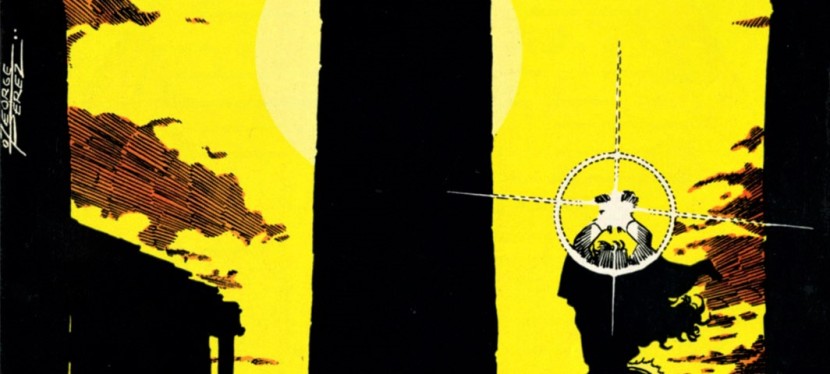
The cover.

Early story

The story begins as a white bird flies high in the sky in the middle of dark clouds and bolts of lightning. The bird is carrying a message and as it continues to move forward, the darkness fades away as light and calm clouds set in.

In Wakefield, Massachusetts, Diana Prince/Wonder Woman receives her special United Nations (UN) passport from Etta Candy. It turns out that Julie Kapatelis is in Athens, Greece, making arrangements for Diana’s first overseas trip in man’s world. As they talk, Etta reveals that Steve Trevor is aware of the connection between Wonder Woman’s costume with his mother.

As Vanessa (Julie’s daughter) comes down from the second floor, Steve Trevor enters the house carrying a bird carrying a message. Even as she recognizes the bird, she is amazed to discover that it arrived there all the way from Themyscira. The message carried by the bird is from Diana’s mother, Queen Hippolyte. She begins to read the message in the car with Vanessa on the way to the airport…

Quality

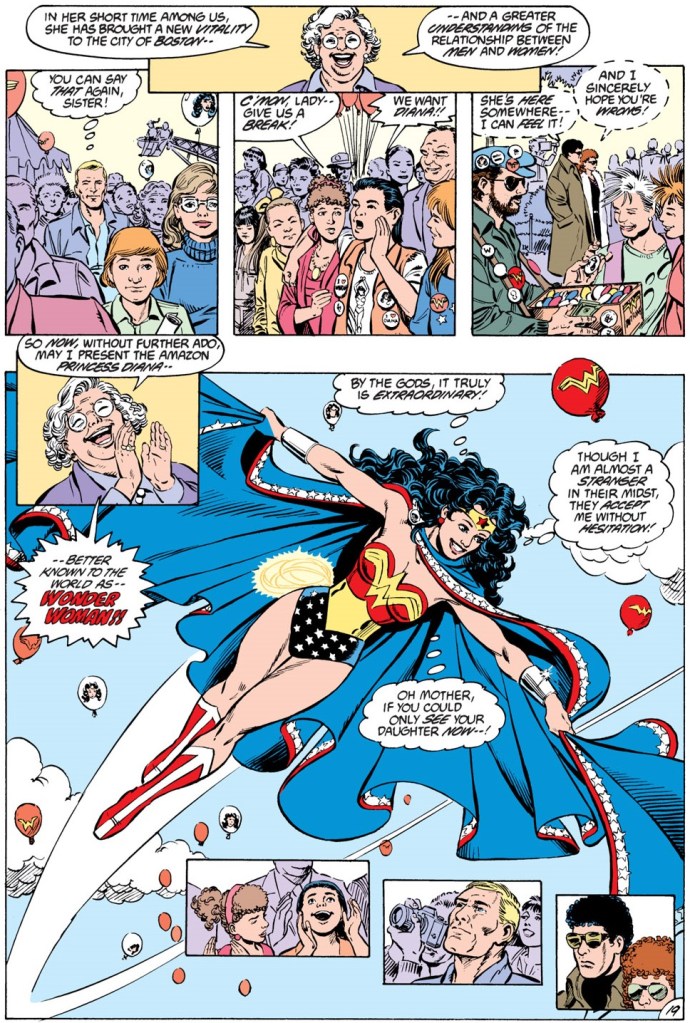
Diana visits and discovers Greece.

I’ll start by pointing out that this is the first issue of this particular monthly series to be written entirely by George Perez (note: Len Wein was involved with the script for issue #16) and, as I read this comic book, he wrote well and succeeded in further developing Wonder Woman’s personality just as she discovers more of man’s world and its connections with her fellow Amazons.

In this comic book, Wonder Woman (with Vanessa) travels to Greece for an arranged visit with her mentor Julie anticipating her arrival. Upon arriving in Greece, a lot of people warmly welcomed Wonder Woman who in turn got reunited with Julie in the presence of her Greek friend Stavros. In relation to the opening paragraph of this review, this is the story of Diana’s discovery of Greece, its people, its culture and legacy. The way Perez wrote and visualized her discovering and learning of the Greek sites really emphasized her thoughts as her perception of man’s world and its connections to her people and her culture builds up.

Unlike the previous two issues, this story is much heavier with character development and Perez’s writing is indeed engaging. As you read Diana’s words and thoughts, you will experience intrigue and even relate to her experiencing a great wonder of discovery. Also worth reading are her thoughts about Superman.

Apart from the focus on Wonder Woman, this comic book also paid attention to the intrigue that happened among the deities of Olympus – including Heracles – who are still recovering from the great disturbance caused by Darkseid. Oh yes, the story also marked the start of the build-up of another supervillain for Diana to face.

Conclusion

In the airplane on the way to Greece.

While it clearly lacked a strong conflict between good and evil, the wonder of discovery as well as the in-depth characterization made Wonder Woman #17 (1988) a must-read. George Perez, who is best known for his artworks, proved to be a very solid writer and it should be noted that he went on to write a whole lot more stories about the Queen of Superheroes.

If you are seriously planning to buy an existing hard copy of Wonder Woman #17 (1988), be aware that as of this writing, MileHighComics.com shows that the near-mint copy of the regular edition costs $42 while the near-mint copy of the newsstand edition costs $42.

Overall, Wonder Woman #17 (1988) is highly recommended!

+++++

Thank you for reading. If you find this article engaging, please click the like button below and also please consider sharing this article to others. If you are looking for a copywriter to create content for your special project or business, check out my services and my portfolio. Feel free to contact me as well. Also please feel free to visit my Facebook page Author Carlo Carrasco and follow me at HavenorFantasy@twitter.com

A Look Back at The Strangers #21 (1995)

Disclaimer: This is my original work with details sourced from reading the comic book and doing personal research. Anyone who wants to use this article, in part or in whole, needs to secure first my permission and agree to cite me as the source and author. Let it be known that any unauthorized use of this article will constrain the author to pursue the remedies under R.A. No. 8293, the Revised Penal Code, and/or all applicable legal actions under the laws of the Philippines.

Welcome back, superhero enthusiasts, comic book collectors and geeks! We go back yet again into the Ultraverse through the exploits of The Strangers which by this point are still adjusting over Atom Bob’s betrayal. The previous issue did not show much of the team as it told a mostly solo story of Zip-Zap.

With those details laid down, here is a look back at The Strangers #21, published in 1995 by Malibu Comics with a story written by Steve Englehart and drawn by Paul Abrams.

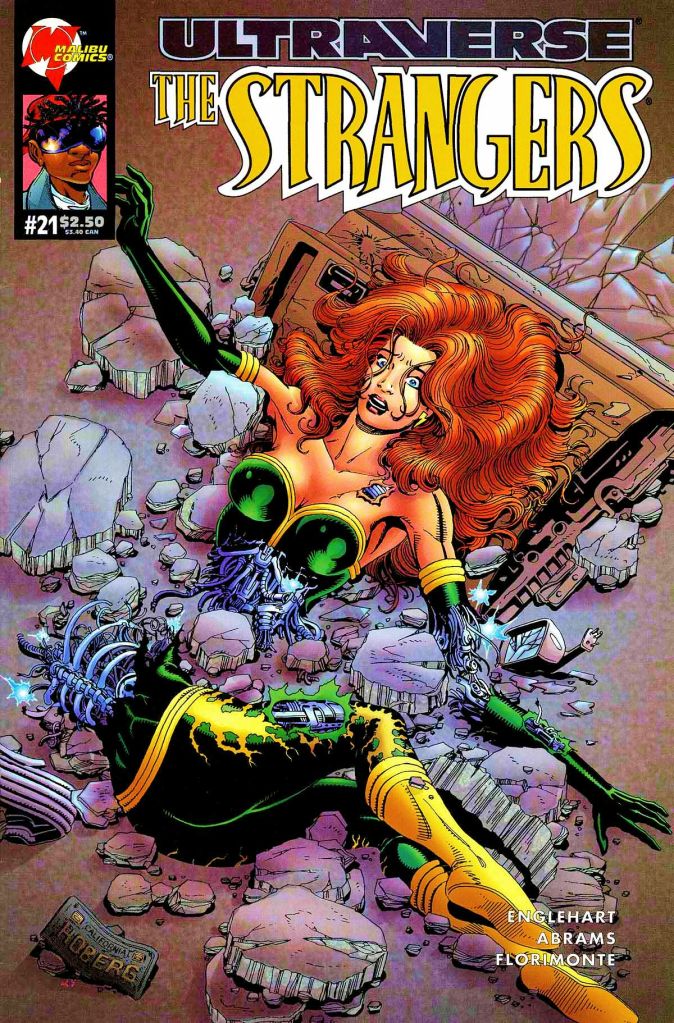
The cover.

Early story

The story begins inside a different type of aircraft. The Strangers, now with new member Teknight and old teammate Yrial, discuss matters about the unconscious Atom Bob whose body has been laid on a platform. In response to Yrial’s question about what should they do about him, Lady Killer (Atom Bob’s ex-lover) states that if a cure for him exists, they will find it. If no such cure exists, she states that the traitorous member should never wake up again.

After being informed by Lady Killer that she knows a private clinic in Europe that may have the solution to their problem, the Strangers get off the plane knowing that they should keep confidential what they just learned.

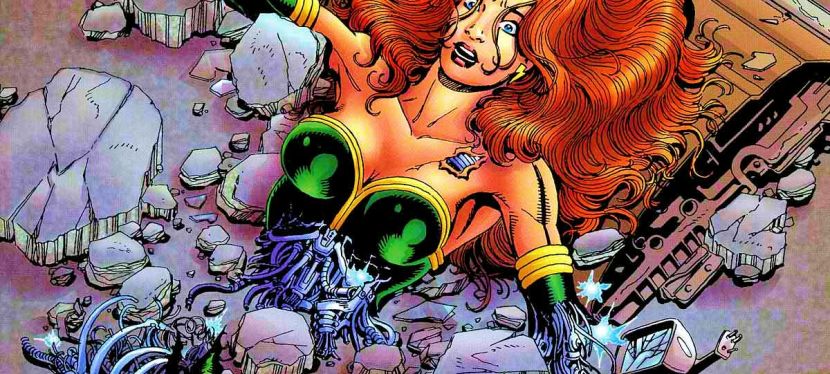
Shortly after watching Lady Killer’s private plane take off, Candy/Electrocute tells her teammates that they should just get away for a while. She decides to drive Grenade’s car. Suddenly, the car explored leaving Candy heavily damaged…

Quality

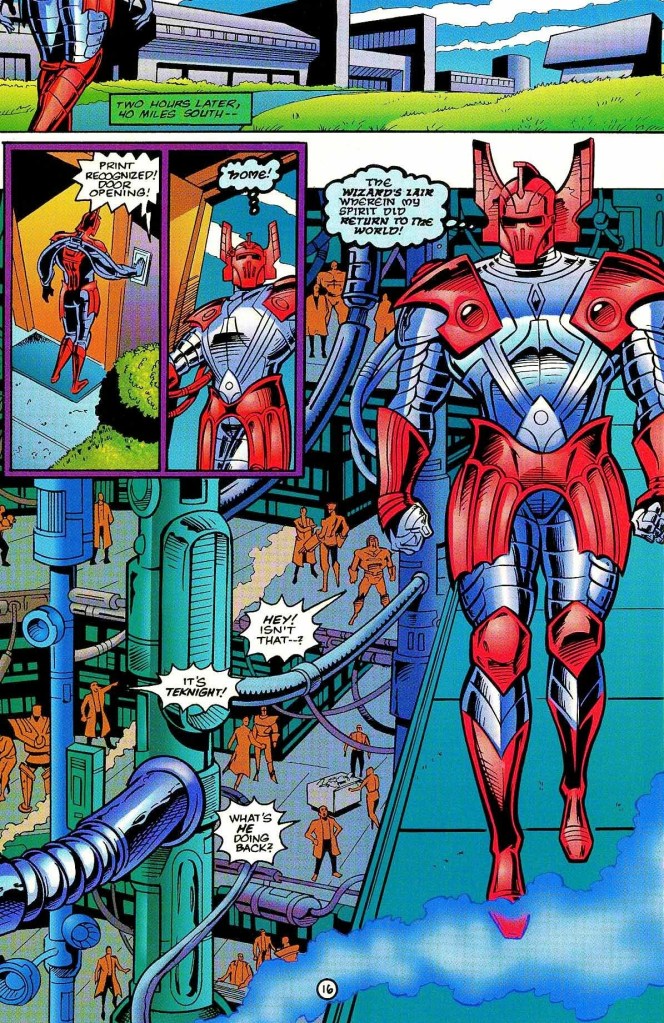
Here’s a look at Teknight, the new member of The Strangers.

This is another intriguing yet original story of The Strangers penned by Steve Englehart. To begin with, this is the first issue of this monthly series that saw Teknight actively taking part with the team and his being a new addition opened up really interesting conversations and interactions with existing team members like Grenade.

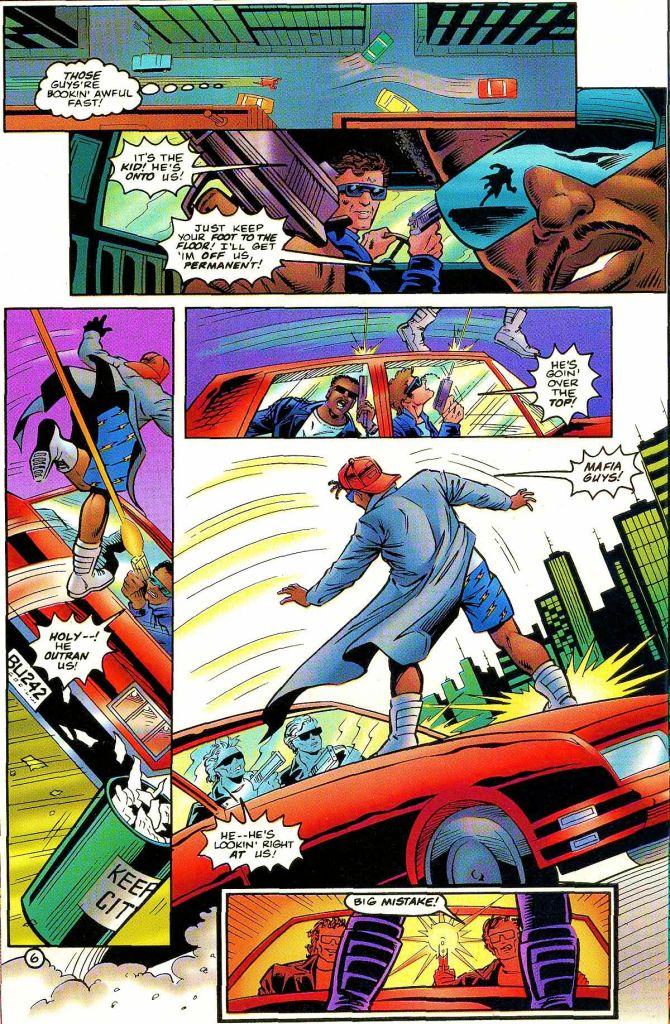
As the cover already shows, this one has spotlight on a severely damaged Candy. Still, it does not mean that this is a solo story about her (like Zip-Zap’s tale in issue #20) rather it is still a team story with Candy’s tragedy serving as a major plot point. Along the way, there were some scenes focused on Teknight which opens up interesting background details about him. Zip-Zap, who had the spotlight for most of issue #20, proves his heroic value in this comic book.

There are other notable Ultraverse details here and there that would encourage you to check out other UV comic books. What exactly those details are is for you to read this comic book and find out for yourselves.

Conclusion

Zip-Zap doing something heroic.

The Strangers #21 (1995) is intriguingly enjoyable to read. Steve Englehart deserves a lot of credit for keeping the stories of this series fresh, fun and engaging. For his part, Paul Abrams did a fine job with the art and he successfully captured the overall style of presentation of the series and his take on the characters kept them recognizable to my eyes.

If you are seriously planning to buy an existing hard copy of The Strangers #21 (1995), be aware that as of this writing, MileHighComics.com shows that the near-mint copy of the comic book costs $27.

Overall, The Strangers #21 (1995) is recommended.

+++++

Thank you for reading. If you find this article engaging, please click the like button below and also please consider sharing this article to others. If you are looking for a copywriter to create content for your special project or business, check out my services and my portfolio. Feel free to contact me as well. Also please feel free to visit my Facebook page Author Carlo Carrasco and follow me at HavenorFantasy@twitter.com

A Look Back at Superman Annual #10 (1984)

Disclaimer: This is my original work with details sourced from reading the comic book and doing personal research. Anyone who wants to use this article, in part or in whole, needs to secure first my permission and agree to cite me as the source and author. Let it be known that any unauthorized use of this article will constrain the author to pursue the remedies under R.A. No. 8293, the Revised Penal Code, and/or all applicable legal actions under the laws of the Philippines.

Before DC Comics ended their original superhero multiverse with Crisis on Infinite Earths (1985-1986) to restart all over again, there were a whole lot of stories about Superman ranging from the dramatic stuff, the epic tales and right down to the most outlandish tales.

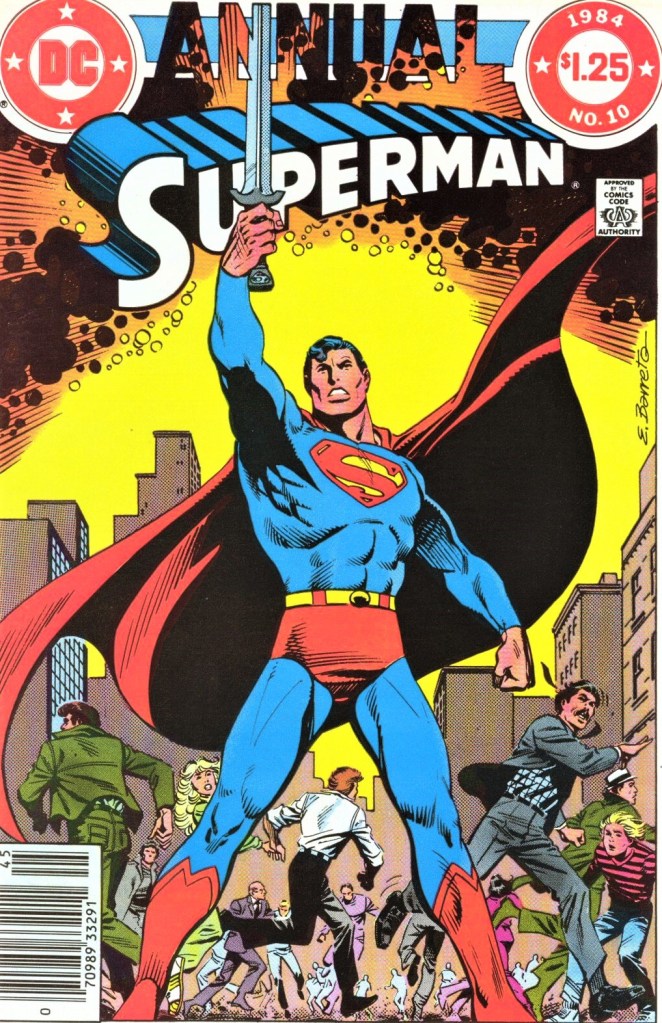
As a kid, I was fortunate enough to buy myself a copy of a 1984 Superman comic book, the cover of which really intrigued and caught my interest. It was a Superman annual comic book with a $1.25 cover price which was somewhat high at the time. Its cover showed the Man of Steel himself carrying a sword pointed up.

That image made me wonder: Why would Superman have to use a sword when he is so powerful and capable without weapons? Where did that sword come from? Who made it in the first place? Is the sword so special to Superman?

With those details laid down, here is a look back at Superman Annual #10, published by DC Comics in 1984 with a story written by Elliot Maggin and drawn by classic Superman artist Curt Swan.

The cover.

Early story

The story begins in a space where a group of diverse people composed of aliens and humans are gathered together watching a live video feed Superman on a large monitor above their heads. As it turns out, the Man of Steel is in space working to prevent meteoroids from entering the planet below him. He then speeds off into space heading back to Earth.

Along time ago deep in the galaxy, a big bang effect took place creating several new fragments in the vacuum of space and among them is a long, rough object that resembles a sword. As an unknown amount of time passed, the long object gradually turns into a smooth looking sword complete with a sharp blade and a letter “S” on one end that is the same as the one Superman carries. It is referred to as the sword of Superman!

In Metropolis, Clark Kent is passed by his officemate Jimmy Olsen who mentioned that he is rushing to interview the billionaire industrialist Oswald Mandias. Two days have passed and Jimmy Olsen remained missing. As his boss Perry White heads on to the office, Clark remains and changes into Superman when the coast got clear.

As the Man of Steel flies off into the city, a Galaxy Broadcasting live report on TV shows Lana Lang reporting from the Kennedy Space Center where the new space shuttle Magellan is about to make its first-ever commercial flight to launch a mysterious new communications satellite owned by Mandias Industries…

Quality

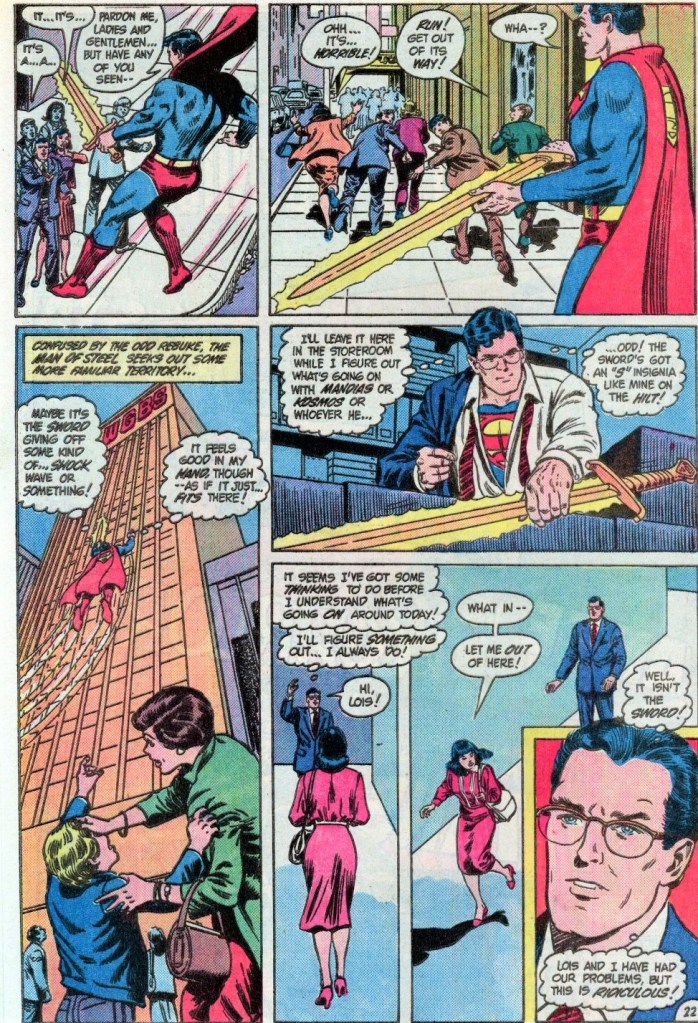
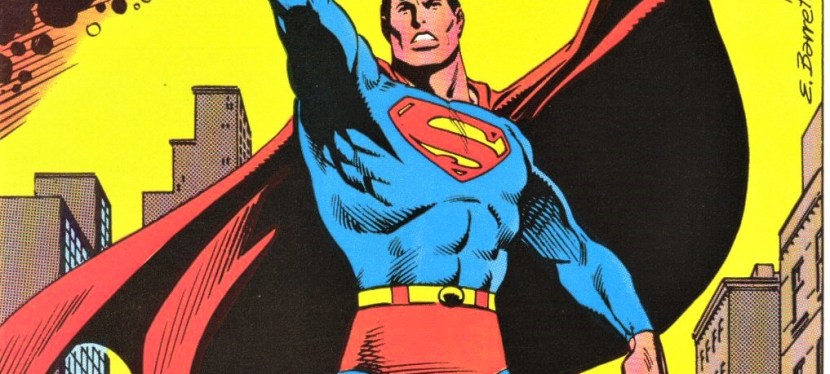
Clark Kent/Superman being a complete stranger to others added a lot to the story.
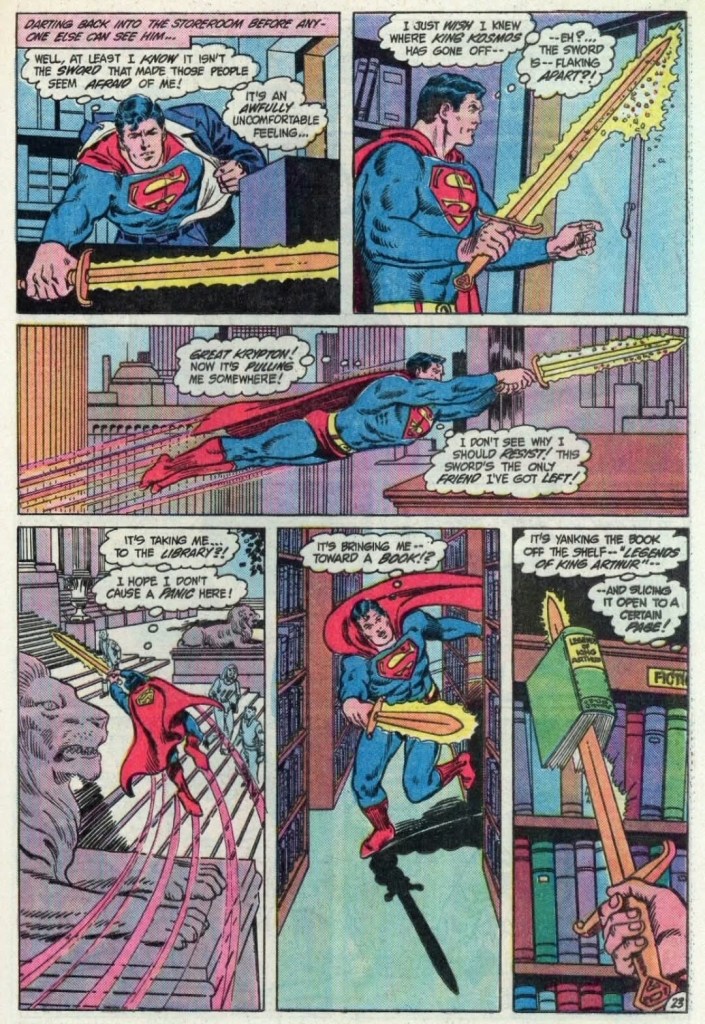
The sword led Superman to a book about the legend of King Arthur inside the city library.

Being an annual, I can say that the Sword of Superman story was well-written and nicely visualized by the creators which made it fun and engaging to read. It is a Superman story that further adds to his being an essential hero of the original DC Comics multiverse and a key factor here is the somewhat outlandish concept that the sword that he gained was an original material of the universe from the big bang and even had connections to the unseen omnipotent force.

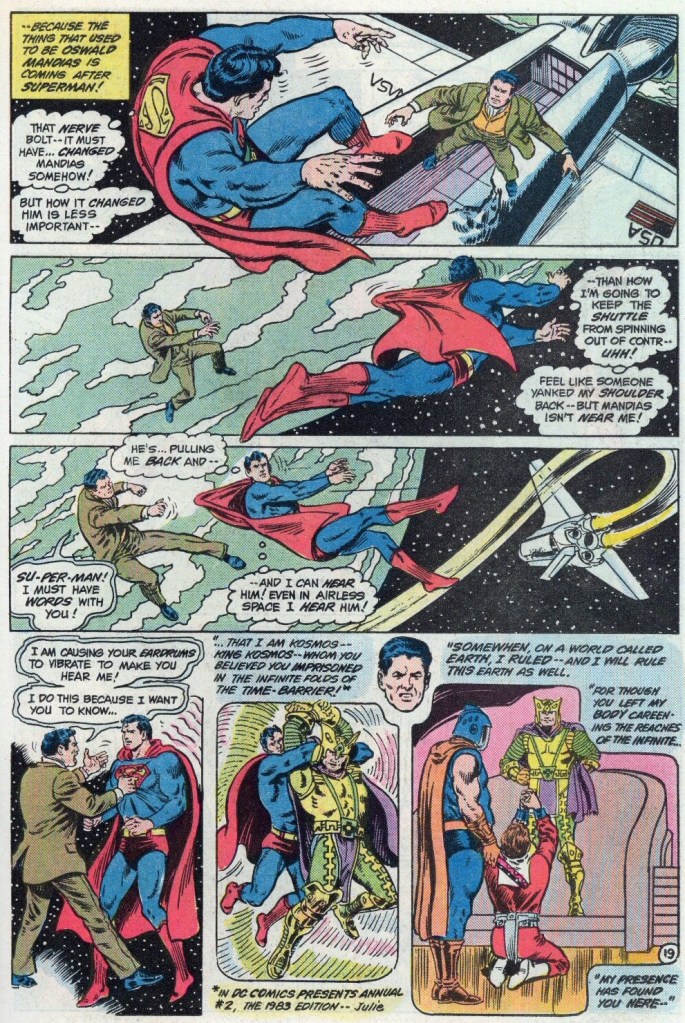
This story is not a simple, straightforward tale about Superman gaining a weapon required to defeat the supervillain King Kosmos. In fact, the sword opens up events that made the Man of Steel reevaluate himself, his situation and the people around him. King Kosmos, who is a time-travelling villain from the future (first appearance in DC Comics Presents Annual #2), served not just merely as the opposition but also adds a good amount of complexity within the reality of the story. For one thing, it is very intriguing and also refreshing to see people of Metropolis (even Clark’s friend Jimmy Olsen) failing to recognize Superman and perceive him with fear. This is a one-of-a-kind story of Superman that must be read, even though it is not really an epic tale.

All throughout, there is a fine balance between spectacle and intrigue. If you pay close attention to the dialogue and details, you will understand the story better and enjoy the comic book more eventually.

Conclusion

The return of King Kosmos!

I personally enjoyed reading Superman Annual #10 (1984) the first time back in 1984. The fact here is that after re-reading it recently, I do confirm that it is still an enjoyable comic book to read, and I am not even a Superman fan anymore. That is quite something! This is indeed a really good piece of Superman history from the pre-Crisis era. It also touches on themes about omnipotence, how ordinary people react to people who wield great power, and being whole with the entire universe.

If you are seriously planning to buy an existing hard copy of Superman Annual #10 (1984), be aware that as of this writing, MileHighComics.com shows that the near-mint copy of the regular edition costs $35 while the near-mint copy of the newsstand edition costs $70.

Overall, Superman Annual #10 (1984) is recommended.

+++++

Thank you for reading. If you find this article engaging, please click the like button below and also please consider sharing this article to others. If you are looking for a copywriter to create content for your special project or business, check out my services and my portfolio. Feel free to contact me as well. Also please feel free to visit my Facebook page Author Carlo Carrasco and follow me at HavenorFantasy@twitter.com

A Look Back at Wonder Woman #16 (1988)

Disclaimer: This is my original work with details sourced from reading the comic book and doing personal research. Anyone who wants to use this article, in part or in whole, needs to secure first my permission and agree to cite me as the source and author. Let it be known that any unauthorized use of this article will constrain the author to pursue the remedies under R.A. No. 8293, the Revised Penal Code, and/or all applicable legal actions under the laws of the Philippines.

Welcome back, superhero enthusiasts, literature enthusiasts, comic book collectors and fans of Wonder Woman! Reflecting on my previous retro comic book review, I can only imagine how disturbing it could be to me personally if there was a big event meant for a charitable purpose which gets overshadowed with the presentation making me the greater highlight.

That’s precisely what happened in Wonder Woman #15 (1988). As soon as Princess Diana/Wonder Woman arrived at the fair (which involves Myndi Mayer’s big-time publicity work and promotions) named after her (note: the Wonder Woman Fair was conceptualized for the benefit of needy children), she was astounded at first to see so many people anticipating her arrival. When she notices the gigantic poster with her image on it, she got disturbed by it.

“Look at the poster,” Wonder Woman thought to herself. “It’s almost as if they worship me! Yet I still find all this exploitation somewhat embarrassing!”

For the newcomers reading this, the post-Crisis Wonder Woman is a native of Themyscira which has a population of women called Amazons, led by her mother Queen Hippolyte. While her status among her fellow Amazons is notably very high, there are publicity gimmicks and no merchandising of her in Themyscira. Truly the world of man is vastly different to her.

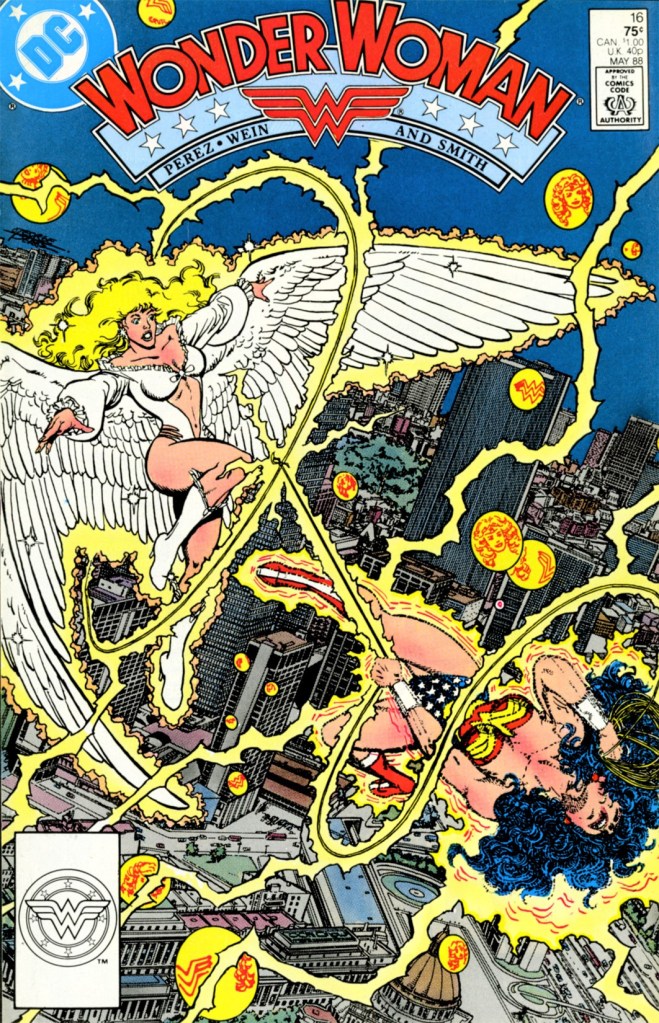
To find out what happens next, let’s take a look back at Wonder Woman #16, published in 1988 by DC Comics with a story written by George Perez and the late Len Wein. Perez did the layouts while Bob Smith did the finishes.

The cover.

Early story

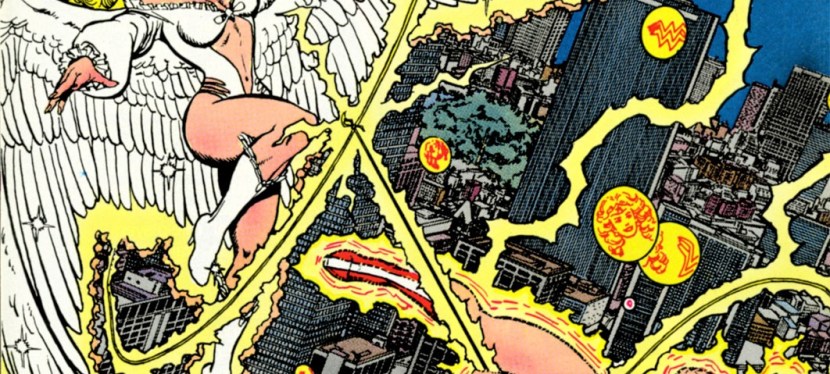
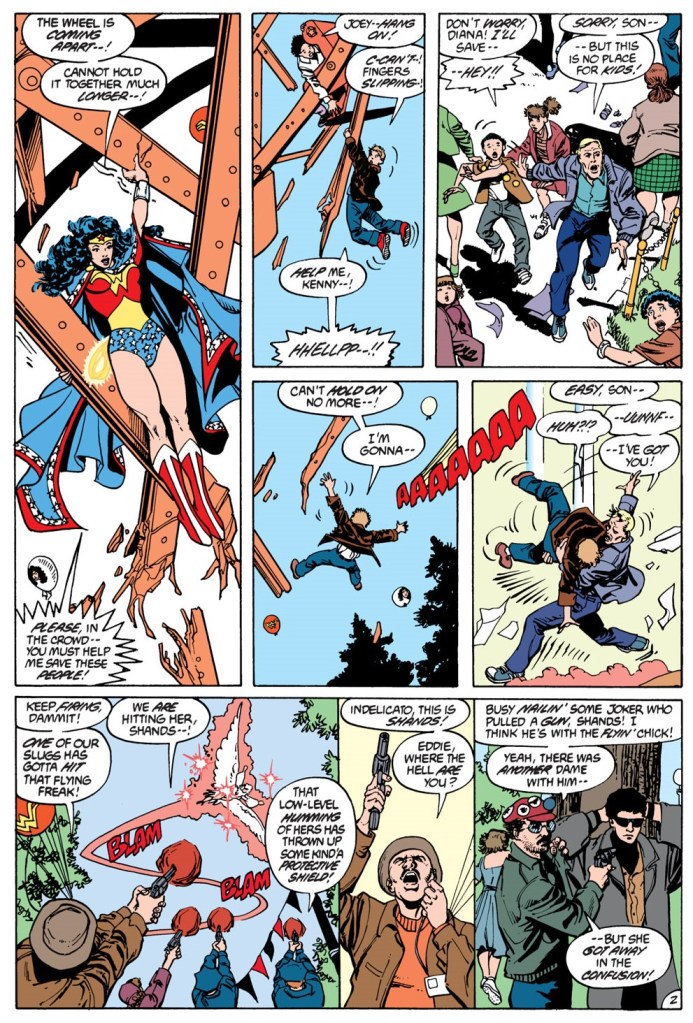
The story begins with people disrupted by the Silver Swan’s presence at the Wonder Woman Fair, a gala event organized on behalf of the needy children of Boston. Due to the Silver Swan’s sonic attack, the Ferris wheel begins to fall apart causing Wonder Woman to intervene and help those riding it.

As Steve Trevor successfully saved a passenger from falling to pavement, armed people (including two police officers) fired their guns at the Silver Swan who is protected by the protective shield made by her low-level humming. At another location in the fair, Maxine Sterenbuch sits by a tree tearfully agonizing over how her dear friend Valerie Beaudry became the Silver Swan all because of Henry C. Armbruster.

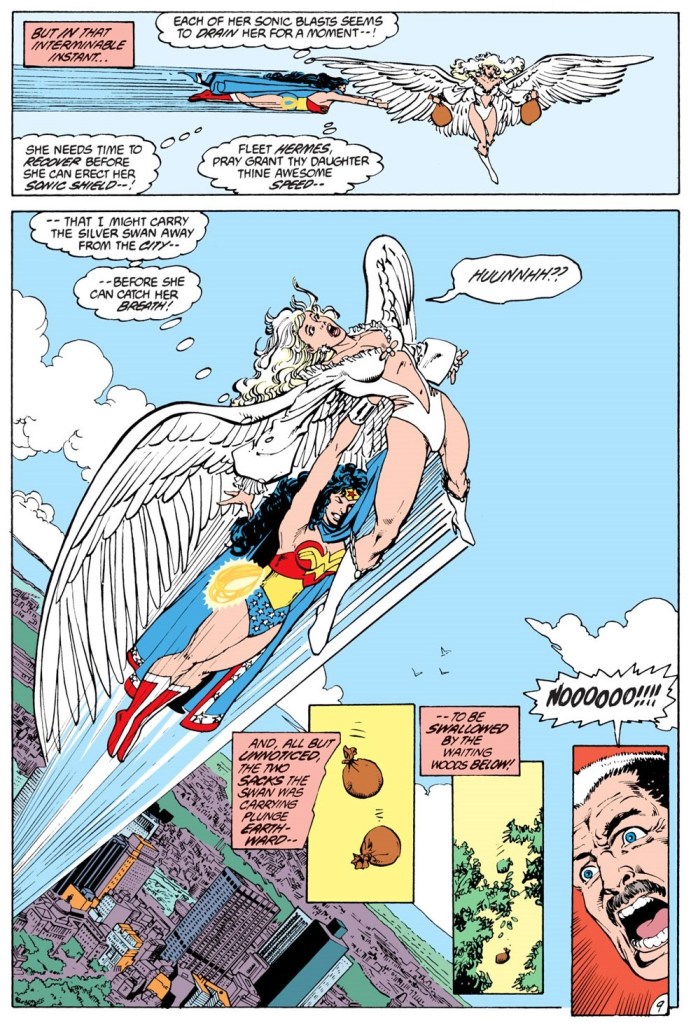
While in the air, Valerie realizes that it is her fault that people’s lives are in danger. Her objective was to hit Wonder Woman who proved too fast for her. Behind the scenes at a secret facility, Henry C. Armbruster tells Valerie to calm down and prepare for a level 3 force blast.

Then she screams so powerfully…

Quality

The conflict between Wonder Woman and Silver Swan is very engaging to read.

Let’s start with the writing. The story is a nice mix of superhero spectacle, intrigue and has some elements of science fiction. As a story set after Diana’s return to man’s world, it is a worthy conclusion to the events that started in issue #15. The conflict between Wonder Woman and the Silver Swan is laced with espionage and intrigue, and the arrogant Armbruster is the main force of evil behind the scenes. The spotlight on Maxine Sterenbuch was understandably reduced this time around as the conflict between Silver Swan and Wonder Woman took center stage.

As a story set after the Challenge of the Gods storyline, this comic book continues the further development of Diana as she endures the challenges of not just dealing with the people, places and events around her in man’s world but also the feelings she starts developing for one of the major superheroes of the DC universe. More on her development, Diana experiences for the first time the consequence that comes with being a celebrated figure in man’s world and she realizes that doing charity is much harder to fulfill.

When it comes to Valerie/Silver Swan, she is indeed an interesting rival opposite Wonder Woman although her lack of freedom and will prevents her from reaching her true potential as an anti-hero figure. To find out why, I urge you to read this comic book.

Conclusion

Early in the comic book…

Wonder Woman #16 (1988) is another solid post-Crisis Wonder Woman story as it further highlights a modernized Silver Swan and portrays her as an interesting form of opposition against the title character. The battle and interactions between the two are really engaging to read. As mentioned earlier, it is nice conclusion to the events that started in issue #15 and succeeds in further developing Diana as she spends more time in man’s world.

If you are seriously planning to buy an existing hard copy of Wonder Woman #16 (1988), be aware that as of this writing, MileHighComics.com shows that the near-mint copy of the regular edition costs $33 while the near-mint copy of the newsstand edition costs $70.

Overall, Wonder Woman #16 (1988) is highly recommended!

+++++

Thank you for reading. If you find this article engaging, please click the like button below and also please consider sharing this article to others. If you are looking for a copywriter to create content for your special project or business, check out my services and my portfolio. Feel free to contact me as well. Also please feel free to visit my Facebook page Author Carlo Carrasco and follow me at HavenorFantasy@twitter.com
A Look Back at The Strangers #20 (1995)

Disclaimer: This is my original work with details sourced from reading the comic book and doing personal research. Anyone who wants to use this article, in part or in whole, needs to secure first my permission and agree to cite me as the source and author. Let it be known that any unauthorized use of this article will constrain the author to pursue the remedies under R.A. No. 8293, the Revised Penal Code, and/or all applicable legal actions under the laws of the Philippines.

Welcome back, superhero enthusiasts, comic book collectors and fans of the Ultraverse. We revisit the Ultraverse once again to follow the continuing stories of The Strangers. Last time around, the team found itself struggling with adjusting to life without Atom Bob. For Lady Killer, the loss is very painful not only for her leadership of the team but also on her heart as she had a relationship with him.

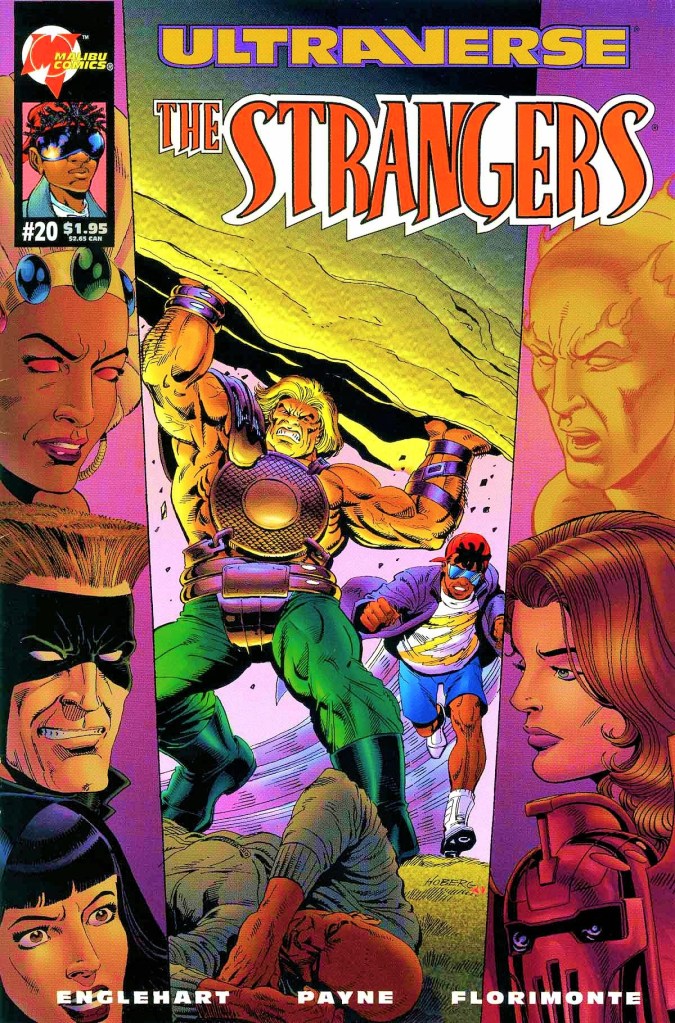
What will happen next? How will the team move forward without Atom Bob? We can all find out in this look back at The Strangers #20, published in 1995 by Malibu Comics with a story written by Steve Englehart and drawn by Sam Payne.

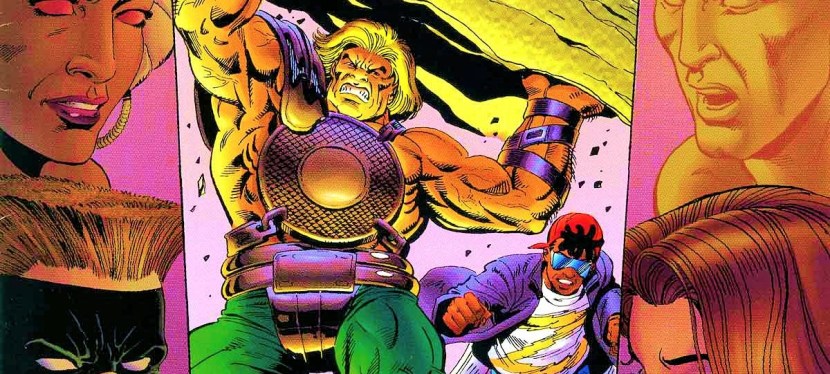
The cover.

Early story

The story begins inside the home of a mother and her son enjoying indoor basketball. Their happiness got disrupted when a large, muscular man with blonde hair crashes through their door. With him is another man named M.C. who tells the lady that he and his companion want to “borrow” her son. As the mother resisted, the slimmer man knocks her out while Beater (the large guy) grabs her son.

Elsewhere, The Strangers react to the official trading card featuring Candy/Electrocute. Leon/Zip-Zap is familiar with the value of trading cards and he shows them his card of a basketball player called Missile Monroe from his days as a rookie.

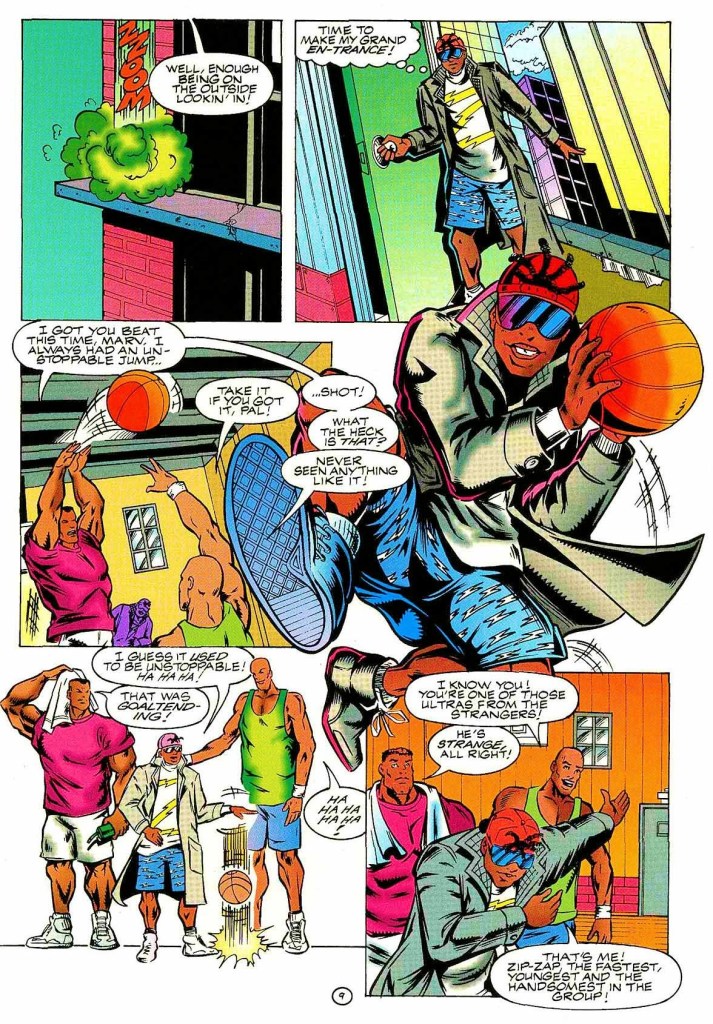
As he is eager to have the trading card signed by the basketball player, Zip-Zap heads on to the city. On his way, he notices people gathered outside Holt’s Gym which he heard is the place where Missile Monroe works out at. He then uses his super speed to go past a few more people, climb up the wall, step on the ledge and look through the window. Zip-Zap sees the basketball player shooting indoors in the presence of a friend.

Sensing opportunity, Zip-Zap decides to sneak in and make his grand entrance to meet Monroe..

Quality

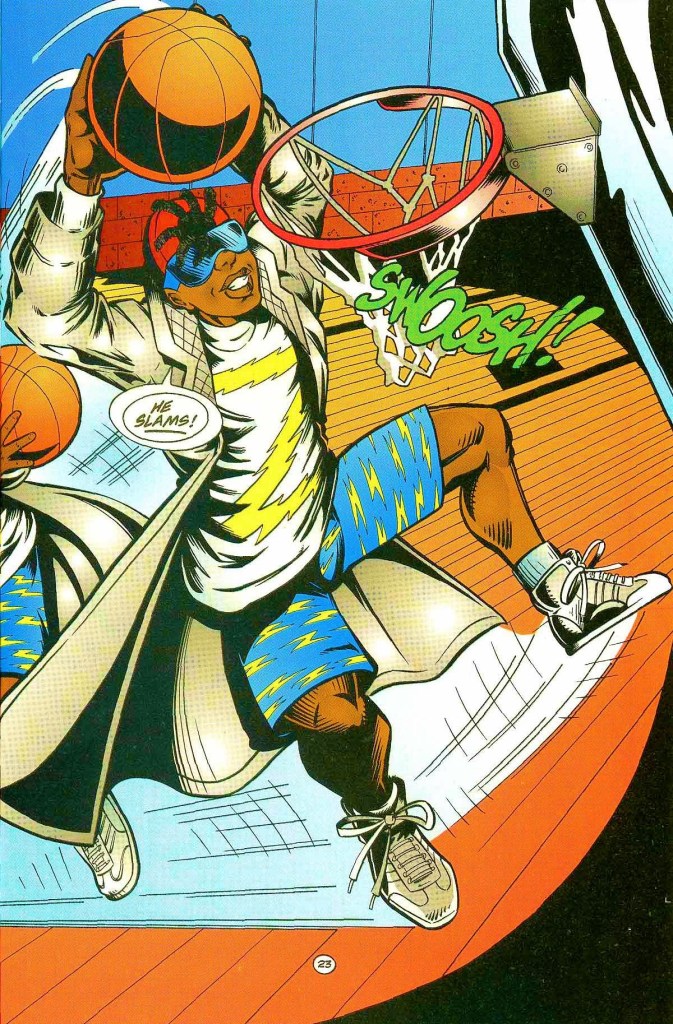
Zip-Zap slams!

I can start by saying that this comic book’s story is much less of The Strangers and more about their youngest and fastest member Zip-Zap. Rather than presenting a story about Zip-Zap going back to his old neighborhood, the story is about him meeting someone very important while taking advantage of his own celebrity status as a member of The Strangers (now known by the public) to get to him.

Other his personal obsession with a sports celebrity, this comic book also explores Zip-Zap’s determination to do something heroic without the presence of his teammates. As he is still a teenager, this part of the story alone is intriguing.

Also intriguing is the introduction of two new villains in this series, MC and Beater. How they became powerful and what their connection with Missile Monroe is something you readers should discover. I personally enjoyed what was revealed.

Other than heroic happenings, the story here explores the consequences that come with big money and lucrative deals. There is also the theme about social elevation with regards to the progress a person can make coming from the local communities to the big league. Also the events in this comic book will remind readers to respect the boundaries between them and the celebrities or important people they encounter in person.

Conclusion

Zip-Zap meets Missile Monroe and friend.

Even though it had much less of the team itself, The Strangers #20 (1995) is a worthy and fun read. The story about Zip-Zap going solo temporarily for his pursuit was nicely crafted and the new characters introduced had personalities that were interesting, most notably with Missile Monroe. Apart from characterization, there is sufficient superhero spectacle to enjoy as well. Going back to Zip-Zap, anyone who loves the character will be pleased with the spotlight on him. I should also state that this story shows additional depth to Zip-Zap’s character.

If you are seriously planning to buy an existing hard copy of The Strangers #20 (1995), be aware that as of this writing, MileHighComics.com shows that the near-mint copy of the comic book costs $14.

Overall, The Strangers #20 (1995) is recommended.

+++++

Thank you for reading. If you find this article engaging, please click the like button below and also please consider sharing this article to others. If you are looking for a copywriter to create content for your special project or business, check out my services and my portfolio. Feel free to contact me as well. Also please feel free to visit my Facebook page Author Carlo Carrasco and follow me at HavenorFantasy@twitter.com
A Look Back at Shin Godzilla (2016)

Disclaimer: This is my original work with details sourced from watching the movie and doing personal research. Anyone who wants to use this article, in part or in whole, needs to secure first my permission and agree to cite me as the source and author. Let it be known that any unauthorized use of this article will constrain the author to pursue the remedies under R.A. No. 8293, the Revised Penal Code, and/or all applicable legal actions under the laws of the Philippines.

There is no doubt that Japan’s fictional monster Godzilla (originally called as Gojira) made tremendous impact not only with the Japanese but also with other entertainment lovers around the world. Way back in 1954, the monster was portrayed as a destructive, walking symbol of nuclear weapons in the movie Gojira directed by the late Ishirô Honda.

As the years passed by, several more Godzilla movies were released by Toho Pictures. In 1998, an American-made movie about Godzilla was finally made in a disappointing form directed by Roland Emmerich. In 2014, Warner Bros. and Legendary Pictures made a more respectful film of the monster under the direction of Gareth Edwards. In 2019, the follow-up Godzilla: King of the Monsters was released and I enjoyed it a lot more than its 2014 predecessor.

Before the 2019 movie was released, Toho in Japan released Shin Godzilla (alternate titles: Shin Gojora and Godzilla: Resurgence) which was the result of the 2014 movie’s success as well as the fact that there were no restrictions in the contract with Legendary Pictures for the Japanese studio to make their own domestic versions.

Due to its lack very limited presence in cinemas here in the Philippines in 2016, I was unable to watch it on the big screen. Fortunately, it was released locally on original DVD some time after and I got to watch it in the comfort of home.

With those details laid down, here is a look back at Shin Godzilla co-directed by Hideaki Anno and Shinji Higuchi (both best known for Neon Genesis Evangelion).

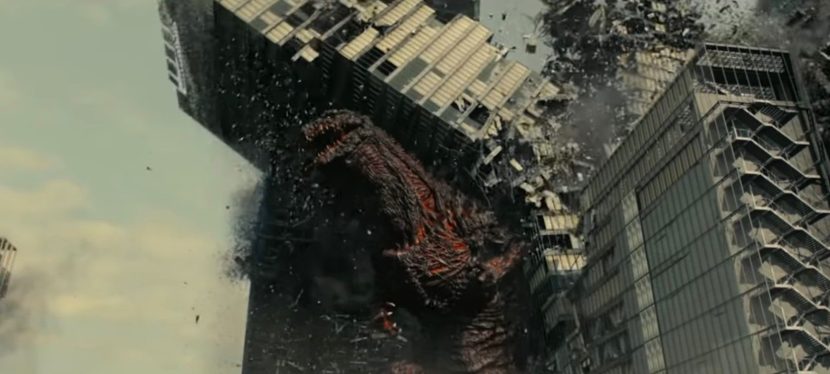
This is classic Godzilla.

Early story

The story begins at Tokyo Bay where the coast guard personnel found an abandoned yacht and searched inside. Suddenly a huge cloud of steam erupted from the ocean followed by blood-like water flooding the Tokyo Bay Aqua-Line. The tragedies compelled local authorities to take action starting with a committee meeting.

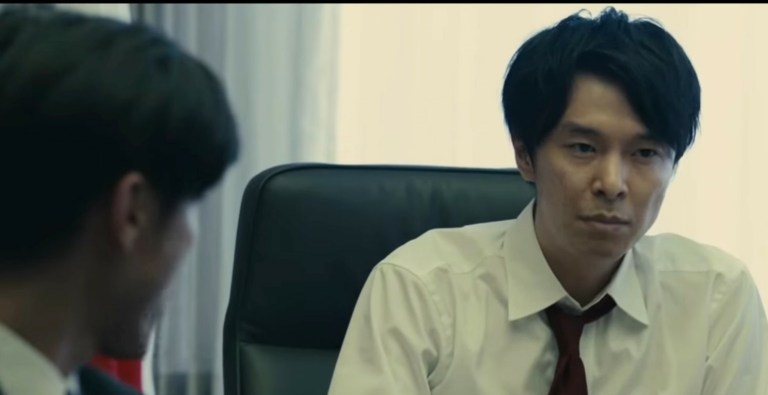
As emergency personnel save the victims in the damaged Tokyo Bay Aqua-Line, the tragedies reach the office of the Prime Minister who engages with many other government officials in an official meeting. They try to figure out what caused the incidents and, as such, theories and efforts to explain what happened were spoken until Deputy Chief Cabinet Secretary Rando Yaguchi (Hiroki Hasegawa) theorized that a living creature caused it (because he saw a viral video) which only resulted disbelief and dismissal.

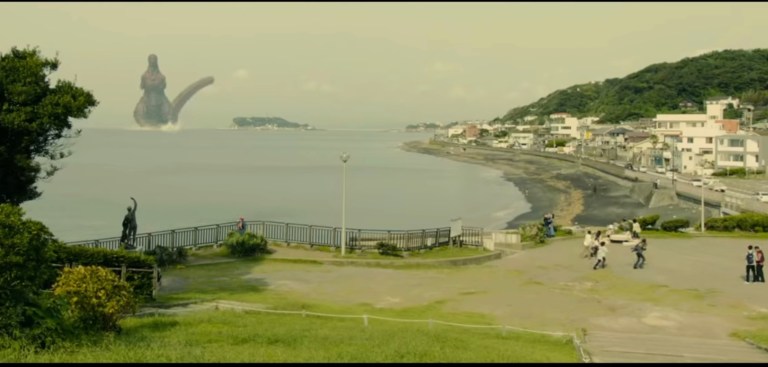
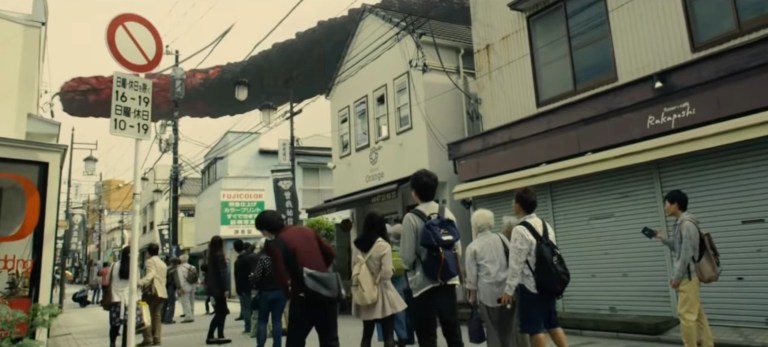
Suddenly a massive tail rises from the ocean which got captured in video and photographs by the news media which confirms Yaguchi’s hunch. As the Prime Minister and the team of officials spend more time discussing and searching for real experts (because the three scientists they just met did not produce any breakthroughs), a huge creature makes its way into one of Tokyo’s districts through a waterway causing massive damage and displacing many people as well as all boats that got in its way.  

In a press conference, the Prime Minister gave his assurance to the public that they need not worry about the creature coming to shore. Just after giving his assurance speech, an assistant approaches the Prime Minister with really bad news that the creature has been crawling inland and causing even more damage…

Quality

Japan’s iconic monster is not only terrifying here but also very deadly.

When it comes to presentation in comparison to all other Godzilla movies released, Shin Godzilla is very unique as it strongly brings to the viewers a very in-depth examination of the bureaucracy of the Japanese government complete with the many laws, requirements, rules and other elements of governance that made it so hard for the local authorities to respond to Godzilla’s invasion of the metropolis. There are key details that were raised such as the constitutionality of using local military force against the monster (which is not a foreign invader), which department should be in-charge of research about the same monster, etc.

Along the way, there is an overload of information – in terms of text, images and dialogue – that makes viewing quite a challenge. This makes watching Shin Godzilla a learning experience that viewers who are interested in governance and science will likely enjoy although it will alienate other moviegoers, especially those who only want to watch the spectacle of massive on-screen destruction that giant monster movies are known for. Going through all the exposition and explanations, and understanding most of it, however, will make the viewing experience worth it as these countless details do make sense in relation to Godzilla’s destructive impact on the people.

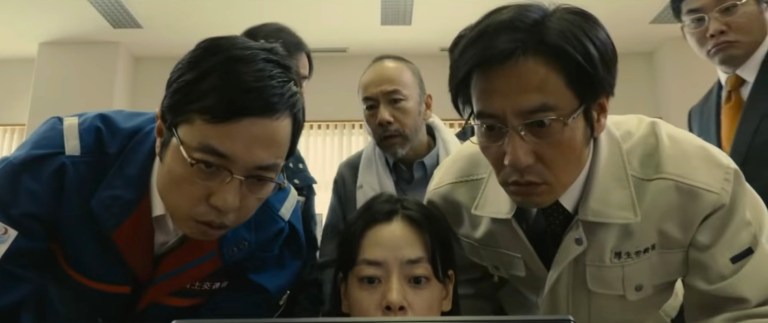
And then there is the huge cast of characters that needs to be followed. This is another big challenge for viewers because if one misses out on the key purpose a character has, then following the government’s efforts on dealing with Godzilla will make less sense. Not only will you have to follow the characters’ names, you will also have to remember their respective work titles. Apart from the government officials, there is also the huge batch of nerds and varied experts gathered by the government to do intense research. Again, those people need to be followed and remembered so you can understand what they do and how they contribute to their government’s efforts. When it comes to performances, they are collectively dramatic and you will be convinced of the pressure, the danger and uncertainty they face with Godzilla threatening Tokyo.

Better get used to seeing so many characters throughout the movie.
Hiroki Hasegawa as Rando Yaguchi.

As for the main spectacle of the movie, Godzilla, I can say that the monster here is very terrifying to watch. This is not your typical Godzilla as the Anno-Higuchi directorial duo really went all out with their creativity to remake Japan’s iconic monster into something new and deadly while still linking him creatively to the legacy of the classic Godzilla. There is even an element of evolution in this version of Godzilla and to see the Japanese military fire their expensive weapons at him really made a lot of spectacle to enjoy. I should also state that several scenes of disaster caused by the monster in this film were inspired by the tragedies of the Tōhoku earthquake and tsunami, and the Fukushima Daiichi nuclear disaster of 2011. Lastly, Godzilla here is really a super villain that is not only gigantic but also is made to be highly believable that it can destroy the nation, kill innocent civilians, demoralize the authorities and even bring Japan’s entire economy way down (note: one of the government officials explained the economic consequence of failing to defeat the monster).

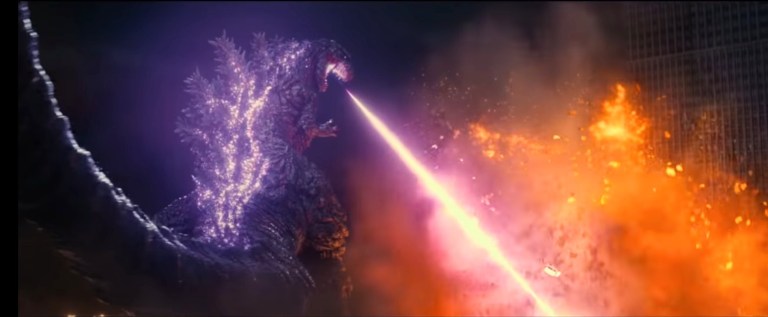
When it comes to visual effects, this one is the best-looking Godzilla made by the Japanese yet! While the traditional approach of having an actor wear a rubber suit has been disregarded in favor of using modern, digital means (with motion capture), what the production team did here is very impressive as they focused strongly on having computer-generated graphics that are photo-realistic. While it is true that there were some moments of fake-looking CGI, the heavy photo-realism on the graphics of Godzilla (combined with strategic camera angles that really captured the scope and size of the monster) easily outweighed the weak spots. The lighting effects used for the laser blasts were very impressive, even competitive with what Hollywood has been doing. As for the scenes of destruction, a mix of CGI and practical effects (specifically miniatures) was used. In fact, certain scenes showing Godzilla interacting with the environment was done with pushing a prop through miniatures which resulted a high level of detail with organic and solid stuff.

The spectacle would not have been that effective, however, without the solid musical work done by Shiro Sagisu. Not only did the music add a lot to the intense sequences of Godzilla, it also brought out the sense of dread and horror out of the monster especially in the night-time scene when he was towering over a large section of Tokyo that lost power. Sagisu was also involved in Neon Genesis Evangelion.

Conclusion

The emphasis on photo-realism on the computer-generated effects is something special.

I can say it out loud that Shin Godzilla (2016) is truly a spectacle to watch complete with tons of heavy drama, tons of information and the widest cast of characters to date. It is a new version of the Japanese icon that really impresses and when it comes to movie intelligence, it easily outshines many other Godzilla flicks. While it has a lot of spectacle to keep moviegoers entertained, its heaviness with the information and large cast of characters could turn off viewers who are not used to thinking and paying attention to lots of details while watching a giant monster movie. Personally, I welcomed the information overload and made efforts on paying close attention to the details and the characters. It really takes patience and focus to truly make the most out of the story and the overall presentation.

Ultimately, I enjoyed this movie for what it is and what its message was about with regards as to how governments should respond to immense disasters, what is Japan’s place in the world of the 21st century and, most notably, what Godzilla means to Japan and the international community. This is a very solid modernization of Godzilla and the Anno-Higuchi deserve admiration.

If you are seriously planning to buy an existing hard copy of Shin Godzilla (2016), visit Amazon for the Blu-ray disc release and see if it has the right price and special features to satisfy you.  

Overall, Shin Godzilla (2016) is recommended!

+++++

Thank you for reading. If you find this article engaging, please click the like button below and also please consider sharing this article to others. If you are looking for a copywriter to create content for your special project or business, check out my services and my portfolio. Feel free to contact me as well. Also please feel free to visit my Facebook page Author Carlo Carrasco and follow me at HavenorFantasy@twitter.com
A Look Back at Wonder Woman #15 (1988)

Disclaimer: This is my original work with details sourced from reading the comic book and doing personal research. Anyone who wants to use this article, in part or in whole, needs to secure first my permission and agree to cite me as the source and author. Let it be known that any unauthorized use of this article will constrain the author to pursue the remedies under R.A. No. 8293, the Revised Penal Code, and/or all applicable legal actions under the laws of the Philippines.

Welcome back, superhero enthusiasts, comic book collectors and Wonder Woman fans! Last time around, the Challenge of the Gods storyline concluded and it really had a lot of twists and profound surprises that really shook the foundation of the post-Crisis Wonder Woman monthly series that was spearheaded by George Perez and Len Win. The Challenge of the Gods started strongly in issue #10 and as each issue was released, the narrative got more intriguing and ultimately served its purpose on defining Wonder Woman as the ever-willing and pure Queen of Superheroes. Along the way, there was significant development of Queen Hippolyte who has been struggling between ruling her fellow Amazons and being a mother to Diana/Wonder Woman.

As the Challenge of the Gods was full of elements of fantasy and Greek mythology, it can be quite challenging for any comic book creator to start the next chapter of the Wonder Woman monthly series’ narrative without reusing the mentioned elements.

In the case of the next Wonder Woman comic book for review here, I can say that the creators literally brought Wonder Woman into the realm of realism and intrigue. With those details laid down, here is a look back at Wonder Woman #15, published by DC Comics in 1988 with a story written by George Perez and Len Wein. Perez illustrated the comic book.

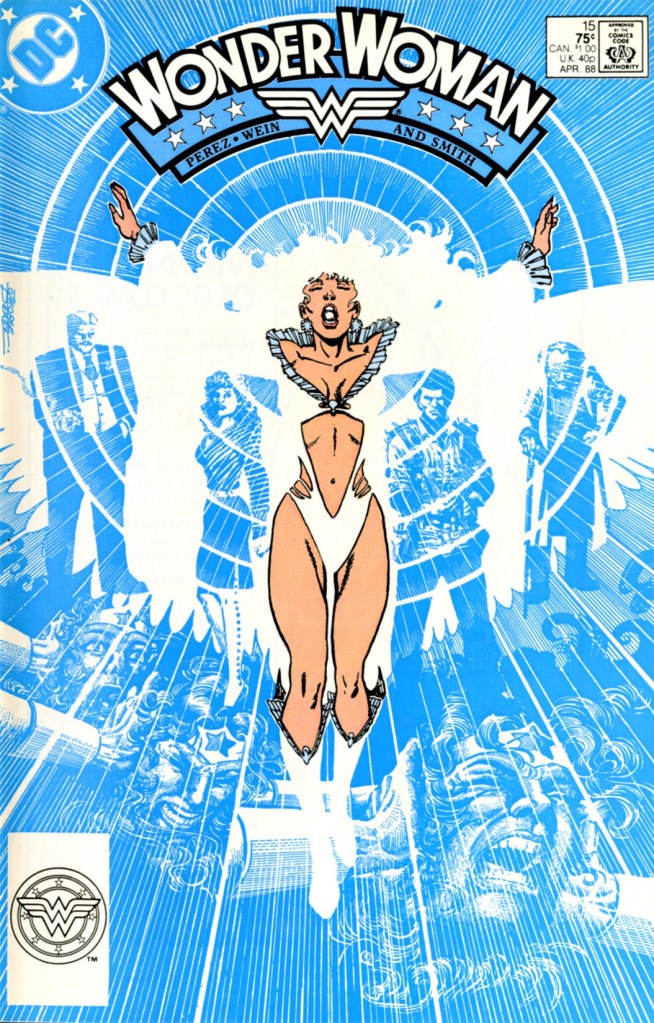
The cover.

Early story

The story begins with Wonder Woman having a very vivid dream about a certain great hero. After waking up from it, she feels that trying to keep up with all the events of the world must be taking its toll on her. She expressed that she is ill-prepared to deal with new sensations.

“In this world, man and woman long for these feelings. They cherish them. I’ve read how they have even died for them,” Diana said. “And that truly frightens me.”

While Diana is staying at the Kapatelis residence, it turns out Julia (mother of Vanessa) is overseas. She wishes that Julia is with her to discuss what she has been feeling.

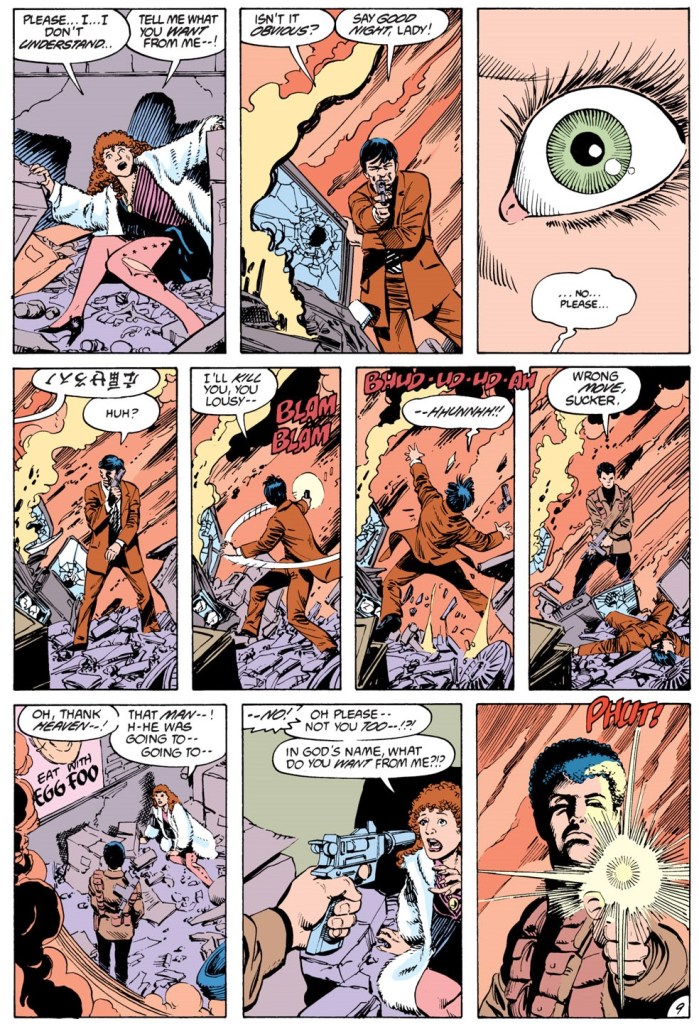
Meanwhile at the Ogawa headquarters in Boston, an armed man is using one of the company’s computers to acquire classified information about a subject referred to as Valerie Beaudry. A security guard arrives and decides to investigate as he realizes that his fellow guard was missing (knocked unconscious already). The infiltrator makes short work of him and leaves the building with the acquired information…

Quality

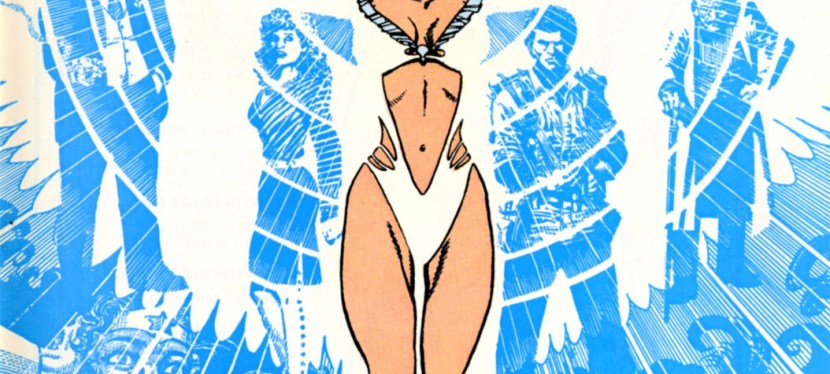
Wonder Woman appears at a major public event.

I can start with the sudden change of tone for the storytelling. Gone are the fantasy and mythology elements of the Challenges of the Gods storyline and fully implemented in this comic book are the elements of intrigue, suspense, assassination and even sci-fi. The story itself is more grounded with reality as far as the post-Crisis DC Comics universe goes and because it is well written, the sudden change of tone and style never felt jarring to me.

While the 9th issue of this monthly series introduced a modern Cheetah, this comic book introduced the modern Silver Swan in the form of Valerie Beaudry (who appears on the cover). The good news here is that the creators took their time in gradually building-up details about Valerie and how she became Silver Swan. By the time Silver Swan appears in the presence of Wonder Woman, her personal details and traits have been developed in a satisfying way. Unlike Wonder Woman #9, Silver Swan’s appearance in this comic book stretches on into the next issue.

Along the way, more new characters were introduced and the most notable ones are connected with Valerie Beaudry. Maxine Sterenbuch, who eerily resembles Wonder Woman’s teenage pal Vanessa but in adult form, has a close connection with Valerie over a period of many years. There was also Henry Cobb Armbruster, a tycoon who wield tremendous power and has been hiring assassins to do his bidding.

Going back to Wonder Woman herself, this issue explores more of her struggle with not only learning more about man’s world and its many divisions, but also the feelings she starts having as she connects more with other people – most notably with one of DC’s biggest icons. To have Julie Kapatelis absent left the creators room to have Diana not only bond more with daughter Vanessa but also strive more on analyzing what she learns in man’s world. The scene in which Wonder Woman notices a huge printed image of her is a vivid reminder about how negative and foolish idolatry is on people.

Conclusion

Intriguing action scene.

Even though it has no fantasy and mythology elements, Wonder Woman #15 (1988) is still a great comic book to read and it succeeds in progressing Diana’s discovery and learning of man’s world. Its introduction of the post-Crisis Silver Swan is memorable and her build-up (specifically her background story) is pretty engaging.

If you are seriously planning to buy an existing hard copy of Wonder Woman #15 (1988), be aware that as of this writing, MileHighComics.com shows that the near-mint copy of the regular edition costs $35 while the near-mint copy of the newsstand edition costs $70.

Overall, Wonder Woman #15 (1988) is highly recommended!

+++++

Thank you for reading. If you find this article engaging, please click the like button below and also please consider sharing this article to others. If you are looking for a copywriter to create content for your special project or business, check out my services and my portfolio. Feel free to contact me as well. Also please feel free to visit my Facebook page Author Carlo Carrasco and follow me at HavenorFantasy@twitter.com
A Look Back at Ravage 2099 #8 (1993)

Disclaimer: This is my original work with details sourced from reading the comic book and doing personal research. Anyone who wants to use this article, in part or in whole, needs to secure first my permission and agree to cite me as the source and author. Let it be known that any unauthorized use of this article will constrain the author to pursue the remedies under R.A. No. 8293, the Revised Penal Code, and/or all applicable legal actions under the laws of the Philippines.

Welcome back, superhero enthusiasts, comic book collectors and fans of Marvel. Today we revisit the original 2099 universe that Marvel Comics launched in the 1990s. We go back to the said universe through the eyes of Ravage 2099, the original 2099 character co-created by the late Stan Lee and artist Paul Ryan.

Before proceeding with my next retro comic book review of Ravage 2099, I want to stress that there was a time when the late Steve Ditko nearly launched Ravage 2099 with Stan Lee. For the newcomers reading this, Steve Ditko and Stan Lee are recognized for co-creating the iconic Spider-Man and to even imagine the two creators almost getting involved with the 2099 universe’s original hero is intriguing.

Marvel tried to get Ditko to work with Lee on Ravage 2099 early on. Then Marvel Comic editor-in-chief Tom DeFalco revealed that, on behalf of Lee, he called Steve Ditko who eventually attended a meeting which reunited them. After having a terrific discussion with Lee, Ditko cordially turned down the project. DeFalco stated that Ditko just did not agree with some of the philosophical underpinnings.

“Steve walked away, and I could tell he was really thrilled to have seen Stan,” DeFalco added.

With that short history over, here is a look back at Ravage 2099 #8, published in 1993 by Marvel Comics plotted by Stan Lee, scripted by Pat Mills and Tony Skinner and drawn by Gran Miehm. This was Stan Lee’s final work of writing a Marvel 2099 story.

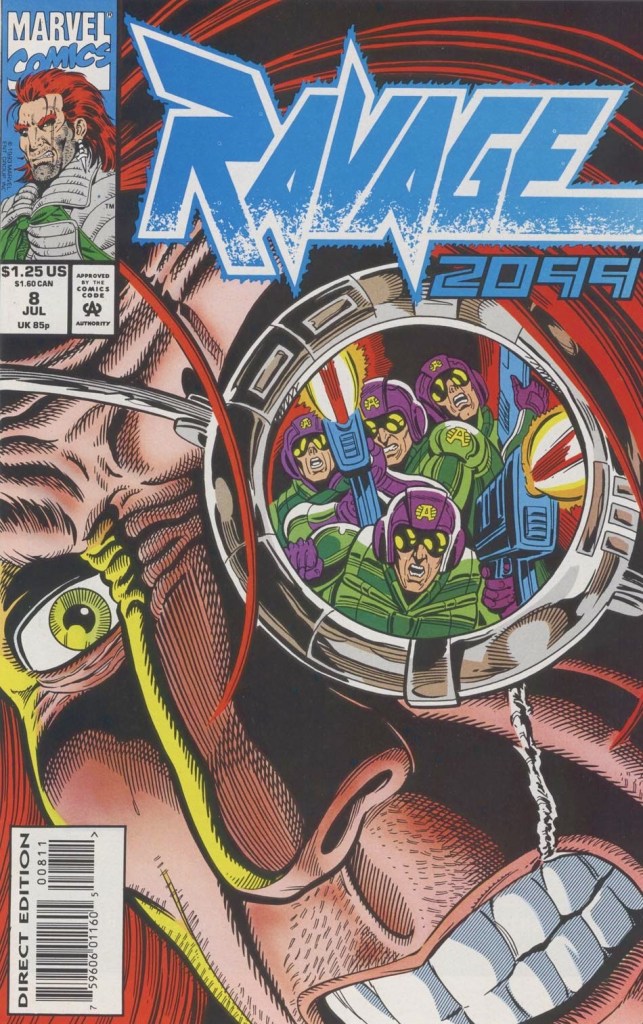
The cover.

Early story

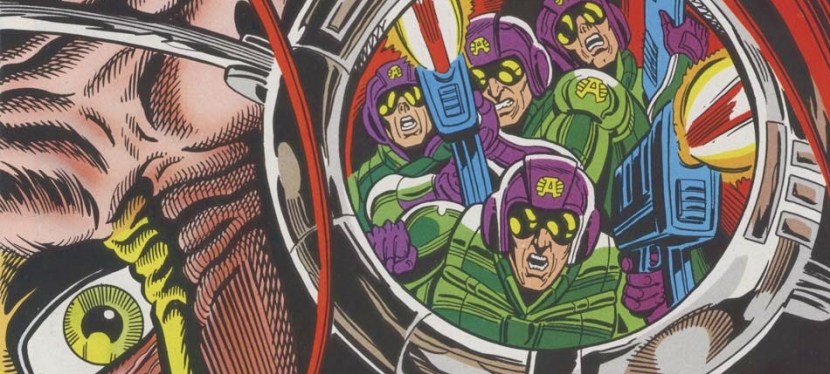
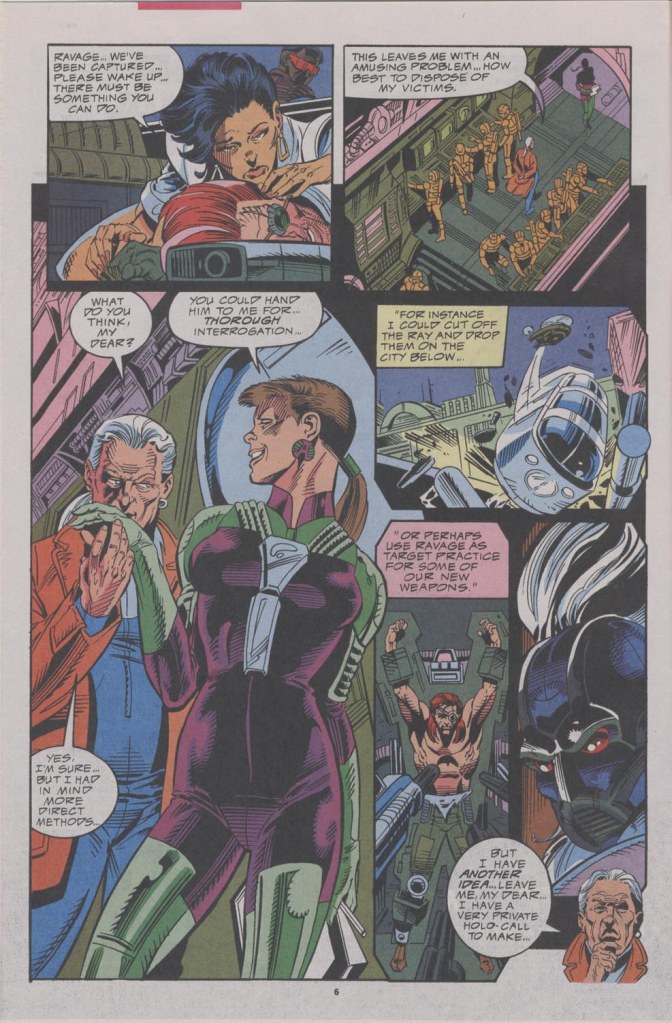
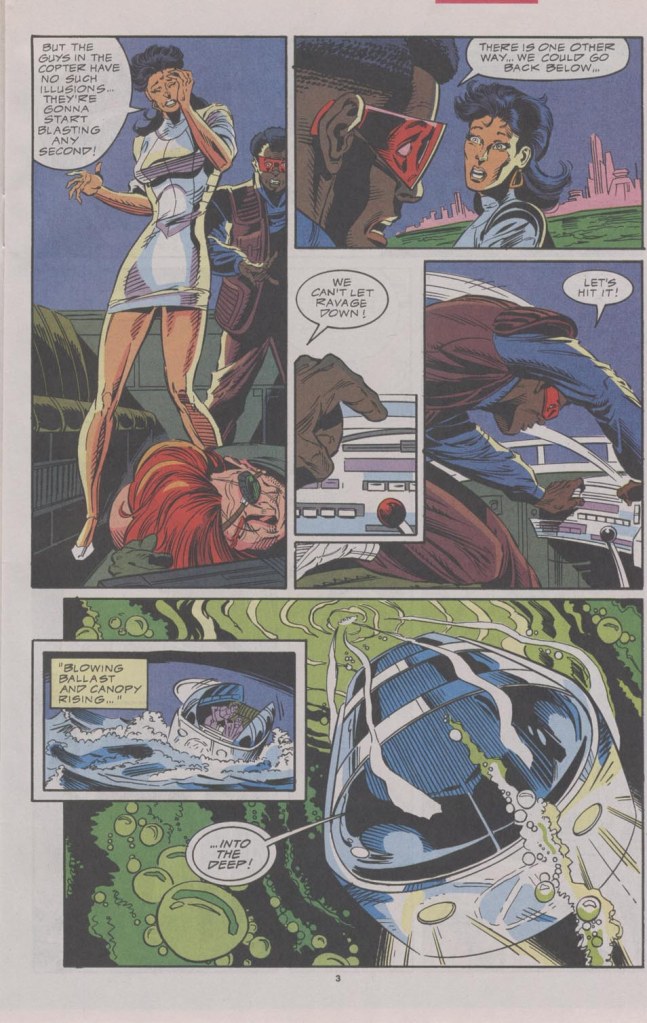
The story begins with a weakened Ravage, Tiana and Dack already in trouble as a Public Eye battle copter approaches them. The three just escaped from an underwater city using an old vehicle from the Fantastic Four. While Tiana expressed that there is no way they could outfight or outfly Public Eye, Dack reminds her that Ravage is their only hope and because of him, they got away from the aquatic beings and survived.

Dack then send their vehicle (which instantly blew ballast and raised a canopy) under water to escape from Public Eye. The effort was futile as the battle copter captures their vehicle and pulls it out of the water using a magnetic beam.

Knowing this development, Anderthorp Henton makes a confidential holo-call with Dethstryk and tells him that Ravage is in his possession. Henton also states that he intends to kill Ravage. Dethstryk demands Henton to deliver Ravage to him, insisting that it should be he who should kill him.

While captured in transit, Ravage struggles to write his instruction to his companions to take his gloves off…

Quality

Henton and his team with Ravage and his companions captured.

Finally, after going through the first seven issues that resulted unsatisfying plots, recycling of character elements and forcibly stretching the narrative, this particular issue has a story that combines doubtful heroism with a believable objective. Of course, it should be noted that Stan Lee provided the plot while leaving the scripting and pacing to two other writers who eventually took over the writing duties of Ravage 2099.

There were some improvements to the quality of the dialogue and narration (by Ravage). This comic book’s story was paced decently and there was not a single moment of stretching the narrative unrealistically. By this stage of the series, Ravage’s status as a heroic figure improved once again as he was given a purpose to fulfill. While we have seen him help Tiana or Dack escape from the bad guys, this story has him being more strategic and more determined to really solve a mystery while overcoming opposition.

Henton in this story, fortunately, is not a repeat of his cruel, cold-hearted self from the previous issues. This story reveals his link with Dethstryk and new insight as to who or what really controls Alchemax and its top officials. As such, there were some unexpected elements that transpired in the story.

Visually, Gran Miehm provided decent art and for the most part, Ravage and the other characters remained recognizable although I notice Dack looking more like a young adult than the teenager he really is.

Conclusion

Dack makes a move to help them get away.

Ravage 2099 #8 (1993) was Stan Lee’s last work with this particular series of the 2099 universe and thanks to the new writers who took scripting duties, this one has a satisfying story, higher quality dialogue and a more focused narrative. In retrospect, it was already too little and too late to salvage the Ravage 2099 series due to the inconsistent and overall weak storytelling that dominated the first seven issues.

If you are seriously planning to buy an existing hard copy of Ravage 2099 #8 (1993), be aware that as of this writing, MileHighComics.com shows that the near-mint copy of the regular edition costs $14 while the near-mint copy of the newsstand edition costs $42.

Overall, Ravage 2099 #8 (1993) is satisfactory.

+++++

Thank you for reading. If you find this article engaging, please click the like button below and also please consider sharing this article to others. If you are looking for a copywriter to create content for your special project or business, check out my services and my portfolio. Feel free to contact me as well. Also please feel free to visit my Facebook page Author Carlo Carrasco and follow me at HavenorFantasy@twitter.com
A Look Back at Prime #19 (1995)

Disclaimer: This is my original work with details sourced from reading the comic book and doing personal research. Anyone who wants to use this article, in part or in whole, needs to secure first my permission and agree to cite me as the source and author. Let it be known that any unauthorized use of this article will constrain the author to pursue the remedies under R.A. No. 8293, the Revised Penal Code, and/or all applicable legal actions under the laws of the Philippines.

Welcome back, superhero enthusiasts, comic book collectors and fans of the Ultraverse! Today, we will revisit the Ultraverse through the exploits of Prime who has already established himself in the city of New York (the result of Kevin Green and his mom’s move into the city).

Not only have we seen Prime fight a gigantic monster (that reminds me a lot of Japan’s Godzilla) to save New York and its many people, we have seen Turbo Charge getting involved with him with a superhero-related passion.

What will happen next to Prime? Will Turbo Charge get even more involved in helping the people of New York? We can all find out in this look back at Prime #19, published in 1995 by Malibu Comics with a story written by Len Strazewski and Gerard Jones, and illustrated by Dave Cockrum (X-Men) and Tim Hamilton.

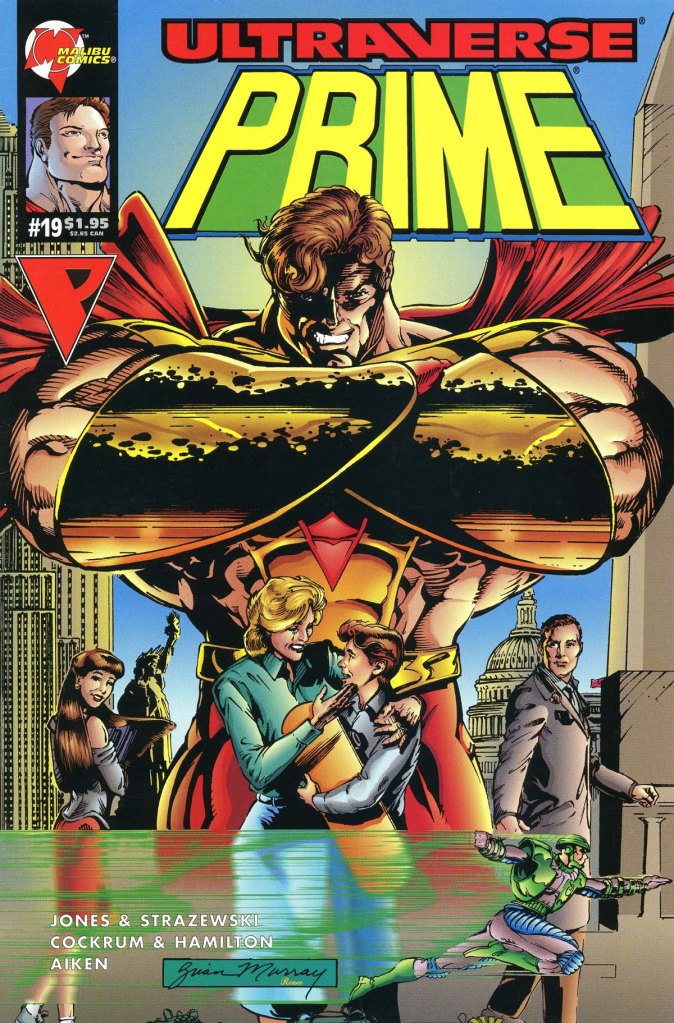
The cover.

Early story

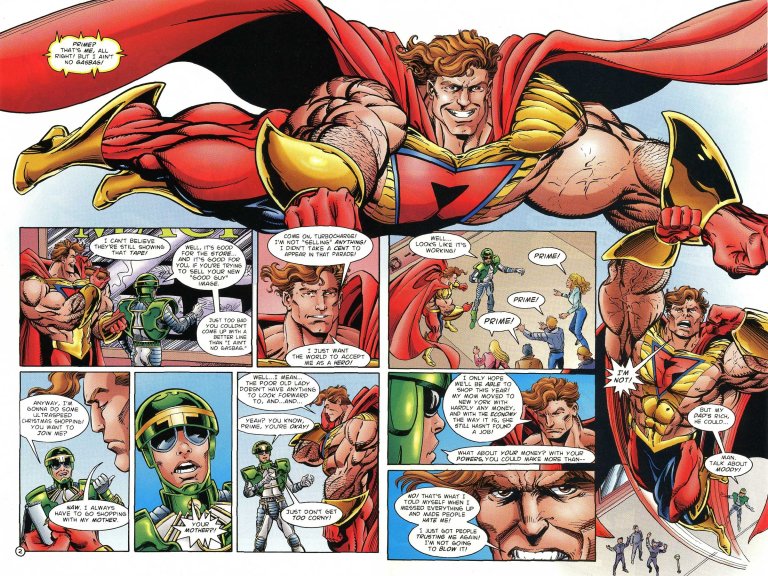
The story begins with Prime flying just above ground in the view of the many people attending the Macy’s Thanksgiving Day Parade in New York. Already he has been identified as the city’s newest Ultrahero.

Sometime later, within the city, Prime and Turbo Charge are watching television sets from outside a retailer’s window. As they talk about being in the spotlight, some fans approached Prime. The more Turbo Charge talks about taking advantage of the public trust and special abilities for financial gain, Prime rejects his suggestion as he remembers how he messed up previously.

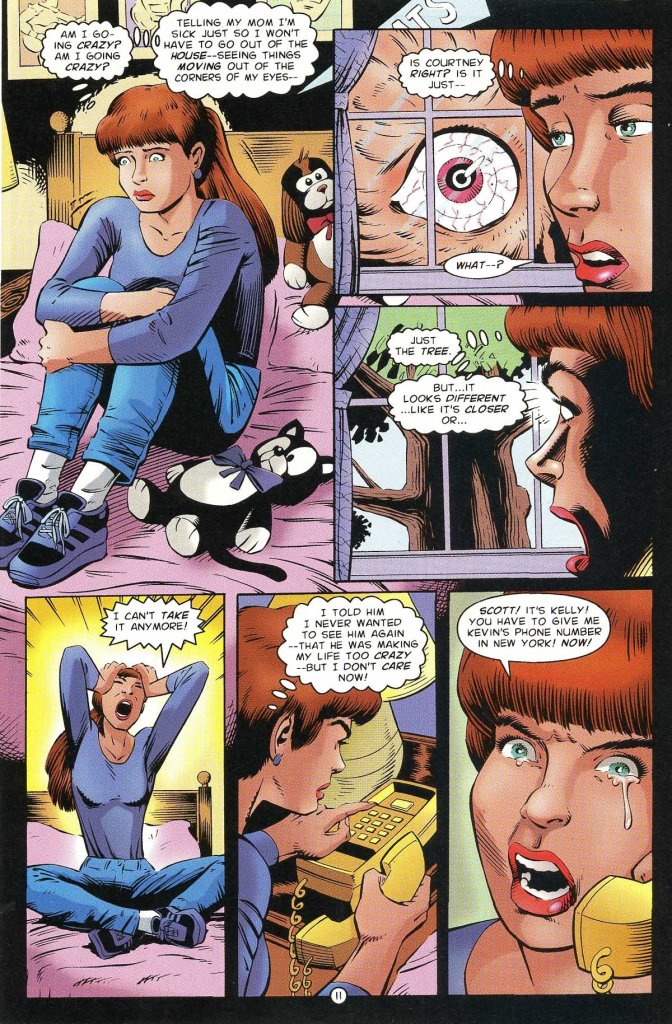
Meanwhile at Canoga Park, California, Kelly (Kevin’s romantic interest) is approached by Courtney (her best friend) who asked her what is she nervous about and what’s wrong with her lately. After their short talk, Kelly separates from her (who has a negative view of Kevin) and enters home at last. Suddenly a monster appears just outside the front door…

Quality

Kelly getting desperate.

I can confirm that the writing is rich and this story is much-more character-driven than the previous issue. The good news here is that there is a lot of engaging stuff and characterization to enjoy.

As before, Kevin’s struggle with balancing his personal life and his superhero ego together continues to be felt here. Not only has he been struggling with the media’s suspicion of Prime as a predator with teenagers, he also had difficulty talking with Turbo Charge (a teenager like Kevin) when it comes to sensitive bits of information that might expose his personal life. The way Strazewski and Jones wrote the script in dramatizing Kevin’s personal struggle came with really natural dialogue which made it all believable to read.

Within this story are three sub-plots about Kevin’s father, Kelly and Turbo Charge. Kevin’s father knows the whole truth about his son which makes him a valuable target by spies. Kelly’s struggle with monstrous visions are driving her nuts like never before. Turbo Charge meanwhile has a father who is well connected with the powerful in Washington, D.C. and the private sector. These sub-plots are well-written and add a good amount of depth and variety to the story.

As this issue was illustrated by Dave Cockrum and Tim Hamilton, there are noticeable changes in the aesthetics on Prime, Kevin and other related characters here and there. I just wish that the comic book pointed out which pages were drawn by whom. This is a fine-looking comic book.

Conclusion

Prime and Turbo Charge in New York.

Prime #19 (1995) is a very solid read mainly due to the strong characterization and the mentioned sub-plots (one of which finally got resolved in a satisfying manner). The more you follow Kevin’s story and his adjustment with life in New York, the more this comic book draws you in. There is also a short yet effective round of superhero spectacle that complete it. More importantly, this story keeps Prime’s story moving forward and even Kevin’s mother got a good amount of the spotlight.

If you are seriously planning to buy an existing hard copy of Prime #19 (1995), be aware that as of this writing, MileHighComics.com shows that the near-mint copy of the comic book costs $10.
Overall, Prime #19 (1995) is recommended.

+++++

Thank you for reading. If you find this article engaging, please click the like button below and also please consider sharing this article to others. If you are looking for a copywriter to create content for your special project or business, check out my services and my portfolio. Feel free to contact me as well. Also please feel free to visit my Facebook page Author Carlo Carrasco and follow me at HavenorFantasy@twitter.com