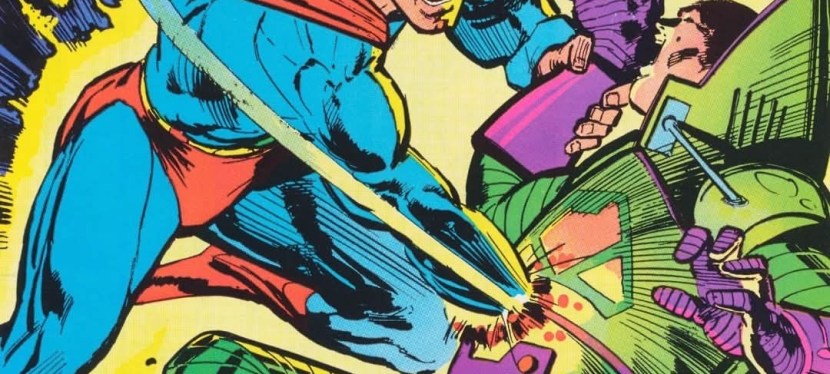
A Look Back at Superman #412 (1985)

Welcome back superhero enthusiasts, 20th century pop culture enthusiasts and comic book collectors! Today we go back to the mid-1980s to take a close look at one of the many tales published through the original Superman monthly series (first launched in 1939).

For the newcomers reading this, the original multiverse of DC Comics formally ended with Crisis on Infinite Earths (1985-1986). That being said, a lot of DC’s monthly comic book series had respective tales the reflect the closing period of the old multiverse (which lasted for decades) and the Superman monthly series of the era was part of the trend.

With those details laid down, here is a look back at Superman , published in 1985 by DC Comics with a story written by Cary Bates and drawn by Curt Swan.  
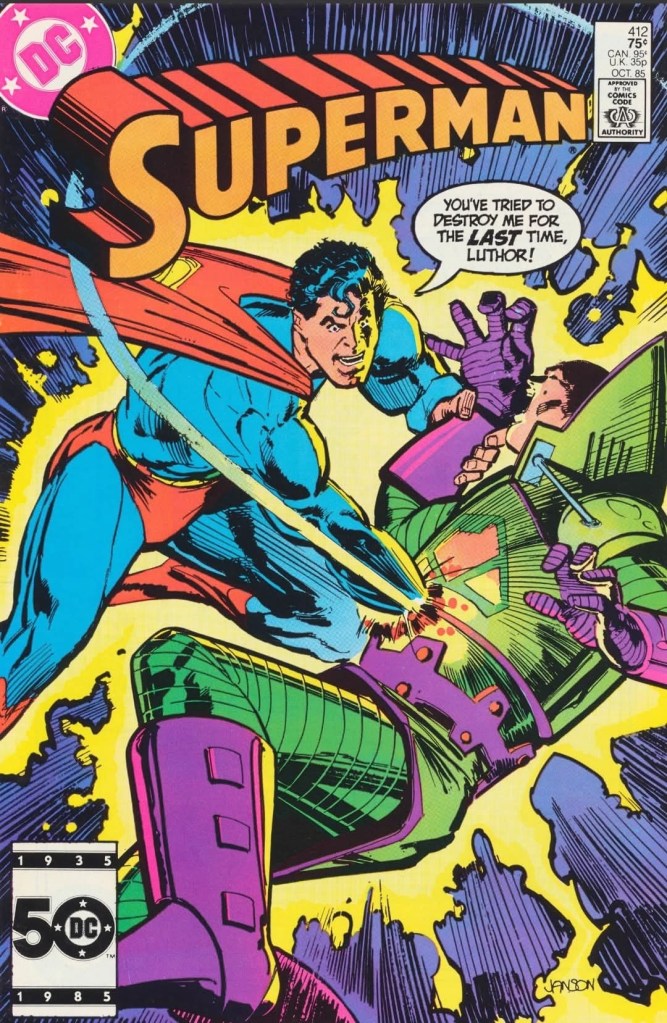
The cover.

Early story

The story begins at the unemployment bureau in Metropolis. Clark Kent, who recently lost his jobs with WGBS and the Daily Planet, stands in line and waits for his turn. Being unemployed, Clark feels troubled and other people nearby recognize him.

As his turn at the counter starts, Clark senses something and decides to get out quickly. He enters the emergency exit, changes into Superman and flies out of the building. It turns out a high-rise building accident has occurred and already several pieces of sharp glass have been falling down. To prevent further harm, Superman uses his heat vision to convert the falling glass and collectively turn them into a growing molten ball. He brings the giant molten ball to the top of the building (still in construction/expansion) and meets the hard-hat workers before flying away.

Elsewhere, Lana Lang announces news to TV viewers regarding the dismissal her of close friend Clark Kent which was the result of the fake headline news story about Superman and the NASA satellite. In another location, Lex Luthor is very pleased watching the same broadcast knowing his plan of ruining Superman succeeded and got Clark Kent as a fake news casualty. Luthor is not done with Superman yet…

Quality
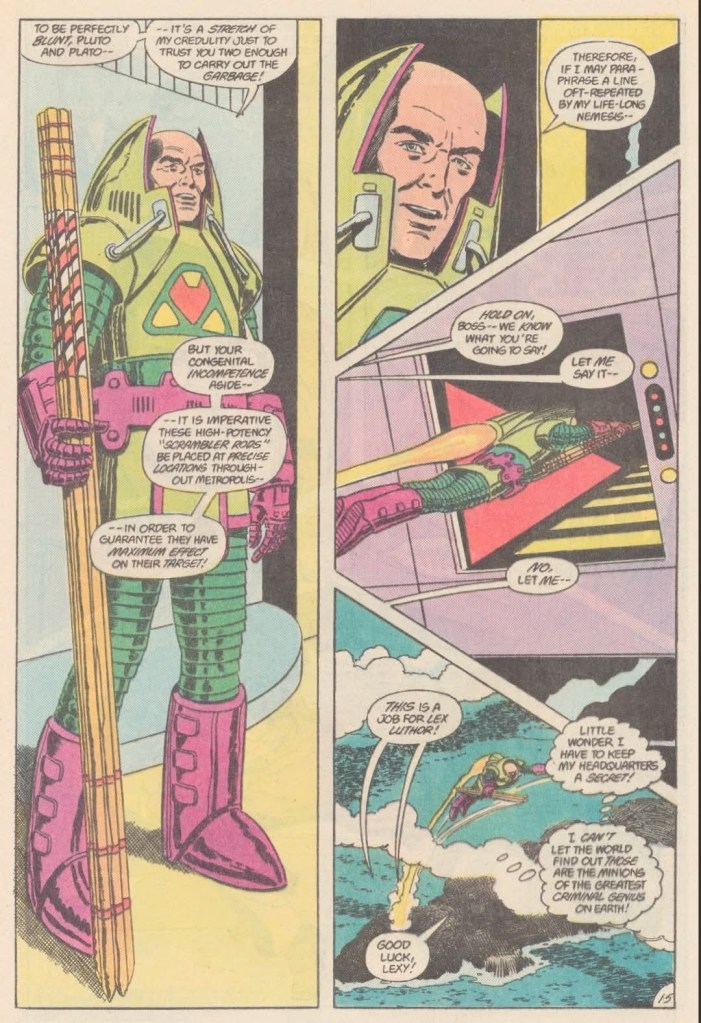
Lex Luthor here is ruthless, strategic and obsessed with defeating Superman.

I really like this Superman tale. This is a story about Superman who is still dedicated to doing acts of good by helping people with problems even though he is socially in deep trouble being unemployed as Clark Kent. Not only is the unemployment aspect relevant, the consequences of fake news and their negative effect on people made this tale more socially relevant with today’s world of fake news and unethical journalism.

Going back to Superman, it is clear that the embarrassment and unemployment of his civilian identity impacted him as a superhero. This is evident when Lana Lang accused him of betraying Clark Kent resulting in a fake news story that led to the firing by WGBS and the Daily Planet. Lana, who does not realize Superman and Clark are the same person, blamed the Man of Steel that the firing of Clark is so devastating to her as she cares for him so much (note: Clark and Lana were romantically involved during their teenage years at Smallville).  

The powerful writing by Cary Bates does not end there. In this comic book, you will see Lex Luthor execute his other plans to ruin Superman whom he personally accused over the loss of his family and his own world Lexor (click here and here for references). This is a Luthor who is not simply being evil but also someone who is well organized, strategic and even fearless. By this stage, the criminal mad scientist Luthor has accumulated a lot of resources to have his own headquarters, technologies and a dedicated staff. In some ways, Luthor in this comic book eerily resembled his financial tycoon version in the post-Crisis era (click here and here for relevance).

I should also state that the personal encounter between Superman and Luthor here is a great pay-off to the build-up that preceded it. You readers should see it for yourselves because to reveal more in this review will ruin it.

Conclusion
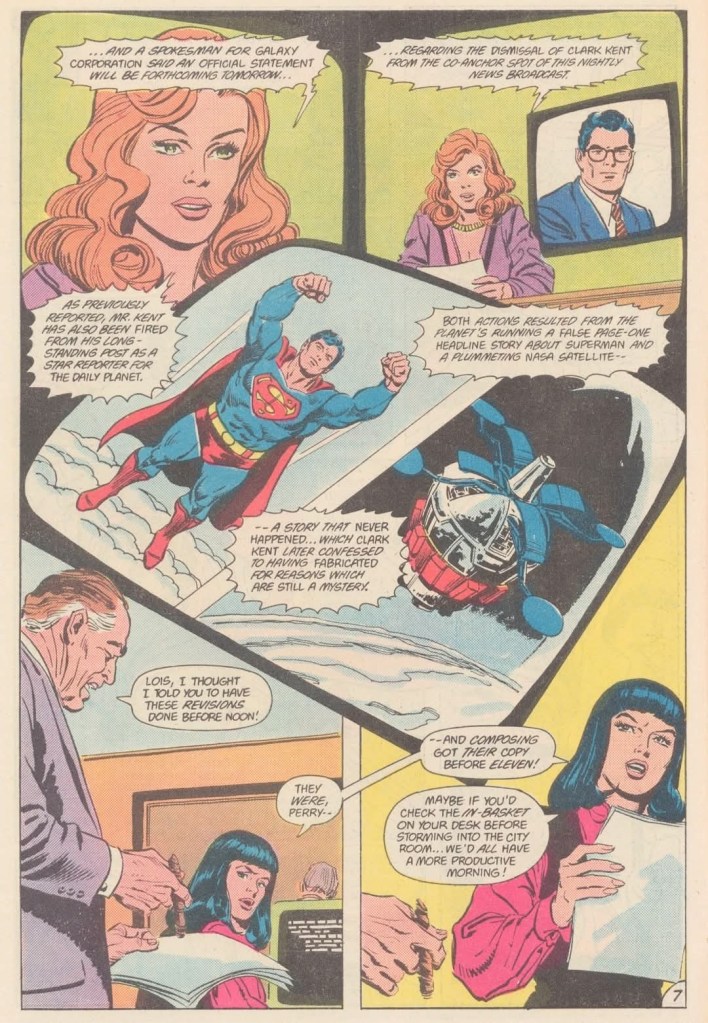
As Lana Lang delivers the news to TV viewers regarding Clark Kent and Superman, tension is brewing over at the Daily Planet.

Superman (1985) is undeniably a great Superman story published during the very late stage of the original multiverse (note: Superman #423 was one of the final tales of Superman of this particular era. Superman was part of the post-Crisis era). The portrayal of Superman being disturbed by the huge setback he suffered as a civilian is really compelling to see and his encounter with Lex Luthor really brought the tension and suspense to high levels. At the same time, the consequences of Superman’s actions (including those of his civilian form as Clark Kent) are very evident and nicely dramatized by the Bates-Swan team. You really feel that the creators were wrapping up their Superman stories and decided to move this series to a new direction knowing that the original multiverse will end. This is a must-read tale!

Overall, Superman (1985) is highly recommended.

+++++

Thank you for reading. If you find this article engaging, please click the like button below, share this article to others and also please consider making a donation to support my publishing. If you are looking for a copywriter to create content for your special project or business, check out my services and my portfolio. Feel free to contact me with a private message. Also please feel free to visit my Facebook page Author Carlo Carrasco and follow me on Twitter at  @HavenorFantasy as well as on Tumblr at https://carlocarrasco.tumblr.com/ and on Instagram at https://www.instagram.com/authorcarlocarrasco
A Look Back at Superman #292 (1975)

Welcome back superhero enthusiasts, 20th century pop culture enthusiasts and comic book collectors! Today we go back to the year 1975 to take a close look at one of the many tales published through the original Superman monthly series (first launched in 1939).

When I first read the literary rivalry between Superman and Lex Luthor, it was before Crisis on Infinite Earths happened. The pre-Crisis Luthor was a criminal mad scientist (as opposed to the tycoon Luthor of the post-Crisis age) who had to use technology and smart moves during his encounters with the Man of Steel. The pre-Crisis conflicts between the two were often dynamic and fantasy inspired. Of course, there is a lot more between Superman and Luthor starting with a shared past in Smallville.

With those details laid down, here is a look back at Superman , published in 1975 by DC Comics with a story written by Elliot S. Maggin and drawn by Curt Swan.  

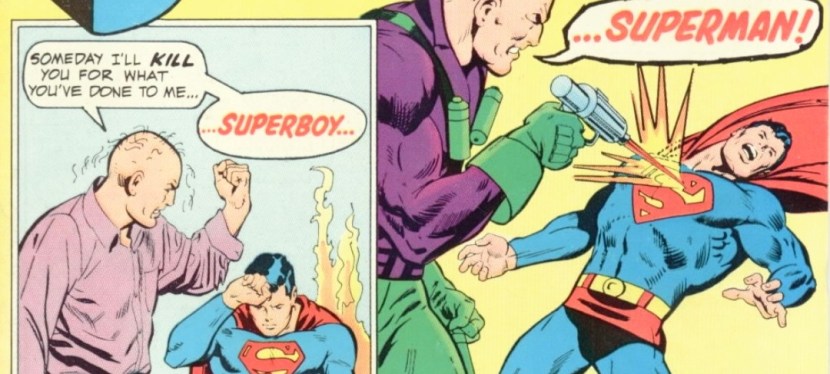
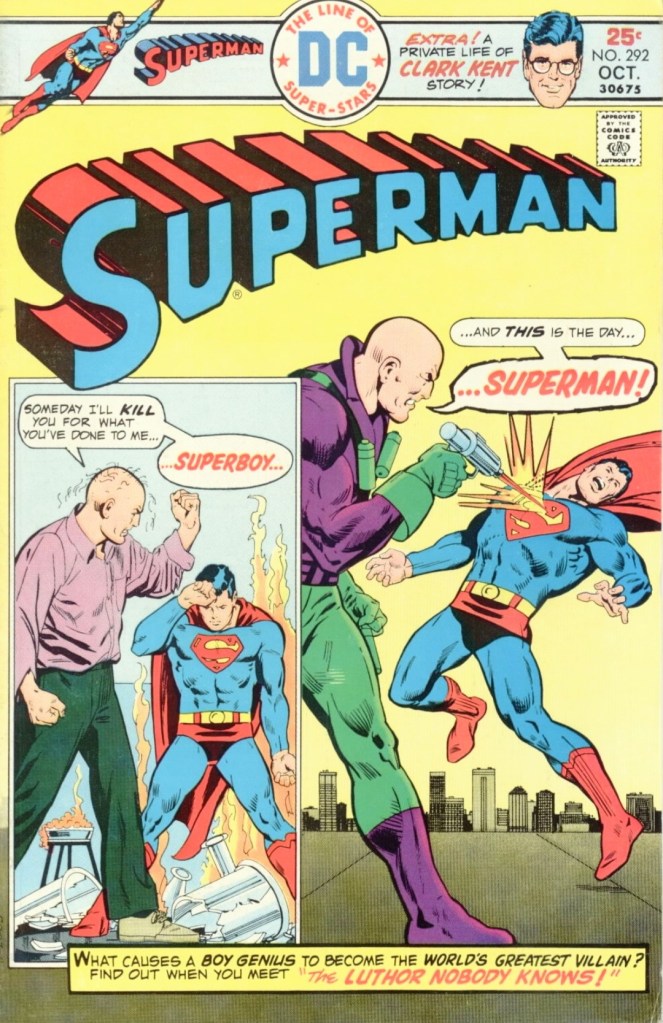
The cover.

Early story

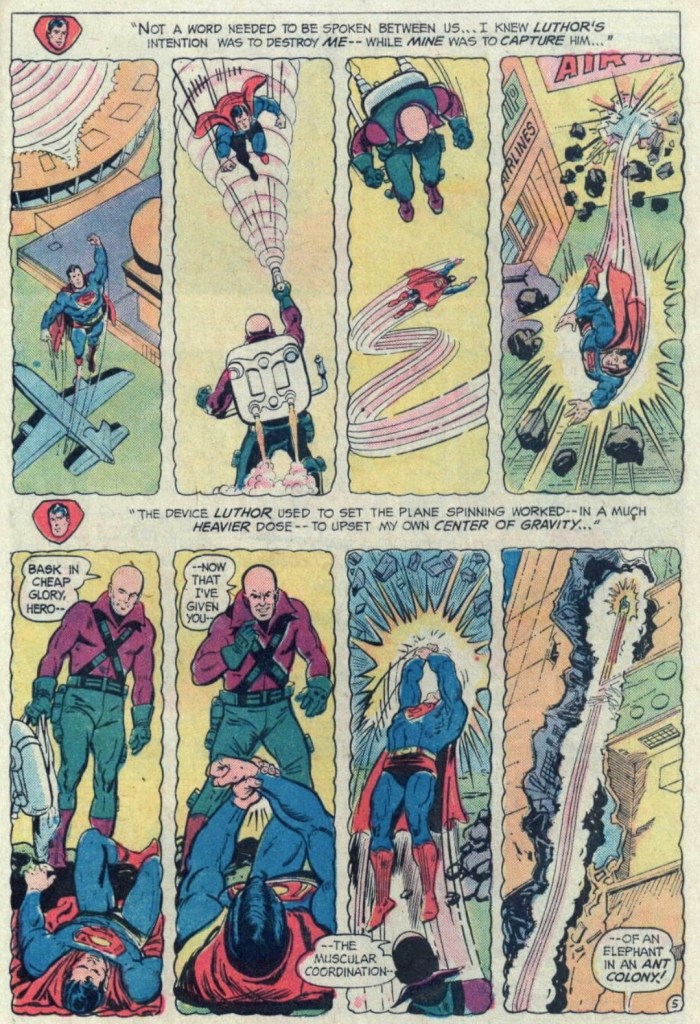
The story begins at the ruined Metropolis International Airport with Superman helping with the huge repair efforts. It turns out, he and Lex Luthor just had an encounter there. When Mr. Hales of the airport authorities asked him why Luthor was always evil, Superman begins to remember the friendship he had with his rival when they were both teenagers in Smallville…

Quality

Yes, it is all true. Lex Luthor and Clark Kent were students in the same high school in Smallville when they were teenagers.

To make things clear, this comic book has two stories and the first one – titled “The Luthor Nobody Knows” – is clearly the main story.

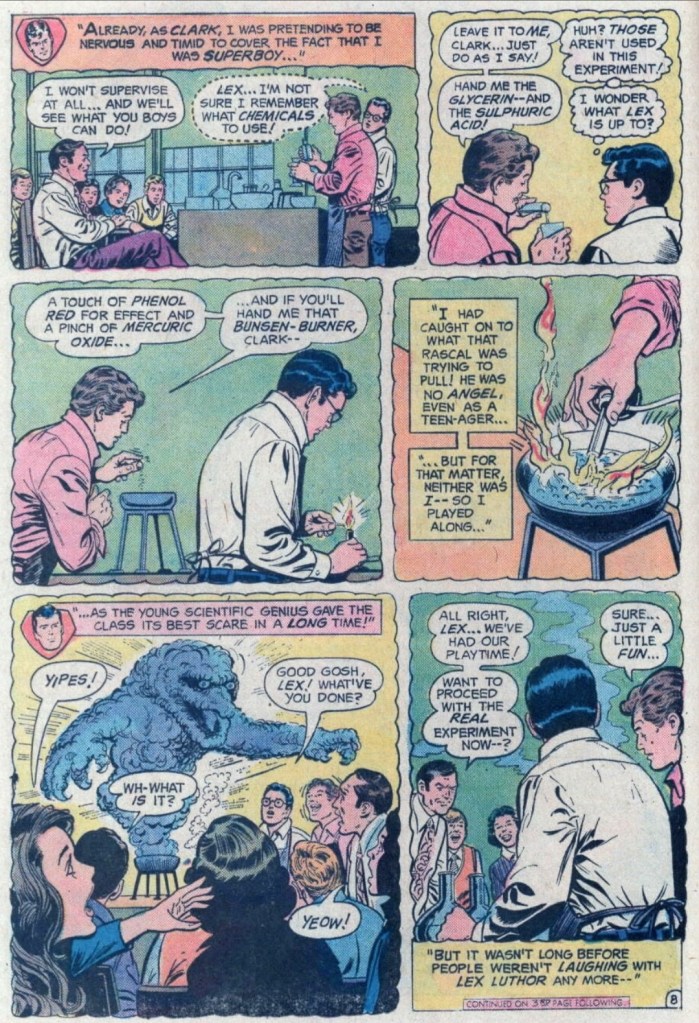
The main story has this unusual format of storytelling that resulted in an abundance of flashbacks dominating the present-day tale. In connection with the tale’s title, this is a dramatized look back at the time when Luthor and Clark Kent (then Superboy) were high school students in Smallville. The creators took their time portraying young Clark Kent as the mild and ethical student and the teenage Lex Luthor as the daring student who truly believes he can make great achievements through science.

For those who might have heard the fabled start of the rivalry between Luthor and Superboy, you will see that in this comic book as well as the negative impact the former made as time went on. Along the way, you will see the stark differences between them which were nicely dramatized by the creators. Notably, you will see a more human portrayal of Luthor in his younger self.

The 2nd story of this comic book – titled “The private life of Clark Kent” – is just a 5-page additive geared towards Superman fans wanting more of him in his civilian identity.  

Conclusion

This battle between Superman and criminal mad scientist Luthor should resonate with comic book fans who love the pre-Crisis era of DC Comics.

Considering the way the main story was crafted, Superman (1975) is technically an origin story of Luthor who went from an ambitious young student into a criminal mad scientist. This should surprise readers who remained unaware of the shared past between Luthor and Superman before Crisis on Infinite Earths happened. In relation to what was mentioned earlier in the review, the Superboy-Luthor conflicts here looked dynamic. There is a good amount of entertainment here to see and it should resonate with long-time comic book readers who miss the pre-Crisis era of DC Comics.

Overall, Superman (1975) is recommended.

+++++

Thank you for reading. If you find this article engaging, please click the like button below, share this article to others and also please consider making a donation to support my publishing. If you are looking for a copywriter to create content for your special project or business, check out my services and my portfolio. Feel free to contact me with a private message. Also please feel free to visit my Facebook page Author Carlo Carrasco and follow me on Twitter at  @HavenorFantasy as well as on Tumblr at https://carlocarrasco.tumblr.com/ and on Instagram at https://www.instagram.com/authorcarlocarrasco
A Look Back at Superman #1 (1987)

Welcome back superhero enthusiasts, 1980s pop culture enthusiasts and comic book collectors! Today we go back to the year 1987 and explore a notable chapter of the post-Crisis DC Comics universe through the iconic Superman.

To put things in perspective, DC Comics rebooted its entire shared universe in 1986 after the conclusion of Crisis on Infinite Earths. They published the 6-part The Man of Steel mini-series to reboot the iconic Superman and modernize him with the creative leadership of John Byrne. By the time the mini-series ended, the new background stories, the supporting characters and creative foundation of the post-Crisis Superman were established. That being said, a brand new Superman monthly series led by Byrne was inevitable.

With those details laid down, here is a look back at Superman , published in 1987 by DC Comics with a story written and drawn by John Byrne.  

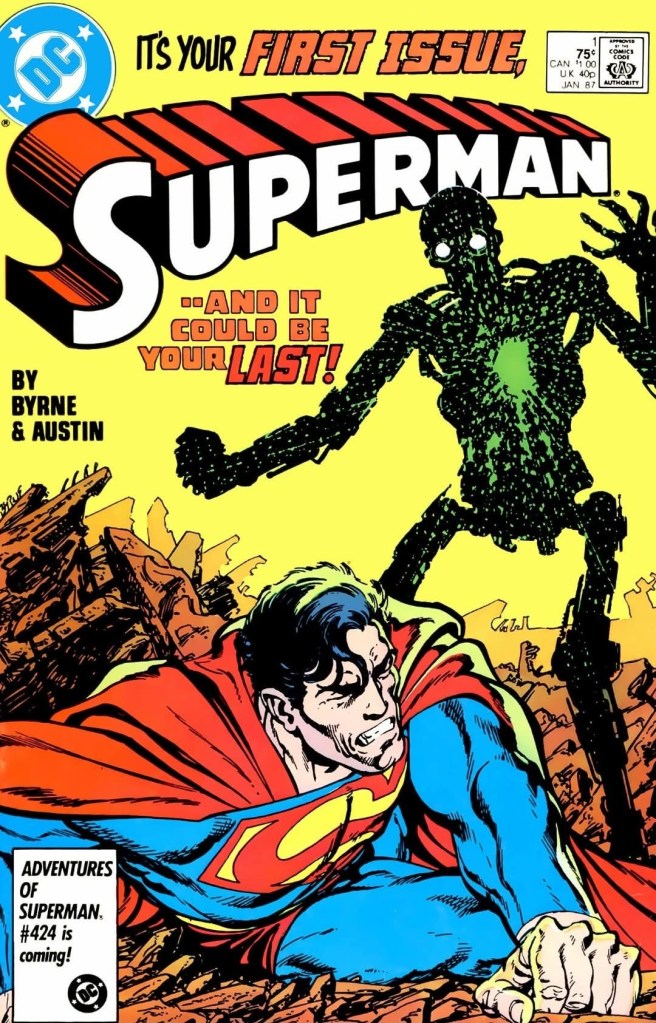
The cover.

Early story

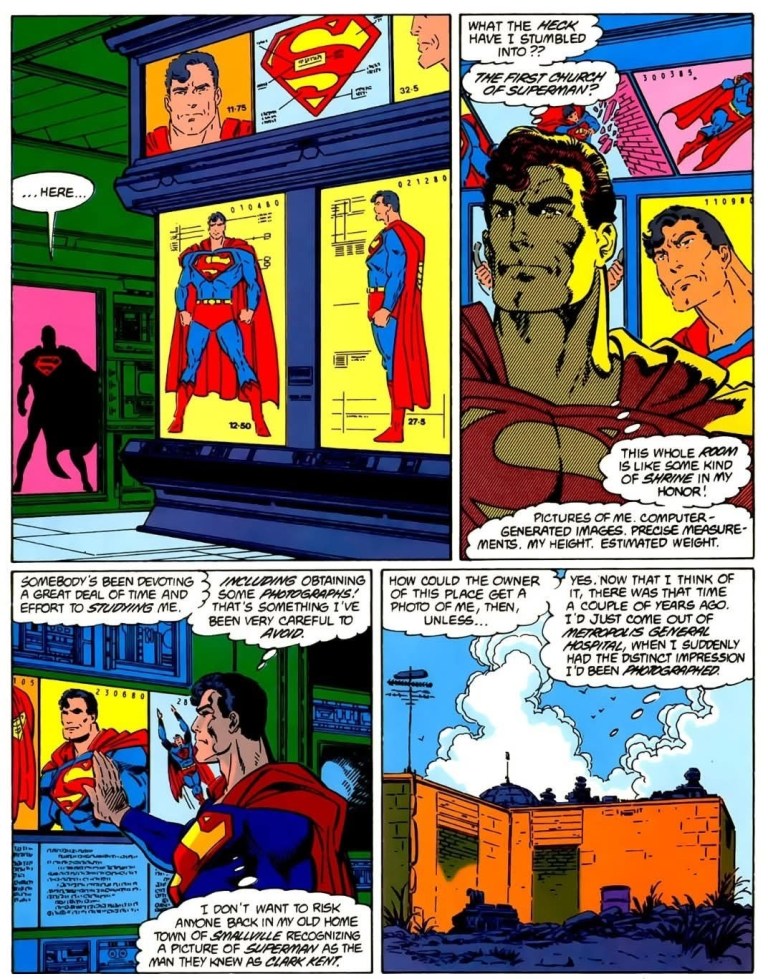
The story begins with Superman smashing his way through into a secretive, high-tech facility. Noticing so much technology, he begins to wonder why would anyone abandon such a facility. As he slowly makes his way inside, he finds several images of him displayed confirming that someone has been devoting a great deal of time and effort to research him. This makes him concerned that someone in his old home town of Smallville could recognize a picture of Superman as their fellow resident Clark Kent.

As he keeps searching, he finds the body of a dead scientist whose neck was broken. He also notices the corpse’s fingerprints are the same as those found on the truck outside of the facility. The truck itself was involved in the theft of his Kryptonian rocket. After finding more nasty evidence, Superman digs deep down underneath the facility then lifts a huge part of the ground with the said structure on top. He lifts up everything and brought them all into space free from the reach of people below.

Superman then flies off to Metropolis to change into Clark Kent to meet with Lois Lane at the city park…

Quality

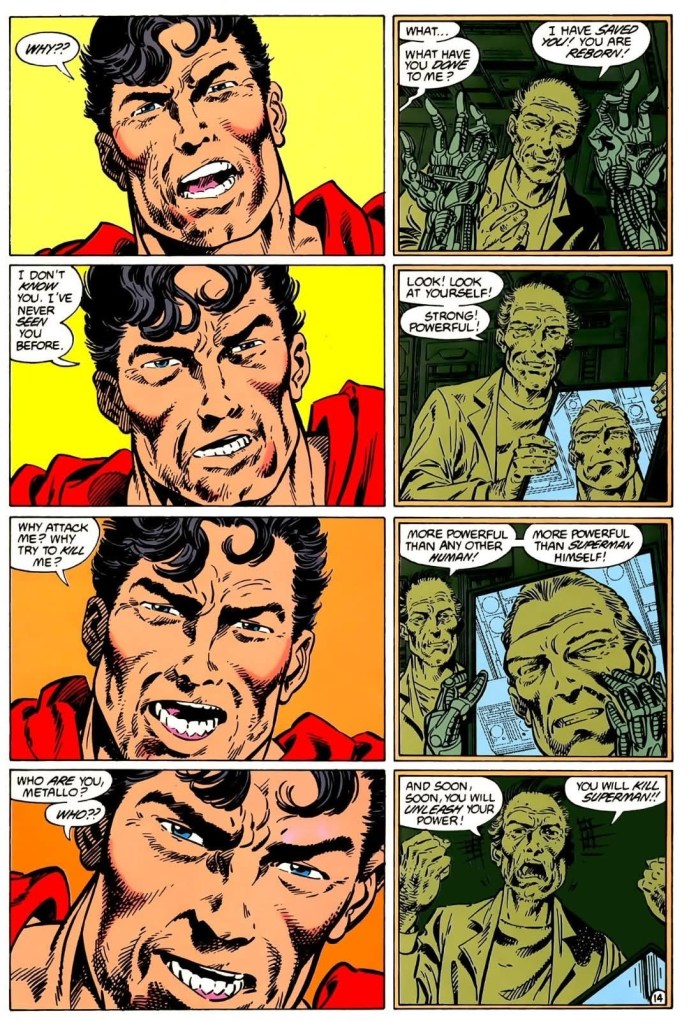
I like the way John Byrne told parallel narratives with Superman in the present on the left, and flashbacks of Metallo on the right.

To begin with, this tale written by John Byrne is another inspire piece of work published at a time when the post-Crisis shared universe of DC Comics was still new and expanding. Byrne really defined Superman’s place in the shared universe by modernizing it with the 1980s in mind and he came up with a story introducing the post-Crisis version of Metallo while coming up with a sub-plot of a mad scientist who was not only obsessed with Superman but also was involved with the said super villain.

The plot is clearly well-structured which starts with Superman doing believable detective work of his own which led to the discovery of the mad scientist whose intense research pose a danger to the Man of Steel. Having dual identities and social responsibilities to live up to, Superman also takes the time to adjust to his normal life as Clark Kent at a time when he has to socialize with his Daily Planet colleague Lois Lane. Without spoiling the plot, I can say that you will see the iconic superhero ranging from being mighty to becoming vulnerable, weakened and suffering tremendous pain. How Byrne handled the transition of Superman is excellent.

The sub-plot of the mad scientist obsessing over discoveries about Superman is short and yet highly significant. For one thing, Superman himself has been very careful on keeping his dual identities secret and yet someone managed to secretly photograph him and come up with a lot of information – including the destroyed world of Krypton and the Kryptonian legacy of the hero – that could expose his deepest secrets and ruin his life entirely. The mad scientist’s obsession has strong sci-fi elements related to UFOs and aliens from deep space.

For the Man of Steel, this is too dangerous and also too personal to be left behind untouched. This aspect of the story makes this old tale more relevant in today’s world of drones with cameras, CCTV systems, hacking and the potential of users (or artificial intelligence) who could collect information on people without their consent.

The post-Crisis Metallo looks inspired by the Terminator and appears in human form. He goes by the name John Corben who previously got fatally injured in a car crash and subsequently was taken by the mad scientist (who transplanted the man’s brain into a robotic body). It should be noted that the said scientist also has an obsession about Kryptonians which led to his plan to send a chosen warrior to go against Superman supposedly to prevent Earth from getting conquered. How Metallo and his physical fight with the Man of Steel is a must-read.

Conclusion

Imagine yourself discovering a secret room filled with information and pieces of evidence and visual references about you. This should resonate with people whose privacy got violated. Also try imagining people inside the offices of tech giants with collected information and images about you.

Superman (1987) is still a great read. It has a complex approach on portraying the battle between good and evil without losing focus on the storytelling and the expansion of Superman’s post-Crisis lore. Its sub-plot of the mad scientist and his obsession on Superman will resonate with people who feel vulnerable over the loss of their private information in today’s world of social media, abusive technology giants and artificial intelligence-driven surveillance systems. There is also a lot of superhero action for readers to enjoy, and the spectacle is never silly nor outlandish to look at. Oh yes, seeing Superman in a vulnerable state and getting actually hurt is believable to see.

Overall, Superman (1987) is highly recommended!

+++++

Thank you for reading. If you find this article engaging, please click the like button below, share this article to others and also please consider making a donation to support my publishing. If you are looking for a copywriter to create content for your special project or business, check out my services and my portfolio. Feel free to contact me with a private message. Also please feel free to visit my Facebook page Author Carlo Carrasco and follow me on Twitter at  @HavenorFantasy as well as on Tumblr at https://carlocarrasco.tumblr.com/ and on Instagram at https://www.instagram.com/authorcarlocarrasco
A Look Back at Superman #350 (1980)

Welcome back superhero enthusiasts, 20th century pop culture enthusiasts and comic book collectors! Today we go back to the year 1980 to take a close look at one of the many tales published through the original Superman monthly series (first launched in 1939).

Before Crisis on Infinite Earths happened, the DC Comics multiverse had a lot of superhero stories that had outlandish fantasy elements. For example, Action Comics #454 showed Superman eating tons of food in order to survive. In Action Comics #456, the battles between Superman and The Shark had lots of outlandish looking forms of action. In short, the old multiverse and its tropes are looking fun to revisit.

With those details laid down, here is a look back at Superman , published in 1980 by DC Comics with a story written by Gerry Conway and drawn by Curt Swan.  

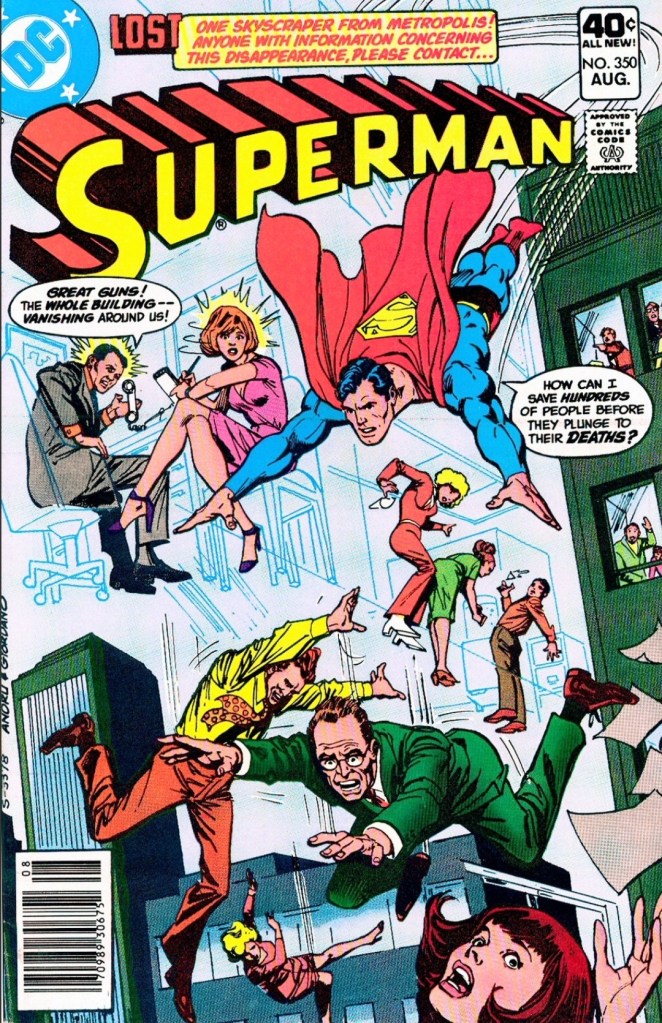
The cover.

Early story

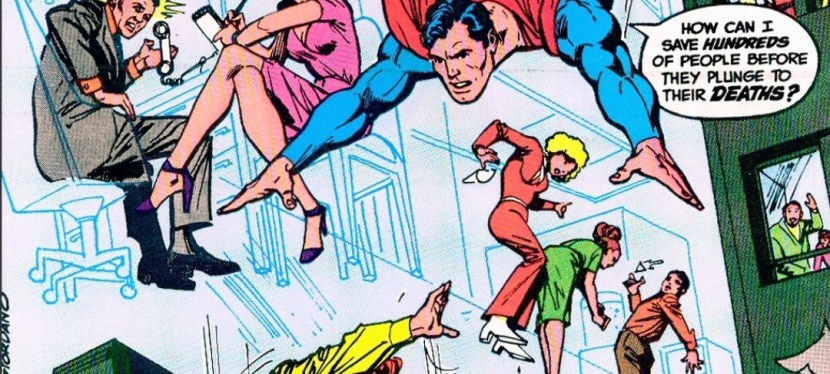
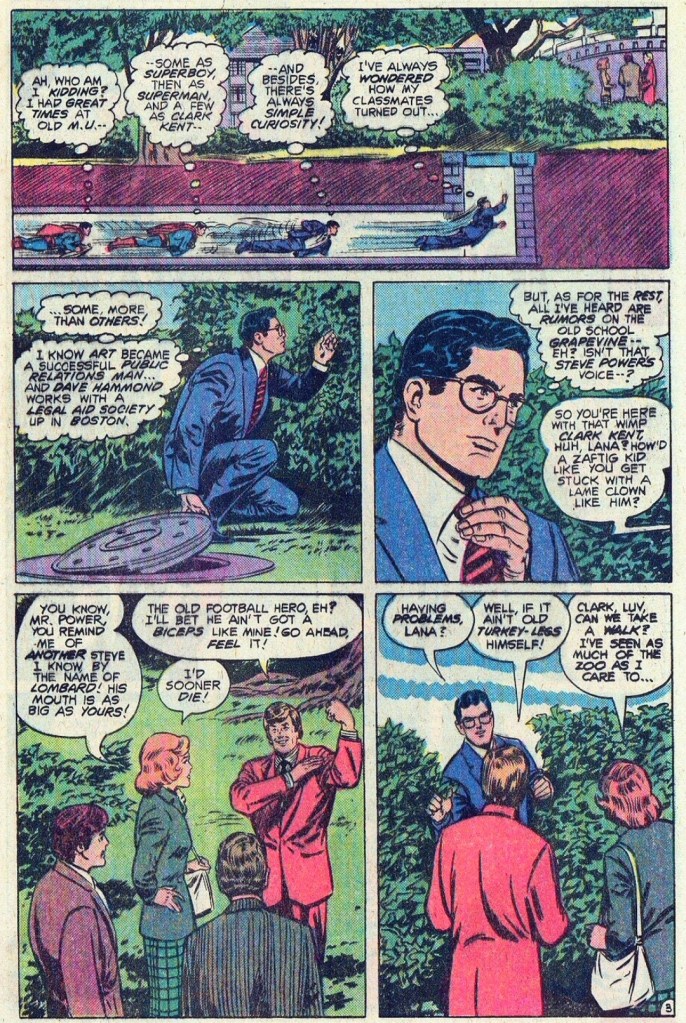
The story begins when Superman makes his move to prevent a punctured hot air balloon transport from crashing. It turns out the balloon was part of the promotion of a reunion event at Metropolis University and Superman really went there to attend it in his civilian identity as Clark Kent. Also attending the event is his long-time friend and colleague Lana Lang.

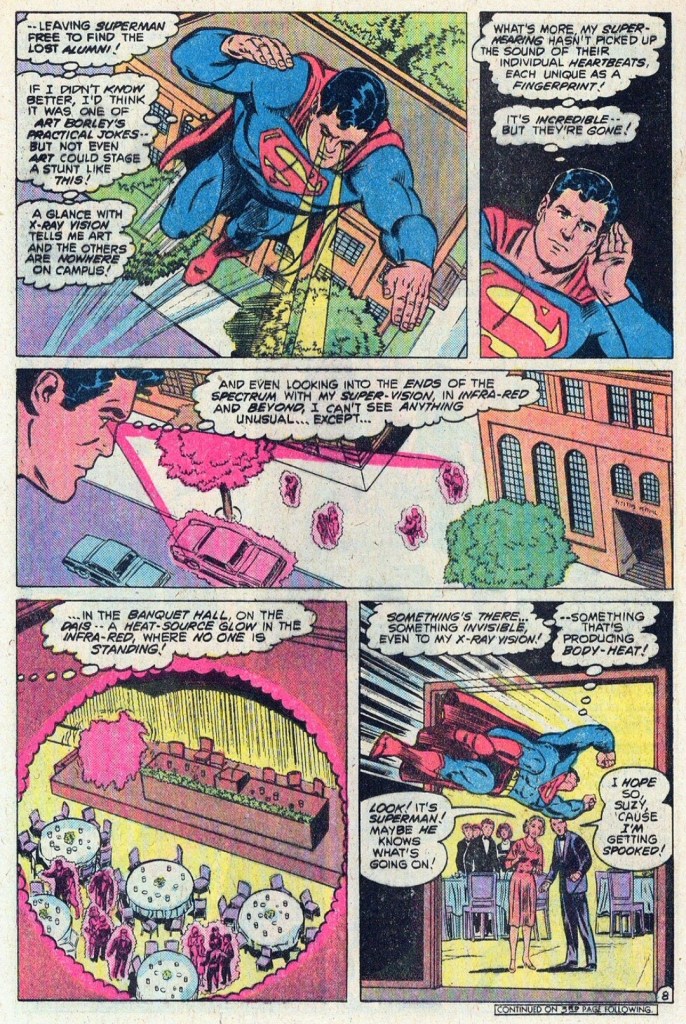
As the old professor Lemuel B. Tolkein – former superior of Clark and his classmates – speaks during the reunion, several attendees – including people Clark personally knew – begin to disappear into thin air. The remaining attendees and guests begin to panic…

Quality

Superman uses his special abilities to solve problems here.

I really like this story. Without spoiling the plot, I can say that this tale written by Conway is actually a mystery that happens to take place during Clark Kent’s reunion with many people from his past. As there is no good-versus-evil concept, the story is solidly focused on mysterious happenings that challenge Superman’s ability to solve problems. Even though he already has many super powers, the Man of Steel still got challenged a lot by the disappearances of people and things.

Apart from the story, I also enjoyed Conway’s approach on developing Clark Kent/Superman, Lana Lang and Lois Lane. Seeing Clark reconnecting with people from his past at Metropolis University was a refreshing portrayal and it also sheds light on how he handled himself during his collegiate years. As for Lois Lane, she was portrayed to be hostile towards Clark with regards to journalistic competition between them, and yet she still has tenderness towards Superman deep inside.

Conclusion

Superman quickly changes into his Clark Kent identity to attend the reunion.

Superman (1980) is enjoyable and the elements of the pre-Crisis multiverse of DC Comics added depth to it. The story is relaxing to follow and it managed to surprise me and keep me engaged until the very end. I am convinced to follow the next issue.

Overall, Superman (1980) is recommended.

+++++

Thank you for reading. If you find this article engaging, please click the like button below, share this article to others and also please consider making a donation to support my publishing. If you are looking for a copywriter to create content for your special project or business, check out my services and my portfolio. Feel free to contact me with a private message. Also please feel free to visit my Facebook page Author Carlo Carrasco and follow me on Twitter at  @HavenorFantasy as well as on Tumblr at https://carlocarrasco.tumblr.com/ and on Instagram at https://www.instagram.com/authorcarlocarrasco
A Look Back at Action Comics #484 (1978)

Welcome back superhero enthusiasts, 20th century pop culture enthusiasts and comic book collectors! Today we go back to the year 1978 to take a close look at one of the many tales published through the original Action Comics monthly series (launched in 1938).

Long before Crisis on Infinite Earths happened, DC Comics had its convoluted multiverse. For the newcomers reading this, this meant that there were actually different versions of Superman and other DC superheroes, plus different universes or parallel worlds existing with each other. This particular Action Comics issue features a certain version of Superman and what happened to him and the related characters.

With those details laid down, here is a look back at Action Comics , published in 1978 by DC Comics with a story written by Cary Bates and drawn by Curt Swan.  

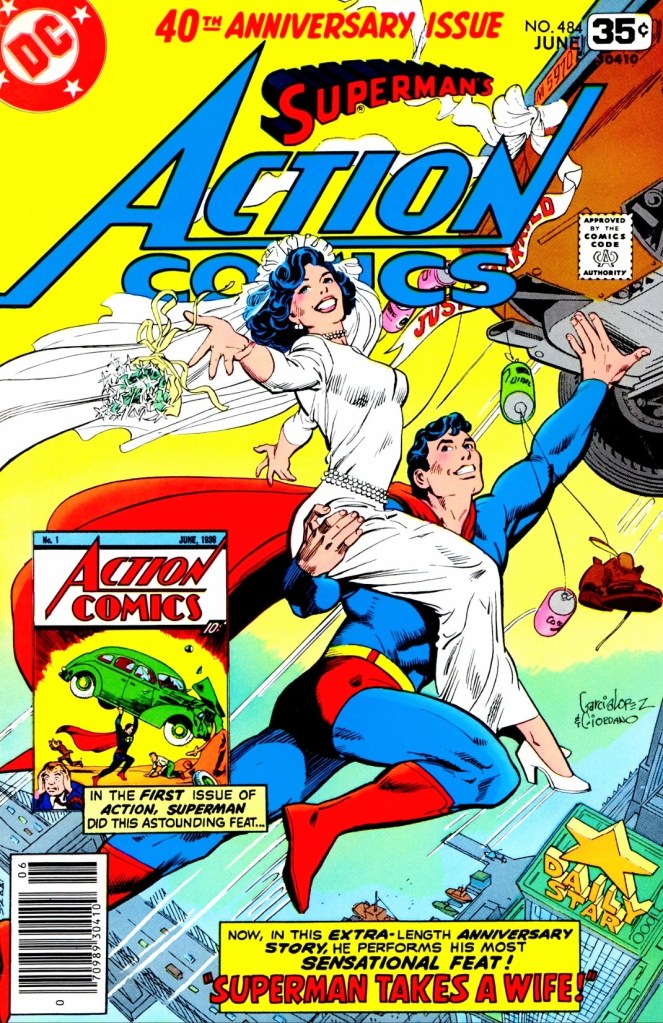
The cover.

Early story

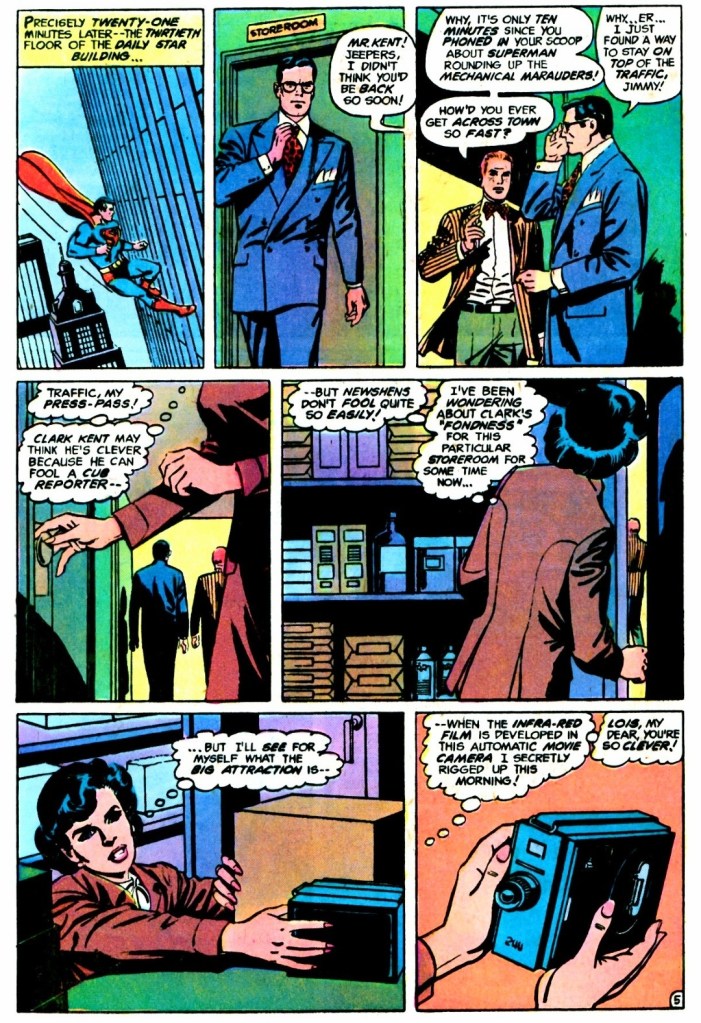
The story begins in Metropolis of Earth-Two when four mechanical marauders fly through the city carrying bags of money taken from a bank. Superman (of Earth-Two) quickly flew after the mechanical marauders and uses his powers to beat them all. From a distance, Colonel Future (leader of the C-F Gang) observes Superman and analyzes his moves. It turns out, the gang is responsible for the mechanical marauders and Colonel Future believes that he can wipe out the Man of Steel.

Superman returns quietly into the Daily Star Building and changes into civilian clothing as Clark Kent. His office mate Jimmy Olsen approaches him and together they walk and talk about what has been going on.

Behind them, Lois Lane silently enters the store room where Clark came out of. It turns out, she prepared a hidden camera inside hoping to capture evidence about Clark using the room. She has been suspecting that Superman and Clark Kent are one and the same person…

Quality

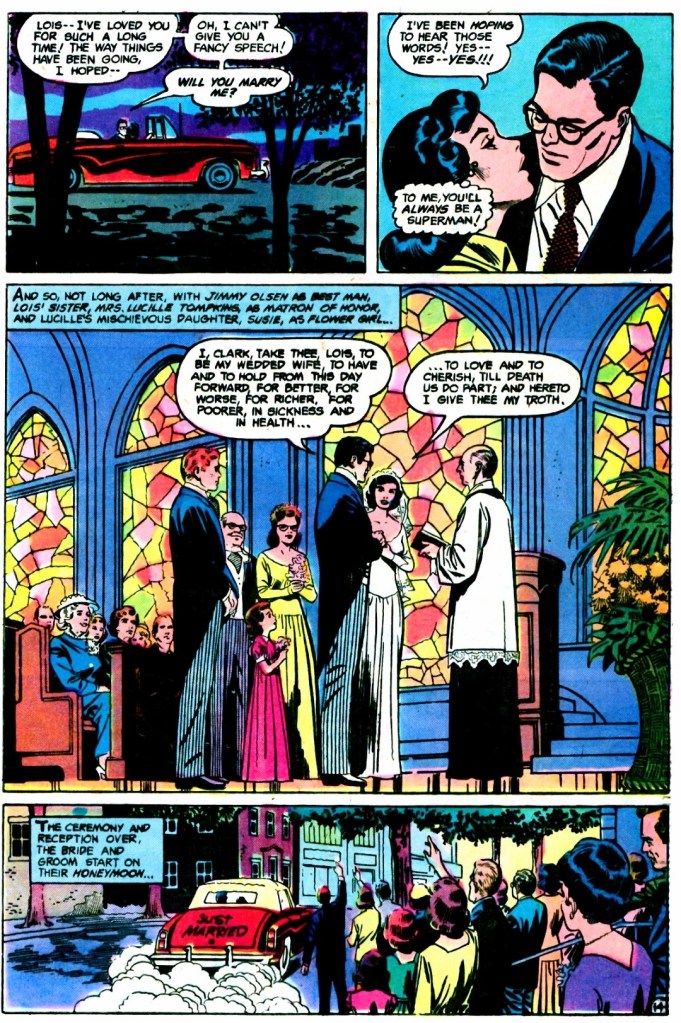
While it is clear that Superman – in his civilian form as Clark Kent – married Lois Lane, there is still a lot more to discover from the in-depth story written by Cary Bates.

I really like this pre-Crisis Superman story which is specifically set in Earth-Two of the DC multiverse. To make things clear, this is a tale showing Superman getting married to Lois Lane without impacting the mainstream version of DC’s icon at the time. Confused? That’s the consequence of having different versions of Superman complete with detailed parallel universes for each.

More on the core concept of this comic book, there is a lot more at stake – storywise and creatively – than meets the eye. Without spoiling the plot details, I can clearly say that the concept of Superman and Lois Lane getting married involves a daring plot which was executed nicely by the Bates-Swan duo resulting in a really intriguing reading experience for me. In other words, there is nothing simple with the presentation as the fantasy elements are really strong and the creative team took creative risks to emphasize the story while developing the key characters in new ways.

Still on the storytelling, the conflict between good and evil is emphasized not by struggle but rather the consequences which ultimately affect Superman and Lois Lane. The main opposition used by the Bate-Swan duo involves magic as a creative way to impact the Man of Steel and the narrative in general. There are some really intriguing moments about Superman (including his civilian identity as Clark Kent) and Lois Lane that await readers.

Conclusion

Lois Lane has an in-depth portrayal in this comic book, going beyond what the page shows you.

Action Comics (1978) is undoubtedly a very intriguing and surprising read. The creative team came up with ideas that subverted expectations and the execution was well done which made this a powerful and twisting read. Having read lots of Superman comic books through the decades, this comic book is one of the more surprising ones I have read. Finally, this one has a believable presentation about what married life between Superman and Lois Lane would be like reflecting the social norms at the time of publication.

Overall, Action Comics (1978) is highly recommended.

+++++

Thank you for reading. If you find this article engaging, please click the like button below, share this article to others and also please consider making a donation to support my publishing. If you are looking for a copywriter to create content for your special project or business, check out my services and my portfolio. Feel free to contact me with a private message. Also please feel free to visit my Facebook page Author Carlo Carrasco and follow me on Twitter at  @HavenorFantasy as well as on Tumblr at https://carlocarrasco.tumblr.com/ and on Instagram at https://www.instagram.com/authorcarlocarrasco
A Look Back at The Man of Steel #1 (1986)

Welcome back superhero enthusiasts, 1980s culture enthusiasts and comic book collectors! Today we go back to the late 1980s to explore a part of the DC Comics shared universe through a tale of the iconic Superman.

After DC Comics published the maxi-series Crisis on Infinite Earths, the publisher rebooted their entire comic book universe and that meant reintroducing their superheroes, villains and supporting characters with a touch of 1980s modernization. To reboot and modernize Superman, John Byrne was hired and he was granted a lot of creative freedom for production.

With those details laid down, here is a look back at The Man of Steel , published in 1986 by DC Comics with a story written and illustrated by John Byrne with ink work by Dick Giordano.

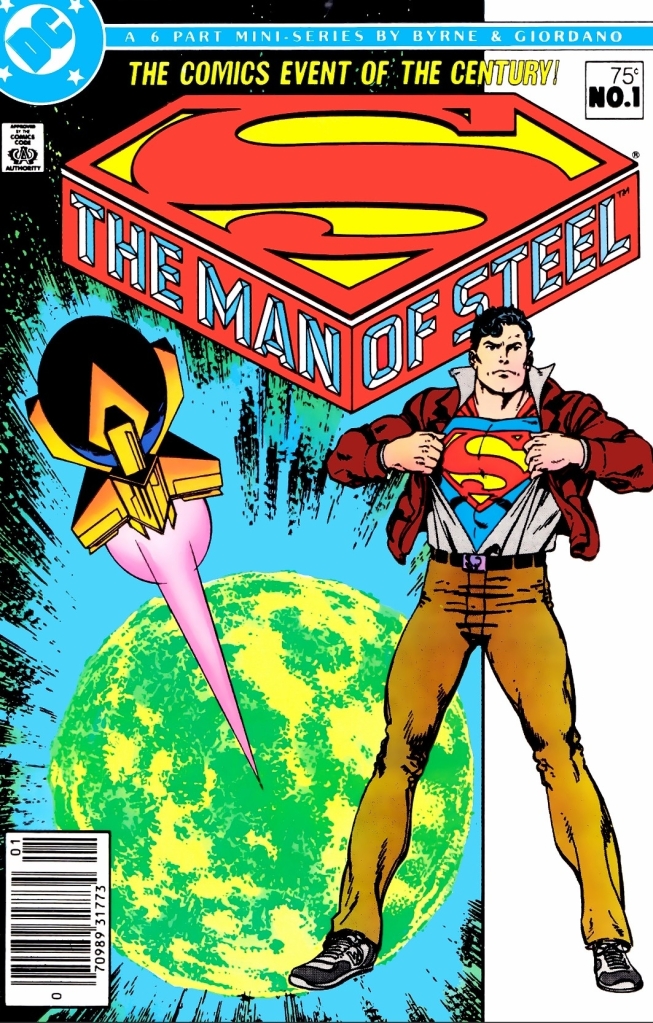
The cover.

Early story

The story begins sometime in the past in Krypton (Superman’s home world), a world about to meet its doom. Jor-El (Superman’s father) arrives home feeling deeply troubled and he wastes no time to execute an important plan he prepared. He examines his unborn Kal-El inside the birthing matrix which turned to have been removed by one of the servants from the gestation chambers of the planet. Lara confronts her husband over what was committed and asked him why he endangers the life of their unborn child.

Jor-El tells her that he plans for their son to be spared from the pending doom of Krypton (a chain reaction from the planet’s core caused vast pressures to build within the crust, fusing native elements into a new metal – Kryptonite) by sending him far away deep into space with planet Earth as the final destination. Jor-El has done extensive research of Earth and is convinced that their son will not only survive there but also become a supreme being among the inhabitants…

Quality

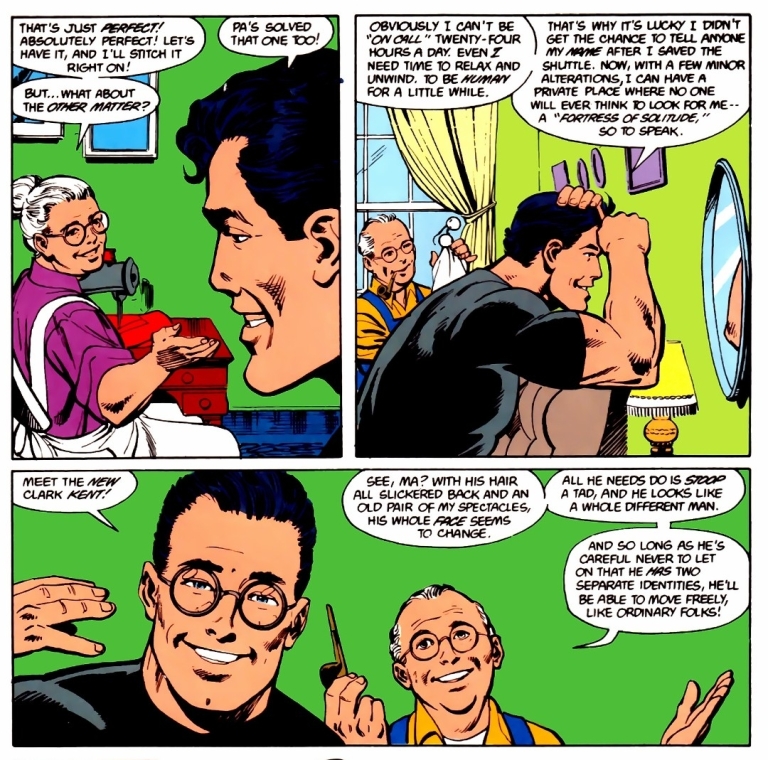
Clark’s earthly parents were indeed involved in his development becoming Superman.

There is no doubt that this John Byrne-led comic book remains great to read and highly significant with anything about Superman. Instead of telling one single extensive story, Byrne created a series of connected short tales that dramatized the icon’s post-Crisis origin and how the Krypton-born American Clark Kent became Superman for the first time ever.

While the prologue set in Krypton was quite heavy with expository dialogue, each subsequent short story was carefully structured and moved at a medium pace gradually emphasizing Clark Kent’s transformation into the Man of Steel. Along the way, there were lots of story details not only about the titular character but also about the Kent couple (Clark’s adoptive parents), what they went through, what secrets had to be kept and more. Very symbolically, this is a tale about an alien human being from space who grew up with traditional American culture and US heartland values while being raised by very loving American parents who previously could not produce children of their own. Through Clark, you will see that he is a blessing for Jonathan and Martha Kent and it is up to the couple to sow good values in him which are essential to his becoming not only a super being among mortals but also his emergence as a hero.

Conclusion

The origin of the post-Crisis Superman is great to read!

The Man of Steel (1986) is indeed a great, character-focused comic book that emphasized the origin and debut of the post-Crisis Superman. John Byrne modernized Superman while still maintaining the classic superhero elements from the icon’s past versions as well as the American identity and ways (none of those woke and internationalist nonsense). This is also the optimistic Superman that is very inspirational which the recent DC cinematic universe (referred to as “DCEU”) of Warner Bros. terribly lacked. This illustrated literature work is also a major cornerstone of the post-Crisis era of DC Comics and John Byrne’s take on Superman is very defining and iconic.

If you are the kind of reader who views Superman widely through pop culture, you will notice specific elements from this comic book that made it into other forms of entertainment media such as Man of Steel (2013), the Christopher Reeve Superman movies, the animated movies, the Lois & Clark: The New Adventures of Superman TV series (starring Dean Cain as the Man of Steel) and more. Those multimedia productions showed how influential this comic book became as a major reference for other creators.

Overall, The Man of Steel (1986) is highly recommended!

+++++

Thank you for reading. If you find this article engaging, please click the like button below, share this article to others and also please consider making a donation to support my publishing. If you are looking for a copywriter to create content for your special project or business, check out my services and my portfolio. Feel free to contact me with a private message. Also please feel free to visit my Facebook page Author Carlo Carrasco and follow me on Twitter at  @HavenorFantasy as well as on Tumblr at https://carlocarrasco.tumblr.com/ and on Instagram at https://www.instagram.com/authorcarlocarrasco
A Look Back at Break-Thru #2 (1994)

Disclaimer: This is my original work with details sourced from reading the comic book and doing personal research. Anyone who wants to use this article, in part or in whole, needs to secure first my permission and agree to cite me as the source and author. Let it be known that any unauthorized use of this article will constrain the author to pursue the remedies under R.A. No. 8293, the Revised Penal Code, and/or all applicable legal actions under the laws of the Philippines.

Welcome back superhero enthusiasts, 1990s culture enthusiasts and comic book collectors! Today we go back to the mid-1990s which was a really wild time for comic collectors. To be more specific, this newest retro comic book review revisits the conclusion of the epic Ultraverse storyline Break-Thru which was illustrated by the late George Perez (1954-2022). I encourage you readers – especially long-time fans of the iconic illustrator – to check out my commemorative article about George Perez by clicking here.

For the newcomers reading this, Break-Thru was a 2-part storyline that creatively involved almost all the main characters of the Ultraverse (The Strangers, Mantra, Prime, Prototype, Freex, The Solution, Hardcase, Sludge, Solitaire and others) who got impacted in varied ways by Amber (of the Exiles) who floated high in the air causing chaos on societies below. Specifically, that was the concept of Break-Thru (1993) and issue has the story continuing with a setting in outer space with the moon as the key destination.

With those details laid down, here is a look back Break-Thru , published in 1994 by Malibu Comics with a story scripted by Gerard Jones (plotted by Mike W. Barr, Steve Englehart, Steve Gerber, James Hudnall, Tom Mason, George Perez, James Robinson and Len Strazewski) and illustrated by the late George Perez.

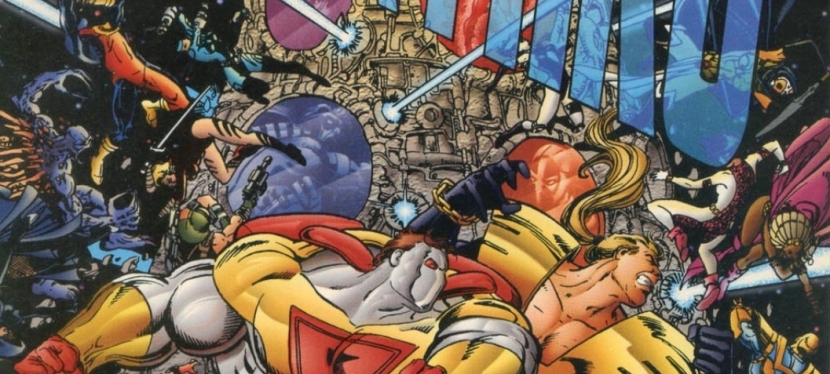
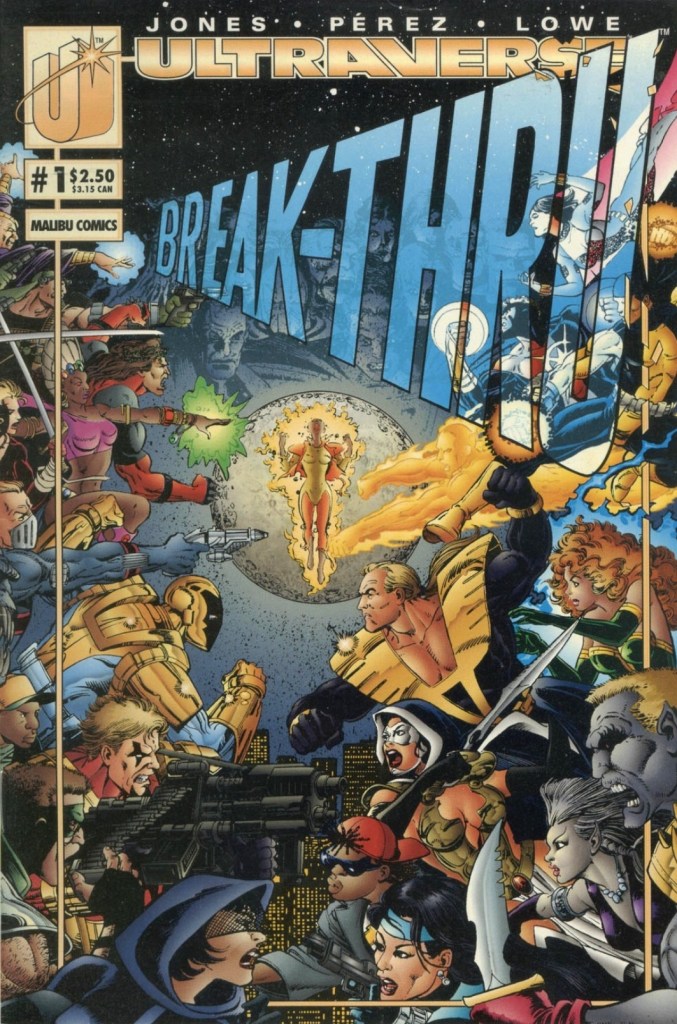
An epic cover by the late George Perez.

Early story

The story begins at the surface of the moon with Hardcase, Choice and the members of The Solution who just survived the explosion (connected with Hardcase #7 and The Solution #4) of the flying saucer they used on their journey. Nearby, the people responsible for the destruction are riding their own flying saucer, scanning the surface of the moon searching for an entity.

Behind the scenes, the very hidden yet powerful Rex Mundi watches and tells Gate that other ultras are seeking the entity. As the saucer floats to a cave detecting the presence of the entity, the occupants get shaken as Prime hits them hard. Prime tells himself that the entity in the cave feels danger from the searchers and he has to protect it as he has been connected with it (refer to Prime #7). After getting blasted in retaliation by the saucer, Prime finds himself hit even more as Rex Mundi’s enforcers suddenly come out of a portal very near him.  

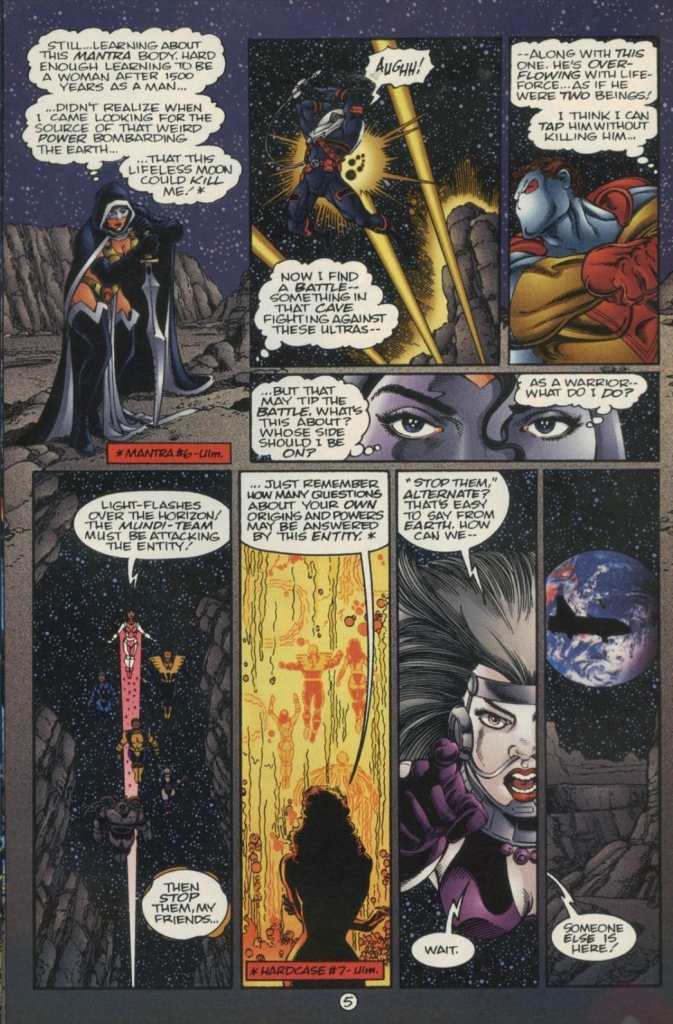
From a distance, Mantra (refer to Mantra #6) sees the fight happening and needs a life force to survive. Elsewhere, Hardcase, Choice and The Solution witness the arrival of a space shuttle. The Strangers and Prototype (refer to The Strangers #7 and Prototype #5) come out together…

Quality

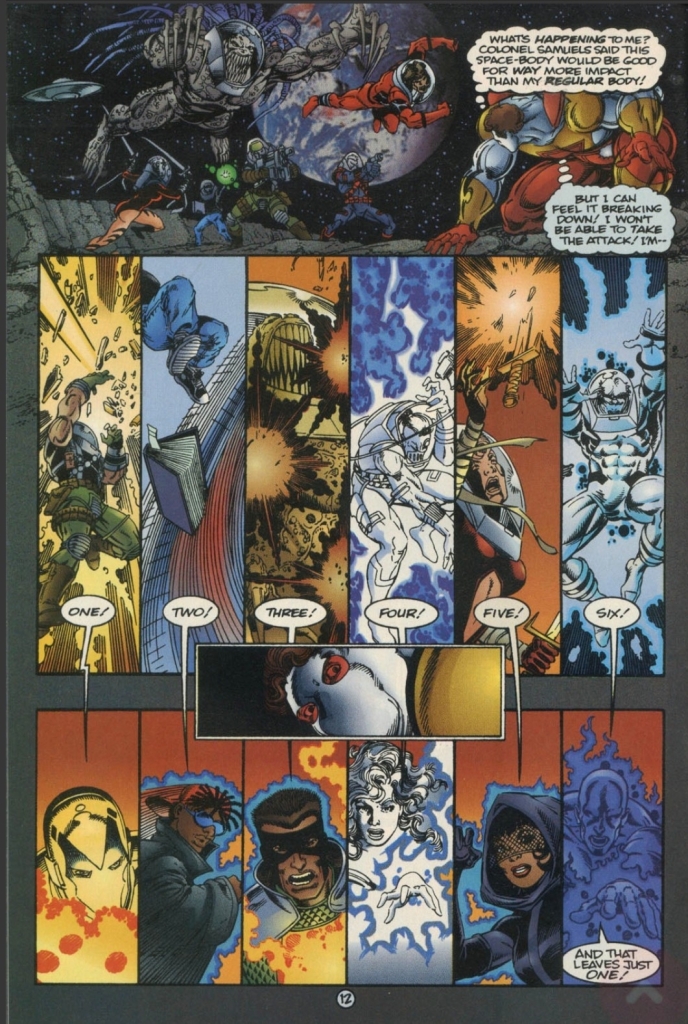
This is classic George Perez presentation of action and characters using multiple panels in a single page.

Starting with the writing, I should mention that all the writers who were involved in plotting this comic book as well as the previous issue should be commended for their combined efforts on making the Break-Thru storyline happen complete with in-universe ramifications, developments and connections to almost all the monthly comic books via the Break-Thru tie-in issue (also check out Sludge #3, Freex #6, Solitaire #2 and Night Man #3). Clearly Break-Thru was planned to be a major turning point of the Ultraverse by involving and mixing most of the major characters together and have them struggle with tremendous obstacles they simply cannot ignore as the stakes were indeed too high.

More on this comic book, the major conflict was set on the moon which proved to be a very unique setting not just for dynamic battles to happen but also to serve as the place where a mysterious and powerful entity is hidden. When it comes to the story, the entity (more science fictional in concept) is mysterious and cleverly not blatantly evil. It is its mysteriousness that makes the entity a worthy force to have the UV’s heroes come after.

The writers added depth to the plot by showing Yrial of The Strangers and Prototype each having their own vested interests to get to the entity and acquire whatever it has that is valuable. At the same time, Mantra and Prime each discovered valuable knowledge about the entity that impacted their perceptions about their purpose as beings with super powers.

Mantra, Prime, The Solution, Hardcase and Choice.

While the story here still has so many characters expressing themselves and releasing expository information, the narrative is a little bit easier to understand and follow compared to issue (which had a lot more information to release via exposition). That being said, the scenes of spectacle became more enjoyable to read and along the way there were some notable character moments to look at.

Visually, this is unsurprisingly a great looking comic book as it was illustrated by the late George Perez. What I love most about Perez’s art style and visual presentation are all here: high details on each character drawn as well as their surroundings, the dynamic approach on setting up the panels on each page, fantastic looking superhero action, and much more! As with Break-Thru and other Ultraverse comic books drawn by Perez, this one is absolutely great to look at and it easily lifts up the visual/artistic quality of the UV and its heroes. As George Perez was involved in the plot of this comic book, the narrative was never overwhelmed by his great art and the artist really exerted a lot of effort on visualizing each and every one of the established UV characters (including the supporting characters).

Speaking of the established characters, I should state that Perez made Mantra’s face (with mask) look a bit more realistic and feminine while Kevin Green has a more convincing teenage boy look, Sludge looks a bit more creepier and Yrial looks visually identical to the way Rick Hoberg draws her. When it comes to the varied physiques of each established UV hero, Perez captured them all perfectly. Clearly the late artist did his research on every character.

Conclusion

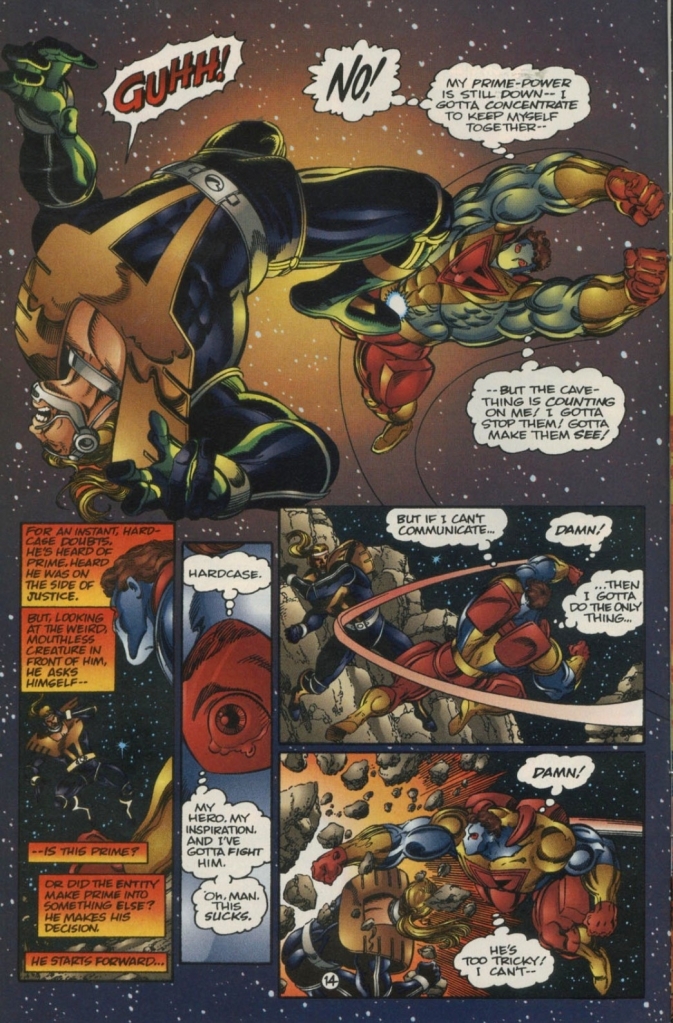
The first physical encounter between Prime and Hardcase. Remember this before reading the UltraForce comics.

Break-Thru (1994) is truly an epic Ultraverse story that also worked as a major turning point of the UV as a whole. Compared to other epic superhero stories that Marvel and DC Comics published, Break-Thru is not the usual large gathering of superheroes who have to work together to defeat an evil force that threatens everyone’s existence. It is more about the UV heroes getting together to solve major obstacles before reaching the main destination. By the time I reached the end of this comic book (and its storyline), I experienced great satisfaction not just from Break-Thru itself but also in relation to how the Ultraverse heroes realized what they are living for and what their respective purposes really are about. What also happened in this comic book explains why jumpstart events happened on Earth. Very clearly, this was an epic story that was planned early and even though this was published just months after the Ultraverse first debuted, the characters were developed enough to make Break-Thru’s concepts sensible and acceptable. There is a lot of fun and engagement in this comic book drawn by the late George Perez (who also worked on DC’s Crisis on Infinite Earths and Marvel’s The Infinity Gauntlet).

Overall, Break-Thru (1994) is highly recommended!

+++++

Thank you for reading. If you find this article engaging, please click the like button below and also please consider sharing this article to others. If you are looking for a copywriter to create content for your special project or business, check out my services and my portfolio. Feel free to contact me with a private message. Also please feel free to visit my Facebook page Author Carlo Carrasco and follow me on Twitter at  @HavenorFantasy as well as on Tumblr at https://carlocarrasco.tumblr.com/ and on Instagram at https://www.instagram.com/authorcarlocarrasco/

George Perez (1954-2022)

George Perez, the incredible comic book artist who made major contributions to illustrated literature (especially the superhero comic book genre), sadly passed away due to complications related to pancreatic cancer. He was 67-years-old and I can say that superhero comic book art and dynamic expressions will not be the same without him.

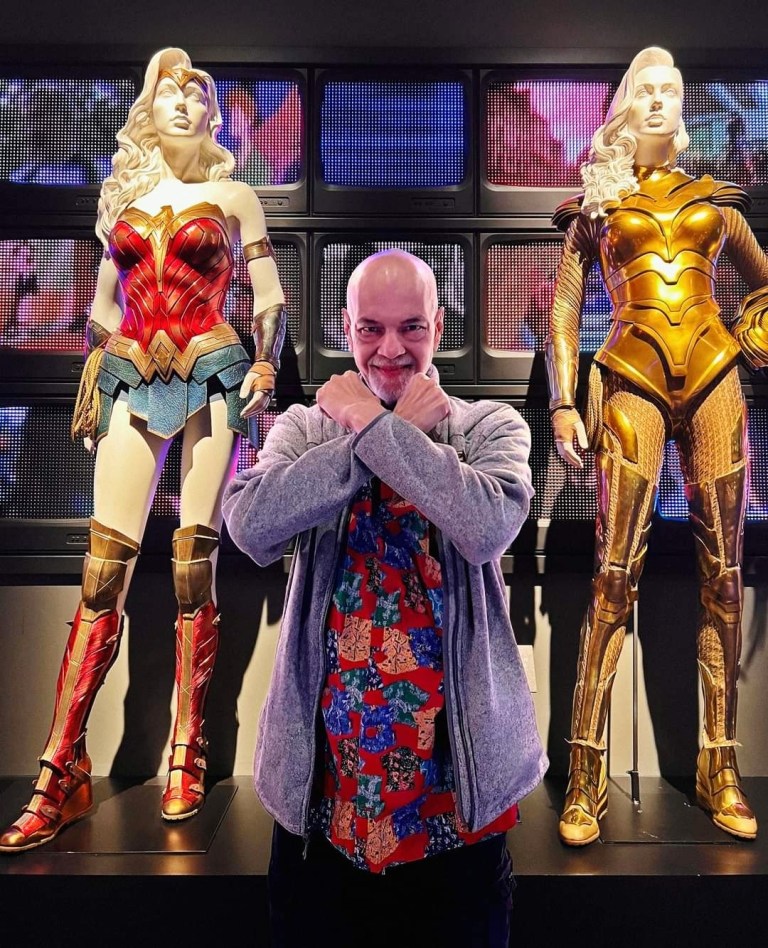
George Perez with the two Wonder Woman plastic models. (photo source – DC Comics Facebook page)

Already there were comic book industry figures who reacted to the death of the legendary Perez. DC Comics co-publisher and legendary creator Jim Lee paid tribute stating, “We creators may all have access to the same tools of the trade: pen, paper and imagination, but what George could do with his prodigious talents was off the charts.”

For his part, Rob Liefeld stated, “I’ll remember George for his innovative and prolific storytelling. Thank you for all the great memories. Rest In Peace, George Perez.”

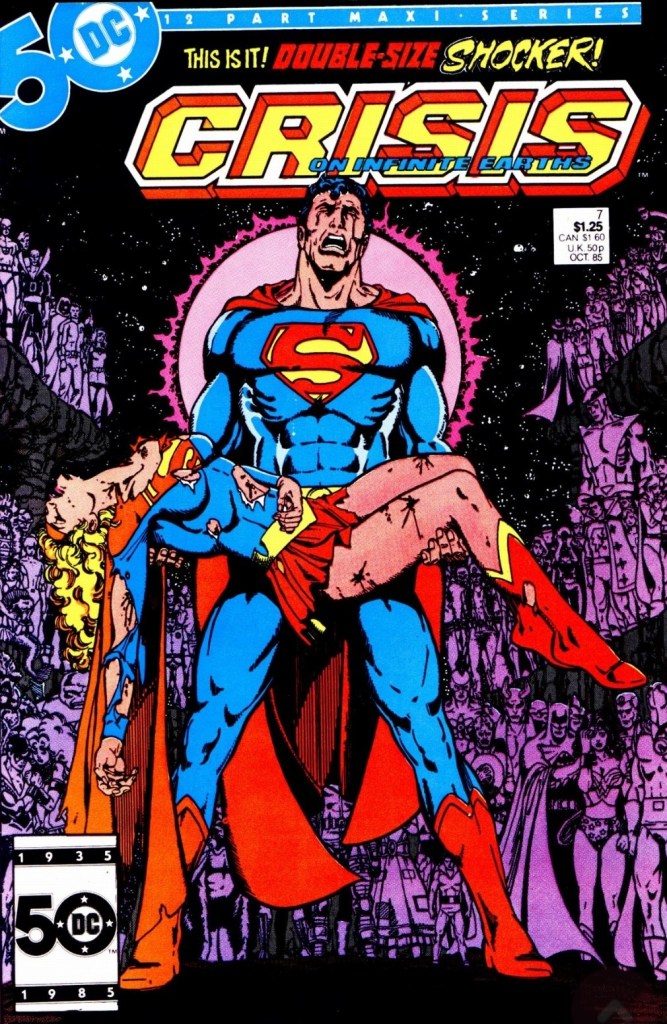
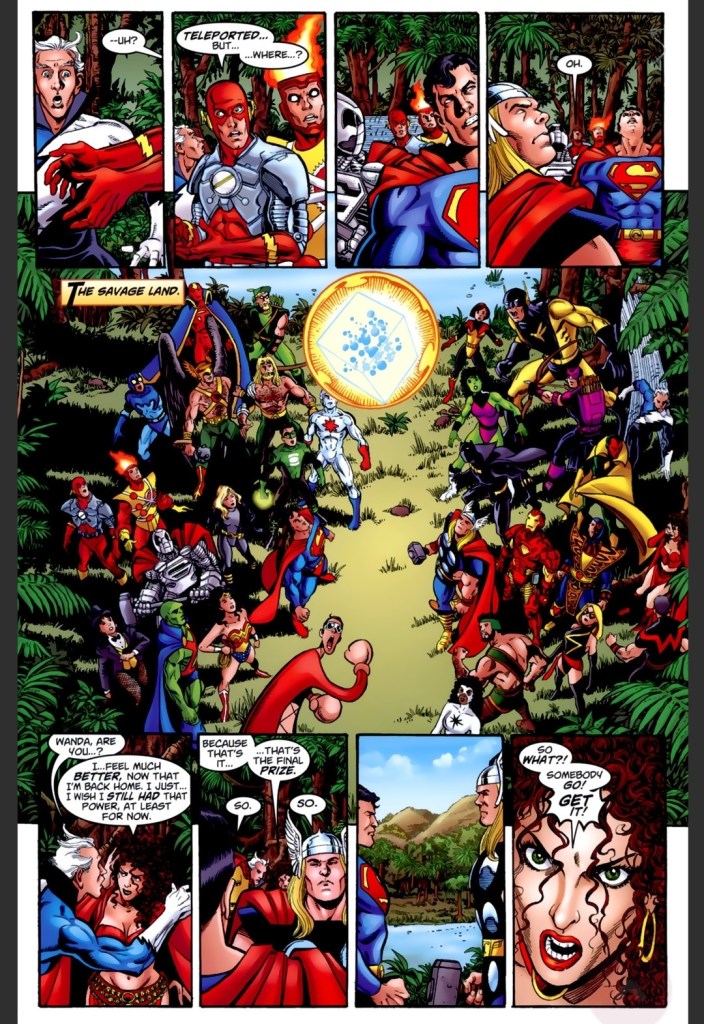
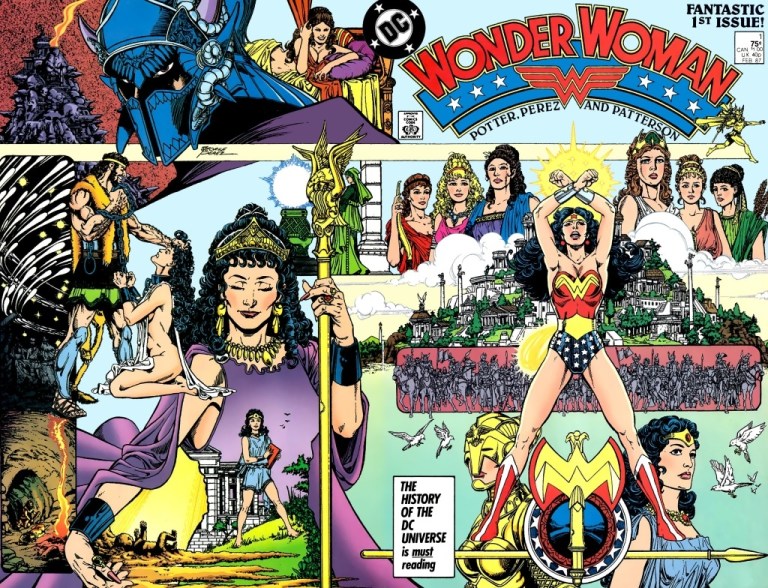
For the newcomers reading this as well as those who are simply unaware of Perez’s legacy, he was responsible for visualizing DC Comics’ 1985 epic maxi-series Crisis on Infinite Earths (note: he drew countless characters complete with varied settings or environments in high detail) and redefining Wonder Woman (note: he also wrote the stories) which made her a more essential pop culture icon. George Perez also worked for Marvel Comics over many projects and was chosen to illustrate the memorable 2003 JLA/Avengers crossover series of Marvel and DC. Perez also worked with other publishers such as Malibu Comics for several Ultraverse comic books and Image Comics for Crimson Plague and Witchblade. In recent years, he was responsible for Sirens published by BOOM! Studios.

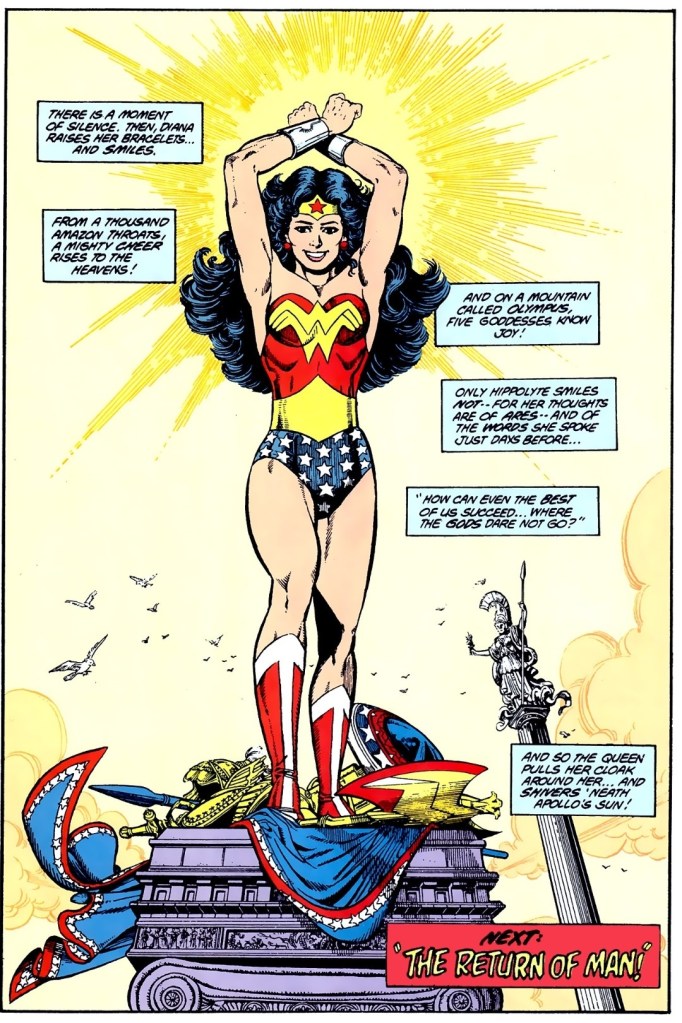
For me, Wonder Woman was best defined during the post-Crisis era of DC Comics which involved George Perez and Len Wein who wrote the early issues of the Wonder Woman monthly series in the late 1980s.

In his decades-long career in comics, Perez unsurprisingly earned varied awards and honors (references here, here, here and here to name a few).

I should say that George Perez is a long-time favorite comic book illustrator of mine. I enjoyed reading the superhero comic books he illustrated and I love his art style on the characters, the environments and crowds. If there is anything I love about Perez’s art, it is his distinct style along with his implementation of high levels of details on the characters, objects, creatures and surroundings. Perez is also known to capture the distinct visual elements of superhero characters such as Spider-Man’s costume and his spaghetti-like web, Superman’s physique and distinct letter S, Prime’s overly muscular body and more. Every time Perez is involved as artist, the result is almost always a visual feast that often adds punch to the script prepared.

When I was still actively collecting comic books back in the 1990s, I often get excited whenever I learned that George Perez illustrated upcoming comic books. In 1992, he drew Incredible Hulk: Future Imperfect (2 books) which was mind-blowing and intriguing for me! In 1993, I became a fan of the newly launched Ultraverse of Malibu Comics and I got very excited to learn that Perez was hired for their major UV crossover Break-Thru (2 issues). Perez also drew one issue of Prime and most of the early issues of the UV team UltraForce (issues #0, #1, #3, #4, #5 and #6). If you want to see Perez draw ALL the characters of the Ultraverse, you should read the 2-issue Break-Thru storyline.

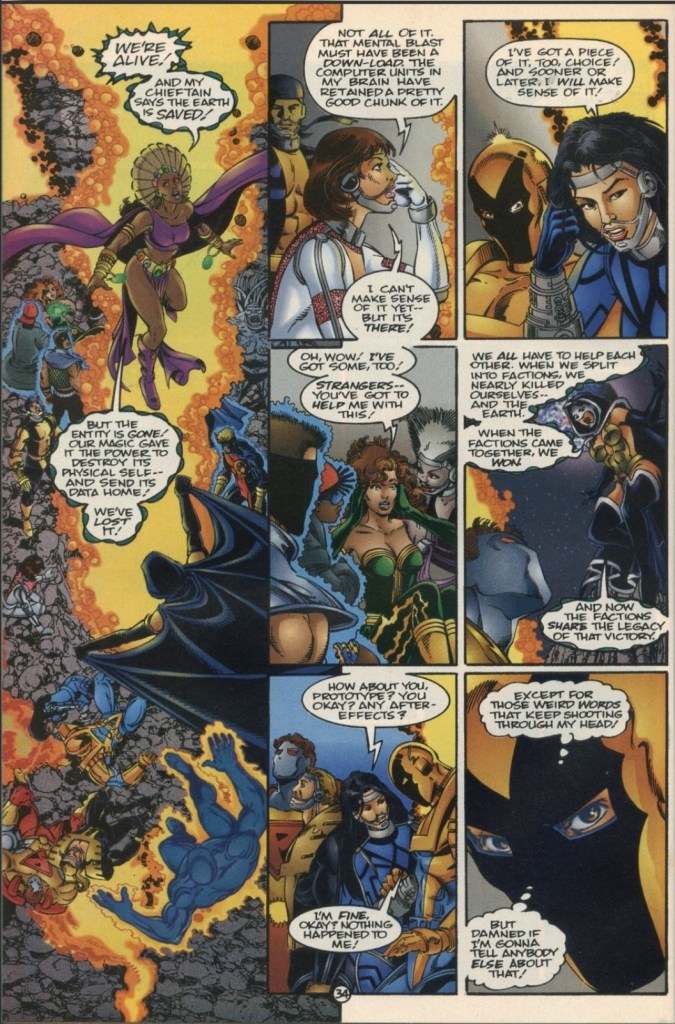
A page from Break-Thru showing just some of the many Ultraverse characters Perez illustrated. This was published before the release of UltraForce.

Speaking of UltraForce, check out this video by Crypto Comics (with observations on Perez’s art works)…

Going back to George Perez’s amazing run on Wonder Woman, I urge you to watch the video below…

For me, the most defining stories of Wonder Woman ever told in any art form are still the comics that Perez wrote (note: he co-wrote stories with Greg Potter and Len Wein respectively on the early issues) and illustrated during the post-Crisis era of DC Comics. Check out my retro reviews of Wonder Woman 1980s comics on this website.

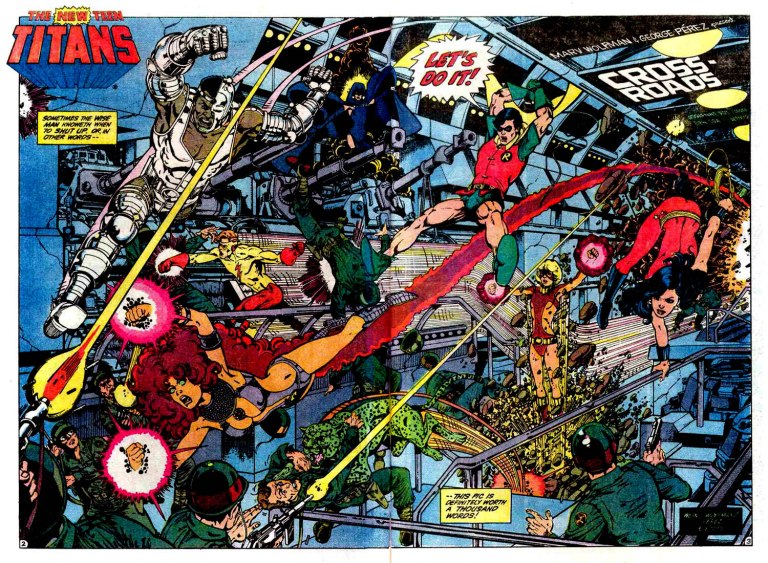
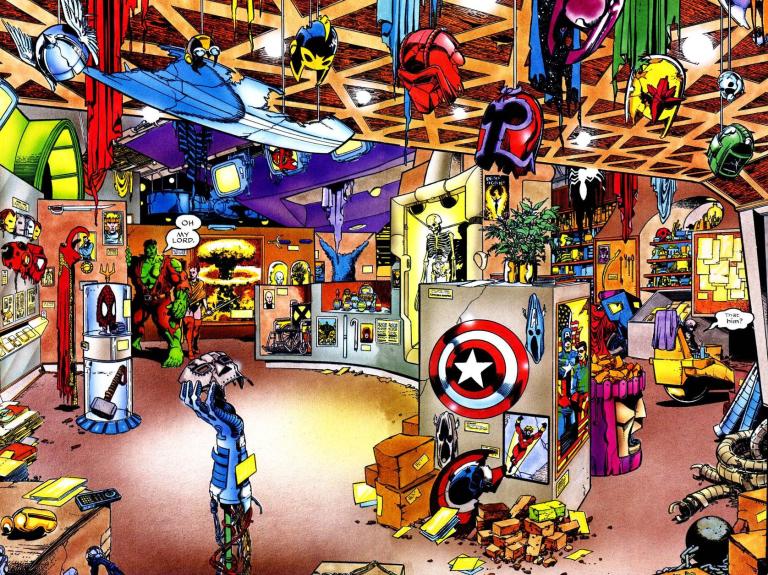
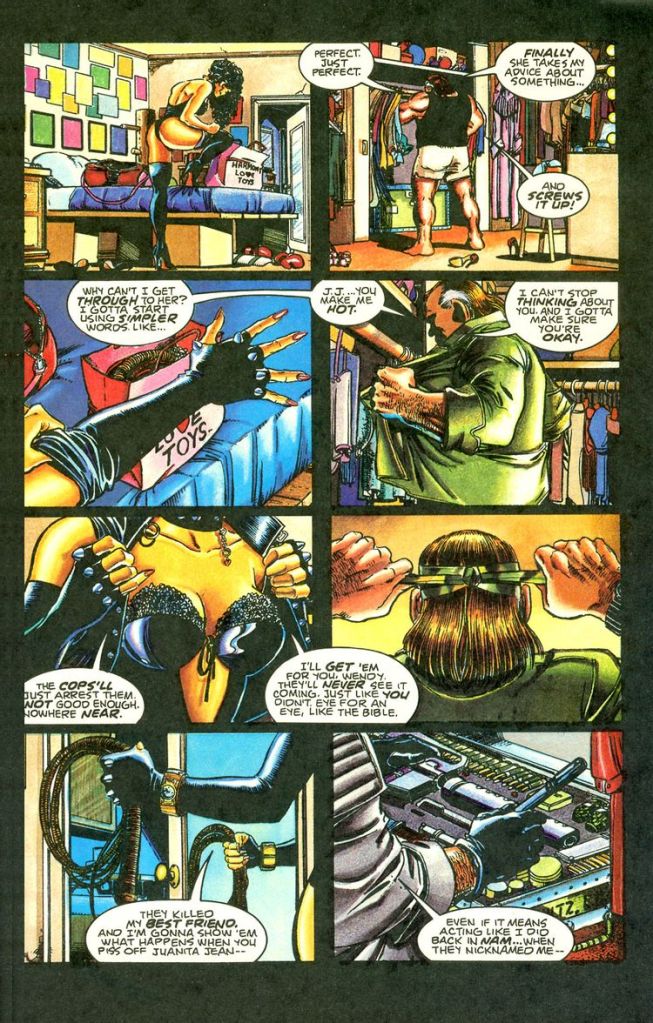
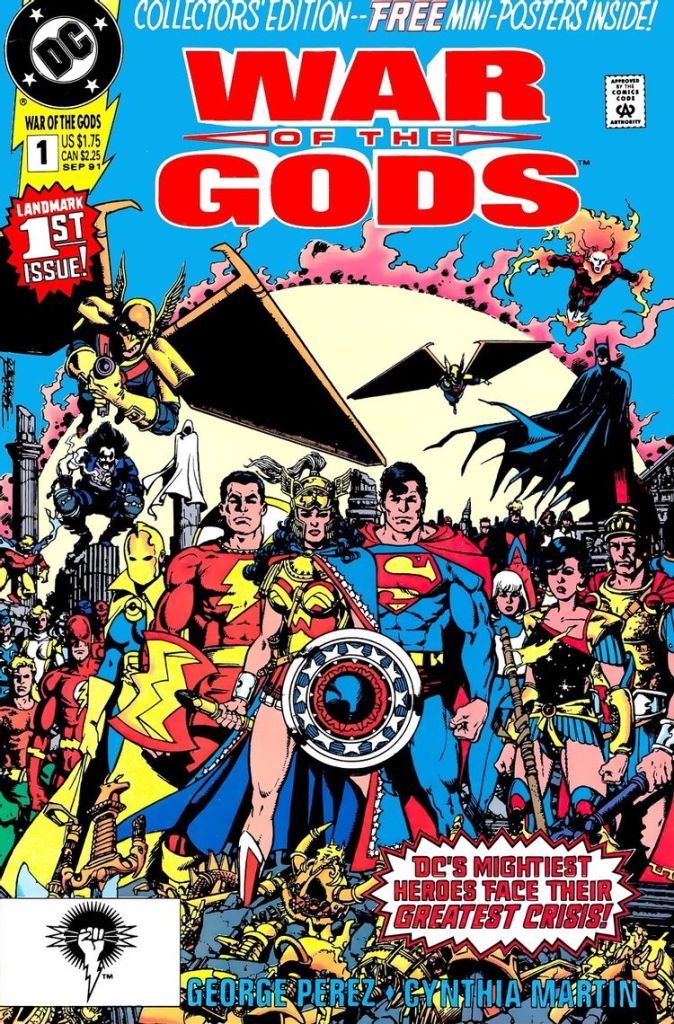
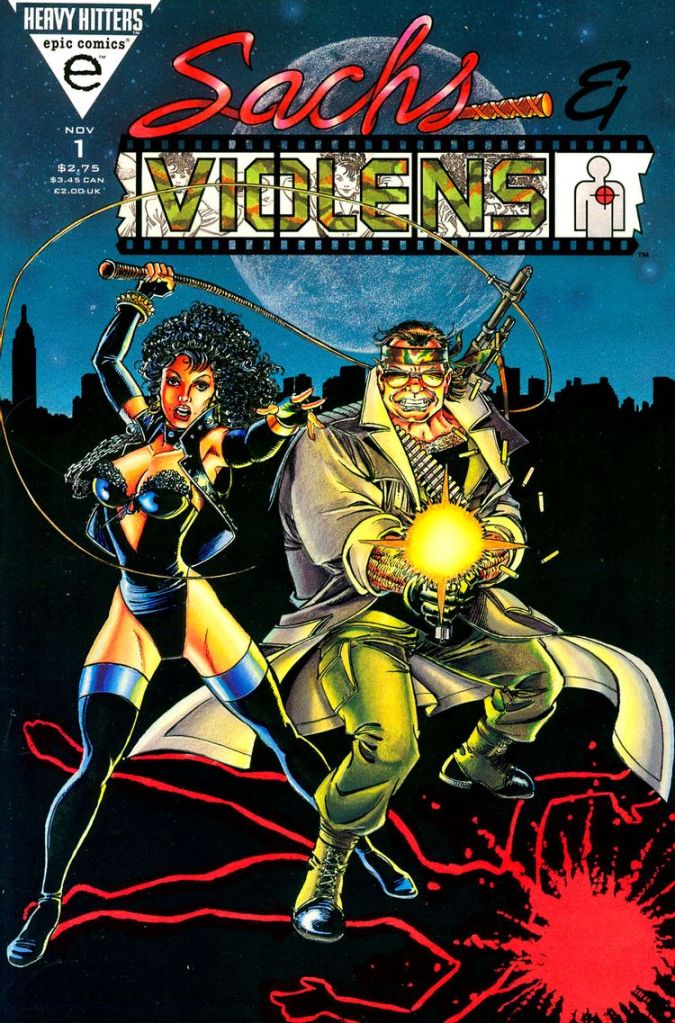
Truly, George Perez will be missed by a lot of people and his countless pieces of works will be revisited in the foreseeable future. In closing this piece, posted below are varied works (comic book covers and interior art) done by the late creator through the decades for your viewing pleasure and learning. This is a tribute to Perez and may he rest in peace!

+++++

Note: All images shown are properties of their respective companies.

Thank you for reading. If you find this article engaging, please click the like button below and also please consider sharing this article to others. If you are looking for a copywriter to create content for your special project or business, check out my services and my portfolio. Feel free to contact me with a private message. Also please feel free to visit my Facebook page Author Carlo Carrasco and follow me on Twitter at  @HavenorFantasy as well as on Tumblr at https://carlocarrasco.tumblr.com/ and on Instagram at https://www.instagram.com/authorcarlocarrasco/
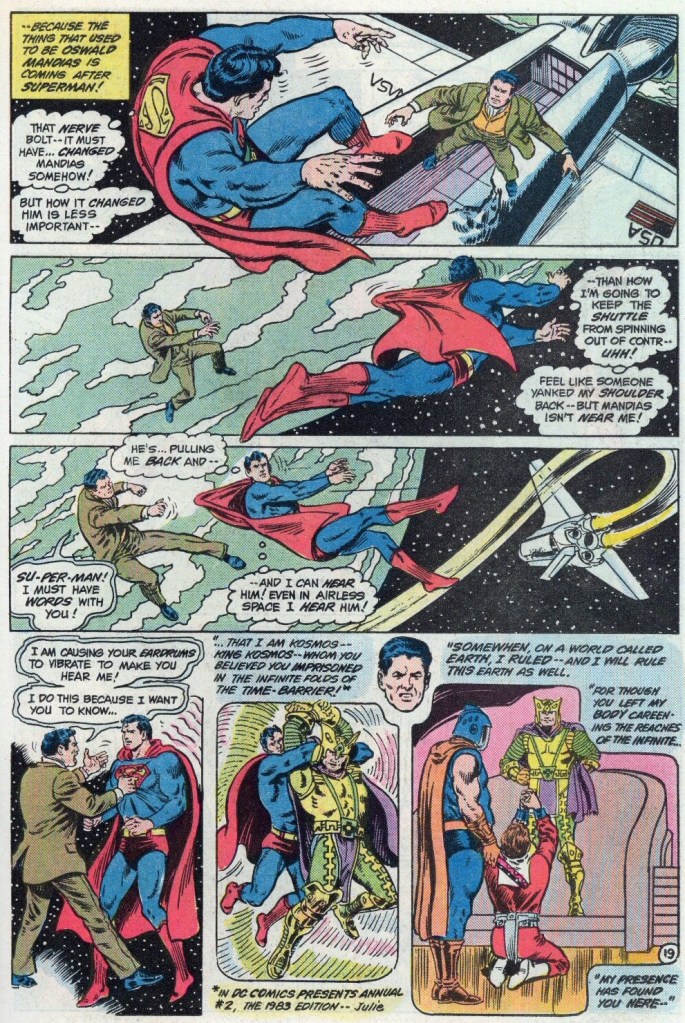
A Look Back at Superman Annual #10 (1984)

Disclaimer: This is my original work with details sourced from reading the comic book and doing personal research. Anyone who wants to use this article, in part or in whole, needs to secure first my permission and agree to cite me as the source and author. Let it be known that any unauthorized use of this article will constrain the author to pursue the remedies under R.A. No. 8293, the Revised Penal Code, and/or all applicable legal actions under the laws of the Philippines.

Before DC Comics ended their original superhero multiverse with Crisis on Infinite Earths (1985-1986) to restart all over again, there were a whole lot of stories about Superman ranging from the dramatic stuff, the epic tales and right down to the most outlandish tales.

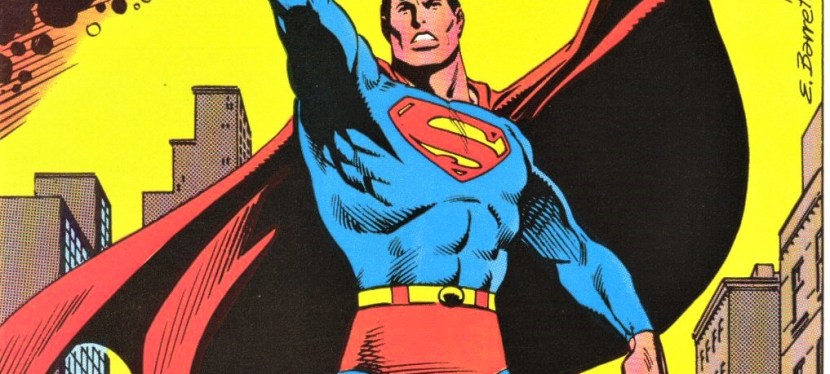
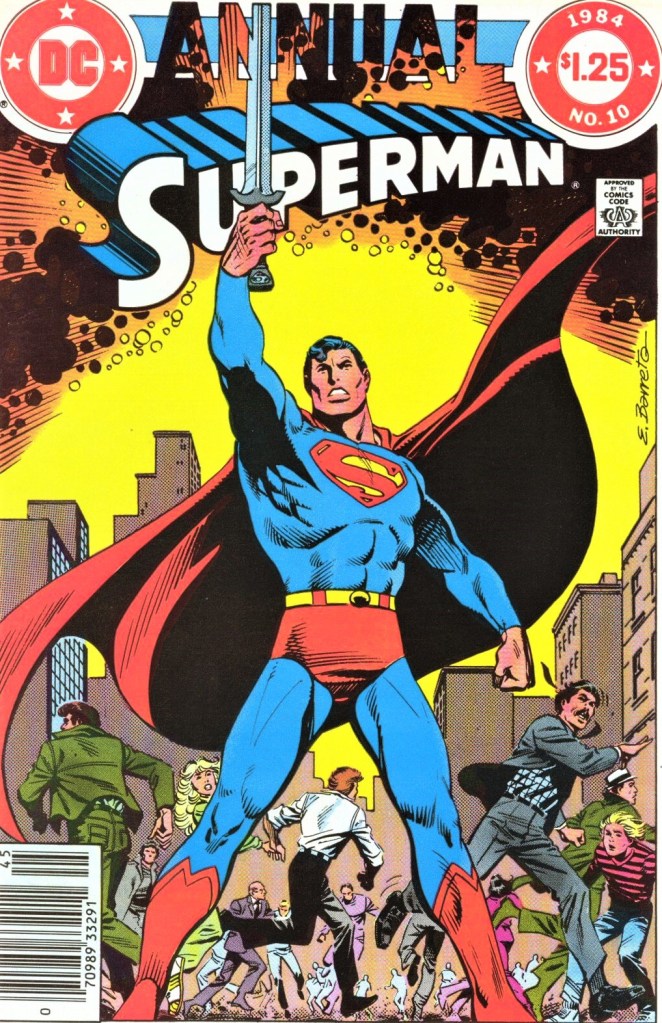
As a kid, I was fortunate enough to buy myself a copy of a 1984 Superman comic book, the cover of which really intrigued and caught my interest. It was a Superman annual comic book with a $1.25 cover price which was somewhat high at the time. Its cover showed the Man of Steel himself carrying a sword pointed up.

That image made me wonder: Why would Superman have to use a sword when he is so powerful and capable without weapons? Where did that sword come from? Who made it in the first place? Is the sword so special to Superman?

With those details laid down, here is a look back at Superman Annual , published by DC Comics in 1984 with a story written by Elliot Maggin and drawn by classic Superman artist Curt Swan.

The cover.

Early story

The story begins in a space where a group of diverse people composed of aliens and humans are gathered together watching a live video feed Superman on a large monitor above their heads. As it turns out, the Man of Steel is in space working to prevent meteoroids from entering the planet below him. He then speeds off into space heading back to Earth.

Along time ago deep in the galaxy, a big bang effect took place creating several new fragments in the vacuum of space and among them is a long, rough object that resembles a sword. As an unknown amount of time passed, the long object gradually turns into a smooth looking sword complete with a sharp blade and a letter “S” on one end that is the same as the one Superman carries. It is referred to as the sword of Superman!

In Metropolis, Clark Kent is passed by his officemate Jimmy Olsen who mentioned that he is rushing to interview the billionaire industrialist Oswald Mandias. Two days have passed and Jimmy Olsen remained missing. As his boss Perry White heads on to the office, Clark remains and changes into Superman when the coast got clear.

As the Man of Steel flies off into the city, a Galaxy Broadcasting live report on TV shows Lana Lang reporting from the Kennedy Space Center where the new space shuttle Magellan is about to make its first-ever commercial flight to launch a mysterious new communications satellite owned by Mandias Industries…

Quality

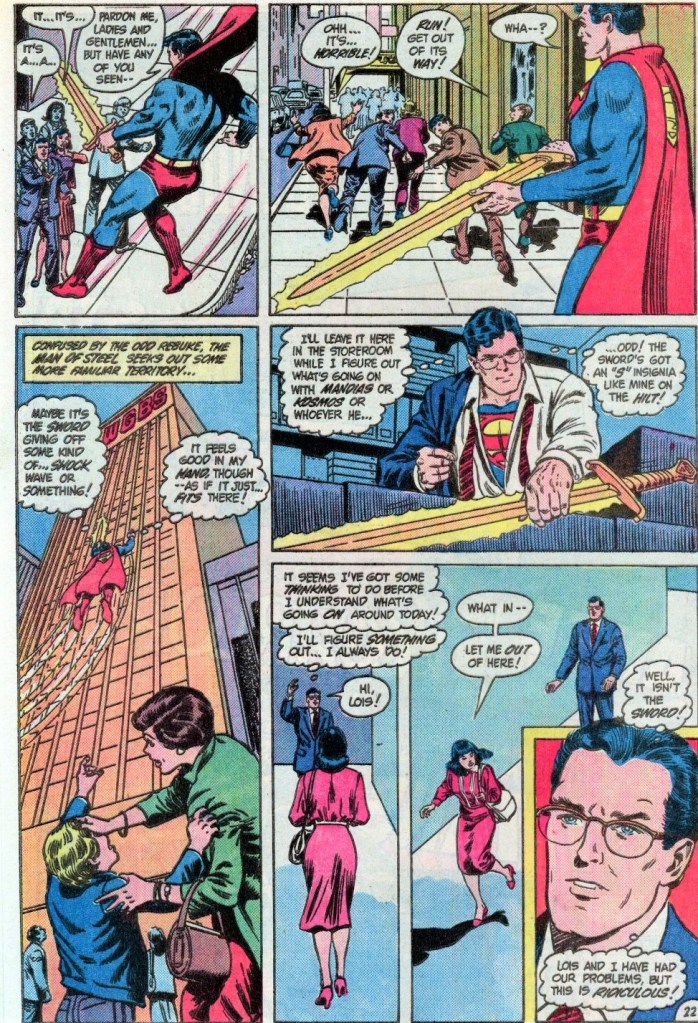
Clark Kent/Superman being a complete stranger to others added a lot to the story.
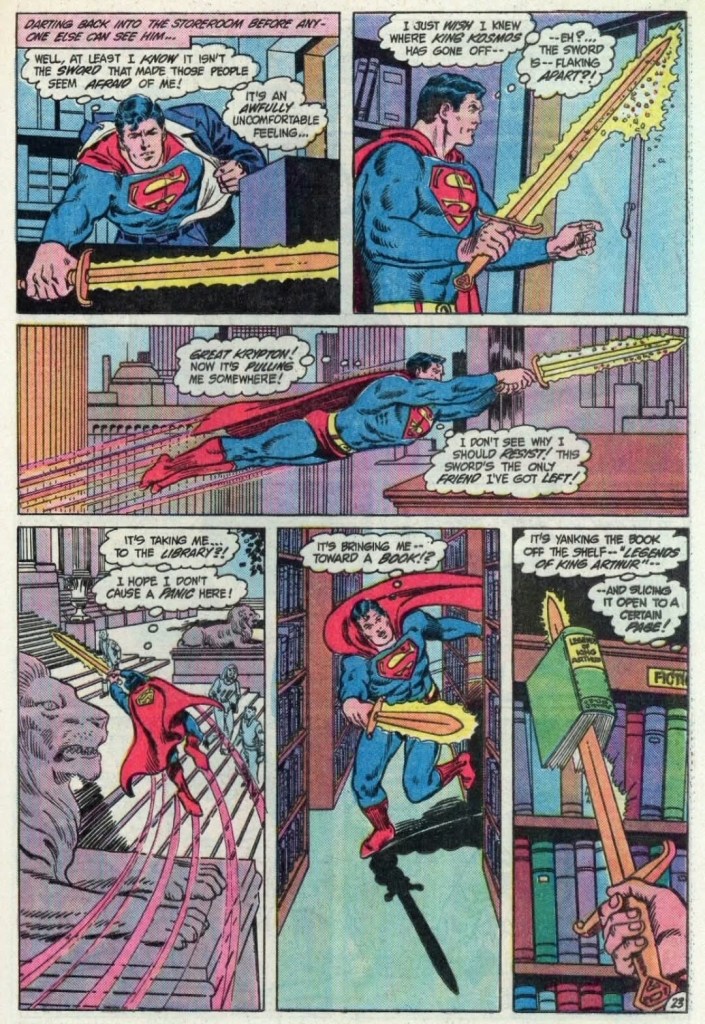
The sword led Superman to a book about the legend of King Arthur inside the city library.

Being an annual, I can say that the Sword of Superman story was well-written and nicely visualized by the creators which made it fun and engaging to read. It is a Superman story that further adds to his being an essential hero of the original DC Comics multiverse and a key factor here is the somewhat outlandish concept that the sword that he gained was an original material of the universe from the big bang and even had connections to the unseen omnipotent force.

This story is not a simple, straightforward tale about Superman gaining a weapon required to defeat the supervillain King Kosmos. In fact, the sword opens up events that made the Man of Steel reevaluate himself, his situation and the people around him. King Kosmos, who is a time-travelling villain from the future (first appearance in DC Comics Presents Annual ), served not just merely as the opposition but also adds a good amount of complexity within the reality of the story. For one thing, it is very intriguing and also refreshing to see people of Metropolis (even Clark’s friend Jimmy Olsen) failing to recognize Superman and perceive him with fear. This is a one-of-a-kind story of Superman that must be read, even though it is not really an epic tale.

All throughout, there is a fine balance between spectacle and intrigue. If you pay close attention to the dialogue and details, you will understand the story better and enjoy the comic book more eventually.

Conclusion

The return of King Kosmos!

I personally enjoyed reading Superman Annual (1984) the first time back in 1984. The fact here is that after re-reading it recently, I do confirm that it is still an enjoyable comic book to read, and I am not even a Superman fan anymore. That is quite something! This is indeed a really good piece of Superman history from the pre-Crisis era. It also touches on themes about omnipotence, how ordinary people react to people who wield great power, and being whole with the entire universe.

If you are seriously planning to buy an existing hard copy of Superman Annual (1984), be aware that as of this writing, MileHighComics.com shows that the near-mint copy of the regular edition costs $35 while the near-mint copy of the newsstand edition costs $70.

Overall, Superman Annual (1984) is recommended.

+++++

Thank you for reading. If you find this article engaging, please click the like button below and also please consider sharing this article to others. If you are looking for a copywriter to create content for your special project or business, check out my services and my portfolio. Feel free to contact me as well. Also please feel free to visit my Facebook page Author Carlo Carrasco and follow me at HavenorFantasy@twitter.com
A Look Back at Action Comics #545

Disclaimer: This is my original work with details sourced from reading the comic book and doing personal research. Anyone who wants to use this article, in part or in whole, needs to secure first my permission and agree to cite me as the source and author. Let it be known that any unauthorized use of this article will constrain the author to pursue the remedies under R.A. No. 8293, the Revised Penal Code, and/or all applicable legal actions under the laws of the Philippines.

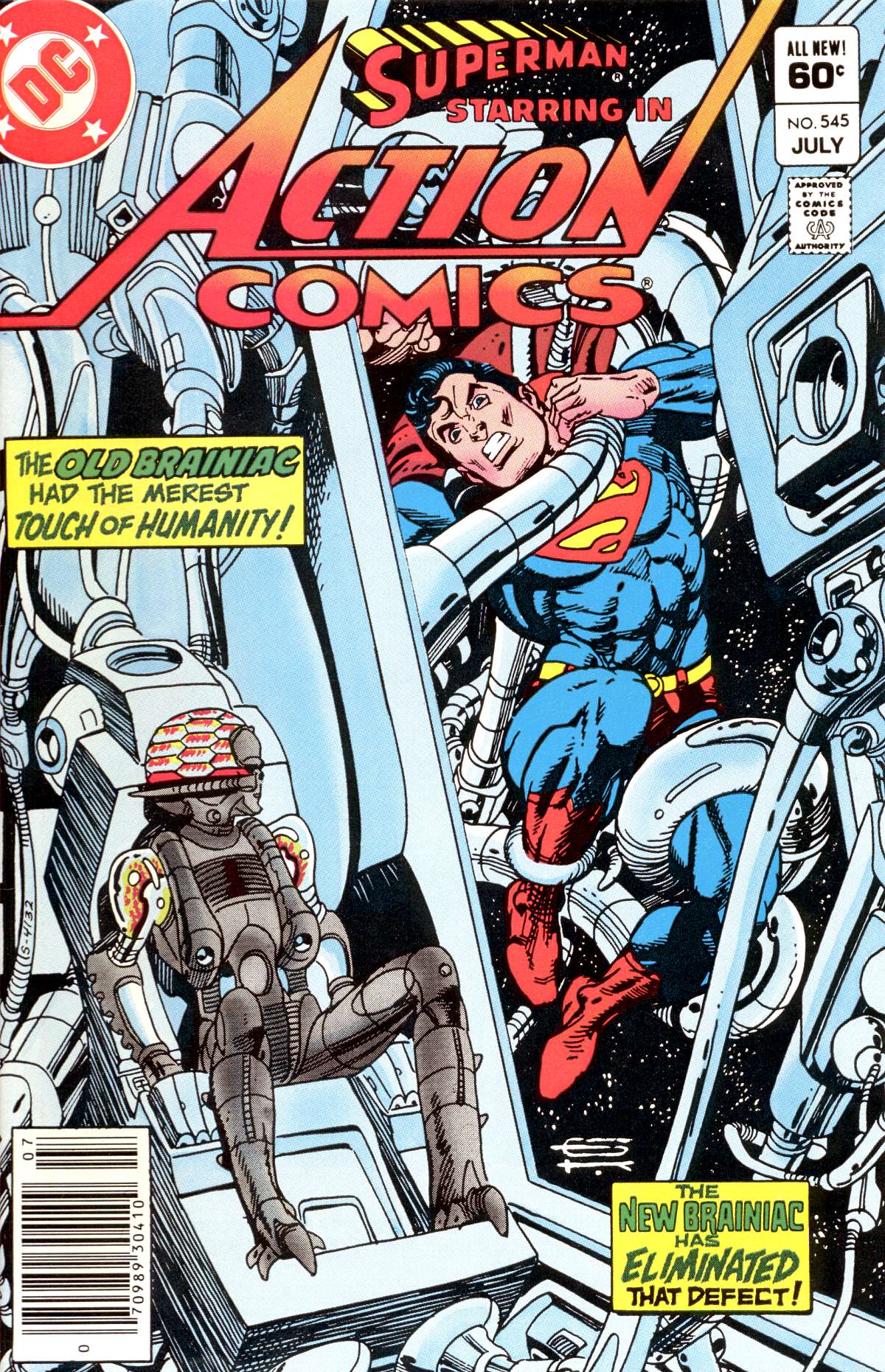
Action Comics was, indeed, a very memorable comic book to read. For a comic book about Superman and the celebration of his 45th anniversary, Action Comics was more about the drastic reform (and improvement) of the super villains Lex Luthor (gaining a powered suit of armor) and Brainiac (becoming fully robotic). That particular issue ended with Superman actually getting defeated and knocked down during his first encounter with the now metallic Brainiac (who also had a huge squid-like space ship of his own).

The story continues with this look back at Action Comics #545, published by DC Comics in 1983 with a story written by Marv Wolfman and illustrated by Gil Kane.

Cover
The cover.

Early story

The story begins with Superman already down on the ground on an alien world in the presence of Brainiac and the strange beings (natives of the planet) standing near him. Braniac explains to him that his red-sun missile brought him down and states: With but the merest thought I can and will destroy you! For only with your death can I be victorious in my battle against he-who-created-us-all! With you dead, this universe and all others will be mine to rule!

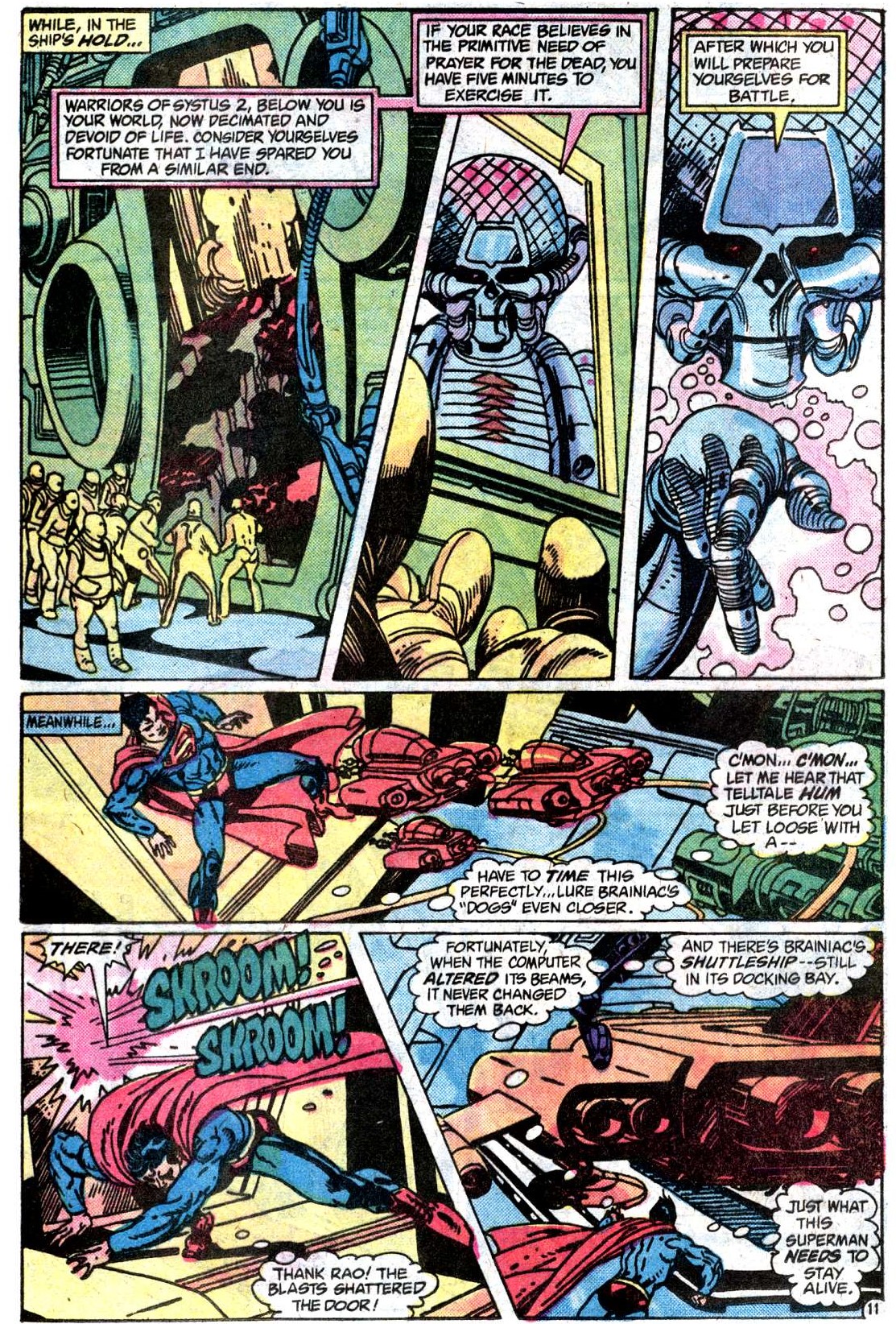
After much talking, Brainiac puts the weakened Superman into his small ship and brings into him the main ship (Brainiac’s flyer). Before departing, Brainiac’s flyer fires a powerful blast killing many of the planet’s natives.

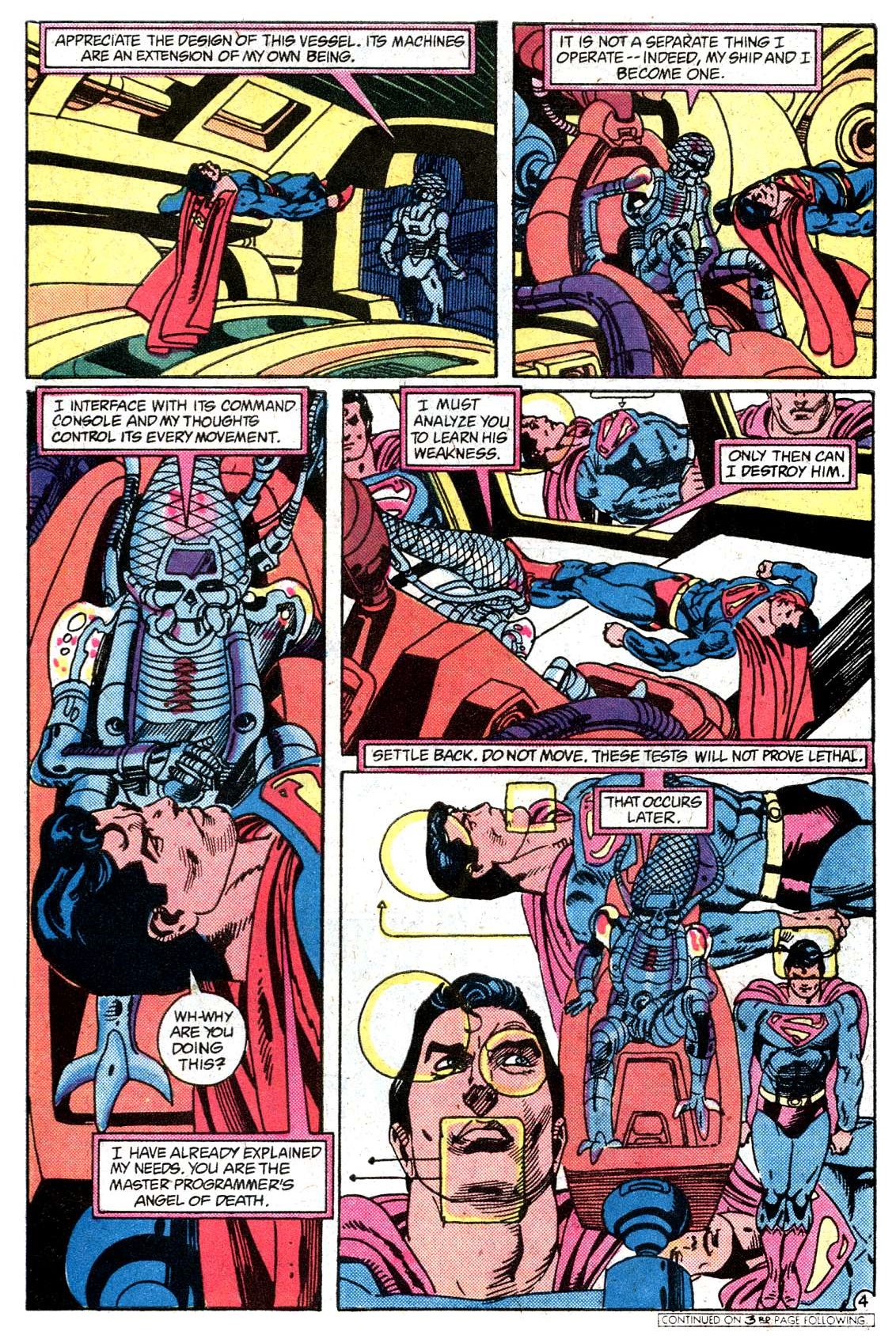
Superman is conscious but is too weak to get up. Brainiac then starts analyzing him using his ship’s state-of-the-art equipment…

Quality

11
The new Brainiac’s power is felt all over.

Let me start with the story. Written by the legendary Marv Wolfman (who went on to author Crisis on Infinite Earths), Action Comics #545 is the highly compelling extension of the first encounter between Superman and the highly enhanced Brainiac. Continuing from the events that took place in issue , this comic book further emphasizes Brainiac’s new technology and new capabilities complete with revisions in his programming which make him even deadlier than his previous form. While Brainiac is cold and very calculating like a computer, there are still threads of humanity in him, mainly in the form of expressions.

Along the way, Superman is portrayed to be very vulnerable and in more danger than usual. The situation is so bad for him, Superman realizes that attacking Brainiac would be suicidal. Since he could not afford to take the risk to defeat Brainiac, the Man of Steel relied more on his instinct and observations to solve problems.

On the art, Gil Kane delivered pretty good visuals. While his take on Superman makes the icon recognizable, it is his art on Brainiac and the futuristic technologies that really shined. Even by today’s standards of comic book art and sci-fi concepts, Brainiac, his ship and all other forms of technology still look futuristic!

Conclusion

4
A very vulnerable Superman being scanned by Brainiac.

Very entertaining and compelling! That’s how I describe Action Comics #545 and it definitely is a great continuation of the Brainiac story that was featured in issue . Lots of action spectacle and intrigue all through the story. While Brainiac’s new abilities and revamped personality were compelling to read, it should be noted that Superman in this comic book thinks more, becomes more strategic and makes decisions knowing he has been weakened. This is a Superman who strives to survive.

As for Brainiac, this comic book shows his rise as one of the premier super villains of DC Comics leading to the events of Crisis on Infinite Earths. The ending here has a very powerful image!

If you are seriously planning to buy an existing hard copy of Action Comics #545, be aware that as of this writing, MileHighComics.com shows that the near-mint copy of the regular edition costs $18 while the near-mint copy of the newsstand edition costs $36.

Overall, Action Comics #545 is highly recommended!


Thank you for reading. If you find this article engaging, please click the like button below and also please consider sharing this article to others. If you are looking for a copywriter to create content for your special project or business, check out my services and my portfolio. Feel free to contact me as well. Also please feel free to visit my Facebook page Author Carlo Carrasco and follow me at HavenorFantasy@twitter.com