Playing the remastered Suikoden on my Xbox Series X is a lot of fun

Welcome back Xbox fans, geeks, RPG enthusiasts and other gamers!

I have been playing the remastered version of the mid-1990s Japanese role-playing game (JRPG) Suikoden (Japanese title: Genso Suikoden) on my Xbox Series X as I now own the digital copy of Suikoden I & II HD Remaster: Gate Rune and Dunan Unification Wars.

For the newcomers reading this, Suikoden I & II HD Remaster: Gate Rune and Dunan Unification Wars was released on March 6 and it contains Suikoden and Suikoden II (Japanese title: Genso Suikoden II). This is a cause for a celebration not only for fans of the Suikoden game franchise (created by the late Yoshitaka Murayama during his time at Konami) and JRPG enthusiasts but also for people who love retro gaming.

With Suikoden I & II HD Remaster: Gate Rune and Dunan Unification Wars now available on multiple platforms, gamers – both the veterans as well as the younger players – now have the golden opportunities to play the first two Suikoden games.

Suikoden on Xbox
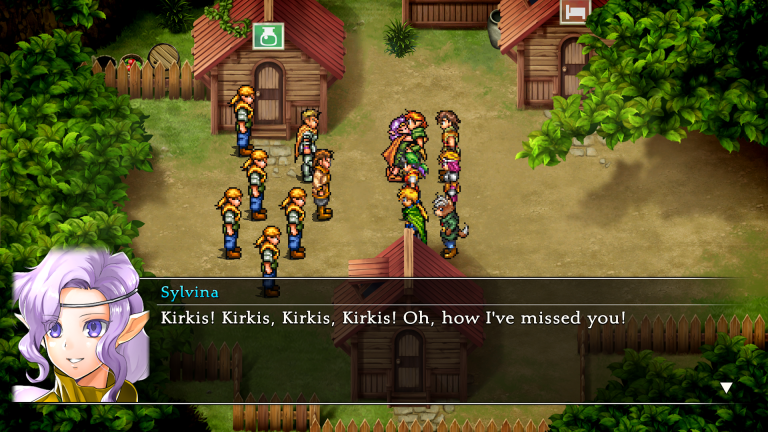
A lot of characters got their share of the spotlight in short scenes like this in Suikoden.

As mentioned earlier, Suikoden is my most played game on my Xbox Series X since March 6. The release of Suikoden games on Xbox platforms is highly significant given the fact that the franchise has often been identified with PlayStation for so long. What many gamers do not know is the fact that Suikoden was also released on the Sega Saturn and Windows PC in Japan in the late-1990s.

As history showed, most Suikoden RPGs released by Konami from 1995 to 2006 mainly on the original PlayStation console (the first two games) and PlayStation 2 (the third, fourth and fifth games). Spin-off games were released on PlayStation, PS2, Game Boy Advance and Nintendo DS. That being said, there were absolutely no Suikoden games on the original Xbox console and Xbox 360.

The release of Suikoden I & II HD Remaster: Gate Rune and Dunan Unification Wars on Xbox Series X, Xbox Series S and the aging Xbox One is indeed a game-changer. There are lots of Xbox gamers who are fond of Japanese RPGs and there are also Suikoden fans who happen to own Xbox consoles. The Xbox ecosystem itself now has lots of role-playing games (RPGs) released in this current console generation and there are lots of Xbox players who love RPGs.  As such, Konami made the right move bringing the Suikoden franchise to Xbox consoles.

Playing the first Suikoden again but in shinier form
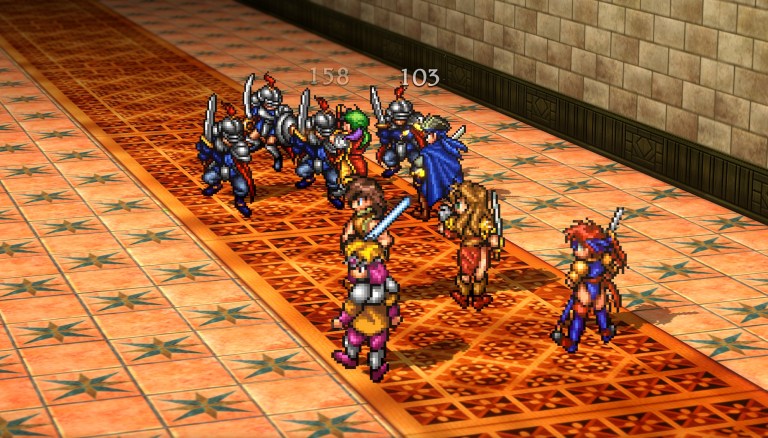
The group battle in the game. The remastered work includes presentation in high-definition and a variety of visual enhancements. The frame rate is also stable.

Since the launch of Suikoden I & II HD Remaster: Gate Rune and Dunan Unification Wars, I have been playing the first Suikoden game a lot on my Xbox Series X. It has been a fun-filled nostalgic gaming experience on my part and I can also say that Konami – for the most part – did a good job remastering the game with high-definition visuals in mind.

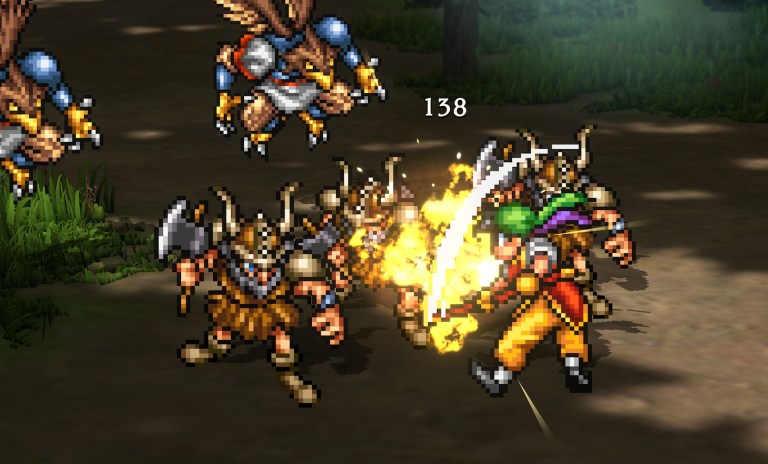
Visually, this is the best the first Suikoden RPG ever looked! The in-game character sprites and creatures/monsters sprites from before have been preserved and because everything is in high-definition, the said sprites look larger and you can see the detailed pixels within them. When it comes to the visual effects to emphasize in-game magic and other spectacles, the new effects implemented resulted in a lot of pleasing eye candy.
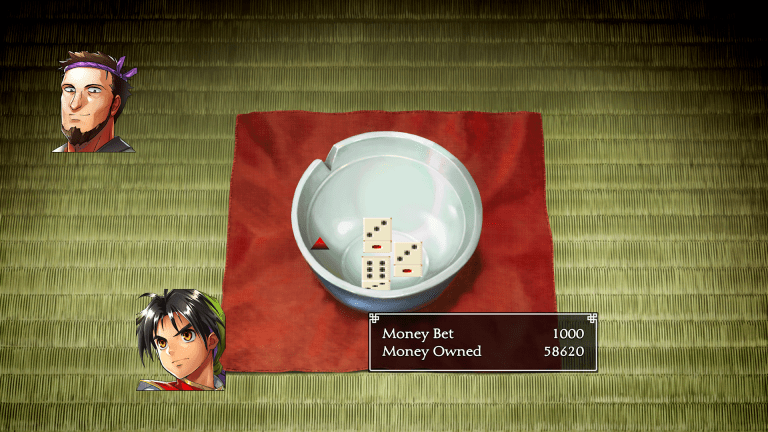
Mini-games like this one added fun and variety to the game. If you keep winning in this one, you can make a lot of in-game money.
The occasional close-ups during group battles like this added to the spectacle of playing. The enhanced visuals also made this look better.

When it comes to the character portraits, they have been redrawn from scratch by Junko Kawano and each artwork per character looked clearer and more detailed than before. Some long-time Suikoden fans might find the new character portraits looking too clean and might make them miss the older artworks.

Suikoden’s story is about the Scarlet Moon Empire, political developments, corruption that goes beyond politics, and how they all affect the people. The playable protagonist is the son of the imperial general Teo McDohl, and through him you will witness political intrigue and unexpected twists that will compel you to stick closer with your family friends to escape the empire and form a new army of rebels by recruiting members across the land.
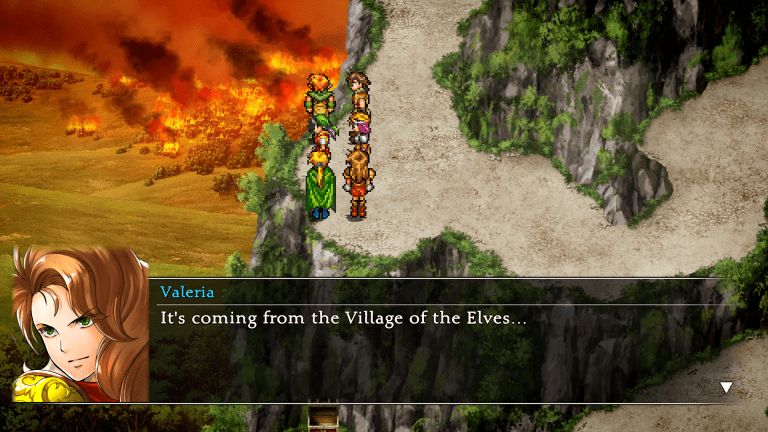
Even in subtle forms, the enhanced visuals made dramatic scenes like this look more lively.

While the storytelling is satisfactory at best, there is a wide variety of characters who collectively added colors to the narrative. This is due to the many types of personalities that the important characters have. Take for example Matthiu who is the calm and calculating strategist, Viktor is the brave and brash rebel, and Gremio is very dedicated to protecting the protagonist no matter what happens. Along the way, character development is truly limited which is not surprising because a lot of characters shared the spotlight.

In terms of game design and gameplay features, Suikoden has aged well. The battle systems – solo battle, group battle, army battle – are still functional, efficient and fun to do. While some grinding (leveling-up) is needed, it is not stressful to do because the auto-battle options make the group battles flow smoothly, especially when your characters (up to six) are collectively strong enough to overwhelm the enemies.
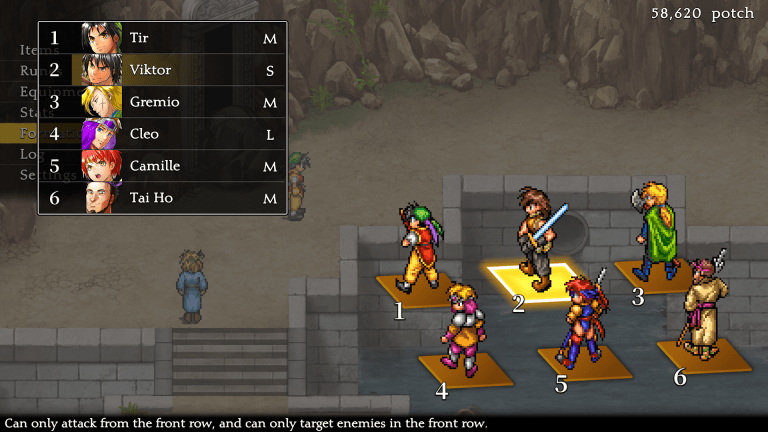
This is the formation of the members of your party. Those with short-range attacks should be placed on the front row but they need strong defense values to keep on fighting. Characters with long-range attacks are ideally placed in the back row.
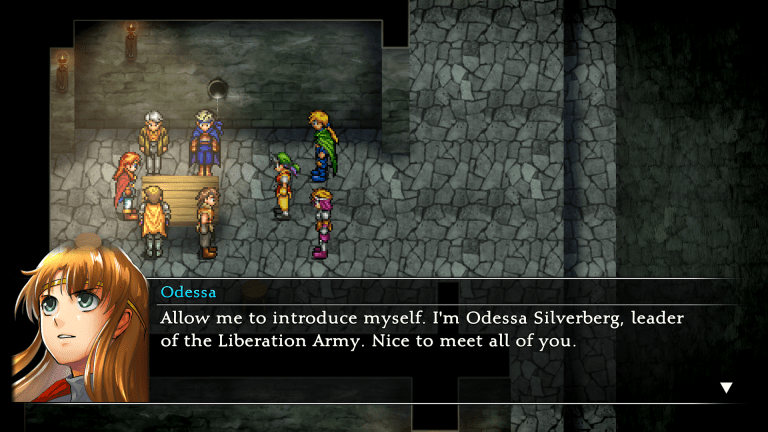
Meet Odessa.

The gameplay is just as fun to do as before. I really like the fact that up to six characters can be part of my party/group as I went adventuring and focused on story scenes. The solo and army battles are understandably few but the payoff (in return to the build-up leading to them) was worth it. I should state that the unite attacks (limited to specific characters who are present in the party) are fun to watch and the creators’ approach on presenting the battle animations and spectacle are great to see.
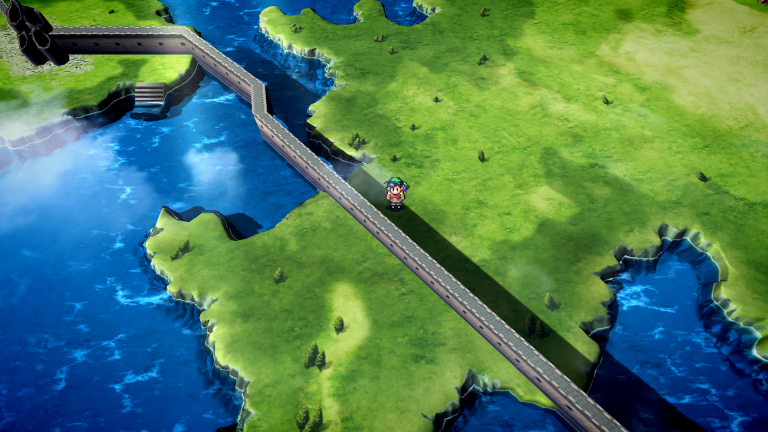
A great, long border wall in the game.

While the gameplay is clearly fun, Konami’s remaster team did not fix one old problem the game had since the start – limited spacing of items per character. Each character has his/her/its own pieces of clothing to wear, specifically for the body, head and two accessories. The game counts those clothing items as part of the overall item spacing per character. Once you have the four items for a character to wear, the remaining spaces for carrying other items (examples: medicine, ore, anti-toxin) become severely limited for the character.

Along the way, there is the constant need for you to purchase stronger pieces of clothing to increase the defense value of the newest character who joined your army. That being said, you must earn a lot of money, take time to out purchase items, and equip them on new characters while dealing with limited storage per character. The item management problem is the one thing that prevented the gameplay from achieving perfection.

My long-time experience with the Suikoden franchise
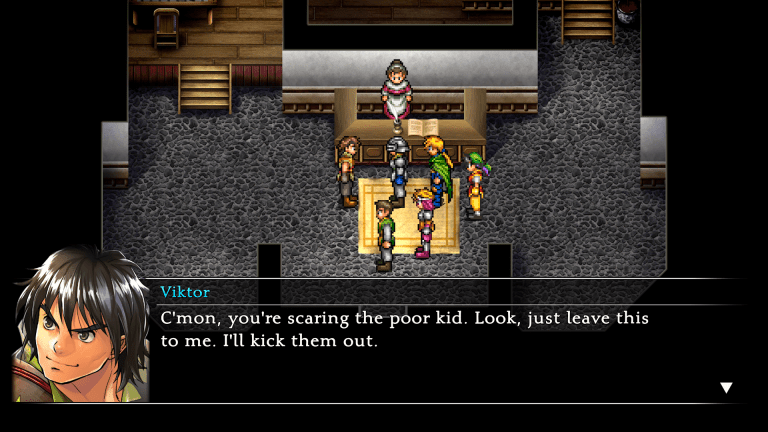
Viktor is the brash and brave fighter who becomes part of the Liberation Army. He is an important supporting character which you will easily realize.

In my personal gaming history, I played and finished the original game on PlayStation way back in 1996. While I really enjoyed the game and its unique gameplay features, I never replayed it as my taste on PlayStation gaming kept changing in 1997. When Wild ARMs and Final Fantasy VII landed on PlayStation, I forgot about Suikoden until its sequel was released in English in 1999.

Fortunately, Suikoden II was so much bigger and better than its predecessor and it remains the most defining game of the entire Suikoden franchise (read my retro review by clicking here). That being said, I will start playing the remastered Suikoden II on my Xbox Series X soon.

Having played the remastered first game on my Xbox console, I can say that it was a fun-filled trip on my end. At the same time, I remembered scenes and several small character moments in between that I have forgotten long ago. Although a lot of characters were presented, following the narrative was still easy to do since it was light compared to what Suikoden II told.

Conclusion
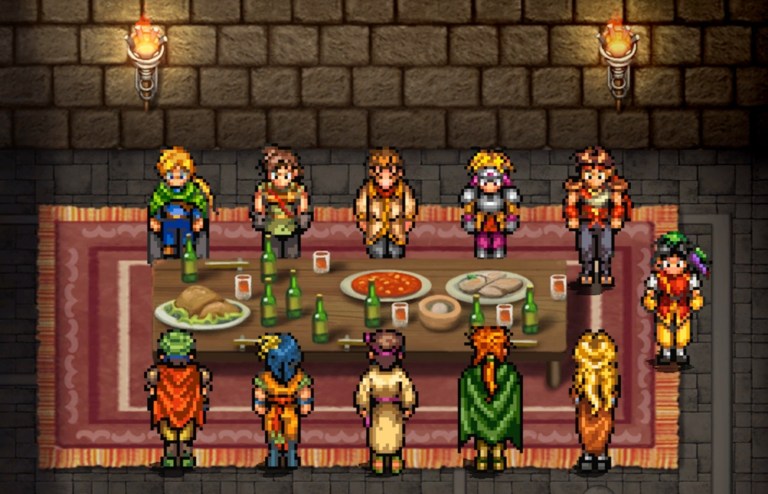
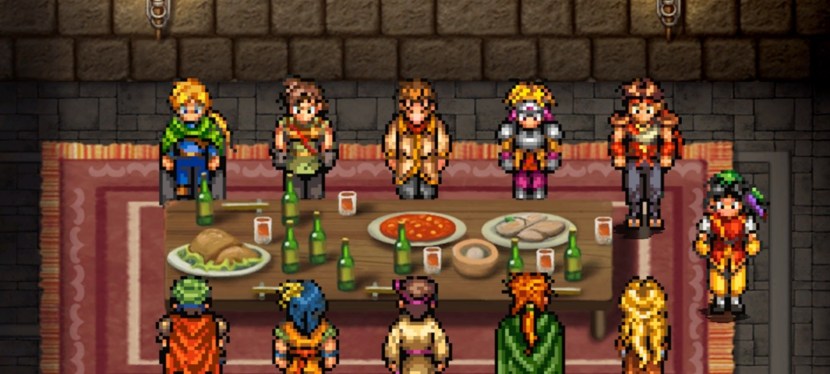
A shot of a feast within the army of rebels with their leader Tir McDohl. The young McDohl is the playable protagonist.

With the first Suikoden alone, I can say I got really good value and enjoyment with my purchase of the digital copy of Suikoden I & II HD Remaster: Gate Rune and Dunan Unification Wars for my Xbox Series X. This is a fine example about retro gaming literally saving the day when Team Xbox failed to deliver the promised great fun with their own games.

If you are an Xbox fan who loves retro gaming as well as Japanese RPGs, and if you have decided to purchase Suikoden I & II HD Remaster: Gate Rune and Dunan Unification Wars, you can do so by clicking https://www.xbox.com/en-us/games/store/suikoden-i-ii-hd-remaster-gate-rune-and-dunan-unification-wars/9nrgnstzlchj

If you prefer a physical copy for your Xbox console, click https://www.xbox.com/en-us/games/store/suikoden-i-ii-hd-remaster-gate-rune-and-dunan-unification-wars/9nrgnstzlchj

+++++

Thank you for reading. If you find this article engaging, please click the like button below, share this article to others and also please consider making a donation to support my publishing. If you are looking for a copywriter to create content for your special project or business, check out my services and my portfolio. Feel free to contact me with a private message. Also please feel free to visit my Facebook page Author Carlo Carrasco and follow me on Twitter at  @HavenorFantasy as well as on Tumblr at https://carlocarrasco.tumblr.com/ and on Instagram athttps://www.instagram.com/authorcarlocarrasco
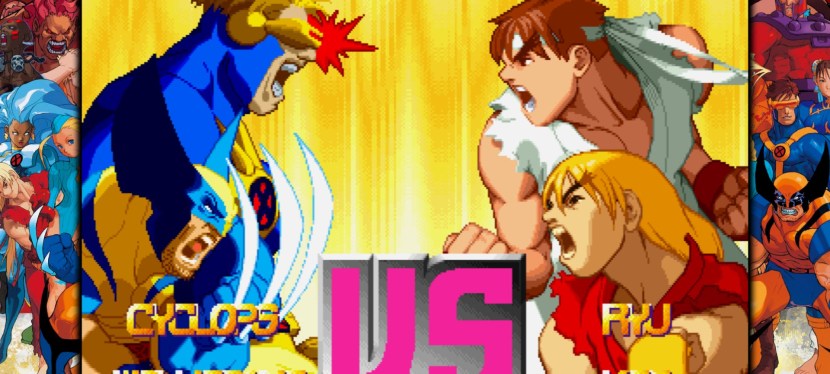
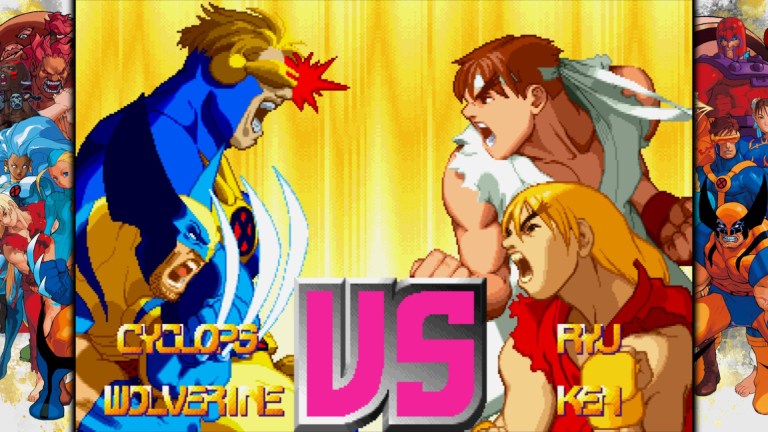
Marvel vs. Capcom Fighting Collection: Arcade Classics is now available on Xbox Series X|S and Xbox One

Welcome back Xbox fans, geeks, retro gaming enthusiasts, fighting game enthusiasts and other gamers!

With the current Xbox-exclusive fantasy role-playing game Avowed coming out on February 18, I’m supposed to be excited about what Team Xbox has prepared this year. Of course, there were disappointments not only with certain Xbox first-party releases but also with the way things have been changing on the part of Team Xbox.

Times like these, retro gaming on Xbox is the answer for fans who want to experience a lot of fun and Capcom just released Marvel vs. Capcom Fighting Collection: Arcade Classics for Xbox Series X, Xbox Series S and even Xbox One users to enjoy. Watch and learn from the official Xbox trailer below.

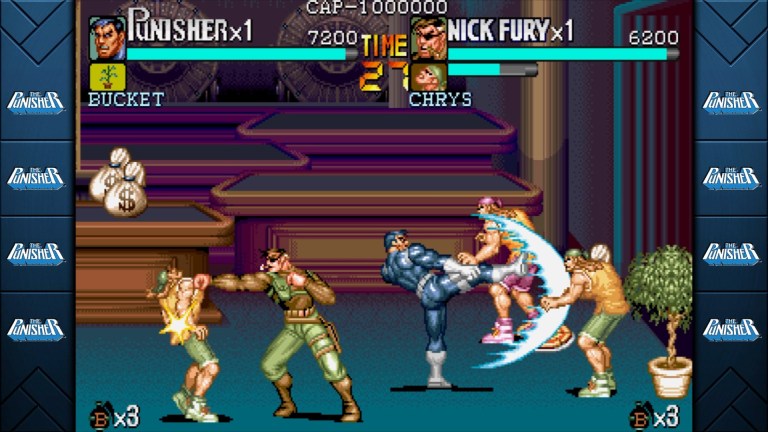
For the newcomers reading this, the said collection comes with the following video games Capcom released long ago with an emphasis on crossovers with Marvel’s intellectual properties: X-Men: Children of the Atom (1994), Marvel Super Heroes (1995), X-Men vs. Street Fighter (1996), Marvel Super Heroes vs. Street Fighter (1997), Marvel vs. Capcom: Clash of Super Heroes (1998), Marvel vs. Capcom 2: New Age Of Heroes (2000) plus The Punisher (1993).

Wow! That’s a collection of very fun and popular games Capcom released from 1993 to 2000. With the exception of The Punisher arcade game (a 2D adventure game), I played them all in the arcades decades ago and I can say that having them in a single collection for the modern Xbox consoles is indeed a blessing for long-time Xbox gamers who love 2D fighting games and retro gaming. The way I feel right now, Marvel vs. Capcom Fighting Collection: Arcade Classics looks really enticing to purchase.

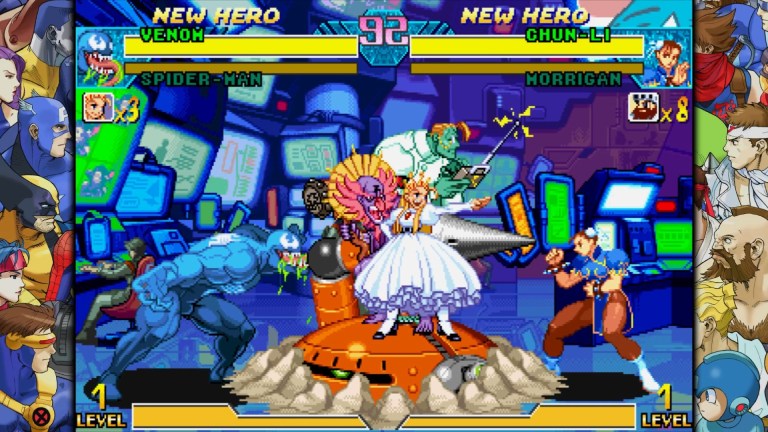
Marvel vs. Capcom: Clash of Super Heroes is not just a lot of fun to play but also will please those who love the characters. With Wolverine, Spider-Man, Venom, Captain America from Marvel’s side included, there is something that will bring both geeks and gamers together.

I have fond memories of Capcom 2D fighting games that carried Marvel’s intellectual properties. X-Me: Children of the Atom was enjoyable to play with and it resonated with me as I was already an X-Men comic book reader back in the 1990s. Marvel Super Heroes was also fun to play and it somewhat reminded me of The Infinity Gauntlet storyline. X-Men vs. Street Fighter was the most intriguing crossover fighting game at the time of its release and it really raised the bar for fast-and-furious style gameplay complete with a quick character swap during the heat of battles. Marvel Super Heroes vs. Street Fighter was the follow-up which came with changes that were not well received by the fans.

Then came the two Marvel vs. Capcom crossover fighting games which really built upon the foundation of X-Men vs. Street Fighter for more team battles with speed and impact in mind. I could not forget the inclusion of Resident Evil characters, Mega Man and others.

X-Men vs. Street Fighter is a classic tag-team, crossover-oriented video game! Fast and furious action ensured!
The Punisher arcade game is the only non-fighting game of the collection. Punisher fans should look at this.

Adding further zest to the collection is online play that allows casual matches, ranked matches, custom matches. Think about how your skills or your scoring will compare with those of other players from around the world.

That being said, Marvel vs. Capcom Fighting Collection: Arcade Classics is a retro gaming package that deserves attention as it carries some of the finest video games Capcom ever made.

To purchase Marvel vs. Capcom Fighting Collection: Arcade Classics for Xbox, click https://www.xbox.com/en-us/games/store/marvel-vs-capcom-fighting-collection-arcade-classics/9nwfm3hdjc94

+++++

Thank you for reading. If you find this article engaging, please click the like button below, share this article to others and also please consider making a donation to support my publishing. If you are looking for a copywriter to create content for your special project or business, check out my services and my portfolio. Feel free to contact me with a private message. Also please feel free to visit my Facebook page Author Carlo Carrasco and follow me on Twitter at  @HavenorFantasy as well as on Tumblr at https://carlocarrasco.tumblr.com/ and on Instagram athttps://www.instagram.com/authorcarlocarrasco
Better than Streaming: Do you have Godzilla (1954) Criterion Blu-ray in your collection?

Welcome back, fellow geeks, Blu-ray collectors and movie buffs! Way back in 1954, the original Godzilla movie (Japanese title: Gojira) made its debut in theaters in Japan. Not only did it make a huge impact with moviegoers, it paved the way for more Godzilla movies (which compelled Hollywood players to join in), imitators and made a solid contribution to global pop culture.

Of course, the original Godzilla film was decades before I was even born and as a boy, I got to watch on home video “Godzilla 1985” which was a Westernized version of The Return of Godzilla (1984). Then in 1998, I saw Roland Emmerich’s twisted version of Japan’s giant monster.

Going back to the original film from 1954, an American version of it was released in 1956 under the title Godzilla: King of the Monsters which was a recut version that had actor Raymond Burr in it as an American journalist witnessing events. That American version, which I saw partially by chance on cable TV, only made me want to see the 1954 original Godzilla movie intact.

That being said, I acquired a copy of the Godzilla (1954) Blu-ray from Criterion Collection and I can say I am really enjoying it. It definitely is a very good addition to my collection of Blu-ray movies.

The cover of the Godzilla (1954) Blu-ray release from Criterion Collection.

To begin with, posted below are the specs from the Blu-ray.com page…

The back of the Criterion Collection Godzilla (1954) Blu-ray. Pay close attention to the details because you will get a lot of stuff to enjoy with this one added into your Blu-ray movie collection.

I really enjoyed the 1954 movie directed by Ishiro Honda and I can talk more about it in detail in a future retro movie review. Going back to Criterion’s Godzilla (1954) Blu-ray, I can say that the company did a great job not only with the restoration and audio, they also loaded the disc with a whole lot of content that will appeal strongly with dedicated Godzilla fans as well as the newcomers who wish to learn more about Japan’s giant monster, its legacy and place in global pop culture. The disc also has a restored copy of Godzilla: King of the Monsters (1956) but I strongly recommend you watch the 1954 film first and foremost.

The extra stuff in the disc contains a lot of content for you to enjoy. There are interviews with certain cast and crew members, an illustrated audio essay about the tragic Lucky Dragon No. 5 vessel, an audio commentary by David Kalat, and more.

When it comes to the physical aspect of Criterion’s Godzilla (1954) Blu-ray, the packaging is both nicely done and inspired. I just love it whenever I opened the set to get to the disc, an image of Godzilla folds and forms in shape for your viewing pleasure. The set also has a booklet that contains really interesting information. Very clearly, this is so much better than streaming!

I really like this excellent packaging by Criterion Collection. Very clearly better than streaming!

In case you are interested or if you have made up your mind, you can order a copy of Godzilla (1954) Blu-ray of Criterion Collection by clicking https://www.amazon.com/Godzilla-Criterion-Collection-Blu-ray-Takashi/dp/B005VU9LKE

For the dedicated Godzilla fans as well as enthusiastic film buffs and collectors of movies on physical media, Criterion’s Godzilla (1954) Blu-ray is highly recommended! This is currently the best way to enjoy the classic movie in the comfort of your home!

If you wish to join a group of movie enthusiasts and talk about cinema, visit the Movie Fans Worldwide Facebook group at https://www.facebook.com/groups/322857711779576

+++++

Thank you for reading. If you find this article engaging, please click the like button below, share this article to others and also please consider making a donation to support my publishing. If you are looking for a copywriter to create content for your special project or business, check out my services and my portfolio. Feel free to contact me with a private message. Also please feel free to visit my Facebook page Author Carlo Carrasco and follow me on Twitter at  @HavenorFantasy as well as on Tumblr at https://carlocarrasco.tumblr.com/ and on Instagram at https://www.instagram.com/authorcarlocarrasco

National economic managers expect government collections to exceed 2023 revenue target

Even though it looks like that economic growth for the Philippines this year will end up short of 7%, the economic managers of the Marcos administration expect revenue collections to exceed the target for 2023, according to a GMA Network news report.

To put things in perspective, posted below is an excerpt from the GMA Network news report. Some parts in boldface…

Let me end this piece by asking you readers: What is your reaction to this recent development? Do you think that government collections will exceed the 2023 revenue target?

You may answer in the comments below. If you prefer to answer privately, you may do so by sending me a direct message online.

+++++

Thank you for reading. If you find this article engaging, please click the like button below, share this article to others and also please consider making a donation to support my publishing. If you are looking for a copywriter to create content for your special project or business, check out my services and my portfolio. Feel free to contact me with a private message. Also please feel free to visit my Facebook page Author Carlo Carrasco and follow me on Twitter at  @HavenorFantasy as well as on Tumblr at https://carlocarrasco.tumblr.com/ and on Instagram athttps://www.instagram.com/authorcarlocarrasco
A Look Back at Prototype #8 (1994)

Disclaimer: This is my original work with details sourced from reading the comic book and doing personal research. Anyone who wants to use this article, in part or in whole, needs to secure first my permission and agree to cite me as the source and author. Let it be known that any unauthorized use of this article will constrain the author to pursue the remedies under R.A. No. 8293, the Revised Penal Code, and/or all applicable legal actions under the laws of the Philippines.

Hey everyone! Are you ready for another return to the Ultraverse? This time, it’s a return to the Prototype monthly series published by Malibu Comics.

That being said, here is a look back at Prototype , published by Malibu Comics in 1994 with a story by Tom Mason and Len Strazewski, and art done by Roger Robinson.

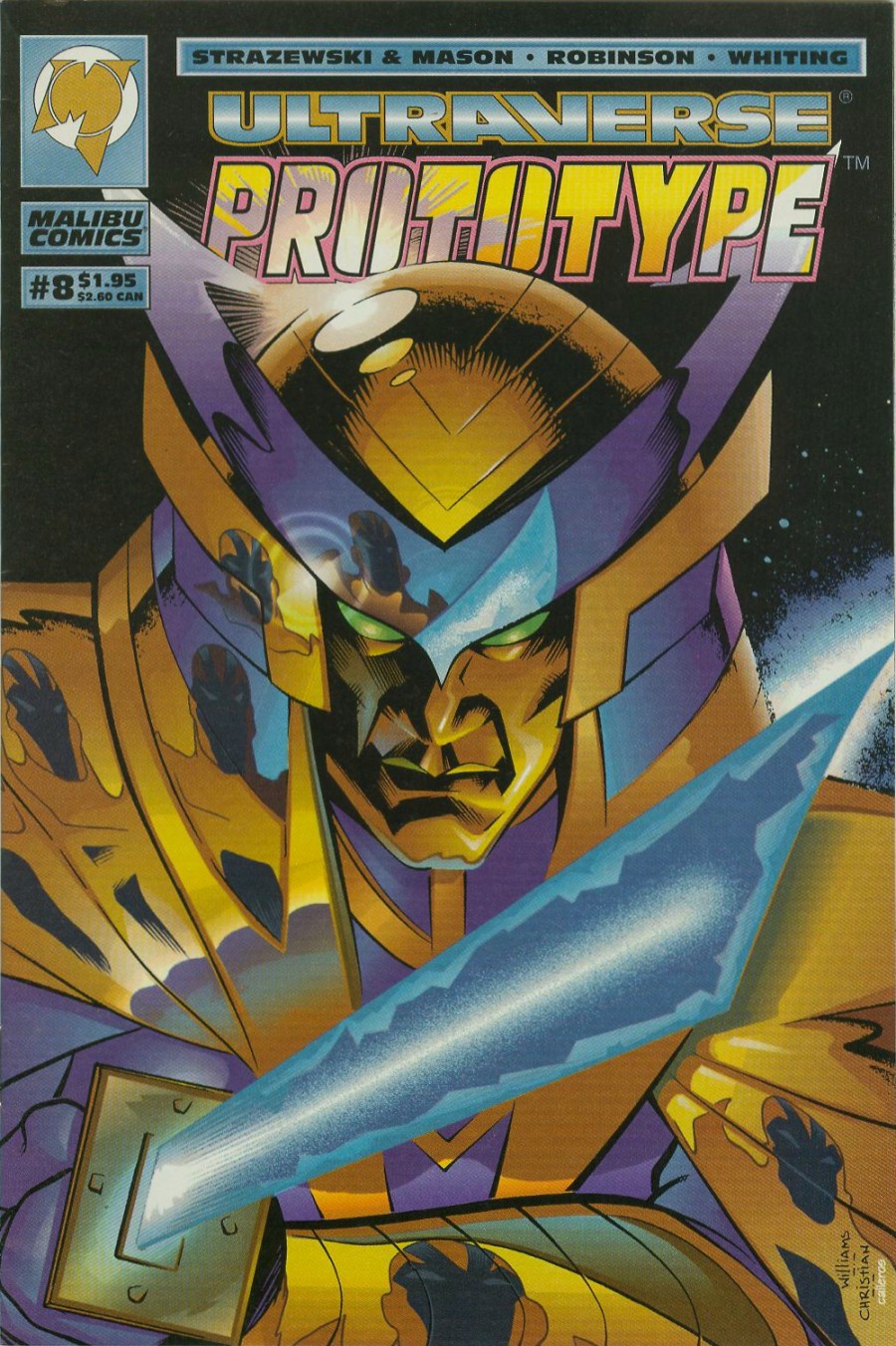
Cover

Early story

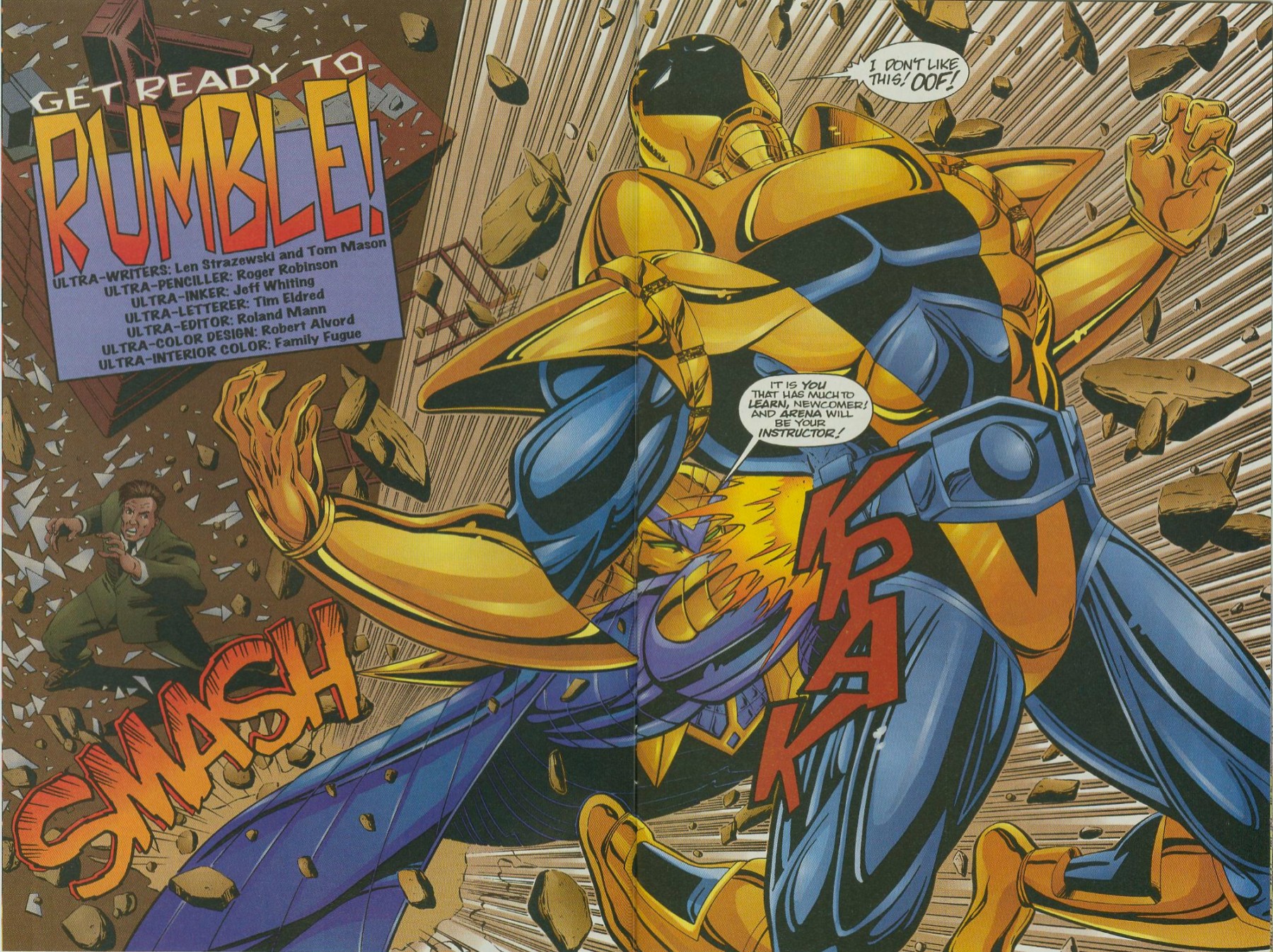
The story begins with the continuing destructive battle between Prototype (piloted by Jimmy Ruiz) and Arena (a past foe that Bob Campbell dealt with as Prototype) inside a building in the middle of the city. As the two armored figures fight, an Ultratech executive calls out for Veil. Facing disadvantages against Arena, Prototype decides to fly out of the building to try something more strategic.

Meanwhile, Bomb Campbell learns about the ongoing battle in the news while working on a part of powered suit of armor he has. He notices the return of Arena and analyzes that Jimmy Ruiz will end up losing to the old foe…

Quality

5
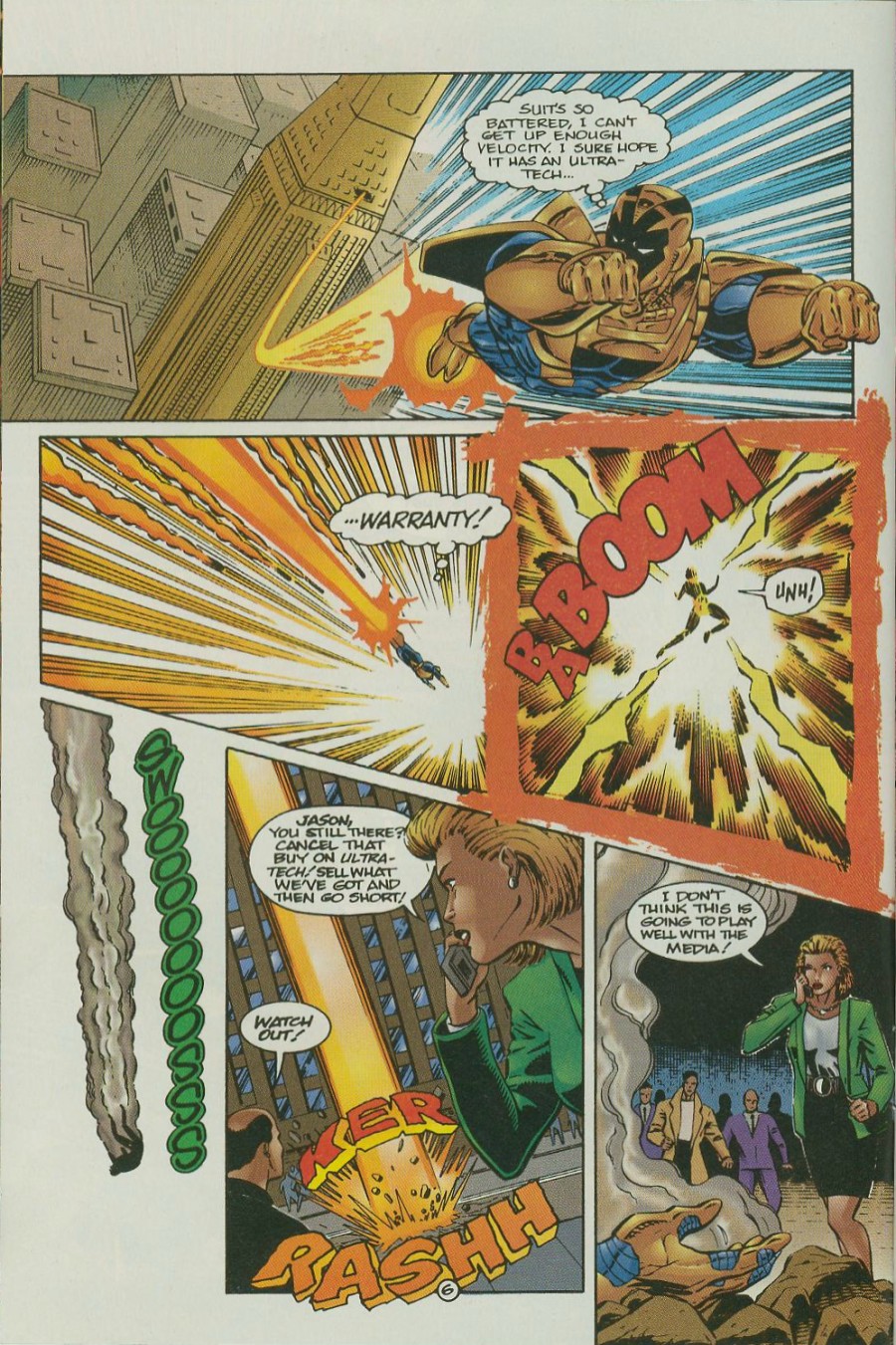
Even flying away did not help Prototype from avoiding Arena’s attacks.

I’m happy to say that this is another well-written story here by Mason and Strazewski. While the battle between Arena and Prototype is the main feature, the script focused nicely on other developments such as Bob Campbell’s recollection of his past encounter with Arena (from his time as Prototype), how the city officials perceive ultras as a threat and danger to the locality, and how the people react to gang violence striking their community.

What is pretty striking with this comic book is the further development of Jimmy Ruiz as a character. Not only will you see him struggle a lot not only with fighting and piloting the powered sit of armor, you’ll also see how the frustration with his high-paying job impacts him deeply. His personality got fleshed out during his battle with Arena who in turn thinks with tradition and philosophies. The way the story ended is a must-see and the good news is that it builds up the suspense for the next issue.

Conclusion

2
The money shot!

Prototype is fun to read and compelling for anyone who is focused on Jimmy Ruiz. This comic book, which by the way is loaded with lots of action, is not the typical hero-beats-antagonist type of story rather it went the extra mile on developing the present-day Prototype. It is also the most engaging portrayal of Jimmy Ruiz yet!

If you are seriously planning to buy an existing hard copy of Prototype (1994), be aware that as of this writing, MileHighComics.com shows that the near-mint copy of the regular edition costs $4.

Overall, Prototype (1994) is recommended!


Thank you for reading. If you find this article engaging, please click the like button below and also please consider sharing this article to others. If you are looking for a copywriter to create content for your special project or business, check out my services and my portfolio. Feel free to contact me as well. Also please feel free to visit my Facebook page Author Carlo Carrasco and follow me at HavenorFantasy@twitter.com
A Look Back at V #1 (1985)

Disclaimer: This is my original work with details sourced from reading the comic book, watching the V mini-series (Original Miniseries and The Final Battle) and the 1984 TV series, and doing personal research. Anyone who wants to use this article, in part or in whole, needs to secure first my permission and agree to cite me as the source and author. Let it be known that any unauthorized use of this article will constrain the author to pursue the remedies under R.A. No. 8293, the Revised Penal Code, and/or all applicable legal actions under the laws of the Philippines.

Back in the 1980s – a time when Netflix, Blu-ray, social and other forms of digital entertainment were not yet realized – watching a special show on television was really something. During that particular decade, science fiction in cinema was already popular (thanks to George Lucas and Star Wars plus the resurgence of Star Trek) but there was still room for growth on the TV market.

IMDBcoverpic
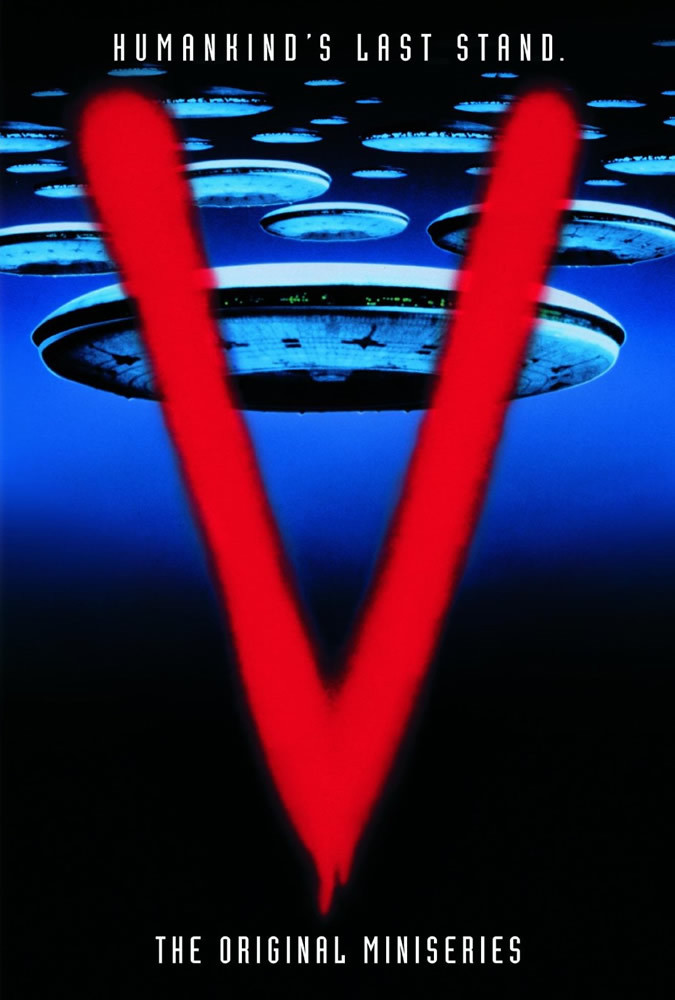
The cover of V: The Original Miniseries. (source – IMDB.com)

Then came the very memorable sci-fi TV mini-series titled V (also referred to as V: The Original Miniseries) in 1983 which not only became a big hit with viewers but also brought the sci-fi concept of reptiloids (reptilian humanoids) to the mainstream. The mini-series also had parallels to the Nazis and the Holocaust. The original mini-series was such a big hit, it spawned a sequel mini-series titled V: The Final Battle (1984) and even a TV series (1984-1985).

IMDBpic
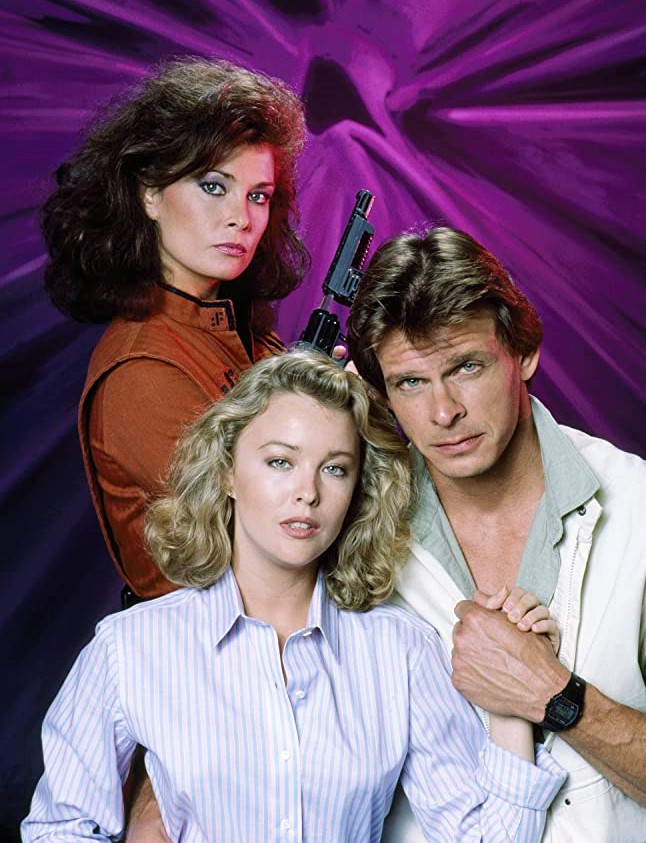
Jane Badler as Diana, Faye Grant as Julie Parrish and Marc Singer as Mike Donovan. (source – IMDB.com)

Created by Kenneth Johnson, V became a popular franchise and made stars out of Marc Singer (The Beastmaster), Faye Grant, Michael Ironside (Total Recall) and Jane Badler. Even though there never was a movie made, V was popular enough to have a line of novels, a video game and even a comic book series!

With the history lesson done, it’s high time to start taking a look back at V , published in 1985 by DC Comics with a story written by Cary Bates and illustrated by Carmine Infantino.

Cover
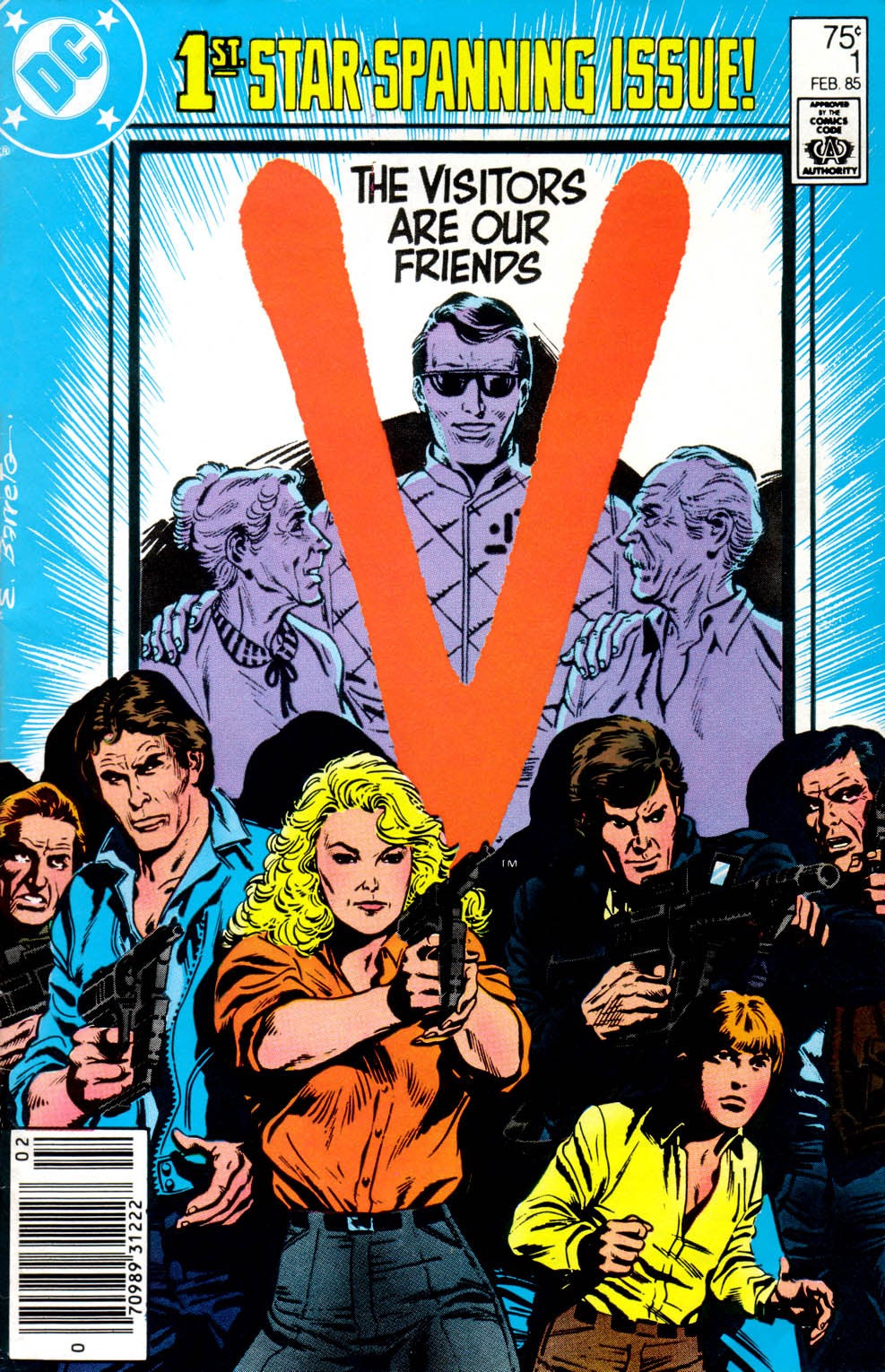
The cover.

Early story

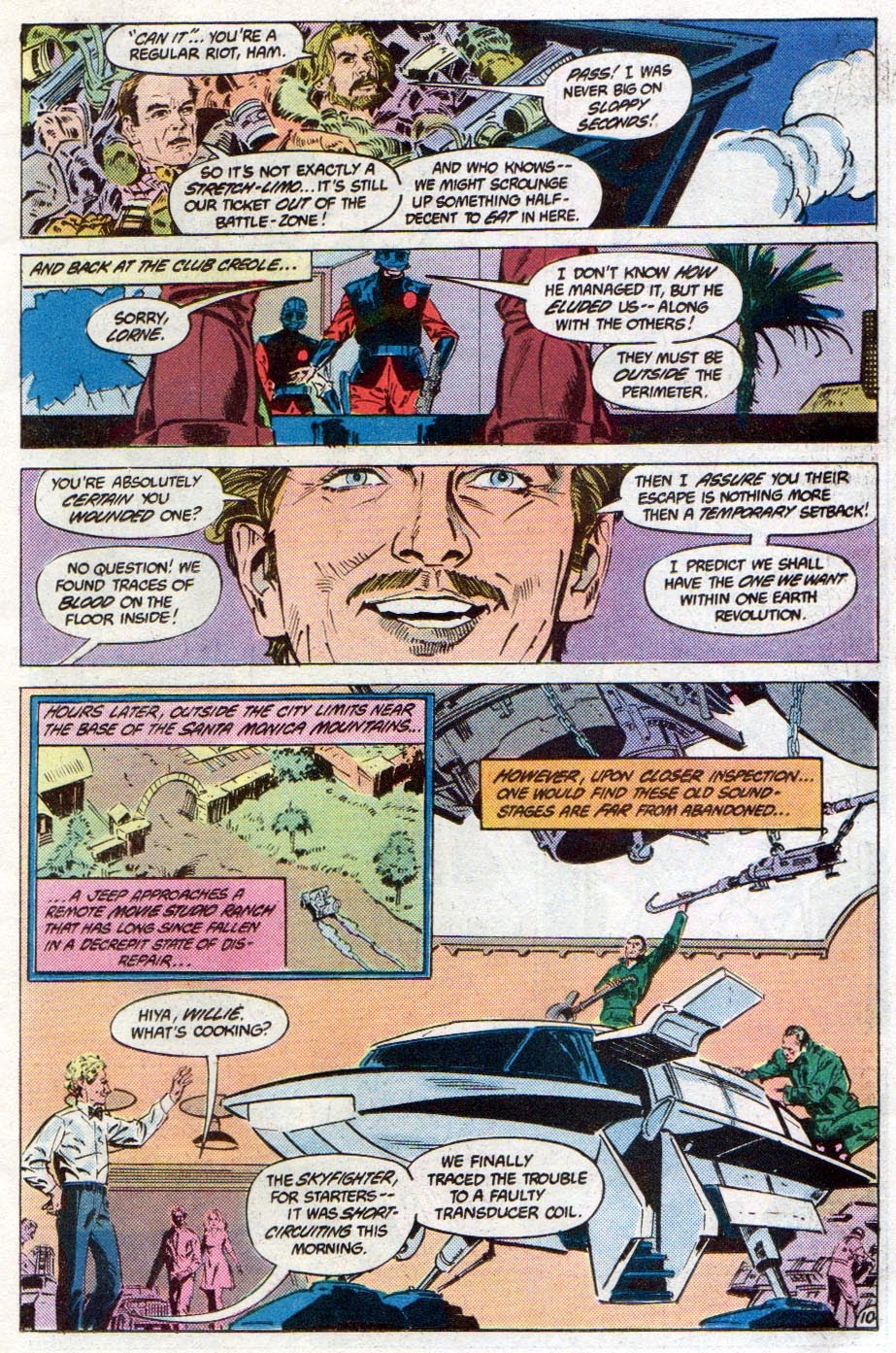
The story begins in the city of Los Angeles, California, with millions of locals try to co-exist with the visitors (reptilian beings disguised as humans) who are armed and still have power over Earth’s people. Los Angeles stands as a so-called neutral zone but some things are not what they seem.

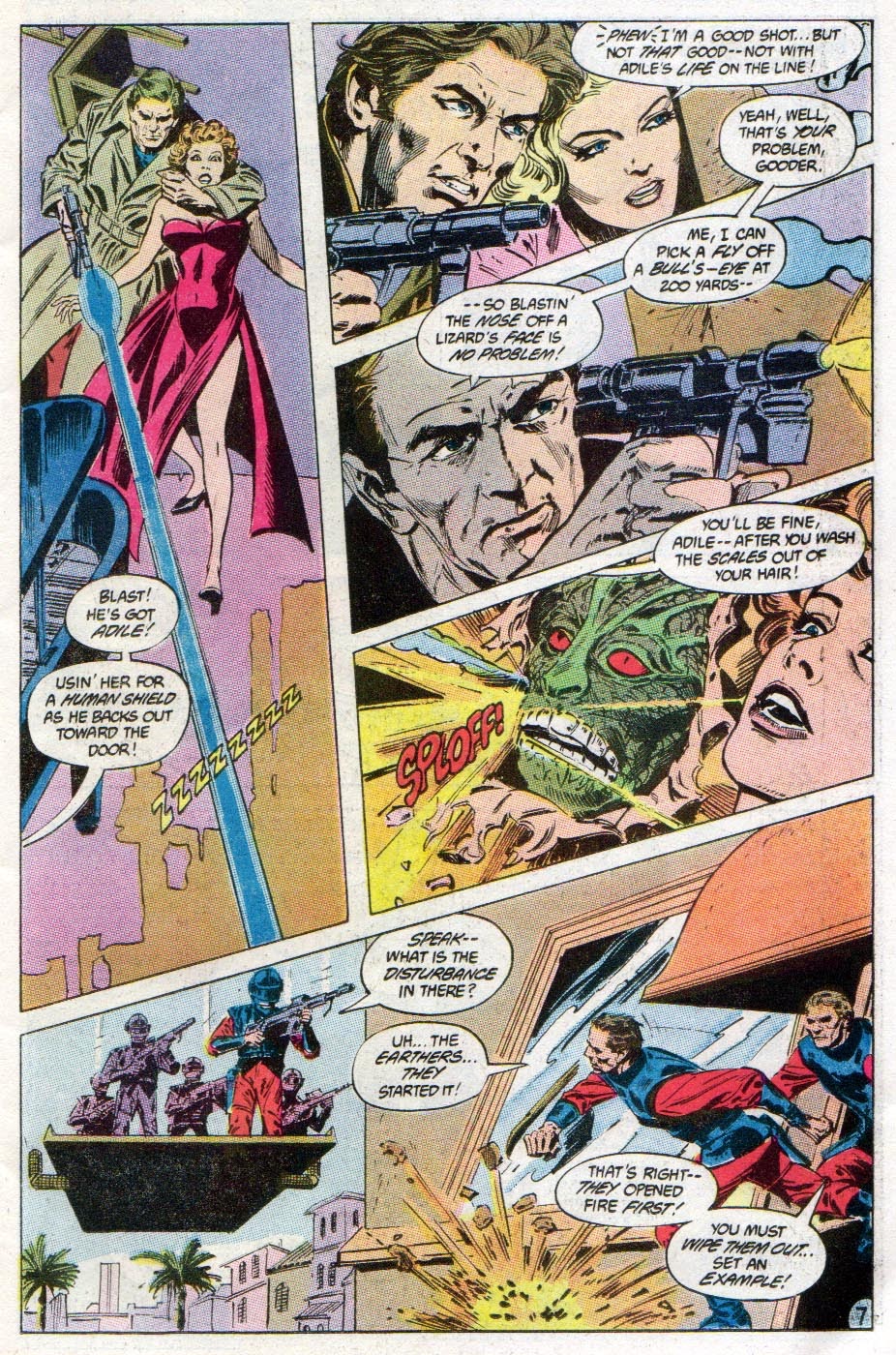
Inside a restaurant, Mike Donovan, Julie Parrish, Ham Tyler and Chris Farber talk about their situation. For Ham and Chris, the neutral zone stinks but for Mike, the current situation spares the city from turning into an open battlefield. Suddenly, three men wearing trench coats standing by the bar pull their guns out and fire at Mike and his companions who take cover…

Quality

9
The struggle between the resistance and the visitors goes on.

Before discussing the quality of this comic book, I should state that having sufficient knowledge about the two TV mini-series and the TV series is required in order to understand what has been going on in the literary tale and who the characters are.

On quality, let’s start with the storytelling done by Cary Bates. It is clear Bates carefully researched the TV materials to make a comic book script that pretty much captures not only the essence of V but also the notable differences of each character (examples: Tyler is sarcastic, Mike is determined, Willie occasionally speaks with a misplaced word, and Diana is sadistic). This comic book’s plot was written to be aligned with the events of the TV series as it is clear that its tale took place some time after the climax of V: The Final Battle.

When it comes to translating V’s essence from TV to comic book format, Bates script worked surprisingly well and more importantly there was a careful balance between exposition, plotting, spectacle and suspense. When it comes to character development, what you get from the TV series (in terms of doing characterization) is also present here.

When it comes to visuals, Carmine Infantino’s work is serviceable. The artist did what was possible with the script provided although there were key moments in which the panels and drawings were structured to be a little disorienting. Was this Infantino’s way of trying to be dynamic with the visuals? Lastly, don’t expect to see the major characters resemble their TV counterparts. Ham does not look like Michael Ironside, Mike does not look like Marc Singer and Julie does not look like Faye Grant.

Conclusion

6
Recognize Mike, Julie and Ham here?

I can say it straight that V is a solid science fiction comic book that specifically will strongly resonate with fans of the V franchise’s entertainment of the 1980s. This comic book strongly captures the essence of the V franchise, specifically the TV series itself, and the good news is that the major characters are nicely dramatized which should delight fans. That being said, it’s tricky to recommend this to people who did not grow up with nor knew the V mini-series and TV series. When it comes to trading and making money out of this comic book, you could be in luck.

If you are seriously planning to buy an existing hard copy of V (1985), be aware that as of this writing, MileHighComics.com shows that the near-mint copy of the regular edition costs $28 while the near-mint copy of the newsstand edition costs $33.

Overall, V (1985) is highly recommended specifically for the fans and the collectors. Those who are not oriented with the franchise need to see the mini-series and TV series first in order to realize this comic book’s value.


Thank you for reading. If you find this article engaging, please click the like button below and also please consider sharing this article to others. If you are looking for a copywriter to create content for your special project or business, check out my services and my portfolio. Feel free to contact me as well. Also please feel free to visit my Facebook page Author Carlo Carrasco and follow me at HavenorFantasy@twitter.com
A Look Back at Batman versus Predator II: Bloodmatch #1 (1995)

Disclaimer: This is my original work with details sourced from reading the comic book and doing personal research. Anyone who wants to use this article, in part or in whole, needs to secure first my permission and agree to cite me as the source and author. Let it be known that any unauthorized use of this article will constrain the author to pursue the remedies under R.A. No. 8293, the Revised Penal Code, and/or all applicable legal actions under the laws of the Philippines.

If there is anything I love about the comic book format in relation to creative fiction, it is the fact that the said format allows certain crossover match-ups (that could not be realized in movie or TV format) to happen. In this case, I’m talking about having the science fiction monster warrior Predator in conflict with Batman.

Historically, in the early 1990s, DC Comics and Dark Horse Comics teamed up to publish the highly memorable crossover Batman versus Predator with the creative talents of Dave Gibbons, Andy Kubert and Adam Kubert.

The two publishers did not stop there. In 1995, they teamed up again to bring the two pop culture icons together but with a brand new story, a new creative team and with the involvement of the Huntress to support Batman. I was in college back in 1995 and you can’t imagine how surprised I was to see the first issue of the 2nd Batman-Predator crossover displayed on the shelf of the comic book store I visited. I was surprised because there was not much media spotlight for it in the comic book industry magazines I read.

That being said, here is a look back at Batman versus Predator II: Bloodmatch , published in 1995 by DC Comics and Dark Horse Comics with a story written by Doug Moench and drawn by Paul Gulacy.

Cover
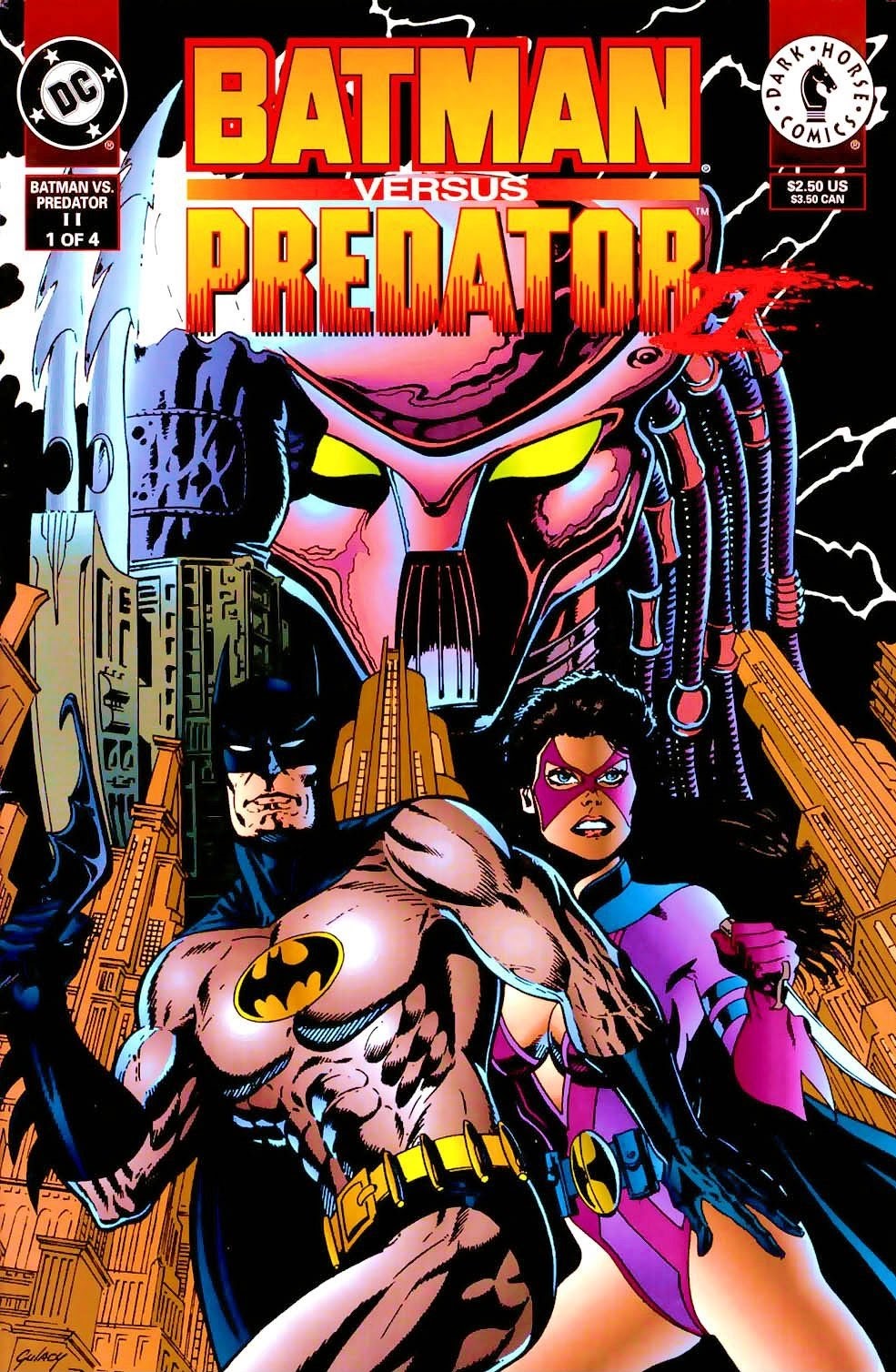
The cover.

Early story

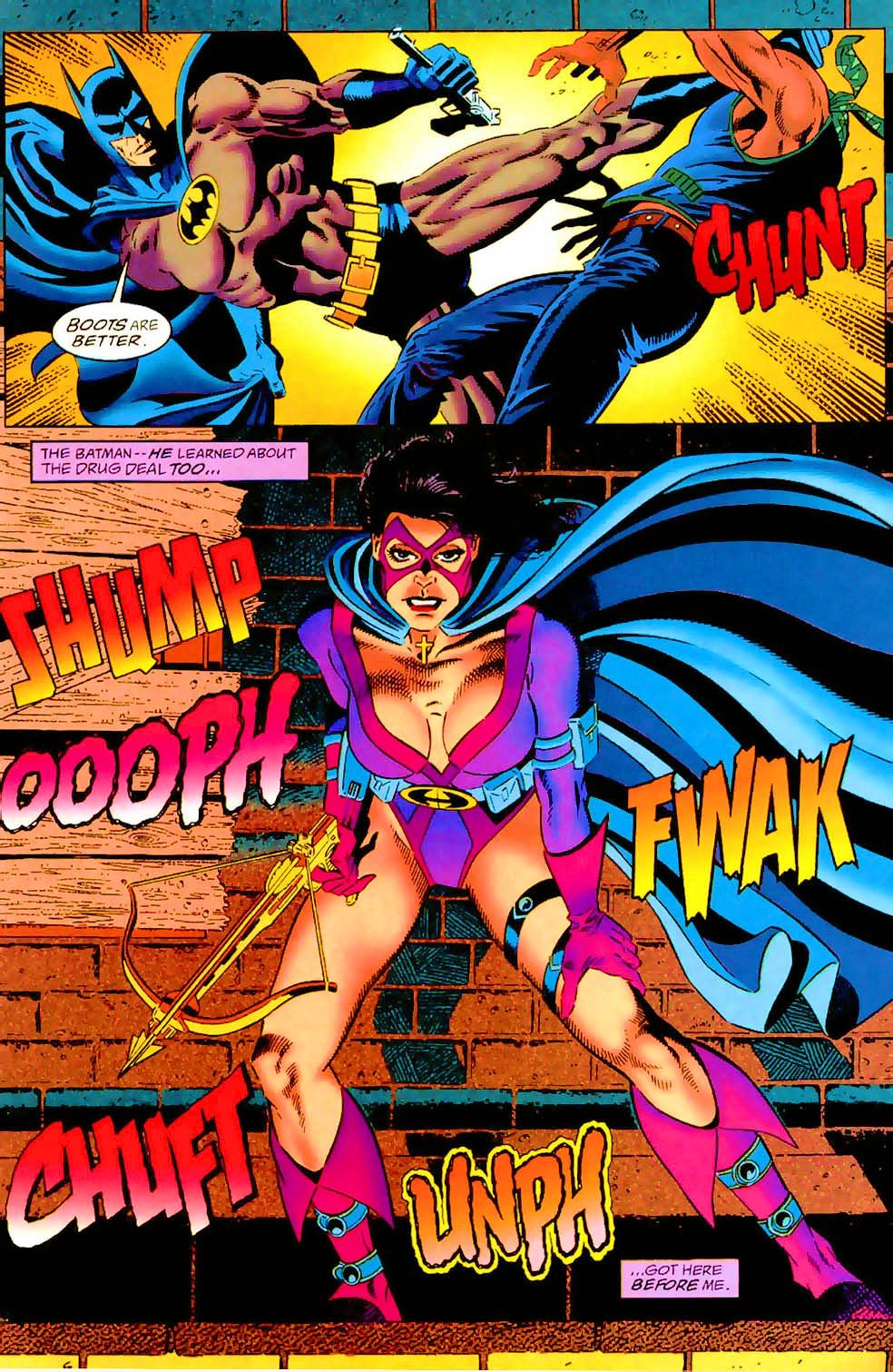
The story begins in the city where three guys are about to complete an illegal drugs deal by the dock. As one of the dealers fires his gun at the other party, Batman breaks into the scene to bring him down and pressures him to reveal the location of Terraro. As the downed thug tries to shoot Batman, an arrow fired by the Huntress hits his arm which caught the Dark Knight by surprise.

After knocking the thug out, Batman and the Huntress talk. It turns out both of them are after Terraro. The Huntress leaves as Batman remains to do some detective work on the three men.

Meanwhile from a far distance, a Predator reviews archived video footage of Bruce Wayne/Batman’s final encounter with a Predator (as told in the final issue of the first Batman Versus Predator series) and listens to the audio recording. The Predator is preparing himself to fight Batman by doing research (including familiarizing himself with how Bruce Wayne and his butler Alfred sound like) and he uses his deadly disc to cut off the head of a statue resembling the Dark Knight…

Quality

28
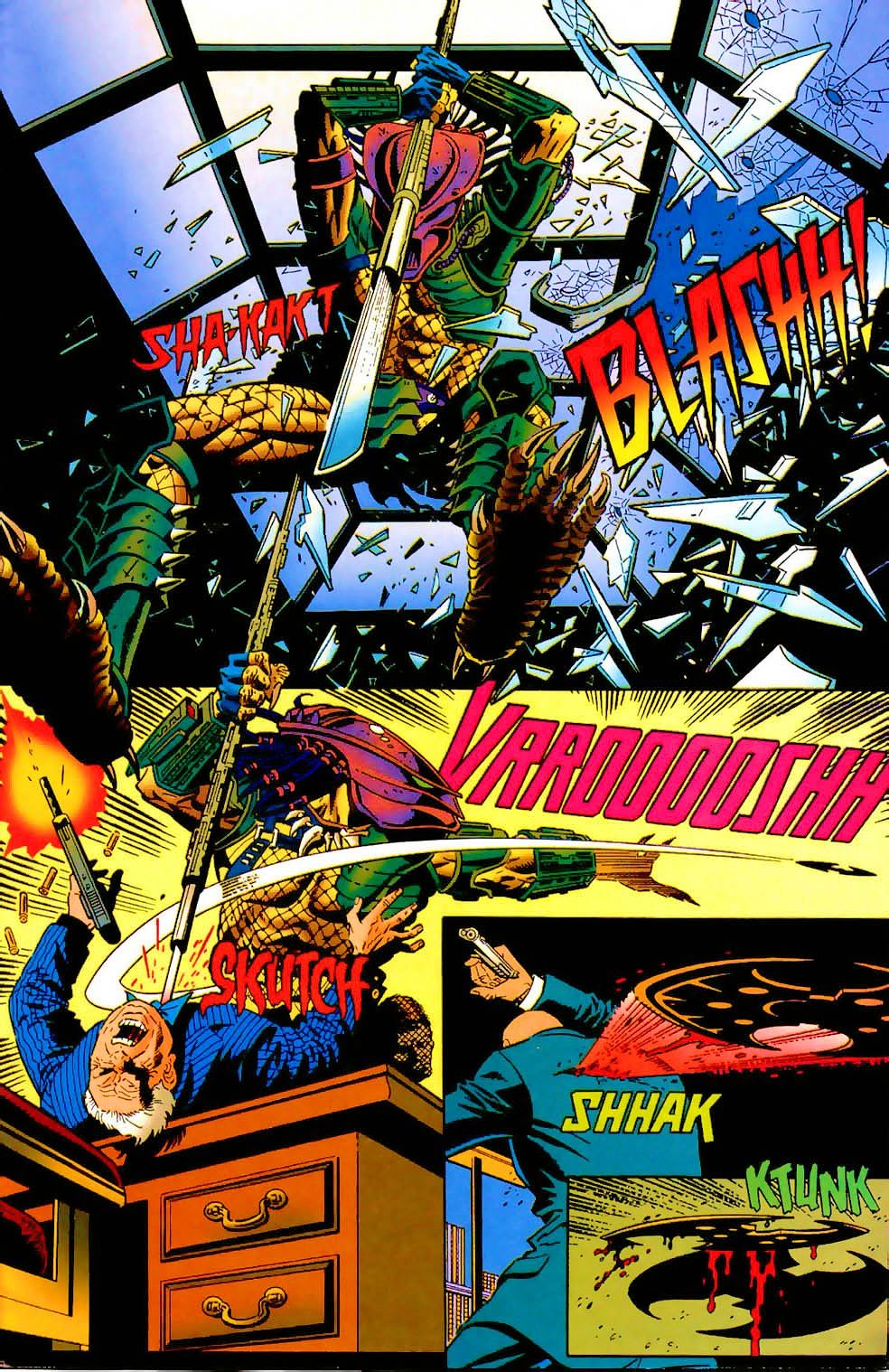
The Predator in action!

Let me start with the story. This comic book essentially tells a crime story mixed with some sci-fi elements. Unsurprisingly, there is a lot of exposition used to help build-up the expected conflict between Batman and the Predator. That’s not to say that the story is hollow. In fact, I still found it compelling even though some of the spotlight was spent on the Huntress who is clearly involved in the crime tale. To say the least, the Huntress adds variety to what could have been a typical Batman-does-all-the-detective-work story.

Batman, who by this time gained tremendous knowledge about the Predator, turns out to be targeted as “dead meat” by a gang leader and it’s nice to see him solve the crime problem while being at odds with the Huntress whom he finds to be too eager and reckless.

As for the Predator, unsurprisingly the alien warrior appears sparingly but that’s not a problem at all. In fact, the writer implemented the spotlight on the Predator without ever overdoing it which added nicely into the anticipation of the so-called rematch with Batman. I also liked how the Predator was portrayed in dealing with the criminal and law elements of the city.

As for the visuals, this one is a mixed bag for me. Firstly, I like the more vibrant and stylish use of colors which made this comic book look radically different from the dark, gritty and less colorful visuals of its predecessor. Secondly, Paul Gulacy’s art on drawing people lack punch and consistency. There were times that his drawings of Batman and Huntress were good, other times not. His work on the Predator is good, however. What Gulacy excelled in was drawing action scenes which are not only dynamic in presentation but also went strong with the violence (lots of bloody scenes, weapons penetrating the body, etc.) which reminded me a lot about the first two Predator movies. Gulacy’s take on the Batmobile looks corny.

Conclusion

6
The Huntress watches as Batman takes action.

Way back in 1995, I enjoyed reading Batman versus Predator II: Bloodmatch  the day I first bought it. Today, I still find it enjoyable to read. It has a nice mix of suspense and spectacle, and the creative team was granted a lot of creative freedom to tell the story with mature readers in mind. The story was well paced and the build-up was worth the time.

If you are seriously planning to buy an existing hard copy of Batman versus Predator II: Bloodmatch (1995), be aware that as of this writing, MileHighComics.com shows that the near-mint copy of the regular edition costs $23 while the near-mint copy of the promotional version with a poster costs $40.

Overall, Batman versus Predator II: Bloodmatch (1995) is highly recommended!


Thank you for reading. If you find this article engaging, please click the like button below and also please consider sharing this article to others. If you are looking for a copywriter to create content for your special project or business, check out my services and my portfolio. Feel free to contact me as well. Also please feel free to visit my Facebook page Author Carlo Carrasco and follow me at HavenorFantasy@twitter.com
A Look Back at Hardcase #13 (1994)

Disclaimer: This is my original work with details sourced from reading the comic book and doing personal research. Anyone who wants to use this article, in part or in whole, needs to secure first my permission and agree to cite me as the source and author. Let it be known that any unauthorized use of this article will constrain the author to pursue the remedies under R.A. No. 8293, the Revised Penal Code, and/or all applicable legal actions under the laws of the Philippines.

As you know by now, I really love following the stories of the Hardcase series of the Ultraverse published by Malibu Comics. Issue #12 had a very intriguing conclusion which gave the first fully year of the series a worthy ending (one that will compel readers to go back to issue and search the origin story of Hardcase and The Squad) while setting up the anticipation for the next story in a compelling way.

As such, here is my look back at Hardcase published in 1994 by Malibu Comics with a story written by the late James Hudnall and drawn by Kelly Krantz.

Cover
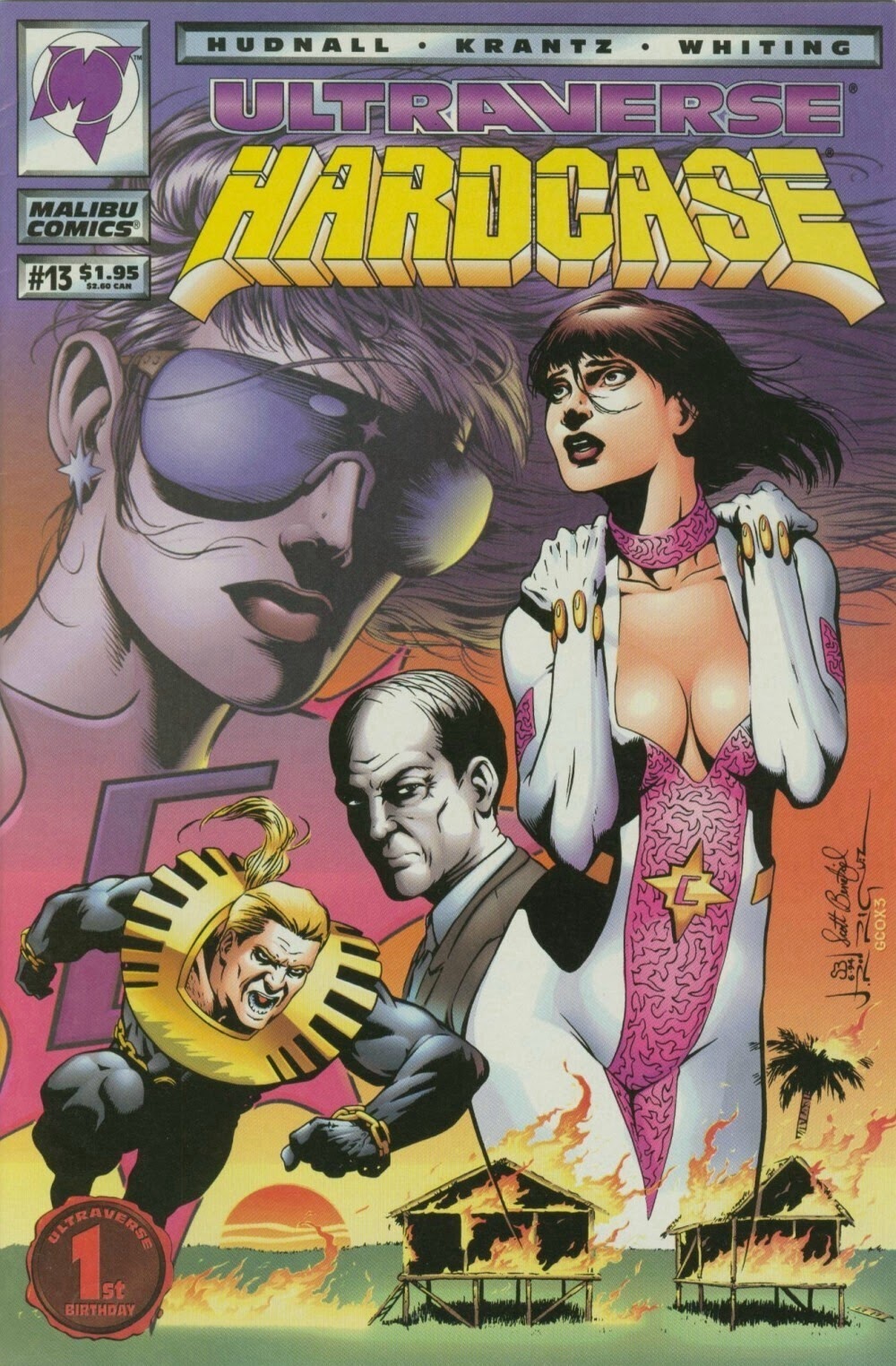
The cover.

Early story

The story begins with Hardcase and Choice agonizing over the shocking revelation from Lela Cho /Tech (The Solution) who helped them access crucial information they worked so hard searching. What they do not know is that they are constantly spied on by sinister figures.

“I knew it! I knew it! Those scum-sucking weasels! I’ll kill them,” said Hardcase in reaction to the shocking information. Lela Cho tries to calm him down as Choice agonizes on her knees.

As their emotions eased, Lela prepares her computer for their research of the highly detailed files that Aladdin has about them…

Quality

13
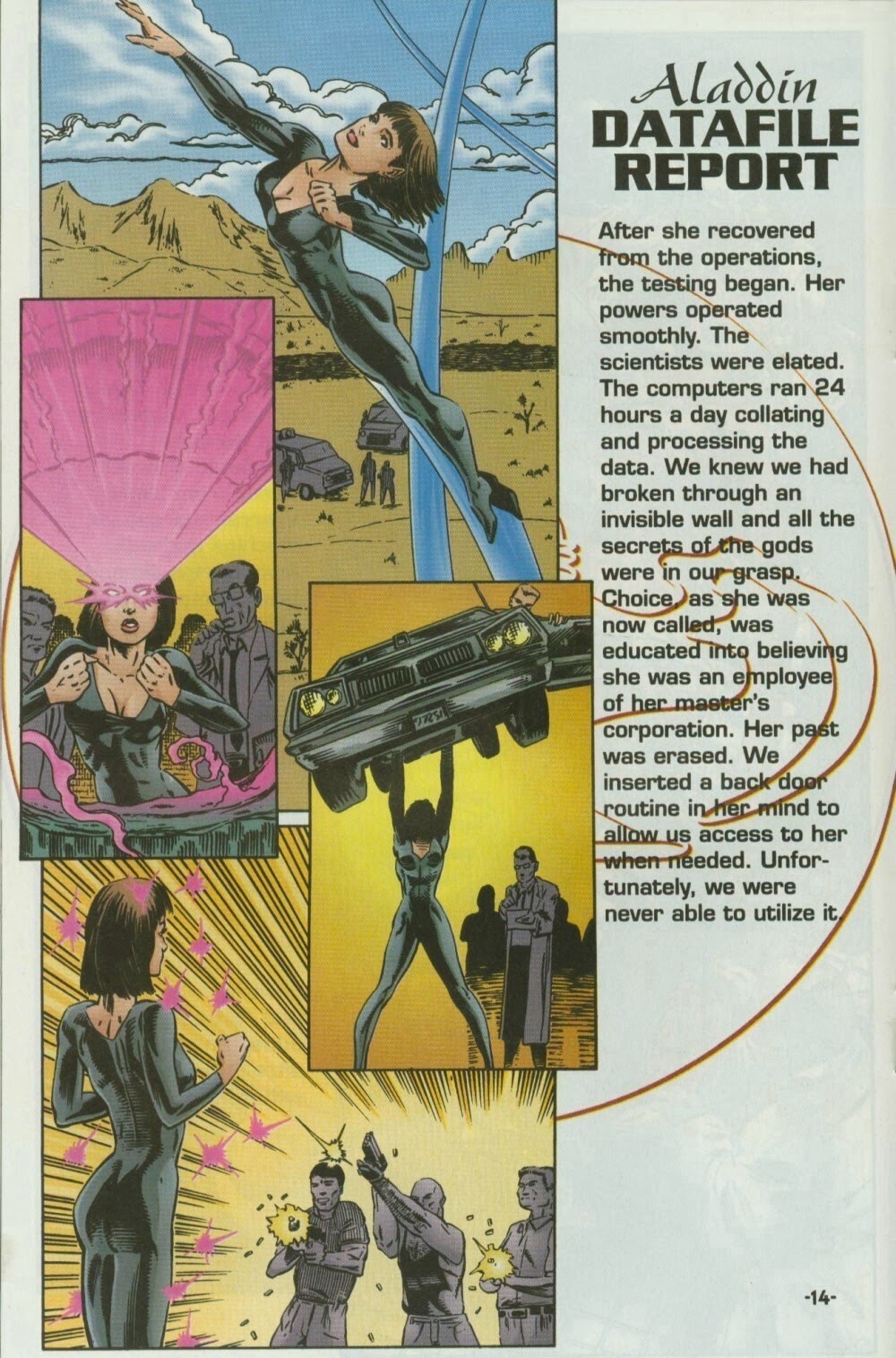
The story of Choice…

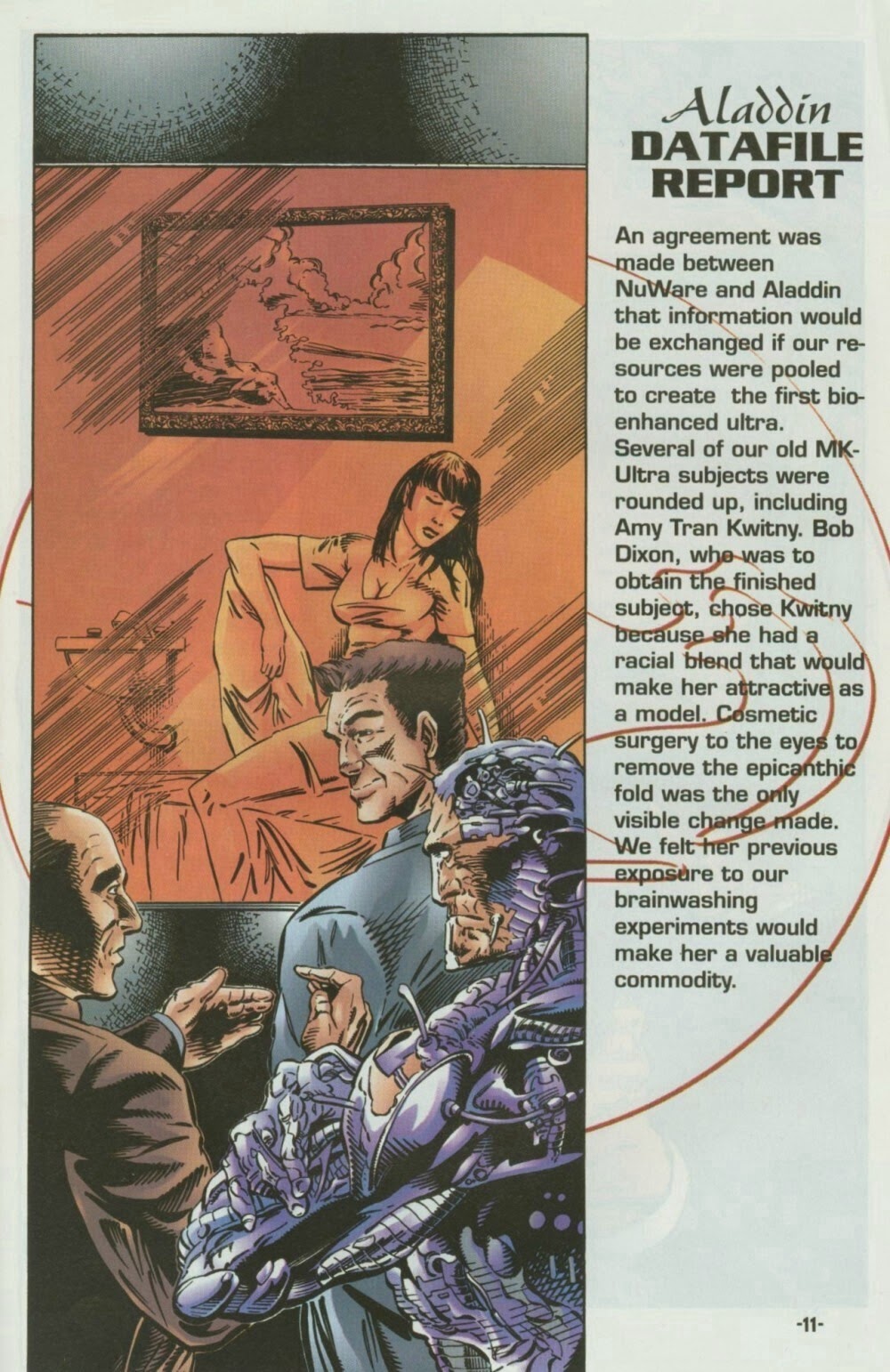
To make things clear, this comic book’s narrative is dominated by information-heavy references presented like computer files with accompanying images. There is actual little present-day story regarding Hardcase and Choice but that’s not a problem as the heavy exposition of background stories relating to Choice, Aladdin, Hardcase and others are very well written by Hudnall. By the time I finished the story, I got enlightened and also excited for the next story of Hardcase.

What I love about the heavy exposition was how it efficiently explained the details and completely avoided getting boring. The exposition also emphasized the specific roles Aladdin, the Choice Corporation, Ultratech and NuWare had in the Ultraverse and how they impacted the lives of people. This is comic book universe building crafted excellently by Hudnall.

Conclusion

10
More from the past of Choice.

The best way to describe Hardcase is that it is an exposition-heavy, characterization-focused story that succeeded in its goal of enlightening the reader. James Hudnall’s writing is excellent which, by this time, is not surprising to me. As such, this comic book is worth reading more than once and like issue , it will compel you to go back to issue and look deeper at the background of Hardcase and his time with The Squad.

If you are seriously planning to buy an existing hard copy of Hardcase (1994), be aware that as of this writing, MileHighComics.com shows that the near-mint copy of the regular edition costs $4 while the near-mint copy of the newsstand edition costs $11.

Overall, Hardcase (1994) is highly recommended!


Thank you for reading. If you find this article engaging, please click the like button below and also please consider sharing this article to others. If you are looking for a copywriter to create content for your special project or business, check out my services and my portfolio. Feel free to contact me as well. Also please feel free to visit my Facebook page Author Carlo Carrasco and follow me at HavenorFantasy@twitter.com

A Look Back at WildC.A.T.S: Covert Action Teams #5 (1993)

Disclaimer: This is my original work with details sourced from reading the comic book and doing personal research. Anyone who wants to use this article, in part or in whole, needs to secure first my permission and agree to cite me as the source and author. Let it be known that any unauthorized use of this article will constrain the author to pursue the remedies under R.A. No. 8293, the Revised Penal Code, and/or all applicable legal actions under the laws of the Philippines.

Hey fellow comic book geeks! Remember before that I reviewed X-Men #1 of 1991 drawn by the great Jim Lee? That was over a year ago and so far, that is my only retro review of a dominant Jim Lee-drawn comic book.

Instead of reviewing another X-Men comic book drawn by Lee or any of the illustrator’s other works, I’ve decided to focus on the 1990s particularly on Image Comics. Back in those days, Lee was one of the main figures of Image and through that company he turned his dream projects into published comic books. When Image Comics launched in 1992, Jim Lee launched his superhero team project titled WildC.A.T.S: Cover Action Teams and issue of that sold a lot. Eventually WildC.A.T.S. finished as a 4-issue mini-series.

Along with WildC.A.T.S were other projects launched under Lee and his company WildStorm (previously referred to as Aegis Entertainment) such as Stormwatch and Gen13.

Then in 1993, Jim Lee, Scott Williams and Brandon Choi worked again to produce even more WildC.A.T.S comic books for fans to enjoy and keep business at WildStorm moving. The result was the release of WildC.A.T.S: Covert Action Teams which symbolically marked the start of a new regular series without starting with a new issue . Here’s an excerpt of Jim Lee’s explanation printed inside the said comic book:

I’m baaack!!! But rather than starting over with a new first issue, I decided to just “extend” the WildCATs miniseries into a regular series. Why? Well, I did it mostly for psychological reasons as first issues are always the most difficult ones to tell and draw. You have to get the readers to accept and understand a whole legion of new concepts and characters—characters which you’re illustrating often for the very first time. And as ant professional in the business can tell you, it takes a while for an artist to get the hang of certain characters-the way they movie, the way they talk, the way they reaction to different situations. And U’ve found that I haven’t really “connected” with any new characters until I’ve had four or five issues worth under my belt. ~ Jim Lee

That being said, here is a look back at WildC.A.T.S: Covert Action Teams published in 1993 by Image Comics with a story written by Jim Lee and Brandon Choi, and with art drawn by Lee and inked by Scott Williams.

Cover
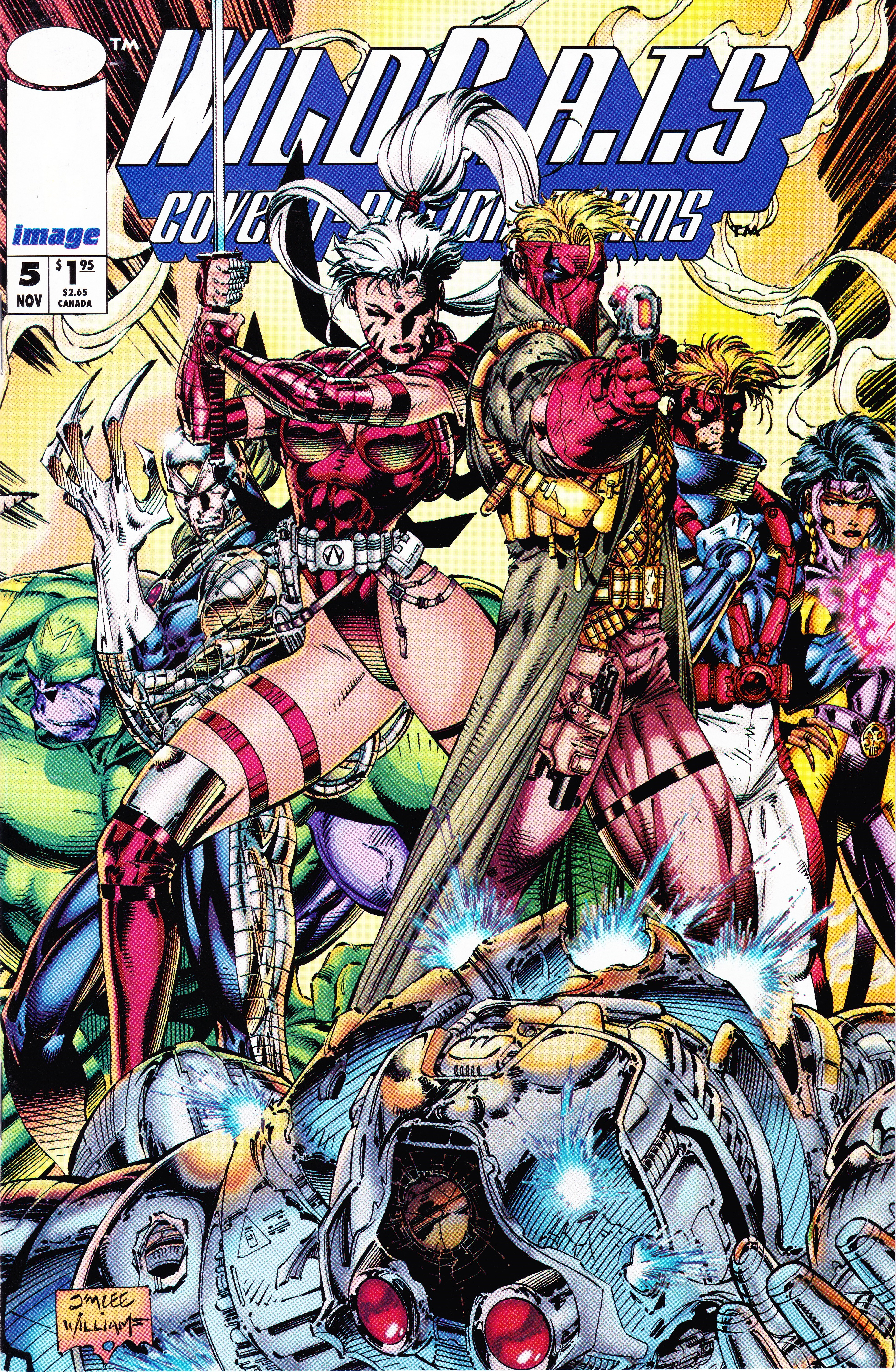
The cover.

Early story

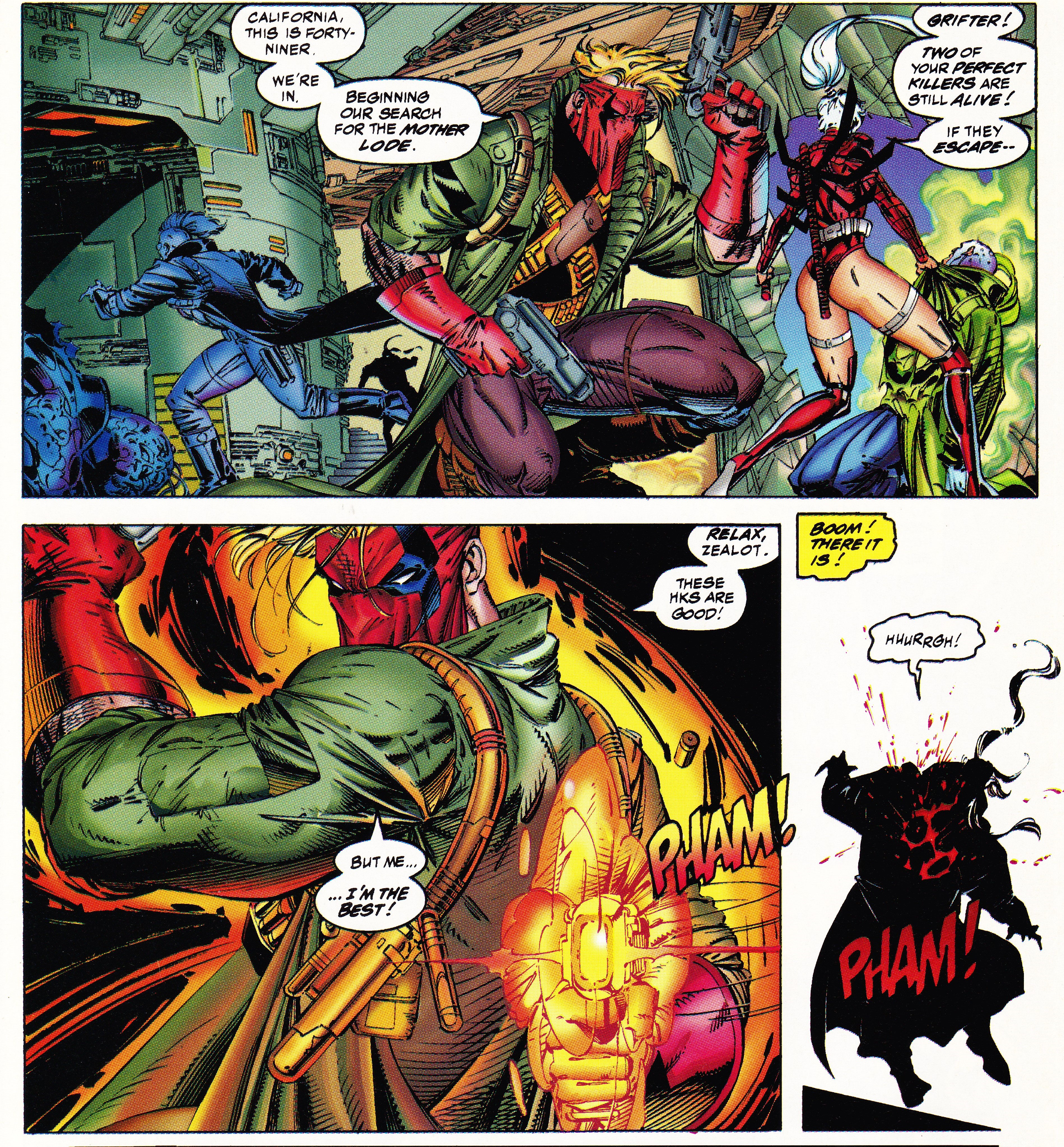
The story begins with WildC.A.T.S members Grifter and Zealot gliding quietly approaching a secret base. Following Grifter’s lead to go into action, Zealot joins him to crash through the glass window and take out the perceived enemy troops called the hunter killers shooting and assaulting them. It turns the two are in search for something and they have their other teammates ready to come in to provide back-up.

Even though they tried to sneak around the place quietly, mechanical enemy reinforcements spotted them and chased them. As a metallic door shuts and separates the two, Grifter successfully got through the armed defense system and finds himself at the vault. After informing his other teammates of his new location, Grifter opens the vault revealing something very captivating with regards to the Daemonites’ secret operations…

Quality

Action3
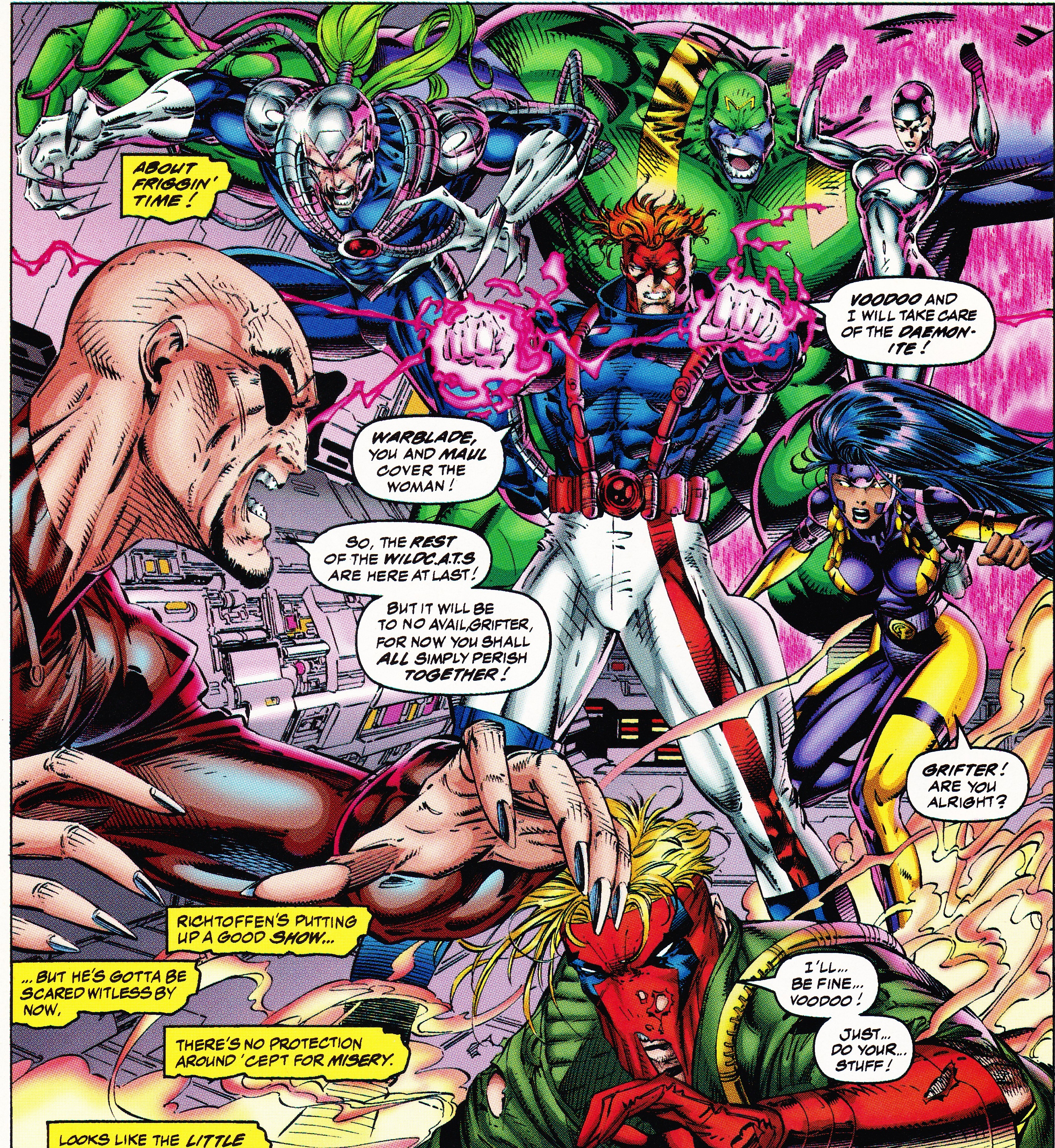
The team and the villain.

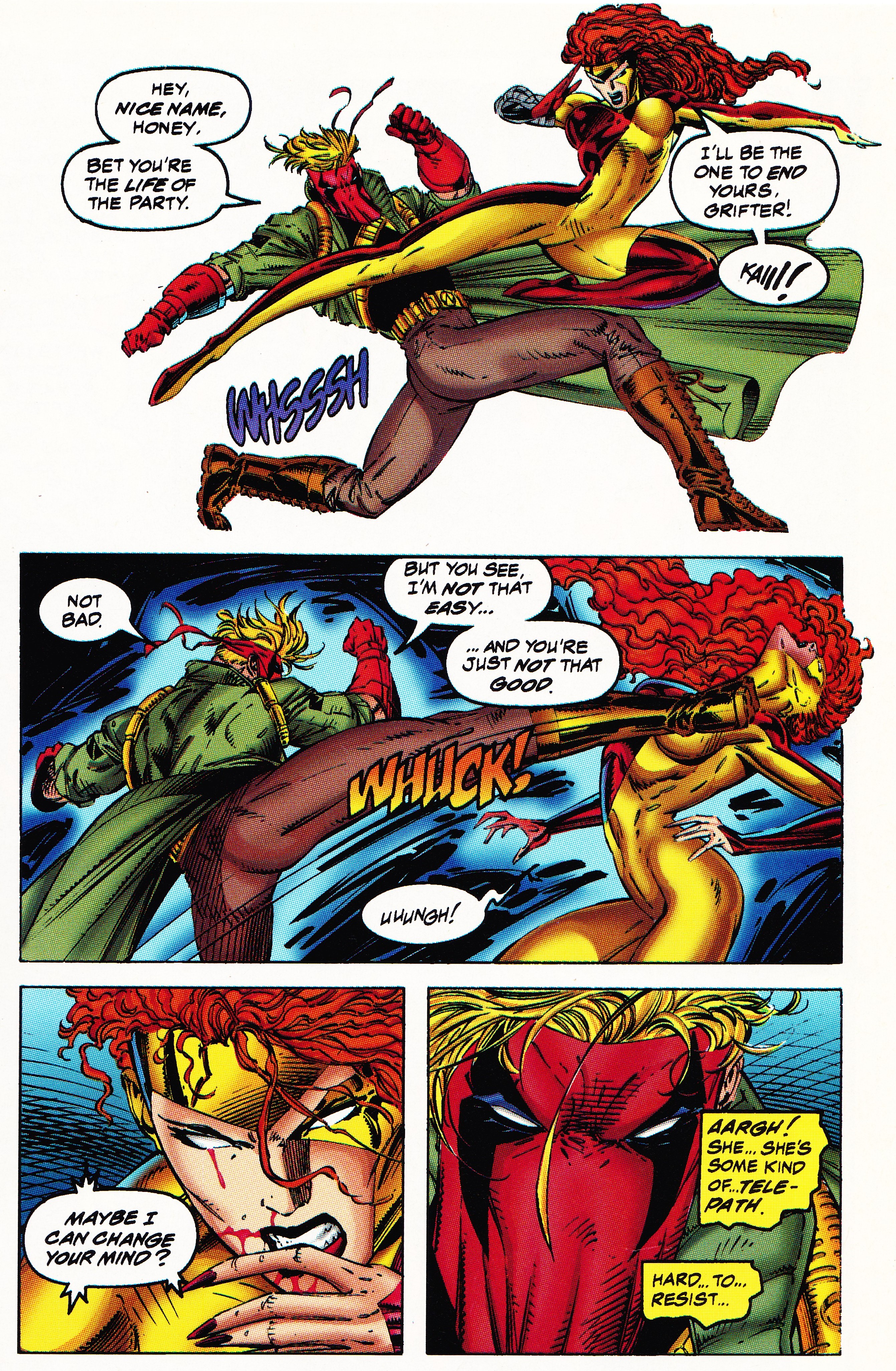
Visually, this is one great looking comic book filled with lots of dynamism and flare provided by Jim Lee and Scott Williams. Each and every character looks great and come with a good amount of visual details on them. Also I love the futuristic technology look that dominated most of the scenes. When it comes to spectacle, this one is loaded and Jim Lee’s presentation of adulterated action and stunts is undeniably fantastic. I should also state that the colors are very vibrant thanks to Joe Chiodo.

Action2
Great action drawn by Jim Lee.

When it comes to storytelling, however, this one lacks depth. In terms of plotting, it’s pretty basic and goes like this: two heroes infiltrate the base of an enemy, they get discovered and more enemy troops come in, the top villains come in followed by the rest of the heroes’ teammates. As the focus here was more on spectacle and suspense, there was definitely no room left for character development. There is a subplot here worth mentioning and it serves as a link leading to the eventual Killer Instinct crossover with Marc Silvestri’s Cyberforce.

Conclusion

Action1
Great visuals and action here but not much in terms of storytelling.

I should say that WildC.A.T.S: Cover Action Teams is pretty tricky to recommend to all comic book geeks and superhero enthusiasts. I can easily recommend it to die-hard fans of Jim Lee, the die-hard fans of WildC.A.T.S, as well as those who love Image Comic books from the 1990s. If you are looking for a short bout of fun with action in mind, this comic book will serve you. If you are the kind of reader who wants deep storytelling and solid character development, this one will fall short.

If you are seriously planning to buy an existing hard copy of WildC.A.T.S: Cover Action Teams (1993), be aware that as of this writing, MileHighComics.com shows that the near-mint copy of the regular edition costs $4.

Overall, WildC.A.T.S: Cover Action Teams (1993) is satisfactory. It’s a great looking comic book (with gate-fold pages) that does not have much to fulfill readers looking for the solid combination of art, storytelling, characterization and entertainment.


Thank you for reading. If you find this article engaging, please click the like button below and also please consider sharing this article to others. If you are looking for a copywriter to create content for your special project or business, check out my services and my portfolio. Feel free to contact me as well. Also please feel free to visit my Facebook page Author Carlo Carrasco and follow me at HavenorFantasy@twitter.com

A Look Back at Prime #5 (1993)

Disclaimer: This is my original work with details sourced from reading the comic book and doing personal research. Anyone who wants to use this article, in part or in whole, needs to secure first my permission and agree to cite me as the source and author. Let it be known that any unauthorized use of this article will constrain the author to pursue the remedies under R.A. No. 8293, the Revised Penal Code, and/or all applicable legal actions under the laws of the Philippines.

Hey everyone! If you are looking for something new with my retro reviews of Ultraverse comic books, then you will get it now as I’ve decided to go back to the Prime monthly series for the first time in over thirty days since my last Prime review.

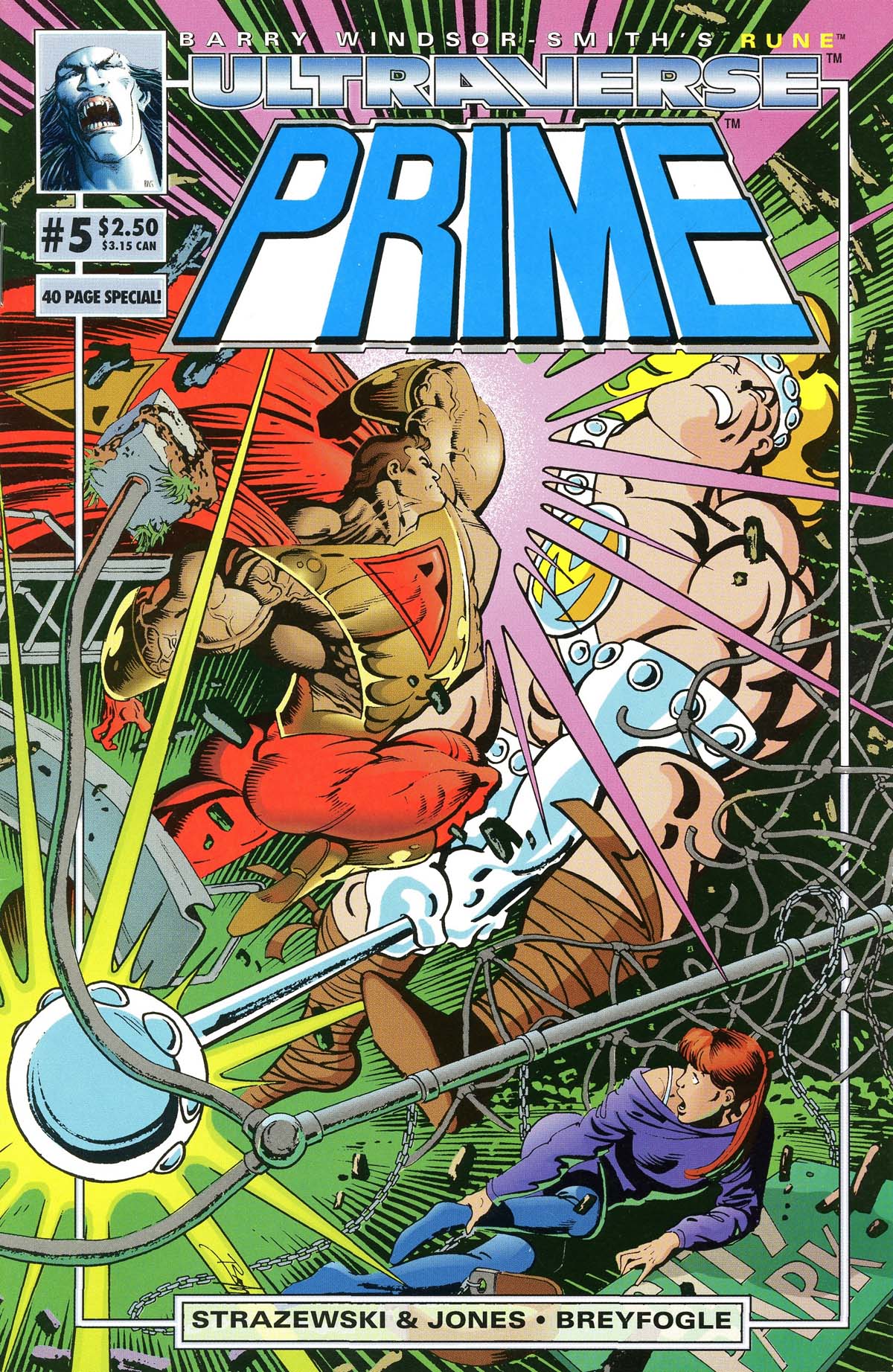
That being said, here is my look back at Prime , published in 1993 by Malibu Comics with a story written by Len Strazewski and Gerard Jones, and drawn by the late Norm Breyfogle.

Cover
The cover.

Early story

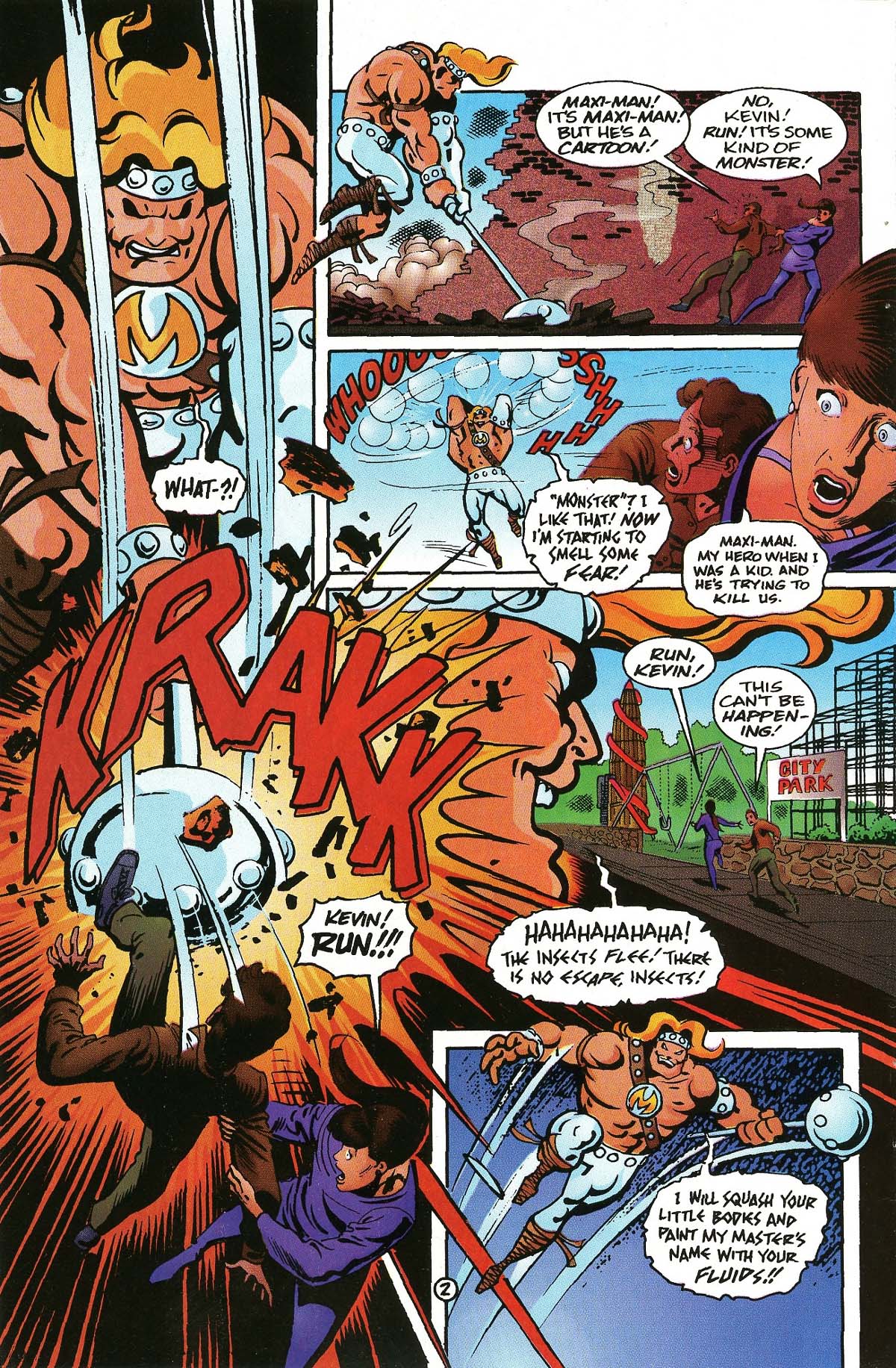
The story begins with an unbelievable yet living cartoon character called Maxi-Man about to strike a young and helpless Kevin (Prime actually) claiming to be doing it for the majesty of Boneyard (a villain of Mantra’s). Fortunately, Kevin got saved by Kelly who pulled him away from Maxi-Man’s deadly strike.

With the local community already in chaos due to Maxi-Man’s rampage, Kevin and Kelly ran to the nearby city park only to be stopped by the him. With her ankle hurt, Kelly could not move from her downed position and tells Kevin to run.

Kevin struggles with the tension building up as Maxi-Man makes his way to Kelly…

Quality

Heavily action-packed, smart, intriguing and engaging this comic book truly is! Let me start with the storytelling here. Len Strazewski and Gerard Jones crafted a great story that not only followed Prime’s exploits but also fleshed out his personality a lot with an emphasis on his civilian life as teenager Kevin who happens to be dealing with the pressure of living a double-life (as an unstable superhero and as a high school student). He pursues to be with Kelly but suddenly finds themselves in trouble with the unexpected presence of Maxi-Man, an in-story cartoon character Kevin admired so much as a child. This not only added to Kevin’s struggle with stress but also complicates his mind. By focusing closely on Kevin, you will feel his struggle a lot.

When it comes to the spectacle, Norm Breyfogle perfectly brought the script to life and ramped up the excitement a whole lot with his illustrations. The visual highlight is the big battle between Prime and Maxi-Man, and even though the fighting is extensive, it never feels dumb nor brainless due to the smart dialogue provided by the writers (note: observe closely the exchange of words Prime and Maxi-Man had with each other). Breyfogle clearly paced the action sequences smoothly and he chose the right moments to draw the action dynamically.

Speaking of dialogue, I love the following line Prime said during the fight with Maxi-Man…

“I’m what you’re supposed to be! I’m a hero! I grew up on your cartoons! I learned about heroism from you! About fighting for what’s right! I don’t know how you got to be real, or why you’re trying to kill us—but I’m gonna show you what you taught me!”

Back to the writing, there is a sub-plot that took place during the big battle. That one added a good amount of mystery and intrigue not only into the story but also to the Ultraverse itself.

Conclusion

2
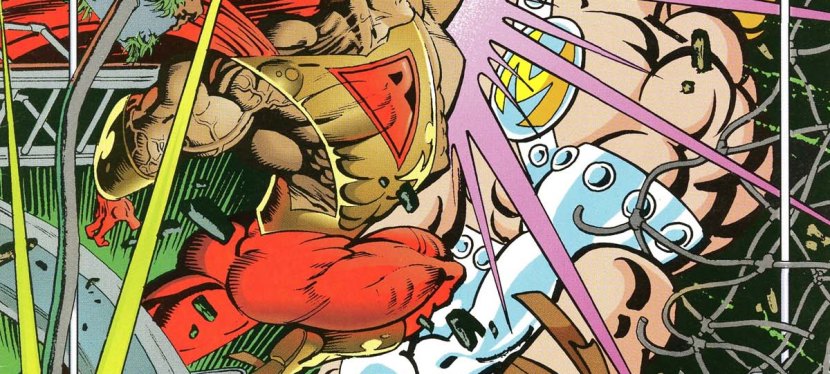
Kevin (Prime), Kelly and Maxi-Man.

What can I say? Prime is a great read! Personally, when it comes to Prime’s encounters, I found this one to be much more engaging, more fun and more intriguing than even Prime’s encounter with Prototype in the previous issue (which is supposed to be an essential encounter between the Ultraverse’s main superheroes). The way I look at this comic book’s quality, the creators actually over-did themselves to deliver superhero greatness.

If you are seriously planning to buy an existing hard copy of Prime (1993), be aware that as of this writing, MileHighComics.com shows that the near-mint copy of the regular edition costs $4 while the near-mint copy of the newsstand edition costs $8.

Overall, Prime (1993) is highly recommended!


Thank you for reading. If you find this article engaging, please click the like button below and also please consider sharing this article to others. If you are looking for a copywriter to create content for your special project or business, check out my services and my portfolio. Feel free to contact me as well. Also please feel free to visit my Facebook page Author Carlo Carrasco and follow me at HavenorFantasy@twitter.com