A Look Back at Uncanny X-Men #284 (1992)

Welcome back superhero enthusiasts, 1990s arts and culture enthusiasts, Marvel Comics fans and comic book collectors! Today we go back to the early 1990s to explore one of the many tales of the Marvel shared universe through the Uncanny X-Men series.

As of this writing, I really enjoyed reading the tales about the Gold Team of the X-Men under the co-writing of Whilce Portacio and John Byrne (click here, here and here). Following Bishop’s debut in issue #282, issue #283 featured his intense first-ever encounter with the X-Men while concluding the mutants mission (retrieving Jean Grey).

With those details laid down, here is a look back at Uncanny X-Men #284, published in 1992 by Marvel Comics with a story co-written by Whilce Portacio and by John Byrne (script). The art was done by Portacio with ink work by Art Thibert, Scott Williams and Karl Altstaetter.

The cover.

Early story

The story begins at the Sakhali islands located off the coast of Siberian Russia and separated from Hokkaido of Japan. Previously a territory of China and explored by the Japanese, the island is now bustling with unusual activity as government officials and personnel of both Russia and Japan focus on a massive, sealed crater there. After meeting with the Russians and his fellow Japanese on location, the mutant Sunfire (Shiro Yoshida) proceeds to do a task with his immense power on the crater. The scientists quickly detect intense readings that went off the scale and it seems the void of the crater is responding to Sunfire’s assault. The void adapted its own frequencies with Sunfire’s and returns fire at him. The void then begins to change.

Elsewhere, the X-Men’s Gold Team are spending quality time together on board their supersonic blackbird heading home. Jean Grey, who previously occupied Emma Frost’s body temporarily, is back as herself and interacting with her teammates. With them is the unconscious body of Emma Frost (White Queen). Professor X and his mutants are uncertain as to what happened to Emma Frost’s mind and Bobby Drake (Iceman) speculates that she could have transferred her psyche into some unsuspecting victim (note: the party at the Hellfire Club’s headquarters in issue #281 was filled with hundreds of people).

Having heard Iceman’s opinion, Professor X decides to scan Emma Frost for the last dim echo of her personality. He tells Jean Grey to join him to scan Frost. Suddenly, the X-Men receive a distress call from the Sakhalin islands…

Quality

After Sunfire got hit, a new batch of enemies emerged from the void.

Following the intense and enduring events of issues #281 until #283, this comic book’s concept had Charles Xavier and the Gold Team get busy yet again due to an emergency at the Sakhalin islands. This opened the opportunity for Portacio and Byrne to introduce a new conflict at the said islands (which turns into a war zone), a new force of opposition for the X-Men and giving the Japanese mutant Sunfire a share of the spotlight in X-Men comics.

At the heart of the conflict is the crater and void at the mentioned islands which brought out a strong element of mystery slowly backed up with intriguing revelations. The new force of opposition are armored, human-like beings (whose heads, hair and masks easily remind me of the Predator design of Stan Winston in the movies) who are armed, dangerous and determined to achieve their goals no matter how difficult. What is intriguing is how the new beings (referred to as aliens) remain concerned and caring with each other even during the intense moments of their encounter with the X-Men.

The climax of the conflict here is a must-see. You just have to get a copy of this comic book to find out.

When it comes to the visuals, Portacio continues to deliver solid artworks which showcased intense scenes, scenic shots, dynamic superhero action and subtle moments of drama (especially when the X-Men are together and in comfort). As there were three guys who inked Portacio’s work, there is a noticeable inconsistency with the visuals as the story went on.

Conclusion

Following their recent encounters with Bishop and Trevor Fitzroy, the X-Men still have the unconscious body of Emma Frost with them.

While some readers might find the X-Men Gold Team’s involvement in the conflict rushed, Uncanny X-Men #284 (1992) remains an enjoyable read. As the situation is very new, the stakes are different here and for the most part, this comic book is a build-up of a new concept that just happened to be filled with a lot of action scenes. Portacio and Byrne delivered a fun-filled read with a good amount of intrigue and some surprises as they introduced a new force opposite the X-Men. And for the people are who are fond of Bishop, he and his companions are here but not with the X-Men.

Overall, Uncanny X-Men #284 (1992) is recommended.

+++++

Thank you for reading. If you find this article engaging, please click the like button below, share this article to others and also please consider making a donation to support my publishing. If you are looking for a copywriter to create content for your special project or business, check out my services and my portfolio. Feel free to contact me with a private message. Also please feel free to visit my Facebook page Author Carlo Carrasco and follow me on Twitter at  @HavenorFantasy as well as on Tumblr at https://carlocarrasco.tumblr.com/ and on Instagram at https://www.instagram.com/authorcarlocarrasco

A Look Back at Uncanny X-Men #283 (1991)

Welcome back superhero enthusiasts, 1990s arts and culture enthusiasts, Marvel Comics fans and comic book collectors! Today we go back to the year 1991 to explore one of the many tales of the Marvel shared universe through the Uncanny X-Men series.

Uncanny X-Men #282 marked the continuing conflict between the X-Men and Trevor Fitzroy’s group, and the arrival of one of the most notable additions to Marvel’s Mutants…Bishop. To be clear, Bishop was not alone when arrived from the future through one of Fitzroy’s portals. In relation to everything that happened in the comic book, the arrival was a very powerful conclusion to read.

With those details laid down, here is a look back at Uncanny X-Men #283, published in 1991 by Marvel Comics with a story co-written by Whilce Portacio and by John Byrne (script). The art was done by Portacio with ink work by Art Thibert.

The cover.

Early story

The story begins in the arctic lair of Trevor Fitzroy. The arrival of Bishop and his two mutant companions – Malcolm and Randall – from the future caught everyone by surprise (including the X-Men). Bishop, who has Trevor Fitzroy subdued, tells his companions to throw their takes (members of Fitzroy’s force) into the portal.

Bishop intends to have Fitzroy go first which draws a loud reaction from the mutant madman. Fitzroy, who had been using the life force of captive mutants to open portals, knows exactly what would happen if he goes first. His exchange of words with Bishop shows they have a history together.

When Bishop’s companion moved a subdued person into the portal, it tore him apart. Fitzroy reveals to Bishop that the portals he created only function one-way and he tells him that he and his companions are stuck in the 20th century.

In response, Bishop assumes complete judicial authority and tells Malcolm and Randall to standby for termination sweep. The X-Men begin to react…

Quality

Professors takes a huge risk to help Jean Grey who recently occupied the body of Emma Frost.

When it comes to the creativity, this comic book is both a strong pay-off to the build-up of issues #281 and #282 while also serving as a new build-up focusing on Bishop’s arrival. At the heart of this tale is Bishop’s first-ever personal encounter with the X-Men which instantly expanded the lore of Marvel’s mutants a lot.

Bishop is a mutant from one possible future (of the Marvel Comics shared universe) in which Storm, Iceman, Archangel, Charles Xavier and others are remembered as legacy figures of the X-Men. In this comic book, you will see there is a good amount of depth with the way Bishop is dramatized and with many notable details on the dialogue prepared for him. Co-created by Whilce Portacio and John Byrne, Bishop is really an inspired work and clearly is not a mere addition. There is Filipino inspiration behind the creation of Bishop (click here and here) with some elements of John Ford and Prince mixed in (click here).

As far as the storytelling is concerned, there is notable shift of tone here as Bishop, Malcolm and Randall received much of the spotlight and yet there was still some room left for focus on the X-Men and Fitzroy’s group respectively. What makes this comic book an intriguing read is the first-ever personal encounters between Bishop and the X-Men which involved the temporary blurring of the boundary between good and evil. The interactions between Storm and Bishop are easily the most dramatic to see, and you will witness how their respective toughness (plus leadership) collide intensively.

Along the way, there is a lot superhero action to enjoy here. In fact, there are many forms action that served as extensions or pay-offs to the exchange of words between Bishop and a few specific X-Men members. Even a non-action scene like Professor X helping Jean Grey (who was in Emma Frost’s body temporarily) resulted in some visual spectacle.

Conclusion

Bishop’s first-ever encounter with the X-Men not only challenged his perception but also brought out traits of his attitude.

Uncanny X-Men #283 (1991) is another very compelling, intriguing and entertaining read from the Portacio-Byrne duo. The X-Men lore has been expanded more and Bishop’s first encounter with the X-Men is easily the most engaging aspect of the story. At the same time, the conflict between the X-Men’s Gold Team and Trevor Fitzroy took a twist that really turned the plot to an unexpected new direction which is not surprising as Bishop’s presence made a huge impact (even on Storm herself). This is one of the best superhero stories of 1991 I have read so far.

Overall, Uncanny X-Men #283 (1991) is highly recommended!

+++++

Thank you for reading. If you find this article engaging, please click the like button below, share this article to others and also please consider making a donation to support my publishing. If you are looking for a copywriter to create content for your special project or business, check out my services and my portfolio. Feel free to contact me with a private message. Also please feel free to visit my Facebook page Author Carlo Carrasco and follow me on Twitter at  @HavenorFantasy as well as on Tumblr at https://carlocarrasco.tumblr.com/ and on Instagram at https://www.instagram.com/authorcarlocarrasco

A Look Back at Uncanny X-Men #282 (1991)

Welcome back superhero enthusiasts, 1990s arts and culture enthusiasts, Marvel Comics fans and comic book collectors! Today we go back to the year 1991 to explore one of the many tales of the Marvel shared universe through the Uncanny X-Men series.

Uncanny X-Men #281 was a great read. For most of the early 1990s, I read more X-Men stories about the Blue Team than the Gold Team. In Uncanny X-Men #281 – which took place after X-Men #5 – the spotlight was on the Gold Team which showed the strategic leadership of Storm, the X-Men revisiting the headquarters of the Hellfire Club, Jean Grey’s own recollections of past events and the new threat of Trevor Fitzroy and the Sentinels.

With those details laid down, here is a look back at Uncanny X-Men #282, published in 1991 by Marvel Comics with a story co-written by Whilce Portacio and by John Byrne (script). The art was done by Portacio with ink work by Art Thibert.

The cover.

Early story

The story begins inside the School For Gifted Youngsters when the Gold Team arrives (with Colossus carrying the inactive body of Jean Grey) and disrupts the chess game between Professor X and Forge. Charles Xavier mentally examines Jean and notices that her psyche survives and has been displaced. He realizes Jean is alive but not in her body.

In New York City, Trevor Fitzroy (who is carrying the body of an inactive Emma Frost) and his Sentinels surprise Shinobi Shaw showing what is left of the cyborg of Pierce. Trevor boasted to Shinobi that he won claiming that he has terminated one of the founders of the inner circle, captured a small band of Hellions and has Emma Frost as a trophy. Very slowly, Jean Grey – now occupying Frost’s body – wakes up…

Quality

Trevor Fitzroy does not know who is inside Emma Frost’s body.

I can say out loud that this is a great follow-up to the previous issue (which itself is a great read) as it has a lot of hefty payoffs to the build-up from before. With the story concept already established in issue #281, the progression continued strongly, the narrative is clearer and the stakes were raised even higher.

In this issue, Trevor Fitzroy still has extreme tendencies and he might look insane or unhinged to you. Still, Fitzroy really has diabolical plans to execute and those plans involves his ability to open portals to bring in his reinforcements from far away, including the “denizens of the future.” Adding to Fitzroy’s merciless and arrogant personality is his use of the captives’ life force to energize himself to open portals. Really, he does not care much about the lives of captives as he treats them as nothing more than bodies of energy for his use. Whilce Portacio really excels in not only bringing the script to life but also showcasing the personality and expressions of Fitzroy who at this point in comic book history was a brand new villain for the X-Men.  

As for the X-Men’s Gold Team, not having Jean Grey was really disadvantageous to them which compels Professor X to actually join them on their mission. This is a notable development as Xavier is very close with Jean (his original student and fellow telepath) and he knows that great odds await their team. Xavier’s involvement added a lot to the plot itself and I love the way John Byrne and Portacio portrayed him here.

When it comes to the storytelling, the pace noticeably moved faster as a lot of payoffs to the build-up were executed here. The X-Men themselves each got their respective share of the spotlight and all of them were portrayed consistently in character. The stakes were raised here this time and the handling of all the details and developments was very solid.

Conclusion

Knowing great odds await them, Charles Xavier joins the X-Men on their mission to save Jean Grey.

Even with the stakes raised higher, the creative team delivered the great stuff Uncanny X-Men #282 (1991) is a very worthy follow-up to the previous issue. In fact, I find this comic book more entertaining and more intriguing to read from start to finish. Fitzroy is indeed a very worthy new enemy for the X-Men’s Gold Team, and there is much that long-time X-Men fans can enjoy here.

Overall, Uncanny X-Men #282 (1991) is highly recommended!

+++++

Thank you for reading. If you find this article engaging, please click the like button below, share this article to others and also please consider making a donation to support my publishing. If you are looking for a copywriter to create content for your special project or business, check out my services and my portfolio. Feel free to contact me with a private message. Also please feel free to visit my Facebook page Author Carlo Carrasco and follow me on Twitter at  @HavenorFantasy as well as on Tumblr at https://carlocarrasco.tumblr.com/ and on Instagram at https://www.instagram.com/authorcarlocarrasco

What to watch on YouTube right now – Part 100

Welcome back my readers, YouTube viewers and all others who followed this series of articles focused on YouTube videos worth watching. Have you been searching for something fun or interesting to watch on YouTube? Do you feel bored right now and you crave for something to see on the world’s most popular online video destination?

I recommend you check out the following videos I found.

#1 Christine Grace Smith Reacts To A Video About Society Impacted When No Men Are Working – There is something new and engaging to learn about society whenever Christine Grace Smith posts a new video. Recently, she shared her own reaction to a video that explores what would happen to society if men stopped working. This is something that the woke and rabid modern-day feminists do not want you to see. I urge you all to watch her video now.

#2 Metal Gear Games Revisited – In connection with the recent release of Metal Gear Solid Δ: Snake Eater, it was not surprising that a lot of YouTube videos revisiting past Metal Gear games got published by different YouTubers. Some of those videos I found were entertaining to watch while others were reflective or even intriguing. For the newcomers reading this. The Metal Gear game franchise of Konami started in the late 1980s under Hideo Kojima when he was very young. That being said, I urge you all to take a look at the selected Metal Gear-related videos I shared below.

#3 How Alan Moore And Watchmen Spread The Wokeness Disease In Comics – YouTuber Ranting for Vengeance is back, and this time he strikes hard at author Alan Moore not personally but for sowing the seeds of wokeness in superhero comics with Watchmen as the turning point. By today’s standards, wokeness is the unfortunate new normal in superhero comics and it is a fact that Alan Moore is an anarchist and a Leftist as well. Watch and learn from the video below.

#4 Robin Hood: Men in Tights Revisited – Long ago, there were several comedy films made by Mel Brooks which delivered bouts of humor to moviegoers and raked in varying amounts in ticket sales. In the 1990s, he directed Robin Hood: Men in Tights which my friends enjoyed watching inside the movie theater. While the film is not a classic by any means – not even within the comedy genre – it still managed to entertain YouTubers through their reaction videos. Watch the selected reaction videos below.

#5 The Traditional Types of Food of Japan  – While you may have enjoy varied types of food of Japan served through the many Japanese restaurants around the world, are you aware that there certain meals or delicacies of the nation that were simply not made available through those places? That being said, it would be enlightening – and even tasty – for you to visit Japan and try out the more traditional types of food the nation has to offer. Indeed, there are the 100-year food declared in Japan and you can learn more about them by watching the video below.

+++++

Thank you for reading. If you find this article engaging, please click the like button below, share this article to others and also please consider making a donation to support my publishing. If you are looking for a copywriter to create content for your special project or business, check out my services and my portfolio. Feel free to contact me with a private message. Also please feel free to visit my Facebook page Author Carlo Carrasco and follow me on Twitter at  @HavenorFantasy as well as on Tumblr at https://carlocarrasco.tumblr.com/ and on Instagram athttps://www.instagram.com/authorcarlocarrasco

A Look Back at Uncanny X-Men #281 (1991)

Welcome back superhero enthusiasts, 1990s arts and culture enthusiasts, Marvel Comics fans and comic book collectors! Today we go back to the year 1991 to explore one of the many tales of the Marvel shared universe through the Uncanny X-Men series…Uncanny X-Men #281.

For the newcomers reading this, Marvel had a major reorganizing of their X-Men-related comic book series in the 2nd half of 1991. After the events of the Muir Island Saga, the X-Men grew into such a large group they had to be divided into two teams – Blue and Yellow – under Charles Xavier who returned as their leader. When X-Men #1 (by Chris Claremont and Jim Lee) launched in 1991, it showed the Blue Team dealing with Magneto. Uncanny X-Men #281 was released the same month as that comic book and it shows the first mission of the Gold Team composed of Storm, Jean Grey, Colossus, Iceman and Archangel. Very notably, its story took place immediately after X-Men #5 was released in 1992.

With those details laid down, here is a look back at Uncanny X-Men #281, published in 1991 by Marvel Comics with a story co-written by Jim Lee and Whilce Portacio and script by John Byrne. The art was done by Portacio with ink work by Art Thibert.

The cover.

Early story

The story begins in the Australian outback where the Reavers are relaxing while the sandstorm is happening and with them is Donald Pierce. Suddenly, a group of Sentinels attacked them resulting in deaths of some of their members.

Elsewhere in New York City, Storm, Jean Grey, Archangel, Colossus and Iceman – all in formal attire as civilians – attend a lavish party at the headquarters of the Hellfire Club. It turns out, they were invited by Emma Frost who leads the club. Even with several guests and a lot of enjoyable things around them, the X-Men remain prepared to react if something unfortunate happens.

After a brief moment of tension between the X-Men and the Hellions, someone in a powered suit of armor crashed through a door near Jean, Storm and Archangel. Emma Frost emerges, takes the helmet off the armored person (a young woman) and even welcomed the X-Men. Frost claims that the armored lady was another assassin who tried to take her life and it is the 2nd assassination attempt she encountered over the past weeks….

Quality

The Sentinels, Lady Deathstrike and Donald Pierce in an intense scene.

As this comic book was part of the new era of the X-Men, the creative team came up with tale that is loaded with sub-plots that had a mix of old (the X-Men fought with the Hellfire Club during the Dark Phoenix Saga, and had encounters with the Sentinels a number of times) and new (Trevor Fitzroy – the illegitimate son of Sebastian Shaw – and the Upstarts are the new antagonists of the X-Men) creative elements for the X-Men’s Gold Team to encounter. The fact that the Hellfire Club is present in the story requires readers to have some knowledge about them from previous X-Men comic books as well as other characters and past tales that formed the background of the newer characters.  

The story was made to modernize the X-Men and their struggle with people they encounter, while creatively reconnecting with the past. This should not be a surprise because writer John Byrne (yes, the same creator behind The Man of Steel mini-series) himself was involved in the Dark Phoenix Saga. The result is a tale of intrigue, twists, action and a lot of tension here. 

When it comes to encounters, I enjoyed the discussion the X-Men had with Emma Frost (first appeared in Uncanny X-Men #129) who was their fierce enemy (Frost previously tried to manipulate Kitty Pryde) before having a change of heart and partnered with Professor X. Their exchange of words was civil, smart and there were some nice pay-offs in the form of intriguing revelations. The script by John Byrne was really solid here.

The artwork by Whilce Portacio here is still great to look at and his contribution on modernizing the X-Men’s look for the 1990s is a must-see. The same can be said with his take on Emma Frost,  and the other established characters here. Portacio’s visualization of Trevor Fitzroy has that strong science fiction vibe combined with that fluffy early 1990s look.

Conclusion

The X-Men witness an intense moment followed by the emergence of Emma Frost.

Even though there were a few bumps on the flow of the narrative, I can say that Uncanny X-Men #281 (1991) is a very enjoyable read filled with intrigue, twists, reconnections to the past, notable character moments and sufficient spectacle. Its story has a lot of details and attachments to the past which will resonate with long-time X-Men fans. At the same time, Whilce Portacio’s art works made this one of the finest looking Uncanny X-Men issues of the 1990s and that is saying a lot. Considering the details and the richness of the writing, this Uncanny X-Men comic book should be read at a moderate pace as paying close attention to what was presented is essential.

That being said, this first tale of the Gold Team of the X-Men is a great read.

Overall, Uncanny X-Men #281 (1991) is highly recommended!

+++++

Thank you for reading. If you find this article engaging, please click the like button below, share this article to others and also please consider making a donation to support my publishing. If you are looking for a copywriter to create content for your special project or business, check out my services and my portfolio. Feel free to contact me with a private message. Also please feel free to visit my Facebook page Author Carlo Carrasco and follow me on Twitter at  @HavenorFantasy as well as on Tumblr at https://carlocarrasco.tumblr.com/ and on Instagram at https://www.instagram.com/authorcarlocarrasco

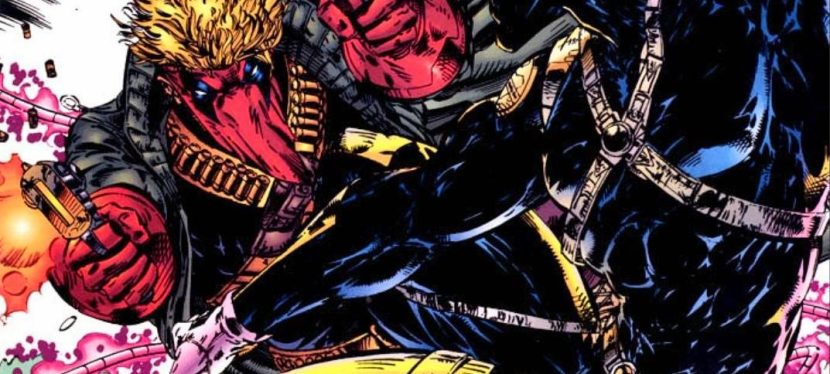
A Look Back at WildC.A.T.s Adventures #1 (1994)

Welcome back superhero enthusiasts, 20th century pop culture enthusiasts and comic book collectors! Today we go back to the mid-1990s to take a close look at the launch issue of the comic book series that was an adaptation of the WildC.A.T.S: Covert Action Teams animated series.

To put things into perspective, Jim Lee and several creators left Marvel Comics to establish Image Comics. In 1992, Lee launched his creator-owned project  WildC.A.T.s: Covert Action Teams #1 which also was a part of the creative foundation of the WildStorm universe. Just a little over two years later, an animated series of WildC.A.T.S. was launched on TV. Similar to what Marvel Comics did in relation to adapting stories of the X-Men animated series, Image Comics launched a comic book series based on the WildC.A.T.S. animated series.

With those details laid down, here is a look back at WildC.A.T.s Adventures #1, published in 1994 by Image Comics with a story written by Jeff Mariotte (adapting the animated story by David Wise) and drawn by Ty Templeton.

The cover.

Early story

The story begins one night inside an office where Reno Bryce (Warblade) works obsessively on a circuit board. He is surrounded by the technology he knows and loves. As he works, three armed men wearing coats and hats enter his office and ask him for his identity. One of the men grabs a circuit board and destroys it, which triggers Reno to react with violence.

Knowing he is outnumbered, he quickly runs out of the office for safety. He heard one of the men referred to him as a crossbreed whelp. As soon as he finally leaves the building, Reno sees the WildCATS team composed of Grifter, Spartan, Zealot, Voodoo and Maul. Thinking that the WildCATS are out to kill him like the armed men, Reno keeps on running away. 

Suddenly, a group of people are rushing towards the WildCATs. Powered with the Sight, Voodoo realizes that the mob is composed of Daemonites disguised as humans. The WildCATs and the mob engage in battle.

From high above, Reno see the battle happening. Suddenly, the three armed men appeared behind him telling him that he has no escape from them…

Quality

Reno Bryce still adjusting to his new form as Warblade.

Having seen the first episode myself, I can say that this comic book is actually a faithful adaptation and the creative team did their jobs well.

As an alternate introductory story of the WildCATs, this one obviously has the violence and visceral essence of the comic book series toned down due to the fact that the animated series was made with a younger audience in mind. There is still plenty of action here and the creative team’s focus on telling the story was consistently strong.

Within one story, the creative teams of both the animated episode and this comic book succeeded in gradually emphasizing the lore of WildCATS which had strong sci-fi elements (example: the long conflict between the Kherubim and the Daemonites), introducing the characters and the super villain, showcase the capabilities of the characters, emphasizing the purposes of each side, and having Reno Bryce as the newcomer who is about to discover his real role in the conflict (which reminds me of Jubilee in the opening episode of the X-Men animated series).

Conclusion

Ty Templeton’s art is nice to look at and he captured the essence of the animated episode. The WildCATS themselves are easily recognizable.

Like its animated source, WildC.A.T.s Adventures #1 (1994) is enjoyable and the creators did a very good job translating the story and essence from animation into literary format. Having read the Jim Lee-drawn issue #1 of 1992, this one worked well as an alternate introduction of the WildCATS and their conflict with the Daemonites. Like the animated TV episode, the presentation was done in a wholesome manner without ever becoming childish. I can say that there is still enough good stuff of WildCATS to enjoy here, and the characters are recognizable (both in looks and portrayals). Right now, I’m looking forward to reading the next issue.

Overall, WildC.A.T.s Adventures #1 (1994) is highly recommended.

+++++

Thank you for reading. If you find this article engaging, please click the like button below, share this article to others and also please consider making a donation to support my publishing. If you are looking for a copywriter to create content for your special project or business, check out my services and my portfolio. Feel free to contact me with a private message. Also please feel free to visit my Facebook page Author Carlo Carrasco and follow me on Twitter at  @HavenorFantasy as well as on Tumblr at https://carlocarrasco.tumblr.com/ and on Instagram at https://www.instagram.com/authorcarlocarrasco

A Look Back at Adventures on the Planet of the Apes #1 (1975)

Welcome back literature enthusiasts, 20th century arts and culture enthusiasts, Marvel Comics fans and comic book collectors! Today we go back to the year 1975 to take a close look at Marvel Comics’ very own comic book adaptation of the science fiction film Planet of the Apes (1968).

The first time I ever saw the Charlton Heston-led movie was on local TV but I could only watch a few portions of it as my access to TV was very limited on the day of its broadcast. It took me a purchase of the DVD copy of Planet of the Apes in 2001 and the use of a relative’s TV and DVD player to finally see it entirely.

As the movie was highly philosophical and symbolic with its presentation, I could see why a lot of people regard it as a sci-fi classic. I should state that I do not believe in human evolution nor do I believe that humans and apes share a common genetic ancestor. Science and technology could never solve God’s designs and power of creation of life. As such, the concept of Planet of the Apes – which started as a novel before being adapted into film with the involvement of Rod Serling of The Twilight Zone – is nothing more than fantasy.

As the 1968 movie turned out successful, it not only spawned cinematic sequels but also an official comic book adaptation by Marvel Comics.

With those details laid down, here is a look back at Adventures on The Planet of the Apes #1, published in 1975 by Marvel Comics with a story written by Doug Moench and drawn by George Tuska. This is the first chapter of a 6-part adaptation of the 1968 movie.

The cover.

Early story

The story begins in deep space. Inside the speeding space ship is the American pilot Taylor doing an audio recording of mission details and his thoughts. He mentions the theory of Dr. Hasslein stating that centuries have already passed back on Earth even though he and his companions Dodge, Landon and Stewart (all three already in a state of suspended animation) hardly aged at all. He then joins his teammates for the long-term sleep expecting that by the time they wake up, they will their destination.

A very long time later, the ship enters the atmosphere of a breathable planet and crash lands on water. Now with facial hair, Taylor, Dodge and Landon wake up and they are shocked to see that Stewart is already dead. Suddenly, water begins to enter the interior of the ship forcing the three men go outside and ride on a boat with the equipment they managed to bring out. They move on as their ship sinks below the water.

Taylor, Dodge and Landon arrive on shore and they realize they are in the middle of a wasteland…   

Quality

Taylor, Dodge and Landon with the primitive humans.

I am surprised to see that this literary work turned out to be faithful to the movie (specifically from the start until Taylor got shot during the ape-led hunt). It is not a 100% accurate which is not surprising as Marvel’s creators balanced the amount of details for adaptation while still having some space left for them to implement their own creative way of dramatizing the characters.

Writer Doug Moench clearly paid close attention to the details from the movie while ensuring that the adaptation will work within the limitations of the comic book format. For his part, artist George Tuska did a fine job drawing the characters, the environments and the apes. The way he drew Taylor, Landon and Dodge, there is clearly some 1970s influence on their space suits and the character designs (example: Dodge has an afro hairstyle). Tuska’s art on the apes unfortunately lacked details and they look rushed. The way they appeared in the comic book, the apes don’t look intimidating at all.

When it comes to adapting scenes from the movie script into comic book form, there were clear differences with regards to the arrangement of the details. For example in the movie, Charlton Heston’s Taylor talks a lot more in the opening scene (inside the space ship) expressing his lack of faith in humanity and desire for something better than his own species. In this comic book, Taylor talked much less in the beginning but his cynicism as well as his sarcastic views on humanity and nation were revealed in a scene when he and his companions were in the middle of the wasteland. Literary Taylor’s putdowns on Landon are much more detailed than what was shown in the movie. In some ways, the dialogue in this comic book is more philosophical than what was executed in the movie when it comes to the common scenes (between comic book and film).

Another example was the scene showing the three men and the waterfall. In the film, they took their clothes off and started swimming in the lake without even checking the quality of the water. In the comic book, Dodge actually tested the water and declared it safe for them to swim in. The comic book also showed more of Dodge’s dedication to scientific testing.

Conclusion

Observe how divisive and cynical Taylor here is. The grey-haired Landon is in conflict with Taylor while Dodge keeps doing scientific work.

I can say that Adventures on The Planet of the Apes #1 (1975) is an entertaining read and a good enough start of the 6-part adaptation of the movie. The Moench-Tuska duo’s efforts resulted in an engaging tale of Taylor and his two teammates who find themselves in a strange world that turned out to have apes being armed and riding horses. This comic book is mostly composed of build-up of details and expository dialogue, and yet the action scenes on the last three pages resulted in a short yet sufficient pay-off.

Overall, Adventures on The Planet of the Apes #1 (1975) is recommended.

+++++

Thank you for reading. If you find this article engaging, please click the like button below, share this article to others and also please consider making a donation to support my publishing. If you are looking for a copywriter to create content for your special project or business, check out my services and my portfolio. Feel free to contact me with a private message. Also please feel free to visit my Facebook page Author Carlo Carrasco and follow me on Twitter at  @HavenorFantasy as well as on Tumblr at https://carlocarrasco.tumblr.com/ and on Instagram at https://www.instagram.com/authorcarlocarrasco

A Look Back at Predator 2 #1 (1990)

Welcome back superhero enthusiasts, 1990s arts and culture enthusiasts, movie fans and comic book collectors! Today we go back to the year 1990 to take a look at the official comic book adaptation of the movie Predator 2 (1990).

For the newcomers reading this, Predator 2 is the sequel to the 1987 movie directed by John McTiernan (Die Hard) and starring Arnold Schwarzenegger. As the movie became a huge commercial success, it started a chain of events that led to the rise of the Predator entertainment franchise covering merchandising, comic books and video games to name a few. Of course, the development of a cinematic sequel happened and both the movie studio and filmmakers took their time to make it. Predator 2 was directed by Stephen Hopkins and it starred Danny Glover, Gary Busey and Bill Paxton.

With those details laid down, here is a look back at Predator 2 #1, published in 1990 by Dark Horse Comics with a story written by Frank Henkel (based on the screenplay by Jim Thomas and John Thomas) and drawn by Dan Barry. Mark Verheiden (writer of 1989’s Predator #1) was acknowledged with special thanks. This comic book is the first of a 2-part comic book adaptation of the movie.

The cover.

Early story

The story begins during a very hot day in 1997 Los Angeles. Police office Mike Harrigan rushes to the site of a major shootout between heavily armed gangs (Colombians and Jamaicans). The police managed to corner a gang to a building that was occupied by the foreigners. Knowing that a fellow cop is slowly bleeding to death and the SWAT (Special Weapons and Tactics) team are still stuck in traffic, Harrigan decides to take action against the armed gangsters with the support of his teammates and some police personnel.

After managing to get close to the gangsters by the building using his car, Harrigan manages to shoot them all and pave the way for his teammates to get closer. Harrigan does not realize that a camouflaged Predator is watching him from above.

At one of the higher floors of the building, the rest of the foreign gangsters prepare themselves for the arrival of the cops by gathering guns and ammunition. Suddenly, the camouflaged Predator crashes in on them…

Quality

The Predator here is quite aggressive and even arrogant enough to suddenly fight the Jamaican gang alone.

I am surprised how entertaining this first chapter of the 2-part comic book adaptation of Predator 2 turned out to be. While the accuracy is understandably less than 100% with regards to translation from cinema to literature, this comic book’s narrative is quite faithful to the events of the movie (from the start until the King Willie scene) and the film’s vibe was strongly captured. In fact much of the dialogue spoken in the film were mostly recaptured here, and the same can be said about the way the characters were portrayed.

For brevity and the maximizing of the pages made available, creative liberties or shortcuts were taken by the creators. This means that the presentation of details was carefully done to keep readers properly informed while managing to keep the fun factor and level of intrigue strong. Indeed, writer Frank Henkel did a very good job keeping things together to make the reading experience fun and engaging.

If there is anything that this comic book exceeds the movie on, it is the graphic violence. Artist Dan Barry really ramped up the bloody scenes and gore (examples: Mike Harrigan’s killing of two foreign gangsters with a shotgun, and the scene when Harrigan and his team were stunned by the sight of the many ruined dead bodies of gangsters who were just eliminated by the Predator before they arrived) as he used his own style to make the action scenes as intense as the ones filmed by Stephen Hopkins and crew. It was obvious he saw the movie.

Barry also had his own style on visualizing the characters without the authority to use the likeness of any actor from the film. Mike Harrigan looks nothing like Danny Glover while Peter Keyes does not resemble Gary Busey. Barry’s visual take on the Predator itself has a really distinctive look when compared to how other artists drew Predators.

Barry did not aim to achieve photo realism at all with the characters (who appear with a slightly cartoonish aesthetic), the locations and action scenes but I don’t find anything problematic with his work here. In fact, I enjoyed his way of translating the movie’s visual presentation into literary format.

Conclusion

Mike Harrigan, Danny and Leona make their moves.

Predator 2 #1 (1990) is a very enjoyable read. It strongly captured the vibe of the movie complete with the dialogue and the way the characters were presented. Very clearly, the Henkel-Barry duo did really fine work in this comic book adaptation and I am convinced to move on to issue #2.

Overall, Predator #2 (1990) is highly recommended!

+++++

Thank you for reading. If you find this article engaging, please click the like button below, share this article to others and also please consider making a donation to support my publishing. If you are looking for a copywriter to create content for your special project or business, check out my services and my portfolio. Feel free to contact me with a private message. Also please feel free to visit my Facebook page Author Carlo Carrasco and follow me on Twitter at  @HavenorFantasy as well as on Tumblr at https://carlocarrasco.tumblr.com/ and on Instagram at https://www.instagram.com/authorcarlocarrasco

A Look Back at Predator #1 (1989)

Welcome back science fiction enthusiasts, 1980s arts and culture enthusiasts, movie fans and comic book collectors! Today we go back to the year 1989 to take a look at a significant event of the Predator entertainment franchise – the comic book launch of Predator.

For the newcomers reading this, Predator started as a sci-fi action movie in 1987 directed by John McTiernan (Die Hard) and starring Arnold Schwarzenegger, Carl Weathers, and Jesse Ventura to name some. The writers and creators were Jim Thomas and John Thomas. As the movie became a huge commercial success, it led to the start of its own multi-media entertainment franchise covering video games, toys, novels and comic books. It also led to the release of more movies including a crossover film with the Alien franchise.

With those details laid down, here is a look back at Predator #1, published in 1989 by Dark Horse Comics with a story written by Mark Verheiden and drawn by Chris Warner. The is the first chapter of a 4-issue mini-series and it would later be referred to as Predator: Concrete Jungle.

The cover.

Early story

The story begins during a very hot summer day in 1991 New York City. A man killed his own wife using a shotgun which eventually leads to the arrival of cops, medics and his arrest. The two detectives Errol Rasche and John Schaefer (brother of Dutch) have been working together in the local war against crime and they have a tendency to do things that violate their superiors’ orders.

In one of the rundown buildings of New York, a secret meeting between two gangs got terribly disrupted by a Predator who attacked from the outside. Chaos and destruction followed.

Shortly after, Rasche and Schaefer arrive outside the same building which has been surrounded and isolated by the local police. When a man suddenly fell out of the building and crashed on top of a police car, the two detectives decide to enter willfully violating the order to stay out.

Once they enter the room where the secret gang meeting was held, Rasche and Schaefer are shocked to see many skinned and dead bodies inside. Schaefer is convinced that what happened was not the result of a gang war…

Quality

A gang meeting about to be disrupted by the unseen Predator.

This comic book – written as a not-too-obvious sequel to the 1987 movie – is absolutely very intriguing to read from start to finish. Mark Verheiden clearly wrote a crime story that happens to involve the species of deadly hunters from outer space. In fact, this comic book has very notable elements that also made it into the core concept of the 1990 movie Predator 2.

Story is set within a massive city that happens to be suffering from a heat wave – check! There is rampant crime and conflicts between gangs – check! The Predator causes huge disruptions on the criminals – check! The detectives willingly violate protocol to solve cases – check! One of the detectives is gradually getting closer to retiring and his pension – check. It’s almost as if this comic book was a huge influence on the people who made Predator 2.

Going back to the story, this is a strong tale of crime and urban war told through the exploits of detectives Schaefer and Rasche who have worked many years together, they treat each other like brothers (similar to Predator 2’s Mike Harrigan and Danny Archuleta).

With their record of disobeying orders, Schaefer and Rasche simply involve themselves in cases believing they have the right know the details on the spot and to solve problems their way even though their superiors don’t need them. This is the anti-authoritarian portrayal of law enforcers that easily reminded me of certain TV shows and movies of the 1980s.

All throughout, the story by Verheiden is nicely structured, has lots of engaging details to follow and carefully blends sci-fi elements with detective storytelling. Verheiden clearly knows how to build up tension, keep the narrative progressing and use action or spectacle with precise timing.

When it comes to the visuals, Chris Warner’s style is very good. His approach on drawing the characters made them look exquisite and visceral at the same time. In fact, there were some shots of people in this comic book which reminded me of Todd McFarlane’s way of drawing people during his early works in comics. Lastly, I should say that Warner’s approach on hard action and his way of drawing of the Predator must be seen.

Conclusion

Rasche and Schaefer defy orders. Schaefer (holding the gun) is the brother of Arnold Schwarzenegger’s character in the Predator movie of 1987.

I really enjoyed reading Predator #1 (1989). This is indeed really fine work by the Verheiden-Warner team and as far as building up the lore of the Predator goes, they clearly succeeded and their contributions here strongly influenced the creation of Predator 2 which opened in cinemas in late 1990. This comic book has the visceral touch and violence that make it comparable with both the 1987 and 1990 movies.

Overall, Predator #1 (1989) is highly recommended!

+++++

Thank you for reading. If you find this article engaging, please click the like button below, share this article to others and also please consider making a donation to support my publishing. If you are looking for a copywriter to create content for your special project or business, check out my services and my portfolio. Feel free to contact me with a private message. Also please feel free to visit my Facebook page Author Carlo Carrasco and follow me on Twitter at  @HavenorFantasy as well as on Tumblr at https://carlocarrasco.tumblr.com/ and on Instagram at https://www.instagram.com/authorcarlocarrasco

A Look Back at RoboCop 2 #3 (1990)

Welcome back superhero enthusiasts, 1990s arts and culture enthusiasts, Marvel Comics fans and comic book collectors! Today we go back to the year 1990 to take a close look at the concluding chapter of the comic book adaptation of the movie RoboCop 2 (1990).

In my previous retro review, I found the 2nd issue of the 3-part comic book adaptation mini-series that it lacked the impact of issue #1. It was understood that the comic book team was limited by the source material they had and the movie’s comedic scenes showing RoboCop not being his normal self were adapted. Those scenes did not translate into humorous comic book moments. At the very least, the build-up achieved by the comic book creators in issue #2 (which includes several internal developments at Omni Consumer Products) sets the stage for the final issue.

With those details laid down, here is a look back at RoboCop 2 #3, published in 1990 by Marvel with a story written by Alan Grant and drawn by Mark Bagley based on the movie screenplay by Frank Miller and Walon Green.

The cover.

Early story

The story begins in Detroit where OCP executives press RoboCop (Officer Murphy) for answers about the spying he recently did on his ex-wife. It turns out that his wife was so traumatized over his death, there were therapists, hypnotists and other treatments involved to help her recover. As a result of the spying, his ex-wife now believes her husband is still alive. In response to questions, RoboCop gave answers that the OCP guys wanted – he is no longer a husband, no longer human, no longer Alex Murphy and he is simply a machine. The private meeting between him and his ex-wife did not go well.

Meanwhile, the City Government of Detroit organizes a telethon in an attempt to raise funds needed to pay off the $37,985,300 they owe OCP. The mayor receives a very important call from former associates of Cain (RoboCop 2).   

Shortly after, OCP realizes that the City Government could pay soon and if they fail to foreclose Detroit, their stock will plummet. With the approval from the corporation’s chief, Dr. Juliette Faxx proceeds to launch RoboCop 2 with the mind of Cain inside it…

Quality

The battle between RoboCop and his bigger rival (Cain) is action-packed and fun to read.

As it is clear that the imagery and plot developments of the movie screenplay were adapted by the comic book creators with their very own distinctive ways throughout the mini-series, this comic book succeeded in concluding its 3-part story. In fact, this is a huge pay-off to most of the build-up that took place in issues #1 and #2. The much-awaited big battle between RoboCop and the Cain-controlled RoboCop 2 lasted eight pages and it was indeed action-packed and satisfying. Before the said battle took place, RoboCop 2’s debut is short, stylishly obscured visually and yet vicious to see.

Considering the huge amount of details the movie screenplay had, the Grant-Bagley duo managed to adapt the most relevant content efficiently while also telling a literary tale that is cohesive enough.

This scene did not appear in the movie.

What I found very notable is the fact that this comic book opened with RoboCop getting berated by OCP executives for his spying on his ex-wife. The said scene actually happened very early in the movie itself and to have it as an opener of this comic book added depth to RoboCop’s character development in this adaptation.

When it comes to weaknesses, there were times when Mark Bagley’s drawing of RoboCop 2 were off. RoboCop 2 was visually huge and intimidating in the movie but in this comic book, the size and scale were clearly lacking particularly in the shot where he is standing near OCP’s chief. The lack of visual details on RoboCop 2’s body showed signs of rush by the artist.

Conclusion

Is your local government leader making secret deals with criminals in real life?

RoboCop 2 #3 (1990) is a nice pay-off to the build-up that preceded it and, more importantly, it was a satisfying mini-series conclusion. As a standalone comic book, it has a good amount of plot details, dialogue and action scenes that can delight RoboCop fans. As the conclusion of the 3-part adaptation of the 1990 movie, it has a stronger focus on RoboCop and the plot moved at a better pace than in issue #2. The storytelling is good and the spectacle was much improved.

Overall, RoboCop 2 #3 (1990) is recommended.

+++++

Thank you for reading. If you find this article engaging, please click the like button below, share this article to others and also please consider making a donation to support my publishing. If you are looking for a copywriter to create content for your special project or business, check out my services and my portfolio. Feel free to contact me with a private message. Also please feel free to visit my Facebook page Author Carlo Carrasco and follow me on Twitter at  @HavenorFantasy as well as on Tumblr at https://carlocarrasco.tumblr.com/ and on Instagram at https://www.instagram.com/authorcarlocarrasco