A Look Back at Spider-Man 2099 #44 (1996)

Welcome back superhero enthusiasts, 1990s culture enthusiasts and comic book collectors! Today we go back to the year 1996 and explore a part of the Marvel Comic shared universe through a tale of the Spider-Man 2099 monthly series.

To put things in perspective, the original Spider-Man 2099 monthly series that launched in 1992 lasted a total of 46 issues. The prolific author Peter David wrote the first 44 issues as he resigned from his duty in relation to the sudden firing of Marvel 2099 editor Joey Cavalieri in 1996. The previous issue was a great read.

With those details laid down, here is a look back at Spider-Man 2099 , published in 1996 by Marvel Comics with a story written by Peter David and drawn by Ron Lim.

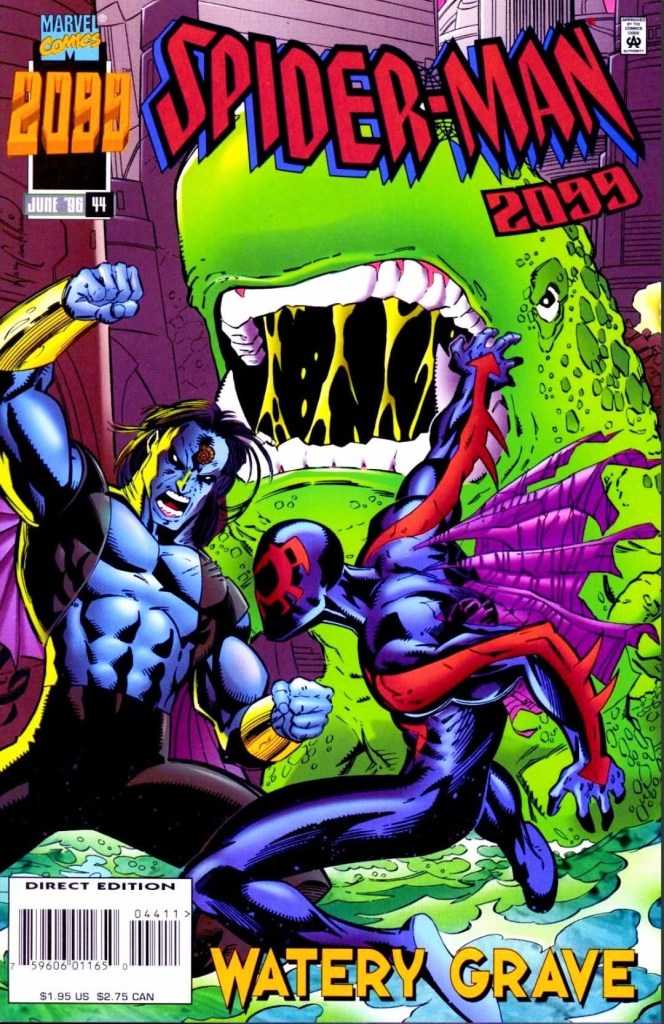
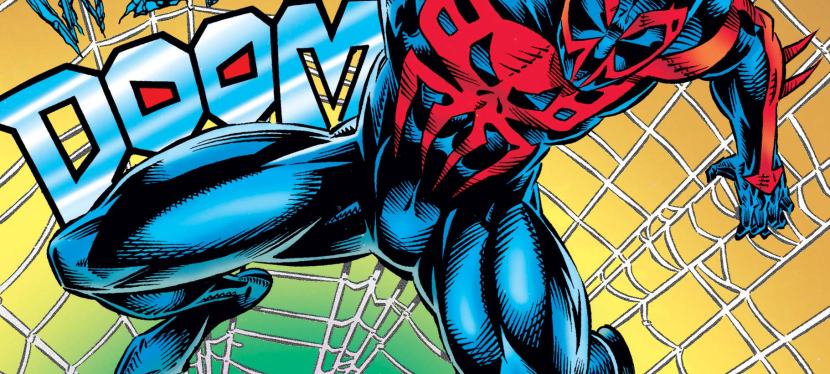
The cover.

Early story

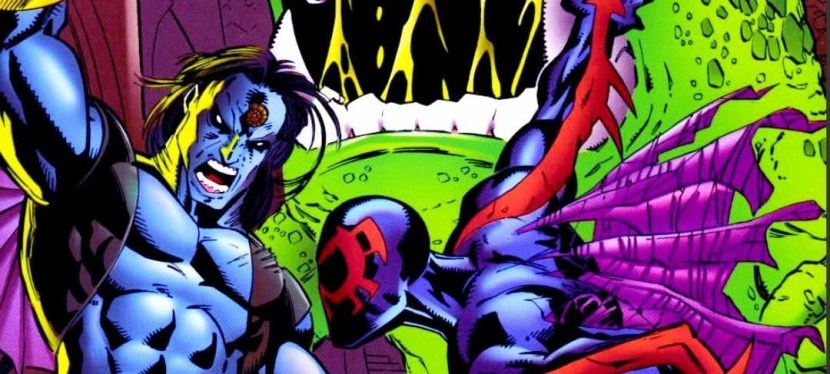
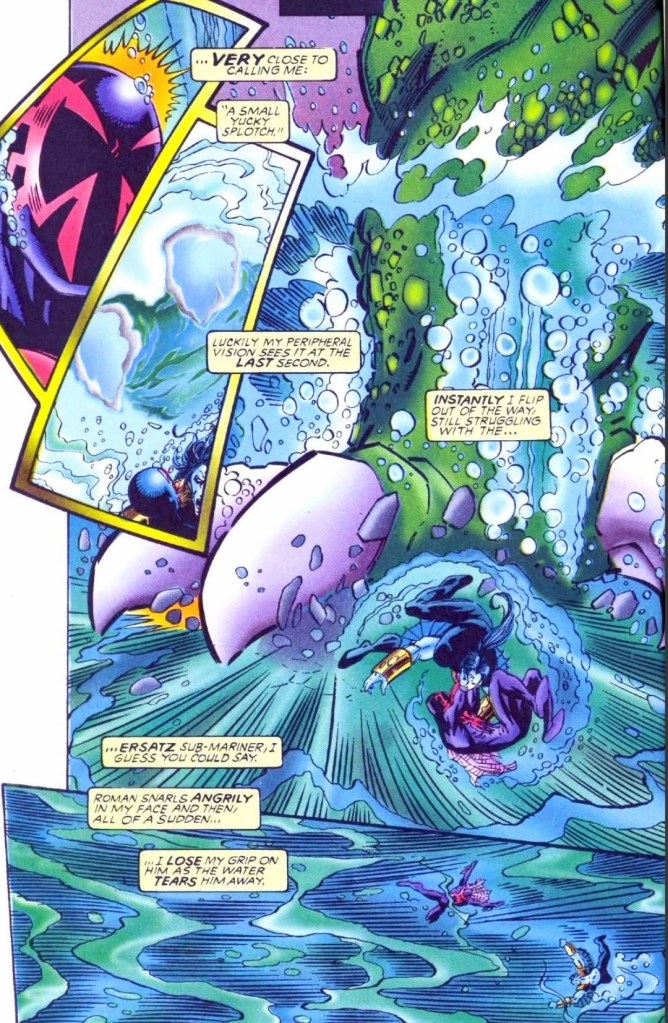
The story begins in the City of New York already flooded and infiltrated by lots of marine life. Under the water, Spider-Man and Roman the Sub-Mariner fight each other intensely as the foot of a gigantic sea monster is about to step in. At the last moment, Spider-Man saw the huge foot and instantly flipped away to survive with the Sub-Mariner.

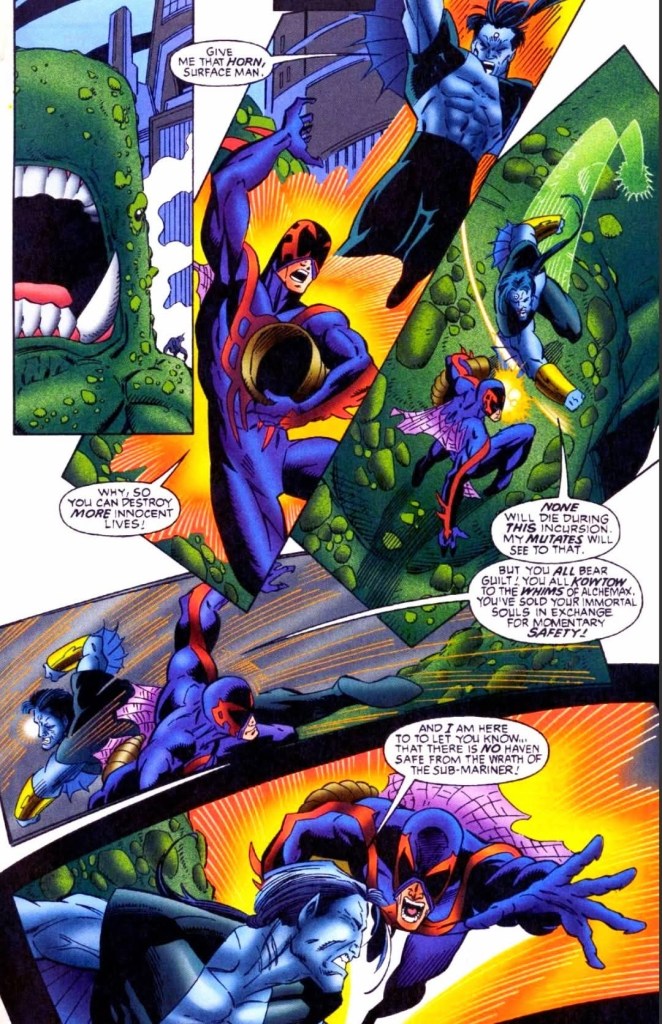
After getting separated, Spider-Man gets out of the water to breath and immediately spots an organic-looking horn that the Sub-Mariner used to control the huge monster. Suddenly, on the aquatic humanoids appears to get the horn. Spider-Man then used his web to get the horn first which triggered the aquatic humanoid to move fast towards him.

Quality

The intense battle between Sub-Mariner and Spider-Man went on even as the huge sea monster is very near them in the city.

Without spoiling the plot, this comic book is a tale about a massive disaster and also a tale about the complicated legacy of Miguel O’Hara whose personal life is even more connected with the corporation he works for.

The huge disaster of New York getting flooded (which started in the previous issue) and Spider-Man fighting the leader of the mutates (genetically designed sentient beings) concluded in a really satisfying way. The futuristic webslinger really found himself struggling with the determined Sub-Mariner (motivated by what Alchemax did to the aquatic world) while dealing with the fact that so many citizens got displaced or even got killed by not only the huge flood but also by the presence of the gigantic sea monster. The stakes were really raised high for Spider-Man and the pay-off was really good.

The rest of the comic book deals with the intense meeting between Conchata O’Hara and Tyler Stone, Xina’s time with the Net Prophet, Gabriel O’Hara’s time with “father” Jennifer. Among the three sub-plots, the conflict between Conchata and Tyler is very intense and dramatic to read. More importantly, it was crafted by Peter David to be really believable and it ultimately added tension to the background and even the future of Miguel O’Hara (now a powerful Alchemax executive). This particular sub-plot is easily the most important one this comic book has and it will compel fans to revisit the 25th issue of this monthly series as well as issue #10.

While the sub-plot of Xina and the Net Prophet does not generate enough depth for this comic book, there is a big revelation made in the sub-plot of Gabriel and “father” Jennifer which will compel fans to revisit issues #40 and #41. In fact, nothing is ever simple regarding the origin of a specific villain of the 2099 universe.

When it comes to the artwork, this comic book is a downgrade compared to what was presented in issue (drawn by Andrew Wildman). I’m not saying that Ron Lim’s art is bad, it’s just nowhere as good as that of Wildman’s art. In fairness, Ron Lim managed to make the city disaster look intense and he managed to make the characters look recognizable. In fact, Lim successfully made the Conchata-Tyler scenes look intense and dramatic.

Conclusion

The giant monster aspect of this comic book added intensity to the battle and the disaster. There were a few Godzilla vibes here and there.

As the final Peter David-written issue of this monthly series, Spider-Man 2099 (1996) is undeniably a very solid reading experience. There were strong pay-offs executed here to what was built-up in the previous issues, and in typical fashion, David kept building up the other sub-plots. The conclusion to the Conchata-Tyler sub-plot is actually more powerful than that of the city disaster. Clearly, Peter David kept track of the character developments and events that previously happened and dramatized them nicely here. In fact, you will feel some sympathy towards Miguel O’Hara knowing how unfortunately complicated his family legacy really is.  

Overall, Spider-Man 2099 (1996) is highly recommended!

+++++

Thank you for reading. If you find this article engaging, please click the like button below, share this article to others and also please consider making a donation to support my publishing. If you are looking for a copywriter to create content for your special project or business, check out my services and my portfolio. Feel free to contact me with a private message. Also please feel free to visit my Facebook page Author Carlo Carrasco and follow me on Twitter at  @HavenorFantasy as well as on Tumblr at https://carlocarrasco.tumblr.com/ and on Instagram at https://www.instagram.com/authorcarlocarrasco

A Look Back at X-Men Adventures Season II #3 (1994)

Welcome back superhero enthusiasts, 1990s arts and culture enthusiasts, Marvel Comics fans and comic book collectors! Today we go back to the mid-1990s to explore the adaptation of the second season of the X-Men animated series in the form of the X-Men Adventures comic book series.

Before getting to the new retro comic book review, I should state that even though streaming is the norm for millions of people who love entertainment, it would be nice if the classic X-Men: The Animated Series (X-Men TAS) would someday get released on Blu-ray disc format. Even though many X-Men fans are streaming, there are still those who prefer collecting physical releases of what they enjoy. Really, watching entertainment with Blu-ray or 4K Blu-ray format is much better than streaming.

With those details laid down, here is a look back at X-Men Adventures Season II , published in 1994 by Marvel with a story written by Ralph Macchio and drawn by John Hebert.

The cover.

Early story

The story begins at the border of Kenya and Tanganyika where Mount Kilimanjaro rests. Something destructive emerges at the top of the mountain causing great disturbance on the people below. At a village, two black persons could not help but notice a demonic figure coming down at them. One of them gets possessed by it.

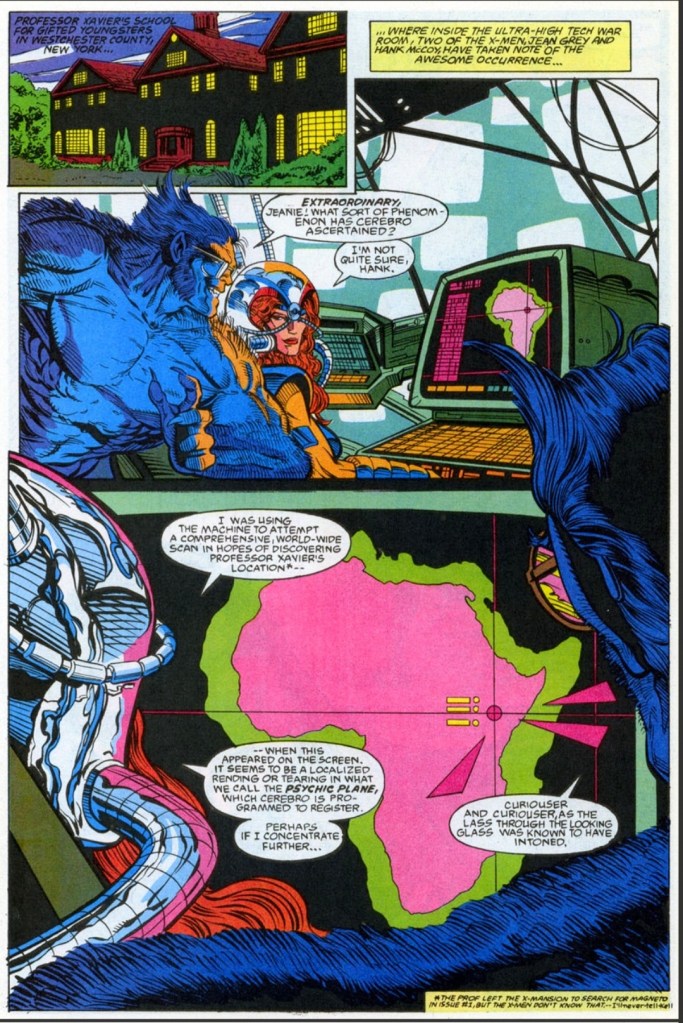
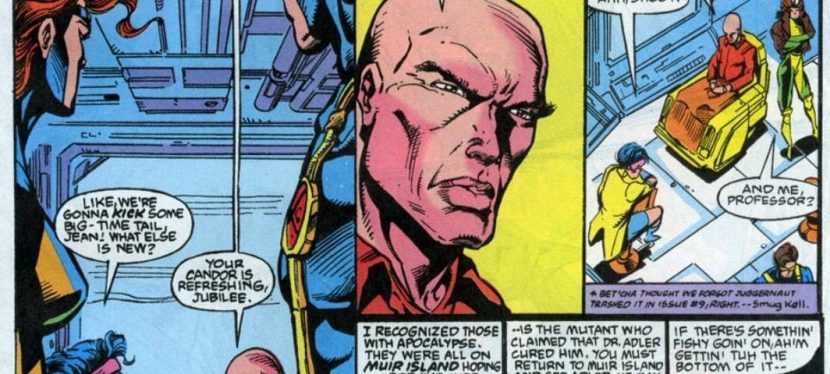
Meanwhile at their headquarters in Westchester County, New York, Jean Grey uses Cerebro to comprehensively scan the world to find Professor X’s location. What Jean detected was a psychic plane which catches Beast’s attention.

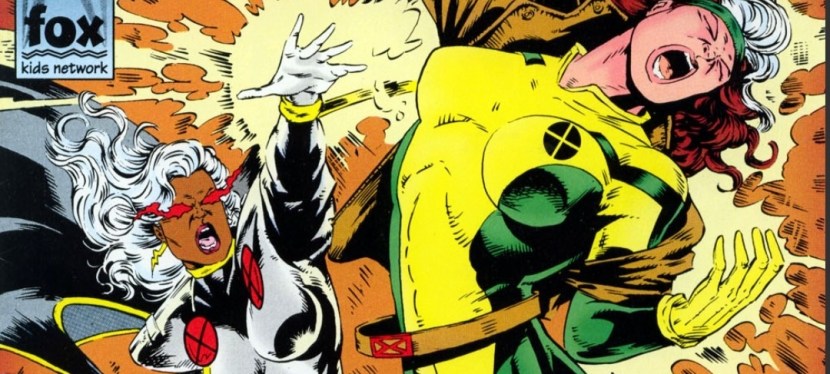
Shortly after, Rogue arrives with Storm who just returned from a hospital. As Jean updates them both, Storm realizes that the location of the psychic plane is in Africa…

Quality

Rogue in Africa with Storm.

The first thing I should confirm here is that there is a nice jump in the visual quality – in terms of style and detail specifically – thanks to illustrator John Hebert. Hebert’s work here is a nice relief compared to the rushed works of Andrew Wildman in the previous two issues, and he knows when to use the dynamic moments of spectacle and how to balance it with the calm moments. Hebert’s take on Wolverine is really good.

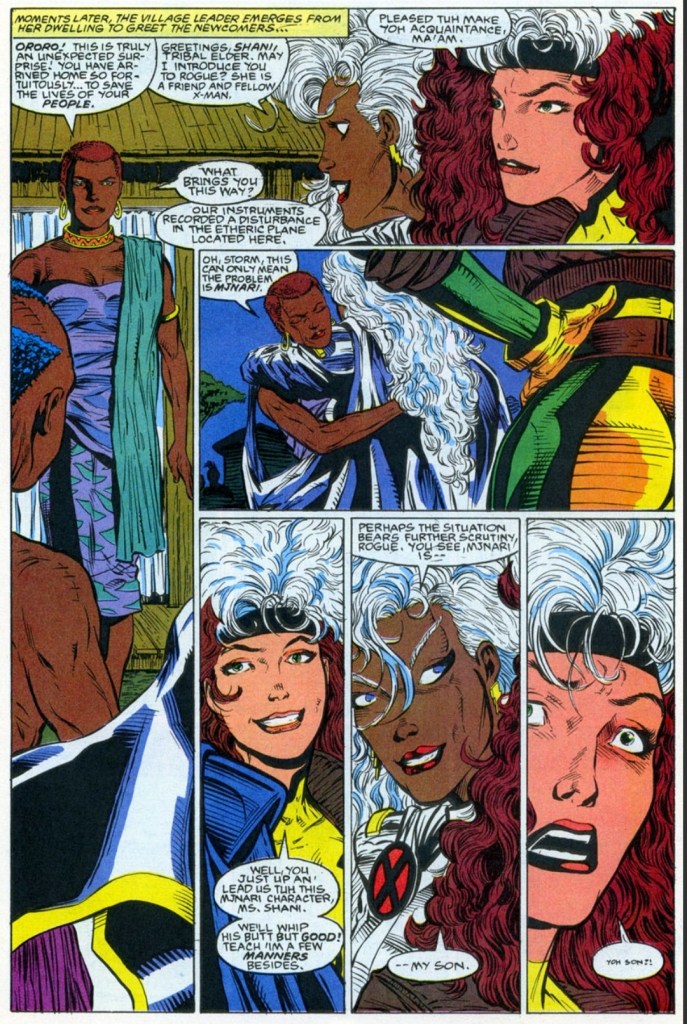
Regarding the story, I like the way the search for Charles Xavier – which was a sub-plot in the previous issues – unfolded while also opening the opportunity to develop Storm as she returns to Africa. In fact, this tale reveals some really engaging details from Storm’s past as well as her personal connection with a certain tribe of black people. These mentioned elements added nicely to the tension of a particular conflict that followed.

In fact, the Storm-centered story was nicely executed by the creative team and there were revelations that were gripping. Along the way, Rogue got a nice share of the spotlight and was a suitable supporting character even though the comic book had new characters.  

Conclusion

Using Cerebro has big advantages.

X-Men Adventures Season II (1994) is a good read and it also has a nice change of geographic setting as it mainly focused on Africa and Storm’s reconnection with her people. Storm is clearly the main character here and this is a solid pay-off as she only had a tiny part in the previous issue. This is a tale – with themes of family, culture and the responsibility that comes with having special talents or power –  that should interest dedicated fans of Storm.

Overall, X-Men Adventures Season II (1994) is recommended.

+++++

Thank you for reading. If you find this article engaging, please click the like button below, share this article to others and also please consider making a donation to support my publishing. If you are looking for a copywriter to create content for your special project or business, check out my services and my portfolio. Feel free to contact me with a private message. Also please feel free to visit my Facebook page Author Carlo Carrasco and follow me on Twitter at  @HavenorFantasy as well as on Tumblr at https://carlocarrasco.tumblr.com/ and on Instagram at https://www.instagram.com/authorcarlocarrasco

A Look Back at X-Men Adventures Season II #2 (1994)

Welcome back superhero enthusiasts, 1990s arts and culture enthusiasts, Marvel Comics fans and comic book collectors! Today we go back to the mid-1990s to explore the adaptation of the second season of the X-Men animated series in the form of the X-Men Adventures comic book series.

Before getting to the retro comic book review, I want to ask you all: have you heard about the recent controversy about the firing of the showrunner of X-Men ’97? You can learn about it by clicking here and here. In case you are wondering, I have no intention to watch X-Men ’97 knowing that Marvel under woke Disney are only using established entertainment properties to spread their sinister propaganda. Hollywood has so many Commies, it should really be called Commiewood.

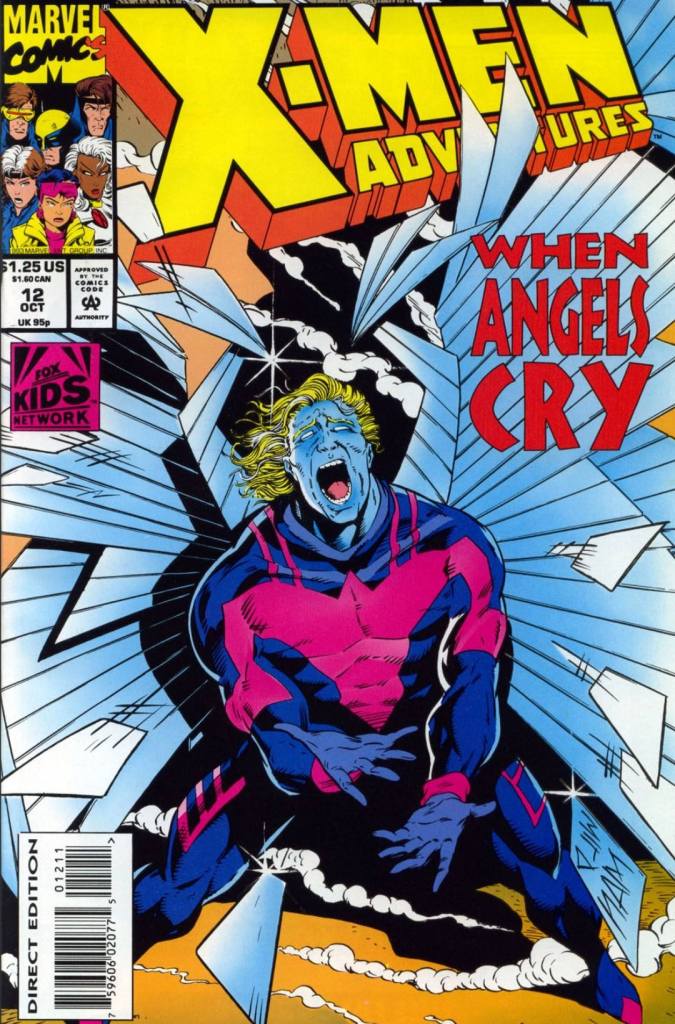
With those details laid down, here is a look back at X-Men Adventures Season II , published in 1994 by Marvel Comics with a story written by Ralph Macchio and drawn by Andrew Wildman.
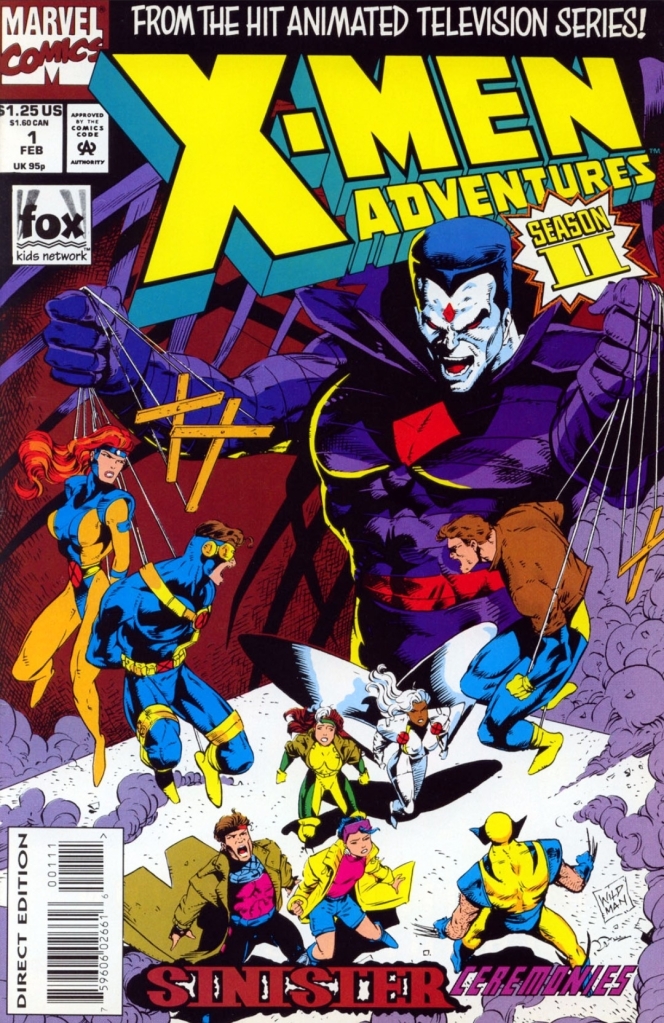
The cover.

Early story

The story begins with the newly married couple Scott Summers (Cyclops) and Jean Grey enjoying their honeymoon on a boat somewhere in the South Pacific. Jean is enjoying their privacy together free from all the pressure they experienced as X-Men members. For her, the world feels really different.

Suddenly, Jean senses something as their boat approaches an island that was supposed to be uninhabited. A man with long pink hair has been anticipating their arrival and surprises them. He uses his power to manipulate the sea water to form waves to capsize their boat and push them further to the beach.

Soon enough, Cyclops and Jean find themselves facing Mister Sinister and his henchmen…

Quality

The Summers couple helpless in the presence of Mister Sinister who has an ambitious plan for all mutants.

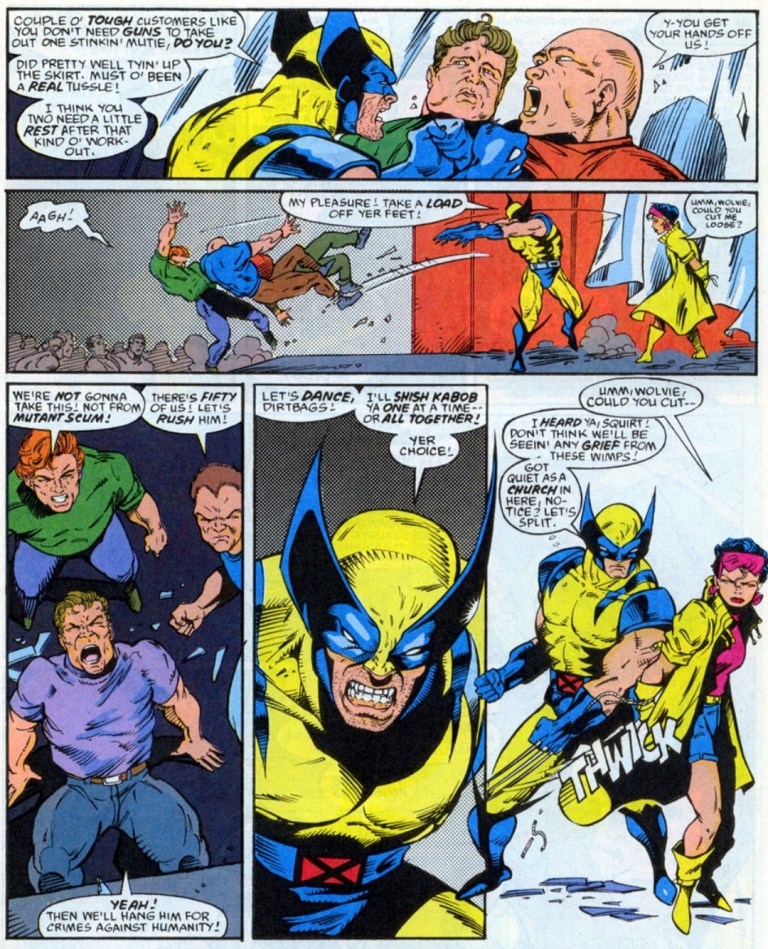
To put things clearly, this comic book is a nice pay-off to what was built up in the previous issue. Without spoiling the plot, I like the way the struggles of the X-Men were dramatized, specifically with regards to Wolverine (who was portrayed as an aggressor by the anti-mutant activists through the media) encountering the anti-mutant mob plus his interaction with Morph who got a lot more of the spotlight this time around. Morph’s return here has a bigger impact and the way things were told here will compel you to revisit the early issues of the first volume of X-Men Adventures and re-examine how he interacted with his teammates when he was still an X-Men member.

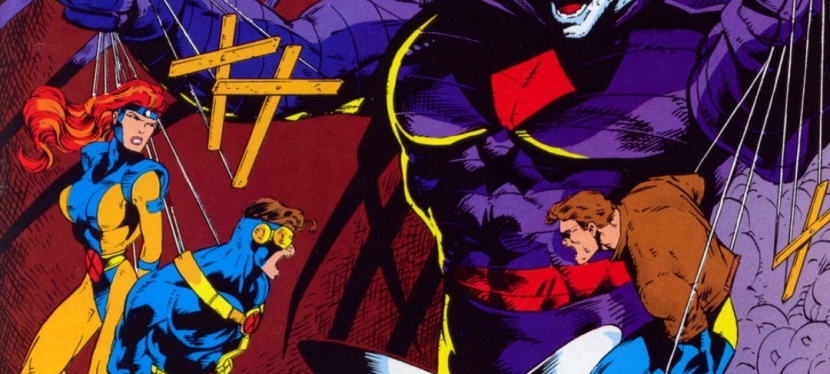
And then there is the sub-plot in which Cyclops and his wife Jean are captured by Mister Sinister and his henchmen. What I enjoyed the most in this part of the story was the efficient exposition done by the creative team to emphasize Sinister’s knowledge of Cyclops’ past and the X-Men which is connected with his master plan for the future that involves the genetic material of both Scott Summers and his wife. Sinister’s master plan for mutants is radically different from Magneto’s vision but remains essentially wicked as it involves overwhelming non-mutant people.  

Conclusion

Wolverine faces the anti-mutant activists again not for revenge but to help his teammate.

X-Men Adventures Season II (1994) is an action-packed read that is also intriguing and has few plot twists that added to the engagement. It is a better read than the previous issue and any X-Men fan who enjoys Mister Sinister antagonizing Marvel’s mutants will have stuff to enjoy and that includes the promise of future conflicts. If there’s anything that bogged down this comic book’s quality, it’s the somewhat rushed look of Andrew Wildman’s art.

Overall, X-Men Adventures Season II (1994) is recommended.

+++++

Thank you for reading. If you find this article engaging, please click the like button below, share this article to others and also please consider making a donation to support my publishing. If you are looking for a copywriter to create content for your special project or business, check out my services and my portfolio. Feel free to contact me with a private message. Also please feel free to visit my Facebook page Author Carlo Carrasco and follow me on Twitter at  @HavenorFantasy as well as on Tumblr at https://carlocarrasco.tumblr.com/ and on Instagram at https://www.instagram.com/authorcarlocarrasco

A Look Back at X-Men Adventures Season II #1 (1994)

Welcome back superhero enthusiasts, 1990s arts and culture enthusiasts, Marvel Comics fans and comic book collectors! Today we go back to the mid-1990s to explore the adaptation of the start of the second season of the X-Men animated series in the form of the X-Men Adventures comic book series.

Before getting to the retro comic book review, I want to address the recent controversy and criticism of the new animated series X-Men ’97, a continuation of the popular 1990s series that turned out to be woke by featuring the so-called non-binary presentation of people. In my view, this is not surprising given the fact that the very woke Disney company has owned Marvel Entertainment for many years now and its wokeness has infected the animated X-Men franchise along with the most recent movies and shows of the Marvel Cinematic Universe (MCU). Wokeness and Leftist beliefs continue to ruin entertainment and established properties as we know it. It’s the culture of Communist-filled Hollywood (Commiewood).

So how do you reject X-Men wokeness apart from avoiding X-Men ’97? You simply go back to the X-Men animated series of the 1990s as well as the comic books that adapted the stories.

With those details laid down, here is a look back at X-Men Adventures Season II , published in 1994 by Marvel Comics with a story written by Ralph Macchio and drawn by Andrew Wildman.

The cover.

Early story

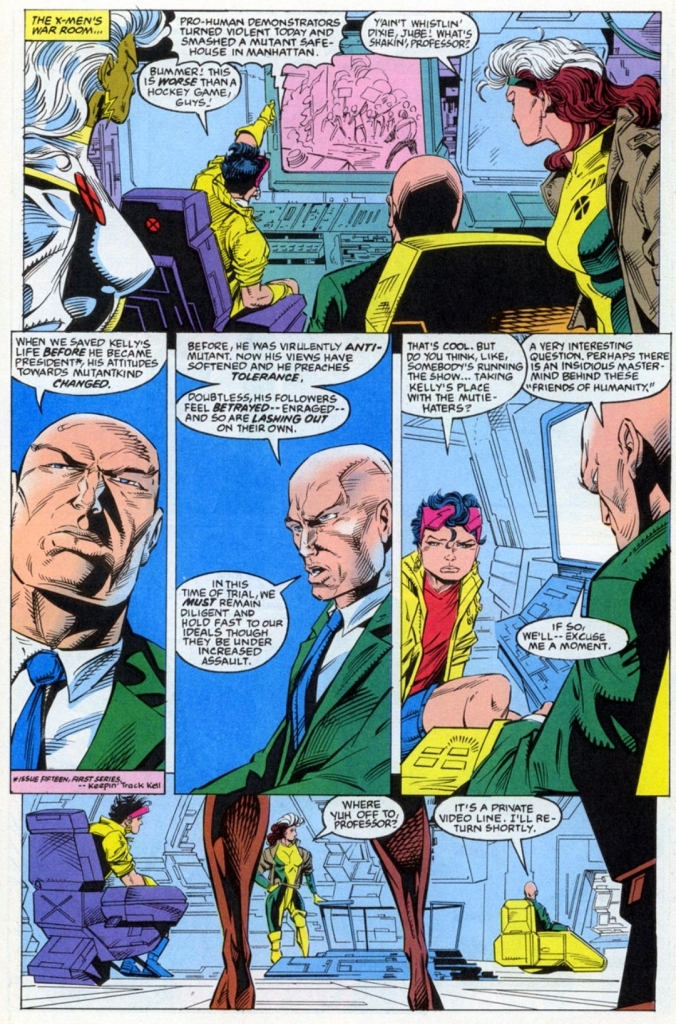
The story begins with the cosmic being the Watcher carefully examining the flow of events on Earth and what has changed for the X-Men since then. Robert Kelly, who previously had an anti-mutant agenda when he was a U.S. Senator, has since been elected as the President of the United States and openly pushes for a policy of conciliation with mutants. His action sparks social unrest.

Meanwhile inside a small church far away from the nation’s capital, the wedding of Jean Grey and Scott Summers pushes through with several members of the X-Men in attendance. Very notable was the absence of Wolverine who turned out to be inside the Danger Room (deep within Charles Xavier’s estate) fighting a giant-sized version of Cyclops…

Quality

The X-Men are troubled by the anti-mutant wave happening in public.

As the opening issue of the second volume of the X-Men Adventures comic book series, this comic book carefully sets up the tone and the plot of a series of future challenges for the X-Men which is clearly reflected on the front cover with Mister Sinister displayed prominently. The story mainly highlights X-Men’s new struggle with the wave of anti-mutant rage in the public while dealing with the absence of their leader Cyclops (on honeymoon with his new wife Jean) while leaving space for potential sub-plots such as the attraction between Jean and Wolverine, the moves of the anti-mutant radicals and, most notable of all, the secretive return of Morph (thought to have died in issue #2 of the first season).

As expected, build-up is the main approach taken by the creators on telling the story and there were some bouts of superhero spectacle (action) that spiced up the reading experience for me. Considering what has been happening in different parts of the world in recent years, the sub-plot of the rabid anti-mutant activists using tactics to destroy the X-Men’s credibility with violence and misinformation magnified through the news networks is very socially relevant.

What the rabid anti-mutant people committed in this comic book reminds me of the October 7, 2023 attacks on Israel organized by the Palestinian terrorist group Hamas in which violence, destruction and selective images of terror spread through news networks and social media were done. Similarities aside, the wave of evil is clear here and the intent of the anti-mutant believers and Palestinian terrorists obviously expresses intentions of genocide against another particular group of people.

When it comes to weaknesses of this comic book, I cannot help but find Andrew Wildman’s art looking very rushed. There is a lack of precision and detail of his art here when compared directly to his works in the first volume of X-Men Adventures.

Conclusion

The anti-mutant radicals in this comic book have a lot in common with Palestinian terrorists, the pro-Palestine activists, the Black Lives Matter activists and other members of woke mobs. Violence, arrogance, rage and misinformation are their values.

X-Men Adventures Season II (1994) incidentally works well as an adaptation of the animated series, as a standalone comic book as well as being a socially relevant tale in today’s age of social media. While the concept of evil remains in X-Men lore, what was told here shows different layers of it. The X-Men themselves also looked fragile and the return of Morph is a key part of the story clearly designed with future events in mind. Finally, this comic book is a lively reminder of the era when X-Men stories were made for the fans, not the woke mob.

Overall, X-Men Adventures Season II (1994) is recommended.

+++++

Thank you for reading. If you find this article engaging, please click the like button below, share this article to others and also please consider making a donation to support my publishing. If you are looking for a copywriter to create content for your special project or business, check out my services and my portfolio. Feel free to contact me with a private message. Also please feel free to visit my Facebook page Author Carlo Carrasco and follow me on Twitter at  @HavenorFantasy as well as on Tumblr at https://carlocarrasco.tumblr.com/ and on Instagram at https://www.instagram.com/authorcarlocarrasco

A Look Back at Spider-Man 2099 #43 (1996)

Welcome back superhero enthusiasts, 1990s culture enthusiasts and comic book collectors! Today we go back to the year 1996 and explore a part of the Marvel 2099 comics universe through a tale of the Spider-Man 2099 monthly series.

In my previous retro review, Miguel O’Hara learns how challenging it could be for him to direct the path of Alchemax which is symbolize with himself being surrounded by the managers. He recently stopped his father Tyler Stone from taking control of his office. As his office needs a secretary, someone very exceptional came in.

With those details laid down, here is a look back at Spider-Man 2099 , published in 1996 by Marvel Comics with a story written by Peter David and drawn by Andrew Wildman and Ron Lim.

The cover.

Early story

The story begins when one of the undersea bases of Alchemax explodes to the surface in heavily damaged form. Something terrible happened to it deep below and there is only one man (wearing a protective suit) still living floating on the sea. Just as he notices sharks coming his way, Spider-Man comes down to save him with the use of one of Alchemax’s floating vehicles. As Spider-Man pulls the helpless man up with his web, one of the sharks leaped high at them. The web breaks and both the man and Spidey fall into the sea.

Meanwhile at Alchemax, Gabriel O’Hara confronts his mother Conchata who very recently started working as the office secretary of Miguel. Gabriel asks how could she be working for Miguel as part of Alchemax which is the very corporation she hated. The mother answered back stating that she resolved her accumulated anger related to Miguel and has realized that he needs her…

Quality

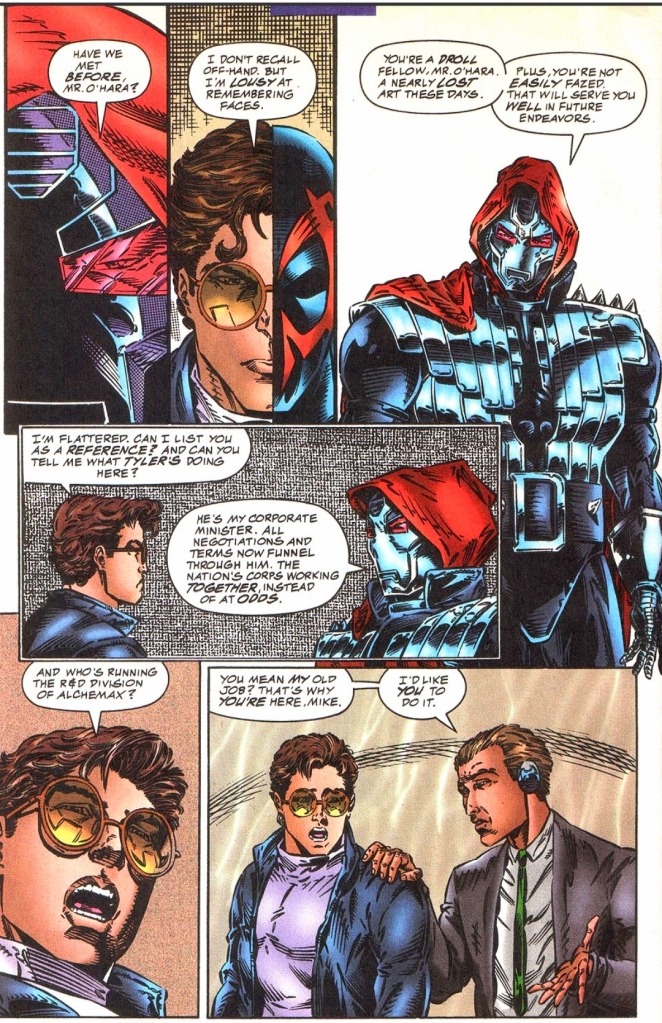
The rise of the mutate rebel Roman and Miguel O’Hara’s corporate interactions dramatized efficiently in this single page.

Moving further away from what was dramatized in issues #40 and #41, Peter David crafted this tale focusing on a new threat that endangers not only Spider-Man but the people and their local society as a whole. To put things in perspective, it is recommend you revisit issue #8 and focus on Alchemax’s aquatic division called Atlantis which had been working on a major reclamation project under the sea with the objective of becoming a tourist attraction in the years to come. Right there, Tyler Stone mentioned Miguel’s involvement with the project which includes bio-engineered workers.

The key elements of Atlantis mentioned in issue literally resurfaced in this comic book and Peter David heavily emphasized the related details and integrated it all in the plot which essentially justified the existence of the new opposition led by Roman who is the charismatic leader of the mutates (genetically designed sentient beings) who had long been working hard and long outside of the undersea bases which had humans living comfortably inside. Roman here is not related in any way to Marvel’s aquatic hero Namor the Sub-Mariner but he is an imitation of him (note: his name is Namor in reverse).

The conflict of Atlantis revives the business-laborers conflict but was twisted to show the conflict between humans and mutates, as well as Atlantis being symbolized as a physical project of Alchemax to exploit the aquatic life and resources deep under the sea. The build-up of the human-mutates conflict in this particular comic book is surprisingly beefy and was efficiently done.

As for Spider-Man himself, you will get to see him more involved with Alchemax just as he successfully keeps his civilian identity secret. Along the way, you will see more of Miguel O’Hara doing more corporate work and negotiations. As expected, his drive to lead Alchemax with his own perception of being compassionate encounters hurdles from the established order – both within and outside his company. His mother was portrayed to be more sympathetic than before and she shows lots of signs of having mellowed. The development on Miguel and Conchata here were deep and they made a lot of sense with the plot itself.

Conclusion

The futuristic Spidey interacts with a huge shark!

Spider-Man 2099 (1996) is another tale that has aged well as its foundations and elements proved to be very solid until now. With regards to the big event that took place near the end of this comic book, it seems that Peter David took inspiration from what was portrayed in Fantastic Four (1962) as well as from Namor the Sub-Mariner himself. I really enjoyed how this story became a huge pay-off to the minor build-up in issue .

Overall, Spider-Man 2099 (1996) is highly recommended!

+++++

Thank you for reading. If you find this article engaging, please click the like button below, share this article to others and also please consider making a donation to support my publishing. If you are looking for a copywriter to create content for your special project or business, check out my services and my portfolio. Feel free to contact me with a private message. Also please feel free to visit my Facebook page Author Carlo Carrasco and follow me on Twitter at  @HavenorFantasy as well as on Tumblr at https://carlocarrasco.tumblr.com/ and on Instagram at https://www.instagram.com/authorcarlocarrasco

A Look Back at Spider-Man 2099 #42 (1996)

Welcome back superhero enthusiasts, 1990s culture enthusiasts and comic book collectors! Today we go back to the year 1996 and explore a part of the Marvel 2099 comics universe through a tale of the Spider-Man 2099 monthly series.

In my previous retro review, the futuristic webslinger encountered a group of dangerous people who are convinced that he betrayed them by becoming a corporate tool (note: the result of Goblin 2099 poisoning people’s minds). Not only that, the still-recovering Tyler Stone came back at Alchemax, saw his captured son Kron (Venom 2099 himself) and cold heartedly ordered his execution.

With those details laid down, here is a look back at Spider-Man 2099 #42, published in 1996 by Marvel Comics with a story written by Peter David and drawn by Andrew Wildman.

The cover.

Early story

The story begins with Miguel O’Hara now wielding tremendous corporate power at Alchemax where he is surrounded by managers. Some time had passed since he prevented Tyler Stone from returning to power and he made it known to him that he is aware that they are biologically father-and-son. Miguel then played “duck, duck, goose” on the managers while he stood up on his desk. He made clear to them that he is aware of their so-called game of “who can jerk the new boost and get the most for himself?”

Miguel then tells them that he will review their requests and address their concerns in his own time and his own way. They get dismissed by him. Miguel then meets someone who just arrived for the post of office secretary.

Meanwhile in the downtown section of New York, Raff and Kasey watch a union group composed of construction guys, watchdogs, sewer workers and truckers marching down the street and making noise. As Kasey wonders where the group was heading, she notices a man named Boru whom she previously heard was dead…

Quality

Spider-Man 2099 faces a tough opponent.

Storywise, this tale by Peter David moved away from the themes of issues and by focusing more on Miguel’s newest rise in Alchemax’s corporate hierarchy and how this adds more tension to his already troubled living as a secret superhero, an executive and as a person. By this stage, he knows Tyler Stone is his true father and the man known as Venom 2099 is his half-brother and relationships within his family are far from being normal or ideal. Still on the corporate aspect, a very notable person gets to work as Miguel’s new secretary which I won’t spoil here because I can say that the build-up and pay-off are well worth reading. The new secretary also added to the further development of specific characters and what was dramatized here will compel you to revisit earlier issues of the Spider-Man 2099 series. As always, Peter David’s writing is rich here.

Outside of Alchemax, the group led by Boru (who is symbolically a leader of hardened and desperate labor union members) emerges as an intimidating force of opposition for Miguel, the corporation he leads and even in his Spider-Man identity. Boru himself is quite a strong opponent for Spidey and the way their battle ended is something can intrigue readers or even frustrate die-hard fans of the protagonist. These conflicts, combined with Miguel’s struggle with all the tension hitting him from all angles, made this tale very intriguing and compelling to read.

Conclusion

While walking through the city, Miguel O’Hara spots members of Fantastic Four 2099 in conflict with Stark-Fujikawa.

Spider-Man 2099 #42 (1996) may not look like the expected continuation of what was built up in the previous two issues but its standalone story combined with strong twists, in-depth character development and sheer intrigue in key points of the story made this a must-read. I can also say that I am motivated to find out what happens next, especially given how this particular tale ended.

Overall, Spider-Man 2099 #42 (1996) is highly recommended!

+++++

Thank you for reading. If you find this article engaging, please click the like button below, share this article to others and also please consider making a donation to support my publishing. If you are looking for a copywriter to create content for your special project or business, check out my services and my portfolio. Feel free to contact me with a private message. Also please feel free to visit my Facebook page Author Carlo Carrasco and follow me on Twitter at  @HavenorFantasy as well as on Tumblr at https://carlocarrasco.tumblr.com/ and on Instagram at https://www.instagram.com/authorcarlocarrasco

A Look Back at Spider-Man 2099 #41 (1996)

Welcome back superhero enthusiasts, 1990s culture enthusiasts and comic book collectors! Today we go back to the year 1996 and explore a part of the Marvel 2099 comics universe through a tale of the Spider-Man 2099 monthly series.

In my previous retro review, the futuristic webslinger encountered Goblin 2099 (note: the futuristic take on Green Goblin) who proved to be very dangerous not with weapons nor physical attacks but with influence members of the local society to rebel against him believing that he is a corporate asset. How much influence Goblin had on the people at the expense of Spider-Man is just waiting to be discovered.

With those details laid down, here is a look back at Spider-Man 2099 , published in 1996 by Marvel Comics with a story written by Peter David and drawn by Andrew Wildman

The cover.

Early story

The story begins with Miguel O’Hara visiting a ruined place with armed personnel escorting him. It turns out the site was the White House and Doom 2099 has already fallen as President of the United States. Miguel seeks closure as he spends time at the ruins and eventually finds the name plate from the office of Tyler Stone (Miguel’s biological father).

Meanwhile at Alchemax, corporate personnel got surprised to see Tyler Stone return confined to a hovechair due to his fragile and weakened state. This turned out to be his first time to be at work since he got shot.

Inside the laboratory, Tyler sees his deranged son Kron (Venom 2099) contained behind solid glass like a mere scientific specimen for study. After learning key details about the symbiote and how it affected his son, Tyler gives the order to have Kron executed…

Quality

Even though Goblin 2099 was not present, this scene shows how much the said villain poisoned the minds of people to harm Spider-Man.

Let me start with the writing by Peter David. It is clear to me that David confidently wrote this story to maintain the flow of intrigue, emphasize how local society’s changing, how the external events affect others and, most notably, managing to push Spider-Man 2099 to the edge complete with a brewing conflict with the very powerful Tyler Stone.  

At this stage of the monthly series of the 1990s, Miguel O’Hara’s rise within the corporate structure of Alchemax got emphasized again and Peter David inserted growing tensions for the protagonist effectively blurring the boundary that separates personal life from the corporate career. That being said, the futuristic Spider-Man in his civilian identity literally entered a gray area which will compel readers to speculate if he was still in control of matters or if he was slowly becoming evil as he gains power (this makes him comparable with the tycoon Tyler).

Still on the character development aspect of this comic book, Miguel here still showed his fragile side as the death of Dana left him with a lot of pain deep inside (which was dramatically emphasized by Andrew Wildman through his art in one very particular page). This furthers adds to questions about the sanity and mental stability of the protagonist who already wields so much power as Spider-Man and as an Alchemax executive.

Speaking of Alchemax, Tyler Stone here appeared more sinister than before and being unable to stand did not hinder him at all. His cold-hearted move to have his own biological son Kron (the futuristic Venom and the same guy responsible for the deaths of Punisher 2099’s family) executed clearly shows not only his sadistic nature but also the fact that he is living with pure worldly beliefs. His believes are so worldly, he does not really care about his own offspring. Ironically, this suggests that Tyler could be as twisted and evil as his murderous son Kron. Lastly, the connections between the late Dana and Tyler and Miguel is indeed morally disturbing.

While the cover art showed Goblin 2099, the new antagonist is nowhere to be found in this comic book. However in a very symbolic fashion, Goblin’s influence remained lively through a number of people who condemned Spider-Man 2099 so much, they went as far as actually hurting an idolater of the webslinger. This part of the story is a strong reminder that idolatry is unholy and foolish, that religion is corrupted and will never lead believers to salvation, and that socialism attacking capitalism remained a social disease in the far future.

Conclusion

Tyler Stone and his son Kron (Venom 2099) are both very evil. They have different ways of being evil.

Spider-Man 2099 (1996) is indeed a great comic book to read from start to finish. Not only will you get to see the futuristic Spidey struggle with the tension both personally and professionally, you will see the big impact of Dana’s death on him too. The portrayal of negative changes in the local society (at least the society Spider-Man is part of) is pretty dramatic and what Peter David imagined about Marvel 2099 still remains socially relevant to this day. Lastly, this comic book ended very powerfully and was enough to convince me to see what happens next.

Overall, Spider-Man 2099 (1996) is highly recommended!

+++++

Thank you for reading. If you find this article engaging, please click the like button below, share this article to others and also please consider making a donation to support my publishing. If you are looking for a copywriter to create content for your special project or business, check out my services and my portfolio. Feel free to contact me with a private message. Also please feel free to visit my Facebook page Author Carlo Carrasco and follow me on Twitter at  @HavenorFantasy as well as on Tumblr at https://carlocarrasco.tumblr.com/ and on Instagram at https://www.instagram.com/authorcarlocarrasco

A Look Back at Spider-Man 2099 #40 (1996)

Welcome back superhero enthusiasts, 1990s culture enthusiasts and comic book collectors! Today we go back to the year 1996 and explore a part of the Marvel 2099 comics universe through a tale of the Spider-Man 2099 monthly series.

To put things in perspective, there were these notable changes with both the storytelling and the character development of the futuristic webslinger as a result of the Venom 2099 saga (read my retro reviews here, here, here, here and here) as well as Doom 2099 becoming the new President of the United States (click here). Issue #39 saw the return of Vulture 2099 and the sudden appearance of Green Goblin 2099 (AKA Goblin 2099).

With those details laid down, here is a look back at Spider-Man 2099 , published in 1996 by Marvel Comics with a story written by Peter David and drawn by Andrew Wildman.

The cover.

Early story

The story begins with the tycoon Tyler Stone helplessly on bed in a medical center’s room still recovering from the gun shot incident. He tells the doctor near him that he wants to speak to Dana and demands to know what has been going on. Stone also demanded to get into contact with President Doom. In response to Stone’s demand to know the truth, the doctor regretfully tells him that Dana is dead.

Meanwhile, a swinging Spider-Man gets hit from the back by Goblin 2099. As the webslinger asked who he is, the Goblin introduces himself and tells him that he intends to expose him as a fraud. As the green/purple colored mask freak keeps on attacking, Spider-Man moves out of the way. While in movement, Goblin tells Spidey that he has betrayed the good people of downtown New York and must be forced to confess.

As he falls down fast, the webslinger suddenly finds himself clamped and restrained by the Goblin…   

Quality

Goblin 2099’s main weapon against the futuristic Spidey is influence on people and being able to convince them to reject the webslinger.

This comic book has a very intriguing tale crafted by Peter David. While this marks the first ever encounter between the futuristic versions Spider-Man and Green Goblin, this one has a strong social theme that prevented the conflict from becoming a generic good-versus-evil match-up. Goblin 2099 went after the webslinger not for the satisfaction of killing, not for the intention of dominating the whole world but for achieving social change for the members of the downtown community by destroying Spider-Man’s credibility once and for all (by exposing him as a fraud and a tool of the corporate world who should not be trusted).

This version of the Green Goblin clearly has an agenda that he seems very willing to die for and the mere fact that he interacted with Kasey (an important person for both Miguel and Gabriel O’Hara) further adds to the complexity on both the new villain as well as the downtown community. Given his obsession of destroying the hero by blaming him as a corporate stooge, Goblin 2099 here is symbolically with the Satanic Left (Communist/Marxist/liberal). These factors effectively raise the stakes and risks for Spider-Man who already has a lot of problems to deal with.

Through the fight between Spider-Man and Goblin, you will see how the people of downtown react in accordance to their perception as well as their inability to realize the truth behind Spider-Man’s social standing. The way they reacted shows impact on Spidey who himself struggles to understand their collective thinking and why they allowed themselves to be strongly influenced by the Goblin.

Along the way, there was a scene that emphasized Xina showing how Dana’s death affected her and another scene that took place at a very old New York City cathedral that clearly was crafted to build up on something for future tales of this series.

Characterization and plot aside, this comic book has a good amount of superhero action that will keep you entertained and Andrew Wildman really knows how to make action attractive to your eyes.

Conclusion

Spotlight on Xina.

Spider-Man 2099 (1996) is another solid tale from the David-Wildman duo. Apart from the big impact Goblin 2099 had on Spider-Man and the people of just one community, this story successfully built-up the tension and complexity on the part of the protagonist while executing suitable pay-offs in relation to the build-up that started in the previous issue. Also I should state that it is very clear that the feature match-up in this comic book is not a rehash of classic Spider-Man and the Green Goblin. This is indeed a very intriguing Spidey 2099 tale that convinced me to look forward to the next issue.

Overall, Spider-Man 2099 (1996) is highly recommended!

+++++

Thank you for reading. If you find this article engaging, please click the like button below, share this article to others and also please consider making a donation to support my publishing. If you are looking for a copywriter to create content for your special project or business, check out my services and my portfolio. Feel free to contact me with a private message. Also please feel free to visit my Facebook page Author Carlo Carrasco and follow me on Twitter at  @HavenorFantasy as well as on Tumblr at https://carlocarrasco.tumblr.com/ and on Instagram at https://www.instagram.com/authorcarlocarrasco

A Look Back at Spider-Man 2099 #34 (1995)

Welcome back superhero enthusiasts, 1990s culture enthusiasts and comic book collectors! Today we go back to the year 1995 and explore a part of the Marvel 2099 comics universe through a tale of the Spider-Man 2099 franchise.

In my previous retro review, Spider-Man worked together with Strange 2099 on an abrupt mission dealing with a grave digger who is obsessed with his long dead sibling just as the undead in Mexico start walking again.

With those details laid down, here is a look back at Spider-Man 2099 , published in 1995 by Marvel Comics with a story written by Peter David and drawn by Andrew Wildman.

The cover.

Early story

The story begins with Miguel O’Hara and Xina returning from Mexico speeding on a lonely road by car. O’Hara suddenly got scanned from a distance. Just as Xina shares to Miguel her newest observations and opinion about Spider-Man, the man suddenly got snatched from the car by uniformed authorities riding a floating vehicle. Miguel tells his abductors to let him go and one of them replies stating that he is being taken to the White House at the request of his Alchemax superior Tyler Stone.

Meanwhile inside an apartment located near the White House in Washington, DC, Dana converses with Tyler Stone by holographic call complaining that without him, the city is getting lonely for her. As soon as her communication ends, someone knocks her out cold…

Quality

For the newcomers reading this, this page shows the first time ever that Doom 2099 sees Miguel O’Hara in person (Spider-Man 2099 without the mask and costume). Spidey and Doom encountered each other previously in The Fall of the Hammer storyline.

I will start what is very obvious about this comic book…its story is totally intriguing as it reflects a very dramatic turn of events within the 2099 realm at the time of publication. I’m talking about the rise of Doom 2099 as the new President of the United States and this comic book dramatizes in detail how the new leader impacts Miguel O’Hara’s career which adds tension to his already hectic 2nd life as the webslinger. This is all about the storyline of One Nation Under Doom and for context, you must read Doom 2099 to .

As I just mentioned, life for Miguel became more complicated as he has to deal with the federal government under the control Doom who himself is connected with the powerful tycoon Tyler Stone (Miguel’s own boss at Alchemax). For the newcomers reading this, this is not the first time Doom and Spider-Man of 2099 encountered each other as they were together in the Fall of the Hammer storyline (read my past reviews by clicking here, here, here, here and here).

In relation to the dramatic turn of events that changed the direction of the 2099 comics franchise, I can confirm that the writing by Peter David in this comic book is indeed very strong and highly engaging to follow. You will not see a good-versus-evil superhero tale here but the impact of Doom as US President on Spider-Man and local society. Along the way, this tale has a theme about gaining absolute power, how it affects the one who gains it and how the more powerful person affects many others. You will see the mentioned theme reflected on Spider-Man who himself already has super powers and even a following of idolaters.

Compared to the previous two issues, the dialogue by Peter David here is very rich and I also enjoyed the way how he presented the exposition of details to help Spider-Man 2099 readers understand how Doom’s rise as US President impacts the titular hero and many others. Speaking of Doom, I enjoyed the way how David portrayed him here.  

Conclusion

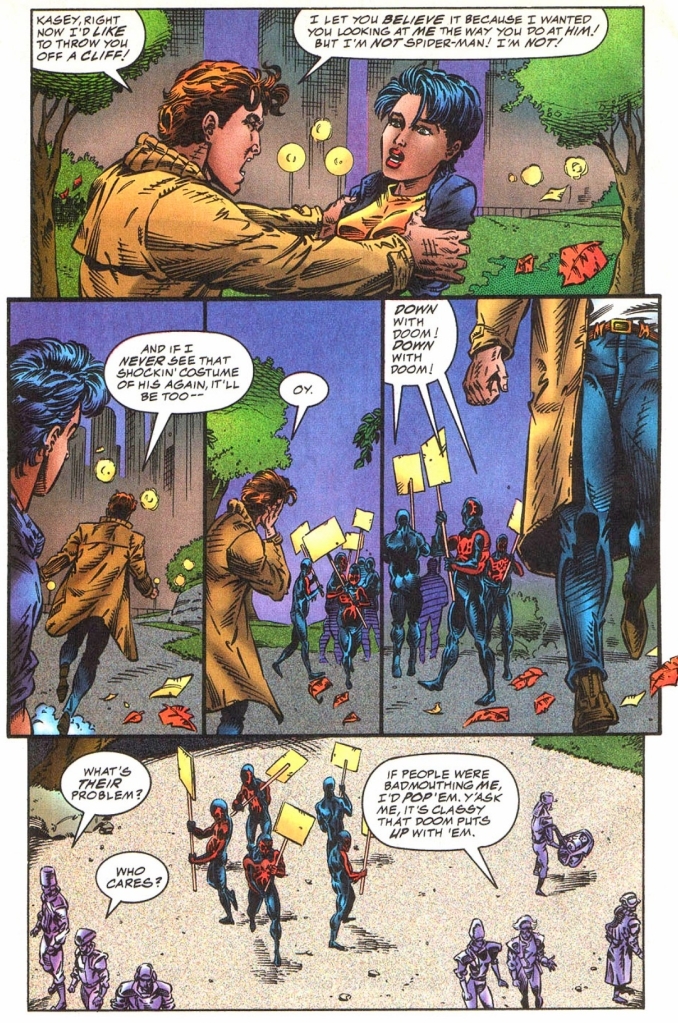
Gabriel O’Hara, Kasey and the Spider-Man 2099 idolaters doing the old fashioned way of protesting against US President Doom.

Spider-Man 2099 (1995) is indeed a great comic book and one of the best tales of the original Spider-Man 2099 monthly series. As Doom’s takeover of the US Presidency really changed the direction of the entire 2099 franchise of comics in the 1990s, it was inevitable that the repercussions would be reflected in a Spider-Man 2099 tale. The result here is a fascinating tale of the futuristic webslinger that does not even have the usual good-versus-evil conflict. What you will see here is how the stakes got raised for Miguel O’Hara not only as a superhero but also as a civilian who has a strong record within Alchemax. Not only that, this is the tale that took place just before the very memorable first encounters between Spider-Man and Venom 2099 (click here, here, here and here).

Overall, Spider-Man 2099 (1995) is highly recommended!

+++++

Thank you for reading. If you find this article engaging, please click the like button below, share this article to others and also please consider making a donation to support my publishing. If you are looking for a copywriter to create content for your special project or business, check out my services and my portfolio. Feel free to contact me with a private message. Also please feel free to visit my Facebook page Author Carlo Carrasco and follow me on Twitter at  @HavenorFantasy as well as on Tumblr at https://carlocarrasco.tumblr.com/ and on Instagram at https://www.instagram.com/authorcarlocarrasco

A Look Back at Spider-Man 2099 #33 (1995)

Welcome back superhero enthusiasts, 1990s culture enthusiasts and comic book collectors! Today we go back to the year 1995 and explore a part of the Marvel 2099 comics universe through a tale of the Spider-Man 2099 franchise.

In my previous retro review, Miguel O’Hara arrives in Mexico with Xina and they shared a room together. It turns out his brother Gabriel was also there even occupying the next room. Elsewhere, a lady practicing sorcery (Strange 2099) is told that Spider-Man will be her ally and they will work together to fulfill a mission. Elsewhere, a grave digger performs rituals over the skeletal remains of his beloved sister. Issue had a dark and totally different tone as the sci-fi element of the monthly series got pushed aside.

With those details laid down, here is a look back at Spider-Man 2099 , published in 1995 by Marvel Comics with a story written by Peter David and drawn by Andrew Wildman.

The cover.

Early story

The story begins when Spider-Man 2099 and his new ally Strange 2099 crash into a room on a mission they must complete. They see the grave digger clinging to a magical item that he believes should resurrect his dead sister.

In an attempt to find a solution, Strange touches the item and suddenly becomes a hideous looking monster.

Meanwhile, the streets of Mexico City suddenly gets filled with several undead people walking. On the street, Xina (walking with Kasey and Gabriel) begins to worry about Miiguel. Soon enough, some of the undead move towards them…

Quality

Spider-Man helps to ensure safety.

As this story is the continuation to the events of issue , this one keeps on building up on sorcery and evil forms of the supernatural as the key elements of the narrative as well as the setting. That being said, the usual science fiction element remains completely absent and this opened the opportunity for the creative team to show Spider-Man in action within a supernatural atmosphere complete with the unfortunate event of a demonic possession.

Spider-Man’s team-up with Strange (obviously the futuristic take of Dr. Strange) inevitably led to a conflict with evil and the ironic thing is that the grave digger himself is not even the villain but someone obsessed with bringing his sister back to life by means of resorting to magic and tapping the demonic force he could not even see. The Spidey-Strange team-up clearly dominated the narrative but I should say that the sorceress is not too interesting as a character and she barely has any chemistry with the futuristic web-slinger. It seems to me that Strange 2099 was created to emphasize racial diversity and rabid feminism than to really add any depth to the 2099 universe and its lineup of supporting characters.

As for the concept of the undead walking along many people who happen to be commemorating the day of the dead on the city streets, it really heightened the horror and supernatural aspects of the story while escalating the sense of danger.

Conclusion

Spidey, Strange 2099 and the grave digger.

In line with the concept of the previous issue, Spider-Man 2099 (1995) is a supernatural tale of Spider-Man on a misadventure teamed up with a futuristic take on Dr. Strange. Its pay-off to the build-up in issue was barely felt and I could not help but feel the presentation was rushed. Strange 2099 was simply not interesting and the grave digger’s personal pursuit over his dead sister did not have much of an impact. That being said, the concept of this 2-part story felt more like a diversion than a meaningful story. If there is anything worth focusing on in this comic book, it is Spidey himself struggling in the very nation where he previously got his costume.

Overall, Spider-Man 2099 (1995) is satisfactory.

+++++

Thank you for reading. If you find this article engaging, please click the like button below, share this article to others and also please consider making a donation to support my publishing. If you are looking for a copywriter to create content for your special project or business, check out my services and my portfolio. Feel free to contact me with a private message. Also please feel free to visit my Facebook page Author Carlo Carrasco and follow me on Twitter at  @HavenorFantasy as well as on Tumblr at https://carlocarrasco.tumblr.com/ and on Instagram at https://www.instagram.com/authorcarlocarrasco