Retro Gaming Ads Blast – Part 16

Welcome back readers, fellow geeks and electronic gaming fans!

In this edition of the Retro Gaming Ads Blast (RGAB) series, we will take a look at another batch of retro gaming print ads – including arcade flyers – from the 1980s and 1990s.

For the newcomers reading this, Retro Gaming Ads Blast (RGAB) looks back at the many print ads of games (console, arcade, computer and handheld) that were published in comic books, magazines, flyers and newspapers long before smartphones, social media, the worldwide web and streaming became popular. To put things in perspective, people back in the 1980s and 1990s were more trusting of print media for information and images about electronic games and related products.

With those details laid down, here is the newest batch of retro gaming print ads for you to see and enjoy…

1. A-Jax North American arcade flyer
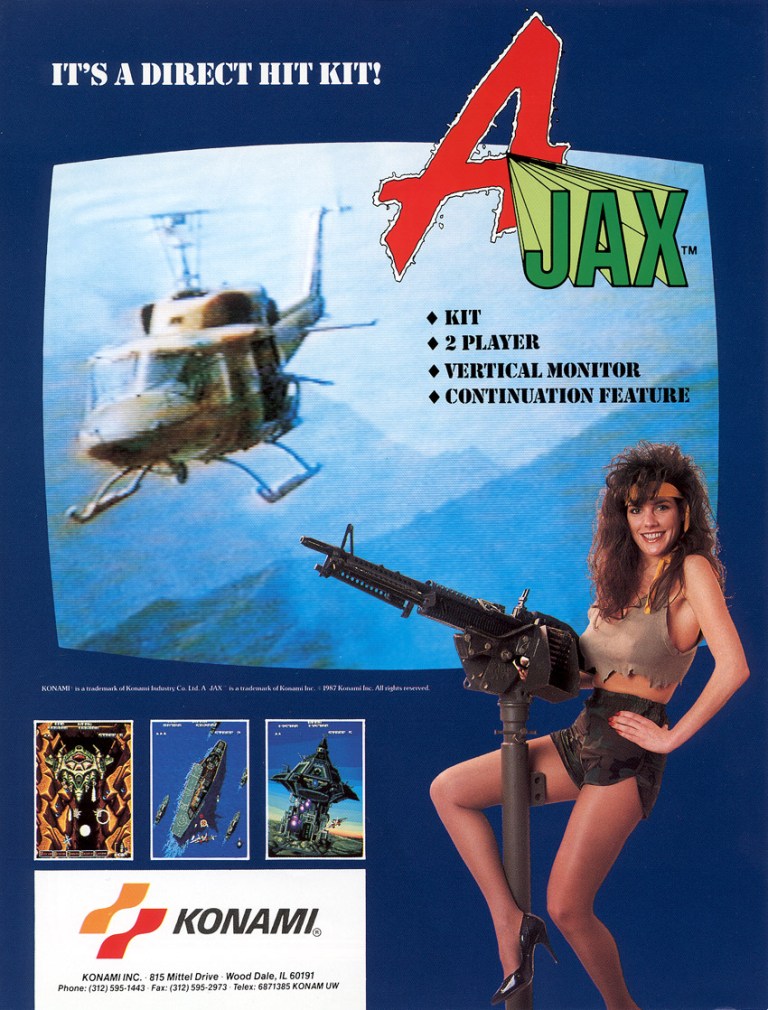
Another one of Konami’s arcade flyers showing a pretty fashion model with a touch of militarism.

A-Jax (also referred to as Ajax) is another one of the many military themed games Konami released for the arcades in the 1980s. It was a 2D vertically scrolling shooter in which players use aircrafts to shoot enemies both in the air and on the ground. The game was a hit in Japanese arcades and Konami came up with the North American arcade flyer showing three screenshots, an archive footage shot of a military helicopter and a sexy lady (with a light military look) with a machine gun. The style of presentation was similar in style with the North American arcade flyers of Contra and M.I.A.: Missing in Action.

2. The Combatribes print ad
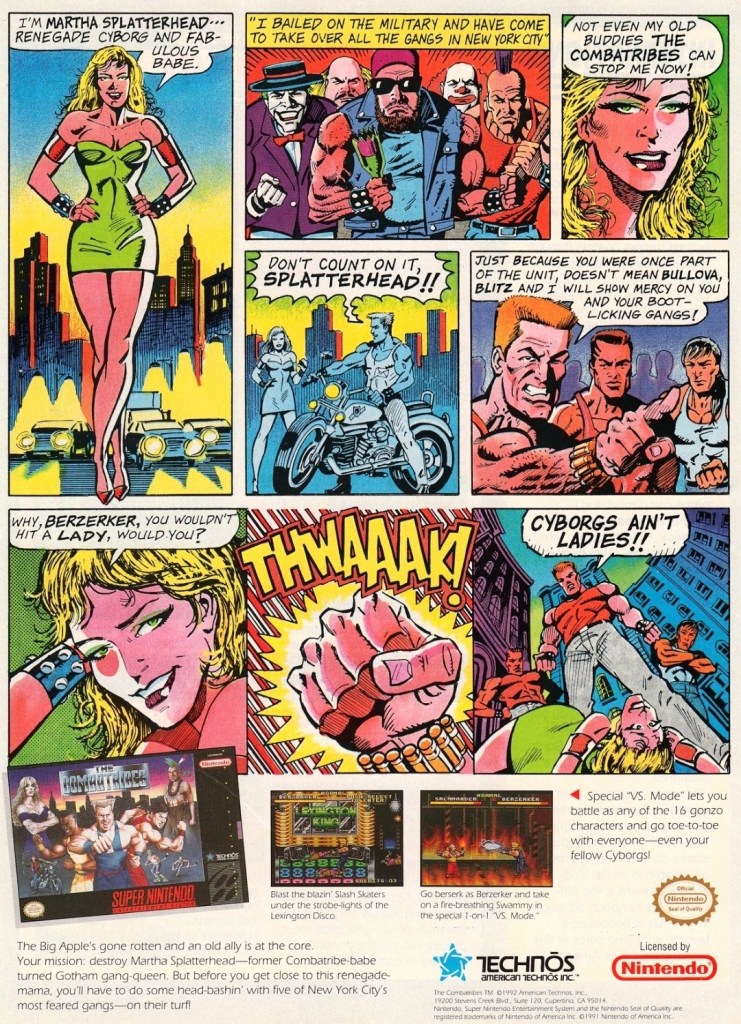
The short comic book approach was used to emphasize the setting and concept of the video game.

Technos, the Japanese company behind the wildly popular Double Dragon games franchise, proved to be successful with the arcade release of The Combatribes. In an attempt to keep the wave of success moving, Technos released The Combatribes on the Super Nintendo Entertainment System (SNES) in 1992 and someone involved with the North American marketing came up with the idea of creating a comic book-style presentation for the print ad. Creatively speaking, the comic book approach was done to emphasize the story and visual concepts of the game, and entice readers to play it. By today’s standards of video game marketing, this print ad’s approach is both unusual and notable.

3. Dead or Alive 2 Dreamcast port print ad
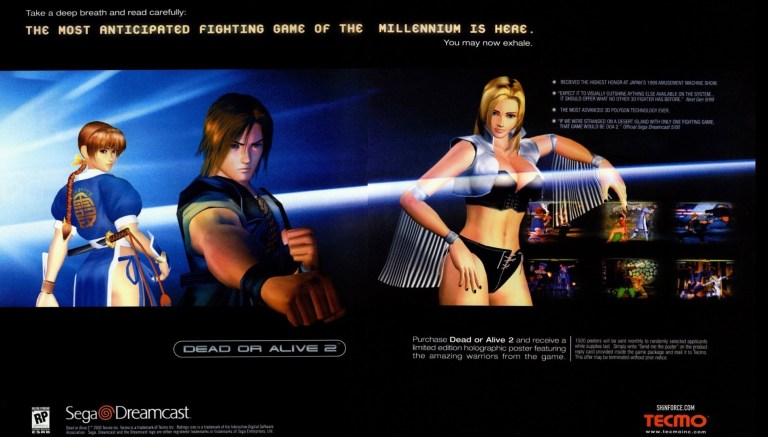
This was a wide print ad that appeared on magazines and it sure was eye-catching. It was an effective way to promote the game and inform people of the Sega Dreamcast’s presence in the market.

When Dead or Alive 2 was released in the arcades in 1999, a lot of gamers were astounded by it as developer Team Ninja (led by Tomonobu Itagaki) made it much bigger and a lot better than its 1996 predecessor. Team Ninja really went all out making the sequel utilizing Sega’s NAOMI arcade technology, inviting martial artists to do motion-capture, and having a very ambitious game design. Since the game was developed with the NAOMI hardware, porting the game for the Sega Dreamcast was reportedly convenient and smooth for the developers who went on to add more gameplay features and modes. Publisher Tecmo came up with this wide print ad (promoting the Dreamcast release) showcasing three characters, six screenshots and text descriptions emphasizing the universal acclaim the game received. The promotional approach was simple yet effective.  

4. Jet Moto (PC version) print ad
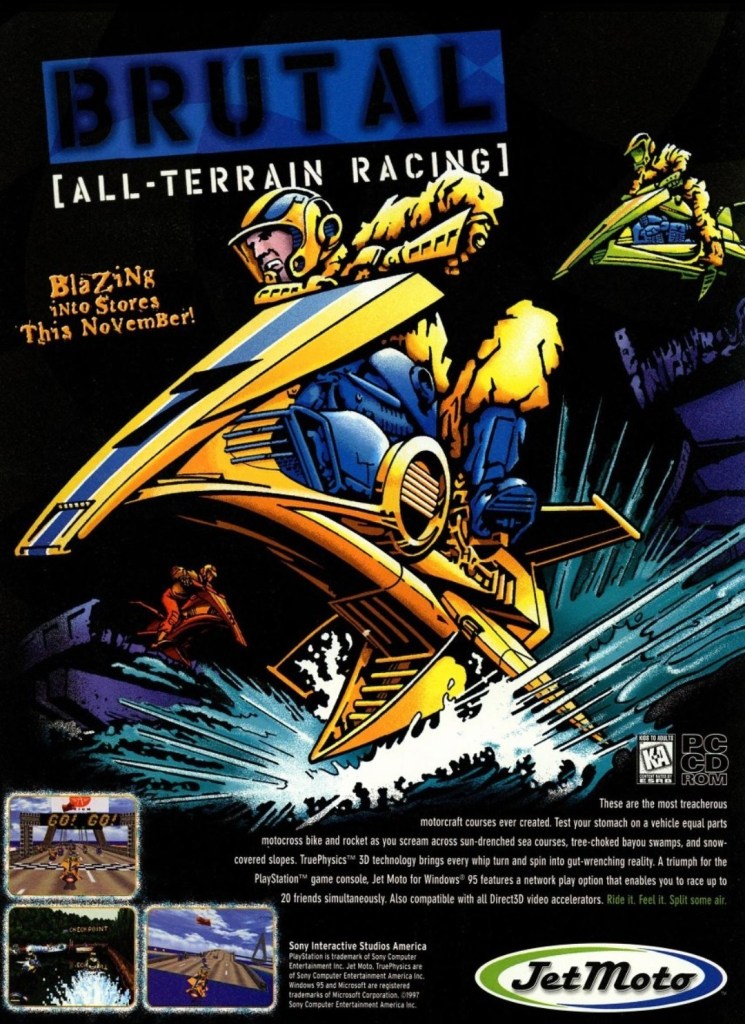
From PlayStation to PC.

In November 1996, the futuristic all-terrain hoverbikes racing game Jet Moto was released on the PlayStation which went on to sell well and attract mostly positive reviews. Sony Computer Entertainment eventually released a version of the game for the personal computer (PC) in November 1997. As seen in the above print ad, the network play option and compatibility with Direct3D video accelerators were emphasized as such features resonated with the interests of PC gamers of the era. This print ad showed how willing Sony was to release PlayStation hits on PC back then.

5. Elevator Action Returns Japanese arcade flyer
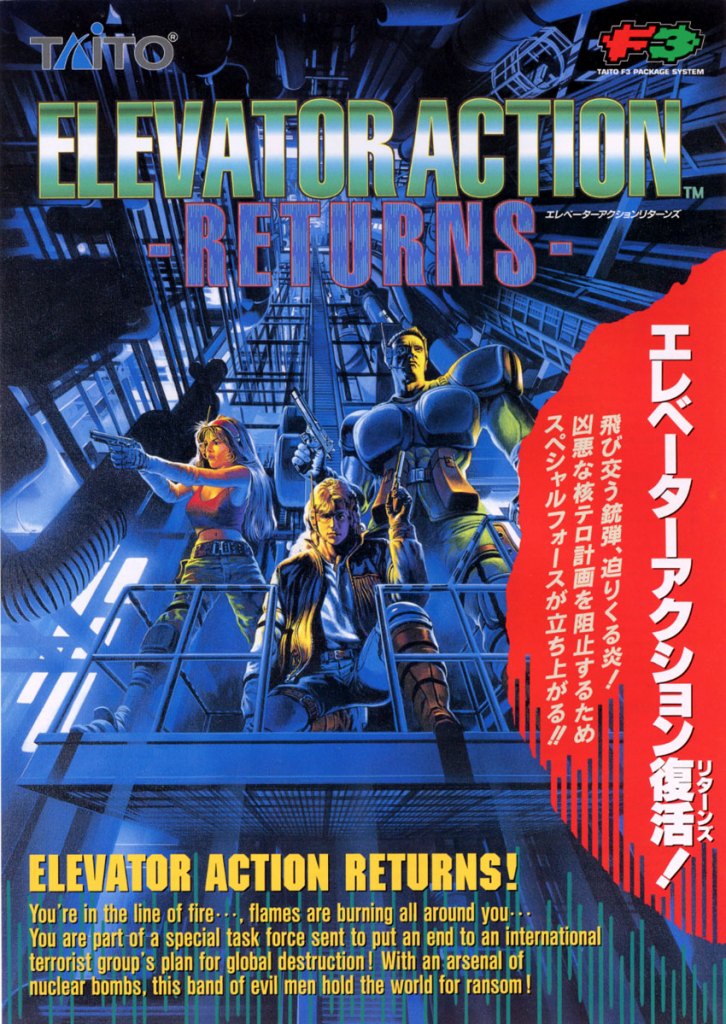
Great looking art on the front.
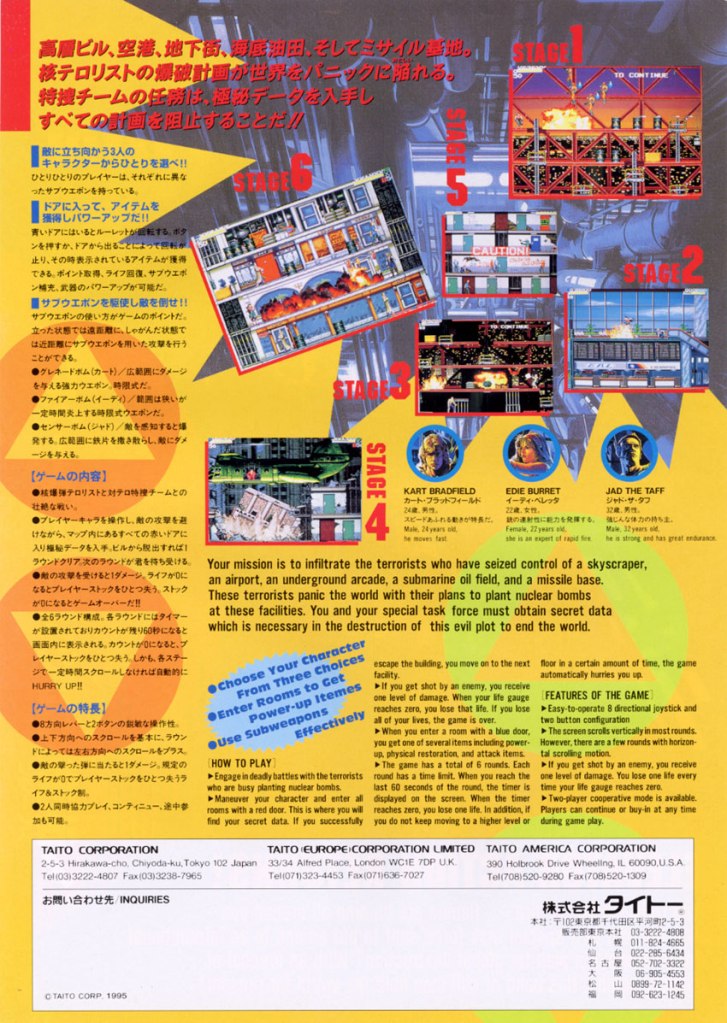
The rear of the flyer.

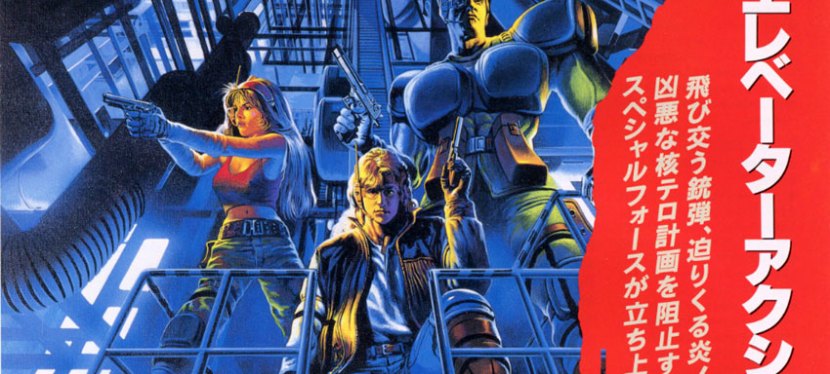
When Taito released Elevator Action Returns (also titled as Elevator Action II in other nations) in the arcades in 1994, it became a hit as gamers enjoyed its action-packed gameplay, ambitious 2D visual presentation and varied level designs that clearly went beyond its 1983 predecessor. The front of the Japanese arcade flyer has really nice art showing the three playable protagonists on an elevator on their way to do their mission. The back of the flyer shows screenshots (which emphasized the varied level designs), text descriptions explaining how the game played (English version printed), and what the features are. Another text description confirmed that terrorists are the antagonists that players will be dealing with which was reflective of the rise of Islamic terrorism in the 1990s. Oh yes, if you look closely you will the word “item” misspelled as “items”.

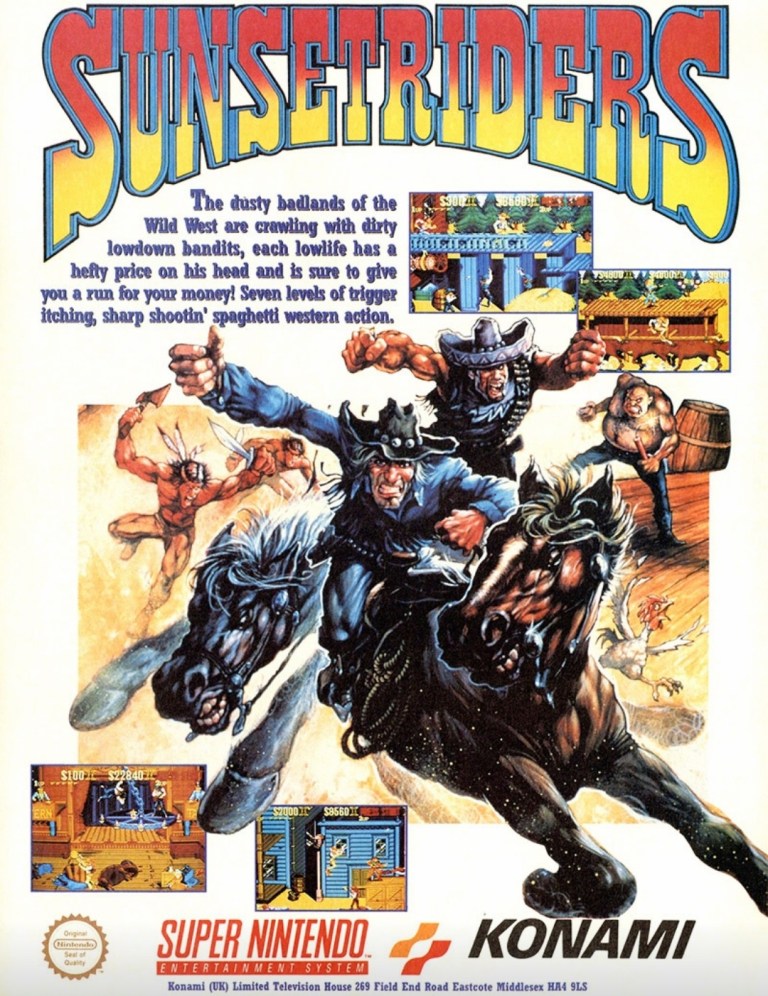
6. Sunset Riders print ads
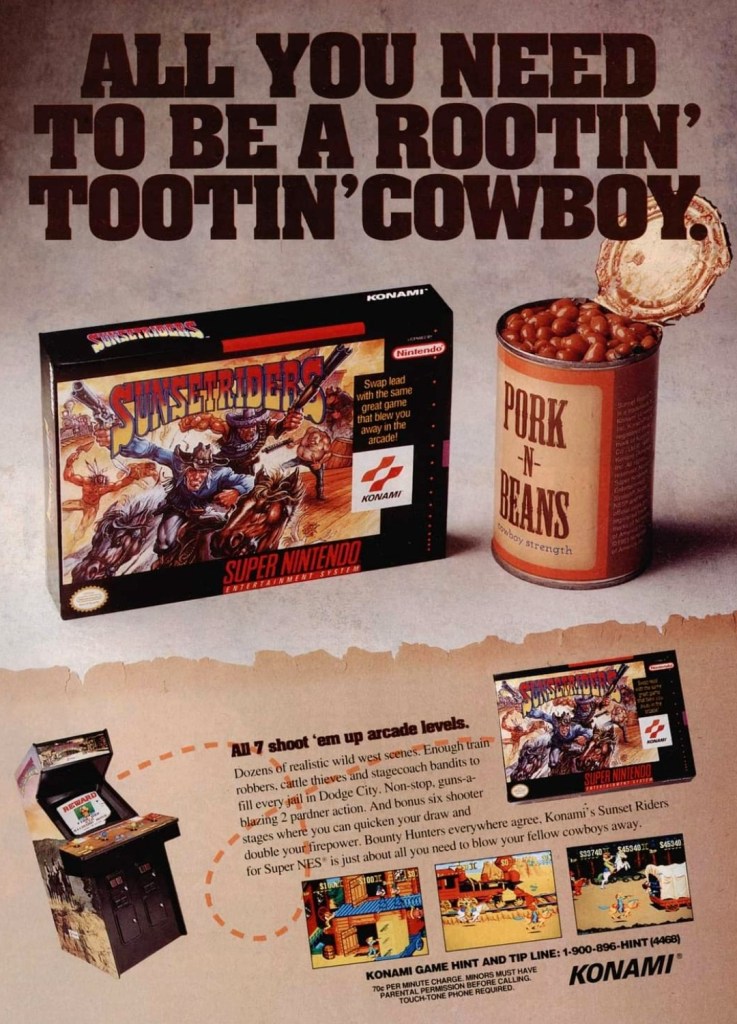
The Sunset Riders arcade machine, the SNES version, screenshots and a can of pork-and-beans on this ad.
This print ad appeared in some comic books I read long ago.

After enjoying a lot of success in the arcades with their 1991 game Sunset Riders, Konami went on to release ports of it to the Sega Genesis in 1992 and the Super Nintendo Entertainment System (SNES) in 1993. With regards to conversions and procedural/artistic changes between the arcade and console ports, the SNES version had few changes implemented compared to the one released on the Genesis. As seen in one of the print ads of Sunset Riders on SNES, it came with 7 arcade levels, 2-player mode and additional shooter stages. What the print ads did not reveal were notable replacements of specific characters in key parts of the game such as the dynamite-tossing female bandits getting replaced by male bandits, North American Indian villains getting replaced with outlaws, etc.  

7. Jackal Japanese arcade flyer
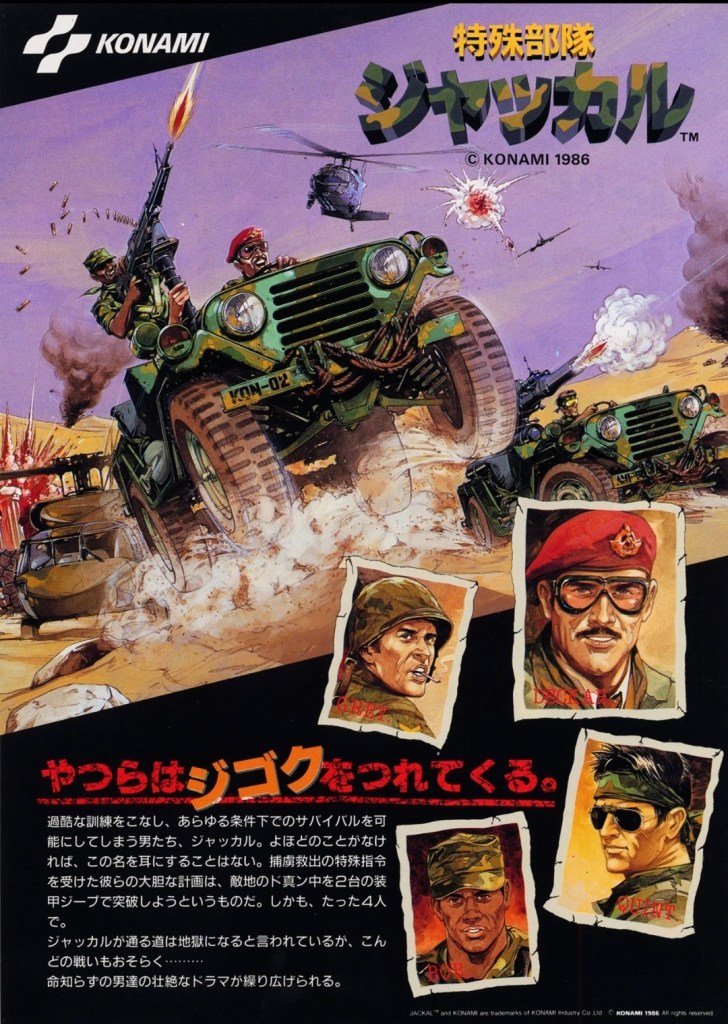
Whoever was the artist Konami hired truly delivered great-looking art!

Konami’s military themed game Jackal (Japanese title: Tokushu Butai Jackal) debuted in Japanese arcades in October 1986 and became a hit. The Japanese market arcade flyer had great looking artwork on the front that strongly emphasized the very concept of the game (players move military jeeps to shoot at enemies as they move into enemy territory). One of the characters (the one wearing the red beret) somewhat resembles the late Sean Connery which only shows that someone within Konami’s development team took inspiration from movies. This arcade flyer’s front still looks great.

8. Aliens North American arcade flyer
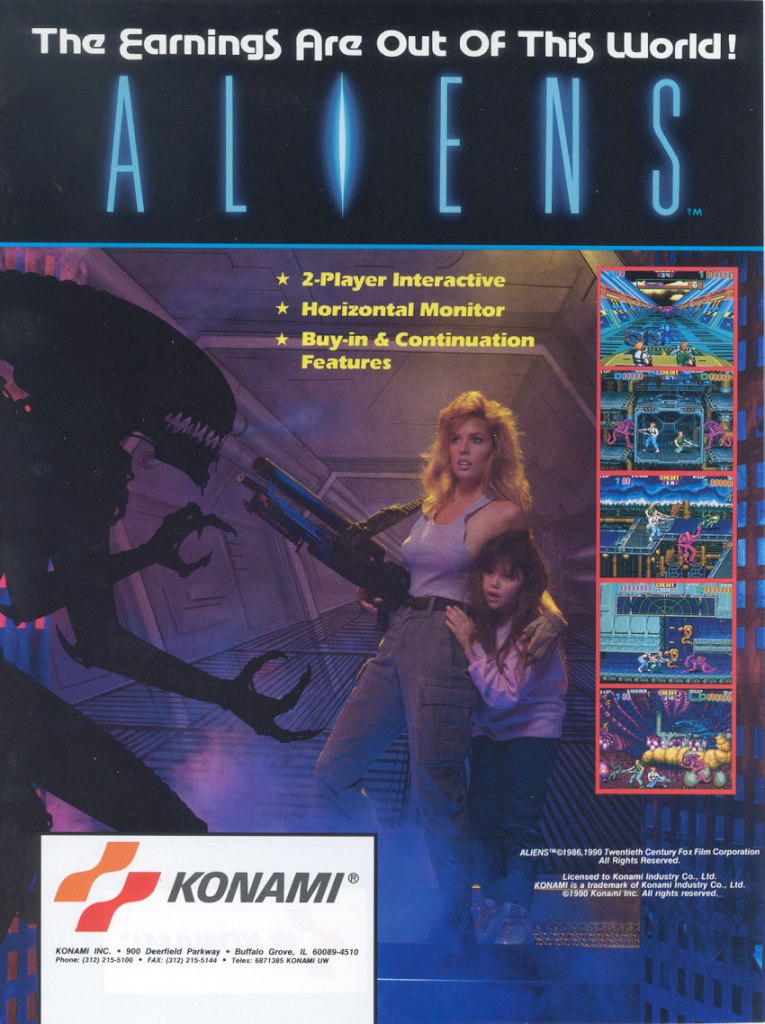
A good amount of effort was done to truly capture Aliens’ concept using hired models (as Ripley and Newt), a Xenomorph physical model and a suitable background.
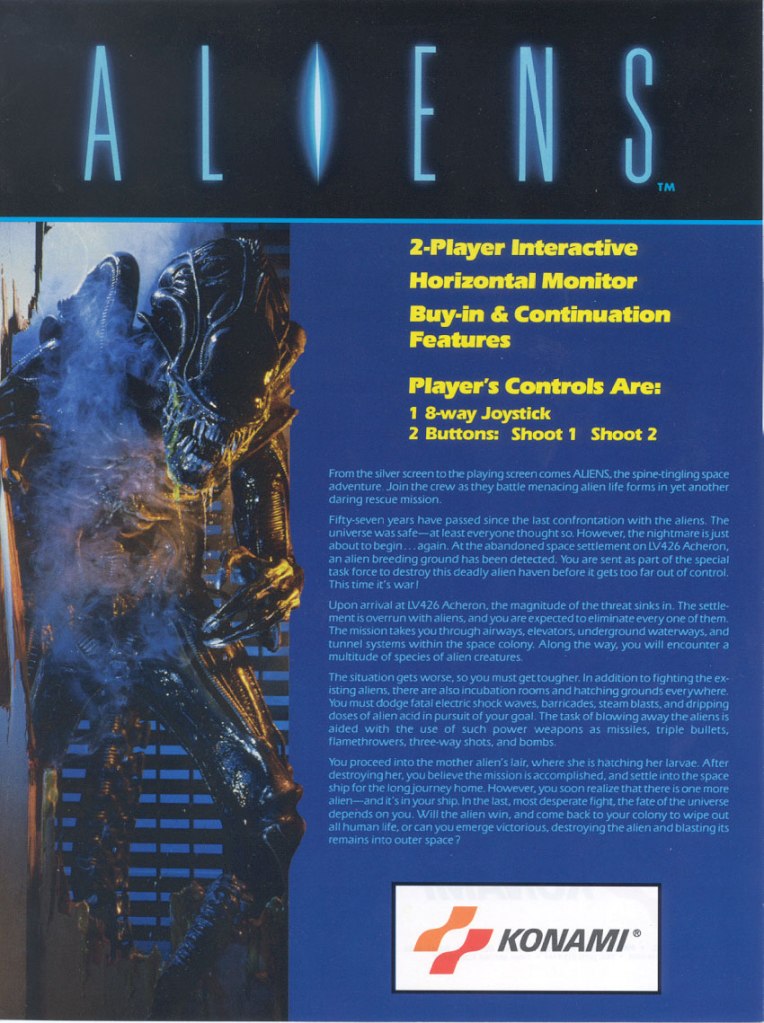
The key details presented on the rear of the flyer. The Xenomorph’s presence adds tension.

In 1990, Konami released their ambitious arcade game Aliens which was loosely based on the 1986 movie that starred Sigourney Weaver and was directed by James Cameron. As Konami’s Aliens license was only temporary and the movie was so highly regarded, the Japanese company’s marketing team really had to exert extra effort to truly capture the film’s sci-fi horror concept in order to make a strong presentation towards arcade operators and their paying customers (the gamers).

Apart from showing screenshots on the front, the creative team hired a blonde model as Ellen Ripley holding a gun and a young girl as the character Newt, and have them pose convincingly in front of a Xenomorph model (darkened in the foreground). On the back of the flyer, the team heavily revealed the details using the text description to emphasize the gaming experience and story concept. The technical details, meanwhile, were presented in simplistic, easy-to-follow fashion. Aliens was a smash hit in the arcades and there are long-time gamers who regard it as one of the best game adaptations of the 1986 movie. This arcade flyer is a strong reminder that the featured game was never ever ported to any game console nor to any personal computer.

+++++

Thank you for reading. If you find this article engaging, please click the like button below, share this article to others and also please consider making a donation to support my publishing. If you are looking for a copywriter to create content for your special project or business, check out my services and my portfolio. Feel free to contact me with a private message. Also please feel free to visit my Facebook page Author Carlo Carrasco and follow me on Twitter at  @HavenorFantasy as well as on Tumblr at https://carlocarrasco.tumblr.com/ and on Instagram at https://www.instagram.com/authorcarlocarrasco
Retro Gaming Ads Blast – Part 12

Welcome back readers, fellow geeks and electronic gaming fans!

In this edition of the Retro Gaming Ads Blast (RGAB) series, we will take a look at another batch of retro gaming print ads from the 1980s and 1990s. In addition, there will be a few flyers of arcade games.

For the newcomers reading this, Retro Gaming Ads Blast (RGAB) looks back at the many print ads of games (console, arcade, computer and handheld) that were published in comic books, magazines, flyers and newspapers long before smartphones, social media, the worldwide web and streaming became popular. To put things in perspective, people back in the 1980s and 1990s were more trusting of print media for information and images about electronic games and related products.

With those details laid down, here is the newest batch of retro gaming print ads for you to see and enjoy…

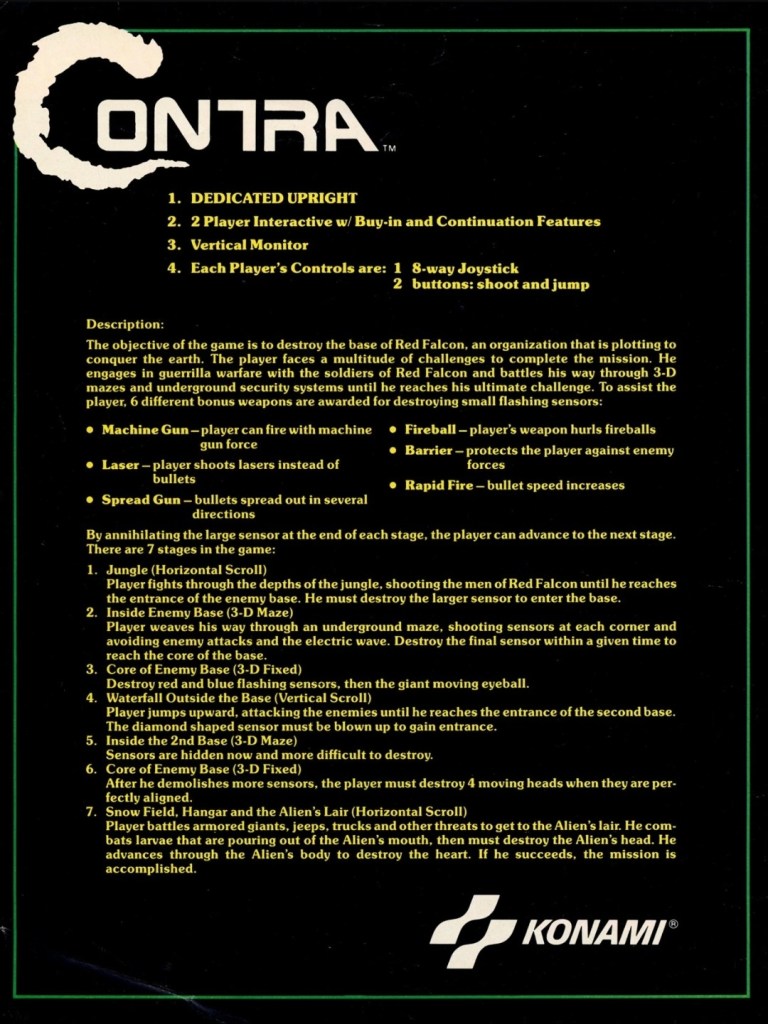
1. Contra arcade flyer

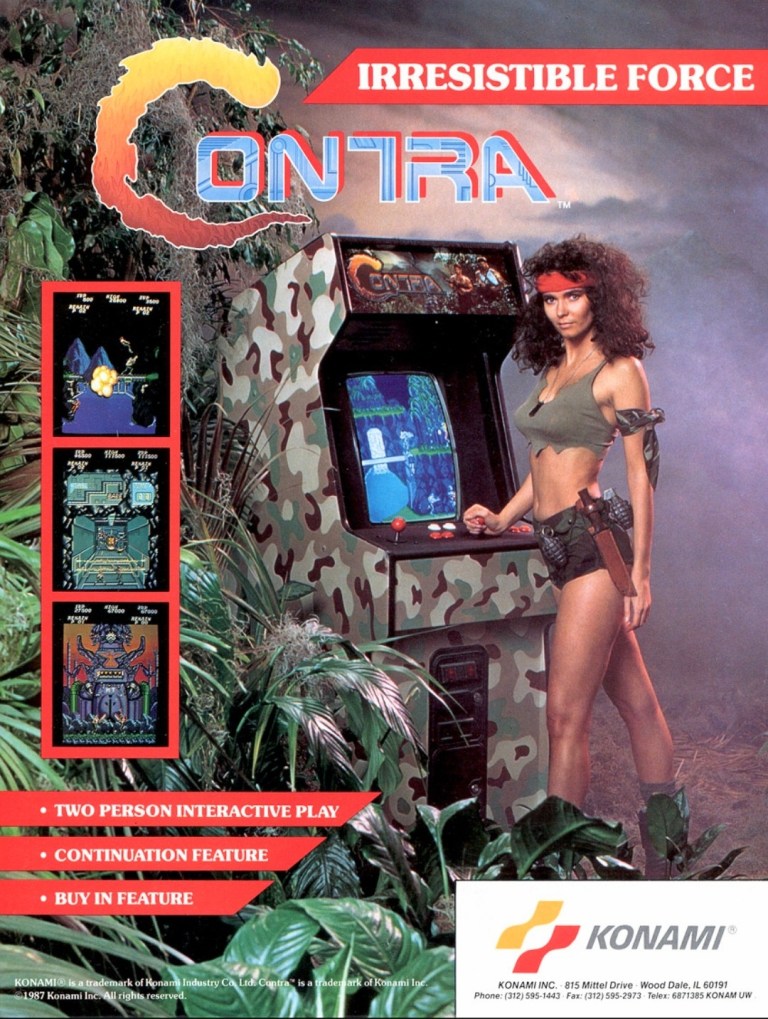
A clever visual concept by Konami towards gamers and arcade operators.
Details on the other side of the flyer.

Before it established itself as a popular gaming franchise with console gamers, Contra truly started in the arcades in 1987. First released in Japan on February 1987, Konami went on to release the game in arcades in the United States a month later and the flyer you see here was the Americanized promotion they came up with. Instead of hiring male actors or models to play soldiers, they hired a slim lady to appear with a female Rambo look standing in front of a Contra arcade machine. On the other side of the flyer are details that players and arcade operators can learn from. By today’s standards, this arcade flyer of Contra is still eye-catching and even amusing to look at.

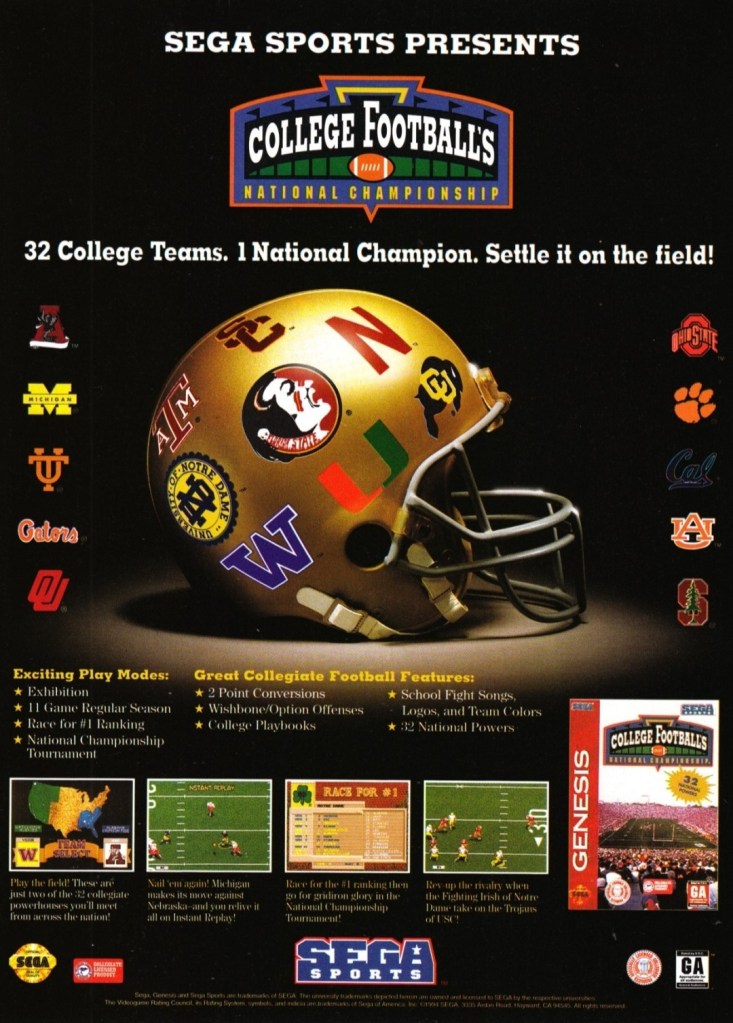
2. College Football’s National Championship print ad

This ad has a strong visual appeal to gamers who like football.

This is another one of those video game ads I saw while reading comic books in the 1990s. College Football’s National Championship was a Sega Genesis-exclusive American football video game published by Sega (with the Sega Sports brand) to capitalize on gamers who want college football to play with at home. This print ad has a nice visual presentation of the college teams’ logos, screenshots and details of what gamers could expect when they buy and play the game. College Football’s National Championship received mostly positive reviews and it must have sold well because Sega went on to release a sequel to this game.

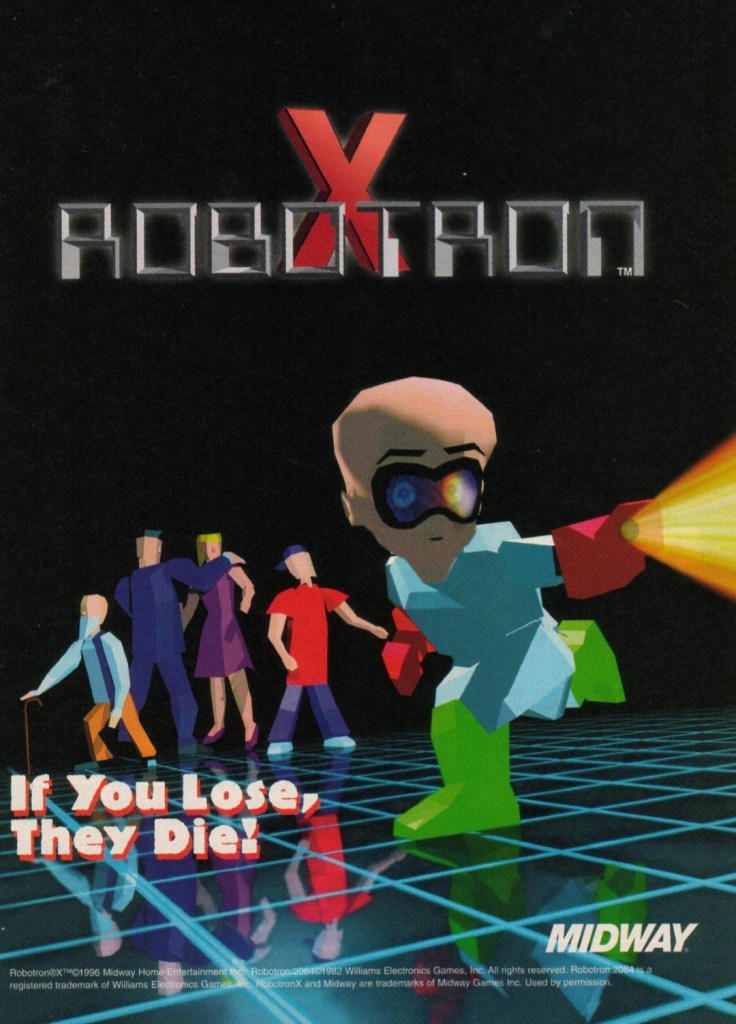
3. Robotron X print ad

This Robotron game was made at a time when 3D polygons became common for making video games.

Having played the classic game Robotron: 2084 on PC back in the 1980s, I was very surprised to see this print ad in 1996 promoting a brand new Robotron game for PlayStation as well as Windows PC. For the newcomers reading this, Robotron: 2084 was a classic which heavily influenced game designers who went on make other fan-favorite games like Smash TV and Llamatron. What makes Robotron X notable apart from being an official follow-up to the classic game was the fact that it was made at a time when game developers did their stuff to modernize gaming with 3D polygons for visuals while trying to come up with gameplay inspired by the classics. While Robotron X did not make a major impact on gaming, the classic Robotron: 2084 went on to be released in several multi-platform compilations such as Williams Arcade’s Greatest Hits, Midway’s Greatest Arcade Hits, and Midway Arcade Treasures.

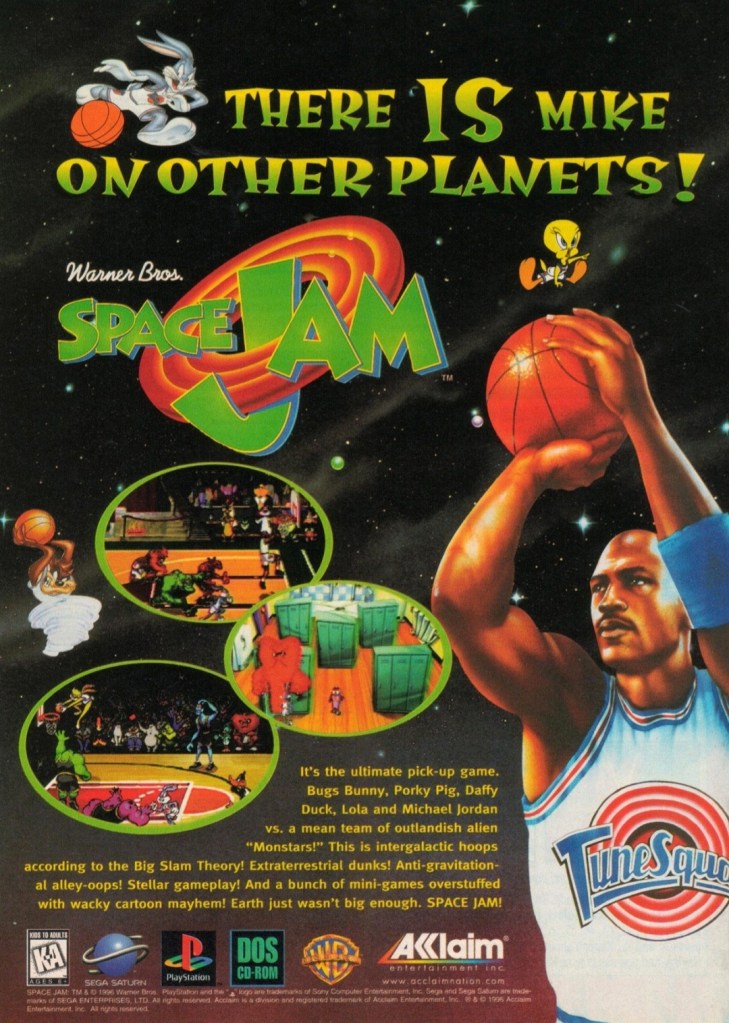
4. Space Jam game print ad

If you saw the movie in 1996, were you able to play this video game adaptation?

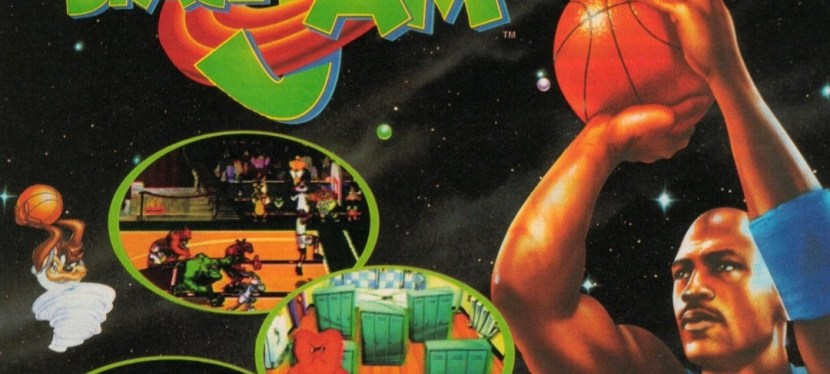
What makes 1996 a memorable year for basketball fans was the Michael Jordan’s return to prominence (having previously retired for less than two years before returning to the NBA in 1995) and leading a very powerful Chicago Bulls team to what was their 4th NBA championship title. In that same year, Jordan starred in the live-action/animated movie Space Jam which grossed an impressive $250 million worldwide. On the same month the movie came out, the Space Jam video game adaptation was also released on PlayStation and Sega Saturn. This print ad was part of the multimedia hype of the movie and the game itself had a very similar design and visuals concept with NBA Jam but ultimately it failed to become a hit with critics and gamers. Not even the combined visual might of Jordan and Warner Bros. characters could achieve success.  

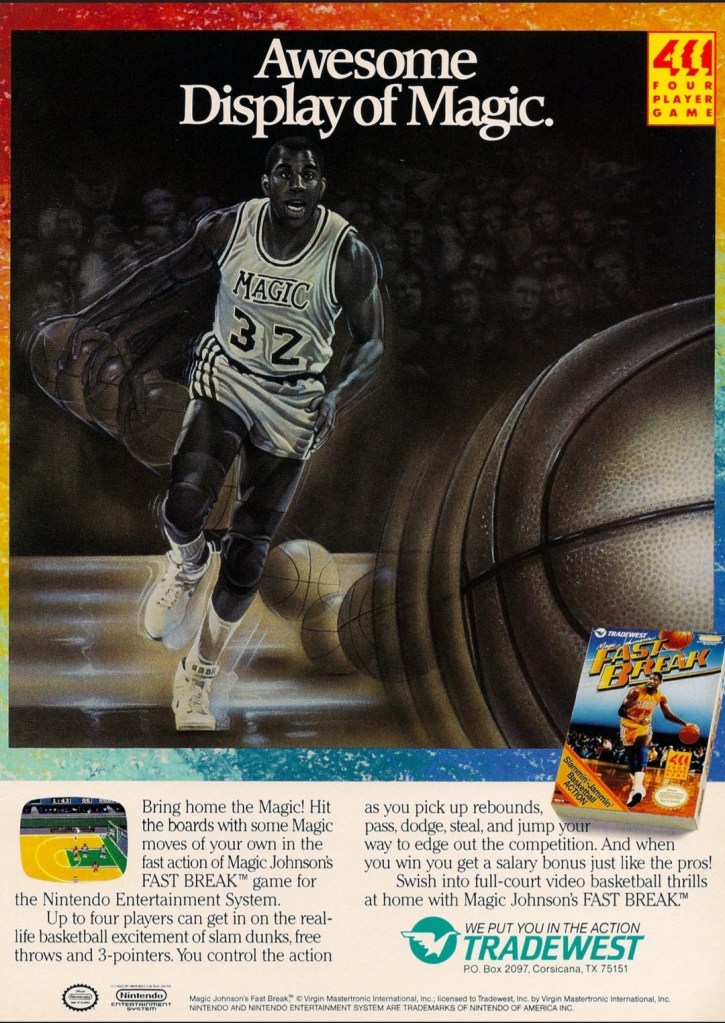
5. Magic Johnson’s Fast Break print ad

Still on basketball video gaming, the side-scrolling Magic Johnson’s Fast Break game was released on the Nintendo Entertainment System (NES) for console gamers to enjoy. Unsurprisingly, this ad had nice black-and-white art work of Magic Johnson as the dominant figure while leaving little space left to show the game box and only one screenshot. The real meat of this print ad are the details laid down in text description.

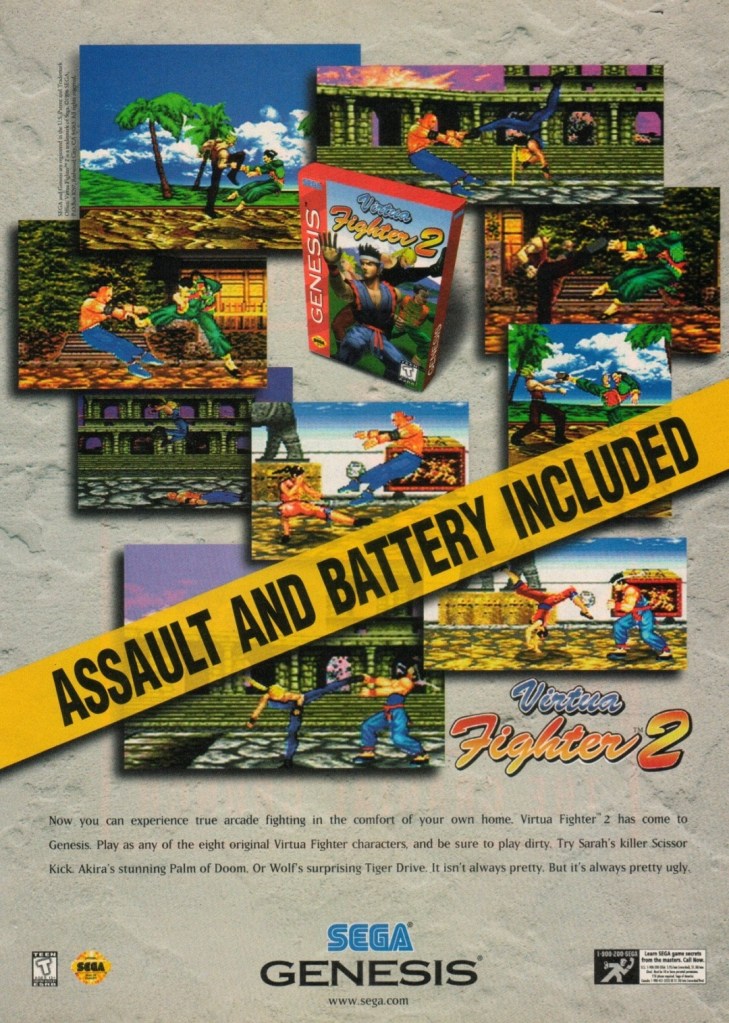
6. Virtua Fighter 2 for Sega Genesis print ad

Clearly a late effort by Sega to sell something to its many Genesis owners/fans in America at a time when PlayStation and Nintendo 64 started dominating 5th console generation sales.

In the history of arcade gaming and fighting games, Virtua Fighter 2 was a worthy follow-up to its groundbreaking predecessor. VF2 also made its way on the Sega Saturn which essentially maintained the great gameplay and 60 frames-per-second animation even though the 3D polygonal graphics were noticeably lower in quality compared to its arcade version. With VF2 in the arcades and on Saturn selling well, I was surprised to see this print ad of Sega releasing a totally different version of the game on the aging Sega Genesis console. Virtua Fighter 2 on Genesis had 2D graphics, sprites for the characters and a side-scrolling visual design. In fairness, the game developers exerted effort to recapture some of the gameplay elements within the Genesis limitations and 2D graphics. This print ad is a reminder of Sega’s American division selling a product to the remaining active Genesis owners.

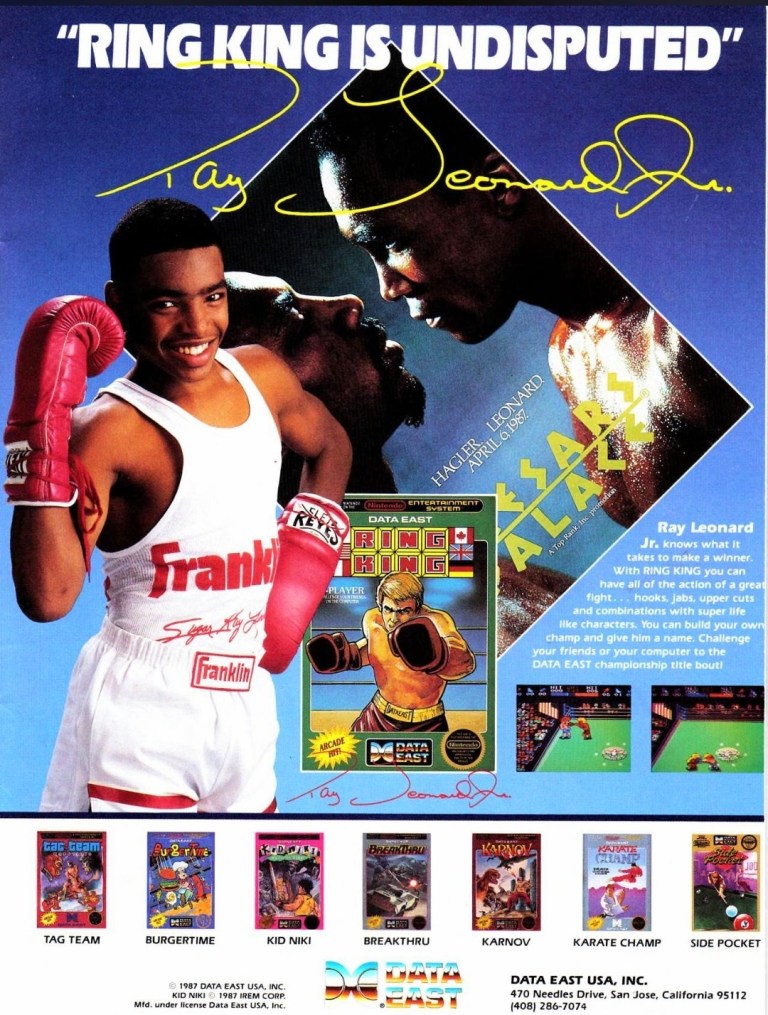
7. Ring King print ad

Ring King itself clearly lacked promotional space in this ad.

In 1987, Data East released their arcade hit game Ring King on the Nintendo Entertainment System (NES) and prepared this print ad involving Ray Leonard, Jr. (on the foreground in boxing gear) and conveniently with the famous Sugar Ray Leonard and Thomas Hearns (with the promo of their first fight together in the background). Also conveniently, the company inserted their other games on the lowest part of the ad. Ultimately, the presence of Ring King itself was minimized only showing the game cover and two screenshots. This is clearly an eye-catching ad but there was not enough emphasis on the game itself.

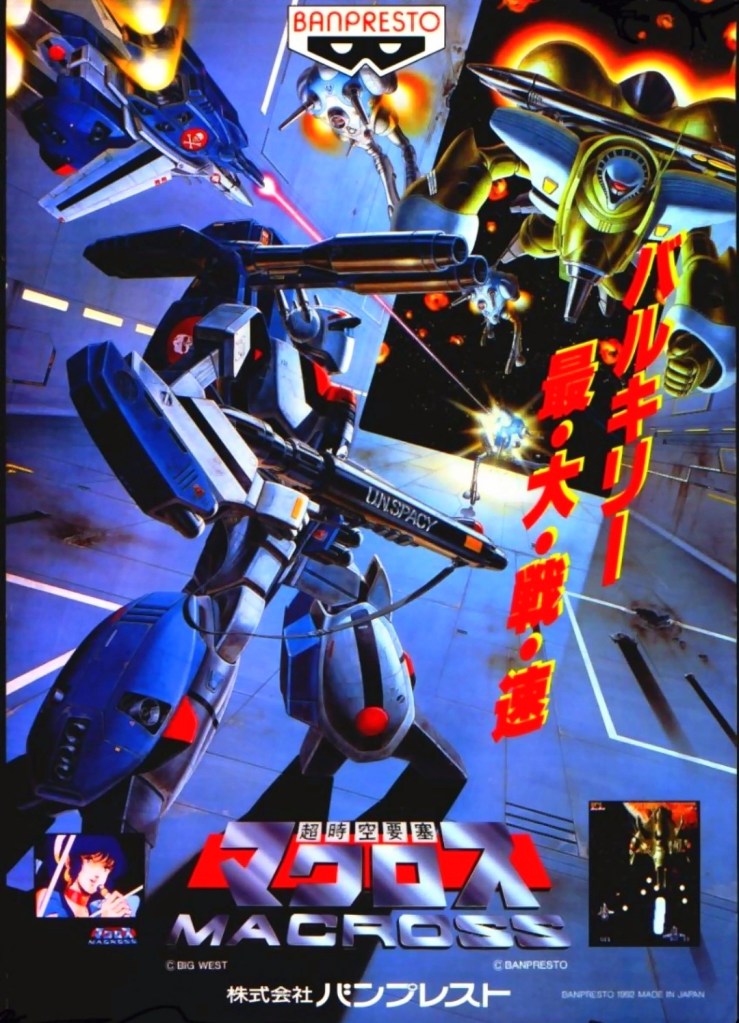
8. Super Spacefortress Macross arcade flyer

The arcade flyer released only in Japan.

Have you ever seen the classic anime movie Macross: Do You Remember Love? I really love watching that movie and I played and finished the video game adaptation on PlayStation in 1999. What I never got to play was the arcade game adaptation of it which was released by Banpresto in Japan in 1992. This flyer promoting the game has a strong visual presentation thanks to the artwork made for it. Only one screenshot was shown as well as a clip from 1984 the animated movie (note: the arcade game itself has some images directly from the film plus some newly created ones added) but this ad still had what it takes to capture the attention of the many Macross fans in Japan. This arcade game was eventually released with an English translation in America and Australia.   

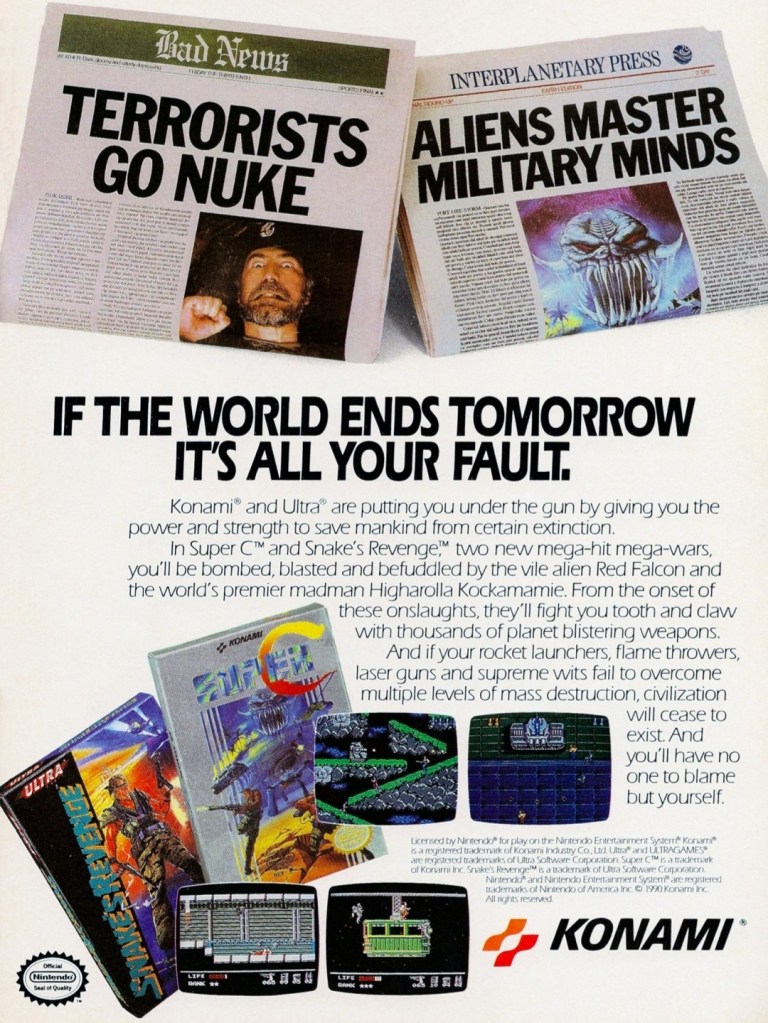
9. 2-in-1 print ad featuring Super C and Snake’s Revenge

A memorable and intriguing print ad from Konami promoting sequels.

This is one of the ads that Konami came up with to promote at least two games using a single-page ad format. I saw this ad in many comic books I read decades ago and its visual concept always caught my attention especially since I played the console game Contra a lot. At the high end of the ad were two fictional newspaper headlines highlighting the respective conflicts of Snake’s Revenge (with a nuclear danger concept) and Super C (with emphasis on alien invaders). These two games were sequels to the classics Metal Gear and Contra, and Konami clearly knew how to take advantage of the older games’ success and do their best to sell the sequels to gamers who love action-packed gaming as well as fantasized armed conflicts. Like the 2-in-1 ad showcasing Contra and Jackal, this was Konami’s aggressive move to sell war-inspired games to the NES userbase which was mostly composed of children and teenagers.

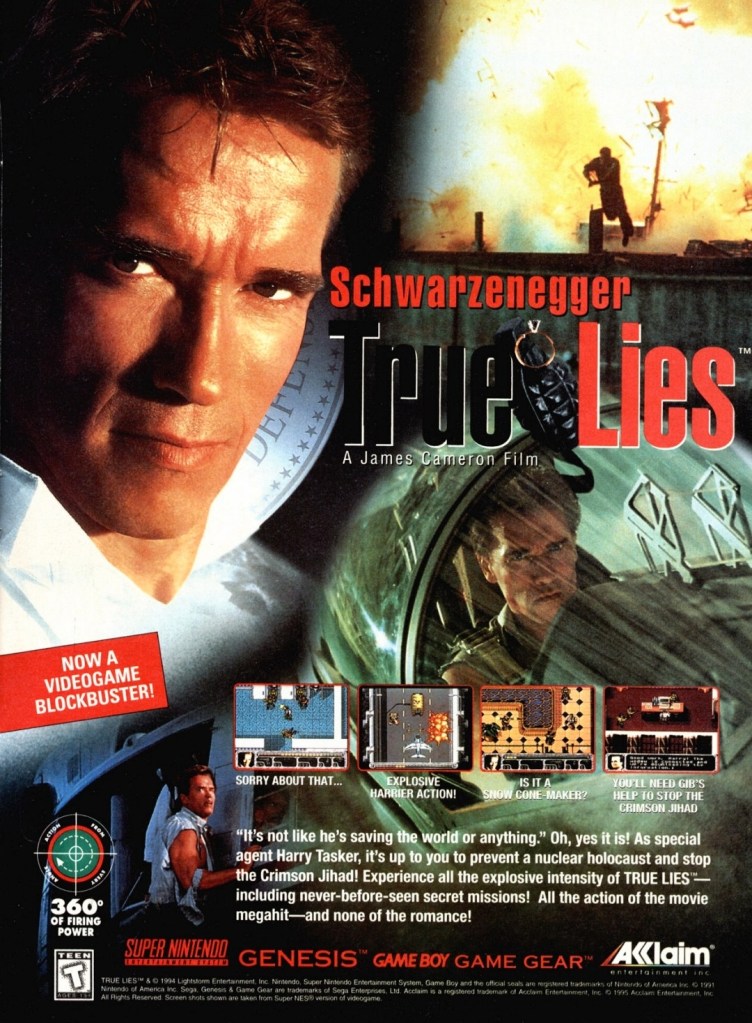
10. True Lies game print ad

There is nothing like taking advantage of the imagery of a Hollywood superstar to promote a video game based on the related movie.

Here is a video game ad I saw in many comic books I read in 1994-1995. True Lies (starring Arnold Schwarzenegger) was one of the big summer season movie hits of 1994 and the video game was part of the business tie-ins with the film. The people who made this print ad made the smart moves of showing not just one but three images of Schwarzenegger to promote the game while leaving some space to show what the game looked like. The True Lies game even had stills from the movie to emphasize the flow of the plot.

+++++

Thank you for reading. If you find this article engaging, please click the like button below, share this article to others and also please consider making a donation to support my publishing. If you are looking for a copywriter to create content for your special project or business, check out my services and my portfolio. Feel free to contact me with a private message. Also please feel free to visit my Facebook page Author Carlo Carrasco and follow me on Twitter at  @HavenorFantasy as well as on Tumblr at https://carlocarrasco.tumblr.com/ and on Instagram at https://www.instagram.com/authorcarlocarrasco
Retro Gaming Ads Blast – Part 6

Welcome back readers, fellow geeks and electronic gaming fans!

In this edition of the Retro Gaming Ads Blast (RGAB) series, we will examine print ads from the 1980s and the 1990s that caught my attention and I will explain why they are worth look back at.

For the newcomers reading this, Retro Gaming Ads Blast (RGAB) looks back at the many print ads of games (console, arcade, computer and handheld) that were published in comic books, magazines, flyers and newspapers long before smartphones, social media, the worldwide web and streaming became popular. To put things in perspective, people back in the 1980s and 1990s were more trusting of print media for information and images about electronic games.

With those details laid down, here is the newest batch of retro gaming print ads for you to see and enjoy…

1. Operation Wolf print ad

Even though there were screenshots from the game, this was still an eye-catching print promoting Operation Wolf for the Nintendo Entertainment System.

Looking back at the history of pop culture, the 1980s saw the surge of Hollywood action movies that emphasized or even glorified militarism. Arnold Schwarzenegger, Sylvester Stallone and Tom Cruise were just a few Hollywood stars who found success playing military figures. It was not surprising that there were game developers in Japan who noticed the Hollywood military trend and were inspired to make games that had similar themes. The Japan-based company Taito developed and released the light gun shooter arcade game Operation Wolf which became a huge commercial success worldwide. Unsurprisingly, versions of Operation Wolf were eventually made for the existing home computers and game consoles of the time.

The above print ad of the Nintendo Entertainment System (NES) version of Operation Wolf only showed the official artwork, descriptive text and noticeably no gameplay screenshots. While the ad made the NES version of the game look exciting to look forward to, the actual game looked and felt nothing like the arcade version as the console’s limitations resulted in really small 2D sprites (which made shooting tough) and the 2D art used were rather ugly to see. I can only speculate that the people at Taito knew their product for the NES had sub-par quality and only hoped for the best trying to fool gamers to buy it.

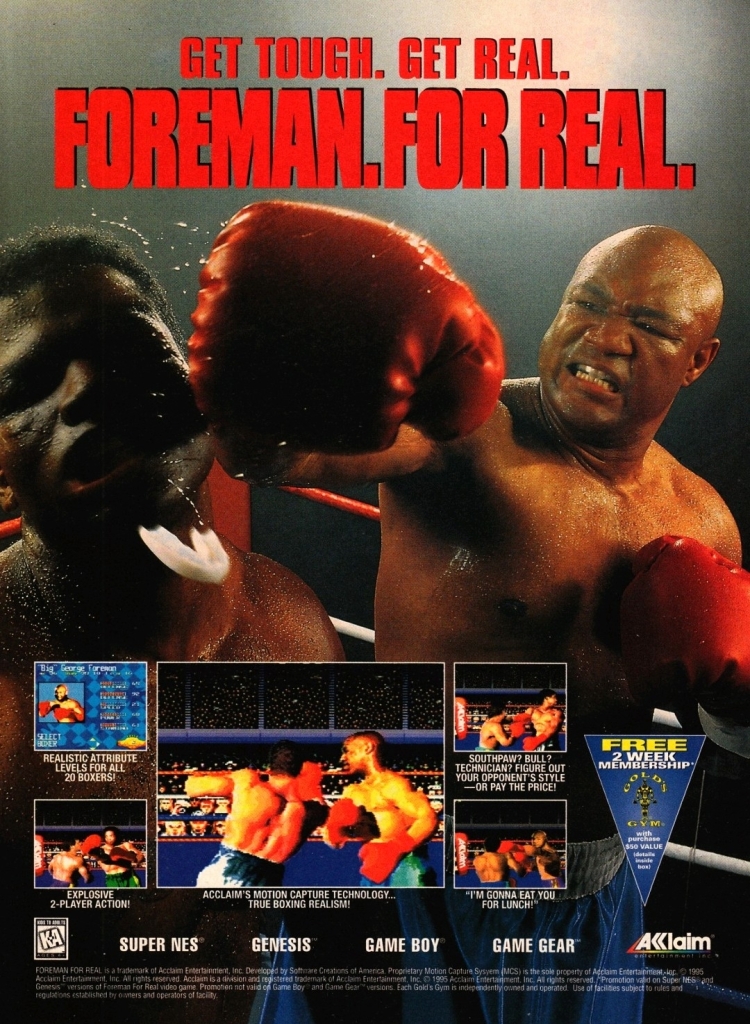
2.  Foreman For Real print ad

Apart from boxing and endorsing grills, are you aware that George Foreman is also a worship leader and preacher of God’s Word?

In late-1994, George Foreman knocked out Michael Moorer to reclaim the heavyweight boxing title and the last time he had it was way back in 1974. For the newcomers reading this, Foreman halted his professional boxing in 1977, established his connection with God, preached His Word, opened a youth center and became a major product endorser. Foreman came back into fighting in 1987 and stunned everyone when he became heavyweight champion seven years later.

That being said, it was no surprise that game publisher Acclaim (which already released a video game with the boxer in 1992) quickly returned to Foreman to get him as the titular endorser in the 1995 video game Foreman For Real which was released on multiple gaming platforms less than a year after his championship victory. Apart from showing Foreman’s dominating image and screenshots from the game, the ad even had a promo of a free 2-week membership with Gold’s Gym. This ad was a lively reminder of the significance of Foreman’s presence in professional sports and it was instantly eye-catching.

3. BurgerTime print ad

Arcade hits like BurgerTime also made it into personal computers.

Previously, I showed an eye-catching print ad of the arcade classic BurgerTime. This time, the BurgerTime print ad shown here focused more on the IBM and Apple computer versions. This print ad had a photograph of an actor playing chef Peter Pepper carrying a huge burger bun running away two eggs and a hotdog, and near them were the respective boxes of BurgerTime for IBM and Apple. This is a sharp change of visual style away from the comic book-style art used in the other BurgerTime print ad. I can only imagine how excited IBM and Apple computer users became after seeing this ad back in the 1980s.

4. Shining Wisdom print ad

Even though this was a very eye-catching ad that appeared in several publications, Shining Wisdom went on to become a forgotten game after receiving mixed reviews from game review writers.

Here is another print ad of Working Designs from the 1990s. Released only on the Sega Saturn in 1996, Shining Wisdom was a fantasy action-adventure game from Japan that publisher Working Designs localized with North Americans in mind. This meant taking lots of creative liberties with the story, name changes, insertions of pop culture jokes and even altered the personalities of the characters. Developed by Sonic Software Planning and Camelot Software Planning, Shining Wisdom started as a project for the 16-bit console Mega Drive (Sega Genesis in America) that was revised for the more powerful Saturn console. While this print ad caught the attention of gamers and readers, Shining Wisdom received mixed reviews from critics upon release. Sadly, not too many gamers talk about this game anymore.

5. Cabal print ad

Military action and shooting strongly emphasized in this print ad for the Nintendo Entertainment System version of the arcade smash Cabal.

Like many games released in the 1980s, Cabal had a strong military theme and allowed players to engage in bouts of shooting playing soldiers who have to fight entire armies of bad guys. This print ad about the Nintendo Entertainment System (NES) version of the game had really nice art dominating the page, the packaging of the game plus three screenshots showing what gamers could expect. This was a very eye-catching print ad that made Cabal look both exciting and enticing.

6. Metal Gear print ad

Wow! So many weapons and pieces of equipment displayed in this Metal Gear (NES version) ad.

Back in the late 1980s, the NES port of Metal Gear had a notable promotion in America thanks to this cleverly designed print ad. When it comes to emphasizing “gear” from the title, the marketing team emphasized the words “Gear up” and literally filled the ad spaces with lots of pieces of equipment that was not only eye-catching but also gave readers the idea that a huge adventure awaits them in Metal Gear. As for the game box on the lower left corner of the print, the cover art highlighting the character Snake was an artistic copy of a still image of actor Michael Biehn as Kyle Reese in The Terminator (1984). This print ad was both entertaining and intriguing to look at.

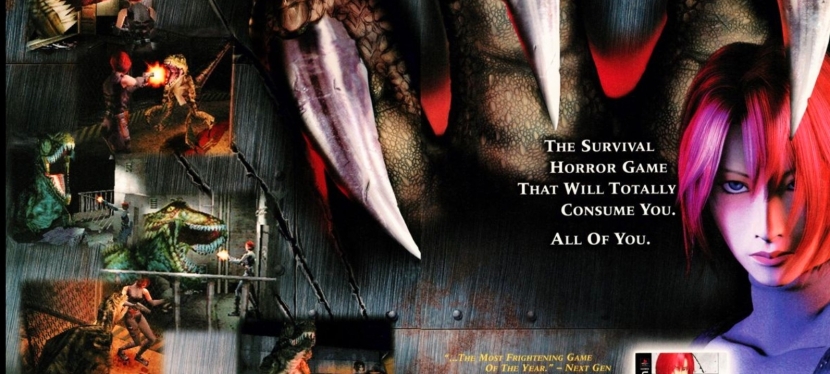
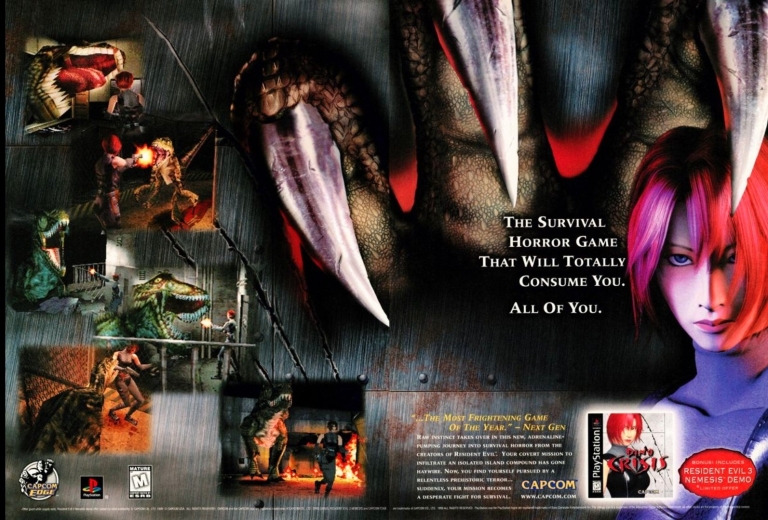
7. Dino Crisis print ad

For many gamers, Dino Crisis was like a combination of Resident Evil and Jurassic Park and this visceral looking print ad really got lots of people interested in the game.

In 1999, Capcom released Dino Crisis for PlayStation in America and the timing was almost perfect as millions of gamers who owned the console enjoyed the releases of Resident Evil and Resident Evil 2 (both games from Capcom) firmly establishing the survival horror genre as a popular one. That being said, a lot of RE fans anticipated the release of Dino Crisis due to the fact that the game shared several elements with Resident Evil games in terms of exploration, survival, control and shooting. Not only that, Resident Evil creator and original game director Shinji Mikami was in charge of the making of Dino Crisis. Mikami pointed to the films The Lost World: Jurassic Park (1997) and Aliens (1986) as influences on making the game which for most gamers was perceived as “Resident Evil filled with dinosaurs.”

The print ad above had a very engaging visual design that symbolized action, horror and tension well. Mikami clearly wanted gamers to experience the intense violence of encountering dinosaurs and this ad gave viewers a small sample of that. It’s safe to say that this print ad was effective as Dino Crisis went on to sell millions of copies and established Regina (the red-haired lady in the ad) as another memorable character from Capcom.  

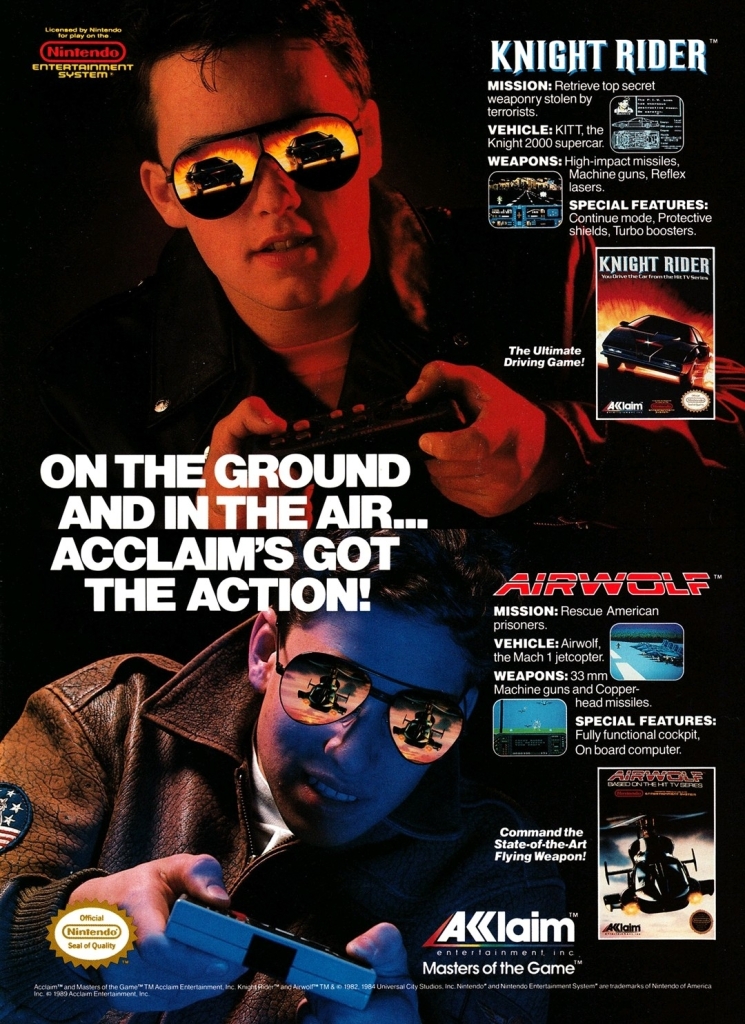
8. Airwolf/Knight Rider games print ad

Very clearly, the advertiser focused on the cool look to sell the games of Airwolf and Knight Rider.

Back in the 1980s, Airwolf and Knight Rider were wildly popular TV series that each had winning formulas to entertain millions of viewers with action, suspense and storytelling. It was not surprising that video game adaptations of them were produced on the Nintendo Entertainment System (NES). This particular print ad was an efficient way of promoting the Airwolf and Knight Rider games which featured two players looking cool with jackets and sunglasses. Acclaim clearly aimed for the TV series’ fans and slightly older players among the NES owners/users.

+++++

Thank you for reading. If you find this article engaging, please click the like button below, share this article to others and also please consider making a donation to support my publishing. If you are looking for a copywriter to create content for your special project or business, check out my services and my portfolio. Feel free to contact me with a private message. Also please feel free to visit my Facebook page Author Carlo Carrasco and follow me on Twitter at  @HavenorFantasy as well as on Tumblr at https://carlocarrasco.tumblr.com/ and on Instagram at https://www.instagram.com/authorcarlocarrasco
Philippines PC sales of 2022 4th quarter falls down 48.9%

Were you able to buy a brand new laptop or desktop over the past six months? This question I asked because according to a news report by BusinessWorld, personal computer (PC) sales in the Philippines decreased by almost 49% in the 4th quarter of 2022. There is an ongoing downward trend that cannot be ignored.

To put things in perspective, posted below is an excerpt from the BusinessWorld news article. Some parts in boldface…

The personal computer (PC) market in the Philippines had 464,000 units in the fourth quarter of 2022, representing a 48.9% decrease compared to the same period the previous year, according to the International Data Corp. (IDC).

The PC market also declined 18.5% from the previous quarter.

The market declined across notebooks and desktops,” IDC Philippines Associate Market Analyst Jeeno Velasco said in a statement on Monday.

Household consumption was largely fulfilled and refocused on other spending activities geared toward the holiday season.

He also noted that macroeconomic pressures further drove inventory rationalization among vendors.

Top five PC companies in the Philippines during the quarter were Acer Group, Lenovo, HP Inc, ASUS, and Dell Technologies.

The commercial space has not bounced back, as reported by the market intelligence company, due to weakened government and enterprise sectors which declined 44.7% and 25.2% from the previous quarter, respectively.

It noted that the national government has not announced any major plans involving information technology spending, while the enterprise segment is more reluctant to procure more units due to its negative financial outlook.

“Demand for desktops and the influx of company workers required to report back to work should have increased shipments for the corporate sector, but this didn’t pan out,” Mr. Velasco said.

Let me end this piece by asking you readers: What is your reaction to this recent development? Do you think economic factors like high inflation, rising interest rates and a potential recession overseas will keep the local PC market down for the rest of the year?

You may answer in the comments below. If you prefer to answer privately, you may do so by sending me a direct message online.

+++++

Thank you for reading. If you find this article engaging, please click the like button below, share this article to others and also please consider making a donation to support my publishing. If you are looking for a copywriter to create content for your special project or business, check out my services and my portfolio. Feel free to contact me with a private message. Also please feel free to visit my Facebook page Author Carlo Carrasco and follow me on Twitter at  @HavenorFantasy as well as on Tumblr at https://carlocarrasco.tumblr.com/ and on Instagram at https://www.instagram.com/authorcarlocarrasco
Xbox strategies taking shape with Microsoft’s full support and strong dedication!

We are just days away from the highly anticipated Xbox-Bethesda games showcase! Very recently, Team Xbox emphasized further its overall strategy of delivering interactive entertainment that goes way beyond the traditional model of selling consoles and games, and behind it all they have the full support of Microsoft itself!

Let’s start with the special presentation involving both Microsoft CEO Satya Nadella and Xbox chief Phil Spencer. Watch the video and listen very closely.

“Gaming is fundamentally aligned and woven in our mission as a company,” Satya Nadella said. “When you talk about Xbox’s mission to bring the joy and community of gaming to everyone on the planet, which I absolutely love, this is precisely what I think of when we think about Microsoft’s mission, which is to empower every person, every organization on the planet to achieve more. As a company, Microsoft’s all-in on gaming.”

Microsoft’s CEO confirmed that the corporation has indeed gone all in for Team Xbox and this is clearly a radical change compared to what happened in the previous console generation when the team was not a true priority for the corporation.

When it was a non-priority within the corporation’s hierarchy, Team Xbox was severely limited in producing first-party exclusives, severely limited in making big-time partnerships with other game developers/publishers, and designed a very flawed console with Xbox One. The result was a doomed 8th console generation (or the 3rd Xbox console generation) and the Xbox One sold much less than Xbox 360 worldwide and could not match the high number of exclusive games on Sony’s PlayStation 4 (PS4). Phil Spencer did what he could since taking over as Team Xbox chief.

That is all in the past now! With the full support of Microsoft and with Phil Spencer and his team now a clear priority for the corporation, Team Xbox has a lot of momentum moving forward in this 9th console generation. Mega publisher Bethesda has been integrated into Team Xbox and there will be Bethesda-produced exclusive games that gamers with Xbox Series X, Xbox Series S and Windows PC can look forward to. With 23 game developers under the Xbox Game Studios umbrella, several 1st party exclusives are already being produced like Avowed (plus the expected The Outer Worlds franchise) from Obsidian Entertainment, Senua’s Saga: Hellblade II from Ninja Theory, the next-generation Forza Motorsport game from Turn 10 Studios and Perfect Dark from The Initiative to name a few. When it comes to paid subscription services, it was reported that Xbox Game Pass (XGP) subscribers reached 18,000,000+ and right now Sony and Nintendo have no serious services of their own to compete with it. I should also mention Team Xbox is continuing with plans of acquisitions of game developers.

With the forward momentum clear, we can now take a look at the strategies as published in Xbox.com written by Xbox Wire Editor-in-Chief Will Tuttle. Some parts in boldface…

Xbox Game Pass is Changing the Way We Discover, Connect, and Play

  • Xbox Game Pass members play 30% more genres and play 40% more games. And more than 90% of members said they played a game that they would not have tried without Game Pass.
  • On average across the Game Pass library, partners see engagement go up by more than 8x when they enter Game Pass.
  • Whether it’s purchasing games inside or outside of what’s available in the library, or purchasing additional content for the games they like, members spend 50% more than non-members.
  • Xbox Game Pass has become a true discovery engine, a platform for connection and community, and is driving game sales. New insights we’re sharing today include:
    • Since we started our partnership with EA Play in Game Pass Ultimate, our players have been engaging with EA’s subscription service in a significant way. Compared to before the integration, EA Play has seen record usage on Microsoft platforms, driving hours played on these platforms up by more than 200%. As a result, EA’s incredible portfolio of games has reached and gained millions of new fans on the Xbox platform.
    • The new Square Enix game Outriders is in Game Pass and was also the selling digital game on Xbox during its launch week and a top 10 selling digital game on Xbox in the month of April. Game Pass helped introduce millions of players to the game.
    • During launch week, MLB: The Show 21 was the biggest sports game of the past year on Xbox and the second biggest sports game of all time on Xbox. Game Pass added millions of new fans and grew Major League Baseball’s player base significantly. MLB: The Show 21 was also the selling paid game on Xbox for the month of April. 

Xbox and Xbox Game Pass are Coming to More Screens

  • Xbox is working with global TV manufacturers to embed the Xbox experience directly into internet-connected televisions with no extra hardware required except a controller.
  • Xbox is exploring new subscription offerings for Xbox Game Pass so more players around the world can experience the most immersive and fun games across devices, geographies, and financial realities.
  • Xbox is working with telecommunications providers on new purchasing models like Xbox All Access, which allows consumers to buy both a console and Game Pass for a low monthly price, rather than spending money up front.
  • Xbox is building its own streaming devices for cloud gaming to reach gamers on any TV or monitor without the need for a console at all.
  • Cloud gaming through Xbox Game Pass Ultimate will launch in Australia, Brazil, Mexico, and Japan later this year.
  • In the next few weeks, cloud gaming on the browser will open to all Xbox Game Pass Ultimate members. With Edge, Chrome, and Safari support, players will be a click away from gaming on almost any device. 
  • We’re in the final stages of updating our Microsoft datacenters around the world with our latest generation of hardware, the Xbox Series X. This means gamers will see faster load times, improved frame rates, and experience Xbox Series X|S optimized games.
  • Later this year, we’ll add cloud gaming directly into the Xbox app on PC and integrate it into our console experience to light up scenarios like try before you download

An Incredible Pipeline of Games

  • With more than 23 studios worldwide creating games for Xbox, our goal is to release at least one new, first party game into Game Pass every quarter. Role playing games, shooters, strategy titles, adventure games, and more are all being built by our first party teams to ensure that there is a steady stream of compelling exclusive content to explore.
  • Our independent developer program ID@Xbox has earned developers over $2B dollars since the program’s inception, with over 2000 titles launched and many more on the way. This model is now being used for ID@Azure, allowing independent devs to build cloud-based experiences. These programs bring new voices from diverse backgrounds into the world of game development.
Xbox Game Pass is leading the way when it comes to paid subscription services on video games and it will be made more available to gamers around the world, including those who cannot afford an Xbox console.

Whew! That was an overload of details above! As the Xbox-Bethesda event on June 13 is focused on games (and possible studio acquisition announcements), it makes sense for Team Xbox to make clear what their strategies are and what developments are happening.

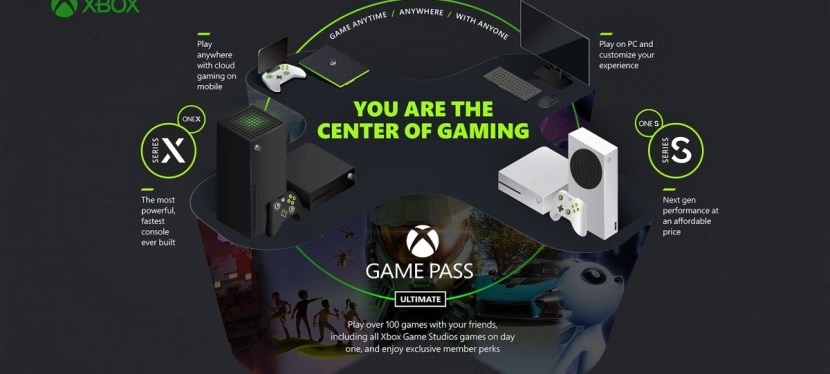
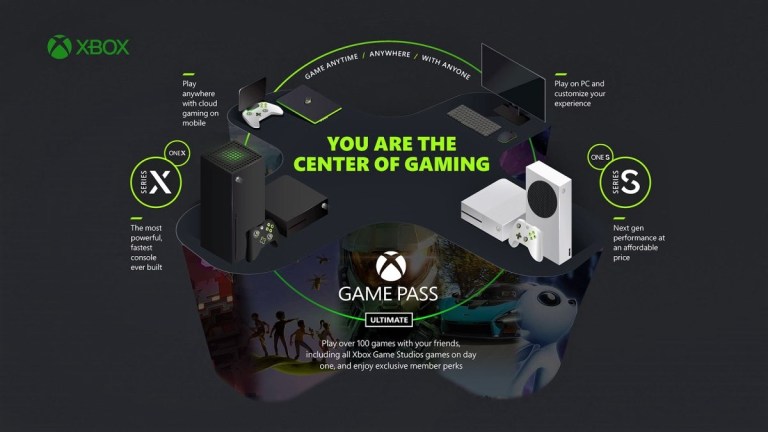
To examine the above information, Microsoft is taking Xbox and Xbox Game Pass to newer heights that the traditional model of selling consoles (hardware) and games cannot reach. The Xbox-Windows connectivity has been re-emphasized and it has indeed been working for XGP users who are paying $15 a month. Moving forward, Xbox will be integrated into smart TVs/HDTVs (connected to the Internet) and the only hardware needed is the Xbox controller. Once Microsoft’s deals with telecommunication firms have been finalized, consumers can buy a console (most likely Xbox Series S and Xbox Series X for gamers who want high-end experiences) and XGP through Xbox All Access and pay it all on a monthly basis (this will spare consumers from the trouble of paying so much for a new Xbox console at retail). This also shows the benefits of subscribing over doing over-the-counter retail transactions. Furthermore, the Xbox ecosystem will eventually become more accessible to many millions more gamers (who cannot afford consoles) through their Internet-connected HDTVs/smart TVs using streaming devices with cloud functionality.

Think about all those highly ambitious strategies and how they can eventually positive impact interactive entertainment and even expand video gaming as we know it. Nintendo and the PlayStation team at Sony (hey Jim Ryan, are you still learning yet?) did not anticipate this latest barrage by Team Xbox, nor have they formulated new ways to enhance the gaming experience and attracting many more consumers who cannot afford game consoles.

Whether you like it or not, Team Xbox is clearly pushing hard with its plan to reach many millions more consumers around the world without being limited by the traditional console business model. Consumers will be offered a lot of choices as to how they want to play games via Xbox and how they want to enter the Xbox ecosystem based on their respective financial standings and purchasing power. Consumers also love being offered multiple options which Nintendo and Sony seem to ignore. It seems the Japanese traditions of doing video game business set Nintendo and Sony back.

The consumer can become the center of gaming with Xbox Game Pass Ultimate!

Let me ask you readers: Are the new strategies by Team Xbox look exciting or complicated to you? Are you a gamer who wants to enjoy high-definition gaming at home without the hassle of buying a new console? Do you prefer to acquire an Xbox Series X through a subscription with your telecommunication provider? If you are running a retailing joint selling video game hardware and software, what do you think about the newest Xbox strategies announced?

You may answer in the comments below. If you prefer to answer privately, you may do so by sending me a direct message online.

To watch the Xbox & Bethesda Games Showcase on June 13, posted below are the links for your reference.

In closing this article, posted below are Xbox-related videos for your viewing pleasure. Enjoy!

+++++

Thank you for reading. If you find this article engaging, please click the like button below and also please consider sharing this article to others. If you are looking for a copywriter to create content for your special project or business, check out my services and my portfolio. Feel free to contact me as well. Also please feel free to visit my Facebook page Author Carlo Carrasco and follow me at HavenorFantasy@twitter.com