Disclaimer: This is my original work with details sourced from reading the comic book and doing personal research. Anyone who wants to use this article, in part or in whole, needs to secure first my permission and agree to cite me as the source and author. Let it be known that any unauthorized use of this article will constrain the author to pursue the remedies under R.A. No. 8293, the Revised Penal Code, and/or all applicable legal actions under the laws of the Philippines.
Welcome back superhero enthusiasts, 1980s culture enthusiasts and comic book collectors! Today we go back to the year 1983 to examine the Marvel Comics universe through the exploits of Dazzler!
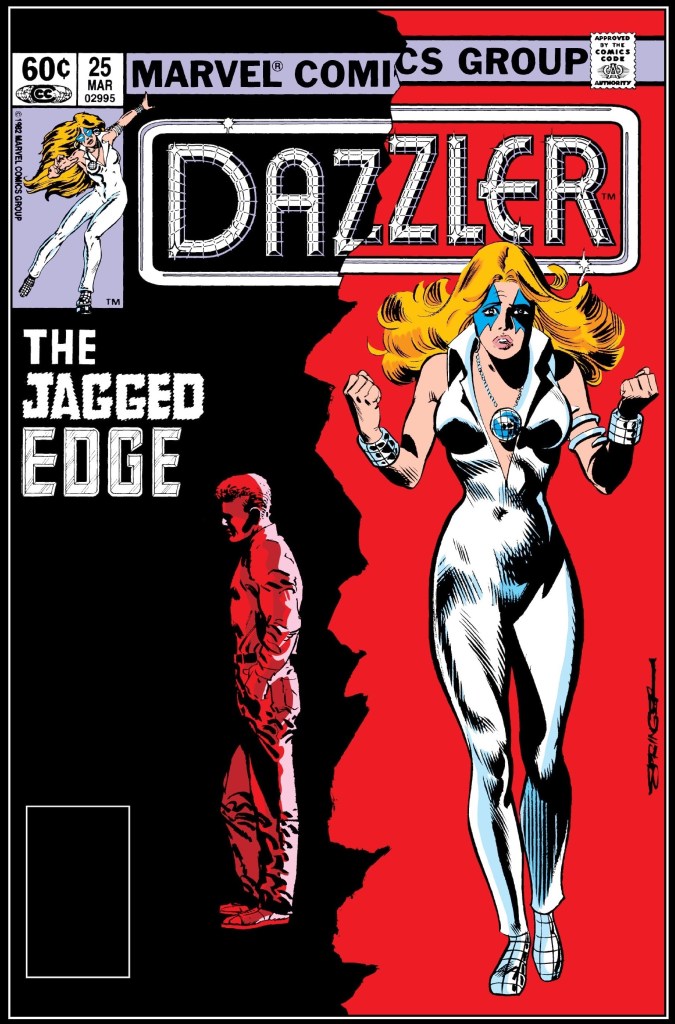
Today I have a review about the 25th issue of the Dazzler monthly series and it sure has this really strange looking cover with the protagonist in the foreground and a man in the background complete with a torn-page look. By the time this comic book was released, Dazzler had been through lots of misadventures, crazy superhero stuff as well as countless bouts of drama that impacted her and her existing family members. Could the creators come up with something to keep the series fresh and still engaging?
With those details laid down, here is a look back Dazzler #25, published by Marvel Comics in 1983 with a story written by Steve Grant and drawn by Marc Bright.
The cover.
Early story
The story begins with Alison Blaire working in front of a photographer during a photo session in the office of her manager Harry. It turns out, the photo session is a disaster for both of them. Shortly after, Alison changes her clothes and the field manager Lance arrives outside the door carrying a package for her sent by someone.
The package contained roses which delight Alison. She then reads a message that included with the roses…a message from a certain admirer. As the stakes of her entertainment career are higher than before, Alison gets advised to be extra careful with the kind of people she gets involve with.
From a distance, someone is closely watching Alison interacting with Harry and Lance using binoculars…
Quality
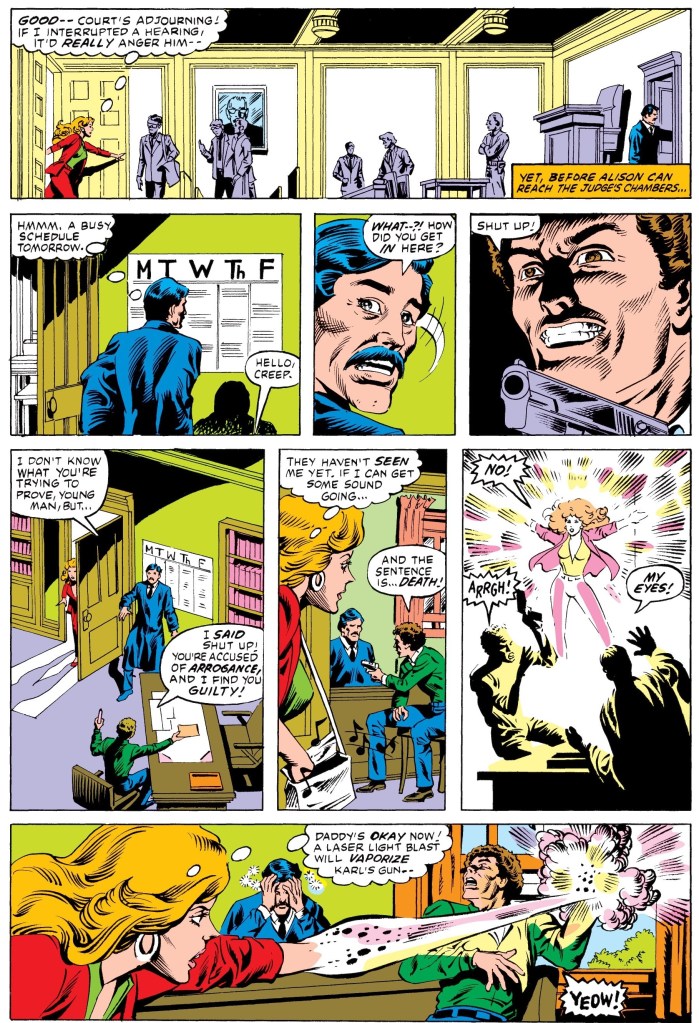
Alison in her effort to save her father.
With a new creative team doing the works, this comic book’s story was indeed an effort to shake things up for the Dazzler monthly series. It’s a tale about Dazzler encountering a fan who is more dangerous and more capable than he seems. The way the story was presented, this one was pretty light on superhero elements as the team of Steve Grant and Marc Bright decided to take a more grounded approach on telling the newest happenings in Alison Blaire’s life. In some ways, this story really felt like it was isolated from the rest of the Marvel Comics universe of the time.
While the previous issues say Alison having breakthroughs with her mother and father, as well as spending quality time with her half-sister Lois, this comic book was more about the entertainer handling herself as she encounters a very determined man who is obsessed with her. The way things were presented here, the story is pretty much character-driven but light on superhero spectacle. Lastly, I want to say that this comic book tackled the themes of personal obsession, fan madness and inner rage which were all emphasized through the new character/antagonist here.
Conclusion
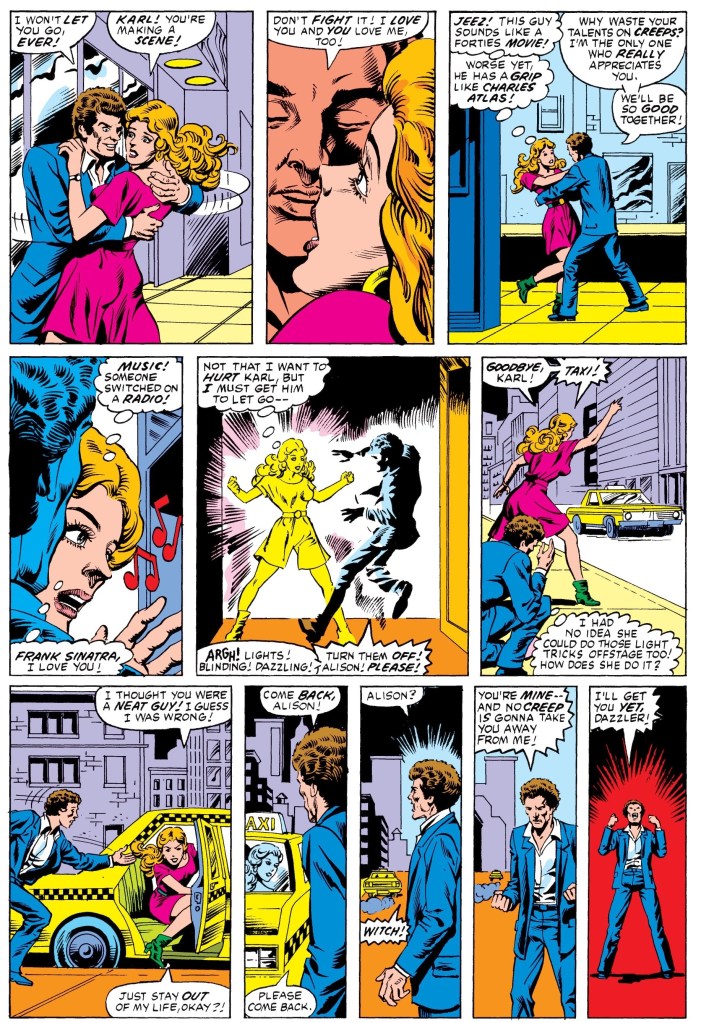
Alison in trouble.
Dazzler #25 (1983) does not have much to entertain readers who enjoy super heroics. If superhero fun is what you are after, you are better off reading issue #24. This comic book’s biggest selling point is its character-driven story which I am confident will engage strongly with die-hard Dazzler fans. The new character/antagonist introduced in this comic book is not really that strong enough to be a worthy counterpart with Dazzler, but his sheer determination and personal obsession with the entertainer are worth a look.
If you are seriously planning to buy an existing hard copy of Dazzler #25 (1983), be aware that as of this writing, MileHighComics.com shows that the near-mint copy of the regular edition costs $56 while the near-mint copy of the newsstand edition costs $113.
Overall, Dazzler #25 (1983) is satisfactory.
+++++
Thank you for reading. If you find this article engaging, please click the like button below and also please consider sharing this article to others. If you are looking for a copywriter to create content for your special project or business, check out my services and my portfolio. Feel free to contact me with a private message. Also please feel free to visit my Facebook page Author Carlo Carrasco and follow me on Twitter at @HavenorFantasy as well as on Tumblr at https://carlocarrasco.tumblr.com/
Disclaimer: This is my original work with details sourced from reading the comic book and doing personal research. Anyone who wants to use this article, in part or in whole, needs to secure first my permission and agree to cite me as the source and author. Let it be known that any unauthorized use of this article will constrain the author to pursue the remedies under R.A. No. 8293, the Revised Penal Code, and/or all applicable legal actions under the laws of the Philippines.
Welcome back superhero enthusiasts, 1990s culture enthusiasts and comic book collectors! Today we continue revisiting Jim Lee’s flagship title under the Image Comics label – WildC.A.T.S: Covert Action Teams!
In myprevious retro review of WildC.A.T.S #7, that story marked the 3rd chapter of the 4-part Killer Instinct crossover storyline which brought Jim Lee’s team together with Marc Silvestri’s Cyber Force. That storyline ended in a Cyber Force comic book which leads to the questions – what is next for WildC.A.T.S? Will there be a new and fresh storyline set up for them?
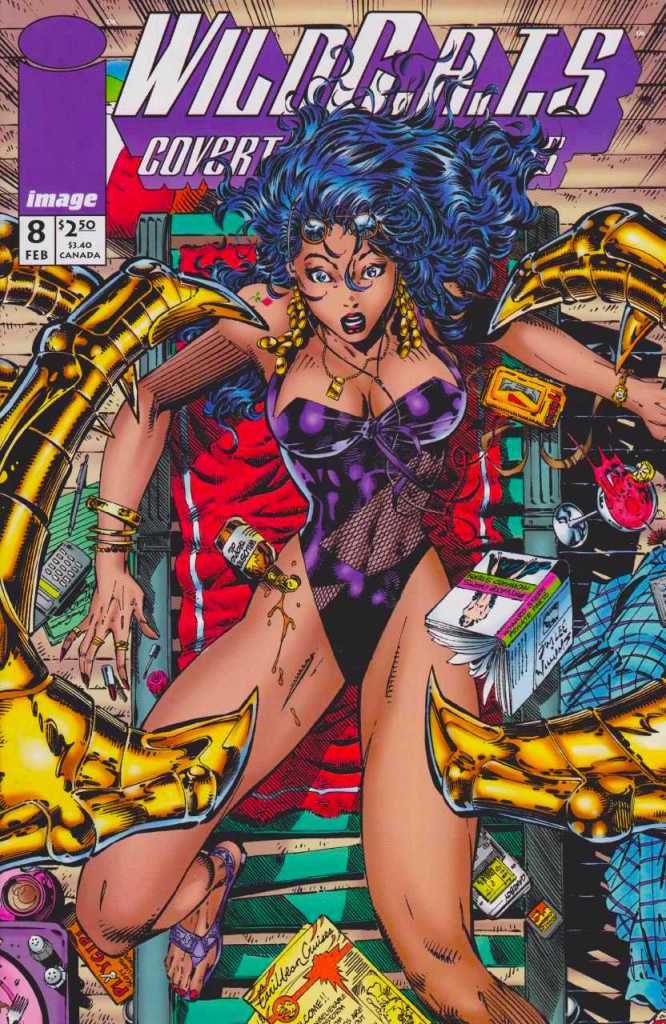
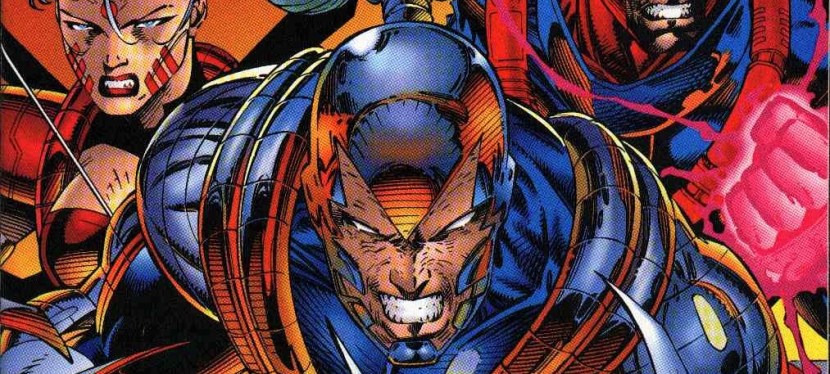
With those details laid down, here is a look back WildC.A.T.S: Covert Action Teams #8, published by Image Comics in 1994 with a story written by Brandon Choi and Jim Lee. Lee did the art along with Richard Bennett and Scott Williams.
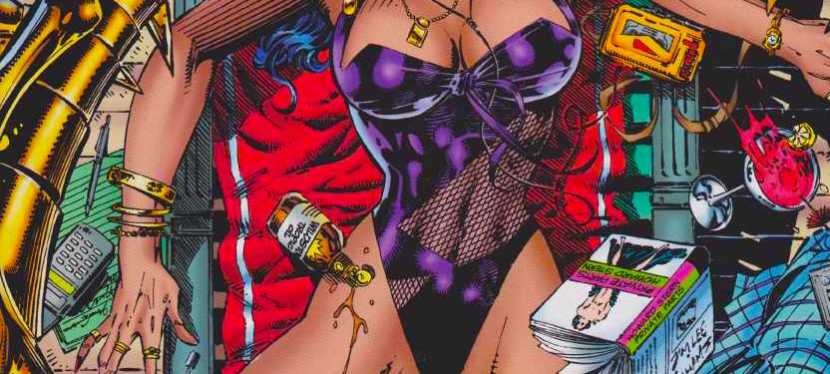
The cover.
Early story
The story begins inside a large bar within New York City where Cole Cash/Grifter and Zealot (both of them in civilian clothes) spend time together playing pool. There are men nearby staring at them. While Grifter tries to unwind and have fun with the game, Zealot still sticks to her warrior mindset even though they are no longer in a battle field. Suddenly, one man arrogantly pours beer on Grifter’s head while another man touches Zealot’s hair.
The two WildC.A.T.S members struck the two violators and subsequently made short physical work of the other men who tried to hurt them. After that, Zealot and Grifter talk outside. The latter receives an urgent message which compels him to leave Zealot behind and do something important…
Quality
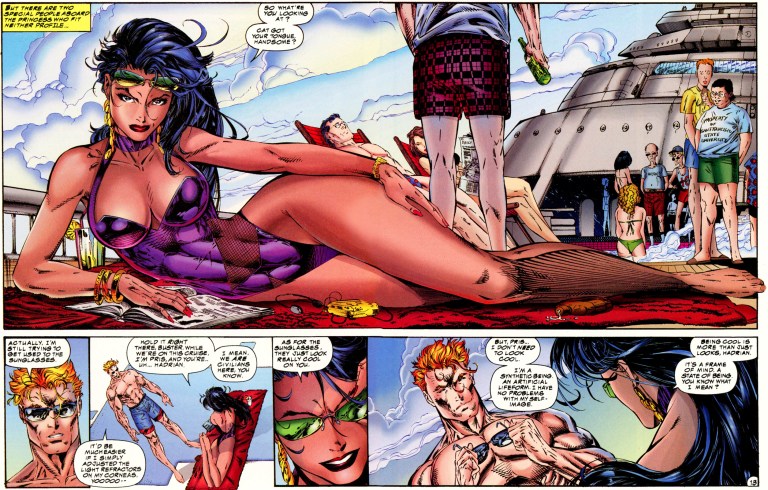
Spartan and Voodoo on holiday in their civilian forms.
I’ll be straight to the point here. If you enjoyed Jim Lee’s previous work on Marvel’s X-Men that include bombastic action, misadventures, team members appearing in swimwear and character moments, you will find that in this story which is really a transitional tale of the team taking a break from action only to find themselves facing new danger. That being said, the concept and structure of the plot in this comic book is pretty simple and it does succeed in setting up WildC.A.T.S for another misadventure while cleverly emphasizing the Kherubim-Daemonite concept of the WildStorm universe back then.
As expected, Jim Lee’s artwork here is really great to look at and he sure always finds ways to make the dialogue scenes look interesting. What stands out to me the most in this comic book are the character moments which more than made up for the lightness of the plot. While the romantic interactions between Spartan and Voodoo is interesting, the interactions between Zealot and Grifter (referred to as Brother Grifter) really gave me additional insight on their respective personalities and, more notably, their feelings for each other.
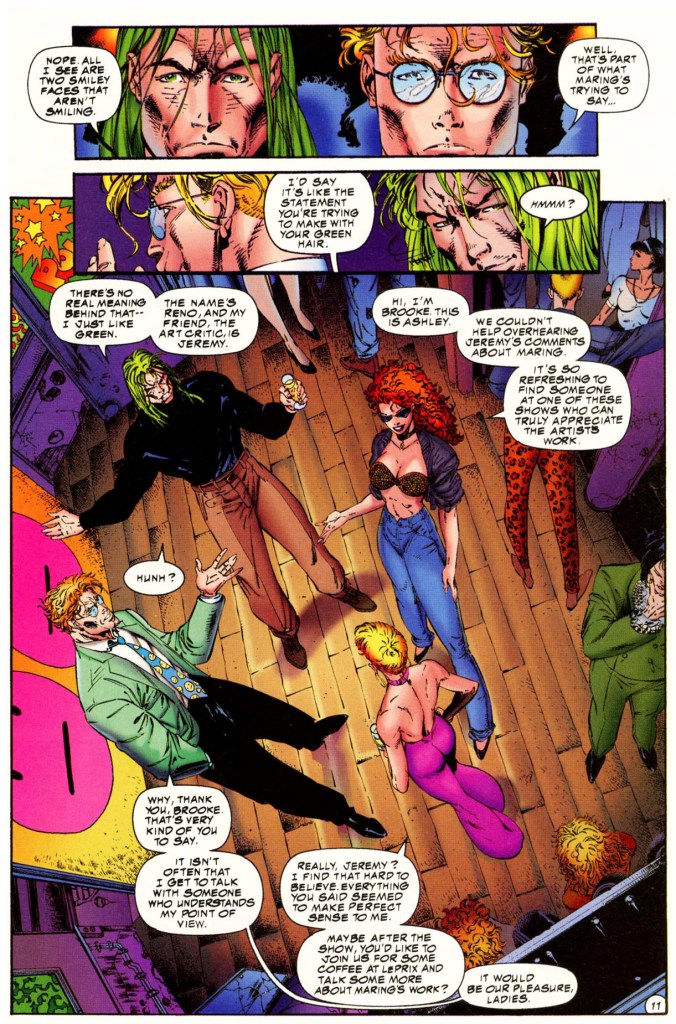
More on character moments, you will see Maul and Warblade in their respective civilian identities as Reno and Jeremy. If you only see those two as violent action performers based on the previous issues of WildC.A.T.S, you will be surprised with the way Brandon Choi and Jim Lee presented them in this story.
Conclusion
Can you recognize Maul and Warblade?
While its story was pretty light, WildC.A.T.S: Covert Action Teams #8 (1994) still manages to entertain me mainly due to the character moments that the creators came up with. In many ways, this comic book showed how human the team members are which is a nice change from all the action-focused stuff they were so busy with in the previous issues. Along the way, you will see a few creative gimmicks Jim Lee inserted visually, including the unofficial cameo appearance of two pretty notable members of X-Men (note: they just got married). Meanwhile, those who love Pris/Voodoo will find some extra entertainment here as this comic book has an additional short story about her past (set after WildC.A.T.S Trilogy #1) which was written by Peter Seagle and drawn by Travis Charest (who would later replace Jim Lee as illustrator of this comic book series).
If you are seriously planning to buy an existing hard copy of WildC.A.T.S: Covert Action Teams #8 (1994), be aware that as of this writing, MileHighComics.com shows that the near-mint copy of the regular edition costs $40 while the near-mint copy of the newsstand edition costs $120.
Overall, WildC.A.T.S: Covert Action Teams #8 (1994) is recommended.
+++++
Thank you for reading. If you find this article engaging, please click the like button below and also please consider sharing this article to others. If you are looking for a copywriter to create content for your special project or business, check out my services and my portfolio. Feel free to contact me with a private message. Also please feel free to visit my Facebook page Author Carlo Carrasco and follow me on Twitter at @HavenorFantasy as well as on Tumblr at https://carlocarrasco.tumblr.com/
Disclaimer: This is my original work with details sourced from reading the comic book and doing personal research. Anyone who wants to use this article, in part or in whole, needs to secure first my permission and agree to cite me as the source and author. Let it be known that any unauthorized use of this article will constrain the author to pursue the remedies under R.A. No. 8293, the Revised Penal Code, and/or all applicable legal actions under the laws of the Philippines.
Welcome back superhero enthusiasts, 1980s culture enthusiasts and comic book collectors! Today we go back to the year 1983 to examine the Marvel Comics universe through the exploits of Dazzler!
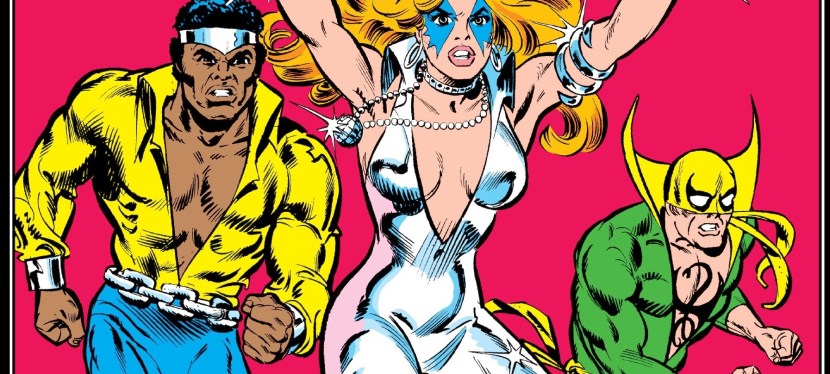
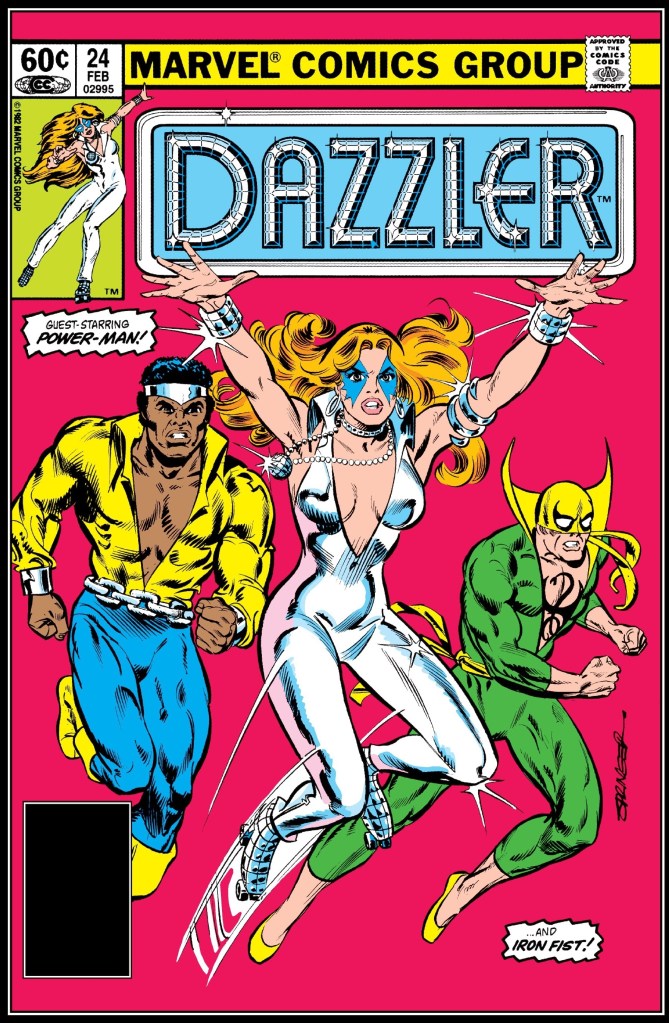
As seen in the cover of the next Dazzler comic book I reviewed, the lady has Power Man and Iron Fist with her. In short, there is a crossover within Marvel Comics’ universe just waiting to be unveiled. Who exactly will Dazzler, Power Man and Iron Fist be facing? What kind of situation are they entering into?
With those details laid down, here is a look back Dazzler #24, published by Marvel Comics in 1983 with a story written by Danny Fingeroth and drawn by the late Frank Springer.
The cover.
Early story
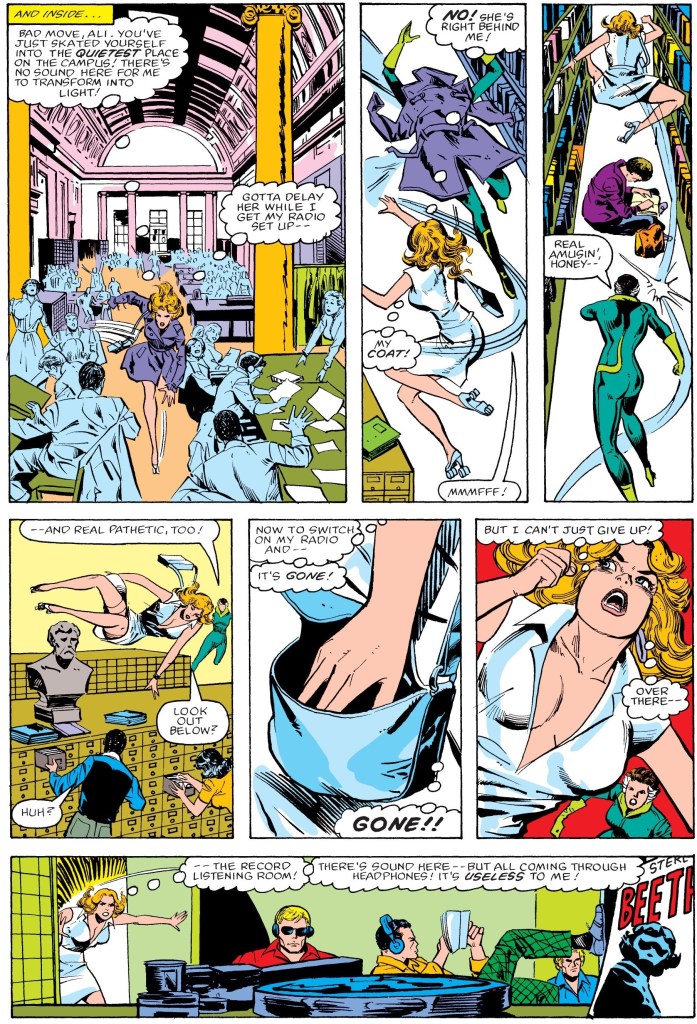
The story begins with Rogue (of the Brotherhood of Evil Mutants) breaking through the front door of the apartment of Alison Blaire who remains her target. She realizes that Dazzler is absent which is inconvenient as she believes that the singer is key in her quest to find Angel and the rest of the X-Men. Rogue makes a mess of Alison’s things in the apartment and decides to wait for her to return.
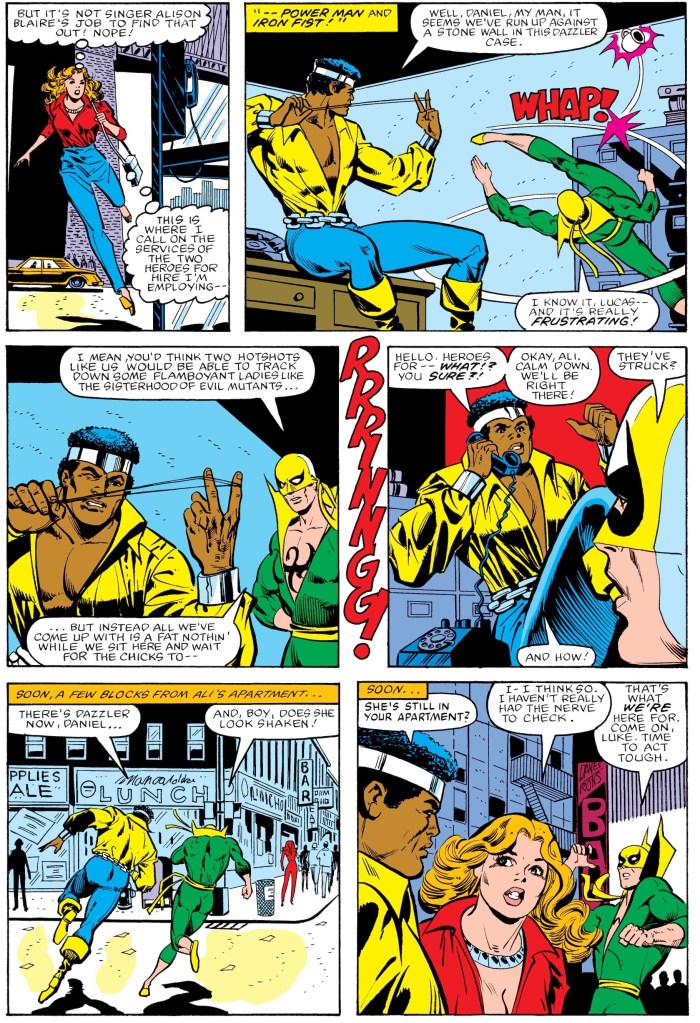
A short time later, Alison is approached by her friend Frank on her way home. He tells her that someone broke into her apartment and made a mess inside. Realizing that the trespasser is none other than Rogue (note: they encountered each other in Dazzler #22) and that she alone does not have much of a chance in fighting her, she calls Power Man and Iron Fist for their professional help…
Quality
Alison Blaire desperately getting away from Rogue.
To begin with, this is one action-packed tale of Dazzler that still manages to emphasize the development of the protagonist and her newly formed bond with her half-sister Lois (who appeared a short time before this comic book was released). As a crossover set within the Marvel Comics universe, Danny Fingeroth’s story makes mention of the X-Men as Rogue continues her quest on getting Dazzler to get to Angel in order to find Charles Xavier’s team which is all part of the Brotherhood of Evil Mutant’s lust for revenge. Along the way, readers will get to see Rogue take on Power Man and Iron Fist (note: these two met with Dazzler in Dazzler #23) which was fun to see.
More on Dazzler herself, the stakes are raised again as she not only has to survive encountering Rogue but also of the fact that the powerful Brotherhood of Evil Mutants member becomes aware of Lois. I should state that there are two encounters between Dazzler and Rogue here, and each one was entertaining to read.
Conclusion
Alison Blaire plus Power Man and Iron Fist.
Dazzler #24 (1983) is a Marvel crossover tale which the creators made to add some action-packed variety while telling the story of Dazzler. That being said, the dramatic character development that this comic book series was notable for was lightened a bit to make way for the superhero spectacle. Not only does this comic book provide readers additional insight into the duo of Power Man and Iron Fist, it also showed some development about the conflict between the X-Men and the Brotherhood of Evil Mutants. Ultimately, this is one old and fun comic book to have.
If you are seriously planning to buy an existing hard copy of Dazzler #24 (1983), be aware that as of this writing, MileHighComics.com shows that the near-mint copy of the regular edition costs $57 while the near-mint copy of the newsstand edition costs $113.
Overall, Dazzler #24 (1983) is recommended.
+++++
Thank you for reading. If you find this article engaging, please click the like button below and also please consider sharing this article to others. If you are looking for a copywriter to create content for your special project or business, check out my services and my portfolio. Feel free to contact me with a private message. Also please feel free to visit my Facebook page Author Carlo Carrasco and follow me on Twitter at @HavenorFantasy as well as on Tumblr at https://carlocarrasco.tumblr.com/
Disclaimer: This is my original work with details sourced from reading the comic book and doing personal research. Anyone who wants to use this article, in part or in whole, needs to secure first my permission and agree to cite me as the source and author. Let it be known that any unauthorized use of this article will constrain the author to pursue the remedies under R.A. No. 8293, the Revised Penal Code, and/or all applicable legal actions under the laws of the Philippines.
Welcome back superhero enthusiasts, 1980s culture enthusiasts and comic book collectors! Today we go back to the year 1981 to examine the Marvel Comics universe through the exploits of Dazzler!
Last time around, Alison Blaire was preparing herself for a big event as Dazzler. The event was something needed to help her boost her career as an entertainer and the stakes were high as there were many important guests. The weird thing was that she instead got involved with one of the most fearsome super villains of Marvel – Dr. Doom!
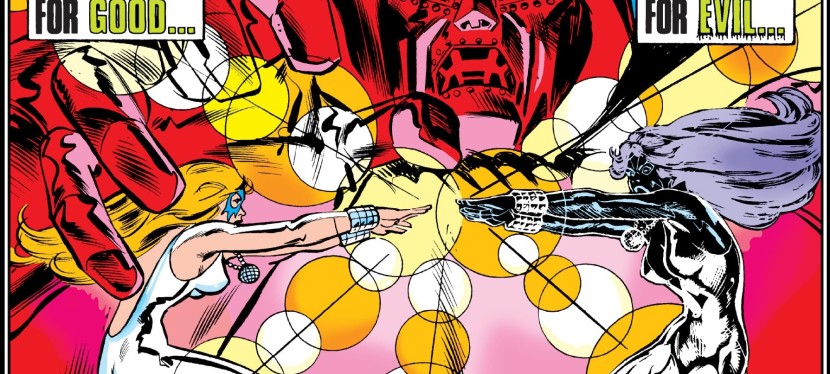
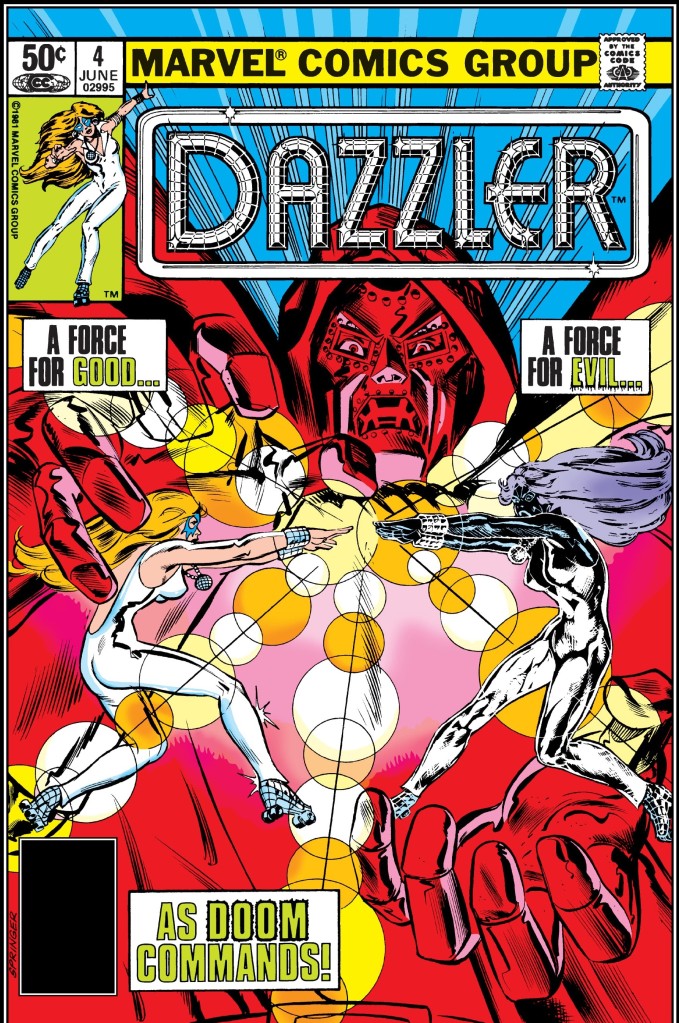
With those details laid down, here is a look back Dazzler #4, published by Marvel Comics in 1981 with a story written by Tom DeFalco and drawn by the late Frank Springer. This was Springer’s Dazzler debut.
The cover.
Early story
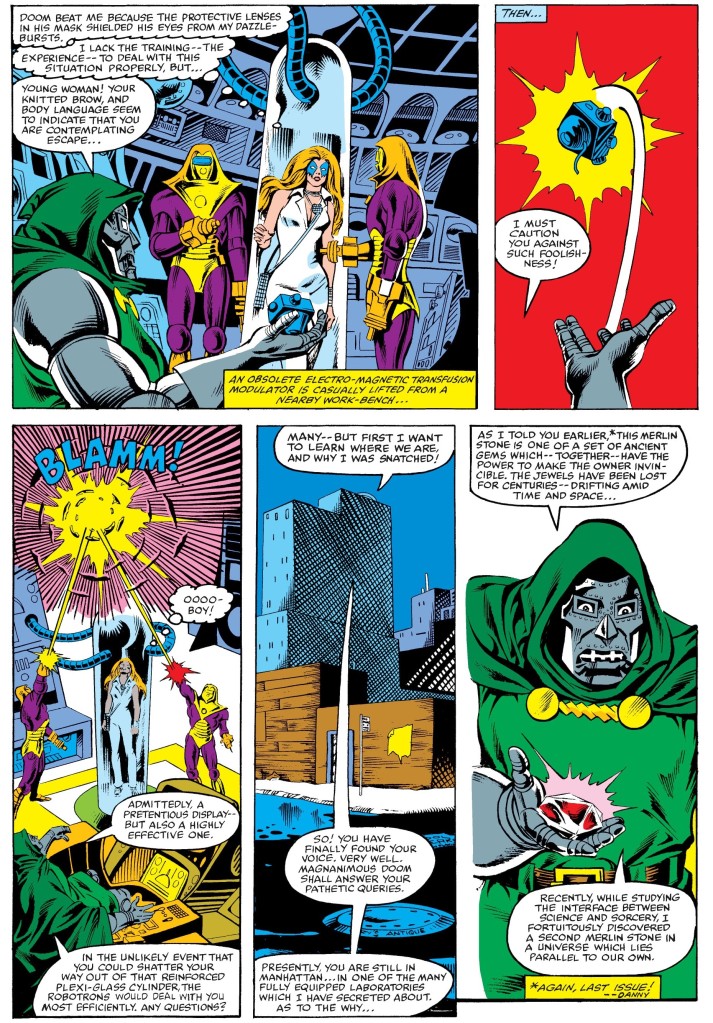
The story begins inside a secret facility. Dr. Doom tells Dazzler that the Merlin Stone he just acquired mirrors her reflections as well as his own. The said stone has unique, mystical properties that Doom believes will help him achieve his dream of domination over mankind.
Dazzler, who is trapped inside a tube and is guarded by two of Dr. Doom’s guards, tries to recover after losing consciousness a short time back. Dr. Doom expresses his observation of her special ability to convert sound into light.
Dr. Doom turns his computer on energizing the tube that contains Dazzler. She suddenly turns into energy and disappears…
Quality
Dazzler in a new dimension.
The best way to describe this comic’s story…it is one wild ride that emphasizes a different kind of fantasy for readers. This is, of course, related to Dr. Doom’s immediate quest of finding another Merlin Stone within a different dimension which directly involved Dazzler against her will.
Dazzler here was in a very wild misadventure that goes way beyond the limits of New York City. Being in a completely new dimension, she finds herself literally lost in the sea of space and encounters creatures here and there. This misadventure, however, was not written to be mindless at all. In fact, as the tale in the new dimension goes on, Dazzler was presented to be more tactical, more analytical and do things to solve problems she encountered. She also gets to use her superpower in more creative ways.
The misadventure also has key moments that test Dazzler’s resolve on a personal level. As such, these moments added to her development which also raises the stakes as to what she could potentially do once she returns back to her life. Clearly, this is a story that carefully mixes spectacle and character development without losing track of the story.
On the art of the comic book, Frank Springer’s Dazzler debut is pretty solid. Not only does he capture the look of Dazzler herself, his creative visuals really brought the dimension into life filled with images of out space, fantasy monsters and more. Apart from drawing Dazzler and Dr. Doom, Springer’s art of the Fantastic Four is pretty good to look at.
Conclusion
A helpless Dazzler in the presence of Dr. Doom.
Dazzler #4 (1981) is a fun comic book to read and as a Dazzler story, it is a worthy continuation of the events that took place in issue #3. The concept about having Dazzler under the power of Dr. Doom was nicely executed which is a very hard feat to achieve since the said super villain was known to be a major force of opposition not only against the Fantastic Four but also against Spider-Man, the X-Men and more. Dazzler’s misadventure into the other dimension was wild and yet nicely structured which led to some nice character development of hers. This comic book had a strong series start for Frank Springer who went on to draw a great majority of the issues of the Dazzler monthly series.
If you are seriously planning to buy an existing hard copy of Dazzler #4 (1981), be aware that as of this writing, MileHighComics.com shows that the near-mint copy of the regular edition costs $28 while the near-mint copy of the newsstand edition costs $60.
Overall, Dazzler #4 (1981) is recommended.
+++++
Thank you for reading. If you find this article engaging, please click the like button below and also please consider sharing this article to others. If you are looking for a copywriter to create content for your special project or business, check out my services and my portfolio. Feel free to contact me with a private message. Also please feel free to visit my Facebook page Author Carlo Carrasco and follow me on Twitter at @HavenorFantasy as well as on Tumblr at https://carlocarrasco.tumblr.com/
Disclaimer: This is my original work with details sourced from reading the comic book and doing personal research. Anyone who wants to use this article, in part or in whole, needs to secure first my permission and agree to cite me as the source and author. Let it be known that any unauthorized use of this article will constrain the author to pursue the remedies under R.A. No. 8293, the Revised Penal Code, and/or all applicable legal actions under the laws of the Philippines.
Welcome back superhero enthusiasts, 1990s culture enthusiasts and comic book collectors! Today we revisit the early days of Image Comics through Jim Lee’s WildC.A.T.S: Covert Action Teams comic book franchise which was one of the launch titles of the said company.
Last time around, I reviewed the third issue of the WildC.A.T.S mini-series and its quality was good enough for me. Other than the visual candies delivered by Jim Lee, WildC.A.T.S: Covert Action Teams #3 featured a crossover with Rob Liefeld’s very own Youngblood which was really surprising and intriguing back in those times.
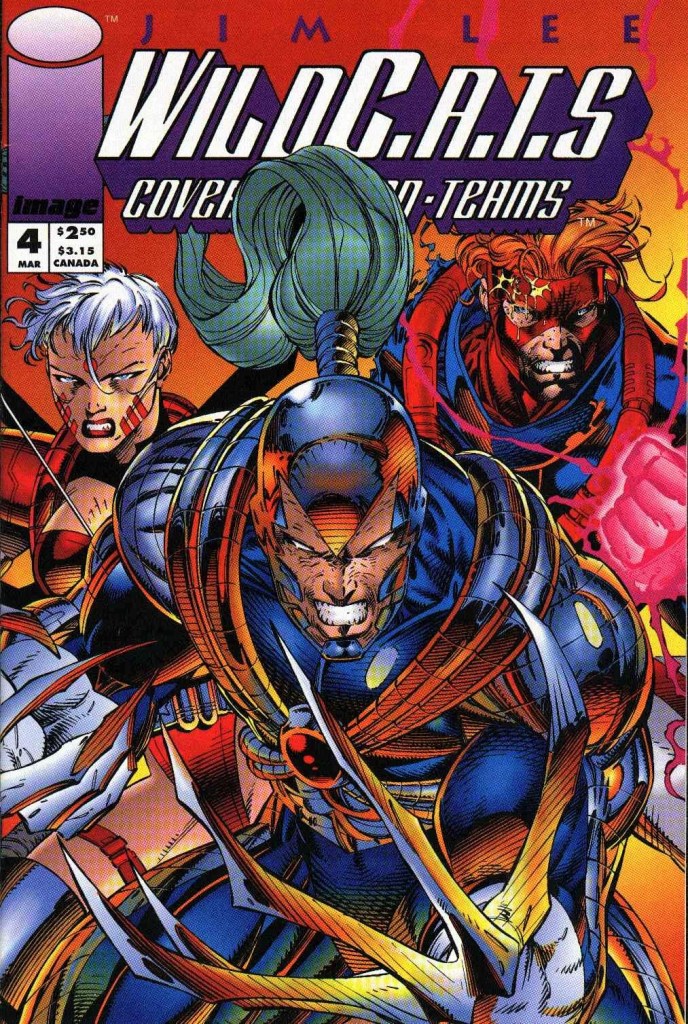
With those details laid down, here is a look back at the final issue of the mini-series…WildC.A.T.S: Covert Action Teams #4, published by Image Comics through Malibu Comics in 1993 with a story written by Brandon Choi and Jim Lee. Lee did the art.
Jim Lee drew this cover very similarly to his cover art work on X-Men #4 (1992).
Early story
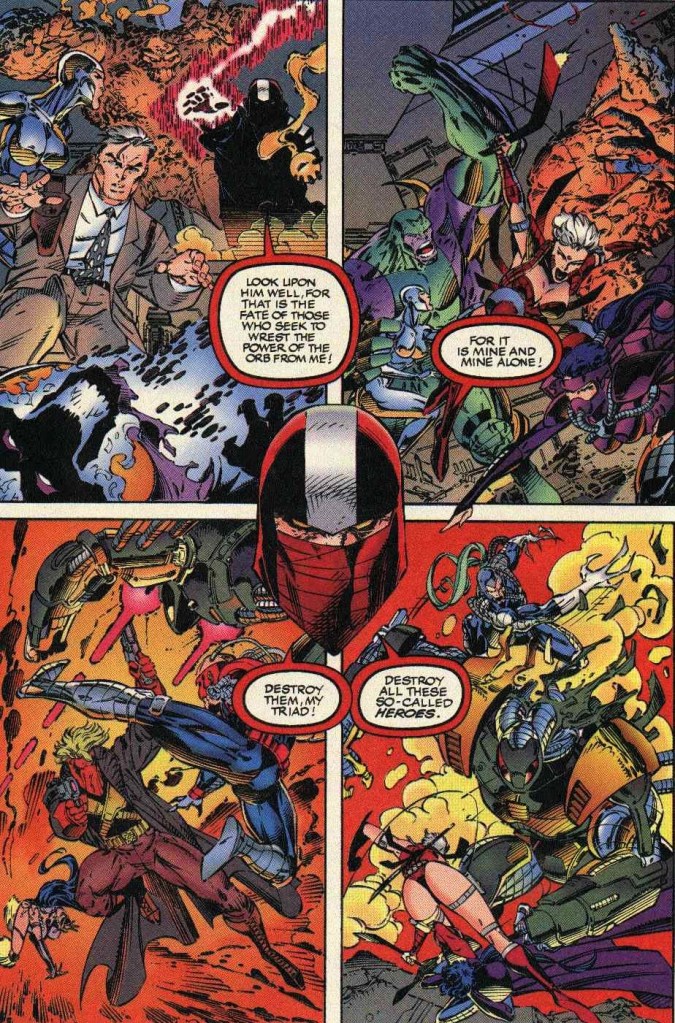
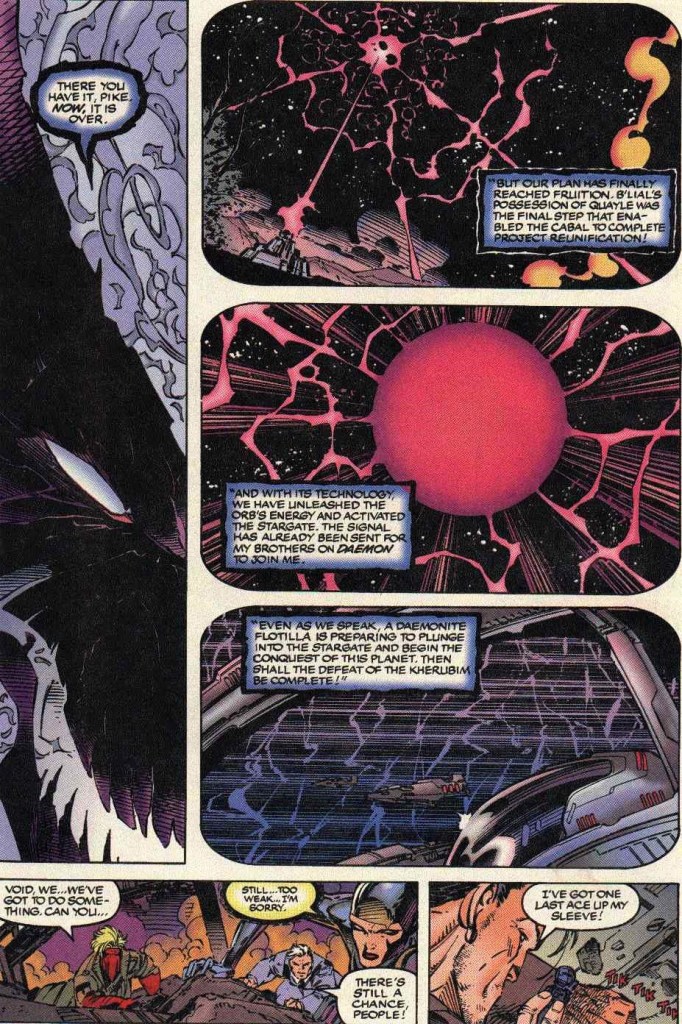
The story begins with Helspont already declaring victory as well as the beginning of his operation called Reunification which involves the use of the orb to activate a stargate which would allow his brethren of Daemonites to come to Earth to not only overwhelm the Kherubim but also to conquer the whole world. In his presence are two of his deadly companies standing with him and certain members of WildC.A.T.S – including their leader Jacob Marlowe – who are down on the rough surface having been hit hard moments earlier.
Suddenly a group composed of the six Youngblood members, Vice President Dan Quayle and WildC.A.T.S’ members Voodoo and Maul approach Helspont and his companions in an attempt to make them surrender.
As Voodoo realizes her power does not affect Helspont, the vicious Daemonite strikes the group with an energy blast aided by the orb and the high technology of the place. As this happens, Grift, Void and Jacob slowly make their moves. Jacob uses his communicator to send a signal to the heavily damaged Spartan…
Quality
WildC.A.T.S face strong opposition from the Gnome and his dangerous companions.
As the final tale of the mini-series, I can say that the script made for this comic book is a pretty satisfying read from start to finish. Like in issue #3, the pace here moves fast and there is a lot of spectacle that got executed while never overwhelming its narrative. More on the narrative, the conflict between the Kherubim and Daemonites is strongly symbolized by the WildC.A.T.S and Helspont’s forces going head to head. There are some pretty notable character moments that added to the fun factor such as Jacob sarcastically telling Helspont he could not access the back-up systems for his dreaded operation to bring the Daemonites to Earth.
Of course, this is not simply a WildC.A.T.S versus Helspont story in the good-versus-evil type of way. Apart from the inclusion of Rob Liefeld’s Youngblood, there is also the other dangerous party led by the Gnome who also have a strong interest in the orb. While their participation in the story happens pretty late, they do provide serious opposition against Jacob Marlowe and his team.
As mentioned earlier, there is a lot of action that expresses the intensity of the conflicts. While there is almost no room left for any real character development, the creators managed to craft a story that never felt brainless or unintelligent. As such, there is a lot of entertaining stuff to enjoy here and I personally find the establishment of WildC.A.T.S’ core concept to be solid and worth following.
Conclusion
As Helspont emphasizes his evil plan, Jacob Marlowe makes his move.
WildC.A.T.S: Covert Action Teams #4 (1993) is a not just a fun comic book to read. It is also a worthy conclusion to its mini-series and also it succeeded in establishing the WildC.A.T.S as both Jim Lee’s passion project and as one of the most worthy early titles of Image Comics. By the time I reached the end of this comic book, it became clear to me back in 1993 that Jim Lee was moving forward to a new territory on superhero comic book creations leaving behind his legacy with Marvel and their X-Men franchise. While this comic book ended the 4-issue mini-series, the funny thing was that Jim Lee and his team went on to start a regular comic book series of WildC.A.T.S: Covert Action Teams by actually publishing issue #5 (in late 1993) instead of starting with a brand new issue #1.
If you are seriously planning to buy an existing hard copy of WildC.A.T.S: Covert Action Teams #4 (1993), be aware that as of this writing, MileHighComics.com shows that the near-mint copy of the regular edition costs $20 while the near-mint copies of newsstand edition (without card) and the numbered-and-signed edition cost $48 and $160 respectively.
Overall, WildC.A.T.S: Covert Action Teams #4 (1993) is recommended.
+++++
Thank you for reading. If you find this article engaging, please click the like button below and also please consider sharing this article to others. If you are looking for a copywriter to create content for your special project or business, check out my services and my portfolio. Feel free to contact me with a private message. Also please feel free to visit my Facebook page Author Carlo Carrasco and follow me on Twitter at @HavenorFantasy as well as on Tumblr at https://carlocarrasco.tumblr.com/
Disclaimer: This is my original work with details sourced from reading the comic book and doing personal research. Anyone who wants to use this article, in part or in whole, needs to secure first my permission and agree to cite me as the source and author. Let it be known that any unauthorized use of this article will constrain the author to pursue the remedies under R.A. No. 8293, the Revised Penal Code, and/or all applicable legal actions under the laws of the Philippines.
Welcome back, superhero enthusiasts, 1990s culture enthusiasts, and comic book collectors! Today we revisit the world of 2099 within the universe of Marvel Comics back in the 1990s, specifically through the Spider-Man 2099 monthly series.
Today we will look back at the sixth issue of Spider-Man 2099. Previously, Spider-Man struggled long and hard with the Japanese agent called the Specialist not knowing that they are being monitored by powerful forces behind the scenes. As Alchemax’s Tyler Stone wanted Spider-Man, something unexpected happened before issue #5 ended.
With those details laid down, here is a look back at Spider-Man 2099 #6, published in 1993 by Marvel Comics with a story written by Peter David and drawn by Ricky Leonardi.
The cover.
Early story
The story begins in downtown New York which is the historic and original section of the city located far below the modern-day society and its skyscrapers (referred to as Uptown). Lots of people are living in poverty in downtown New York and even so they are not spared by people who claim to have authority over them as public service personnel. A woman and her child got approached by two men who believe that the mother is two months behind her security payments.
As the physical struggle between them went on, they all found themselves close to a dead end with a pile of trash located on it. Suddenly, a human arm comes out pushing the trash out of the way which stuns them all. Spider-Man then emerges and asks for help…
Quality
Spider-Man of 2099 is so weak and vulnerable, he could not even swing his way around and has to take a ride in downtown New York City.
If there is anything clear about this comic book, it is the fact that Peter David portrayed the futuristic Spider-Man as not only struggling for survival but also as a fugitive complete with a brand-new physical environment which is a dark, far futuristic vision of 20th century New York City. The good news is that David succeeded with what he executed and to say the least, this story has a completely different feel compared to issues #2, #3, #4 and #5.
On Spider-Man, the protagonist was shown to be very vulnerable. His fall from uptown to downtown really wrecked his health and due to the genetic modifications that happened to Miguel O’Hara in issue #1, his above-normal (albeit slow) recovery and strength to even move out the medical facility while being injured are justified creatively. Spider-Man being hunted together by Private Eye and their downtown counterparts (note: there is a clash of cultures and attitudes between them which was nicely dramatized) adds a new layer of suspense mixed with tension which easily reminds me of the fact that the futuristic web-slinger is just a worm within the futuristic and oppressive society of New York in 2099 under Alchemax (note: clearly anti-corporatism is a key element of Marvel 2099 which can be deceiving and misleading to readers, especially those who are vulnerable to the lies and deception of socialists, Marxists, Communists, liberals and other elements of the Satanic Left).
As expected, Peter David further dramatized relationships or connections between the supporting characters. He further spiced up the script with the gradual first appearance of a key 2099 villain for Spider-Man to face off with. I won’t reveal which villain is that and I encourage you to find out by reading this comic book.
Conclusion
Early in the comic book.
Spider-Man 2099 #6 (1993) is fun and compelling to read. What makes it compelling is the creative way the author changed the mood of the story as it shifted into downtown New York of 2099 filled with poverty, darkness and hopeless living. Spider-Man as a fugitive here is similar yet different enough compared to how local authorities perceive the classic Spider-Man/Peter Parker. At this point of the monthly series, Spider-Man of 2099 is shown to be very vulnerable and Miguel O’Hara finally becomes desperate not just to survive but also get back home somehow.
If you are seriously planning to buy an existing hard copy of Spider-Man 2099 #6 (1993) be aware that as of this writing, MileHighComics.com shows that the near-mint copy of the regular edition costs $30 while the near-mint copy of the newsstand edition costs $90.
Overall, Spider-Man 2099 #6 (1993) is recommended.
+++++
Thank you for reading. If you find this article engaging, please click the like button below and also please consider sharing this article to others. If you are looking for a copywriter to create content for your special project or business, check out my services and my portfolio. Feel free to contact me with a private message. Also please feel free to visit my Facebook page Author Carlo Carrasco and follow me on Twitter at @HavenorFantasy as well as on Tumblr at https://carlocarrasco.tumblr.com/
Disclaimer: This is my original work with details sourced from reading the comic book and doing personal research. Anyone who wants to use this article, in part or in whole, needs to secure first my permission and agree to cite me as the source and author. Let it be known that any unauthorized use of this article will constrain the author to pursue the remedies under R.A. No. 8293, the Revised Penal Code, and/or all applicable legal actions under the laws of the Philippines.
Welcome back superhero enthusiasts, 1990s culture enthusiasts and comic book collectors! Today we revisit the future of 2099 through the Punisher 2099 monthly series.
For the newcomers reading this, Punisher of 2099 is Jake Gallows who works during the day as a law enforcer which is a nice contrast to the concept of the classic Punisher identified as Frank Castle. In Punisher 2099 #1 (1993), Jake Gallows witnesses the demise of his family that got attacked by a gang of killers led by Kron Stone who is not only the son of Alchemax’s Tyler Stone but also became the deadliest nemesis of Spider-Man 2099.
With those details laid down, here is a look back at Punisher 2099 #2, published by Marvel Comics in 1993 with a story written by Pat Mills and Tony Skinner, with art by Tom Morgan.
The cover.
Early story
The story begins with a funeral of Jake Gallows’ lost family members held at the church of Thor. In accordance to the traditions of the Thor religion, the dead bodies were placed on a burning boat floating on the water just outside the church building. As he and his fellow law enforcers watch the ritual happen, Jake confirms that he and the church of Thor do not believe in forgiveness and he himself believes in revenge.
When he is not on duty, Jake goes out as the Punisher hunting and killing criminals in his own brutal ways. Even as he does not wear a mask nor a helmet, his face is digitally covered from detection of security cameras thanks to a special technology he uses to protect his identity.
Meanwhile at an amusement park, lots of children enjoy floating in the air within an anti-gravity chamber. Kron Stone and his fellow killers arrive as they attempt to murder the children. Punisher suddenly comes out and successfully kills Stone’s companions, leaving them together in a standoff…
Quality
The Punisher has someone assisting him.
While the sub-par issue #1 was composed mostly of the build-up and emphasis of the futuristic Punisher, this story is pretty much a big pay-off to it. Quite predictably, Jake gets to meet with the gang leader responsible for the death of his family in this issue not once but twice. Along the way, the comic book writers got to emphasize Kron Stone’s wickedness more as well as his continued disregard of human life. This time, Stone’s willingness to kill many children is very disturbing and Tom Morgan’s art style clearly emphasized the villain’s evil.
Within this comic book is a visual tour of the Gallows residence which has a large underground facility and pieces of technology that Jake uses for his campaign against crime (this makes Punisher 2099 becoming similar with Batman and his Bat Cave). He also has a technology oriented partner named Matt who helps him establish a working base of operations.
There is also a sub-plot about the side of crime with the introduction of the Fearmaster who, like Tyler Stone, is with Alchemax and has influence over Public Eye. Unsurprisingly, his introduction is short.
Conclusion
Jake Gallows and Kron Stone (AKA Venom 2099) meet again, only this time the former is now in his form as the Punisher.
The best way to describe Punisher 2099 #2 (1993) is that its plot really thickened and unlike issue #1, this one has a more interesting story and the presentation done by the creative team has some entertainment value. While this is unsurprisingly the natural progression of defining the futuristic Punisher to readers, it is also a successful way of expanding his own part of the 2099 universe complete with the introduction of a new villain and conspiracy that connects to both criminals and law enforcers. To be clear, this is far from being an excellent comic book but it is clear that this one is an improvement over issue #1. In retrospect, the one thing that adds weight to this comic book is not Punisher himself nor the creative concepts involved, but rather the presence of Kron Stone who later on became Venom 2099 (read my retro reviews involving him in Spider-Man 2099 issues #35, #36, #37, #38 and #39).
If you are seriously planning to buy an existing hard copy of Punisher 2099 #2 (1993) be aware that as of this writing, MileHighComics.com shows that the near-mint copy of the regular edition costs $90 while the near-mint copy of the newsstand edition costs $200.
Overall, Punisher 2099 #2 (1993) is satisfactory.
+++++
Thank you for reading. If you find this article engaging, please click the like button below and also please consider sharing this article to others. If you are looking for a copywriter to create content for your special project or business, check out my services and my portfolio. Feel free to contact me with a private message. Also please feel free to visit my Facebook page Author Carlo Carrasco and follow me on Twitter at @HavenorFantasy as well as on Tumblr at https://carlocarrasco.tumblr.com/
Disclaimer: This is my original work with details sourced from reading the comic book and doing personal research. Anyone who wants to use this article, in part or in whole, needs to secure first my permission and agree to cite me as the source and author. Let it be known that any unauthorized use of this article will constrain the author to pursue the remedies under R.A. No. 8293, the Revised Penal Code, and/or all applicable legal actions under the laws of the Philippines.
Welcome back superhero enthusiasts, 1990s culture enthusiasts and comic book collectors! Today we revisit the future of 2099 through the Spider-Man 2099 comic book series of the 1990s.
Last time around, Miguel O’Hara/Spider-Man found himself in a very tricky situation as he found himself in confrontation with the Specialist while making sure that Kasey Nash (the lady who is involved with Miguel’s brother Gabriel) is safe. It should be noted that at this particular point of time, Spider-Man is still adjusting to his special abilities and he also has deal with matters over his work at Alchemax in his civilian form.
With those details laid down, here is a look back at Spider-Man 2099 #5, published by Marvel Comics in 1993 with a story written by Peter David and drawn by Rick Leonardi.
The cover.
Early story
The story begins with a weakened Spider-Man who mask is being held by the sword-wielding Specialist. As soon as the Specialist realized that the mask can’t be pulled off easily, Spider-Man scratches his body with talons and gained some distance away from him enabling him to wear his mask properly.
Meanwhile inside the facility of Alchemax, Tyler Stone watches the conflict between Spider-Man the Specialist recorded live by cameras. He orders his assistant to interrupt the scheduled programming of Private Eye and direct the live feed of the fight to the entire city. Stone orders him to alert Private Eye’s personnel.
Stone specifically wants Private Eye’s armed members to converge at the fight of Spider-Man and the Specialist, but states that no apprehension will be done. Stone has something in mind for Spider-Man…
Quality
The battle between Spider-Man 2099 and the Specialist was viewed by Alchemax.
What started in issue #4, this comic book expanded greatly without letting the narrative turning dull. The fight between Spider-Man and the Specialist pretty much dominates the majority of the story, and yet Peter David successfully told stories about Kasey Nash and Gabriel O’Hara while giving readers an inside look at Alchemax and its control on society. In addition, the futuristic Stark-Fujikawa corporation was given its own spotlight in the story complete with their own connection with the Specialist.
As the universe of 2099 was further emphasized, Spider-Man got developed further as an action performer. The more Miguel used his special abilities, the more he becomes proficient not only with fighting but also with defensive moves aided by enhanced reflexes. It was also here where Spider-Man gets to use his organic web a lot more which really challenged his opponent from Stark-Fujikawa.
More the narrative, I like the way Peter David raised the stakes and intrigue all throughout. Not only will you get to see Kasey Nash, Alchemax and Stark-Fujikawa perceive the battle, there is also a short and yet intriguing scene of Gabriel O’Hara with a certain lady who would later become a crucial part of the Venom 2099 storyline (read my reviews of issues #35, #36 and #37). I should state that the battle between Spider-Man and the Specialist built up the tension for the impactful moment very near the end of the story, and that is something you must see.
Conclusion
Spider-Man reacts with his reflex and talons.
Spider-Man 2099 #5 (1993) another compelling and enjoyable read from the team of Peter David and Rick Leonardi. The stakes were really raised high in the story complete with giving the reader a greater view of the 2099 New York society under the control of Alchemax and Spider-Man himself is just a small part of it who happens to stand out among all the people because of his special abilities. Clearly, the series at this point moved swiftly from the superhero origin stage into the dangerous society of the far future.
If you are seriously planning to buy an existing hard copy of Spider-Man 2099 #5 (1993) be aware that as of this writing, MileHighComics.com shows that the near-mint copy of the regular edition costs $60 while the near-mint copy of the newsstand edition costs $180.
Overall, Spider-Man 2099 #5 (1993) is recommended.
+++++
Thank you for reading. If you find this article engaging, please click the like button below and also please consider sharing this article to others. If you are looking for a copywriter to create content for your special project or business, check out my services and my portfolio. Feel free to contact me with a private message. Also please feel free to visit my Facebook page Author Carlo Carrasco and follow me on Twitter at @HavenorFantasy as well as on Tumblr at https://carlocarrasco.tumblr.com/
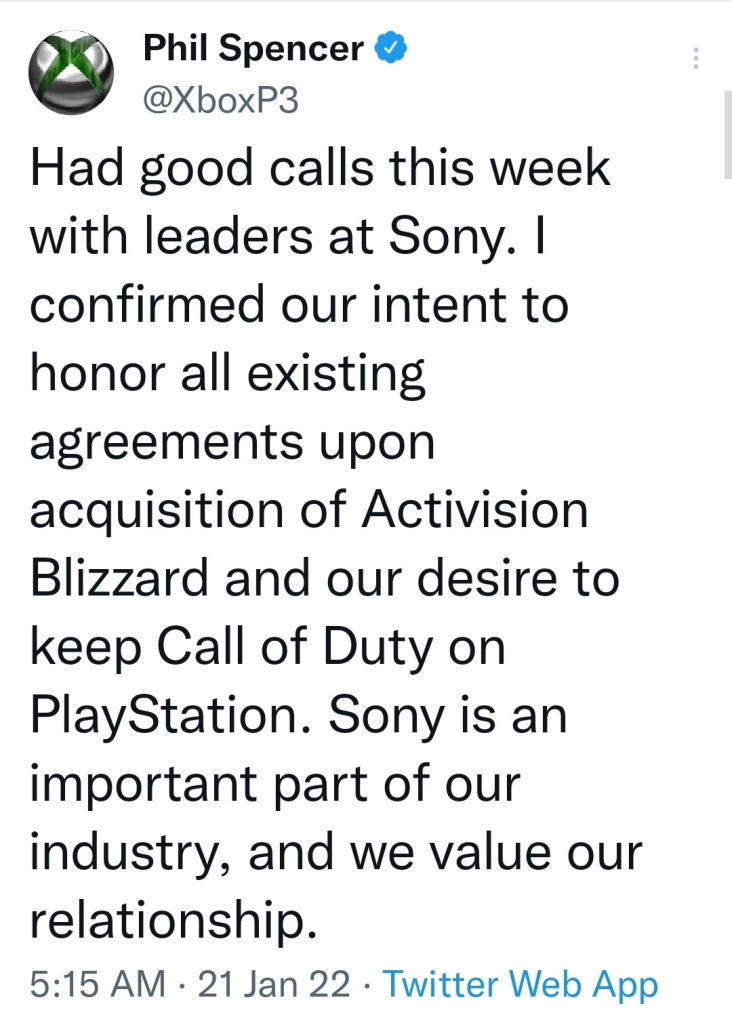
Take note of Spencer’s words “existing agreements” and “our desire to keep Call of Duty on PlayStation.” Existing agreements most likely refer to what Activision Blizzard made with Sony which I believe are years-long deals on games with regards to platform releases, marketing, post-release downloadable content, etc. Of course, such agreements can last long but NOT FOREVER. The business benefit for PlayStation from Activision Blizzard will someday come to an end.
As for Microsoft’s desire for keeping Call of Duty on PlayStation, that clearly means that the corporation of Xbox is technically in-charge of not just the COD franchise but on the decision making, marketing and releasing its games on specific platforms. Sony and its PlayStation team are not in the driver’s seat here anymore. Whatever deals Activision signed with PlayStation before the acquisition will expire and they certainly will not be renewed once Microsoft and its Xbox team takes over. In due time, future COD games as well as other upcoming games and new intellectual properties of Activision Blizzard will become Xbox-exclusive in accordance to what Spencer declared before…
“We have games that exist on other platforms, and we’re going to support those games on the platforms they’re on. There are communities of players. We love those communities and will continue to invest in them. And even in the future, there might be things that have either contractual things, or legacy on different platforms, that we’ll go do. But if you’re an Xbox customer, the thing I want you to know is this is about delivering great exclusive games for you that ship on platforms where Game Pass exists, and that’s our goal, that’s why we are doing this,”
This brings me to my next point – Sony as a global business entity is way behind Microsoft, Apple, Google and Amazon when it comes to establishing ecosystems that result tremendous business growth and reaching billions of customers worldwide respectively. The decades-old console-focused approach by Sony with PlayStation was indeed successful but not great enough to help it grow big time. Not even their Hollywood business nor Spider-Man could lift them up greatly. The weird thing was that Sony in previous decades had established an old ecosystem before PlayStation began.
To put things in perspective, posted below is a long excerpt from a recent Nikkei Asia article. Some parts in boldface…
The 10% drop in Sony’s stock price this week following Microsoft’s announcement that it will buy game content developer Activision Blizzard shows the market has belatedly awakened to an existential flaw in Sony’s kingdom. It lacks an ecosystem.
In terrifying contrast, Microsoft is a formidable ecosystem whose component elements, such as devices, operating system, browser, search engine, applications, content, cloud memory, work hand in glove to suck in captive users and never let them go. The ecosystem effect is all too familiar to owners of PCs that run on the Windows OS, which maddeningly redirects users to Microsoft’s Edge browser and Bing search engine against their will.
It is no accident that five of the world’s seven largest companies by market capitalization — Apple, Microsoft, Alphabet/Google, Amazon and Meta/Facebook — are ecosystems. Every consumer decision to buy a device, be it a PC, smartphone, Kindle reader, or game console, entails a surrender to an interconnected ecosystem. Promiscuity among ecosystems is possible but, by design, not easy. The ecosystems are at war and want to make you their captive.
Ironically, Sony was early to recognize the strategic significance of the ecosystem effect. Its decision to acquire CBS Records and Columbia Pictures in the late 1980s was inspired by the notion that controlling entertainment content could somehow push device sales, such as Betamax VCRs and Sony Walkman.
What Sony overlooked was that it would be self-defeating to make its controlled content exclusively available on Sony devices. Very few consumers would buy a Walkman just because it was the only way to listen to Michael Jackson. And Sony’s refusal to license Michael Jackson to non-Sony device users would perversely shut down third-party royalty revenue from the controlled content. Sony saw, but misunderstood and misapplied, the ecosystem effect between devices and content.
Sony’s next, more costly, wrong turn was its failure to anticipate and keep up with the morphing of portable audio devices like the Walkman launched in 1979 and iPod in 2001 into the iPhone debuted in 2007. The iPhone integrated, in a single handheld device, all of the functions formerly provided by the multiple discrete products in Sony’s consumer electronics lineup: phone, TV, camera, video and audio player and recorder, clock, calculator, and so on.
Sony’s stock price plunged from 30,000 yen ($260) per share in 2000 to 1,668 yen in 2009. Sony and the entire Japanese consumer electronics industry are still in disarray from the iPhone paradigm shift.
Unlike Sony, Apple founder Steve Jobs was a master at creating and orchestrating an ecosystem. In particular, he understood when to link content exclusively to a device and, just as important, when not to. Even now, Apple’s iOS is available only on Apple devices, unlike Microsoft’s device-agnostic Windows OS.Initially, Apple’s iTunes music store platform was available only on Apple’s own devices. Then, in October 2003, “the day that hell froze over,” Jobs made the strategic decision to make iTunes compatible with and freely downloadable by non-Apple devices.
The result was not only to massively increase the audience and revenues of the iTunes platform. Non-Apple device users discovered how great iTunes was and that it worked even better on an iPod, leading to a surge in new iPod owners conveniently prepped for the coming transfiguration of the iPod into the iPhone.
The same interplay between devices and content is at the center of intense competition in the $180 billion global PC gaming industry. Dedicated gamers have a choice among three game-specific consoles — Microsoft’s Xbox, Sony’s PlayStation and Nintendo’s Switch.
The choice of device, in turn, entails a menu of device-specific exclusive content. Xbox and PlayStation each offer about 2,000 titles, but the bestselling 200-300 games for each tend to be exclusive to one or the other. A gamer’s choice of console implies a decision about preferred content.
But the relationship between game devices and content is evolving rapidly, tracking changes elsewhere in the internet universe. Games today can be played on any device, PCs and smartphones, not just a dedicated game console.
Gaming is now mobile. Game content is increasingly being streamed, just like Netflix and Amazon Prime. You can play games on YouTube. And an Xbox can be used as a PC to surf the Internet and do your homework.
The immediate threat to Sony posed by Microsoft’s acquisition of Activision Blizzard is that Microsoft will make the content it is acquiring — global blockbusters like Call of Duty and World of Warcraft — exclusive to Xbox users and invite defections from PlayStation users who want to keep playing their favorite games.
But this is just one element of the multifaceted ecosystem effects Microsoft can deploy to squeeze Sony. Sony should be nervous, for example, that it has no cloud or streaming capability of its own and relies on Microsoft’s own Azure platform to deliver streaming content to Sony users.
Sony’s game and network services segment now accounts for 30% of its revenues. It is hard to see how Sony can compete in the long-term in a narrow game-specific segment without credibly competing with the likes of Microsoft, Alphabet/Google and Amazon across the board in all segments of the device-content spectrum.
From a financial point of view, Sony is not only behind the tech giants with ecosystems. Sony simply does not have the major financial muscle needed to pull off massive acquisitions of game publishers (massive meaning more than $5 billion per each acquisition) that each have lots of game developers, intellectual properties and technologies. The Japanese giant does have a business ecosystem but it’s too small and too narrow compared to its Western competitors. This also means Sony reaches much less customers worldwide.
In a possible response to Xbox-Activision-Blizzard deal, Sony can try to acquire its fellow Japanese gaming entities like Capcom, SEGA or Square Enix and integrate the entity(s) into PlayStation, but that will require not just a whole bunch of money but also willingness to not just make big offers the other party cannot turn down, but also the willingness to overcome all the legal obstacles, solve all the complications, absorb all the employees, fund future projects already in development, etc. If the PlayStation team is willing on building up its very own exclusive properties, they could expand the work forces as well as the projects of their very own game studios.
The Xbox-Activision-Blizzard deal is very hard to match not just because of the financial value and organizational weights involved, but also because the said deal covers consoles, Windows PC, mobile devices, cloud gaming, browser gaming and much more. The PlayStation ecosystem is still console-focused and so far team PlayStation released only a few of its games on PC. Is Sony even working to improve PlayStation Now? Are the PlayStation executives realizing that their 3rd party marketing deals won’t lift up their corporation and consumer base anymore? Has it occurred to the PlayStation executives that future games of the Crash Bandicoot and Spyro The Dragon franchises (both of which are permanently identified with Sony’s gaming brand due to exclusive games released on the first PlayStation console) will be released only on Xbox platforms?
As mentioned in the Nikkei Asia article above, business ecosystems are not perfect and they have their flaws that affect customers in bad ways. As such, the ecosystem powers and organizers should do their work to be more user-friendly and be more consumer-oriented. Still, the ecosystem approach to business has proven to be very effective with regards to reaching the widest number of consumers worldwide as well as driving business growth to new heights, not to mention generating economic benefits for business partners involved (example: credit card companies whose users buy on Amazon, Xbox network, Google, etc.) No amount of sales of Final Fantasy games and Street Fighter games exclusive to PlayStation consoles will ever match that.
As for the console fanboys who still hate Xbox, they should learn to stop living with fantasy and wake up to reality. Time to grow up.
In ending this piece, posted below are videos related to Xbox and the Activision Blizzard deal…
+++++
Thank you for reading. If you find this article engaging, please click the like button below and also please consider sharing this article to others. If you are looking for a copywriter to create content for your special project or business, check out my services and my portfolio. Feel free to contact me with a private message. Also please feel free to visit my Facebook page Author Carlo Carrasco and follow me on Twitter at @HavenorFantasy as well as on Tumblr at https://carlocarrasco.tumblr.com/
Disclaimer: This is my original work with details sourced from reading the comic book and doing personal research. Anyone who wants to use this article, in part or in whole, needs to secure first my permission and agree to cite me as the source and author. Let it be known that any unauthorized use of this article will constrain the author to pursue the remedies under R.A. No. 8293, the Revised Penal Code, and/or all applicable legal actions under the laws of the Philippines.
Welcome back, superhero enthusiasts, 1990s culture enthusiasts and comic book collectors! Today we will take a look back at a certain crossover comic book that involved both Marvel Comics and DC Comics published in the mid-1990s. On my part, it’s been some time since I last reviewed a Marvel-DC crossover comic book. That being said, you can read about my retro comic book reviews of Batman versus The Incredible Hulk and Superman and Spider-Man on this website.
For this new retro review, we will focus on the 1995 crossover that brought two of Marvel and DC’s icons together for the first time – Spider-Man and Batman! To put things in perspective, the 1990s still remembered as the decade when Bane broke Batman’s back while the publishing of Spider-Man comic books became highly controversial with the Spider-Clone Saga. In the 1995 crossover produced the two comic book giants, Spider-Man and Batman are presented in their classic identities as Peter Parker and Bruce Wayne.
With those details laid down, here is a look back at Spider-Man and Batman: Disordered Minds published in 1995 by Marvel Comics and DC Comics with a story written by J.M. DeMatteis and drawn by Mark Bagley.
The cover.
Early story
The story begins with a nightmare in which Peter Parker’s Uncle Ben got shot by an armed man in the presence of Aunt May inside their home. Immediately Spider-Man arrives and grabs the man by the neck. The armed man creepily laughs and his face suddenly turns into the Joker. Peter Parker wakes up in bed with Mary Jane on his side. After a short talk with his wife, Peter decides to leave their apartment and swing around the city as Spider-Man.
In another nightmare, a very young Bruce Wayne witnesses the death of his parents caused by a man with a gun. He suddenly turns into Batman and grabs the gunman by the neck. The gunman suddenly turns into the horrific Carnage. Bruce wakes up and decides to reflect. As soon as his butler Alfred opens the door to check on him, Bruce immediately leaves as Batman in the middle of the night.
Somewhere that same night inside a secret facility of the Ravencroft Institute, Cletus Kasady/Carnage is restrained in a secured chamber surrounded by armed security personnel with Spider-Man and psychotherapist Ashley Kafka watching him…
Quality
The two superhero icons together.
I’ll start first with the visual quality of this crossover comic book. Mark Bagley, who was the lead artist on Marvel’s Amazing Spider-Man comic book series, delivered an unsurprisingly stylized look at the two superhero icons, super villains and characters, as well as on DC’s Gotham City (which was the most prominent location in the story).
While Bagley’s work on Spider-Man and the characters associated with him were typical of his Amazing Spider-Man of the decade, I can say that his take on Batman, Joker, Alfred, the Bat Cave and others on the DC Comics side resulted a unique look. Bagley drew Joker looking sinister, maniacal, clueless and even tamed as the plot progressed. Bagley’s Batman has a larger yet familiar style of muscular body compared to Spider-Man, and the visual presentation of his cape ranged from dynamic to looking authoritarian. There were however a few moments wherein Bagley went over the limit on emphasizing the length of Batman’s cape which resulted a few inaccuracies. Remember how there were times that Bagley drew Marvel characters’ thighs to look excessive with muscle? You will see that too on Batman here.
When it comes to artistic dynamism, it is clear that Bagley pushed himself hard creating some mixed results. Some scenes (action scenes and talk scenes included) had the appropriate amount of flash and style, while other scenes had an excessive amount. When it came to spectacle, Bagley succeeded in making the action, hard-hitting moments and explosions look very lively. To be clear, this comic book is entertaining to look at but ultimately it will resonate best with readers who are best familiar to the way Bagley draws.
For the storytelling, J.M. DeMatteis crafted a script that did not reach its full potential as there were obvious limits imposed to ensure equality on presenting the characters and the situations. This explains why in the beginning Spider-Man and Batman each had nightmares related to their respective past and end up seeing their respective super villains interchanged (Spider-Man sees Joker, Batman sees Carnage). The characters of Ashley Kafka and Cassandra Briar are not only looking too similar to each other (just imagine their characters having no colors), they both feel like cardboard cut-outs of a single character who specializes on analyzing people with dangerous minds and coming up with solutions to help them. The more known supporting characters from the respective sides of the two icons – Mary Jane and butler Alfred – made short appearances but did not really contribute much to the plot.
The limitations are also felt on the way Spider-Man and Batman – plus Carnage and Joker – were presented, right down to their interactions with each other. While it was expected that Batman and Spider-Man would be brought together by an unfortunate development, the complete absence of a fight between the two superhero icons was itself the biggest surprise here effectively defying crossover superhero tradition. Even without a fight, you will see Batman and Spider-Man do things separately in accordance to their respective traditions or character traits before getting back together leading to the big conflict with the super villains.
As for Joker and Carnage being together, the spotlight on them in this comic book is pretty limited. There simply is not enough space in this comic book to bring out the full potential of the two super villains who each are known to be murderers and psychologically dangerous. What is interesting in their limited time together is that the story emphasized the differences between them when it comes harming people. The Joker has his own sadistic style of leading people to their deaths in time-consuming ways which is opposite of the quick deaths Carnage enjoys. Considering their respective reputations, it is just a shame that this comic book not only failed to bring out the full potential of Carnage-Joker, it also failed to establish them as clear and present dangers to the public.
More on the plot itself in relation to the comic book sub-title “Disordered Minds”, the elements of mental instability, psycho-therapy, psychology and rehabilitation are present but they are all thrown out by the time the second half of the story begins, clearly making space for the crossover dynamics of Batman, Spider-Man, Joker and Carnage.
Conclusion
Joker and Carnage.
Spider-Man and Batman: Disordered Minds (1995) is a flawed crossover event comic book that just so happens to have more positive stuff than negative ones. It is enjoyable but not great and certainly not memorable. The imposed limits on the presentation made this comic book’s story feel very staged and predictable. With what little creative space was left, it is quite an achievement for the creative team to tell a cohesive and stuffed story (note: there is a lot of filler and some psychology related stuff may not interest some readers) while featuring Batman and Spider-Man the best way they could. It has enough superhero spectacle to be enjoyed although the interactions between Batman and Spider-Man and between Joker and Carnage could have been better.
If you are seriously planning to buy an existing hard copy of Spider-Man and Batman: Disordered Minds (1995) be aware that as of this writing, MileHighComics.com shows that a near-mint copy costs $120 while the near-mint copy of the signed-and-numbered edition is at $120.
Overall, Spider-Man and Batman: Disordered Minds (1995)is satisfactory.
+++++
Thank you for reading. If you find this article engaging, please click the like button below and also please consider sharing this article to others. If you are looking for a copywriter to create content for your special project or business, check out my services and my portfolio. Feel free to contact me with a private message. Also please feel free to visit my Facebook page Author Carlo Carrasco and follow me on Twitter at @HavenorFantasy as well as on Tumblr at https://carlocarrasco.tumblr.com/







 Author Carlo Carrasco