A Look Back at Venom: Funeral Pyre #2 (1993)

Disclaimer: This is my original work with details sourced from reading the comic book and doing personal research. Anyone who wants to use this article, in part or in whole, needs to secure first my permission and agree to cite me as the source and author. Let it be known that any unauthorized use of this article will constrain the author to pursue the remedies under R.A. No. 8293, the Revised Penal Code, and/or all applicable legal actions under the laws of the Philippines.

Welcome back superhero enthusiasts, 1990s culture enthusiasts and comic book collectors! Today we go back to the year 1993 to take a close look at the second issue of the second Venom comic book mini-series Venom: Funeral Pyre.

In my previous review, the Punisher and Venom encountered each other for the first time ever and along the way Gray – who is secretly a journalist with a mission – struggles to maintain his composure and his sanity as he finds himself in the middle of a very violent gang war in Oakland, California. The more time Gray spends time with the crime gang he joined, the tougher the situation becomes for him.

With those details laid down, here is a look back at Venom: Funeral Pyre , published in 1993 by Marvel Comics with a story written by Carl Potts and drawn by the late Tom Lyle.  

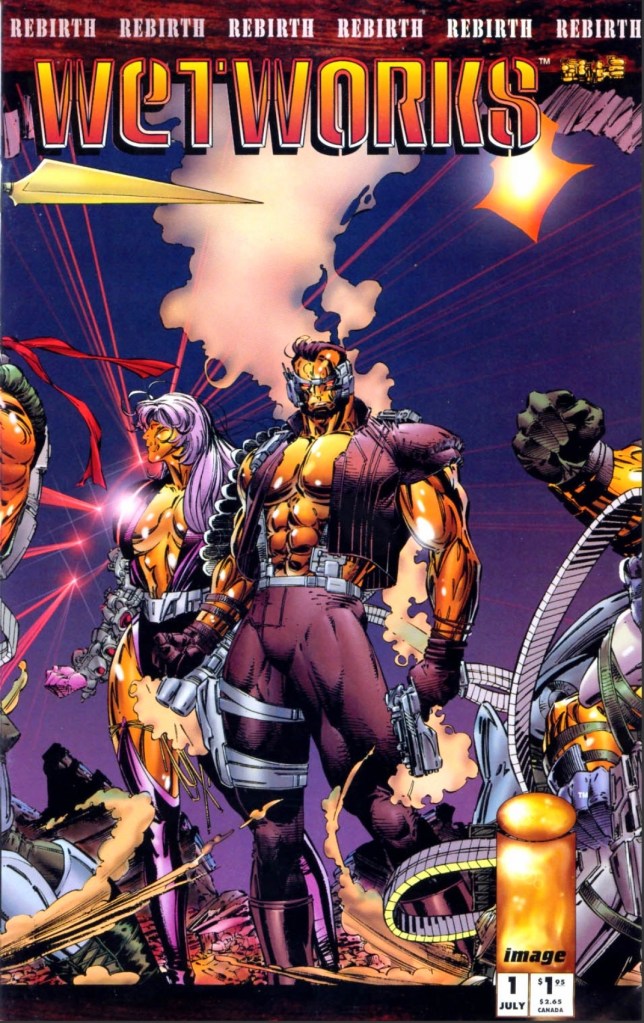
The cover.

Early story

The story begins with Gray and his gang companions riding a car approaching a group of people on the street. The gang leader pressures Gray to use his weapon to kill them. Gray is deeply worried not only because he has to prove his worth to the gang by killing other, but also because the rescue attempt he was waiting for had not yet happened.

Meanwhile, Venom finds himself trapped on the doorway of a building with the metal gate locked and with rays of microwave from the Punisher’s van radiating him painfully. As the Punisher leaves them behind, Venom manages to use the symbiote to reach into the van and smash the control panel inside which disabled the microwave rays.

Immediately, he recovers and breaks out to continue his mission: to rescue Gray…

Quality

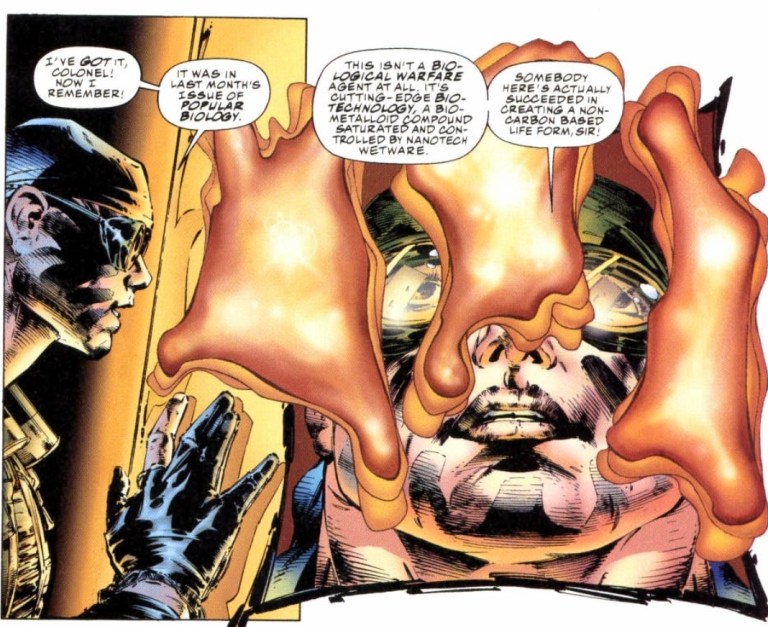
The murderous Venom actually helped the Punisher.

When it comes to the storytelling, there are some improvements that made this comic book more readable than issue . For one thing, the exposition has been reduced which allowed the pace of the story to move faster. Most of the exposition here has been limited to Gray who at this stage of the mini-series was clearly bound to become the central object of the Funeral Pyre concept. Another thing is that the story’s structure here is simpler and easier to follow as Venom and Punisher moved on their own struggles separately before predictably getting together again.

While the mini-series has clearly been a tale of a city gang war – with a pretentious and unwilling gang member who expected to be rescued before things become too chaotic – that happened to pull the Punisher and Venom in for different reasons, Carl Potts added some elements that would resonate with Marvel Comics fans who are familiar with HYDRA and the Super Soldier aspects of the Marvel Comics universe history. Not only that, there is a science fiction-inspired setting near the end of the story that added variety to the in-story environment.

Like the first issue, this one is packed with a good amount of action scenes and that means Punisher and Venom fans have a lot of stuff to enjoy. Tom Lyle really is good with showcasing the respective spectacle of the vigilante and the symbiote-wearing murderer, and when he has the two together, his visual creativity intensifies.

Conclusion

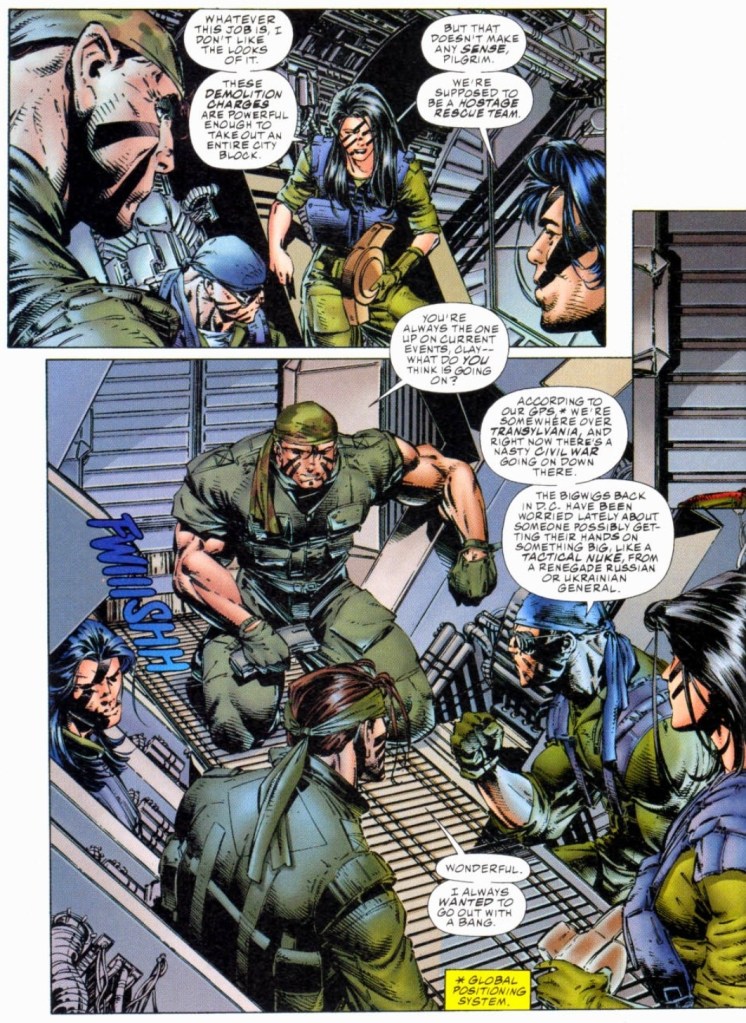
Grey shooting blindly at the targets while riding the car of the gangsters he joined.

Venom: Funeral Pyre (1993) is clearly an improved reading experience over issue mainly because of the reduced information dump, the simpler plot structure and the creative showcase of Venom and the Punisher. While Gray remains uninteresting, his late-stage transformation turned out to be somewhat surprising and it was only near the end of this comic book that the Funeral Pyre concept became clear.

Overall, Venom: Funeral Pyre (1993) is satisfactory.

+++++

Thank you for reading. If you find this article engaging, please click the like button below, share this article to others and also please consider making a donation to support my publishing. If you are looking for a copywriter to create content for your special project or business, check out my services and my portfolio. Feel free to contact me with a private message. Also please feel free to visit my Facebook page Author Carlo Carrasco and follow me on Twitter at  @HavenorFantasy as well as on Tumblr at https://carlocarrasco.tumblr.com/ and on Instagram at https://www.instagram.com/authorcarlocarrasco
A Look Back at Stephen King’s Creepshow (1982)

Disclaimer: This is my original work with details sourced from reading the comic book and doing personal research. Anyone who wants to use this article, in part or in whole, needs to secure first my permission and agree to cite me as the source and author. Let it be known that any unauthorized use of this article will constrain the author to pursue the remedies under R.A. No. 8293, the Revised Penal Code, and/or all applicable legal actions under the laws of the Philippines.

Welcome back fellow geeks, pop culture enthusiasts and comic book collectors! Way back in 1982, the horror comedy anthology film Creepshow was released in cinemas and it gave moviegoers a fun time getting scared as it featured well-made short stories written by Stephen King and directed by George Romero. The two creators were strongly influenced by the 1950s horror comic books of EC Comics when they made the movie. Very recently, Creepshow was released on 4K Blu-ray loaded with lots of extras for fans and moviegoers to enjoy. The said 4K Blu-ray release can be ordered online now.

I myself first saw Creepshow on home video sometime in 1983 and got to replay it occasionally on cable TV and DVD. Strangely enough, it was only a few years ago when I first learned that there was indeed a comic book adaptation of the movie that was also released the same year it hit cinemas.

With those details laid down, here is a look back at Stepehen King’s Creepshow published in 1982 by Plum with stories written by Stephen King and drawn by Bernie Wrightson (with Michele Wrightson). The cover was illustrated by the late EC Comics legend Jack Kamen.

The cover.

Early stories

Father’s Day – Sylvia Grantham, her nephew Richard, niece Cass and Hank (husband of Cass) enjoy time together at the Grantham estate anticipating the arrival of Bedelia for the annual family dinner. It is an open secret within the family that Bedelia killed her late father Nathan Grantham who was so overbearing to her as she became responsible on nursing him full-time.

Bedelia apart from her relatives in Father’s Day.

The Lonesome Death of Jordy Verril – A lonely farmer named Jordy witnesses the unexpected arrival of a meteorite from out space which landed violently on his farm. After realizing what it is, he touches it without any protection and gets his fingers burned. Considering the rarity of the object, Jordy begins to imagine making a lot money by bringing it to the local college.

A page of the story of Jordy and the meteor.

The Crate – In the basement level of Amberson Hall (science building of Horlicks University), a janitor accidentally finds a very old wooden crate located right under the staircase. The writings “Ship to Horlicks University via Julia Carpenter – Arctic Expedition – June 19, 1834” were marked on the crate. Meanwhile a faculty party is taking place across town. During the party, the mild-mannered college professor Henry Northrup experiences embarrassment as his unhinged wife Wilma (note: referred to as Billie) talks way too much in front of professor Dexter Stanley and many others. Henry reveals to Dexter that he has grown to hate his wife. Suddenly, someone tells Dexter that a telephone call for him is waiting. It was the janitor who made the call.

Henry, wife Wilma (AKA Bilie), the janitor and Dexter Stanley in The Crate.

Something to Tide You Over – At a beach, Harry Wentworth could do nothing but remain helplessly immobile as his entire body and neck have been buried under the sand by Richard. It turns out that Harry has been having an affair with Becky, Richard’s wife. The helpless Harry expressed that he and Becky were really in love with each other. For his part, Richard has something else to show to him and he certainly has some things prepared.

Richard and Harry in Something to Tide You Over.

They’re Creeping Up on You – A wealthy and cruel businessman named Upson Pratt is alone in his well-lighted apartment. He has been suffering from mysophobia and has been living in isolation and only communicates with others using the telephone and other electronic methods. Slowly but surely, cockroaches begin to multiply in his apartment.

Upson Pratt and the cockroaches in They’re Creeping Up on You.

Quality

Starting with the storytelling with emphasis on how the comic creators selected content from the movie and translated it all into illustrated literature format with a little over sixty pages to work with, I can say that this comic book is pretty much a faithful adaptation of the film’s five short stories (note: the cinematic prologue and epilogue were never adapted). For each short story, it is clear that sufficient details from each cinematic tale were adapted and the overall concepts, acts and characterizations were pretty much maintained. This is a credible piece of illustrated literature work as each tale is not only readable but also engaging and entertaining complete with shock moments. Take note that Stephen King not only wrote all these tales for the movie, there were two tales that were previously published in literary format before Creepshow was even made. Whoever participated in the editing process behind the production of this comic book deserves commendations.

While the writing used in adapting the film’s concepts and characters turned out good, it is clearly obvious that certain cinematic elements could not be translated here. Remember how frantic and scared Dexter Stanley (played by the late Fritz Weaver) was in the movie after he witnessed the janitor got killed by the monster? Those cinematic emotions never made it in illustrated literary format here.

The artworks by Bernie Wrightson are pretty good to look at. Similar to the writing, the visuals here were made to recapture the look of the movie not in a shot-for-shot manner but with the artist’s own approach on how such scenes should be presented. That being said, I should state that the comic book panels that appeared in the movie’s transition scenes (example: still live action image slowly turning into illustrated comic book form) are NOT here at all.

You will instead see Wrightson’s own visual interpretation of the scenes from the movie and the artworks were inspired a bit by the 1950s horror comics of EC Comics and ultimately were more in line with the contemporary approach of drawing comic book art of the 1980s. The gory scenes from the movie made it in this comic book. When it comes to drawing monsters or the undead, the art result was uneven. While Wrightson’s art of the monster in The Crate was really scary to look at (in accordance to how it appeared cinematically), the work on the walking dead in Something to Tide You Over looked much less scary compared to those in the film.

While Wrightson clearly did not prioritize recapturing the likenesses of the actors to illustrate their respective characters, there were a few shots in which professor Henry Northrup somewhat looked like the late Hal Holbrook, and the illustrated Bedelia resembled the late Viveca Lindfors.

Conclusion

The best way to describe Stephen King’s Creepshow (1982) is this…it is indeed a very solid adaptation of the movie and its five short stories. While it was clear that not all the dialogue and other types of content of the movie could ever fit in this comic book, the creators did a very credible job of adapting Creepshow’s core elements and succeeded in making what they had solidly presented for readers to enjoy. Each short story from the movie turned out to be cohesive and enjoyable for reading.

When it comes to really enjoying this graphic novel, I personally would recommend you readers to watch the Creepshow movie first before reading. The film is the complete package of entertainment showcasing the combined works of Stephen King and director George Romero, while this comic book is ultimately the companion piece for those who enjoyed the movie as well as EC Comics’s horror comic books of the 1950s.

Overall, Stephen King’s Creepshow (1982) is highly recommended!

+++++

Thank you for reading. If you find this article engaging, please click the like button below, share this article to others and also please consider making a donation to support my publishing. If you are looking for a copywriter to create content for your special project or business, check out my services and my portfolio. Feel free to contact me with a private message. Also please feel free to visit my Facebook page Author Carlo Carrasco and follow me on Twitter at  @HavenorFantasy as well as on Tumblr at https://carlocarrasco.tumblr.com/ and on Instagram at https://www.instagram.com/authorcarlocarrasco
A Look Back at The Further Adventures of Indiana Jones #1 (1983)

Disclaimer: This is my original work with details sourced from reading the comic book and doing personal research. Anyone who wants to use this article, in part or in whole, needs to secure first my permission and agree to cite me as the source and author. Let it be known that any unauthorized use of this article will constrain the author to pursue the remedies under R.A. No. 8293, the Revised Penal Code, and/or all applicable legal actions under the laws of the Philippines.

Welcome back fellow geeks, pop culture enthusiasts and comic book collectors! I want to make things clear to all of you that when it comes to movies, Indiana Jones is truly an American icon who will be remembered for a long time thanks to the combined works of the legendary creative team of Steven Spielberg, George Lucas and Harrison Ford.

I love watching the films Raiders of the Lost Ark (1981), Indiana Jones and the Temple of Doom (1984), Indiana Jones and the Last Crusade (1989) and Indiana Jones and the Kingdom of the Crystal Skull (2008). While the respective qualities, artistry and fun factors of those films varied through the years, there is no denying that those are cinematic adventures worth replaying.

In case you are wondering, I have no intention to watch Indiana Jones and the Dial of Destiny (2023) since that movie was specifically handled by Kathleen Kennedy whose leadership of Lucasfilm (under the Disney banner) ruined Star Wars since 2015. It does not help that the new movie was not directed by Spielberg and clearly it does not involve George Lucas on the creative side. I should state that I reject wokeness, political correctness and identity politics which defined Kathleen Kennedy’s handling of Star Wars and Indiana Jones.

That being said, now is a good time to back into the 1980s when the Indiana Jones entertainment franchise was still new and creatively expanding into other forms of media. In fact, Marvel Comics started publishing an Indiana Jones comic book series between Raiders of the Lost Ark and Indiana Jones and the Temple of Doom.

With those details laid down, here is a look back at The Further Adventures of Indiana Jones , published in 1983 by Marvel Comics with a story written and drawn by John Byrne with ink work by Terry Austin.

The cover.

Early story

The story begins with Indiana Jones (wearing formal attire for his academic profession) attempting to whip a small stick off the mouth of Miss Greebly who was standing very still. Jones’ superior Dr. Marcus came in to witness the stunt.

Shortly after, Jones and Marcus meet with former student Charlie Dunne who reveals to them he and his sister Edith learned the location of the Ikons of Ikammanen. Just seconds after stating he could prove that the ikons exist, Dunne suddenly gets hit on the back with a knife.

With Dunne suddenly killed and the discreet killer already gone, Jones and Marcus examine the content of the victim’s bag and find a map of coastal Africa, a photograph of a temple and an address…

Quality

Indiana Jones and Edith on a dangerous search.

I will start by stating the obvious thing about this comic book…it looks and feels like a genuine Indiana Jones adventure with clear inspiration taken from the 1981 movie. The basic elements are here: Indy does research and some detective work, he travels overseas searching for answers, faces danger along the way, and gets involved in a series of unexpected events. The good news is that John Byrne crafted a fun and high-quality literary adventure featuring the cinematic icon.

This comic book has an original story concept and deliberately the narrative flowed at a medium pace which allows build-up to immerse readers into the details, followed by some bouts of pay-off to entertain readers. I also like the way the narrations laid down the details with the intention of helping readers understand not only the situations, locations and people, but also giving them unique perspectives about Indy himself. The dialogue was well written and clearly believable. When Indiana Jones explains details, he really uses the knowledge he gained through academic research as well as recollections from his past expeditions or adventures.

I should also state that Byrne gave Indiana Jones, the other characters and locations stylized looks. I don’t mind Jones not resembling Harrison Ford at all but Byrne still made him recognizable in his own unique way. There were some location images that looked pretty detailed.

Conclusion

And just like that, Indiana Jones takes a leave from academic work for his next adventure.

The best way to describe The Further Adventures of Indiana Jones (1983) is this…John Byrne and his team succeeded in making this a fun read inspired by elements of Raiders of the Lost Ark. The story has a strong adventure feel with Indy having a strong presence and the introduction of new characters were executed smoothly. For a launch issue, this one is indeed engaging to read and it succeeded in convincing me to anticipate the next issue. Ultimately it is clear that John Byrne really is an effective Indiana Jones storyteller.

Overall, The Further Adventures of Indiana Jones (1983) is highly recommended!

+++++

Thank you for reading. If you find this article engaging, please click the like button below, share this article to others and also please consider making a donation to support my publishing. If you are looking for a copywriter to create content for your special project or business, check out my services and my portfolio. Feel free to contact me with a private message. Also please feel free to visit my Facebook page Author Carlo Carrasco and follow me on Twitter at  @HavenorFantasy as well as on Tumblr at https://carlocarrasco.tumblr.com/ and on Instagram at https://www.instagram.com/authorcarlocarrasco
A Look Back at Aliens vs. Predator #4 (1990)

Disclaimer: This is my original work with details sourced from reading the comic book and doing personal research. Anyone who wants to use this article, in part or in whole, needs to secure first my permission and agree to cite me as the source and author. Let it be known that any unauthorized use of this article will constrain the author to pursue the remedies under R.A. No. 8293, the Revised Penal Code, and/or all applicable legal actions under the laws of the Philippines.

Welcome back superhero enthusiasts, 1990s culture enthusiasts and comic book collectors! Today we go back to the year 1990 to take a close look at one of the more significant non-superhero crossover comic book events ever published – Aliens vs. Predator!

In my previous review, things changed for the worse for the humans as their colonial community gets overwhelmed by the presence of Aliens and Predators. Risking her own life, Machiko Noguchi does what she could to protect her constituents. Along the way, one certain Predator that was restrained and examined in the laboratory eerily decides to help the humans.  

With those details laid down, here is a look back at Aliens vs. Predator , published in 1990 by Dark Horse Comics with a story written by Randy Stradley and drawn by Phill Norwood. This is the final issue of the mini-series.

The cover.

Early story

The story begins with Noguchi and Miriam flying in a Copter and right below them is the chaos composed of a cattle stampede and the ongoing conflict between Alien Xenomorphs and the armed Predators. While flying, Noguchi and Miriam spot a lone Predator climbing up a tower while fighting off several Xenomorphs chasing him unrelentingly. It turns out the said Predator was Miriam’s own patient at the laboratory and she urges Noguchi to help him.

As part of the tower separates itself, the Predator is about to fall down and the Copter piloted by Noguchi comes closer to help him. Miriam uses a communicator to help the Predator realize they are helping him. As the Predator hangs on to one part of the Copter, an Alien jumps towards the vehicle causing Noguchi to react instinctively by jerking the controls. The Copter then spins on its axis as the nearby tower collapses.

The Copter begins to fall down on the street below…  

Quality

Even as this comic book is packed with lots of action scenes, thrills, and Aliens-Predator fights, the creative team succeeded in emphasizing the narrative all throughout.

I am delighted to say that the Stradley-Norwood duo succeeded with maintaining the high quality works of this mini-series and concluded it with impact. At the heart of the story is the theme of survival with the humans being symbolized as casualties of a raging conflict between the fully determined and instinctive Aliens and the strategic and technological Predators.  

Through the protagonist Machiko Noguchi, readers will realize that as a species, humans can survive not only by having a powerful will to progress backed with focus, but also by communicating and cooperating with an intelligent non-human species that shares their traits. In this case, the non-human species I’m referring to are the Predators. That being said, the Aliens are the non-human species with limited intelligence, fully determined to hunt anyone or anything, and absolutely do not care about morals nor the existence of any species they find different from themselves. All the symbolism about the three species got portrayed powerfully and creatively throughout the story here.

As before, the plot moved at a medium pace and details are emphasized through dialogue, visuals and narrations without ever dragging the pace down. This shows how the creative team proved to be efficient with explaining the details as they focused on telling the story in ways to keep readers engaged.

I should mention that the protagonist Machiko Noguchi became even more significant in this comic book. Without spoiling the details, I can say she blossomed into a heroic figure who risks her life to help many even as she faces tremendous odds. In case you are wondering, Noguchi is NOT a rip-off of Ellen Ripley as she is the colonial overseer dedicated to the corporation. It just so happens that Noguchi shares common traits with the cinematic icon such as bravery, the refusal to give up and having the will to help others even while risking her own life. I can only imagine Ripley and Noguchi conflicting with each other if they were together under normal circumstances.

Noguchis’s short but intense union with the cooperative Predator was told very believably which added depth to the story as well as impact on the conclusion.

As this is the final issue of the mini-series, the creative team really ramped up the big-payoff to what was built up before. In fact, the final conflict here seems to show that Stradley and Norwood were aware about what made the cinematic final conflicts of Aliens (1986) and Predator (1987) entertaining and memorable to moviegoers. That being said, I can say that certain action and sci-fi elements from those movies were implemented in this comic book’s final conflict which I found really engaging, inspired and fun to read.

Conclusion

The union between Machiko Noguchi and this particular Predator is a must-read!

Aliens vs. Predator (1990) is truly a great comic book as well as a powerful conclusion to this very significant comic book mini-series. The creative team not only told the whole storyline with great quality, a steady pace and strong engagement all throughout. It is also here where you will get to see Machiko Noguchi become very significant not only within the Aliens-Predator comic book universe of Dark Horse Comics but in sci-fi comics in general. The ending of this comic book is very powerful and served also as a big pay-off to what preceded it. This is a genuine sci-fi comic book classic!

Overall, Aliens vs. Predator (1990) is highly recommended!

+++++

Thank you for reading. If you find this article engaging, please click the like button below, share this article to others and also please consider making a donation to support my publishing. If you are looking for a copywriter to create content for your special project or business, check out my services and my portfolio. Feel free to contact me with a private message. Also please feel free to visit my Facebook page Author Carlo Carrasco and follow me on Twitter at  @HavenorFantasy as well as on Tumblr at https://carlocarrasco.tumblr.com/ and on Instagram at https://www.instagram.com/authorcarlocarrasco

A Look Back at Superman vs. Aliens #2 (1995)

Disclaimer: This is my original work with details sourced from reading the comic book and doing personal research. Anyone who wants to use this article, in part or in whole, needs to secure first my permission and agree to cite me as the source and author. Let it be known that any unauthorized use of this article will constrain the author to pursue the remedies under R.A. No. 8293, the Revised Penal Code, and/or all applicable legal actions under the laws of the Philippines.

Welcome back superhero enthusiasts, 1990s culture enthusiasts and comic book collectors! Today we go back to the year 1995 to examine another chapter of the Superman vs. Aliens mini-series.

In my previous retro review, an object from space on Earth and Superman (who previously as Clark Kent learned of the Kryptonian language from the signals transmitted by the object) intervened the discovery of it in the presence of Lexcorp. After much talk and an agreement, Superman went into space with one of Lexcorp’s space ships (under the watch of Dr. Kimble who leads the corporation’s space division) leaving behind Lois Lane at the space station with Kimble. Deep in space, Superman arrives and discovers a ruined city with physical signs of struggle. What he does not realize is the presence of eggs and the Xenomorphs lurking within the new environment.

With those details laid down, here is a look back at Superman vs. Aliens , published in 1995 by Dark Horse Comics and DC Comics with a story written and drawn by Dan Jurgens with ink work done by Kevin Nowlan.

The cover.

Early story

The story begins in space when a space ship sent home by Superman is about to collide with the space station near Earth. As one of the crew members failed to take remote control of the incoming ship, a very determined Dr. Kimble takes over the controls and eventually took command of the said ship. Lois Lane, who showed signs of self-restraint and deterioration of her professionalism as a journalist, watches. As Kimble, Lane and the crew members approach the ship at the station’s docking bay, one passenger was found dead (a Chestburster alien came out of him) while three others were still alive.

As Dr. Kimble and personnel brought the surviving passengers in the infirmary, Lois Lane takes advantage of the situation by climbing up the ship to examine it closely. She knows that without the ship, her beloved Clark Kent/Superman is stranded in space. She is completely unaware of the presence of a fully grown Xenomorph alien watching her from a dark corner.

Meanwhile at the ruined city on the other side of the galaxy, a blindfolded Superman is carefully guided by the armed Kara going to a place that has medical equipment and supplies…

Quality

Lois Lane during her encounter with the Xenomorph inside the space station.

This is a solid follow-up to what was established in issue . In this comic book, the creative team gradually raised the stakes as two sides of the story were told extensively in alternating fashion – the side of Superman and Kara in deep space, and the other side of Lois Lane and Dr. Kimble (clearly the 3rd most important character in this mini-series) inside the space station.

As the story went on, Superman became even more vulnerable not only because he grew weaker as he has been cut off from the sun (a primary source of energy for him), but also because struggling with the aliens wore him down a lot and he still insists on avoiding any acts of killing due to what happened to him previously. As the Man of Steel became more vulnerable, Kara (who is experienced already in fighting the Xenomorphs which she referred to as the uglies) became an even more significant character (next to Dr. Kimble) and she became a highly essential partner for the icon.

Even for us readers, Kara creatively became even more engaging as she shared memories of events (note: exposition) that happened sometime prior which explains why her city got ruined and how the Aliens arrived and made her people’s problems even worse. The visualization of the said events were efficiently done for a good immersion into the past.  

While the Superman-Kara thread emphasized survival facing tremendous odds, the Lois-Kimble thread became a more significant part of this mini-series as the space station became the new place for Xenomorph attacks. While Dr. Kimble remained obsessed with achieving results with scientific discoveries and corporate interests in mind, Lois Lane became the hunted similar in the style of Ellen Ripley in 1979’s Alien.

If you are looking for action, you will find a lot of them in both threads of the story. While just one Xenomorph on the space station led to some incidental action moments, a lot more action happened on Superman-Kara’s side of the story as they (along with a few human survivors on the ruined city) faced a huge horde of aliens that kept on attacking them from all sides. If you are looking for superhero spectacle, you won’t find it here as the action is more grounded with sci-fi’s interpretation of reality and Superman here is weaker and a lot more worn down physically. Then again, this is not surprising given the tone and concept the creators aimed for.

Conclusion

Superman and Kara struggling hard as they are surrounded by lots of Aliens. One of Kara’s fellow people is present in this shot.

Superman vs. Aliens (1995) is really engaging to read and there were lots of fun moments along the way. Even as the creators were building up something for the third and final issue, they managed to pull off big pay-offs to what was built up in issue . While the lack of superhero-style spectacle is clear, it is not a problem at all as there is a lot of action involving the many Xenomorphs in the ruined city plus the bouts of suspense and incidental action executed during Lois Lane’s encounter with a single but deadly Alien. Considering how much fun and engagement this comic book has, it remains to be seen how the next issue will live up to it.

Overall, Superman vs. Aliens (1995) is highly recommended!

+++++

Thank you for reading. If you find this article engaging, please click the like button below, share this article to others and also please consider making a donation to support my publishing. If you are looking for a copywriter to create content for your special project or business, check out my services and my portfolio. Feel free to contact me with a private message. Also please feel free to visit my Facebook page Author Carlo Carrasco and follow me on Twitter at  @HavenorFantasy as well as on Tumblr at https://carlocarrasco.tumblr.com/ and on Instagram at https://www.instagram.com/authorcarlocarrasco

A Look Back at Spider-Man 2099 Special #1 (1995)

Disclaimer: This is my original work with details sourced from reading the comic book and doing personal research. Anyone who wants to use this article, in part or in whole, needs to secure first my permission and agree to cite me as the source and author. Let it be known that any unauthorized use of this article will constrain the author to pursue the remedies under R.A. No. 8293, the Revised Penal Code, and/or all applicable legal actions under the laws of the Philippines.

Welcome back superhero enthusiasts, 1990s culture enthusiasts and comic book collectors! Today we go back to the year 1995 and explore a part of the Marvel 2099 comics universe through a tale of the Spider-Man 2099 franchise.

Specifically speaking, we will examine a thick one-shot comic book about the futuristic Spider-Man simply referred to as a special. Back in those days, Marvel Comics hired the famous Brothers Hildebrandt and among the projects they worked on were varied pieces of captivating art about Marvel’s 2099 universe. In relation to this particular retro comic book review, the Hildebrandt brothers made the cover art for the special comic book which contained three standalone stories.

With those details laid down, here is a look back at Spider-Man 2099 Special , published in 1995 by Marvel Comics with the main story “The Menace of the Man-Spider” written by Jon Peterson and drawn by Joe St. Pierre.

The cover.

Early story

The story begins at 1:45 AM inside the high-tech laboratory of Synthia when the Man-Spider (a human in a monstrous form of a huge spider) causes havoc and tries to hurt the personnel inside in response to their interference of his work. One of the troubled personnel manages to call for help as the Man-Spider tries to get them.

Just as the two workers get hit by the Man-Spider’s organic green web, armored elements of the security force arrived in response to the call and one of them fires a hot at the beast’s right arm causing a serious wound. Suddenly, the Man-Spider violently jumps away smashing through a large window going into the city. The Man-Spider escapes leaving behind a mess at the laboratory including a high amount of organic web that disgusts the people back there.

Hours later at another part of the city, Spider-Man got spotted by a floating drone which declares him as under arrest under the authority of the Public Eye. Spider-Man simply kept on swinging away to another destination until he uses his organic web on the drone and hurls it to a wall and explodes into several tiny pieces. Once alone, he changes into civilian clothes as Miguel O’Hara and rushes to Synthia’s facility…

Quality

A huge monster breaks out.

Focusing on the main story (the first story), I find this particular tale of Spider-Man of 2099 rather worthy to read even though there were some flaws here and there. Jon Peterson crafted a story that took place sometime before the 34th issue of the original Spider-Man 2099 monthly series while reflecting what was declared in issue #8 and building up something new with it. The main story was about Spider-Man getting into eventual conflict with the Man-Spider (note: it looks like someone at Marvel decided to copy DC Comics’ Man-Bat and make something new for the Marvel 2099 franchise) who in turn is an antagonist who is deeply troubled and yet not really evil. The Man-Spider is actually a man who does not have super abilities but rather high scientific intelligence and the capabilities to alter genetics using advanced technologies. The Man-Spider is not obsessed with destroying the world or murdering people, but achieving a major breakthrough backed with good intentions.

One of the most notable weaknesses of the script written by Peterson is the emphasis that Miguel O’Hara/Spider-Man 2099, Dana and the so-called resident mad scientist Antoine have a history together since their youth. This one felt very forced and ended up being unbelievable.

Still on the world-building aspect of the story, this comic book showed a true link between the company Synthia and the gigantic Alchemax which reflects what was state in issue . This link between the two corporations opened up opportunities for the creators to emphasize Alchemax’s moves on securing valuable stuff for the future.

Ultimately, the main story turned out to be a good read even though there were flaws that somewhat took away credibility from its core concept. I should also state that Joe St. Pierre established a rather unique look for the Spider-Man 2099 franchise. His work here is a nice alternative opposite Rick Leonardi’s Spidey 2099 art.

While the 2nd story of this one-shot was not worth reading at all, the final story has a unique concept exploring voyeurism in 2099 which accidentally reminded me about how social media in real life could ruin the public’s perception and people themselves.

Conclusion

Spider-Man 2099, Dana and the Man-Spider in a dangerous situation.

With a good enough main story, one forgetful 2nd story and a satisfactory third story, Spider-Man 2099 Special (1995) is ultimately a mixed bag. You will find variety here as well as unique takes on the futuristic Spider-Man and 2099’s society from the creators, but don’t expect great stuff. I think the most die-hard Spidey 2099 and Marvel 2099 fans will enjoy this the most.

Overall, Spider-Man 2099 Special (1995) is serviceable.

+++++

Thank you for reading. If you find this article engaging, please click the like button below, share this article to others and also please consider making a donation to support my publishing. If you are looking for a copywriter to create content for your special project or business, check out my services and my portfolio. Feel free to contact me with a private message. Also please feel free to visit my Facebook page Author Carlo Carrasco and follow me on Twitter at  @HavenorFantasy as well as on Tumblr at https://carlocarrasco.tumblr.com/ and on Instagram at https://www.instagram.com/authorcarlocarrasco

A Look Back at Amazing Spider-Man #385 (1994)

Disclaimer: This is my original work with details sourced from reading the comic book and doing personal research. Anyone who wants to use this article, in part or in whole, needs to secure first my permission and agree to cite me as the source and author. Let it be known that any unauthorized use of this article will constrain the author to pursue the remedies under R.A. No. 8293, the Revised Penal Code, and/or all applicable legal actions under the laws of the Philippines.

Welcome back superhero enthusiasts, 1990s culture enthusiasts and comic book collectors! Today we go back to the year 1994 and explore a part of the Marvel Comics universe through one of the many tales of the Amazing Spider-Man comic book series.

In my previous retro review, Spider-Man has been caught by the Jury and gets tried in a makeshift court that is so secretive, getting help from outside is impossible. The trial explored how Spider-Man, who brought the alien costume into their world which later led to the beginning of his murderous mortal enemy, is responsible for the deaths and other tragedies connected to Venom.

With those details laid down, here is a look back at Amazing Spider-Man , published in 1994 by Marvel Comics with a story by David Michelinie and drawn by Mark Bagley. This issue marks the final chapter of a 3-part storyline between the iconic webslinger and the Jury.

The cover.

Early story

The story begins with a restrained Spider-Man declared guilty and sentenced to death by the so-called court of Orwell Taylor and the Jury. Just as the team members are about to execute the webslinger, their teammate Ramshot intervenes and says that Spider-Man saves lives which is a matter of public record. Disappointed by Ramshot’s behavior, Taylor mentions their secondary mission is to obtain a weapon that might allow them to eliminate their true enemy – Venom.

Taylor then says that if Spider-Man would help them destroy the greater evil, then the court would consider commuting his sentence…

Quality

Something unfortunate happens during the mission involving Spider-Man and the Jury.

Considering all the drama and tension that was built up in the previous two issues, the story here is a letdown. For one thing, all the discussions about Spider-Man being responsible for the killings and violence caused by Venom lead to nowhere as the story took a turn for the bizarre concept of the hero getting spared to work with the very team that went after him. Secondly, the mission that Spidey and the Jury worked on really did not have a justifiable goal. This resulted in a disappointing turn of events. Ironically, in this comic book you will see more of Taylor’s cunning on top of his own distorted view about justice.

If there is anything notable here, it is the fact that Spider-Man’s wife Mary Jane gets a good share of the spotlight as she literally moves towards the edge in relation to the deteriorating marriage. This shows that as Spidey spends more time away to do what is good and push back against the forces of evil, his wife gets lonelier and desperate as life turns for the worse. At the very least, this comic book expresses that the marriage of Peter and Mary Jane could be doomed.

Conclusion

This is how Mary Jane deals with loneliness and the decline in her life.

Considering what was built up and heavily dramatized in issues #383 and #384, Amazing Spider-Man (1994) is a rather weak conclusion. The way Spider-Man and the Jury parted ways felt more like sudden retreat than a real finish to what was started between them. Strangely enough, the focus on Mary Jane’s decline and desperation literally saved this comic book from becoming a creative disaster. The ending does not have much to do between Spider-Man and the Jury, but it was surprising in a crude way.

Overall, Amazing Spider-Man (1994) is serviceable.

+++++

Thank you for reading. If you find this article engaging, please click the like button below, share this article to others and also please consider making a donation to support my publishing. If you are looking for a copywriter to create content for your special project or business, check out my services and my portfolio. Feel free to contact me with a private message. Also please feel free to visit my Facebook page Author Carlo Carrasco and follow me on Twitter at  @HavenorFantasy as well as on Tumblr at https://carlocarrasco.tumblr.com/ and on Instagram at https://www.instagram.com/authorcarlocarrasco

A Look Back at Aliens vs. Predator #3 (1990)

Disclaimer: This is my original work with details sourced from reading the comic book and doing personal research. Anyone who wants to use this article, in part or in whole, needs to secure first my permission and agree to cite me as the source and author. Let it be known that any unauthorized use of this article will constrain the author to pursue the remedies under R.A. No. 8293, the Revised Penal Code, and/or all applicable legal actions under the laws of the Philippines.

Welcome back superhero enthusiasts, 1990s culture enthusiasts and comic book collectors! Today we go back to the year 1990 to take a close look at one of the more significant non-superhero crossover comic book events ever published – Aliens vs. Predator!

In my previous review, the humans of Prosperity Wells begin to get impacted by the presence of the Predators and the Aliens. A family got killed by Predator hunters at their home in the wilderness and only a young boy was able to get away and catch people’s attention in the outpost. Machiko Noguchi and her team initiate defensive measures in response to what has been happening. Two people even brought back a living Predator with them from the ruins of a Predator ship they inspected in the wilderness.

With those details laid down, here is a look back at Aliens vs. Predator , published in 1990 by Dark Horse Comics with a story written by Randy Stradley and drawn by Phill Norwood.  

The cover.

Early story

The story begins with Noguchi who finds herself in a dangerous position. In front of her is a horde of Xenomorphs and behind her is one Predator warrior who even assisted her a few moments prior. Armed with futuristic weapons, the armored warrior suddenly jumps above her and right into the Xenomorphs. The Predator efficiently slashed off the parts of a few Aliens using a bladed weapon and blew up one of them using another weapon.

The warrior eventually gets overwhelmed by more Aliens that came into the action. As the Xenomorphs focused strongly on the downed Predator, Noguchi takes advantage of the situation to run away and somehow get back to protecting the people as the outpost has been clearly invaded by two deadly non-human species.

Meanwhile inside the huge cargo ship that did not launch, two crew members freed themselves from the Xenomorphs’ restraints and try to sneak by the Alien Queen which they perceived to be sleeping…

Quality

This is a fine example by the creative team on telling a sequence of intense moments without a single word of dialogue.

From a storytelling point-of-view, this one is a huge pay-off to the build-up established in the first two issues and I can say I enjoyed this one. At this stage of the 4-issue mini-series, the human colony has turned into a battle zone between the Predators and the Xenomorphs and this obviously results in a lot of action scenes and other wild turns of events. It is also in this story where you will get to see Machiko Noguchi at her bravest yet, as well as her uncompromising way of protecting her people and solving the crisis at hand. As she and her fellow humans are in the middle of a crisis, nothing straightforward could happen nor could they make solid plans with any real chance of succeeding. The decisions Noguchi made here came with risks and through her struggles, you will be able to relate with her and you will also witness how the series of unfortunate events turn out with unpredictable ways which added some suspense and surprise to the narrative.

The spectacle here, unsurprisingly, are the battles between the Aliens and Predators. Such conflicts happened mostly in the background which is effective enough to establish the chaos that the humans have to endure. One of the Predators – which does not have a name – became a notable additional supporting player to the cast and his presence and actions added some intensity to storytelling even as the narrative consistently focused on Noguchi.   

The way the story is told, this one maintains the natural progression of details from issue and even though the action has been ramped up, there were still plenty of opportunities for readers to understand the details and grasp the plot. There is also rising tension as the narrative moves forward.

Conclusion

There is nothing like trying to sneak past an Alien Queen in an area surrounded by multiple eggs laid by her.

Being a big pay-off to the huge build-up of issues and , Aliens vs. Predator (1990) is highly entertaining and compelling to read! The action scenes and chain of incidents were ramped up a lot and yet this comic book never turned into a brainless fest of violence. The creative team managed to add some breathing space to not only let readers absorb the story details but also to immerse themselves with the situations. By the time I reached the end, I experienced this great satisfaction as well as further motivation to discover how the story will conclude in the next issue.

Overall, Aliens vs. Predator (1990) is highly recommended!

+++++

Thank you for reading. If you find this article engaging, please click the like button below, share this article to others and also please consider making a donation to support my publishing. If you are looking for a copywriter to create content for your special project or business, check out my services and my portfolio. Feel free to contact me with a private message. Also please feel free to visit my Facebook page Author Carlo Carrasco and follow me on Twitter at  @HavenorFantasy as well as on Tumblr at https://carlocarrasco.tumblr.com/ and on Instagram at https://www.instagram.com/authorcarlocarrasco

A Look Back at Aliens vs. Predator #2 (1990)

Disclaimer: This is my original work with details sourced from reading the comic book and doing personal research. Anyone who wants to use this article, in part or in whole, needs to secure first my permission and agree to cite me as the source and author. Let it be known that any unauthorized use of this article will constrain the author to pursue the remedies under R.A. No. 8293, the Revised Penal Code, and/or all applicable legal actions under the laws of the Philippines.

Welcome back superhero enthusiasts, 1990s culture enthusiasts and comic book collectors! Today we go back to the year 1990 to take a close look at one of the more significant non-superhero crossover comic book events ever published – Aliens vs. Predator!

In my previous review, most of the humans living and working in Prosperity Wells are unaware about the creeping danger coming at them. Alien eggs were laid in the wilderness while a ship carrying multiple Predator hunters has landed. At the human outpost, the leader Machiko Noguchi remains disrespected as the staffers and ranchers still trust her predecessor Hiroki Shimura.

With those details laid down, here is a look back at Aliens vs. Predator , published in 1990 by Dark Horse Comics with a story written by Randy Stradley and drawn by Phill Norwood.  

The cover.

Early story

The story begins with the huge spaceship still at the launch platform of Prosperity Wells. The ship should have launched already with a huge cargo of indigenous animals – the Rynth – for export. It turns out that the two human pilots were captured by the Xenomorphs and in the presence of the Alien queen inside the ship, they witness one rynth (part of the herd from the ranching) die as a Chestburster alien comes out of its body.

Meanwhile, Machiko wakes up as her respected predecessor Shimura arrives and tells her that Dr. Revna still has not returned. During her talk with the wife (also a doctor), Machiko learns that the missing doctor was on his way to Iwa Gorge to find more aliens (note: the Facehugger alien) and that a lady worker (who made the first discovery of a Facehugger) informed him of the place.

As Machiko and Shimura analyze what they know, two outpost personnel discover the remains of a destroyed Predator space ship and, more notably, one unconscious Predator hunter…

Quality

The Predators looks really odd with the colors implemented on them by the creative team of this comic book.

If you were deeply engaged in issue , then you will have a lot to be engaged with in this issue. The script by Stradley is very solid and with a medium pace, details were consistently laid out for readers’ understanding while the build-up for the inevitable chaos – between Xenomorphs and Predators with humans in the middle literally – is strongly felt.

Machiko Noguchi’s management and ability to analyze situations really get tested in this story and along the way, you will see how much the outpost changes reflecting the moves made by her administration which is ultimately a response to a brewing crisis. At this stage of the comic book mini-series, the danger of the two galactic species begin to make impact on innocent humans in violent ways. The scene showing the home of people (located some distance away from the main complex of the outpost) getting invaded by the Predators has uncompromising violence which makes the incidental action look really disturbing.

More on the human characters, this comic book has very rich dialogue backed with special attention to details implemented by Stradley. This is very evident in the scene in which Machiko, Roth, Ackland and Shimura talk intensely about what happened and what factors caused those things to happen. Through the verbal exchange, you will witness Machiko’s bravery and leadership come to life as she confronts a rebellious rancher (who insulted her in a very personal way) over the truth about what happened. Not only that, you will also feel the stress she experiences as she manages the outpost at a time of crisis.

For the fans of Predators and Aliens reading this, you will see a lot more of them in this issue and I can assure you that Norwood is really great in visualizing them and showing them with violent action that will remind you of the movies. As with the previous issue, the colors implemented on the Predators remains very odd to look at.

Conclusion

Live humans helplessly watching an animal die as a Chestburster alien comes out of it in the presence of the Alien queen.

Aliens vs. Predator (1990) is a great follow-up to issue . As expected, the stakes were raised higher and the tension really intensified as the narrative went on. The creative team really should be admired for not only crafting this high-quality chapter of the mini-series, but also for their believable and engaging build-up of the plot, the characters and conflict altogether. This comic book is a lively reminder of how great a non-superhero comic book crossover could be.

Overall, Aliens vs. Predator (1990) is highly recommended!

+++++

Thank you for reading. If you find this article engaging, please click the like button below, share this article to others and also please consider making a donation to support my publishing. If you are looking for a copywriter to create content for your special project or business, check out my services and my portfolio. Feel free to contact me with a private message. Also please feel free to visit my Facebook page Author Carlo Carrasco and follow me on Twitter at  @HavenorFantasy as well as on Tumblr at https://carlocarrasco.tumblr.com/ and on Instagram at https://www.instagram.com/authorcarlocarrasco

A Look Back at Aliens vs. Predator #1 (1990)

Disclaimer: This is my original work with details sourced from reading the comic book and doing personal research. Anyone who wants to use this article, in part or in whole, needs to secure first my permission and agree to cite me as the source and author. Let it be known that any unauthorized use of this article will constrain the author to pursue the remedies under R.A. No. 8293, the Revised Penal Code, and/or all applicable legal actions under the laws of the Philippines.

Welcome back superhero enthusiasts, 1990s culture enthusiasts and comic book collectors! Today we go back to the year 1990 to take a close look at one of the more significant non-superhero crossover comic book events ever published – Aliens vs. Predator!

For the newcomers reading this, the respective movie franchises of Aliens and Predator started many years before the comic book crossover event happened. By the year 1990, moviegoers had enjoyed Alien (1979), Aliens (1986), Predator (1987) and Predator 2 (late 1990). Cinematic between Arnold Schwarzenegger and the Predator in the jungle and that of Sigourney Weaver and the Queen Alien became unforgettable sequences for many millions of people. It should be noted that an Alien head was shown near the end of Predator 2 emphasizing a crossover.

With those details laid down, here is a look back at Aliens vs. Predator , published in 1990 by Dark Horse Comics with a story written by Randy Stradley and drawn by Phill Norwood.  

The cover.

Early story

The story begins in space when a fast-moving ship enters the atmosphere of Ryushi, a planet at the edge of the Chigusa Corporation’s holdings in the Beta Cygni System. On the planet is Prosperity Wells, a human outpost with a population of one hundred fifteen composed of freelance ranchers, their families and a staff of corporate overseers.

The ship’s presence gets detected by operators at Prosperity Wells and one of them speculated it to be a meteor that shows no signs of breaking up. Seeking Hiroki Shimura (no longer the head of the outpost), the operator instead contacts his replacement Machiko Noguchi and informs her about the perceived meteor. After talking with the operator, Noguchi tells her predecessor near her that even though she has been leading the outpost for nearly six months, people are still reporting to him as they treat her like a stranger. Shimura tells her that she’s been trying to adapt the job to her rather than adapting herself to it, and that she cannot just run an operation while hiding from it.

Meanwhile in the wilderness, a machine starts to climb out of the pit and starts releasing Alien eggs… 

Quality

Whenever there are Alien eggs, trouble is inevitable.

I can say that this comic book is essentially one long build-up that intends to execute the conflict between the Aliens (also referred to as the Xenomorphs) and Predators later. While the two galactic species are indeed here, the narrative is told mainly through the humans whose operations – ranching, business administration, outpost activities – are emphasized with heavy and precise details. The result here is that by the end of the comic book, you will be fully immersed with the sci-fi concept, the characters and the related developments which ultimately will prepare you for the inevitable Aliens-Predator conflict. To put it clearly, Stradley crafted a script that efficiently introduces the characters (note: Noguchi is the clear protagonist), emphasize what has been going on while also moving the story forward in a well-paced manner without compromising the details.

That being said, don’t expect the Aliens and Predators to fight each other immediately here. This is one big build-up as a whole and very notably, there is nothing boring and there were no useless scenes portrayed. Everything told and shown in this comic book made sense, and if you are the kind of person who likes paying close attention to details of the story as well as the gradual development of the key characters, you will find this one an engaging read. The narrative moved at a medium pace and cleverly the suspense happens whenever the creative team gradually build-ups the tension for the inevitable Aliens-Predators fight.

As with many other entertainment tales across varied media forms, this story has a critical portrayal of the corporation slightly emphasizing greed while making the contractors (technically the laborers) look disadvantaged. It is not a one-sided portrayal against corporatism, however, as there were moments showing the contractors relying on deception (note: disregarding quality and the safety of consumers who will soon consume the products from the ranching operation) just to achieve their goals.

More on the protagonist Machiko Noguchi, she is not the typical corporate figure for readers to hate. In fact, she is somewhat sympathetic as she is has yet to earn the respect of others even though she had been working as the head of the outpost for months. The grudge against her is subtle yet clear. The comic book also made clear that she is destined for something significant in the upcoming fight between the two galactic species.

The art by Phill Norwood is very good. While the characters have that comic book aesthetic, the Aliens and Predators are easily recognizable and were drawn with sufficient visual details. What I find weird is the creative team’s approach on applying color on the Predators. Norwood also has a really nice approach on illustrating futuristic stuff (examples: the technologies, office equipment, clothes of the characters) while also emphasizing the wilderness of Ryuchi.

Conclusion

Machiko Noguchi takes charge even though she is despised by many.

Aliens vs. Predator (1990) is one very detailed build-up type of comic book that happens to be pretty engaging to read and the set-up for the expected conflict between the two species worked nicely. By the time I reached the end of this tale, I got immersed into its concept, the situations and characters. The build-up also came out with really interesting parts here and there which made the reading experience a very good one. Right now, I am eager to read the next issue.

Overall, Aliens vs. Predator (1990) is highly recommended!

+++++

Thank you for reading. If you find this article engaging, please click the like button below, share this article to others and also please consider making a donation to support my publishing. If you are looking for a copywriter to create content for your special project or business, check out my services and my portfolio. Feel free to contact me with a private message. Also please feel free to visit my Facebook page Author Carlo Carrasco and follow me on Twitter at  @HavenorFantasy as well as on Tumblr at https://carlocarrasco.tumblr.com/ and on Instagram at https://www.instagram.com/authorcarlocarrasco