A Look Back at Freex #16 (1995)

Disclaimer: This is my original work with details sourced from reading the comic book and doing personal research. Anyone who wants to use this article, in part or in whole, needs to secure first my permission and agree to cite me as the source and author. Let it be known that any unauthorized use of this article will constrain the author to pursue the remedies under R.A. No. 8293, the Revised Penal Code, and/or all applicable legal actions under the laws of the Philippines.

Welcome back superhero enthusiasts, 1990s culture enthusiasts and comic book collectors! Today we go back to the year 1995 to revisit one of the many tales of Malibu Comics’ Ultraverse through the Freex monthly series.

In my previous review, the Freex encountered someone very deadly (note: Rafferty who also encountered The Strangers) and out of nowhere one of their members got killed as he made his move to protect someone’s life.

With those details laid down, here is a look back at Freex published in 1995 by Malibu Comics with a story written by Gerard Jones and drawn by Klebs de Moura e Silva.   

The cover.

Early story

The story begins at midnight when Ruby arrives at a sorrowful gathering composed of Contrary, her academic students, the Night Man, the Old Man and the remaining members of Freex. They are all mourning over the dead body of Michael. Just after Old Man declared that everyone should move on and let Michael (Plug) rest, Contrary (now an established member of UltraForce) stated that her academy will keep him in the company of others like him at their Mt. Shasta Citadel headquarters as the dead Freex member does not have any known surviving family members.

The loss of Michael then begins to take its toll on Angela/Sweetface as she cries and states that there is nothing left to live for. Suddenly, something appears to the Freex…an angel-like figure who tells Angela to end the pain and join the only one who still cares for her. Valerie and Lewis try to help Angela resist the one who spoke…

Quality

The Old Man becomes the target of Freex.

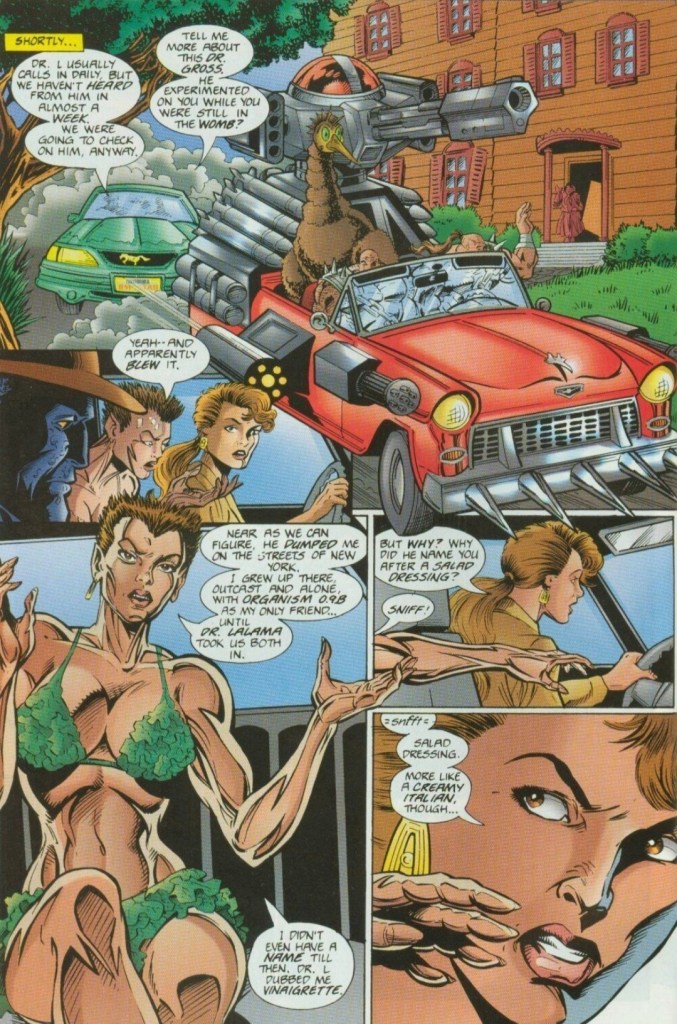
What is obvious to me here is that this comic book is all about the consequences of the death of original Freex team member Michael and how his death impacted specific teammates who had really grown close with him. The plot in this comic book is pretty light as this was clearly written to have strong character dramatization and development.

While there were indeed a whole lot of characters who appeared here, this comic book highlights Sweetface as the one most affected by the sudden death of Michael. That being said, any dedicated Freex fan who seriously followed the series right from the start will be able to relate with Sweetface’s emotions and even feel her deep feelings with Michael. Incidentally, this paves the way for her to interact more with Lewis who also got impacted by the death of their teammate. As the story went on, there were key developments here that strongly symbolized that Freex will take a serious change of direction focusing more on team survival and avenging Michael while severing ties with the Old Man. Clearly the creative team were building up something for the team who at this point have been on a very long and painful journey as nomads.

All throughout, the script really is detailed, richly layered and engaging. Apart from Freex, Night Man, Contrary and her students, and other characters had their fair share of the spotlight strongly symbolizing the current state of the Ultraverse at the time.

Conclusion

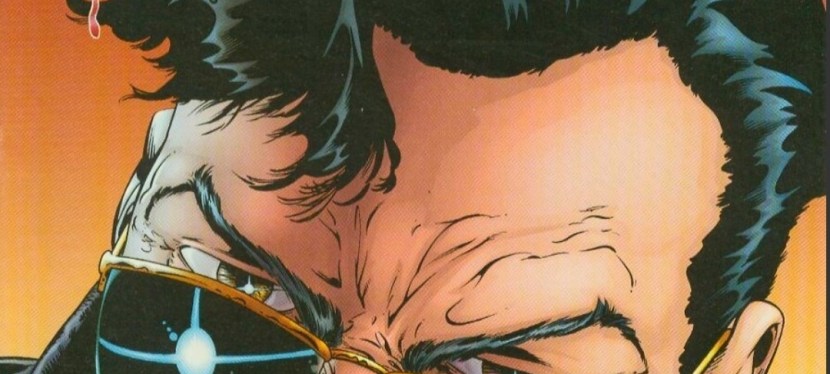
Even as she is mourning over the death of Michael, Angela suddenly sees a mesmerizing vision in front of the others.

Freex (1995) is indeed a solid comic book to read. The strong writing is its strongest feature and it really delivered the compelling stuff that will resonate most with the long-time Freex fans. The dramatization of the effects of Michael’s death really is strong and the new change of direction for the surviving Freex was implemented really smoothly. The lack of a good-versus-evil element was no problem at all here. By the end of the comic book, I became eager to find out what would happen next to Freex.

Overall, Freex (1995) is recommended.

+++++

Thank you for reading. If you find this article engaging, please click the like button below, share this article to others and also please consider making a donation to support my publishing. If you are looking for a copywriter to create content for your special project or business, check out my services and my portfolio. Feel free to contact me with a private message. Also please feel free to visit my Facebook page Author Carlo Carrasco and follow me on Twitter at  @HavenorFantasy as well as on Tumblr at https://carlocarrasco.tumblr.com/ and on Instagram at https://www.instagram.com/authorcarlocarrasco
A Look Back at Armorines #1 (1994)

Disclaimer: This is my original work with details sourced from reading the comic book and doing personal research. Anyone who wants to use this article, in part or in whole, needs to secure first my permission and agree to cite me as the source and author. Let it be known that any unauthorized use of this article will constrain the author to pursue the remedies under R.A. No. 8293, the Revised Penal Code, and/or all applicable legal actions under the laws of the Philippines.

Welcome back superhero enthusiasts, 1990s culture enthusiasts and comic book collectors! Today we go back to the early 1990s and explore a part of the shared universe of Valiant Comics through the Armorines monthly series.

Before I start, I should state that the superhero concept of an armored human protagonist who could do many incredible things made possible by high technology made an impact on comic book storytelling for decades. Look at Marvel’s Iron Man and the Ultraverse’s Prototype for examples.

While Valiant Comics already had its own armored superhero with X-O Manowar (note: his armor is symbiotic, not technological), they decided to move forward with the concept of armored figures in the form of a military team.

With those details laid down, here is a look back at Armorines , published in 1994 by Valiant Comics with a story written by Jorge Gonzalez and drawn by Jim Calafiore.

The cover.

Early story

The story begins five hundred kilometers off the southern coast of Australia. Four people dive very deeply to explore nuclear-powered submarine U.S.S. Benchley which has been dormant for some time already. While exploring the interiors of the submarine, the divers got attacked by something in the dark.

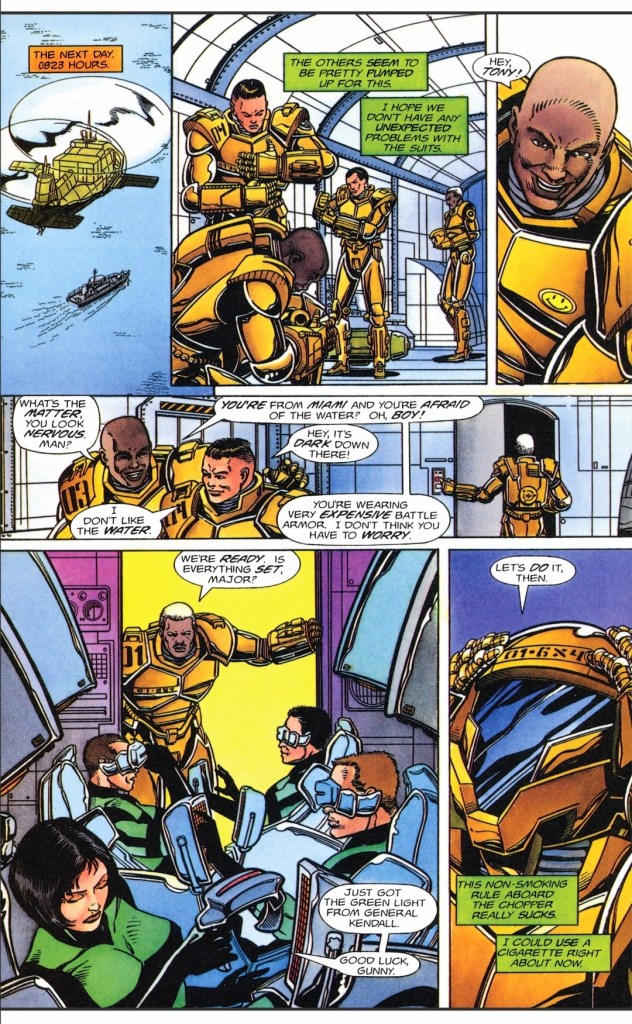
At Camp Pendleton in California, an armored U.S. marine goes through an intense training session fighting machines not knowing that there could be traps waiting to get triggered. As Gunny (the armored marine in the session) falls into a trap, his teammates, General Kendall and the scientist Zahn watch the proceedings behind the scenes as another teammate (operating with virtual reality on her high-tech station) continues to communicate with him.

As time passes by, the situation gets even worse for Gunny physically…

Quality

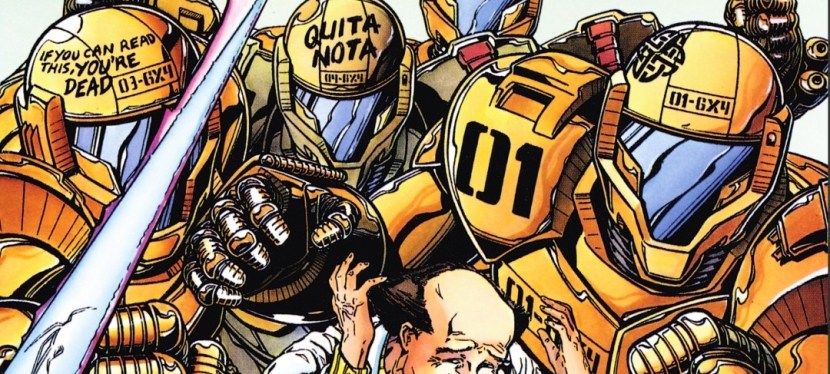
Armorines has members who go out on the field wearing high-tech suits of armor while there are other members who serve as co-pilots using virtual technology and constant communication behind closed doors.

In terms of storytelling, the creative team focused mainly on the build-up of not just the plot but also the importance and the ways of the Armorines themselves. As weapons of the government, Armorines are an expensive team to run due to the use of very advanced technologies for operations. The Armorines have members who go out on the field wearing high-tech suits of armor that provide enhanced protection while also carrying high-tech weapons for offense. The team also has members who stay behind closed doors to use individual stations with virtual reality and enhanced communication with their brothers on the field.

When it comes to the characters, the smoking Gunnery is noticeably the one who got the most exposure and the most development. The other Armorine members got token exposure for the readers.

More on the plot itself, there is a mission that requires the Armorines to go deep underwater to solve a mystery and do something dangerous secretly. The mission was essentially all about protecting America’s top-secret weapons from falling into the wrong hands. To be clear, the mission itself happens in the 2nd half of this comic book which ultimately serves as a pay-off to the build-up the happened earlier. In fairness to the creative team, there was a good amount of suspense presented when the mission really started moving. There definitely something worth seeing during the mission.

Conclusion

In this story, Gunny is the closest thing to a definitive protagonist.

To be very clear, Armorines (1994) is not exactly the high-powered, action-packed story people could expect from seeing the armored marines looking capable of fighting terrorists and other enemies of America in militaristic fashion. This comic book’s story is indeed surprising to me and the creative team was not hesitant to push hard with the concept they came up with here. As this comic book was clearly executed with build-up, introductions and emphasizing concepts in mind, it is not surprising that the pay-off in the 2nd half led to moments of intrigue and suspense with momentum going into the next issue. Lastly, I should state that this comic book is free from political influence and its focus on the team has been very consistent.

Overall, Armorines (1994) is recommended.

+++++

Thank you for reading. If you find this article engaging, please click the like button below, share this article to others and also please consider making a donation to support my publishing. If you are looking for a copywriter to create content for your special project or business, check out my services and my portfolio. Feel free to contact me with a private message. Also please feel free to visit my Facebook page Author Carlo Carrasco and follow me on Twitter at  @HavenorFantasy as well as on Tumblr at https://carlocarrasco.tumblr.com/ and on Instagram at https://www.instagram.com/authorcarlocarrasco
A Look Back at Hulk 2099 #1 (1994)

Disclaimer: This is my original work with details sourced from reading the comic book and doing personal research. Anyone who wants to use this article, in part or in whole, needs to secure first my permission and agree to cite me as the source and author. Let it be known that any unauthorized use of this article will constrain the author to pursue the remedies under R.A. No. 8293, the Revised Penal Code, and/or all applicable legal actions under the laws of the Philippines.

Welcome back superhero enthusiasts, 1990s arts and culture enthusiasts, Marvel Comics fans and comic book collectors! Today we go back to the wild 1990s by examining one of the many tales of Marvel Comics’ 2099 line of franchises, specifically through the Hulk 2099 monthly series.

For the newcomers reading this, Hulk 2099 first appeared in 2099 Unlimited #1 (1993) which also had his origin story told. Hulk 2099 was not a mere version of the classic Incredible Hulk with a futuristic touch. In fact, the futuristic green creature highlighted the protagonist John Eisenhart as a very selfish and obsessed Hollywood studio executive who happens to stumble upon the idolaters/worshipers of the classic Hulk Bruce Banner because he was searching for new properties and stories for his studio. Hulk 2099’s origin has notable similarities to that of the classic Hulk and gamma radiation exposure is one of them. As tales of the futuristic Hulk were told through the quarterly releases of 2099 Unlimited, Marvel decided it was time to give the green creature his own monthly series.

With those details laid down, here is a look back at Hulk 2099 published in 1994 by Marvel Comics with a story written by Gerard Jones and drawn by Malcolm Davis.

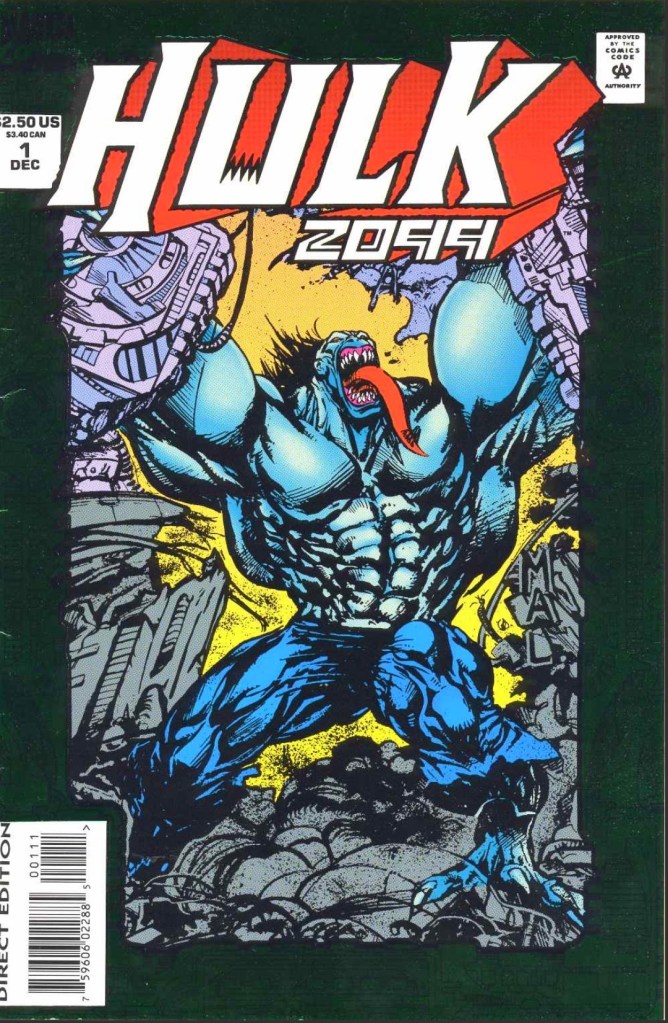
The cover.

Early story

The story begins with the Hulk of 2099 destroying security droids and verbally attacking civilization. As he retains the intellect of John Eisenhart, he expresses his opposition against civilization for keeping people out of the water reclamation zone.

The story then shifts to California where Lotus Entertainment (Eisenhart’s employer) and its crew work on producing a film which is a dishonest telling of Eisenhart’s dealings with the Knights of Banner (already eliminated in 2099 Unlimited ). During the production, one of the executives notices the absence of Eisenhart.

Elsewhere, John Eisenhart drives his flying car with Knights of Banner youth survivor Gawain as his passenger. Already struggling with the guilt over the deaths of all the adult Knights of Banner members, Eisenhart intends to end his employment and cash out of his contract. Gawain remains hostile towards Eisenhart.

Quality

The creative team used flashback images that look really similar to what was told in 2099 Unlimited .

If there is anything that is very obvious to talk about, it is the fact that this tale shows a radically different John Eisenhart who wants to get out of Hollywood’s multiple mazes of crookedness as he feels very guilty over what happened to the Knights of Banner. This happens just as a new entity took corporate control of Eisenhart’s employer before he could leave the company. In many ways, Eisenhart’s distress and struggle with being guilty reminds me a lot about Hardcase of the Ultraverse and the way the creative dramatized him was engaging.

For the story, there is a lot of corporate intrigue going on and Eisenhart’s failure to quit quickly was inevitable because the new enemy he faces here has a lot to do with the sudden takeover of Lotus Entertainment. At least on face value, this looks like an attempt by the creative team to change the status quo and move Hulk 2099 to a new creative direction away from what was established in 2099 Unlimited. Without spoiling the details, I can say that something very significant happened before the comic book’s ending and it will impact readers who followed the futuristic Hulk’s stories closely in the 2099 Unlimited series.

Along the way, there is a lot of action and unfortunate physical happenings which symbolize the chaos concept of the script. The notable thing here is that you won’t see very much of Hulk 2099’s monstrous form as the script was specifically written to tell a tale that went beyond one issue. Clearly, the creative team were sparing Hulk 2099 for a conflict in the next issue.

Malcolm Davis’ art has that visceral aesthetic that fits the established look of Marvel’s 2099 universe of the time but there were instances when he showed so much happening, the visuals looked chaotic and even disorienting. In fairness, his take on Eisenhart, Quirk, Gawain and others made them looked recognizable.

Conclusion

The future of Commiewood, wokeness, and dishonesty.

While its story has little of the green monster in it, Hulk 2099 (1994) does a decent job building up the tension on top of the guilt-filled Eisenhart while setting up events that looked like a bold new creative direction was coming. By the time this comic book was published, several Hulk 2099 tales were already published in the quarterly 2099 series. On its own, this comic book lightly builds up the lore of the 2099 universe as it was clearly focused on Hulk 2099’s creative concept and characters.

While Eisenhart was indeed determined to change, it is a turnoff to see him lie and exaggerate details to protect himself from a certain corporate psychologist who is after the truth. There is also a lot of anti-corporate expressions here which seems to suggest that someone within the creative team had been thinking with socialist concepts and decided to use the script as an outlet of expression. The weird but true thing is that by today’s standards, Hollywood is filled with Commies/socialists/Marxists/liberals/woke nuts from the film crew up to the executives that run studios and produce films or shows that are dumb, lies about reality, self-centered and extensions of their ideologies. This showed that this comic book was prophetic in some ways.

Overall, Hulk 2099 (1994) is satisfactory.

+++++

Thank you for reading. If you find this article engaging, please click the like button below, share this article to others and also please consider making a donation to support my publishing. If you are looking for a copywriter to create content for your special project or business, check out my services and my portfolio. Feel free to contact me with a private message. Also please feel free to visit my Facebook page Author Carlo Carrasco and follow me on Twitter at  @HavenorFantasy as well as on Tumblr at https://carlocarrasco.tumblr.com/ and on Instagram at https://www.instagram.com/authorcarlocarrasco
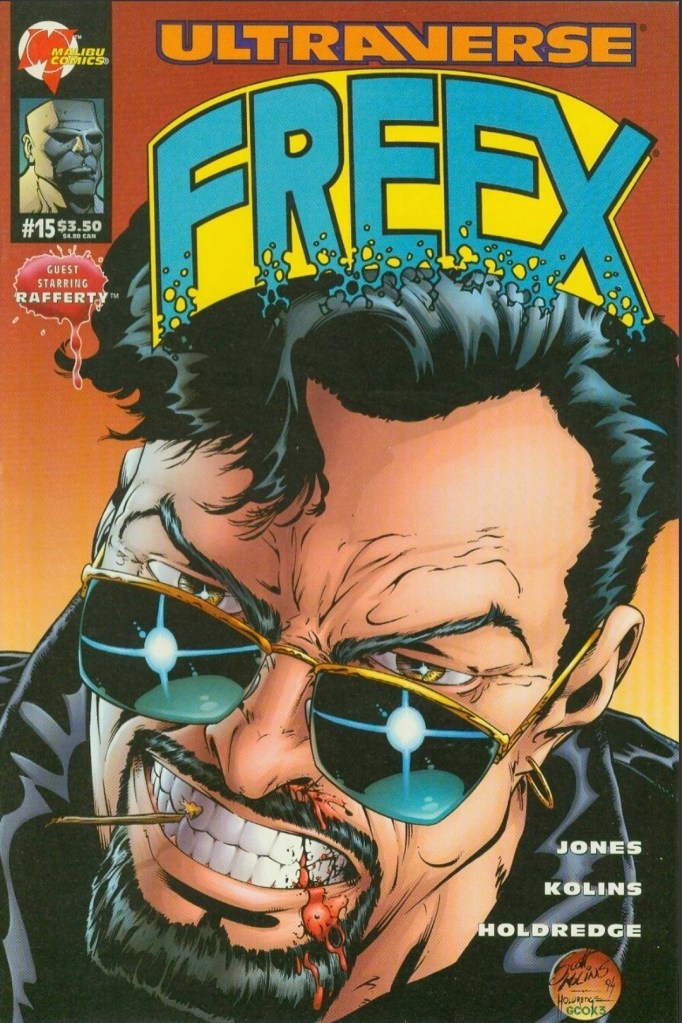
A Look Back at Freex #15 (1994)

Disclaimer: This is my original work with details sourced from reading the comic book and doing personal research. Anyone who wants to use this article, in part or in whole, needs to secure first my permission and agree to cite me as the source and author. Let it be known that any unauthorized use of this article will constrain the author to pursue the remedies under R.A. No. 8293, the Revised Penal Code, and/or all applicable legal actions under the laws of the Philippines.

Welcome back superhero enthusiasts, 1990s arts and culture enthusiasts and comic book collectors! Today we go back to the wild 1990s and explore a part of Malibu Comics’ Ultraverse through a tale of Freex.  

Since after facing off with Contrary (who eventually became part of UltraForce) and her so-called school and students, Freex had been traveling far and long (refer to my previous Freex reviews here, here and here) and gained Old Man as a useful companion. Along the way, they encountered the unknown deep underground and even saw a powerful being. They even got to the city of Denver temporarily. As they went on, they found the path that led them back to civilization.

With those details laid down, here is a look back at Freex , published in 1994 by Malibu Comics with a story written by Gerard Jones and drawn by Scott Kolins. This is a flip-side comic book with Ultraverse Premiere (1994) on the other side.  

The cover.

Early story

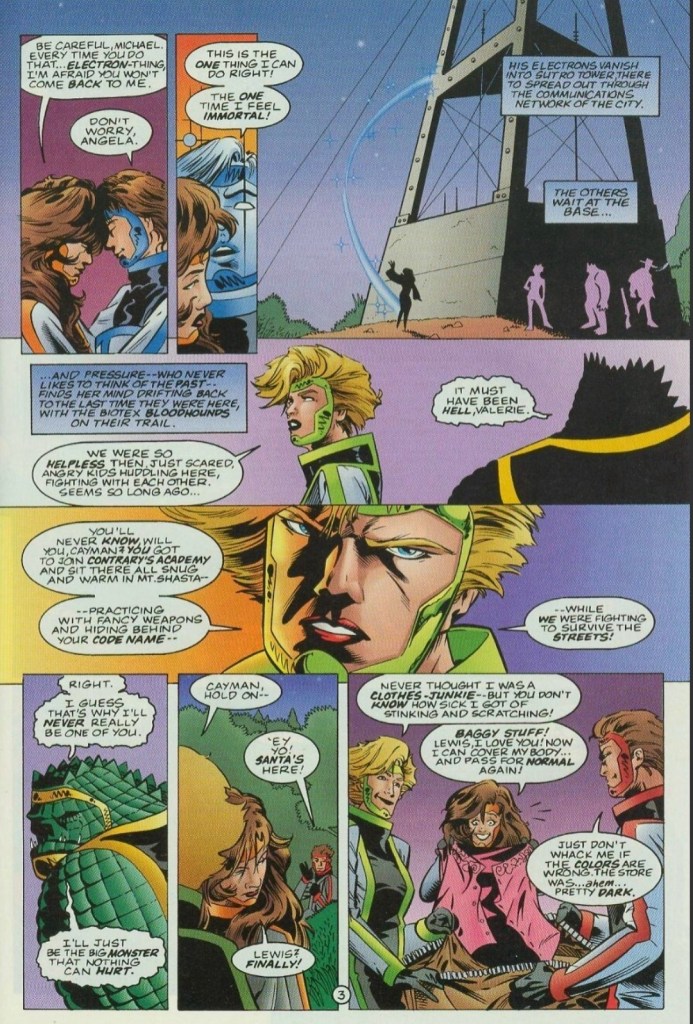
The story begins with Freex – composed of Plug, Sweet-Face, Pressure, Anything and new member Cayman – have been traveling for some time deep underground with Old Man. They find themselves back in San Francisco, the one city that brought them together. While still a long distance away from the city proper and there are no locals who could see them, the team cautiously move to a high communications tower. Michael/Plug uses his special ability to transform himself into electronic matter and makes his way through the communications network of the city to do something very important. Cayman meanwhile becomes the object of discussion between Pressure and Sweet-Face as he has yet to share with them details about himself.

As Cayman himself was part of Contrary’s academy and joined Freex recently, he has trouble gaining the trust of the others. After wearing new clothes that Lewis found, a guy suddenly appears to them. He introduces himself to them as Evan…  

Quality

The very evil Rafferty monitoring Freex secretly and enjoying his advantage over them.

Considering what happened in the previous issues, this story feels like a breath of fresh air not only because of the new location the team got into but also because of strong twists that happened. Instead of going through fantastical encounters, Freex found themselves in situations that are more grounded with reality (within Ultraverse standards specifically) and more notably, the story emphasized crossover as Freex and Old Man encountered Firearm. The said crossover, quite cleverly, sets up Freex into a collision course with the serial killer Rafferty (who encountered The Strangers elsewhere within the Ultraverse). For the newcomers reading this, Rafferty is one of the most evil characters of the Ultraverse who has murdered a lot of people – including his own parents – and has developed tremendous hatred of Ultras.

The inclusion of Rafferty here also sheds light on the Freex’s past connection with the Night Man (click here and here). More notably, the said serial killer turned out to be so resourceful and totally obsessed with murdering people with special abilities, he became a formidable force towards Freex. This leads to a pretty powerful and twisting conclusion that must be seen.  

Conclusion

The gang by the tower.

With a good amount of intrigue, characterization spectacle, strong dialogue and the element of crossover, Freex (1994) is a pretty engaging comic book to read. The biggest feature here is having Freex in a conflict with a very obsessed killer who not only hates Ultras but also has an extensive record of murdering many people over a long period of time. In my view, the Freex-Rafferty conflict was nicely structured and it added depth to the plot. What happened in the end of this comic book should resonate with dedicated fans of Freex.

Overall, Freex (1994) is highly recommended.

+++++

Thank you for reading. If you find this article engaging, please click the like button below, share this article to others and also please consider making a donation to support my publishing. If you are looking for a copywriter to create content for your special project or business, check out my services and my portfolio. Feel free to contact me with a private message. Also please feel free to visit my Facebook page Author Carlo Carrasco and follow me on Twitter at  @HavenorFantasy as well as on Tumblr at https://carlocarrasco.tumblr.com/ and on Instagram at https://www.instagram.com/authorcarlocarrasco

A Look Back at The Solution #17 (1995)

Disclaimer: This is my original work with details sourced from reading the comic book and doing personal research. Anyone who wants to use this article, in part or in whole, needs to secure first my permission and agree to cite me as the source and author. Let it be known that any unauthorized use of this article will constrain the author to pursue the remedies under R.A. No. 8293, the Revised Penal Code, and/or all applicable legal actions under the laws of the Philippines.

Welcome back superhero fans, 1990s arts and culture enthusiasts, Ultraverse fans and comic book collectors! Today we revisit the Ultraverse through the monthly series of The Solution. To be more precise, this review is about the 17th and final issue ever published.

In my previous retro review, The Solution daringly infiltrated a secret in Taiwan knowing that a major meeting between the heads of gangs will take place there. For Lela Cho/Tech, this is an opportunity for her to recover the company she lost to the Dragon Fang gang (read The Solution #6). Unfortunately for Lela and her teammates, the opposition were prepared for them.

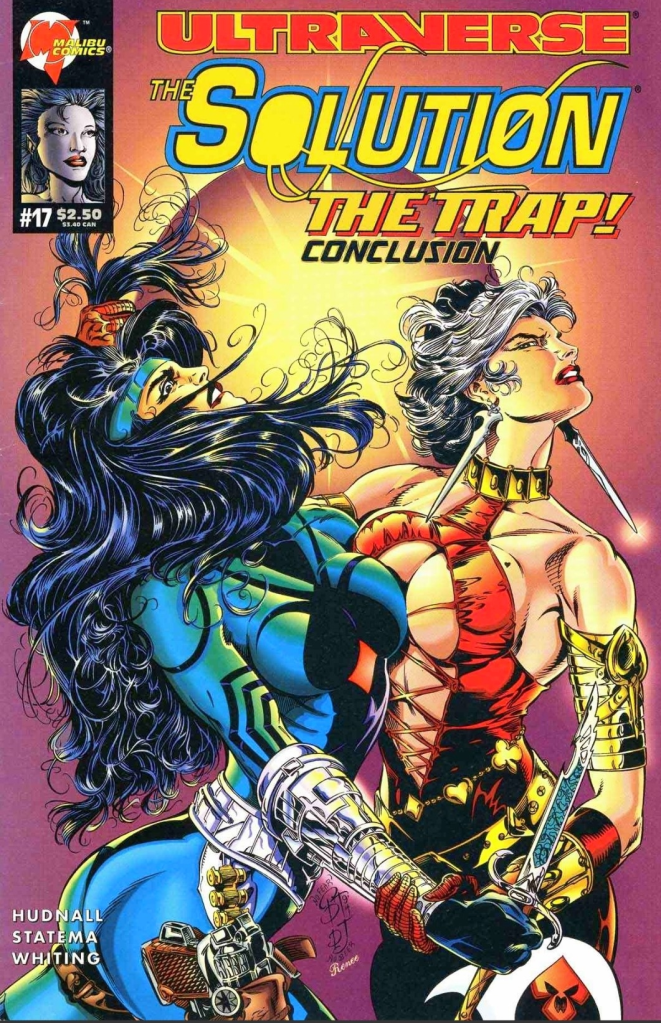
With those details laid down, here is a look back The Solution , published by Malibu Comics in 1995 with a story written by the late James Hudnall and drawn by John Statema.

The cover.

Early story

The story begins with the arrival of the so-called lords of the Dragon Fang gang at the facility in Taiwan. As far as they know, The Solution has been brought down and the leader Lela Cho has been captured. They entered with a feeling of triumph only to see a large number of human bodies and severed body parts on the floor.

Inside, the insidious Casino has Lela Cho restrained helplessly on a high-tech chair. The Solution’s leader has been drugged by Casino who tells her that she (Lela) will be brought to some brothel in Thailand.

In another part of the facility, two armed guards approach the motionless body of Dropkick on the floor. Suddenly, The Solution’s martial artist moves and knocks the two guards out…

Quality

A very vulnerable Lela Cho in front of Casino.

In consideration of the build-up that started in the few previous issues, this particular comic book proved to be a worthy pay-off complete with a few notable twists that surprised me. Without spoiling the plot, I can say that the story is intriguing, the spectacle is plenty and the creative managed to keep things fresh. Along the way, there is some really relevant story elements that will compel you to re-read the early issues of The Solution series, especially when it comes to Casino who previously encountered the titular team.

As a good-versus-evil story, this one does not go over the edge and it certainly is not brainless entertainment. There is a lot more behind The Solution’s conflict with the Dragon Fang gang here and the impact can be felt more by those who actually started reading this particular series from issue .

On the visuals, John Statema’s return here is a very welcome move simply because, in my honest opinion, his style and approach to art really defined the looks of both the series and The Solution itself.  

Conclusion

Shadowmage takes on the Commie from Cambodia.

Being the concluding issue of its own series, The Solution (1995) is a solidly fun and intriguing read. Not only did it conclude the build-up that preceded it, it also encouraged revisiting the earlier issues of the series for a deeper understanding of the opposition forces such as Casino and the Dragon Fang gang. While this was the last The Solution series entry, there was a promise of further adventures as it was made clear that another “era” awaited Lela Cho and her team. Unfortunately, as comic book publishing history showed, The Solution as a publishing franchise came to an end as the Ultraverse itself faded to obscurity under the banner of Marvel Comics (which acquired Malibu Comics in 1994). Take note that The Strangers concluded without a really conclusive story (there were even art works for issues to #27) and Prototype ended with a story that felt like a substitute issue. That being said, the only way to keep enjoying The Solution is by simply repeat reading the entire series as well as finding the team’s appearances in other Ultraverse comic books. In my view, The Solution is one of the very best Ultraverse teams!

Overall, The Solution (1995) is recommended.

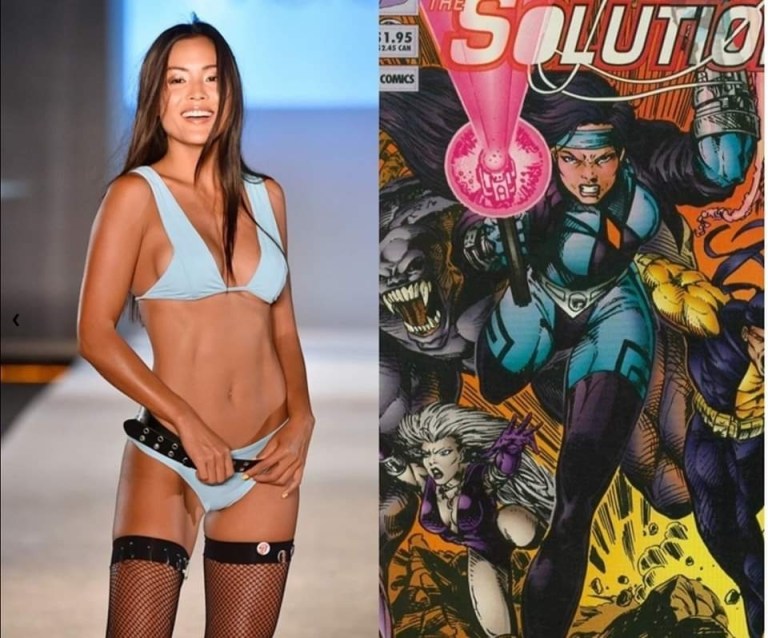
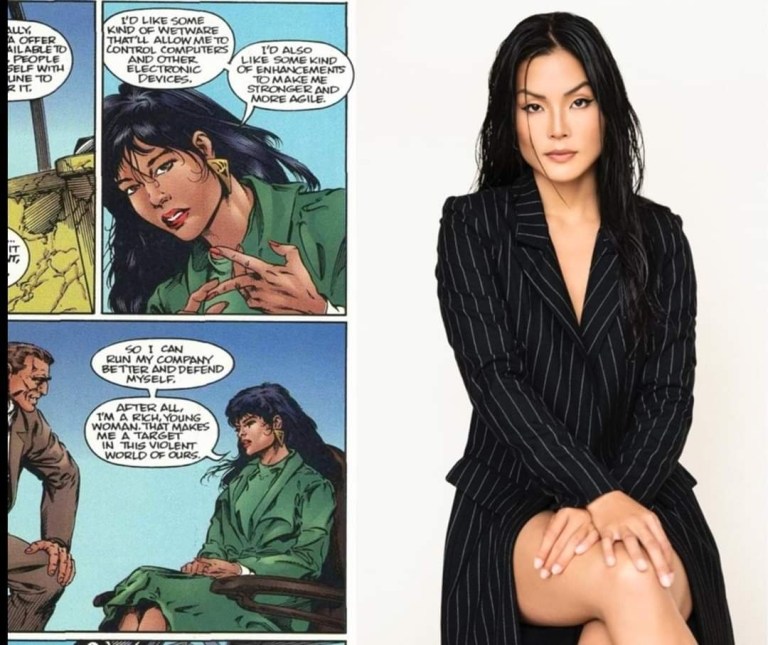
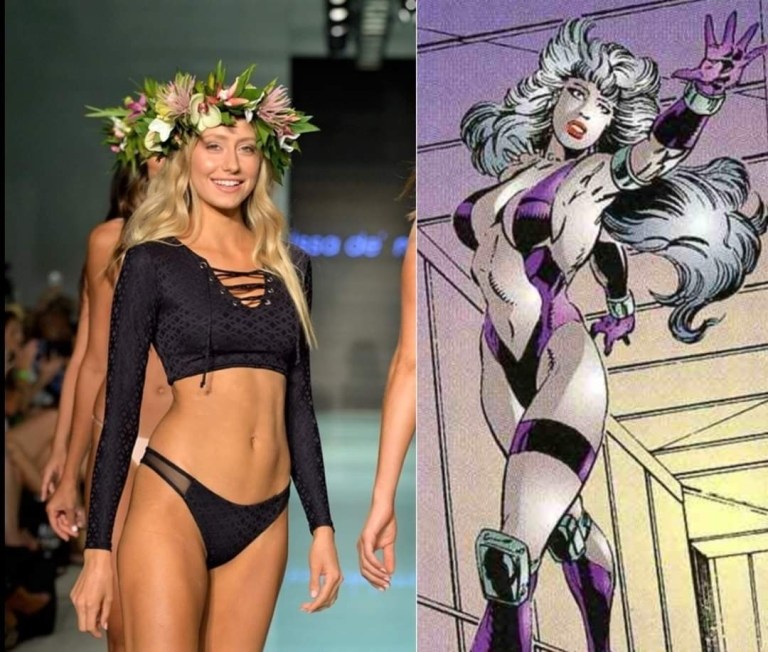
As this is end of my retro reviews of The Solution, posted below are images of fashion models whom I find suitable as cosplay photography models for Lela Cho/Tech and Shadowmage. Please tell me if the models looked their parts. Enjoy!

Model Saria Chen as Tech.
Saria Chen as Lela Cho in civilian form.
Model Shannon Barker as Shadowmage.

+++++

Thank you for reading. If you find this article engaging, please click the like button below and also please consider sharing this article to others. If you are looking for a copywriter to create content for your special project or business, check out my services and my portfolio. If you want to support my website, please consider making a donation. Feel free to contact me with a private message. Also please feel free to visit my Facebook page Author Carlo Carrasco and follow me on Twitter at  @HavenorFantasy as well as on Tumblr at https://carlocarrasco.tumblr.com/ and on Instagram athttps://www.instagram.com/authorcarlocarrasco/.

A Look Back at Sludge #11 (1994)

Disclaimer: This is my original work with details sourced from reading the comic book and doing personal research. Anyone who wants to use this article, in part or in whole, needs to secure first my permission and agree to cite me as the source and author. Let it be known that any unauthorized use of this article will constrain the author to pursue the remedies under R.A. No. 8293, the Revised Penal Code, and/or all applicable legal actions under the laws of the Philippines.

Welcome back, superhero fans, 1990s arts and culture enthusiasts and comic book collectors! Today we revisit the Ultraverse of Malibu Comics and examine one of its many stories told through an issue of the Sludge comic book series.

In my previous retro review, a more character-driven story about Sludge was told as the city crime war story has ended. What made issue #10’s story standout was the unexpected physical change Sludge goes through which is something he had desired apart from wanting death. Ironically, this made him more vulnerable to physical attacks. Needing help on something, he reaches out to the New York Daily Globe’s reporter Shelley Rogers.

With those details laid down, here is a look back at Sludge , published by Malibu Comics in 1994 with a story written by Steve Gerber and drawn by Robb Phipps.

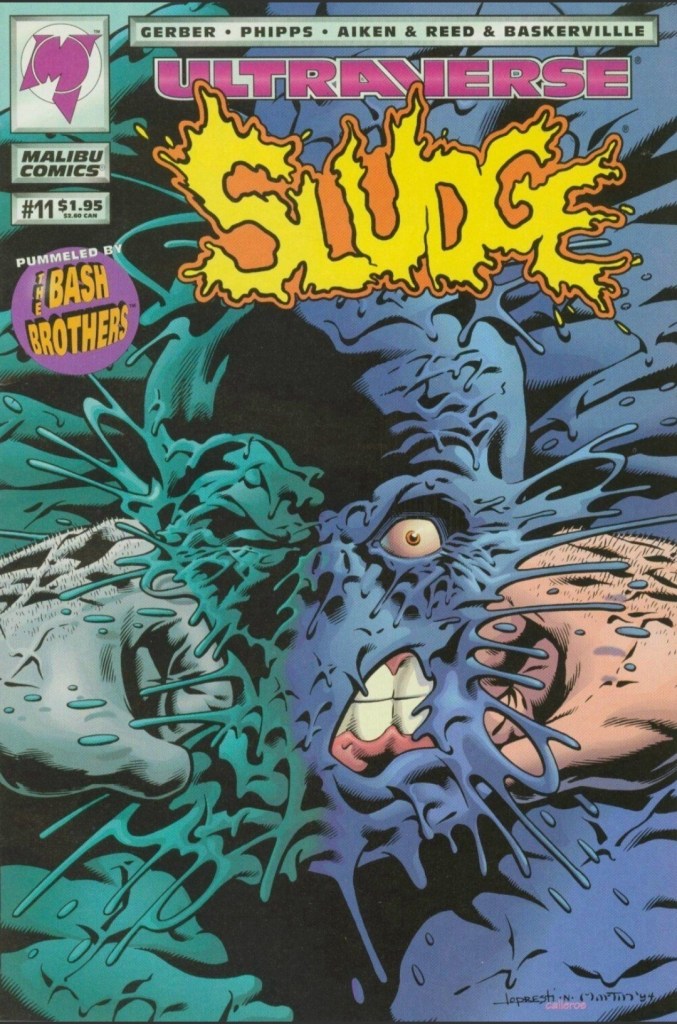
The cover.

Early story

The story begins with Sludge about to engage in a physical battle with the Bash Brothers just outside the Lalama Clinic. Shelley Rogers is just standing nearby. The Bash Brothers proved to be troublesome for Sludge until Shelley explains to one of them that their mother was not harmed. The said mother comes out and after an exchange of talk between them all, they realize Sludge needs the help of Dr. Ferdinand Lalama who was involved with the Caldwell Pharmaceuticals which itself was responsible for the stuff that affected Sludge in the first place.

Shelley then notices that Sludge is reverting back to his previous gooey state. At the same time, Dr. Lalama made no communication for almost a week…

Quality

Something wild is about to happen.

As a story that started with Sludge needing to find a specialist to help treat him, this one went wild with the fantasy concepts. Without spoiling the plot, this wild ride has strong science fiction elements such as energy streaming and traveling to another dimension through a portal. The sci-fi elements are indeed a factor that made this tale of the search of Dr. Lalama a really intriguing read.

With regards to the titular hero, this story encourages researching details of his origin (how he went from human into a chemical being) as well as reading issue . Sludge himself is more vulnerable than before and the unpredictable changes with him added suspense to the narrative. This story also contains themes of scientific experimentation and molecular manipulation which were nicely planted into the story’s sci-fi aspect. That being said, I can say that what was explained near the end of the comic book was both intriguing and worth reading.

Conclusion

A really interesting discussion here.

Sludge (1994) is indeed a really intriguing and entertaining read. Without spoiling anything, I can say that it cleverly answered questions about how Sludge came to be, what Zuke and a regeneration formula did to his state and what forces behind the pharmaceutical company took place that affected the titular character. This is really fitting as this comic book was the 2nd-to-the-last issue ever published. That being said, I can say that I am looking forward to what will be told in issue .

Overall, Sludge (1994) is highly recommended.

+++++

Thank you for reading. If you find this article engaging, please click the like button below, share this article to others and also please consider making a donation to support my publishing. If you are looking for a copywriter to create content for your special project or business, check out my services and my portfolio. Feel free to contact me with a private message. Also please feel free to visit my Facebook page Author Carlo Carrasco and follow me on Twitter at  @HavenorFantasy as well as on Tumblr at https://carlocarrasco.tumblr.com/ and on Instagram at https://www.instagram.com/authorcarlocarrasco

A Look Back at The Solution #16 (1995)

Disclaimer: This is my original work with details sourced from reading the comic book and doing personal research. Anyone who wants to use this article, in part or in whole, needs to secure first my permission and agree to cite me as the source and author. Let it be known that any unauthorized use of this article will constrain the author to pursue the remedies under R.A. No. 8293, the Revised Penal Code, and/or all applicable legal actions under the laws of the Philippines.

Welcome back superhero fans, 1990s arts and culture enthusiasts, Ultraverse fans and comic book collectors! Today we revisit the Ultraverse through the monthly series of The Solution.

In my previous retro review, The Solution took a major risk by going all the way to a secret place in Taiwan. Their purpose was to infiltrate the place and find out any details they could find from a planned secret meeting between heads of multiple gangs. For Tech/Lela Cho, she sees an opportunity to get her company back from the Dragon Fang gang. Dropkick expresses his concern that the whole meeting could be a trap as the Dragon Fang gang knows that Tech can hack their computers and extract information.

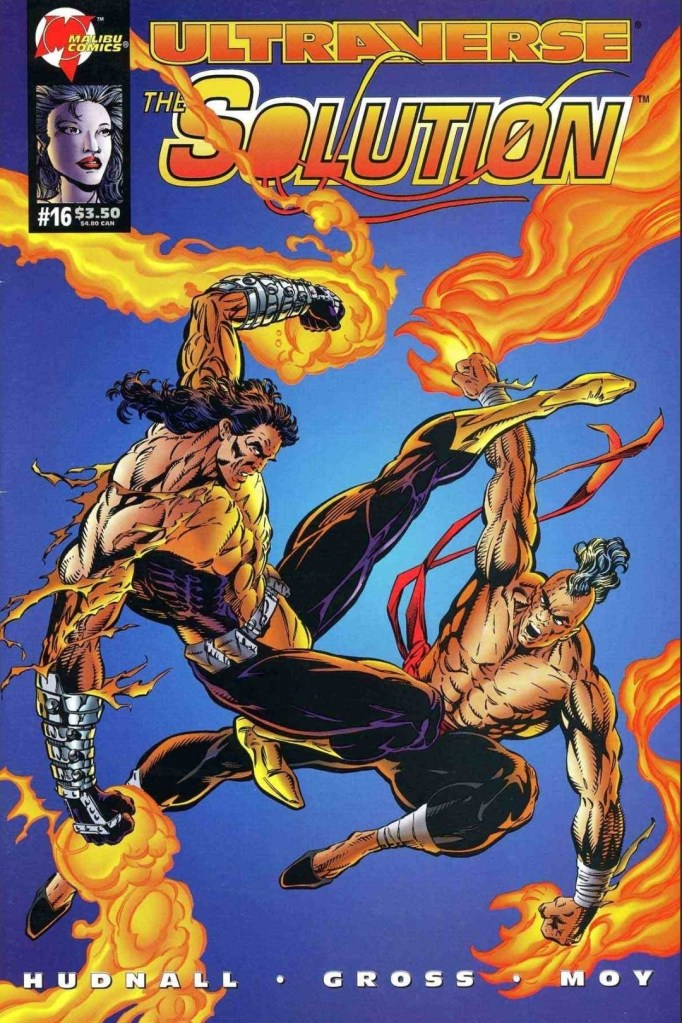
With those details laid down, here is a look back The Solution , published by Malibu Comics in 1995 with a story written by the late James Hudnall and drawn by Daerick Gross.

The cover.

Early story

The story begins with The Solution members apart from each other and each one has been trapped by deadly enemies. Outbreak is being fired upon by armed personnel. Shadowmage is down on the floor having been shot by one of the assassins. Dropkick finds himself attacked by another assassin. Tech is out cold and the deadly assassin Casino has her cornered.

Instead of going for the kill, Casino just talks to Tech and then calls Kwan Lun. In another part of the facility, the Communist Incoming aims his gun at the head of Shadowmage who suddenly moves and avoids the shot fired. As she finds a place to hide, she casts a spell to heal herself…

Quality

Dropkick on the losing end of the fight.

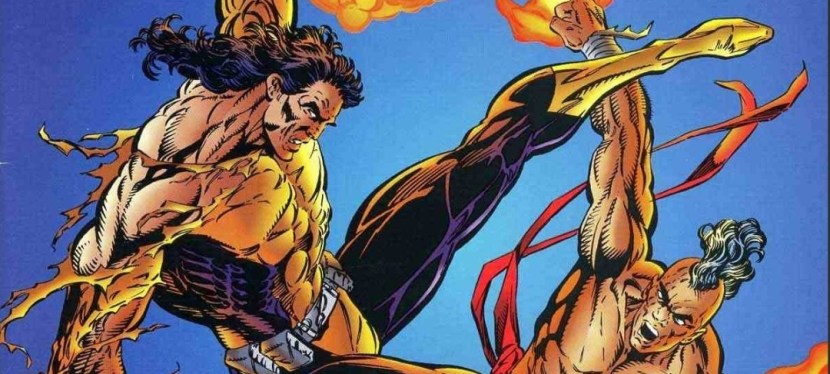
If you want action with The Solution, this comic book has lots of it as it is the continuation of the conflict between the titular team and the evil forces. Quite consistently, the creative team made each team member look vulnerable, especially with Tech who is helpless even though Casino (note: their previous encounter was in issue #7) is ironically not even fighting. While Outrage and Dropkick are on the verge of being eliminated, Shadowmage was also portrayed to be vulnerable in a gritty manner. Adding further depth to the engagement of the story is suspense.

Visually, artist Daerick Gross did a good job and judging from the way the action and sequencing were done, he seems to have researched the previous issues. His artistic takes on The Solution team members plus Casino and the assassins are nice to look at as well as recognizable.

Conclusion

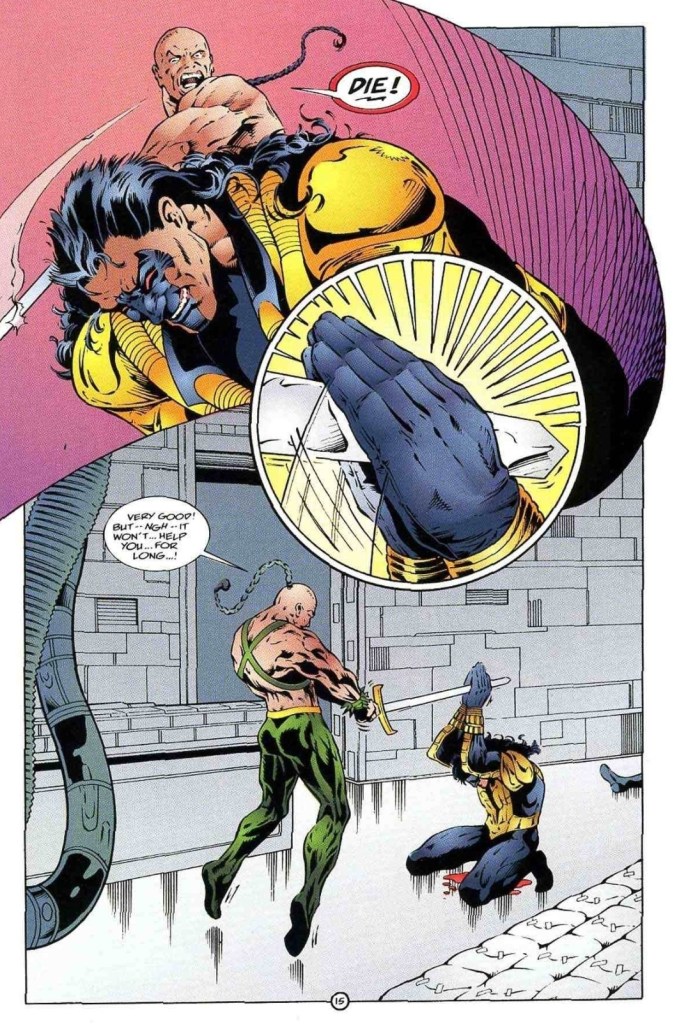
Even though she was down, Shadowmage managed to avoid certain death giving her a chance to survive and take on the armed Commie.

The Solution (1995) is entertaining enough for me and it also succeeded in keeping me interested for the next issue which also happens to be the final issue. As this is the 2nd-to-the-last issue of The Solution series, James Hudnall knew what defined the characters and what kind of stories would keep the fans engaged. That being said, he seemed to have set something up for the next issue as this comic book ended in a cliffhanger.

Overall, The Solution (1995) is recommended.

+++++

Thank you for reading. If you find this article engaging, please click the like button below and also please consider sharing this article to others. If you are looking for a copywriter to create content for your special project or business, check out my services and my portfolio. If you want to support my website, please consider making a donation. Feel free to contact me with a private message. Also please feel free to visit my Facebook page Author Carlo Carrasco and follow me on Twitter at  @HavenorFantasy as well as on Tumblr at https://carlocarrasco.tumblr.com/ and on Instagram athttps://www.instagram.com/authorcarlocarrasco/.

A Look Back at The Solution #15 (1995)

Disclaimer: This is my original work with details sourced from reading the comic book and doing personal research. Anyone who wants to use this article, in part or in whole, needs to secure first my permission and agree to cite me as the source and author. Let it be known that any unauthorized use of this article will constrain the author to pursue the remedies under R.A. No. 8293, the Revised Penal Code, and/or all applicable legal actions under the laws of the Philippines.

Welcome back superhero fans, 1990s arts and culture enthusiasts, Ultraverse fans and comic book collectors! Today we revisit the Ultraverse through the monthly series of The Solution.

In my previous retro review, The Solution itself was not really present in the story which was both a shock and a major disappointment. The Solution (1994) refocused mainly on past villains who debuted in the early part of the monthly series and it sent a clear sign that a rematch with The Solution is bound to happen.

With those details laid down, here is a look back The Solution , published by Malibu Comics in 1995 with a story written by the late James Hudnall and drawn by George Dove.

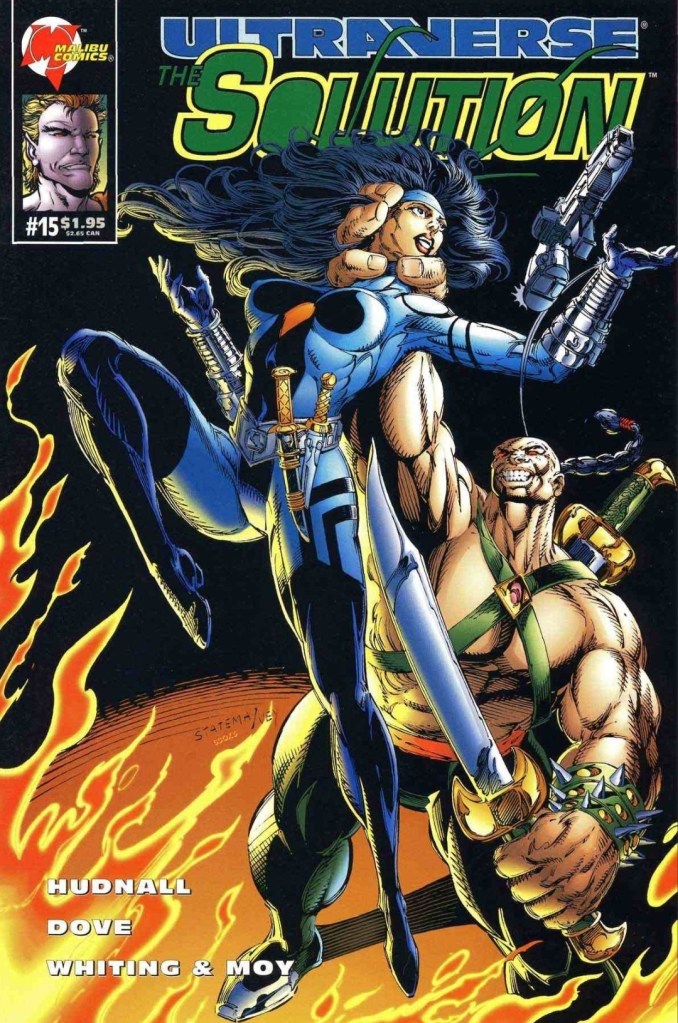
The cover.

Early story

The story begins with Dropkick inside a dark room. Tech comes in searching for him and turns the light on. She is surprised to see Dropkick with a new look complete with face paint. Dropkick insists that his new look will last and he saw the future. The man then surprises Tech once more by instantly changing into casual clothes. She then reveals to him that she found a way to get her company back.

Moments later in a meeting with Dropkick, Outrage and Shadowmage, she reveals that while searching online for information about what the Dragon Fang gang has been doing with her company, she found a memo about a meeting that was set to happen the next week somewhere in Taiwan. The heads of the gang are supposed to be there and for Tech, this is the opportunity to take them on.

As the exact location of the meeting remains unclear, Tech states that they will need to travel overseas as she needs to be near a place to check out the electronic systems. For Dropkick, the whole meeting could be a trap and he states that the Dragon Fang gang knows Tech can read their computers.

Even though she is certain that the trap is real, Tech states that they cannot pass up the opportunity to take on the enemy…

Quality

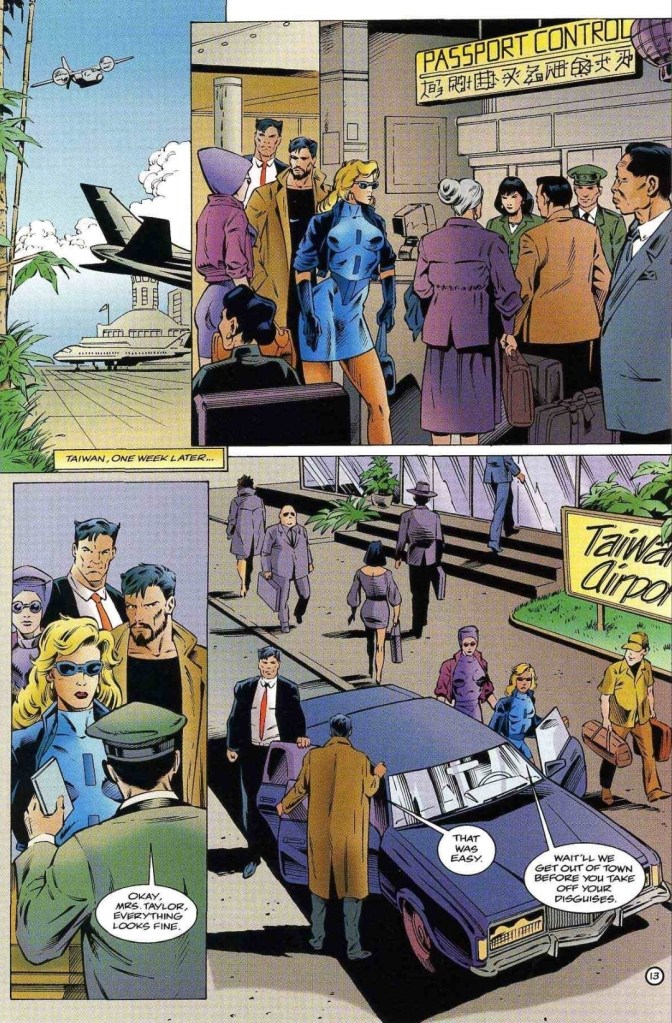
Can you recognize anyone on this page?

Now this is more like it! The Solution is indeed back and this story is pretty much a big pay-off to all the build-up done in the villains-focused story of the previous issue. Take note that this story took place just a short time after the very wild storyline told in issues #9, #10, #11 and #12.

To make things clear, there is a conflict in the story which should resonate with The Solution fans who read the early issues of the series that launched in 1993. There is indeed a rematch between the titular team and the villains (plus Casino in this issue) which fortunately was very well done and proved to be worth the wait and the build-up. Speaking of conflict, there was this surprising development that happened within the side of the villains and that alone added more depth to the plot as well as more tension to the rematch with Tech and her teammates.

Artist Greg Dove did a fine job drawing this story and he knows when to use dynamic visuals when it comes to emphasizing impact. Thanks to Dove, Casino in this issue has that femme fatale look on her face. His take on Tech, her teammates and the three other villains is also good to look at.

Conclusion

The Solution with Dropkick in his new look.

The Solution (1995) marks the series’ return to normalcy (meaning fun, intrigue and engagement) and it is indeed a worthy pay-off to the disappointing previous issue. The conflict told within this particular comic book is just the start and as I reached the ending, I can say that I am anticipating what would happen next. There is a lot for fans of The Solution to enjoy here.

Overall, The Solution (1995) is recommended.

+++++

Thank you for reading. If you find this article engaging, please click the like button below and also please consider sharing this article to others. If you are looking for a copywriter to create content for your special project or business, check out my services and my portfolio. If you want to support my website, please consider making a donation. Feel free to contact me with a private message. Also please feel free to visit my Facebook page Author Carlo Carrasco and follow me on Twitter at  @HavenorFantasy as well as on Tumblr at https://carlocarrasco.tumblr.com/ and on Instagram athttps://www.instagram.com/authorcarlocarrasco/.

A Look Back at The Night Man #10 (1994)

Disclaimer: This is my original work with details sourced from reading the comic book and doing personal research. Anyone who wants to use this article, in part or in whole, needs to secure first my permission and agree to cite me as the source and author. Let it be known that any unauthorized use of this article will constrain the author to pursue the remedies under R.A. No. 8293, the Revised Penal Code, and/or all applicable legal actions under the laws of the Philippines.

Welcome back superhero enthusiasts, 1990s culture enthusiasts and comic book collectors! Today we go back to the mid-1990s which was a pretty wild time for comic collectors. To be more specific, this newest retro comic book review revisits the Ultraverse through The Night Man monthly series.

In my previous retro review, the Teknight armor remotely controlled by J.D. Hunt and his son broke into a prison to free the defeated Apocaloff. Unsurprisingly, the Night Man arrived to stop Teknight’s operation even though the police were not willing to get involved with the vigilante. Eventually, Teknight and Apocaloff were defeated thanks to a masked man who fired a canister from a distance. The Night Man approached the masked man and discovered that he is someone essential in life.

With those details laid down, here is a look back The Night Man , published in 1994 by Malibu Comics with a story written by Steve Englehart and drawn by Kyle Hotz.  

The cover.

Early story

The story begins one week in the past with the shooting of a man witnessed by his lady companion in the presence of three men wearing dark clothes. As the lady agonizes over the injured man, the three men move away, got chased by police officers, and escaped after climbing over a fence.

Moments later, the police isolated the scene of the crime and Johnny Domingo’s father Eddie (the head of Playland security) talks with one of the police officers about what happened. At 3AM the next morning, Eddie returns to the scene of the crime and looks at the blood and the white outline where the victim was marked. At 4:25 AM, with Eddie no longer present, the white outline begins to move and leave the scene of the crime.

In the present day, Eddie and his son Johnny (still in costume as the Night Man) enter an office at Playland…

Quality

J.D. Hunt calls for the production of a new and improved Teknight armor.

After reading back-to-back issues that had Apocaloff as the main opposition for the Night Man, this comic book not only made a drastic change of storytelling direction but also came up with something could change the way readers perceive the titular hero.

For one thing, having Eddie know that his son and Night Man are one and the same person is quite striking and this became even more evident when they have this very meaningful private talk early in the story. That exchange of dialogue is a must-read. Next, while Night Man made clear he prefers to continues his vigilante acts against evil without his father’s involvement, he accepts the suggestion of moving into Playland as he knew the place a lot since childhood and found it advantageous for his covert operations.

Along the way, a brand new and highly unusual villain got introduced here and provided the Night Man a new form of challenge. The battle between the titular hero and the new villain was well executed and the special attention to detail during key moments were amusing to read.

With regards to the killing that took place at the start of this comic book, there is a sub-plot related to it and it includes a reference to a key event in the past within the Ultraverse which itself is connected with Night Man’s origin.

Conclusion

Kyle Hotz’s art made the images look creepy. Even the Night Man himself looks creepy.

The creative team of Englehart and Hotz set the stage for the new direction of storytelling while succeeded in telling an engaging standalone story in The Night Man (1994). The Night Man fans and Ultraverse fans will have a lot of things to enjoy in this comic book. I personally liked the way the creative team executed story twists and added depth to the plot.

Overall, The Night Man (1994) is recommended.

+++++

Thank you for reading. If you find this article engaging, please click the like button below, share this article to others and also please consider making a donation to support my publishing. If you are looking for a copywriter to create content for your special project or business, check out my services and my portfolio. Feel free to contact me with a private message. Also please feel free to visit my Facebook page Author Carlo Carrasco and follow me on Twitter at  @HavenorFantasy as well as on Tumblr at https://carlocarrasco.tumblr.com/ and on Instagram at https://www.instagram.com/authorcarlocarrasco

A Look Back at The Night Man #9 (1994)

Disclaimer: This is my original work with details sourced from reading the comic book and doing personal research. Anyone who wants to use this article, in part or in whole, needs to secure first my permission and agree to cite me as the source and author. Let it be known that any unauthorized use of this article will constrain the author to pursue the remedies under R.A. No. 8293, the Revised Penal Code, and/or all applicable legal actions under the laws of the Philippines.

Welcome back superhero enthusiasts, 1990s culture enthusiasts and comic book collectors! Today we go back to the mid-1990s which was a pretty wild time for comic collectors. To be more specific, this newest retro comic book review revisits the Ultraverse through The Night Man monthly series.

In my previous retro review, the titular character had another encounter with Nik Apocaloff away from civilization. Meanwhile, the obsessive tycoon J.D. Hunt approved a new high-tech project called Teknight which is capable of intense combat and other functions. I personally enjoyed the way the creative team presented the big rematch between Night Man and Apocaloff in his werewolf form.

With those details laid down, here is a look back The Night Man , published in 1994 by Malibu Comics with a story written by Steve Englehart and drawn by Kyle Hotz.  

The cover.

Early story

The story begins with the defeated Apocaloff standing behind bars in prison with other inmates and police officers present. The police officer tells him of his acts of murdering women and society was fortunate enough to have the Night Man responsible for his capture. Apocaloff then has a small chat with the inmate Martini whose wife just made bail for him again. Upon release from prison, Martini meets his wife and kids outside but excuses himself to help a certain someone. Martini then proceeds to a high-end and meets with a lady inside who pays him for his work and then makes an important call to J.D. Hunt. Knowing that Apocaloff knows sensitive information, Hunt then goes to Nuware Labs where the Teknight project is ready for operation.

Meanwhile, the Night Man searches for Rhiannon…  

Quality

Even though they share common goals, Night Man and the law enforcers have a conflict.

Once again, the creative team of Englehart and Hotz crafted another pretty engaging story that has surprises and moments of intrigue while keeping the narrative fresh. Without spoiling the plot, this comic book had a strong focus on J.D. Hunt and his young yet very aggressive son who use Teknight to do something very daring regarding the captured Apocaloff.  This, of course, lures the Night Man to take action but in a very different way as the conflict happened within the city and with elements of the police and the local government involved.

Apart from showing the conflict between good and evil, Englehart managed to include a few reflective scenes that will make you think about the differences the police have with Night Man with regards to law enforcement and vigilantism clashing with each other even though they all want the same achievement: defeating criminals and handing them over to the justice system. There is also this rather sinister portrayal of the father-and-son relationship between J.D. Hunt and his blonde son. More on the villain Apocaloff, it is very clear that by this point in the Night Man series, he is indeed a major character of opposition against the titular character in this series. I should state that Englehart really delivered a very compelling portrayal of evil with J.D. Hunt and Apocaloff involved. Lastly, this story ended with a twist that  really surprised me.

Conclusion

The Teknight project.

The Night Man (1994) is indeed another compelling story that has a nice mix of action, intrigue and characterization. This is a notable achievement by the Englehard-Hotz team as the Night Man himself was less prominent compared to the previous issue. This is understandable since there was the stronger focus and development of J.D. Hunt and his son as both of them got involved in the story’s main conflict. I should also state that off all the Ultraverse comic books I reviewed so far, this one has a strong father-and-son element that has to be read.  

Overall, The Night Man (1994) is recommended.

+++++

Thank you for reading. If you find this article engaging, please click the like button below and also please consider sharing this article to others. If you are looking for a copywriter to create content for your special project or business, check out my services and my portfolio. Feel free to contact me with a private message. Also please feel free to visit my Facebook page Author Carlo Carrasco and follow me on Twitter at  @HavenorFantasy as well as on Tumblr at https://carlocarrasco.tumblr.com/ and on Instagram at https://www.instagram.com/authorcarlocarrasco/