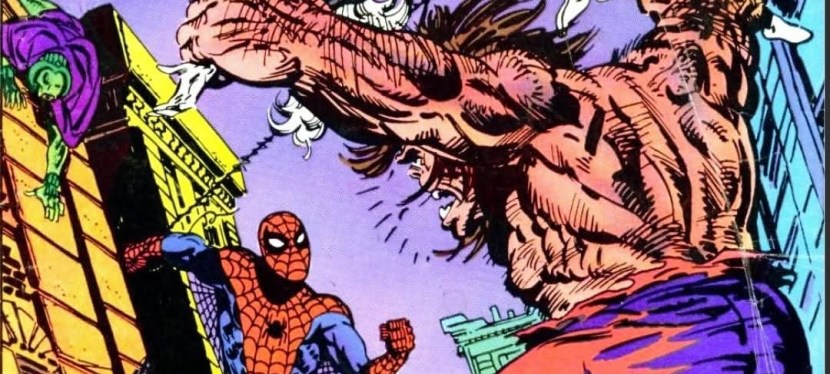
A Look Back at Spectacular Spider-Man #88 (1984)

Welcome back superhero enthusiasts, 1980s arts and culture enthusiasts, Marvel Comics fans and comic book collectors! Today we go back to the year 1984 to examine a small part of the Marvel Comics shared universe through a tale of the Spectacular Spider-Man monthly series.

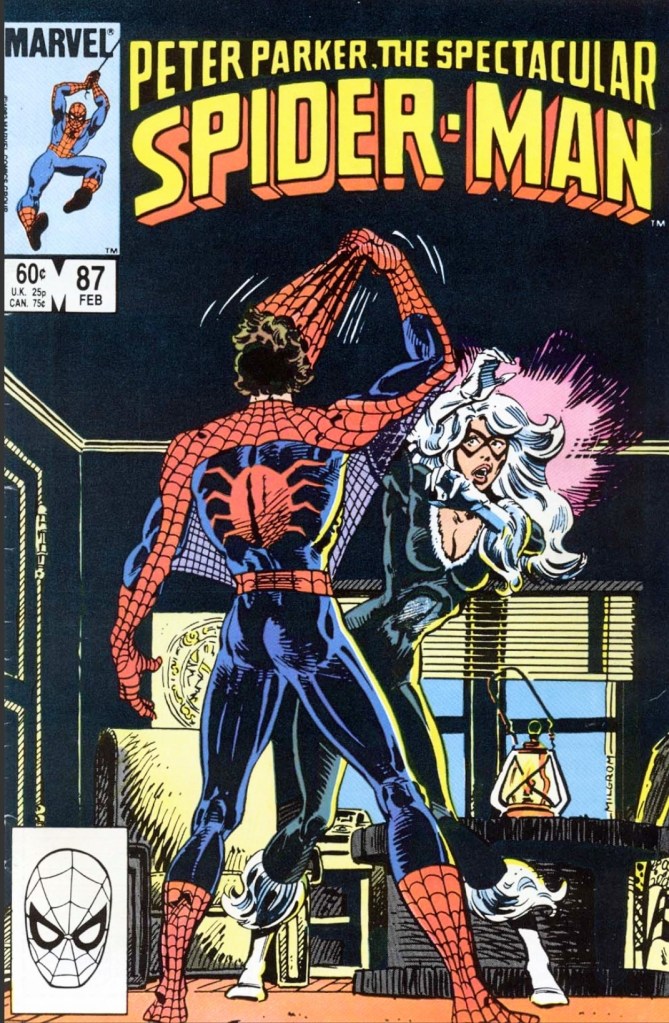
In issue #87, Spider-Man revealed his secret identity to Black Cat. That was a turning point on not just the romance between the two but also on their combined efforts of stopping crime and helping others in the city. This opens up opportunities for creative teams of Marvel to explore where Spidey and Black Cat’s relationship will go to next.

With those details laid down, here is a look back at Spectacular Spider-Man #88, published in 1984 by Marvel Comics with a story written by Bill Mantlo and drawn by Al Milgrom.
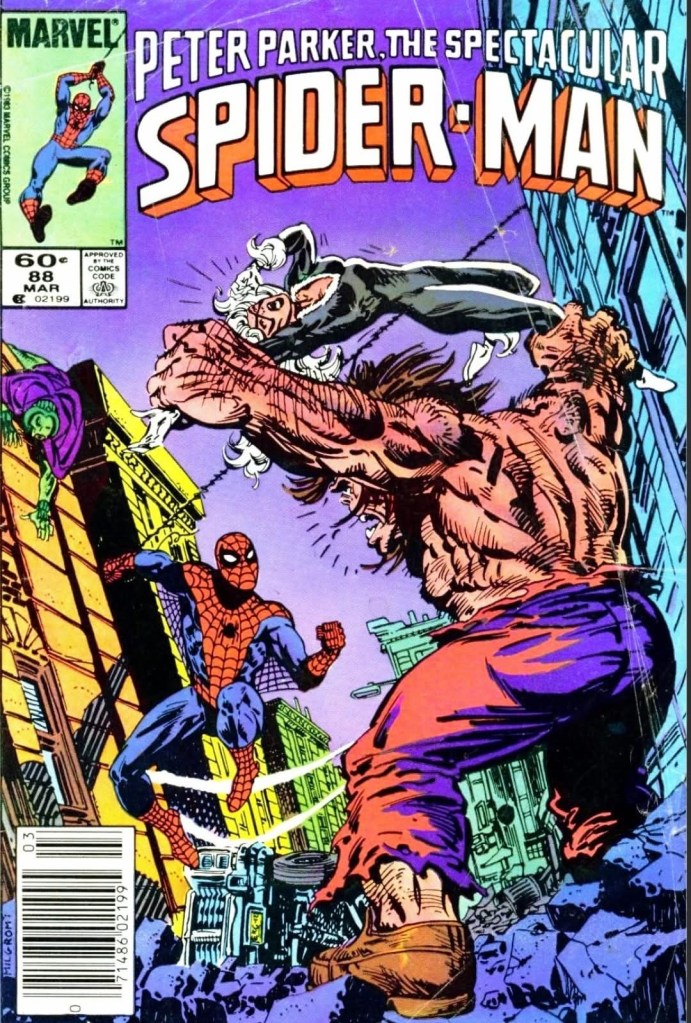
The cover.

Early story

The story begins inside a secret facility wherein several armed guards are preparing themselves for an unseen incoming force. They are guarding a convict known as The Cobra (Klaus Voorhees) who warns them that the one person after him will find some way of killing him.

Suddenly, Mister Hyde breaks through the metallic gate and demands that Cobra should be given to him. The guards used tranquilizer gas to take Hyde out but it turned out useless. Cobra and his handlers secretly moved to the rooftop of the facility to try to escape by helicopter. Suddenly, Hyde emerges, brings down a solid tower and crashes the helicopter with it. He then grabs Cobra who only slithered away.

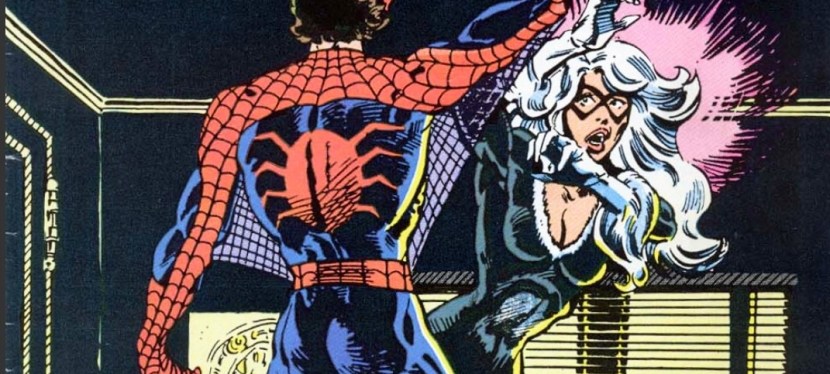
Meanwhile in New York City, Spider-Man is inside the apartment of Felicia Hardy (Black Cat) and he feels that something dreadful is going to happen…

Quality
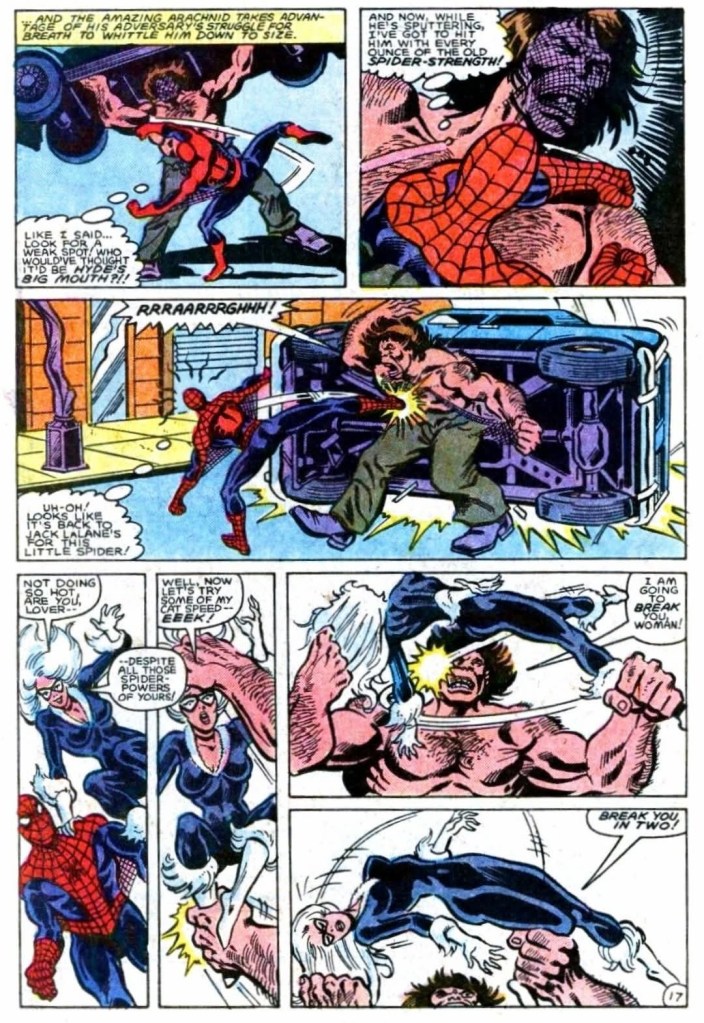
There is a lot of action scenes to enjoy here. Spider-Man and Black Cat have their own moments taking on Hyde.

I will go straight to the point here. This Spectacular Spider-Man tale sure is packed with a lot of action and intrigue balanced by the romance of Spider-Man and Black Cat (who is now living with the knowledge that Peter Parker is Spider-Man). The conflict between Mister Hyde and the Cobra here is preceded by their past collaboration of getting revenge upon Thor. In fact, Spider-Man had encountered both characters sometime prior and his personal knowledge of Thor’s encounter with them added some depth to the new conflict in this comic book. Spidey here became cautious as he knows the extent of the savagery of Hyde.

As this tale took place after Black Cat learned Spider-Man’s secret identity, the dynamics between the two during battle became intriguing when the former took the initiative to strike the dangerous Hyde even though she was told to protect Cobra. This forces the iconic webslinger to put himself at risk by aggressively hitting Hyde while keeping Black Cat out of the way.

The big battle involving the four notable characters is quite extensive and intense to follow. There are a few strong twists between the scenes and it is entertaining to read. When it comes to character development, I enjoyed how the creators portrayed Spidey being concerned about Black Cat’s wellbeing and her lack of super powers while simultaneously portraying her as being determined to so something significant on solving problems.  

Conclusion
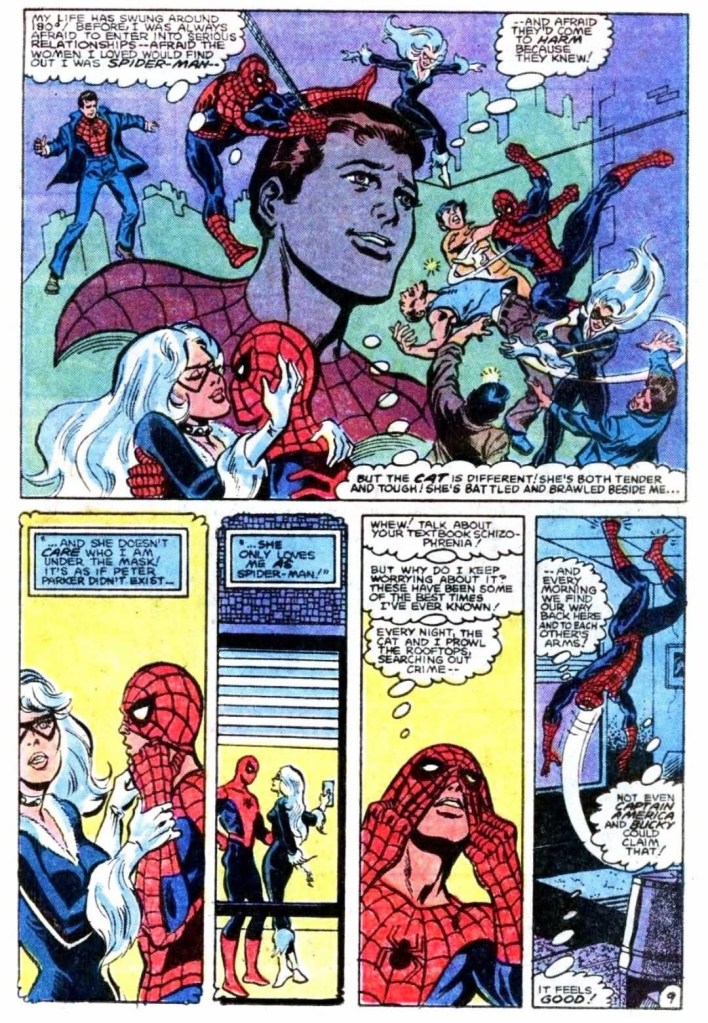
The romance between the two is worth following.

Spectacular Spider-Man #88 (1984) is not only a good follow-up to the previous issue, it is also a worthy showcase of Spidey and Black Cat’s relationship as Cobra and Hyde engage in a new conflict. As this is an action-packed story, it is not surprising that the character development scenes are fewer. This is a fun read.

Overall, Spectacular Spider-Man #88 (1984) is recommended.

+++++

Thank you for reading. If you find this article engaging, please click the like button below, share this article to others and also please consider making a donation to support my publishing. If you are looking for a copywriter to create content for your special project or business, check out my services and my portfolio. Feel free to contact me with a private message. Also please feel free to visit my Facebook page Author Carlo Carrasco and follow me on Twitter at  @HavenorFantasy as well as on Tumblr at https://carlocarrasco.tumblr.com/ and on Instagram at https://www.instagram.com/authorcarlocarrasco
A Look Back at Action Comics #436 (1974)

Welcome back superhero enthusiasts, 1970s arts and culture enthusiasts, DC Comics fans and comic book collectors! Today we go back to the year 1974 to take a close look at a part of the DC Comics universe through a tale of the Action Comics monthly series.

If you know the Superman lore in comics, you should be aware that Perry White (first appeared in 1940) is the editor-in-chief of the Daily Planet and is the superior of Clark Kent (Superman), Lois Lane and Jimmy Olsen. As Perry White got race-swapped (a woke move that’s also idiotic) and presented as a black man in Zack Snyder’s Man of Steel and James Gunn’s Superman (2025), be aware that the long-lasting character originated in the comics as a white man who symbolized dedication and management consistently. I still remember the live-action versions of Perry White played by Jackie Cooper in the 1978 movie and by Lane Smith in the TV series Lois & Clark: The New Adventures of Superman.

I read a lot of Superman comic books and many times Perry White appeared as a supporting character. He also appeared in the memorable crossover comic book Superman and Spider-Man, interacting with Peter Parker (Spider-Man). As a supporting character in Superman tales, Perry White occasionally provides journalistic direction or a challenge to Clark Kent who in turn tackles problems in his civilian identity or as Superman.

But what if Perry White overshadows Superman himself?

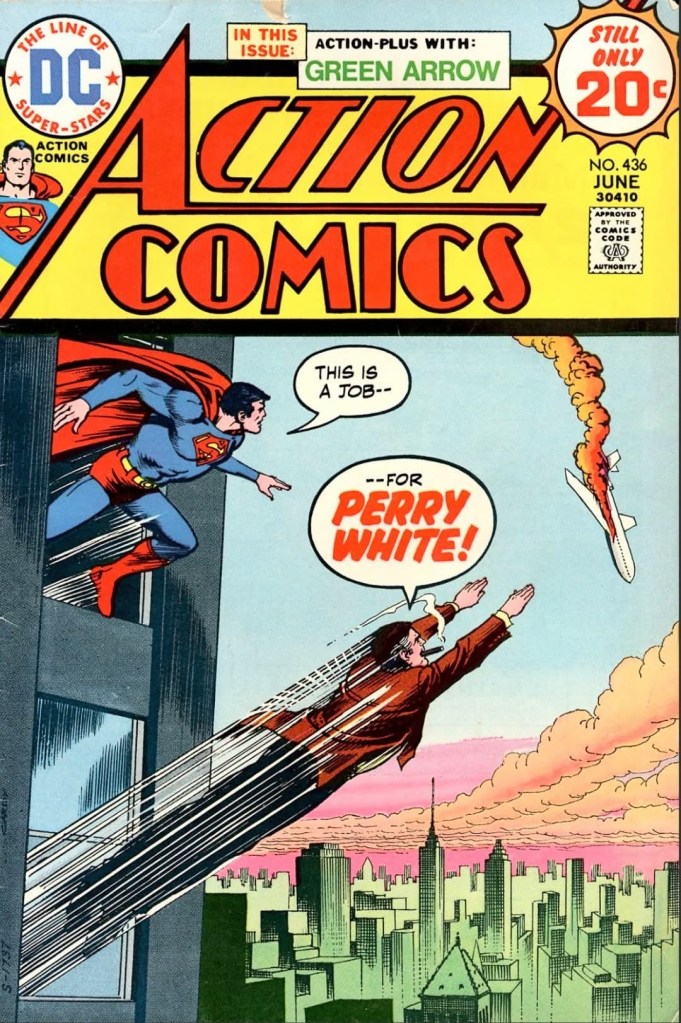
With those details laid down, here is a look back at Action Comics #436, published in 1974 by DC Comics with a story written by Elliot S. Maggin and drawn by Curt Swan.

The cover.

Early story

The story begins deep within Metropolis when the Daily Planet’s editor Perry White enters the Galaxy Building. White does not realize that he is being watched by two adults who turned out to have special abilities and together they levitated a gift for him before he reaches his office. The gift for Perry White was their response to the help he provided to them – the mutants – to escape the influence of Calixto sometime before. The two adults then vanished.

As White arrives in his office, Superman discreetly flies into the Galaxy Building and changed into his civilian form as Clark Kent. With his enhanced hearing, Kent heard the phone in his office ringing and quickly rushes to it. Through the phone, White (who was notified he won the Pulitzer Prize again) tells him that Edge Morgan has something big happening on both TV and on paper, and they should fly out to New York to work together…

Quality

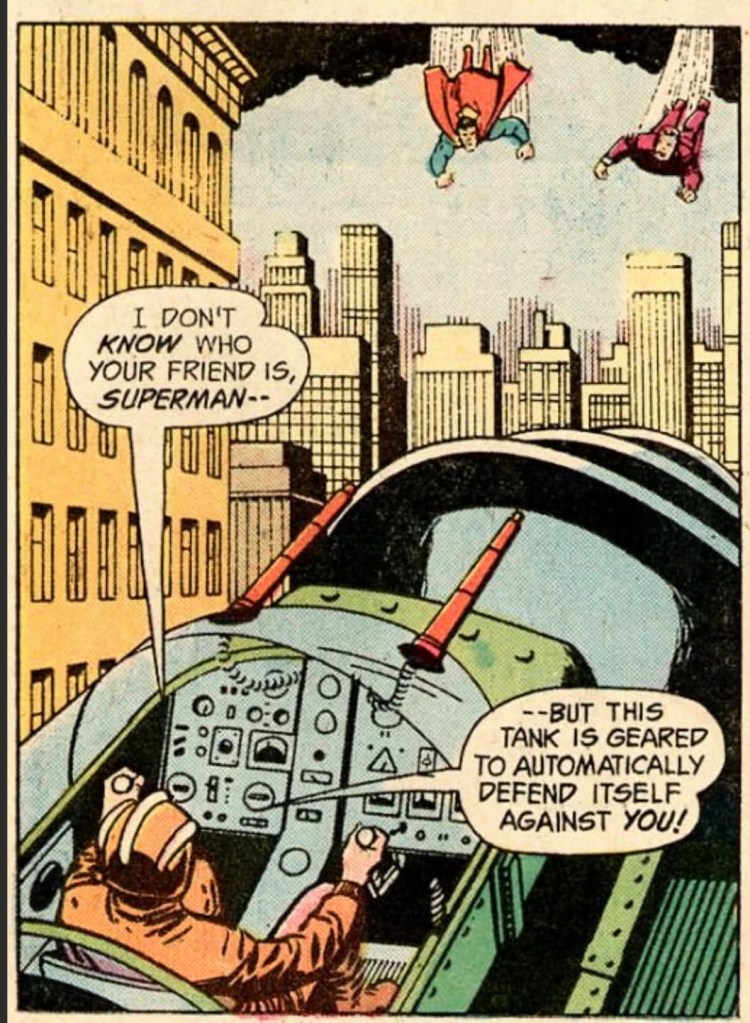
Superman and Perry White fly towards an enemy.

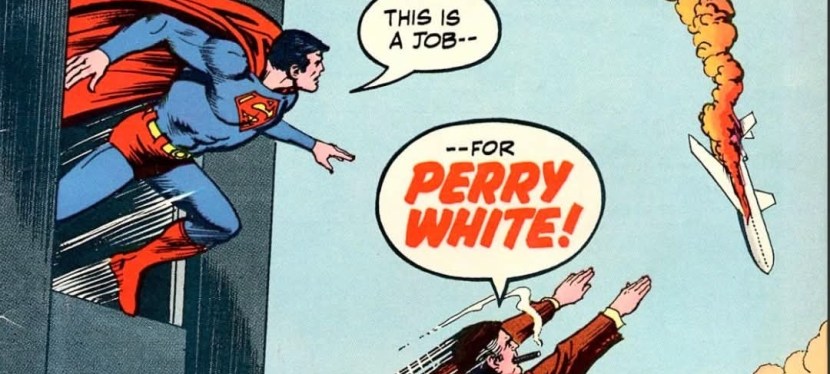
To get straight to the point, this Superman tale shows the wild concept of Perry White overshadowing the Man of Steel in terms of capabilities instead of journalistic power. On paper it sounds crazy but the good news is that the wild concept was told nicely and it is actually fun to follow without ever going over the top.

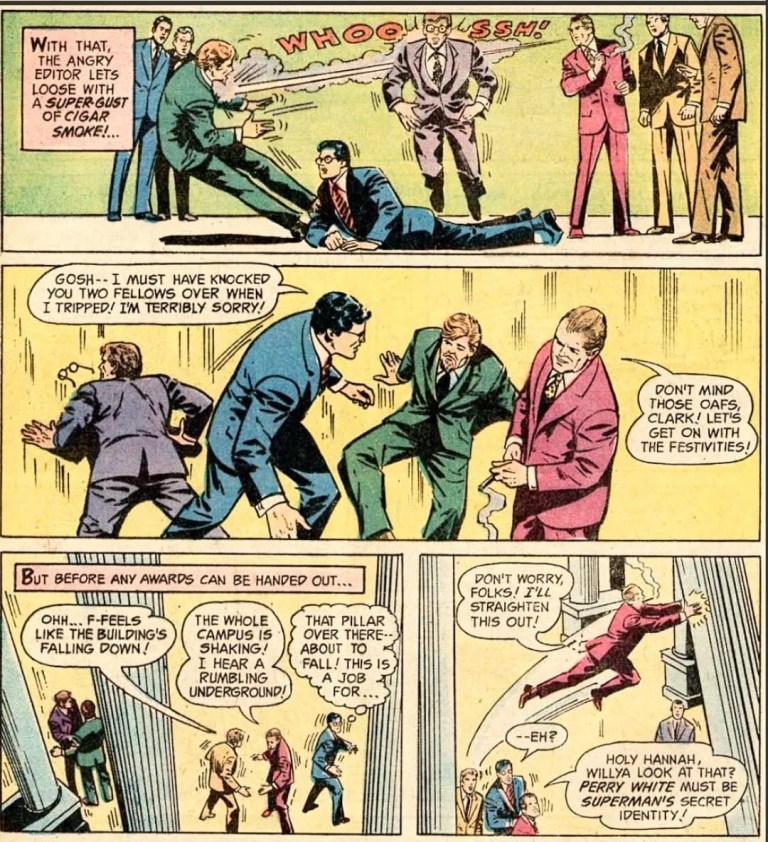
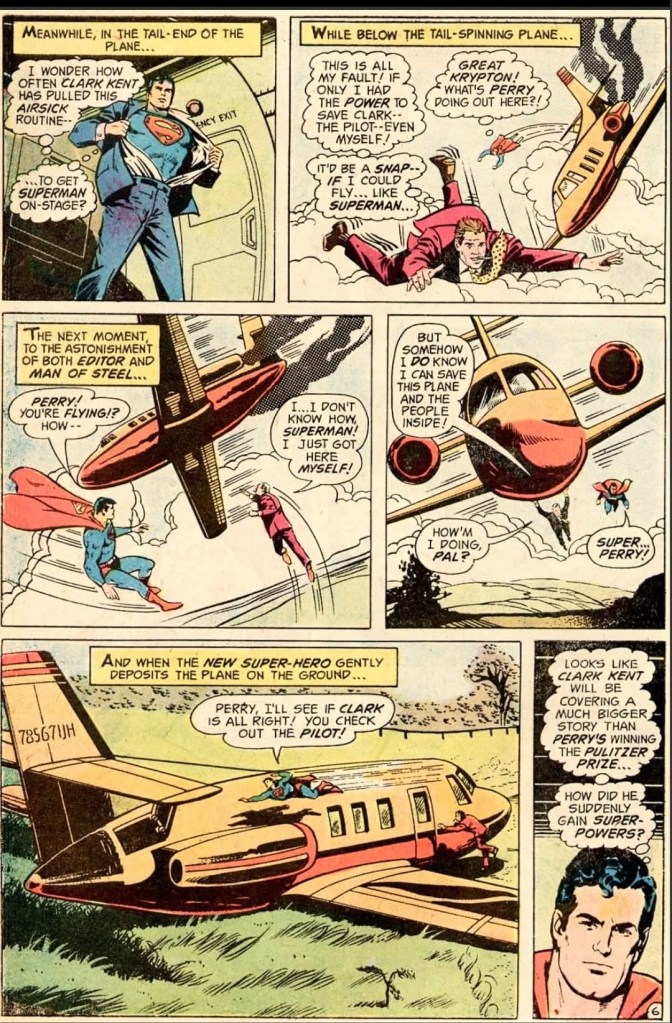
With witnesses around, Perry White uses his super powers.

Apart from the story’s outlandish idea, the plot shows a new dimension of Perry White transforming from a supporting player (in the form of a newspaper editor) into a more heroic figure. Instead of being a helpless witness of events happening, White becomes more involved and contributes something to the prevention of disaster and even tackling evil head on. That being said, this situation allowed the creative duo to show a new side of White’s personality as he himself realizes the sudden weight and pressure that comes with having super powers, and he still has journalistic standards to live up to.

Conclusion

Superman is surprised to witness Perry White fly and prevent a small plane from crashing.

A product of its time, Action Comics #436 (1974) has a short story that had a zany concept which turned out to be an entertaining read. It is nice to see Perry White actually becoming super while the storytelling done by the Maggin-Swan team never became too outlandish. Think of this comic book – which also has a short story of Green Arrow – as a bout of fun focused on Superman and Perry White. I first read this comic book as a young boy and now as an adult, it is still enjoyable to read again. No woke garbage and no Zack Snyder-style darkness here. This is classic Superman.

Overall, Action Comics #436 (1974) is recommended.

+++++

Thank you for reading. If you find this article engaging, please click the like button below, share this article to others and also please consider making a donation to support my publishing. If you are looking for a copywriter to create content for your special project or business, check out my services and my portfolio. Feel free to contact me with a private message. Also please feel free to visit my Facebook page Author Carlo Carrasco and follow me on Twitter at  @HavenorFantasy as well as on Tumblr at https://carlocarrasco.tumblr.com/ and on Instagram at https://www.instagram.com/authorcarlocarrasco
A Look Back at Web of Spider-Man #31 (1987)

Welcome back superhero enthusiasts, 1980s culture enthusiasts and comic book collectors! Today we go back to the year 1987 to explore a part of the Marvel Comics shared universe through the Web of Spider-Man monthly series.

In this review, we will examine the opening chapter of one of the more significant storylines of the entire publishing history of Spider-Man… Kraven’s Last Hunt. Behind the scenes, writer J. M. DeMatteis came up with a concept about a limited series featuring the Marvel hero Wonder Man getting buried and returning from the grave. After getting rejected, the writer redeveloped his concept, proposed it to DC Comics (with Batman in mind), got rejected again and pitched the concept again to Marvel (with Spider-Man in mind) with a new villain who would really define the storyline. Marvel accepted the proposal and DeMatteis proceeded to write it while adding more Spider-Man elements to it. 

With those details laid down, here is a look back at Web of Spider-Man #31, published in 1987 by Marvel Comics with a story by J.M. DeMatteis and drawn by Mike Zeck.  

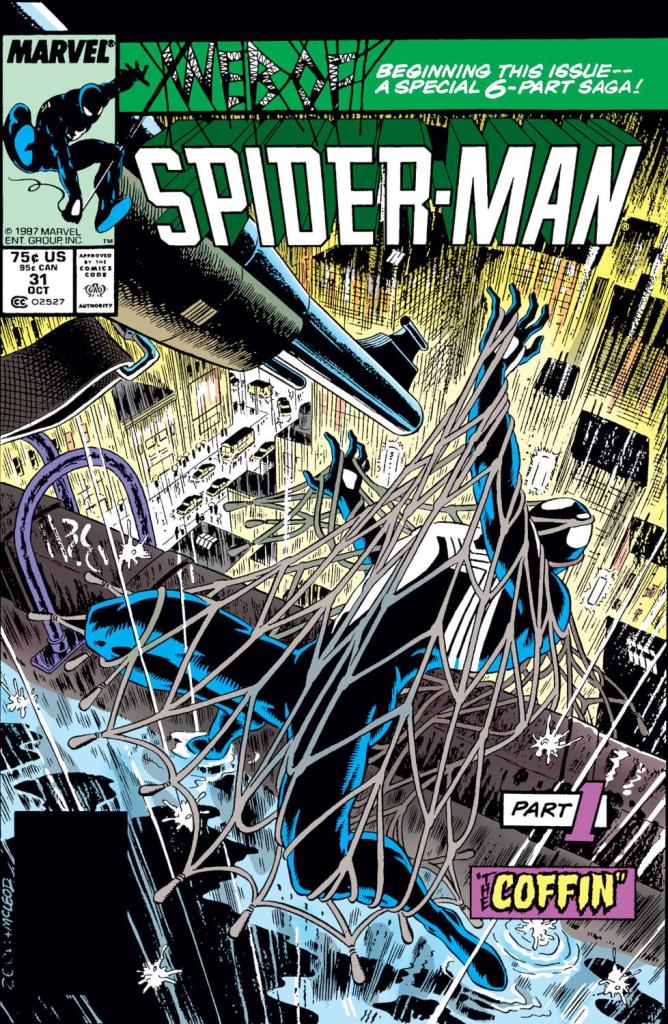
The cover.

Early story

The story begins with Kraven The Hunter moving and attacking like an animal interacting with life-sized figures of animals inside his castle. Afterwards, he slows down, gets a drink and walks into another large room that has an open coffin. He pulls out a black costume that carries the design of Spider-Man’s own costume. Kraven, who was a child when his parents arrived in America shortly after the overthrow of the Czar in Russia, is convinced that the world seem to have followed Russia’s sad example and he found dignity in the jungles instead of the cities. He found honor in the primal, not the civilized. He knows he will die soon and Spider-Man is the central part of his final pursuit in life.

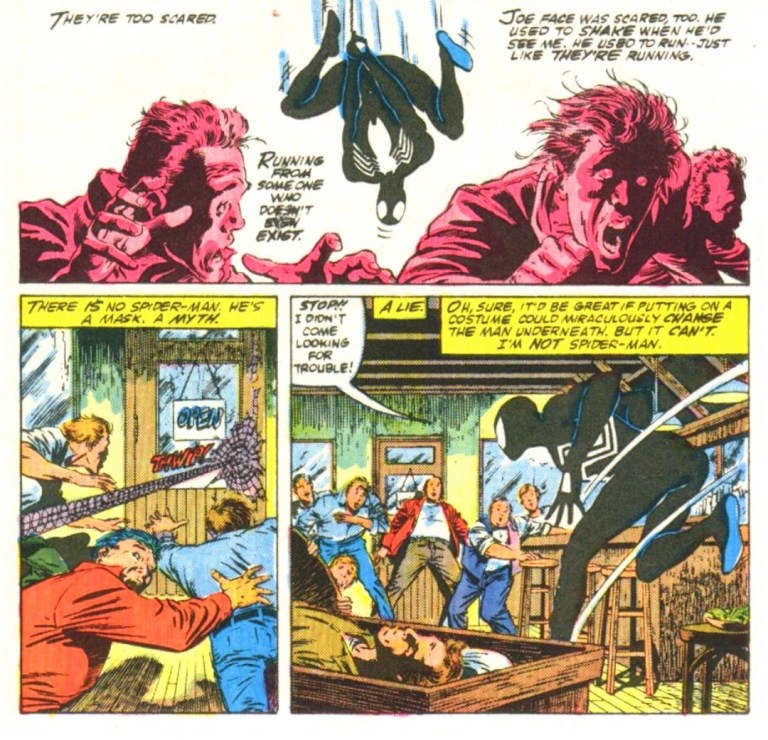
Meanwhile in another part of New York City, Spider-Man discreetly attends the private gathering of several men in a bar who pay their last respects to the late Joe Face (a helpful friend of Spidey). As soon as he revealed himself, the men got scared of him and tension intensified. The webslinger pays his respect to Joe Face and puts several Dollar bills into the collection of funds.

Spider-Man then swings his way home…

Quality

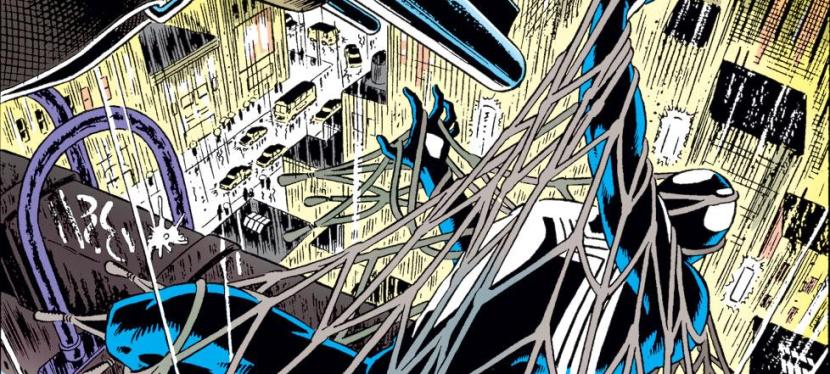
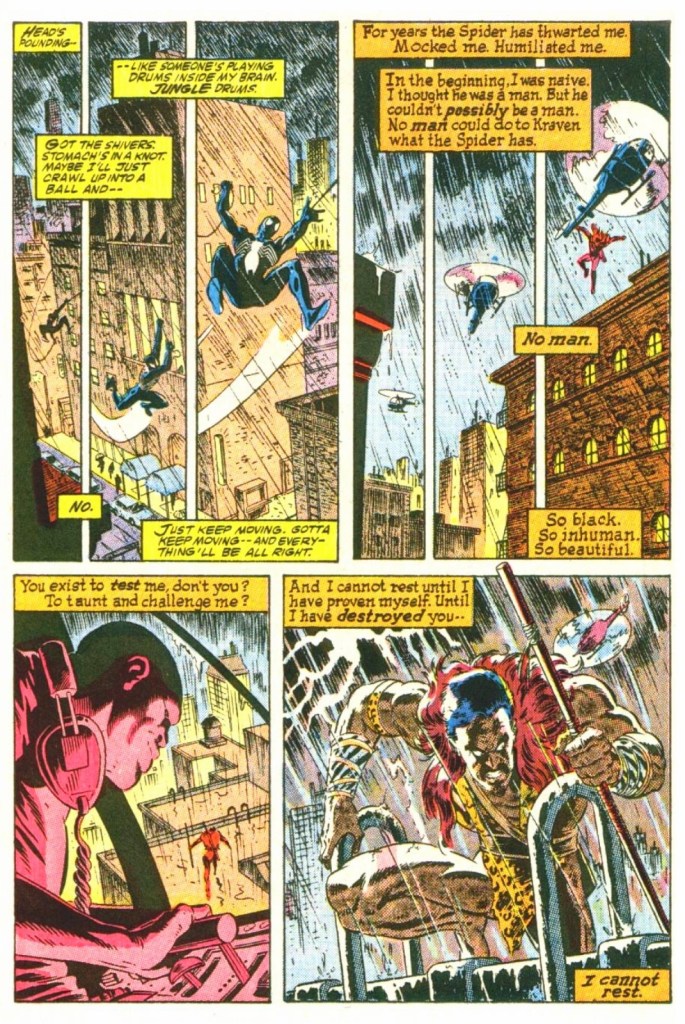
As Spider-Man travels, Kraven the Hunter pursues him obsessively.

I want to state first that this Spider-Man tale has a dark and gritty presentation. The story feels really grounded with reality and it has an almost perfect atmosphere for the concept about Kraven getting ready to eliminate Spider-Man and do something very ambitious afterwards. The pacing of the storytelling moved at a medium pace and most notably, the build-up is really great to follow.

Without spoiling the plot, Kraven is truly the most featured character of this comic book as Spider-Man was written to be his moving target. DeMatteis invested a lot of creativity to build up Kraven not only as the definitive menace but also as a human being. Through the rich writing, Kraven is a man who developed and heavily prepared himself to achieve his goal. You will realize what he thinks about modern society, how he views life and why he is acting as if each day would be his last. As a villain, the evil of Kraven is very subtle yet he emerges as the deadliest foe of Spider-Man. This is truly a major development of the hunter when compared to his first-ever appearance in Amazing Spider-Man #15 (1964).

Through the views of Kraven, you will realize his own perception of Spider-Man which is intriguing to read as we readers know the webslinger’s true identity while the obsessed hunter does not. In relation to his obsession with Spider-Man, Kraven truly immerses himself with what he knows  and does things that all other people would never do. I should also state that the hunter’s intense preparation has strong parallels with Batman’s approach on preparing himself for a major encounter.

As mentioned earlier, the webslinger is the target. Spider-Man appears as a disturbed and vulnerable figure and there is nothing that his powers can do to help him overcome his problems. As the build-up grows, the troubles of Spider-Man intensified which made the reading experience captivating.

Conclusion

People getting spooked by Spider-Man’s sudden appearance.

Web of Spider-Man #31 (1987) is truly a great read and it is also a very powerful opening of its storyline. By having Kraven as the definitive character and Spider-Man as the target, this comic book really subverted expectations backed with powerful writing by DeMatteis. Along the way, Mike Zeck’s artworks truly captured the dark and gritty tone of the script and this resulted in a very captivating visual presentation.

Overall, Web of Spider-Man #31 (1987) is highly recommended.

+++++

Thank you for reading. If you find this article engaging, please click the like button below, share this article to others and also please consider making a donation to support my publishing. If you are looking for a copywriter to create content for your special project or business, check out my services and my portfolio. Feel free to contact me with a private message. Also please feel free to visit my Facebook page Author Carlo Carrasco and follow me on Twitter at  @HavenorFantasy as well as on Tumblr at https://carlocarrasco.tumblr.com/ and on Instagram at https://www.instagram.com/authorcarlocarrasco
A Look Back at What If #19 (1980)

Welcome back superhero enthusiasts, 1980s arts and culture enthusiasts, Marvel Comics fans and comic book collectors! Today we go back to the year 1980 to examine an alternate story of the Marvel Comics shared universe chronicled through the What If monthly series.

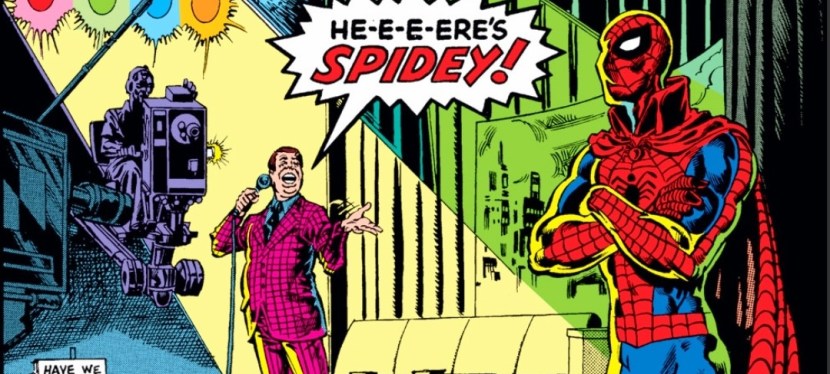
Spider-Man is clearly Marvel Comics’ greatest icon. He is the one Marvel superhero who is easily recognized around the world through the many comic books published, the animated TV shows and the big-budget Hollywood movies released. Given Spider-Man’s real-life fame as a pop culture and American icon, one has to wonder what would it be like had the webslinger decided to have a career in showbiz instead of fighting bad guys. How can Spidey realize that with great power comes great responsibility if he is so focused on being an entertainer?

With those details laid down, here is a look back at What If #19, published in 1980 by Marvel Comics with a story written by Peter Gillis and drawn by Pat Broderick.

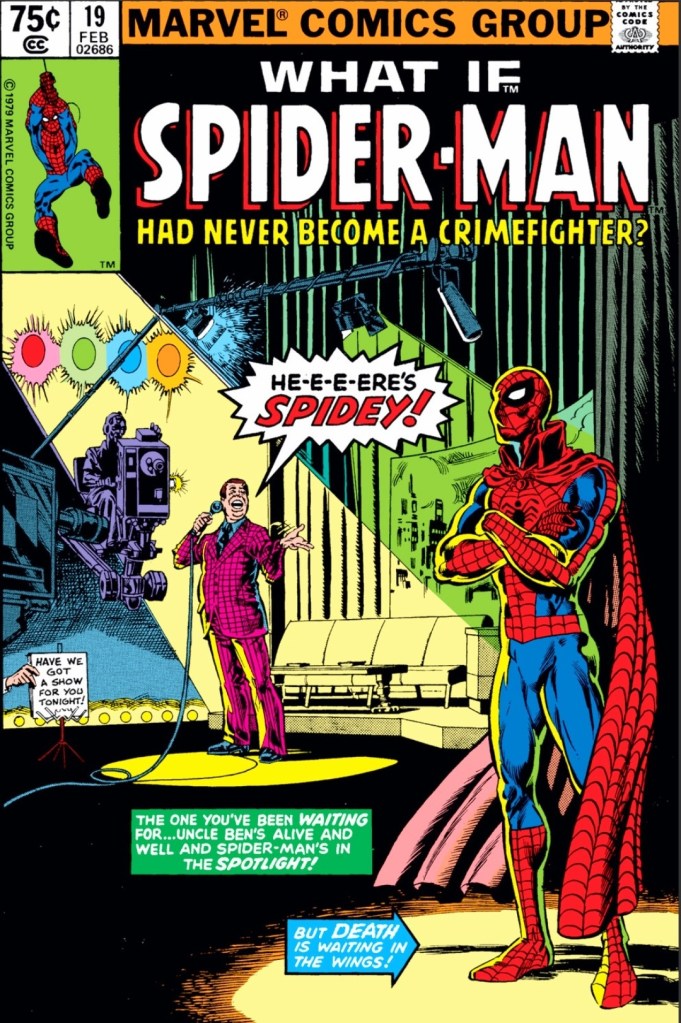
The cover.

Early story

The story begins far into Spider-Man’s past when he started as an entertainer. Spider-Man sees a police man chasing a thief down the hallway (note: this was a key moment in the life of Peter Parker who went to become a crime fighter as Spider-Man). Instead of letting the thief get away, Spidey uses his web to stop him which enabled the police officer to apprehend him.

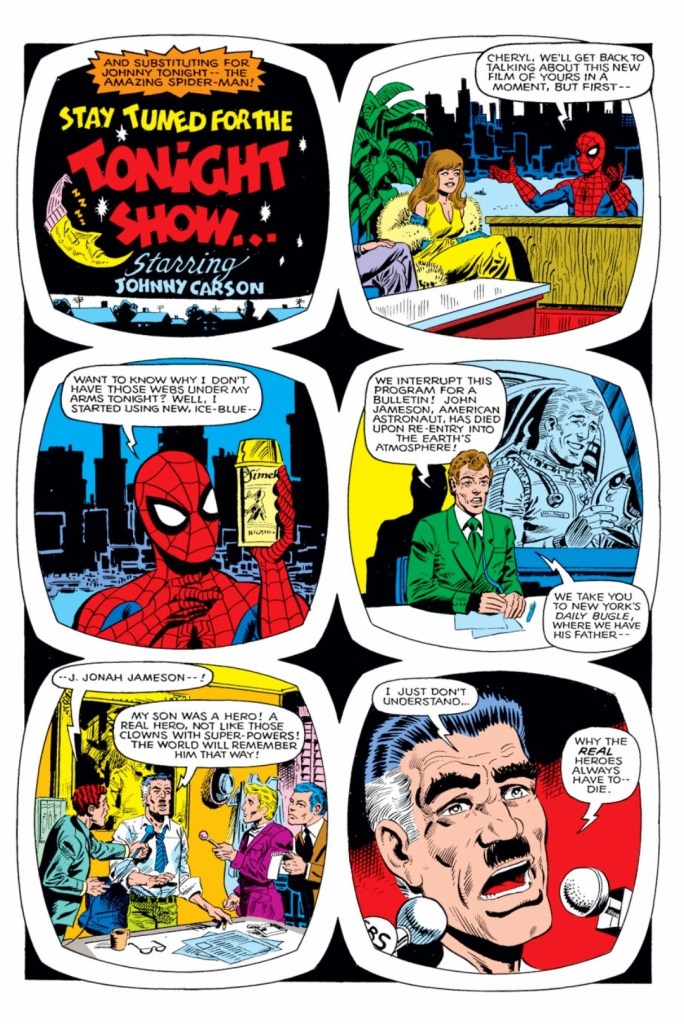
The next day, the Daily Globe published a front page story showing Spider-Man (described as a TV star) stopped the crook which established him as a heroic entertainer. The story bothered J. Jonah Jameson (The Daily Bugle) so much not only because the rival newspaper reported it but also because he perceived it as a glorification of so-called superheroes.

Elsewhere, Spider-Man and a famous film producer talk about making a movie about him that can really entertain a lot of people…

Quality

As Spider-Man makes waves on television as an entertainer and endorser, J. Jonah Jameson tells the media the difference between real heroes and the costumed ones with super powers.

Considering the history of Spider-Man, it is both difficult and risky to come up with a new reality that diverged from the key moment of the icon’s past (letting a crook get away from the chasing cop) resulting in a completely new version of him – Spider-Man as an entertainer. The good news here is that Peter Gillis’ script is solid and its scenes were nicely arranged to make this new version of the icon believable.

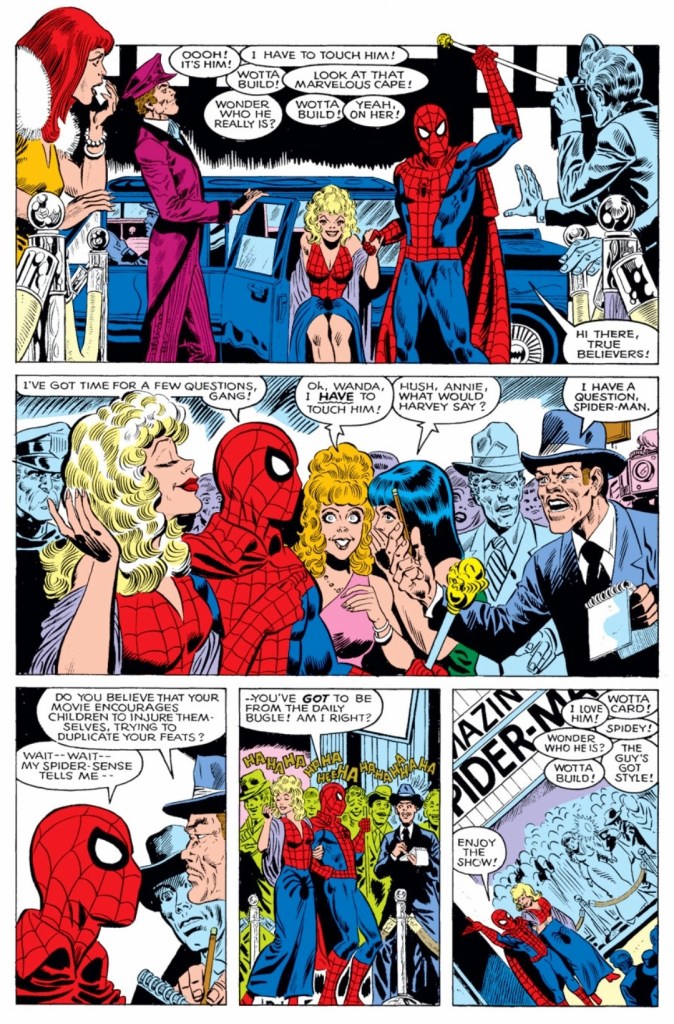
As shown on the cover of this comic book, the tale shows Spider-Man as a celebrity who found success and wealth in showbiz. Along the way, the classic Peter Parker gradually transforms into a new version who is not only focused on entertaining people but also engaging in publicity wars without ever becoming journalist. Since Marvel’s most famous icon does not fight crime, you will see him as an entertainment entrepreneur, a fighter through publicity, and as someone who enjoys the high life that most Americans don’t have.

In relation to the concept of the story, J. Jonah Jameson and Daredevil became the next important players to Spider-Man. Jameson is the rival of the webslinger but not necessarily the villain. Through Jameson, you will not only witness how he misuses his power at The Daily Bugle but also his interactions with criminal elements as he searches for ways to deal with Spidey. When it comes to Daredevil’s role, I encourage you to read the comic book to find out.

The story by Gillis moved at a medium-to-fast pace and for each build-up done, pay-offs were satisfying to read. When it comes to the scope of the story, this alternate reality is actually captivating to follow from start to finish.

Conclusion

Can you just imagine how different superhero comics would have been in real life had Marvel actually depicted Spider-Man as a showbiz figure?

What If #19 (1980) is a very solid and captivating comic book to read. The creative duo of Peter Gillis and Pat Broderick succeeded in selling the concept of what would happen had Spider-Man became an entertainer instead of fighting evil figures that hound society. Apart from showing a drastically different version of Spidey, the story will compel you to think about the relevance of superheroes in society, why becoming a major player in showbiz is chaotic, and how could Peter Parker be responsible with the power (related to showbiz) he has without combating evil.   

Overall, What If #19 (1980) is recommended.

+++++

Thank you for reading. If you find this article engaging, please click the like button below, share this article to others and also please consider making a donation to support my publishing. If you are looking for a copywriter to create content for your special project or business, check out my services and my portfolio. Feel free to contact me with a private message. Also please feel free to visit my Facebook page Author Carlo Carrasco and follow me on Twitter at  @HavenorFantasy as well as on Tumblr at https://carlocarrasco.tumblr.com/ and on Instagram at https://www.instagram.com/authorcarlocarrasco
A Look Back at Spectacular Spider-Man #87 (1984)

Welcome back superhero enthusiasts, 1980s arts and culture enthusiasts, Marvel Comics fans and comic book collectors! Today we go back to the year 1984 to examine a small part of the Marvel Comics shared universe through a tale of the Spectacular Spider-Man monthly series.

For this particular review, we will explore a major development in the life of the iconic Spider-Man that was told outside of the Amazing Spider-Man series.  

With those details laid down, here is a look back at Spectacular Spider-Man #87, published in 1984 by Marvel Comics with a story written by Bill Mantlo and drawn by Al Milgrom.

The cover.

Early story

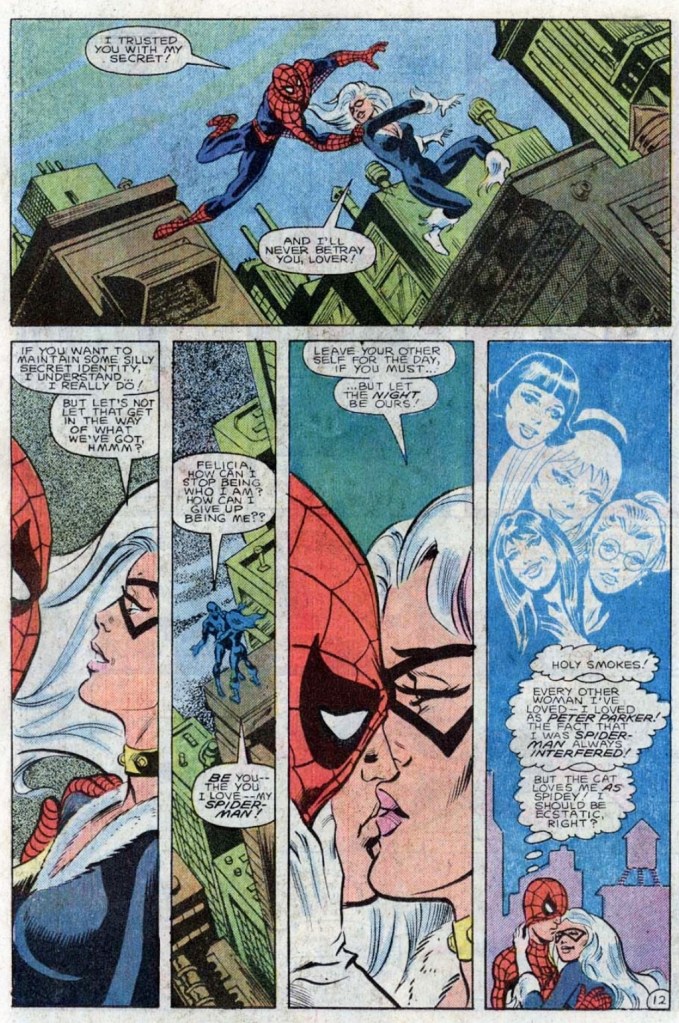
The story begins in New York City as Spider-Man and Black Cat (his romantic partner at the time) spend quality time together. Spider-Man tells her that it is time him to show her where he lives. Together, they swing across the city and even played along a few times.

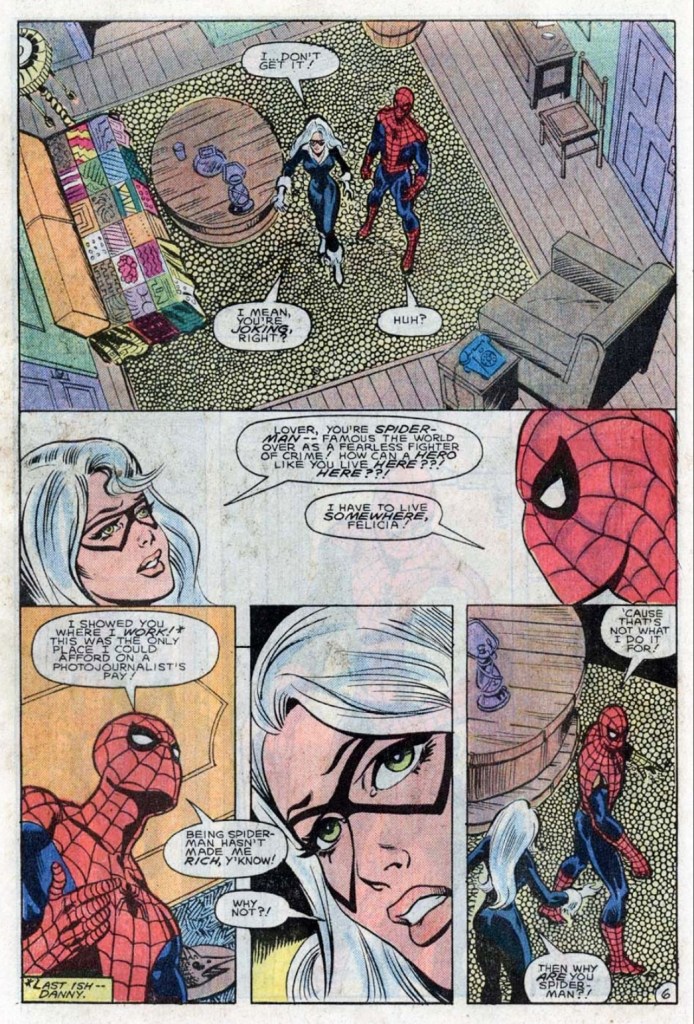
They finally arrive at the rooftop of the building where Peter Parker (Spider-Man) lives and enter via the skylight. Black Cat is shocked to see how cheap the quality of the apartment is and asks him how can a famous hero like him live in such a place.

Spider-Man begins explaining that as a civilian he works as a photo journalist and he did not become a hero to be prosperous. As he keeps on revealing threads of his past, he slowly makes his move to reveal his secret identity to Black Cat…

Quality

The relationship of Spider-Man and Black Cat develops even more.

As the cover art revealed, this tale authored by Bill Mantlo is about Spider-Man revealing his secret identity to Black Cat who was his romantic partner at this point in Marvel Comics shared universe history. The revelation served as a key turning point in the life of the iconic webslinger as well as Peter Parker’s personal handling of his interactions with the women he loved. Mantlo’s writing of the dialogue between Spidey and Black Cat is really rich and there is also this sentimental touch with how the writer handled the hero’s emotions, especially with regards to the lady’s loving him more as the costumed hero than the civilian he is. I should also state that the impact of knowing Spider-Man’s true identity has subtle emotional effects on the part of Black Cat which must be seen.

While the cover showed what happened, this comic book is still worth reading because the creative duo of Mantlo and Milgrom carefully crafted scenes that gradually led to the big revelation backed with flashbacks of Peter Parker’s private life (as portrayed in Amazing Fantasy #15) and the build-up from his past romances with Black Cat. The pacing is very good and the pay-off to the build-up was worth every moment.

The conflict with the city thugs that took place near the end of the tale served as an additive to the new development of Black Cat and Spidey’s relationship.

Conclusion

Black Cat’s first-ever visit at Spider-Man residence.

Spectacular Spider-Man #87 (1984) is a very worthy read and the creators made daring moves to move the romantic link between Spider-Man and Black Cat forward while adding variety into Peter Parker’s personality. This is a character-driven story that must be read from start to finish.

Overall, Spectacular Spider-Man #87 (1984) is highly recommended.

+++++

Thank you for reading. If you find this article engaging, please click the like button below, share this article to others and also please consider making a donation to support my publishing. If you are looking for a copywriter to create content for your special project or business, check out my services and my portfolio. Feel free to contact me with a private message. Also please feel free to visit my Facebook page Author Carlo Carrasco and follow me on Twitter at  @HavenorFantasy as well as on Tumblr at https://carlocarrasco.tumblr.com/ and on Instagram at https://www.instagram.com/authorcarlocarrasco
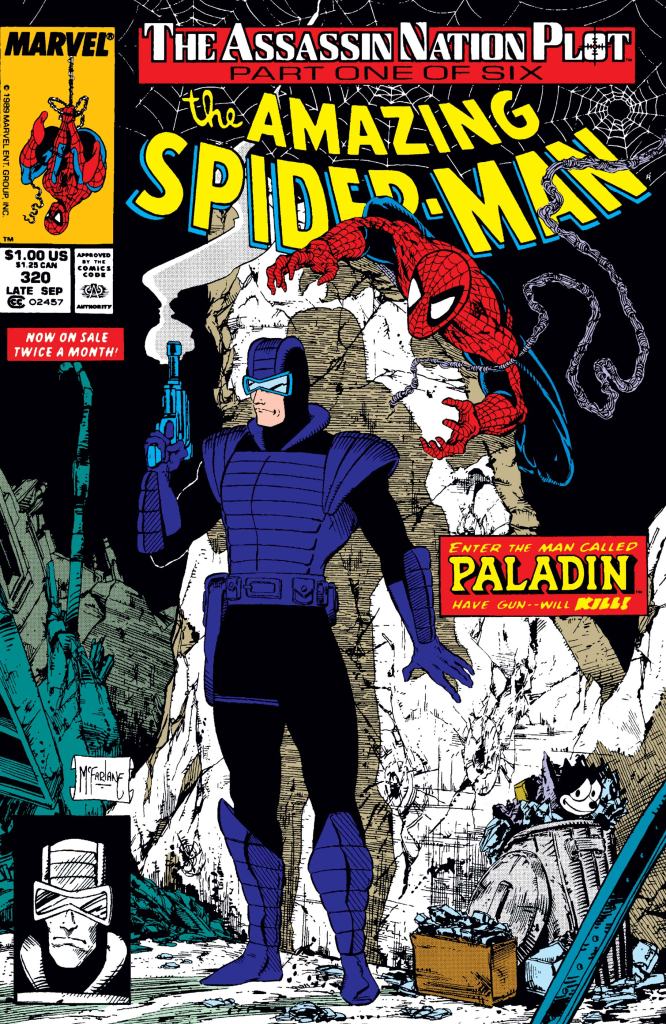
A Look Back at Amazing Spider-Man #320 (1989)

Welcome back superhero enthusiasts, 1980s arts and culture enthusiasts, Marvel Comics fans and comic book collectors! Today we go back to the year 1985 to examine a small part of the Marvel Comics shared universe through a tale of the Amazing Spider-Man monthly series.

For this particular review, we will explore the first chapter of The Assassin Nation Plot storyline that took place within the Amazing Spider-Man series.  

With those details laid down, here is a look back at Amazing Spider-Man #320, published in 1989 by Marvel Comics with a story written by David Michelinie and drawn by Todd McFarlane.

The cover.

Early story

The story begins inside Empire State University where Peter Parker – working as an assistant in the science lab – takes advantage of the free time and resources to create web fluid using a new formula. He notices that the acetylene torch does not even leave a smudge on the new web he made.

To his surprise, his boss doctor Evan Sloan catches him doing an interesting experiment. Parker comes up with a convincing excuse for the experiment which spares him from getting into trouble. After promising doctor Sloan he will get on the neutron project first thing in the morning of Thursday, Parker leaves, secretly changes into Spider-Man and equipped his brand new web. He then leaves the university and moves deep into the city…

Quality

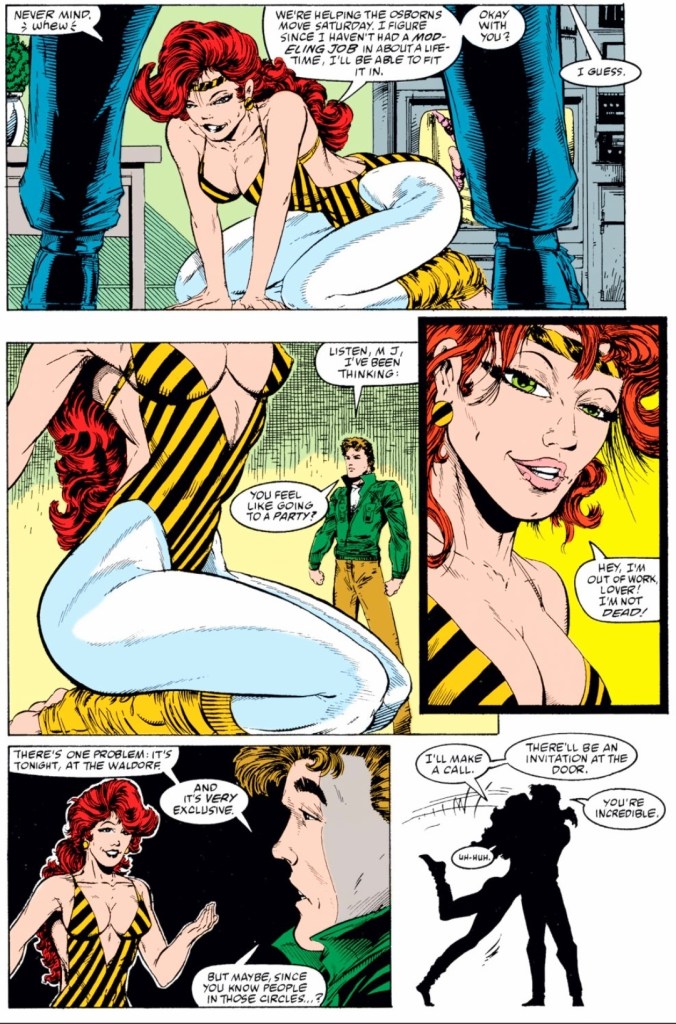
Peter Parker and Mary Jane having a discussion.

I really like the story David Micheline came up with as the start of The Assassin Nation Plot storyline. This is clearly not your typical good-versus-evil superhero tale starring the webslinger. Instead, there are layers of secrecy, suspense and intrigue that involves a powerful private organization, private armies and diplomats.

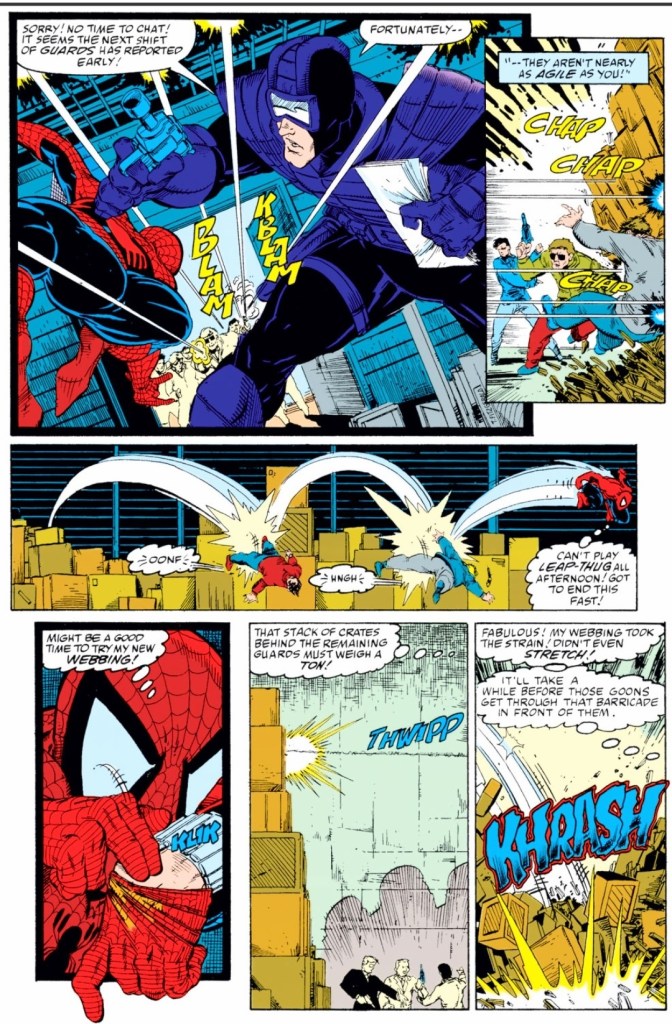
Instead of facing off with super villains, Spider-Man finds himself in the middle of something very big brewing behind the scenes, and that puts him in deep danger. That being said, Michelinie’s approach on building up the details of the plot moved very smoothly and the payoff for each buildup was executed on a timely manner. The buildup of details was never boring nor too slow to absorb, and Todd McFarlane excelled with visualizing the plot while still delivering dynamic superhero action.

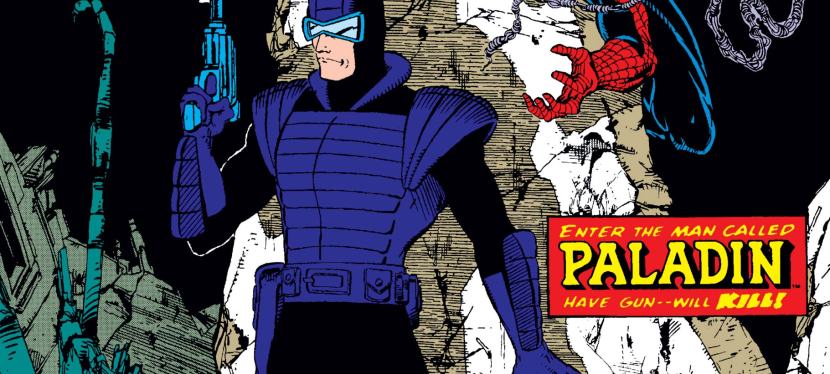
I should mention that the character Paladin has a strong presence in the story and there were moments when he outweighed Spider-Man in terms of importance.

Conclusion

Spider-Man and Paladin targeted by armed guards.

Amazing Spider-Man #320 (1989) is indeed a very solid story to read and a powerful start of The Assassin Nation Plot storyline. With the way the core concept was presented, this comic book symbolically showed that there are high stakes and other matters that are clearly too overwhelming for Spider-Man to deal with. The story is nicely paced and the creative team knew when and how to execute worthy payoffs for each buildup. By the time I reached the end of the comic book, I became convinced to read the next chapter of this storyline.

Overall, Amazing Spider-Man #320 (1989) is highly recommended.

+++++

Thank you for reading. If you find this article engaging, please click the like button below, share this article to others and also please consider making a donation to support my publishing. If you are looking for a copywriter to create content for your special project or business, check out my services and my portfolio. Feel free to contact me with a private message. Also please feel free to visit my Facebook page Author Carlo Carrasco and follow me on Twitter at  @HavenorFantasy as well as on Tumblr at https://carlocarrasco.tumblr.com/ and on Instagram at https://www.instagram.com/authorcarlocarrasco
A Look Back at Amazing Spider-Man #262 (1985)

Welcome back superhero enthusiasts, 1980s arts and culture enthusiasts, Marvel Comics fans and comic book collectors! Today we go back to the year 1985 to examine a small part of the Marvel Comics universe through a tale of the Amazing Spider-Man monthly series.

For this particular review, the Amazing Spider-Man comic book does not involve Tom DeFalco and Ron Frenz. Instead, we will see the creative contribution of Bob Layton who already established himself within Marvel Comics on the Iron Man monthly series. Layton is the same guy who co-founded Valiant Comics with former Marvel Comics editor-in-chief Jim Shooter.

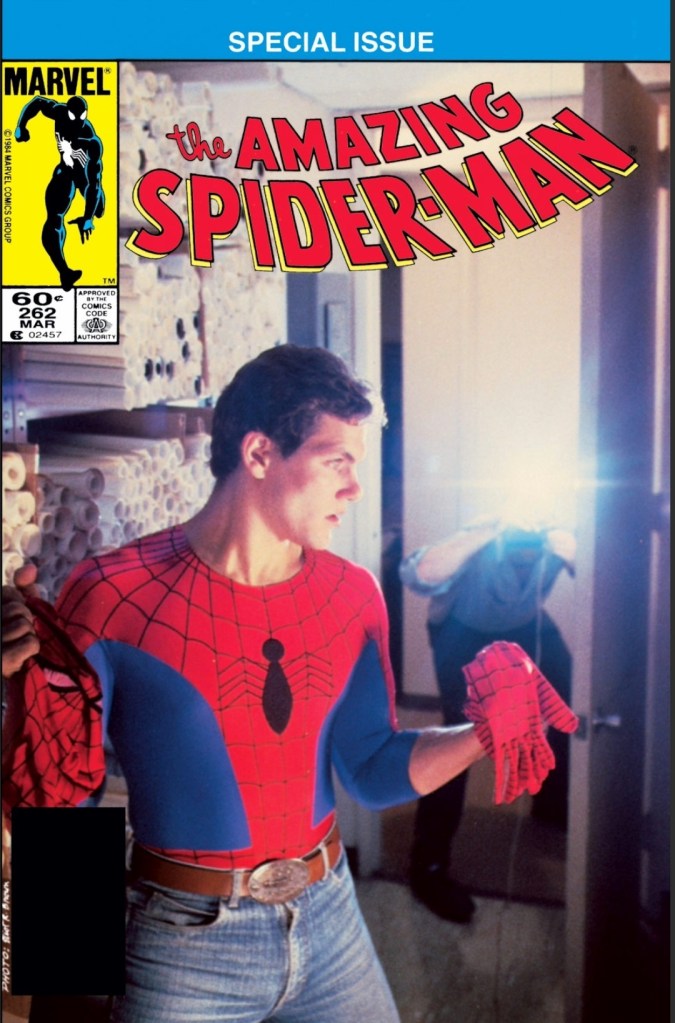
With those details laid down, here is a look back at Amazing Spider-Man #262, published in 1985 by Marvel Comics with a story written and illustrated by Bob Layton.

The cover.

Early story

The story begins as Spider-Man arrives at the Newark International Airport in New Jersey distracting a few air traffic control operators. As he makes his way into a deserted baggage room, Peter Parker intends to change clothes as he has a journalistic assignment from the Daily Bugle to photograph President Ronald Reagan who is set to arrive soon. For Peter Parker, the assignment is crucial as he needs to earn money.

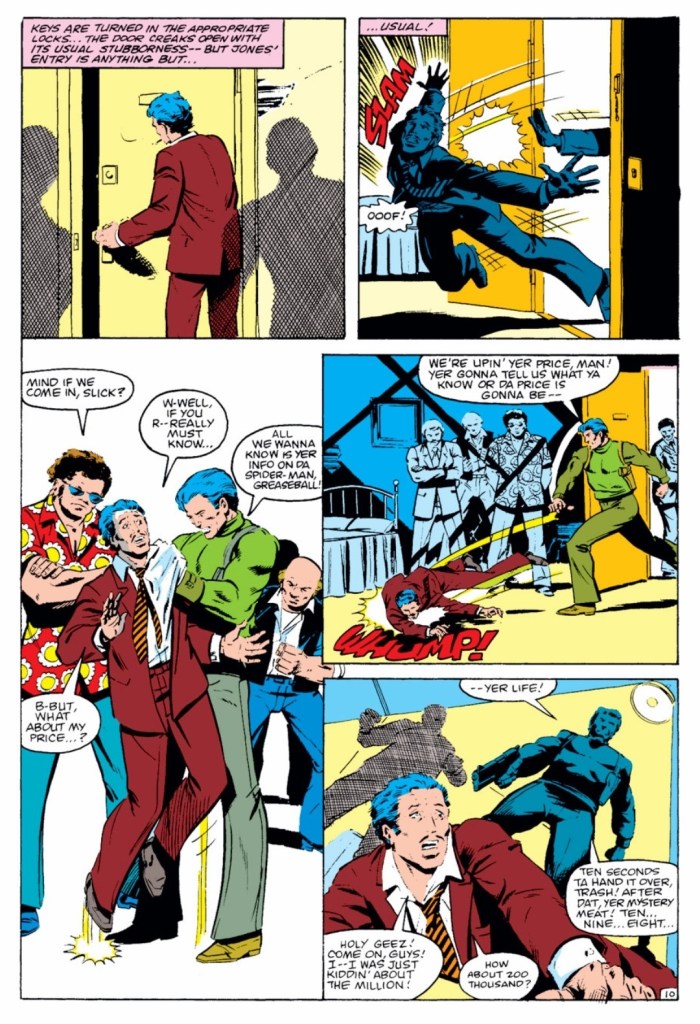
Elsewhere within the airport, the sleazy tabloid news photographer D.J. Jones makes his way through and he intends to photograph something unusual or embarrassing about Reagan. He accidentally bumps into a lady whose items fall down. Jones pretends to be kind to her as he secretly takes her wallet while helping her collect her belongings.

As Jones decides to take the lady’s money, he goes into one of the baggage rooms to get rid of the wallet. Inside, he accidentally spots Peter Parker (still wearing the upper half of his Spider-Man costume) changing clothes and quickly photographs him. Jones starts to run away compelling Parker to chase him knowing that his secret identity will get exposed if he fails…

Quality

This is what happens when you carry very valuable information with you which the mob wants.

I really like this Spider-Man tale crafted by Bob Layton. For one thing, it tackles the concept of having your secret identity being discovered by someone who has a record of unethical behavior as well as the opportunity of using the acquired confidential information (the secret identity) for financial gain (at the expense of the affected person). Layton’s story also reconnected Spider-Man to a significant part of his legacy (the death of his Uncle Ben and the identity of the man who killed him) which opens up moral and ethical challenges on his part.

Character development of Spider-Man in this story is short yet substantial to read. As he recalls the painful lesson he learned about his uncle’s death, he remembers how guilt (by previously allowing a crook to get away who later turns out to be the same person responsible for the death of Uncle Ben) overwhelmed his early desire for revenge and this compels him to re-evaluate the responsibility he carries with his superhuman abilities.

Instead of utilizing a super villain, Layton presented D.J. Jones as the antagonist that Spider-Man has to overcome somehow. Jones is not exactly evil, he’s just unethical and sleazy. As a human being, Jones is a turn-off but he is not murderer nor a bank robber. The sleazy photographer is an ordinary man who, like Peter Parker, is trying to survive with his occupation which in turn makes him determined to get the big scoop to rise high.  

Conclusion

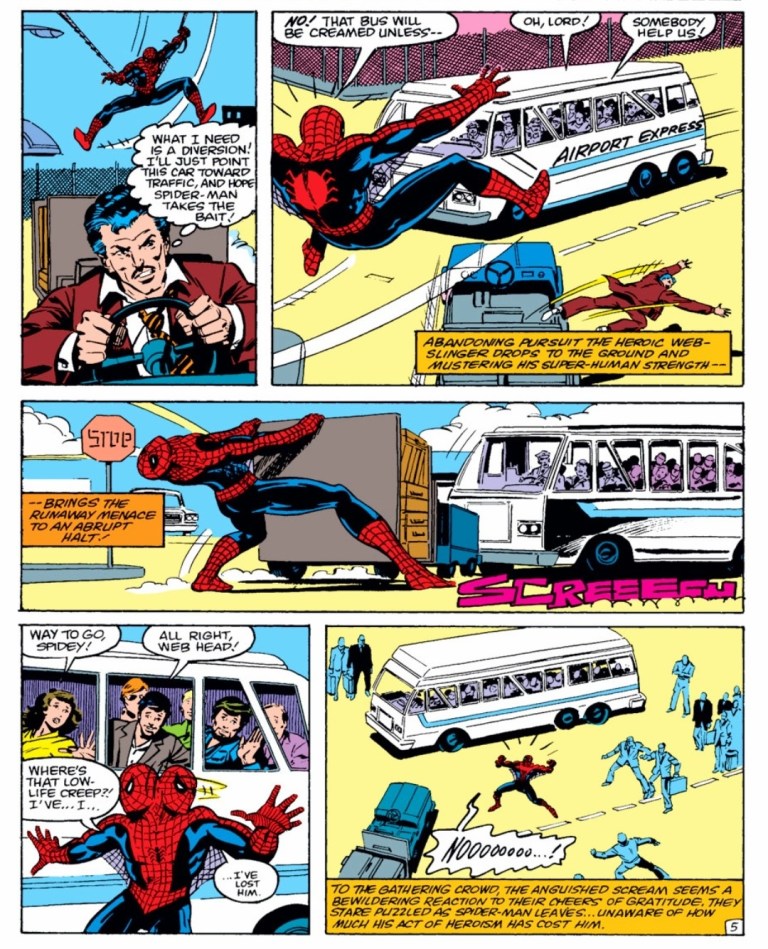
Spider-Man ended up having to save the lives of many innocent people resulting in losing track of the man he was chasing.

Amazing Spider-Man #262 (1985) is a very inspired work by Bob Layton who clearly researched the history of Spider-Man and tackled the crucial themes (note: power, responsibility, morality and ethics) through the story. The plot is simple yet engaging to follow and the character development is really solid. This is great writing by Layton and his approach on superhero spectacle (the action scenes) works well within the narrative.

Overall, Amazing Spider-Man #262 (1985) is highly recommended.

+++++

Thank you for reading. If you find this article engaging, please click the like button below, share this article to others and also please consider making a donation to support my publishing. If you are looking for a copywriter to create content for your special project or business, check out my services and my portfolio. Feel free to contact me with a private message. Also please feel free to visit my Facebook page Author Carlo Carrasco and follow me on Twitter at  @HavenorFantasy as well as on Tumblr at https://carlocarrasco.tumblr.com/ and on Instagram at https://www.instagram.com/authorcarlocarrasco
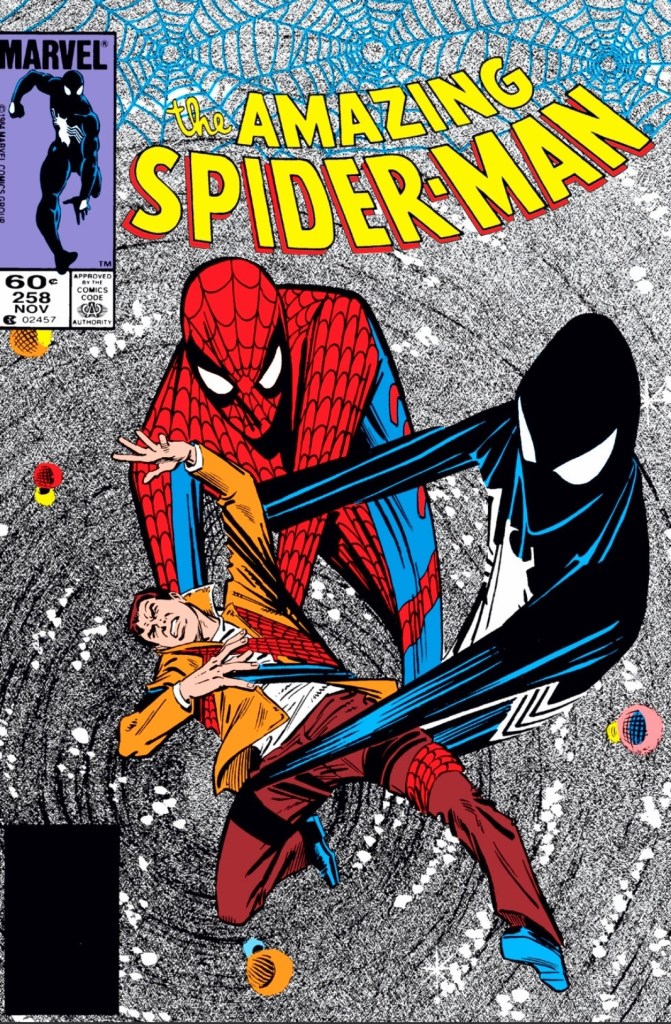
A Look Back at Amazing Spider-Man #258 (1984)

Welcome back superhero enthusiasts, 1980s arts and culture enthusiasts, Marvel Comics fans and comic book collectors! Today we go back to the year 1984 to examine a small part of the Marvel Comics universe through a tale of the Amazing Spider-Man monthly series.

In my previous retro review, Puma had encountered Spider-Man not once but twice. During the first encounter, Black Cat got in the way to defend her beloved webslinger. A short time later, Mary Jane Watson gets involved unexpectedly and the story ended with something that struck Peter Parker very deep inside.

With those details laid down, here is a look back at Amazing Spider-Man #258, published in 1984 by Marvel Comics with a story written by Tom DeFalco and drawn by Ron Frenz.

The cover.

Early story

The story begins inside Peter Parker’s apartment in New York City. He is struggling deep inside as he is shocked by Mary Jane’s revelation that she knows he and Spider-Man are one and the same person. She tells him that she knew his secret for years. Peter then begins to think that this is all Puma’s fault.

As Mary Jane begins to leave, Peter tries to talk with her. She tells him that he will deny everything and that she cares about him. She added that knowing his secret identity is why she originally left New York. She had to get away from him (and Spider-Man).

Suddenly, Black Cat arrives through the window. Her presence causes Mary Jane to realize something about them…

Quality

Very clearly the alien costume has its own intelligence and is the main reason why Peter Parker remained exhausted and sleeping too long.

I really like the writing of this comic book. Tom DeFalco showed strong consistency with developing the newcomer (and a formidable foe) Puma and his rivalry with Spider-Man, while also leaving sufficient room to develop Peter Parker who is now in deeper stress dealing with the complexities of his connections with Mary Jane and Black Cat.

What is most notable about the plot is the finally crafted resolution to Peter Parker’s use of the alien costume (the symbiote from Secret Wars that would later bond with Eddie Brock to form the murderous Venom) by having the Reed Richards and Johnny Storm of the Fantastic Four involved in a captivating manner. I won’t reveal what happened but I can assure you readers that this particular plot element alone makes this comic book very worthy of your time and attention. That being said, Spider-Man’s saga took a serious turn from here.

As with the previous issues, Ron Frenz’s fine art really brought DeFalco’s script into life here and this includes Spider-Man’s crossover with the mentioned Fantastic Four members, dynamic shots of the webslinger and fine dramatic expressions on characters’ faces.

Conclusion

With Black Cat and Mary Jane both present with Peter Parker, the tension and uncertainty grew only stronger.

Amazing Spider-Man #258 (1984) is yet another great read from the DeFalco-Frenz duo. The stakes were raised higher and the pay-offs were really solid in this comic book. As mentioned earlier, this story marked the resolution of Spider-Man’s bond with the alien costume, and also paved a new path for future tales of the webslinger. Spider-Man’s crossover with Reed Richards and the Human Torch (which lasted several pages) is easily one of most crucial scenes of entire Marvel Comics stories of the year 1984 and its significance would be realized in relation to the origin and further tales of Venom.

Overall, Amazing Spider-Man #258 (1984) is highly recommended.

+++++

Thank you for reading. If you find this article engaging, please click the like button below, share this article to others and also please consider making a donation to support my publishing. If you are looking for a copywriter to create content for your special project or business, check out my services and my portfolio. Feel free to contact me with a private message. Also please feel free to visit my Facebook page Author Carlo Carrasco and follow me on Twitter at  @HavenorFantasy as well as on Tumblr at https://carlocarrasco.tumblr.com/ and on Instagram at https://www.instagram.com/authorcarlocarrasco
A Look Back at Amazing Spider-Man #257 (1984)

Welcome back superhero enthusiasts, 1980s arts and culture enthusiasts, Marvel Comics fans and comic book collectors! Today we go back to the year 1984 to examine a small part of the Marvel Comics universe through a tale of the Amazing Spider-Man monthly series.

In my previous retro review, Puma was introduced and quickly made an impact on the plot that connects the Rose with Spider-Man (who foiled the Rose’s criminal operation with the help of Black Cat). Puma is not a one-dimensional villain as he is quite principled. Ultimately, issue #256 served as an entertaining build-up of the conflict between Spider-Man and Puma.

With those details laid down, here is a look back at Amazing Spider-Man #257, published in 1984 by Marvel Comics with a story written by Tom DeFalco and drawn by Ron Frenz.

The cover.

Early story

The story begins on top of a building in New York City. Puma grabs the head of the helpless Spider-Man (who just suffered the dislocation of his arm and endured the pain of shoving it back into place before eventually succumbing to the intense pain). He does not strike immediately as he finds the act of eliminating the webslinger almost too easy and he remembers the Rose promised him of a worthy foe.

Just as Puma starts his move to kill Spidey, Black Cat suddenly strikes him out of nowhere. Puma quickly recovers his balance and tells Black Cat to go away. Suddenly, Puma notices something in her. Using his heightened senses, he sees Black Cat’s aura then jumps at her. He quickly realizes he miscalculated with his movement and finds himself overshooting her. In a desperate attempt, Puma grabs  a pipe but it quickly broke and causes him to slide on the rooftop and hit the edge.  

As Puma picks himself up, the roof beneath him gives in and he falls down…

Quality

Spider-Man’s 2nd encounter with Puma is action-packed and fun to read. Pay close attention to the details.

There is no doubt that the story of this comic book is pretty much a big pay-off to the build-up of the previous issue. Not only that, the creative team continued to gradually develop Puma not only as a formidable foe of Spider-Man but also as a sensible and believable new addition to the Marvel Comics universe of the time.

Here, you will see Spider-Man in a truly vulnerable state which symbolically shows that wearing the alien costume has its limits when it comes to protecting and enhancing him. As seen in the final pages of issue #256, Spider-Man struggles a lot physically and, for the first time ever, struggles to command the symbiote (not realizing it is organic and has its own intelligence). With Spidey in a serious physical disadvantage, you will see Black Cat getting a nice share of the spotlight. Not only does she bravely face off with Puma, her concern for Spidey (note: she knows he is Peter Parker) intensifies in a very believable way. She still loves him but could not figure out why Peter prefers to live like a normal person when he could dedicate himself on being a hero every day as Spider-Man.

As for Puma, the creative team developed him even further both in his animalistic form and in his civilian identity as the head of Fireheart Enterprises. As the man Thomas Fireheart, he is a really intelligent man who analyzes a lot of details before making his next move. You will see more of his intellectual side as he deals with both his corporate affairs as well as his contracted service for the Rose (who in turn is serving the Kingpin).

The plot in this comic book is deeper and more elaborate. Without spoiling much, you will get to see the Puma-Rose-Kingpin connection and, more notably, you will see how complex and intense the situation becomes for Peter Parker when he encounters Puma for the 2nd time. The story is very good, you just have to read it.   

Conclusion

Spider-Man, Black Cat and the alien costume.

Like the previous issue, Amazing Spider-Man #257 (1984) is a great read but in the form of a great pay-off to the build-up that preceded it. The DeFalco-Frenz duo succeeded in developing the newcomer Puma into a significant Marvel Comics universe addition and their portrayal of an injured Spider-Man is very captivating. That being said, I encourage you all to pay close attention to the literary details revealed during the banter between Spidey and Puma which will resonate with you when you read the next issue.

Overall, Amazing Spider-Man #257 (1984) is highly recommended.

+++++

Thank you for reading. If you find this article engaging, please click the like button below, share this article to others and also please consider making a donation to support my publishing. If you are looking for a copywriter to create content for your special project or business, check out my services and my portfolio. Feel free to contact me with a private message. Also please feel free to visit my Facebook page Author Carlo Carrasco and follow me on Twitter at  @HavenorFantasy as well as on Tumblr at https://carlocarrasco.tumblr.com/ and on Instagram at https://www.instagram.com/authorcarlocarrasco
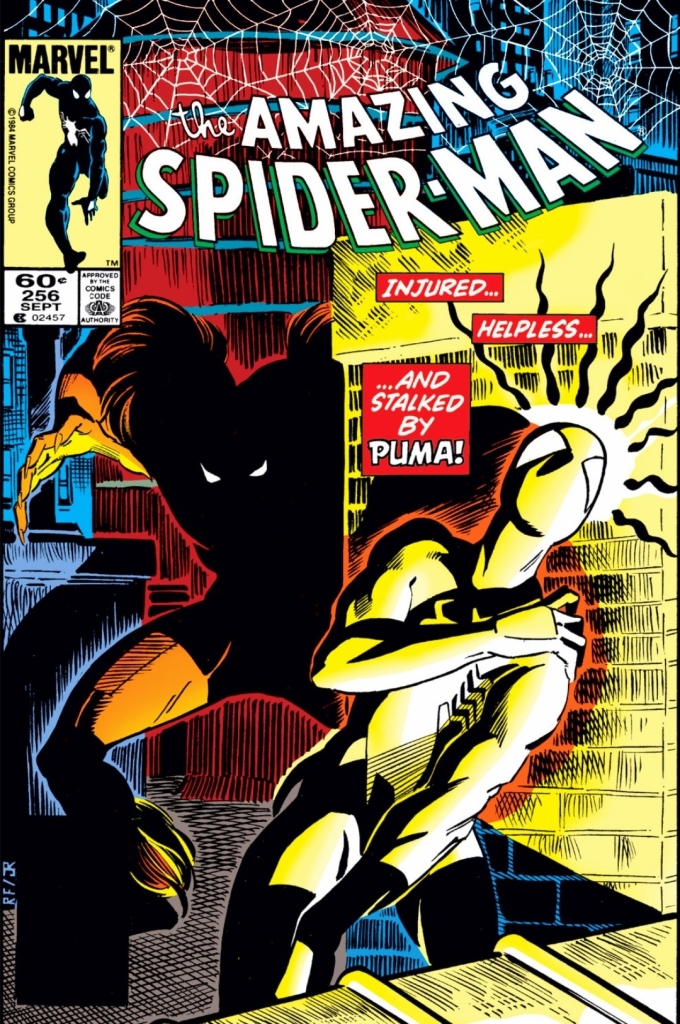
A Look Back at Amazing Spider-Man #256 (1984)

Welcome back superhero enthusiasts, 1980s arts and culture enthusiasts, Marvel Comics fans and comic book collectors! Today we go back to the year 1984 to examine a small part of the Marvel Comics universe through a tale of the Amazing Spider-Man monthly series.

The era when Spider-Man came back from deep space (refer to Secret Wars) with a new black costume (the symbiote that would later help form Venom) that itself had special abilities was indeed a very notable time in superhero comics history. As if Spidey’s troubled personal life was not enough, he had to deal with new villains that were formidable and tough to deal with.

With those details laid down, here is a look back at Amazing Spider-Man #256, published in 1984 by Marvel Comics with a story written by Tom DeFalco and drawn by Ron Frenz.

The cover.

Early story

The story begins inside a warehouse when Spider-Man suddenly catches a lot of men by surprise. The men turned out to be doing something illegal with lots of stolen good contained in boxes. Quite fearlessly, the webslinger knocks out many of them while Black Cat takes pictures (assistance for Peter Parker) from a distance above. Black Cat eventually gets involved in the physical struggle and the bad guys all got defeated afterwards.

After the struggle, Spider-Man and Black Cat (who know each other personally) have a short sentimental talk before parting ways. As soon as he arrives home, Peter Parker starts developing the pictures in preparation for much-needed income from the Daily Bugle.

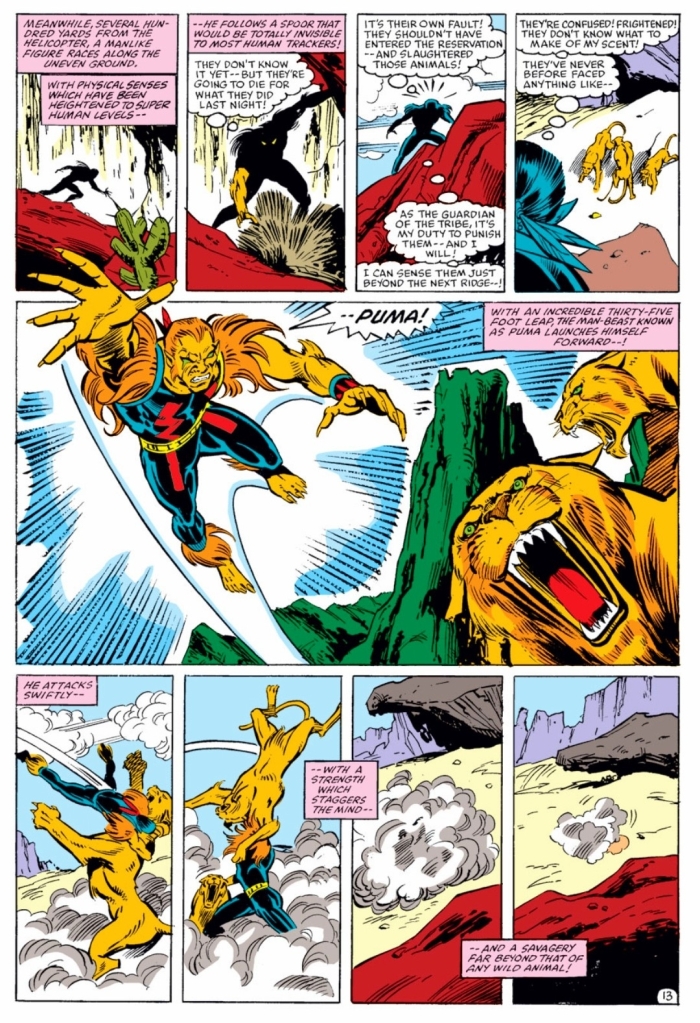
Elsewhere in New York (the next morning), the warehouse raid caused by Spider-Man and Black Cat makes immediate impact on the secret operations of the Rose who in turn wants the hero dead. The Rose (who reports to the Kingpin) then sends a message to New Mexico to contact the one person capable of killing Spider-Man…the Puma.

Quality

Puma in his animalistic form deep within the harsh wilderness of New Mexico.

I can state that within the age of Spider-Man wearing the alien costume, this particular tale has a strong debut of a new foe and the plot itself is quite intriguing. Tom DeFalco cleverly paced the introduction of Puma whose civilian personality is that of a very focused business executive. The creative team took the inspired approach of defining Puma with the harshness of the New Mexico wilderness contrasted with that of his civilian identity spending time in the bustling urban environment of New York City.

Not only is Puma very powerful and focused, he also has a high standard when it comes to accomplishing tasks showing no fear nor hesitation with regards to potential obstacles ahead of him. Clearly, Puma is not your typical super villain but a very principled and very capable figure. When compared to Wolverine, Puma shares some common animalistic elements with him but he consistently maintains control of himself. This makes him a dangerous force of opposition towards Spider-Man.

Spider-Man here is usual self. His personal problems and lack of a stable life are taking their toll on him just as he continues to keep doing good (example: fighting crime). It should be said that when Puma first strikes at him, the creative monotony with the webslinger suddenly got snapped causing a new series of unfortunate developments that test him. It is also revealed here that using the alien costume does not spare him from serious physical injury.  

Conclusion

These panels show how vulnerable Peter Parker really is as the alien costume comes to him willingly.

Amazing Spider-Man #256 (1984) is a great read. The build-up with Puma is very powerful and his presence really made a huge impact on the reading experience. By the time the story ended, I was very convinced to read the next issue.   

Overall, Amazing Spider-Man #256 (1984) is highly recommended.

+++++

Thank you for reading. If you find this article engaging, please click the like button below, share this article to others and also please consider making a donation to support my publishing. If you are looking for a copywriter to create content for your special project or business, check out my services and my portfolio. Feel free to contact me with a private message. Also please feel free to visit my Facebook page Author Carlo Carrasco and follow me on Twitter at  @HavenorFantasy as well as on Tumblr at https://carlocarrasco.tumblr.com/ and on Instagram at https://www.instagram.com/authorcarlocarrasco