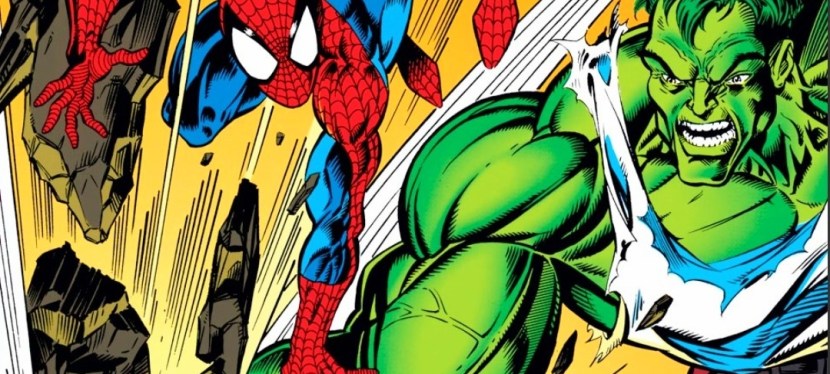
A Look Back at Amazing Spider-Man #381 (1993)

Disclaimer: This is my original work with details sourced from reading the comic book and doing personal research. Anyone who wants to use this article, in part or in whole, needs to secure first my permission and agree to cite me as the source and author. Let it be known that any unauthorized use of this article will constrain the author to pursue the remedies under R.A. No. 8293, the Revised Penal Code, and/or all applicable legal actions under the laws of the Philippines.

Welcome back superhero enthusiasts, 1990s culture enthusiasts and comic book collectors! Today we go back to the year 1993 and explore a part of the Marvel Comics universe through one of the many tales of the Amazing Spider-Man comic book series.

To put things in perspective, 1993 was another busy year for the iconic Spider-Man who not only had four monthly series of his own but also appeared in the Venom: Lethal Protector mini-series, the 14-part Maximum Carnage crossover and in Marvel’s major crossover The Infinity Crusade. As expected, Spider-Man survived through those storylines.

With those details laid down, here is a look back at Amazing Spider-Man #381, published in 1993 by Marvel Comics with a story by David Michelinie and drawn by Mark Bagley.  
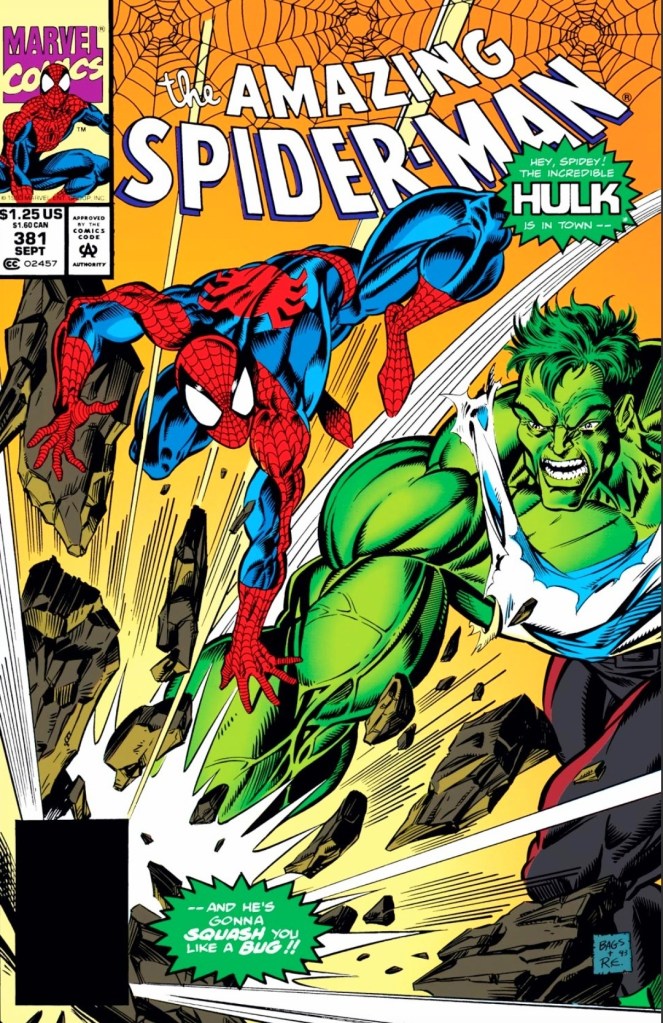
The cover.

Early story

The story begins inside the airport in New York where the incredible Hulk/Bruce Banner himself had just arrived from Scotland. Due to his tremendous size, his physical presence easily distract the people around him. Dr. Leonard Samson surprises Banner and informs him of an upcoming scientific demonstration and the scientists behind it have developed something that could have ramifications for people who got exposed to gamma radiation. Samson explains that there is a radiation virus that releases repressed emotions. The Hulk rejects Samson and leaps to the air above towards an unknow destination.

At a school yard in lower Manhattan, two kids bully another kid into giving them his lunch money. Spider-Man suddenly arrives to stop trouble and immediately the two bullies ran away…

Quality
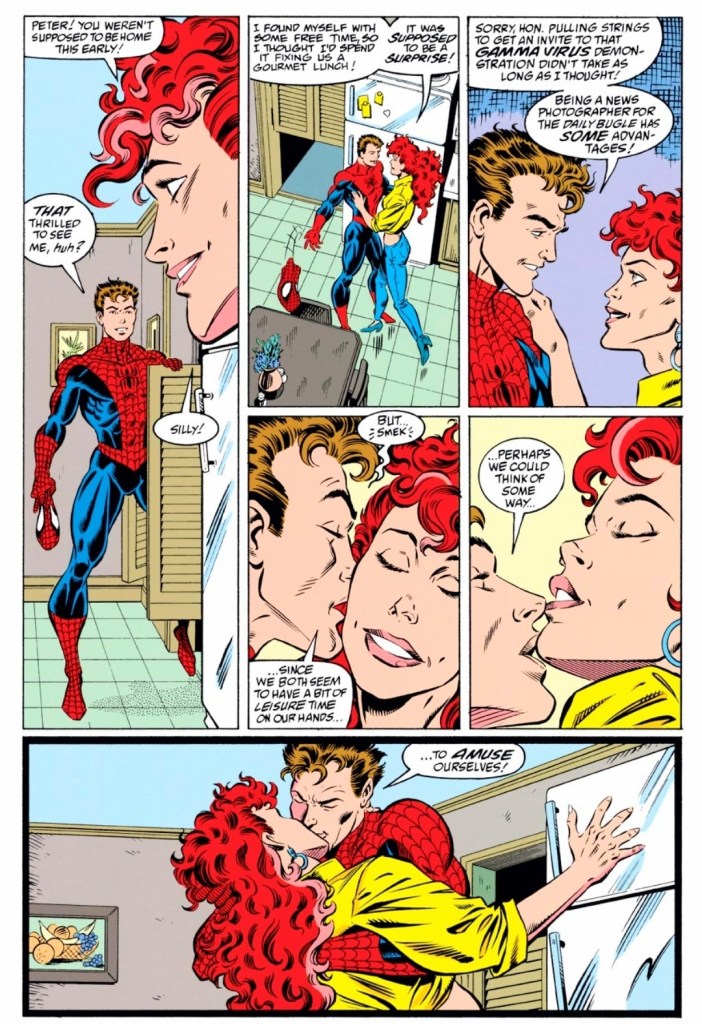
Quality time between Peter Park and wife Mary Jane.

I can say that is one of the more interesting crossovers between Spider-Man and the Hulk who at this stage in Marvel’s comic book history retained his intelligence and personality while in his huge, green-skinned form. Adding variety to the crossover was the presence of Doc Samson who was already an established and notable supporting character in comic books featuring the Hulk.

Set after the events of Maximum Carnage, the Infinity Crusade and Hulk’s time in Scotland (as told in Incredible Hulk #407), this story shows life in New York gradually normalizing. The peace, as it turns out, was only temporary as the big-time scientific demonstration in this story leads to a series of unfortunate events that compels Peter Parker to take action as Spider-Man.

The tale was nicely structured and the creative team took its time to build-up the story concept, the character motivations and execute the superhero spectacle at an overall medium pace. There is simply no boring scene nor any wasted moments. The appearances of Samson and the Hulk in this Spider-Man tale were nicely integrated and they each had their own impact on the plot. There is a lot of stuff here that fans of both Spidey and the green giant can enjoy.

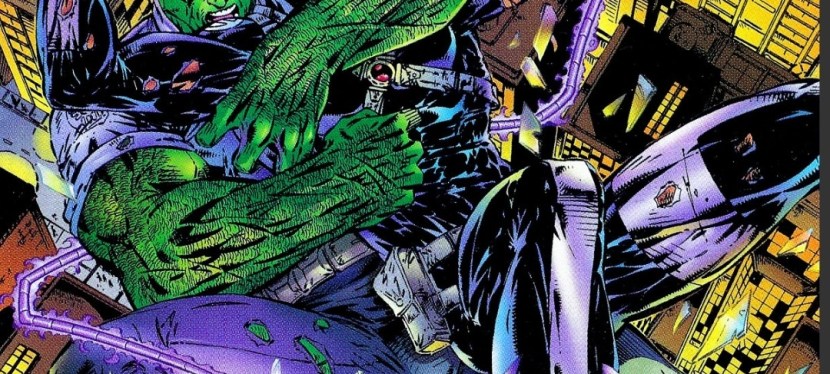
When it comes to the art, I found Mark Bagley’s take on the Hulk distinctive and intriguing to look at. The final shot of this comic book is a must-see.

Conclusion
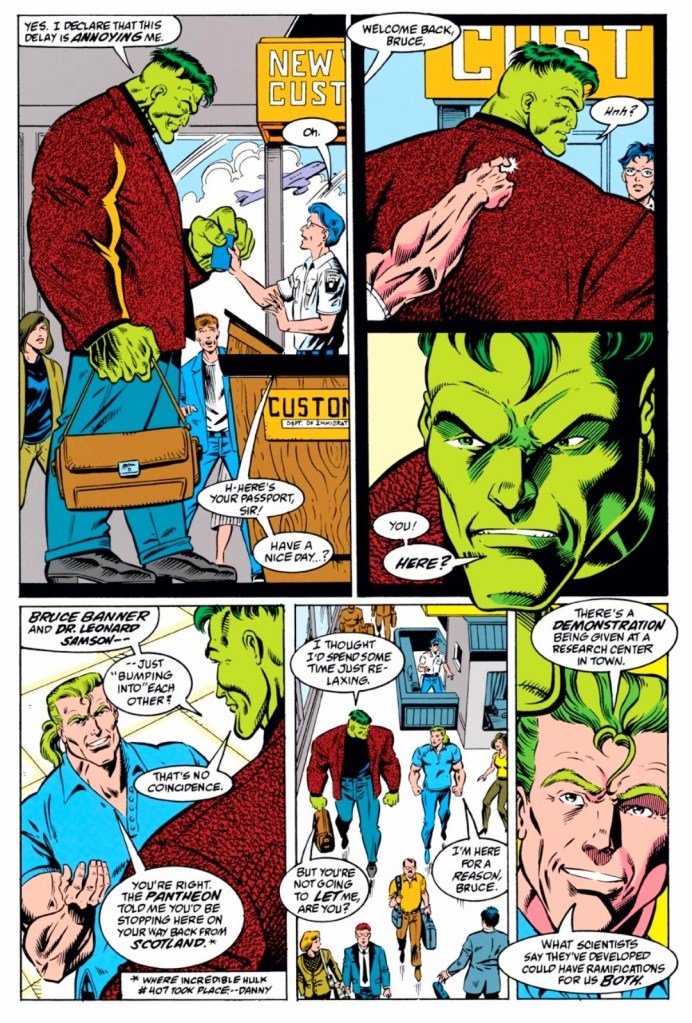
Hulk and Doc Samson at the airport.

While there clearly is no villain, Amazing Spider-Man #381 (1993) still turned out to be a fun read complete with a fine crossover between Spider-Man, Doc Samson and the Hulk. Apart from the lack of space for character development, nothing here felt half-baked with the executions of the storytelling and the spectacle. This is a fun read and it was also a modern take on the personal encounter between Hulk and Spidey during the 1990s. This comic book has something enjoyable that fans of the two Marvel icons won’t find in any of the Marvel Cinematic Universe (MCU) movies and shows.

Overall, Amazing Spider-Man #381 (1993) is recommended.

+++++

Thank you for reading. If you find this article engaging, please click the like button below, share this article to others and also please consider making a donation to support my publishing. If you are looking for a copywriter to create content for your special project or business, check out my services and my portfolio. Feel free to contact me with a private message. Also please feel free to visit my Facebook page Author Carlo Carrasco and follow me on Twitter at  @HavenorFantasy as well as on Tumblr at https://carlocarrasco.tumblr.com/ and on Instagram at https://www.instagram.com/authorcarlocarrasco
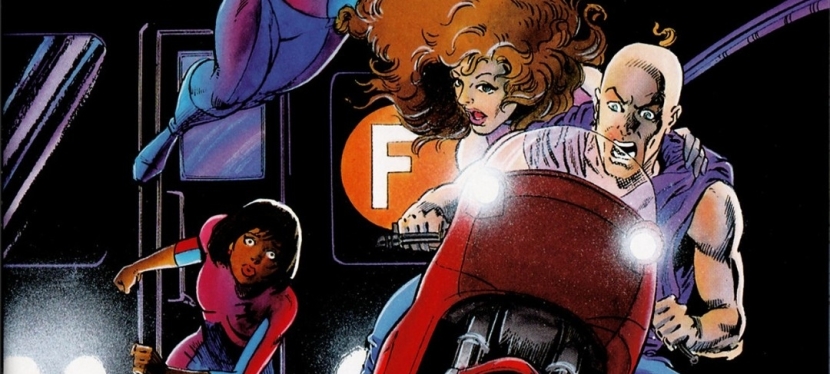
A Look Back at Harbinger #22 (1993)

Disclaimer: This is my original work with details sourced from reading the comic book and doing personal research. Anyone who wants to use this article, in part or in whole, needs to secure first my permission and agree to cite me as the source and author. Let it be known that any unauthorized use of this article will constrain the author to pursue the remedies under R.A. No. 8293, the Revised Penal Code, and/or all applicable legal actions under the laws of the Philippines.

Welcome back superhero enthusiasts, 1990s culture enthusiasts and comic book collectors! Today we go back to the early 1990s and explore a part of the Valiant Comics shared universe through the Harbinger monthly series.

In my previous review, Sting has been suffering and was revealed to have mononucleosis. After having a nightmare, he stubbornly re-entered his family’s home in the middle of the night trying to reconnect to his past life as Pete Stanchek. He eventually learned something harsh about his estranged father and went on to visit him in the hospital.

With those details laid down, here is a look back at Harbinger #22, published in 1993 by Valiant Comics with a story written by Maurice Fontenot and illustrated by Howard Simpson.

The cover.

Early story

The story begins with Archer and Armstrong having fun at the amusement of Coney Island. They eventually bump into Flamingo, Faith, Shatiqua and Kris who happens to be with her uncle named Mel. Armstrong found Mel looking familiar causing the latter to feel uneasy.

Sometime later that day, Mel visits a bar in Brooklyn managed by a local crime boss called Anthony Carino. After going through some initial trouble with Carino’s tough talking employees, Mel finally meets with their boss and told him that decades Armstrong made a move on his fiancé and then he and his buddies ran him out of town. After revealing Armstrong’s name and his presence at Coney Island, the crime boss reacts with knowledge about him. It turns out, Armstrong busted up his bar sometime in the past. Carino agreed to help Mel get back on Armstrong… 

Quality

The wild chase!

To start with, I can say that this comic book’s main feature is the crossover between the team (minus Sting) and the duo of Archer and Armstrong which also serves as a reunion in relation to their time together during the Unity crossover storyline. This time around, these established Valiant Comics characters get to interact with each other during a more peaceful time and if you remember Armstrong delivering Kris’ child (note: Magnus Robot Fighter) during the Unity storyline, there is a nice scene between the two characters talking about it. As with other Valiant works of the 1990s, the crossover element here is strong and engaging.

On the story itself, Armstrong’s past encounter with Mel sparks a conflict here which eventually pulled Archer and the other team members into a wild chase that was somewhat entertaining. How the story ended was surprising and even intriguing. If you are looking for character development regarding Faith, Flamingo, Kris and Shatiqua, you won’t find much here which is a bummer. Again, the mentioned crossover is the key feature of this comic book.

Conclusion

A reunion between Archer & Armstrong and the team (minus their leader Sting).

While it shifted the focus away from the unlikable Sting, Harbinger #22 (1993) was more about a shared universe crossover between the other team members and Archer and Armstrong. In some ways, Armstrong himself was almost the main character in this tale and what he did in the past sparked a chain of unfortunate events that involved Kris, Faith, Flamingo and Shatiqua. As this comic book was more about crossover, it turned out to be a missed opportunity for the creative team to further develop the other team members. Still, this tale delivered some entertainment value and there definitely is something being built up for further issues.

Overall, Harbinger #22 (1993) is satisfactory.

+++++

Thank you for reading. If you find this article engaging, please click the like button below, share this article to others and also please consider making a donation to support my publishing. If you are looking for a copywriter to create content for your special project or business, check out my services and my portfolio. Feel free to contact me with a private message. Also please feel free to visit my Facebook page Author Carlo Carrasco and follow me on Twitter at  @HavenorFantasy as well as on Tumblr at https://carlocarrasco.tumblr.com/ and on Instagram at https://www.instagram.com/authorcarlocarrasco

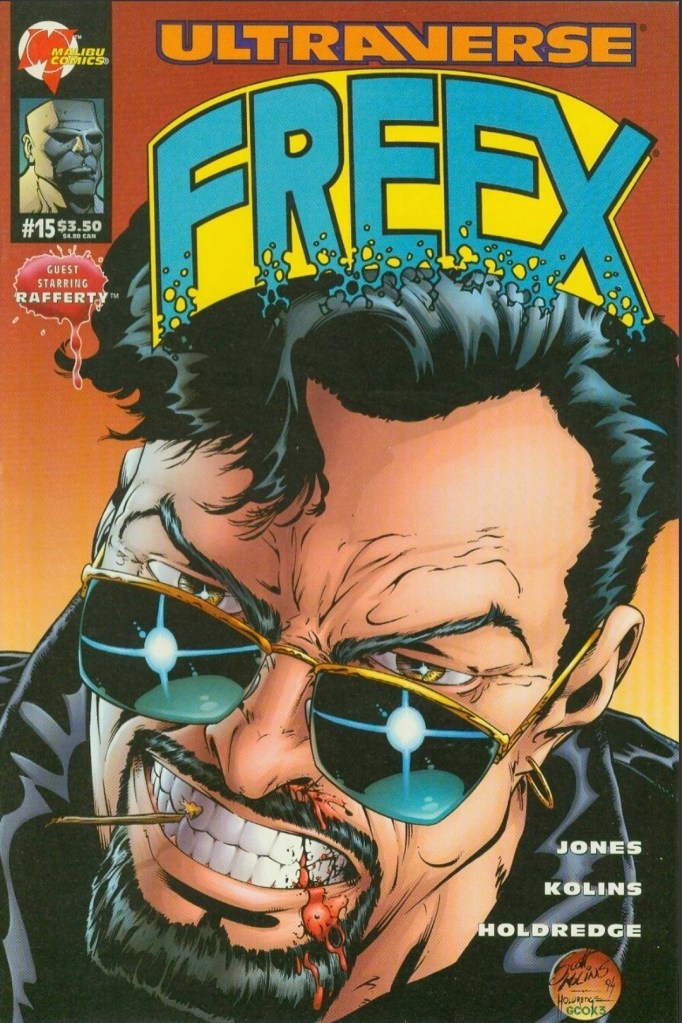
A Look Back at Freex #15 (1994)

Disclaimer: This is my original work with details sourced from reading the comic book and doing personal research. Anyone who wants to use this article, in part or in whole, needs to secure first my permission and agree to cite me as the source and author. Let it be known that any unauthorized use of this article will constrain the author to pursue the remedies under R.A. No. 8293, the Revised Penal Code, and/or all applicable legal actions under the laws of the Philippines.

Welcome back superhero enthusiasts, 1990s arts and culture enthusiasts and comic book collectors! Today we go back to the wild 1990s and explore a part of Malibu Comics’ Ultraverse through a tale of Freex.  

Since after facing off with Contrary (who eventually became part of UltraForce) and her so-called school and students, Freex had been traveling far and long (refer to my previous Freex reviews here, here and here) and gained Old Man as a useful companion. Along the way, they encountered the unknown deep underground and even saw a powerful being. They even got to the city of Denver temporarily. As they went on, they found the path that led them back to civilization.

With those details laid down, here is a look back at Freex , published in 1994 by Malibu Comics with a story written by Gerard Jones and drawn by Scott Kolins. This is a flip-side comic book with Ultraverse Premiere (1994) on the other side.  

The cover.

Early story

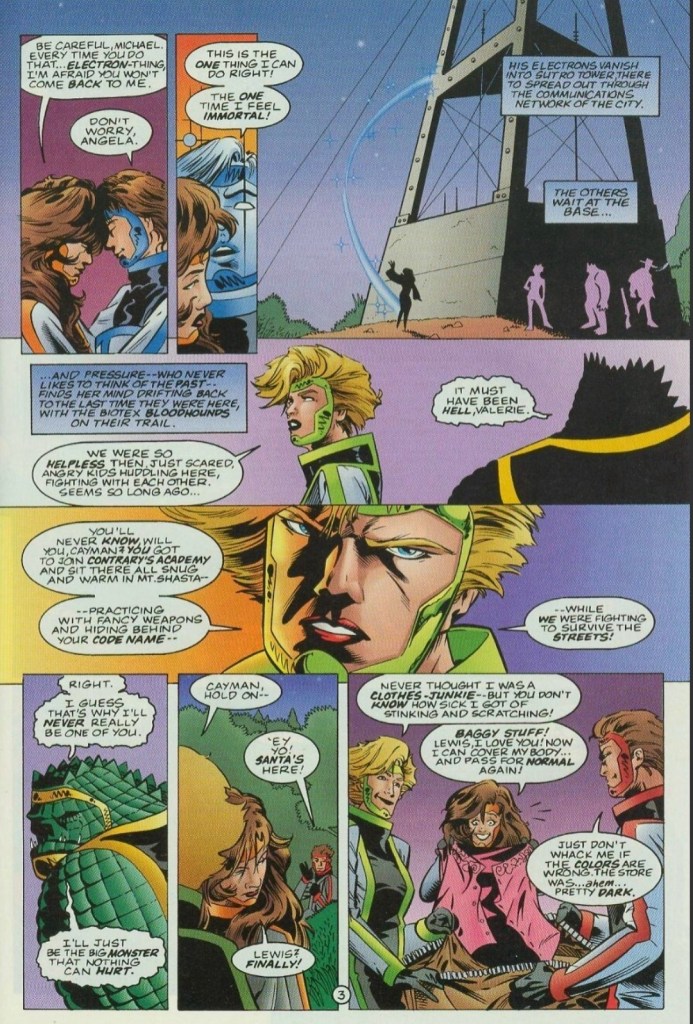
The story begins with Freex – composed of Plug, Sweet-Face, Pressure, Anything and new member Cayman – have been traveling for some time deep underground with Old Man. They find themselves back in San Francisco, the one city that brought them together. While still a long distance away from the city proper and there are no locals who could see them, the team cautiously move to a high communications tower. Michael/Plug uses his special ability to transform himself into electronic matter and makes his way through the communications network of the city to do something very important. Cayman meanwhile becomes the object of discussion between Pressure and Sweet-Face as he has yet to share with them details about himself.

As Cayman himself was part of Contrary’s academy and joined Freex recently, he has trouble gaining the trust of the others. After wearing new clothes that Lewis found, a guy suddenly appears to them. He introduces himself to them as Evan…  

Quality

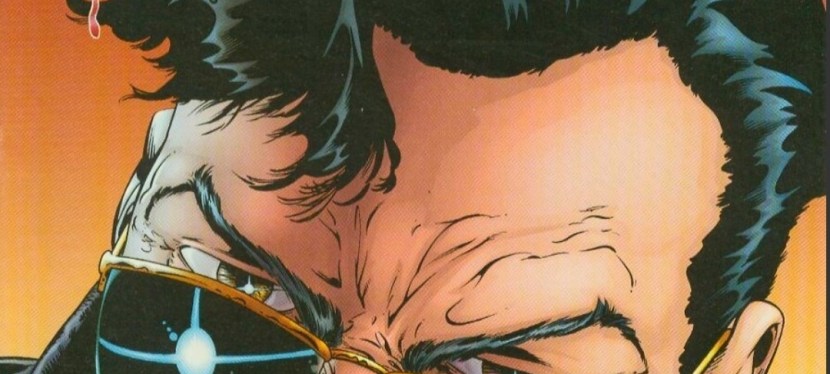
The very evil Rafferty monitoring Freex secretly and enjoying his advantage over them.

Considering what happened in the previous issues, this story feels like a breath of fresh air not only because of the new location the team got into but also because of strong twists that happened. Instead of going through fantastical encounters, Freex found themselves in situations that are more grounded with reality (within Ultraverse standards specifically) and more notably, the story emphasized crossover as Freex and Old Man encountered Firearm. The said crossover, quite cleverly, sets up Freex into a collision course with the serial killer Rafferty (who encountered The Strangers elsewhere within the Ultraverse). For the newcomers reading this, Rafferty is one of the most evil characters of the Ultraverse who has murdered a lot of people – including his own parents – and has developed tremendous hatred of Ultras.

The inclusion of Rafferty here also sheds light on the Freex’s past connection with the Night Man (click here and here). More notably, the said serial killer turned out to be so resourceful and totally obsessed with murdering people with special abilities, he became a formidable force towards Freex. This leads to a pretty powerful and twisting conclusion that must be seen.  

Conclusion

The gang by the tower.

With a good amount of intrigue, characterization spectacle, strong dialogue and the element of crossover, Freex (1994) is a pretty engaging comic book to read. The biggest feature here is having Freex in a conflict with a very obsessed killer who not only hates Ultras but also has an extensive record of murdering many people over a long period of time. In my view, the Freex-Rafferty conflict was nicely structured and it added depth to the plot. What happened in the end of this comic book should resonate with dedicated fans of Freex.

Overall, Freex (1994) is highly recommended.

+++++

Thank you for reading. If you find this article engaging, please click the like button below, share this article to others and also please consider making a donation to support my publishing. If you are looking for a copywriter to create content for your special project or business, check out my services and my portfolio. Feel free to contact me with a private message. Also please feel free to visit my Facebook page Author Carlo Carrasco and follow me on Twitter at  @HavenorFantasy as well as on Tumblr at https://carlocarrasco.tumblr.com/ and on Instagram at https://www.instagram.com/authorcarlocarrasco

A Look Back at Superman vs. The Amazing Spider-Man (1976)

Disclaimer: This is my original work with details sourced from reading the comic book and doing personal research. Anyone who wants to use this article, in part or in whole, needs to secure first my permission and agree to cite me as the source and author. Let it be known that any unauthorized use of this article will constrain the author to pursue the remedies under R.A. No. 8293, the Revised Penal Code, and/or all applicable legal actions under the laws of the Philippines.

Welcome back superhero enthusiasts, 20th century arts and culture enthusiasts, fans of Marvel and DC Comics, and comic book collectors! Today we go back to the year 1976 to examine what is truly a landmark event in the history of superhero comic book publishing – the first-ever superhero crossover event of Marvel Comics and DC Comics with Superman vs. The Amazing Spider-Man (also referred to as Superman vs. Spider-Man for short).

For the newcomers reading this, I previously reviewed the 2nd Superman-Spider-Man crossover comic book titled Superman and Spider-Man. That was released in 1981 and was handled by a different creative team (led by Jim Shooter as writer) compared to the 1976 crossover of the two icons of Marvel and DC. Going back to the 1970s, a crossover between Marvel and DC looked like an impossible dream as the idea of the two companies coming into agreements over the legal, creative and financial aspects was perceived to be unachievable. Indeed there were headaches and challenges during the negotiations but ultimately Marvel and DC came into an agreement to publish a special comic book featuring Superman, Spider-Man and the related supervillains and supporting characters from both sides. Take note that the two publishing giants worked together previously with publishing an official comic book adaptation of the movie The Wizard of Oz (1939).

With those details laid down, here is a look back at Superman vs. The Amazing Spider-Man, published in 1976 by Marvel Comics and DC Comics with a story written by Gerry Conway and Ross Andru. This crossover event was described as the battle of the century.

The cover.

Early story

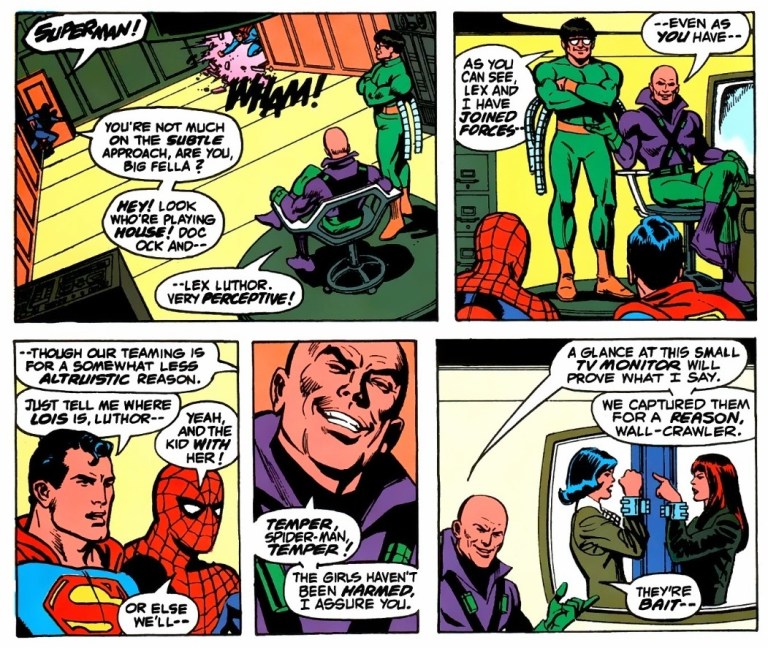
The story begins at the World News Conference in New York City. Separated by several feet apart, Clark Kent (Superman) and Peter Parker (Spider-Man) arrive with their respective companions and associates. What the two heroes do not know is that Lex Luthor and Doctor Octopus recently escaped from prison.

Peter Parker gets berated by his boss J. Jonah Jameson for not being good enough as a photographer while Clark Kent learns the bad news from Edge Morgan that he is not wanted for the coverage of a national convention.

Shortly after, Lois Lane climbs up a scaffold to get a good view for some photography. Just as she is about to fall down, Peter Parker suddenly grabs her and pulls her to safety. After an exchange of pleasantries, Peter introduces Lois to Mary Jane Watson. Just as MJ and Lois start conversing, Superman suddenly arrives. The Superman figure then fires beams of light from eyes to Lois and MJ, causing them to vanish into thin air. It turns out, the caped figure is an impostor as Peter Parker and Clark Kent react in shock.

Peter quickly runs to the roof of the building and changes into Spider-Man. As soon as he leaps into action, he comes face to face with Superman himself…

Quality

Superman, Spider-Man, Luthor, Dr. Octopus, Lois Lane and Mary Jane Watson shown in this scene.

I can loudly say that this is one pretty enjoyable crossover tale that not only featured Superman and Spider-Man, but also gave their respective mortal enemies Luthor and Dr. Octopus a good share of the spotlight. To be very clear, the story and set-up of scenes do have a somewhat restrictive structure as the creators clearly did their best to make the spotlight on the characters more or less equal in terms of imagery, dialogue amount and the sharing of dynamic shots. While some may easily complain about the so-called old and tired formula of the major characters getting into fighting each other due to a misunderstanding followed by setting aside their differences to work together, take note that the said formula worked really well in this story written by Gerry Conway.

The story concept Conway came up was clearly made to justify Superman and Spider-Man encountering each other (note: the same goes with the super villains and supporting characters) and the way he wrote the two interacting with each other worked seamlessly and convincingly. There are lots of nice exchanges of dialogue between the Man of Steel and the webslinger.

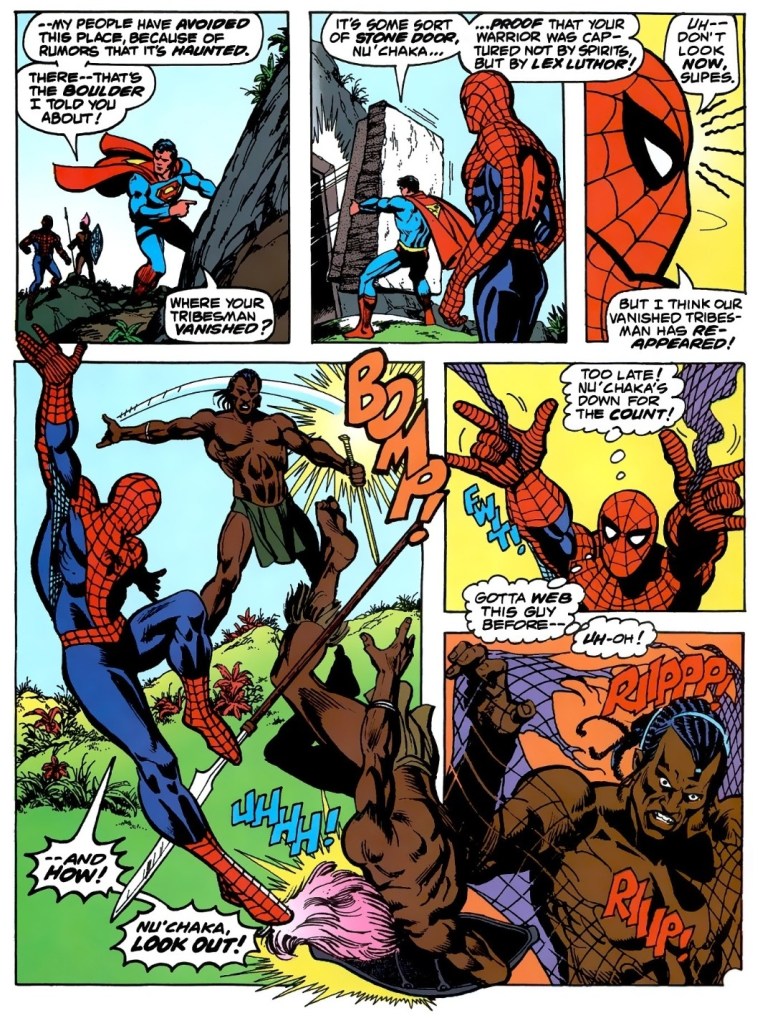
Even the superiors of Clark Kent and Peter Parker had their own crossover.
Don’t let the woke and socialists fool you. There is nothing racist in this comic book. Wokeness is foolishness. Political correctness distorts perception of reality.

Even though the script has this set of creative restrictions to ensure fairness on both Marvel and DC’s sides, the synergy of friendship and cooperation between Superman and Spider-Man is fantastic to read. Similar qualities are also evident with the scenes of Luthor and Dr. Octopus. Very clearly, the creative team did intense research on the Marvel and DC characters and found ways to create a unique mix that resonates with the fans of Superman and Spider-Man.

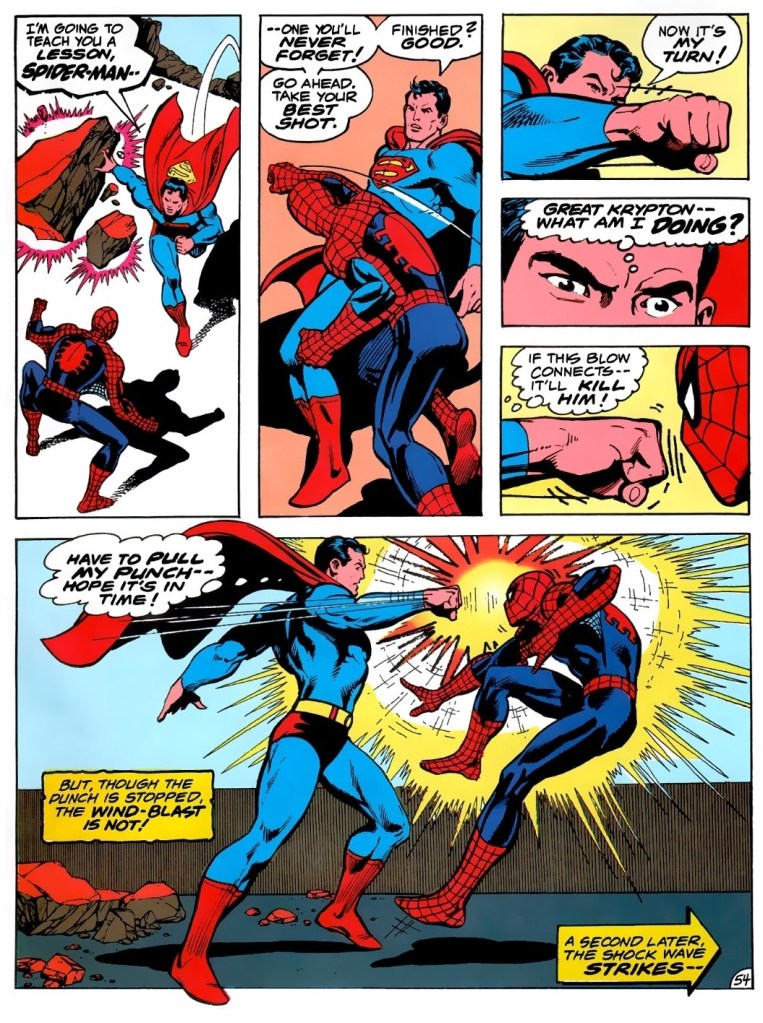
As expected, this comic book has lots of superhero spectacle for readers to enjoy. The superhero violence is not intense but the action scenes were entertaining to look at. In my opinion, the highlights of the spectacle here is when Superman and Spider-Man literally exchanged mortal enemies to fight with. As for the fight between the two icons as emphasized in the title, it definitely is a special event that really kicked the story into high gear.

While this is indeed a fun superhero crossover to read, there are some notable weak points here. For one thing, the plot itself lacks a strong concept and Luthor’s evil plan is very flawed and unconvincing. That being said, as I read and re-read this comic book, there never was a sense of danger building up nor was the Luthor-Dr. Octopus team ever a grave threat.

Conclusion

This is only a small sample of the fun in the battle between Superman and Spider-Man.

By today’s standards, Superman vs. The Amazing Spider-Man (1976) is still a fun superhero crossover comic book to read and it remains as a significant part of not just Marvel and DC’s history of collaboration but also that of inter-company superhero crossover comic book publishing in general. While it is better than many other inter-company superhero crossover comic books I have read through the decades, this one is certainly not the best one from Marvel and DC. For me, Superman and Spider-Man (1981) has a more elaborate plot, higher fun factor and deeper impact than this comic book. Meanwhile, Batman vs. The Incredible Hulk (1981) exceeded this comic book in terms of plotting, character interactions, super villain portrayals and establishing a real sense of danger that requires the super heroes to solve. Still, Superman vs. The Amazing Spider-Man (1976) remains an enjoyable read and it definitely is worthy as the strong beginning of Marvel-DC superhero crossover projects of the 1970s and 1980s. It also has more dynamic visuals than its 1981 sequel. This one is also part of the Crossover Classics: The Marvel-DC Collection paperback.

Overall, Superman vs. The Amazing Spider-Man (1976) is recommended!

+++++

Thank you for reading. If you find this article engaging, please click the like button below, share this article to others and also please consider making a donation to support my publishing. If you are looking for a copywriter to create content for your special project or business, check out my services and my portfolio. Feel free to contact me with a private message. Also please feel free to visit my Facebook page Author Carlo Carrasco and follow me on Twitter at  @HavenorFantasy as well as on Tumblr at https://carlocarrasco.tumblr.com/ and on Instagram at https://www.instagram.com/authorcarlocarrasco
A Look Back at Venom: Funeral Pyre #1 (1993)

Disclaimer: This is my original work with details sourced from reading the comic book and doing personal research. Anyone who wants to use this article, in part or in whole, needs to secure first my permission and agree to cite me as the source and author. Let it be known that any unauthorized use of this article will constrain the author to pursue the remedies under R.A. No. 8293, the Revised Penal Code, and/or all applicable legal actions under the laws of the Philippines.

Welcome back superhero enthusiasts, 1990s arts and culture enthusiasts, Marvel Comics fans and comic book collectors! Today we go back to the year 1993 and explore a part of Marvel Comics’ universe through the first-ever limited comic book series featuring one of Marvel’s most iconic supervillains – Venom.

Previously, I wrote about Venom with his appearances in What If comic books (click here and here) as well as in issues of Venom: Lethal Protector (click here and here). Venom also appeared in the disappointing crossover comic book Spider-Man Meets Spider-Man 2099.

Moving back to the year 1993, the Venom: Lethal Protector limited series ended and Marvel went on to release a 2nd limited series composed of three issues complete with an all-new creative team. That series was Venom: Funeral Pyre and the most notable thing is that Venom gets to be with the Punisher (read my other retro reviews that include the character here, here, here and here).

With those details laid down, here is a look back at Venom: Funeral Pyre published in 1993 by Marvel Comics with a story written by Carl Potts and drawn by the late Tom Lyle.

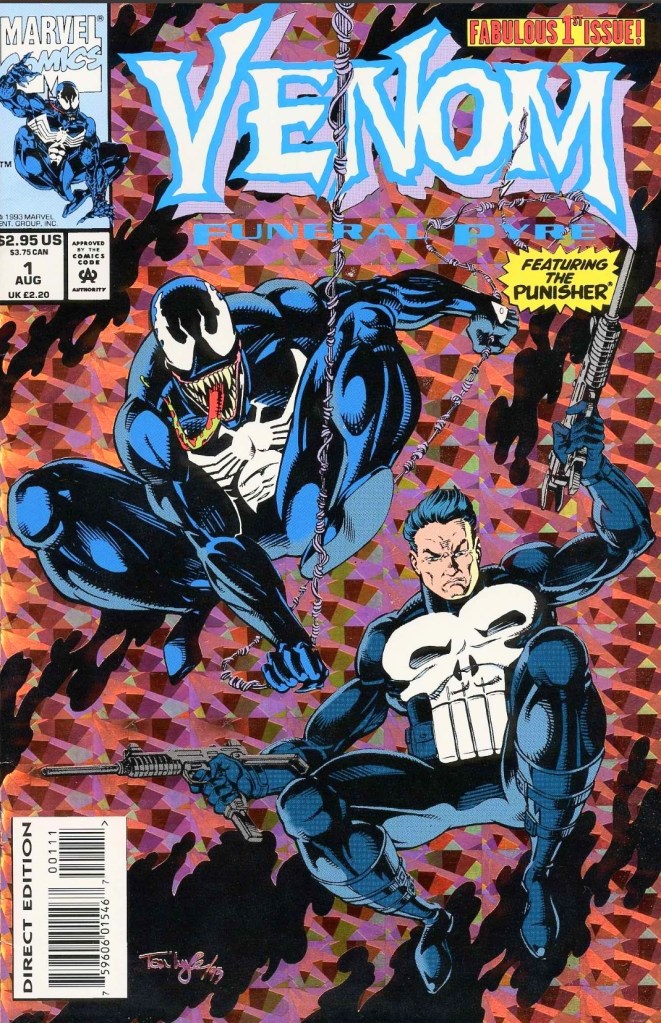
The cover.

Early story

The story begins on the streets of Oakland, California. There, a young guy named Gray Russell watches gang members severely beat up another guy which disturbs him deeply. He is part of the gang. A short time later, he rides with the gang in a car which hits a man (who managed to have his young nephew move out of harm’s way).

Somehow the man survived and moves to another direction deliberately to lure the gang away from his nephew. As the gangsters move towards a local building, Gray separates from his harsh companions to find a phone booth. Gray finds Calvin (the nephew of the man who got hit) nearby and decides to comfort him. From a distance, they heard the gangsters beat Calvin’s uncle to death.

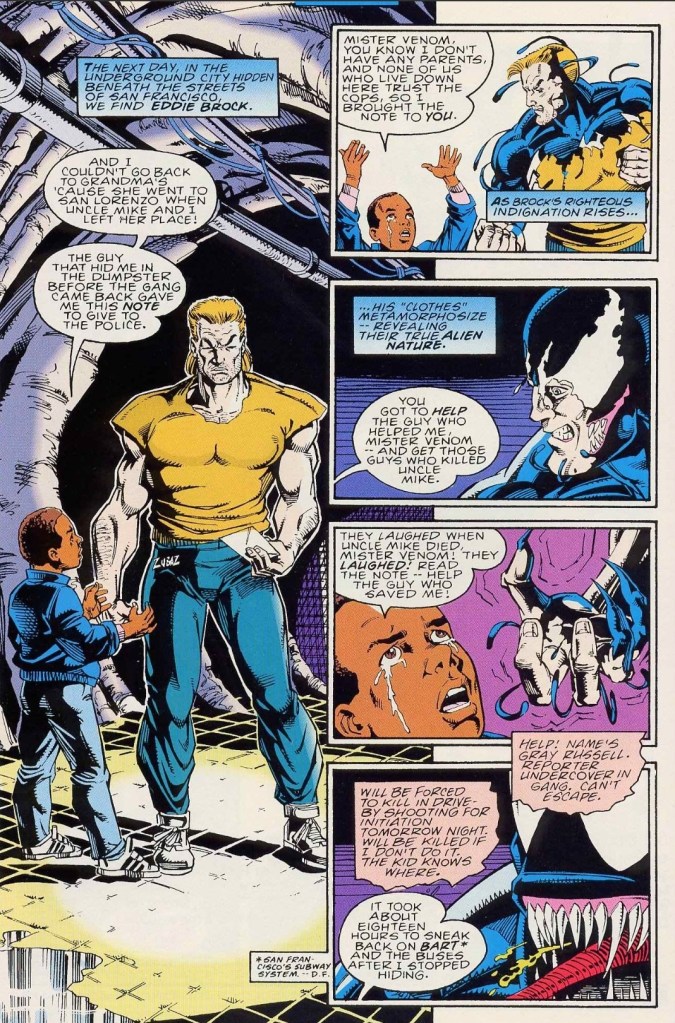
The next day in the underground city beneath San Francisco, Calvin meets Eddie Brock and hands him a note meant for the police. As Calvin reveals more details, Eddie gradually turns into Venom with his alien costume covering up his body. After learning of the death of Calvin’s uncle and hearing the young boy’s plea for help for Gray (an investigative reporter in secret within the gang), Venom agrees to help him as it is their mission to save the innocent and destroy the guilty…

Quality

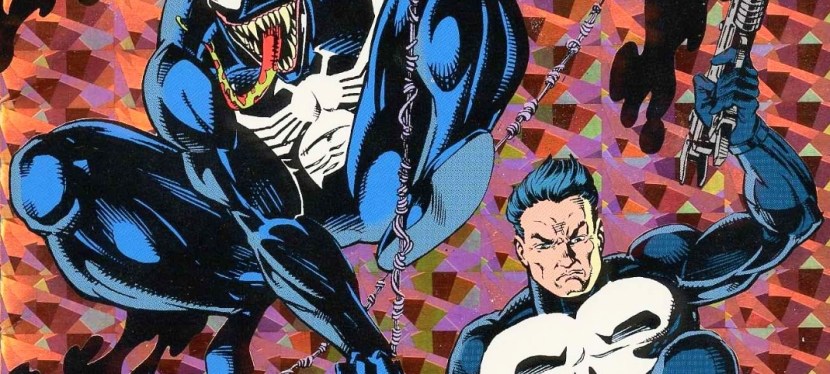
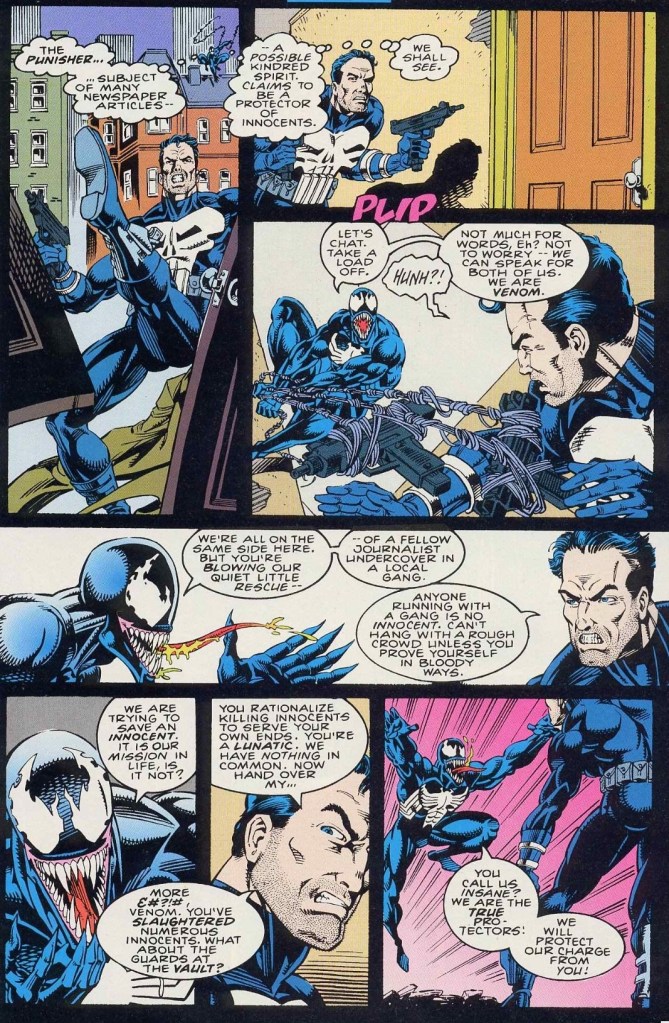
Punisher and Venom’s first-ever encounter with each other.

I want to start first the with the overall presentation crafted by the Potts-Lyle creative duo. In terms of story and setting, this comic book has a very strong urban crime vibe which is not a surprise given the fact that Carl Potts wrote lots of stories of the Punisher and his personal war against criminals. That being said, the tone is very different compared to what was shown in Venom: Lethal Protector and other Venom tales that got published before this comic book. Very clearly, this story is dark, gritty and even disturbing to read due to the subject matter of crime and senseless violence caused by people who are obsessed with violence. The fantasy elements of Venom: Lethal Protector are unsurprisingly absent here.

Carl Potts’ take on Venom’s personality is technically an extension of what was established previously. Venom, who is truly a murderer on the loose, continues to live with his very distorted code by helping the innocent by means of using violence and death on others he personally views as guilty. His getting involved in the turf of crime here is, however, a fresh approach on the super villain now acting “heroic” helping Calvin who lost his uncle. Being a former journalist himself, Eddie Brock “relates” with the investigative journalist involved with the gang.

The other major character – the Punisher – is his typical self in this story. He gets involved in the conflict in Oakland not purposely but accidentally as he was just passing by in his weapons-filled van as he heard the local police communication on local crime. The only thing notable about the way the Punisher is portrayed here is his first-ever interactions with Venom which is a crossover scene filled with a decent amount of hard action.  

Gray, the investigative journalist, is presented here as technically the third major character of the story. In some ways, he even overshadows Venom and the Punisher in key parts of this comic book. He is not really an interesting character himself but there are some interesting Marvel universe details shown from his personal memories. What is clear about this uninteresting character is that the creative team planned something with him in a key role within the core concept of this mini-series.

As for the plot itself, it clearly has a dark and gritty concept of street crime in 1990s Oakland which itself plays a big part of the build-up of the story and the eventual crossover between Venom and the Punisher. The problem is that the build-up has an uninteresting character with Gray involved and there is a lot of exposition to go through before the Venom-Punisher encounter.

The encounter between Venom and the Punisher here came with the superhero comics crossover trope of the players misunderstanding the situation and each other, and getting into a conflict very early on. Both characters have their respective obsessions and so-called codes of purposes, which predictably leads them into conflict as they stayed hard-headed towards each other. While it is flawed, the Venom-Punisher crossover here is the highlight as well as the relief from having to read all the exposition and build-up.

Conclusion

A scene like this could inspire Black Lives Matter terrorists, SJWs, woke activists and North American socialists to become violent and cause havoc around America.

Venom: Funeral Pyre (1993) is a flawed comic book that happens to highlight the Punisher and Spider-Man’s greatest nemesis of the time. It delivered on its promise of showcasing the two characters – a cold-hearted anti-crime vigilante and an alien costume-equipped murderer – in a crossover but the pay-off was barely enough when you take into account the build-up, the exposition and the involvement of the uninteresting third player named Gray. Compared to what was shown in Venom: Lethal Protector, this comic book clearly has an urban crime flavor which Carl Potts strongly implemented. As for the art, Tom Lyle showed he is really good in visualizing Venom, the Punisher and street gang wars.

Overall, Venom: Funeral Pyre (1993) is serviceable. Definitely this is not the fabulous 1st issue described on the foil cover.

+++++

Thank you for reading. If you find this article engaging, please click the like button below, share this article to others and also please consider making a donation to support my publishing. If you are looking for a copywriter to create content for your special project or business, check out my services and my portfolio. Feel free to contact me with a private message. Also please feel free to visit my Facebook page Author Carlo Carrasco and follow me on Twitter at  @HavenorFantasy as well as on Tumblr at https://carlocarrasco.tumblr.com/ and on Instagram at https://www.instagram.com/authorcarlocarrasco
A Look Back at Backlash #2 (1994)

Disclaimer: This is my original work with details sourced from reading the comic book and doing personal research. Anyone who wants to use this article, in part or in whole, needs to secure first my permission and agree to cite me as the source and author. Let it be known that any unauthorized use of this article will constrain the author to pursue the remedies under R.A. No. 8293, the Revised Penal Code, and/or all applicable legal actions under the laws of the Philippines.

Welcome back superhero enthusiasts, 1990s arts and culture enthusiasts, Image Comics fans and comic book collectors! Today we go back to the wild 1990s and explore a part of the WildStorm universe through a tale of Backlash!  

Backlash was indeed a fun and engaging read with the creative direction spearheaded by Brett Booth who was a co-writer and the illustrator. It built-up Backlash as a major WildStorm figure while also emphasized the concepts from his previous appearances in the Kindred limited series which paired him with Grifter. As seen in issue , he freed Taboo and it was clear that she was designed to be a key part of the Backlash series.

With those details laid down, here is a look back at Backlash , published in 1994 by Image Comics with a story written by Sean Ruffner, Jeff Mariotte and Booth. Booth was the artist.

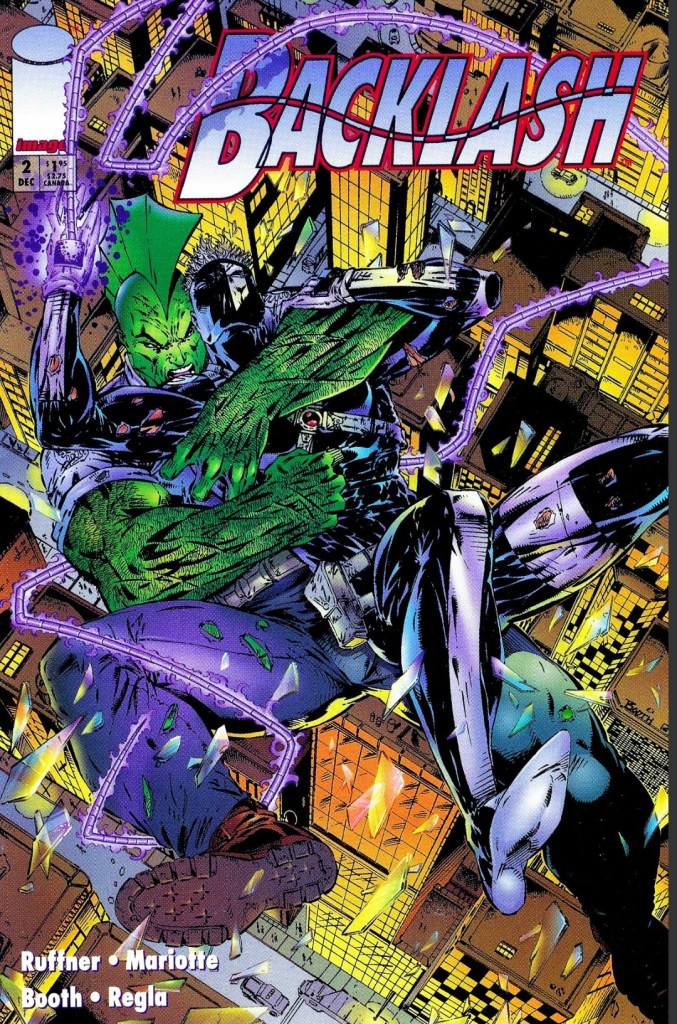
The cover.

Early story

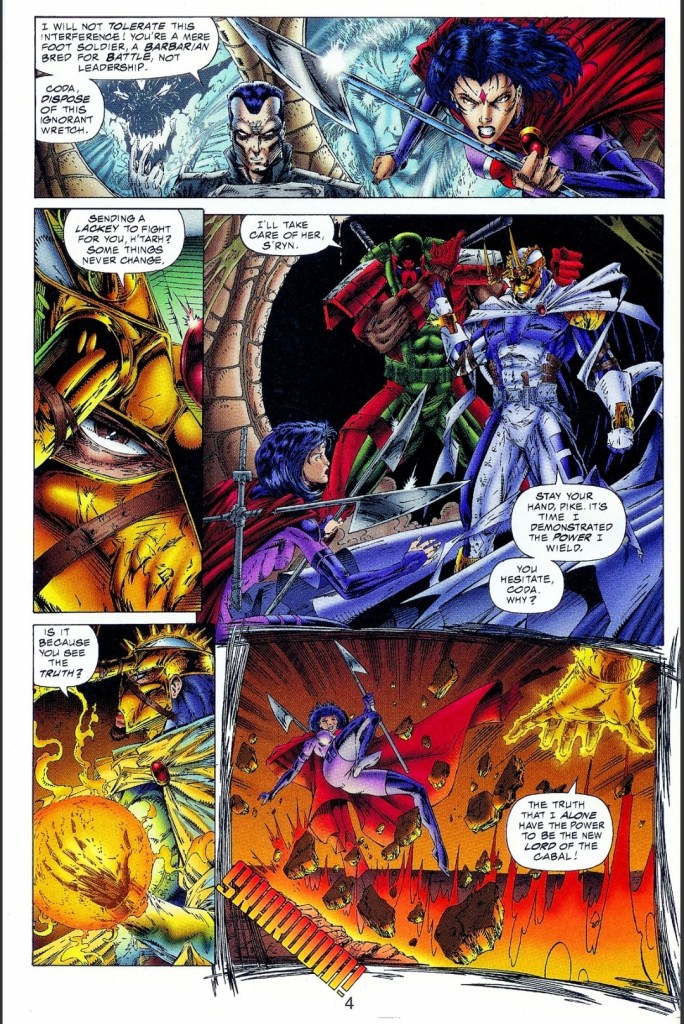
The story begins with a meeting inside the high-tech headquarters of the W.O.R. (Wildlife Organized Research), a front covering the outpost for the criminal organization called the Cabal. During the meeting, the fall of Helspont was discussed and talk about running the Cabal intensified. Just as it was made clear that a new beginning and new leadership were needed to manage the Cabal, a warlord called S’ryn arrives with the deadly Pike behind him. After briefly overwhelming opposition from a Coda warrior and H’tarh, S’ryn performs a ritual and gets the pledge of loyalty from those who recognized him as the new leader of the Cabal. The stage is set for further escalation between the Daemonites and the Kherubim.

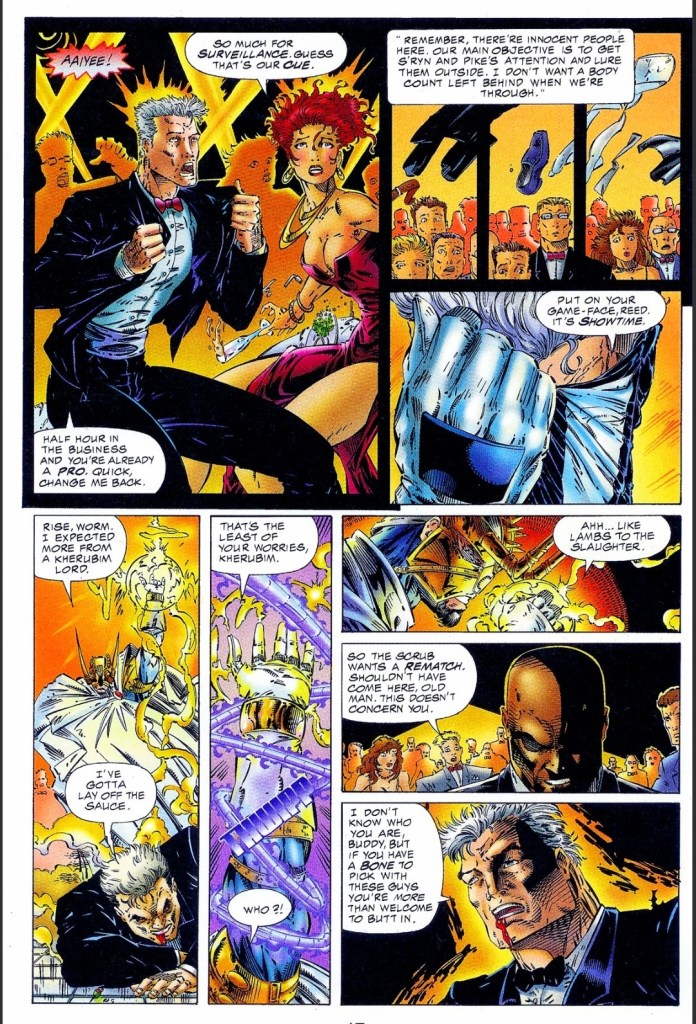
In the city of Chicago, Backlash and Taboo spend time together in an apartment that looks worn down and not so clean. It turns out, both of them are fugitives and they are waiting for Cyberjack to complete his surveillance of the security of a hotel where a celebrity ball is set to happen…

Quality

In the middle of a special event, Backlash and Taboo spring into action as WildCATS’ Jacob Marlowe gets into trouble.

Compared to what happened in issue , this story moved at a moderate pace in relation to the new mission which involved espionage and suspense. It’s not the action showcase the previous issue was but rather more moderated as the creators took a new approach to not only tell a new story but also do its own build-up of the Kherubim-Daemonite war and other WildStorm universe concepts. The story is well-written and while there is a lot of expository dialogue and creative explanations implemented, it never felt forced. Along the way, the creative team started implementing crossover elements by having Jacob Marlowe of WildC.A.T.S.: Covert Action Teams as well as established Image Comics figure Savage Dragon (from Erik Larsen) included in the story and even getting involved with the operations that took place.

As for Backlash himself, you will see a little less of him in this tale (compared to issue ) which is not surprising as the creative team focused more on the plot and had to handle the crossover elements. Backlash did not become a supporting character here and you will see some superhero spectacle from him, particularly in his rematch with a certain villain.

Conclusion

S’ryn gets challenged before he becomes the new leader of the forces of evil.

Backlash (1994) is a fun ride that cleverly combined crossover elements with its own approach on building up the WildStorm concepts, notably the war between the Kherubim and Daemonites. It also shows the consequences of what happened in the 4th issue of the WildC.A.T.S. mini-series particularly within the side of the opposition. As such, this comic book is pretty much a sequel to the said mini-series. At this stage, there was clearly something prepared to entertain readers while maintaining focus on establishing Backlash (note: Marc Slayton was one of the Team 7 members) as a major WildStorm character.

Overall, Backlash (1994) is recommended.

+++++

Thank you for reading. If you find this article engaging, please click the like button below, share this article to others and also please consider making a donation to support my publishing. If you are looking for a copywriter to create content for your special project or business, check out my services and my portfolio. Feel free to contact me with a private message. Also please feel free to visit my Facebook page Author Carlo Carrasco and follow me on Twitter at  @HavenorFantasy as well as on Tumblr at https://carlocarrasco.tumblr.com/ and on Instagram at https://www.instagram.com/authorcarlocarrasco

A Look Back at Harbinger #11 (1992)

Disclaimer: This is my original work with details sourced from reading the comic book and doing personal research. Anyone who wants to use this article, in part or in whole, needs to secure first my permission and agree to cite me as the source and author. Let it be known that any unauthorized use of this article will constrain the author to pursue the remedies under R.A. No. 8293, the Revised Penal Code, and/or all applicable legal actions under the laws of the Philippines.

Welcome back superhero enthusiasts, 1990s culture enthusiasts and comic book collectors! Today we go back to the early 1990s and explore a part of the Valiant Comics shared universe through the Harbinger monthly series.

In my previous retro review, Sting, Faith, Kris and Flamingo finally arrived home after spending many months away during the events of Unity. While so much time had passed for them, very little time on Earth actually moved forward. At this stage, getting back to normal living was inevitable even though they still have a conflict with the Harbinger foundation.

With those details laid down, here is a look back at Harbinger , published in 1992 by Valiant Comics with a story written and drawn by David Lapham. This comic book marks takes place after the end of Unity.

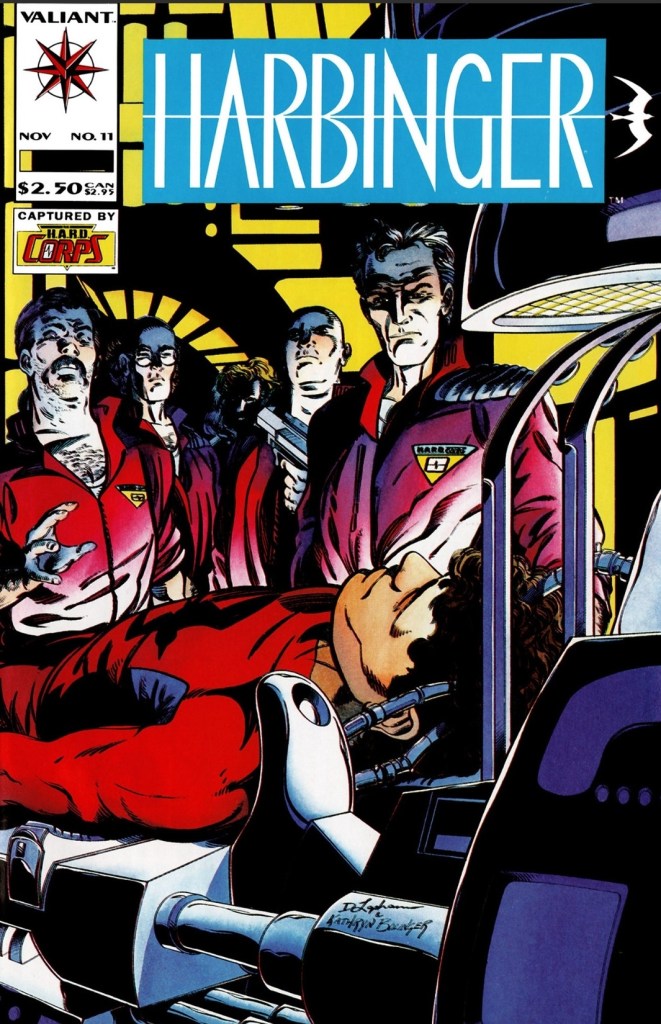
The cover.

Early story

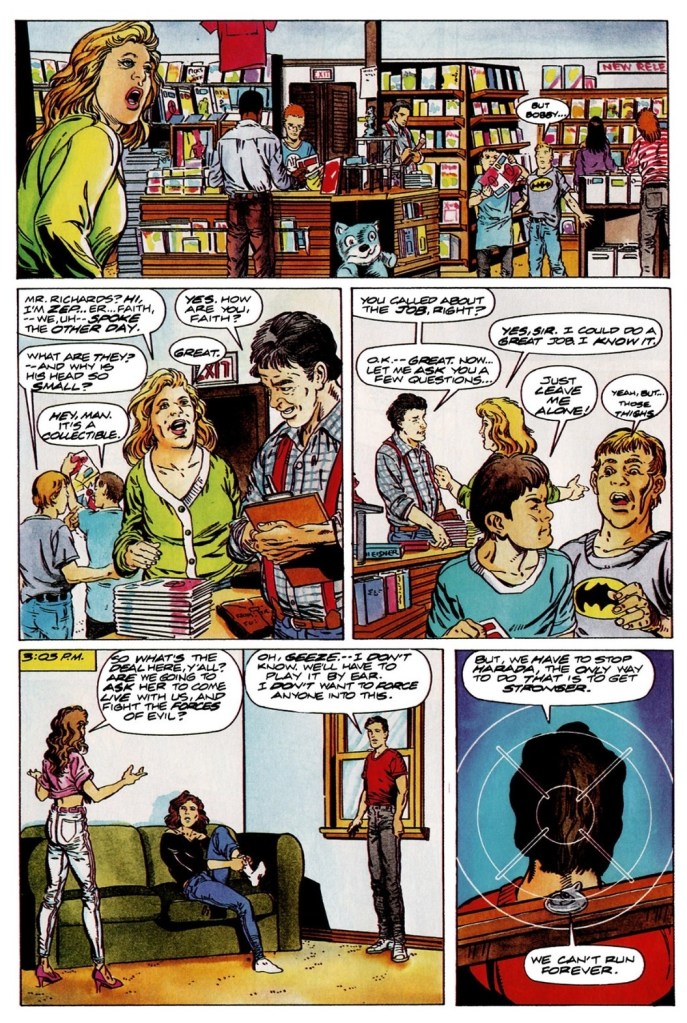
The story begins with Faith telling Kris and Sting that she’s about to go to a big job interview. While the two conversed, Faith notices a blimp floating in the sky. To her, it seems that it has floated up there really long.

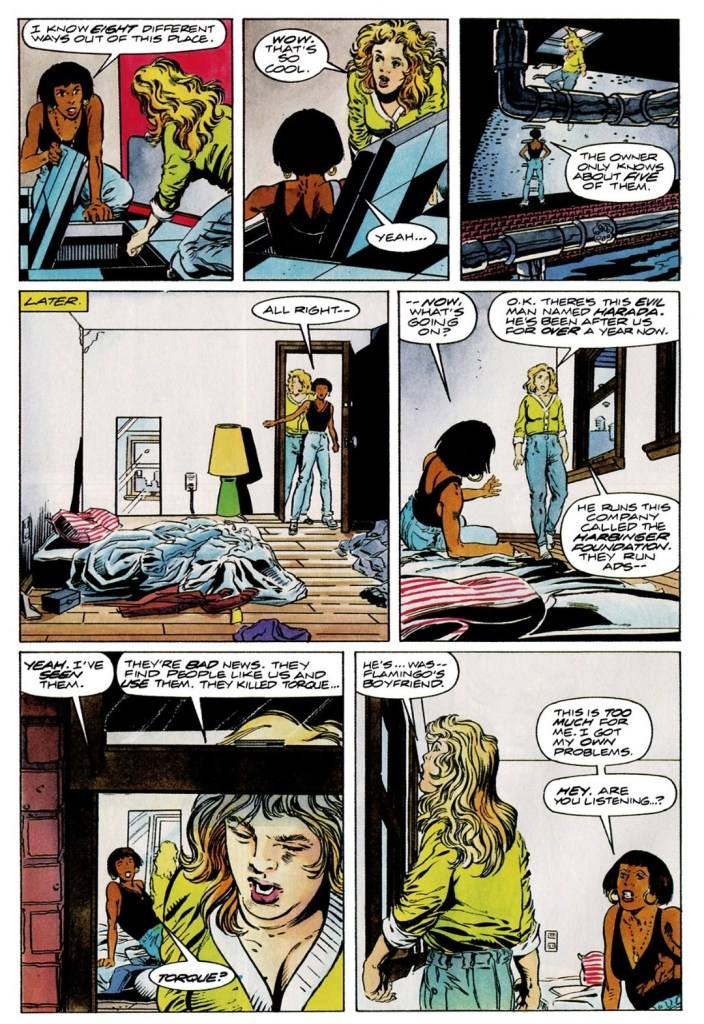
After being reminded of their planned meeting with Shatiqua, Faith flies off into the city for the job interview at a local business called Comics Jungle. Kris then approaches Flamingo whom she notices to be sounding down. Flamingo states that she has been thinking about the late Torque (father of the baby Kris had) and expresses her concern about the possibility of Shatique joining their team. Flamingo adds that she does not think they will ever get safe…

Quality

Faith and Shatiqua interact.

To begin with, this story marked artist David Lapham’s first time to write a Harbinger tale. Building up on what happened in the late stage of the previous issue, Lapham utilized H.A.R.D. Corps (already one of the established regular titles of Valiant Comics) for the Valiant universe crossover element. The good news here is that Lapham made good use of portraying H.A.R.D. Corps as the focused covert operations team that just so happens to be tracking Sting whom they perceive to be very powerful and too dangerous to be left free in society. This aspect of the story brings up parallels between H.A.R.D. Corps and the sinister Harbinger foundation which instantly blurred the line that separates good and evil.

As I don’t want to spoil the plot, I can confirm that as I read the comic book until the end, I literally felt the vibrations of change happening in the sense that a new direction for the Habinger series was materializing.

When it comes to the characters, Lapham did a good job developing the main characters while also shedding a good amount of the narrative on H.A.R.D. Corps’ members. There is a lot of characters to see but the good thing is that the narrative was not overwhelmed by the exposition and multiple speaking parts.

Conclusion

While Faith goes to the city comic book store for her job interview, Kris, Sting and Flamingo discuss internal matters not knowing they are being targeted.

Harbinger (1992) delivers a fine mix of crossover, spectacle (note: lots to enjoy here) and characterization that also succeeds in telling its own concept while giving readers a hint of what changes could come soon to Sting, Faith, Flamingo and Kris. With Lapham as the new writer, the story is surprisingly very good and engaging to read. You will see a lot of entertaining elements from the previous issues within this comic book with some new intrigue added that made this particular Harbinger tale fresh to read. Lastly, I should say that the addition of H.A.R.D. Corps really added some depth into the story and the spectacle.

Overall, Harbinger (1992) is highly recommended!

+++++

Thank you for reading. If you find this article engaging, please click the like button below, share this article to others and also please consider making a donation to support my publishing. If you are looking for a copywriter to create content for your special project or business, check out my services and my portfolio. Feel free to contact me with a private message. Also please feel free to visit my Facebook page Author Carlo Carrasco and follow me on Twitter at  @HavenorFantasy as well as on Tumblr at https://carlocarrasco.tumblr.com/ and on Instagram at https://www.instagram.com/authorcarlocarrasco
A Look Back at Harbinger #8 (1992)

Disclaimer: This is my original work with details sourced from reading the comic book and doing personal research. Anyone who wants to use this article, in part or in whole, needs to secure first my permission and agree to cite me as the source and author. Let it be known that any unauthorized use of this article will constrain the author to pursue the remedies under R.A. No. 8293, the Revised Penal Code, and/or all applicable legal actions under the laws of the Philippines.

Welcome back superhero enthusiasts, 1990s culture enthusiasts and comic book collectors! Today we go back to the early 1990s and explore a part of the Valiant Comics shared universe through the Harbinger monthly series.

In my previous retro review, Sting, Faith, Kris and Flamingo struggled with the completely unexpected new reality that their teammate Torque had died. As they mourned, Toyo Harada and his foundation just kept on operating and preparing themselves for a future conflict with the protagonists. Harada specifically perceives Sting as the most dangerous object for his organization to deal with.  

With those details laid down, here is a look back at Harbinger , published in 1992 by Valiant Comics with a story written by Jim Shooter and drawn by David Lapham.

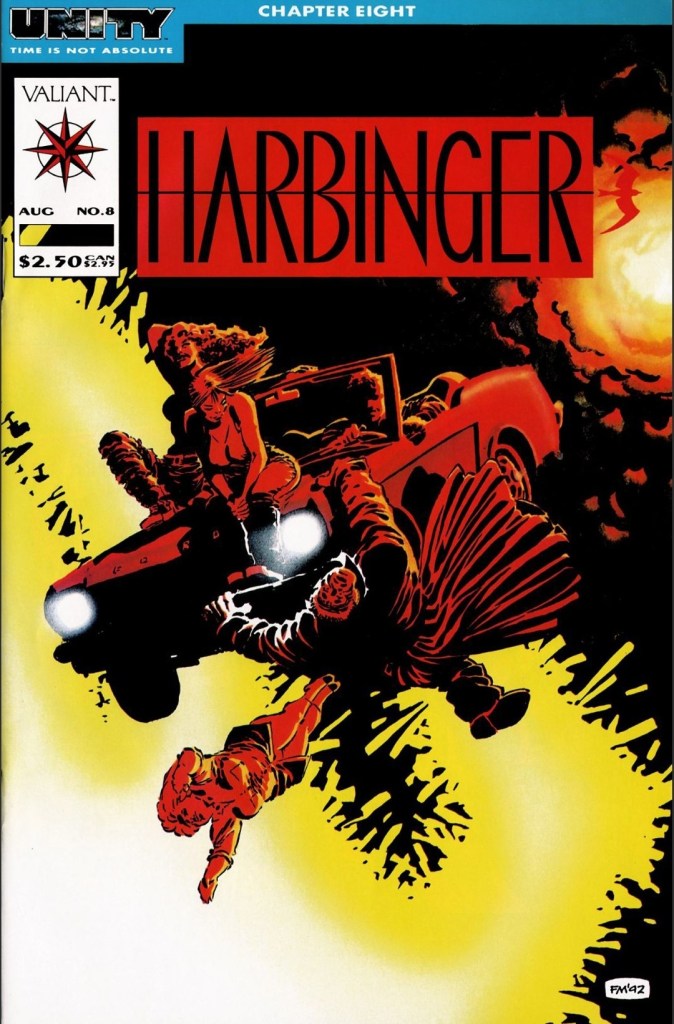
The cover.

Early story

The story begins on April 4, 1992 inside the nice home of Dr. Heyward. There, Heyward, his wife and their two kids are enjoying the company of Faith, Sting and Flamingo. Upstairs, Kris could not fit jeans as she has gained weight. Heyward’s wife Moni arrives, offers her new clothes to wear and shares with her some insight about being in a relationship.

After dinner, Sting and Dr. Heyward have a nice chat with drinks. At the kitchen, Kris and Moni begin to talk about pregnancy with Flamingo present. As soon as Kris says that she is thinking about asking Dr. Heyward about getting an abortion, Flamingo tells her not to do it as the baby inside her all that is left of their dead teammate Torque.

Just as Kris begins to play dumb and divert attention away, a weirdly dressed teenager suddenly appears inside the home. He identifies himself as Geoff McHenry the geomancer…

Quality

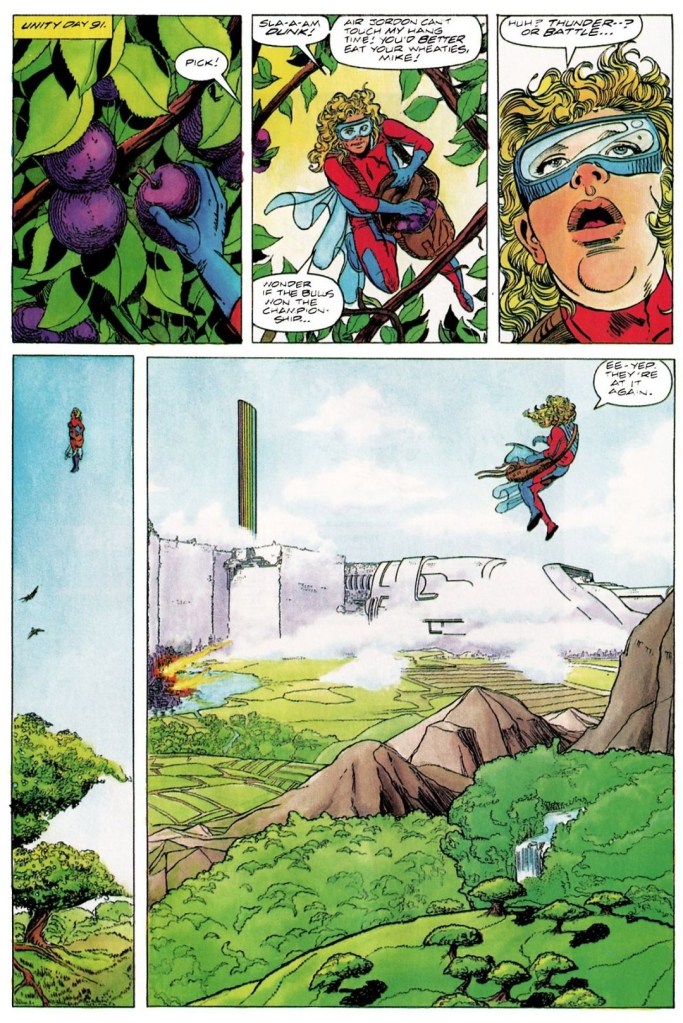
Faith collects and then flies high for a grand view.

To get straight to the point, this issue of Harbinger is easily the wildest story I’ve read in this series and for a very obvious reason – it is part of the Unity crossover storyline that established the Valiant Comics universe’s overall concept. For the newcomers reading this, Unity was published in 1992 composed of eighteen chapters – beginning with Unity #0 – which saw story parts told in issues of other Valiant titles like Eternal Warrior, Archer & Armstrong, Magnus Robot Fighter, X-O Manowar, Rai and Solar Man of the Atom.

That being said, the story here is not only wilder than ever but also really went higher with its flight of fantasy which really impacted the protagonists. In her, Sting, Faith, Flamingo and even the pregnant Kris get recruited to join what turned out to be a major battle waged by a group of adult heroes (Solar, Eternal Warrior, Archer & Armstrong, X-O Manowar, Rai and others) against Erica Pierce (the Mothergod) who is obsessed with destroying the universe as she wield immense power.

More on the plot, the transition of Sting and his teammates going into battle on an unknown realm progressed very smoothly which surprised me. As there are lots of battle scenes and other forms of superhero spectacle to see, the creative team managed to maintain a compelling narrative that moved at a medium pace which makes following the exploits of the powered teenagers easy to do. Sure, you get to see the other Valiant Comics heroes share the spotlight in this comic book but Sting and his teammates are the clear protagonists.

Even though there are lots of battle scenes, Jim Shooter still succeeded in setting up a good amount of character development scenes which resulted in clear development of Sting and Kris. Not only that, Shooter convincingly captured the impulse of youth and the false sense of maturity on the part of Sting who at this point has to take special care of Kris, think about the future of becoming a father while dealing with pressure from the other Valiant superheroes who need him to really advance against Erica Pierce. This comic book’s script is very strong and richly layered!

Conclusion

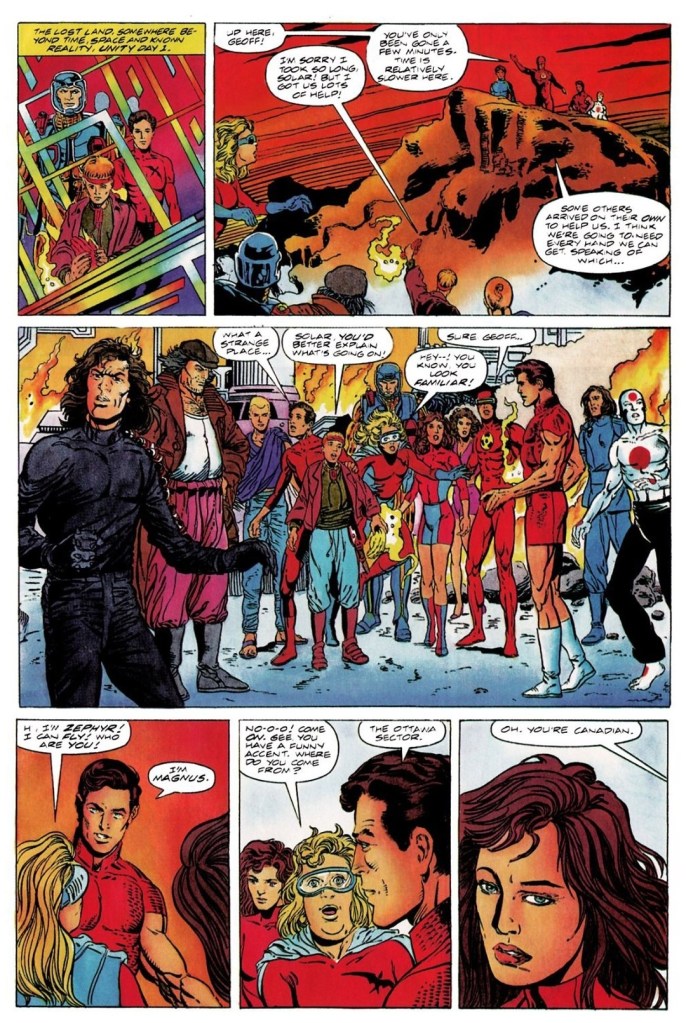
Sting and his teammates stand along with the other heroes of the Valiant Comics universe.

Being the eight chapter of the Unity crossover storyline, Harbinger (1992) has this almost perfect mix of the epic superhero conflict, spectacle and characterization while maintaining sufficient focus on the exploits Sting, Faith, Kris and Flamingo. At this point of the monthly series, Sting (note: whose immense power was portrayed here) and Kris are preparing themselves for the future while failing to realize they are not really mature enough to deal with both the anticipated parenthood and the Unity conflict at hand. This comic book is a must-read as it works excellently both as a standalone story as well as a chapter of Unity. That being said, I’m looking forward to the next issue already.

Overall, Harbinger (1992) is highly recommended!

+++++

Thank you for reading. If you find this article engaging, please click the like button below, share this article to others and also please consider making a donation to support my publishing. If you are looking for a copywriter to create content for your special project or business, check out my services and my portfolio. Feel free to contact me with a private message. Also please feel free to visit my Facebook page Author Carlo Carrasco and follow me on Twitter at  @HavenorFantasy as well as on Tumblr at https://carlocarrasco.tumblr.com/ and on Instagram at https://www.instagram.com/authorcarlocarrasco

George Perez (1954-2022)

George Perez, the incredible comic book artist who made major contributions to illustrated literature (especially the superhero comic book genre), sadly passed away due to complications related to pancreatic cancer. He was 67-years-old and I can say that superhero comic book art and dynamic expressions will not be the same without him.

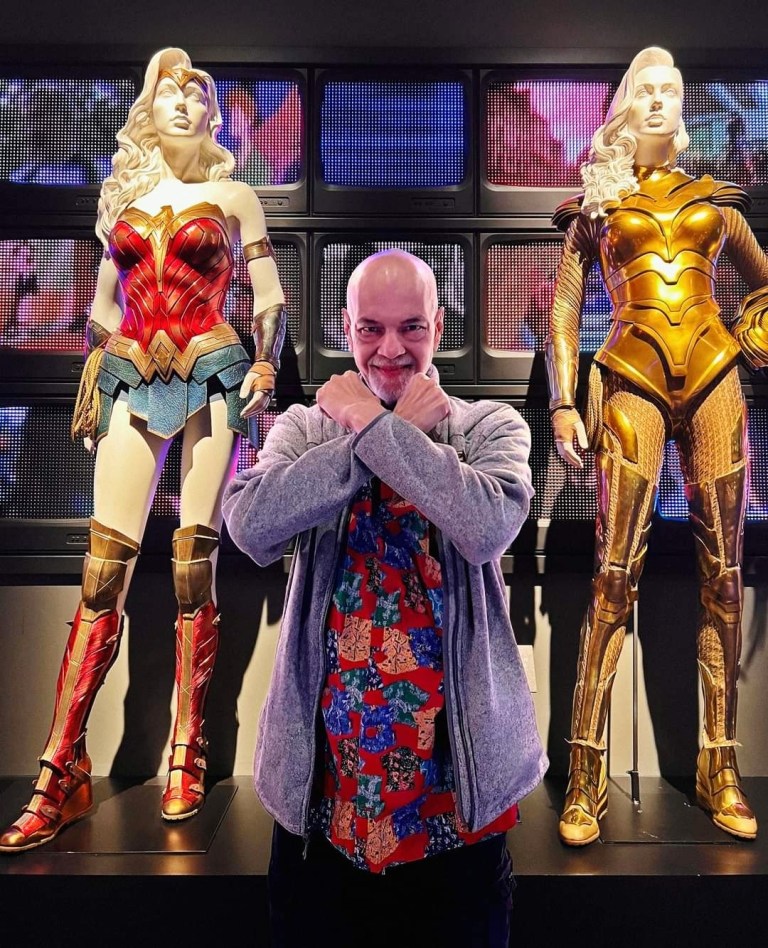
George Perez with the two Wonder Woman plastic models. (photo source – DC Comics Facebook page)

Already there were comic book industry figures who reacted to the death of the legendary Perez. DC Comics co-publisher and legendary creator Jim Lee paid tribute stating, “We creators may all have access to the same tools of the trade: pen, paper and imagination, but what George could do with his prodigious talents was off the charts.”

For his part, Rob Liefeld stated, “I’ll remember George for his innovative and prolific storytelling. Thank you for all the great memories. Rest In Peace, George Perez.”

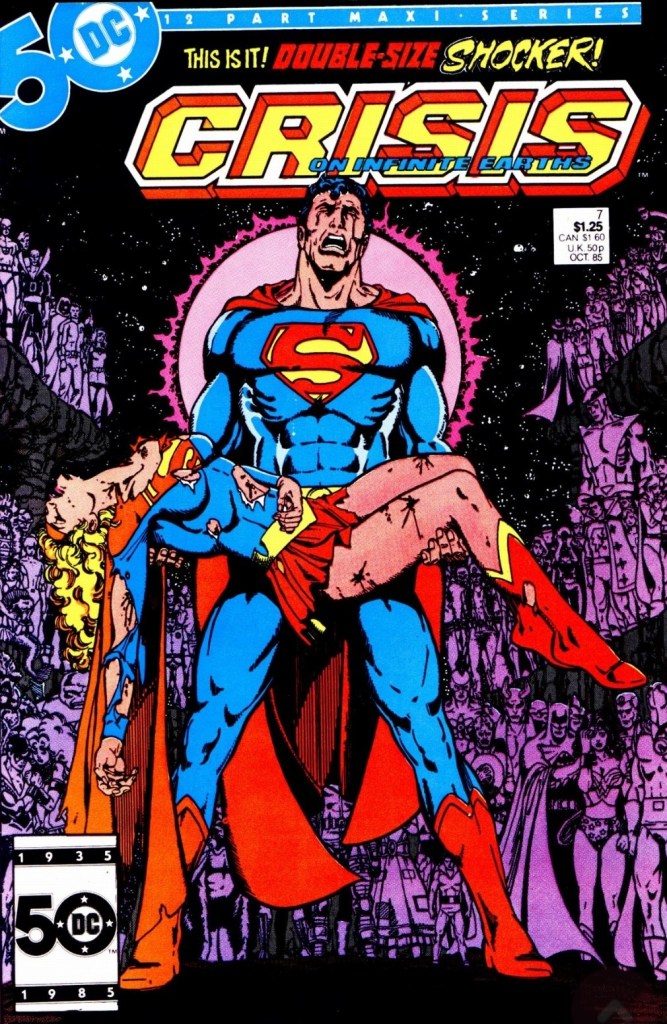
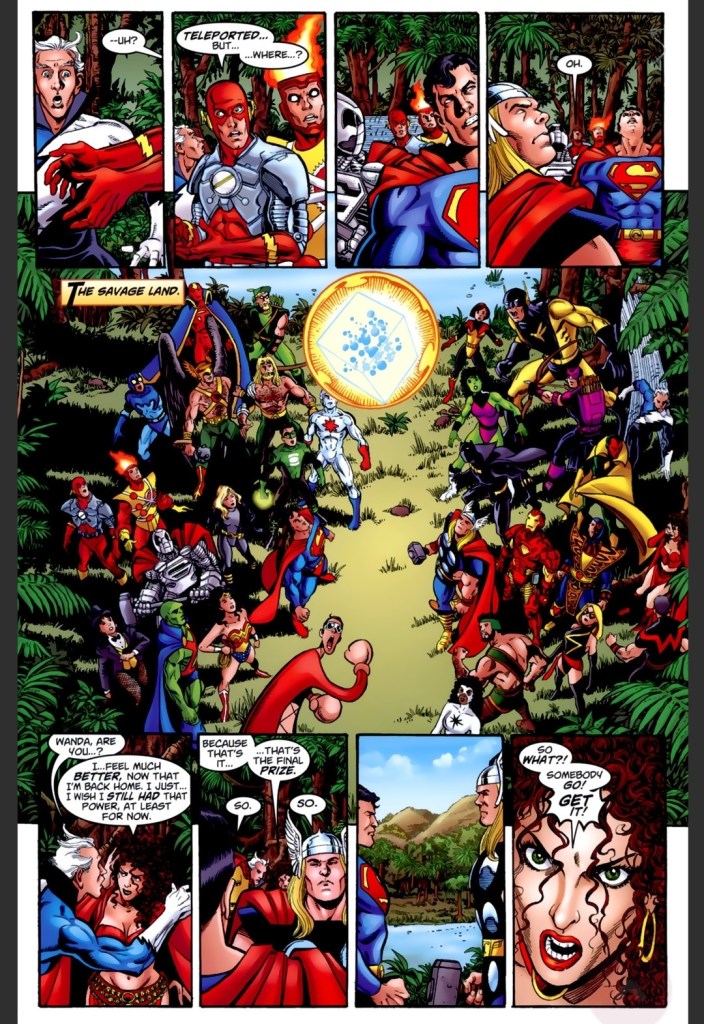
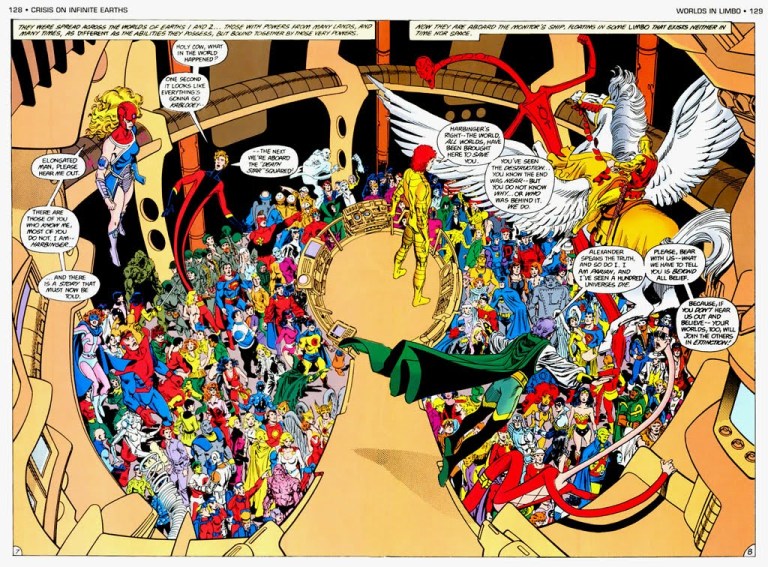
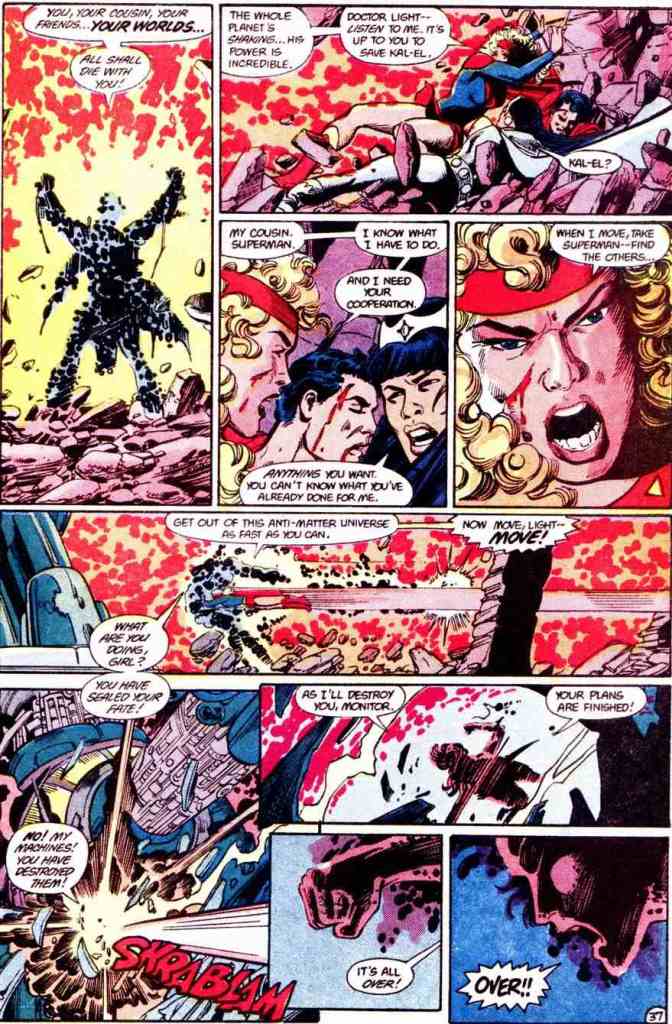
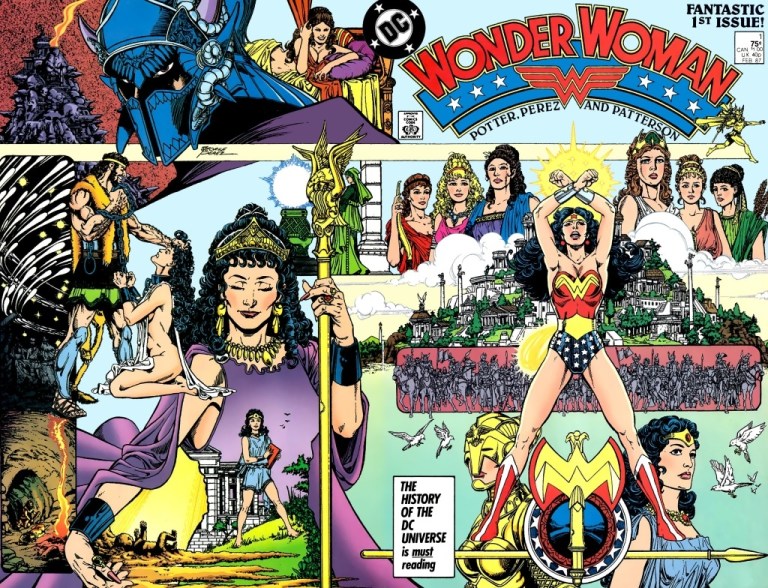
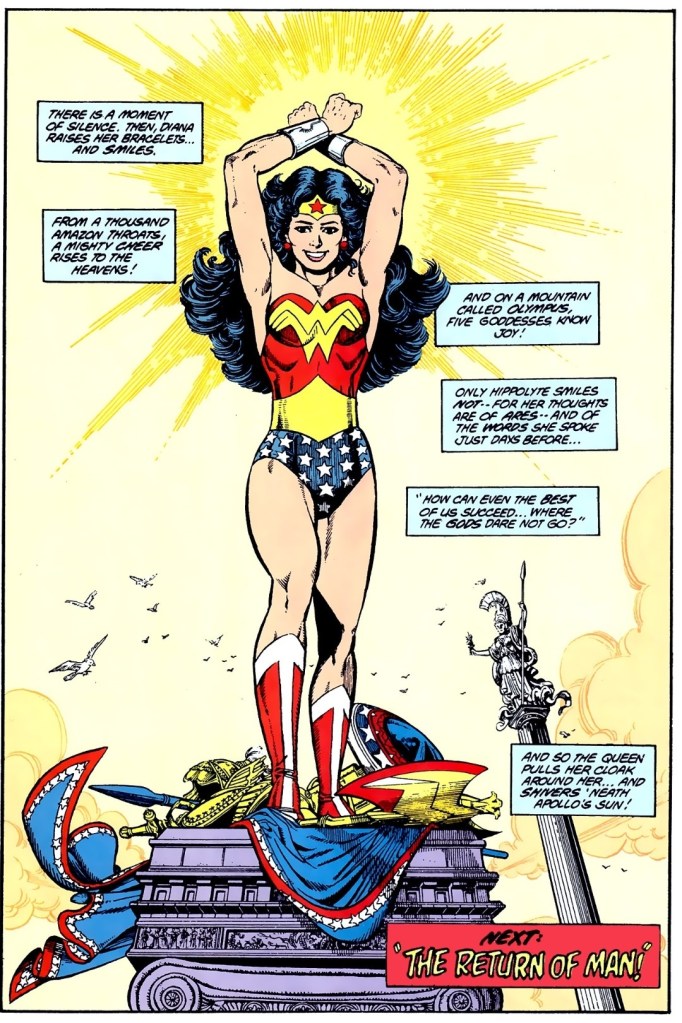
For the newcomers reading this as well as those who are simply unaware of Perez’s legacy, he was responsible for visualizing DC Comics’ 1985 epic maxi-series Crisis on Infinite Earths (note: he drew countless characters complete with varied settings or environments in high detail) and redefining Wonder Woman (note: he also wrote the stories) which made her a more essential pop culture icon. George Perez also worked for Marvel Comics over many projects and was chosen to illustrate the memorable 2003 JLA/Avengers crossover series of Marvel and DC. Perez also worked with other publishers such as Malibu Comics for several Ultraverse comic books and Image Comics for Crimson Plague and Witchblade. In recent years, he was responsible for Sirens published by BOOM! Studios.

For me, Wonder Woman was best defined during the post-Crisis era of DC Comics which involved George Perez and Len Wein who wrote the early issues of the Wonder Woman monthly series in the late 1980s.

In his decades-long career in comics, Perez unsurprisingly earned varied awards and honors (references here, here, here and here to name a few).

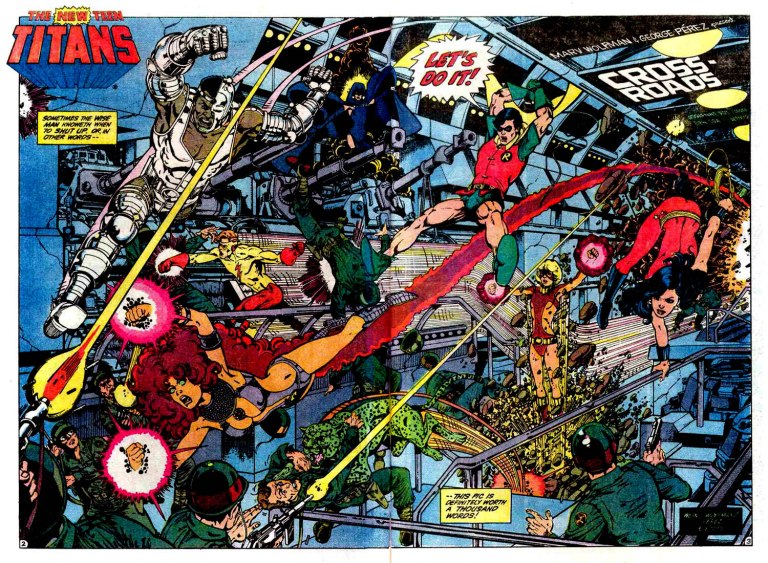
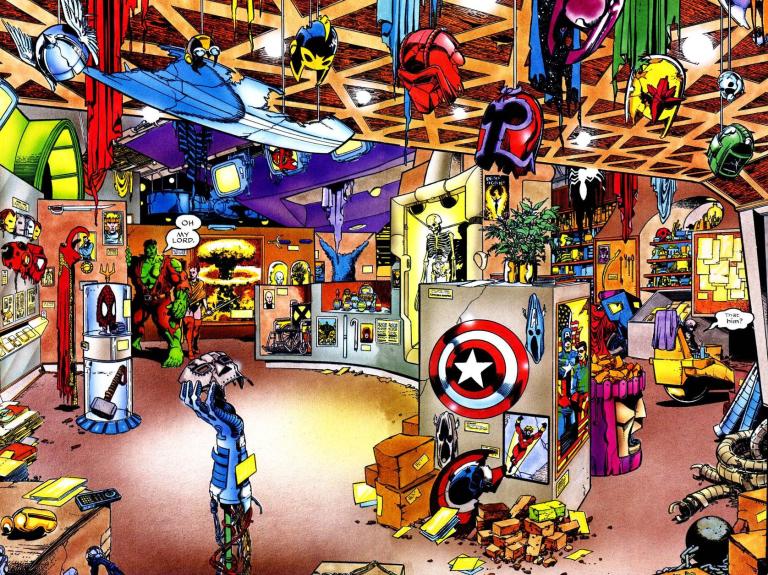
I should say that George Perez is a long-time favorite comic book illustrator of mine. I enjoyed reading the superhero comic books he illustrated and I love his art style on the characters, the environments and crowds. If there is anything I love about Perez’s art, it is his distinct style along with his implementation of high levels of details on the characters, objects, creatures and surroundings. Perez is also known to capture the distinct visual elements of superhero characters such as Spider-Man’s costume and his spaghetti-like web, Superman’s physique and distinct letter S, Prime’s overly muscular body and more. Every time Perez is involved as artist, the result is almost always a visual feast that often adds punch to the script prepared.

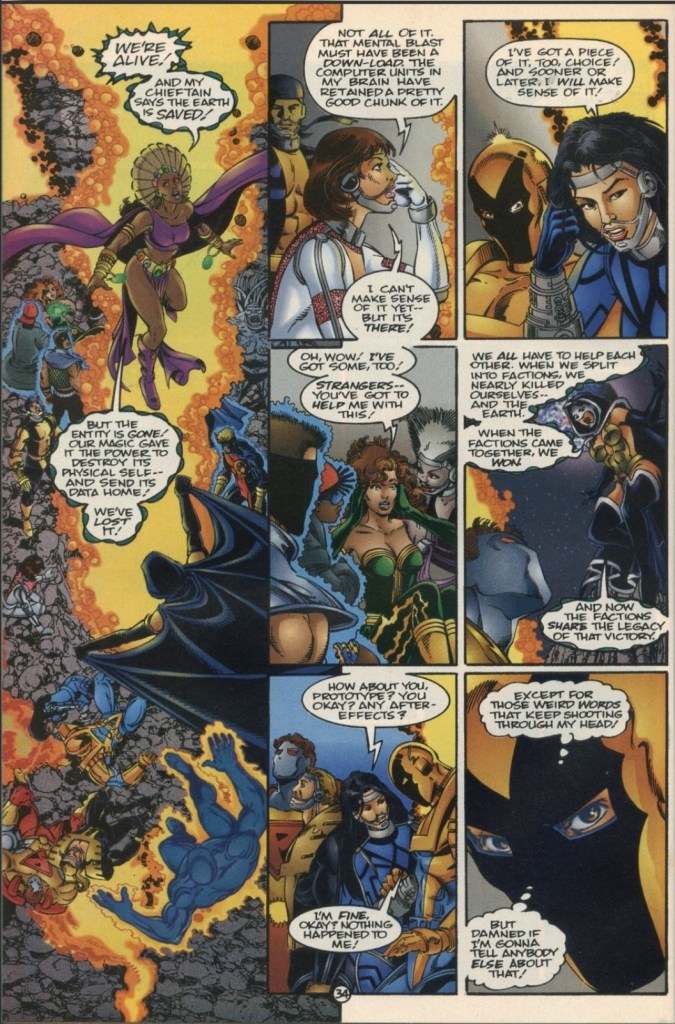
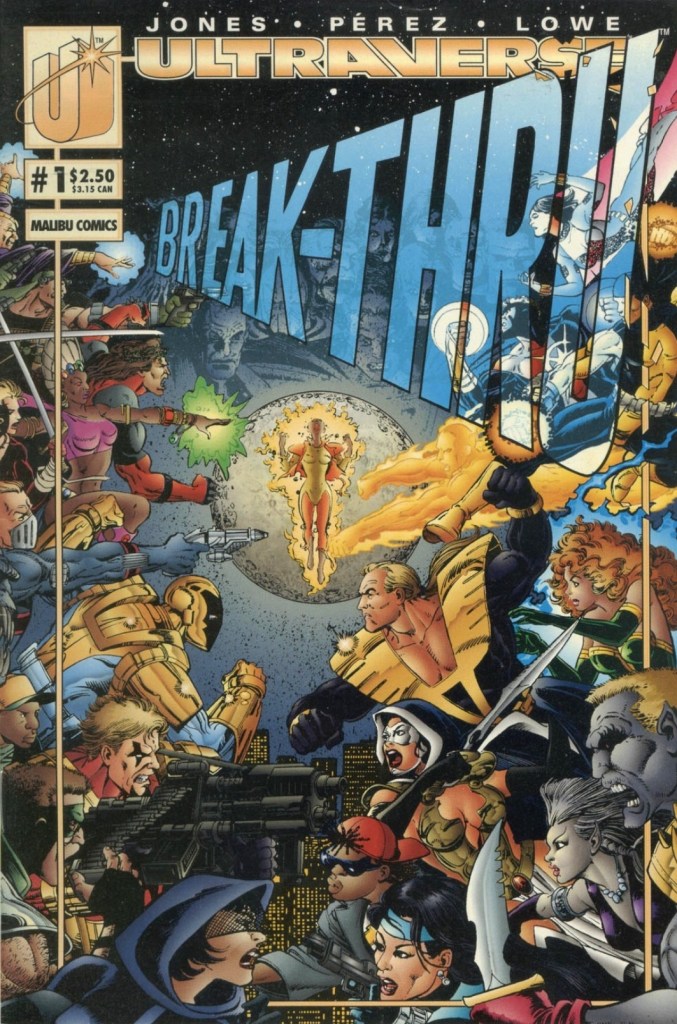
When I was still actively collecting comic books back in the 1990s, I often get excited whenever I learned that George Perez illustrated upcoming comic books. In 1992, he drew Incredible Hulk: Future Imperfect (2 books) which was mind-blowing and intriguing for me! In 1993, I became a fan of the newly launched Ultraverse of Malibu Comics and I got very excited to learn that Perez was hired for their major UV crossover Break-Thru (2 issues). Perez also drew one issue of Prime and most of the early issues of the UV team UltraForce (issues #0, #1, #3, #4, #5 and #6). If you want to see Perez draw ALL the characters of the Ultraverse, you should read the 2-issue Break-Thru storyline.

A page from Break-Thru showing just some of the many Ultraverse characters Perez illustrated. This was published before the release of UltraForce.

Speaking of UltraForce, check out this video by Crypto Comics (with observations on Perez’s art works)…

Going back to George Perez’s amazing run on Wonder Woman, I urge you to watch the video below…

For me, the most defining stories of Wonder Woman ever told in any art form are still the comics that Perez wrote (note: he co-wrote stories with Greg Potter and Len Wein respectively on the early issues) and illustrated during the post-Crisis era of DC Comics. Check out my retro reviews of Wonder Woman 1980s comics on this website.

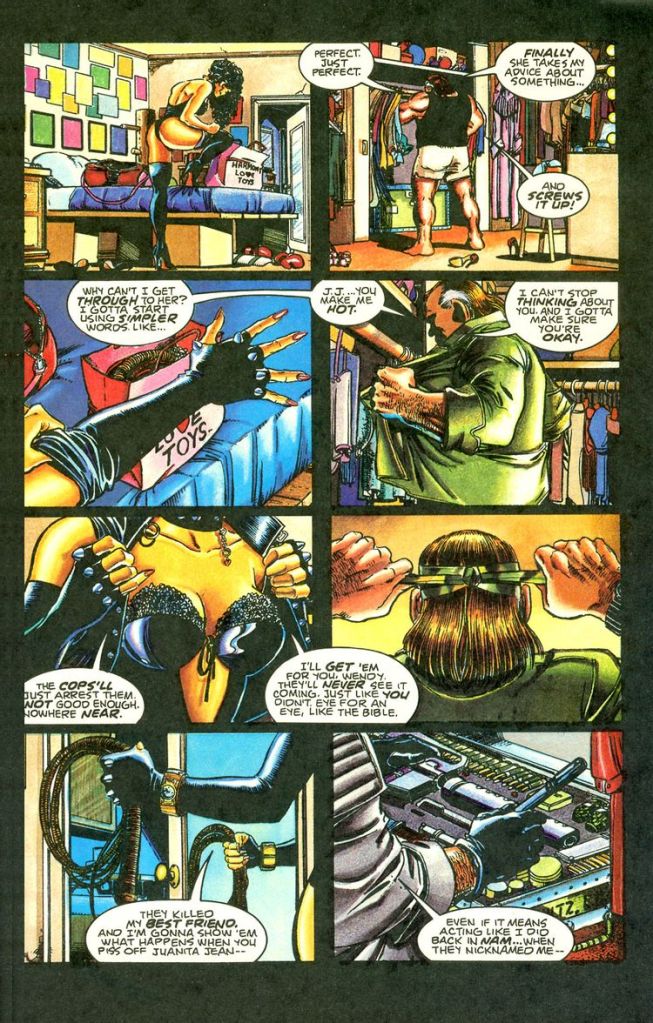
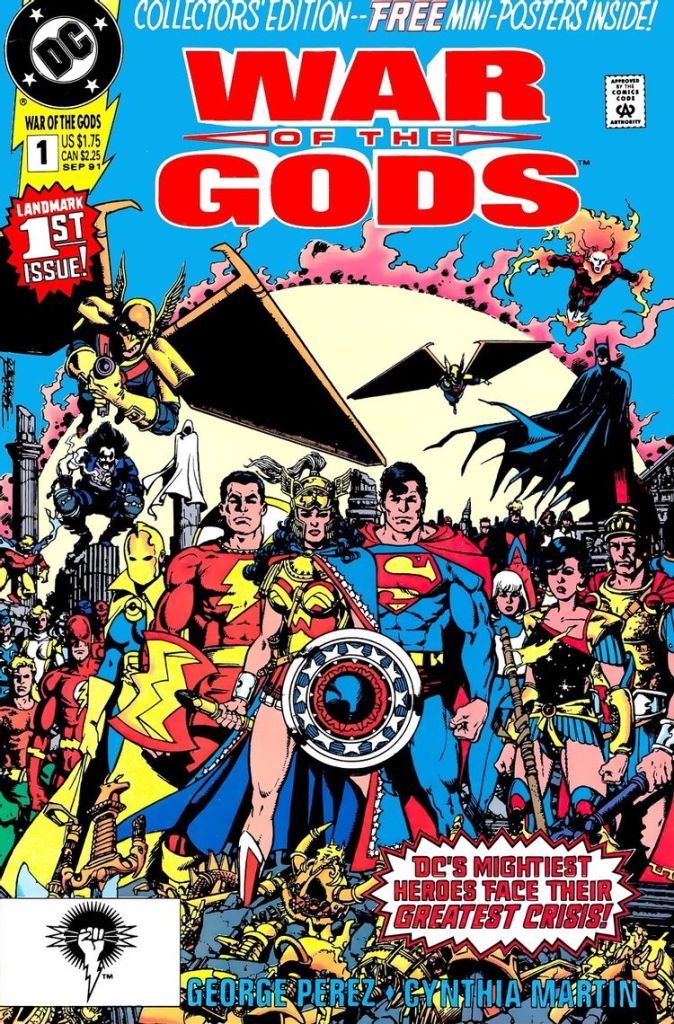
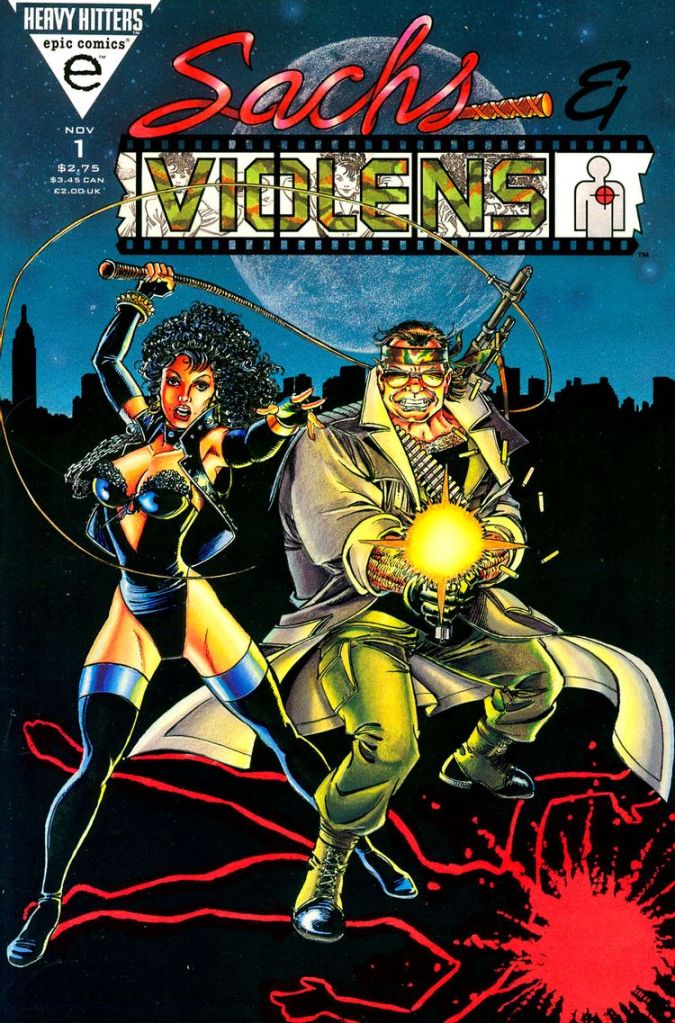
Truly, George Perez will be missed by a lot of people and his countless pieces of works will be revisited in the foreseeable future. In closing this piece, posted below are varied works (comic book covers and interior art) done by the late creator through the decades for your viewing pleasure and learning. This is a tribute to Perez and may he rest in peace!

+++++

Note: All images shown are properties of their respective companies.

Thank you for reading. If you find this article engaging, please click the like button below and also please consider sharing this article to others. If you are looking for a copywriter to create content for your special project or business, check out my services and my portfolio. Feel free to contact me with a private message. Also please feel free to visit my Facebook page Author Carlo Carrasco and follow me on Twitter at  @HavenorFantasy as well as on Tumblr at https://carlocarrasco.tumblr.com/ and on Instagram at https://www.instagram.com/authorcarlocarrasco/
A Look Back at Dazzler #24 (1983)

Disclaimer: This is my original work with details sourced from reading the comic book and doing personal research. Anyone who wants to use this article, in part or in whole, needs to secure first my permission and agree to cite me as the source and author. Let it be known that any unauthorized use of this article will constrain the author to pursue the remedies under R.A. No. 8293, the Revised Penal Code, and/or all applicable legal actions under the laws of the Philippines.

Welcome back superhero enthusiasts, 1980s culture enthusiasts and comic book collectors! Today we go back to the year 1983 to examine the Marvel Comics universe through the exploits of Dazzler!

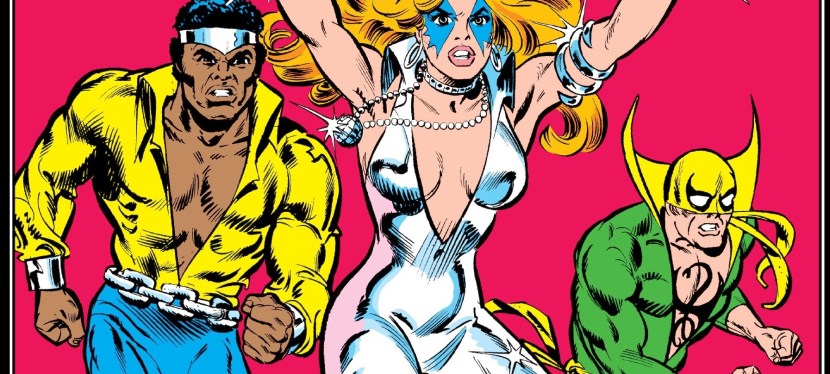
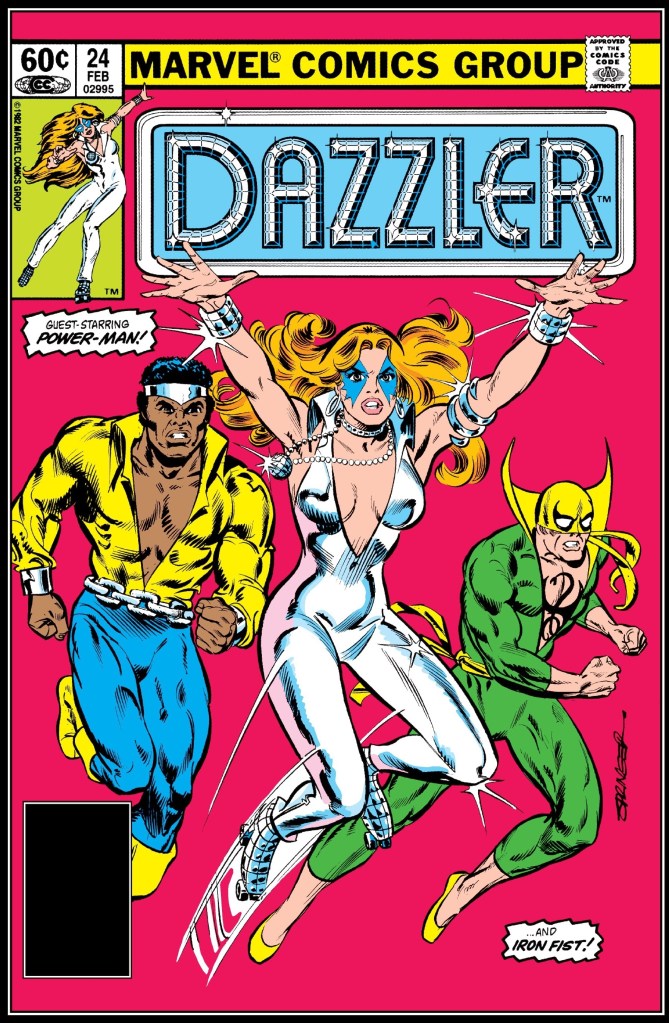
As seen in the cover of the next Dazzler comic book I reviewed, the lady has Power Man and Iron Fist with her. In short, there is a crossover within Marvel Comics’ universe just waiting to be unveiled. Who exactly will Dazzler, Power Man and Iron Fist be facing? What kind of situation are they entering into?

With those details laid down, here is a look back Dazzler #24, published by Marvel Comics in 1983 with a story written by Danny Fingeroth and drawn by the late Frank Springer.

The cover.

Early story

The story begins with Rogue (of the Brotherhood of Evil Mutants) breaking through the front door of the apartment of Alison Blaire who remains her target. She realizes that Dazzler is absent which is inconvenient as she believes that the singer is key in her quest to find Angel and the rest of the X-Men. Rogue makes a mess of Alison’s things in the apartment and decides to wait for her to return.

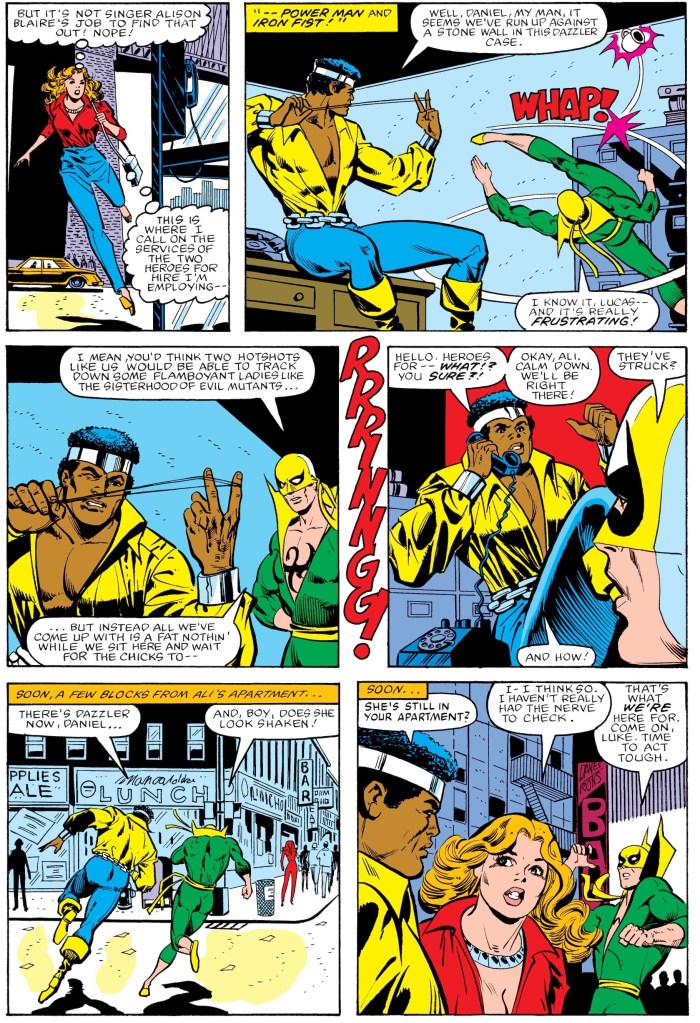
A short time later, Alison is approached by her friend Frank on her way home. He tells her that someone broke into her apartment and made a mess inside. Realizing that the trespasser is none other than Rogue (note: they encountered each other in Dazzler #22) and that she alone does not have much of a chance in fighting her, she calls Power Man and Iron Fist for their professional help…

Quality

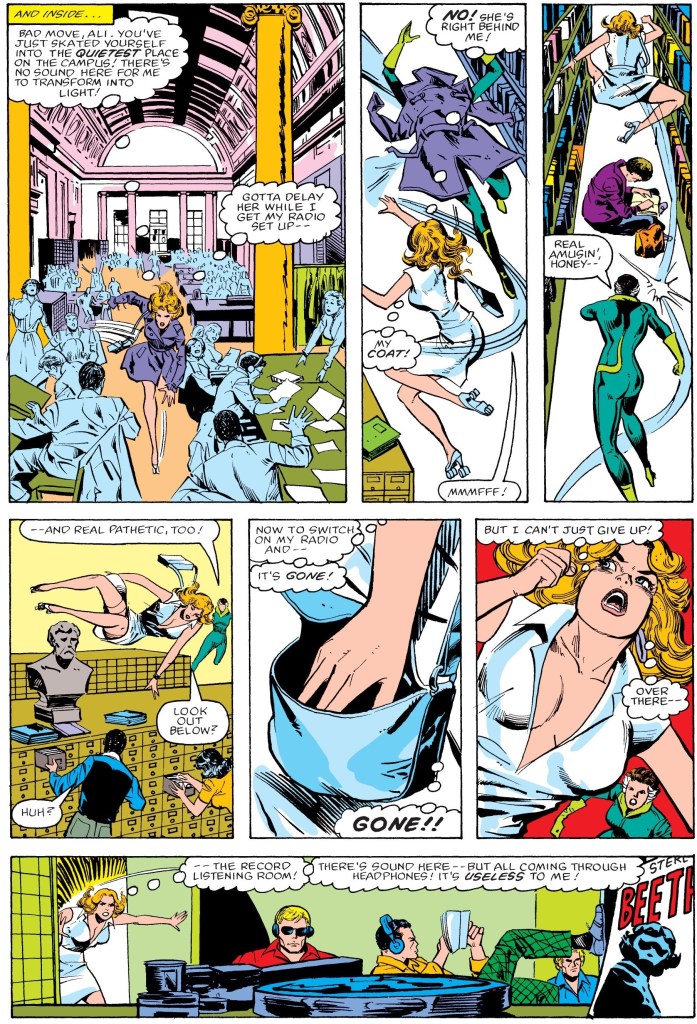
Alison Blaire desperately getting away from Rogue.

To begin with, this is one action-packed tale of Dazzler that still manages to emphasize the development of the protagonist and her newly formed bond with her half-sister Lois (who appeared a short time before this comic book was released). As a crossover set within the Marvel Comics universe, Danny Fingeroth’s story makes mention of the X-Men as Rogue continues her quest on getting Dazzler to get to Angel in order to find Charles Xavier’s team which is all part of the Brotherhood of Evil Mutant’s lust for revenge. Along the way, readers will get to see Rogue take on Power Man and Iron Fist (note: these two met with Dazzler in Dazzler ) which was fun to see.

More on Dazzler herself, the stakes are raised again as she not only has to survive encountering Rogue but also of the fact that the powerful Brotherhood of Evil Mutants member becomes aware of Lois. I should state that there are two encounters between Dazzler and Rogue here, and each one was entertaining to read.

Conclusion

Alison Blaire plus Power Man and Iron Fist.

Dazzler #24 (1983) is a Marvel crossover tale which the creators made to add some action-packed variety while telling the story of Dazzler. That being said, the dramatic character development that this comic book series was notable for was lightened a bit to make way for the superhero spectacle. Not only does this comic book provide readers additional insight into the duo of Power Man and Iron Fist, it also showed some development about the conflict between the X-Men and the Brotherhood of Evil Mutants. Ultimately, this is one old and fun comic book to have.

If you are seriously planning to buy an existing hard copy of Dazzler #24 (1983), be aware that as of this writing, MileHighComics.com shows that the near-mint copy of the regular edition costs $57 while the near-mint copy of the newsstand edition costs $113.

Overall, Dazzler #24 (1983) is recommended.

+++++

Thank you for reading. If you find this article engaging, please click the like button below and also please consider sharing this article to others. If you are looking for a copywriter to create content for your special project or business, check out my services and my portfolio. Feel free to contact me with a private message. Also please feel free to visit my Facebook page Author Carlo Carrasco and follow me on Twitter at  @HavenorFantasy as well as on Tumblr at https://carlocarrasco.tumblr.com/