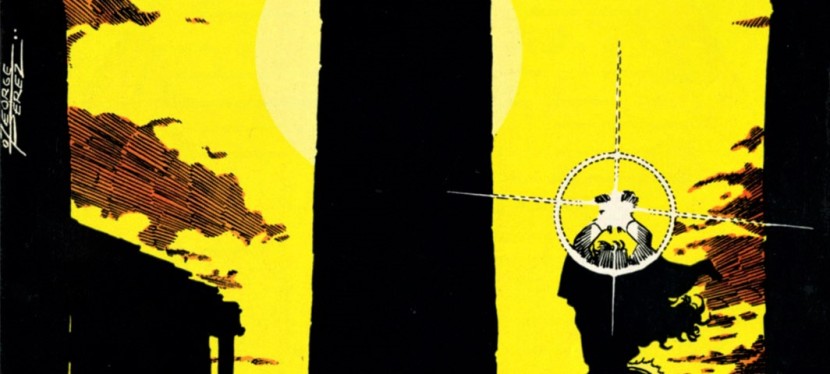
A Look Back at Prime #18 (1994)

Disclaimer: This is my original work with details sourced from reading the comic book and doing personal research. Anyone who wants to use this article, in part or in whole, needs to secure first my permission and agree to cite me as the source and author. Let it be known that any unauthorized use of this article will constrain the author to pursue the remedies under R.A. No. 8293, the Revised Penal Code, and/or all applicable legal actions under the laws of the Philippines.

Welcome back, superhero enthusiasts, comic book collectors and fans of the Ultraverse! In this return to the Ultraverse, we will examine another mid-1990s issue of Prime who became a resident of the City of New York as a result of Kevin Green and his mother relocating there.

Last time around, a huge monster (clearly inspired by Godzilla) arrived in New York and Kevin had no choice but to change into Prime to save people. While his heroic act saved lives and spared the city from further damage, Prime still was not spared from the growing speculation that he molested children in California (which by today’s standards is a ravaged state as a result of unrestrained influence of the Left as well as economic complications).

So what will happen next to Kevin/Prime the more time he spends in New York? We can find out more in this look back at Prime #18, published in 1994 by Malibu Comics with a story written by Len Strazewski and Gerard Jones, and drawn by Kirk Jarvinen and Keith Conroy.

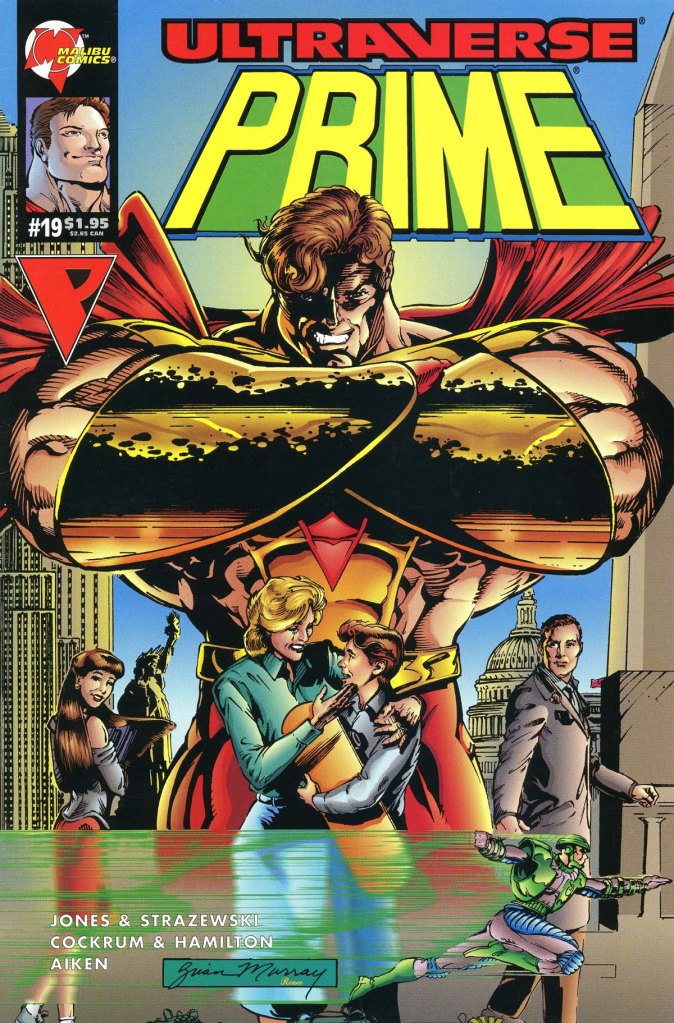
The cover.

Early story

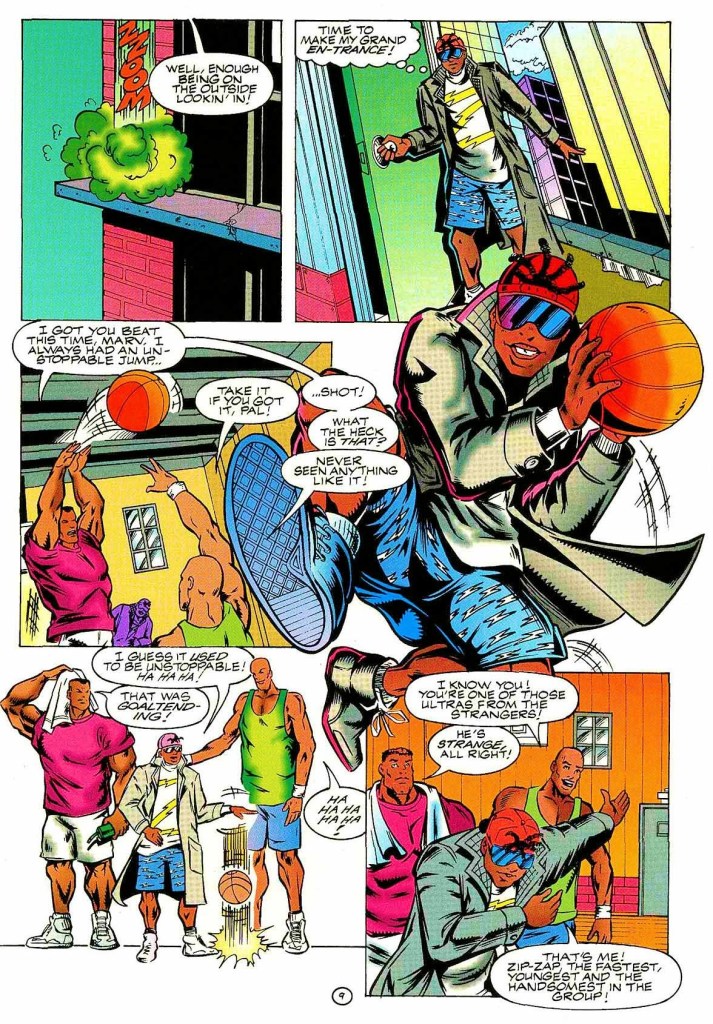
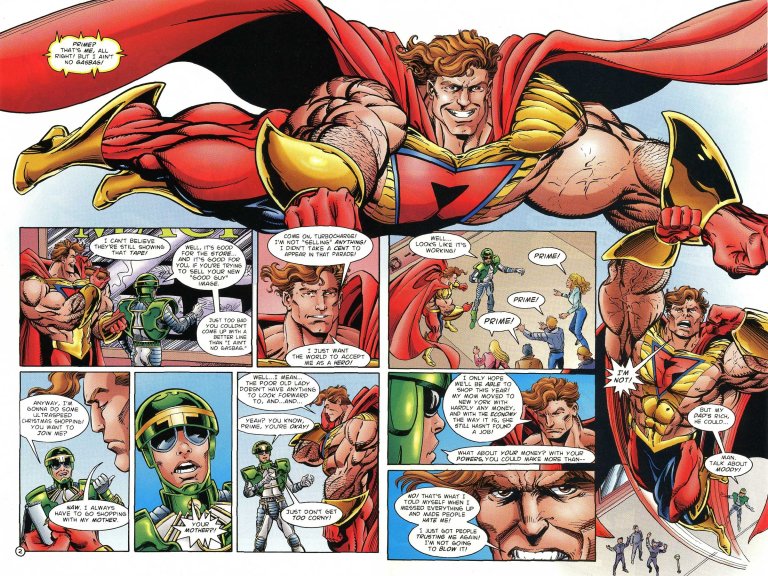
The story begins with Prime (standing behind a podium with a crowd in front of him) and the people getting surprised when Turbo Charge (note: his debut in issue was overshadowed by the events of that comic book) suddenly arrived on stage holding civilian clothes and declaring he is Prime’s new partner.

Turbo Charge whispers to Prime that he arrived to help him by pretending that the clothes are his (note: the clothes actually belong to Kevin). He then speaks out to the audience stating distorted details. Just as members of the news media start asking Turbo Charge questions, Prime grabs him and flies away to leave the crowd behind.

As they got far enough, Prime tells the Turbo Charge he has no intention to accept him as a partner…

Quality

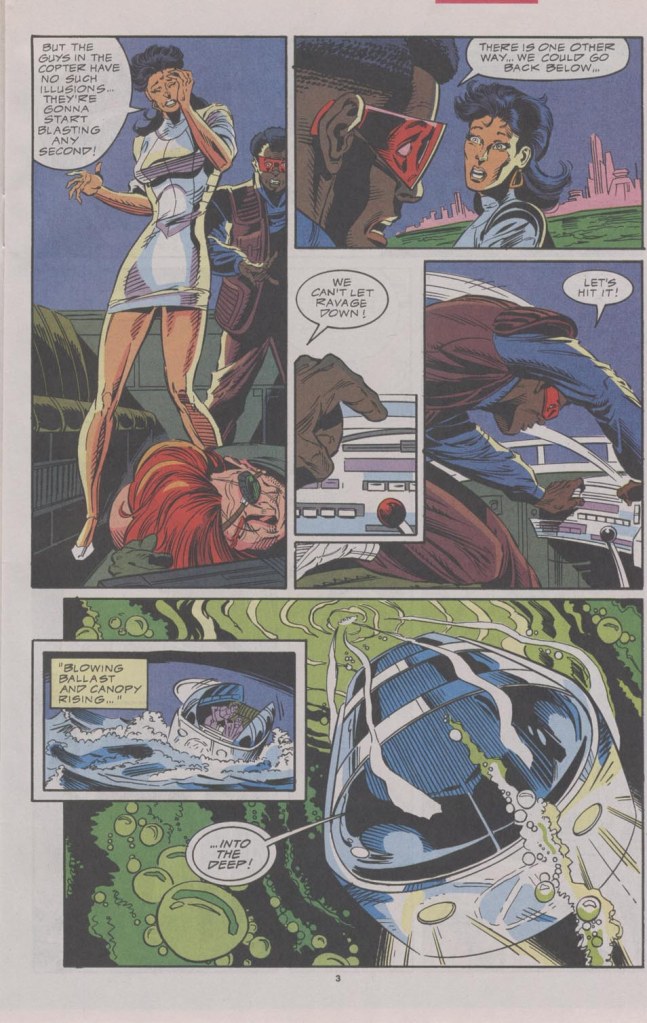
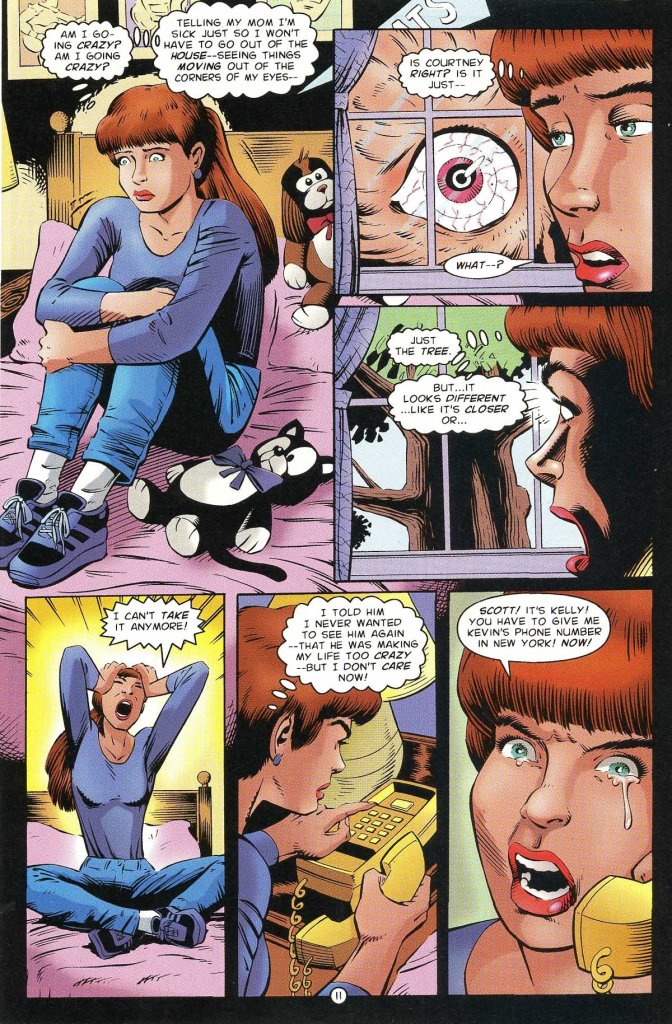
Prime’s private life as Kevin remains hard as ever.

As mentioned already, Turbo Charge’s debut in issue was overshadowed by what happened in that comic book. That being said, the story here made up for it not only by investing more pages to emphasize Turbo Charge but also dramatize his personality which was done in a pretty satisfying fashion. Like Prime, Turbo Charge’s life has gotten complicated as a result of his ability of super speed and his personal desire to do good even though he is a teenager with so much to learn.

What I find delightfully surprising in this comic book is the presence of Manhattan Project, a powerful character whose dedication to protect New York’s people from ultras (which he wants to neutralize) leads him to a big fight with Prime which alone has to be seen. It is quite enjoyable.

As for Prime himself, there is a good amount of pages dedicated to his alter ego as Kevin still struggling to adjust to life in New York. It should be noted that key elements from issue #17’s story impacted her perception of Prime (a secret Kevin still keeps successfully). The characterization here for the protagonist is really good.

Conclusion

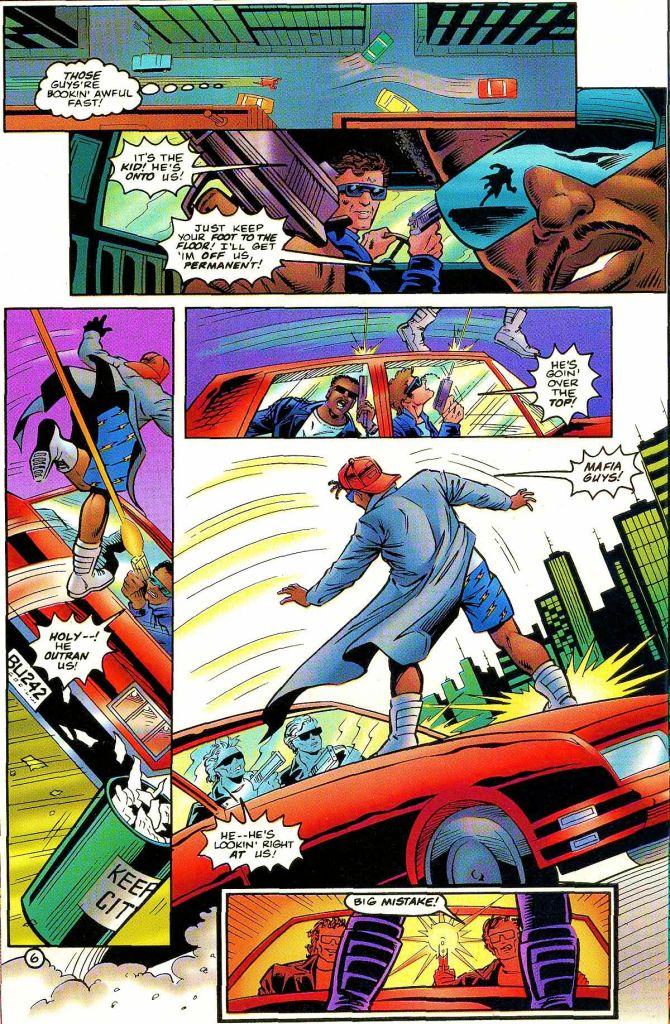
The fight between Prime and Manhattan Project is a must-see.

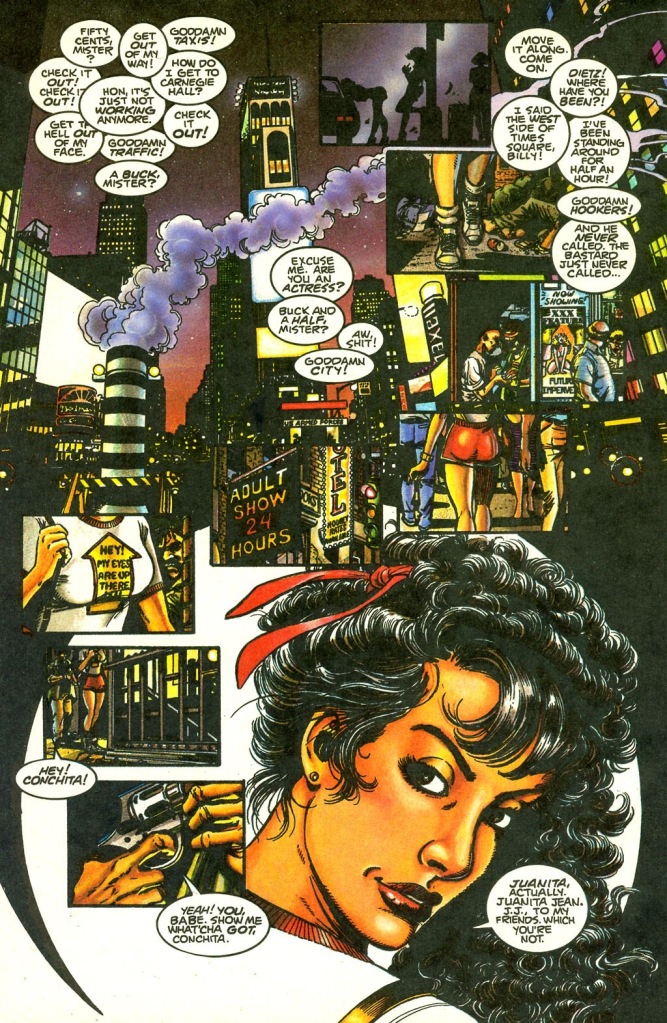
Prime #18 (1994) is a really good read. It has a fine balance of storytelling, characterization and spectacle from start to finish. I should also state that the New York setting is looking good as far as telling Prime’s story goes.

If you are seriously planning to buy an existing hard copy of Prime #18 (1994), be aware that as of this writing, MileHighComics.com shows that the near-mint copy of this comic book costs $10.

Prime #18 (1994) is recommended.

+++++

Thank you for reading. If you find this article engaging, please click the like button below and also please consider sharing this article to others. If you are looking for a copywriter to create content for your special project or business, check out my services and my portfolio. Feel free to contact me as well. Also please feel free to visit my Facebook page Author Carlo Carrasco and follow me at HavenorFantasy@twitter.com
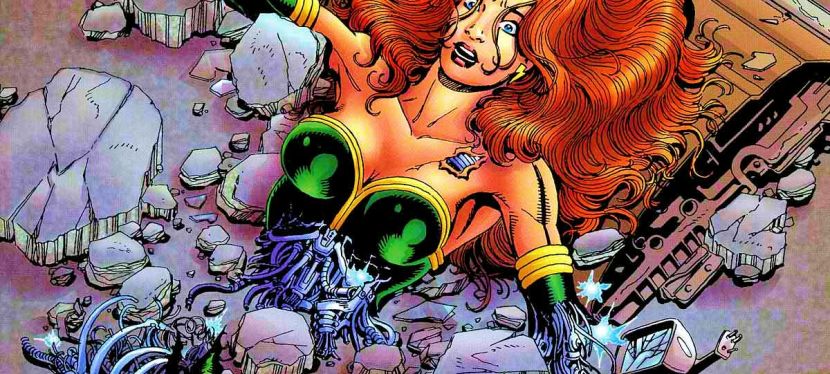
A Look Back at Mantra #18 (1995)

Disclaimer: This is my original work with details sourced from reading the comic book and doing personal research. Anyone who wants to use this article, in part or in whole, needs to secure first my permission and agree to cite me as the source and author. Let it be known that any unauthorized use of this article will constrain the author to pursue the remedies under R.A. No. 8293, the Revised Penal Code, and/or all applicable legal actions under the laws of the Philippines.

Welcome back, superhero enthusiasts, comic book collectors and fans of the Ultraverse! We take another journey into the Ultraverse through the exploits of Mantra whose story and character development got more intriguing since after the conclusion of the Archimage Quest.

Last time around, Lukasz and Eden took their relationship even further The infiltration of Aladdin’s secret facility took place and Mantra even met a certain tycoon (best known for interacting with The Strangers). The events of the last issue then continued into the Godwheel mini-series and into this next Mantra comic book I’m about to review.

Are you excited yet? What do you hope to see with regards to Lukasz and Eden? We can find out what happens next in Mantra #18, published in 1995 by Malibu Comics with a story written by Mike W. Barr and drawn by Scott Lee.

The cover.

Early story

The story begins inside a high-tech facility. An executive named Paul expressed that the laboratory will never be operational in time for the new year as a result of what happened previously. Several armed men are on the floor searching.

Suddenly, a pink portal opens with Lukasz (in a male body) and Mantra (now occupied by Eden’s soul) coming out. The two just came back from much struggle in another realm and Eden has not yet fully familiarized herself with Mantra’s body and magic. Noticing Eden/Mantra’s hesitation, Lukasz takes action against the armed men. Eden slowly blasts a few enemies before Lukasz saves her from being attacked from the rear.

Suddenly, someone from nowhere throws a few gas grenades at them…

Quality

The romance weakened by the art style.

Starting with the storytelling, the plot in this comic book can be quite jarring with regards to Lukasz and Eden as this one took place after the Godwheel mini-series. How Eden fully became Mantra (which is her rightful body of flesh in the first place) is fully explained in the said mini-series.

The romance between Lukasz and Eden here is easily the biggest selling point of this comic book. After going through rough action and misadventure in Godwheel, it is in this comic book where the two really express love for each other in the flesh. This is a welcome change considering how long we’ve seen Lukasz occupy Eden’s body followed by Lukasz and Eden being spiritually linked with each other. This one marks the start of a new chapter of the Mantra series. As for what the cover of the comic book showed, that is something you will have to discover for yourselves and it is worth the read.

Sadly, I should state that I found the art by Scott Lee here looking sub-par. There is this cartoony aesthetic to all the characters and there were shots in which their bodies looked disproportionate from certain angles. Lee’s take on visualizing Boneyard, Warstrike, NecroMantra and others all looked cartoony. This is the weakest looking Mantra issue I’ve read as of this writing.

Conclusion

Lukasz in a male body, Eden in Mantra form.

Once again, author Mike W. Barr succeeded in advancing the story and character developments with Mantra #18 (1995) putting the series into another storytelling phase with Lukasz (the long-time Mantra) and Eden as separate, living beings more involved with each other than ever before. The art quality this time went down a lot but the storytelling saved the comic book from turning into a disaster.

If you are seriously planning to buy an existing hard copy of Mantra #18 (1995), be aware that as of this writing, MileHighComics.com shows that the near-mint copy of the comic book costs $21.

Overall, Mantra #18 (1995) is satisfactory.

+++++

Thank you for reading. If you find this article engaging, please click the like button below and also please consider sharing this article to others. If you are looking for a copywriter to create content for your special project or business, check out my services and my portfolio. Feel free to contact me as well. Also please feel free to visit my Facebook page Author Carlo Carrasco and follow me at HavenorFantasy@twitter.com
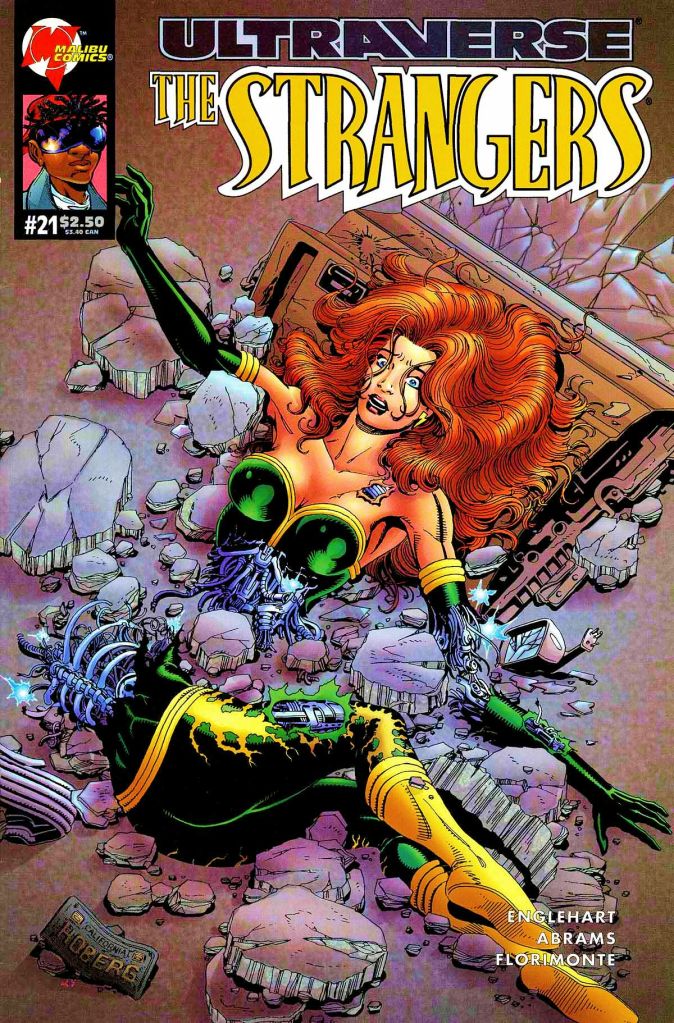
A Look Back at Wonder Woman #14 (1988)

Disclaimer: This is my original work with details sourced from reading the comic book and doing personal research. Anyone who wants to use this article, in part or in whole, needs to secure first my permission and agree to cite me as the source and author. Let it be known that any unauthorized use of this article will constrain the author to pursue the remedies under R.A. No. 8293, the Revised Penal Code, and/or all applicable legal actions under the laws of the Philippines.

Welcome back, superhero enthusiasts, comic book collectors and fans of DC Comics! By this time, the road for Wonder Woman 1984’s run in the movie theaters around the world is ending. That being said, the next way for people to avail of the said movie is the anticipated 4K Blu-ray release of it. That is something I am looking forward to and I am not fond of video-on-demand streaming when it comes to big movie productions (which are best enjoyed in the movie theater). Recently, I’ve heard buzz the Wonder Woman 1984 will be released on 4K Blu-ray and Blu-ray formats within the first-half of 2021, and there is also buzz those will be released this coming April. Again, there is still no official launch date yet for Wonder Woman 1984 in optical disc format but once the announcement has been made, I’ll update you all.

Now we can focus on the post-crisis Wonder Woman comic books of the late 1980s. Last time around, the Challenge of the Gods story saw Diana/Wonder Woman and her mother Queen Hippolyte together as well as the deformed, petrified presence of a certain demi-god who abused the queen very long ago.

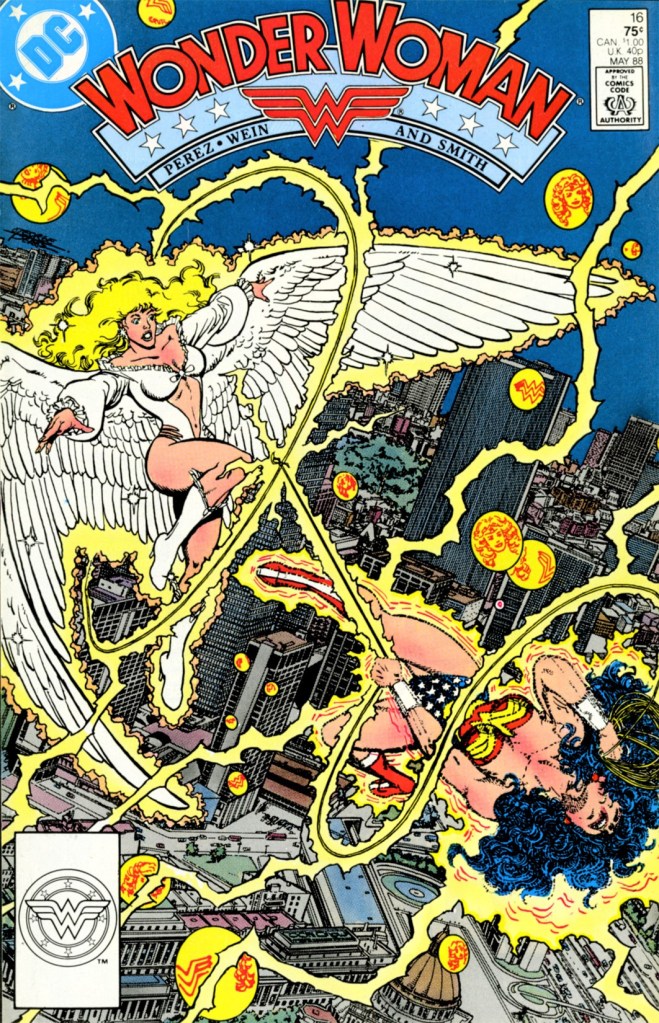
Want to find out what will happen next? We can see what follows in this look back at Wonder Woman , published in 1988 by DC Comics with a story by George Perez and Len Wein. Perez drew the comic book with ink work done by Bruce D. Patterson.

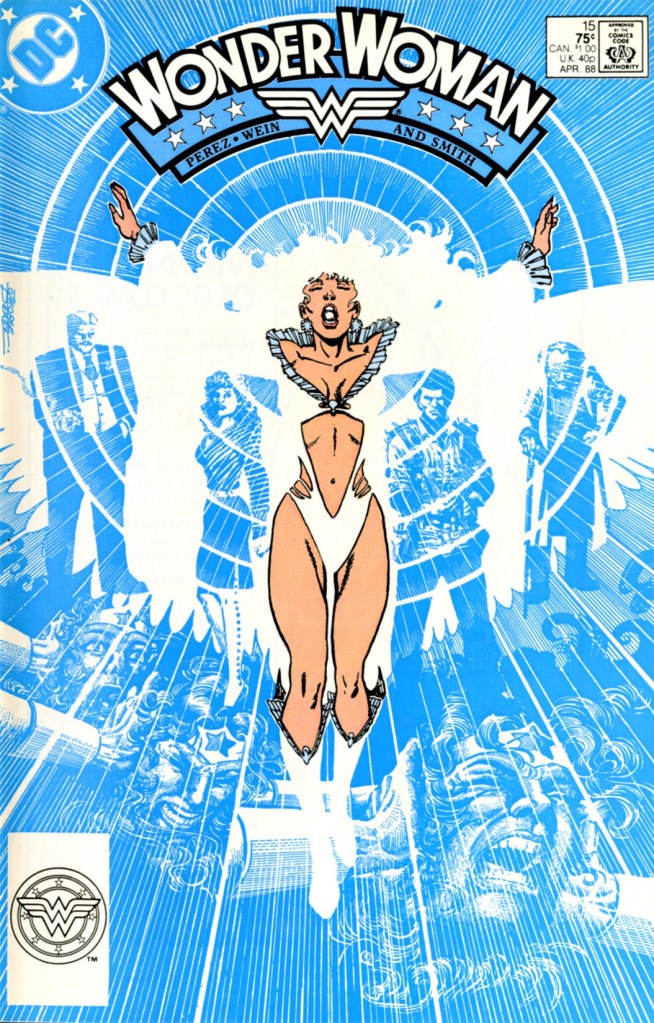
The cover.

Early story

The story begins with Wonder Woman rushing back to into the deep darkness. While flying through the air, she recalls the details about the death of Pan (the son of Hermes) as well as the manhunter who murdered and then impersonated him causing his own destruction. While justice has been served, she wonders why must so many battles end with senseless slaughter.

Suddenly, to her shock, she sees her mother Queen Hippolyta laying down on the rubble helpless as Heracles (the son of Zeus) struggles with carrying the entire weight of paradise island upon his shoulders. Heracles tells Wonder Woman to begone, stating that there is no place for such as her.

Realizing that Wonder Woman is Hippolyta’s daughter, Heracles tells Diana to take her mother away quickly. Wonder Woman carries her mother and flies off heading towards the surface where their fellow Amazons are waiting…

Quality

Steve Trevor and Etta Candy.

I’ll start first by confirming that this story is a very strong conclusion to the Challenge of the Gods storyline (started in issue #10 followed in issues #11, #12 and #13) complete with clear impact on the Amazons (both emotionally and socially) as well as on the deities of Olympus. Clearly, George Perez and Len Wein organized themselves and prepared the storyline’s structuring, concept and post-event direction early.

As expected, the fantasy and mythological elements are very well portrayed giving the comic book’s story a richly layered structure and solid quality. There is a lot of dramatic stuff here as the tale involving Wonder Woman, her fellow Amazons and the deities of Olympus who all got affected by the conclusion of the storyline. With regards to the presence of Heracles, I do recommend re-reading Wonder Woman #1 (1987) so that you will not only understand the background details but also feel the overall impact of his role in this story. More on the storytelling, there are themes about forgiveness, justification, fulfillment and diplomacy.

Apart from Wonder Woman, the Amazons and the deities, there is a very intriguing sub-plot about Steve Trevor who, at this point of the post-Crisis DC universe, is not Diana’s love interest but rather a supporting character whose heritage is somewhat linked with the Amazons.

Conclusion

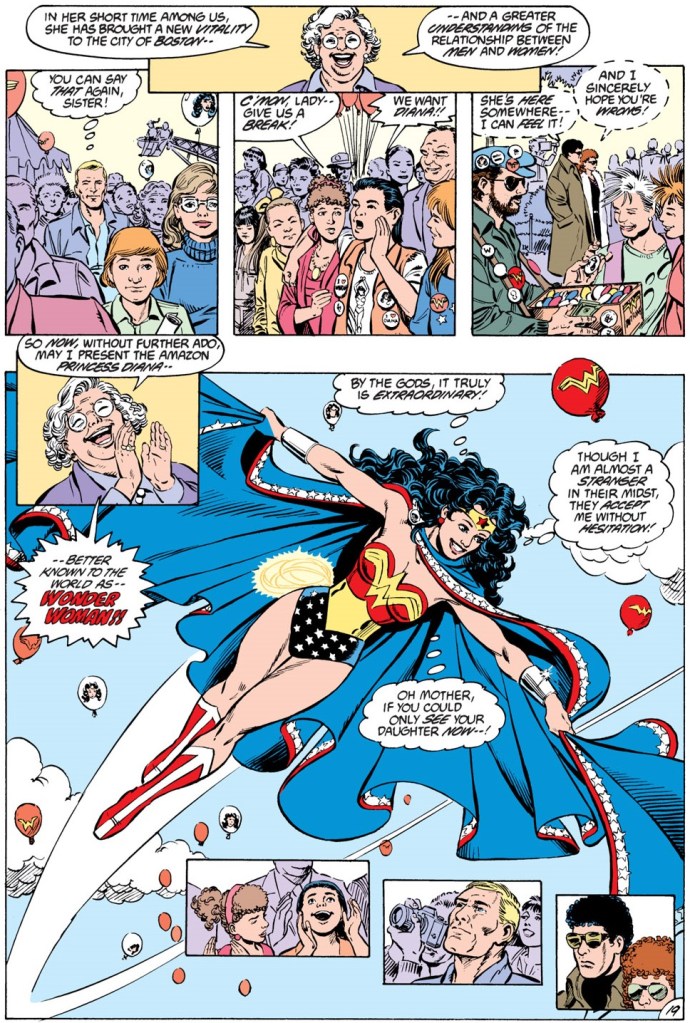
This is a magnificent looking art at the start of the story.

Wonder Woman (1988) is truly a great comic book to read! Not only is this a pretty powerful conclusion to the Challenge of the Gods storyline, it succeeded in defining Wonder Woman not only as brave and strong, but also dutiful, focused and compassionate. I should state that the events in this comic book really marked another notable turning point in the overall narrative of the post-Crisis Wonder Woman monthly series.

If you are seriously planning to buy an existing hard copy of Wonder Woman (1988), be aware that as of this writing, MileHighComics.com shows that the near-mint copy of the regular edition costs $30 while the near-mint copy of the newsstand edition costs $60.

Overall, Wonder Woman (1988) is highly recommended!

+++++

Thank you for reading. If you find this article engaging, please click the like button below and also please consider sharing this article to others. If you are looking for a copywriter to create content for your special project or business, check out my services and my portfolio. Feel free to contact me as well. Also please feel free to visit my Facebook page Author Carlo Carrasco and follow me at HavenorFantasy@twitter.com
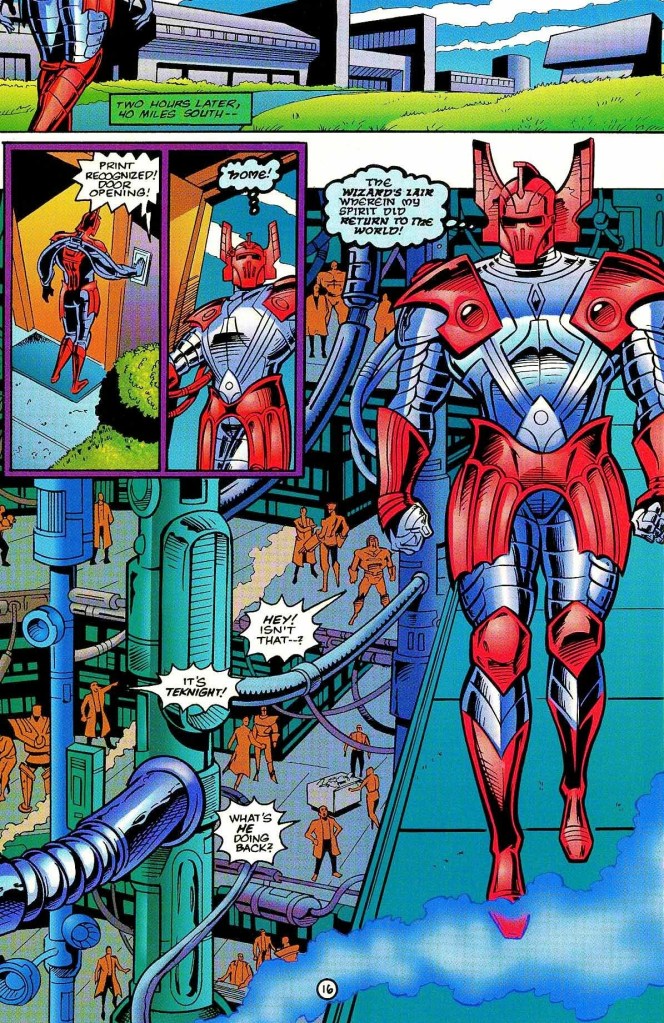
A Look Back at X-Men #4 (1992)

Disclaimer: This is my original work with details sourced from reading the comic book and doing personal research. Anyone who wants to use this article, in part or in whole, needs to secure first my permission and agree to cite me as the source and author. Let it be known that any unauthorized use of this article will constrain the author to pursue the remedies under R.A. No. 8293, the Revised Penal Code, and/or all applicable legal actions under the laws of the Philippines.

Welcome back, superhero enthusiasts, comic book collectors and X-Men fans! Previously, I reviewed X-Men #3 (1991) which, at the time of its release, marked the end of the era of Chris Claremont who spearheaded the development and storytelling of the X-Men since the mid-1970s. Along the way, he clashed with X-Men books editor Bob Harras behind the scenes at the headquarters of Marvel Comics which was a factor to his departure. It is notable that Claremont returned to Marvel in 1997 as editorial director.

Going back to 1991, Marvel had Jim Lee as their top-notch talent to sell loads of X-Men comic books to buyers. Inevitably as Claremont departed, Marvel bet big on Lee and supported his move to set a new creative direction for the X-Men.

With those details laid down, here is a look back at X-Men , published in 1992 by Marvel Comics with a story by Jim Lee and John Byrne. Lee drew the comic book with Scott Williams as the inker.

The cover.

Early story

The story begins in a secret facility in the South Pacific. A sleeping figure wakes up and the men wearing protective suits near him carefully observe his moves. Suddenly, the men died horribly. The figure, with white-colored skin and long blond hair, says, “Who has brought me back from the dark domain of death? Who has summoned Omega Red?”

Behind a protective window, a man starts talking to Omega Red and he shows him a picture of Wolverine (in his civilian identity). Omega Red recognizes Logan…

Quality

Gambit and Rogue in the heat of action.

Being one of the first X-Men comic books published in the so-called post-Claremont era, this comic book has a solid story and a lively presentation of the X-Men’s Blue Team members. I figured that John Byrne delivered the solid dialogue given his previous experience of working on X-Men comics (as an illustrator) as well as being the writer and artist of the memorable The Man of Steel mini-series (with DC Comics, rebooting Superman in the post-Crisis era).

While the basketball scene had true-to-character portrayals of Wolverine, Gambit, Psylocke and Jubilee complete with stylish dialogue per character, there is consistency on the portrayal of Moira MacTaggert who is understandably struggling to recover given the events of X-Men to . The same goes with Charles Xavier. The way the script was written with strong focus on the established characters, it’s almost as if Chris Claremont never left.

The biggest feature of this comic book is the debut of the deadly mutant Omega Red who is of Russian heritage and Russia’s own parallel to the United States’ own super soldier Captain America. In pop culture, Omega Red is one of the top villains in comic books ever and this comic book sets up his sudden rise to prominence. Symbolically, Omega Red is a co-creation of Jim Lee and John Byrne and it is pretty fitting for this comic book of the post-Claremont era to feature him.

Conclusion

You love basketball?

There is no doubt that even by today’s standards, X-Men (1992) is a great read and a landmark issue in X-Men comic book history. Given its content, this one will always be remembered as the start of Omega Red who later on proved to be one of the deadliest villains Marvel’s mutants ever encountered. The villain went on to appear in the video games X-Men: Children of the Atom, Marvel Super Heroes vs. Street Fighter and Marvel vs. Capcom 2.

If you are seriously planning to buy an existing hard copy of X-Men (1992), be aware that as of this writing, MileHighComics.com shows that the near-mint copy of the regular edition costs $125 while the near-mint copy of the newsstand edition costs $375.

Overall, X-Men (1992) is highly recommended!

+++++

Thank you for reading. If you find this article engaging, please click the like button below and also please consider sharing this article to others. If you are looking for a copywriter to create content for your special project or business, check out my services and my portfolio. Feel free to contact me as well. Also please feel free to visit my Facebook page Author Carlo Carrasco and follow me at HavenorFantasy@twitter.com
A Look Back at Prime #17 (1994)

Disclaimer: This is my original work with details sourced from reading the comic book and doing personal research. Anyone who wants to use this article, in part or in whole, needs to secure first my permission and agree to cite me as the source and author. Let it be known that any unauthorized use of this article will constrain the author to pursue the remedies under R.A. No. 8293, the Revised Penal Code, and/or all applicable legal actions under the laws of the Philippines.

Welcome back, superhero enthusiasts, comic book collectors and fans of the Ultraverse! By now, many of you should be familiar with Prime who was one of the main heroes of the Ultraverse as published in the 1990s by Malibu Comics. Many times in comics, Prime fought with lots of thugs, some very notable enemies (check out Prime #5), got involved with other notable ultras as part of a team (check out UltraForce #0 and #1), got involved awkwardly with ladies like Mantra and the mother of Kelly, and more.

Surely, Prime (who is a teenage boy named Kevin under all the muscle) went through a lot. Now how about seeing the overly muscular ultra hero take on a monster about as large as Godzilla? We can all find out in this look back at Prime , published by Malibu Comics in 1994 with a story written by Len Strazewski and Gerard Jones, and drawn by John Statema.

The cover.

Early story

The story begins somewhere on the bottom of the ocean. King Atalon raises an entire island to the surface of the sea claiming it will be new court of his and his people. Doing so, he releases a gigantic monster to the surface and immediately it encounters a ship. The monster grabs two men from the ship and eats them.

In the city of New York, Kevin Green and his mother have a meal together in a first-rate deli. His mother expresses her thoughts about how hard it was for him to move away from California at a short notice, leaving behind his school and his friends. She stressed that something had to be done in response to what happened to their family.

She recalled that Kevin’s father acted so strangely and left them. That being said, she did not want to make the situation worse by smothering him. Kevin thought to himself how could he tell her mother the truth that he and Prime are one and the same, and he went through different versions of his alter-ego each with a different attitude.

As Kevin and his mother traveled via the subway of the city, the giant monster in the Atlantic Ocean continues to create havoc moving towards New York…

Quality

A possible Godzilla reference spotted.

From a storytelling point of view, this comic book felt like the start of a new chapter in the life of Kevin/Prime. The sudden relocation to New York sparked Kevin to look back at the events he went through in the past year which, in my opinion, helped serve as an exposition dump to help readers – especially new ones – catch up with all the details on Prime. It was also interested to learn that Kevin’s mother is from New York and her action on having themselves relocate all the way from the West Coast was convincingly done. I also like the drama that unfolded when the mother brought Kevin to a spot to view the Statue of Liberty from a distance only to be shocked and hurt over the fact that the statue’s head is missing. Through really nice dialogue, you can feel the mother’s pain.

The highlight of this comic book is the uncanny match-up between Prime and the Godzilla-sized monster. While the battle between them was not too long, showing Prime struggle with fighting the monster while thinking a lot about strategizing, searching for weaknesses and even expressing concern for his mother all added a good layer of depth to bother the hero and the encounter.

Visually, I like the work done here by John Statema. His art on the monster was clearly Godzilla-inspired but he gave it a unique look of its own, especially with the way he drew its scaled which Prime found to be very tough. I also enjoyed Statema’s take on the events that happened in Prime’s life as seen in the exposition dump early in the comic book.

Conclusion

The big exposition dump.

Prime (1994) is a fun read and definitely has the look and feel of a new turning point in the life of a superhero. It has excellent dialogue, a pretty nice build-up leading to the big battle between Prime and the monster, and most notably there is a good amount of dramatizing through Kevin’s mother.

If you are seriously planning to buy an existing hard copy of Prime (1994), be aware that as of this writing, MileHighComics.com shows that the near-mint copy of the comic book costs $8.

Overall, Prime (1994) is recommended.

+++++

Thank you for reading. If you find this article engaging, please click the like button below and also please consider sharing this article to others. If you are looking for a copywriter to create content for your special project or business, check out my services and my portfolio. Feel free to contact me as well. Also please feel free to visit my Facebook page Author Carlo Carrasco and follow me at HavenorFantasy@twitter.com
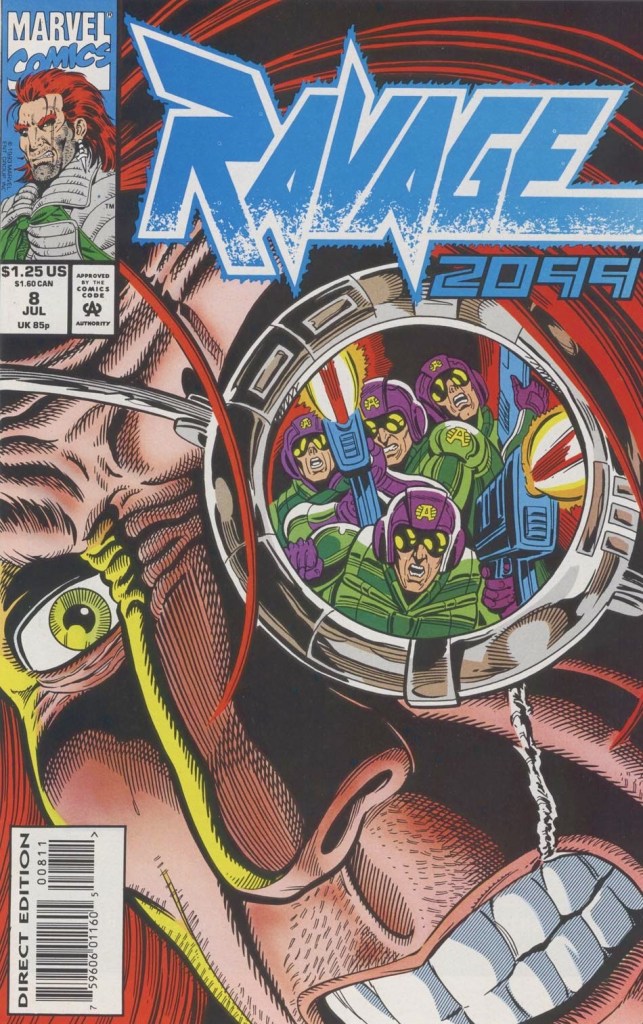
A Look Back at Ravage 2099 #7 (1993)

Disclaimer: This is my original work with details sourced from reading the comic book and doing personal research. Anyone who wants to use this article, in part or in whole, needs to secure first my permission and agree to cite me as the source and author. Let it be known that any unauthorized use of this article will constrain the author to pursue the remedies under R.A. No. 8293, the Revised Penal Code, and/or all applicable legal actions under the laws of the Philippines.

If there is anything that truly defines the 2099 universe of Marvel Comics, it is the sci-fi element. Science fiction that not only shows one possible future of Marvel’s United States but also how immense futuristic technology is present all around the people who are undoubtedly impacted by it all. Whether it is within the metropolis (think Spider-Man 2099) or in the wilderness (think X-Men 2099), the sci-fi element clearly defines the 2099 universe.

In the middle of it, there was Ravage (co-created by the late Stan Lee and artist Paul Ryan) who went from a corporate executive to a violent rebel. In my last review, Ravage escaped the toxic island and returned to the metropolis only to realize that his pals Dack and Tiana have been captured again.

To find out what happens next, here is a look back at Ravage 2099 , published in 1993 by Marvel Comics with a story written by Stan Lee and drawn by Paul Ryan.

The cover.

Early story

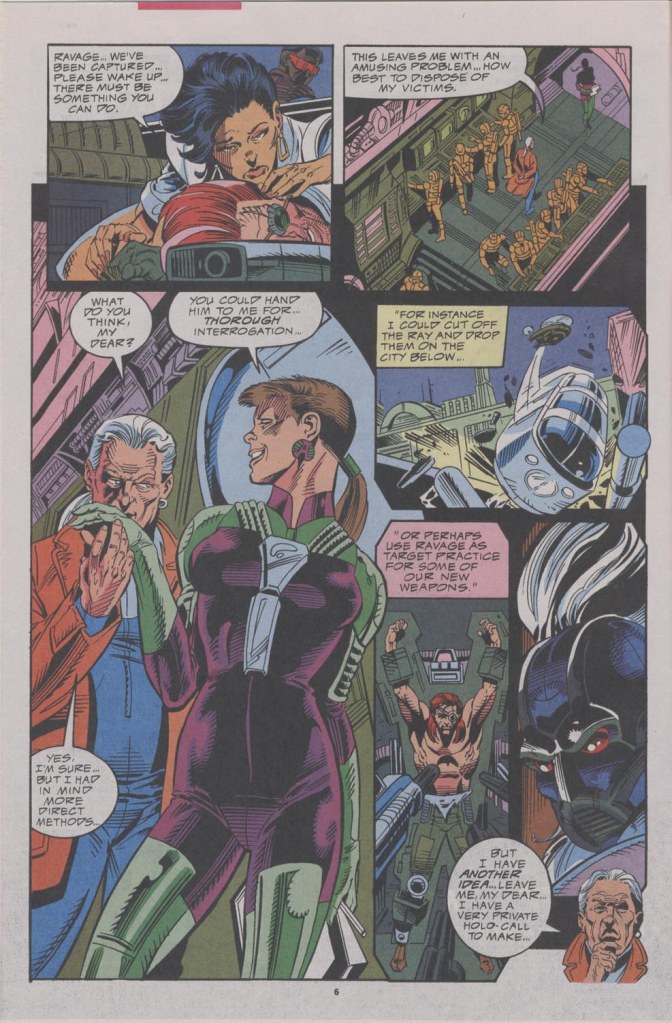
The story begins with Ravage struggling to save Dack and Tiana from different captors, both already separated from each other. Ravage springs into action taking control of the remaining section of the Fantastic Four’s Fantasticar and decides to try to save Dack while facing floating armed personnel. After successfully getting to two armed men hit each other, Ravage chases the flying craft and thanks to his gadget, he is able to hit one of the craft’s personnel.

After a few moments of struggle, Ravage manages to save Dack. He tells the young guy he will drop him off somewhere safe. Dack tells him that he will be blasted on sight by the Public Eye personnel and this convinces Ravage to take him on his dangerous attempt to rescue Tiana from the aquatic invaders…

Quality

I wonder if the social justice warriors (SJWs), the feminists, the socialists and so-called progressives will find this scene offensive to their feelings and beliefs.

Let me first point out the obvious weaknesses of the script Stan Lee wrote: repetition and lack of creative ideas. Alchemax’s Anderthorp Henton being portrayed as ruthless and evil towards his loyal employees yet again – check. Tiana captured again – check. Dack captured again – check. Anderthorp Henton being nice to ladies – check. Tiana being eroticized visually in a state of helplessness – check. Having these repetitions seem to be Stan Lee’s way of filling the script just to ensure there are 22 pages of story to be made.

In fairness to the late Lee, he did something new for this comic book – revealing the underwater lair of the aquatic invaders and having Ravage and Dack involved. The change of environment made this comic book look and feel refreshing, and this added a lot to the science fiction element of the 2099 universe of Marvel. However, it was all a temporary place to show off Ravage doing something heroic. In terms of storytelling, Lee missed out on the opportunity to emphasize to readers why they intend to invade the surface, why are they obsessed on eliminating the human race, and what is the true value of their planned on experiment on naked Tiana (other than learning how to process oxygen).

Another positive point here is Ravage doing heroic acts at last. It’s all technically a repeat of the title character saving his companions but ultimately it helps this comic book achieve its goal of portraying Ravage as a determined and flawed hero. It definitely is much better than his struggle to survive in the toxic island.

Conclusion

An action-packed chase.

As usual, Ravage 2099 (1993) is another flawed comic book like the previous issues. It has, however, more good stuff than bad stuff. True, the repetition of creative elements hurt it but it still has enough entertainment value to justify a read.

If you are seriously planning to buy an existing hard copy of Ravage 2099 (1993), be aware that as of this writing, MileHighComics.com shows that the near-mint copy of the regular edition costs $8 while the near-mint copy of the newsstand edition costs $26.

Overall, Ravage 2099 (1993) is satisfactory.

+++++

Thank you for reading. If you find this article engaging, please click the like button below and also please consider sharing this article to others. If you are looking for a copywriter to create content for your special project or business, check out my services and my portfolio. Feel free to contact me as well. Also please feel free to visit my Facebook page Author Carlo Carrasco and follow me at HavenorFantasy@twitter.com
A Look Back at Mantra #17 (1994)

Disclaimer: This is my original work with details sourced from reading the comic book and doing personal research. Anyone who wants to use this article, in part or in whole, needs to secure first my permission and agree to cite me as the source and author. Let it be known that any unauthorized use of this article will constrain the author to pursue the remedies under R.A. No. 8293, the Revised Penal Code, and/or all applicable legal actions under the laws of the Philippines.

A lot has changed with Mantra since the title character got more involved with the elements (both in character and in plotting) with the different realms which led to a particular quest about her captured leader Archimage. In the last issue, not only were Lukasz (the male soul who occupied the body of Eden Blake and became Mantra) and Eden Blake continued to spiritually interact with each other (going as far as having feelings for each other), the impostor living with Eden’s family was revealed.

Considering the events that took place since then, one has to wonder where would Mike W. Barr lead the Mantra series to next. We can all find out in this look back at Mantra , published in 1994 by Malibu Comics with a story by Barr and illustrations done by Jason Armstrong.  

The cover.

Early story

The story begins in a secret, high-tech facility of Aladdid. Lukasz (as Mantra) quietly begins infiltrating the place by taking out one of the armed guards and doing what he could to gain more access around. Eden tells Lukasz that she does not the fallen guard to be hurt and that her time is almost over. She reiterates to Lukasz that he has to live her life and take care of her children.

Shortly after wearing the Aladdin guard uniform, Lukasz starts to get involved with the other guards. He witnesses a wetware engineering work in progress which reveals a scientist working on a so-called patient (the subject).

Suddenly, the subject begins to move causing trouble in the laboratory. Realizing that the engineer is having trouble dealing with the subject already moving, the Aladdin guards (including Lukasz in disguise) enter the place. As the two guards fire their weapons against the subject, Lukasz instead uses one of the computers to gain access to classified information…

Quality

Time with Eden’s family.

After going through the mysticism, the intrigue and threads of Mantra’s past in the last several issues, this comic book’s story is a nice change of setting and concept. Instead of the fantasy elements that pretty much dominated Mantra stories, this one has a sci-fi flavor as well as corporate intrigue (which is pretty prominent in Prototype comics and Hardcase comics) and the very concept of this story is pretty good.

Along the way, the story shows the aftermath of the death of a certain uncle named Moe (once occupied by Thanasi, a long-time rival of Lukasz’s), Mantra having a reunion with a key character from issue and even meeting a notable supporting character from The Strangers comics. The good news here is that Mike W. Barr wrote a very strong script that not only resonates with Ultraverse fans but also tell a cohesive story packed with spectacle, character development and something very notable that happened (which I never anticipated).  

Conclusion

Infiltrating a top secret facility.

Mantra (1994) is not only fun and compelling to read. It is also refreshing and, as if the cover was not obvious enough, marked the beginning of a new chapter in the life of Mantra.

If you are seriously planning to buy an existing hard copy of Mantra (1994), be aware that as of this writing, MileHighComics.com shows that the near-mint copy of the comic book costs $15.

Overall, Mantra (1994) is recommended.

+++++

Thank you for reading. If you find this article engaging, please click the like button below and also please consider sharing this article to others. If you are looking for a copywriter to create content for your special project or business, check out my services and my portfolio. Feel free to contact me as well. Also please feel free to visit my Facebook page Author Carlo Carrasco and follow me at HavenorFantasy@twitter.com
A Look Back at Prime #16 (1994)

Disclaimer: This is my original work with details sourced from reading the comic book and doing personal research. Anyone who wants to use this article, in part or in whole, needs to secure first my permission and agree to cite me as the source and author. Let it be known that any unauthorized use of this article will constrain the author to pursue the remedies under R.A. No. 8293, the Revised Penal Code, and/or all applicable legal actions under the laws of the Philippines.

Welcome back, superhero enthusiasts, comic book collectors and fans of the Ultraverse! We revisit the Ultraverse yet again, only this time it will be through another issue from the Prime monthly series.

In Prime #15, an issue illustrated by the great George Perez, the overly muscular hero entered a certain Hollywood house which was believed to be the headquarters of a drug trafficking operation. What Prime found inside were not only junkies but also zombies and terrifying illusions that tested him mentally and emotionally.

So what happened next? We can find out in this look back at Prime , published in 1994 by Malibu Comics with a story written by Len Strazewski and Gerard Jones, and illustrated by Joel Thomas.

The cover.

Early story

The story begins with Prime struggling with questions from the media. Journalists ask him about his involvement with teenage boys, the truth about his youth crusade, and if he was recruiting boys for gangs. Prime, who is really teenager Kevin Greene inside, bluntly states he cares about teenagers and will do justice for them.

Questions about a certain backpack he (as Kevin) dropped and the young boy’s clothing that he carried bothered him deeply, making him remember he dropped a backpack filled with clothes at the office of Baker. Realizing he screwed up, he gets violent with the reporters who ask him hard questions.

Suddenly police helicopters arrive telling Prime he is under arrest….

Quality

The debut of Turbo Charge.

Set shortly after the events of UltraForce #2, the story here is pretty powerful on its own as the stakes were raised by Strazewski and Jones to develop Prime even further than before. Many times, we have seen how being Prime made life more complicated and harder for Kevin Green. In this comic book, the complications have gotten even bigger and deeper as the media has turned hostile towards Prime affecting not only Kevin but also his romantic interest Kelly and her mother. As if that was not enough, there are many fanatics of Prime called “Prime Gangs” who are so obsessed with their muscular idol, they serious believe they can do anything to honor him…even though it means harassing other people. Also notable here was the way Kevin (as Prime) tries to save his fragile friendship with Kelly. There is also the appearance of Turbo Charge here. Clearly, the writing here is really great.

I cannot say the same for the art done by Joel Thomas. His art style is too cartoony and he drew people’s bodies and faces lacking precision. Many times I had trouble recognizing Kevin, Kelly, her mother and other supporting characters. Visually, this is a letdown.

Conclusion

Powerful talk between Prime and Kelly ruined somewhat by the weak art.

Back by very strong writing, Prime (1994) is absolutely engaging to read and it truly served as a crucial turning point in telling the continuing story of Prime. In many ways, the dramatic events here serve as the climax of all the dramatic build-up seen in the previous Prime issues. This comic book’s portrayal of the overly hostile and unrelenting media will easily remind any reader about today’s news media in which unprofessional journalism, secret agendas, political bias, conspiracy between media and political groups, malice and political activism among so-called journalists are now the norm.  

The dramatic turn of events here are so powerful, Turbo Charge’s presence really got overshadowed a lot. Visually, this comic book has some of the weakest looking Prime art I’ve seen.

If you are seriously planning to buy an existing hard copy of Prime (1994), be aware that as of this writing, MileHighComics.com shows that the near-mint copy of the comic book costs $8.

Overall, Prime (1994) is recommended.

+++++

Thank you for reading. If you find this article engaging, please click the like button below and also please consider sharing this article to others. If you are looking for a copywriter to create content for your special project or business, check out my services and my portfolio. Feel free to contact me as well. Also please feel free to visit my Facebook page Author Carlo Carrasco and follow me at HavenorFantasy@twitter.com
A Look Back at Ravage 2099 #6 (1993)

Disclaimer: This is my original work with details sourced from reading the comic book and doing personal research. Anyone who wants to use this article, in part or in whole, needs to secure first my permission and agree to cite me as the source and author. Let it be known that any unauthorized use of this article will constrain the author to pursue the remedies under R.A. No. 8293, the Revised Penal Code, and/or all applicable legal actions under the laws of the Philippines.

Welcome back, superhero enthusiasts, comic book collectors, pop culture geeks and fans of Marvel Comics! Today, we will revisit the 2099 universe that Marvel established in the 1990s through another issue of Ravage 2099 which featured the writing and imagination of the late Stan Lee. Lee wrote the first eight issues of the said series.

For the newcomers reading this, Ravage is a co-creation of Lee and illustrator Paul Ryan. Compared to the other major characters of the 2099 universe of Marvel, Ravage is an all-original character who went from being a corporate executive to a hard-hitting rebel. Last time around, Ravage struggled with his new found power (energy within his fists) while still being hunted by Dethstryk’s thugs.

With those details laid down, here is a look back at Ravage 2099 , published by Marvel Comics in 1993 with a story written by Stan Lee and drawn by Paul Ryan.

The cover.

Early story

The story begins at a far-away island. Dethstryk’s thugs just attacked Ravage and his native companion in a cave, destroying the interior and causing a cave-in. Believing that Ravage is dead, the last of the thugs left the rubble behind. As it turned out, Ravage is still alive and uses his newfound power to free himself, pushing all the rocks off as if they were like pebbles. He realizes that the more he uses his power, the weaker he gets. Due to his being exposed to the island’s toxic environment, his condition continues to deteriorate. He uses one of the gadgets to aid him in seeing.

After looking around further in the ruined cave, he discovers a relic from the past – the Fantastic Four’s Fantasticar…

Quality

Ravage uses the old vehicle made by the Fantastic Four.

If you are looking for something adventurous or fun while following Ravage, you won’t find much here. Without spoiling the plot, this one has Ravage preparing himself for survival and moving back to civilization. There is not much heroic acts from the title character here and I noticed that Stan Lee’s script is filled with lots of filler-type dialogue designed to prolong scenes (that were meant to be short but had to be stretched) and fill the page. Really, there is not much stuff to engage you with here.

The build-up in issue regarding the sub-plots for Tiana, Dack and the invaders from the sea had too little pay-off here but, in fairness, it does set up something for the next issue. I should also state that Stan Lee did not really do much with the villains – Dethstryk and Anderthorp Henton – and ended up recycling ways to show how cruel, cold-blooded and evil they are WITHOUT ever raising the stakes in their conflict with Ravage.

Conclusion

Just another scene to show how evil and ruthless Anderthorp Henton is towards his own employee. This should make you wonder what Stan Lee really thought about corporations, the labor union and the Leftist forces.

Once again, the Ravage 2099 series at this point only showed the lack of consistency in terms of quality and reader engagement. Ravage 2099 has a story that is actually hollow and the creators resorted to stretching sequences to create the illusion that there is depth throughout. Clearly this is a step down from the previous issue.

If you are seriously planning to buy an existing hard copy of Ravage 2099 (1993), be aware that as of this writing, MileHighComics.com shows that the near-mint copy of the regular edition costs $8 while the near-mint copy of the newsstand edition costs $26.

Overall, Ravage 2099 (1993) is not recommended but if you really want to acquire a copy of it, better wait until the price reaches fifty cents.

+++++

Thank you for reading. If you find this article engaging, please click the like button below and also please consider sharing this article to others. If you are looking for a copywriter to create content for your special project or business, check out my services and my portfolio. Feel free to contact me as well. Also please feel free to visit my Facebook page Author Carlo Carrasco and follow me at HavenorFantasy@twitter.com
A Look Back at Superman #423 (1986)

Disclaimer: This is my original work with details sourced from reading the comic book and doing personal research. Anyone who wants to use this article, in part or in whole, needs to secure first my permission and agree to cite me as the source and author. Let it be known that any unauthorized use of this article will constrain the author to pursue the remedies under R.A. No. 8293, the Revised Penal Code, and/or all applicable legal actions under the laws of the Philippines.

How do you end an entire era of a major pop culture icon like Superman? You end it with a very great story described as imaginary and leave it up to the readers to decide if the events never happened or had happened. The famous author Alan Moore wrote such a story (in two parts actually) to help DC Comics conclude the real-life legend of Superman as they transitioned from the original DC multiverse age (1938-1986, concluded with Crisis on Infinite Earths) into a new era of superhero comic book publishing back in 1986 (the post-Crisis era).

For those who were not able to read Crisis on Infinite Earths in 1985-1986, there was a time when DC Comics’ superhero universe started simple in the late 1930s and became too convoluted and confusing in the decades that followed. There were different universes in existence resulting not only different realms of existence but also different versions of the superheroes. Even Superman had different versions and there was also Superboy who went back and forth to the 30th century joining that era’s Legion of Superheroes. As Crisis on Infinite Earths concluded the old DC Comics multiverse, a fitting conclusion for Superman became inevitable so the publisher assembled Moore and other great talents to work on a definitive storyline.

If you are ready to look at what Superman was like long before Zack Snyder directed Man of Steel and long before the New 52 and DC Rebirth happened, here is a look back at Superman , published by DC Comics in 1986 with a story written by Alan Moore and drawn by Curt Swan with ink work done by George Perez. This is the first chapter of the storyline Whatever Happened to the Man of Tomorrow?

The cover.

Early story

The story begins in the then-future of 1997 when a journalist from the Daily Planet visiting the home of Lois Lane who is now identified as Mrs. Lois Elliot. The journalist is Tim Crane and his assignment is to interview her for their newspaper’s upcoming Superman memorial edition.

Crane starts asking Lois about the years leading up to Superman’s disappearance and presumed death. Lois recalls the time when Superman’s arch-nemesis Lex Luthor laid low as well as the pounding of Brainiac’s last organic metal body into a state beyond repair. She remembers Superman recovering every fragment except for the head of the creature. Then two other super villains (Terra-Man and Parasite) destroyed each other due to a lack of people to fight with and Superman eventually worked in space helping the government do their research.

As it turned out, the events only led to what was the first taste of the carnage that was to follow. Some years prior, Superman arrived in a heavily damaged Metropolis. Lois told him that Bizarro caused it and Jimmy Olsen stated that the super villain retreated into a nearby department store and still has not come out since. Superman then walks into the department store to face off with Bizarro…

Quality

A classic moment of Superman saving Lois Lane.

I’ll start by saying that the writing done by Alan Moore here is very great to read and clearly he made in-depth research on Superman’s extensive history, exploring the personalities and traits of the supporting characters and super villains, and, most notably, he went on to create a lot of compelling and intriguing stuff to tell. The result was a clear creative challenge towards the conventional thinking of Superman fans of the time and Moore even managed to add some adulterated themes into the narrative without making the comic book going over the edge. For one thing, a certain super villain here concluded his pre-Crisis existence with elements of genocide, homicide and suicide. There was also a scene in which Superman, in his most vulnerable portrayal, expressed his view that nuances from his past were coming back as killers which made him fear for the lives of the people he cared for.

The interview-flashback format to tell the narrative is indeed excellent in form and Moore told each flashback in great detail while capturing the essence of not just Superman but also those of the supporting characters as well as Lex Luthor, Brainiac and others. Even as the stories get told, Moore managed to pull off some great twists which you my readers should find out for yourselves. I personally enjoyed these twists and I am sure you will.

Visually, Curt Swan went all out in making great art and his decades-long experience of drawing Superman and all the related characters really show it. Swan’s art in the final page is very powerful and dramatic to look at.

Conclusion

The interview-flashback format used is great and so was the storytelling itself.

Very clearly, Superman (1986) is not only a great Superman story but also one of the greatest superhero comic books ever made! This is illustrated literature with gold quality all over it and the funny thing is that this happens to be only the first part of the storyline Whatever Happened to the Man of Tomorrow? The creative team of Moore and Swan produced the most striking and most engaging Superman work from start to finish. I should state that this one made me rethink and remember what I read about Superman in comic books before Crisis on Infinite Earths happened. The good news is that I enjoyed every bit of what was told in this comic book and it truly is a definitive way to conclude an age of Superman (and this is only the first chapter of the concluding storyline).

If you are seriously planning to buy an existing hard copy of Superman (1986), be aware that as of this writing, MileHighComics.com shows that the near-mint copy of the regular edition costs $120 while the near-mint copy of the newsstand edition costs $240. A signed-copy in near-mint condition costs $240.
Overall, Superman (1986) is highly recommended!

+++++

Thank you for reading. If you find this article engaging, please click the like button below and also please consider sharing this article to others. If you are looking for a copywriter to create content for your special project or business, check out my services and my portfolio. Feel free to contact me as well. Also please feel free to visit my Facebook page Author Carlo Carrasco and follow me at HavenorFantasy@twitter.com