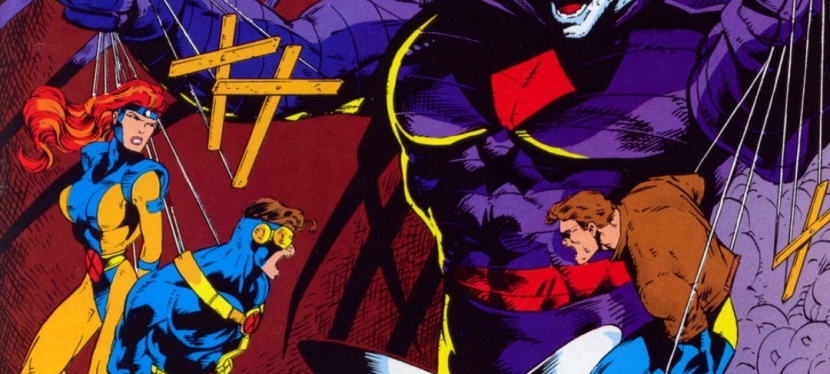
A Look Back at Hulk 2099 #1 (1994)

Disclaimer: This is my original work with details sourced from reading the comic book and doing personal research. Anyone who wants to use this article, in part or in whole, needs to secure first my permission and agree to cite me as the source and author. Let it be known that any unauthorized use of this article will constrain the author to pursue the remedies under R.A. No. 8293, the Revised Penal Code, and/or all applicable legal actions under the laws of the Philippines.

Welcome back superhero enthusiasts, 1990s arts and culture enthusiasts, Marvel Comics fans and comic book collectors! Today we go back to the wild 1990s by examining one of the many tales of Marvel Comics’ 2099 line of franchises, specifically through the Hulk 2099 monthly series.

For the newcomers reading this, Hulk 2099 first appeared in 2099 Unlimited #1 (1993) which also had his origin story told. Hulk 2099 was not a mere version of the classic Incredible Hulk with a futuristic touch. In fact, the futuristic green creature highlighted the protagonist John Eisenhart as a very selfish and obsessed Hollywood studio executive who happens to stumble upon the idolaters/worshipers of the classic Hulk Bruce Banner because he was searching for new properties and stories for his studio. Hulk 2099’s origin has notable similarities to that of the classic Hulk and gamma radiation exposure is one of them. As tales of the futuristic Hulk were told through the quarterly releases of 2099 Unlimited, Marvel decided it was time to give the green creature his own monthly series.

With those details laid down, here is a look back at Hulk 2099 published in 1994 by Marvel Comics with a story written by Gerard Jones and drawn by Malcolm Davis.

The cover.

Early story

The story begins with the Hulk of 2099 destroying security droids and verbally attacking civilization. As he retains the intellect of John Eisenhart, he expresses his opposition against civilization for keeping people out of the water reclamation zone.

The story then shifts to California where Lotus Entertainment (Eisenhart’s employer) and its crew work on producing a film which is a dishonest telling of Eisenhart’s dealings with the Knights of Banner (already eliminated in 2099 Unlimited ). During the production, one of the executives notices the absence of Eisenhart.

Elsewhere, John Eisenhart drives his flying car with Knights of Banner youth survivor Gawain as his passenger. Already struggling with the guilt over the deaths of all the adult Knights of Banner members, Eisenhart intends to end his employment and cash out of his contract. Gawain remains hostile towards Eisenhart.

Quality

The creative team used flashback images that look really similar to what was told in 2099 Unlimited .

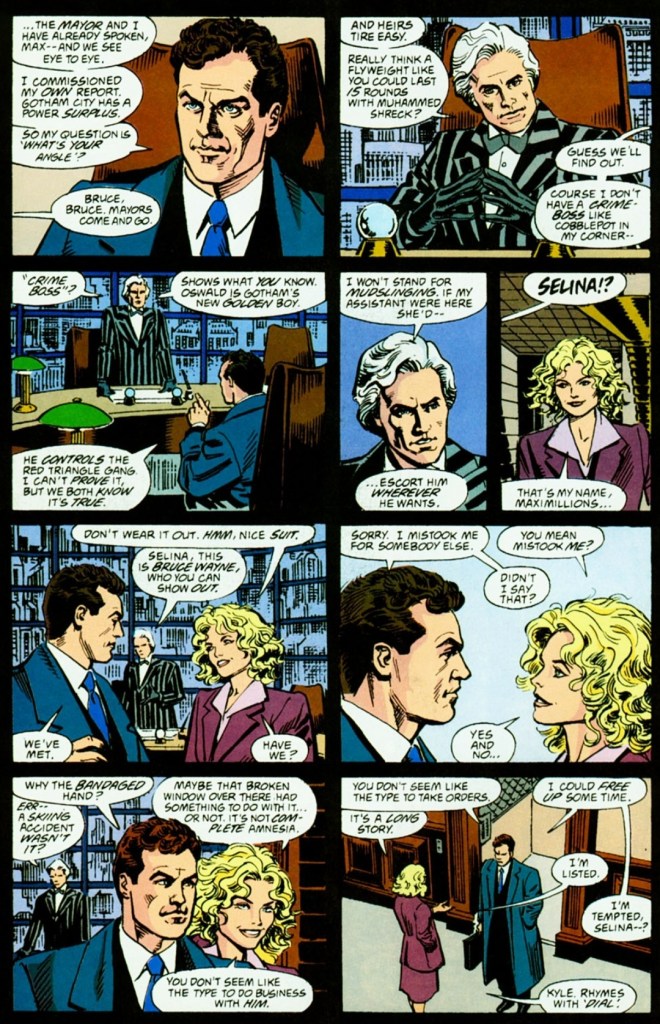
If there is anything that is very obvious to talk about, it is the fact that this tale shows a radically different John Eisenhart who wants to get out of Hollywood’s multiple mazes of crookedness as he feels very guilty over what happened to the Knights of Banner. This happens just as a new entity took corporate control of Eisenhart’s employer before he could leave the company. In many ways, Eisenhart’s distress and struggle with being guilty reminds me a lot about Hardcase of the Ultraverse and the way the creative dramatized him was engaging.

For the story, there is a lot of corporate intrigue going on and Eisenhart’s failure to quit quickly was inevitable because the new enemy he faces here has a lot to do with the sudden takeover of Lotus Entertainment. At least on face value, this looks like an attempt by the creative team to change the status quo and move Hulk 2099 to a new creative direction away from what was established in 2099 Unlimited. Without spoiling the details, I can say that something very significant happened before the comic book’s ending and it will impact readers who followed the futuristic Hulk’s stories closely in the 2099 Unlimited series.

Along the way, there is a lot of action and unfortunate physical happenings which symbolize the chaos concept of the script. The notable thing here is that you won’t see very much of Hulk 2099’s monstrous form as the script was specifically written to tell a tale that went beyond one issue. Clearly, the creative team were sparing Hulk 2099 for a conflict in the next issue.

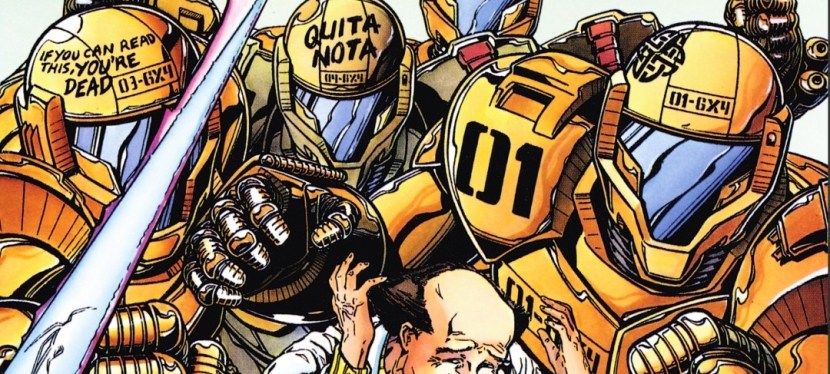
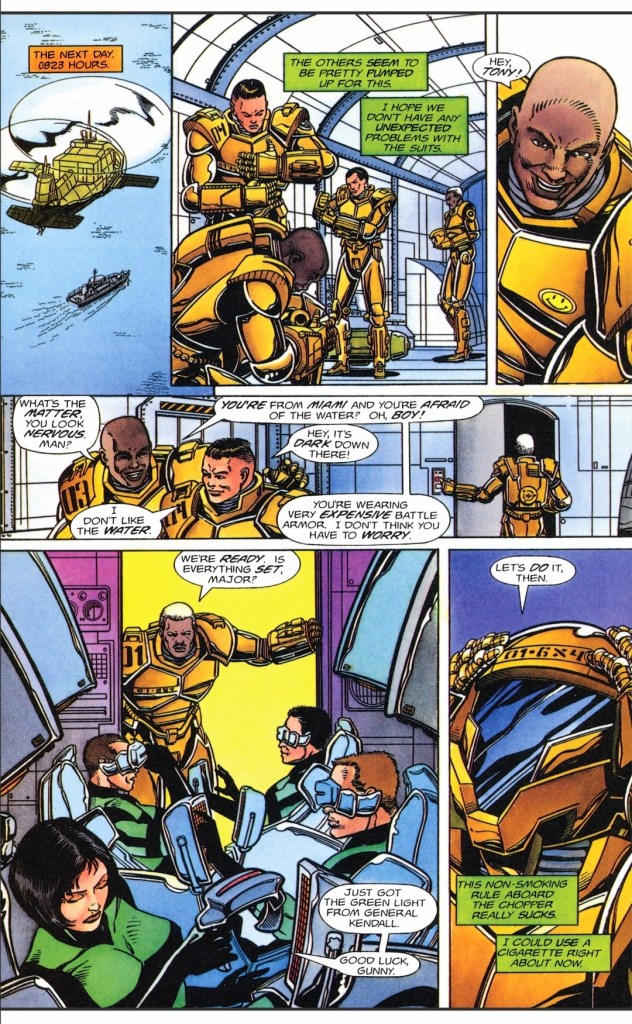
Malcolm Davis’ art has that visceral aesthetic that fits the established look of Marvel’s 2099 universe of the time but there were instances when he showed so much happening, the visuals looked chaotic and even disorienting. In fairness, his take on Eisenhart, Quirk, Gawain and others made them looked recognizable.

Conclusion

The future of Commiewood, wokeness, and dishonesty.

While its story has little of the green monster in it, Hulk 2099 (1994) does a decent job building up the tension on top of the guilt-filled Eisenhart while setting up events that looked like a bold new creative direction was coming. By the time this comic book was published, several Hulk 2099 tales were already published in the quarterly 2099 series. On its own, this comic book lightly builds up the lore of the 2099 universe as it was clearly focused on Hulk 2099’s creative concept and characters.

While Eisenhart was indeed determined to change, it is a turnoff to see him lie and exaggerate details to protect himself from a certain corporate psychologist who is after the truth. There is also a lot of anti-corporate expressions here which seems to suggest that someone within the creative team had been thinking with socialist concepts and decided to use the script as an outlet of expression. The weird but true thing is that by today’s standards, Hollywood is filled with Commies/socialists/Marxists/liberals/woke nuts from the film crew up to the executives that run studios and produce films or shows that are dumb, lies about reality, self-centered and extensions of their ideologies. This showed that this comic book was prophetic in some ways.

Overall, Hulk 2099 (1994) is satisfactory.

+++++

Thank you for reading. If you find this article engaging, please click the like button below, share this article to others and also please consider making a donation to support my publishing. If you are looking for a copywriter to create content for your special project or business, check out my services and my portfolio. Feel free to contact me with a private message. Also please feel free to visit my Facebook page Author Carlo Carrasco and follow me on Twitter at  @HavenorFantasy as well as on Tumblr at https://carlocarrasco.tumblr.com/ and on Instagram at https://www.instagram.com/authorcarlocarrasco

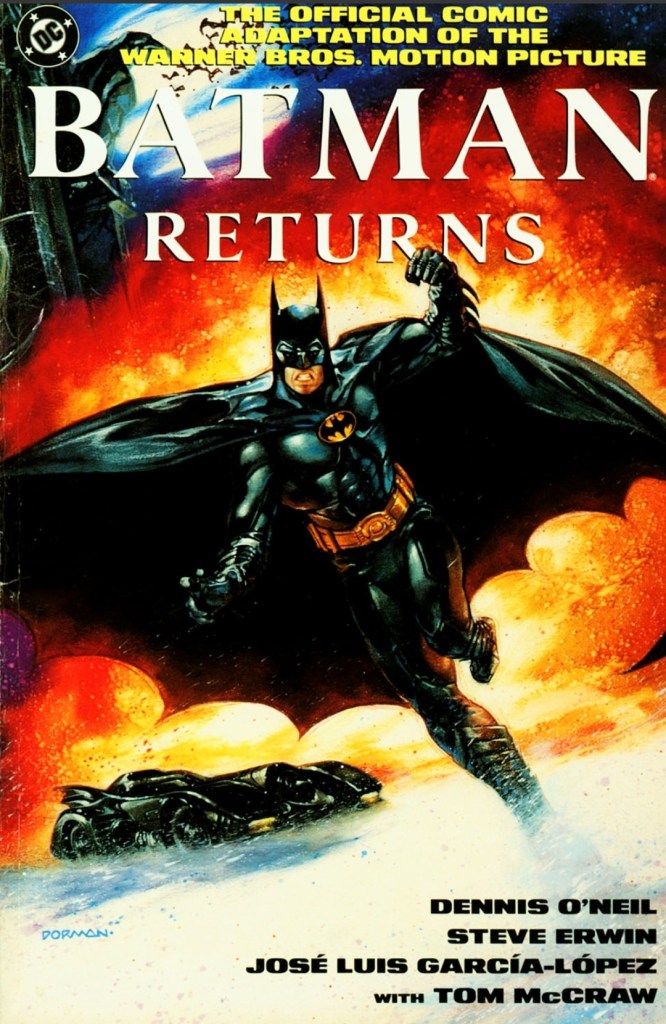
A Look Back at Jurassic Park #4 (1993)

Disclaimer: This is my original work with details sourced from reading the comic book and doing personal research. Anyone who wants to use this article, in part or in whole, needs to secure first my permission and agree to cite me as the source and author. Let it be known that any unauthorized use of this article will constrain the author to pursue the remedies under R.A. No. 8293, the Revised Penal Code, and/or all applicable legal actions under the laws of the Philippines.

Welcome back superhero enthusiasts, 1990s culture enthusiasts and comic book collectors! Today we go back to the year 1993 for another look at Steven Spielberg’s Jurassic Park in the form of licensed comic books published by Topps Comics.

In my previous retro review, I found issue to be much more entertaining than the two previous issues mainly due to the thrills and suspense that were the result of the comic book creators’ interpretation the encounter between Dr. Alan Grant’s group and the Tyrannosaurus Rex at its paddock (with the fence no longer electrified due to Dennis Nedry’s dirty act). While the said comic book still had lots of exposition and a wordy presentation, the pace of the storytelling notably moved a bit faster overall.

With those details laid down, here is a look back at Jurassic Park , published in 1993 by Topps Comics with a story written by Walter Simonson and drawn by Gil Kane with ink work done by the late George Perez. This comic book was the fourth of a 4-issue mini-series based on the Spielberg-directed movie.

The cover.

Early story

The story begins at the ruined side of the Tyrannosaurus Rex paddock. Lawyer Gennaro is dead while Dr. Ian Malcolm got serious injured as a result of being chased by the T. Rex. The same T. Rex is right in front of Dr. Alan Grant and teenager Lex with the flipped, ruined vehicle near them (with Tim still inside). Knowing that the huge dinosaur’s vision is based on movement, Grant tells Lex to stand perfectly still no matter what happens. As they try to make their slow move to safety, the T. Rex suddenly moves the ruined vehicle against them by the wall of the still deactivated fence. While holding Lex with his left arm, Grant grabs a loose cable to break their fall as the vehicle got pushed over the edge. Several feet down, Grant and Lex land safely as the vehicle hits the ground.

Over at Jurassic Park’s control center, John Hammond is outraged over what happened as Nedry left them (secretly carrying the stolen dinosaur embryos) and their safety systems are all down. Hammond dispatches Robert Muldoon to go out and rescue his grandchildren, and Ellie Sattler volunteers to help out. Struggling with the computer, Ray Arnold tells his boss that there is no way to get Jurassic Park back on-line without Nedry.

Elsewhere within the park, Dennis Nedry struggles to find his way to his destination. Suddenly, his vehicle slips and loses traction…

Quality

This is how the memorable scene of the Raptors and Hammond’s grandchildren was adapted.

Let me start by stating what is very obvious here….this comic book is easily the most enjoyable and fastest-moving adaptation of the key events of Spielberg’s movie (from the T. Rex encounter until the end of the film) albeit with some signs of rush and creative short-cuts. It is also here where the exposition has been lessened and the creators focused more on adapting the cinematic dialogue and the remaining scenes along with the spectacle. The narrative is clearly rushed and it is amusingly amazing to see how the creators managed to cover the remaining events of the movie (note: Dennis Nedry’s death, Robert Muldoon’s tragic encounter with the raptors, Ellie Sattler’s struggle to reactivate the park’s power system, and the varied encounters with the raptors were included) to fit within the pages of this very comic book. In my reading experience, it still worked.

While it is flawed in its execution, this comic book managed to click as a pay-off to the build-up that happened in the first three issues. There is a decent amount of action and sudden moments of incidents here and there, and still the creators managed to tell their own interpretation of the remaining events from the movie.

This is how Dennis Nedry’s death and the loss of the canister (containing the stolen dinosaur embros) were portrayed in this comic book.

Gil Kane’s art on the dinosaurs are somewhat good but in what seems to be a sign of behind-the-scenes production rush, his visual take on the T. Rex’s unexpected heroic moment and struggle with the two raptors was drawn with a lack of precision on size and scale. Such literary translation only made me want to return to the movie itself and replay the said scene (which was climactic cinematically speaking). Surprisingly, Gil Kane managed to visualize a few but noticeable bloody moments particularly with the respective deaths of Dennis Nedry (to the Dilophosaurus) and Robert Muldoon (to the raptors).

As the focus here has always been the adaptation of cinematic events, it is unsurprising that there really was no room for character development. Dr. Grant is the only one who showed any real change from being rough on children (as seen in issue ) to becoming more caring on them (specifically John Hammond’s grandchildren) due to incidents. All the development on Dr. Grant took four issues both literally and visually. John Hammond could have been developed a lot more if only the dialogue was not too limited with the focus on adapting movie dialogue. Speaking of adaptation, the cinematic error about the instant drop (from the perimeter fence of the T. Rex paddock opposite the road) also made it in this comic book.

Conclusion

This is a creative and clever way the comic book creators combined elements of two separate film scenes into a single sequence with readers in mind.

Even though it had a rushed narrative, Jurassic Park (1993) ironically managed to be the most enjoyable issue of the 4-issue mini-series adapting the blockbuster movie. It has the most amount of spectacle, more dinosaur visuals for dinosaur enthusiasts to enjoy, and the pace moved much faster. Compared to each of the previous issues, this one was a breeze to read and there were bouts of fun. As a companion piece to the blockbuster movie, the 4-part Jurassic Park movie adaptation mini-series served its purpose to translate its events within the limits of illustrated literature. While it does not obviously capture the magical moments nor the sentimental elements of Spielberg’s work, this mini-series managed to complete its own interpretation ultimately creating stuff that could satisfy the brainy comic book reader, the reader who loves thrills and the reader who is simply obsessed with dinosaurs. It is somewhat symbolic that this final issue had the most fun stuff.

Overall, Jurassic Park (1993) is recommended.

+++++

Thank you for reading. If you find this article engaging, please click the like button below and also please consider sharing this article to others. If you are looking for a copywriter to create content for your special project or business, check out my services and my portfolio. Feel free to contact me with a private message. Also please feel free to visit my Facebook page Author Carlo Carrasco and follow me on Twitter at  @HavenorFantasy as well as on Tumblr at https://carlocarrasco.tumblr.com/ and on Instagram at https://www.instagram.com/authorcarlocarrasco/

A Look Back at Jurassic Park #3 (1993)

Disclaimer: This is my original work with details sourced from reading the comic book and doing personal research. Anyone who wants to use this article, in part or in whole, needs to secure first my permission and agree to cite me as the source and author. Let it be known that any unauthorized use of this article will constrain the author to pursue the remedies under R.A. No. 8293, the Revised Penal Code, and/or all applicable legal actions under the laws of the Philippines.

Welcome back superhero enthusiasts, 1990s culture enthusiasts and comic book collectors! Today we go back to the year 1993 for another look at Steven Spielberg’s Jurassic Park in the form of licensed comic books published by Topps Comics.

In my previous retro review, the comic book still had the creative issues of heavy exposition and being very word-heavy to read as the creators focused on adapting the movie’s story closely (from the iconic brachiosaurus scene up to the encounter with the triceratops). Compared to issue , the comic book’s narrative improved temporarily as it closely adapted the lunch-and-talk scene between John Hammond, Donald Gennaro, Ellie Sattler, Alan Grant and Ian Malcolm whose dialogue was easily the most engaging in both film and in literary format.

With those details laid down, here is a look back at Jurassic Park , published in 1993 by Topps Comics with a story written by Walter Simonson and drawn by Gil Kane with ink work done by the late George Perez. This comic book was the third of a 4-issue mini-series based on the Spielberg-directed movie.

The cover.

Early story

The story begins with the group of Alan Grant, Ellie Sattler, Ian Malcolm, Donald Gennaro and the two kids Lex and Tim who are shocked to see a living triceratops. The large dinosaur, however, falls down on its side causing Ellie Sattler to go near and examine it. Gerry Harding, a Jurassic Park employee, suddenly appears and explains that the triceratops was tranquilized by Robert Muldoon and has been sick. After examining the dinosaur further, Ellie wants to have its droppings examined.

Back in the control room of Jurassic Park, Ray Arnold explains to John Hammond that the center of an approaching story has not changed course and states that he likes to cut the current tour and resume the next day. He emphasized to Hammond that the storm is risky to those on tour.

Just across the room, Dennis Nedry (who secretly cut a deal with a business rival of inGen’s and has been frustrated working for John Hammond) carefully communicates with the captain of the ship that will depart once all the workers have boarded. Knowing he is running out of time to steal the dinosaur embryos and send it to Biosyn, he starts his move with Jurassic Park’s main system…

Quality

While the sequences of the T.Rex going after Ian Malcolm are not the same as those in the movie, the dinosaur itself really looks creepy.

When it comes to entertainment value related to spectacle, I can say clearly that this issue really marked the beginning of fun in this 4-issue mini-series. This is because this comic book includes the appearance of the Tyrannosaurus Rex (T.Rex) which arrived just when Alan Grant, Ian Malcolm, Lex, Tim and Donald Gennaro are helpless sitting inside vehicles that stopped by the said dinosaur’s paddock with the fences no longer electrified.

Of course, the minutes-long T. Rex scene in the movie remains memorable as it had a well-blended mix of suspense, action and some horror directed by Steven Spielberg. This comic book’s creators did their best to replicate the experience in illustrated literature format. While it’s not surprising that the essence of the T.Rex paddock scenes in movie were not perfectly captured, this comic book’s adaptation still managed to be entertaining to read showing suspense, horror and some thrills plus Gil Kane managed to even make the infamous dinosaur look frightening. Very clearly, Kane went all-out in presenting the T.Rex as the main dinosaur not only in this comic book but for the whole mini-series.

While the T.Rex paddock scene is the highlight of this comic book, the scene with the triceratops proved to be another exposition-heavy presentation laced with pretentious science and technical explanations dealing with plants, animal health and the like. Meanwhile, the scenes about John Hammond, Robert Muldoon and Ray Arnold struggling with the failures of the park systems while Nedry betrays them secretly were pretty intense to read.

Conclusion

Lots of exposition and creative explanations in this scene about the sick triceratops.

So far, I find Jurassic Park (1993) to be the most entertaining issue so far thanks to the way the comic book creators adapted the Tyrannosaurus Rex paddock scene from the movie. While the narrative still had lots of exposition and creative explanations that started since issue #1, the consequential events of Dennis Nedry’s acts intensified the reading experience and the T.Rex scenes really ramped up the fun factor.

Overall, Jurassic Park (1993) is recommended.

+++++

Thank you for reading. If you find this article engaging, please click the like button below and also please consider sharing this article to others. If you are looking for a copywriter to create content for your special project or business, check out my services and my portfolio. Feel free to contact me with a private message. Also please feel free to visit my Facebook page Author Carlo Carrasco and follow me on Twitter at  @HavenorFantasy as well as on Tumblr at https://carlocarrasco.tumblr.com/ and on Instagram at https://www.instagram.com/authorcarlocarrasco/
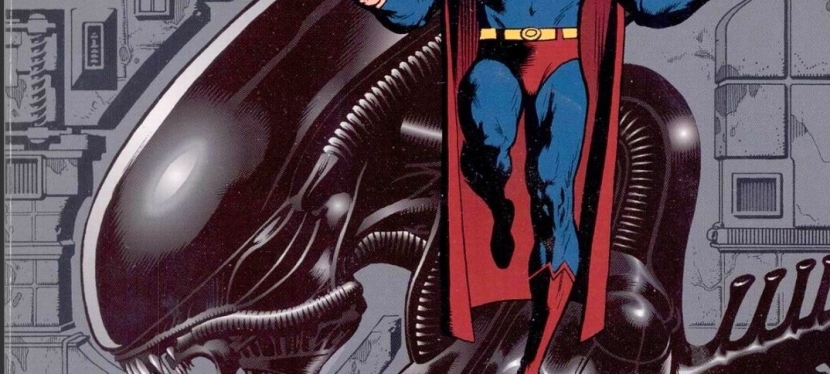
A Look Back at Superman III comic book adaptation (1983)

Disclaimer: This is my original work with details sourced from reading the comic book and doing personal research. Anyone who wants to use this article, in part or in whole, needs to secure first my permission and agree to cite me as the source and author. Let it be known that any unauthorized use of this article will constrain the author to pursue the remedies under R.A. No. 8293, the Revised Penal Code, and/or all applicable legal actions under the laws of the Philippines.

Welcome back superhero enthusiasts, 1980s culture enthusiasts and comic book collectors! Today we go back to the year 1983 which saw the theatrical release of Superman III that featured the late Christopher Reeve as the cinematic Man of Steel.

The 1980s was a very different time with regards to Hollywood’s handling of superhero movies. The concept of a shared cinematic universe was decades away from realization. Warner Bros. back then relied on the Salkind family to produce Superman movies and the first flick in 1978 proved to be a major hit for both viewers and critics while also establishing Christopher Reeve as the definitive live-action Superman for countless people. Unsurprisingly, a sequel was released in the early 1980s which continued box office success for the stakeholders and only led to the approval of another sequel.

Along the way, the late Richard Pryor (a major comedian already) appeared on TV and talked about Superman II which eventually led to him getting hired for Superman III. The movie was released in 1983 making a little over $80 million worldwide while also getting a noticeably weaker reception from critics. More notably, Richard Pryor had a huge chunk of the film’s spotlight as Gus Gorman while the overshadowed Christopher Reeve managed to stretch his cinematic art on playing Clark Kent and Superman (note: there is also the memorable Clark versus Superman battle). Superman III very clearly had a lot more comedy in its presentation. As part of the movie’s marketing, an official comic book adaptation by DC Comics was published.

With those details laid down, here is a look back at the Superman III comic book adaptation,  published by DC Comics in 1983 with a story written by Cary Bates and art made by the late Curt Swan and Sal Amendola.

The cover.

Early story

The story begins inside the unemployment bureau of Metropolis. There, August “Gus” Gorman was told after 36 weeks of chronic unemployment, he is no longer eligible for financial assistance (read: welfare) from the city. As he was about to light his cigarette, he noticed computer job ad on the match. Gorman proceeds to the Archibald Data Processing School where he gets enrolled with several others. In front of others, Gorman does something on a computer which impressed the instructor a lot.

Over at the Daily Planet, Clark Kent/Superman, Lois Lane and Jimmy Olsen meet with Perry White at his office. Kent will be returning home to Smallville and make a news story out of it. White gives Kent his approval and then tells Lois she deserves a vacation.

Hours later, Kent and Jimmy Olsen ride the bus together going to Smallville but their ride stops as a result of a huge fire damaging a large chemical plant. A police officer reveals to Olsen that the scientists inside are worried about the plant and its stuff getting destroyed by the fire.

Kent carefully leaves the bus and discreetly changes into Superman to help solve the problem. Olsen, meanwhile, sneaks past the authorities to get to the burning chemical plant.

Over at Webcoe Industries, company head Ross Webster and his sister Vera learn that more than $85,000 worth of company funds was stolen by someone within. Just outside the office, Gus Gorman enters his fancy looking sports car which Webster, Vera and Lorelei notice. Webster asked how could one of their computer technicians afford such a vehicle worth $75,000…    

Quality

This is a creative way the comic book team used to dramatize Gus Gorman scene revealing and acting the bad news to his boss Ross Webster whose plans were thwarted by Superman.

While it is understandable that not all scenes and not all character moments from the movie  made it on print media, this comic book still managed to capture the film’s essence for the most part. The creative team pulled off their own interpretations of the events and made something entertaining and engaging even though they had to deal with the major challenge of summarizing the movie’s plot and establishing a workable comic book narrative.

I should state that the comic team creatively avoided making in-depth references about liquor and smoking which were obvious in the movie. You will not see Superman drinking liquor at a bar nor will you see Gus Gorman referring to tar listed on a cigarette pack. I suppose this was done to ensure the comic book would be released widely and be acceptable to very young readers and the parents watching them.

The battle between evil Superman and Clark Kent is best viewed in the movie. This one is a shorter and less detailed version of it.

When it comes to establishing the clear lead among all the characters featured, Superman fans should be delighted to know that the Man of Steel is indeed more prominent than Gus Gorman. Take note that in the movie, Richard Pryor’s Gus Gorman overshadowed Christopher Reeve’s Superman/Clark.

Remember the frightening sequence of Vera getting captured and turned into a cybernetic figure by the Super Computer? This is what it looks like in comic book format.

The art done by Curt Swan and Sal Amendola is decent and it seems to me that their time on visualizing Cary Bates’ script was indeed limited. That being said, it was not surprising to me that, with the exception of Ross Webster in one specific image, none of the characters resembled their cinematic counterparts. Clark Kent/Superman never resembled Christopher Reeve, and Gus Gorman looks nothing like Richard Pryor. Clearly, the artists’ focus was visualizing the narrative which they succeeded.  

Conclusion

Clark Kent, Lois Lane, Jimmy Olsen and Perry White in the Daily Planet.
Superman saving Lana Lang’s son from certain death.

Having seen the Christopher Reeve/Richard Pryor movie in the cinema and on cable TV since 1983, I can say that Superman III (1983) is a decent adaptation. It’s not 100% faithful but it is still a worthy read as it will give you the movie’s concept and entertainment values in literary form. If you really want to full essence of film along with the cinematic moments (note: the Superman-Clark battle is the cinematic highlight) all intact, then your obvious choice is to watch the movie. If you are turned off by the movie’s wacky comedy, then the comic book adaptation will deliver to you the more serious approach on telling Superman III’s story. Let me repeat that Superman is more prominent than Gus Gorman in this comic book.

Overall, Superman III (1983) is satisfactory.

+++++

Thank you for reading. If you find this article engaging, please click the like button below and also please consider sharing this article to others. If you are looking for a copywriter to create content for your special project or business, check out my services and my portfolio. Feel free to contact me with a private message. Also please feel free to visit my Facebook page Author Carlo Carrasco and follow me on Twitter at  @HavenorFantasy as well as on Tumblr at https://carlocarrasco.tumblr.com/ and on Instagram at https://www.instagram.com/authorcarlocarrasco/

A Look Back at Star Wars: Shadows of the Empire #1 (1996)

Disclaimer: This is my original work with details sourced from reading the comic book and doing personal research. Anyone who wants to use this article, in part or in whole, needs to secure first my permission and agree to cite me as the source and author. Let it be known that any unauthorized use of this article will constrain the author to pursue the remedies under R.A. No. 8293, the Revised Penal Code, and/or all applicable legal actions under the laws of the Philippines.

Way back in the mid-1990s, something special happened for Star Wars fans. A brand-new story involving Star Wars icons Luke Skywalker, Darth Vader and others would be told set between The Empire Strikes Back and Return of the Jedi. That story was called Shadows of the Empire and it was released as a special event in the form of a novel (written by Steve Perry), a video game on Nintendo 64 and PC, comic books, a soundtrack, posters, model kits, toys and action figures. What was missing here was a live-action movie.   

To put things in perspective, the Shadows of the Empire multi-media event was done by Lucasfilm (note: when creator George Lucas was still in control) with its many business partners to reinvigorate the Star Wars franchise ahead of the planned special editions of the original Star Wars movie trilogy. From a business point-of-view, it made sense to release something new for fans to enjoy and more notably it was the chance for Lucasfilm and its creators to explore what happened between The Empire Strikes Back and Return of the Jedi.

A limited comic book series was released in 1996 and it involved the novel’s author as a story consultant. Back in those days, my comic book interest faded temporarily and even though I was still into Star Wars, I did not bother to buy and read the Shadows of the Empire comic books. The video game caught my attention a lot more back then. Fortunately, I found copies of the comic books and had the time to read them recently.

With those details laid down, here is a look back at Star Wars: Shadows of the Empire , published by Dark Horse Comics in 1996 with a story written by John Wagner and drawn by Kilian Plunkett.

The cover.

Early story

The story begins with a group of Rebel spaceships traveling together in the depth of space. Luke, who now has a mechanical hand and has been recovering from the terrible ordeal he went through at Cloud City, is with Princess Leia, C3PO and R2D2 in the medical frigate. The Rebels detect the presence of an approaching ship which they suspect to be hostile.

Luke suddenly decides to take action but is halted when he realizes that his X-wing fighter is still being refitted. In space, Wedge and the Rogue Squadron fly towards the Imperial Strike Cruiser which then releases some Tie Fighters. The personnel inside the Strike Cruiser tried to inform Darth Vader the location of the Rebel fleet…

Quality

Darth Vader!

The first thing I want to mention is that the writing done by John Wagner is solid. That being said, the story itself felt like a natural continuation of The Empire Strikes Back especially when the comic book’s narrative is focused on Luke and the Rebels. The way the recovering Luke, Leia and the two droids were presented following the end of the 1980 movie was believable, and there was that nice touch of characterization when Luke has not yet adjusted with his mechanical hand.

The story then moves into new territory when the narrative shifts on the Imperial side, especially when Emperor Palpatine gives Darth Vader a new order that has nothing to do with pursuing Luke and the weakened Rebels, but more to do with the construction of the Empire’s new weapon. This is also where the new character Xizor comes in and his presence alone confirms something that the movies did not…the Empire is in business with crime syndicates with regards to major projects.

Space ship battles look great in this comic book.

When it comes to characterization, I like the way Darth Vader handled himself when communicating with Emperor Palpatine who viewed Luke’s escape from Bespin a failure on his part. Compared with his private communication with the Emperor in the 1980 movie, Vader bravely questions him about doing business with Xizor backed with his knowledge of the prince and the ties with Black Sun. Vader, who has been part of the Empire for a long time, knew well how risky it is for them to get involved with criminals especially when military cargo is involved.

As for the visuals, Kilian Plunkett does a decent job drawing the characters. While his take makes Luke recognizable and faltered a bit on capturing Leia’s look, his illustrations on Darth Vader, the Emperor and Xizor were really good. Where Plunkett exceled visually are the locations and surroundings, the machines and the space battles (some pages were drawn really dynamically).

Conclusion

This shows how Luke has not fully adjusted with his mechanical hand.

To put it clearly, Star Wars: Shadows of the Empire (1996) has three narratives (the other is about Boba Fett carrying the frozen Han Solo) to build-up on and for a debut issue of a limited series, this one has strength in its execution complete with a good amount of creative stuff that will resonate with long-time Star Wars fans (and also those who love the original Star Wars movie trilogy). It succeeds in telling what happened shortly after the end of The Empire Strikes Back as well as establishing a new sub-plot with Xizor involved. By the time I finished this comic book, I was convinced to look forward to the next issue.

If you are seriously planning to buy an existing hard copy of Star Wars: Shadows of the Empire (1996), be aware that as of this writing, MileHighComics.com shows that the near-mint copy of the regular edition costs $48 while the near-mint copy of the newsstand edition costs $144.

Overall, Star Wars: Shadows of the Empire (1996) is recommended.

+++++

Thank you for reading. If you find this article engaging, please click the like button below and also please consider sharing this article to others. If you are looking for a copywriter to create content for your special project or business, check out my services and my portfolio. Feel free to contact me as well. Also please feel free to visit my Facebook page Author Carlo Carrasco and follow me at HavenorFantasy@twitter.com