Welcome back readers, fellow geeks and electronic gaming fans!
In this edition of the Retro Gaming Ads Blast (RGAB) series, we will take a look at another batch of retro gaming print ads – including arcade flyers – from the 1970s to the 1990s.
For the newcomers reading this, Retro Gaming Ads Blast (RGAB) looks back at the many print ads of games (console, arcade, computer and handheld) that were published in comic books, magazines, flyers, posters and newspapers long before smartphones, social media, the worldwide web and streaming became popular. To put things in perspective, people back in the 1980s and 1990s were more trusting of print media for information and images about electronic games and related products.
With those details laid down, here is the newest batch of retro gaming print ads for you to see and enjoy…
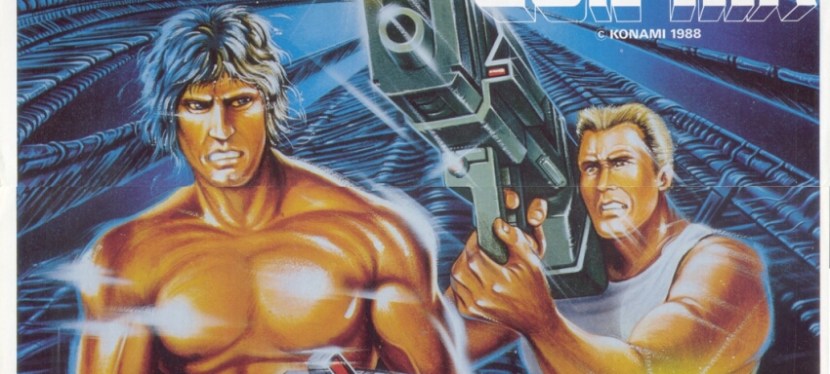
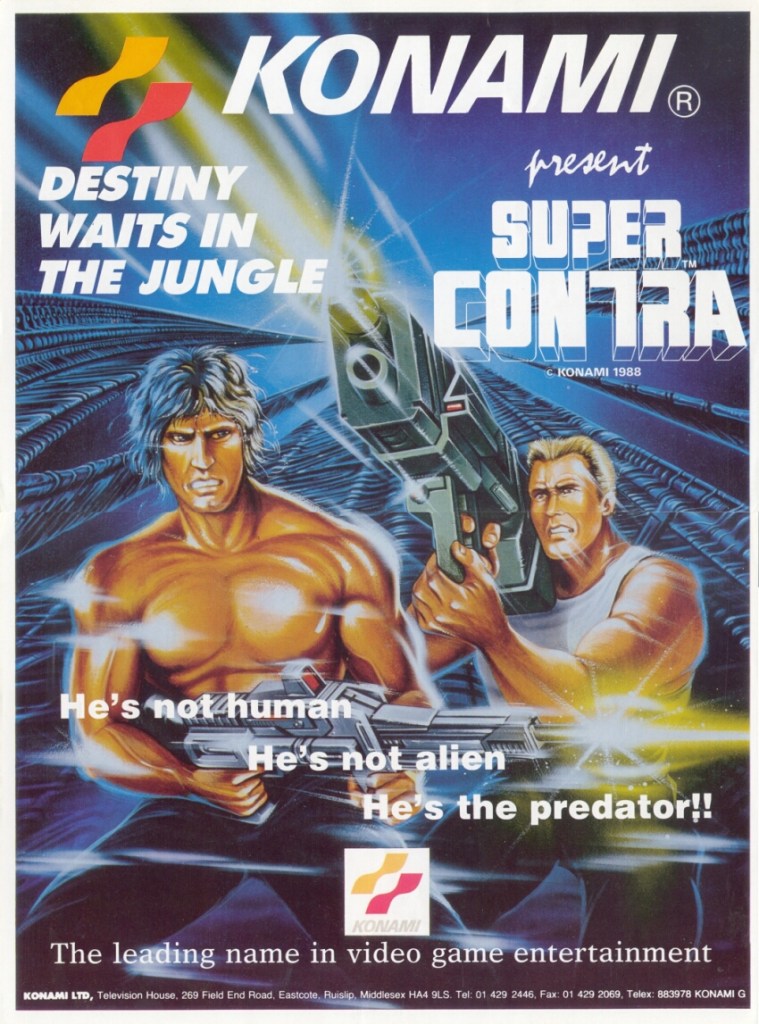
1. Super Contra North American arcade flyer
Have you seen many Hollywood action movies of the 1980s? Does this arcade flyer remind you of something?
After Konami struck gold with Contra in 1987, it was inevitable that sequels and spin-offs will be made. In 1988, they released the follow-up Super Contra in the arcades and to promote it in America, the company came up with artwork that easily gave gamers the impression they are seeing Sylvester Stallone as a fantasized Rambo and another armed guy who might remind them of Arnold Schwarzenegger’s character in Commando or Dutch in Predator. To capitalize on the movie references even more, the American arcade flyer had the line “He’s not human. He’s not alien. He’s the predator!!” As it was the 1980s, this creative approach to promotion was not surprising as Konami and its game makers were influenced by Hollywood movies.
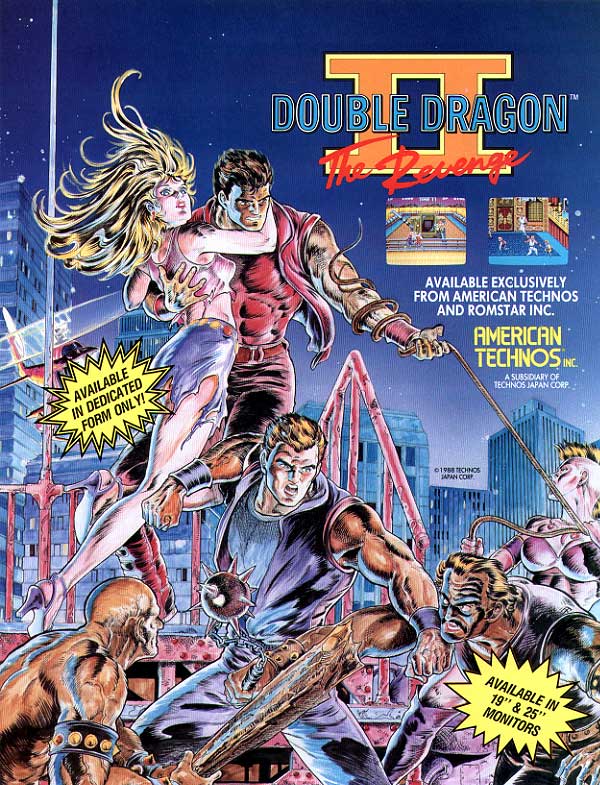
2. Double Dragon II: The Revenge North American arcade flyer
The artwork used in this arcade flyer remains intriguing to look at.
I never played Double Dragon II: The Revenge in the arcade, but I played it on the Nintendo Entertainment System (NES). That being said, I was surprised to see how this old North American arcade flyer has the same hand-drawn artwork used on the cover of the NES version. Take note that the arcade game was released in 1988 while the NES port was released in early 1990. I can only guess that Technos decided to use the same artwork not only for convenience but to have a definitive image emphasizing Double Dragon II to gamers wherever they are.
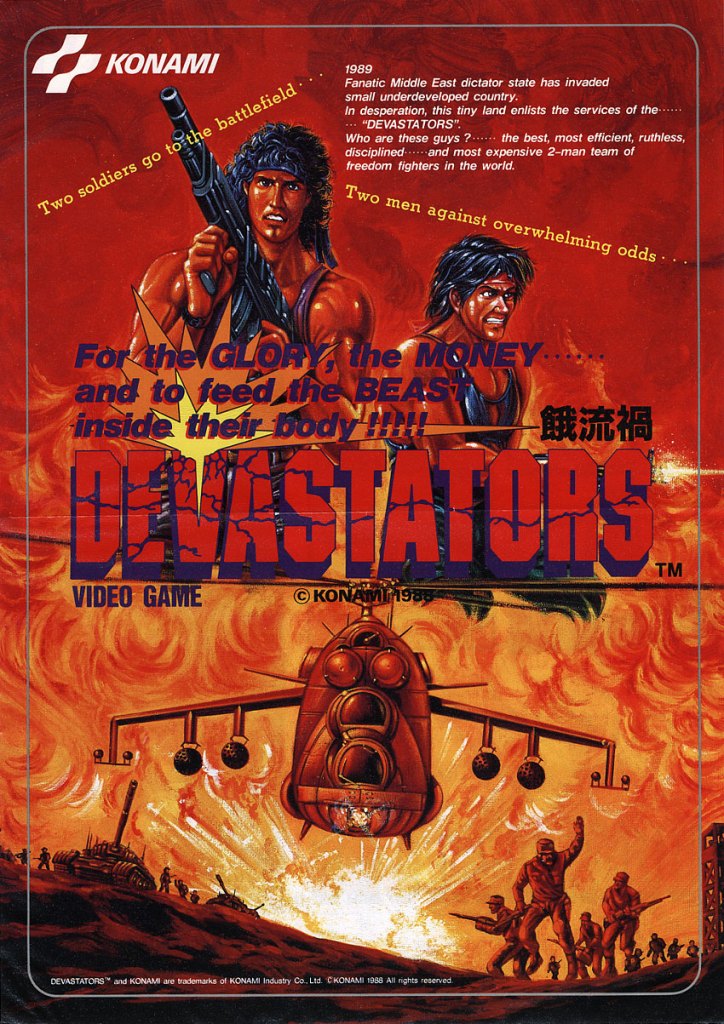
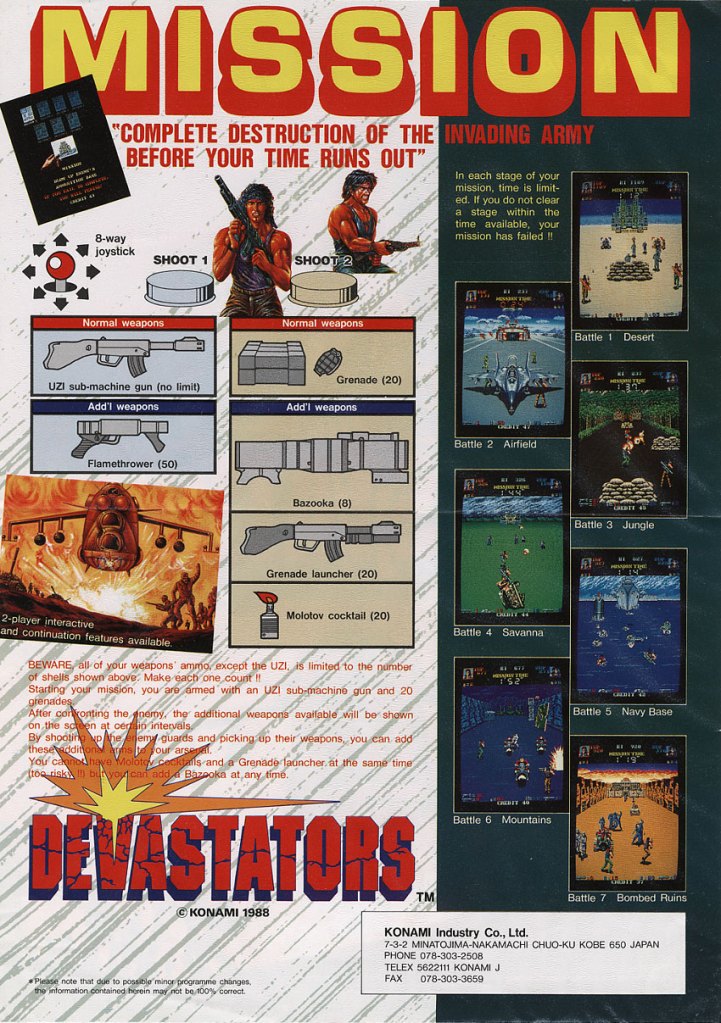
3. Devastators North American arcade flyer
The front.
The rear.
Devastators is another Konami arcade game that had a strong war theme and it was influenced by Hollywood action films of the 1980s. This particular arcade flyer for the North American market is almost identical with the Japanese arcade flyer as both have the same artwork on the front and almost the same visual layout on the rear. The most obvious difference is the use of English text for the North American flyer.
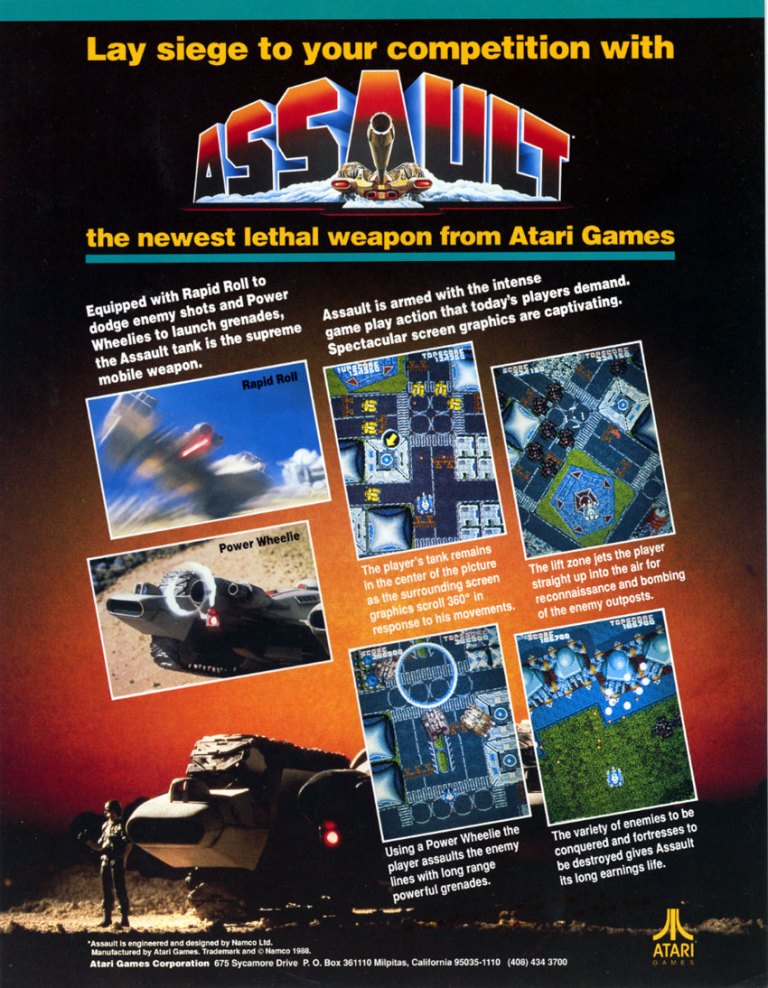
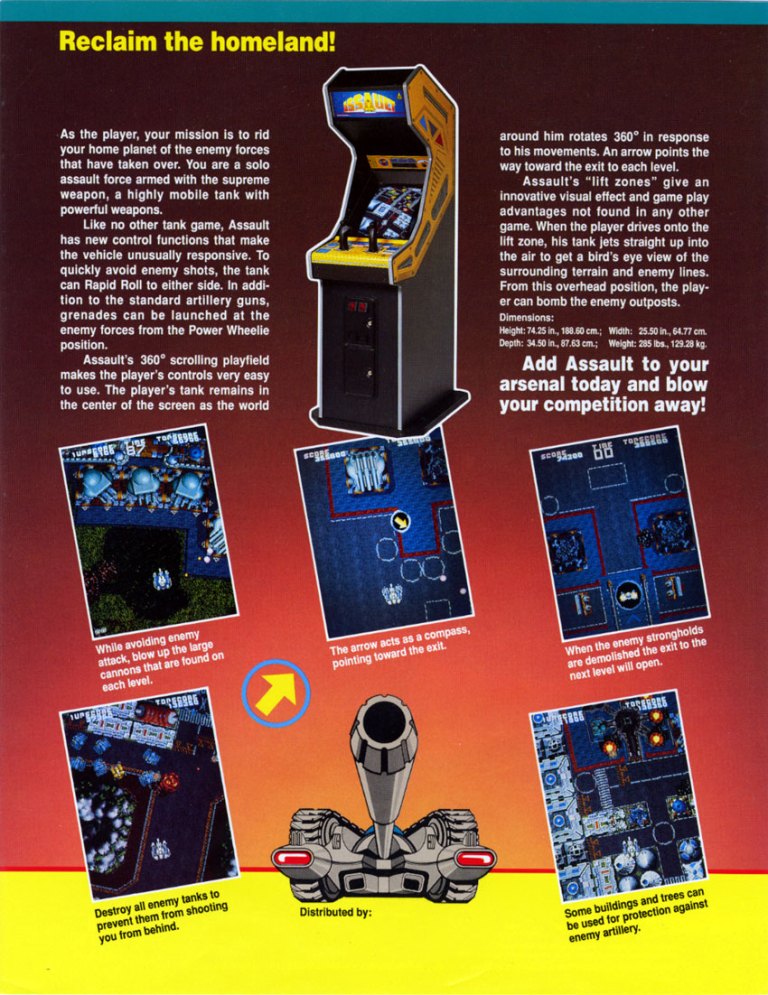
4. Assault North American arcade flyer
The front.
The rear.
Released in American arcades by Atari, Assault is a multi-directional shooter that had a twin-stick control layout (similar with the classic Battlezone) and players experienced intense battles as well as immersive visual effects such as sprite scaling and environment rotation of up to 360 degrees. To promote the game (this originated in Japan by Namco), Atari came up with this arcade flyer that had selected screenshots and descriptive text on both the front and the rear (which showed the arcade cabinet). Assault was a hit with gamers at the arcades and it was not released on consoles until 2009.
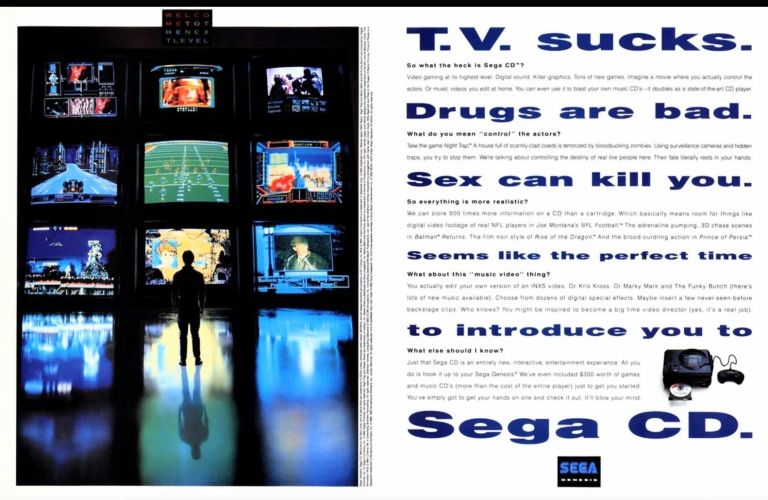
5. Sega CD print ad
Having a socially relevant message can be catchy but it leaves little room for excitement.
As the Sega Genesis console became a huge commercial success in North America, Sega itself became ambitious about what CD-ROM technology would do for video games. Sega in Japan tasked its Consumer Products Research and Development Labs to create a CD-ROM add-on which resulted in the Sega CD (Mega-CD in other parts of the world) which launched in America in 1992. To promote the add-on towards existing Genesis console owners as well as potential new customers, Sega of America came up with the above 2-page print ad that had a social message on the right and an image of a man standing in front of large monitors (showing Sega CD game footage) on the left. While it looked like an odd way of promoting video game hardware, it still remains catchy to see.
6. Panasonic 3DO print ad
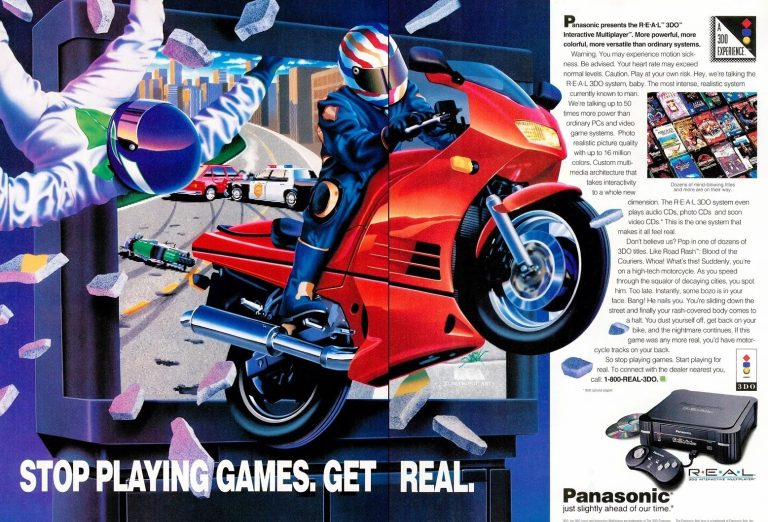
Panasonic knows how to promote entertainment hardware for people’s homes.
Still in the field of CD-ROM gaming, Panasonic had competitive presence in video gaming when its Panasonic FZ-1 R.E.A.L. 3DO Interactive Multiplayer (with technology licensed by The 3DO Company) was launched in America in 1993. If you look at the print ad closely, you will notice that the descriptive text emphasized the multimedia entertainment aspect more than video gaming. The dominating artwork used does not come from a particular video game as it was made to emphasize home entertainment in general. It’s not surprising that the Panasonic 3DO and other 3DO machines from other manufacturers failed commercially.
7. Shaq Fu print ad
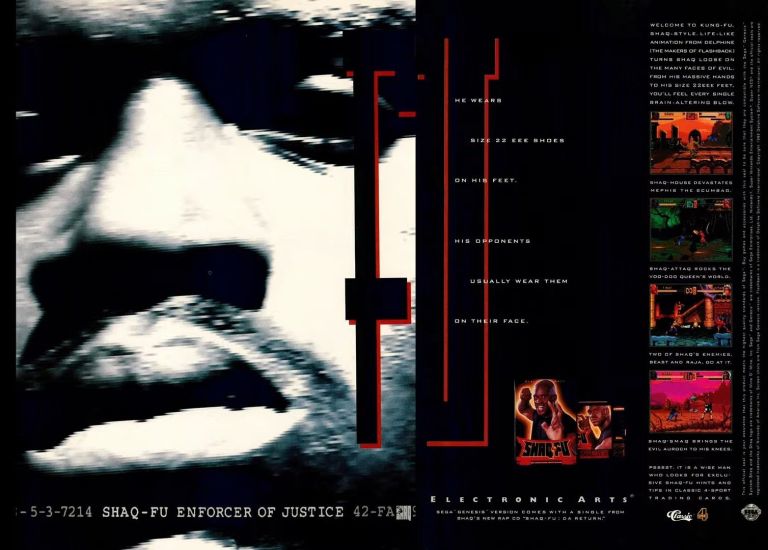
The close-up of Shaquille O’Neal’s face on the left made him looked less recognizable.
Yes, it is true! There was indeed a video game endorsed by Shaquille O’Neal and it was not a basketball game. Shaq Fu is a 1994 2D fighting game with adventure elements and a story in which gamers play O’Neal as martial artist (note: O’Neal himself participated in the game’s production). To promote the game, Electronic Arts came up with a 2-page print ad that had a very odd black-and-white close-up image of O’Neal’s face on the left leaving small screenshots and hard-to-read text on the right (even though there was some vacant space remaining. I remember seeing this ad while reading a video game magazine and the ad ended up looking more like a promotion of O’Neal (already an NBA superstar) than the game itself. By today’s standards, this print ad is an example of a marketing misfire.
8. Kasumi Ninja print ad
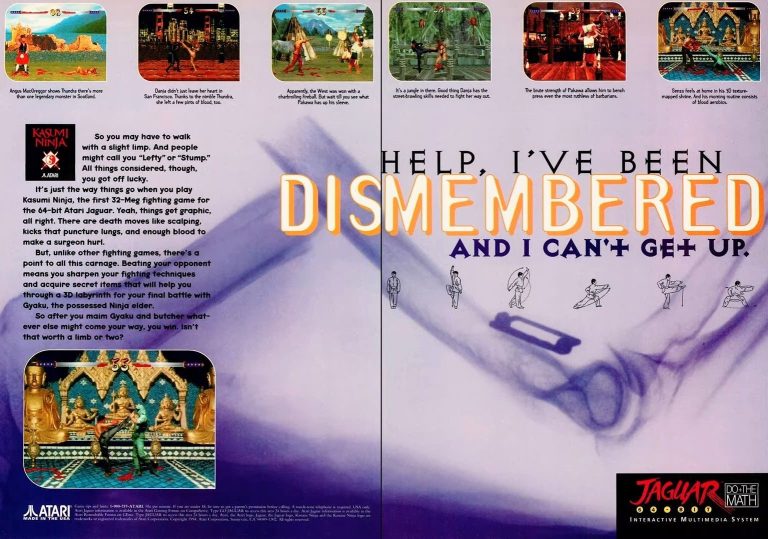
Do you even remember seeing this print ad in magazines?
Remember the 1990s video game trends of digitized human images and disturbingly violent 2D fighting games sparked by Mortal Kombat? The Atari Jaguar-exclusive game Kasumi Ninja was made to capitalize on those trends and it failed badly. Apart from the low sales of the Jaguar console, Atari as publisher came up with the above 2-page print ad that was not appealing to gamers’ eyes and it had almost no excitement overall. This is another marketing misfire.
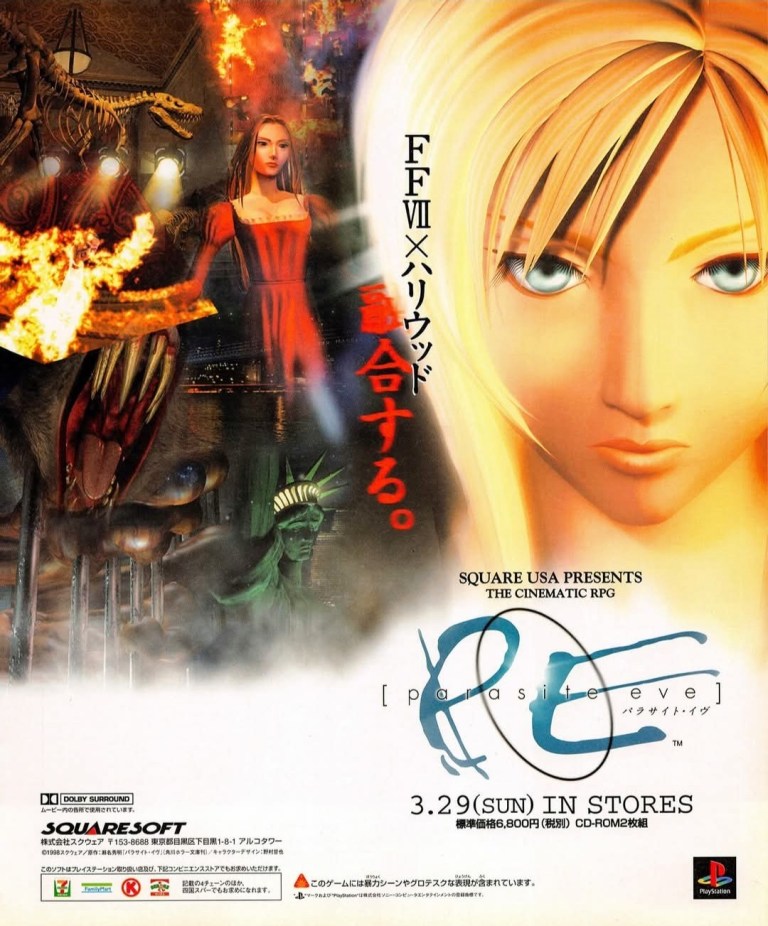
9. Parasite Eve North American and Japanese print ads
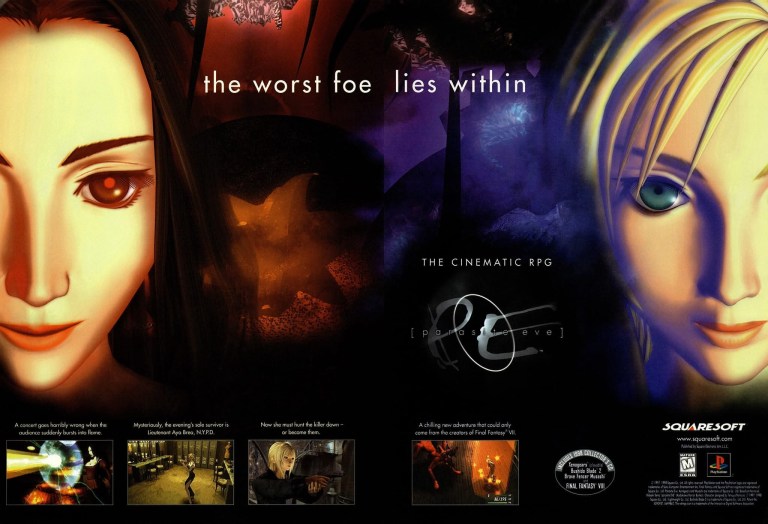
Following the successful release of Final Fantasy VII, this ad excited PlayStation gamers and JRPG enthusiasts for Parasite Eve’s 1998 release in America.
A stronger horror presentation in this print ad for the Japanese market. There were already a lot of people in Japan who enjoyed horror.
Starting in the mid-1990s, Squaresoft (now Square Enix) really became aggressive with video game creativity and experimentation as they launched several new projects that eventually got released on PlayStation in the late 1990s until 2000. One of those daring new projects was Parasite Eve which was a role-playing game (RPG) that had visual elements – particularly pre-rendered backgrounds – and a style of exploration that reminded gamers of Resident Evil. The game was a sequel to the Japanese science fiction horror novel of the same name and it involved the creativity of Final Fantasy creator Hironobu Sakaguchi (credited as producer). To promote the game, the 2-page North American print ad had protagonist Aya Brea on the right and the enemy on the left with a cryptic line placed strategically between them. The North American ad clearly stated that the game is a cinematic RPG. By comparison, the Japanese print ad of Parasite Eve has a strong horror vibe which is not surprising because of the novel’s horror elements and the fact that Squaresoft was capitalizing on the popularity of horror-related entertainment in Japan. By today’s standards, Parasite Eve is truly a product of the late-1990s and it has a dedicated fanbase.
Welcome back fellow geeks, Blu-ray collectors and movie buffs!
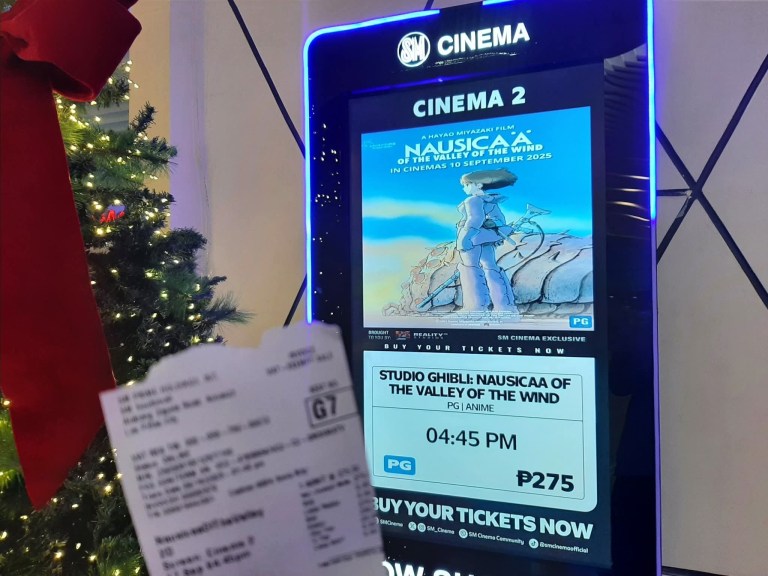
I finally did it! After having seen it many times on home video, cable TV, local TV and DVD, I finally viewed Nausicaä of the Valley of the Wind inside the local cinema here in the Philippines. I saw it on September 17 at SM Cinema inside SM Southmall in Las Piñas City. This was also the first time in two years since I last saw any movie inside the cinema (I last saw Sound of Freedom).
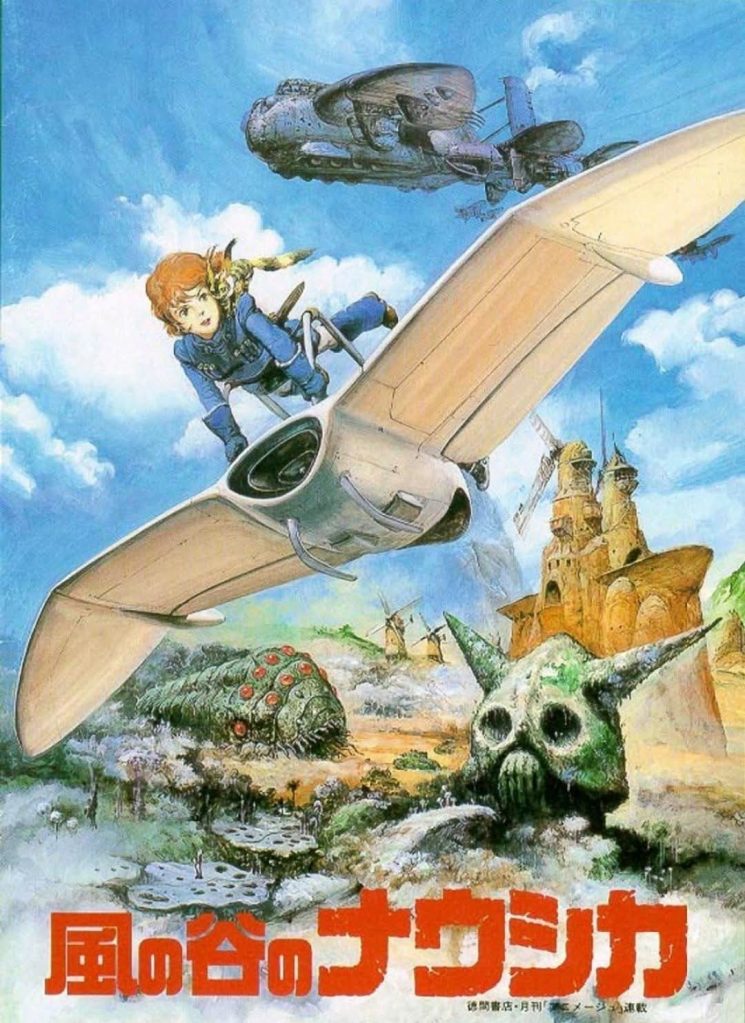
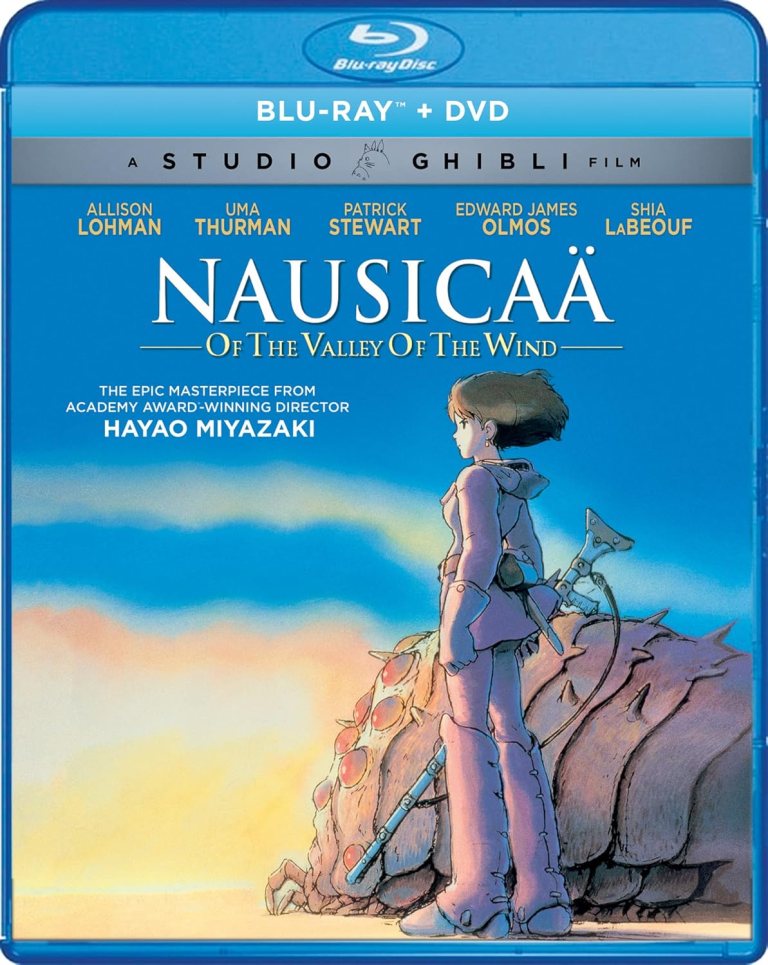
An old movie poster of Nausicaä Of The Valley Of The Wind.
For the newcomers reading this, Nausicaä Of The Valley Of The Wind was part of the Studio Ghibli Fest 2025 which was exclusive to SM Cinema (the largest cinema chain in the country). While the said fest ended on September 16, there were still screenings of Studio Ghibli anime feature films shown in SM Cinema branches from September 17 to 23.
I paid P275 (US$4.72 according to the foreign exchange as of this writing) for my SM Cinema ticket and it includes a free drink. I entered the cinema carrying my ticket, drink and popcorn feeling excited and nostalgic to see Nausicaä Of The Valley Of The Wind on the big screen for the first time ever. What was shown was the English-subtitled version with Japanese voiceovers (Sumi Shimamoto as Nausicaä, Gorô Naya as Yupa, Yoshiko Sakakibara as Kushana, Yôji Matsuda as Asbel, and more)
We were only seven people inside the cinema and there were lots of vacant seats beside, behind and in front of me. I was sitting very comfortably waiting for the screening to begin. At the same time, nobody had a noisy smartphone during the screening. As for me, I deliberately turned my smartphone off to ensure no communication-related distractions would happen.
Eventually Nausicaä Of The Valley Of The Wind finally started playing on the big screen. After the short animated opening scene, the music by Joe Hisaishi started playing as the opening credits went on. At that moment, I was immersed into Hayao Miyazaki’s anime classic immediately and I knew I made the right decision to see it inside the theater.
As the film went on, I adjusted myself to reading the subtitles while maintaining focus on the plot as well as the development of characters. Visually, the film turned out to be really spectacular on the big screen even though it had no computer-generated images at all (note: it is purely hand-drawn animation that was done with so much hard work by Miyazaki and the animators). With the higher resolution on the big screen, I saw a lot more tiny visual details here and there and the facial expressions of the characters became more lively than before. Very clearly, Nausicaä Of The Valley Of The Wind is meant to be seen in the movie theater.
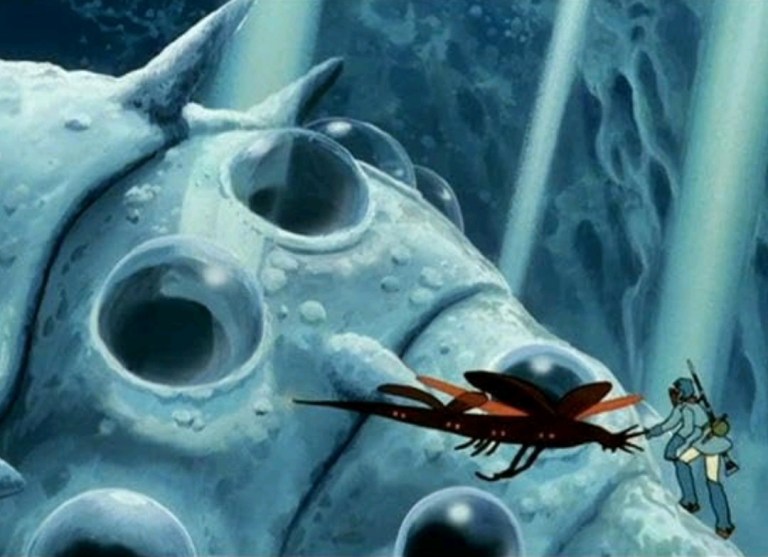
The sense of visual scale in scenes like this one is best viewed on the big screen in the movie theater. (photo source – IMDB.com)
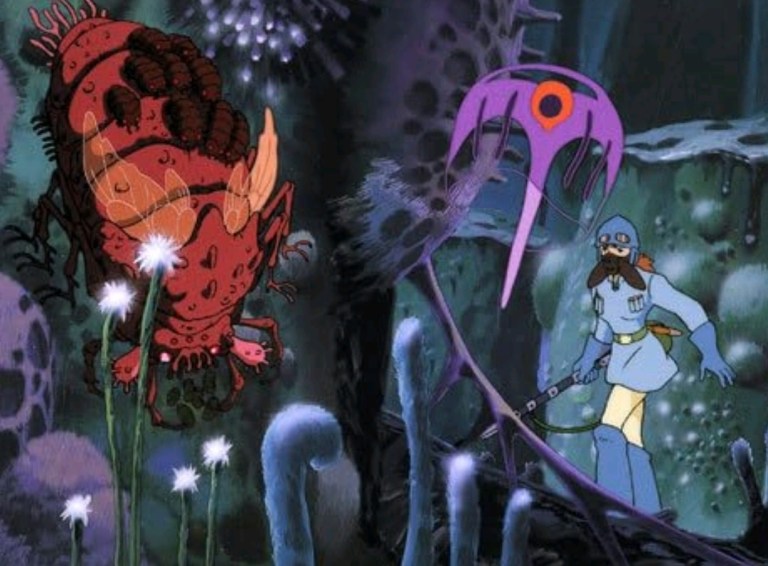
There is nothing like exploring a very polluted forest filled with huge, mutated insects. (photo source – IMDB.com)
After about two hours – the end credits includes animated scenes showing what happened after the climax – of watching, I left the cinema feeling very satisfied and entertained even though I saw Miyazaki’s 1984 masterpiece many times over the decades. The fact that the English-subtitled version was shown gave me an idea of what Japanese moviegoers saw inside their cinemas in 1984, and I can say that the Japanese voiceovers were engaging to listen to. The big screen experience alone made watching Nausicaä Of The Valley Of The Wind worth it.
That being said, I want to express out loud to local movie theater operators reading this to consider showing more of the classic anime feature films as well as classic motion pictures during film festivals or special theatrical events. Personally, I want to see Casablanca, Macross: Do You Remember Love?, Metropolis (2001), Tron, Total Recall (1990) and Akira in the local cinemas.
I am very glad to have seen the 1984 classic anime movie inside the movie theater.
Going back to Nausicaä Of The Valley Of The Wind, I am very glad to have seen inside the cinema and if ever your local cinema will have it screened, I encourage you to go for it. There is absolutely no way that that the screens of your smartphone, your tablet, your PC monitor and your high-definition TV could match the grand visuals of Miyazaki’s film on the cinema’s big screen. Truly the cinema is better than streaming.
If you wish to join a group of movie enthusiasts and talk about cinema, cinematic trends, Blu-ray releases and more relevant stuff, visit the Movie Fans Worldwide Facebook group at https://www.facebook.com/groups/322857711779576
For more South Metro Manila community news and developments, come back here soon. Also say NO to fake news, NO to irresponsible journalism, NO to misinformation, NO to plagiarists, NO to reckless publishers and NO to sinister propaganda when it comes to news and developments. For South Metro Manila community developments, member engagement, commerce and other relevant updates, join the growing South Metro Manila Facebook group at https://www.facebook.com/groups/342183059992673
Welcome back readers, fellow geeks and electronic gaming fans!
In this edition of the Retro Gaming Ads Blast (RGAB) series, we will take a look at another batch of retro gaming print ads – including arcade flyers – from the 1970s to the 1990s.
For the newcomers reading this, Retro Gaming Ads Blast (RGAB) looks back at the many print ads of games (console, arcade, computer and handheld) that were published in comic books, magazines, flyers, posters and newspapers long before smartphones, social media, the worldwide web and streaming became popular. To put things in perspective, people back in the 1980s and 1990s were more trusting of print media for information and images about electronic games and related products.
With those details laid down, here is the newest batch of retro gaming print ads for you to see and enjoy…
1. Intellivision print ad
Were you able to play a game on the Intellivision long ago?
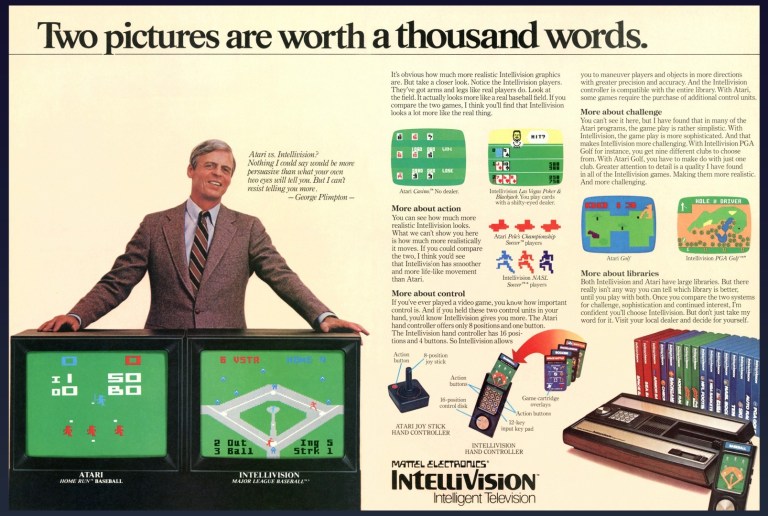
In 1979, Mattel launched their Intellivision game console in America which instantly placed them in competition with Atari’s 2600 console. In a bid to convince gain market share, Mattel daringly came up with a competitive print ad like the one above showing two TV sets (with an Atari 2600 baseball game and a similar game on Intellivision), descriptive text that explained why the intellivision and its games are better, and even mentioned Atari by name several times. Obviously the tactic did not lead Mattel to ultimate market victory but the above print ad showed it was okay for a newcomer to mention their competitor and aggressively attack it to gain customers (both newcomers and active gamers).
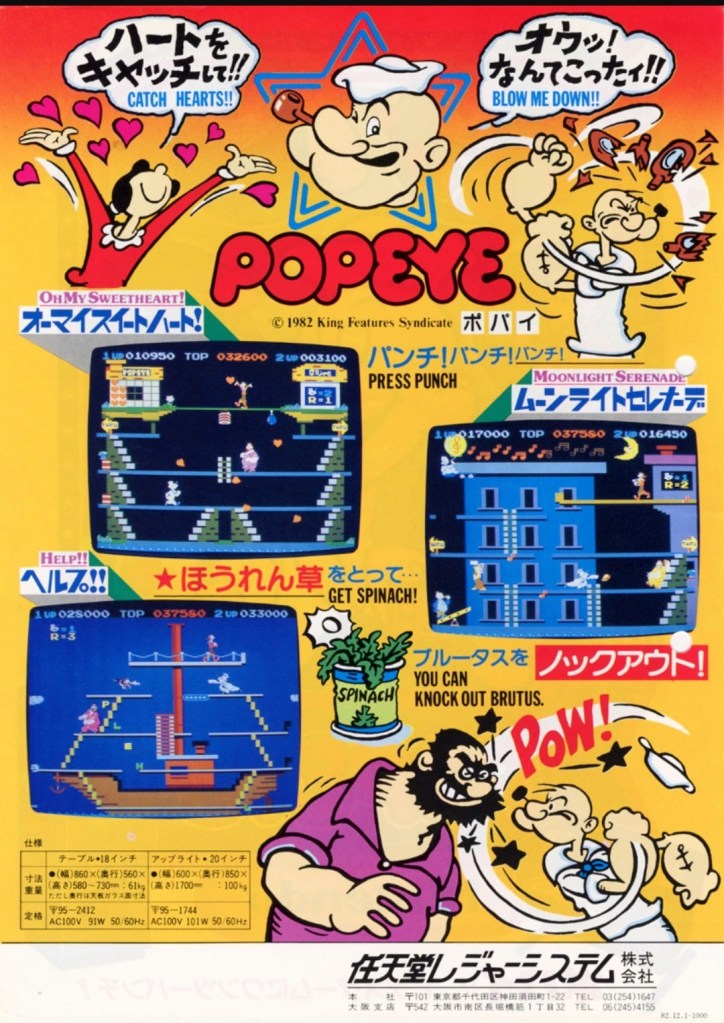
2. Popeye Japanese arcade flyer
The front of the flyer.
The rear.
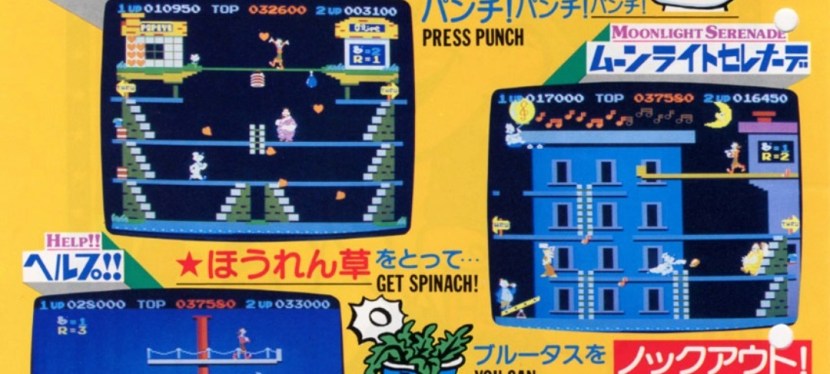
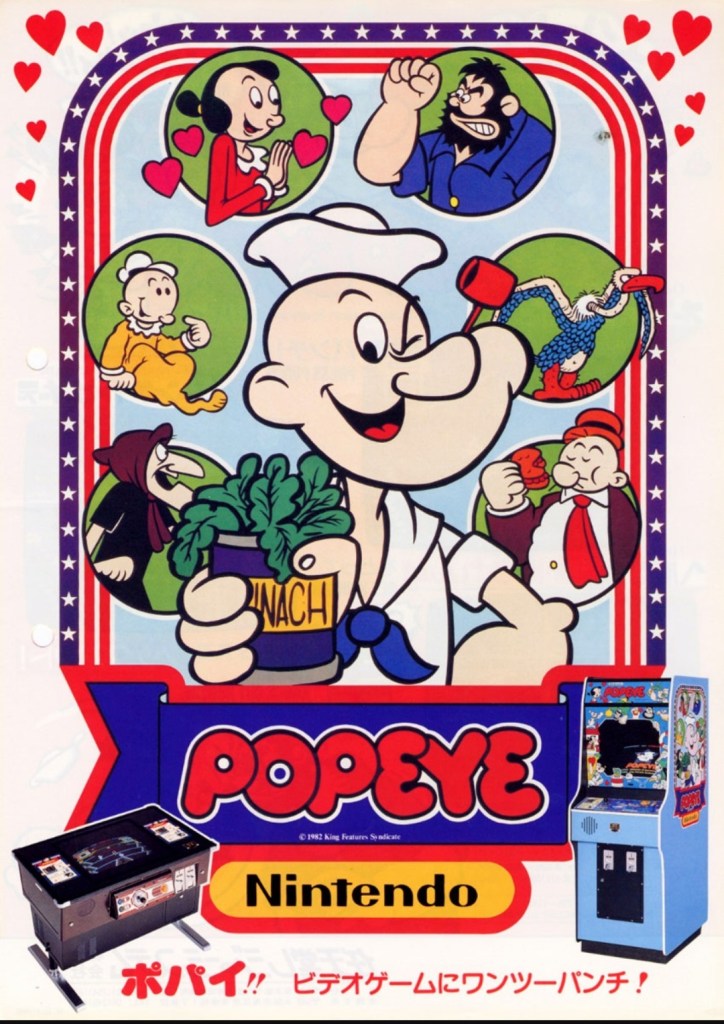
In 1982, Nintendo released the Popeye arcade game which was incidentally the result of the success of their original Donkey Kong arcade game. To promote the game, Nintendo came up with an arcade flyer that had a very lively front (note: the characters were instantly recognizable thanks to the great art used) and the rear having easy-to-read instructions on how to play the game, what levels to expect and what must be done when playing. Popeye was an arcade hit in Japan, but an even bigger hit in America. This old arcade flyer still looks nice.
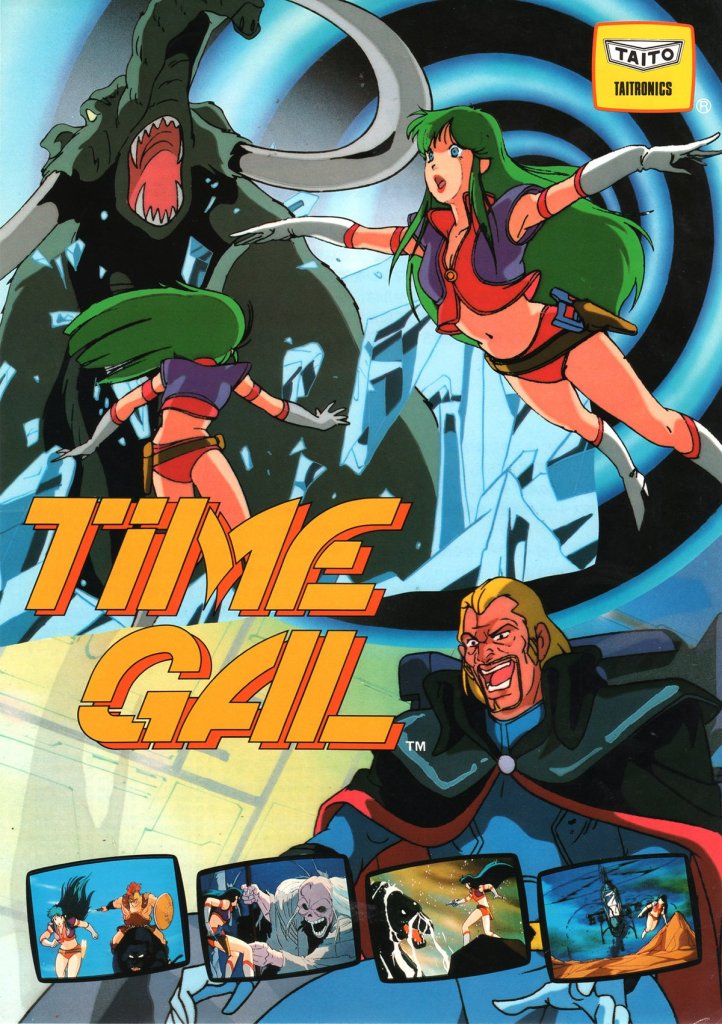
3. Time Gal arcade flyer
On face value, this one looks more like an anime promo since gameplay elements were missing.
Released in Japanese arcades in 1985, Time Gal is one of those games that used the expensive LaserDisc technology to stream pre-recorded animation (made by Toei) and challenged gamers to react quickly (using the joystick and button for commands) in order to progress in real-time. The arcade flyer has a very lively visual design making it clear to players and arcade operators that a lot of anime awaits those who play Time Gal. Technically, players watch anime cutscenes happen and react using the controls. Time Gal was an arcade hit and it made its way outside of Japan by getting ported for the Sega CD.
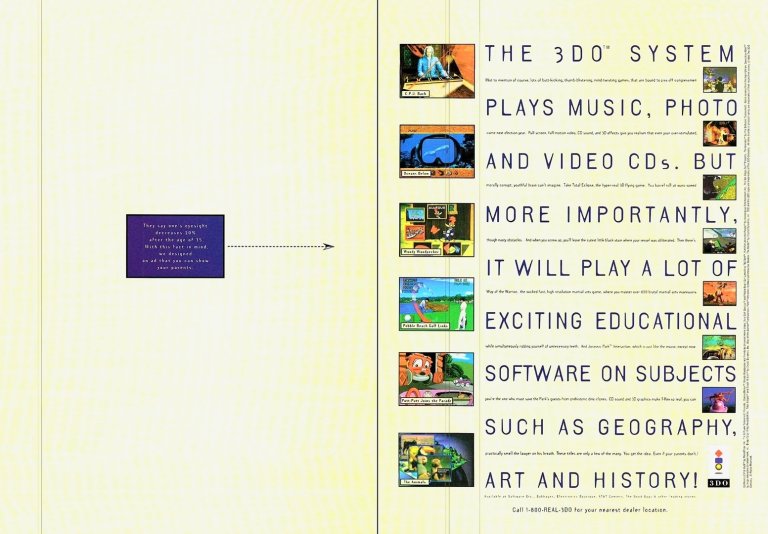
4. 3DO print ad
If you bought a 3DO long ago, was it for gaming or for home entertainment purposes?
Remember the 3DO? Developed by the 3DO Company and launched in 1993, the 3DO was designed to not only play video games but also function with multimedia features. In fact, the 3DO was initially marketed as a machine that allows users to watch videos, play music, browse digital photographs, and even immerse themselves with software focused on different topics. This is exactly what the above 3DO print ad emphasized. In retrospect, it was so odd for me to see the print ad inside video gaming magazines I read.
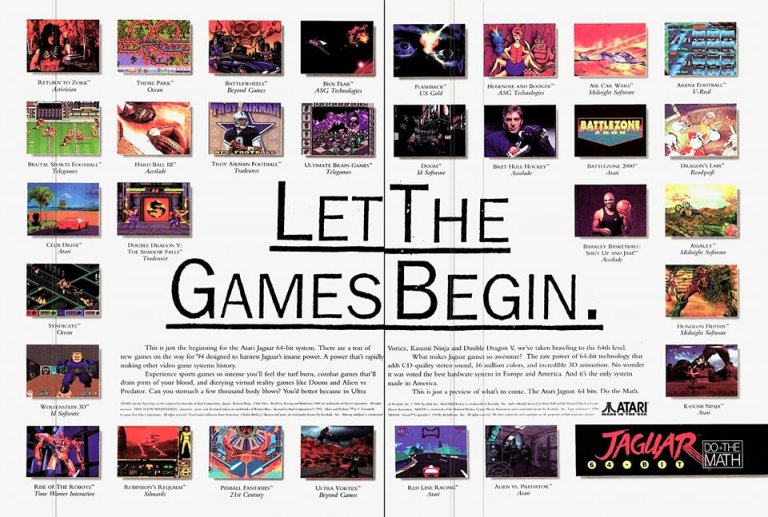
5. Atari Jaguar print ad
The strong focus on gaming was clear with Atari for the Jaguar.
Over a month after the launch of the 3DO, Atari launched its Jaguar console with a strong focus on video gaming. As console sales slowly grew in 1994, Atari came up with the above print ad – showing lots of games for the Jaguar – to lure in customers aggressively. If you look closely at the descriptive text of the ad, it mentions the Atari Jaguar as 64-bit system emphasizing that it is more powerful than other video game machines of the time. The bit count controversy harmed Atari and eventually the Jaguar failed.
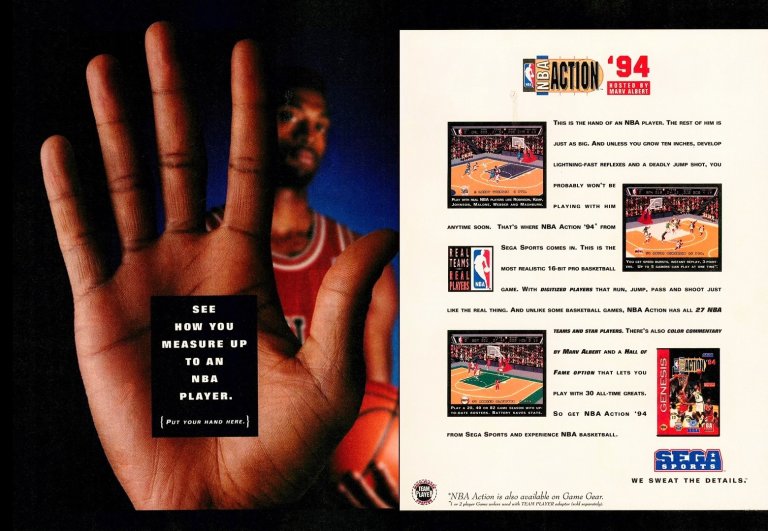
6. NBA Action ’94 print ad
Remember when Sega made NBA basketball video games that were exclusive to the Genesis console?
Remember when there were a lot of basketball video games licensed by the NBA in the 1990s? Through its own sports games brand – Sega Sports – Sega was dedicated to making exclusive sports video games for its customers and their NBA games were under the NBA Action brand. In 1994, they released NBA Action ’94 for the Genesis console and this two-page print ad they came up with had a catchy visual design (a supposed basketball player showing his palm and message to the camera on one side of the ad). Looking closely at the descriptive text, the ad mentions “most realistic 16-bit pro basketball”, “digitized players” and having all 27 NBA teams and star players. Sega Sports is no more but it’s legacy still lives on among Sega fans.
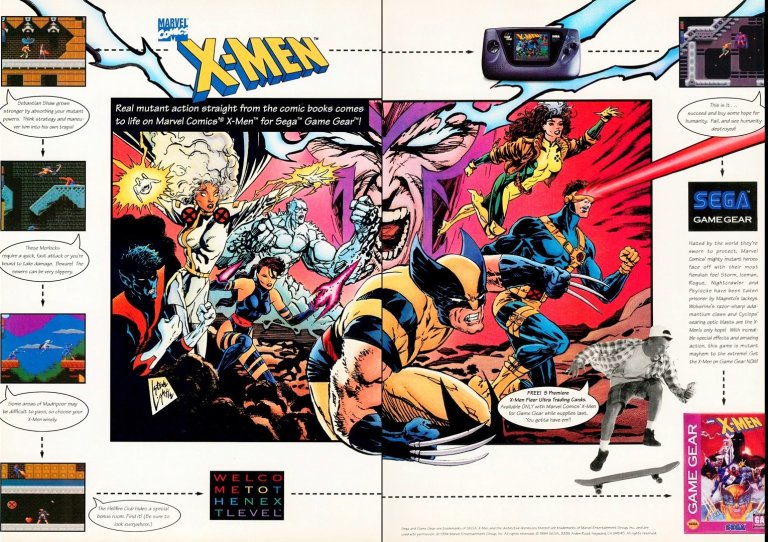
7. X-Men Sega Game Gear print ad
For X-Men fans!
Similar to its approach with the Sega Sports brand, Sega developed exclusive games for the Game Gear. The company secured from Marvel the license to make an original X-Men game and to promote it, this 2-page print ad showcased original art of the established X-Men characters of the time while using the remaining spaces for the screenshots and descriptive text. This old print ad still looks attractive and will easily resonate with X-Men fans as well as 1990s superhero comics enthusiasts.
8. Liberty or Death print ad
American history is the core concept of this strategy game by Koei.
If there is anything notable about the Japanese company Koei, it is the fact that it released strategy and simulation games that tackled varied topics while making each game distinct and playable regardless of platform. In my experience, I had a lot of fun playing their business simulation Aerobiz Supersonic on the Super Nintendo Entertainment System (SNES). In 1993, Koei released their turn-based strategy game Liberty or Death which tackled American history for its setting (note: Koei already established itself with historical simulations). To sell the game, Koei came up with a print ad that had a very eye-catching historical art (George Washington, Thomas Jefferson, and Benjamin Franklin among the figures), a few selected screenshots and descriptive text that emphasized the essence of the game. This print ad is a reminder that no video game company today would make a historical simulation due to geopolitics (note: there are a lot of woke activists among video game employees today) and for business reasons.
For the first time ever, I saw Nausicaä of the Valley of the Wind inside the cinema at SM Southmall in Las Piñas City, and I can say it was an immersive experience to replay Hayao Miyazaki’s classic. To make things clear, I saw Nausicaä of the Valley of the Wind a number of times since the mid-1980s starting with the bad English version Warriors of the Wind. I eventually saw the anime feature film in its uncut form on DVD (with the new English dub from Disney).
This leads me to my next point… Nausicaä of the Valley of the Wind was released three times on Blu-ray disc format over the past several years. The first was from Disney in 2011. Six years later, a 2nd Blu-ray release came from Shout! Factory which had a newer scan of the film and improved picture quality over the Disney Blu-ray.
The 2017 Blu-ray of Nausicaä of the Valley of the Wind from Shout! Factory.
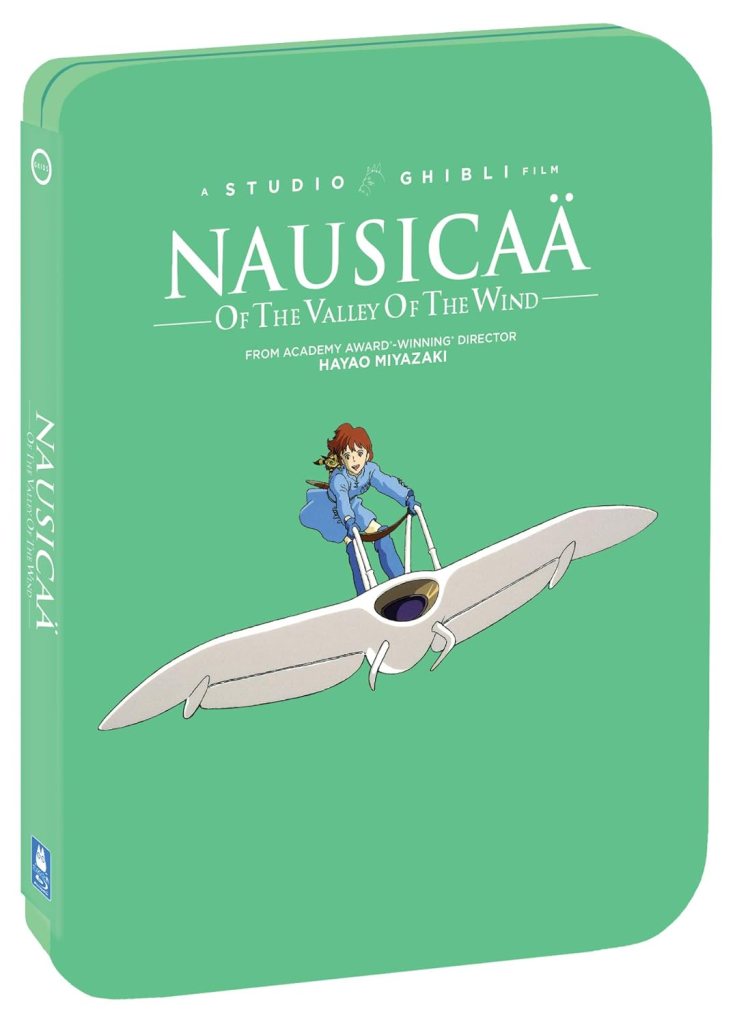
In 2020, Shout! Factory released Nausicaä of the Valley of the Wind in Steelbook (Blu-ray.com describes the picture quality as follows: “Nausicaä of the Valley of the Wind has received a top-notch video-presentation with a high bit-rate encode from Gkids. The encode is of a new remaster of the film. This is a much better video-presentation than that of the original Disney Blu-ray released in North America. Colors are significantly better and more accurate to the original animation cells.”)
As the Steelbook Blu-ray of Nausicaä of the Valley of the Wind is the most recent release, posted below for your reference are the technical details from its Blu-ray.com page.
Video
Codec: MPEG-4 AVC (35.00 Mbps)
Resolution: 1080p
Aspect ratio: 1.85:1
Original aspect ratio: 1.85:1
Audio
English: DTS-HD Master Audio 2.0 (48kHz, 24-bit)
Japanese: DTS-HD Master Audio 2.0 (48kHz, 24-bit)
French: Dolby Digital 2.0
Note: French track is (192kbps)
Subtitles – English, English SDH, French,
Discs –Blu-ray Disc, Two-disc set (1 BD-50, 1 DVD)
Packaging – SteelBook, Inner print, booklet
Playback – 2K Blu-ray: Region A
What caught my attention is the fact that – as of this writing – the 2020 Steelbook Blu-ray of Nausicaä of the Valley of the Wind is only a few Dollars higher than that of the 2017 Blu-ray. As a Blu-ray movie collector, I see a really good deal with the Steelbook Blu-ray at its current price. Both the 2017 and 2020 Blu-ray versions of the classic anime feature film carry a booklet. There is a choice that both Studio Ghibli fans and casual anime fans can take advantage here.
This is what the 2020 Steelbook Blu-ray of Nausicaä of the Valley of the Wind looks like.
At this stage, I can only wonder if Studio Ghibli has plans to produce and release a 4K Blu-ray ofNausicaä of the Valley of the Wind someday. Perhaps if more than enough fans and 4K Blu-ray collectors would get together to express their demand for it, Hayao Miyazaki and his studio would be aware.
If you have decided to buy the 2017 Blu-ray of Nausicaä of the Valley of the Wind, click here. If you want the 2020 Steelbook Blu-ray version, click here.
If you wish to join a group of movie enthusiasts and talk about cinema, cinematic trends, Blu-ray releases and more relevant stuff, visit the Movie Fans Worldwide Facebook group at https://www.facebook.com/groups/322857711779576
Disclaimer: This is my original work with details sourced from watching the movie and doing personal research. Anyone who wants to use this article, in part or in whole, needs to secure first my permission and agree to cite me as the source and author. Let it be known that any unauthorized use of this article will constrain the author to pursue the remedies under R.A. No. 8293, the Revised Penal Code, and/or all applicable legal actions under the laws of the Philippines.
Welcome back, readers! For only the 2nd time since the COVID-19 pandemic affected the world, I managed to watch a movie inside the local cinema at SM Southmall in Las Piñas City. What is intriguing is that the movie I saw is actually a carefully edited compilation of footage sourced from an upcoming live-action series that is an ambitious Philippine adaptation of a certain giant robot anime from Japan. The movie I saw was Voltes V: Legacy – The Cinematic Experience. Behind it all, the movie is part of GMA Network’s strategy of building up awareness for the Voltes V: Legacy TV series set to launch on May 8, 2023.
For the newcomers reading this, the original Voltes V anime series (Japanese title: Chôdenji mashin Borutesu Faibu) was launched in Japan in 1977. Shortly after, it made its English language debut here in the Philippines (note: Japanese characters’ names were Westernized) and ultimately it became very popular and it made an impact on millions of Filipinos who saw it and replayed it in the many years that followed. I noticed that many Filipinos of my generation think of Voltes V first when anime comes to mind. While I myself never became a fan, I saw lots of Voltes V anime episodes on TV at a time when Internet access, video streaming and social media were not yet realized here in the Philippines. I even saw GMA’s edited Voltes V anime movie (containing footage of the final five episodes of the anime series) in the cinema in 1999.
In recent years, GMA Network and its local talents joined forces with Toei Company of Japan to create a live-action TV series adaptation of the anime and there will be eighty episodes (double the anime TV series’ episode count) for broadcasting nationwide. This is Voltes V: Legacy and already the local production team went through lots of hard work making the episodes, the sets, the props, the costumes and the computer-generated images (CGI) to bring the classic series into life in coordination with Toei which reviewed and supervised the production. A lot of money has been spent into Voltes V: Legacy which was felt in GMA’s increased production costs.
As for Voltes V: Legacy – The Cinematic Experience, the so-called movie contains varied footage allegedly from the first three weeks’ worth of TV episodes and it was exclusively screened in SM Cinema sites around the country for a limited time.
The story begins in the planet of Boazan where people with horns live in prosperity and privilege while those without horns have no choice but to live a hard, lower life. A gifted young Boazanian man named Hrothgar – who was born into royalty without horns and lived with his personal secret long enough into adulthood – was exposed by Zambojil’s group to be hornless and unworthy of Boazan’s throne. Sometime later, Hrothgar leads several fellow slaves and prisoners in an uprising against Emperor Zambojil’s authority. Before getting overwhelmed by the imperial forces, Hrothgar escapes into space with an Boazanian spacecraft and crashes into the sea on Earth.
He is discovered by Mary Ann and he gets introduced to Dr. Smith and Commander Robinson. Hrothgar informs them of his Boazanian origin and he expressed to them that Earth’s defenses are too weak to protect its people from alien invaders. As he adjusts with Earth life, Hrothgar changes his name into Ned Armstrong, marries Mary Ann and have children together. After several years on Earth, Ned Armstrong worked closely with Dr. Smith to prepare the people for future invasions…
Quality
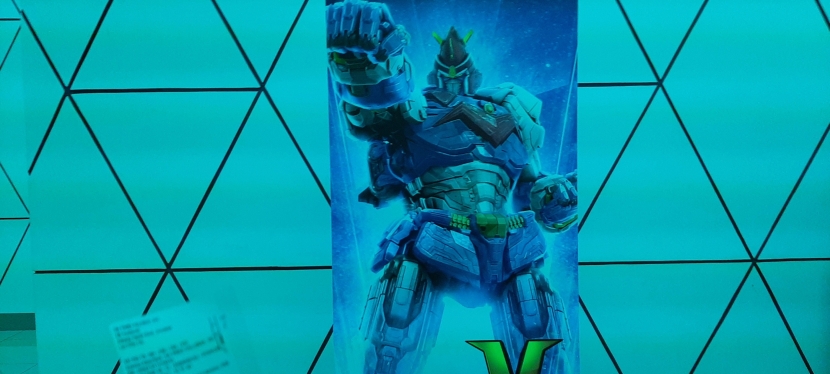
The iconic Voltes V looks bulkier and more mechanical in CGI form and the good news is that the overall quality is great and there is a lot of fun seeing the giant robot in action. (photo source – the Voltes V: Legacy – The Cinematic Experience trailer)
To begin with, the creative team of GMA managed to establish a cohesive narrative for the cinematic experience which is not an easy thing to do considering all the content from many selected episodes that had to be edited and arranged properly. This involves the presentation of the story details, the live-action elements, the CGI-heavy shots and the human performances to create a narrative that was easy enough to follow and absorb in my experience. I noticed that the so-called movie moved at a medium-to-fast pace which is not surprising because the goal of GMA was to entertain moviegoers and convince them to anticipate the live action TV series. Considering the speed of the pacing, there were some moments when I felt that some scenes were missing which only reminded me that the slower and more dramatic moments were being saved for the TV series.
When it comes to adapting the classic anime’s elements into live action, the creative team did a pretty good job most of the time. The costumes of the five pilots were made with a more practical physical design (note: they are not body tight) while retaining the classic colors and the V logo. The interior set of the Camp Big Falcon operations room looked more futuristic complete with having many people simultaneously operating. The interior set showing Prince Zardoz and his trusted companions closely resembles that of the anime. There was one particular physical set that did not look convincing – the outdoor street market in Boazan early in the movie had that indoor feel which not even the lighting could hide and the CGI shot showing the rest of the outdoor area and the far distance did not match with the place.
More on the artistic side of the presentation, I enjoyed the way the production people emulated the classic anime designs of not only the characters but also the key structures (places) and the giant robots (Voltes V and the two beast fighters) into live action. The cinematic Prince Zardoz looks so much like his anime counterpart and the same can be said about Dr. Smith and Mrs. Armstrong. The two beast fighters here were rendered to look much like their anime versions but were animated in a way to emphasize mass and scale.
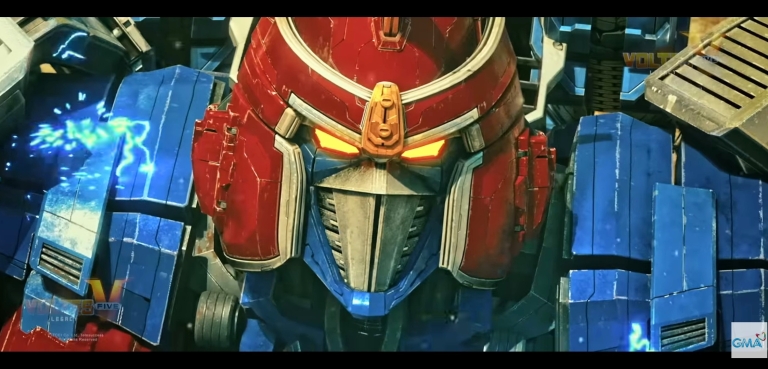
The strategic posing in this notable shot is a fun and honorable throwback to a key moment in the very first episode of the original Voltes V anime TV series. (photo source – the Voltes V: Legacy – The Cinematic Experience trailer)
There were some notable artistic discrepancies and flaws however. The cinematic Princess Zandra, Draco and Commander Robinson clearly did not quite match their anime counterparts. For some reason, Princess Zandra appeared with a very different costume displaying subtle sexiness instead of royalty. Could it be possible the creative team took inspiration from the Fatima Blush character (played by Barbara Carrera) in the 1983 James Bond movie Never Say Never Again while modernizing Princess Zandra? As for Draco, he does not look as intimidating as his anime version and he even looks more like a cosplayer! Commander Robinson here does not display the maturity of the anime version due to the questionable quality of the costume provided and the actor’s appearance. In my experience watching the anime series, Commander Robinson looked and felt like a military man in his early fifties which the live action version never captured.
Now I want to talk about Voltes V itself. The highlight of the CGI combined with really good art direction is the iconic giant robot, including the five vehicles that compose it. To begin with, the use of CGI emphasizing multiple moving mechanical parts to emphasize Voltes V is a very smart move done by special effects team. While each vehicle has a new visual aesthetic to match the live action approach, they still remained recognizable to me. The biggest visual highlight in the movie is the volt-in sequence when each vehicle combined to form Voltes V in robotic form. As each vehicle connected to each other, the classic sequence from the anime was replicated excellently. Given the artistic direction and the CGI’s emphasis of multiple moving parts, the volt-in sequence here is much more detailed than the anime version! I should state that it is very likely that the visual effects team worked overtime to achieve the high-level of detail, the vibrant colors and the impressive animation on Voltes V.
Watch this. Share to others. Thanks!
With the approach on multiple moving parts, Voltes V itself looks bulkier in a mechanical fashion which I really admire. It should be stated that showcasing the iconic giant robot in action – complete with CGI presentation of the many Voltes weapons – is a visual feast complete with very vibrant colors! Each time Voltes V hits a beast fighter by punching or using a weapon, there is strong impact felt with each blow! The sound effects team really did good work adding weight and power to the action.
The work done by the special effects crew in this external shot of Jamie Robinson’s cockpit is very impressive and detailed! Ysabel Ortega acted convincingly to what happened. (photo source – the Voltes V: Legacy – The Cinematic Experience trailer)
Considering the high detail and strong animation on Voltes V, the two beast fighters shown in this movie had very similar visual qualities. There was no major discrepancy on visual quality between the iconic robot and the enemy during battles.
More on the CGI, I can declare that the locally produced visual effects (by GMA Video and Riot, Inc.) looked very good for the most part! Apart from the battles between the giant figures, the sequences of animating the Voltes V vehicles, the Boazanian flying saucers (with fast moving sharp edges that make them resemble motorized wood-cutting blades), the fighter planes and physical damage of places were nice to see. There were, however, several explosions that were badly rendered (note: even looking flat and out of place) in key scenes and there were moments when military vehicles looked more like they belong in video games from a few console generations ago. The formation of the blade of Voltes V’s laser sword clearly needs more work as it looks unpolished. In the post-credits scene, CGI for Octo 1 was badly done!
Apart from action scenes, the giant robots and their weapons, CGI was also used on established places or structures. Camp Big Falcon really looks magnificent while the floating mechanical Boazanian skull appeared very creepy. In shots showing the far distance, Camp Big Falcon in the background still looks good even though the visual quality falls short of capturing true photo-realism.
Considering the way GMA edited the footage and selected visual effects shots for this so-called movie, the overall quality of the CGI literally landed some notches short of photo-realistic levels. That’s not criticism at all but a confirmation that Filipino-produced CGI showcased here is the best I have seen yet! All in all, an impressive ton of work by the special effects teams using computers.
As for the human performances, I can say that the cast collectively did a good job bringing the characters to life and this includes paying special attention to details from anime while adding certain elements that reflect modernization. Zardoz was portrayed to be sadistic and obsessed on conquering planet Earth which reflects his imperial task and the pressure that comes with it. Sometimes, Zardoz looked and acted even psychotic. Mary Ann Armstrong is the definitive mother figure here and the producers emphasized her more with scenes showing her as a very focused authority during crisis as well as a tender and loving woman during her time with the family. In some ways, Mary Ann Armstrong is almost like the protagonist of this so-called movie and the live action version looks deeper than the anime version. While the live action Commander Robinson needs a lot of improving, Dr. Smith here really looks and feels like he was instantly ripped off the anime resulting in a very straightforward version fans will recognize. The live action Ned Armstrong here has some elements that deviate from what was portrayed in the anime (note: a very skilled fighter whose moves were so obviously choreographed during an action scene) while retaining key elements that still made him recognizable.
The actors who played the five pilots of Voltes V performed nicely. Even with all the layered Tagalog expressions (including gestures that we Filipinos are familiar with), Steve, Big Bert, Little Jon, Mark and Jamie are all very recognizable not in terms of looks but through the dialogue, character details and acting. The production team really worked hard to not only balance their respective shares of the spotlight, but also get good enough performances from the actors. Take note that apart from the on-set dramatization, the actors of the Voltes V team had to perform accordingly in their respective cockpit scenes (note: the special effects teams painstakingly provided all the CGI to specifically reflect what had been happening with the pilots and with their machines) and this includes internal communications between the members. What we have right now are the best actors available portraying Steve, Big Bert, Little Jon, Mark and Jamie and making them recognizable in terms of characterization.
With regards to the music, I can say that this one clearly needs improvement. There is orchestrated music in this cinematic experience that played new tunes while also redoing/recycling classic tunes from the anime TV series. When the anime tunes were played by the orchestra with a modern approach, they were recognizable to my ears but the power and essence of the original tunes were not replicated successfully. Sometimes, I just wished that the anime tunes were played more while the orchestra focused more on providing new music.
As for the famous Voltes V theme song, the new version performed by Julie Anne San Jose is a letdown! I’m not saying San Jose is a bad singer but her version – which even used the Japanese lyrics – lacked impact compared to the original version. While the volt-in sequence proved to be a grand visual feast for the fans and viewers who love great looking CGI sequences, its cinematic impact was brought down a bit by San Jose’s version of the theme song. How I wish that the movie producers just used the classic song from the 1970s anime series!
This original theme song should have been used in Voltes V: Legacy instead of the new version.
Conclusion
As expected, Voltes V: Legacy – The Cinematic Experience has a mix of strong points and flaws. The good news is that the good outweighed the bad and I pretty much enjoyed this cinematic version of the live action adaptation done by GMA, its strategic partners and the local talents. As this so-called movie was a mix of content from several episodes edited to form a suitable narrative, it succeeded in entertaining and engaging me. Yes, there were flaws and there were some parts showing weaknesses but those things did not damage the viewing experience too much. There is a good amount of fun with this so-called movie.
Obviously this cinematic version is part of GMA Network’s strategy to build up anticipation for the upcoming TV series (which has a declared 80 episodes for broadcasting). While some people will perceive Voltes V: Legacy – The Cinematic Experience as a blatant form of marketing or even as corporate gimmick, I personally see it as a worthy showcase in the local cinema (note: cinemas here in the Philippines are still recovering from the massive damage of COVID-19) and it just might not be repeated. Let me remind you readers that this newest Voltes V adaptation highlights the peak of Filipino-produced CGI visuals and the Filipinos’ collective efforts to really make a worthy live action adaptation of a foreign entertainment property. This so-called movie is clearly not perfect (note: it is not deserving of perfect 10/10 scores that others gave it) but it is pretty good to watch in the cinema.
Voltes V looks better than ever and made a big entertaining impact in the cinema. How will Voltes V: Legacy turn out on TV given the fact that there are so many episodes set for broadcasting?(photo source – the Voltes V: Legacy – The Cinematic Experience trailer)
As mentioned earlier, I’m not a fan of the Voltes V anime and I’m not exactly anticipating the Voltes V: Legacy TV series. I do confirm that the long-lasting legacy Voltes V is clearly thriving here in the Philippines and the new TV series could potentially make a deep impact on Filipinos who love entertainment and possibly replicate what happened in the 1970s and 1980s when the classic anime TV aired on TV nationwide. How the new TV series will turn out is clearly GMA’s own problem.
Overall, Voltes V: Legacy – The Cinematic Experience is recommended.






 Author Carlo Carrasco