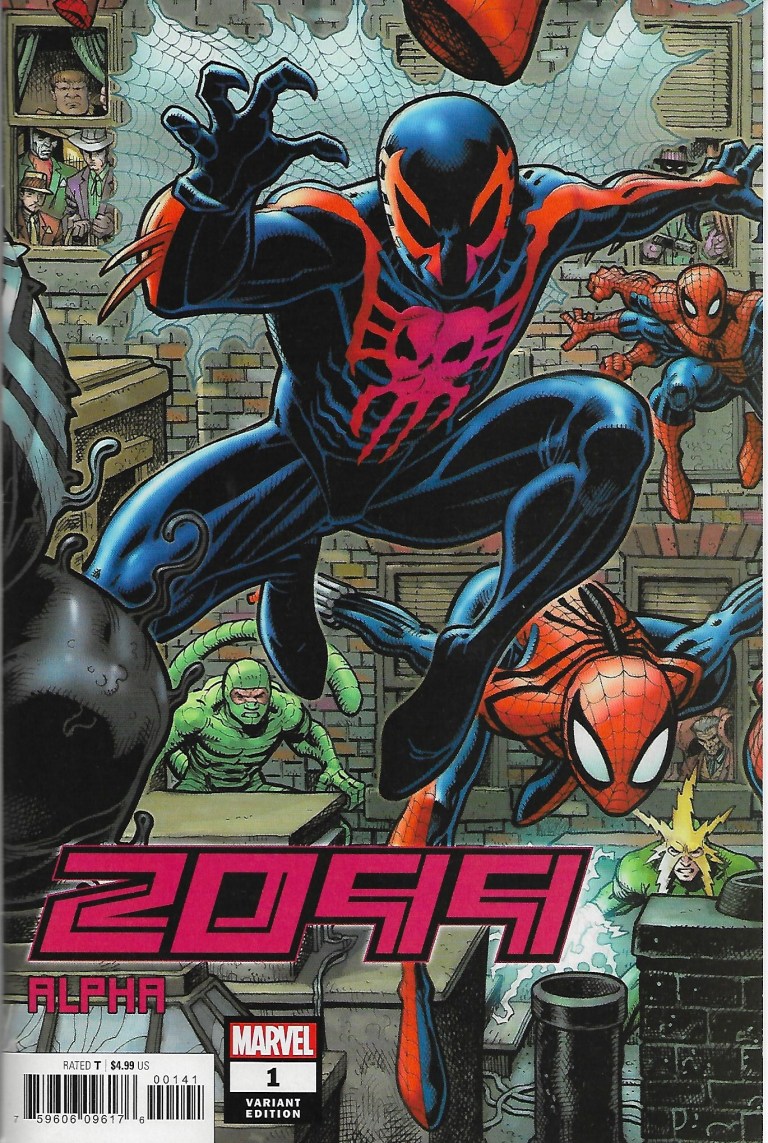
Hey comic book fans! It is finally official! The 2099 universe of Marvel Comics has been revived with the release of 2099 Alpha #1 which I bought at the local comic book store here in Alabang, Muntinlupa, Philippines. The comic book that was available had a Spider-Man 2099 variant cover and it carried a hefty $4.99 price!
So you must be wondering…is the comic book any good? Does it capture the look and feel of the 2099 universe that first appeared in comic books back in the 1990s? Any significant changes in terms of storytelling and visuals?
Here is my review of 2099 Alpha #1.
The variant cover showing Spider-Man 2099 with Spidey and related characters from the past.
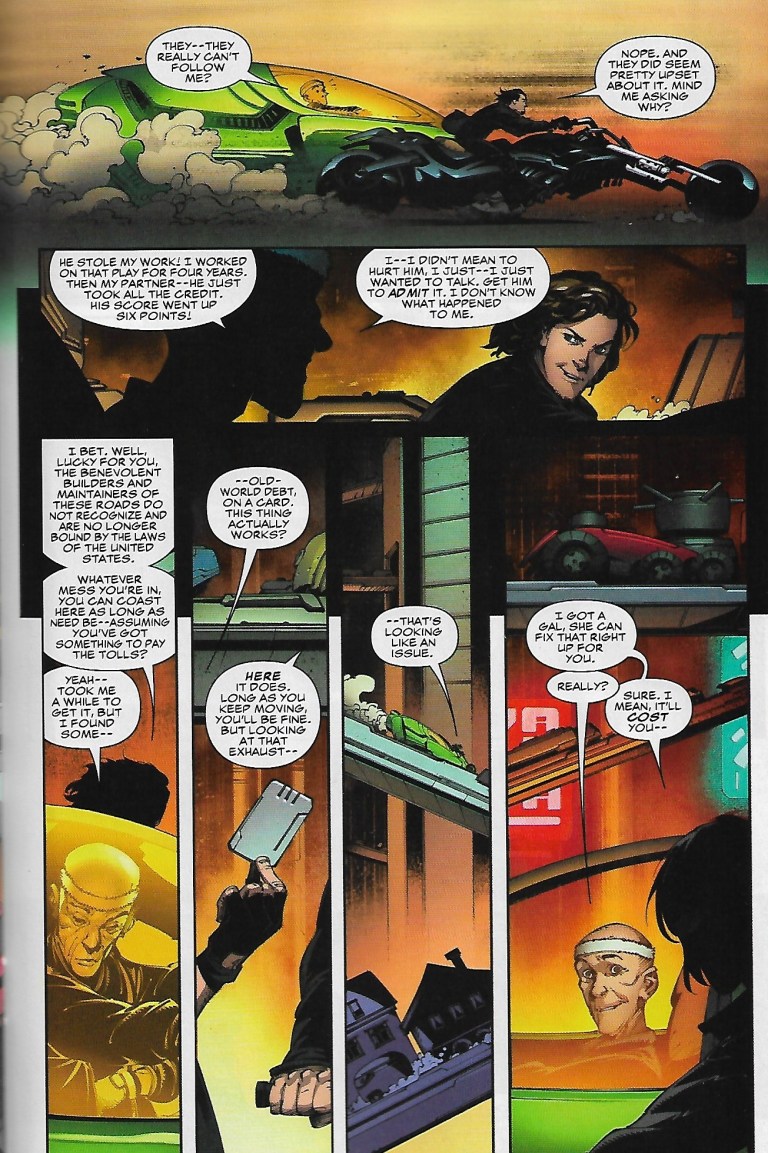
Written by Nick Spencer with art by Viktor Bogdanovic (colors provided by Marte Garcia), the comic begins in The Ravage (note: this is NOT the failed 2099 hero of Stan Lee and Paul Ryan) where a little boy finds Thor’s hammer but abandons it as he saw some monsters coming. The story then shifts to Brooklyn where Jake Gallows (Punisher 2099) gets into a violent encounter with a man before finally meeting the backup he called for. Then they see a sign that their god, Thor, is now in a merciful mood.
In Nueva York, Miguel O’Hara (Spider-Man 2099) talks with Tyler Stone inside an Alchemax tower. Tyler examines what Miguel brought to them and he mentions an incoming threat. Elsewhere, Conan appears struggling in battle with some people. From a distance, Doom 2099 watches and he has the Watcher captive.
Quality
To put it short, 2099 Alpha #1 is really a set-up type of comic book designed to immerse readers into the 2099 universe which now looks darker, grittier and more twisted than the way it was first presented back in the 1990s. Because the spotlight shifts from one place to the next, showing multiple characters, there really is not much meat in the storytelling. Really, thirty pages of art and story were made but ultimately ended up being not so engaging.
The art of Viktor Bogdanovic shows the 2099 universe to be a depressing setting and his art on classic characters like Spider-Man 2099, Punisher 2099 and Doom 2099 make them look unrecognizable. I remember Jake Gallows being huge and buff but in this comic book, he looks like he lost a lot of muscle and ended up looking ordinary.
Conclusion
Overall, 2099 Alpha #1 is an expensive disappointment and it is easily the weakest new comic book I bought all year long. There is a lot of suspense, expository details and even some horrific imagery, but ultimately there is no real fun to experience here. At $4.99, this is too expensive and it is a waste as it failed to engage and entertain me. Let me add that I lowered my expectation for this revival of the 2099 universe since the teaser announcement was made months ago. Back then, I anticipated that the new guys handling the 2099 universe of comics will take it to a new direction (move far away from what made the 2099 universe in the 1990s memorable and distinct) and this overpriced comic book is an early confirmation of it.
Recognize any of these characters?
Of course, there are still several other 2099 comics from Marvel that will be launched next month, including Spider-Man 2099 #1, Venom 2099 #1, Ghost Rider 2099 #1 and more. We will find out soon enough if those comic books will share the same dark and gritty style of 2099 Alpha #1 or not.
Ultimately, 2099 Alpha #1 is not recommended. As long as it is sold at cover price, avoid it.
+++++
If you are nostalgic of the 1990s 2099 universe, check out my reviews of Spider-Man 2099 #1 and #25, Ravage 2099 #1 and X-Men 2099 #1.
Thank you for reading. If you find this article engaging, please click the like button below and also please consider sharing this article to others. Also my fantasy book The World of Havenoris still available in paperback and e-book format. If you are looking for a copywriter to create content for your special project or business, check out my services and my portfolio. Feel free to contact me as well. Also please feel free to visit my Facebook page Author Carlo Carrasco and follow me at HavenorFantasy@twitter.com
Let me make it clear to all of you readers. The movie Joker is NOT a superhero movie at all even though it is a cinematic adaptation focused on one of DC Comics’ biggest super villains. It is also not a movie to watch for fun and enjoyment, but it is still engaging in a very different way.
The truth is, Joker is a large art film made to shock viewers with darkness, deep grit and some graphic violence. The good news here is that the movie is very engaging and easily reminds me of two certain movies that Robert De Niro and director Martin Scorsese worked together on. It’s a victory for Warner Bros. and DC Comics.
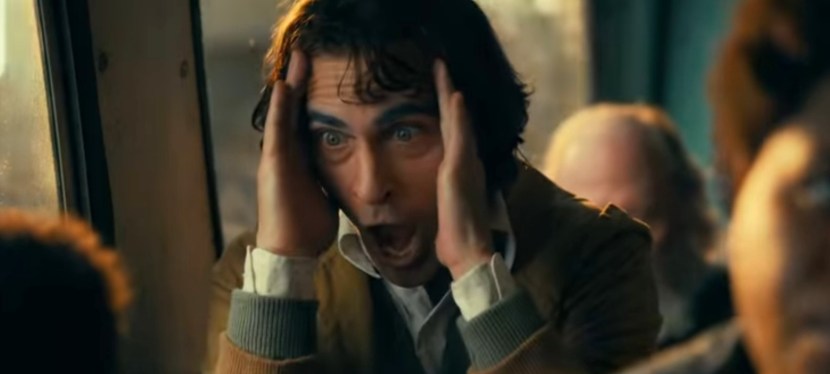
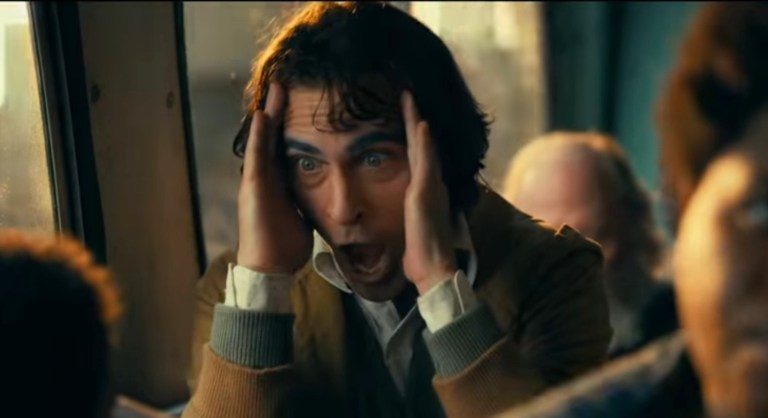
Joaquin Phoenix as the new cinematic Joker will be remembered for a long time.
Joker follows the exploits and Arthur Fleck (Joaquin Phoenix), a struggling man who is hardly surviving working as an entertainer (a clown, specifically) supporting his mother and dealing with the hard life of Gotham City which was stylistically made to look like 1970s New York City. Arthur, who is living with a condition of uncontrolled laughter, looks up to TV show host Franklin Murray (played by Robert De Niro) as an inspiring figure to try out comedy and hopefully make it big to free himself and his mother from poverty.
While performing as a clown surrounded by children in a hospital, Arthur accidentally drops a gun he just received from a co-worker. Because of this, he gets fired and learns that the man who gave him the gun lied to their boss. While riding the subway still looking like a clown, he gets beaten up by three business executives who were drunk. In response, Arthur kills them with the gun and gets away. This incident starts a chain of events that causes friction between the upper class and the lower class, and then protesters wearing clown masks multiply.
On face value, Joker is clearly inspired by character-driven films of the 1970s. While it is not necessarily based on any particular comic book, it carried some slight elements from Batman: The Killing Joke. What is more obvious is that it took inspiration from De Niro-Scorsese films Taxi Driver and The King of Comedy.
As a psychological thriller, Joker is a great portrayal of how low a desperate man could go only to strive and survive. Arthur Fleck is greatly played by Joaquin Phoenix who carefully blends drama, anger, violence and even humor altogether. He really made the cinematic Joker his own and along the way, his Joker laught is more effective than that of Heath Ledger and the Joker physical appearance is almost as memorable as that of Jack Nicholson’s. The movie is indeed very violent but it is not overly violent. To be specific, there are a lot more deaths, acts of violence and shooting in Brian De Palma’s Scarface than this movie.
Joker also has a lively portrayal of the conflict between social classes. The scenes of the clown-masked protesters filling the trains and the streets still resonate with the socio-political rallies that happened in modern society. There is also the aspect of poor and desperate people depending on government for survival and they are easily vulnerable to getting cut off whenever resources run out.
Desperation is also a solid theme in the narrative. To see Arthur Fleck look up to Franklin Murray and imagine sharing the stage with him on TV reminds me a lot about some real-life people (who don’t have too much money) I encountered in Cebu City who can’t help but stop studying (even the older ones quit their legitimate jobs) and get into local entertainment hoping that fame and fortune will lift them up. Of course, when things get worse, desperate people would either get back to what they can live with or, worse, turn to a life of crime just to survive. With regards to Arthur’s attempt to become a comedian on screen, that easily reminds me of similar people in real life who thought they are very talented to be the next great superstars but ended up failing.
Conclusion
With its very solid direction by Todd Philips, great dramatic performances, nostalgic presentation and in-depth characterization, Joker is a must-watch movie mainly for moviegoers who want to be engaged with psychological thrills and bouts. As a DC Comics movie that is NOT connected with Warner Bros.’ current franchise of superhero movies (that started with Man of Steel in 2013), Joker works as an adulterated, standalone movie. To compare it with comic books published DC, I should say Joker is very much like an Elseworlds story. For the new comers reading this, Elseworlds was a franchise of comic books published by DC Comics that had stories using established characters but were told outside of DC universe canon.
Joker is highly recommended. Just don’t expect to see the usual superhero movie elements in this very solid DC Comics movie.
Thank you for reading. If you find this article engaging, please click the like button below and also please consider sharing this article to others. Also my fantasy book The World of Havenoris still available in paperback and e-book format. If you are looking for a copywriter to create content for your special project or business, check out my services and my portfolio. Feel free to contact me as well. Also please feel free to visit my Facebook page Author Carlo Carrasco and follow me at HavenorFantasy@twitter.com
Way back in 1984, a low-budget movie titled The Terminator became a hit with moviegoers which greatly helped the careers of Arnold Schwarzenegger, Linda Hamilton and writer-director James Cameron. Terminator 2: Judgment Day became a massive hit worldwide in 1991 establishing the Terminator franchise as an important one leading to more movies (released in 2003, 2009 and 2015), video games and even a TV series. Oh yes, the upcoming film Terminator: Dark Fate will be released very soon and it now involves James Cameron.
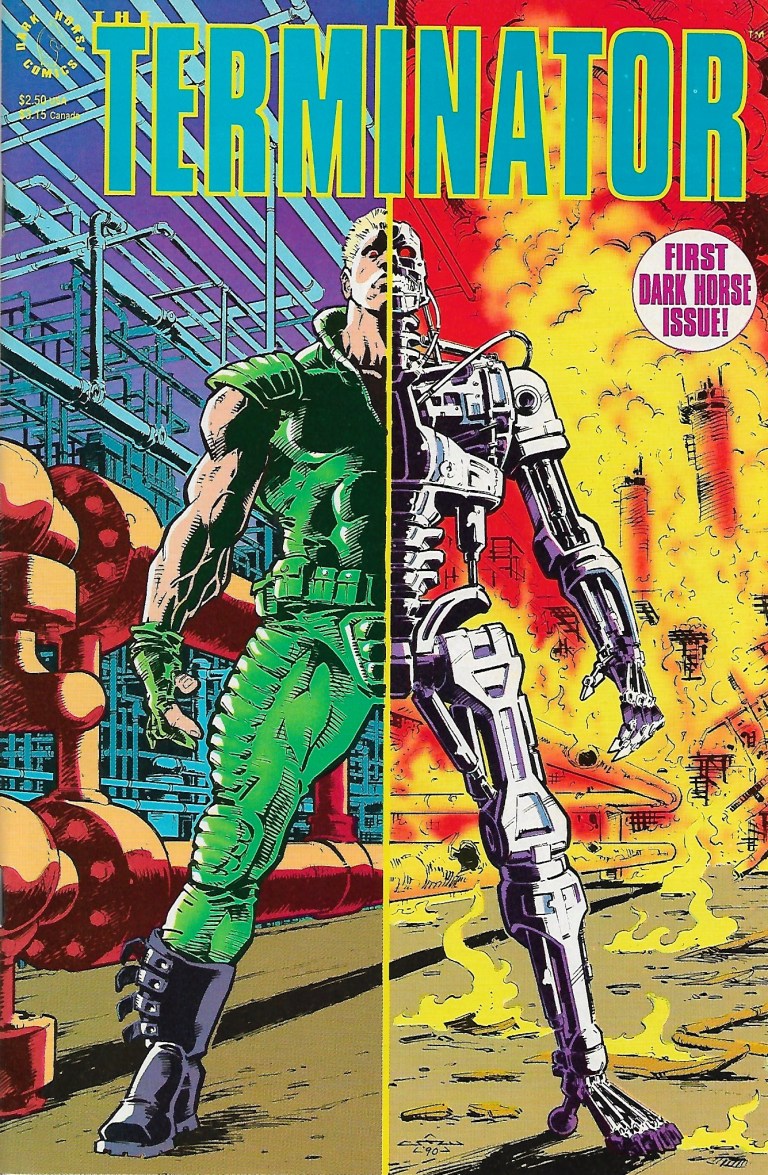
Way back in 1990, a follow-up to the 1984 classic was released that did NOT involve Schwarzenegger, Cameron and Hamilton at all. The follow-up was a 4-issue mini-series titled The Terminator and was published by Dark Horse Comics which back then was licensed to do comic books of the Terminator franchise.
This is my review of The Terminator #1, written by John Arcudi and drawn by Chris Warner with ink work by Paul Guinan.
Early story
The comic book opens in the year 2029. In the ruins of Los Angeles, a band armed humans struggle against the machines of Skynet during the night. They infiltrate a facility to find one of Skynet’s time displacement chambers which they learned previously from their leader John Connor. Thanks to Connor’s intervention, Skynet’s attempt to change history failed but the big catch is that only a prototype of the time displacement chamber was discovered. The final model of the chamber remains.
As the armed guys make their way through, a Terminator watches them secretly….
Quality
When it comes to the writing, I can clearly see that John Arcudi (best known for The Mask) exerted effort to make this comic book relevant to the 1984 movie using key details such as the humans operating on the field only at night time (because Skynet will easily detect them during the day). Arcudi, however, expanded a bit on the franchise’s cinematic elements by emphasizing the use specific machines (steel-and-chrome wombs or tissue-generating chambers) to cover Terminator units with flesh and blood, and most notably, the use electronic communication between Terminator units which resemble telepathy among humans.
Cyberdyne, the fictional corporation heavily emphasized in Terminator 2, made an appearance in this comic book. With regards to Skynet, Arcudi emphasized that the living network was a lot more resourceful than what the movies suggested. The comic book has a nice build-up and along the way, the use of expository dialogue was pretty efficient and they are quite helpful for readers to grasp the story and key details.
With regards to the art work, Warner’s art style has that somewhat cartoony aesthetic on not just the humans but even on the machines. There were several Terminator units displayed without the flesh and from the way they were drawn, I could not even tell if those units were the T-800 type. Warner’s drawings on the physical environments carry a good amount of detail.
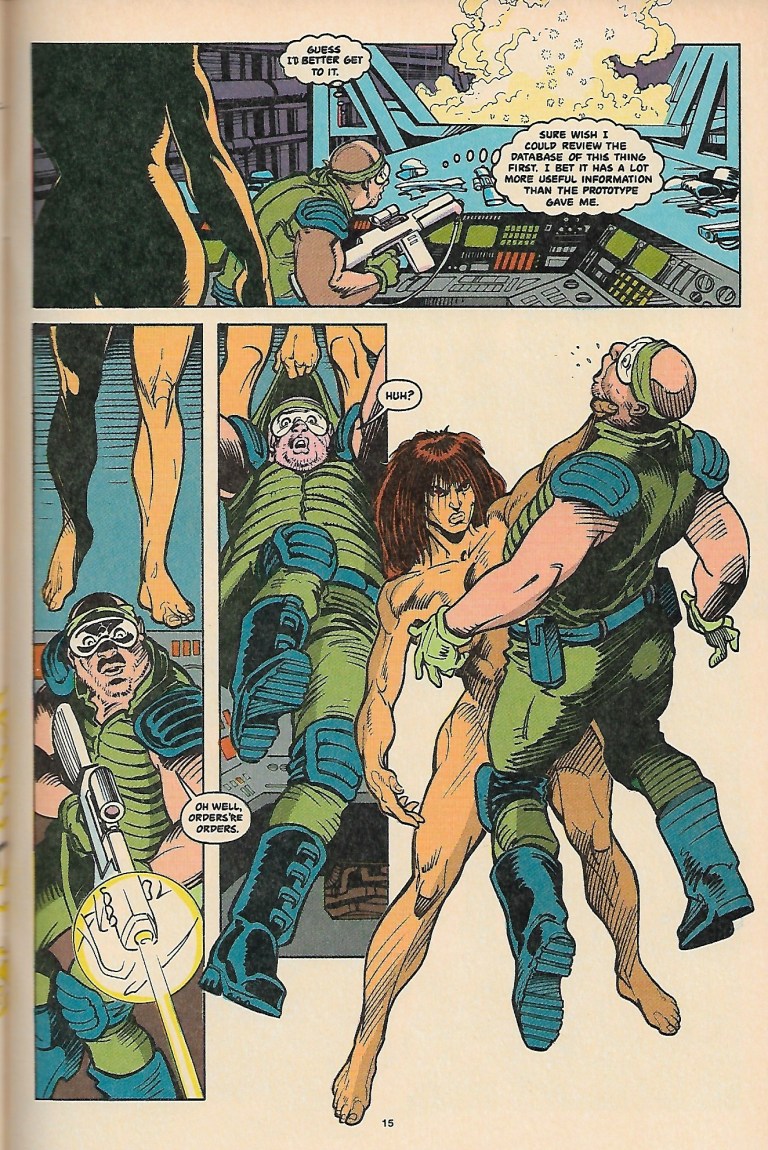
Terminator stealthy approach captured nicely.
While Warner’s drawing has a cartoony aesthetic, the illustrated action is pretty violent and has quite an impact in some shots. There are some bloody images and implied nude shots as well.
Conclusion
What can I say? I bought The Terminator #1at the Hobby Con this past weekend out of pure curiosity. After reading it thrice, I should say that I found this comic book proving to be better than what I expected. It is a surprisingly good read and the fact that this was published roughly a year BEFORE the release of Terminator 2: Judgment Day, I found this to be a worthy follow-up to the 1984 movie. In fact, it’s so good a follow-up I’d rather read it than waste my time watching Terminator 3: Rise of the Machines, Terminator Salvation and the very awful Terminator: Genisys.
As such, I declare that The Terminator #1 is recommended.
Thank you for reading. If you find this article engaging, please click the like button below and also please consider sharing this article to others. Also my fantasy book The World of Havenoris still available in paperback and e-book format. If you are looking for a copywriter to create content for your special project or business, check out my services and my portfolio. Feel free to contact me as well. Also please feel free to visit my Facebook page Author Carlo Carrascoand follow me at HavenorFantasy@twitter.com
Disclaimer: This is my original work with details sourced from reading the comic book and doing personal research. Anyone who wants to use this article, in part or in whole, needs to secure first my permission and agree to cite me as the source and author. Let it be known that any unauthorized use of this article will constrain the author to pursue the remedies under R.A. No. 8293, the Revised Penal Code, and/or all applicable legal actions under the laws of the Philippines.
I love reading a crossover comic book that was made by very talented creators to be a whole lot of fun from start to finish. Back in the early 1980s, rivals Marvel Comics and DC Comics collaborated temporarily with inter-company crossover comic books that were made to be entertaining to fans of their respective properties.
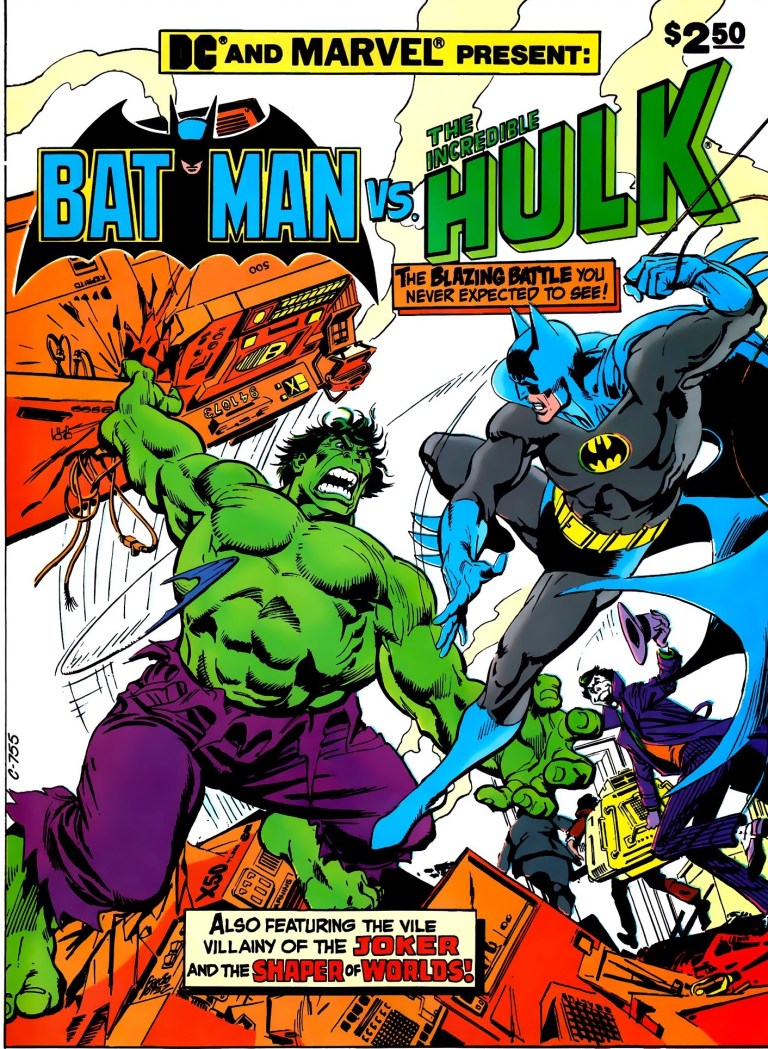
What I’m going to review here is the 3rd superhero crossover comic book between Marvel and DC titled Batman vs. The Incredible Hulk.
The cover.
Background
Before I start, let me clarify that this particular comic book was specifically published as issue number 27 of the DC Special Series which was a series of one-shot comic books. By comparison, the 1981 crossover comic book Superman and Spider-Man (which I reviewed previously) was published under the Marvel Treasury Edition line of Marvel Comics as issue number 28.
Going back to Batman vs. The Incredible Hulk, the comic book was the final issue of the DC Special Series line and it carried a cover price of $2.50 which was quite high for its time.
The people at DC Comics made sure that the crossover was handled by the best talents they had back then. The late Len Wein (best know for creating Wolverine) was assigned to write the script (and ensure that elements from both the Hulk and Batman would mix nicely) while José Luis García-López was hired to illustrate. Dick Giordano was the embellisher and editor while Allen Milgrom and then Marvel editor-in-chief Jim Shooter were the consulting editors. In return for their assistance, Marv Wolfman and Mike DeCarlo were acknowledged with thanks.
Now we can begin with this retro review of Batman vs. The Incredible Hulk.
The early story
The story begins when a few persons in Gotham City witness their dreams turning real beyond logic. A man dreamed he was in the arctic hunting and wakes up to discover his room was filled with snow. In a cinema where a horror movie was shown, a couple kissing each other discover, to their shock, that monsters of different sizes surrounded them out of thin air.
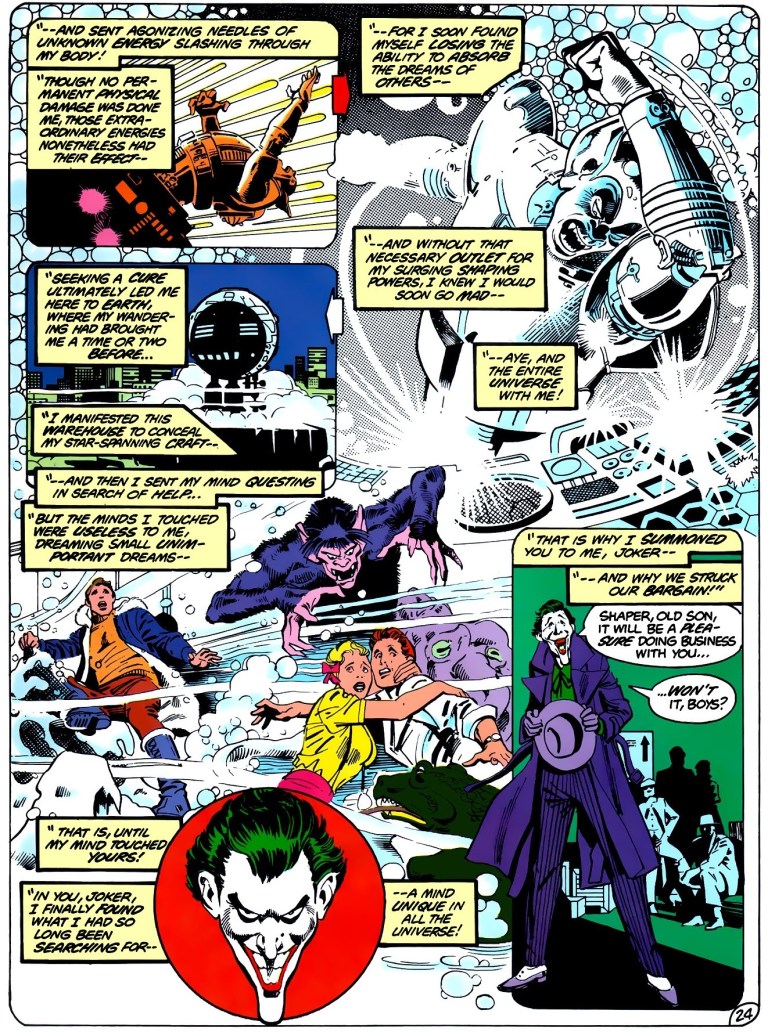
At the waterfront of the city, the Joker (accompanied by his gang members) talks to an unseen being (Shaper of Worlds). He gives his assurance to the being that he and his gang will acquire a specific item (needed by the being). For the Joker, what was discussed was a simple business arrangement.
A short time later inside a high-tech facility of Wayne Research, Bruce Banner (the Hulk) secretly works under the false identity as David Banks. He works along with the scientists but not on the scientific projects. Rather, he works odd tasks such as lifting hardware and putting them into places that need them. Of course, Banner did not get hired for a salary but for something much essential to him and his condition with Gamma Rays.
“I had to get a job here somehow so I could get close to the experimental Gamma-gun they’re working on,” he thought to himself.
Suddenly the facility gets filled with laughing gas incapacitating all the people inside. Banner fortunately manages to wear a radiation suit for protection. Moments later, the Joker and his gang enter searching for the Gamma-gun. From this point on, Banner decides to act.
Quality
When it comes to the selection of characters from Marvel and DC, having the mismatch of Batman and the Hulk was a very splendid idea. Not only was having the large green brute and the world’s greatest detective together as temporary rivals a fascinating concept, having them work together as a duo turned out to be a really great move. When it comes to the selected villains of the Joker and the Shaper of Worlds as the anti-hero figures of the story, the two looked like an odd pair but if you focus on the details of the story, you will realize that it made a lot of sense having them two together. The Shaper needs something which requires him to depend on the Joker who in turn brings his gang with him to cause chaos to acquire what the alien needs
All of the above details would not have worked had it not been for the excellent writing by Len Wein. Clearly Wein knew a whole lot about the defining elements of the Hulk and Batman (and the same with the Joker and Shaper), and he carefully blended those elements together to make a story that is thrilling, intriguing, engaging and at the same time still made sense. More on crossing over, there are other characters connected to Batman and the Hulk that made appearances and a few of them fit in nicely into the story.
As this was released in 1981, it was typical of the time for writers to use thought balloons to help readers understand what the characters were thinking. The use of thought balloons in this comic book truly defined Batman who not only had to fight the bad guys but also manage his way with the Hulk and do a lot of detective work.
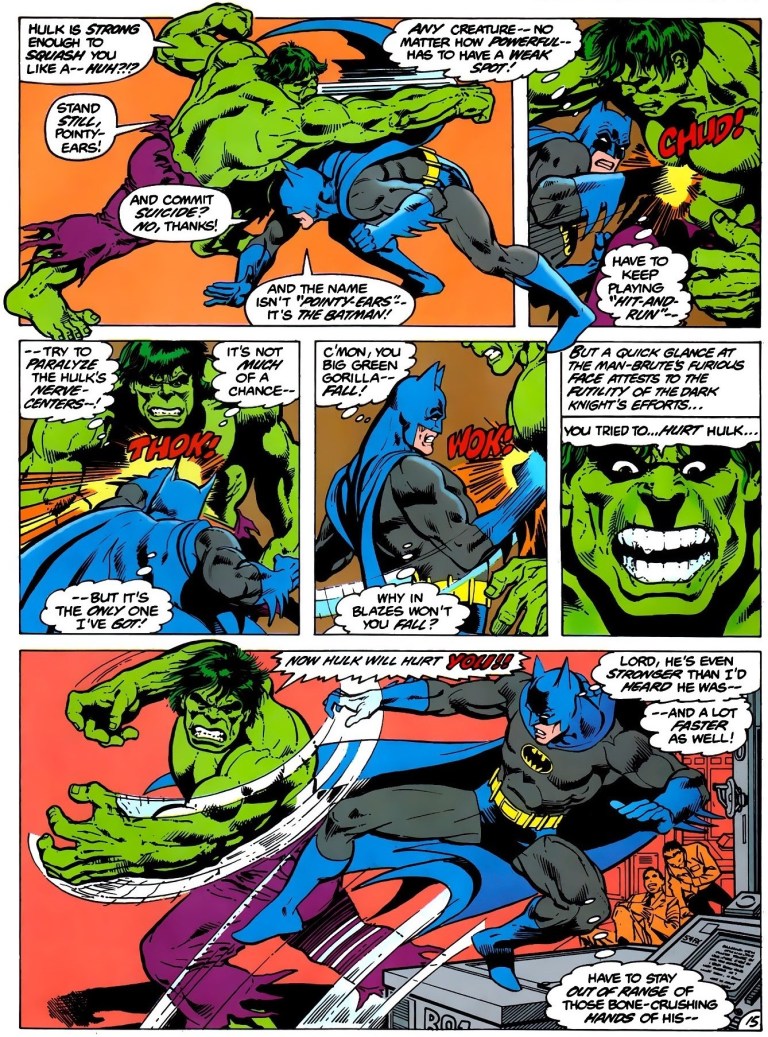
Going back to the Hulk and Batman, this comic book has a lot of fun stuff. More than once did the two superheroes engage in action-packed encounters and their exchange of words was very nicely done. Their match-up (or mismatch) really works.
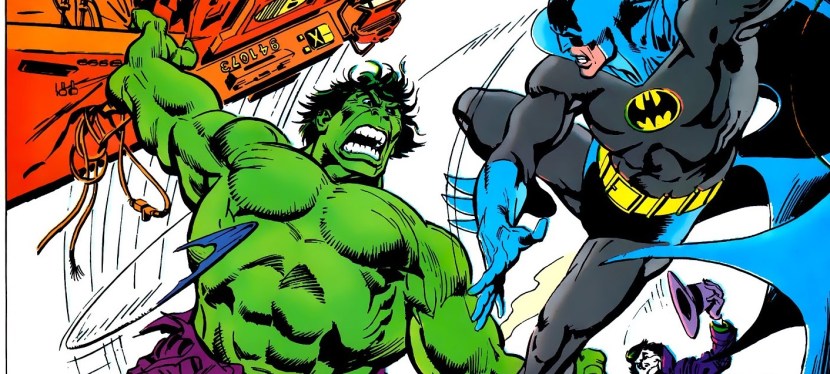
A perfectly crafted action scene between the Hulk and Batman, complete with accurate depictions of each character!
When it comes to the common complaint by some readers out there that the comic book was more of a Batman story and made the Hulk less prominent, I should say that the slight imbalance is not a problem at all. In fact, for me it makes perfect sense that Batman has more spotlight than the Hulk. Why? Because Batman is a detective and he performed a lot of researching, information gathering and other moves to solve problems. His detective work in the story made perfect sense for the narrative. As for the Hulk, his character really has very limited options other than causing destruction and disturbing the public. Since early on, the Hulk was best known for attracting the attention of the American military (led by General Ross) and huge destruction defined the encounters. For this crossover, the creators did not show the Hulk engaging with the military (save for the phonies) but rather he struggled to figure things out whenever he encountered Batman or the Joker. There is no way the Hulk could do detective work like Batman and having him fight the military would have weakened this comic book’s presentation. Clearly, having the story slightly slanted towards Batman is still the right move.
Very highly imaginative and dynamic artwork by José Luis García-López.
The artwork done by José Luis García-López is excellent! He really captured the looks and details of each and every character Marvel and DC that appeared in this comic book. Back in the early 1980s, I got to read several comic books that showed Batman, the Hulk, the Joker and others and the way they appeared in this comic book was indeed accurate of the time. José Luis García-López also knew how to balance spectacle with character development and expository dialogue in terms of visual pacing and framing shots. Also his work becomes even more imaginative during the final conflict. Undoubtedly this is still a great looking comic book!
Conclusion
Overall, Batman vs. The Incredible Hulk is a great comic book and easily it is one of the greatest intercompany superhero crossover comic books ever published! From start to finish, this comic book proved to be highly engaging and there never was a single boring moment. The creators led by Len Wein (he is sorely missed) made the best possible story anyone can make involving Batman and the Hulk.
You can read a hard copy of this comic book by getting Volume 1 of Crossover Classics or, if you can afford to, hunt for a copy of this in its DC Special Series form which now sells for $280 for a very fine copy to as much as $400 for a near mint copy as of this writing according to MileHighComics.com
In ending this, I declare that Batman vs. The Incredible Hulk is highly recommended!
Thank you for reading. If you find this article engaging, please click the like button below and also please consider sharing this article to others. Also my fantasy book The World of Havenoris still available in paperback and e-book format. If you are looking for a copywriter to create content for your special project or business, check out my services and my portfolio. Feel free to contact me as well. Also please feel free to visit my Facebook page Author Carlo Carrasco and follow me at HavenorFantasy@twitter.com
Since the successful release of John Carpenter’s Halloween in 1978, the slasher horror sub-genre grew dramatically and made its mark in Hollywood. The 1980s saw the release of multiple low-budget films that shared lots of common elements with Halloween. Among them was a cheaply made flick (distributed by Paramount Pictures) that made almost $60 million worldwide.
The film was Friday The 13th which was released on May 1980. Unsurprisingly the Sean Cunningham-directed movie was poorly received by movie critics but moviegoers still flocked to the theaters to watch the cinematic horror unfold not in a suburb but in a summer camp.
This is my review of the movie.
Story
The film begins way back in the past. The late 1950s to be precise. During one night at Camp Crystal Lake, a male and female councilor attempt to make love only to find out that someone had been watching them. Both councilors got killed setting the stage for Camp Crystal Lake’s dark legacy.
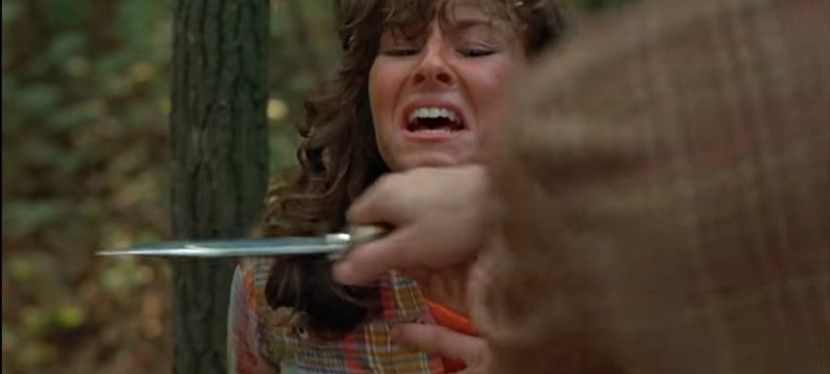
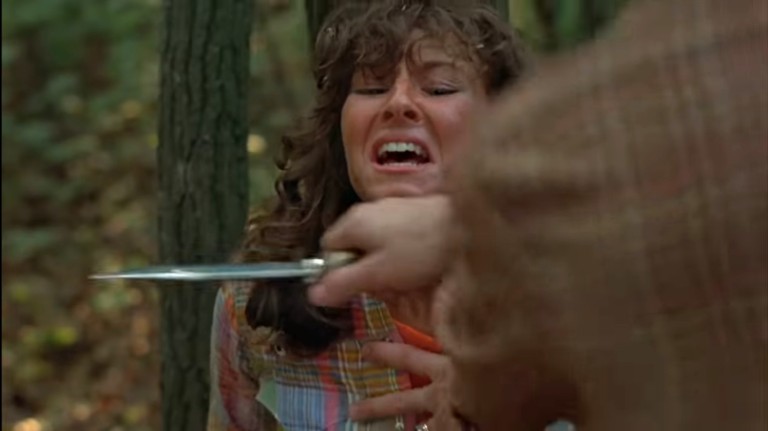
Decades later, an effort was launched to reopen Camp Crystal Lake. A cute lady named Annie (played by Robbi Morgan) travels alone to the camp and along the way, people in the small town warn her about the camp’s history of murder. After hitching a 2nd ride, Annie realizes that the driver (off-camera) did not take the path to the camp. Realizing that the driver has no intention of letting her go, Annie desperately jumps off the speeding vehicle injuring herself in the process. To her horror, the driver went back, got down the vehicle and chased her into the woods. After getting caught, the driver slashes Annie’s neck.
At Camp Crystal Lake, teenagers (including a very young Kevin Bacon) arrived to take part in the reopening. What they don’t realize is that someone vicious is watching them from a distance and stalking them.
Quality
In my honest opinion, Friday The 13th is not worthy of being called a classic even though its commercial success added greatly to the slasher horror sub-genre and led to the production of multiple sequels eventually establishing Jason Voorhees (a victim in this movie) as a horror icon. By today’s standards, this movie is generic at best.
The script written by Victor Miller is serviceable. The characters are, unsurprisingly, mostly written to be killed off. What makes the movie bad is that the story is dragging for the most part and what saved it from turning into a disaster was the use of suspense, gore and shock when Alice (played by Adrienne King) got isolated on-screen.
The characters during the snake scene. At left is Adrienne King as Alice.
As mentioned above, Jason Voorhees is the NOT the cinematic killer here at all and those who discovered the character in the later films (and wanted to go back to the beginning of this film franchise) will be disappointed to realize how irrelevant he was in this old movie.
For the sake of those discovering this movie, I won’t say who the killer is but I can say that screenwriter Victor Miller’s concept of NOT using a masked killer is creatively unique.
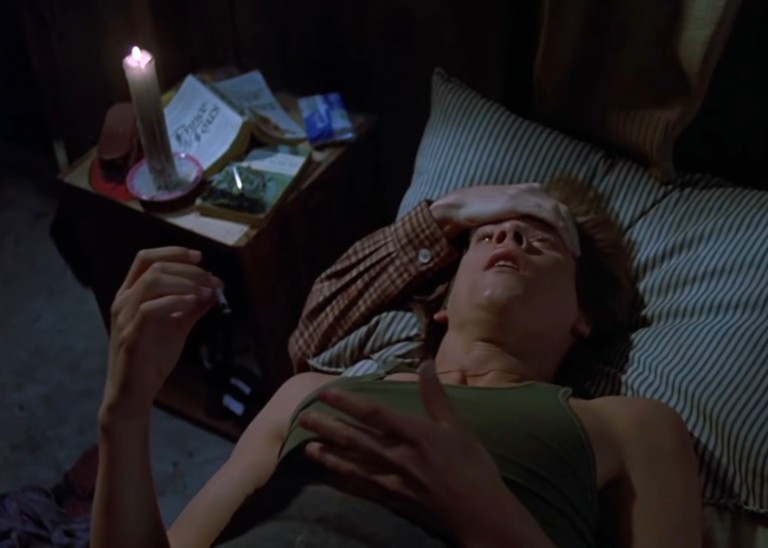
Kevin Bacon in trouble!
In terms of performance, the clear standouts are Adrienne King as Alice and another actress (note: I won’t name her here due to spoiler potential) as the killer. Alice was decently built-up from the early part of the film while the killer, who arrived late in the film, was well presented to be evil, even psychotic (clearly inspired by a certain 1960 slasher movie).
With regards to stunts and kills, this movie is pretty tame when compared to its sequels. This should not be a surprise at all because nobody anticipated the movie would be a box office success to kick start a franchise. The film crew used a really small budget and they did what they could with it although they excelled with some of the gore effects (read: Tom Savini). The physical struggle between Alice and the killer was pretty raw which worked well in the context of the film since the protagonist was no fighter. The killer’s man-like aesthetic in terms of physical appearance added nicely to the suspense and horror as Alice struggled.
When it comes to cinematic concepts, Friday The 13th was written to emphasize how vulnerable people are to getting murdered in an isolated location far away from the reach of the local police and even farther away from the security of the American suburb. At Camp Crystal Lake, the teenagers had a whole lot of freedom to exploit the facilities, to engage in casual sex, make fools of themselves and the like. This is clearly the one factor that defined it and the film franchise went on to establish its legacy with the “horror at the summer camp” concept.
Conclusion
Robbi Morgan as Annie cornered by the killer.
This is tricky. I would recommend Friday The 13th to moviegoers who are willing to endure slow-paced, mystery and suspense-filled horror flicks, and also to die-hard fans of the film franchise. However, if you discovered Jason Voorhees in the sequels and thought about watching this film (the very beginning of the franchise) to see him do what he is known for (read: killing), you will be disappointed.
As a horror movie, Friday The 13th is the product of its era and at the time of its release, the slasher horror sub-genre was just taking off. I would not recommend this movie if you are searching for more Jason but rest assured, you will get to know the complete backdrop regarding what happened to Jason, why the killings happened in the years that followed and so on. This movie also showed, in my opinion, one of the most definitive depictions of Camp Crystal Lake on the big screen.
Overall, Friday The 13th is serviceable. Not a classic, just serviceable. Nothing special at all. It’s a wonder why moviegoers back in 1980-1981 spent almost $60 million to watch this movie.
Thank you for reading. If you find this article engaging, please click the like button below and also please consider sharing this article to others. Also my fantasy book The World of Havenoris still available in paperback and e-book format. If you are looking for a copywriter to create content for your special project or business, check out my services and my portfolio. Feel free to contact me as well. Also please feel free to visit my Facebook page Author Carlo Carrasco and follow me at HavenorFantasy@twitter.com
Disclaimer: This is my original work with details sourced from reading the comic book and doing personal research. Anyone who wants to use this article, in part or in whole, needs to secure first my permission and agree to cite me as the source and author. Let it be known that any unauthorized use of this article will constrain the author to pursue the remedies under R.A. No. 8293, the Revised Penal Code, and/or all applicable legal actions under the laws of the Philippines.
I miss the old times when big rivals Marvel and DC Comics would set aside competition temporarily to team up and rely on their respective comic creators to make superhero crossover comic books that the fans can enjoy.
Back in the 1970s, key developments related to the comic book adaptation of The Wizard of Oz brought the two rivals together as partners. In 1976, Marvel and DC’s first superhero crossover Superman vs. The Amazing Spider-Man got published and to this day many comic book collectors and geeks I encountered still enjoy it. A few of them even called it a classic.
The collaboration between Marvel and DC continued in 1981 with Superman and Spider-Man which was published as issue number 28 of the Marvel Treasury Edition series.
The cover.
This is my look back at Superman and Spider-Man.
The comic book
Scripted by then Marvel Comic editor-in-chief Jim Shooter (with Marv Wolfman mentioned for plot suggestions) with art drawn by John Buscema and inkwork done by Terry Austin, Al Milgrom, Steva Leialoha, Walt Simonson, Bob Layton, Joe Rubinstein and Bob Wiacek, the comic book begins when Spider-Man swings into a construction site where he encounters several armed men and stops them singlehandedly.
Even though he stopped the bad guys, Spider-Man’s spider sense bothers him making him speculate that, because there’s no clear danger around him, the construction site seemed to be a threat.
After Spider-Man swings away from the police who just arrived, classic Marvel supervillain Doctor Doom watches via surveillance video and he was bother by the way things turned out.
“I did not like the way Spider-Man paused and look around after subduing the thieves – – as if he sensed something unusual about the excavation! Those accursed spider instincts of his,” Doom said before proceeding with his master plan.
A day later, the Hulk arrives in Metropolis causing lots of damage. Separately Superman and Spider-Man arrive to contain the green guy. However, things are not what they seem. This is where the story description ends.
Quality
What this comic book lacked compared to the 1976 Superman-Spider-Man crossover is visual impact. Clearly John Buscema had to follow closely the script which called for multiple panels per page and that left him little room to draw scenes dynamically. That’s not to see the art is weak. In fact, Buscema’s art is pretty good and he has deep knowledge about how the characters (including those many supporting characters and other minor characters from both Marvel and DC Comics) really looked from the size of Hulk’s body, the details on Wonder Woman’s costume, the distinctive look of J. Jonah Jameson, Perry White, etc. In short, I recognized the characters very easily.
This remains fun to read.Peter Parker in Metropolis along with the Superman supporting characters. This is one great element that made this comic book worth reading.
While the high number of panels per page limited him, Buscema managed to come up with some action shots that packed some impact.
When it comes to writing and storytelling, this comic book exceeds that of the 1976 Superman-Spider-Man crossover big time! To start with, the plot is much more elaborate, more detailed and yet consistently remained easy to follow.
While the 1976 crossover had the most popular villains of Superman and Spider-Man as the representation of evil, this one instead had Dr. Doom and Parasite. The great news is that these two super villains complement each other nicely and that itself adds good depth into the plot. Dr. Doom is a major schemer and Parasite fitted nicely within his master plan for global chaos.
Regarding dialogue, the script had a lot of strength and was also specific in capturing the personalities of the superheroes, the super villains and the supporting cast. I can easily identify J. Jonah Jameson, Perry White, Lois Lane and others through the dialogue.
Not to be outdone is the deeper approach to the crossover aspect of the story. Right from the start, the comic book creators expected us readers to suspend disbelief and start believing that while the story is non-canon, the respective universes of Marvel and DC Comics co-existed. Because there were TV shows of Wonder Woman and the Hulk playing, the two characters were included in the comic book adding depth to the crossover.
Speaking of crossovers, this comic book was not limited to Superman and Spider-Man. The encounter between the Hulk and Superman was a short but sweet spectacle to read. The encounter between Wonder Woman and Spider-Man meanwhile was short yet fun.
Adding more to the fun in this comic book was how Clark Kent interacted with the Spider-Man supporting characters while Peter Parker interacted with the Superman supporting characters. I enjoyed every moment of these scenes.
As far as narrative is concerned, this comic book is slightly slanted towards Superman. One factor behind this was the implementation of how local authorities interact with Superman and Spider-Man. Whenever he solves crime, Superman is highly respected by the public and the police. This is not the case with Spider-Man who is often perceived to be a social menace even though he helps solve crimes. Another factor was that Superman did more detective-type work (including a visit to Latveria) while Spidey hardly contributed anything to the plot’s development.
Nothing can be more frustrating than getting attacked by police officers when you try to help them solve their problems.
Regardless, the two icons got a fair share of the spotlight during the final stages of the story and there was enough spectacle to enjoy.
If there is any complaint I have, it would be the comic book creators’ reluctance on fully connecting itself to the 1976 crossover. In the scene wherein Peter Parker was guided into the film editing room by Jimmy Olsen, he recognized Lois Lane and remembered meeting her in the 1976 crossover (which ended with socializing). And yet when Spider-Man and Superman get together in this comic book, there was a noticeable lack of friendliness and personal cooperation between them even though they bonded nicely in the 1976 story.
Conclusion
Overall, Superman and Spider-Man is indeed a highly engaging, fun-filled superhero crossover comic book. For me, it is a true literary classic and definitely worth searching for out there. I read this crossover many times from start to finish and even though I knew the plot and the dialogue, I still had a lot of fun reading along the way. With the combined talents of Shooter, Buscema and many others, this superhero crossover was indeed one of the very best stories ever told by Marvel and DC Comics.
Given the current corporate climate Marvel and DC Comics are now in, it is very unlikely we will see another creatively fun superhero crossover collaboration between them happening soon. For the newcomers reading this, Marvel is owned by the Walt Disney Company while DC Comics is owned by Warner Bros.
Thank you for reading. If you find this article engaging, please click the like button below and also please consider sharing this article to others. Also my fantasy book The World of Havenoris still available in paperback and e-book format. If you are looking for a copywriter to create content for your special project or business, check out my services and my portfolio. Feel free to contact me as well. Also please feel free to visit my Facebook page Author Carlo Carrasco and follow me at HavenorFantasy@twitter.com
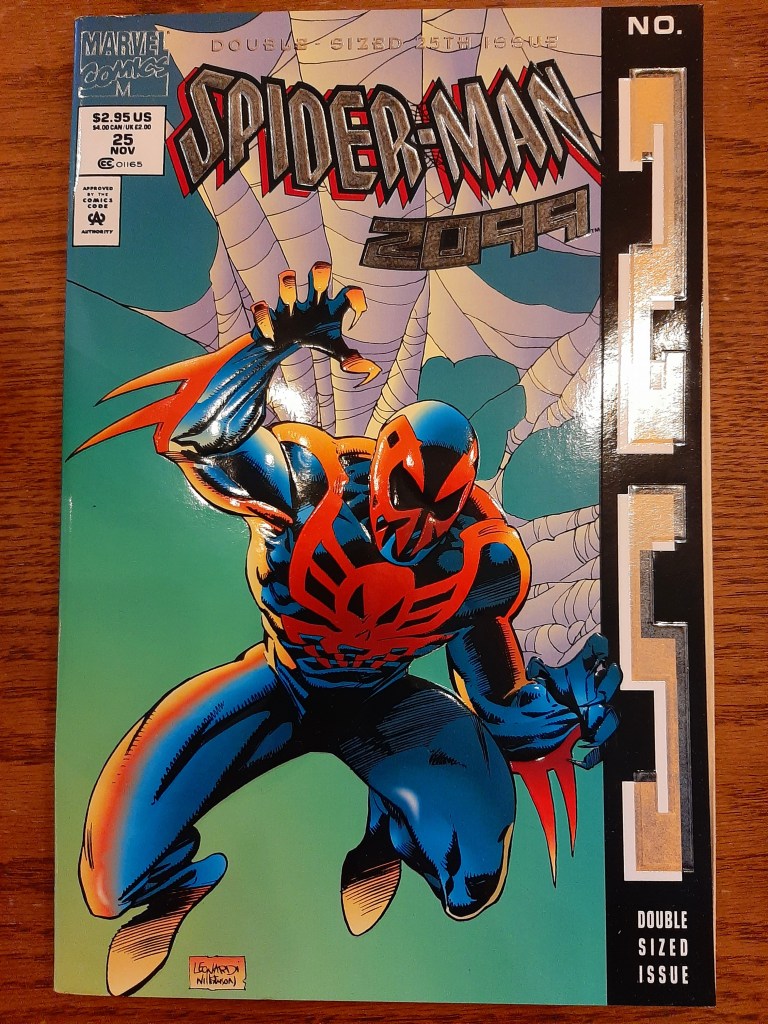
Released in late 1994 by Marvel Comics, Spider-Man 2099 #25 had a double-sized issue with an embossed cover that shined as it was laced with foil. The number 25 on the edge of the cover was stylized to capture people’s attention on the shelves of comic book specialty stores.
The cover of Spider-Man 2099 #25.
Back in the 1990s, Marvel had a “tradition” of releasing comic books with gimmick covers with anniversaries in mind. Notably the 25th, the 50th, the 75th and 100th issue and more got released with covers that came with foil or chromium or hologram or simply a hard embossed material. In other times, the anniversaries of the featured superhero/superheroes were celebrated with gimmick covers on comic books marking the celebration.
With regards to Spider-Man 2099 #25, the 2099 universe of Marvel had reached its 2nd year. By that point of time, the Marvel’s 2099 line of comics was already at full publishing blast with several monthly series (Spider-Man 2099, Ravage 2099, Punisher 2099, Doom 2099, X-Men 2099 and Ghost Rider 2099) plus a quarterly comic book (2099 Unlimited).
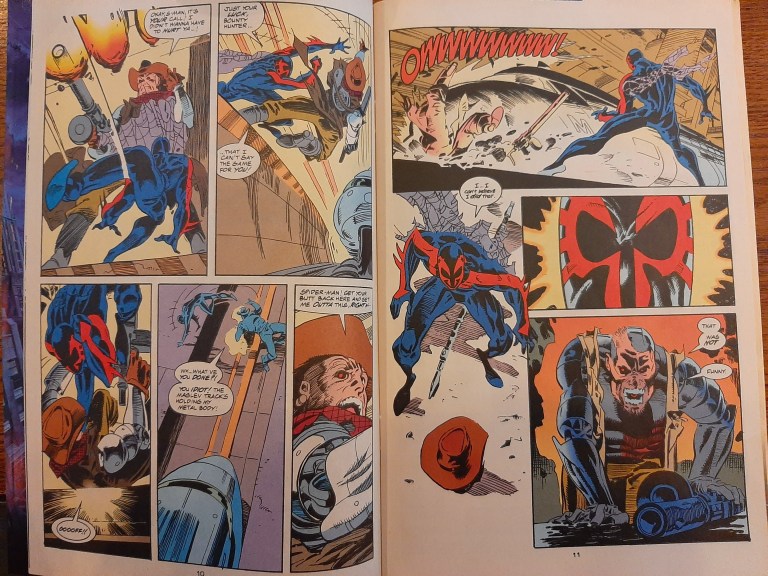
Written by Peter David and drawn by Rick Leonardi (with ink work by Al Williamson), the comic book begins with a short scene about Miguel O’Hara’s (Spider-Man 2099) mother moving on her way to meet someone. The spotlight then shifts into the heat of the rematch between Spider-Man and the cyborg Venture.
Later Miguel’s mother meets a certain tycoon at his mansion…
Spider-Man of 2099 fights with Venture.
When it comes to quantity, this comic book has a Spider-Man story of 22 pages, a Hulk 2099 story with 8 pages (a prequel to Hulk 2099 #1 specifically) and a story called Net Loss with 10 pages. The first time I read this comic book back in 1994, I anticipated more Spider-Man 2099 content but got surprised with the other two being part of it. Marvel decided back then to use Spider-Man #25’s content to expand and emphasize the 2099 universe.
When it comes to quality, I find the Spider-Man 2099 story here a worthy read not simply because Peter David wrote it but because he crafted a story that connects and relates well with what happened in Spider-Man 2099 #1. When I reached the end of the story, I really felt compelled to go back to the very first issue to re-examine what happened.
As this was the 25th issue of the series, Peter David and Rick Leonardi were more proficient as a creative team. The aesthetics of Leonardi’s art (inked by Williamson) is pretty much the same but I noticed that the illustrator added more power on key moments of the action. Ultimately this story is worthy of the 25th issue anniversary treatment.
The Hulk 2099 short story by Gerard Jones and Malcolm Davis meanwhile serves only to build up the mean green monster for its monthly series. Hulk 2099 was never an interesting character to me and this one did not change my view of him.
The final short story Net Loss was rather weird. Even though I read a lot of 2099 comic books, the story by Peter David and Tom Grindberg just did not captivate me.
Overall, I find Spider-Man 2099 #25 a worthy comic book to add to your collection and Spidey’s story alone is worth it.
Spider-Man 2099 #25 is recommended.
Thank you for reading. If you find this article engaging, please click the like button below and also please consider sharing this article to others. Also my fantasy book The World of Havenoris still available in paperback and e-book format. If you are looking for a copywriter to create content for your special project or business, check out my services and my portfolio. Feel free to contact me as well. Also please feel free to visit my Facebook page Author Carlo Carrascoand follow me at HavenorFantasy@twitter.com
As a comic book collector, 1993 was a notable year. That year Marvel organized the 30th anniversary celebration of the Avengers and the X-Men (which I’m a fan of). Image Comics meanwhile released a lot more comics showcasing the works of many creators apart from the publisher’s Seven Founding Fathers. Over at DC Comics, Superman was brought back to life but after they started the Reign of the Superman storyline. Oh yes, there was Valiant which scored hits with Turok #1 and even partnered with some Image Comics creators to produce the Deathmate crossover comic books.
At one corner was Malibu Comics which made a brave entry into the highly competitive superhero genre of comic book publishing in America by launching the Ultraverse, a line of superhero comic books which was the result of brainstorming by several comic book creators (many who previously worked with Marvel and DC Comics).
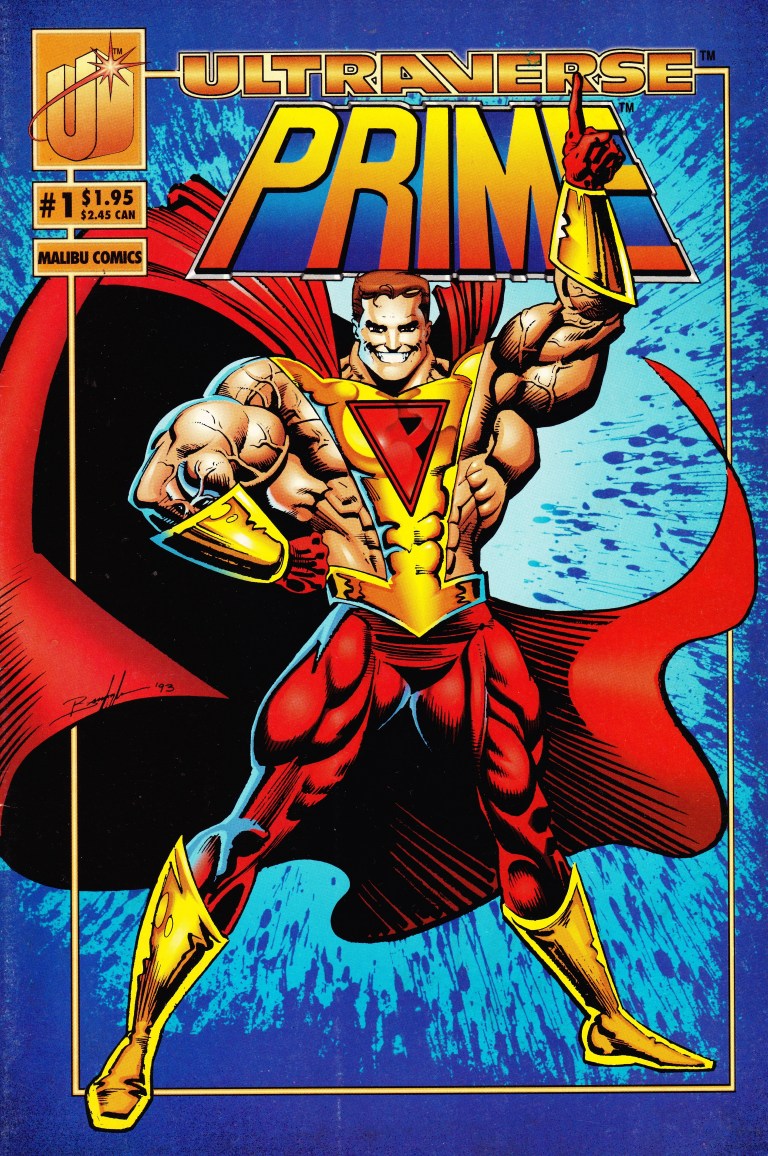
They launched a lot of comics (all those with #1 on their covers) which made it on the walls and shelves of local comic book stores I visited. Among the many Ultraverse launch comic books displayed was Prime #1 which had a great cover drawn by the late Norm Breyfogle.
The cover with nice art.
Co-written by Len Strazewski and Gerard Jones with art by Breyfogle, the comic book introduces readers to Prime, an overly muscular, caped man who tries to do something good but is quite flawed with his approach.
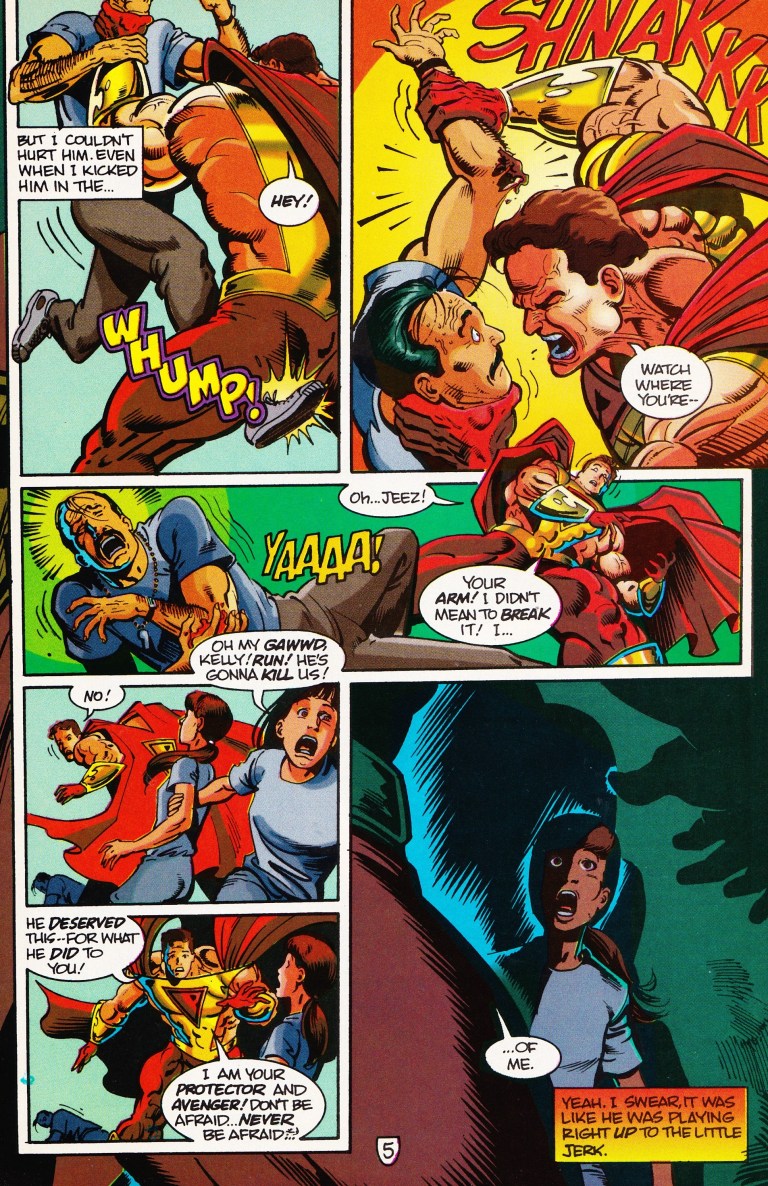
The story begins when Prime confronts a junior high school coach named Meyer accusing him of being a pervert. Meyer reacts surprised since he personally does not know Prime (“Who are you? What are you?”). He claims that he does not know what exactly the big guy knows. At the side were two high school girls witnessing the encounter.
And then Prime said his words, “I saw you, coach Meyer! I saw you on the basketball court in fifth period..touching those girls!”
The coach fought back causing Prime to react. Because the hero was not aware of his strength, he miscalculated with his grip on Meyer breaking his arm unintentionally. Prime’s reaction clearly showed his realizing his mistake.
The incident scared the one of the girls away and carelessly Prime tries to explain himself to the other girl standing by. He even called himself as the girl’s “protector and avenger”, telling her not to be afraid of him.
As it turned out, the incident was a recently past event within the narrative of the comic book which is a nice touch. The coach, already injured, gave his testimony expecting cash from a shadowy organization collecting information not only about Prime but the Ultras (the in-universe term referring to beings with super powers).
That’s as far as I will go with telling the plot details. Prime #1 should be read from start to finish and the good news is that old copies of it can be found online at affordable rates and there are lots of copies in overall good condition.
Other notable elements of Prime #1 worth discussing, without spoiling the plot, is the way the story was structured by Strazewski and Jones. At least for 1993, it somewhat defies the tradition of following the views of the protagonist. Instead, Prime is emphasized through the views of others from the injured coach to the soldiers and the media. This approach does not necessarily make Prime a supporting player in his own comic book but rather it was an efficient way of showing how he thinks and acts, what he is capable of doing and how he reacts to others. By the time the comic book ends (with a very intriguing ending no less), you will get to know Prime a lot.
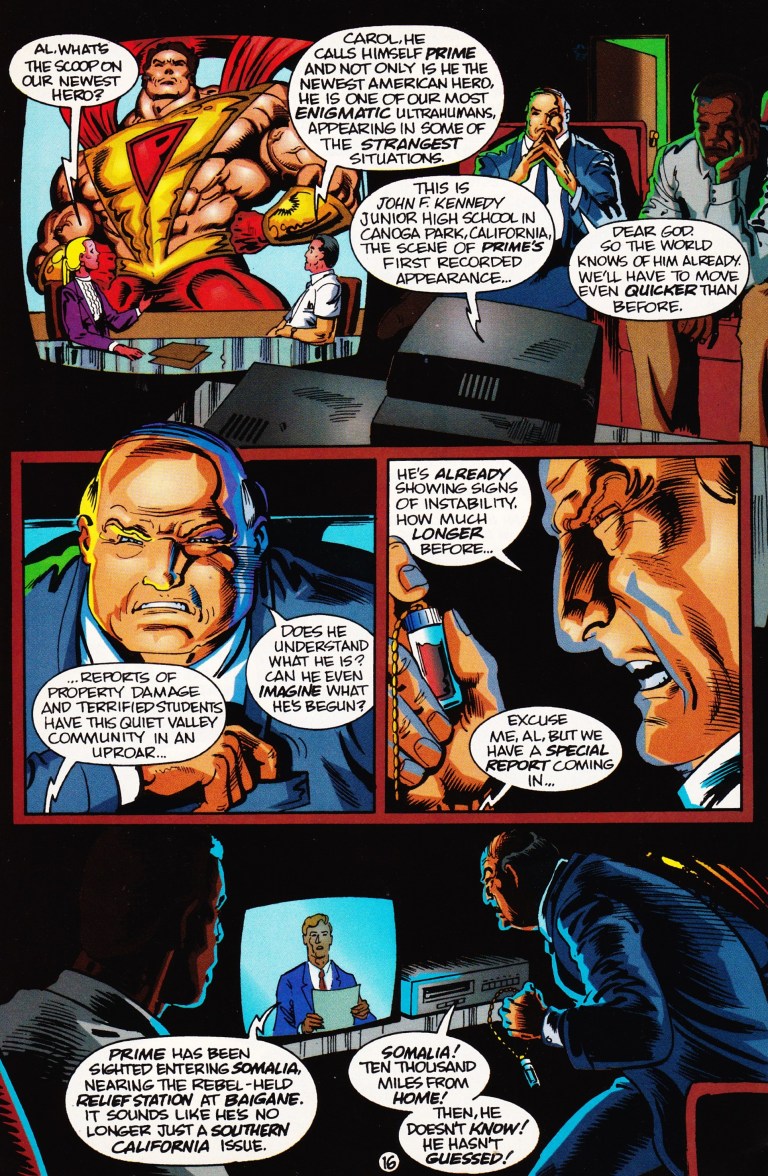
I also liked the way the writers used corporate media as a key element on exploring the connecting elements of the Ultraverse. Hardcase is shown briefly while a reference was made on Prototype. Check out the page posted below on how corporate media looks at Prime.
Corporate media exposure and conspiracy efficiently told in one page.
When it comes to the art, the late Norm Breyfogle (1960-2018) delivered visuals that had that cartoony look and yet the visual expressions are quite mature, even dark and gritty. It is a very nice approach and it is no surprise, looking back, that Breyfogle went on to draw a lot more issues of Prime for Malibu Comics. Breyfogle died on September 24, 2018 due to heart failure in Michigan. Before making his mark on the Ultraverse, the late artist drew a lot of comic books for DC Comics and is known for his contributions on Batman.
More on hero himself, Prime is a flagship character of the Ultraverse and the combined talents of the writers and artist were major factors behind it. On face value, Prime looks like the Ultraverse answer to DC Comics Superman but in reality he has a lot more common with Shazam/Captain Marvel. I can explain why but that means spoiling the plot more here.
Overall, Prime #1 is still a very good old superhero comic book to read. It is fun and intriguing from start to finish. Considering its very good quality and being a nice showcase of the talents of the creators, Prime #1 is one of the best Ultraverse launch comic books. It is too bad, however, that there are no signs from Marvel Entertainment (note: Marvel Comics acquired Malibu Comics in the mid-1990s) whatsoever on the possible revival of the Ultraverse which remains in limbo under them.
Even so, I still say thatPrime #1 is highly recommended.
Thank you for reading. If you find this article engaging, please click the like button below and also please consider sharing this article to others. Also my fantasy book The World of Havenoris still available in paperback and e-book format. If you are looking for a copywriter to create content for your special project or business, check out my services and my portfolio. Feel free to contact me as well. Also please feel free to visit my Facebook page Author Carlo Carrasco and follow me at HavenorFantasy@twitter.com
Also if you are interested to join an Ultraverse-related community online, I recommend the Facebook group here.
What a journey it has been! When I first saw then newcomer Hugh Jackman play Wolverine in the first X-Men movie back in 2000, I was not that impressed. In X2: X-Men United, Jackman outdid himself and established Wolverine as a very defining action hero for 21st century Hollywood cinema that moviegoers can keep coming back for more.
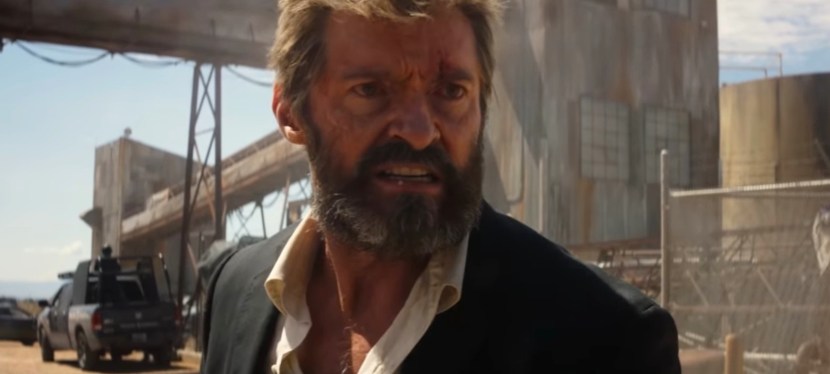
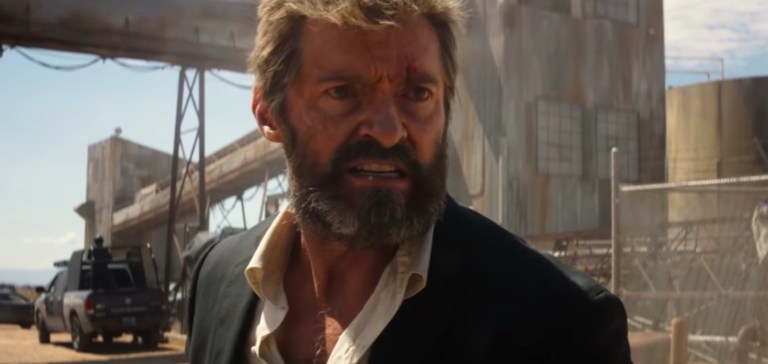
Then Jackman played Wolverine (referred to as Logan) several more times in the X-Men movies plus the standalone Wolverine movies. His most defining performance as the cinematic icon happened in 2017 with the release of Logan directed by James Mangold.
Hugh Jackman delivered his best superhero movie performance in Logan.
Set in what is the near future, Logan takes place in a time (note: the X-Men cinematic universe timeline was revised as a result of X-Men: Days of Future Past) when mutants are dying off as a human species. Wolverine/Logan works as a limousine driver and lives at a smelting plant in Mexico with Cabal and a very old Charles Xavier (Patrick Stewart) who has dementia and has been unstable with his telepathic powers which make him a danger.
The future is bleak for them. Logan is very old and his healing factor has weakened a whole lot and the adamantium coating of his skeleton has poisoned him. Xavier meanwhile needs be provided with medication to prevent him from having a seizure which, combined with his telepathic powers, affects all others around them negatively. It has also been confirmed that an incident was caused by Xavier’s seizure which killed off several X-Men members leaving them three. Logan has to work and earn as much money as he could to keep providing the medication.
One day, a lady approaches Logan to try to hire him to drive her and a young girl named Laura (X-23 in the comics, played by Dafne Keene) to a refuge in North Dakota to escape from danger. Logan accepts reluctantly but discovers that the lady got killed. He returned to the smelting plant and learned that Laura stowed away by discreetly riding his limo. Eventually mercenaries led by Donald Pierce (who met Logan early in the film) arrive at the smelting plant. From this point, Logan realizes why the lady and Laura are targets and then mayhem begins when the little girl fights the mercenaries.
When it comes to storytelling, Logan emphasizes the violent and bitter journey of Wolverine who, at a very late stage in his life, has to accept the reality that he has to make another hard adjustment as a key element from his past comes into his life which is Laura who is actually a clone of him produced from an extracted sample of his DNA. The movie has some parallels with the 1950s cowboy movie Shane (which has some scenes in the film) which added depth to the story.
Logan also emphasizes the element of aging which has not been fully explored in the superhero movie genre until now. Wolverine lived lonely, had no people to love and his personal journey has been marked with violence and death. He could only move forward with whatever opportunities he could find but no matter what he does, happiness will always be unreachable to him. For Charles Xavier, age really tore him down and being almost 100-years-old in the story, he really has nowhere else to go to but death. Not even his legacy of brilliance and teaching mutants to use their powers for good could make any profound changes.
The long journey of Logan, Xavier and Laura in the film is where the character developments really set in. Along the way, there is a scene in which Logan, holding X-Men comic books (made specifically for the story), expressed his displeasure about how people perceive the X-Men and that the pharmaceutical company fed their young cloned mutants with fantasy and lies. Also striking to me as a viewer and a geek were the scenes showing how unethical the company has been with developing the young mutants (X-23’s pals) who decide to fight to escape.
In terms of presentation, Logan was rated R and for good reasons. It was rated R not simply because of very brutal violence and swearing but because its concepts are clearly meant for adults to see. If you combine the concepts of unethical science experiments, mercenary brutality, human rights violations and unchecked destruction, clearly Logan is NOT the superhero movie made for parents and their little kids to watch together. When it comes to action and spectacle, this movie has more than enough stuff to keep viewers entertaining while at the same time it has this particular 1980s R-rated Hollywood action film feel to it.
Dafne Keene as X-23/Laura. Her great act will be remembered for a very long time.
Performances of the actors were top-notch, specifically Jackman, Stewart and Dafne Keene. Hugh Jackman as a superhero cinematic artist truly evolved! If you disregard the timeline alteration of the X-Men films, you will realize how Jackman’s Wolverine gradually changed in terms of style and expression. In 2000’s X-Men, Wolverine was trying to figure out his place among the mutants as Charles Xavier helped him. In X2, he decided to be with the X-Men and help them out in their situation. In X-Men: The Last Stand, he has to deal with helping the X-Men tackle Magneto who has Dark Phoenix/Jean Grey (the lady Logan has feelings for). In X-Men Origins: Wolverine, he struggles morally and dealt with his relationship with his “brother” Sabretooth. In The Wolverine, he moves away from the X-Men and got himself involved with a conflict (plus an old friend) in Japan. In X-Men: Days of Future Past, Wolverine of the dark future goes back through time to his younger self with the pressure to alter history.
Patrick Stewart’s dying Xavier in Logan shows a new dimension to the cinematic art of the actor. He really makes Xavier look hopeless and yet he successfully made viewers more sympathetic to his character than ever before. Last but not least, Dafne Keene as Laura/X-23 proved how talented she really is when it comes to dramatic scenes. Even though she got yelled at by Hugh Jackman, Keene still moved on with her strong performance. Definitely her performance is something to be remembered for a very long time in cinema.
Conclusion
I have seen a whole lot of superhero movies in my life. Just over a week ago I managed to watch Avengers: Endgame and it was a true epic like Infinity War. Even by today’s standards, Logan is a standout superhero movie that delivers spectacle, action, solid performances, some humor and the distinct vibe of 1980s R-rated Hollywood action cinema combined. In fact, I should say that Logan is a modern day classic among all superhero movies.
As such, Logan is highly recommended and I urge you readers to watch it on Blu-ray disc format to get the best visual and R-rated viewing experience.
Thank you for reading. If you find this game review engaging, please click the like button below and also please consider sharing this article to others. Also my fantasy book The World of Havenoris still available in paperback and e-book format. If you are looking for a copywriter to create content for your special project or business, check out my services and my portfolio. Feel free to contact me as well. Also please feel free to visit my Facebook page Author Carlo Carrascoand follow me at HavenorFantasy@twitter.com
Twenty-one years ago, I had a great time playing Resident Evil 2 on the original PlayStation console. I enjoyed the first Resident Evil on the same console in 1996 but it was the sequel that turned me into a fan of the game franchise.
A few months ago, Capcom released the remake of Resident Evil 2 (which I bought for Xbox One) completing the promise they made way back in 2015. Sure details of the game were kept in great secret until E3 of 2018 (when it was first previewed) but I can tell you from my experience that the long wait was indeed well worth it!
Before I go on, let me share to you that while just about everyone called this new version of RE2 a remake, for me it is more than that. I personally would call it a remake with expansion.
Now I can discuss the game
Gameplay and Presentation
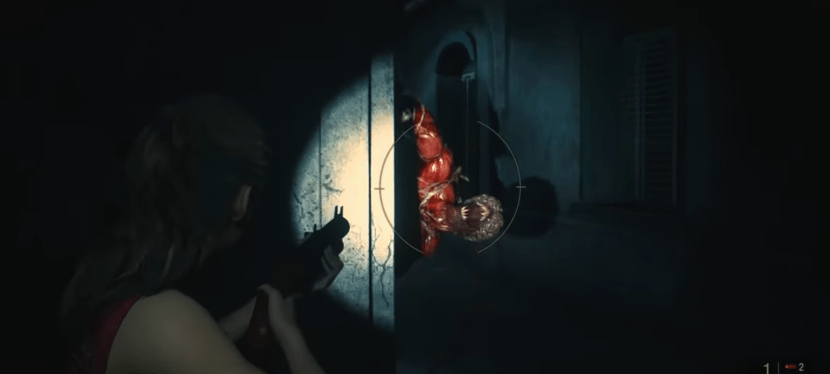
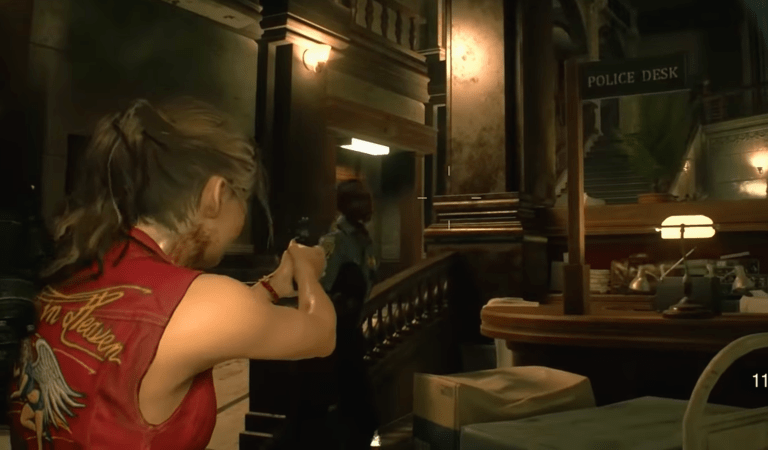
Shooting in 3rd person.
The way this game was remade and expanded, Capcom’s team did a great job to modernize Resident Evil 2 a lot. This is not a carbon copy of the 1998 game design done with 3D environments and a 3rd person view (over-the-shoulder) for the 8th console generation. The developers went the extra mile adding some new challenges and gameplay features that just might inspire other game developers to follow suit.
At its core, RE2 Remake is technically a 3rd person adventure game that carefully blends horror, action and exploration combined with suitable storytelling split into two sides. When you play a new game, you get to choose either Claire or Leon. Once you finish the game, a “New Game – 2nd Run” option comes up which allows you to play the other character on the other side (or scenario) of the main story that you just finished.
While the 1998 game had pre-rendered backgrounds presented in 2D (which makes sense with that game’s outdated tank-like controls), this game has every environment in full 3D which you can freely explore and revisit. As you control your character with a 3rd person view complete control of the view (that allows you to look around), the developers used shadows and darkness in many parts of the game to ensure an atmosphere of horror and suspense. There is nothing like walking down a very dark corridor with your flashlight not knowing what’s ahead of you.
Of course, there is the classic Resident Evil challenge of solving puzzles and item management. There are also these containers where you can put your items into for safekeeping and the good news is that identical containers in other locations instantly carry those stored items.
As this game deals with zombies, the game developers went all out on making each zombie and monster very detailed and grotesque to look at. The 3D artists seem to have studied anatomy while the in-game physics handlers ensured that whatever part of the zombie’s body gets hit by a bullet, it gets the corresponding damage. The zombies are scary and grotesque and compared to their 1998 counterparts, they are tougher and more dangerous to deal with. With regards to the monsters, the standout is the Licker which in this game is much more dangerous even if you have lots of ammunition. The Licker is capable of jumping a great distance towards you with a lot of speed to boot. The Licker can push your character down on the floor when you least expect it.
More on the monsters, the 3D art on William Birkin is incredible! It’s as if the game developers took a close look at the 1998 William Birkin (much lower polygons back then), watched John Carpenter’s movie The Thing for inspiration and then made the modern William Birkin look more monstrous with photo-realism in mind! The more mutated Birkin got, the more incredible the visual detail and scare factor got!
The most defining gameplay challenge is exploring the police station with Mr. X (a Tyrant) walking around searching for you. He walks around obsessively and can go into most rooms although he cannot enter the room with game saving devices (typewriters). Mr. X is very dangerous and each time he appears, the tension and fear run up high forcing you to get away somehow. As long as Mr. X is in the game, you must listen carefully to the ambient sound (note: raise the volume of your sound system or that of your HDTV) to watch out for the sounds of the steps he takes. The louder the steps, then it means his presence is very near you.
As expected, guns are the main weapons to use and eventually you will get to use a shotgun (for Leon), a machine gun (for Claire), grenade launcher, flame thrower and others. This is not a straightforward shooting game however. Zombies are tough as they take a lot of bullets to put down. This will force you to get the most out of each shot as the impact per shot is directly affected by the quality of the aiming which itself goes down as your character moves. To get the best aim, your character has to stand still and when you fire, you better hope that the zombies (which constantly move) do get hit. Sure you can move and fire at the same time but you won’t get good results in return. Forget about doing the Gears of War tactic here. Just pace yourself, be strategic, then aim and fire.
Your character gets to use a secondary weapon in the form of a combat knife or a flasher or even a grenade. Imagine your character is armed with a secondary weapon. If an enemy grabs, you will be prompted to use the secondary weapon to damage (or push back at least) the enemy and allow yourself to keep your distance away without getting hurt.
When it comes to survival, the classic gathering and mixing of colored herbs are back. Taking inspiration from 1999’s Resident Evil 3, the game allows you to create new ammunition by combining items needed for creation. As the items are varied, you can decide which kind of ammunition to make. Speaking of which, the amount of ammunition in this game is pretty limited and this will compel you to conserve bullets and make the most out of what you have to survive.
On the aspect of exploration, the locations in the 1998 RE2 are back but they have been expanded even as key locations from the old game were recreated in 3D. The police station seems bigger to me this time but the standout zone of exploration is the dark and gritty sewer (which puts the sewer in the 1998 game to shame). There are a lot more places to explore and the good news is that there is something worth collecting when visiting those places.
As for the deep underground science experiment facility, the game developers made the place really looked like it was used for work by the employees. There were lots of equipment around that were not presented as mere in-game decorations but rather they gave me a clear idea that work was done previously before disaster struck. There was even a sleeping quarter for stay-in employees which really looked lived-in.
Storytelling (warning: mild spoilers ahead)
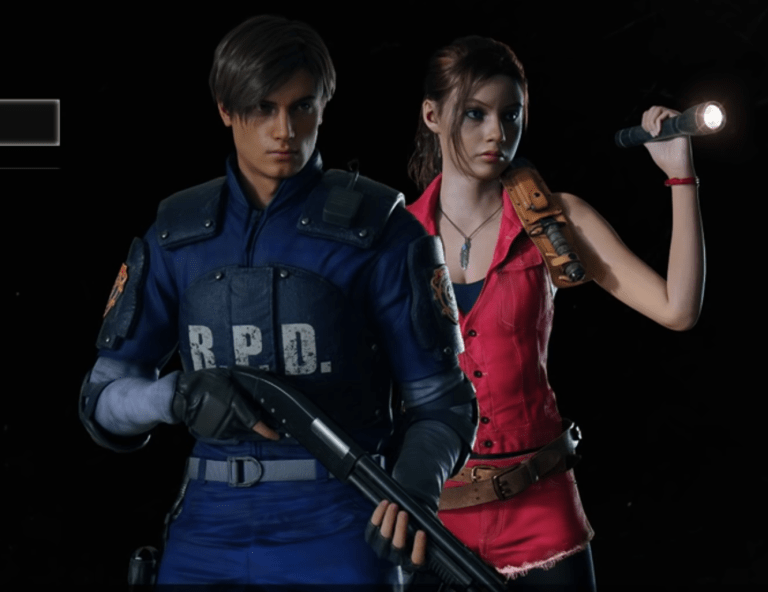
Leon Kennedy and Claire Redfield.
A zombie outbreak struck Raccoon City. Near the city, Claire Redfield (who’s searching for her heroic brother Chris) and Leon Kennedy (a rookie cop on his way to the police station) incidentally get together after having an early confrontation with zombies at a gas station. As they got into the city, an out-of-control truck hits their car (which they got out off in time) and separates them. Claire and Leon make it to the police station only to find out that it is hazardous with zombies and corpses inside. From this point on, they have to figure out what is going on, who is responsible and how they could escape and survive from the ruined city.
As this game is a remake, it is no surprise at all that the original script from the 1998 game was not reused but rather this new game has a new script inspired by it. The intention was to reintroduce not only the characters but the game’s core concepts to a modern gaming audience who, by today’s standards, are very used to watching very cinematic cut scenes in their video games.
The dialogue is lengthy and for the most part the voice actors performed nicely on delivering the drama (and the expository dialogue) and bringing the characters to life. The script captured the essence of 1998’s RE2 mostly but there were a few noticeable differences that bothered me.
For one thing, I noticed that Leon Kennedy in this modern game does not really take charge of his situation and even gets fooled and manipulated by Ada Wong who poses as an FBI agent. By comparison, Leon has a subtle but notable taking of responsibility (and taking charge) of the situation in the 1998 RE2. Remember dialogue in that game with Ada telling her that they cannot progress if she does not let him take charge? Remember the scene when the jailed journalist was told that if he wanted to survive, he would have to leave with Leon? Those character traits of Leon taking charge against the odds really happened back in 1998. The remake’s Leon is more gullible and naive by comparison. Was this a deliberate alteration done by the script writer? We don’t know yet but the difference of Leon’s personality is noticeable.
Next is the lack of strength in the way Leon and Claire reacted to the zombie outbreak in Raccoon City. The scene where they get together for the first time at the exterior of the police station showed them being too casual (not that concerned) of their situation. Their exchange of dialogue felt better suited in a romantic movie. By comparison, their portrayal (getting reunited after the initial separation) in the 1998 game was more convincing.
Next, I have a problem with the way Claire decides to fight the heavily mutated William Birkin in their 3rd fight. It’s just not convincing in relation to the entire situation of the outbreak. Even though Claire Redfield has no military training (she knows self-defense only), she decides to risk her life fighting him completely disregarding the need to quickly save Sherry (suffering at this point) and escape with her. This scene is clearly another one of those “because the game requires it” situations. By comparison in the 1998 game, Claire reacts naturally with silent fear each time she sees William Birkin.
Apart from the differences between RE2 1998 and RE2 2019, there were these inaccuracies regarding the narrative of the game. Supposedly, regardless of which characters were used on each side of the main story, the core story’s events took place in close proximity to each other if not at the same time. This however does not explain Annette Birkin’s appearing in BOTH sides of the main story specifically in the moments leading up to the 3rd boss battle with her mutated husband William. She appeared in Leon’s side of the scene and also in Claire’s side of it. Was there a clone of Annette Birkin made behind the scenes?!
And then there was Mr. X who in the main story appears to hound both Leon and Claire respectively. What happened to Mr. X during Claire’s side of the story goes into direct conflict with Mr. X being the final boss in Leon’s side. I can only speculate that there were two identical versions of Mr. X in the story which the game developers never bothered to explain.
Conclusion
This remake of Resident Evil 2 is indeed a great game to play and I sure got my money’s worth having finished the single-player campaign a total of six times (focusing on the scenarios) even though there is a lack of zapping (which the 1998 game featured) and the narrative lacks precision when dramatizing the two sides (scenarios) and emphasizing the little details between them. The other game modes like The 4th Survivor, The Tofu Survivor and others add value on the side but for me, the real stuff of the game is the single-player campaign.
It’s not a perfect game but it is great enough for Capcom to keep me interested again in the Resident Evil game franchise. I hope that secretly they are working on a full 3D remake of Resident Evil 3: Nemesis (which has a visual clue in the RE2 Remake).
RE2 Remake redefined survival horror as much as it modernized the core concept of the 1998 game. In terms of survival horror gameplay, this game is the definitive model on how to do it. Forget about the debacle that was Resident Evil 6 because RE2 Remake is the one to play.
Resident Evil 2 Remake is highly recommended even if you are not an RE fan.
Thank you for reading. If you find this article engaging, please click the like button below and also please consider sharing this article to others. Also my fantasy book The World of Havenoris still available in paperback and e-book format. If you are looking for a copywriter to create content for your special project or business, check out my services and my portfolio. Feel free to contact me as well. Also please feel free to visit my Facebook page Author Carlo Carrasco and follow me at HavenorFantasy@twitter.com











 Author Carlo Carrasco