In the presence of Philippines’ Defense Secretary Gilberto Teodoro, Japan’s Defense Minister Shinjiro Koizumi, the media and many other officials, the Self-Defense Forces (SDF) launched two anti-ship missiles during a Balikatan multi-national exercise held in Paoay in the Philippines, according to a Kyodo News report. The live-fire drill involved one hundred forty ground SDF personnel and was a success in terms of directly hitting a target at sea.
To put things in perspective, posted below is an excerpt from the news report of Kyodo News Some parts in boldface…
The Japanese Self-Defense Forces on Wednesday fired two anti-ship missiles during a large-scale multinational exercise in the Philippines, with the two countries’ defense ministers observing the launches.
The two Type 88 surface-to-ship missiles successfully hit and sank a decommissioned Philippine navy vessel floating about 75 kilometers off Paoay on the northern Philippine island of Luzon during the annual Balikatan exercise co-hosted by the United States and the Philippines.
The live-fire drill involving about 140 Ground Self-Defense Force personnel was open to the media.
Japanese Defense Minister Shinjiro Koizumi and his Philippine counterpart, Gilberto Teodoro, watched the drill on site, while Philippine President Ferdinand Marcos Jr. observed the exercise remotely from Manila, according to the military of the Southeast Asian country.
China criticized the missile launches, with Foreign Ministry spokesman Lin Jian saying Japan’s “right-wing forces are pushing for the acceleration of remilitarization,” posing a threat to regional peace and stability.
Let me end this piece by asking you readers: What is your reaction to this development? Do you think Japan and their Filipino counterpart will cooperate even more to enhance the Philippines’ defense capabilities and modernize its military? Do you think it is inevitable that the Philippines will purchase more military weapons from Japan in the near future? Were you surprised to learn about Communist China’s criticism against the successful live-drill?
Thank you for reading. If you find this article engaging, please click the like button below, share this article to others and also please consider making a donation to support my publishing. If you are looking for a copywriter to create content for your special project or business, check out my services and my portfolio. Feel free to contact me with a private message. Also please feel free to visit my Facebook page Author Carlo Carrasco and follow me on Twitter at @CarloCarrascoPH as well as on Tumblr at https://carlocarrasco.tumblr.com/and on Instagram athttps://www.instagram.com/authorcarlocarrasco
In what is perceived to be a move to enhance the Philippines’ military modernization program and improve its pilot training capability, the United States approved the $150 million sale of Bell 505 Jet Rangers X helicopters to the nation, according to a Manila Bulletin news report.
To put things in perspective, posted below is the news report of the Manila Bulletin. Some parts in boldface…
The United States approved a possible $150 million sale of Bell 505 Jet Ranger X helicopters to the Philippines, a move seen to strengthen Manila’s pilot training capability and support its military modernization program.
In a statement Tuesday, May 5, the US Department of State said it had “made a determination approving a possible Foreign Military Sale to the Government of the Philippines of Bell 505 Jet Ranger X Helicopters and related equipment” with an estimated total cost of $150 million.
The package included aircraft, spare parts, and training support, and it covered main and tail rotor blades, full-length trainer shoes, and pilot training for 22 personnel. The training would include ground and flight instruction, left seat orientation, and Instrument Meteorological Conditions and Helicopter Upset Recovery.
The deal also involved maintenance training for six students and specialized courses covering the Bell 505 Maintenance Officer Course, field maintenance, integrated avionics, component maintenance, and Safran engine training for 22 trainees.
The proposed acquisition also included Bell 505 Veris flight simulators, a five-year Integrated Logistics Support package, and one year of on-site field and logistics support representatives.
The US said the sale would “support the foreign policy and national security of the United States by helping to improve the security of a treaty Ally that continues to be an important partner for political stability, peace, and economic progress in the Southeast Asia.”
It added that the helicopters would address gaps in rotary-wing training.
“The proposed sale will improve the Philippines’ capability to meet current and future threats by addressing aircraft competency gaps in operating rotary wing aircraft,” the statement said.
The US also noted the aircraft would help prepare pilots for more advanced platforms.
“This enhanced capability will facilitate the smooth transition for pilots to more complex rotary aircraft within the Armed Forces Philippines, and it is a cost-effective solution for developing rotary wing pilots,” it stressed.
The principal contractor for the deal would be Bell Textron Inc. based in Fort Worth, Texas.
The approval came as defense ties between Manila and Washington continued to deepen. Forces from the two nations are training in Manila until May 8 under the auspices of the Exercise Balikatan, featuring top-level military equipment.
It also followed an earlier US approval of a $5.58 billion sale of 20 F-16 fighter jets to the Philippines. The proposal, cleared in 2025, covered F-16C/D Block 70/72 aircraft along with weapons and support systems.
The Department of National Defense (DND) and Armed Forces of the Philippines (AFP) had acknowledged the offer but did not immediately proceed with the purchase due to budget constraints.
DND Secretary Gilberto Teodoro Jr. said the country needed full funding to acquire a “minimum impact” fleet of multi-role fighter (MRF) jets under the Armed Forces modernization program, warning against partial purchases that could weaken capability and drive up costs.
He said the DND planned to acquire at least 40 jets for the Philippine Air Force but stressed that even this number remained limited compared with other countries, citing Ukraine’s planned 150 jets, Canada’s 200, and Thailand’s 50.
Teodoro warned that without sufficient congressional funding, the long-delayed multi-role fighter project could stall. He added that staggered buying would make prices “triple” over time.
For insight about the Bell 505 Jet Ranger X helicopter, watch the video below.
Let me end this piece by asking you readers: What is your reaction to this development? Do you think this latest move will enhance the Philippines’ capability to defend itself while also modernizing its military? What do you think America will come up next when it comes to selling military hardware to the Philippines?
Japanese Prime Minister Takaichi Sanae made it clear that she intends to revise the Constitution of her nation in accordance with the demands of the modern age, according to a news report by Kyodo News. When it comes to national security in the modern age, Japan is constantly defending itself from the aggressive moves of Communist China and North Korea. The nation also has its own internal challenges such as foreigners committing crime, grouping together to cause public nuisance and negatively affecting the Japanese.
To put things in perspective, posted below is an excerpt from the news report of Kyodo News Some parts in boldface…
Japanese Prime Minister Sanae Takaichi on Sunday once again signaled her intention to pursue a revision of the Constitution, as she stressed that the postwar supreme law, which serves as the foundation of the country, “should be periodically updated in accordance with the demands of the times.”
Speaking in a video message to a gathering of revision proponents on Constitution Memorial Day, Takaichi vowed to explain potential amendments carefully to the public, adding that her ruling Liberal Democratic Party would “advance discussions in the Diet aimed at reaching decisions while securing the cooperation of other parties.”
A recent Kyodo News poll showed that 73 percent of the Japanese public called for prioritizing a broad consensus across political parties when moving toward an amendment of the Constitution.
“Discussion must not be for the sake of discussion alone. What politicians must engage in, in order to fulfill the trust placed in them by the people, is discussion aimed at making decisions,” Takaichi said.
Takaichi, known as a conservative hawk, is pushing to bring about a change to the Constitution for the first time since it came into effect following World War II. Among possible areas of amendment is the war-renouncing Article 9, which is seen as the cornerstone of Japan’s postwar pacifist stance.
An amendment would require approval by a two-thirds majority in both chambers of the Diet, followed by majority support in a national referendum. The LDP won two-thirds of the seats in the House of Representatives election in February, while it and other pro-reform forces are within reach of the same threshold in the House of Councillors.
Amid a deteriorating security environment, Takaichi said at the LDP’s annual convention in April that she aims to initiate a proposal for a constitutional amendment by the time the party holds its convention next year.
At Sunday’s gathering, Tomohiko Taniguchi, a former special adviser to the Cabinet, cautioned against getting distracted by discussion of other provisions, saying, “Article 9 stands squarely at the center. I hope we avoid taking easy detours.”
For insight about the current Constitution of Japan, click here and here.
Let me end this piece by asking you readers: What is your reaction to this development? Do you think there are sufficient grounds for Japan to have its Constitution revised? Do you think national security and the regional threats of North Korea and Communist China justify the need to revise the Japanese Constitution? Do you think Prime Minister Takaichi, the LDP and other parties in the chambers of government can reach a consensus to successfully amend the Constitution?
Thank you for reading. If you find this article engaging, please click the like button below, share this article to others and also please consider making a donation to support my publishing. If you are looking for a copywriter to create content for your special project or business, check out my services and my portfolio. Feel free to contact me with a private message. Also please feel free to visit my Facebook page Author Carlo Carrasco and follow me on Twitter at @CarloCarrascoPH as well as on Tumblr at https://carlocarrasco.tumblr.com/and on Instagram athttps://www.instagram.com/authorcarlocarrasco
For the first time since the United States and Israel started their joint military operations against the Islamic terrorist regime of Iran, a tanker carrying American oil arrived in Japan, according to a news report by Kyodo News.
It should be noted that Japan imports over 90% of oil from the Middle East and the government also released some of its oil reserves. As such, importing oil from other destinations is crucial for the Japanese. US President Donald Trump already told the international community to buy oil from America.
To put things in perspective, posted below is an excerpt from the Kyodo News report. Some parts in boldface…
A tanker carrying U.S. oil arrived in Japan on Sunday, marking the first such shipment from the United States since the Iran war began in late February.
According to Cosmo Energy Holdings Co. that procured the crude oil from the United States, the tanker, which arrived in Tokyo Bay, transported 145,000 kiloliters, equivalent to half a day of domestic consumption.
The U.S.-Israeli conflict with Iran has led to the effective closure of the Strait of Hormuz, a key artery for global energy shipments. Japan relies on the Middle East for more than 90 percent of its crude oil imports, most of which pass through the strait.
The tanker departed Texas on March 22 and transited the Panama Canal, which can accommodate smaller vessels.
The Japanese government and oil wholesalers have been trying to secure oil from alternative routes to bypass the Strait of Hormuz.
Let me end this piece by asking you readers: What is your reaction to this development? Do you think this development is the first of what could be many oil shipments from America coming to Japan?
Disclaimer: This is my original work with details sourced from reading the comic book and doing personal research. Anyone who wants to use this article, in part or in whole, needs to secure first my permission and agree to cite me as the source and author. Let it be known that any unauthorized use of this article will constrain the author to pursue the remedies under R.A. No. 8293, the Revised Penal Code, and/or all applicable legal actions under the laws of the Philippines.
Welcome back, superhero fans, 1990s arts and culture enthusiasts, Image Comics fans and comic book collectors! Today we go back to the mid-1990s to examine one of the many tales of Jim Lee’s original WildStorm universe through the original Gen13 mini-series.
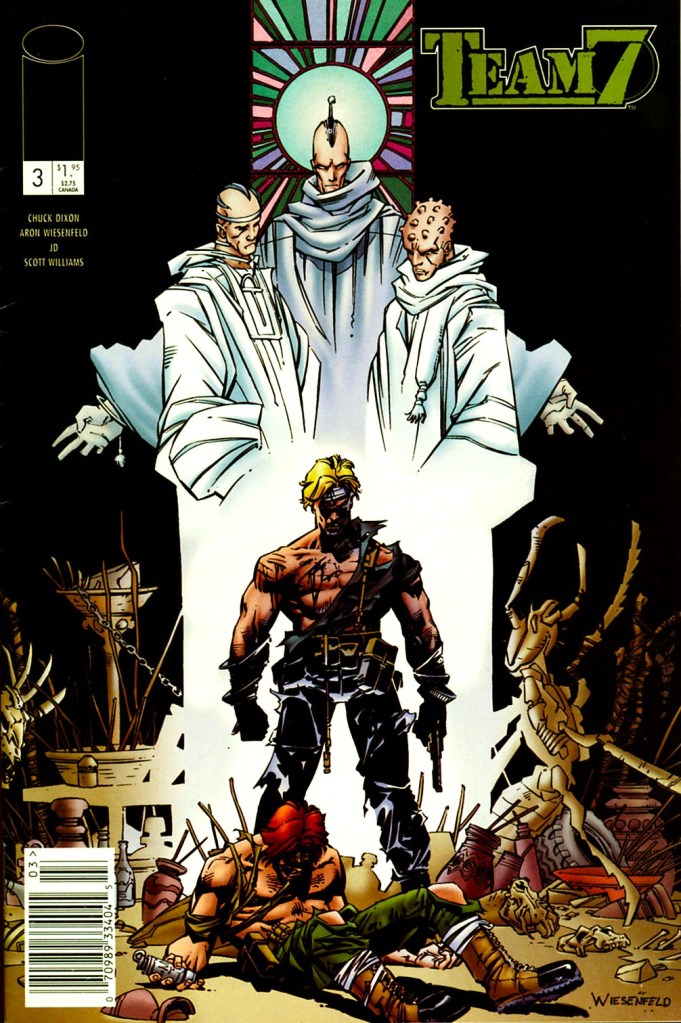
There is a lot to enjoy in the WildStorm comic book universe of the 1990s with such titles like WildCATS: Covert Action Teams, Team 7, StormWatch, Grifter, Backlash and Wetworks to name some. The WildStorm depicts the world as chaotic filled with strong paramilitary concepts, conspiracies and even aliens from deep space.
Along the way, WildStorm has its own take on the sub-genre of super-powered teenagers which was realized as Gen13 (stylized as Gen13). Strangely enough, the team – which actually first appeared in the Deathmate Black crossover comic book in 1993 – was originally titled as Gen X but WildStorm had to rebrand it into Gen13 as Marvel Comics already trademarked the name Generation X for an X-Men-related comic book project. To learn more about production history and background of Gen13, click here.
With those details laid down, here is a look back at Gen13 #1, published by Image Comics in 1994 with a story written by Jim Lee and Brandon Choi with artwork done by Jeffrey Scott Campbell (ink work by Alex Garner). This is the first issue of the mini-series.
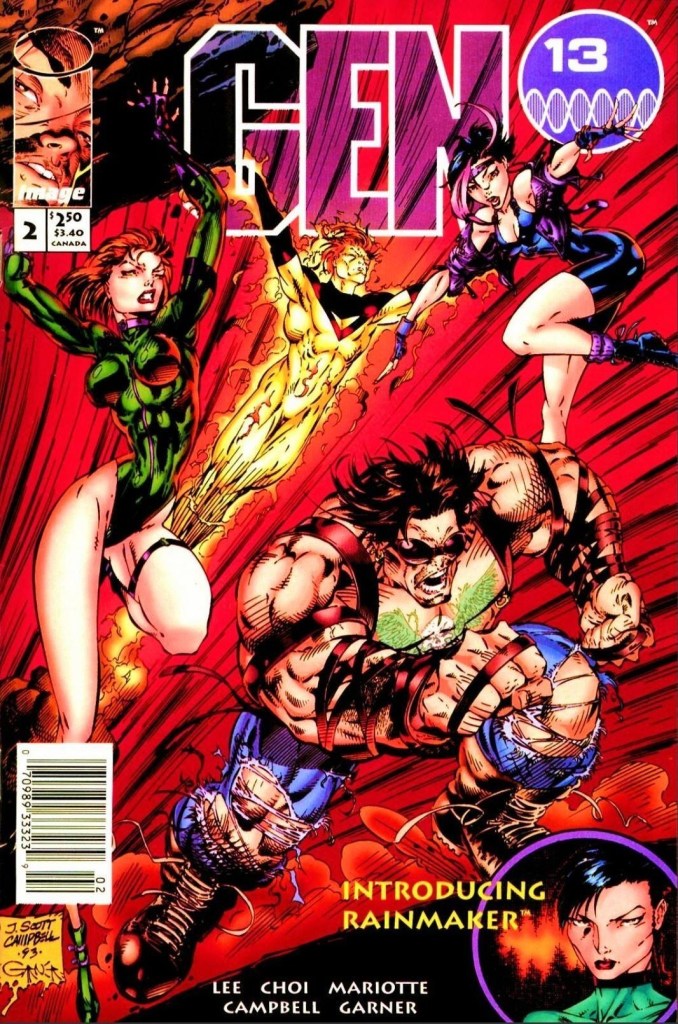
The cover.
Early story
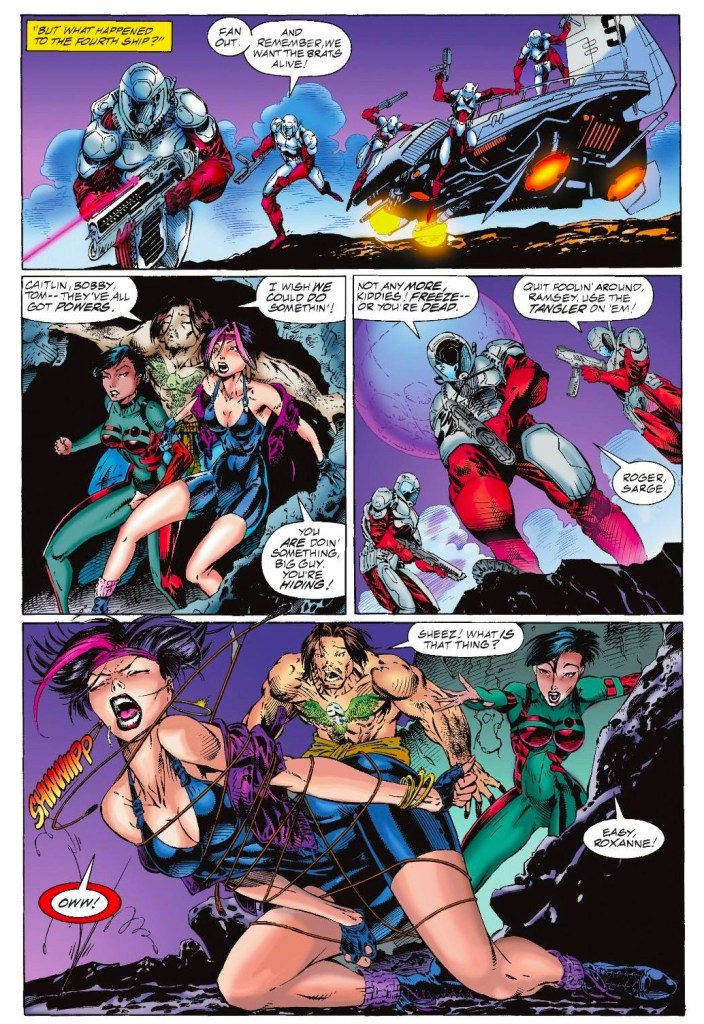
The story begins sometime in 1979 when a married couple (Stephen and Rachel Callahan) desperate runs away with their two little children. A team of armored troops (the Black Razors) riding two hovering vehicles catches up with them and hit Rachel with bullets passing through her body. Stephen, who is carrying his son Matthew, uses his power to destroy one of the hovering vehicles. One of the Black Razors realized that the husband is gen-active and nobody informed their team that he was with Gen12.
Agonizing with severe head pain, Stephen tells Matthew to take his little sister Nicole with him and run to the trees. As far as Stephen is concerned, he is finished and all he can do is buy time for the two little children to escape. He tells Matthew to protect his sister. Suddenly, the Black Razors killed Stephen right in front of Matthew and Nicole.
Fifteen years later, a young, nerdy college student named Caitlin Fairchild makes her way through the college campus in Princeton. She is a gifted student who has been focused on maintaining a high grade and graduate with her advanced degree in computer science in the near future.
Upon arriving at the dormitory, she meets her promiscuous roommate Alexa who informs her that some guys arrived earlier looking for her. The guys were described as middle-aged suits and they wanted to talk to Caitlin about some internship program. Alexa then leaves.
A few hours later, Caitlin wakes up as the door gets knocked. Special agent baker of the National Security Committee tells her that she has been accepted into the Gen13 program and her presence is immediately required in order to process her into the program before it begins the next day…
Quality
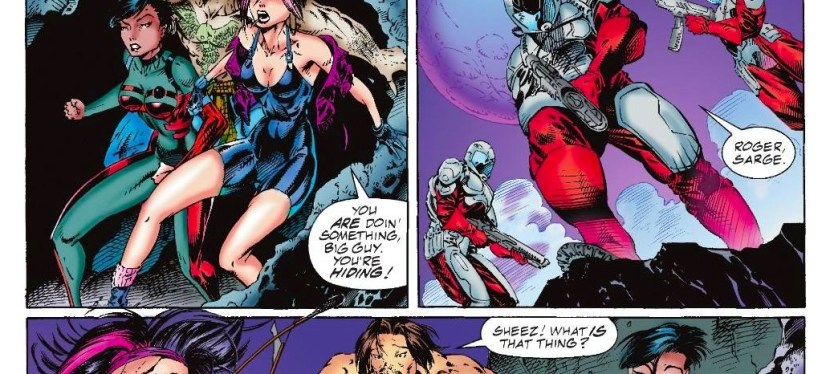
Roxy, Burnout, Grunge and Caitlin Fairchild together for the first time at the secret facility of the Gen13 program. One other member – Rainmaker – has yet to appear.
I enjoyed this comic book the first time I had it in 1994. I can clearly say that it is still fun and engaging to read again today.
This comic book was written with the intention to introduce super-powered teenagers as a new and really distinctive team in one corner of the original WildStorm universe while also expanding the lore by focusing more on International Operations’ unethical covert operations which will easily remind people about government conspiracies, top secret missions and the like. The story has really strong elements about conspiracies, unethical scientific experiments and even human rights violations. The story by Jim Lee and Brandon Choi has a strong structure but what stood out to me was the really creative writing done to bring the characters to life complete with a touch of the 1990s vibe (in reference to comic book trends and real-life society).
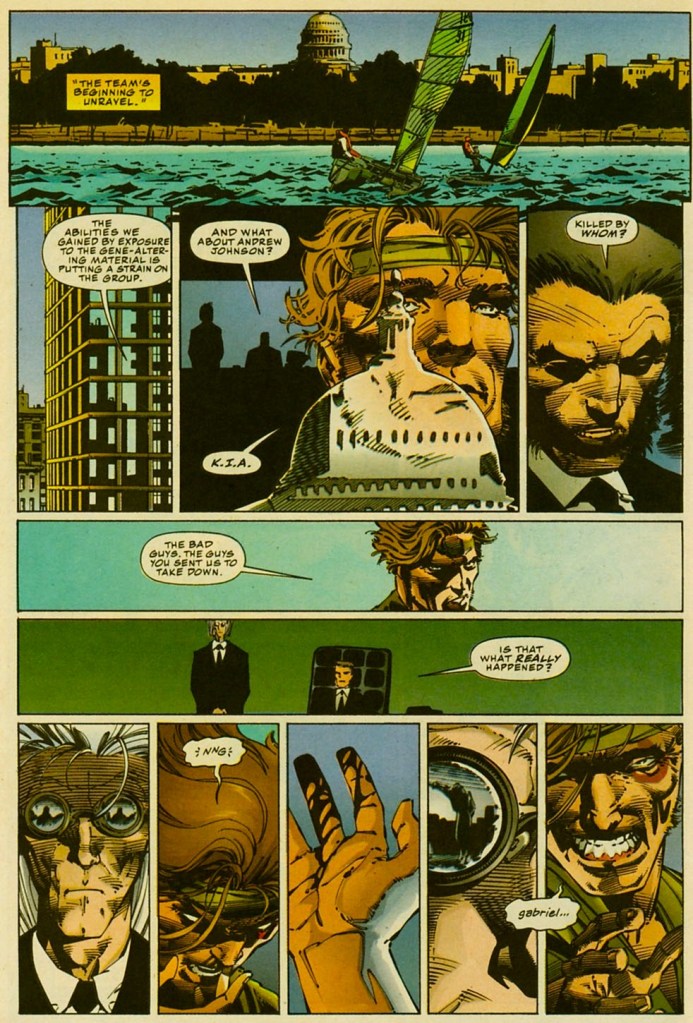
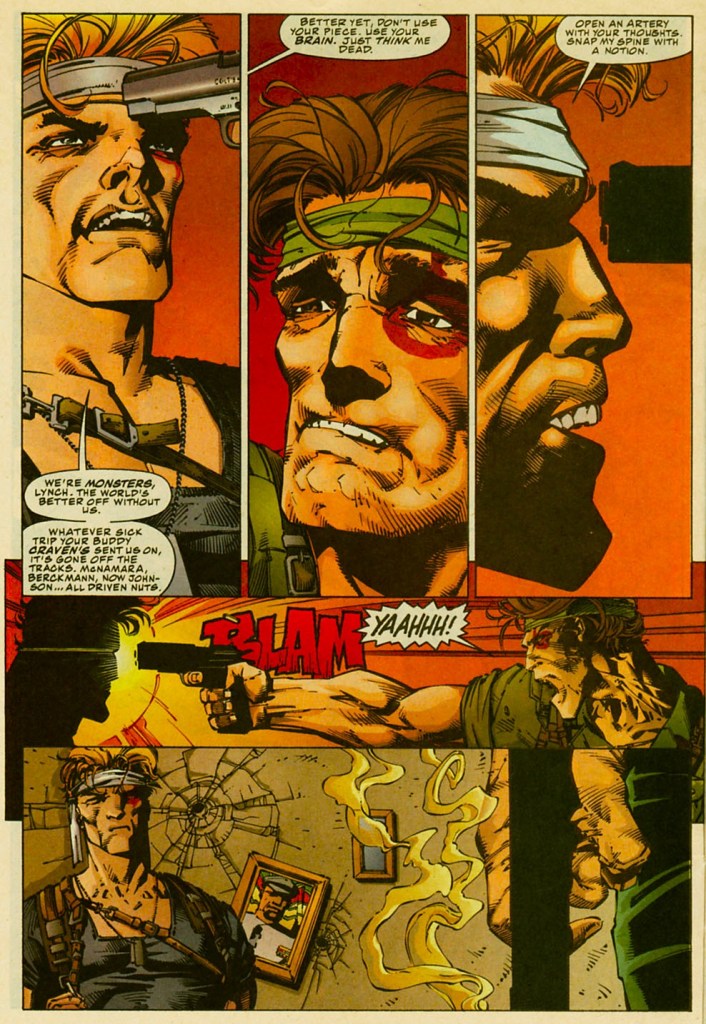
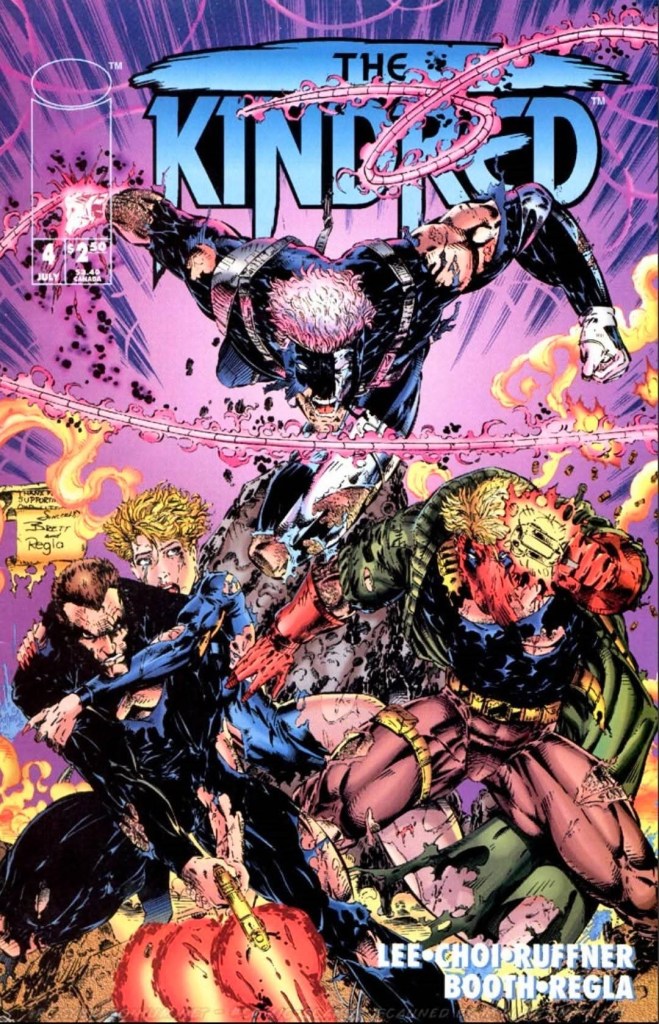
John Lynch, a former member of Team 7 and also one of the high-ranking officials of IO who occasionally appeared in prior WildStorm comic books, gets a nice share of the spotlight in the story and indeed he is not full control of his organization. In fact, IO’s execution of a new program about developing people with special abilities or powers (without their knowledge) raises Lynch’s concerns as he himself was a victim of betrayal and exposure to an experimental gas during his time with Team 7. Lynch also appeared in The Kindred mini-series (read my reviews by clicking here, here and here).
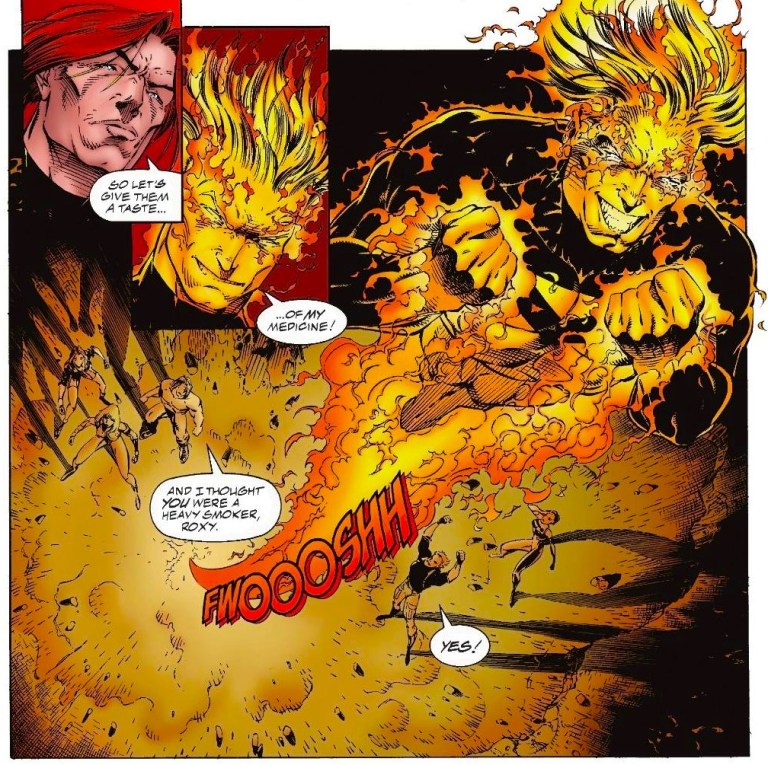
When it comes to the characters, Gen13’s members here are introduced with notable differences in terms of personality. The nerdy Caitlin Fairchild is the very promising smart young lady who has the potential to succeed. Bobby (Burnout) is the quiet guy who quickly realizes that true unity is needed in order for a group to succeed under the program they are in. Roxy is the undisciplined and rebellious young lady while Grunge is the loose cannon and has trouble with authorities. While it is clear you won’t see much of their powers yet in this comic book, they turned out to be interesting enough to follow thanks to the strong creative writing by Lee and Choi.
When it comes to the visuals, Jeffrey Scott Campbell’s artworks really stood out mainly due to his distinctive style. If you look closely at how he draws the faces of women – particularly the ones who are young and fit – you will realize the exaggerated look complete with the big eyes and curves seen on females in anime or even manga (Japanese comics). If you are looking visual realism on the characters, you won’t find it here at all. Campbell’s style truly defined the look of the characters and yet he was able to draw armored troops (Black Razors and the armed security guard) with a really high level of details (including their weapons) which really stood out visually. Campbell is also good with superhero spectacle and hard action. Last but not least, there is a deliberate amount of erotic imagery in this comic book which serves as a reminder that this is a story aimed at young adult and adult readers.
Conclusion
John Lynch and Ivana having a confidential talk about International Operations and its current project about super-powered beings. Even though he is a very high officer at IO, Lynch was kept in the dark about something crucial.
Indeed, Gen13 #1 (1994) remains entertaining to read mainly because of the strong writing. The story moved at a smooth pace, the exposition was done cleverly, and the characters ended up being worthy enough to pay attention to. By the time I reached the end, I am convinced to go on to the next issue and rediscover not only more of the mini-series but also the way it expanded the lore of the WildStorm universe of the 1990s. This comic book alone strongly emphasized the connections with other elements of the WildStorm universe, particularly with Team 7 (its mini-series launched months after this one) and the dark legacy of IO. It is an adulterated superhero comic book that really offered readers something new and intriguing.
In a serious bid to strengthen its defense industry and boost security cooperation with partner nations, the government of Japan officially revised the limits on defense equipment exports, according to a news report by Kyodo News. This means enabling the sales of weapons overseas.
To put things in perspective, posted below is an excerpt from the news report of Kyodo News Some parts in boldface…
The Japanese government revised limits on defense equipment exports Tuesday to enable the sale of weapons overseas, as it seeks to boost security cooperation with partner countries.
The changes, approved by the Cabinet and the National Security Council, come as the government of Prime Minister Sanae Takaichi, a national security hawk, aims to strengthen the country’s defense industry amid what the administration has called Japan’s most severe security environment since the end of World War II.
The revisions to the “three principles on transfer of defense equipment and technology” and their implementation guidelines scrap rules that limit exports to five noncombat categories — rescue, transport, warning, surveillance and minesweeping.
While the revisions in principle prohibit the export of arms to countries where conflict is taking place, they do allow for exceptions “in special circumstances” that take into consideration Japan’s security needs and U.S. military operations in the Indo-Pacific region.
Defense equipment would be divided into “weapons” and “non-weapons” categories, based on whether they have lethal capability.
Exports of non-weapons such as warning and control radar systems face no restrictions, while those of weapons including destroyers and missiles are limited to countries that have signed agreements with Japan on protecting classified information related to defense equipment and technology.
The changes, which state that parliament will only be notified of weapon exports after government approval, are likely to draw criticism from opposition parties. They have argued parliament should give prior approval to avoid Japan becoming involved in exacerbating conflicts or fueling arms races.
The National Security Council will examine and decide whether to approve weapon exports. The next-generation fighter jet being developed with Britain and Italy will be an exception requiring Cabinet approval.
Let me end this piece by asking you readers: What is your reaction to this development? Do you think the government of Japan made the right move in line with the intention to strengthen its defense industry while boosting security cooperation with its partner nations? Do you think this development will enhance security and stability in the Indo-Pacific region? How do you think Communist China and North Korea will react to Japan’s move? Do you think member nations of the Association of Southeast Asian Nations (ASEAN) will be among the first to buy weapons from Japan?
Thank you for reading. If you find this article engaging, please click the like button below, share this article to others and also please consider making a donation to support my publishing. If you are looking for a copywriter to create content for your special project or business, check out my services and my portfolio. Feel free to contact me with a private message. Also please feel free to visit my Facebook page Author Carlo Carrasco and follow me on Twitter at @CarloCarrascoPH as well as on Tumblr at https://carlocarrasco.tumblr.com/and on Instagram athttps://www.instagram.com/authorcarlocarrasco
The United States and the Philippines formally opened this year’s edition of Balikatan (Exercise Balikatan 41-2026) which is their annual joint military exercise focused on readiness, unity and defense, according to a news report by GMA News. Several allied nations and seventeen thousand troops are expected to participate in the exercise which will have military drills across various parts of the Philippines.
To put things in perspective, posted below is an excerpt from the GMA News report. Some parts in boldface…
The Philippines and the United States on Monday formally opened their annual joint Balikatan Exercise for this year, with 17,000 troops and several other countries expected to join.
“I hereby declare Exercise Balikatan 41-2026 officially open starting today,” AFP chief General Romeo Brawner Jr. said during the opening ceremony.
“Let this exercise not only demonstrate our readiness but affirm our commitment to stand together, to act together, and when necessary, defend together,” he added.
More than 17,000 troops from the Philippines, the United States, and partner nations including Australia, Canada, France, Japan, and New Zealand. At least 18 more countries are expected to serve as observers in the exercise.
The drills will be conducted across various parts of the Philippines from Luzon to Mindanao.
Balikatan 2026 will cover multiple domains such as air and missile defense, maritime security, live-fire exercises, and joint readiness operations.
The exercises will also include humanitarian and civic assistance programs such as building schools, supporting healthcare initiatives, and enhancing disaster preparedness in local communities.
Brawner said the expanded scope of the exercise reflects the evolving security environment.
Balikatan 2026 will be transformed from a bilateral activity between the Philippines and US into a multilateral effort aimed at improving interoperability and collective defense capabilities.
Brawner pointed out that the drills are anchored on respect for international law, national sovereignty, and the goal of promoting a free and open Indo-Pacific.
Let me end this piece by asking you readers: What is your reaction to this development? Do you think transforming this year’s Balilkatan from a bilateral US-Philippines activity into a multilateral effort makes sense? Considering the number of allies and soldiers expected to participate in the 2026 Balikatan, do you think Communist China will feel intimidated?
A lot happened between the United States and the Islamic terrorist regime of Iran lately. Previously there was progress reported in the latest talks between them and the result was the reopening of the Strait of Hormuz. A short time later, Iran closed the strait and blamed America with a bunch of allegations. Iran even fired at ships in the strait as if they don’t really care about the ceasefire. In his latest move over the situation, US President Donald Trump told Islamic regime of Iran to take the deal or else they would face destruction, according to a report by Newsmax.
To put things in perspective, posted below is an excerpt from Newsmax report. Some parts in boldface…
President Donald Trump on Sunday morning threatened to “knock out every single power plant and every single bridge” in Iran unless the country’s leaders accept a “very reasonable deal” offered by the United States.
Trump accused Iran of blatantly violating a ceasefire agreement by firing on ships in the strategically vital Strait of Hormuz, including vessels tied to key U.S. allies France and the United Kingdom.
“Iran decided to fire bullets yesterday in the Strait of Hormuz — A Total Violation of our Ceasefire Agreement!” Trump wrote on Truth Social, criticizing Tehran’s actions as reckless and provocative.
“We’re offering a very fair and reasonable DEAL, and I hope they take it because, if they don’t, the United States is going to knock out every single Power Plant, and every single Bridge, in Iran.“
Trump made clear that patience with the Iranian regime is running out, declaring “NO MORE MR. NICE GUY!” and vowing decisive action if diplomacy fails.
He framed the moment as long overdue, arguing past administrations failed to confront what he called Iran’s “killing machine” over decades.
The president also underscored what he described as a strategic advantage for the United States, noting Iran’s threats to close the Strait of Hormuz, a critical global oil transit chokepoint, are backfiring.
Trump said a U.S.-led blockade has already effectively shut down the passage, costing Iran an estimated $500 million per day while redirecting energy demand toward American producers in states like Texas, Louisiana, and Alaska.
Meanwhile, the administration is continuing diplomatic efforts.
Trump said U.S. representatives are heading to Islamabad, Pakistan, for negotiations, signaling that talks remain active despite rising tensions.
A White House official confirmed to Newsmax’s Mike Carter on Sunday that Vice President JD Vance, envoy Steve Witkoff, and Jared Kushner will be leading the negotiations.
According to Axios on Saturday, Trump convened a high-level Situation Room meeting with top officials, including Vance, Secretary of State Marco Rubio, Defense Secretary Pete Hegseth, and CIA Director John Ratcliffe, to address the escalating crisis.
The current ceasefire is set to expire within days, and officials warn that without a breakthrough, hostilities could quickly resume.
Iran has acknowledged receiving new U.S. proposals and says it is reviewing them, but has not yet committed to a deal.
The renewed tensions come after signs of progress in negotiations over Iran’s nuclear program, particularly limits on uranium enrichment.
However, Iran’s latest military actions in the Strait appear to have complicated those discussions.
Speaking Saturday, Trump dismissed Tehran’s tactics as ineffective brinkmanship.
“They got a little cute … they wanted to close up the Strait again,” he said, adding that Iran “can’t blackmail us.”
For addition insight, watch the YouTube news videos below.
Let me end this piece by asking you readers: What is your reaction to this development? If diplomacy fails again, do you think America and Israel will unleash a new wave of offensive attacks against the Islamic terrorist regime of Iran? Did you notice there is division between Iran’s diplomats and the Islamic Revolutionary Guard Corps (IRGC)? Are you convinced that the so-called supreme leader of Iran is not really leading the regime at all? Do you think the rebellious Iranians should leave their country before a new wave of attacks against the Islamic regime happens?
Disclaimer: This is my original work with details sourced from reading the comic book and doing personal research. Anyone who wants to use this article, in part or in whole, needs to secure first my permission and agree to cite me as the source and author. Let it be known that any unauthorized use of this article will constrain the author to pursue the remedies under R.A. No. 8293, the Revised Penal Code, and/or all applicable legal actions under the laws of the Philippines.
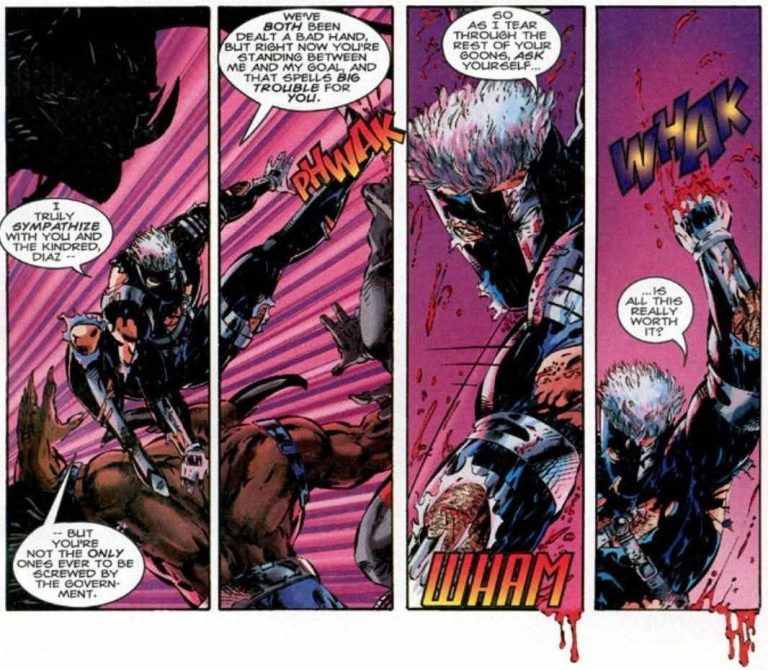
Welcome back, superhero fans, 1990s arts and culture enthusiasts, Image Comics and comic book collectors! Today we go back to the mid-1990s to examine one of the many tales of the WildStorm universe through The Kindred mini-series.
Having read the first two issues, I can say that the plot has been built-up into something that justifies not only the reuniting of former Team 7 teammates Grifter and Backlash (who hate each other) but also the consequences caused by IO’s (International Operations) a long time prior. So far the creative team of WildStorm father Jim Lee, Brandon Choi, Sean Ruffner and artist Brett Booth succeeded in telling an entertaining story with a balance on action, suspense and intrigue.
With those details laid down, here is a look back at The Kindred #3, published by Image Comics in 1994 with a story written by Jim Lee, Brandon Choi, Sean Ruffner and Brett Booth. Booth illustrated the comic book.
The cover.
Early story
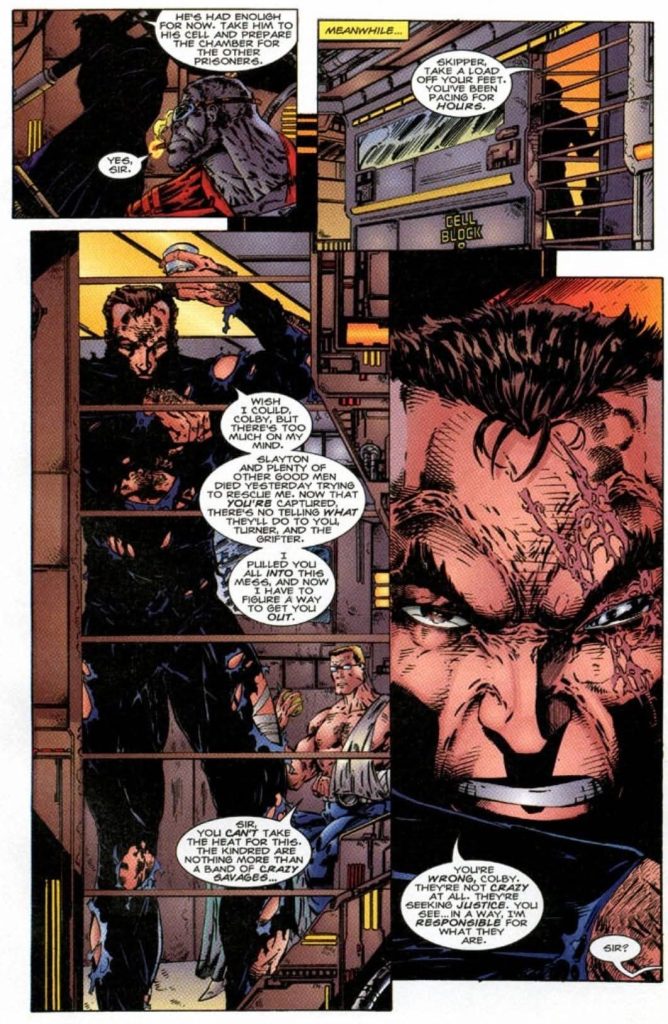
The story begins with John Lynch being helpless in front of Bloodmoon, the vicious leader of the Kindred. Lynch tells him that he has no recollection of him, the Kindred and the crimes he has been accused of. Regardless, Lynch is being prepared for the trial under the Kindred’s system of justice.
Bloodmoon learns from one of his pawns that they captured the three men who were sent to rescue the prisoners. Two of the captured were sensed to have the Kindred’s blood within them. Bloodmoon then orders to have them brought to him immediately.
Minutes later, Grifter and Backlash – both battered and worn down – were brought to Bloodmoon.
Quality
Literally, the past bites Bloodmoon hard.
Following the events of issue #2, there is a huge pay-off in this comic book and it added more depth into the plot. With Lynch, Backlash and Grifter – all of them were teammates in Team 7 a long time prior – helpless early in the story, the stakes really went high up as something significant about Bloodmoon and how the Kindred started got revealed.
Bloodmoon is not the typical comic book villain. His origin and how the Kindred was established are linked to the high-stakes experiments IO conducted on animals on Caballito (this makes IO’s top-secret experimentation on humans to unlock super-human potential literally just the tip of the iceberg). The way Bloodmoon was portrayed here, he is convinced that he exists with an undeniable purpose to lead the Kindred while getting striking back at humanity for vengeance starting with IO and former Team 7 members. The tragic events of the past made him a very hardened character and the living and walking evidence of IO’s unethical experimentation agenda.
Worth focusing here is, unsurprisingly, the uneasy new alliance between Grifter and Backlash who had no choice but to set aside their differences to survive and somehow bring down Bloodmoon deep within the turf of the Kindred. You will get a glimpse as to how they used to work during their time with Team 7 and how they could pull off tough achievements with their modern-day abilities and technology. The dynamics between the two former Team 7 teammates is a must-see and there are indeed 1980s Hollywood action film vibes embedded within.
Not to be outdone is John Lynch whose super-human potential gets unleashed while being in the middle of a very desperate situation facing three deadly enemies at once. Lynch here gets more of the spotlight and he does something else apart from serving as a convenient tool for exposition about IO and its past.
Conclusion
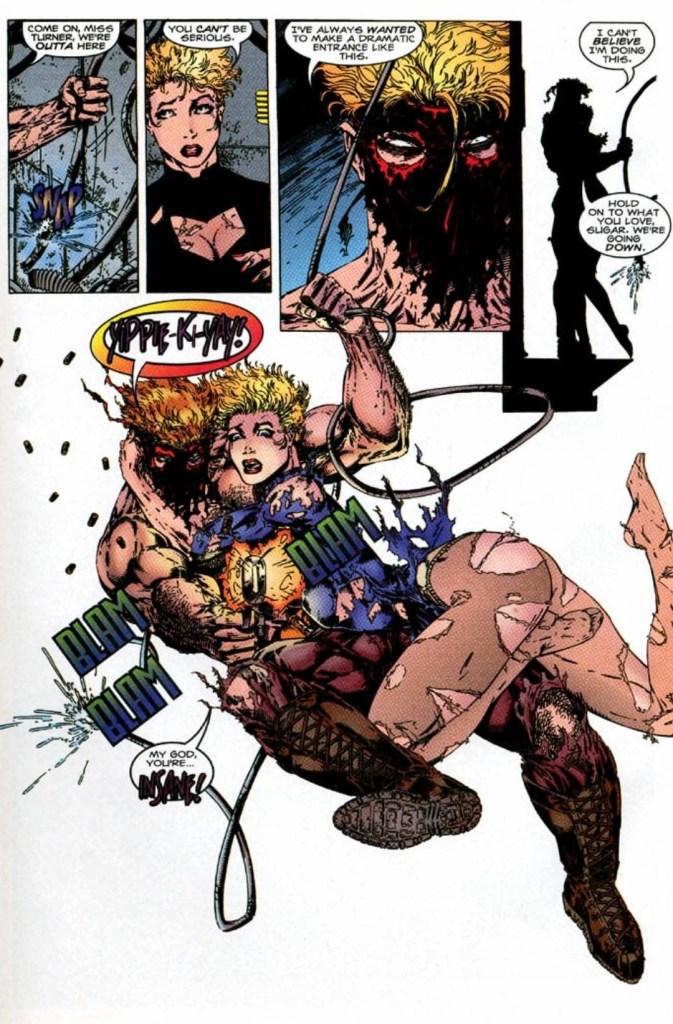
Grifter and Backlash on the run.
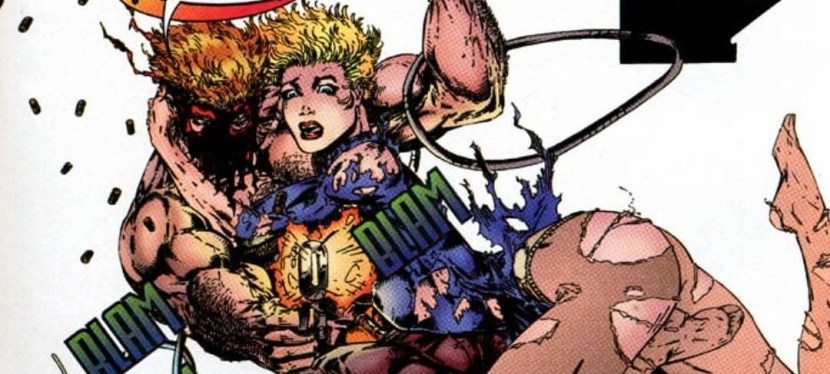
As the plot moved closer to concluding, The Kindred #3 (1994) had the stakes raised a lot for the former Team 7 members involved as well as IO’s current people. The big reveal that happened late in the comic book was pretty powerful and it will encourage readers to focus more on the past operations of IO as well as Team 7. At this stage in the publishing history of Image Comics, WildStorm’s para-military concepts got solidified more effectively setting the stage for the launch of the original Team 7 mini-series. As for The Kindred mini-series, the engagement and entertainment value of issue #3 convinced me to go on to issue #4.
Remember a short time ago when Israeli Prime Minister Benjamin Netanyahu called for direct talks with the Lebanese government for peace? In Washington, the envoys of Israel and Lebanon met in a historic summit mediated by the United States and things are off to a good start as both nations are looking forward to more talks in the near future, according to a news report by CBN News. Israel and Lebanon clearly want to work together to not only disarm the Islamic terrorist group Hezbollah (long supported by the Islamic terrorist regime of Iran) but also end its decades-long influence and harm of civilians.
To put things in perspective, posted below is an excerpt from CBN News’ report. Some parts in boldface…
A historic Washington summit between Israel and Lebanon ended with a look toward more talks in the future and a sense that the two countries want to work together to disarm Hezbollah and make peace. Meanwhile, President Trump indicated that there may soon be a new round of talks with Iran.
The Washington talks were mediated by Secretary of State Marco Rubio. The first round was held between Israeli Ambassador to the U.S. Yechiel Leiter and Lebanon’s Washington Ambassador Nada Hamadeh Moawad.
Rubio suggested that the talks involve more than a ceasefire.
“This is about bringing a permanent end to twenty or thirty years of Hezbollah’s influence in this part of the world. And, not just damage inflicted on Israel, (but) the damage that is inflicted on Lebanon,” Rubio remarked. “We have to remember that the Lebanese people are victims of Hezbollah. The Lebanese people are victims of Iranian aggression. And this needs to stop.”
Ambassador Leiter contends that Israel and the Lebanese government are on the same side of the equation.
“We are both united in liberating Lebanon from an occupation power dominated by Iran called Hezbollah,” he said. “Lebanon is under their occupation, and we are suffering from their constant barrages of missiles and terror attacks trying to cross our border.”
Leiter told reporters that the most important issue they discussed was the vision for the future.
“The long-term vision, where there will be a clearly delineated border between our countries, and where the only reason we will need to cross each other’s territory will be in business suits to conduct business, or in bathing suits to go on vacation,” he noted.
Israel made it clear that the security of Israelis is not up for negotiation, and Leiter believes the Lebanese government understands that.
“This was a victory for sanity, for responsibility, and for peace, because the head of Hezbollah warned the government of Lebanon yesterday not to participate in these talks. And the government of Joseph Aoun bravely said no to Hezbollah,” Leiter observed. “And this is the beginning of a very strong and fortified, consistent battle against Hezbollah.”
Hezbollah made its own statement by opening a round of rocket fire on Israel as the talks began. In a rare move, three Hezbollah terrorists laid down their weapons and surrendered to Israeli troops.
In a joint statement issued by the State Department after the talks, the U.S. expressed support for “the government of Lebanon’s plans to restore the monopoly of force and to end Iran’s overbearing influence.”:
For its part, Beirut “underscores the principles of territorial integrity and full state sovereignty, while calling for a ceasefire and concrete measures to address and alleviate the severe humanitarian crisis that the country continues to endure as a result of the ongoing conflict.”
The two countries have been at war since 1948. Lebanon was once the only Christian-majority country in the Middle East, yet it was overrun, first by Palestinian terrorists in 1970-71, and then a decade later by the Iranian-backed Hezbollah.
Before the talks, Israel’s Foreign Minister Gideon Sa’ar said there are no major disputes between Lebanon and Israel.
He explained, “The problem for Israel’s security is the problem for Lebanon’s sovereignty: it’s Hezbollah. It’s the same problem. And this problem needs to be addressed in order to move to a different phase (that) we want to reach, of peace and normalization with the state of Lebanon.”
Posted below are the related YouTube news videos.
Let me end this piece by asking you readers: What is your reaction to this development? Do you feel confident that the Israel and Lebanon will cooperate even more diplomatically to achieve both long-term peace as well as the disarmament of Hezbollah? How do you think Hezbollah will get disarmed? If ever America totally brings down the Islamic terrorist regime of Iran, do you think Hezbollah terrorists will survive?