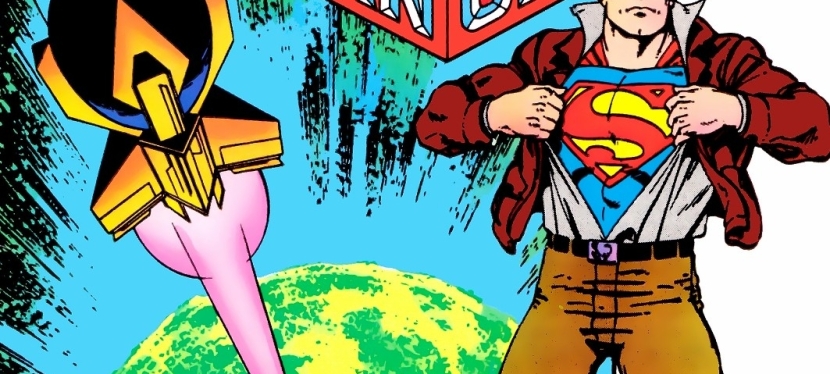
A Look Back at The Man of Steel #1 (1986)

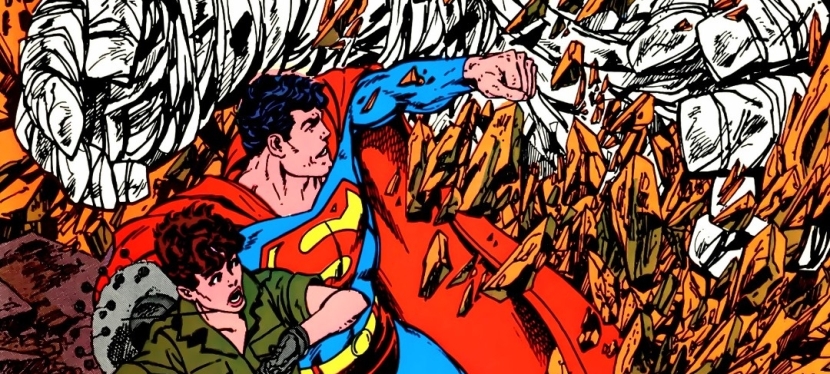
Welcome back superhero enthusiasts, 1980s culture enthusiasts and comic book collectors! Today we go back to the late 1980s to explore a part of the DC Comics shared universe through a tale of the iconic Superman.

After DC Comics published the maxi-series Crisis on Infinite Earths, the publisher rebooted their entire comic book universe and that meant reintroducing their superheroes, villains and supporting characters with a touch of 1980s modernization. To reboot and modernize Superman, John Byrne was hired and he was granted a lot of creative freedom for production.

With those details laid down, here is a look back at The Man of Steel , published in 1986 by DC Comics with a story written and illustrated by John Byrne with ink work by Dick Giordano.
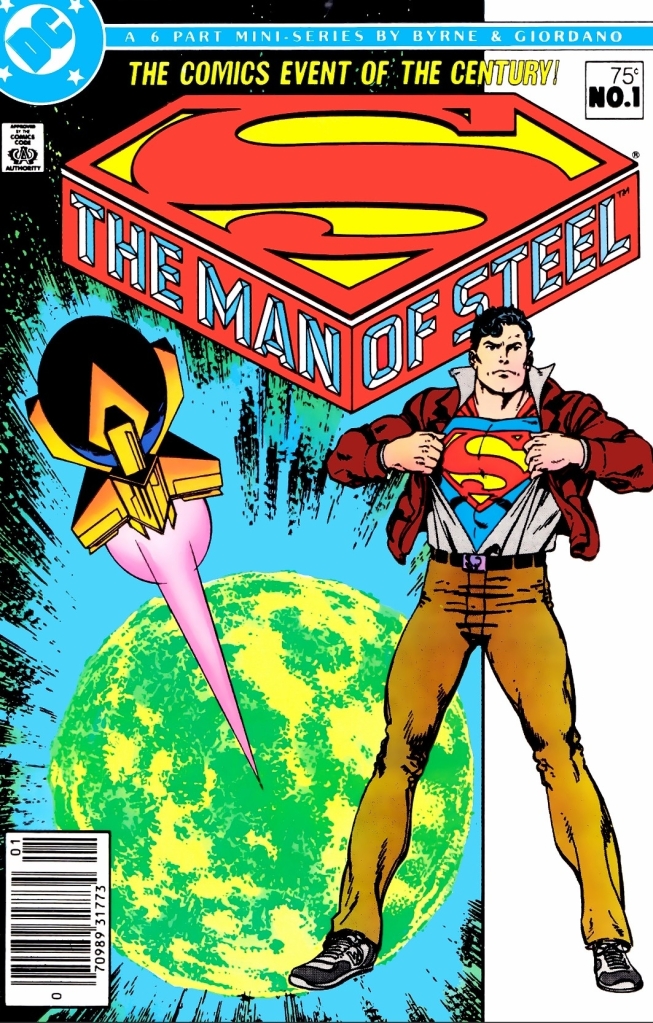
The cover.

Early story

The story begins sometime in the past in Krypton (Superman’s home world), a world about to meet its doom. Jor-El (Superman’s father) arrives home feeling deeply troubled and he wastes no time to execute an important plan he prepared. He examines his unborn Kal-El inside the birthing matrix which turned to have been removed by one of the servants from the gestation chambers of the planet. Lara confronts her husband over what was committed and asked him why he endangers the life of their unborn child.

Jor-El tells her that he plans for their son to be spared from the pending doom of Krypton (a chain reaction from the planet’s core caused vast pressures to build within the crust, fusing native elements into a new metal – Kryptonite) by sending him far away deep into space with planet Earth as the final destination. Jor-El has done extensive research of Earth and is convinced that their son will not only survive there but also become a supreme being among the inhabitants…

Quality
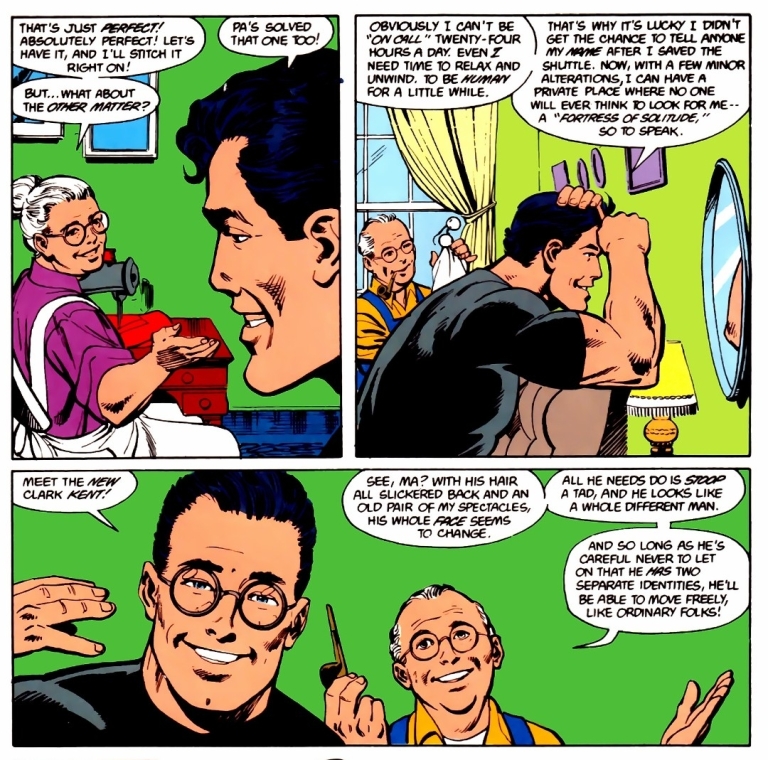
Clark’s earthly parents were indeed involved in his development becoming Superman.

There is no doubt that this John Byrne-led comic book remains great to read and highly significant with anything about Superman. Instead of telling one single extensive story, Byrne created a series of connected short tales that dramatized the icon’s post-Crisis origin and how the Krypton-born American Clark Kent became Superman for the first time ever.

While the prologue set in Krypton was quite heavy with expository dialogue, each subsequent short story was carefully structured and moved at a medium pace gradually emphasizing Clark Kent’s transformation into the Man of Steel. Along the way, there were lots of story details not only about the titular character but also about the Kent couple (Clark’s adoptive parents), what they went through, what secrets had to be kept and more. Very symbolically, this is a tale about an alien human being from space who grew up with traditional American culture and US heartland values while being raised by very loving American parents who previously could not produce children of their own. Through Clark, you will see that he is a blessing for Jonathan and Martha Kent and it is up to the couple to sow good values in him which are essential to his becoming not only a super being among mortals but also his emergence as a hero.

Conclusion

The origin of the post-Crisis Superman is great to read!

The Man of Steel (1986) is indeed a great, character-focused comic book that emphasized the origin and debut of the post-Crisis Superman. John Byrne modernized Superman while still maintaining the classic superhero elements from the icon’s past versions as well as the American identity and ways (none of those woke and internationalist nonsense). This is also the optimistic Superman that is very inspirational which the recent DC cinematic universe (referred to as “DCEU”) of Warner Bros. terribly lacked. This illustrated literature work is also a major cornerstone of the post-Crisis era of DC Comics and John Byrne’s take on Superman is very defining and iconic.

If you are the kind of reader who views Superman widely through pop culture, you will notice specific elements from this comic book that made it into other forms of entertainment media such as Man of Steel (2013), the Christopher Reeve Superman movies, the animated movies, the Lois & Clark: The New Adventures of Superman TV series (starring Dean Cain as the Man of Steel) and more. Those multimedia productions showed how influential this comic book became as a major reference for other creators.

Overall, The Man of Steel (1986) is highly recommended!

+++++

Thank you for reading. If you find this article engaging, please click the like button below, share this article to others and also please consider making a donation to support my publishing. If you are looking for a copywriter to create content for your special project or business, check out my services and my portfolio. Feel free to contact me with a private message. Also please feel free to visit my Facebook page Author Carlo Carrasco and follow me on Twitter at  @HavenorFantasy as well as on Tumblr at https://carlocarrasco.tumblr.com/ and on Instagram at https://www.instagram.com/authorcarlocarrasco

A Look Back at Uncanny X-Men #131 (1980)

Welcome back superhero enthusiasts, 1980s culture enthusiasts and comic book collectors! Today we go back to the year 1980 to take a close look at one of the many tales of the Marvel Comics shared universe told through the monthly series of Uncanny X-Men.

In my previous review, Dazzler was formally introduced as the X-Men encountered her. Along the way, the other newbie Kitty Pryde (Shadowcat) got involved with X-Men members Storm, Wolverine and Colossus and danger got to them. Brewing within the background were plot elements regarding the Hellfire Club and the Dark Phoenix.

With those details laid down, here is a look back at Uncanny X-Men published in 1980 by Marvel Comics with a story written by Chris Claremont and drawn by John Byrne.  

The cover.

Early story

The story begins on the streets of Chicago as the 13-year-old Kitty Pryde desperately runs away from a car that has been chasing her. Just as she trips, the Jean Grey (in her form as the Phoenix) suddenly appears right in front of the car (driven by two armed personnel of the Hellfire Club) and uses her immense power to stop and damage it. This spared Kitty Pryde’s life and made her more confused. Nightcrawler suddenly appears in front of Kitty, grabs her and leap off to a higher place to be safe.

Cyclops and Dazzler arrive to see Phoenix still observing the damaged car and the two Hellfire Club personnel knocked out cold. As Dazzler is amazed by what Phoenix did, Cyclops tells Jean that his instructions were to stop the car but not turning it into scrap. Jean responds by stating that he did not feel Kitty’s stark terror nor did he sense the thoughts of the men who were in the car.

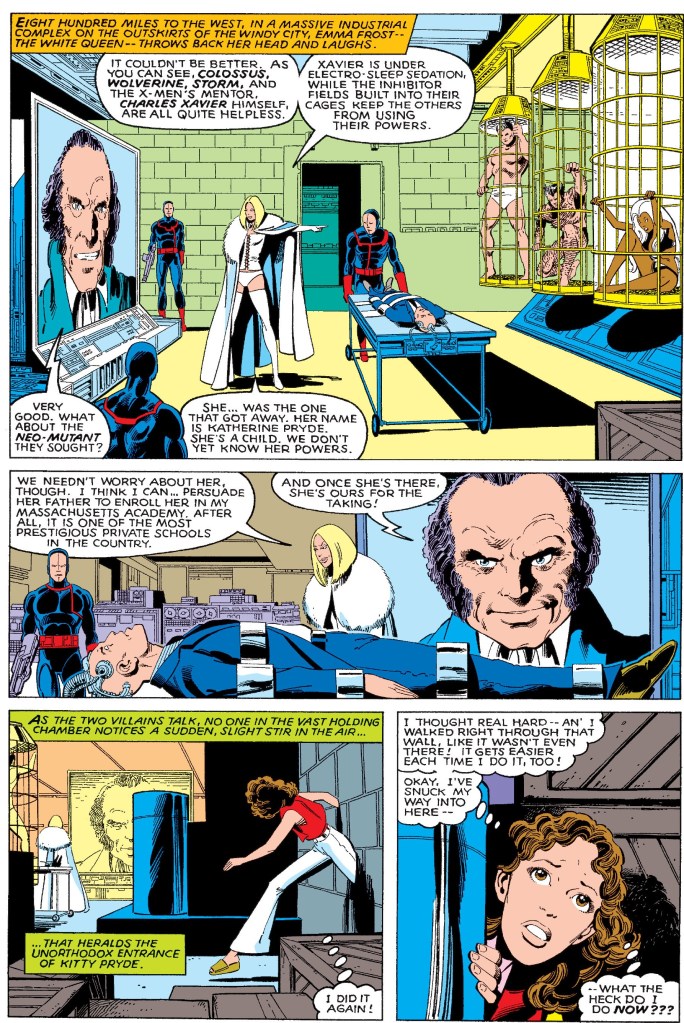
After being called from above by Nightcrawler, Cyclops, Phoenix and Dazzler make their way up to the top of the building. Nightcrawler reveals that Kitty broke away from him and dove right through the roof…

Quality

Kitty Pryde took the risk to help the X-Men free Wolverine.

Upon close inspection, this is a richly layered tale that nicely paid off some of the build-up in the previous issue while consistently building up the plot elements for the events to follow (the eventual Hellfire Club encounter and the Dark Phoenix Saga). In this issue, you will get to see the X-Men in action with Dazzler (who just joined in to help them without fully committing to joining their team) on a series of events that involve encountering Miranda Frost and finding their captured teammates.

As this was written by Chris Claremont, you will see a lot of character development (aided a lot with the use of thought balloons) and key observations emphasized (clever exposition of details) as the plot moved forward. This tale has the classic elements of good-versus-evil backed with action and some twists that will definitely keep readers entertained. It is through the dramatization and observations of the characters that made the narrative deep and by the end of it, you will most likely get to know the characters a lot more.

Apart from witnessing Dazzler’s first unofficial mission (note: misadventure) with the X-Men, you will see Kitty Pryde shine as the fragile yet capable teenager do something heroic which symbolically justified her entry into the X-Men. This story also touches on the theme of immense power which was dramatized nicely through Jean Grey and Cyclops. Cyclops here was written to be very concerned about Jean Grey having god-like powers as the Phoenix which he sees as too risky and he hopes that she will maintain self-control. Even Storm expressed the same concern about the Phoenix. All of these dramatics combined with the superhero spectacle and steady way of presenting exposition were nicely pulled off by the Claremont-Byrne team.

Finally, I want to say that Emma Frost was portrayed as a ruthless, cold-hearted and elitist super villain who happens to be one of the central figures of the Hellfire Club (which itself was being built up by Claremont-Byrne as a dangerous force of opposition for the X-Men to face). Emma Frost is not just another evil figure…she is a telepath capable of overwhelming others and she has a very high ambition of accumulating power socially, economically and politically. Clearly she was created to be a recurring evil figure within Marvel’s shared comic book universe.

Conclusion

A scene showing a few X-Men members with Dazzler and Kitty Pryde as the clear newcomers.

Even if you see Uncanny X-Men (1980) as simply a build-up tale for the inevitable Dark Phoenix Saga, it is clear that the comic book still stands out on its own as it strongly paid-off what was built up in the previous issue and the high quality on storytelling was successfully maintained. This is an entertaining read and, quite notably, it develops specific characters in very believable ways. So much so, you will get to know the characters better by the time you reach the end. As for the fans of Dazzler, there are things to enjoy in this X-Men tale and it definitely is a must-read before reading Dazzler #1 (1981).

Overall, Uncanny X-Men (1980) is highly recommended!

+++++

Thank you for reading. If you find this article engaging, please click the like button below, share this article to others and also please consider making a donation to support my publishing. If you are looking for a copywriter to create content for your special project or business, check out my services and my portfolio. Feel free to contact me with a private message. Also please feel free to visit my Facebook page Author Carlo Carrasco and follow me on Twitter at  @HavenorFantasy as well as on Tumblr at https://carlocarrasco.tumblr.com/ and on Instagram at https://www.instagram.com/authorcarlocarrasco

A Look Back at The Further Adventures of Indiana Jones #1 (1983)

Disclaimer: This is my original work with details sourced from reading the comic book and doing personal research. Anyone who wants to use this article, in part or in whole, needs to secure first my permission and agree to cite me as the source and author. Let it be known that any unauthorized use of this article will constrain the author to pursue the remedies under R.A. No. 8293, the Revised Penal Code, and/or all applicable legal actions under the laws of the Philippines.

Welcome back fellow geeks, pop culture enthusiasts and comic book collectors! I want to make things clear to all of you that when it comes to movies, Indiana Jones is truly an American icon who will be remembered for a long time thanks to the combined works of the legendary creative team of Steven Spielberg, George Lucas and Harrison Ford.

I love watching the films Raiders of the Lost Ark (1981), Indiana Jones and the Temple of Doom (1984), Indiana Jones and the Last Crusade (1989) and Indiana Jones and the Kingdom of the Crystal Skull (2008). While the respective qualities, artistry and fun factors of those films varied through the years, there is no denying that those are cinematic adventures worth replaying.

In case you are wondering, I have no intention to watch Indiana Jones and the Dial of Destiny (2023) since that movie was specifically handled by Kathleen Kennedy whose leadership of Lucasfilm (under the Disney banner) ruined Star Wars since 2015. It does not help that the new movie was not directed by Spielberg and clearly it does not involve George Lucas on the creative side. I should state that I reject wokeness, political correctness and identity politics which defined Kathleen Kennedy’s handling of Star Wars and Indiana Jones.

That being said, now is a good time to back into the 1980s when the Indiana Jones entertainment franchise was still new and creatively expanding into other forms of media. In fact, Marvel Comics started publishing an Indiana Jones comic book series between Raiders of the Lost Ark and Indiana Jones and the Temple of Doom.

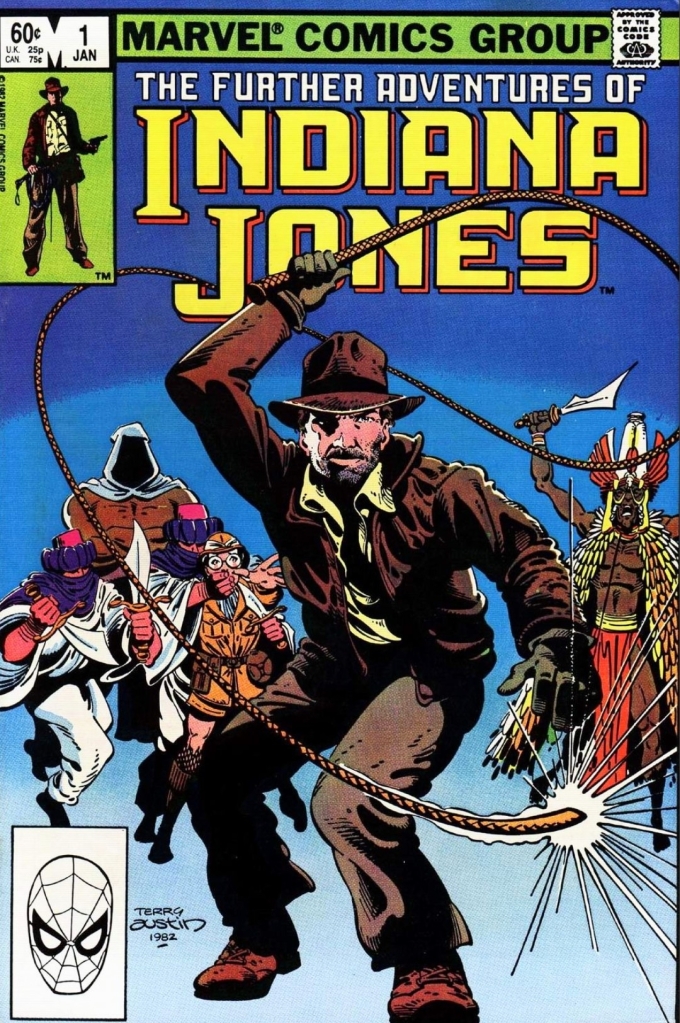
With those details laid down, here is a look back at The Further Adventures of Indiana Jones , published in 1983 by Marvel Comics with a story written and drawn by John Byrne with ink work by Terry Austin.

The cover.

Early story

The story begins with Indiana Jones (wearing formal attire for his academic profession) attempting to whip a small stick off the mouth of Miss Greebly who was standing very still. Jones’ superior Dr. Marcus came in to witness the stunt.

Shortly after, Jones and Marcus meet with former student Charlie Dunne who reveals to them he and his sister Edith learned the location of the Ikons of Ikammanen. Just seconds after stating he could prove that the ikons exist, Dunne suddenly gets hit on the back with a knife.

With Dunne suddenly killed and the discreet killer already gone, Jones and Marcus examine the content of the victim’s bag and find a map of coastal Africa, a photograph of a temple and an address…

Quality

Indiana Jones and Edith on a dangerous search.

I will start by stating the obvious thing about this comic book…it looks and feels like a genuine Indiana Jones adventure with clear inspiration taken from the 1981 movie. The basic elements are here: Indy does research and some detective work, he travels overseas searching for answers, faces danger along the way, and gets involved in a series of unexpected events. The good news is that John Byrne crafted a fun and high-quality literary adventure featuring the cinematic icon.

This comic book has an original story concept and deliberately the narrative flowed at a medium pace which allows build-up to immerse readers into the details, followed by some bouts of pay-off to entertain readers. I also like the way the narrations laid down the details with the intention of helping readers understand not only the situations, locations and people, but also giving them unique perspectives about Indy himself. The dialogue was well written and clearly believable. When Indiana Jones explains details, he really uses the knowledge he gained through academic research as well as recollections from his past expeditions or adventures.

I should also state that Byrne gave Indiana Jones, the other characters and locations stylized looks. I don’t mind Jones not resembling Harrison Ford at all but Byrne still made him recognizable in his own unique way. There were some location images that looked pretty detailed.

Conclusion

And just like that, Indiana Jones takes a leave from academic work for his next adventure.

The best way to describe The Further Adventures of Indiana Jones (1983) is this…John Byrne and his team succeeded in making this a fun read inspired by elements of Raiders of the Lost Ark. The story has a strong adventure feel with Indy having a strong presence and the introduction of new characters were executed smoothly. For a launch issue, this one is indeed engaging to read and it succeeded in convincing me to anticipate the next issue. Ultimately it is clear that John Byrne really is an effective Indiana Jones storyteller.

Overall, The Further Adventures of Indiana Jones (1983) is highly recommended!

+++++

Thank you for reading. If you find this article engaging, please click the like button below, share this article to others and also please consider making a donation to support my publishing. If you are looking for a copywriter to create content for your special project or business, check out my services and my portfolio. Feel free to contact me with a private message. Also please feel free to visit my Facebook page Author Carlo Carrasco and follow me on Twitter at  @HavenorFantasy as well as on Tumblr at https://carlocarrasco.tumblr.com/ and on Instagram at https://www.instagram.com/authorcarlocarrasco

A Look Back at Superman #5 (1987)

Disclaimer: This is my original work with details sourced from reading the comic book and doing personal research. Anyone who wants to use this article, in part or in whole, needs to secure first my permission and agree to cite me as the source and author. Let it be known that any unauthorized use of this article will constrain the author to pursue the remedies under R.A. No. 8293, the Revised Penal Code, and/or all applicable legal actions under the laws of the Philippines.

Welcome back superhero enthusiasts, 1980s culture enthusiasts and comic book collectors! Today we go back to the year 1987 and explore a chapter of the post-Crisis DC Comics universe through a Superman tale.

To put things in perspective, John Byrne became in charge of redefining the iconic Superman during the post-Crisis age and he sure had a lot of creative freedom to not only modernize the character but also make him relevant to the public while also pleasing long-time fans. To say the least, the post-Crisis era was a time of daring concepts with the established superheroes of DC Comics. For more insight on Byrne’s handling of the Man of Steel, read my other retro comic book review by clicking here.

With those details laid down, here is a look back at Superman , published in 1987 by DC Comics with a story written and drawn by John Byrne.

The cover.

Early story

The story begins with Clark Kent having an outrageous dream in which he and Wonder Woman fight powerful enemies together. Shortly after arriving at the Daily Planet for duty, Clark learns from his boss Perry White that his office rival Lois Lane is already in South America literally digging on a significant discovery there. After being sent there by his boss, Clark flies to the south as Superman.

Upon arrival, Superman does a super speed reconnoiter at the dig site in the middle of a forest before changing back into Clark Kent. He eventually finds Lois Lane who is very surprised to see him. Even though he explained things to her, Lois remains doubtful of Clark as she still sees him as a journalistic rival who could potentially ruin her hot scoop…

Quality

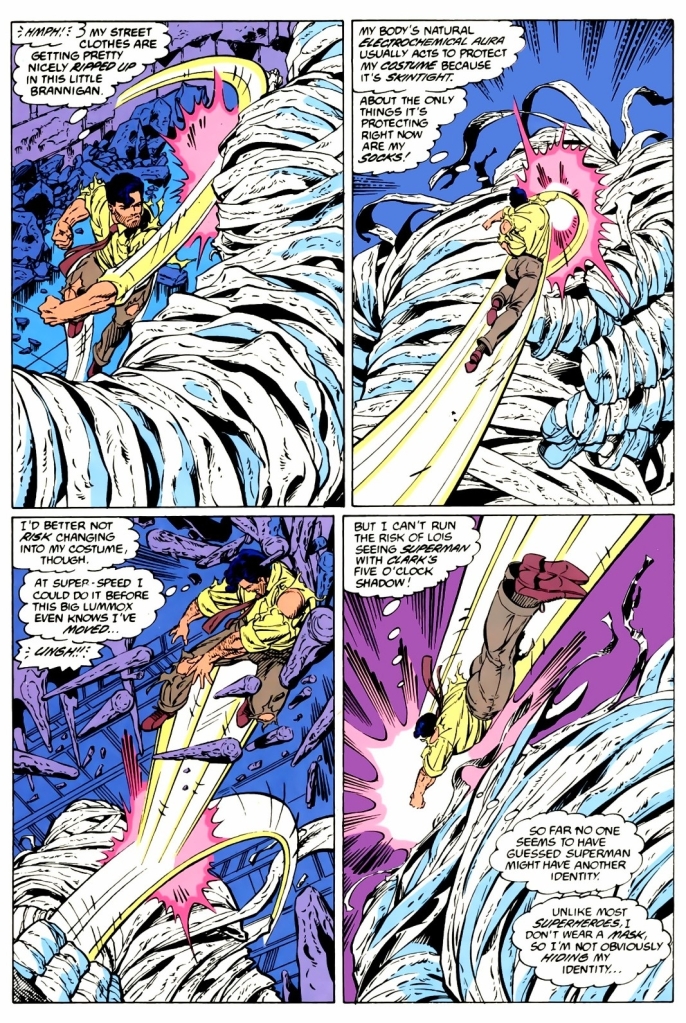
In his civilian form as Clark Kent, Superman fights the huge mummy figure.

I can say that John Byrne’s brilliance is very evident in this comic book. Firstly, this is a story that sheds light on the journalistic rivalry between Lois and Clark that brings back memories about what happened with the Superman hot scoop in The Man of Steel limited series. Here, Lois remains doubtful about Clark and even shows some bitterness as she is on the verge of a major discovery in South America.

Secondly, this story is also an accidental adventure that creatively has a mix of Indiana Jones, UFOs and ancient horror all throughout. The build-up here is pretty strong as the tale focused strongly on the discovery aspect of the dig site which eventually led to a series of action-packed unfortunate events that really pushed Clark Kent both as civilian and as a superhero. Here, Clark has the tough task to fight an over-sized enemy (note: Byrne’s own take on the mummy) to keep Lois and the others safe while also making certain that he keeps his identity secret.

Along the way, Byrne inserted lots of in-depth details backed with observations (by the characters) which made this action-packed tale a cerebral read. This is a fine example of being creative with handling Superman while catering to readers who love spectacle as well as satisfying those who enjoy a smart presentation of the icon. In other words, there is nothing brainless or dumb to find here.

Conclusion

The journalistic rivalry between Clark and Lois Lane is really engaging to read.

Superman (1987) is a very good read and this is fine showcase of the brilliant handling of the Man of Steel done by John Byrne. Aesthetics aside, this comic book is a relic that highlights the time when Lois and Clark were rival writers and the idea of them getting romantically involved seemed very unlikely at the time of its publishing during the early stage of the post-Crisis era. It was in many ways a defiance of the status quo of the original DC multiverse that had Lois and Superman as lovers. As an adventure, this comic book is very entertaining and engaging and the thing here is that it is only the first part of its arc.   

Overall, Superman (1993) is highly recommended.

+++++

Thank you for reading. If you find this article engaging, please click the like button below, share this article to others and also please consider making a donation to support my publishing. If you are looking for a copywriter to create content for your special project or business, check out my services and my portfolio. Feel free to contact me with a private message. Also please feel free to visit my Facebook page Author Carlo Carrasco and follow me on Twitter at  @HavenorFantasy as well as on Tumblr at https://carlocarrasco.tumblr.com/ and on Instagram at https://www.instagram.com/authorcarlocarrasco

A Look Back at Superman #2 (1987)

Disclaimer: This is my original work with details sourced from reading the comic book and doing personal research. Anyone who wants to use this article, in part or in whole, needs to secure first my permission and agree to cite me as the source and author. Let it be known that any unauthorized use of this article will constrain the author to pursue the remedies under R.A. No. 8293, the Revised Penal Code, and/or all applicable legal actions under the laws of the Philippines.

Welcome back superhero enthusiasts and comic book collectors! Today we explore a key chapter in the post-Crisis era of DC Comics through a Superman comic book. This time, however, we go back to the 1980s, specifically the time when the legendary John Byrne led the direction of developing and modernizing Superman.

After the critical and commercial success of the 1986 limited series The Man of Steel led by John Byrne, the stage was set on telling more stories of what was back then the modernized Superman. In 1987, the monthly series simply titled Superman launched and its first issue had the Man of Steel up against Metallo (also modernized by Byrne). Just before that particular story ended, Metallo was taken away.

With those details laid down, here is a look back at Superman , published in 1987 by DC Comics with a story written and illustrated by John Byrne.

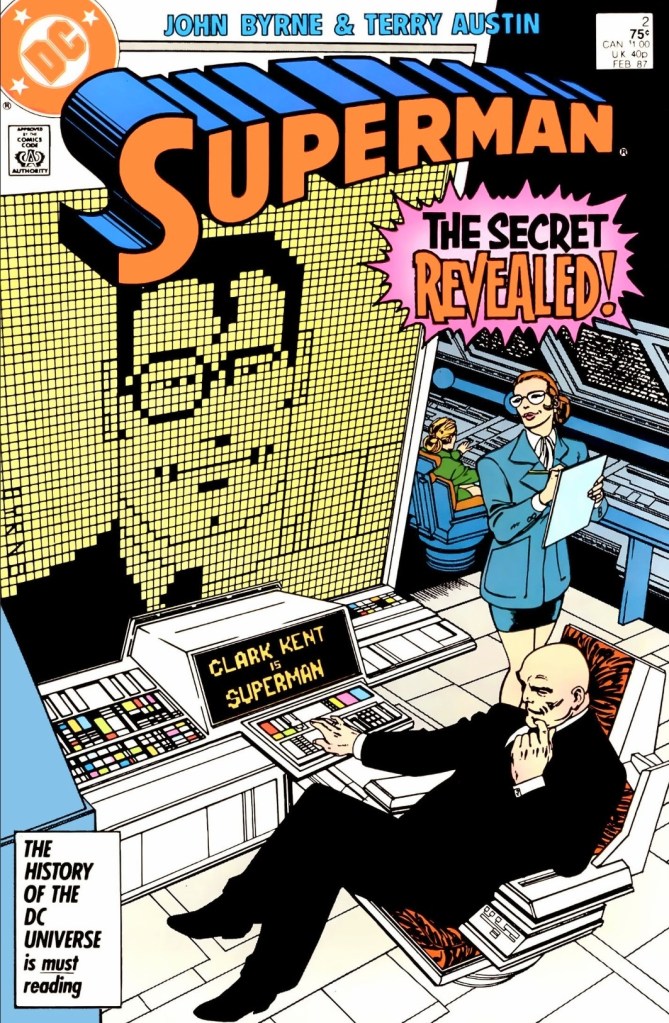
The cover.

Early story

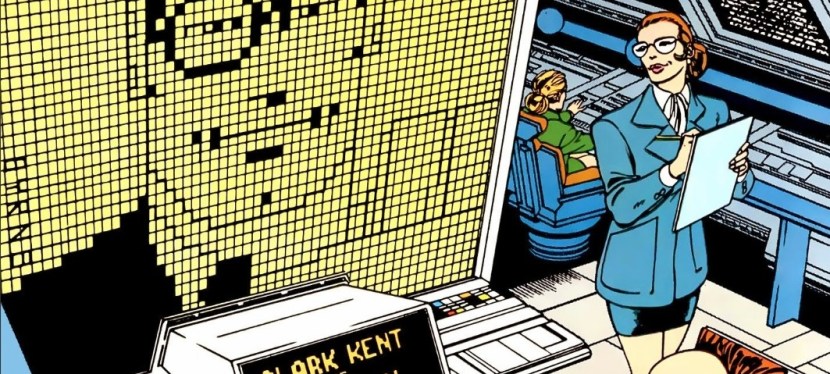
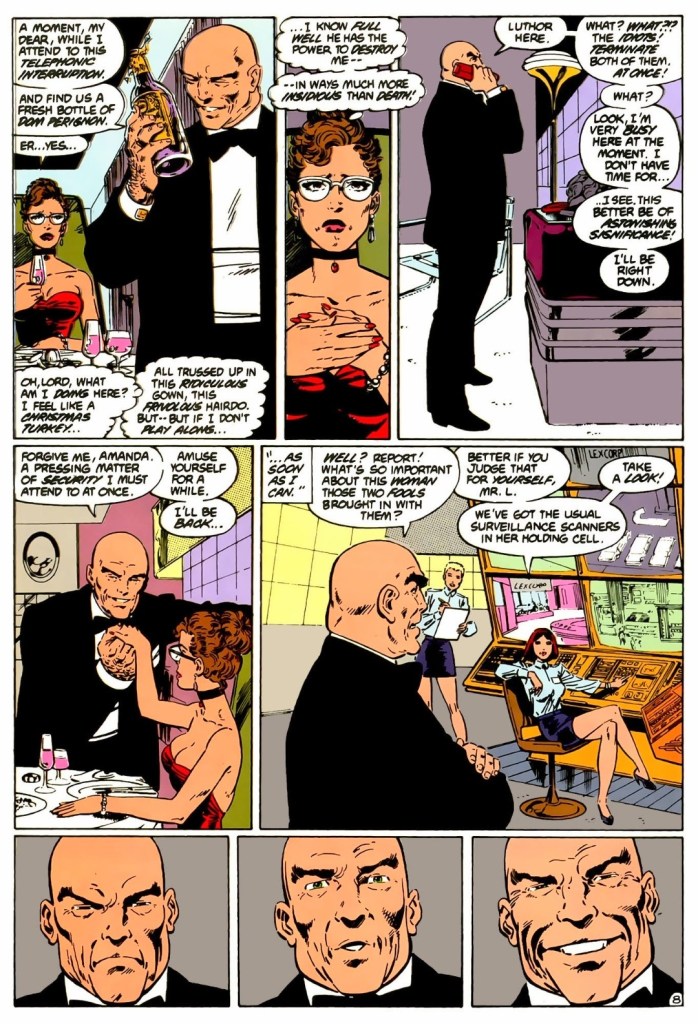
The story begins inside a high-tech facility of the powerful business tycoon Lex Luthor who has been obsessed with Superman since their first encounter. In the presence of many female employees (wearing suits, short skirts and high heels), he watches many huge monitors showing the image of a certain lady standing among bystanders.

His employee Amanda tells him that based on their computer-enhanced analysis of all available news footage of Superman in action, the lady in the monitor appeared in public and she first appeared with the crowds weeks after the Man of Steel prevented a space plane from crashing. Luthor begins to speculate the lady could be connected to Superman and tells two other employees to find her, and he would not tolerate any delays.

Luthor then faces Amanda, holds up her left hand with his two hands and tells her she may join him for dinner that evening. When Amanda expressed that she has a prior commitment (gently rejecting Luthor), Luthor discreetly hurts her hand forcing her to accept his invitation.

Luthor then enters a laboratory with his employees there wearing protective suits. Near them is the restrained body of Metallo whose metallic chest is open with a huge piece of Kryptonite (installed as his power source) fully exposed…  

Quality

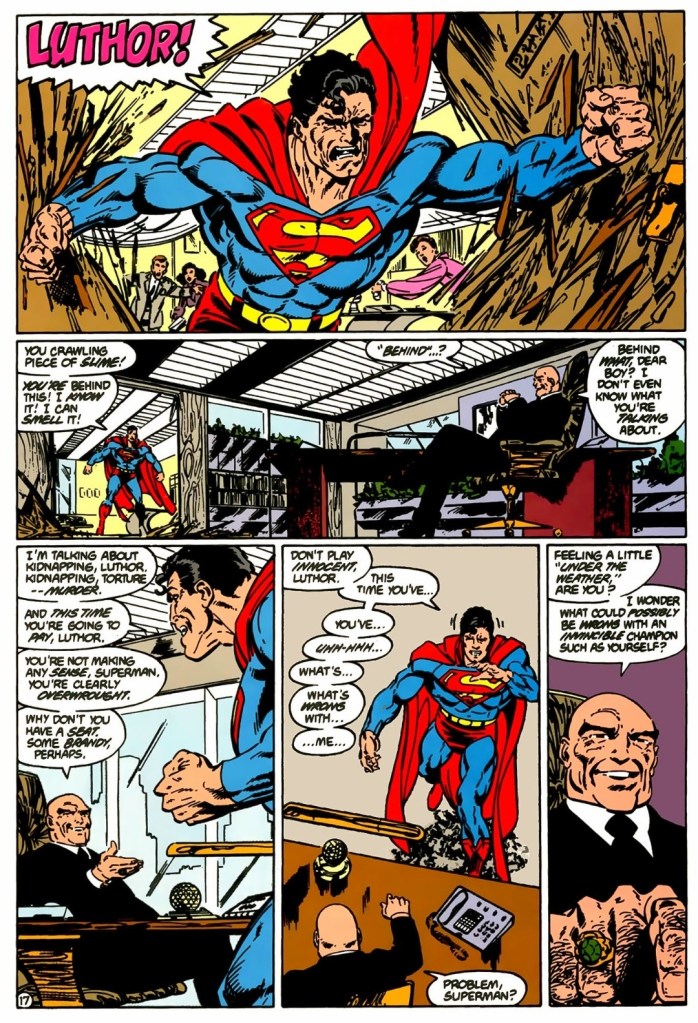
Superman and the tycoon Luthor.

Let me get straight to the point about this Superman story…this one has Lex Luthor as the main character with Superman having the supporting role. That is NOT a bad thing at all because John Byrne cleverly crafted the story showing how Luthor – who is no longer the criminal mad scientist of the previous multiverse of DC Comics – remains the most brilliant and powerful opposition that Superman cannot simply defeat. Being a billionaire, Luthor has vast financial, scientific and technological resources that enable him to overwhelm Superman and even get to the individual people that the Man of Steel cares the most. Luthor also is aware of how laws work and he knows that Superman’s dedication of following the rule of law is a weakness.

About Superman, this comic book shows the more human and more vulnerable side of him. You will the Man of Steel with a wide emotional range moving from caring to getting outraged within a few pages. Along the way, the hero’s secret begins to break down which alone would make you wish to help him. This is a clever portrayal of DC’s icon.

More on the plot itself, this comic book highlights Clark/Superman’s personal connection with small town sweetheart Lana Lang who ends up getting abducted and tortured by Luthor’s forces. Along the way, the breaking down of Superman’s secret identity was very well dramatized and the pacing was excellent. I should state that the ending is a must-see and surely it will make you realize the dynamics of absolute power.

Conclusion

The post-Crisis Lex Luthor is not only a brilliant super villain, he also has his own approach on socializing and getting results.

Superman (1987) is undoubtedly very brilliant and great to read! From start to finish, John Byrne crafted a story that carefully balanced fantasy with realism while also emphasizing Luthor as the greatest enemy of Superman, as well as dramatizing the hero’s relationships with the Smallvile people of his past. Considering how powerful he really is, Superman here was portrayed to be at a major disadvantage against Lex Luthor in more ways than one. Luthor here is not just one very powerful tycoon, he is also one totally absolute danger towards others and he even has his own style of charisma. This is clearly a great way of modernizing the Superman-Luthor rivalry in the post-Crisis era and 1980s America in general. This is classic superhero literature that should be read!

Overall, Superman (1987) is highly recommended!

+++++

Thank you for reading. If you find this article engaging, please click the like button below, share this article to others and also please consider making a donation to support my publishing. If you are looking for a copywriter to create content for your special project or business, check out my services and my portfolio. Feel free to contact me with a private message. Also please feel free to visit my Facebook page Author Carlo Carrasco and follow me on Twitter at  @HavenorFantasy as well as on Tumblr at https://carlocarrasco.tumblr.com/ and on Instagram at https://www.instagram.com/authorcarlocarrasco
A Look Back at Uncanny X-Men #130 (1980)

Disclaimer: This is my original work with details sourced from reading the comic book and doing personal research. Anyone who wants to use this article, in part or in whole, needs to secure first my permission and agree to cite me as the source and author. Let it be known that any unauthorized use of this article will constrain the author to pursue the remedies under R.A. No. 8293, the Revised Penal Code, and/or all applicable legal actions under the laws of the Philippines.

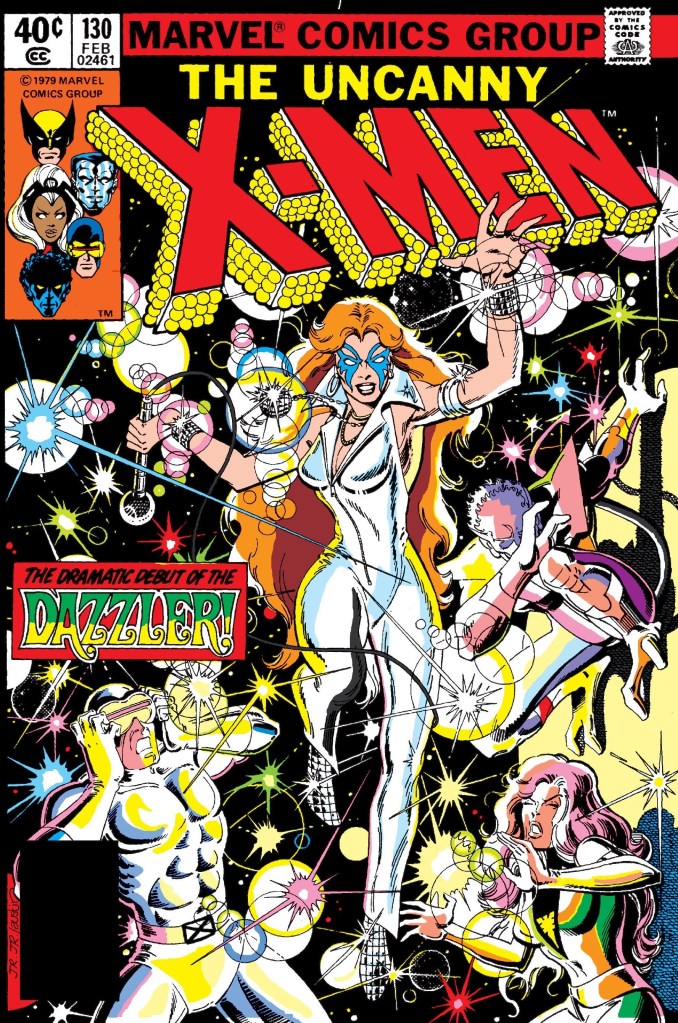
Welcome back, X-Men fans, superhero enthusiasts, 1980s culture enthusiasts and comic book collectors! Today, we look back at the year 1980 specifically the time when the Uncanny X-Men monthly series was spearheaded by legendary creators Chris Claremont and John Byrne. In fact, we will examine here the comic book debut of Dazzler, a mutant with the ability to convert the vibrations of sound into light and energy beams. Dazzler is quite unique among all superheroes as she has been portrayed as a singer, an actress, a model and got associated with other Marvel superheroes. Marvel Comics went on to actually publish a regular comic book series about Dazzler which lasted over forty issues.

To say the least, the creation of Dazzler is quite intriguing as it involved a commission by an American record label for a special project with a disco queen character as the core concept and that Marvel Comics itself would develop the superhero (in the form of a singer) and that an actual singer will be produced by the said record label. Then Marvel editor-in-chief Jim Shooter wrote a treatment for the project which turned from an animated special into a live-action film. As creative process for Dazzler went on at Marvel, Tom DeFalco (who later succeeded Shooter as editor-in-chief) wrote her creation while John Romita, Jr. did the character design. The name Dazzler was the result of a suggestion by Roger Stern. There also was some Bo Derek influence on the creation of Dazzler.

While the special project did not happen due to the financial problems of the record label, Marvel went on to formally introduce Dazzler in the pages of an Uncanny X-Men comic book handled by Claremont-Byrne team.

With those details laid down, here is a look back at Uncanny X-Men , published by Marvel Comics in 1980 with a story co-written by Chris Claremont and John Byrne. Byrne drew the art.

The cover.

Early story

The story begins on Delano Street in Lower Manhattan. Scott Summers/Cyclops, Jean Grey and Nightcrawler had just arrived on a mission to locate a mutant (detected by Cerebro) not knowing that they themselves are bring monitored by a hidden sinister force. With Nightcrawler left in-charge of guarding their Rolls Royce, Scott and Jean enter a deteriorating building only to find a club on an upper level full of lights, loud music, dancing and a lot of people. They begin to start searching for the detected mutant.

Outside, a truck parks on the other side of the same street where the X-Men’s Rolls Royce was parked at. Inside the truck one of the operators communicates to a certain Mr. Shaw who states that the Hellfire Club is proud. Over at the Hellfire Club’s headquarters, Sebastian Shaw and Jason Wyngarde talk about the X-Men members searching the disco. Wyngarde moves on with his plan to subvert Jean Grey and gather her into their fold…

Quality

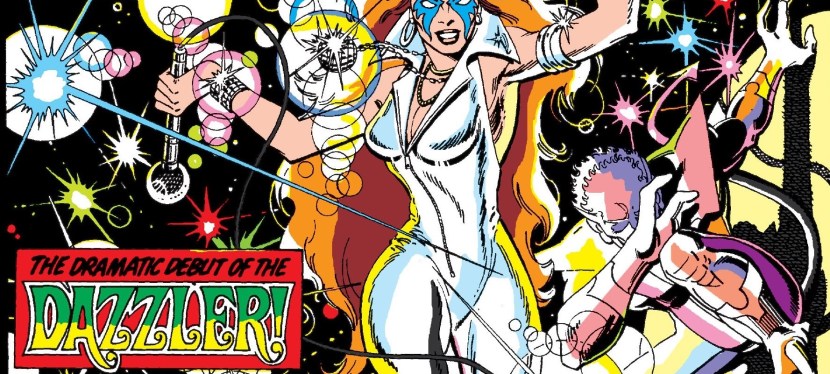
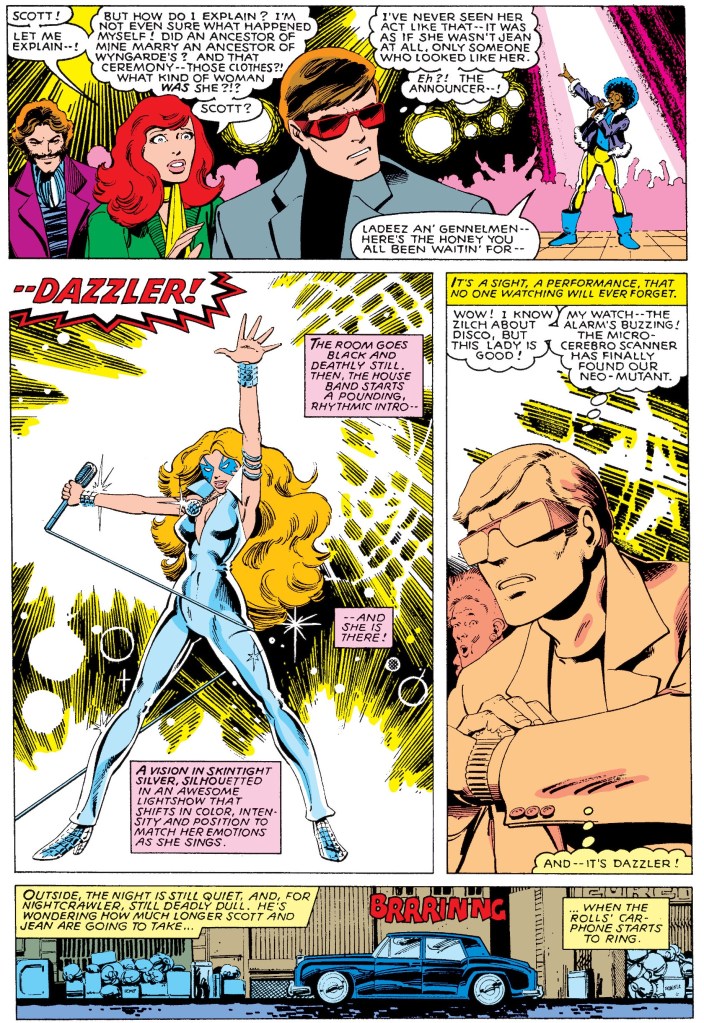
Dazzler’s very debut on this page.

The storytelling is great which is not surprising as this was done by Claremont and Byrne. It is clear that there was a good amount of preparation done which explains this comic book’s excellent ways on emphasizing the following story points: the build-up of the Hellfire Club as a potent force of evil that await the X-Men, Kitty Pryde/Shadowcat’s growing involvement, the vulnerability of Jean Grey, the build-up of the Phoenix, and the debut of Dazzler. Along the way, the creative team also ensure that the dialogue was rich (the same thing also with the thought balloons Claremont came up with), the emphasis of super powers made sense, the action scenes were satisfying and there was a good amount of suspense here.

I love the way Dazzler’s first-ever appearance was handled as it happened just after an intriguing scene about Jean Grey’s vulnerability took place. Her debut also occurred at a point when Jean and Scott seemed to be failing to find her. Of course, the 1970s disco vibe was very strong with Dazzler.

Conclusion

The plot thickens…

Without a doubt, Uncanny X-Men (1980) is a classic X-Men tale by the Claremont-Byrne team who succeeded in not only introducing Dazzler into Marvel’s comic book universe but also with strongly emphasizing the Hellfire Club as a powerful opposition which went on to have a key part in the legendary Dark Phoenix storyline that followed. Dazzler meanwhile became a very popular superhero of Marvel’s going into the 1980s. For the modern-day comic book reader, this comic book can be quite challenging to read as it is very wordy (typical of Claremont).

If you are seriously planning to buy an existing hard copy of Uncanny X-Men (1980), be aware that as of this writing, MileHighComics.com shows that the very fine copy of the regular edition costs $1,407 while the fine copy of the newsstand edition costs $1,013.

Overall, Uncanny X-Men (1980) is highly recommended!

+++++

Thank you for reading. If you find this article engaging, please click the like button below and also please consider sharing this article to others. If you are looking for a copywriter to create content for your special project or business, check out my services and my portfolio. Feel free to contact me as well. Also please feel free to visit my Facebook page Author Carlo Carrasco and follow me at HavenorFantasy@twitter.com
A Look Back at X-Men #5 (1992)

Disclaimer: This is my original work with details sourced from reading the comic book and doing personal research. Anyone who wants to use this article, in part or in whole, needs to secure first my permission and agree to cite me as the source and author. Let it be known that any unauthorized use of this article will constrain the author to pursue the remedies under R.A. No. 8293, the Revised Penal Code, and/or all applicable legal actions under the laws of the Philippines.

Welcome back, superhero enthusiasts, comic book collectors, fans of 1990s culture and fans of Marvel Comics! Today we revisit the adjective-less X-Men monthly series (Volume 2) that started in 1991 with the combined talents of Chris Claremont and Jim Lee. For those who are unaware, Chris Claremont had his conflict behind the scenes with then X-Men comics editor Bob Harras which led to him departing the X-Men series with issue #3.

Previously I reviewed X-Men #4 which by today’s standards is highly significant and very expensive to acquire as it marked the literary debut of Omega Red who made quite an impact with X-Men fans. It should be noted that Wolverine and Omega Red had encountered each other far back in time and issue marked the renewal of their rivalry.

With those details laid down, here is a look back at X-Men , published in 1992 by Marvel Comics with a story written by Jim Lee (plot) and John Byrne (script), The art was done by Lee with ink work done by Scott Williams, Art Thibert, Bob Wiacek and Joe Rubinstein.

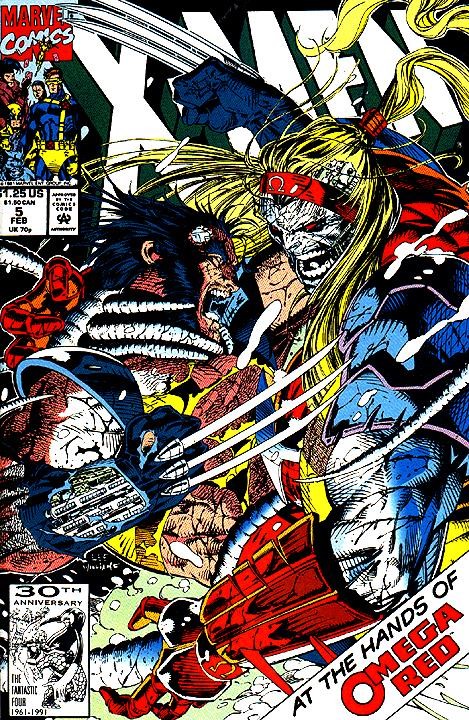
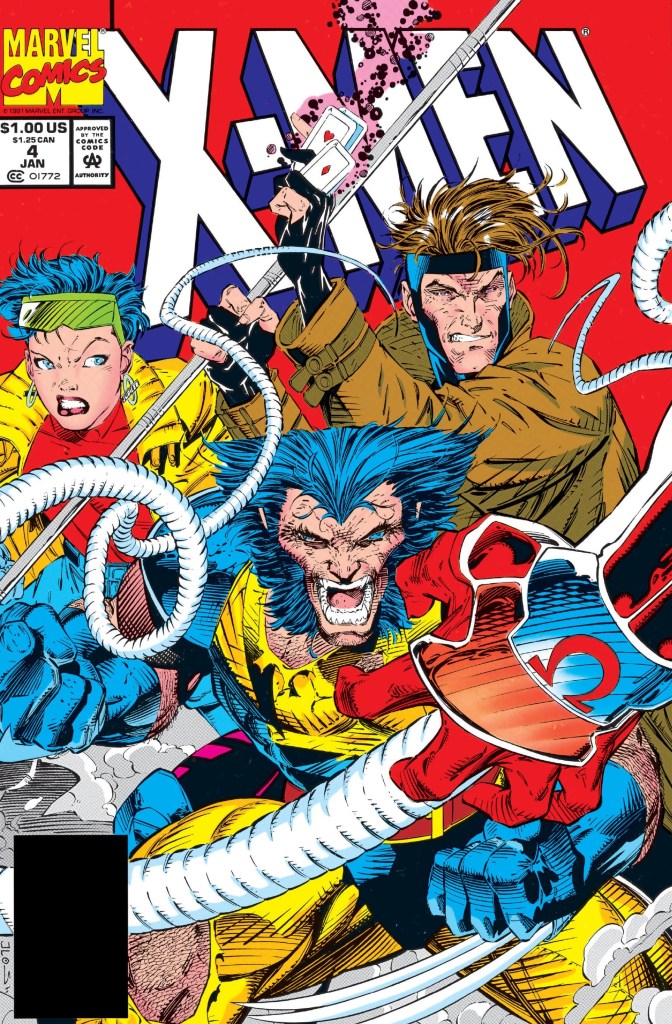
The cover.

Early story

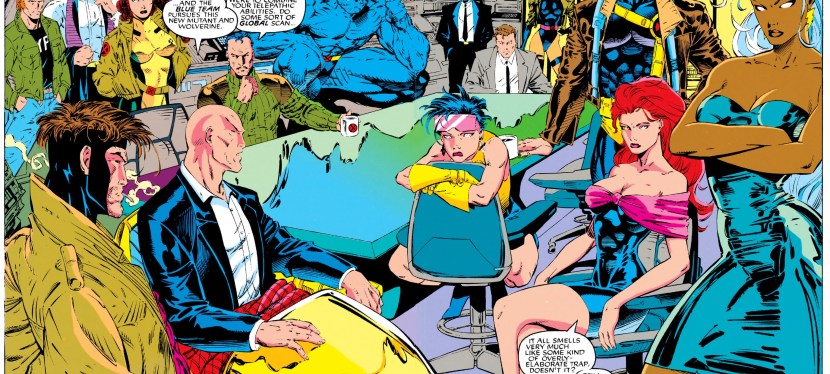
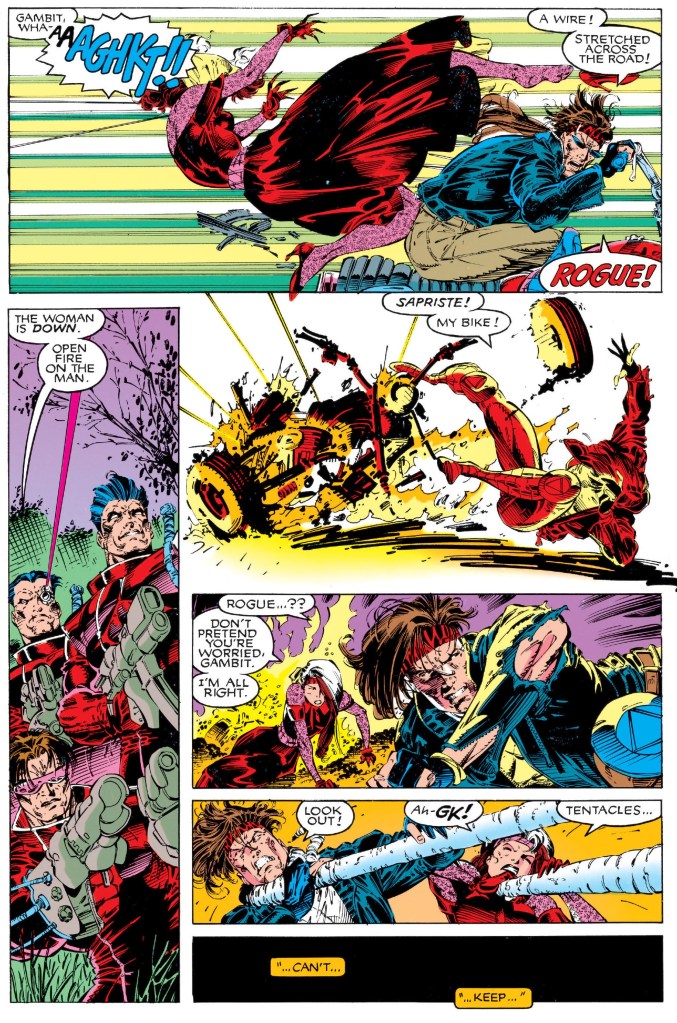
This for me is the money shot of the comic book. Although Wolverine is absent, you get to see the entire Blue and Gold teams with Charles Xavier as drawn by Jim Lee.

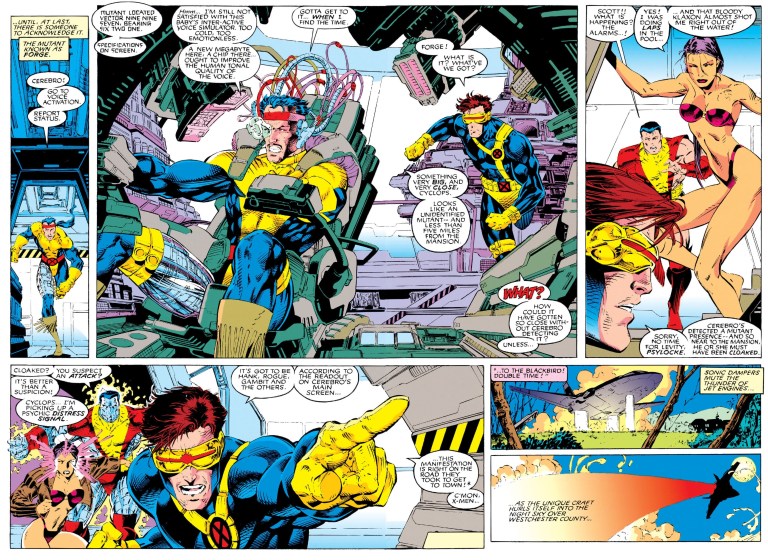
The story begins with Cerebro detecting an unidentified mutant signature in the presence of X-Men members who were out of the mansion. Forge tells Cyclops about the disturbance happening less than five miles away from their mansion. Colossus and Psylocke join in and quickly they leave the mansion with Cyclops using the Blackbird.

Not too far away, Gambit, Rogue, Jubilee and Beast are held captive inside a vehicle with an armed man in their presence. Gambit starts the effort to free his teammates using one of his charged cards.

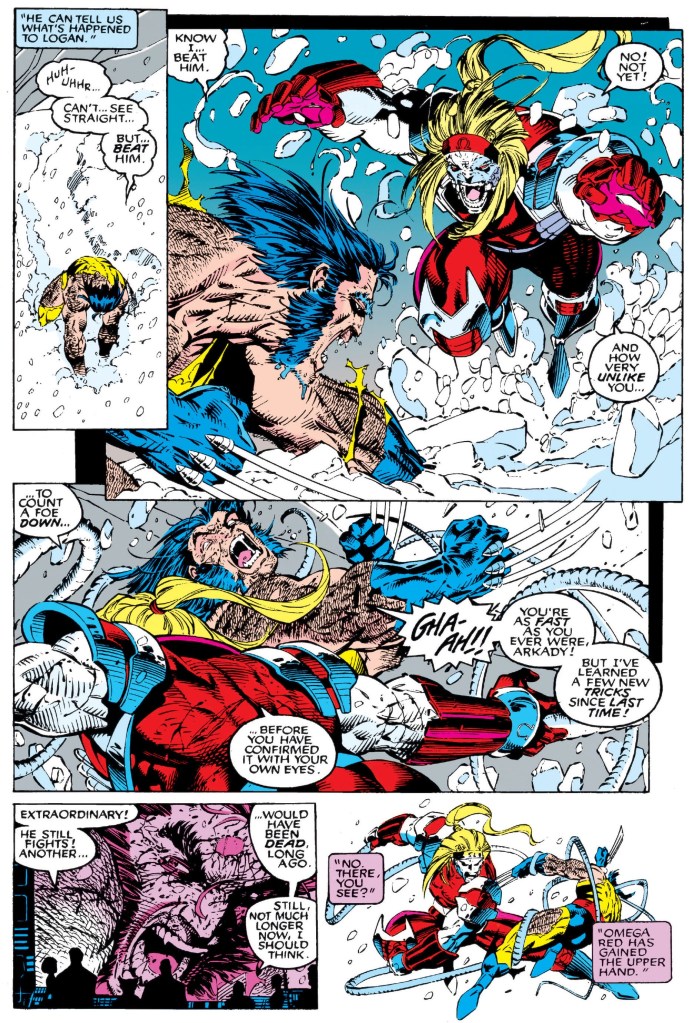
Elsewhere in a snowy place, Wolverine is seen struggling thinking he defeated his old rival Omega Red. Suddenly the Russian mutant jumped at him and the two resumed fighting. Their fight is being monitored from a distance…

Quality

The Wolverine-Omega Red rivalry is a must-see.

When it comes to storytelling, it is obvious that the writing duo of Jim Lee and John Byrne did their best to push the envelope and break new ground as far as telling an X-Men story goes. For one thing, there is the presence of paramilitary elements which are common with Jim Lee’s creations. There are even flashbacks into the past in which Wolverine (then called Logan) actually took part in a special forces operation with a few notable others. These flashbacks expands further the personal history of Wolverine in a really intriguing way. With the way the story was presented, it is clear that the new creative team pulled off serious moves in modernizing the way X-Men stories were told in comparison to the way Chris Claremont told all those many such stories during his long run.

When it comes to the visuals, Jim Lee did another great job as each page looks great and he proved to be clever with the way he visualized the script. As this comic book was inked by more than one inker, there were subtle differences with regards to contrast as well as ink intensity.

Conclusion

Cyclops and his teammates move out.

X-Men (1992) is another great comic book that involved Jim Lee’s art. Apart from the modernizing of the storytelling, this comic book further expanded the past of Wolverine while successfully giving readers more of Omega Red who is now a major supervillain of Marvel’s.

If you are seriously planning to buy an existing hard copy of X-Men (1992), be aware that as of this writing, MileHighComics.com shows that the near-mint copy of the regular edition costs $27 while the near-mint copy of the newsstand edition costs $79.

Overall, X-Men (1992) is highly recommended!

+++++

Thank you for reading. If you find this article engaging, please click the like button below and also please consider sharing this article to others. If you are looking for a copywriter to create content for your special project or business, check out my services and my portfolio. Feel free to contact me as well. Also please feel free to visit my Facebook page Author Carlo Carrasco and follow me at HavenorFantasy@twitter.com
A Look Back at X-Men #4 (1992)

Disclaimer: This is my original work with details sourced from reading the comic book and doing personal research. Anyone who wants to use this article, in part or in whole, needs to secure first my permission and agree to cite me as the source and author. Let it be known that any unauthorized use of this article will constrain the author to pursue the remedies under R.A. No. 8293, the Revised Penal Code, and/or all applicable legal actions under the laws of the Philippines.

Welcome back, superhero enthusiasts, comic book collectors and X-Men fans! Previously, I reviewed X-Men #3 (1991) which, at the time of its release, marked the end of the era of Chris Claremont who spearheaded the development and storytelling of the X-Men since the mid-1970s. Along the way, he clashed with X-Men books editor Bob Harras behind the scenes at the headquarters of Marvel Comics which was a factor to his departure. It is notable that Claremont returned to Marvel in 1997 as editorial director.

Going back to 1991, Marvel had Jim Lee as their top-notch talent to sell loads of X-Men comic books to buyers. Inevitably as Claremont departed, Marvel bet big on Lee and supported his move to set a new creative direction for the X-Men.

With those details laid down, here is a look back at X-Men , published in 1992 by Marvel Comics with a story by Jim Lee and John Byrne. Lee drew the comic book with Scott Williams as the inker.

The cover.

Early story

The story begins in a secret facility in the South Pacific. A sleeping figure wakes up and the men wearing protective suits near him carefully observe his moves. Suddenly, the men died horribly. The figure, with white-colored skin and long blond hair, says, “Who has brought me back from the dark domain of death? Who has summoned Omega Red?”

Behind a protective window, a man starts talking to Omega Red and he shows him a picture of Wolverine (in his civilian identity). Omega Red recognizes Logan…

Quality

Gambit and Rogue in the heat of action.

Being one of the first X-Men comic books published in the so-called post-Claremont era, this comic book has a solid story and a lively presentation of the X-Men’s Blue Team members. I figured that John Byrne delivered the solid dialogue given his previous experience of working on X-Men comics (as an illustrator) as well as being the writer and artist of the memorable The Man of Steel mini-series (with DC Comics, rebooting Superman in the post-Crisis era).

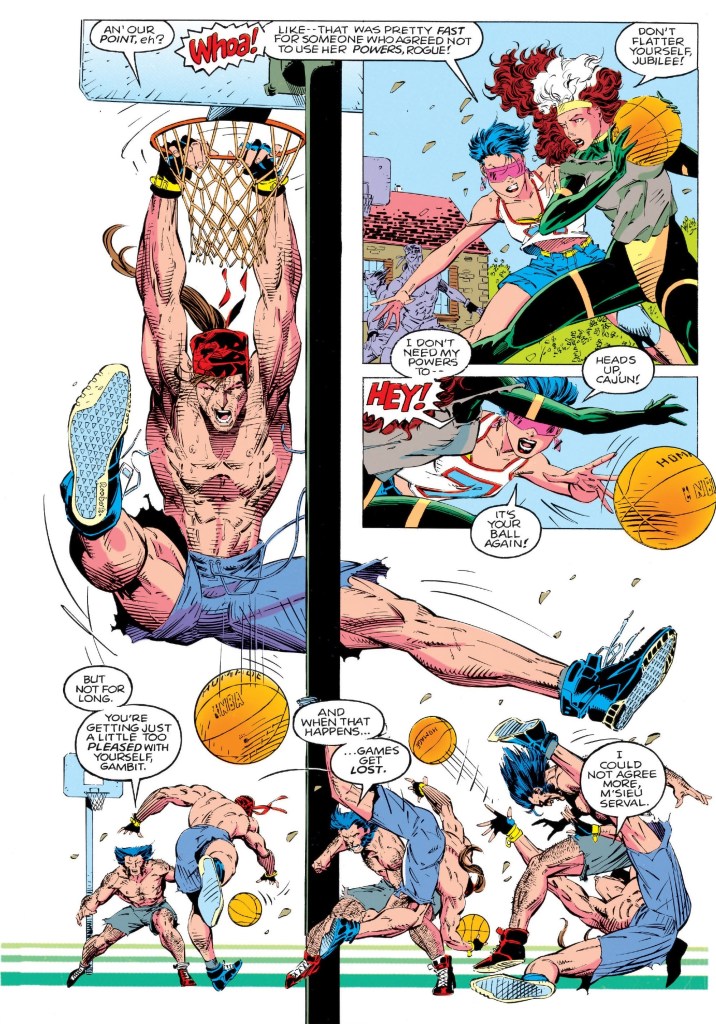
While the basketball scene had true-to-character portrayals of Wolverine, Gambit, Psylocke and Jubilee complete with stylish dialogue per character, there is consistency on the portrayal of Moira MacTaggert who is understandably struggling to recover given the events of X-Men to . The same goes with Charles Xavier. The way the script was written with strong focus on the established characters, it’s almost as if Chris Claremont never left.

The biggest feature of this comic book is the debut of the deadly mutant Omega Red who is of Russian heritage and Russia’s own parallel to the United States’ own super soldier Captain America. In pop culture, Omega Red is one of the top villains in comic books ever and this comic book sets up his sudden rise to prominence. Symbolically, Omega Red is a co-creation of Jim Lee and John Byrne and it is pretty fitting for this comic book of the post-Claremont era to feature him.

Conclusion

You love basketball?

There is no doubt that even by today’s standards, X-Men (1992) is a great read and a landmark issue in X-Men comic book history. Given its content, this one will always be remembered as the start of Omega Red who later on proved to be one of the deadliest villains Marvel’s mutants ever encountered. The villain went on to appear in the video games X-Men: Children of the Atom, Marvel Super Heroes vs. Street Fighter and Marvel vs. Capcom 2.

If you are seriously planning to buy an existing hard copy of X-Men (1992), be aware that as of this writing, MileHighComics.com shows that the near-mint copy of the regular edition costs $125 while the near-mint copy of the newsstand edition costs $375.

Overall, X-Men (1992) is highly recommended!

+++++

Thank you for reading. If you find this article engaging, please click the like button below and also please consider sharing this article to others. If you are looking for a copywriter to create content for your special project or business, check out my services and my portfolio. Feel free to contact me as well. Also please feel free to visit my Facebook page Author Carlo Carrasco and follow me at HavenorFantasy@twitter.com

A Look Back at Wonder Woman Gallery (1996)

Disclaimer: This is my original work with details sourced from reading the comic book and doing personal research. Anyone who wants to use this article, in part or in whole, needs to secure first my permission and agree to cite me as the source and author. Let it be known that any unauthorized use of this article will constrain the author to pursue the remedies under R.A. No. 8293, the Revised Penal Code, and/or all applicable legal actions under the laws of the Philippines.

Welcome back, superhero enthusiasts, comic book collectors and fans of Wonder Woman! I should say that this is the most unusual comic book I have reviewed so far due to its main presentation of varied artworks featuring the Queen of all Superheroes herself – Wonder Woman!

For the newcomers reading this, there were several comic books back in the 1990s that did not really tell stories but showcased artworks of varied superheroes done by several artists. Such publications were in the form of swimsuit specials, apparently inspired by Sports Illustrated’s own publications. There were WildStorm Swimsuit Special , Ballistic Studios Swimsuit Special , Homage Studios Swimsuit Special , Lady Death Swimsuit Special and the Avengelyne/Glory: Swimsuit Special to name some.

The 1990s saw a rise of eroticism in superhero comic books. Not even the Wonder Woman monthly series of that time was spared from the trend. There was a time when DC Comics hired Mike Deodato to illustrate a number of Wonder Woman comic books in the mid-1990s which resulted a more eroticized look of Diana/Wonder Woman and her fellow Amazons. John Byrne took over after Deodato and his stint was not an improvement.

While the 1990s was a weak decade of Wonder Woman comics for me personally, not all was doom and gloom. Around twenty years before Gal Gadot debuted on the big screen as the cinematic Wonder Woman, DC Comics published an art gallery of the Queen of Superheroes in the form of a comic book.

With the details established, here is a look back at Wonder Woman Gallery, published by DC Comics in 1996 featuring the works of multiple artists.

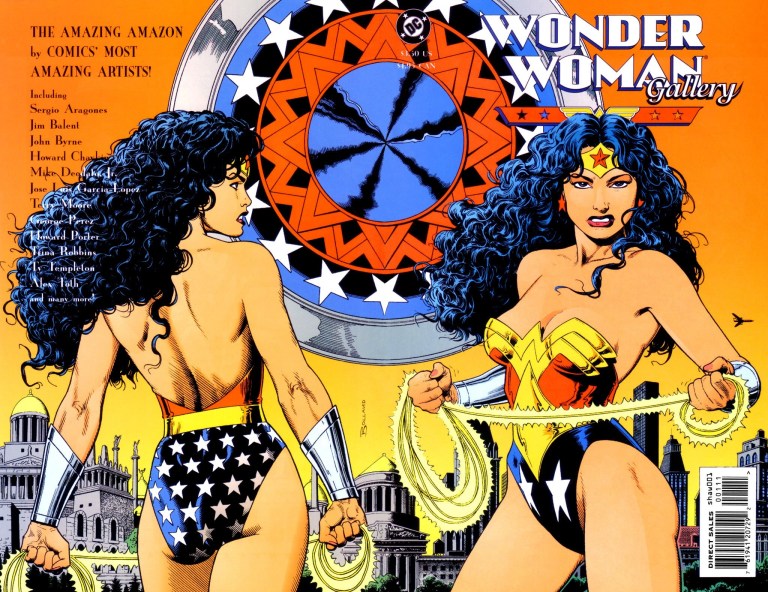
The cover.

What it is

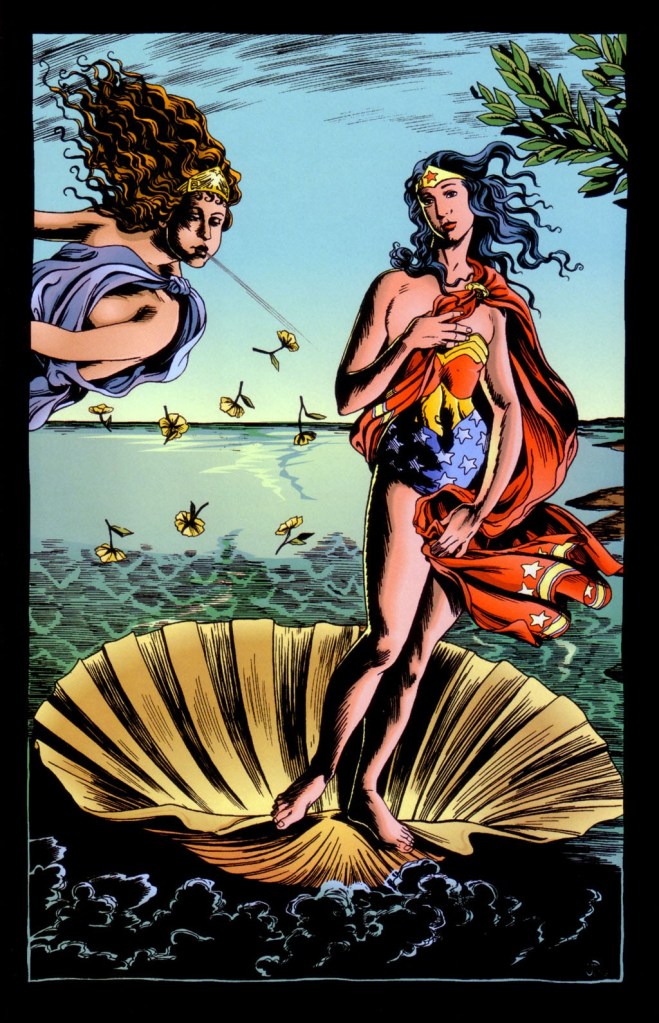
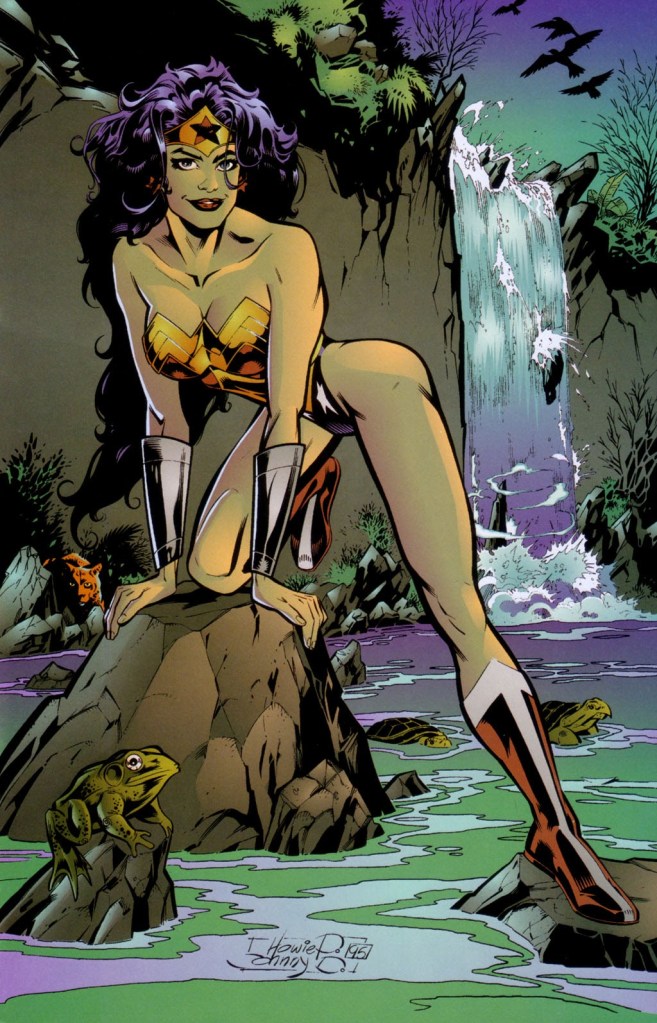
Wonder Woman Gallery is a showcase of thirty-two artworks done by George Perez, Stuart Immonen, Mike Wieringo and Richard Case, Brent Anderson, Howard Porter and John Dell, Jim Balent (misspelled as Jim Balant), Amanda Conner, Chuck Wojtkiewicz and Will Blyberg, Howard Chaykin, Steve Lightle and 22 others.

As this is an art gallery, there is clearly no story to tell. It is all artwork showcasing the different talents of the artists (and the inkers who helped them) on presenting Wonder Woman (note: the only exception here is a solo image of the forgettable WW replacement Artemis).

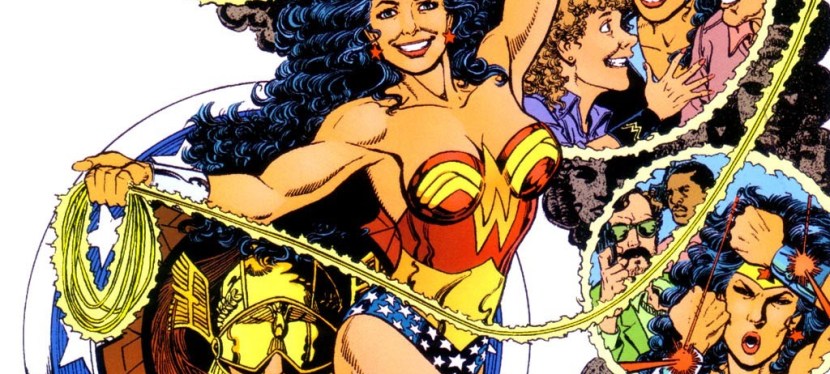
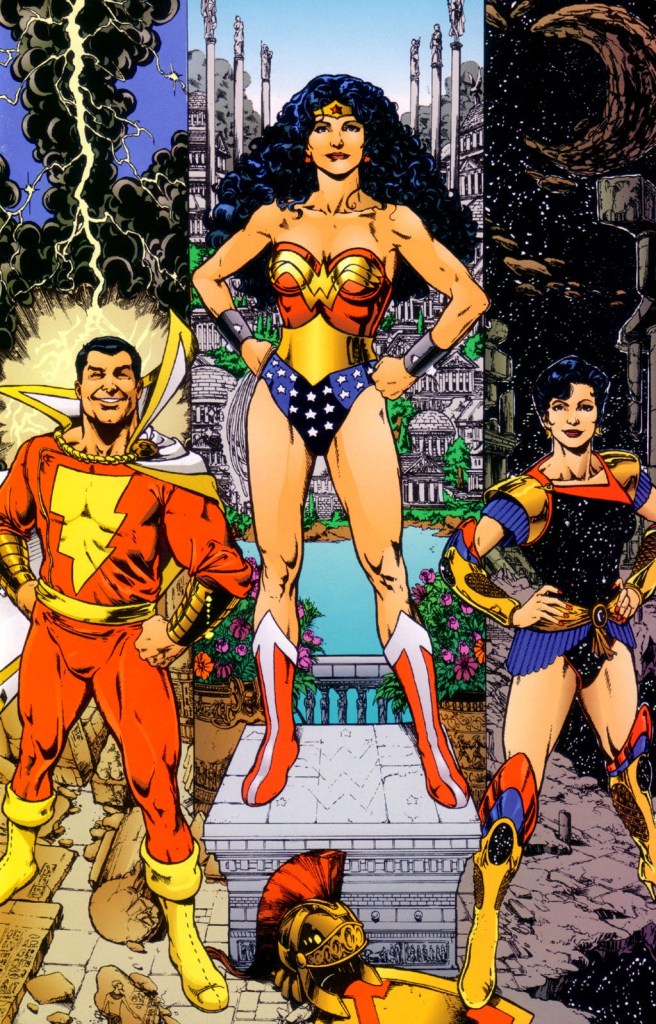
This artistic contribution by Phil Jimenez looks great.
Jill Thompson’s inspired take on Wonder Woman.
Wonder Woman by Howard Porter and John Dell.
Wonder Woman by Ivan Reis and Barbara Kaalberg.

Quality

As this is an art showcase, the overall quality of the collected art here varies. Such a collection of different art styles will appeal to Wonder Woman fans depending on how they like their favorite superhero presented visually.

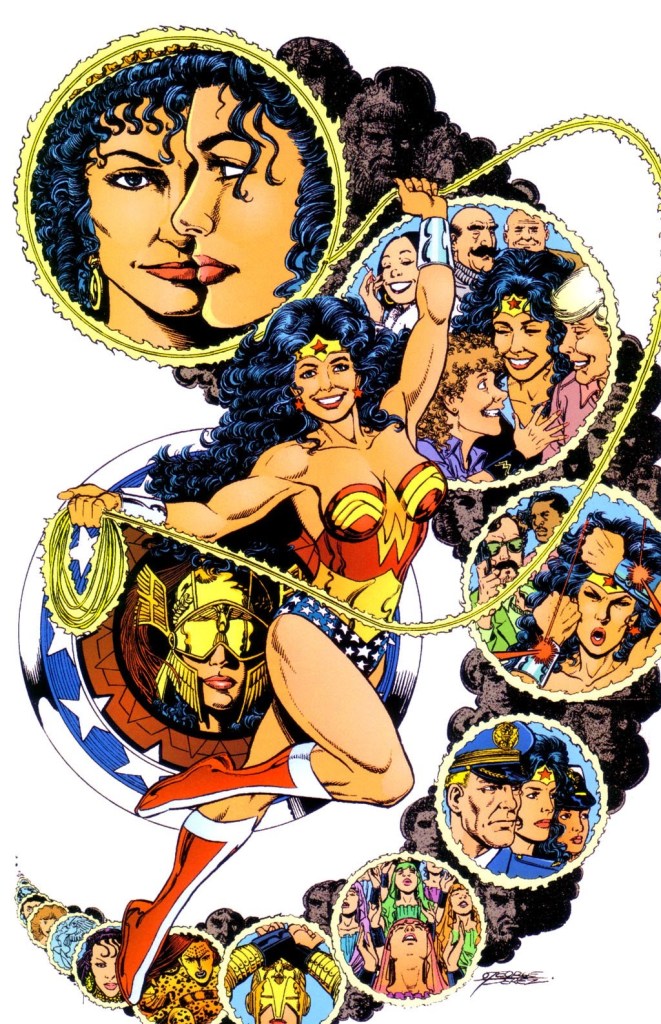
In my honest opinion, I always love the art style done by George Perez on Wonder Woman, her fellow Amazons, the supporting characters and more. His presentation here is flawless and timeless. What surprised me here in this collection is the contribution of Phil Jimenez whose quality and art style seem inspired by George Perez’s Wonder Woman legacy. As many of us know already, Jimenez later went on to become one of the top illustrators of DC Comics in the 2000s and his work here is nice to look.

There were a few artworks that showed Wonder Woman with a very cartoony look. Among them is the Wonder Woman piece done in the very distinct style of Sergio Aragones. Some art pieces here showed WW with a bizarre look and then there were a few others whose take on the Queen of Superheroes turned out good.

Conclusion

This work by George Perez is my favorite in this collection.

I can say that Wonder Woman Gallery (1996) is a published work that Wonder Woman fans will enjoy for as long as they are willing to accept images of their favorite superhero with styles ranging from realistic to cartoony, obscure and simple. Art styles aside, there is a lot here that fans will marvel at again and again, while art enthusiasts (who are not necessarily fans of the Queen of Superheroes) could find something eye-catching here.

If you are seriously planning to buy an existing hard copy of Wonder Woman Gallery (1996), be aware that as of this writing, MileHighComics.com shows that the near-mint copy of the comic book costs $40.

Overall, Wonder Woman Gallery (1996) is recommended.

+++++

Thank you for reading. If you find this article engaging, please click the like button below and also please consider sharing this article to others. If you are looking for a copywriter to create content for your special project or business, check out my services and my portfolio. Feel free to contact me as well. Also please feel free to visit my Facebook page Author Carlo Carrasco and follow me at HavenorFantasy@twitter.com
A Look Back at X-Men Adventures #13 (1993)

Disclaimer: This is my original work with details sourced from reading the comic book and doing personal research. Anyone who wants to use this article, in part or in whole, needs to secure first my permission and agree to cite me as the source and author. Let it be known that any unauthorized use of this article will constrain the author to pursue the remedies under R.A. No. 8293, the Revised Penal Code, and/or all applicable legal actions under the laws of the Philippines.

It’s funny how adaptations of adaptations turn out in real life. Long before the first live-action X-Men movie was released, an animated TV series (popularly referred to as X-Men: The Animated Series or X-Men TAS) was produced and arguably brought together the fans of both the X-Men comic books along with the animated X-Men followers.

Along the way, Marvel Comics went on to publish a monthly comic book series called X-Men Adventures which themselves were adaptations of the animated series (which itself adapted stories and concepts from the comic books).

The adaptation-of-an-adaptation approach went deep further when the animated series adapted loosely the story of the classic X-Men comic book storyline Days of Future Past (by legends Chris Claremont and John Byrne) which resulted a story told in two episodes on TV. And then there was also a comic book adaptation that followed starting with X-Men Adventures which is the subject of this retro comic book review.

1
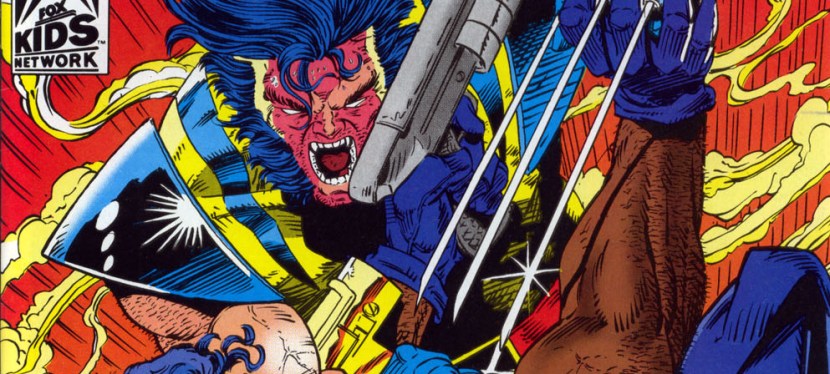
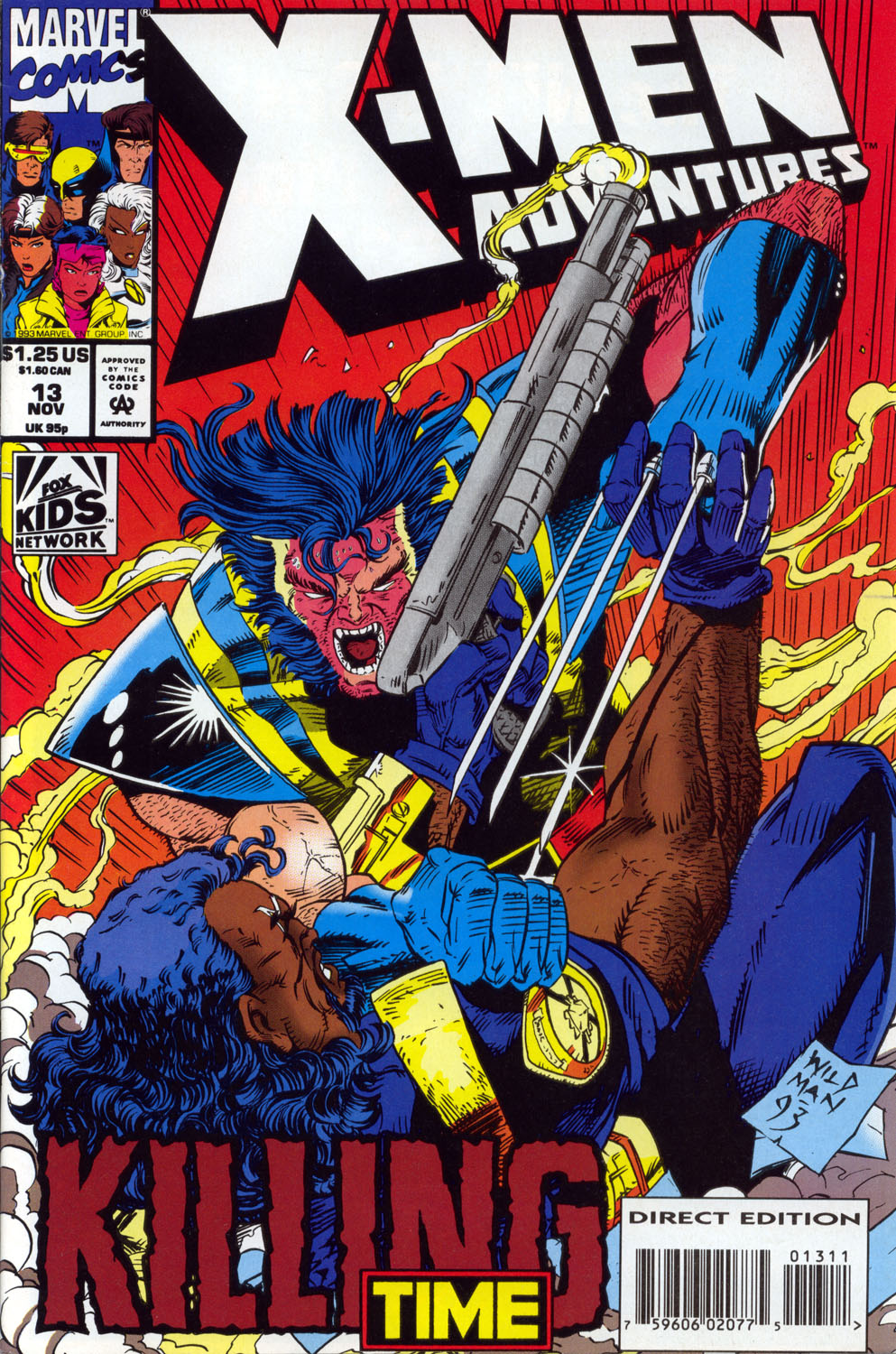
The cover.

Early story

Written by Ralph Macchio and drawn by Andrew Wildman, the comic book begins in the dark future of 2055 in New York. The city is in ruins and mutants on the loose are being hunted by Sentinels. A very old Wolverine appears to help two loose mutants but ends up getting stunned with them by Bishop who turns out to be helping the automated authority of the Sentinels.

As he turns over the captured mutants, the Sentinels betray Bishop telling him that they no longer required him. Afterwards, Bishop and Wolverine (who woke up) each carry a person under the watch of a Sentinel. Suddenly, the two other mutants use their powers to attack the Sentinel and Wolverine followed to back up their efforts. The Sentinel however grabbed Wolverine.

Quality

3
A very old Wolverine in the dark future of 2055.

With the exception of some liberties, this comic book closely followed what was told in the first of the 2-episode Days of Future Past animated adaptation. As a comic book story, the story was heavily loaded with details and exposition designed to orient readers about the setting and why the future became a time of darkness in relation to the rise of machines having ultimate power over people.

While the time travel concept of the literary classic involved the mind of Kitty Pryde going into the past, this comic book used the more common concept of having Bishop travel back through time physically which easily reminds me of Kyle Reese arriving from the future in 1984’s The Terminator.

The build-up leading to Bishop’s move to travel back through time was nicely done by the creative team. There was a lot of exposition followed by an incoming attack complete with explosions happening just as Bishop is about to leave. In short, the pay-off was worth it.

The engagement did not end there. In fact, it continued nicely as Bishop meets the X-Men in 1993 with the details of his mission carefully unveiled. Professor Charles Xavier’s reaction to future history (Sentinels taking control of the world) was dramatic and worth re-reading.

As with his other works in the X-Men Adventures comic book series, Andrew Wildman’s art is very good to look at and he knows how to make each scene look engaging whether it’s just an exchange of dialogue between characters or an action scene loaded with a lot of impact.

Conclusion

While it is only half of a 2-issue adaptation of a 2-episode animated adaptation of the Days of Future Past literary classic, X-Men Adventures is still a fun-filled reading experience complete with a lot of engaging moments.

19
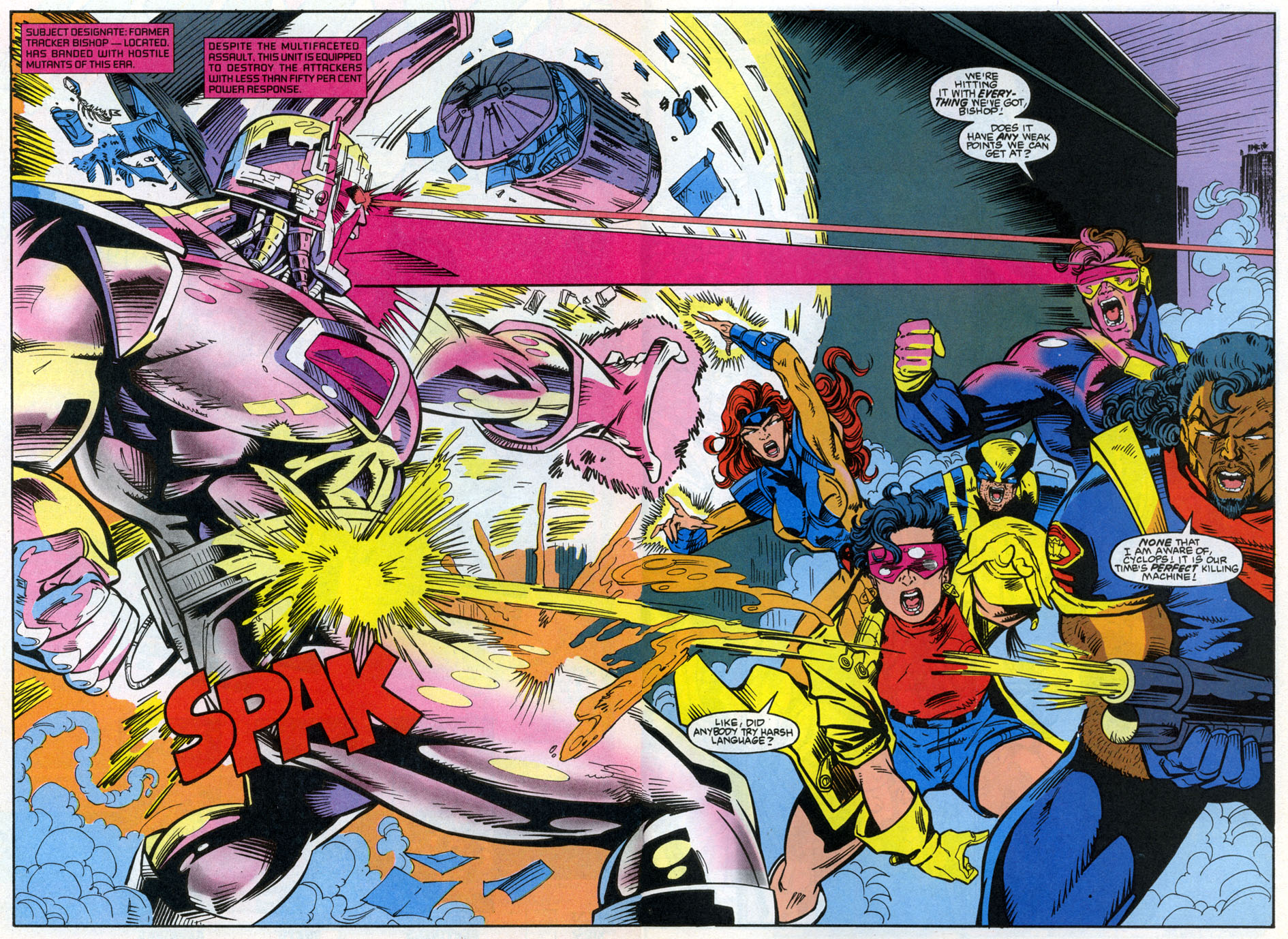
The money shot by Andrew Wildman!

If you are a serious collector of comic books, be aware that, as of this writing, a near-mint copy of X-Men Adventures costs $6 while its newsstand edition copy is worth $21 in near-mint condition according to Mile High Comics.

Overall, X-Men Adventures is highly recommended. Both dedicated X-Men fans as well as newcomers will have something a lot to enjoy with it.


Thank you for reading. If you find this article engaging, please click the like button below and also please consider sharing this article to others. If you are looking for a copywriter to create content for your special project or business, check out my services and my portfolio. Feel free to contact me as well. Also please feel free to visit my Facebook page Author Carlo Carrasco and follow me at HavenorFantasy@twitter.com