A Look Back at X-Men Adventures Season II #1 (1994)

Welcome back superhero enthusiasts, 1990s arts and culture enthusiasts, Marvel Comics fans and comic book collectors! Today we go back to the mid-1990s to explore the adaptation of the start of the second season of the X-Men animated series in the form of the X-Men Adventures comic book series.

Before getting to the retro comic book review, I want to address the recent controversy and criticism of the new animated series X-Men ’97, a continuation of the popular 1990s series that turned out to be woke by featuring the so-called non-binary presentation of people. In my view, this is not surprising given the fact that the very woke Disney company has owned Marvel Entertainment for many years now and its wokeness has infected the animated X-Men franchise along with the most recent movies and shows of the Marvel Cinematic Universe (MCU). Wokeness and Leftist beliefs continue to ruin entertainment and established properties as we know it. It’s the culture of Communist-filled Hollywood (Commiewood).

So how do you reject X-Men wokeness apart from avoiding X-Men ’97? You simply go back to the X-Men animated series of the 1990s as well as the comic books that adapted the stories.

With those details laid down, here is a look back at X-Men Adventures Season II , published in 1994 by Marvel Comics with a story written by Ralph Macchio and drawn by Andrew Wildman.
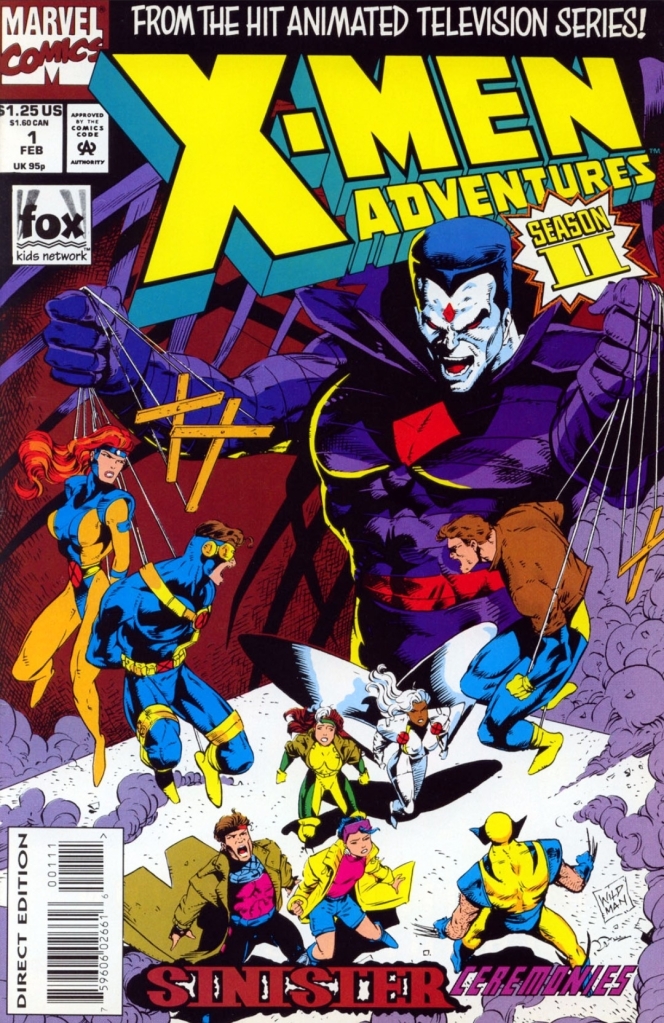
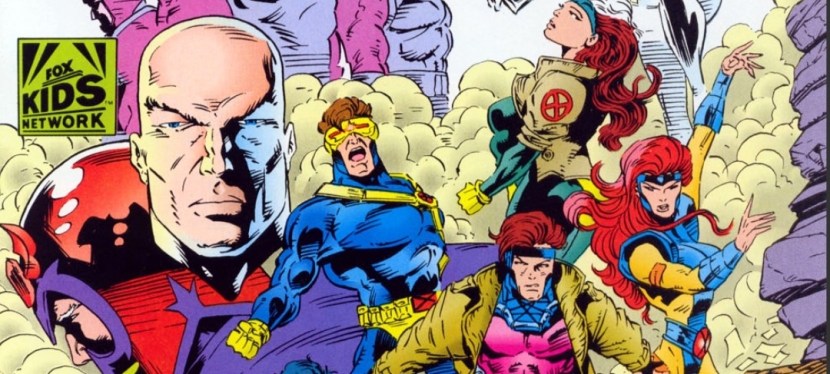
The cover.

Early story

The story begins with the cosmic being the Watcher carefully examining the flow of events on Earth and what has changed for the X-Men since then. Robert Kelly, who previously had an anti-mutant agenda when he was a U.S. Senator, has since been elected as the President of the United States and openly pushes for a policy of conciliation with mutants. His action sparks social unrest.

Meanwhile inside a small church far away from the nation’s capital, the wedding of Jean Grey and Scott Summers pushes through with several members of the X-Men in attendance. Very notable was the absence of Wolverine who turned out to be inside the Danger Room (deep within Charles Xavier’s estate) fighting a giant-sized version of Cyclops…

Quality
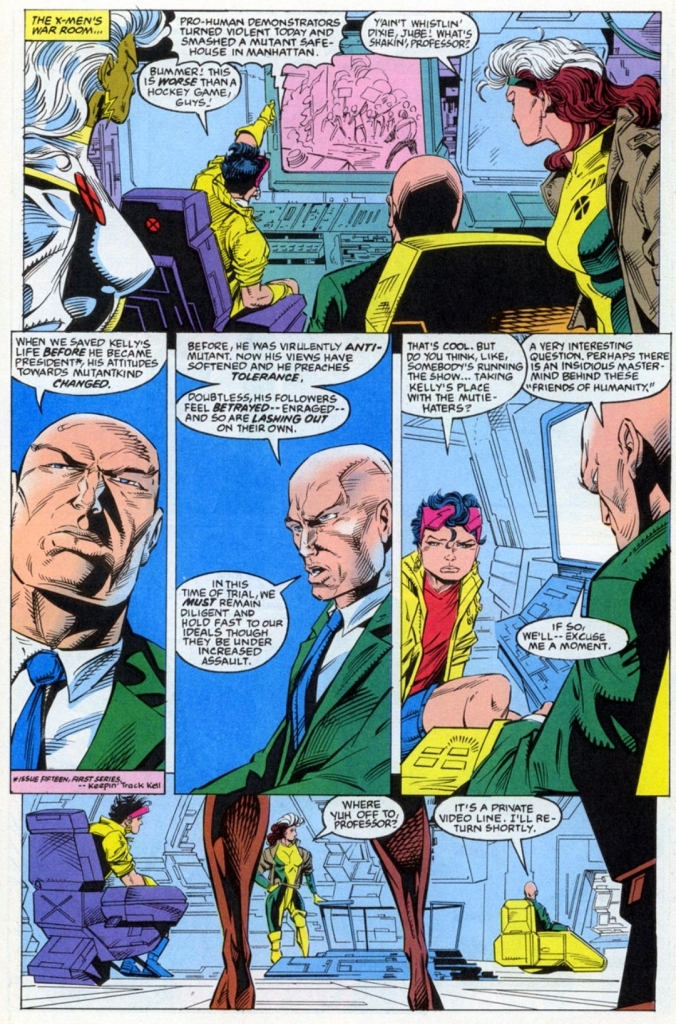
The X-Men are troubled by the anti-mutant wave happening in public.

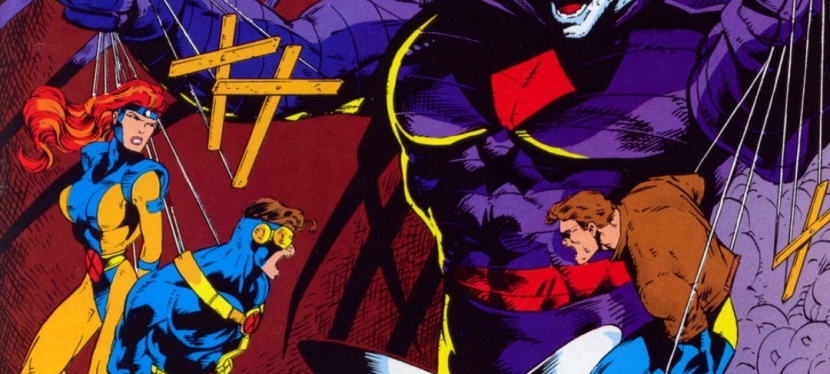
As the opening issue of the second volume of the X-Men Adventures comic book series, this comic book carefully sets up the tone and the plot of a series of future challenges for the X-Men which is clearly reflected on the front cover with Mister Sinister displayed prominently. The story mainly highlights X-Men’s new struggle with the wave of anti-mutant rage in the public while dealing with the absence of their leader Cyclops (on honeymoon with his new wife Jean) while leaving space for potential sub-plots such as the attraction between Jean and Wolverine, the moves of the anti-mutant radicals and, most notable of all, the secretive return of Morph (thought to have died in issue #2 of the first season).

As expected, build-up is the main approach taken by the creators on telling the story and there were some bouts of superhero spectacle (action) that spiced up the reading experience for me. Considering what has been happening in different parts of the world in recent years, the sub-plot of the rabid anti-mutant activists using tactics to destroy the X-Men’s credibility with violence and misinformation magnified through the news networks is very socially relevant.

What the rabid anti-mutant people committed in this comic book reminds me of the October 7, 2023 attacks on Israel organized by the Palestinian terrorist group Hamas in which violence, destruction and selective images of terror spread through news networks and social media were done. Similarities aside, the wave of evil is clear here and the intent of the anti-mutant believers and Palestinian terrorists obviously expresses intentions of genocide against another particular group of people.

When it comes to weaknesses of this comic book, I cannot help but find Andrew Wildman’s art looking very rushed. There is a lack of precision and detail of his art here when compared directly to his works in the first volume of X-Men Adventures.

Conclusion
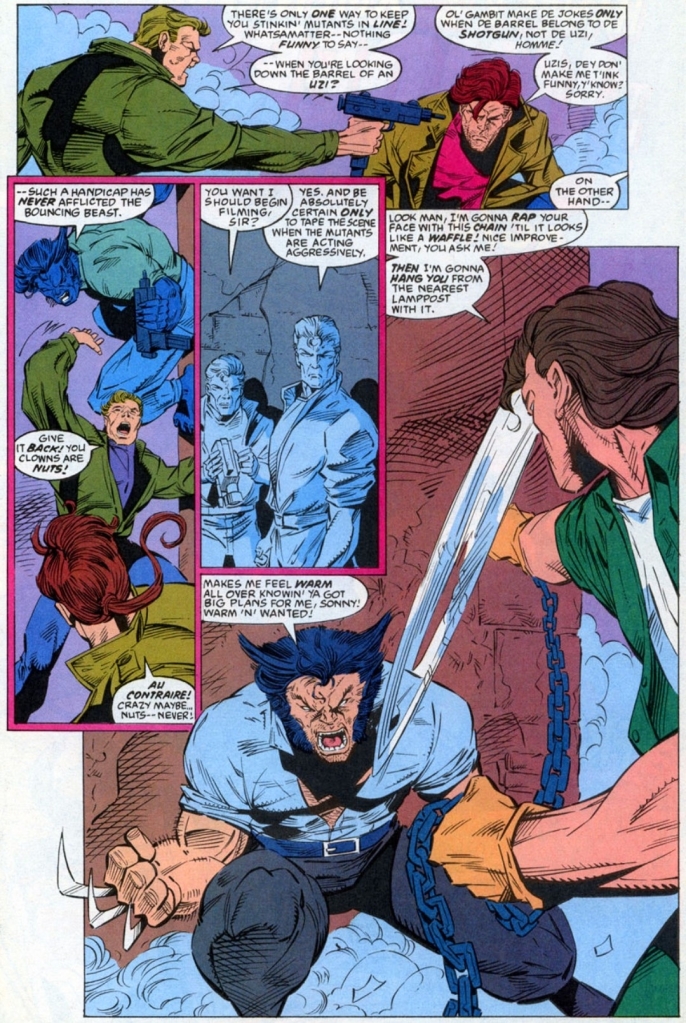
The anti-mutant radicals in this comic book have a lot in common with Palestinian terrorists, the pro-Palestine activists, the Black Lives Matter activists and other members of woke mobs. Violence, arrogance, rage and misinformation are their values.

X-Men Adventures Season II (1994) incidentally works well as an adaptation of the animated series, as a standalone comic book as well as being a socially relevant tale in today’s age of social media. While the concept of evil remains in X-Men lore, what was told here shows different layers of it. The X-Men themselves also looked fragile and the return of Morph is a key part of the story clearly designed with future events in mind. Finally, this comic book is a lively reminder of the era when X-Men stories were made for the fans, not the woke mob.

Overall, X-Men Adventures Season II (1994) is recommended.

+++++

Thank you for reading. If you find this article engaging, please click the like button below, share this article to others and also please consider making a donation to support my publishing. If you are looking for a copywriter to create content for your special project or business, check out my services and my portfolio. Feel free to contact me with a private message. Also please feel free to visit my Facebook page Author Carlo Carrasco and follow me on Twitter at  @HavenorFantasy as well as on Tumblr at https://carlocarrasco.tumblr.com/ and on Instagram at https://www.instagram.com/authorcarlocarrasco

A Look Back at Uncanny X-Men #157 (1982)

Welcome back superhero enthusiasts, 1980s culture enthusiasts and comic book collectors! Today we go back to the year 1982 to take a close look at one of the many tales of the Marvel Comics shared universe told through the monthly series of Uncanny X-Men.

In my previous retro review, Charles Xavier got reunited with his beloved Lilandra, the empress of the Shi’ar Empire, as they were trapped temporarily by the Brood. Elsewhere, Corsair reveals to his son Cyclops what happened before they got separated on Earth twenty years prior. The X-Men and the Starjammers got captured by the Brood’s massive transport which turned out to be a massive organic creature. The conflict that followed saw another battle between the X-Men and the Brood but with the stakes raised higher.

With those details laid down, here is a look back at Uncanny X-Men published in 1982 by Marvel Comics with a story written by Chris Claremont and drawn by Dave Cockrum.  

The cover.

Early story

The story begins in space where the X-Men and the Starjammers worked together to repair the external parts of the Starjammer ship. An incident happens in which Wolverine starts to float away from the ship while Colossus loses consciousness. One of the Starjammers saved Wolverine.

Just as the Starjammers used their advanced technology to help the unconscious Colossus, Empress Lilandra tells Professor X and a few others that she used her imperial commlink and private code to each Chanellor Araki to confirm to him that she is free and unharmed. Supposedly, Lilandra’s move should compel Araki to call off the punitive strike against Earth.

As Lilandra starts communicating with the flagship that carries Araki, Admiral Lord Samedar takes control of the ship and declares that they will execute Araki’s orders to obliterate Earth…

Quality

Kitty Pryde on the move against all odds.

Following the events of the two previous issues, this story is another engaging pay-off to the established build-up but with the stakes raised higher as Earth becomes a target of the defiant Shi’ar officials who themselves turned out to be defiant towards their empress Lilandra all along. Not only that, there is a good amount of intrigue with the way the Shi’ar people are portrayed here.

The X-Men here continue to struggle not only because of Colossus’ weakness but also because something bad happened to their leader Professor X (a must-read scene). Far away from the rest of their teammates, Nightcrawler and Kitty Pryde became major players in this particular story and what happened with them was nicely structured by Chris Claremont. This is clearly a big pay-off to what was staged in issue #155 and it sure is worth anticipating!

If you have great interest with the Brood, you will be delighted to see more of the way they communicate and how they treat foreigners like Deathbird as they live on with their uncompromising belief that their race backs winners only.

Conclusion

How the Brood treats Deathbird.

Uncanny X-Men (1982) is an action-packed sci-fi tale that continued Claremont’s direction of the X-Men while also emphasizing the Brood as well as the Starjammers and the Shi’ar as crucial players in this particular storyline. There is plenty of superhero spectacle to enjoy here, a few memorable character moments and if you are fond of Chris Claremont’s works, you will enjoy the twists and surprises he pulled off here.

Overall, Uncanny X-Men (1982) is recommended!

+++++

Thank you for reading. If you find this article engaging, please click the like button below, share this article to others and also please consider making a donation to support my publishing. If you are looking for a copywriter to create content for your special project or business, check out my services and my portfolio. Feel free to contact me with a private message. Also please feel free to visit my Facebook page Author Carlo Carrasco and follow me on Twitter at  @HavenorFantasy as well as on Tumblr at https://carlocarrasco.tumblr.com/ and on Instagram at https://www.instagram.com/authorcarlocarrasco

A Look Back at What If #27 (1981)

Disclaimer: This is my original work with details sourced from reading the comic book and doing personal research. Anyone who wants to use this article, in part or in whole, needs to secure first my permission and agree to cite me as the source and author. Let it be known that any unauthorized use of this article will constrain the author to pursue the remedies under R.A. No. 8293, the Revised Penal Code, and/or all applicable legal actions under the laws of the Philippines.

Welcome back superhero enthusiasts, 1980s arts and culture enthusiasts, Marvel Comics fans and comic book collectors! Today we go back to the early 1980s and examine an alternate universe portrayal of the X-Men and the Dark Phoenix saga itself as told in one of the comic books of the first volume of the series What If.

So much has been discussed about the Dark Phoenix saga of the Uncanny X-Men series through the decades. A lot point to it as the greatest X-Men ever told while some called it the true X-Men epic story that Chris Claremont and John Byrne came up with. Considering its deep impact and significance on the Marvel Comics shared universe, it was only a matter of time before the publisher decided to revisit the said storyline but explore other outcomes through the What If series.

With those details laid down, here is a look back at What If #27 published in 1981 by Marvel Comics with a story written by Mary Jo Duffy and drawn by Jerry Bingham.

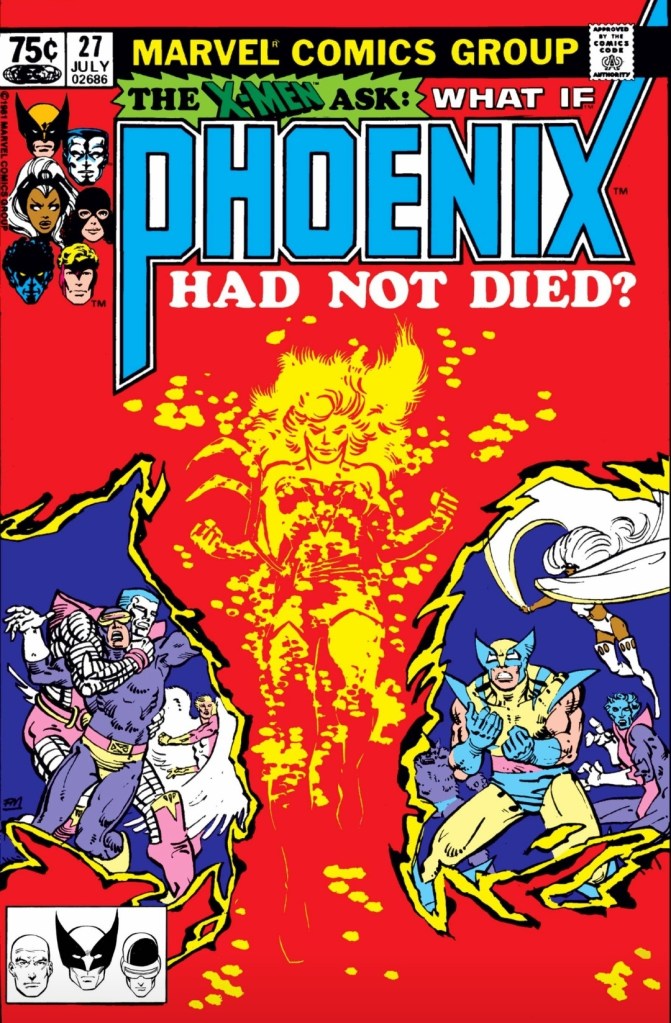
The cover.

Early story

The story begins with the Watcher looking back at the events that led to the Dark Phoenix saga, who got impacted and how Jean Grey used a weapon of alien origin to end her own life and prevent the Dark Phoenix from raging.

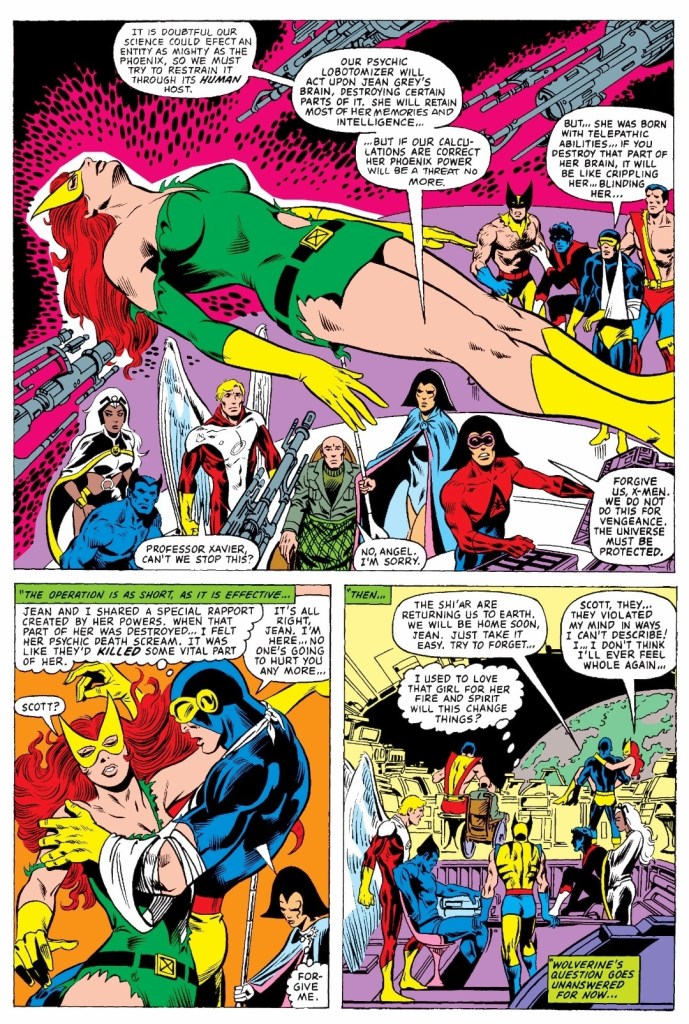
Suddenly, an alternate reality begins when Jean Grey survives and Cyclops reacts by using his optic blasts on incoming enemies until he got overwhelmed. The X-Men have been defeated and are brought to the imperial flagship of Lilandra’s grand fleet where the Shi’ar scientists prepare for the destruction of Phoenix.

Jeay Grey remains alive, floating above the X-Men and the others as Lilandra’s people prepare to start the process of the psychic lobotomizer on her. Their intention is to act upon Jean Grey’s brain and destroy certain parts of it in order to neutralize the Phoenix power within her. The operation turned out successful and Jean Grey survives once more. She and her fellow X-Men return to Earth…

Quality

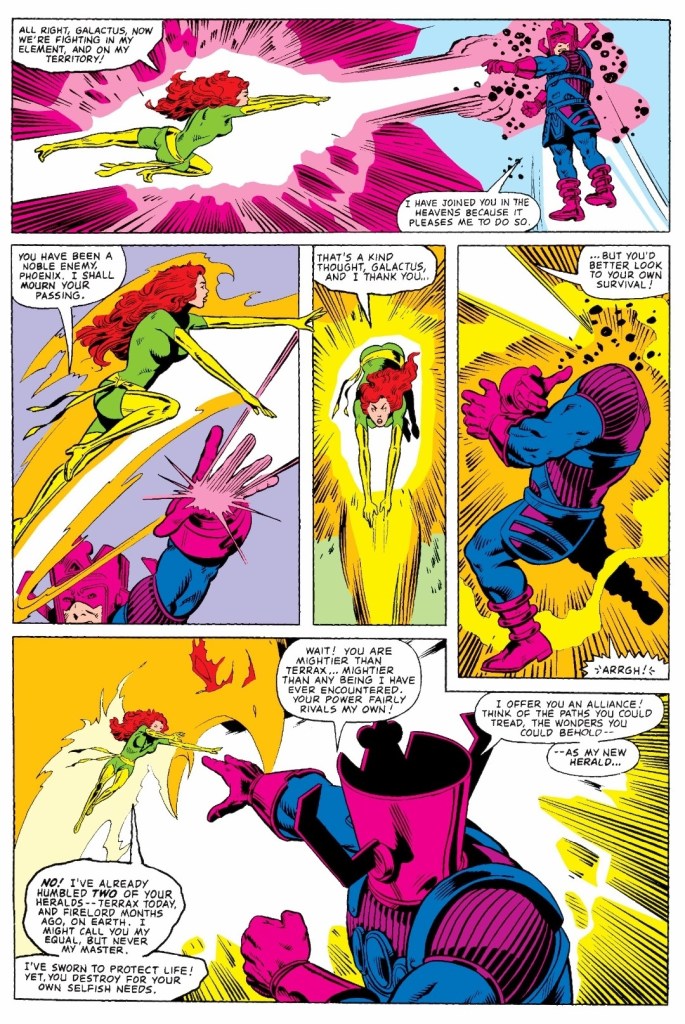
This conflict between Phoenix-powered Jean Grey and Galactus is a must-see.

This early, I can say that this is a very great exploration and portrayal of the concept about Phoenix (within Jean Grey) not dying during the Dark Phoenix saga. The script of this comic book is so great (note: solid plot structure, consistent portrayals of the characters, strong build-up with solid pay-off and more), it’s almost as if Mary Jo Duffy and Chris Claremont worked together behind the scenes.

The protagonist in this story is Jean Grey and this comic book examines her struggle with adjusting her personal life and her effort to fit in once again within the X-Men while remembering fully that as Dark Phoenix, she still remains guilty of destroying an entire solar system and committing the mass murder of five billion people.

Unsurprisingly, due to the emergence of a tremendous crisis deep in space, Jean Grey gets involved with her team going to the site on a mission. This easily puts her into a situation that makes her revive the power of the Phoenix deep within herself. While the use of the tremendous power of the Phoenix to help the X-Men looked sensible at first glance, it only signified the beginning of a chain of destruction and unfortunate developments. As expected, Jean Grey can only go so far with her good nature and her free will while having the magnificent powers of the Phoenix.

While the conflicts were portrayed well, Mary Jo Duffy’s script raises key questions about the red-head X-Men member: How can Jean Grey ever achieve a normal life and level with her X-Men teammates knowing that she carries powers that make her god-like? How can she ever forget the tragic fact that as Dark Phoenix, she murdered billions in deep space? What can Charles Xavier do to lead and guide the X-Men knowing that Jean is way too powerful? Could the love of Cyclops be helpful for Jean Grey’s personal efforts to control the Phoenix power within?

Another highlight of this story is the final seven pages. The ending is very impactful and definitely something you must see.

Conclusion

This happened after Jean Grey’s survival.

What If #27 (1981) is a classic alternate reality portrayal of the Marvel Comics universe and it surely works as a companion piece to what was established in the Dark Phoenix saga. Mary Jo Duffy’s script really captured the spirit of Claremont’s X-Men and the dramatic stuff and all the build-up led to a very tremendous ending that can disturb you or even satisfy you in the most unusual way. Most notably, this comic book really answered the question about what would happen had Phoenix did not die. The 2nd tale of this comic book – the Kree Encounter – is an interesting additive.

Overall, What If #27 (1981) is highly recommended.

+++++

Thank you for reading. If you find this article engaging, please click the like button below, share this article to others and also please consider making a donation to support my publishing. If you are looking for a copywriter to create content for your special project or business, check out my services and my portfolio. Feel free to contact me with a private message. Also please feel free to visit my Facebook page Author Carlo Carrasco and follow me on Twitter at  @HavenorFantasy as well as on Tumblr at https://carlocarrasco.tumblr.com/ and on Instagram at https://www.instagram.com/authorcarlocarrasco

A Look Back at What If #31 (1982)

Disclaimer: This is my original work with details sourced from reading the comic book and doing personal research. Anyone who wants to use this article, in part or in whole, needs to secure first my permission and agree to cite me as the source and author. Let it be known that any unauthorized use of this article will constrain the author to pursue the remedies under R.A. No. 8293, the Revised Penal Code, and/or all applicable legal actions under the laws of the Philippines.

Welcome back superhero enthusiasts, 1980s arts and culture enthusiasts, Marvel Comics fans and comic book collectors! Today we go back to the early 1980s and examine an alternate universe portrayal of Wolverine and some other characters as told in one of the comic books of the first volume of the series What If.

Wolverine is one of the most iconic characters of Marvel Comics and he has been part of some of my retro reviews (click here, here, here, here, here, here and here). Wolverine made his first appearance in comics in Incredible Hulk #181 which was published way back in 1974 which marked the first conflict of the two Marvel icons. Years later, Marvel decided to revisit that event with a What If story.

With those details laid down, here is a look back at What If published in 1982 by Marvel Comics with a story written by Rick Margopoulos and drawn by Bob Budiansky.

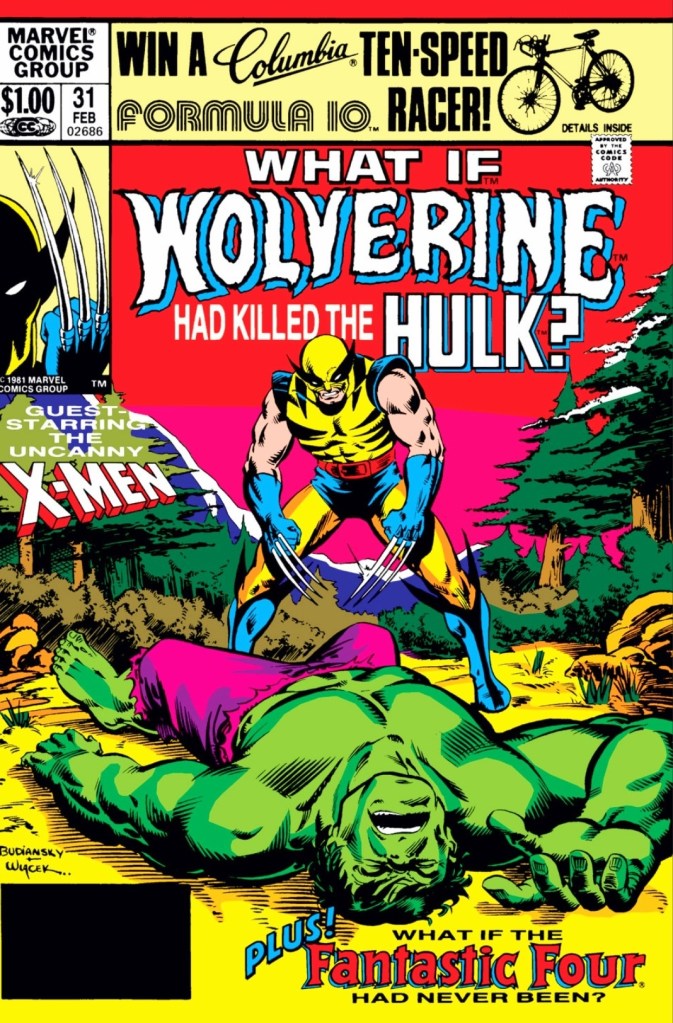
The cover.

Early story

The story begins with Wolverine and the Hulk in combat with each other in a forest within Canada. It turns out, Wolverine was sent by Canadian authorities to capture not just the Hulk but also the Wendigo.

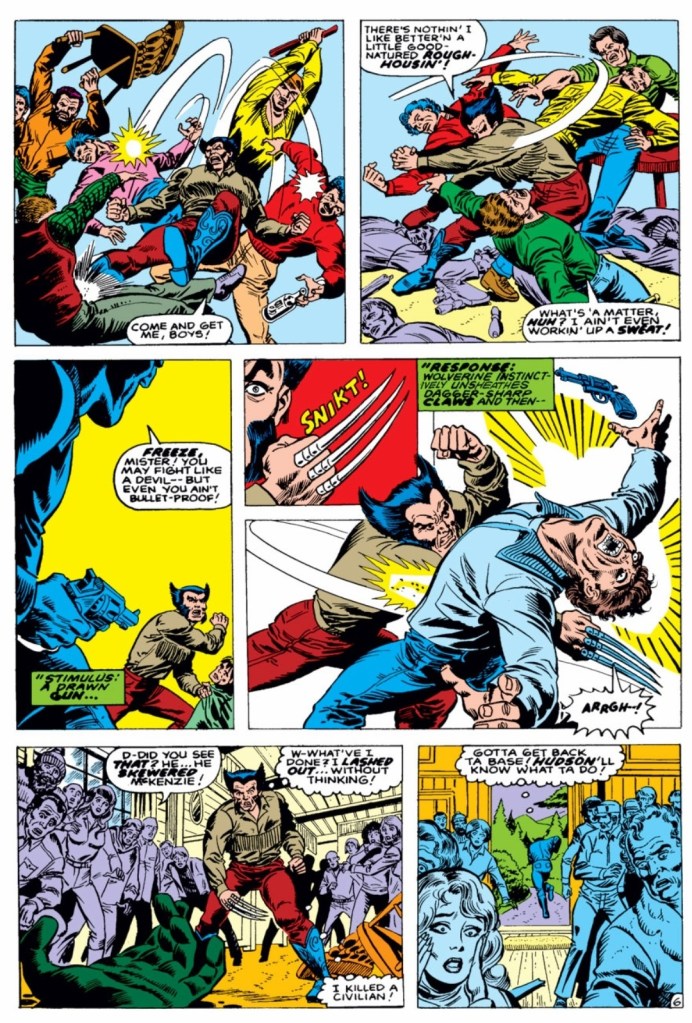
With the Wendigo down on the ground, Wolverine and the Hulk struggle with each other. The Canadian’s speed helped him dodge the green giant’s powerful punches and as the fight goes on, so does the impulse and emotion from within. Suddenly, Wolverine decides to deliberately disobey his orders by deciding to kill the Hulk. In a few but strategic strikes with his Adamantium claws, Wolverine kills the Hulk. The Canadian authorities eventually got rid of the corpses of the Wendigo and the Hulk.

Soon enough, news about the Hulk’s death spread like wildfire all over America catching the attention of Spider-Man, the Avengers, the Fantastic Four and General Ross and his daughter Betty…

Quality

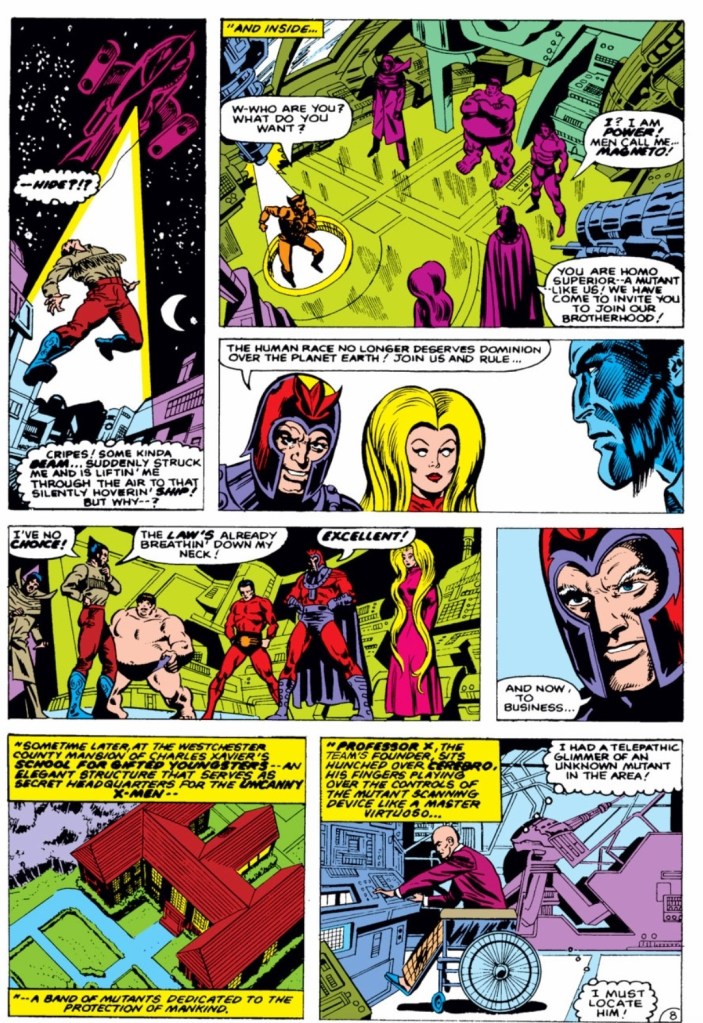
Wolverine gets abducted not by aliens from outer space but by Magneto and his Brotherhood of Evil Mutants.

To start with, I can say that I immensely enjoyed this alternate portrayal of the events that happened in relation to Wolverine’s first-ever appearance in comics. For one thing, the concept of Wolverine actually killing the Hulk is not only shocking on its own, it also set a chain reaction of events that involved or affect a whole lot of other characters within the Marvel Comics shared universe.

Let me start with Wolverine himself. As the story was set before he joined the X-Men, you will see Wolverine as a super-powered agent of Canada whose career really goes down as he failed to restrain his wild self from killing not once but twice. This results in a Wolverine who is deeply troubled with guilt and becomes desperate believing that running away and hiding will somehow solve his dilemma.

Wolverine’s entry into a gang of evil mutants led by Magneto (note: this comic book’s main villain) is itself worth getting this comic book. This shows Magneto – always obsessed with his belief that mutants are superior to humans – putting his diabolical plan into action with Wolverine as the key participant. This itself led to Wolverine’s encounter with the X-Men (the one team he was destined in reality to be with).

The creative team clearly exerted a lot of effort to not only ensure the plot made sense but also have a solid structure that can accommodate twists, intrigue and superhero spectacle altogether complete with enough room for character development. Lastly, I should say that this comic book’s climax is both compelling and shocking to read.

Conclusion

Wolverine’s 2nd kill in this comic book.

What If (1982) is indeed a great Marvel comic book to read. It has a very engaging alternate universe portrayal of Wolverine and this paved the way for a new and fresh approach on showcasing how the X-Men and Magneto’s gang reacted with the clawed Canadian. While the scope of the consequence of Wolverine’s killing of the Hulk ultimately ending up narrowing on Marvel’s mutants could be disappointing for those who seek a bigger impact on other Marvel universe characters, what was shown here in this comic book still made sense and ultimately turned out believable. This comic book also has another tale exploring what if there was no Fantastic Four which ultimately ended up as a decent additive.

Overall, What If (1982) is highly recommended.

+++++

Thank you for reading. If you find this article engaging, please click the like button below, share this article to others and also please consider making a donation to support my publishing. If you are looking for a copywriter to create content for your special project or business, check out my services and my portfolio. Feel free to contact me with a private message. Also please feel free to visit my Facebook page Author Carlo Carrasco and follow me on Twitter at  @HavenorFantasy as well as on Tumblr at https://carlocarrasco.tumblr.com/ and on Instagram at https://www.instagram.com/authorcarlocarrasco
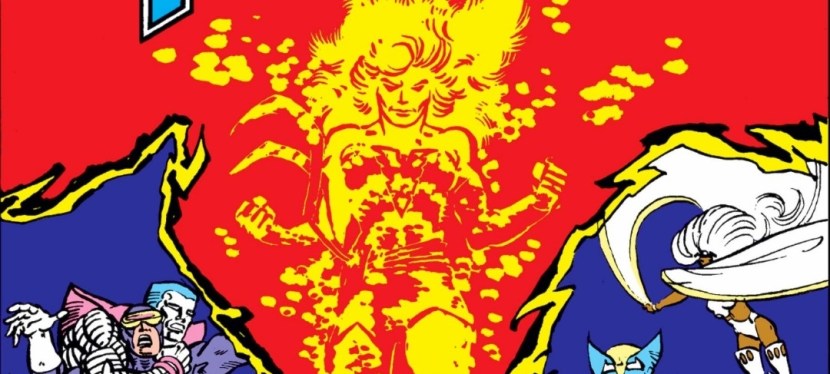
A Look Back at Backlash #4 (1995)

Disclaimer: This is my original work with details sourced from reading the comic book and doing personal research. Anyone who wants to use this article, in part or in whole, needs to secure first my permission and agree to cite me as the source and author. Let it be known that any unauthorized use of this article will constrain the author to pursue the remedies under R.A. No. 8293, the Revised Penal Code, and/or all applicable legal actions under the laws of the Philippines.

Welcome back superhero enthusiasts, 1990s arts and culture enthusiasts, Image Comics fans and comic book collectors! Today we go back to the wild 1990s and explore a part of the WildStorm universe through a tale of Backlash!  

In my previous retro review, as the mission of Backlash and Taboo intensified, Zealot and Void of the WildCATs got involved in the action. Pike, who had been serving S’ryn, proved to be a formidable foe for Zealot and Taboo. The Savage Dragon meanwhile proved to be more than capable of bringing down S’ryn which made Backlash less relevant in his own comic book. Just as things intensified, something big blew up.

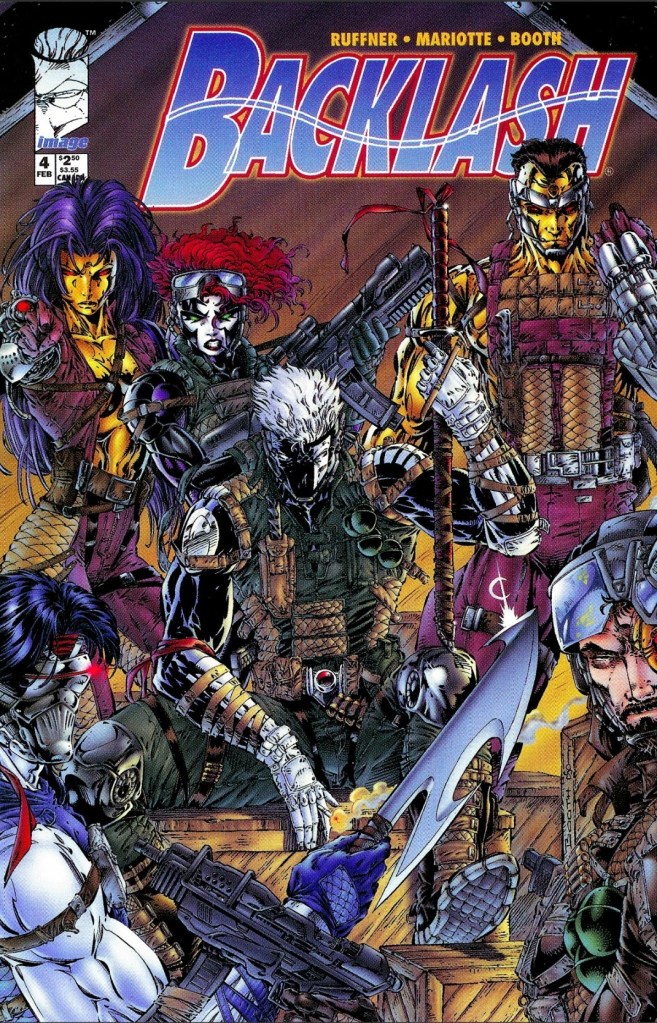
With those details laid down, here is a look back at Backlash published in 1995 by Image Comics with a story written by Sean Ruffner, Jeff Mariotte and Booth. Booth was the artist.

The cover.

Early story

The story begins just moments after the big explosion. Savage Dragon, Backlash, Zealot, Jacob Marlowe, Taboo, Void and Jack managed to survive. In line with his duty as a police officer, Savage Dragon tells Zealot that Backlash and his friends are coming with him as they have been tagged by the government as threats to national security. Zealot then lifts her blade up to Savage Dragon’s throat and states that if Backlash had not been with them, then her lord Emp (Marlowe) may well have been assassinated.

Eventually, Void uses her power to transport Backlash, Taboo, Jack, Zealot and Marlowe away, leaving Savage Dragon behind…

Quality

A briefing about the next mission.

To put things straight, this particular comic book serves as the conclusion of the storyline (the mission specifically) that started in issue #2 while also working as a bridge going into the next storyline. The good news here is that the creative team’s work here is good enough in terms of quality.

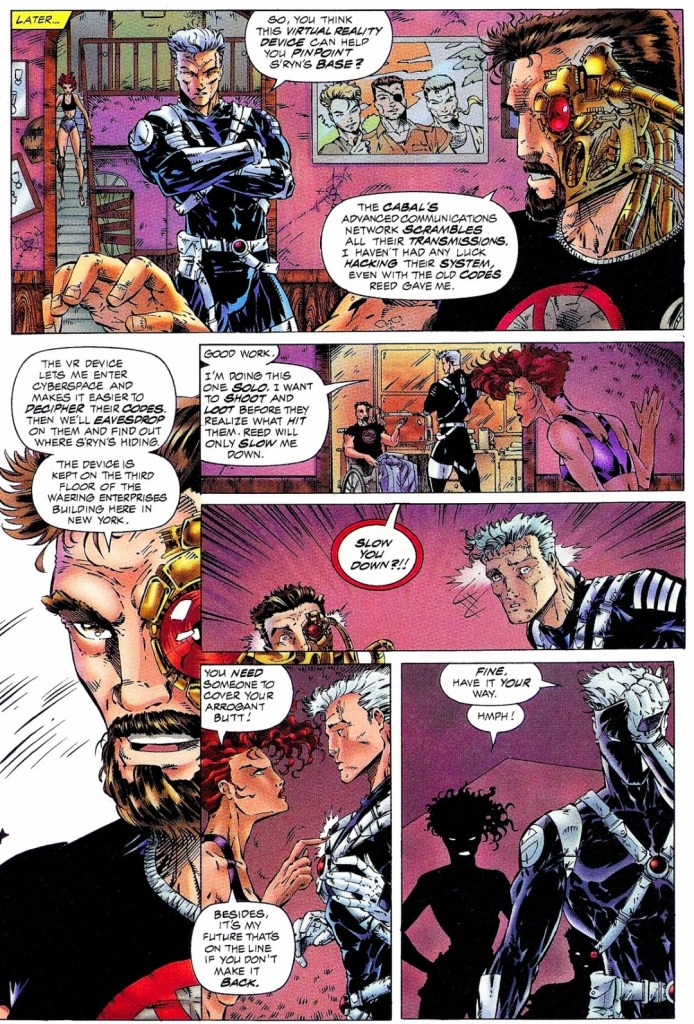
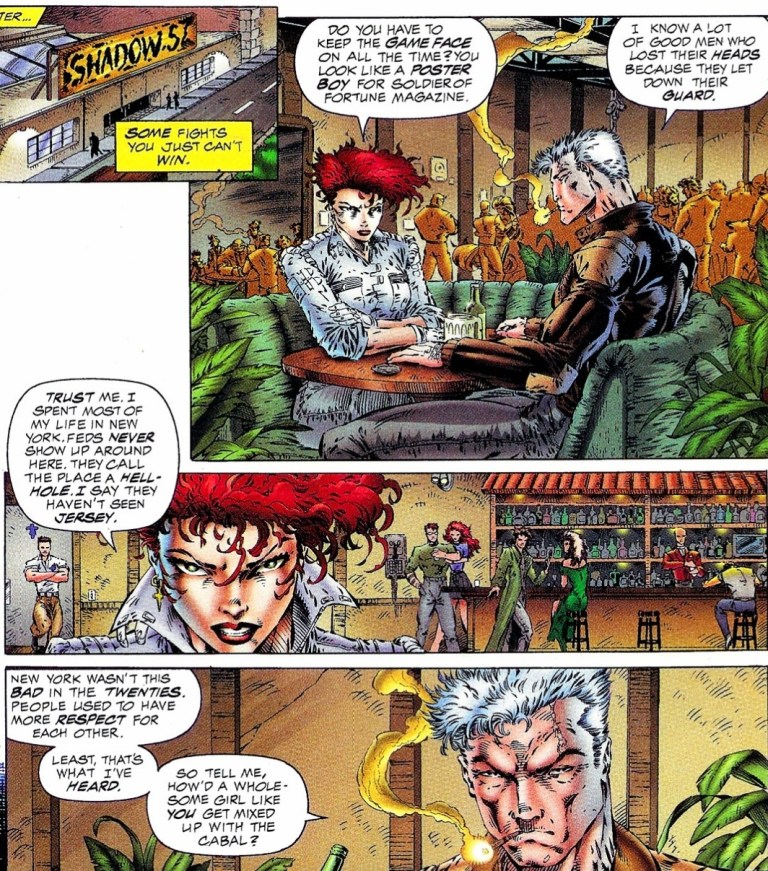
For one thing, the team really took their time to develop Backlash and Taboo some more right after the end of the first mission. Their talk with each other as civilians inside a New York City bar was nicely written and there were a few witty moments that I found enjoyable. Along the way, there was efficient expository dialogue that explains Taboo’s past connection with Pike and the Cabal. Backlash also shared some key details of himself which ultimately made him and Taboo have something in common.

This story also shows a key flaw in Backlash’s personal integrity – his romantic involvement with Taboo made him betray his beloved Diane. For one thing, this potentially opens a series of problems that will eventually haunt him later. On another thing, it seems that the creative team have something intriguing planned for the protagonist who has clearly been sharing this comic book series’ spotlight with Taboo.

As with the previous issues, this comic book continued the build-up and emphasis of the WildStorm universe’s concepts. In terms of crossovers, Wetworks’ leader Jackson Dane makes an appearance here and his unexpected reunion with Backlash is a must-see. For the newcomers reading this, WildStorm’s Grifter (WildCATs), Backlash, Dane (Wetworks) and Deathblow are all members of Team 7 which had its series of wild stories set twenty years prior (note: think of the Vietnam War era). It was also in 1994 when the first Team 7 comic book mini-series was first published. In some ways, Backlash interacting with Grifter in the Kindred mini-series and reuniting with Dane served as creative ways to emphasize the Team 7 concept to readers.

On the visuals, Brett Booth continues to do a fine job presenting the characters (who are clearly recognizable to me) and I noticed he seems to have fun trying to test readers’ visions by carefully inserting selected X-Men characters into the background during the bar scenes as Taboo and Backlash talked. As for Dane, I like Booth’s own take on the character

Conclusion

Look carefully at the background and you will spot X-Men team members Cyclops, Jean Grey Gambit and Rogue in civilian forms.

Backlash (1995) is more of a build-up comic book that so happens to have a decent amount of action for entertainment value. The characterization scenes of Backlash and Taboo is a must-see while the conclusion of the first mission was nicely done complete with a worthy end to the crossover with WildCATs’ Zealot, Void and Jacob Marlowe. The story itself moved at a medium pace which is not surprising as there was something being built-up with the new mission in mind.

Overall, Backlash (1995) is recommended.

+++++

Thank you for reading. If you find this article engaging, please click the like button below, share this article to others and also please consider making a donation to support my publishing. If you are looking for a copywriter to create content for your special project or business, check out my services and my portfolio. Feel free to contact me with a private message. Also please feel free to visit my Facebook page Author Carlo Carrasco and follow me on Twitter at  @HavenorFantasy as well as on Tumblr at https://carlocarrasco.tumblr.com/ and on Instagram at https://www.instagram.com/authorcarlocarrasco
A Look Back at X-Men Adventures #10 (1993)

Disclaimer: This is my original work with details sourced from reading the comic book and doing personal research. Anyone who wants to use this article, in part or in whole, needs to secure first my permission and agree to cite me as the source and author. Let it be known that any unauthorized use of this article will constrain the author to pursue the remedies under R.A. No. 8293, the Revised Penal Code, and/or all applicable legal actions under the laws of the Philippines.

Welcome back, superheo enthusiasts, 1990s culture enthusiasts, X-Men fans and comic book collectors! Today we revisit the X-Men Adventures monthly series which was the literary adaptation of the popular X-Men animated series of the 1990s.  

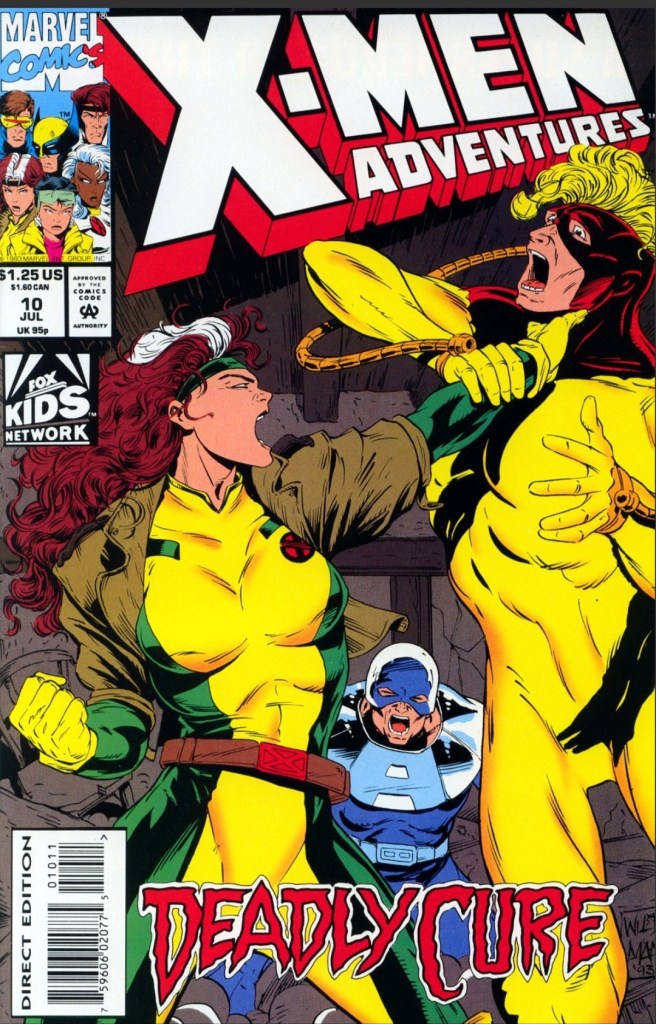
If you are a long-time X-Men fan who enjoyed the comic books and the movies, then the cover of this particular X-Men Adventures issue that has Rogue on it should remind you of the mutant cure concept portrayed in the 2006 movie X-Men: The Last Stand. In the said movie, it was Rogue who went out to have her mutant powers neutralized so that she can live a normal life and no longer worry about absorbing another person’s life force.

With those details laid down, here is a look back at X-Men Adventures , published by Marvel Comics in 1993 with a story written by Ralph Macchio and drawn by Andrew Wildman.

The cover.

Early story

The story begins with the arrival of Cable outside a private home in the Swiss Alps. Inside, Warren Worthington (Angel) and Gisela spend quality time together by the fire. They talk about a certain Dr. Adler who is a genetics expert that Worthington sent to Scotland to conduct research.

Suddenly, Cable breaks into the place and points his gun at Worthington looking for Dr. Adler. While talking, Worthington reaches for a gun and fire it at Cable. The huge armed mutant then grabs Worthington by the head and throws him out of the home and into the snow. In response to Cable’s question, Gisela mentions that Dr. Adler has gone to Scotland. Moments later, Worthington (in his angel form) flies back into the house to protect Gisela from whatever harm Cable could do to her.

Over at Muir Island, Professor X and his long-time colleague Dr. Moira MacTaggert discuss the facility and research done there. Xavier mentions that the core of the research done by the mysterious Dr. Adler. Moira states that Adler is not officially part of the research center and he simply pays for everything he uses there.

After failing to meet Dr. Adler inside his research office, Xavier conducts a mind probe which causes a series of stake images enter his consciousness. The experience was so intense, his telepathic inquiry got disrupted abruptly. Professor X then decides to contact the X-Men…     

Quality

Rogue goes through a lot in her pursuit to become normal.

Let me start with the concept of Rogue’s pursuit to cure herself of her genetic mutation…compared to the 2006 live-action X-Men movie, the plot in this literal adaptation of the X-Men animated series episode makes more sense and is more believable to follow. Without spoiling the identities (note: to find out who they are, read this comic book), I can say that there are sinister forces behind the genetic works of Adler within the Muir Island facility. The Adler operation is just part of a grand scheme that the sinister forces have been working on and Rogue’s involvement was a surprise addition. More on Rogue’s pursuit of getting normal, what was portrayed in this adaptation was nicely structured while also cleverly avoiding the “doing it all for the sake of love” cliché. In short, she made her pursuit not for her romance with Gambit but to really change her life significantly, even if it means losing her membership with the X-Men. Through her actions, you will feel Rogue becoming desperate and reckless to be normal.

Apart from the tale of Rogue, the X-Men meanwhile have been handling themselves without Professor X and Cyclops clearly carries the responsibility of leading them all. As for Charles Xavier, his departure has been explained and incidentally he has gotten close to danger even though Dr. Moira MacTaggert is with him. The writing in this adaptation is filled with suspense, surprises and intrigue which were nicely executed with concise timing.

Conclusion

Charles Xavier makes contact with his team from far-away.

X-Men Adventures (1993) is a very good read. Anyone who saw the half-baked mutant cure aspect of the 2006 X-Men movie will find the Rogue tale here more satisfying to read. This is definitely Rogue’s story with some spotlight shared with the X-Men, two other mutants who served as opposition for Rogue, and the sinister forces I mentioned. This comic book is actually the first of two parts focused on Muir Island and it certainly is a really satisfying reading experience on its own.  

Overall, X-Men Adventures (1993) is recommended.

+++++

Thank you for reading. If you find this article engaging, please click the like button below and also please consider sharing this article to others. If you are looking for a copywriter to create content for your special project or business, check out my services and my portfolio. If you want to support my website, please consider making a donation. Feel free to contact me with a private message. Also please feel free to visit my Facebook page Author Carlo Carrasco and follow me on Twitter at  @HavenorFantasy as well as on Tumblr at https://carlocarrasco.tumblr.com/ and on Instagram at https://www.instagram.com/authorcarlocarrasco/.
A Look Back at X-Men Adventures #11 (1993)

Disclaimer: This is my original work with details sourced from reading the comic book and doing personal research. Anyone who wants to use this article, in part or in whole, needs to secure first my permission and agree to cite me as the source and author. Let it be known that any unauthorized use of this article will constrain the author to pursue the remedies under R.A. No. 8293, the Revised Penal Code, and/or all applicable legal actions under the laws of the Philippines.

Welcome back, superheo enthusiasts, 1990s culture enthusiasts, X-Men fans and comic book collectors! Today we revisit the X-Men Adventures monthly series which was the literary adaptation of the popular X-Men animated series of the 1990s.  

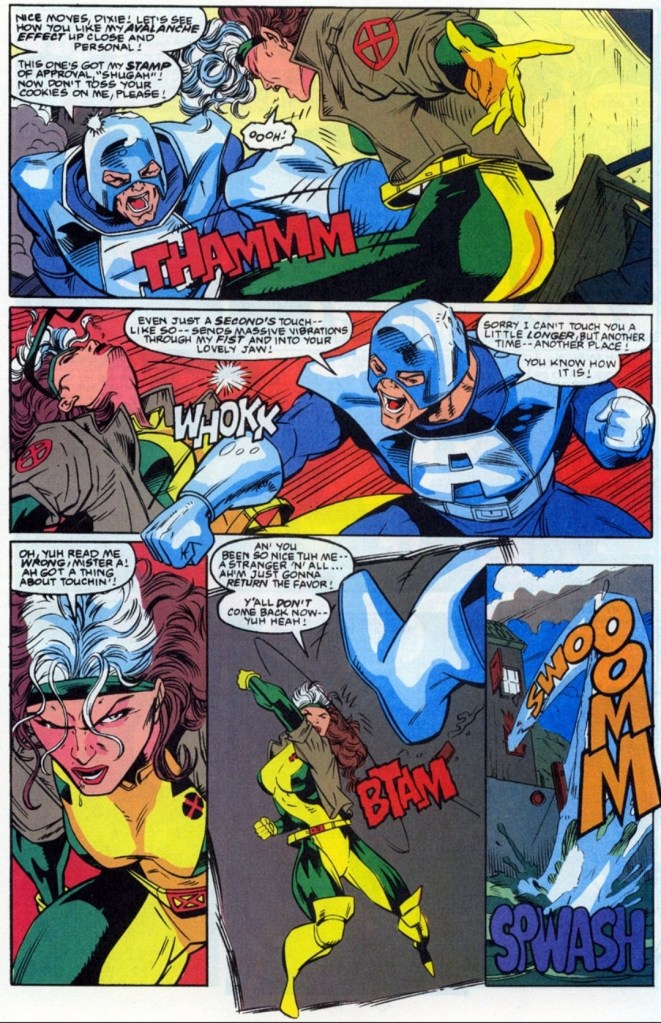
In this retro review, we take a look at the adaptation of the animated series’ own portrayal of the Muir Island saga from the comic books. Also there is Rogue who desired to have her genetic mutation cured, even though it means removing her super strength, flying ability and her dangerous touch.

With those details laid down, here is a look back at X-Men Adventures , published by Marvel Comics in 1993 with a story written by Ralph Macchio and drawn by Andrew Wildman.

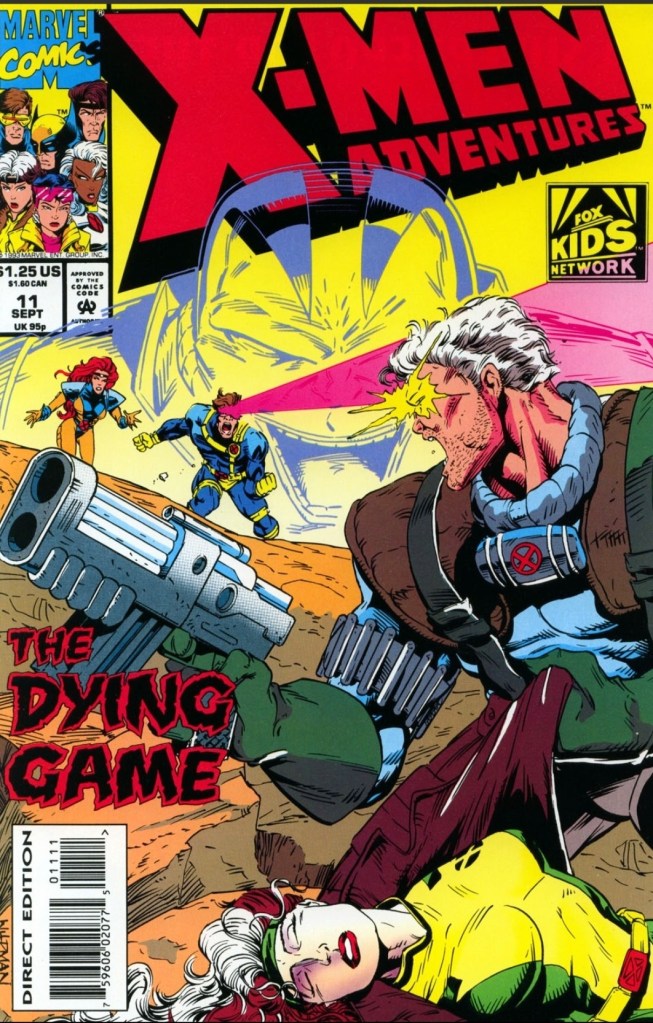
The cover.

Early story

The story begins with Rogue emerging from the rubble of a facility on Muir Island. She remembers that just moments earlier, Pyro and Avalanche ruined the facility just as she was about to get cured by a man she knows as Dr. Adler. She leaves the place searching for those responsible for the ruined facility. She fails to noticed that she is being observed from a distance.

Elsewhere on the island, Pyro and Avalanche open a bag believing Dr. Adler is in it. To their shock, Mystique is the one who emerged and she reveals to them that she was just posing as Dr. Adler as part of her mission to lure mutants into taking the treatment not without realizing the truth that it will turn them into slaves of the one entity she serves…Apocalypse. Pyro explained that he and Avalanche hoped to hold Dr. Adler for ransom.

At a nearby cliff, Cable quietly watches using his rifle’s scope…

Quality

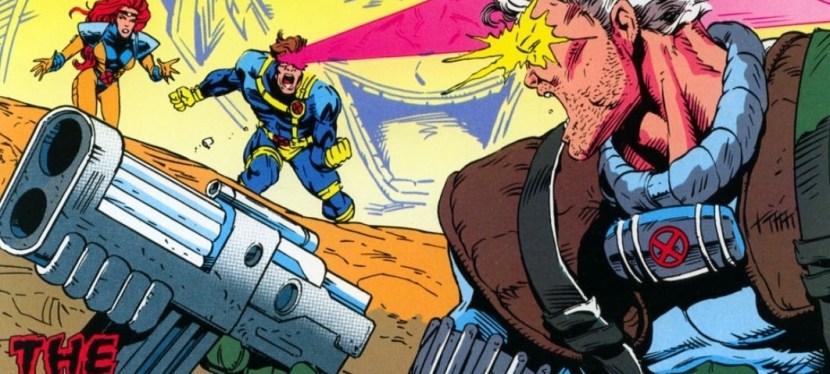
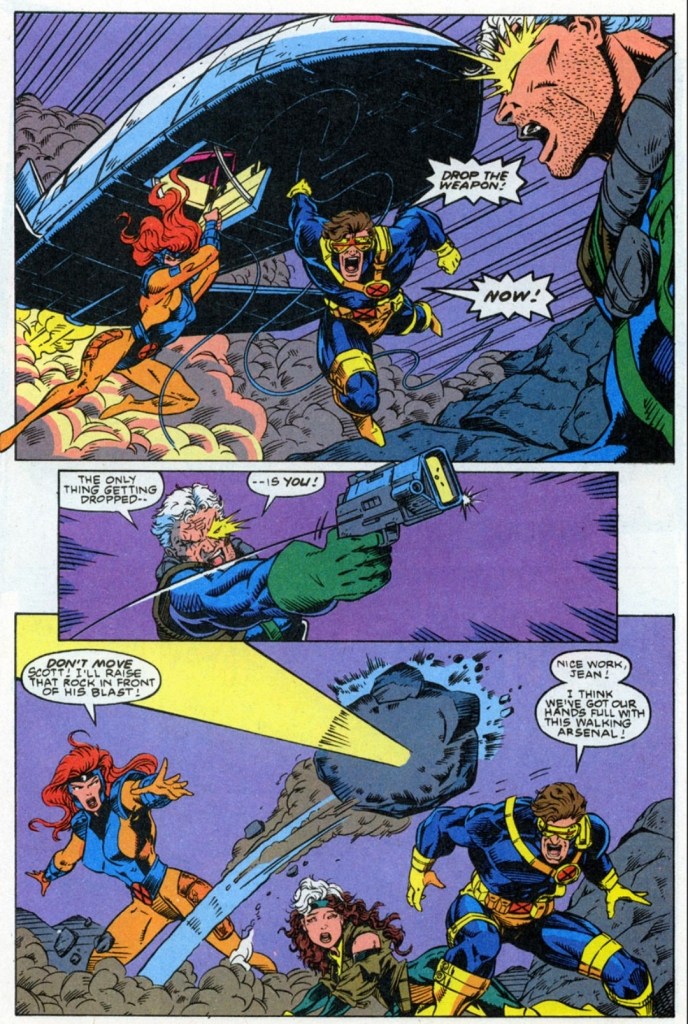
Cyclops and Jean Grey confront Cable!

To put things clearly, this one is pay-off to what was built up in issue while also serving as the continuation of a multi-part story regarding Muir Island. In the previous issue, Rogue desired to become a normal individual which is why she went to Dr. Adler on the said island. In this comic book, the direction for Rogue took a drastic change fighting Pyro and Avalanche not knowing that Mystique is involved and secretly working to help her master Apocalypse execute his ambitious plan of gaining capable and controllable slaves from the mutant population.

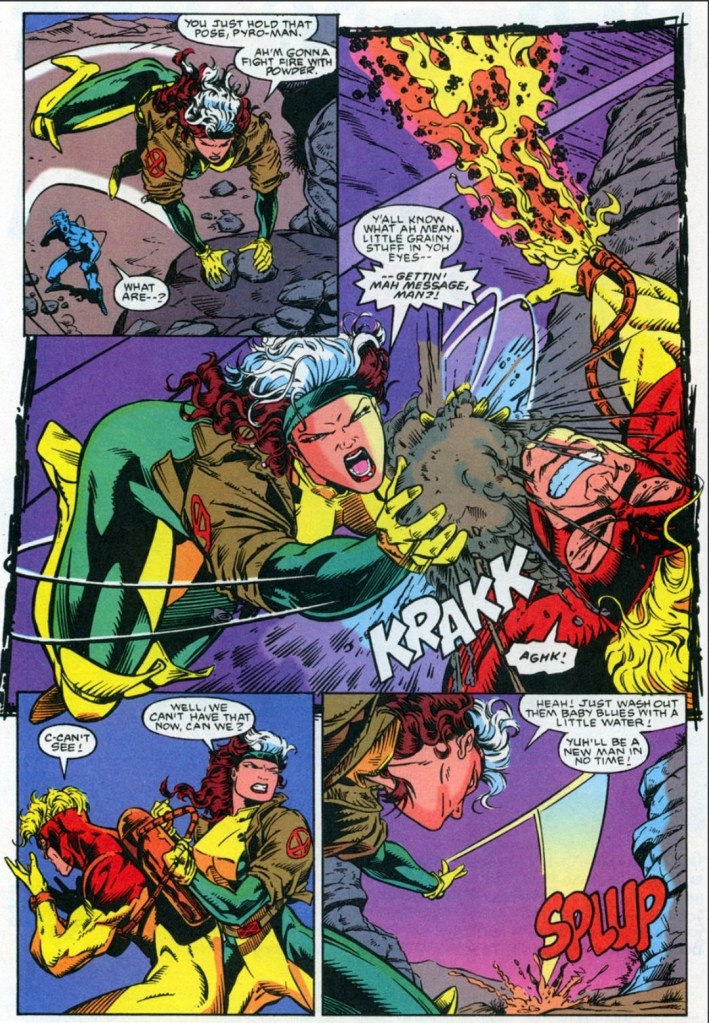
The good news here is that the script is very well written and the narrative is really strong. Very notably, the superhero spectacle got clearly ramped up by several notches resulting in lots of action scenes as well as opportunities for Andrew Wildman to flex his artistic muscles making some dynamic action-packed images for readers to enjoy. Along the way, there is some suspense built-up related to the sub-plot within (note: Cable’s limited appearance here as well as the Jean Grey and Cyclops reuniting with their mentor Charles Xavier) as well as the Muir Island saga itself.

Indeed, this comic book has lots of spectacle that superhero enthusiasts will enjoy but still the Macchio-Wildman team managed to maintain the core themes of the story for readers to absorb and think about.

Conclusion

Dynamic action of Rogue taking on Pyro.

X-Men Adventures (1993) is a very solid read from start to finish. Even as the narrative has lots of action scenes presented, the story still managed to maintain focus on the themes of sacrificing mutation to be normal humans, the temptations brought in by advanced scientific wonders, and the exploitation of people seeking hope and reform a lot. There are indeed moral lessons within this comic book reflect about. This is strong creative work by Macchio-Wildman that X-Men fans and newcomers should read and I can say there is more to come storywise beyond this comic book.

Overall, X-Men Adventures (1993) is recommended!

+++++

Thank you for reading. If you find this article engaging, please click the like button below and also please consider sharing this article to others. If you are looking for a copywriter to create content for your special project or business, check out my services and my portfolio. If you want to support my website, please consider making a donation. Feel free to contact me with a private message. Also please feel free to visit my Facebook page Author Carlo Carrasco and follow me on Twitter at  @HavenorFantasy as well as on Tumblr at https://carlocarrasco.tumblr.com/ and on Instagram at https://www.instagram.com/authorcarlocarrasco/.
A Look Back at X-Men Adventures #15 (1993)

Disclaimer: This is my original work with details sourced from reading the comic book and doing personal research. Anyone who wants to use this article, in part or in whole, needs to secure first my permission and agree to cite me as the source and author. Let it be known that any unauthorized use of this article will constrain the author to pursue the remedies under R.A. No. 8293, the Revised Penal Code, and/or all applicable legal actions under the laws of the Philippines.

Welcome back, superheo enthusiasts, 1990s culture enthusiasts, X-Men fans and comic book collectors! Today we revisit the X-Men Adventures monthly series which was the literary adaptation of the popular X-Men animated series of the 1990s.  

Today is my review about the 15th and final issue of the X-Men Adventures adaptation of episodes of the 1st season of the popular animated series. The comic book at hand was the literary translation of the 13th episode and final episode of season one which was broadcast in March 1993.

With those details laid down, here is a look back at X-Men Adventures , published by Marvel Comics in 1993 with a story written by Ralph Macchio and drawn by Andrew Wildman.

The cover.

Early story

The story begins somewhere in Manhattan where a riot is happening. It turns out that multiple riots have occurred as a result of the of the recent kidnapping of United States Senator Robert Kelly who established himself as the nation’s most prominent anti-mutant public figure.

Deep inside their headquarters, the X-Men watch live news footage of the riot. Even though they were not involved in the kidnapping of Senator Kelly, Charles Xavier and his team are concerned that mutants like them will still be held responsible. The leader tells his team that they must find the missing senator quickly before the wave of intolerance affects all of them mutants. Xavier then starts using Cerebro which he programmed to search for any distortions in the magnetic field of planet Earth.

Elsewhere, inside a vessel that got shipwrecked along the Atlantic seaboard, Magneto has Senator Kelly as his captive. He tells the politician that he holds the key to the future and that they are in agreement that man and mutant cannot co-exist peacefully. For Magneto, the war for dominance must begin as humans remain weak and divided. Suddenly, a huge Sentinel breaks into the place…

Quality

The X-Men, Professor and Magneto.

Being the conclusion of the monthly series based on season one of the X-Men animated series, this comic book’s story packs a lot of stuff, intrigue and some memorable character moments. Thematically, the story emphasizes absolute power, intolerance and instability which got dramatized carefully as the narrative progressed.

For the X-Men, the pressure is tremendous as the stakes have gotten so high not just for them but for all mutants as a population. To fail to save the kidnapped Senator Kelly would cause society to become even more hostile to mutants which could compel the federal government to declare a state of emergency. Complicating matters here is Magneto’s obsession with power in connection with his biggest obsession that mutants are essentially superior over humans and that societies will be reformed – even with violence involved – accordingly. Adding even more the complexity of the situation are the presence of government, technology handlers backed by private financiers, and the one gigantic machine (that produces new Sentinels) that becomes self-aware.

The good news here is that the story is very well written, the narrative does not lose focus and the creative duo of Macchio-Wildman managed to craft a tale that consistently remained engaging complete with ensuring sufficient superhero spectacle for entertainment. As expected, the pay-offs executed for all the build-ups proved to be highly satisfying.

When it comes to characterization, everyone here acts and talks as expected. The team dynamics of the X-Men here make for a cerebral reading experience especially when they have these intense private meetings trying to solve their problems and anticipate what would happen next. The dialogue, filled with varied details, are richly written and yet easy to follow. I should state that having the Sentinels as a force of opposition under the control of a rogue AI added a lot to the stakes involved in the plot. The portrayal of machines acting superior over humans proved to be a unique parallel to the humans-mutants conflict.

Conclusion

The fictional US Senator Robert Kelly in trouble in the presence of Magneto and a Sentinel.

X-Men Adventures (1993) is not only a worthy conclusion to the monthly series based on animated series’ season one episodes. It is indeed the best comic book of the said series that I have read thanks to the great adaptive works of the Macchio-Wildman team. The story had these very high stakes raised and ultimately the pay-off to all the build-up were great resulting in great satisfaction on my part as a reader. At the same time, there are certain key plot elements and character elements here that eventually made their way into the first X-Men live-action movie of 2000. The core story is the clear feature while the bonus pin-up section was the fun additive. This comic book is a must-have!

Overall, X-Men Adventures (1993) is highly recommended!

+++++

Thank you for reading. If you find this article engaging, please click the like button below and also please consider sharing this article to others. If you are looking for a copywriter to create content for your special project or business, check out my services and my portfolio. If you want to support my website, please consider making a donation. Feel free to contact me with a private message. Also please feel free to visit my Facebook page Author Carlo Carrasco and follow me on Twitter at  @HavenorFantasy as well as on Tumblr at https://carlocarrasco.tumblr.com/ and on Instagram at https://www.instagram.com/authorcarlocarrasco/.
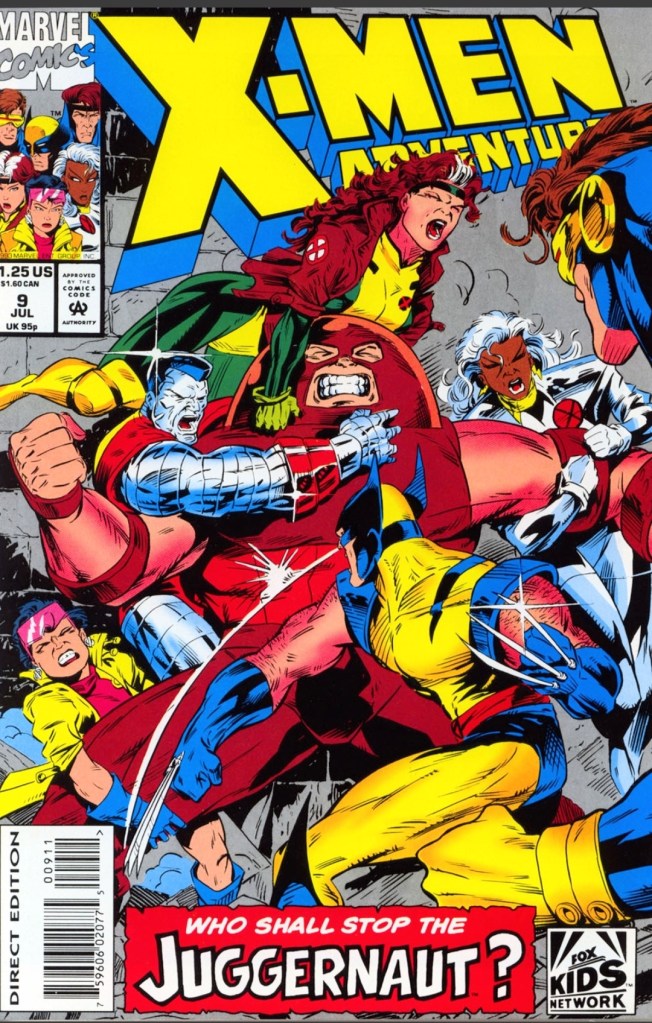
A Look Back at X-Men Adventures #9 (1993)

Disclaimer: This is my original work with details sourced from reading the comic book and doing personal research. Anyone who wants to use this article, in part or in whole, needs to secure first my permission and agree to cite me as the source and author. Let it be known that any unauthorized use of this article will constrain the author to pursue the remedies under R.A. No. 8293, the Revised Penal Code, and/or all applicable legal actions under the laws of the Philippines.

Welcome back, superheo enthusiasts, 1990s culture enthusiasts, X-Men fans and comic book collectors! Today we revisit the X-Men Adventures monthly series which was the literary adaptation of the popular X-Men animated series of the 1990s.  

Within the lore of the X-Men, Juggernaut is a significant supervillain who not only gave the X-Men a lot of trouble but also did the same with other heroes within the Marvel Comics shared universe. In the 2006 movie X-Men: The Last Stand, Juggernaut made his first-ever cinematic appearance. In 2018’s Deadpool 2, a new cinematic version of Juggernaut appeared. In my retro comic book review of What If #13 (1990), a different version of Juggernaut was featured by the creators.

With those details laid down, here is a look back at X-Men Adventures , published by Marvel Comics in 1993 with a story written by Ralph Macchio and drawn by Andrew Wildman.

The cover.

Early story

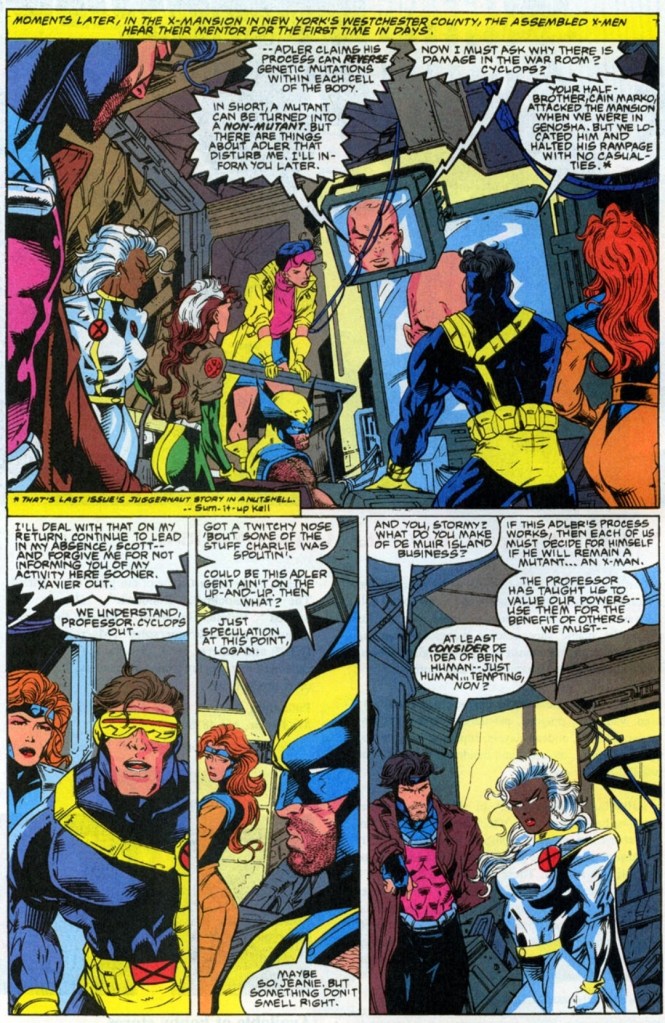
The story begins with the X-Men (riding their jet) arriving from Genosha only to see a part of Professor X’s mansion destroyed. After landing, Cyclops, Wolverine and Jean Grey immediately searched through the rubble and found a path into the War Room. Using Cerebro, they uncovered a prepared video message of Professor X who tells them that he is taking a journey whose results may change their lives forever. After apologizing for the cryptic nature of the message, Xavier tells them that he trusts they will continue with their training and look after the School of Gifted Children in his absence.

The X-Men could not determine if their mentor left the mansion before the destruction took place. In response to Gambit’s question related to detection, Wolverine senses big foot prints and there was a familiar smell left behind. Wolverine decides to go out to keep following the scent which causes Cyclops to insist that the situation at hand is not the time for the team members to separate from each other.

After telling Cyclops he has places to go to, Wolverine then leaves his teammates with a motorcycle. Cyclops tells Storm to take Rogue and Jubilee with her to track Wolverine and stay close to him…

Quality

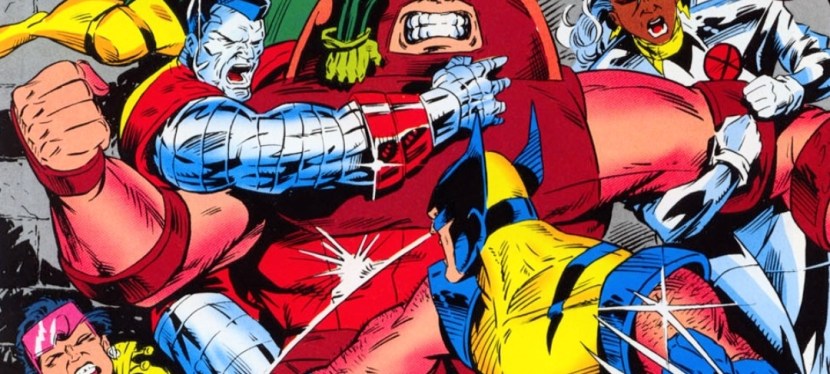
The sheer power of Juggernaut.

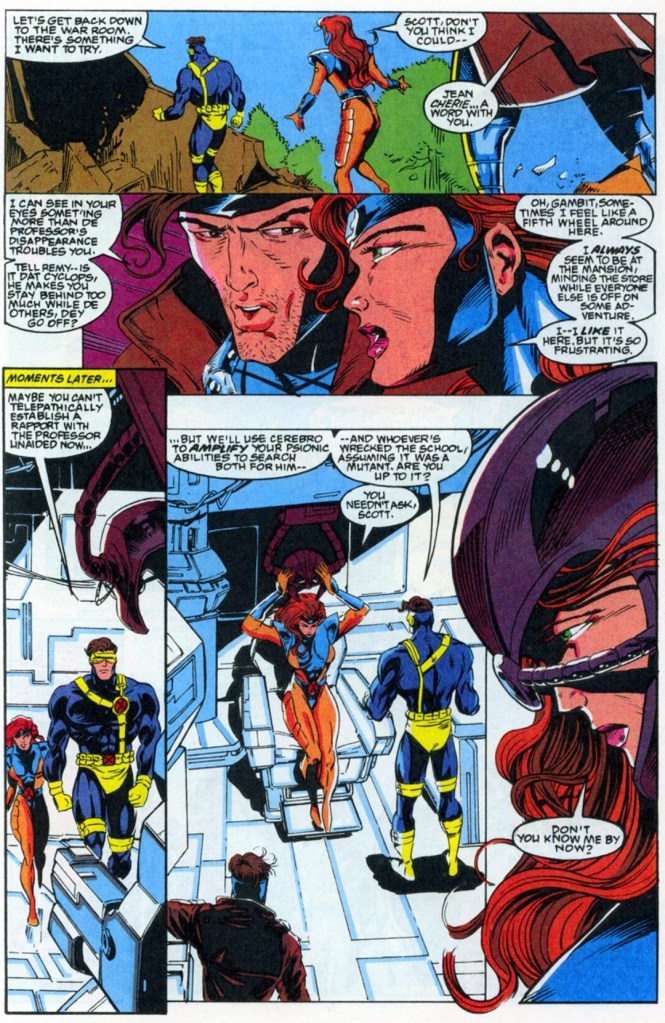
To describe this comic book’s story, I can say it was a fine mix of suspense, mystery and superhero spectacle. As the X-Men struggled to figure out how the damage on the mansion happened and where exactly did Charles Xavier go to, I felt this sense of dread backed with strong mystery. As the plot continued, there were these short-yet-notable character moments among the X-Men such as Gambit getting closer with Jean Grey who believes that she should be helping others on the field as her beloved Cyclops made a decision that kept her with him at the mansion.

The search for who is responsible for the mansion’s big damage creatively took notable paths in the story. One strong figure appeared and became a target of some X-Men members while another one became Wolverine’s target.

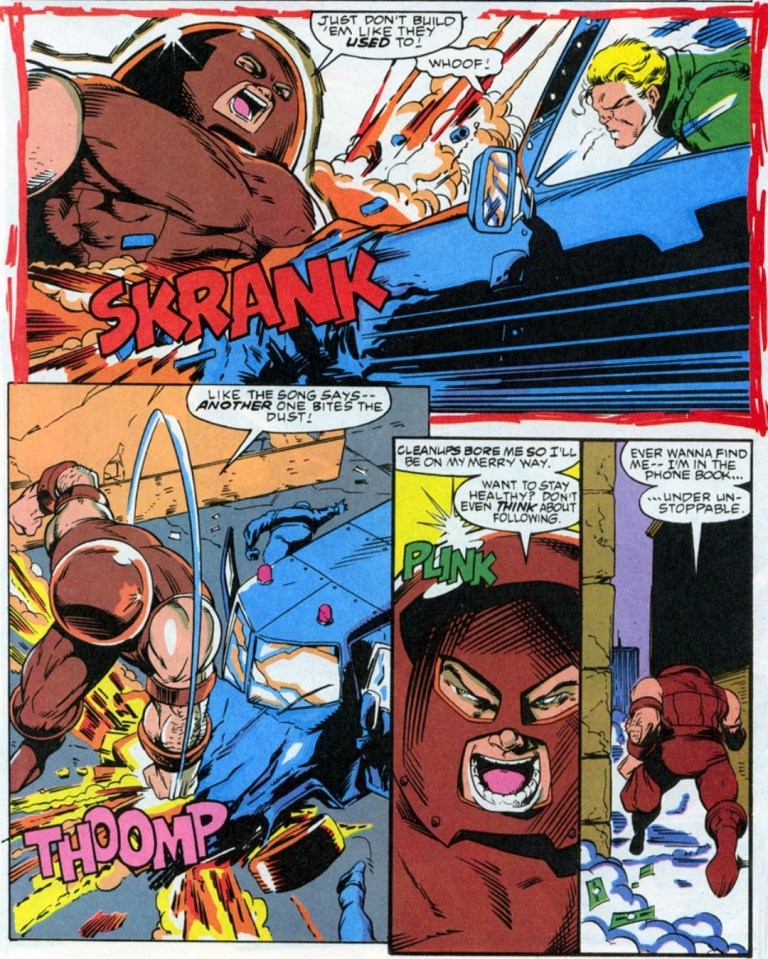
As expected, the highlight of this tale is Juggernaut himself and to say that he his huge and powerful is a big understatement. At this point of the X-Men Adventures monthly series, this is the one notable conflict that has multiple X-Men members struggling really hard fighting one single powerful enemy. In some ways, Juggernaut here looks like a much more dangerous foe than Magneto within this series. How the conflict in the story ended in a really intriguing yet sensible way which should resonate with X-Men fans. 

Conclusion

Only Cyclops, Gambit and Jean Grey (who wanted to do more) remained at the mansion.

X-Men Adventures (1993) is fun and intriguing to read. At the stage of this monthly series, the X-Men are not only more developed but are also challenged deeply as their mentor is no longer around to lead them. This makes the path ahead look more enticing to anticipate.

Overall, X-Men Adventures (1993) is recommended.

+++++

Thank you for reading. If you find this article engaging, please click the like button below and also please consider sharing this article to others. If you are looking for a copywriter to create content for your special project or business, check out my services and my portfolio. If you want to support my website, please consider making a donation. Feel free to contact me with a private message. Also please feel free to visit my Facebook page Author Carlo Carrasco and follow me on Twitter at  @HavenorFantasy as well as on Tumblr at https://carlocarrasco.tumblr.com/ and on Instagram at https://www.instagram.com/authorcarlocarrasco/.

A Look Back at X-Men Adventures #6 (1993)

Disclaimer: This is my original work with details sourced from reading the comic book and doing personal research. Anyone who wants to use this article, in part or in whole, needs to secure first my permission and agree to cite me as the source and author. Let it be known that any unauthorized use of this article will constrain the author to pursue the remedies under R.A. No. 8293, the Revised Penal Code, and/or all applicable legal actions under the laws of the Philippines.

Welcome back, superheo enthusiasts, 1990s culture enthusiasts, X-Men fans and comic book collectors! Today we revisit the X-Men Adventures monthly series which was the literary adaptation of the popular X-Men animated series of the 1990s.  

In my previous review, the X-Men encountered the Morlocks for the first time ever. Along the way, Storm’s ability to lead and handle her deepest fear got tested. Wolverine, meanwhile, struggled as he recovered from his hard battle with Sabretooth.

With those details laid down, here is a look back at X-Men Adventures , published by Marvel Comics in 1993 with a story written by Ralph Macchio and drawn by Andrew Wildman.

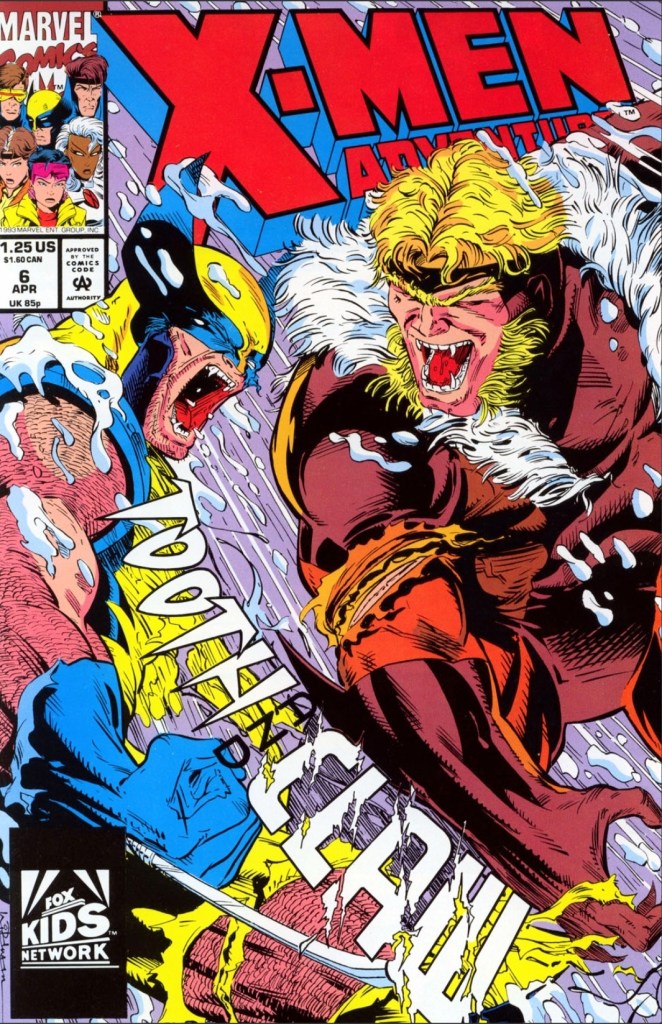
The cover.

Early story

The story begins in the Arctic region. Wolverine travels by himself having left his team as he could not handle being near his teammates Scott/Cyclops and Jean Grey knowing they have feelings for each other. He also feelings for her.

Wolverine keeps on traveling completely unaware that he is being watched from a distance by his fierce rival Sabretooth. As the clawed X-Men member moves over a bridge made of ice with explosives hidden underneath, Sabretooth detonates by remote control causing a huge explosion…

Quality

A different kind of Wolverine awaits readers here.

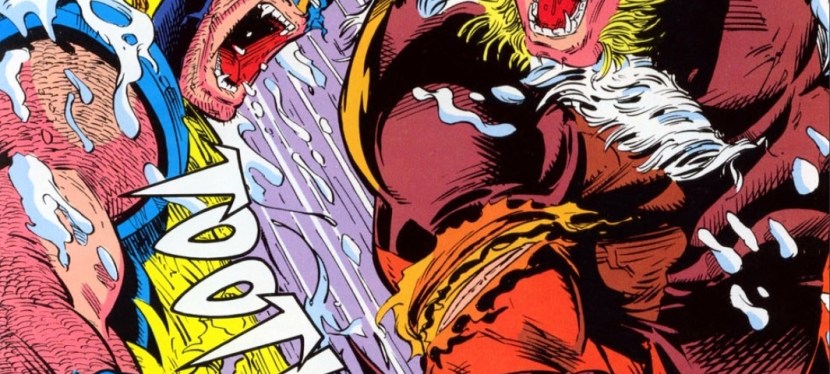
Let me start with the cover art. I can say clearly that those who wanted to see Wolverine and Sabretooth fight each other even more will get exactly what they want in this comic book. The conflict between the two is the highlight superhero spectacle and it works excellently as a pay-off to all the build-up that led to it.

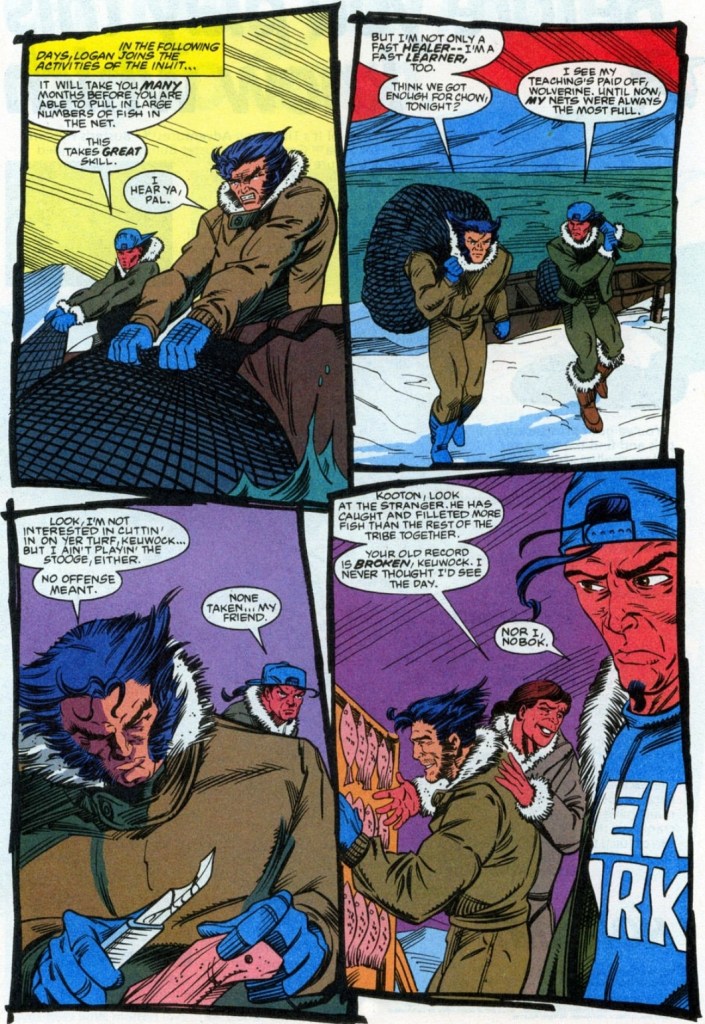
More on the story itself, the script was crafted to heavily emphasize Wolverine’s personality when he is not on duty with his team. You will see a more human side of him when he starts interacting with a group of people (non-mutants) who have been living in the Arctic zone where they catch fish and ride boats for a living. I can say that the dialogue here is pretty rich especially when intense character development on Wolverine happens.

With regards to the Wolverine-Sabretooth rivalry, you definitely will get a lot more interactions and new action actions between them compared to what happened in issue . Spectacle aside, the stakes are even higher as the Arctic people got involved which creatively adds more depth on the development of both mutants.

Along the way, X-Men members Gambit, Storm and Jubilee head off to the island state of Genosha. As far as Gambit is concerned, Genosha welcomes mutants with open arms. For Charles Xavier, he sees a perfect opportunity for their team to visit and investigate it. This, of course, leads to the events of issue #7.

Conclusion

The X-Men talk about Wolverine’s absence and Genosha.

X-Men Adventures (1993) will surely delight fans of Wolverine as well as his rivalry with Sabretooth. Be aware that the Wolverine tale is the main story while the X-Men tale serves mainly as a build-up for the debut of Genosha in the X-Men animated series and in this adaptive comic book series. I had fun reading this and there definitely is a lot of depth in both story and the way the characters were dramatized.

Overall, X-Men Adventures (1993) is recommended.

+++++

Thank you for reading. If you find this article engaging, please click the like button below and also please consider sharing this article to others. If you are looking for a copywriter to create content for your special project or business, check out my services and my portfolio. If you want to support my website, please consider making a donation. Feel free to contact me with a private message. Also please feel free to visit my Facebook page Author Carlo Carrasco and follow me on Twitter at  @HavenorFantasy as well as on Tumblr at https://carlocarrasco.tumblr.com/ and on Instagram athttps://www.instagram.com/authorcarlocarrasco/.