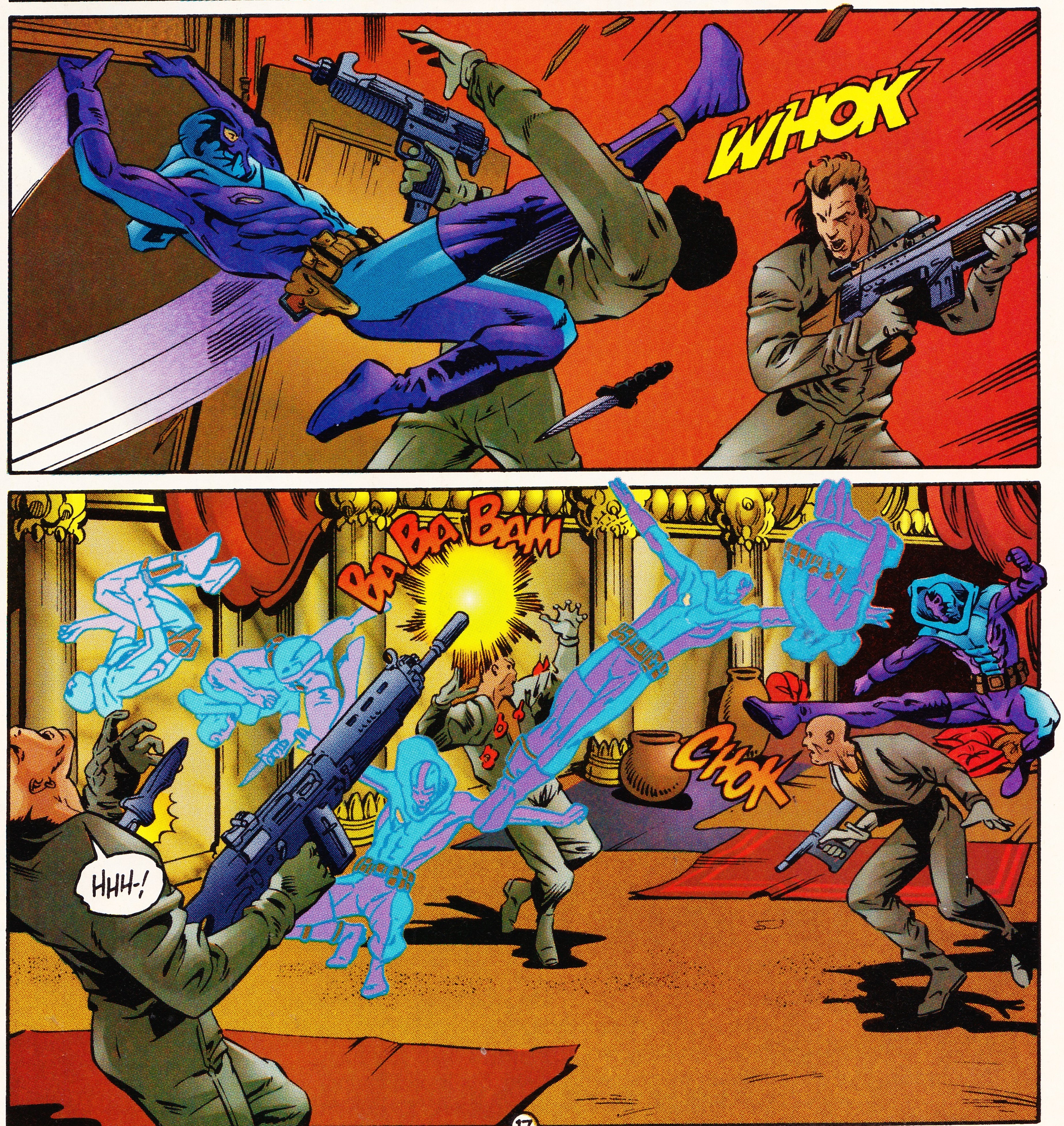
A Look Back at Detective Comics #575 (1987)

Welcome back superhero enthusiasts, 1980s culture enthusiasts and comic book collectors! Today we go back to the late 1980s to explore a part of the DC Comics shared universe through a tale of the iconic Batman.

After DC Comics published the maxi-series Crisis on Infinite Earths, the publisher rebooted their entire comic book universe and that meant reintroducing their superheroes, villains and supporting characters with a touch of 1980s modernization. Frank Miller led the reintroduction of Batman as a new crime fighter in the Batman: Year One storyline in 1987. Also that same year, DC Comics went on to publish a sequel storyline through four issues of the Detective Comics series. That sequel was titled Batman: Year Two.

With those details laid down, here is a look back at Detective Comics , published in 1987 by DC Comics with a story written by Mike W. Barr (the same guy who did Mantra for Malibu Comics) and drawn by Alan Davis. This is the first chapter of the Batman: Year Two storyline.

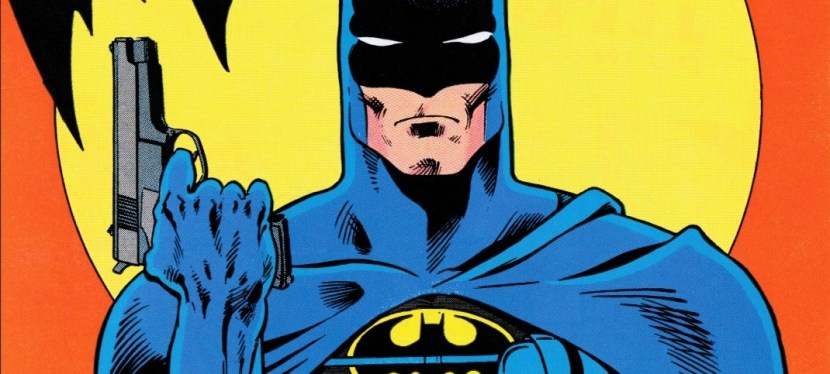
The cover.

Early story

The story begins in Gotham City where the newly appointed police commissioner Gordon participates in a TV talk show. The talk show host is aggressive towards Gordon cutting him off verbally and pointing out that Batman – who is working with the police fighting crime – is no better than the Reaper, a costumed vigilante who caused trouble and killed many people on Gotham’s streets twenty years prior. Gordon emphasizes that Batman works with the city police and he operates strictly on his own.

As the TV talk show goes on, a group of armed thugs carrying varied items enter an apartment that is dark. Outside the Bat Signal (coming from the machine Gordon recently got) flashes, and soon Batman himself appears inside the apartment and cleverly took the gang down. He leaves the place going to do other things.

The next day, Rachel Caspian is pleasantly surprised to see her father arrive earlier than expected…

Quality
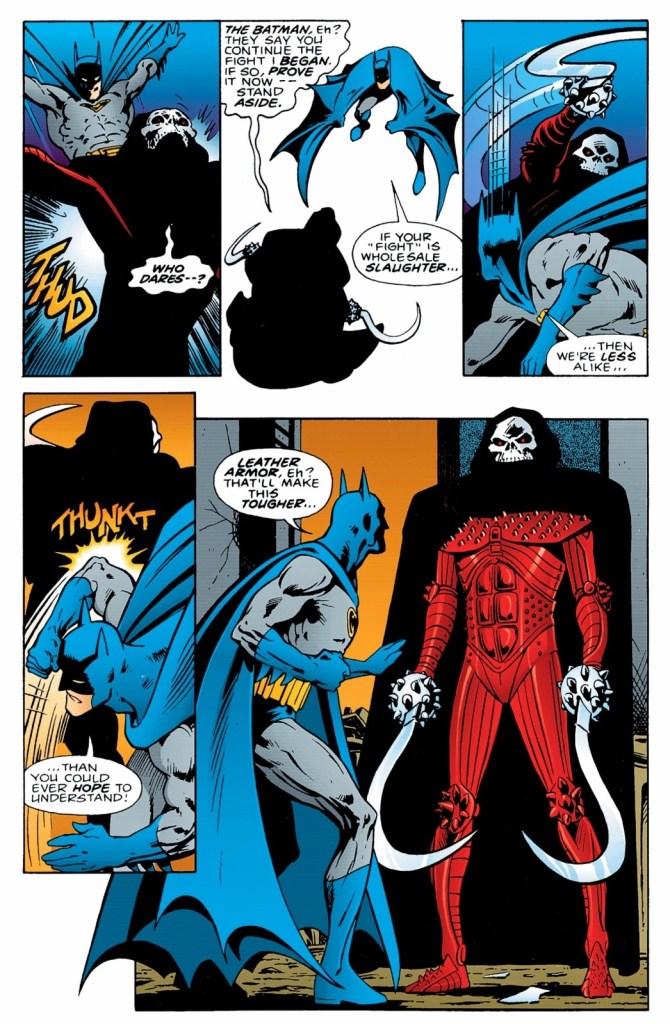
Batman strikes first in his encounter with the Reaper.

Set during the 2nd year of Batman engaging in crime-fighting in coordination with the Gotham City police force, this comic book dramatically portrays the city having a long-running disease and legacy of crime. The references to Gotham’s embarrassing past of being filled with thugs and wicked activities literally paved the way for the return of a masked vigilante who fights criminals with uncompromising violence (including killings). That vigilante’s legacy affects the way the public perceives Batman and why they have trouble seeing the differences between them. The writing and build-up here are very solid.

When it comes to portrayals, you will get to see a younger Bruce Wayne who is clearly pushing himself hard between engaging in business matters and secretly fighting crooks. This is a Batman who is only gaining more experience in the war against crime and he clearly is not the very tactical and very resourceful hero he would become. In his fight against the Reaper, you will really see Batman struggle hard and make really flawed moves that cost him a lot.

The introduction of the Reaper, who became the definitive vigilante of Gotham City long before Batman even started, is very engaging. This vigilante is also very intimidating to see and he clearly overshadows the Caped Crusader both visually and in action.

Conclusion
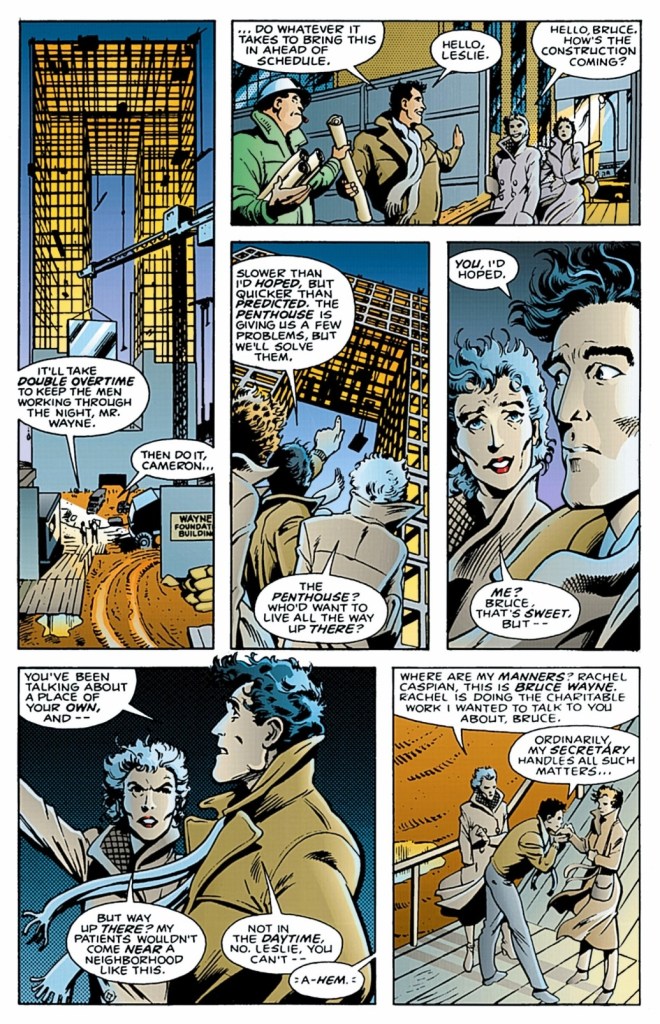
Bruce Wayne attending to business on-site.

As the first chapter of the Batman: Year Two storyline, Detective Comics (1987) is a very solid tale to read. The narrative moved at a medium pace and there were these balanced pay-offs to the build-up (that took place in the first half). The Reaper’s reputation as Gotham’s past blood-thirsty vigilante literally dwarfed that of Batman (the modern vigilante). I should also state that Mike W. Barr symbolized the common traits and differences between Batman and the Reaper which alone are worth reading.

Overall, Detective Comics (1987) is recommended.

+++++

Thank you for reading. If you find this article engaging, please click the like button below, share this article to others and also please consider making a donation to support my publishing. If you are looking for a copywriter to create content for your special project or business, check out my services and my portfolio. Feel free to contact me with a private message. Also please feel free to visit my Facebook page Author Carlo Carrasco and follow me on Twitter at  @HavenorFantasy as well as on Tumblr at https://carlocarrasco.tumblr.com/ and on Instagram at https://www.instagram.com/authorcarlocarrasco
A Look Back at What If #10 (1990)

Disclaimer: This is my original work with details sourced from reading the comic book and doing personal research. Anyone who wants to use this article, in part or in whole, needs to secure first my permission and agree to cite me as the source and author. Let it be known that any unauthorized use of this article will constrain the author to pursue the remedies under R.A. No. 8293, the Revised Penal Code, and/or all applicable legal actions under the laws of the Philippines.

Welcome back superhero enthusiasts, 1990s arts and culture enthusiasts, Marvel Comics fans and comic book collectors! Today we go back to the year 1993 and explore a part of Marvel Comics’ universe through the reimagined tales emphasized in the What If monthly series.

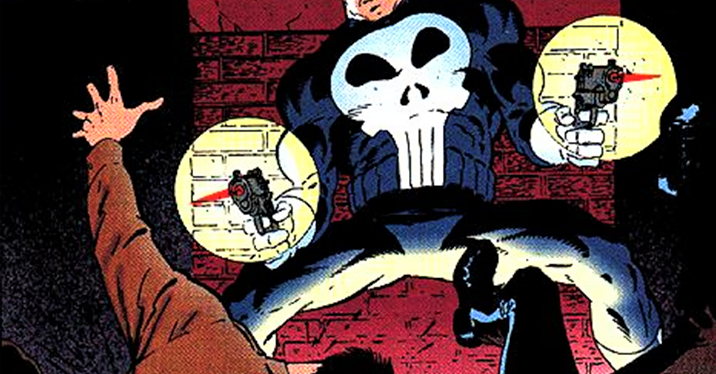
For those of you who have gotten very familiar with Marvel Comics’ vast lineup of superheroes, anti-heroes, super villains and supporting characters, the Punisher is one of the most notable characters as he is the most definitive vigilante the publisher ever has in its shared superhero universe. As a comic book protagonist, the Punisher does “good” in fighting crime but he sure is as bad as the bad guys as he commits torture, issued threats of violence, kidnapping, extortion, coercion and even murder towards them. A major factor in the Punisher’s origin (as Frank Castle) was the killing of his family (wife and two kids) committed by a mob as they witnessed acts of killing in Central Park in New York City. The tragic deaths led Castle to become the Punisher who not only relentlessly waged a personal war against criminals but also often wore dark clothes with a large white skull design on the front of his body. The skull symbolized punishment and death to his enemies.

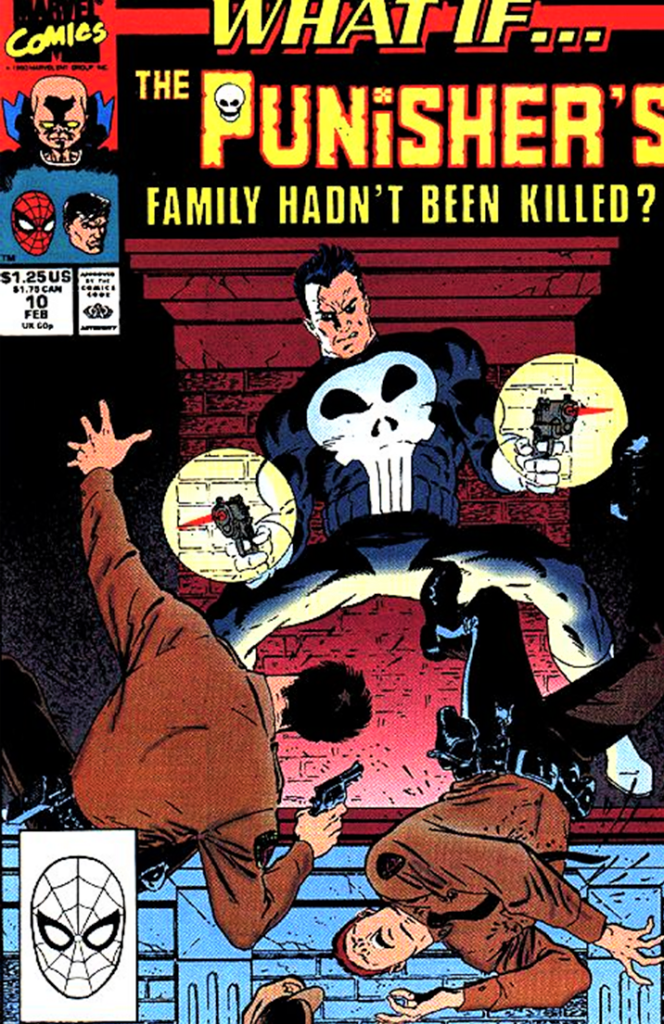
With those details laid down, here is a look back at What If , published in 1990 by Marvel Comics with a story written by Doug Murray and drawn by Rik Levins.

The cover.

Early story

The story begins with the Watcher recalling the time Frank Castle spent with his wife and the two kids at New York City’s Central Park. There, they have fun with their picnic. At this point in time, Frank Castle had previously served his country in the Vietnam War and he carries within him bravery, the experience of violence and vast skills to use weapons.

The weather suddenly worsens as rain starts to fall down causing some inconvenience on the Castle family. Frank’s son struggles as his kite got caught by the large plant nearby. On the other side of the said plant, four armed men and their captive (hanging upside down by the tree) are startled and prepare themselves to shoot anyone who appears.

Frank, who does not realize the mob on the other side of the plant, helps his son get the kite back. The Castle family then decide to go back home not realizing that they came close to discovering and witnessing the illegal activity of the armed men. As the family kept on moving, Frank hears gunfire from a distance…

Quality

Frank Castle the family man.

To get straight to the point about this comic book, it’s story is really engaging and it has noticeable amounts of darkness and grittiness without going overboard. While exploring what would happen had Frank Castle’s family not been killed, the comic book shows the Punisher getting involved in public safety as a New York patrolman which puts him in a unique position facing crime in radically different ways from what we comic book readers have been used to seeing. The story also explores corruption within the police and the justice system as well.

The way the events and action turned out showed the creative team focused on realism while also establishing the Punisher’s own place within the comic book’s alternate portrayal of the shared superhero universe. More on the subject matter of this comic book, there is a twist that surprised me a lot and it is something that you readers should see for yourselves.

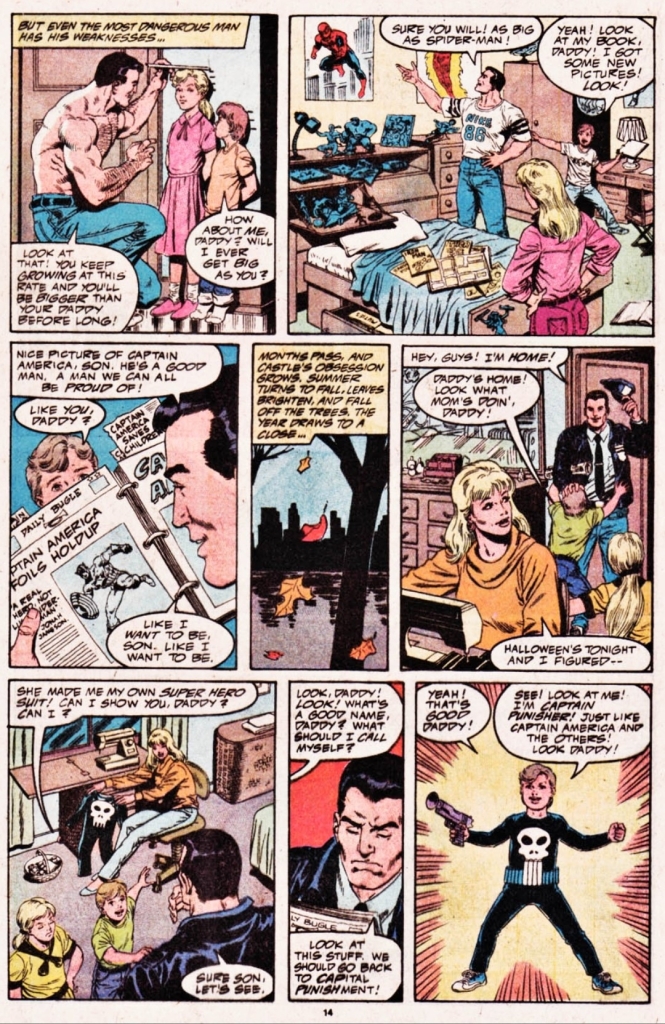
Going back to Frank Castle, it is indeed very captivating to see him portrayed a lot more as a family man who really strives to support his wife and kids no matter how dangerous his occupation really is. The aspect of family in this comic book is very significant as it will make you realize that the definition of family in America in the 21st century has been distorted as a result of laws or court decisions that reflected wokeness, homosexuality and unrestrained feminism. In short, woke America’s believers reject the concept of the traditional family and the concept of a father leading the family is considered taboo because it goes against LGBT’s so-called values and principles.

Conclusion

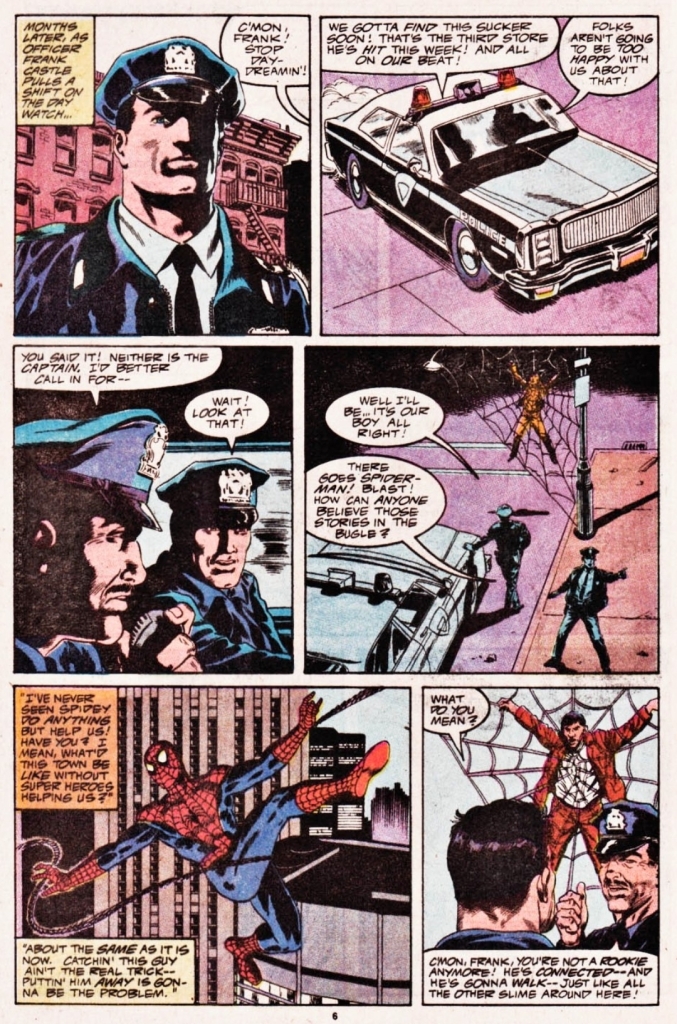
Frank Castle as the police officer.

When you think about the legacy of the Punisher not only on comics but also in movies and other forms of entertainment media, you will often remember a one-man-army against criminals. What If (1990) has is a really unique take on the Punisher and I can say it has a very captivating script brought to life with really good artwork. Not only does this alternate version of the Punisher shows how he affects criminals, but also how he impacts other parts of the fictional New York society within the shared universe of Marvel Comics (note: characters connected to Spider-Man and Daredevil are here). From start to finish, this Punisher tale by the Murray-Levins team turned out to be very engaging to read.

Overall, What If (1990) is highly recommended!

+++++

Thank you for reading. If you find this article engaging, please click the like button below, share this article to others and also please consider making a donation to support my publishing. If you are looking for a copywriter to create content for your special project or business, check out my services and my portfolio. Feel free to contact me with a private message. Also please feel free to visit my Facebook page Author Carlo Carrasco and follow me on Twitter at  @HavenorFantasy as well as on Tumblr at https://carlocarrasco.tumblr.com/ and on Instagram at https://www.instagram.com/authorcarlocarrasco
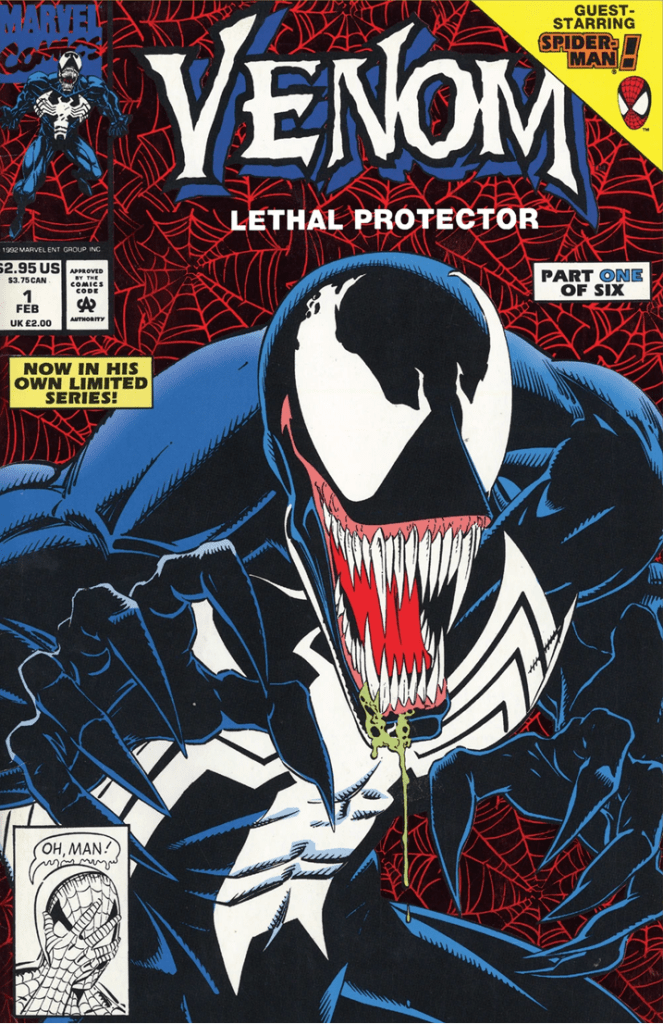
A Look Back at Venom: Lethal Protector #1 (1993)

Disclaimer: This is my original work with details sourced from reading the comic book and doing personal research. Anyone who wants to use this article, in part or in whole, needs to secure first my permission and agree to cite me as the source and author. Let it be known that any unauthorized use of this article will constrain the author to pursue the remedies under R.A. No. 8293, the Revised Penal Code, and/or all applicable legal actions under the laws of the Philippines.

Welcome back superhero enthusiasts, 1990s arts and culture enthusiasts, Marvel Comics fans and comic book collectors! Today we go back to the year 1993 and explore a part of Marvel Comics’ universe through the first-ever limited comic book series featuring one of Marvel’s most iconic villains – Venom.

To put things in perspective, the origin of Venom started within the events of the 1980s series Secret Wars which took place in a far-away planet. As a result of that series, Spider-Man returned home wearing the alien symbiote as a costume which turns out to have a mind of its own. After Spider-Man successful separate himself from the symbiote (again) using the loud bells of a church, the living costume eventually found a desperate Eddie Brock and bonded with him to form Venom. In the late 1980s comics of Amazing Spider-Man, Venom became the deadliest enemy Spider-Man ever faced.

Going into the early 1990s, Venom’s popularity continued to grow tremendously. He became one of Marvel’s most popular non-hero type of characters and helped sell a lot of comics for the publisher. Knowing they had something to sell, Marvel approved a 6-issue limited series showcasing Venom. It was also the most anticipated comic book among collectors right after DC Comics killed Superman with Superman (1993).

With those details laid down, here is a look back at Venom: Lethal Protector , published in 1993 by Marvel Comics with a story written by David Michelinie and drawn by Mark Bagley.

The cover.

Early story

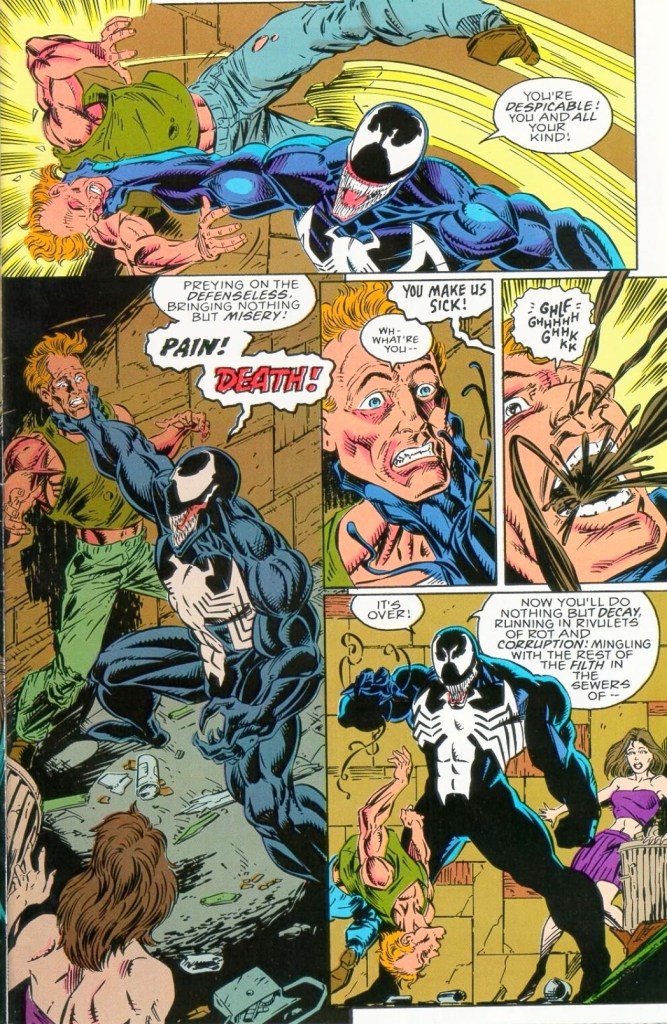
The story begins in San Francisco, California. Deep within the city, a man cornered a lady at the dead end of an alley. Just as he was about do something bad to her, Venom leaps in at them. Totally surprised, the man was easily grabbed by Venom who lifted him and hit the wall bodily. Using his costume, Venom then chokes the man to death through the mouth and nose. Venom then picks up the lady’s purse and gives it to her. As soon as Venom leaves, the shocked lady runs away screaming.

Venom swings and leaps as he travels through the city. While traveling, Eddie Brock tells his living costume that while their hatred towards Spider-Man got reconciled a bit, the said superhero also helps the innocent. Eddie then reveals that he was born in San Francisco and they can start a new life together in it. Secretly, Venom turns into Eddie Brock in his civilian form. As Brock walks down the sidewalk, police officers nearby recognize him. It turns out. Eddie Brock was listed by police as a wanted person…

Quality

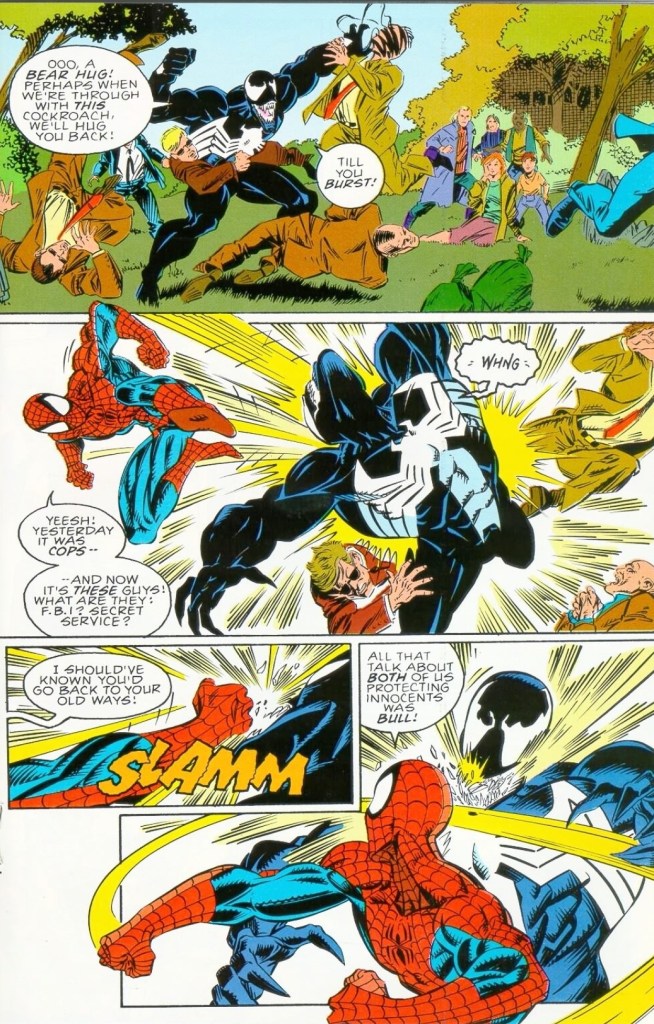
Spider-Man and Venom face each other unexpectedly.

Focusing on the plot, this story took place after the events in Amazing Spider-Man (1993) which was released AFTER this particular comic book. As a standalone Venom story, this one clearly portrays him more of a vigilante in the sense that he goes up against a new force of evil that happens to be pouncing on people that Venom believes to be innocent and powerless. Unsurprisingly, Venom does not seek the help of law enforcers to help the innocent but rather he takes violent action to help the victims, going as far as to kill the so-called bad guys. The bad guys in this story work under a powerful man whose son was killed by Venom a few years prior. Within the context of this comic book, the new force of evil was introduced in subtle ways.

With extensive experience writing tales about Spider-Man and Venom, David Michelinie clearly redefined Venom’s beliefs here. Venom believes in protecting the innocent but he is much more violent and is relentless with cruelty which makes him a clear opposite of Spider-Man. Yet in a way, Venom sure talks and acts in a rather psychotic way and this alone makes him a very unlikable comic book protagonist.

Along the way, the iconic Spider-Man got a rather huge chunk of the spotlight in this comic book making him the 2nd lead next to Venom. I remember back in 1993 when there were Venom fans who complained about Spider-Man literally stealing the thunder away from his greatest enemy while there were a few Spider-Man fans who defended the icon’s guest participation in the story as he has always been linked with Venom’s origin. Considering the lack of depth in the plot, I can say Spider-Man appearance her served as a somewhat helpful filler.  

Conclusion

Helping victims does NOT justify killing. This makes Venom a major turn-off as a comic book protagonist.

Venom: Lethal Protector (1993) is a comic book that can be alienating, especially when you are not a Venom fan. I find Venom too evil and too unbelievable to be a heroic figure even though he strong believes in protecting and helping the innocent. In my view, he is more of vigilante living with the delusion of achieving something worthwhile as he interacts with people who happen to be not assisted by the many, many Marvel Comics superheroes. It is not surprising that Venom definitely will never be a good role model. He is a murderer and the act of helping victims never justifies murder. The comic book’s plot lacks weight and Mark Bagley’s art looked a little rushed. What made this comic book interesting are Venom and Spider-Man themselves. Yes, there is a lot of superhero spectacle here but don’t expect anything new when you see Spider-Man and Venom resume their violent rivalry. This comic book is unsurprisingly a warm-up of things to come within its series. It is not a terrible literary work. It’s just not really good and it did not deserve the hype and sales of its time.

Overall, Venom: Lethal Protector (1993) is serviceable.

+++++

Thank you for reading. If you find this article engaging, please click the like button below, share this article to others and also please consider making a donation to support my publishing. If you are looking for a copywriter to create content for your special project or business, check out my services and my portfolio. Feel free to contact me with a private message. Also please feel free to visit my Facebook page Author Carlo Carrasco and follow me on Twitter at  @HavenorFantasy as well as on Tumblr at https://carlocarrasco.tumblr.com/ and on Instagram at https://www.instagram.com/authorcarlocarrasco
A Look Back at The Night Man #7 (1994)

Disclaimer: This is my original work with details sourced from reading the comic book and doing personal research. Anyone who wants to use this article, in part or in whole, needs to secure first my permission and agree to cite me as the source and author. Let it be known that any unauthorized use of this article will constrain the author to pursue the remedies under R.A. No. 8293, the Revised Penal Code, and/or all applicable legal actions under the laws of the Philippines.

Welcome back superhero enthusiasts, 1990s culture enthusiasts and comic book collectors! Today we go back to the mid-1990s which was a pretty wild time for comic collectors. To be more specific, this newest retro comic book review revisits the Ultraverse through The Night Man monthly series.

In my previous review, the Night Man was pitted against TNTNT which was the same group of villains who fought against The Strangers. The encounter was not only packed with solid action, the pacing was done strategically and I loved the way how the comic book creators presented the Night Man taking on each TNTNT member creatively. For this new issue, a new enemy awaits the titular hero which the scary looking cover clearly shows.

With those details laid down, here is a look back at The Night Man , published in 1994 by Malibu Comics with a story written by Steve Englehart and drawn by Kyle Hotz.  

The cover.

Early story

The story begins in an unknown place where a man talks to a lady who just died. After wearing his coat and grabbing his cane, he leaves behind a place with lots of blood around and things ruined. The body of the dead lady had been damaged so much, the flesh on the front of her upper body is gone leaving the bones exposed.

The said man walks down the street of San Francisco. As he recalls a key part of California’s history, he witnesses three armed men coming out of a jewelry store followed by Night Man. Immediately, he witnesses the city’s vigilante fight two of the men with brutal violence. The third thug (with long hair) takes the opportunity to move away only to face the man with the cane…

Quality

The new villain meeting with the tycoon JD Hunt.

This tale of The Night Man is gritty and engaging to read from start to finish. It introduces an all-new villain who has a Russian legacy with historical connections to the city of San Francisco and northern part of California. The new figure of evil (note: quite obvious due to his murdering of the innocent) is quite a layered character and he seemed to be designed by Steve Englehart to be a recurring villain against the Night Man.

At this point in the comic book series, Night Man has established himself to be a very capable vigilante who truly believes in helping the people of the city on his own and his victories in the previous issues solidified his reputation. This essentially sets the stage for the debut of the new villain (note: the scary looking wolf on the cover) and the next big challenge for the titular hero. Without spoiling what happened, I can say the pay-off was indeed worth the build-up.

Another strong point of this comic book is the way the creators dramatized the differences and similarities between the Night Man and the new villain. Both men are violent and their each have their own obsessions directly related to their respective goals.

Conclusion

The Night Man takes on thugs as the new villain watches.

The Night Man (1994) is a pretty engaging read on its own and it shows how much the Night Man himself progressed as the Ultraverse’s San Francisco-based vigilante who really pushes himself to the limits fighting evil even though his resources are very limited. The introduction of the new villain in this comic book not only proved to be a solid addition into the Ultraverse lore but also added to the titular hero’s development as well as his vigilante justice campaign. This comic book may not be as action packed as the previous issue, but you can rest assured there is a really good quality writing here and the build-up was nicely paid-off by the end. As with the previous issues, Kyle Hotz’s gritty art made this Night Man tale really look lively and very stylish.

Overall, The Night Man (1994) is recommended.

+++++

Thank you for reading. If you find this article engaging, please click the like button below and also please consider sharing this article to others. If you are looking for a copywriter to create content for your special project or business, check out my services and my portfolio. Feel free to contact me with a private message. Also please feel free to visit my Facebook page Author Carlo Carrasco and follow me on Twitter at  @HavenorFantasy as well as on Tumblr at https://carlocarrasco.tumblr.com/ and on Instagram at https://www.instagram.com/authorcarlocarrasco/

A Look Back at Punisher 2099 #2 (1993)

Disclaimer: This is my original work with details sourced from reading the comic book and doing personal research. Anyone who wants to use this article, in part or in whole, needs to secure first my permission and agree to cite me as the source and author. Let it be known that any unauthorized use of this article will constrain the author to pursue the remedies under R.A. No. 8293, the Revised Penal Code, and/or all applicable legal actions under the laws of the Philippines.

Welcome back superhero enthusiasts, 1990s culture enthusiasts and comic book collectors! Today we revisit the future of 2099 through the Punisher 2099 monthly series.

For the newcomers reading this, Punisher of 2099 is Jake Gallows who works during the day as a law enforcer which is a nice contrast to the concept of the classic Punisher identified as Frank Castle. In Punisher 2099 (1993), Jake Gallows witnesses the demise of his family that got attacked by a gang of killers led by Kron Stone who is not only the son of Alchemax’s Tyler Stone but also became the deadliest nemesis of Spider-Man 2099.

With those details laid down, here is a look back at Punisher 2099 , published by Marvel Comics in 1993 with a story written by Pat Mills and Tony Skinner, with art by Tom Morgan.

The cover.

Early story

The story begins with a funeral of Jake Gallows’ lost family members held at the church of Thor. In accordance to the traditions of the Thor religion, the dead bodies were placed on a burning boat floating on the water just outside the church building. As he and his fellow law enforcers watch the ritual happen, Jake confirms that he and the church of Thor do not believe in forgiveness and he himself believes in revenge.

When he is not on duty, Jake goes out as the Punisher hunting and killing criminals in his own brutal ways. Even as he does not wear a mask nor a helmet, his face is digitally covered from detection of security cameras thanks to a special technology he uses to protect his identity.

Meanwhile at an amusement park, lots of children enjoy floating in the air within an anti-gravity chamber. Kron Stone and his fellow killers arrive as they attempt to murder the children. Punisher suddenly comes out and successfully kills Stone’s companions, leaving them together in a standoff…

Quality

The Punisher has someone assisting him.

While the sub-par issue was composed mostly of the build-up and emphasis of the futuristic Punisher, this story is pretty much a big pay-off to it. Quite predictably, Jake gets to meet with the gang leader responsible for the death of his family in this issue not once but twice. Along the way, the comic book writers got to emphasize Kron Stone’s wickedness more as well as his continued disregard of human life. This time, Stone’s willingness to kill many children is very disturbing and Tom Morgan’s art style clearly emphasized the villain’s evil.

Within this comic book is a visual tour of the Gallows residence which has a large underground facility and pieces of technology that Jake uses for his campaign against crime (this makes Punisher 2099 becoming similar with Batman and his Bat Cave). He also has a technology oriented partner named Matt who helps him establish a working base of operations.

There is also a sub-plot about the side of crime with the introduction of the Fearmaster who, like Tyler Stone, is with Alchemax and has influence over Public Eye. Unsurprisingly, his introduction is short.

Conclusion

Jake Gallows and Kron Stone (AKA Venom 2099) meet again, only this time the former is now in his form as the Punisher.

The best way to describe Punisher 2099 (1993) is that its plot really thickened and unlike issue , this one has a more interesting story and the presentation done by the creative team has some entertainment value. While this is unsurprisingly the natural progression of defining the futuristic Punisher to readers, it is also a successful way of expanding his own part of the 2099 universe complete with the introduction of a new villain and conspiracy that connects to both criminals and law enforcers. To be clear, this is far from being an excellent comic book but it is clear that this one is an improvement over issue . In retrospect, the one thing that adds weight to this comic book is not Punisher himself nor the creative concepts involved, but rather the presence of Kron Stone who later on became Venom 2099 (read my retro reviews involving him in Spider-Man 2099 issues #35, #36, #37, #38 and #39).

If you are seriously planning to buy an existing hard copy of Punisher 2099 (1993) be aware that as of this writing, MileHighComics.com shows that the near-mint copy of the regular edition costs $90 while the near-mint copy of the newsstand edition costs $200.

Overall, Punisher 2099 (1993) is satisfactory.

+++++

Thank you for reading. If you find this article engaging, please click the like button below and also please consider sharing this article to others. If you are looking for a copywriter to create content for your special project or business, check out my services and my portfolio. Feel free to contact me with a private message. Also please feel free to visit my Facebook page Author Carlo Carrasco and follow me on Twitter at  @HavenorFantasy as well as on Tumblr at https://carlocarrasco.tumblr.com/

A Look Back at Sachs & Violens #1 (1993)

Disclaimer: This is my original work with details sourced from reading the comic book and doing personal research. Anyone who wants to use this article, in part or in whole, needs to secure first my permission and agree to cite me as the source and author. Let it be known that any unauthorized use of this article will constrain the author to pursue the remedies under R.A. No. 8293, the Revised Penal Code, and/or all applicable legal actions under the laws of the Philippines.

Back in the early 1990s, I was fortunate enough to buy and read The Incredible Hulk: Future Imperfect issues and . While each book was pretty expensive, it was all worth it because its literary and artistic content were great to read thanks to the very dynamic creative duo of Peter David and artist George Perez.

To see Future Imperfect’s story by David illustrated greatly by Perez was a magnificent read from start to finish. In 2014, Peter David confirmed that George Perez was his “single favorite artistic collaborator” and when asked as to which artists have come closest to matching the visuals he imagined while writing a comic book script, the author mentioned Perez as one of three artists to do so.

The David-Perez duo’s work together in the 1990s did not necessarily end with Future Imperfect. In fact, they took the challenge of doing an all original, adulterated, non-superhero project published through Epic Comics (Marvel Comics’ imprint that published creator-owned projects not connected with Marvel’s superhero universe) in the form of a 4-issue mini-series titled Sachs & Violens (the title itself is a play on the words “sex and violence”). Back in the 1990s, I completely missed out on that mini-series. It was only recently I finally got to start reading it.

With those details laid down, here is a look back at Sachs & Violens , published by Epic Comics in 1993 with a story written by Peter David and drawn by George Perez.

The cover.

Early story

The story begins in the bedroom deep within the city of New York. A pretty lady arrives, takes off her undergarment and high heels and approaches a smoking man on the bed. As they start making love with each other, a shadowy figure with a bladed weapon approaches them slowly. As the lady notices something going on, a powerful strike happens spreading blood around.

Suddenly, someone yells “Cut!” The lights got turned on and it turns out what happened was a night-time photographic session in which the director expresses his disappointment over what happened.

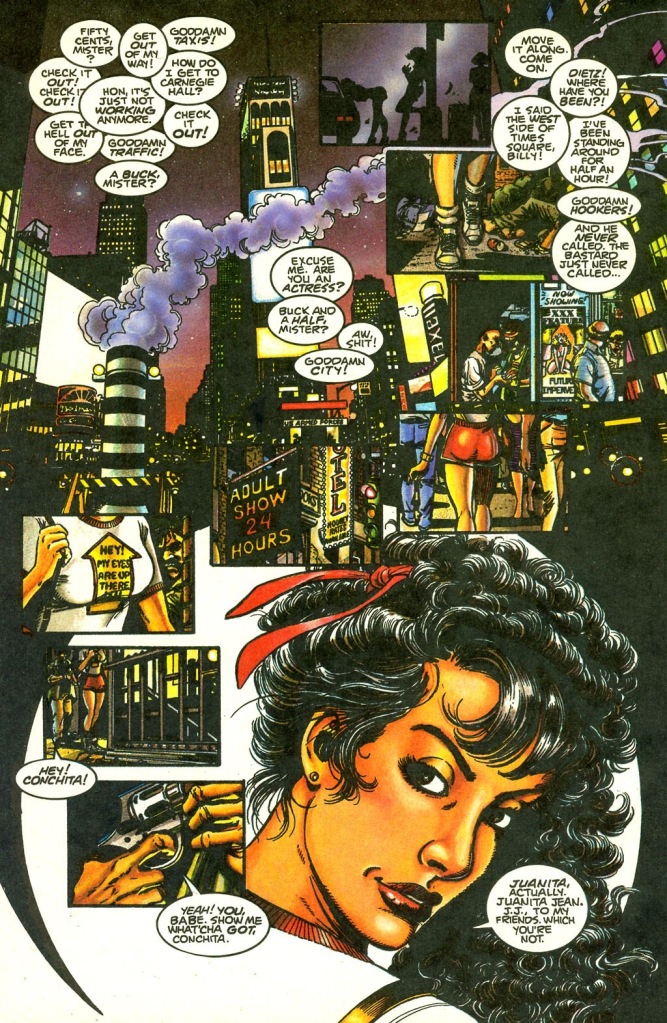
Elsewhere, life in the city goes on during the night. The traffic is frustrating some people. Prostitutes on the sidewalk are doing what they can to attract potential customers. Night clubc and sex shows are rampant. Among the many people walking is a pretty lady named Juanita Jean (nicknamed J.J.) who attracts the attention of a man armed with a gun. In response to his move on her, J.J. fights back by hitting his right wrist, kicking him on the groin and his chin, and knocking him out. Afterwards, she arrives at a photo studio apologizing to the photographer (Violens) for her lateness.

After some talking, J.J. proceeds to change into very erotic attire and posed sexy in front of the camera…

Quality

J.J. Sachs at the police station.

I can start by saying that this comic book is one of the most unusual works I have ever read from either Peter David or George Perez, and it’s more than just its non-superhero concept and presentation.

Starting with the visuals, this is one of the more unique works of George Perez and it surely is a fresh change after seeing so many of his superhero-related comic book works (especially the post-Crisis Wonder Woman). The usual elements of Perez’s art are here: pages with multiple panels, high detail maintained throughout even in images full of people and location stuff, beautiful looking women and the like. As this is an adulterated comic book, the level of visual eroticism got ramped up high although there were clear signs of restraint.   

With regards to the quality of the writing, this is a very adulterated tale about murder and a series of unfortunate events that disturb the public and, incidentally, motivate J.J. Sachs (a softcore porn model) and Ernie Violens (a former Vietnam War veteran working presently as a photographer) to take action. The pacing of the story is decent with lots of build-up dominating the comic book. The dialogue is witty and the main characters really have their own unique patterns of verbal expression. While the script has passionate work written all over, it is not exactly an entertaining read for me. In fact, I find the tale rather sadistic and not even its elements of intrigue and twists could engage me. This is definitely not the comic book you want to read for fun.

Conclusion

Sachs’ introduction.

Even though it has great visuals and a script written passionately (note: Peter David even wrote his opinion about sex and violence in the comic book), I am actually turned off by Sachs & Violens (1993). Other than being made with adults in mind, its really a story of murder that sets off events sparking the protagonists to do something rebellious in nature. While there is indeed an antagonist, the distinction between good and evil remains unconvincing in the story. I can say that die hard fans of Peter David and George Perez will find this comic book more appealing, and there is a good chance that readers seeking material with sex and violence will enjoy it. I personally did not enjoy this one.

If you are seriously planning to buy an existing hard copy of Sachs & Violens (1993), be aware that as of this writing, MileHighComics.com shows that the near-mint copy of the regular edition costs $18 while the near-mint copies of the limited edition, the platinum edition and the signed platinum edition cost $105, $70 and $140 respectively.

Overall, Sachs & Violens (1993) is not recommended.

+++++

Thank you for reading. If you find this article engaging, please click the like button below and also please consider sharing this article to others. If you are looking for a copywriter to create content for your special project or business, check out my services and my portfolio. Feel free to contact me as well. Also please feel free to visit my Facebook page Author Carlo Carrasco and follow me at HavenorFantasy@twitter.com

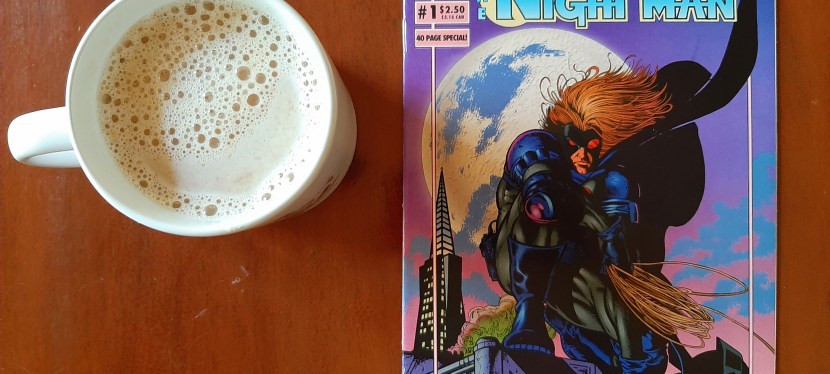
A Look Back At The Night Man #1

“I’m not who I was any more! I’m not who I’m going to be! I am the Night Man.”

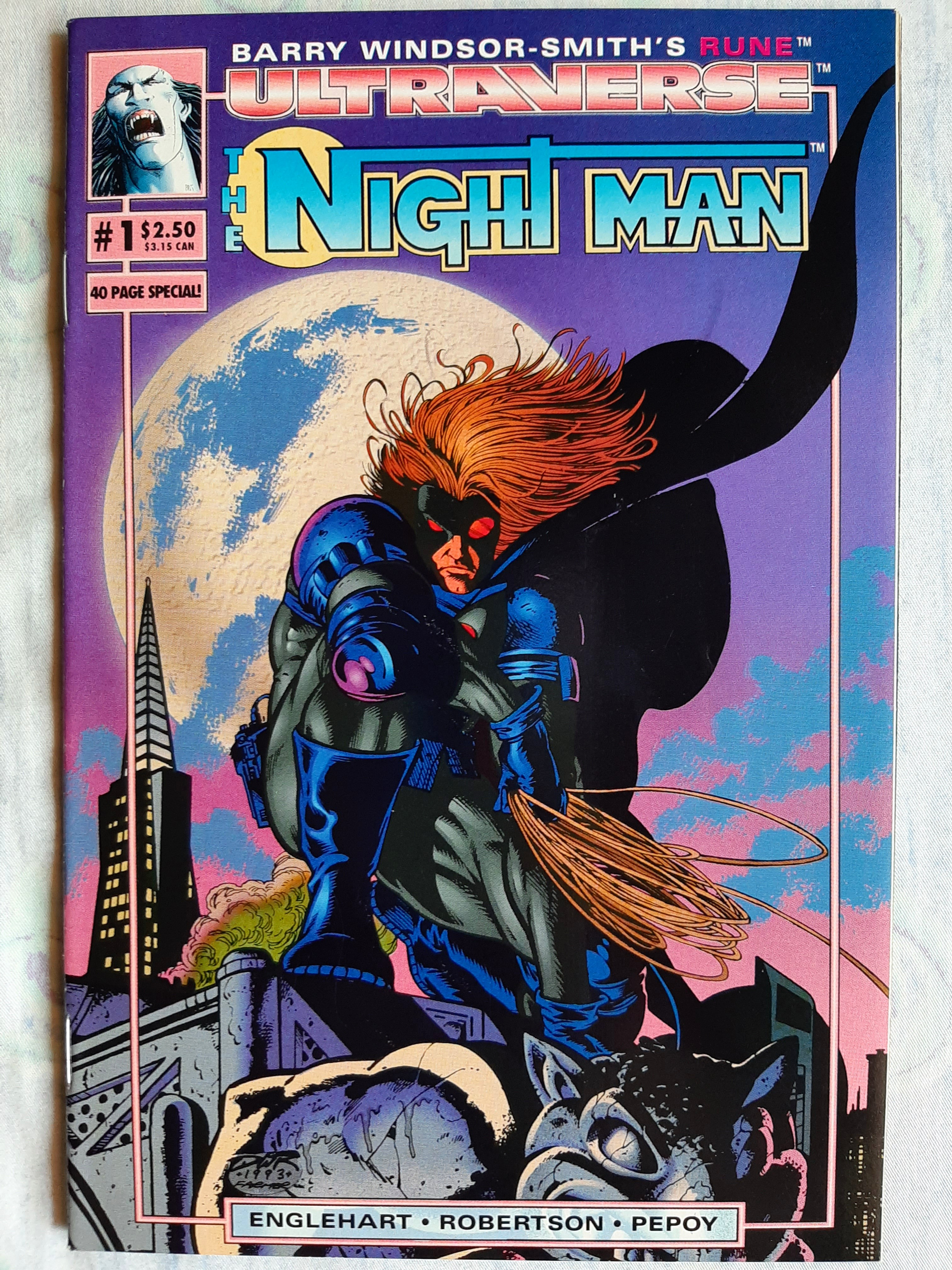
The above words were from the vigilante called the Night Man, a character co-created by comic industry veteran Steve Englehart (Avengers) and Darick Robertson for Malibu Comics’ Ultraverse franchise. Those words formally opened The Night Man which I’m reviewing here.

To put things in perspective, a vigilante is described as a member of a volunteer committee organized to suppress and punish crime summarily (as when the processes of law are viewed as inadequate) according to Merriam-Webster dictionary. To put it broadly, the vigilante is a self-appointed doer of justice.


20190609_123613.jpg
The Night Man cover.

Published in 1993 by Malibu Comics, The Night Man tells the story of Johnny Domingo, a jazz player whose life changed in the pages of The Strangers (also written by Englehart) in which he (while driving a vehicle) got by a cable car (that was just hit by an energy burst from the sky) resulting a piece of shrapnel embedding into his head.

Perceived by others to be doomed, Domino strangely survived and was well enough to resume his normal life. The difference is that the incident made his eyes dilated permanently which forces him to shield them from bright light.

Just as Johnny walks down the street, he learned he gained an uncanny ability when he hears, for the first time, the evil thoughts of a man (wearing a coat and a hat) planning to kill a lady on Saturday night.

20190609_123520.jpg
The Night Man in action!

Knowing what heard, Johnny wondered if he was crazy and what if some woman would truly be in danger. He then decides to follow the man with evil thoughts and watch his moves. Eventually Johnny followed the man to a restaurant by the beach and saw him talk with a pretty waitress named Ginger who agreed to a Saturday night date.

Carelessly Johnny approached the man too closely and got noticed, forcing him to run away and got chased until he got into a taxi that drove him away.

A short time later, Johnny starts his new career as a vigilante as the Night Man.

20190609_123544.jpg

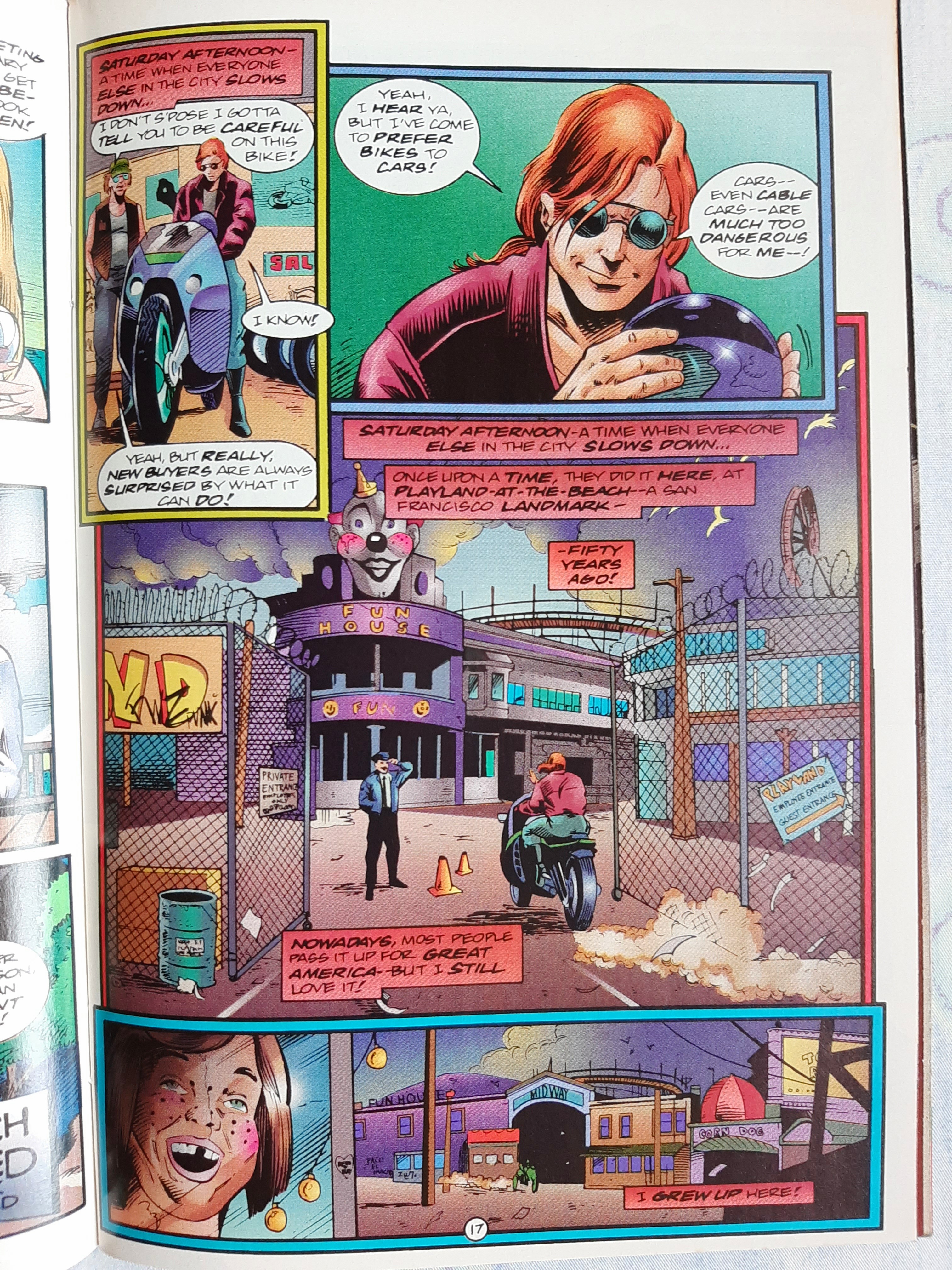
In terms of storytelling, The Night Man was nicely paced and never felt dragging. Within its twenty-eight pages of story, the comic book took gradual steps on introducing Johnny, how the incident with the cable car impacted him, how he became a vigilante for the first time and what went on in his mind as he became the Night Man. Given his rich experience as a writer, it is no surprise that Steve Englehart delivered a solid script.

It was also engaging to see Night Man being a determined yet very vulnerable vigilante. During his first mission in costume, he managed to beat a few bad guys but ended up getting hurt. This kinda reminds me of the vulnerability seen in the cinematic icon John McClane in 1988’s Die Hard.

The art by Darick Robertson, with ink work done by Andrew Pepoy, was nicely crafted. The civilian and vigilante looks of Night Man were well defined. The visualization of action nice and when Night Man gets hurt, he really looks in pain.

Going beyond Night Man, this comic book has a short preview (five pages, including credits) of Rune, a character created by Barry Windsor-Smith. Rune is described to be a voracious killer whose prey is all humanity and he is an alien leech who despoils the flesh of victims, culling their lifeblood into the essence of power. Rune is also a dying creature fighting for survival against the malignant disease burning inside of him.

Overall, The Night Man is a worthy addition to your comic collection if you are interested in the Ultraverse (which is still kept in limbo by Marvel which acquired Malibu Comics in the mid-1990s) or are interested in vigilante-type superheroes. If you are obsessed with whatever Barry Windsor-Smith created, then the Rune stuff is a must-get.

The Night Man is recommended.


Thank you for reading. If you find this article engaging, please click the like button below and also please consider sharing this article to others. Also my fantasy book The World of Havenor is still available in paperback and e-book format. If you are looking for a copywriter to create content for your special project or business, check out my services and my portfolio. Feel free to contact me as well. Also please feel free to visit my Facebook page Author Carlo Carrasco and follow me at HavenorFantasy@twitter.com


A Look Back at Solitaire #1 of the Ultraverse

When you fight evil, you do it alone.

solitaire2
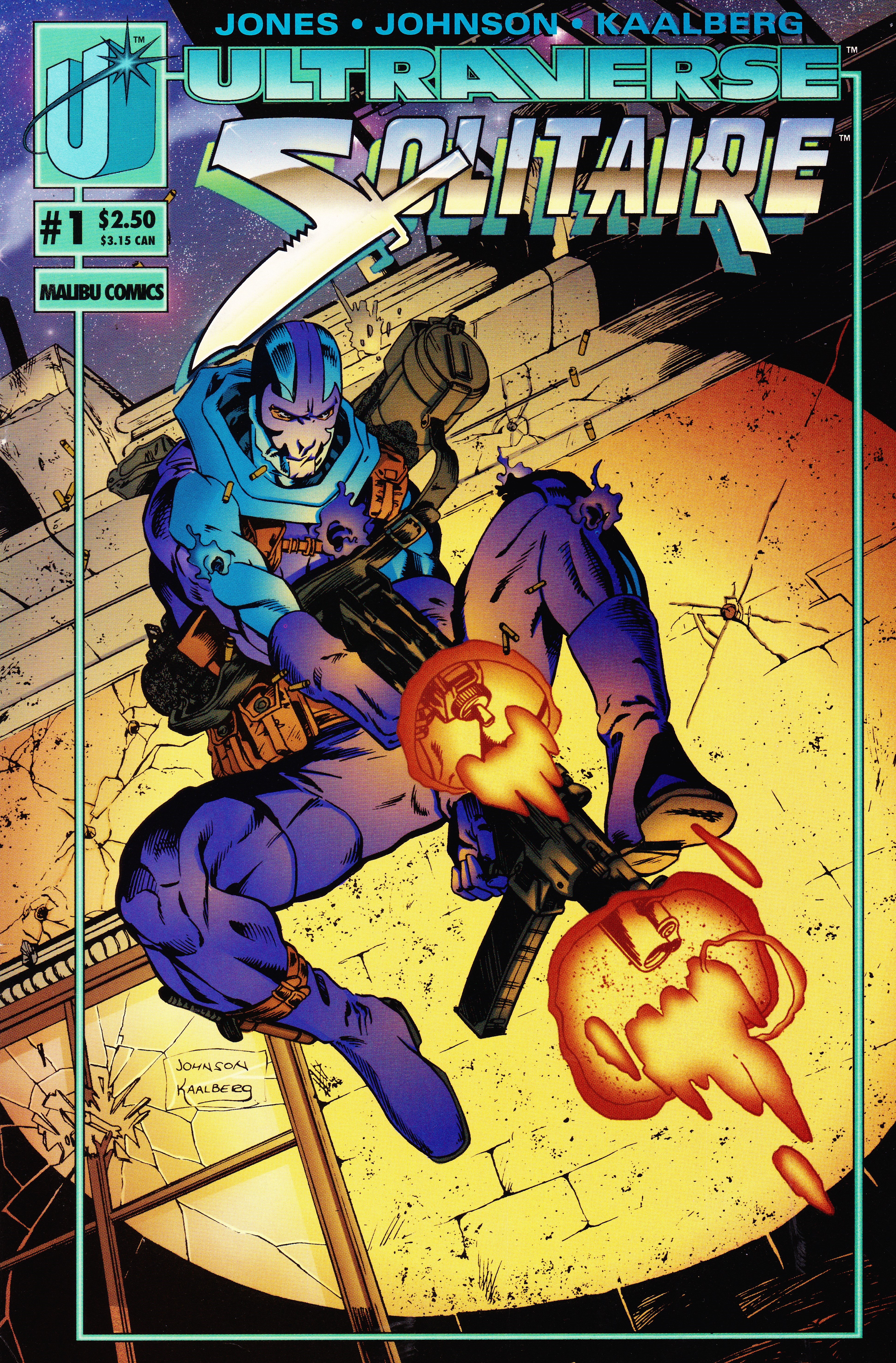
Solitaire in action in Solitaire published in 1993 by Malibu Comics under their Ultraverse line of comic books.

The concept of vigilante figures taking the fight against crime alone backed with resources (in the form of weapons) is a long running tradition in superhero comic books. DC Comics has its iconic Batman doing lots of detective work and fighting criminals many times on his own. Similar stories were seen with the Punisher and Daredevil over at Marvel.

When Malibu Comics launched the Ultraverse line of superhero comics in 1993, they added variety into the big mix. They had their own parallel to Marvel’s Punisher and DC’s Batman in the form of Solitaire and they boldly launched a comic book series of the character.

Released in late 1993 with story by Gerard Jones and art by Jeff Johnson and Barb Kaalberg, Solitaire introduced readers to Nicholas Lone who wears a purple-and-blue costume with mask and fights criminals as Solitaire. He’s not just a brave, tough guy who daringly goes against thugs. He’s is very talented with martial arts, acrobatics and weapon use.

The comic book begins when thugs working for a crime lord called the King are about to catch a helpless lady who gets saved by Solitaire. The hero easily outmaneuvers the bad guys and he proved to them that he really is hard to hurt.

At his headquarters, the King made it clear to readers that Solitaire has been a problem to him for some time already and feels bad when the hero disrupts his operation. Solitaire meanwhile prepares himself for the next move against the King by returning to his hideout (an old theater), doing some research by computer and coordinating with his contacts on the streets.

Regarding the quality of the comic book, I say the script is nicely paced as it does a good job introducing Solitaire to readers while still having spare spotlight for the King. Within twenty-five pages, the hero got clearly defined as a man of action as well as a person with a purpose. His fight against crime is defined by key parts of his past especially with the fact that his own father – Antone Lone – is a crime lord.

When it comes to super powers, Solitaire has very quick reflexes which makes him a hard target for armed thugs. He also has healing factor which works rapidly and gives him a major advantage over the bad guys. In fact, the presence of the healing factor (which works like that of Wolverine) makes Solitaire more daring and more willing to take risks engaging the bad guys with violence. He can get stabbed and his body can be shot with several bullets and still he will recover quickly to get the job done.

Solitaire is indeed super and yet there is something intriguing with his personality. Apart from being the son of a crime lord, Nicholas Lone’s acquisition of his powers is a painful mark on him personally. This was because his father gave him those powers as a result of his attempt to commit suicide. The powers are the result of the installation of nano-machines into his body.

solitaire1

Overall, Solitaire is a good and intriguing read. It really comes with a flavor that makes it distinct from other superhero-versus-criminals stories and the introduction of Solitaire alone is worth the cover the price. If you can find copies of Solitaire on the back issue shelves of the comic book stores, I recommend buying it as well as the other issues.

It’s too bad that the Ultraverse ended after Marvel Comics acquired Malibu Comics back in the 1990s because like Prime, Hardcase and Prototype, Solitaire is very unique and intriguing at the same time. In my opinion, Solitaire is the most defining crime fighter of the entire Ultraverse and it’s too bad stories featuring him are not too many.

Thank you for reading. If you enjoyed this article, please click the like button below and also please consider sharing this article to your fellow comic book geeks and Ultraverse fans. Also my fantasy book The World of Havenor is still available in paperback and e-book format for you to order.

Author’s Note: This article was originally published at my old Geeks and Villagers blog. What you read on this website was an updated and expanded version. In other words, this newest version you just read is the most definitive version