A Look Back at X-Men Adventures #10 (1993)

Disclaimer: This is my original work with details sourced from reading the comic book and doing personal research. Anyone who wants to use this article, in part or in whole, needs to secure first my permission and agree to cite me as the source and author. Let it be known that any unauthorized use of this article will constrain the author to pursue the remedies under R.A. No. 8293, the Revised Penal Code, and/or all applicable legal actions under the laws of the Philippines.

Welcome back, superheo enthusiasts, 1990s culture enthusiasts, X-Men fans and comic book collectors! Today we revisit the X-Men Adventures monthly series which was the literary adaptation of the popular X-Men animated series of the 1990s.  

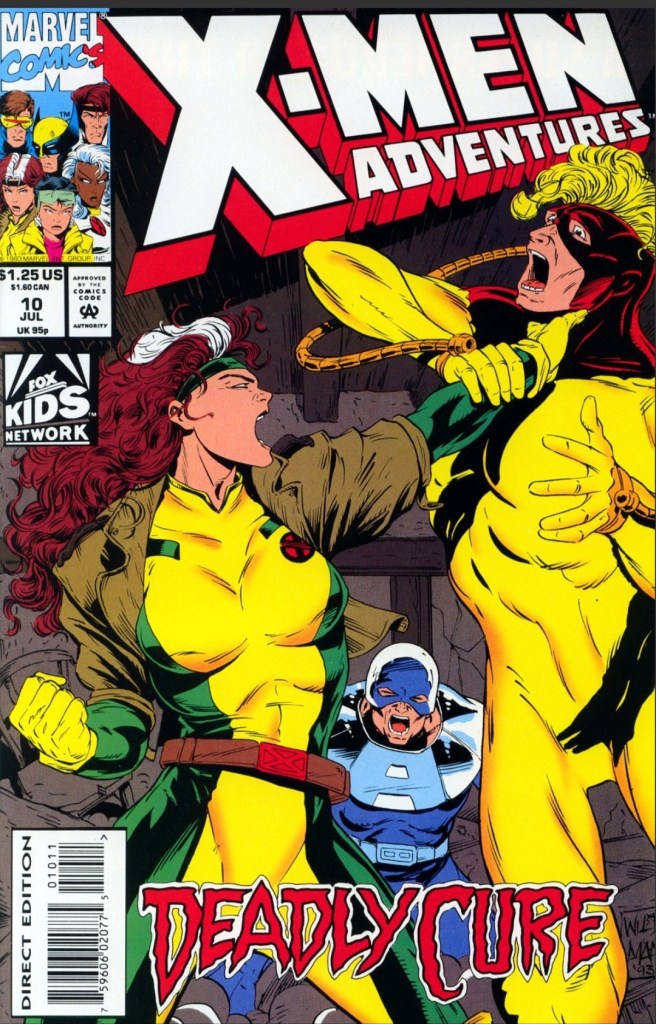
If you are a long-time X-Men fan who enjoyed the comic books and the movies, then the cover of this particular X-Men Adventures issue that has Rogue on it should remind you of the mutant cure concept portrayed in the 2006 movie X-Men: The Last Stand. In the said movie, it was Rogue who went out to have her mutant powers neutralized so that she can live a normal life and no longer worry about absorbing another person’s life force.

With those details laid down, here is a look back at X-Men Adventures #10, published by Marvel Comics in 1993 with a story written by Ralph Macchio and drawn by Andrew Wildman.

The cover.

Early story

The story begins with the arrival of Cable outside a private home in the Swiss Alps. Inside, Warren Worthington (Angel) and Gisela spend quality time together by the fire. They talk about a certain Dr. Adler who is a genetics expert that Worthington sent to Scotland to conduct research.

Suddenly, Cable breaks into the place and points his gun at Worthington looking for Dr. Adler. While talking, Worthington reaches for a gun and fire it at Cable. The huge armed mutant then grabs Worthington by the head and throws him out of the home and into the snow. In response to Cable’s question, Gisela mentions that Dr. Adler has gone to Scotland. Moments later, Worthington (in his angel form) flies back into the house to protect Gisela from whatever harm Cable could do to her.

Over at Muir Island, Professor X and his long-time colleague Dr. Moira MacTaggert discuss the facility and research done there. Xavier mentions that the core of the research done by the mysterious Dr. Adler. Moira states that Adler is not officially part of the research center and he simply pays for everything he uses there.

After failing to meet Dr. Adler inside his research office, Xavier conducts a mind probe which causes a series of stake images enter his consciousness. The experience was so intense, his telepathic inquiry got disrupted abruptly. Professor X then decides to contact the X-Men…     

Quality

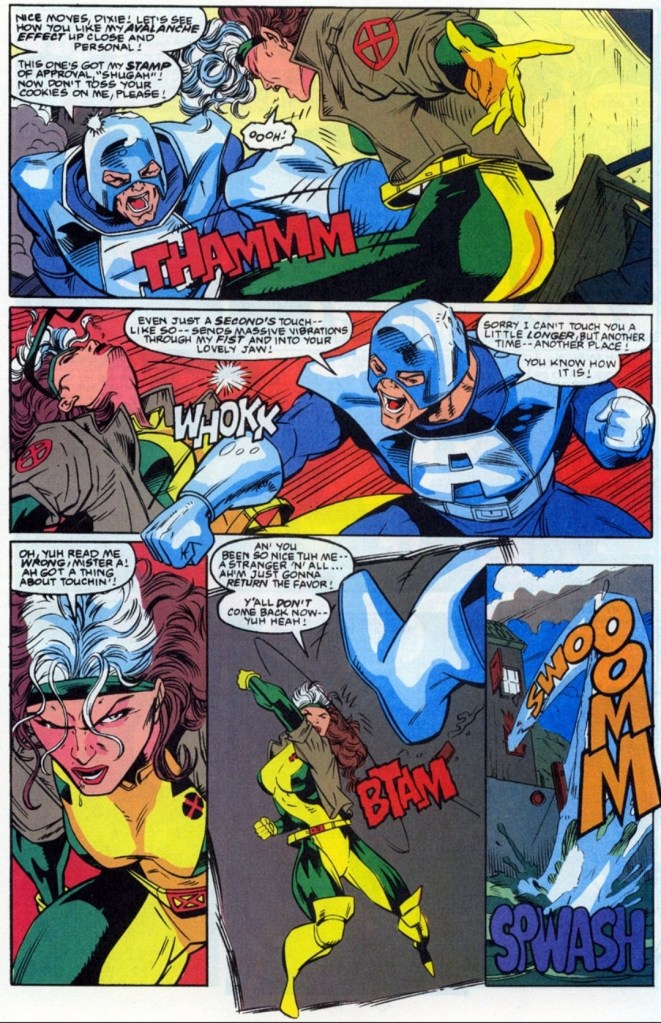
Rogue goes through a lot in her pursuit to become normal.

Let me start with the concept of Rogue’s pursuit to cure herself of her genetic mutation…compared to the 2006 live-action X-Men movie, the plot in this literal adaptation of the X-Men animated series episode makes more sense and is more believable to follow. Without spoiling the identities (note: to find out who they are, read this comic book), I can say that there are sinister forces behind the genetic works of Adler within the Muir Island facility. The Adler operation is just part of a grand scheme that the sinister forces have been working on and Rogue’s involvement was a surprise addition. More on Rogue’s pursuit of getting normal, what was portrayed in this adaptation was nicely structured while also cleverly avoiding the “doing it all for the sake of love” cliché. In short, she made her pursuit not for her romance with Gambit but to really change her life significantly, even if it means losing her membership with the X-Men. Through her actions, you will feel Rogue becoming desperate and reckless to be normal.

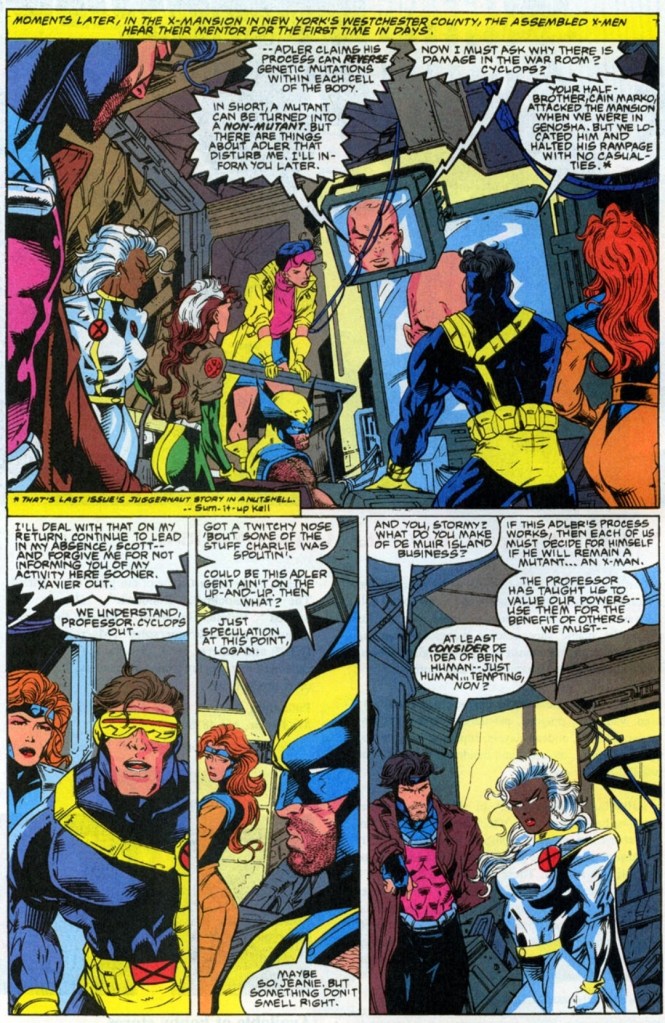
Apart from the tale of Rogue, the X-Men meanwhile have been handling themselves without Professor X and Cyclops clearly carries the responsibility of leading them all. As for Charles Xavier, his departure has been explained and incidentally he has gotten close to danger even though Dr. Moira MacTaggert is with him. The writing in this adaptation is filled with suspense, surprises and intrigue which were nicely executed with concise timing.

Conclusion

Charles Xavier makes contact with his team from far-away.

X-Men Adventures #10 (1993) is a very good read. Anyone who saw the half-baked mutant cure aspect of the 2006 X-Men movie will find the Rogue tale here more satisfying to read. This is definitely Rogue’s story with some spotlight shared with the X-Men, two other mutants who served as opposition for Rogue, and the sinister forces I mentioned. This comic book is actually the first of two parts focused on Muir Island and it certainly is a really satisfying reading experience on its own.  

Overall, X-Men Adventures #10 (1993) is recommended.

+++++

Thank you for reading. If you find this article engaging, please click the like button below and also please consider sharing this article to others. If you are looking for a copywriter to create content for your special project or business, check out my services and my portfolio. If you want to support my website, please consider making a donation. Feel free to contact me with a private message. Also please feel free to visit my Facebook page Author Carlo Carrasco and follow me on Twitter at  @HavenorFantasy as well as on Tumblr at https://carlocarrasco.tumblr.com/ and on Instagram at https://www.instagram.com/authorcarlocarrasco/.

A Look Back at Backlash #2 (1994)

Disclaimer: This is my original work with details sourced from reading the comic book and doing personal research. Anyone who wants to use this article, in part or in whole, needs to secure first my permission and agree to cite me as the source and author. Let it be known that any unauthorized use of this article will constrain the author to pursue the remedies under R.A. No. 8293, the Revised Penal Code, and/or all applicable legal actions under the laws of the Philippines.

Welcome back superhero enthusiasts, 1990s arts and culture enthusiasts, Image Comics fans and comic book collectors! Today we go back to the wild 1990s and explore a part of the WildStorm universe through a tale of Backlash!  

Backlash #1 was indeed a fun and engaging read with the creative direction spearheaded by Brett Booth who was a co-writer and the illustrator. It built-up Backlash as a major WildStorm figure while also emphasized the concepts from his previous appearances in the Kindred limited series which paired him with Grifter. As seen in issue #1, he freed Taboo and it was clear that she was designed to be a key part of the Backlash series.

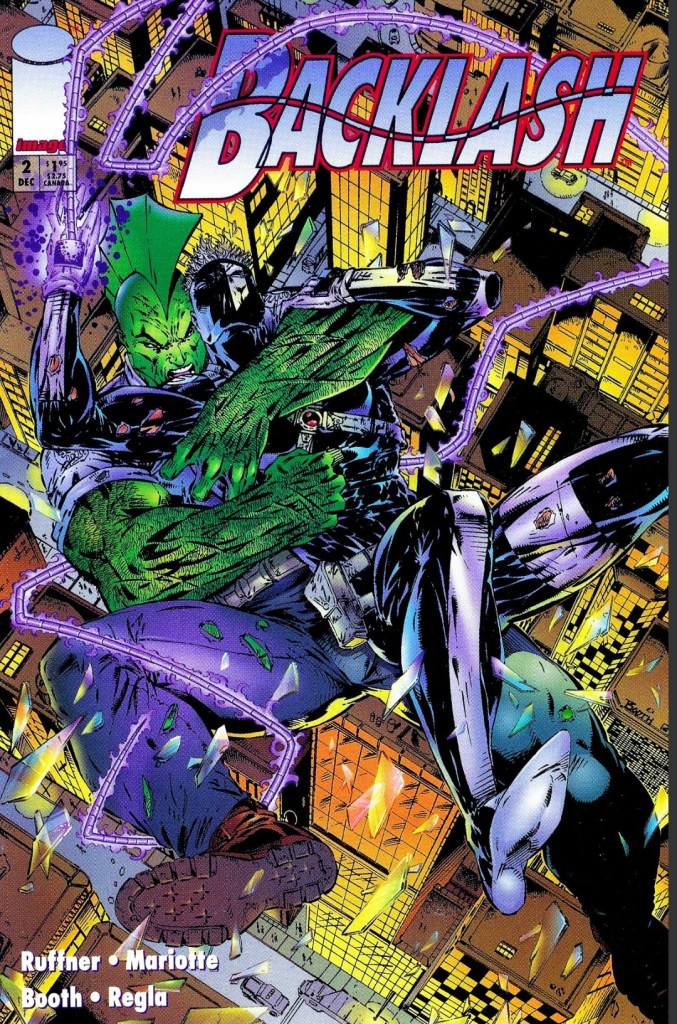
With those details laid down, here is a look back at Backlash #2, published in 1994 by Image Comics with a story written by Sean Ruffner, Jeff Mariotte and Booth. Booth was the artist.

The cover.

Early story

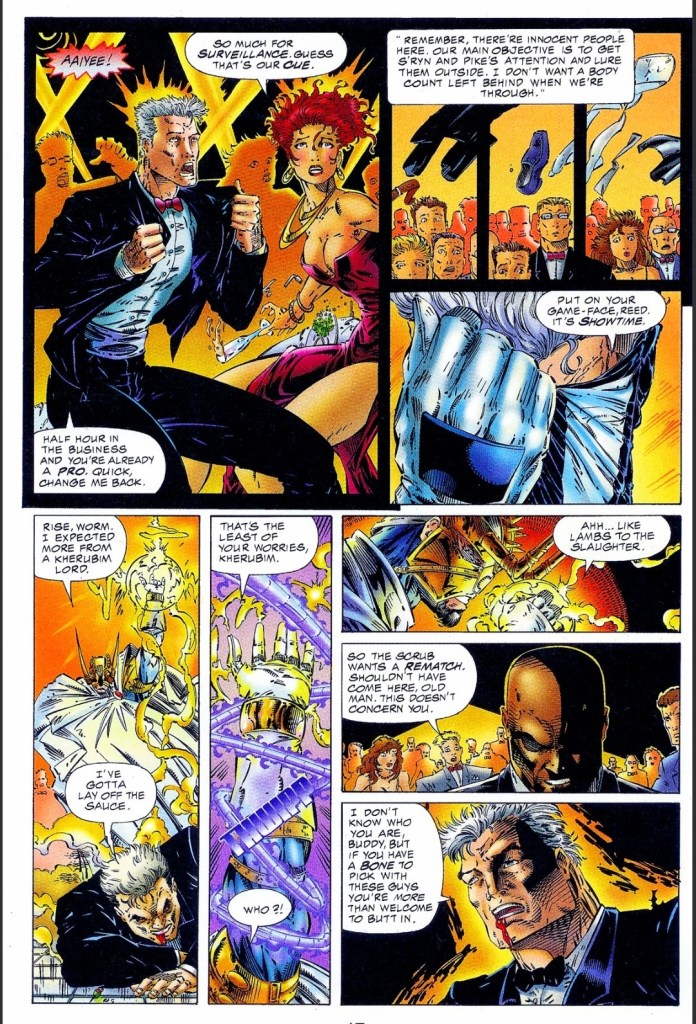
The story begins with a meeting inside the high-tech headquarters of the W.O.R. (Wildlife Organized Research), a front covering the outpost for the criminal organization called the Cabal. During the meeting, the fall of Helspont was discussed and talk about running the Cabal intensified. Just as it was made clear that a new beginning and new leadership were needed to manage the Cabal, a warlord called S’ryn arrives with the deadly Pike behind him. After briefly overwhelming opposition from a Coda warrior and H’tarh, S’ryn performs a ritual and gets the pledge of loyalty from those who recognized him as the new leader of the Cabal. The stage is set for further escalation between the Daemonites and the Kherubim.

In the city of Chicago, Backlash and Taboo spend time together in an apartment that looks worn down and not so clean. It turns out, both of them are fugitives and they are waiting for Cyberjack to complete his surveillance of the security of a hotel where a celebrity ball is set to happen…

Quality

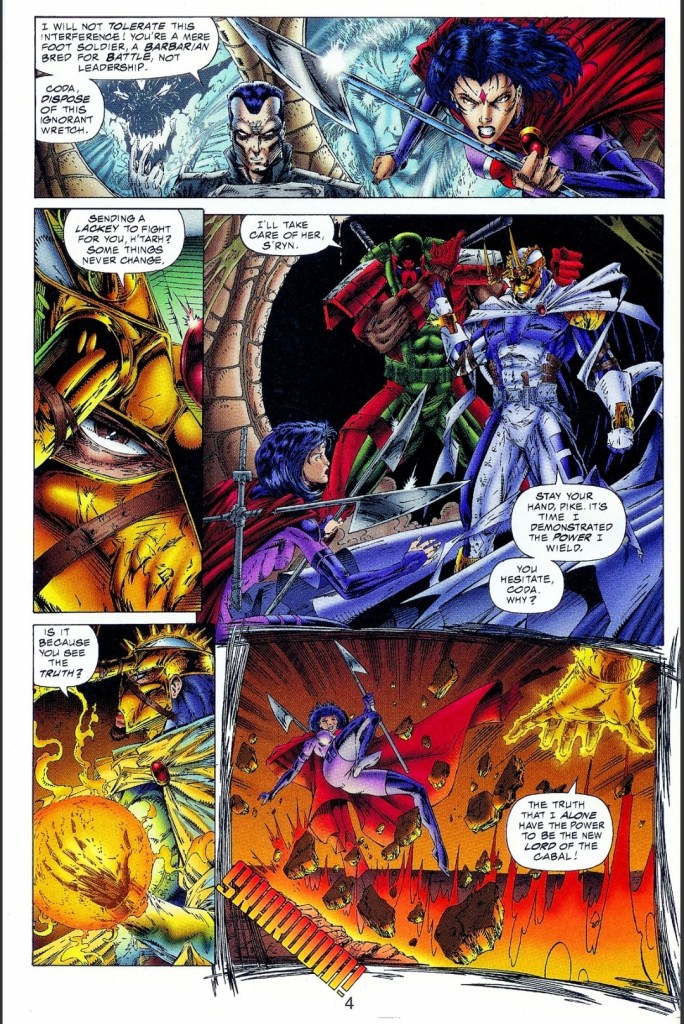
In the middle of a special event, Backlash and Taboo spring into action as WildCATS’ Jacob Marlowe gets into trouble.

Compared to what happened in issue #1, this story moved at a moderate pace in relation to the new mission which involved espionage and suspense. It’s not the action showcase the previous issue was but rather more moderated as the creators took a new approach to not only tell a new story but also do its own build-up of the Kherubim-Daemonite war and other WildStorm universe concepts. The story is well-written and while there is a lot of expository dialogue and creative explanations implemented, it never felt forced. Along the way, the creative team started implementing crossover elements by having Jacob Marlowe of WildC.A.T.S.: Covert Action Teams as well as established Image Comics figure Savage Dragon (from Erik Larsen) included in the story and even getting involved with the operations that took place.

As for Backlash himself, you will see a little less of him in this tale (compared to issue #1) which is not surprising as the creative team focused more on the plot and had to handle the crossover elements. Backlash did not become a supporting character here and you will see some superhero spectacle from him, particularly in his rematch with a certain villain.

Conclusion

S’ryn gets challenged before he becomes the new leader of the forces of evil.

Backlash #2 (1994) is a fun ride that cleverly combined crossover elements with its own approach on building up the WildStorm concepts, notably the war between the Kherubim and Daemonites. It also shows the consequences of what happened in the 4th issue of the WildC.A.T.S. mini-series particularly within the side of the opposition. As such, this comic book is pretty much a sequel to the said mini-series. At this stage, there was clearly something prepared to entertain readers while maintaining focus on establishing Backlash (note: Marc Slayton was one of the Team 7 members) as a major WildStorm character.

Overall, Backlash #2 (1994) is recommended.

+++++

Thank you for reading. If you find this article engaging, please click the like button below, share this article to others and also please consider making a donation to support my publishing. If you are looking for a copywriter to create content for your special project or business, check out my services and my portfolio. Feel free to contact me with a private message. Also please feel free to visit my Facebook page Author Carlo Carrasco and follow me on Twitter at  @HavenorFantasy as well as on Tumblr at https://carlocarrasco.tumblr.com/ and on Instagram at https://www.instagram.com/authorcarlocarrasco
A Look Back at What If #40 (1992)

Disclaimer: This is my original work with details sourced from reading the comic book and doing personal research. Anyone who wants to use this article, in part or in whole, needs to secure first my permission and agree to cite me as the source and author. Let it be known that any unauthorized use of this article will constrain the author to pursue the remedies under R.A. No. 8293, the Revised Penal Code, and/or all applicable legal actions under the laws of the Philippines.

Welcome back superhero enthusiasts, 1990s arts and culture enthusiasts, Marvel Comics fans and comic book collectors! Today we go back to the year 1992 and explore a part of Marvel Comics’ universe through the reimagined tales emphasized in the What If monthly series.

For this particular retro comic book review, we look at a What If tale that is related with the X-Men, specifically through one of their major characters – Storm. For the newcomers reading, Storm is the black X-Men member whose mutation allows her to manipulate the weather. As seen in X-Men comic books decades ago, Storm was portrayed to be tough and brave, and she became a highly valuable learner under Professor X (Charles Xavier). In the 1990s, Storm rose in prominence among the X-Men, she became leader of their Gold Team. Storm was portrayed in the live-action movies by Halle Berry and Alexandra Shipp. It’s just too bad Storm’s role in X-Men: Days of Future Past (note: for me, it is the best X-Men live-action movie ever) was minimal.

With those details laid down, here is a look back at What If #40, published in 1992 by Marvel Comics with a story written by Ann Nocenti and drawn by Steve Carr and Deryl Skeleton.

The cover.

Early story

The story begins with the Watcher recalling scenes from the life of Ororo who was born to a mother (a tribal princess in Kenya) and a photojournalist father. After moving from America to Egypt, Ororo loses her mother and became an orphan. Along the way, she experienced severe claustrophobia as a result of being buried under tons of rock. Having survived, she became a thief in Cairo and eventually traveled into Africa by chance. There she discovered her true nature as a walking idol. She eventually meets Charles Xavier.

The Watcher then explores another thread of scenarios of Ororo’s life in which she never stepped on the eventual boat, never sailed for Africa and never met the tribe that worshipped her.

In Cairo, Ororo is a very young thief who made herself look like a male. She uses deceptive tactics on a foreigner who walked by. A short time later, Ororo goes to New York City identified as Jack serving an old man who teaches her to work hard, to gain respect from his friends and immerse herself in a world of grifters and hobos. Ororo lives and works as a thief in the city targeting people who have more than enough…

Quality

A look at Storm as the super-powered thief. It’s also a portrayal of her as a super villain on the rise.

Among the many What If tales related to the X-Men that I have read so far, this is one of the most well-written and most intriguing alternate universe stories I have read thanks to Ann Nocenti. This was also released at a time when Storm was already established as a brave X-Men team leader and a potential successor to Professor X. In this comic book, there is this strong twist to the established legacy of Storm as a youth and the exploration of what would happen had she remained a thief (a super-powered thief no less) and never followed Charles Xavier turned out to be very compelling in my experience. For one thing, Storm definitely would have given police officers – who clearly are inferior to the powered heroes and villains – a hard time and even help the crime wave overwhelm society’s defenders. It is also quite striking to see Storm to follow and serve a principled yet theft-oriented superior. In fact, this story shows the popular X-Men team leader as a super villain on the rise.

More on storm, Ann Nocenti’s script literally dissected notable traits of Storm’s personality that are connected to the established comic book legacy which creatively created something new that fits in well in this alternate universe story. Through Storm, the story also sheds light on how thieves view life believing that theft is a necessity and their so-called principles justify it. No matter what the thieves and criminals in general think, nothing justifies theft and crime at all and those who commit such acts must be punished accordingly Without spoiling the details, I can say that there are some grey areas within Storm that were nicely emphasized.

Conclusion

Storm as a male-looking teenager behind bars with the ladies who got apprehended. Scenes like this should remind you NOT to vote for political candidates who are soft and sympathetic towards crime.

What If #40 (1990) is indeed a great alternate universe portrayal of one of the X-Men’s most prominent characters of the time. The story is very well structured and the characterization of Storm was clearly organized by Ann Nocenti to be powerful and intriguing to read. This comic book also has a twist that you must see for yourselves as well as an ending that will either surprise or satisfy you depending on what you anticipated. Ultimately, this comic book should remind you all to avoid committing crime and the truth is that poverty is a curse and it NEVER justifies theft. Always remember that the Lord is watching you. For enlightenment, read Exodus 22:1-4, Exodus 22:10-15, Leviticus 6:2-7 and 1 Corinthians 6:9-10 in the Holy Bible.

Overall, What If #40 (1990) is highly recommended!

+++++

Thank you for reading. If you find this article engaging, please click the like button below, share this article to others and also please consider making a donation to support my publishing. If you are looking for a copywriter to create content for your special project or business, check out my services and my portfolio. Feel free to contact me with a private message. Also please feel free to visit my Facebook page Author Carlo Carrasco and follow me on Twitter at  @HavenorFantasy as well as on Tumblr at https://carlocarrasco.tumblr.com/ and on Instagram at https://www.instagram.com/authorcarlocarrasco
A Look Back at Venom: Lethal Protector #4 (1993)

Disclaimer: This is my original work with details sourced from reading the comic book and doing personal research. Anyone who wants to use this article, in part or in whole, needs to secure first my permission and agree to cite me as the source and author. Let it be known that any unauthorized use of this article will constrain the author to pursue the remedies under R.A. No. 8293, the Revised Penal Code, and/or all applicable legal actions under the laws of the Philippines.

Welcome back superhero enthusiasts, 1990s arts and culture enthusiasts, Marvel Comics fans and comic book collectors! Today we go back to the year 1993 and explore a part of Marvel Comics’ universe through the first-ever limited comic book series featuring one of Marvel’s most iconic supervillains – Venom.

In my previous retro review, the core concept of the Lethal Protector limited series started to really take shape as issue #3’s plot got more intriguing and interesting to read while emphasizing other powerful forces Venom himself simply could not easily overwhelm. It is also the issue in which Venom’s past act of a certain murder comes to haunt him. The problem I had with that comic book was the creative team’s dramatization of Eddie Brock’s personal history which essentially ruined whatever mystery Venom had. Eventually, the comic book ended with Venom getting into trouble again.

With those details laid down, here is a look back at Venom: Lethal Protector #4 published in 1993 by Marvel Comics with a story written by David Michelinie and drawn by Ron Lim.  

The cover.

Early story

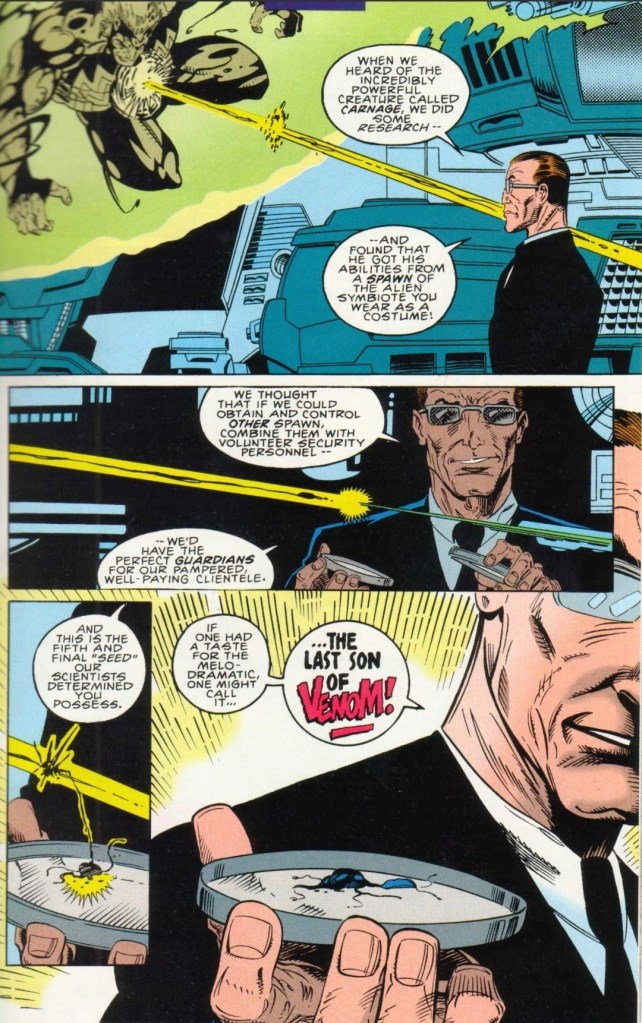
The story begins inside a high-tech facility in the Mojave Desert. Inside, Venom is in captivity floating off the floor with high-tech machines keeping him prisoner. He is a captive of the Life Foundation and they have successfully extracted another spawn from Venom’s symbiote which causes tremendous pain on the part of Eddie Brock. It turns out, a total of five “seeds” have been extracted and the organization has big plans with them.

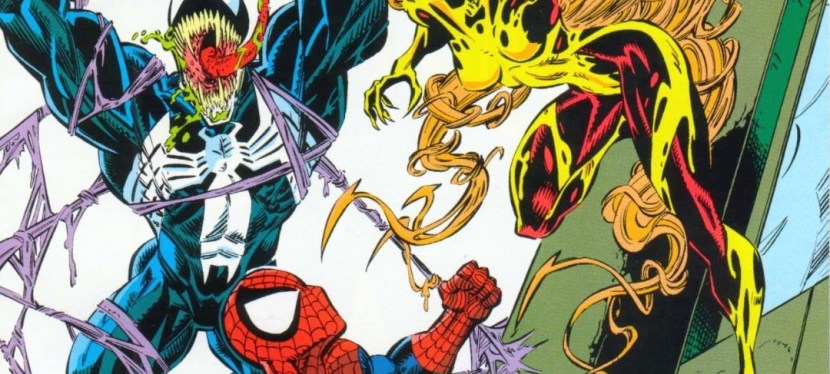
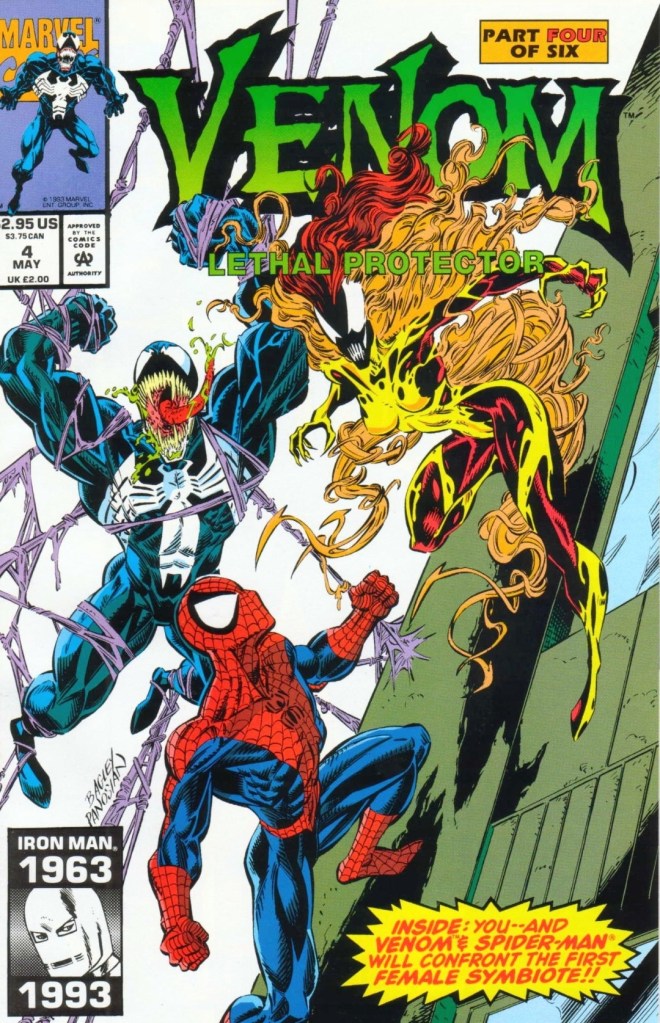
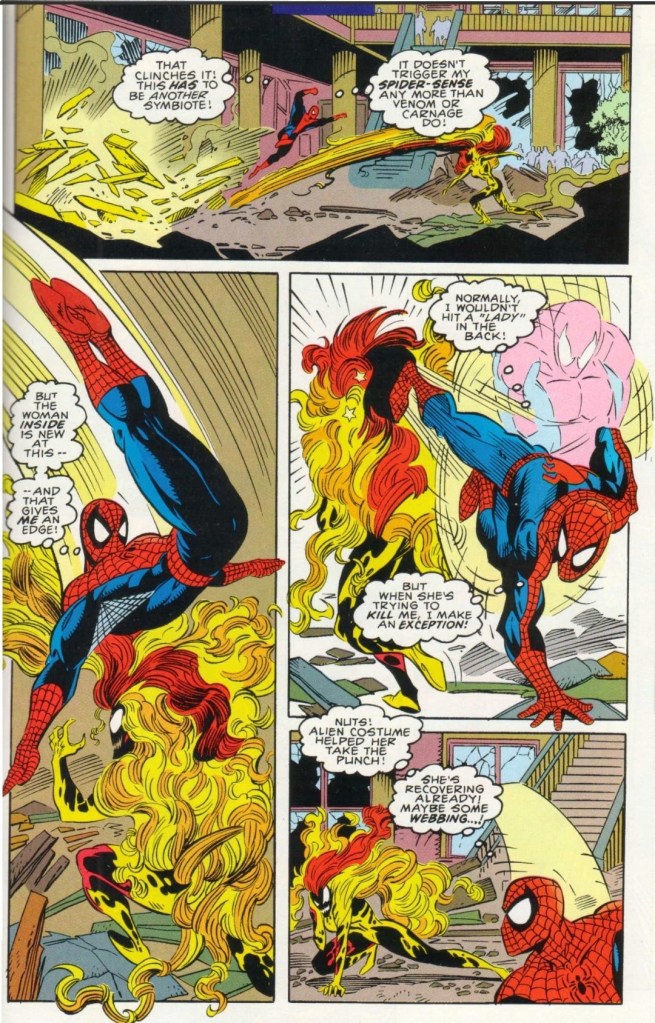
Over at Sta. Cruz in California, Spider-Man spends some of his precious time to stop some local criminals from causing anymore danger to the people. During his telephone talk with Mary Jane, he admits that has not been able to track Venom down but he has a new lead about weird creatures that have been spotted locally. A short time later, Spider-Man arrives at a shopping mall where tremendous damage of property have happened. As soon as he catches a lady and prevents her from hitting the pavement, he is shocked to see a long-haired woman wearing a living alien costume with features that are so similar to that of Venom. The symbiote-wearing woman (Scream) tells Spider-Man directly that breaking him in half will make the “little exercise” a complete success…

Quality

Spider-Man takes on the “female Venom”

To start with what is very obvious and clear, this story has Spider-Man overshadowing Venom in terms of literary presence as the plot has the titular character limited to captivity under the tight grasp of the Life Foundation. Given Spider-Man’s previous appearances in this limited series serving as a convenient tool for exposition, you will easily feel the Amazing Spider-Man monthly series’ vibes taking over this comic book’s narrative as Marvel’s icon became the protagonist of the story complete with spectacle and problem solving that drive the plot forward. This is not surprising as David Michelinie was already the lead writer of the Amazing Spider-Man monthly series and it only makes sense to shift the focus on the famous webslinger since his deadliest enemy (who has this very distorted belief about protecting the innocent and keep on murdering people he finds antagonistic) could not contribute much to the story while in captivity.

As reflected in the nice cover of this comic book, it is also Spider-Man who faces off with the “female Venom” herself Scream which leads to yet another Spidey-versus-symbiote villain battle but with a catch – Scream is simply inexperienced in battle and does not have any real strategy to deal with New York’s webslinger. That battle noticeably does not last very long and the short amount of superhero spectacle here paved the way for the creative team to make Spider-Man sneak into enemy territory and closer to Venom.

In terms of visual quality, I can say that things went way down as Ron Lim replaced Mark Bagley here. Lim’s art style of drawing people has this generic aesthetic on the characters’ faces – Mary Jane and Eddie Brock are barely recognizable. While Lim’s artistic take on Venom is clearly a big letdown compared to Bagley’s Venom (note: always looking menacing and unique), he ironically did a decent job visualizing Scream. Lim’s most dynamic shots of superhero action lacked impact. Regardless, Lim’s art is not so appealing compared to Bagley’s. Also it is quite noticeable that Lim drew Venom to be much bulkier with exaggerated muscles.

Conclusion

The most notable concept in this comic book.

Considering all the details I mentioned above, Venom: Lethal Protector #4 (1993) is technically an Amazing Spider-Man comic book that just so happens to have Venom much less significant in this particular part of his own limited series. There really was not much room for the creative team use as far as Venom is concerned. Of course, this is all part of a build-up heading into the final two parts of this limited series and it is obvious that Venom would become prominent again. This comic book’s most notable feature was its concept about the Life Foundation extracting seeds from Venom’s living costume but considering what happened, there was not much room to really build-up on the idea that more symbiote-wearing people will emerge. Scream was essentially a warm-up. Ultimately, Spider-Man fans will have a lot to enjoy here while Venom fans will not have much to enjoy.

Overall, Venom: Lethal Protector #4 (1993) is serviceable.

+++++

Thank you for reading. If you find this article engaging, please click the like button below, share this article to others and also please consider making a donation to support my publishing. If you are looking for a copywriter to create content for your special project or business, check out my services and my portfolio. Feel free to contact me with a private message. Also please feel free to visit my Facebook page Author Carlo Carrasco and follow me on Twitter at  @HavenorFantasy as well as on Tumblr at https://carlocarrasco.tumblr.com/ and on Instagram at https://www.instagram.com/authorcarlocarrasco
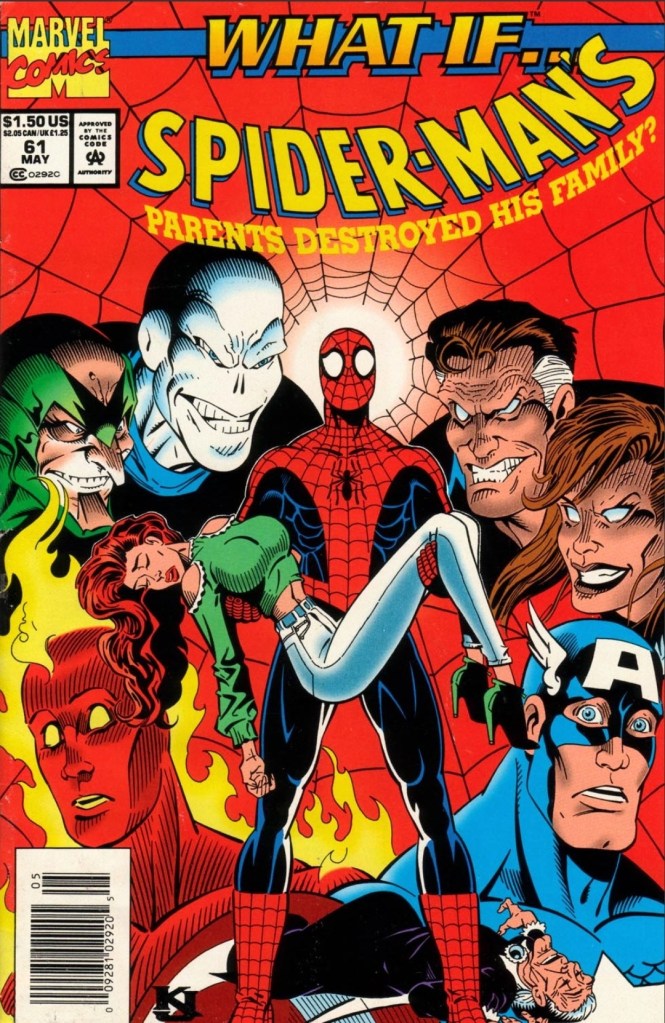
A Look Back at What If #61 (1994)

Disclaimer: This is my original work with details sourced from reading the comic book and doing personal research. Anyone who wants to use this article, in part or in whole, needs to secure first my permission and agree to cite me as the source and author. Let it be known that any unauthorized use of this article will constrain the author to pursue the remedies under R.A. No. 8293, the Revised Penal Code, and/or all applicable legal actions under the laws of the Philippines.

Welcome back superhero enthusiasts, 1990s arts and culture enthusiasts, Marvel Comics fans and comic book collectors! Today we go back to the wild 1990s and examine an alternate universe portrayal of one of Spider-Man’s many events told through the What If monthly series!

If you are looking for a portrayal of Spider-Man going over the edge and into the extremes emotionally, you are about to experience something in this retro review of mine. Some time ago, I reviewed a What If comic book about Spider-Man becoming a murderer which was compelling but ended on a whimper.

With those details laid down, here is a look back at What If #61 published in 1994 by Marvel Comics with a story written by Kurt Busiek and drawn by Kirk Jarvinen, Andrew Wildman, Derek Yaniger and Jim Amash.

The cover.

Early story

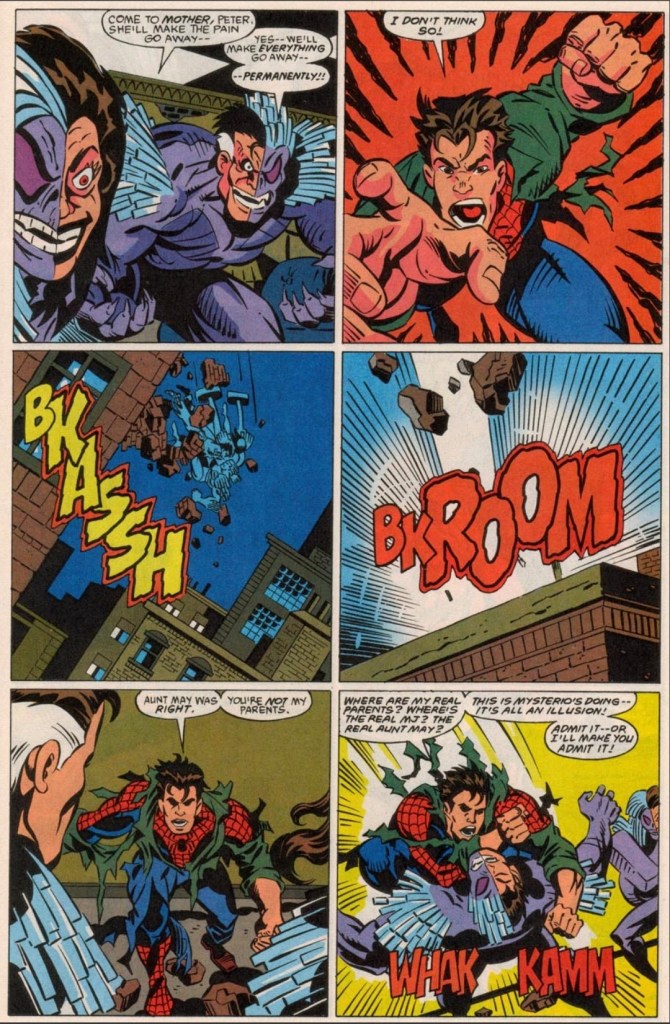
The story begins with Richard and Mary Parker (Peter Parker’s parents) arriving in the presence of Aunt May who happens to be visited by their son Peter (Spider-Man). Having learned something from a while back, Aunt May tells Richard and Mary that they are not genuine persons. Suddenly, Peter Parker’s spider sense intensifies and in an attempt to defuse the situation, he leads his aunt to walk out of the house with him. Richard and Mary watch them walk away.

It turns out, Richard and Mary are impostors and they have been working all the time for a secretive boss. Richard calls his employer under an emergency and reports that they have completed phase one of their assignment, that Aunt May knows the truth about them and is about to inform Spider-Man. Richard is then told that under no circumstances is the plan to be jeopardized and anyone who suspects must die. He is also told to flush Mary’s programming and reset her as she showed signs of acting odd to the situation.

A short time later, Richard and Mary – now in morphed forms with vastly different bodies and half their heads resembling their human selves – suddenly break into an apartment surprising Peter, his wife Mary Jane and Aunt May. Violent action by one of them accidentally ripped open Peter’s shirt, revealing his Spider-Man suit to Aunt May. Just as Peter’s aunt figures out the secret, he tells Mary Jane to grab her and get out.

However, the sight of the morphed Mary Parker shocked Aunt May and Mary Jane so much, they failed to move. Mary Parker then morphs her two hands into large, makeshift hammers, and swiftly killed Aunt May and Mary Jane. Peter is instantly shocked by their sudden deaths but deep inside, rage begins to burn…

Quality

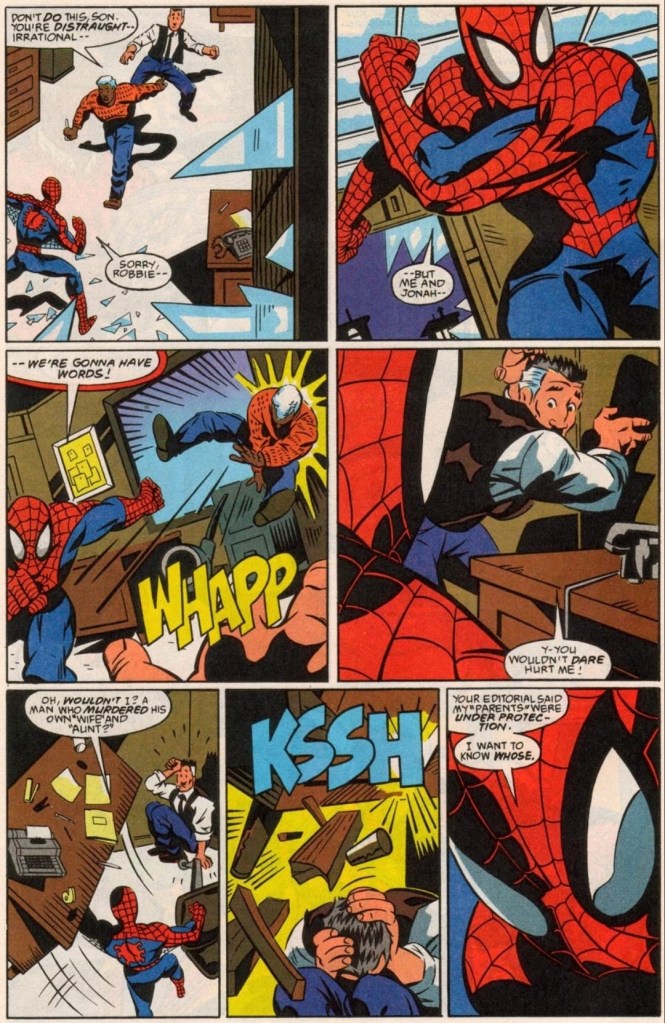
Spider-Man already over the edge and reacting violently to the abusive Daily Bugle.

I can start by confirming that Kurt Busiek’s writing is very strong and his alternate take on the events of Amazing Spider-Man #388 (1994) is indeed very solid. In one way, I find the emotional stakes for Spider-Man has been raised a lot higher than what was portrayed in the canon story. The concept of losing his beloved family members to enemies who were impostors that looked like his long lost parents is indeed disturbing as well as emotionally charged. In relation to this, Busiek and the illustrators brought to life a Spider-Man who really went over the edge by taking matters into his own hands as the loss of beloved ones led to the blurring of the boundary between good and evil. Even the boundary between innocence and guilt gets blurred which adds more depth to the emotions of the story. As I read the story, there were moments when I felt that Spider-Man became as bad as the evil ones even though he is clearly the victim and his family was targeted.

Apart from showing Spider-Man getting outraged and pushed to the limits, Busiek inserted elements about how people perceive incidents without knowing all the facts and how easily they get manipulated by a news outlet – the Daily Bugle where Peter Parker worked as a freelance photographer – whose leader does not care about ethical journalism nor the pursuit of the truth. In this age of widespread fake news and liberal news media outlets in America doing propaganda for American Communists (read: Democrats, abortionists, LGBTQ, Black Lives Matter, Antifa, the terrorists, the climate change extremists and the socialist hordes), this particular aspect of the story makes this comic book strongly relevant to read today.

The story also sheds light on Spider-Man’s connections with other Marvel superheroes who happen to be in New York City. You will see Captain America and Johnny Storm express their concern about Spider-Man’s state of mind as they themselves still tried to figure out what really happened. In short, the superheroes here showed restraint even as Spider-Man goes to the extreme being a victim as well as a fugitive.

If there are any weak points in this comic book, it would be the art which has this cartoon-like aesthetic for much of the story. Considering the serious subject matter, the visuals are quite contradicting as they make this look like it was made for much younger readers. In fairness, the quality of the art improved during the 2nd half of the story.

Conclusion

Spider-Man takes on the impostors who looked like his parents.

As far as storytelling and characterization goes, What If #61 (1994) succeeded a lot on portraying the iconic Spider-Man as the superhero who went over the limits of his emotions and his reasoning which is the result of the tragic deaths of two beloved family members caused by individuals who pretended to be his parents. This is a very solid story which also has a powerful ending. Where What If #72 failed, this comic book succeeded and even exceeded it with Spider-Man truly becoming unheroic. I should state that this comic book should convince readers to go to the Amazing Spider-Man series and follow the Lifetheft storyline in issues #386 to #388 (which were released months before this comic book). Kurt Busiek’s script is indeed great and it is easily the driving force of the comic book.

Overall, What If #61 (1994) is highly recommended.

+++++

Thank you for reading. If you find this article engaging, please click the like button below, share this article to others and also please consider making a donation to support my publishing. If you are looking for a copywriter to create content for your special project or business, check out my services and my portfolio. Feel free to contact me with a private message. Also please feel free to visit my Facebook page Author Carlo Carrasco and follow me on Twitter at  @HavenorFantasy as well as on Tumblr at https://carlocarrasco.tumblr.com/ and on Instagram at https://www.instagram.com/authorcarlocarrasco
A Look Back at Spider-Man 2099 #11 (1993)

Disclaimer: This is my original work with details sourced from reading the comic book and doing personal research. Anyone who wants to use this article, in part or in whole, needs to secure first my permission and agree to cite me as the source and author. Let it be known that any unauthorized use of this article will constrain the author to pursue the remedies under R.A. No. 8293, the Revised Penal Code, and/or all applicable legal actions under the laws of the Philippines.

Welcome back superhero enthusiasts, 1990s arts and culture enthusiasts, Marvel Comics fans and comic book collectors! Today we go back to the will 1990s and explore the far future of 2099 within the Marvel Comics shared universe through one of the tales of Spider-Man 2099.

Shortly after his return from the old lower city of New York, Miguel O’Hara’s personal life got more complicated and intense. Aside from that, his rift with his mother remains unresolved. Miguel then begins to assess his personal life as well as his secret life as the swinging hero Spider-Man.

With those details laid down, here is a look back at Spider-Man 2099 #11, published in 1993 by Marvel Comics with a story written by Peter David and drawn by Rick Leonardi.

The cover.

Early story

The story begins when armed security personnel apprehend a man for defacing Alchemax property with spray paint. As the suspect gets threatened with physical violence, Spider-Man suddenly appears and surprises the one holding the suspect down. It turns out, Spider-Man secretly knocked out one of the security personnel quietly.

The active security officer lets the suspect go and he activates his armor which turns out to be the Situation Emergency Gear (SIEGE for short) which is the result of a project between Alchemax and Stark-Fujikawa. The armored man then begins to strike at Spider-Man in response for the sudden intervention. Very notably, the security officer wearing SIEGE tells Spider-Man he apologizes for taking action and will do everything he could to harm him as little as possible…

Quality

The futuristic Spider-Man has serious opposition here.

Considering what happened in issue #10, this comic book ramped up the spectacle showing more of Spider-Man 2099 in action-packed conflict with one of the local authorities who happened to be armed with a powered suit of armor. The figure of opposition here is almost like a super villain but one who is not evil but rather doing what he was hired to do. Apart from being an action-filled conflict with strong sci-fi elements, this conflict symbolizes Miguel O’Hara’s willingness to put himself at risk by taking on the authorities as a deliberate violator of local law even though he himself works with Alchemax. This also shows Miguel’s recklessness as he struggled with the lack of a clear direction with his second life as Spider-Man. At this stage, Miguel’s inner rebellion against his corporation is very clear and this alone will put readers on the edge as they figure out what the deeply troubled hero plans to do next.

This comic book is not an all-out action fest. There was still enough room for Peter David to craft more of Miguel’s affairs at Alchemax, only this time he gets to meet someone who happened to be connected with one particular member of X-Men 2099 (note: this is related to the eventual 2099 crossover storyline). This only adds more intrigue into Miguel’s troubled personal life which is something you must read and find out here.

Conclusion

This comic book will make you wonder if Spider-Man 2099 himself is slowly becoming evil by getting into direct conflict with the law.

Spider-Man 2099 #11 (1993) is a fine example of plot really thickening while also making life not only harder but more intense on the part of Miguel O’Hara. At the same time, this comic book built up something new for Spider-Man to eventually face off with. Peter David’s writing and direction of the character are very engaging to follow from start to finish.

Overall, Spider-Man 2099 #11 (1993) is recommended.

+++++

Thank you for reading. If you find this article engaging, please click the like button below, share this article to others and also please consider making a donation to support my publishing. If you are looking for a copywriter to create content for your special project or business, check out my services and my portfolio. Feel free to contact me with a private message. Also please feel free to visit my Facebook page Author Carlo Carrasco and follow me on Twitter at  @HavenorFantasy as well as on Tumblr at https://carlocarrasco.tumblr.com/ and on Instagram at https://www.instagram.com/authorcarlocarrasco
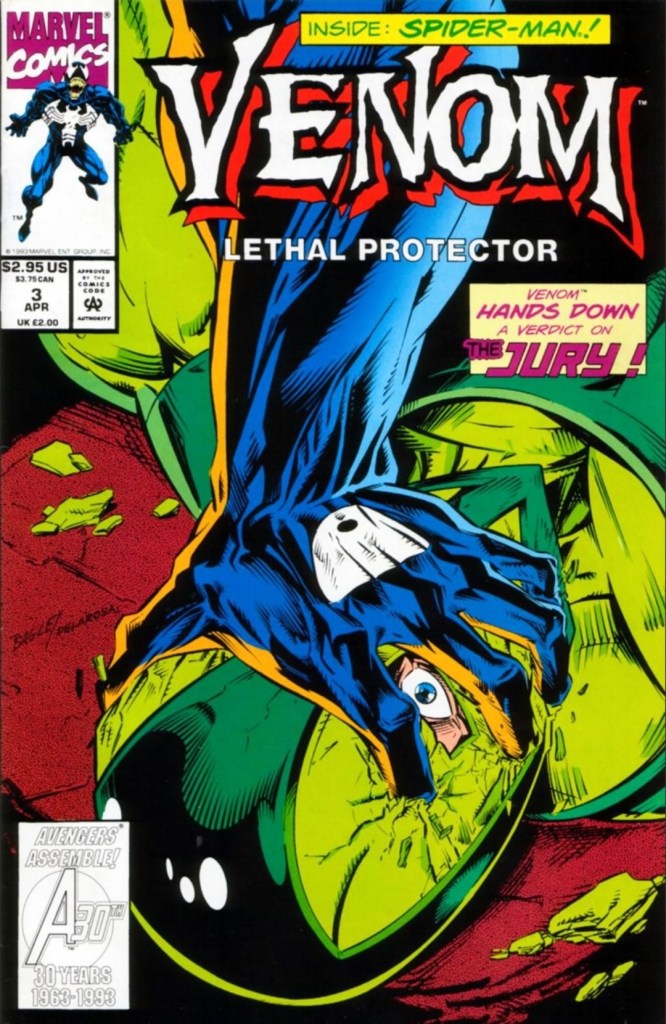
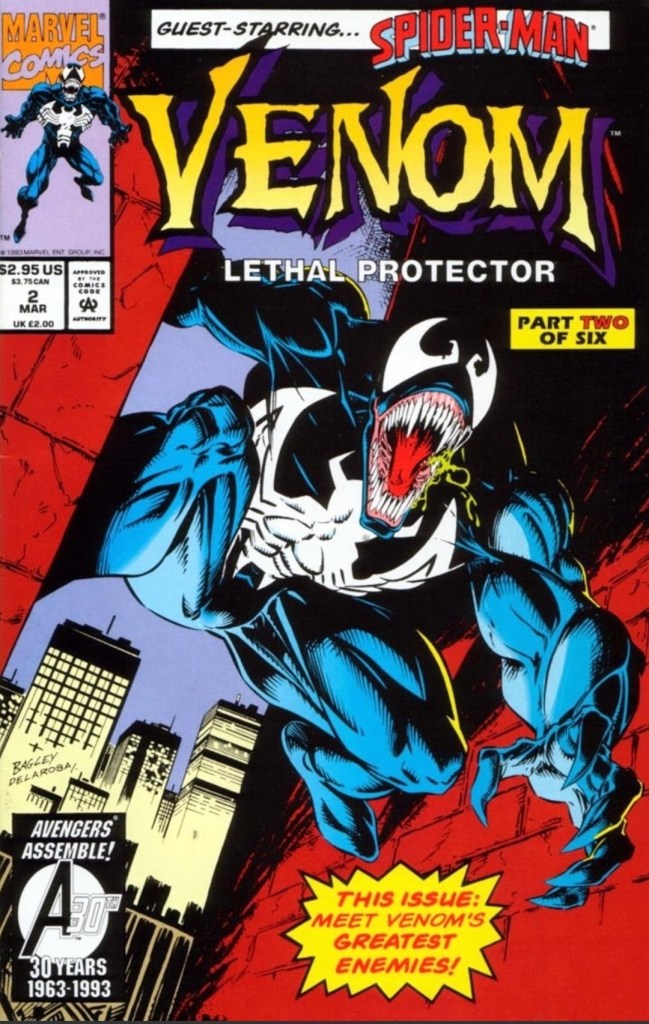
A Look Back at Venom: Lethal Protector #3 (1993)

Disclaimer: This is my original work with details sourced from reading the comic book and doing personal research. Anyone who wants to use this article, in part or in whole, needs to secure first my permission and agree to cite me as the source and author. Let it be known that any unauthorized use of this article will constrain the author to pursue the remedies under R.A. No. 8293, the Revised Penal Code, and/or all applicable legal actions under the laws of the Philippines.

Welcome back superhero enthusiasts, 1990s arts and culture enthusiasts, Marvel Comics fans and comic book collectors! Today we go back to the year 1993 and explore a part of Marvel Comics’ universe through the first-ever limited comic book series featuring one of Marvel’s most iconic villains – Venom.

In my previous retro review, Venom discovers a long lost section of San Francisco that fell deep underground. Even though it is cut off from the resources and fresh air of modern San Francisco, the lost city section is filled with homeless people and social outcasts. Even though he helped the city dwellers by defeating the two armed mechs (employed by a powerful organization who oppose the city dwellers and are in pursuit of something related to San Francisco’s park), Venom still gets rejected by the so-called council. This only led him to returning to the surface not knowing that he is being targeted by a certain group.

With those details laid down, here is a look back at Venom: Lethal Protector #3, published in 1993 by Marvel Comics with a story written by David Michelinie and drawn by Mark Bagley.

The cover.

Early story

The story begins with Venom suffering from a sonic blast while being restrained by one of the armed members of the group called The Jury. Their leader (who wears a suit and necktie) introduces himself as Orwell Taylor and he addressed Venom as Mr. Brock. It turns out Taylor spent lots of time and resources researching everything about Brock and the alien costume. More shockingly, The Jury’s leader reveals that he lost his son Hugh years ago due to Venom’s arranged killing of him as he escaped from his prison cell in the federal prison called The Vault. Hugh Taylor is the first man Venom killed when he escaped.

Venom responds by say that he and his symbiote did not want to hurt anyone. This provokes Orwell Taylor into anger and he orders The Jury to kill Venom. Due to the lengthy explanations of Orwell Taylor, Venom managed to recover and regain strength which he uses to free himself and throw one Jury member to another causing quick chaos.

After punching another Jury member, Venom then moves out of the alley and away from Taylor and his team…

Quality

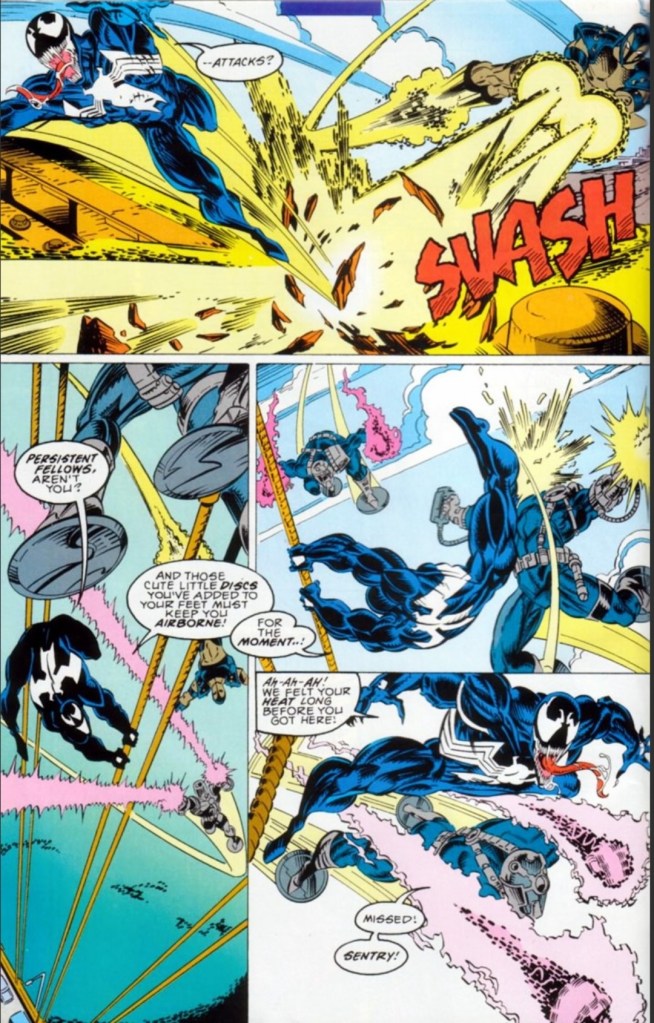
Very clearly, The Jury is a very formidable force of opposition. Their battle with Venom here comes with a lot of spectacle.

In terms of storytelling, this one is another improvement over issue #2 (which itself is an improvement over issue #1) as the plot got more interesting and even intriguing. For one thing, I like the fact that David Michelinie recalled Venom’s murderous escape from prison told way back in Amazing Spider-Man #315 (1989) and came up with the establishment of a very angry powerful father who formed the dangerous cybernetic team called The Jury. In a rather symbolic way, this comic book shows how Venom’s past comes back to haunt him and creatively, the battles between Venom and The Jury here are packed with a lot of action and visual dynamism delivered by Mark Bagley. The irony is that The Jury itself is not the main antagonist of this limited series as they are clearly presented to be a recurring force of opposition within Spider-Man’s realm in Marvel Comics’ shared universe of the time.

Still on the plot, the sinister organization hounding the dwellers of the lost city was revealed to be the Treece group whose leader is pursuing something very valuable to feed his greed. Still, even though this is already the third issue, the Treece organization’s presence is very subtle and as the force of opposition towards Venom, they are outclassed by The Jury.

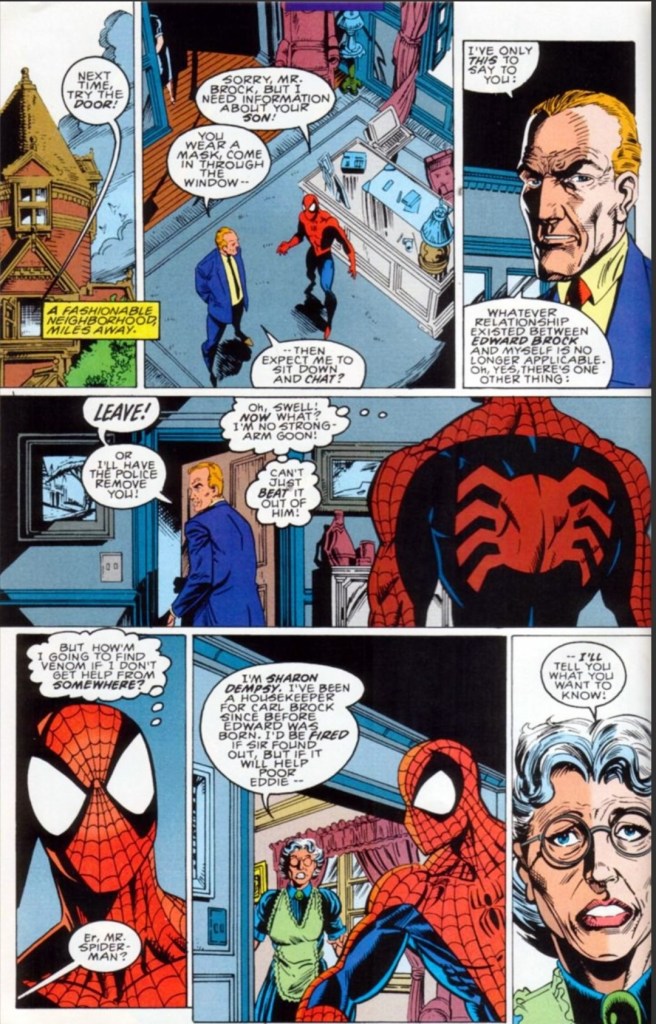
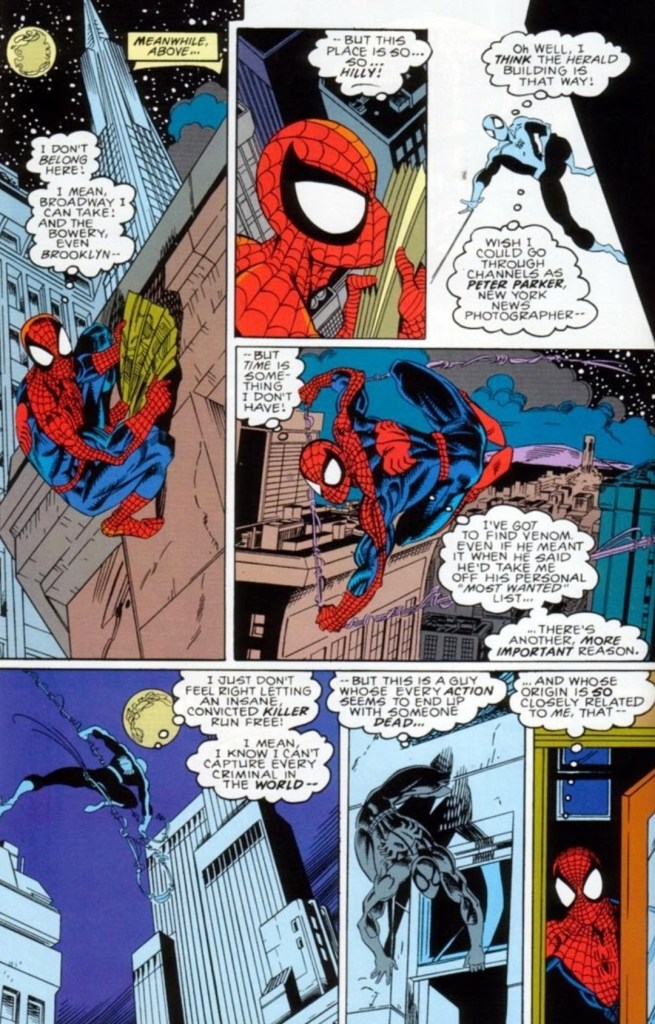
As in the previous issue, Spider-Man got a good share of the spotlight but this one is even more limiting which should delight Venom fanatics who complained about Marvel’s icon overshadowing their guy with the symbiote. Spider-Man serves mainly as a tool for exposition as the creative team showed images from the past of Eddie Brock with his father (whom Spider-Man approached for answers).

The problem here is that showing flashbacks from the past and explaining how Eddie Brock became bitter and sinister as a result of receiving almost no affection from his father ruins the mystery of Venom as a character. During the time of Todd McFarlane drawing Amazing Spider-Man comics and the early Venom tales, the mystery of Eddie Brock’s past added to the intrigue of Venom and his quick rise as the deadliest villain Spider-Man ever faced. I understand that this limited comic book series had Venom as the protagonist who was in high demand among readers of the time but for me the creative team went way too far emphasizing Eddie Brock’s past.

Nothing changes the fact that Eddie Brock aided by the alien costume is a murderer who happens to have previously been a prolific print media journalist whose career got ruined by Spider-Man which in turn led him to a downward spiral and eventually to bonding with the symbiote that once bonded with Peter Parker. The flashbacks were pointless and if there really was an attempt to humanize Eddie Brock and make him sympathetic to readers, the creative team clearly failed.

Conclusion

Spider-Man with Eddie Brock’s father in California.

Venom: Lethal Protector #3 (1993) is a mixed bag. Its plot is clearly more intriguing and more interesting to read while there was enough creative space to show The Jury as a powerful force of opposition which is the result of Venom’s murder of Hugh Taylor (read: Amazing Spider-Man #315) while making a prison escape. The spectacle of the battle between Venom and The Jury must be seen! However, the creative team’s move to dramatize Eddie Brock’s past using flashbacks back-fired in my opinion and ultimately they destroyed whatever mystery was left behind Venom. As a protagonist, Venom has no appeal whatsoever and his portrayal here only reminds me that he works best as an antagonist opposite Spider-Man. Venom as a hero for those he perceived to be innocent and helpless remains forced and unconvincing.

Overall, Venom: Lethal Protector #3 (1993) is satisfactory.

+++++

Thank you for reading. If you find this article engaging, please click the like button below, share this article to others and also please consider making a donation to support my publishing. If you are looking for a copywriter to create content for your special project or business, check out my services and my portfolio. Feel free to contact me with a private message. Also please feel free to visit my Facebook page Author Carlo Carrasco and follow me on Twitter at  @HavenorFantasy as well as on Tumblr at https://carlocarrasco.tumblr.com/ and on Instagram at https://www.instagram.com/authorcarlocarrasco
A Look Back at Venom: Lethal Protector #2 (1993)

Disclaimer: This is my original work with details sourced from reading the comic book and doing personal research. Anyone who wants to use this article, in part or in whole, needs to secure first my permission and agree to cite me as the source and author. Let it be known that any unauthorized use of this article will constrain the author to pursue the remedies under R.A. No. 8293, the Revised Penal Code, and/or all applicable legal actions under the laws of the Philippines.

Welcome back superhero enthusiasts, 1990s arts and culture enthusiasts, Marvel Comics fans and comic book collectors! Today we go back to the year 1993 and explore a part of Marvel Comics’ universe through the first-ever limited comic book series featuring one of Marvel’s most iconic villains – Venom.

In my previous retro review, Eddie Brock returned to his hometown of San Francisco following the events of Amazing Spider-Man #375 (1993). Living with his very distorted belief of protecting the innocent by doing unrelenting acts of violence on others, he begins to get involved with helpless people who happened to be hounded by agents of a certain private organization that wields power. Along the way, Spider-Man arrives in the city find Venom.

With those details laid down, here is a look back at Venom: Lethal Protector #2, published in 1993 by Marvel Comics with a story written by David Michelinie and drawn by Mark Bagley.

The cover.

Early story

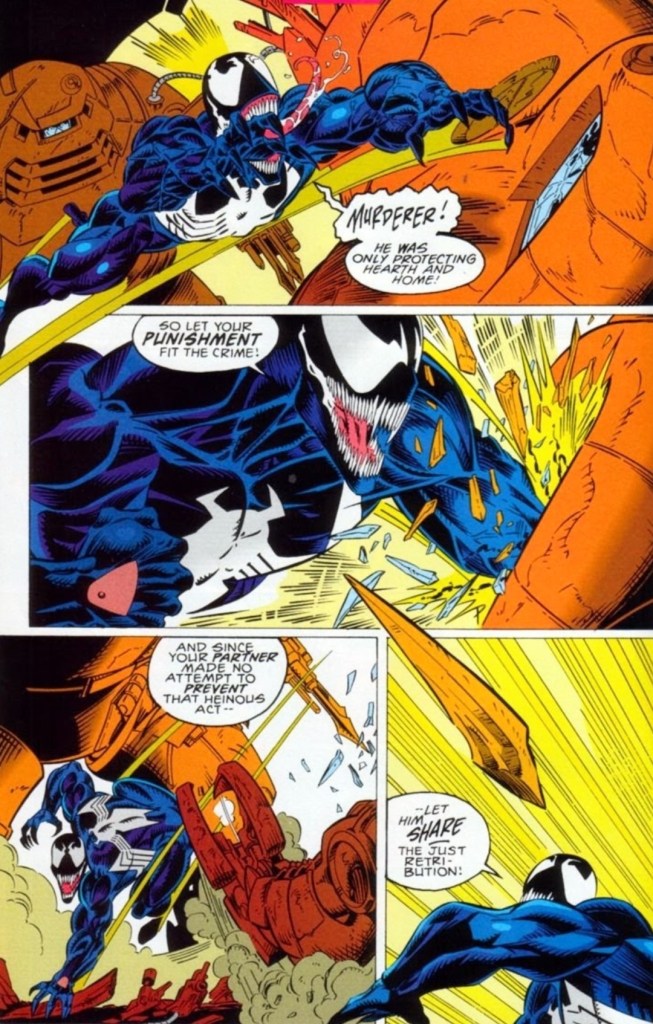
The story begins deep underneath the city of San Francisco. Venom, who is caught by the large mechanical fist of a walking mech (piloted by a man working for Roland Treece’s organization), finds himself on the deeply buried section of the city and around them are vagrant people who settled and became residents of a local society that the rest of America does not even know exists.

As the local residents caught the attention of the pilot, Venom breaks free by smashing the mechanical fist into pieces. Another mech suddenly jumps into place near the first one. In response to the first mech’s sudden killing of a local resident (who was armed with a shotgun), Venom jumps to it and kills the pilot inside by punching into the cockpit. Venom then grabs a long sharp object and kills the pilot of the other mech with it.

While the locals were hostile and afraid of Venom, the other people (who were assisted on the surface by Venom) come to support him and tell their fellow underground residents that he is not their enemy. One of the local council members stated that a meeting at the council hall will be held and Venom will attend it…

Quality

With exposition in mind, Spider-Man here does most of the detective work. Understandably, he is not involved with the superhero spectacle.

Compared to issue #1, this story has a more interesting setting which is the buried and forgotten section of San Francisco which was the result of the 1906 earthquake. Showing that the lost section has a local population composed of homeless people and those who reject the modern society above was a bright idea nicely executed by the Michelinie-Bagley team as it added some depth into Marvel Comics’ own version of San Francisco.

It was also in the underground city and with the residents where we get to see Venom do his own distorted acts of heroism backed by killing, and see how he fared when trying to win the trust of the locals whose members include those who read about him in the news and those who completely know nothing about him.

Through his interactions with the underground people, Eddie Brock is portrayed to be a bit more human compared to what happened in issue #1. For a man who has gotten very used to using extreme forms of violence and committing multiple acts of murder, it is surprising to see Brock looking and acting more civil in the presence of Americans (and perhaps illegal immigrants) who settled deep underground and established their own rules (note: Eddie Brock does not care about rules while having the alien costume). Still, you will see Venom engage in violent superhero action and even do a bit of detective work.

As with the previous issue, the iconic Spider-Man got a good share of the spotlight in the story as he searches for details about Venom which leads him to finding his rival’s estranged father. Spider-Man’s presence here is noticeably lessened compared to issue #1 and his own search for answers creatively served as exposition. Don’t expect to see any superhero spectacle from Spider-Man.

Without spoiling details and names, I should state that this comic book marks the debut of a ream of armed mercenaries led by a powerful man who lost a son because of what Venom did in Amazing Spider-Man #315 (1989).

Conclusion

The violent nature of Venom displayed.

Venom: Lethal Protector #2 (1993) is a marginal improvement over the first issue in terms of storytelling and setting. Part of the big build-up that happened in issue #1 started to get paid-off in this comic book which allowed for the plot to move forward at a more satisfying pace. Venom and Spider-Man share the spotlight again, but this time the edge goes to the black-wearing murderer who also has the benefit of being part of the superhero spectacle here. At this point of the mini-series, Venom is not only facing elements of the Treece organization (which has been organizing something that could impact San Francisco and its people) but also a new force of opposition that is related to something he did a few years prior. That being said, Venom is first and foremost a murderer that Marvel wanted to make big money out of.

Overall, Venom: Lethal Protector #2 (1993) is satisfactory.

+++++

Thank you for reading. If you find this article engaging, please click the like button below, share this article to others and also please consider making a donation to support my publishing. If you are looking for a copywriter to create content for your special project or business, check out my services and my portfolio. Feel free to contact me with a private message. Also please feel free to visit my Facebook page Author Carlo Carrasco and follow me on Twitter at  @HavenorFantasy as well as on Tumblr at https://carlocarrasco.tumblr.com/ and on Instagram at https://www.instagram.com/authorcarlocarrasco
A Look Back at What If #10 (1990)

Disclaimer: This is my original work with details sourced from reading the comic book and doing personal research. Anyone who wants to use this article, in part or in whole, needs to secure first my permission and agree to cite me as the source and author. Let it be known that any unauthorized use of this article will constrain the author to pursue the remedies under R.A. No. 8293, the Revised Penal Code, and/or all applicable legal actions under the laws of the Philippines.

Welcome back superhero enthusiasts, 1990s arts and culture enthusiasts, Marvel Comics fans and comic book collectors! Today we go back to the year 1993 and explore a part of Marvel Comics’ universe through the reimagined tales emphasized in the What If monthly series.

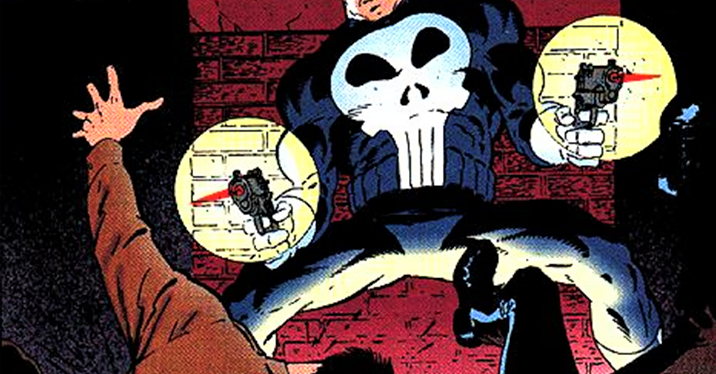
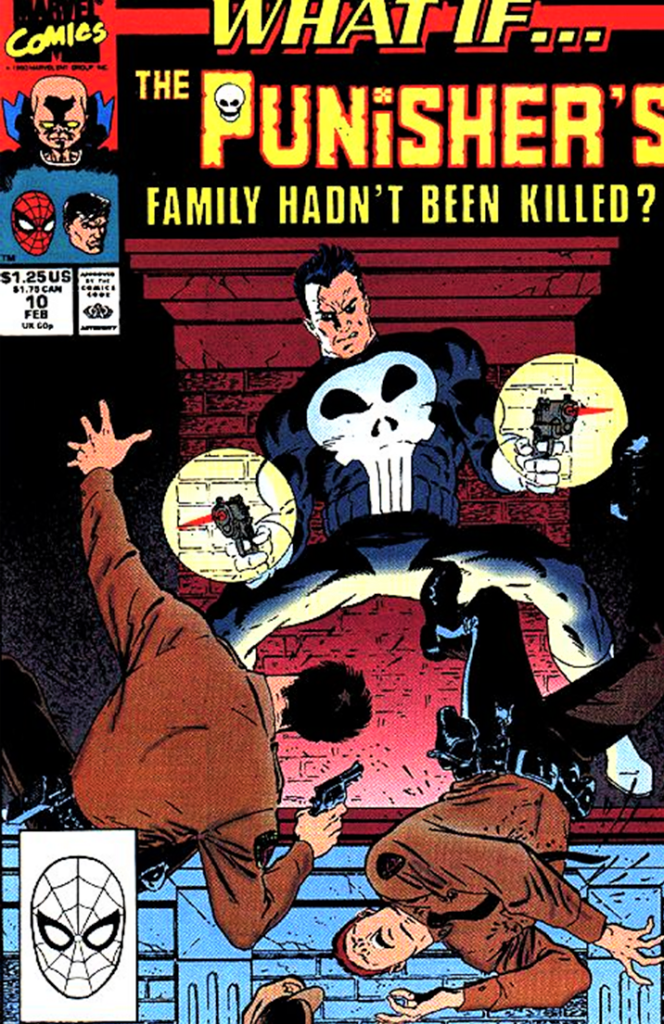
For those of you who have gotten very familiar with Marvel Comics’ vast lineup of superheroes, anti-heroes, super villains and supporting characters, the Punisher is one of the most notable characters as he is the most definitive vigilante the publisher ever has in its shared superhero universe. As a comic book protagonist, the Punisher does “good” in fighting crime but he sure is as bad as the bad guys as he commits torture, issued threats of violence, kidnapping, extortion, coercion and even murder towards them. A major factor in the Punisher’s origin (as Frank Castle) was the killing of his family (wife and two kids) committed by a mob as they witnessed acts of killing in Central Park in New York City. The tragic deaths led Castle to become the Punisher who not only relentlessly waged a personal war against criminals but also often wore dark clothes with a large white skull design on the front of his body. The skull symbolized punishment and death to his enemies.

With those details laid down, here is a look back at What If #10, published in 1990 by Marvel Comics with a story written by Doug Murray and drawn by Rik Levins.

The cover.

Early story

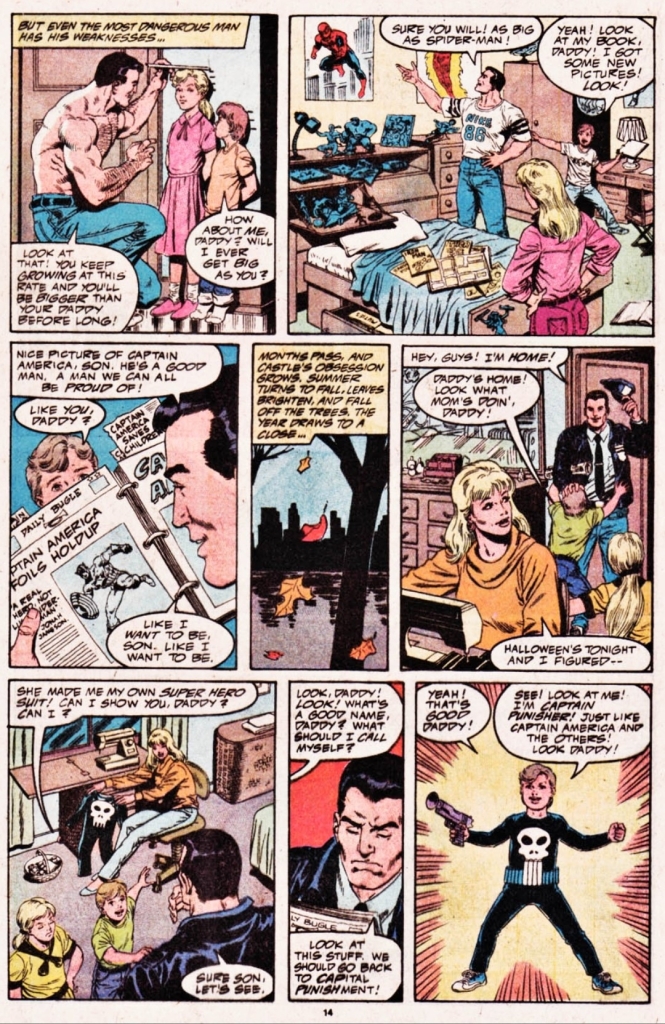
The story begins with the Watcher recalling the time Frank Castle spent with his wife and the two kids at New York City’s Central Park. There, they have fun with their picnic. At this point in time, Frank Castle had previously served his country in the Vietnam War and he carries within him bravery, the experience of violence and vast skills to use weapons.

The weather suddenly worsens as rain starts to fall down causing some inconvenience on the Castle family. Frank’s son struggles as his kite got caught by the large plant nearby. On the other side of the said plant, four armed men and their captive (hanging upside down by the tree) are startled and prepare themselves to shoot anyone who appears.

Frank, who does not realize the mob on the other side of the plant, helps his son get the kite back. The Castle family then decide to go back home not realizing that they came close to discovering and witnessing the illegal activity of the armed men. As the family kept on moving, Frank hears gunfire from a distance…

Quality

Frank Castle the family man.

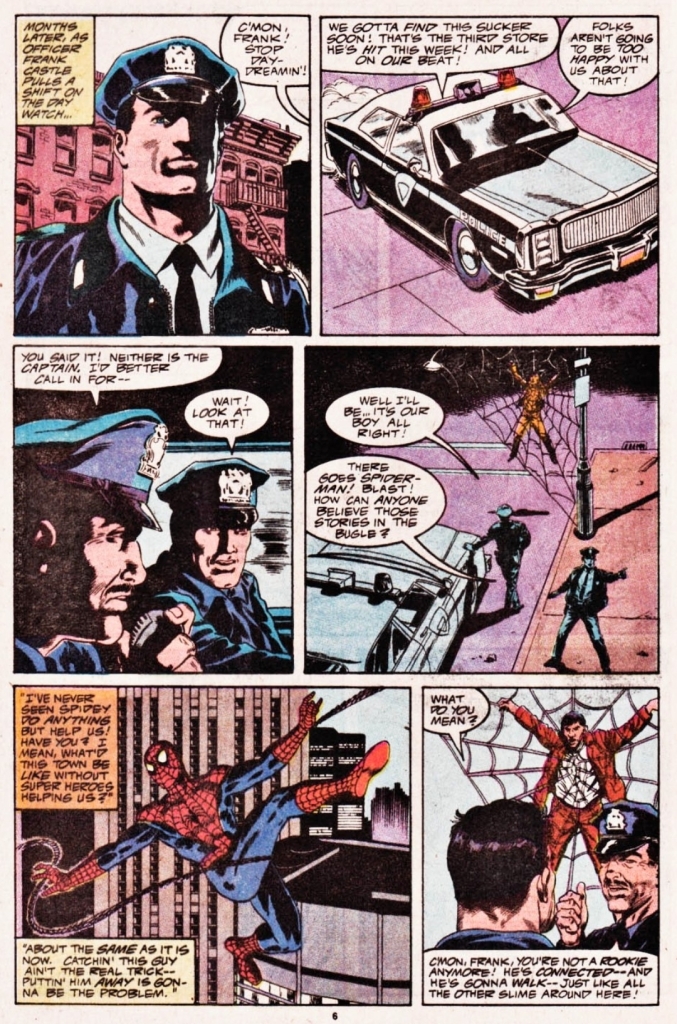
To get straight to the point about this comic book, it’s story is really engaging and it has noticeable amounts of darkness and grittiness without going overboard. While exploring what would happen had Frank Castle’s family not been killed, the comic book shows the Punisher getting involved in public safety as a New York patrolman which puts him in a unique position facing crime in radically different ways from what we comic book readers have been used to seeing. The story also explores corruption within the police and the justice system as well.

The way the events and action turned out showed the creative team focused on realism while also establishing the Punisher’s own place within the comic book’s alternate portrayal of the shared superhero universe. More on the subject matter of this comic book, there is a twist that surprised me a lot and it is something that you readers should see for yourselves.

Going back to Frank Castle, it is indeed very captivating to see him portrayed a lot more as a family man who really strives to support his wife and kids no matter how dangerous his occupation really is. The aspect of family in this comic book is very significant as it will make you realize that the definition of family in America in the 21st century has been distorted as a result of laws or court decisions that reflected wokeness, homosexuality and unrestrained feminism. In short, woke America’s believers reject the concept of the traditional family and the concept of a father leading the family is considered taboo because it goes against LGBT’s so-called values and principles.

Conclusion

Frank Castle as the police officer.

When you think about the legacy of the Punisher not only on comics but also in movies and other forms of entertainment media, you will often remember a one-man-army against criminals. What If #10 (1990) has is a really unique take on the Punisher and I can say it has a very captivating script brought to life with really good artwork. Not only does this alternate version of the Punisher shows how he affects criminals, but also how he impacts other parts of the fictional New York society within the shared universe of Marvel Comics (note: characters connected to Spider-Man and Daredevil are here). From start to finish, this Punisher tale by the Murray-Levins team turned out to be very engaging to read.

Overall, What If #10 (1990) is highly recommended!

+++++

Thank you for reading. If you find this article engaging, please click the like button below, share this article to others and also please consider making a donation to support my publishing. If you are looking for a copywriter to create content for your special project or business, check out my services and my portfolio. Feel free to contact me with a private message. Also please feel free to visit my Facebook page Author Carlo Carrasco and follow me on Twitter at  @HavenorFantasy as well as on Tumblr at https://carlocarrasco.tumblr.com/ and on Instagram at https://www.instagram.com/authorcarlocarrasco
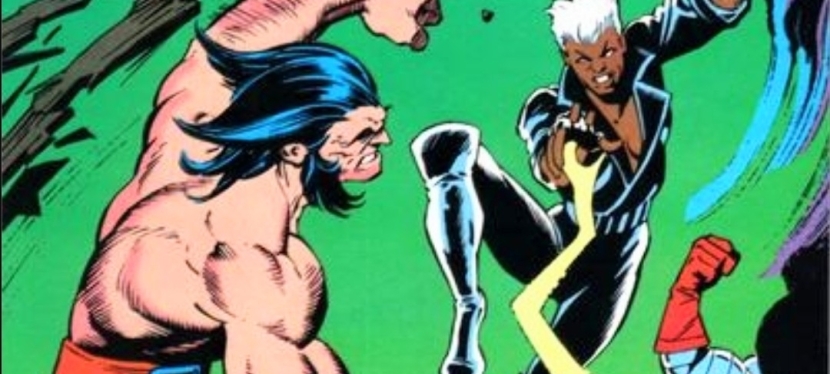
A Look Back at X-Men Adventures #9 (1993)

Disclaimer: This is my original work with details sourced from reading the comic book and doing personal research. Anyone who wants to use this article, in part or in whole, needs to secure first my permission and agree to cite me as the source and author. Let it be known that any unauthorized use of this article will constrain the author to pursue the remedies under R.A. No. 8293, the Revised Penal Code, and/or all applicable legal actions under the laws of the Philippines.

Welcome back, superheo enthusiasts, 1990s culture enthusiasts, X-Men fans and comic book collectors! Today we revisit the X-Men Adventures monthly series which was the literary adaptation of the popular X-Men animated series of the 1990s.  

Within the lore of the X-Men, Juggernaut is a significant supervillain who not only gave the X-Men a lot of trouble but also did the same with other heroes within the Marvel Comics shared universe. In the 2006 movie X-Men: The Last Stand, Juggernaut made his first-ever cinematic appearance. In 2018’s Deadpool 2, a new cinematic version of Juggernaut appeared. In my retro comic book review of What If #13 (1990), a different version of Juggernaut was featured by the creators.

With those details laid down, here is a look back at X-Men Adventures #9, published by Marvel Comics in 1993 with a story written by Ralph Macchio and drawn by Andrew Wildman.

The cover.

Early story

The story begins with the X-Men (riding their jet) arriving from Genosha only to see a part of Professor X’s mansion destroyed. After landing, Cyclops, Wolverine and Jean Grey immediately searched through the rubble and found a path into the War Room. Using Cerebro, they uncovered a prepared video message of Professor X who tells them that he is taking a journey whose results may change their lives forever. After apologizing for the cryptic nature of the message, Xavier tells them that he trusts they will continue with their training and look after the School of Gifted Children in his absence.

The X-Men could not determine if their mentor left the mansion before the destruction took place. In response to Gambit’s question related to detection, Wolverine senses big foot prints and there was a familiar smell left behind. Wolverine decides to go out to keep following the scent which causes Cyclops to insist that the situation at hand is not the time for the team members to separate from each other.

After telling Cyclops he has places to go to, Wolverine then leaves his teammates with a motorcycle. Cyclops tells Storm to take Rogue and Jubilee with her to track Wolverine and stay close to him…

Quality

The sheer power of Juggernaut.

To describe this comic book’s story, I can say it was a fine mix of suspense, mystery and superhero spectacle. As the X-Men struggled to figure out how the damage on the mansion happened and where exactly did Charles Xavier go to, I felt this sense of dread backed with strong mystery. As the plot continued, there were these short-yet-notable character moments among the X-Men such as Gambit getting closer with Jean Grey who believes that she should be helping others on the field as her beloved Cyclops made a decision that kept her with him at the mansion.

The search for who is responsible for the mansion’s big damage creatively took notable paths in the story. One strong figure appeared and became a target of some X-Men members while another one became Wolverine’s target.

As expected, the highlight of this tale is Juggernaut himself and to say that he his huge and powerful is a big understatement. At this point of the X-Men Adventures monthly series, this is the one notable conflict that has multiple X-Men members struggling really hard fighting one single powerful enemy. In some ways, Juggernaut here looks like a much more dangerous foe than Magneto within this series. How the conflict in the story ended in a really intriguing yet sensible way which should resonate with X-Men fans. 

Conclusion

Only Cyclops, Gambit and Jean Grey (who wanted to do more) remained at the mansion.

X-Men Adventures #9 (1993) is fun and intriguing to read. At the stage of this monthly series, the X-Men are not only more developed but are also challenged deeply as their mentor is no longer around to lead them. This makes the path ahead look more enticing to anticipate.

Overall, X-Men Adventures #9 (1993) is recommended.

+++++

Thank you for reading. If you find this article engaging, please click the like button below and also please consider sharing this article to others. If you are looking for a copywriter to create content for your special project or business, check out my services and my portfolio. If you want to support my website, please consider making a donation. Feel free to contact me with a private message. Also please feel free to visit my Facebook page Author Carlo Carrasco and follow me on Twitter at  @HavenorFantasy as well as on Tumblr at https://carlocarrasco.tumblr.com/ and on Instagram at https://www.instagram.com/authorcarlocarrasco/.