A Look Back at WildC.A.T.s Adventures #1 (1994)

Welcome back superhero enthusiasts, 20th century pop culture enthusiasts and comic book collectors! Today we go back to the mid-1990s to take a close look at the launch issue of the comic book series that was an adaptation of the WildC.A.T.S: Covert Action Teams animated series.

To put things into perspective, Jim Lee and several creators left Marvel Comics to establish Image Comics. In 1992, Lee launched his creator-owned project  WildC.A.T.s: Covert Action Teams #1 which also was a part of the creative foundation of the WildStorm universe. Just a little over two years later, an animated series of WildC.A.T.S. was launched on TV. Similar to what Marvel Comics did in relation to adapting stories of the X-Men animated series, Image Comics launched a comic book series based on the WildC.A.T.S. animated series.

With those details laid down, here is a look back at WildC.A.T.s Adventures , published in 1994 by Image Comics with a story written by Jeff Mariotte (adapting the animated story by David Wise) and drawn by Ty Templeton.
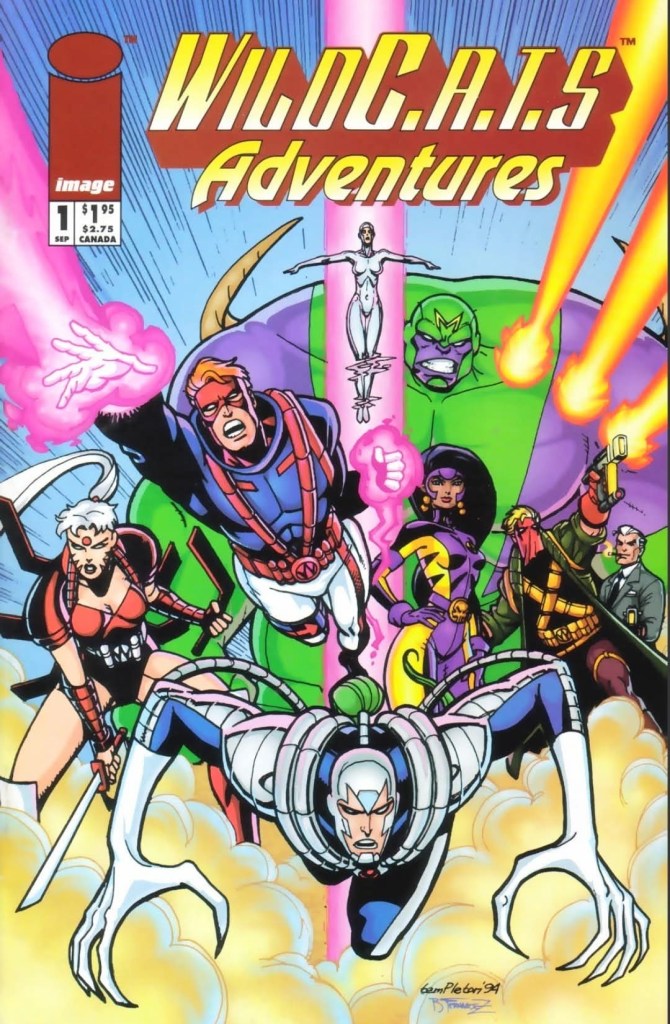
The cover.

Early story

The story begins one night inside an office where Reno Bryce (Warblade) works obsessively on a circuit board. He is surrounded by the technology he knows and loves. As he works, three armed men wearing coats and hats enter his office and ask him for his identity. One of the men grabs a circuit board and destroys it, which triggers Reno to react with violence.

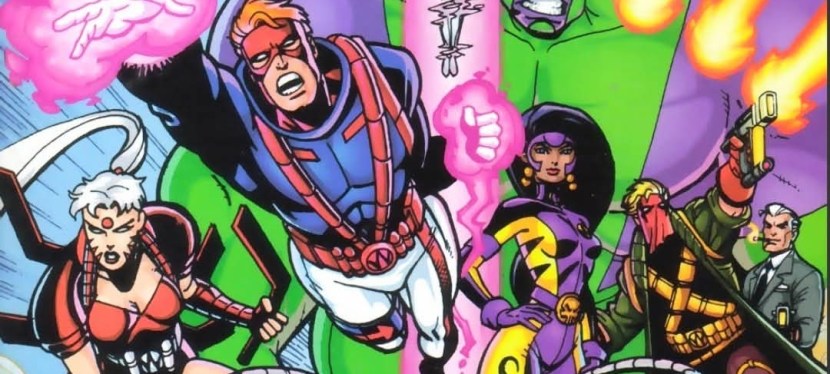
Knowing he is outnumbered, he quickly runs out of the office for safety. He heard one of the men referred to him as a crossbreed whelp. As soon as he finally leaves the building, Reno sees the WildCATS team composed of Grifter, Spartan, Zealot, Voodoo and Maul. Thinking that the WildCATS are out to kill him like the armed men, Reno keeps on running away. 

Suddenly, a group of people are rushing towards the WildCATs. Powered with the Sight, Voodoo realizes that the mob is composed of Daemonites disguised as humans. The WildCATs and the mob engage in battle.

From high above, Reno see the battle happening. Suddenly, the three armed men appeared behind him telling him that he has no escape from them…

Quality
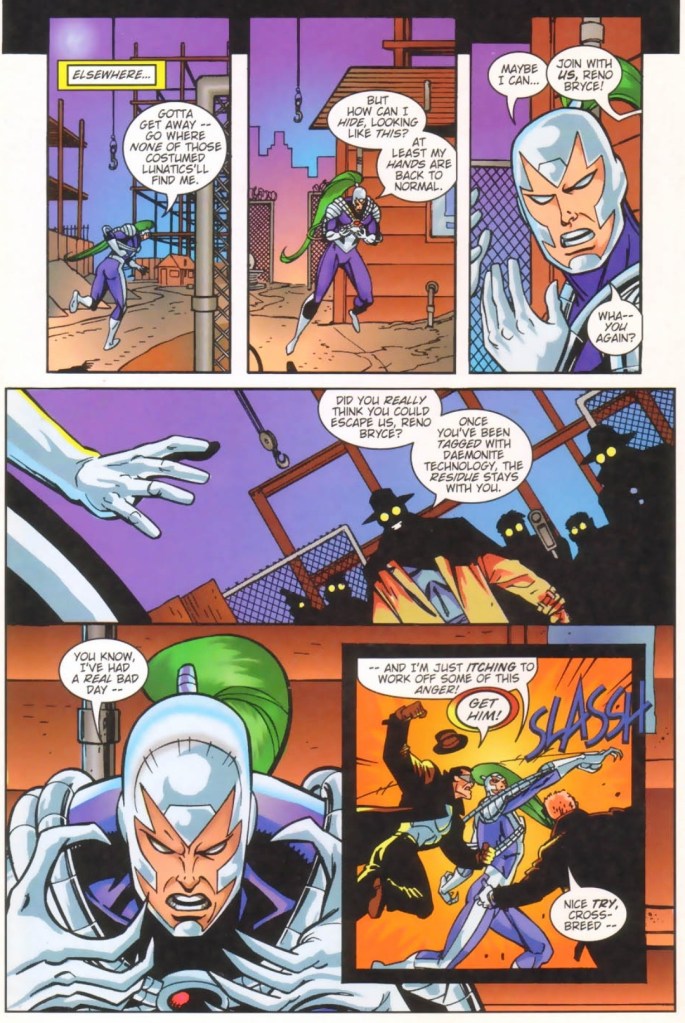
Reno Bryce still adjusting to his new form as Warblade.

Having seen the first episode myself, I can say that this comic book is actually a faithful adaptation and the creative team did their jobs well.

As an alternate introductory story of the WildCATs, this one obviously has the violence and visceral essence of the comic book series toned down due to the fact that the animated series was made with a younger audience in mind. There is still plenty of action here and the creative team’s focus on telling the story was consistently strong.

Within one story, the creative teams of both the animated episode and this comic book succeeded in gradually emphasizing the lore of WildCATS which had strong sci-fi elements (example: the long conflict between the Kherubim and the Daemonites), introducing the characters and the super villain, showcase the capabilities of the characters, emphasizing the purposes of each side, and having Reno Bryce as the newcomer who is about to discover his real role in the conflict (which reminds me of Jubilee in the opening episode of the X-Men animated series).

Conclusion
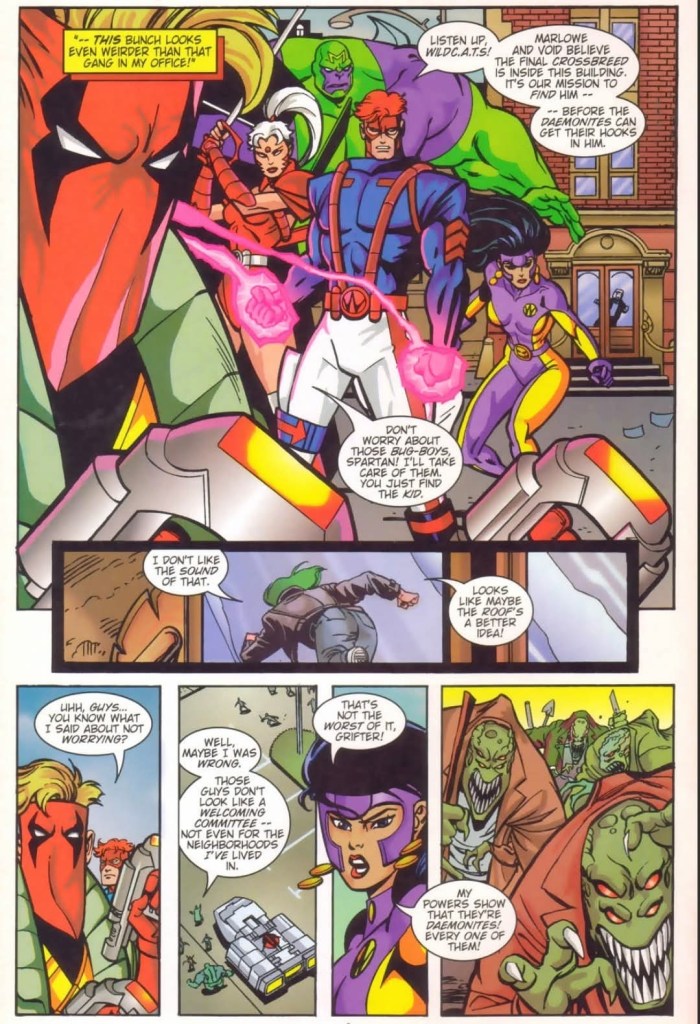
Ty Templeton’s art is nice to look at and he captured the essence of the animated episode. The WildCATS themselves are easily recognizable.

Like its animated source, WildC.A.T.s Adventures (1994) is enjoyable and the creators did a very good job translating the story and essence from animation into literary format. Having read the Jim Lee-drawn issue of 1992, this one worked well as an alternate introduction of the WildCATS and their conflict with the Daemonites. Like the animated TV episode, the presentation was done in a wholesome manner without ever becoming childish. I can say that there is still enough good stuff of WildCATS to enjoy here, and the characters are recognizable (both in looks and portrayals). Right now, I’m looking forward to reading the next issue.

Overall, WildC.A.T.s Adventures (1994) is highly recommended.

+++++

Thank you for reading. If you find this article engaging, please click the like button below, share this article to others and also please consider making a donation to support my publishing. If you are looking for a copywriter to create content for your special project or business, check out my services and my portfolio. Feel free to contact me with a private message. Also please feel free to visit my Facebook page Author Carlo Carrasco and follow me on Twitter at  @HavenorFantasy as well as on Tumblr at https://carlocarrasco.tumblr.com/ and on Instagram at https://www.instagram.com/authorcarlocarrasco
A Look Back at Action Comics #484 (1978)

Welcome back superhero enthusiasts, 20th century pop culture enthusiasts and comic book collectors! Today we go back to the year 1978 to take a close look at one of the many tales published through the original Action Comics monthly series (launched in 1938).

Long before Crisis on Infinite Earths happened, DC Comics had its convoluted multiverse. For the newcomers reading this, this meant that there were actually different versions of Superman and other DC superheroes, plus different universes or parallel worlds existing with each other. This particular Action Comics issue features a certain version of Superman and what happened to him and the related characters.

With those details laid down, here is a look back at Action Comics , published in 1978 by DC Comics with a story written by Cary Bates and drawn by Curt Swan.  

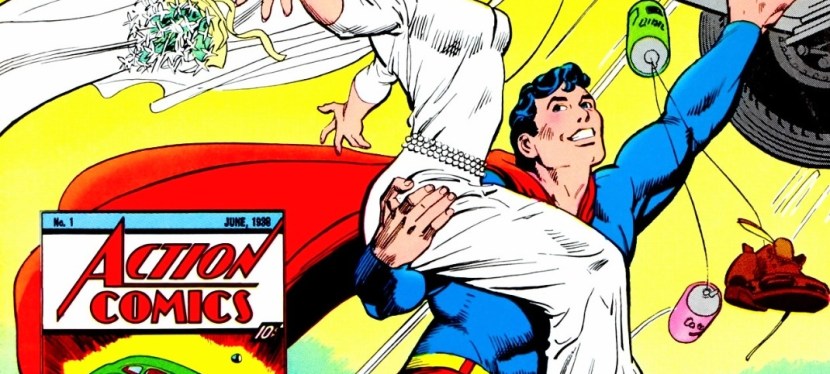
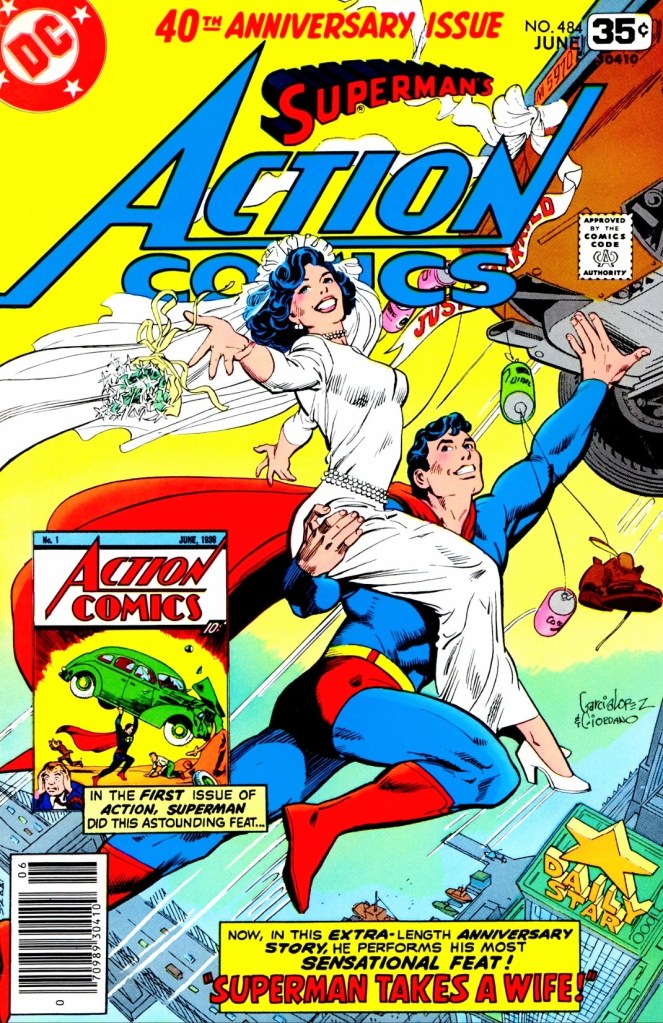
The cover.

Early story

The story begins in Metropolis of Earth-Two when four mechanical marauders fly through the city carrying bags of money taken from a bank. Superman (of Earth-Two) quickly flew after the mechanical marauders and uses his powers to beat them all. From a distance, Colonel Future (leader of the C-F Gang) observes Superman and analyzes his moves. It turns out, the gang is responsible for the mechanical marauders and Colonel Future believes that he can wipe out the Man of Steel.

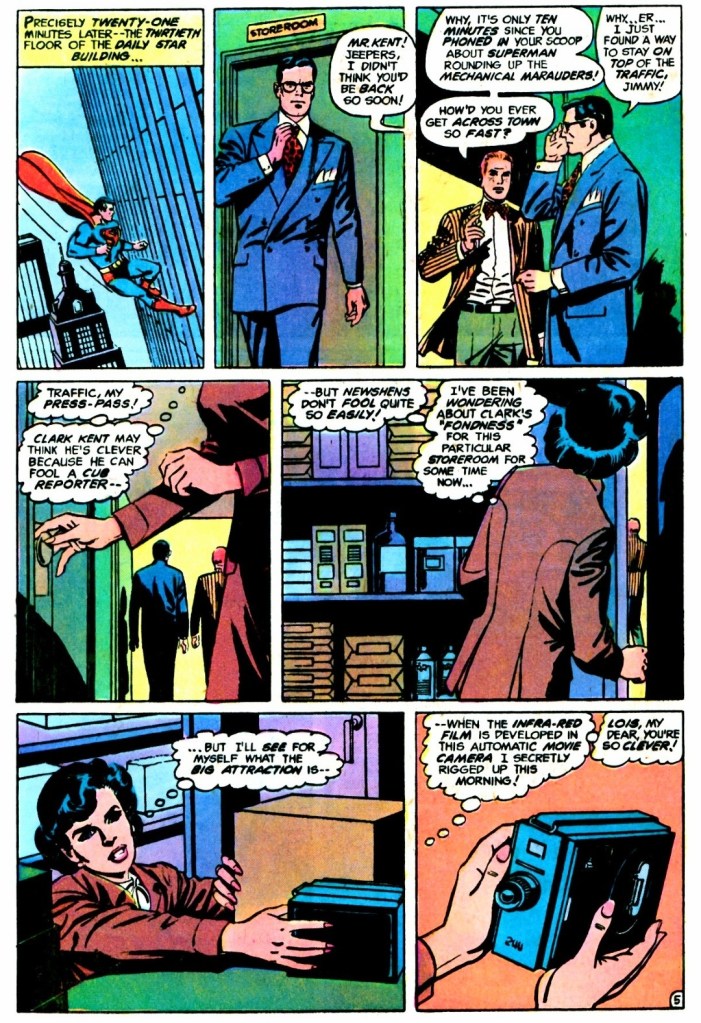
Superman returns quietly into the Daily Star Building and changes into civilian clothing as Clark Kent. His office mate Jimmy Olsen approaches him and together they walk and talk about what has been going on.

Behind them, Lois Lane silently enters the store room where Clark came out of. It turns out, she prepared a hidden camera inside hoping to capture evidence about Clark using the room. She has been suspecting that Superman and Clark Kent are one and the same person…

Quality

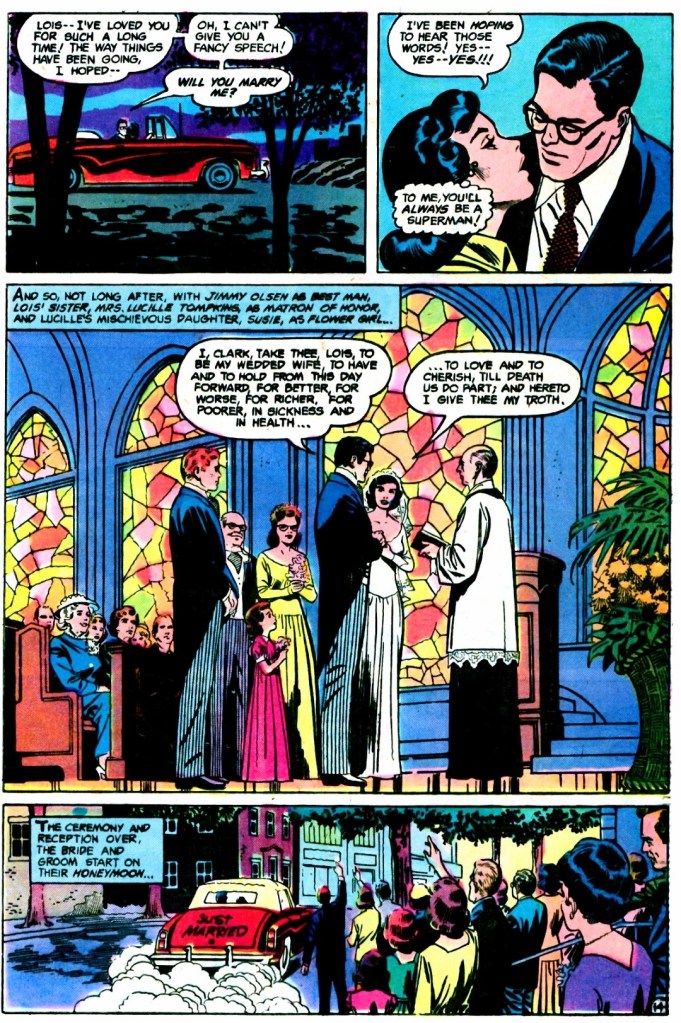
While it is clear that Superman – in his civilian form as Clark Kent – married Lois Lane, there is still a lot more to discover from the in-depth story written by Cary Bates.

I really like this pre-Crisis Superman story which is specifically set in Earth-Two of the DC multiverse. To make things clear, this is a tale showing Superman getting married to Lois Lane without impacting the mainstream version of DC’s icon at the time. Confused? That’s the consequence of having different versions of Superman complete with detailed parallel universes for each.

More on the core concept of this comic book, there is a lot more at stake – storywise and creatively – than meets the eye. Without spoiling the plot details, I can clearly say that the concept of Superman and Lois Lane getting married involves a daring plot which was executed nicely by the Bates-Swan duo resulting in a really intriguing reading experience for me. In other words, there is nothing simple with the presentation as the fantasy elements are really strong and the creative team took creative risks to emphasize the story while developing the key characters in new ways.

Still on the storytelling, the conflict between good and evil is emphasized not by struggle but rather the consequences which ultimately affect Superman and Lois Lane. The main opposition used by the Bate-Swan duo involves magic as a creative way to impact the Man of Steel and the narrative in general. There are some really intriguing moments about Superman (including his civilian identity as Clark Kent) and Lois Lane that await readers.

Conclusion

Lois Lane has an in-depth portrayal in this comic book, going beyond what the page shows you.

Action Comics (1978) is undoubtedly a very intriguing and surprising read. The creative team came up with ideas that subverted expectations and the execution was well done which made this a powerful and twisting read. Having read lots of Superman comic books through the decades, this comic book is one of the more surprising ones I have read. Finally, this one has a believable presentation about what married life between Superman and Lois Lane would be like reflecting the social norms at the time of publication.

Overall, Action Comics (1978) is highly recommended.

+++++

Thank you for reading. If you find this article engaging, please click the like button below, share this article to others and also please consider making a donation to support my publishing. If you are looking for a copywriter to create content for your special project or business, check out my services and my portfolio. Feel free to contact me with a private message. Also please feel free to visit my Facebook page Author Carlo Carrasco and follow me on Twitter at  @HavenorFantasy as well as on Tumblr at https://carlocarrasco.tumblr.com/ and on Instagram at https://www.instagram.com/authorcarlocarrasco
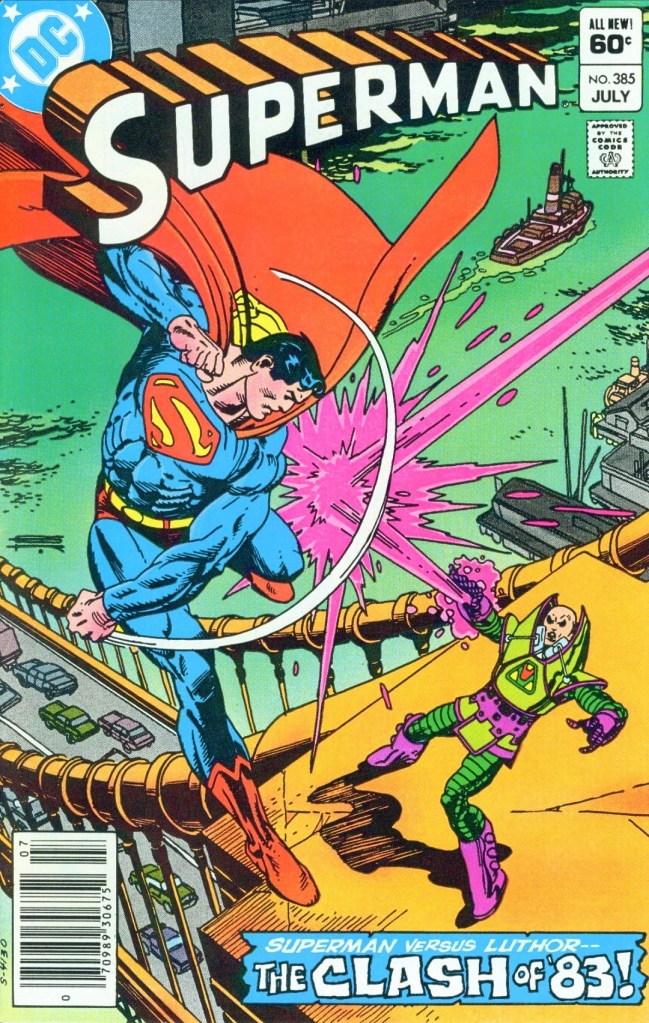
A Look Back at Superman #385 (1983)

Welcome back superhero enthusiasts, 20th century pop culture enthusiasts and comic book collectors! Today we go back to the year 1983 to take a close look at one of the many tales published through the original Superman monthly series (first launched in 1939).

Back in 1983, DC Comics published Action Comics which marked the 45th anniversary of Superman and celebrated it by executing things very differently – introducing the new look of Lex Luthor in battle armor and showing Brainiac in a more robotic body. I really loved reading Action Comics #544 for its very rich storytelling and modernizing the two classic super villains. With regards to what happened in Lex Luthor’s story in the comic book, his tale actually continued with the Superman monthly series afterwards.

With those details laid down, here is a look back at Superman , published in 1983 by DC Comics with a story written by Cary Bates and drawn by Curt Swan.  

The cover.

Early story

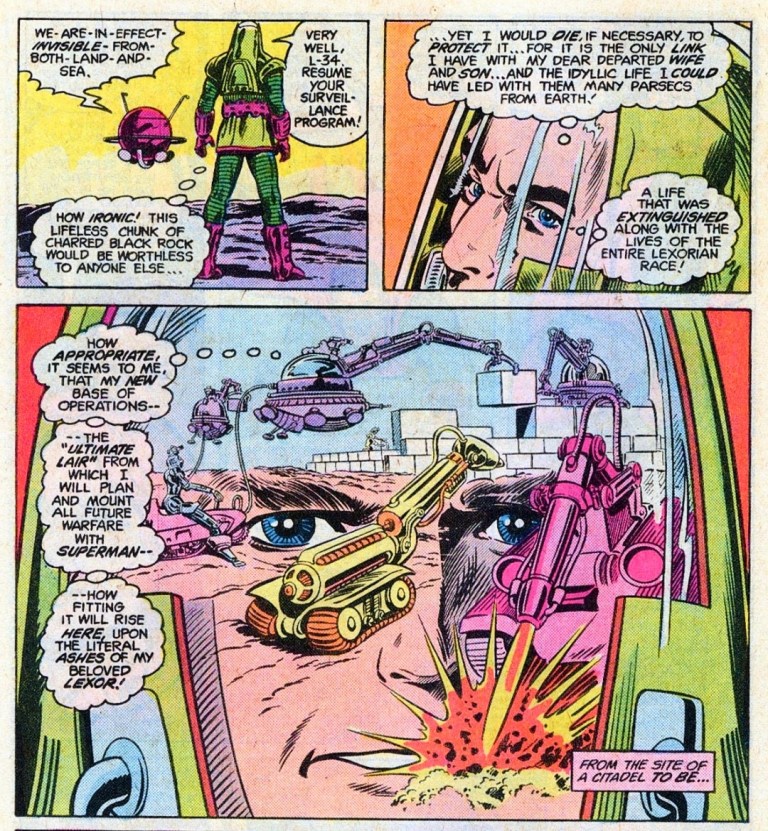
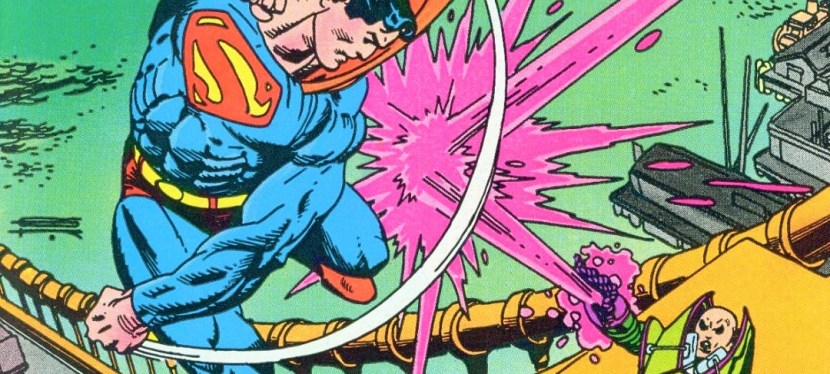
The story begins with the armored Lex Luthor alone and grieving in deep space surrounded by floating rocks. His world Lexor just got destroyed and his wife and child are gone. He blames Superman for being responsible of the massive destruction. He remembers the moment when he fired an energy blast at Superman which got deflected towards the neutrarod (a device Luthor made to shoot a steady stream of stabilizing neutrons into the planet’s unstable core) which started a chain reaction transmitted directly into the core. Lexor detonated but Superman and Luthor survived.

Using the intense power and technologies of his armor, Luthor moves an island-sized rock (a remaining piece of Lexor) towards planet Earth. He is determined to have his revenge against Superman and will stop at nothing to make it happen…

Quality

This is a great visualization of Lex Luthor (in his warsuit) by Curt Swan.

Through the decades, I have read lots of Superman comic books that involved Lex Luthor as the main antagonist. This particular story of good-versus-evil is actually very unique thanks to the approach taken by the Bates-Swan duo. To be clear, this is actually a build-up type of story done with the next conflict between Superman and Luthor in mind.

Without spoiling the plot, I can say that Luthor – following the events of Action Comics which really hurt him deeply – got a nice share of the spotlight and deservedly so. He is determined to get back at Superman whom he holds responsible for the destruction of Lexor and its many inhabitants (including Luthor’s wife and child). Luthor does not rush things as he is very focused on preparing himself first which reminds me of Batman’s approach to preparations. In some ways, Luthor has his own principles and he is not just being evil for the sake of it. There is this very human portrayal of him and Bates’ writing could make you even forget that he is a madman.

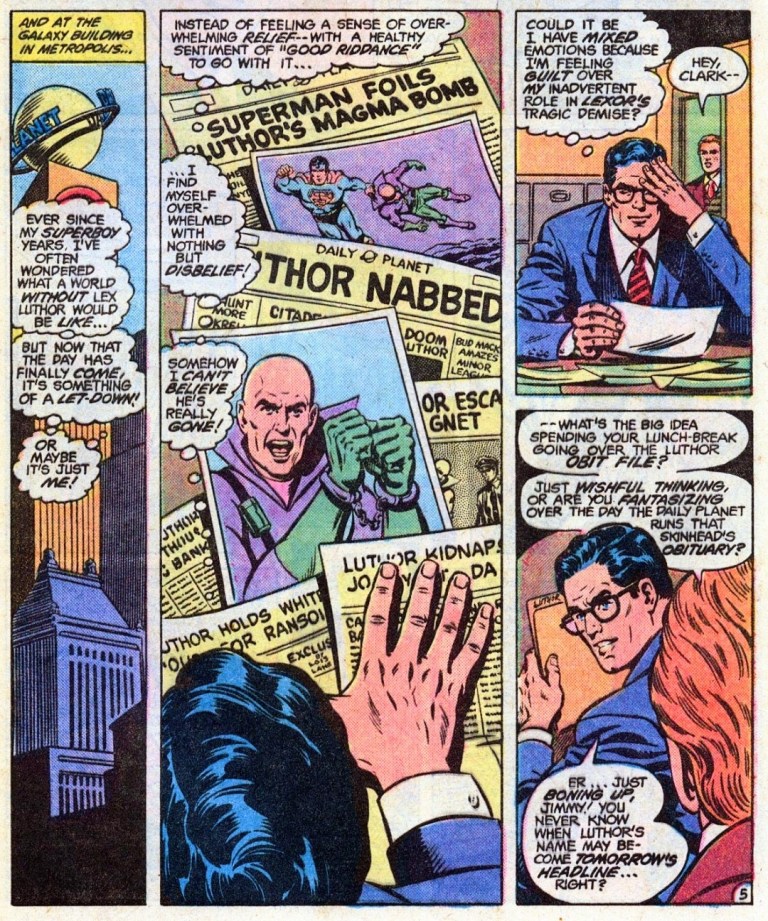
As for the Man of Steel himself, Bates wrote him to be really burdened by having his share of the responsibility of the billions of deaths of the people of Lexor. Instead of the focused Superman dedicated to doing good, you will see him feeling really uneasy and even distracted. He even commits huge blunders! This is a Superman who is showing signs of internal weakness and not even his civilian life as journalist Clark Kent could relieve the tension he is experiencing. I really like this portrayal of DC Comics’ icon.

But there is more! There is the sub-plot of Lois Lane taking a much-needed break from work to relieve herself and it sure is a really interesting portrayal of her. Even Perry White has his own share of the spotlight. There is also the spotlight on some obscure DC villains which actually added to the plot.

Conclusion

A very uneasy Clark Kent at work.

Superman (1983) is clearly a very engaging read and it is a worthy follow-up to what happened in Action Comics . I really like the way the armored Lex Luthor is portrayed here and the build-up for his upcoming conflict with Superman is really powerful. I’m really glad to have read this particular Superman-Luthor story and I can say that I am looking forward to the next issue to see what will happen.

Overall, Superman (1983) is highly recommended.

+++++

Thank you for reading. If you find this article engaging, please click the like button below, share this article to others and also please consider making a donation to support my publishing. If you are looking for a copywriter to create content for your special project or business, check out my services and my portfolio. Feel free to contact me with a private message. Also please feel free to visit my Facebook page Author Carlo Carrasco and follow me on Twitter at  @HavenorFantasy as well as on Tumblr at https://carlocarrasco.tumblr.com/ and on Instagram at https://www.instagram.com/authorcarlocarrasco
A Look Back at Armorines #1 (1994)

Disclaimer: This is my original work with details sourced from reading the comic book and doing personal research. Anyone who wants to use this article, in part or in whole, needs to secure first my permission and agree to cite me as the source and author. Let it be known that any unauthorized use of this article will constrain the author to pursue the remedies under R.A. No. 8293, the Revised Penal Code, and/or all applicable legal actions under the laws of the Philippines.

Welcome back superhero enthusiasts, 1990s culture enthusiasts and comic book collectors! Today we go back to the early 1990s and explore a part of the shared universe of Valiant Comics through the Armorines monthly series.

Before I start, I should state that the superhero concept of an armored human protagonist who could do many incredible things made possible by high technology made an impact on comic book storytelling for decades. Look at Marvel’s Iron Man and the Ultraverse’s Prototype for examples.

While Valiant Comics already had its own armored superhero with X-O Manowar (note: his armor is symbiotic, not technological), they decided to move forward with the concept of armored figures in the form of a military team.

With those details laid down, here is a look back at Armorines , published in 1994 by Valiant Comics with a story written by Jorge Gonzalez and drawn by Jim Calafiore.

The cover.

Early story

The story begins five hundred kilometers off the southern coast of Australia. Four people dive very deeply to explore nuclear-powered submarine U.S.S. Benchley which has been dormant for some time already. While exploring the interiors of the submarine, the divers got attacked by something in the dark.

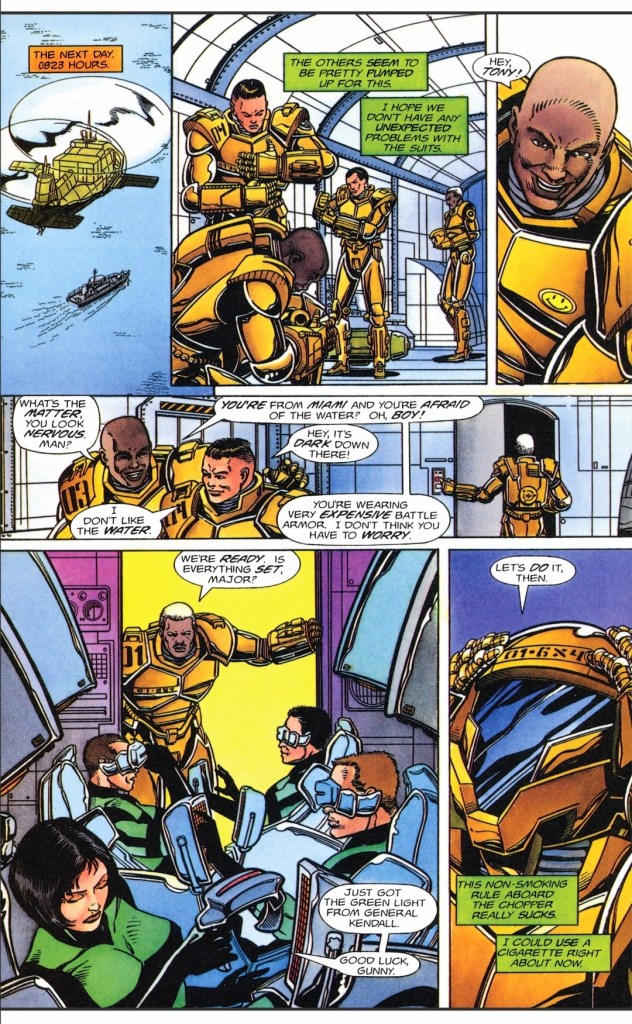
At Camp Pendleton in California, an armored U.S. marine goes through an intense training session fighting machines not knowing that there could be traps waiting to get triggered. As Gunny (the armored marine in the session) falls into a trap, his teammates, General Kendall and the scientist Zahn watch the proceedings behind the scenes as another teammate (operating with virtual reality on her high-tech station) continues to communicate with him.

As time passes by, the situation gets even worse for Gunny physically…

Quality

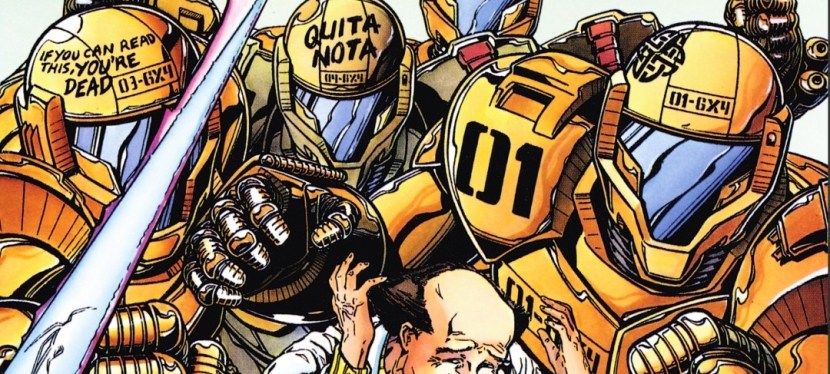
Armorines has members who go out on the field wearing high-tech suits of armor while there are other members who serve as co-pilots using virtual technology and constant communication behind closed doors.

In terms of storytelling, the creative team focused mainly on the build-up of not just the plot but also the importance and the ways of the Armorines themselves. As weapons of the government, Armorines are an expensive team to run due to the use of very advanced technologies for operations. The Armorines have members who go out on the field wearing high-tech suits of armor that provide enhanced protection while also carrying high-tech weapons for offense. The team also has members who stay behind closed doors to use individual stations with virtual reality and enhanced communication with their brothers on the field.

When it comes to the characters, the smoking Gunnery is noticeably the one who got the most exposure and the most development. The other Armorine members got token exposure for the readers.

More on the plot itself, there is a mission that requires the Armorines to go deep underwater to solve a mystery and do something dangerous secretly. The mission was essentially all about protecting America’s top-secret weapons from falling into the wrong hands. To be clear, the mission itself happens in the 2nd half of this comic book which ultimately serves as a pay-off to the build-up the happened earlier. In fairness to the creative team, there was a good amount of suspense presented when the mission really started moving. There definitely something worth seeing during the mission.

Conclusion

In this story, Gunny is the closest thing to a definitive protagonist.

To be very clear, Armorines (1994) is not exactly the high-powered, action-packed story people could expect from seeing the armored marines looking capable of fighting terrorists and other enemies of America in militaristic fashion. This comic book’s story is indeed surprising to me and the creative team was not hesitant to push hard with the concept they came up with here. As this comic book was clearly executed with build-up, introductions and emphasizing concepts in mind, it is not surprising that the pay-off in the 2nd half led to moments of intrigue and suspense with momentum going into the next issue. Lastly, I should state that this comic book is free from political influence and its focus on the team has been very consistent.

Overall, Armorines (1994) is recommended.

+++++

Thank you for reading. If you find this article engaging, please click the like button below, share this article to others and also please consider making a donation to support my publishing. If you are looking for a copywriter to create content for your special project or business, check out my services and my portfolio. Feel free to contact me with a private message. Also please feel free to visit my Facebook page Author Carlo Carrasco and follow me on Twitter at  @HavenorFantasy as well as on Tumblr at https://carlocarrasco.tumblr.com/ and on Instagram at https://www.instagram.com/authorcarlocarrasco
A Look Back at Web of Spider-Man #100

Disclaimer: This is my original work with details sourced from reading the comic book and doing personal research. Anyone who wants to use this article, in part or in whole, needs to secure first my permission and agree to cite me as the source and author. Let it be known that any unauthorized use of this article will constrain the author to pursue the remedies under R.A. No. 8293, the Revised Penal Code, and/or all applicable legal actions under the laws of the Philippines.

As many of you already know, the 1990s was a decade of excess when it comes to American comic book publishing. It was a time when publishers released comic books with special covers (AKA gimmick covers) and high cover prices.

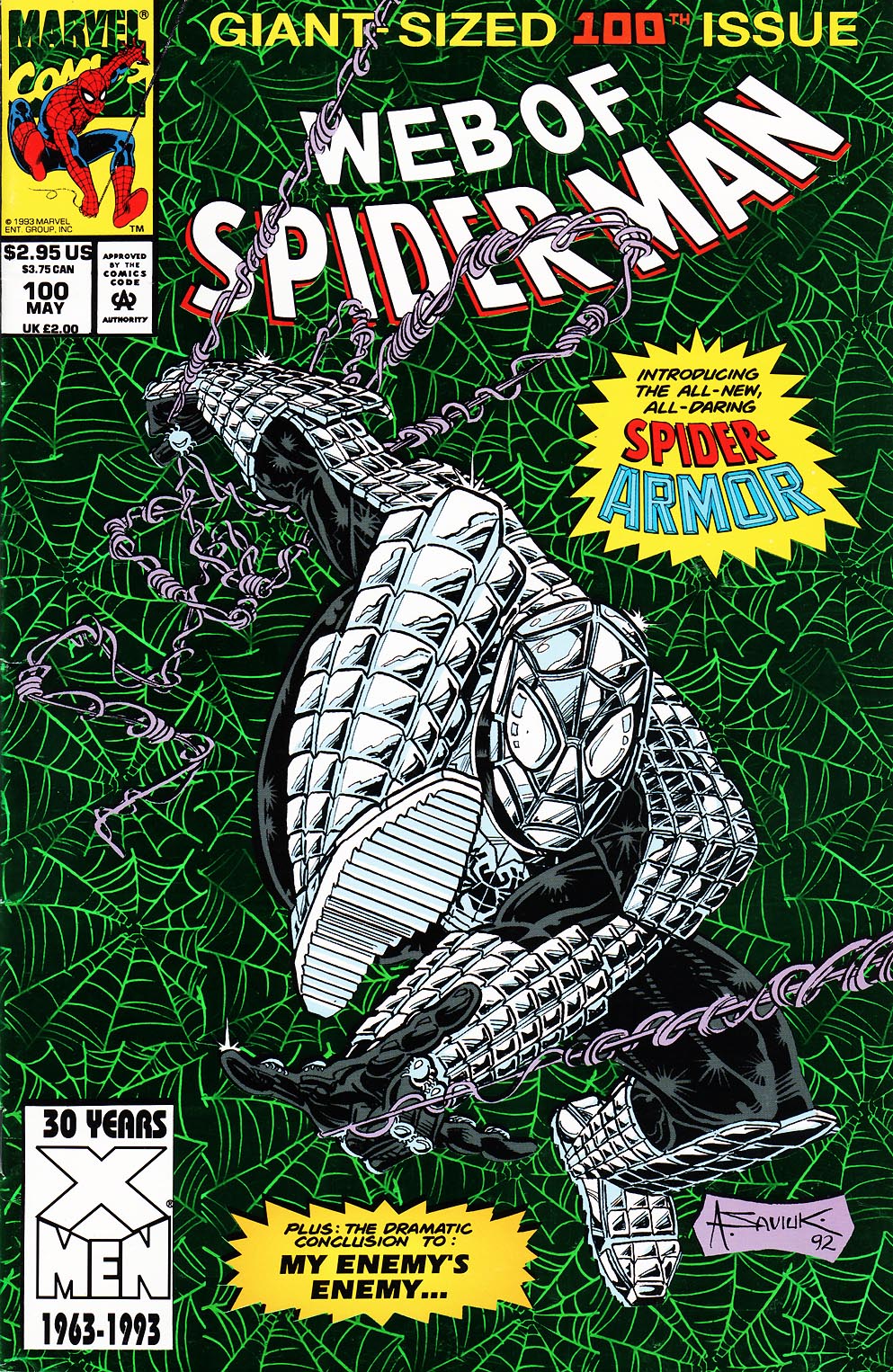
During that time, the presence of comic books with flashy gimmick covers really stood out among the many other comic book on display at retailers’. In 1993, there was this one time I spotted Web of Spider-Man #100 which not only had a flashy looking foil cover but also the introduction of Spider-Man’s armor. Unsurprisingly, I started speculating how significant Spider-Man in armor would be, what features the armor has and how will it be relevant for the foreseeable future of Spider-Man stories. Shortly after, I bought the comic book.

Here is a look back at Web of Spider-Man #100, published in 1993 by Marvel Comics with a story written by Terry Kavanagh and art by Alex Saviuk.

Cover
The cover and its excessive cover price for 1993.

Early story

The story begins with Spider-Man facing off with Dragon Man, Dreadnought, Super Adaptoid and a few others on top of a building. After surviving the attacks thrown at him, he discreetly places a spider-tracer on Dragon Man before finally getting away.

The next night, Peter Parker works on a high-tech project at Empire State University where he is taking a graduate program. His experiment fails which ironically gives him an opportunity to use the equipment until the next morning. He did not just use the equipment to make more web fluid but also something new to wear.

Meanwhile, chaos continues to happen around the city with the involvement of Nightwatch, Dragon Man, Dreadnought, Super Adaptoid, and Blood Rose to name some.

Quality

15
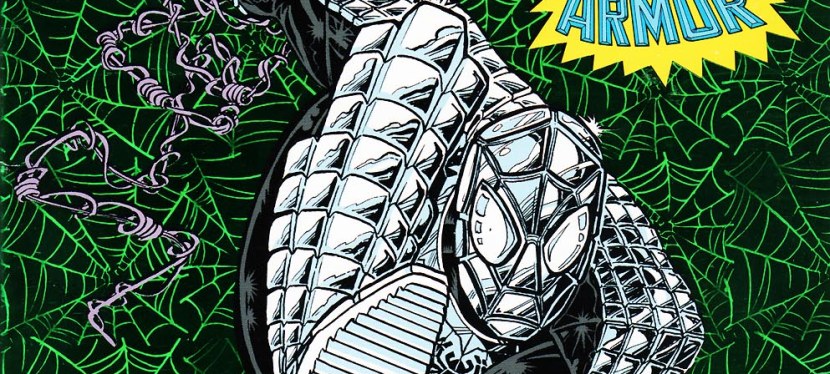
This is Spidey’s armor.

I’ll say it straight. Web of Spider-Man #100 is a big disappointment when it comes to highlighting Spider-Man’s new armor, the 100th anniversary issue of the monthly series and even telling a compelling Spider-Man story.

What is clear with the main story of this comic book is that it is heavily loaded with action scenes which eventually resulted a hollow reading experience. The plot is quite shallow and there was not even a single moment that I found Peter Parker in anything interesting. You wanna see Peter Parker interact with Mary Jane? Nothing. You hope to see him pay a visit to his Aunt May? Nothing. Technically this story showed Spider-Man getting involved with a bunch of uninteresting troublemakers, take time out to make his armor, and get back to the troublemakers wearing it. As a story, there is certainly no depth at all.

Regarding Spider-Man’s highlighted armor, its use in the story is also a major disappointment. You will get to see the Spidey Armor for ten pages (including the silhouette appearance) but there really is no payoff for anticipating it.

17
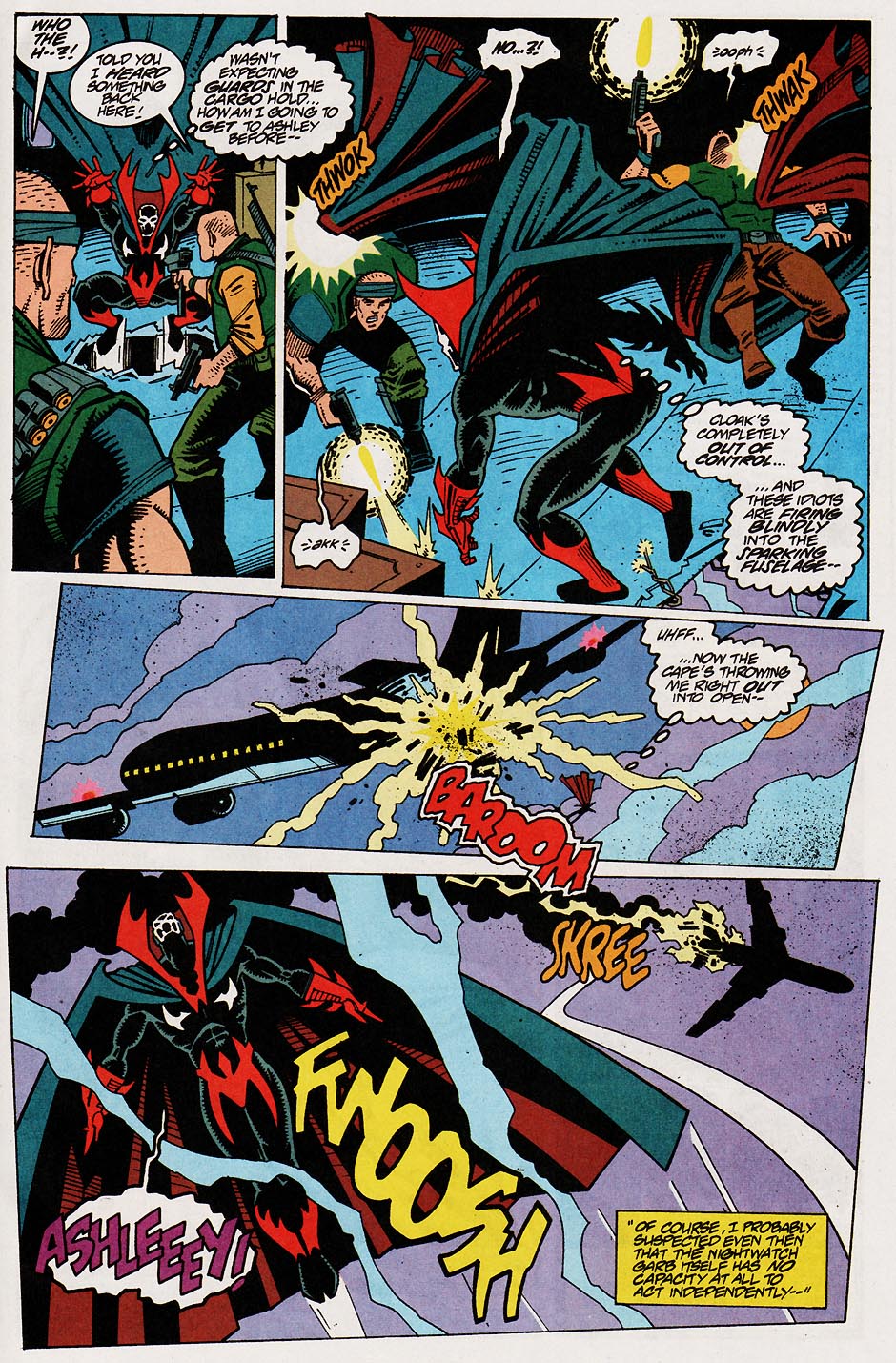
An armored Spider-Man in the middle of the action.

More on the presentation, it is clear that this comic book served another purpose that is quite shameless and even irresponsible – to build up Nightwatch, a caped and masked character in dark costume that was arguably Marvel Comics’ blatant imitation of Todd McFarlane’s Spawn. This comic book even contained an origin story of Nightwatch which was not interesting to read.

Conclusion

To make it clear, Web of Spider-Man #100 was a big disappointment for me personally back in 1993. By today’s standards, this comic book is even worse in terms of quality, artistic value, entertainment value and literary value. As a Spider-Man comic book, it is a big letdown and there really is not much for Spider-Man fans to enjoy here. His armor was just a useless showpiece and it’s even insulting that a useless character like Nightwatch got a lot of spotlight. I suppose Marvel Comics’ executives at the time thought they could lure fans of Todd McFarlane and Spawn to their side with Nightwatch serving as a magnet. Quite obviously, Marvel failed.

37
Sorry Marvel, but your blatant imitation of Todd McFarlane’s Spawn is pathetic and I’m not even a Spawn fan. 

If you are seriously planning to buy an existing hard copy of Web of Spider-Man #100, be aware that as of this writing, MileHighComics.com shows that the near-mint copy of the regular edition costs $11. As for the near-mint copies of the newsstand edition and the Alex Saviuk-signed edition, they cost $39 and $26 respectively.

Overall, Web of Spider-Man #100 is not recommended. Do not ever waste your money on this comic book.


Thank you for reading. If you find this article engaging, please click the like button below and also please consider sharing this article to others. If you are looking for a copywriter to create content for your special project or business, check out my services and my portfolio. Feel free to contact me as well. Also please feel free to visit my Facebook page Author Carlo Carrasco and follow me at HavenorFantasy@twitter.com

A Look Back At Prototype #1

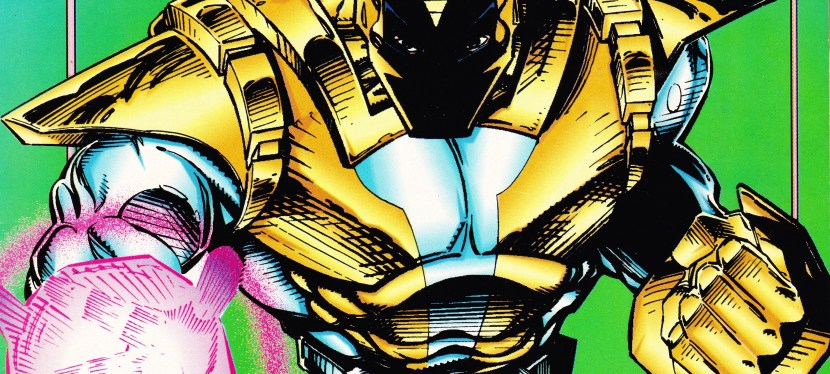
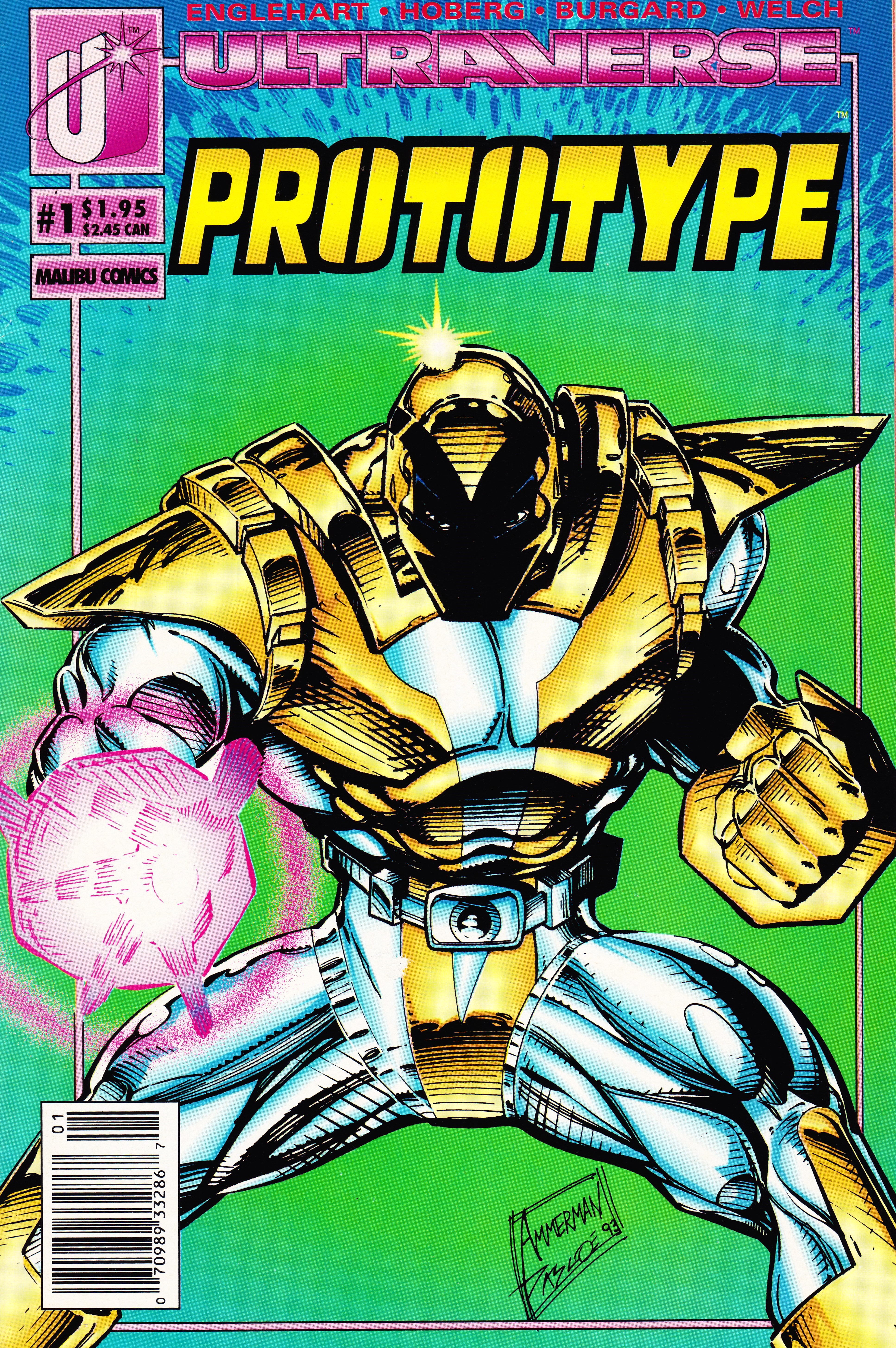
There is nothing like witnessing a superhero use technology to fly around with high speed, blast with energy, lift heavy objects using extra strength and use whatever special features to beat the bad guys and save people from harm. I’m not talking about Marvel Comics’ Iron Man here. I’m talking about the Ultraverse parallel to him called Prototype and here is my retrospective review about the 1993 superhero comic book Prototype published by Malibu Comics.

Proto1
Prototype cover.

Co-written by Tom Mason and Len Strazewski with art by David Ammerman and James Pascoe, Prototype is the story of the armored figure called Prototype but there is one huge thing to take note here – the armored figure is actually a high-tech project of a corporation called Ultratech and it involves more than one person piloting it.

To put things in perspective, some time in the past the Prototype armor (which was very large and bulky) was piloted by Bob Campbell until a major incident happened during an aerial exhibition that cost him his right arm. Subsequently he got replaced by a much younger man named Jimmy Ruiz. In the present, Campbell is a PWD (person with disability) who was dismissed by the company which compelled him to sue them for age discrimination.

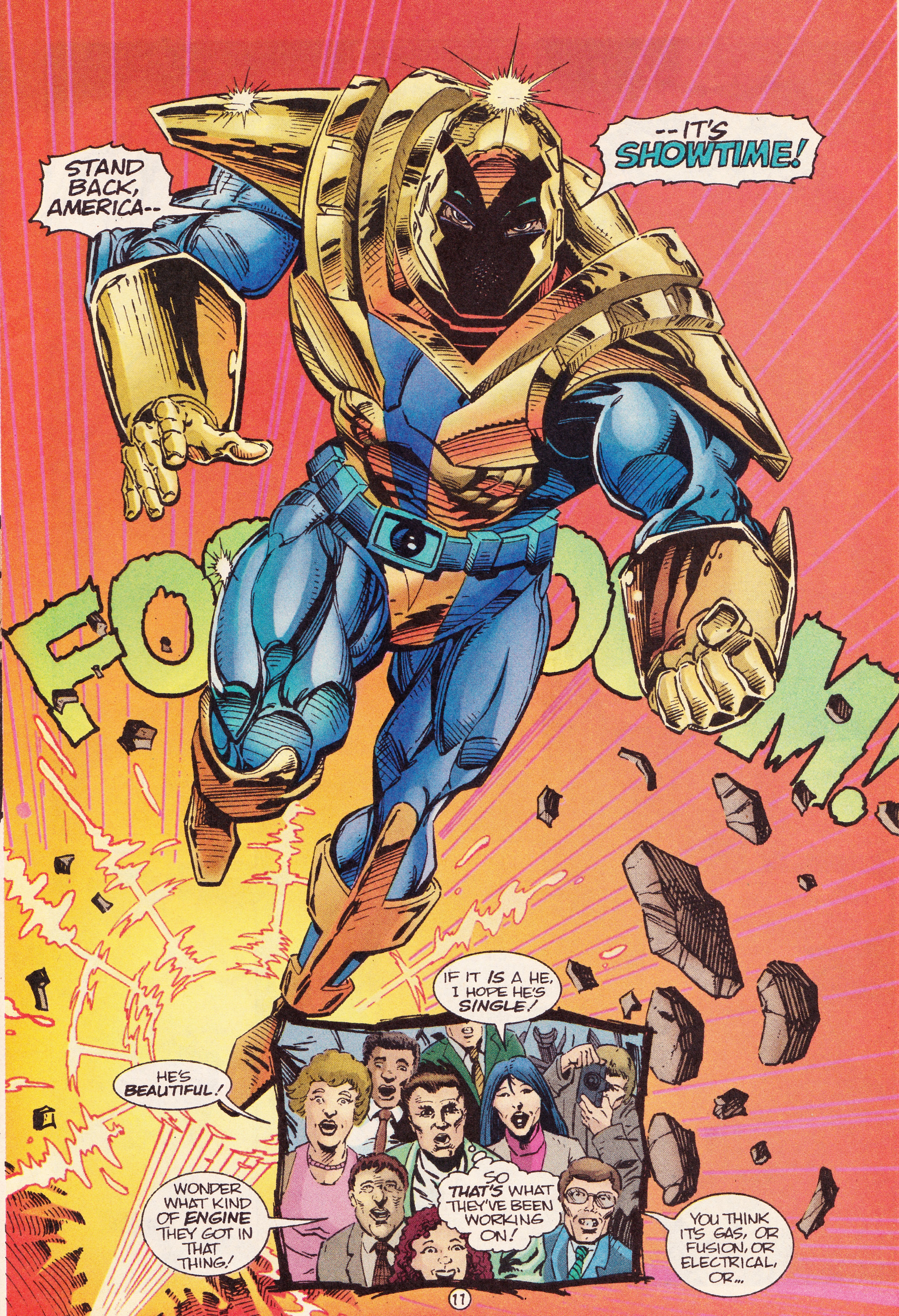
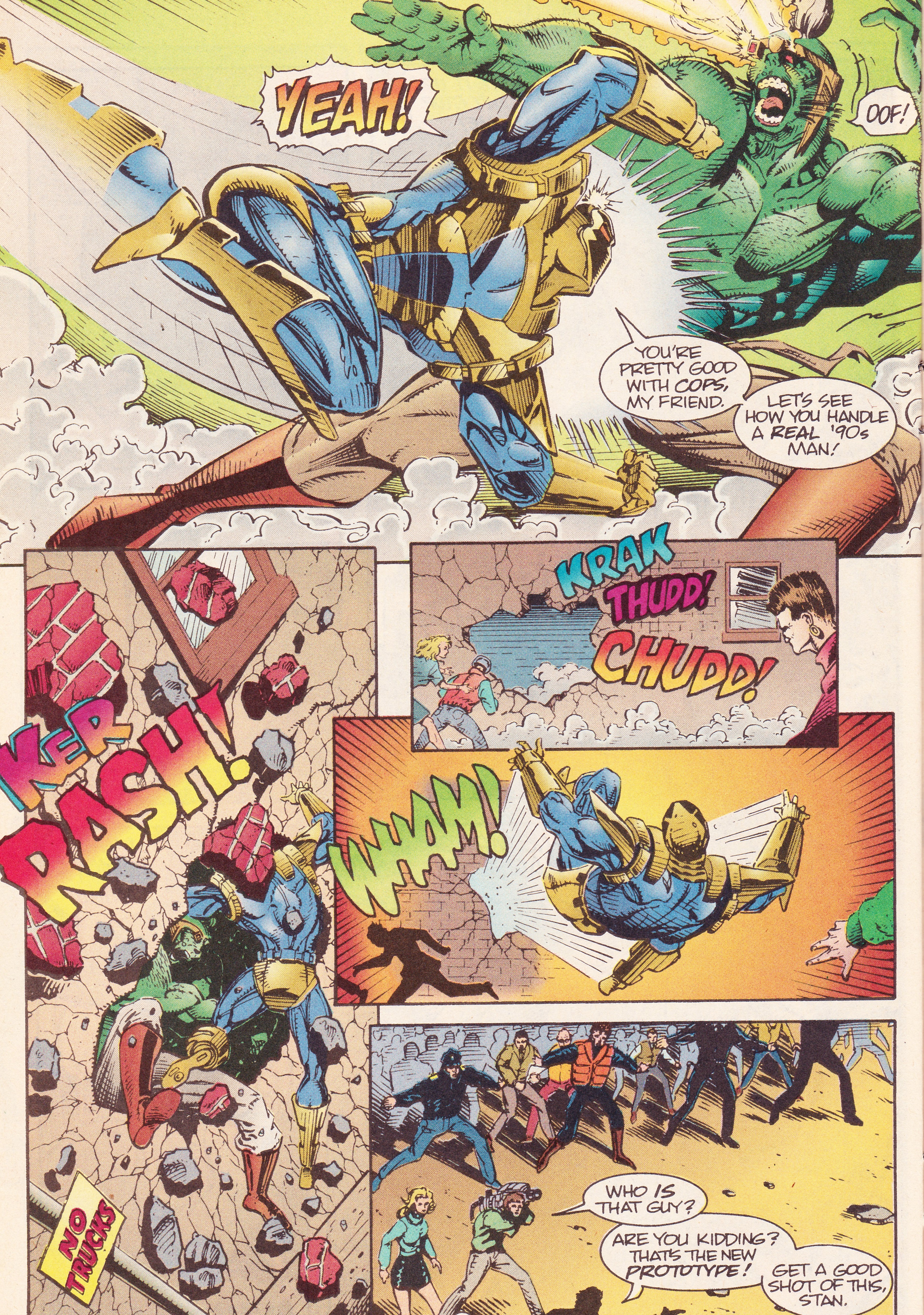
Then he attends the stockholders’ meeting of Ultratech which was organized to be lavish and showy. It is here where Prototype (piloted by Ruiz) makes an energetic appearance sporting a leaner looking armor that closely resembles a human being.

Ruiz says “Stand back, America…it’s showtime!”

Proto2
The leaner and meaner armor of Prototype.

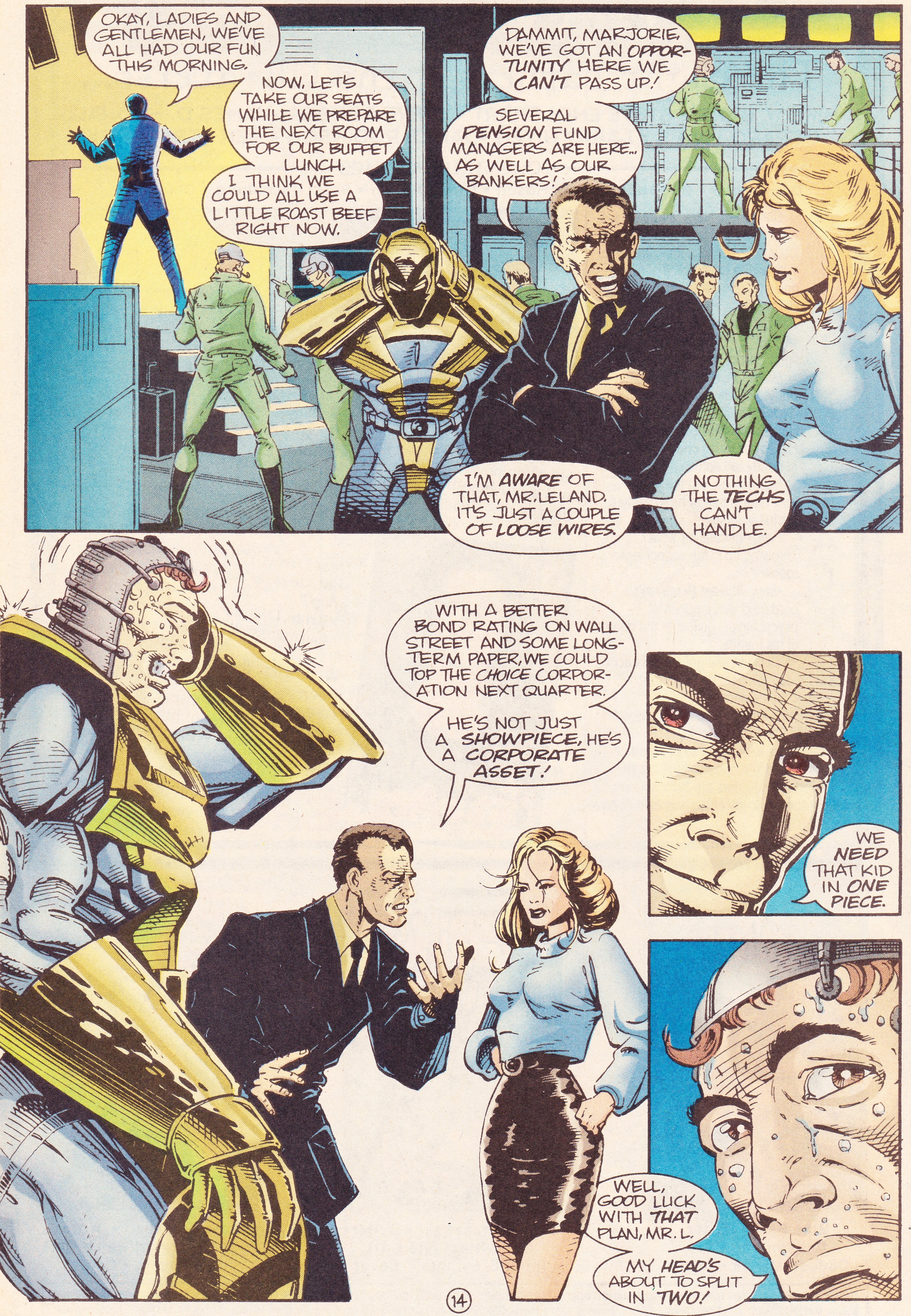
While showing off, Ruiz encounters some problems. He has not fully gotten used to the technology and his head feels like exploding. During the stockholders’ meeting, Bob Campbell causes some trouble prompting private security to escort him away. It turns out that Ultratech really distanced themselves from him.

Of course, the company is very happy with the Ruiz-piloted Prototype and they are confident their major financial bets will yield great results. Their executive Stanley Leland stated, “He’s not just a showpiece, he’s a corporate asset!”

Proto4
Jimmy Ruiz in the Prototype suit with the Ultratech executives.

As this is a superhero story, life is not normal. As such an incident happens that, predictably, requires Prototype to take action (and entertain readers like you and I).

Technically the story was nicely told and its pacing flowed smoothly. There is a nice balance between spectacle, storytelling and character development. Ultimately by the time I reached the 24th page, I got a grasp of the comic book’s concept, the characters (especially the two pilots) and where the series was going.

Proto3
Action for you. Really nice job done by the artists.

How does this comic book compare with Iron Man? To say the least, the concept of a large corporation owning and controlling a high-tech suit of armor piloted by their employee is not only a nice alternative but a very engaging alternative to the Iron Man concept (super rich industrialist who wears a powered suit of armor and uses his special talent on technology).

The Ultraverse was the most interesting and most entertaining superhero line of comic books I read back in the 1990s and Prototype went on to become one of the major heroes of the franchise. Prototype went on to become part of UltraForce, a superhero team that had its short-lived comic book series (with famous artist George Perez doing the art in some issues) as well as a short-lived animated series based on the said comic book series.

Had the Ultraverse lasted longer, succeeded and profited, chances are Prototype would have been a major contender among all other superheroes from the different publishers  today and there would have been more merchandise and perhaps even video games based on the character.

If you plan to visit a local comic book store to buy old comic books, I highly recommend Prototype .


Thank you for reading. If you find this article to be engaging, please click the like button below and also please consider sharing this article to others. Also my fantasy book The World of Havenor is still available in paperback and e-book format. If you are looking for a copywriter to create content for your special project or business, check out my services and my portfolio. Feel free to contact me as well. Also please feel free to visit my Facebook page Author Carlo Carrasco.