Retro Gaming Ads Blast – Part 39 (RPG Special)

Welcome back readers, fellow geeks and electronic gaming fans!

In this edition of the Retro Gaming Ads Blast (RGAB) series, we will take a look at another batch of retro gaming print ads from the 1980s to the 1990s, particularly on role-playing games (RPGs) from the East and the West. This is the RPG Special!

For the newcomers reading this, Retro Gaming Ads Blast (RGAB) looks back at the many print ads of games (console, arcade, computer and handheld) that were published in comic books, magazines, flyers, posters and newspapers long before smartphones, social media, the worldwide web and streaming became popular. To put things in perspective, people back in the 1980s to the 1990s were more trusting of print media for information and images about electronic games and related products.

With those details laid down, here is the newest batch of retro gaming print ads for you to see and enjoy…

1. Phantasie North American and Japanese Print Ads
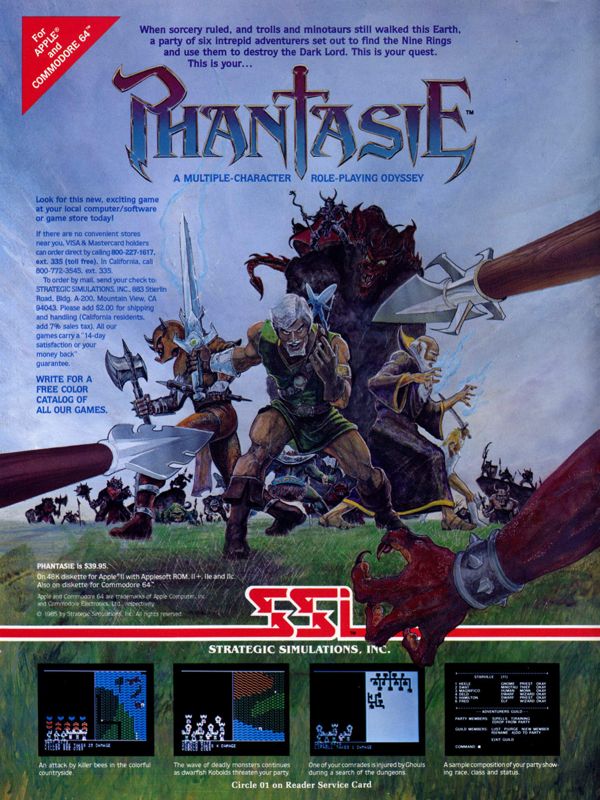
The North American print ad.
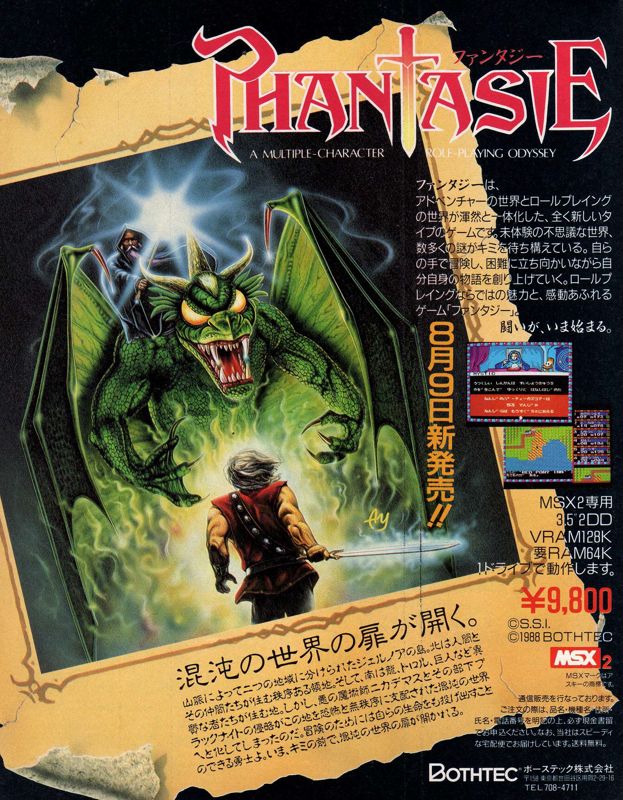
The Japanese print ad.

Released by Strategic Simulations in the mid-1980s, Phantasie was a fantasy role-playing game that became a huge commercial success paving the way for not only ports on other computer systems of the time but also sequels later. The ad they came up with for the North American market had strong fantasy vibes and the screenshots gave readers the impression that it looked playable or user friendly. For the Japanese market, Phantasie was ported to the MSX system and they came up with an ad using radically different art work that had a horror vibe.

2. Phantasy Star Japanese Print Ad
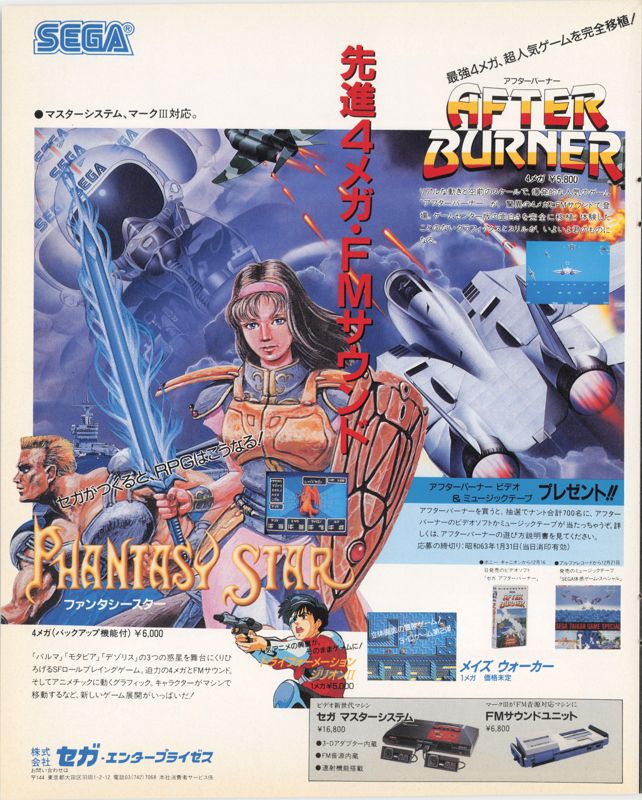
Phantasy Star in the Japanese print ad sharing the spotlight with After Burner.

In the 1980s, role-playing games started gaining popularity with Japanese console gamers and there were game developers who were inspired by established RPGs from the West. Enix released two Dragon Quest games and each of them sold a lot of copies on Nintendo’s Family Computer (Famicom). At the time, Sega already had the Master System (called the SG-1000 and its variants with revisions) in the console market and they were way behind Nintendo on hardware sales. Knowing there is a market for console RPGs, Sega went on to make their exclusive RPG Phantasy Star. In 1987, a print ad was released showing Phantasy Star sharing the spotlight with Sega’s blockbuster game After Burner in the background. While the ad felt a bit disorienting to see, the game achieved much-needed success for Sega which in turn brought the game to the Master System in America in 1988. The game sold more and eventually led to sequels in the years that followed.

3. Ultima III Japanese Print Ad
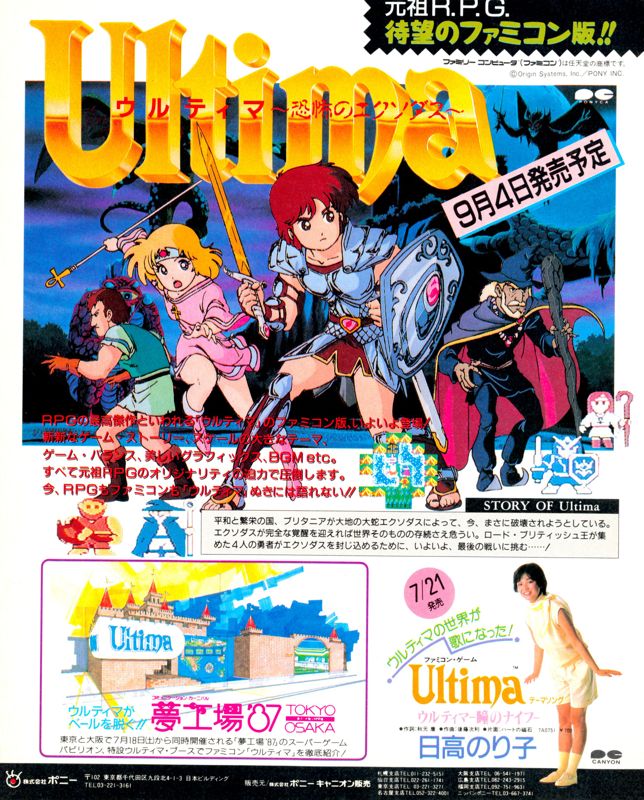
Remember the old days when anime or comic book-style artwork was used to promote games in the Japanese print media?

Released in Japan under the title Ultima: Kyoufu no Exodus, Ultima III: Exodus was a breakthrough for the series as the Famicom version marked the first console release for Japanese gamers (note: the game was also offered for MSX and other computer systems in the country). The anime-style artwork used for the print ad is the same virtually the same with the front cover of Famicom version. Very notably, the art on the covers of the PC-88 and PC-98 versions were different. 

4. Lunar: The Silver Star Japanese Print Ad
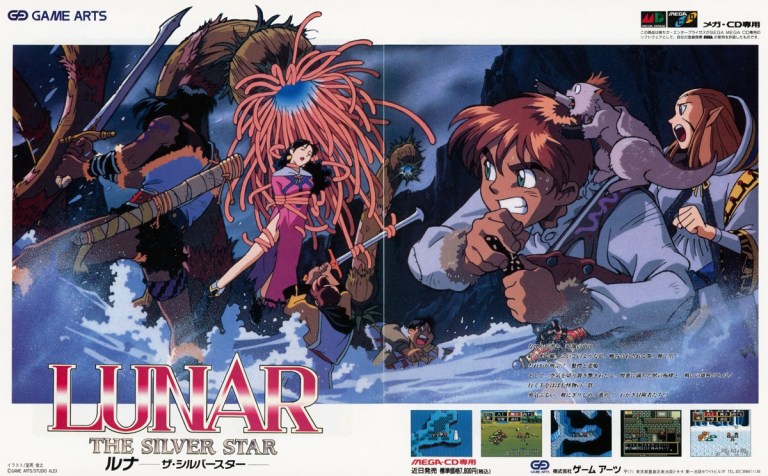
Game Arts’ Lunar: The Silver Star as advertized in Japanese magazines.

By the 1990s, console RPGs were very popular as franchises like Dragon Quest and Final Fantasy each released sequels that sold a lot of copies. The company Game Arts decided to make a role-playing game which can tell stories better using animation with voiceovers and music while being very playable and enjoyable. They came up with Lunar: The Silver Star and released it on the Mega-CD add-on (connected with the Mega Drive console of Sega) in 1992. As such, it was not surprising to see the print ad having anime-style artwork as the game itself had several minutes of anime cutscenes complete with audio. As most Japanese role-playing games (JRPGs) did not have playable anime cutscenes for storytelling, Lunar: The Silver Star really stood out. Sometime later, the small American company Working Designs would handle the game’s English version and start a healthy business relationship with Game Arts.

5. Dungeons & Dragons: Warriors of the Eternal Sun North American Print Ad
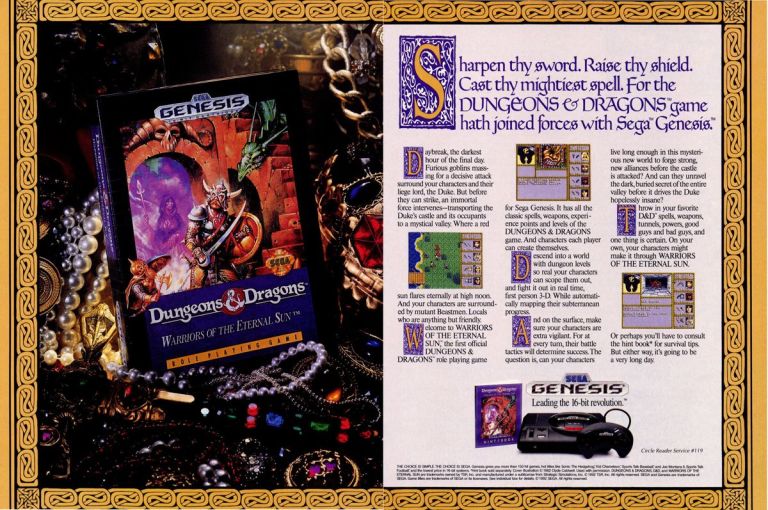
A print ad that strongly appealed to both Sega Genesis gamers as well as fans of Dungeons & Dragons.

By the year 1992, the fantasy games franchise Dungeons & Dragons was wildly popular as players around the world kept enjoying the tabletop RPG modules (using dice, pen paper) as well as many computer and video games already available. Sega acquired a D&D license and eventually released Dungeons & Dragons: Warriors of the Eternal Sun exclusively on their Genesis console in 1992. To promote it, Sega produced a 2-page print ad that had one half showing the game’s box placed with jewelry while using the other half to show the screenshots, descriptive text and other details. The way it was presented, the print ad was cleverly structured to attract the attention of Sega Genesis gamers as well as Dungeons & Dragons fans. The game ended up as the first and only official D&D product for the console.

6. Shadow Sorcerer North American Print Ad
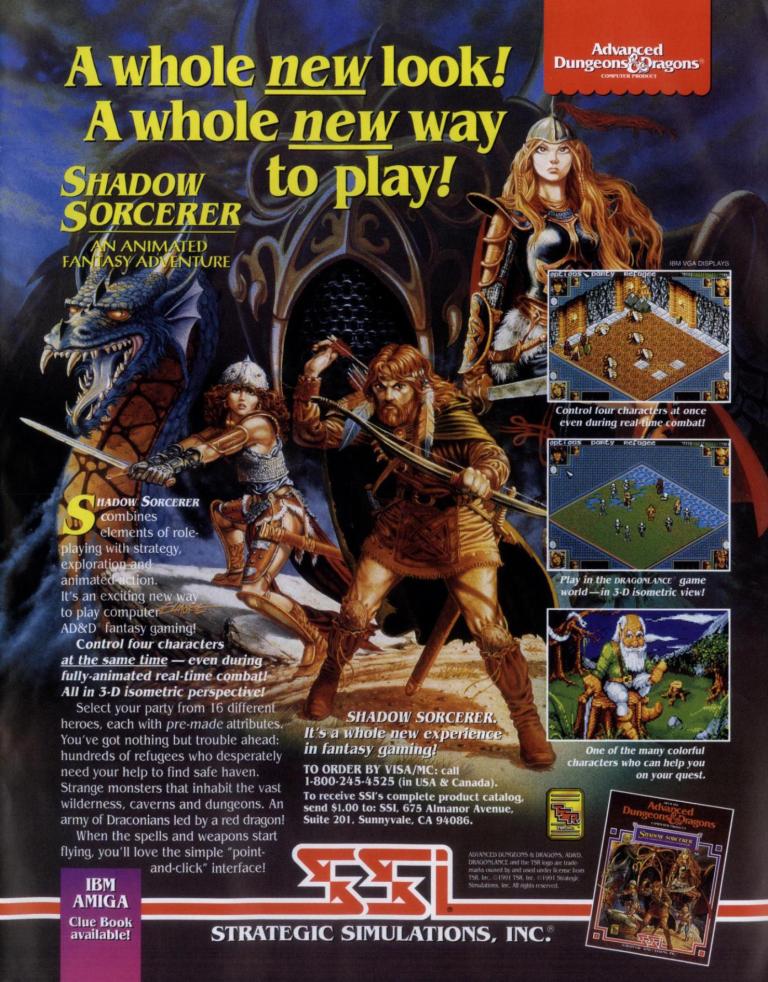
This is one of many Dungeons & Dragons computer games released. The use of painted art for marketing was done many times.

In the history of the Dungeons & Dragons franchise and electronic gaming, it was on computers where the more ambitious and more intricate licensed games were played by many fans. In 1991, the Advanced Dungeons & Dragons (AD&D) electronic game Shadow Sorcerer was released on MS-DOS PC, Amiga and the Atari ST. The painted artwork used on the print ad was virtually the same as that on the box covers of the MS-DOS and Amiga versions. I can only guess that the ad markers must have paid a lot of money on the painted art and decided to use it for both marketing and packaging since it looked so detailed.

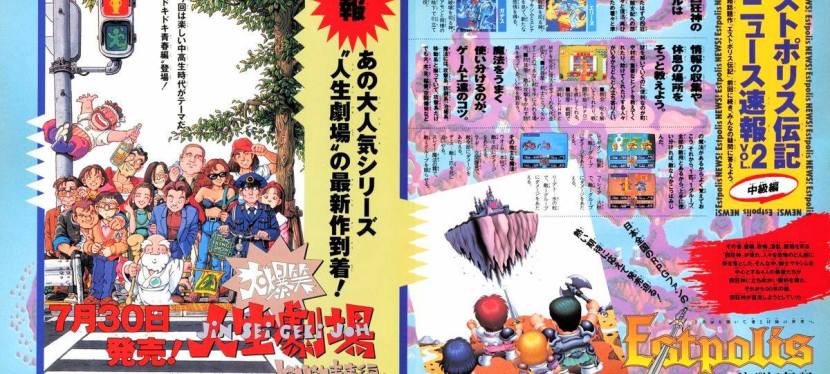
7. Estopolis Denki Japanese Print Ad

The 2-page Japanese print ad of Estopolis Denki.

In 1993, a brand-new Japanese developer called Neverland was established and its first project was the fantasy role-playing game Estopolis Denki for the Super Family Computer (Super Famicom). That same year, publisher Taito released the game and they promoted it with a 2-page print ad that featured a whimsical looking hand-drawn art work on one half and utilized the other half with details, screenshots and part of the art that was used on the game’s Super Famicom box cover. While Japanese game sales are not available, it seems Estopolis Denki sold enough to convince the publisher to release the game in North America as Lufia & The Fortress of Doom.

8. Lufia & The Fortress of Doom North American Print Ad
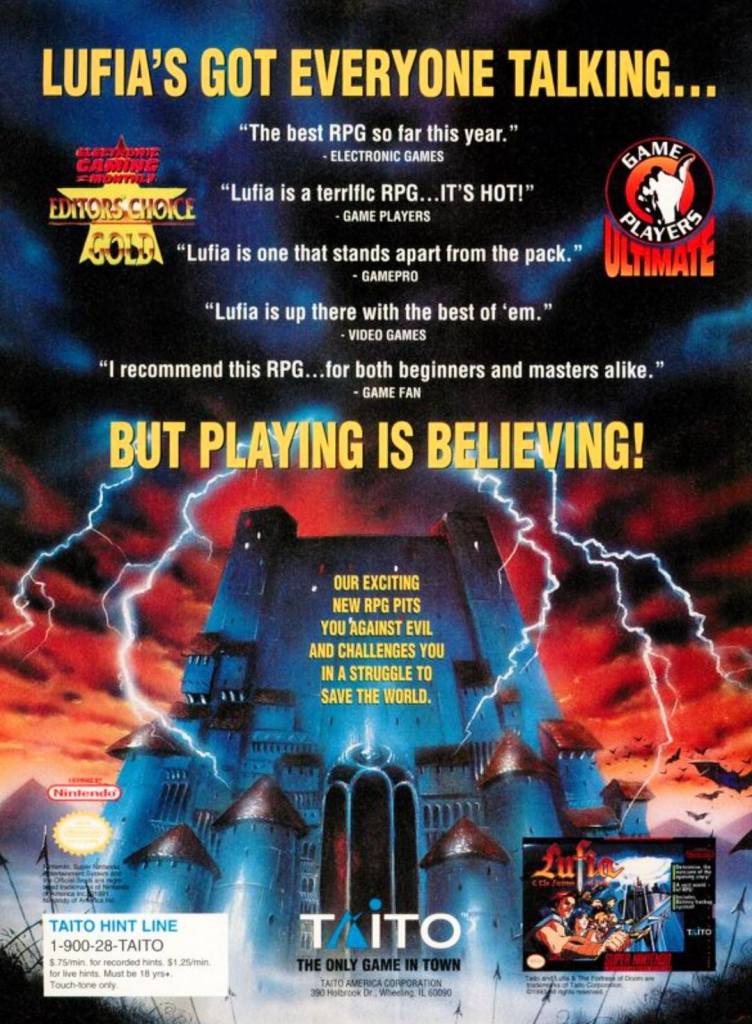
If you were able to play Lufia & The Fortress of Doom on the SNES, were you able to see this ad in a comic book or in a magazine?

Upon release in America in late 1993, Taito scored gold as Lufia & The Fortress of Doom on the Super Nintendo Entertainment System (SNES or Super NES) became a critical and commercial success. In fact, it literally gained steam during the early months of availability and ended up as the top-selling SNES game in America for the month of February of 1994. Take note that at this particular point of time, RPGs on game consoles in America were not yet in high demand as gamers’ tastes were different. When it comes to the marketing, Taito came up with a single-page print ad showing fantasy artwork, the game’s box cover and the published quotes from game critics who gave the game positive reviews. This is smart marketing on the part of Taito.

9. Record of Lodoss War Japanese Print Ad
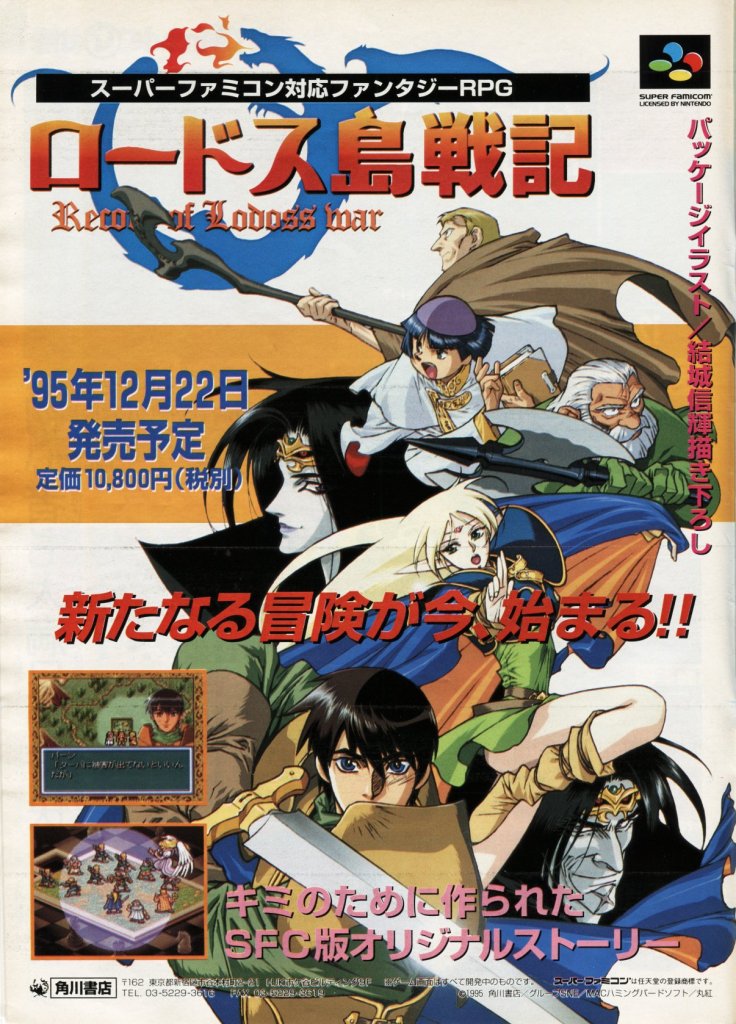
The Japanese print ad of Record of Lodoss War for Super Famicom.

Have you ever heard of the Record of Lodoss War fantasy franchise? That one started as a series of fantasy novels by Ryo Mizuno who previously worked on an RPG project. Record of Lodoss War was eventually adapted into comics, anime and video games. One of those games was released on the Super Famicom in December 1995 published by Kadokawa Shoten which in turn made the one-page print ad for the Japanese market. Using established art from the anime OVA (original video animation) series was a strategic move by the publisher as millions of Japanese people viewed it. Unsurprisingly, the art on the ad is almost the same as the one displayed on the game box cover.

10. Fallout North American Print Ad
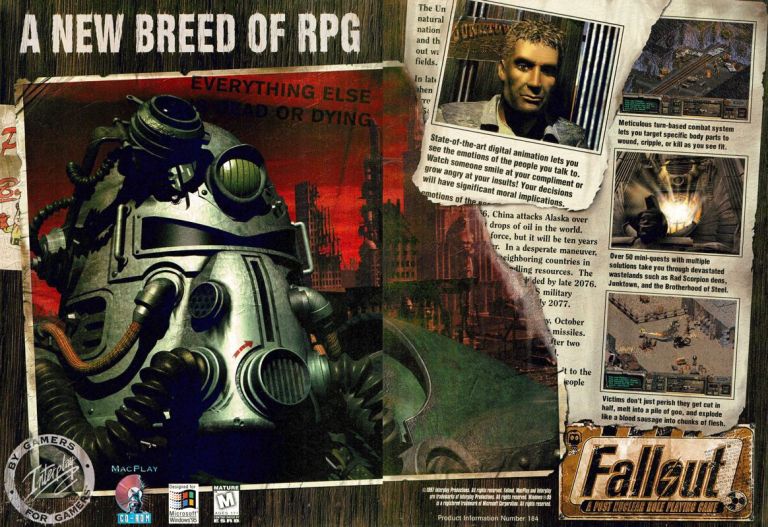
A gritty looking print ad of the original Fallout PC game.

In my gaming life, I played Fallout 3, Fallout 4 and Fallout: New Vegas on Xbox consoles. When the first-ever Fallout game was released in 1997, I did not notice it as I was more into console gaming than PC gaming. The above print ad appeared is several PC gaming magazines and it clearly shows what it offered which gamers eventually ended up enjoying a lot. The mechanical helmet – protection for the user during battles and from radiation in the nuclear wasteland – on the left side of the ad became a key symbol of the Fallout franchise as further games also featured mechanical helmets. Fallout was highly acclaimed for featuring open-ended gameplay and its immersive post-apocalyptic setting. It sold enough copies to convince publisher Interplay to proceed with a sequel and the rest was history.

11. Xenogears Japanese and North American Print Ad
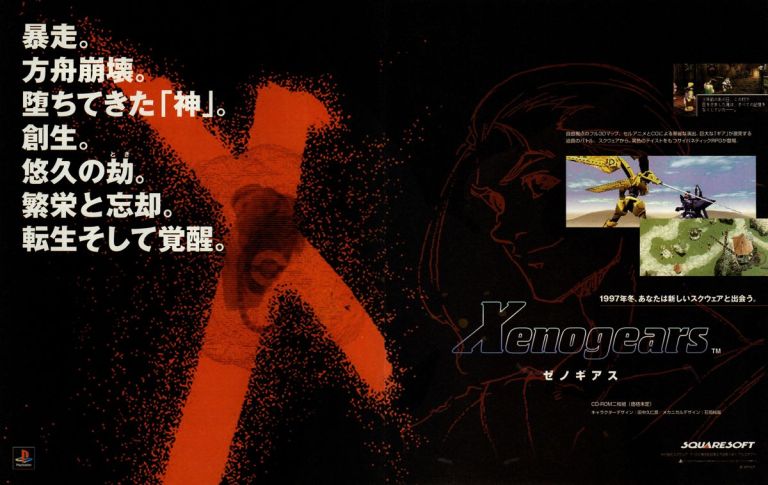
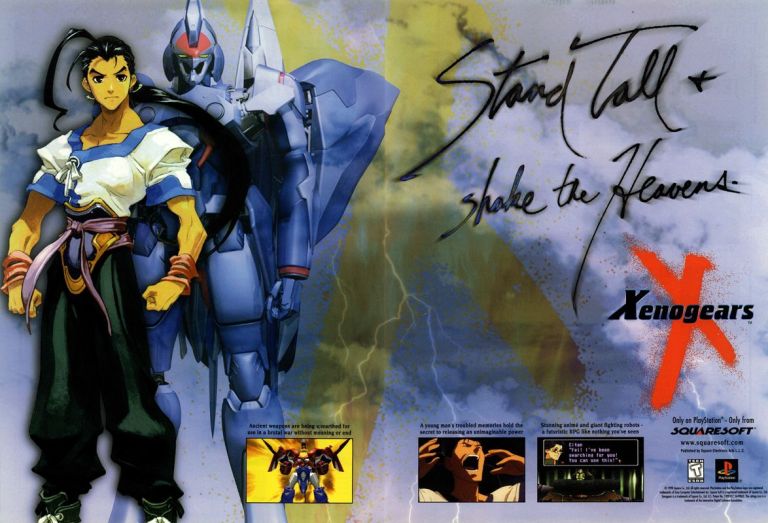
Japanese advertisement of Xenogears.
This North American print ad of Xenogears clearly showed the main character, a robot, the sci-fi setting and the visual style of the game.

Xenogears was a sci-fi JRPG I played on the PlayStation in 1998 but I was unable to finish it. Before it was released in America, there was speculation that Squaresoft would not be able to produce an English version for international release due to its religious content. The game was highly challenging to translate into English due to religious themes and psychological elements. Regardless, the game achieved successes commercially and critically in both Japan and America. Xenogears has since been considered by many as a classic JRPG and to play it today is pretty challenging as an existing PlayStation One, PlayStation 3 or PlayStation Vita is required as well as the physical PlayStation disc itself (note: digital copy of Xenogears for PS Vita). Square Enix – which previously remastered Chrono Cross and several Final Fantasy games for modern gaming platforms – has yet to remaster Xenogears for those with modern game consoles, mobile devices and the PC.

12. Final Fantasy Anthology Print Ad
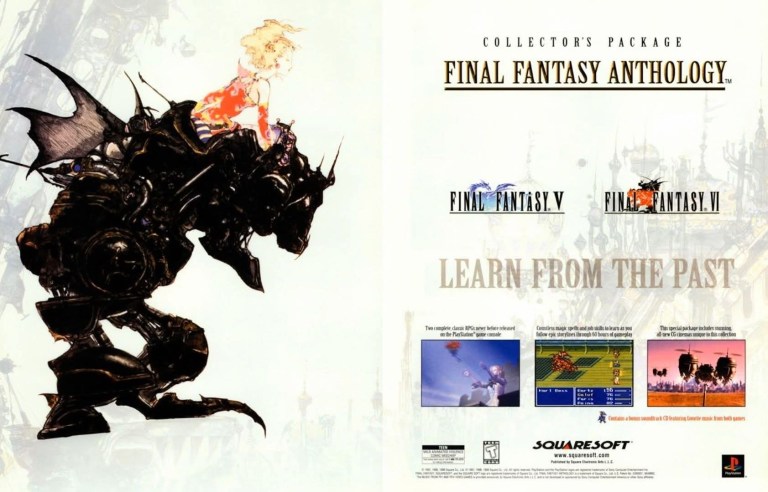
I remember seeing this 2-page print ad in many gaming magazines I read.

By the year 1999, Squaresoft established itself as the best role-playing game company as they achieved critical and commercial success with Final Fantasy VII in 1997, Brave Fencer Musashi, Parasite Eve and Xenogears in 1998. For 1999, Squaresoft decided to bring ports Final Fantasy V and Final Fantasy VI – both games were released in cartridge format on Super Famicom/Super NES some years prior – to their fans who owned PlayStation consoles by releasing the collection called Final Fantasy Anthology. For the North American market, Squaresoft aggressively promoted the 2-game collection with the above 2-page print ad on several video game publications. One half featured exquisite artwork by Yoshitaka Amano and the other half showed the screenshots, descriptions and details. Clearly the ad was made with Final Fantasy fans in mind and it was also clever with the use of nostalgia.

13. Final Fantasy VII North American Print Ad
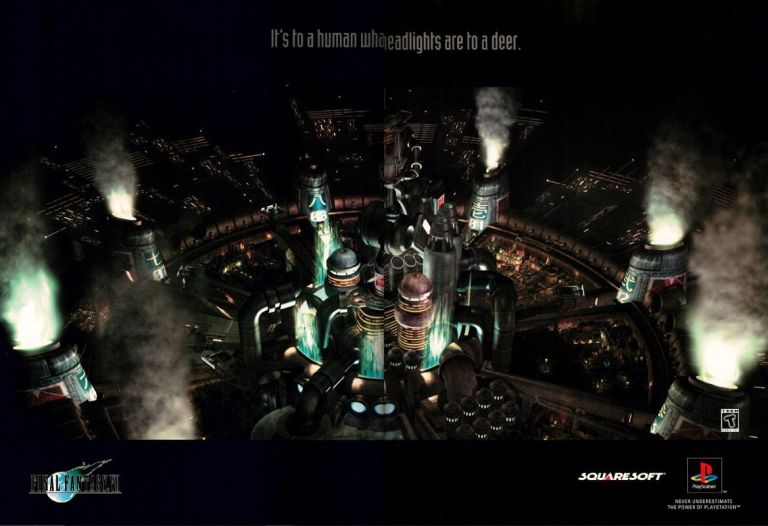
While it did not show any of the characters, this 2-page print ad of Final Fantasy VII appeared in many gaming magazines and ultimately made the public aware of the game which went on to sell millions.

There is no denying that Final Fantasy VII is the most defining Japanese RPG of the 1990s. Given its huge pre-release promotions, the critical acclaim and the tremendous sales achieved in North America and Europe, the game arguably made the JRPG sub-genre more popular among gamers and game publishers while also making the original PlayStation console the must-have machine for video gaming. The above print ad is one of several released through print media and even though it did not show any characters, the image of a futuristic looking city caught the attention of not just gamers but also others who loved entertainment.

+++++

Thank you for reading. If you find this article engaging, please click the like button below, share this article to others and also please consider making a donation to support my publishing. If you are looking for a copywriter to create content for your special project or business, check out my services and my portfolio. Feel free to contact me with a private message. Also please feel free to visit my Facebook page Author Carlo Carrasco and follow me on Twitter at  @HavenorFantasy as well as on Tumblr at https://carlocarrasco.tumblr.com/ and on Instagram at https://www.instagram.com/authorcarlocarrasco
Retro Gaming Ads Blast – Part 3

Welcome back readers, fellow geeks and electronic gaming fans!

In this edition of the Retro Gaming Ads Blast (RGAB) series, we will examine print ads from the 1980s and 1990s that caught my attention and I will explain why they are worth look back at.

For the newcomers reading this, Retro Gaming Ads Blast (RGAB) looks back at the many print ads of games (console, arcade, computer and handheld) that were published in comic books, magazines, flyers and newspapers long before smartphones, social media, the worldwide web and streaming became popular. To put things in perspective, people back in the 1980s and 1990s were more trusting of print media for game details and images.

With those details laid down, here is the newest batch of retro gaming print ads for you to see and enjoy…

1. Japanese print ad of Super Star Wars: The Empire Strikes Back

Do you know any Star Wars fan who is aware of the error in this Japanese print ad of Super Star Wars: The Empire Strikes Back?

Back in 1993, the sequel Super Star Wars: The Empire Strikes Back was released on the Super Nintendo Entertainment System (SNES) in the West and on the Super Famicom in Japan. Having played all three Super Star Wars game, I can say that this sequel was a huge improvement over its predecessor technically and also with gameplay (read my retro review by clicking here).

Like its predecessor, the game was released in Japan by JVC Musical Industries and in the above Japanese market print ad, the marketing team wisely used the game’s official artwork to give gamers a clear view of the concept derived from the 1980 movie plus a few screenshots showing gameplay. What I find hilarious to read is the line (highlighted in red and all capitalized no less): MAY THE FORCE WITH YOU. Clearly someone from the Japanese marketing team who prepared that line lacked English proficiency or might not have watched the movies dubbed in English. In the 1977 movie, Han Solo said to Luke, “May the Force be with you.”  

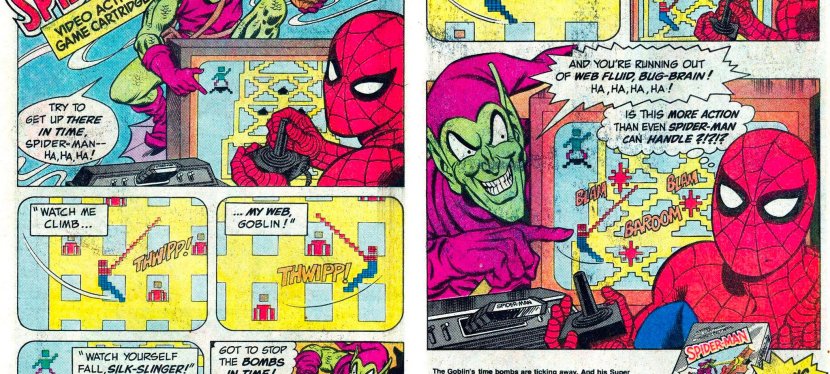
2.  Spider-Man (Atari 2600) print ad

This is an entertaining way to promote a video game based on a comic book icon.

We are back again with the Parker Brothers company and their promotion of the Spider-Man video game for the Atari 2600 which I myself played long ago. Unlike before, the print ad this time was mainly about the Spider-Man game and somehow Parker Brothers coordinated with Marvel Comics to make a comic book-inspired ad. In the above print ad, Spider-Man was shown playing the game about him with an Atari 2600 controller and console, and the Green Goblin taunts him as he plays. This type of ad is a stroke of genius because it shows the Marvel Comics’ icon as a player and the gameplay was emphasized accurately. Even if viewers are not too fond of video games, they can still find themselves interested in reading the literary adventures of Spider-Man.

3. Advanced Dungeons & Dragons: Treasure of Tarmin print ad

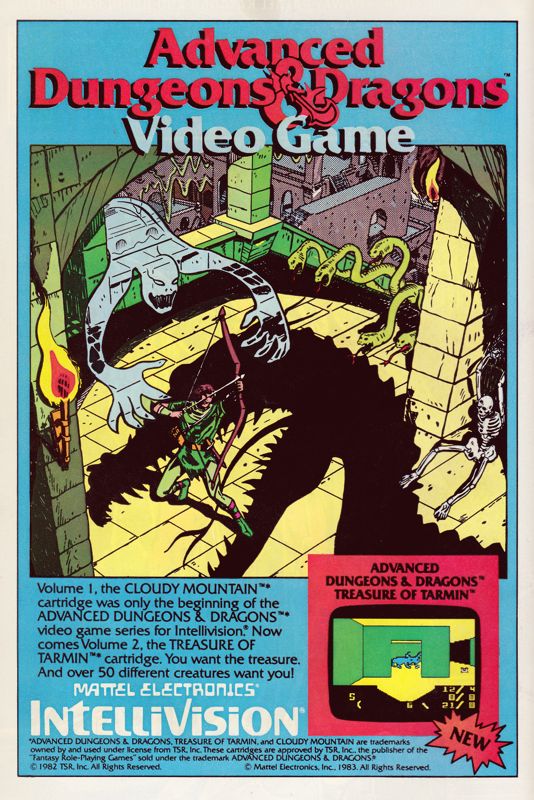
Apart from emphasizing the fantasy concept of the Dungeons & Dragons franchise, this print ad’s hand-drawn art was strong enough to spark viewers’ curiosity and make them interested in the game or even in the Intellivision console.

Here is a print ad I saw many times while reading comic books in 1983. The game at hand is Advanced Dungeons & Dragons: Treasure of Tarmin released on the Intellivision, and it is the sequel to Cloudy Mountain. Like the ad of its predecessor, the above print ad relied heavily on the spectacle of fantasy (and even a bit of horror) by having hand-drawn art as the eye candy promoting Advanced Dungeons & Dragons: Treasure of Tarmin. If you look closely, only one screenshot from the game was shown and it was enough to tell gamers that the new game has a completely different visual presentation from that of Cloudy Mountain. Considering the primitive nature of computer graphics and game design of the era, having detailed comic book-inspired artwork was effective to grab viewers’ attention with the intention to make them interested in buying the game. In today’s age of computer graphics and social media, this type of ad for video games is rare to see.

4. G.I. Joe: Cobra Strike print ad

The G.I. Joe: A Real American Hero franchise’s early entry into video games.

Going back to Parker Brothers, the company developed and published the first-ever licensed game of the G.I. Joe franchise – G.I. Joe: Cobra Strike for the Atari 2600. In promoting the game, a 2-page ad was released with comic book-style art work (featuring Cobra Commander and Duke representing different sides) dominating the space, with descriptive text and a hand-drawn illustration of the gameplay (read: not a real screenshot) as well as the game box flling the remaining space. In my personal experience, I saw this ad before I even got to watch an episode of the popular G.I. Joe: A Real American Hero animated TV series, and before I got to read an issue the related comic book series (which started before the TV series). Looking back at the above print ad, I can still remember the time when I was puzzled by the two characters simply because I was not yet familiar with them. Take note that the video game and the ad were released at a time when the G.I. Joe: A Real American Hero started rising quickly in popularity on toys, comic books and animation.  

5. Alien 3 (SNES) print ad

This print ad appeared in several comic books I read in 1993.

Way back in 1992, I had one of the most depressing cinema viewing experiences with Alien 3 which had a very troublesome production and lacked a solid foundation behind its creativity. Then in the summer of 1993, print ads of the video game Alien 3 for Super Nintendo Entertainment System (SNES) appeared in several comic books I read at the time. The above print ad was actually entertaining to look at. For one thing, the ad makers used three wide layers of screenshots from the game depicting different areas. Then I noticed the details which showed there were more aliens for gamers to encounter (versus only one in the movie) and the playable lead character Ellen Ripley was armed with guns (versus no guns in the movie) being able to fight the monsters. Not only that, the ad makers knew the specific details from the Alien film franchise which is reflected in the ad referencing the Face-hugger aliens, the acid from the creatures and, of course, the alien eggs. To this day, there are old-time gamers who found the Alien 3 SNES game more entertaining than the movie.

+++++

Thank you for reading. If you find this article engaging, please click the like button below, share this article to others and also please consider making a donation to support my publishing. If you are looking for a copywriter to create content for your special project or business, check out my services and my portfolio. Feel free to contact me with a private message. Also please feel free to visit my Facebook page Author Carlo Carrasco and follow me on Twitter at  @HavenorFantasy as well as on Tumblr at https://carlocarrasco.tumblr.com/ and on Instagram at https://www.instagram.com/authorcarlocarrasco

Retro Gaming Ads Blast

Welcome back readers, fellow geeks and electronic gaming fans!

Today I am launching a brand-new series of articles titled Retro Gaming Ads Blast (RGAB) which will explore the many print ads and promotions of video games, computer games, arcade games and handheld games that were published through the decades.

For the newcomers reading this, print ads of games were widely popular and heavily relied on by gamers/players long before smartphones, social media, the worldwide web and online videos even started. Back in the old days, print media was the most common method for companies to market their games while also helping hardware (machines which played the games) reach potential buyers. Such ads appeared in magazines, comic books and newspapers. Not only that, there were several print ads of games that were made to look creative, compelling and even intriguing.

With those details laid down, here is the first batch of retro gaming print ads for you to see and enjoy…

1. Parker Brothers’ Spider-Man-led print ad

Does this ad look amusing?

Remember Parker Brothers? That was a company that started way back in 1883 founded with a strong focus on the enjoyment of games in the form of board games, cards and toys. In the late 1970s, Parker Brothers started making electronic versions of their popular board games and engaged in the video game development and publishing. They also went on to make home ports of popular arcade games in the early 1980 for several gaming platforms.

Parker Brothers was very active with making games for the Atari 2600 console which became the dominant machine for home gaming in North America in 1982. In the above print ad, their marketing heavily emphasize the Spider-Man video game for Atari 2600 and added two others games they also published – Tutankham and Amidar – which was a clever move to market multiple games. The ad’s focus on Spider-Man was amusing and even without showing a single screenshot of the game, it was enough to entice people to watch out for it. Be aware that the Spider-Man game’s development was done by Laura Nikolich who was hired by Parker Brothers at a job fair. Nikolich had full creative control on making the game and had no contact whatsoever with Marvel Comics.

2. Advanced Dungeons & Dragons: Cloudy Mountain print ad

An ad like this was strong enough to motivate gamers’ imagination and interest.

Back in 1982, Advanced Dungeons & Dragons: Cloudy Mountain was released on the Intellivision game console and I was fortunate enough to watch my next-door neighbor play it repeatedly. The above print ad – which simply referred to the game as Advanced Dungeons & Dragons – only had a few words which directly pointed to the main objective of the game…the golden crown. While only one screenshot of the game was displayed, the advertisers heavily relied on hand-drawn, comic book-style fantasy art work to sell the game.

For those who were born long after the 1980s, let me share with you that ads like these were really impressive for their time. It was common for advertisers to use art works (even though they may not accurately reflect the gameplay or game design) and post at least one screenshot to catch the viewer’s attention with the hope that it would even encourage him/her to anticipate the game. It should be noted that ads like these were strong enough to make gamers’ imagination or curiosity grow stronger.  

3. Konami’s collective military video games advertising

Print ad of four games for IBM, Amiga and Commodore.
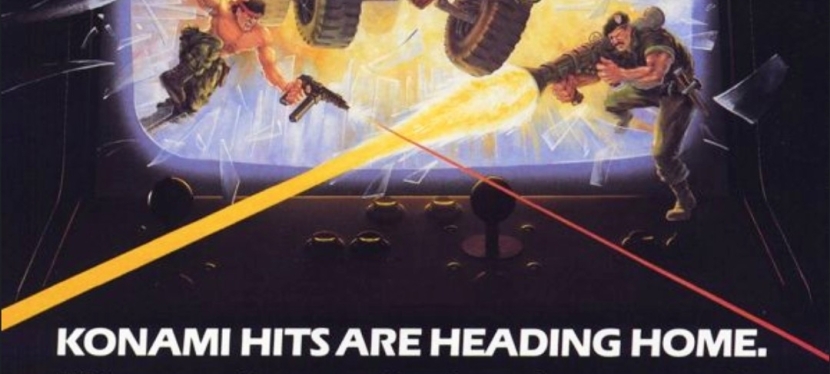
Print ad of Jackal and Contra for the NES.

Konami, the Japanese company that has long been known for Metal Gear, Suikoden and the controversial sacking of famous game designer Hideo Kojima, was aggressive in the gaming business in the 1980s and arguably the aggressiveness was reflected in their publishing of several games that emphasized militarism during the late stages of the Cold War. In short, they made the military look cool and their activities fun to do in digital form.

While Konami has always been identified with console gaming, they actually released Rush’n Attack, Contra, Jackal and Boot Camp on IBM, Amiga and Commodore computers (as seen in the first print ad above) which were popular in the 1980s. The said ad also have a very amusing visual concept emphasizing the excitement and fun of military action games coming to gamers at home for their computers.

The 2nd print ad above – Jackal and Contra for the Nintendo Entertainment System (NES) – was very intriguing to see. It was very clear back in the 1980s that the NES always had a wholesome audience (note: a lot of buyers were parents who wanted to entertain their kids at home) and that includes a lot of very young players. To see the collective ad of Jackal and Contra (for the NES platform) having battle-hardened men in military gear holding guns was openly aggressive to perceive and instantly reminded people about the Cold War (and the menace of Communists, socialists, Marxists and terrorists) and the cultural impact of the mega blockbuster film Rambo: First Blood Part II. This is the kind of ad that would drive today’s woke-minded people crazy and even cause them to panic and pretend to be victims of militarism and patriotism. If you look at the ad closely, you will realize there is simply no room for the garbage of political correctness and wokeness.

Lastly, I myself had played Contra and Jackal with my friends on the Nintendo Family Computer (the Japanese counterpart of the NES) and both military games were a lot of fun to play from start to finish!

4. Batman Returns SNES game ad

This print ad appeared in some comic books I read in the early 1990s.

Way back in 1992, Batman Returns (the sequel to the mega blockbuster Batman movie of 1989) was released in cinemas with intense marketing and merchandising reflecting Warner Bros. intention to replicate the commercial success they had in 1989. Along the way, there were several video game adaptations of Batman Returns that were released on different platforms. Among those many video games was the Super Nintendo Entertainment System (SNES) game of Batman Returns which was developed and published by Konami in 1993 the form of a side-scrolling beat-them-up game.

The above ad was visually appealing with hand-drawn, comic book-style art dominating the spaces while leaving room for some screenshots and a written description of the game. Having seen this ad on multiple comic books I read back then, I can say that the ad was entertaining to see and was effective in making me interested in the game. I played Batman Returns on the SNES but never got to finish it. Oh yes, the game’s audio were really good and there were also digitized images from the movie for the in-game narrative.

5. Flashy Sonic the Hedgehog Japanese print ad

A dazzling approach by Sega on selling Sonic the Hedgehog.

1991 will always be remembered as the year of Sonic who eventually became not only Sega’s most defining mascot but also a video game industry icon. That same year, Sega released Sonic the Hedgehog on the Sega Genesis (referred to as Sega Megadrive in other parts of the world) console and it became a massive success with consumers and the game critics.

In the above Japanese print ad, a very captivating display of light and energy rays dominated the space leaving a minority share left for Sega’s console, screenshots and even a UFO Catcher arcade machine picture. While I could not understand the Japanese text, it seems to me that the flashy visual concept of the ad reflected Sega’s high ambitions with Sonic. How many gamers in Japan bought a copy of Sonic the Hedgehog because of this ad remains undetermined.

6. Japanese Super Star Wars print ad

A long time ago in a galaxy far, far away…

Before Nintendo released its 16-bit game console (referred to as Super Nintendo Entertainment System in America, and Super Famicom in Japan), there were lots of Star Wars video games released on varied platforms and the arcade.

With Nintendo’s 16-bit gaming platform realized, lots of game designers and business partners saw opportunities to make new games with gameplay concepts and designs using the technological advantages of the time. For LucasArts and its partners, taking Star Wars gaming into the next level was inevitable and they made it all come true in 1992’s Super Star Wars video game.

Published in Japan by JVC Musical Industries for the Super Famicom, Super Star Wars was a major leap forward in game design, visuals, sound and enjoyment. Apart from the 2D side-scrolling run-and-gun gameplay, gamers were deeply immersed into Star Wars’ universe with the Mode 7 landspeeder and X-Wing fighter sequences, as well as the first-person trench run sequence.

The Japanese print ad above cleverly presented screenshots from the game while using official imagery from the Star Wars movie poster of 1977 (look at how young Harrison Ford, Mark Hammill and the late Carrie Fisher were back then). The ad is a fine example of combining the greatness of the classic George Lucas-directed film with the highly enjoyable design of Super Star Wars. Lastly, these should remind you that there was a time when Star Wars was not yet tainted by wokeness and the garbage values of the Satanic Leftists (read: woke Disney).   

+++++

Thank you for reading. If you find this article engaging, please click the like button below, share this article to others and also please consider making a donation to support my publishing. If you are looking for a copywriter to create content for your special project or business, check out my services and my portfolio. Feel free to contact me with a private message. Also please feel free to visit my Facebook page Author Carlo Carrasco and follow me on Twitter at  @HavenorFantasy as well as on Tumblr at https://carlocarrasco.tumblr.com/ and on Instagram at https://www.instagram.com/authorcarlocarrasco