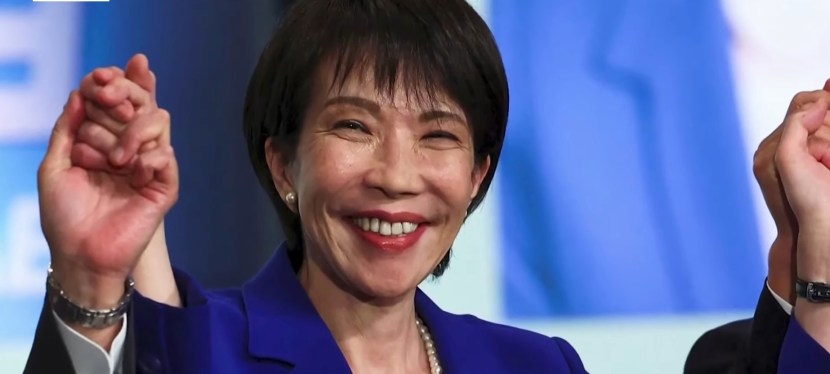
Recently Japan announced that the inspections for American automobile imports have been simplified in accordance with the bilateral tariff agreement, according to a news report by NHK World.
To put things in perspective, posted below is an excerpt from the news report of NHK World. Some parts in boldface…
Japan’s transport ministry has simplified inspections for US automobile imports based on a bilateral tariff agreement.
The transport ministry revised an ordinance on automotive safety standards to allow imports of US vehicles without additional tests as long as they conform to US safety standards.
US and Japanese automobiles have different requirements such as those for body impact strength, turn signal color and instrument units.
But from Monday, no additional tests are required for US auto imports if their makers have taken steps to ensure safety and the imports are authorized by Japan’s transport minister.
A red star-shaped sticker will be affixed to the rear of automobiles that meet the criteria. Inspection certificates will show that they are authorized US vehicles.
The deregulation was part of an agreement reached by Tokyo and Washington last July. The ministry has been working out details to implement the measure.
The easing of regulations is expected to be applied when cars made in the US by Japanese manufacturers are imported into Japan.
The Japanese government says the change will lead to a reduction in the US trade deficit with Japan.
Also on Monday, Japan’s Ministry of Economy, Trade and Industry decided to use a Japanese manufacturer’s cars made in the US as official government vehicles.
Let me end this piece by asking you readers: What is your reaction to this development? Do you think this latest development will stimulate sales of American automobiles in Japan? Do you agree with the current bilateral tariff agreement between Japan and the United States?
With its own analysis of varied economic factors, Metrobank stated that the Philippine Peso could end up at a rate of P59.70 to the US Dollar by the end of this year, according to a BusinessWorld news report.
To put things in perspective, posted below is an excerpt from the business news article of BusinessWorld. Some parts in boldface…
THE PESO may settle at P59.70 against the dollar by end-2026 on expectations of an economic rebound driven by improved investor confidence, Metropolitan Bank & Trust Co. (Metrobank) said.
In a commentary dated Feb. 10, Metrobank trimmed its peso forecast for end-2026 to P59.70 a dollar from P60.80 previously. It likewise projects the peso to end 2027 at P58.50 versus the greenback, from its earlier estimate of P58.90.
“(A)n anticipated economic growth rebound and improved investor confidence, thanks to better government spending, could support the peso,” it said.
If the bank’s 2026 forecast holds true, the local unit would end the year weaker than its P58.79 finish against the dollar on the last trading day of 2025.
The lingering effects of the flood control corruption scandal and uncertainties in the global market pushed the peso to test new lows at the start of the year.
On Jan. 15, it closed at P59.46 per dollar, breaking the previous all-time low of P59.44 recorded just the day prior.
However, it has recently strengthened amid a weak dollar. On Wednesday, the local unit hit a near four-month high after closing at P58.29 versus the greenback, up 24 centavos from its P58.53 finish on Tuesday, data from the Bankers Association of the Philippines showed.
Meanwhile, Metrobank noted that the peso could struggle to regain further strength as the country’s current account is projected to remain at a shortfall this year.
“Still, the projected current account deficit this year — although narrower than last year’s — would cap the peso’s strength,” it said.
Based on the latest central bank data, the current account balance stood at a $12.5-billion deficit by the end of the third quarter. This was equivalent to -3.6% of gross domestic product (GDP).
Let me end this post by asking you readers: What is your reaction to this recent development? Do you think the Peso could perform better against the US Dollar and end up better than what Metrobank estimated? Do you think a weaker Peso would be very helpful to the exporters?
With the final economic numbers of 2025 counted, it has been confirmed that approved foreign investments in the Philippines fell down by more than 50%, according to a news report by BusinessWorld.
To put things in perspective, posted below is an excerpt from the business news article of BusinessWorld. Some parts in boldface…
APPROVED foreign investments in the Philippines plunged by 50.1% year on year to P272.38 billion in 2025, its sharpest fall in five years, the Philippine Statistics Authority (PSA) reported on Thursday.
Preliminary data from the PSA showed that the value of foreign commitments approved by the country’s investment promotion agencies (IPA) in 2025 was lower than P546.19 billion in 2024.
This was the steepest drop in foreign investments since the 71.3% drop recorded during the pandemic in 2020. By value, this was the lowest amount of approved foreign investments since the P241.89 billion recorded in 2022.
Singapore was the top source of investment pledges for 2025 after committing P92.78 billion, or 34.1% of the total. It was followed by the Netherlands with P35.98 billion (13.2% share) and Japan with P34.03 billion (12.5%).
Analysts attributed the sharp drop in foreign investment pledges to the sluggish investor confidence in the Philippines arising from global trade uncertainties, natural disasters and the flood control corruption scandal.
“In a nutshell, the decline in approved foreign investment pledges in 2025 was driven by a mix of weaker investor confidence due to governance and corruption issues, global economic uncertainties, cautious corporate behavior, and an unusually high base of comparison from the previous year,” said Ser Percival K. Peña-Reyes, director of the Ateneo Center for Economic Research and Development.
Marco Antonio C. Agonia, an economist at the University of Asia and the Pacific, said uncertainty over the US tariffs may have also dissuaded foreign investors from setting up operations in the Philippines.
The United States imposed a 19% tariff on most Philippine goods beginning Aug. 7, 2025.
“Similarly, weaker growth prospects from repeated natural disasters and the flood control scandal may have encouraged foreign companies to scrap or defer their investment plans in the country,” Mr. Agonia said in an e-mail.
The Board of Investments (BoI) approved P150.34 billion worth of investment pledges in 2025, accounting for 55.2% of the total. It was followed by the Philippine Economic Zone Authority (PEZA) with investment pledges worth P107.06 billion (39.3% share), and the Bases Conversion and Development Authority (BCDA) with P7.01 billion (2.6%).
For 2025, about 45% or P122.48 billion of the total approved foreign investments will go to the energy sector, followed by manufacturing with P81.41 billion (29.9% share) and real-estate activities with P26.31 billion (9.7%).
In 2025, Calabarzon (Cavite, Laguna, Batangas, Rizal, and Quezon) cornered around P100.43 billion worth of these investment pledges. Central Luzon will get P70.74 billion while the Bicol Region got P50.76 billion.
Let me end this post by asking you readers: What is your reaction to this recent development? Do you think the Philippines still has a lot of work to do and many challenges to resolve before it could convince foreign investors to come in? Do you think the national government is doing good enough to make the country attractive to foreign investors again?
For more South Metro Manila community news and developments, come back here soon. Also say NO to fake news, NO to irresponsible journalism, NO to misinformation, NO to plagiarists, NO to reckless publishers and NO to sinister propaganda when it comes to news and developments. For South Metro Manila community developments, member engagement, commerce and other relevant updates, join the growing South Metro Manila Facebook group at https://www.facebook.com/groups/342183059992673
The ambitious trade deal between America and Japan is beginning to take shape as the administration of US President Donald J. Trump unveiled the first set of multi-billion Dollar projects, according to a news report by Kyodo News.
To put things in perspective, posted below is an excerpt from the news report of Kyodo News. Some parts in boldface…
U.S. President Donald Trump’s administration said Tuesday that Japan will finance the production of synthetic diamonds and two energy projects worth about $36 billion as the initial tranche of investments under a deal reached last year following months of tariff negotiations.
Trump’s announcement that the three projects had been selected, as part of a $550 billion package that Japan committed to in exchange for his administration reducing tariffs on Japanese cars and other goods, was confirmed hours later by Japanese Prime Minister Sanae Takaichi.
“These projects are so large, and could not be done without one very special word, TARIFFS,” Trump wrote on his Truth Social platform. “America is building again. America is producing again. And America is WINNING again.”
Calling it a historic time for the United States and Japan, he said a critical minerals project will be carried out in Georgia, along with plans for an oil facility in Texas and power generation infrastructure in Ohio.
Commerce Secretary Howard Lutnick said the United States and Japan will build the largest-ever natural gas infrastructure in Ohio, expected to produce 9.2 gigawatts of power, a deepwater crude oil export facility in the Gulf of Mexico and establish synthetic industrial diamond manufacturing capacity in the United States.
Lutnick said the deepwater facility is likely to generate $20 billion to $30 billion in U.S. crude oil exports annually.
Takaichi said on social media that the gas infrastructure will power artificial intelligence data centers, and the production of synthetic diamonds used in the semiconductor, auto and aviation industries is aimed at reducing the two countries’ overreliance on a specific country, without naming China.
“Going forward, Japan and the United States will continue working closely to further coordinate the details for implementing each project, ensuring their early and smooth execution,” Takaichi said in an X post.
Under a trade deal struck in July last year, Japan has committed to investing $550 billion in the United States by the end of Trump’s second term in January 2029.
Japan’s commitment comprises investments, loans and loan guarantees from Japanese government-backed financial institutions.
Japan’s industry minister Ryosei Akazawa told reporters in Tokyo that about $33.3 billion will be invested in the gas infrastructure, with Japanese companies such as Hitachi Ltd., Mitsubishi Electric Corp., Toshiba Corp. and SoftBank Group Corp. interested in participating in the project.
The project to increase U.S. crude oil exports is valued at $2.1 billion and the production of synthetic diamonds is worth $600 million, according to Akazawa, who mentioned Japanese firms such as Mitsui O.S.K. Lines Ltd., Nippon Steel Corp. and Asahi Diamond Industrial Co. in connection with these initiatives.
Last week, Akazawa and Lutnick agreed in Washington to speed up the selection process for the first round of investments, as the two countries prepare for Takaichi’s visit to the United States next month.
Japan and the United States have said that the investments will focus on strategic sectors, such as critical minerals, semiconductors, artificial intelligence and energy, to advance their national security interests and economic objectives.
The memorandum of understanding between Japan and the United States, signed by Akazawa and Lutnick in September last year, stipulates that Trump will ultimately choose projects recommended by an “investment committee” chaired by the commerce secretary and composed solely of U.S. officials.
Let me end this piece by asking you readers: What is your reaction to this development? Do you think the first projects of the US-Japan trade deal will create huge economic impact over the next few years? What other ambitious projects do you think Japan and America will focus on next?
Welcome back my readers, YouTube viewers and all others who followed this series of articles focused on YouTube videos worth watching. Have you been searching for something fun or interesting to watch on YouTube? Do you feel bored right now and you crave for something to see on the world’s most popular online video destination?
I recommend you check out the following videos I found.
#1 Tremors Revisited And Explained – By today’s standards, Tremors is a classic among monster movies (AKA creature features) Hollywood released. With the way it was written and presented, Tremors is always fun to watch again. I have seen it many times and yet it is worth repeating from start to finish. Behind the scenes, there were a lot of stuff, adjustments and unexpected developments that happened during production. If you wish to see such stuff, watch and learn from the Tremors videos of Represent This below.
#2 A Look At Excalibur In Las Vegas –I never had the opportunity to visit Excalibur in Las Vegas. During its first several years of operation, Excalibur welcomed countless tourists with its fantasy-themed atmosphere, designs, facilities and entertainment. Imagine having a meal while watching two knights riding horses and performing a joust in front of you. Imagine seeing members of the hotel staff wearing fantasy costumes. Like Circus Circus Hotel and Casino, Excalibur was a fine hotel that catered to families while still having casinos for gamblers. To learn more about what Excalibur was and what made it stand out among the hotels of Las Vegas, watch the video below.
#3 Meals At The Expressway In Japan – How often do you stop for a meal when traveling along a major highway? In many parts of the world, highways or expressways have clusters of gas stations, convenience stores, groceries and restaurants for travelers who need some relief from the stress of long travel. For many travelers, traveling far while being hungry can be a problem. In recent times, Nippon TV posted a video about meals and food items that travelers can find along expressways and the variety is interesting to see. Watch and learn from the video below.
#4 Cleopatra Movie Revisited – Way back in 1963, the movie Cleopatra starring Elizabeth Taylor and Richard Burton was released. The historical epic was made at a staggering cost of $44 million which was almost three times more expensive than 1959’s Ben-Hur. Behind the scenes, 20th Century Fox was in very deep financial trouble and many hard business risks were taken to make Cleopatra. Elizabeth Taylor, who signed a record-setting $1 million contract for the film, had health problems that added to the delay of the production. The film even lost its original movie director. To learn more about the history and the behind-the-scenes intrigue of Cleopatra, watch the video below.
#5 Innerspace Revisited – Innerspace (stylized as InnerSpace) from 1987 is a fun movie to watch and it has fine performances from Dennis Quaid, Meg Ryan and Martin Short. That said, it is not surprising to see Innerspace featured in reaction videos and retrospective videos by YouTubers. For your enjoyment, watch the videos below.
#6 Breath Of Fire Retrospective – When Breath of Fire was first released in 1993, it was a surprising Japanese role-playing game (JRPG) as it had a somewhat fresh concept and it was released by Capcom (already famous for fighting games). The first game was successful enough to convince Capcom to make sequels (released on other game consoles as technology evolved) achieving varying degrees of critical and commercial success. Going back to the original game, some wondered what made it notable and how the game came to be. To find out the history of Breath of Fire and what its story was about, watch the video below.
Remember Japan’s commitment of investing $550 billion into core industries in the United States? The two great nations had a high-level meeting in Washington and they agreed to speed up the selection of the first round of investment projects under the multi-billion Dollar package before they are sent to US President Donald J. Trump for approval, according to a news report by Kyodo News.
To put things in perspective, posted below is an excerpt from the news report of Kyodo News. Some parts in boldface…
Japan and the United States agreed Thursday to speed up selection of the first round of investment projects under a $550 billion package that Tokyo committed to last year following months of tariff negotiations, with a summit of their leaders about a month away.
Hours after his meeting with U.S. Commerce Secretary Howard Lutnick in Washington, Japanese industry minister Ryosei Akazawa told reporters a “significant gap” remained and more coordination was required to serve the mutual interests of the two countries.
“In conducting negotiations, we are naturally keeping in mind the goal of making Prime Minister (Sanae) Takaichi’s visit to the United States a fruitful one,” he said.
Akazawa’s meeting with Lutnick was believed to be part of last-ditch efforts to sort out the first batch of Japanese investment projects to be carried out in the United States, before they are sent to President Donald Trump for final approval.
Although Akazawa, who serves as economy, trade and industry minister, said there was some progress, neither side could unveil any specifics. While refusing to elaborate, he suggested differences remained over interest rates and business risk assessments.
“In a nutshell, as far as we are concerned, high-risk, high-return (investments), given that they also involve taxpayers’ money, are not something we are interested in,” he said.
The meeting with Lutnick took place a week after Trump said he would welcome Takaichi to the White House on March 19.
Under a trade deal struck in July last year, Japan has committed to investing $550 billion in the United States by the end of Trump’s second term in January 2029, in exchange for his administration reducing tariffs on Japanese cars and other goods.
The massive figure represents a combination of investments, loans and loan guarantees from Japanese government-backed financial institutions.
Japan and the United States have agreed that the forthcoming investments will focus on strategic sectors, such as critical minerals, semiconductors, artificial intelligence and energy, to support their national security interests and economic objectives.
For the initial tranche of investments, the construction of gas-fired power generation facilities for data centers, the production of synthetic diamonds used in the semiconductor industry and the development of a port are among the leading candidates, according to Japanese officials.
The memorandum of understanding between Japan and the United States, signed by Akazawa and Lutnick in September last year, stipulates that Trump will ultimately select projects recommended by an “investment committee” chaired by the commerce secretary and composed solely of U.S. officials.
Earlier in the process, the so-called consultation committee — comprising officials from both countries — is tasked with identifying potential investment projects.
The United States will forward investment projects that gain Trump’s endorsement to Japan for review, with Tokyo given 45 days to respond and transfer the necessary funds to Washington.
Let me end this piece by asking you readers: What is your reaction to this development? Do you think the two nations will reach an agreement over the first round of investment projects under the $550 billion package? Do you think the remaining challenges will be resolved in due time? Are you looking forward to Prime Minister Takaichi’s Washington visit and meeting with President Trump this March?
Welcome back my readers, YouTube viewers and all others who followed this series of articles focused on YouTube videos worth watching. Have you been searching for something fun or interesting to watch on YouTube? Do you feel bored right now and you crave for something to see on the world’s most popular online video destination?
I recommend you check out the following videos I found.
#1 Dawn Of The Dead Remake Revisited – Back in 2004, I saw the Dawn of the Dead remake inside a cinema located inside a shopping mall here in the Philippines. The Zack Snyder-directed film only inspired me to look for the 1978 original version of Dawn of the Dead directed by the late George Romero. The only thing the two films have in common is the concept of desperate people taking refuge inside a shopping mall during a zombie apocalypse. Zack Snyder’s film was more about violent action with horror elements blended with it. As Snyder went on to direct high-profile DC Comics superhero movies and produced other such projects of Warner Bros., it was natural for film buffs to gravitate to 2004’s Dawn of Dead which was his directorial debut. To learn more about the said remake and see the cinematic elements that formed the style of Snyder, watch the videos below.
#2 Premium Sushi, Hearty Tempura And Wagyu Beef For Breakfast In Japan –If you were traveling overseas, how hungry do you get when you start the day? Would you go for a simple and affordable breakfast or would you want something special in the morning? In Tokyo, there are these food joints that offer customers a luxurious breakfast with Wagyu beef, special tempura and premium sushi to name some. Already, local and foreign tourists are flocking to such food joints for the premium breakfast experience and you can learn more from the Nippon TV videos below.
#3 The Different Versions Of Final Fantasy VI – Among all the many Final Fantasy games released since 1987, Final Fantasy VI is still my favorite of them all. I first played the classic Japanese role-playing game (JRPG) on Super Nintendo Entertainment System (SNES) in 1994 which was titled “Final Fantasy III”, and it has a great epic story, a huge cast of playable characters, lots of unique gameplay features and great game design. Through the decades, Final Fantasy VI was ported to many consoles, mobile devices and even on personal computer. You might be wondering which version of Final Fantasy VI is the best in terms of visual quality, which one is the most available and which one is the most updated version. That said, you can find out by watching the video below.
#4 Castlevania II: Simon’s Quest Revisited – When Castlevania II: Simon’s Quest was first released on the Nintendo Entertainment System (NES) in 1987, many fans who enjoyed the first game were alienated by how different the sequel felt, looked and played. It still was horror-themed 2D adventure game with Simon Belmont as the playable protagonist again but the creative team of Konami implemented role-playing elements and open-world exploration into the gameplay. Major game design changes aside, Castlevania II still has a lot more than meets the eye and you can find out by watching the video below. Surely it will challenge what you know about Simon Belmont and the Castlevania lore.
#5 Why Feminists Support Islam – Let’s be very clear here. Islam is a truly ugly religion and it is incompatible not only with Western democracy and values, but also with several other cultures around the world. The strange thing is that modern-day feminists actually support Islam even though the ugly religion itself goes against women’s rights, against personal liberty and against freedom as we know it. In the video below, Ayaan Hirsi Ali explains in detail why mainstream feminists today support Islam, why feminism today is very twisted and why feminists even aligned themselves with Islamic terrorists.
Welcome back my readers, YouTube viewers and all others who followed this series of articles focused on YouTube videos worth watching. Have you been searching for something fun or interesting to watch on YouTube? Do you feel bored right now and you crave for something to see on the world’s most popular online video destination?
I recommend you check out the following videos I found.
#1 Timecop Revisited – I am not a fan of Jean-Claude Van Damme but his 1994 movie Timecop managed to entertain me when I first saw it on home video. After watching it, I learned that it was based on the Timecop literary property and stories published by Dark Horse Comics. Directed by Peter Hyams, Timecop ended up as one of the better movies of JCVD and it even has its own fanbase. If you want to discover more about the cinematic Timecop, watch the videos posted below.
#2 Inhumanoids Revisited –I remember seeing some episodes of the animated TV series Inhumanoids on local TV and I can say it was easily the most bizarre and even shocking thing to watch. Inhumanoid has a very dark and even cynical tone, and it had gruesome scenes which were really disturbing to see. Behind the scenes, Inhumanoids was animated by Japan-based Toei and involved Hasbro, Sunbro and even Marvel Productions. To find out what made Inhumanoids so disturbing, watch the video below and pay attention to the details.
#3 Luxurious Breakfast Spots In Tokyo – Have you ever thought about having a luxurious breakfast while traveling overseas? In Tokyo, Japan’s most famous city, there are indeed places where visitors can have breakfast with the premium experience. These luxurious places have something unique to offer to customers who have more than enough money to spend for the morning meal. Watch and learn from the Nippon TV video below.
#4 Remember The Rotoscoped Lord Of The Rings – Decades before Peter Jackson and his team rocked the world of moviegoers with memorable Lord of the Rings film trilogy, an animated LOTR was actually made. I am talking about the 1978 rotoscoped animated film The Lord of The Rings directed by Ralph Bakshi which I first saw on home video after seeing Peter Jackson’s LOTR. I found the 1978 LOTR a really unique animated viewing experience and it definitely involved a lot of production work without any use of computers. To find out more about the animated LOTR film, watch the video below.
#5 You, Me and The Movies React To Can’t Hardly Wait – When Can’t Hardly Wait was shown in cinemas in 1998, it faded away as not enough moviegoers were attracted watch it. However, the movie did not fade into obscurity and it actually got new fans as it was discovered on home video, cable TV, pay-per-view and streaming. More importantly, the movie itself was pretty funny the cast led by Jennifer Love Hewitt delivered fine performances as teenagers. Slowly but surely, new retrospective videos about Can’t Hardly Wait are emerging on YouTube and the most entertaining video is the reaction by You, Me and The Movies which I encourage you to watch right now.
#6 Square Enix In The 2000s – Back in the 1990s, Squaresoft and Enix were separate Japanese gaming companies that released a lot of Japanese role-playing games (KRPGs) which entertained many millions of gamers. Square was famous for the best-selling Final Fantasy games while Enix had the wildly popular Dragon Quest franchise. In the 2000s, a series of changes happened in the video game industry and the two companies merged into Square Enix. Since then, a lot of Final Fantasy and Dragon Quest games with evolved designs and styles of presentation were released under a single publisher. There is a lot more to discover what happened behind the scenes as documented in the in-depth video below from Gaming Broductions.
Now that the Liberal Democratic Party (LDP) won a great majority of the seats of Japan’s House of Representatives, Prime Minister Takaichi Sanae and her administration are now in a better position to implement policies to help the constituents and strengthen the nation, according to a news article by NHK World.
For insight, the LDP won 316 of the House of Representatives 465 seats. With the addition of the 36 seats won by the coalition partner Japan Innovation Party (JIP) – also referred to as Nippon Ishin no Kai – the grand total is 352 seats. This means the Prime Minister’s ruling coalition surpassed the two-thirds threshold required to overring the upper chamber (House of Councilors) and propose constitutional amendments. Very clearly, the voters of Japan have spoken and they want stability and the right direction for their country.
To put things in perspective, posted below is an excerpt from the news article of NHK World. Some parts in boldface…
Japan’s ruling Liberal Democratic Party overwhelmed the opposition for a historic victory in Sunday’s Lower House election.
Voters gave the LDP a massive majority of 316 seats, empowering Prime Minister Takaichi Sanae – who pledged to accelerate her policy agenda. This marked the first time in the postwar period that a single party secured more than two-thirds of the seats on its own.
But the largest opposition party, the Centrist Reform Alliance, lost a significant number of seats. Both of its co-presidents announced their resignations on Monday.
Takaichi vows to accelerate her policy agenda – The prime minister spoke with NHK about her plans after the landslide win.
She pledged to accelerate the implementation of what she calls “responsible and active fiscal policy,” while calling on opposition members to cooperate in areas where consensus can be reached.
A consumption tax cut was one of the major issues during the election campaign. The LDP had pledged not to apply the consumption tax to food items for a limited period of two years. Takaichi said she is eager to accelerate Diet discussions on the issue.
Asked about the cabinet, she said her current lineup is a good team.
“Just over three months have passed, but everyone is working hard and achieving results, so I am not thinking of changing it,” she added.
But she indicated that she would think about a cabinet position for the LDP’s coalition partner, the Japan Innovation Party, if the issue is raised.
Crushing defeat –The Centrist Reform Alliance, the largest opposition party, fell to a crushing defeat as it lost more than 100 seats. It held 172 prior to the election and was formed from two separate parties just before the poll.
For additional insight regarding the popularity of Prime Minister Takaichi and other related developments, watch the videos below.
Let me end this piece by asking you readers: What is your reaction to this development? Do you think Prime Minister Takaichi and her administration will come up with new and significant policies covering the economy, social norms and defense of the nation over the next twelve months? Do you sense a strong revival of Japan’s economy happening within the next few years? Do you think Communist China is now afraid of Prime Minister Takaichi being a more powerful Japanese leader? Do you think that the planned cooperation between Israel and Japan will proceed smoothly over the next six months?
Japanese Prime Minister Takaichi Sanae will continue to lead her nation as her political party the Liberal Democratic Party (LDP) is set to win a huge majority of the seats of the House of Representatives following the election that happened yesterday, according to a news report by Kyodo News. Already US President Donald J. Trump and Italian Prime Minister Giorgia Meloni congratulated Takaichi (click here and here).
For insight, Takaichi dissolved the House of Representatives a few weeks ago and this led to a short but intense election campaign. The voters of Japan have spoken favoring Takaichi and her party. That being said, February 8 is a sad day for the Commies, the woke, the pro-China candidates, and the Islamists as the opposition fared badly.
To put things in perspective, posted below is an excerpt from the news article of Kyodo News. Some parts in boldface…
Japan’s Liberal Democratic Party led by Prime Minister Sanae Takaichi is set to win a big majority in the House of Representatives in Sunday’s election, early returns and Kyodo News projections show, an outcome largely driven by her personal popularity that clears the way for her to stay on.
The LDP, which has formed a coalition with the Japan Innovation Party, has secured at least 243 seats, well over the majority line of 233, in the 465-member lower house, up from 198 before the contest.
Amid prolonged inflation and a growingly severe international environment, Takaichi has promised to pursue a “responsible yet aggressive” fiscal policy and boost the nation’s defense capabilities.
The ruling camp is projected to secure at least 261 seats in the powerful chamber, clearing the threshold for chairing all standing committees and outnumbering the opposition in those panels, thus helping it to push through its legislative agenda.
The main opposition party, the Centrist Reform Alliance, formed in January by uniting lower house members of the Constitutional Democratic Party of Japan and the Komeito party, is set to lose a significant number of seats, according to early returns and projections.
Following media reports of the LDP’s victory, Takaichi hinted at no major change to the lineup of the Cabinet, launched less than four months ago, during a TV program.
But she said she hopes that the JIP, which decided not to take ministerial posts when forming the coalition in apparent reflection of a cautious stance toward the LDP, will fulfill “its responsibility together in the Cabinet.”
It remains unclear, however, whether the JIP, known as Nippon Ishin, can retain its pre-election strength of 34 seats in the lower house.
“It was an election in which we felt pressure from the LDP,” JIP leader Hirofumi Yoshimura told a press conference in his party’s home prefecture of Osaka in western Japan, adding that it had tried to convince voters that it had an important role to play in the coalition in the campaign.
The focus is now on whether the LDP-JIP camp can win a two-thirds majority, or 310 seats, in the lower house, which would allow it to initiate a proposal for amending the Constitution, the LDP’s long-held goal, to put to a national referendum.
Takaichi expressed her hope that “concrete plans” to amend the supreme law will be debated at parliament.
The Sanseito party, a populist group known for its “Japanese First” slogan, is expected to make big strides, while Team Mirai, which advocates adoption of digital technologies to enhance political participation, is set to secure its first seat in the chamber, according to the polls.
Takaichi, who has maintained high popularity since becoming Japan’s first female prime minister last October, had pledged to “immediately resign” as Japan’s leader if the coalition failed to secure a majority in the powerful lower chamber.
Nearly 1,300 candidates vied for the 465 seats, with 289 elected from single-seat constituencies and 176 through proportional representation, where seats are allocated for parties based on votes received in 11 regional blocks across Japan.
Early voting received a boost as a record 27.02 million people cast their ballots in the days prior to Sunday, up around 6 million from the previous election in 2024.
Voter turnout stood at 56.24 percent, likely up around 2 percent points from the previous race, according to an estimate by Kyodo News as of 9 p.m.
Japan held a general election in February for the first time in 36 years, a move by Takaichi that has drawn criticism because heavy snowfall in many parts of the country made campaigning difficult. Tokyo and its nearby areas also had snow on Sunday.
As ordinary households have been struggling to cope with the rising cost of living, major political parties have pledged to reduce tax burdens on the campaign trail.
Under Takaichi, a security hawk, the ruling parties also sought support for their aim to beef up the country’s defenses in the face of an increasingly severe security environment.
While her Cabinet enjoys high support ratings, the ruling bloc had only a razor-thin majority with the support of some independents in the lower house before it was dissolved late last month.
Even if the ruling bloc manages to meet its target of securing a majority in the lower house, it remains in a minority in the House of Councilors, or the upper house, meaning that opposition party support is critical in passing bills.
For additional insight, watch the Nippon TV news video below.
Let me end this piece by asking you readers: What is your reaction to this development? With her own party having secured a lot more seats in the House of Representatives of Japan, do you think Prime Minister Takaichi and her team will be in a better position to achieve their agenda? Are you surprised to see the Satanic Left, the woke and the Communists of Japan lose more seats in the election that just happened? Now that the elections are over, do you think the illegal immigrants/aliens as well as the foreign criminals in Japan would be compelled to leave the country?