A Look Back at The Night Man #10 (1994)

Disclaimer: This is my original work with details sourced from reading the comic book and doing personal research. Anyone who wants to use this article, in part or in whole, needs to secure first my permission and agree to cite me as the source and author. Let it be known that any unauthorized use of this article will constrain the author to pursue the remedies under R.A. No. 8293, the Revised Penal Code, and/or all applicable legal actions under the laws of the Philippines.

Welcome back superhero enthusiasts, 1990s culture enthusiasts and comic book collectors! Today we go back to the mid-1990s which was a pretty wild time for comic collectors. To be more specific, this newest retro comic book review revisits the Ultraverse through The Night Man monthly series.

In my previous retro review, the Teknight armor remotely controlled by J.D. Hunt and his son broke into a prison to free the defeated Apocaloff. Unsurprisingly, the Night Man arrived to stop Teknight’s operation even though the police were not willing to get involved with the vigilante. Eventually, Teknight and Apocaloff were defeated thanks to a masked man who fired a canister from a distance. The Night Man approached the masked man and discovered that he is someone essential in life.

With those details laid down, here is a look back The Night Man #10, published in 1994 by Malibu Comics with a story written by Steve Englehart and drawn by Kyle Hotz.  

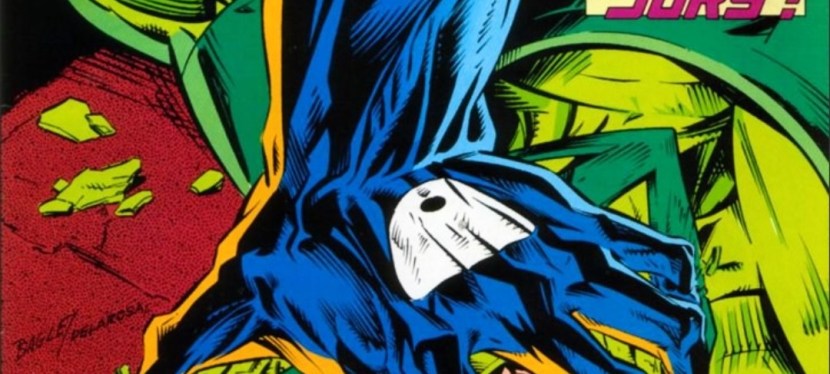
The cover.

Early story

The story begins one week in the past with the shooting of a man witnessed by his lady companion in the presence of three men wearing dark clothes. As the lady agonizes over the injured man, the three men move away, got chased by police officers, and escaped after climbing over a fence.

Moments later, the police isolated the scene of the crime and Johnny Domingo’s father Eddie (the head of Playland security) talks with one of the police officers about what happened. At 3AM the next morning, Eddie returns to the scene of the crime and looks at the blood and the white outline where the victim was marked. At 4:25 AM, with Eddie no longer present, the white outline begins to move and leave the scene of the crime.

In the present day, Eddie and his son Johnny (still in costume as the Night Man) enter an office at Playland…

Quality

J.D. Hunt calls for the production of a new and improved Teknight armor.

After reading back-to-back issues that had Apocaloff as the main opposition for the Night Man, this comic book not only made a drastic change of storytelling direction but also came up with something could change the way readers perceive the titular hero.

For one thing, having Eddie know that his son and Night Man are one and the same person is quite striking and this became even more evident when they have this very meaningful private talk early in the story. That exchange of dialogue is a must-read. Next, while Night Man made clear he prefers to continues his vigilante acts against evil without his father’s involvement, he accepts the suggestion of moving into Playland as he knew the place a lot since childhood and found it advantageous for his covert operations.

Along the way, a brand new and highly unusual villain got introduced here and provided the Night Man a new form of challenge. The battle between the titular hero and the new villain was well executed and the special attention to detail during key moments were amusing to read.

With regards to the killing that took place at the start of this comic book, there is a sub-plot related to it and it includes a reference to a key event in the past within the Ultraverse which itself is connected with Night Man’s origin.

Conclusion

Kyle Hotz’s art made the images look creepy. Even the Night Man himself looks creepy.

The creative team of Englehart and Hotz set the stage for the new direction of storytelling while succeeded in telling an engaging standalone story in The Night Man #10 (1994). The Night Man fans and Ultraverse fans will have a lot of things to enjoy in this comic book. I personally liked the way the creative team executed story twists and added depth to the plot.

Overall, The Night Man #10 (1994) is recommended.

+++++

Thank you for reading. If you find this article engaging, please click the like button below, share this article to others and also please consider making a donation to support my publishing. If you are looking for a copywriter to create content for your special project or business, check out my services and my portfolio. Feel free to contact me with a private message. Also please feel free to visit my Facebook page Author Carlo Carrasco and follow me on Twitter at  @HavenorFantasy as well as on Tumblr at https://carlocarrasco.tumblr.com/ and on Instagram at https://www.instagram.com/authorcarlocarrasco
A Look Back at Harbinger #7 (1992)

Disclaimer: This is my original work with details sourced from reading the comic book and doing personal research. Anyone who wants to use this article, in part or in whole, needs to secure first my permission and agree to cite me as the source and author. Let it be known that any unauthorized use of this article will constrain the author to pursue the remedies under R.A. No. 8293, the Revised Penal Code, and/or all applicable legal actions under the laws of the Philippines.

Welcome back superhero enthusiasts, 1990s culture enthusiasts and comic book collectors! Today we go back to the early 1990s and explore a part of the Valiant Comics shared universe through the Harbinger monthly series.

In my previous retro review, Sting, his teammates and Solar left the Harbinger facility in Texas after having an intense talk. As far as Solar is concerned, Sting is dangerous and irresponsible. He also advises the powered teenagers to abandon their mission of crushing Toyo Harada. As soon as Solar leaves, Sting decides to lead his teammates back to the Harbinger facility to resume their quest without any real preparation nor analysis. This led to a series of unfortunate events.

With those details laid down, here is a look back at Harbinger #7, published in 1992 by Valiant Comics with a story written by Jim Shooter and drawn by David Lapham.

The cover.

Early story

The story begins late one evening on a road in Louisiana. Sting, Kris, Faith and Flamingo are agonizing over the sight of Torque who was just been killed by an insider while inside an ambulance.

As Flamingo starts the model prayer, Sting reveals to them that he was inside Torque’s mind and witnessed him bidding goodbye. As the police suddenly arrive, Sting and his teammates quickly climb up a tree and watched from a distance. As the cops check on the wreckage and Torque’s dead body, Sting says that the ambulance was probably registered to Eight Day or some phony front for Harbinger. Faith, Sting, Flamingo and Kris discreetly fly away to get some rest and reorganize themselves.

Elsewhere, a team of powered young adults receive much-needed assistance from the Eight Day crew and truck that arrived. They have a few teammates who got seriously injured during their battle with Sting’s team. Harada’s limousine arrives and the head of Harbinger talks with Weasel and Rock. While the two young adult tell Harada they eliminated Torque whom they identified as priority number two, the powerful boss tells them of their personal weak points and that they lost their focus on eliminating Sting who is the number one priority as he is perceived to be the greatest threat to Harbinger. Harada declares Weasel and Rock placed on probation…  

Quality

Sting and his team commit another crime for the sake of their departed friend Torque.

The best way to describe this story is that it is essentially the aftermath of the hard battles they went through in issues #5 and #6. The main theme in this comic book is the loss of a friend (as opposed to the loss of a super human) and Jim Shooter used the loss to redevelop the main characters in varying ways. That being said, Shooter showed what the false sense of maturity among teenagers is like and why such young people lose self-control and let their emotions overwhelm their ability to reason. The pain of Torque’s death conveniently kept Sting, Faith, Flamingo and Kris from feeling any guilt about the crimes they committed (as seen in issue #2) as their leader’s obsession with beating Harada remained unchallenged. For those who love dramatics, the funeral scene is a must-see.

Apart from the story of Sting and his teammates, this comic book sheds light further on the Harbinger foundation’s use of powered young adults who were trained to use violence without any regret nor restraint. In relation to this, I find the dialogue of Toyo Harada during his interaction with Weasel and Rock to be richly layered as it emphasizes his authority and insight about priorities as well as his own in-depth knowledge on each member of his personnel. This makes Harada even more intimidating as this series’ primary super villain.

Conclusion

The impact of Torque’s death is felt strongly.

While it lacks spectacle as it was focused more on character development related to the loss of an established main character, Harbinger #7 (1992) is a dramatic character study that was compelling to read from start to finish. While the previous few issues subtly showed that the boundary between good and evil was blurred away, this comic book dramatized Sting, Faith, Flamingo and Kris to be more human and emotional. The death of Torque in the previous issue really showed its impact on his teammates realistically. Readers who enjoy dramatics will enjoy this.

Overall, Harbinger #7 (1992) is highly recommended!

+++++

Thank you for reading. If you find this article engaging, please click the like button below, share this article to others and also please consider making a donation to support my publishing. If you are looking for a copywriter to create content for your special project or business, check out my services and my portfolio. Feel free to contact me with a private message. Also please feel free to visit my Facebook page Author Carlo Carrasco and follow me on Twitter at  @HavenorFantasy as well as on Tumblr at https://carlocarrasco.tumblr.com/ and on Instagram at https://www.instagram.com/authorcarlocarrasco

A Look Back at Harbinger #5 (1992)

Disclaimer: This is my original work with details sourced from reading the comic book and doing personal research. Anyone who wants to use this article, in part or in whole, needs to secure first my permission and agree to cite me as the source and author. Let it be known that any unauthorized use of this article will constrain the author to pursue the remedies under R.A. No. 8293, the Revised Penal Code, and/or all applicable legal actions under the laws of the Philippines.

Welcome back superhero enthusiasts, 1990s culture enthusiasts and comic book collectors! Today we go back to the early 1990s and explore a part of the Valiant Comics shared universe through the Harbinger monthly series.

In my previous retro review, Peter/Sting, Kris, Faith/Zephyr, Charlene/Flamingo and John/Torque plus Ax returned from space. Due to his traitorous act against them, Ax was dropped by the team with a sense of rejection. It turns out, months had passed by on Earth which really shocked Sting and his teammates.

With those details laid down, here is a look back at Harbinger #5, published in 1992 by Valiant Comics with a story written by Jim Shooter and Janet Jackson, and drawn by David Lapham.

The cover.

Early story

The story begins on March 5, 1992 in New Orleans, Louisiana. Sting, Fatih, Flamingo, Kris and Torque are on vacation together. With hours to spare before having a group dinner, the team decide to split up and have fun discovering the local places individually.

That evening, while having a nice dinner together, Kris notices Sting looking tense. Sting reveals that he senses the presence of Toyo Harada and moments later, he and his teammates saw the TV news about the terrible explosion on a building in Dallas, Texas.

Over at the airport in Dallas, Toyo Harada arrives from Louisiana. He and his personnel travel together to the site of the explosion…

Quality

Harada arrives in Dallas, Texas.

I really liked the story here. Without spoiling the plot, the writers crafted a tale about a major incident that affected not only Sting and his teammates but also the Harbinger foundation  (including Toyo Harada himself) and even Valiant’s major figure Solar. Along the way, the creative team slightly expanded the lore of Harbinger within Valiant’s shared comic book universe further (specifically through the Harbinger foundation) before the crossover with Solar happened.

The story started in a really interesting way. I really enjoyed the way Sting, Faith, Kris, Torque and Flamingo were portrayed when they were not doing any superhero-related stuff as they enjoyed their vacation New Orleans. That being said, I felt like I was watching scenes of American teenagers from the 1980s movies written or directed by John Hughes. The scene in which Faith surprised Torque in the city zoo was amusing and believable to read.

Conclusion

Flamingo, Kris, Torque and Faith on vacation in New Orleans.

With a fine balance of spectacle, characterization, exposition and the obvious crossover with Solar, Harbinger #5 (1992) is yet another solid Valiant comic book to read. The progression of the development of Sting and his teammates moved forward some more while simultaneously building up the presence of the Harbinger foundation as the most antagonistic non-military organization in the entire Valiant comic book universe of the era. This is a must-read!

Overall, Harbinger #5 (1992) is highly recommended!

+++++

Thank you for reading. If you find this article engaging, please click the like button below and also please consider sharing this article to others as well as making a donation to support my publishing. If you are looking for a copywriter to create content for your special project or business, check out my services and my portfolio. Feel free to contact me with a private message. Also please feel free to visit my Facebook page Author Carlo Carrasco and follow me on Twitter at  @HavenorFantasy as well as on Tumblr at https://carlocarrasco.tumblr.com/ and on Instagram at https://www.instagram.com/authorcarlocarrasco
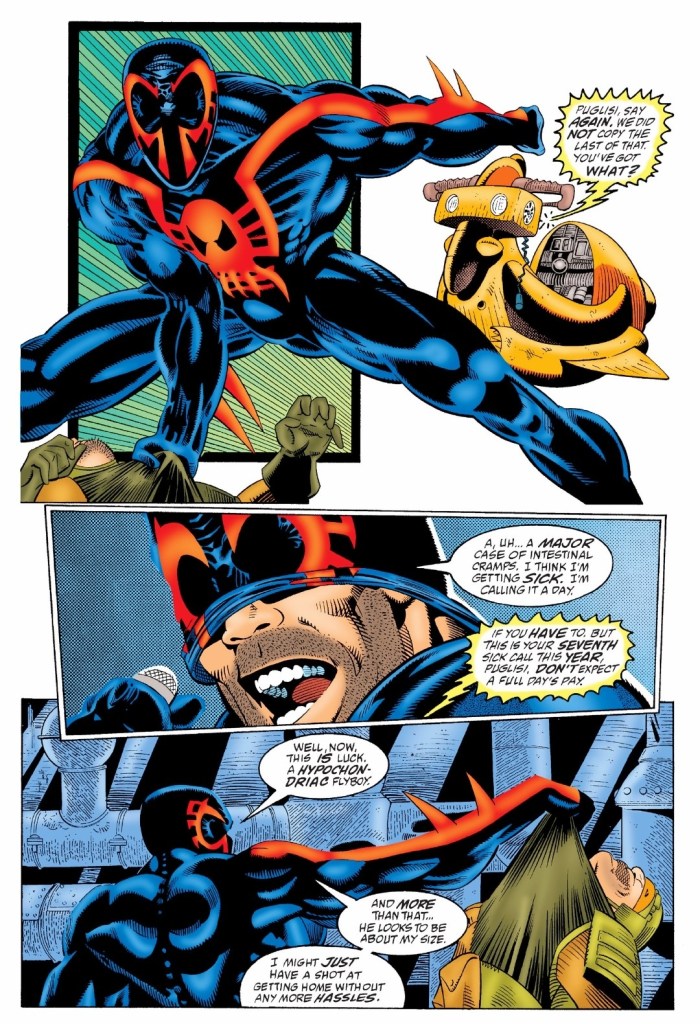
A Look Back at X-Men #30 (1994)

Disclaimer: This is my original work with details sourced from reading the comic book and doing personal research. Anyone who wants to use this article, in part or in whole, needs to secure first my permission and agree to cite me as the source and author. Let it be known that any unauthorized use of this article will constrain the author to pursue the remedies under R.A. No. 8293, the Revised Penal Code, and/or all applicable legal actions under the laws of the Philippines.

Welcome back, superheo enthusiasts, 1990s culture enthusiasts, X-Men fans and comic book collectors! Today we revisit the X-Men monthly series of the 1990s and look back at one of its most significant events it ever published – the wedding of Scott Summers/Cyclops and Jean Grey. By the time this particular comic book was published, the 30th anniversary celebration of the X-Men (note: Read my Fatal Attractions storyline retro reviews by clicking here and here) had just been concluded and that includes a major change of direction for the iconic X-Men member Wolverine. It is also notable that the X-Men had Sabretooth contained within Charles Xavier’s mansion (for retro reviews, click here, here and here).

With those details laid down, here is a look back at X-Men #30, published by Marvel Comics in 1994 with a story written by Fabian Nicieza and drawn by Andy Kubert.

The cover.

Early story

The story begins inside Xavier’s mansion. Jean Grey reads a handwritten letter from Logan/Wolverine, who left the household after getting traumatized from their last encounter with Magneto. Logan refers to her and Scott Summers as special. While reading, Jean is already in her fancy wedding dress being assisted by her mother and storm as Rachel Summers looks on. For Jean, the wedding is about her dedication on spending the rest of her life with Scott as well as possibly gaining Rachel (who comes from one possible future) as a daughter.

Professor X with four of his original team members plus Alex Summers.

Elsewhere in the mansion, the groom Scott spends quality time with his original teammates Bobbdy Drake/Ice Man, Warren Worthington/Archangel and Hank McCoy/Beast. With them also is his brother Alex Summers/Havok. Alex tells Scott that the day of his wedding is the first day of the rest of his life which causes Bobby to say something inappropriate.

Suddenly, Professor X comes in to join them…

Quality

Jean Grey in her wedding dress with her mother, Storm and Rachel Summers present.

To get straight to the point here, this comic book serves two purposes: highlighting Scott and Jean’s relationship to an all new level with the wedding as the main event, and offering long-time or die-hard X-Men fans a whole lot of stuff to chew on. Very clearly, Fabian Nicieza wrote the script with X-Men fans in mind while also making references to the past with some creative touches or shortcuts so that the comic book would not be bloated with excessive fan service.

The wedding itself was executed nicely by the Nicieza-Kubert team and was clearly conceptualized to not only be memorable for the fans but also creatively serve as a major pay-off to all those years of Scott and Jean Grey being together early as teammates, getting separated temporarily and getting together again (note: they were also the original X-Factor team). Right after the wedding was executed, the visuals and words elevated the emotions higher and any long-time X-Men fan will find the moment sentimental.

Opposite the wedding are several scenes showing the other X-Men characters plus those from X-Factor and X-Force (with a not-so-recognizable Cable present). The dialogue written ranged from sentimental to comedic. And then there were also a few lines that I felt were just thrown in as fillers.

As far as visuals go, Andy Kubert’s art here are pretty good to look at. While he did his best to really make the story visually appealing and memorable, there were a few panels of art that look rushed.

Conclusion

So many guests. Can you recognize many of them?

Since it highlights the wedding of Scott and Jean Grey with several other X-Men-related characters mixed in, X-Men #30 (1994) is clearly a commemorative story made with X-Men fans in mind. While a lot of work was done to make the story momentous on its own, readers who are unable to immerse themselves deeply into the X-Men mythos (plus X-Force, X-Factor and others) prior to reading this comic book won’t be able to relate to the wedding and the character moments very much. While it may not be significant to newcomers who find this comic book for the first time, it still marks a significant chapter in the history of X-Men within the Marvel Comics universe of the late 20th century. For the long-time fans who were able to read enough of Scott and Jean Grey’s times together from 1963 until the early 1990s, this is one X-Men tale that they can relate with deeply.

Overall, X-Men #30 (1994) is recommended.

+++++

Thank you for reading. If you find this article engaging, please click the like button below and also please consider sharing this article to others as well as making a donation to support my publishing.. If you are looking for a copywriter to create content for your special project or business, check out my services and my portfolio. Feel free to contact me with a private message. Also please feel free to visit my Facebook page Author Carlo Carrasco and follow me on Twitter at  @HavenorFantasy as well as on Tumblr at https://carlocarrasco.tumblr.com/ and on Instagram at https://www.instagram.com/authorcarlocarrasco
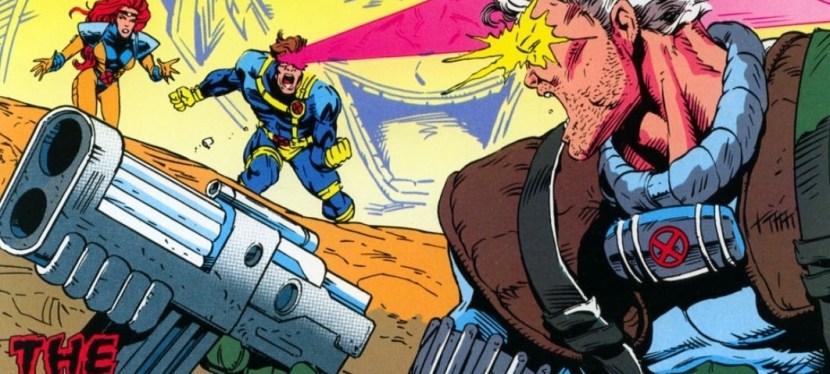
A Look Back at The Night Man #9 (1994)

Disclaimer: This is my original work with details sourced from reading the comic book and doing personal research. Anyone who wants to use this article, in part or in whole, needs to secure first my permission and agree to cite me as the source and author. Let it be known that any unauthorized use of this article will constrain the author to pursue the remedies under R.A. No. 8293, the Revised Penal Code, and/or all applicable legal actions under the laws of the Philippines.

Welcome back superhero enthusiasts, 1990s culture enthusiasts and comic book collectors! Today we go back to the mid-1990s which was a pretty wild time for comic collectors. To be more specific, this newest retro comic book review revisits the Ultraverse through The Night Man monthly series.

In my previous retro review, the titular character had another encounter with Nik Apocaloff away from civilization. Meanwhile, the obsessive tycoon J.D. Hunt approved a new high-tech project called Teknight which is capable of intense combat and other functions. I personally enjoyed the way the creative team presented the big rematch between Night Man and Apocaloff in his werewolf form.

With those details laid down, here is a look back The Night Man #9, published in 1994 by Malibu Comics with a story written by Steve Englehart and drawn by Kyle Hotz.  

The cover.

Early story

The story begins with the defeated Apocaloff standing behind bars in prison with other inmates and police officers present. The police officer tells him of his acts of murdering women and society was fortunate enough to have the Night Man responsible for his capture. Apocaloff then has a small chat with the inmate Martini whose wife just made bail for him again. Upon release from prison, Martini meets his wife and kids outside but excuses himself to help a certain someone. Martini then proceeds to a high-end and meets with a lady inside who pays him for his work and then makes an important call to J.D. Hunt. Knowing that Apocaloff knows sensitive information, Hunt then goes to Nuware Labs where the Teknight project is ready for operation.

Meanwhile, the Night Man searches for Rhiannon…  

Quality

Even though they share common goals, Night Man and the law enforcers have a conflict.

Once again, the creative team of Englehart and Hotz crafted another pretty engaging story that has surprises and moments of intrigue while keeping the narrative fresh. Without spoiling the plot, this comic book had a strong focus on J.D. Hunt and his young yet very aggressive son who use Teknight to do something very daring regarding the captured Apocaloff.  This, of course, lures the Night Man to take action but in a very different way as the conflict happened within the city and with elements of the police and the local government involved.

Apart from showing the conflict between good and evil, Englehart managed to include a few reflective scenes that will make you think about the differences the police have with Night Man with regards to law enforcement and vigilantism clashing with each other even though they all want the same achievement: defeating criminals and handing them over to the justice system. There is also this rather sinister portrayal of the father-and-son relationship between J.D. Hunt and his blonde son. More on the villain Apocaloff, it is very clear that by this point in the Night Man series, he is indeed a major character of opposition against the titular character in this series. I should state that Englehart really delivered a very compelling portrayal of evil with J.D. Hunt and Apocaloff involved. Lastly, this story ended with a twist that  really surprised me.

Conclusion

The Teknight project.

The Night Man #9 (1994) is indeed another compelling story that has a nice mix of action, intrigue and characterization. This is a notable achievement by the Englehard-Hotz team as the Night Man himself was less prominent compared to the previous issue. This is understandable since there was the stronger focus and development of J.D. Hunt and his son as both of them got involved in the story’s main conflict. I should also state that off all the Ultraverse comic books I reviewed so far, this one has a strong father-and-son element that has to be read.  

Overall, The Night Man #9 (1994) is recommended.

+++++

Thank you for reading. If you find this article engaging, please click the like button below and also please consider sharing this article to others. If you are looking for a copywriter to create content for your special project or business, check out my services and my portfolio. Feel free to contact me with a private message. Also please feel free to visit my Facebook page Author Carlo Carrasco and follow me on Twitter at  @HavenorFantasy as well as on Tumblr at https://carlocarrasco.tumblr.com/ and on Instagram at https://www.instagram.com/authorcarlocarrasco/
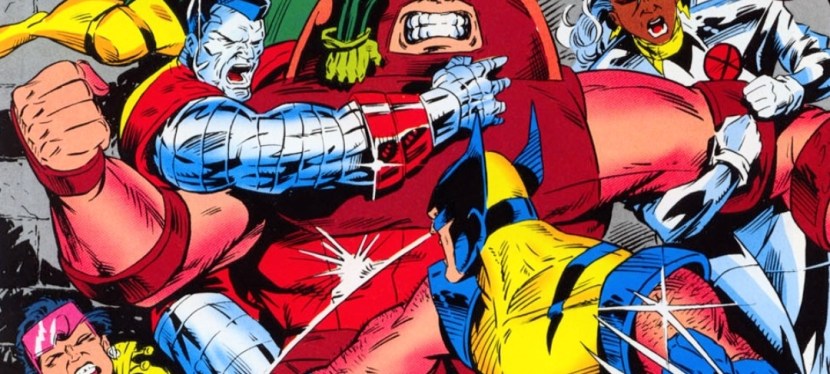
A Look Back at Harbinger #3 (1992)

Disclaimer: This is my original work with details sourced from reading the comic book and doing personal research. Anyone who wants to use this article, in part or in whole, needs to secure first my permission and agree to cite me as the source and author. Let it be known that any unauthorized use of this article will constrain the author to pursue the remedies under R.A. No. 8293, the Revised Penal Code, and/or all applicable legal actions under the laws of the Philippines.

Welcome back superhero enthusiasts, 1990s culture enthusiasts and comic book collectors! Today we go back to the early 1990s and explore a part of the Valiant Comics shared universe through the Harbinger monthly series.

In my previous retro review, Peter/Sting, Kris, Faith/Zephyr, Charlene/Flamingo and John/Torque not only found a place to stay in thanks to a really generous doctor, they went ahead infiltrating the top secret facility of the Harbinger foundation which also brought them face-to-face with the leader. At this stage, Sting and his team have established their purpose not just for survival but to achieve something they believe is right.

With those details laid down, here is a look back at Harbinger #3, published in 1992 by Valiant Comics with a story written by Jim Shooter and drawn by David Lapham.

The cover.

Early story

The story begins at 9:20 AM of July 6, 1991 inside the fine summer home of Dr. Heyward. As Sting tells his teammates that they have to move to catch a flight, Faith (wearing her superhero costume) flies through to find Kris and Torque. She finds the two of them seated next together with Kris having her two hands on Torque.

Meanwhile, Flamingo fixes her face as Sting talks to her. She rejects his declaration that she is a part of their team and reveals that Torque does not care about her. Flamingo considers herself as just another hosebag. Sting then tries to lift her up by telling her that she has to take care of herself and that she is part of their team.

Sting, Faith, Flamingo, Kris and Torque then leave for the airport in a brand new vehicle they just bought (having used the money they stole from Harbinger). Their vehicle flies off to the airport with Sting on the driver’s seat…

Quality

Sting, his teammates and newcomer Ax in the heat of action.

Without spoiling the plot, I can say that the story in this comic book got even wilder than I anticipated. The high intensity of wild turnout of events in issue #2 do not even come close to what was told right here. At the same time, this particular story clearly showed this comic book series’ own place within the literary universe of Valiant Comics and anyone who read XO-Manowar comics of this particular era will instantly recognize the recurring creatures (opposition elements) from outer space.

As expected, the character development of the main characters progressed smoothly revealing some amusing character moments that I found interesting and other times amusing. As Sting continues to act with a sense of leadership as well as a false sense of maturity, you will get to see more of Kris providing him analytical and personal support.

The dialogue in this comic book was written to be more dynamic and this is highlighted in the scene in which Sting and his teammates discuss what to do with their new team objective, and what to do with the computer hacker Ax who has shown Harbinger potential. That being said, Jim Shooter carefully crafted the dialogue to reflect how American teenagers in the late 1980s and early 1990s expressed themselves.

When it comes to superhero spectacle, there is a lot to enjoy here. Action scenes and the use of special abilities or super powers were executed at a moderate pace yet they were intense to look at. Each of the main characters had his/her own share of the spotlight even as the spectacle moved.

Conclusion

Meet Ax, the guy who specializes on cracking and hacking.

Harbinger #3 (1992) is a very engaging story to read which was balanced with a good amount of spectacle, nice character moments and the wildest turn of events so far in this particular comic book series. On face value, this comic book’s core concept (which involves a lot of science fiction elements) seemed over-the-top but Jim Shooter and David Lapham succeeded in telling a story that is believable and at the same time fun. It is also within this comic book that readers will get to see more of the Valiant Comics universe elements without the need of a crossover or a cameo appearance of an established Valiant hero. This is definitely the tale of Sting and his team that was simply taken into a much higher flight of fantasy. That being said, I am looking forward to the next issue.

Overall, Harbinger #3 (1992) is highly recommended!

+++++

Thank you for reading. If you find this article engaging, please click the like button below and also please consider sharing this article to others. If you are looking for a copywriter to create content for your special project or business, check out my services and my portfolio. Feel free to contact me with a private message. Also please feel free to visit my Facebook page Author Carlo Carrasco and follow me on Twitter at  @HavenorFantasy as well as on Tumblr at https://carlocarrasco.tumblr.com/ and on Instagram at https://www.instagram.com/authorcarlocarrasco/
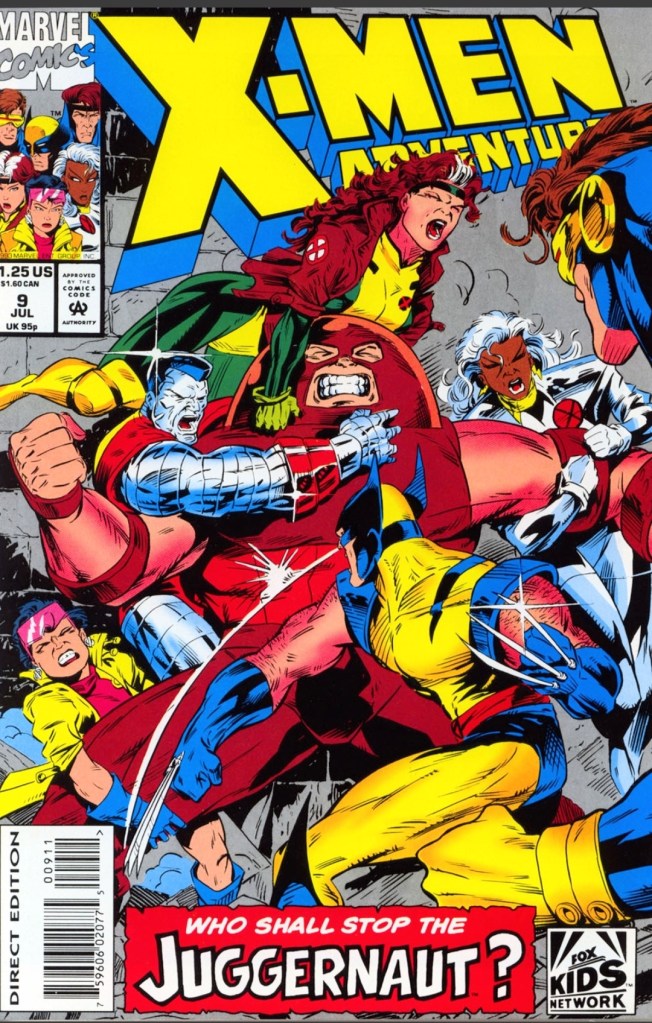
A Look Back at Harbinger #2 (1992)

Disclaimer: This is my original work with details sourced from reading the comic book and doing personal research. Anyone who wants to use this article, in part or in whole, needs to secure first my permission and agree to cite me as the source and author. Let it be known that any unauthorized use of this article will constrain the author to pursue the remedies under R.A. No. 8293, the Revised Penal Code, and/or all applicable legal actions under the laws of the Philippines.

Welcome back superhero enthusiasts, 1990s culture enthusiasts and comic book collectors! Today we go back to the early 1990s and explore a part of the Valiant Comics shared universe through the Harbinger monthly series.

In my previous retro review, the primary characters (Peter/Sting, Kris, Faith/Zephyr, Charlene/Flamingo and John/Torque) composed of mainly young adults with different abilities were gradually introduced and together they became targets of the mysterious private organization referred to as Harbinger (led by Japanese tycoon Toyo Harada). Harbinger has vested interests in people with paranormal abilities. In order to survive, Peter and his so-called team must set aside differences and work together while making the most out of their respective abilities.

With those details laid down, here is a look back at Harbinger #2, published in 1992 by Valiant Comics with a story written by Jim Shooter and drawn by David Lapham.

The cover.

Early story

The story begins at 12:03 AM of June 6, 1991. Peter, Faith, Flamingo and Torque bring their wounded teammate Kris into a hospital for immediate treatment. Upset with the hospital rules on admittance of patients, Peter uses some of his power to lift a few staffers off the floor while demanding that they treat Kris immediately. Their group was told that because they are all minors, parental consent is needed. Gunshot wounds, which Kris has, constitute reporting to the police.

Sting and his companions eventually brought Kris to a hospital bed. As he realized it is pointless to use his power on a doctor (Heyward) to force him to treat Kris, Sting uses his power to remove the two bullets out of her wounds which took a heavy toll on him. The doctor then decides to properly treat Kris.   

By 4:49 AM, Kris’ condition has stabilized and the group of Sting decide to leave with their recovering companion with them. As soon as they exited the hospital, the group suddenly gets attacked by snipers…

Quality

Sting and his teammates on a risky mission.

As the heavy build-up in the first issue has been established, this comic book’s story executed some pay-off while gradually doing some new build-up of the series’ concept with expository dialogue as creative tools. For one thing, the story of Sting and his companions turned wild as the stakes have been raised further as they have become wanted people and they don’t have much resources left for survival. Next, the story suddenly created an X-Men vibe to me when the young adults take refuge inside a large and nice home of a sympathetic medical doctor they encountered earlier in the hospital.

When it comes to character development, the reluctant leader Sting got the most amount of characterization and along the way, you will see how he shifts his attention and concern to Faith, Flamingo and Torque more as Kris spent some time out of action. At this stage, Sting gradually changed from the reluctant powerful teenager into someone cares for others as they share the same desire to survive and lift themselves up. A clear 2nd to Sting on characterization is Faith who is the geek and pop culture enthusiast who tries her best to live up to the harshness of the reality they group is facing.

While Sting and his team are sympathetic to look at being targets of the dangerous organization Harbinger (note: they and their leader make their first appearances here), you will realize that they also became criminals with their acts of break-ins, fraud and robbery. These criminals act made those in issue #1 look like rehearsals. Since these powered young adults are on the run and struggling to survive, disregarding the law becomes natural for them. As such, the boundaries between right and wrong clearly got blurred not only with Sting’s team but also with Harbinger and its troops.

When it comes to the first appearances of Toyo Harada and his organization Harbinger in the pages of this comic book, I can say without spoilers that they are worth seeing and they further added depth into this comic book’s concept deep within the Valiant comic book universe.

Conclusion

The young adults presence inside a very large and nice home reminds me of the X-Men living inside Xavier’s home.

I can say out loud that Harbinger #2 (1992) is indeed very compelling to read as the stakes have been raised, the lead characters were developed nicely and the first appearance of Harbinger as the antagonistic force all paid-off nicely to the build-up of the first issue. As far as entertainment is concerned, the reading experience is more intriguing mainly due to the strong writing by Jim Shooter and this means that the superhero spectacle was secondary but in a good way. As mentioned earlier, the border between right and wrong got blurred and I can say the same thing about Harbinger and Sting’s group. This eventually will compel you to question if Sting and his companions could still be morally acceptable or not at all as their criminal acts are undeniable. Would you be sympathizing with them? Would you think they are as bad as Harbinger? Could Sting and his team actually pose a greater danger to society than Harbinger itself? Don’t you think Sting and his companions are looking like Black Lives Matter (BLM) social terrorists? This comic book really has to be read.

Overall, Harbinger #2 (1992) is highly recommended!

+++++

Thank you for reading. If you find this article engaging, please click the like button below and also please consider sharing this article to others. If you are looking for a copywriter to create content for your special project or business, check out my services and my portfolio. Feel free to contact me with a private message. Also please feel free to visit my Facebook page Author Carlo Carrasco and follow me on Twitter at  @HavenorFantasy as well as on Tumblr at https://carlocarrasco.tumblr.com/ and on Instagram at https://www.instagram.com/authorcarlocarrasco/
A Look Back at X-Men Adventures Season II #4 (1994)

Disclaimer: This is my original work with details sourced from reading the comic book and doing personal research. Anyone who wants to use this article, in part or in whole, needs to secure first my permission and agree to cite me as the source and author. Let it be known that any unauthorized use of this article will constrain the author to pursue the remedies under R.A. No. 8293, the Revised Penal Code, and/or all applicable legal actions under the laws of the Philippines.

Note: Since this retro review mentions both Russia and Ukraine, I encourage you all to help the people of Ukraine (whose lives have been disrupted by Russian forces) by donating to the Ukraine Appeal project of Hillsong Church. Donate now at https://hillsong.com/appeal/

Welcome back, superhero enthusiasts, 1990s culture enthusiasts, X-Men fans and comic book collectors! Today we revisit the X-Men Adventures monthly series which was a literary adaptation of the famous X-Men animated series of the 1990s.

To be more specific, we examine a tale of the major X-Men villain Omega Red within the monthly series adaptation of the 2nd season of the animated series. Take note that I previously reviewed X-Men #4 (1991), X-Men #5 (1992) and X-Men #6 (1992) which told the first tale of Omega Red who turned out to have a history of conflict with Wolverine decades prior.

With those details laid down, here is a look back at X-Men Adventures Season II #4, published by Marvel Comics in 1994 with a story by Ralph Macchio and drawn by John Herbert.

The cover.

Early story

The story begins in the Caucasus located between Ukraine and Georgia. Inside, a group of people work on a scientific operation resulting a power surge. The surge then causes a stasis chamber’s glass to crack. Moments later, Omega Red emerges and he has clear knowledge about who restrained him, who the government leaders and what happened to the Russian empire. He declares that the Russian empire shall live again. In Moscow, three high ranking military officers discuss their secret plan on restoring the Soviet Union. It turns out, the return of Omega Red is the first step for their ambitious plan.

In America, Jubilee encounters a group of activists who hate mutants inside a convenience store. Peter Rasputin/Colossus, the Russian mutant who encountered the X-Men sometime prior, comes into the store to help Jubilee. Afterwards, Jubilee and Colossus travel to Charles Xavier’s mansion – Xavier’s School for Gifted Children – and discuss important matters. He tells her that Omega Red has emerged in Russia and he need to speak to Professor X. It turns out, Xavier disappeared some weeks prior.

As the situation is so desperate for Colossus, he asks Jubilee if she would help him in his struggle to save his nation. Jubilee makes a hasty decision to do so and leaves a handwritten note telling her teammates that she is off to Russia…

Quality

Colossus and Jubilee in Russia.

While this comic book’s cover art easily reminds me of the Wolverine-Omega Red confrontation on the cover of X-Men #5 (1992), the story here is more varied than that mentioned comic book drawn by Jim Lee. As this is an adaptation of the X-Men animated series episode titled “Red Dawn”, it is not surprising to see the spotlight being divided by many characters.

Omega Red, who has been declared as one of the greatest X-Men villains ever, has a somewhat strong presence serving as the main figure of opposition against Charles Xavier’s team as well as the surviving elite remnant of the Soviet Union. Quite amusingly, Omega Red is totally loyal to the Russian empire similar to how James Bond is very loyal to England and the queen. In comparison to issues #4 to #6 of the X-Men monthly series, the history of conflict between Omega Red and Wolverine was very lightly portrayed.  

Wolverine and Omega Red in battle!

As mentioned earlier, the spotlight is shared a lot by many characters which results a lack of a true protagonist among the X-Men. This is not necessarily a problem as Omega Red’s presence had enough strength. The other Russian Colossus, who at the start of the story has not yet joined the X-Men, got a good share of the spotlight among the good guys and that results some quick and efficient exposition to get readers oriented with him, his family and how he became an outcast in his nation because of his mutation.

The plot itself is light on details which is not surprising due to the high amount of exposition which includes a geopolitical look at the remaining loyalists of the Soviet Union living in Russia which saw some of its regions transformed into republics. With regards to superhero spectacle, this one has a good amount of action and I can easily say the biggest attraction is the fight between Wolverine and Omega Red. Just don’t expect it to be as extensive nor as detailed as the ones Jim Lee drew in the adjective-less X-Men series.  

Conclusion

John Herbert’s take on Omega Red was carefully crafted.

X-Men Adventures Season II #4 (1994) is a fun superhero story to read and I find its portrayal of the Wolverine-Omega Red conflict to be interesting knowing it was not part of comic book canon of the time. Apart from the mentioned conflict, there is something for X-Men fans to enjoy here such as Colossus’ return and his new interactions with the X-Men, how Omega Red’s presence causes danger in Russia, and the current whereabouts of Charles Xavier. Lastly, I should state that John Herbert’s art style is engaging to look at and he made Omega Red look intimidating.

Overall, X-Men Adventures Season II #4 (1994) is recommended!

+++++

Thank you for reading. If you find this article engaging, please click the like button below and also please consider sharing this article to others. If you are looking for a copywriter to create content for your special project or business, check out my services and my portfolio. Feel free to contact me with a private message. Also please feel free to visit my Facebook page Author Carlo Carrasco and follow me on Twitter at  @HavenorFantasy as well as on Tumblr at https://carlocarrasco.tumblr.com/ and on Instagram at https://www.instagram.com/authorcarlocarrasco/
A Look Back at Freex #14 (1994)

Disclaimer: This is my original work with details sourced from reading the comic book and doing personal research. Anyone who wants to use this article, in part or in whole, needs to secure first my permission and agree to cite me as the source and author. Let it be known that any unauthorized use of this article will constrain the author to pursue the remedies under R.A. No. 8293, the Revised Penal Code, and/or all applicable legal actions under the laws of the Philippines.

Welcome back superhero enthusiasts, 1990s culture enthusiasts and comic book collectors! Today we go back to the mid-1990s which was a really wild time for comic collectors. To be more specific, this newest retro comic book review revisits Ultraverse through the exploits of Freex, the monthly series about a group of young adults with unusual capabilities (or abnormalities) who are constantly on the move as they are social outcasts.

In my previous retro review, the Freex (already without Ray but with Cayman from Contrary’s institution as his replacement) continued their search deep underground and encountered the ancient being called Prometheus. Elsewhere, Atalon and his group move nuclear weapons deep underground setting up a major conflict with the nations on the surface. After some struggle and more movement, the Freex find themselves in Denver.

With those details laid down, here is a look back Freex #14, published in 1994 by Malibu Comics with a story written by Gerard Jones and drawn by Scott Kolins.

The cover.

Early story

The story begins in Denver, Colorado, where the Freex retreated into a cave dreading the assault by police officers who spotted them. It turns out, the group don’t have only the police to worry about but also the Night Patrol, a group of armed vigilante thugs who hate freaks.

As the Night Patrol start firing at him, Michael realized the protection he got was done by concentrating through the crowns and think about the suits, which he tells his teammates. As the conflict continues, one of the Night Patrol members hits Angela which in turn triggers Michael to take action by using his power to seize control of communications and motility systems and knock down the freak-hating thugs.

Suddenly, one of the Night Patrol members managed to subdue Michael. Valerie tells her teammates to strike back but it turned out unnecessary as the thug falls down. Suddenly, Contrary appears to them…

Quality

Now with Ray back with them, the Freex go back underground.

To get straight to the point, this Freex story is more about the continuing development of the team with the Old Man as their mentor but with one notable turn of events that is not really a spoiler (due to the cover art)…the return of Ray to the team.

While the plot is thinner this time around, the character development was bumped up several notches. As the Freex found themselves cornered with opposition, the reappearance of Contrary (note: she took time away from UltraForce in this particular point of time) resulted in a few notable revelations regarding how she operates, how manipulative she is and how obsessed she is with having young freaks (note: those with powers or those injected with wetware) under her own definition of care, education and nurturing. The way the script was written, this comic book made me wonder if Contrary is insane while still maintaining a good amount of control given her vast resources to organize missions. Just thinking about her organizing UltraForce operations and maintaining her institution for powered students is indeed intriguing.

More on the return of Ray – one of the pioneering members of Freex – his return is not a throwaway portrayal. Rather Ray showed clear signs of maturity apart from learning something from his time at Contrary’s institution. Morever, Ray shows he has a big heart from his teammates. This alone added some emotional impact to the end of the comic book.

Conclusion

A quick appearance of UltraForce within this Freex tale.

Freex #14 (1994) does not have a deep story to tell, has little in terms of superhero spectacle and it recycled some misadventure elements from the previous issue to move the plot forward. The most defining things in this comic book are the respective returns of Ray and Contrary which added nicely to the character development. Any solid Freex fan will have something to enjoy, especially if they continue loving the main characters.

Overall, Freex #14 (1994) is recommended.

+++++

Thank you for reading. If you find this article engaging, please click the like button below and also please consider sharing this article to others. If you are looking for a copywriter to create content for your special project or business, check out my services and my portfolio. Feel free to contact me with a private message. Also please feel free to visit my Facebook page Author Carlo Carrasco and follow me on Twitter at  @HavenorFantasy as well as on Tumblr at https://carlocarrasco.tumblr.com/ and on Instagram at https://www.instagram.com/authorcarlocarrasco/

A Look Back at The Night Man #8 (1994)

Disclaimer: This is my original work with details sourced from reading the comic book and doing personal research. Anyone who wants to use this article, in part or in whole, needs to secure first my permission and agree to cite me as the source and author. Let it be known that any unauthorized use of this article will constrain the author to pursue the remedies under R.A. No. 8293, the Revised Penal Code, and/or all applicable legal actions under the laws of the Philippines.

Welcome back superhero enthusiasts, 1990s culture enthusiasts and comic book collectors! Today we go back to the mid-1990s which was a pretty wild time for comic collectors. To be more specific, this newest retro comic book review revisits the Ultraverse through The Night Man monthly series.

In my previous retro review, Night Man encountered a new, murderous villain who could change into a werewolf. The mentioned villain named Nik Apocaloff is a lot more than being able to become a monster…he has a notable family background, is highly education and is connected with powerful figures like J.D. Hunt. That makes him a formidable antagonist versus Night Man and his civilian identity as Johnny Domino. Apocaloff proved to be such a powerful villain, he became the center of attention of Night Man during one of his radio broadcasts.

With those details laid down, here is a look back The Night Man #8, published in 1994 by Malibu Comics with a story written by Steve Englehart and drawn by Kyle Hotz.  

The cover.

Early story

The story begins somewhere inside one of the many rooms of city hall. An intense meeting goes on with the mayor present and what happened recently involving both the Night Man and the werewolf made an impact on the matters of discussion.

In an apartment somewhere in the city, Apocaloff is in his monster form and he just murdered a lady and consumed a lot of her flesh. Suddenly the door is knocked by someone who knew the victim. This causes Apocaloff to leave through the window and climb the steps to the rooftop. There, he changes back into his human form.

Elsewhere, Lt. Carleton Briggs arrives back in his office where Sergeant Dade is waiting. After a s short chat, they hug and kiss each other. The Night Man suddenly enters through the window…

Quality

J.D. Hunt and the Teknight project.

Wow! This is one very compelling tale of the Night Man. To get straight to the point, the highlight of this comic book is the rematch between the title character and Apocaloff. To be clear, the rematch was not handled with brainless action in mind but rather with a lot of strategy combined with a medium-paced approach on progression which brought back a lot of vibes from Night Man’s encounters with the members of TNTNT a few issues back. Storywise, the stakes behind the rematch are much higher as the Night Man makes a solid pitch to the local police in the fight against crime (which made me think about the key elements of Batman comic books)  while the tycoon J.D. Hunt (whom Apocaloff interacted with previously) just gave his approval for the Teknight project.

When it comes to character development, Apocaloff’s strong adherence to the past (Russian legacy, old world sensibilities, connections with California’s history) are emphasized some more. For his part, Night Man’s intelligence and approach to vigilantism got developed even more.  

Conclusion

Night Man comes to the police with evidence about Apocaloff.

The Night Man #8 (1994) is another solid comic book of the Ultraverse. The story was told with an overall medium pace and the payoffs for each build-up were indeed satisfying. Considering the presence of the police in the story, this particular Night Man issue has the strongest similarities with DC Comics’ Batman. More importantly, this issue succeeded in developing both the titular hero and his most elaborate villain. It seems to me that Night Man and Apocaloff were made to clash with each other beyond this issue and the previous one.

Overall, The Night Man #8 (1994) is recommended.

+++++

Thank you for reading. If you find this article engaging, please click the like button below and also please consider sharing this article to others. If you are looking for a copywriter to create content for your special project or business, check out my services and my portfolio. Feel free to contact me with a private message. Also please feel free to visit my Facebook page Author Carlo Carrasco and follow me on Twitter at  @HavenorFantasy as well as on Tumblr at https://carlocarrasco.tumblr.com/ and on Instagram at https://www.instagram.com/authorcarlocarrasco/