A Look Back at Shin Godzilla (2016)

Disclaimer: This is my original work with details sourced from watching the movie and doing personal research. Anyone who wants to use this article, in part or in whole, needs to secure first my permission and agree to cite me as the source and author. Let it be known that any unauthorized use of this article will constrain the author to pursue the remedies under R.A. No. 8293, the Revised Penal Code, and/or all applicable legal actions under the laws of the Philippines.

There is no doubt that Japan’s fictional monster Godzilla (originally called as Gojira) made tremendous impact not only with the Japanese but also with other entertainment lovers around the world. Way back in 1954, the monster was portrayed as a destructive, walking symbol of nuclear weapons in the movie Gojira directed by the late Ishirô Honda.

As the years passed by, several more Godzilla movies were released by Toho Pictures. In 1998, an American-made movie about Godzilla was finally made in a disappointing form directed by Roland Emmerich. In 2014, Warner Bros. and Legendary Pictures made a more respectful film of the monster under the direction of Gareth Edwards. In 2019, the follow-up Godzilla: King of the Monsters was released and I enjoyed it a lot more than its 2014 predecessor.

Before the 2019 movie was released, Toho in Japan released Shin Godzilla (alternate titles: Shin Gojora and Godzilla: Resurgence) which was the result of the 2014 movie’s success as well as the fact that there were no restrictions in the contract with Legendary Pictures for the Japanese studio to make their own domestic versions.

Due to its lack very limited presence in cinemas here in the Philippines in 2016, I was unable to watch it on the big screen. Fortunately, it was released locally on original DVD some time after and I got to watch it in the comfort of home.

With those details laid down, here is a look back at Shin Godzilla co-directed by Hideaki Anno and Shinji Higuchi (both best known for Neon Genesis Evangelion).

This is classic Godzilla.

Early story

The story begins at Tokyo Bay where the coast guard personnel found an abandoned yacht and searched inside. Suddenly a huge cloud of steam erupted from the ocean followed by blood-like water flooding the Tokyo Bay Aqua-Line. The tragedies compelled local authorities to take action starting with a committee meeting.

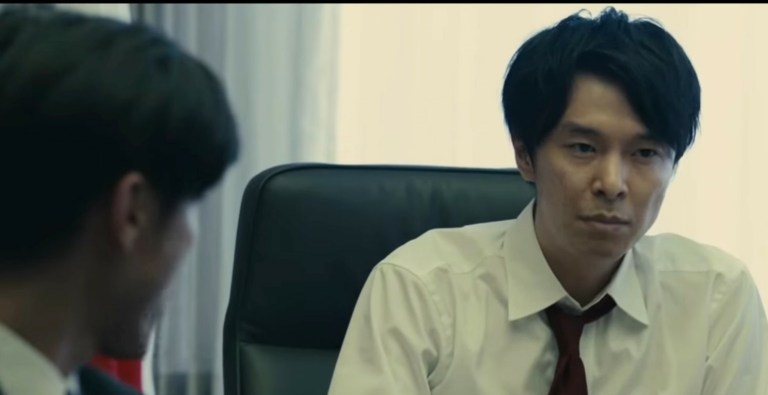
As emergency personnel save the victims in the damaged Tokyo Bay Aqua-Line, the tragedies reach the office of the Prime Minister who engages with many other government officials in an official meeting. They try to figure out what caused the incidents and, as such, theories and efforts to explain what happened were spoken until Deputy Chief Cabinet Secretary Rando Yaguchi (Hiroki Hasegawa) theorized that a living creature caused it (because he saw a viral video) which only resulted disbelief and dismissal.

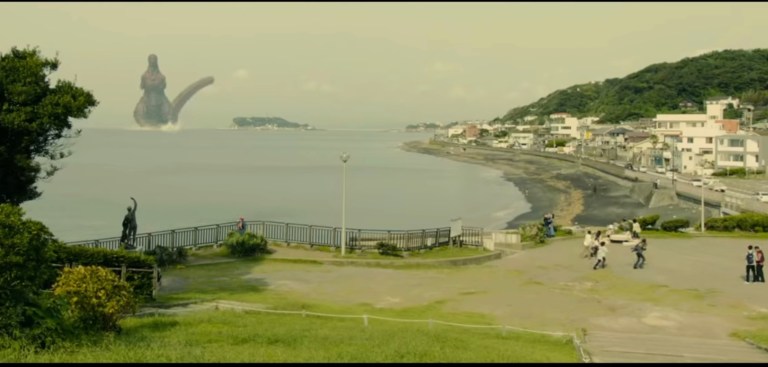
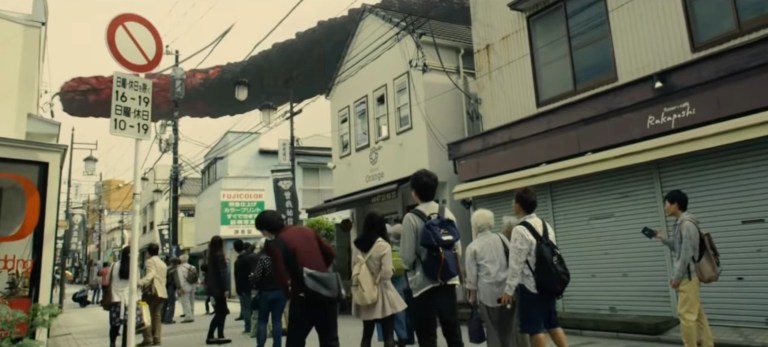
Suddenly a massive tail rises from the ocean which got captured in video and photographs by the news media which confirms Yaguchi’s hunch. As the Prime Minister and the team of officials spend more time discussing and searching for real experts (because the three scientists they just met did not produce any breakthroughs), a huge creature makes its way into one of Tokyo’s districts through a waterway causing massive damage and displacing many people as well as all boats that got in its way.  

In a press conference, the Prime Minister gave his assurance to the public that they need not worry about the creature coming to shore. Just after giving his assurance speech, an assistant approaches the Prime Minister with really bad news that the creature has been crawling inland and causing even more damage…

Quality

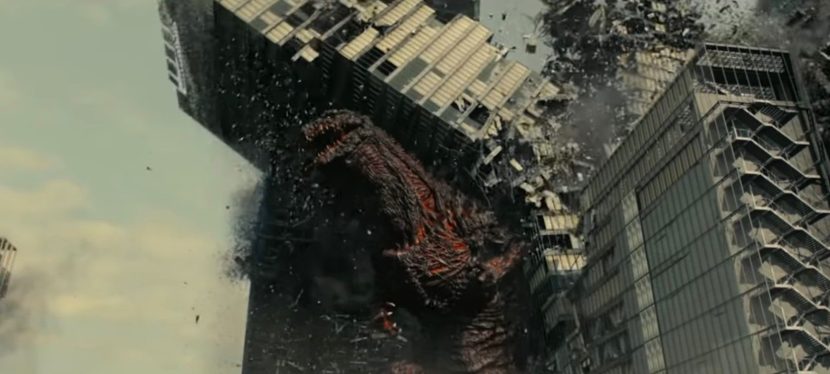
Japan’s iconic monster is not only terrifying here but also very deadly.

When it comes to presentation in comparison to all other Godzilla movies released, Shin Godzilla is very unique as it strongly brings to the viewers a very in-depth examination of the bureaucracy of the Japanese government complete with the many laws, requirements, rules and other elements of governance that made it so hard for the local authorities to respond to Godzilla’s invasion of the metropolis. There are key details that were raised such as the constitutionality of using local military force against the monster (which is not a foreign invader), which department should be in-charge of research about the same monster, etc.

Along the way, there is an overload of information – in terms of text, images and dialogue – that makes viewing quite a challenge. This makes watching Shin Godzilla a learning experience that viewers who are interested in governance and science will likely enjoy although it will alienate other moviegoers, especially those who only want to watch the spectacle of massive on-screen destruction that giant monster movies are known for. Going through all the exposition and explanations, and understanding most of it, however, will make the viewing experience worth it as these countless details do make sense in relation to Godzilla’s destructive impact on the people.

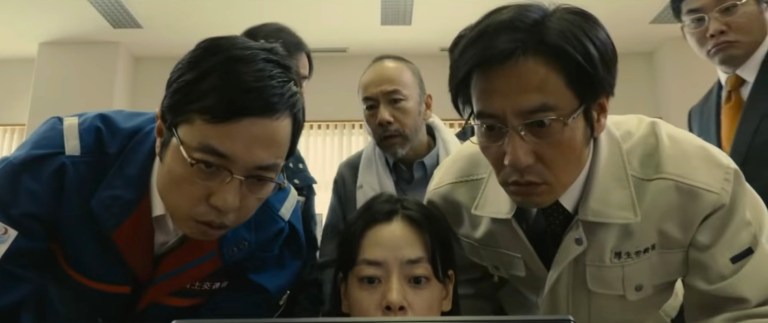
And then there is the huge cast of characters that needs to be followed. This is another big challenge for viewers because if one misses out on the key purpose a character has, then following the government’s efforts on dealing with Godzilla will make less sense. Not only will you have to follow the characters’ names, you will also have to remember their respective work titles. Apart from the government officials, there is also the huge batch of nerds and varied experts gathered by the government to do intense research. Again, those people need to be followed and remembered so you can understand what they do and how they contribute to their government’s efforts. When it comes to performances, they are collectively dramatic and you will be convinced of the pressure, the danger and uncertainty they face with Godzilla threatening Tokyo.

Better get used to seeing so many characters throughout the movie.
Hiroki Hasegawa as Rando Yaguchi.

As for the main spectacle of the movie, Godzilla, I can say that the monster here is very terrifying to watch. This is not your typical Godzilla as the Anno-Higuchi directorial duo really went all out with their creativity to remake Japan’s iconic monster into something new and deadly while still linking him creatively to the legacy of the classic Godzilla. There is even an element of evolution in this version of Godzilla and to see the Japanese military fire their expensive weapons at him really made a lot of spectacle to enjoy. I should also state that several scenes of disaster caused by the monster in this film were inspired by the tragedies of the Tōhoku earthquake and tsunami, and the Fukushima Daiichi nuclear disaster of 2011. Lastly, Godzilla here is really a super villain that is not only gigantic but also is made to be highly believable that it can destroy the nation, kill innocent civilians, demoralize the authorities and even bring Japan’s entire economy way down (note: one of the government officials explained the economic consequence of failing to defeat the monster).

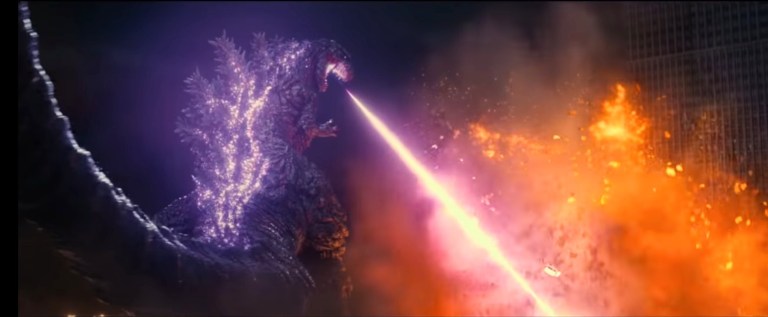
When it comes to visual effects, this one is the best-looking Godzilla made by the Japanese yet! While the traditional approach of having an actor wear a rubber suit has been disregarded in favor of using modern, digital means (with motion capture), what the production team did here is very impressive as they focused strongly on having computer-generated graphics that are photo-realistic. While it is true that there were some moments of fake-looking CGI, the heavy photo-realism on the graphics of Godzilla (combined with strategic camera angles that really captured the scope and size of the monster) easily outweighed the weak spots. The lighting effects used for the laser blasts were very impressive, even competitive with what Hollywood has been doing. As for the scenes of destruction, a mix of CGI and practical effects (specifically miniatures) was used. In fact, certain scenes showing Godzilla interacting with the environment was done with pushing a prop through miniatures which resulted a high level of detail with organic and solid stuff.

The spectacle would not have been that effective, however, without the solid musical work done by Shiro Sagisu. Not only did the music add a lot to the intense sequences of Godzilla, it also brought out the sense of dread and horror out of the monster especially in the night-time scene when he was towering over a large section of Tokyo that lost power. Sagisu was also involved in Neon Genesis Evangelion.

Conclusion

The emphasis on photo-realism on the computer-generated effects is something special.

I can say it out loud that Shin Godzilla (2016) is truly a spectacle to watch complete with tons of heavy drama, tons of information and the widest cast of characters to date. It is a new version of the Japanese icon that really impresses and when it comes to movie intelligence, it easily outshines many other Godzilla flicks. While it has a lot of spectacle to keep moviegoers entertained, its heaviness with the information and large cast of characters could turn off viewers who are not used to thinking and paying attention to lots of details while watching a giant monster movie. Personally, I welcomed the information overload and made efforts on paying close attention to the details and the characters. It really takes patience and focus to truly make the most out of the story and the overall presentation.

Ultimately, I enjoyed this movie for what it is and what its message was about with regards as to how governments should respond to immense disasters, what is Japan’s place in the world of the 21st century and, most notably, what Godzilla means to Japan and the international community. This is a very solid modernization of Godzilla and the Anno-Higuchi deserve admiration.

If you are seriously planning to buy an existing hard copy of Shin Godzilla (2016), visit Amazon for the Blu-ray disc release and see if it has the right price and special features to satisfy you.  

Overall, Shin Godzilla (2016) is recommended!

+++++

Thank you for reading. If you find this article engaging, please click the like button below and also please consider sharing this article to others. If you are looking for a copywriter to create content for your special project or business, check out my services and my portfolio. Feel free to contact me as well. Also please feel free to visit my Facebook page Author Carlo Carrasco and follow me at HavenorFantasy@twitter.com
A Look Back at Wonder Woman #15 (1988)

Disclaimer: This is my original work with details sourced from reading the comic book and doing personal research. Anyone who wants to use this article, in part or in whole, needs to secure first my permission and agree to cite me as the source and author. Let it be known that any unauthorized use of this article will constrain the author to pursue the remedies under R.A. No. 8293, the Revised Penal Code, and/or all applicable legal actions under the laws of the Philippines.

Welcome back, superhero enthusiasts, comic book collectors and Wonder Woman fans! Last time around, the Challenge of the Gods storyline concluded and it really had a lot of twists and profound surprises that really shook the foundation of the post-Crisis Wonder Woman monthly series that was spearheaded by George Perez and Len Win. The Challenge of the Gods started strongly in issue #10 and as each issue was released, the narrative got more intriguing and ultimately served its purpose on defining Wonder Woman as the ever-willing and pure Queen of Superheroes. Along the way, there was significant development of Queen Hippolyte who has been struggling between ruling her fellow Amazons and being a mother to Diana/Wonder Woman.

As the Challenge of the Gods was full of elements of fantasy and Greek mythology, it can be quite challenging for any comic book creator to start the next chapter of the Wonder Woman monthly series’ narrative without reusing the mentioned elements.

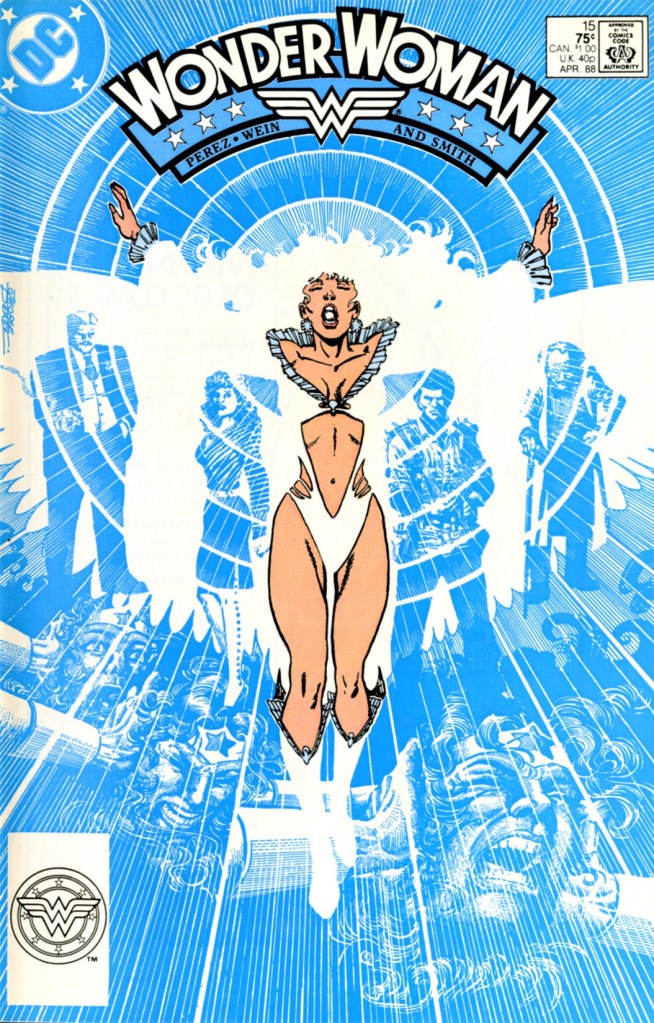
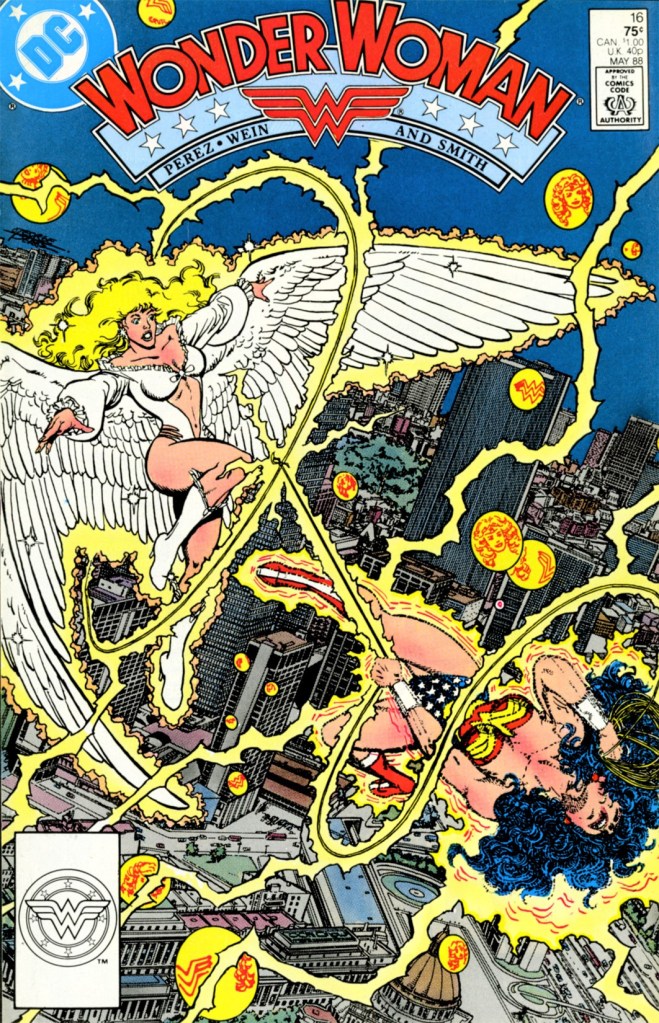
In the case of the next Wonder Woman comic book for review here, I can say that the creators literally brought Wonder Woman into the realm of realism and intrigue. With those details laid down, here is a look back at Wonder Woman #15, published by DC Comics in 1988 with a story written by George Perez and Len Wein. Perez illustrated the comic book.

The cover.

Early story

The story begins with Wonder Woman having a very vivid dream about a certain great hero. After waking up from it, she feels that trying to keep up with all the events of the world must be taking its toll on her. She expressed that she is ill-prepared to deal with new sensations.

“In this world, man and woman long for these feelings. They cherish them. I’ve read how they have even died for them,” Diana said. “And that truly frightens me.”

While Diana is staying at the Kapatelis residence, it turns out Julia (mother of Vanessa) is overseas. She wishes that Julia is with her to discuss what she has been feeling.

Meanwhile at the Ogawa headquarters in Boston, an armed man is using one of the company’s computers to acquire classified information about a subject referred to as Valerie Beaudry. A security guard arrives and decides to investigate as he realizes that his fellow guard was missing (knocked unconscious already). The infiltrator makes short work of him and leaves the building with the acquired information…

Quality

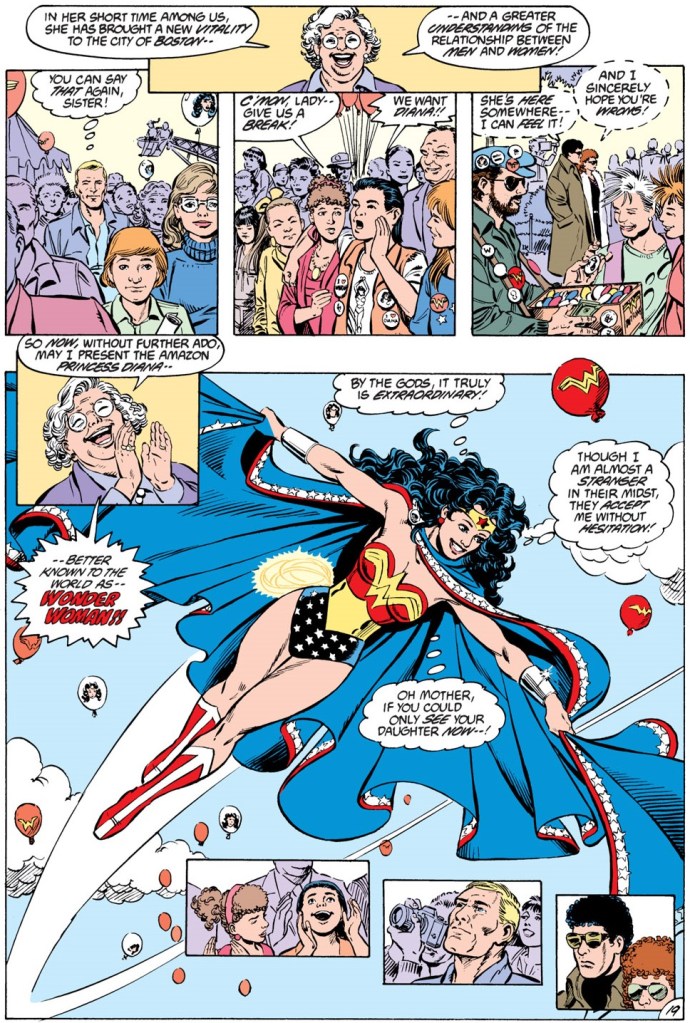
Wonder Woman appears at a major public event.

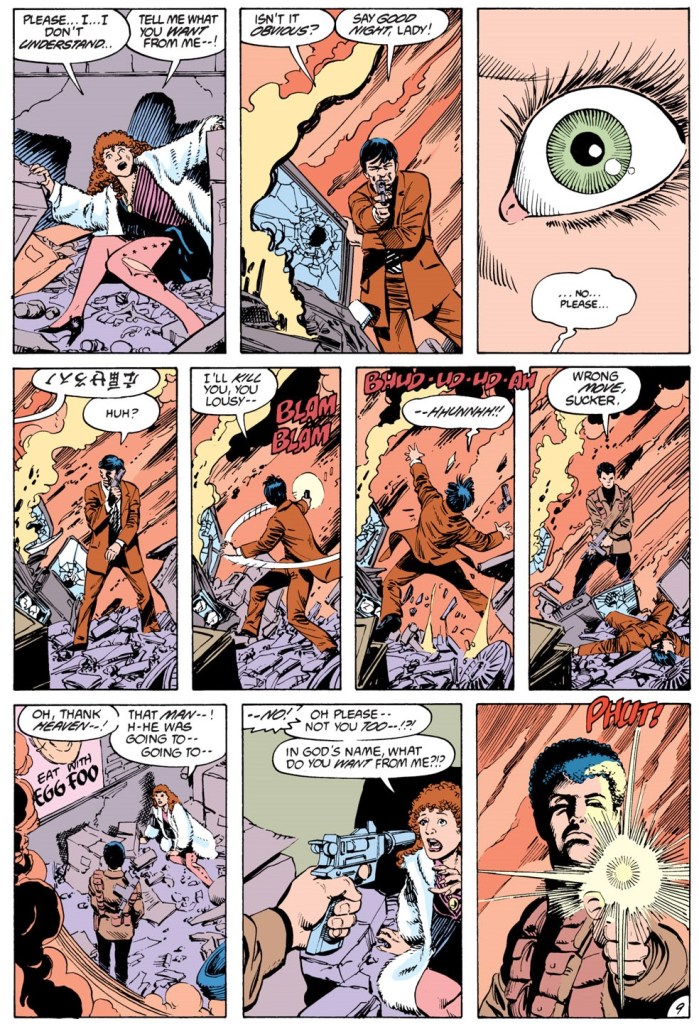
I can start with the sudden change of tone for the storytelling. Gone are the fantasy and mythology elements of the Challenges of the Gods storyline and fully implemented in this comic book are the elements of intrigue, suspense, assassination and even sci-fi. The story itself is more grounded with reality as far as the post-Crisis DC Comics universe goes and because it is well written, the sudden change of tone and style never felt jarring to me.

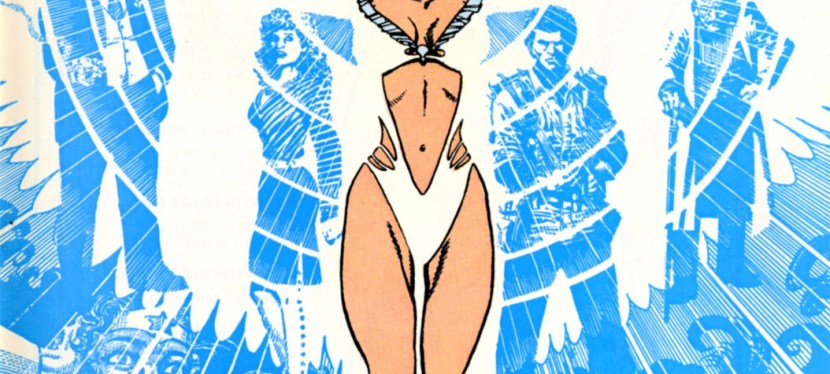
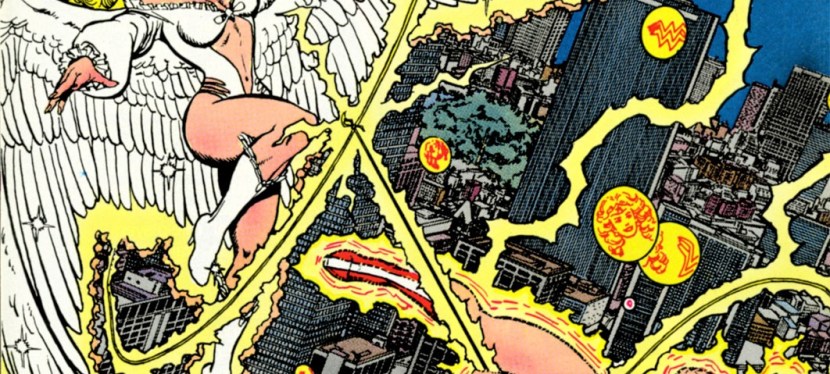
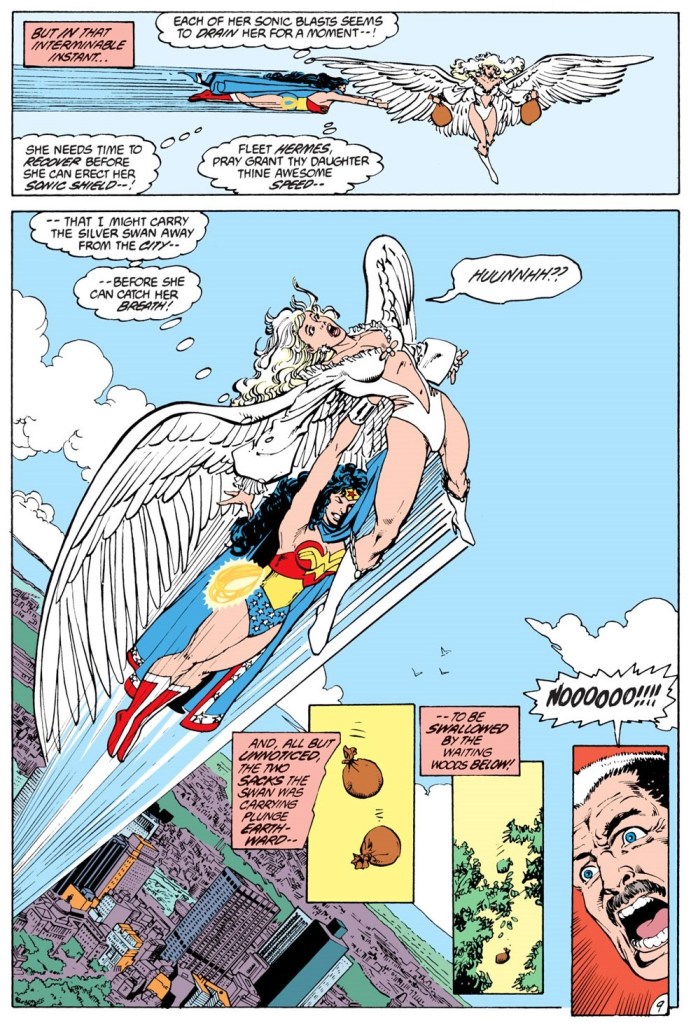
While the 9th issue of this monthly series introduced a modern Cheetah, this comic book introduced the modern Silver Swan in the form of Valerie Beaudry (who appears on the cover). The good news here is that the creators took their time in gradually building-up details about Valerie and how she became Silver Swan. By the time Silver Swan appears in the presence of Wonder Woman, her personal details and traits have been developed in a satisfying way. Unlike Wonder Woman #9, Silver Swan’s appearance in this comic book stretches on into the next issue.

Along the way, more new characters were introduced and the most notable ones are connected with Valerie Beaudry. Maxine Sterenbuch, who eerily resembles Wonder Woman’s teenage pal Vanessa but in adult form, has a close connection with Valerie over a period of many years. There was also Henry Cobb Armbruster, a tycoon who wield tremendous power and has been hiring assassins to do his bidding.

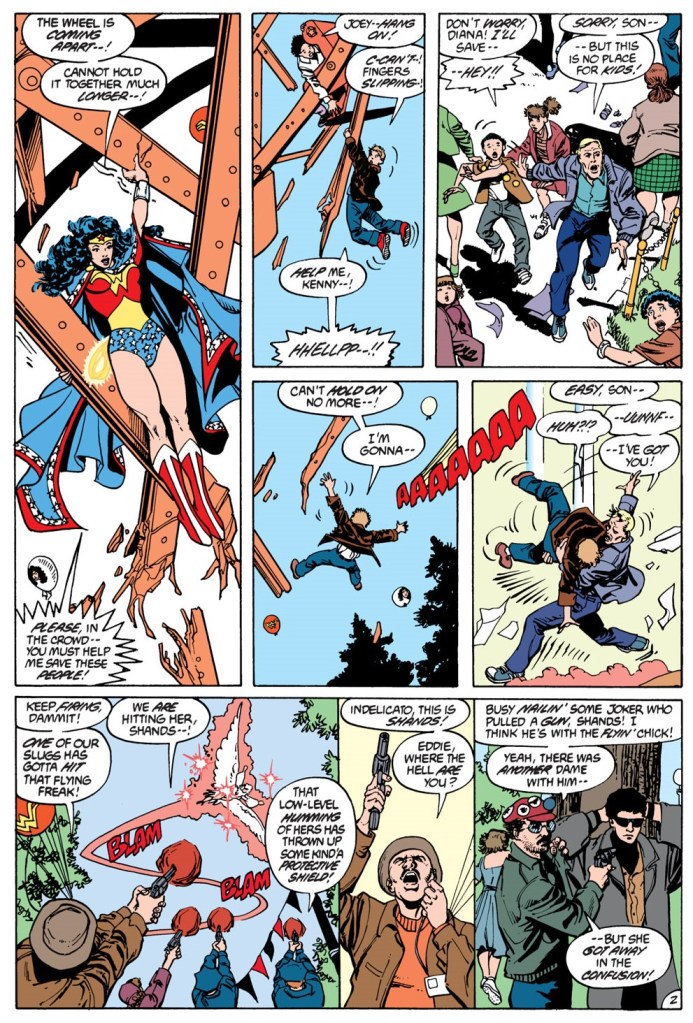
Going back to Wonder Woman herself, this issue explores more of her struggle with not only learning more about man’s world and its many divisions, but also the feelings she starts having as she connects more with other people – most notably with one of DC’s biggest icons. To have Julie Kapatelis absent left the creators room to have Diana not only bond more with daughter Vanessa but also strive more on analyzing what she learns in man’s world. The scene in which Wonder Woman notices a huge printed image of her is a vivid reminder about how negative and foolish idolatry is on people.

Conclusion

Intriguing action scene.

Even though it has no fantasy and mythology elements, Wonder Woman #15 (1988) is still a great comic book to read and it succeeds in progressing Diana’s discovery and learning of man’s world. Its introduction of the post-Crisis Silver Swan is memorable and her build-up (specifically her background story) is pretty engaging.

If you are seriously planning to buy an existing hard copy of Wonder Woman #15 (1988), be aware that as of this writing, MileHighComics.com shows that the near-mint copy of the regular edition costs $35 while the near-mint copy of the newsstand edition costs $70.

Overall, Wonder Woman #15 (1988) is highly recommended!

+++++

Thank you for reading. If you find this article engaging, please click the like button below and also please consider sharing this article to others. If you are looking for a copywriter to create content for your special project or business, check out my services and my portfolio. Feel free to contact me as well. Also please feel free to visit my Facebook page Author Carlo Carrasco and follow me at HavenorFantasy@twitter.com
A Look Back at Prime #19 (1995)

Disclaimer: This is my original work with details sourced from reading the comic book and doing personal research. Anyone who wants to use this article, in part or in whole, needs to secure first my permission and agree to cite me as the source and author. Let it be known that any unauthorized use of this article will constrain the author to pursue the remedies under R.A. No. 8293, the Revised Penal Code, and/or all applicable legal actions under the laws of the Philippines.

Welcome back, superhero enthusiasts, comic book collectors and fans of the Ultraverse! Today, we will revisit the Ultraverse through the exploits of Prime who has already established himself in the city of New York (the result of Kevin Green and his mom’s move into the city).

Not only have we seen Prime fight a gigantic monster (that reminds me a lot of Japan’s Godzilla) to save New York and its many people, we have seen Turbo Charge getting involved with him with a superhero-related passion.

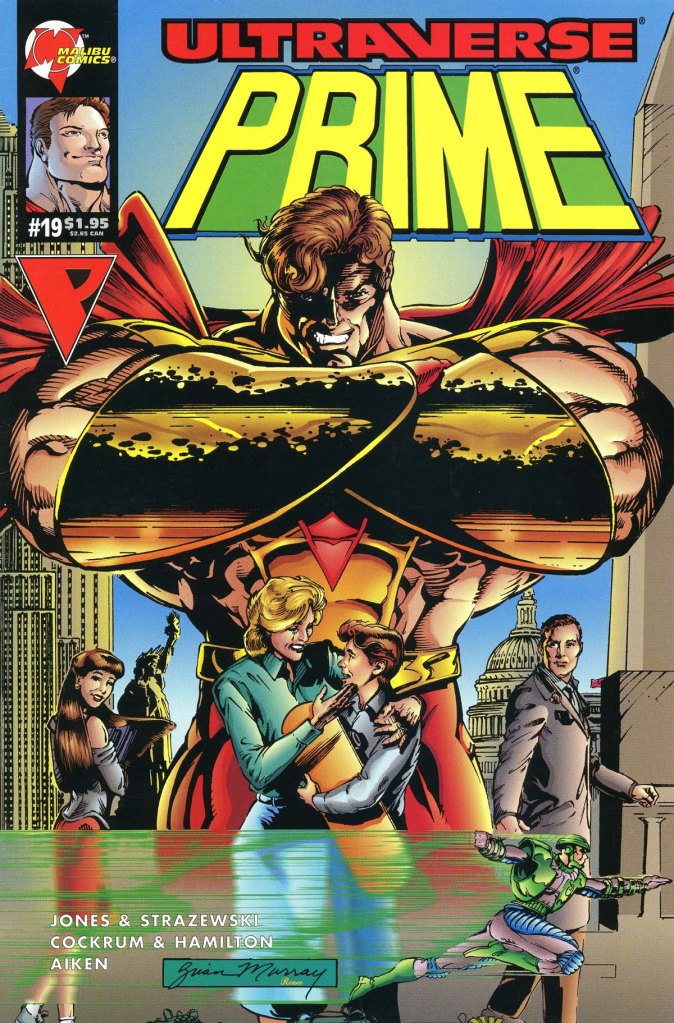
What will happen next to Prime? Will Turbo Charge get even more involved in helping the people of New York? We can all find out in this look back at Prime #19, published in 1995 by Malibu Comics with a story written by Len Strazewski and Gerard Jones, and illustrated by Dave Cockrum (X-Men) and Tim Hamilton.

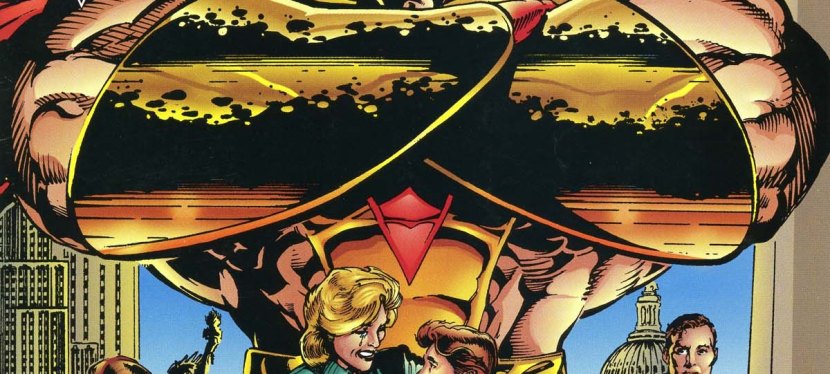
The cover.

Early story

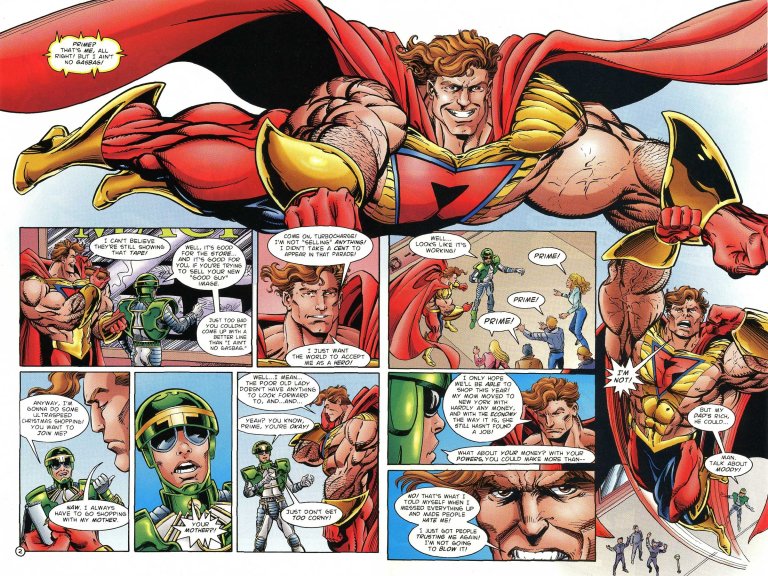
The story begins with Prime flying just above ground in the view of the many people attending the Macy’s Thanksgiving Day Parade in New York. Already he has been identified as the city’s newest Ultrahero.

Sometime later, within the city, Prime and Turbo Charge are watching television sets from outside a retailer’s window. As they talk about being in the spotlight, some fans approached Prime. The more Turbo Charge talks about taking advantage of the public trust and special abilities for financial gain, Prime rejects his suggestion as he remembers how he messed up previously.

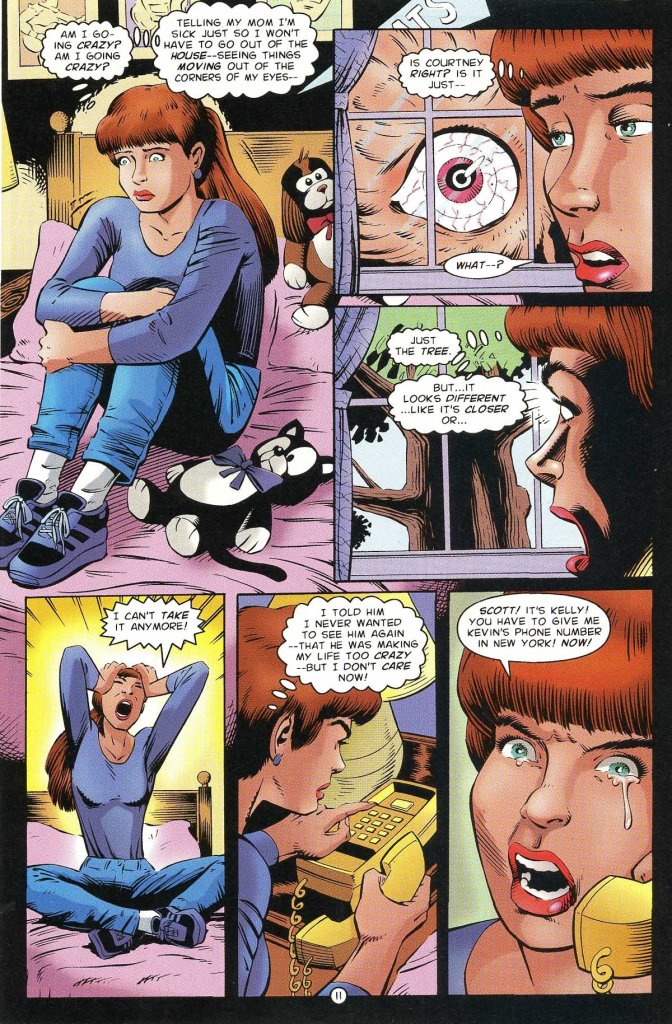
Meanwhile at Canoga Park, California, Kelly (Kevin’s romantic interest) is approached by Courtney (her best friend) who asked her what is she nervous about and what’s wrong with her lately. After their short talk, Kelly separates from her (who has a negative view of Kevin) and enters home at last. Suddenly a monster appears just outside the front door…

Quality

Kelly getting desperate.

I can confirm that the writing is rich and this story is much-more character-driven than the previous issue. The good news here is that there is a lot of engaging stuff and characterization to enjoy.

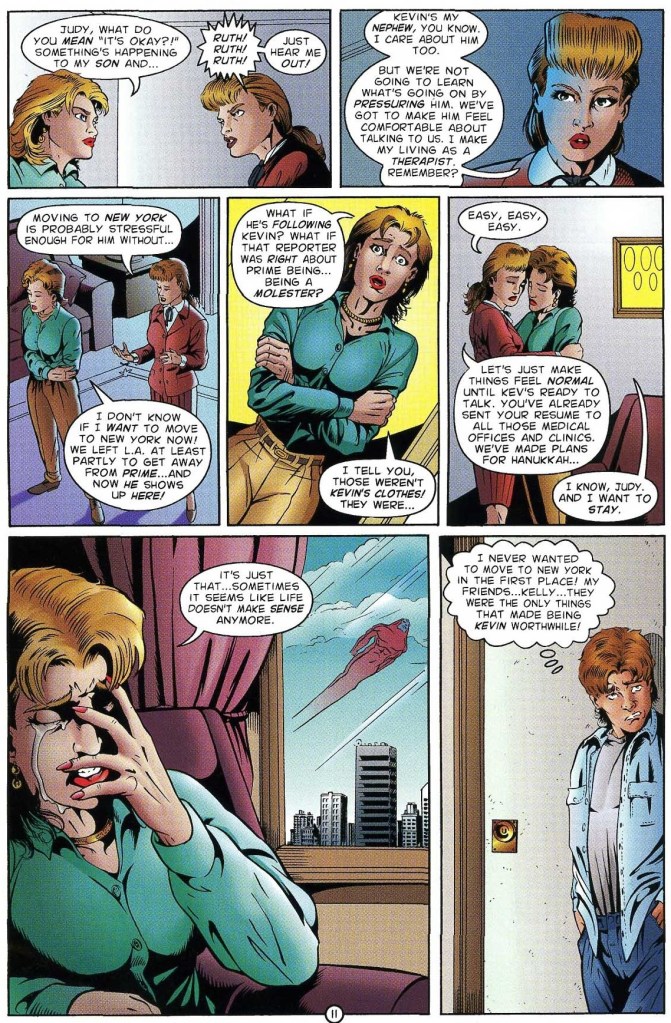
As before, Kevin’s struggle with balancing his personal life and his superhero ego together continues to be felt here. Not only has he been struggling with the media’s suspicion of Prime as a predator with teenagers, he also had difficulty talking with Turbo Charge (a teenager like Kevin) when it comes to sensitive bits of information that might expose his personal life. The way Strazewski and Jones wrote the script in dramatizing Kevin’s personal struggle came with really natural dialogue which made it all believable to read.

Within this story are three sub-plots about Kevin’s father, Kelly and Turbo Charge. Kevin’s father knows the whole truth about his son which makes him a valuable target by spies. Kelly’s struggle with monstrous visions are driving her nuts like never before. Turbo Charge meanwhile has a father who is well connected with the powerful in Washington, D.C. and the private sector. These sub-plots are well-written and add a good amount of depth and variety to the story.

As this issue was illustrated by Dave Cockrum and Tim Hamilton, there are noticeable changes in the aesthetics on Prime, Kevin and other related characters here and there. I just wish that the comic book pointed out which pages were drawn by whom. This is a fine-looking comic book.

Conclusion

Prime and Turbo Charge in New York.

Prime #19 (1995) is a very solid read mainly due to the strong characterization and the mentioned sub-plots (one of which finally got resolved in a satisfying manner). The more you follow Kevin’s story and his adjustment with life in New York, the more this comic book draws you in. There is also a short yet effective round of superhero spectacle that complete it. More importantly, this story keeps Prime’s story moving forward and even Kevin’s mother got a good amount of the spotlight.

If you are seriously planning to buy an existing hard copy of Prime #19 (1995), be aware that as of this writing, MileHighComics.com shows that the near-mint copy of the comic book costs $10.

Overall, Prime #19 (1995) is recommended.

+++++

Thank you for reading. If you find this article engaging, please click the like button below and also please consider sharing this article to others. If you are looking for a copywriter to create content for your special project or business, check out my services and my portfolio. Feel free to contact me as well. Also please feel free to visit my Facebook page Author Carlo Carrasco and follow me at HavenorFantasy@twitter.com
A Look Back at Freex #10 (1994)

Disclaimer: This is my original work with details sourced from reading the comic book and doing personal research. Anyone who wants to use this article, in part or in whole, needs to secure first my permission and agree to cite me as the source and author. Let it be known that any unauthorized use of this article will constrain the author to pursue the remedies under R.A. No. 8293, the Revised Penal Code, and/or all applicable legal actions under the laws of the Philippines.

Welcome back, superhero enthusiasts, comic book collectors and fans of the Ultraverse! Today we will revisit the Ultraverse following the team of misfits called Freex. In my past Freex review, we saw the first appearance of Contrary who went on to become one of the more intriguing members of the superhero team UltraForce. As seen in the UltraForce monthly series, Contrary proved to be very intelligent, very resourceful and has what it takes to manipulate the behaviors and direction of even the likes of Hardcase (the team leader), Prototype and Prime.  

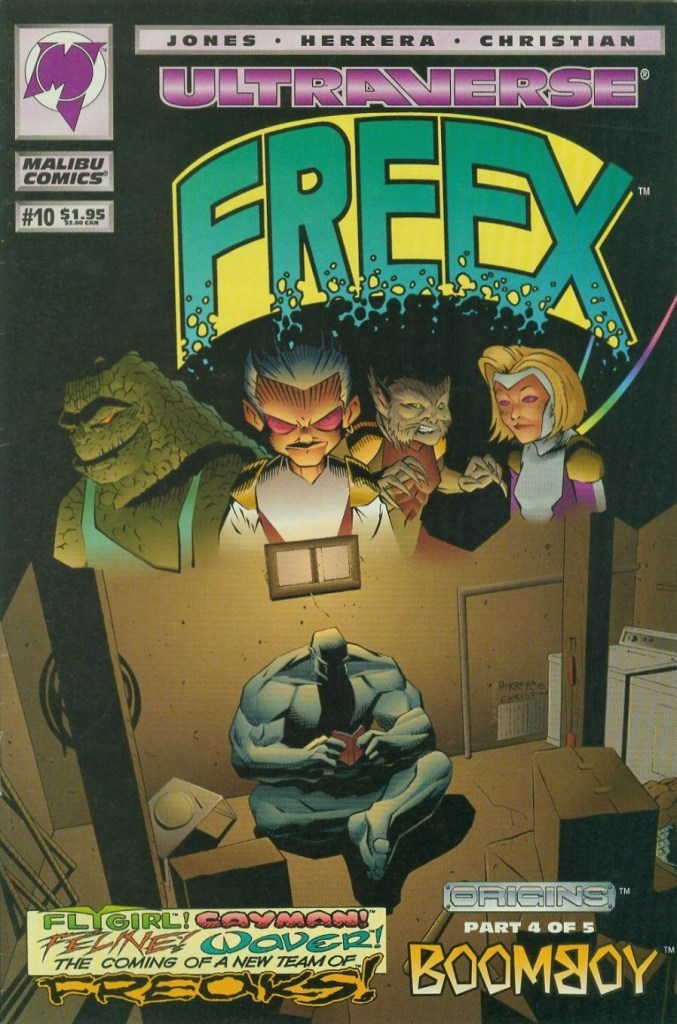
Of course, before the events of UltraForce happened, many of Contrary’s traits and operations were first explored in the Freex monthly series. To learn more about her, here is a look back at Freex #10, published in 1994 by Malibu Comics with a story written by Gerard Jones and drawn by Ben Herrera.

The cover.

Early story

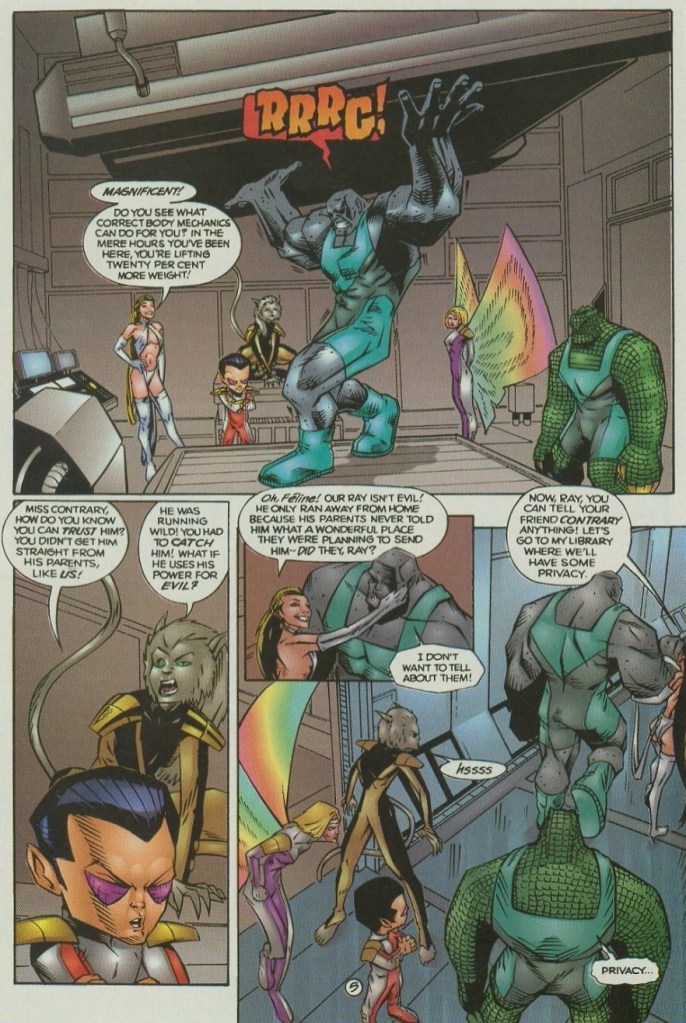
The story begins inside a secret facility. Ray/Boom Boy of Freex has just been abducted and is restrained in the presence of Contrary who is just seating near him looking sexy and comfortable. Knowing that Boom Boy has no chance to escape and fight back, she releases him and mentions that she has other students who will fight for her.

Slowly, Contrary leads him into another place of the facility telling him that he’s not locked up (like a prisoner) but rather he is home (implying there is a place for him at the facility). She introduces him to her Academy for the New Elite with her students engaging in a training session against drones and obstacles. Her students are Feline, Waver, Flygirl and Cayman.

Meanwhile, members of the Freex are still homeless and are trying to figure out how to find Boom Boy… 

Quality

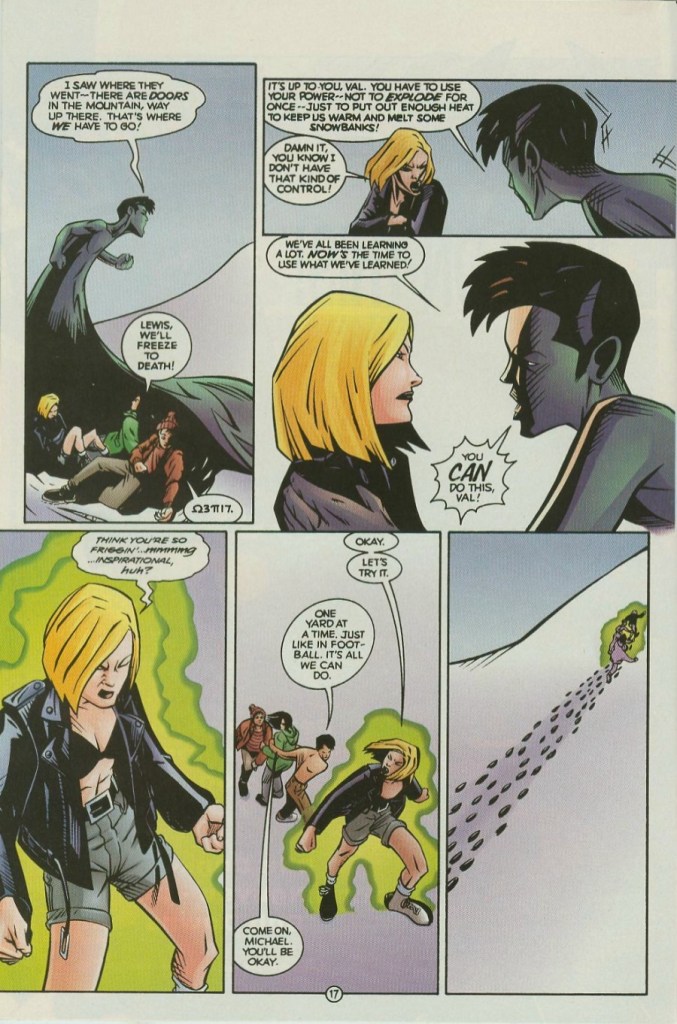
The Freex, without Boom Boy, struggling.

I want to start with the writing. This issue was clearly less about Freex and more of Boom Boy (note: his personal origin emphasized) and Contrary and her academy of people with powers and special abilities. Creatively, this story has strong X-Men vibes in it which I personally enjoyed. I do confirm that the writing is strong on storytelling, characterization and dialogue.

While the previous issue introduced her briefly, Contrary is heavily emphasized in this issue. Apart from being resourceful and highly intelligent, she is also erotic with her appearance (so much of her skin exposed always) and at the same time she is well portrayed as a mentor to her students complete with traits of motherly care to them. In comparison with what I’ve seen in X-Men comic books, Contrary is like a combination of Charles Xavier and Emma Frost with some traces of Moira MacTaggert. I should also state that Contrary has a keen perception on finding outstanding or special individuals that she can help develop in more ways than one.

Going back to Boom Boy, this comic book really redefined him not only as a questionable member of Freex but also as an Ultraverse character in general. By reading this story, you will not only relate with Boom Boy but also experience the challenge he is having on whether to decide to be with his old pals or join Contrary’s academy (which itself is inspired by Xavier’s School of Gifted Children in X-Men comics) to really leave his past behind and move forward personally.

While this comic book is heavy with characterization and exposition, there is still a good amount of superhero to enjoy here. The good news is that artist Ben Herrera showed a lot of creative stuff with the spectacle.   

Conclusion

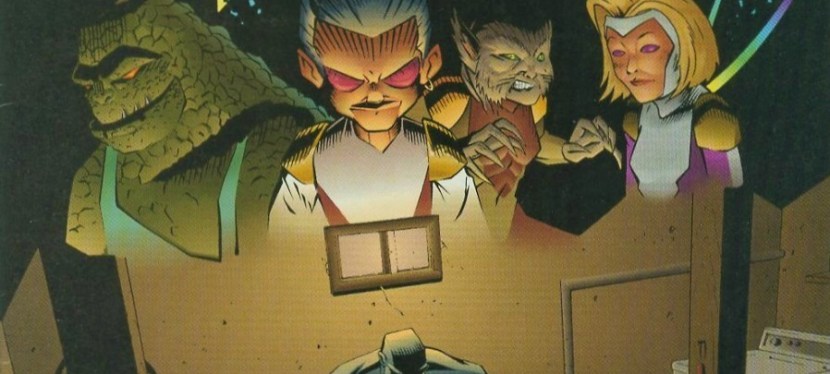
This scene has very strong X-Men vibes.

Freex #10 (1994) is a great Ultraverse comic book! I really found this particular issue to be very engaging from start to finish. As a story about the Freex themselves, this one saw their story as desperate nomads move forward a lot. Still the standouts of the story are Boom Boy and Contrary. If you have not read any issues of UltraForce yet, I highly recommend reading this so you can get to know Contrary better as she is one of the core UF members.

If you are seriously planning to buy an existing hard copy of Freex #10 (1994), be aware that as of this writing, MileHighComics.com shows that the near-mint copy of the comic book costs $11.

Overall, Freex #10 (1994) is highly recommended!

+++++

Thank you for reading. If you find this article engaging, please click the like button below and also please consider sharing this article to others. If you are looking for a copywriter to create content for your special project or business, check out my services and my portfolio. Feel free to contact me as well. Also please feel free to visit my Facebook page Author Carlo Carrasco and follow me at HavenorFantasy@twitter.com
A Look Back at The Strangers #19 (1995)

Disclaimer: This is my original work with details sourced from reading the comic book and doing personal research. Anyone who wants to use this article, in part or in whole, needs to secure first my permission and agree to cite me as the source and author. Let it be known that any unauthorized use of this article will constrain the author to pursue the remedies under R.A. No. 8293, the Revised Penal Code, and/or all applicable legal actions under the laws of the Philippines.

Welcome back, superhero enthusiasts, comic book collectors and fans of the Ultraverse! In this retro comic book review, we will revisit The Strangers in one of their later stories published in 1995. In issue #18, things got more complex as The Strangers not only had a genuine opposition to deal with but also another group of individuals with varied powers. For this new review, the story took place even way after issue #18 as there was a 100-page finale that took place in Night Man Annual #1 and The Strangers Annual #1.

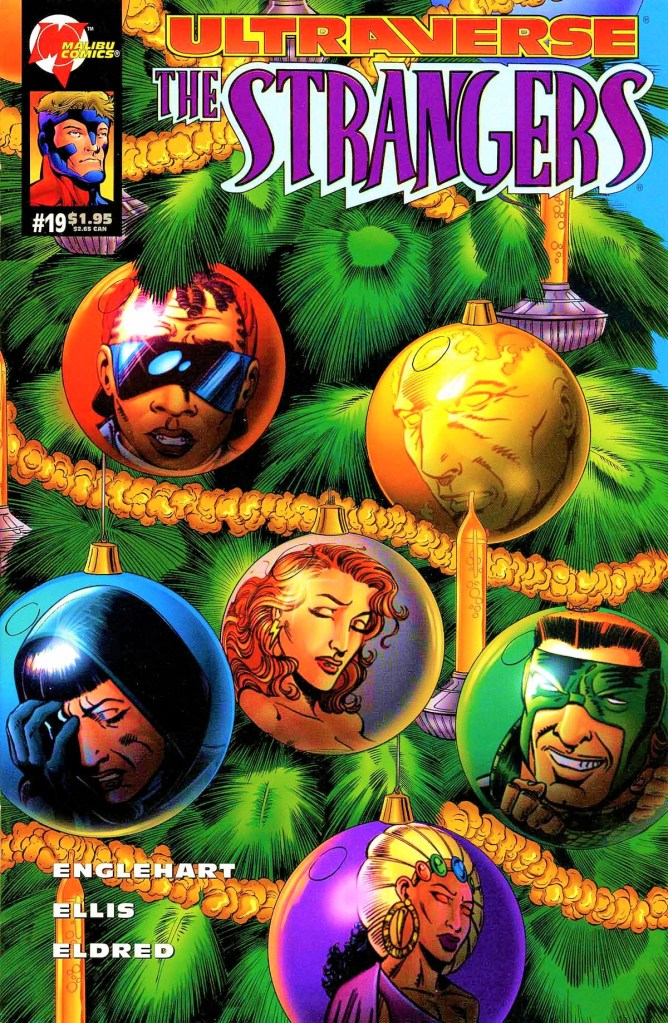
To find out what happened next to the superhero team and its members, here is a look back at The Strangers #19, published in 1995 by Malibu Comics with a story written by Steve Englehart and drawn by Steve Ellis.

The cover.

Early story

The story begins in a private place where members of The Strangers each take time of silence across the floors. Noticeably absent was Atom Bob. Lady Killer recalls Atom Bob as her lover, their team’s brightest star and, unfortunately, a betrayer towards them all. She remembers several moments from recent times such as realizing Atom Bob’s desire to do something heroic, realizing that power to equal another one’s power is the better power, and the time he asked her to marry him. Deeply hurt by the betrayal, Lady Killer cries.

For his part, Grenade is feeling the anguish over the betrayal given the fact that they have been really close friends since childhood. When Grenade had trouble entering college, Atom Bob encouraged him to join him in enrolling at art school. The betrayal was so painful, he releases his anger using a bit of his power. A teammate appears behind him to try to talk sense to him…  

Quality

A very touching scene between Yrial and Zip-Zap.

Firstly, I should say that the writing done by Steve Englehart here is very rich with a strong emphasis on dramatizing the Strangers deeply. The dialogue written for each character reflects not only their emotions but also what is living within their respective hearts and what is in their minds. The character development is also rich and I love the way Englehart further developed the sister-brother-like bond between Yrial and Zip-Zap. As for Lady Killer, her pain will most likely resonate with readers who experienced betrayal and the loss of a loved one.

Secondly, the betrayal by Atom Bob really shows its emotional impact on the team. This one is not only a heavy burden on the characters but also a wave of shock via reading which long-time Strangers fans (who dedicatedly followed Atom Bob’s thoughts and exploits) can strongly relate with. Atom Bob’s overall value as a Strangers member is easily reevaluated in this comic book and his personal connections with Grenade, Yrial, Spectral, Zip-Zap, Electrocute and, most notably, Lady Killer are strongly emphasized. This should compel readers to revisit the early issues of The Strangers.

Of course, I should state that this comic book is not a pure emotion ride. There are still some scenes of action and spectacle that still make sense with the narrative. A certain character from The Strangers #4 makes a return here and another intriguing character appears here. They are both worth discovering.

The art done by Steve Ellis is very good, and his style is eerily very similar to that of Rick Hoberg. There were several images that reminded me of Hoberg’s take on each character.  

Conclusion

Lady Killer painfully remembering what happened.

There is no doubt about it. The Strangers #19 (1995) is another very good Ultraverse comic book to read and collect! Not only does it succeed in serving as the aftermath to the stories in in Night Man Annual #1 and The Strangers Annual #1, it also fulfilled its purpose in raising the stakes for the Strangers who are struggling with the pain and shock of Atom Bob’s betrayal. If you love character development, you will love this one.

If you are seriously planning to buy an existing hard copy of The Strangers #19 (1995), be aware that as of this writing, MileHighComics.com shows that the near-mint copy of the comic book costs $11.

Overall, The Strangers #19 (1995) is highly recommended!

+++++

Thank you for reading. If you find this article engaging, please click the like button below and also please consider sharing this article to others. If you are looking for a copywriter to create content for your special project or business, check out my services and my portfolio. Feel free to contact me as well. Also please feel free to visit my Facebook page Author Carlo Carrasco and follow me at HavenorFantasy@twitter.com
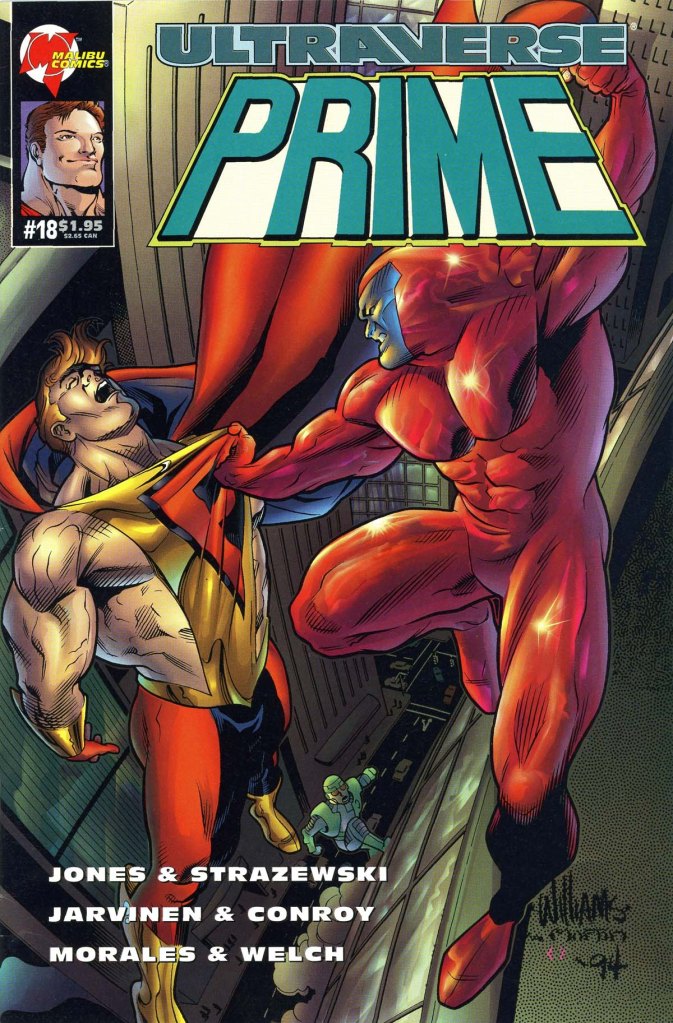
A Look Back at Prime #18 (1994)

Disclaimer: This is my original work with details sourced from reading the comic book and doing personal research. Anyone who wants to use this article, in part or in whole, needs to secure first my permission and agree to cite me as the source and author. Let it be known that any unauthorized use of this article will constrain the author to pursue the remedies under R.A. No. 8293, the Revised Penal Code, and/or all applicable legal actions under the laws of the Philippines.

Welcome back, superhero enthusiasts, comic book collectors and fans of the Ultraverse! In this return to the Ultraverse, we will examine another mid-1990s issue of Prime who became a resident of the City of New York as a result of Kevin Green and his mother relocating there.

Last time around, a huge monster (clearly inspired by Godzilla) arrived in New York and Kevin had no choice but to change into Prime to save people. While his heroic act saved lives and spared the city from further damage, Prime still was not spared from the growing speculation that he molested children in California (which by today’s standards is a ravaged state as a result of unrestrained influence of the Left as well as economic complications).

So what will happen next to Kevin/Prime the more time he spends in New York? We can find out more in this look back at Prime #18, published in 1994 by Malibu Comics with a story written by Len Strazewski and Gerard Jones, and drawn by Kirk Jarvinen and Keith Conroy.

The cover.

Early story

The story begins with Prime (standing behind a podium with a crowd in front of him) and the people getting surprised when Turbo Charge (note: his debut in issue #17 was overshadowed by the events of that comic book) suddenly arrived on stage holding civilian clothes and declaring he is Prime’s new partner.

Turbo Charge whispers to Prime that he arrived to help him by pretending that the clothes are his (note: the clothes actually belong to Kevin). He then speaks out to the audience stating distorted details. Just as members of the news media start asking Turbo Charge questions, Prime grabs him and flies away to leave the crowd behind.

As they got far enough, Prime tells the Turbo Charge he has no intention to accept him as a partner…

Quality

Prime’s private life as Kevin remains hard as ever.

As mentioned already, Turbo Charge’s debut in issue #17 was overshadowed by what happened in that comic book. That being said, the story here made up for it not only by investing more pages to emphasize Turbo Charge but also dramatize his personality which was done in a pretty satisfying fashion. Like Prime, Turbo Charge’s life has gotten complicated as a result of his ability of super speed and his personal desire to do good even though he is a teenager with so much to learn.

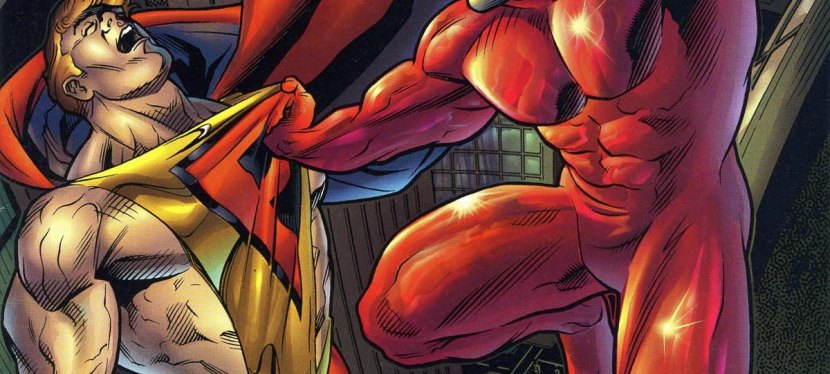
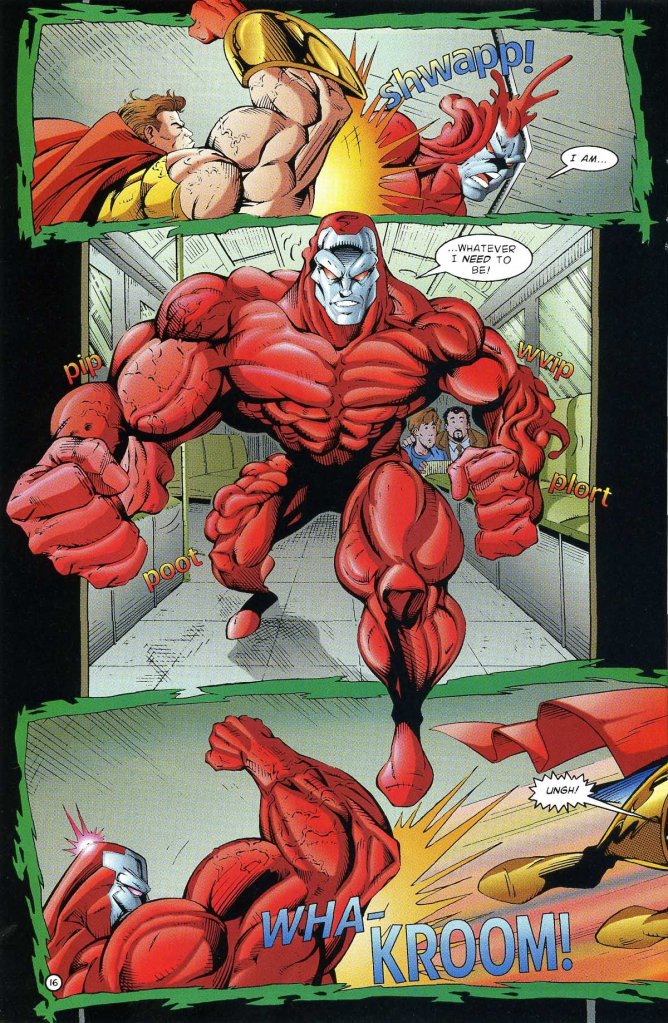
What I find delightfully surprising in this comic book is the presence of Manhattan Project, a powerful character whose dedication to protect New York’s people from ultras (which he wants to neutralize) leads him to a big fight with Prime which alone has to be seen. It is quite enjoyable.

As for Prime himself, there is a good amount of pages dedicated to his alter ego as Kevin still struggling to adjust to life in New York. It should be noted that key elements from issue #17’s story impacted her perception of Prime (a secret Kevin still keeps successfully). The characterization here for the protagonist is really good.

Conclusion

The fight between Prime and Manhattan Project is a must-see.

Prime #18 (1994) is a really good read. It has a fine balance of storytelling, characterization and spectacle from start to finish. I should also state that the New York setting is looking good as far as telling Prime’s story goes.

If you are seriously planning to buy an existing hard copy of Prime #18 (1994), be aware that as of this writing, MileHighComics.com shows that the near-mint copy of this comic book costs $10.

Prime #18 (1994) is recommended.

+++++

Thank you for reading. If you find this article engaging, please click the like button below and also please consider sharing this article to others. If you are looking for a copywriter to create content for your special project or business, check out my services and my portfolio. Feel free to contact me as well. Also please feel free to visit my Facebook page Author Carlo Carrasco and follow me at HavenorFantasy@twitter.com
A Look Back at Mantra #18 (1995)

Disclaimer: This is my original work with details sourced from reading the comic book and doing personal research. Anyone who wants to use this article, in part or in whole, needs to secure first my permission and agree to cite me as the source and author. Let it be known that any unauthorized use of this article will constrain the author to pursue the remedies under R.A. No. 8293, the Revised Penal Code, and/or all applicable legal actions under the laws of the Philippines.

Welcome back, superhero enthusiasts, comic book collectors and fans of the Ultraverse! We take another journey into the Ultraverse through the exploits of Mantra whose story and character development got more intriguing since after the conclusion of the Archimage Quest.

Last time around, Lukasz and Eden took their relationship even further The infiltration of Aladdin’s secret facility took place and Mantra even met a certain tycoon (best known for interacting with The Strangers). The events of the last issue then continued into the Godwheel mini-series and into this next Mantra comic book I’m about to review.

Are you excited yet? What do you hope to see with regards to Lukasz and Eden? We can find out what happens next in Mantra #18, published in 1995 by Malibu Comics with a story written by Mike W. Barr and drawn by Scott Lee.

The cover.

Early story

The story begins inside a high-tech facility. An executive named Paul expressed that the laboratory will never be operational in time for the new year as a result of what happened previously. Several armed men are on the floor searching.

Suddenly, a pink portal opens with Lukasz (in a male body) and Mantra (now occupied by Eden’s soul) coming out. The two just came back from much struggle in another realm and Eden has not yet fully familiarized herself with Mantra’s body and magic. Noticing Eden/Mantra’s hesitation, Lukasz takes action against the armed men. Eden slowly blasts a few enemies before Lukasz saves her from being attacked from the rear.

Suddenly, someone from nowhere throws a few gas grenades at them…

Quality

The romance weakened by the art style.

Starting with the storytelling, the plot in this comic book can be quite jarring with regards to Lukasz and Eden as this one took place after the Godwheel mini-series. How Eden fully became Mantra (which is her rightful body of flesh in the first place) is fully explained in the said mini-series.

The romance between Lukasz and Eden here is easily the biggest selling point of this comic book. After going through rough action and misadventure in Godwheel, it is in this comic book where the two really express love for each other in the flesh. This is a welcome change considering how long we’ve seen Lukasz occupy Eden’s body followed by Lukasz and Eden being spiritually linked with each other. This one marks the start of a new chapter of the Mantra series. As for what the cover of the comic book showed, that is something you will have to discover for yourselves and it is worth the read.

Sadly, I should state that I found the art by Scott Lee here looking sub-par. There is this cartoony aesthetic to all the characters and there were shots in which their bodies looked disproportionate from certain angles. Lee’s take on visualizing Boneyard, Warstrike, NecroMantra and others all looked cartoony. This is the weakest looking Mantra issue I’ve read as of this writing.

Conclusion

Lukasz in a male body, Eden in Mantra form.

Once again, author Mike W. Barr succeeded in advancing the story and character developments with Mantra #18 (1995) putting the series into another storytelling phase with Lukasz (the long-time Mantra) and Eden as separate, living beings more involved with each other than ever before. The art quality this time went down a lot but the storytelling saved the comic book from turning into a disaster.

If you are seriously planning to buy an existing hard copy of Mantra #18 (1995), be aware that as of this writing, MileHighComics.com shows that the near-mint copy of the comic book costs $21.

Overall, Mantra #18 (1995) is satisfactory.

+++++

Thank you for reading. If you find this article engaging, please click the like button below and also please consider sharing this article to others. If you are looking for a copywriter to create content for your special project or business, check out my services and my portfolio. Feel free to contact me as well. Also please feel free to visit my Facebook page Author Carlo Carrasco and follow me at HavenorFantasy@twitter.com
A Look Back at Ravage 2099 #6 (1993)

Disclaimer: This is my original work with details sourced from reading the comic book and doing personal research. Anyone who wants to use this article, in part or in whole, needs to secure first my permission and agree to cite me as the source and author. Let it be known that any unauthorized use of this article will constrain the author to pursue the remedies under R.A. No. 8293, the Revised Penal Code, and/or all applicable legal actions under the laws of the Philippines.

Welcome back, superhero enthusiasts, comic book collectors, pop culture geeks and fans of Marvel Comics! Today, we will revisit the 2099 universe that Marvel established in the 1990s through another issue of Ravage 2099 which featured the writing and imagination of the late Stan Lee. Lee wrote the first eight issues of the said series.

For the newcomers reading this, Ravage is a co-creation of Lee and illustrator Paul Ryan. Compared to the other major characters of the 2099 universe of Marvel, Ravage is an all-original character who went from being a corporate executive to a hard-hitting rebel. Last time around, Ravage struggled with his new found power (energy within his fists) while still being hunted by Dethstryk’s thugs.

With those details laid down, here is a look back at Ravage 2099 #6, published by Marvel Comics in 1993 with a story written by Stan Lee and drawn by Paul Ryan.

The cover.

Early story

The story begins at a far-away island. Dethstryk’s thugs just attacked Ravage and his native companion in a cave, destroying the interior and causing a cave-in. Believing that Ravage is dead, the last of the thugs left the rubble behind. As it turned out, Ravage is still alive and uses his newfound power to free himself, pushing all the rocks off as if they were like pebbles. He realizes that the more he uses his power, the weaker he gets. Due to his being exposed to the island’s toxic environment, his condition continues to deteriorate. He uses one of the gadgets to aid him in seeing.

After looking around further in the ruined cave, he discovers a relic from the past – the Fantastic Four’s Fantasticar…

Quality

Ravage uses the old vehicle made by the Fantastic Four.

If you are looking for something adventurous or fun while following Ravage, you won’t find much here. Without spoiling the plot, this one has Ravage preparing himself for survival and moving back to civilization. There is not much heroic acts from the title character here and I noticed that Stan Lee’s script is filled with lots of filler-type dialogue designed to prolong scenes (that were meant to be short but had to be stretched) and fill the page. Really, there is not much stuff to engage you with here.

The build-up in issue #5 regarding the sub-plots for Tiana, Dack and the invaders from the sea had too little pay-off here but, in fairness, it does set up something for the next issue. I should also state that Stan Lee did not really do much with the villains – Dethstryk and Anderthorp Henton – and ended up recycling ways to show how cruel, cold-blooded and evil they are WITHOUT ever raising the stakes in their conflict with Ravage.

Conclusion

Just another scene to show how evil and ruthless Anderthorp Henton is towards his own employee. This should make you wonder what Stan Lee really thought about corporations, the labor union and the Leftist forces.

Once again, the Ravage 2099 series at this point only showed the lack of consistency in terms of quality and reader engagement. Ravage 2099 #6 has a story that is actually hollow and the creators resorted to stretching sequences to create the illusion that there is depth throughout. Clearly this is a step down from the previous issue.

If you are seriously planning to buy an existing hard copy of Ravage 2099 #6 (1993), be aware that as of this writing, MileHighComics.com shows that the near-mint copy of the regular edition costs $8 while the near-mint copy of the newsstand edition costs $26.

Overall, Ravage 2099 #6 (1993) is not recommended but if you really want to acquire a copy of it, better wait until the price reaches fifty cents.

+++++

Thank you for reading. If you find this article engaging, please click the like button below and also please consider sharing this article to others. If you are looking for a copywriter to create content for your special project or business, check out my services and my portfolio. Feel free to contact me as well. Also please feel free to visit my Facebook page Author Carlo Carrasco and follow me at HavenorFantasy@twitter.com
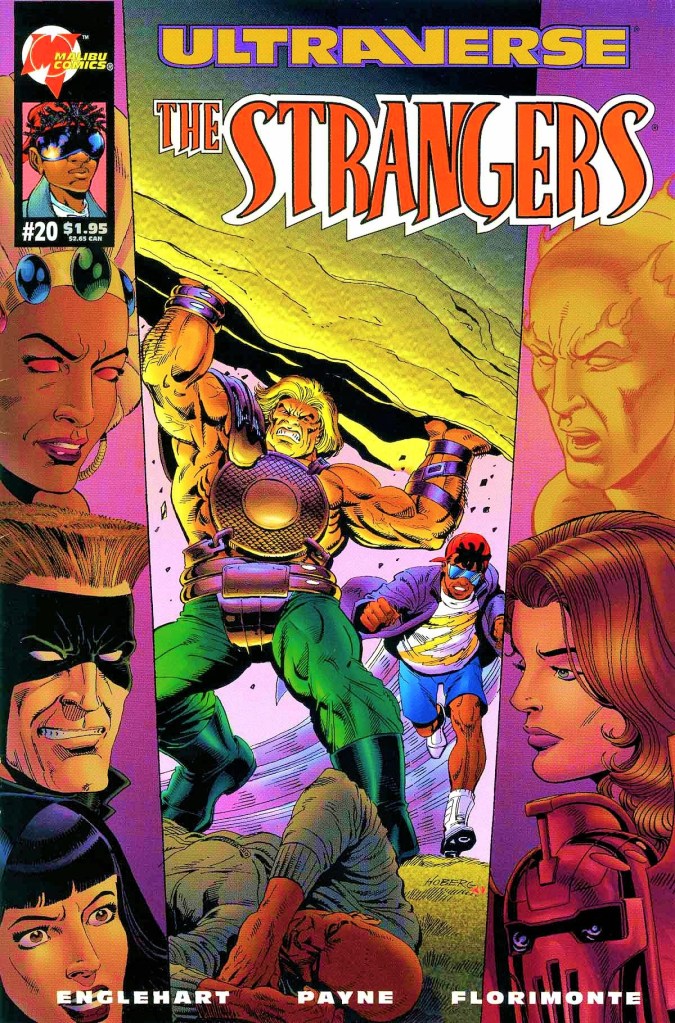
A Look Back at The Strangers #17 (1994)

Disclaimer: This is my original work with details sourced from reading the comic book and doing personal research. Anyone who wants to use this article, in part or in whole, needs to secure first my permission and agree to cite me as the source and author. Let it be known that any unauthorized use of this article will constrain the author to pursue the remedies under R.A. No. 8293, the Revised Penal Code, and/or all applicable legal actions under the laws of the Philippines.

Welcome back, Ultraverse fans and superhero comic book collectors! We are about to return to the Ultraverse through The Strangers. Before doing so, I’d like to discuss one of their members named Elena La Brava AKA Lady Killer. Before the big incident that changed her life and those of her eventual teammates riding the cable car in San Francisco, Elena worked professionally as a fashion designer. She is quite resourceful, brave and organized. Apart from proving to be a very valuable member of the team, she has the special ability to track and this results helping her hit what she aims for. As seen in previous issues leading to issue #16, she has been romantically linked with Atom Bob and has struggled also on leading the team.

With those details mentioned, it’s now time to look back at The Strangers #17, published in 1994 by Malibu Comics with a story written by Steve Englehart and illustrated by Rick Hoberg.

The cover.

Early story

The story begins at the headquarters of The Strangers. Spectral arrives late and apologizes to his teammates who are already feeling disturbed by the Pilgrim. Lady Killer makes an issue about Spectral’s tardiness and reminds him he has not seen the Pilgrim as he was absent. Spectral replied emotionally stressing that he had to attend to his private life.

When asked about the Pilgrim, Grenade replies that nobody knows who their antagonist is. In recent times, the team faced off with various costumed individuals in two encounters and the Pilgrim appeared each time and took them with him. Each time, the Pilgrim swore he would continue to get back at The Strangers until he builds up a team large enough to oppose them.

Knowing that the Pilgrim will keep coming back at her team, Lady Killer states she has a plan…

Quality

The start of a pretty solid battle between the Pilgrim and Atom Bob.

The writing for this comic book is, as expected, very strong and undoubtedly it is a great follow-up to what happened in issue #16. Instead of just another encounter between The Strangers and another antagonist which turns into an opportunity for the Pilgrim to come out and do his thing, this one has a lot more compelling stuff backed with surprise and intrigue.

Before the big conflict happened, this comic book showed more of Lady Killer’s intelligence and her ability to organize something that is believable to read. Atom Bob, who missed out on the battle of issue #16, is more involved in this comic book and his battle with the Pilgrim was not only heavy on the spectacle but also showed more of his capabilities and his willingness to achieve something.

Unsurprisingly, there is a lot of what I would call the usual visual goodness from artist Rick Hoberg here. He continued to show a consistent high level of quality when drawing the characters, their expressions and making the superhero action scenes look spectacular.

Conclusion

The Strangers meeting early.

The Strangers #17 (1994) is a very good read and what I love about it is that it further added to the build-up of the growing opposition against The Strangers while at the same time developing the core characters more. You will see more of Lady Killer’s leadership values here and eventually, you’ll admire her more. I should state that Rafferty, a serial killer in the Ultraverse, had a notable presence in this comic book and added some impact to the plot.

If you are seriously planning to buy an existing hard copy of The Strangers #17 (1994), be aware that as of this writing, MileHighComics.com shows that the near-mint copy of the comic book costs $8.

Overall, The Strangers #17 (1994) is highly recommended!

+++++

Thank you for reading. If you find this article engaging, please click the like button below and also please consider sharing this article to others. If you are looking for a copywriter to create content for your special project or business, check out my services and my portfolio. Feel free to contact me as well. Also please feel free to visit my Facebook page Author Carlo Carrasco and follow me at HavenorFantasy@twitter.com

A Look Back at The Solution #4 (1993)

Disclaimer: This is my original work with details sourced from reading the comic book and doing personal research. Anyone who wants to use this article, in part or in whole, needs to secure first my permission and agree to cite me as the source and author. Let it be known that any unauthorized use of this article will constrain the author to pursue the remedies under R.A. No. 8293, the Revised Penal Code, and/or all applicable legal actions under the laws of the Philippines.

Welcome back Ultraverse fans and superhero comic book collectors! This is my continuing look back at spin-off tales connected to Break-Thru, the year-ending big crossover event of the Ultraverse which not only mixed the many UV characters together but also impact them.

This time, we examine events connected to Break-Thru in a story written by the late James Hudnall and told through the exploits and struggles of a superhero team (plus one major UV superhero) he handled – The Solution! Here now is a look back at The Solution #4, published in 1993 by Malibu Comics with a story written by Hudnall and drawn by Darick Robertson.

The cover.

Early story

Set a short time after the end of the Break-Thru-related Hardcase #7, the story begins in outer space. Inside a space craft heading towards the moon, Lela Cho/Tech records a new entry into her diary reflecting of how crazy things turned out for her and her teammates. On her end, she pursued getting her corporation back and then took a job that landed her on board a UFO. As it turns out, her team has been hired to find a mysterious object which might provide explanations as to why ultras suddenly appeared all over the world.

Considering the very high stakes of the mission, The Solution had to partner with Hardcase and his companion Choice. This is because they are trying to catch up with another team of ultras (composed of Trouble, Death Dance, Gate, Needler, Gun Nut, Book and Meathook) who were sponsored by Rex Mundi, the rival of The Solution’s client Regina…  

Quality

A nice shot of The Solution with Hardcase and Choice in space.

As this was a build-up type of story meant to connect and add depth to the Break-Thru crossover, the plot was pretty simple and yet it was loaded with a lot of engaging stuff. Given the fact that James Hudnall led the writing for both Hardcase and The Solution, I just love the way he had these ultra heroes interact with each and the way they learned to get to know each other and adjust with one another was done in believable fashion. To say that Hudnall knew the characters deeply and treated them like real people is pretty true.

As expected, there is a good amount of spectacle in the form of action scenes and the fun thing about it is that the battle took place in space. There were match-ups between The Solution’s members and the Rex Mundi-sponsored team which were short and yet filled with interesting banter and satisfying action.

Conclusion

A really nice interaction.

I can declare that The Solution #4 (1993) is more than just a build-up comic book leading to a much bigger event. The characterization as well as the interactions between Hardcase and The Solution members alone make this comic book a must-read. This comic book also works well to prepare you for the subsequent events that took place in Break-Thru #2.

If you are seriously planning to buy an existing hard copy of The Solution #4 (1993), be aware that as of this writing, MileHighComics.com shows that the near-mint copy of the regular edition costs $8 while the near-mint copy of the newsstand edition costs $26.
Overall, The Solution #4 (1993) is recommended.

+++++

Thank you for reading. If you find this article engaging, please click the like button below and also please consider sharing this article to others. If you are looking for a copywriter to create content for your special project or business, check out my services and my portfolio. Feel free to contact me as well. Also please feel free to visit my Facebook page Author Carlo Carrasco and follow me at HavenorFantasy@twitter.com